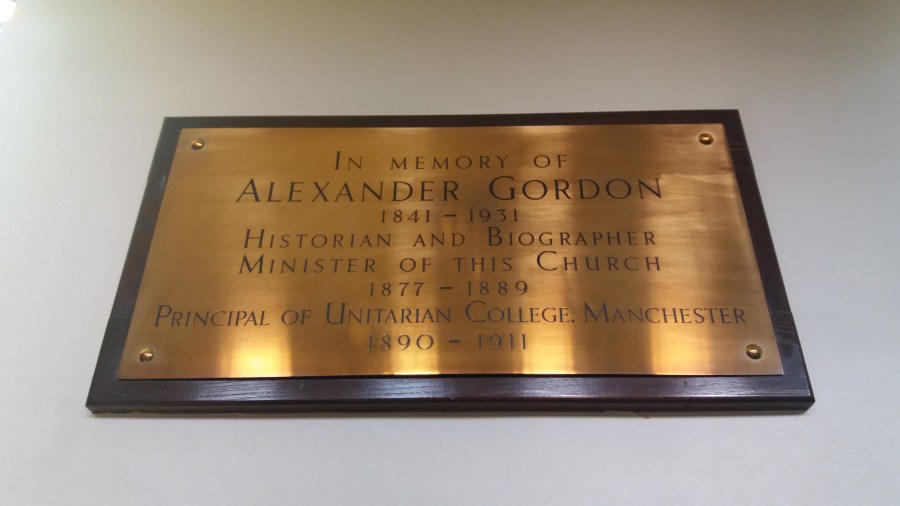
Historian, Biographer, Minister of First Church, Belfast. ‘An Englishman by birth, a Scotsman by education and an Irishman by inclination’.
On Thursday, 22nd May, 2025, we had an illustrated talk in First Dunmurry (NS) Presbyterian Church about the great historian Alexander Gordon.
Talk at Dunmurry by Rev Dr David Steers
A distinguished minister in England and Ireland, he served at Aberdeen; Hope Street, Liverpool; Norwich and at First Church, Belfast, before becoming Principal of the Unitarian Home Missionary College, Manchester and a lecturer in Ecclesiastical History in the first Free Faculty of Theology in the British Isles.
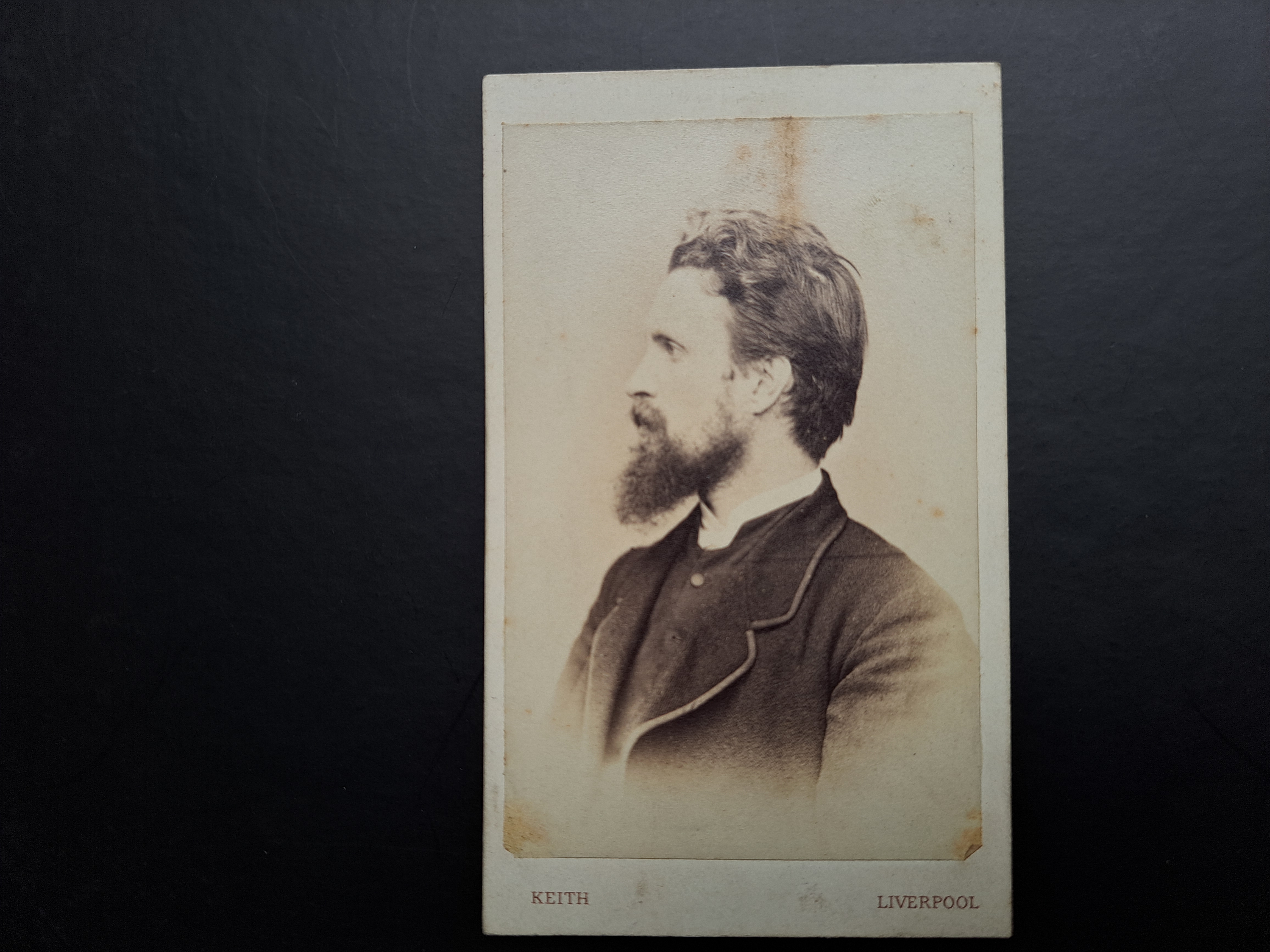
The earliest known photograph of Alexander Gordon, taken in Liverpool c.1872 at the time of his marriage to Clara Maria Boult
His scholarship was widely acknowledged all over the world, contributing 778 entries to the Dictionary of National Biography, 39 articles to the eleventh edition of the Encyclopaedia Britannica and much more. A superb linguist and experienced traveller his researches took him all over Europe. Among other things he was closely involved in the creation of the Non-Subscribing Presbyterian Church of Ireland in 1910.
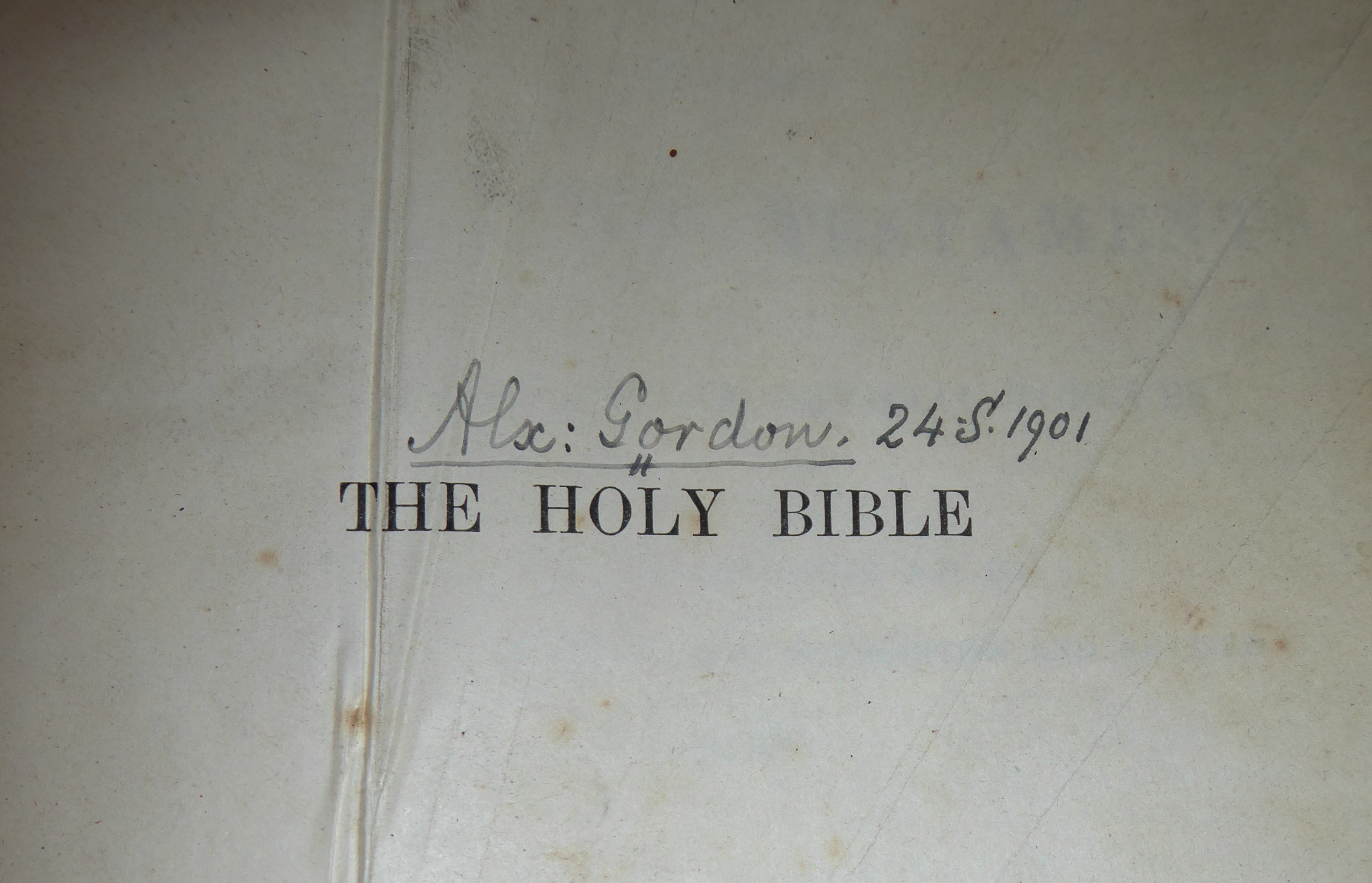
Gordon’s distinctive signature in a personal copy of his Bible (Revised Version)
The talk looks at his education, his work as a biographer and historian, and his commitment to the churches in Ireland which he served as secretary to the Association of Irish Non-Subscribing Presbyterians and later being closely involved in the setting up of the Non-Subscribing Presbyterian Church of Ireland itself.
He was a distinguished minister at First Church but even after leaving for Manchester kept a very close connection with the Irish churches, particularly through Dunmurry where he was regarded as the unpaid curate of his friend the Rev J.A. Kelly, despite the incredible heavy work load of his high profile work. From 1895 until the year of his death in 1931 he only missed one communion service at Dunmurry – and that was because of an unexpected train timetable change that left him stranded in Dublin one weekend during the First World War. For a very experienced traveller, particularly rail traveller, this must have been especially galling for Gordon. The lecture also looks at Alexander Gordon as a travel writer.
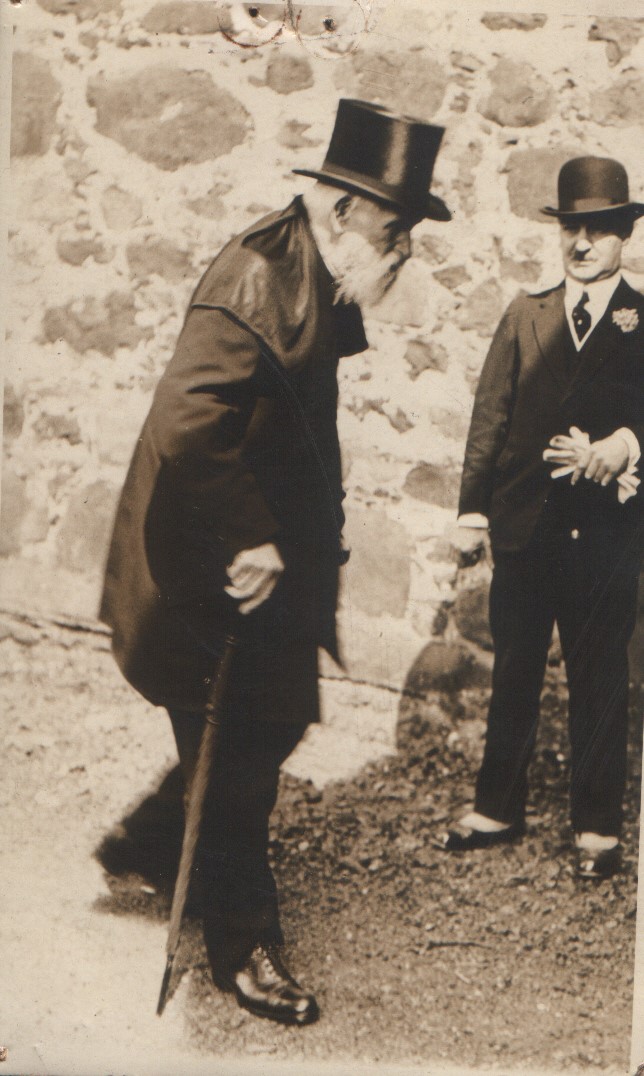
The last photograph of Alexander Gordon taken at Dunmurry on 18th January 1931
It examines too his family background, which was frequently touched by tragedy. But he inspired great loyalty and affection in the generations of students he trained for the ministry.
Principal of the Unitarian Home Missionary College, Manchester
He was buried in Dunmurry, just a short time after he conducted his final service there on 18th January 1931.
A few years ago a post on this blog attracted some interest about a ghost sign that emerged on Berry Street in Liverpool following the demolition of a neighbouring building. You can see that post here. Walking along Smithdown Road recently I was reminded of a number of ghost signs which can be found there which have long been visible and are probably quite well documented. But it means that Smithdown Road is something of a gold mine for ghost signs so I took a few pictures as I walked along.
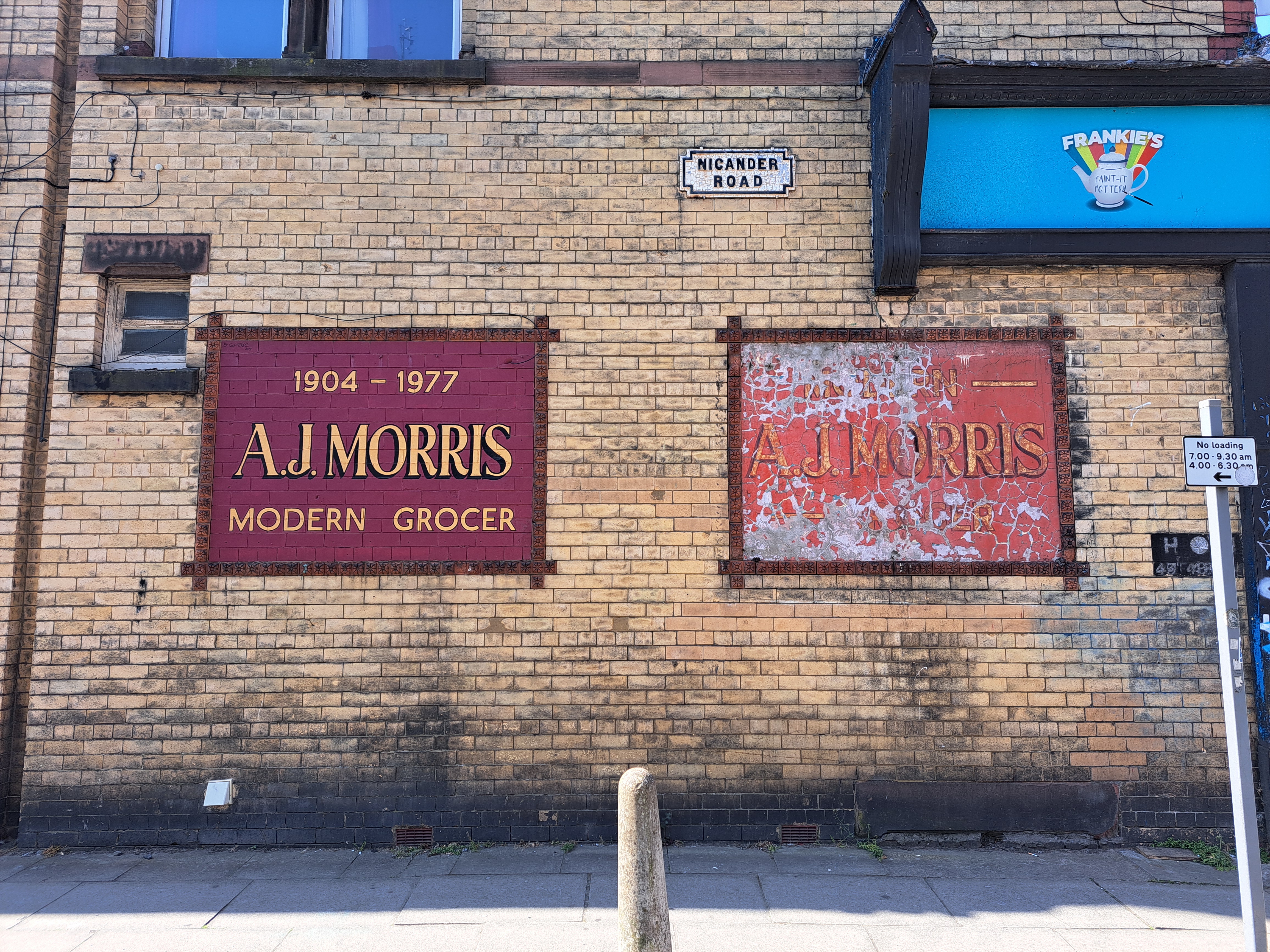
The first is close to the junction of Nicander Road and Smithdown Road. Presumably the shop on the corner was A.J. Morris’s ‘Modern Grocer’ but I have no recollection of it. It is interesting that the original sign just about survives and someone has painted a replica on the adjoining advertising square, which perhaps also once housed a similar message or perhaps was adorned with posters featuring special offers. The ornamental tiles that form the frames here are an interesting feature.
A.J. Morris Modern Grocer
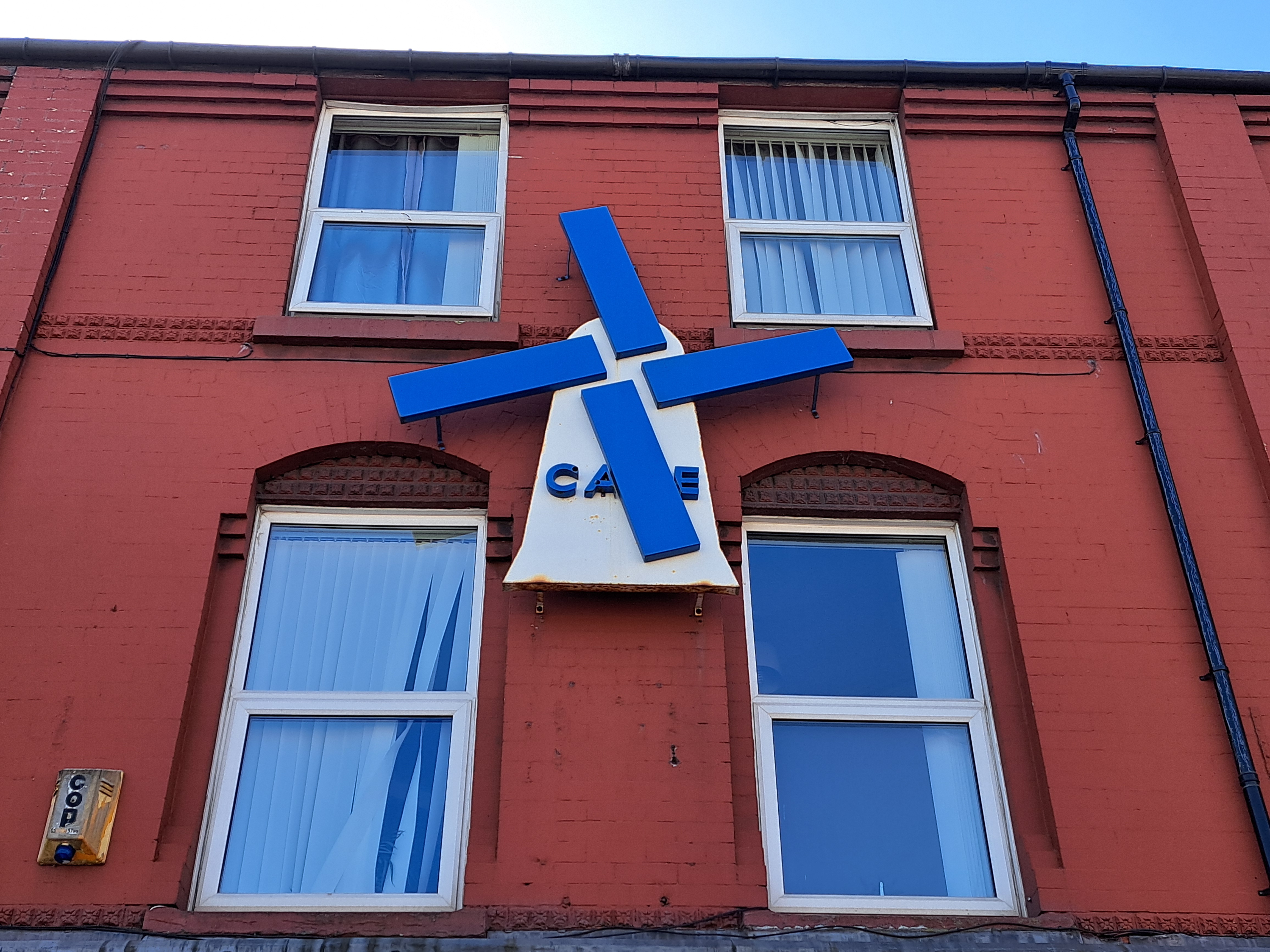
If you continue your perambulation under the railway bridge heading towards Allerton Road you will come across the next ghost sign. I have a long memory of this one, it is easy to miss but for years there was a rusty old windmill fixed above some of the shops. When I was a child I remember asking my mother why this was so and she told me that it marked the site of the Dutch Café. The Café had long gone by the time I remember first seeing the windmill but it must have had a fairly long-standing presence. Strangely when I was at school our history teacher told us about a difficult experience he had had with a group of Teds in the Dutch Café, presumably in the 1950s. I have forgotten whatever the point of his tale was but it was evidence for the existence of the Café. Other evidence has turned up on eBay over the years with black and white pictures of the staff dressed as Dutch girls being offered for sale. Tempting though it was I didn’t bid for them.
But although I am calling the windmill a ghost sign the people who own the Bathroom Centre underneath have had it restored and it looks quite smart, if slightly incongruous. And this is where this post starts to stray into Beatles territory. There are discussions of the Café online, also known as ‘Dutch Eddies’ and ‘Frank’s’. It had a very popular heyday with bikers and others and seems to have drawn John Lennon into its orbit. This is more than likely given its location. John and Paul apparently played pinball there. Other connections are claimed by various online sources but most interestingly John Lennon is said to have referred to the Café, as ‘the Dutch’, in the original lyrics for In My Life.
Dutch Café Windmill
So there is a lot you can say about a windmill fixed to the wall above a bathroom shop.
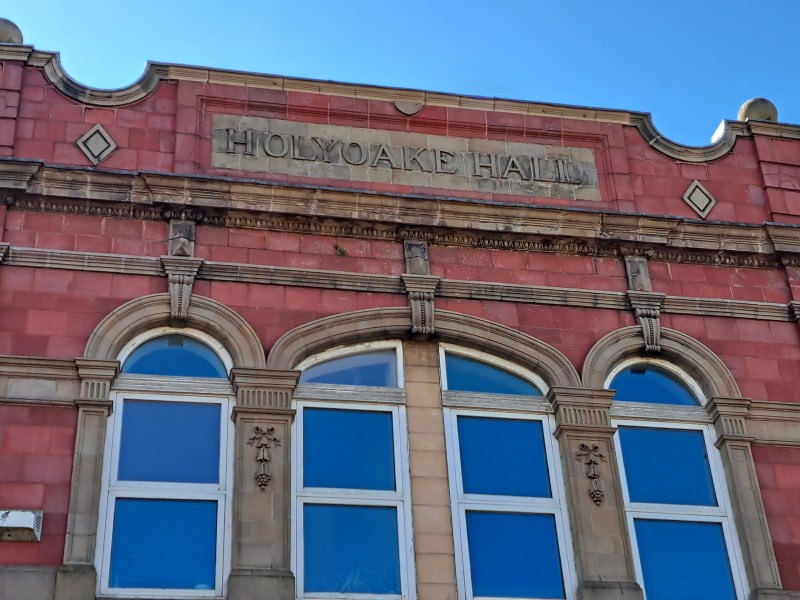
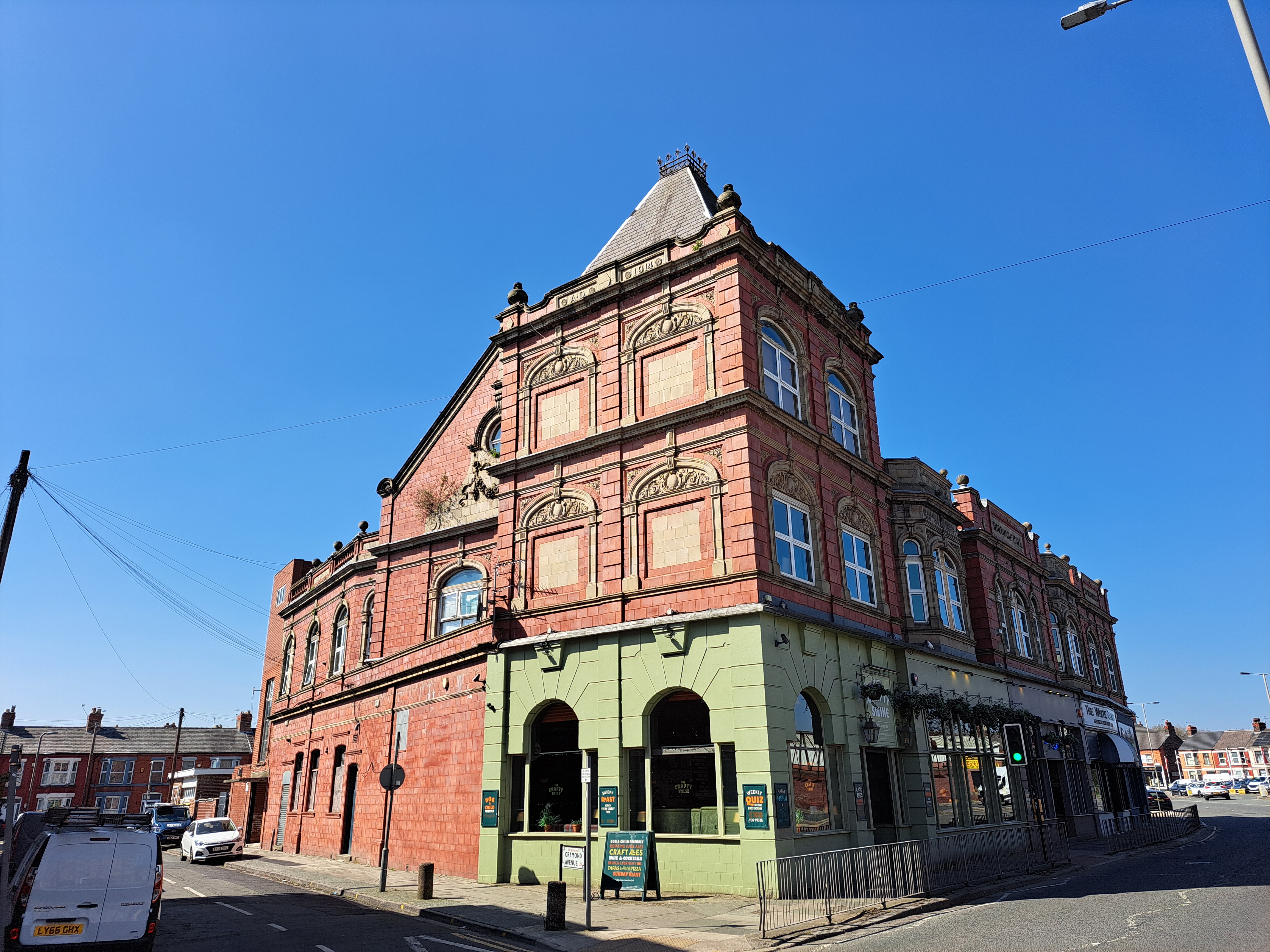
But further on the Beatles connection deepens. Some of the features, not quite ghost signs, of the Holyoake Hall are very redolent of the long departed Co-operative movement which built the Hall in 1913. It is actually quite an attractive building when judged as a whole, although the shop fronts of the modern occupants inevitably take the eye away from appreciating it as originally designed.
Holyoake Hall
I remember this being the Co-op supermarket which seemed pretty dreary at that time, although I am told by those with better memories that it was for a long time a very popular supermarket which sold many food items hard to get in Liverpool in those days. Above the shop there were what I presume were offices and also a large hall. In the 1960s and 1970s this was occupied by the British Legion and was a very popular venue because it was one of the few places you could get a drink in that part of the city. That would not be true today but there was certainly very strict adherence to the licensing laws at that time, as evidenced by the Hatfield Hotel near to the railway bridge on Smithdown Road. I neglected to take a picture of this place when I walked past during this odyssey, there were lorries, skips and scaffolding all around it, but it was clearly built as a pub and was never granted a license.
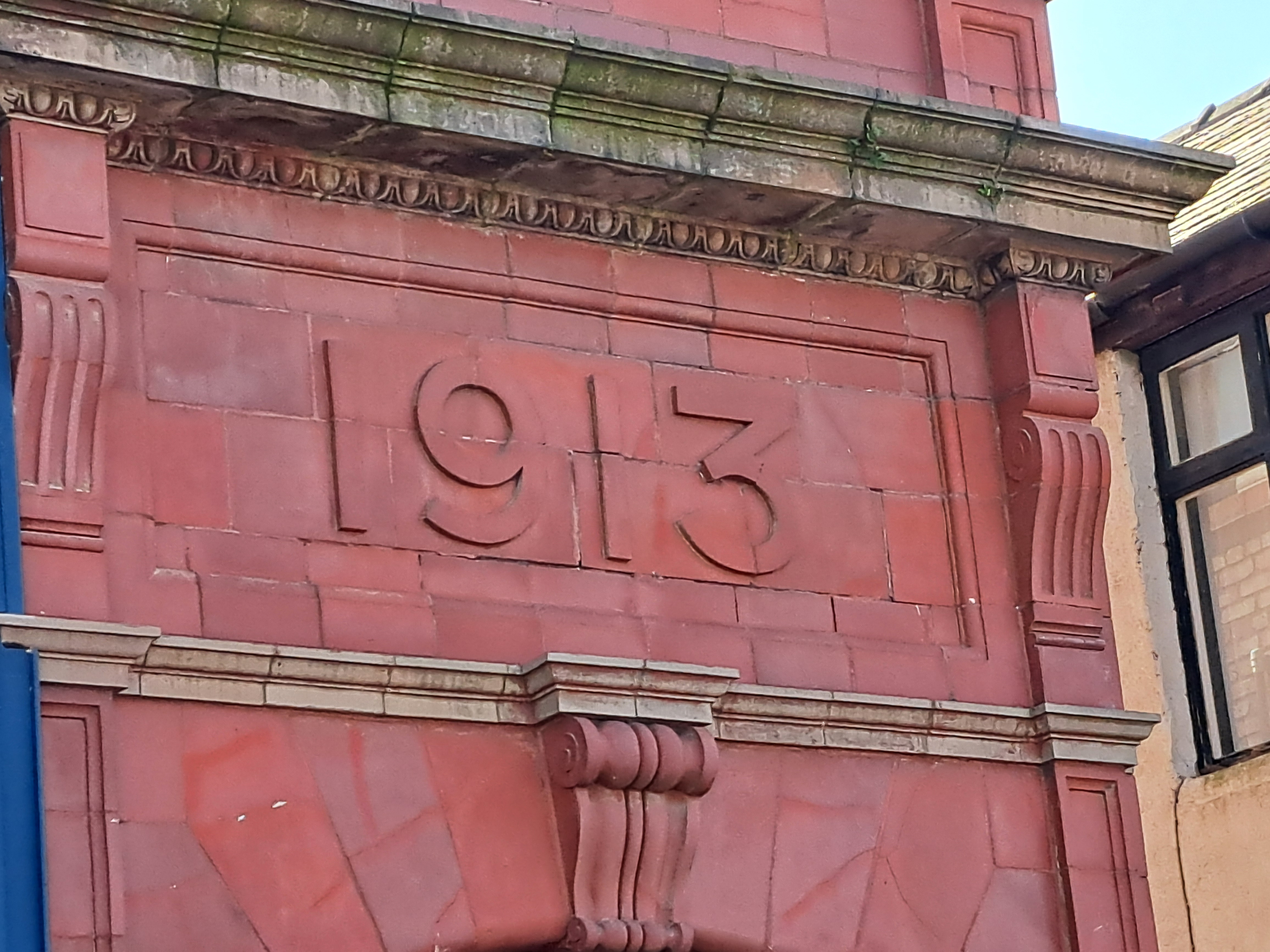
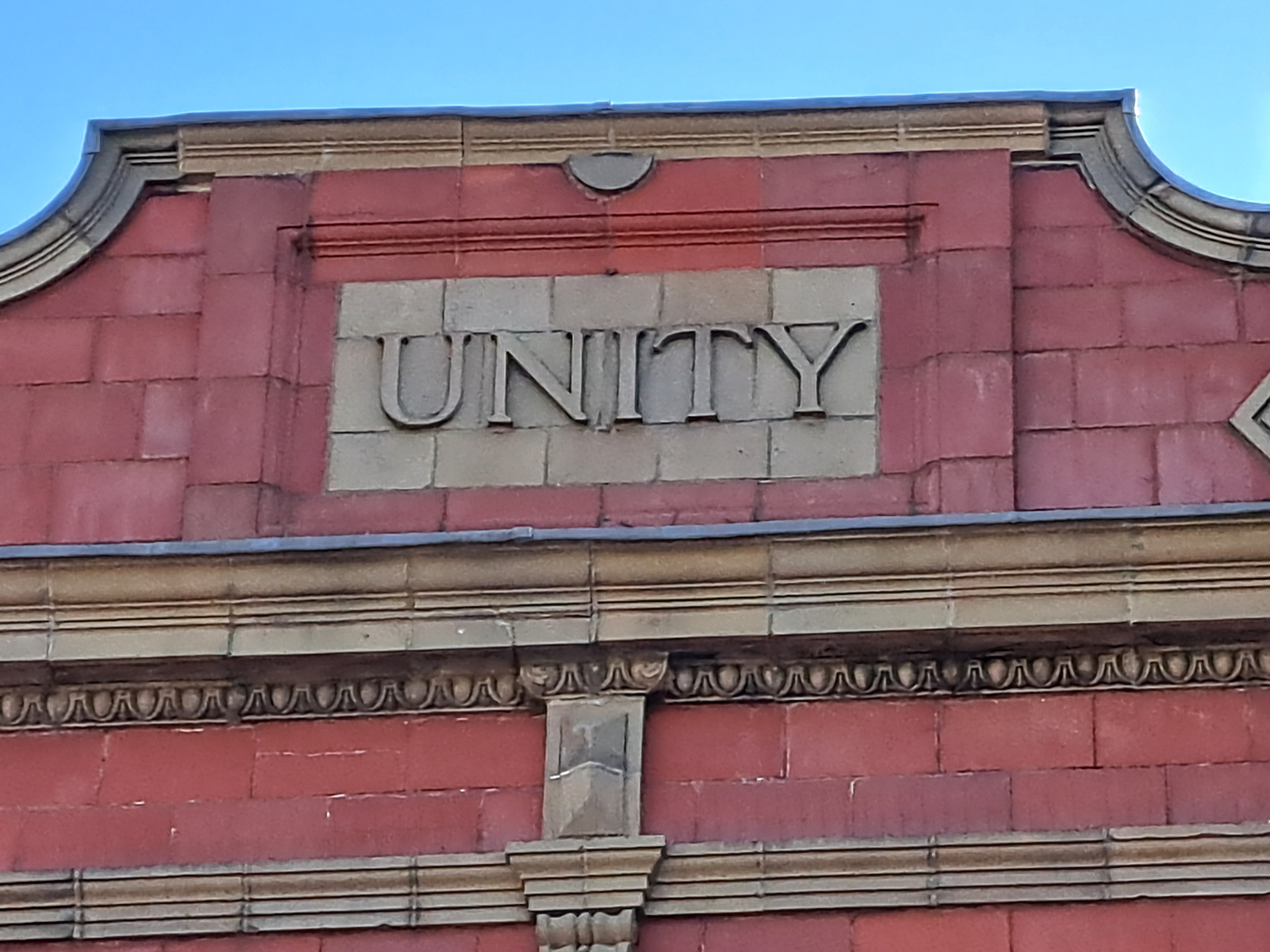
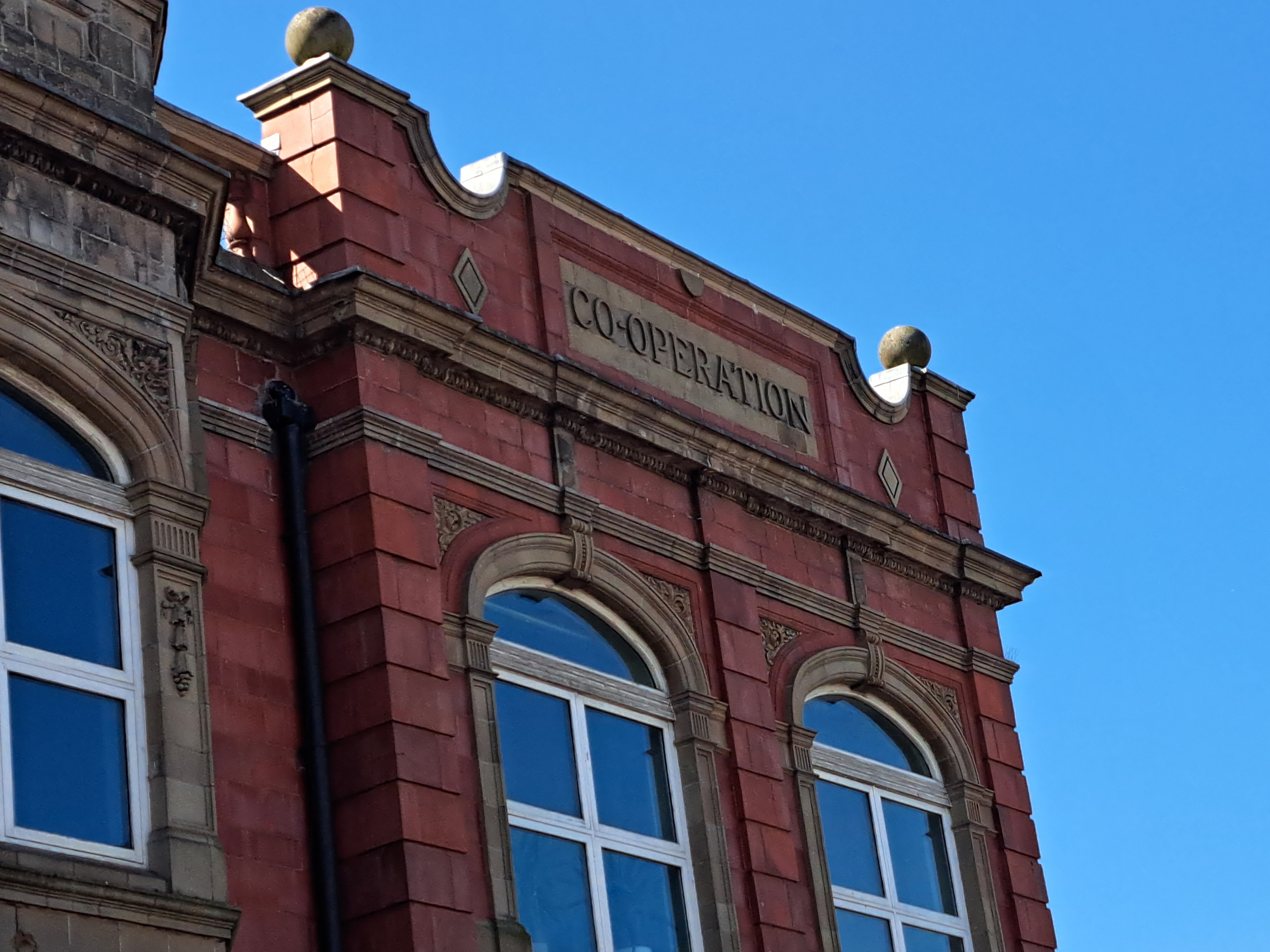
But to return to Holyoake Hall, it has many attractive stone details that proclaim things like Unity and Co-operation, as well as dates – 1913 and 1914.
Datestone 1913
Unity
Co-operation
But this is where the Beatles fit in again for they played the Holyoake Hall twice (on 15th and 22nd July 1961) and according to Mark Lewisohn in his superlative book All these years. Tune In they were paid £12 for each gig.
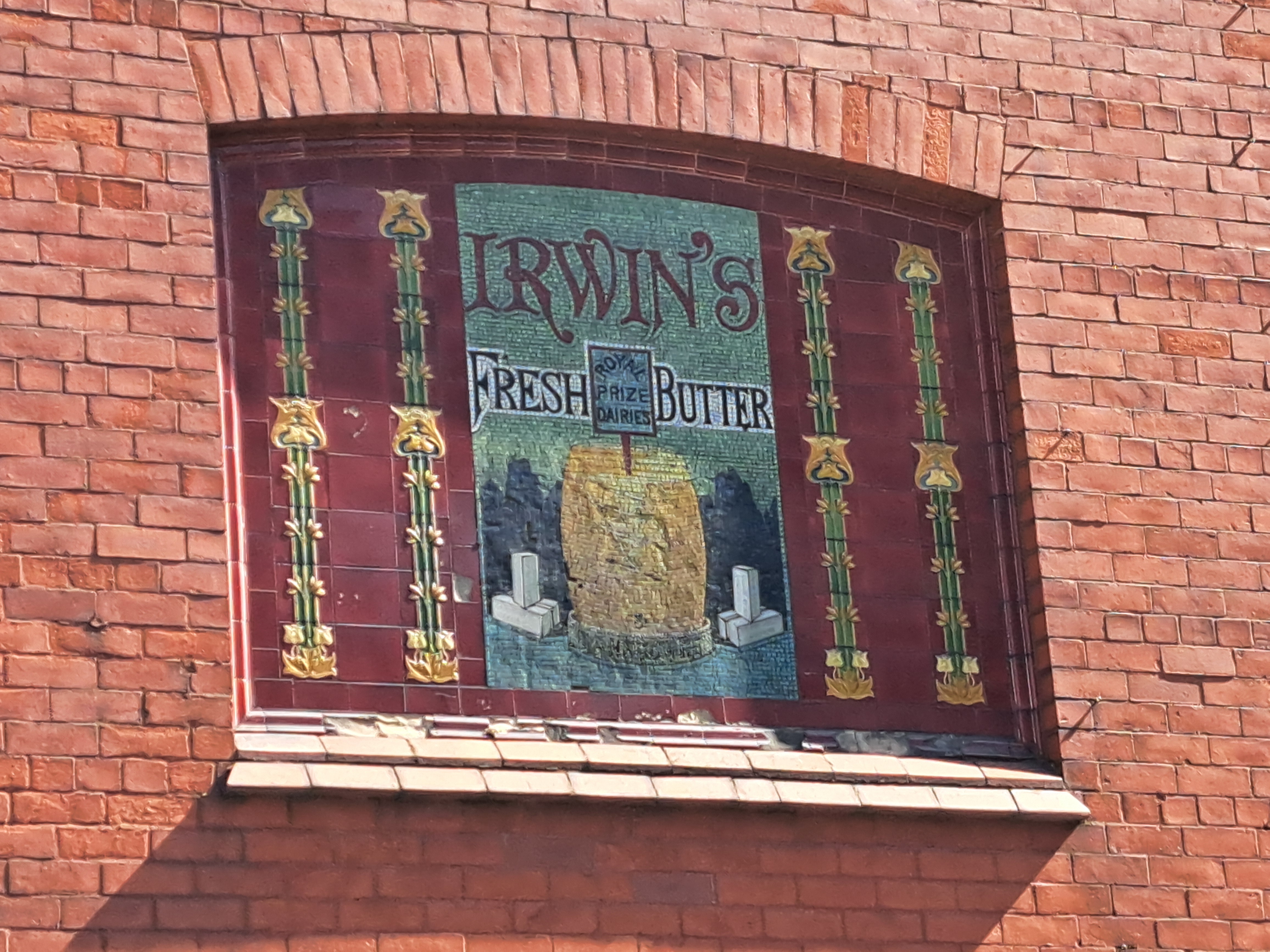
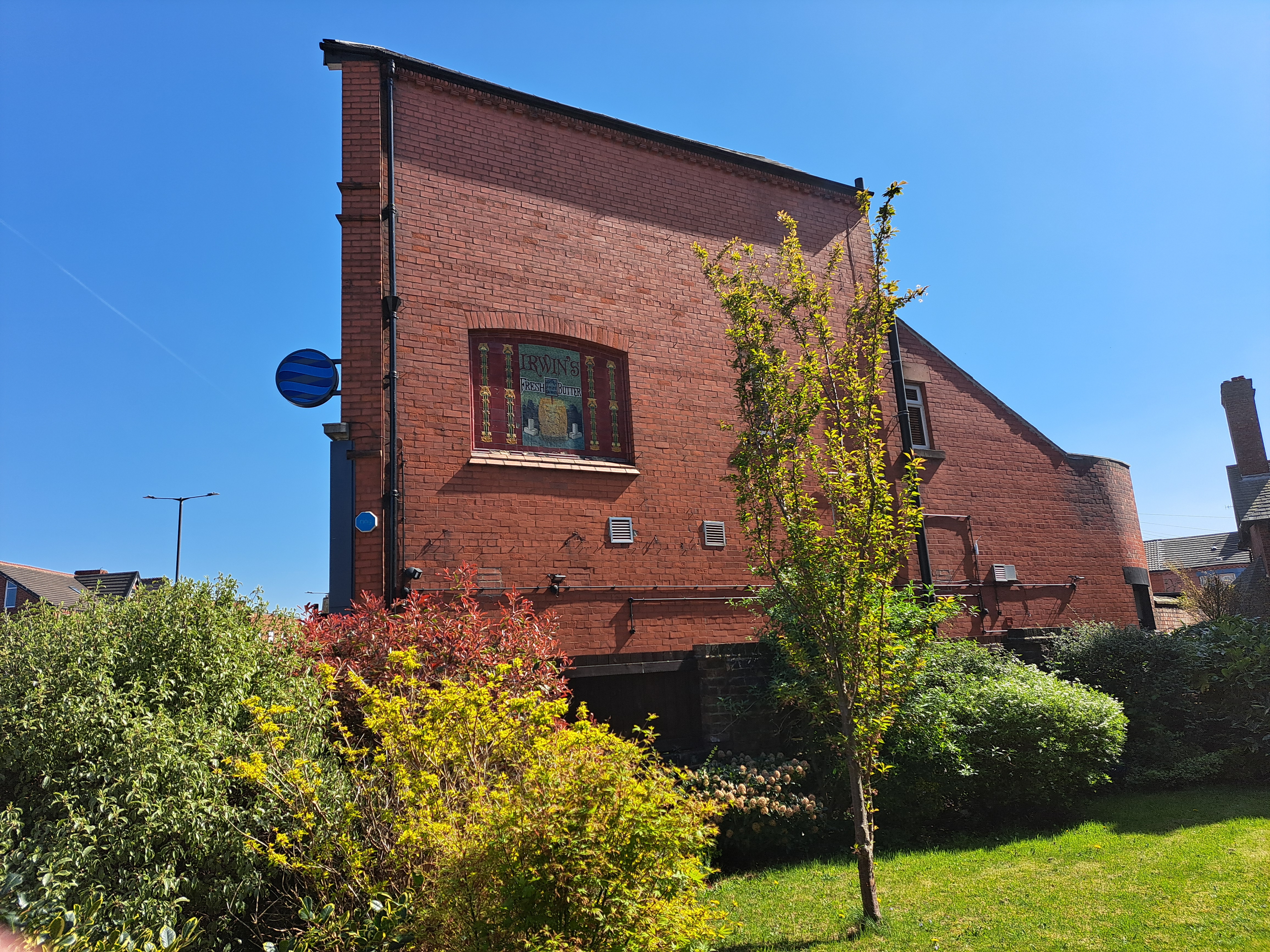
Holyoake Hall is also just around the corner from Penny Lane and if we walk along that route and across Penny Lane to the start of Allerton Road we come to the last ghost sign, an intricate mosaic for Irwin’s. These must have been expensive advertisements to produce for this Edwardian grocery chain. Irwin’s was a very successful supermarket in Liverpool and North Wales from the 1880s, eventually selling out to Tesco in about 1960. A number of these advertisements still exist but this one is a particularly good one. It can be seen in its setting right next to St Barnabas’ Church which itself has another Beatles connection in that this is the Church where Paul was once a choirboy. It is also located on Penny Lane and now has a statue of John Lennon right in front of it, so Beatles connections abound.
Irwin’s Ghost Sign
I know also that some of my readers might like a Unitarian/Non-Subscribing Presbyterian connection and one can cheerfully be given. The curate and then rector of St Barnabas’ Church between 1904 and 1929 was the Rev James Kirk Pike. However, he started out as a Unitarian and was minister of Chowbent Chapel from 1885 to 1890 and then at First Church, Belfast from 1890 to 1893, followed by a short ministry at Warwick before joining the Anglican Church. So there we have a link – for those who would like one – that ties the Beatles to Unitarianism, albeit in a very tenuous way!
The view across the front of St Barnabas to the Irwin’s sign
 velvethummingbee