Allen Daniel Coon (1867 – 1938), Pioneering Photographer and Cinematographer

In this video we take a look at the career of Allen Daniel Coon, one of the pioneers of photography and cinematography in Ulster. The video tells something of his story, with many examples of his postcards, and tracks down his last resting place.

Video: Allen Daniel Coon (1867 -1938) Photographer and Cinematographer

The previous post on this blog is all about Allen Coon’s postcards produced for W.J. Ross of Finaghy Stores in 1927, but these are just a small sample of his vast output produced between his arrival in Ireland in 1902 and his death in 1938.

Allen Daniel Coon was born in Buffalo, New York in 1867. The son of a Baptist pastor and, tradition has it, a native American mother, his career followed a fairly conventional path in its early years. He read law at university and then established himself as an attorney in Buffalo. But at some point he tired of this life and took the road to prospect for gold first in California and then in Alaska. One assumes this was not entirely successful because at some point he took up photography. He was a friend of George Eastman, the founder of Kodak, and may have been related to him. Either way he travelled to England with him in 1900 moving to Ireland a couple of years later to set up his own photography business.

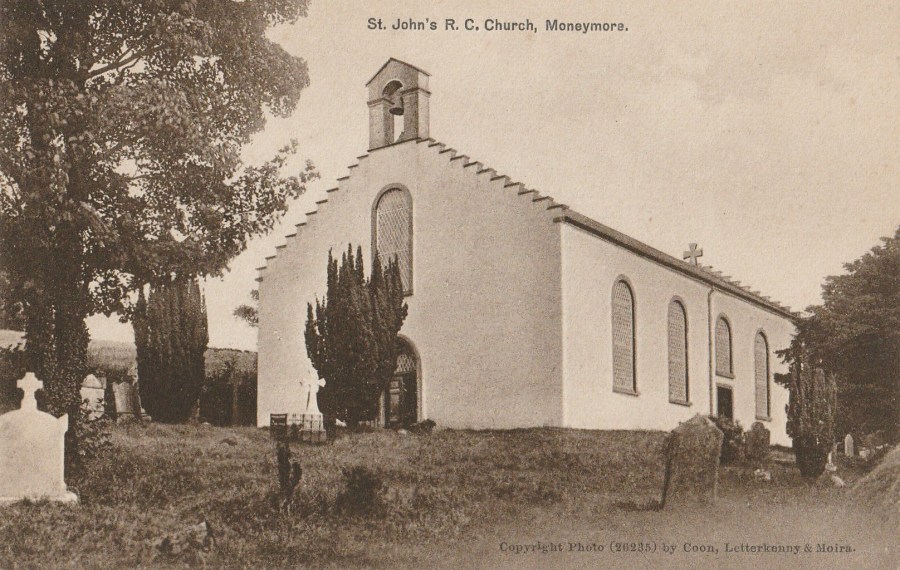
This was right at the beginning of the boom in the sale of postcards. In 1902 you could send a picture postcard for a halfpenny and expect it to be at a local destination at lunchtime. For skilled photographers the opportunities were obvious and operating initially from Londonderry, later from Letterkenny and ultimately from Moira (each place was printed as his location on the front of his postcards) he produced hundreds of postcards of impressive views, street scenes, local landmarks, prominent buildings and sometimes interesting people.
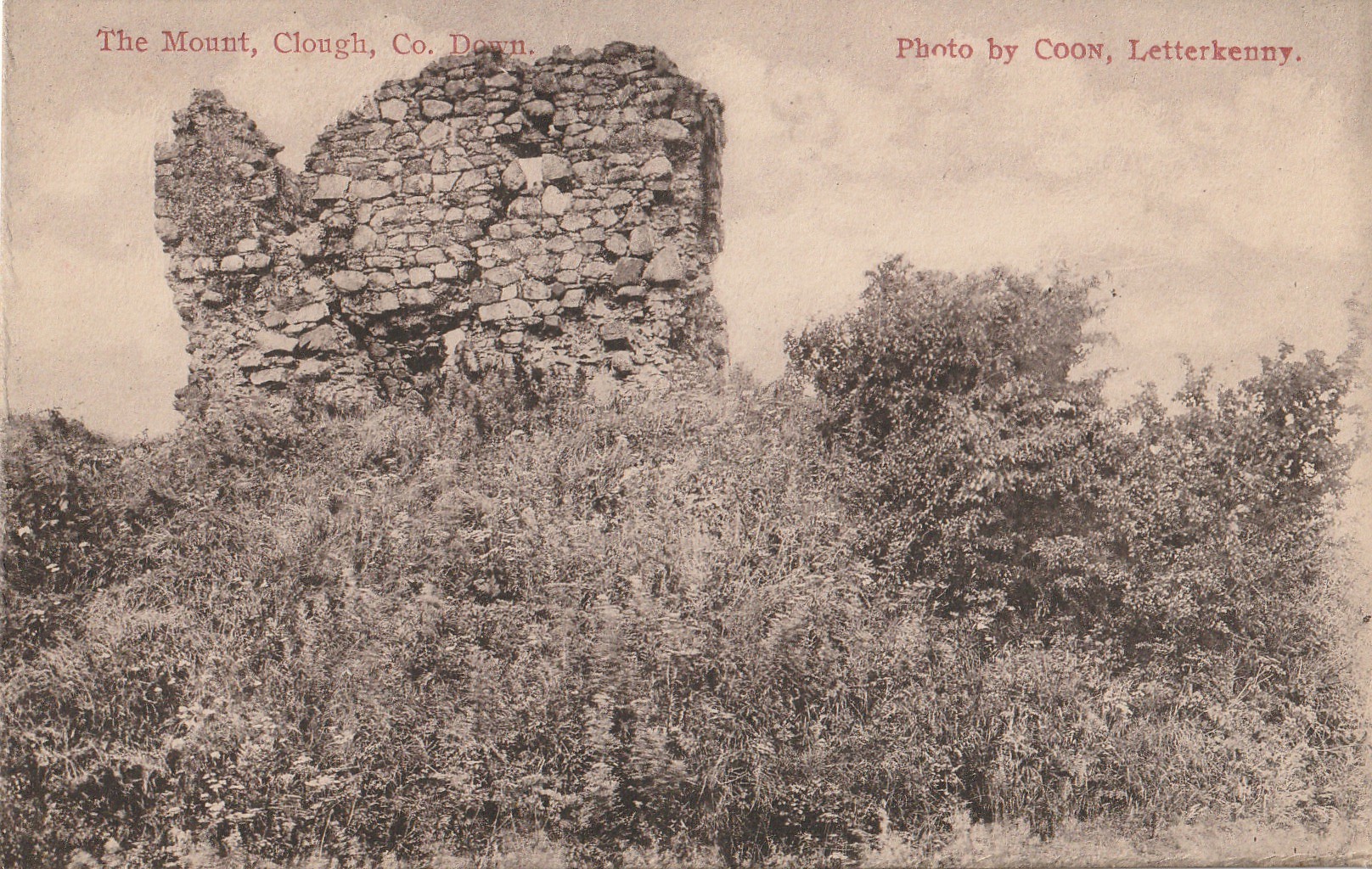
Clough Castle (no publisher listed on the back)

It is recorded that he charged local traders less than £5 for 2,000 postcards, which also included their name on the back of the card. From about 1924 he started numbering the cards starting with the last two digits of the year they were produced which is very helpful in dating the cards.

In the Census of 1911 he was recorded as living with his wife of three years, Clara, at Church Wall, Londonderry where he recorded his profession as Photographer and Theatrical Showman. Also recorded were their two eldest children (Gladys and Gaynor) and the fact that while his wife was a Presbyterian he declared himself to be an agnostic.
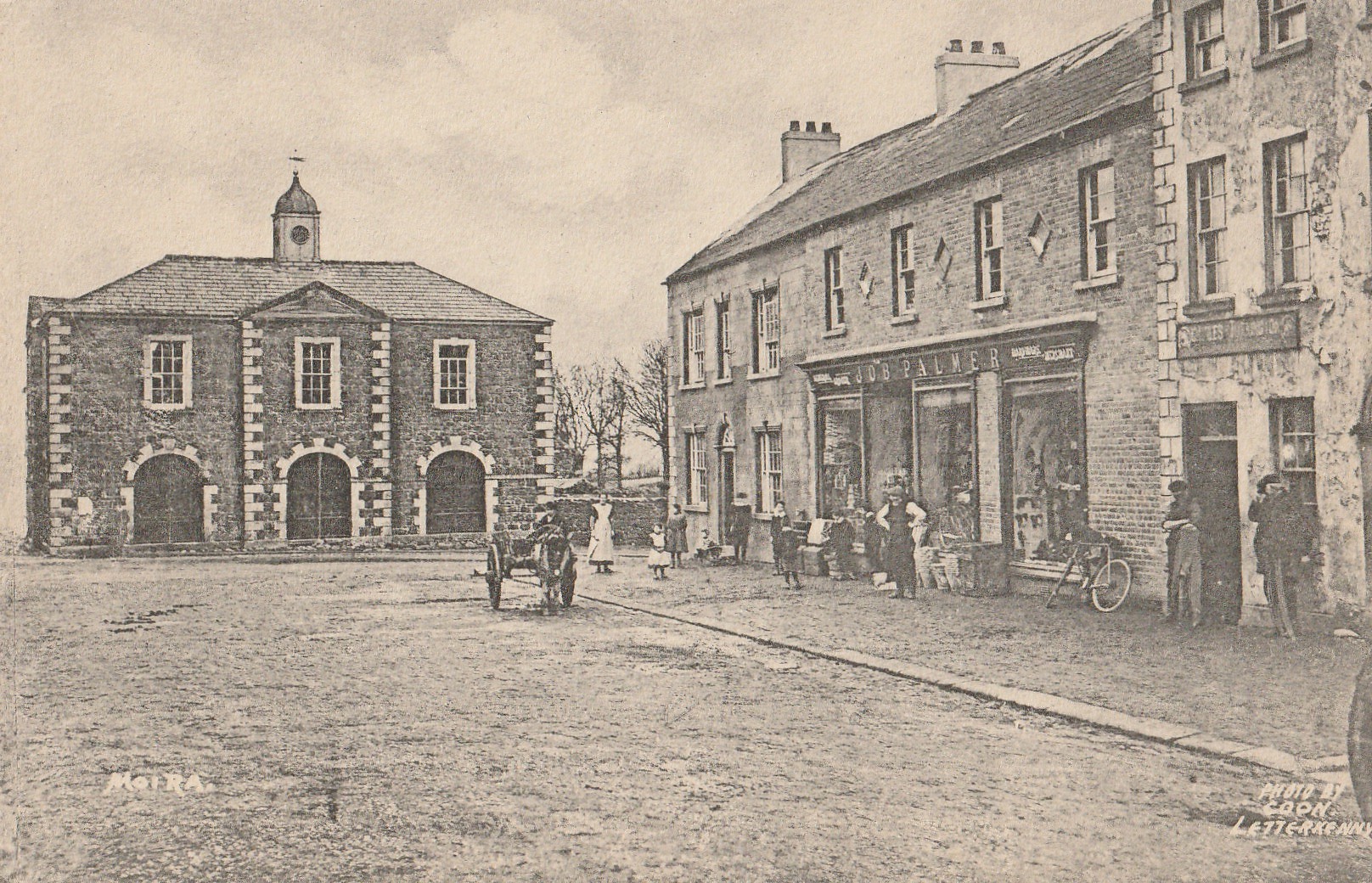
Moira Market House, published by Job Palmer, General Trader, whose shop can be seen on the right

The Theatrical Showman side of his profession was not an idle boast. Although his income from postcard sales must have been steady he was also perpetually ‘on tour’ travelling all over the north of Ireland with his camera and darkroom, setting up in towns as he went to film moving pictures and then show them to a fascinated populace along with films of Charlie Chaplin and other entertainers. In fact he also seems to have had an interest in some of the earliest cinemas established in county Donegal and in Belfast but his commitment to travelling from town to town with his films never waned right up to his death.
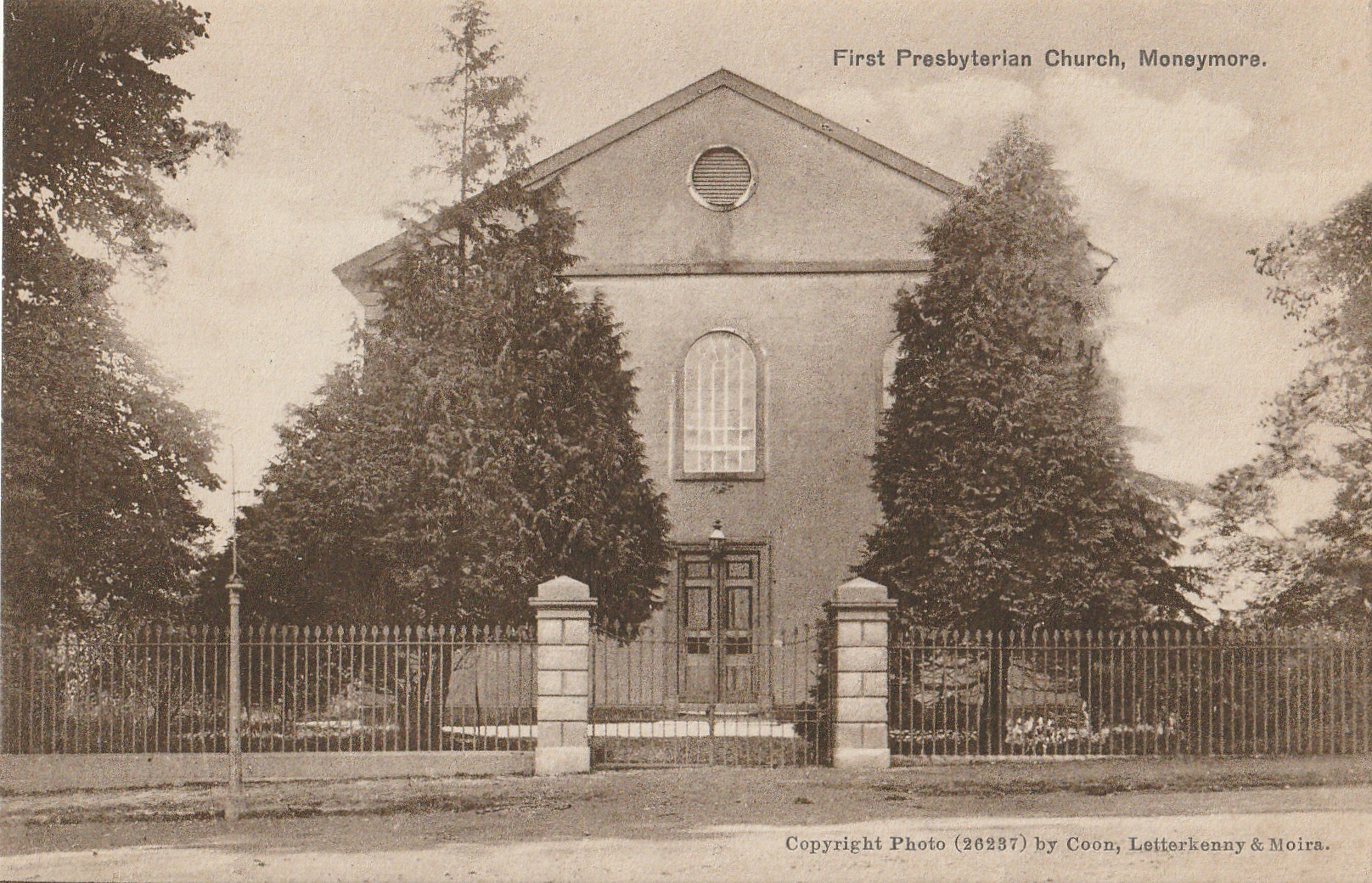
Moneymore, First Presbyterian Church (‘Published by Coon for Devlin, General Merchant, Moneymore’)

After partition he moved from Letterkenny to Moira and was ultimately buried there in the Non-Subscribing Presbyterian Church graveyard after his sudden death while on tour in Sligo. It is clear that his family had a close association with the Church, other family members are buried in the churchyard, but in the 1940s when the Non-Subscribing Presbyterian denomination launched a tercentenary appeal for the Sustentation Fund (1642 – 1942), Allen Coon’s wife Clara and his daughter Sylvia were amongst the members of the little congregation at Moira who gave their support. Indeed Miss Sylvia Coon was also one of the two local appeal officials for Moira.
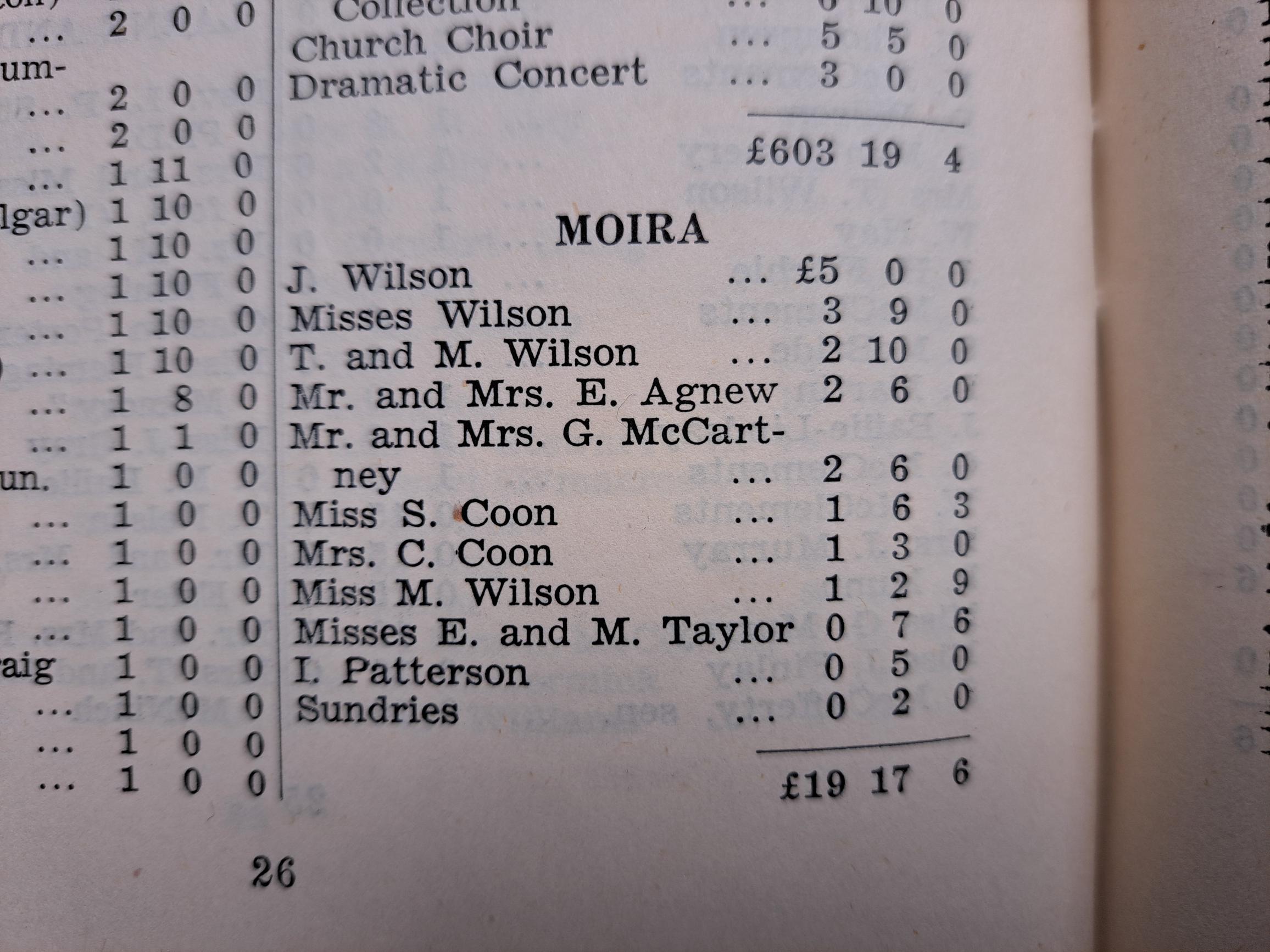
Donations from Moira to the NSPCI Tercentenary Sustentation Fund Appeal, including Clara and Sylvia

Postcards from Finaghy – and the Moore family of Finaghy and Dunmurry

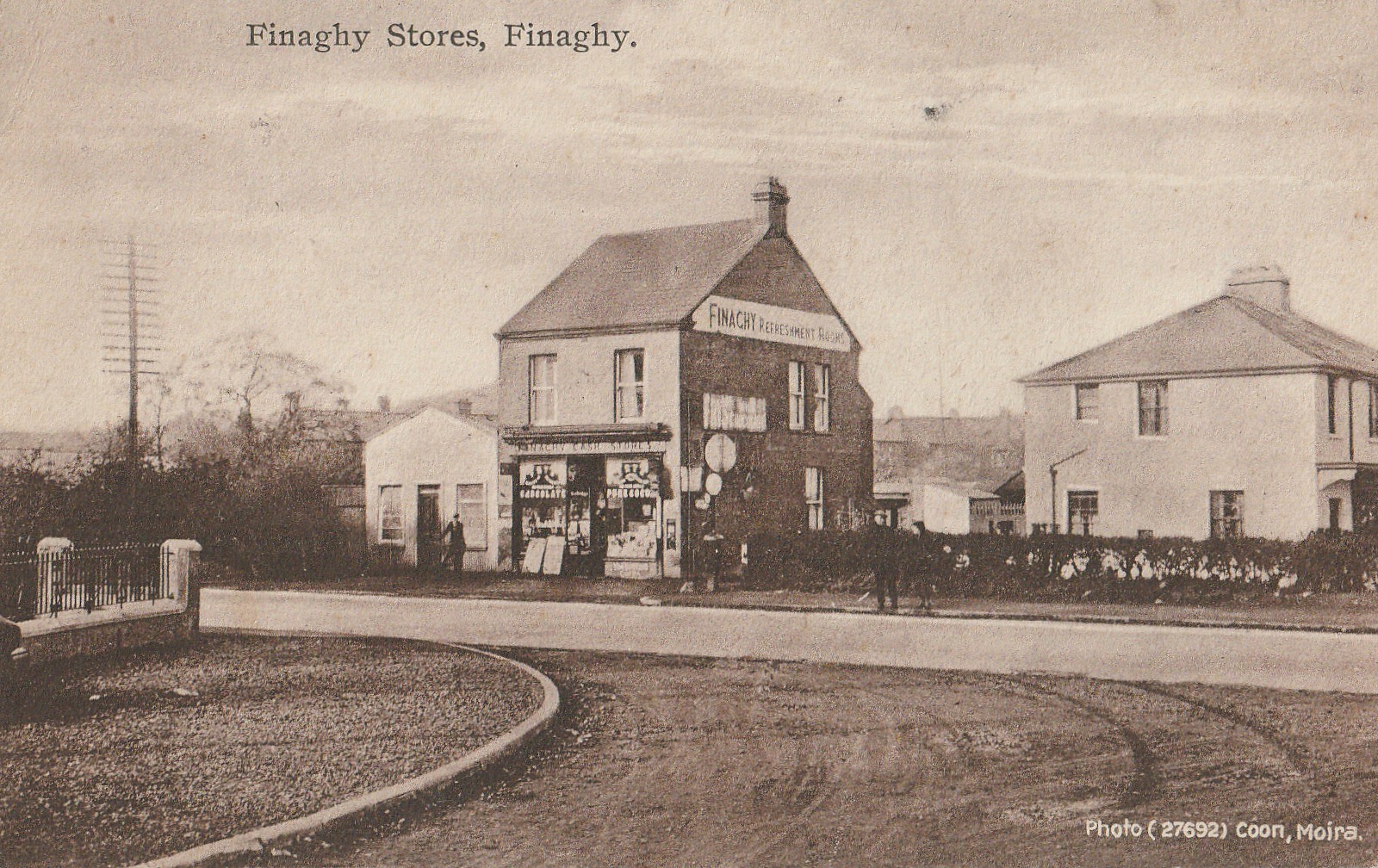
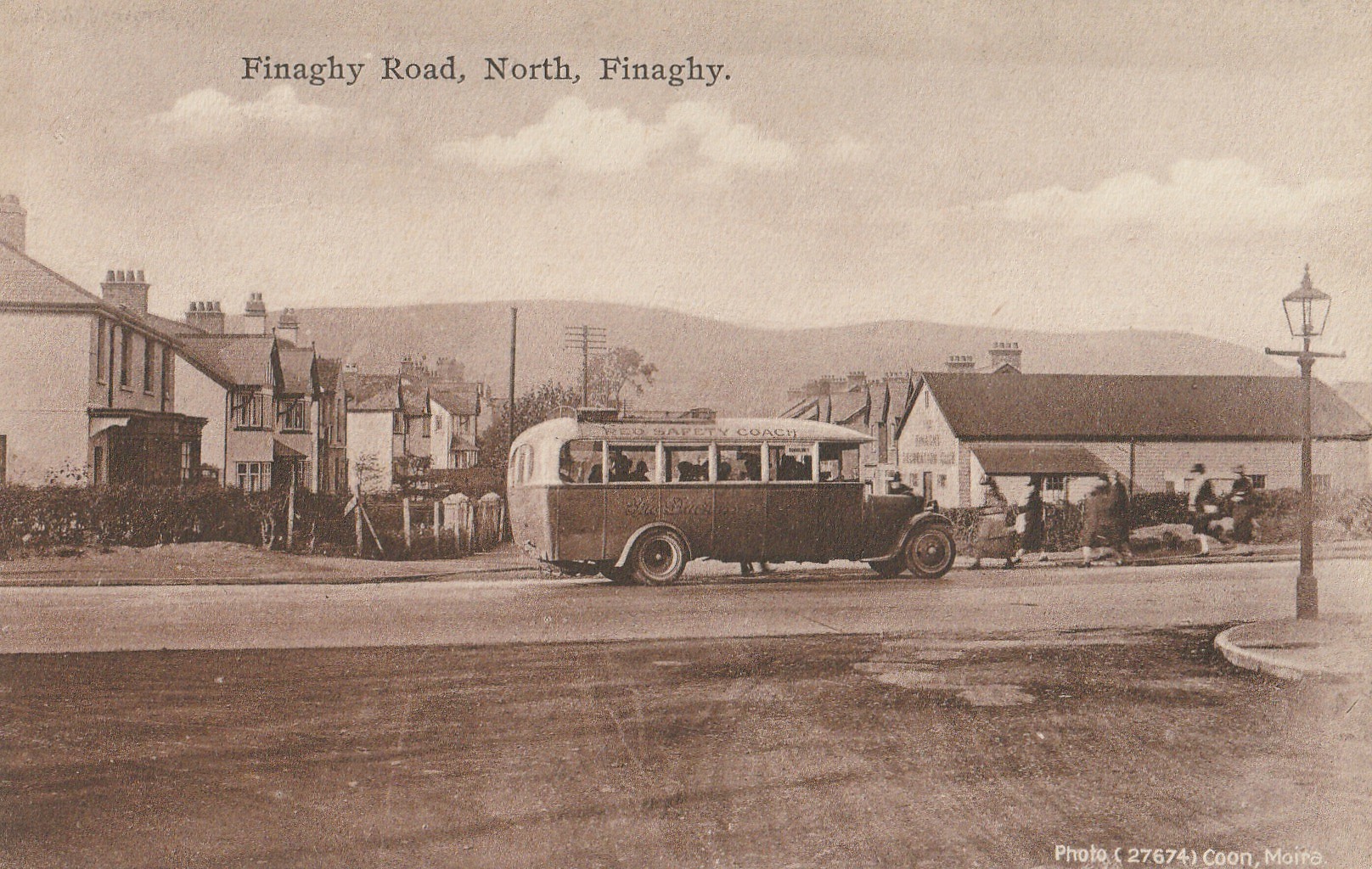
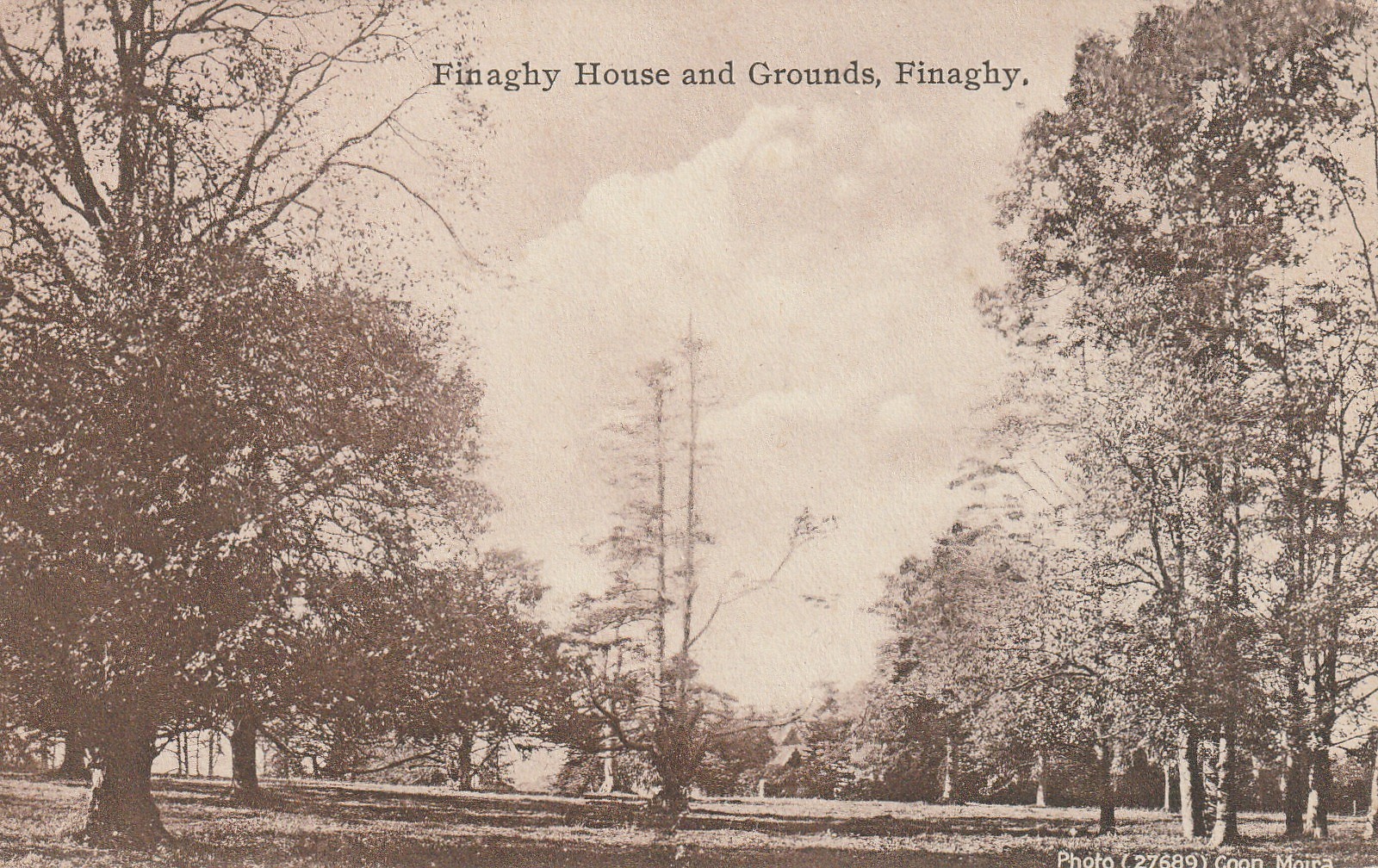
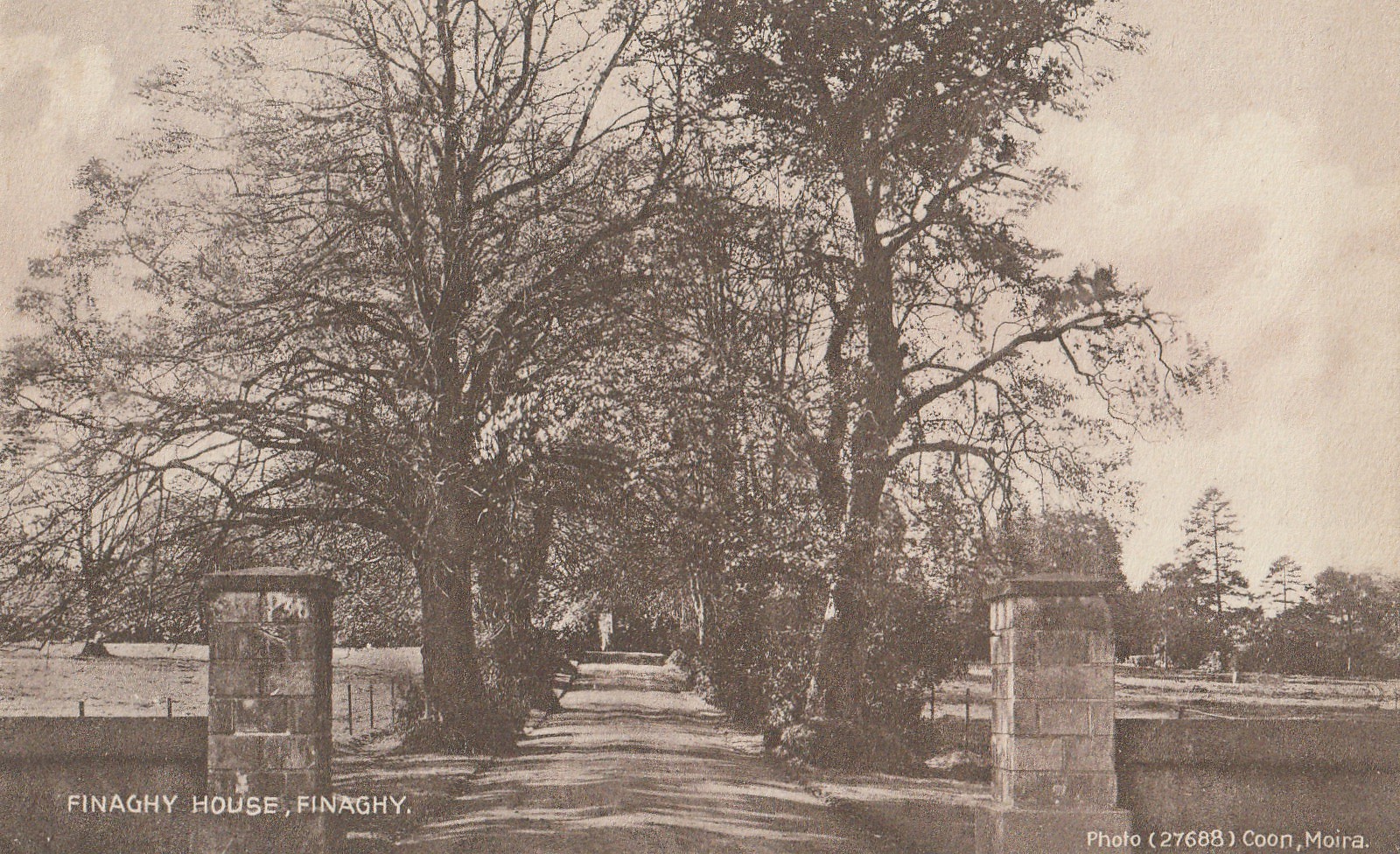
Following our postcard views of Dunmurry in the 1930s I thought I would post some postcards from a place a short distance away; pictures of Finaghy, which probably date from a few years before, and which we know were taken by Allen Daniel Coon of Letterkenny and Moira.
The numbering system on the four cards is believed to point to a date in 1927 for their production. According to the excellent catalogue of Allen Coon’s cards produced by Brian Hamilton in 2016 there were five cards published in this series for W.J. Ross of Finaghy Stores but I only have four of them. These four images are quite common but I have to admit that I have never seen an example of the fifth card which is named as ‘Finaghy Road South looking North’.

Finaghy Stores, Finaghy

The ‘Finaghy Stores’ postcard shows a solitary shop, that of W.J. Ross’s Cash Stores and Refreshment Rooms. It stands out very prominently in those days, but later had another shop joined to it and was surrounded by a number of other shops, including a couple of banks. The shop was well known to me in more recent times when it belonged to John Frazer, an active member of All Souls’ Church when I was minister there.

Finaghy Road, North, Finaghy

The postcard ‘Finaghy Road, North, Finaghy’ looks across the crossroads to Finaghy Road North and dates from a time when there was so little traffic that a bus could stop in the middle of the road to pick up passengers to be taken into town. This view has essentially not changed except for the addition of shops on one side and what was a bank on the other side of the road.

The other two postcards are a little more curious. Named as ‘Finaghy House’ and ‘Finaghy House and Grounds’, they could more accurately be titled ‘Finaghy House gateposts’ and ‘Finaghy House Grounds’ since neither card features any more than the merest suggestion of Finaghy House.

Finaghy House and Grounds

This is a pity really because Finaghy House will have been a major landmark at the time. Lord Belmont in Northern Ireland tells us all about Finaghy House in his excellent blog which you can read here. He tells us that the original house was built by Richard Woods at the end of the seventeenth century but was sold to the Charley family, a prominent linen family in 1727. Lord Belmont quotes the 1830 Ordnance Survey Memoirs as saying ‘the walls are nearly four feet thick and run together by grouted lime, similar to other ancient buildings.’ A descendant of the family said it was ‘an imposing mansion in a large park, with extensive outhouses and stables … a remarkable feature [of the interior] being a revolving fireplace between the drawing-room and the dining-room.’ The Charley family sold the house to a family named Brewis who, it is said, bred corgis, one of which had the distinction of being the first corgi owned by Queen Elizabeth, The Queen Mother.

In about 1890 Finaghy House was sold to James Moore and this is where a connection can be found with the Non-Subscribing Presbyterian Church of Ireland. James Moore was a direct descendant of Rev Henry Montgomery and the family were all members of our church at Dunmurry. In the 1901 Census he is listed as a Manufacturing Stationer living with his wife, Maria Lydia, who had been born in New Orleans. They and their three children (Harold Montgomery, Kenneth Montgomery and Sybil) all give their religion as Unitarian. As well as the five family members there are three servants listed as resident in the house. Harold and Kenneth are respectively stationer’s assistant and stationer’s apprentice to their father in 1901, Sybil is still at school. By the 1911 Census the three children are no longer living at home although there are still three (different) servants; a parlour maid, a cook and a housemaid.

Finaghy House by A.D. Coon

By 1911 James Moore was a JP in County Antrim. In the First World War Kenneth Montgomery Moore was commissioned into the 11th Battalion Royal Irish Rifles and was awarded the Military Cross. He returned home safely at the end of the war and his name is listed in the First World War Roll of Honour of the Non-Subscribing Presbyterian Church of Ireland  (published 2018).

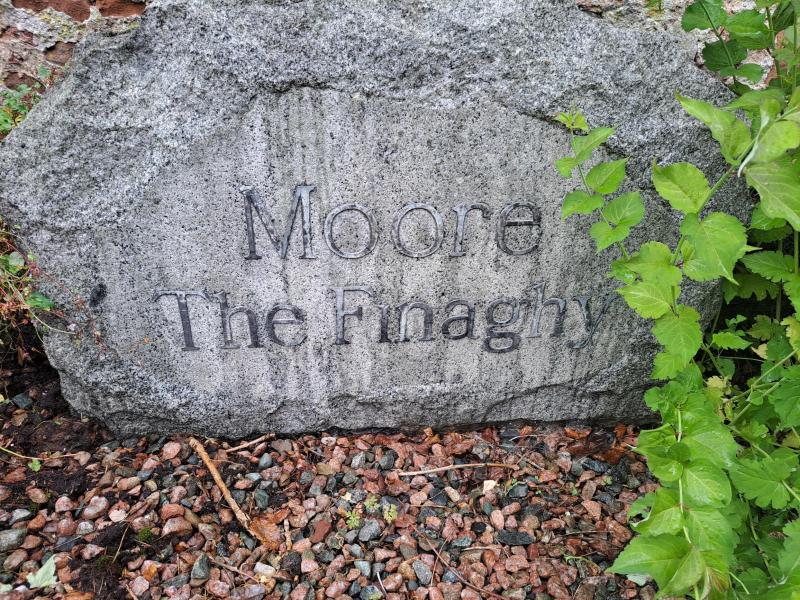
The Moore family burial ground can be found in their church, the First Presbyterian (NS) Church, Dunmurry. Marked simply as ‘Moore, The Finaghy’ it can be seen at the top of this page.

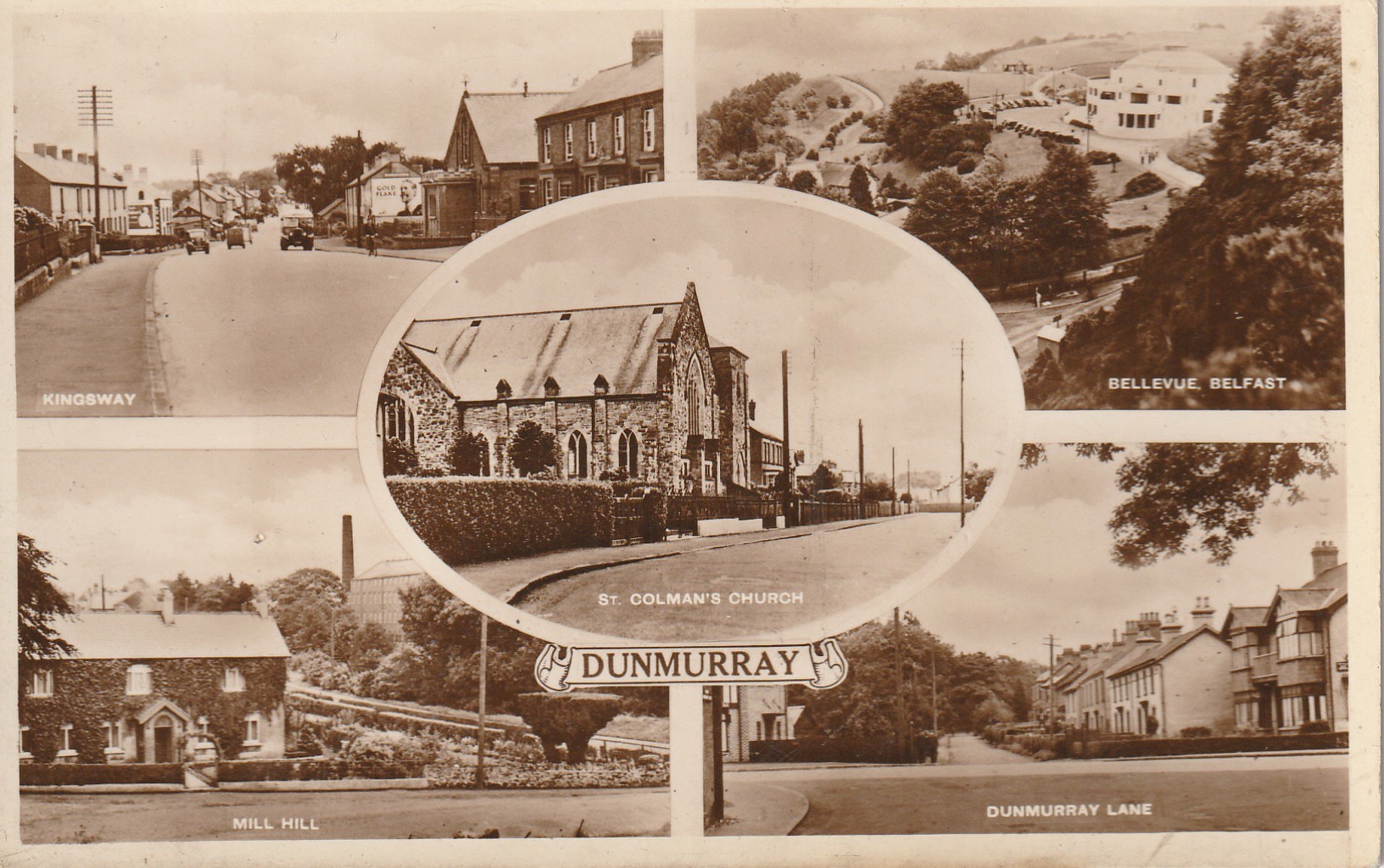
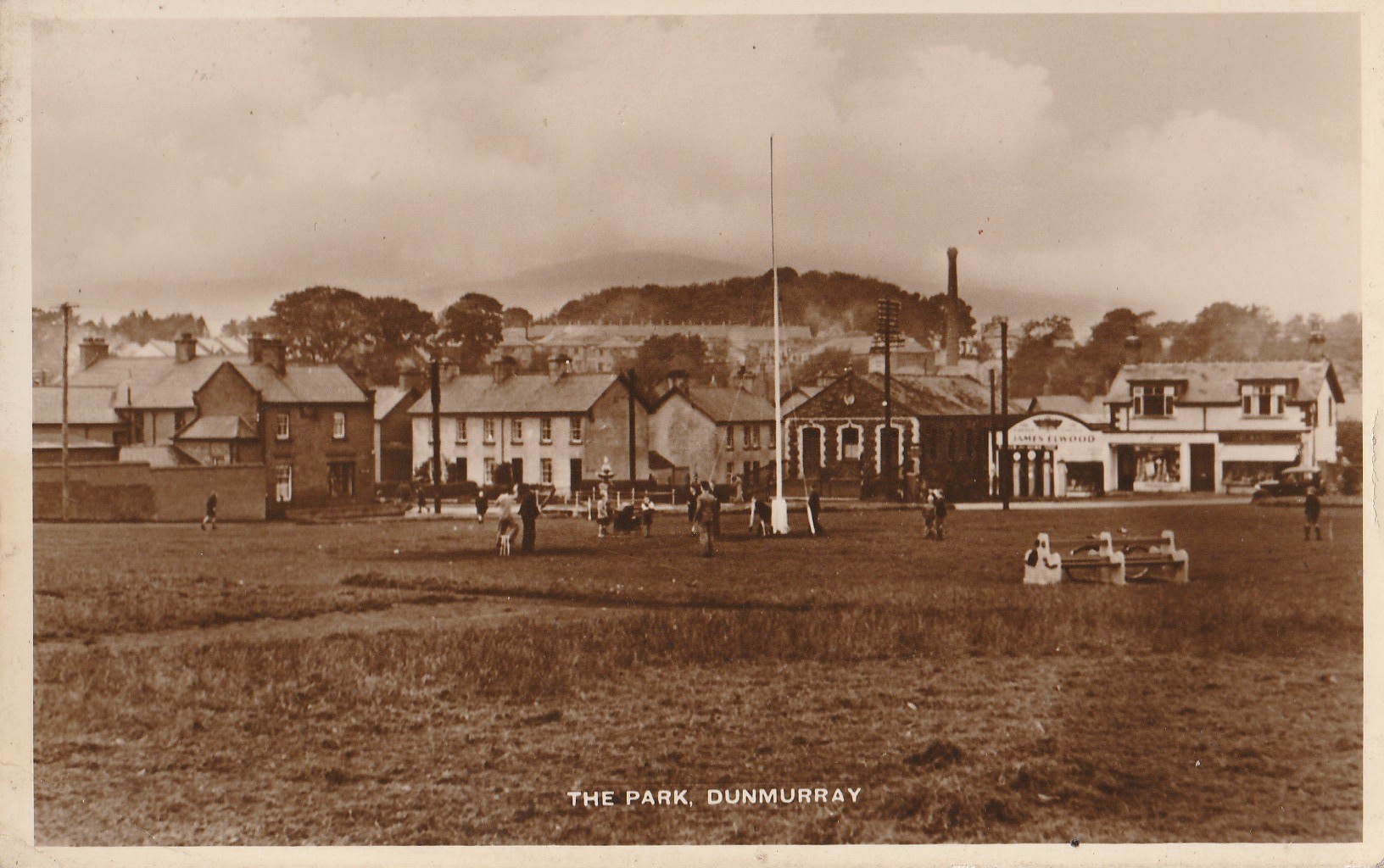
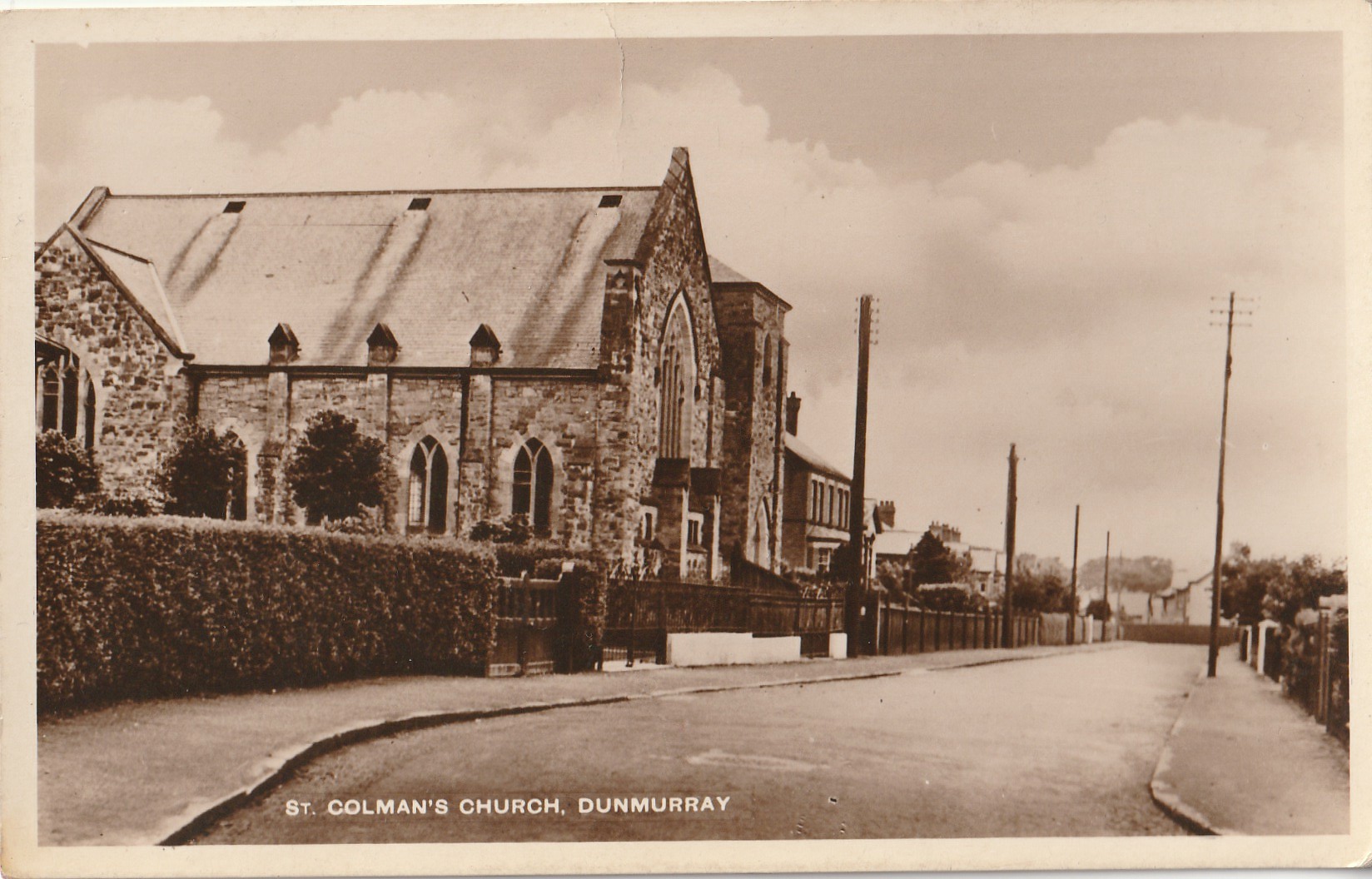
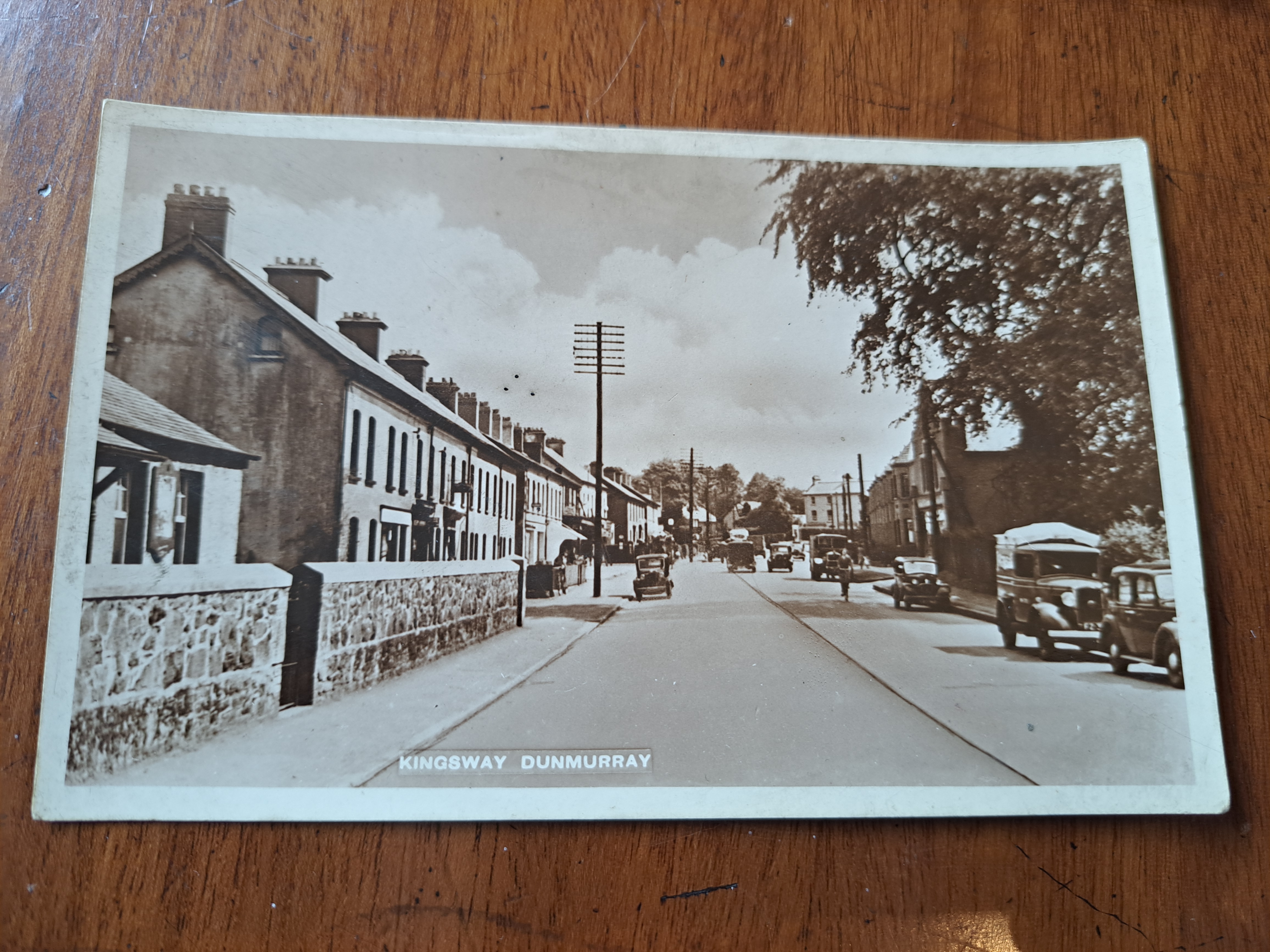
Dunmurry Postcards

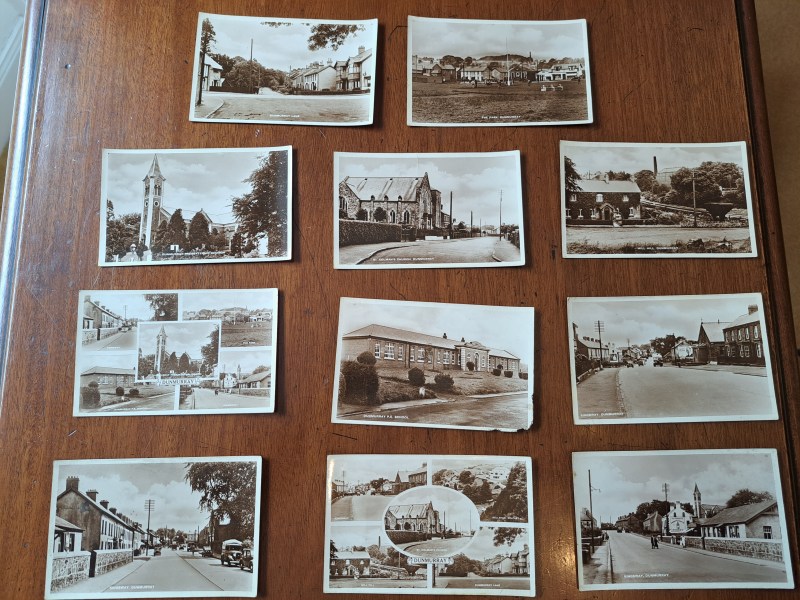
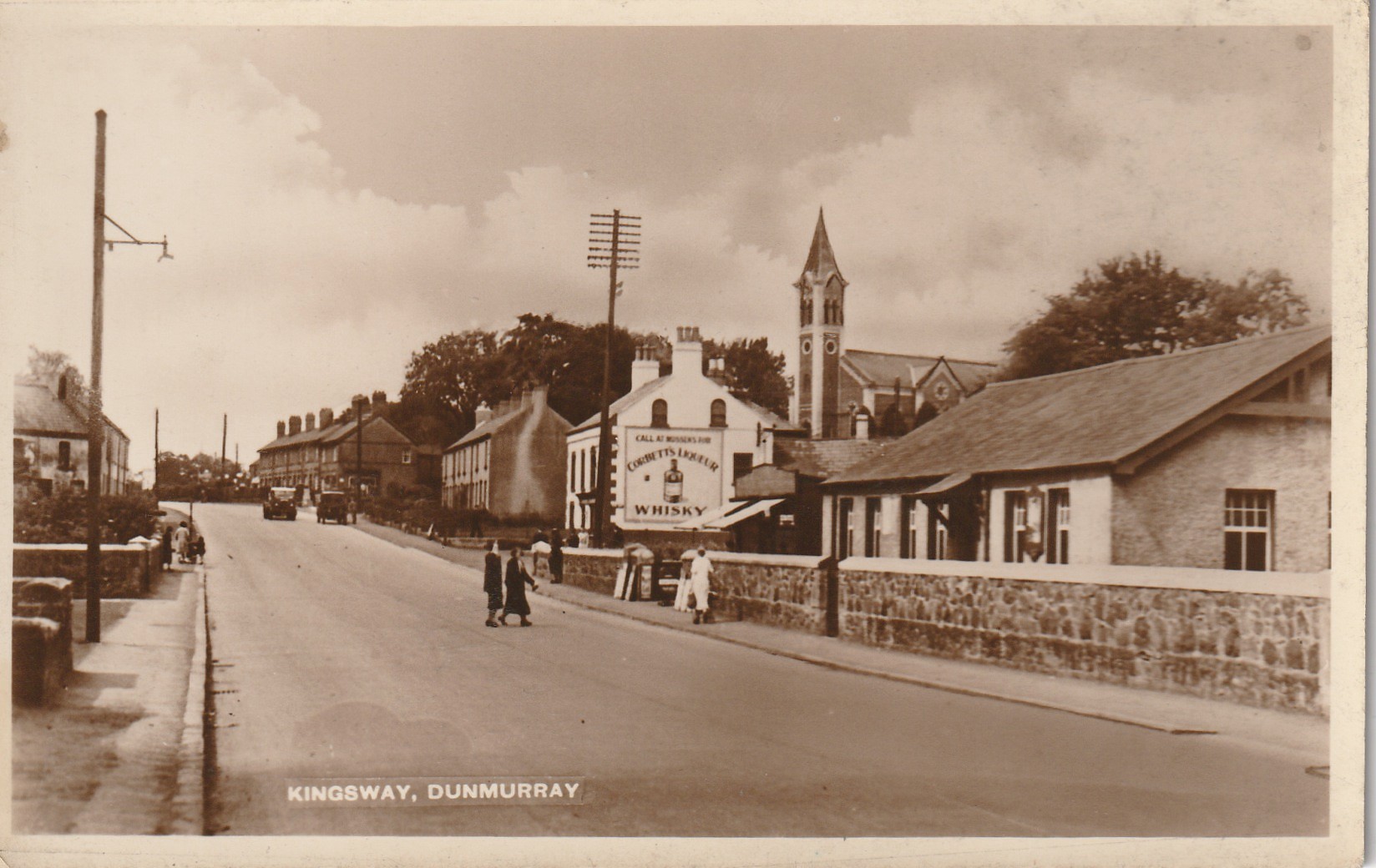
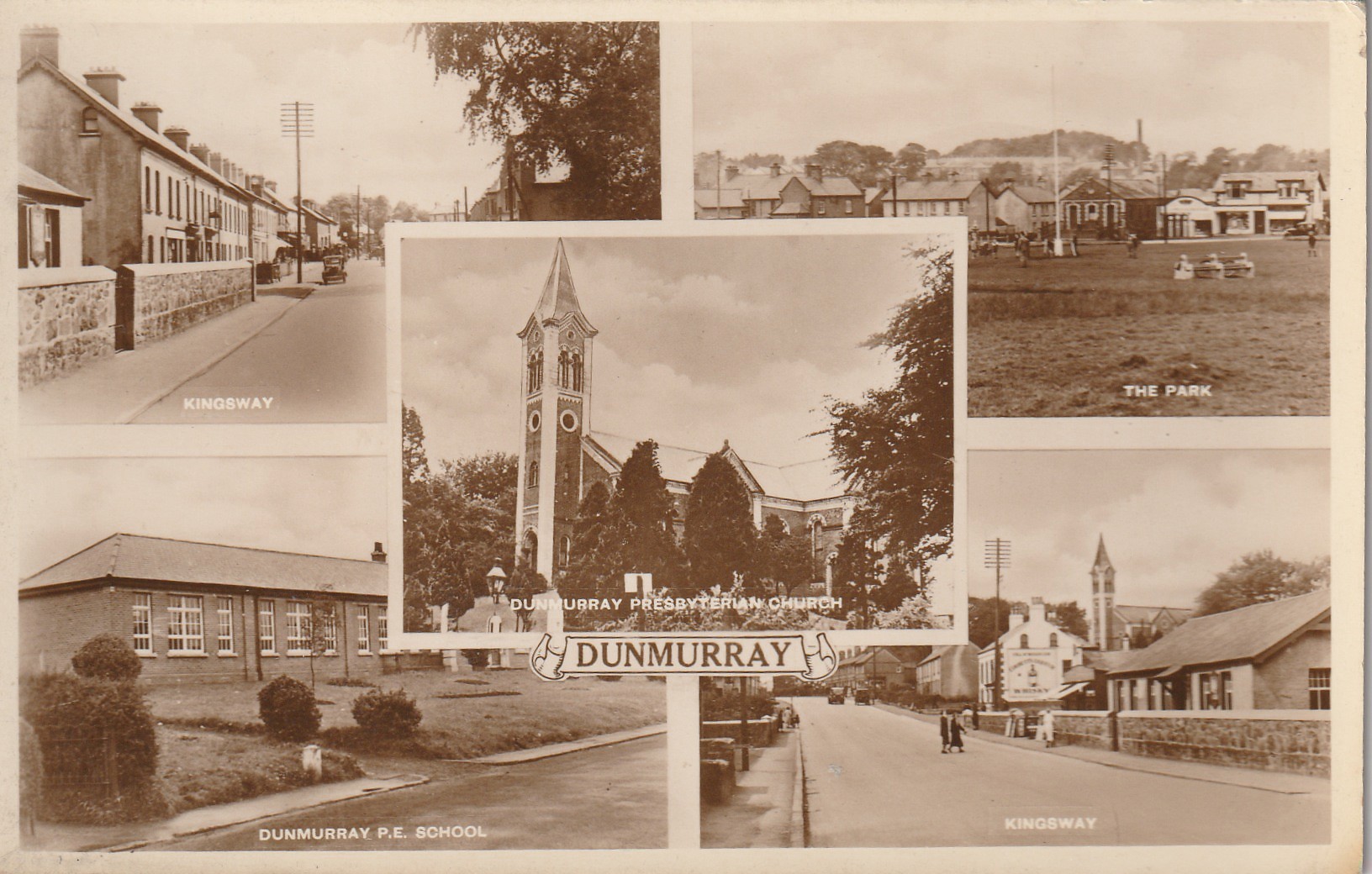
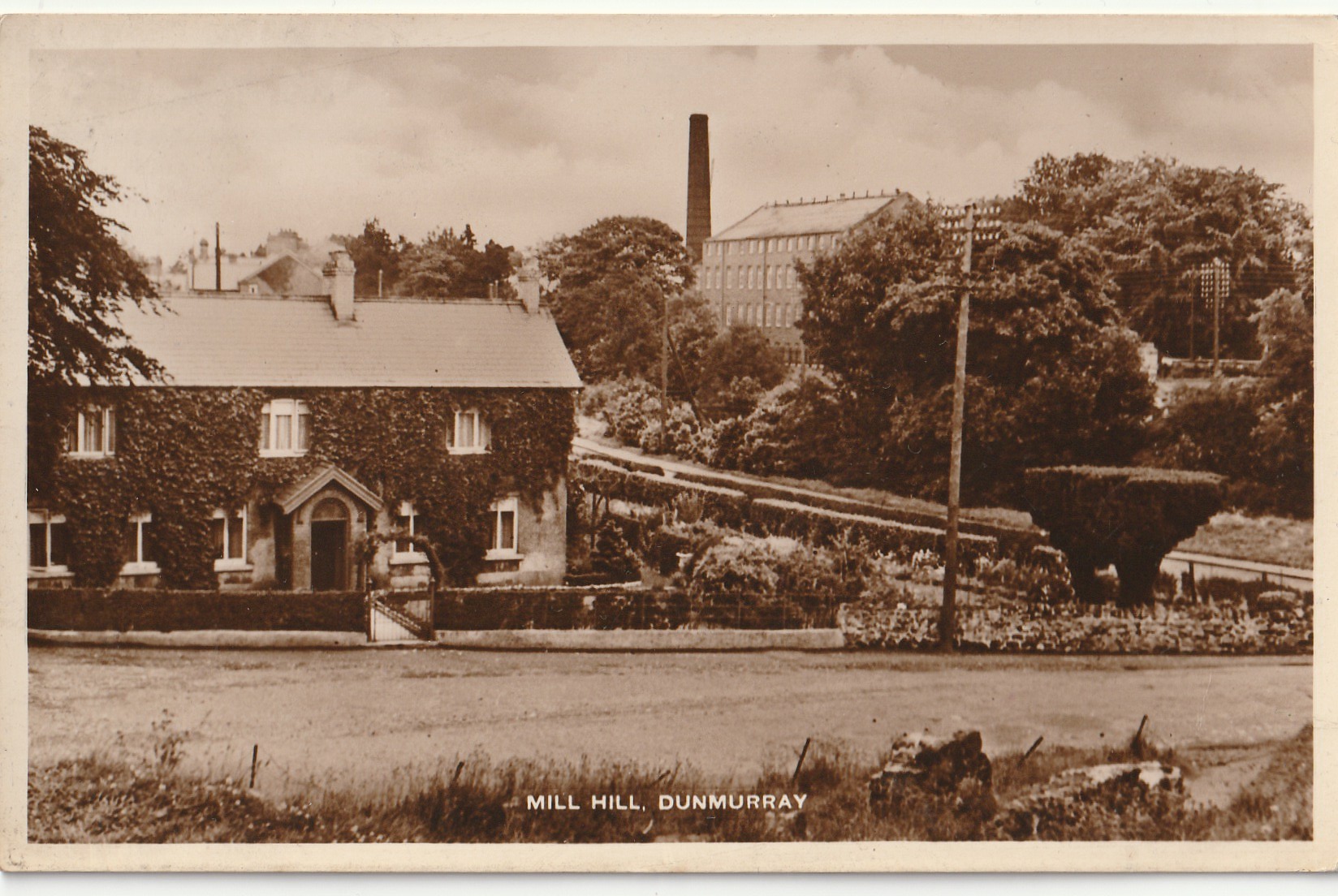
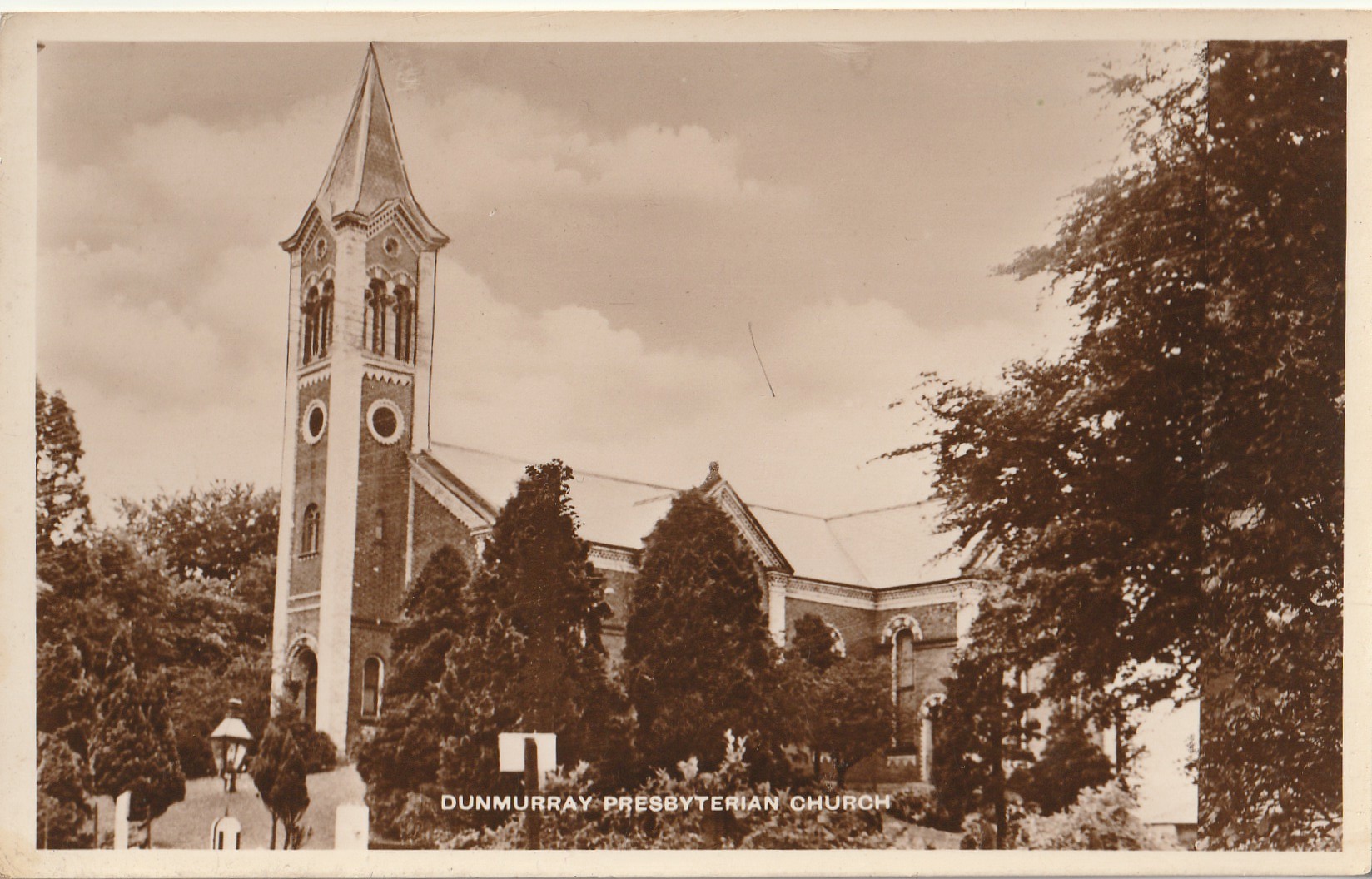
We have a good collection of postcards of Dunmurry in our Library at First Dunmurry (Non-Subscribing) Presbyterian Church. The following video tells their story:

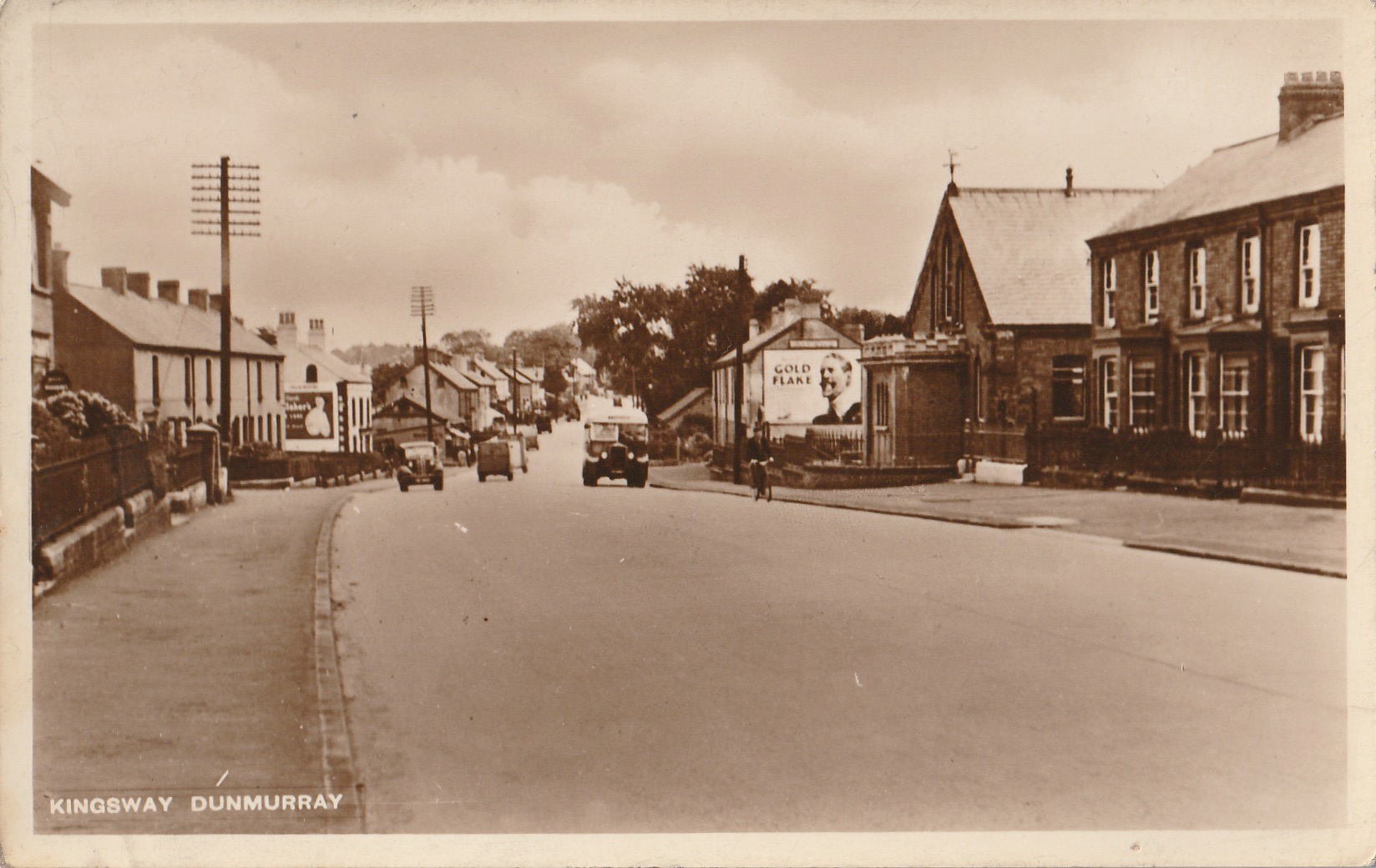
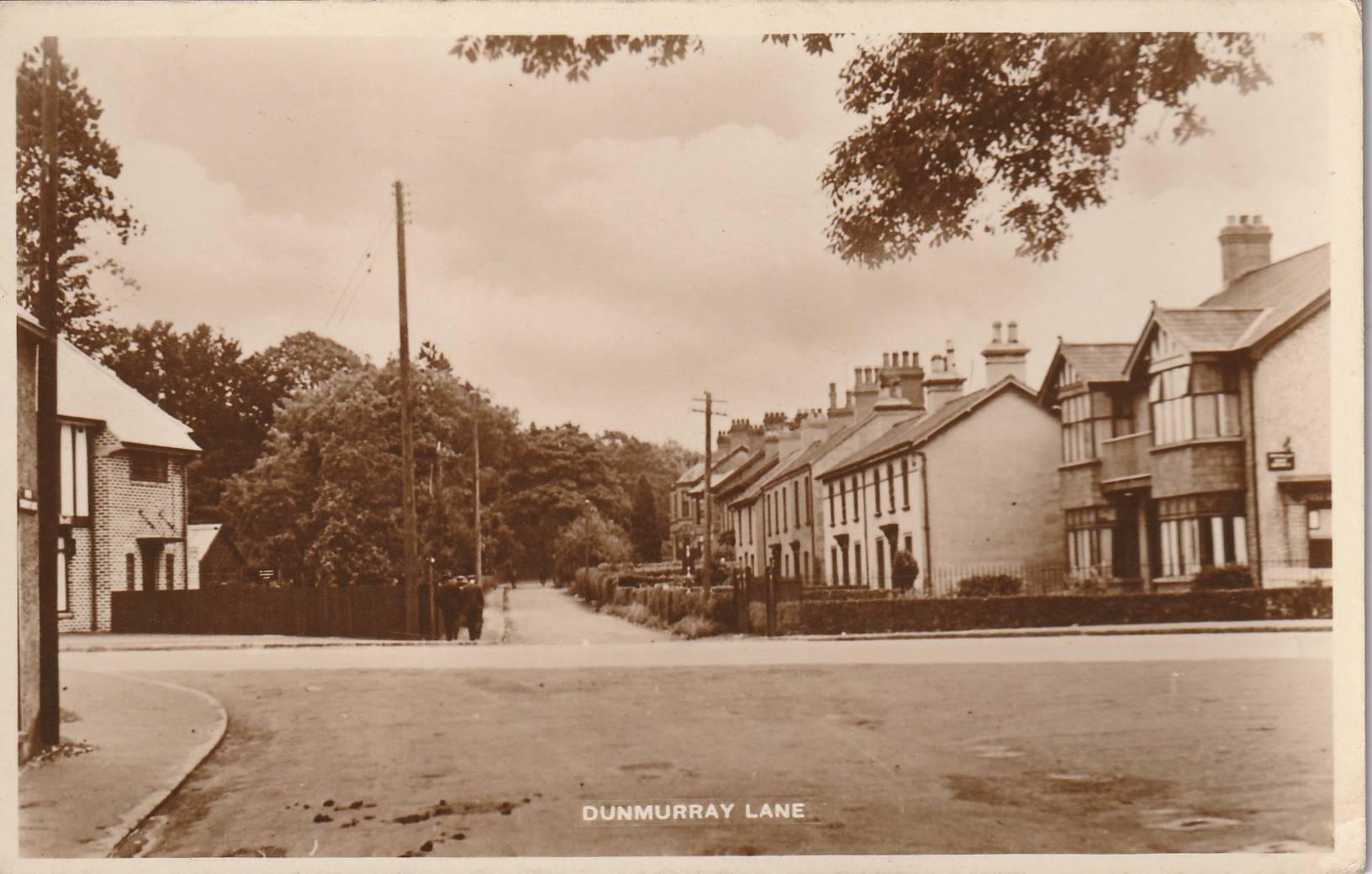
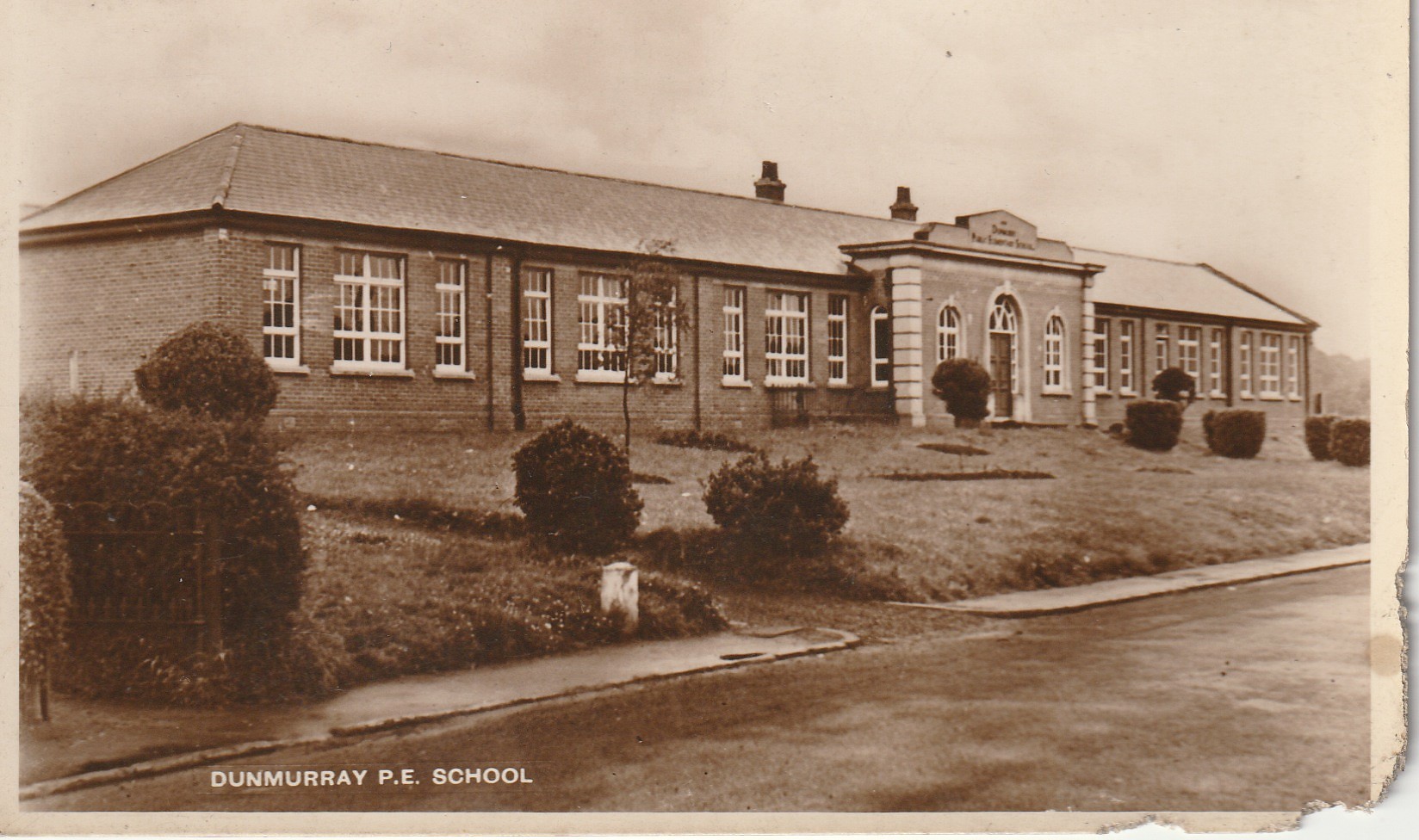
Here are the postcards:

Kingsway 1
Dunmurry Lane
Dunmurry Primary School
Kingsway 2
Multi-view 1
Mill Hill
Presbyterian Church
Multi-view 2
The Park
St Colman’s
Kingsway 3

All published by W. McCartney, Stationer, Newsagent & Tobacconist, Dunmurry. All with the unusual spelling of ‘Dunmurray’ on the front and back of each card!

Faith and Freedom 200th Issue

Having been founded in 1947 we have now reached the significant milestone of our 200th issue. Still proudly flying the flag for a thoughtful, liberal approach to religion our journal goes all round the world and has readers on every continent.

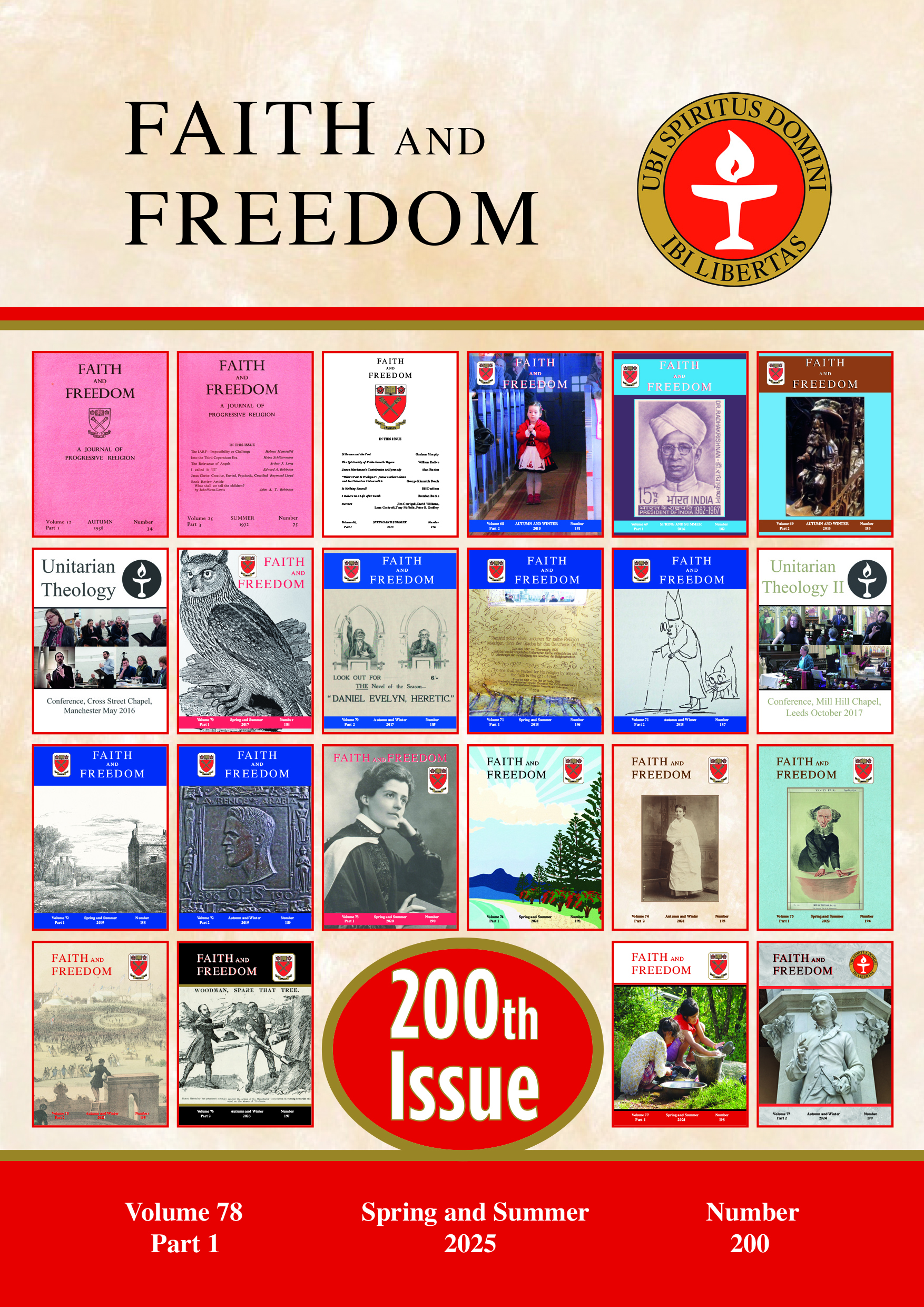
200th Issue Cover

Our Cover includes pictures of a selection of some of our 200 issues. We’ve had some splendid images in the last few years with photographs taken by some notable photographers as well some historic pictures or artworks that have really stood out.

With this being such a special issue we have selected three articles from our back catalogue that shed some light on our development over the last 78 years..

The first is from our very first issue. A Declaration of Faith by Dr Albert Schweitzer set the tone at the very genesis of this journal. It is hard to over estimate the importance of Albert Schweitzer within liberal circles at that time. A polymath thinker, theologian, humanitarian, philosopher, physician, he epitomised the cutting edge of a liberal, questioning approach to religion in the mid-twentieth century. Written for a meeting of the International Association for Religious Freedom, the world’s oldest interfaith organisation, a body which we have often had close interactions with, it was a considerable coup to have his contribution in the very first issue.

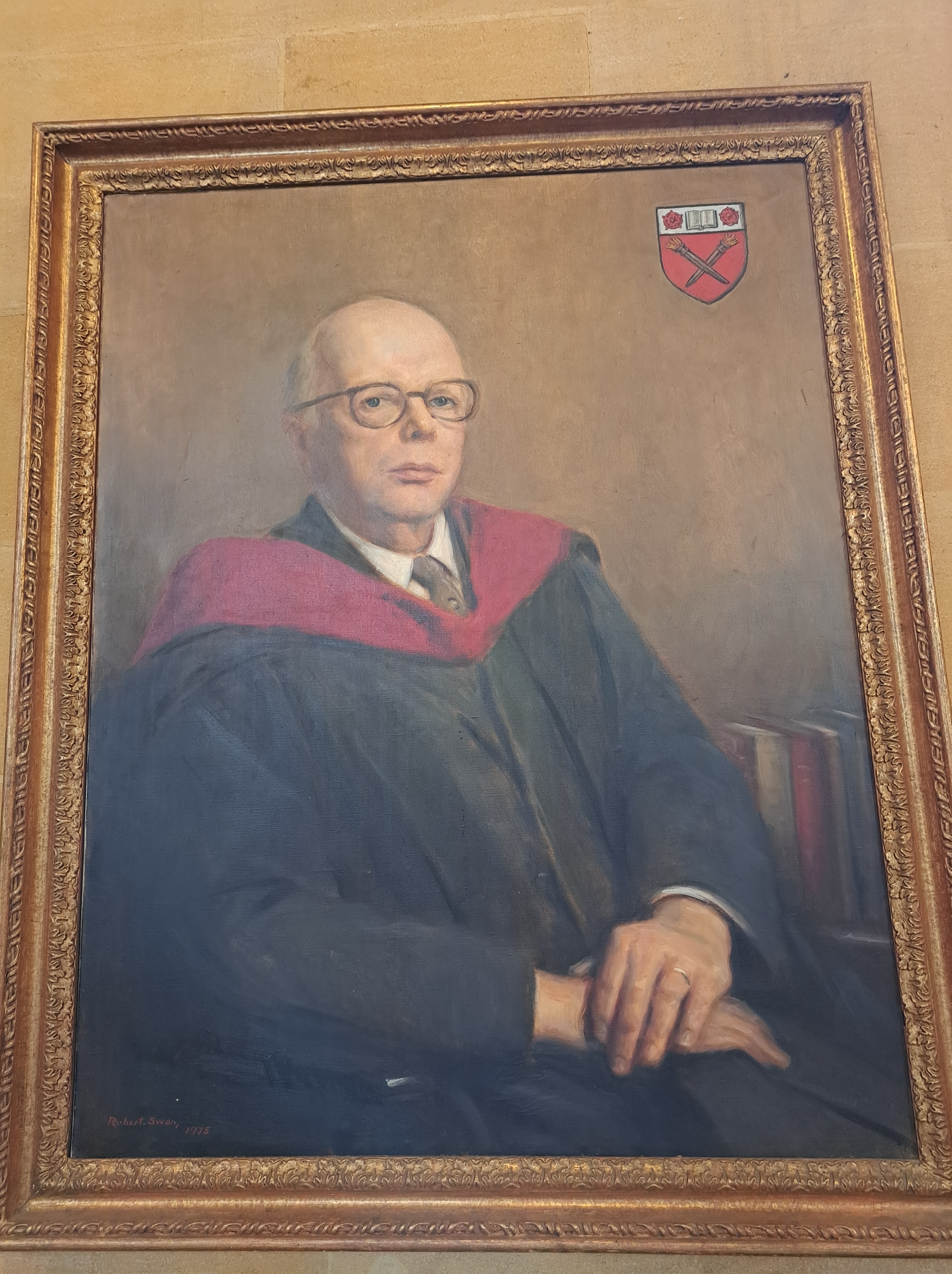
The second article is God is Necessary by H. Lismer Short published in Autumn 1958. At the time he was a future Principal of Manchester College, and his article displays the depth and breadth of his scholarship. Essentially an answer to the humanism of that age and the development of a scientific thinking that had unsettled the traditional Unitarian approach to the divine. The article declares that we ‘have been satisfied with cosmic explanations or enquiring agnosticisms, and have not sufficiently tackled religion from the end of human anxiety and dread.’ The traditional proofs of God no longer hold but ‘all the burden of living’ still required a place for faith in a personal God.

Harry Lismer Short. Portrait in Harris Manchester College

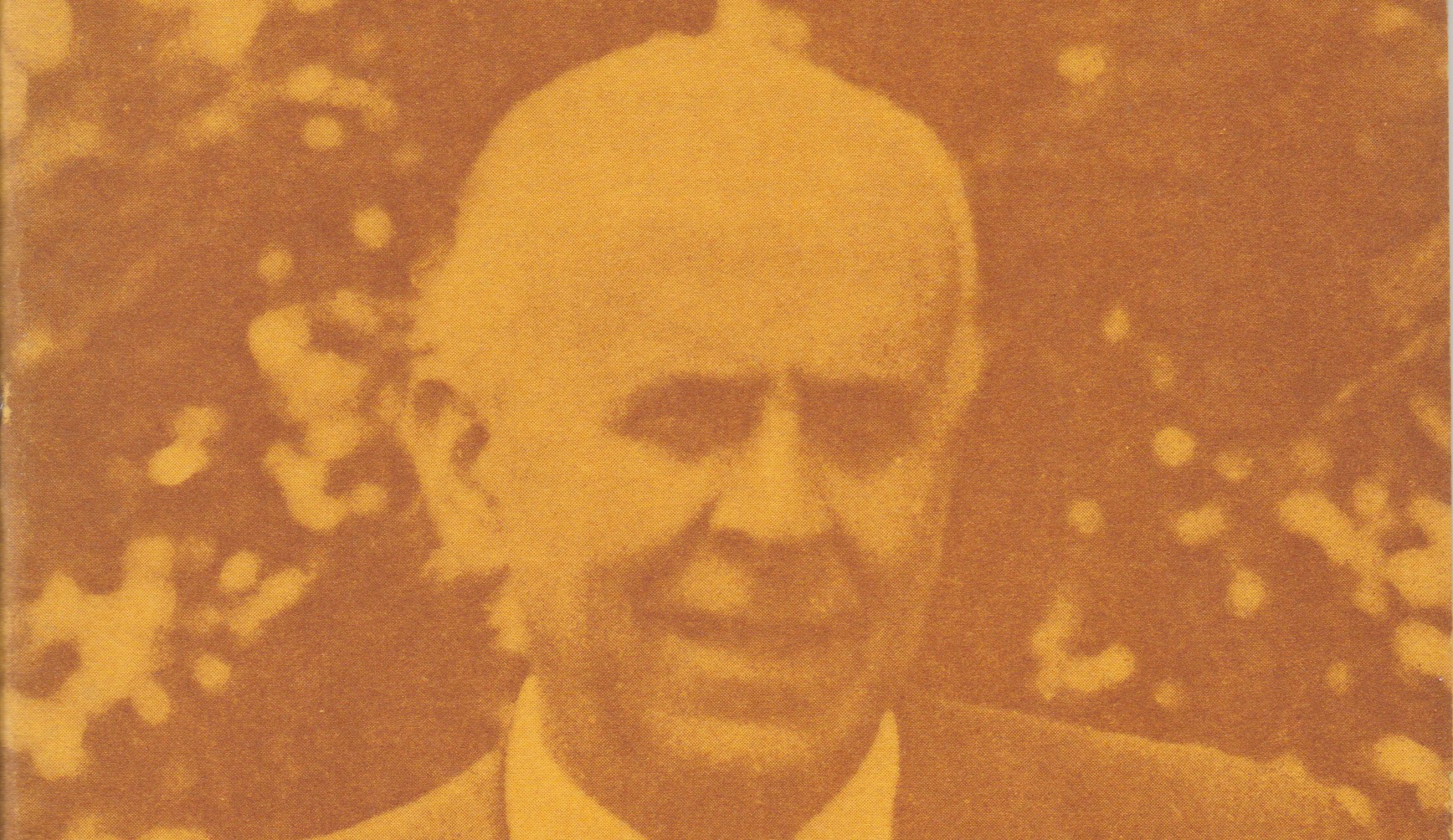
The final article from our back catalogue in this issue is A Rational Basis for Religious Belief by Arthur J. Long dating from Summer 1974. Another Unitarian Principal (this time of the Unitarian College, Manchester) this is another article which displays the writer’s considerable erudition as well, in Arthur’s case, of his irrepressible sense of humour. What is particularly interesting about this paper is that it was prepared for a long-forgotten meeting between Unitarian and Roman Catholic theologians which took place in 1973. The papers for this encounter still exist and it might be profitable at some stage to revisit them. The basis of this article is not to ask ‘Does God exist?’ but rather ‘What sort of God?’, he rejects the argument from revelation and the argument from experience and roots religious belief in a rational theism, ‘underpinned by a rational empirical theology’, and uses Peter Berger’s A Rumour of Angels to frame his apologia.

Rev Arthur Long (from the cover of his 1978 Essex Hall Lecture)

New pieces for this issue include On Reading the Koran by Barrie Needham, a timely, fair and objective assessment of this crucial text which is so frequently mentioned but very seldom examined. The other is Frank Walker’s The Sybil’s Request. Death and Our Human Imagination which explores how we understand death, Heaven and eternity and ranges over the thinking contained in the poetry and literature of such figures as T.S. Eliot, T.F. Powys and Julian Barnes, and ends, appropriately enough, with a quotation from Harry Lismer Short.

The articles are followed by a great selection of reviews:

Reviewed by Graham Murphy

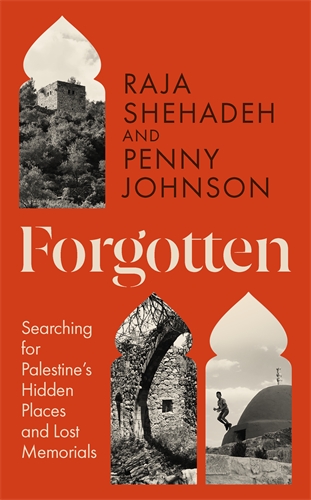
Raja Shehadeh and Penny Johnson, ‘Forgotten, Searching for Palestine’s Hidden Places and Lost Memorials’, Profile Books, 2025 reviewed by Graham Murphy

Michael Allured and Kate Dean, ‘Soul Deep: Exploring Spirituality, Together’, Lindsey Press, 2024, reviewed by Laura Dobson

Jade C. Angelica, ‘Where two worlds touch’, Skinner House Books, 2024, reviewed by Peter Hewis

Patrick Riordan SJ, ‘Human Dignity and Liberal Politics: Catholic possibilities for the common good’, Georgetown University Press, Washington DC, 2023, reviewed by Helena Fyfe Thonemann.

Reviewed by Laura Dobson

An annual subscription to Faith and Freedom (two issues) costs £16.00 (postage included) in the United Kingdom. Single copies can be ordered at a cost of £8.00 each (postage included). Cheques should be made out to Faith and Freedom and sent to the business manager:

Nigel Clarke,
Business Manager, Faith and Freedom,
16 Fairfields,
Kirton in Lindsey,
Gainsborough,
Lincolnshire.
DN21 4GA.

Overseas subscriptions are also available.

It is also possible to pay online. For more details see our website:

https://www.faithandfreedom.org.uk/subs.htm

Commonwealth War Graves at Botley Cemetery, Oxford

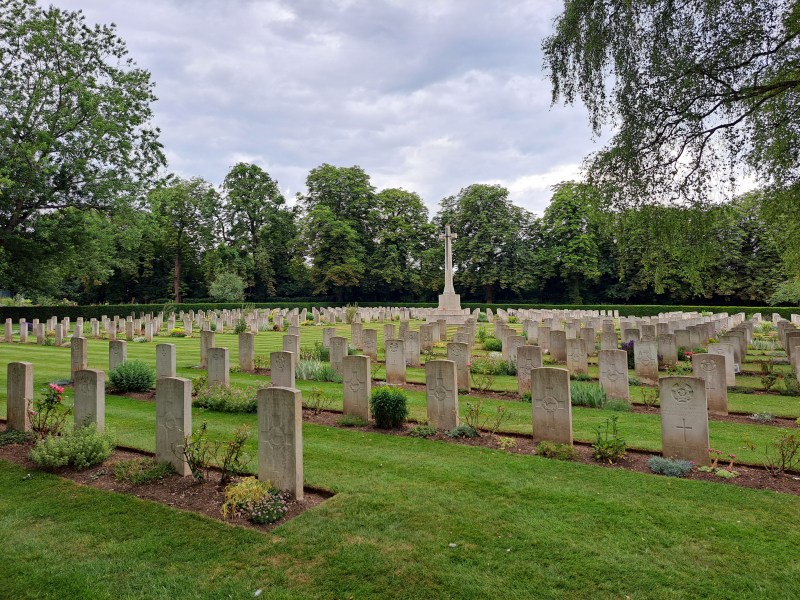
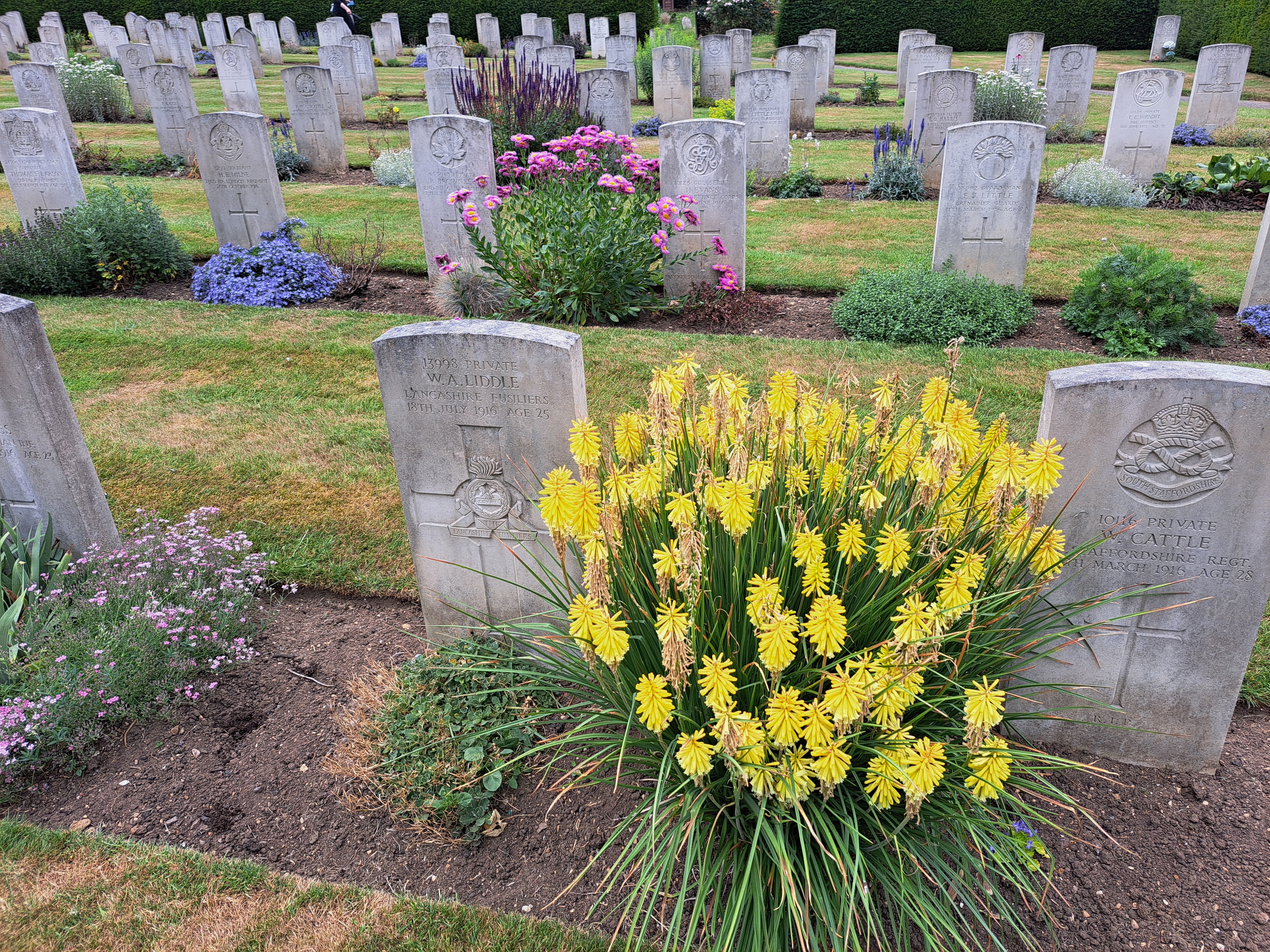
Visiting Botley Cemetery for the first time, despite seeing the signs for the Commonwealth War Graves, I didn’t expect to find such a large military cemetery of a size and with such features as you would expect to find in France or Flanders. Like all Commonwealth War Graves Commission cemeteries it is immaculately maintained, and a very moving place to visit.

I was surprised to find such a large graveyard of this sort in Oxfordshire, although it is inevitably true that many service men and women did die at home, either on home service, or were brought back because of wounds or found themselves in hospital because of accident or illness. Oxford provided a major regional hospital during the First World War, and again during the Second World War. Oxfordshire was also a major centre of RAF activity in the Second World War and Botley was then designated as a Royal Air Force Regional Cemetery. In the First World War the University Examination Schools housed the 3rd Southern General Hospital with room for 1,500 patients. The Schools weren’t the only venue for the war-time hospital, also put to use were Somerville College (for officers only), the Workhouse on Cowley Road, the Town Hall, University and New Colleges, and the Oxford Masonic Buildings on High Street. In the Second World War the Examination Schools were again used as a hospital.

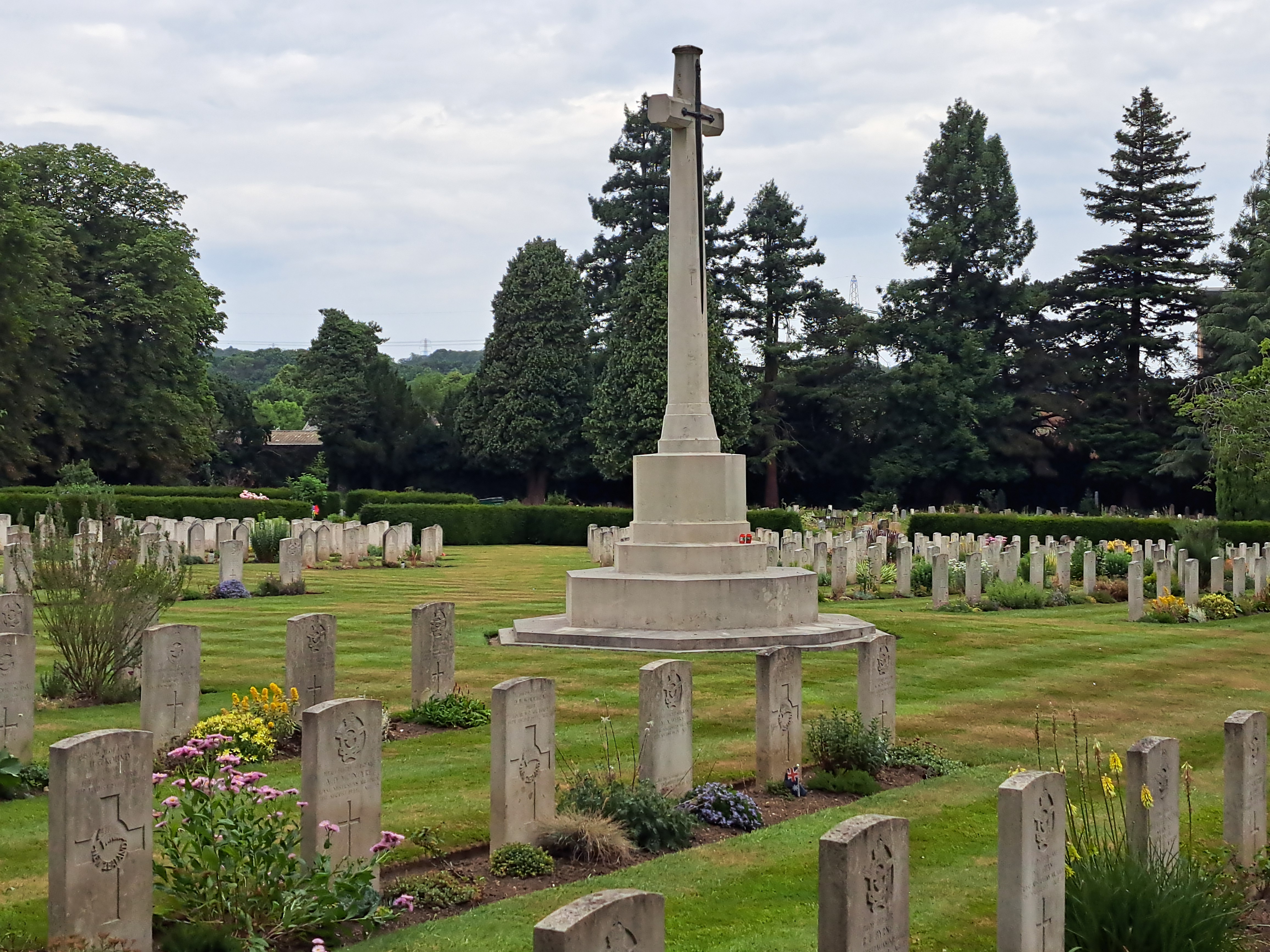
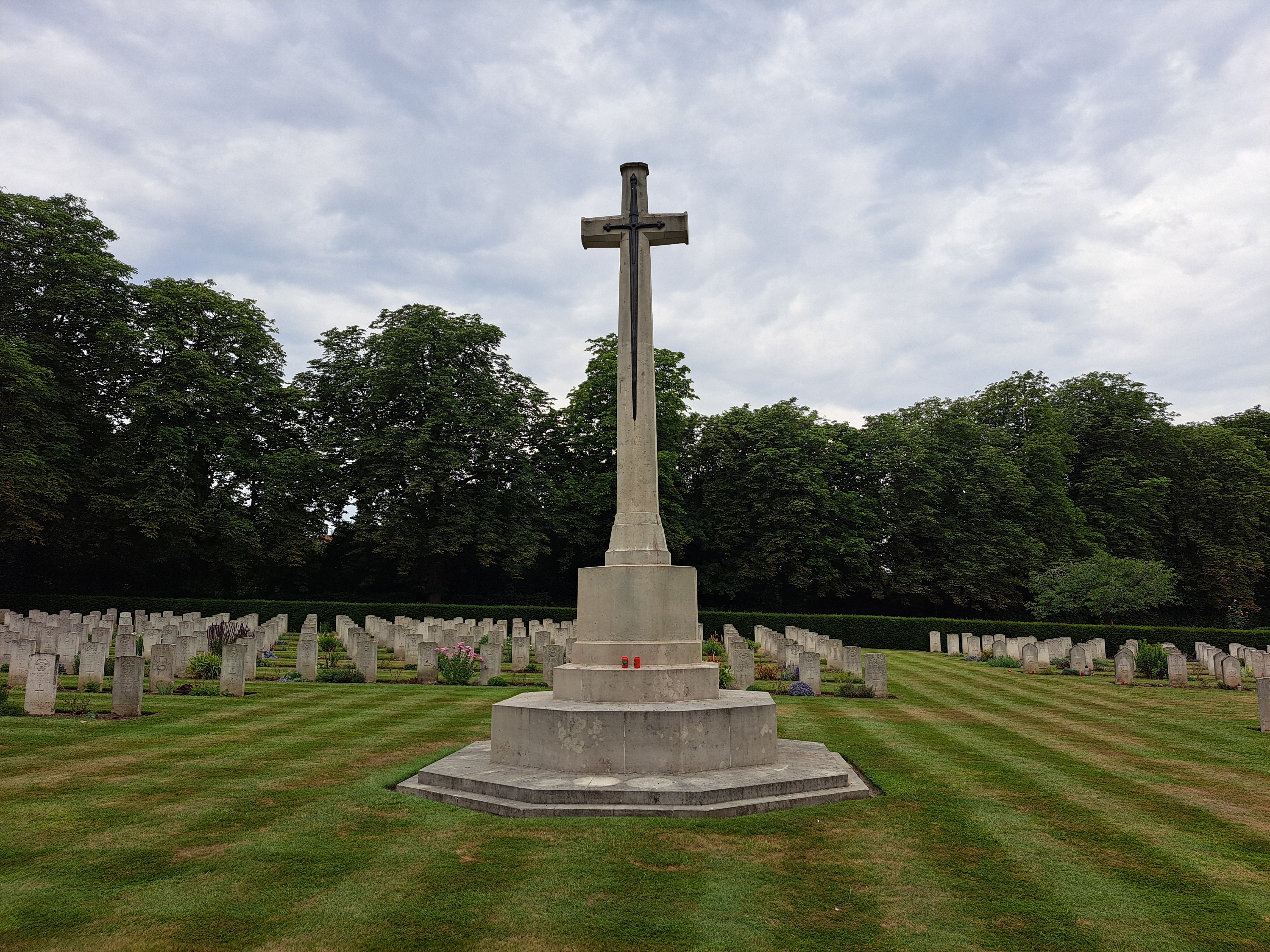
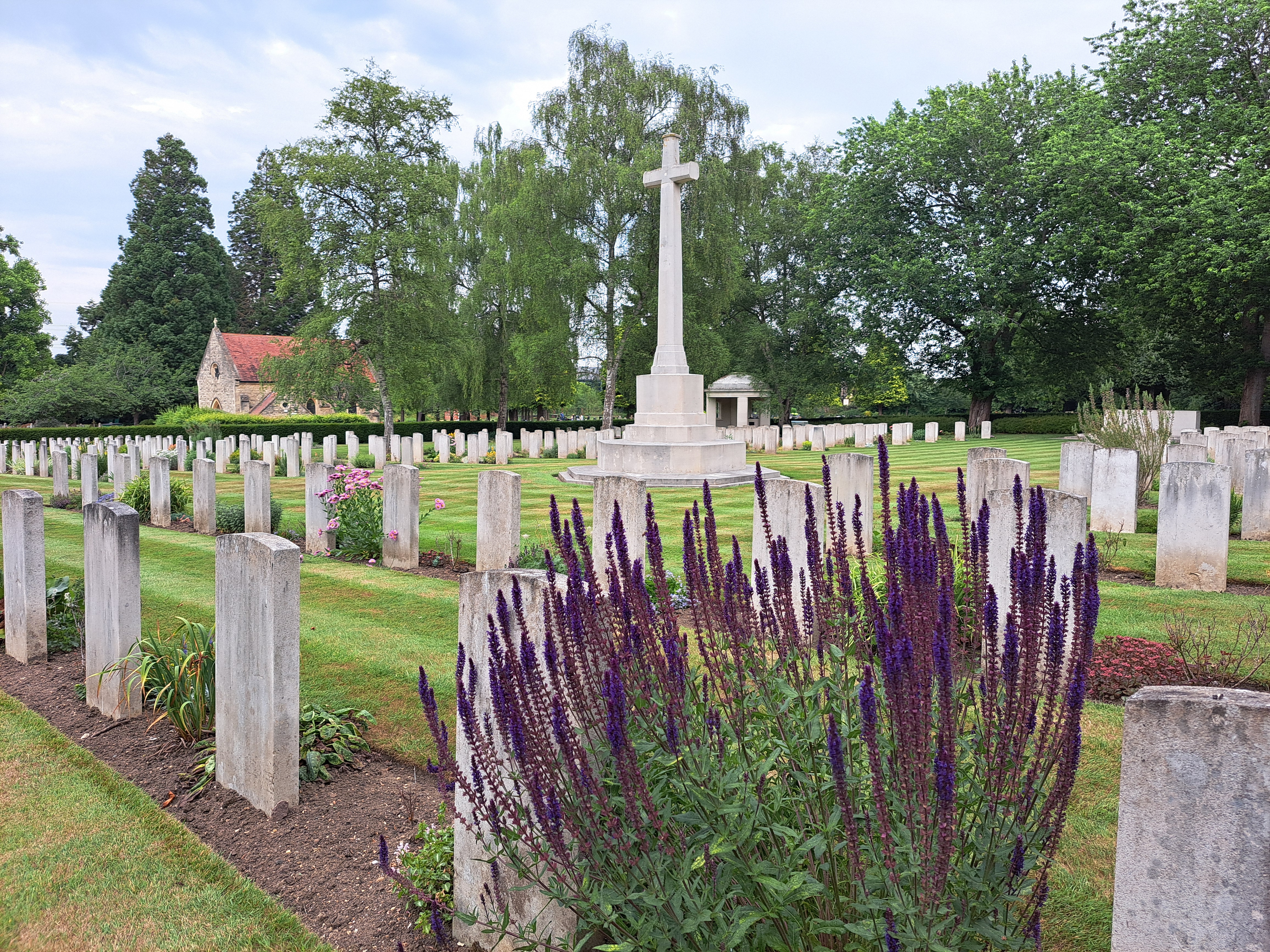
Botley Commonwealth War Graves Commission Cemetery has all the features that can be found in major cemeteries of this type. At the centre of the grave yard there is a Cross of Sacrifice, a large cross containing a bronze longsword, with its blade pointing down, it is said to be present in all graveyards containing 40 or more war graves. These were designed by Sir Reginald Blomfield and are a familiar symbol of sacrifice in so many places. By 1937 there were already over 1,000 of these crosses in Europe alone, more were to follow after the Second World War.

Cross of Sacrifice

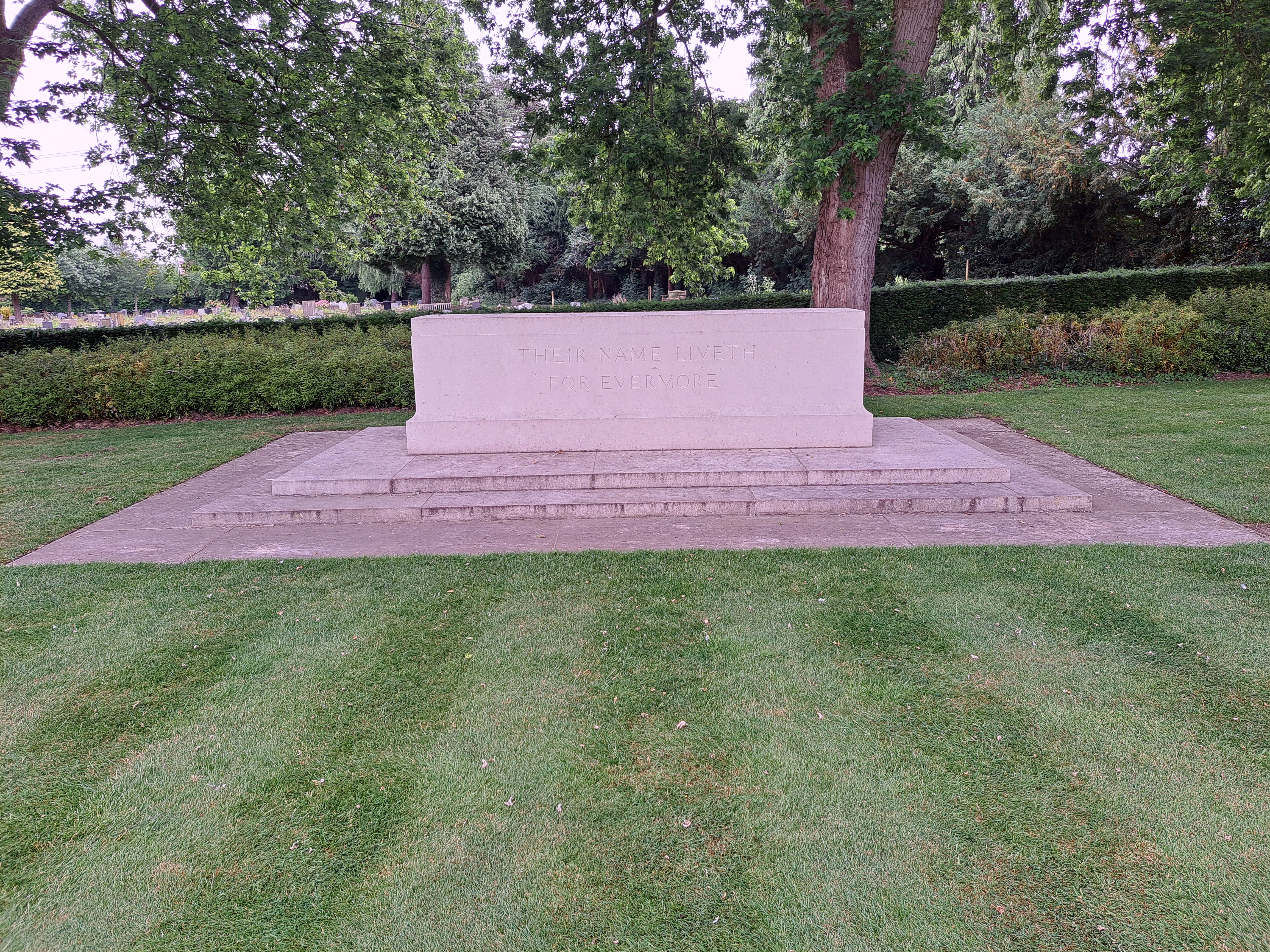
The Cemetery also has a Stone of Remembrance designed by Sir Edwin Lutyens for use in CWGC Cemeteries containing more than 1,000 graves. There are now hundreds of these all around the world but only 12 in the UK. With around 743 graves Botley was regarded as a special case, perhaps indicating that it is one of the dozen largest Commonwealth War Grave Cemeteries in the UK. Although not designed as such the Stone resembles an altar and carries a quotation from the book of Ecclesiasticus: Their Name Liveth for Evermore. Sir Edwin Lutyens was one of three principal architects of the Imperial War Graves Commission (as it was then called) and as well as his work in New Delhi and elsewhere is perhaps best remembered for his contribution to memorial architecture for the First World War, designing the Cenotaph in London and the Thiepval Memorial to the missing of the Somme.

Stone of Remembrance

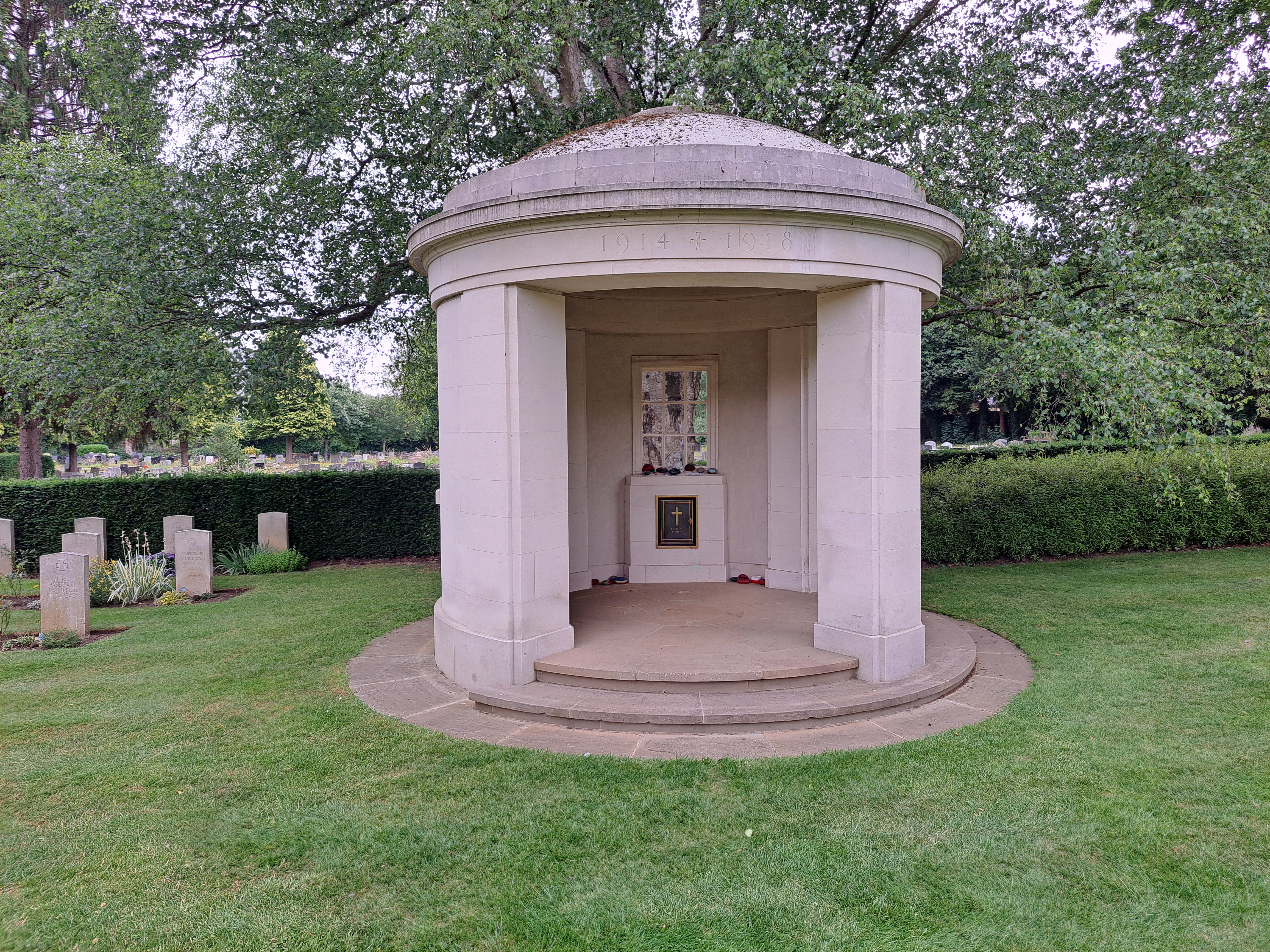
The third building found in the graveyard is the Shelter, designed by Sir Edward Maufe, the Principal architect of the Commonwealth War Grave Commission after the Second World War.

Domed Shelter

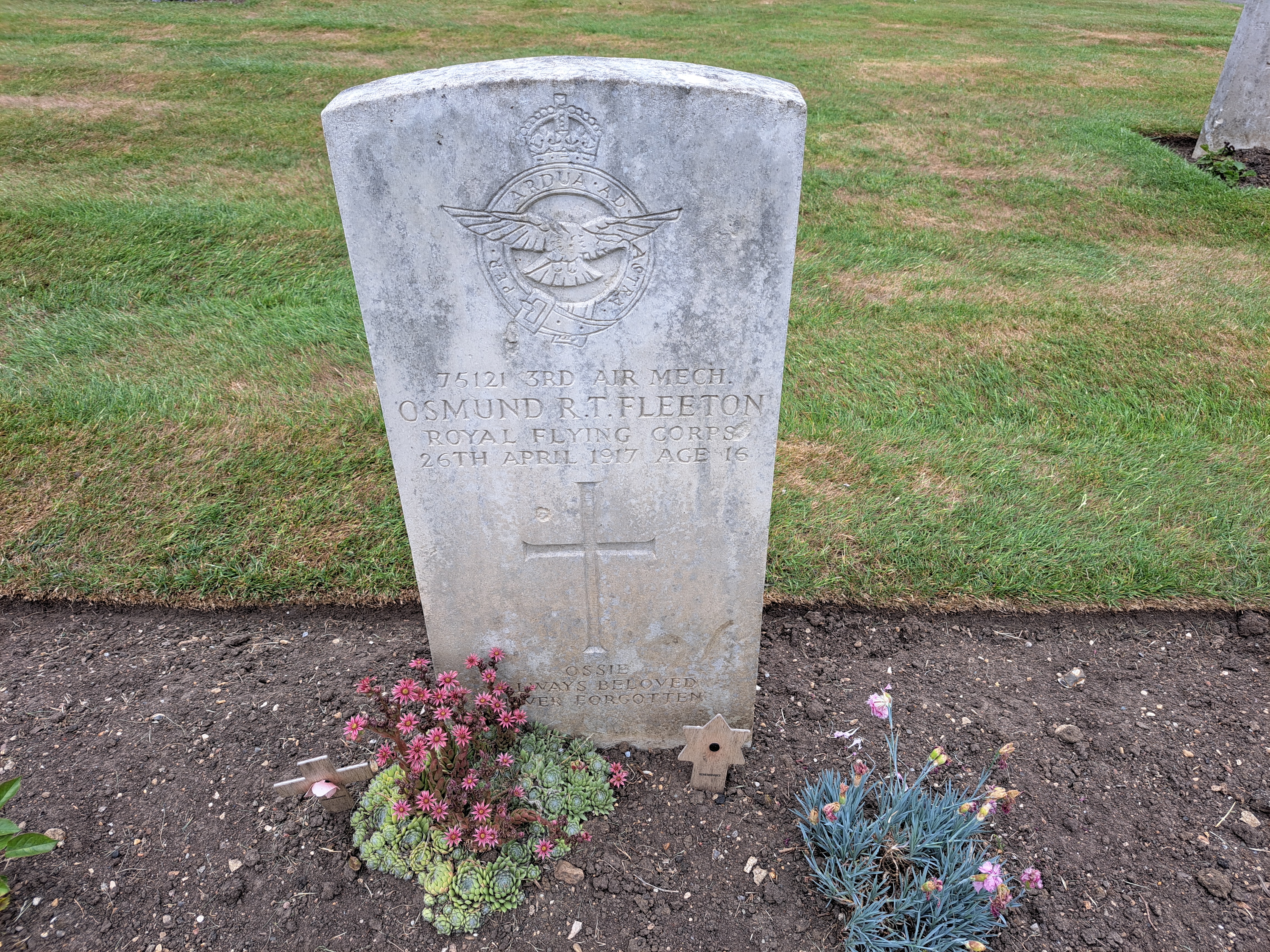
One of the first graves I noticed must be among the most poignant. It is that of Air Mechanic 3rd Class Osmund R.T. Fleeton of the Royal Flying Corps who was just 16 when he died. He came from Cork where his parents Robert and Jeanie Eloise Fleeton, lived at 1 Brookfield Villas, College Road. The official record says he ‘died of sickness 26th April, 1917’. ‘Ossie Always Beloved, Never Forgotten,’ his family inscribed on his grave.

Grave of Osmund Fleeton

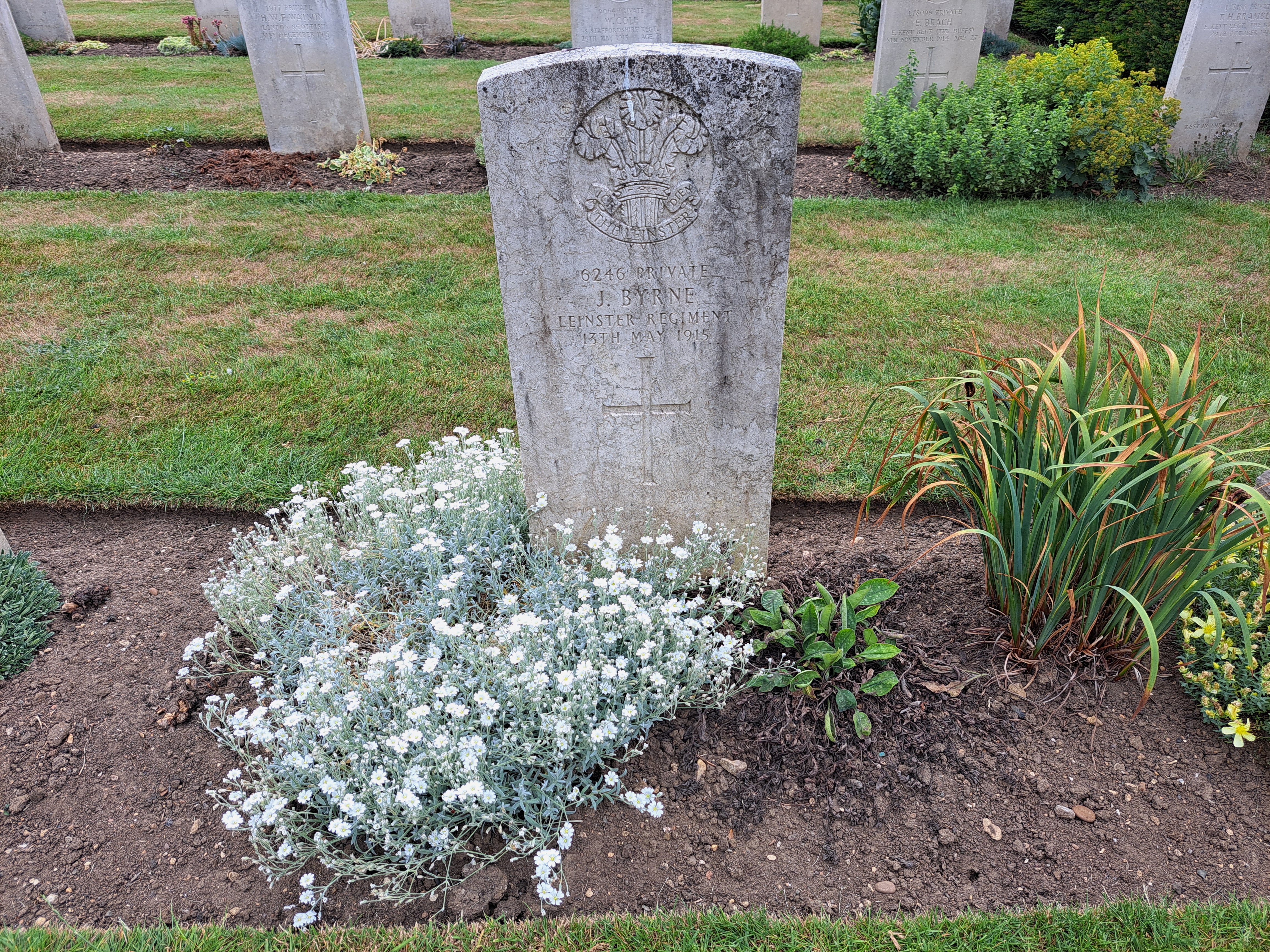
Another Irish grave is that of Private James Byrne from county Kilkenny of the 1st Battalion the Leinster Regiment who died on 13th May 1915.

Private James Byrne

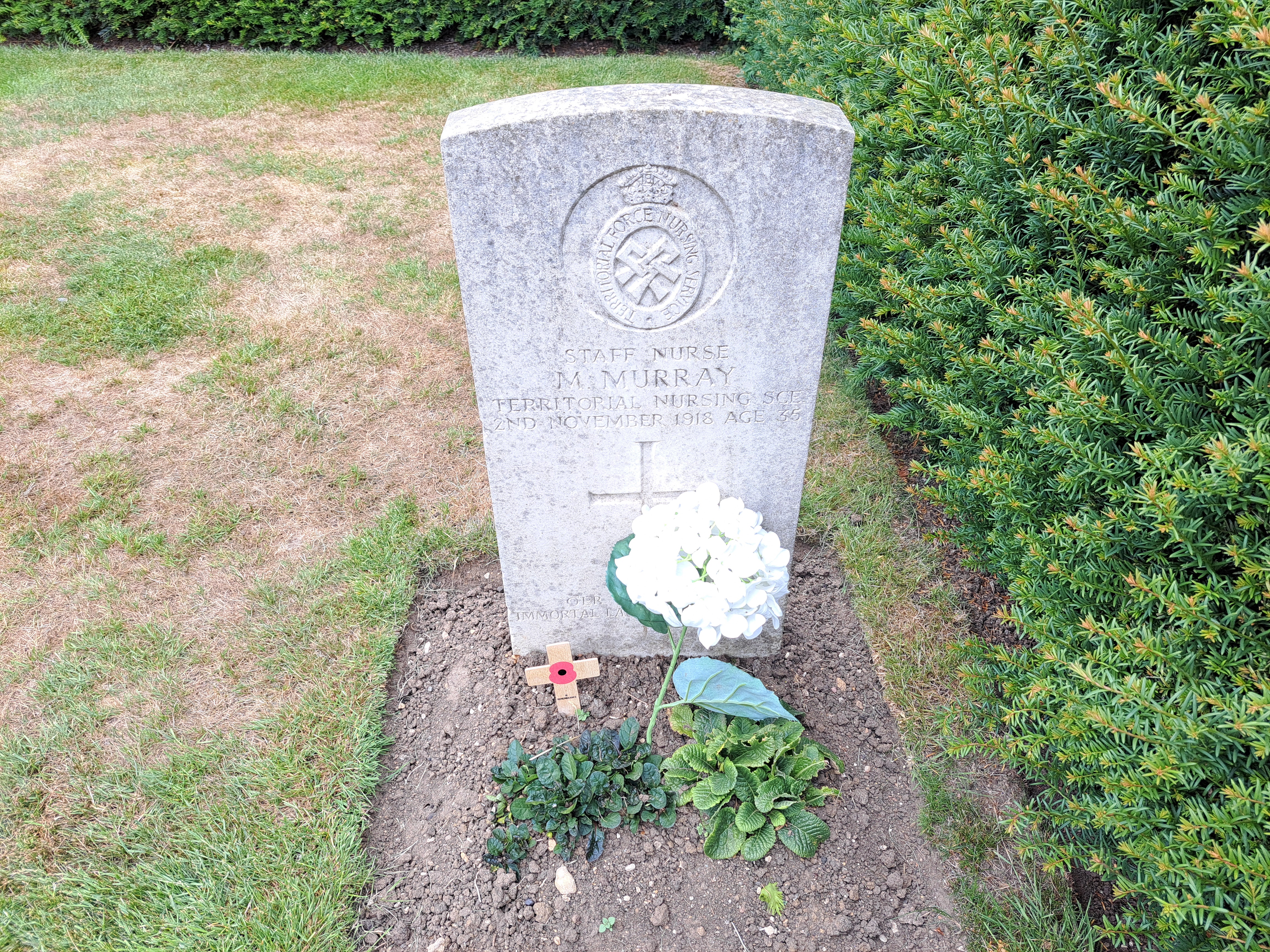
In one corner of the grave yard there is a solitary grave of a nurse – Staff Nurse Mabel Murray, of the Territorial Force Nursing Service, who worked at the 3rd Southern General Hospital and who died of influenza on 2nd November 1918 at the age of 35. She was one of the victims of the so-called ‘Spanish flu’ which swept over the nation at the end of the First World War, and it may be that the reason her grave is situated in a lonely corner is that they expected more of her colleagues to fall victim to influenza, but thankfully this did not transpire. She is not the only woman buried in the cemetery, however. Nineteen years old Aircraftwoman Glenys Doreen Harris is buried in the RAF section having been killed when an RAF Mosquito crashed in training at Upper Heyford on 24th September 1945.

Staff Nurse Mabel Murray

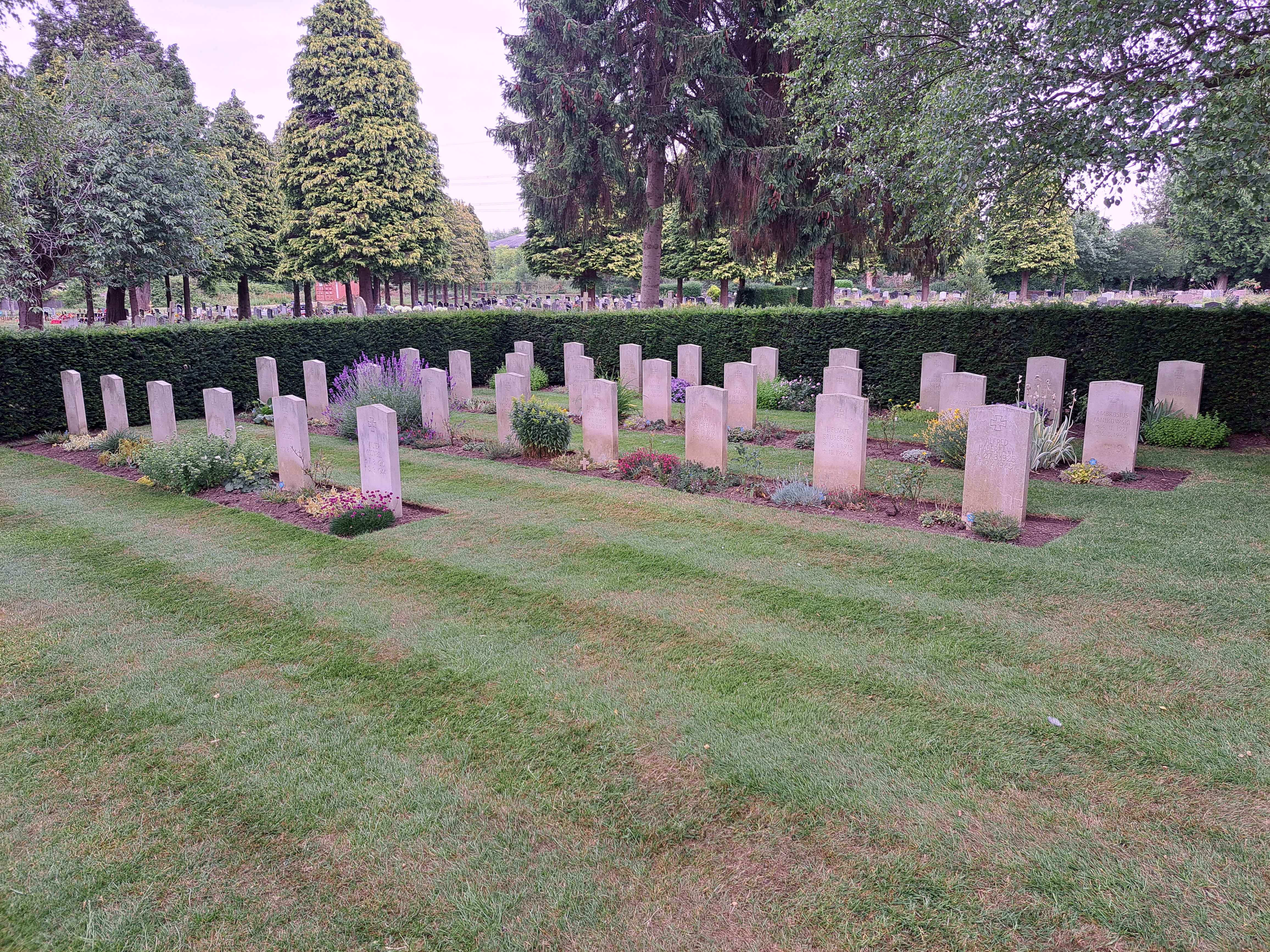
The graveyard contains the graves of many nationalities from both world wars including those who came from the then dominions of the British Empire (Australia, New Zealand, Canada, and South Africa) as well as other countries including Belgium, Czechoslovakia, Italy, The Netherlands, and Poland. Botley also contains the only grave of a Greek soldier in Britain – Private T. Lagos, who died in Oxford on 18th October 1944. His headstone is inscribed with a quotation from Pericles’ funeral oration as recorded by Thucydides: The whole earth is the tomb of famous men’. There are also a number of German graves from the First World War as well as a large section of 33 graves of German soldiers all dated 1944 who presumably were prisoners of war. It was strange to see the German war graves although their presence is perhaps slightly reminiscent of the memorial in New College Chapel to former German students who had been killed in the Great War.

German war graves

The precise number of graves in the CWGC cemetery at Botley varies according to which source you consult but I did notice a number of other military graves from the world wars located outside the Commonwealth War Graves area which might account for the variations. But it is certainly a very peaceful place, a well-cared-for corner of a municipal cemetery, a silent memorial to those who gave their lives.