The Roots of Protestant Dissent in Dublin

On Saturday, 11th June members of Dunmurry along with members of First Belfast and All Souls’ Non-Subscribing Presbyterian churches enjoyed a great visit to to Dublin. We were made very welcome by the Unitarian congregation on St Stephen’s Green and treated to an excellent tour of sites connected with the roots of Protestant Dissent in Dublin by Rory Delany.
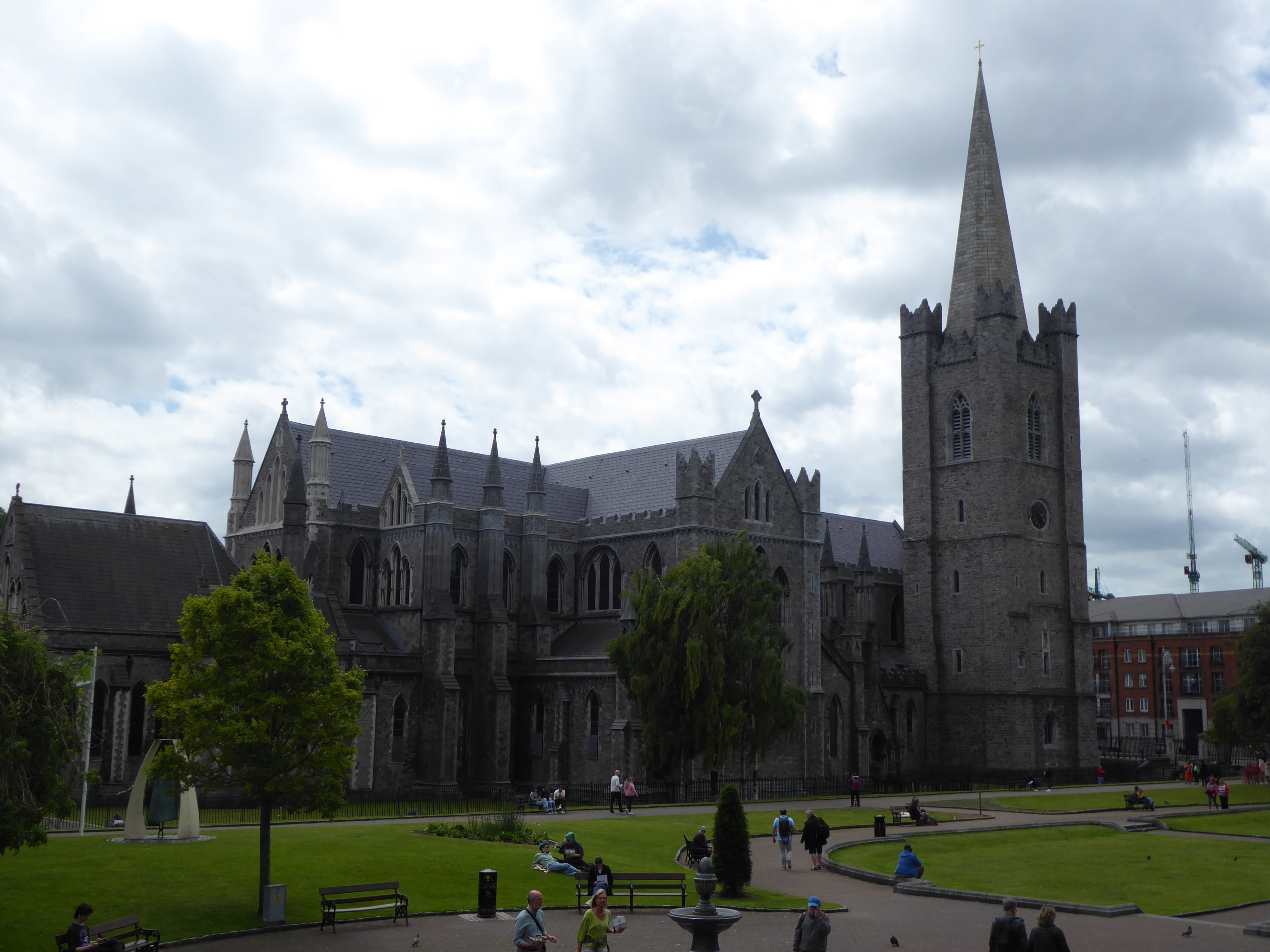
St Patrick’s Cathedral Dublin, where Cromwell is said to have stabled his horses in the 1650s

Rory has a fund of knowledge about the history of Dublin and of the different strands of Dissent in the city, which largely date back to the period of Oliver Cromwell. We were taken on a fascinating walk around some of both the familiar and not so familiar parts of Dublin and all of us gained a deep insight into the way Dissent – Independency – Presbyterianism – Unitarianism – developed in the city and the contribution made by members of the Dissenting churches to the history of the city.
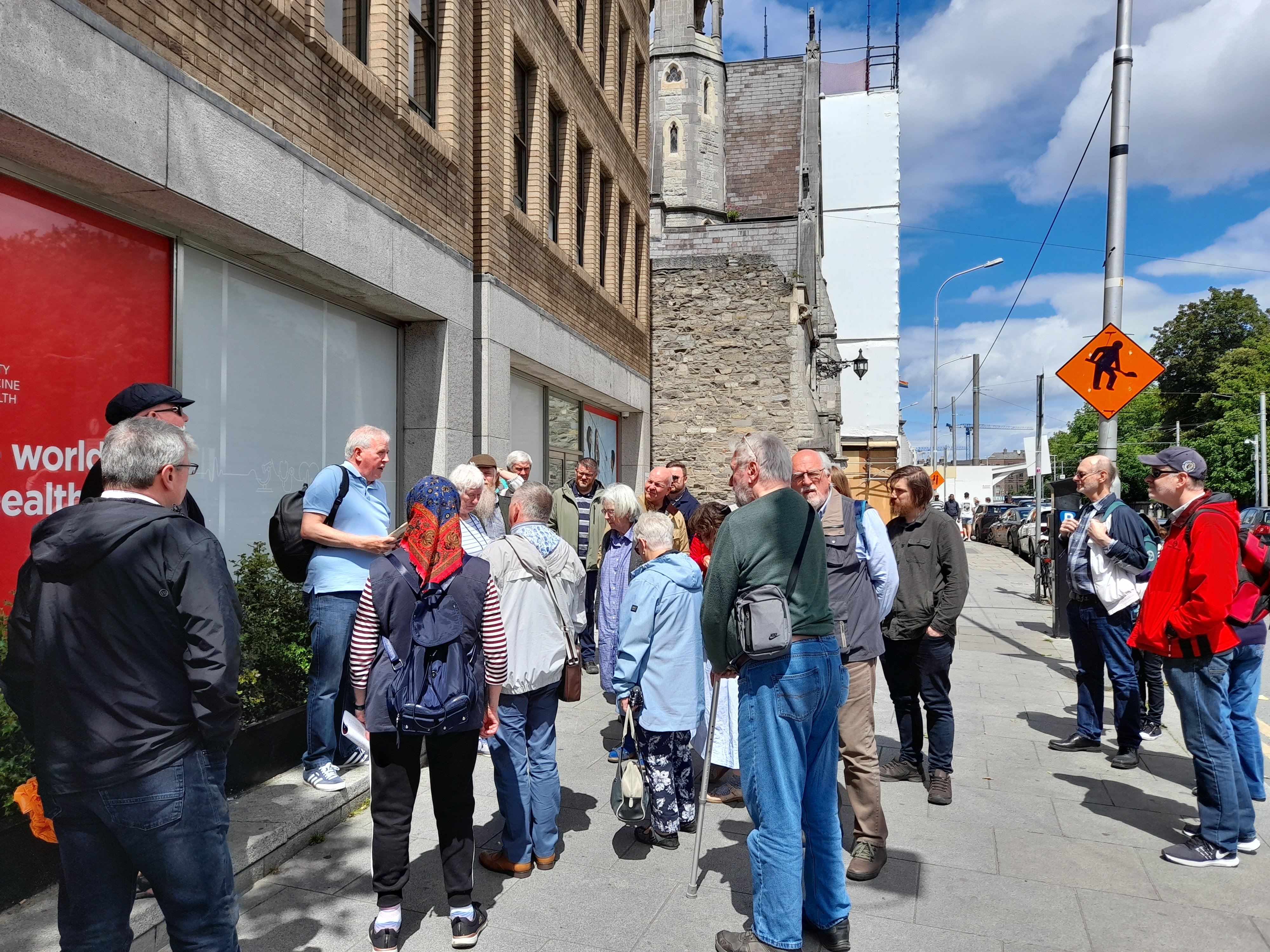
Starting the tour outside the church on St Stephen’s Green

Rory gave us an outline of the plan before we set off. The Unitarian Church was built in 1863 by the congregation of Strand Street and four years later it was joined by the congregation of Eustace Street. These two congregations contained many of the leading merchants in the city, families which had played an important part in civic life for decades, and were groups which were rooted in at least four churches which had maintained a continuity of existence from Cromwellian and Puritan times onwards.
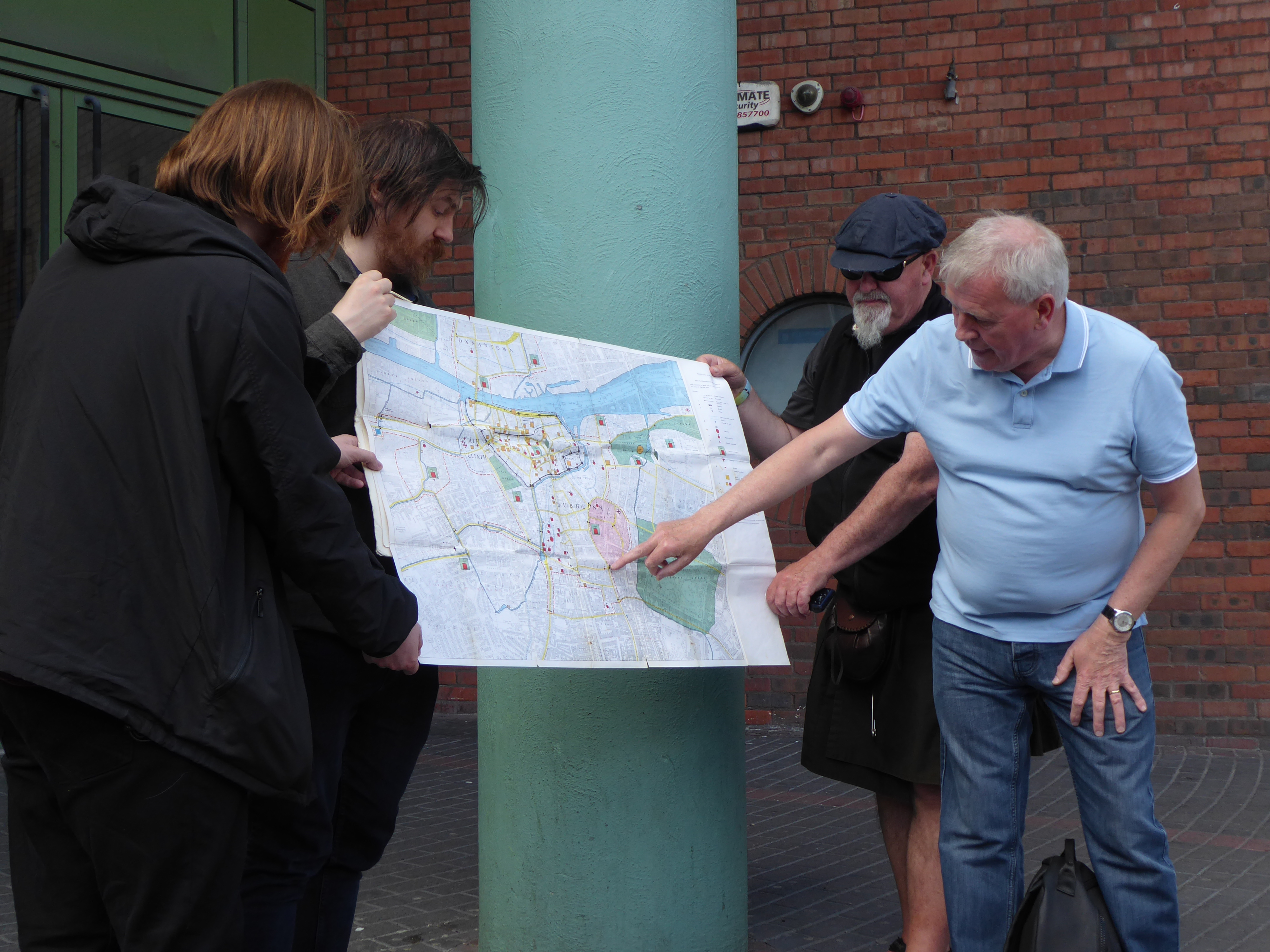
Rory explaining the location of the medieval city

Perhaps the most direct stream of religious life which fed in to the modern church on St Stephen’s Green was that of Wood Street. The first minister connected with this congregation is usually said to be John Owen, a leading Puritan divine who came to Dublin as chaplain to Oliver Cromwell and later became dean of Christ Church, Oxford during the Commonwealth. The congregation may date back to Elizabethan times but the first minister in Wood Street itself is thought to be Stephen Charnock who came to Dublin as chaplain to Henry Cromwell in 1655. A fellow of Trinity College, Dublin he was a ‘lecturer’ at St Werburgh’s and returned to England following the Restoration in 1660.
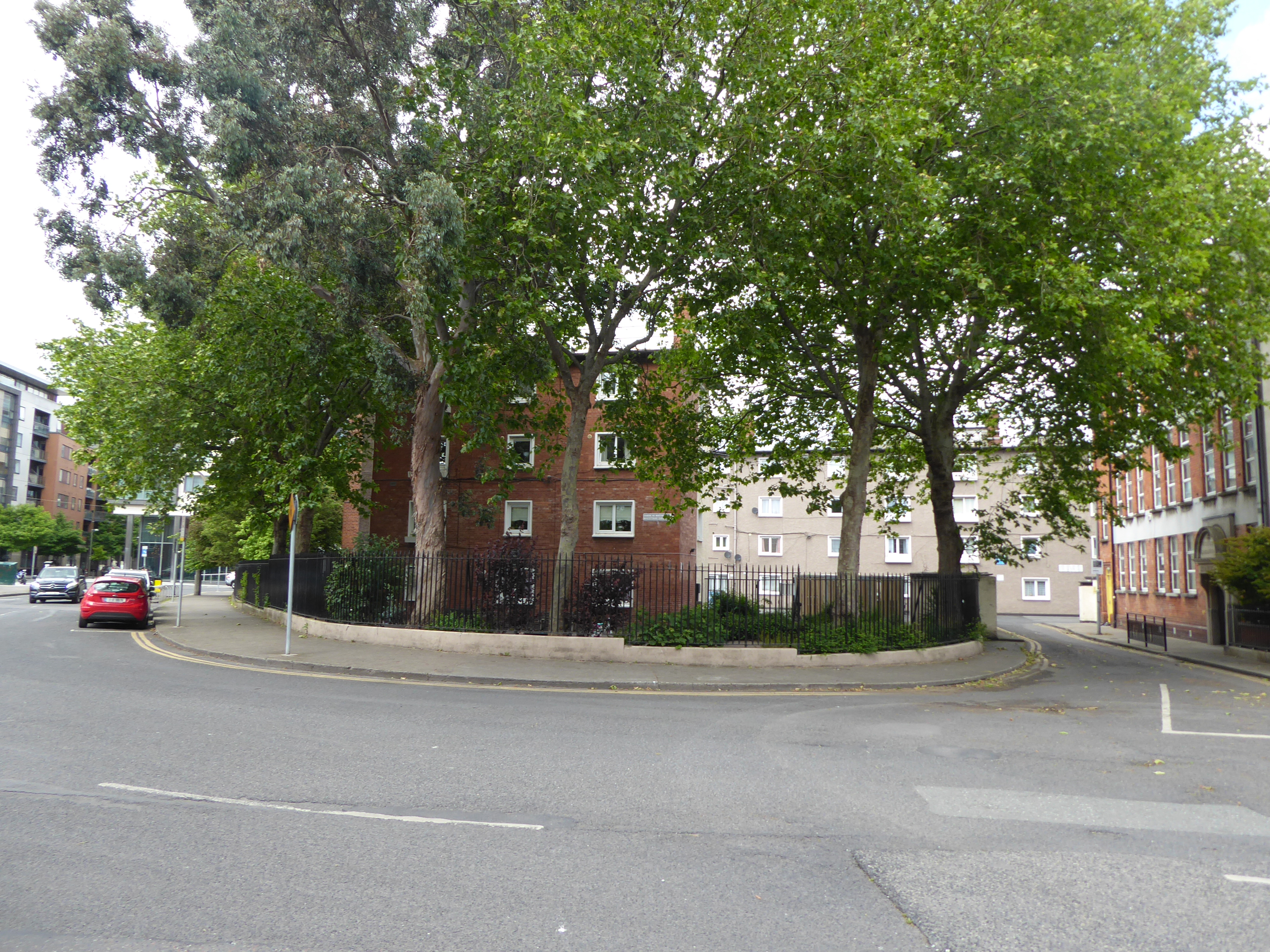
This unprepossessing view is actually the site of the Wood Street meeting-house

Wood Street was the scene of the ministry of Daniel Williams for approximately 20 years. Welsh-born he moved to London in 1687 and became the leading figure in English Dissent, establishing the library that bears his name to this day. Other distinguished and sometimes controversial ministers to serve this congregation include Joseph Boyse, Thomas Emlyn, John Abernethy and James Duchal (click on the links where shown for more information on this blog) . The congregation moved to Strand Street in 1764.
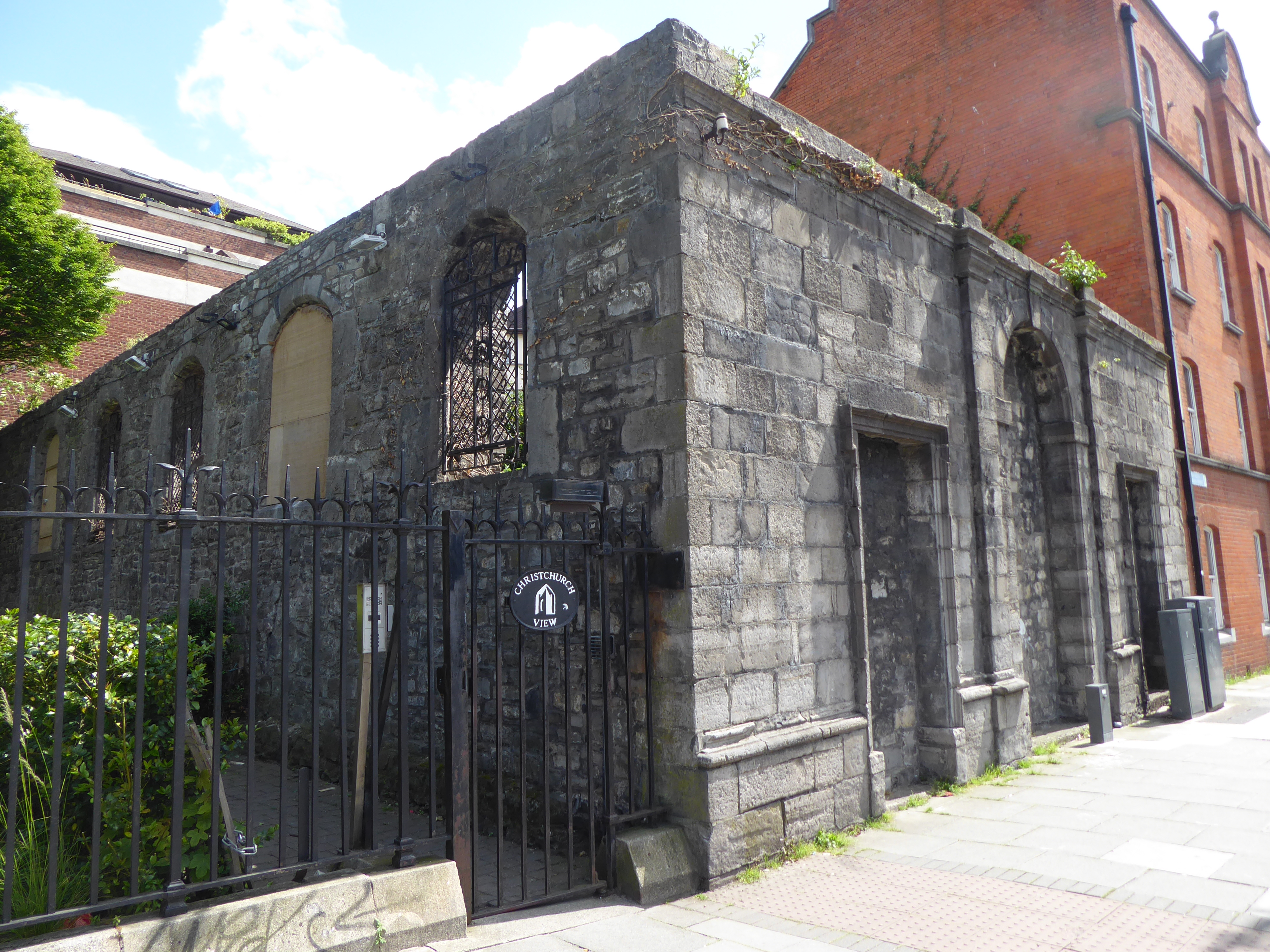
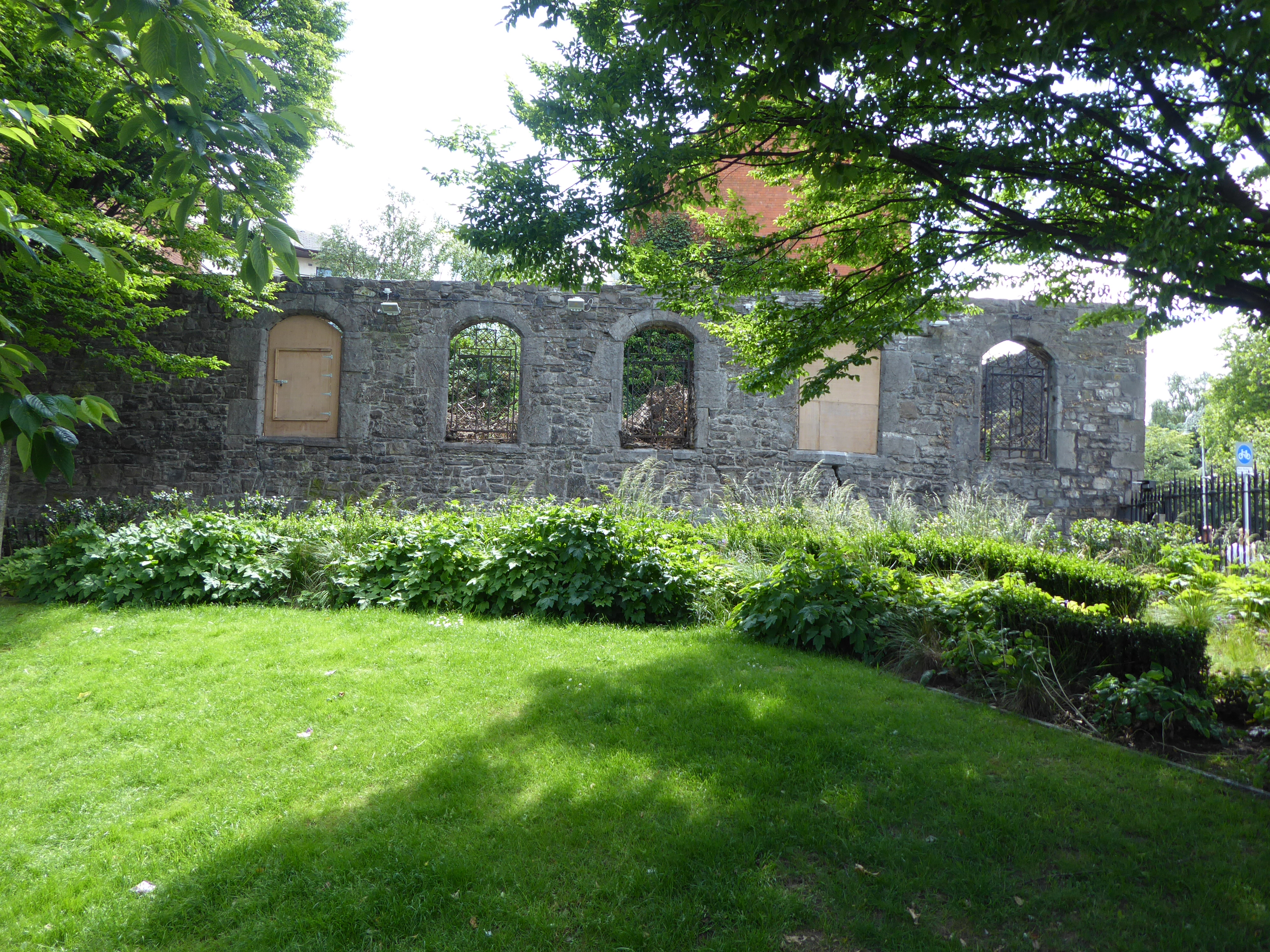
The ruins of St Nicholas’ Church just opposite Christ Church Cathedral
The burial ground of St Nicholas’ Church, now a Peace Garden

Samuel Winter, a key figure in Cromwellian Ireland and Provost of Trinity College, was also preacher at St Nicholas’ Church from 1650 and had as colleague from 1656 Samuel Mather, the son of Richard Mather (for more on his family and their connection with Toxteth click here) a leading Puritan in England, New England and Ireland. Samuel Mather was a lecturer at Christ Church and a Fellow of Trinity College. He died in 1671 and was buried in St Nicholas’ Church. He was later succeeded in the ministry by his brother Nathaniel, by which time the congregation had built their own meeting house on New Row.
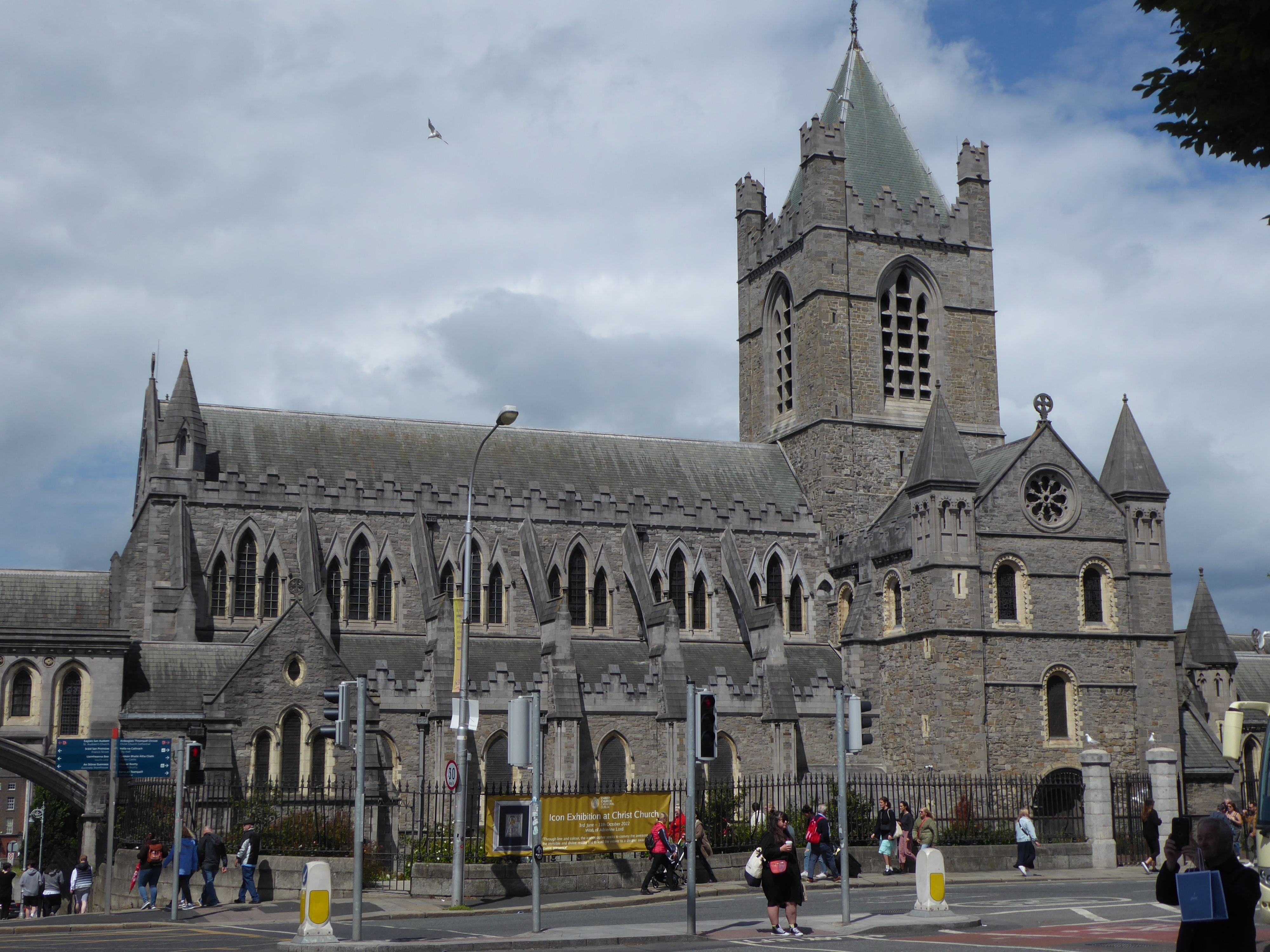
Christ Church Cathedral, Dublin

Eventually New Row moved to Eustace Street in 1728. Nearby was a Quaker meeting-house and Rory told us that one of the Quakers said of the Eustace Street meeting-house that ‘When there is so much vanity without, there won’t be much religion within’. But it is actually a very well-proportioned and elegant building, although eighteenth-century Quakers had their own view of such things. Having said that what survives of Eustace Street today is only the facade and that is not shown off to best effect by the banners hung outside by the Ark Theatre group that use the new building.
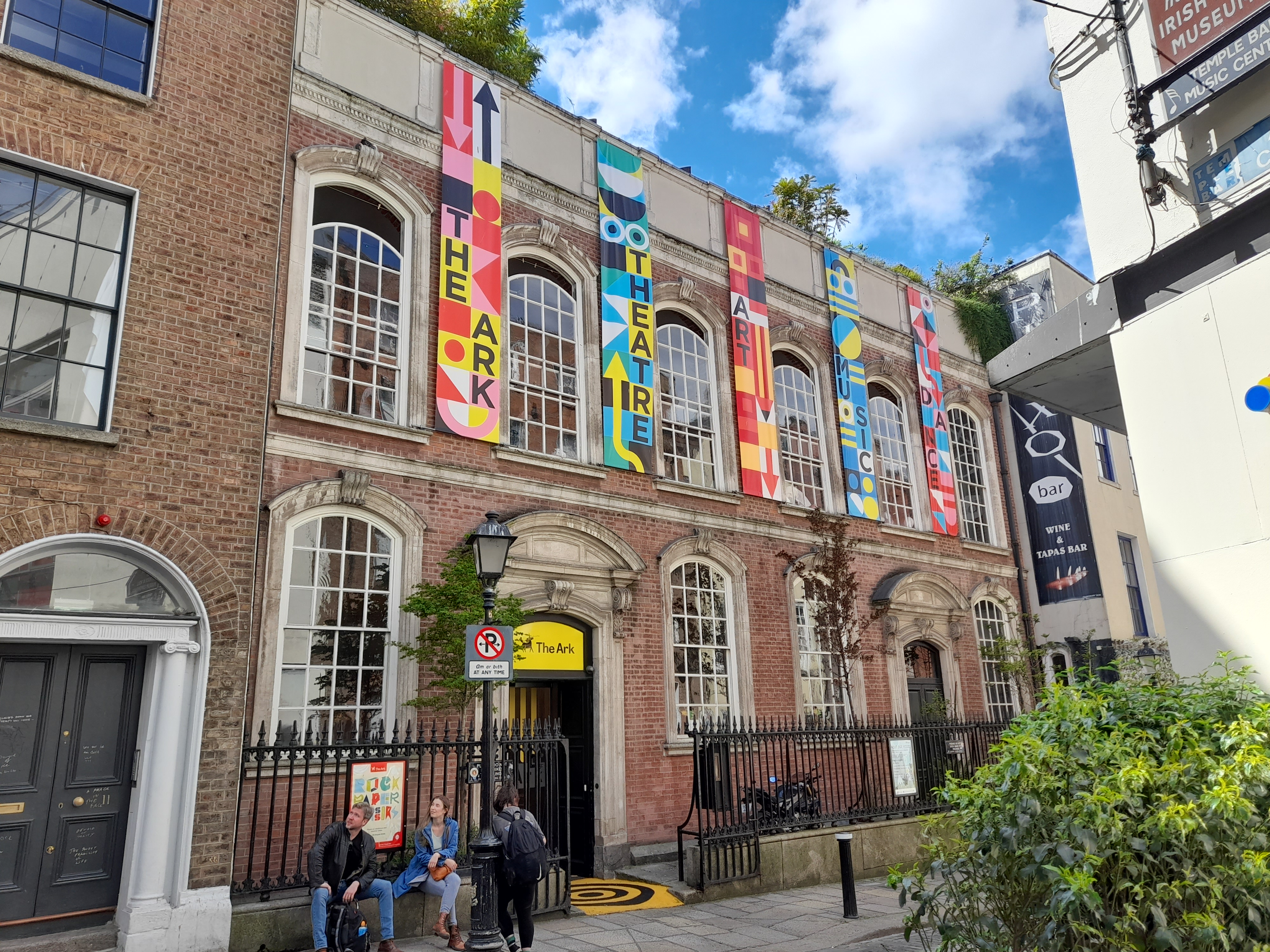
The surviving facade of Eustace Street meeting-house

Eustace Street was also the location of the first ministry of James Martineau (click here to read more about James Martineau on this blog).
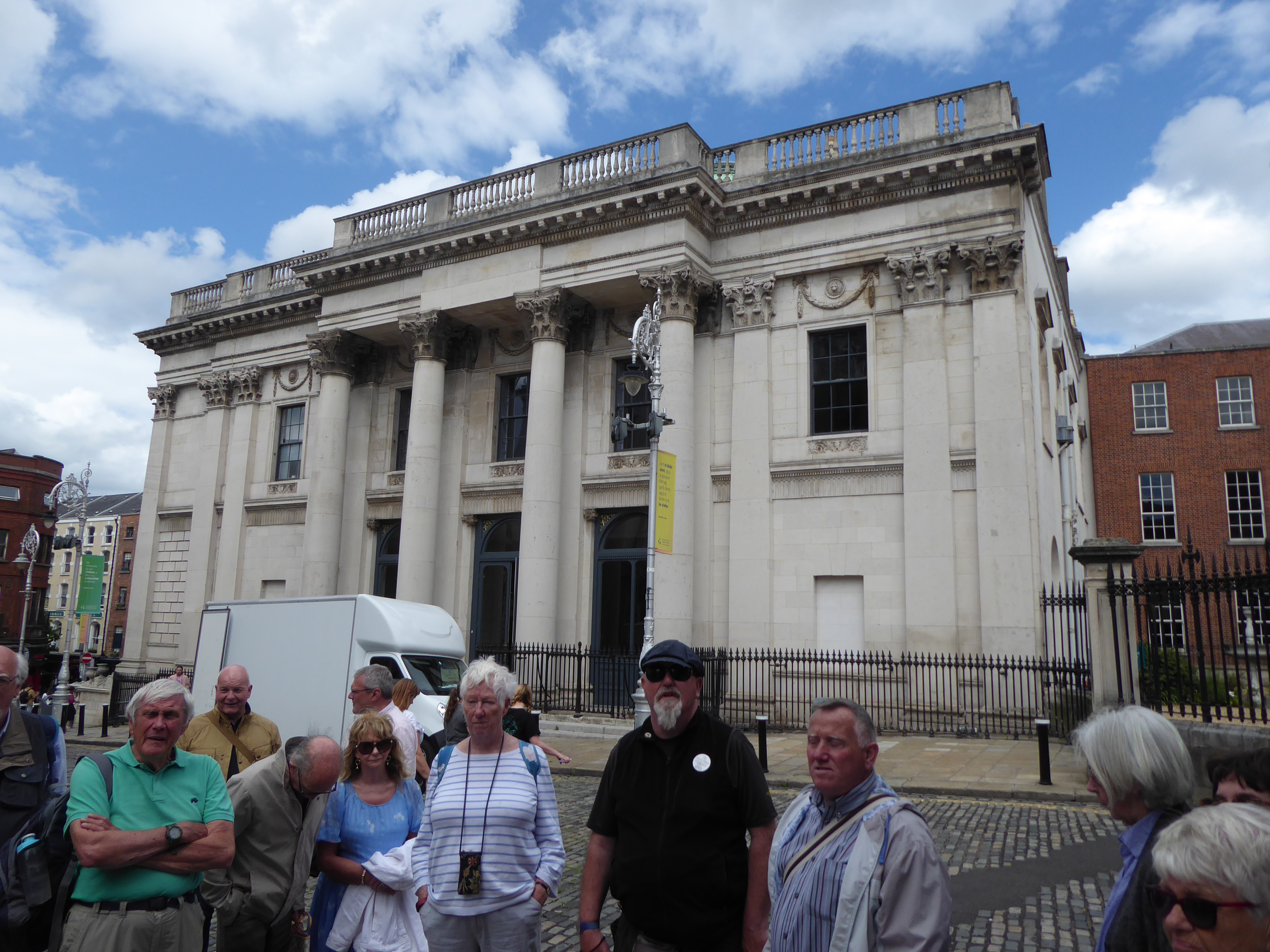
Side view of the City Hall, originally the Royal Exchange

We had a brief look at the City Hall, built originally as the Royal Exchange in 1779 by the precursor of the Chamber of Commerce. The merchants who made up the membership of the Chamber of Commerce included a disproportionate number of Protestant Dissenters, and of these a large proportion were members of one of the three Presbyterian (Unitarian) congregations in Dublin. Indeed, Rory told us, a majority of the Presidents of the Dublin Chamber of Commerce between 1785 and 1870 were trustees or members of the congregations which went on to form the St Stephens Green congregation.

It was a wonderful day full of interest and we are all indebted to Rory for sharing his considerable knowledge with us.
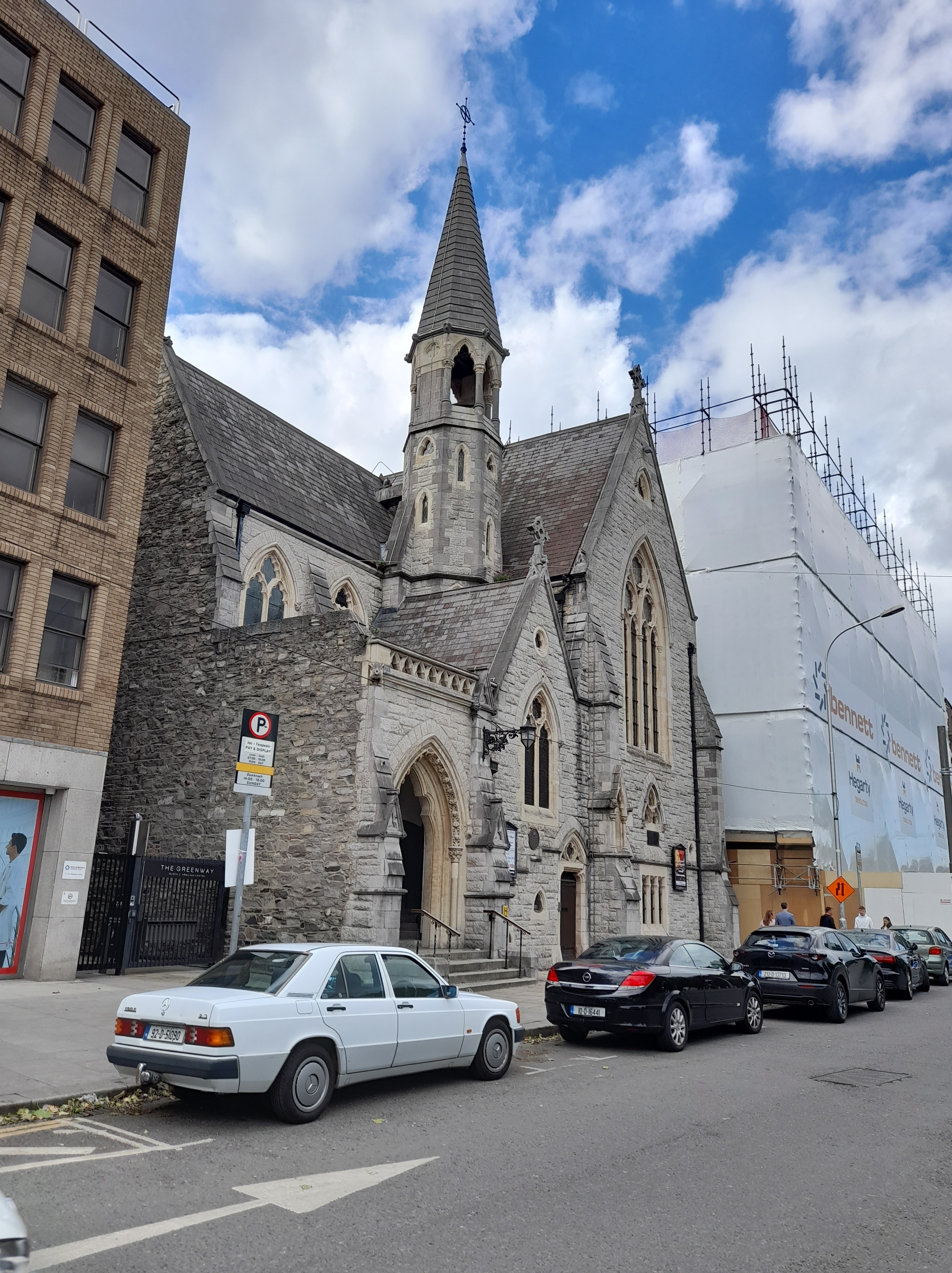
Dublin Unitarian Church, St Stephen’s Green

Giving thanks for the world

Our two most recent videos involve both celebrating and nourishing the natural environment. Our first video contains a ‘Prayer for the Glory of the Outward World’, which is based on one found in Orders of Worship, and includes ‘Jesu, Joy of Man’s Desiring’ played on the piano by Allen Yarr, church organist. It features some of the lovely plants growing around First Dunmurry (NS) Presbyterian Church and it can be seen here:

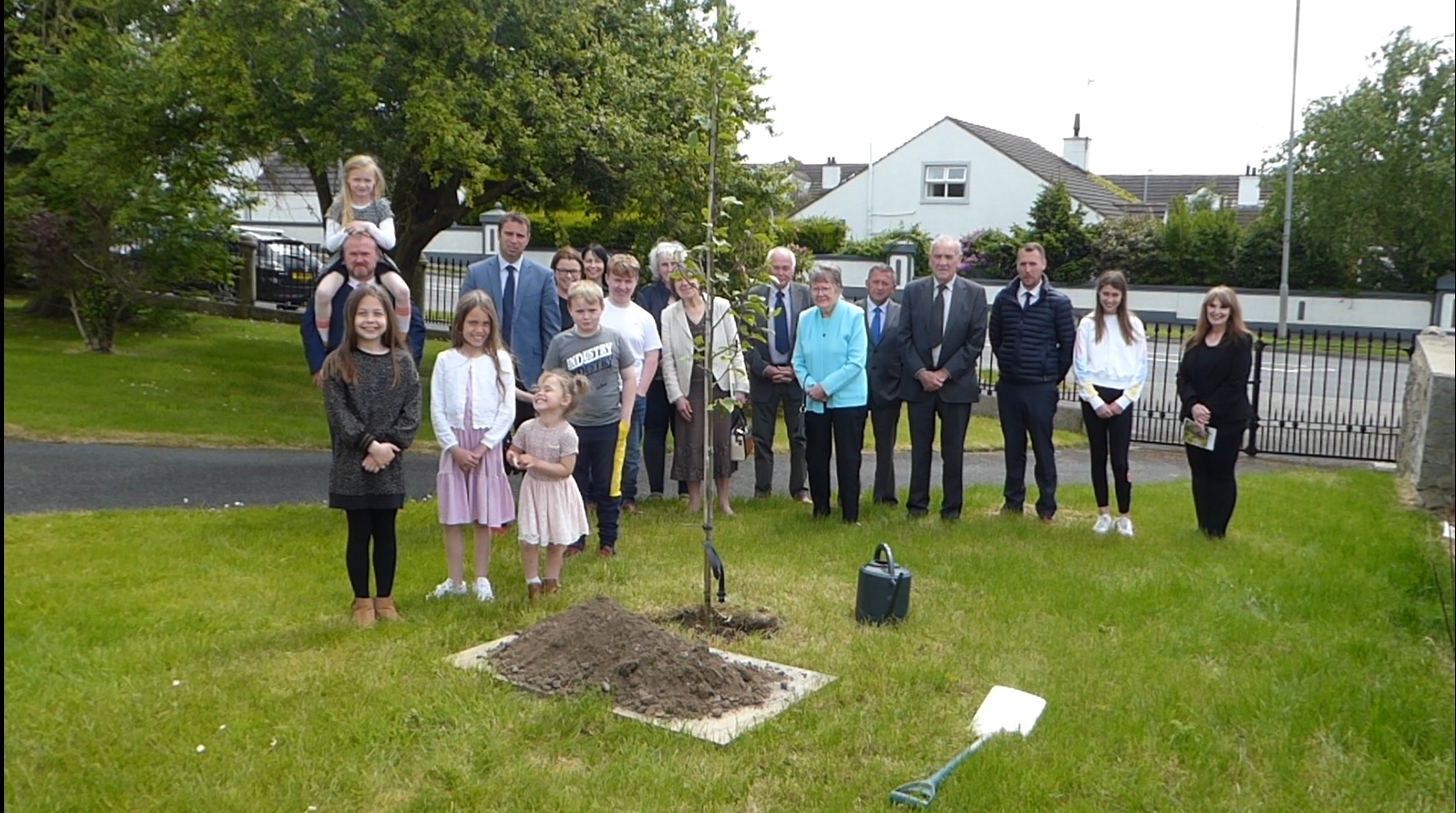
Many of our churches celebrated the Queen’s Platinum Jubilee and at Ballee and Clough Non-Subscribing Presbyterian Churches special services were followed by the planting of trees to mark the occasion, a Mountain Ash at Ballee and a Magnolia ‘Black Tulip’ at Clough. This is part of the Queen’s ‘Green Canopy’ which aims to plant trees to enhance the natural environment. We are grateful to everyone who took part, to Sue Steers FRSA who led the service and to John Strain and Jack Steers who provided the music. The video can be seen here:

Ballee tree planting, Sunday, 5th June 2022
Clough tree planting, Sunday, 5th June 2022

Rev John Scott Porter (1801-1880)

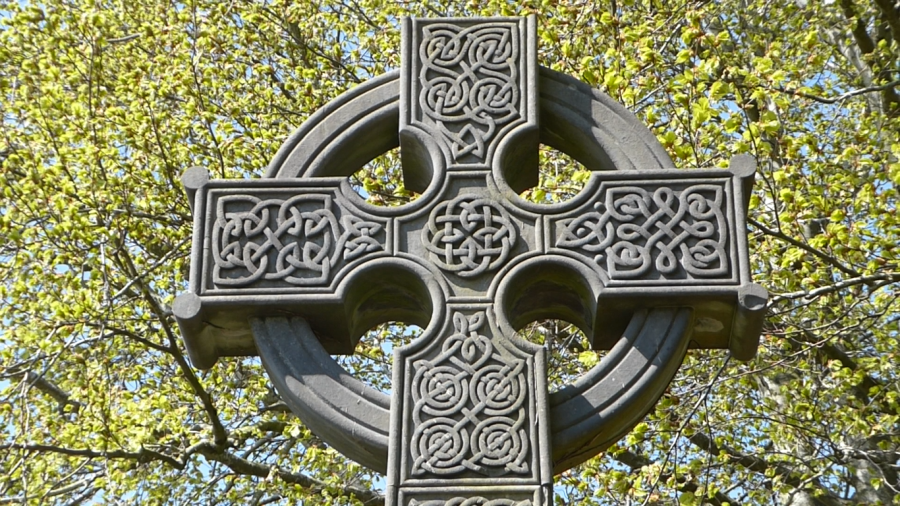
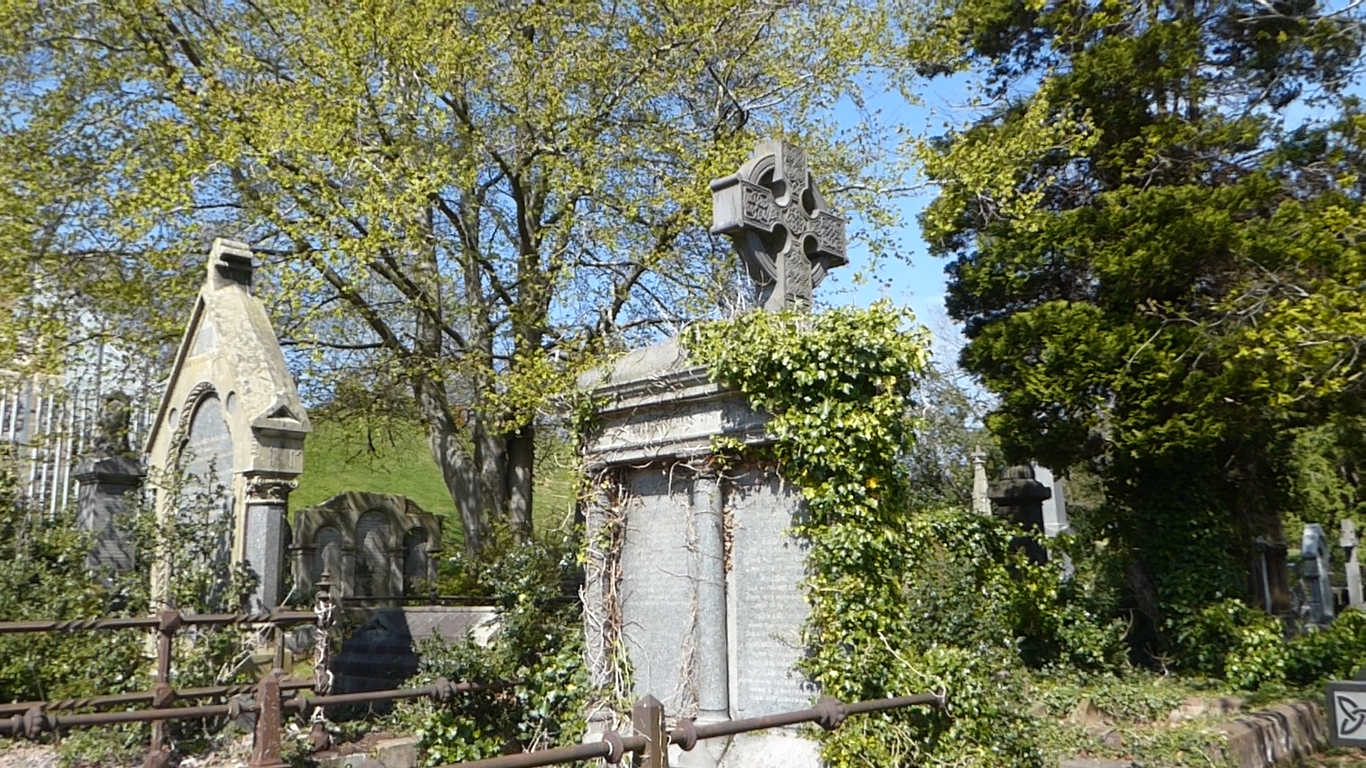
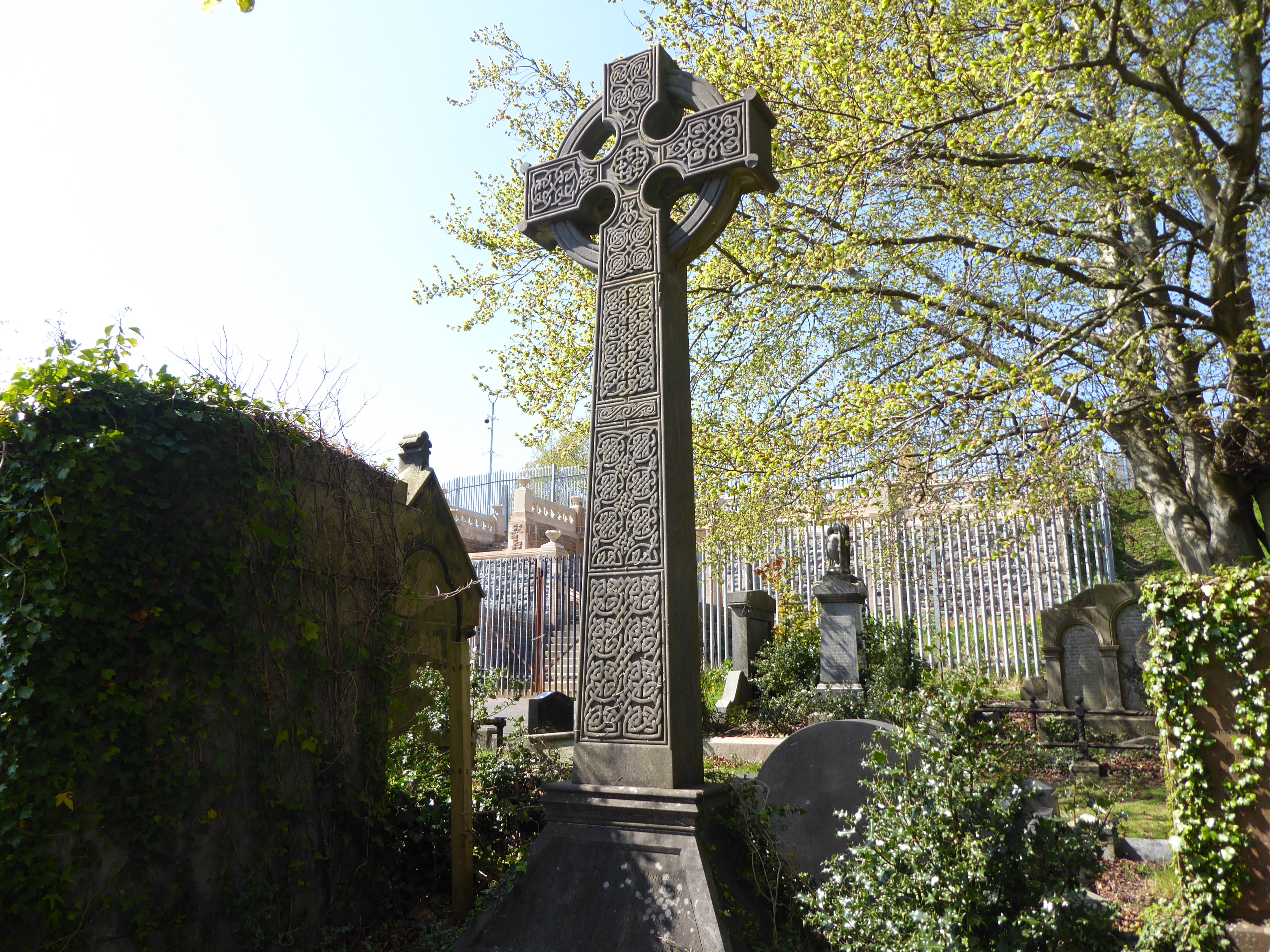
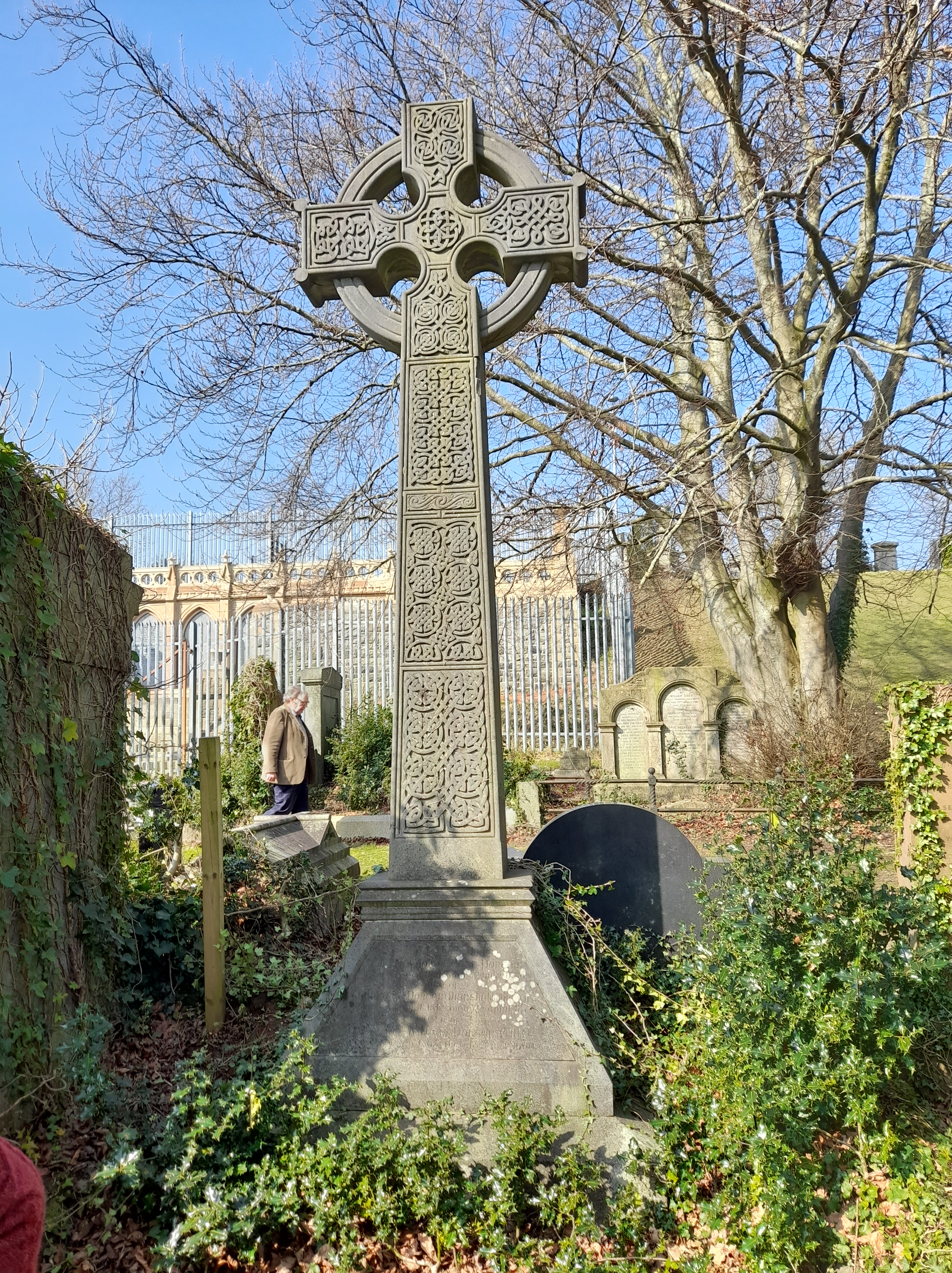
In an overgrown corner of Belfast’s City Cemetery stands a bold and intricately carved Celtic cross which marks the grave of the Rev John Scott Porter.

Son of a prominent Presbyterian minister and brother to two more he was part of a significant dynasty. This week’s Reflection looks at the life and work of John Scott Porter.

Rev John Scott Porter (1801-1880) – click on the video above (available from 8.00 am on Sunday, 8th May).

Educated at the Belfast Academical Institution he commenced his ministry at Carter Lane Chapel, London (which became Unity Chapel, Islington), where he became a prominent proponent of the Arian group within English Presbyterianism, editing the Christian Moderator. He returned to Belfast, to the First Presbyterian Church, in 1831.

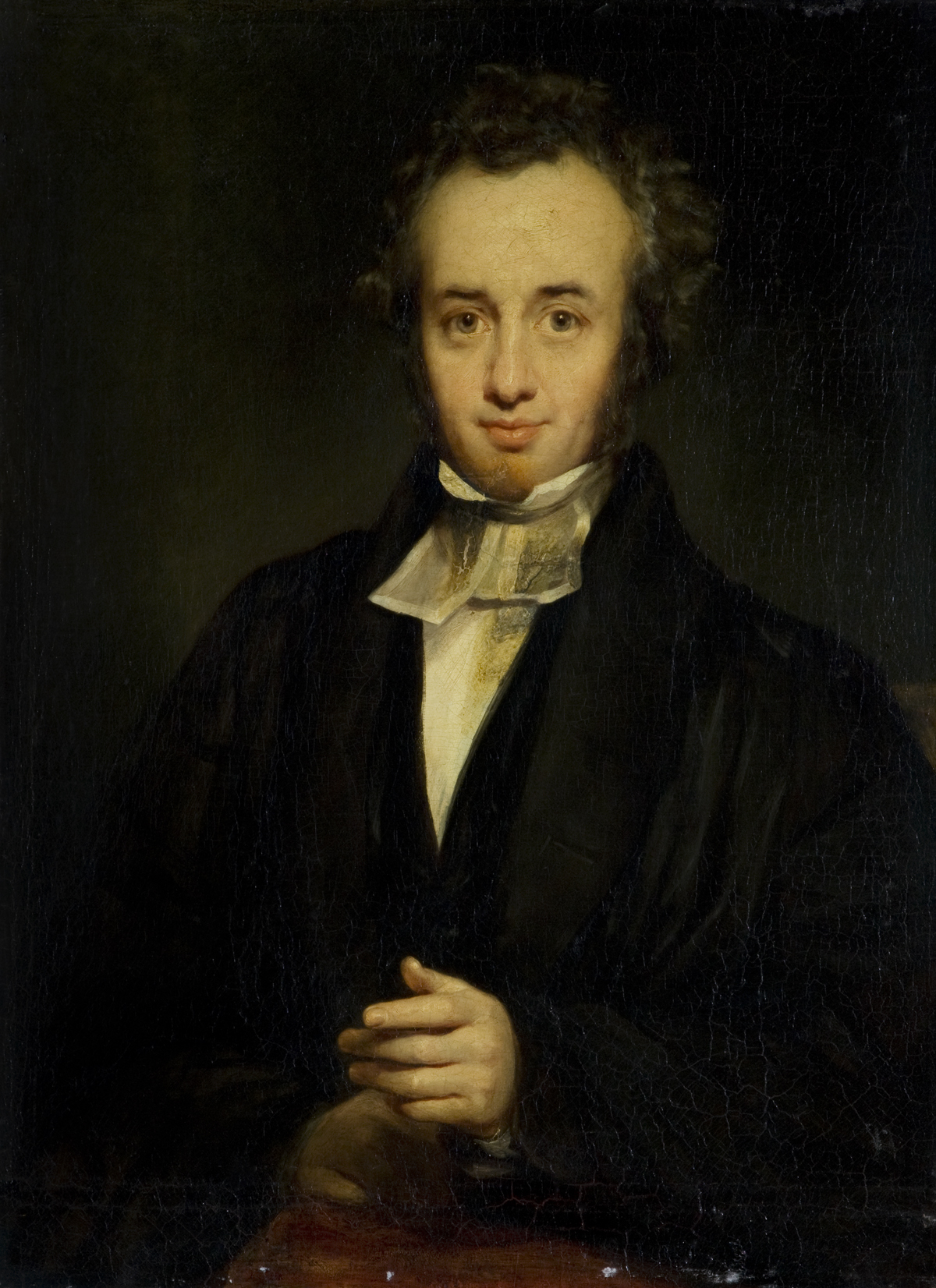
John Scott Porter c.1845 by Richard Rothwell (Ulster Museum/National Musuems Northern Ireland)

In the video we reflect on his career as a theologian, controversialist, Biblical scholar and Unitarian. Other members of his family are buried with him including his brother William, one time attorney general at the Cape Colony, who brought in a franchise that was inclusive of all races.
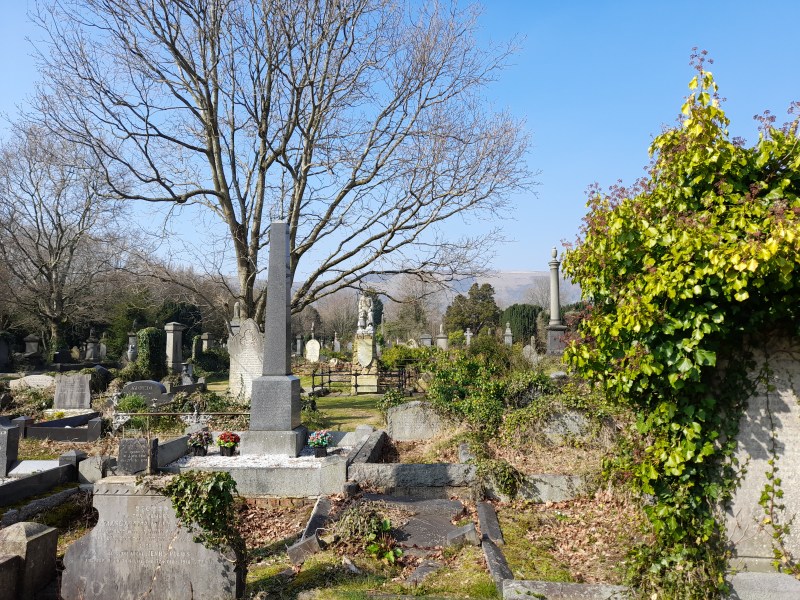
What can we learn from reflecting on the impressive Celtic cross that marks his grave? An eloquent Victorian statement of piety and memory, for decades long forgotten, yet still making a statement about his beliefs and his ministry.
Completion of Murland Mausoleum Restoration

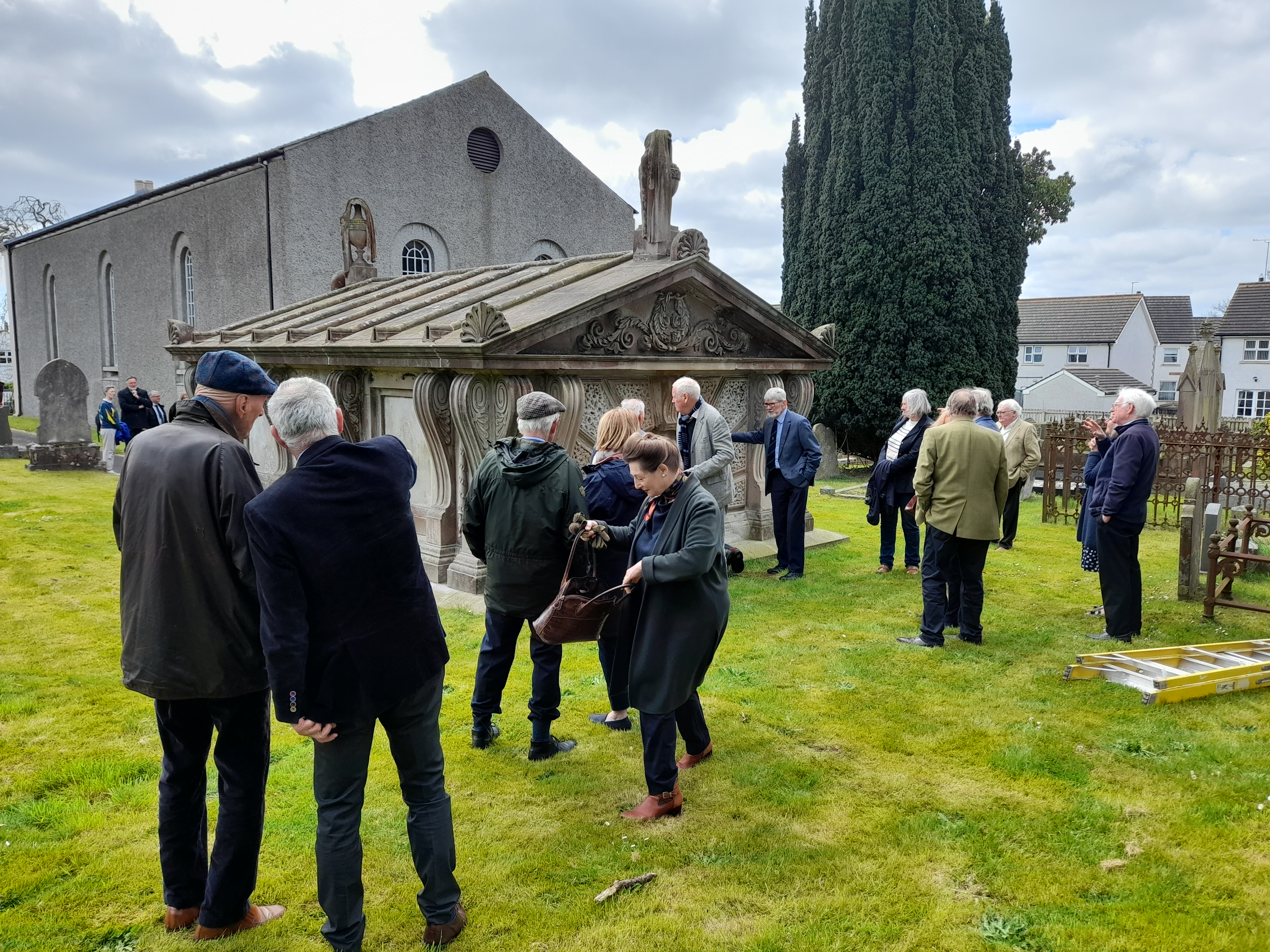
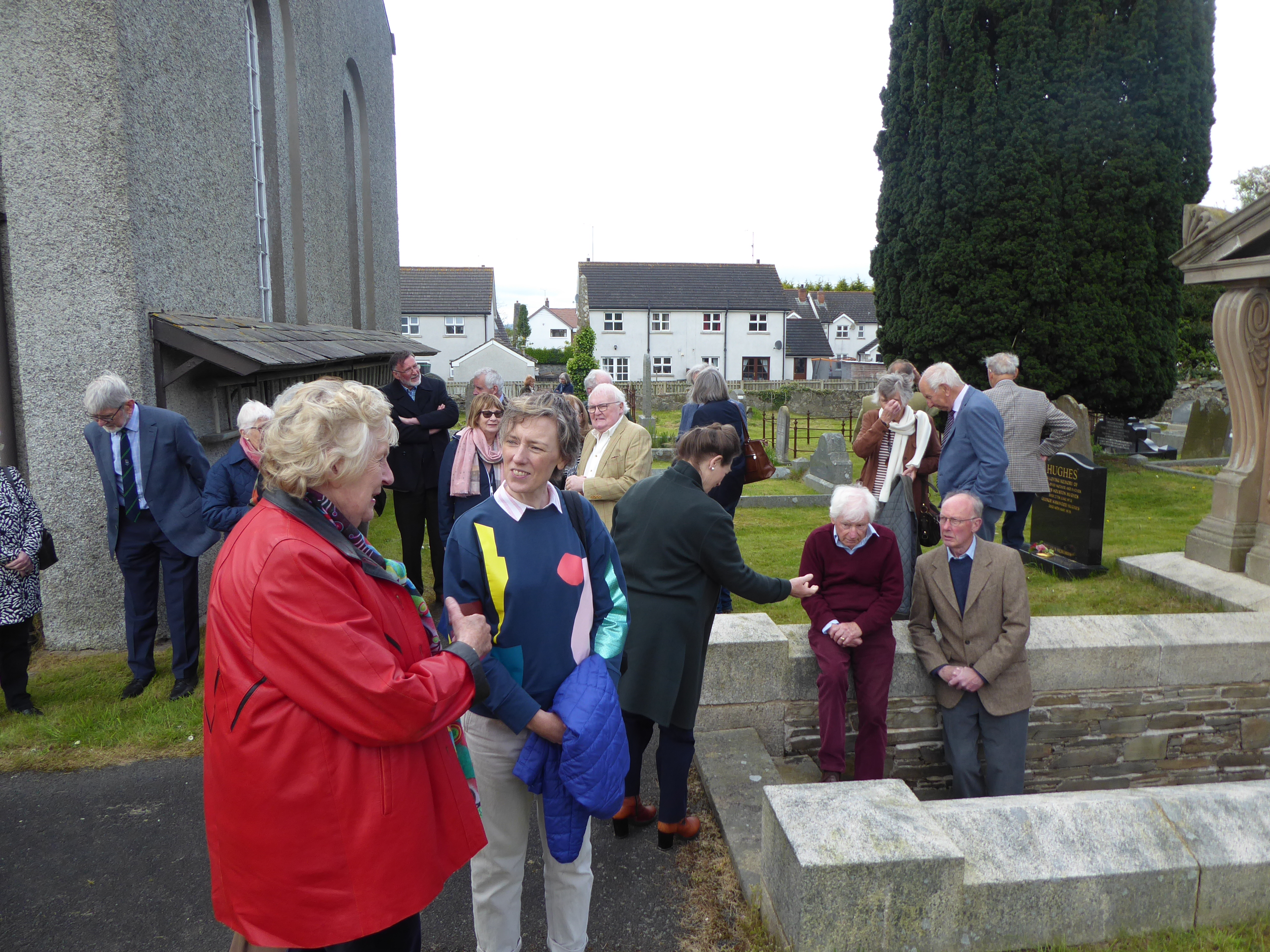
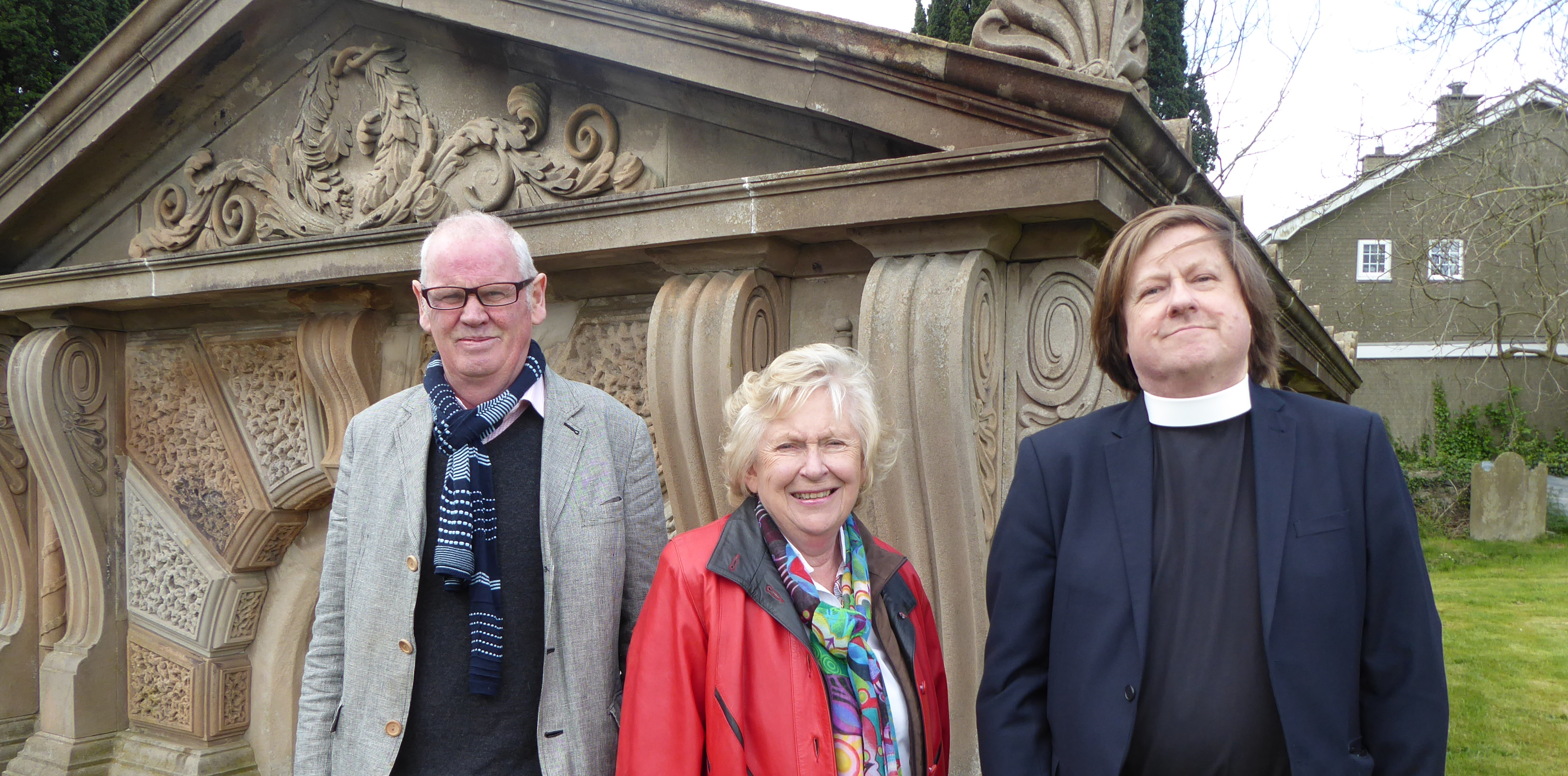
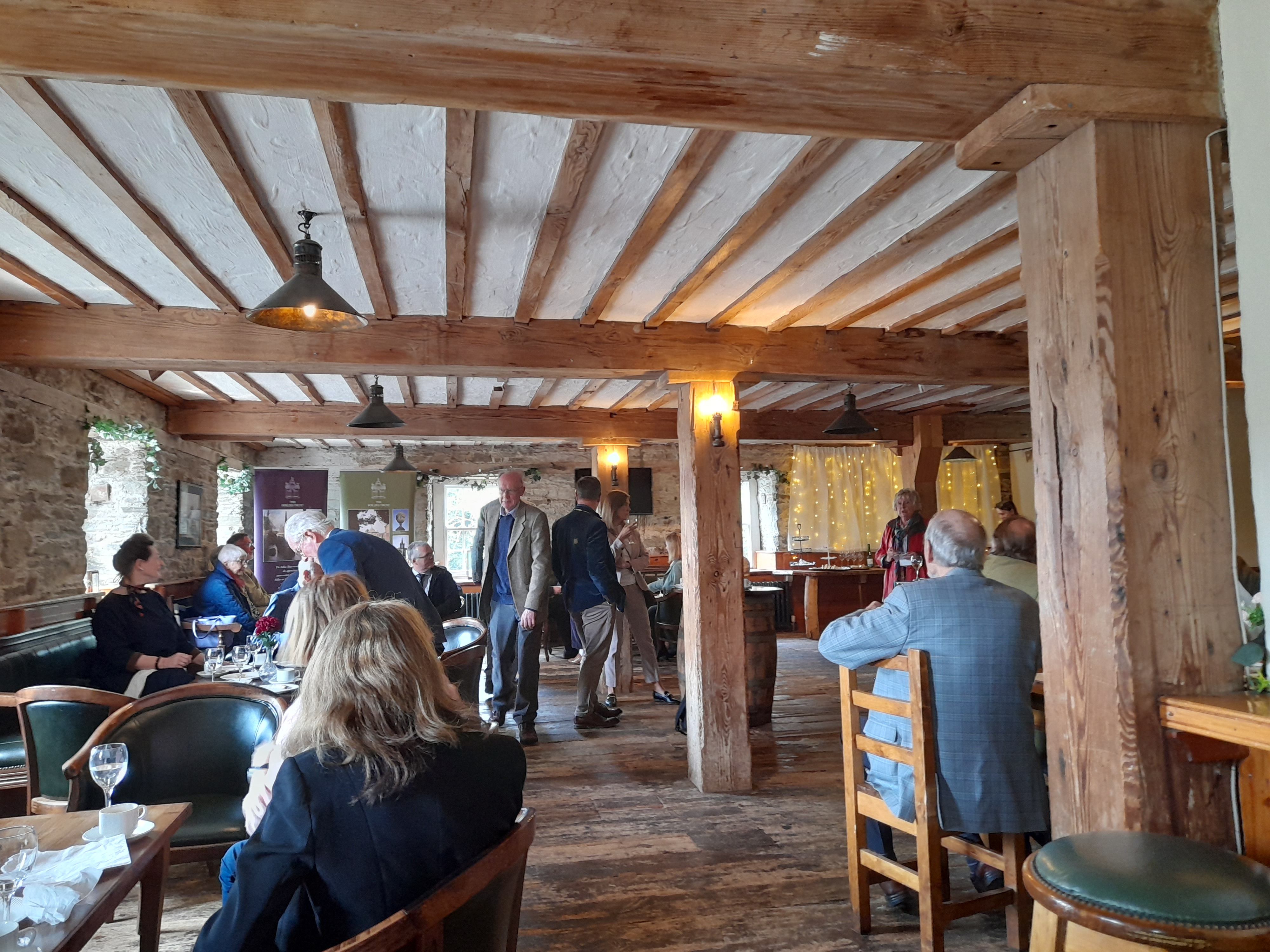
On Wednesday, 4th May 2022 the long delayed final stage of the restoration of the Murland Mausoleum by the Follies Trust at Clough Non-Subscribing Presbyterian Church took place. There was a good attendance of people gathered at the event, originally scheduled to take place in March 2020 but inevitably cancelled at the start of the lockdown. The meeting included a short service of thanksgiving for the work of the Follies Trust and the singing of the hymn Praise my soul the King of Heaven, accompanied by Melanie Campbell on the organ. Rev Dr David Steers welcomed everyone and spoke about the history of the Church, and introduced Dr Finbar McCormick who gave  a fascinating talk on the restoration of the Murland Vault and the history and place of mausolea as places of burial in Ireland. Primrose Wilson, chair of the Follies Trust, thanked everyone involved, especially Noel Killen who had carried out the restoration of the monument, and invited everyone to Ballydugan Mill where the launch of the Trust’s new book Fifteen Years of the Follies Trust took place.

Dr Finbar McCormick in the pulpit at Clough
After the service of thanksgiving in the Church

At the back of the mausoleum

Dr Finbar McCormick, Primrose Wilson, Rev Dr David Steers
Finbar McCormick with Clough members

Ballydugan Mill, itself restored from a ruin by Noel Killen

Book launch at the Mill

Noel Killen and David Rooney

With thanks to Sue Steers for the photos.

The Road to Emmaus

A short meditation for Low Sunday

Recorded for the Sunday after Easter including reflection on the dawn service held on the village green by Dunmurry Churches Together. With Jack Steers on the trumpet playing Easter Hymn (Jesus Christ is risen today). With a reading from Luke ch.4 v.13-35. Click on the video above to see this reflection.

Lord of the Emmaus Road…walk with us Lord, listen to our story, and let us hear your story, straight from the empty tomb.

Holy Week 2022

A couple of short acts of worship to mark Holy Week, 2022:

Some music for Palm Sunday. Four pieces plus an introduction played by the organists of Dunmurry and Ballee for a Palm Sunday service:

Four Hymns for Palm Sunday

Hymns played by Allen Yarr (Dunmurry) and John Strain (Ballee).

How deep the Father’s love, introduction played by Allen Yarr. King of glory, King of Peace, played by John Strain. Ride on, ride on, in majesty, played by Allen Yarr. When I survey the wondrous Cross, played by Allen Yarr. Now thank we all our God, played by John Strain. Filmed at First Presbyterian (NS) Church, Dunmurry and Ballee Non-Subscribing Presbyterian Church.

Image: ‘The Entry of Christ into Jerusalem’ (1320) by Pietro Lorenzetti. A fresco in the south transept of the Lower Church, San Francesco, Assisi. Source: Wikimedia Commons. Public Domain.

A short prayer and meditation for Good Friday:

Good Friday 2022

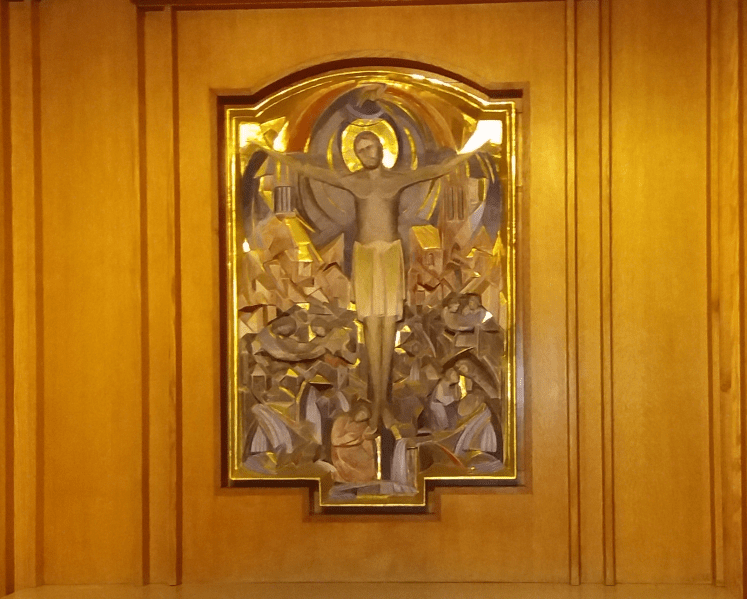
Rev Dr David Steers, First Dunmurry (NS) Presbyterian Church. (Source: John Pritchard ‘The Second Intercessions Handbook’. Images the crypt and a side altar (also at the top of this page) at the Metropolitan Cathedral, Liverpool).

Installation at Dunmurry

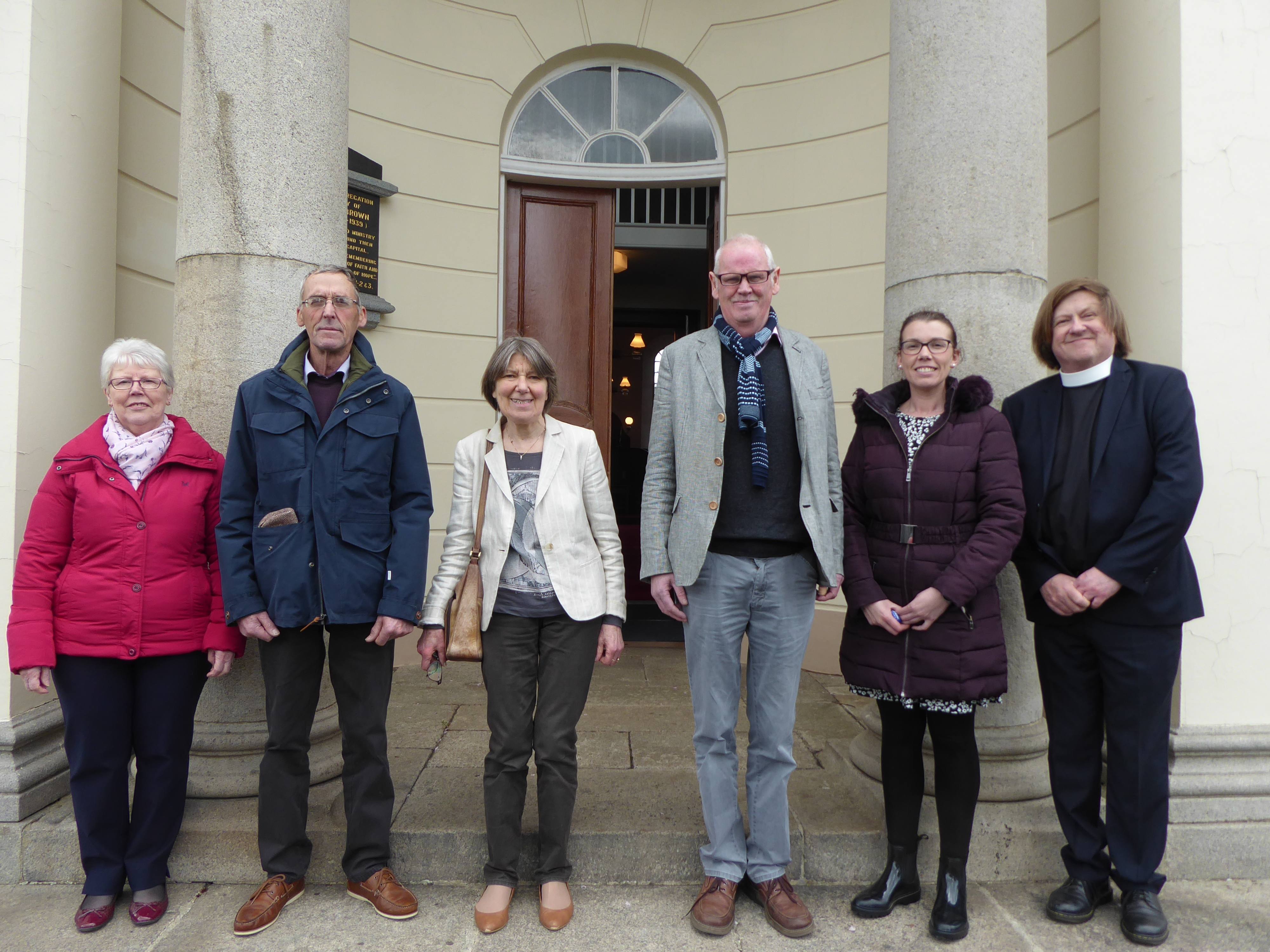
The Service of Installation at Dunmurry on Saturday, 26th March was a wonderful occasion and thank you again to everyone who took part and everyone in the Church who made the event possible. You can read a full report of the service with pictures on the First Dunmurry blog here.

Some of the participants after the service outside the McCleery Hall

There is a full audio recording of the service:

and also an online recording of the Statement of Principles and Objects:

Unfortunately the Moderator of Presbytery, Rev Stephen Reain-Adair, was prevented from being present by a positive test for Covid. We wish him a full recovery and thank the Very Rev Robert McKee who stood in as Moderator at the last minute.

The flowers in the Hall reflected the colours of the national flag of Ukraine and thank you to Elma McDowell and her team for their work in the Hall and the Church.

A retiring collection for the Disasters Emergency Committee Ukraine Humanitarian Appeal has raised £460.

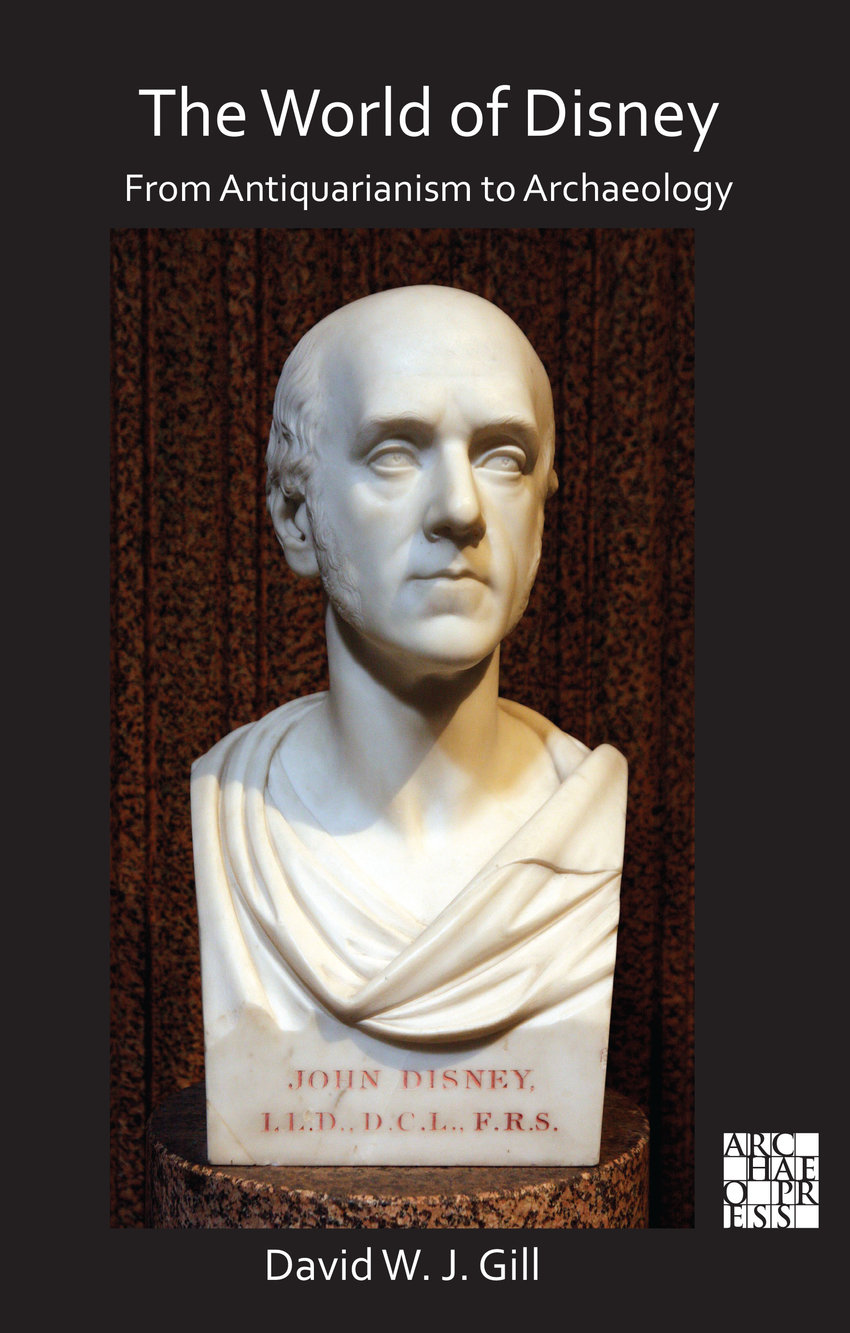
Transactions of the Unitarian Historical Society April 2022

The issue for 2022 (vol 28 No.1) will be with subscribers shortly and once again this is a very full and very special issue because members will receive two journals for their subscription. Part One contains three important articles plus reviews and more, Part Two is produced in collaboration with the Reckoning International Unitarian and Unitarian Universalist Histories Project.

Part One

The cloisters, Ullet Road Church Liverpool

In Part One our main articles look at Unitarianism, slavery and philanthropy. A number of Unitarians were actively involved in the abolition of slavery. One very prominent example of this was William Roscoe whose memorial is located in the cloisters in Ullet Road Church, a set of buildings constructed at the end of the nineteenth and start of the twentieth centuries which perfectly illustrate the enormous philanthropic contributions of wealthy Unitarians at this time.

‘Jewel Case’ – The Man and his Money Derek McAuley

Very Rev George Case, MA, DD (used with permission of Clifton Diocesan Archives)

Derek McAuley traces the story of the Very Rev George Case whose journey from the Anglican to Catholic priesthood was followed by a very generous bequest to the Unitarian movement. His father was a contemporary of William Roscoe in Liverpool but unlike Roscoe he was deeply implicated in the slave trade. Using modern tools and databases Derek examines the source of Dr Case’s wealth.

Reflections on a Window Rory Delany

The Wilson Memorial Window, Dublin Unitarian Church (Photo: Rory Delany)

The most prominent and striking window within Dublin Unitarian Church, St Stephen’s Green is the Wilson Memorial Window which memorializes Thomas Wilson, long standing member of the congregation and generous benefactor. In this article Rory Delany looks at the source of Thomas Wilson’s wealth, again using the databases and records which have become available and which highlight those families involved in the slave trade. He contrasts Thomas Wilson’s attitudes and business interests with his contemporary and fellow church member James Haughton who was a noted anti-slavery campaigner.

Unitarians and Philanthropy 1860-1914 Alan Ruston

Looking towards the library at Harris Manchester College

Alan Ruston gives a substantial survey of Unitarian philanthropy between 1860 and 1914. Many wealthy Unitarians gave vast sums to build churches, establish charities and develop educational institutions such as Manchester College (see above) which was founded in 1786 in Manchester but moved to Oxford in 1893 following a number of very generous donations.

Books Reviewed

Reviewed by David Wykes, Alan Ruston and David Steers

Part Two

The ethnographic composition of Hungary in 1910 (Map: Lehel Molnár)

Part Two of this issue develops the successful initial event of the Reckoning International U/UU Histories Project which was entitled ‘Transylvanian Unitarians Resisting and Surviving in Authoritarian Times’ and which took place on Thursday, 4 November 2021. This can be viewed online at the Starr King School for the Ministry YouTube channel (https://youtu.be/ozH1fnDkSHk).

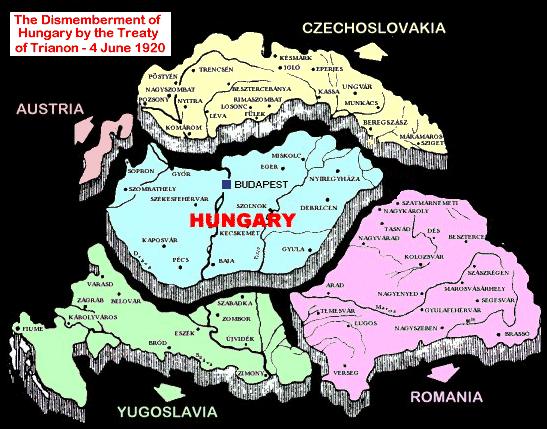
The dismemberment of Hungary by the Treaty of Trianon (Map: Lehel Molnár)

We are very pleased to be able to carry in this issue an introduction and summary of the whole Reckoning project compiled by its co-ordinators Claudia Elferdink and Lehel Molnár This is followed by two articles which are not transcripts of the original webinar but which give additional insight and information on the experience of Hungarian Unitarians over the last one hundred years, particularly following the Communist takeover in Romania after the Second World War. The first of these is ‘The Hungarian Unitarian Church in the Twentieth Century’ by Sándor Kovács and Lehel Molnár, an explanation of the struggles of the church from the Treaty of Trianon – when Hungary lost two thirds of its historic territory – to the present century. This is followed by ‘Resistance or/and Compromise. The Struggles and Service of Unitarian Bishop Elek Kiss (1888–1971) in Communist Romania’ by Sándor Kovács which gives a very detailed view of the problems and stresses experienced by the church in the Communist era.

The ethnographic compostion of Hungary in 1880

New subscribers are very welcome, annual membership costs only £10. If you haven’t yet taken out a subscription or would like to renew your subscription that can be done through the Society’s treasurer who can be contacted via the Unitarian Historical Society website here.

Silent yet eloquent memorials

Starting off on the tour

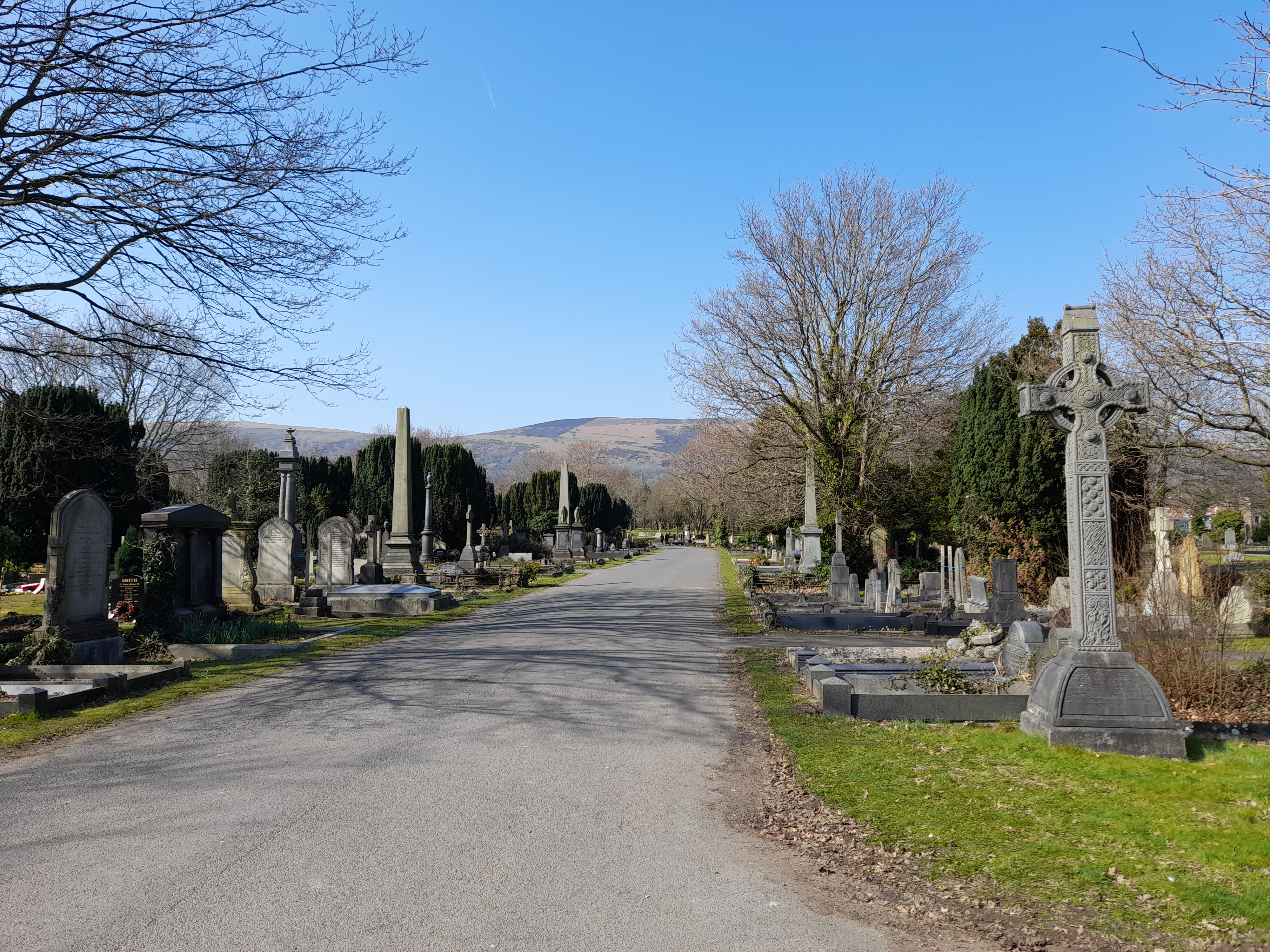
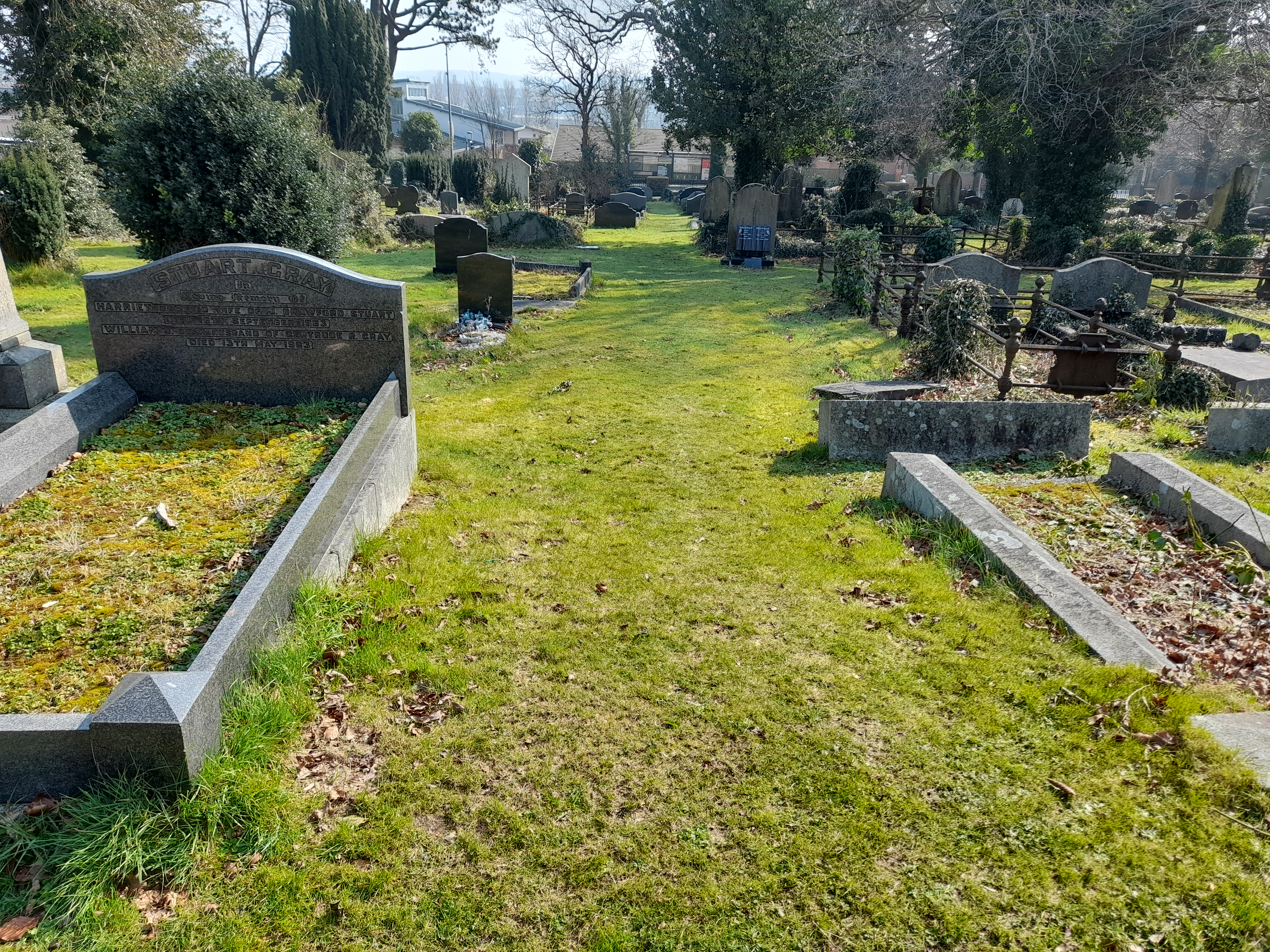
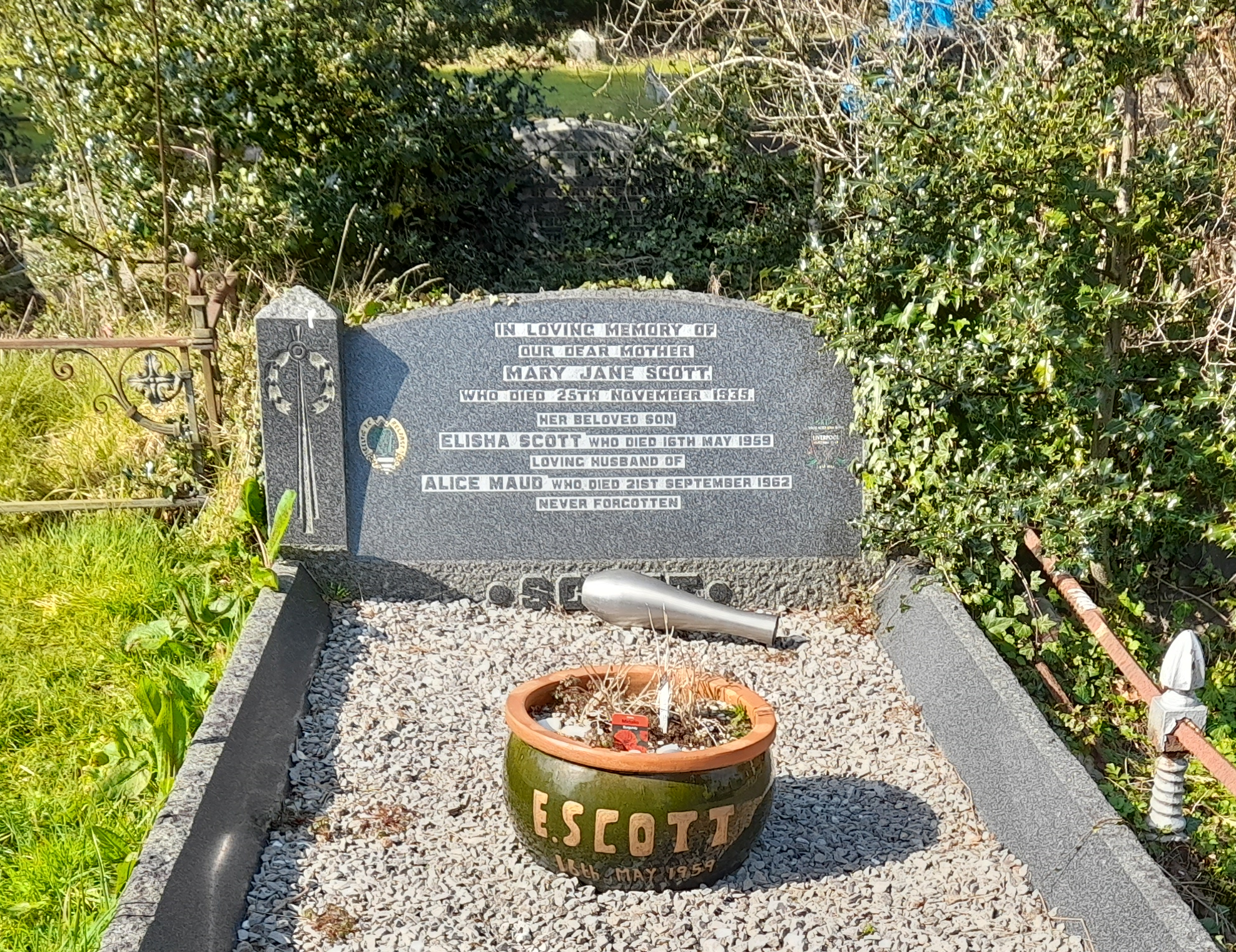
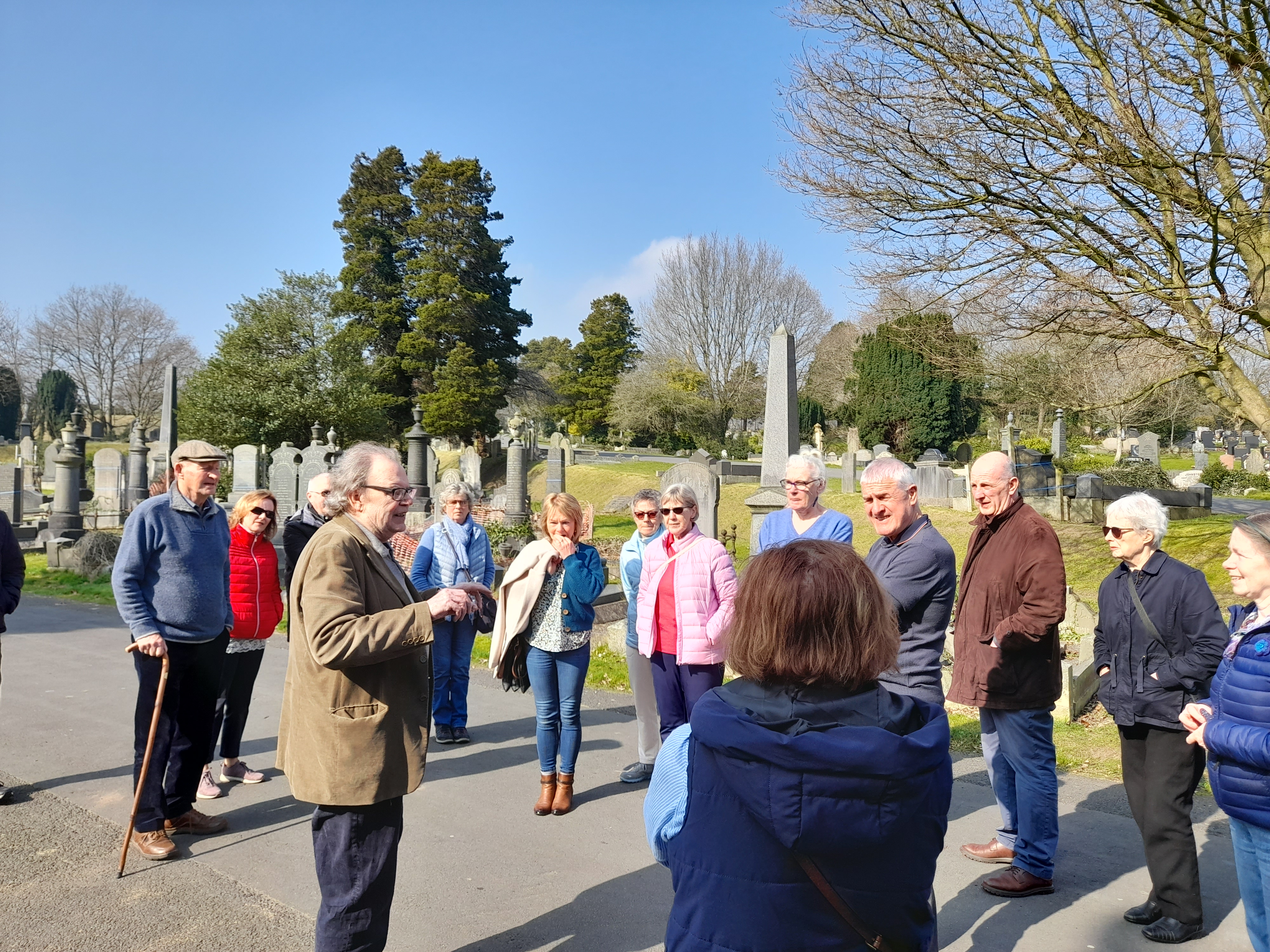
On Wednesday, 23rd March a group from the four Belfast Non-Subscribing Presbyterian Churches enjoyed an excellent visit to the Belfast City Cemetery. We were blessed by good weather, almost like a summer’s day, which showed off the whole site to its fullest advantage. Designed in the shape of a bell and opened in 1869 it has been the burial place of approximately 225,153 people ranging from the some of the poorest members of society, buried in paupers’ graves, to some of the wealthiest merchants, industrialists and businessmen of Victorian Belfast. Years of neglect and vandalism obscured the importance of the cemetery in the city’s history for a long time, but the remarkable work done by Tom Hartley on the graves and history of the cemetery, not least reflected in his book Belfast City Cemetery, has opened up the cemetery to a wider and appreciative public. It is good too to see the construction of a visitors’ centre and the restoration of some of the larger memorials. Tom Hartley has an encyclopaedic knowledge of the history and significance of the site and was our informative guide as he showed us round a large proportion of the original Victorian graveyard, so attractively laid out with the Belfast hills providing a dramatic backdrop. Tom made special reference to some of the Presbyterian and Non-Subscribing Presbyterian graves in the cemetery and we encountered the last resting places of some familiar figures from our tradition. Among others we saw the grave of Margaret Byers, the founder of Victoria College, and Elisha Scott, legendary Liverpool goalkeeper. Cemeteries are such important repositories of history: funeral monuments, grave inscriptions, memorial artwork all tell us a great deal and in this case Belfast City Cemetery provides a fascinating window into the growth, development and history of Belfast as a city. After the tour we had lunch at Cultúrlann McAdam Ó Fiaich. Below are some images of what we saw:

The grave of Rev John Scott Porter (Biblical scholar, theologian and Belfast Non-Subscribing minister) and his brother William Porter, attorney general at the Cape Colony who introduced a franchise into the colony that extended the vote, at the time, to all people irrespective of race.
View across the cemetery showing the memorial to John Kirker (1891) on the right in the form of an ornamental Celtic Cross carved from a single piece of limestone.
.
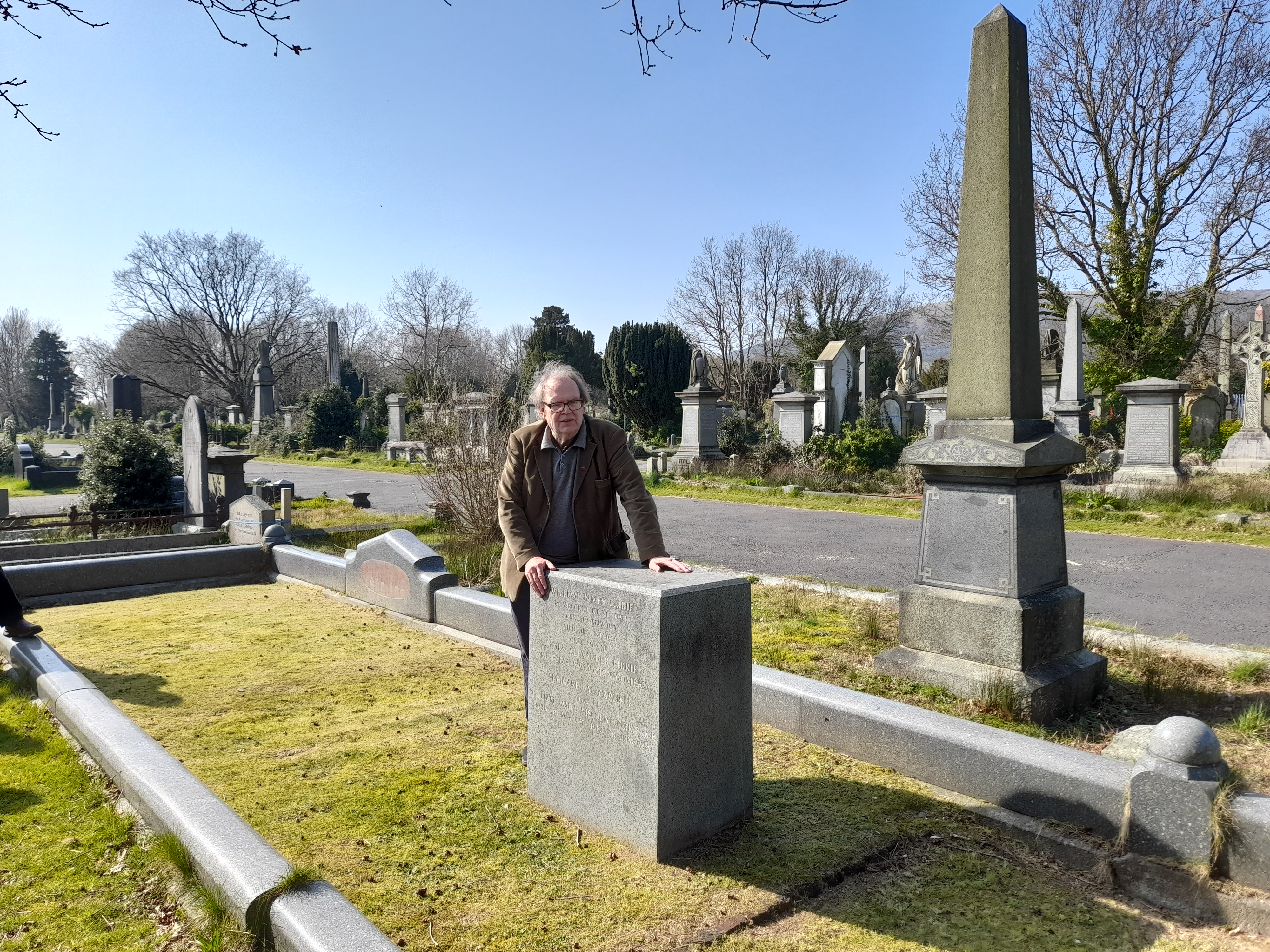
Tom Hartley at the grave of Lord and Lady Pirrie. William Pirrie was a leading Belfast politician and shipbuilder, chairman of Harland and Wolff and responsible for the building of the ‘Titanic’. His wife Margaret Montgomery Pirrie was a significant figure in her own right, closely involved in the establishment of the Royal Victoria Hospital and a granddaughter of the Rev Henry Montgomery of Dunmurry.
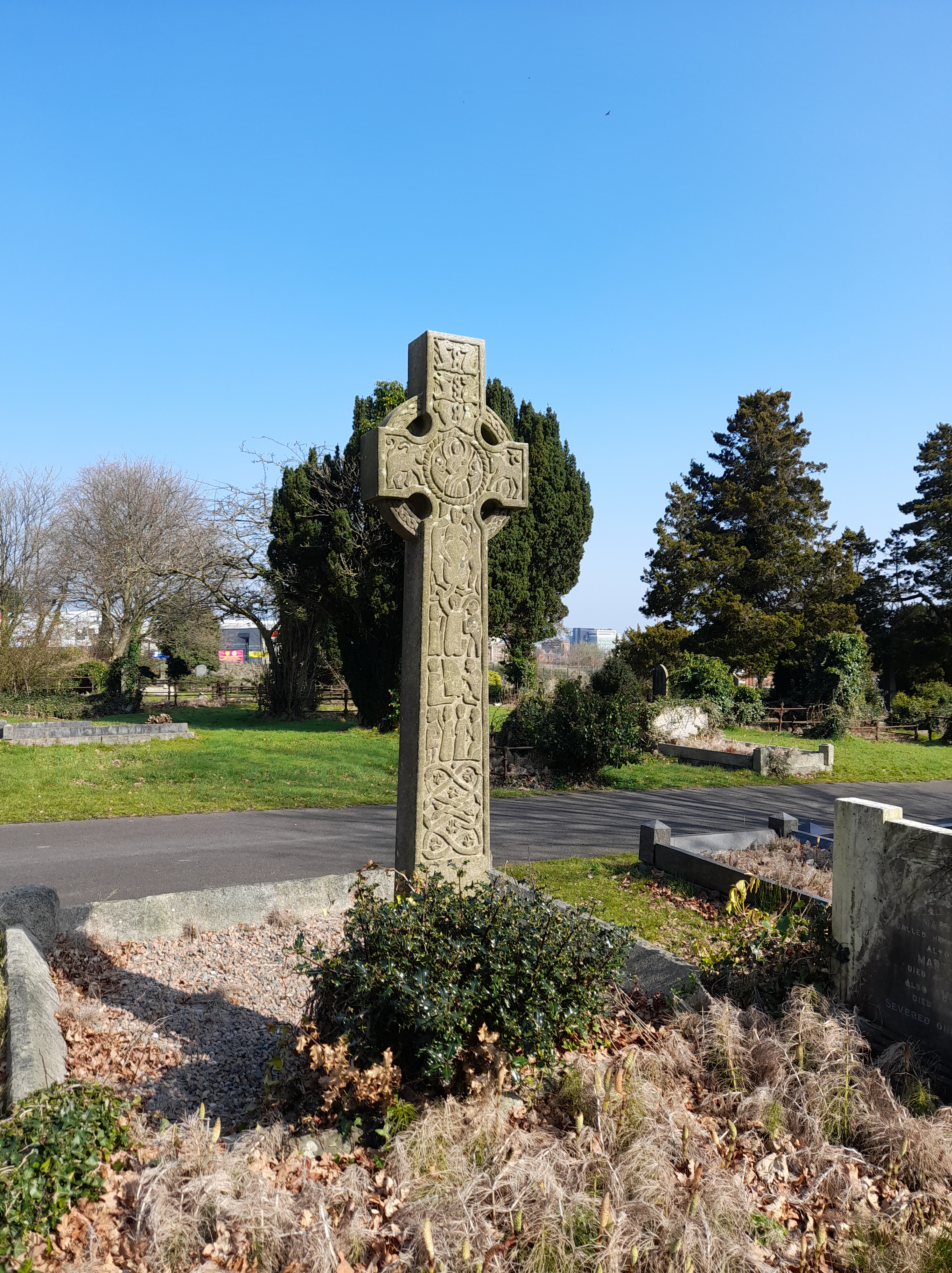
Another nineteenth-century Celtic Cross containing ancient religious imagery including, in this case, the Ouroboros (at the bottom of the Cross), the snake consuming its own tail.
The infamous location in the cemetery where an underground wall, six feet tall, divided what were planned to be the Catholic and Protestant plots.
The grave of Elisha Scott, Belfast born Liverpool goalkeeper who played for the club for 22 years and made 468 appearances for Liverpool (which undoubtedly would have been more but for the First World War). He finished his career as a highly successful player-manager of Belfast Celtic until sectarian violence brought about the closure of that club.

Nation shall not lift up sword against nation

We continue to pray for Ukraine and offer up our Reflections on the situation in Ukraine created by the invasion by Russian forces.

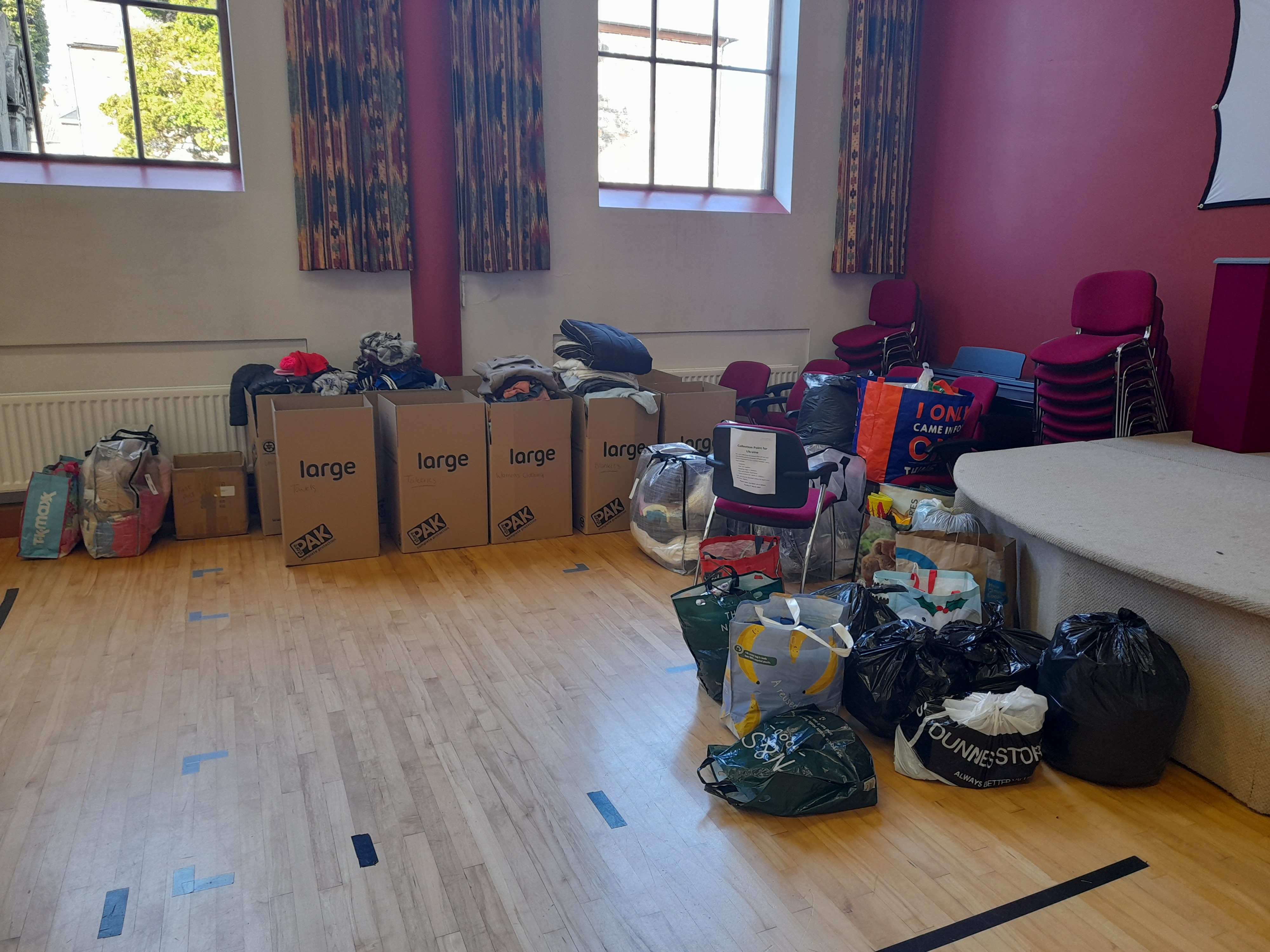
At Dunmurry we organised a collection of warm clothing, non-perishable food, medical supplies and toiletries to send to Ukrainian refugees in Poland. The response from the church and wider community was heartening. In the space of a week two van loads of goods were sent but we are aware that this is only the start of the crisis; the number and needs of refugees will only increase, the difficulties faced by so many people inside Ukraine and now exiled outside the nation’s borders will grow. There will be a need for considerable action by governments in the West.

Collection for Ukraine at Dunmurry
This week’s Reflections

Our March Reflections look at Nation shall not lift up sword against nation (Isaiah ch.2 v.4), particulalrly in the context of Russia’s invasion of Ukraine. Led by Rev Dr David Steers at Dunmurry the organist is John Strain (Ballee Non-Subscribing Presbyterian Church) who plays the hymn Lord of all Hopefulness.

In our prayers we include the ‘World Peace Prayer’:

Lead me from death to life,
from falsehood to truth;
lead me from despair to hope,
from fear to trust;
lead me from hate to love,
from war to peace.
Let peace fill our heart,
our world, our universe.

Amen