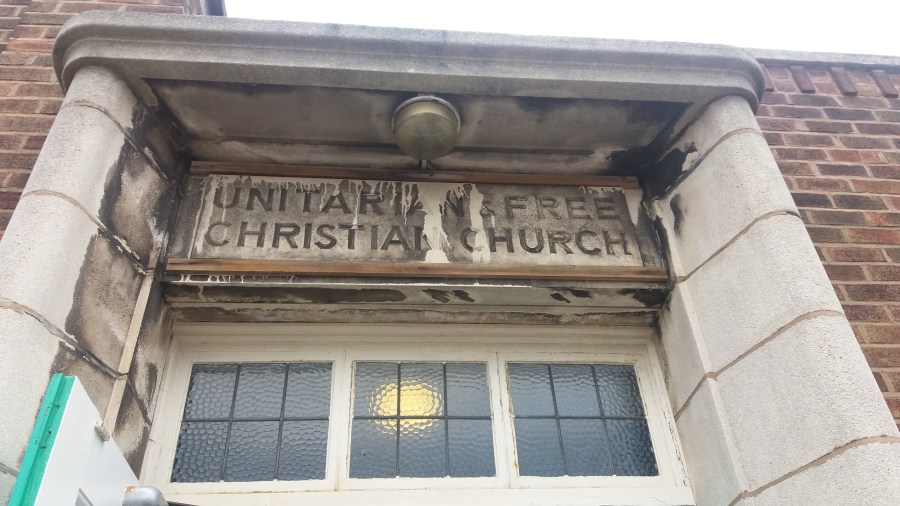
I wasn’t looking for the former Unitarian Church in St Helens but stumbled across it by accident. I was glad I did because whilst it is always a shame when any church closes (and this congregation came to an end in 1998) old church buildings can sometimes be utilised in ways that are imaginative, in keeping with the original purpose and bring some social advantage to the community. All this is certainly the case with St Helens, a solid and utilitarian building that is now a cinema.
As I walked past my eye caught the inscription above the door proclaiming it to be the Unitarian and Free Christian Church, although it is many years since this was actually the case. In fact there are more reminders of the original function of the building despite it being well converted to other purposes. On the front wall the foundation stone is very prominent, recording the role of Anne Holt my distinguished predecessor as editor of the Transactions of the Unitarian Historical Society – a highly regarded historian and member of the famous Liverpool ship owning family – who had inaugurated the building in 1949. Inside there is another tablet which commemorates the opening of the church in 1950 under the presidency of Elizabeth Ann Fryer.
The sanctuary was not large but the group of buildings were varied and clearly adapted to a number of uses. Nowadays the building is a cinema, named Lucem House, a volunteer-led social enterprise. It takes its name from the motto of the borough of St Helens, Ex Terra Lucem – ‘Out of Earth – Light’ (so I was told by Paul Jones the operations manager of the cinema) and the church itself has been nicely turned into a small cinema auditorium. In the foyer they have created an attractive box office and the whole place has a pleasant ambience.
Paul told me that the cinema has been in operation for over three years, the building also being let out for functions and used by a local photography club. They have a screening every week and the day I was there were looking forward to A Night to Remember starring Kenneth More. Paul Jones is an expert on the Titanic (another item of history with notable Unitarian connections) and this film certainly reflects his interests. The film was to be followed by a poetry reading by Len Saunders, the head steward and a poet and actor who has been known – so I was told – to dress up on suitable Titanic related occasions as Captain Smith or Lord Pirrie. He wasn’t in character that day but shared with me some of his poems.
The Unitarian Heritage (published in 1986) says the congregation was founded in 1901 and the original chapel built in 1904. I can’t locate any images of the original building but it was destroyed during the blitz of 1941 and apparently rebuilt on the same site after the war. Now, after a period of neglect, the buildings have been well restored and well adapted to another imaginative use.
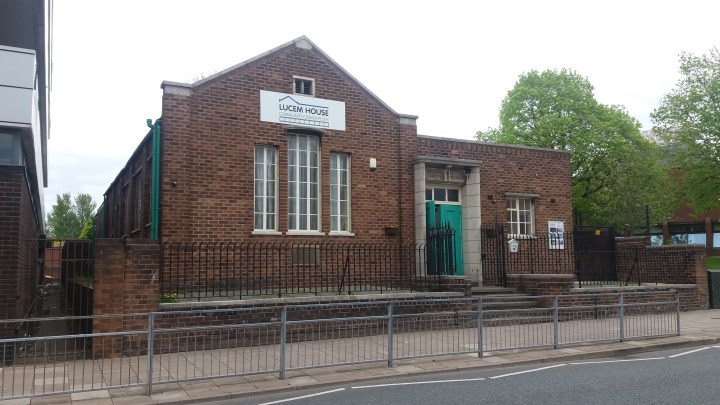
St Helens Unitarian Church – now Lucem House
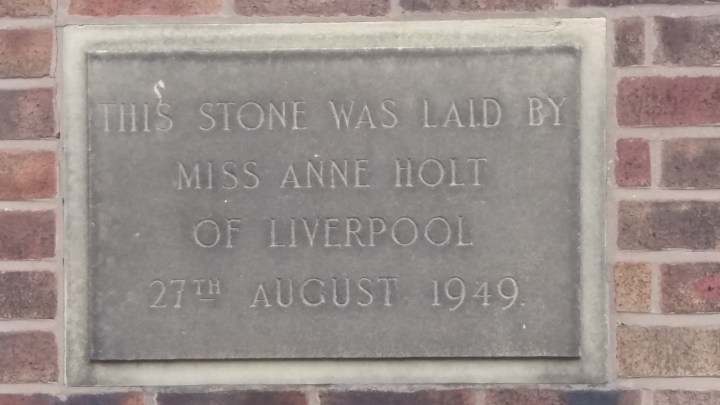
Foundation Stone
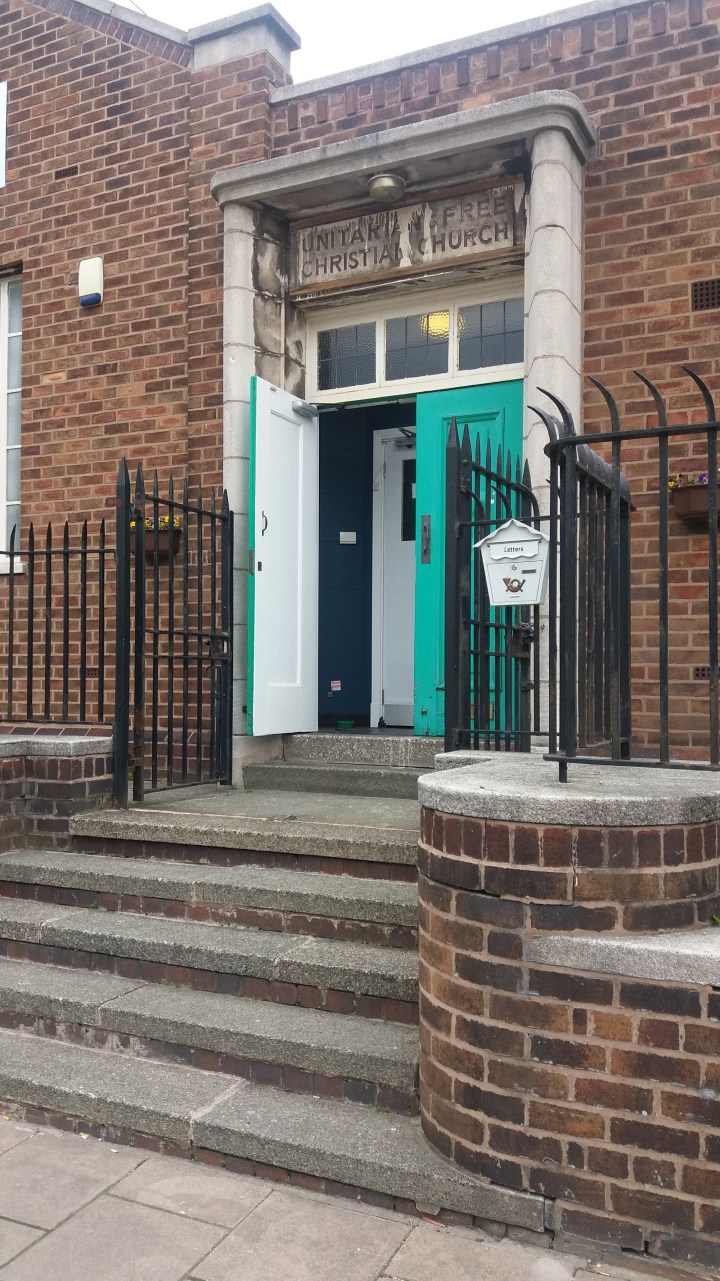
Front entrance
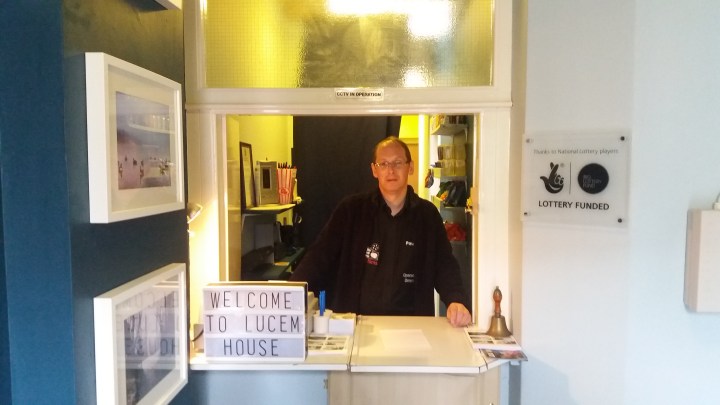
Paul Jones in the box office
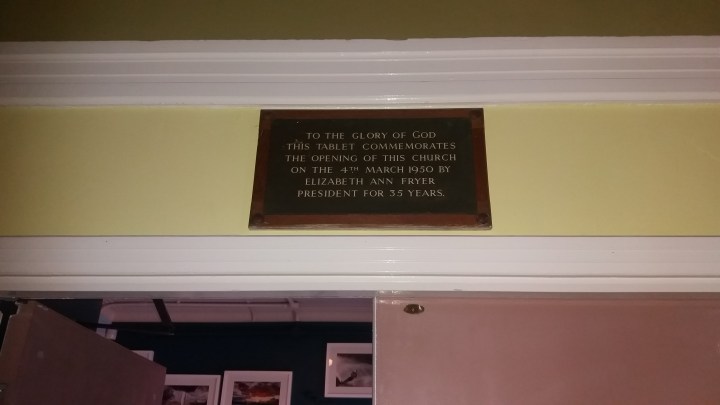
Commemorative plaque
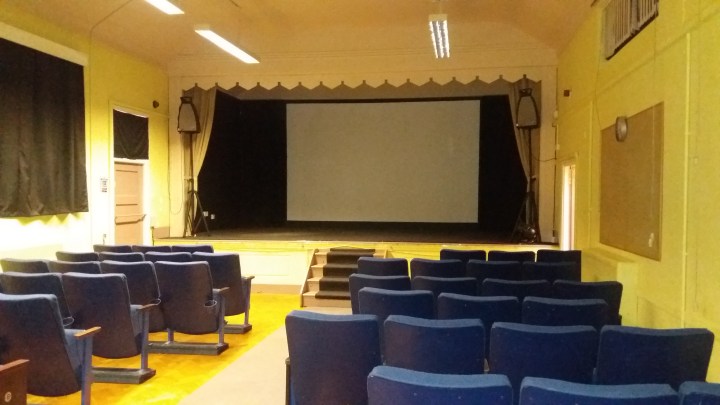
Auditorium

Len Saunders
Update 1st August 2017.
I was very shocked and saddened to read that Len Saunders was the victim of a violent unprovoked assault in July which tragically resulted in his death at the end of the month. There are details and tributes to him in the local paper:
There is a crowdfunding page set up to raise money to provide step free access to Lucem House Cinema in Len Saunders’ memory. The page can be accessed here:
https://www.justgiving.com/crowdfunding/len-saunders?utm_id=107&utm_term=gARZbR5qD



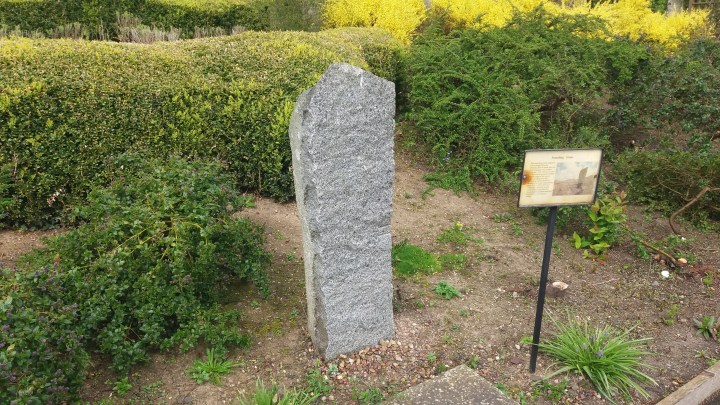

 velvethummingbee