The oldest book in our Library at Dunmurry is this volume, the Third Edition of Thomas Hobbes’ translation of Homer’s Iliad published in London in 1686. The video tells the story of the book and its recent restoration in Belfast.
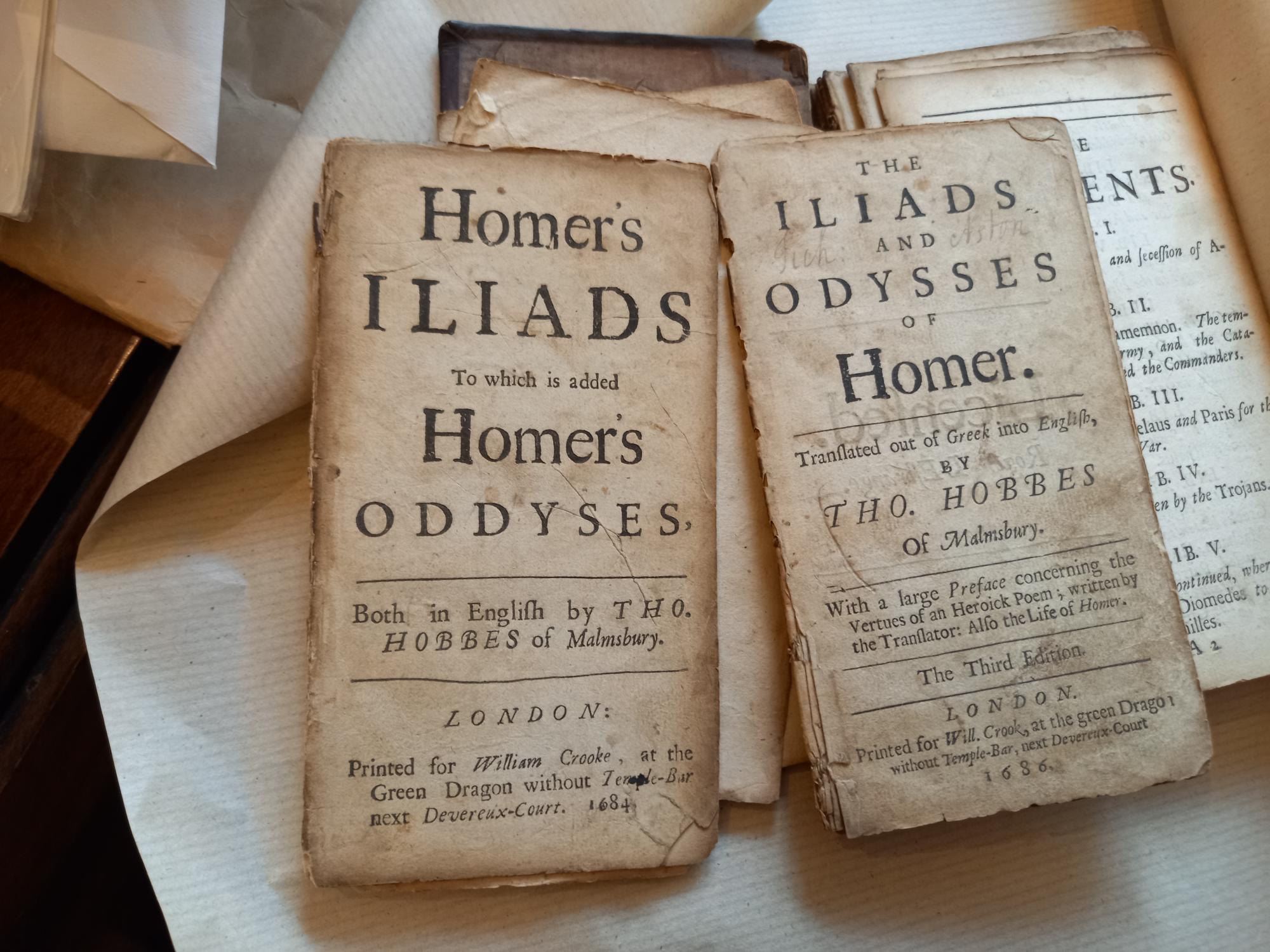
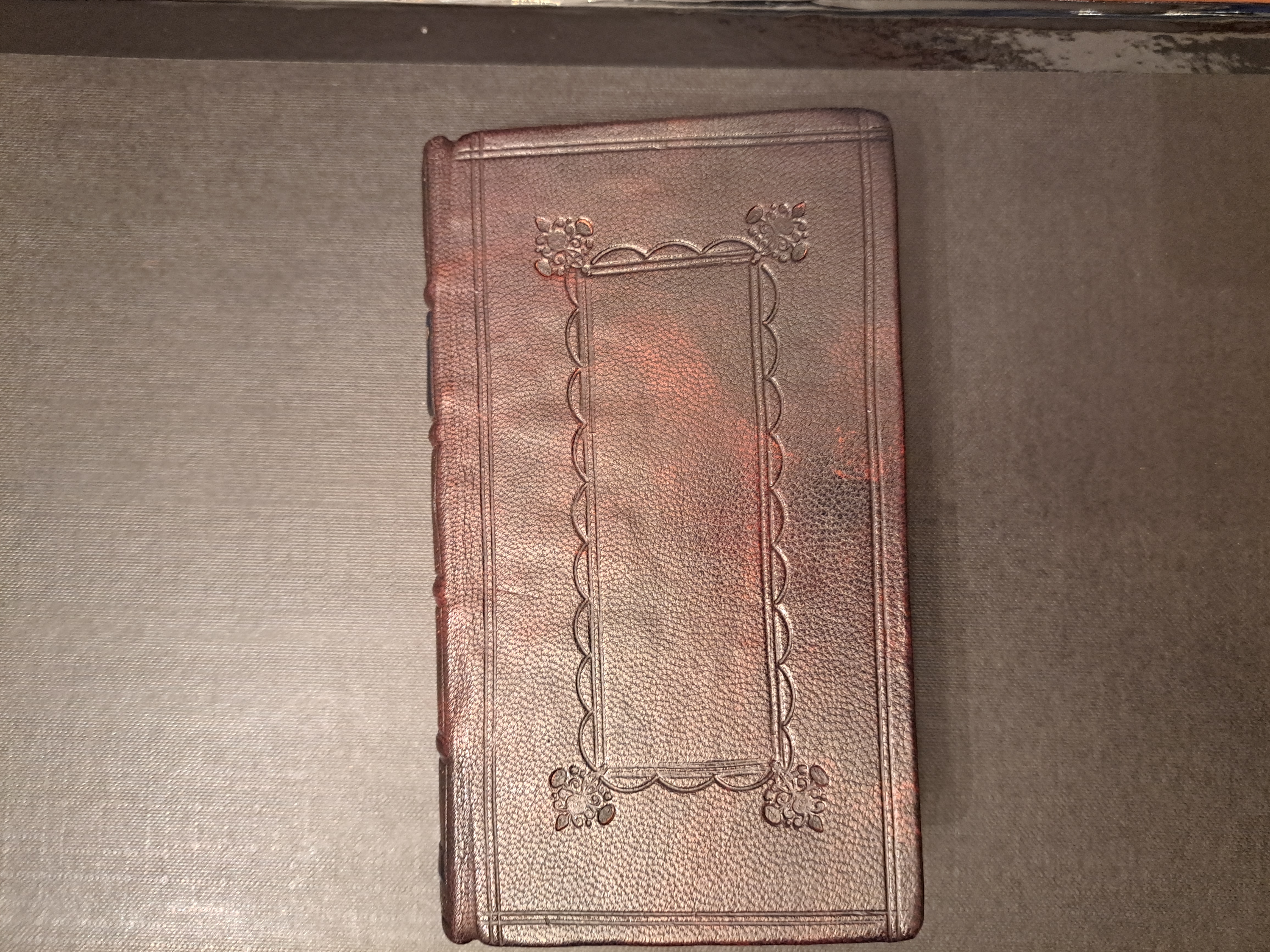
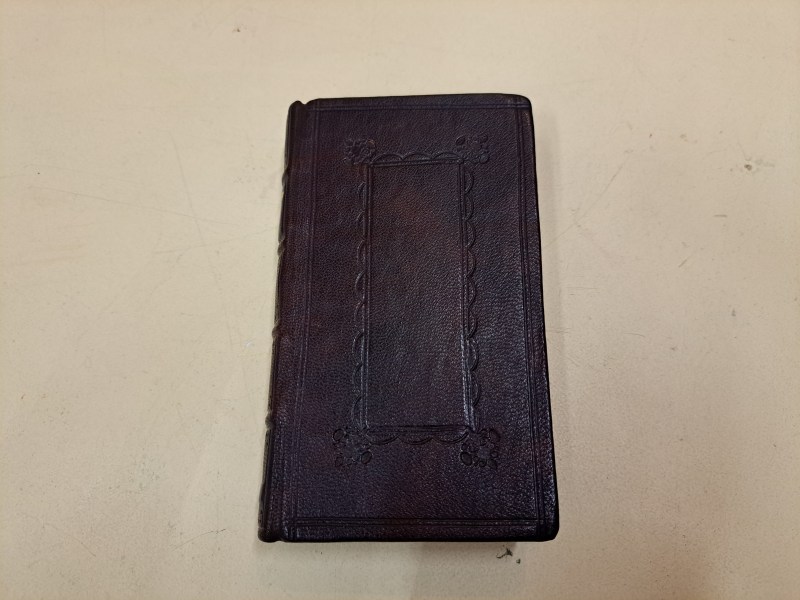
The oldest book in our Library at Dunmurry is this volume, the Third Edition of Thomas Hobbes’ translation of Homer’s Iliad published in London in 1686. The video tells the story of the book and its recent restoration in Belfast.
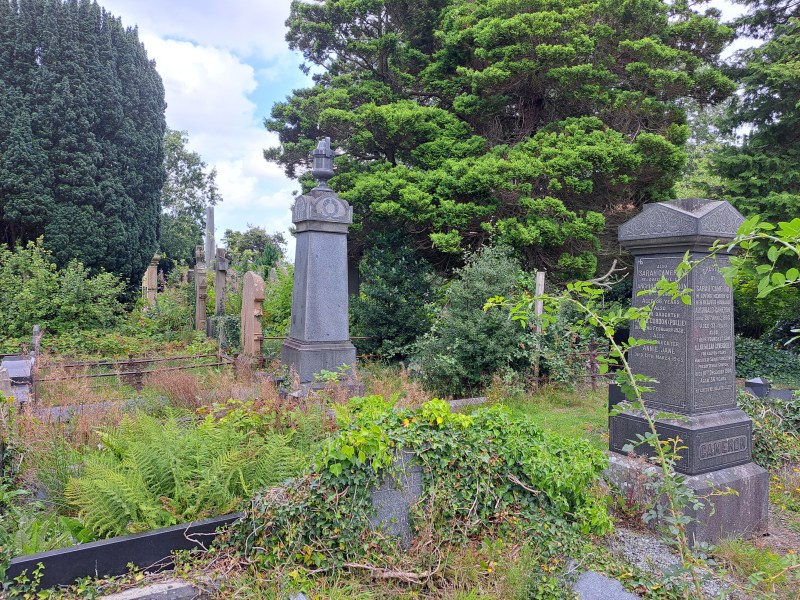
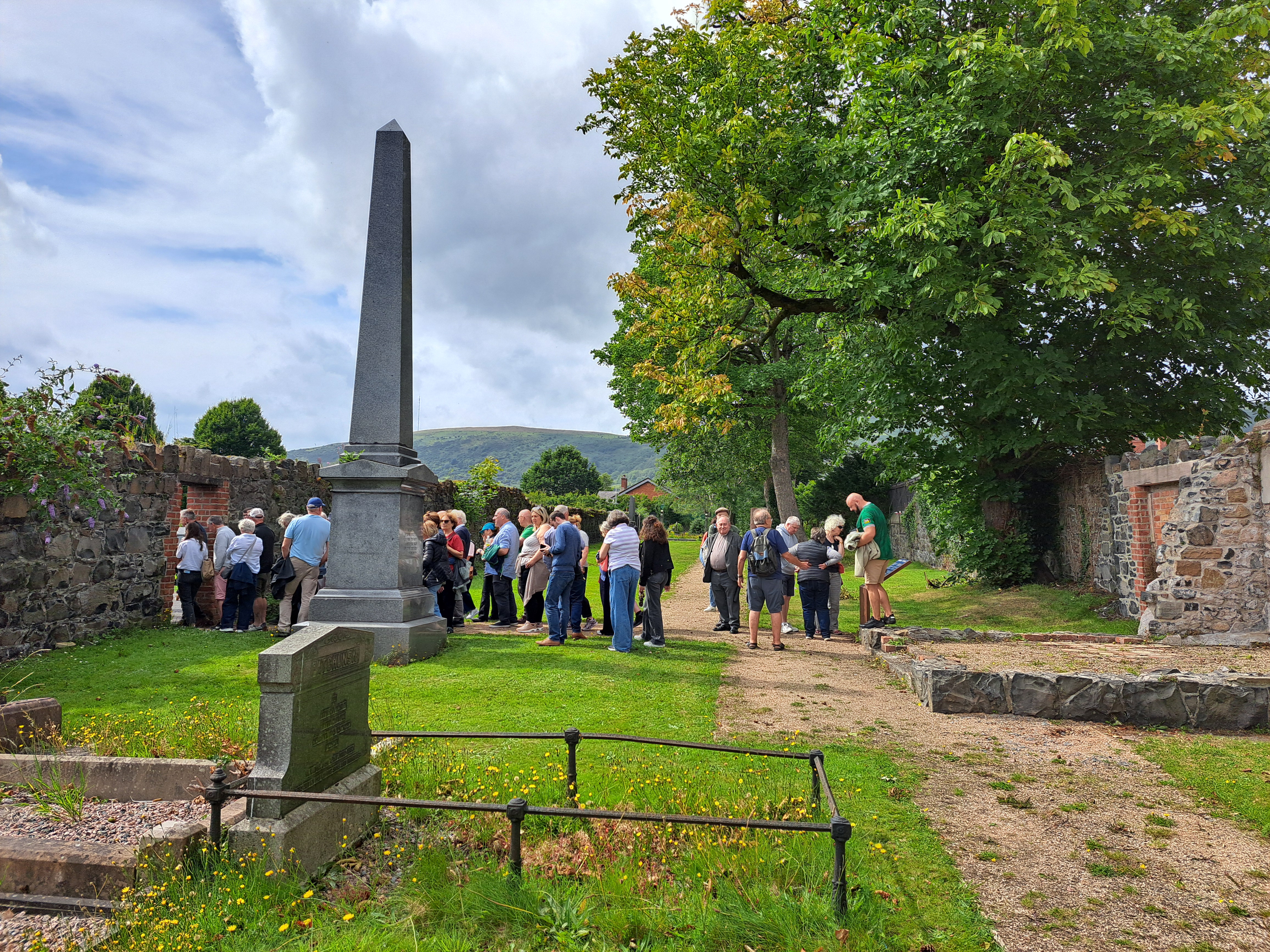
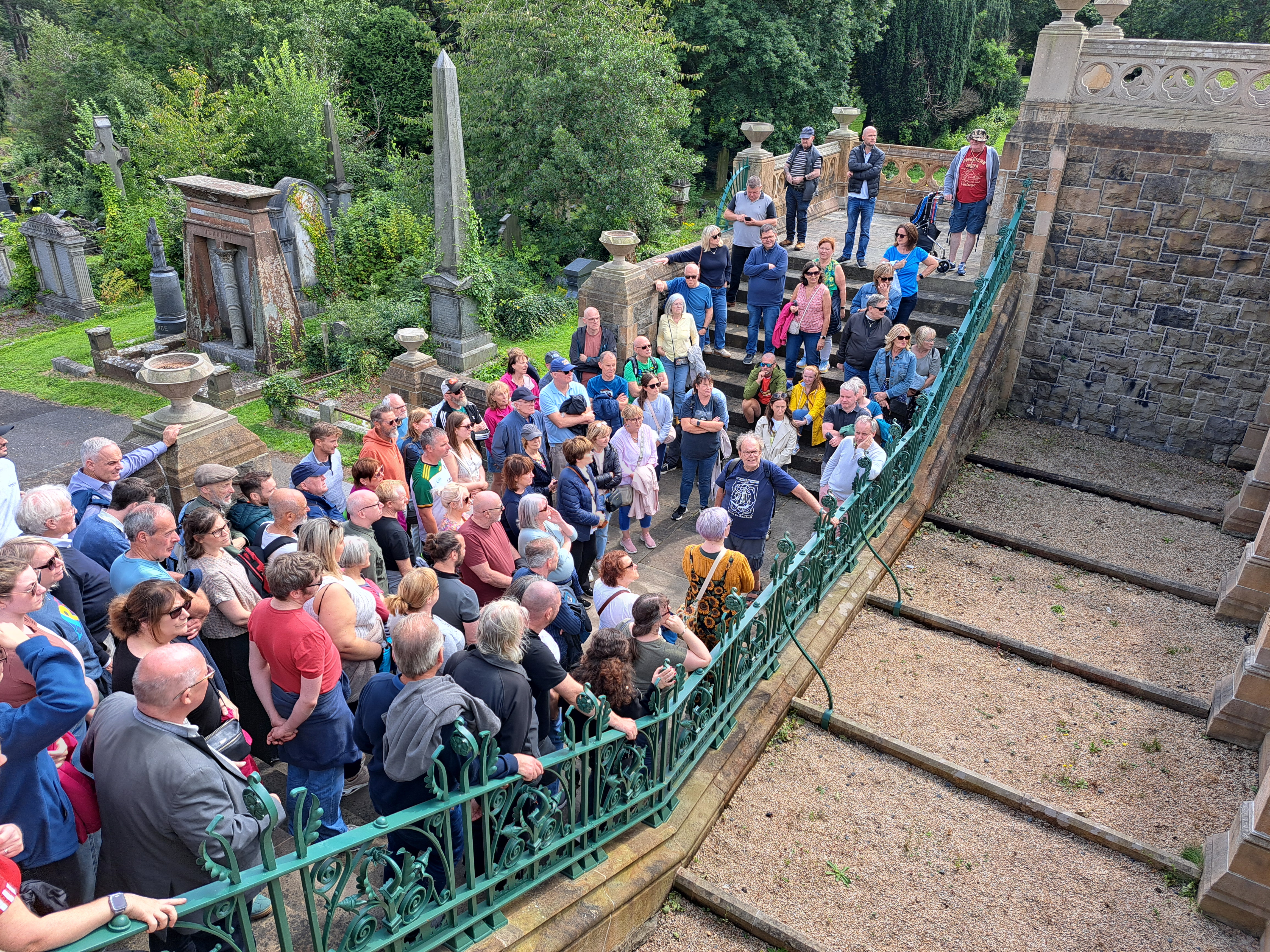
I was pleased to again take part in a tour of Belfast City Cemetery led by Tom Hartley. Tom is now the author of four books on the cemeteries of Belfast and I was pleased also to pick up a copy of his latest work, More Stories from the Belfast City Cemetery. This was his penultimate tour of the last series he would give as part of the Féile an Phobail and like all these tours there was a very large attendance.
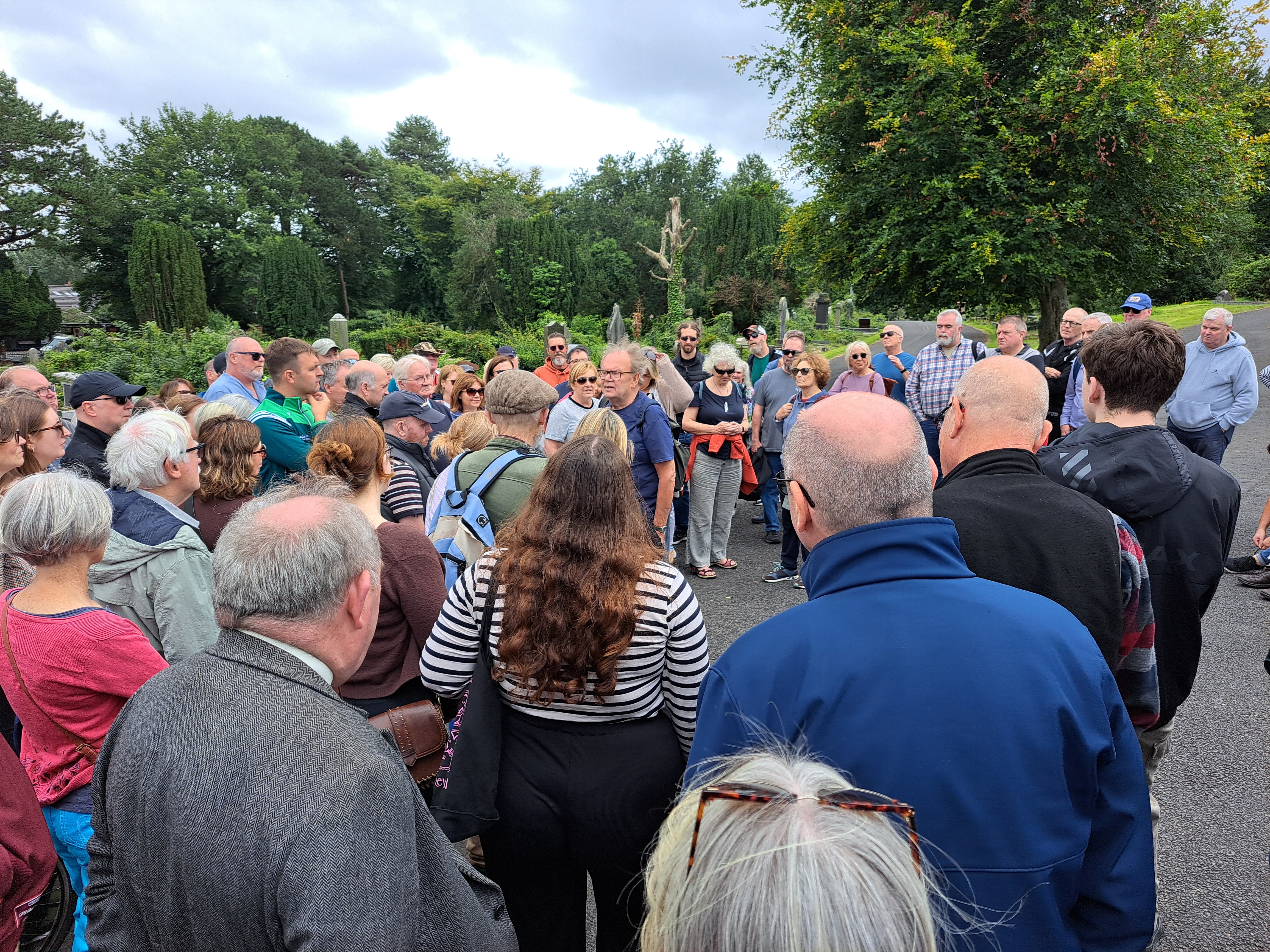
I see the first guided tour I attended was in March 2022. You can read that account here – Silent yet eloquent Memorials. There are a number of changes to the Cemetery made since that time, like the completion of the visitors’ centre, new signage all around the Cemetery, the restoration of the Vaults – which house the remains of such industrial luminaries as Sir Edward Harland and Thomas Gallaher – and a lot of new planting.
It is a very impressive cemetery, imaginatively laid out and designed by William Gay of Bradford in the shape of a bell (as in Belfast) and it contains some incredible Victorian, Edwardian and later memorials.
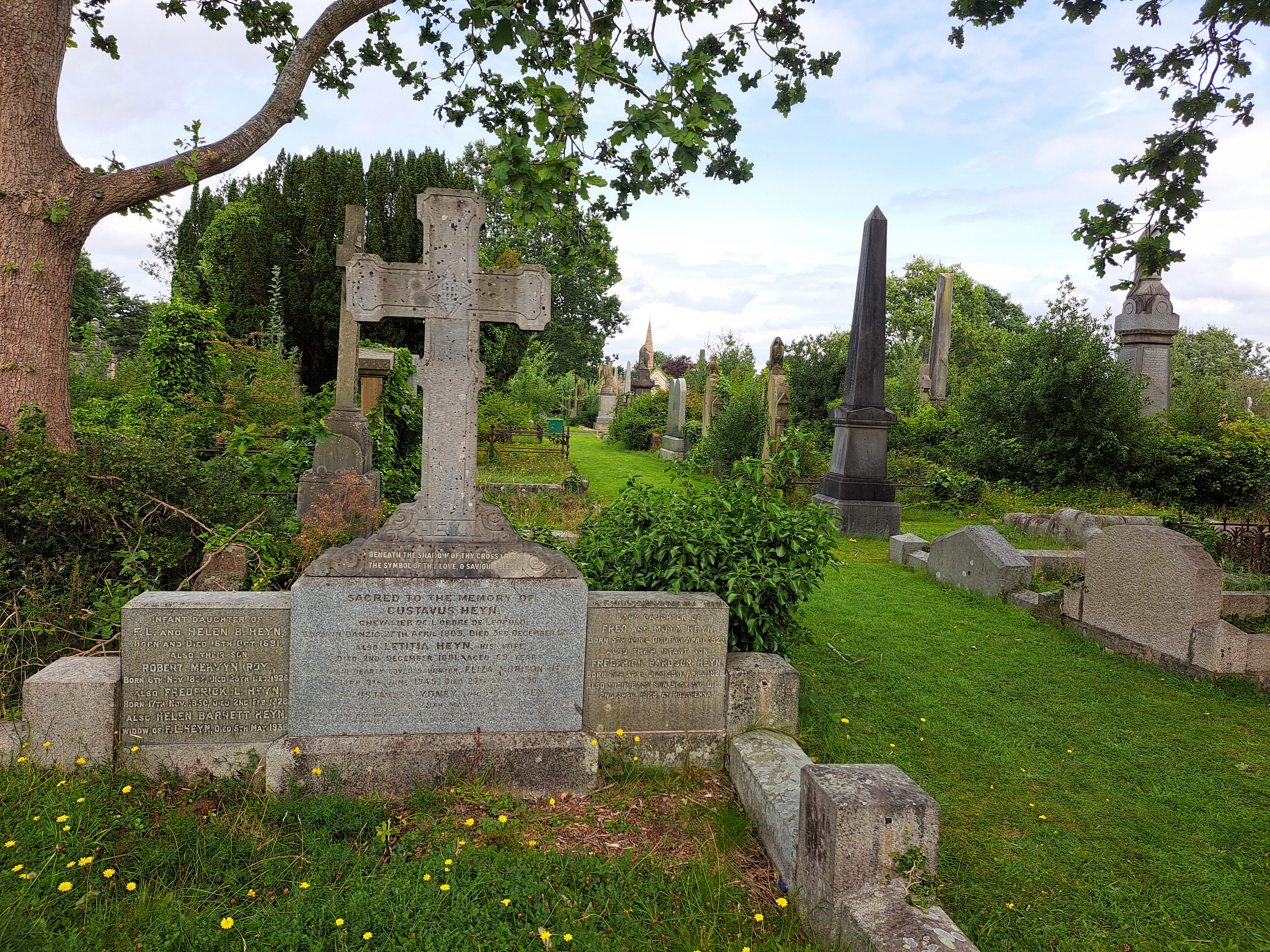
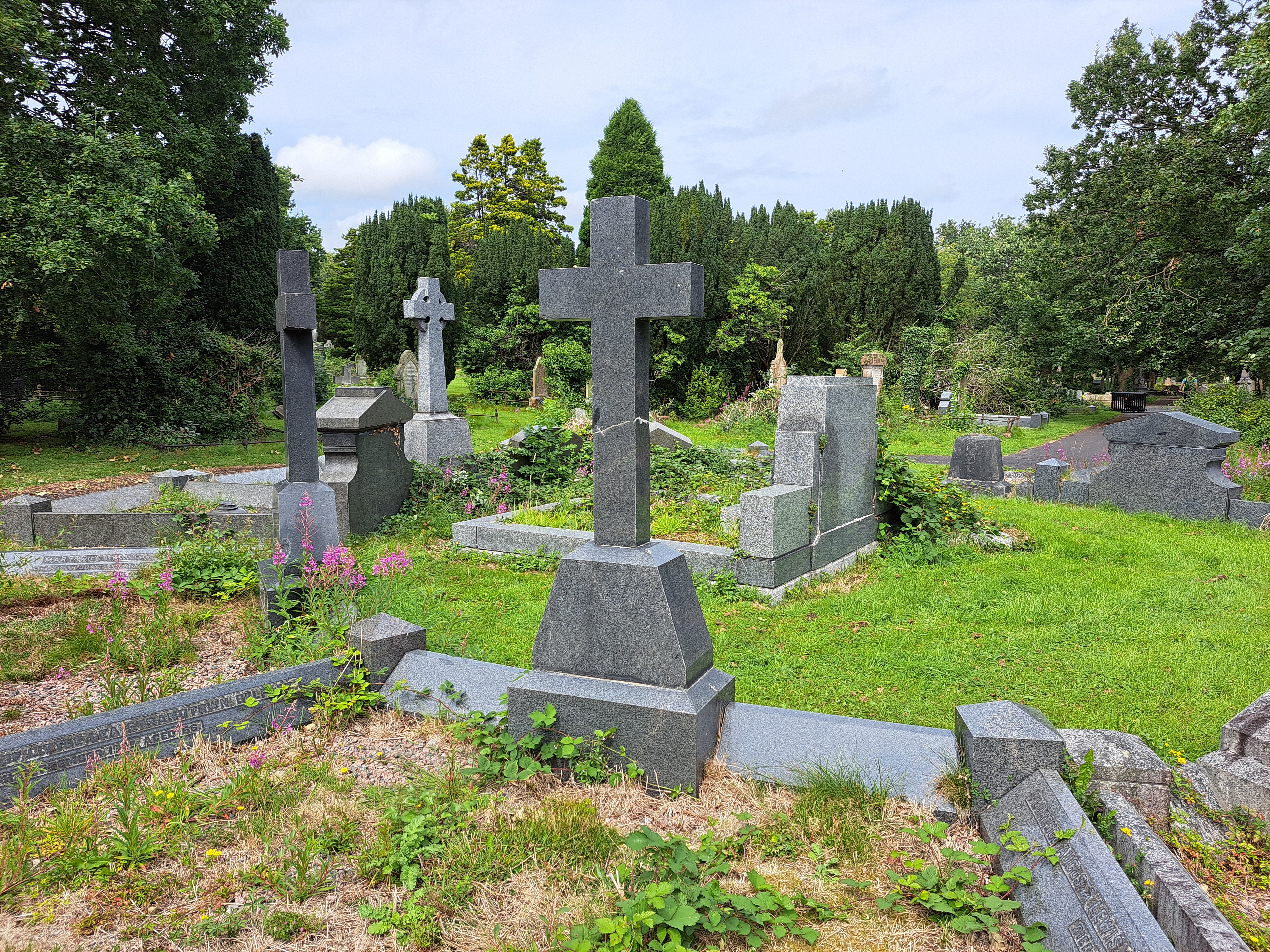
Some parts are still quite heavily overgrown and other parts have suffered badly from vandalism.
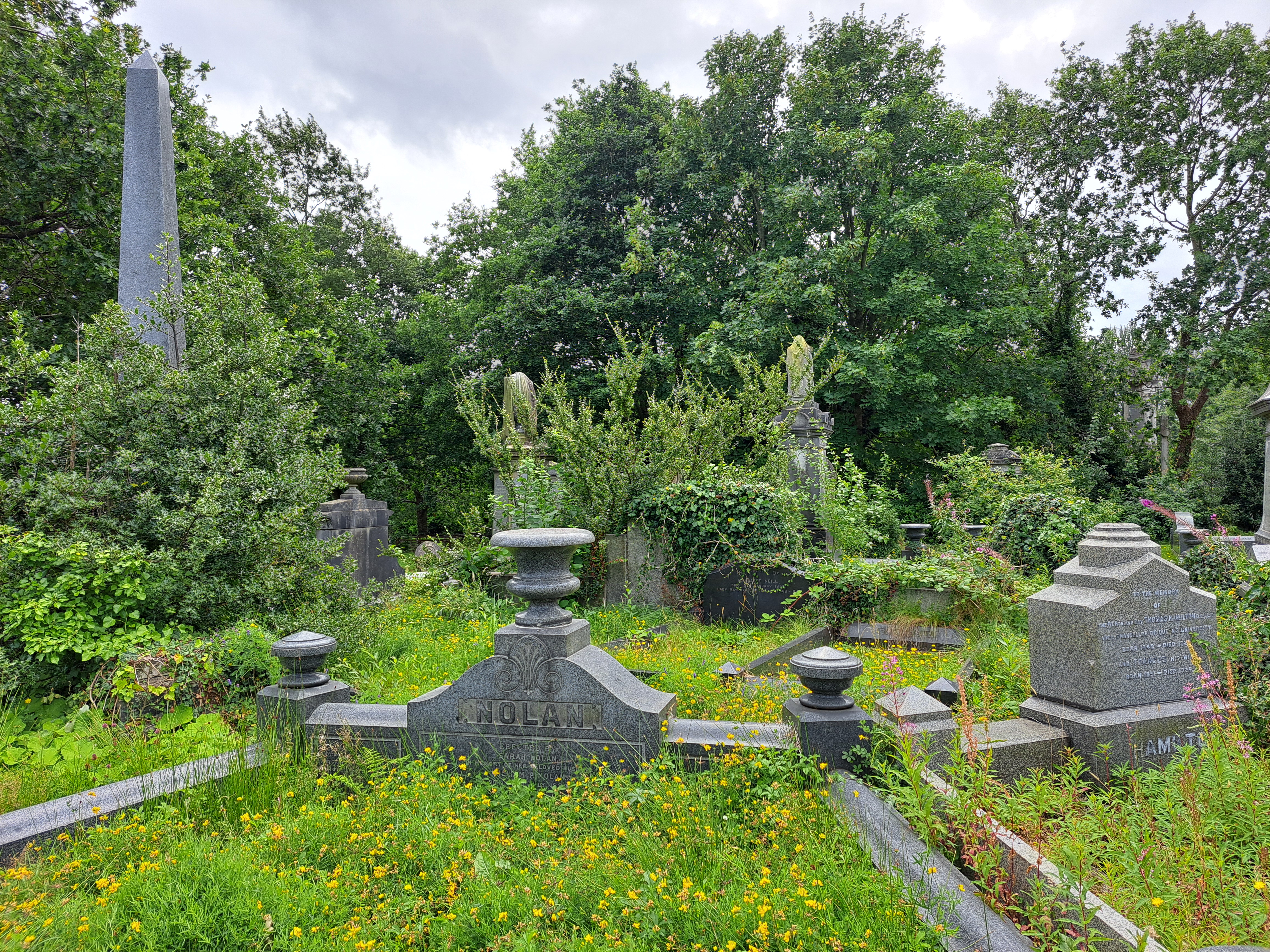
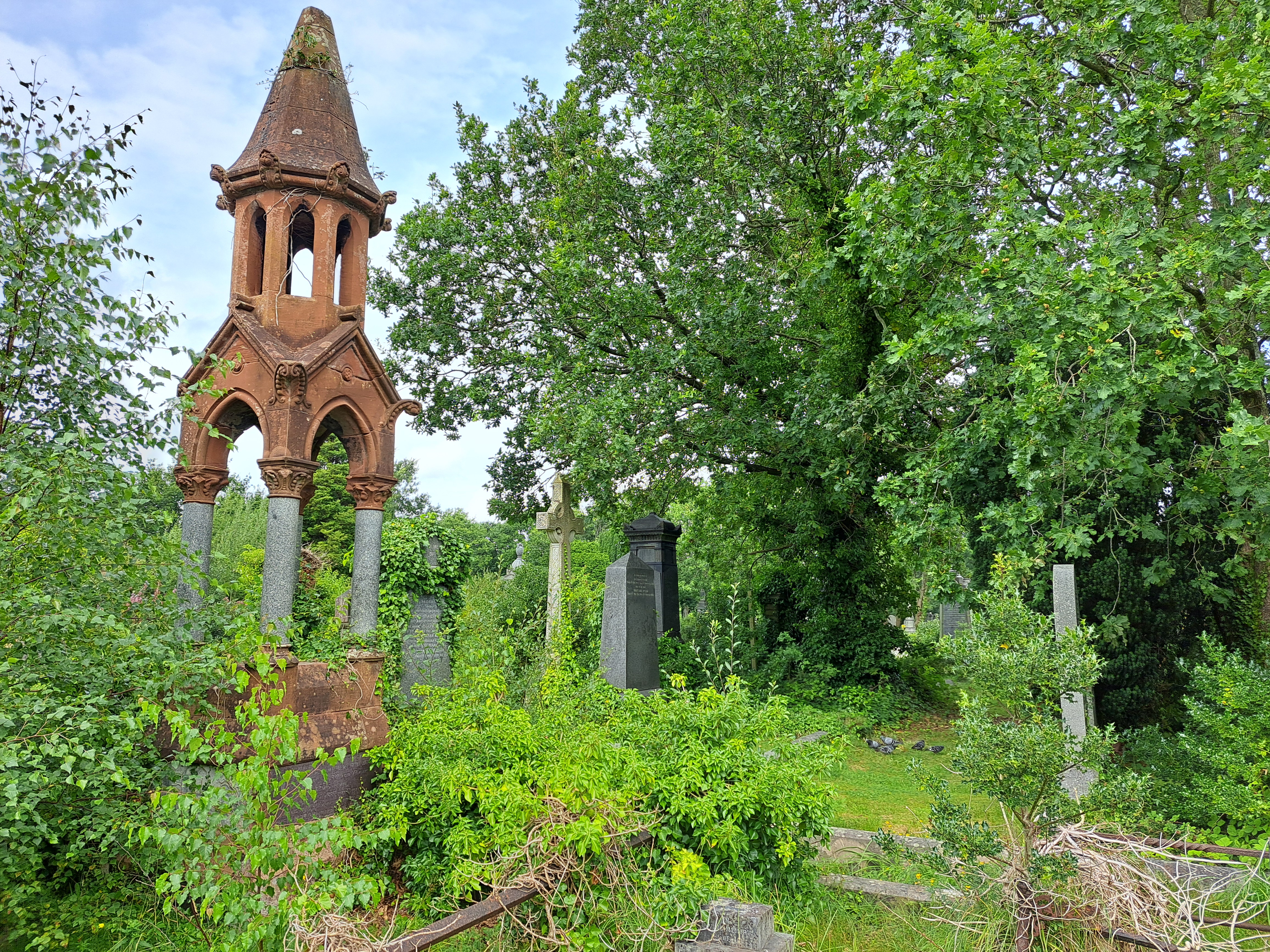
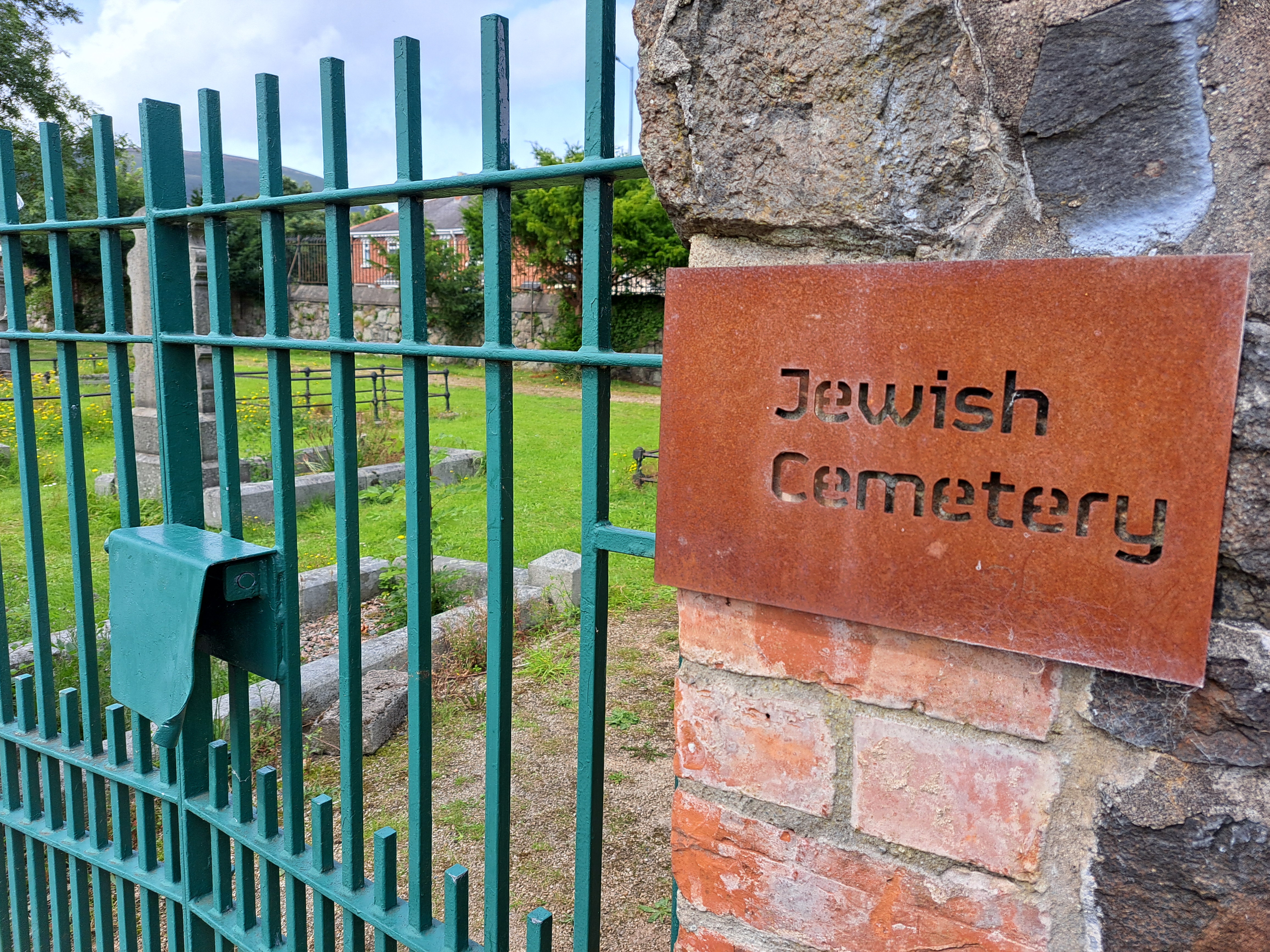
The Jewish section of the graveyard comprises a separate walled section although this has particularly suffered from vandalism and since 1964 Jewish burials now take place at Carnmoney Cemetery.
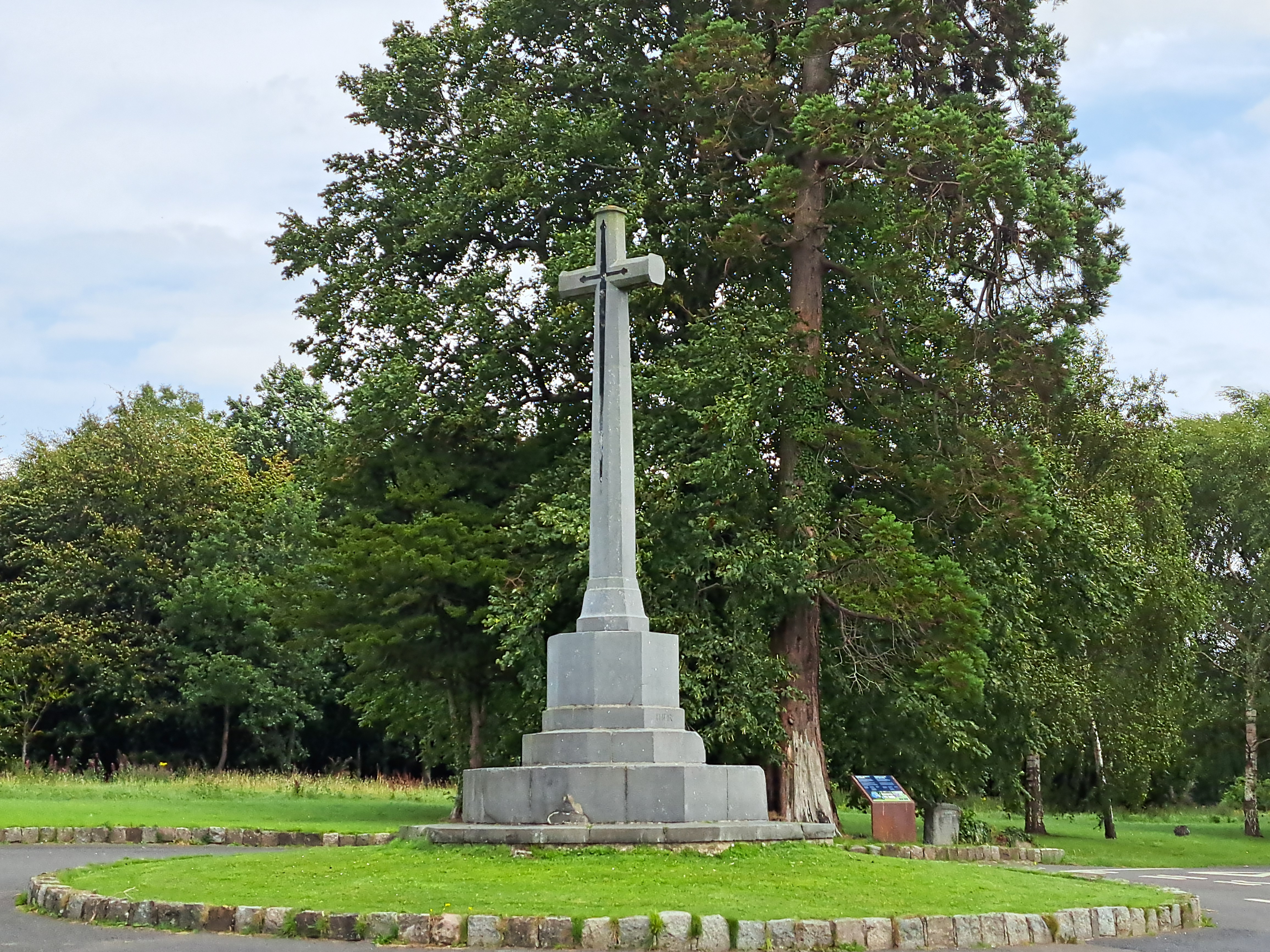
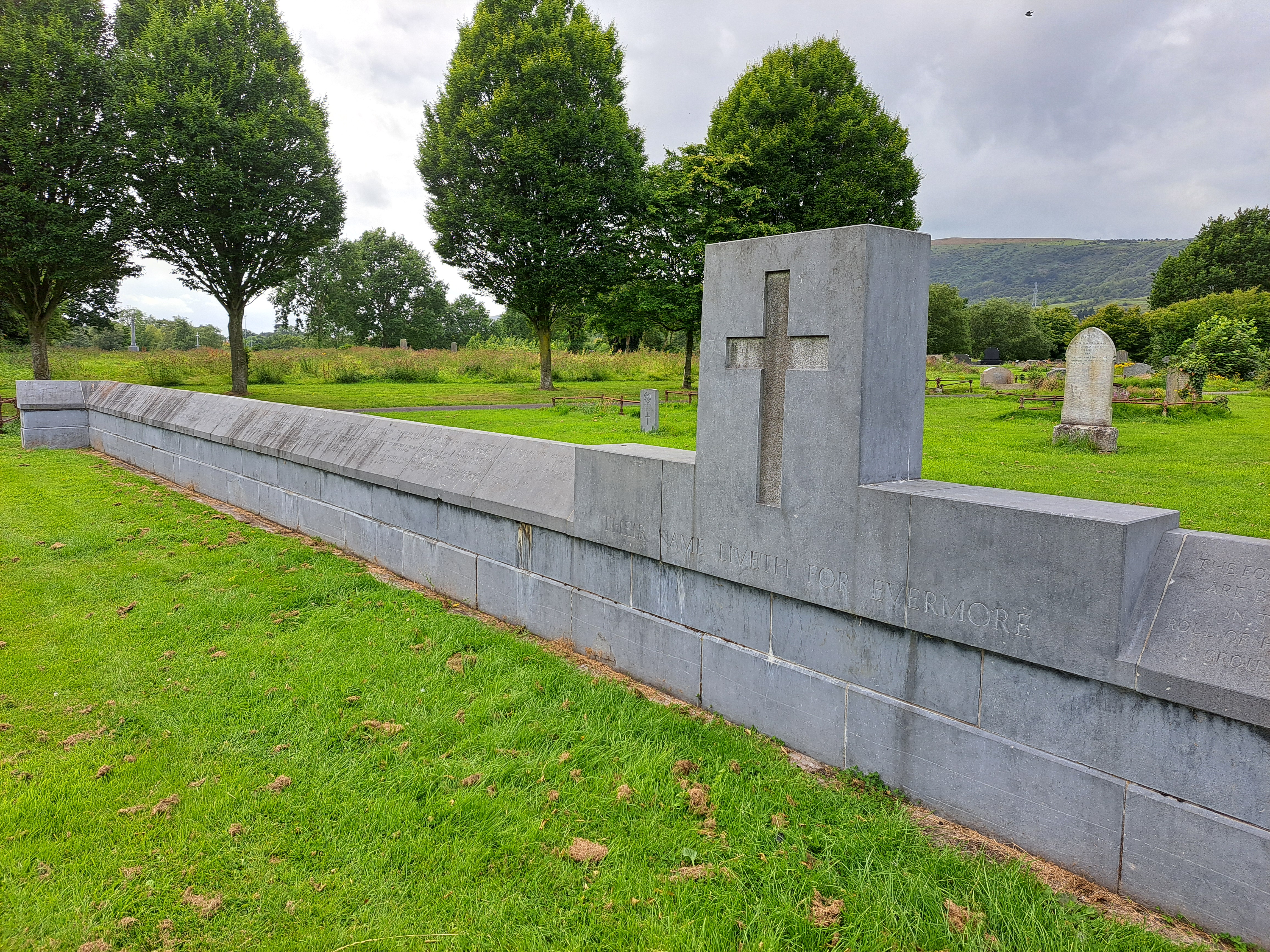
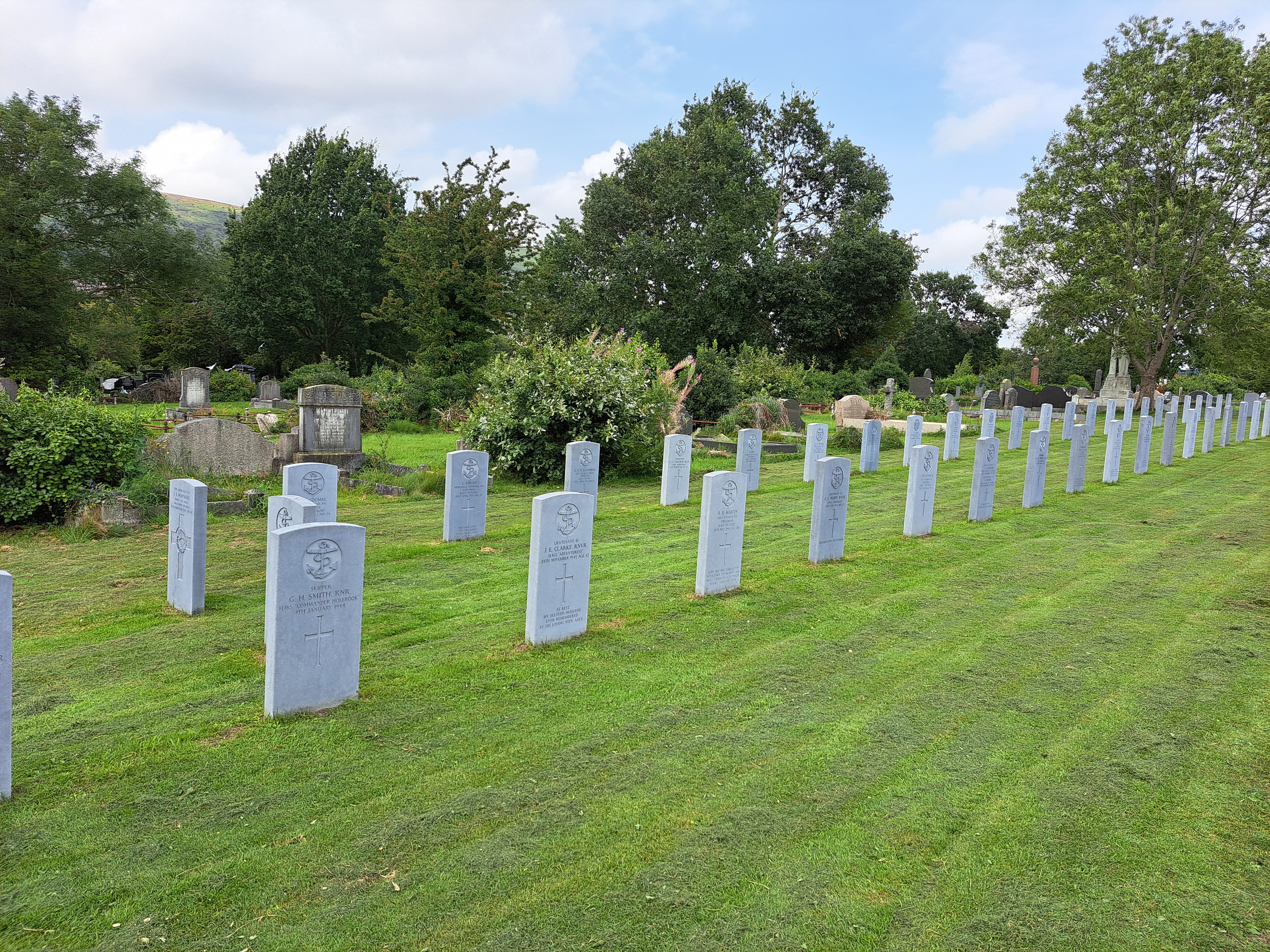
The Cemetery also includes a Commonwealth War Grave Cemetery with 296 burials from the First World War and 274 from the Second World War. There is also a Cross of Sacrifice (the same size as that in Botley Cemetery) and a First World War Screen Wall which carries the names of 74 soldiers who are buried in the First World War plot, 58 soldiers who are buried in unmarked graves and 8 soldiers who are buried elsewhere in the Cemetery.
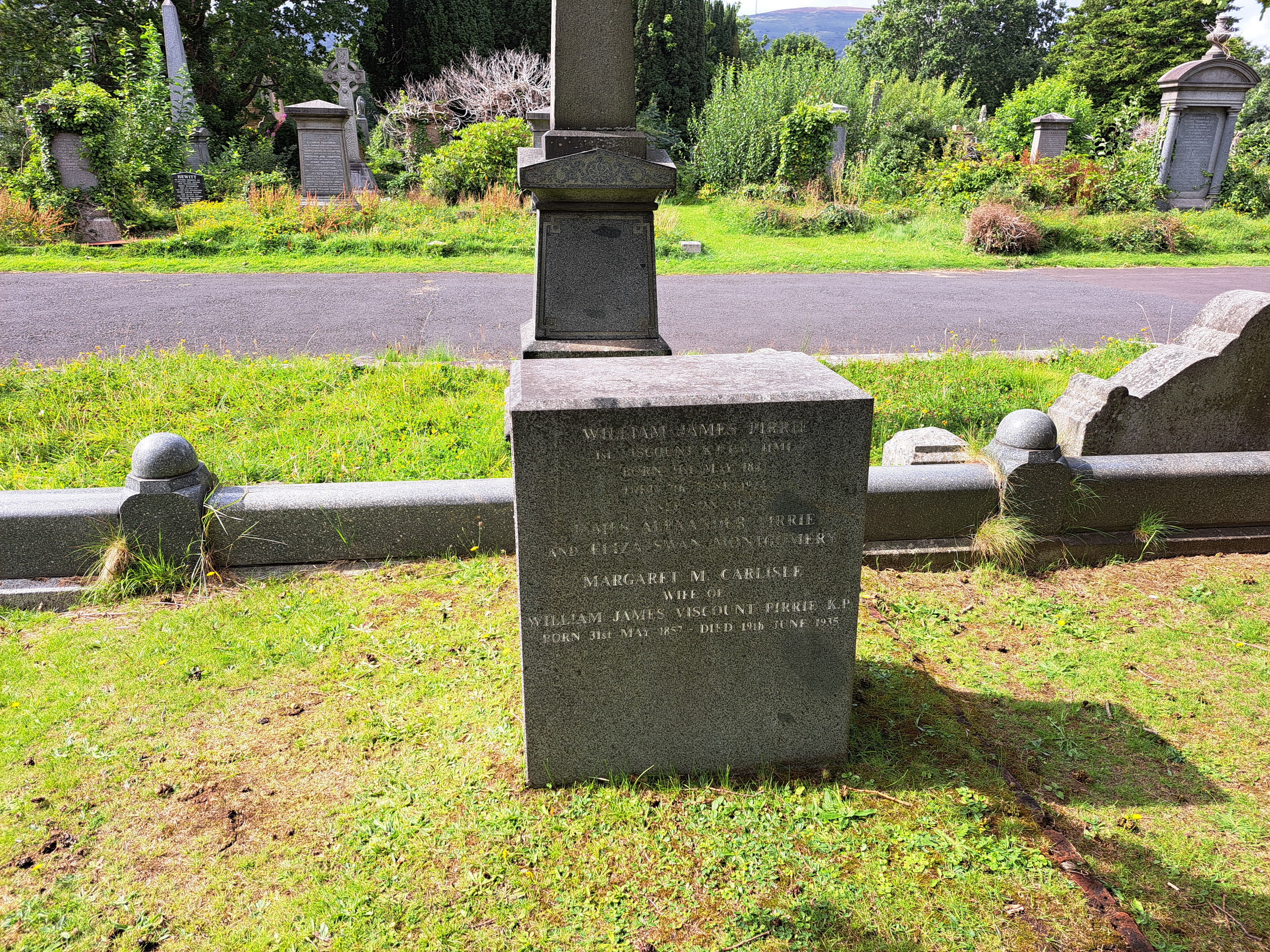
There are a lot of significant people from Belfast’s past who were Non-Subscribing Presbyterians who are buried here, perhaps most notable are Lord and Lady Pirrie. Viscount Pirrie was the chairman of Harland and Wolff when the Titanic was built and was to have sailed with his nephew, the designer Thomas Andrews, on its maiden voyage, but was prevented from doing so by illness.
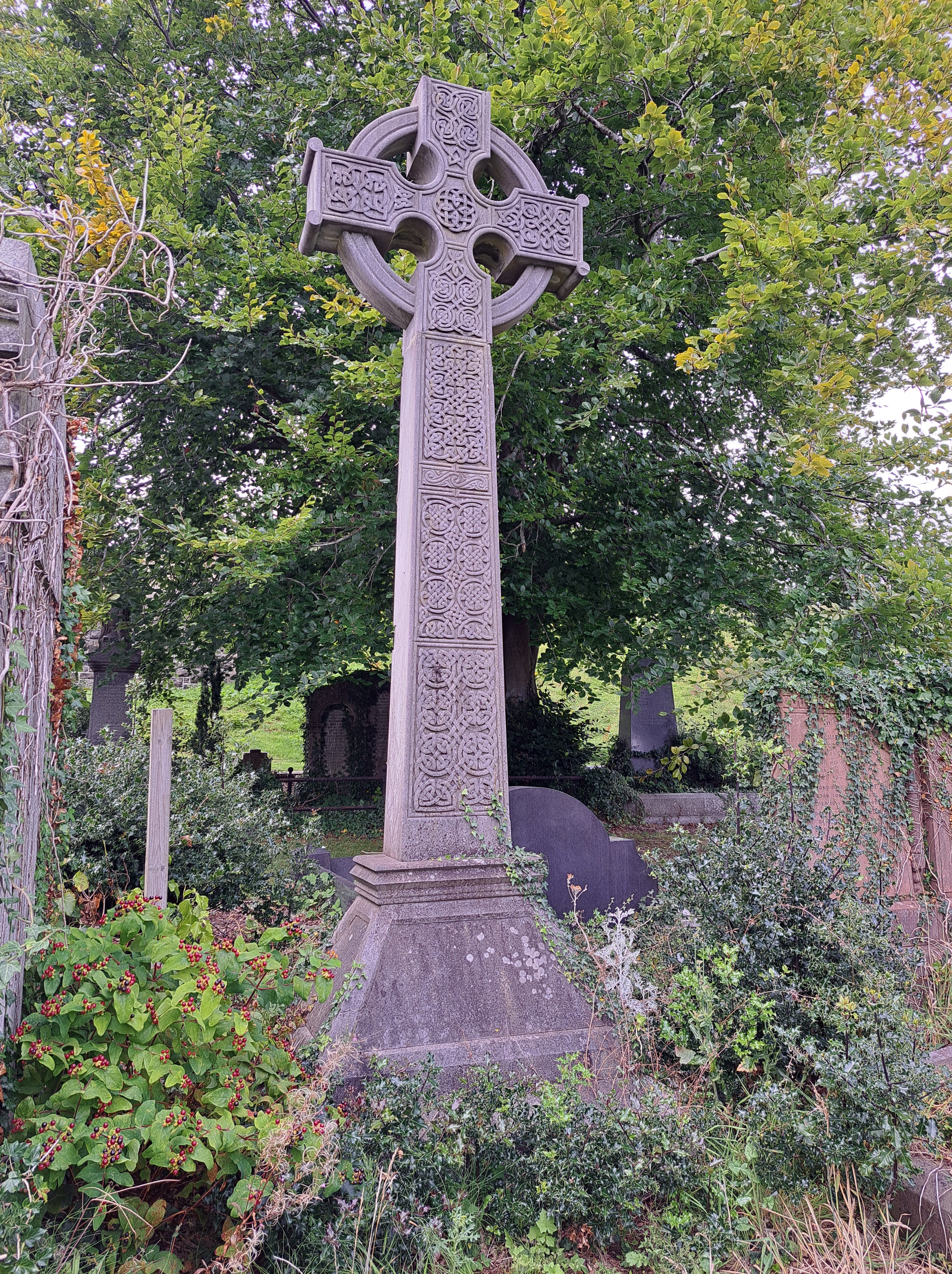
I have written before about one of the most notable Non-Subscribing Presbyterian ministers buried here, the Rev John Scott Porter, and was pleased to hear from his great great great granddaughter as a result. He is buried with his brother, William, who was once the attorney general at the Cape Colony, and actually introduced at that time a franchise that was inclusive of all races. The Celtic Cross that marks their grave is one of the most impressive in the cemetery:
I also produced a short video about John Scott Porter at that time. This is available to view here:
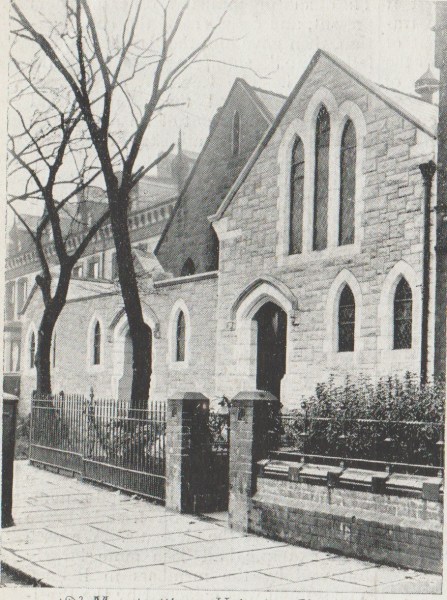
I’ve blogged before about Mountpottinger – most notably here and here where more details about its history can be seen – it is an interesting building on a prominent site in that part of Belfast and the congregation has a very distinctive history. Today the building is leased to the Bright Umbrella Drama Company who are turning the old school hall into the Studio Theatre and the church itself into the Sanctuary Theatre. But the congregation still has a place on the premises and the exact date of the anniversary of the opening of the building – 3rd January 2025 – was the occasion for this remarkable celebration of the 150 years of Mountpottinger.
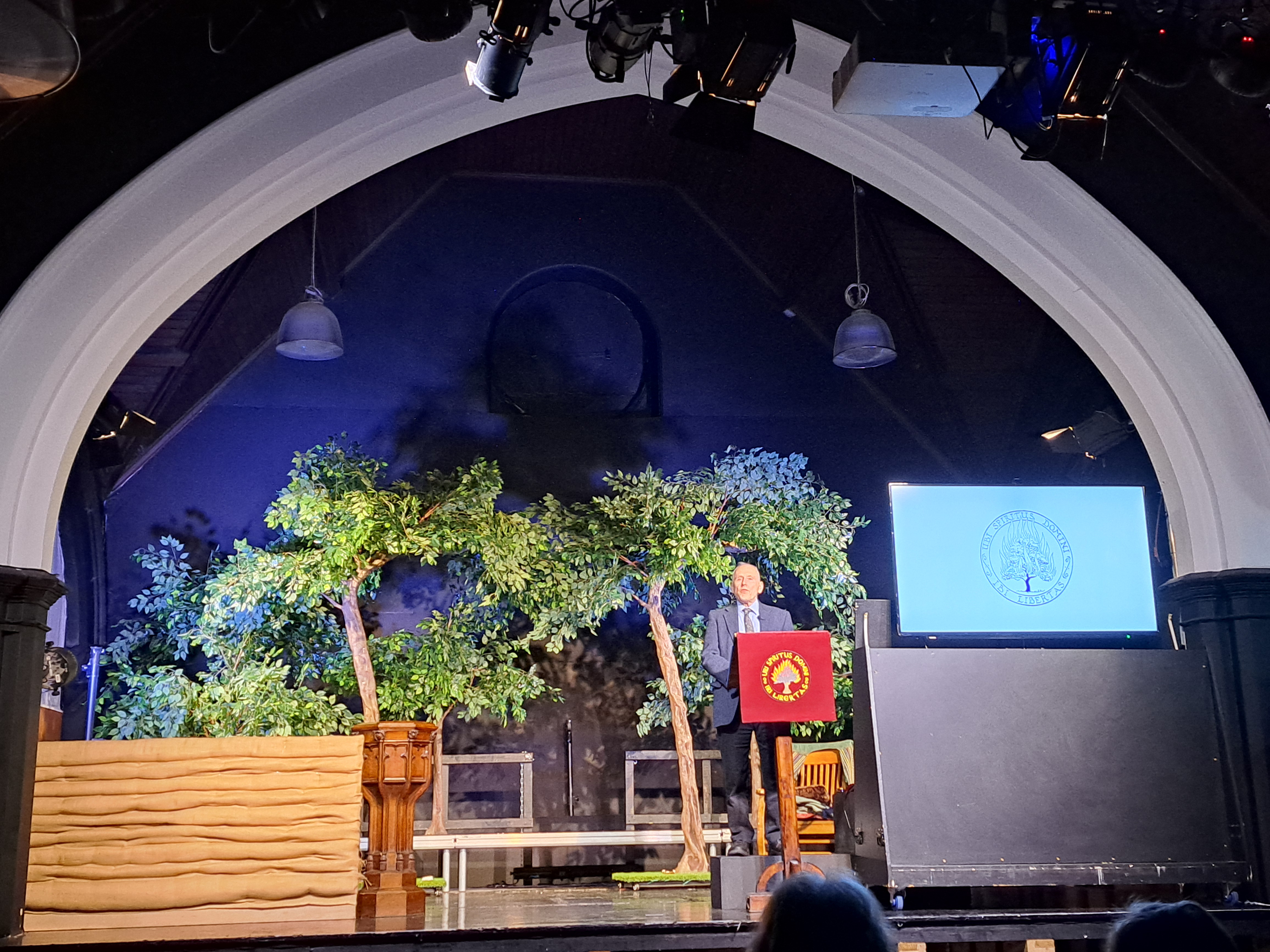
A lot of credit must go to Adrian Moir, the church secretary and former ‘Warden of the Fabrique’, as the Very Rev Charlie Kelly once termed him, who wrote and narrated this excellent celebration of the life of the congregation. It was a very positive collaboration between the church and the Drama Company which brought the history of the church to life covering three themes:
Foundation and Hope
Tragedy and Remembrance
Adapting to the times and a glimpse of the future
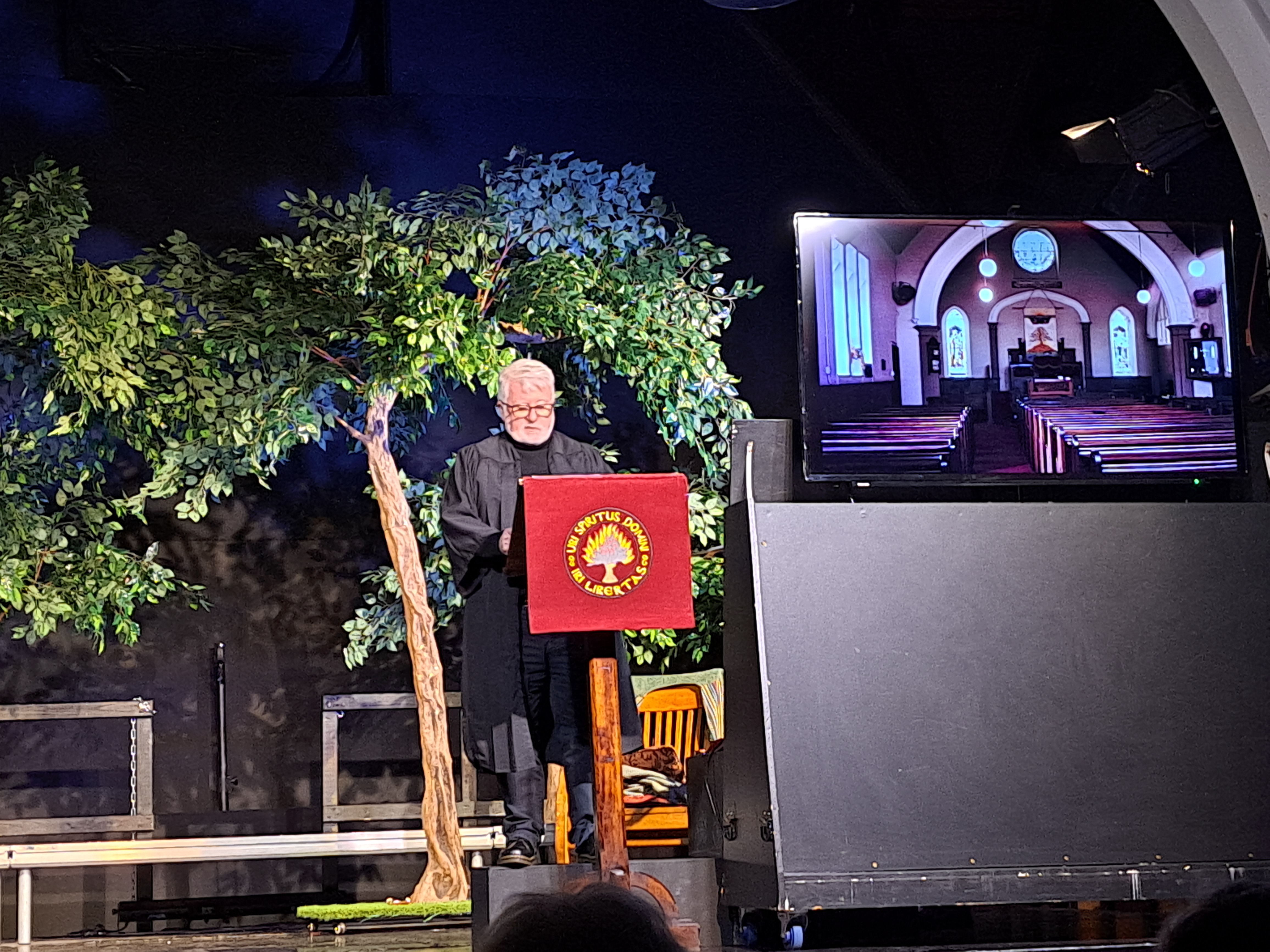
The evening was interesting, engaging and witty and also very moving as it looked at the story of Ellen Mary Davies, the wife of the Rev William Jenkin Davies, who died tragically young and in whose memory the school room was built.
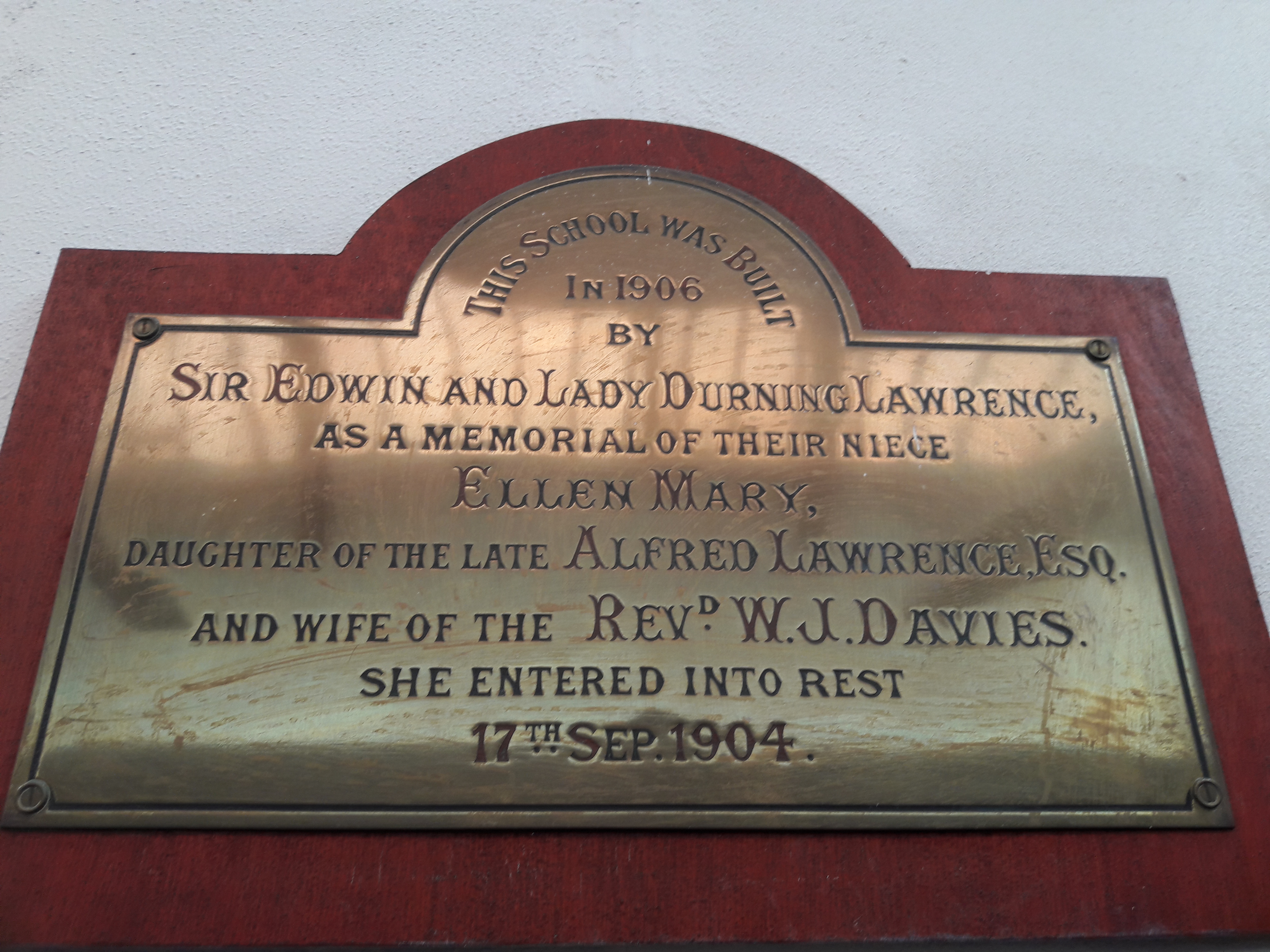
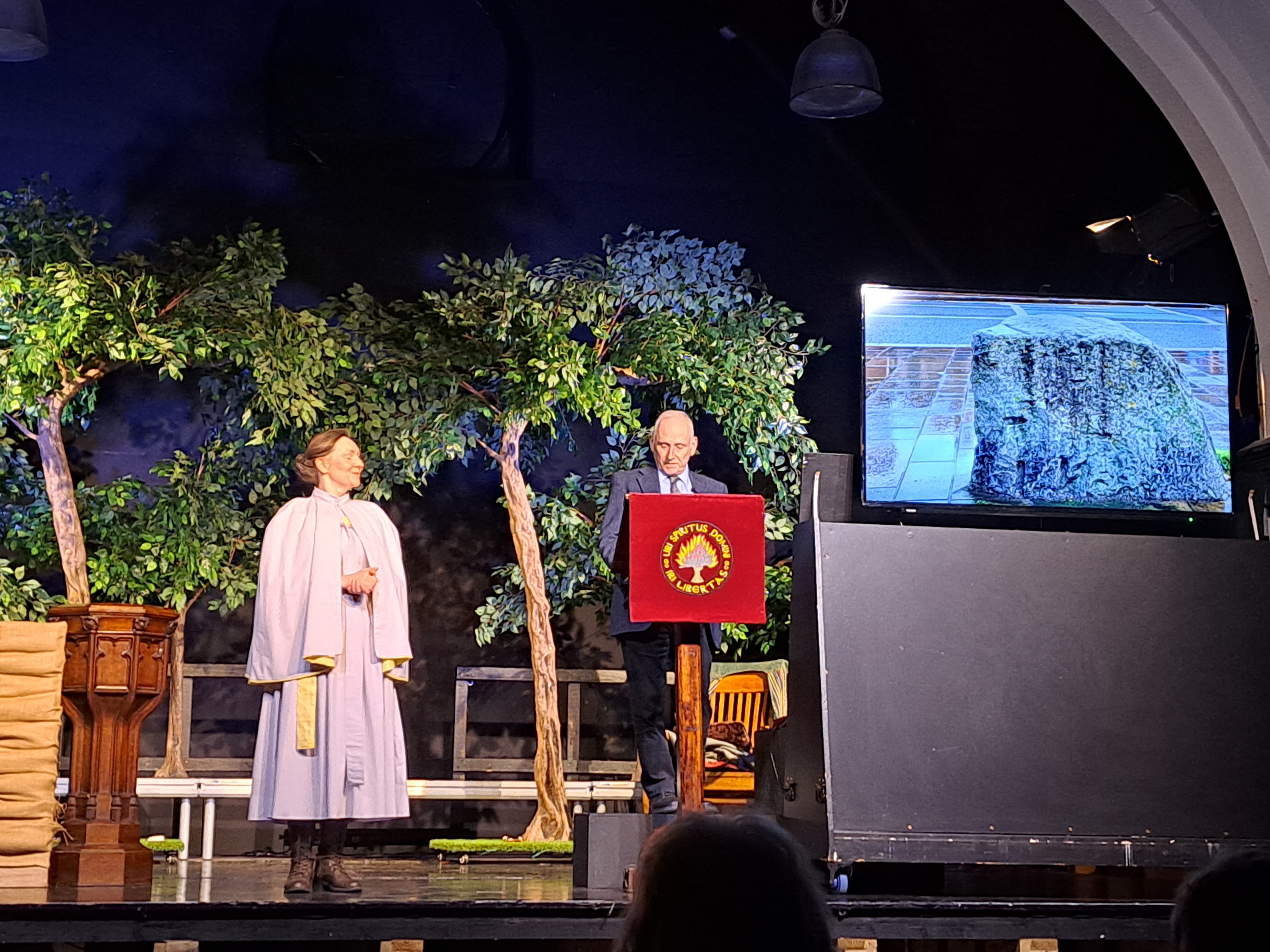
There was further tragedy with the loss of members of the church in the First World War, including Captain James Samuel Davidson in 1916, on the first day of the battle of the Somme. Also remembered on the evening was church member Sydney Agnew who was killed during the ‘Troubles’ in 1971 to prevent him giving evidence at a trial. It was both fitting and touching that members of Sydney’s family were there to lay a wreath in his memory.
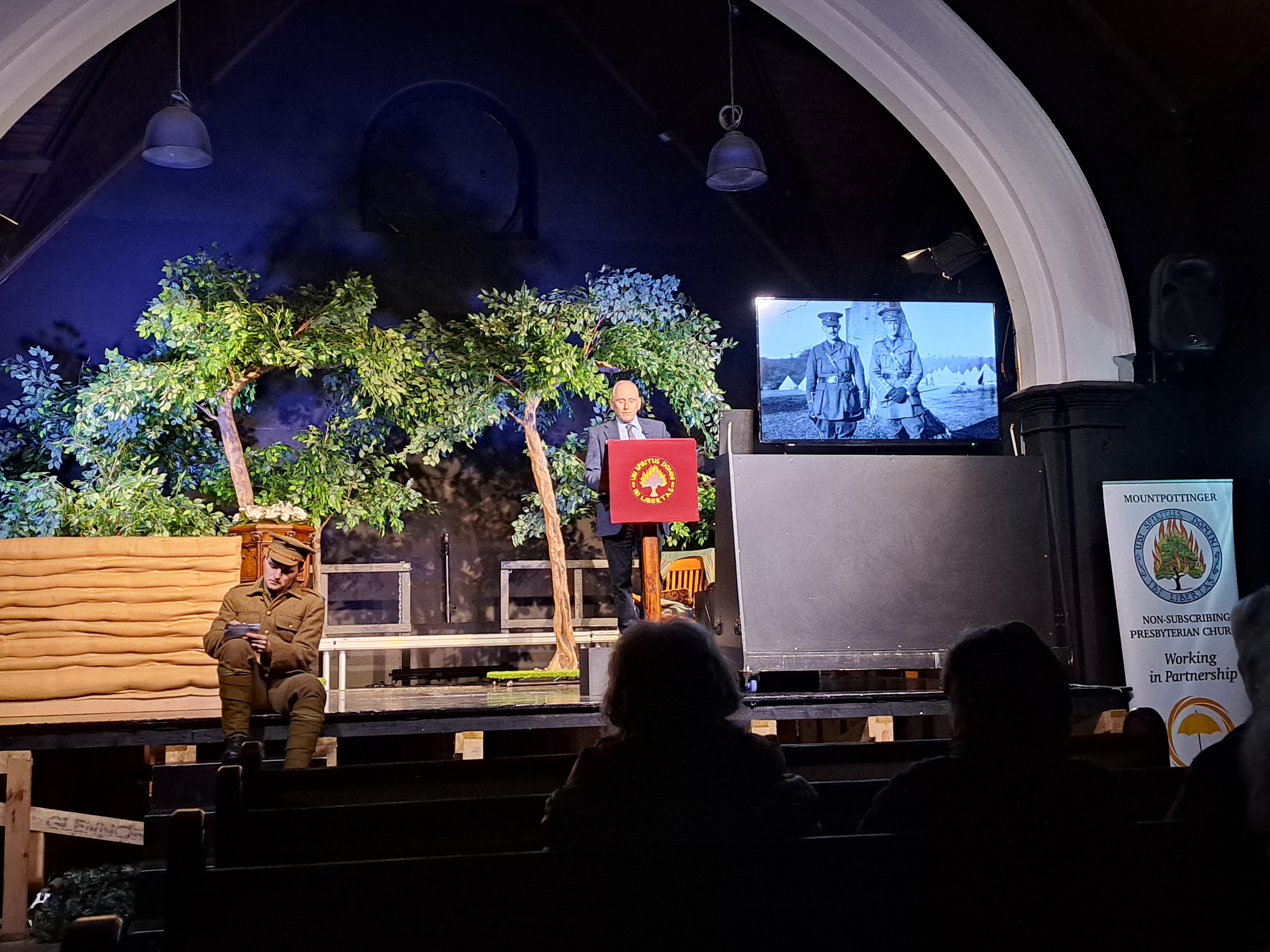
But the whole evening was very impressive, a fitting tribute to 150 years of work and witness which now has the opportunity to be part of a brave new venture as a community hub working in the arts and in drama in the Mountpottinger area.
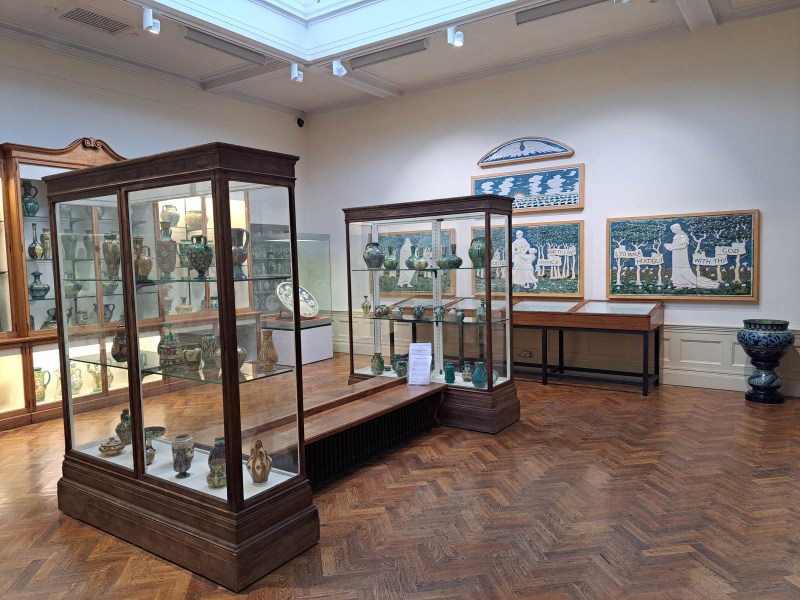
I can’t remember the last time I visited the Williamson Art Gallery in Birkenhead but a re-visit was long overdue and I was so pleased to see the exhibitions and collections there. There’s a lot to see, including a fine collection of ship’s models, but the stand out part for me was the collection of Della Robbia.

Only produced in Birkenhead from 1894 to 1906 the Della Robbia collection remains so striking that just entering the room it’s housed in lifts one’s spirits. It is replete, of course, with Unitarian connections not least through Harold Rathbone, the founder of the pottery and a member of the well-known Unitarian merchant family of that name. Harold Rathbone became an artist, studied at the Slade and in Paris, and set up the pottery in Birkenhead in 1894, a conscious revival of the work of Luca Della Robbia the 15th-century Florentine sculptor. His portrait was painted by William Holman Hunt and he looks every inch the sensitive Victorian artist influenced by William Morris and Edward Burne-Jones and the whole panoply of Arts and Crafts and Pre-Raphaelite artists amongst whose circle he moved.
Unusually for a modern gallery there is not a single label on any exhibit. In a way it is nice not to have the distraction but there is such a wealth of material it would be helpful to be given some background information. Nevertheless a lot of the production was geared towards a religious purpose and some of it was prominently Unitarian and this I recognized right away.
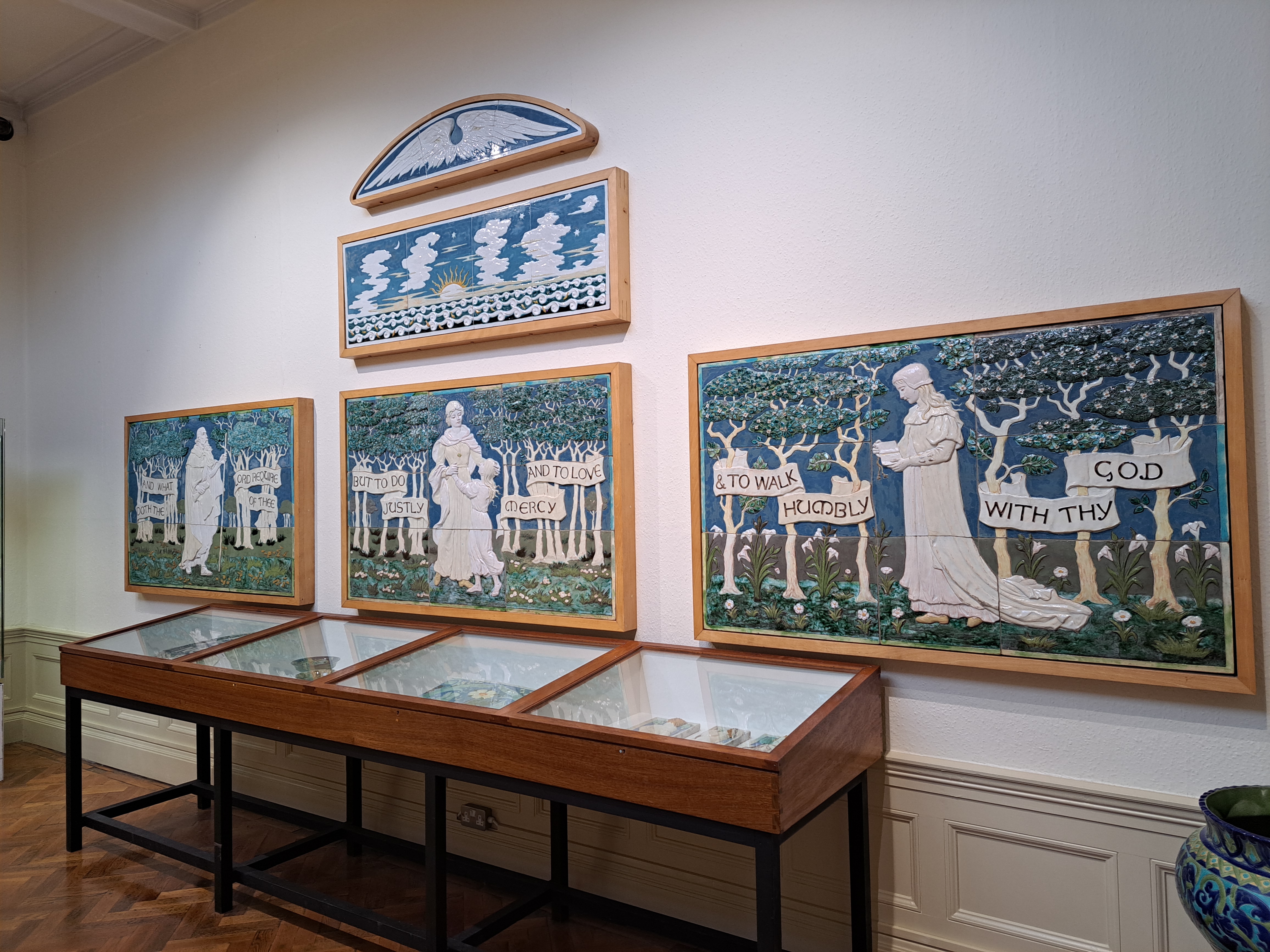
It is good that some of the decoration from the Liverpool Domestic Mission is there and quite prominently displayed. The Mission building closed in the early 1970s and it must have migrated to the Art Gallery then.
The display on the wall in the Art Gallery is laid out exactly as it was in the Domestic Mission building. It is also the same as the decoration in the Memorial Church, Manor Road, Wallasey which is still in situ. The text illustrated by the panels – And what doth the Lord require of thee / But to do justly and to love mercy / & to walk humbly with thy God – is a good one for Unitarians.

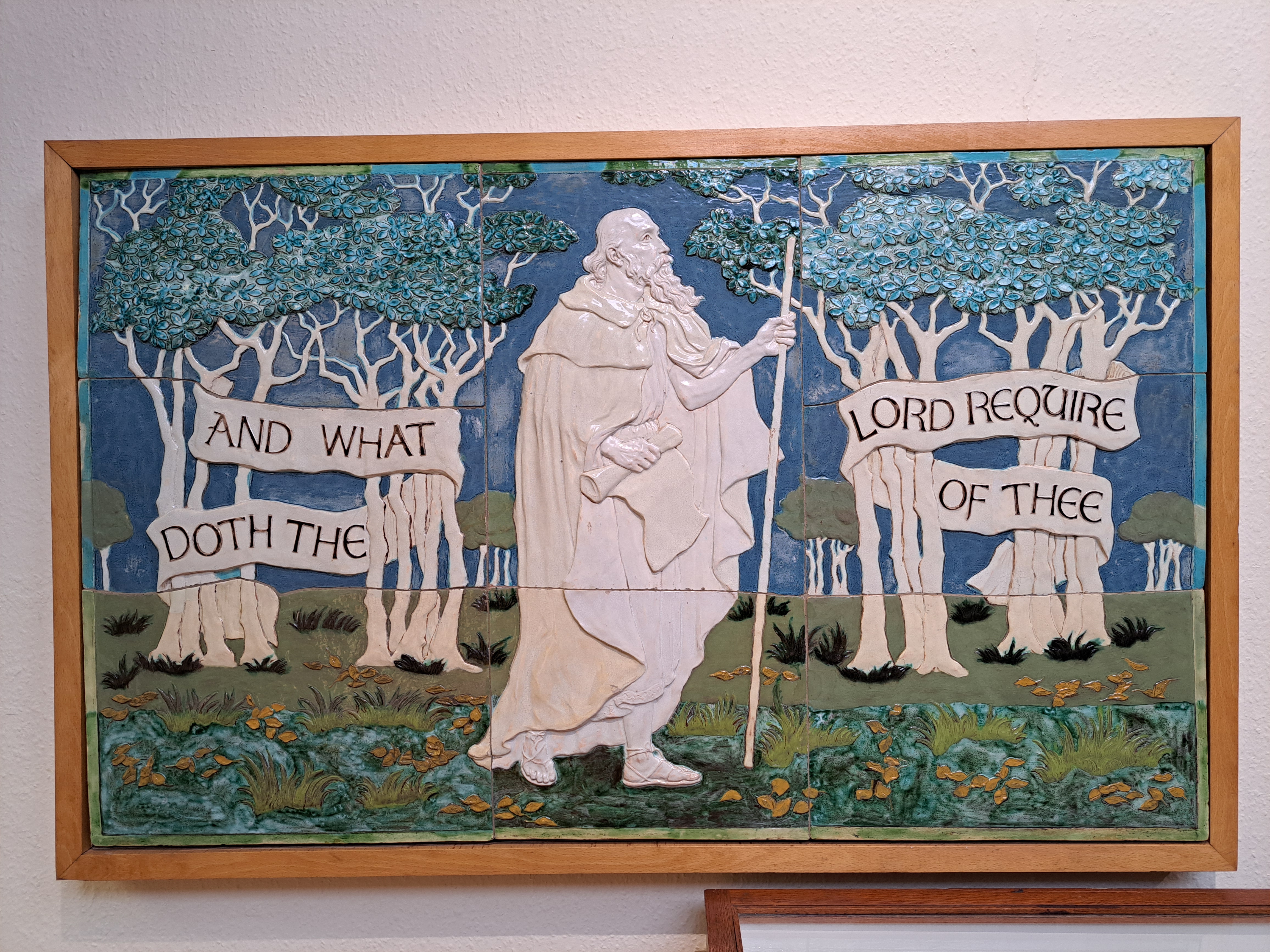
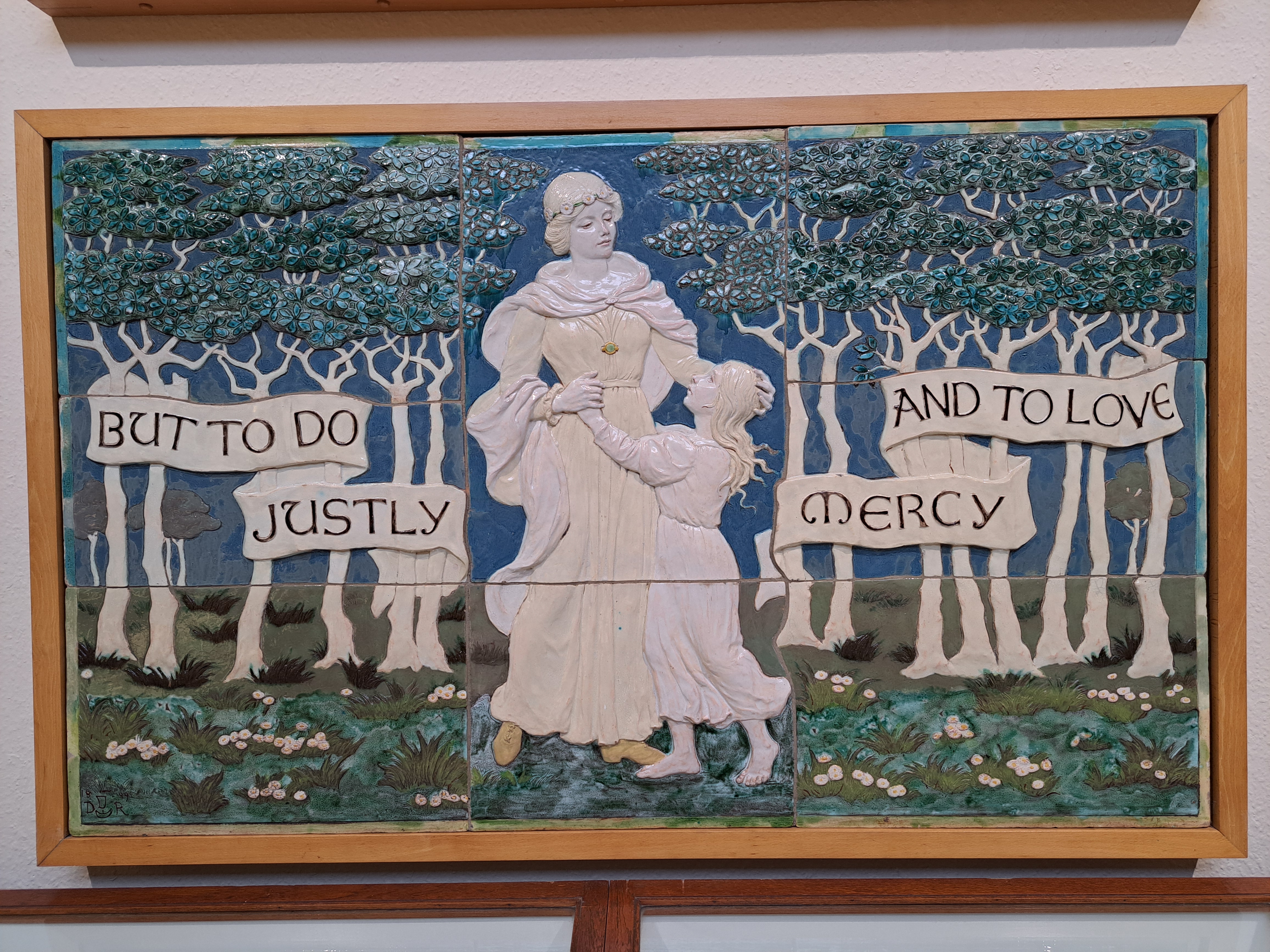

There are other panels that almost certainly have a Unitarian connection and two plaques after Edward Burne-Jones’ ‘Six Days of Creation’ may also have been part of the decoration at the Domestic Mission.


In the first catalogue for his pottery Harold Rathbone described his Della Robbia as ‘particularly applicable for church decoration on account of its silhouetted distinctiveness and architectural effect…it is a matter of congratulation, if of some wonder, that the honour of introducing this tender and attractive method of adornment has, in churches of the British Isles, we believe, been left entirely so far to ourselves.’
The exhibition in the Williamson Art Gallery is an impressive collection of this creative work that remains so vibrant and also so redolent of the art of that time and the religious impulses that were most closely connected to it.

George Cross was born in Toxteth, Liverpool and lived all his life there apart from the war years. As a young man he took part in the D-Day Landings on 6 June 1944, not returning there until 2009 at the age of 100.
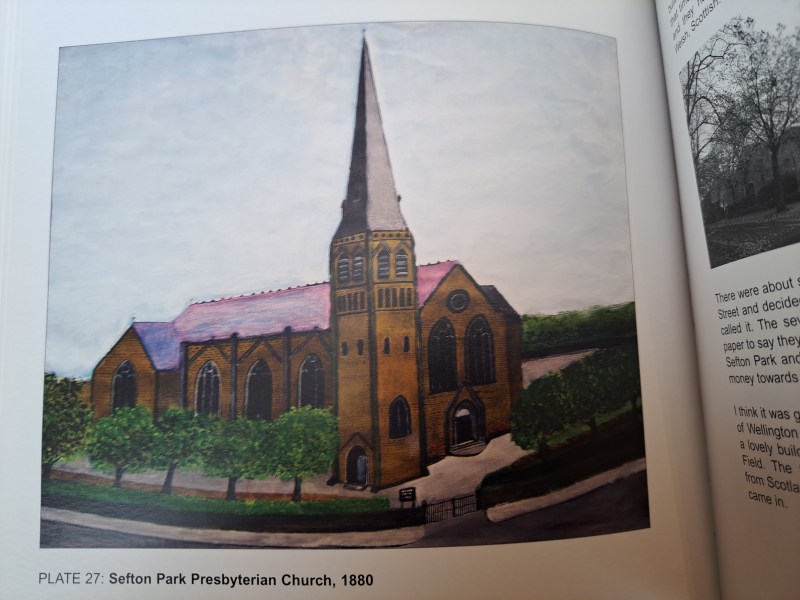
As a young man George attended Hyslop Street Mission, later moving to Sefton Park Presbyterian Church where he was an elder and lay preacher. George developed lots of interests and became a published author, writing about Liverpool history, and late in life emerged as an accomplished artist with public exhibitions and a book of his paintings which commemorated Liverpool buildings, many of them long demolished, including Sefton Park Church (at the top of the page).
In this video we tell some of the story of his life, particularly in relation to the D-Day Landings in which he participated. He has the distinction of having a building named after him in Toxteth and is remembered by a great many people for the warmth of his character and his kindness.
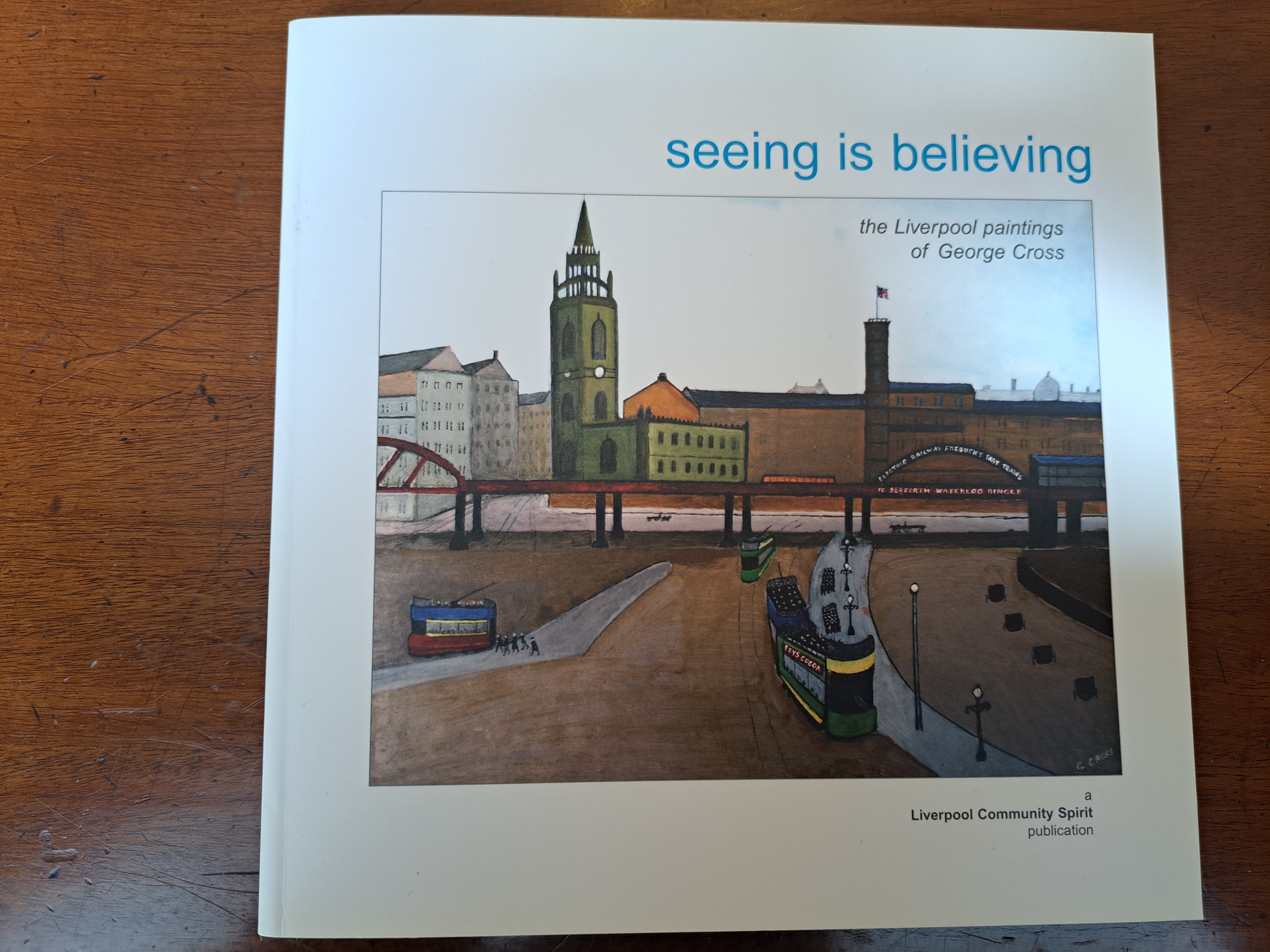
The video includes some film of George’s return to Normandy in 2009 as well as film of him at one of his exhibitions.

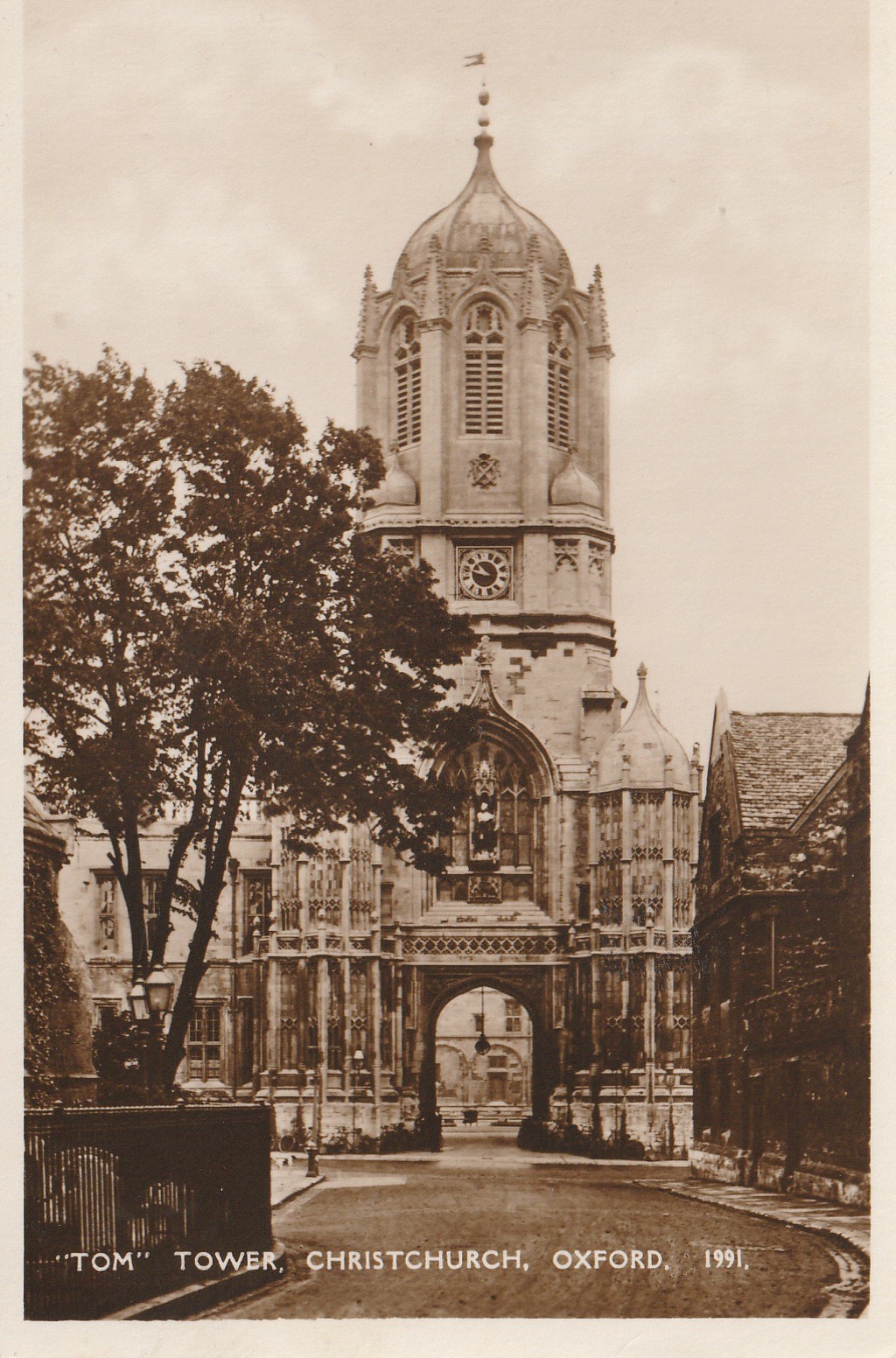
Recently, when in Oxford, I visited the Christ Church Picture Gallery where one of the exhibitions, entitled ‘WISH YOU WERE HERE!‘ (1 July – 30 October 2023) The attraction of Christ Church in early photographic postcards, caught my eye. It is always interesting (and rare) to see a serious art exhibition that contains items that you could afford to buy yourself. There are around 70 postcards in the Christ Church exhibition but seeing them encouraged me to start my own small collection. Prices can vary but generally cards like this should be quite cheap, they were produced and sold in vast quantities by a variety of printers and are hardly rare. So I decided to create my own small collection and focused on cheap examples of pictures of the West Front/St Aldate’s view of Tom Tower. I picked this view because although every postcard from 1900 to 1950 (or indeed to the present day) looks superficially the same you realise when you investigate closely that this is not the case. Since Tom Tower is situated on a main thoroughfare there are plenty of social changes that can be observed and a multitude of minor small details that are worth exploring in the foreground. I will work out the best way to display these images of the West Front.
But I allowed myself a small diversion into a handful of pictures of Tom Tower itself. Mainly this was because I managed to get one picture that I had seen in the exhibition which must be quite rare and was accordingly slightly more expensive than the others. This is it:
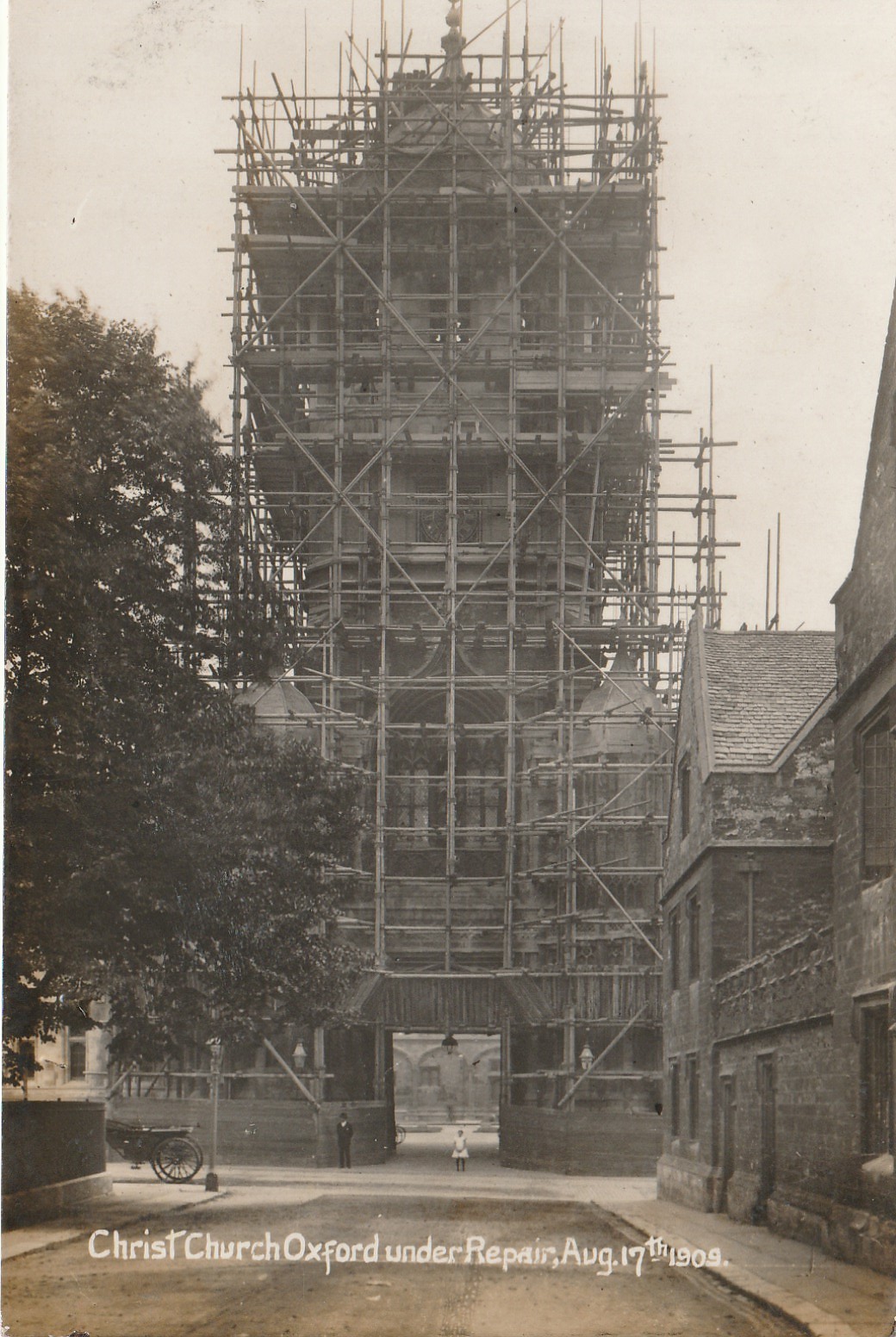
I think this is a wonderful postcard. All the pictures of Tom Tower alone, largely taken from over the road, somewhere near the entrance to Pembroke College, are basically the same. There might be a vehicle of some sort somewhere in view, or a bowler hatted figure standing under the entrance to the college, but not much more.
This picture, however, is very different. The publishers give us the exact date and show us Tom Tower, not as you would expect, but covered in scaffolding. If you had turned up in Oxford to do the touristy thing and saw the tower covered in scaffolding I imagine you would be disappointed. I don’t think you would want to buy a postcard that also obscured the view. If you turned up after the work was completed and the scaffolding had been taken away I don’t think you would want to buy a picture of how it looked during restoration, unless you were very interested in scaffolding. It can’t have had a long shelf-life and it can’t have been many people’s favourite view. And yet it is a compelling image, intriguing and lively. I am glad the unnamed publisher took this view and glad to get a copy for my collection.
This card, dated 14th January 1910, was sent by Emily to ‘Mr Hammond, “The Lilacs”, Skipton Cliffe, Andoversford, Glos.’ Mr Hammond appears to have been Emily’s uncle since she also included ‘love to Aunt’ at the end of the message. And it doubled as a birthday card – ‘With every Good Wish for Many Happy Returns of the Day’, she begins. Emily might have been a student in Oxford, she was certainly resident there because she also says ‘I sent you the paper for you to read Mr Whale’s speeches our Liberal Candidate for Oxford’. ‘Mr Whale’ was George Whale who stood in Oxford in the 1906 election and lost by just 100 votes. He stood again in January 1910 but a swing of 6.4% saw him lose by over 1,200 votes to Arthur Annesley his Conservative opponent. George Whale was a freethinker and the chairman of the Rationalist Press Association. A former Mayor of Woolwich he was never successful in getting elected to Parliament.
But this was the card that Emily chose to send to her uncle for his birthday along with news of the freethinking candidate on the eve of the election in Oxford. It was, I think, an inspired choice.
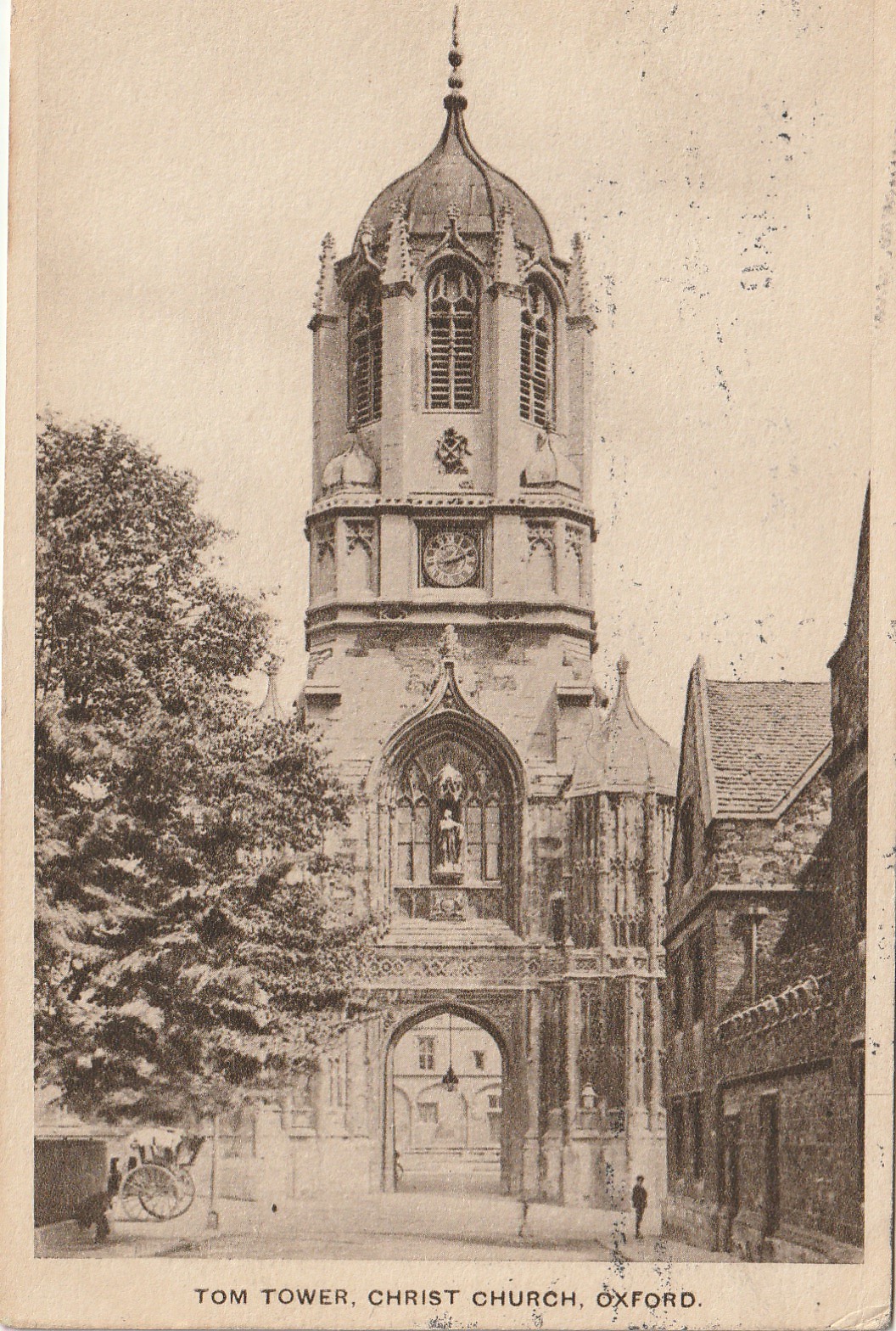
The other postcards of Tom Tower are all difficult to date precisely, especially when they were unposted, but they were mostly taken before the First World War, although similar examples could remain in print right up to the 1940s.
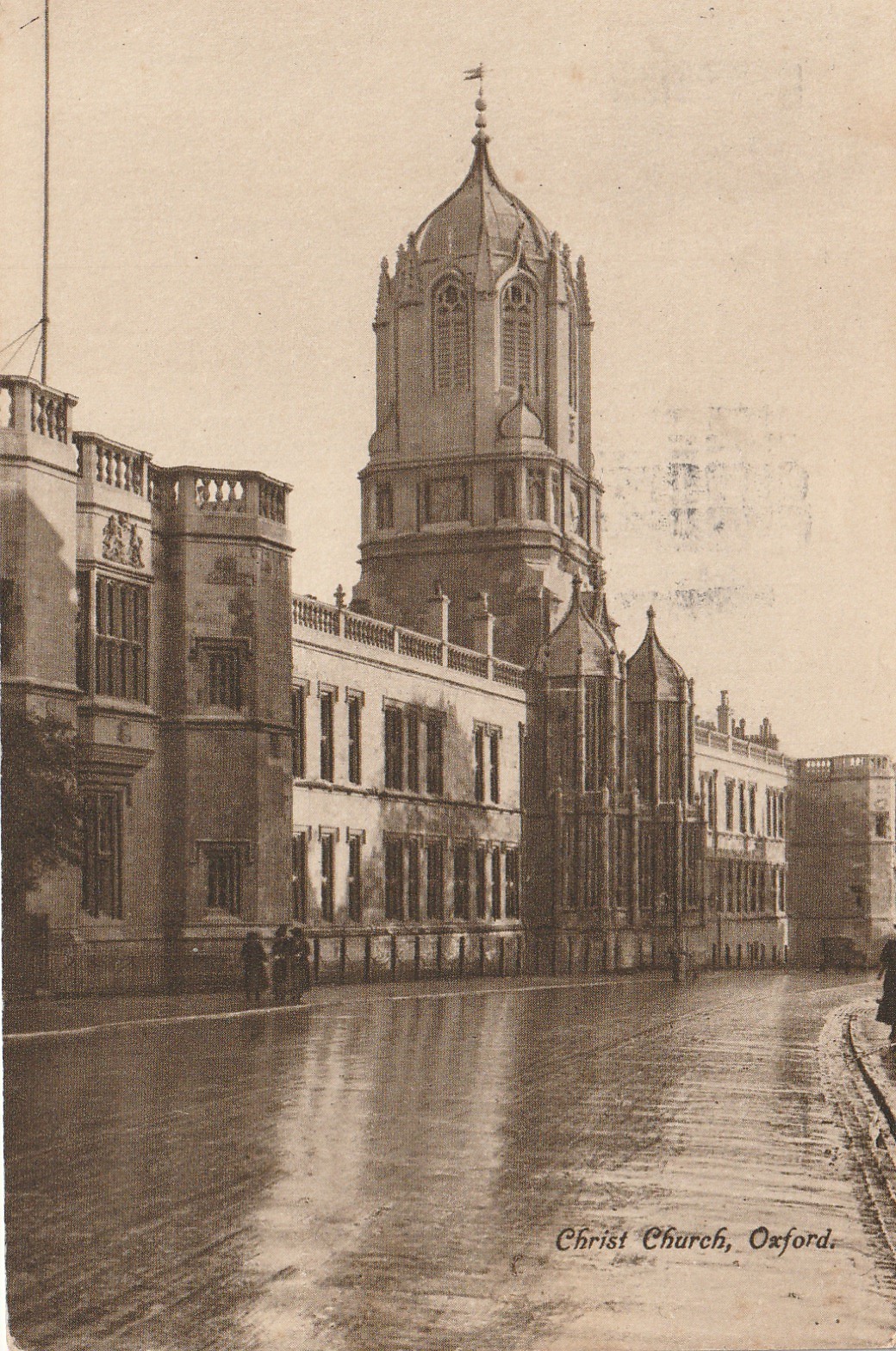
This last photograph, published by the local firm of Penrose and Palmer, is another favourite of mine. The road is wet after a downpour and the photographer has caught a reflection of the building in the road. It’s a fine photograph. It falls somewhere between the direct images of Tom Tower on its own and the wider (landscape) views of the whole West Front but it is actually a more characterful and interesting picture than most of them.
No pictures or text may be reproduced from this site without the express permission of the author.

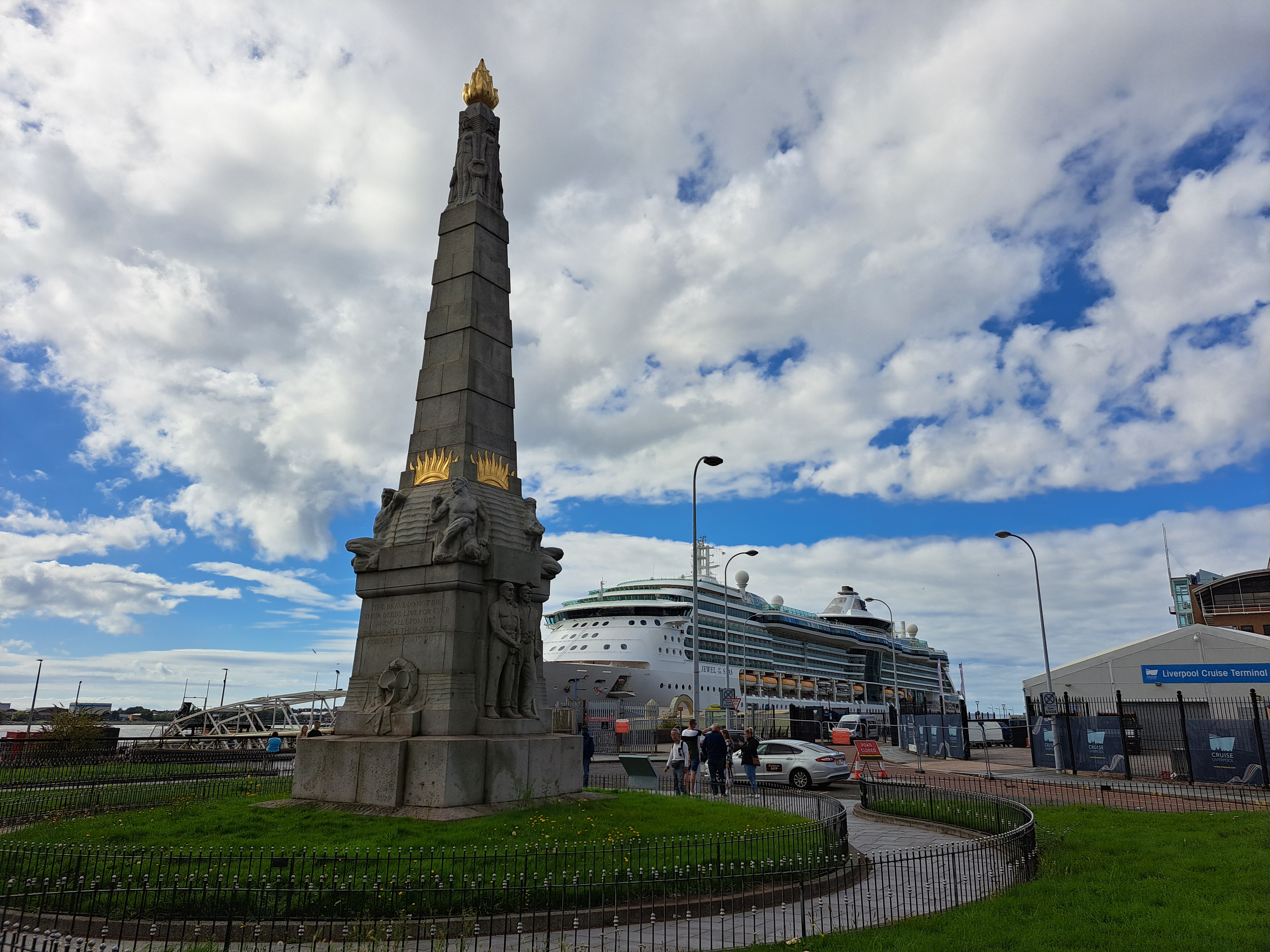
This memorial near Liverpool’s Pier Head is dedicated in honour of the Heroes of the Marine Engine Room. It is often referred to as the ‘Titanic Memorial’ because the original intention was to commemorate those lost in that disaster. The RMS Titanic was registered in Liverpool and the headquarters of the White Star Line was not far from the Pier Head, indeed the building is still there to this day. Although the Titanic didn’t visit Liverpool there were many local connections with the ship and there are a number of Titanic memorials in the city to this day.
But the original idea of the memorial was to commemorate the 244 engine room
staff who remained at their post after the ship struck the iceberg on 15th
April 1912 keeping the ship’s systems running as long as possible to help
people escape as the ship sank.
However, by the time it came to be erected, two other major naval disasters needed to be commemorated. The first was the sinking of the Empress of Ireland which was another Liverpool-registered ship which had regularly made the crossing from Liverpool to Quebec between 1906 and 1914. On 29th May 1914 it sank after a collision in the mouth of the Saint Lawrence River with the loss of 1,012 lives. The next year, during the First World War, another ship with very close Liverpool connections was sunk by a German U-boat on 7th May 1915. This was the Lusitania which was sunk about 11 miles off the coast of Ireland with the loss of 1,201 lives. It was a brutal attack on a passenger ship which also included a number of American citizens at a time when the United States had not yet entered the war.

So when the memorial was unveiled in May 1916 it was dedicated to ‘All Heroes of the Marine Engine Room’. It was designed by Sir William Goscombe John and is seen as one of the first memorials to commemorate the heroism of working men who are depicted on the memorial. As Terry Cavanagh puts it in his Public Sculpture of Liverpool it is ‘a rare example in Liverpool of the commemoration not of a single, high-ranking individual but of the “ordinary” workers of the city’.
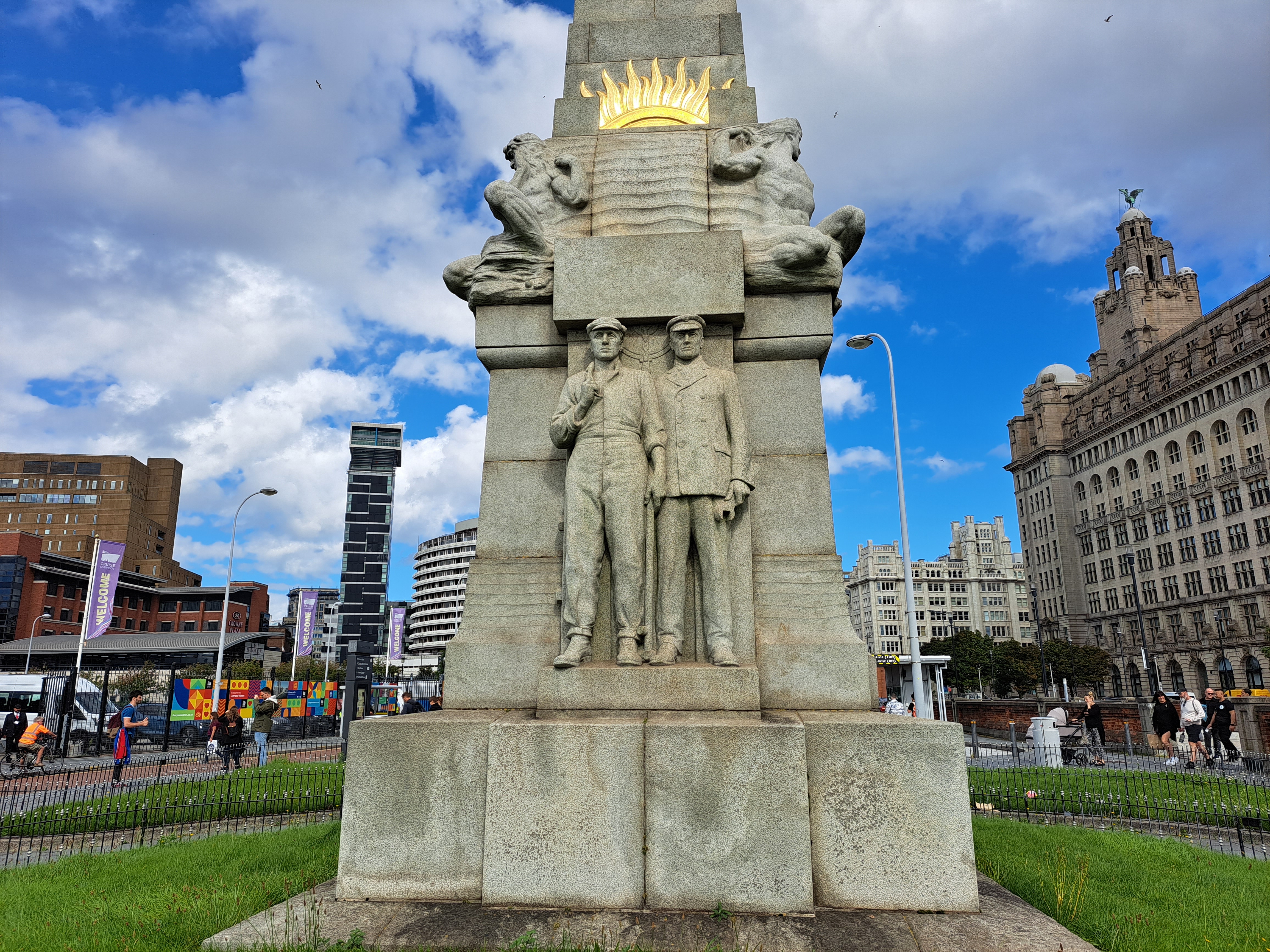
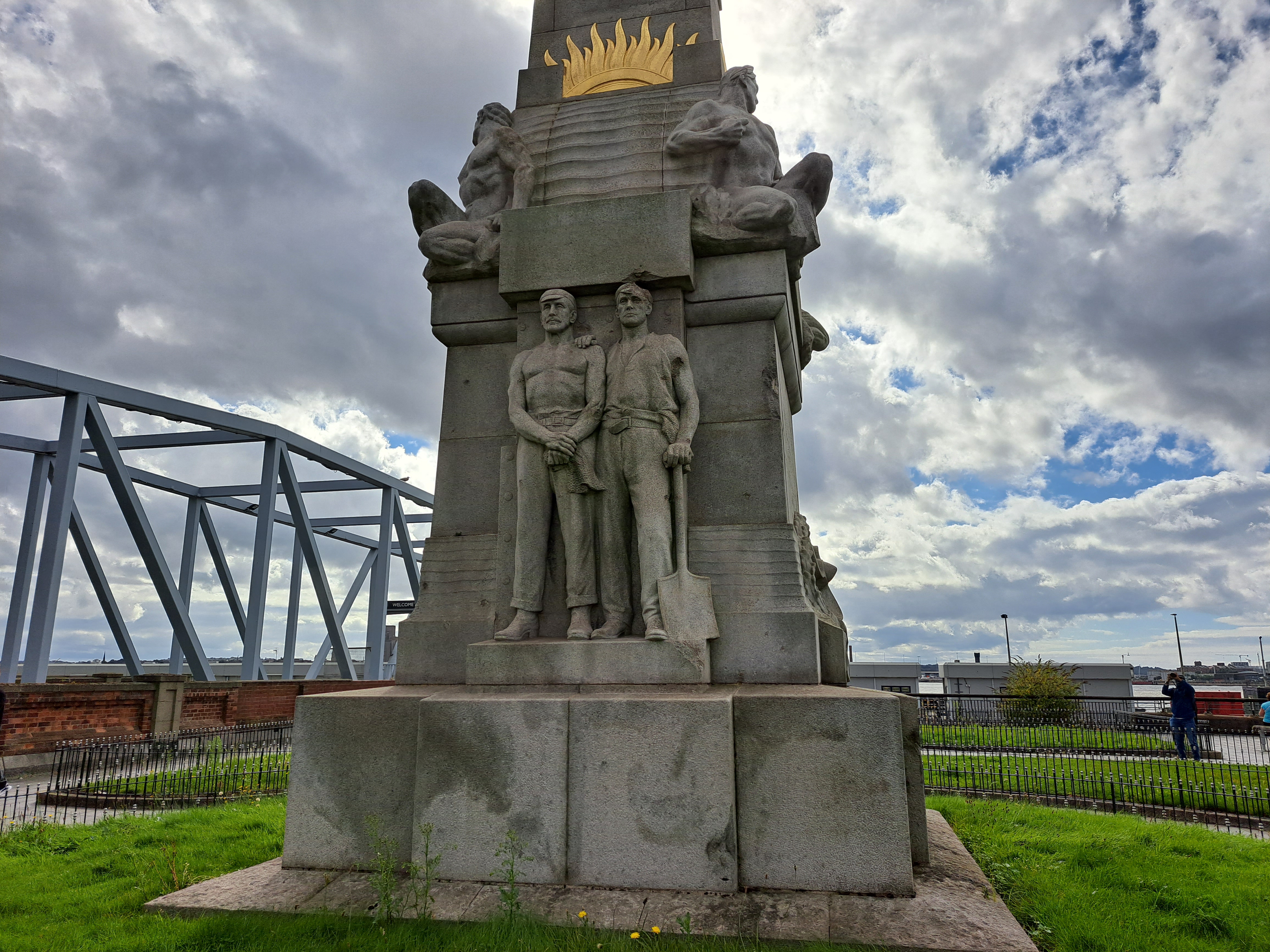
Something like £4,000 was raised from donations around the world before August 1912 to build the memorial. When it was finally unveiled on 9th May 1916 it was done with very little ceremony although it still attracted large crowds, many of them mourners of people who were lost on the Titanic and the Lusitania, although by then the intention was to honour all maritime engine room fatalities incurred during the performance of duty.
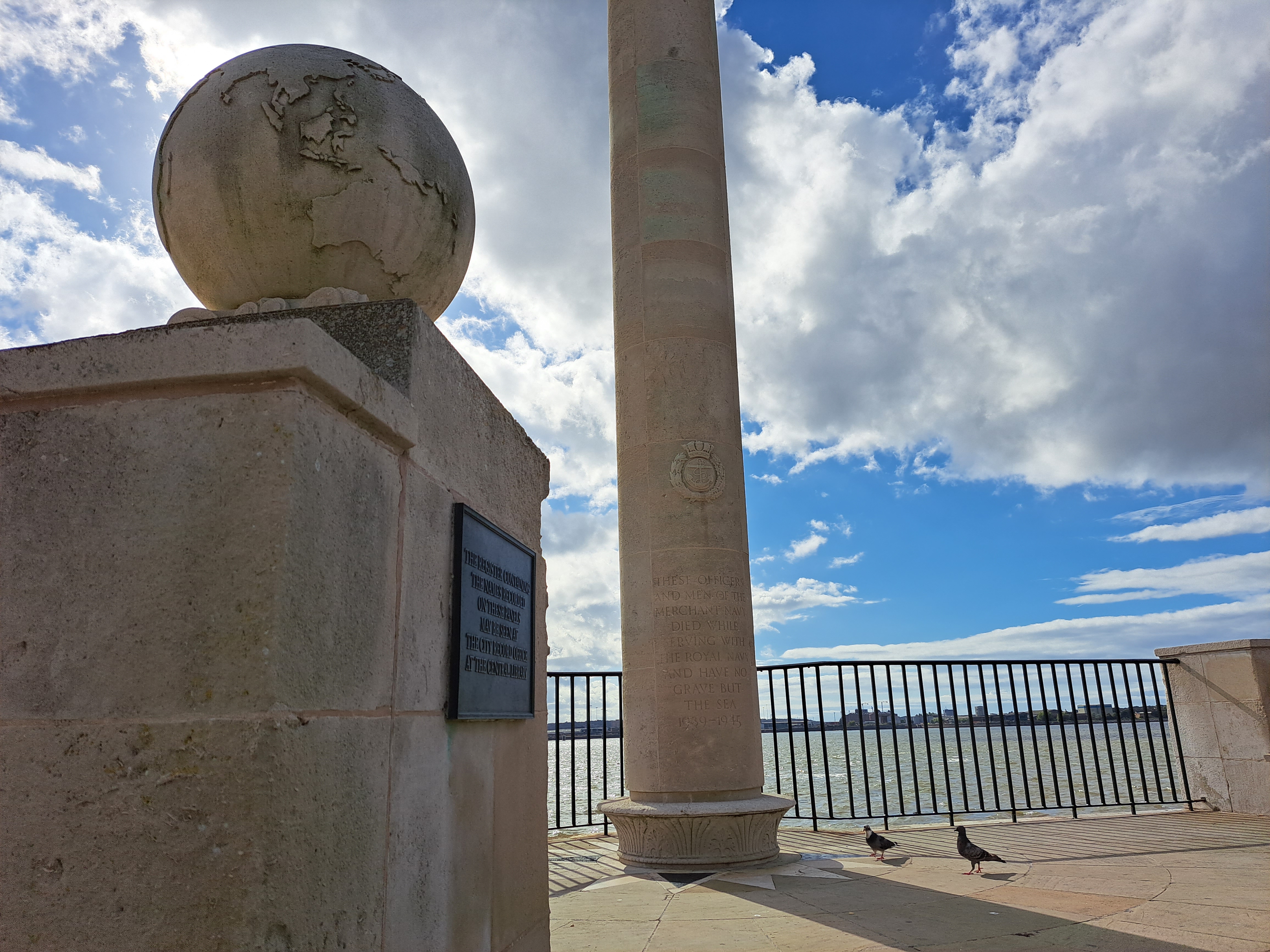
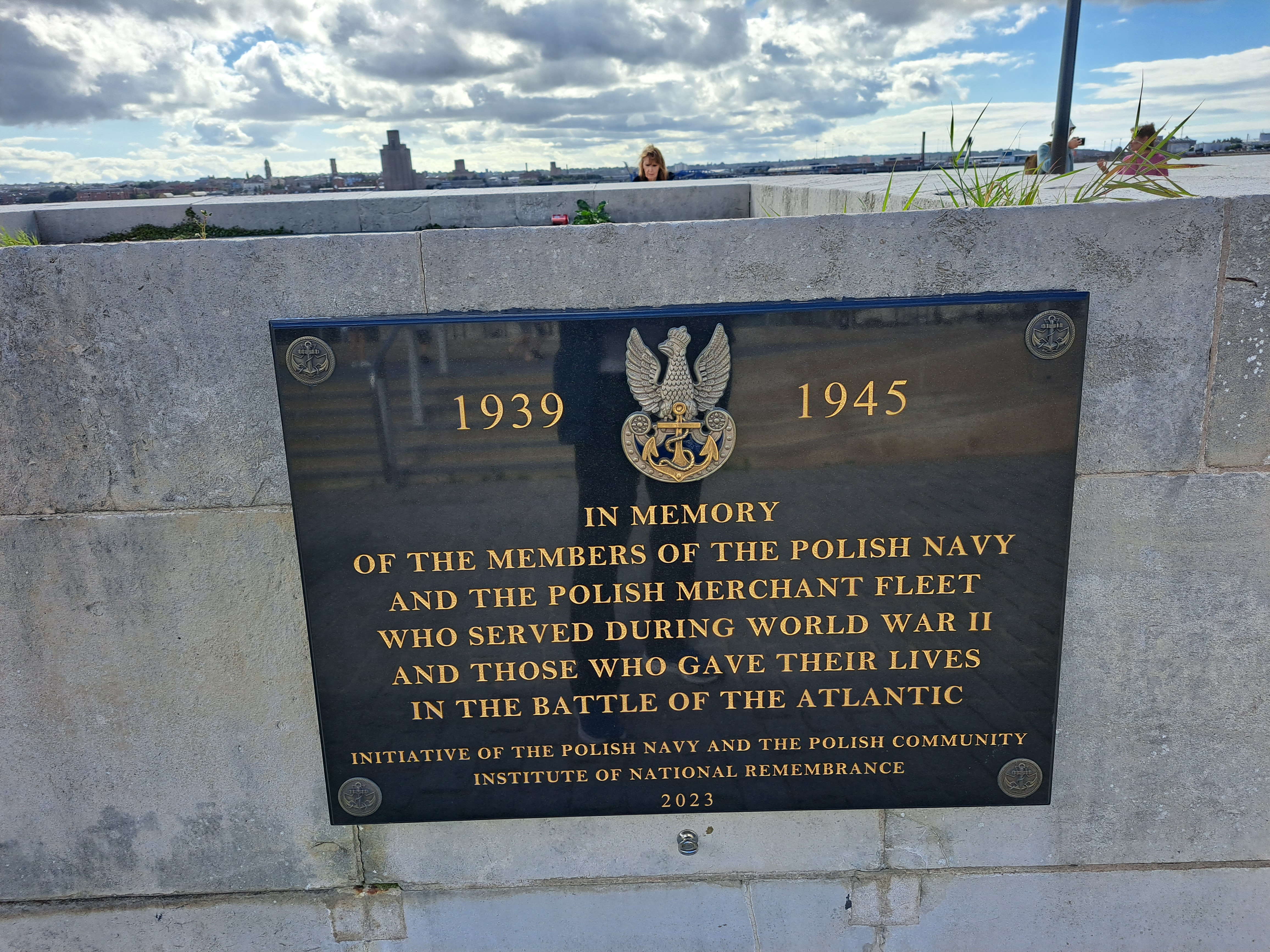
Many more memorials have been added to the Pier Head since the Second World War including the Merchant Navy War Memorial (Memorial to the Missing of the Naval Auxiliary Personnel of the Second World War), the Merchant Navy Memorial dedicated to the men and women who gave their lives in both World Wars and have no other grave than the sea, and an area with a succession of memorials of sailors of different nationalities who served in the Second World War including Belgian, Dutch, Chinese, Norwegian, and Polish merchant seamen and other servicemen and women. In addition there are plaques remembering the sinking of the SS Arandora Star, torpedoed off the coast of Donegal in 1940 with the loss of over 800 people, mainly non-combatants; HMT Lancastria which was sunk while evacuating servicemen at St Nazaire on 17th June 1940 with the loss of about 6,000 people (said to be the worst disaster in British maritime history); and a memorial to the ships that repatriated 20,000 people held in captivity in the Far East up to the end of the Second World War.

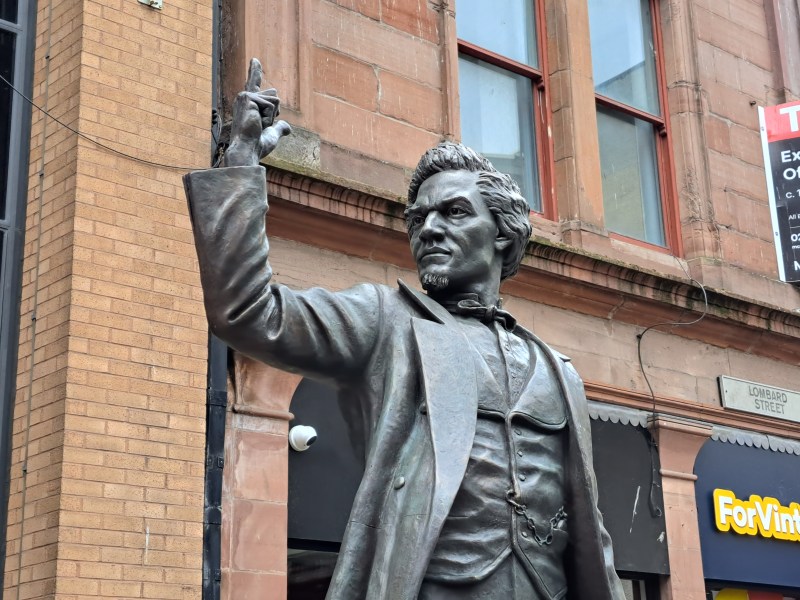
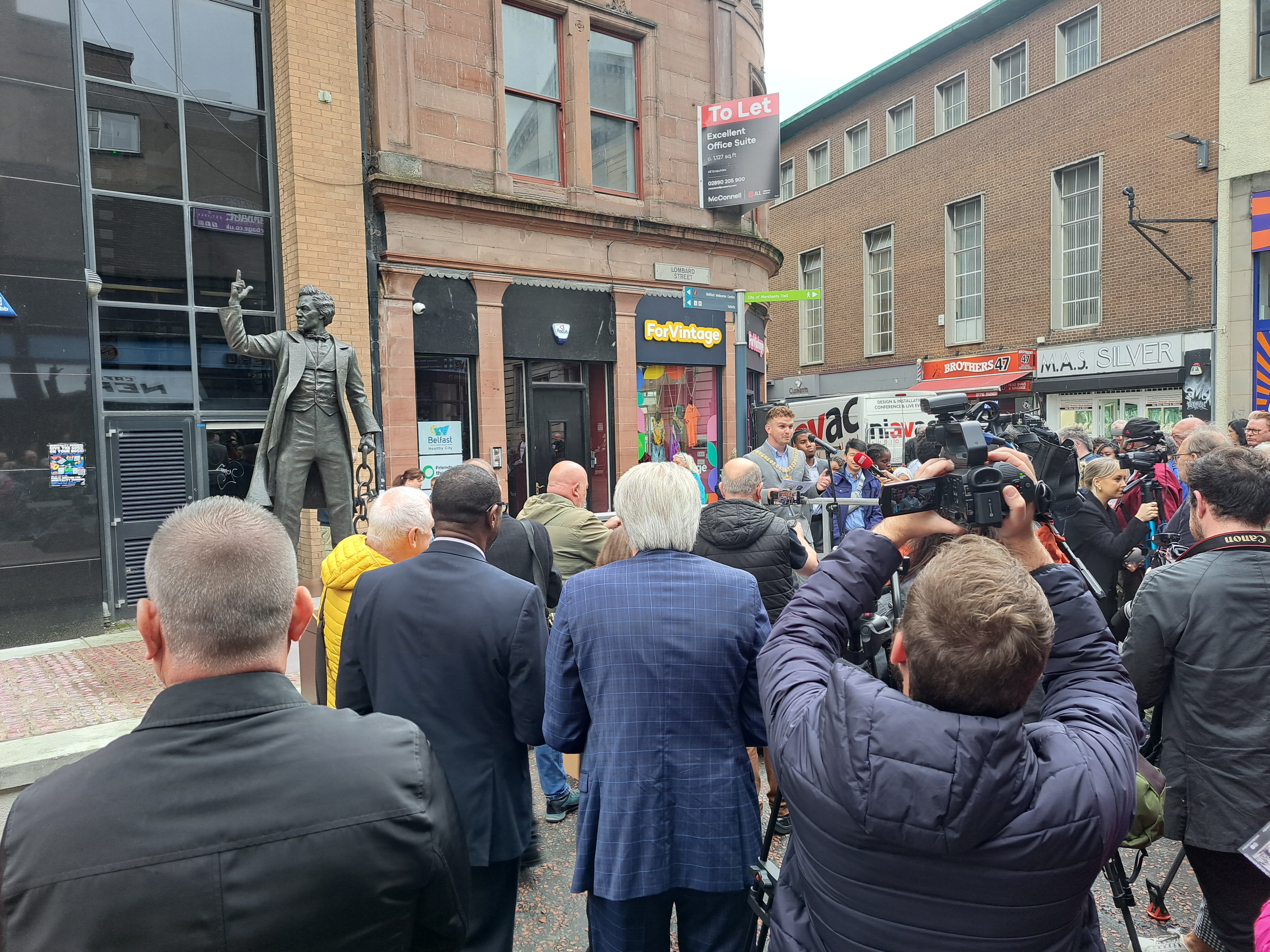
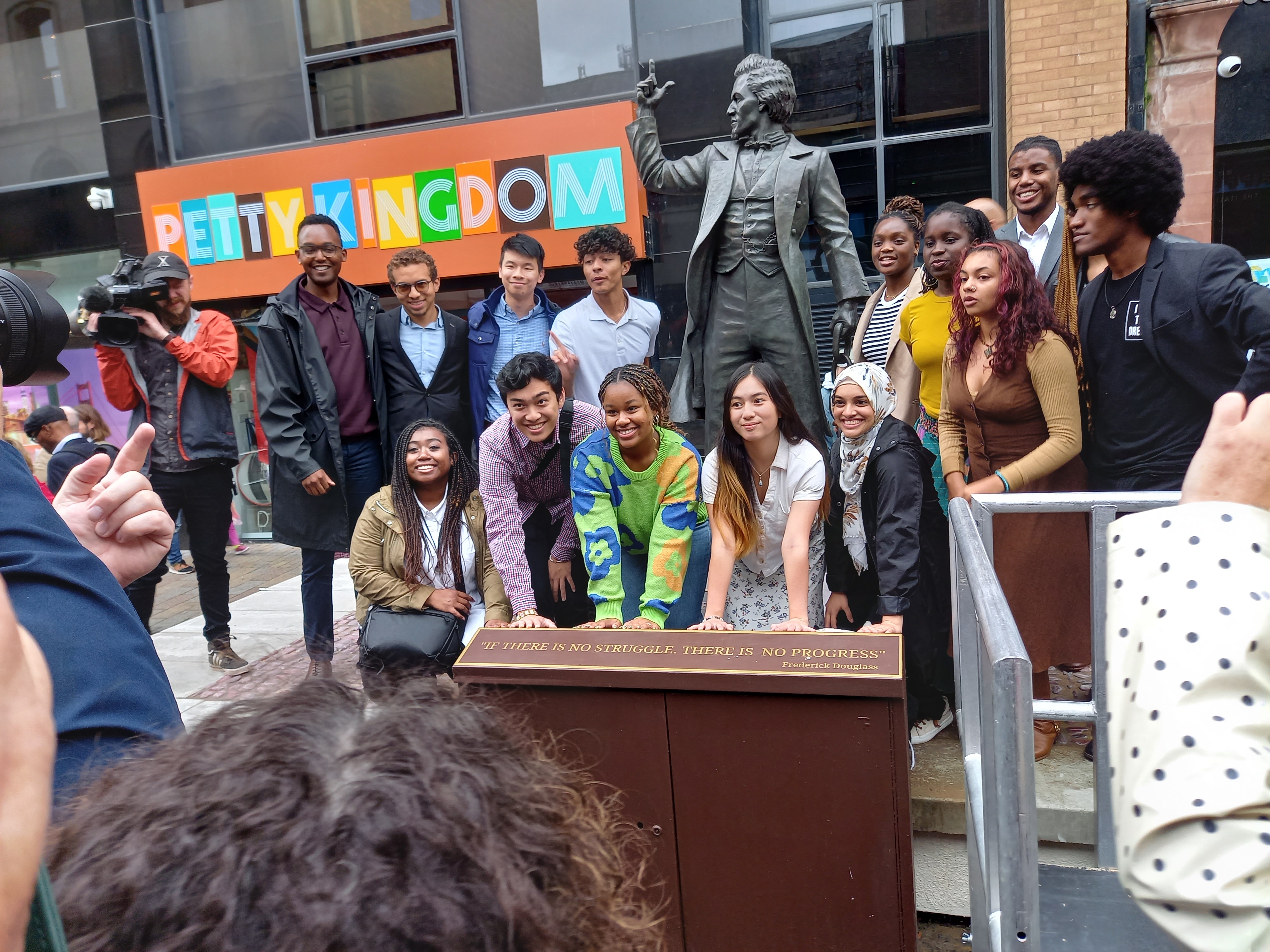
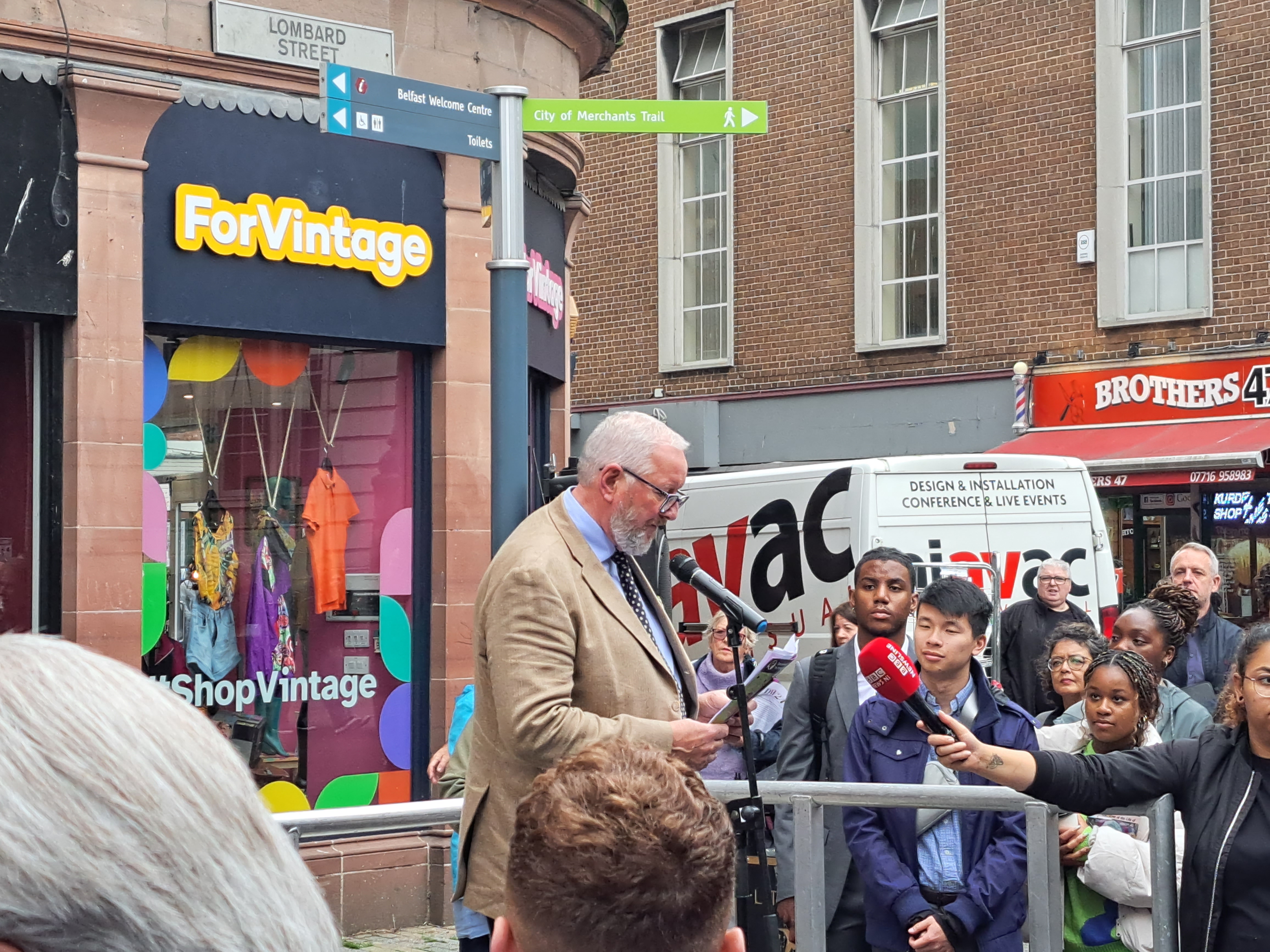
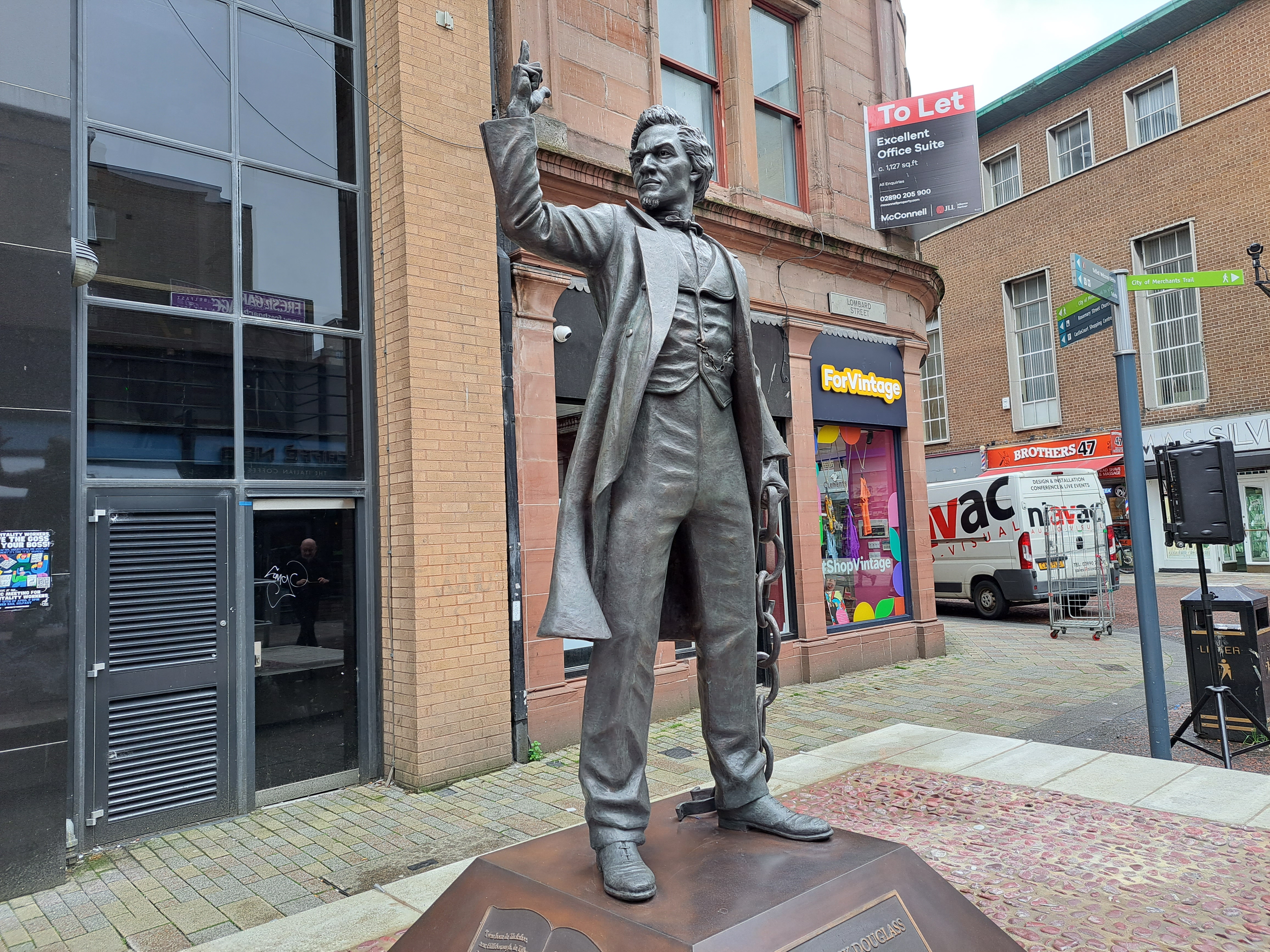
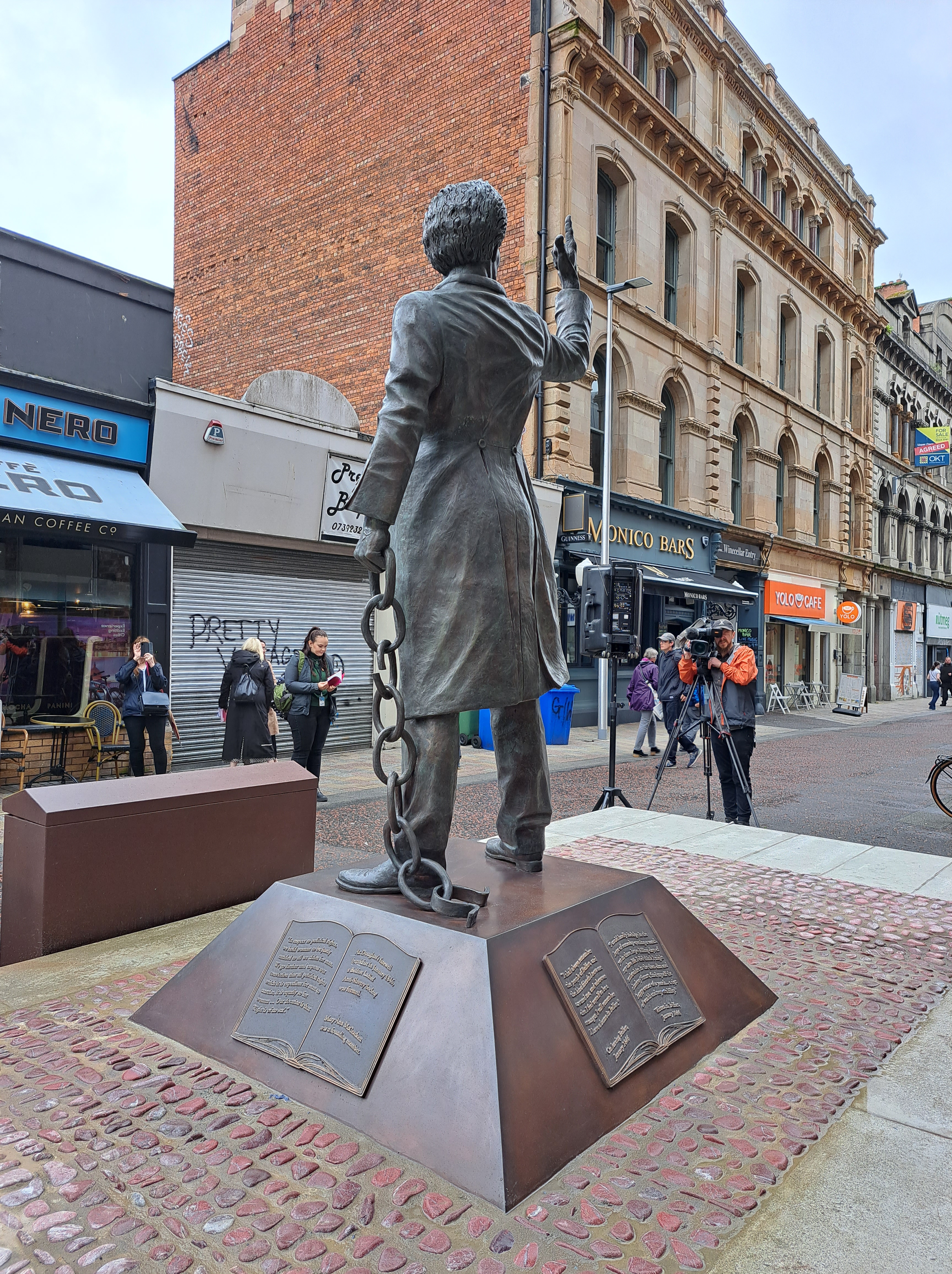
I was pleased to be present for the inauguration of the new statue of Frederick Douglass on Monday, 31st July 2023. I only found out about it by chance but it was good to be there for the formal recognition of Frederick Douglass as part of Belfast’s history.
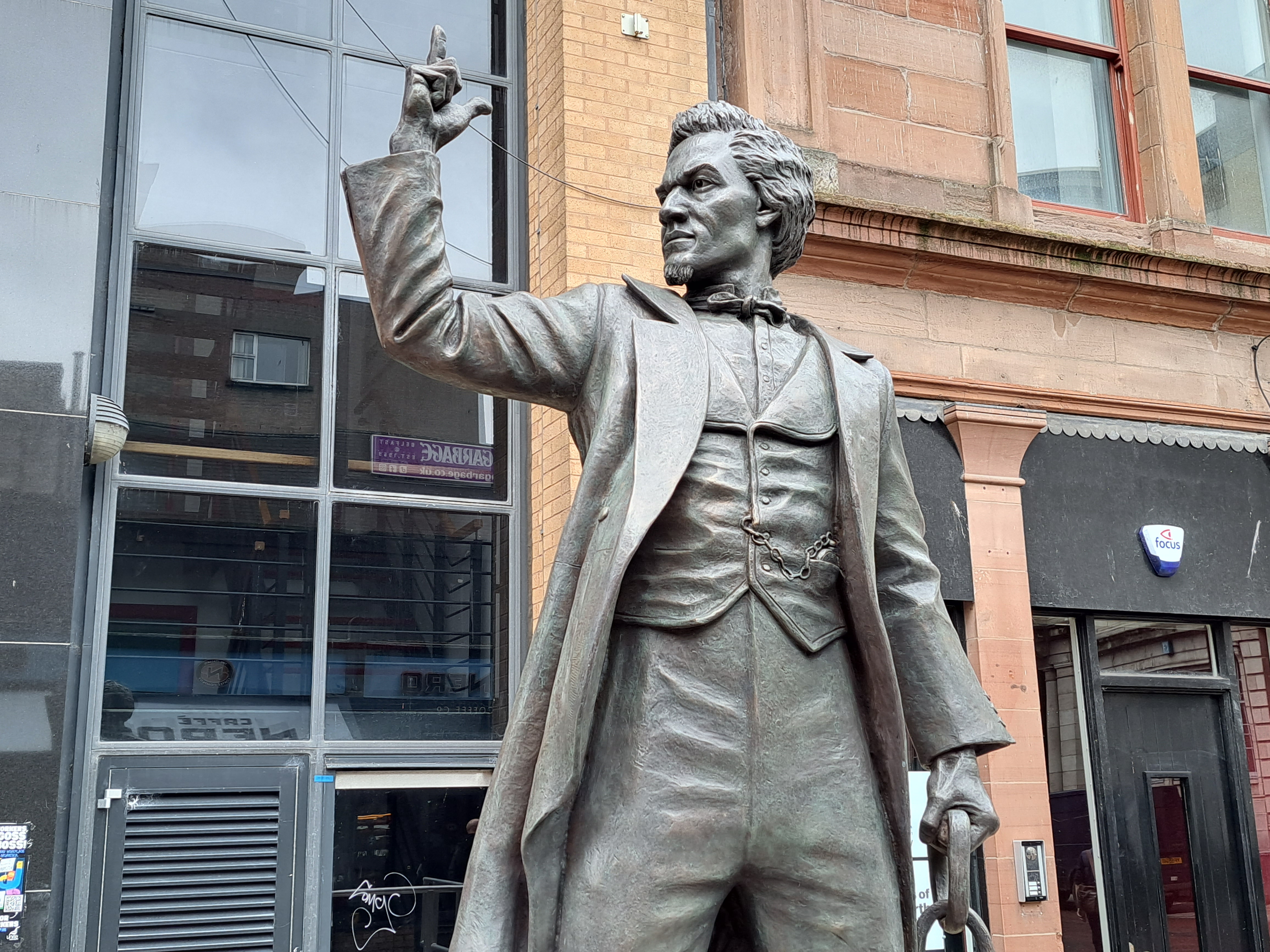
Frederick Douglass was born a slave in February 1818, on Holme Hill Farm, near Easton, Talbot County, Maryland. Although slaves were not supposed to be taught to read he was taught the alphabet, taught himself to read and developed a life-long reading habit.
In 1838, at his third attempt, he successfully escaped from slavery and managed to get to New York where he married Anna Murray (1813–1882) of Baltimore. He became a preacher in the African Methodist Episcopal Zion Church and an associate of William Lloyd Garrison and an activist in the anti-slavery movement.
In 1845 he published the Narrative of the Life of Frederick Douglass, an American Slave, the first of three volumes of autobiography, and became so prominent in the anti-slavery movement that threats were made against him which led to him travelling to Britain and Ireland on a speaking tour. He spent two years speaking all over England, Scotland and Ireland. In Dublin he shared a platform with Daniel O’Connell and British supporters raised $700 to buy his freedom in the United States. This in itself was controversial as many thought it wrong to give any recognition to the idea that a human being could be bought or sold as someone’s property.
In the words of the Oxford Dictionary of National Biography, during his speaking tour:
He filled public halls, private homes, chapels, and churches, his audiences sometimes numbering thousands, and he often spoke on different subjects at more than one meeting a day. As well as making the abolitionist case, he spoke on women’s rights (he felt that he could not accept the vote as a black man if it was denied to women), temperance, land reform, education, and capital punishment, issues on which he never ceased to agitate.
Of his time in Belfast he wrote:
I shall always remember the people of Belfast, and the kind friends I now see around me, and wherever else I feel myself to be a stranger, I will remember I have a home in Belfast.
Words which are among those inscribed on the plinth of his statue.
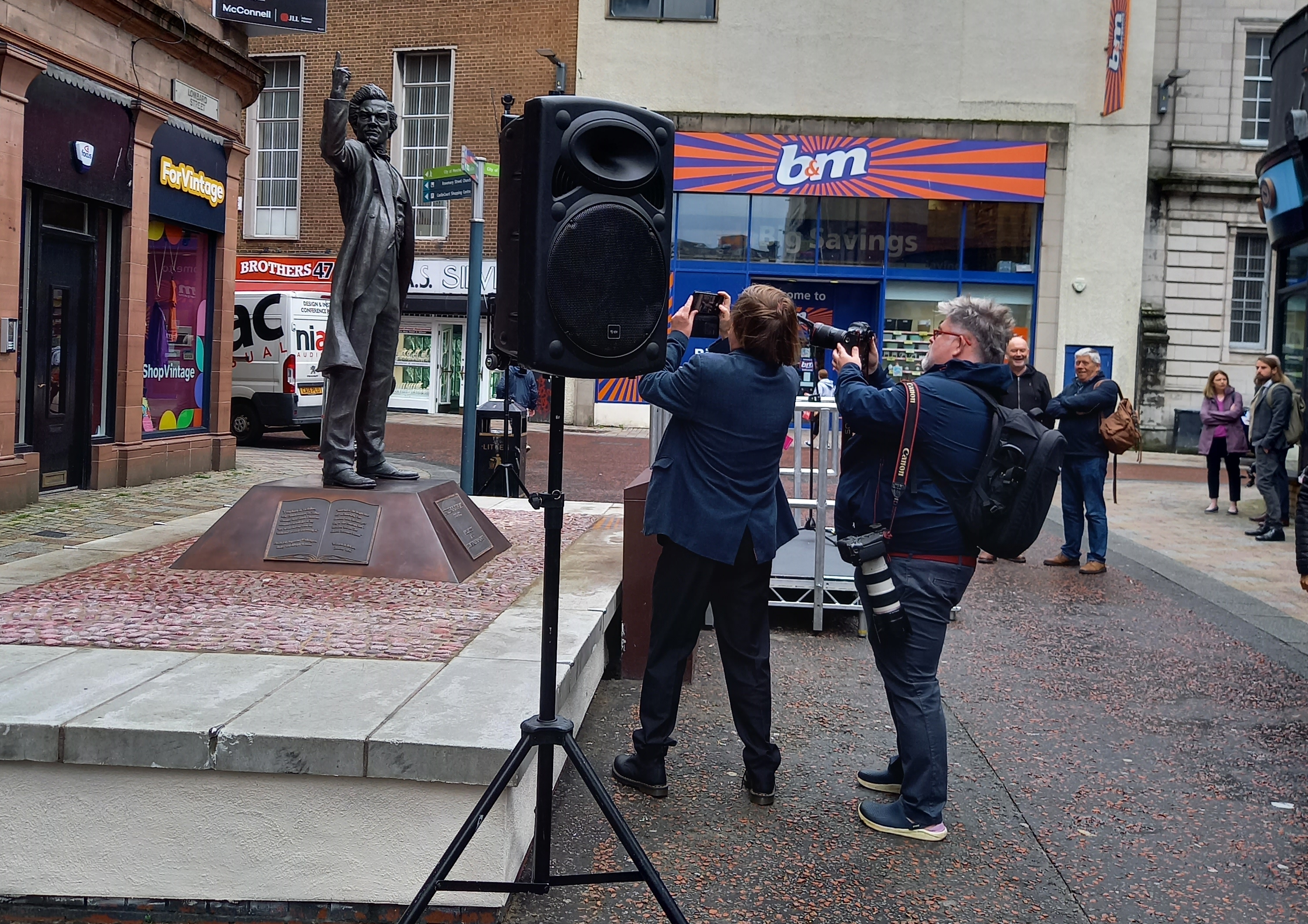
At the opening of the statue Professor Christine Kinealy said that in Belfast he spoke in Rosemary Street Presbyterian Church. But this is ambiguous because there were then three churches on Rosemary Street, two non-subscribing and one orthodox. The booklet available at the opening also suggested that he spoke in First Church on Rosemary Street. In fact he spoke at the meeting-house of the Second (Non-Subscribing) Congregation which stood behind First Church and was finally demolished in the early 1960s. He was granted the use of the meeting-house of the Second Congregation on 7th December 1845 ‘to lecture on behalf of the Anti-Slavery Society’. But it is very fitting that he should have such a fine statue erected in his memory so close to Rosemary Street.
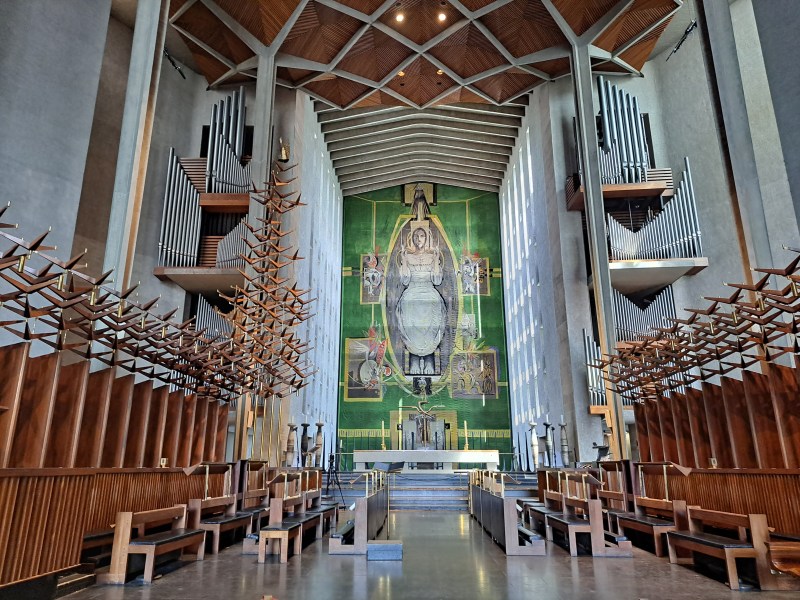
You can’t help but be impressed by Coventry Cathedral, impressed because everything is given such height. The entrance area that connects with the old cathedral; the glass entrance screen featuring angels and saints; the baptistry window; the Chapel of Unity; Graham Sutherland’s tapestry of Christ in Glory; the walls themselves – everything is so high. And it is all so redolent of the cutting edge of art in the mid-1950s. Of course, absolutely every building can only reflect the times it was built in but I think for a building as important as a cathedral some attempt at transcending the contraints of the present day are necessary. Now I may be very naive to imagine that a medieval Gothic cathedral ever did this, or any other type of cathedral for that matter, but if you want to be pointed to some deeper experience of the divine through the medium of a building you need something that says more than ‘This is 1954’ writ large. Even Liverpool’s Metropolitan Cathedral, which speaks volumes for the 1960s and the heavy constraints placed by money and circumstances on building a cathedral by that date, still communicates very well a more profound encounter with the truly spiritual.
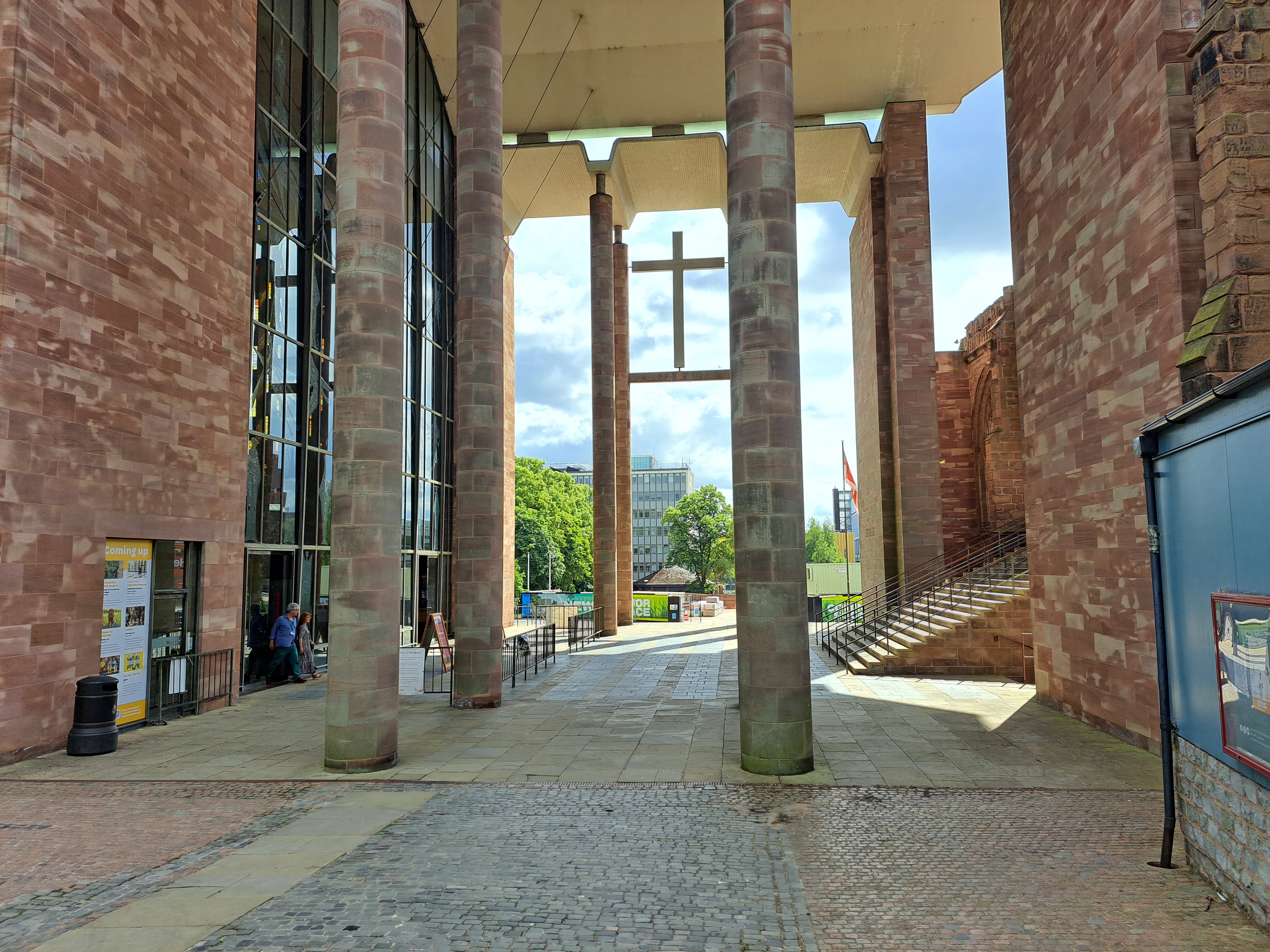
Coventry Cathedral has developed a living and active ministry of reconciliation which has reached out to the whole world. Its response to the horrors of the blitz and the destruction of the old cathedral has been an inspiration to many. But as a visitor to the building, a very occasional one, I am never really sure how to respond.
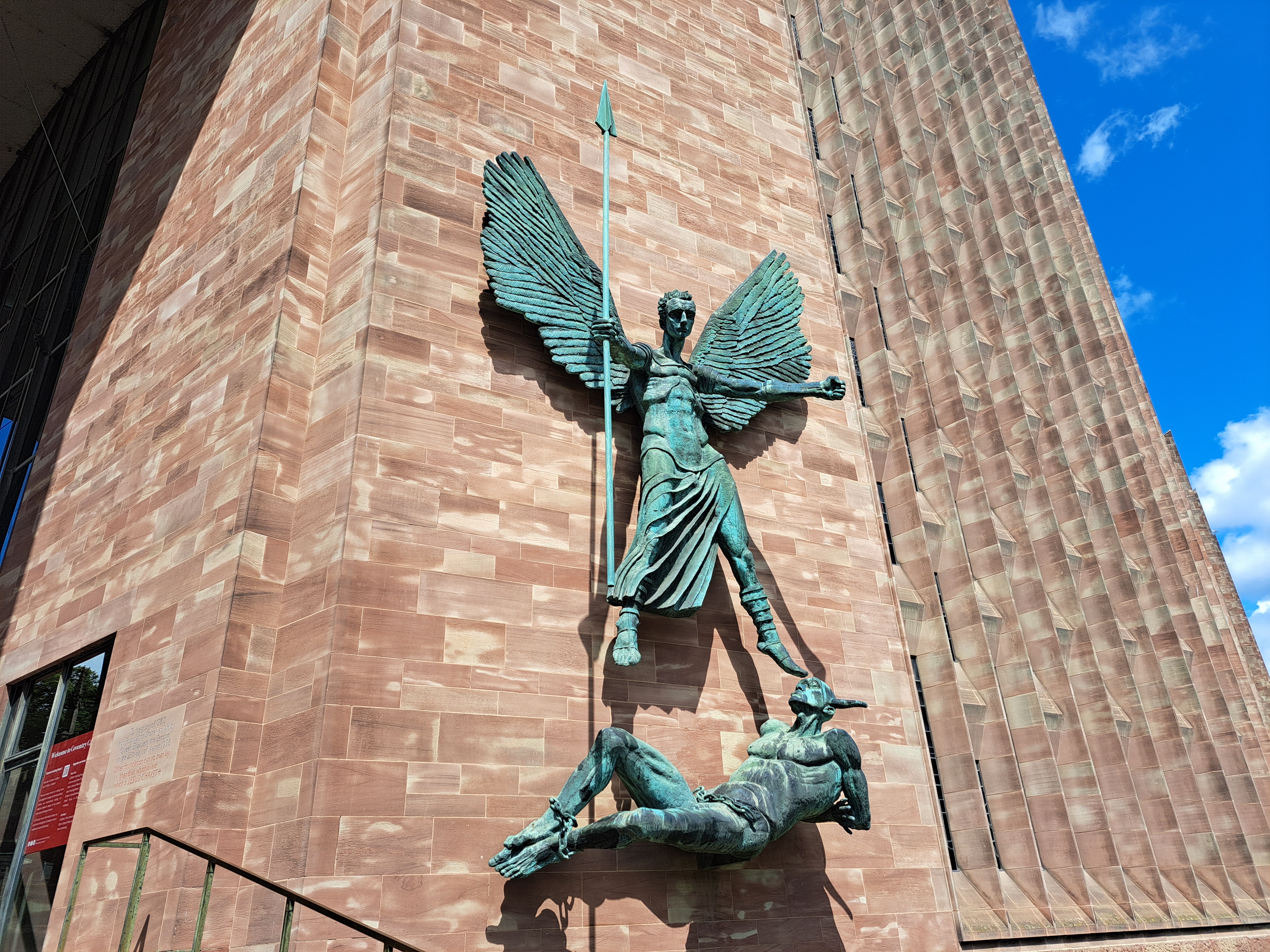
The thing I remember most about visiting as a child is Jacob Epstein’s figure of St Michael conquering the devil. I think I found it a bit unsettling as a kid and I am not sure I feel any better about it now. What is it meant to communicate? Of course, I know literally what it is meant to mean, but what did it say to the world in 1962 when it was unveiled? And what does it say now? Outside the cathedral there is a slightly cloying poster which stresses the extent of the welcome given to visitors but what the ‘keep-fit mums, football dads, starving artists, tree-huggers, latte-sippers, vegans, junk food eaters…those who think the earth is flat, work too hard, don’t work, can’t spell, or are here because granny is visiting and wanted to look round’ will make of Epstein’s work is a difficult question. Cutting edge art of the 1950s has now become the imagery of horror, fantasy, comic books, movies, cartoons and anime. Does anyone feel liberated by seeing St Michael with swan’s wings getting one over the character from Hellboy? One thing we know for sure today is that evil in the world does not take that form.
But some parts of the cathedral are breathtaking. The baptistry window, designed by John Piper, floods that part of the building with an explosion of light and colour. Again its immensity hits you full on.
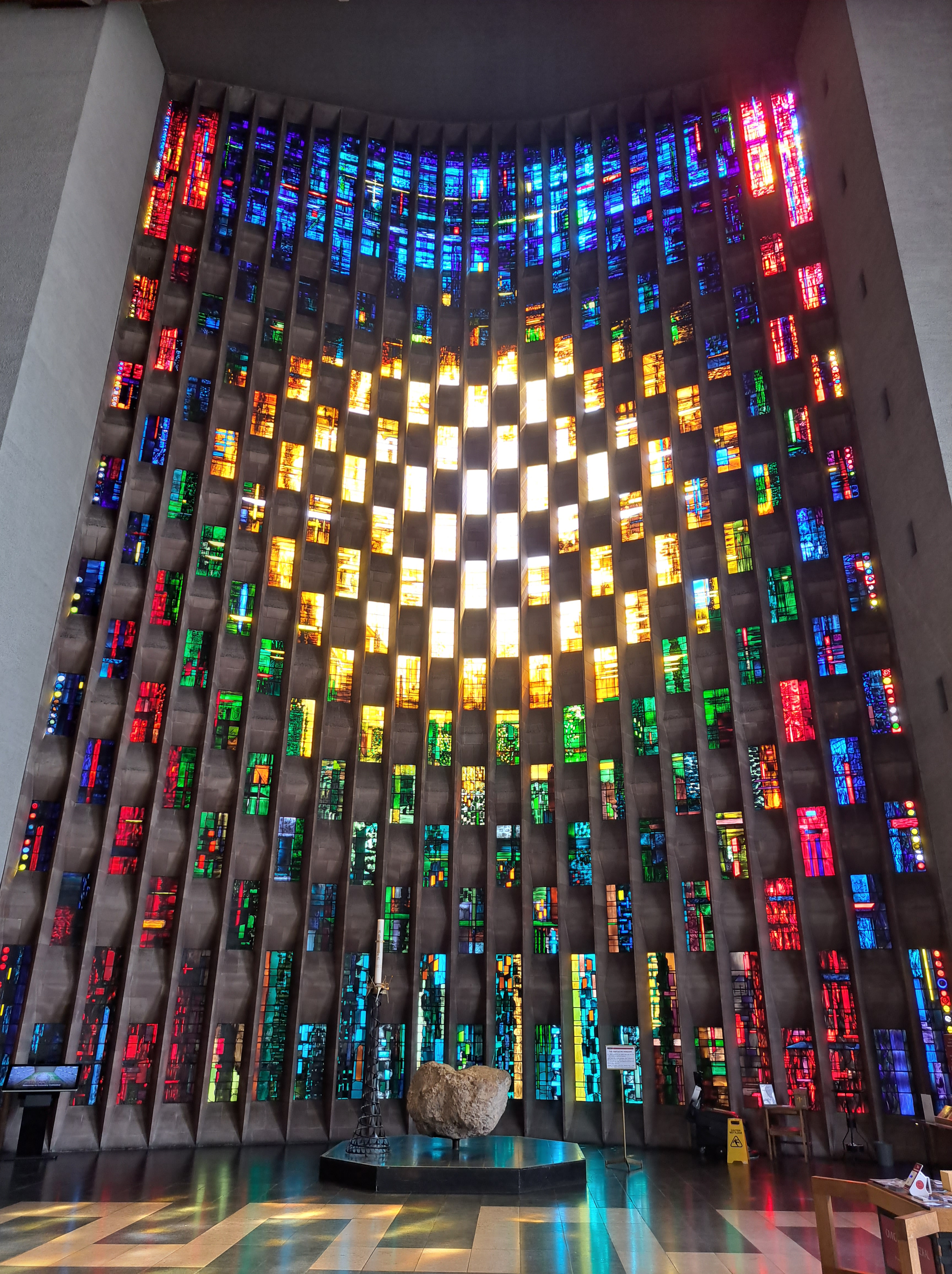
The same is true when you look back at the entrance screen with its dozens of ascending figures flying up in front of the old cathedral.

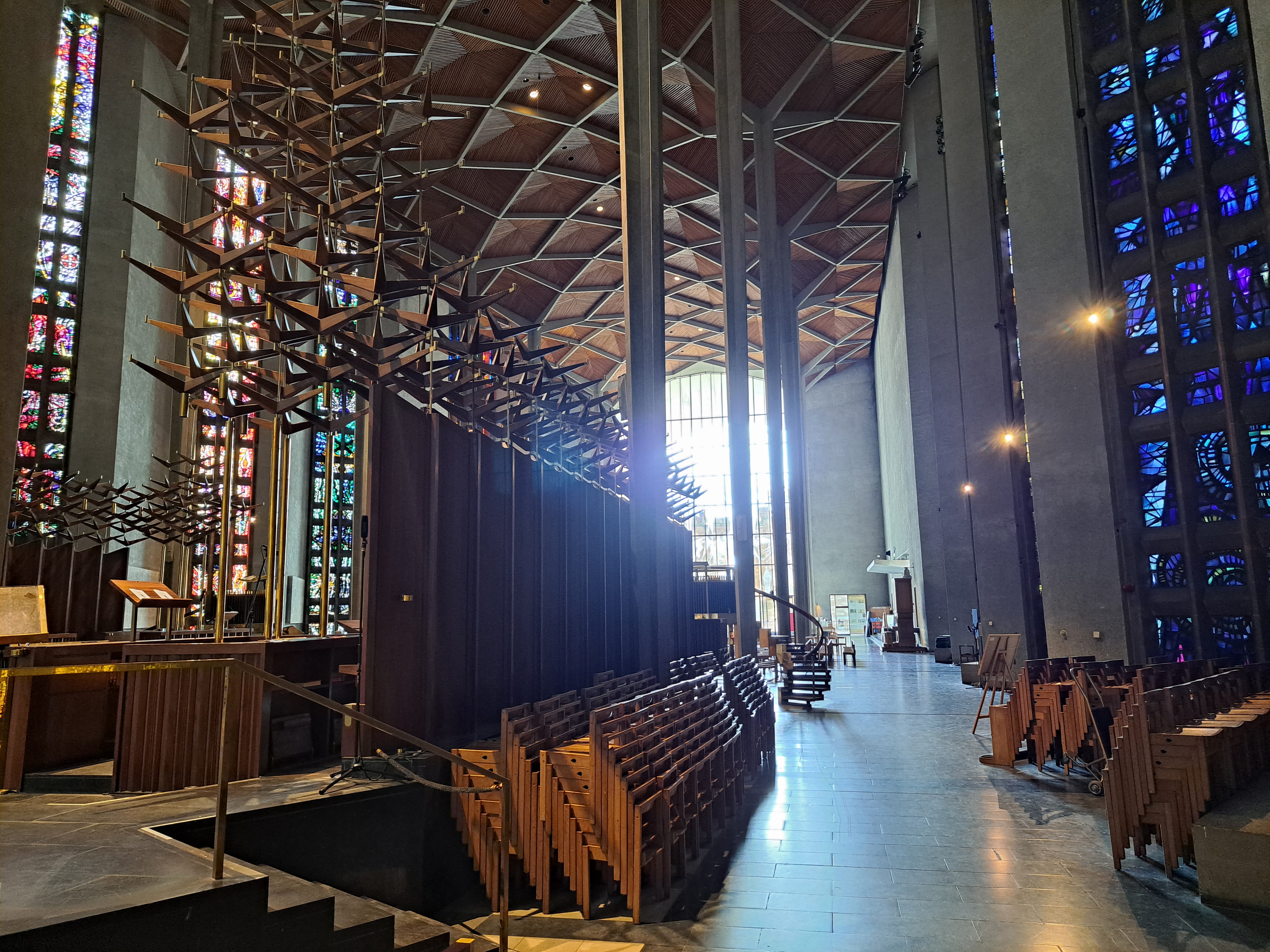
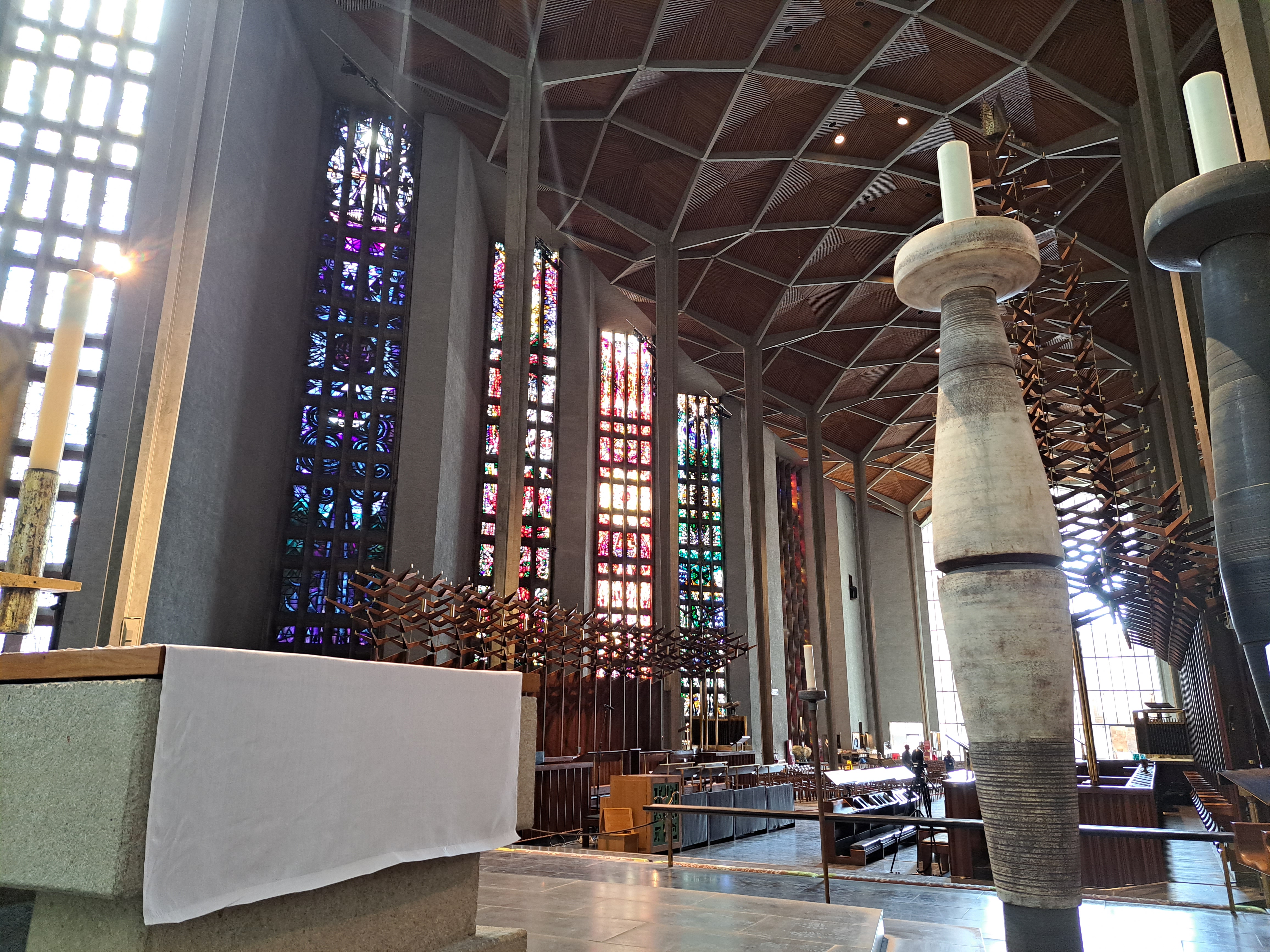
Again part of this is the scale, and the combination of massive candlesticks, the very high choir stalls and the stained glass that is only visible when you look back from the altar all contribute to this impressive immensity.
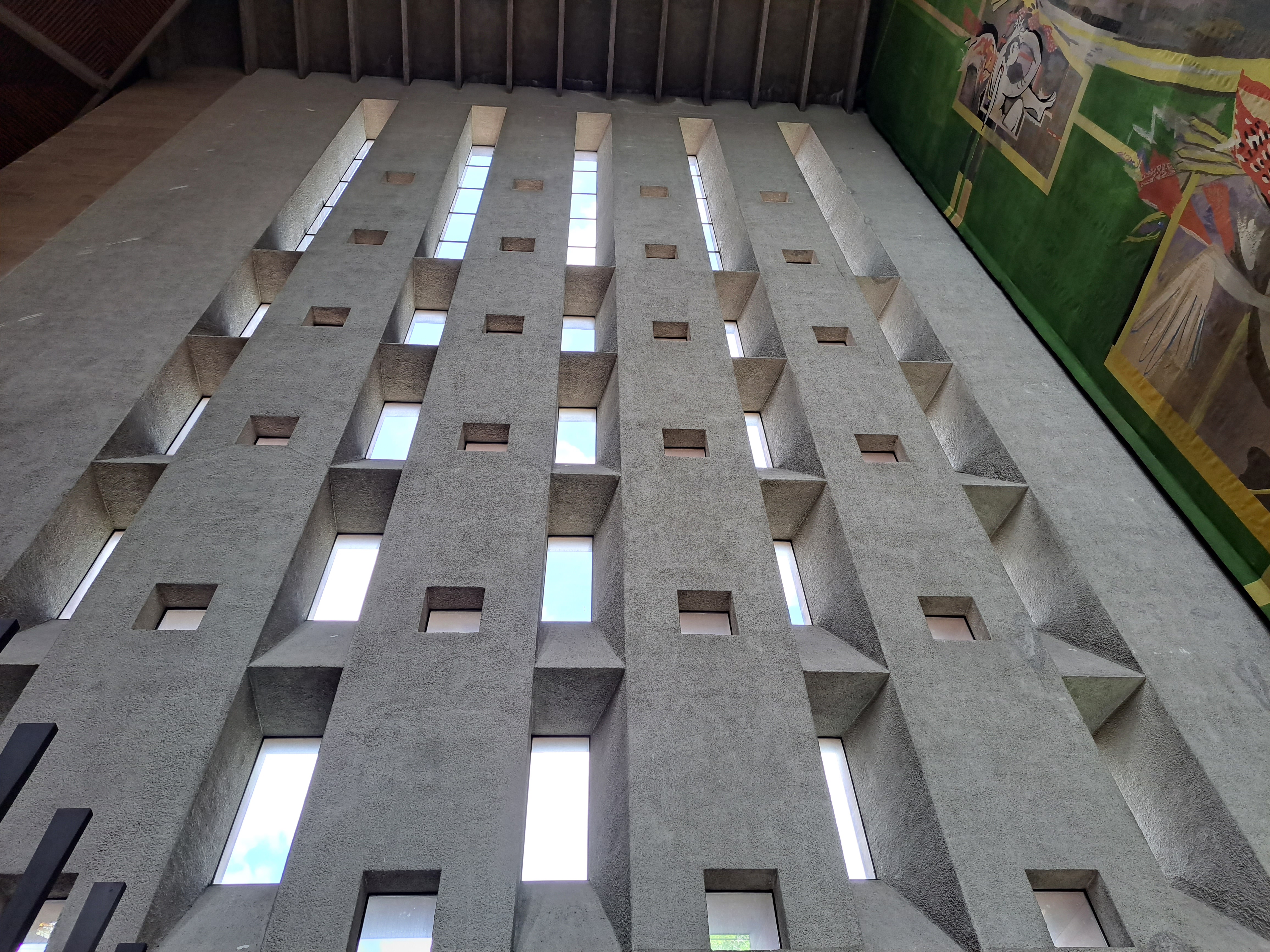
Even what might be termed the brutalist elements of the structure continue to impress. The wall that lets light on to the chancel and the tapestry has a grandeur and a solidity still, but if it had been placed out of doors in a housing estate or in a car park or shopping centre it would have had to have been demolished years ago:
The focus of the cathedral is Graham Sutherland’s tapestry of Christ in Glory. Once again this is so impressive because of its size; a massive tapestry, woven by hand in a single piece, weighing around a ton, it’s a remarkable piece of work. Standing between Christ’s feet is the figure of a man, emphasising humanity’s smallness before the grandeur of God.

The great height is continued in the Chapel of Unity

but not so much in the Chapel of Christ the Servant which is lined by walls of plain glass, giving a brightness and an openness to the chapel. When I was there a very moving exhibition of quotations from letters home from Indian soldiers serving in the First World War was on display, one on each window.

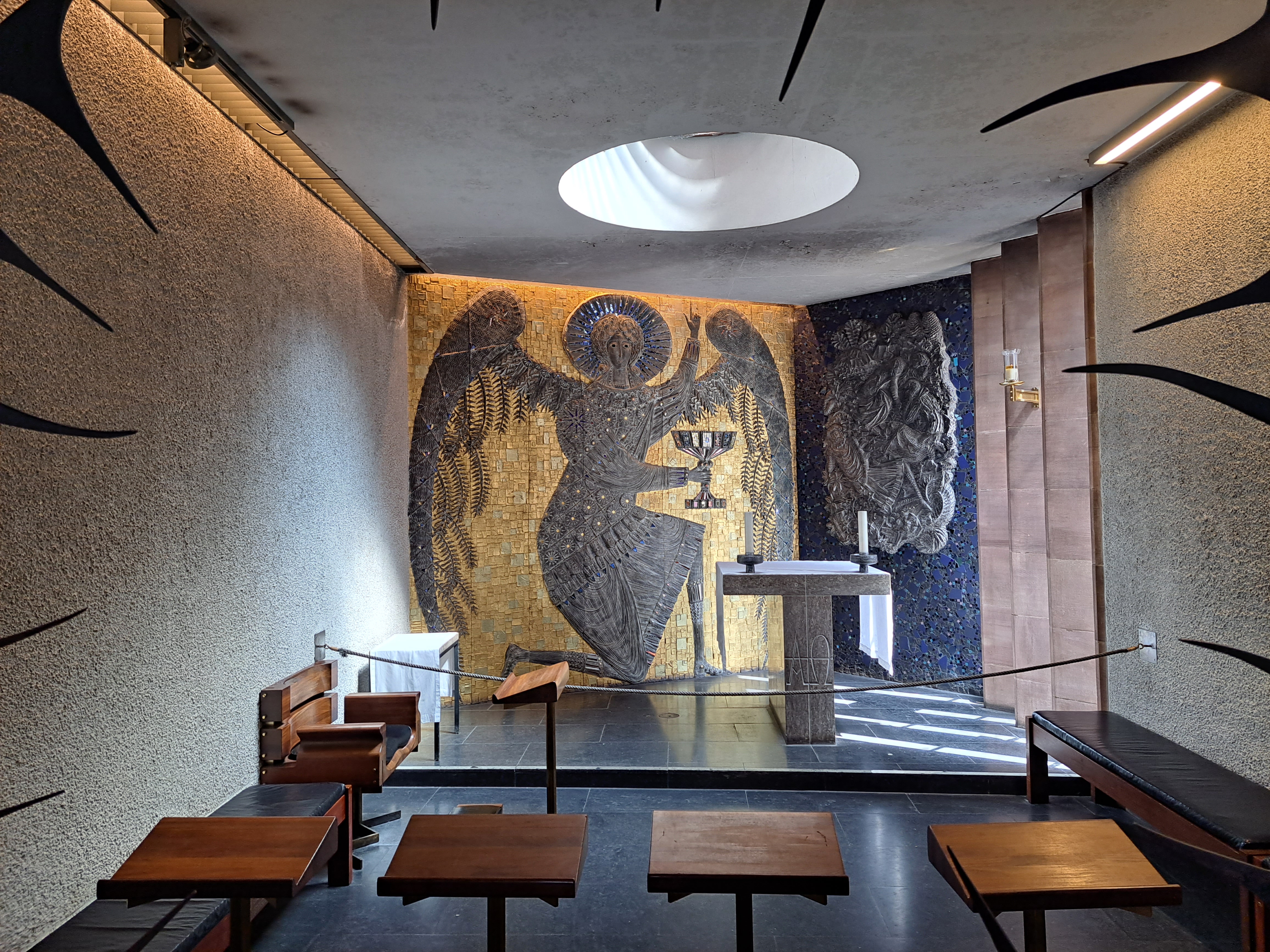
The Chapel of Christ in Gethsemane is also different, it resembles a cave and the sculpture on the wall by Steven Sykes shows Jesus being ministered to by an angel. It is viewed through a crown of thorns.
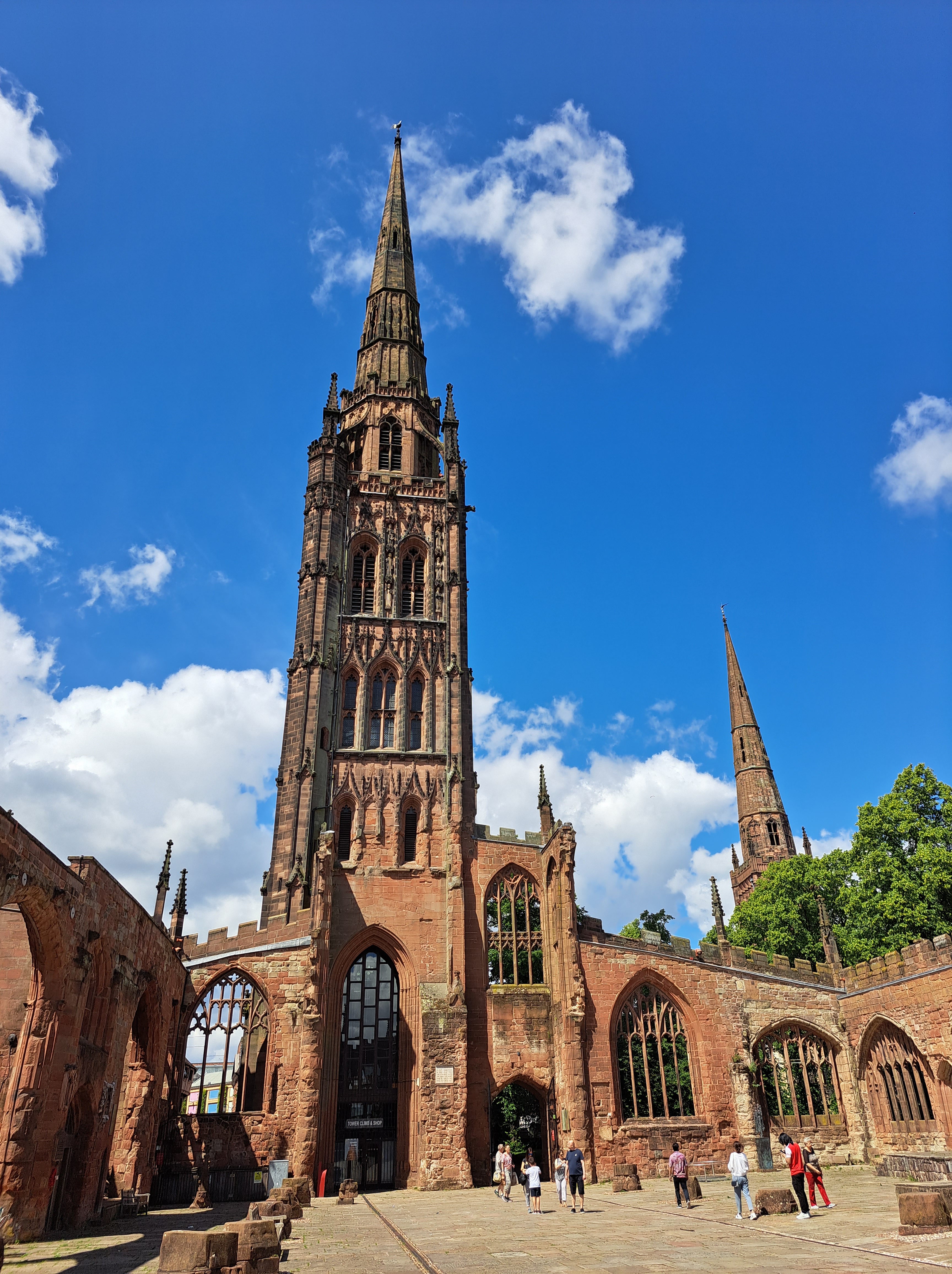
The ruins of the old cathedral emphasise the horrors of the blitz
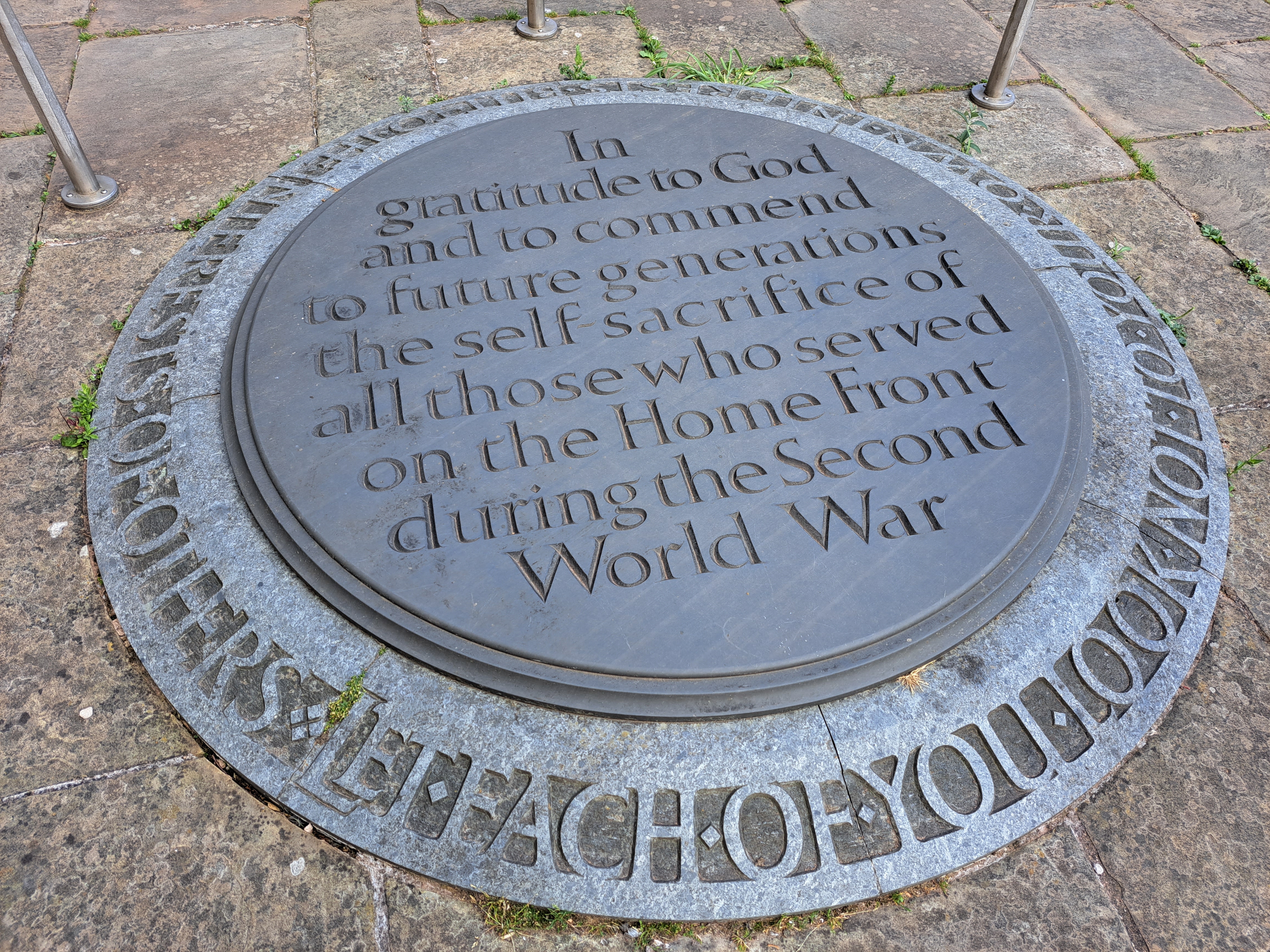
and fittingly a memorial records the sacrifices of those who served on the home front in the Second World War.
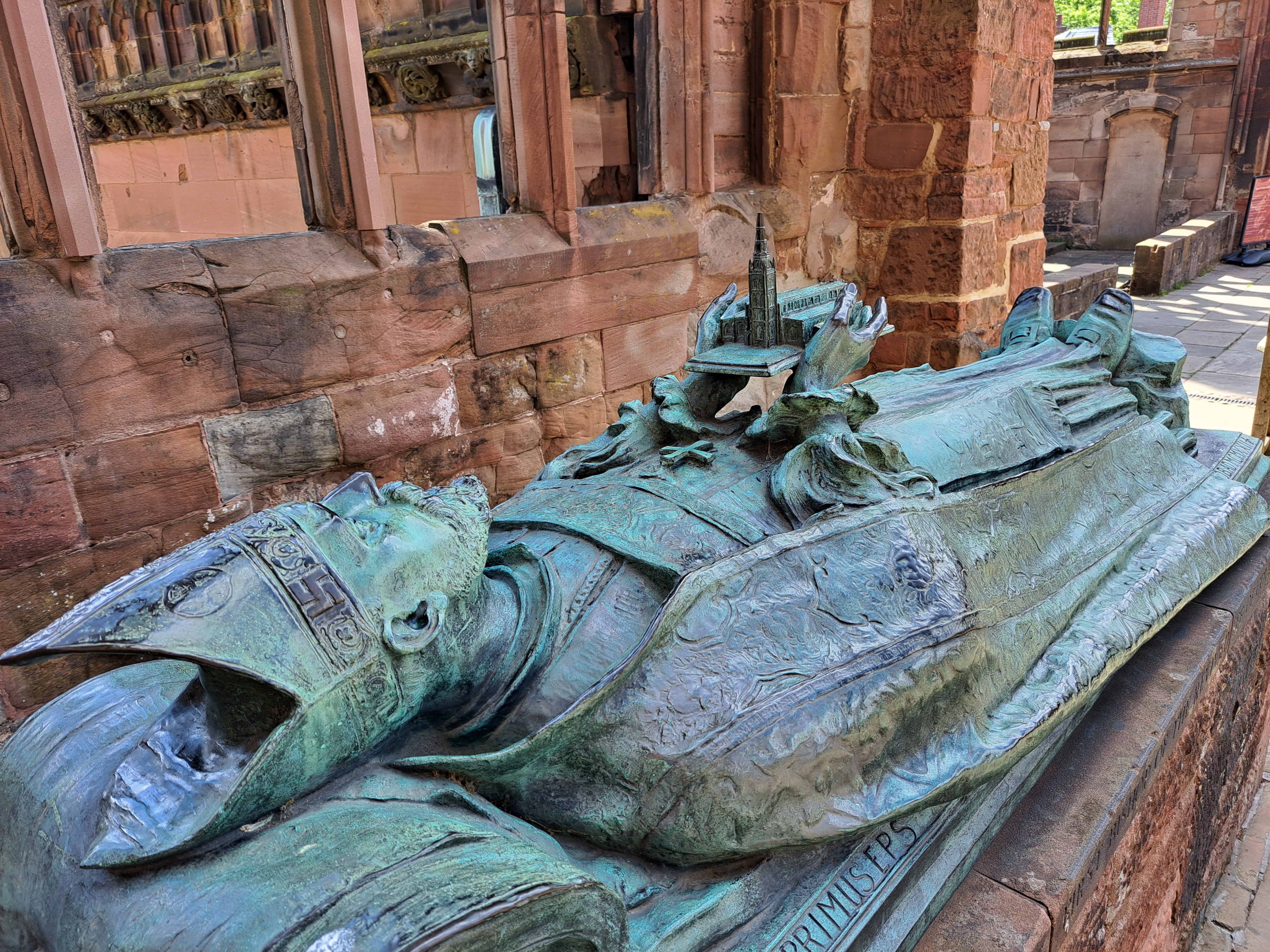
One of the few things to survive the blitz in the old cathedral is the tomb of Bishop Yeatman-Biggs, the first Bishop of Coventry. He holds a model of the cathedral and, curiously, his mitre includes a swastika in its decoration. The guide book doesn’t call it a swastika but names it as a fyflot. But as the guide book also says this was an ancient religious symbol, used in different cultures before it was adopted by Nazi Germany. But it does look strange on his mitre and it has gradually become shiny as generations of visitors have pointed to it in shock or surprise.
As a building it is somewhere that I find impressive and intriguing. It does represent a positive response to the horrors of war and an affirmation that faith can overcome suffering and reach out where there has been hatred, and this is all for the good. Parts of it are wonderfully impressive and uplifting but I can’t say that, as a building, it really speaks to me in the way other cathedrals do. But it will always communicate a certain kind of optimism and fortitude that came out of the immediate post-war period.

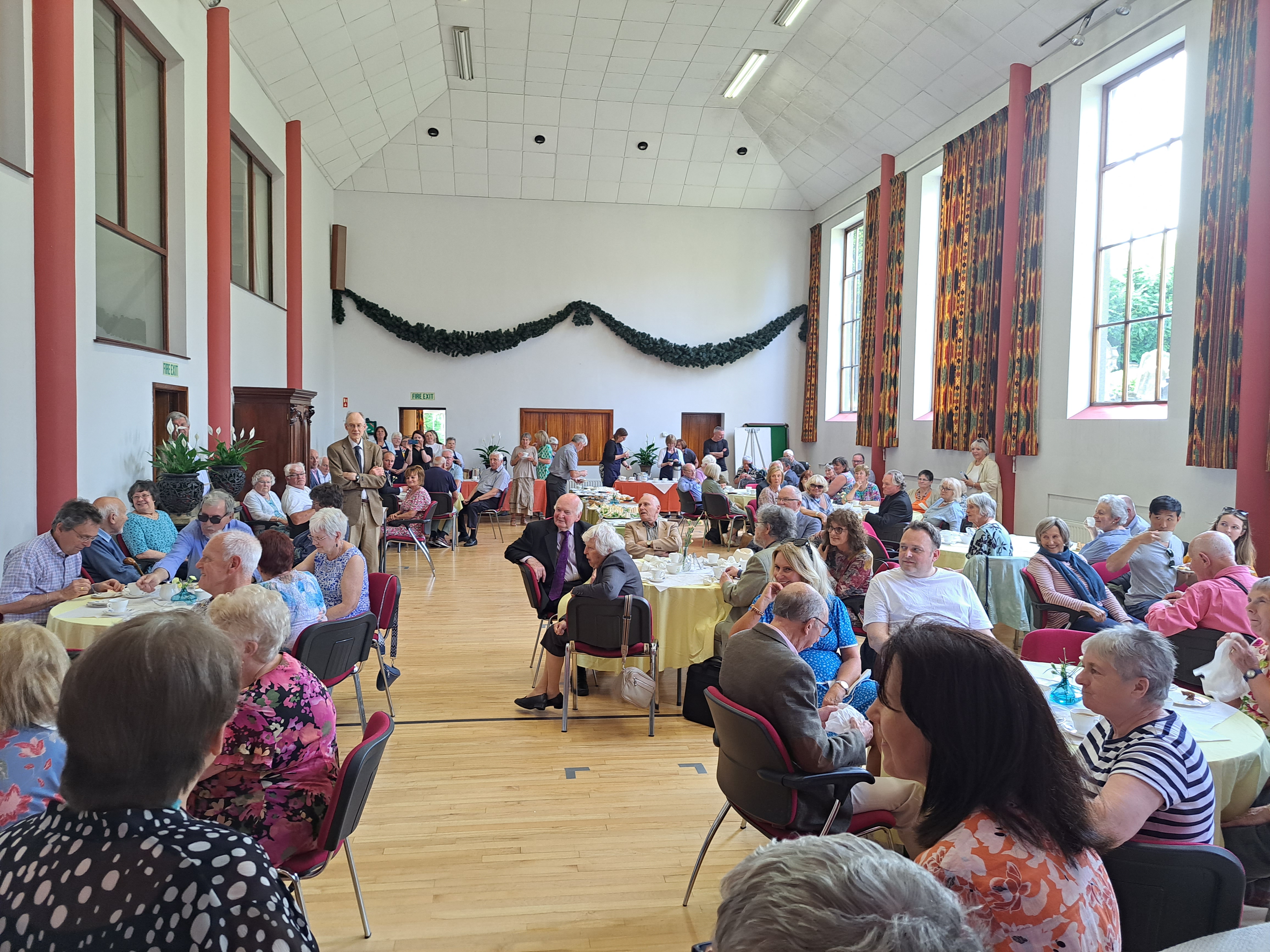
On Saturday afternoon, 10th June 2023 a very large congregation assembled at Dunmurry to dedicate the special memorial to their late former minister the Very Rev William McMillan, MBE, MA.
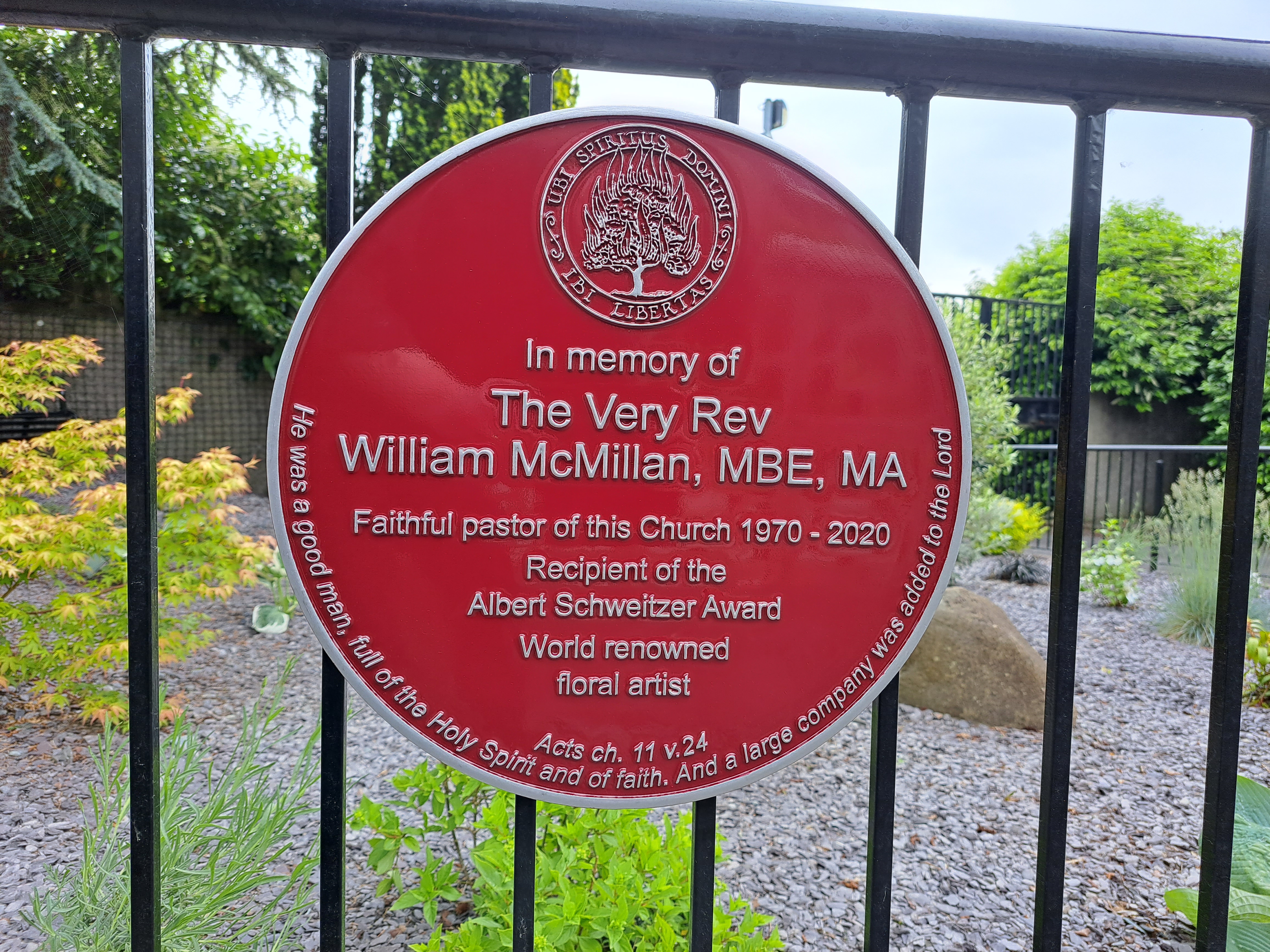
The Rev Mac was minister at Dunmurry from 1970 to 2016 and continued as minister emeritus until his death in 2020. He was also a leading figure in the world of floral arrangements and horticulture and the congregation wished to create a lasting memorial that reflected this achievements.


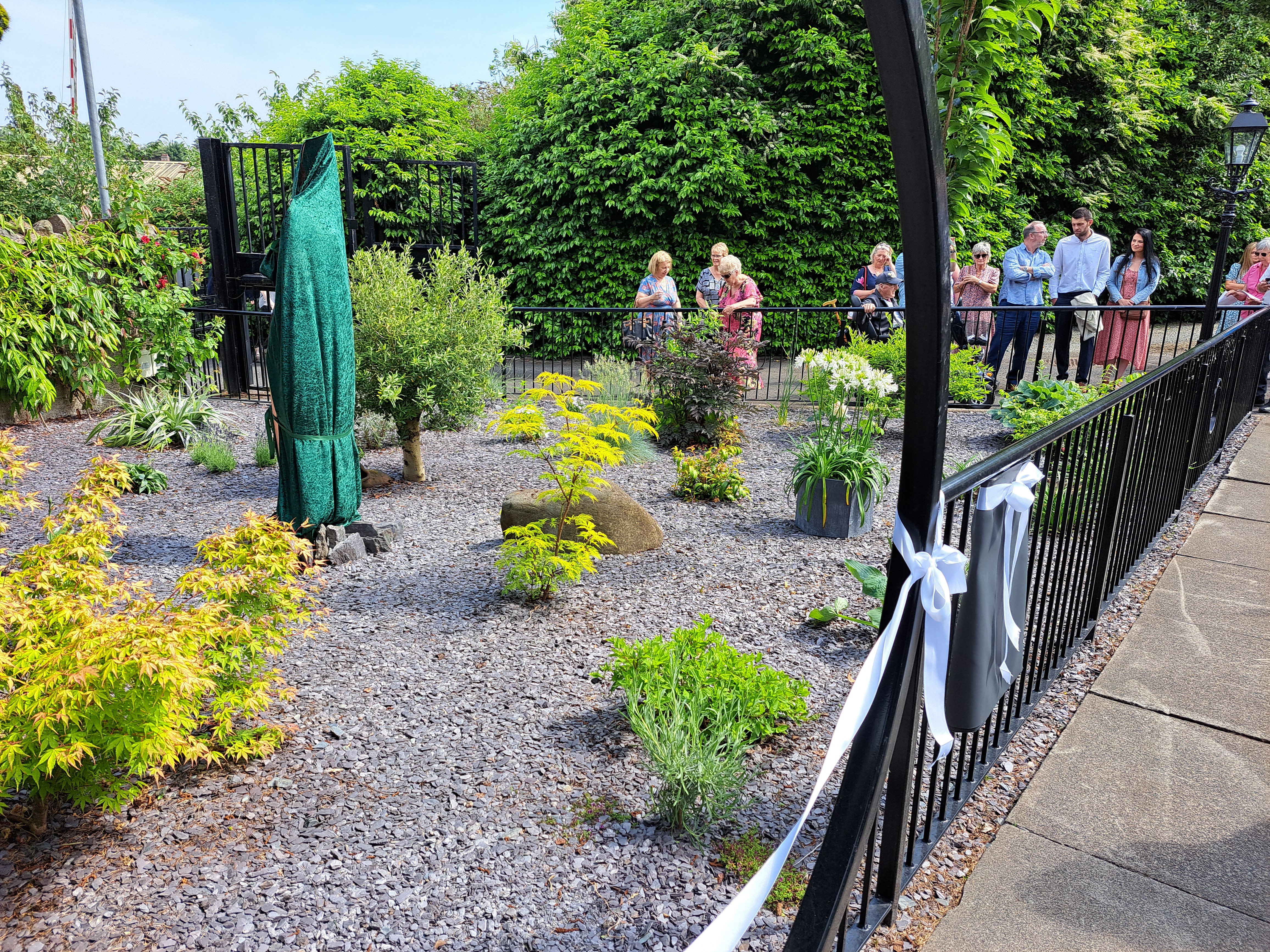
Click on the video below to see the short service in the Church followed by the opening of the Garden.
Below is the text of the address given in the Church by the Rev Dr David Steers:
We are to here to celebrate and commemorate a much-loved minister of this church whose work had such a positive and joyful impact not only here in his church – where he ministered for 50 years -, but in his denomination, and in churches of every conceivable denomination, and not only here in Northern Ireland, but across Ireland, across the British Isles and across the world. He was a minister, a pastor, a preacher, a writer, an expert on church history, all of which made for a most full, multi-faceted ministry that touched so many people.
That in itself would make a day like today such an important and right thing to do but beyond that he had another level of creative achievement that extended his ministry far and wide to so many people, so many groups, so many organisations in so many different countries.
Famously John Wesley, the great founder of the Methodist church, is said to have declared that ‘The World is my Parish’ by which he meant that wherever he was he felt compelled to promote the gospel. But the same thing could be said of the Rev Mac, I think the work which he did in the floral and horticultural worlds was an extension of his ministry, all his work was based on an appreciation of the glory of God’s creation and a desire to describe and explain it to everyone. His unique creativity was borne out of a deep recognition of the beauty of creation, as we heard from the reading before from the book of Genesis where at God’s command The earth brought forth grass, the herb yielding seed, and the fruit tree yielding fruit after his kind. Or as the RSV has it The earth brought forth vegetation, plants yielding seed according to their own kinds, and trees bearing fruit. It was this raw material of grass, plants, flowers, leaves, trees and all the wonders of the natural world which Mac took to express God’s love.
Something which he did with such sensitivity and understanding and, with a preacher’s skill, he was able to turn into such eloquent sermons of truth which went ‘beyond mere words’.
So when his church wanted to build some kind of memorial to the Rev Mac there were lots of ideas, lots of suggestions and lots of possibilities. But in the end the decision was taken to create a memorial that was living and vibrant, something natural and also lasting. So we will today dedicate to the glory of God the Very Rev William McMillan Memorial Garden. Created just yards from here and I want to thank all those many people who have had a hand in shaping it but say thank you particularly to Frances Gibson who has designed it. And thank you to Tim Mulchinock the sculptor who has created from beaten copper the centrepiece which is also entitled, like one of Mac’s books, ‘Beyond Mere Words’.
The garden, in the grounds of his church, rich in plant life, living as part of the natural environment with a wonderful piece of art at its centre, is truly a fitting memorial to the Rev William McMillan. Someone whose whole lifetime was devoted to communicating God’s word in all that he did. Someone who, as we heard before from the reading from Acts given to us by Jane: For he was a good man, full of the Holy Spirit and of faith. And a large company was added to the Lord.


 velvethummingbee