Balloo, Killinchy, A Hidden History

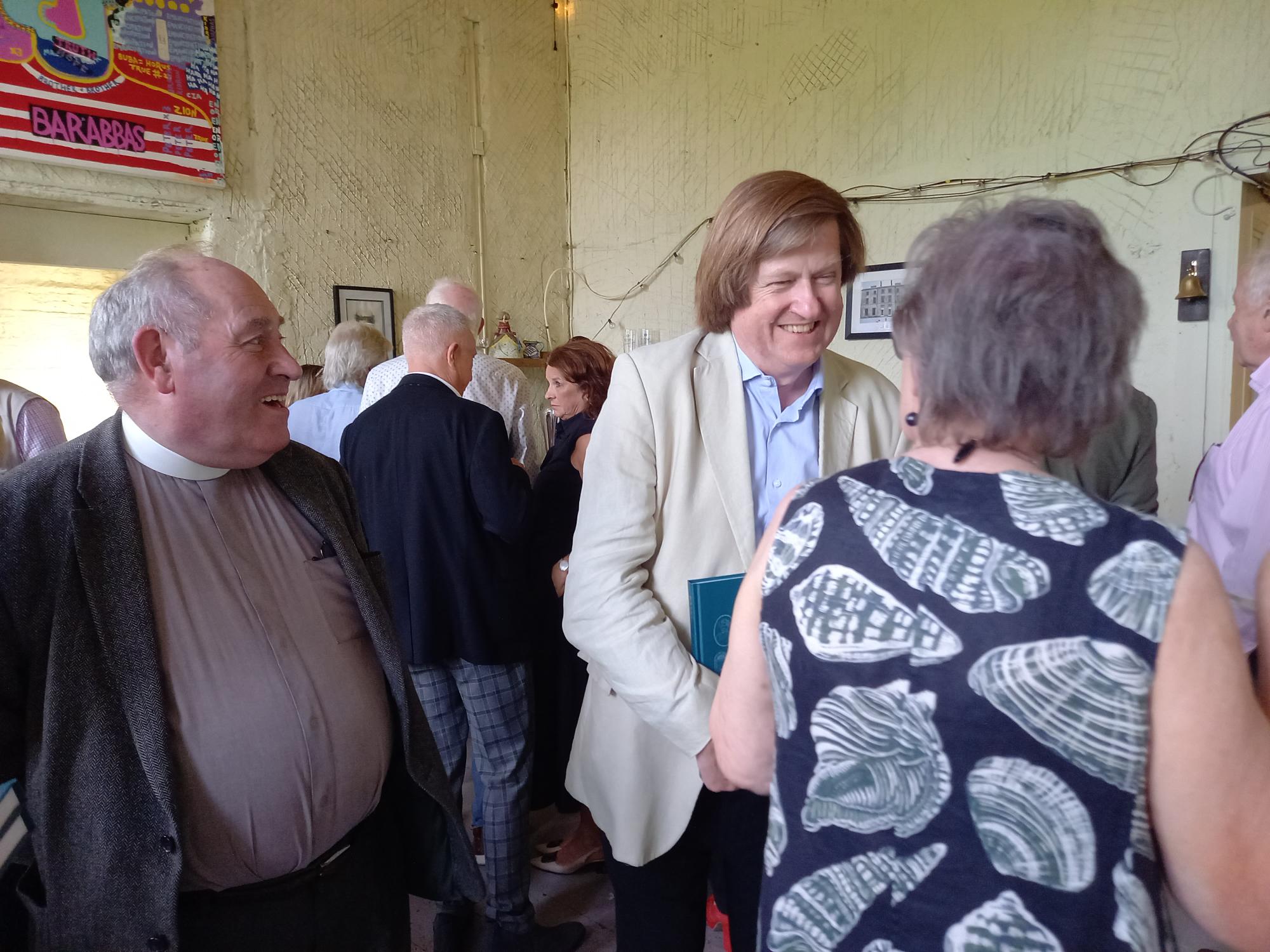
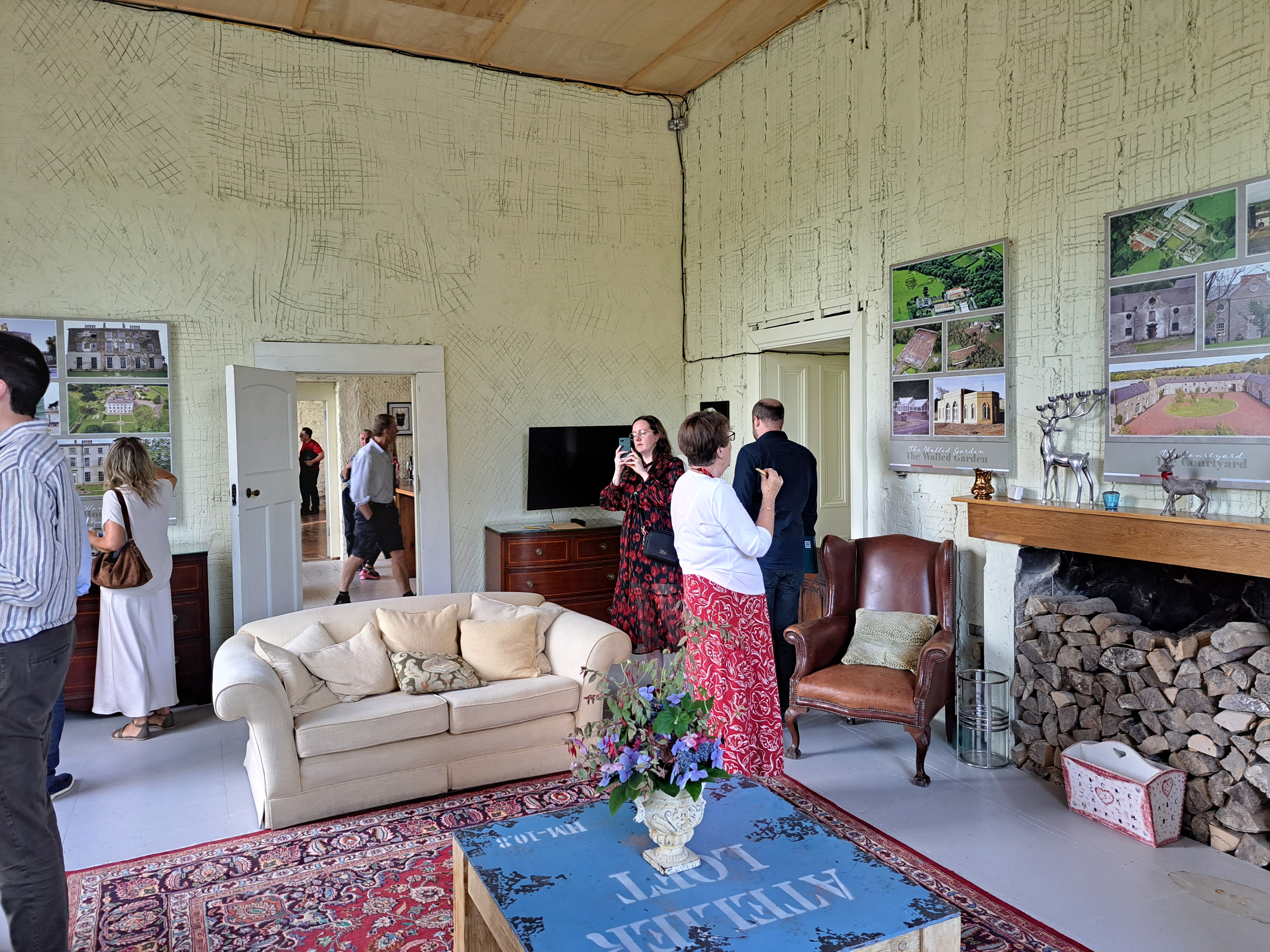
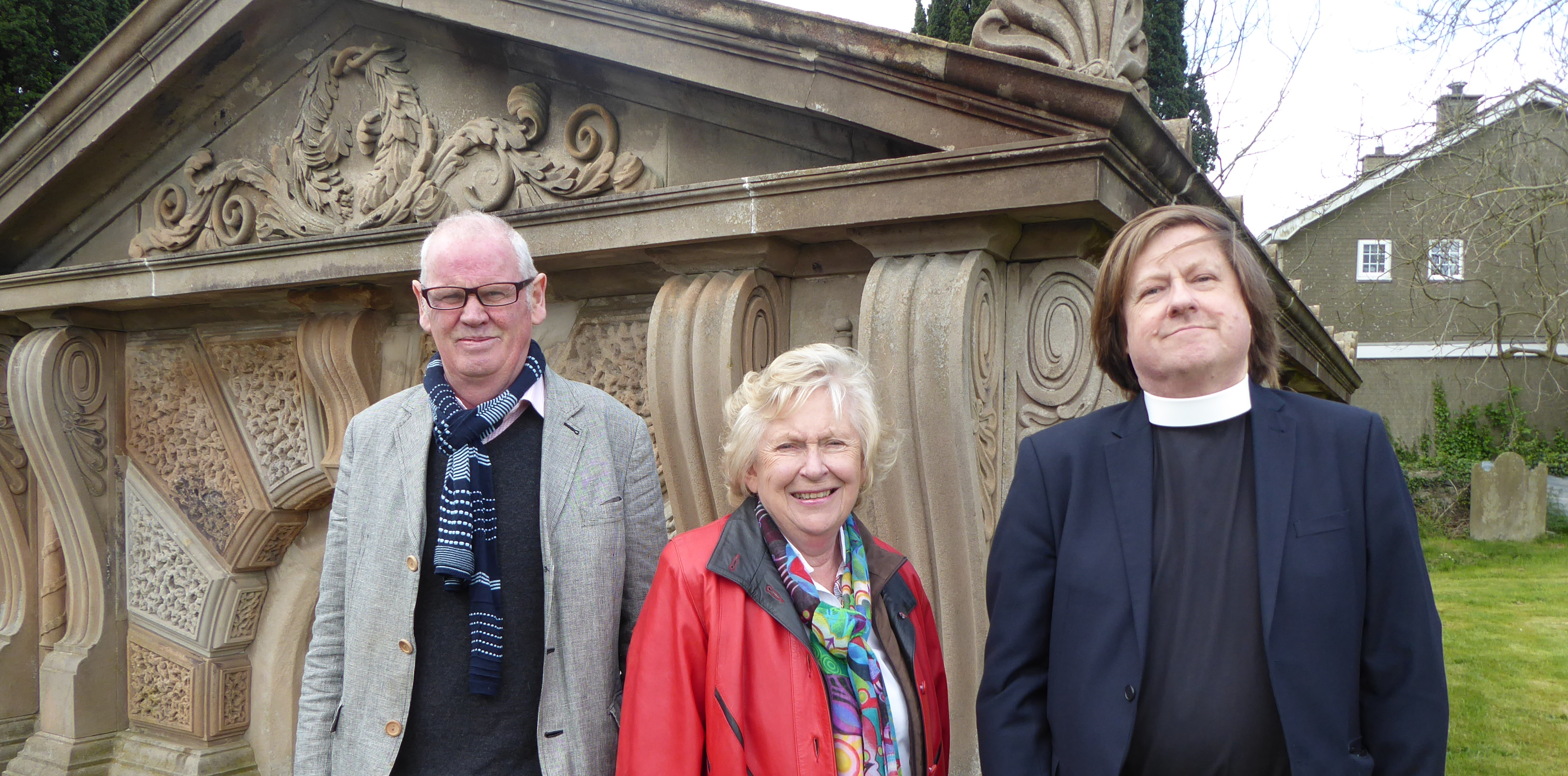
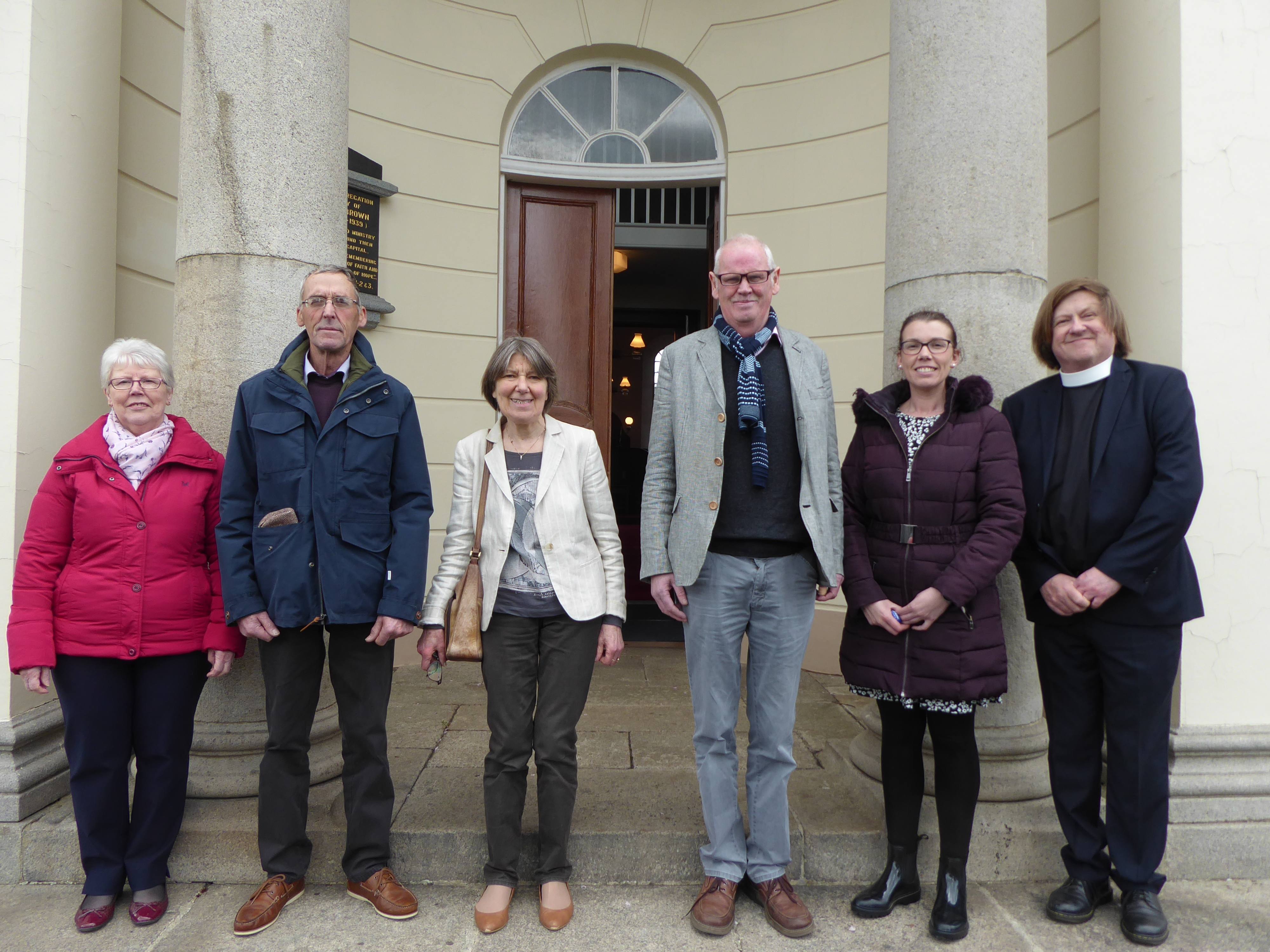
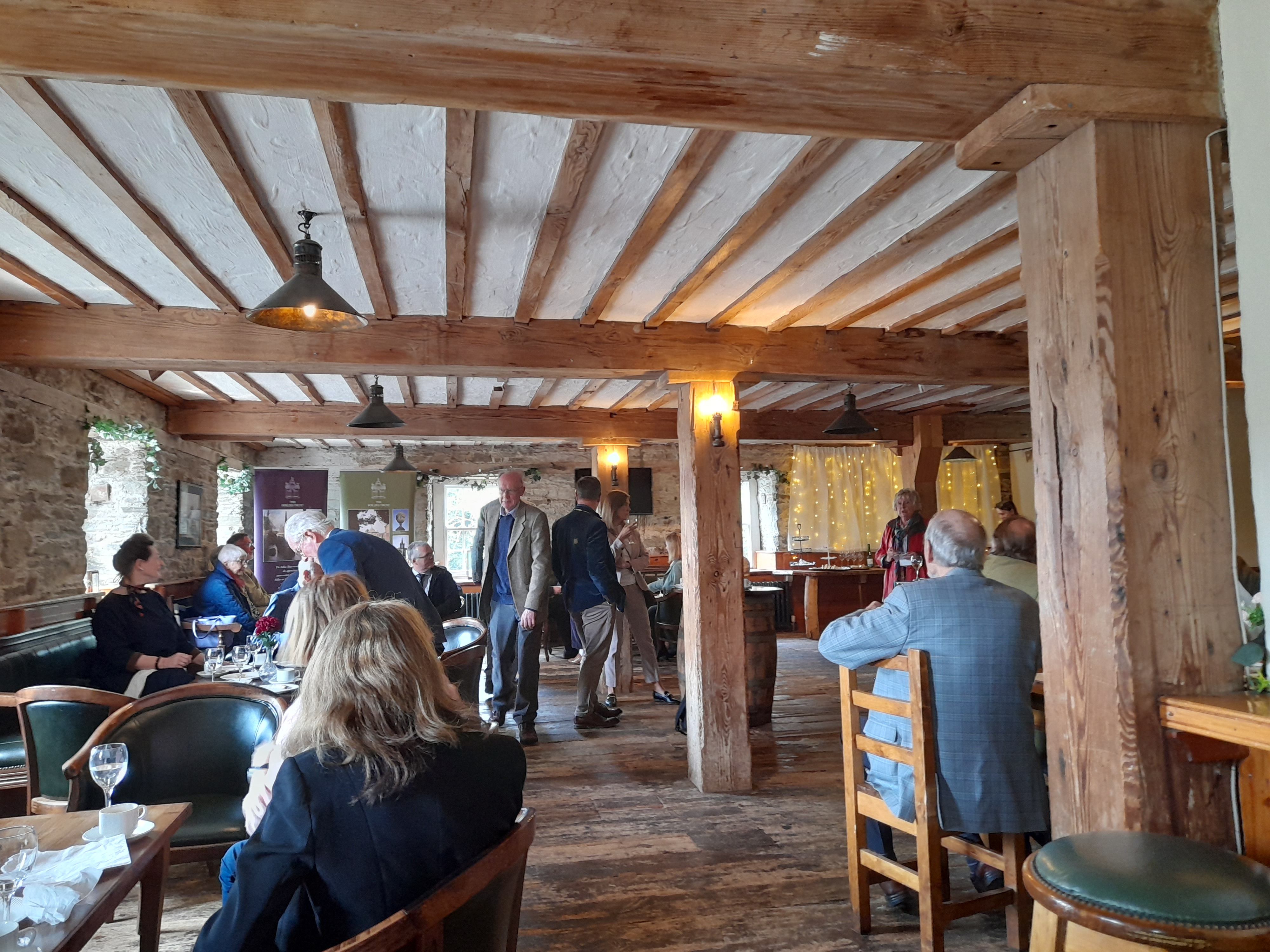
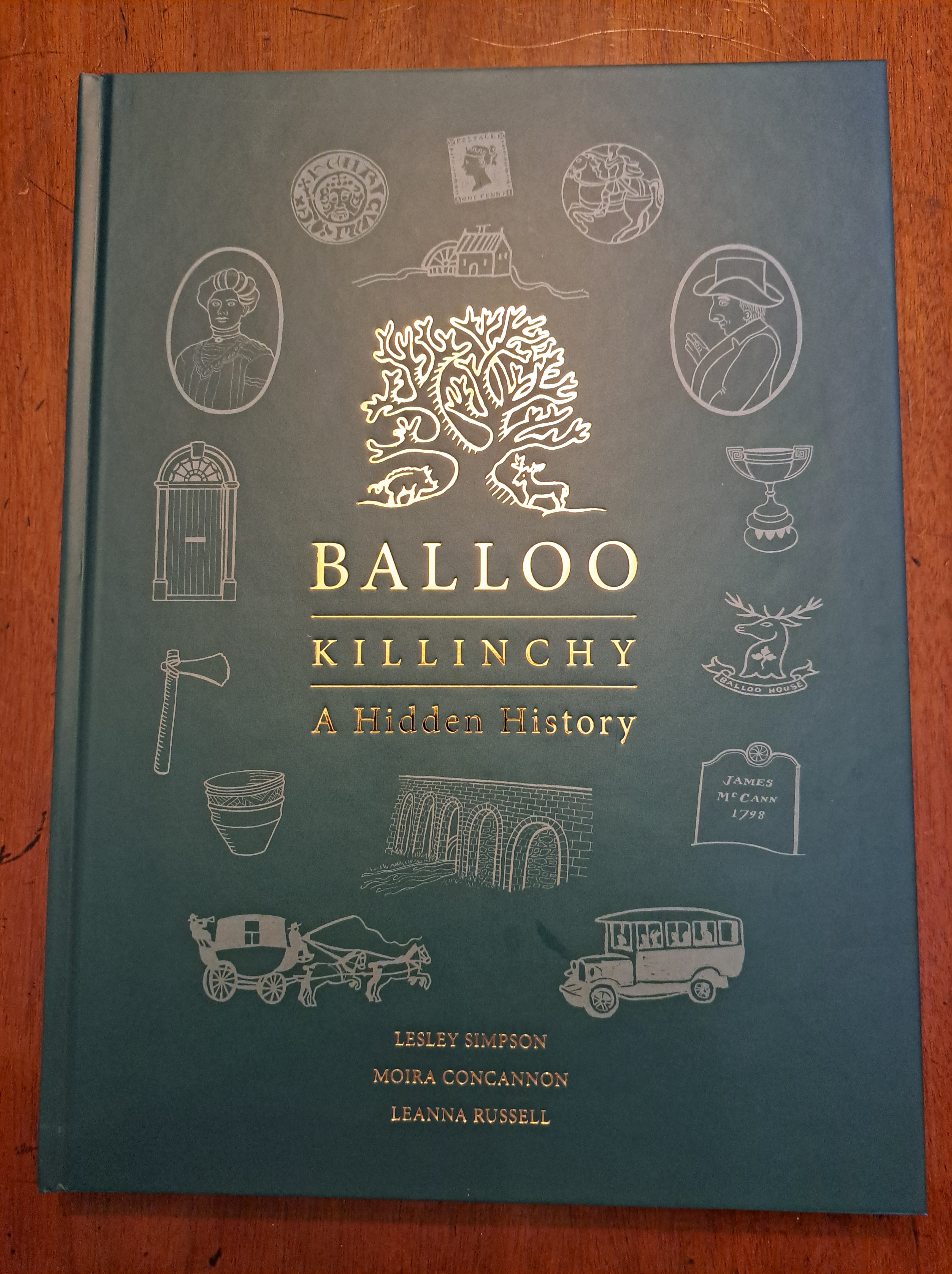
I was delighted to attend the launch of Balloo, Killinchy, A Hidden History by Lesley Simpson, Moira Concannon and Leanna Russell on Saturday, 15th August at Florida Manor, Killinchy. It was a wonderful occasion and a great start for a fascinating and beautifully produced book.
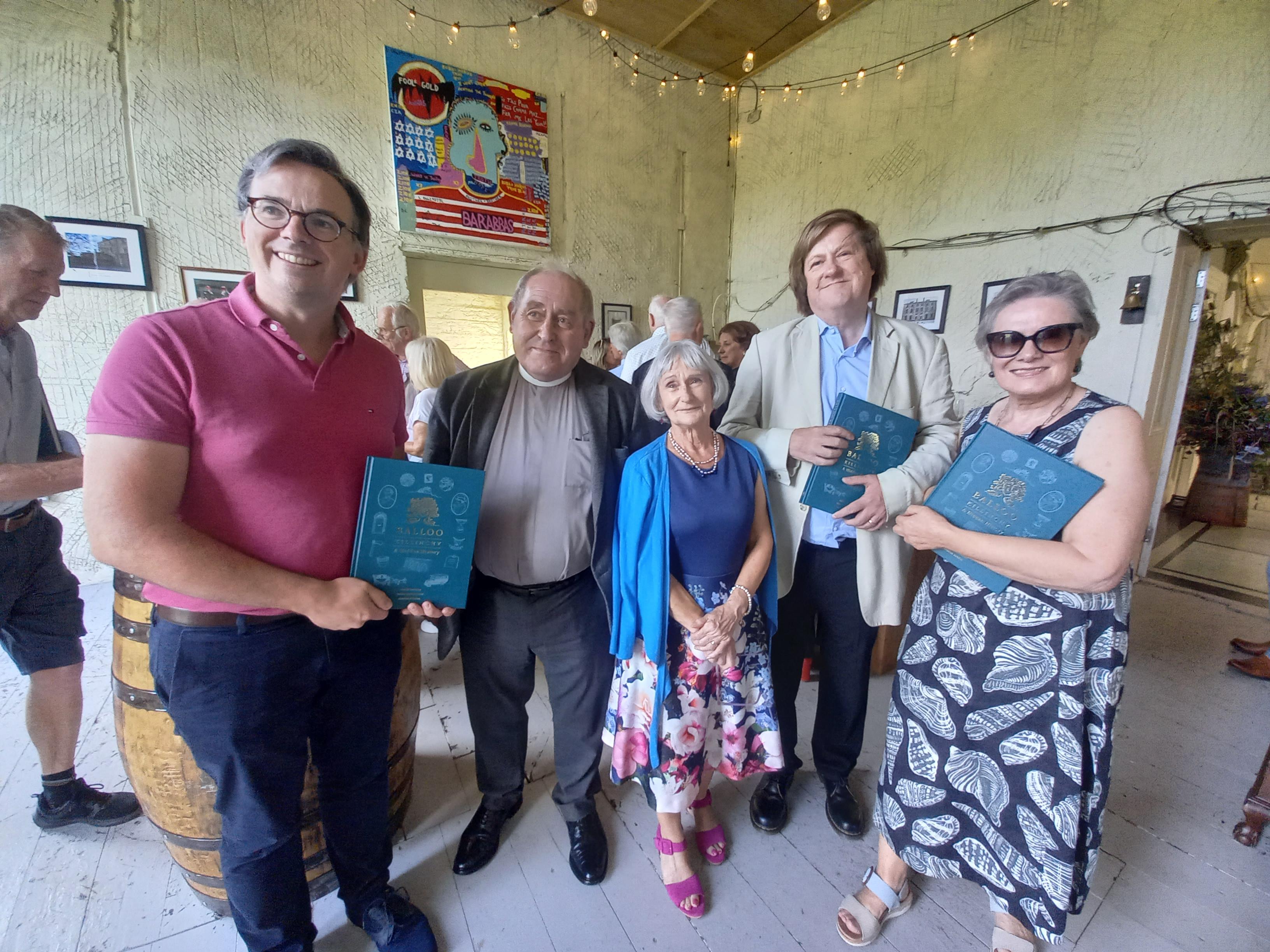
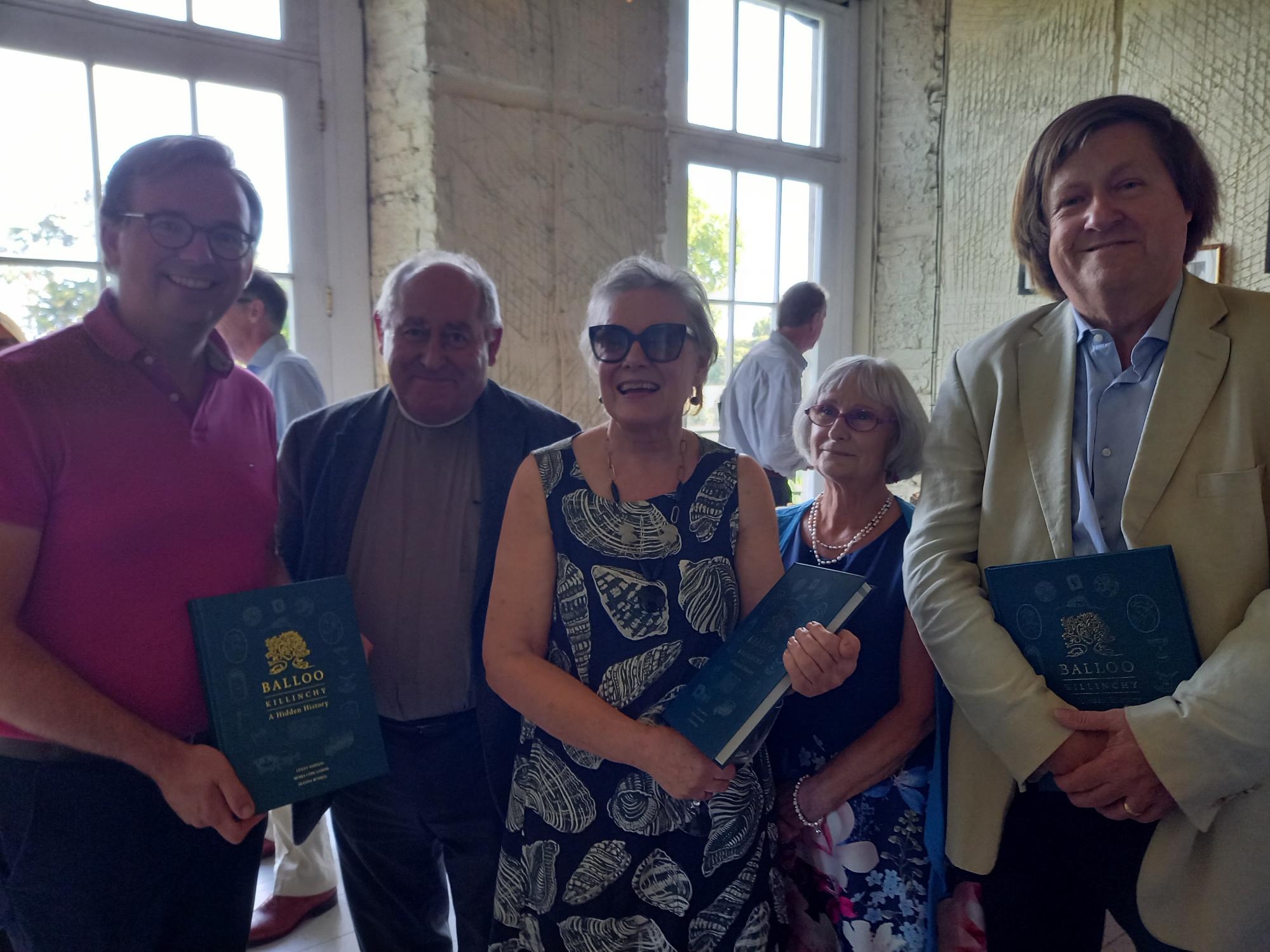
With Rev Dr Stanley Gamble, Rev Dr John Nelson, Lesley Simpson and Moira Concannon

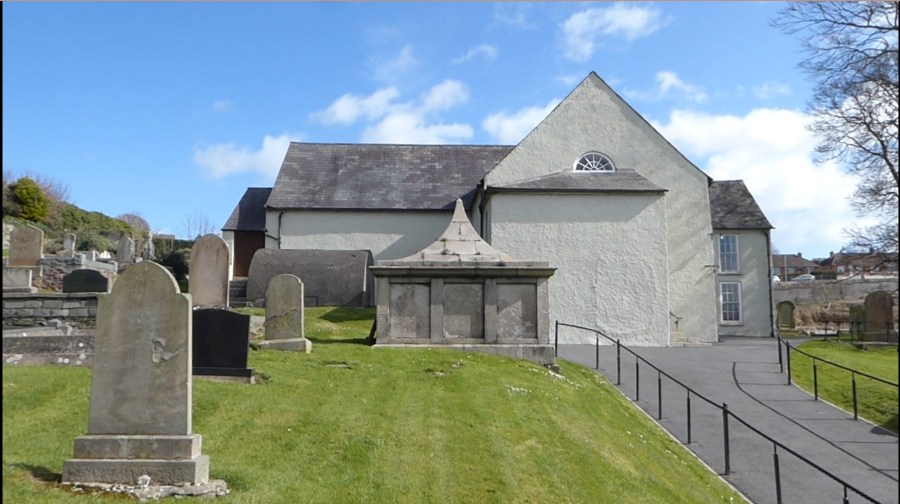
The authors tell the story of the locality through maps, family history, newspaper reports, churches, mills and stores and, most of all, the local houses. Of particular interest to me is the house known as Templebrook Valley which was the home of the Rev Samuel Watson minister in Killinchy from 1797 up to his death in 1856. He was at the centre of one of the major disputes between the Synod of Ulster and the Non-Subscribers in the 1830s and the new Remonstrant meeting house was built for him in Killinchy in 1846.
When the Non-Subscribers were ejected from their original meeting-house, for three years they held services in the grounds of his house. The book tells the story of the Rev Samuel Watson and his ‘long and interesting life from his suspected involvement with the United Irishmen to his move towards Unitarianism’. One of 13 children, three of them becoming Non-Subscribing Presbyterian ministers, Samuel Watson was also a significant farmer in the locality. Sadly his house was left to fall into dereliction in the twentieth century although a new house has now been restored on the site.
There is a great deal in the book about Samuel Watson. At the stone-laying ceremony for his new meeting-house it was reported that:

…seventy clergymen and strangers joined the congregation for a celebration which culminated in a substantial dinner, in a commodious wooden house that had been erected for the occasion with the Rev. Samuel Watson presiding.

I was particularly amused by one quotation taken from James Gourley in 1874, a perhaps not entirely unbiased commentator, who asked an old man who had sat under Samuel Watson’s feet:

What sort of doctrines did he preach? ‘Ohm’ said he ‘at that time there was no word about doctrine.’ ‘And what then did he preach about?’ ’Mainly about far away countries and wild beasts’.

Samuel Watson’s obituary in the Northern Whig described him as ‘…one of the oldest and ablest Ministers of the Church.’

The book is full of detail and uncovers such fascinating stories as the 1893 excavation of Templebrook Valley by the Belfast Natural History and Philosophical Society with the co-operation of Samuel Watson’s two youngest daughters – Anna and Sarah who were photographed at the excavation which uncovered Bronze Age vessels now in the Ulster Museum.
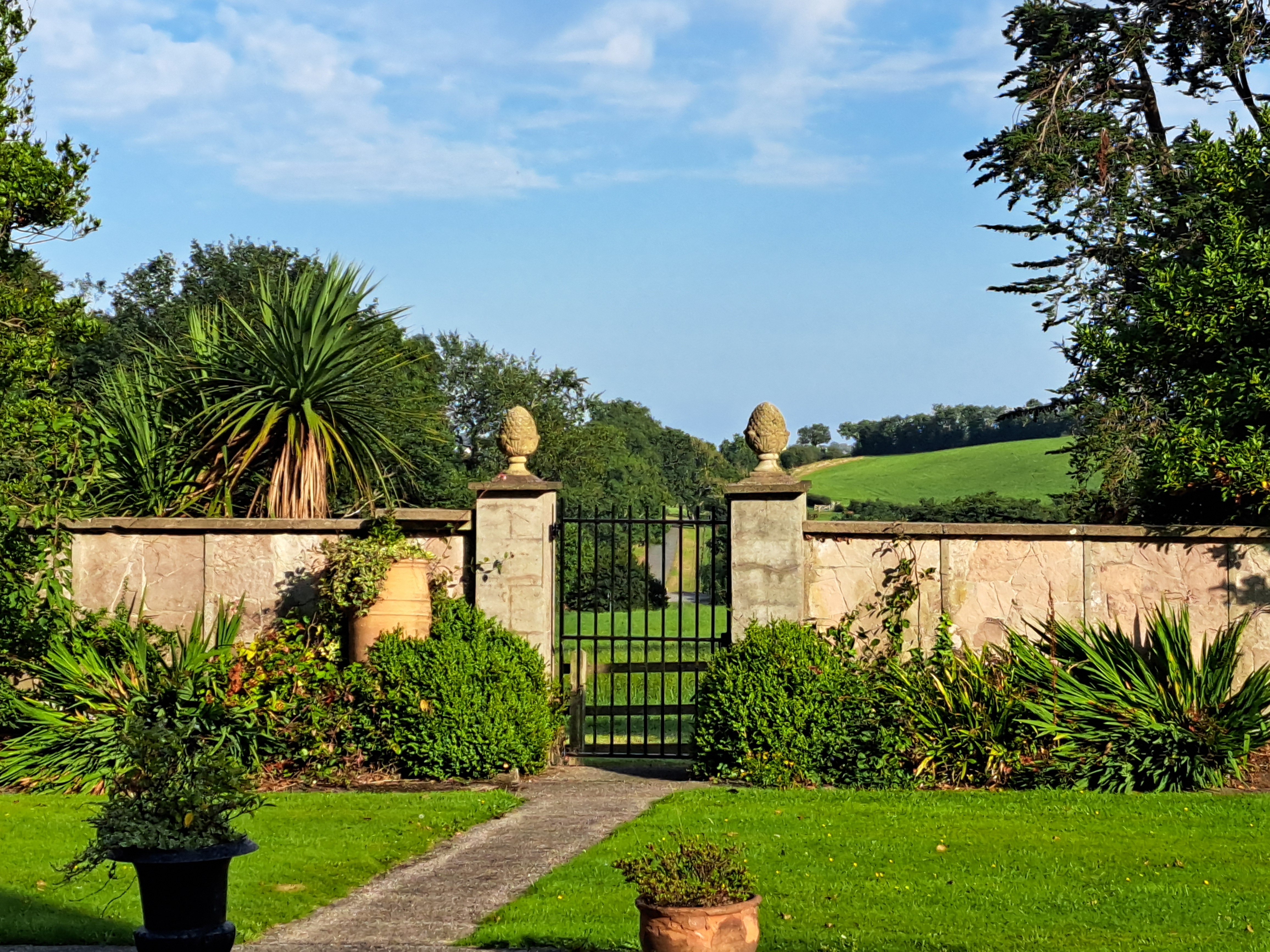
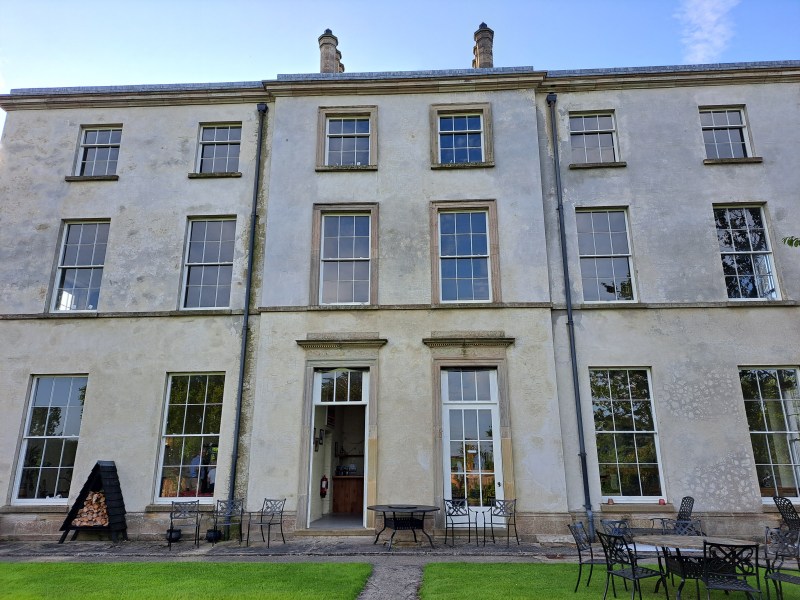
The view from the back of Florida Manor

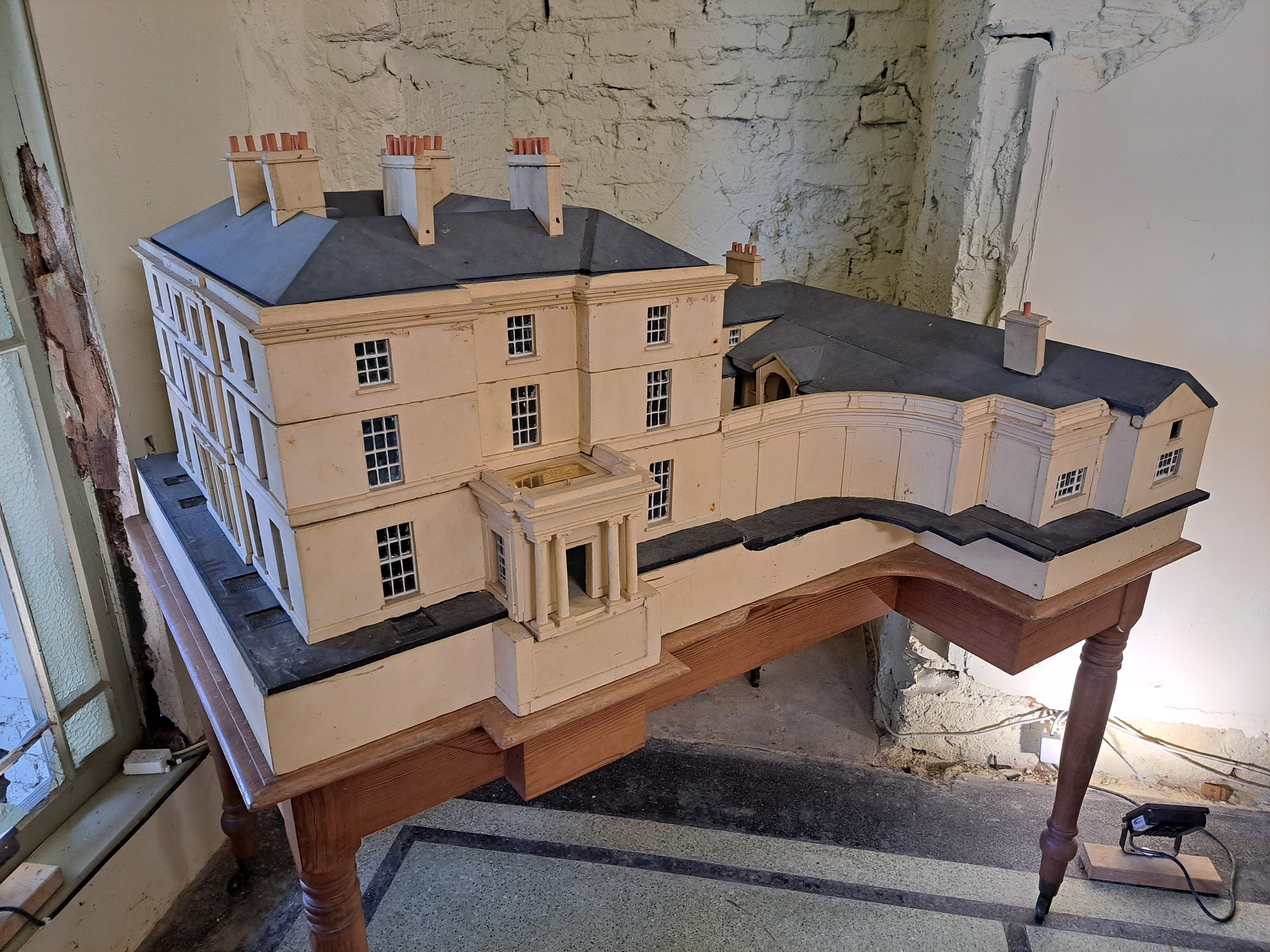
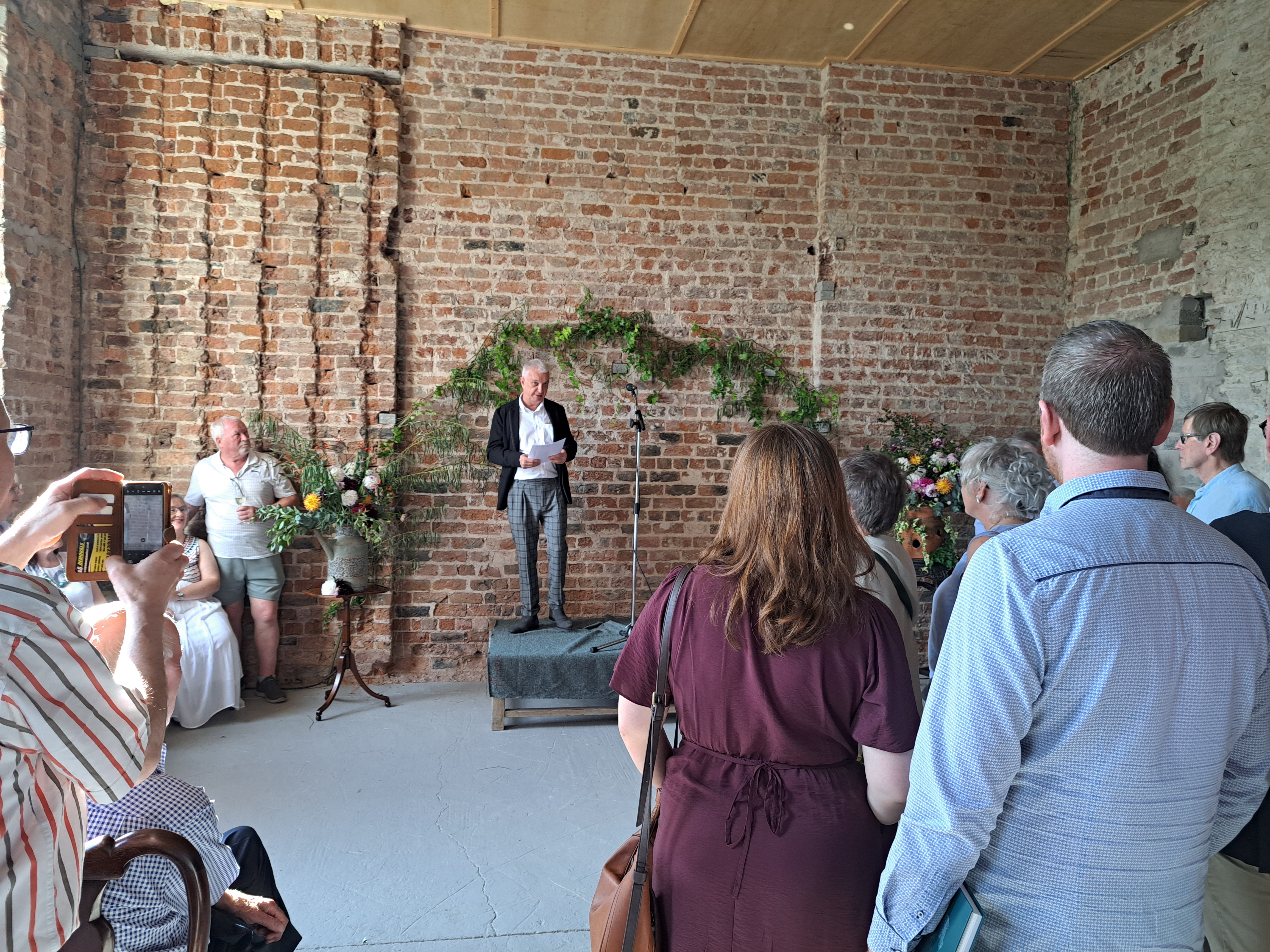
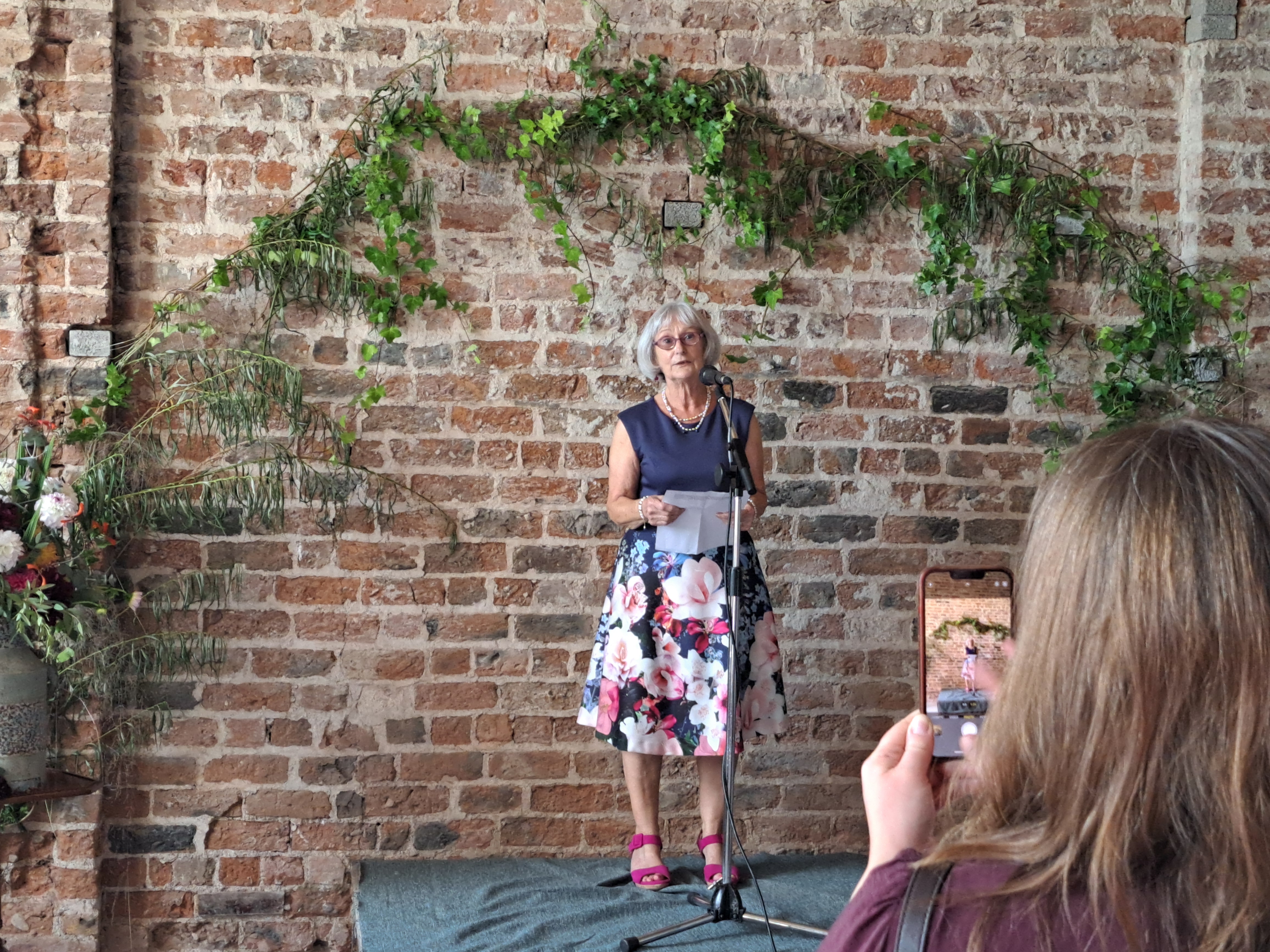
The book is richly illustrated throughout and is full of fascinating information. It is a credit to its authors and will be enjoyed by all with an interest in local history, the history of county Down and Irish Presbyterian history. The launch was a splendid occasion at Florida Manor, as the following photographs show.
Postcards by A.D. Coon

In this post we are looking at some more examples of the work of Allen Daniel Coon. The total output of postcards he produced between 1902 and his death in 1938 must have been enormous and they covered a very wide geographical area. I hadn’t noticed that one card I picked up a few years ago was by him:

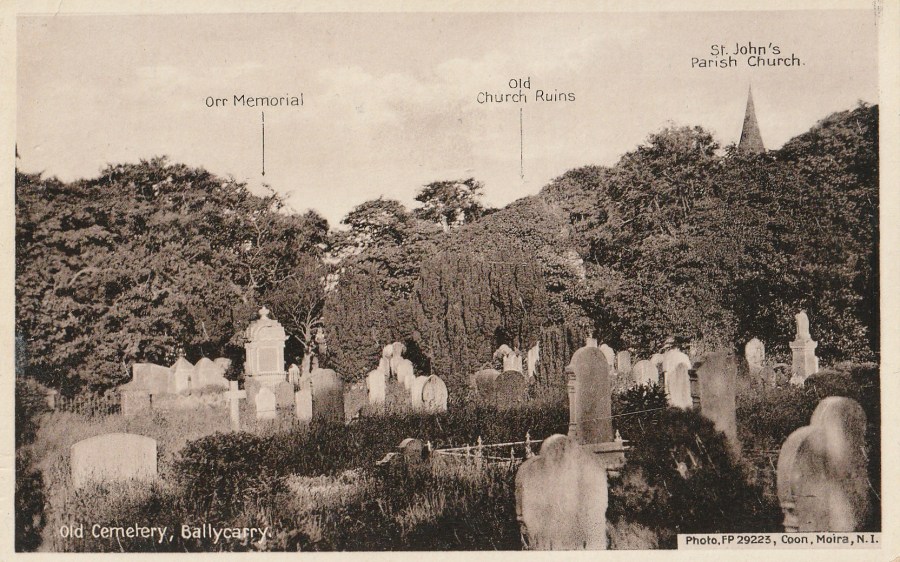
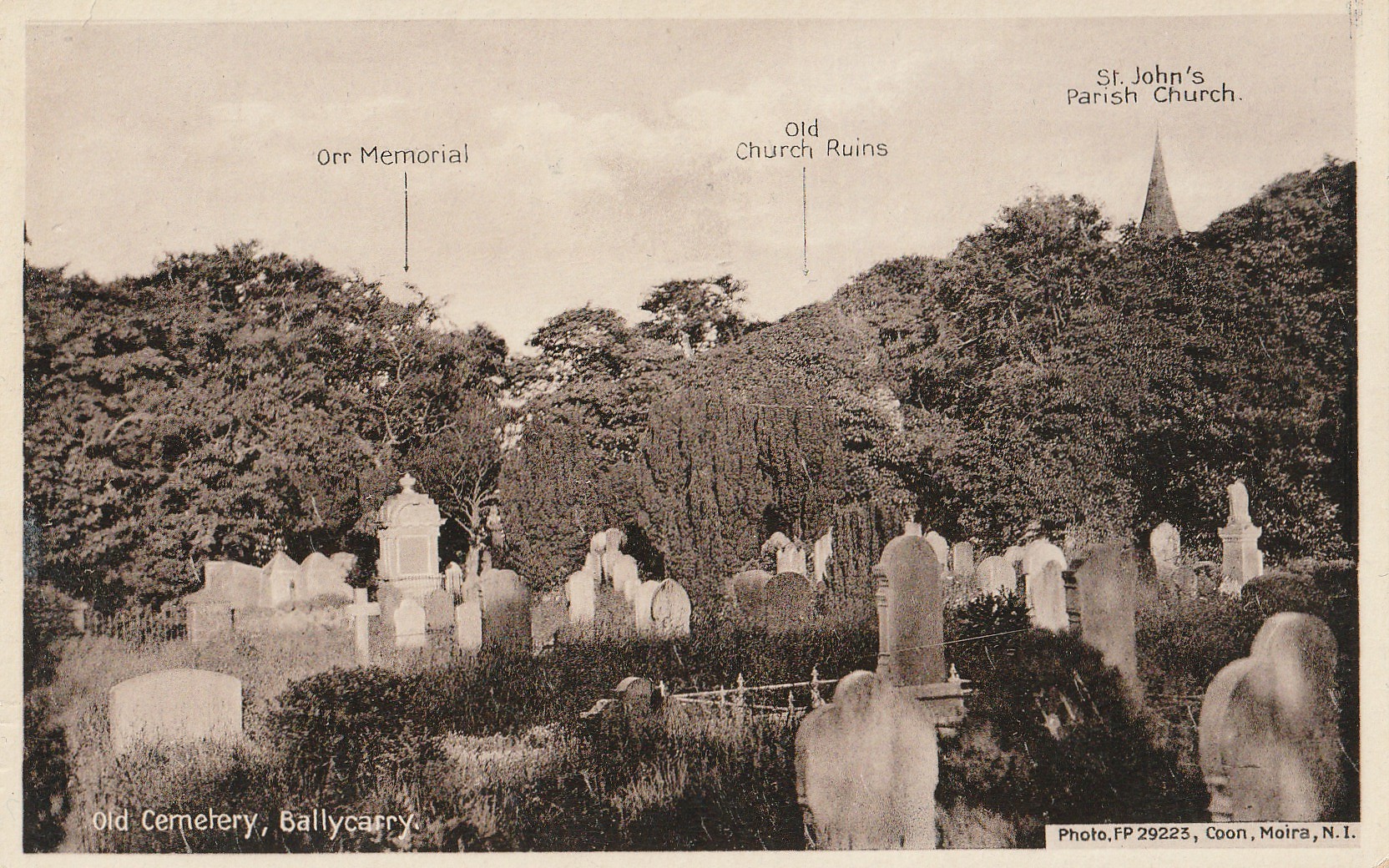
Old Cemetery, Ballycarry, 1929

This was produced for John McKee News Agent and Confectioner, Ballycarry, and is interesting because he has labelled different features of the graveyard, although you can only see the tip of the spire of St John’s Parish Church and can’t see the ruins of the old church at all as they are obscured by trees.

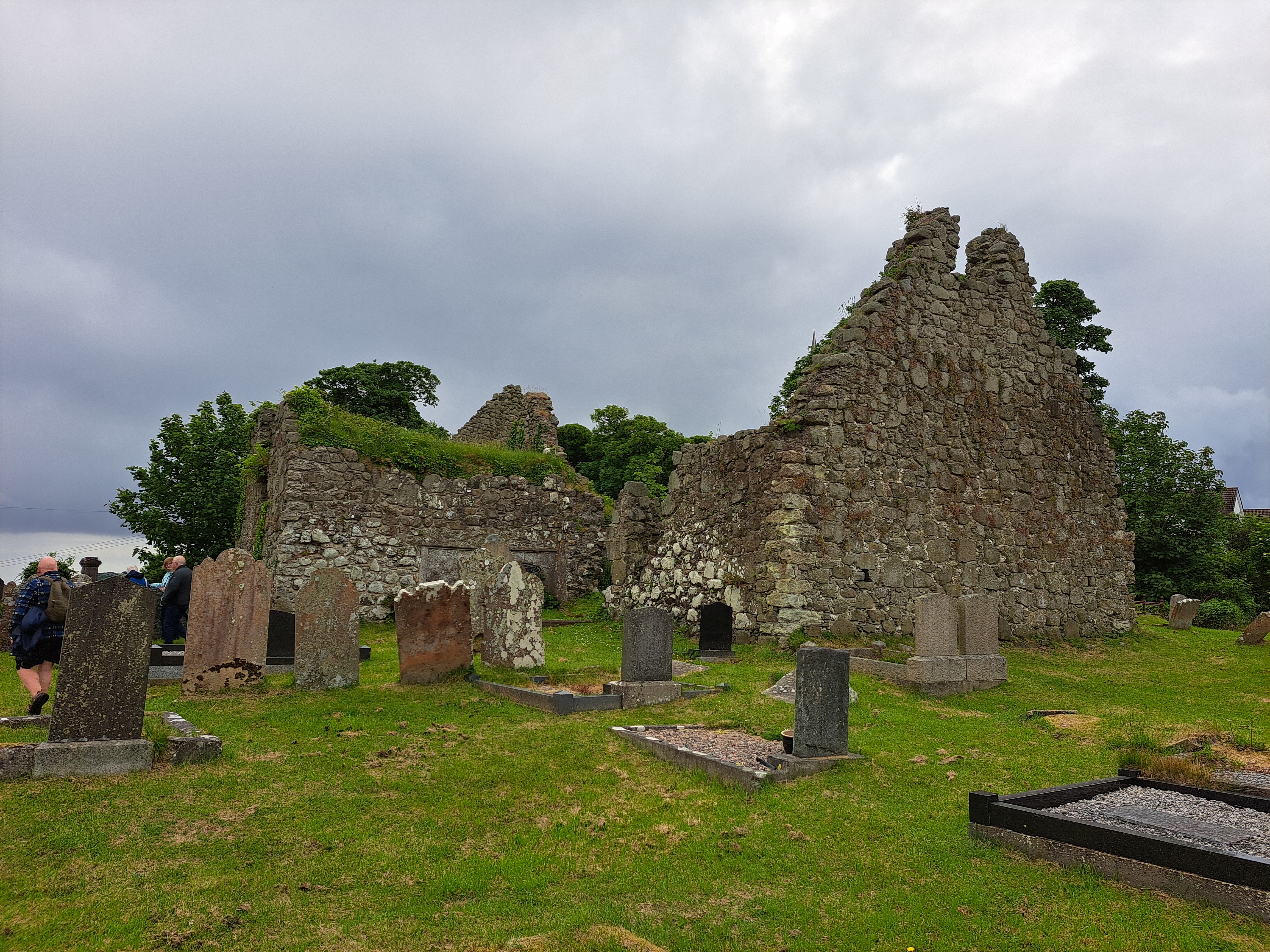
This is what the ruins look like today:

Ruins of Templecorran Church, Ballycarry

You can read about our recent visit to this graveyard here.

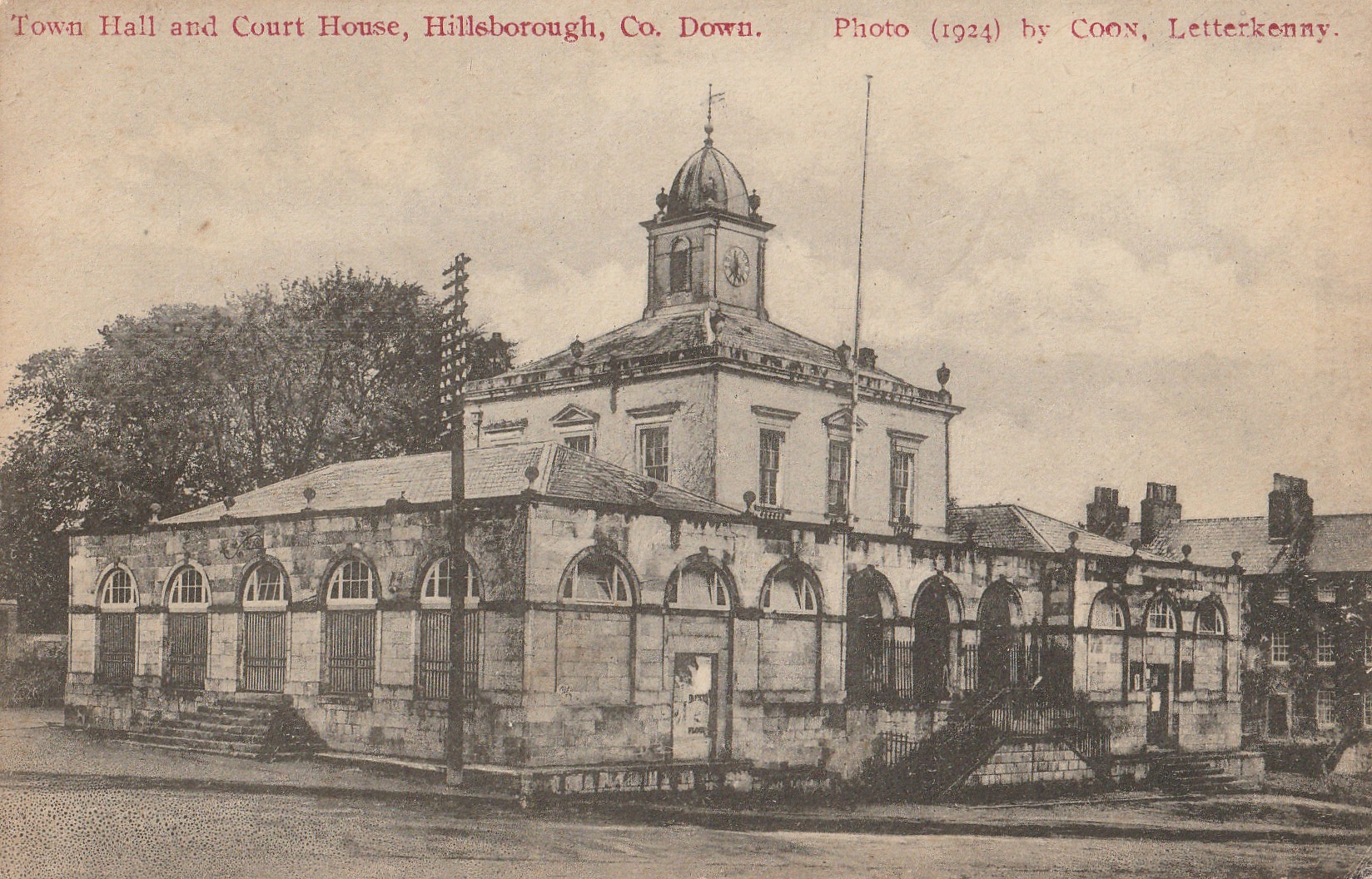
Allen Coon produced a lot of postcards for this part of County Antrim in the later 1920s, in this case giving his location as Moira, NI. Five years earlier his postcards produced for Mrs Johnston, Draper & Boot Merchant, Hillsborough still give his location as Letterkenny:

Town Hall and Court House, Hillsborough, 1924

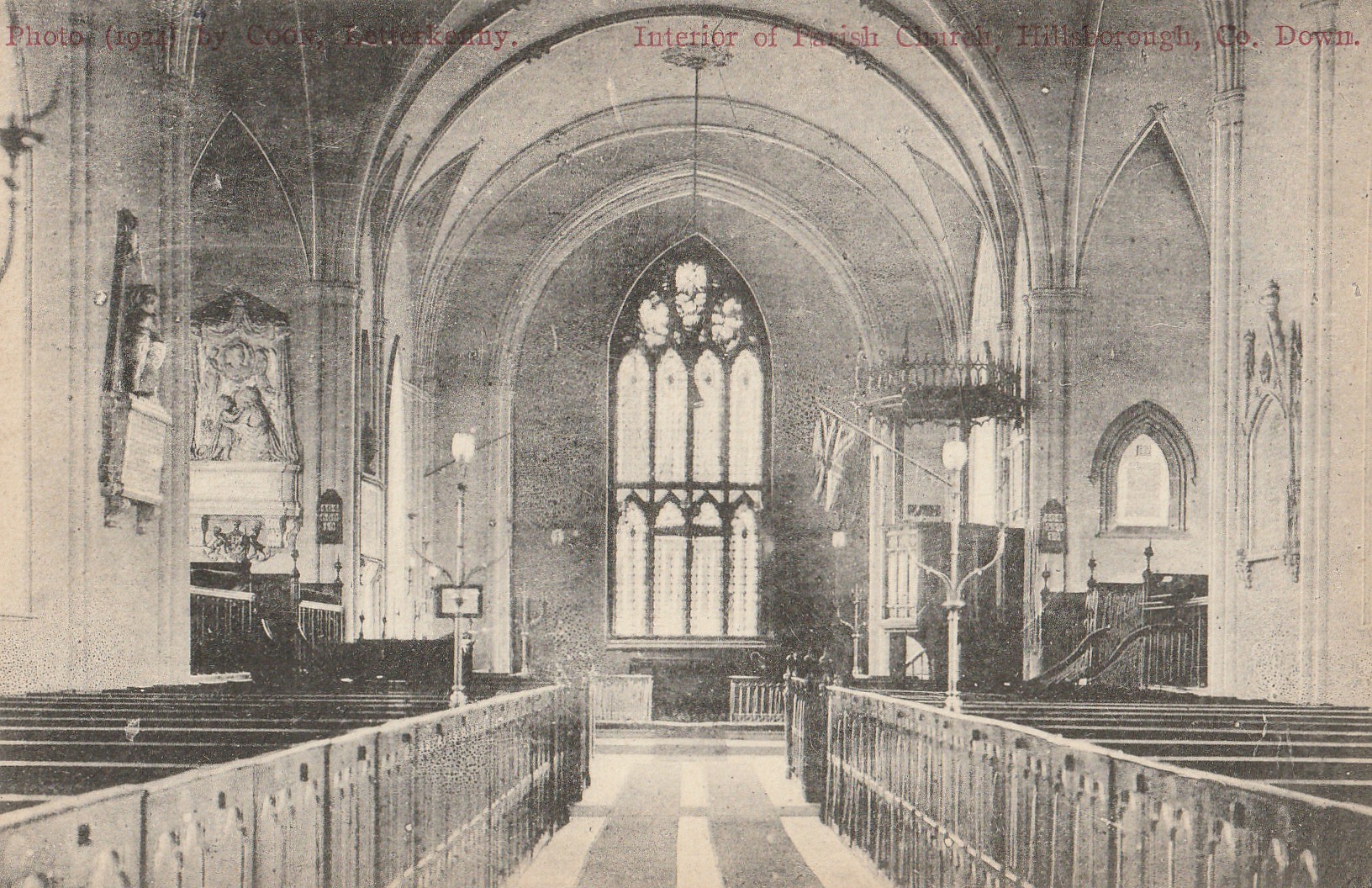
Interior of Parish Church, Hillsborough, 1924

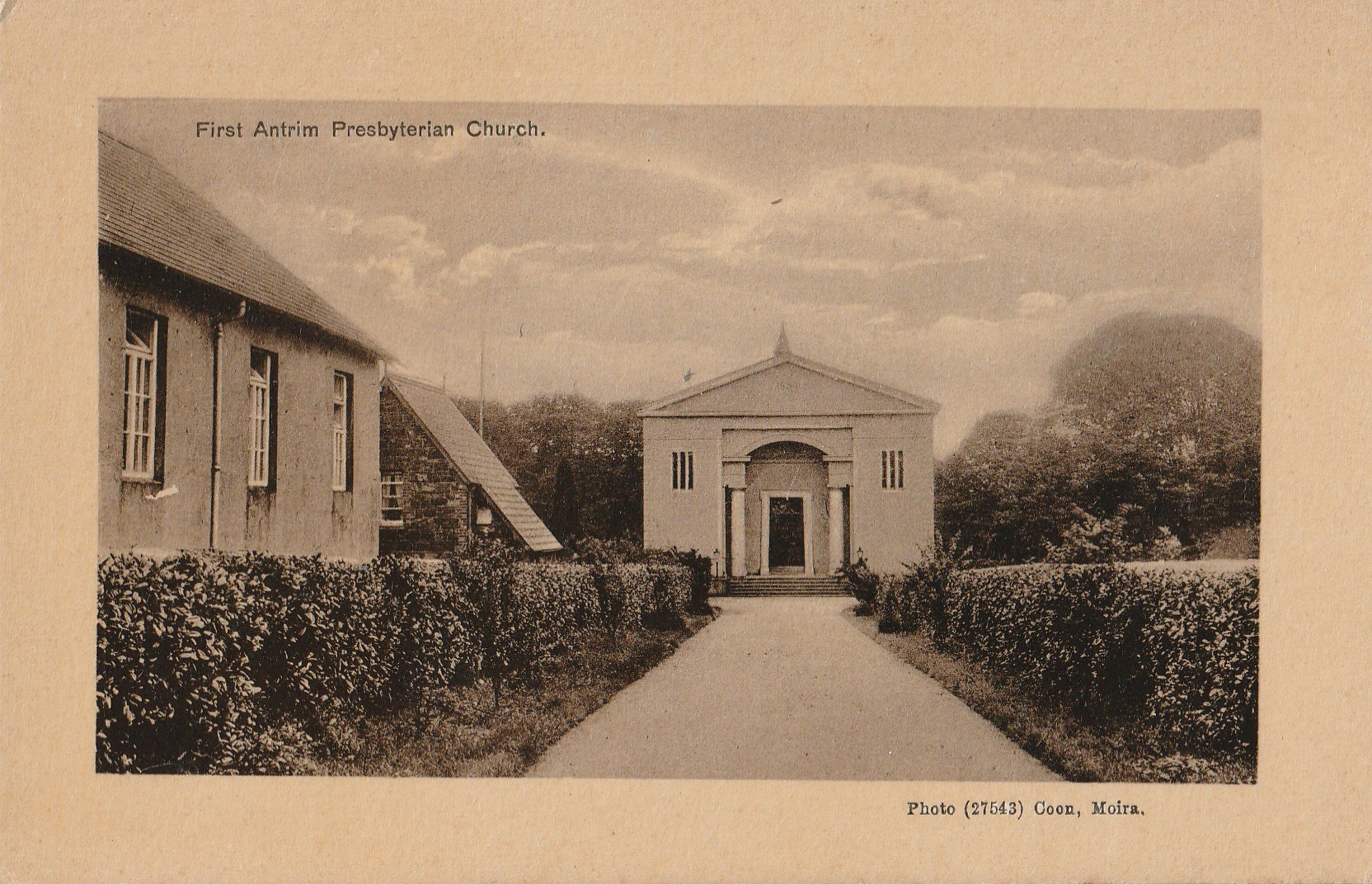
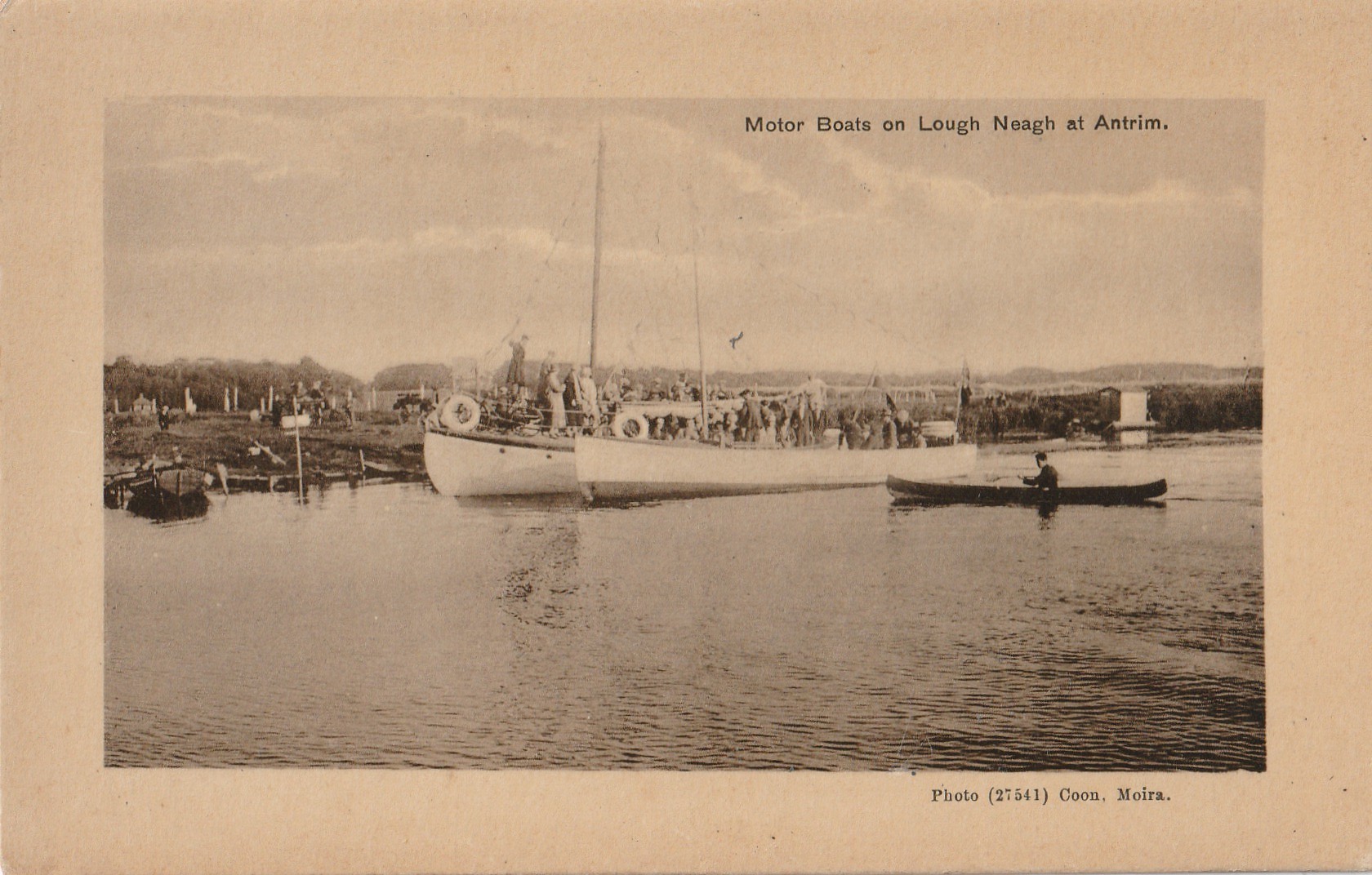
The cards produced in Antrim in 1927 stand out from the others having a large border and a glossy finish. This time they are published for Mrs Simpson, Newsagent and Stationer, Antrim, who must have wanted something different in terms of design. By this time he is well settled in Moira:

First Antrim Presbyterian Church, 1927

Motor Boats on Lough Neagh at Antrim, 1927

Presumably the motor boats were used as pleasure craft taking people on tours of the Lough.

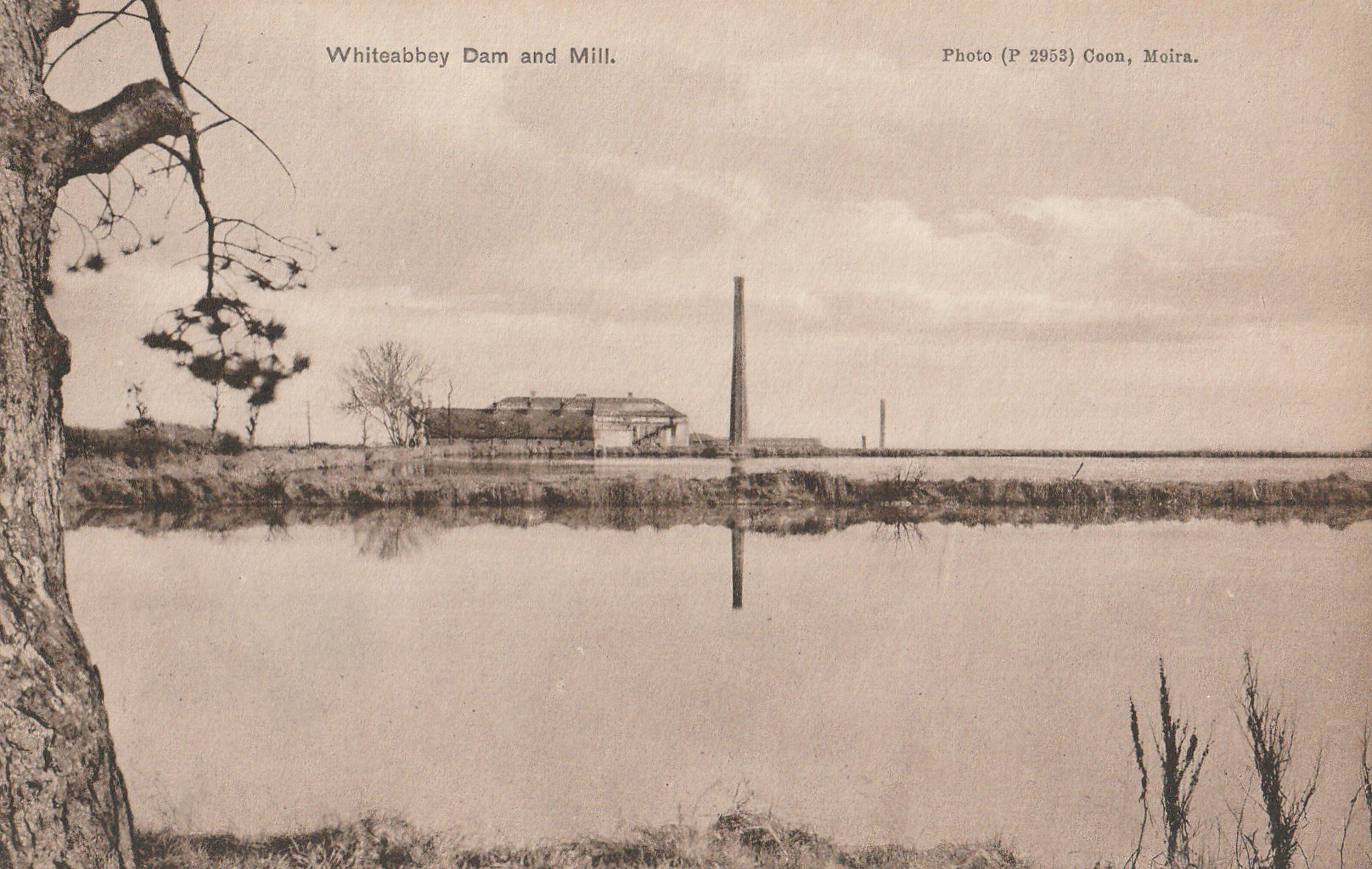
In Whiteabbey in 1929 he produced about 18 postcards for H. Quiery, Newsagent & Tobacconist. He must have exhausted all the possible views of the surroundings.

Whiteabbey Dam and Mill, 1929
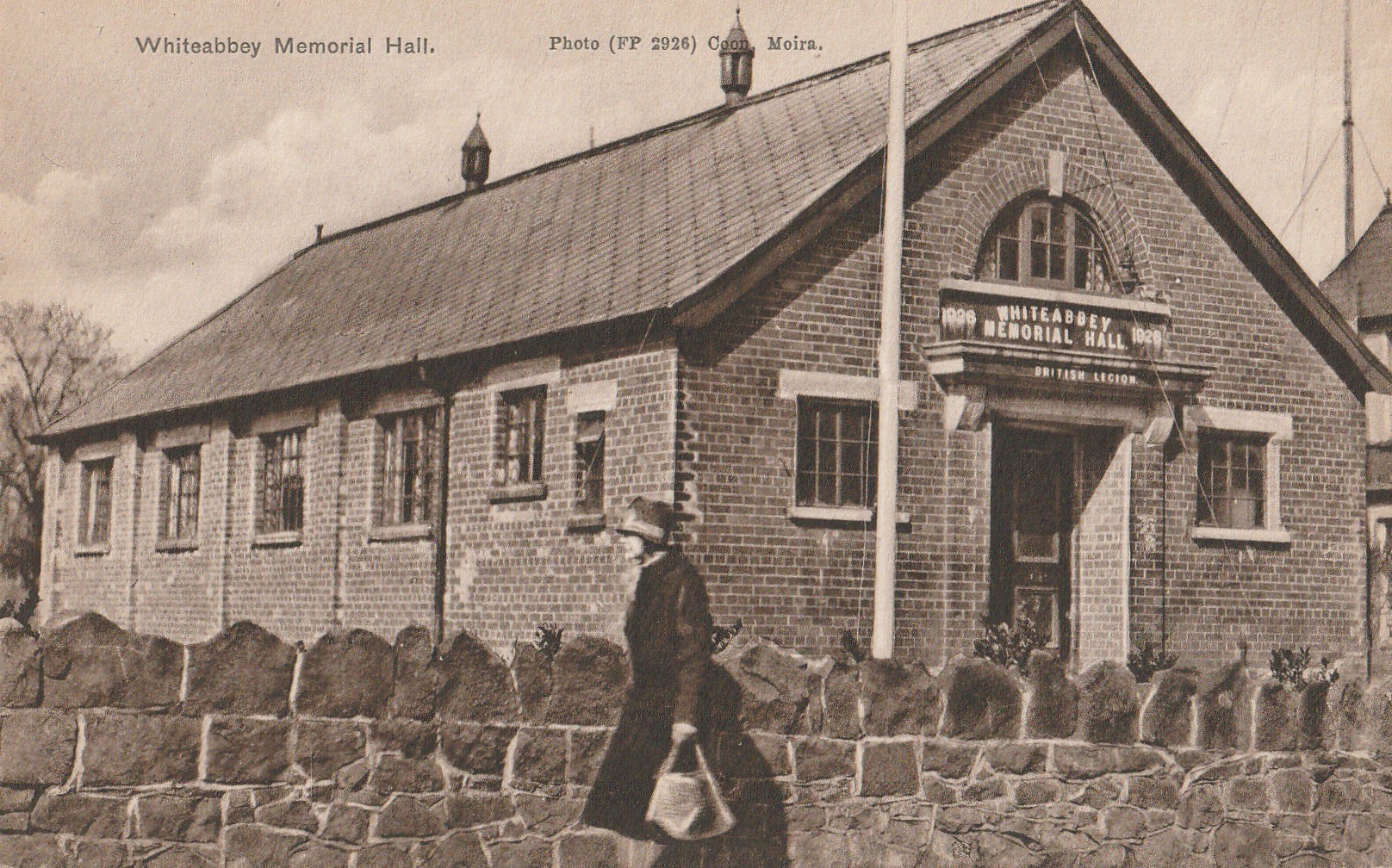
Whiteabbey Memorial Hall, 1929

A lot of Allen Coon’s pictures are straightforward architectural treatments of churches or halls. But this one is slightly different in that a passer-by boldly walks into shot in front of the Whiteabbey Memorial Hall (opened just two years earlier in 1927). Was this pre-arranged to add a bit of extra detail? Or did the lady accidently cross into the frame while he was standing there with his camera? If this was an unforeseen intrusion into his picture he must have liked the look of the finished article since he could easily have taken another one. But there she remains for posterity, out on her messages, captured on film.

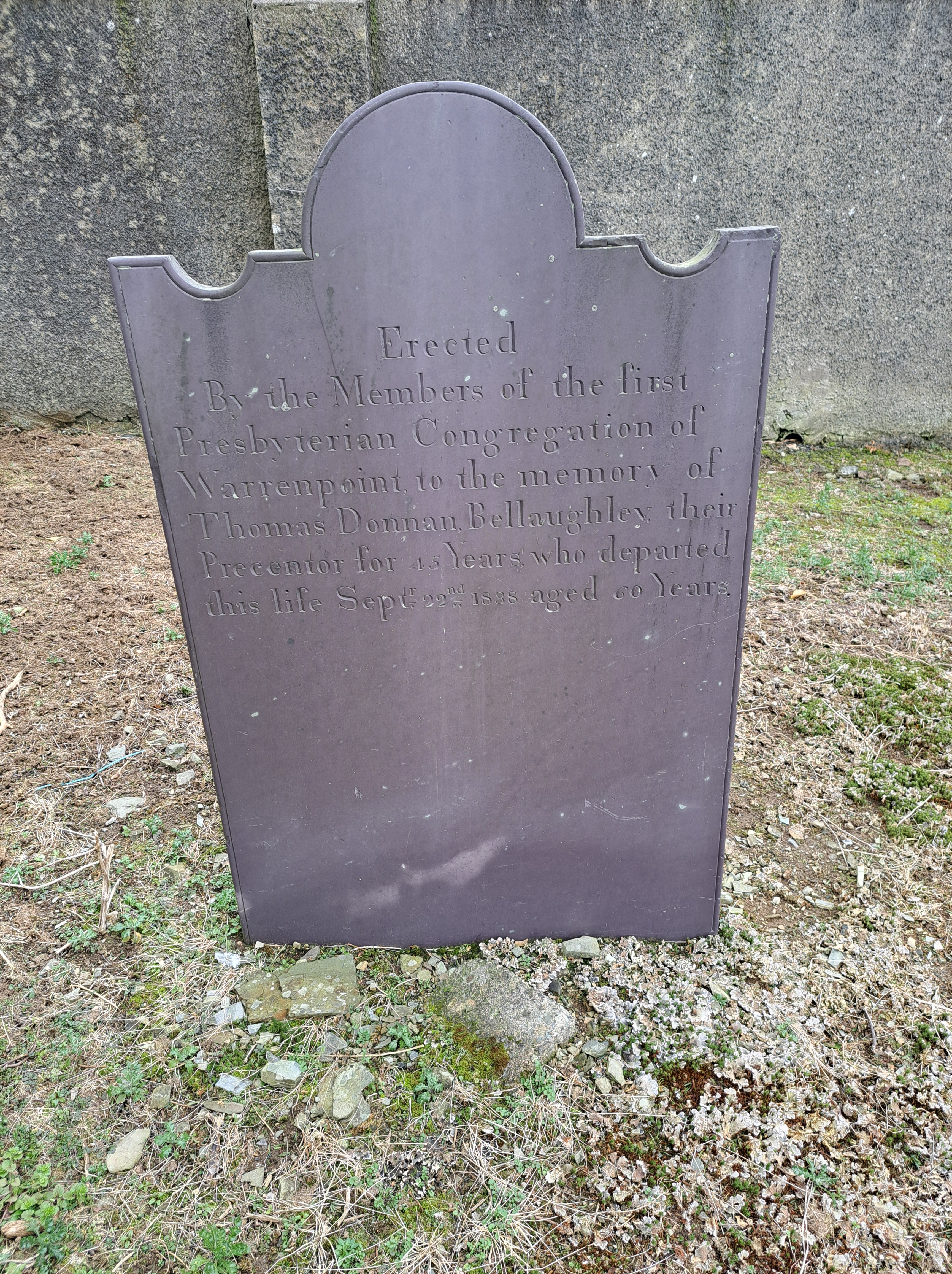
The Precentor’s Grave at Warrenpoint

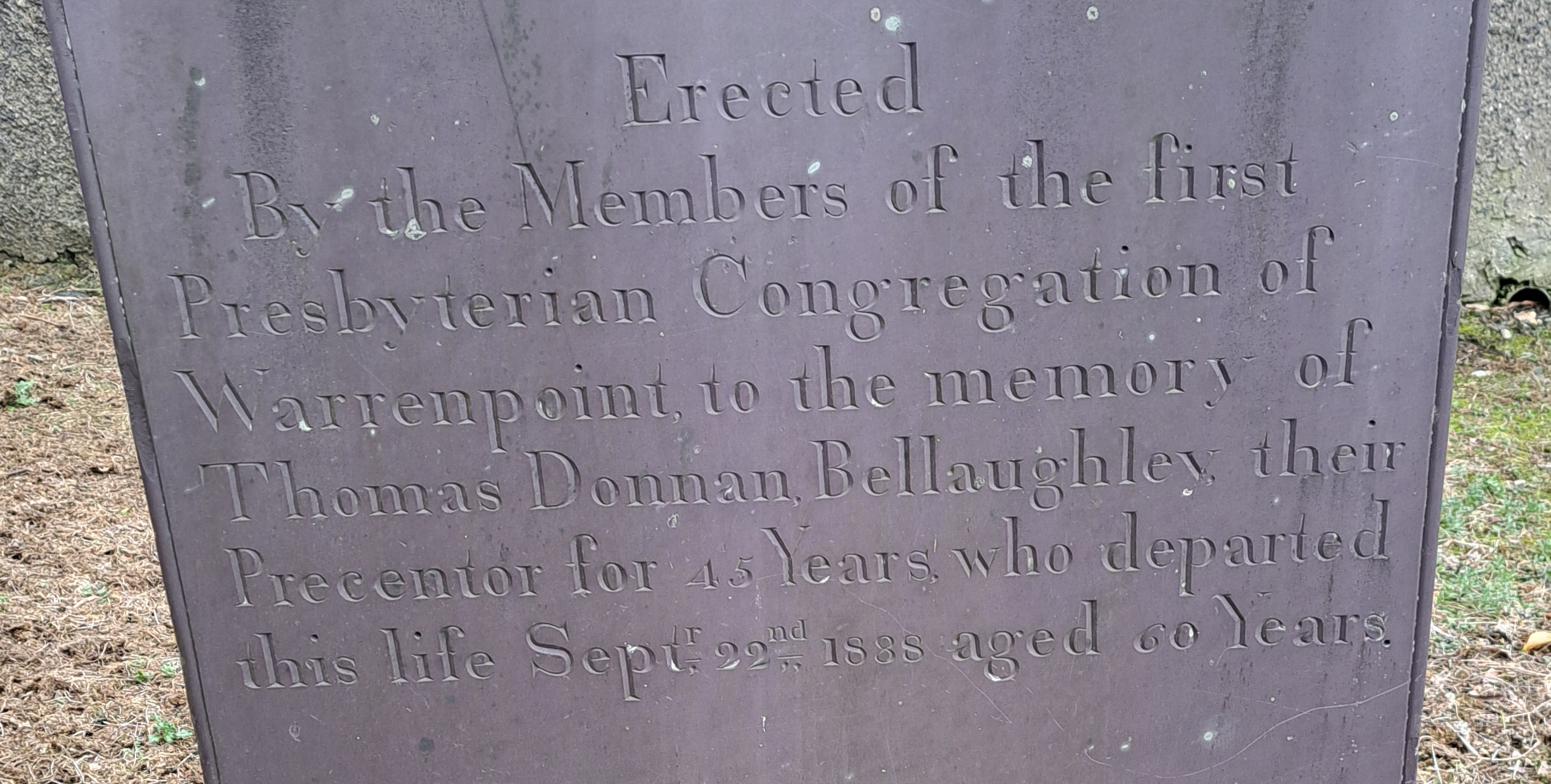
On a recent visit to Warrenpoint I noticed this gravestone and took a picture. Carved, it would appear, on a sheet of slate, the inscription is sharp and clear and I initially assumed it would be older than the date actually indicated. I didn’t have much time to study it but I am glad I took a picture, it is a fascinating artefact, a tribute to a key member of this congregation for almost half a century.

Thomas Donnan, of Bellaughley, was the Precentor of the Warrenpoint Non-Subscribing Presbyterian congregation for 45 years up to his death in 1888. He was 60 when he died so he must have been just 15 when he commenced this work in 1843.

It’s an intriguing gravestone because while it clearly tells of the high esteem in which Thomas Donnan was held and the long period of time he faithfully led the congregation in their singing it opens up so many more questions. Who was he? Did he have a family? Did he have any formal training in music? Did he have any other responsibilities or source of income?

Although a Non-Subscribing Presbyterian congregation the First Presbyterian congregation of Warrenpoint must have hung on to their traditional worship forms in singing by being led by the Precentor for a long time, perhaps because Thomas Donnan provided such acceptable leadership to them in their music.

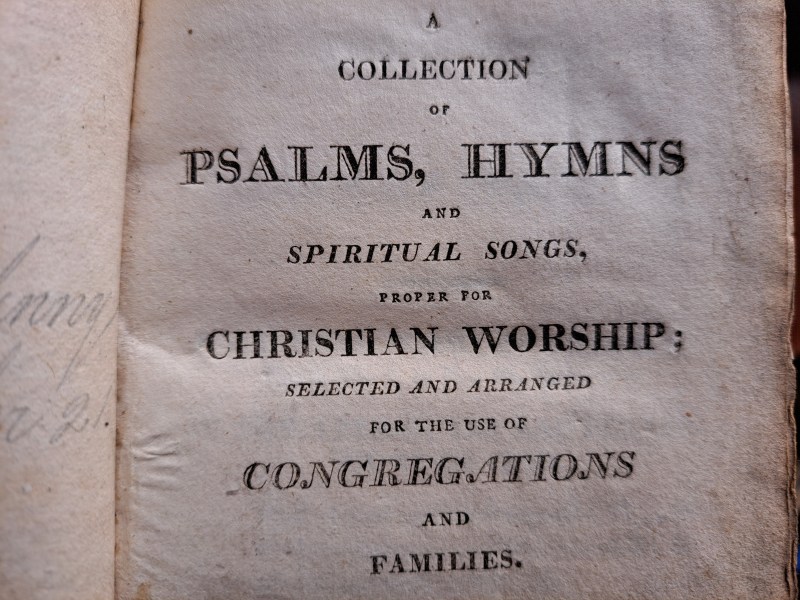
It’s interesting that close by in Newry the New Light minister the Rev A.G. Malcolm produced one of the first hymnbooks in use in any Presbyterian church in Ireland in 1811 with his Collection of Psalms, Hymns and Spiritual Songs proper for Christian Worship; selected and arranged for the use of Congregations and Families. But this doesn’t seem to have been used in Warrenpoint.

In her tercentenary booklet of 2007 Across the Narrow Water (the congregation of Warrenpoint was originally known as Narrow Water) Elaine Crozier records that in 1841 the committee appointed ‘a teacher to teach the choir’ at a salary of £3 per year. Was this the prelude to the appointment of Thomas Donnan? Undoubtedly connected with his eventual appointment was a decision in 1842 that ‘the new collection of psalms compiled by the Remonstrant Ministry be put into the hands of the families belonging to the church.’ This would be the 1841 publication Psalms, Paraphrases, and Hymns, for Christian Worship published in Belfast by the Bible Christian (the main Non-Subscribing Presbyterian journal), Rosemary Street. It must have been this book that provided the basis for congregational singing in Warrenpoint led by Thomas Donnan although the book was gradually expanded as the century wore on with hymns from other sources. All this took place during the long and effective ministry at Warrenpoint from 1836 to 1867 of the Rev Samuel Moore. Born in Rademon and educated at Glasgow University he enjoyed some success as minister of Warrenpoint although the congregation faced the heavy difficulties of the Famine during his ministry.

From 1843 onwards, though, Thomas Donnan was leading the praise. If they were using Psalms, Paraphrases, and Hymns, for Christian Worship they had already taken a step away from using a traditional Psalter and this does, perhaps, suggest that the Precentor was also leading a choir. But there at the centre of their congregational life was this young man appointed at the age of just 15 and leading the congregation’s worship for the next 45 years to their evident satisfaction

Killyleagh and the Hincks family

Click on the video to follow the story

Killyleagh, county Down is a town remarkable for its history, much of this related to the Non-Subscribing tradition in Irish Presbyterianism. In this video we look at some of this history, including Sir Hans Sloane and local rector Rev Edward Hincks, Egyptologist and son of Rev Thomas Dix Hincks who is buried in the parsh graveyard.

Thomas Dix Hincks was born in Dublin and educated at Trinity College, Dublin and the dissenting academy of Hackney New College, London. He became minister of the Old Presbyterian Church, Princes Street, Cork in 1790 and the following year married Anne Boult. In Cork he kept a school and helped to establish the Royal Cork Institution. He later moved to Fermoy where he ran the Fermoy Academy before coming to Belfast as Professor of Oriental Languages at the Royal Belfast Academical Institution which was then also a training college for ministers as well as a school. A pioneering educationalist and teacher he published widely over the years, he was awarded the degree of LLD in 1834 by Glasgow University and was a Member of the Royal Irish Academy.

He and his wife are buried in Killyleagh alongside their eldest son but together they established a significant Unitarian/Non-Subscribing dynasty which was influential in England, Ireland and Canada.

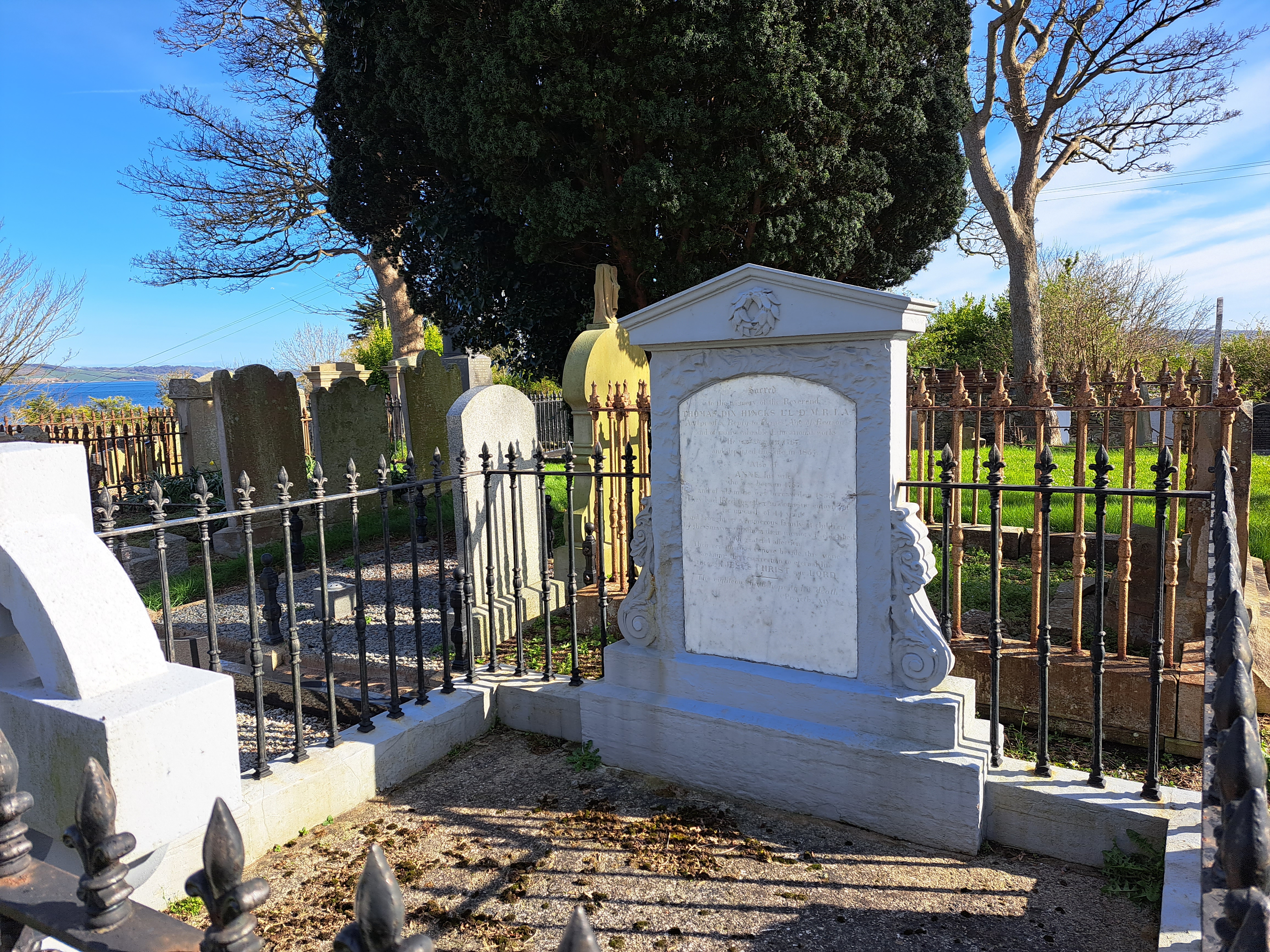
The grave of Thomas Dix Hincks and Anne Hincks in Killyleagh

They had seven children, two girls and five boys:

Hannah Hincks (d.c1873)

Anne Hincks (d.1877)

Rev Edward Hincks (1792-1866)

Rev William Hincks c.1793-1871

Rev Thomas Hincks (1796-1882)

Rev John Hincks (1804-1831)

Sir Francis Hincks (1807-1885)

Two of the brothers became ministers of Renshaw Street Chapel in Liverpool, amongst other things.

To hear the full story and hear more about Killyleagh click on the video at the top of the page.

Memorial window to Thomas Dix Hincks, Anne Hincks and Hannah Hincks in the First Presbyterian Church, Rosemary Street, Belfast.

A previous video explores something of the life of Rev Thoms Hincks (1818-1899) the son of Rev William Hincks (c.1793-1871). It can be seen here:

Completion of Murland Mausoleum Restoration

On Wednesday, 4th May 2022 the long delayed final stage of the restoration of the Murland Mausoleum by the Follies Trust at Clough Non-Subscribing Presbyterian Church took place. There was a good attendance of people gathered at the event, originally scheduled to take place in March 2020 but inevitably cancelled at the start of the lockdown. The meeting included a short service of thanksgiving for the work of the Follies Trust and the singing of the hymn Praise my soul the King of Heaven, accompanied by Melanie Campbell on the organ. Rev Dr David Steers welcomed everyone and spoke about the history of the Church, and introduced Dr Finbar McCormick who gave  a fascinating talk on the restoration of the Murland Vault and the history and place of mausolea as places of burial in Ireland. Primrose Wilson, chair of the Follies Trust, thanked everyone involved, especially Noel Killen who had carried out the restoration of the monument, and invited everyone to Ballydugan Mill where the launch of the Trust’s new book Fifteen Years of the Follies Trust took place.

Dr Finbar McCormick in the pulpit at Clough
After the service of thanksgiving in the Church

At the back of the mausoleum

Dr Finbar McCormick, Primrose Wilson, Rev Dr David Steers
Finbar McCormick with Clough members

Ballydugan Mill, itself restored from a ruin by Noel Killen

Book launch at the Mill

Noel Killen and David Rooney

With thanks to Sue Steers for the photos.

New book published in Downpatrick

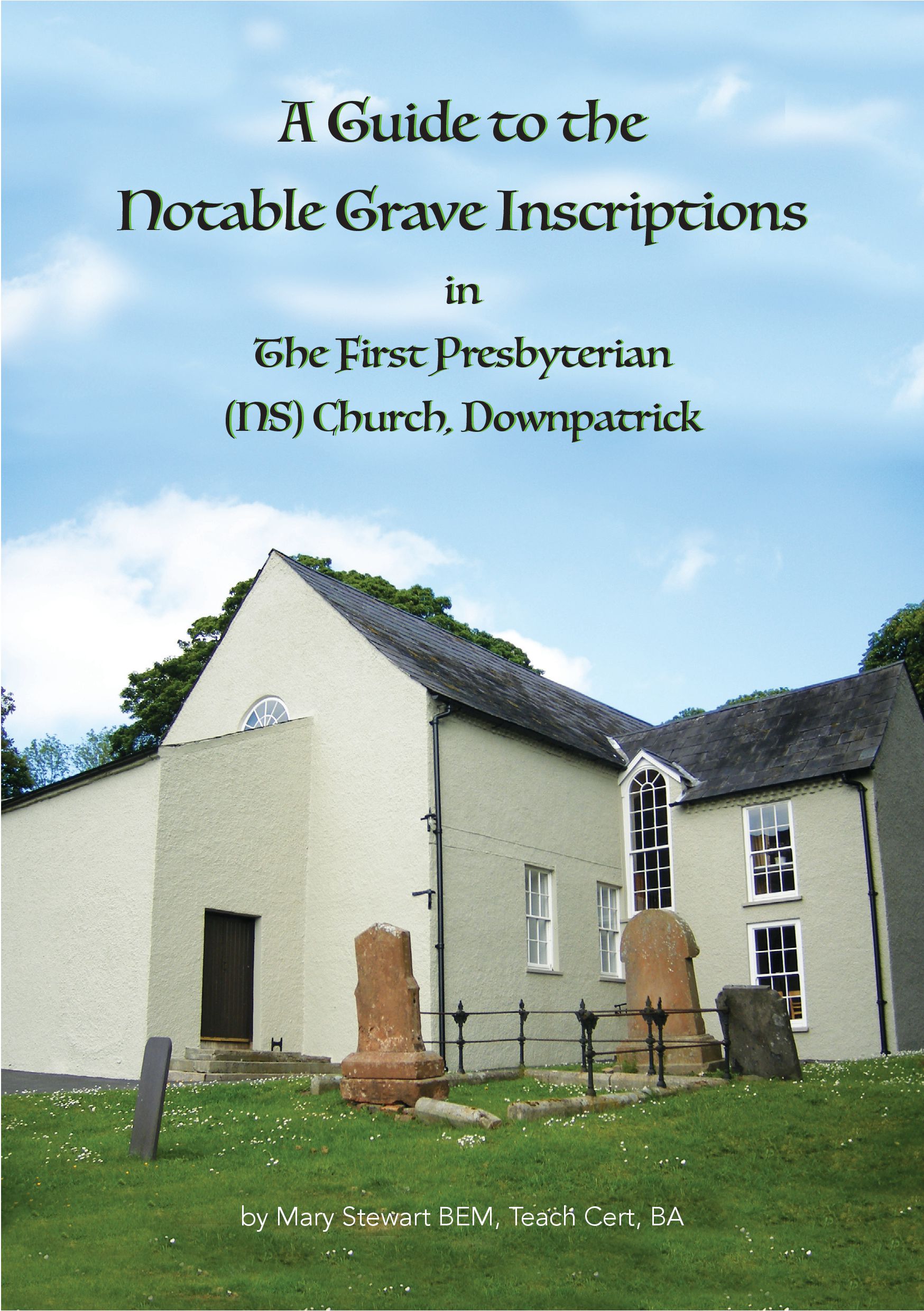
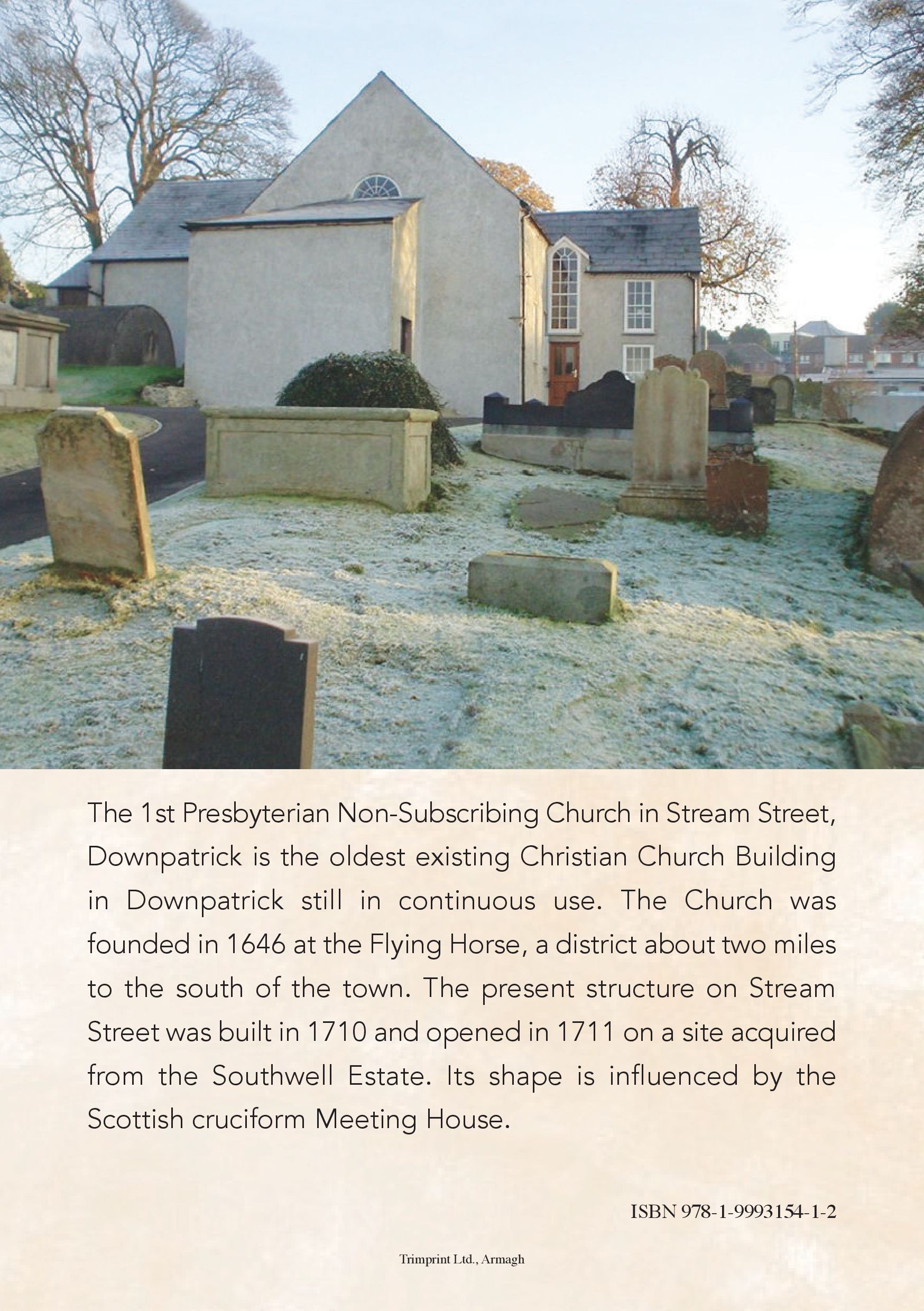
The First Presbyterian (Non-Subscribing) Church, Downpatrick will publish this new book in October 2021. Written by Mary Stewart, the Church secretary, it is a 36 page, illustrated guide to the notable graves and memorials in the churchyard.

A Guide to the Notable Grave Inscriptions in The First Presbyterian (NS) Church, Downpatrick

contains 39 black and white illustrations within a colour cover. It costs just £3 and will be available in the Church from October. They will also be available to order by post.

Front Cover
Back Cover

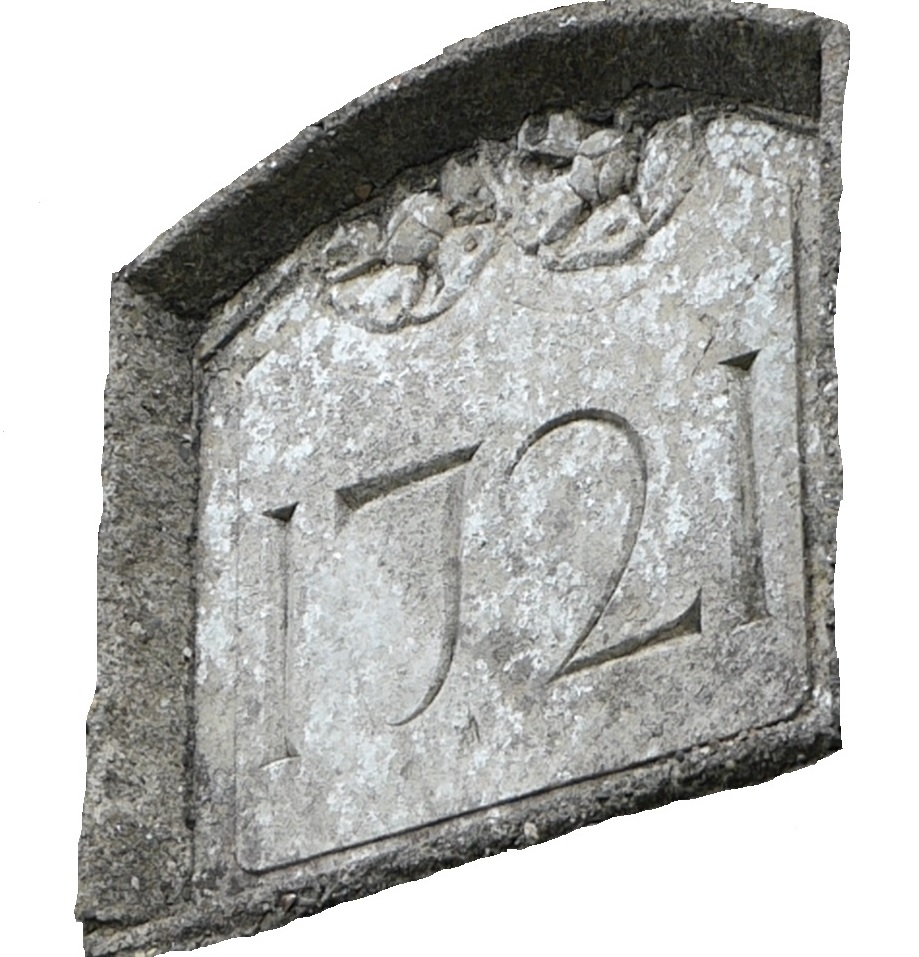
Tercentenary of Ballee

For three hundred years our congregation at Ballee Non-Subscribing Presbyterian Church has been worshipping in its T-shaped meeting-house of 1721. It couldn’t be described as entirely unchanged since that year – originally the building would have been thatched and at some point later in the eighteenth century it had a new roof built of Memel pine, later still the old box pews were removed and used to fit out new rooms in the church. But still the walls are the same walls that have stood as silent witness to our faith for three hundred years.

To join the service click on the video after 9.45 am on Sunday, 18th April 2021

The service is conducted by the minister, Rev Dr David Steers, and the reading is from John ch.4 v.31-38. The church’s organist, John Strain, plays the hymns Lord of all Hopefulness (Hymns of Faith and Freedom 257) and Sent forth by God’s blessing (Hymns of Faith and Freedom 443). At the start and end of the service John also plays Thine be the glory (Hymns of Faith and Freedom 288).

The video includes many of the special features of this historic church and explores the history of the congregation.

In the Ordnance Survey Memoir for this part of County Down in 1835 it notes that the Presbyterians:

have a house of worship at Ballee bridge, and at the late schism of the Synod of Ulster, the congregation departed from the body and joined the Remonstrants. The minister of the congregation receives 50 pounds a year stipend from his hearers and 75 pounds a year regium donum….

The regium donum was a government grant paid to ministers. But the Ordnance Survey also reports, under a section entitled Habits of the People:

A more intelligent or industrious population is rarely to be found, being punctually honest in their dealings and generally attached to the form of religious worship they profess without being intolerant.

Let it be so now

This week our service of worship comes from Ballee Non-Subscribing Presbyterian Church. The service is conducted by the minister, Rev Dr David Steers, and the reading, from Matthew ch.3 .v.4-17, is given by Carol Nixon. John Strain, church organist plays the hymns In Christ Alone and Take my life, and let it be.

Sunday Worship, 7th February (available after 9.45 am on Sunday)

Today we consider the baptism of Jesus and this encounter related in Matthew’s gospel between Jesus and John the Baptist on the banks of the River Jordan. A moment of revelation – not least for Jesus himself – but also a moment of change where we move from a prophet warning that His winnowing fork is in his hand, and he will clear his threshing floor and gather his wheat into the granary, but the chaff he will burn with unquenchable fire to Jesus’ vision of a kingdom where the least are greatest of all: Let it be so now; for thus it is fitting for us to fulfil all righteousness.

You can also listen to our joint service between Ballee, Clough and Downpatrick Non-Subscribing Presbyterian Churches broadcast live from Downpatrick on BBC Radio Ulster on Sunday, 22nd May 2005 here:

What does the Lord require of you?

In Micah chapter 6 verse 8 we read the famous statement:

He has shown you, O mortal, what is good.
    And what does the Lord require of you?
To act justly and to love mercy
    and to walk humbly with your God.

In our service today, from Clough Non-Subscribing Presbyterian Church, we explore how you can summarize – in a few words or a sentence – the real meaning of faith.

On one occasion someone asked Rabbi Hillel to recite the whole of the Torah while standing on one leg. He said simply, ‘What is hateful to you, do not do to others. That is the whole of Torah, the rest is commentary on it.’

Sunday Service, 17th January 2021

The service is conducted by the minister, Rev Dr David Steers. Robert Neill gives the reading from Micah ch.6 v.6-8 and Alfie McClelland, the church organist, plays the hymns which are Praise to the Lord, the Almighty (Hymns of Faith and Freedom 22), Sun of my soul, thou Saviour dear (Hymns of Faith and Freedom 439) and Rejoice! the Lord is King (Hymns of Faith and Freedom 62). Click on the above video to see the service.

Online Christmas Worship

We have three services online over the Christmas period all of which can be accessed from this post.

Christmas Eve

Dunmurry, Christmas Eve

Our service for Christmas Eve on Thursday 24th December is filmed in First Dunmurry (NS) Presbyterian Church and conducted by Rev Dr David Steers. The readings include A Visit from St Nicholas, read by Sue Steers, The Oxen by Thomas Hardy and It is a good thing to observe Christmas day by Henry van Dyke. Church organist Allen Yarr plays the carols O Come all ye faithful, O Little Town of Bethlehem and Hark! The Herald Angels Sing. Ballee organist John Strain plays It came upon the midnight clear and Laura Neill plays Jingle Bells on the bagpipes. Special thanks to InkLightning for the Father Christmas artwork.

Christmas Day

Christmas Day

Our Christmas Day service is filmed in Clough, Ballee and Downpatrick churches. Conducted by Rev Dr David Steers the readings are given by Sophia Cleland (Luke ch.2 v.8-20) and Eve Lightbody (Matthew ch.2 v.1-12). Music includes God rest ye merry gentlemen played on keyboards and sung by Dillon and Haydn Howell; Silent Night played by Laura Neill on the bagpipes and Laura Patterson on the organ of the First Presbyterian (NS) Church, Downpatrick; Mary’s Boy Child; Joy to the World; The First Nowell; Jingle Bells/Christ is born today; When a child is born, all played by John Strain on the organ of Ballee Non-Subscribing Presbyterian Church.

Sunday, 27th December

Inch Abbey

Filmed at Inch Abbey in county Down and conducted by Rev Dr David Steers our service for the last Sunday in 2020 includes as readings Llananno by R.S. Thomas and an extract from My Cathedral: A Vision of Friendship by Alexander Irvine. Jack Steers plays It came upon the midnight clear on the trumpet, Downpatrick organist Laura Patterson plays In the bleak mid-winter, and John Strain plays While shepherds watched their flocks by night and O little town of Bethlehem on the organ at Ballee.

…I stop the car,

turn down the narrow path

to the river…

With thanks to InkLightning