The Antrim Meeting of 1626 and Rowel Friers

A recent post looked at the two wonderful Rowel Friers cartoons which hang on the wall of the Library in Dunmurry, as well as the video which explains the story about them. As the post explains these pictures were commissioned by the Rev William McMillan for his impressive Exhibition illustrating the history of the Presbytery of Antrim held in January 1976.

It must have been an attractive display in the McCleery Hall, the Rev Mac sourced portraits, books, communion plate, swords and pikes from the ’98 Rebellion, sculptures by Rosamond Praegar, commmunion tokens, copper collecting pans and all sorts of material from all over Northern Ireland. There was even a mould for making eighteenth-century communion tokens from Ballycarry and – something I had not previously heard of – an eighteenth-century family token box, described as ‘a wooden box holding a small leadbox in which the token was taken to the meeting house.’

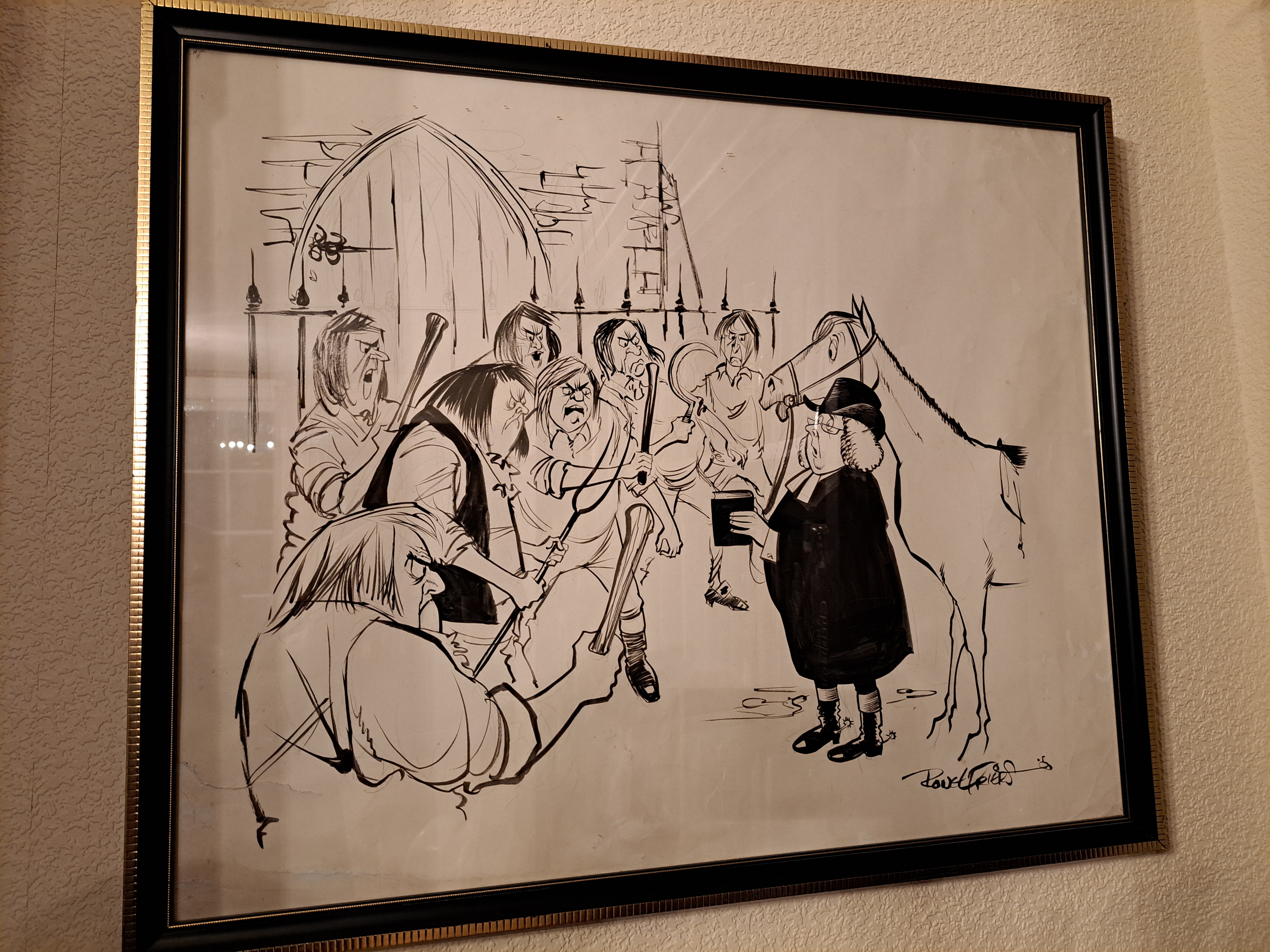
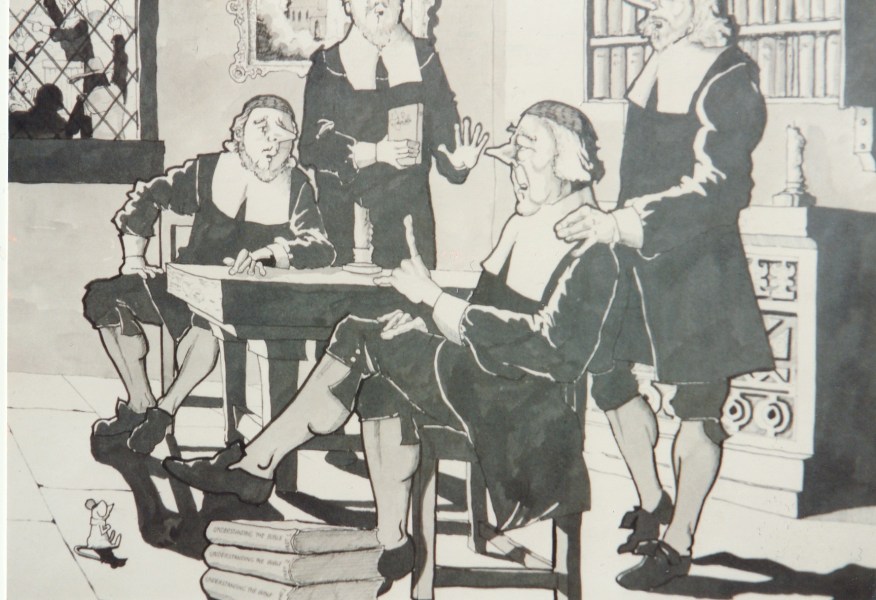
One feature of the Exhibition for the 250th anniversary of the Presbytery of Antrim is that there were in fact three, not two, Rowel Friers cartoons included. Unfortunately one of these has been missing for fifty years. However, we have now discovered a photograph of the lost picture and this features in our latest video:

Click on the video to see the video about the 1626 Antrim Meeting

The Exhibition was held in January 1976 and covered both the creation of the Presbytery of Antrim in 1725 and its separation from the Synod of Ulster. It was also intended to cover the anniversary of the creation in 1626 of the original Antrim Meeting. The Exhibition must have been fascinating but unfortunately in that pre-digital age there were very few photographs taken. There is only one that shows the Exhibition in the Non-Subscribing Presbyterian magazine at the time:
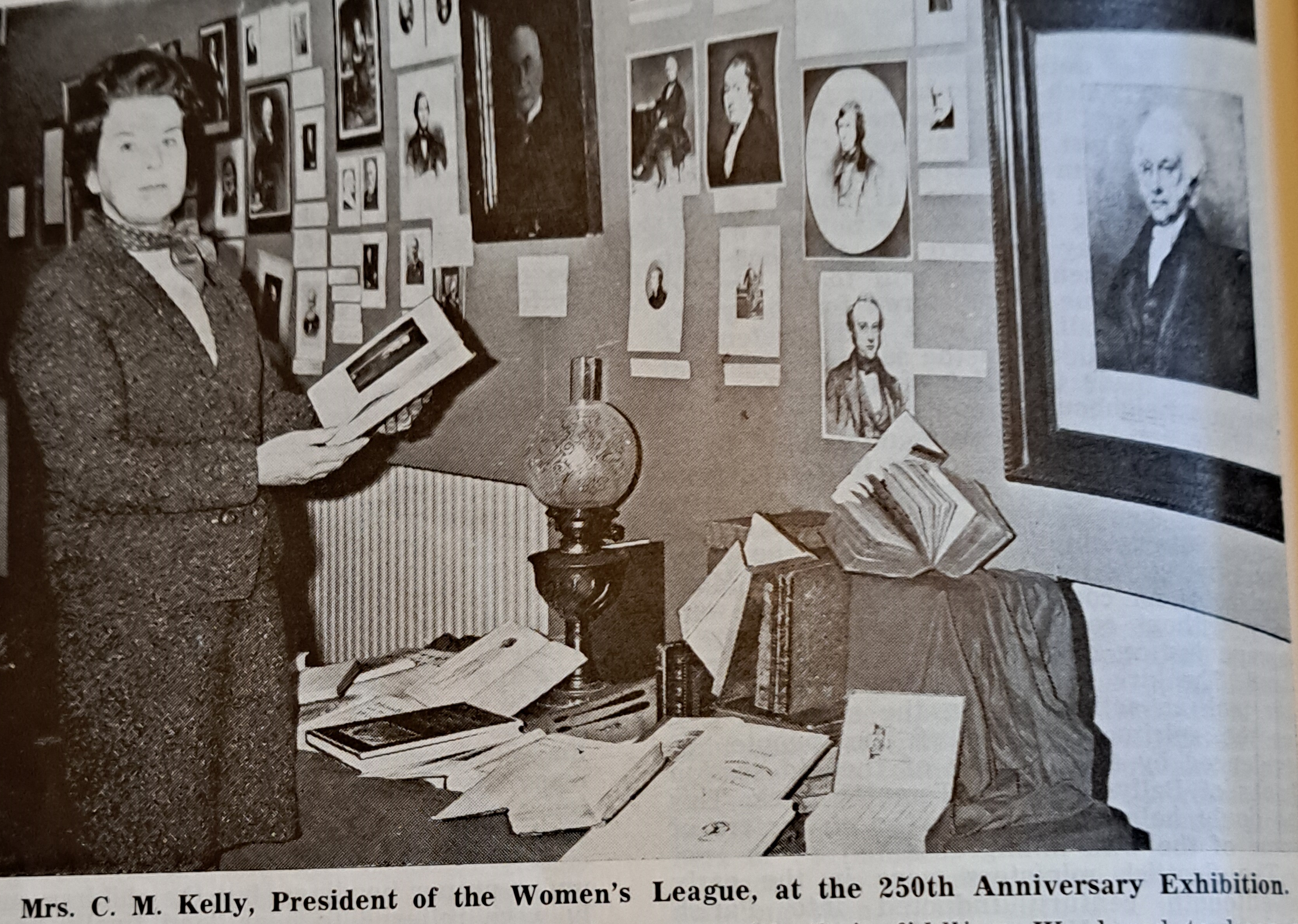
Betty Kelly at the Exhibition in the McCleery Hall in 1976

There were a large number of dignitaries invited to the dinner that followed the Exhibition, representatives of all denominations, figures in public life, historians and international figures. Many of the speeches are recorded in the Non-Subscribing Presbyterian magazine and the Rev John Radcliffe, clerk of the Synod, made reference to the third Rowel Friers cartoon:

‘There are two extreme forms of the expression of religious sentiment. There is one that is very well expressed in the person here described: “His mind and voice had precisely the fluid quality of some clear, subtle liquid: one felt it could flow around anything and overcome nothing.” That is the extreme of presenting the Christian faith in such delightfully attractive style, with such a fluency of language, with such a vividness of imagery, that it will flow around anything and overcome nothing. At the other extreme there is another sort of Christianity, corybantic Christianity. There is a cartoon on the wall there, a drawing of four rather austere clerics, and the date is 1626. Outside you see somebody rousing a rabble – not unheard of in these days. The four rather serious looking clerics are trying to bring a bit of reason into it all; and the man outside is an exponent of corybantic Christianity, the Christianity that is the direct oppposite of that I have been describing tonight – and appeals all the time to the emotions in which people get carried away, and leads in the end to a very dangerous, in fact terrible, fanaticism – the very negation of the Christian spirit.’
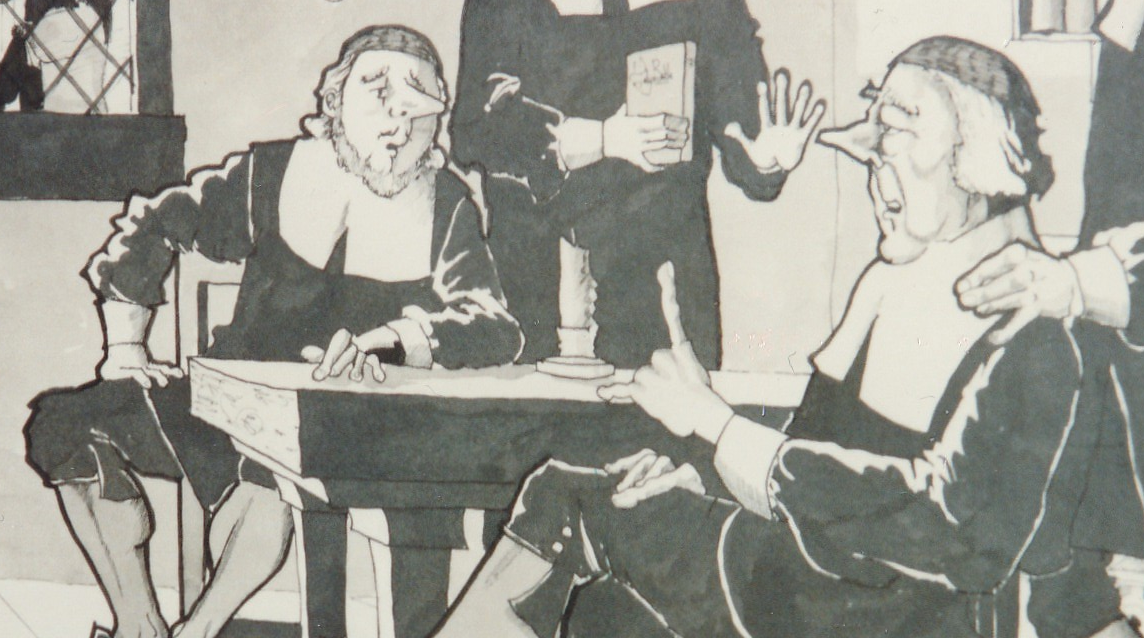
Detail from the photograph

It is a fascinating footnote to our previous post and video about our Rowel Friers cartoons, another part of the story that takes us back even further in time, in this case to 1626.
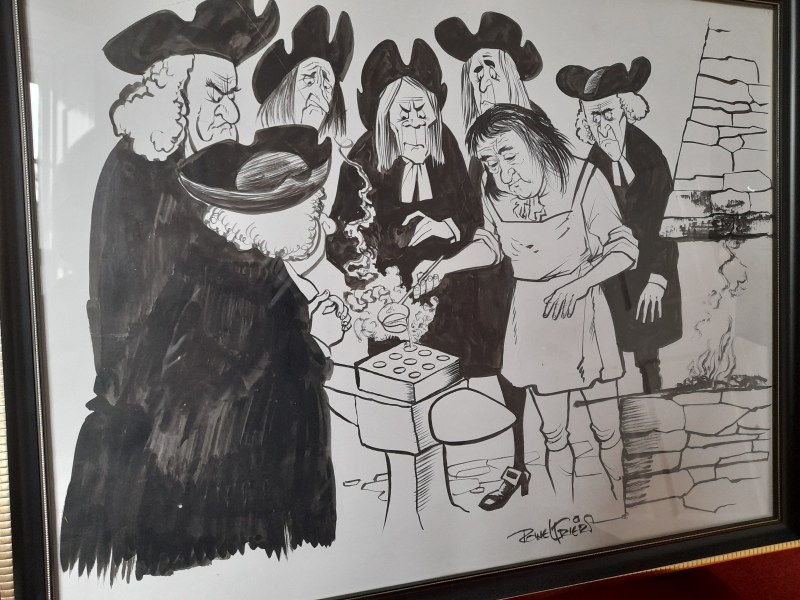
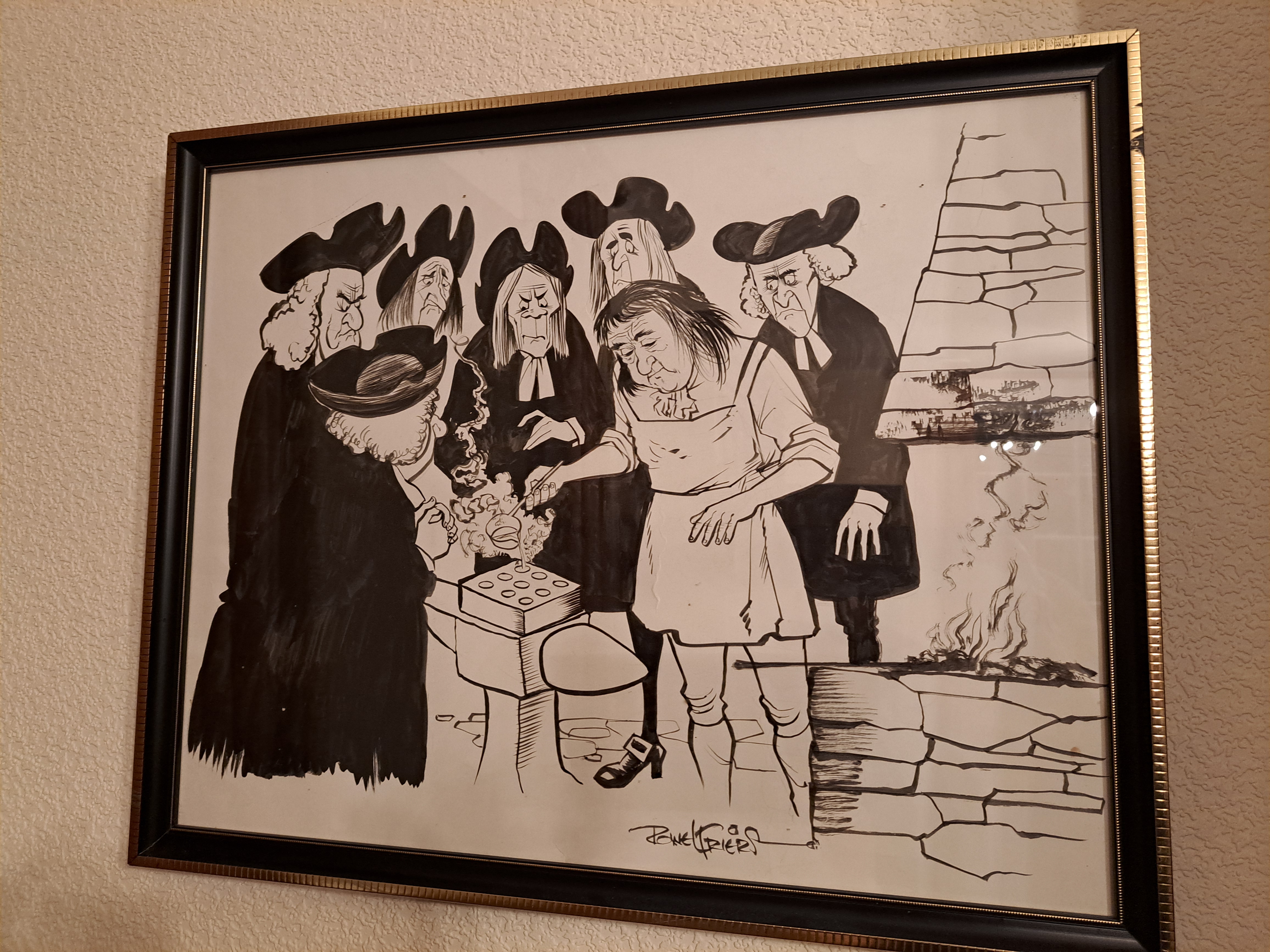
Rowel Friers

Belfast-born Rowel Friers (1920-1998) was perhaps the most famous cartoonist in Ulster, especially for his work during the ‘Troubles’. He began his working life in the art department of the Belfast printing firm of S. C. Allen and Co and studied at the Belfast College of Art. A keen watercolourist and oil painter he nevertheless was best known for his cartoons, which gently but effectively satirised the political situation in Northern Ireland. Our latest video looks at two cartoons by Rowel Friers, although they illustrate his versatility as a cartoonist and relate to life in the eighteenth century.

We have two fine examples of his work hanging on the walls of the Very Rev William McMillan Library in the First Presbyterian Church, Dunmurry. They were commissioned by the Rev William McMillan for an exhibition celebrating the 250th anniversary of the Presbytery of Antrim in 1975.

They are both immediately recognisable as his work. The faces of the figures convey exactly what is going on. One (above) is an imagined gathering of clergy around a blacksmith and relates to the practice of communion and the use of communion tokens. The other (below) relates to a specific incident in the history of the Comber congregation at the time of creation of the Presbytery of Antrim at the end of the First Subscription controversy when all the Non-Subscribers were separated from the Synod of Ulster and placed together in the Presbytery of Antrim.

It is good to give them special consideration now, as we prepare for the 300th anniversary of the creation of the Presbytery of Antrim. The full story of both pictures can be seen in the short video above.

Christmas Readings

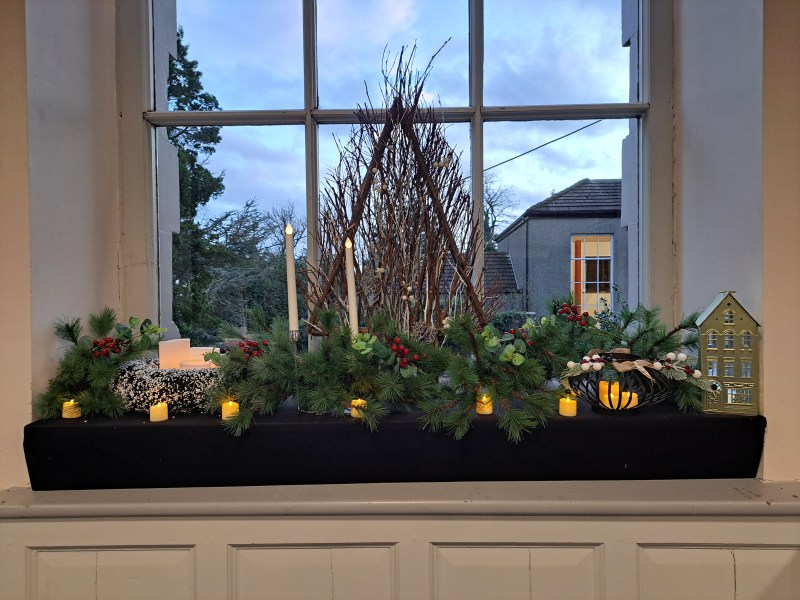
Our latest video (Number 7) exploring the collection of the Very Rev William McMillan Library at First Dunmurry looks at some Christmas readings. We also have O Come all ye faithful played by Jack Steers on the trumpet.

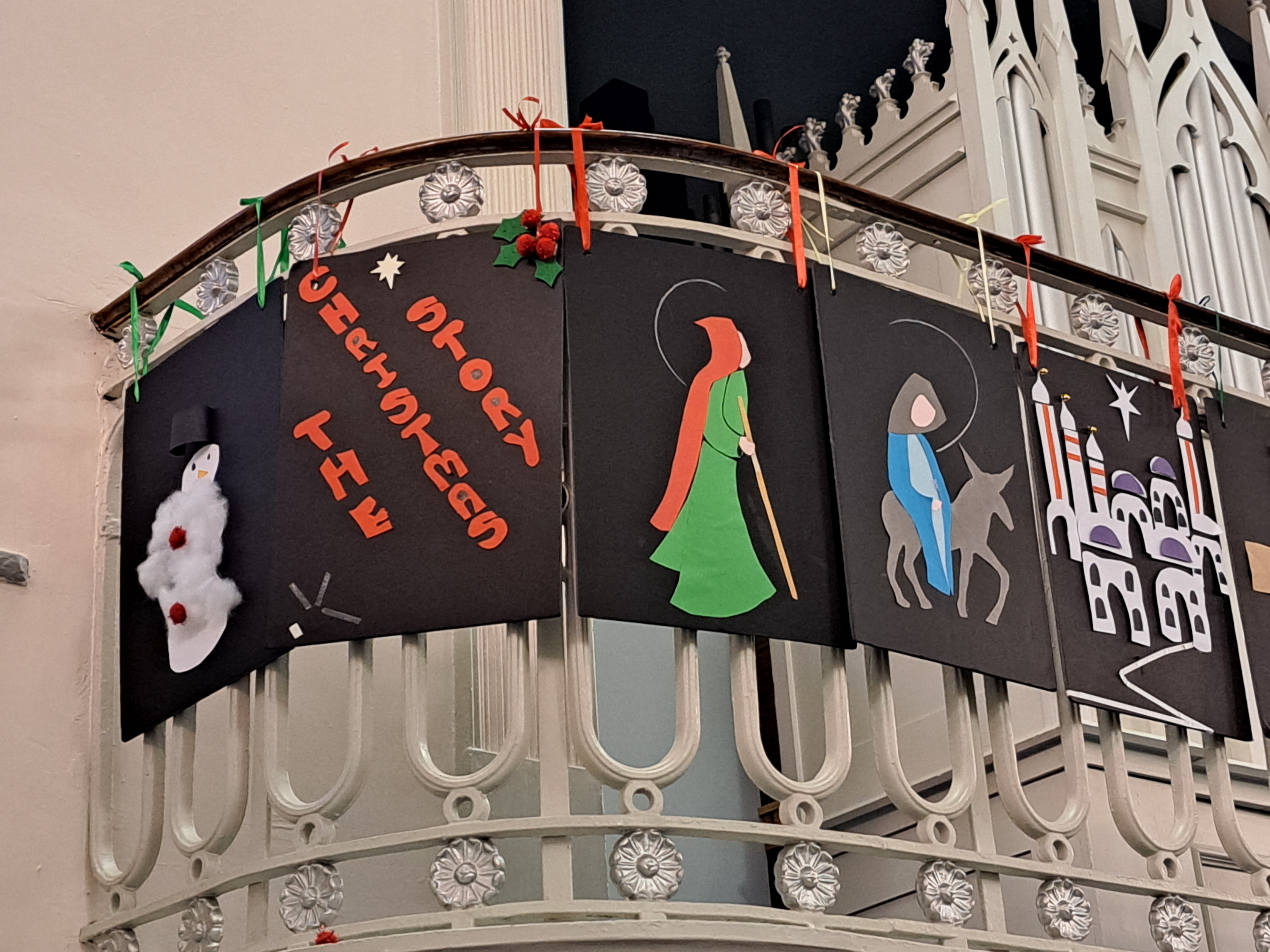
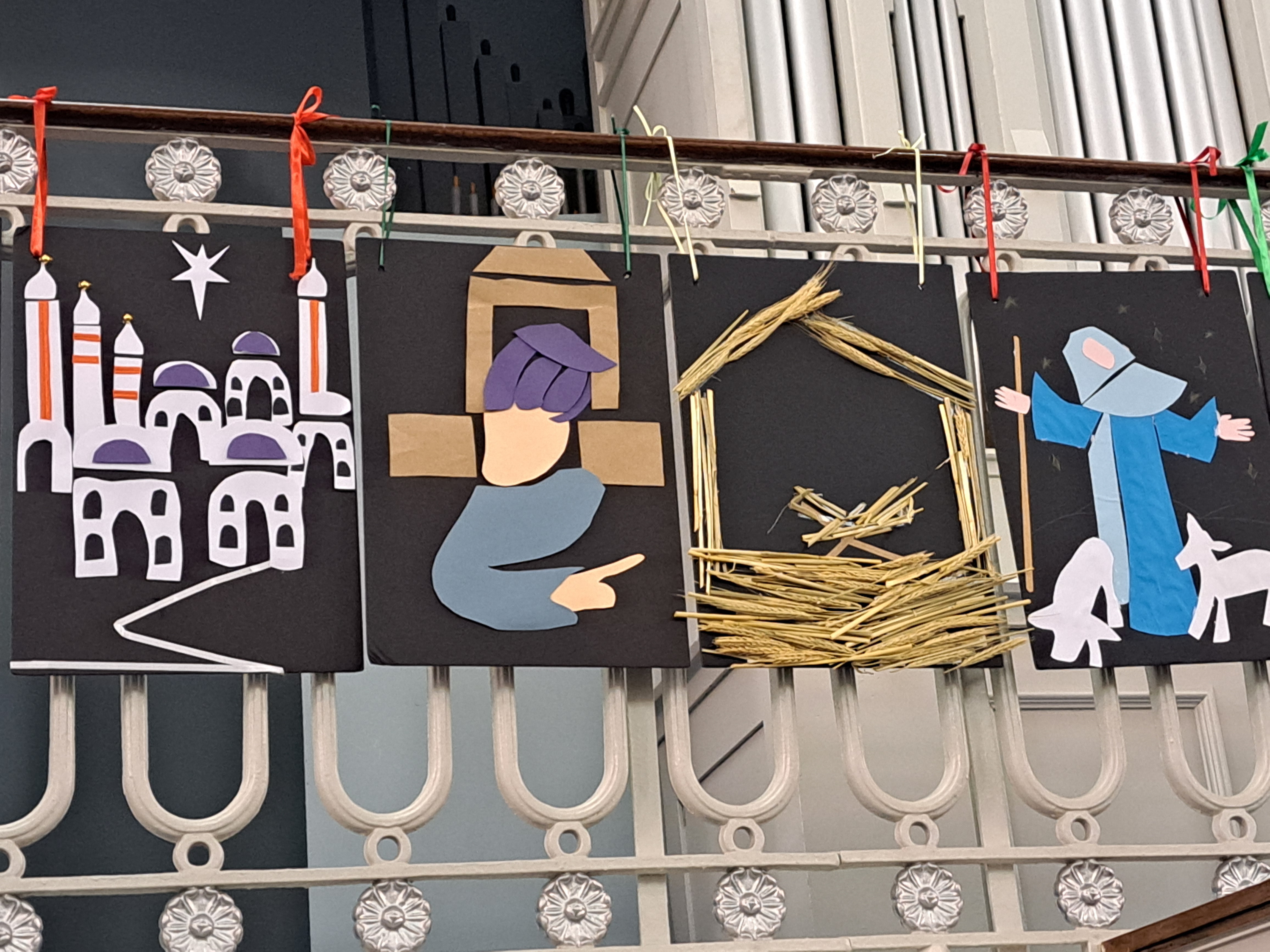
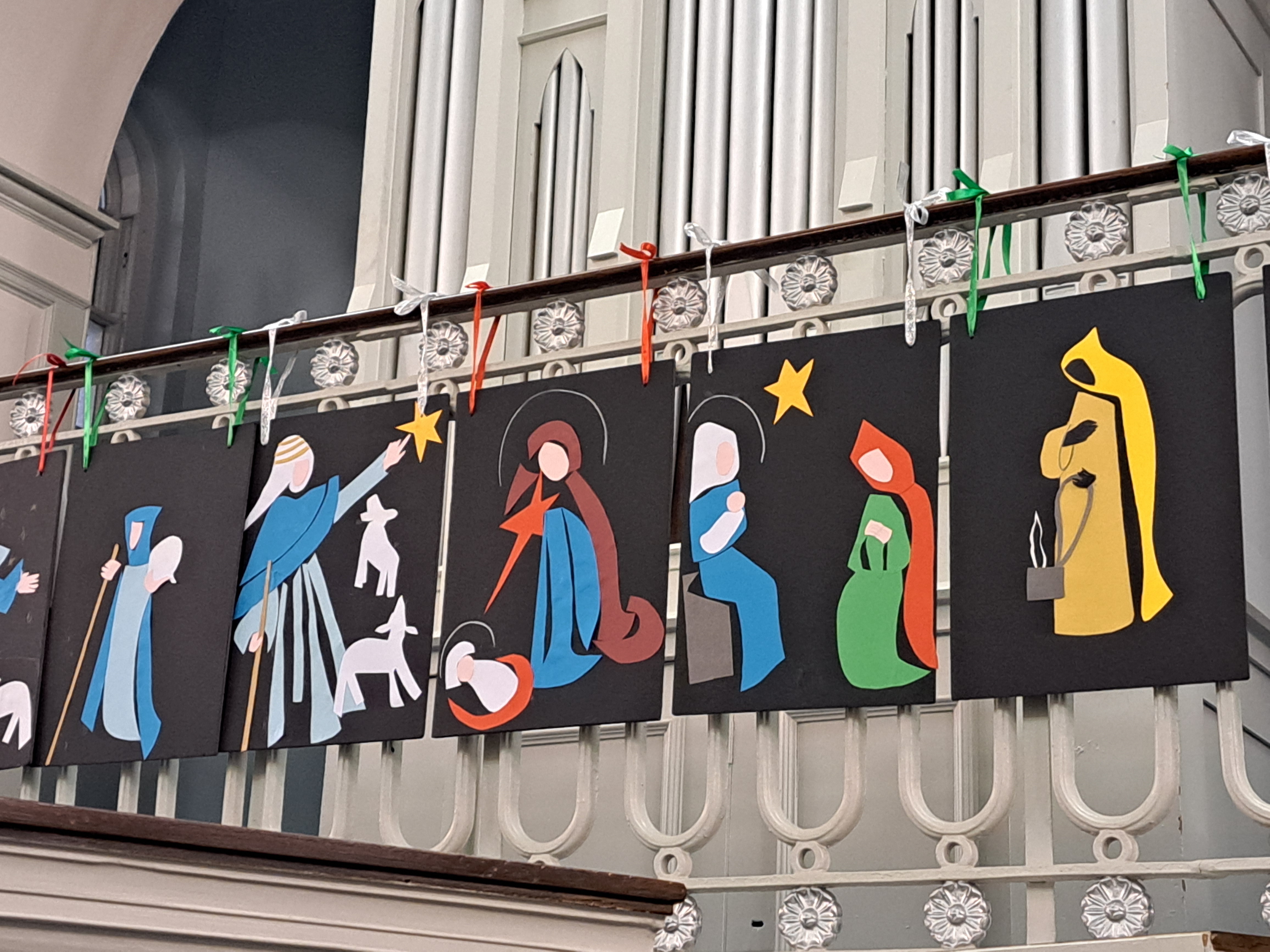
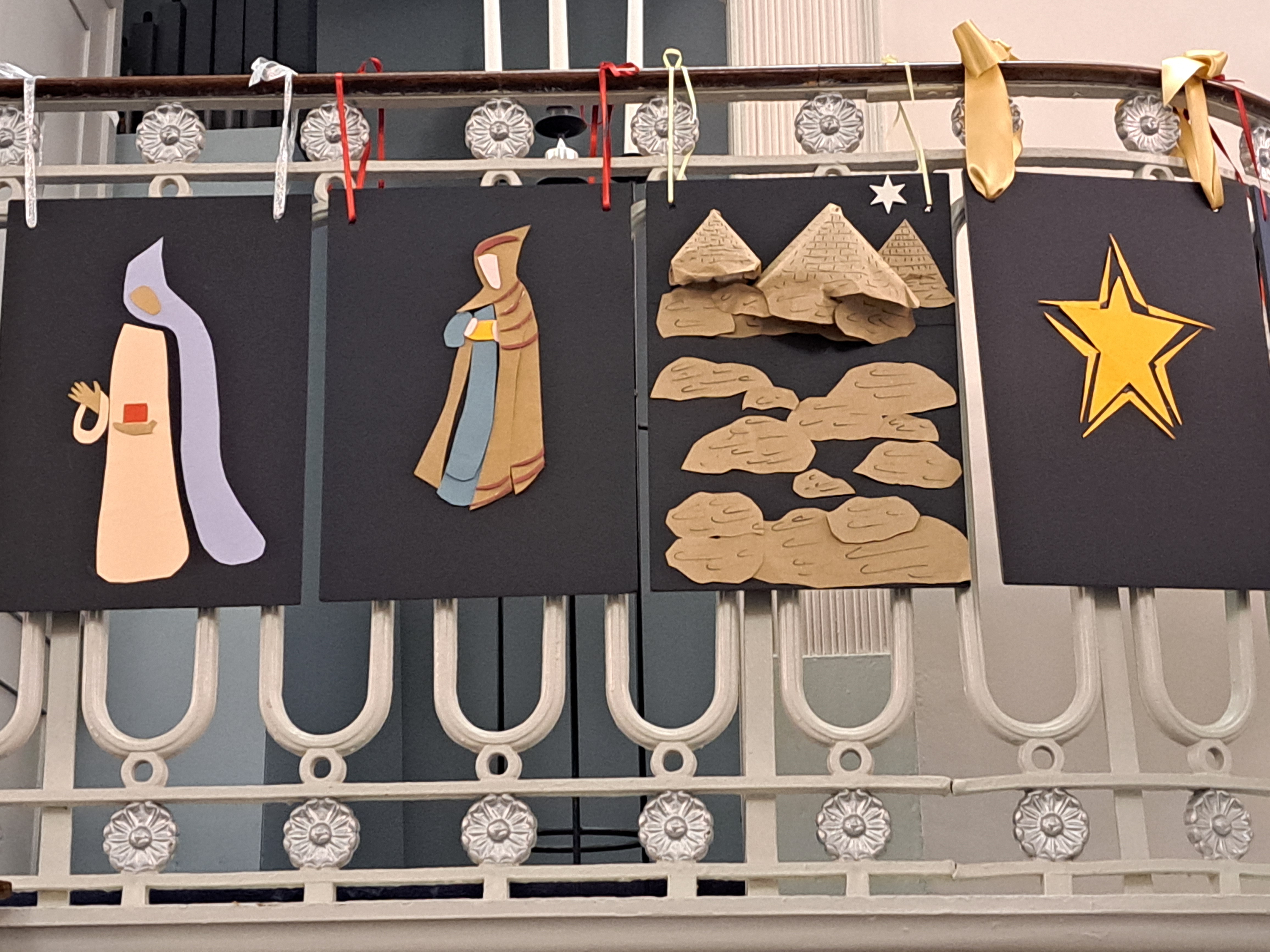
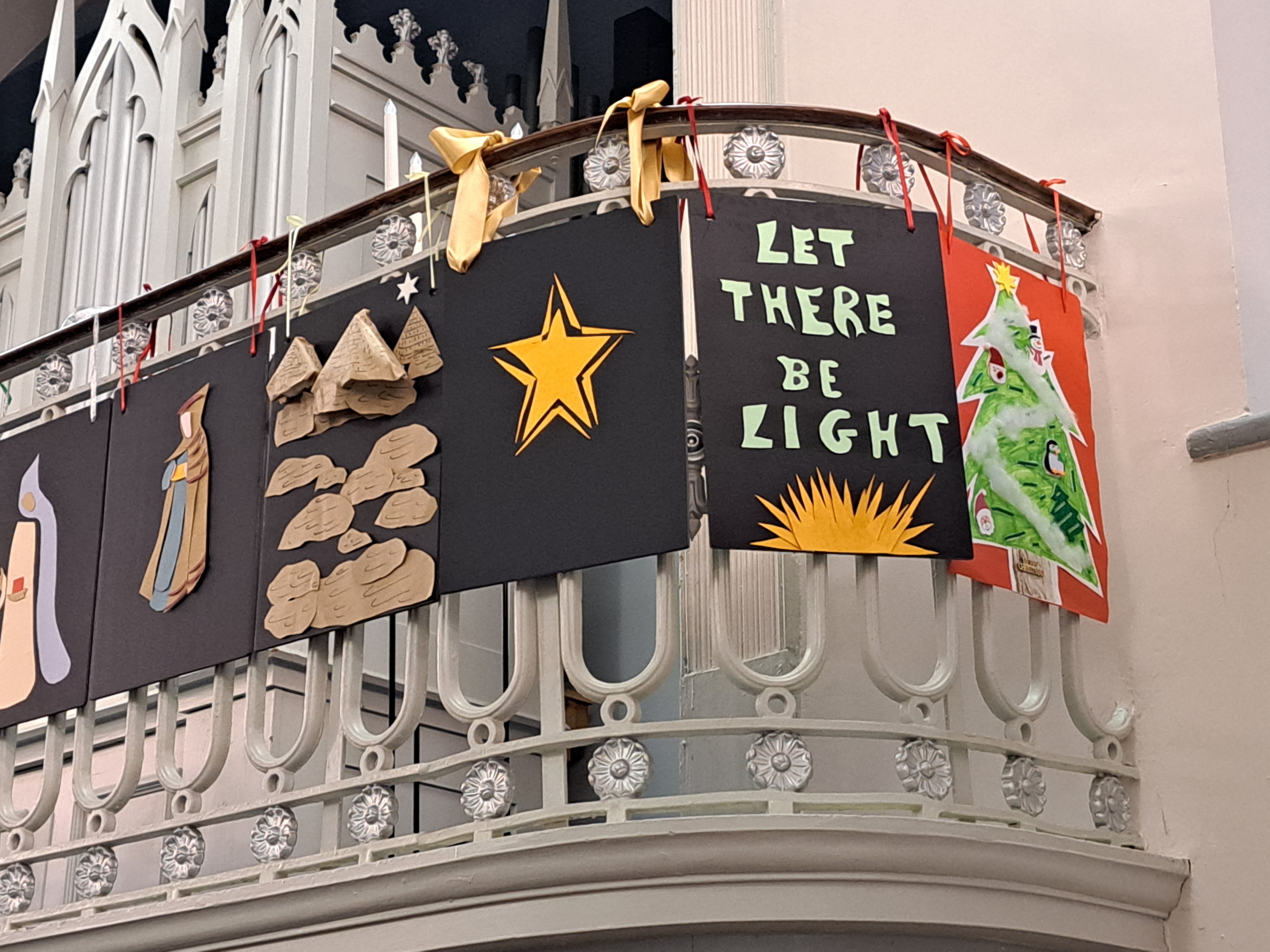
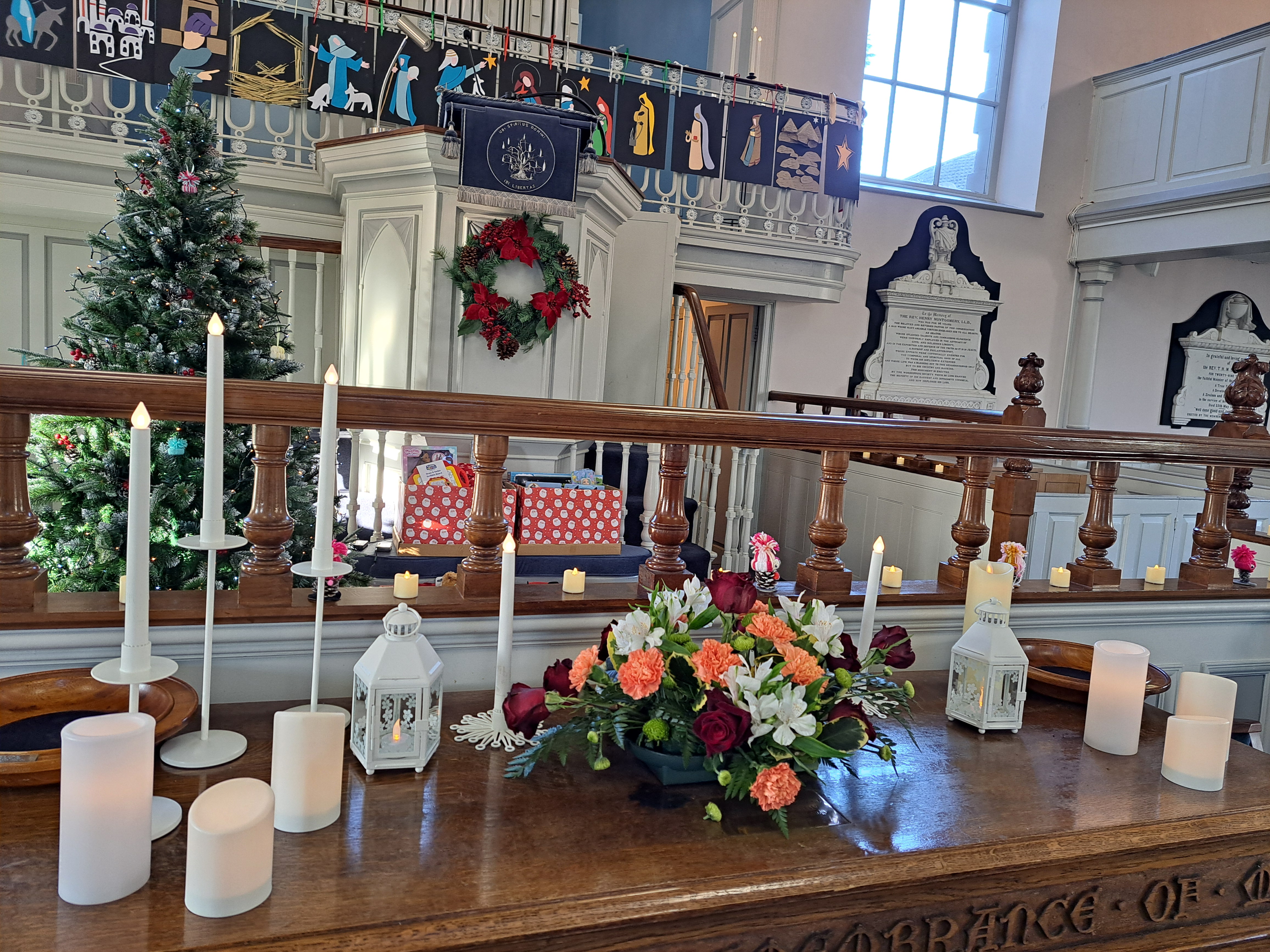
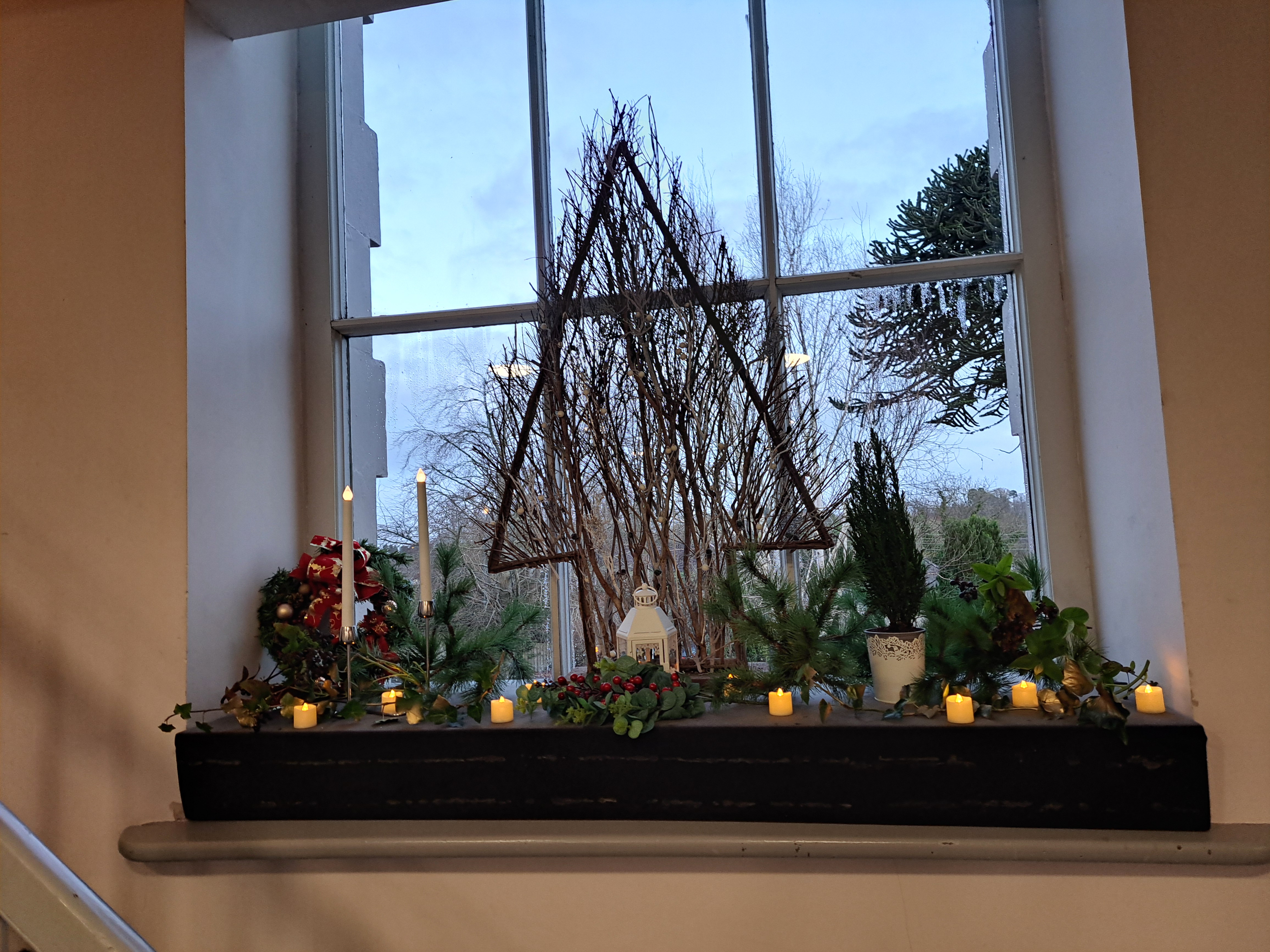
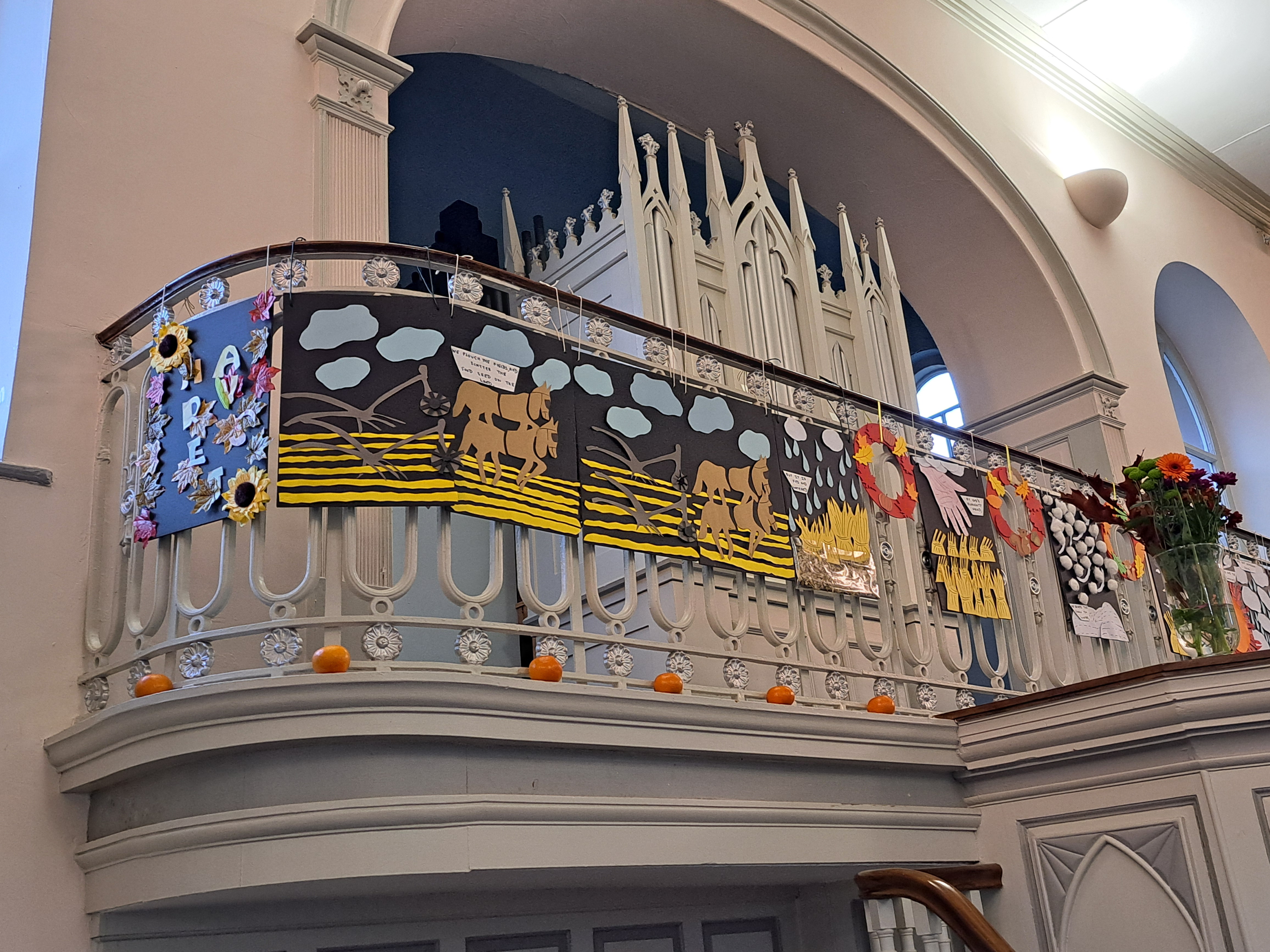
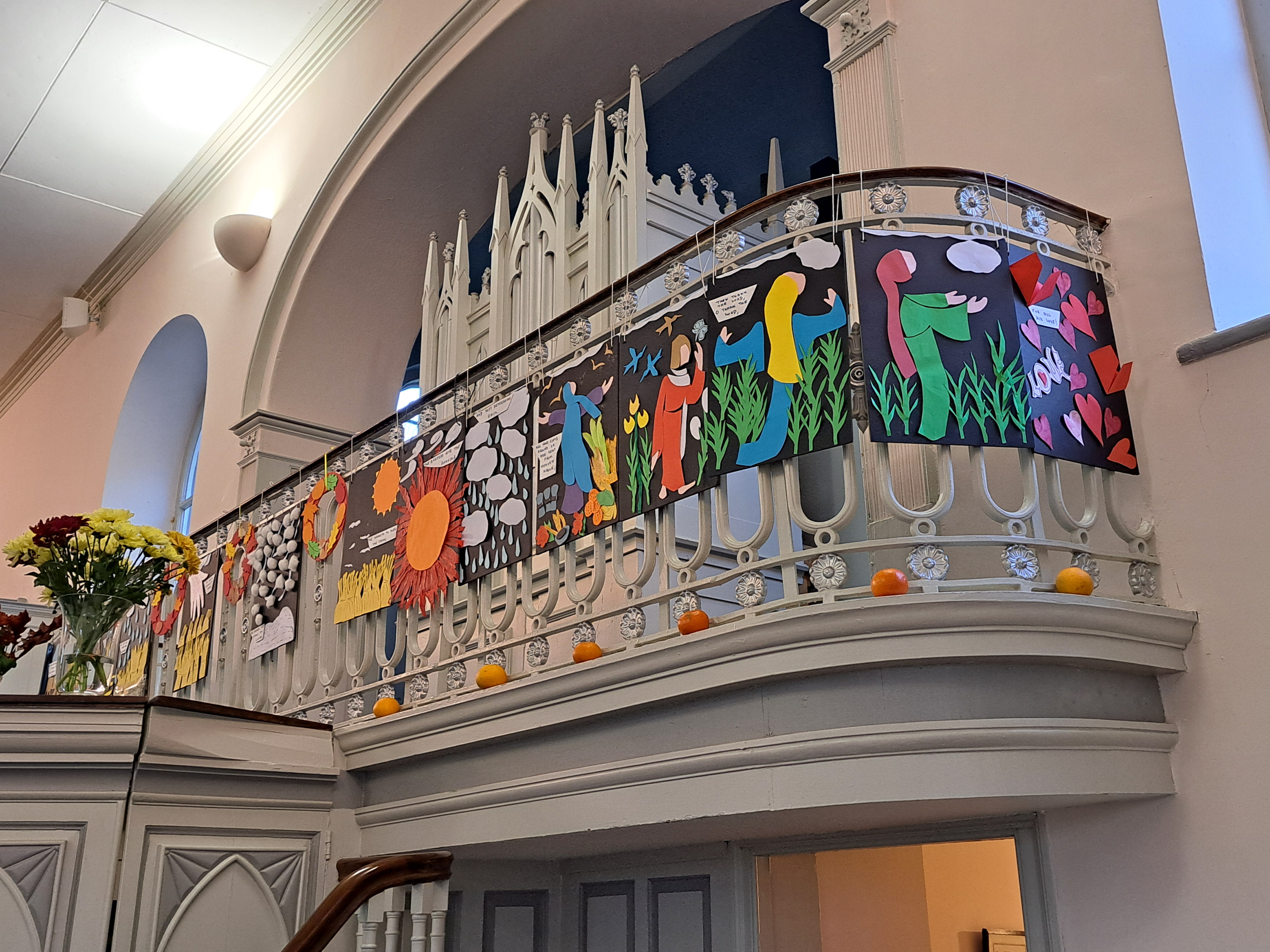
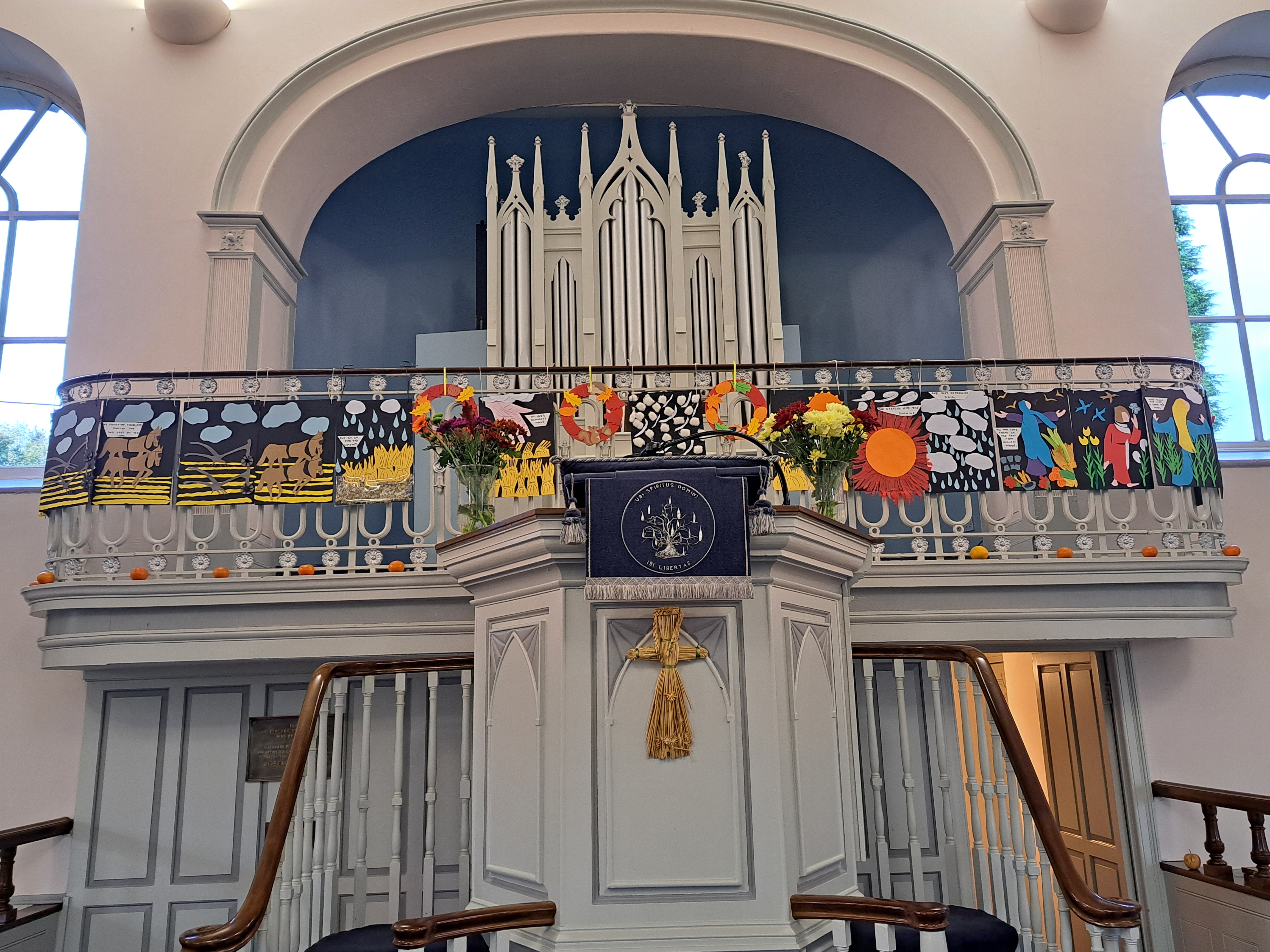
The video also includes some of the Christmas decoration in the Church including the excellent frieze created by the children of the Youth Group along the rail behind the pulpit, which can be seen in more detail below:

Carols by Candlelight at Dunmurry

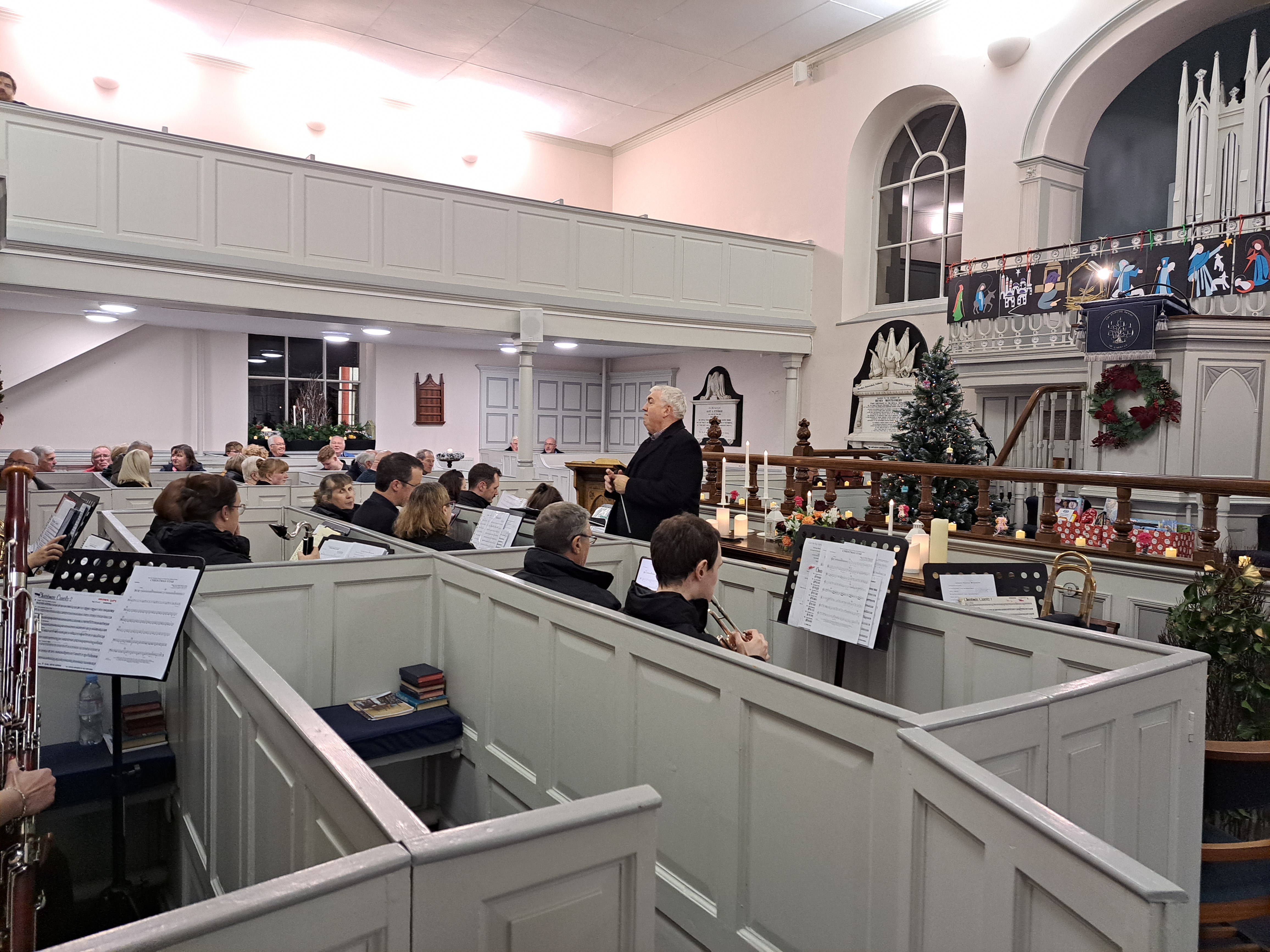
Despite the presence of Storm Darragh on Friday, 6th December we still were able to hold our well-attended service of Carols by Candlelight featuring Harmonic Sounds Concert Band under the direction of Paul Hamilton. It was a great evening and the whole service was livestreamed. You can watch the service here:

Click on the video

The service was conducted by the minister, Rev Dr David Steers, and our readers came from our own Church and our sister churches. They were David Kerr (First Church, Belfast), Kathy Yuille, Sylvia McBride, Adele Johnston, Diana Taggart, Erin Black, Rev Chris Hudson (All Souls’ Church, Belfast), Gilbert Cameron, Rev Chris Carson (Church of Ireland).

Band about to play

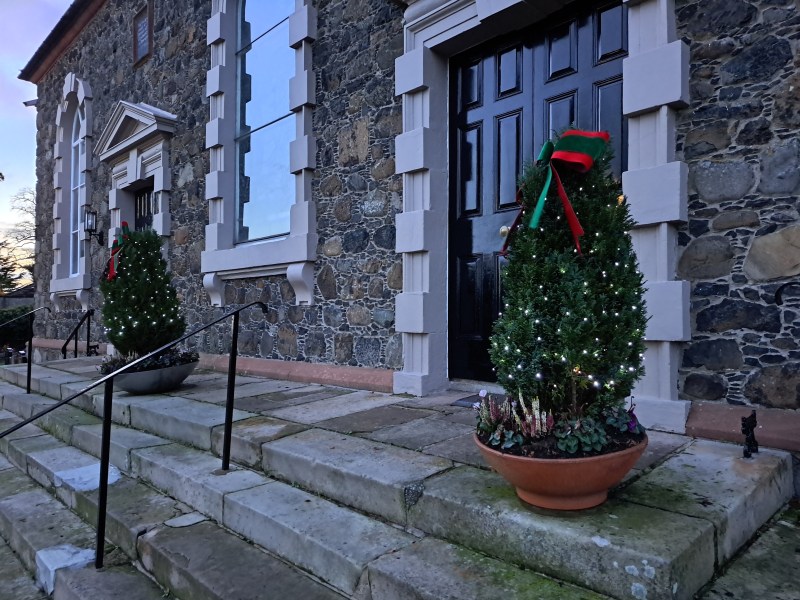
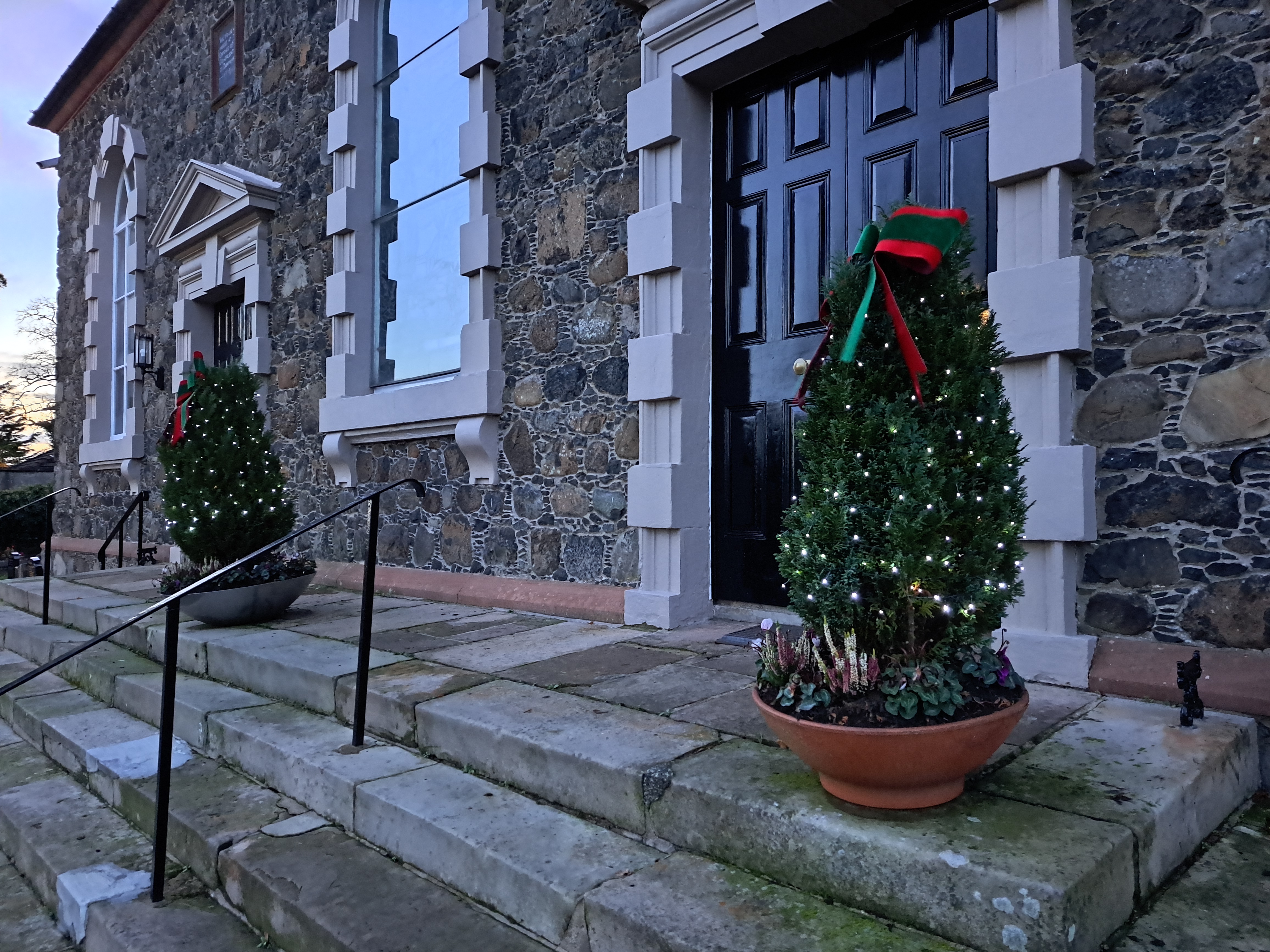
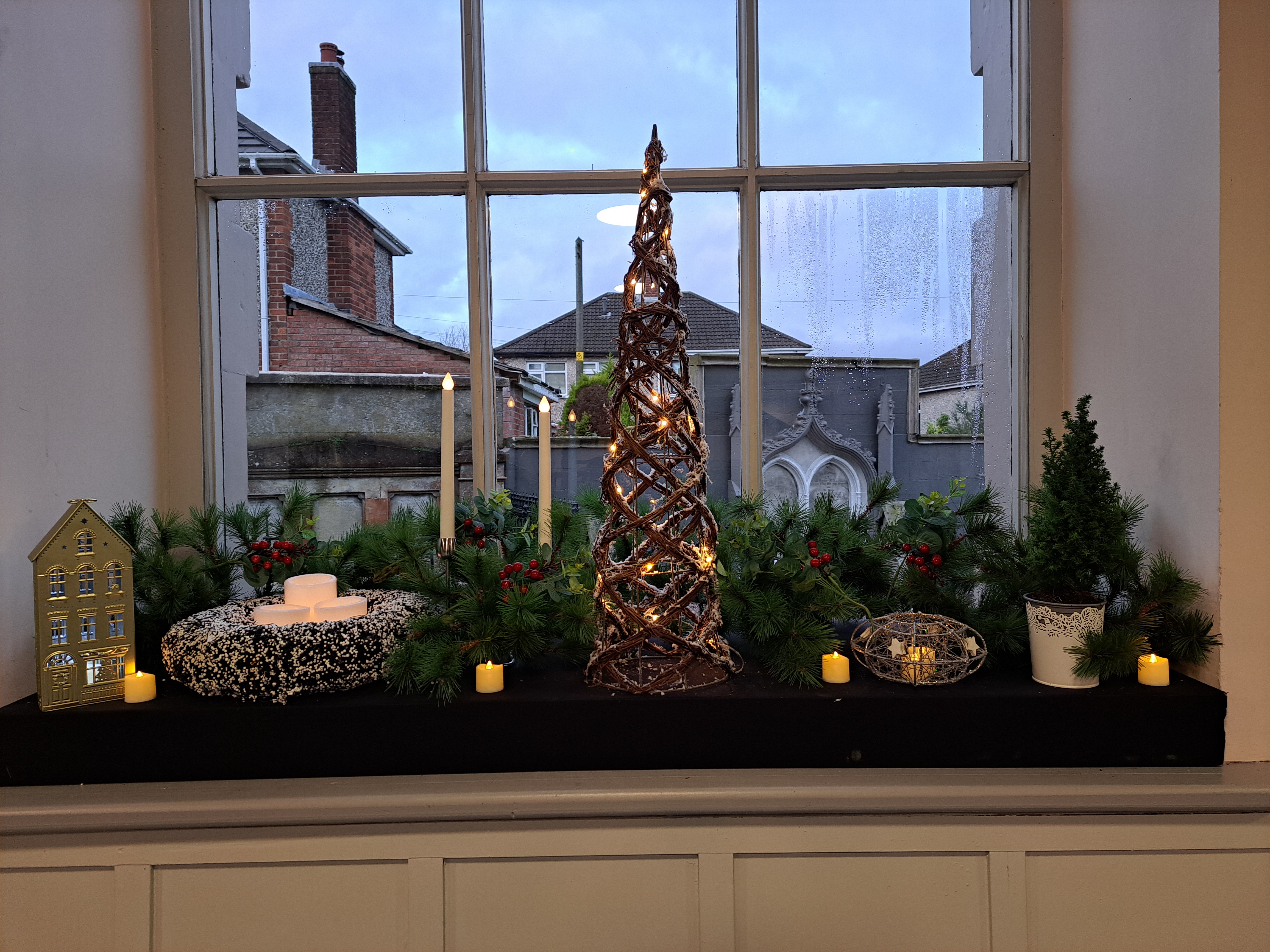
The Church was beatifully decorated both outside and in.

And many of those present were able to come over to the Hall for refreshments after the service.

Malone Integrated College Choir at First Dunmurry

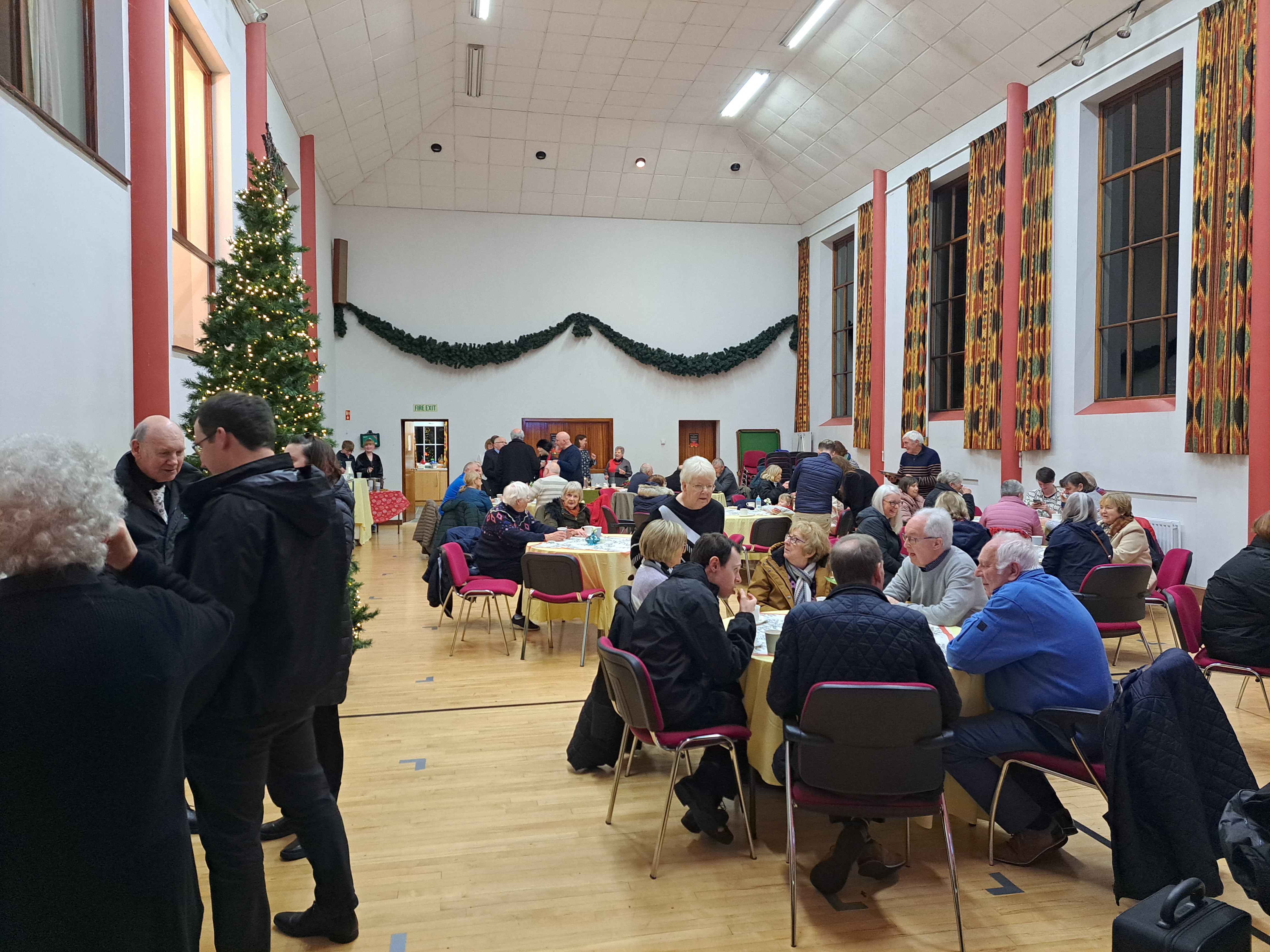
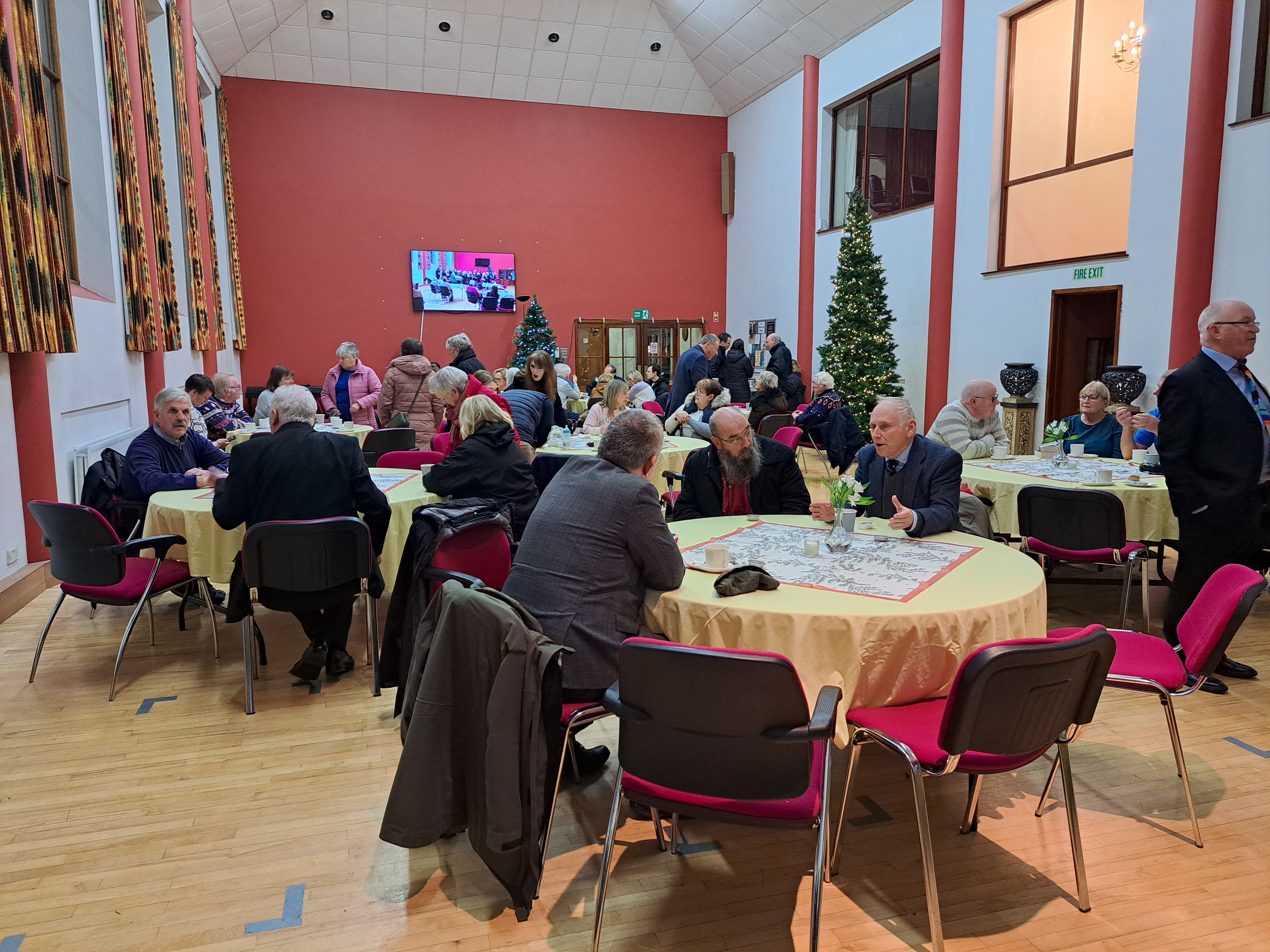
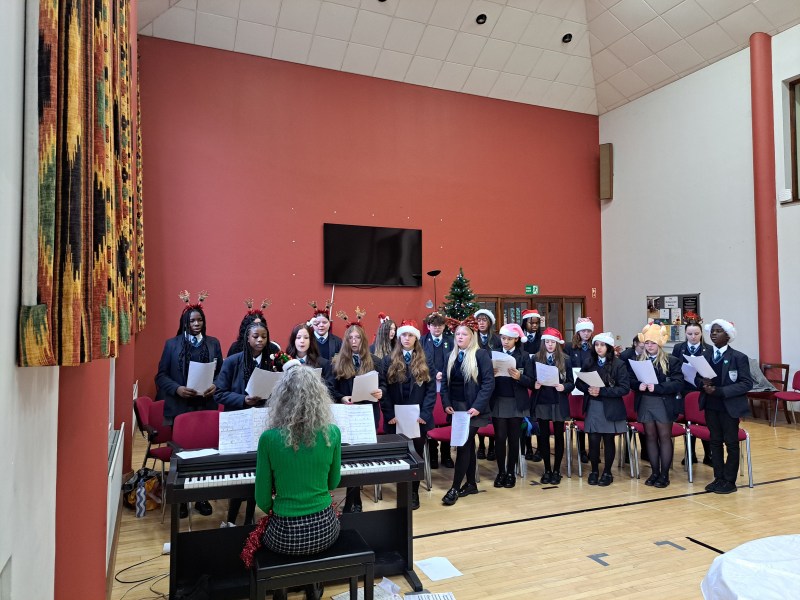
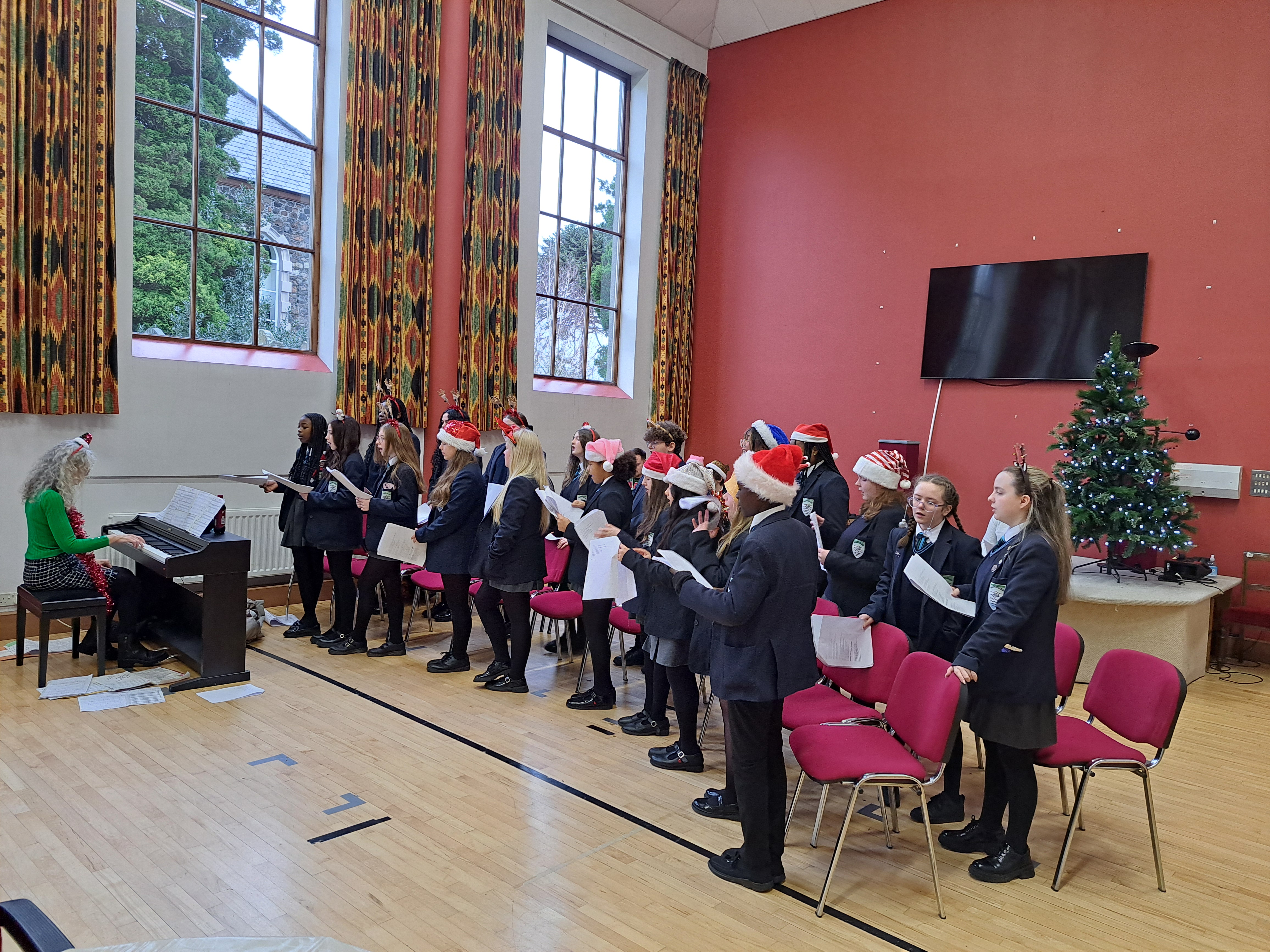
We were delighted to welcome the Choir of Malone College to our Warm Space Coffee Morning at Dunmurry on Thursday morning, 5th December under the direction of their musical director, Mrs Caroline Mitchell.

Click on the video to see Malone College Choir performing at First Dunmurry

The Choir sang a varied programme and were with us for two hours. The video above contains some of their repertoire. We are so glad that Mrs Mitchell, her staff and the Choir are able to take the time out to visit us at the start of the Christmas season, its an occasion that everyone looks forward to and fills us all with a strong sense of the Christmas spirit.

Malone Integrated College Choir at First Dunmurry (NS) Presbyterian Church

The published works of John Abernethy

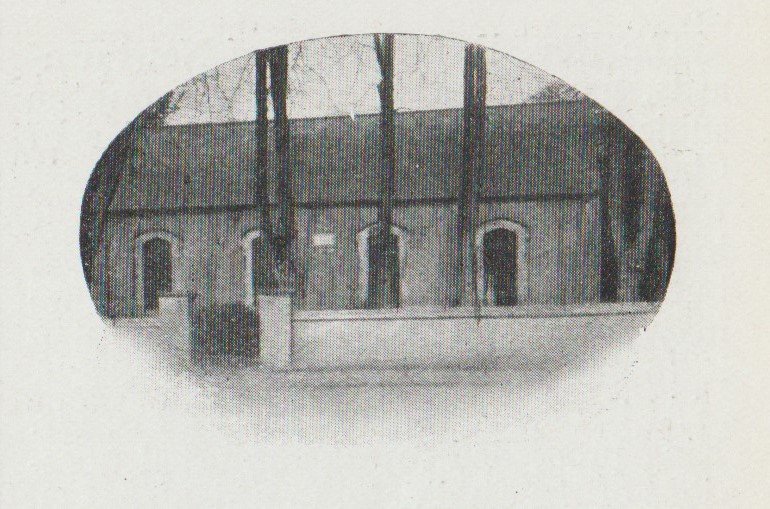
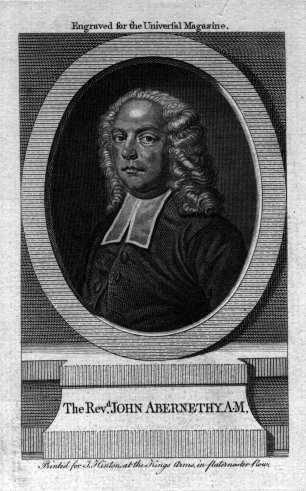
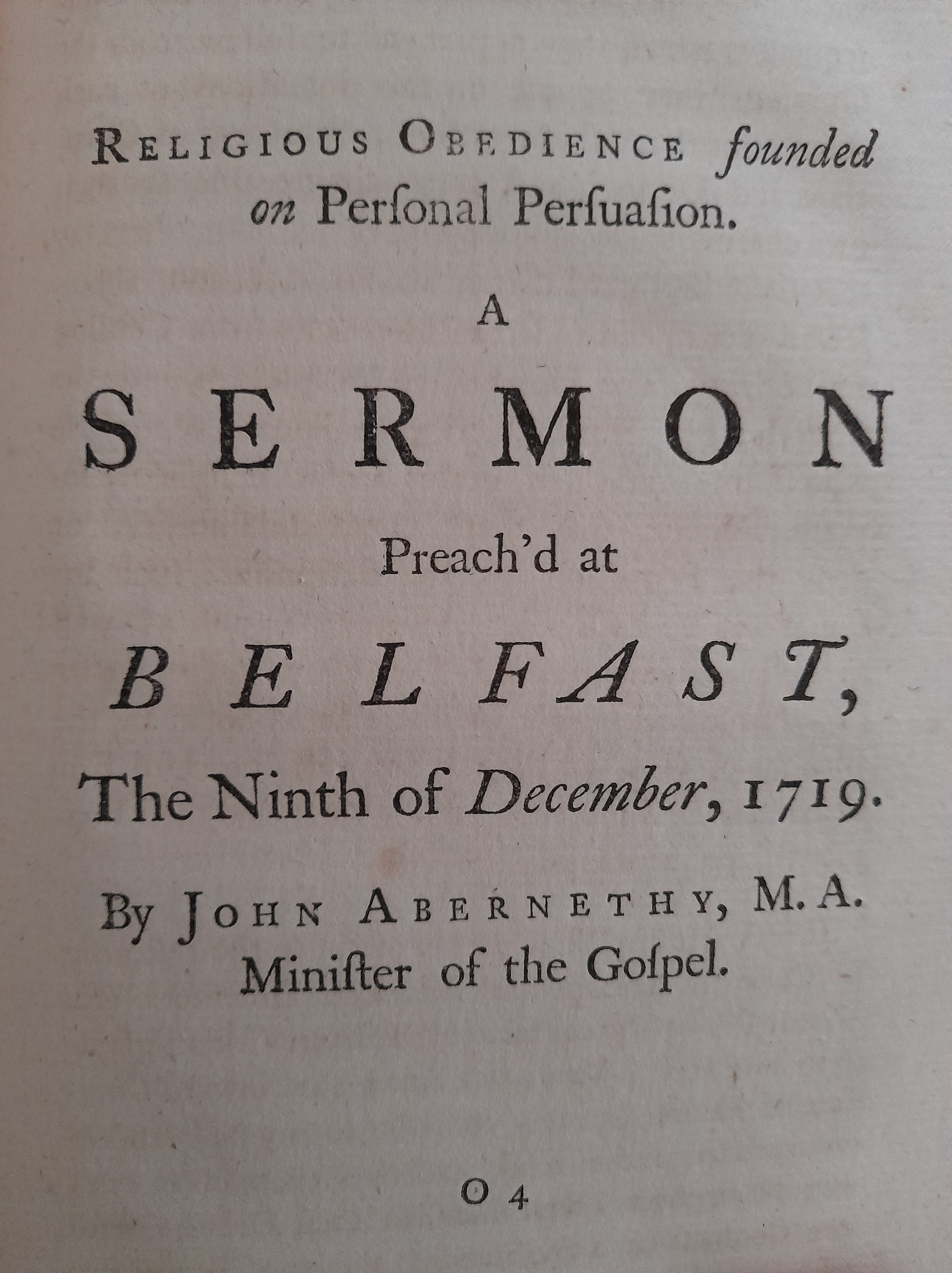
Episode 6 of our explorations of the Very Rev William McMillan Library at Dunmurry looks at the writings of the Rev John Abernethy (1680-1740). Without doubt the most prominent Presbyterian minister in Ireland in the early eighteenth century and the foremost exponent of Non-Subscription, he was minister at Antrim (see picture above) and later Wood Street, Dublin.

Click on the video to see John Abernethy’s books

Some of his books were the best sellers of their day and some of his publications were seen as either controversial theological statements or the key to opening up a new way to understand faith, depending on your point of view. Ironically at the time of the first subscription controversy the minister of Dunmurry, the Rev John Malcome, was a vocal opponent of the Non-Subscribers and was the first to use the term ‘New-Light’ about them. But Dunmurry Library has a good selection of his published works, most of them published after Abernethy’s death.

The founder of the Belfast Society in 1705, an outspoken advocate of the rights of the dissenting minority in Ireland and an established philosopher of some importance, John Abernethy’s books had considerable influence and this video looks at his publications held by our Library in Dunmurry.

For Remembrance

Click on the video to see ‘For Remembrance’

From The Very Rev William McMillan Library of First Dunmurry (Non-Subscribing) Presbyterian Church.

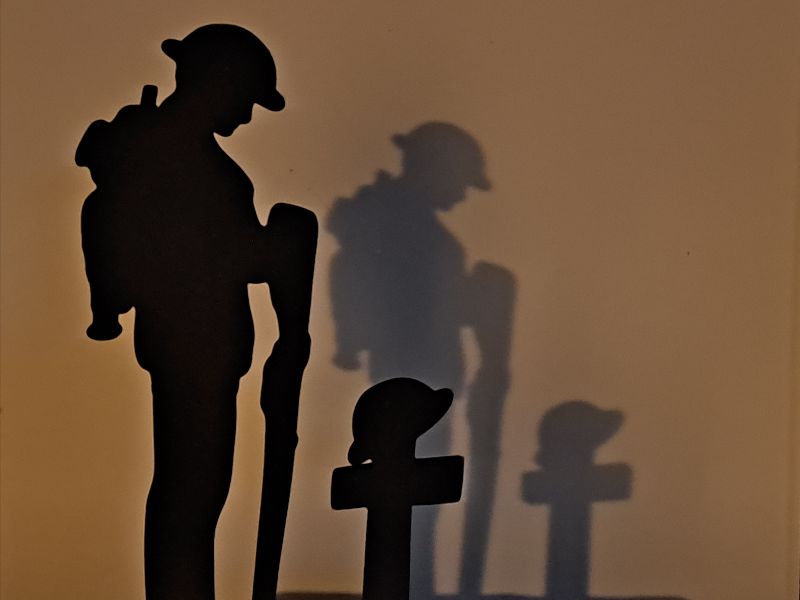
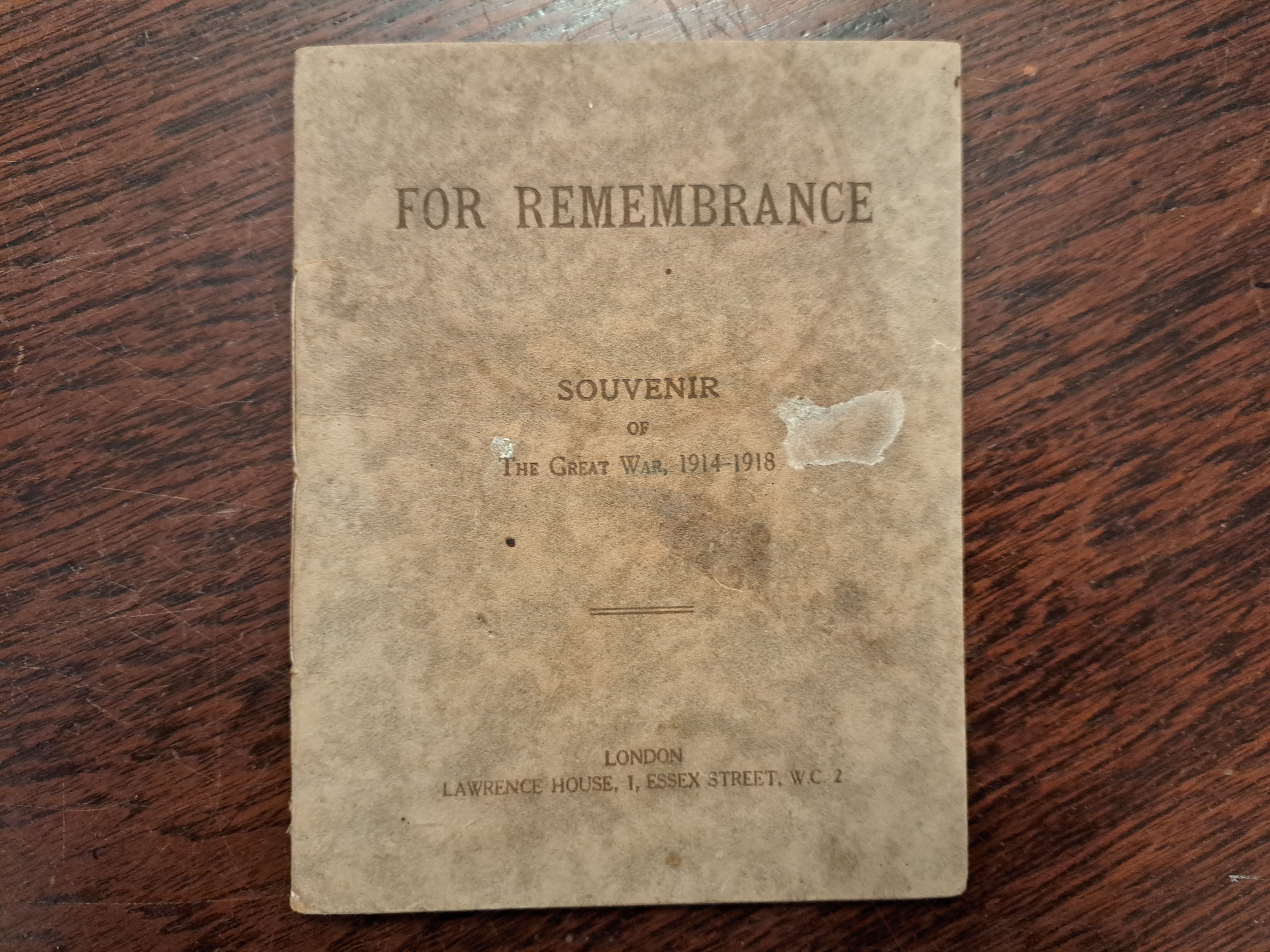
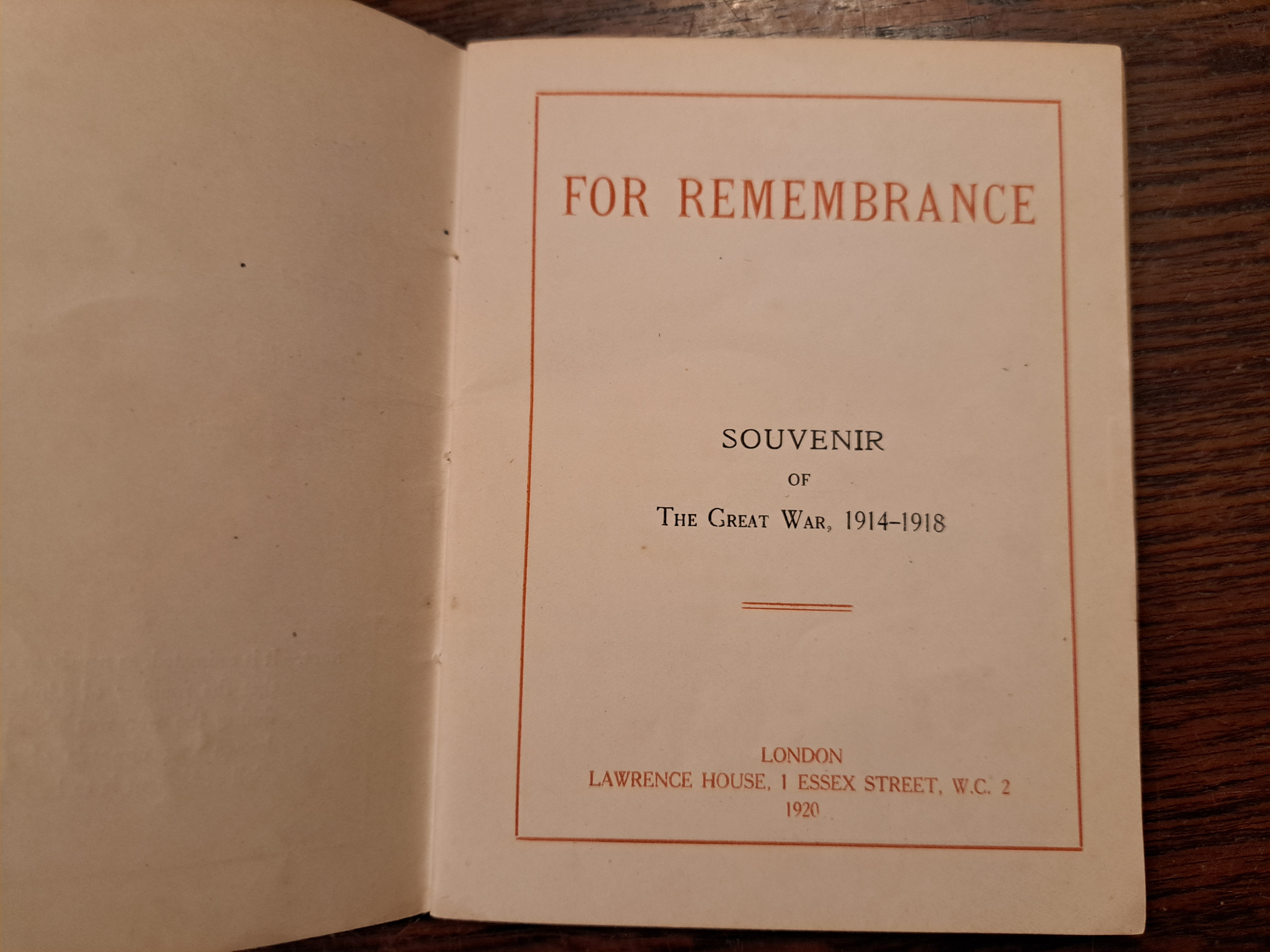
Exploring the Library: Episode 5 For Remembrance. A booklet given to returning servicemen after the First World War.

A short talk by the Rev Dr David Steers. With thanks to Jack Steers for playing the Last Post and Reveille on the trumpet.

This is rather a scruffy looking booklet but it is a very rare survival of which the editors said: ‘If it attains to anything like its aim it will be a real “keepsake,” an abiding record of the owner’s place and part in our nation’s mightiest struggle…’ A copy was given to every Unitarian and Non-Subscribing serviceman who returned from the First World War. It contains some poignant quotes and six short reflections by ministers who had served alongside the troops.

Possibly as many as 9,000 copies were issued but very few survive, at least in libraries, so we are fortunate to have a copy in the Very Rev William McMIllan Library. Click on the video to find out more about ‘For Remembrance’.

Dunmurry Harvest 2024

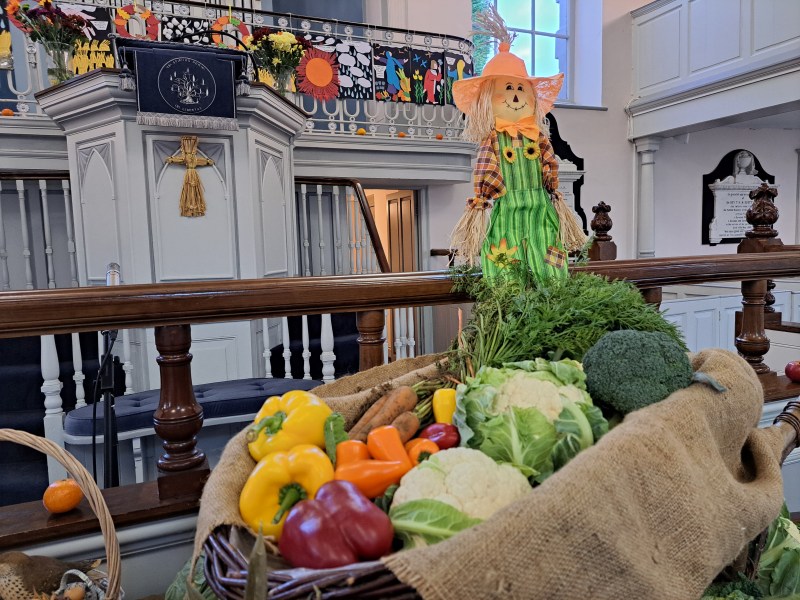
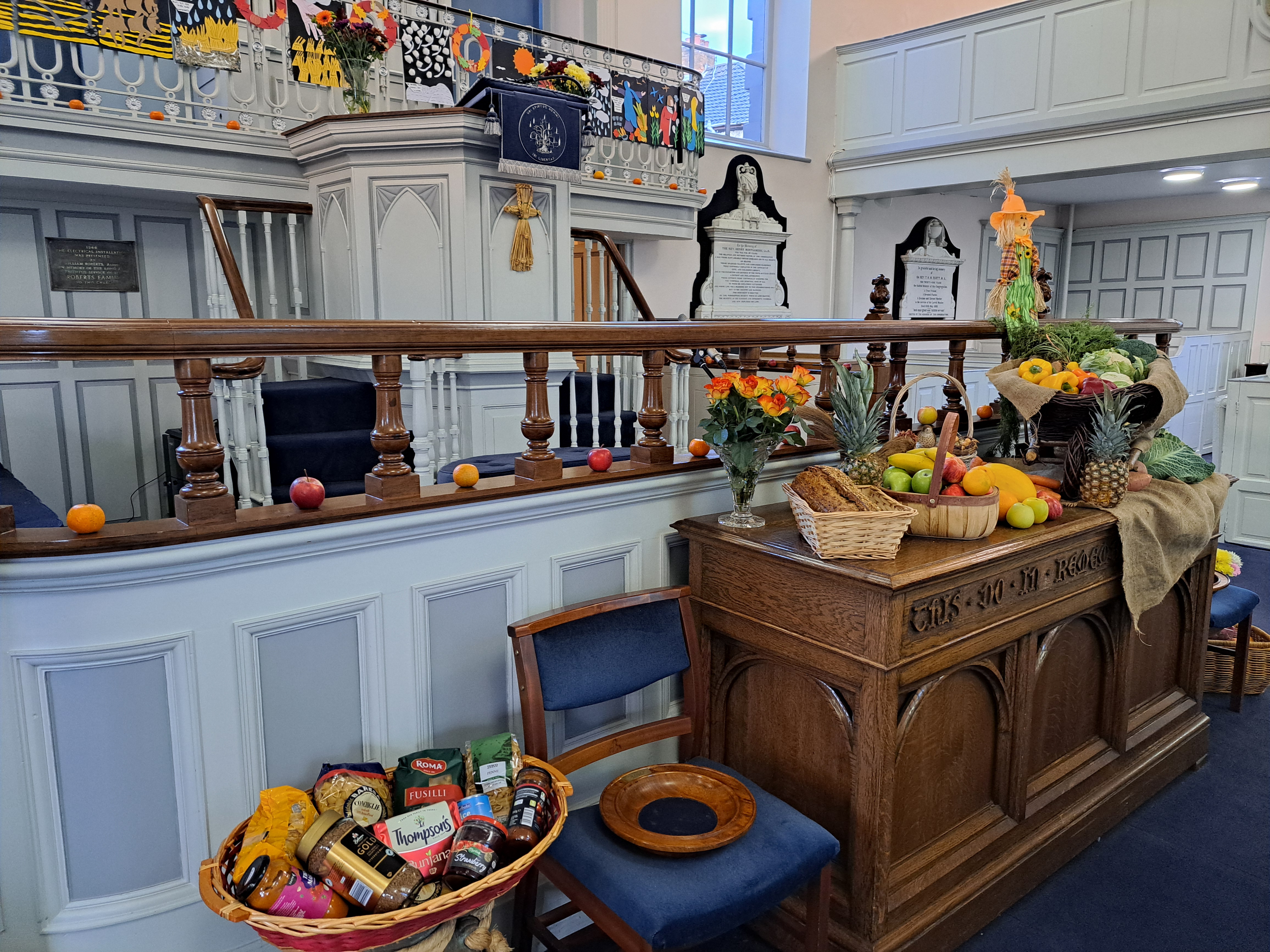
We had a wonderful Harvest Thanksgiving Service on Sunday, 20th October 2024. The service was conducted by Rev Dr David Steers, the organist was Allen Yarr and the readers were Lochlan Black and Erin Black. The Church was beautifully decorated throughout including the frieze depicting We Plough the Fields and Scatter made by the Sunday School and Youth Group. The service was live streamed and you can view it here on YouTube:

Here are some images from the day, beginning with We Plough the Fields and Scatter frieze created by the children and young people:

We were very pleased to welcome the Moderator, Rt Rev Alister Bell, who spoke warmly of the service and the work done by the children.

We also gathered a considerable amount of produce, both fresh vegteables and fruit, as well as tinned and dried foods, biscuits, pasta, sauces, tea, coffee etc. All of this has now been distributed to L’Arche Belfast.

What Is L’Arche?

“L’Arche (French for ‘The Ark’) is an international federation of 140 communities worldwide founded on faith and inspired by the gifts of people who have learning disabilities. By ‘community’ we mean a group of people of different ages, creeds, capacities and social and ethnic backgrounds connected to one another through a belief that everyone, irrespective of their circumstances, can have a positive impact on the lives of others. In our communities people with and without learning disabilities choose to live together in a spirit of friendship. We recognise the unique value of every person, the gifts we have to offer and our need for one another.” (From L’Arche website).

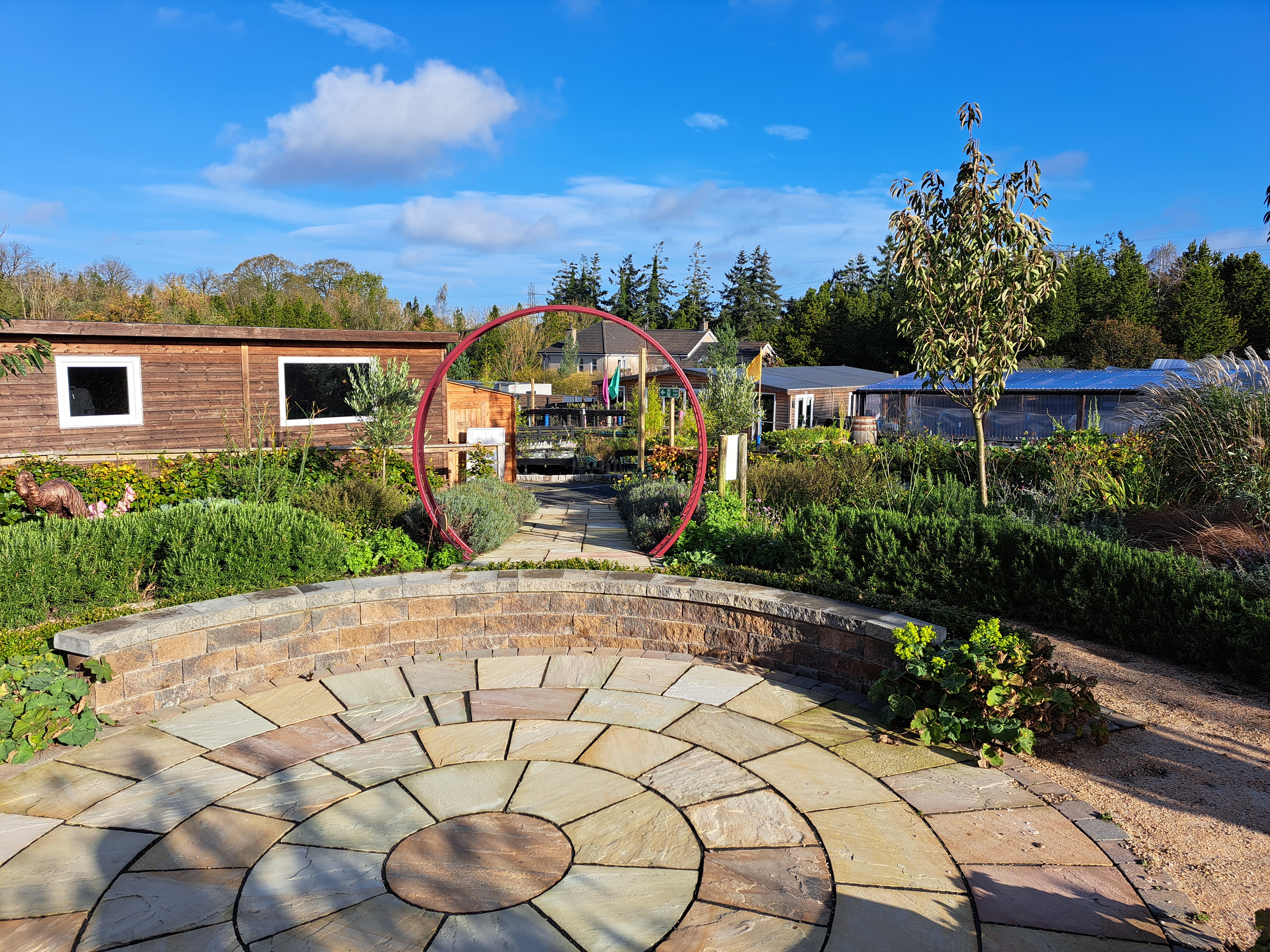
The newly created garden at the centre of the L’Arche community Belfast

You can find out more about L’Arche Belfast by clicking here.

Ephemera – two Calendars from the 1920s

Ephemera is the term given for items that weren’t usually expected to last. Usually printed items, they had only a limited shelf-life and were generally expected to be thrown away when they had been used. Inevitably such things tend to become interesting to collectors because they often illuminate some aspect of social history that might otherwise be lost. Our new Very Rev William McMillan Library is rich in ephemera and this latest video explores two items held by the Library:

Click above to see Episode 3 of the explorations of Dunmurry NSP Library

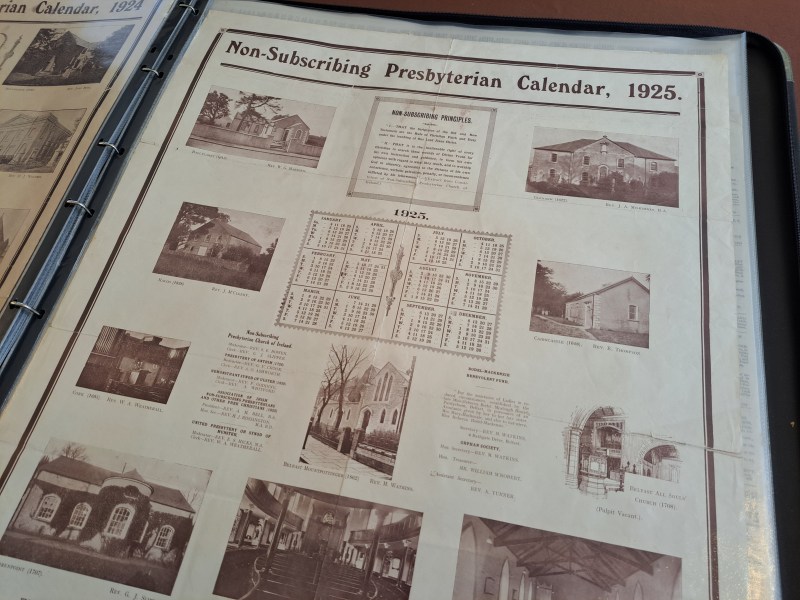
In 1924 and 1925 the congregation of York Street Church, Belfast, under the leadership of Rev Dr A.L. Agnew, produced a calendar to sell to the denomination. Over the two years they included a picture of all the churches in the denomination in Ireland and they make for interesting documents. Many of the pictures date from a bit before the mid-1920s but it makes for an interesting collection of early twentieth-century photographs. Some images are quite well-known and have often been published. Some are quite rare like this picture of Ballymoney:

There’s also a reminder of an attempt at outreach in Bangor which lasted for a few years, and seemed to be successful for these years at least:

But altogether they are interesting documents. They must have captured a lot of interest at the time but at the end of the year what do you do with an old calendar but throw it away? Which is why so few have survived. You can find out all about it by watching the video.

G.E. Evans and the ‘Vestiges of Protestant Dissent’

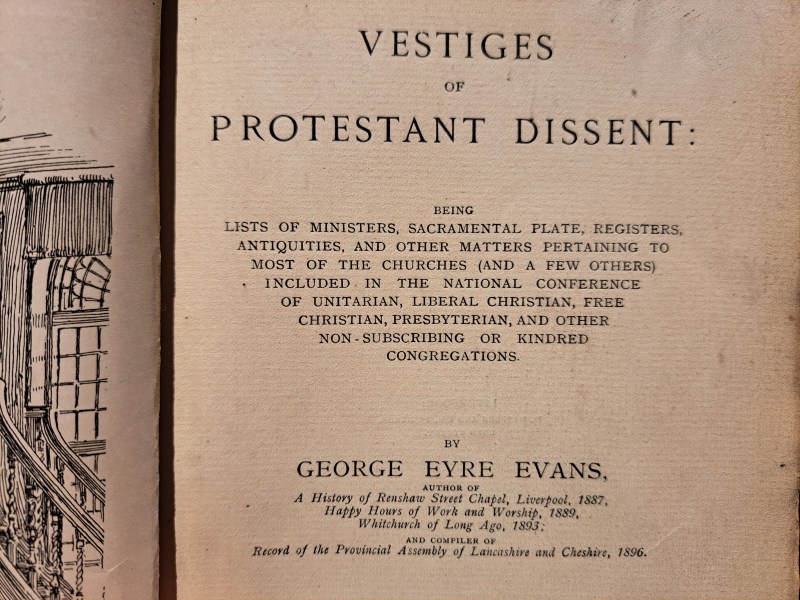
Everyone who has an interest in the study of Non-Subscribing Presbyterian/Unitarian history in the British Isles will know George Eyre Evans’s book the Vestiges of Protestant Dissent. Published in 1897 it was just one publication that came out of the extensive researches of G.E. Evans. His book is the subject of our latest video which is the second to explore the contents of the Very Rev William McMillan Library here at Dunmurry which will be opened and dedicated on Sunday, 22nd September 2024 at 3.00 pm:

Click on the video above for Vestiges of Protestant Dissent

The Library copy once belonged to a prominent lay member of the congregation who gave it to his minister before the end of the nineteenth century, but the full story can be seen on the video.

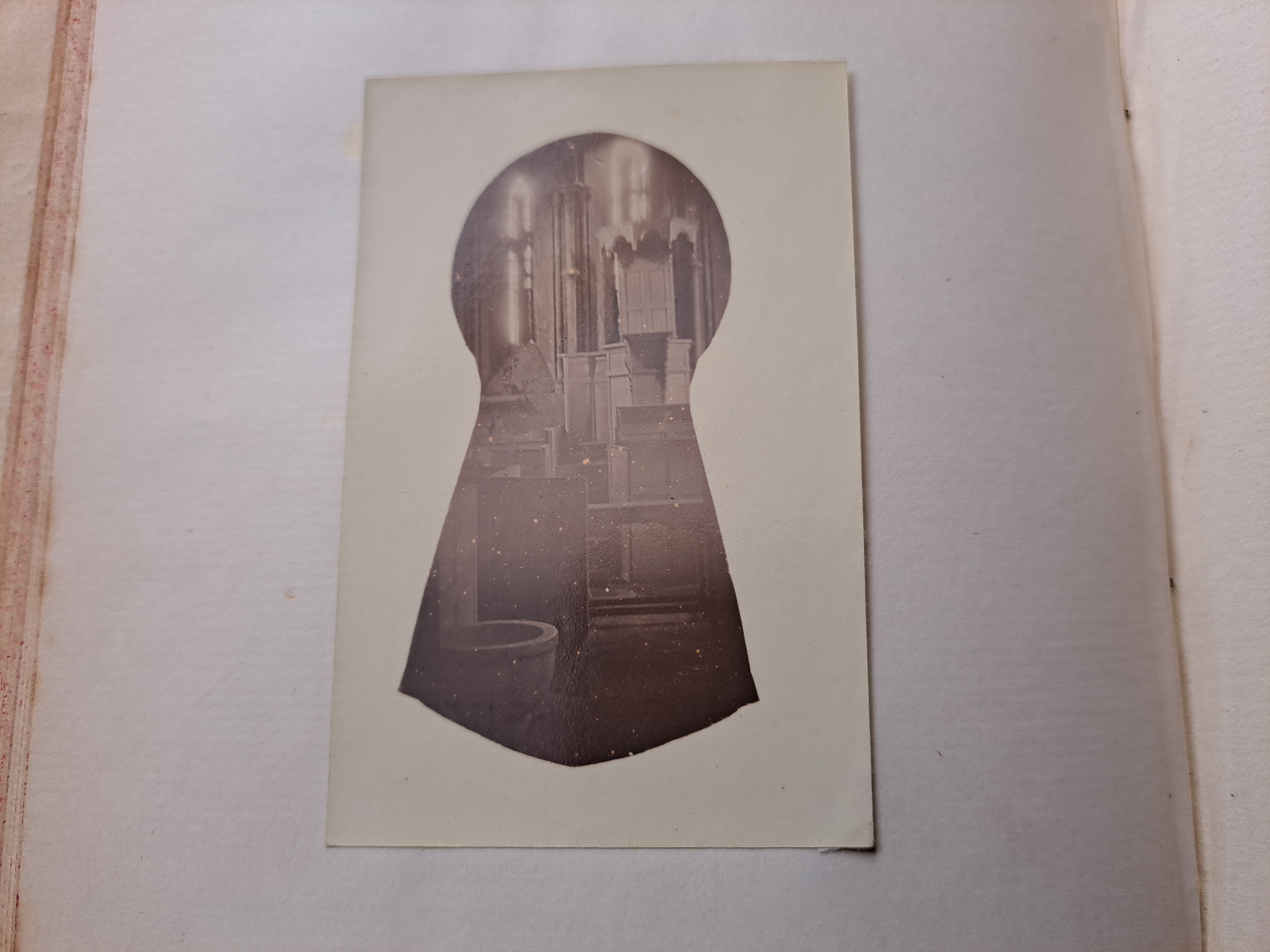
One of the things I try to draw attention to in the video is the occasional unusual detail G.E. Evans adds to the book, such as this picture, which exists in every copy as a real photograph pasted in to the book:

The picture from opposite page 123 of ‘Vestiges of Protestant Dissent’

The meaning of the photograph is explained in the video.

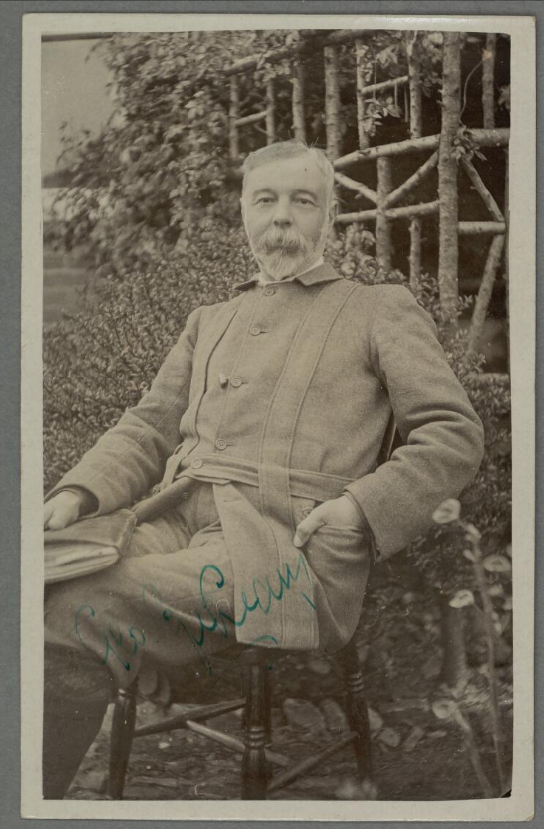
George Eyre Evans (photo: Dictionary of Welsh BiographY)

G.E. Evans was born in Colyton, Devon, the son of Welsh parents. His father was Rev David Lewis Evans, Unitarian minister at a number of places in Wales and England, including Colyton where his son was born, and ultimately being tutor in Hebrew, mathematics, and natural philosophy at the Presbyterian College, Carmarthen. He was also one of the founders of Yr Ymofynydd, although he wrote little in Welsh himself.

George E. Evans followed his father into the ministry and served at the Church of the Saviour at Whitchurch (1889-1897) as well as unpaid minister at Aberystwyth later in life. Primarily though he was an historian and antiquarian. Many of his publications relate to his interest in the history Unitarianism. Vestiges of Protestant Dissent is probably his best known work of this type although he also produced Record of the Provincial Assembly of Lancashire and Cheshire, a very useful detailed study of churches and their ministers in the north west of England, and Midland Churches: A History Of The Congregations On The Roll Of The Midland Christian Union. This all displays his wide geographical interests, also seen in publishing works about places such as Whitchurch, Colyton and Lampeter. He also wrote the first history of Renshaw Street Chapel in Liverpool, a city where he studied after being at the school of Gwilym Marles, the noted Unitarian minister and social reformer.

His main research interests increasingly centred on Wales, however. He was a founder member, secretary and editor of the journal of the Carmarthenshire Antiquarian Society. A member of the Cambrian Archaeological Society, he sat on its general committee and became a member of its editorial board, contributing to its journal Archaeologia Cambrensis. He was active in helping to establish two local museums in Wales and served on the Court of Governors of the University College of Wales, Aberystwyth, the Council of the National Museum of Wales, Cardiff, and the Council of the National Library of Wales, Aberystwyth. But this is by no means the full extent of his labours. He was made an Inspecting Officer of the Royal Commission on Ancient Monuments in Wales and Monmouthshire and in that capacity visited almost every monument or historic site in Wales. He joined the Boy Scouts in his 60s and became a County Scout Commissioner for Carmarthenshire and in 1928 became deputy Scout Commissioner for Wales. In 1937, two years before he died at the age of 82, he was made a Freeman of the Borough of Carmarthen where the Carmarthenshire Antiquarian Society has placed a blue plaque on one of the museums he founded and worked in.

He was a member of the Council of the Unitarian Historical Society and a frequent contributor to the Transactions, particularly writing about ‘Our communion plate and other treasures’. He visited Ireland in preparation for producing the Vestiges, mainly to inspect the communion plate, and from notes in his book we can follow his progress through Ireland in August 1892 when he went from Dublin (16th August), to Newry and Warrenpoint (17th), Clough, Downpatrick, and Rademon (19th), Moneyrea and Newtownards (20th), Ballycarry, Carrickfergus, and Larne, (22nd), and finishing up at Antrim, Templepatrick and Belfast (23rd). The only visit outside this sequence came on 14th October 1896, just a year before publication, when he visited Dunmurry and where he will have met the Rev J.A. Kelly who had been installed as minister on 23rd July of that year.