Belfast City Cemetery

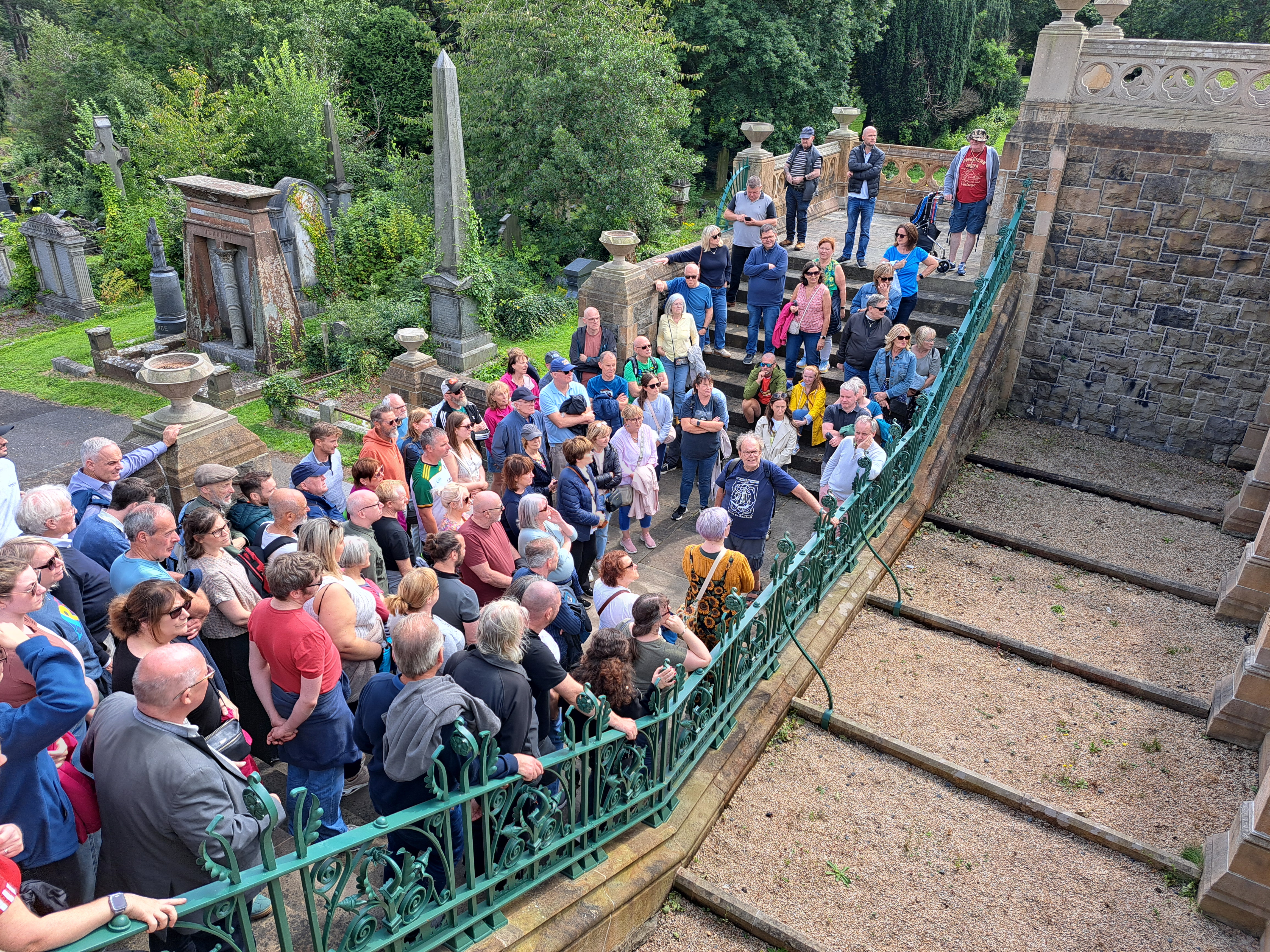
I was pleased to again take part in a tour of Belfast City Cemetery led by Tom Hartley. Tom is now the author of four books on the cemeteries of Belfast and I was pleased also to pick up a copy of his latest work, More Stories from the Belfast City Cemetery. This was his penultimate tour of the last series he would give as part of the Féile an Phobail and like all these tours there was a very large attendance.
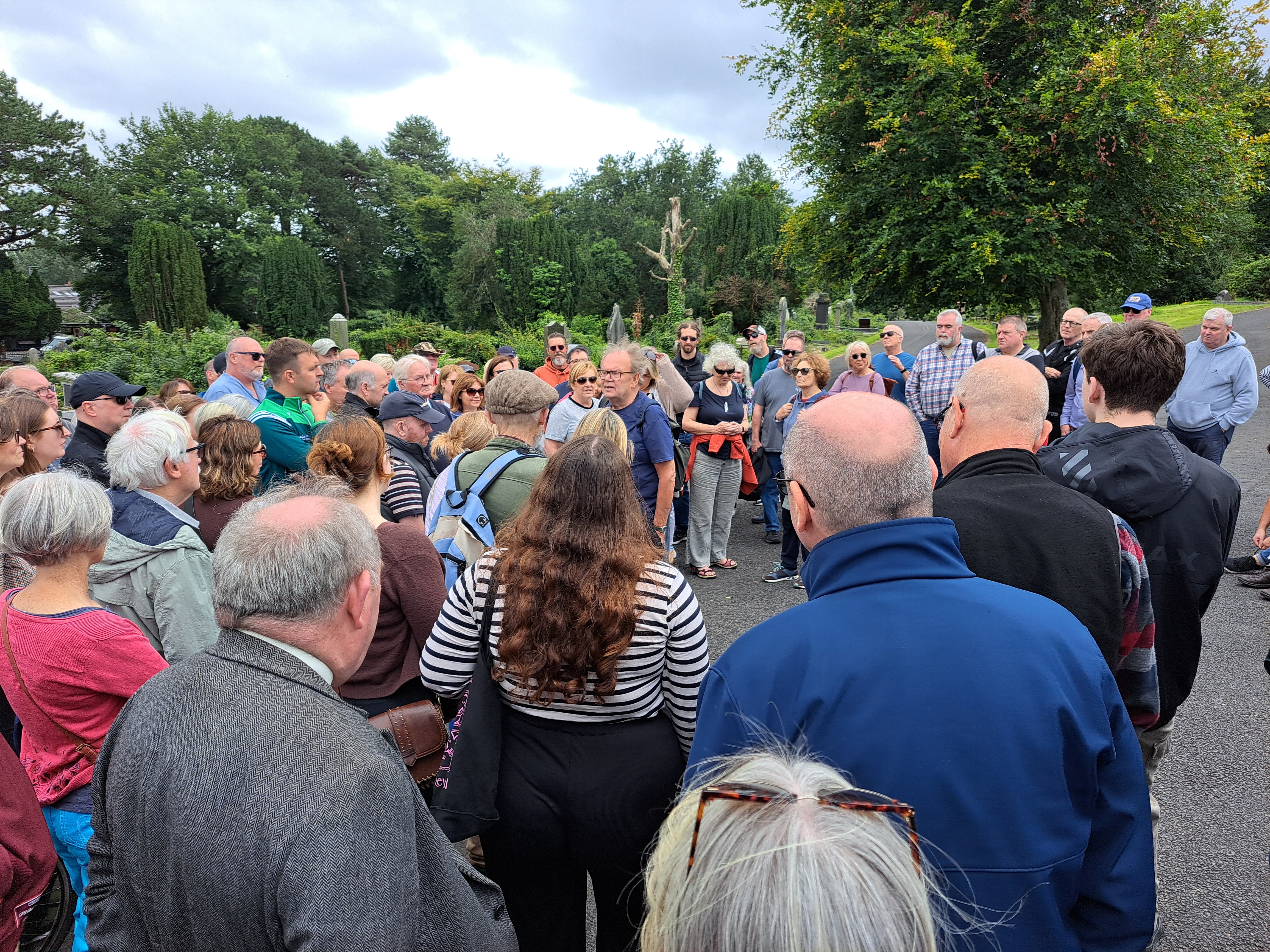
Start of the tour, showing some of those present

I see the first guided tour I attended was in March 2022. You can read that account here – Silent yet eloquent Memorials. There are a number of changes to the Cemetery made since that time, like the completion of the visitors’ centre, new signage all around the Cemetery, the restoration of the Vaults – which house the remains of such industrial luminaries as Sir Edward Harland and Thomas Gallaher – and a lot of new planting.

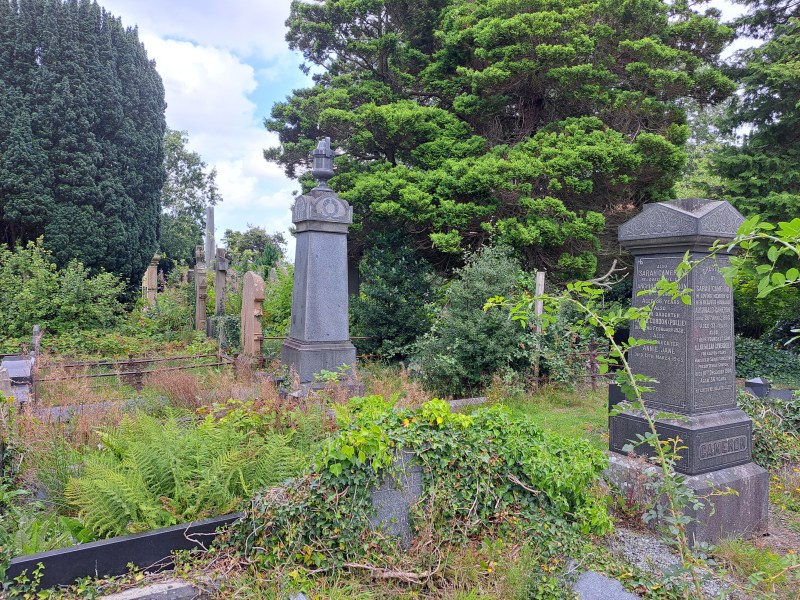
It is a very impressive cemetery, imaginatively laid out and designed by William Gay of Bradford in the shape of a bell (as in Belfast) and it contains some incredible Victorian, Edwardian and later memorials.
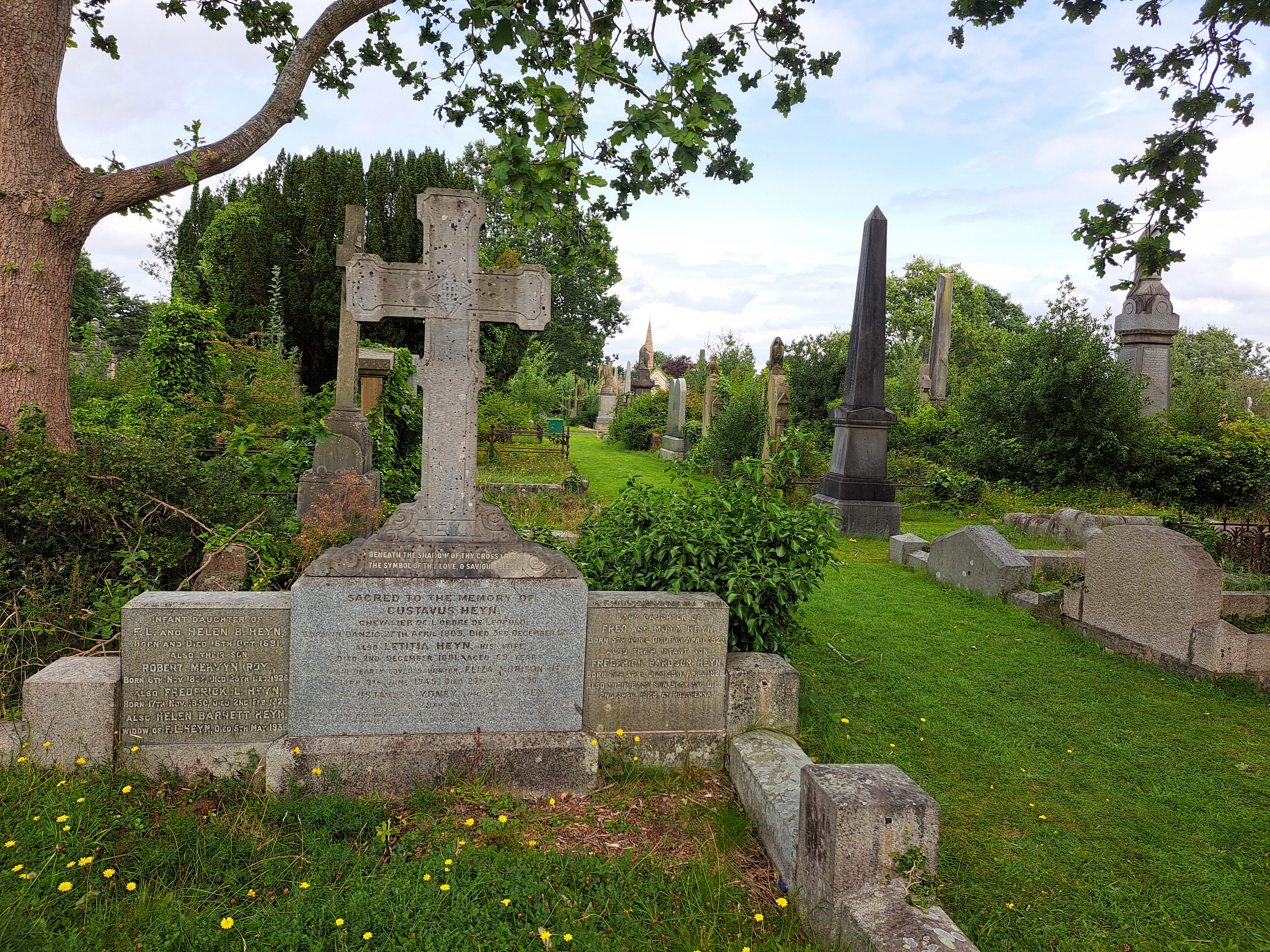
Gustavus Heyn, shipping magnate

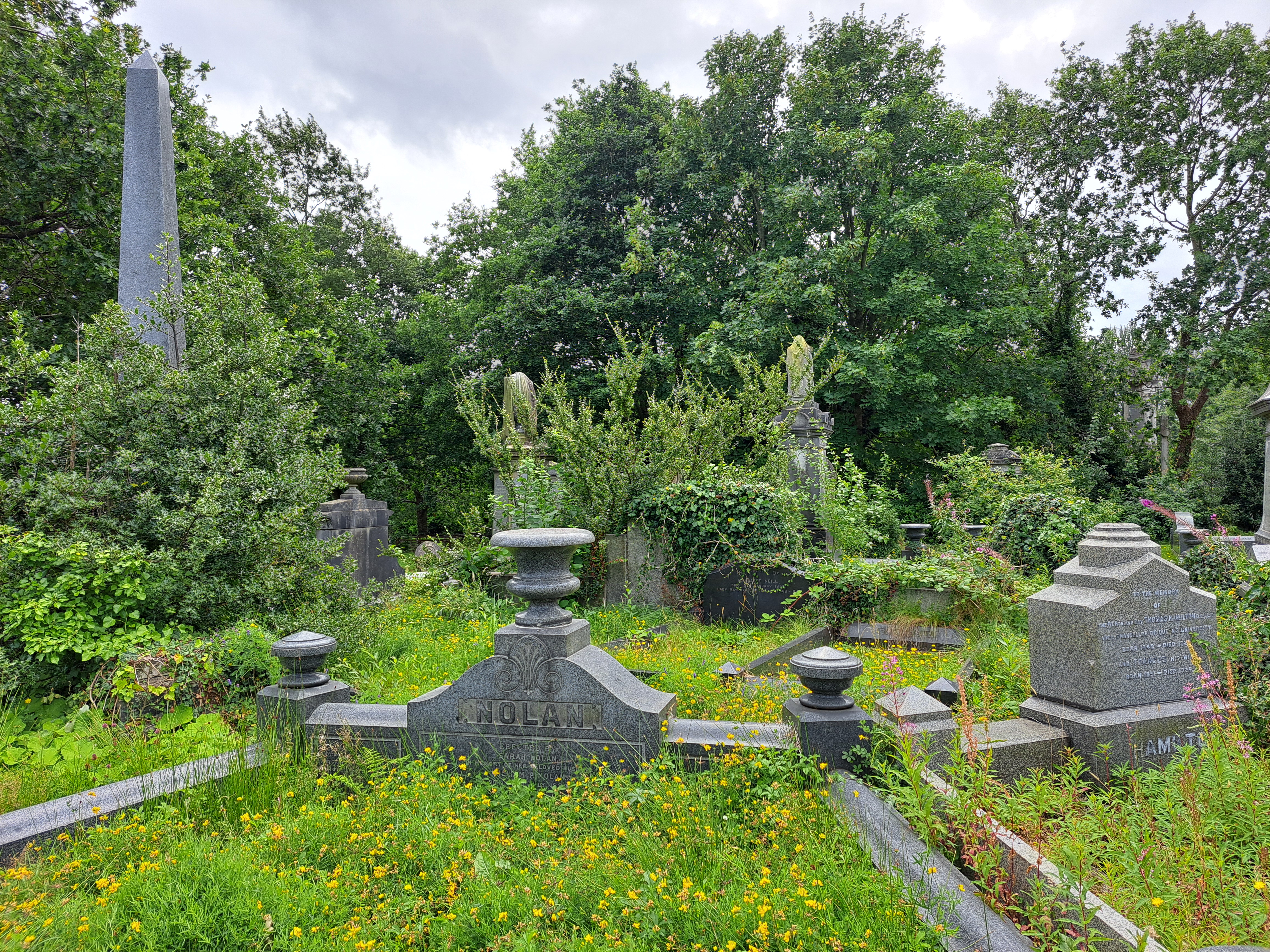
Some parts are still quite heavily overgrown and other parts have suffered badly from vandalism.
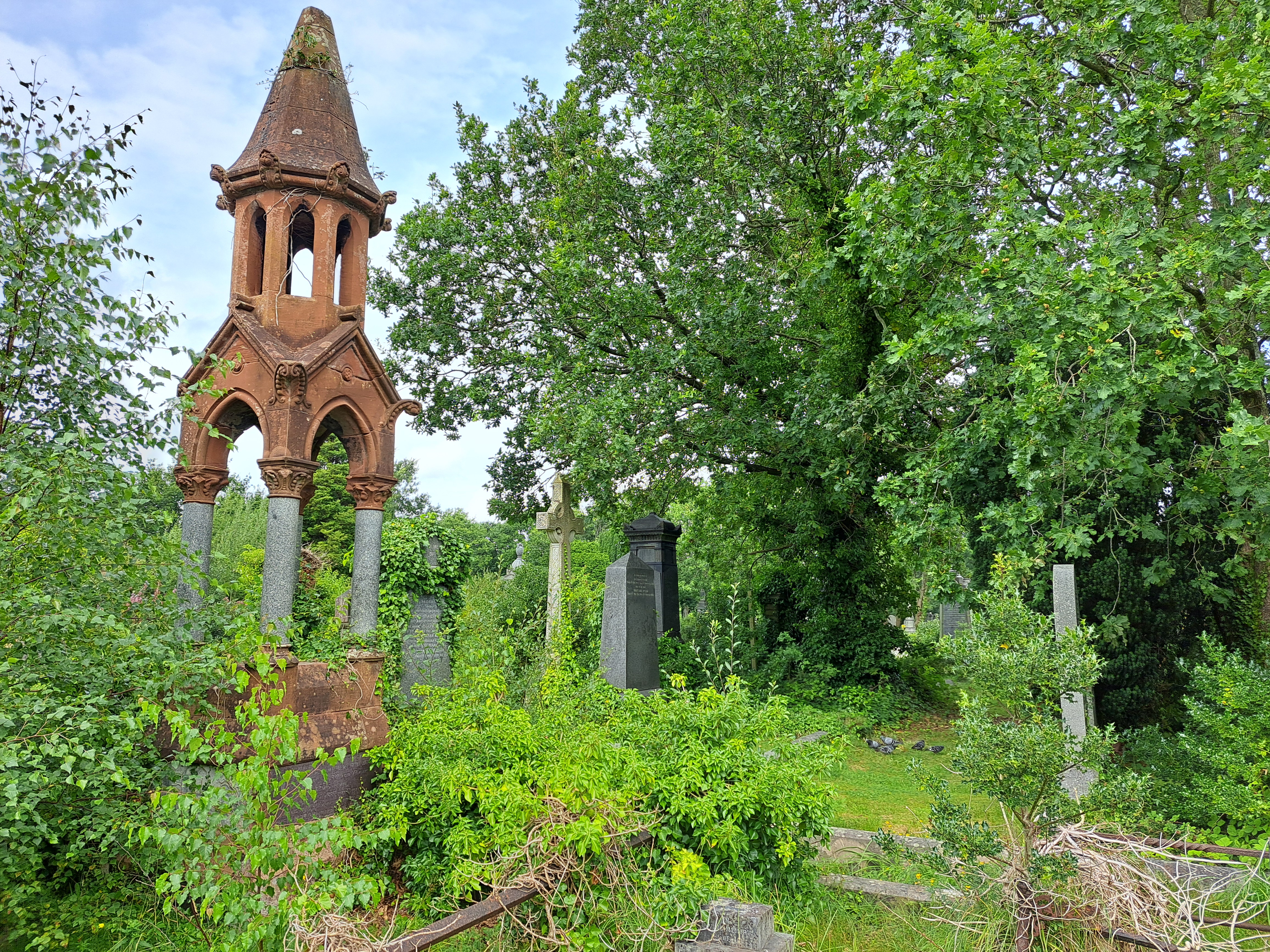
The Jewish section of the graveyard comprises a separate walled section although this has particularly suffered from vandalism and since 1964 Jewish burials now take place at Carnmoney Cemetery.
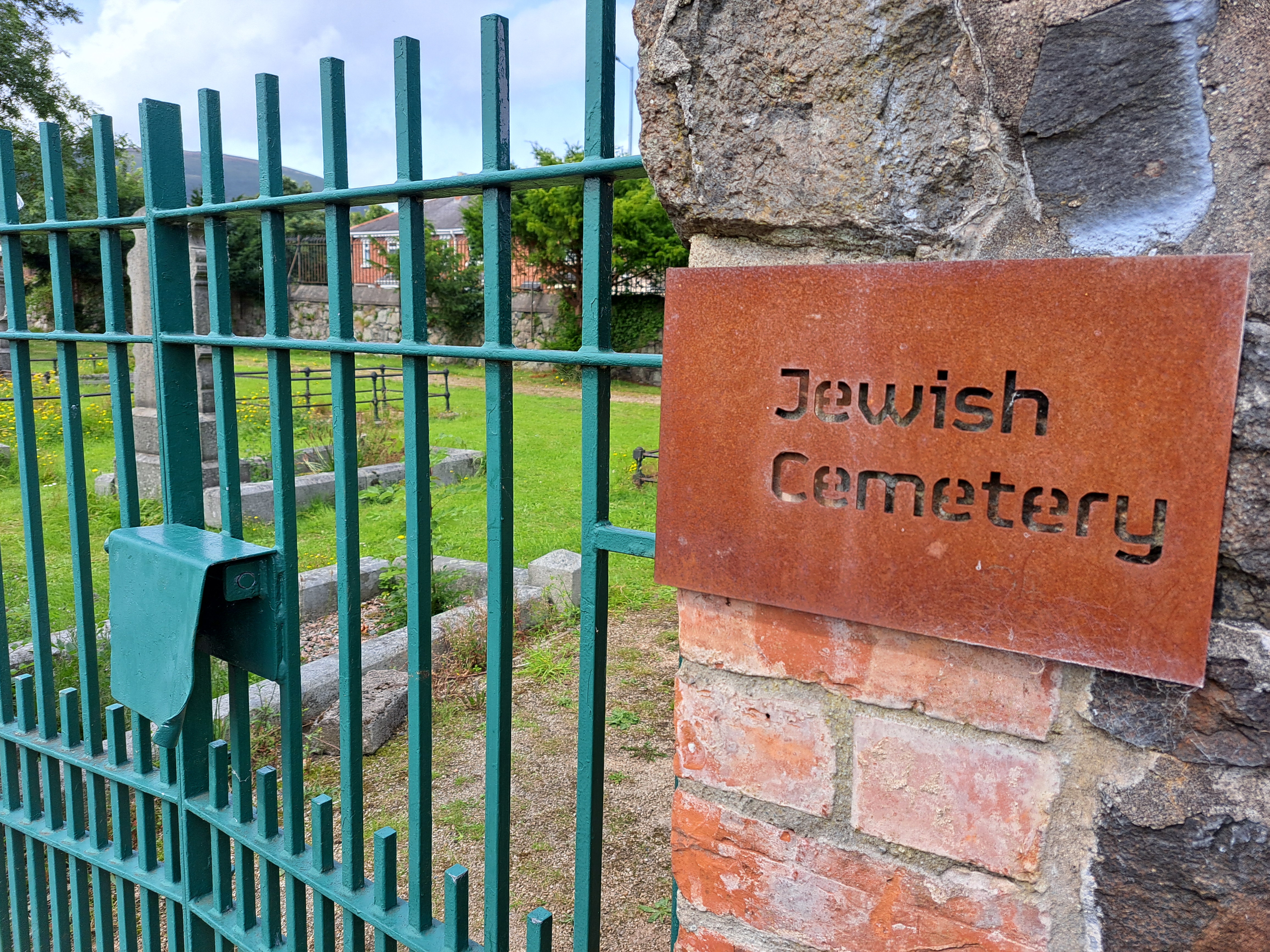
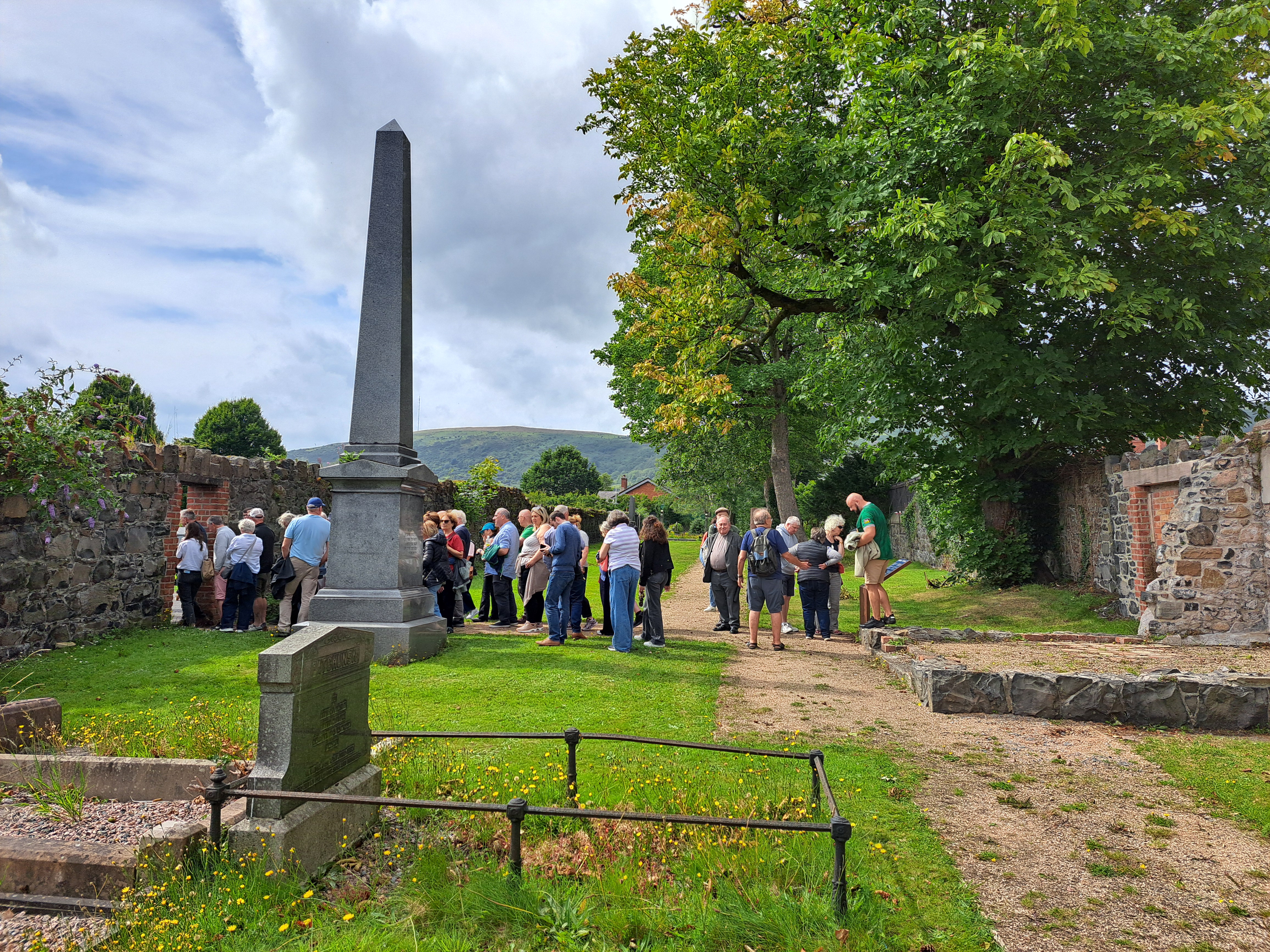
Entrance to the Jewish Cemetery
Inside the Jewish Cemetery. On the right is the remains of the Tahara, the mortuary chapel

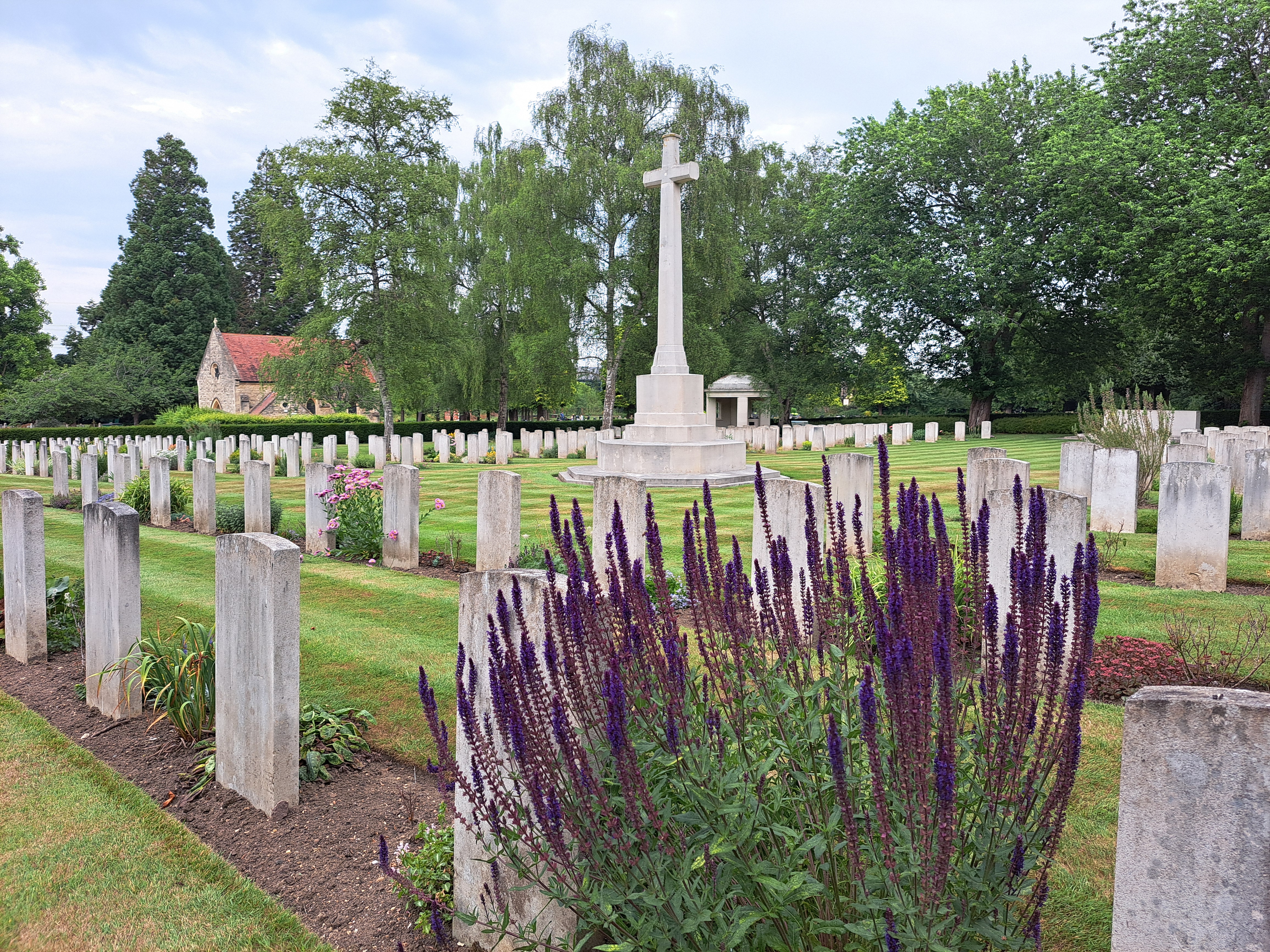
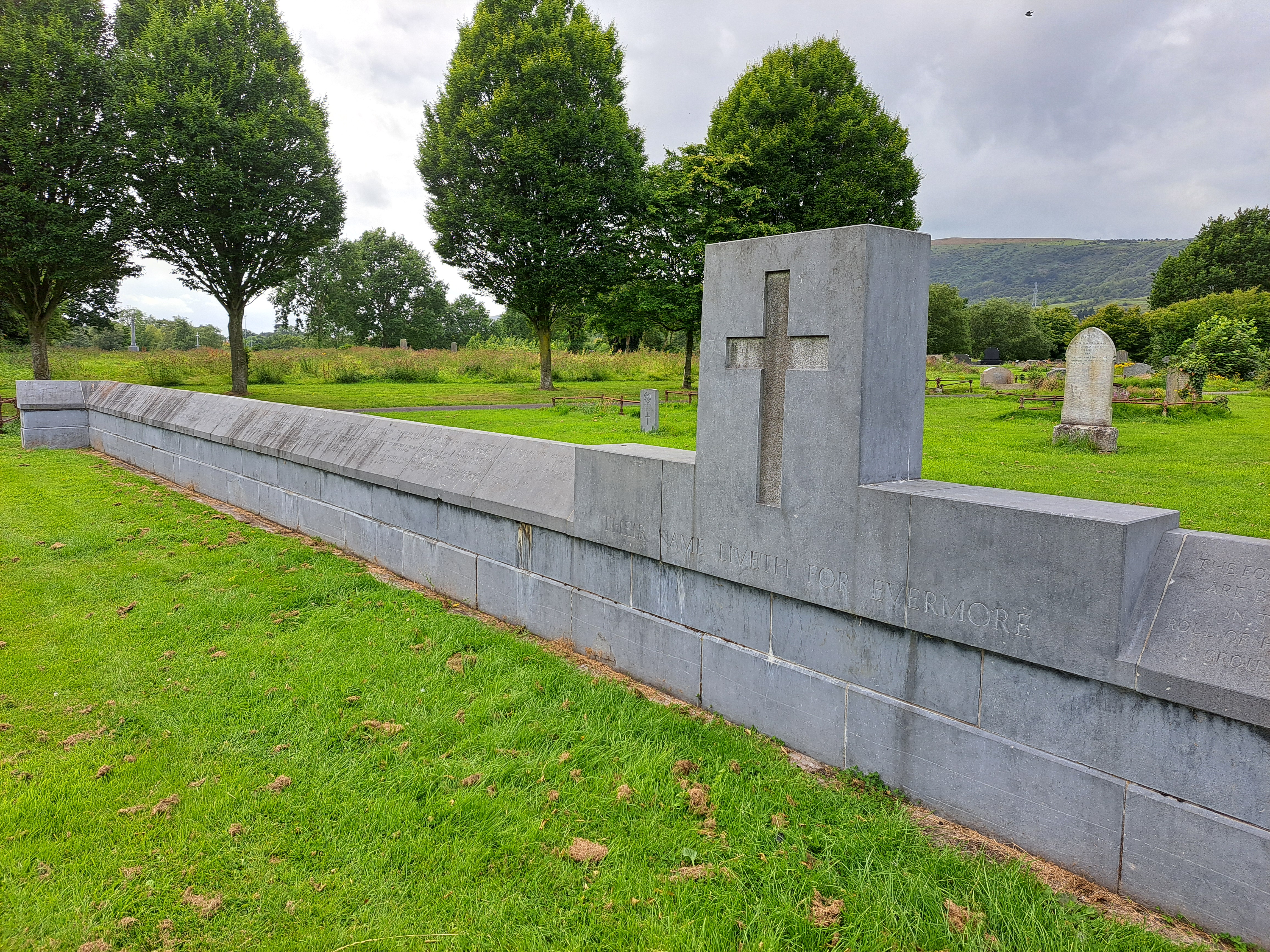
The Cemetery also includes a Commonwealth War Grave Cemetery with 296 burials from the First World War and 274 from the Second World War. There is also a Cross of Sacrifice (the same size as that in Botley Cemetery) and a First World War Screen Wall which carries the names of 74 soldiers who are buried in the First World War plot, 58 soldiers who are buried in unmarked graves and 8 soldiers who are buried elsewhere in the Cemetery.
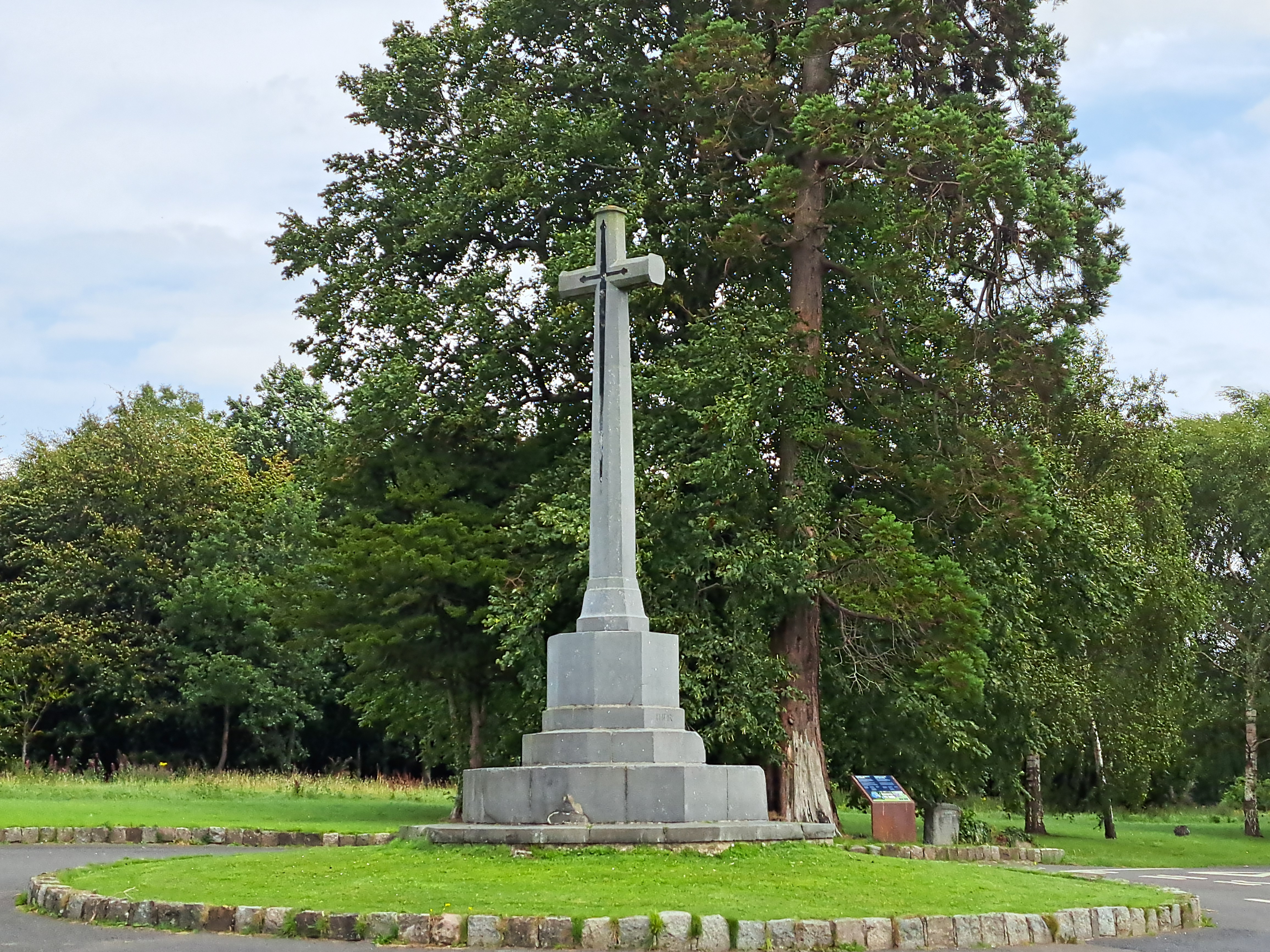
Cross of Sacrifice
Part of the First World War Screen Wall
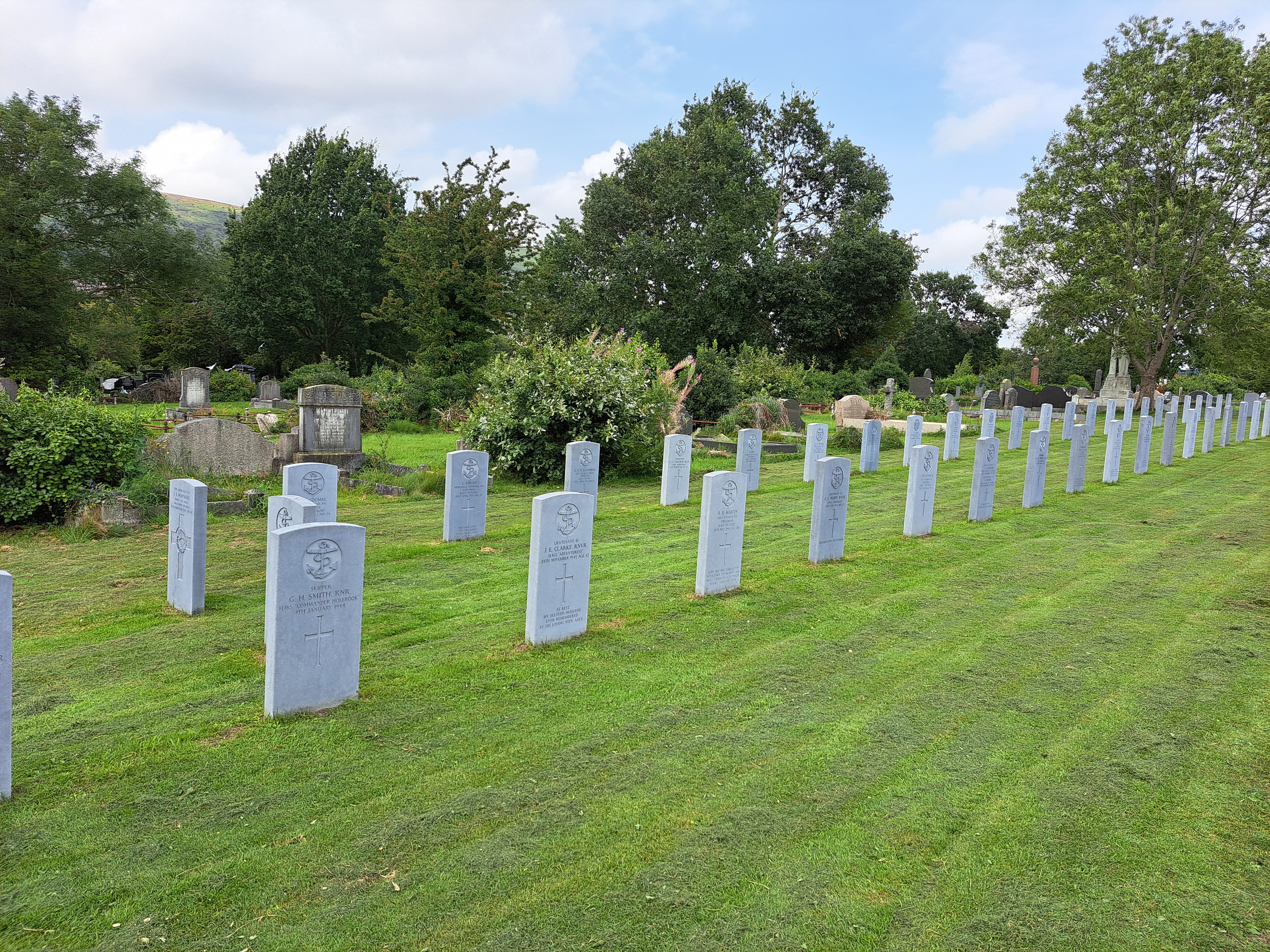
Second World War Royal Navy and Merchant Navy graves

There are a lot of significant people from Belfast’s past who were Non-Subscribing Presbyterians who are buried here, perhaps most notable are Lord and Lady Pirrie. Viscount Pirrie was the chairman of Harland and Wolff when the Titanic was built and was to have sailed with his nephew, the designer Thomas Andrews, on its maiden voyage, but was prevented from doing so by illness.
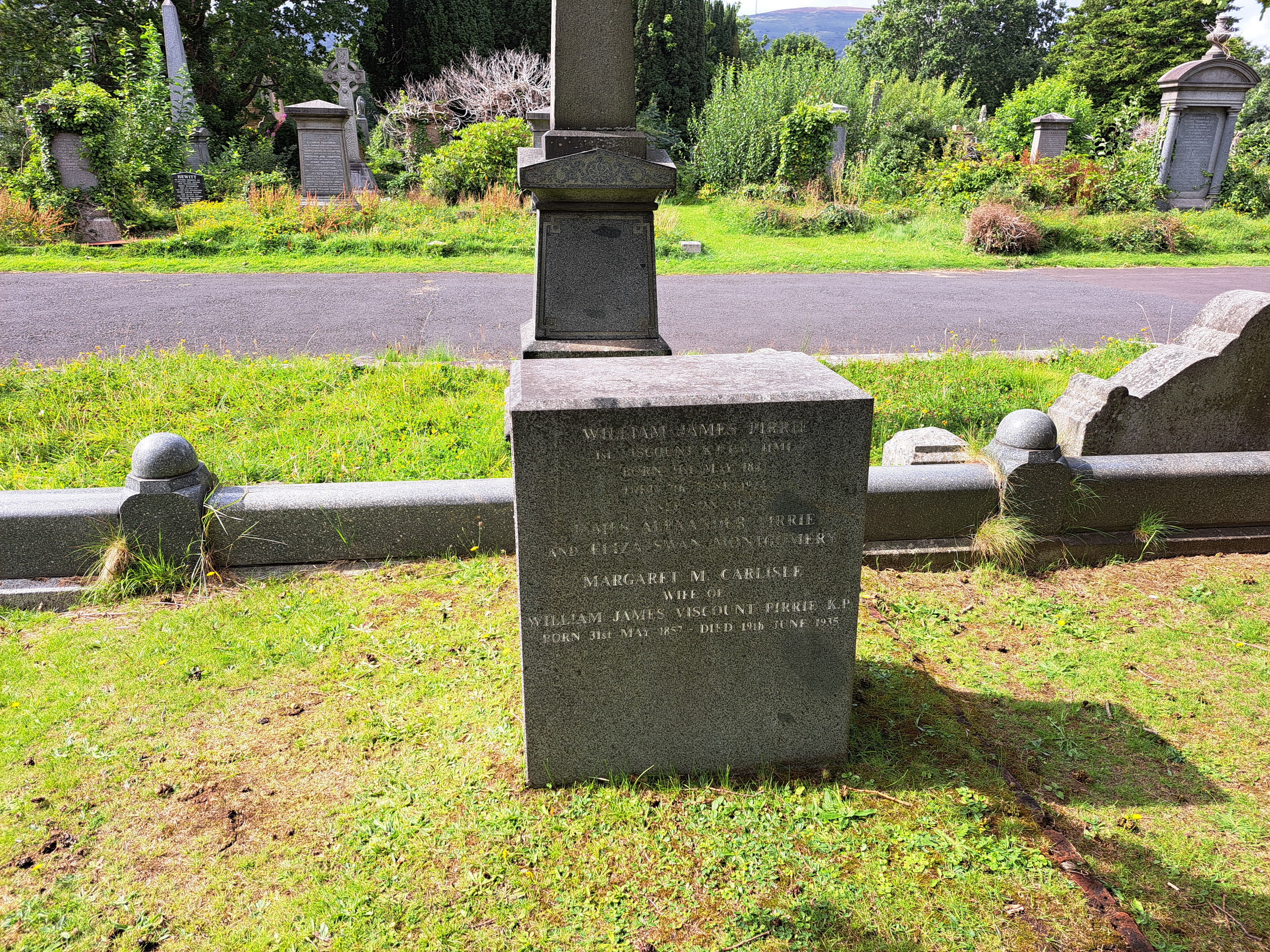
Grave of Lord and Lady Pirrie

I have written before about one of the most notable Non-Subscribing Presbyterian ministers buried here, the Rev John Scott Porter, and was pleased to hear from his great great great granddaughter as a result. He is buried with his brother, William, who was once the attorney general at the Cape Colony, and actually introduced at that time a franchise that was inclusive of all races. The Celtic Cross that marks their grave is one of the most impressive in the cemetery:
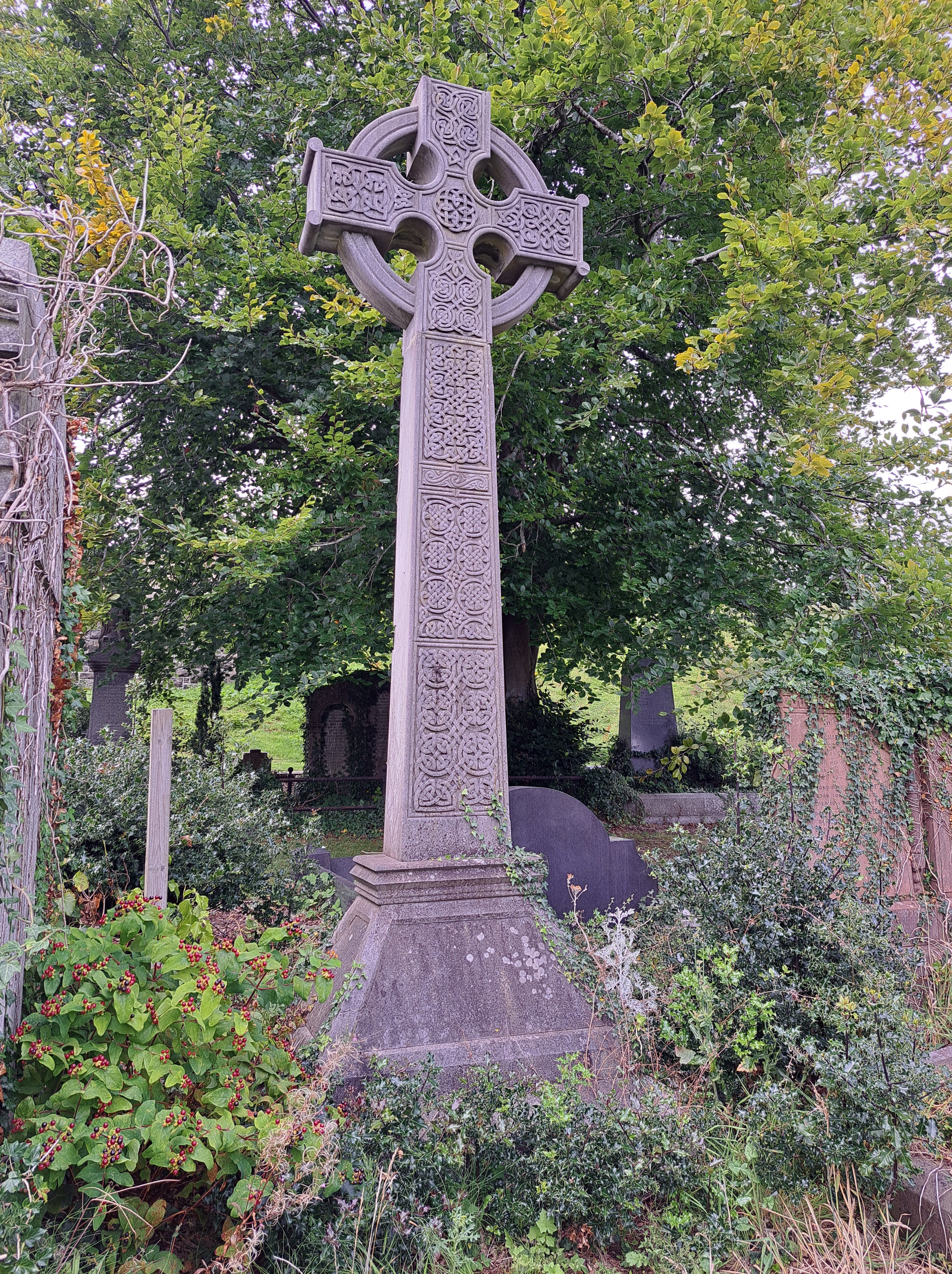
The grave of Rev John Scott Porter and William Porter

I also produced a short video about John Scott Porter at that time. This is available to view here:
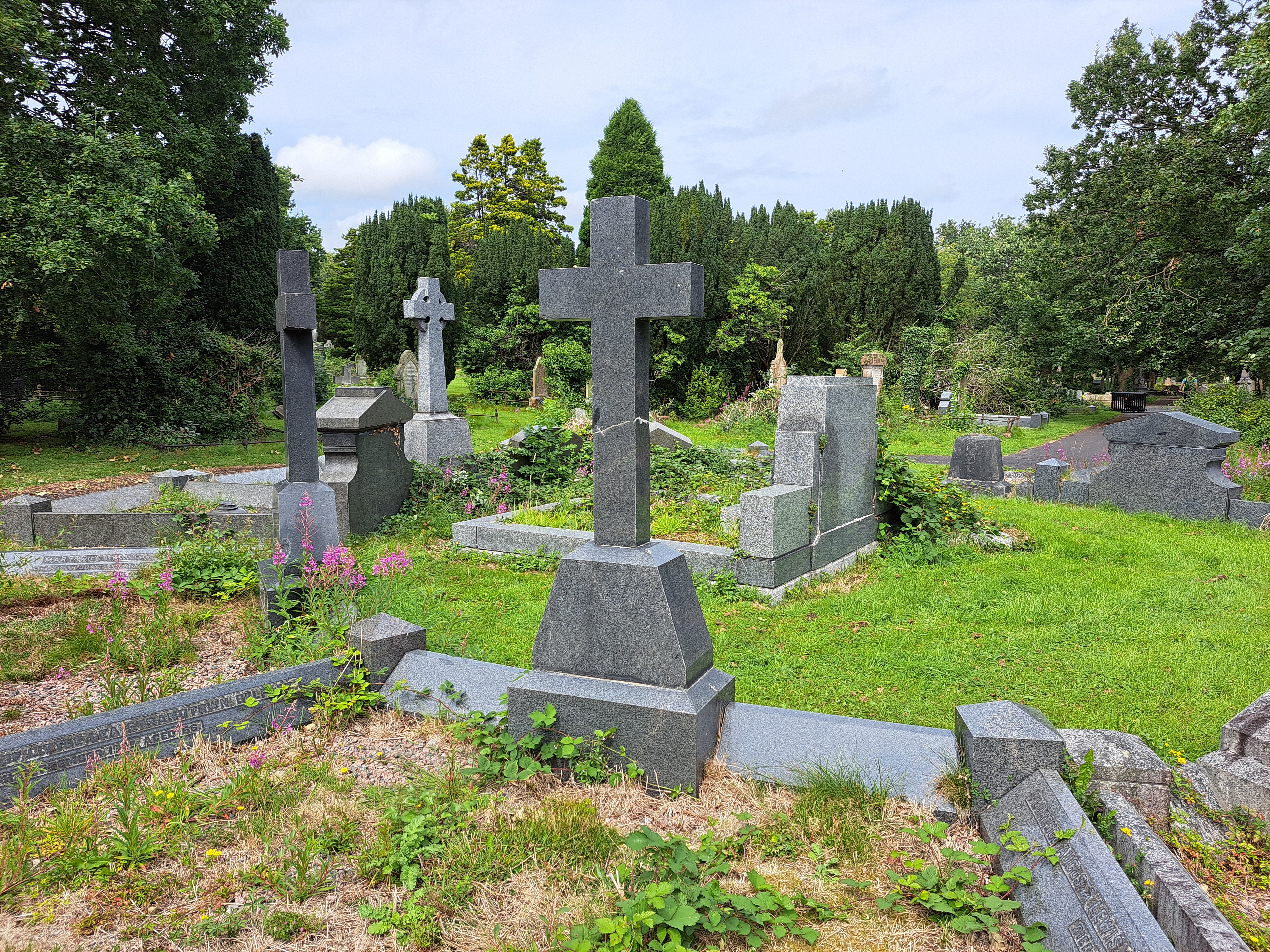
Click above to see the video
The grave of Florence and Albert James Lewis, the parents of C.S. Lewis
The tour at the Vaults and Central Steps

Postcards from Finaghy – and the Moore family of Finaghy and Dunmurry

Following our postcard views of Dunmurry in the 1930s I thought I would post some postcards from a place a short distance away; pictures of Finaghy, which probably date from a few years before, and which we know were taken by Allen Daniel Coon of Letterkenny and Moira.

The numbering system on the four cards is believed to point to a date in 1927 for their production. According to the excellent catalogue of Allen Coon’s cards produced by Brian Hamilton in 2016 there were five cards published in this series for W.J. Ross of Finaghy Stores but I only have four of them. These four images are quite common but I have to admit that I have never seen an example of the fifth card which is named as ‘Finaghy Road South looking North’.

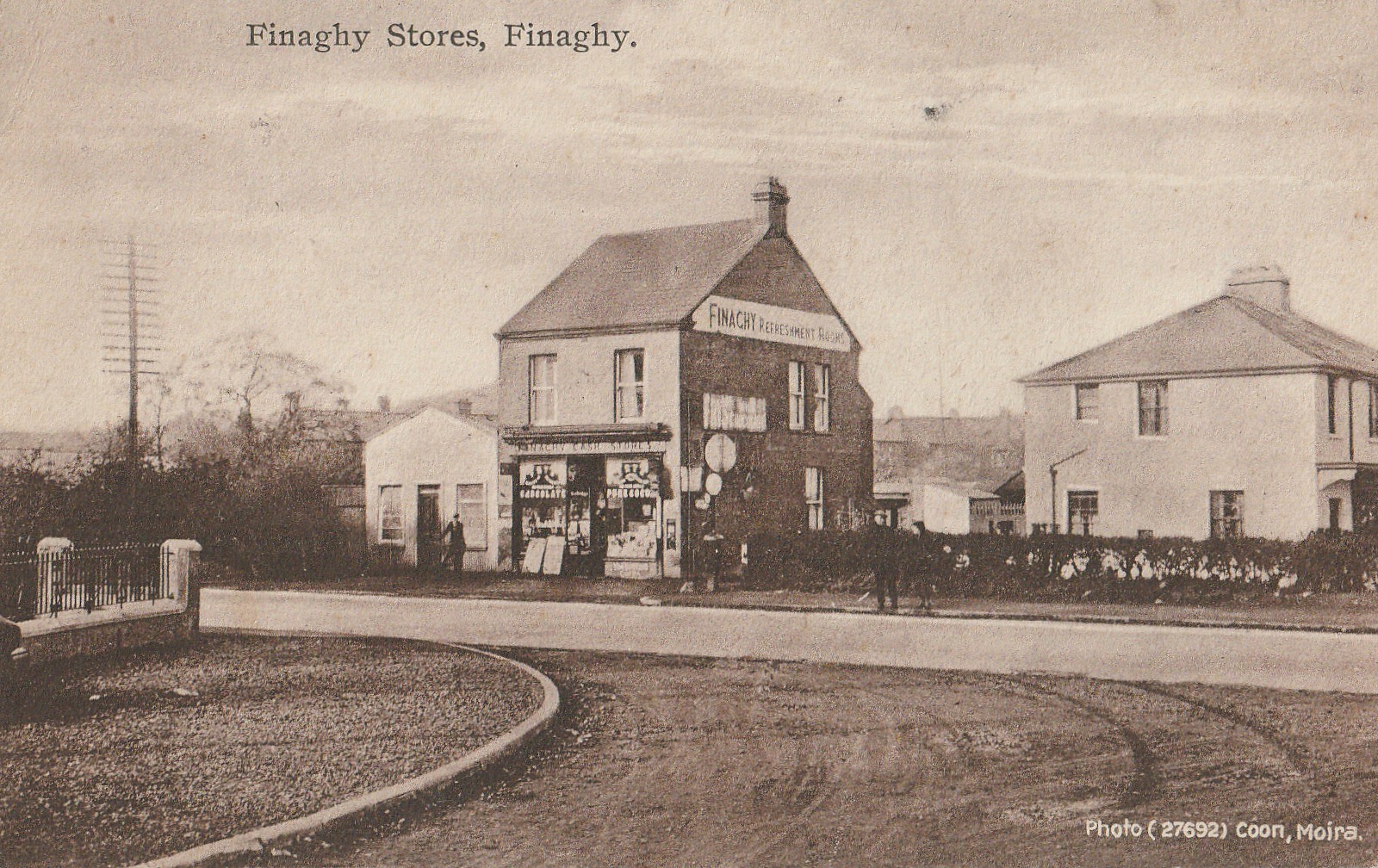
Finaghy Stores, Finaghy

The ‘Finaghy Stores’ postcard shows a solitary shop, that of W.J. Ross’s Cash Stores and Refreshment Rooms. It stands out very prominently in those days, but later had another shop joined to it and was surrounded by a number of other shops, including a couple of banks. The shop was well known to me in more recent times when it belonged to John Frazer, an active member of All Souls’ Church when I was minister there.

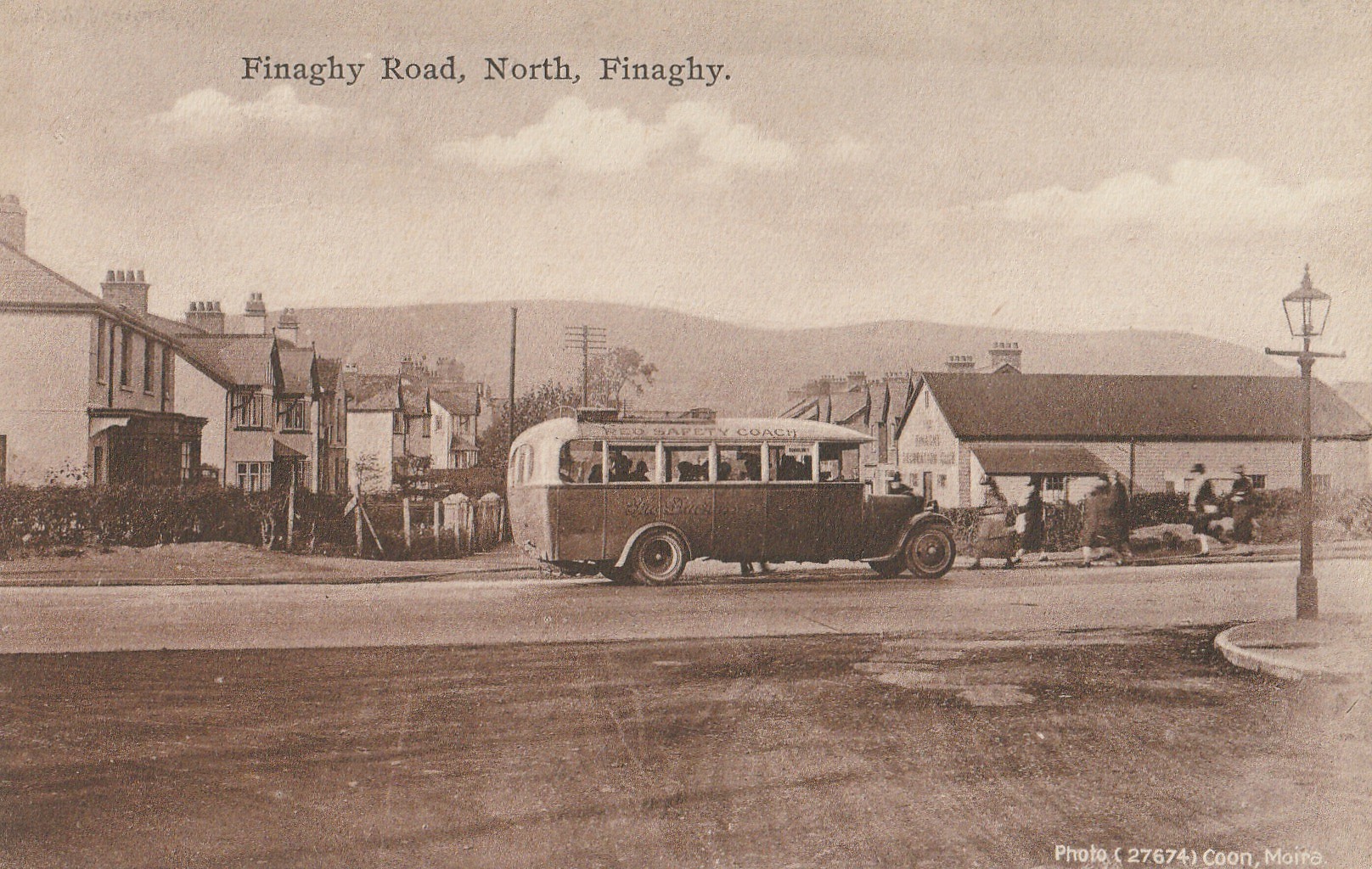
Finaghy Road, North, Finaghy

The postcard ‘Finaghy Road, North, Finaghy’ looks across the crossroads to Finaghy Road North and dates from a time when there was so little traffic that a bus could stop in the middle of the road to pick up passengers to be taken into town. This view has essentially not changed except for the addition of shops on one side and what was a bank on the other side of the road.

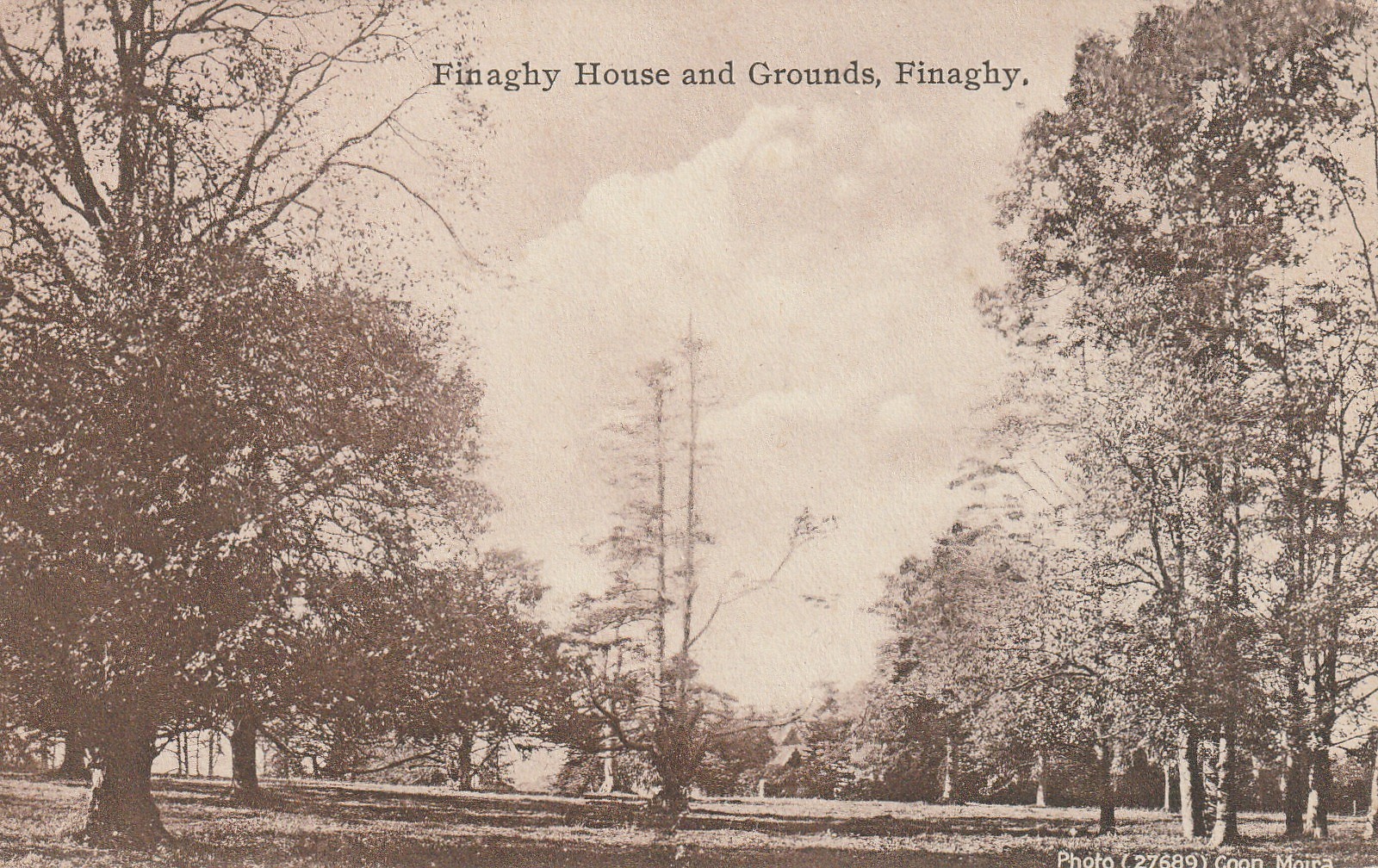
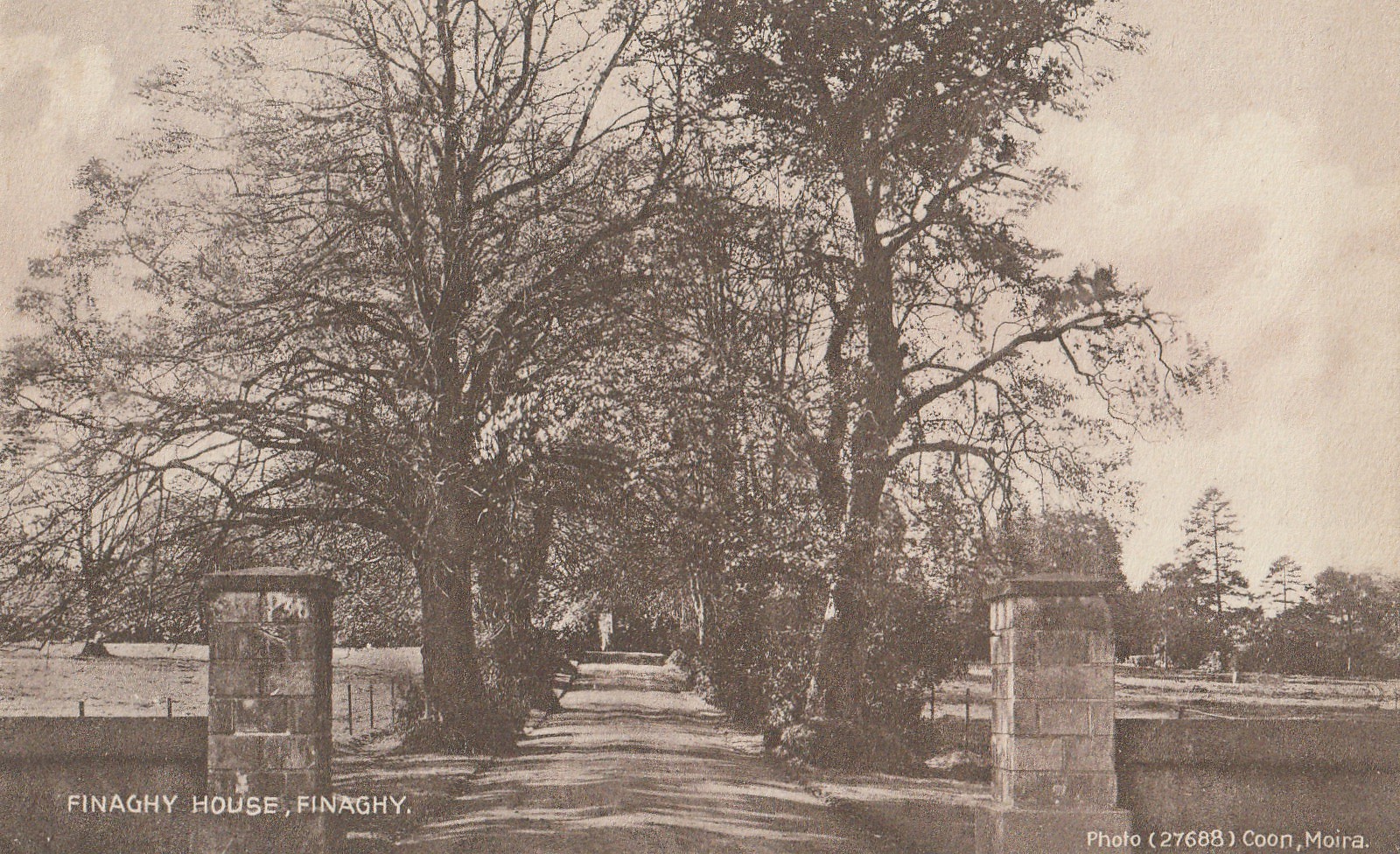
The other two postcards are a little more curious. Named as ‘Finaghy House’ and ‘Finaghy House and Grounds’, they could more accurately be titled ‘Finaghy House gateposts’ and ‘Finaghy House Grounds’ since neither card features any more than the merest suggestion of Finaghy House.

Finaghy House and Grounds

This is a pity really because Finaghy House will have been a major landmark at the time. Lord Belmont in Northern Ireland tells us all about Finaghy House in his excellent blog which you can read here. He tells us that the original house was built by Richard Woods at the end of the seventeenth century but was sold to the Charley family, a prominent linen family in 1727. Lord Belmont quotes the 1830 Ordnance Survey Memoirs as saying ‘the walls are nearly four feet thick and run together by grouted lime, similar to other ancient buildings.’ A descendant of the family said it was ‘an imposing mansion in a large park, with extensive outhouses and stables … a remarkable feature [of the interior] being a revolving fireplace between the drawing-room and the dining-room.’ The Charley family sold the house to a family named Brewis who, it is said, bred corgis, one of which had the distinction of being the first corgi owned by Queen Elizabeth, The Queen Mother.

In about 1890 Finaghy House was sold to James Moore and this is where a connection can be found with the Non-Subscribing Presbyterian Church of Ireland. James Moore was a direct descendant of Rev Henry Montgomery and the family were all members of our church at Dunmurry. In the 1901 Census he is listed as a Manufacturing Stationer living with his wife, Maria Lydia, who had been born in New Orleans. They and their three children (Harold Montgomery, Kenneth Montgomery and Sybil) all give their religion as Unitarian. As well as the five family members there are three servants listed as resident in the house. Harold and Kenneth are respectively stationer’s assistant and stationer’s apprentice to their father in 1901, Sybil is still at school. By the 1911 Census the three children are no longer living at home although there are still three (different) servants; a parlour maid, a cook and a housemaid.

Finaghy House by A.D. Coon

By 1911 James Moore was a JP in County Antrim. In the First World War Kenneth Montgomery Moore was commissioned into the 11th Battalion Royal Irish Rifles and was awarded the Military Cross. He returned home safely at the end of the war and his name is listed in the First World War Roll of Honour of the Non-Subscribing Presbyterian Church of Ireland  (published 2018).

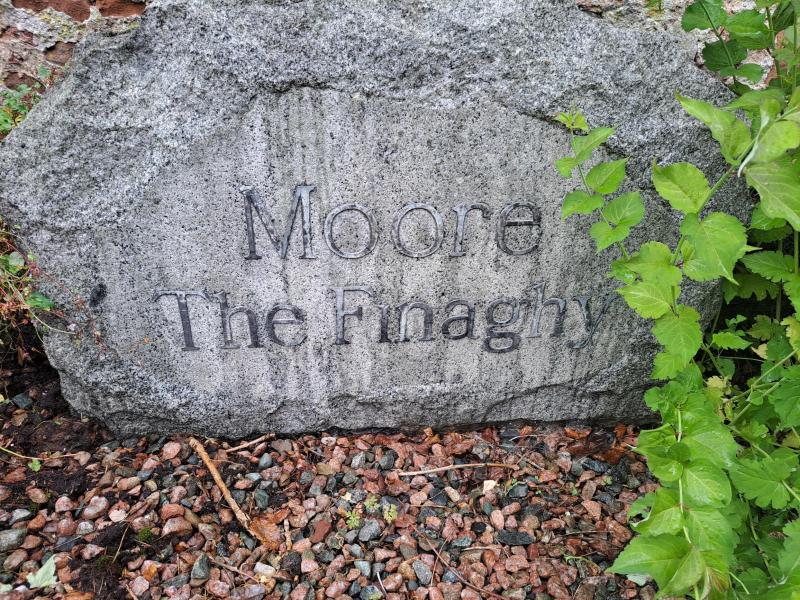
The Moore family burial ground can be found in their church, the First Presbyterian (NS) Church, Dunmurry. Marked simply as ‘Moore, The Finaghy’ it can be seen at the top of this page.

Commonwealth War Graves at Botley Cemetery, Oxford

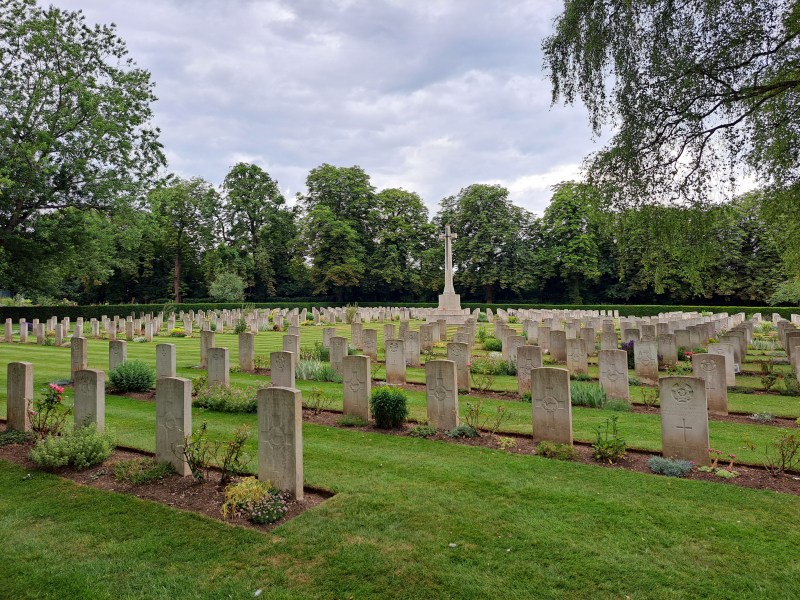
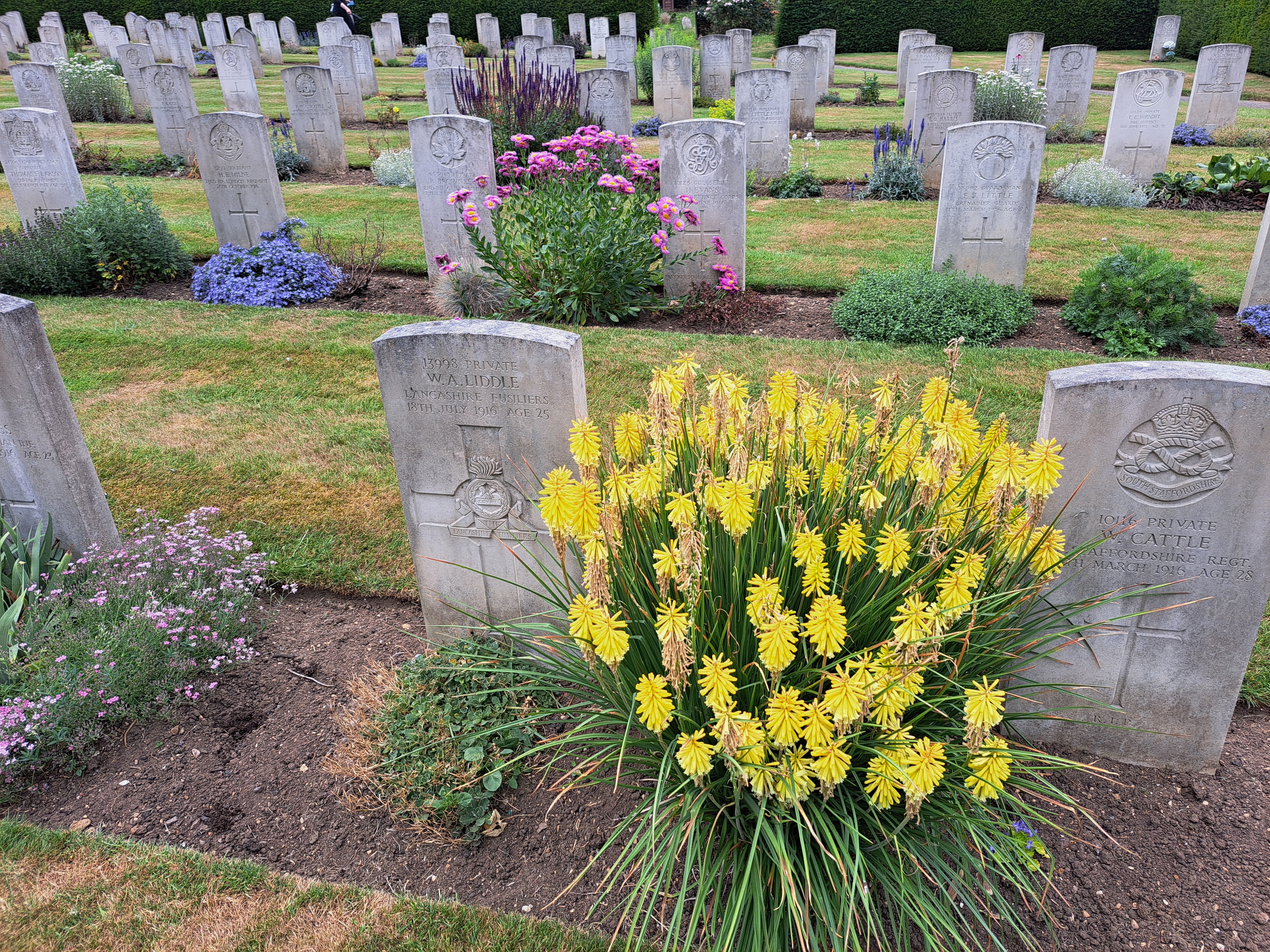
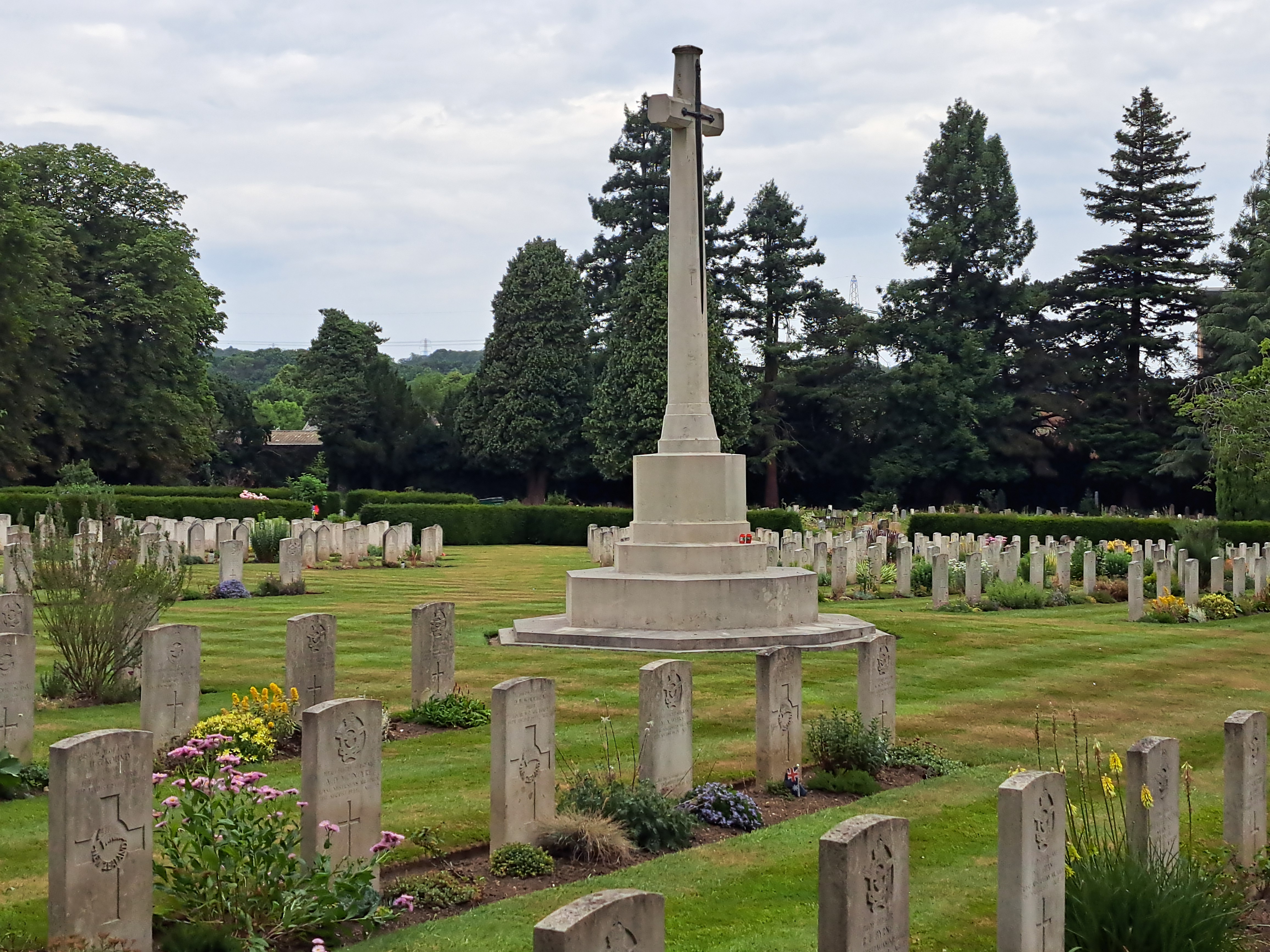
Visiting Botley Cemetery for the first time, despite seeing the signs for the Commonwealth War Graves, I didn’t expect to find such a large military cemetery of a size and with such features as you would expect to find in France or Flanders. Like all Commonwealth War Graves Commission cemeteries it is immaculately maintained, and a very moving place to visit.

I was surprised to find such a large graveyard of this sort in Oxfordshire, although it is inevitably true that many service men and women did die at home, either on home service, or were brought back because of wounds or found themselves in hospital because of accident or illness. Oxford provided a major regional hospital during the First World War, and again during the Second World War. Oxfordshire was also a major centre of RAF activity in the Second World War and Botley was then designated as a Royal Air Force Regional Cemetery. In the First World War the University Examination Schools housed the 3rd Southern General Hospital with room for 1,500 patients. The Schools weren’t the only venue for the war-time hospital, also put to use were Somerville College (for officers only), the Workhouse on Cowley Road, the Town Hall, University and New Colleges, and the Oxford Masonic Buildings on High Street. In the Second World War the Examination Schools were again used as a hospital.

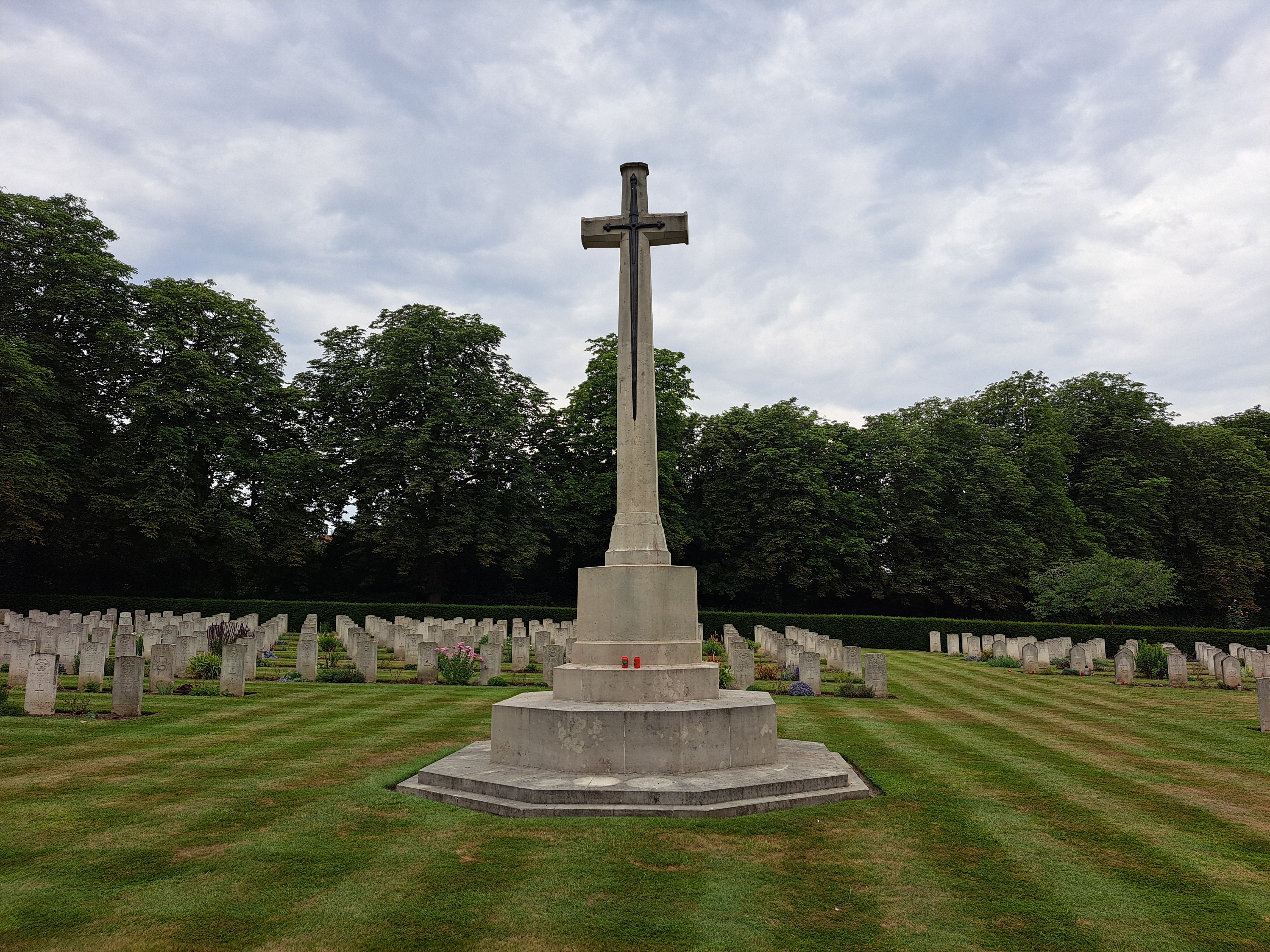
Botley Commonwealth War Graves Commission Cemetery has all the features that can be found in major cemeteries of this type. At the centre of the grave yard there is a Cross of Sacrifice, a large cross containing a bronze longsword, with its blade pointing down, it is said to be present in all graveyards containing 40 or more war graves. These were designed by Sir Reginald Blomfield and are a familiar symbol of sacrifice in so many places. By 1937 there were already over 1,000 of these crosses in Europe alone, more were to follow after the Second World War.

Cross of Sacrifice

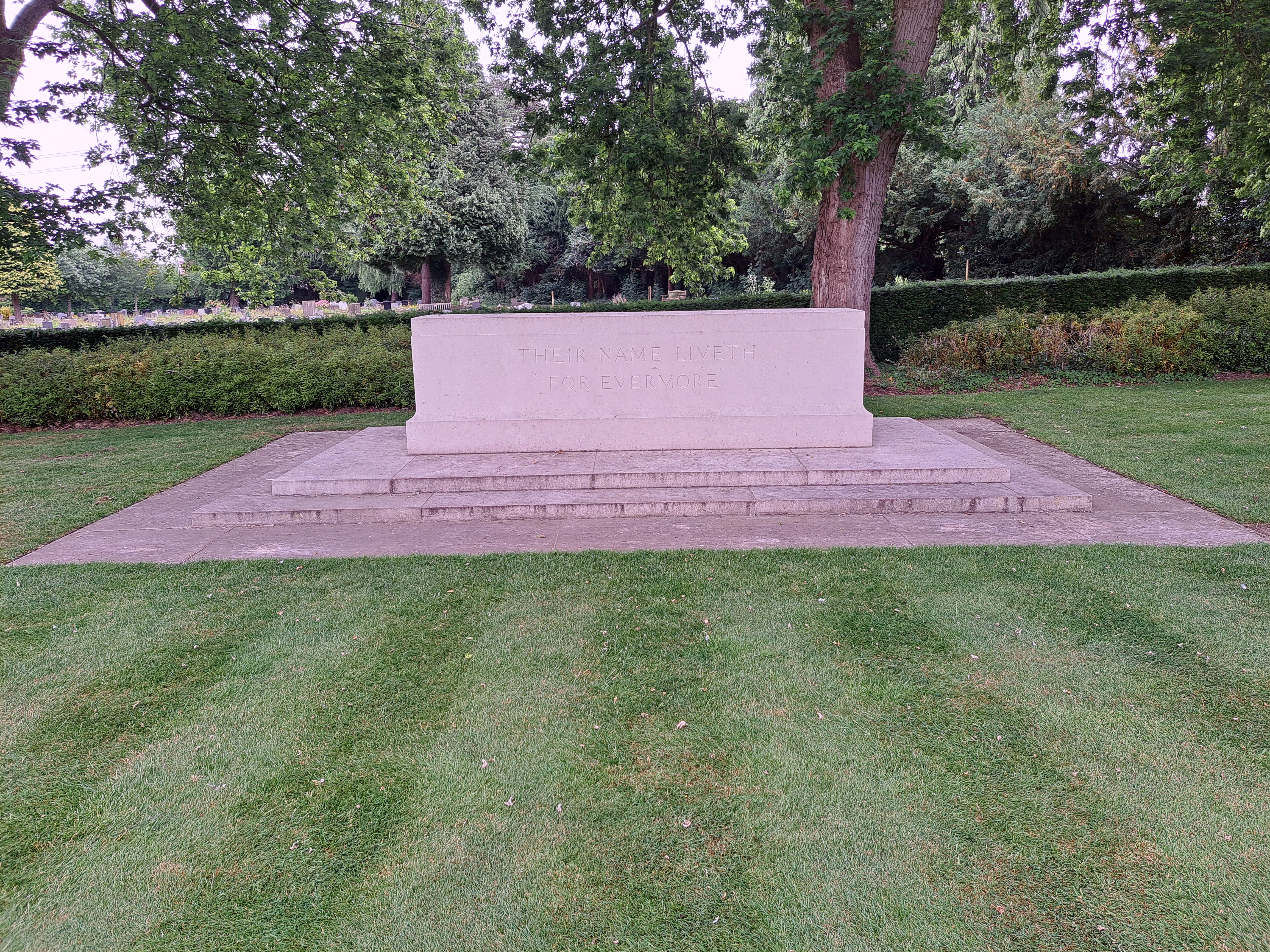
The Cemetery also has a Stone of Remembrance designed by Sir Edwin Lutyens for use in CWGC Cemeteries containing more than 1,000 graves. There are now hundreds of these all around the world but only 12 in the UK. With around 743 graves Botley was regarded as a special case, perhaps indicating that it is one of the dozen largest Commonwealth War Grave Cemeteries in the UK. Although not designed as such the Stone resembles an altar and carries a quotation from the book of Ecclesiasticus: Their Name Liveth for Evermore. Sir Edwin Lutyens was one of three principal architects of the Imperial War Graves Commission (as it was then called) and as well as his work in New Delhi and elsewhere is perhaps best remembered for his contribution to memorial architecture for the First World War, designing the Cenotaph in London and the Thiepval Memorial to the missing of the Somme.

Stone of Remembrance

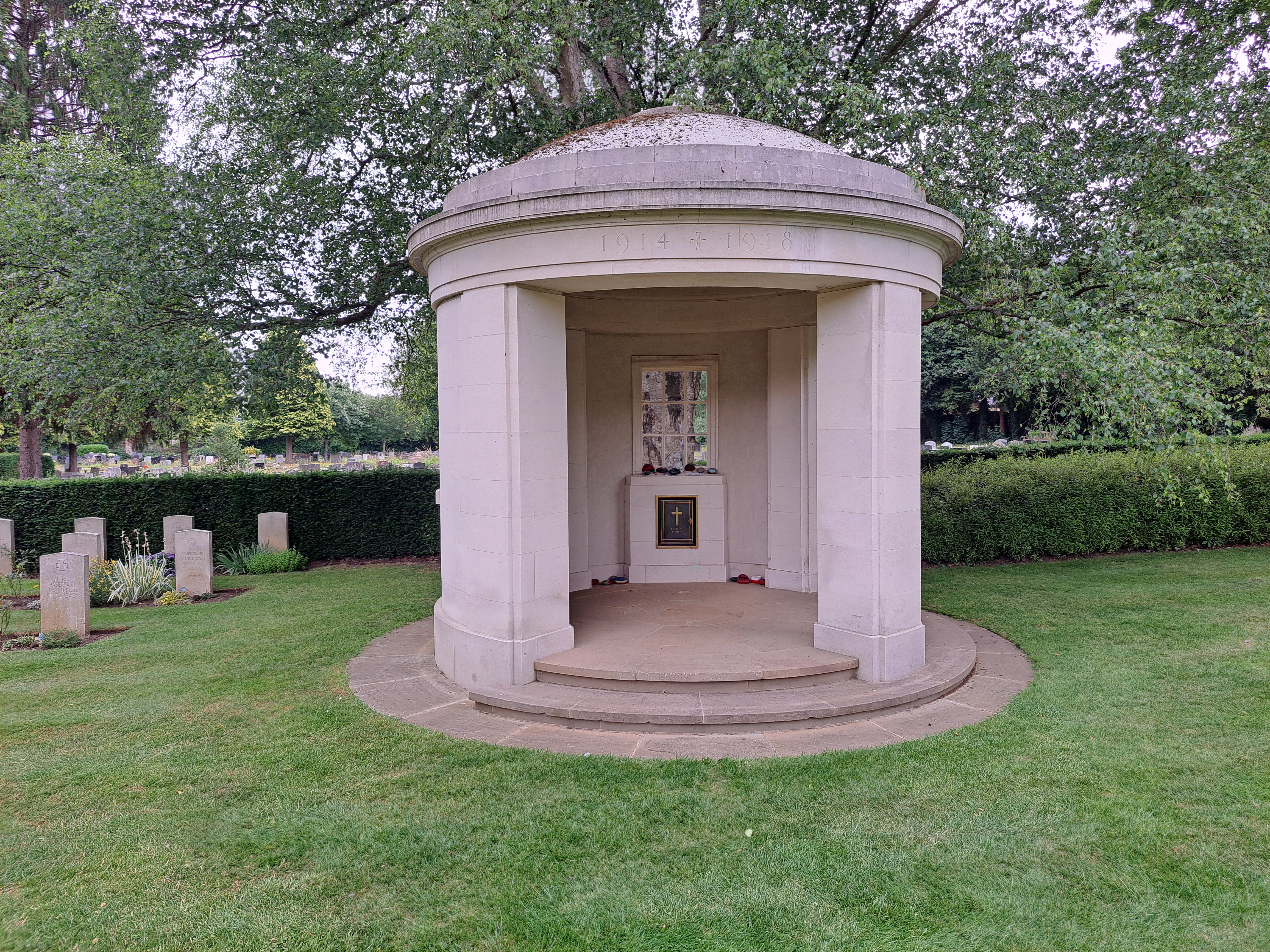
The third building found in the graveyard is the Shelter, designed by Sir Edward Maufe, the Principal architect of the Commonwealth War Grave Commission after the Second World War.

Domed Shelter

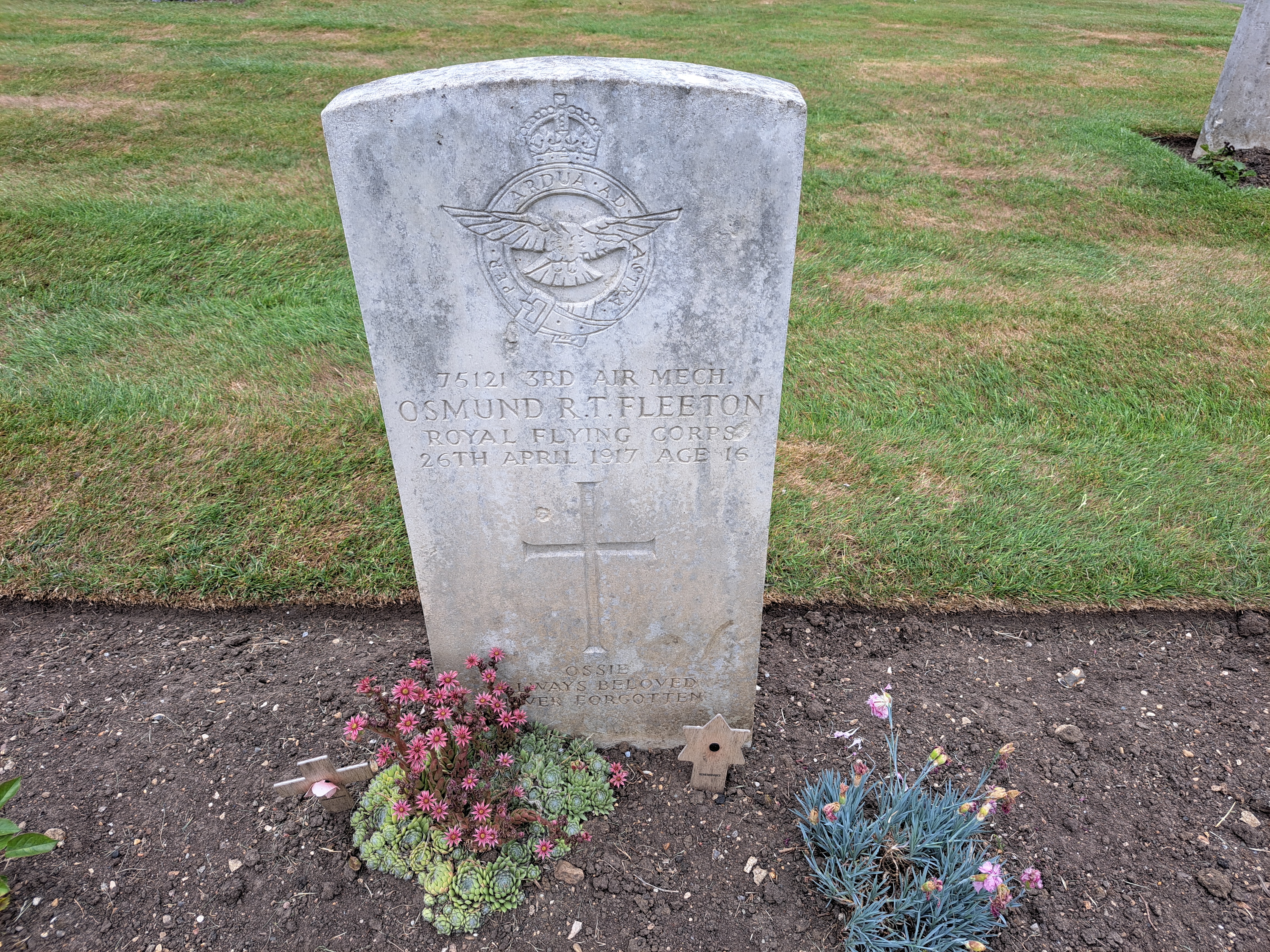
One of the first graves I noticed must be among the most poignant. It is that of Air Mechanic 3rd Class Osmund R.T. Fleeton of the Royal Flying Corps who was just 16 when he died. He came from Cork where his parents Robert and Jeanie Eloise Fleeton, lived at 1 Brookfield Villas, College Road. The official record says he ‘died of sickness 26th April, 1917’. ‘Ossie Always Beloved, Never Forgotten,’ his family inscribed on his grave.

Grave of Osmund Fleeton

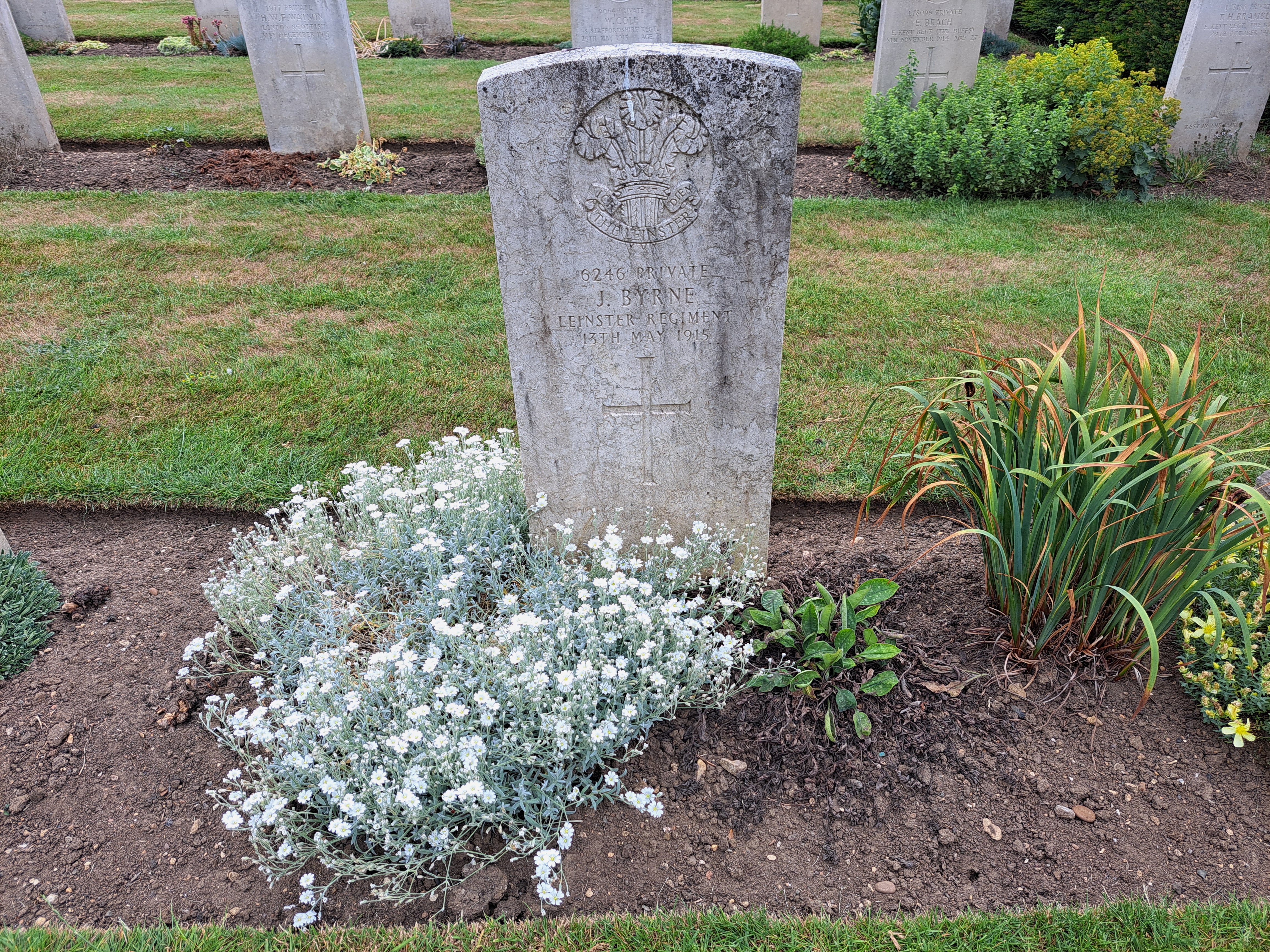
Another Irish grave is that of Private James Byrne from county Kilkenny of the 1st Battalion the Leinster Regiment who died on 13th May 1915.

Private James Byrne

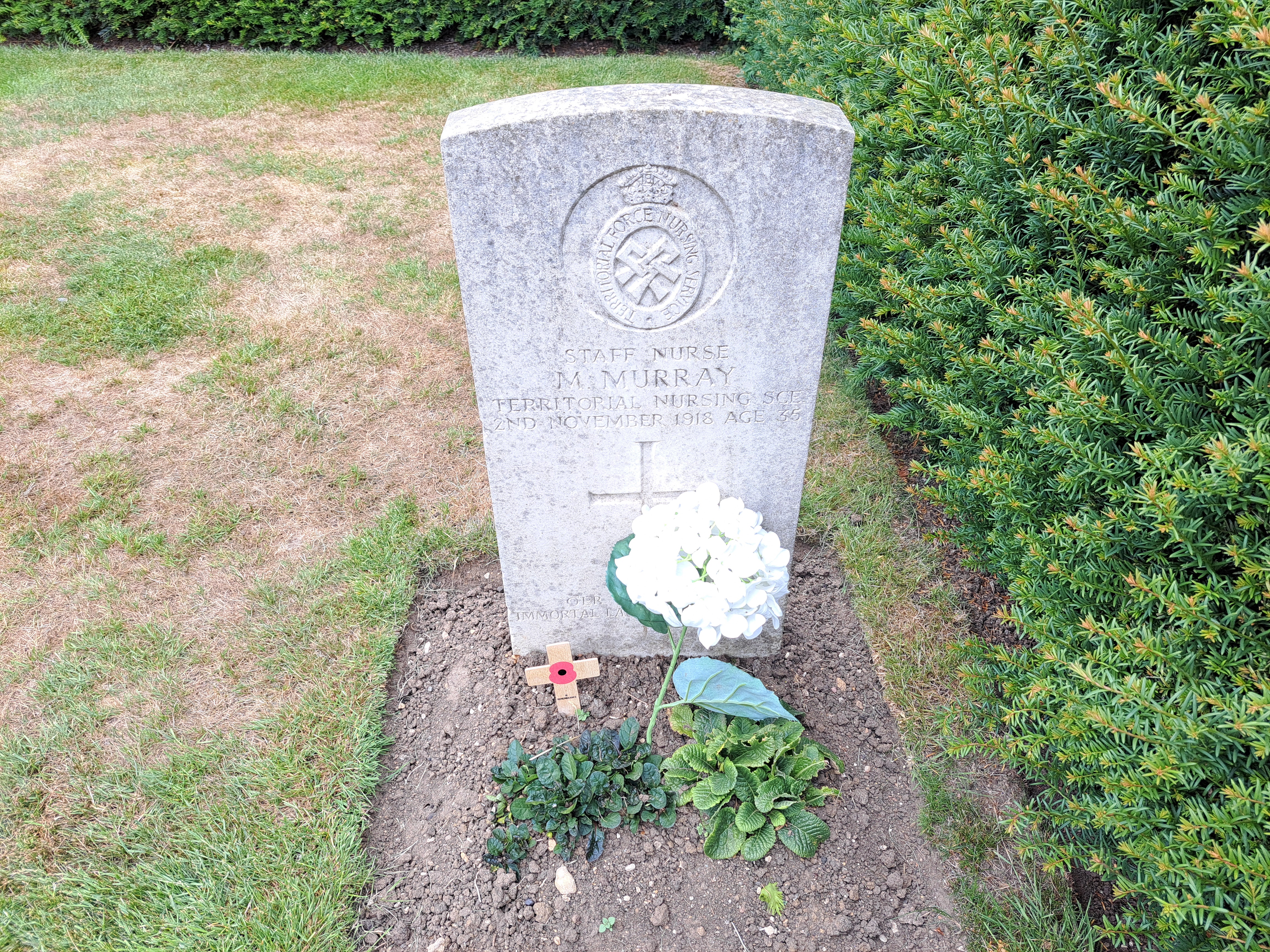
In one corner of the grave yard there is a solitary grave of a nurse – Staff Nurse Mabel Murray, of the Territorial Force Nursing Service, who worked at the 3rd Southern General Hospital and who died of influenza on 2nd November 1918 at the age of 35. She was one of the victims of the so-called ‘Spanish flu’ which swept over the nation at the end of the First World War, and it may be that the reason her grave is situated in a lonely corner is that they expected more of her colleagues to fall victim to influenza, but thankfully this did not transpire. She is not the only woman buried in the cemetery, however. Nineteen years old Aircraftwoman Glenys Doreen Harris is buried in the RAF section having been killed when an RAF Mosquito crashed in training at Upper Heyford on 24th September 1945.

Staff Nurse Mabel Murray

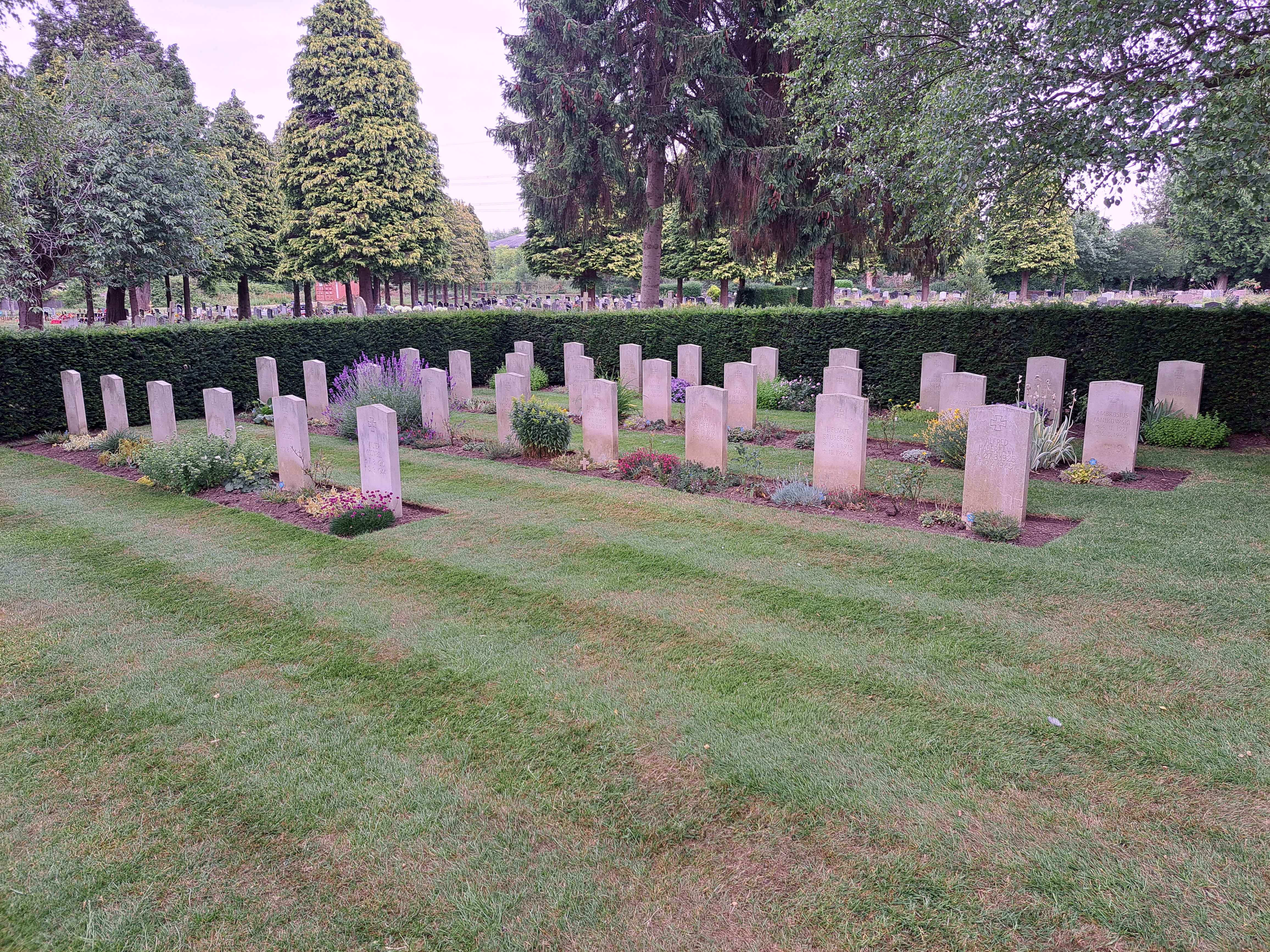
The graveyard contains the graves of many nationalities from both world wars including those who came from the then dominions of the British Empire (Australia, New Zealand, Canada, and South Africa) as well as other countries including Belgium, Czechoslovakia, Italy, The Netherlands, and Poland. Botley also contains the only grave of a Greek soldier in Britain – Private T. Lagos, who died in Oxford on 18th October 1944. His headstone is inscribed with a quotation from Pericles’ funeral oration as recorded by Thucydides: The whole earth is the tomb of famous men’. There are also a number of German graves from the First World War as well as a large section of 33 graves of German soldiers all dated 1944 who presumably were prisoners of war. It was strange to see the German war graves although their presence is perhaps slightly reminiscent of the memorial in New College Chapel to former German students who had been killed in the Great War.

German war graves

The precise number of graves in the CWGC cemetery at Botley varies according to which source you consult but I did notice a number of other military graves from the world wars located outside the Commonwealth War Graves area which might account for the variations. But it is certainly a very peaceful place, a well-cared-for corner of a municipal cemetery, a silent memorial to those who gave their lives.

Harry Midgley: 1938 Election Address

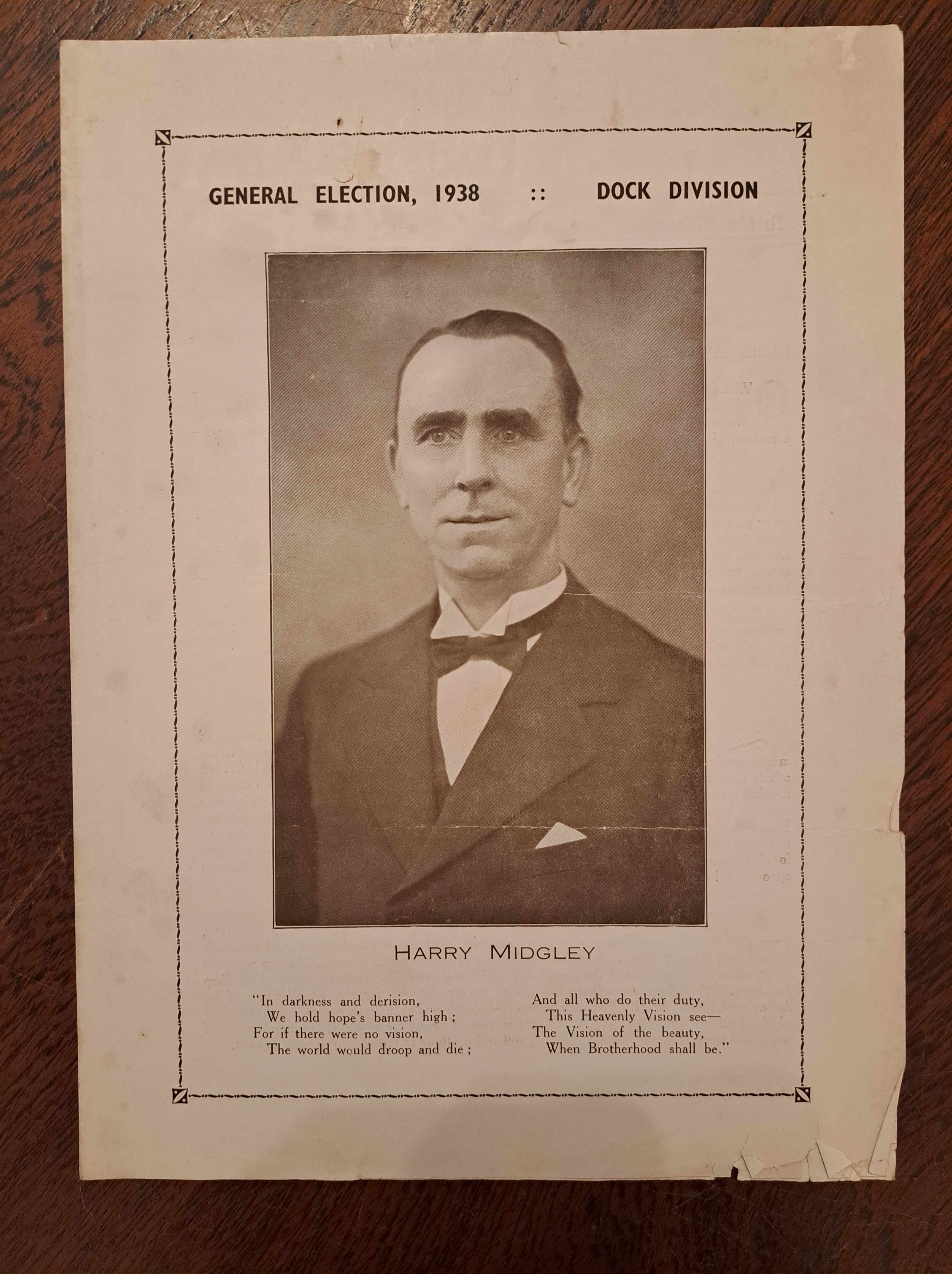
One of the recently discovered items in the Very Rev William McMillan Library is the election address produced by Harry Midgley for the Dock Constituency in the 1938 Stormont Election. This is a fascinating piece of history, a very rare survival, that tells us about the career of a controversial figure in Belfast political history:

Click above to see the video

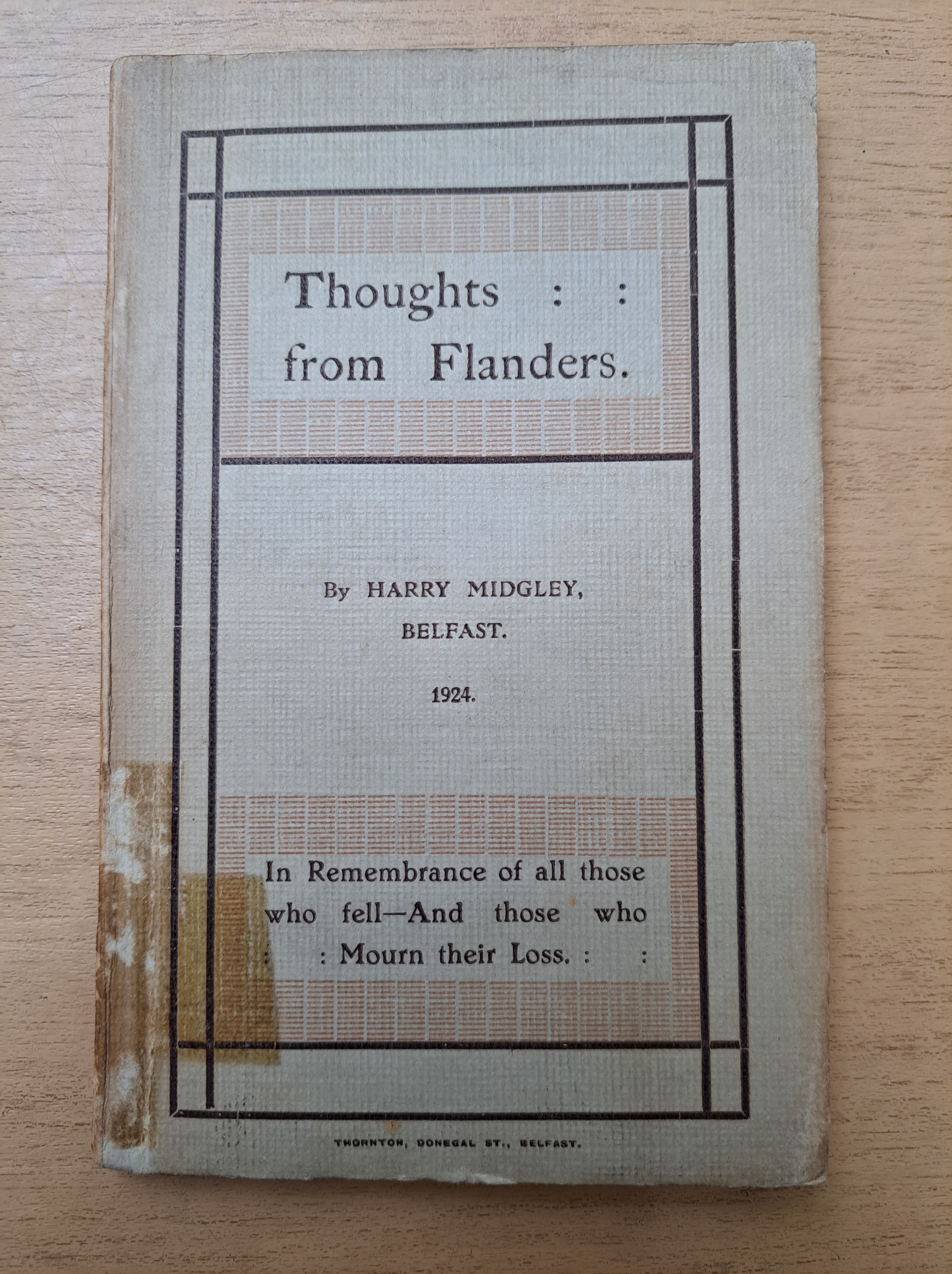
Harry Midgley was born in North Belfast, in Tiger’s Bay, and from his youth was involved in the nascent Labour movement in Northern Ireland. According to the ‘Dictionary of Irish Biography’ as a boy he attended a Sunday School connected with the Independent Labour Party in Belfast and he certainly met Keir Hardy in Befast as a youth and began speaking on behalf of the ILP on the Custom House steps while still a teenager. In his early days, right up to the early 1920s, Harry Midgley supported the all-Ireland Socialist ideals of James Connolly, nevertheless on the outbreak of war in 1914, along with his brothers, he joined up, enlisting in the Royal Inniskilling Fusiliers and served throughout the First World War. Later, in 1924, he published his reflections on his war-time experiences in poetic form. Much influenced by Kipling his verses also show the mixture of Christian values coupled with utopian socialist ideals which underpinned his politics throughout his career.

On his return from the war he immersed himself in politics, firstly getting a job as a shipyard joiner with Harland and Wolff, and soon after being appointed as organising secretary of the Irish Linenlappers’ and Warehouse Workers’ Union. This was his entry into the Labour movement and he became active in different organisations particularly the Belfast Labour Party.

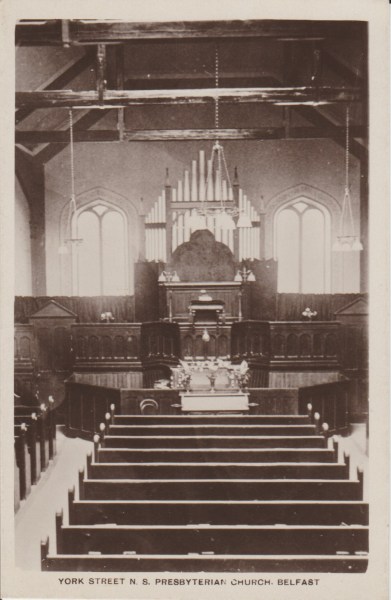
He also became a member of York Street Non-Subscribing Presbyterian Church (see picture at the top of this page) at a time when it was perceived as very left-orientated under the ministry of the Rev A.L. Agnew. Indeed when he fought the West Belfast Westminster constituency in 1924 (gaining over 21,000 votes, although not proving victorious) A.L. Agnew and the Rev E.I. Fripp, minister of All Souls’ NSP Church, were amongst his most prominent supporters. York Street Church was also characterised by very open political debate in the early 1920s, and welcomed speakers of all political backgrounds to its ‘mock parliaments’.

The Belfast Labour Party had proved very successful at its inception. In 1920 it won 10 out of the 60 seats in the municipal elections in Belfast. The Party gradually transformed to the Northern Ireland Labour Party and Harry Midgley became the first secretary.

In 1925 he was a elected to the council as a representative of the Dock Ward and a few years later, in 1933, he was successful in winning the Dock Constituency in the Stormont Parliament. However, in 1938 he lost this seat, partly due to the fall out from the Spanish Civil War. It is this from this election that the printed address in the Dunmurry Library comes. To see it and find out more about it click on the video above.

Gradually the Northern Ireland Labour Party adopted a pragmatic view of partition and Harry Midgley went along with this view. But for a party that tried to stand outside the sectarian divide the issue of the border was one that would not go away. The Northern Ireland Labour Party itself became divided over the position to take on the question of the border and eventually Harry Midgley was expelled, partly because of the strongly pro-Union position he ultimately adopted. He then formed his own Commonwealth Labour Party which enjoyed some success and as a Member of Parliament in Stormont he served in the war-time government, the first non-Unionist representative to be in government in Northern Ireland. Later he joined the Ulster Unionist Party, reconciled by the party’s willingness to follow the post-war social policies of the Westminster government. Having been elected as the MP for the Belfast Willowfield constituency at a by election in 1941 he continued to represent the same constituency up to the time of his death in 1957, first for the Northern Ireland Labour Party, then the Commonwealth Labour Party and ultimately for the Ulster Unionist Party, the only member of the Stormont Parliament to represent the same constituency for three different parties.

In later life he joined the Orange Order and the Royal Black Preceptory. A life-long supporter of Linfield FC he became a director of the club and ultimately the Chairman. At the time of his death he was Minister of Education.

Mountpottinger 150th Anniversary

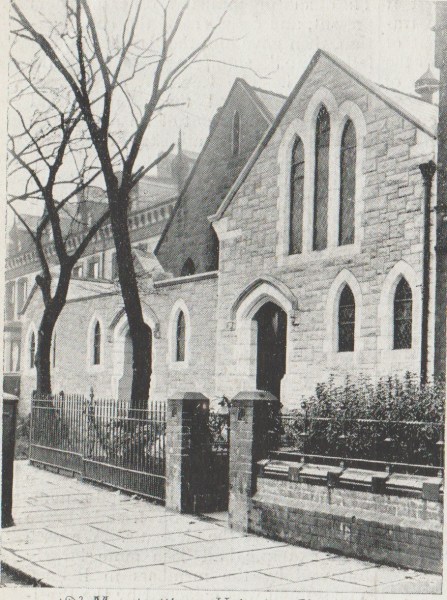
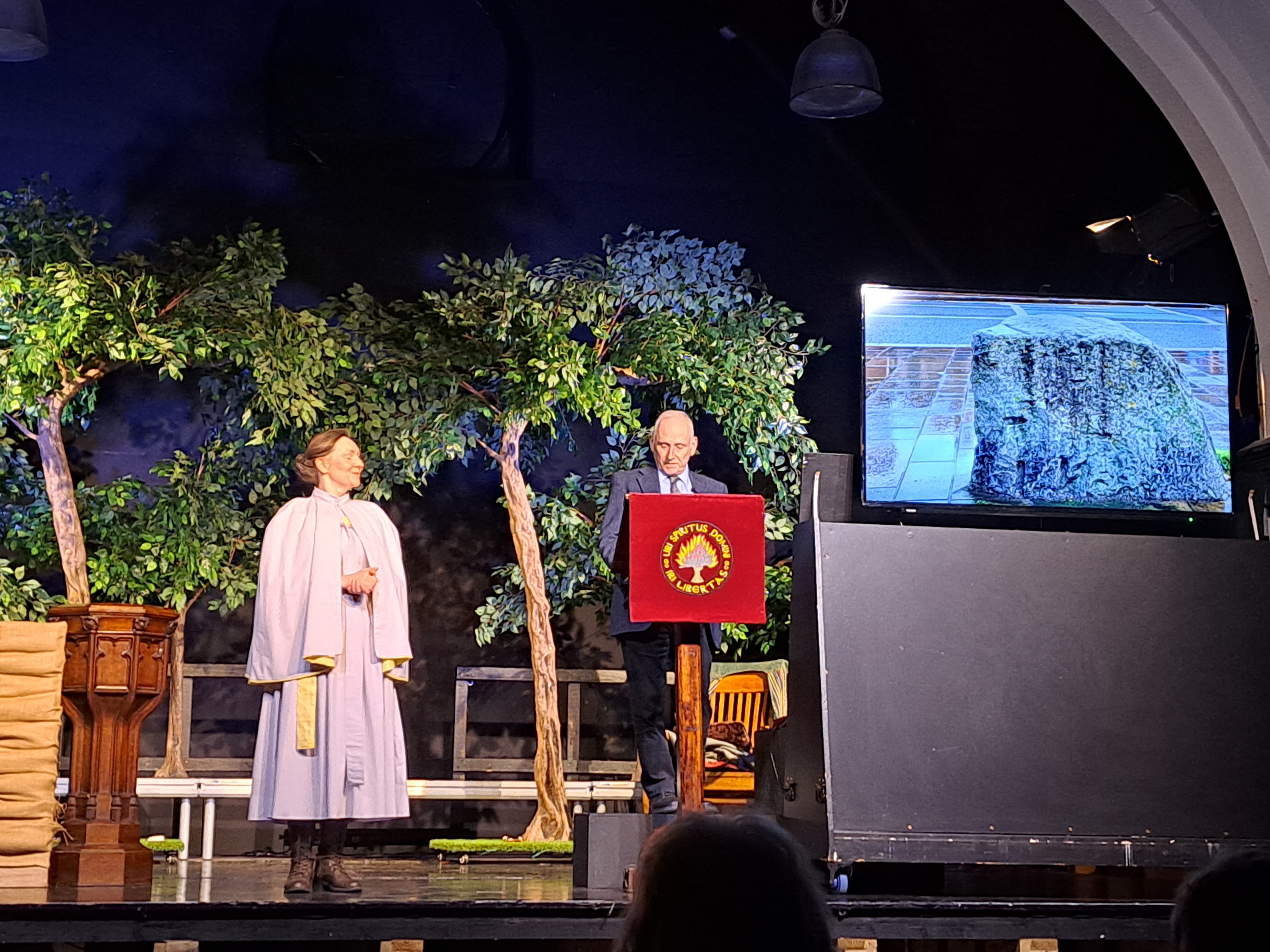
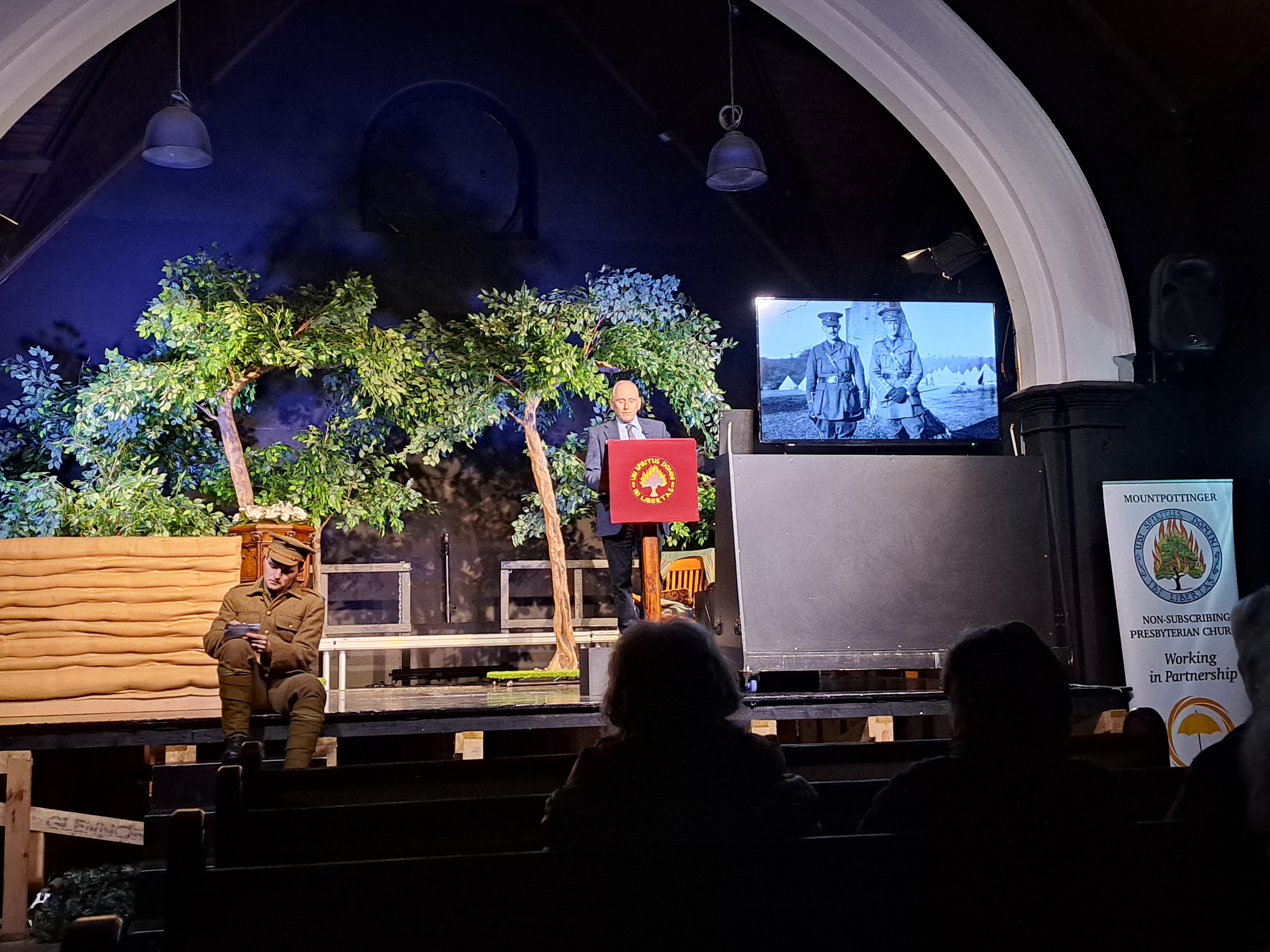
I’ve blogged before about Mountpottinger – most notably here and here where more details about its history can be seen – it is an interesting building on a prominent site in that part of Belfast and the congregation has a very distinctive history. Today the building is leased to the Bright Umbrella Drama Company who are turning the old school hall into the Studio Theatre and the church itself into the Sanctuary Theatre. But the congregation still has a place on the premises and the exact date of the anniversary of the opening of the building – 3rd January 2025 – was the occasion for this remarkable celebration of the 150 years of Mountpottinger.

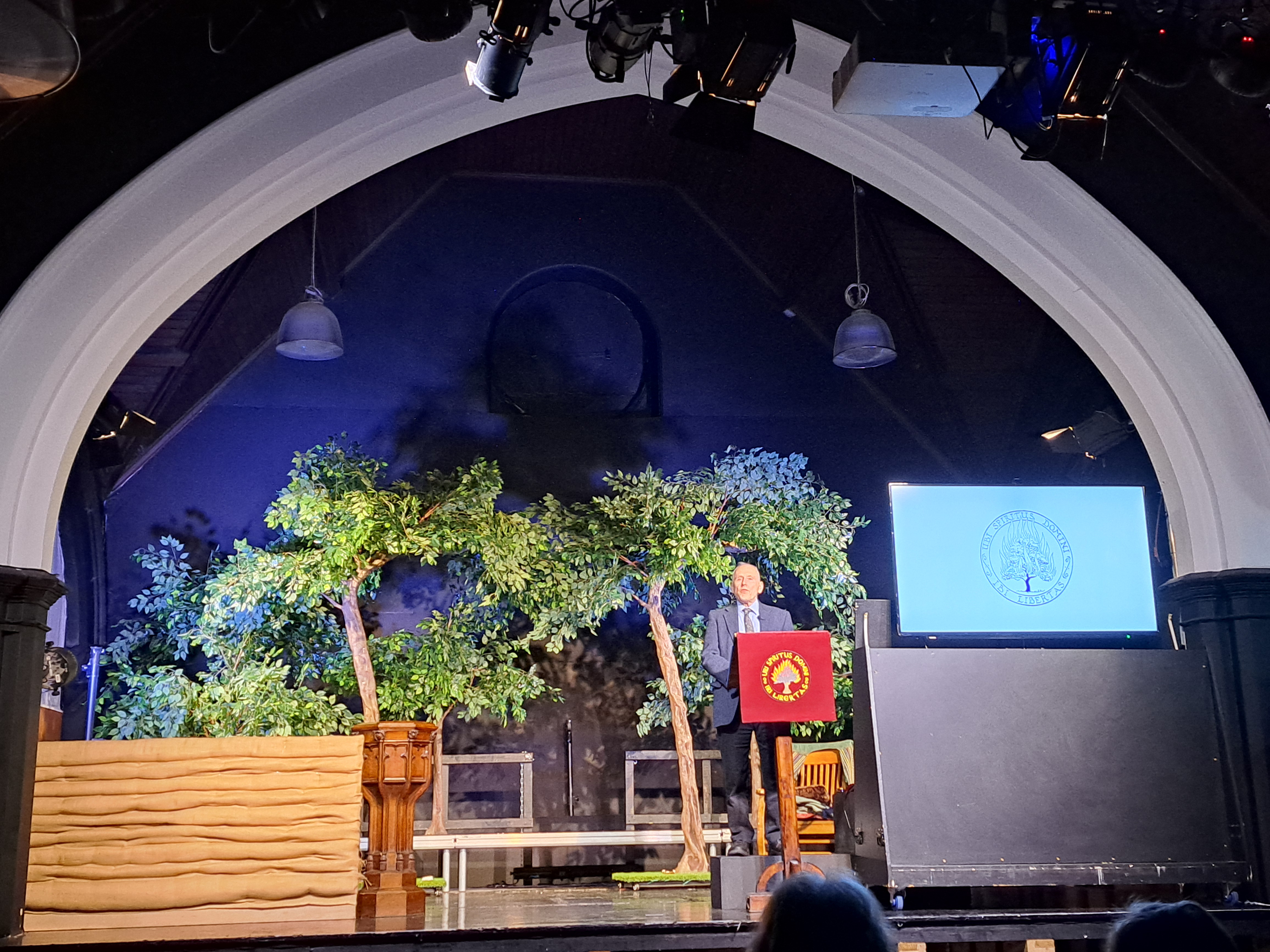
Adrian Moir introduces the evening

A lot of credit must go to Adrian Moir, the church secretary and former ‘Warden of the Fabrique’, as the Very Rev Charlie Kelly once termed him, who wrote and narrated this excellent celebration of the life of the congregation. It was a very positive collaboration between the church and the Drama Company which brought the history of the church to life covering three themes:

Foundation and Hope

Tragedy and Remembrance

Adapting to the times and a glimpse of the future

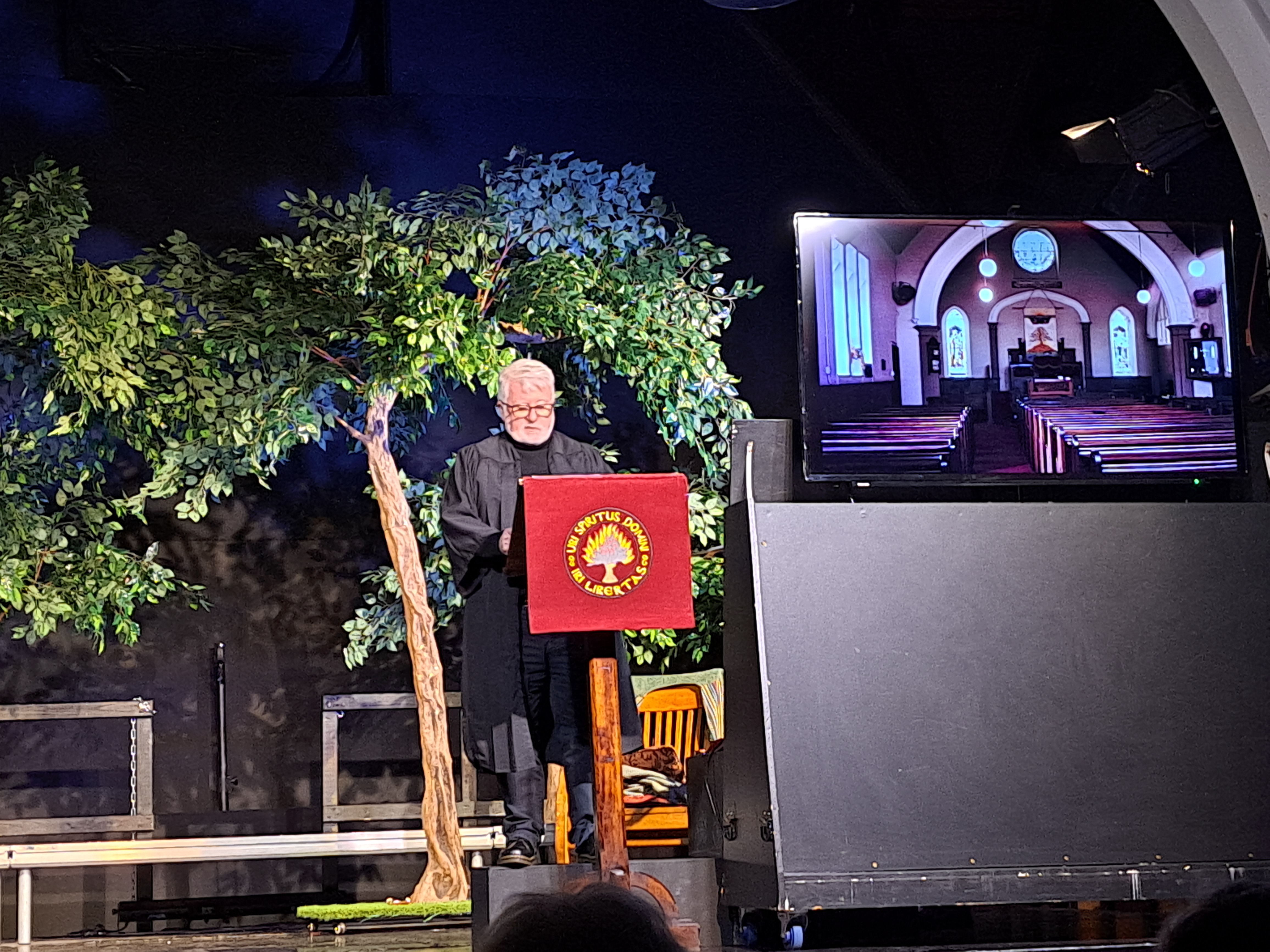
Trevor Gill delivers the Rev David Maginnis’s speech at the opening of the building in 1875. David Maginnis was a controversial but effective minister at York Street who came back to Belfast from Stourbridge to participate in the opening ceremony

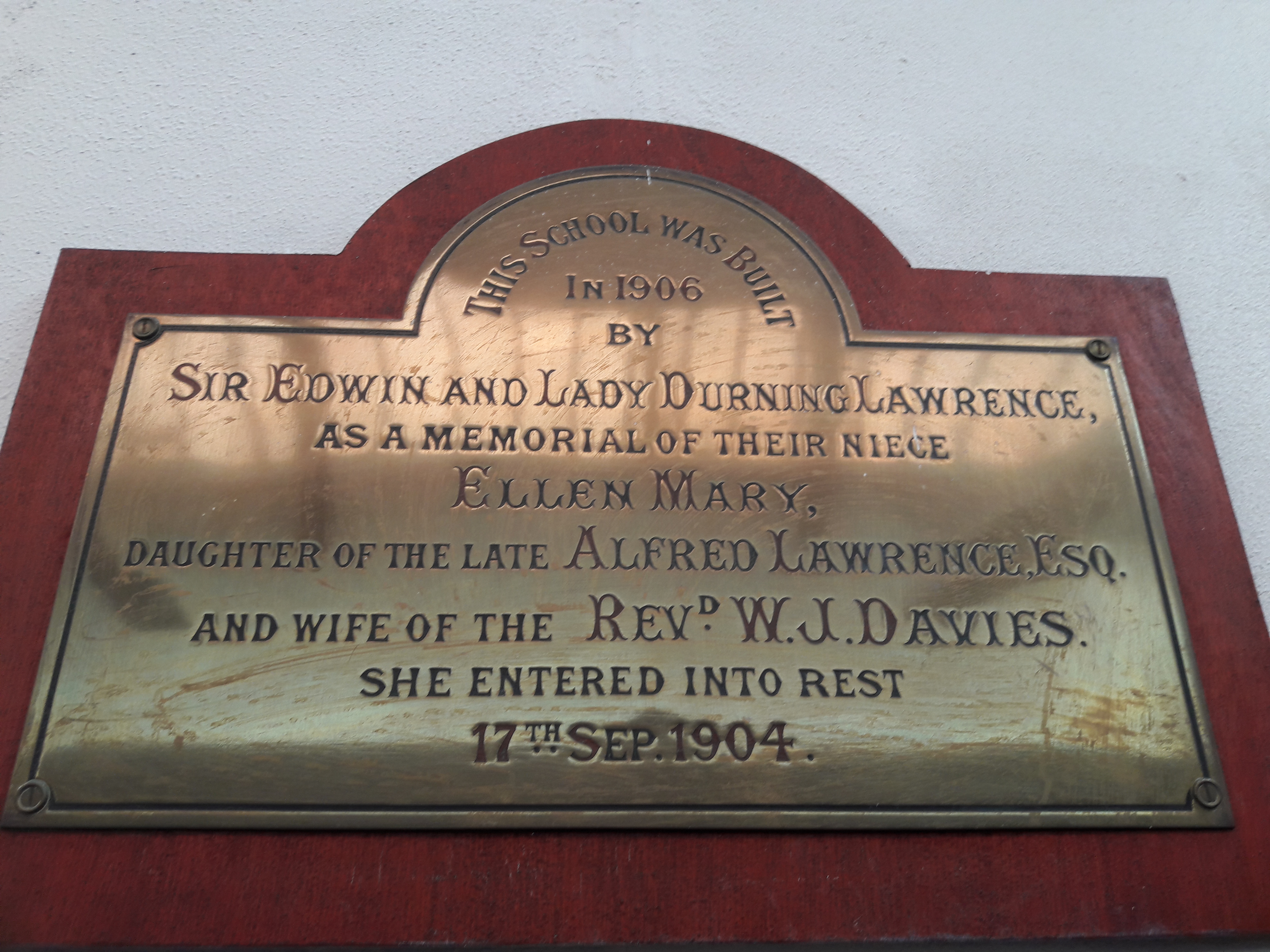
The evening was interesting, engaging and witty and also very moving as it looked at the story of Ellen Mary Davies, the wife of the Rev William Jenkin Davies, who died tragically young and in whose memory the school room was built.

Memorial in the School Room

Lindsay Charrington playing the role of Ellen Mary Davies

There was further tragedy with the loss of members of the church in the First World War, including Captain James Samuel Davidson in 1916, on the first day of the battle of the Somme. Also remembered on the evening was church member Sydney Agnew who was killed during the ‘Troubles’ in 1971 to prevent him giving evidence at a trial. It was both fitting and touching that members of Sydney’s family were there to lay a wreath in his memory.

Glenn McGivern writing home from the front as Captain J.S. Davidson

But the whole evening was very impressive, a fitting tribute to 150 years of work and witness which now has the opportunity to be part of a brave new venture as a community hub working in the arts and in drama in the Mountpottinger area.

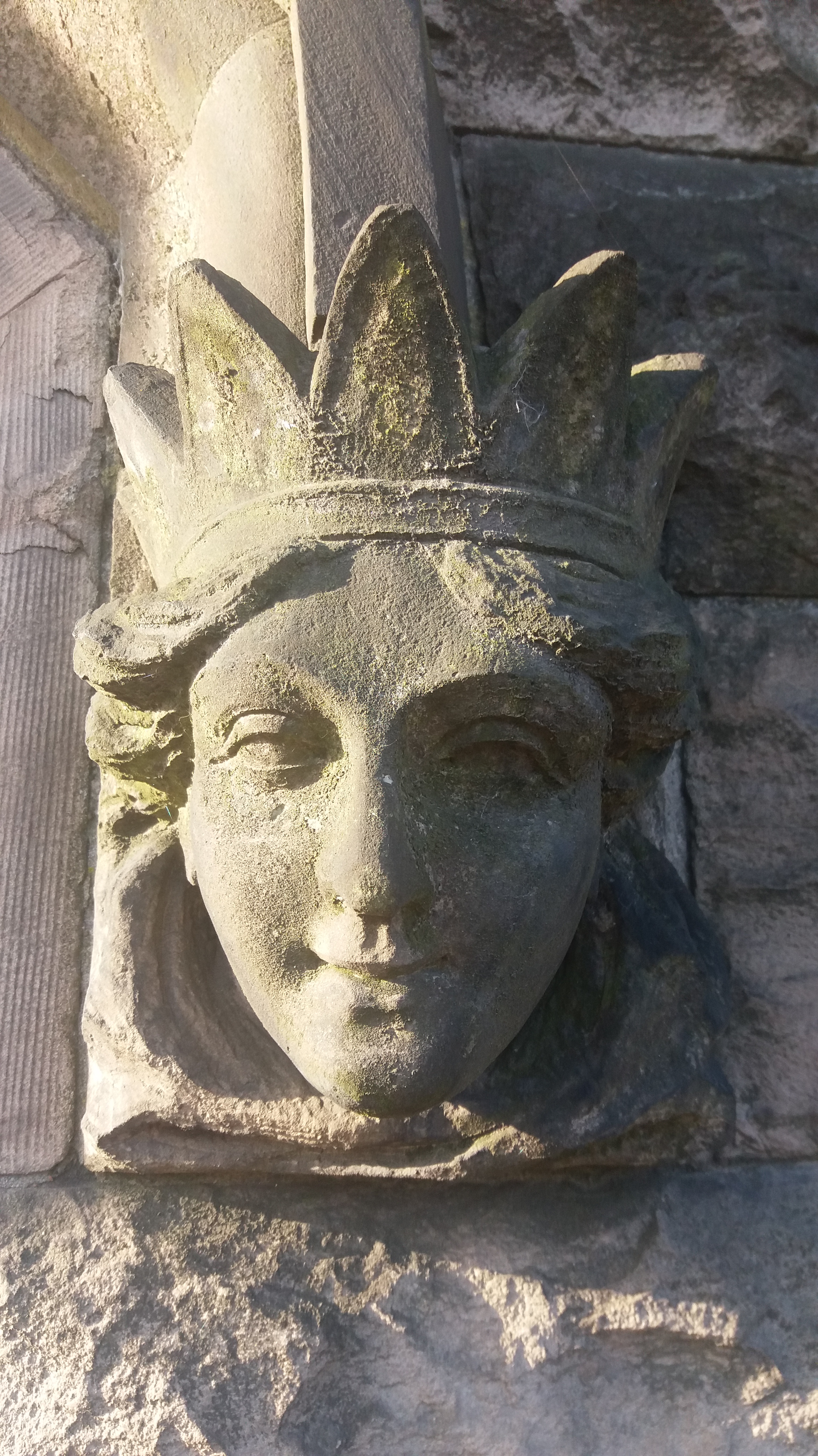
One of the ‘Regal Heads’ of Mountpottinger

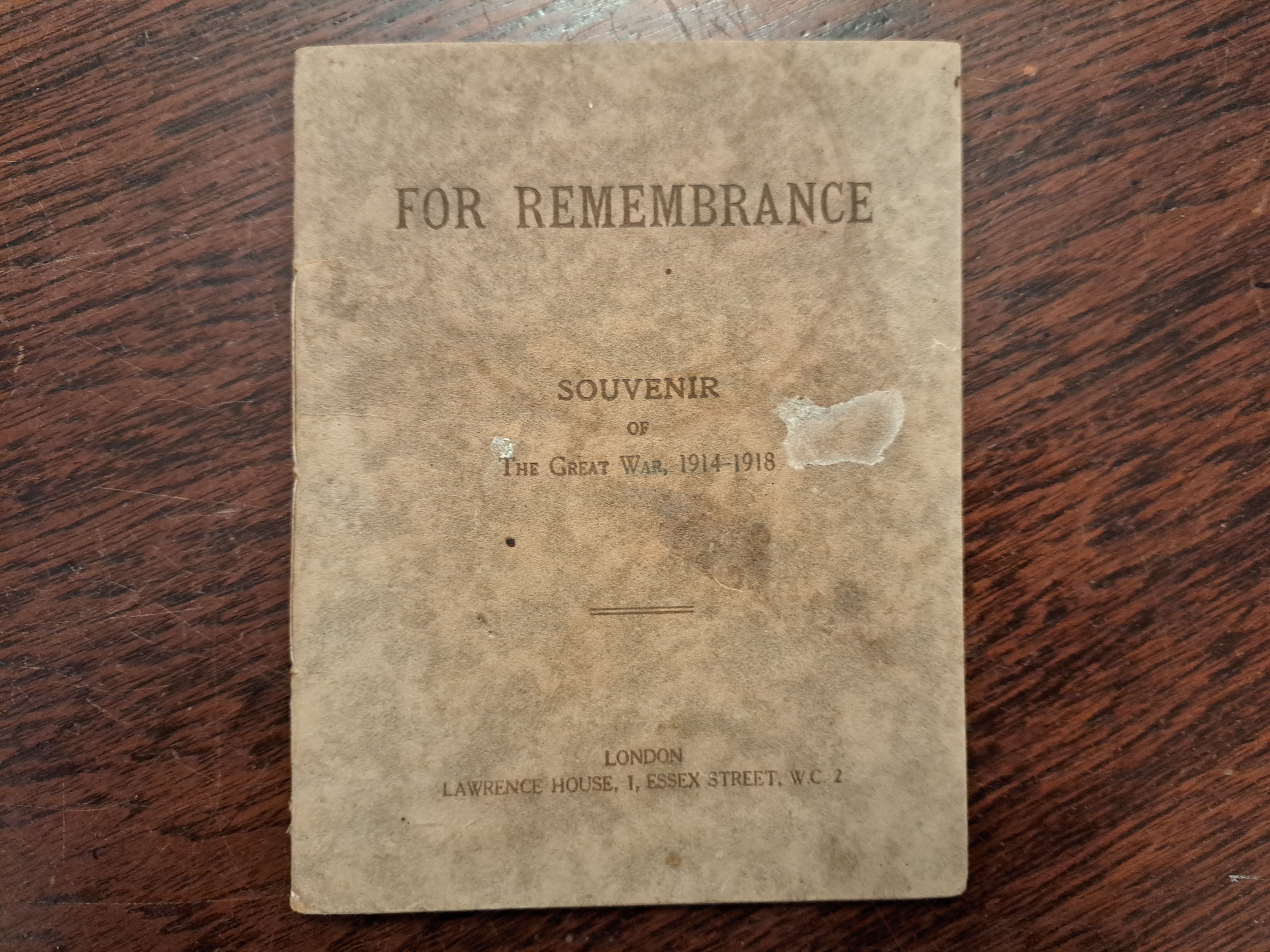
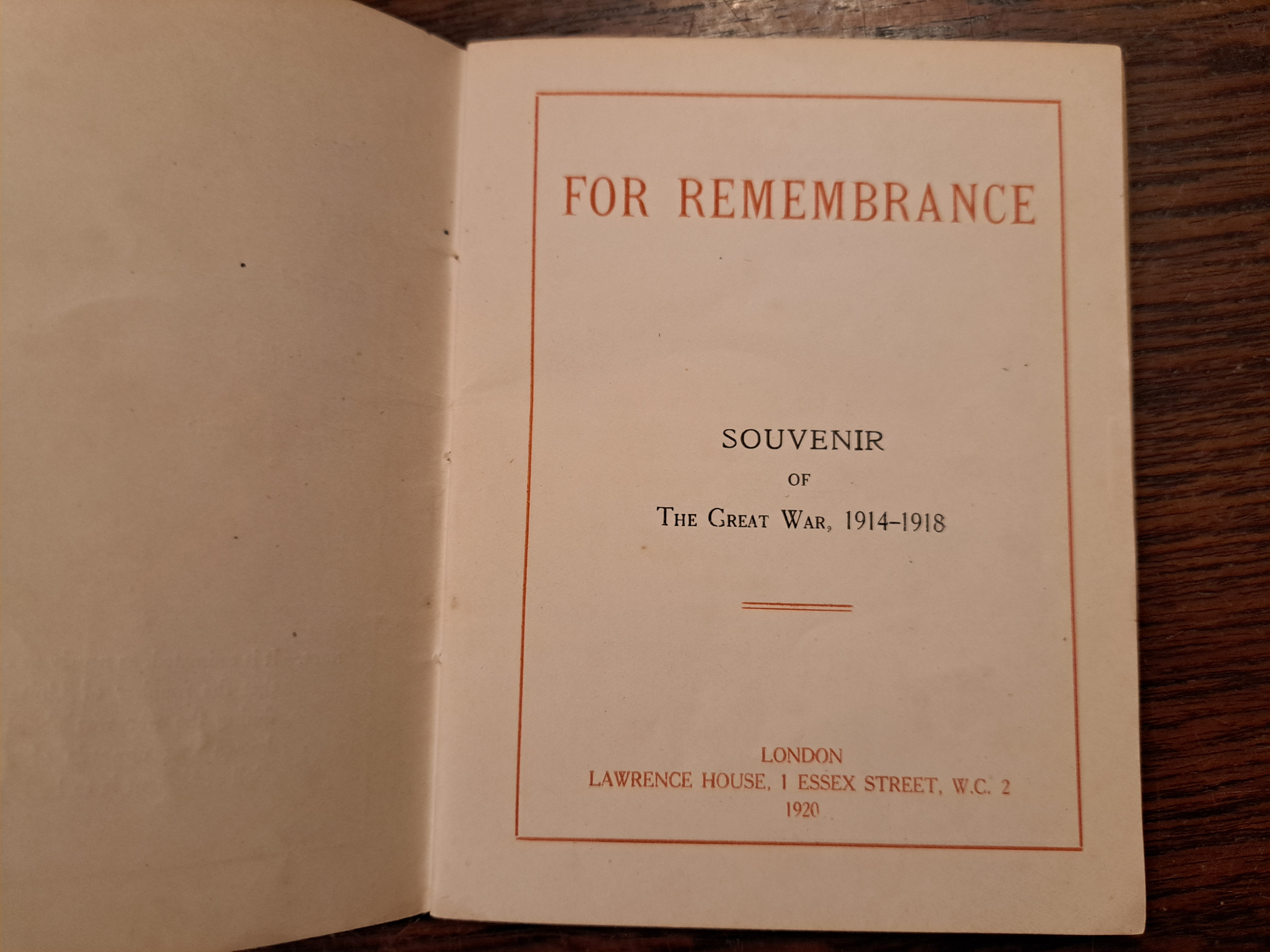
For Remembrance

Click on the video to see ‘For Remembrance’

From The Very Rev William McMillan Library of First Dunmurry (Non-Subscribing) Presbyterian Church.

Exploring the Library: Episode 5 For Remembrance. A booklet given to returning servicemen after the First World War.

A short talk by the Rev Dr David Steers. With thanks to Jack Steers for playing the Last Post and Reveille on the trumpet.

This is rather a scruffy looking booklet but it is a very rare survival of which the editors said: ‘If it attains to anything like its aim it will be a real “keepsake,” an abiding record of the owner’s place and part in our nation’s mightiest struggle…’ A copy was given to every Unitarian and Non-Subscribing serviceman who returned from the First World War. It contains some poignant quotes and six short reflections by ministers who had served alongside the troops.

Possibly as many as 9,000 copies were issued but very few survive, at least in libraries, so we are fortunate to have a copy in the Very Rev William McMIllan Library. Click on the video to find out more about ‘For Remembrance’.

Liverpool’s Titanic Memorial

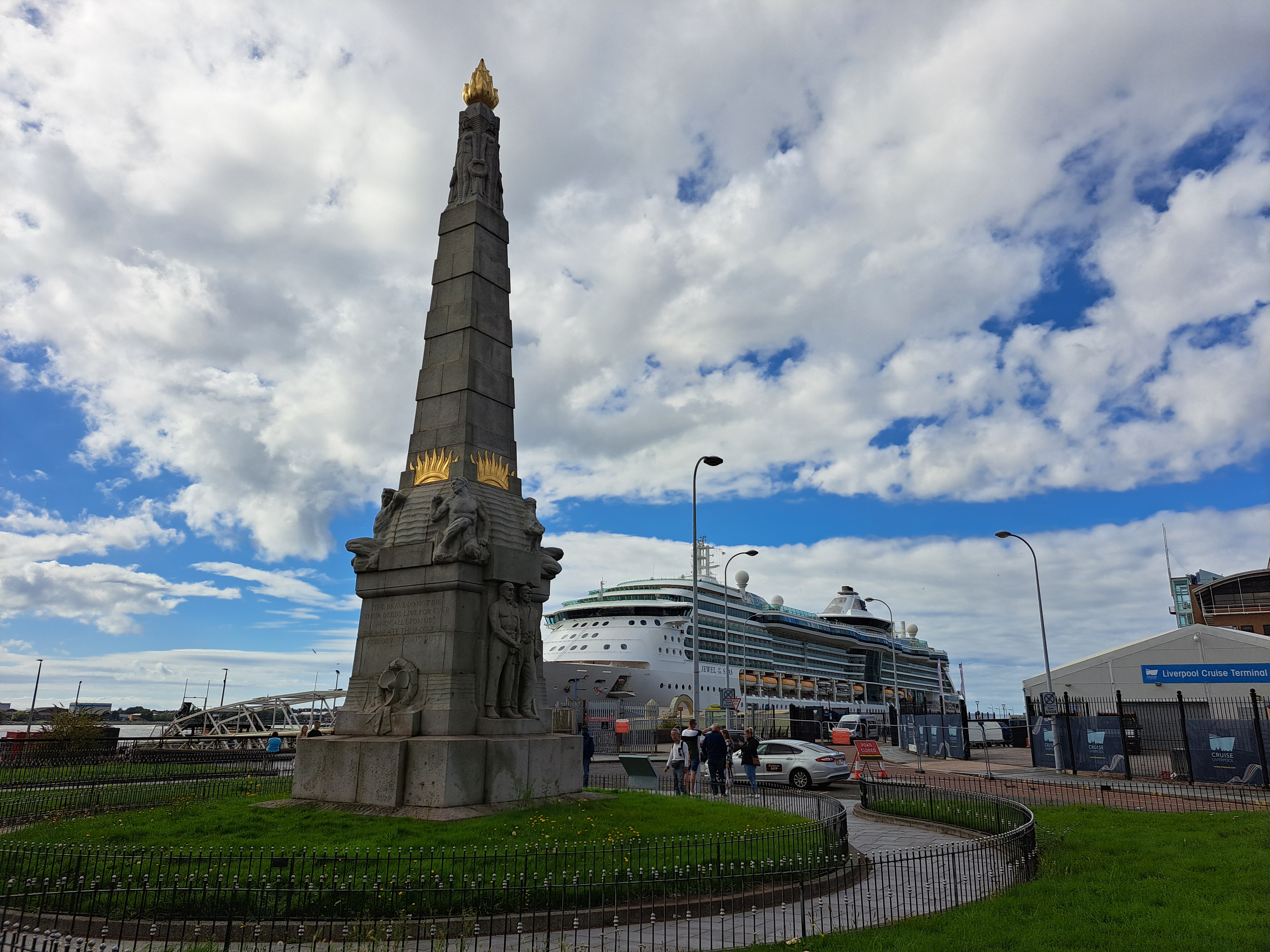
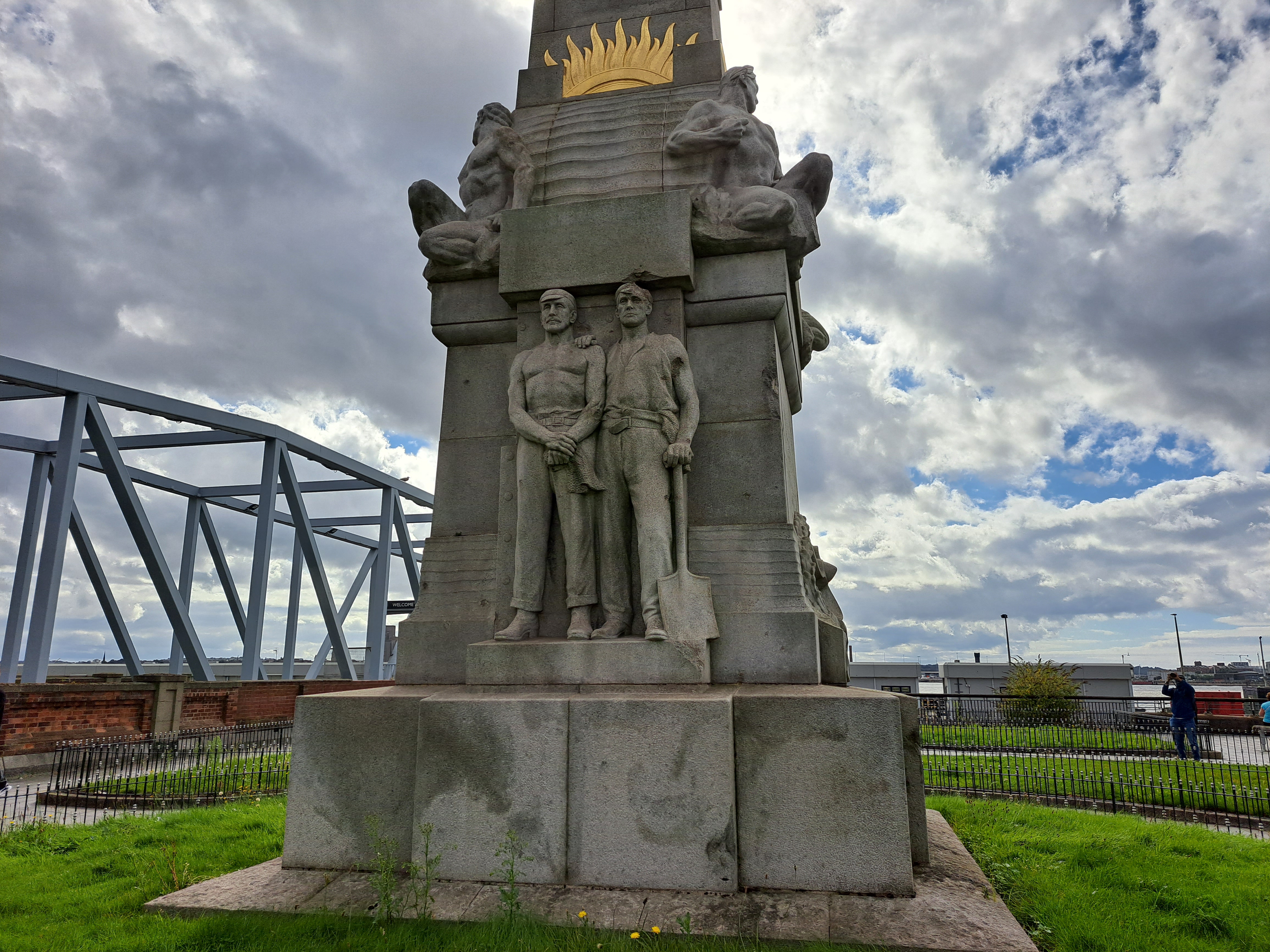
This memorial near Liverpool’s Pier Head is dedicated in honour of the Heroes of the Marine Engine Room. It is often referred to as the ‘Titanic Memorial’ because the original intention was to commemorate those lost in that disaster. The RMS Titanic was registered in Liverpool and the headquarters of the White Star Line was not far from the Pier Head, indeed the building is still there to this day. Although the Titanic didn’t visit Liverpool there were many local connections with the ship and there are a number of Titanic memorials in the city to this day.

But the original idea of the memorial was to commemorate the 244 engine room
staff who remained at their post after the ship struck the iceberg on 15th
April 1912 keeping the ship’s systems running as long as possible to help
people escape as the ship sank.

However, by the time it came to be erected, two other major naval disasters needed to be commemorated. The first was the sinking of the Empress of Ireland which was another Liverpool-registered ship which had regularly made the crossing from Liverpool to Quebec between 1906 and 1914. On 29th May 1914 it sank after a collision in the mouth of the Saint Lawrence River with the loss of 1,012 lives. The next year, during the First World War, another ship with very close Liverpool connections was sunk by a German U-boat on 7th May 1915. This was the Lusitania which was sunk about 11 miles off the coast of Ireland with the loss of 1,201 lives. It was a brutal attack on a passenger ship which also included a number of American citizens at a time when the United States had not yet entered the war.

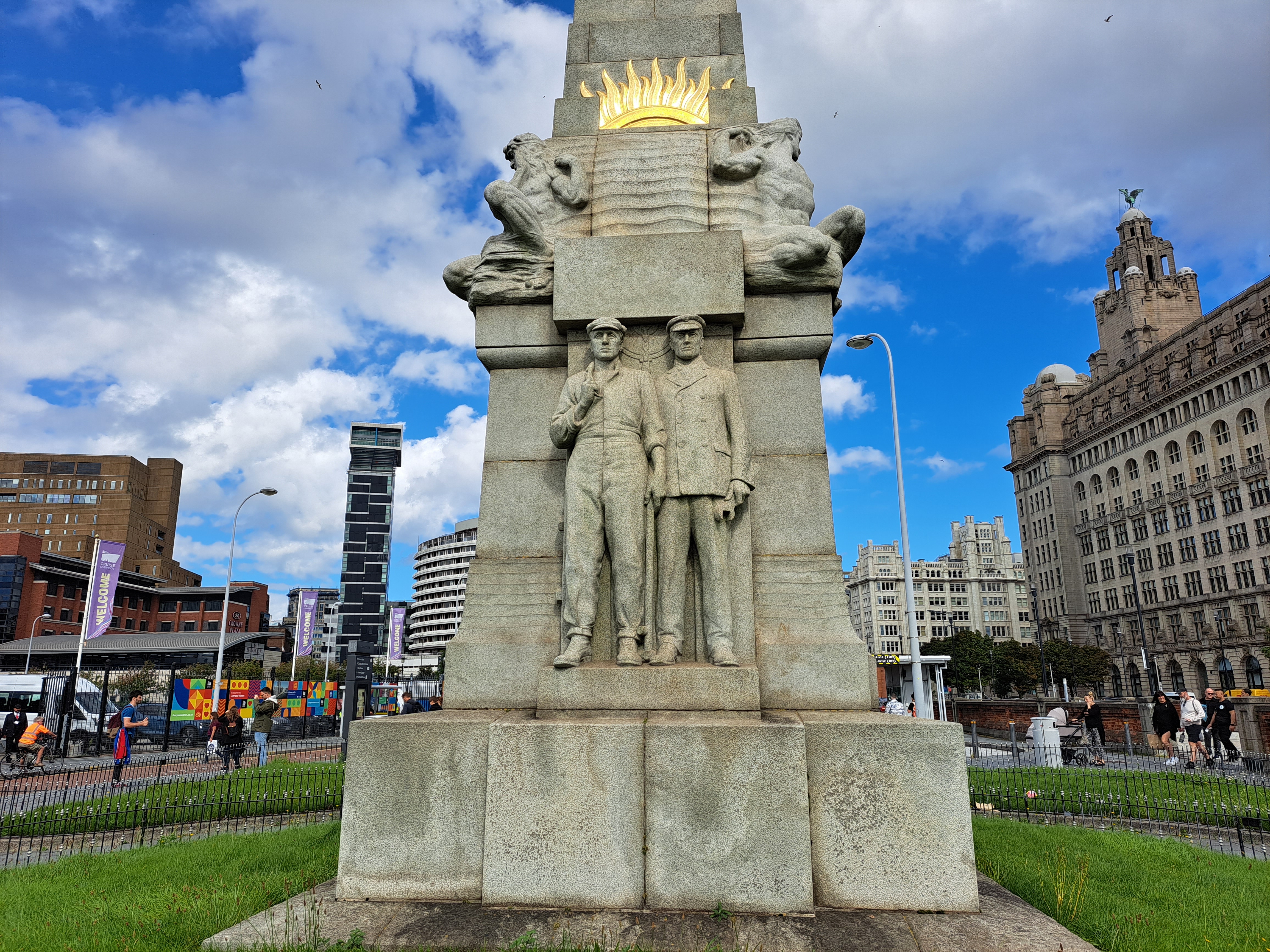
The Memorial to Heroes of the Marine Engine Room in front of the Liver Building

So when the memorial was unveiled in May 1916 it was dedicated to ‘All Heroes of the Marine Engine Room’. It was designed by Sir William Goscombe John and is seen as one of the first memorials to commemorate the heroism of working men who are depicted on the memorial. As Terry Cavanagh puts it in his Public Sculpture of Liverpool it is ‘a rare example in Liverpool of the commemoration not of a single, high-ranking individual but of the “ordinary” workers of the city’.

The west face of the memorial: Two engineers, one holds a stoking-hatch lever and the other a spanner
Figures on the east face: Two stokers, one holding a cloth, the other a shovel. The four figures above, on the corners, represent the elements and, at the very top, four female figures represent the sea

Something like £4,000 was raised from donations around the world before August 1912 to build the memorial. When it was finally unveiled on 9th May 1916 it was done with very little ceremony although it still attracted large crowds, many of them mourners of people who were lost on the Titanic and the Lusitania, although by then the intention was to honour all maritime engine room fatalities incurred during the performance of duty.

Memorial to the Missing of the Naval Auxiliary Personnel of the Second World War

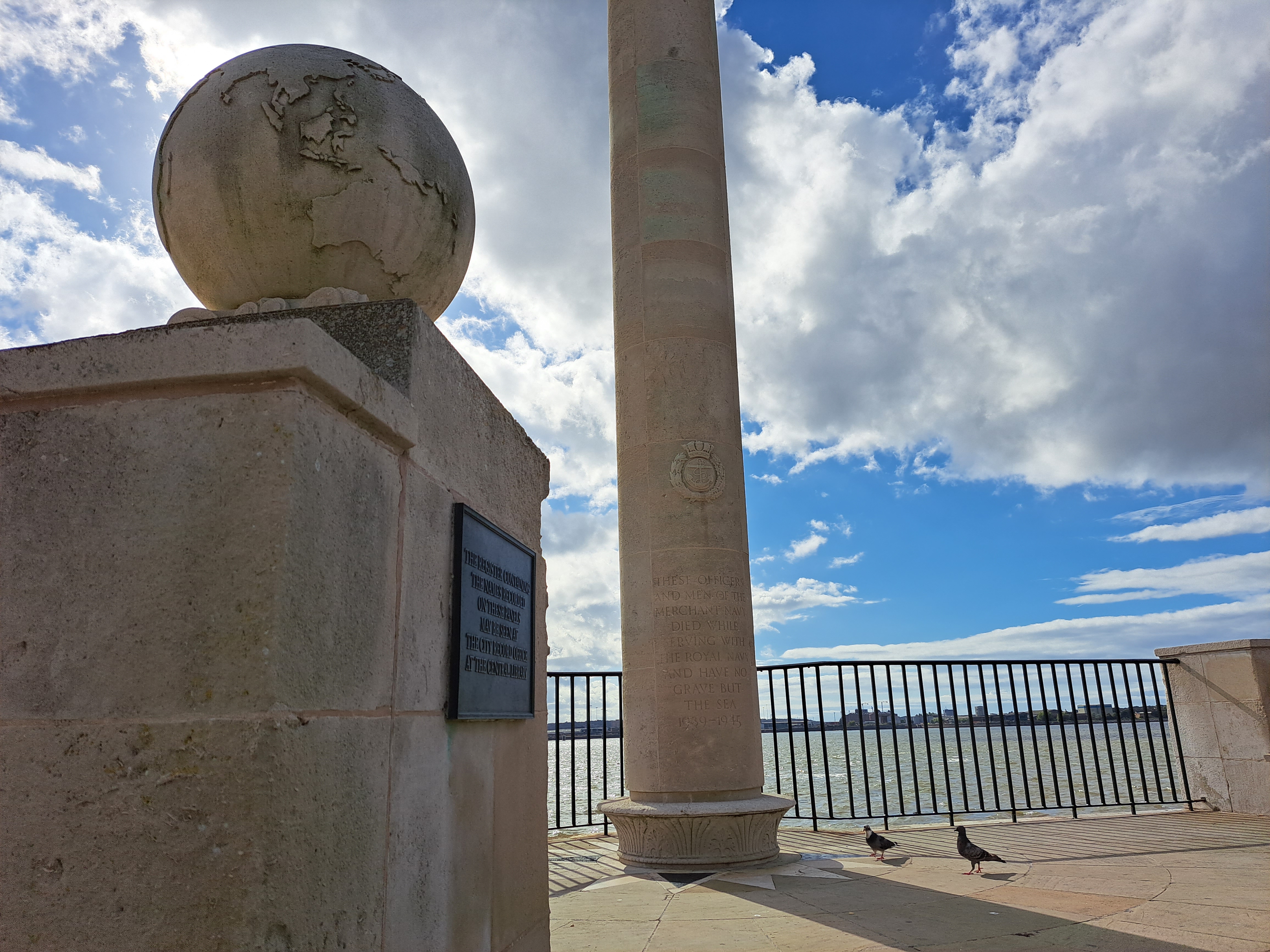
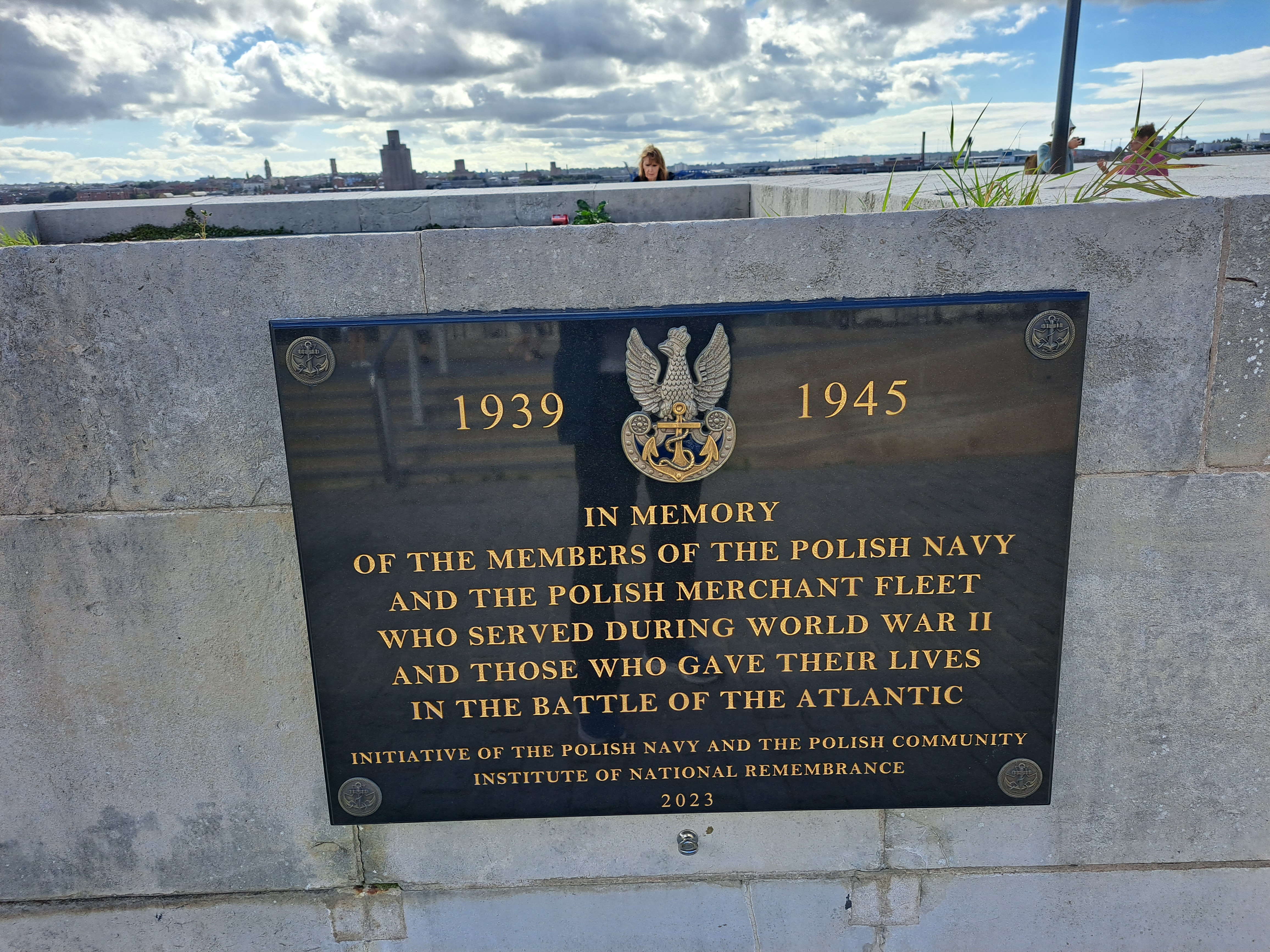
Many more memorials have been added to the Pier Head since the Second World War including the Merchant Navy War Memorial (Memorial to the Missing of the Naval Auxiliary Personnel of the Second World War), the Merchant Navy Memorial dedicated to the men and women who gave their lives in both World Wars and have no other grave than the sea, and an area with a succession of memorials of sailors of different nationalities who served in the Second World War including Belgian, Dutch, Chinese, Norwegian, and Polish merchant seamen and other servicemen and women. In addition there are plaques remembering the sinking of the SS Arandora Star, torpedoed off the coast of Donegal in 1940 with the loss of over 800 people, mainly non-combatants; HMT Lancastria which was sunk while evacuating servicemen at St Nazaire on 17th June 1940 with the loss of about 6,000 people (said to be the worst disaster in British maritime history); and a memorial to the ships that repatriated 20,000 people held in captivity in the Far East up to the end of the Second World War.

Merchant Navy Memorial
In memory of members of the Polish Navy and Polish Merchant Fleet
Video: The Royal Liver Building clock strikes 4 o’clock

Faith and Freedom Spring and Summer 2021

The latest issue of Faith and Freedom (Spring and Summer 2021, Number 192) has just been published.

Cover, Issue 192

Our cover features a striking image that is a piece of ‘discovered art’. A picture by an unknown New Zealand artist which complements so well Wayne Facer’s book A Vision Splendid: The Influential Life of William Jellie, A British Unitarian in New Zealand, which has recently gone into its second edition. The picture also appears on the cover of that book. This publication is the subject of an extensive essay and review by Graham Murphy. In Unitarianism in New Zealand: Essay and Review he uncovers the origins of Unitarianism in New Zealand through the exertions of British and Irish expatriates, most notably Moneyreagh-born William Jellie, and their relationship with Maori culture and the development of the colony right up to the devastating impact of the First World War.

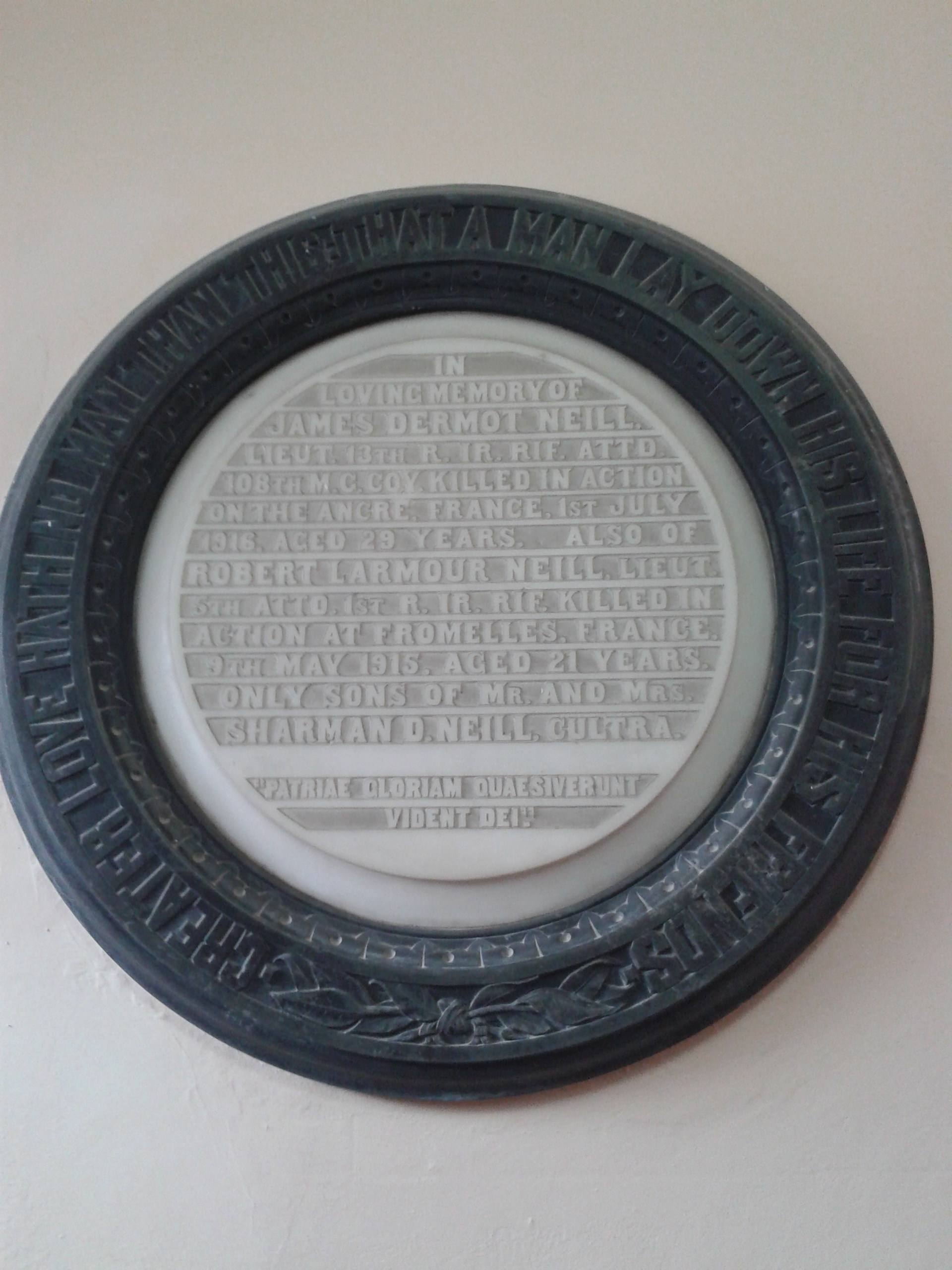
Memorial to Robert and Dermot Neill in Holywood Non-Subscribing Presbyterian Church

Colin Walker writes about The commemoration of three Ulster Unitarians who died at the Somme: Captain James Samuel Davidson, Lieutenant James Dermot Neill and Second Lieutenant Ernest George Boas. They were all the sons of prominent Ulster businessmen, all served in the 36th ‘Ulster’ Division and all were commemorated by plaques created by Ulster artist Rosamond Praeger who was herself a Unitarian and probably knew all three of them personally. All were caught up in the Home Rule Crisis immediately before the war and all of them signed the Ulster Covenant, including Ernest Boas who was Jewish by descent but brought up in the Non-Subscribing Presbyterian Church. Dr Walker skilfully unpacks the connections between them and also Rosamond Praeger (who like Ernest Boas was also from an originally Jewish family) and reflects on their faith and their legacy.

Rev Frank Walker

In Incarnation: the Supernaturalist Story and the Humanitarian Story, a sermon originally preached in Cambridge, Frank Walker assesses the way the Christian doctrine of the Incarnation can be understood in the light of humanity’s repeated cruelty and excesses, seen most notably in the Holocaust. Despite the obvious problems he finds reason to be optimistic: ‘Incarnation is a continuing reality. Creative energy is forever expressing itself in all the glorious and stupendous variety of life on earth and in the whole universe. And life, which often seems so fragile and vulnerable, subject to catastrophes and extinctions, is so tenacious and adaptable, and is constantly renewing itself’.

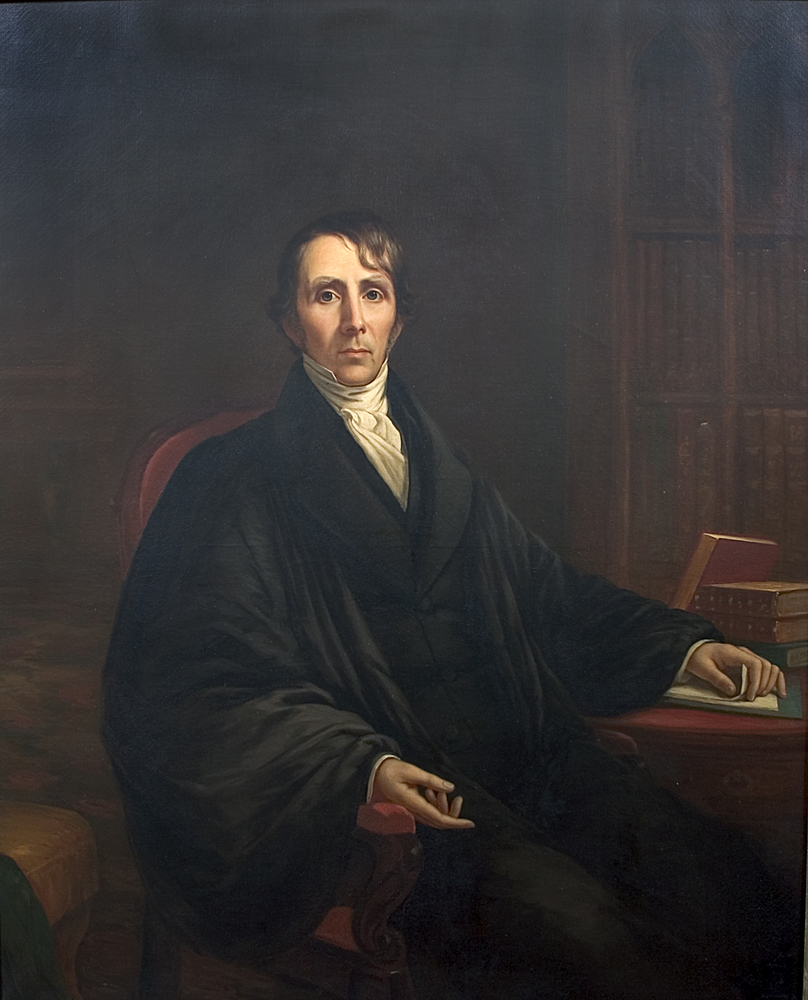
William Ellery Channing by Henry Cheever Pratt 1857. (Wikipedia, Public Domain)

A Chautauqua performance is ‘a uniquely American dramatic format’ in which is portrayed an individual historic figure, ‘as if returning to life to address the audience’. Back in the Spring and Summer issue of Faith and Freedom in 2019 Kevin Murphy provided us with a Chautauqua performance concerning Francis David. In this issue he does the same for one of the most prominent American Unitarian theologians in history. An Appearance of William Ellery Channing: A Chautauqua Performance is a wonderfully insightful exploration of the theology that Channing came to espouse in the context of the circumstances of his life.

Books Reviewed

Martin Camroux (foreword by David R. Peel), Keeping Alive the Rumor of God: When Most People are Looking the Other Way, WIPF & Stock, Eugene, Oregon, 2020, pp 204, ISBN 978-1-7252-6241-6, £20 pbk.

Accessing a reliable grounding in wonder

Reviewed by BOB JANIS DILLON

Bert Clough, Dancing with Mortality: Reflections of a Lapsed Atheist, Bert Clough, Newbury, England, 2020, pp 111, ISBN 978-1-8381695- 0-3, £10 pbk.

Finding truth through the lives of ‘great souls’

Reviewed by JIM CORRIGALL

Marcus Braybrooke, Meeting Jewish Friends and Neighbours, Marcus Braybrooke, 17 Courtiers Green, Abingdon, OX14 3EN, marcusbraybrooke4@gmail.com, 2020, pp 225, ISBN 9798564270243, £12.50 post free.

A comprehensive analysis of Jewish faith and life

Reviewed by PETER GODFREY

Wayne Facer, Prophet at the Gate. Norman Murray Bell and the Quest for Peace, Blackstone Editions, Toronto, 2021, ISBN 9781775355656, $25 NZD pbk.

Norman Murray Bell – Pacifist and anti-war campaigner in New Zealand

Reviewed by GRAHAM MURPHY

Catherine Robinson (ed.), Fragments of Holiness, The Lindsey Press, London, 2019, pp 205, ISBN 978-0-85319-091-2, £9 pbk.

An anthology for daily use

Reviewed by LENA COCKROFT

Cliff Reed. Beyond Darkness Words for Reflection, Lindsey Press, London, pp 134, ISBN 978-0-85319-095-0, £9 pbk.

Waking up to the Divine within you

Reviewed by DAVID STEERS

An annual subscription for each volume (two issues) costs £15.00 (postage included) in the United Kingdom. Single copies can be ordered at a cost of £8.00 each (postage included). Cheques should be made out to Faith and Freedom and sent to the business manager:

Nigel Clarke,
Business Manager, Faith and Freedom,
16 Fairfields,
Kirton in Lindsey,
Gainsborough,
Lincolnshire.
DN21 4GA.

Email: faithandfreedom@btinternet.com

Alternatively you can pay via PayPal by clicking here.

The arc of the moral universe is long, but it bends toward justice

The quotation at the top of this page comes from Martin Luther King. It is in fact itself a distillation of a quotation from Theodore Parker, the nineteenth-century Unitarian theologian and abolitionist:

I do not pretend to understand the moral universe; the arc is a long one, my eye reaches but little ways; I cannot calculate the curve and complete the figure by the experience of sight; I can divine it by conscience. And from what I see I am sure it bends towards justice.

It is interesting to compare the two sayings; one a very powerful soundbite, the other, the older one – the first to make the case for this imagery – far less snappy but explaining the idea in a very clear way.

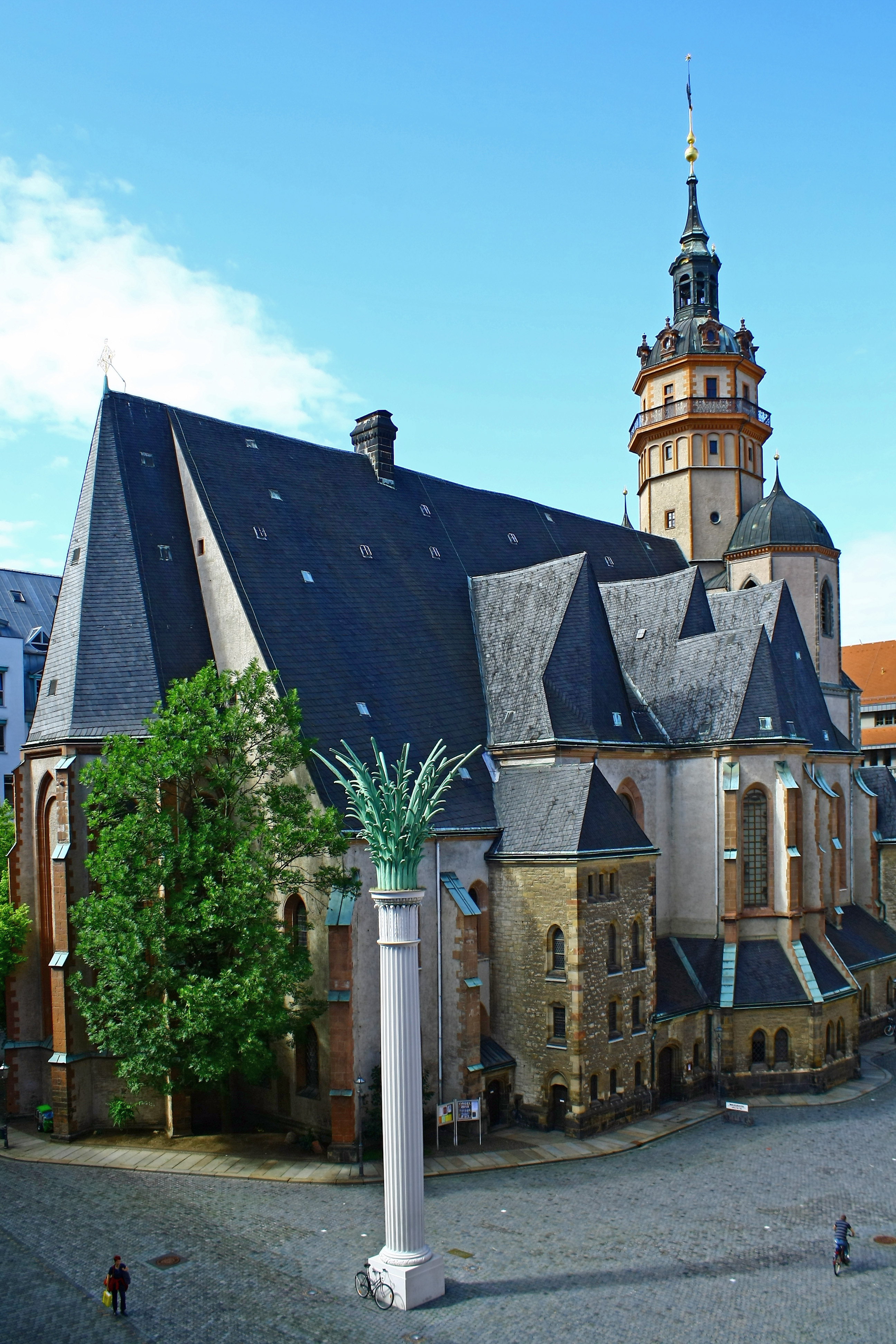
I use this saying in this week’s online service which looks back to the fall of the Berlin Wall in 1989. The impetus for this momentous event came from the churches, most notably in Leipzig where St Nicholas Church became the centre of resistance to a corrupt state in a society poisoned by secret police and corrupted by layers of informers and spies.

St Nicholas Church, Leipzig (Wikimedia Commons)

The minister of the main church in Leipzig, the Rev Christian Führer, led the people in mass prayer vigils which helped to bring the system to an end. His position was similar to that of László Tőkés in Romania, who I was privileged to meet a couple of years ago in Transylvania, and who distilled his experience in his book With God, for the People. But both men showed the necessity of observing the phrase in our reading today ‘choose this day whom you will serve’.

You can see the service in this week’s video:

Available from 9.45 am on Sunday, 15th November

This week’s service is filmed in Dunmurry. The reading is from Joshua ch.24 v.14-18 and is given for us by Emma McCrudden. Church organist Allen Yarr plays the hymns When I survey the Wondrous Cross and Praise to the Lord, the Almighty, the King of Creation.

Time for a Story: War Horse

With Armistice Day in mind this week’s Time for a Story, given by Sue Steers, tells the story of the work of horses in the First World War, an aspect of the story of that conflict which was long overlooked until the publication of Michael Morpurgo’s book War Horse. The video can be seen here:

Remembrance Sunday 2020

In so many places tomorrow Remembrance Services have either been curtailed or cancelled because of the pandemic. This is one of the many inevitable consequences of the situation around the coronavirus. Nevertheless, many churches will hold a service of Remembrance on Sunday morning, at least they will in Northern Ireland although obviously not in other places such as England where a lockdown has again closed the churches. I will be leading two Remembrance services tomorrow and we also have an online Remembrance Service which can be viewed here:
Non-Subscribing Presbyterian Remembrance Service, Sunday, 8th November 2020

Our service comes from Downpatrick and features the two memorials which we have in the church. One is the First World War memorial which includes the names of all the members of the congregation who served in the war as well as three who are listed as having died in the war. When I researched the details for the Roll of Honour of the Non-Subscribing Presbyterian Church of Ireland in 2018 I discovered that many church war memorials, although often cast in bronze or carved in marble, sometimes didn’t quite match the records as we know them today. So in the case of the Downpatrick memorial one of the members who is listed as having served actually died in 1920 from wounds he received at Ypres and his grave is recorded by the Commonwealth War Graves Commission. So four members of the congregation were killed through fighting in the First World War.

We also have a second memorial which includes a poppy from the Blood Swept Lands and Seas of Red installation which was on show in the Tower of London in 2014 and which was given in memory of Rifleman John Hayes. Click on the following link to read about this:

Blood Swept Lands and Seas of Red poppy dedicated at Downpatrick

In today’s video I have also included an image of every Non-Subscribing Presbyterian twentieth-century war memorial of which I am aware.

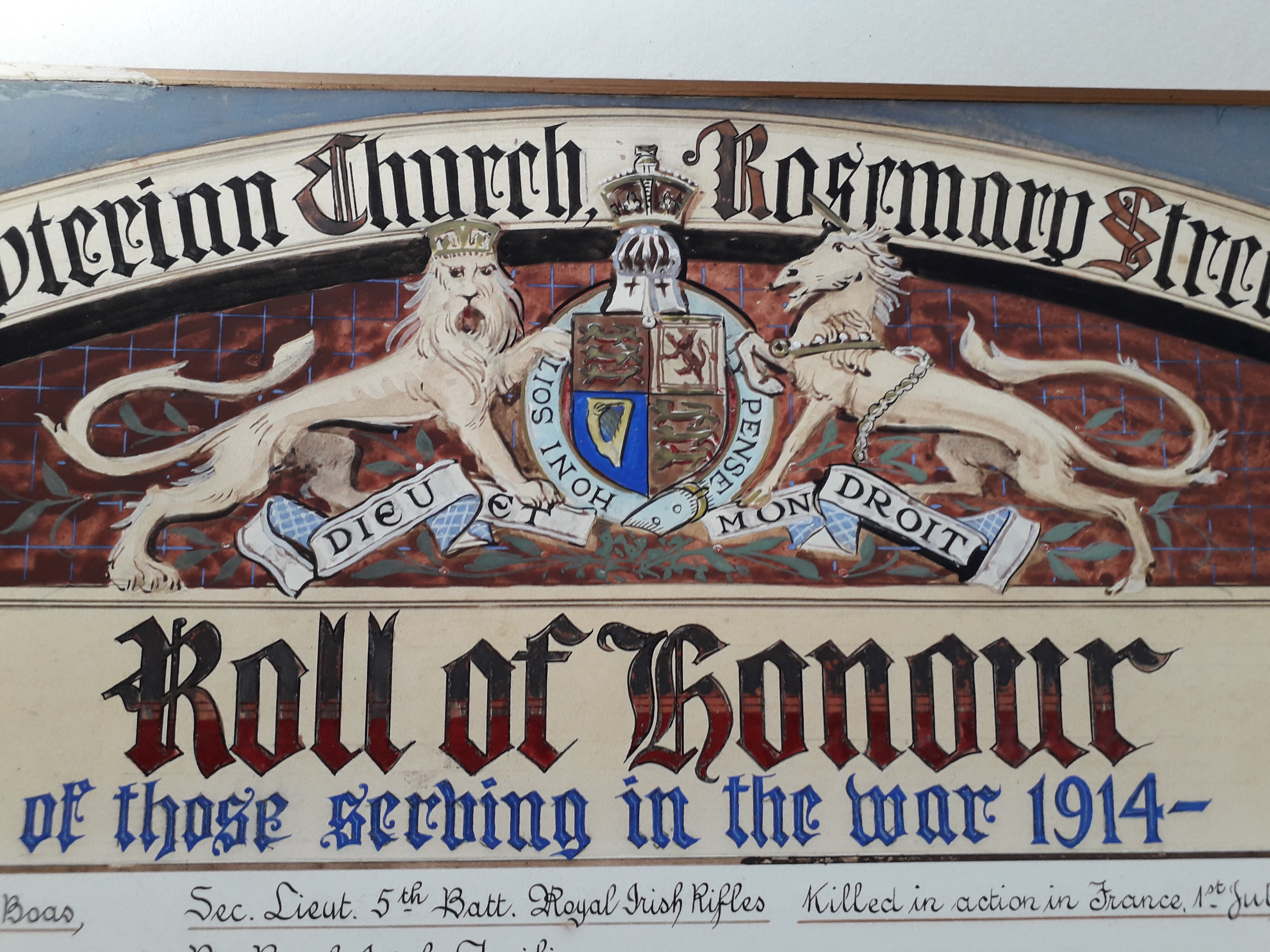
Detail from the illuminated Roll of Honour of the First Presbyterian Church, Rosemary Street, Belfast

Time for a Story

On 4th November 1922 Howard Carter finally discovered the entrance to the tomb of Tutankhamun. In this week’s Time for a Story Sue Steers tells this fascinating tale. The video can be seen here:
Time for a Story: Tutankhamun