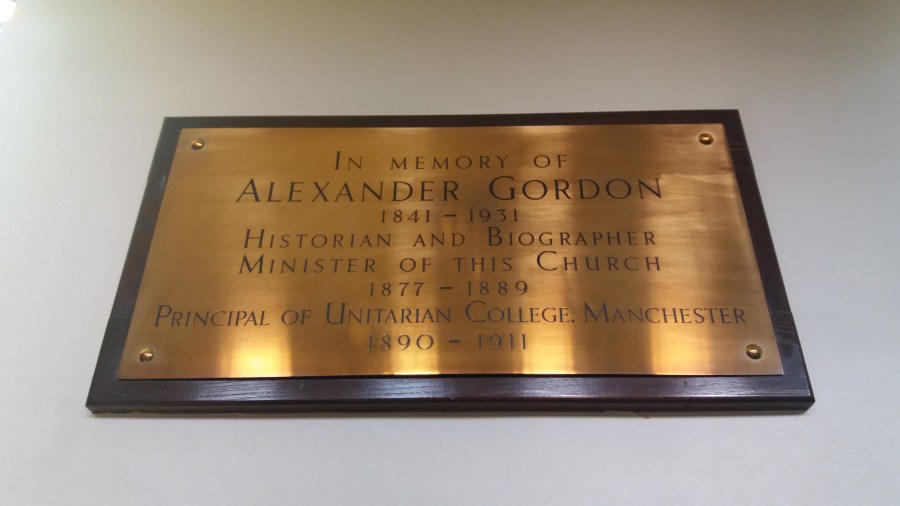
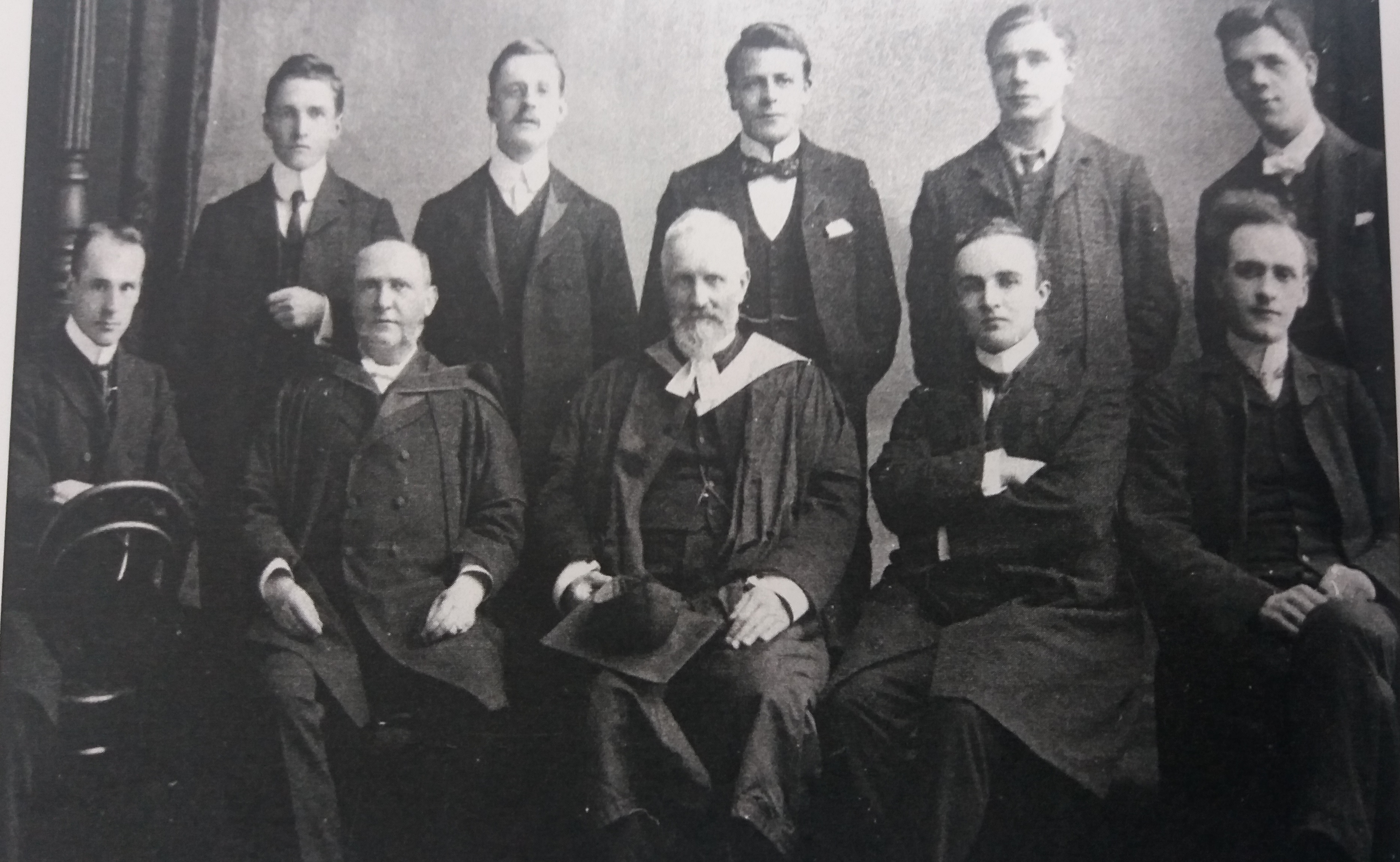
Historian, Biographer, Minister of First Church, Belfast. ‘An Englishman by birth, a Scotsman by education and an Irishman by inclination’.
On Thursday, 22nd May, 2025, we had an illustrated talk in First Dunmurry (NS) Presbyterian Church about the great historian Alexander Gordon.
Talk at Dunmurry by Rev Dr David Steers
A distinguished minister in England and Ireland, he served at Aberdeen; Hope Street, Liverpool; Norwich and at First Church, Belfast, before becoming Principal of the Unitarian Home Missionary College, Manchester and a lecturer in Ecclesiastical History in the first Free Faculty of Theology in the British Isles.
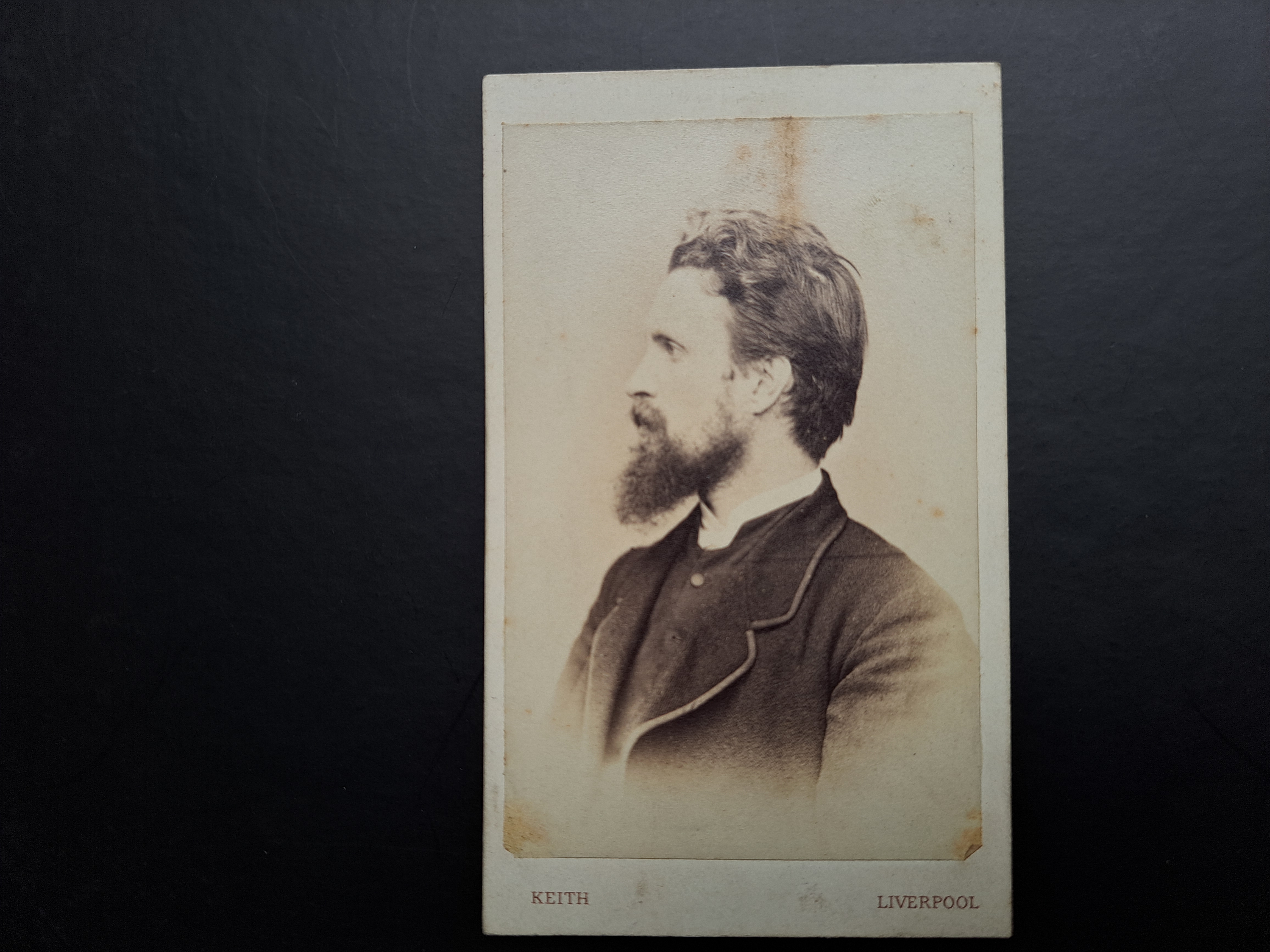
The earliest known photograph of Alexander Gordon, taken in Liverpool c.1872 at the time of his marriage to Clara Maria Boult
His scholarship was widely acknowledged all over the world, contributing 778 entries to the Dictionary of National Biography, 39 articles to the eleventh edition of the Encyclopaedia Britannica and much more. A superb linguist and experienced traveller his researches took him all over Europe. Among other things he was closely involved in the creation of the Non-Subscribing Presbyterian Church of Ireland in 1910.
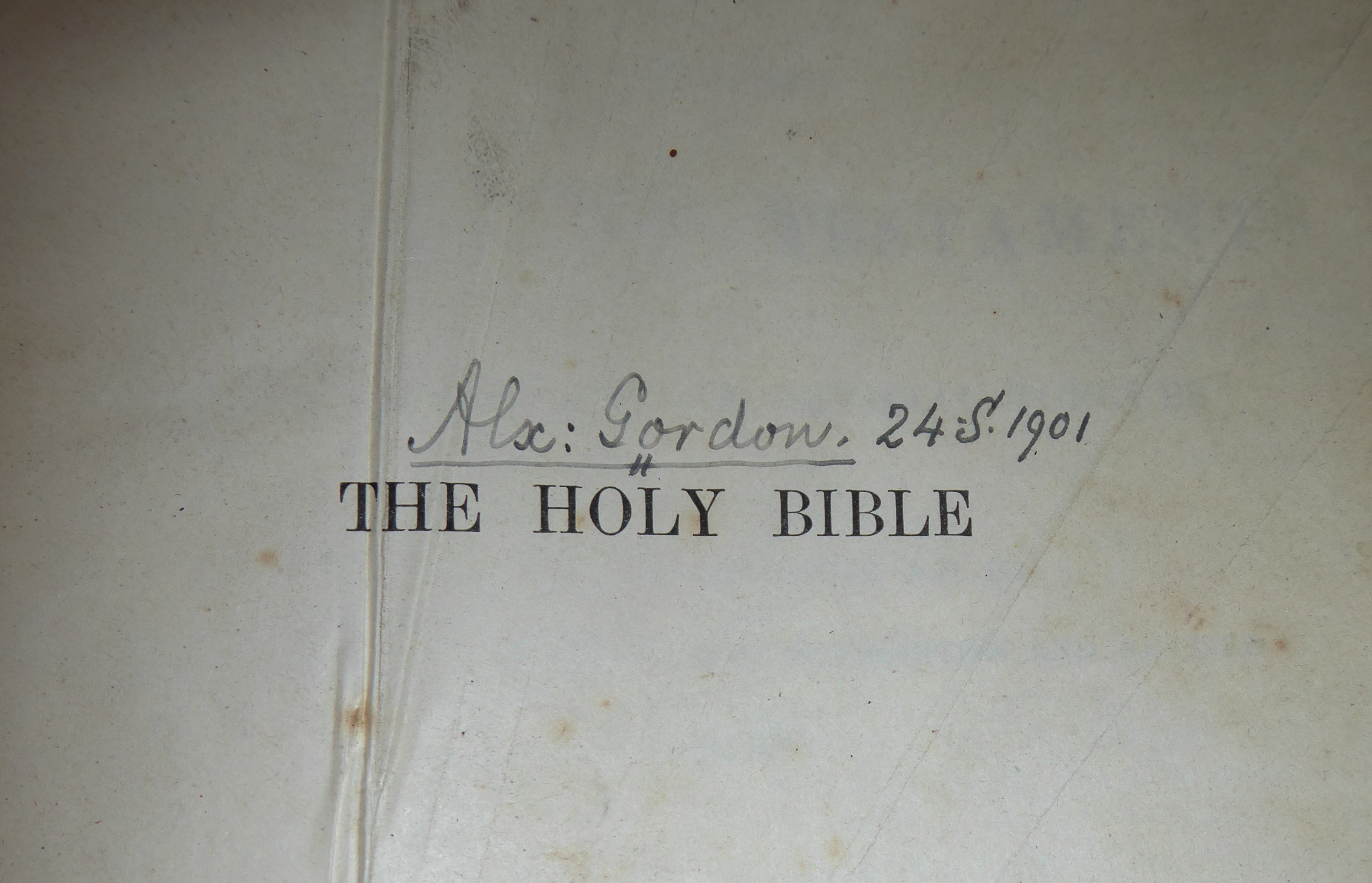
Gordon’s distinctive signature in a personal copy of his Bible (Revised Version)
The talk looks at his education, his work as a biographer and historian, and his commitment to the churches in Ireland which he served as secretary to the Association of Irish Non-Subscribing Presbyterians and later being closely involved in the setting up of the Non-Subscribing Presbyterian Church of Ireland itself.
He was a distinguished minister at First Church but even after leaving for Manchester kept a very close connection with the Irish churches, particularly through Dunmurry where he was regarded as the unpaid curate of his friend the Rev J.A. Kelly, despite the incredible heavy work load of his high profile work. From 1895 until the year of his death in 1931 he only missed one communion service at Dunmurry – and that was because of an unexpected train timetable change that left him stranded in Dublin one weekend during the First World War. For a very experienced traveller, particularly rail traveller, this must have been especially galling for Gordon. The lecture also looks at Alexander Gordon as a travel writer.
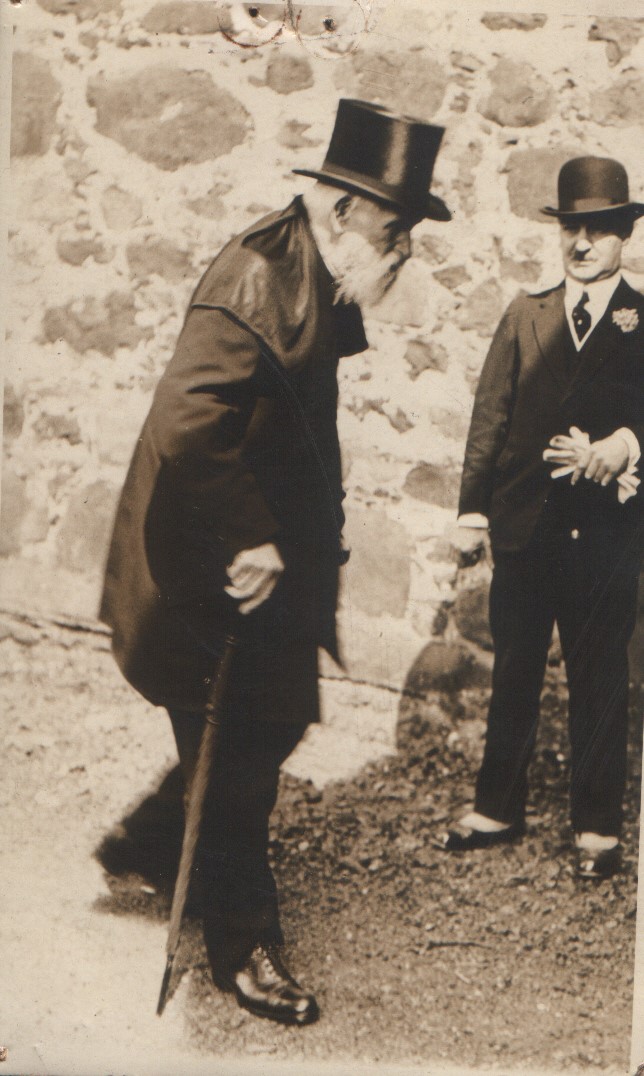
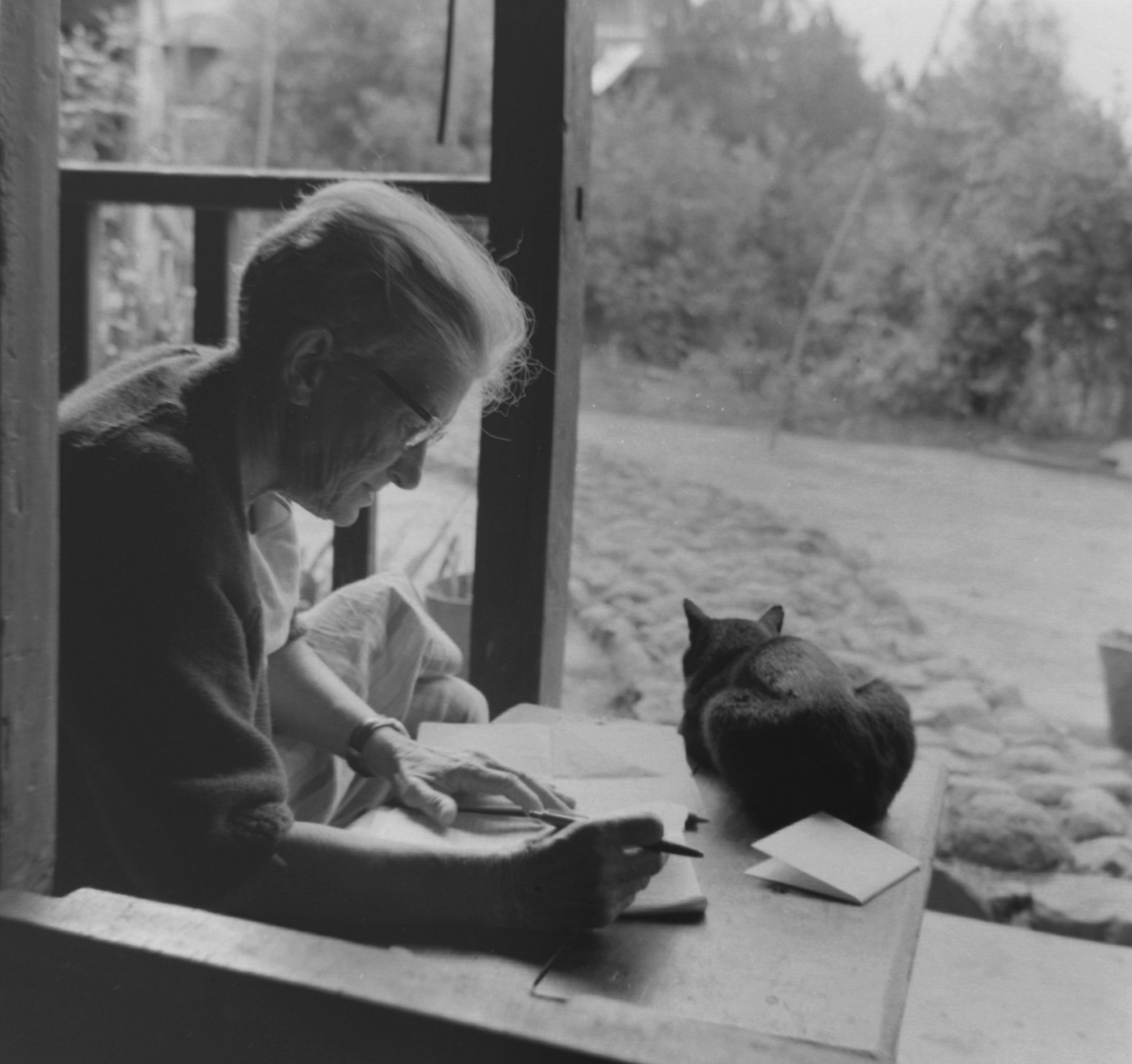
The last photograph of Alexander Gordon taken at Dunmurry on 18th January 1931
It examines too his family background, which was frequently touched by tragedy. But he inspired great loyalty and affection in the generations of students he trained for the ministry.
Principal of the Unitarian Home Missionary College, Manchester
He was buried in Dunmurry, just a short time after he conducted his final service there on 18th January 1931.
The title of this post comes from the Preface to A Collection of Psalms, Hymns and Spiritual Songs written by the Rev A.G. Malcolm for his hymnbook published in Newry in 1811.
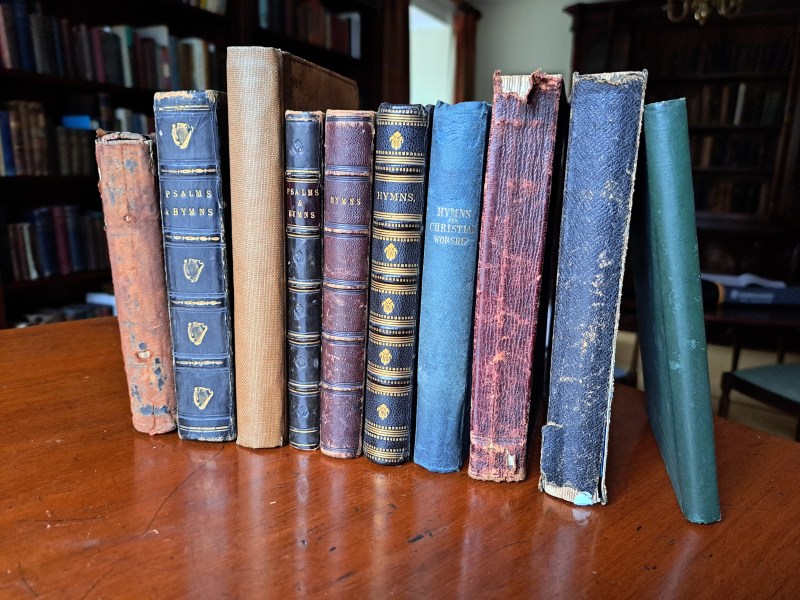
Click on the video to explore Irish Non-Subscribing Presbyterian hymnbooks
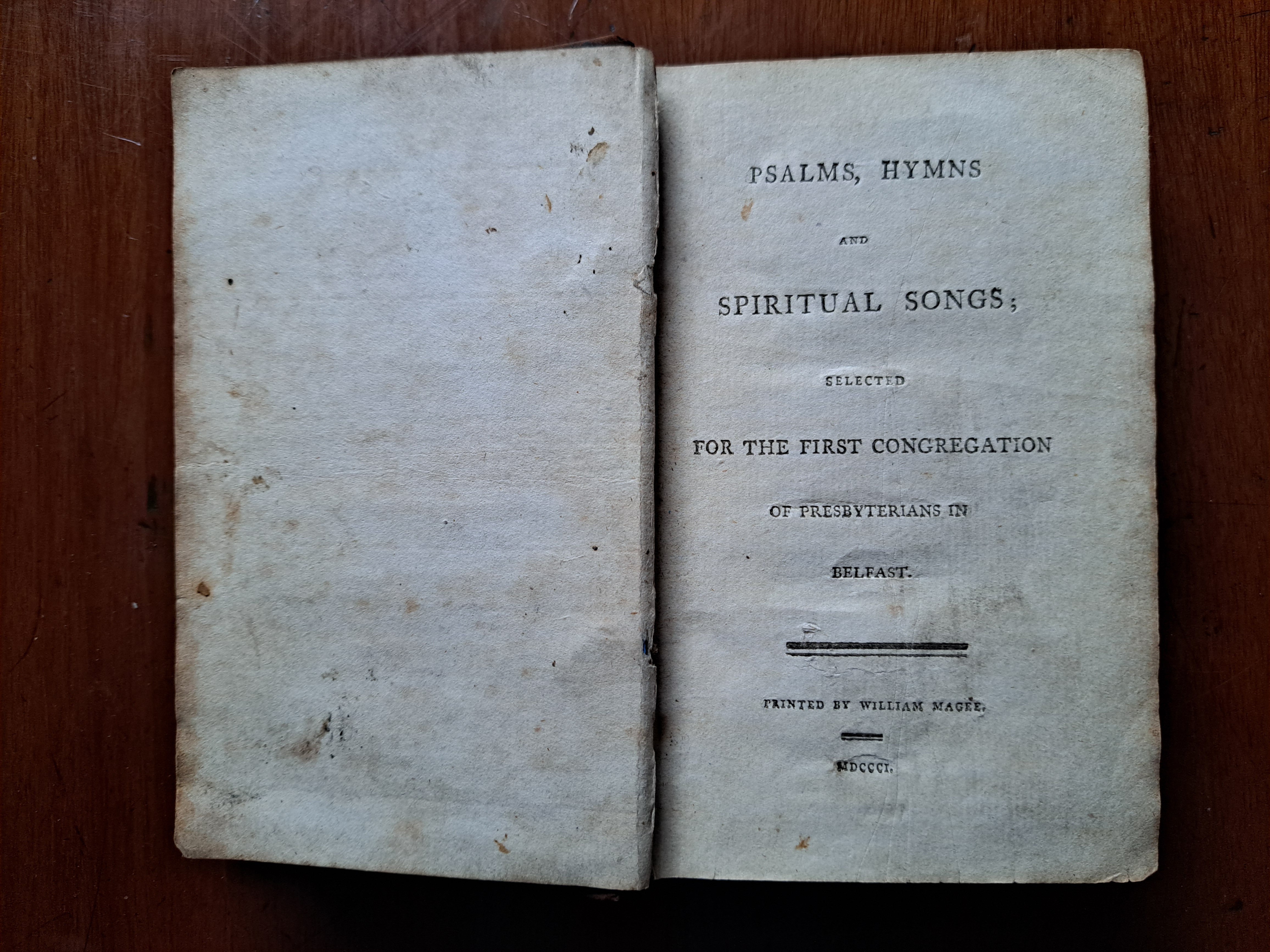
Prior to about 1800 Non-Subscribing or New Light Presbyterian churches, in common with other Presbyterians, would have worshipped with a Psalter or Psalm book. The first distinctly Non-Subscribing hymnbook appeared in First Church in 1801. What is surprising about this publication is that in the same year Edward Bunting offered to supply an organ to the church. This offer wasn’t taken up although in just a few years the Second Congregation were to become the first church with an organ, First Church not acquiring one until 1853. The Rev William Bruce edited this collection and 1,200 copies were published. A choir seems to have led the singing which initially contained boys but was later expanded to include adults.
First Church’s Collection of 1801
William Bruce’s book contained 246 hymns, with an index of first lines and a brief one page table of subjects. The next hymnbook, the Newry edition of A.G. Malcolm, contained 405 hymns with a more substantial table of subjects running over eight pages. Plus it had an index of first lines with the names of authors (for example Barbauld, Watts, Doddridge, Kippis, Merrick, Wesley, Addison, Enfield) which showed the eclectic sources the book drew on from within Dissenting circles and beyond.
An interesting preface also explained their intentions:
…care has been taken, to select psalms and hymns, which treat of of the leading points both of faith and practice; and it is hoped, that the compilation will be found to contain a sufficient variety of the best compositions, in sacred poetry, adapted to all the principal subjects of Christian devotion.
A.G. Malcolm went on:
Correctness, both in sentiment and style, has also been made an object of considerable attention. Hence, many verses have been altered; and such psalms and hymns as seemed, in any degree, unsuitable to the simplicity and solemnity of divine worship have been omitted.
As the work is intended for general use, and must be expected to fall into the hands of persons, who unavaoidably differ from one another, in their opinions, on religious subjects, all expressions, which appeared likely to give offence to any sincere Christian, have been studiously avoided.
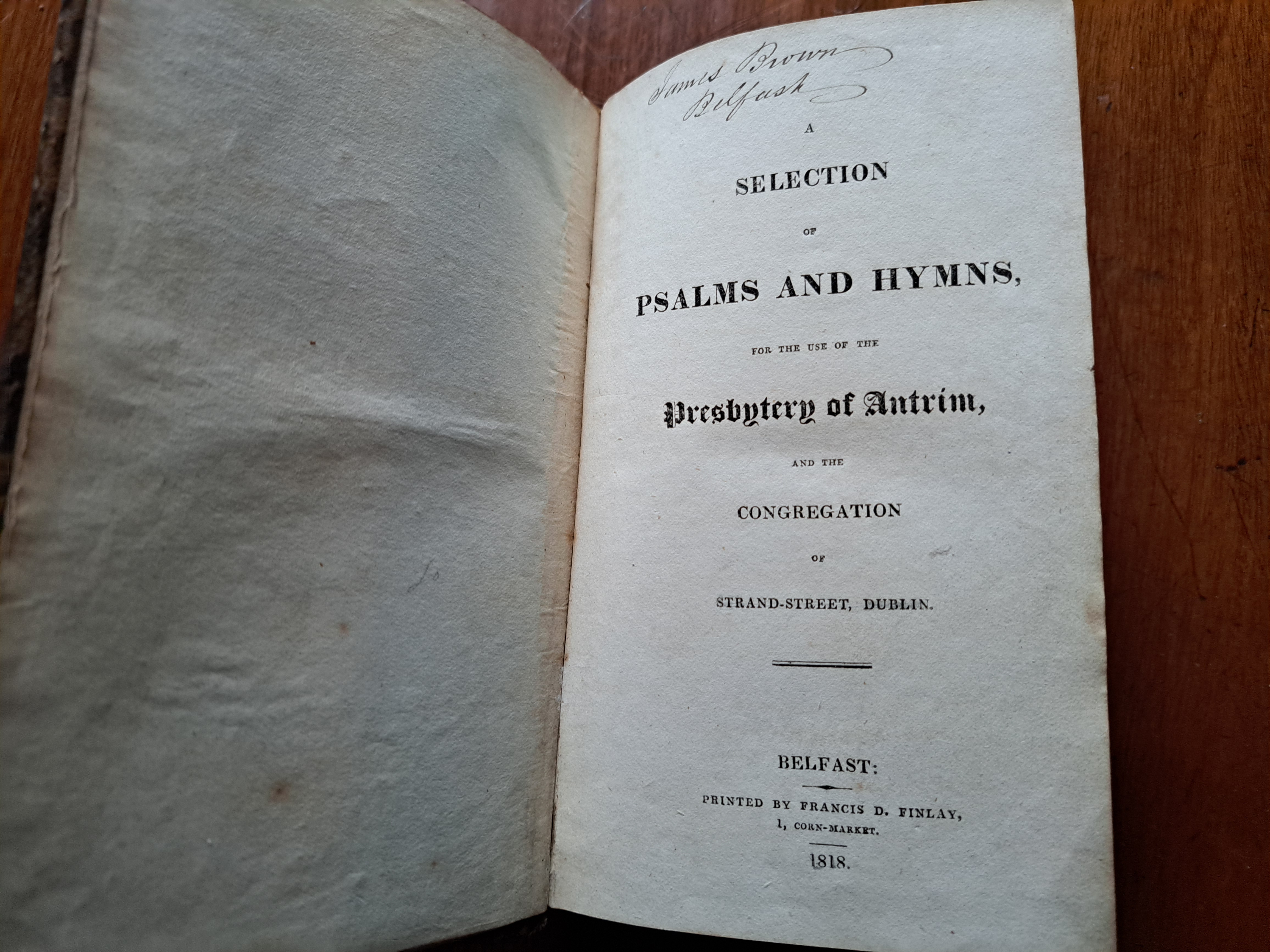
Interestingly the next hymnbook, dated Belfast, July 1818 and edited by Rev W.D.H. McEwen, made a similar point in a slightly more forceful way in its Preface:
Some doctrines are so offensive to the societies, for whose use this compilation is principally intended, that they are carefully avoided. As to others, the same scrupulosity is not observed; for, with respect to them, there may exist a diversity of sentiment. This selection may, therefore, be thought defective, but it will not disgust by a pertinacious obtrusion of doctrine.
So certain doctrines weren’t allowed to get in the way! Some were left out all together – the Trinity, the theory of the atonement based on penal substitution – and on some doctrines Non-Subscribers were able to agree to differ.
W.D.H. McEwen,s hymnbook
The book was published for the Presbytery of Antrim and the congregation of Strand Street, Dublin but it came from the minister of the Second Congregation. Curiously they had installed an organ in 1806 and had Edward Bunting as their organist from then until 1817. So they don’t appear to have had a hymnbook of their own for the first dozen years after installing the organ.
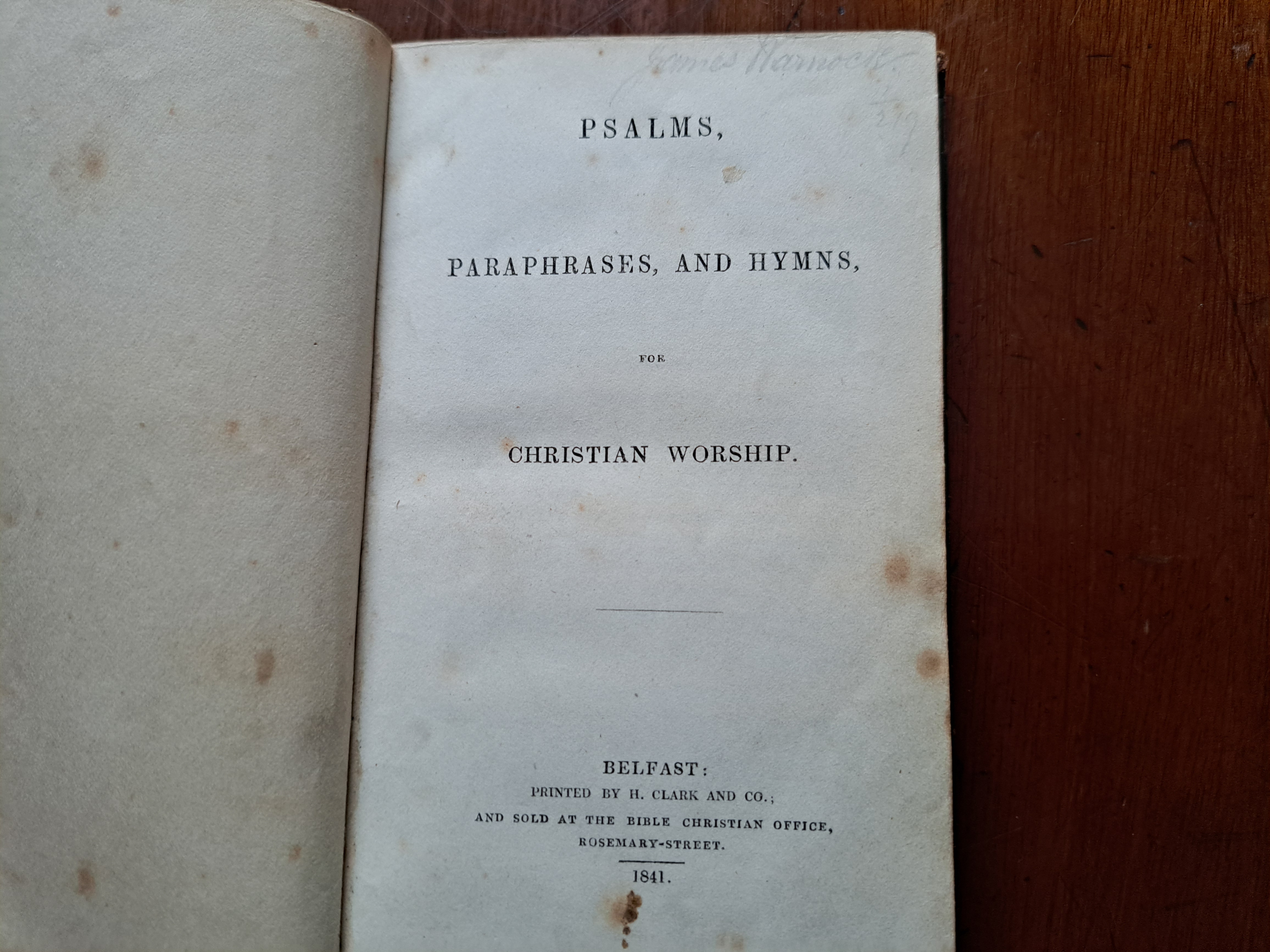
Following the establishment of the Remonstrant Synod of Ulster in 1830 Non-Subscribers moved towards the development of a hymnbook for all churches. This is Psalms, Paraphrases, and Hymns, for Christian Worship published in Belfast in 1841:
Psalms, Paraphrases, and Hymns, for Christian Worship 1841
This is the first edition of what became Hymns for Christian Worship, a book which went into at least four further editions before the end of the century and was followed by a supplement in 1899. Throughout this time this was the main series of hymnbooks in use in the churches in Ireland. More detail can be seen in the video above.
The latest issue – Volume 28 Number 4 – is on its way to members of the Society, new members are always welcome and details of how to join can be found below.
As ever there is a great wealth of material in the journal, including:
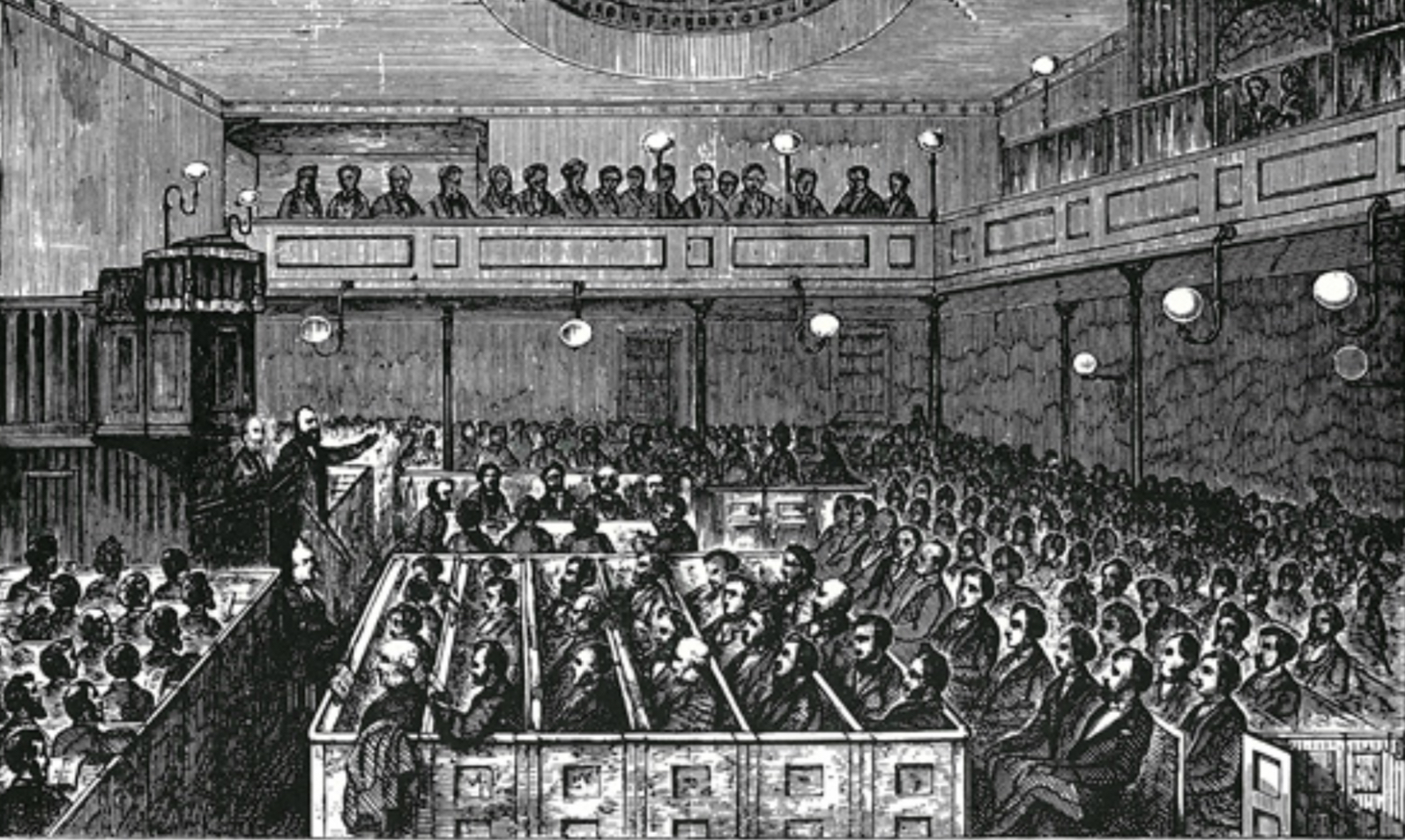
Essex Street Chapel in the later eighteenth century: members, adherents and sympathisers
G. M. Ditchfield
Centenary Service at Essex Church 1874
In this article Professor Grayson Ditchfield provides an analysis of the ‘associates, friends, visitors and even some critics of a congregation which has been, and remains, widely and deservedly regarded as a foundational pillar of the Unitarian movement in this country’. In his paper Professor Ditchfield goes a long way to uncover the stories of the people who sat in the pews at Essex Street Chapel and looks especially at the role of women there. The Chapel was situated in a very impoverished area and Hannah Lindsey, the wife of the minister, organised poor relief for the local inhabitants. The congregation could not have survived without its female supporters in the early years in particular, and one member, Elizabeth Rayner, made an annual donation of £2,000. Essex Street Chapel included a number of MPs, including one described as `my fidgeting pew neighbour’ by another member. Some of the MPs made the free franking of letters in the House of Commons available to members! Was it a Dissenting Chapel or a reformed Church of England? Was it a congregation or an audience? All this and much more is examined in this fascinating article which breaks so much new ground.
After 1825 – celebrating the foundation of organised Unitarianism in Britain and America
Alan Ruston
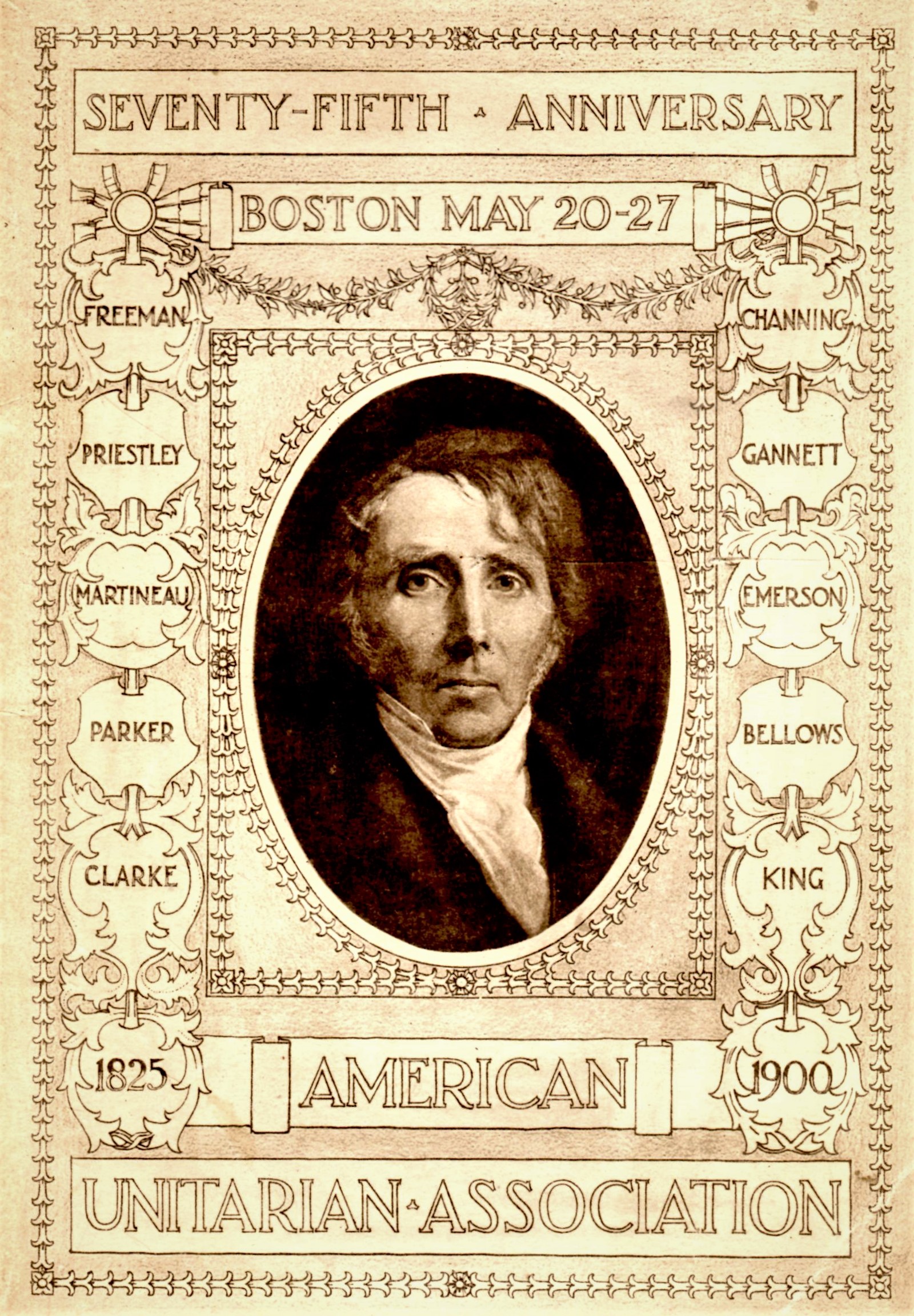
AUA 75th anniversary brochure cover
This year marks the 200th anniversary of the foundation of both the British and Foreign Unitarian Association (B&FUA) and the American Unitarian Association (AUA), both founded within a day of each other in May 1825. Alan Ruston investigates the way each anniversary has been celebrated in Britain and the USA. Both the B&FUA and the AUA have evolved over this time, the B&FUA really being superseded by the General Assembly in 1928 and the AUA being absorbed into the Unitarian Universalist Association in 1961 but the development of both bodies over two centuries tells us a lot about the development of Unitarianism in both countries and the interaction between British and American Unitarianism.
Notes
Alexander Gordon on James Martineau: An Evaluation
Alan Ruston
Very Rev William McMillan Library
David Steers
Very Rev William McMillan Library, Dunmurry
Dr Williams’s Trust.Announcing a New Partnership
The University of Manchester Library and The Dr Williams’s Library
REVIEWS
Daisy Hay,Dinner with Joseph Johnson: Books and Friendship in a Revolutionary Age, (Chatto & Windus, London, 2023) ISBN 9781784740184. 528 pages. Price £20.
Reviewed by Derek McAuley
Ben Stables, From Pigeon Flying to Intellectual Liberty. The History of Pepper Hill Unitarian Chapel in Shelf, West Yorkshire. With an Introduction by Rev John Midgley. Published by Pepper Hill Unitarian Chapel, 2024. 100 pages. Price £6. Copies are available directly from the author (benstables@hotmail.co.uk).
Reviewed by David Steers
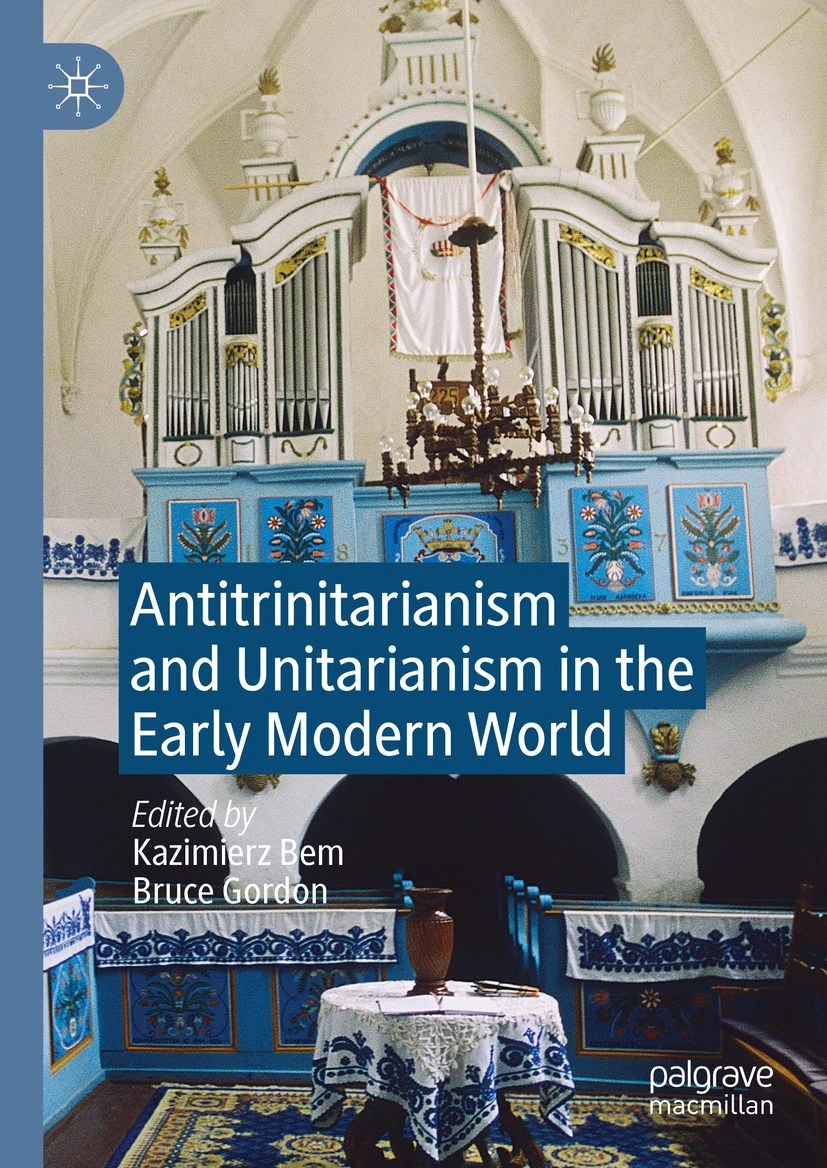
Kazimierz Bem and Bruce Gordon (eds), Antitrinitarianism and Unitarianism in the Early Modern World, Palgrave Macmillan, 2024, 397 pages. ISBN 9783031696572, price £119.99; eBook ISBN 9783031696589, price £99.99.
Reviewed by Alan Ruston
Back to Life, The People on the Plaques in Brighton Unitarian Church, 2023, 95 pages. Price £8 including postage; copies can be obtained from Christine Clark-Lowes (cjclarklowes@yahoo.co.uk).
I was very pleased to be asked to contribute to this book which has just been published by Palgrave Macmillan:
Antitrinitarianism and Unitarianism in the Early Modern World
The publishers describe the volume in these terms:
This collection offers an innovative and fresh interpretation of Antitrinitarian and rational dissent in the early modern world. The central themes focus on the fierce debates surrounding Antitrinitarianism and Unitarianism that emerged from the Reformation and the lived cultures of these dissenting movements. The chapters take an interdisciplinary approach addressing ideas in context, their reception and appropriation, and the diverse and often conflicting visions of Christianity. Drawing on previously unused sources, many from Eastern Europe and often in inaccessible languages, this book challenges our understanding of dissent as marginal and eccentric and places it at the center of contesting convictions about the nature of religious reform.
The contents are as follows:
Introduction
The Porous Boundaries of Dissent
Bruce Gordon
Antitrinitarianism and Its Influence in Italy and Poland
Italian Antitrinitarianism and the Legitimacy of Dissent
Odile Panetta
Scripture, Piety, and Christian Community in the Thought of the Polish Brethren
Sarah Mortimer
Religiosity in the Ethos of Polish Brethren in Light of Funeral and Wedding Speeches from the Seventeenth Century
Maria Barłowska
True Heirs of Jan Łaski: Polish Brethren Church Discipline in the Polish-Lithuanian Commonwealth and During Their Exile in Transylvania
Kazimierz Bem
Transylvanian Unitarianism
The Late Confessionalization of the Transylvanian Unitarian Church and the Polish Brethren
Gizella Keserű
Introduction to the Transylvanian Unitarian Disciplina Ecclesiastica
Lehel Molnár
De Disciplina Ecclesiastica: On Ecclesiastical Discipline (1626)
Alexander Batson
The Term, Development, Purpose, and Practice of Church or Canonical Visitation: Unitarians in Háromszék in the Seventeenth Century Between Conventional Rhetoric and Reality
Lehel Molnár
Some Aspects of the Hungarian Unitarian Liturgy in the Sixteenth to Eighteenth Centuries
Sándor Kovács
Engagement and Divorce Cases Before the Unitarian Consistory in Seventeenth-Century Transylvania. Frameworks in Church Law and the Doctrine of Marriage
David Szigeti Molnar
England, Ireland, and New England
The Historical Critique of Heresiology in the Seventeenth Century and the Origins of John Milton’s Arianism
R. Bradley Holden, Samuel J. Loncar
Authority, Reason, and Anti-trinitarianism: John Abernethy and the Competing Pressures Within Irish Presbyterianism in the Early Eighteenth Century
A. D. G. Steers
The 1662 Book of Common Prayer and Its Adaptation in Eighteenth-Century Rational Dissent
Bryan Spinks
New England Congregationalists and Unitarianism in Late Eighteenth Century/Early Nineteenth Century
Peter Field
The editors are:
Kazimierz Bem, Pastor of First Church in Marlborough (UCC), USA and a senior lecturer in Church History at the Evangelical School of Theology in Wrocław, Poland.
Bruce Gordon, Titus Street Professor of Ecclesiastical History at Yale Divinity School, USA.
Hardcover ISBN978-3-031-69657-2
Softcover ISBN978-3-031-69660-2
eBook ISBN978-3-031-69658-9
You can find out more about this book via this link.
Ephemera is the term given for items that weren’t usually expected to last. Usually printed items, they had only a limited shelf-life and were generally expected to be thrown away when they had been used. Inevitably such things tend to become interesting to collectors because they often illuminate some aspect of social history that might otherwise be lost. Our new Very Rev William McMillan Library is rich in ephemera and this latest video explores two items held by the Library:
Click above to see Episode 3 of the explorations of Dunmurry NSP Library
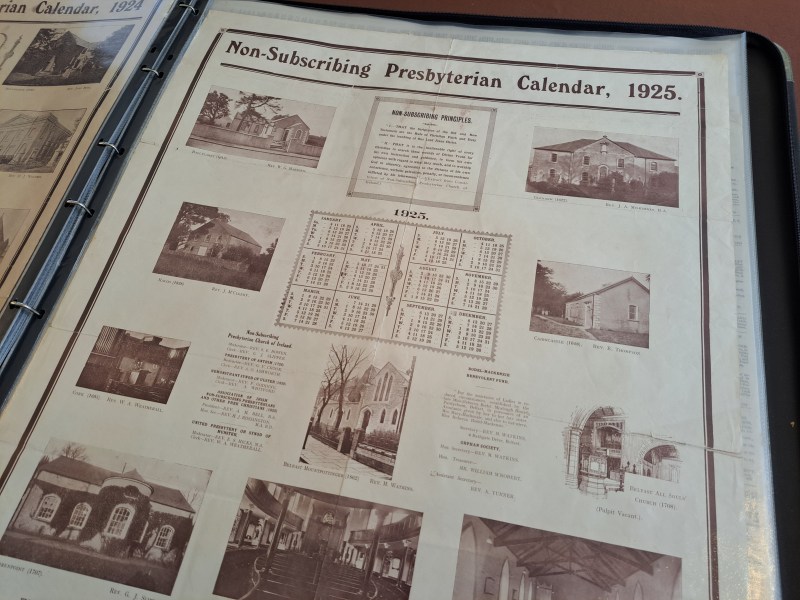
In 1924 and 1925 the congregation of York Street Church, Belfast, under the leadership of Rev Dr A.L. Agnew, produced a calendar to sell to the denomination. Over the two years they included a picture of all the churches in the denomination in Ireland and they make for interesting documents. Many of the pictures date from a bit before the mid-1920s but it makes for an interesting collection of early twentieth-century photographs. Some images are quite well-known and have often been published. Some are quite rare like this picture of Ballymoney:
There’s also a reminder of an attempt at outreach in Bangor which lasted for a few years, and seemed to be successful for these years at least:
But altogether they are interesting documents. They must have captured a lot of interest at the time but at the end of the year what do you do with an old calendar but throw it away? Which is why so few have survived. You can find out all about it by watching the video.
George Cross was born in Toxteth, Liverpool and lived all his life there apart from the war years. As a young man he took part in the D-Day Landings on 6 June 1944, not returning there until 2009 at the age of 100.
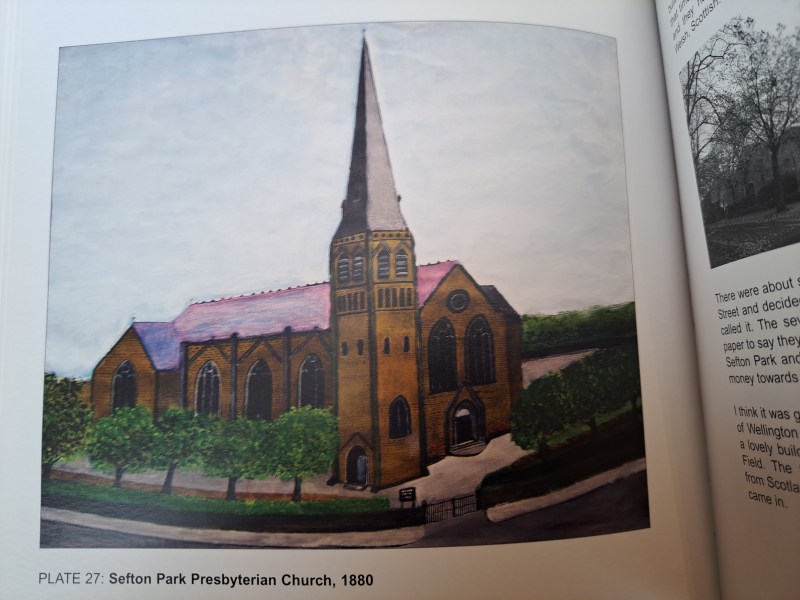
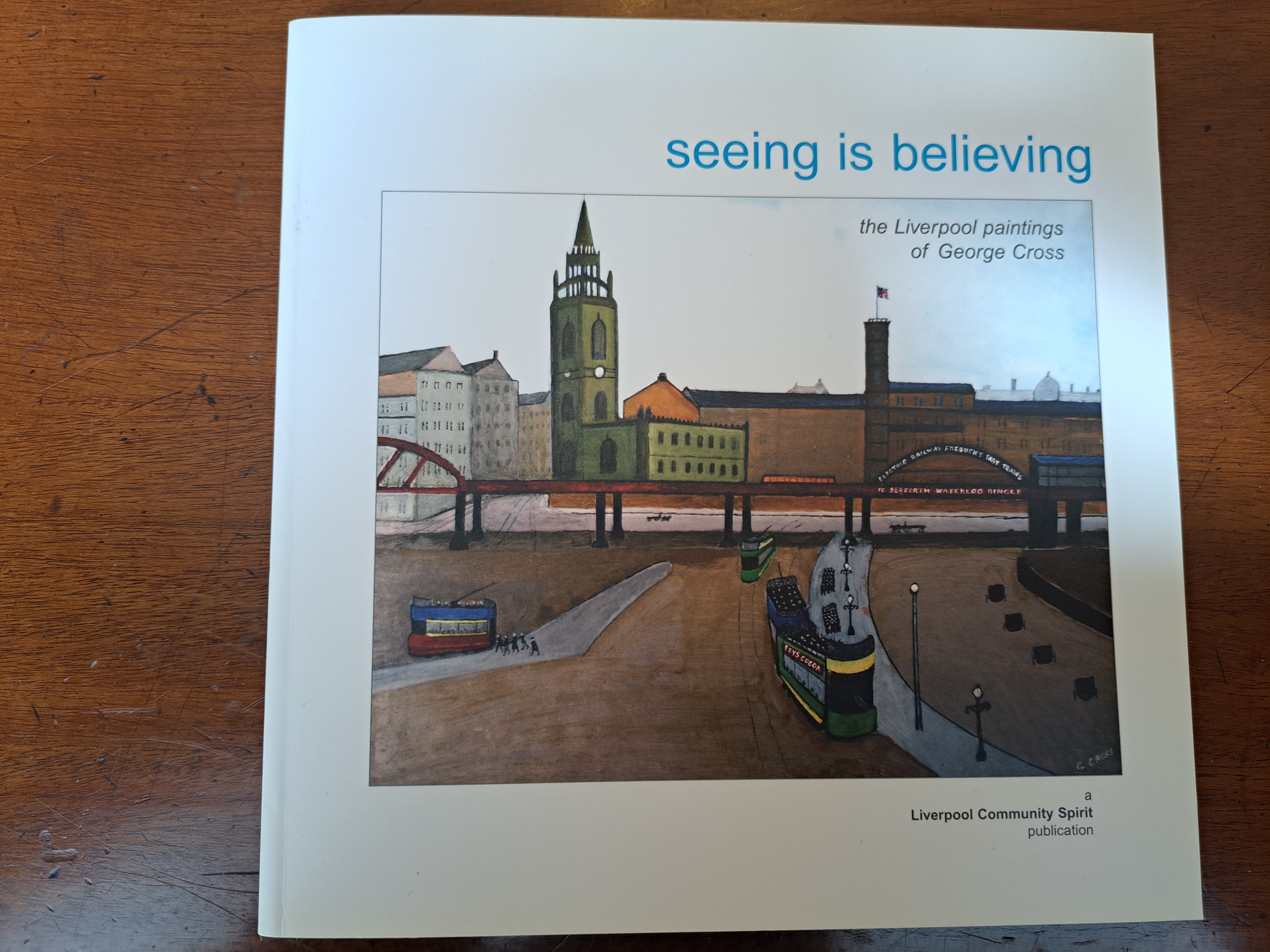
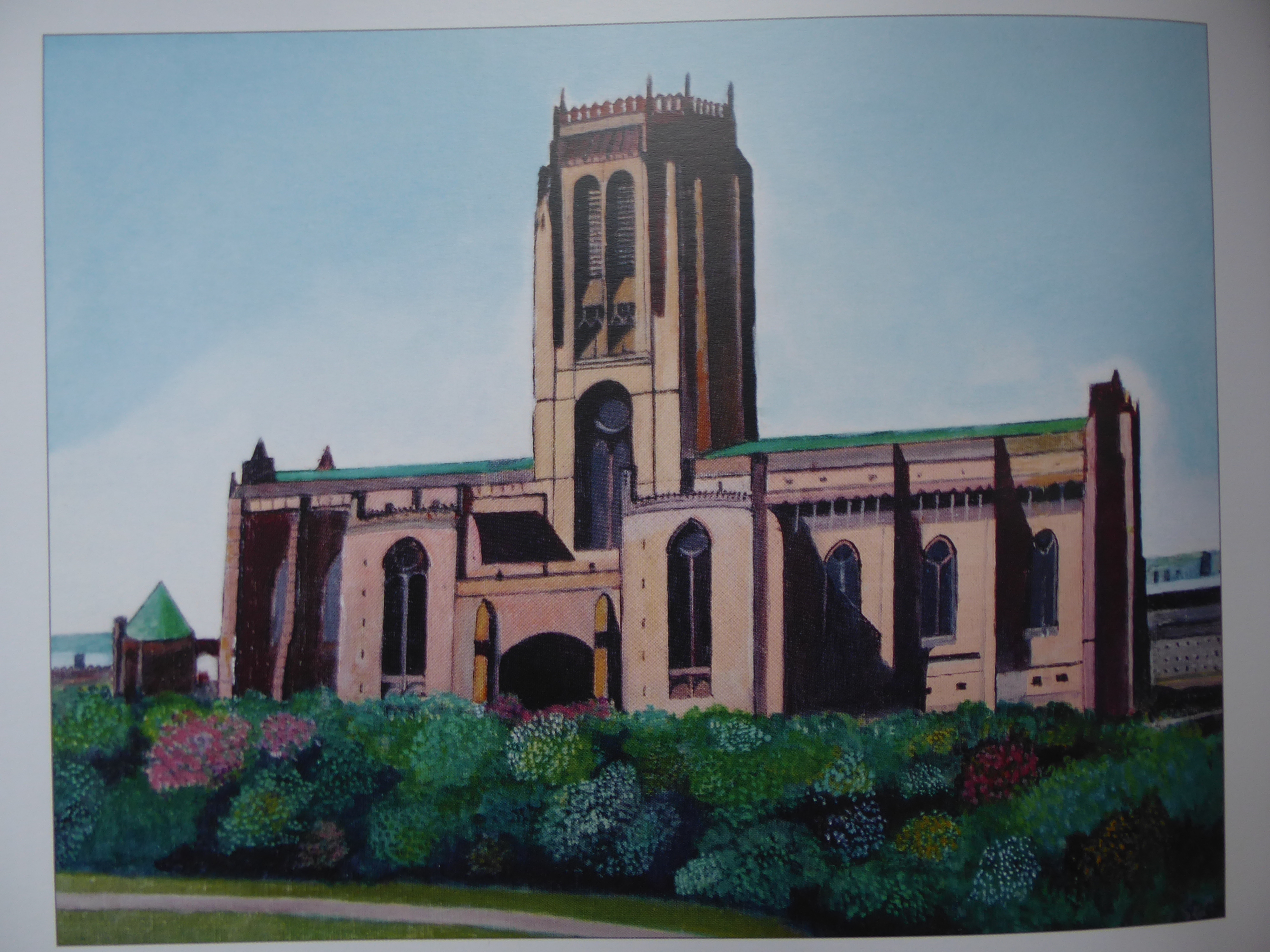
As a young man George attended Hyslop Street Mission, later moving to Sefton Park Presbyterian Church where he was an elder and lay preacher. George developed lots of interests and became a published author, writing about Liverpool history, and late in life emerged as an accomplished artist with public exhibitions and a book of his paintings which commemorated Liverpool buildings, many of them long demolished, including Sefton Park Church (at the top of the page).
In this video we tell some of the story of his life, particularly in relation to the D-Day Landings in which he participated. He has the distinction of having a building named after him in Toxteth and is remembered by a great many people for the warmth of his character and his kindness.
Click on the video to see George’s story
‘seeing is believing: the Liverpool paintings of George Cross’
The video includes some film of George’s return to Normandy in 2009 as well as film of him at one of his exhibitions.
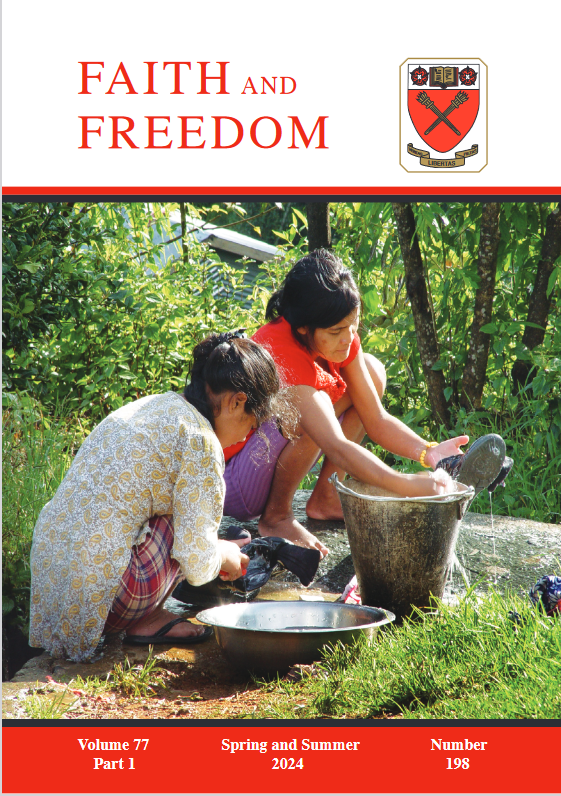
The latest issue of Faith and Freedom is now available. In this issue we are pleased to publish the entire transcript of the most recent Reckoning International Unitarian and Universalist Histories Project webinar. Entitled Uncovering the Hidden Power of Women in Unitarian and Universalist History the discussion comprises an international panel with an introduction by Lehel Molnár, Unitarian archivist at Koloszvár, Transylvania, and with Rosemary Bray McNatt, President of the Starr King School for Ministry, Berkeley, California, as the moderator and concluding responder. The main papers are ‘The Story of Pharienbon Rani and Unitarianism in the Khasi Hills, India’ by Alisha Rani, professor of sociology at Shillong, India, and ‘Profiling Black Women’s Ministries in Unitarian Universalism’ by Qiyamah A. Rahman, a UU minister and activist in the United States. Responses are given by Olga Flores (Bolivia), Ann Peart (UK), and Mária Pap (UK and Transylvania), with closing remarks by Mark W. Harris, one of the main planners for the Reckoning Histories Project. The journal also includes some photographs (including the cover – see above and top) by John Hewerdine taken at the Annie Margaret Barr Memorial Orphanage in Meghalaya which help illustrate the theme of both Alisha Rani’s paper and a review by Derek McAuley also found in this issue.
Margaret Barr in her office in the Khasi Hills (Photo: John Hewerdine)
Other papers include Wayne Facer’s Mr Jellie’s Romance, an account of the pioneering days of Unitarianism in New Zealand and how amidst his work to establish the cause he fell in love with and eventually married Ella Macky. She was a member of an active Unitarian family but her own commitments frequently took her to the other side of the world to attend University and to participate in the International Council of Unitarian and Other Liberal Religious Thinkers and Workers in Amsterdam in 1903, while Jellie carried out his work establishing the congregation in Auckland and supporting Unitarians elsewhere in New Zealand.
Barrie Needham examines the life and poetry of Gerard Manley Hopkins, Catholic convert and Jesuit priest, whose poetry remained unpublished in his own lifetime but which has gained a great following from the early twentieth century onwards. A Victorian poet but one whose style is as bold and striking as anything written at any point since. Barrie Needham shows how Hopkins wrestled with his poetry to express his faith in God and his understanding of God in nature, and shows the philosophical understanding that underscored his writing. If you have ever read any Hopkins or heard his poems being read you will find this article immensely helpful.
In addition we have four excellent reviews of notable recent books.
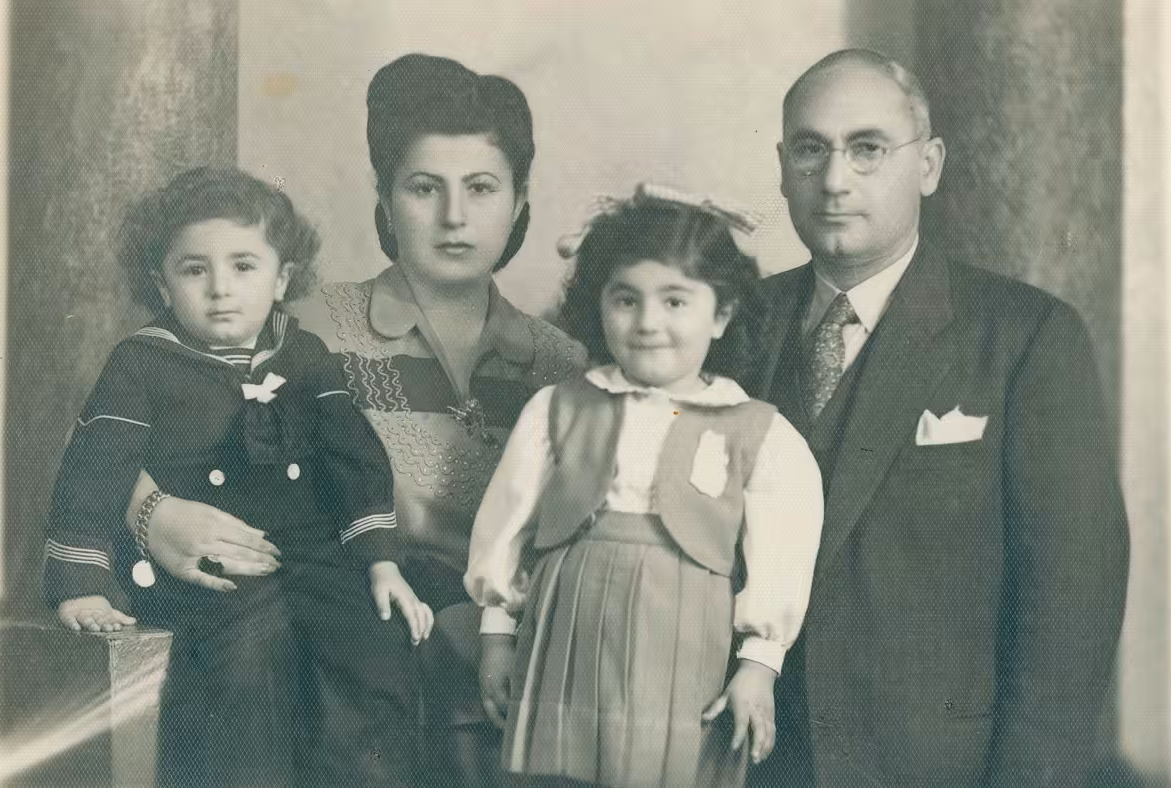
Avi Shlaim, aged two, with his parents and sister in Baghdad, 1947. From the cover of his book.
Graham Murphy reviews Avi Shlaim, Three Worlds, Memoirs of an Arab-Jew, (Oneworld Publications, 2023). The book of the year for both the Times Literary Supplement and the New Statesman, Avi Shlaim tells his own story as someone who was born into the prosperous and significant Jewish community of Iraq following the Second World War and who was forced, with most of the Jewish population, to emigrate to Israel in 1950. At the age of 15 his life changed when he managed to come to the UK, ending up at Cambridge and ultimately as Professor of International Relations at St Antony’s College, Oxford. As a young man he served in the Israel Defense Force but is not afraid to criticise Israel or Zionism. His most recent research has gone back to Iraq and his own origins as part of ‘a Diaspora that had been the living embodiment of Muslim-Jewish co-existence [which] was no more’. In Shlaim’s view ‘As Israel expanded, the Palestinians, Arab natives of historic Palestine, not the Germans or the Russians, would take the burden of punishment for the European pogroms of modern history and the Final Solution.’ His reflections on his Jewish past in Iraq and on Arab-Israeli relations ever since are well worth reading, especially at the present time.
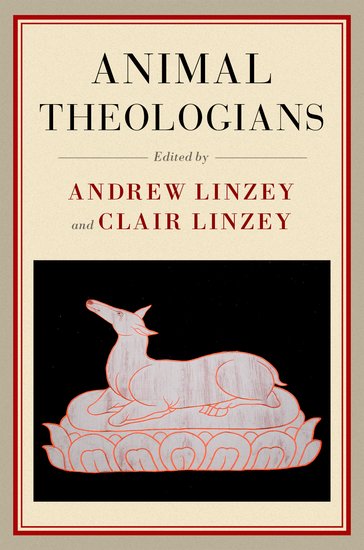
Andrew Linzey and Clair Linzey (eds.), Animal Theologians (Oxford Academic, Oxford University Press, 2023) is reviewed by Feargus O’Connor who takes us through the theological contributions to the consideration of animal rights, vivisection and animal cruelty. A number of the subjects of the book are Unitarians – most notably Frances Power Cobbe and Charles Hartshorne – and many would find agreement with Gandhi who Feargus quotes:
The greatness of a nation and its moral progress can be judged by the way animals are treated. Vivisection is the blackest of all the black crimes that man is at present committing against God and His fair creation. It ill becomes us to invoke in our daily prayers the blessings of God, the Compassionate, if we in turn will not practise elementary compassion towards our fellow creatures.
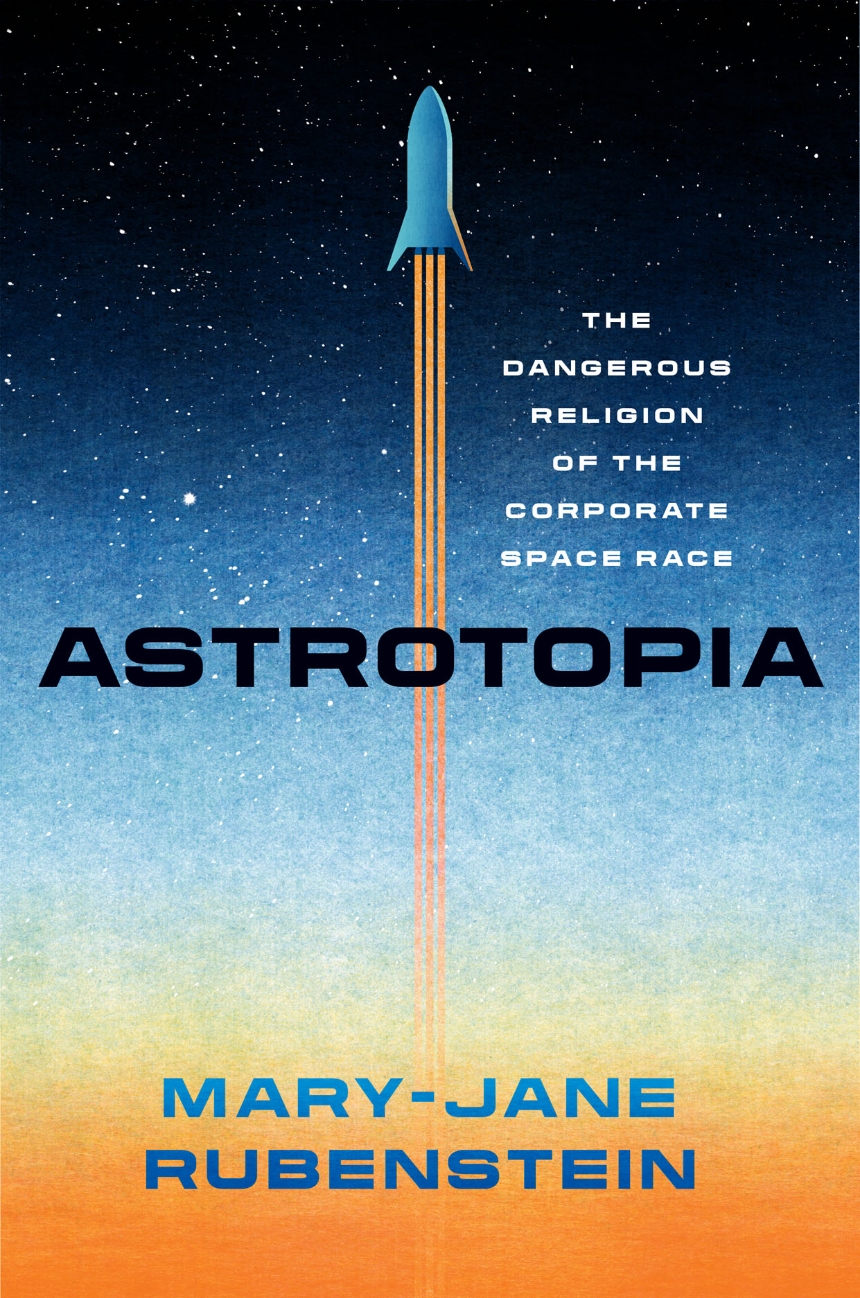
Professor David Williams reviews Mary-Jane Rubenstein, Astrotopia: the Dangerous Religion of the Corporate Space Race (University of Chicago Press, 2022) a book which raises the issue of humankind’s increasingly exploitative attitude to space exemplified in the attitudes of such figures as Elon Musk and Jeff Bezos, described by the reviewer as ‘both so grotesquely wealthy that they can have dreams of both colonising space and the funds to achieve those aims’. It is clear too that the United States no longer views ‘outer space as the common heritage of all humanity.’ In the light of this how should we progress human interaction with space?
Inside the former NSP meeting-house Ballymoney (Photo: David Steers)
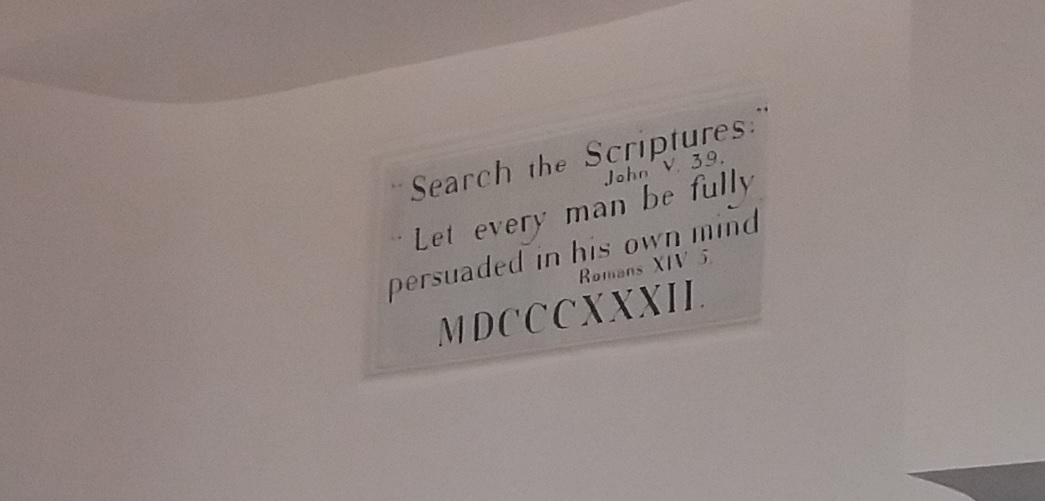
Liz McManus is a former Minister for Housing and Urban Renewal in the Republic of Ireland. Since leaving politics she has become a writer and in When Things Come To Light (Arlen House, 2023) she has drawn on her own family experiences to ‘craft an insightful and compelling novel’ in the words of Derek McAuley, our reviewer. Liz McManus’s grandparents were Unitarians/Non-Subscribers from County Antrim. Remarkably life took them to the Khasi Hills where (in the novel at least) they encounter the Rev Margaret Barr and Kissor Singh, the founder of the Unitarian Church in North India. In a strange piece of synchronicity Kissor Singh quotes St Paul ‘Let every man be fully persuaded in his own mind’, words which Liz McManus’s grandfather recognises as inscribed on the wall of his home church back in Ballymoney in Ulster. A fascinating novel incorporating Unitarians, family history, Ireland and India.
An annual subscription to Faith and Freedom (two issues) costs £16.00 (postage included) in the United Kingdom. Single copies can be ordered at a cost of £8.00 each (postage included). Cheques should be made out to Faith and Freedom and sent to the business manager:
Nigel Clarke, Business Manager, Faith and Freedom, 16 Fairfields, Kirton in Lindsey, Gainsborough, Lincolnshire. DN21 4GA.
Overseas subscriptions are also available.
It is also possible to pay online. For more details see our website:
Between 7th and 9th May, Dunmurry congregation was visited by four Unitarian ministers from Great Britain. These included Rev Laura Dobson, minister at Chorlton, Rev Mária Pap, minister at Mansfield, Francis Elliot-Wright, student minister at Knutsford, and Rev Jim Corrigall, the London District Minister. On the evening of Tuesday, 7th May Dunmurry congregation welcomed them, plus members of other congregations and a good number of local ministers, to a social evening in the McCleery Hall. I conducted an interview/dialogue with Jim who told us about his role as London District Minister, growing up in South Africa and his anti-apartheid activities, his decades as a journalist around the world which took him to Northern Ireland among other places, as well as the theological reflections which led him eventually to enter the ministry. As part of the evening Jim shared with us the reading that means most to him in his ministry – ‘God’s Grandeur’ by Gerard Manley Hopkins – and we listened to his favourite piece of music – Nkosi Sikelel iAfrika, God Bless Africa. It was a great night enjoyed by everyone.
Left to right Rev Dr David Steers, Rev Mária Pap, Rev Lynda Kane, Rev Laura Dobson, Francis Elliot-Wright, Rev Jim Corrigall, Rev Stephen Reain Adair, Rev Brian Moodie in the McCleery Hall, Dunmurry.
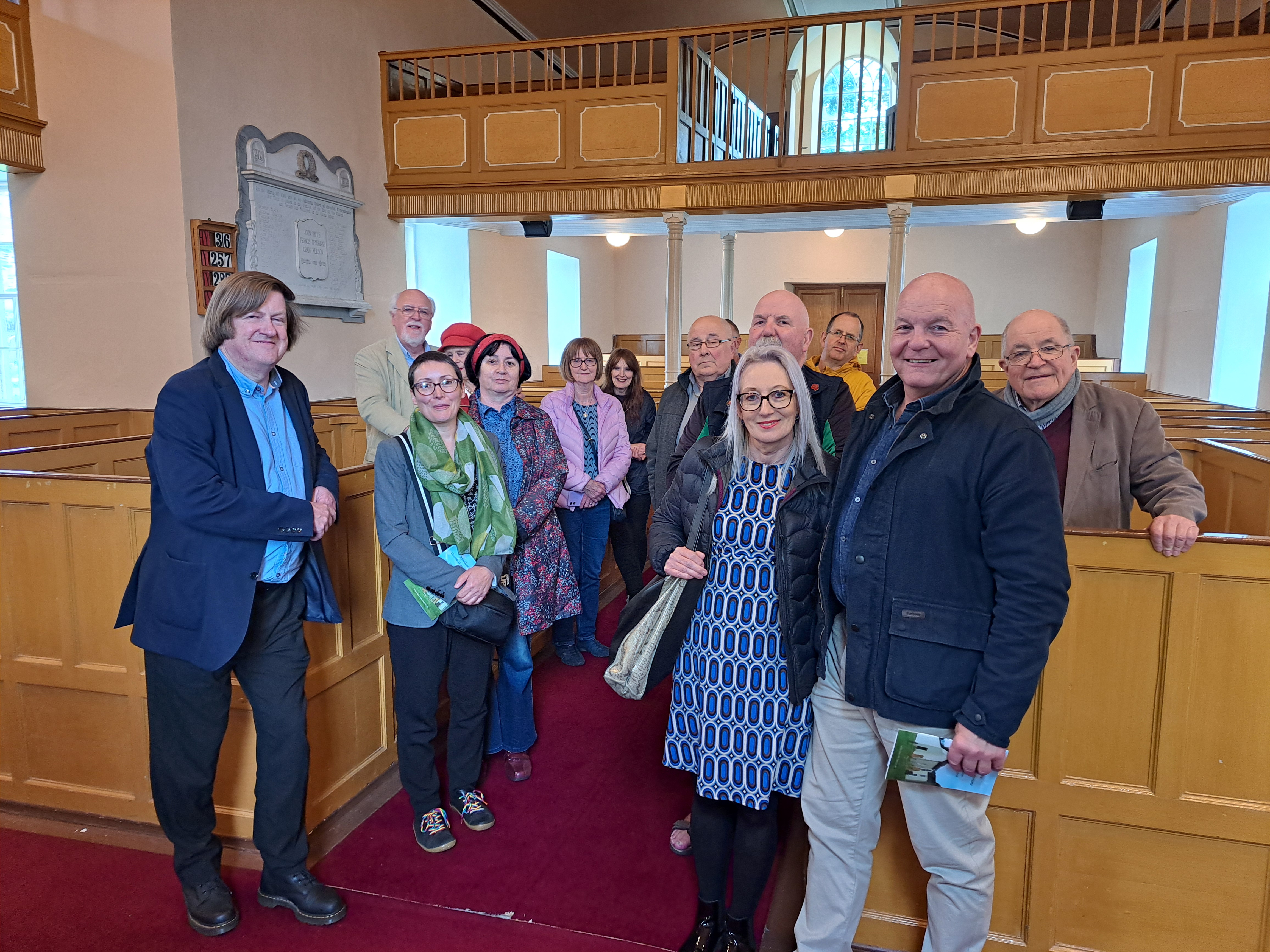
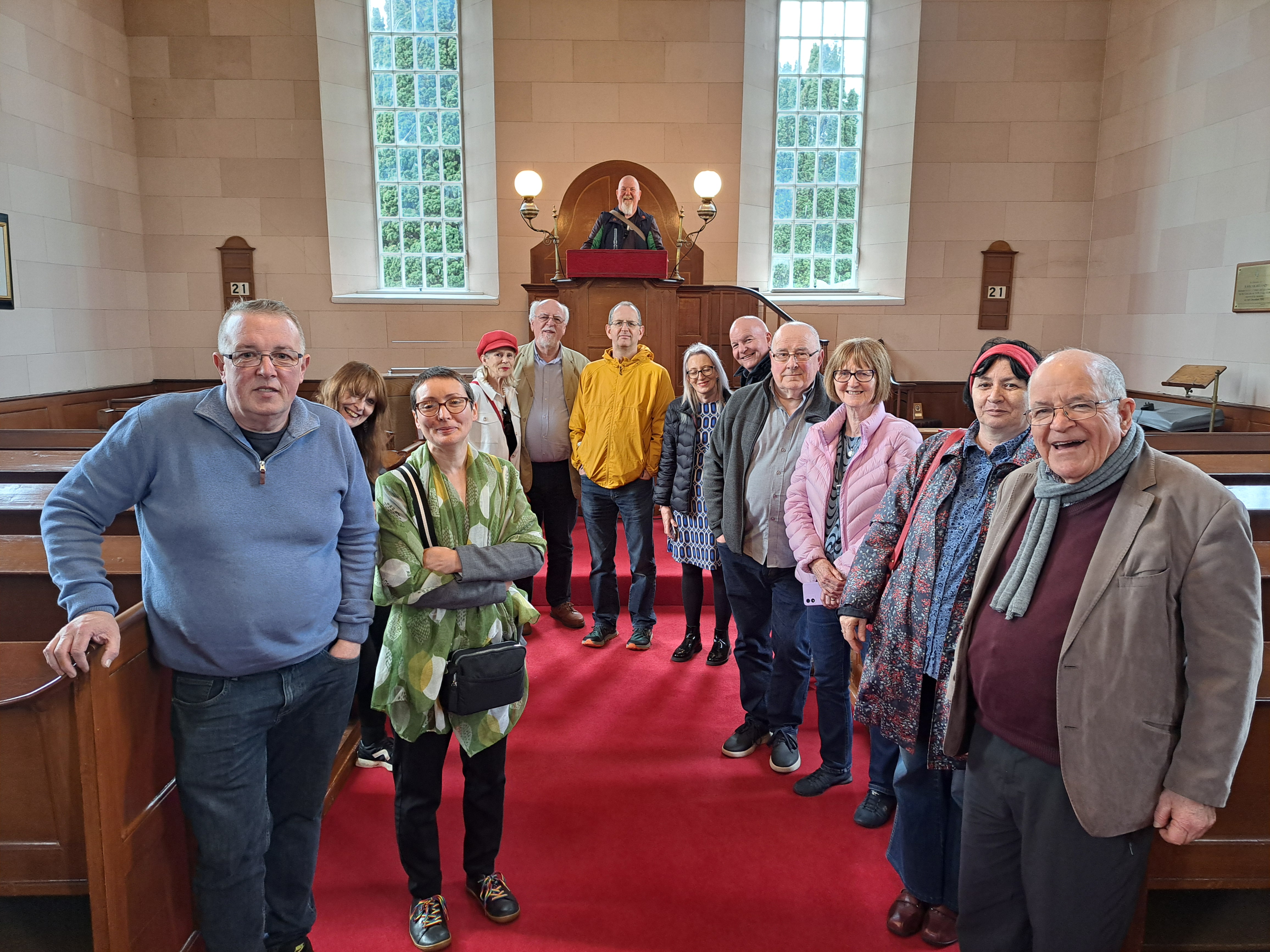
On Wednesday morning we made an early start in the company of a group of members of Dunmurry and First Church to visit six churches in Belfast and county Down and learn something about their history and witness. Thanks to Gary Douds we were taken around the churches in a minibus in great comfort and we were also blessed with fantastic weather.
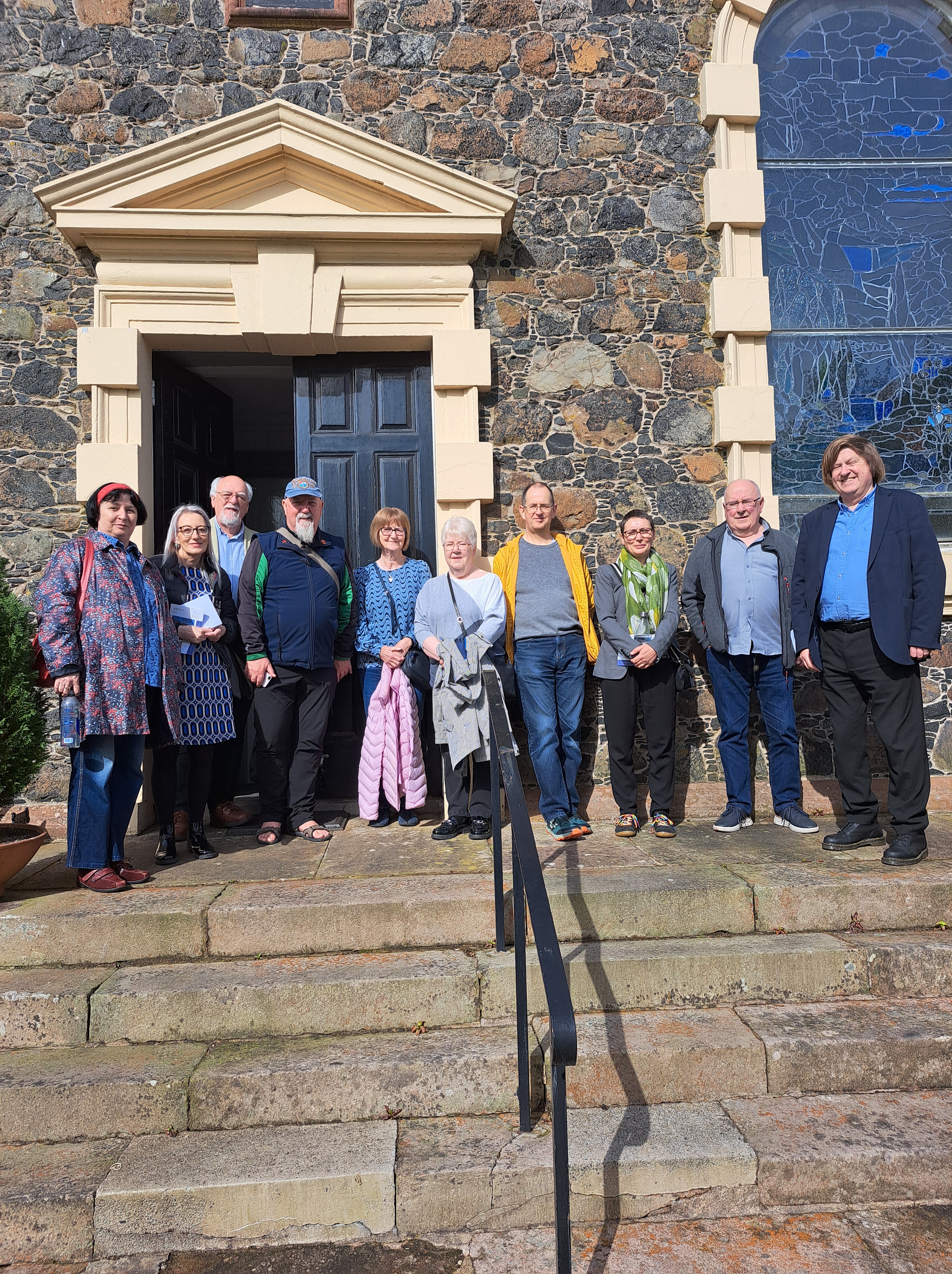
Some of the party at Dunmurry, ready to set off at 9.00 am.
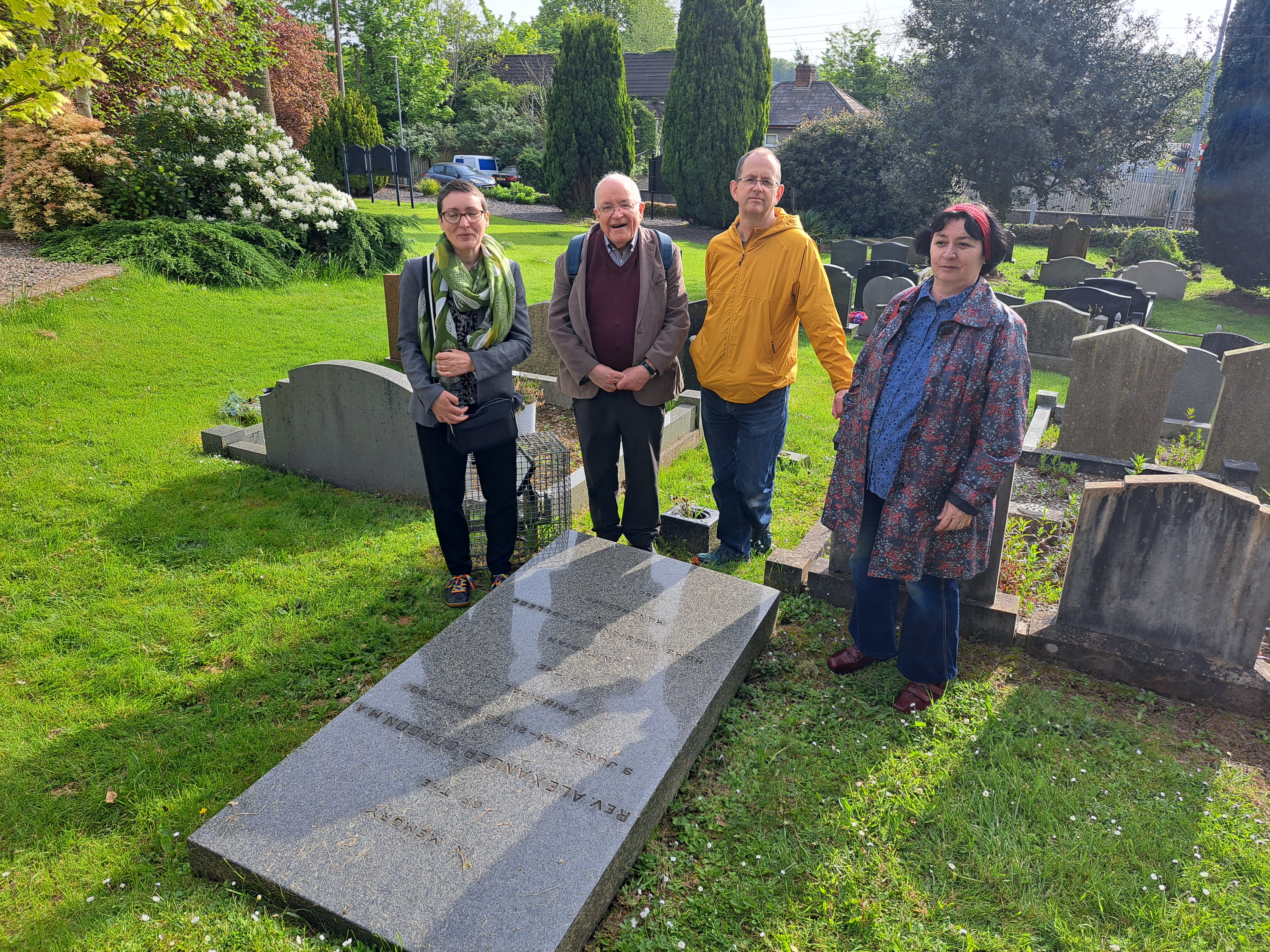
Laura, Jim, Francis and Mária visit the grave of Rev Alexander Gordon (Principal of the Unitarian Home Missionary College) at Dunmurry.
Outside Rademon later in the day.
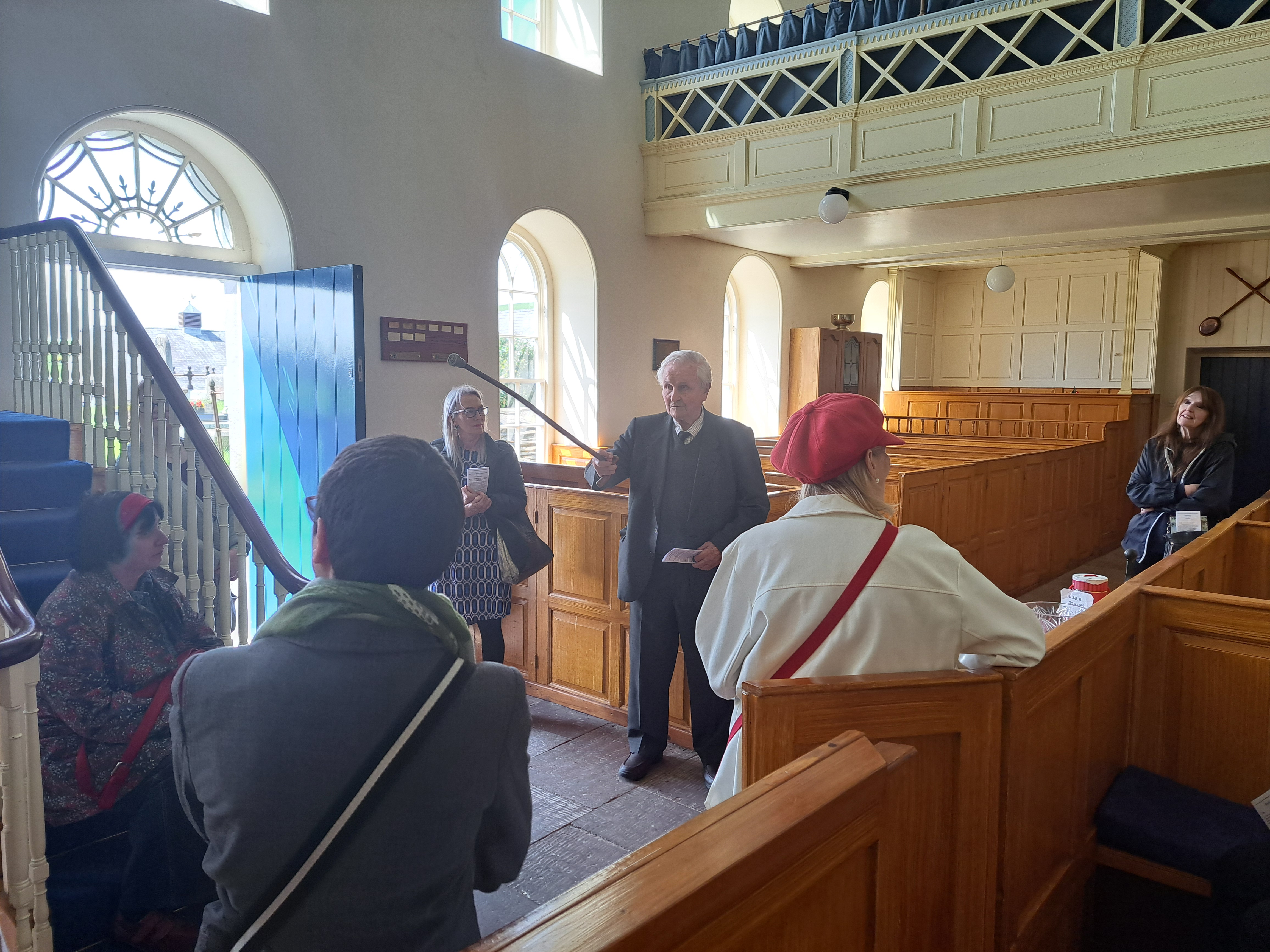
In most of the churches I said something about the building and the history of the congregation and in Rademon Jim Ferris shared his historical expertise to give us a talk about his congregation. Our thanks go to all the ministers and members who welcomed us in our travels including Des McKeown, Rev Chris Hudson, Rev Dr Heather Walker, Mary Stewart and David Rooney, as well as Jim Ferris.
Des McKeown welcomes everyone to First Church, Rosemary Street.
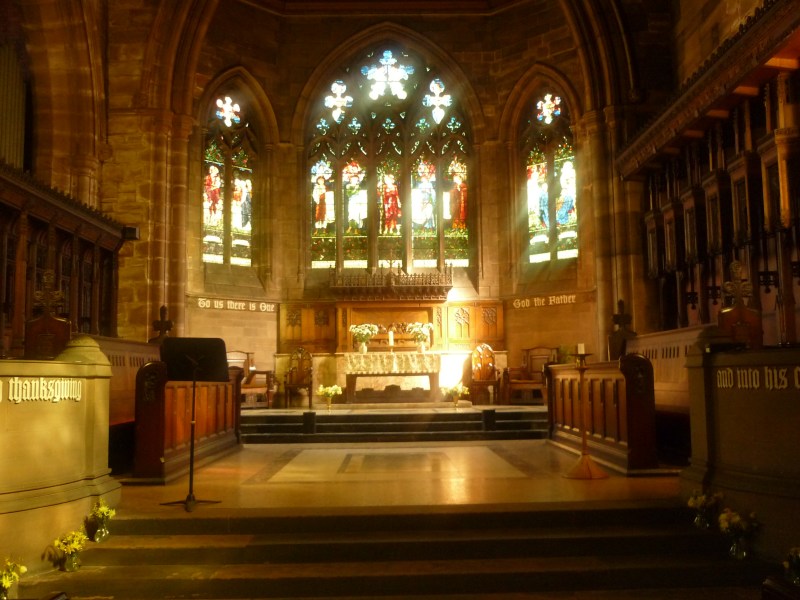
Rev Chris Hudson welcomes everyone in the chancel in All Souls’.
We had lunch in Denvir’s in Downpatrick and returned to Dunmurry just 15 minutes later than our planned schedule had anticipated, so all in all a great day out.
In Downpatrick.
Jim Ferris explains the history of Rademon.
We visited in turn Dunmurry (1779), First Belfast (1783), All Souls’ Belfast (1896), Rademon (1713), Downpatrick (1711) and Clough (1837), buildings of different styles and ages but all with their own story to tell as part of our distinctive tradition.
The latest issue of the Transactions (Volume 28 Number 3) will soon be on its way to members. Details of how to join the Society can be found below.
As ever the journal is full of interesting articles and contains:
The National Conference 1882-1928 – a Unitarian Talking Shop
by Alan Ruston
James Martineau’s carte de visite
One year before the bi-centenary of the British & Foreign Unitarian Association Alan Ruston looks at the other less well-known institution which came together with the B&FUA to form the General Assembly of Unitarian and Free Christian Churches in 1928. Although not founded by James Martineau, The National Conference of Unitarian, Liberal Christian, Free Christian. Presbyterian, and Other Non-Subscribing or Kindred Congregations, to give it its full title, was always under the influence of the great man. Even if the body was essentially ‘a Unitarian Talking Shop’ it was nevertheless an institution that made an important contribution to the development of national Unitarian organization in the late nineteenth and early twentieth centuries.
‘Holding Space Sacred’: Struggles for Land and Home in Great Britain and Ireland, and Beyond
by Derek McAuley
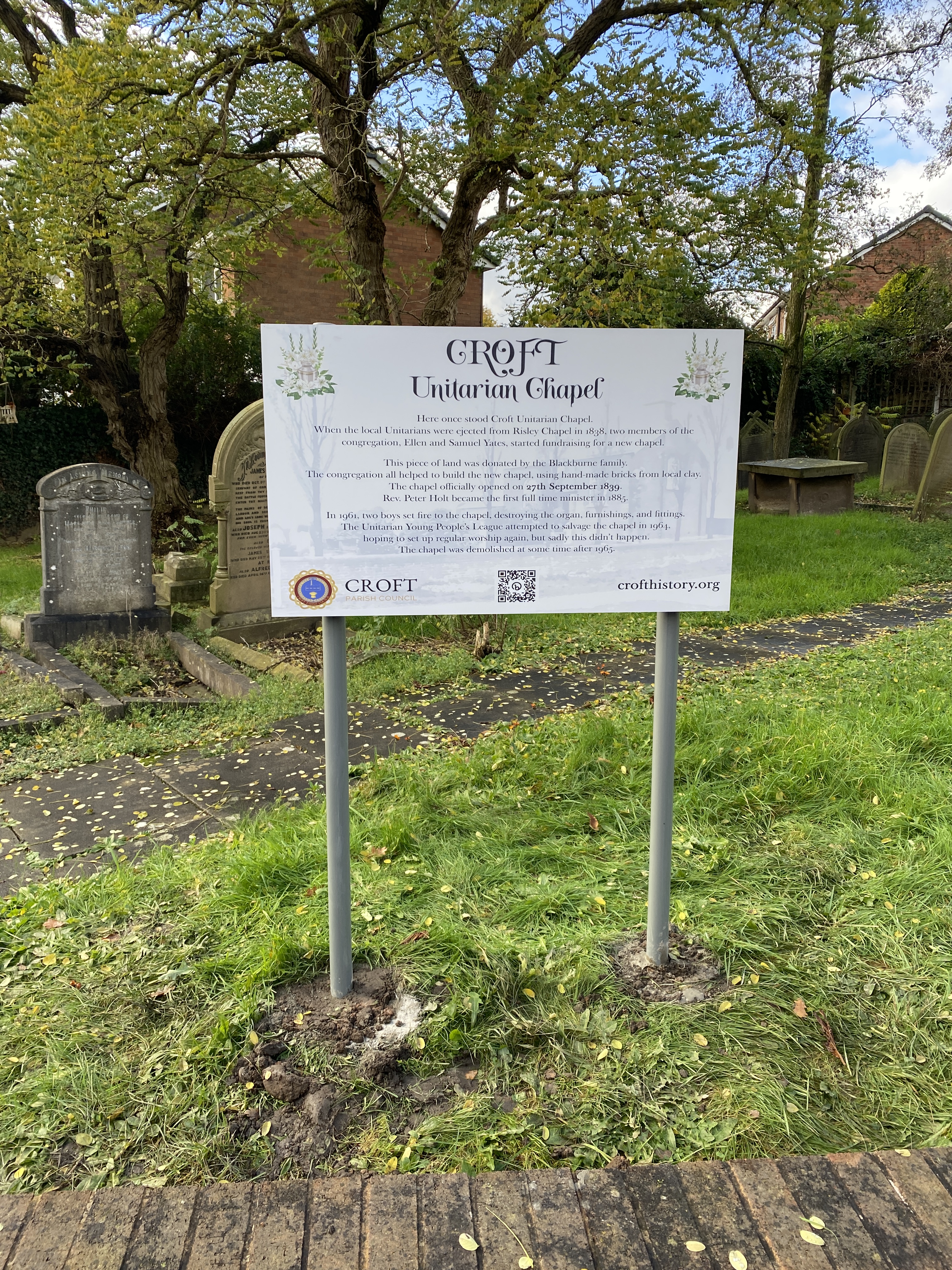
The site of Croft Unitarian Chapel today featuring the new signage erected through the efforts of Cheyvonne Bower who has done so much to restore and protect the site.
Based on a talk delivered as part of a webinar presented by the Reckoning International Unitarian/Universalist Histories Project on 15 November 2022 on ‘Global Struggles for Land and Home in Unitarian/Universalist Communities’, this paper explores the themes of ‘land and home’ within nineteenth-century Unitarianism. It looks particularly at events in Wales, Ireland, the British overseas Dominions plus the legal challenges that led to the Dissenters’ Chapels Act of 1844, and the role of women. One woman who is particularly highlighted is Ellen Yates who helped to establish the Unitarian cause at Croft after they were dispossessed of their chapel at Risley.
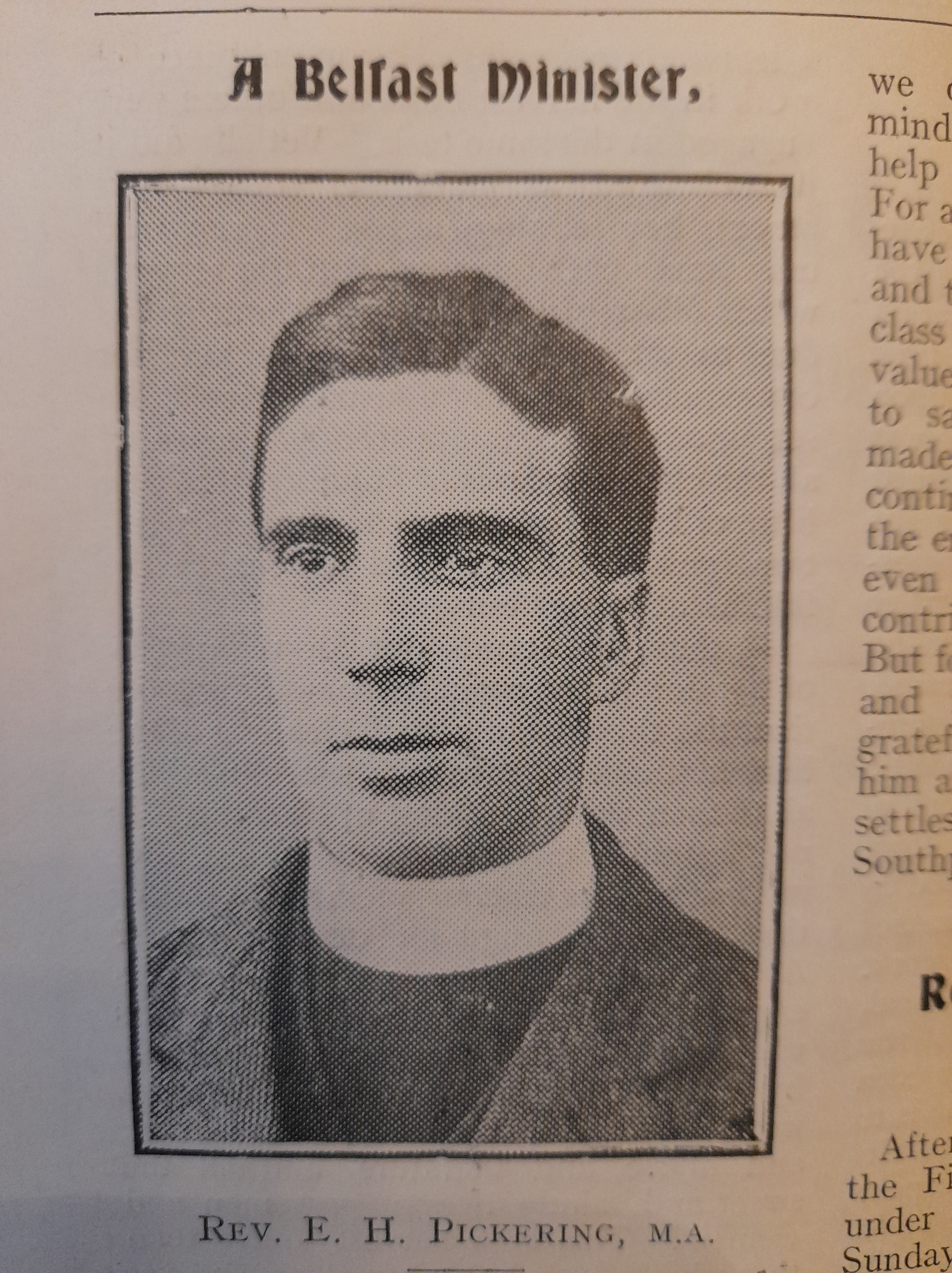
Training for the ministry, 1903-1910: Ernest Pickering at Manchester College Oxford
by Oliver Pickering
From ‘The Non-Subscribing Presbyterian’ 1921
Oliver Pickering examines the rich training for the ministry received by his grandfather at Manchester College, Oxford between the years 1907 and 1910 which were preceded by four years as an external exhibitioner at the College while also studying Classics at Exeter College. This seems to have been something of a golden age for ministerial training at Oxford, and his seven years at Manchester College were the prelude to a remarkable career as a minister (at Hyde; All Souls’ Church, Belfast; Southport and Oldham), a Member of Parliament and a professor of English Literature in Tokyo.
This issue also includes Reviews and a Supplement: Obituaries of Ministers of Unitarian and Free Christian Congregations. Index and synopsis of references including new entries, additions and corrections from 1st February 2021 compiled by Alan Ruston.
This book (first published, I now realise, back in 2014!) has just been reprinted and, the original print run having sold out, is once again available. The publishers and printers have done an excellent job, it’s an attractive book, this time published in memory of Bernard Cliffe, Len Mooney and Rev Daphne Roberts, three contributors who have died since the original publication.
The full list of contributors and subjects is as follows:
Introduction, David Steers; Memorials of the Ancient Chapel of Toxteth Park, Bernard Cliffe; Jeremiah Horrocks 1618 – 1641, Bernard Cliffe; William Roscoe 1753 – 1831, David Steers; A Short History of the Rathbone Family, Annette Butler; The Unitarian Family of George Holt, Bernard Cliffe; Noah Jones 1801 – 1861, Philip Waldron; James Martineau 1805 – 1900, Len W. Mooney; Joseph Blanco White 1775 – 1841, David Steers; Kitty Wilkinson 1786 – 1860, Daphne Roberts; John Johns 1801 – 1847, David Steers; William Henry Channing 1810 – 1884, Richard Merritt; Charles Pierre Melly 1829 – 1888, John Keggen; Sir Henry Tate 1819 – 1899, Richard Merritt; Sir John Brunner 1842 – 1919, Len W. Mooney; Lawrence Redfern 1888 – 1967, Elizabeth Alley; Sir Adrian Boult 1889 – 1983, Richard Merritt; The Visitors’ Book of the Ancient Chapel, Bernard Cliffe.
Published by the Merseyside District Missionary Association the cover design is by Alison Steers and the book contains over 50 illustrations, many published here for the first time.
To accompany the republication we have produced a short video which incorporates a trip around Ullet Road Church which can be seen here:
Click on the video for a tour of Ullet Road Church and details of the book
The cover of the book
Liverpool Unitarians: Faith and Action Essays exploring the lives and contributions to society of notable figures in Liverpool Unitarian history
Edited by Daphne Roberts and David Steers
Published by Merseyside and District Missionary Association
ISBN: 978-0-9929031-0-7
Brand new edition for 2024
Price £10 (plus £2 post and packing). Available from Rev Phil Waldron, Ullet Road Church, 57 Ullet Road, Sefton Park, Liverpool. L17 2AA.
In the Introduction I say:
This book is not intended to be hagiography but it does try to outline how one group of people – members of a particular faith community with deep historical roots but with an aversion to fixed creeds – were inspired to serve their fellows in different ways. Their legacy can be seen all over the city – in its parks, in its monuments, in the university, in hospitals, in education, in art galleries and museums – and it exists in the long and continuing struggle to create a society that gives equality and opportunity to all its citizens. It is not meant to be an exhaustive account of all the eminent members of the churches and chapels in the region. Readers will notice that the names mentioned are part of wider connections of family and business which includes many others who could be included. There are other figures who could be the subject of such biographical accounts. But this is a selection of some of those who have followed the call of faith to be of service to wider society.