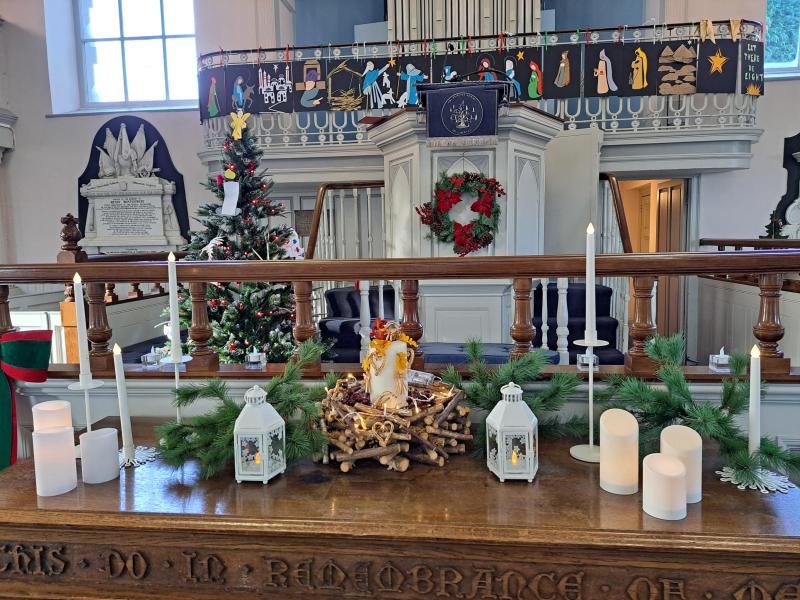
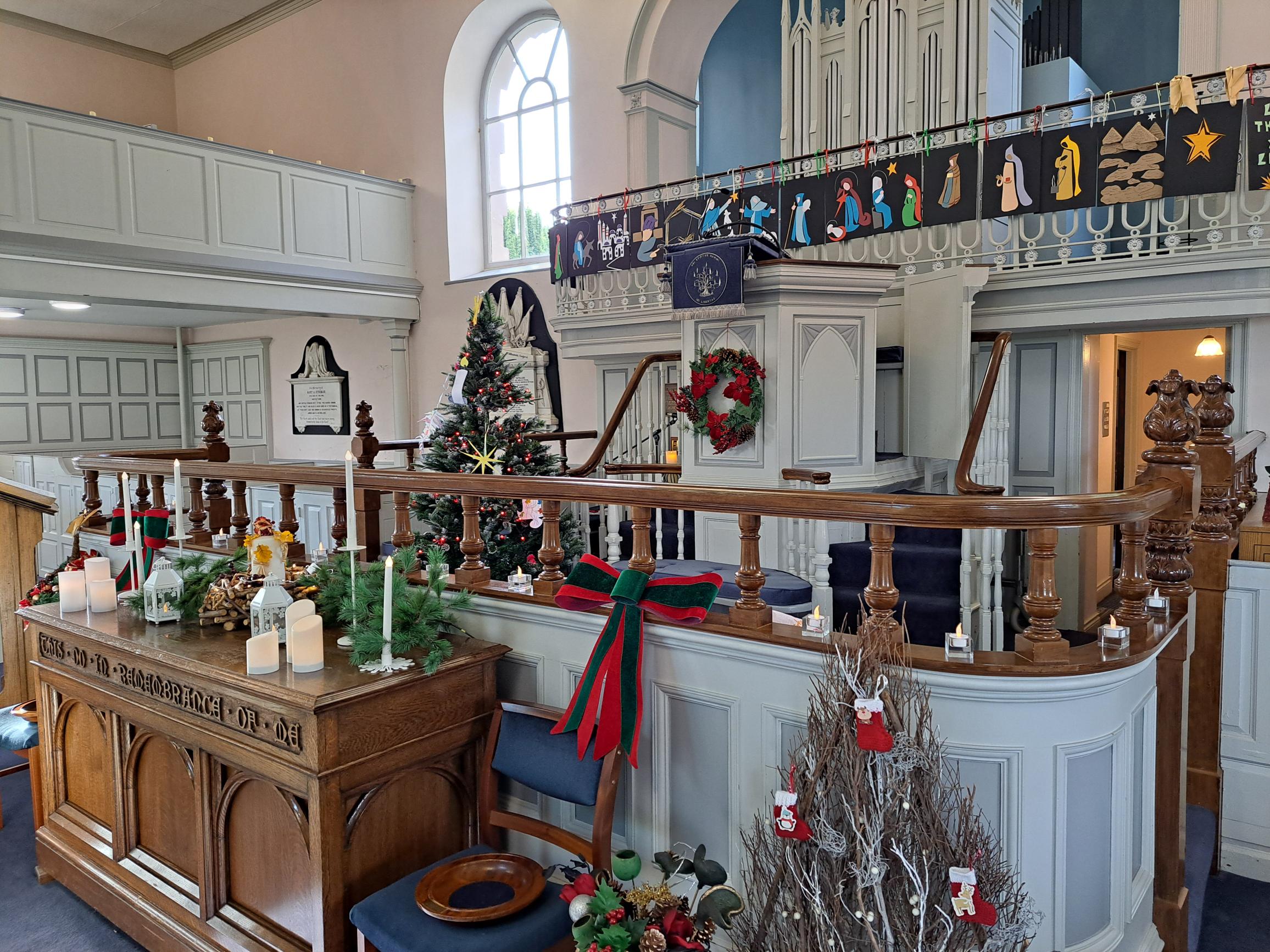
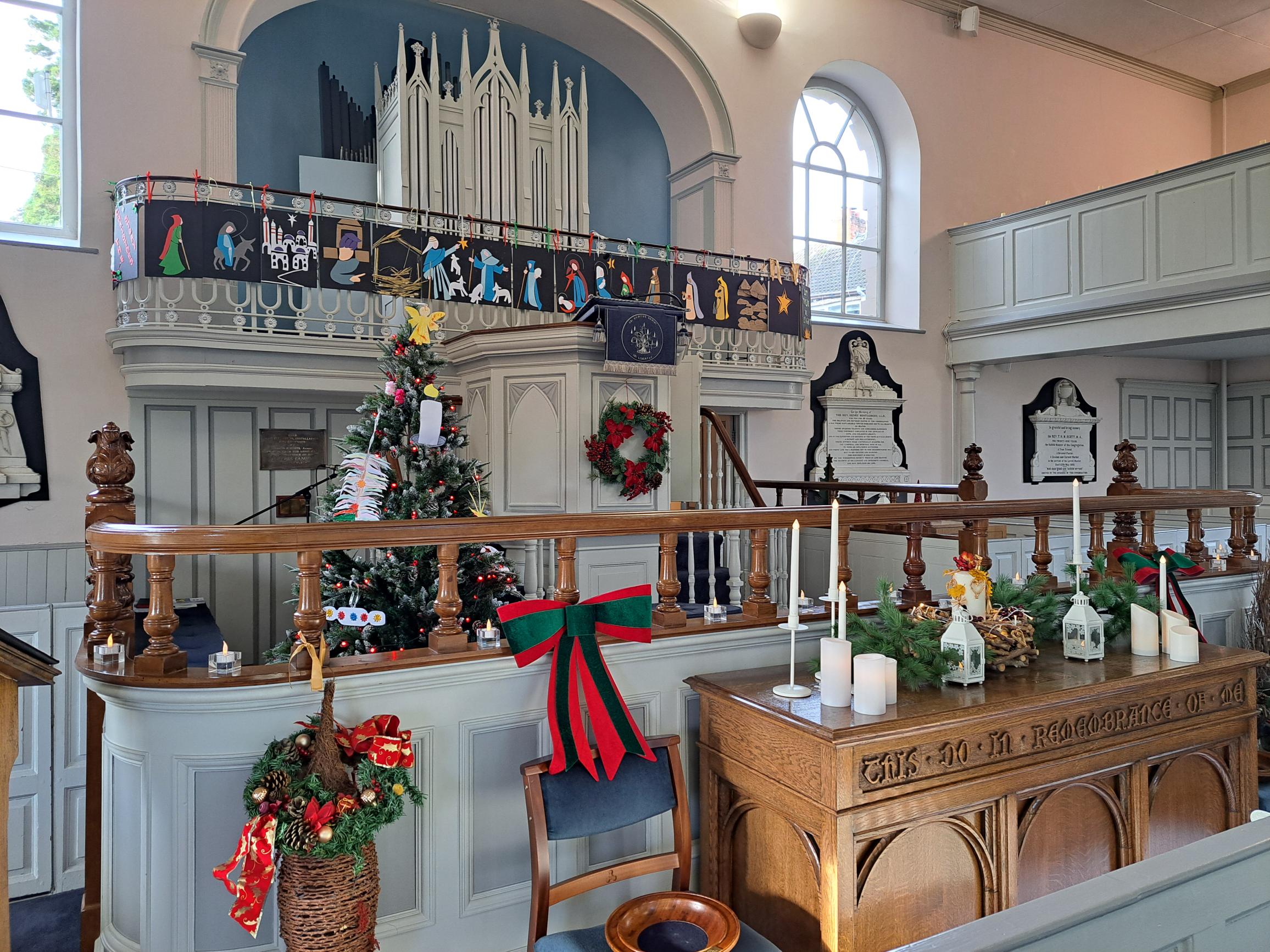
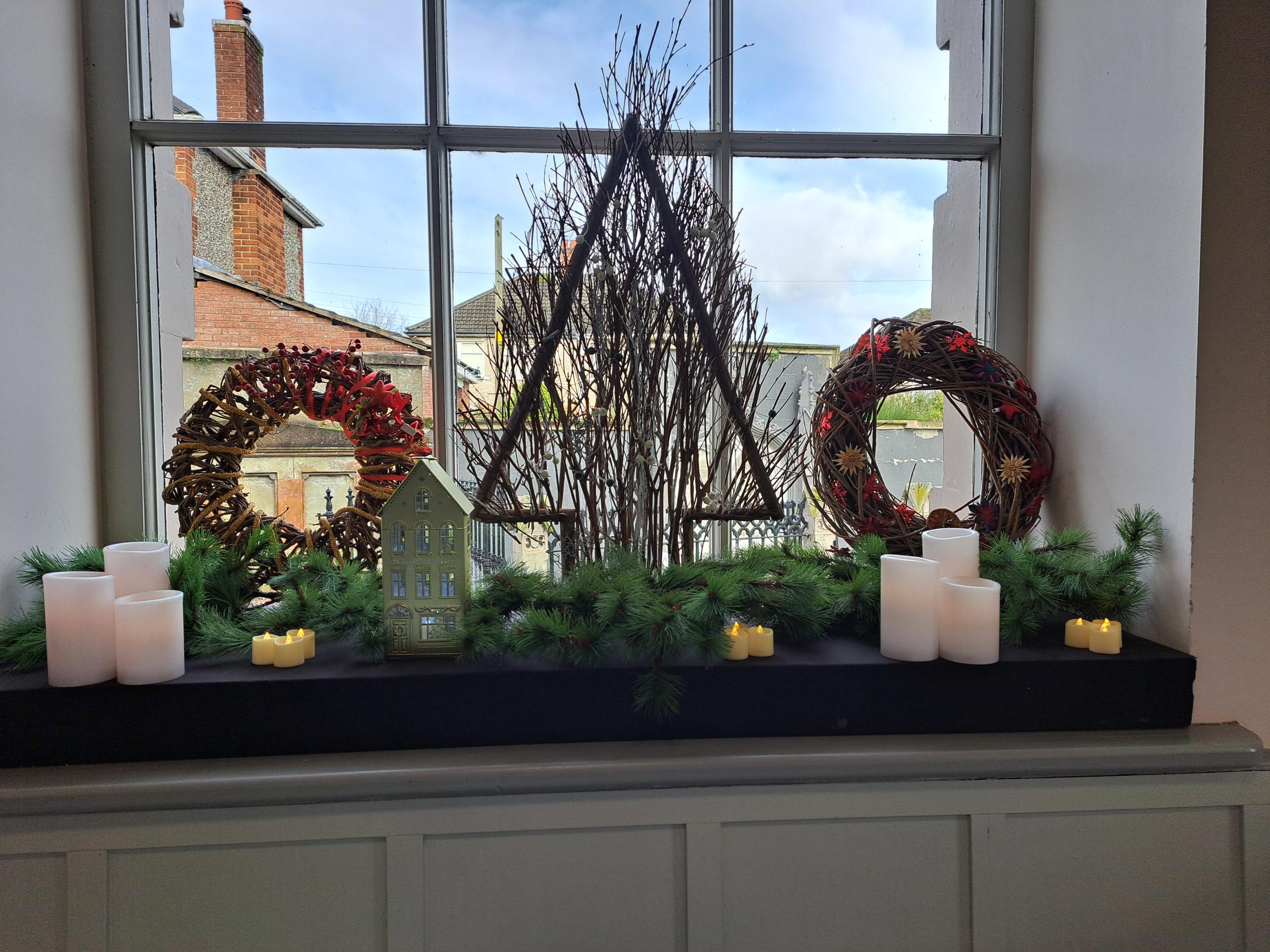
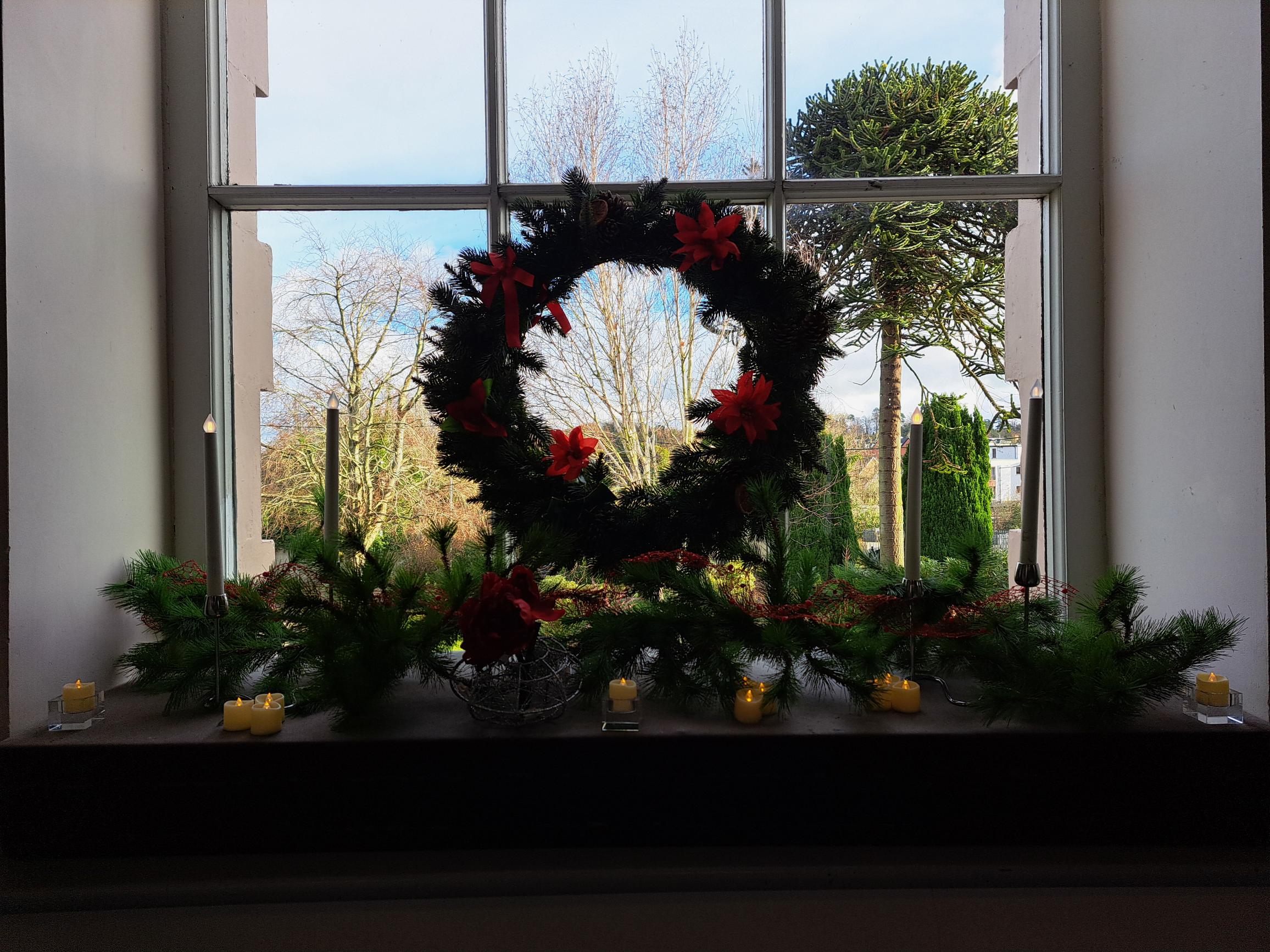
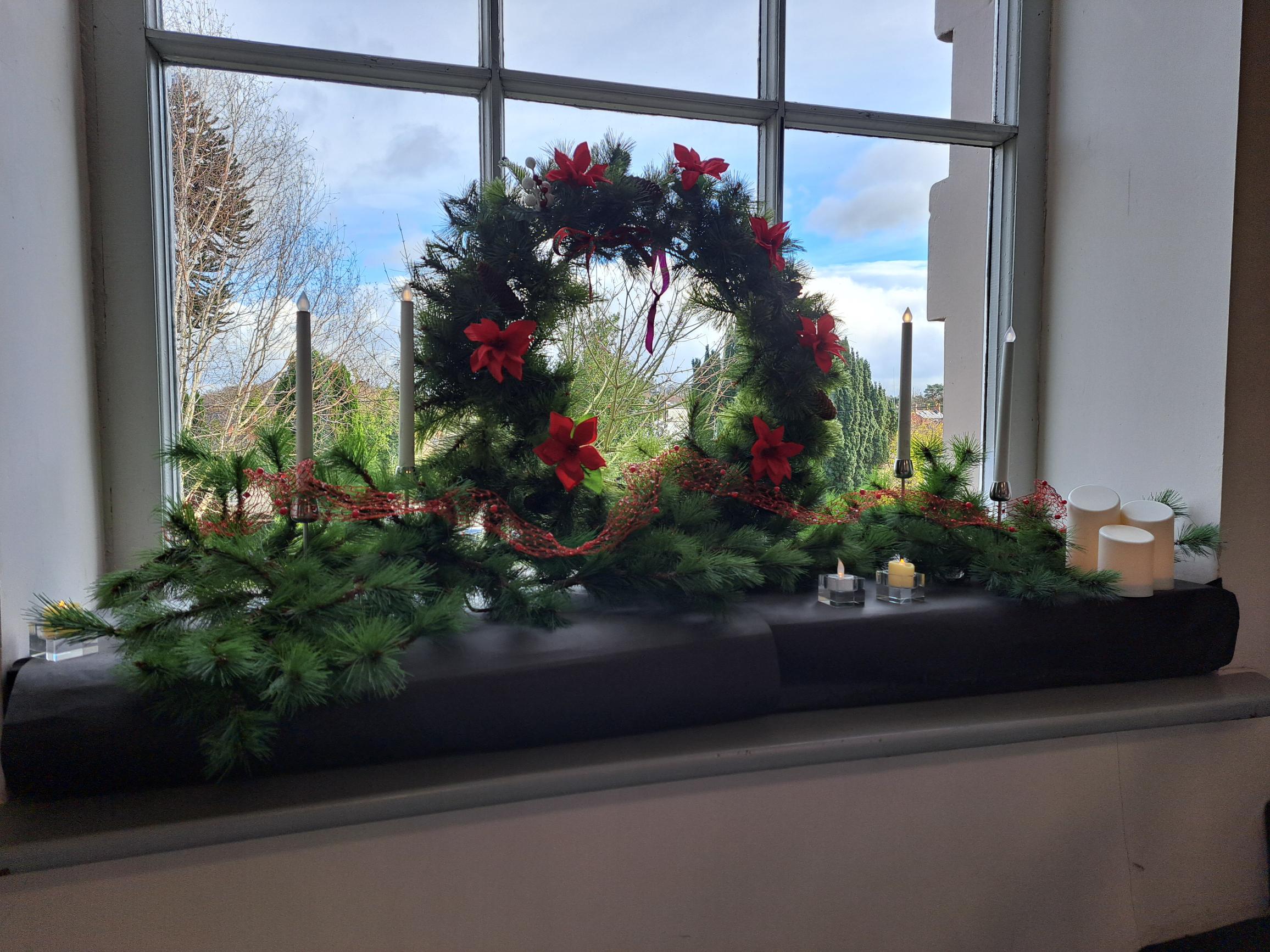
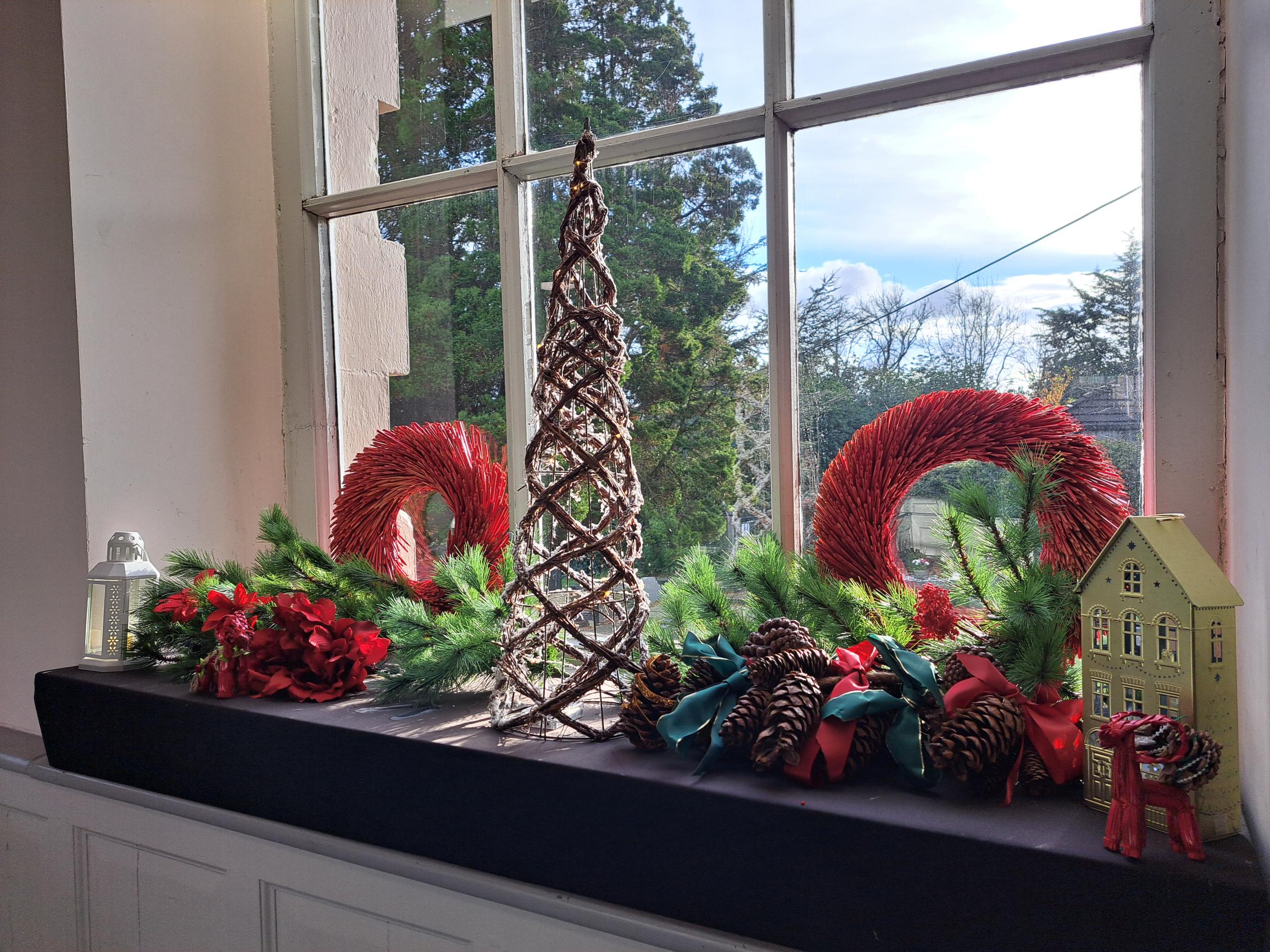
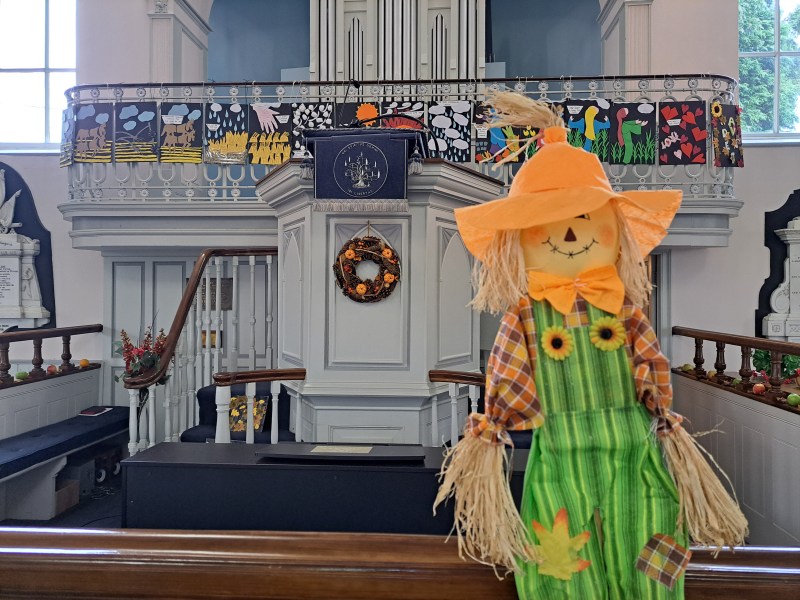
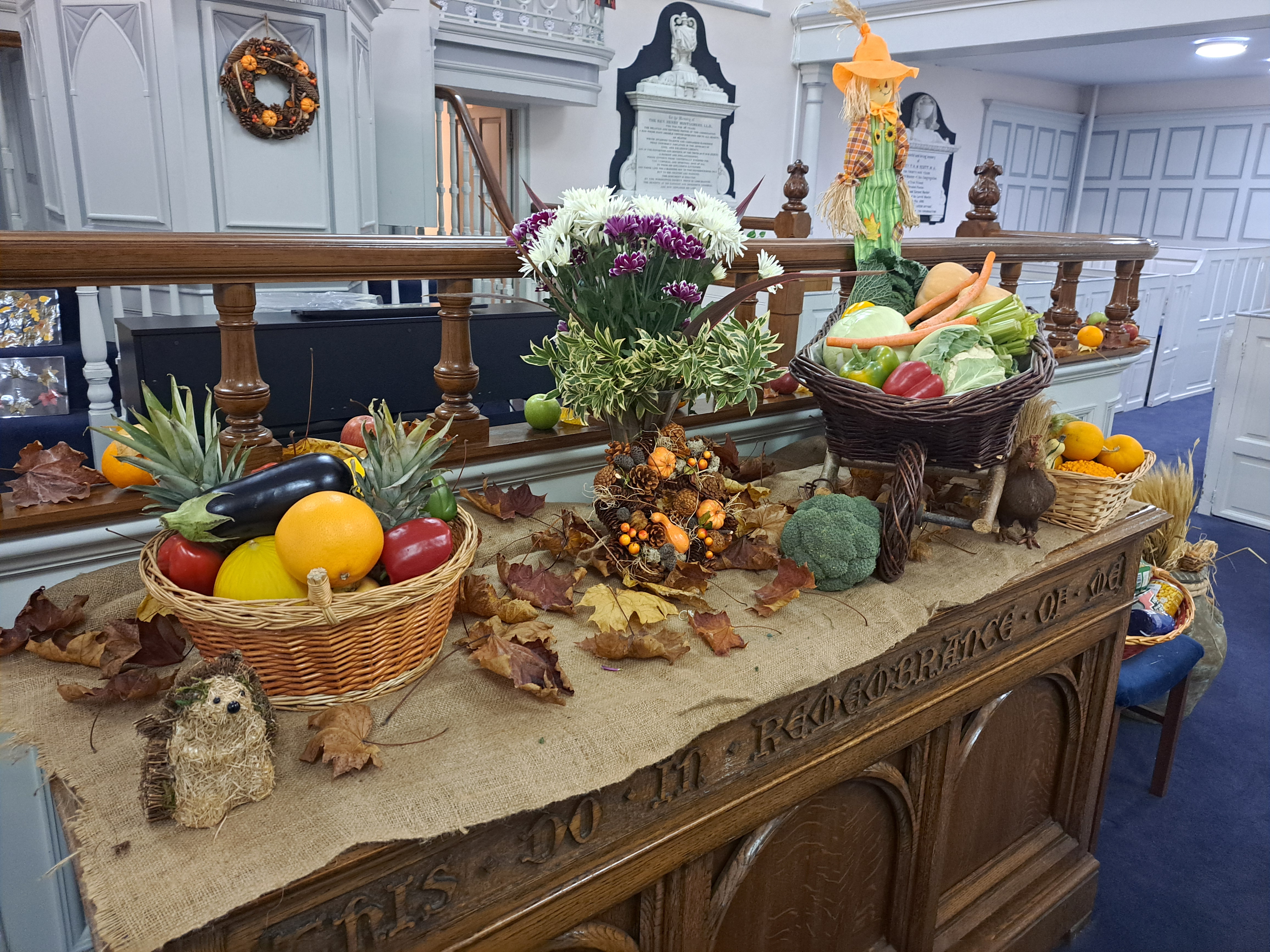
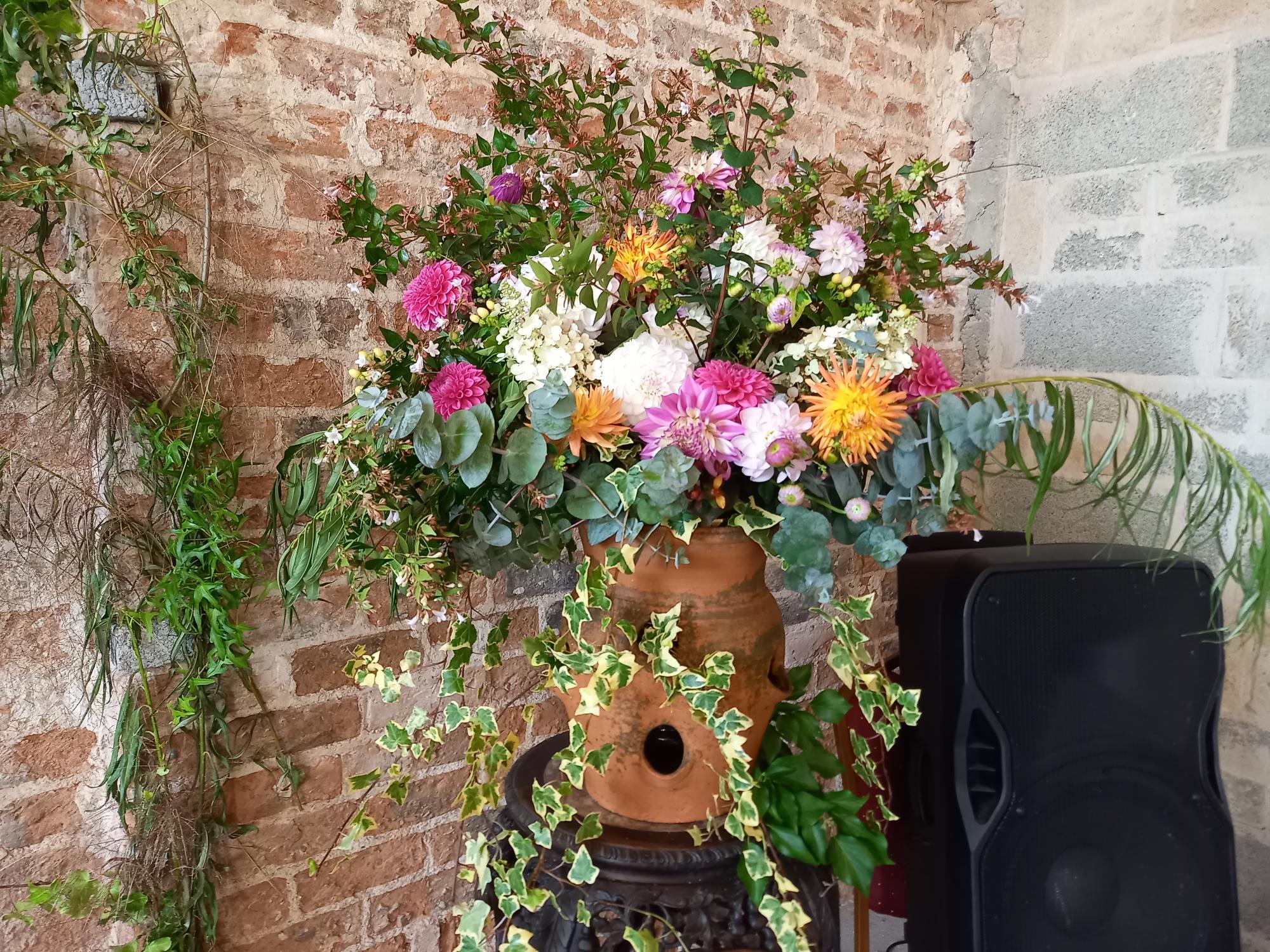
We’ve a number of special events coming up at Dunmurry and all are welcome to join them. Thank you to everyone who helped to decorate the Church in time for our service on the first Sunday in Advent, 30th November.
Visit of the Choir of Malone Integrated College
with their musical director Caroline Mitchell
Thursday, 4th December 10.00 am – 12 Noon in the McCleery Hall – with refreshements
Candlelight Carol Service with Harmonic Sounds Concert Band
Friday, 12th December at 7.30 pm
Followed by Refreshments in the Hall
Admission Free
Retiring Collection for the Motor Neurone Disease Association Northern Ireland
Congregational Carol Service Sunday, 21st December 11.30 am
Short Service for Christmas Day Thursday, 25th December 10.30 am
Everyone Welcome at each event
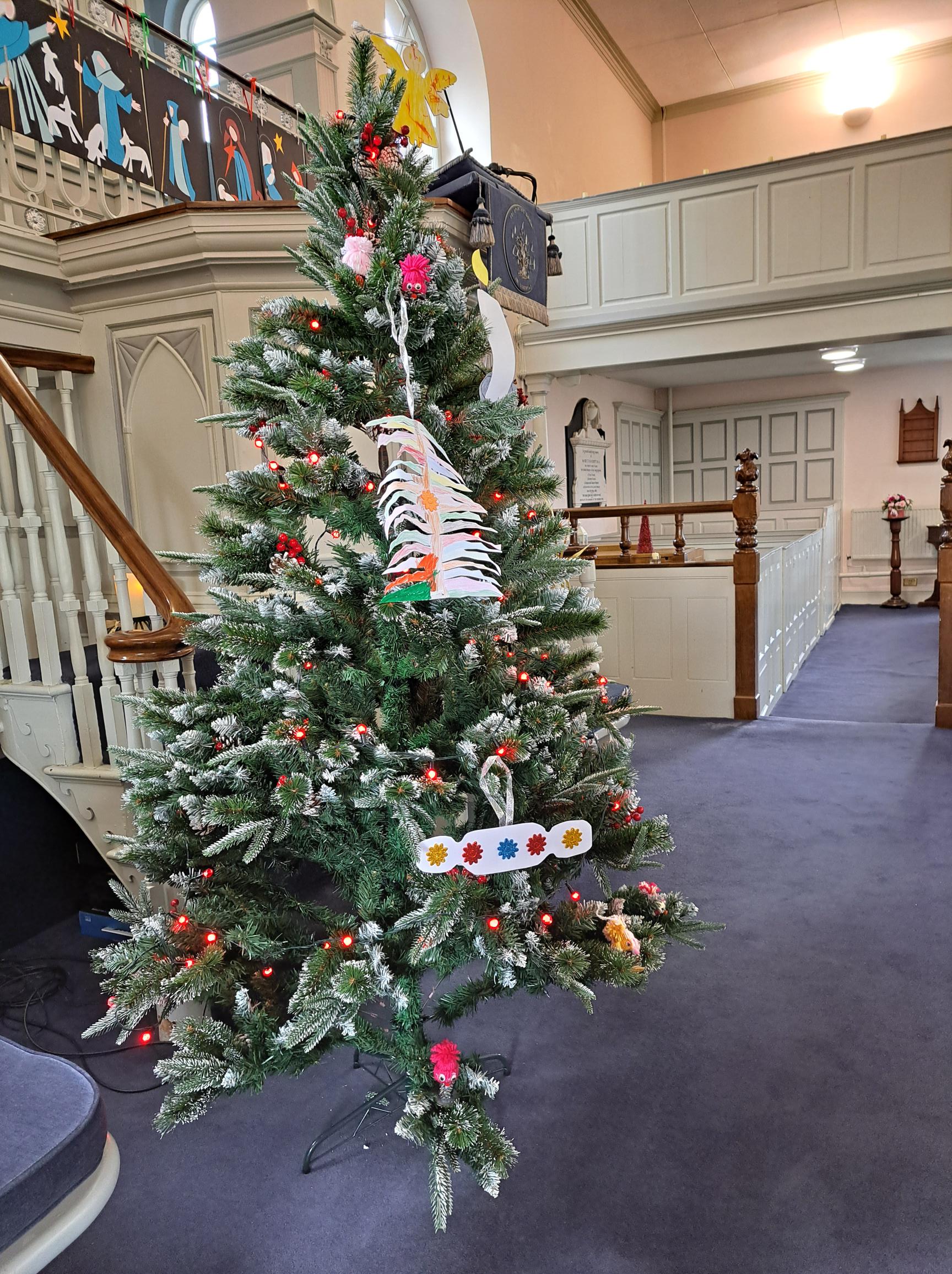
Frieze depicting the Christmas story made by the Youth Group. Decorations for the Christmas tree made by the Sunday School
Click on the video above to see Dunmurry Harvest Thanksgiving Service as recorded live
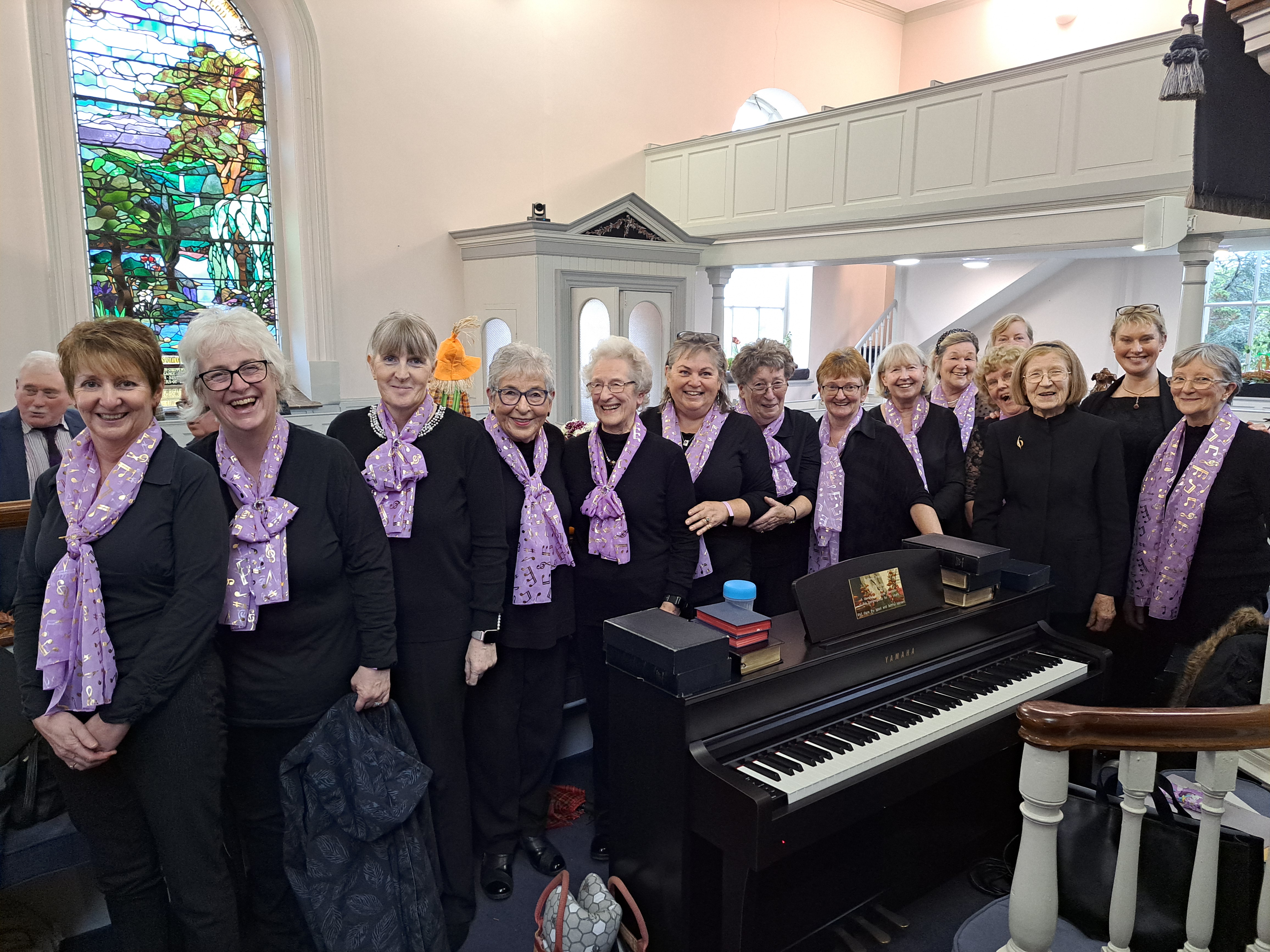
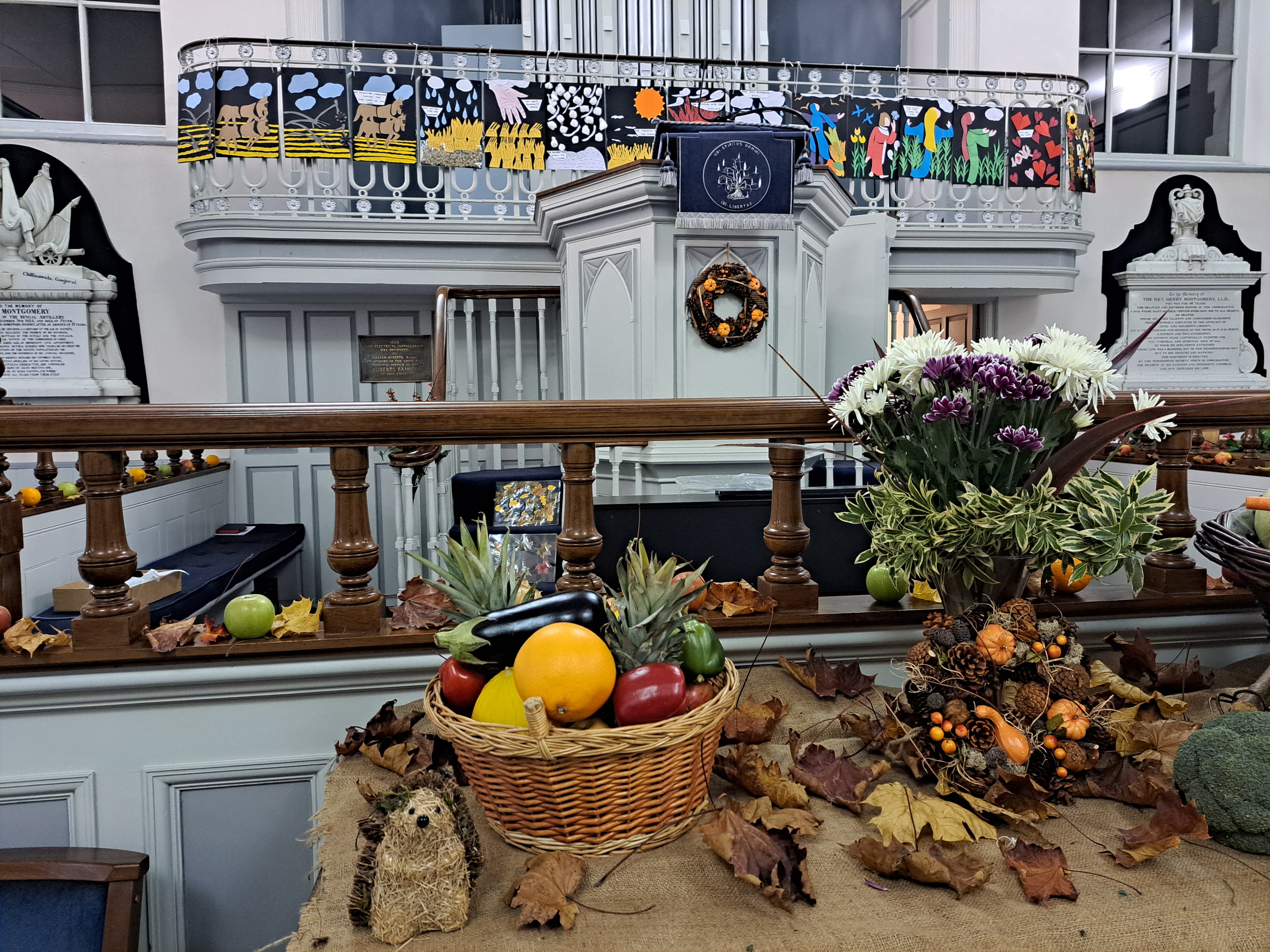
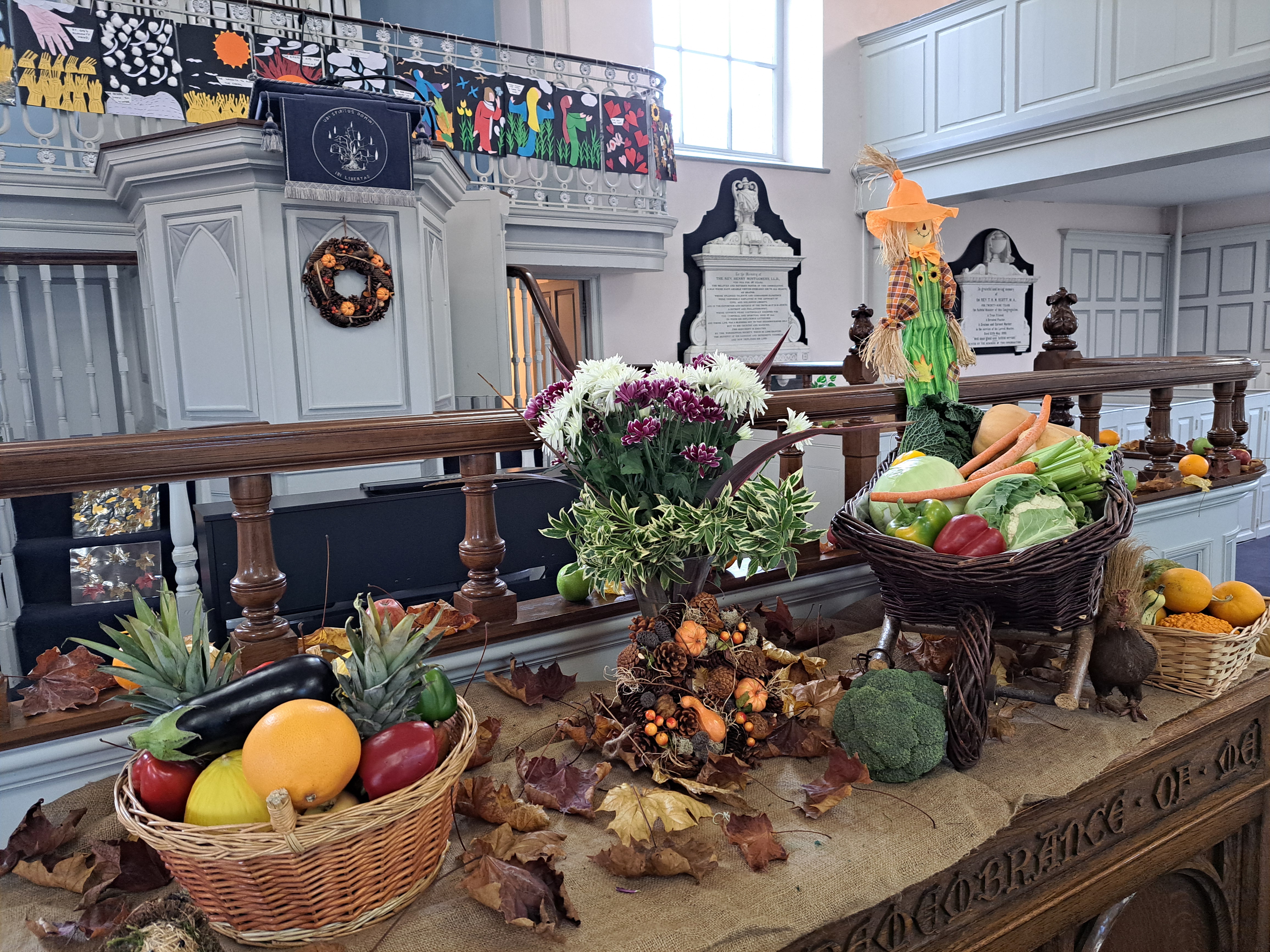
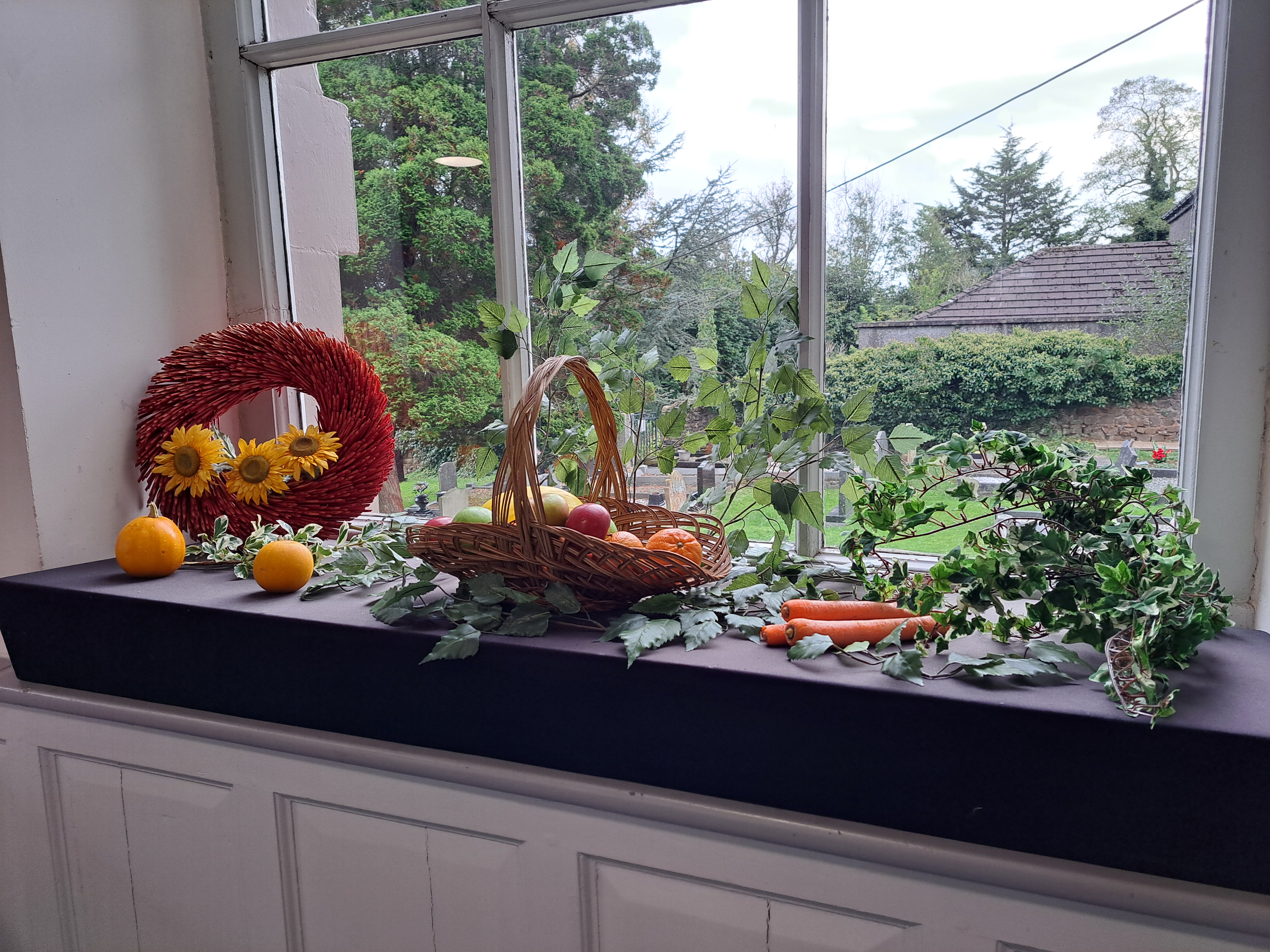
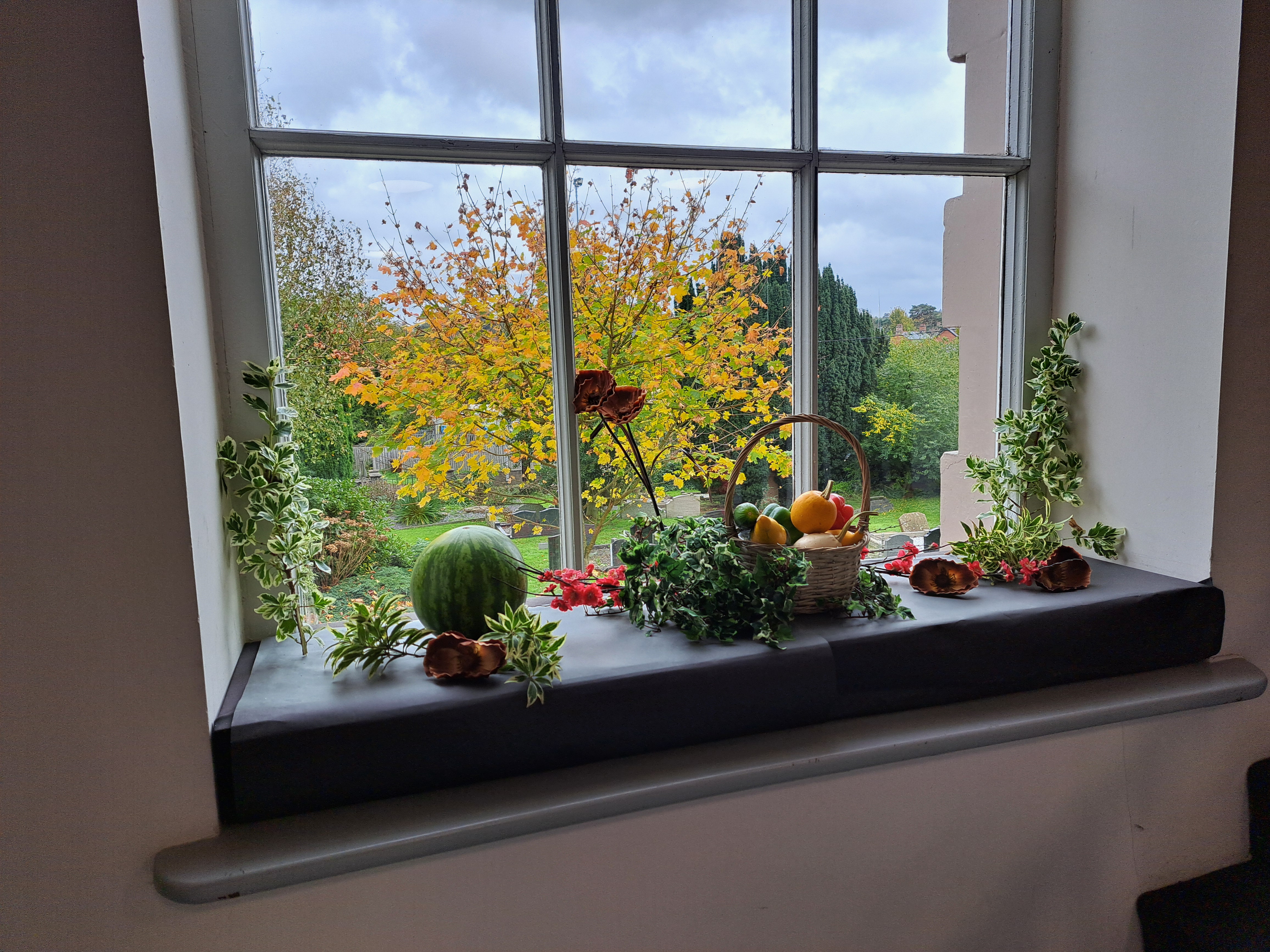
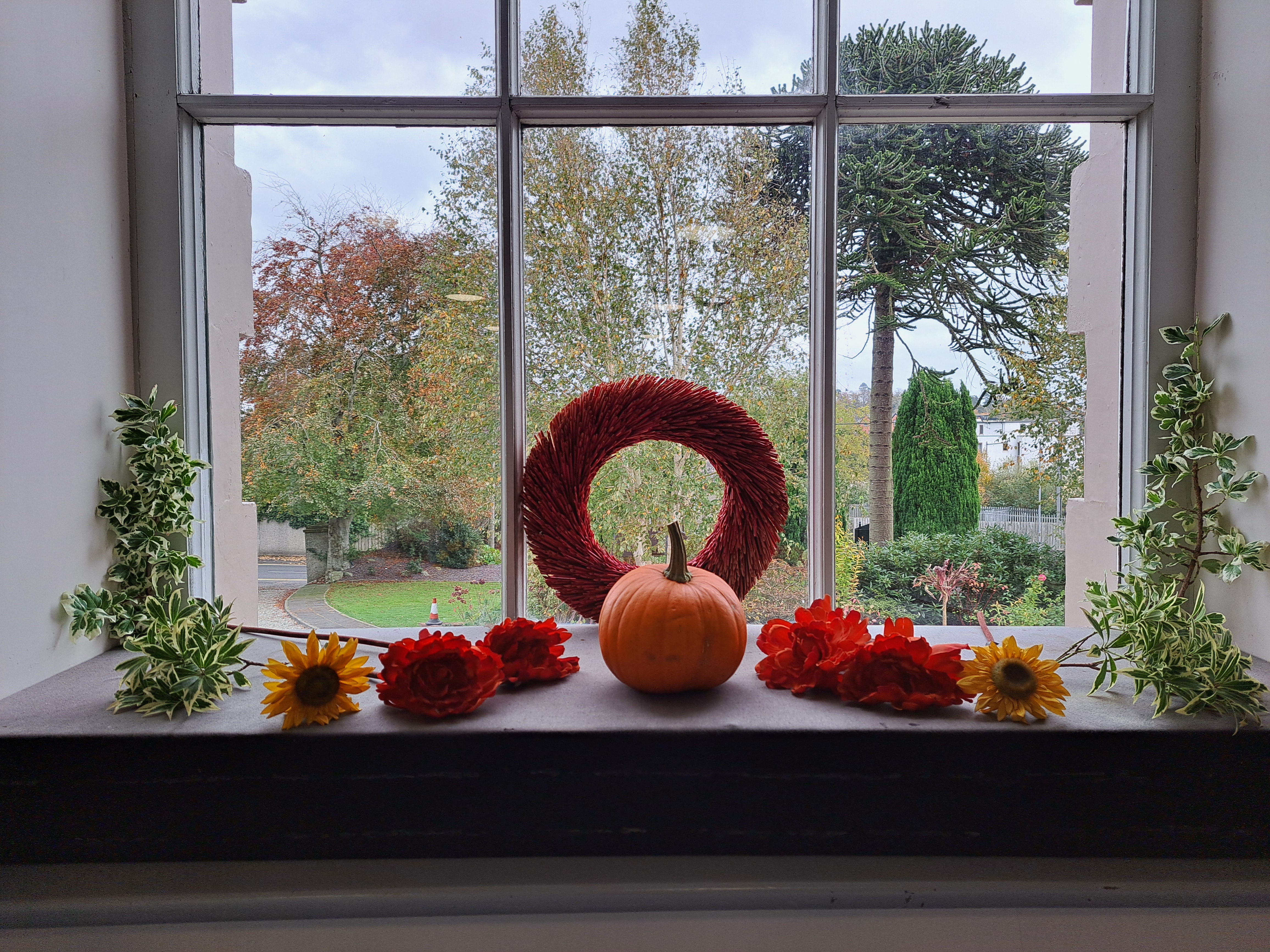
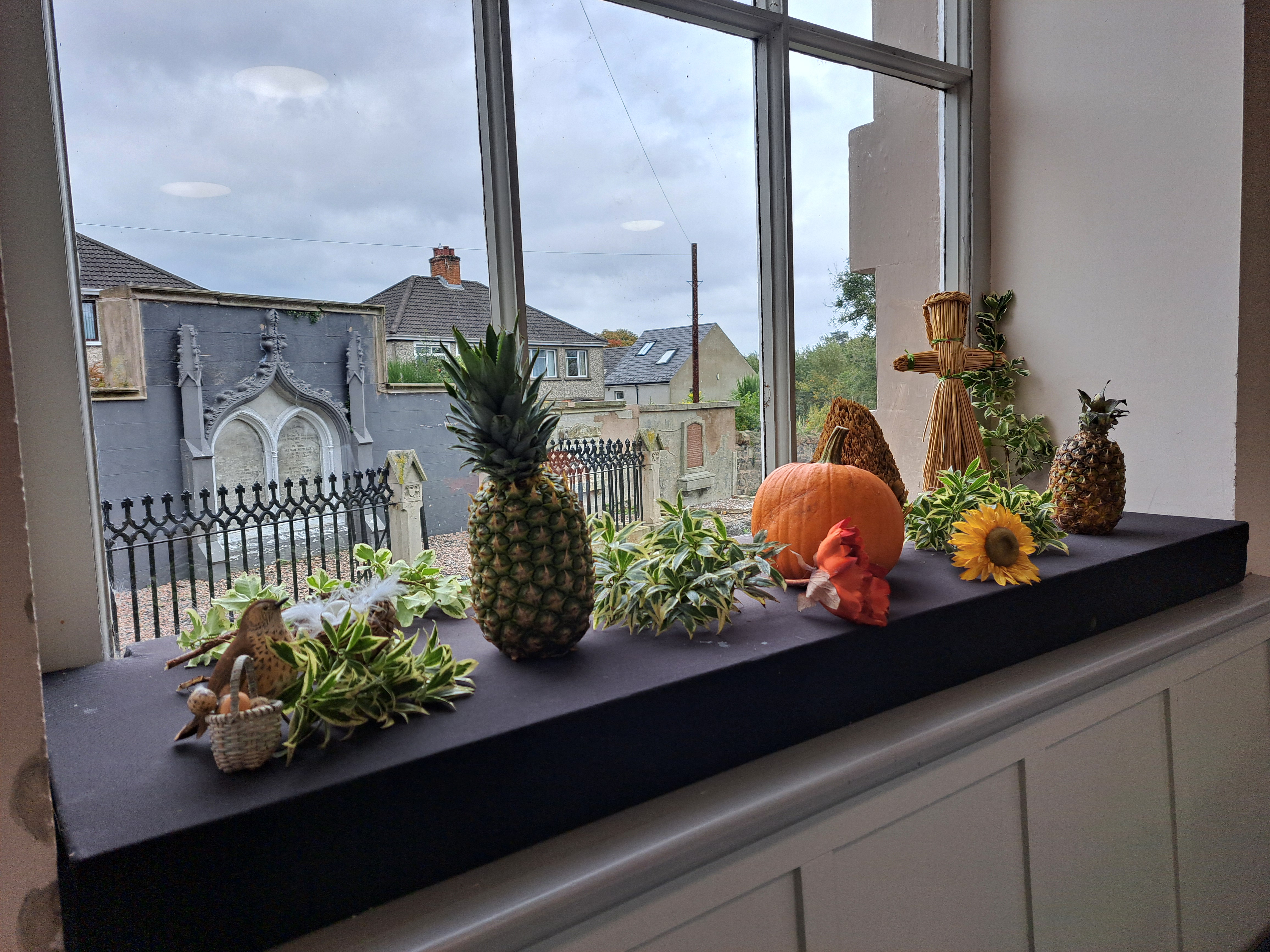
We held a wonderful service of Harvest Thanksgiving at Dunmurry on Sunday, 19th October 2025. We were particularly pleased to welcome the Quoile Area WI Choir conducted by Judith Harper with their accompanist Kathleen Gill. They sang three pieces – This Day, All things bright and beautiful(a setting by Philip Stopford), River Song, plus the vesper Go Now in Peace (arranged by I.E. Keenan), while Allen Yarr, our organist, played for the hymns and Jack Steers played Trumpet Voluntary during the collection.
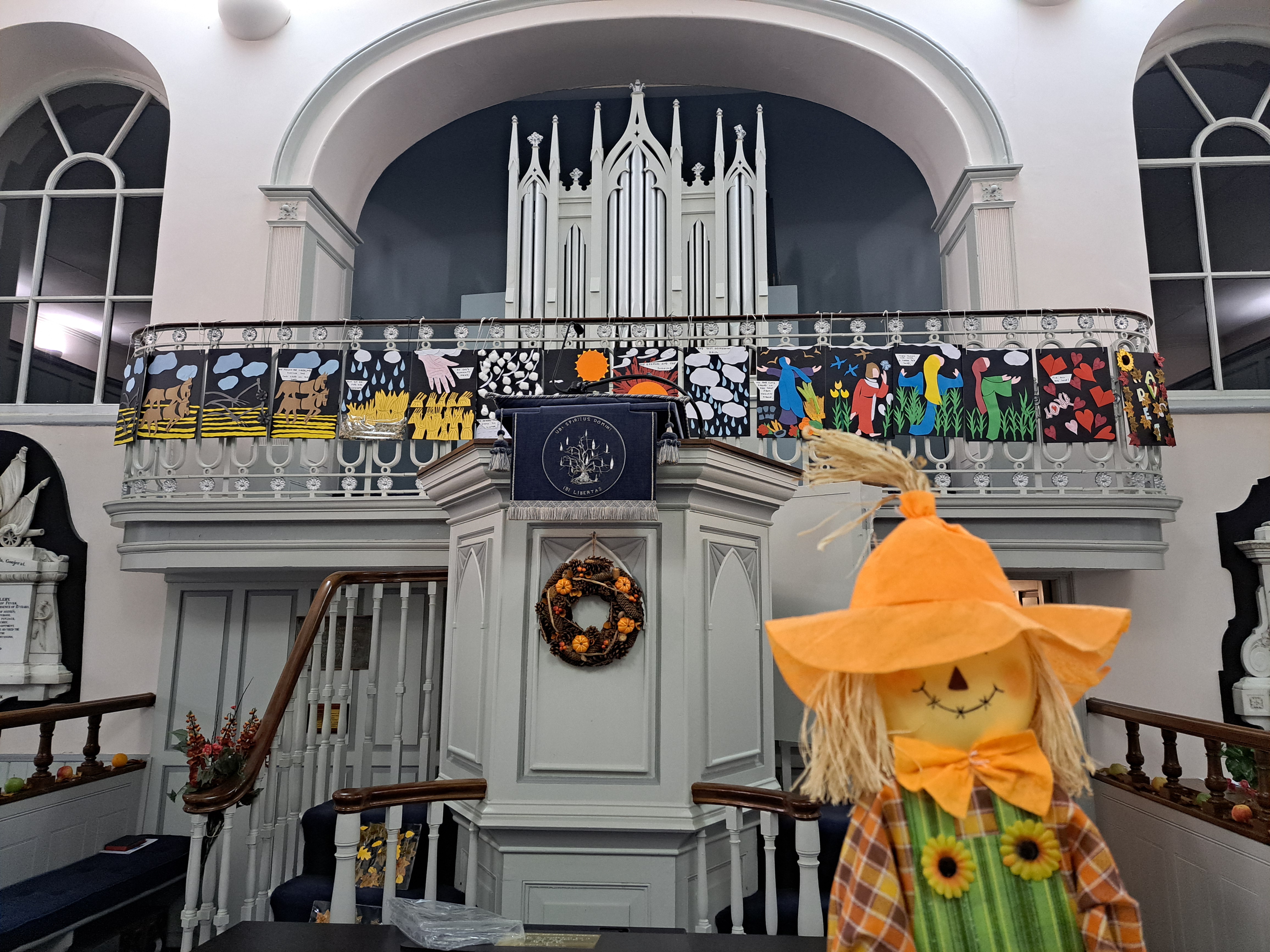
The service was led by members of the Sunday School and Youth Group with Harry opening the service with words of welcome, readings being given by Jenna, Lochlan, Erin, and Bryn, and Adele and Sue, leading us in prayer. The church was beautifully decorated throughout and the Youth Group made the frieze depicting scenes from the hymn We plough the fields and scatter (which we also sang) which adorned the rail above the pulpit.
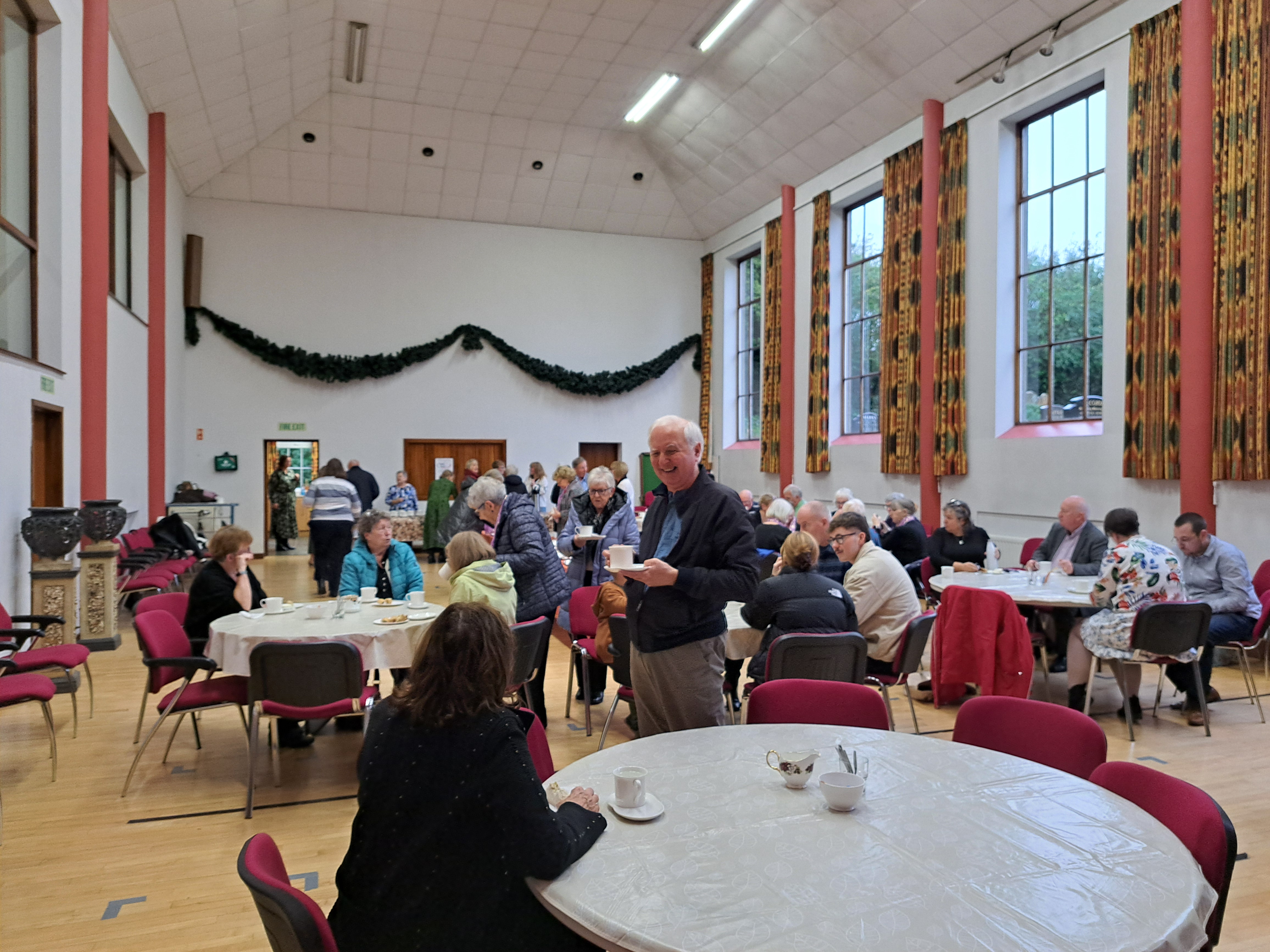
Following the service we had refreshments and a time of fellowship in the Hall, with many people coming back for that.
On the following Monday members of the congregation distributed the all the produce which had been donated to L’Arche Village, Belfast.
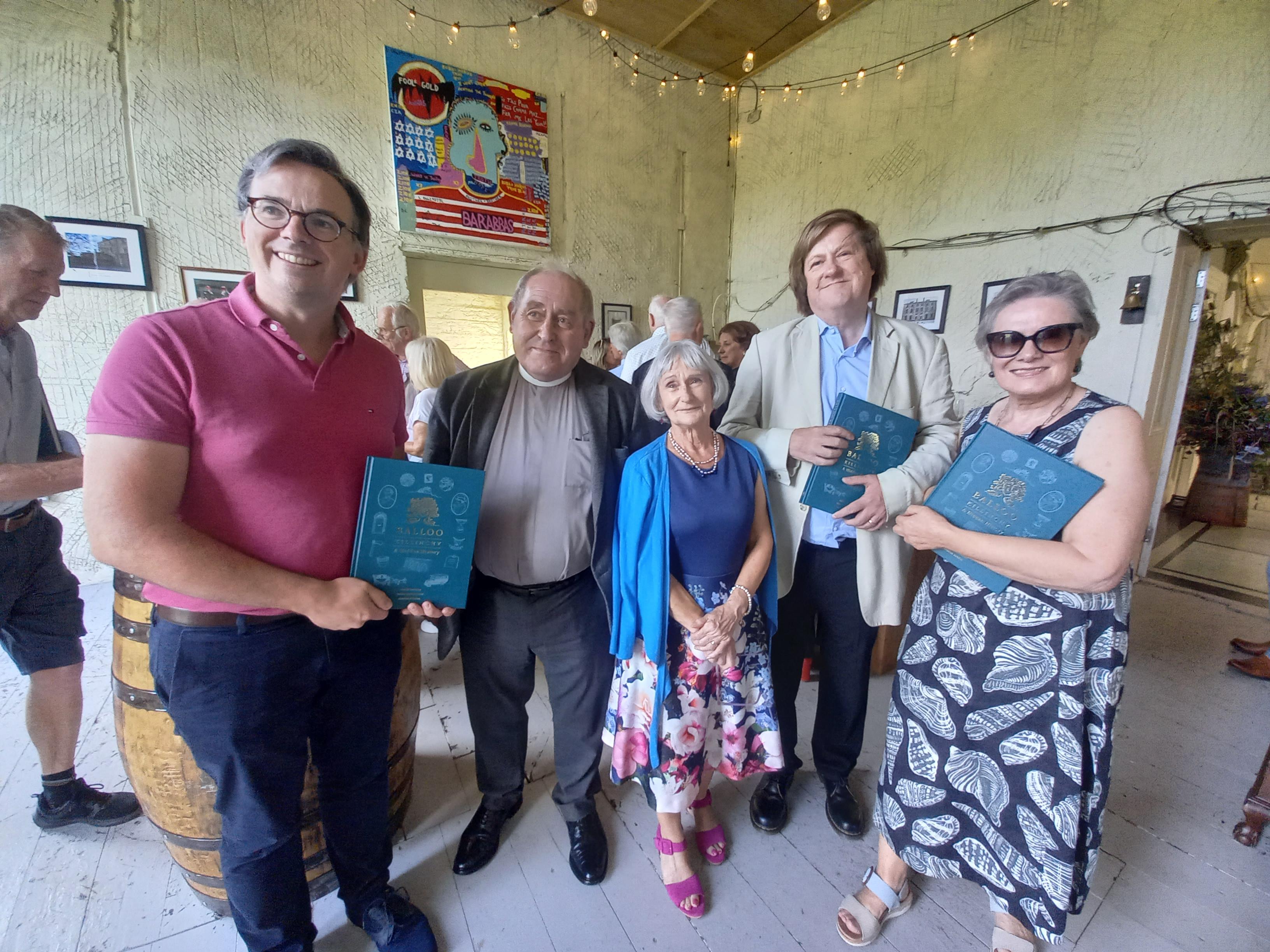
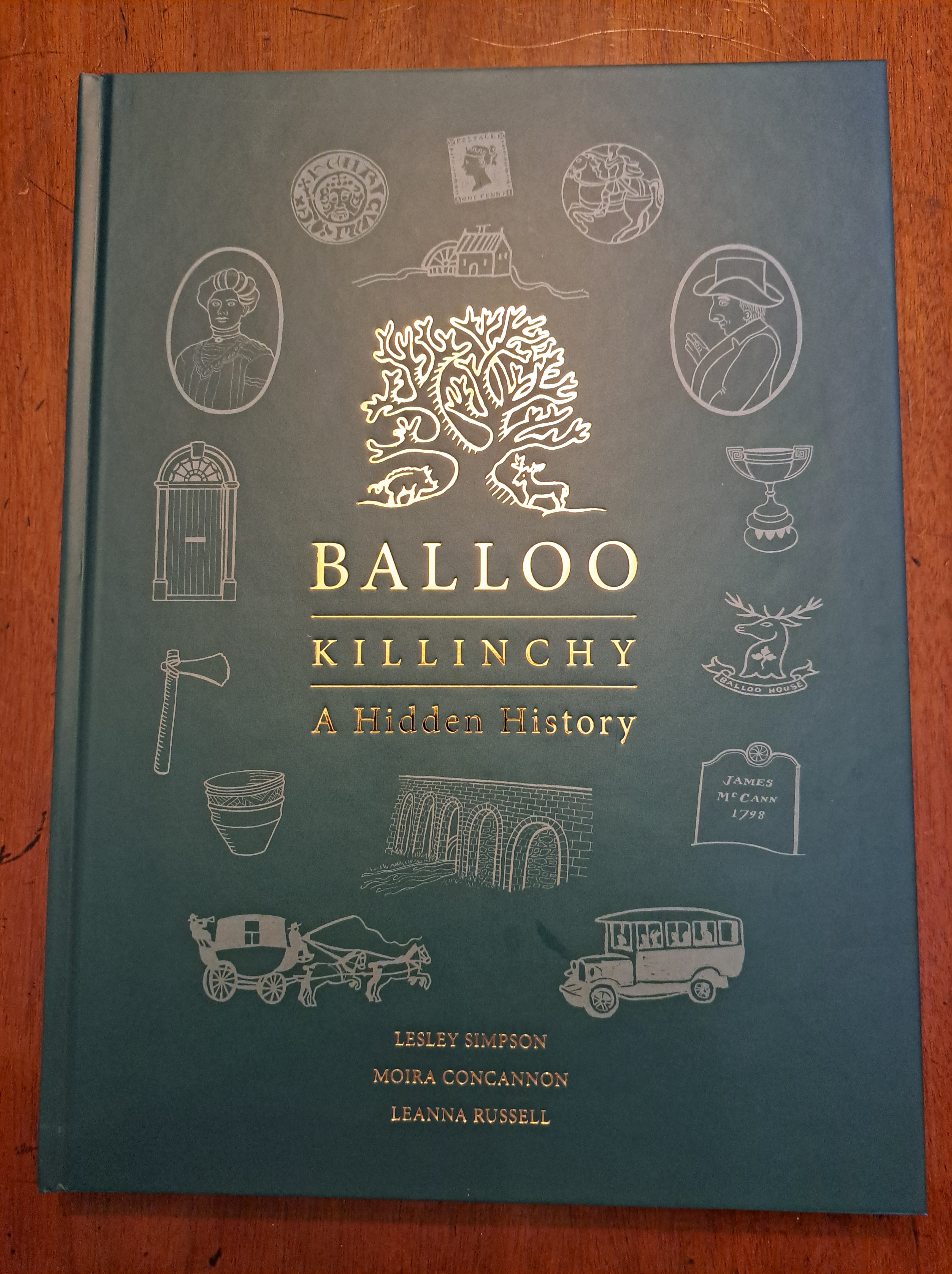
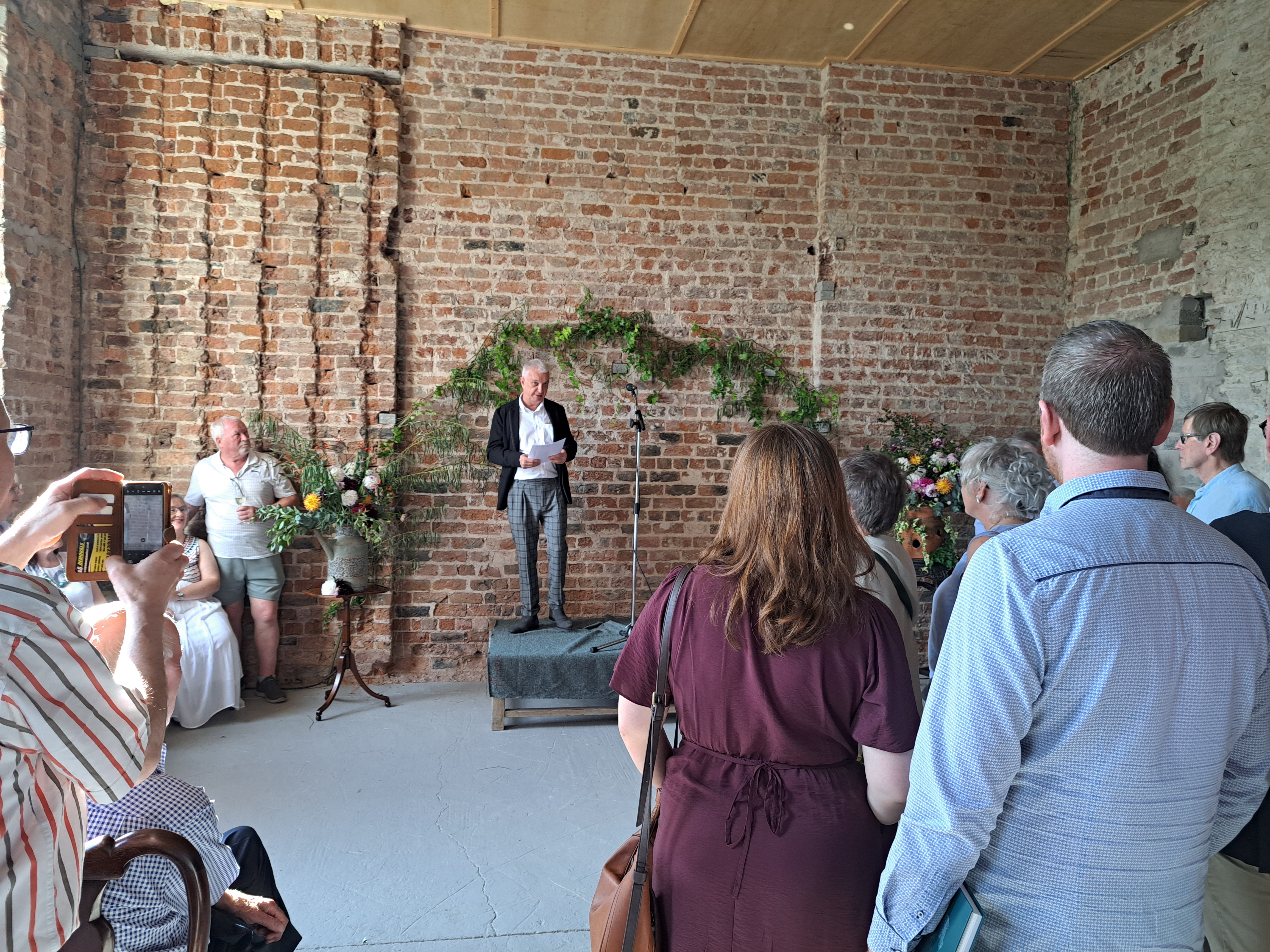
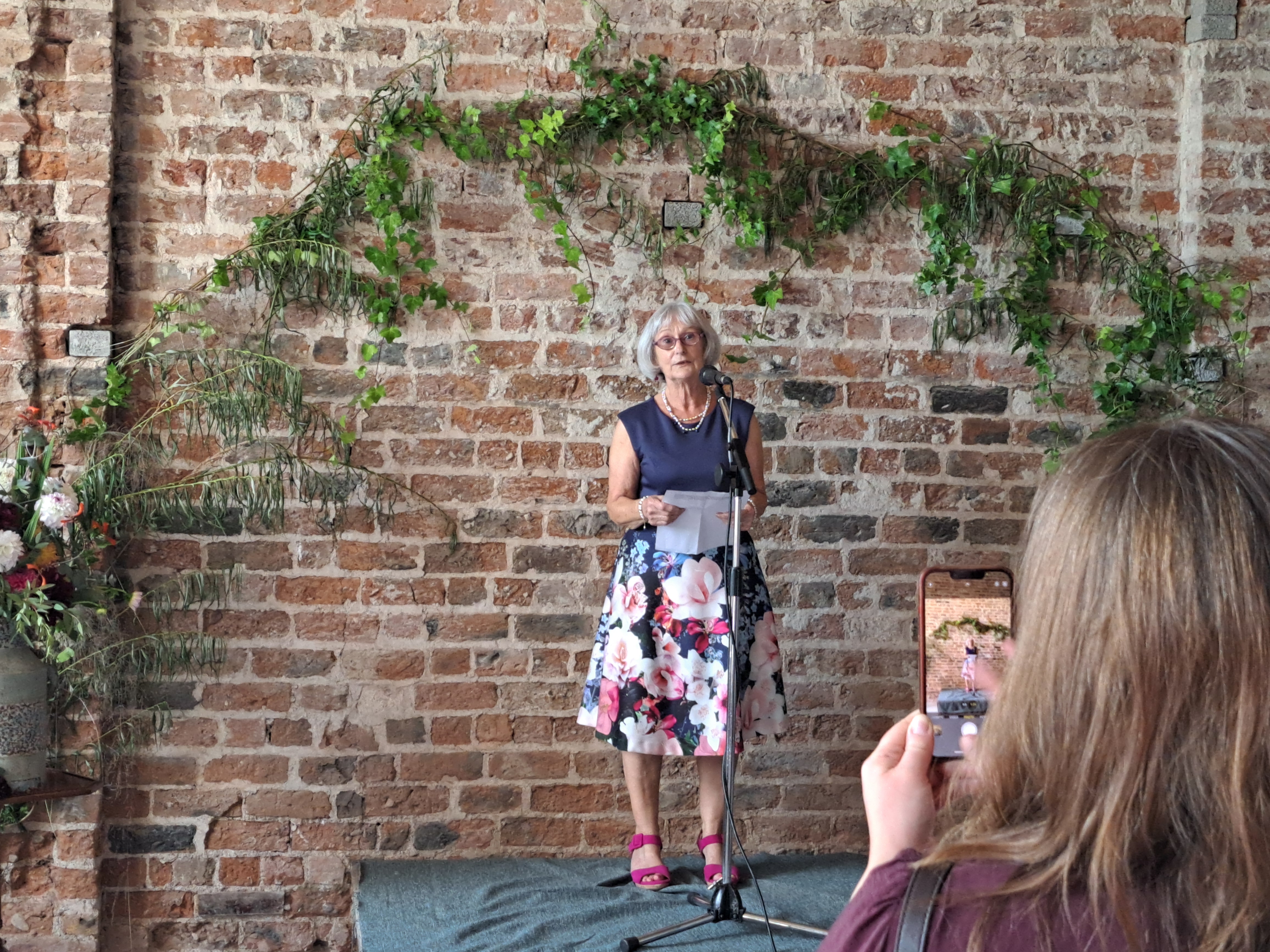
I was delighted to attend the launch of Balloo, Killinchy, A Hidden History by Lesley Simpson, Moira Concannon and Leanna Russell on Saturday, 15th August at Florida Manor, Killinchy. It was a wonderful occasion and a great start for a fascinating and beautifully produced book.
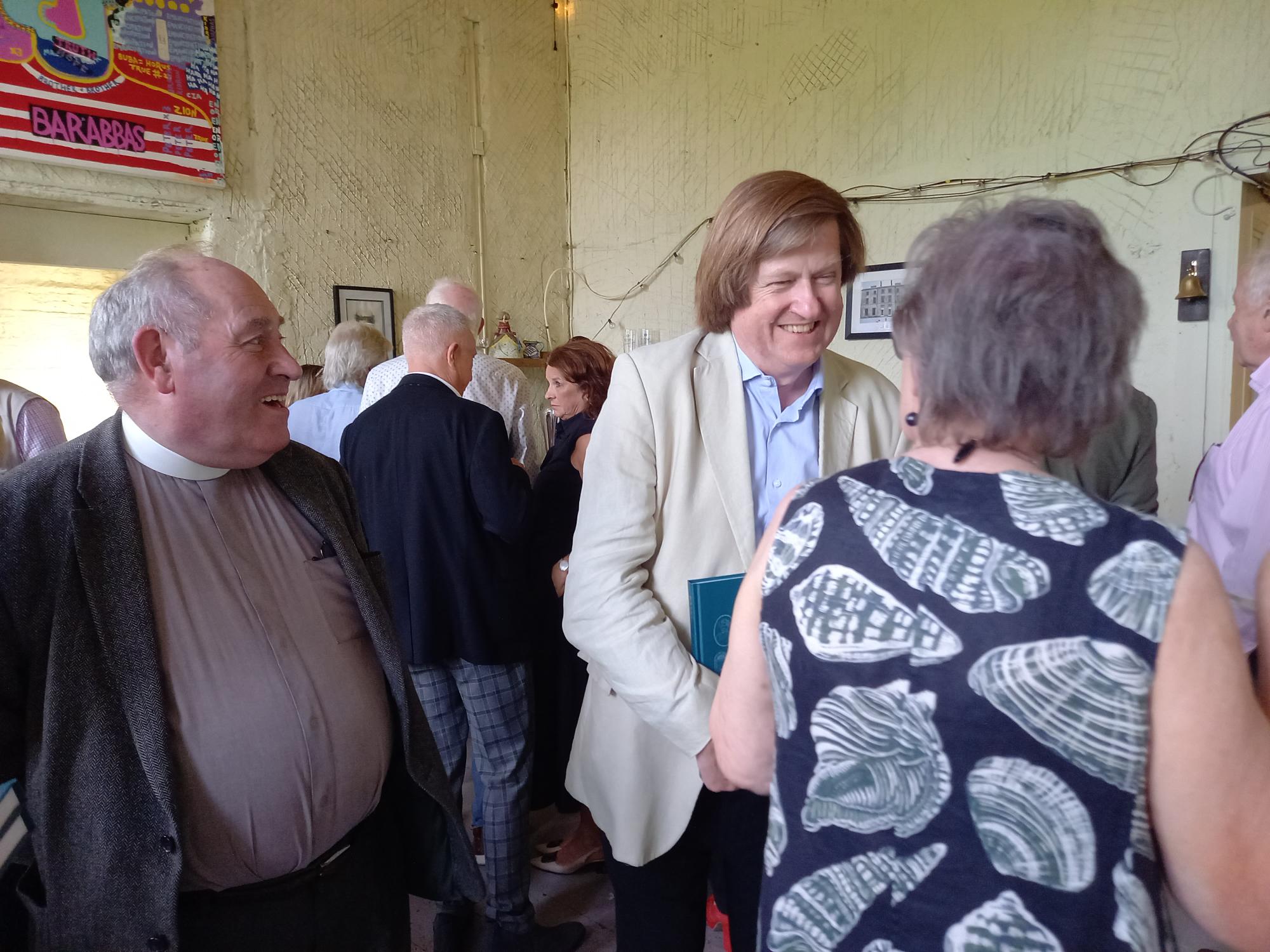
With Rev Dr Stanley Gamble, Rev Dr John Nelson, Lesley Simpson and Moira Concannon
The authors tell the story of the locality through maps, family history, newspaper reports, churches, mills and stores and, most of all, the local houses. Of particular interest to me is the house known as Templebrook Valley which was the home of the Rev Samuel Watson minister in Killinchy from 1797 up to his death in 1856. He was at the centre of one of the major disputes between the Synod of Ulster and the Non-Subscribers in the 1830s and the new Remonstrant meeting house was built for him in Killinchy in 1846.
When the Non-Subscribers were ejected from their original meeting-house, for three years they held services in the grounds of his house. The book tells the story of the Rev Samuel Watson and his ‘long and interesting life from his suspected involvement with the United Irishmen to his move towards Unitarianism’. One of 13 children, three of them becoming Non-Subscribing Presbyterian ministers, Samuel Watson was also a significant farmer in the locality. Sadly his house was left to fall into dereliction in the twentieth century although a new house has now been restored on the site.
There is a great deal in the book about Samuel Watson. At the stone-laying ceremony for his new meeting-house it was reported that:
…seventy clergymen and strangers joined the congregation for a celebration which culminated in a substantial dinner, in a commodious wooden house that had been erected for the occasion with the Rev. Samuel Watson presiding.
I was particularly amused by one quotation taken from James Gourley in 1874, a perhaps not entirely unbiased commentator, who asked an old man who had sat under Samuel Watson’s feet:
What sort of doctrines did he preach? ‘Ohm’ said he ‘at that time there was no word about doctrine.’ ‘And what then did he preach about?’ ’Mainly about far away countries and wild beasts’.
Samuel Watson’s obituary in the Northern Whig described him as ‘…one of the oldest and ablest Ministers of the Church.’
The book is full of detail and uncovers such fascinating stories as the 1893 excavation of Templebrook Valley by the Belfast Natural History and Philosophical Society with the co-operation of Samuel Watson’s two youngest daughters – Anna and Sarah who were photographed at the excavation which uncovered Bronze Age vessels now in the Ulster Museum.
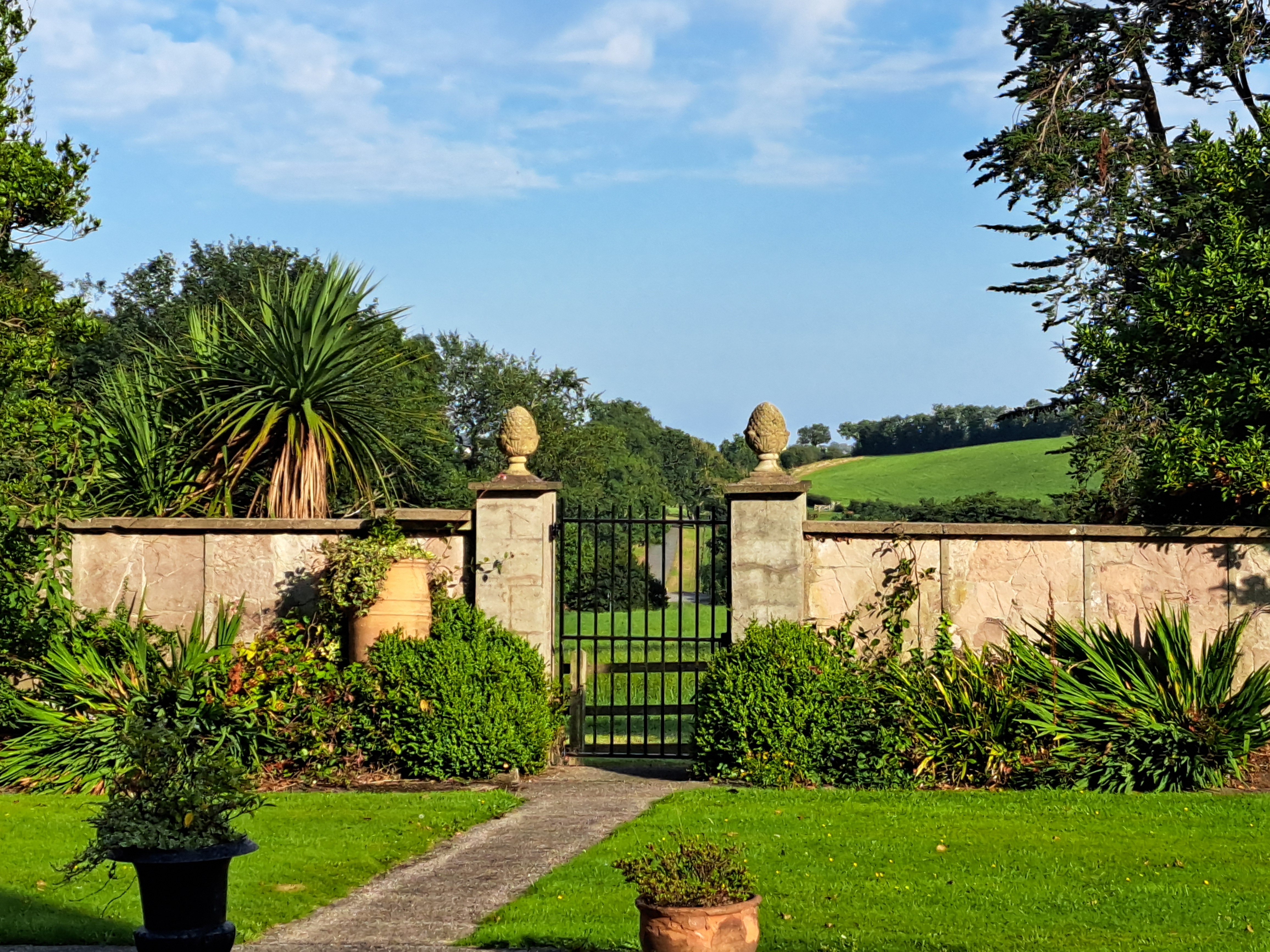
The view from the back of Florida Manor
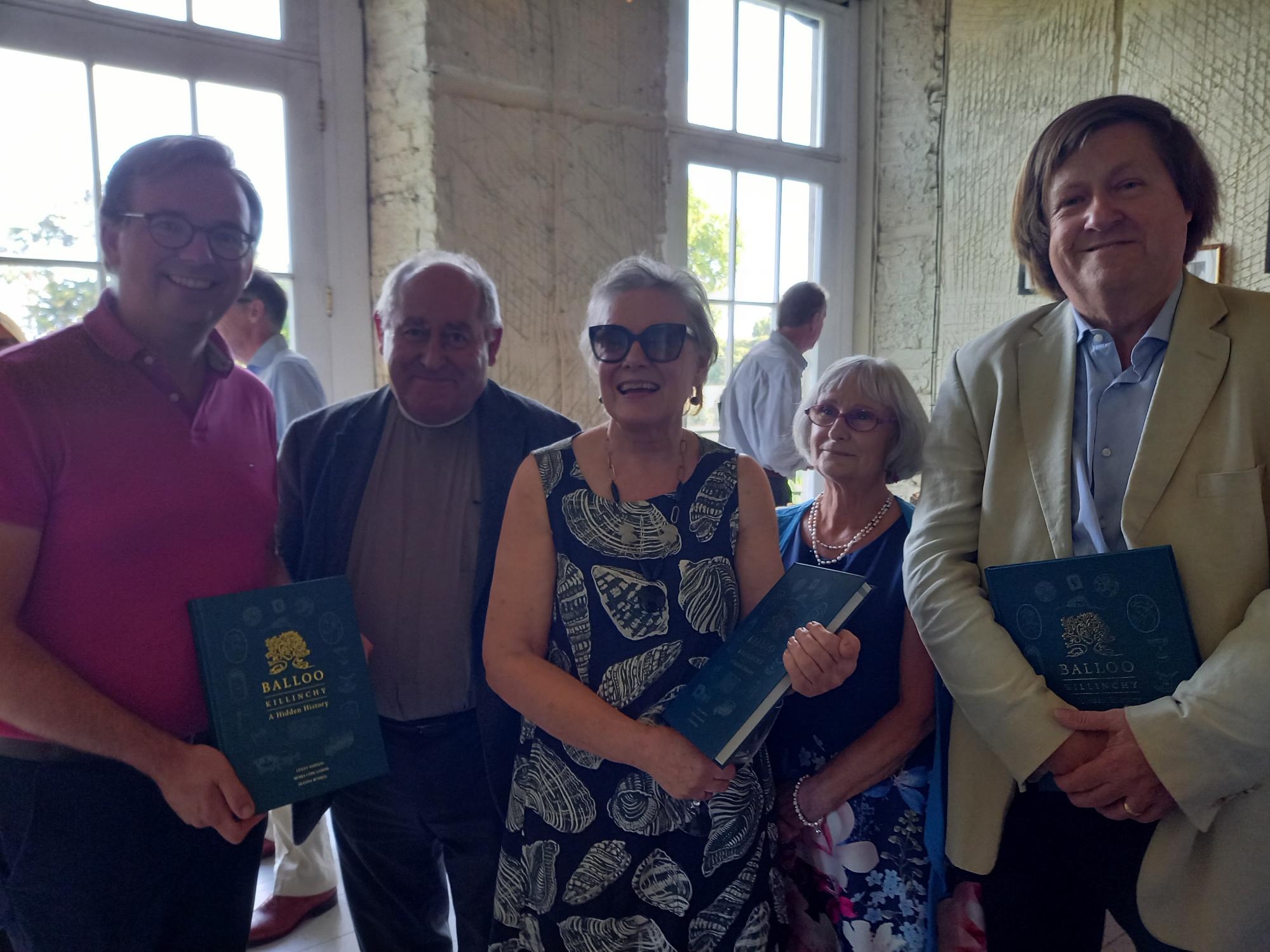
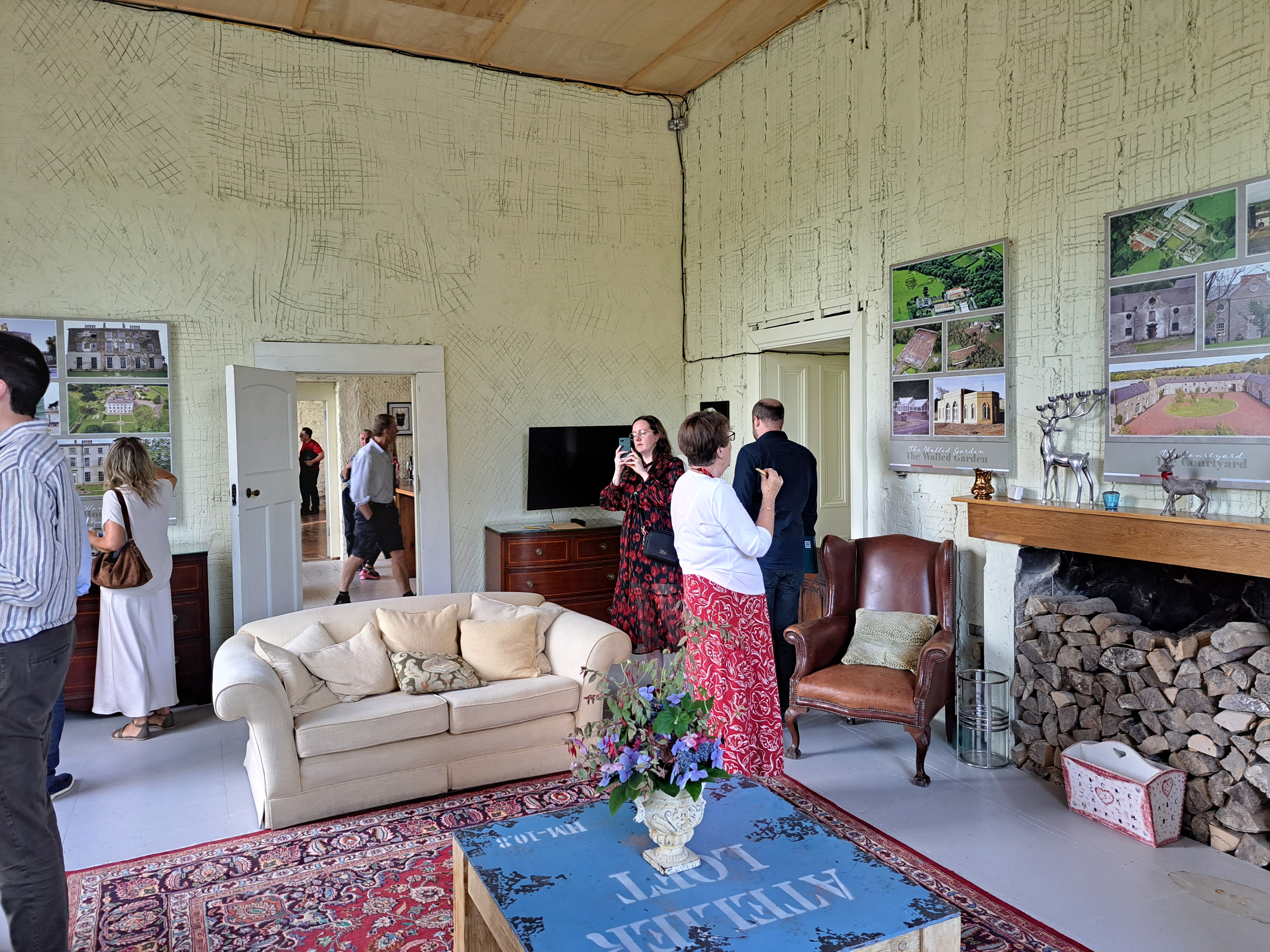
The book is richly illustrated throughout and is full of fascinating information. It is a credit to its authors and will be enjoyed by all with an interest in local history, the history of county Down and Irish Presbyterian history. The launch was a splendid occasion at Florida Manor, as the following photographs show.
In this video we take a look at the career of Allen Daniel Coon, one of the pioneers of photography and cinematography in Ulster. The video tells something of his story, with many examples of his postcards, and tracks down his last resting place.
Video: Allen Daniel Coon (1867 -1938) Photographer and Cinematographer
The previous post on this blog is all about Allen Coon’s postcards produced for W.J. Ross of Finaghy Stores in 1927, but these are just a small sample of his vast output produced between his arrival in Ireland in 1902 and his death in 1938.
Allen Daniel Coon was born in Buffalo, New York in 1867. The son of a Baptist pastor and, tradition has it, a native American mother, his career followed a fairly conventional path in its early years. He read law at university and then established himself as an attorney in Buffalo. But at some point he tired of this life and took the road to prospect for gold first in California and then in Alaska. One assumes this was not entirely successful because at some point he took up photography. He was a friend of George Eastman, the founder of Kodak, and may have been related to him. Either way he travelled to England with him in 1900 moving to Ireland a couple of years later to set up his own photography business.
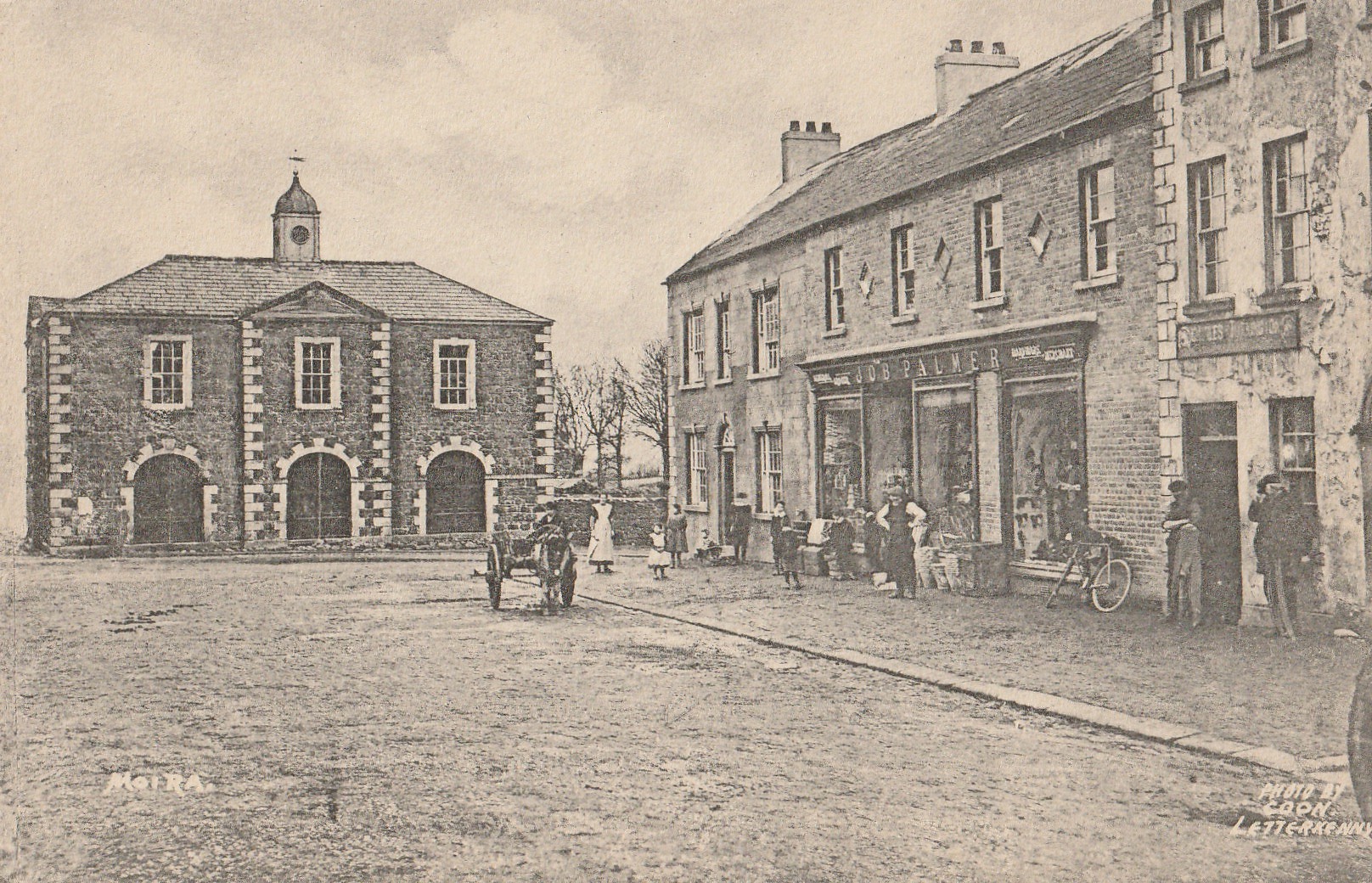
This was right at the beginning of the boom in the sale of postcards. In 1902 you could send a picture postcard for a halfpenny and expect it to be at a local destination at lunchtime. For skilled photographers the opportunities were obvious and operating initially from Londonderry, later from Letterkenny and ultimately from Moira (each place was printed as his location on the front of his postcards) he produced hundreds of postcards of impressive views, street scenes, local landmarks, prominent buildings and sometimes interesting people.
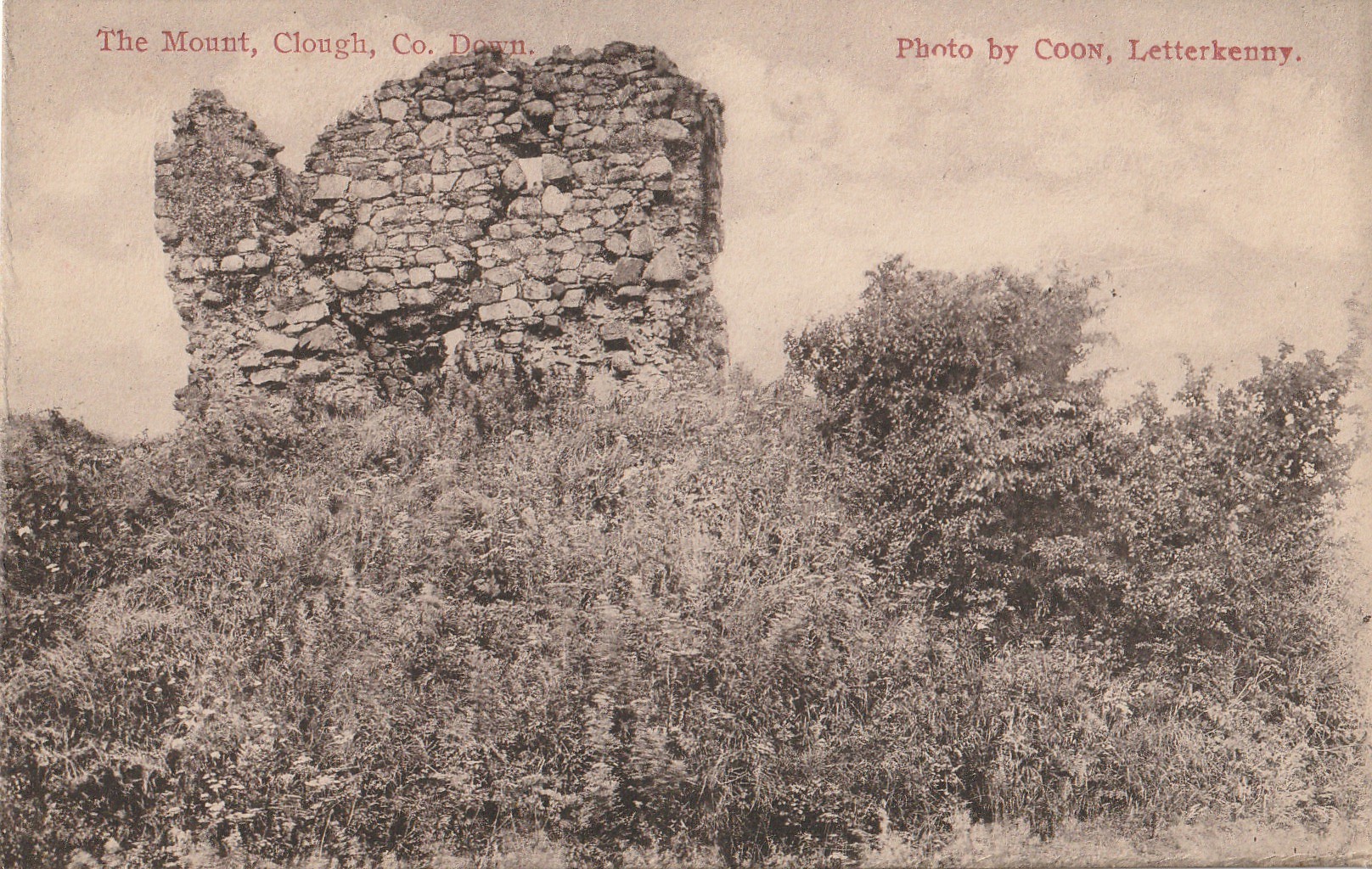
Clough Castle (no publisher listed on the back)
It is recorded that he charged local traders less than £5 for 2,000 postcards, which also included their name on the back of the card. From about 1924 he started numbering the cards starting with the last two digits of the year they were produced which is very helpful in dating the cards.
In the Census of 1911 he was recorded as living with his wife of three years, Clara, at Church Wall, Londonderry where he recorded his profession as Photographer and Theatrical Showman. Also recorded were their two eldest children (Gladys and Gaynor) and the fact that while his wife was a Presbyterian he declared himself to be an agnostic.
Moira Market House, published by Job Palmer, General Trader, whose shop can be seen on the right
The Theatrical Showman side of his profession was not an idle boast. Although his income from postcard sales must have been steady he was also perpetually ‘on tour’ travelling all over the north of Ireland with his camera and darkroom, setting up in towns as he went to film moving pictures and then show them to a fascinated populace along with films of Charlie Chaplin and other entertainers. In fact he also seems to have had an interest in some of the earliest cinemas established in county Donegal and in Belfast but his commitment to travelling from town to town with his films never waned right up to his death.
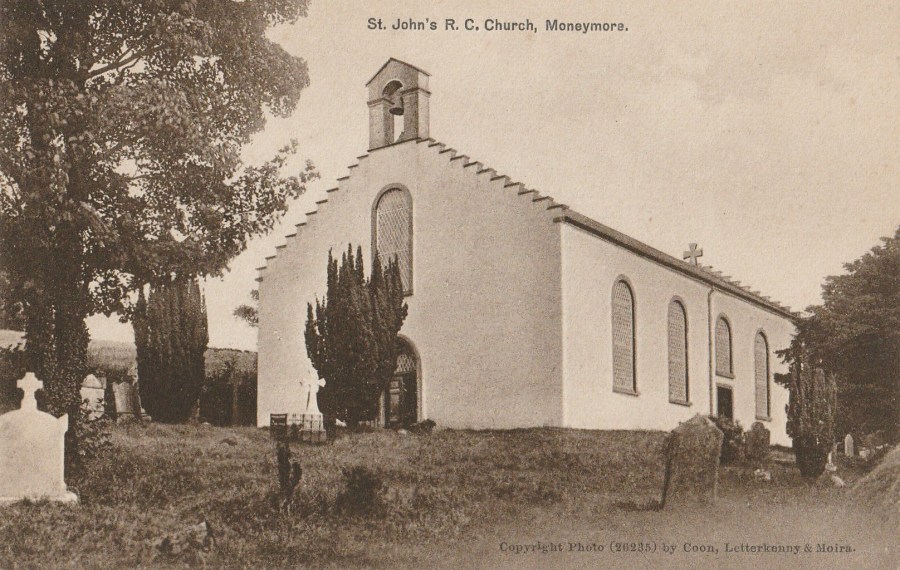
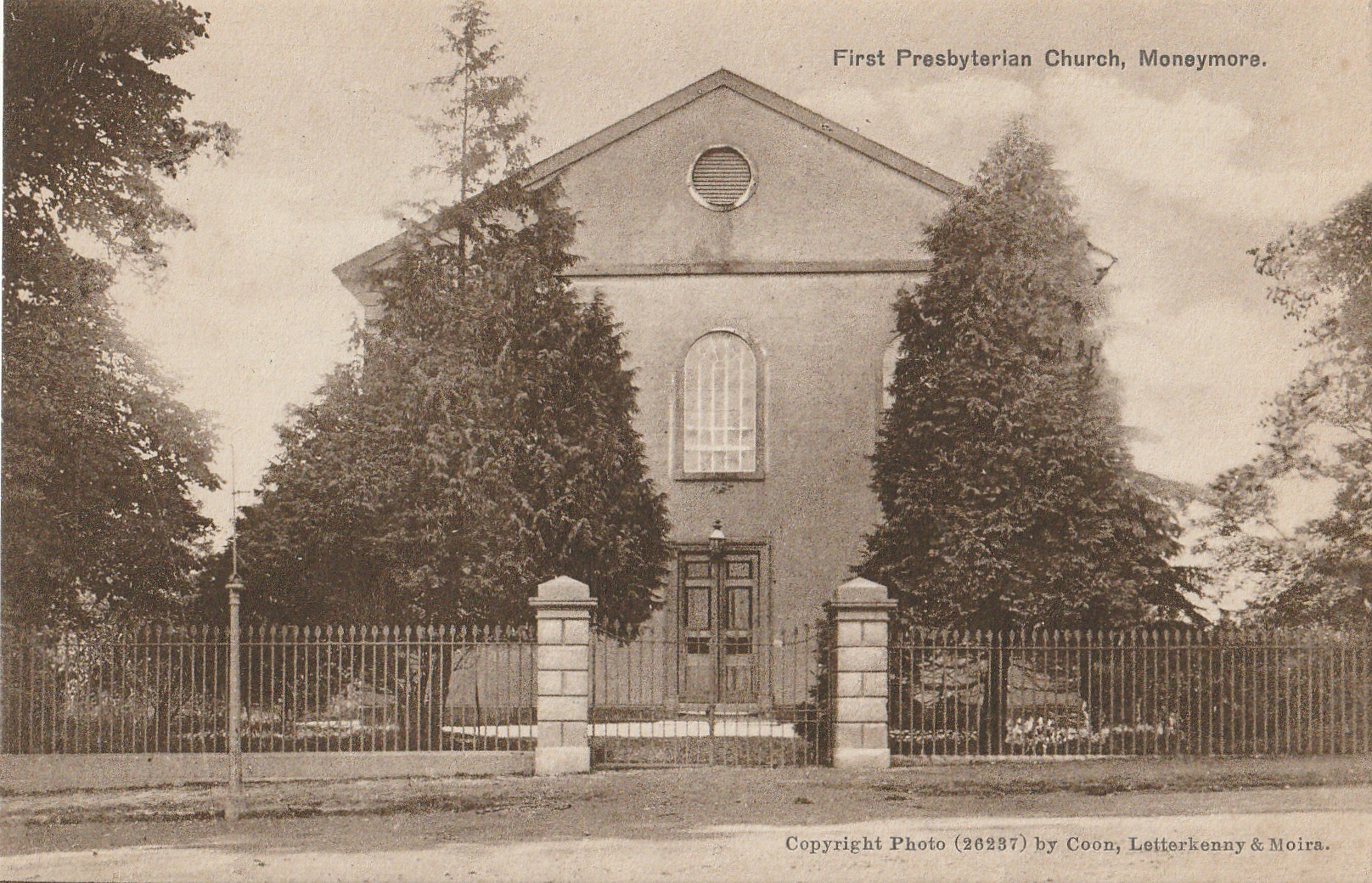
Moneymore, First Presbyterian Church (‘Published by Coon for Devlin, General Merchant, Moneymore’)
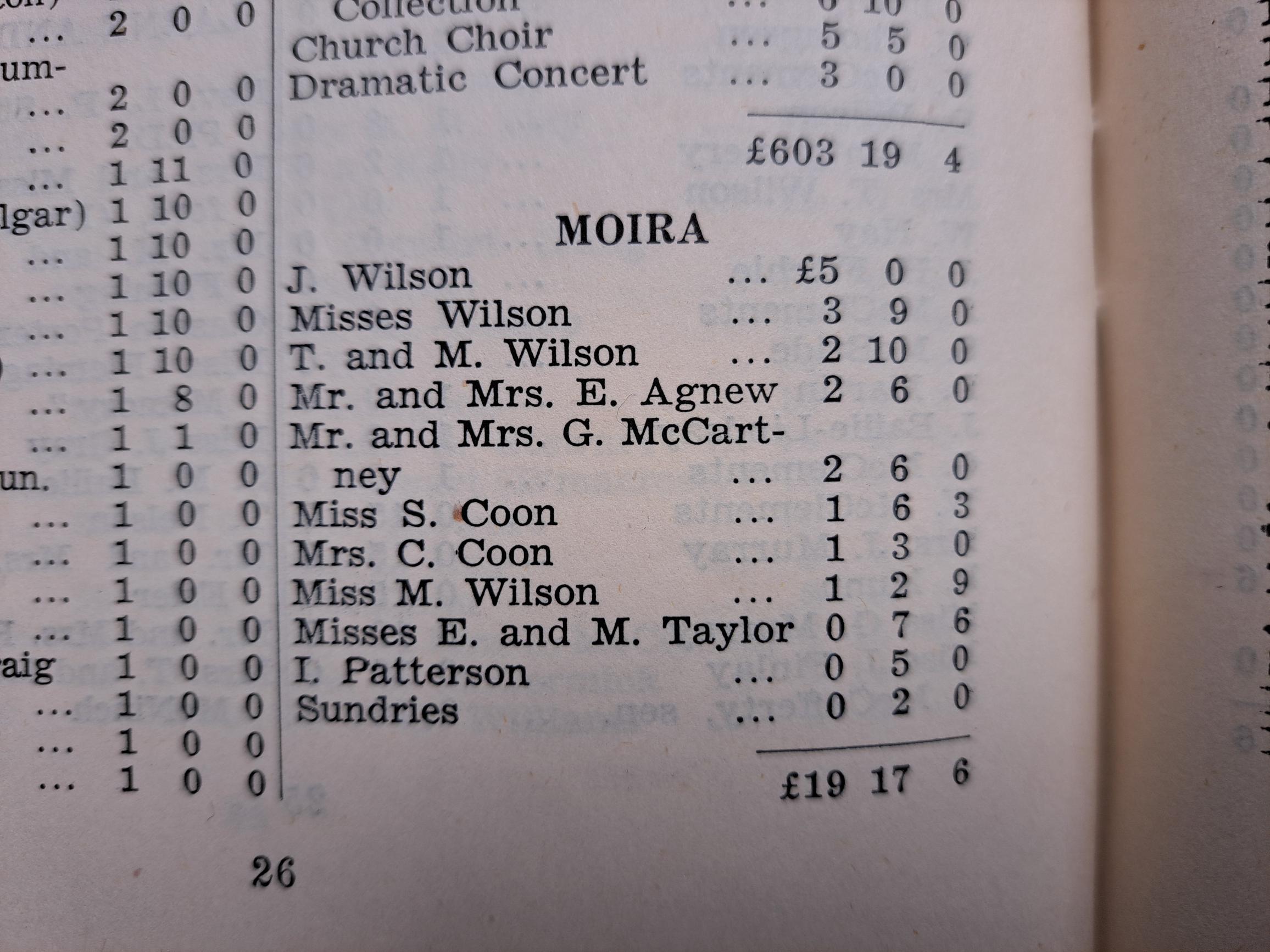
After partition he moved from Letterkenny to Moira and was ultimately buried there in the Non-Subscribing Presbyterian Church graveyard after his sudden death while on tour in Sligo. It is clear that his family had a close association with the Church, other family members are buried in the churchyard, but in the 1940s when the Non-Subscribing Presbyterian denomination launched a tercentenary appeal for the Sustentation Fund (1642 – 1942), Allen Coon’s wife Clara and his daughter Sylvia were amongst the members of the little congregation at Moira who gave their support. Indeed Miss Sylvia Coon was also one of the two local appeal officials for Moira.
Donations from Moira to the NSPCI Tercentenary Sustentation Fund Appeal, including Clara and Sylvia
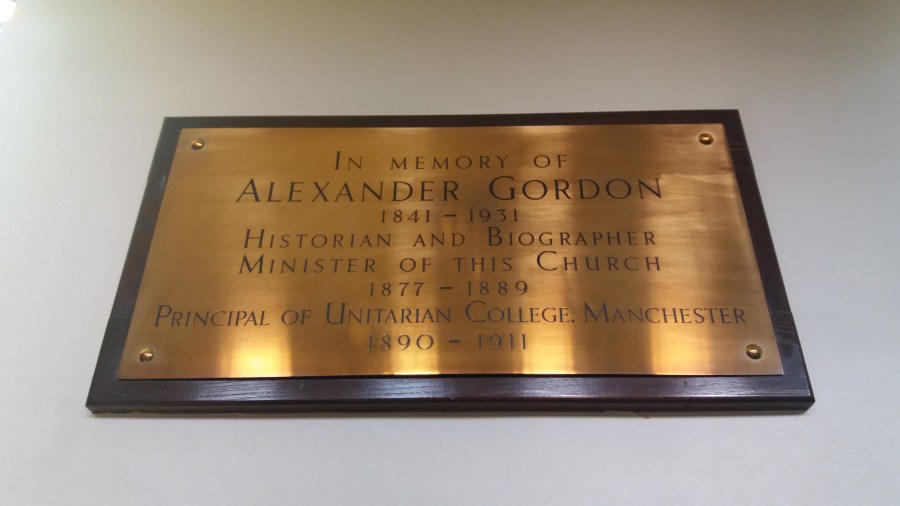
Historian, Biographer, Minister of First Church, Belfast. ‘An Englishman by birth, a Scotsman by education and an Irishman by inclination’.
On Thursday, 22nd May, 2025, we had an illustrated talk in First Dunmurry (NS) Presbyterian Church about the great historian Alexander Gordon.
Talk at Dunmurry by Rev Dr David Steers
A distinguished minister in England and Ireland, he served at Aberdeen; Hope Street, Liverpool; Norwich and at First Church, Belfast, before becoming Principal of the Unitarian Home Missionary College, Manchester and a lecturer in Ecclesiastical History in the first Free Faculty of Theology in the British Isles.
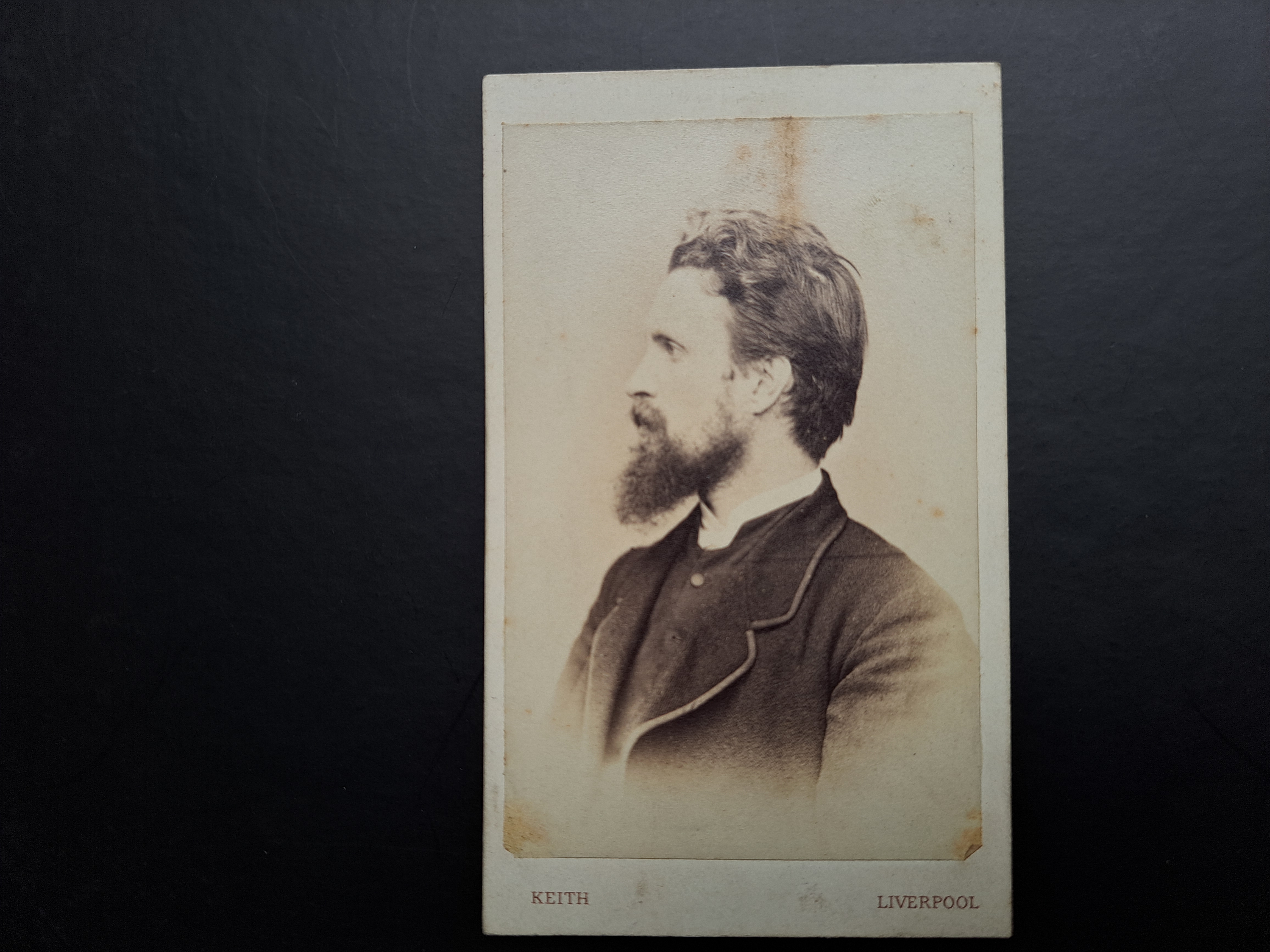
The earliest known photograph of Alexander Gordon, taken in Liverpool c.1872 at the time of his marriage to Clara Maria Boult
His scholarship was widely acknowledged all over the world, contributing 778 entries to the Dictionary of National Biography, 39 articles to the eleventh edition of the Encyclopaedia Britannica and much more. A superb linguist and experienced traveller his researches took him all over Europe. Among other things he was closely involved in the creation of the Non-Subscribing Presbyterian Church of Ireland in 1910.
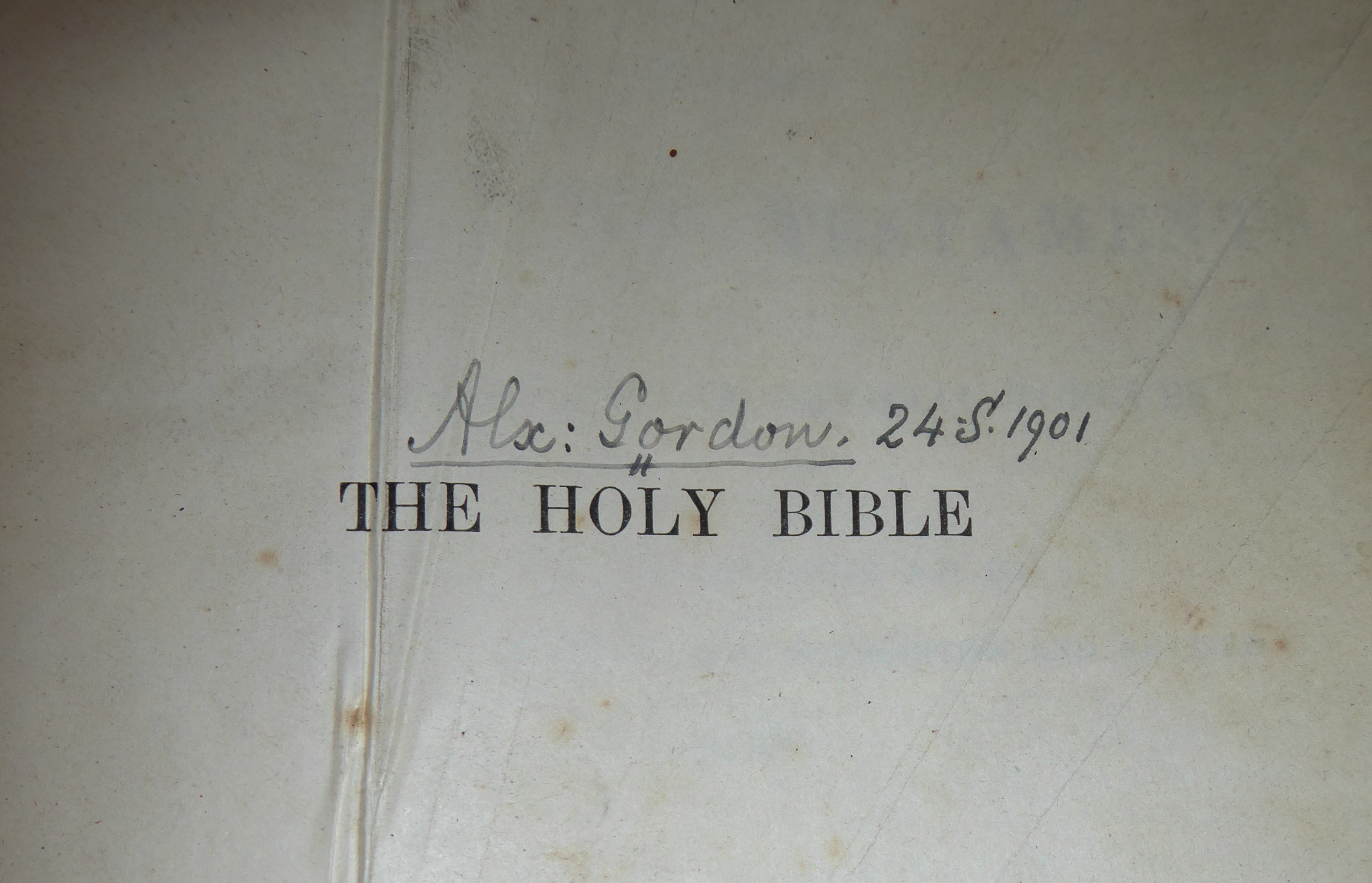
Gordon’s distinctive signature in a personal copy of his Bible (Revised Version)
The talk looks at his education, his work as a biographer and historian, and his commitment to the churches in Ireland which he served as secretary to the Association of Irish Non-Subscribing Presbyterians and later being closely involved in the setting up of the Non-Subscribing Presbyterian Church of Ireland itself.
He was a distinguished minister at First Church but even after leaving for Manchester kept a very close connection with the Irish churches, particularly through Dunmurry where he was regarded as the unpaid curate of his friend the Rev J.A. Kelly, despite the incredible heavy work load of his high profile work. From 1895 until the year of his death in 1931 he only missed one communion service at Dunmurry – and that was because of an unexpected train timetable change that left him stranded in Dublin one weekend during the First World War. For a very experienced traveller, particularly rail traveller, this must have been especially galling for Gordon. The lecture also looks at Alexander Gordon as a travel writer.
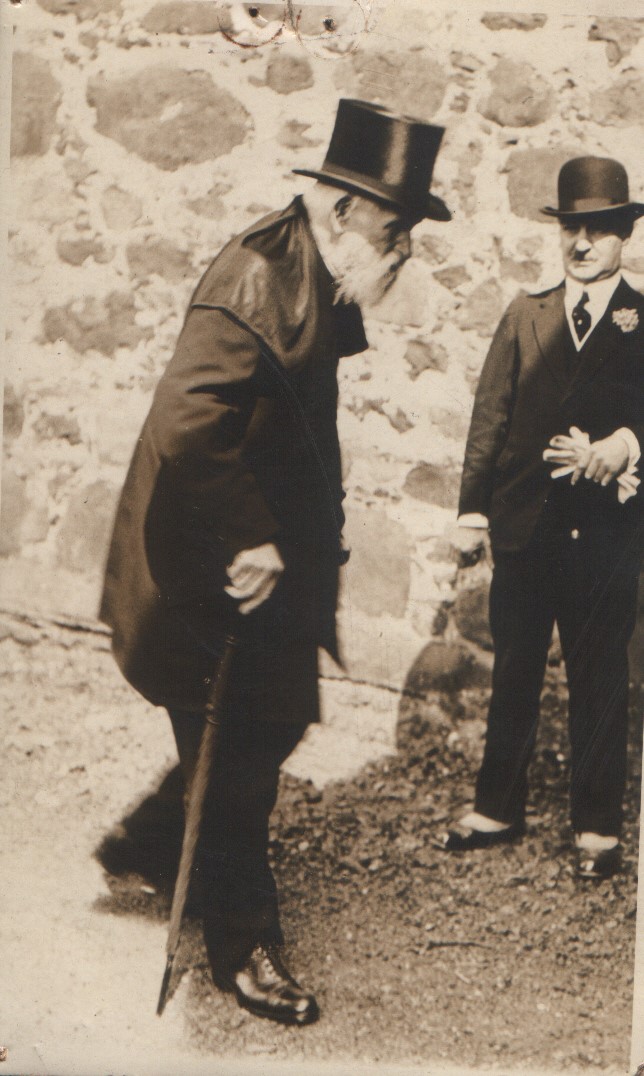
The last photograph of Alexander Gordon taken at Dunmurry on 18th January 1931
It examines too his family background, which was frequently touched by tragedy. But he inspired great loyalty and affection in the generations of students he trained for the ministry.
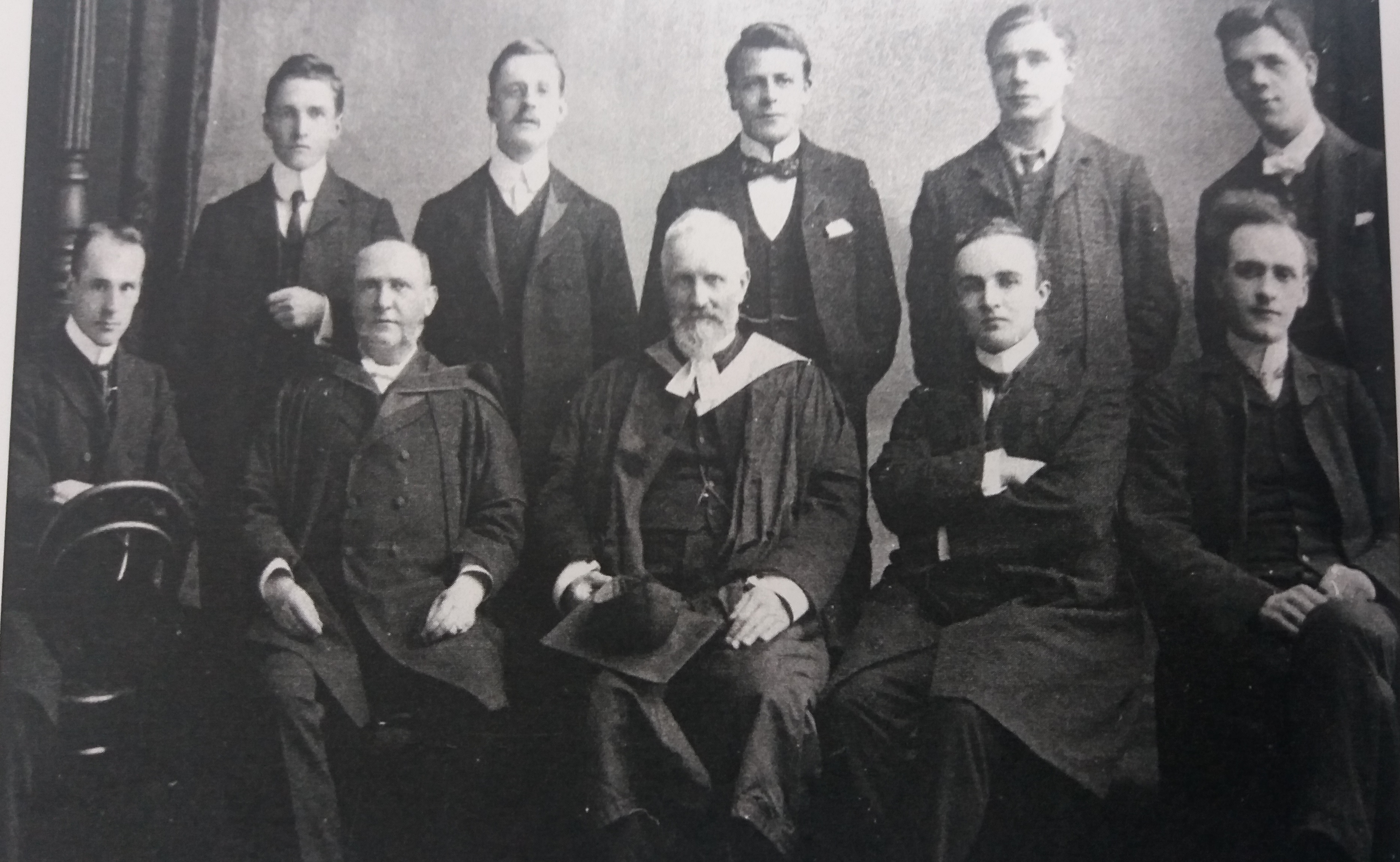
Principal of the Unitarian Home Missionary College, Manchester
He was buried in Dunmurry, just a short time after he conducted his final service there on 18th January 1931.
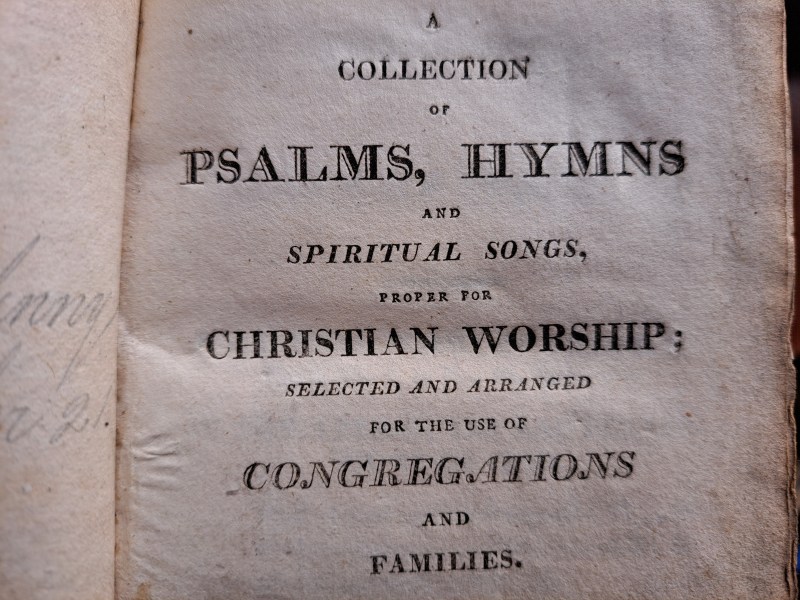
The title of this post comes from the Preface to A Collection of Psalms, Hymns and Spiritual Songs written by the Rev A.G. Malcolm for his hymnbook published in Newry in 1811.
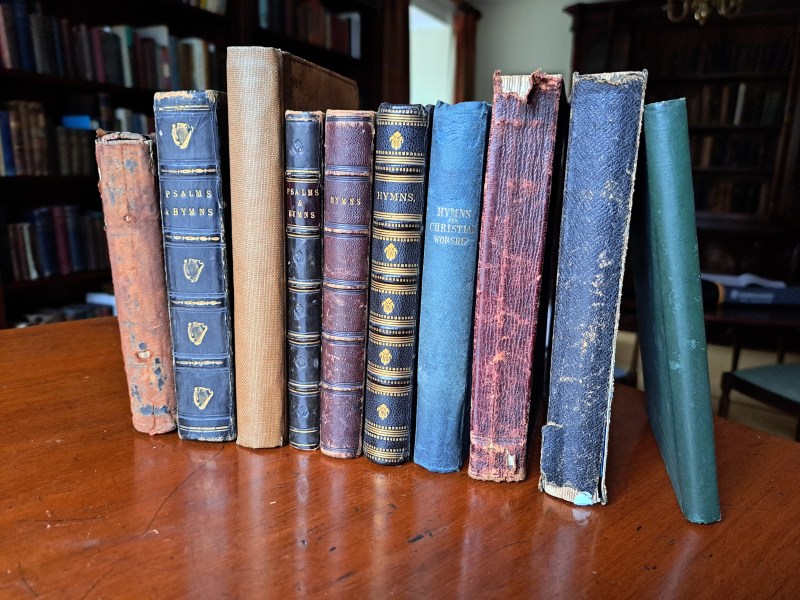
Click on the video to explore Irish Non-Subscribing Presbyterian hymnbooks
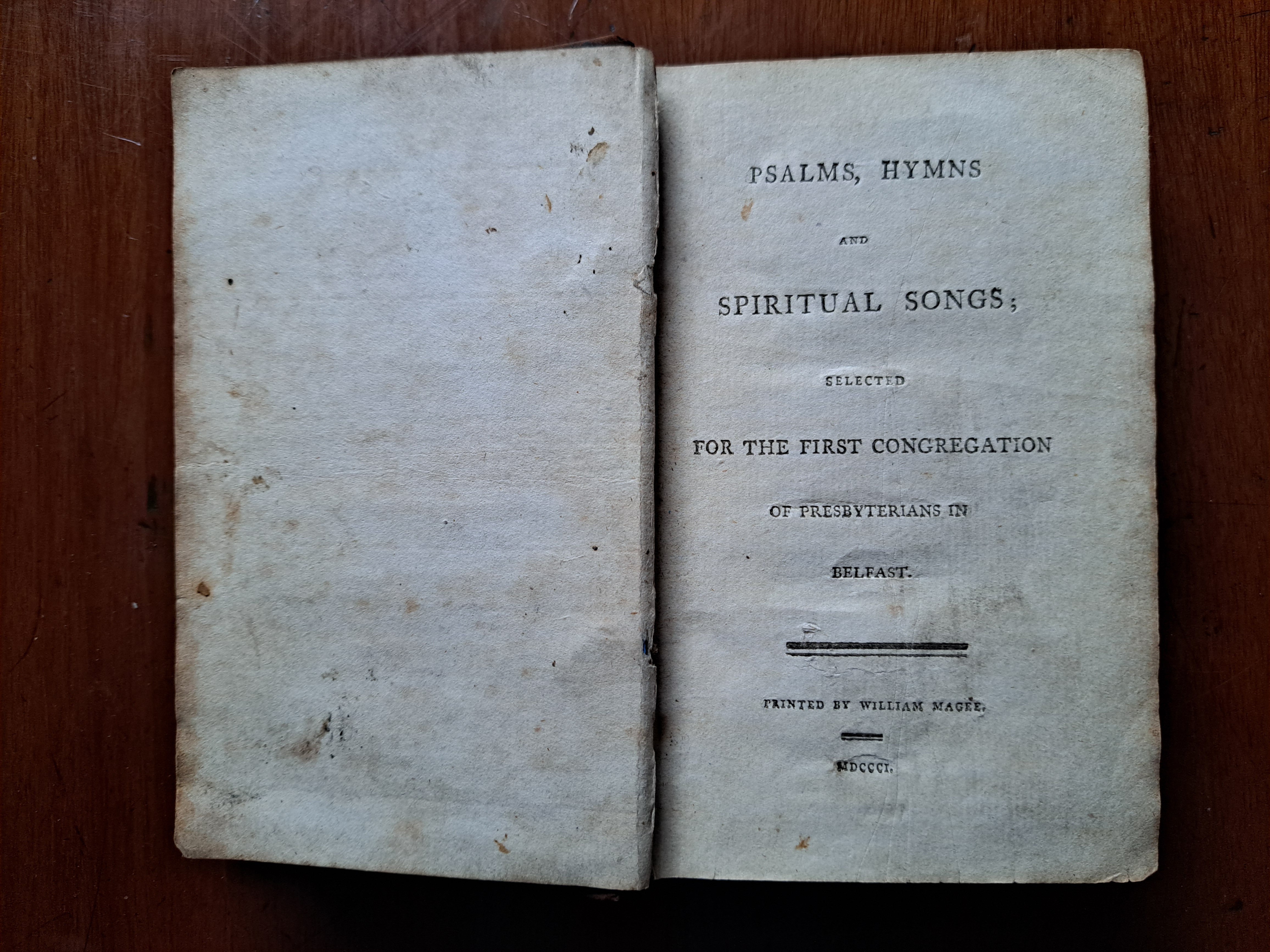
Prior to about 1800 Non-Subscribing or New Light Presbyterian churches, in common with other Presbyterians, would have worshipped with a Psalter or Psalm book. The first distinctly Non-Subscribing hymnbook appeared in First Church in 1801. What is surprising about this publication is that in the same year Edward Bunting offered to supply an organ to the church. This offer wasn’t taken up although in just a few years the Second Congregation were to become the first church with an organ, First Church not acquiring one until 1853. The Rev William Bruce edited this collection and 1,200 copies were published. A choir seems to have led the singing which initially contained boys but was later expanded to include adults.
First Church’s Collection of 1801
William Bruce’s book contained 246 hymns, with an index of first lines and a brief one page table of subjects. The next hymnbook, the Newry edition of A.G. Malcolm, contained 405 hymns with a more substantial table of subjects running over eight pages. Plus it had an index of first lines with the names of authors (for example Barbauld, Watts, Doddridge, Kippis, Merrick, Wesley, Addison, Enfield) which showed the eclectic sources the book drew on from within Dissenting circles and beyond.
An interesting preface also explained their intentions:
…care has been taken, to select psalms and hymns, which treat of of the leading points both of faith and practice; and it is hoped, that the compilation will be found to contain a sufficient variety of the best compositions, in sacred poetry, adapted to all the principal subjects of Christian devotion.
A.G. Malcolm went on:
Correctness, both in sentiment and style, has also been made an object of considerable attention. Hence, many verses have been altered; and such psalms and hymns as seemed, in any degree, unsuitable to the simplicity and solemnity of divine worship have been omitted.
As the work is intended for general use, and must be expected to fall into the hands of persons, who unavaoidably differ from one another, in their opinions, on religious subjects, all expressions, which appeared likely to give offence to any sincere Christian, have been studiously avoided.
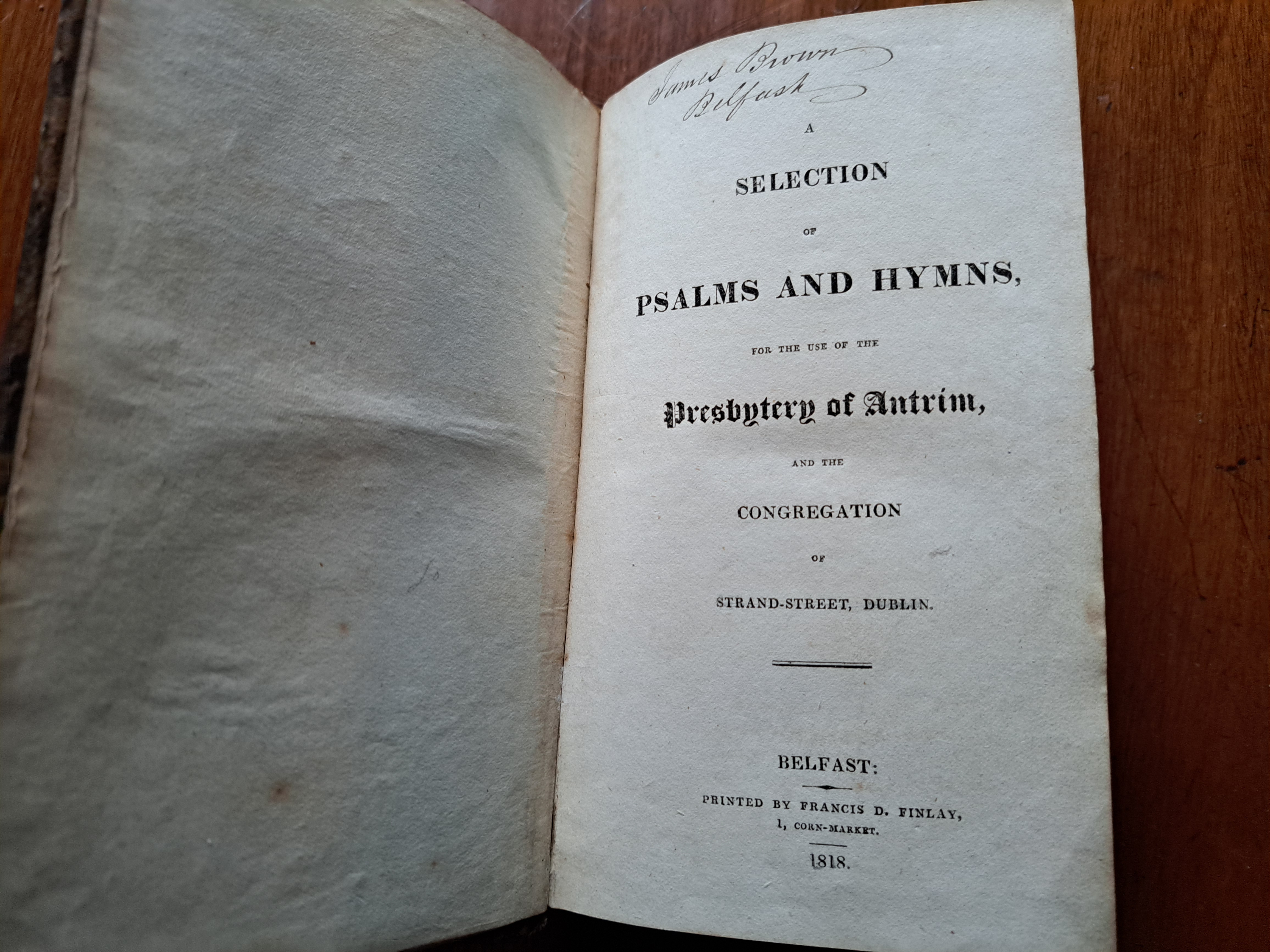
Interestingly the next hymnbook, dated Belfast, July 1818 and edited by Rev W.D.H. McEwen, made a similar point in a slightly more forceful way in its Preface:
Some doctrines are so offensive to the societies, for whose use this compilation is principally intended, that they are carefully avoided. As to others, the same scrupulosity is not observed; for, with respect to them, there may exist a diversity of sentiment. This selection may, therefore, be thought defective, but it will not disgust by a pertinacious obtrusion of doctrine.
So certain doctrines weren’t allowed to get in the way! Some were left out all together – the Trinity, the theory of the atonement based on penal substitution – and on some doctrines Non-Subscribers were able to agree to differ.
W.D.H. McEwen,s hymnbook
The book was published for the Presbytery of Antrim and the congregation of Strand Street, Dublin but it came from the minister of the Second Congregation. Curiously they had installed an organ in 1806 and had Edward Bunting as their organist from then until 1817. So they don’t appear to have had a hymnbook of their own for the first dozen years after installing the organ.
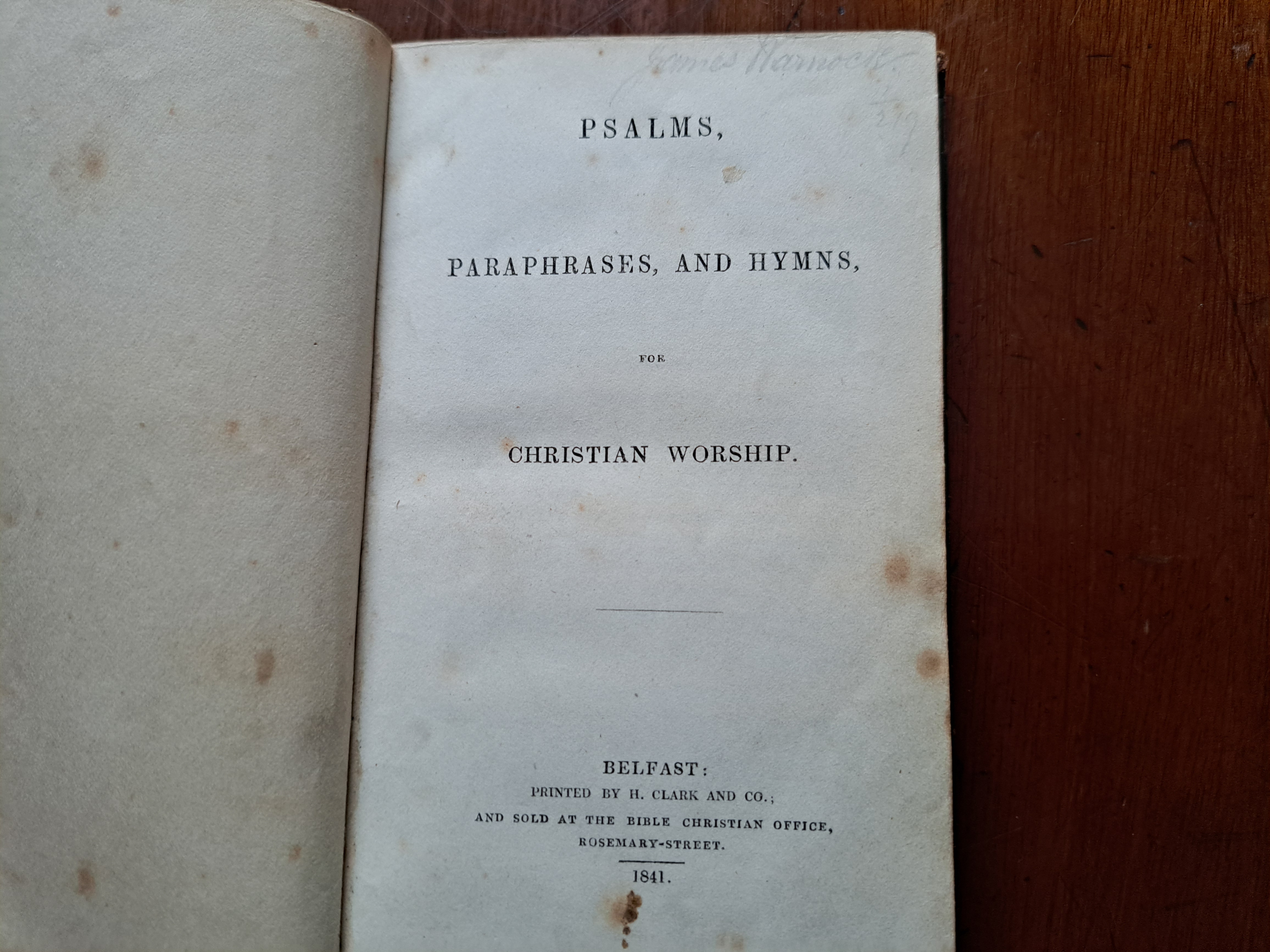
Following the establishment of the Remonstrant Synod of Ulster in 1830 Non-Subscribers moved towards the development of a hymnbook for all churches. This is Psalms, Paraphrases, and Hymns, for Christian Worship published in Belfast in 1841:
Psalms, Paraphrases, and Hymns, for Christian Worship 1841
This is the first edition of what became Hymns for Christian Worship, a book which went into at least four further editions before the end of the century and was followed by a supplement in 1899. Throughout this time this was the main series of hymnbooks in use in the churches in Ireland. More detail can be seen in the video above.
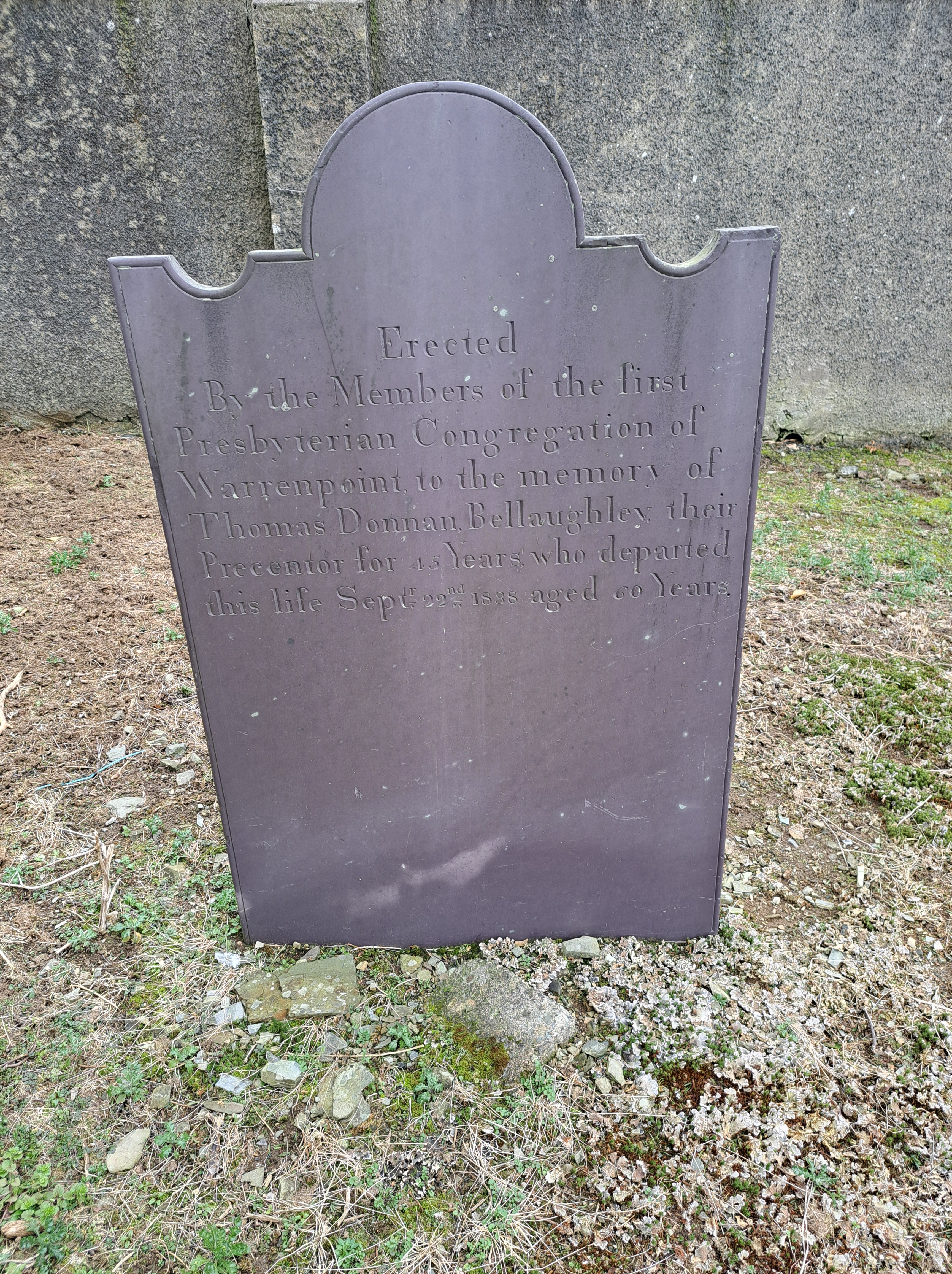
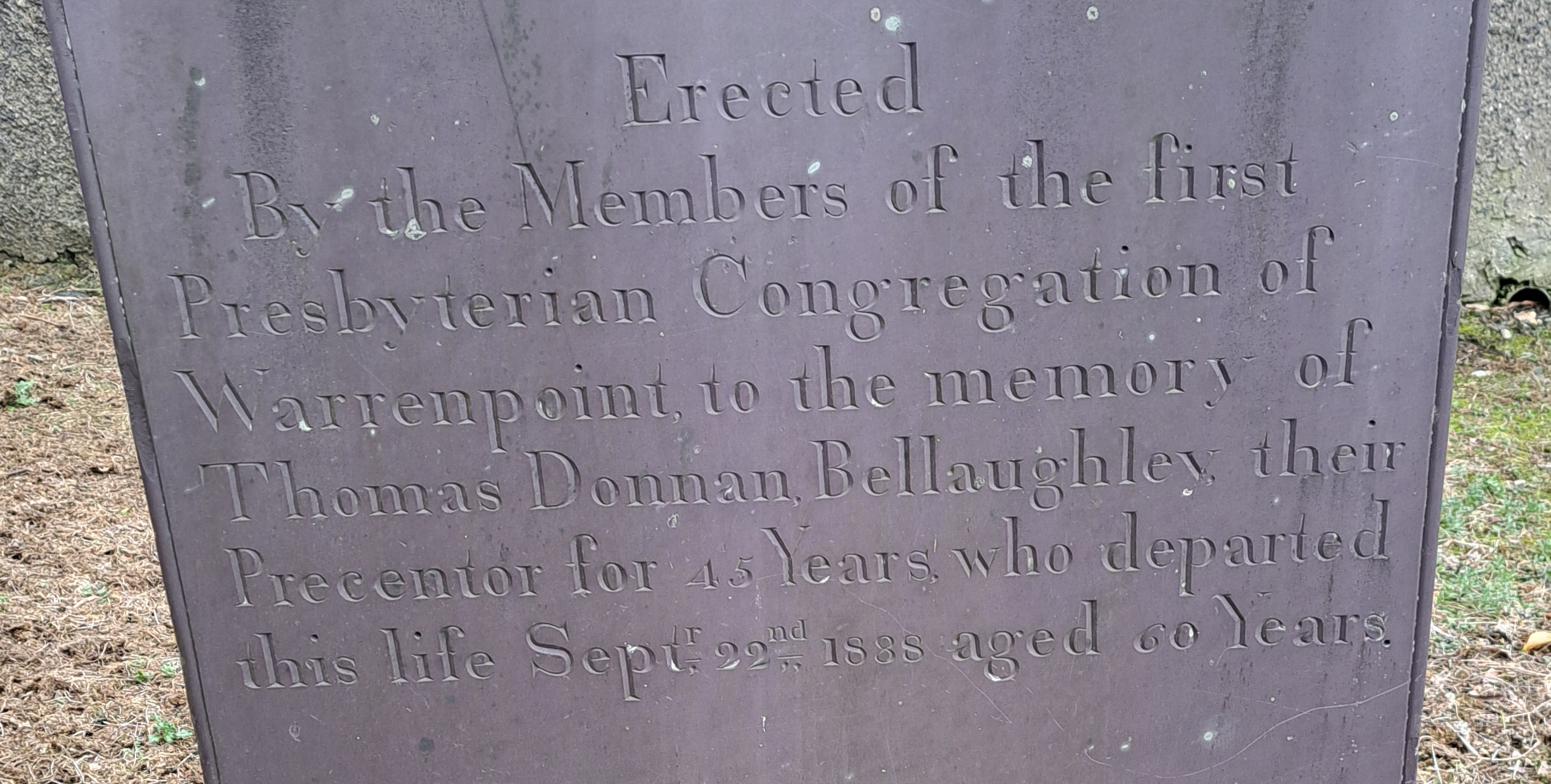
On a recent visit to Warrenpoint I noticed this gravestone and took a picture. Carved, it would appear, on a sheet of slate, the inscription is sharp and clear and I initially assumed it would be older than the date actually indicated. I didn’t have much time to study it but I am glad I took a picture, it is a fascinating artefact, a tribute to a key member of this congregation for almost half a century.
Thomas Donnan, of Bellaughley, was the Precentor of the Warrenpoint Non-Subscribing Presbyterian congregation for 45 years up to his death in 1888. He was 60 when he died so he must have been just 15 when he commenced this work in 1843.
It’s an intriguing gravestone because while it clearly tells of the high esteem in which Thomas Donnan was held and the long period of time he faithfully led the congregation in their singing it opens up so many more questions. Who was he? Did he have a family? Did he have any formal training in music? Did he have any other responsibilities or source of income?
Although a Non-Subscribing Presbyterian congregation the First Presbyterian congregation of Warrenpoint must have hung on to their traditional worship forms in singing by being led by the Precentor for a long time, perhaps because Thomas Donnan provided such acceptable leadership to them in their music.
It’s interesting that close by in Newry the New Light minister the Rev A.G. Malcolm produced one of the first hymnbooks in use in any Presbyterian church in Ireland in 1811 with his Collection of Psalms, Hymns and Spiritual Songs proper for Christian Worship; selected and arranged for the use of Congregations and Families. But this doesn’t seem to have been used in Warrenpoint.
In her tercentenary booklet of 2007 Across the Narrow Water (the congregation of Warrenpoint was originally known as Narrow Water) Elaine Crozier records that in 1841 the committee appointed ‘a teacher to teach the choir’ at a salary of £3 per year. Was this the prelude to the appointment of Thomas Donnan? Undoubtedly connected with his eventual appointment was a decision in 1842 that ‘the new collection of psalms compiled by the Remonstrant Ministry be put into the hands of the families belonging to the church.’ This would be the 1841 publication Psalms, Paraphrases, and Hymns, for Christian Worship published in Belfast by the Bible Christian (the main Non-Subscribing Presbyterian journal), Rosemary Street. It must have been this book that provided the basis for congregational singing in Warrenpoint led by Thomas Donnan although the book was gradually expanded as the century wore on with hymns from other sources. All this took place during the long and effective ministry at Warrenpoint from 1836 to 1867 of the Rev Samuel Moore. Born in Rademon and educated at Glasgow University he enjoyed some success as minister of Warrenpoint although the congregation faced the heavy difficulties of the Famine during his ministry.
From 1843 onwards, though, Thomas Donnan was leading the praise. If they were using Psalms, Paraphrases, and Hymns, for Christian Worship they had already taken a step away from using a traditional Psalter and this does, perhaps, suggest that the Precentor was also leading a choir. But there at the centre of their congregational life was this young man appointed at the age of just 15 and leading the congregation’s worship for the next 45 years to their evident satisfaction
A recent post looked at the two wonderful Rowel Friers cartoons which hang on the wall of the Library in Dunmurry, as well as the video which explains the story about them. As the post explains these pictures were commissioned by the Rev William McMillan for his impressive Exhibition illustrating the history of the Presbytery of Antrim held in January 1976.
It must have been an attractive display in the McCleery Hall, the Rev Mac sourced portraits, books, communion plate, swords and pikes from the ’98 Rebellion, sculptures by Rosamond Praegar, commmunion tokens, copper collecting pans and all sorts of material from all over Northern Ireland. There was even a mould for making eighteenth-century communion tokens from Ballycarry and – something I had not previously heard of – an eighteenth-century family token box, described as ‘a wooden box holding a small leadbox in which the token was taken to the meeting house.’
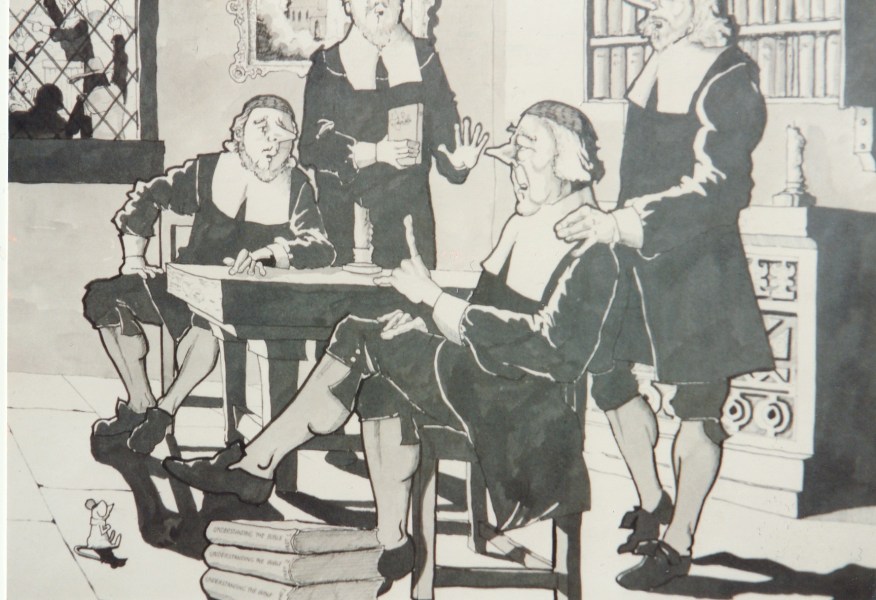
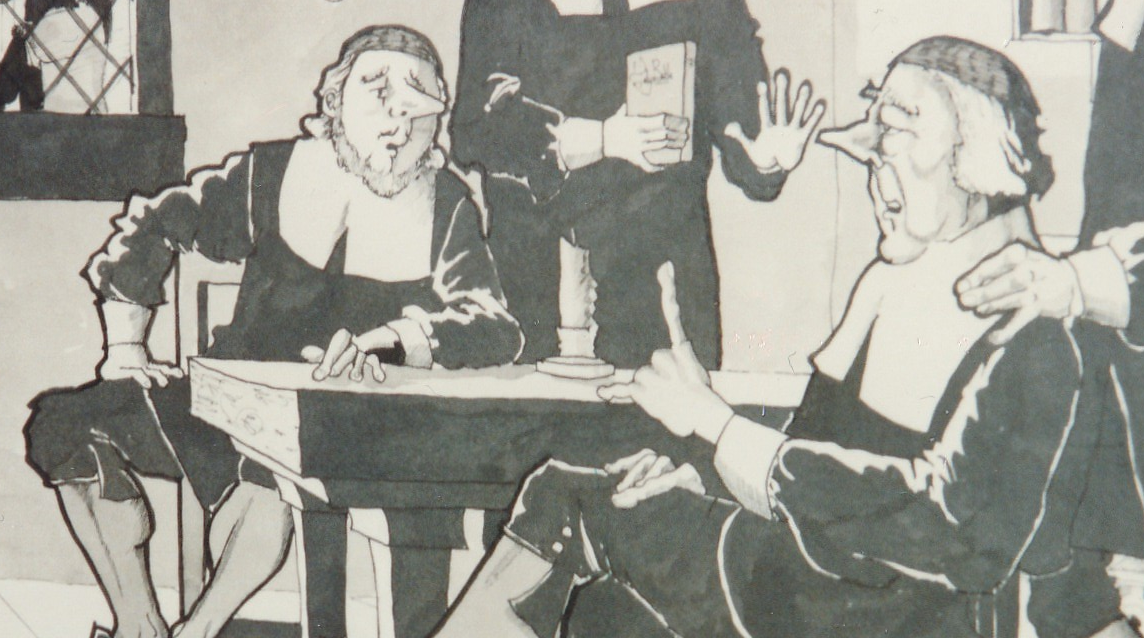
One feature of the Exhibition for the 250th anniversary of the Presbytery of Antrim is that there were in fact three, not two, Rowel Friers cartoons included. Unfortunately one of these has been missing for fifty years. However, we have now discovered a photograph of the lost picture and this features in our latest video:
Click on the video to see the video about the 1626 Antrim Meeting
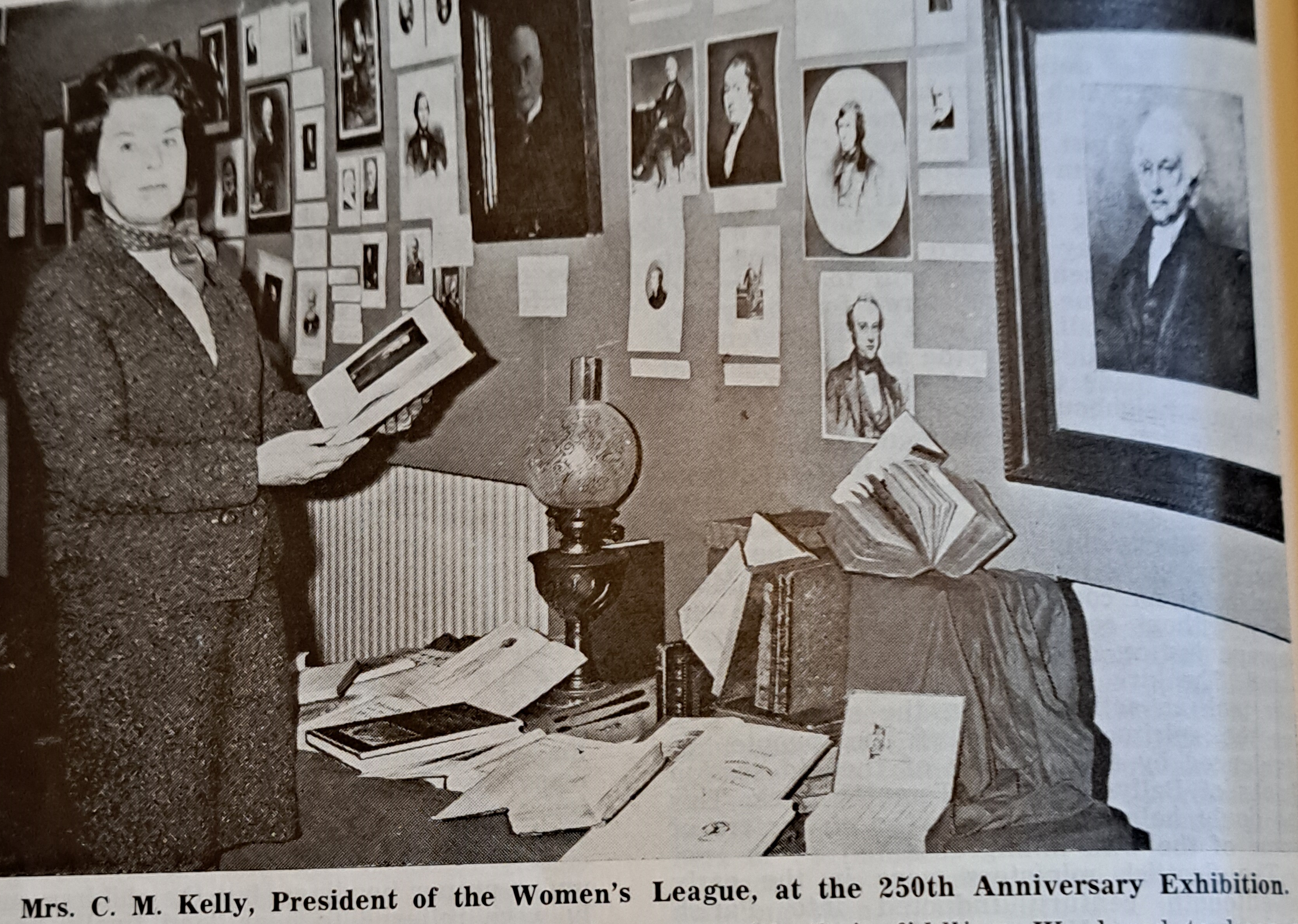
The Exhibition was held in January 1976 and covered both the creation of the Presbytery of Antrim in 1725 and its separation from the Synod of Ulster. It was also intended to cover the anniversary of the creation in 1626 of the original Antrim Meeting. The Exhibition must have been fascinating but unfortunately in that pre-digital age there were very few photographs taken. There is only one that shows the Exhibition in the Non-Subscribing Presbyterian magazine at the time:
Betty Kelly at the Exhibition in the McCleery Hall in 1976
There were a large number of dignitaries invited to the dinner that followed the Exhibition, representatives of all denominations, figures in public life, historians and international figures. Many of the speeches are recorded in the Non-Subscribing Presbyterian magazine and the Rev John Radcliffe, clerk of the Synod, made reference to the third Rowel Friers cartoon:
‘There are two extreme forms of the expression of religious sentiment. There is one that is very well expressed in the person here described: “His mind and voice had precisely the fluid quality of some clear, subtle liquid: one felt it could flow around anything and overcome nothing.” That is the extreme of presenting the Christian faith in such delightfully attractive style, with such a fluency of language, with such a vividness of imagery, that it will flow around anything and overcome nothing. At the other extreme there is another sort of Christianity, corybantic Christianity. There is a cartoon on the wall there, a drawing of four rather austere clerics, and the date is 1626. Outside you see somebody rousing a rabble – not unheard of in these days. The four rather serious looking clerics are trying to bring a bit of reason into it all; and the man outside is an exponent of corybantic Christianity, the Christianity that is the direct oppposite of that I have been describing tonight – and appeals all the time to the emotions in which people get carried away, and leads in the end to a very dangerous, in fact terrible, fanaticism – the very negation of the Christian spirit.’
Detail from the photograph
It is a fascinating footnote to our previous post and video about our Rowel Friers cartoons, another part of the story that takes us back even further in time, in this case to 1626.
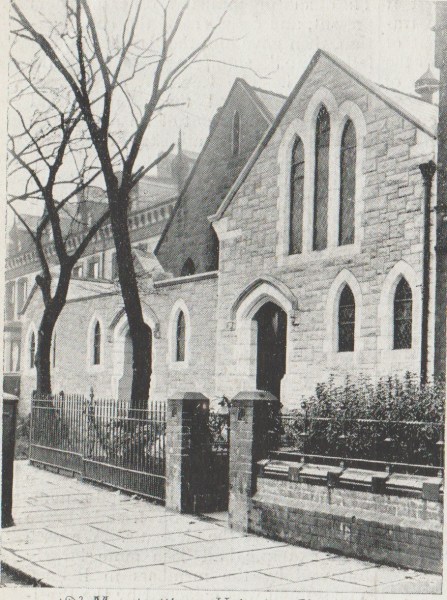
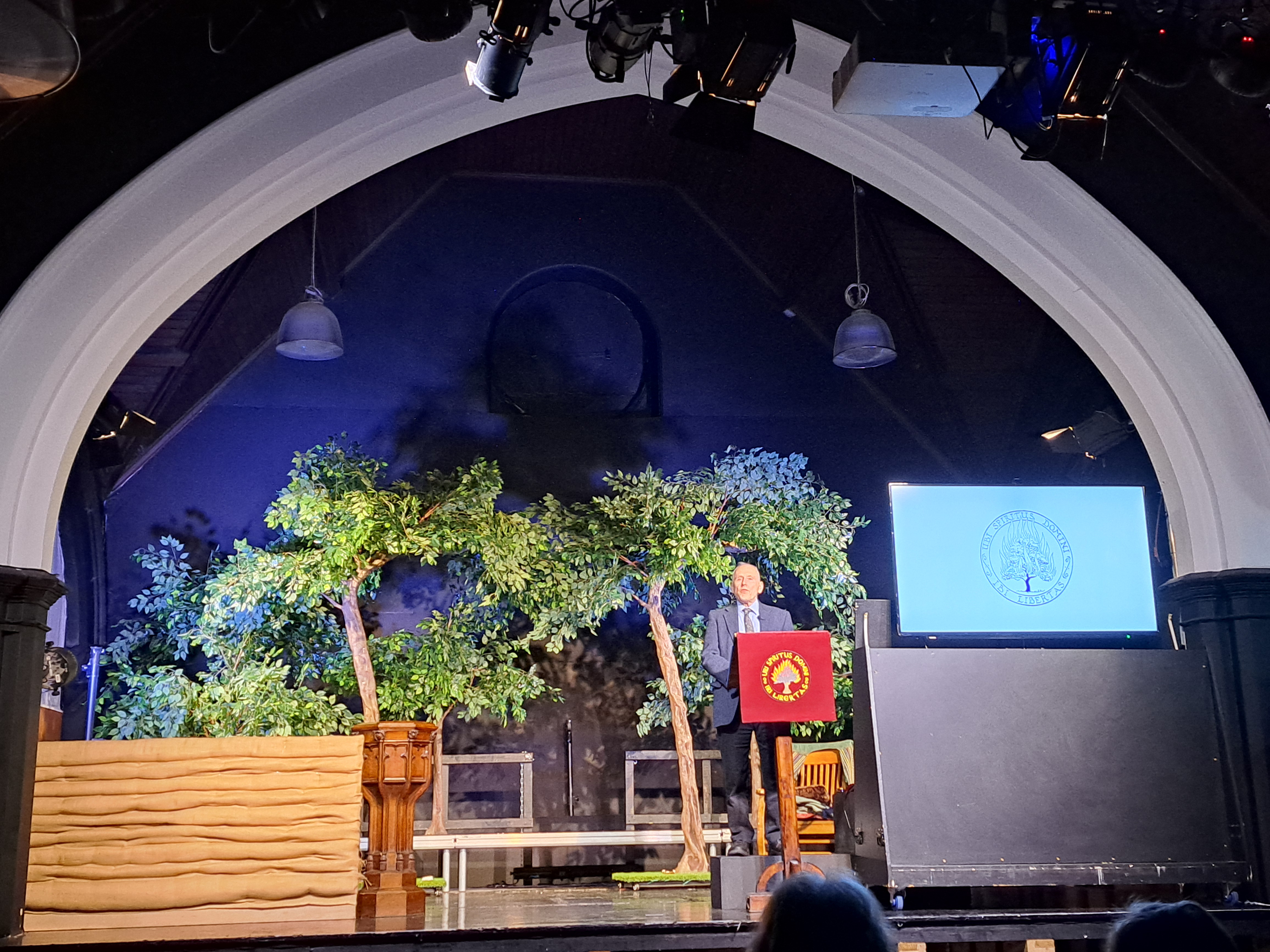
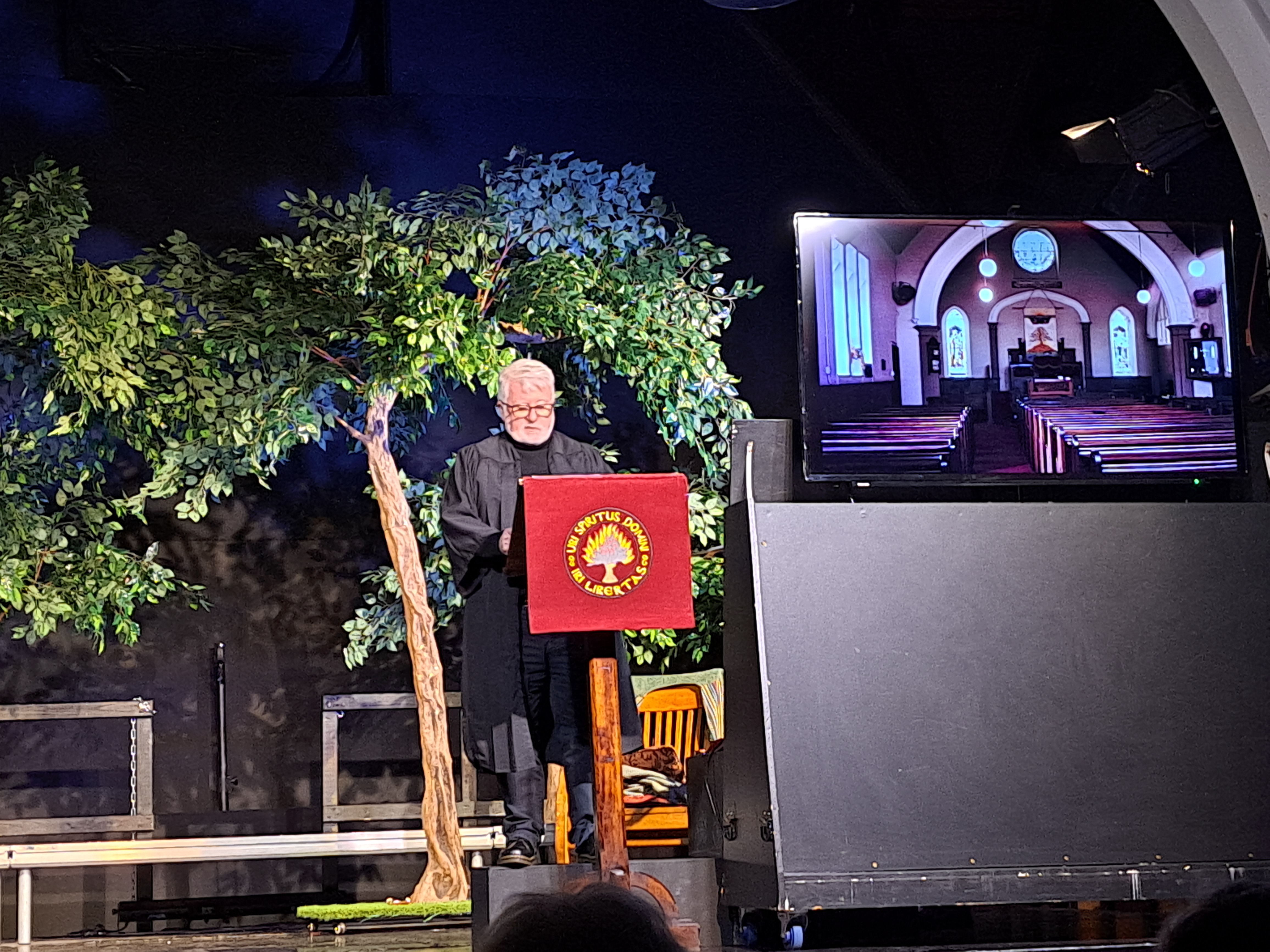
I’ve blogged before about Mountpottinger – most notably here and here where more details about its history can be seen – it is an interesting building on a prominent site in that part of Belfast and the congregation has a very distinctive history. Today the building is leased to the Bright Umbrella Drama Company who are turning the old school hall into the Studio Theatre and the church itself into the Sanctuary Theatre. But the congregation still has a place on the premises and the exact date of the anniversary of the opening of the building – 3rd January 2025 – was the occasion for this remarkable celebration of the 150 years of Mountpottinger.
Adrian Moir introduces the evening
A lot of credit must go to Adrian Moir, the church secretary and former ‘Warden of the Fabrique’, as the Very Rev Charlie Kelly once termed him, who wrote and narrated this excellent celebration of the life of the congregation. It was a very positive collaboration between the church and the Drama Company which brought the history of the church to life covering three themes:
Foundation and Hope
Tragedy and Remembrance
Adapting to the times and a glimpse of the future
Trevor Gill delivers the Rev David Maginnis’s speech at the opening of the building in 1875. David Maginnis was a controversial but effective minister at York Street who came back to Belfast from Stourbridge to participate in the opening ceremony
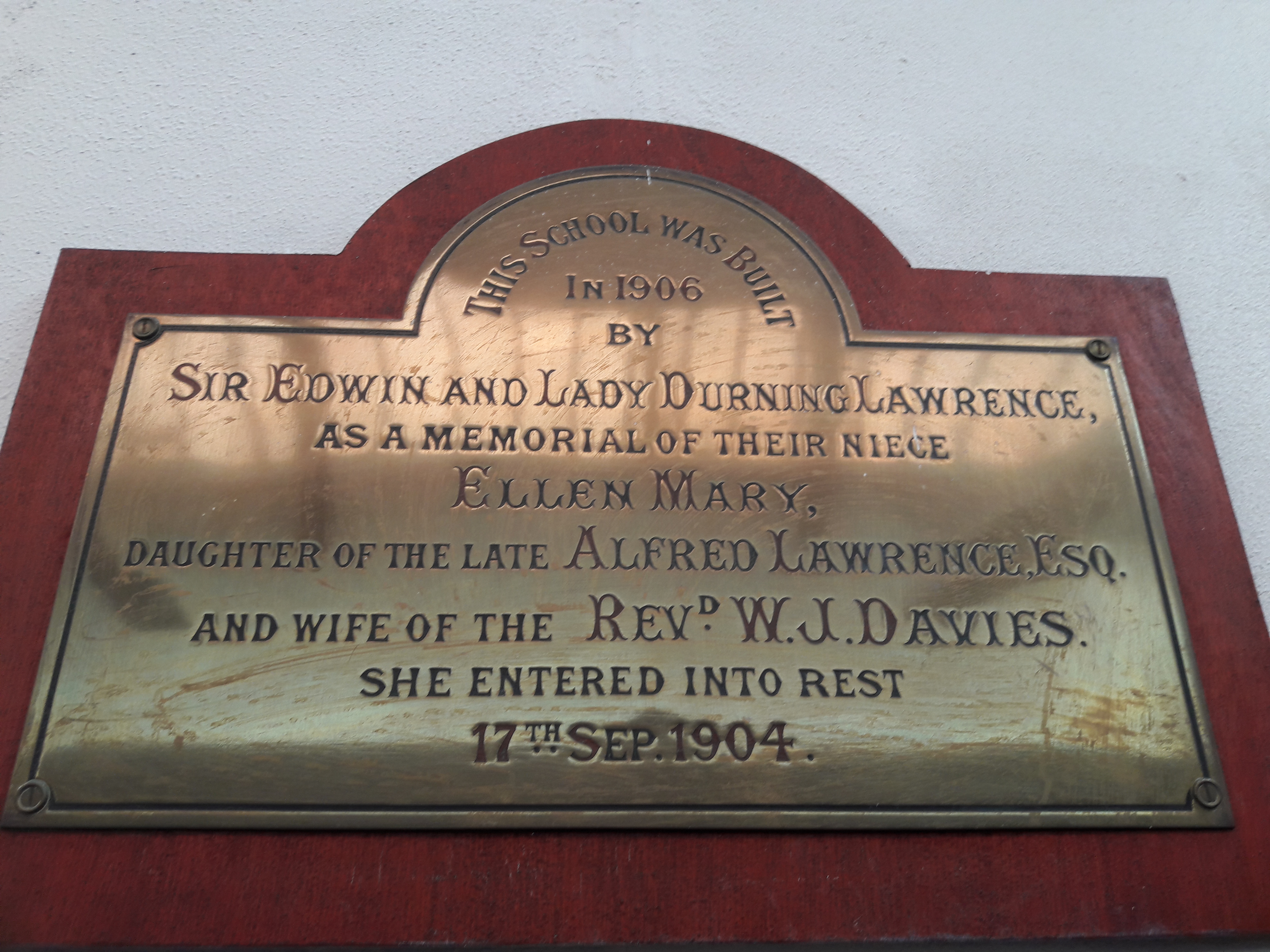
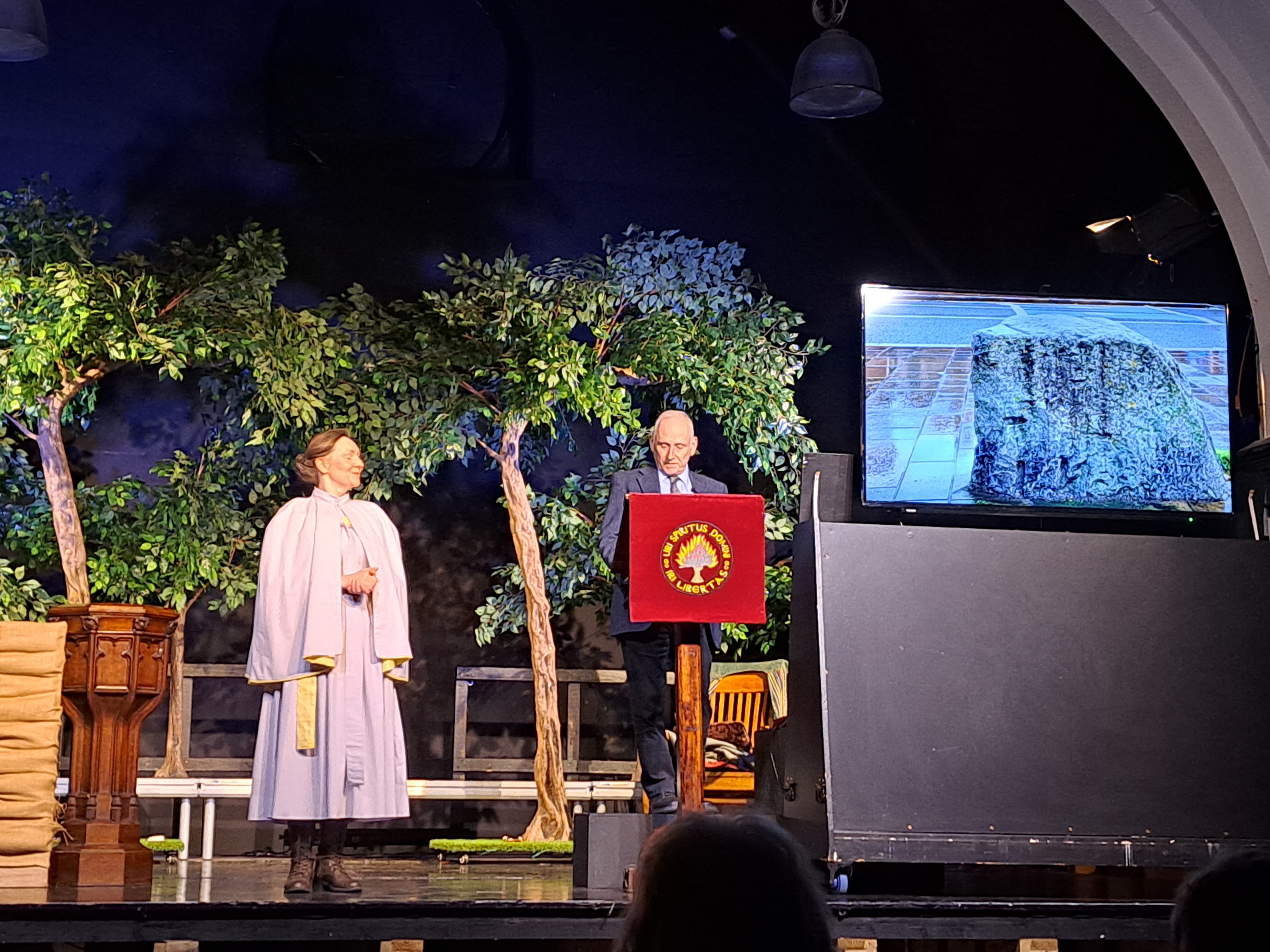
The evening was interesting, engaging and witty and also very moving as it looked at the story of Ellen Mary Davies, the wife of the Rev William Jenkin Davies, who died tragically young and in whose memory the school room was built.
Memorial in the School Room
Lindsay Charrington playing the role of Ellen Mary Davies
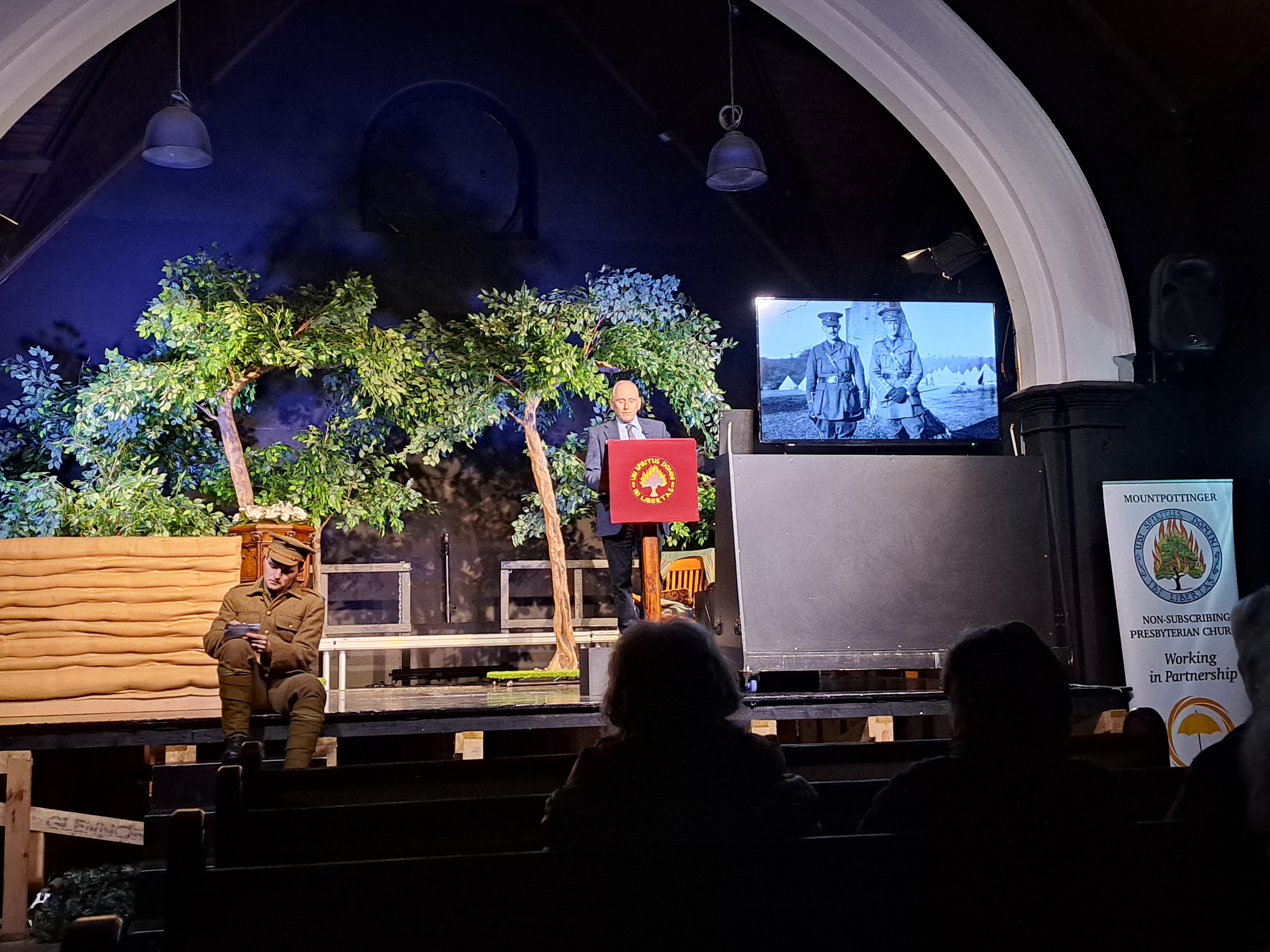
There was further tragedy with the loss of members of the church in the First World War, including Captain James Samuel Davidson in 1916, on the first day of the battle of the Somme. Also remembered on the evening was church member Sydney Agnew who was killed during the ‘Troubles’ in 1971 to prevent him giving evidence at a trial. It was both fitting and touching that members of Sydney’s family were there to lay a wreath in his memory.
Glenn McGivern writing home from the front as Captain J.S. Davidson
But the whole evening was very impressive, a fitting tribute to 150 years of work and witness which now has the opportunity to be part of a brave new venture as a community hub working in the arts and in drama in the Mountpottinger area.
In celebration of Christmas we have this short video which looks at Charles Dickens and Christmas. The work of Charles Dickens has become deeply entwined in the way we celebrate and enjoy Christmas, most notably through his work A Christmas Carol but it runs through all his writing. A lot of the Victorian imagery that accompanies so much Christmas celebration probably harks back to DIckens as much as anything else.
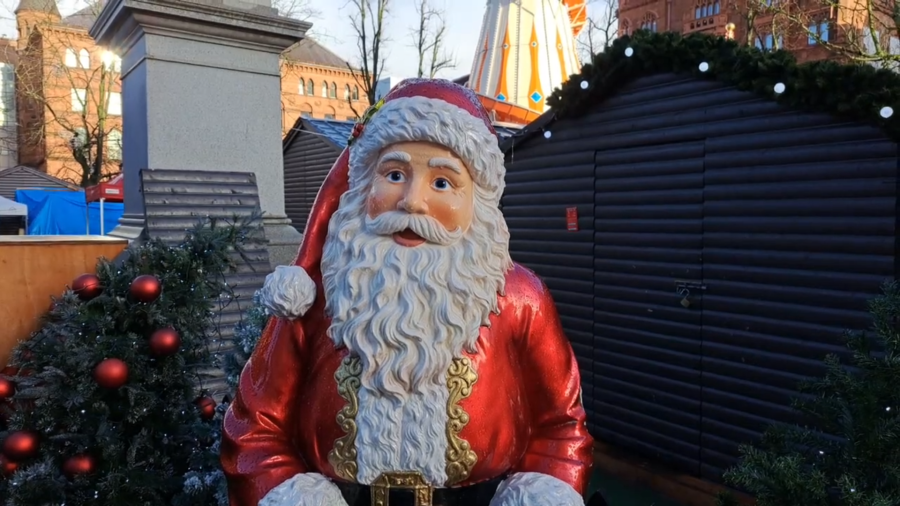
This short video makes some use of words by Chales Dickens with images from the Continental Market in Belfast and trumpet playing by Jack Steers:
Click on the video
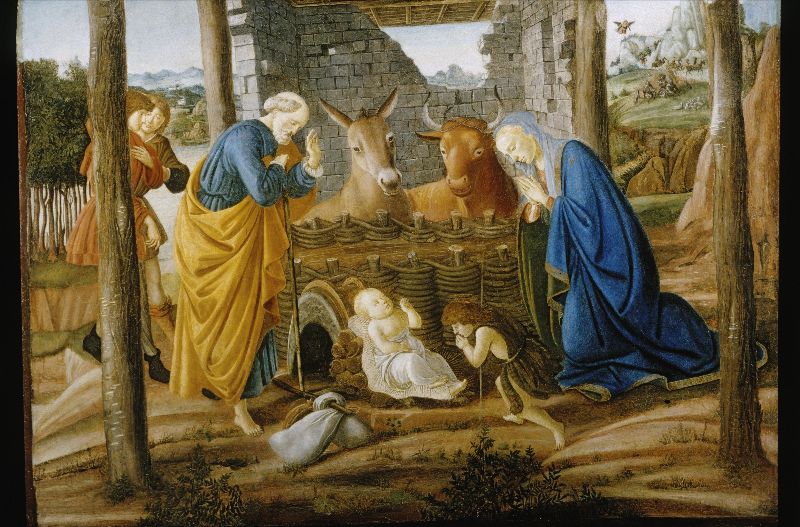
Botticelli Nativity (Source: Wikimedia Commons)
Christmas Prayer
Let us pray that strength and courage abundant be given to all who work for a world of reason and understanding; that the good that lies in every one’s heart may day by day be magnified; that we will come to see more clearly not that which divides us, but that which unites us; that each hour may bring us closer to a final victory, not of nation over nation, but of humans over their evils and weaknesses; that the true spririt of this Christmas Season – its joy, its beauty, its hope, and above all its abiding faith – may live among us; that the blessings of peace be ours – the peace to build and grow, to live in harmony and sympathy with others, and to plan for the future with confidence.
(from Celebrating Christmas An Anthology, ed. Carl Seaburg)
Click on the video for an audio recording of our carol service with pictures from the day
We held our Congregational Carol Service at Dunmurry on Sunday, 22nd December. This was a wonderful occasion that was hugely enjoyable with contributions by the Youth Group and Sunday School. With thanks to Allen Yarr for playing the organ and Jack Steers on the trumpet.

 velvethummingbee