G.E. Evans and the ‘Vestiges of Protestant Dissent’

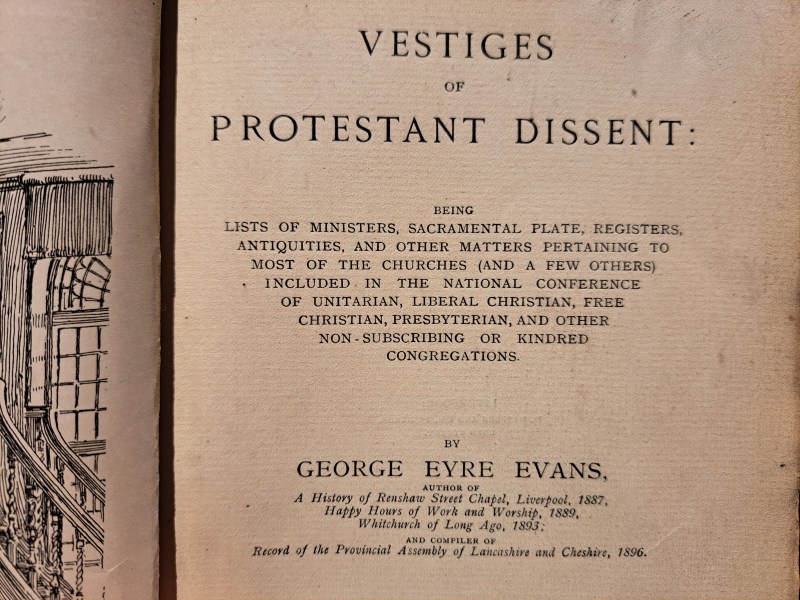
Everyone who has an interest in the study of Non-Subscribing Presbyterian/Unitarian history in the British Isles will know George Eyre Evans’s book the Vestiges of Protestant Dissent. Published in 1897 it was just one publication that came out of the extensive researches of G.E. Evans. His book is the subject of our latest video which is the second to explore the contents of the Very Rev William McMillan Library here at Dunmurry which will be opened and dedicated on Sunday, 22nd September 2024 at 3.00 pm:

Click on the video above for Vestiges of Protestant Dissent

The Library copy once belonged to a prominent lay member of the congregation who gave it to his minister before the end of the nineteenth century, but the full story can be seen on the video.

One of the things I try to draw attention to in the video is the occasional unusual detail G.E. Evans adds to the book, such as this picture, which exists in every copy as a real photograph pasted in to the book:
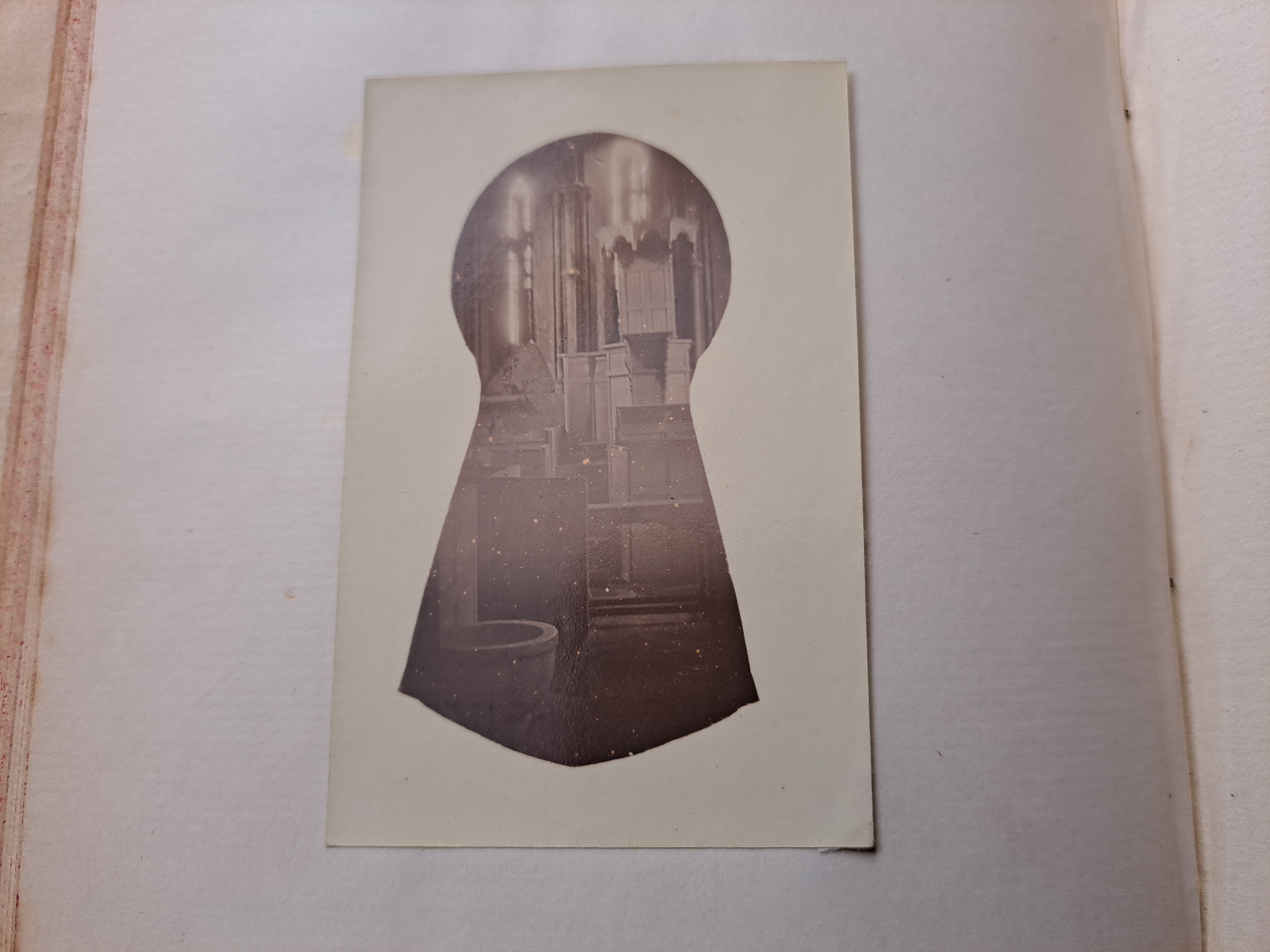
The picture from opposite page 123 of ‘Vestiges of Protestant Dissent’

The meaning of the photograph is explained in the video.
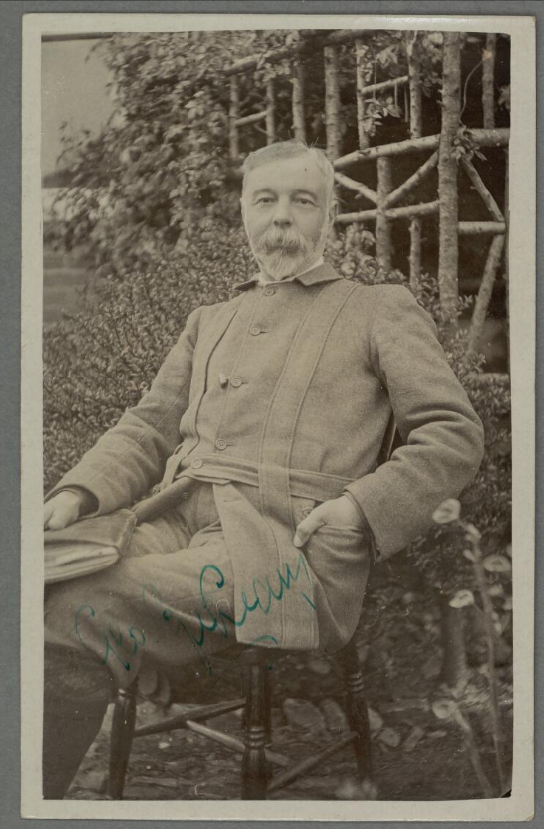
George Eyre Evans (photo: Dictionary of Welsh BiographY)

G.E. Evans was born in Colyton, Devon, the son of Welsh parents. His father was Rev David Lewis Evans, Unitarian minister at a number of places in Wales and England, including Colyton where his son was born, and ultimately being tutor in Hebrew, mathematics, and natural philosophy at the Presbyterian College, Carmarthen. He was also one of the founders of Yr Ymofynydd, although he wrote little in Welsh himself.

George E. Evans followed his father into the ministry and served at the Church of the Saviour at Whitchurch (1889-1897) as well as unpaid minister at Aberystwyth later in life. Primarily though he was an historian and antiquarian. Many of his publications relate to his interest in the history Unitarianism. Vestiges of Protestant Dissent is probably his best known work of this type although he also produced Record of the Provincial Assembly of Lancashire and Cheshire, a very useful detailed study of churches and their ministers in the north west of England, and Midland Churches: A History Of The Congregations On The Roll Of The Midland Christian Union. This all displays his wide geographical interests, also seen in publishing works about places such as Whitchurch, Colyton and Lampeter. He also wrote the first history of Renshaw Street Chapel in Liverpool, a city where he studied after being at the school of Gwilym Marles, the noted Unitarian minister and social reformer.

His main research interests increasingly centred on Wales, however. He was a founder member, secretary and editor of the journal of the Carmarthenshire Antiquarian Society. A member of the Cambrian Archaeological Society, he sat on its general committee and became a member of its editorial board, contributing to its journal Archaeologia Cambrensis. He was active in helping to establish two local museums in Wales and served on the Court of Governors of the University College of Wales, Aberystwyth, the Council of the National Museum of Wales, Cardiff, and the Council of the National Library of Wales, Aberystwyth. But this is by no means the full extent of his labours. He was made an Inspecting Officer of the Royal Commission on Ancient Monuments in Wales and Monmouthshire and in that capacity visited almost every monument or historic site in Wales. He joined the Boy Scouts in his 60s and became a County Scout Commissioner for Carmarthenshire and in 1928 became deputy Scout Commissioner for Wales. In 1937, two years before he died at the age of 82, he was made a Freeman of the Borough of Carmarthen where the Carmarthenshire Antiquarian Society has placed a blue plaque on one of the museums he founded and worked in.

He was a member of the Council of the Unitarian Historical Society and a frequent contributor to the Transactions, particularly writing about ‘Our communion plate and other treasures’. He visited Ireland in preparation for producing the Vestiges, mainly to inspect the communion plate, and from notes in his book we can follow his progress through Ireland in August 1892 when he went from Dublin (16th August), to Newry and Warrenpoint (17th), Clough, Downpatrick, and Rademon (19th), Moneyrea and Newtownards (20th), Ballycarry, Carrickfergus, and Larne, (22nd), and finishing up at Antrim, Templepatrick and Belfast (23rd). The only visit outside this sequence came on 14th October 1896, just a year before publication, when he visited Dunmurry and where he will have met the Rev J.A. Kelly who had been installed as minister on 23rd July of that year.
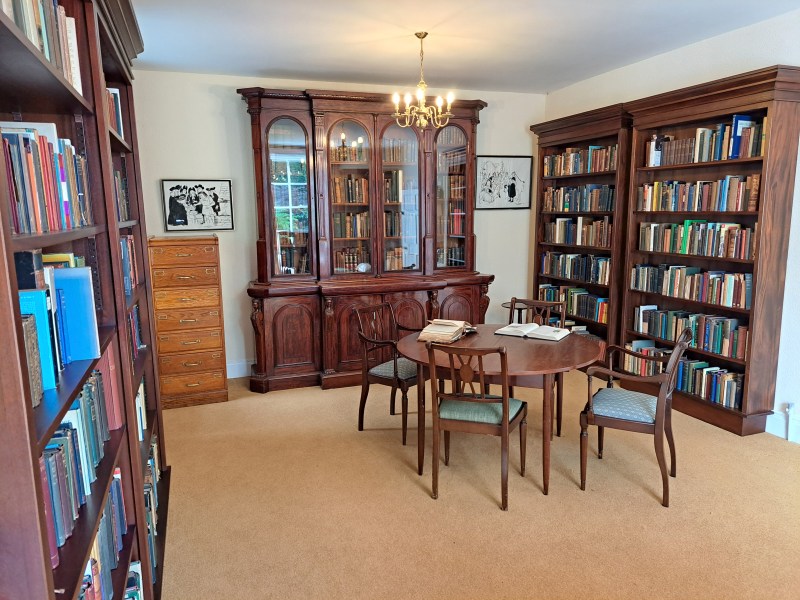
Very Rev William McMillan Library

At Dunmurry we are particularly looking forward to the formal opening and dedication of the Very Rev William McMillan Library on Sunday, 22nd September at 3.00 pm. The Rev Mac bequethed his Library to the Church and over the last four years we have been working on creating a catalogue and getting everything ready to house the Library. We have had furniture made for the Library, we have also repurposed other furniture for use in the Library and restored some items to house the books.

It is an exciting project and a very fitting memorial for the Rev Mac who was an historian of some ability and renown. He assembled this collection as he worked on the history of Non-Subscription and the Library contains over 2,500 books, as many pamphlets and journals again, and many more manuscripts and other items. After the dedication the Library will be open for visitors (although we will not be able to lend items) but we want the Library to be known and appreciated by as wide a group as possible.

To help in this process I will be uploading short videos talking about the Collection, in which I will highlight different books which have an interesting story to tell. The first of these is this video;

Dunmurry NSP Library Episode 1. Click on the video to view.

This video looks at the Library’s copy of W.D. Killen’s History of Congregations of the Presbyterian Church in Ireland and Biographical Notices of Eminent Presbyterian Ministers and Laymen published in 1886 which was rebound and interleaved by Alexander Gordon in 1892. It’s a fascinating tale, the first in a series of short films about the unusual, interesting and informative books on the shelves.

In support of Roy and Isabel

Roy and Isabel Kelly are dedicated members of Ballee Non-Subscribing Presbyterian Church who, with their family, have served their Church, their local community and wider society with selfless devotion throughout their lives. They are now in a position where they need support. They write:

We are Roy & Isabel Kelly from Ardglass, County Down, Northern Ireland. It comes with great sadness that we as a family find ourselves in the position of asking for your financial support, due to a tragic incident which occurred at our family home. Unfortunately, our insurance had lapsed and there is no insurance to cover a significant liability that has arisen in respect of this incident.  On legal advice we cannot go into this in any more detail. There is a real possibility that we could lose our home as a consequence of this incident.

I have no hesitation in backing their appeal and would urge those who can to consider supporting them. Their GoFund Me Page can be found here: https://gofund.me/5c460308

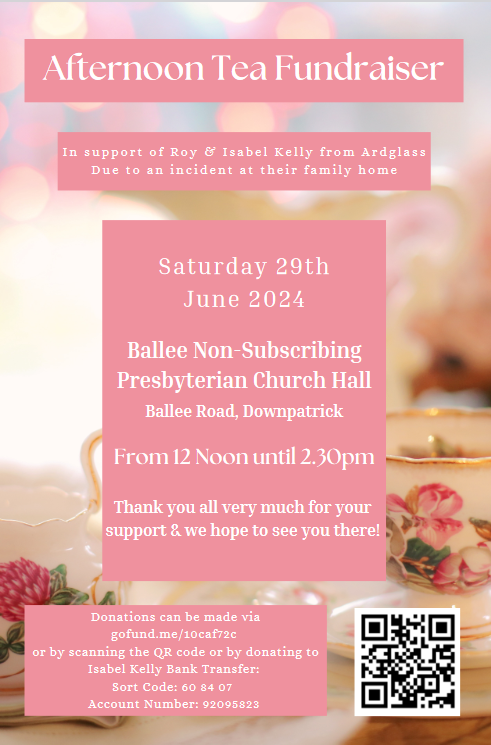
Please also consider supporting their Afternoon Tea Fundraiser at Ballee Church Hall on Saturday, 29th June 2024 from 12 Noon to 2.30 pm.
 

Faith and Freedom Spring and Summer 2024

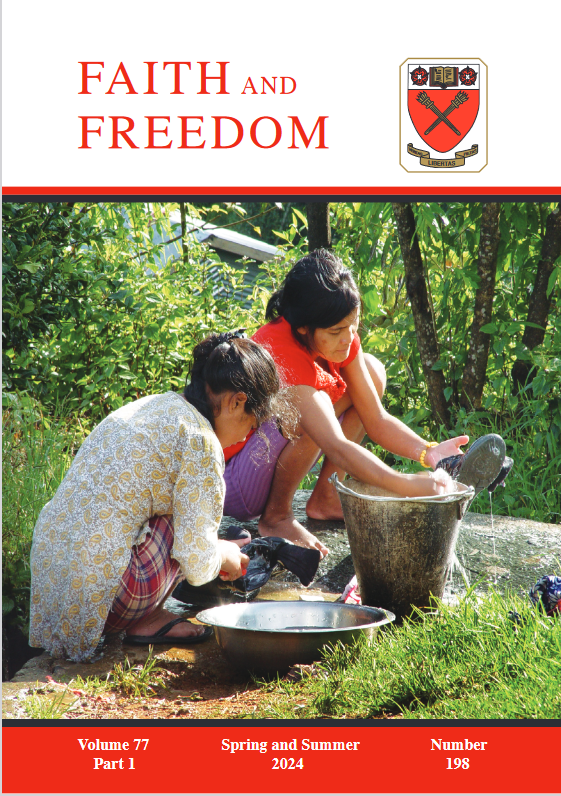
The latest issue of Faith and Freedom is now available. In this issue we are pleased to publish the entire transcript of the most recent Reckoning International Unitarian and Universalist Histories Project webinar. Entitled Uncovering the Hidden Power of Women in Unitarian and Universalist History the discussion comprises an international panel with an introduction by Lehel Molnár, Unitarian archivist at Koloszvár, Transylvania, and with Rosemary Bray McNatt, President of the Starr King School for Ministry, Berkeley, California, as the moderator and concluding responder. The main papers are ‘The Story of Pharienbon Rani and Unitarianism in the Khasi Hills, India’ by Alisha Rani, professor of sociology at Shillong, India, and ‘Profiling Black Women’s Ministries in Unitarian Universalism’ by Qiyamah A. Rahman, a UU minister and activist in the United States. Responses are given by Olga Flores (Bolivia), Ann Peart (UK), and Mária Pap (UK and Transylvania), with closing remarks by Mark W. Harris, one of the main planners for the Reckoning Histories Project. The journal also includes some photographs (including the cover – see above and top) by John Hewerdine taken at the Annie Margaret Barr Memorial Orphanage in Meghalaya which help illustrate the theme of both Alisha Rani’s paper and a review by Derek McAuley also found in this issue.

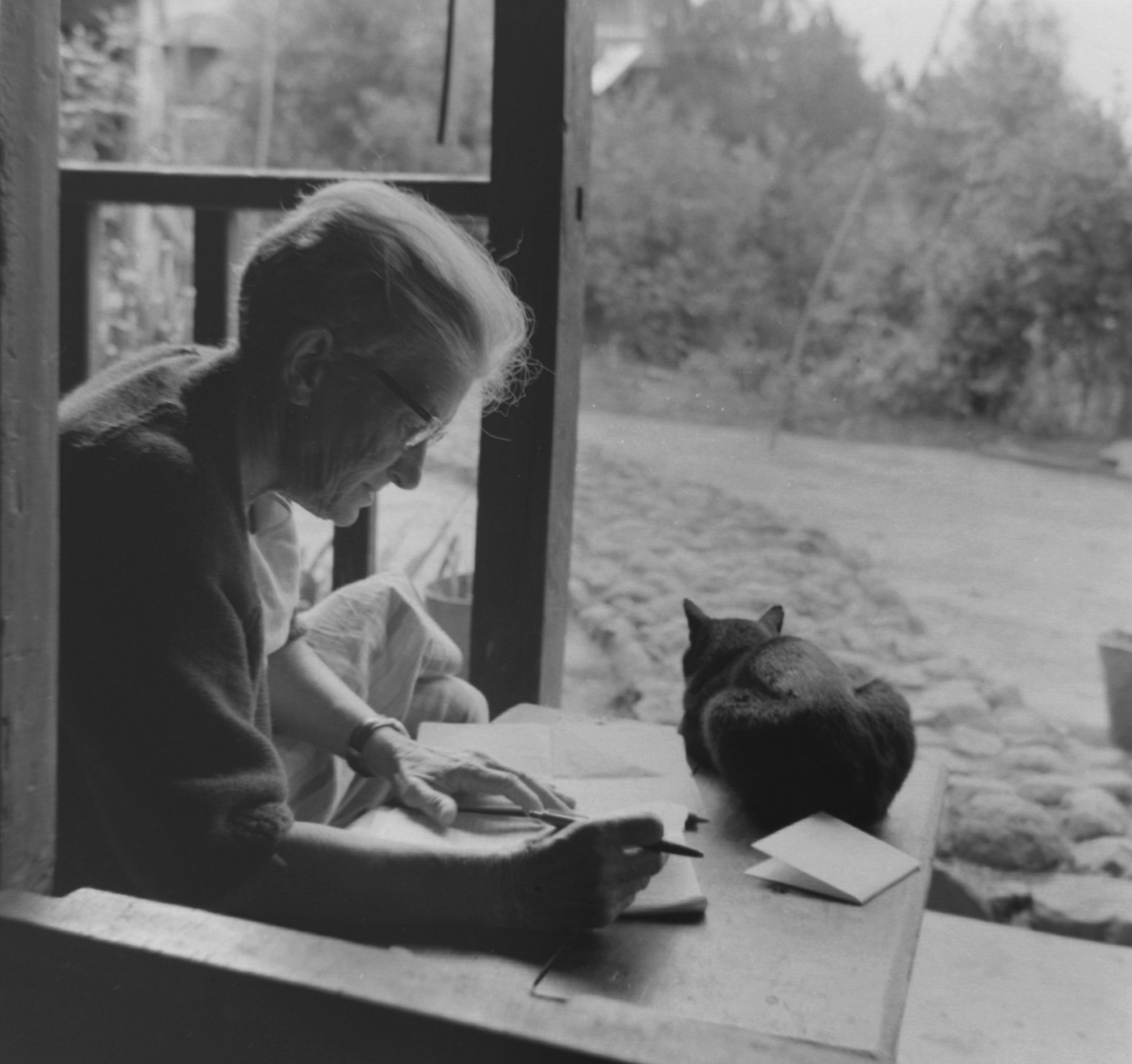
Margaret Barr in her office in the Khasi Hills (Photo: John Hewerdine)

Other papers include Wayne Facer’s Mr Jellie’s Romance, an account of the pioneering days of Unitarianism in New Zealand and how amidst his work to establish the cause he fell in love with and eventually married Ella Macky. She was a member of an active Unitarian family but her own commitments frequently took her to the other side of the world to attend University and to participate in the International Council of Unitarian and Other Liberal Religious Thinkers and Workers in Amsterdam in 1903, while Jellie carried out his work establishing the congregation in Auckland and supporting Unitarians elsewhere in New Zealand.

Barrie Needham examines the life and poetry of Gerard Manley Hopkins, Catholic convert and Jesuit priest, whose poetry remained unpublished in his own lifetime but which has gained a great following from the early twentieth century onwards. A Victorian poet but one whose style is as bold and striking as anything written at any point since. Barrie Needham shows how Hopkins wrestled with his poetry to express his faith in God and his understanding of God in nature, and shows the philosophical understanding that underscored his writing. If you have ever read any Hopkins or heard his poems being read you will find this article immensely helpful.

In addition we have four excellent reviews of notable recent books.

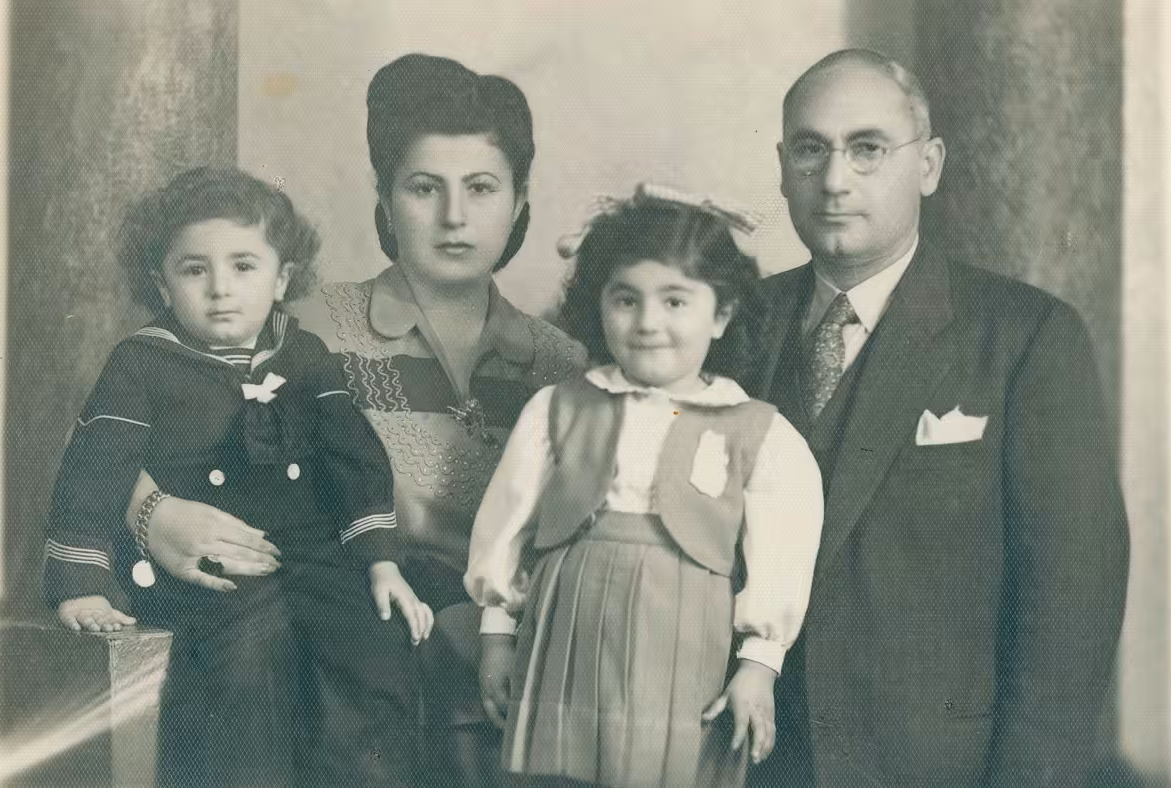
Avi Shlaim, aged two, with his parents and sister in Baghdad, 1947. From the cover of his book.

Graham Murphy reviews Avi Shlaim, Three Worlds, Memoirs of an Arab-Jew, (Oneworld Publications, 2023). The book of the year for both the Times Literary Supplement and the New Statesman, Avi Shlaim tells his own story as someone who was born into the prosperous and significant Jewish community of Iraq following the Second World War and who was forced, with most of the Jewish population, to emigrate to Israel in 1950. At the age of 15 his life changed when he managed to come to the UK, ending up at Cambridge and ultimately as Professor of International Relations at St Antony’s College, Oxford. As a young man he served in the Israel Defense Force but is not afraid to criticise Israel or Zionism. His most recent research has gone back to Iraq and his own origins as part of ‘a Diaspora that had been the living embodiment of Muslim-Jewish co-existence [which] was no more’. In Shlaim’s view ‘As Israel expanded, the Palestinians, Arab natives of historic Palestine, not the Germans or the Russians, would take the burden of punishment for the European pogroms of modern history and the Final Solution.’ His reflections on his Jewish past in Iraq and on Arab-Israeli relations ever since are well worth reading, especially at the present time.

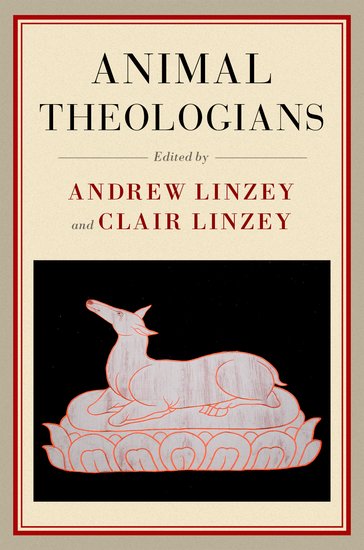
Andrew Linzey and Clair Linzey (eds.), Animal Theologians (Oxford Academic, Oxford University Press, 2023) is reviewed by Feargus O’Connor who takes us through the theological contributions to the consideration of animal rights, vivisection and animal cruelty. A number of the subjects of the book are Unitarians – most notably Frances Power Cobbe and Charles Hartshorne – and many would find agreement with Gandhi who Feargus quotes:

The greatness of a nation and its moral progress can be judged by the way animals are treated. Vivisection is the blackest of all the black crimes that man is at present committing against God and His fair creation. It ill becomes us to invoke in our daily prayers the blessings of God, the Compassionate, if we in turn will not practise elementary compassion towards our fellow creatures.

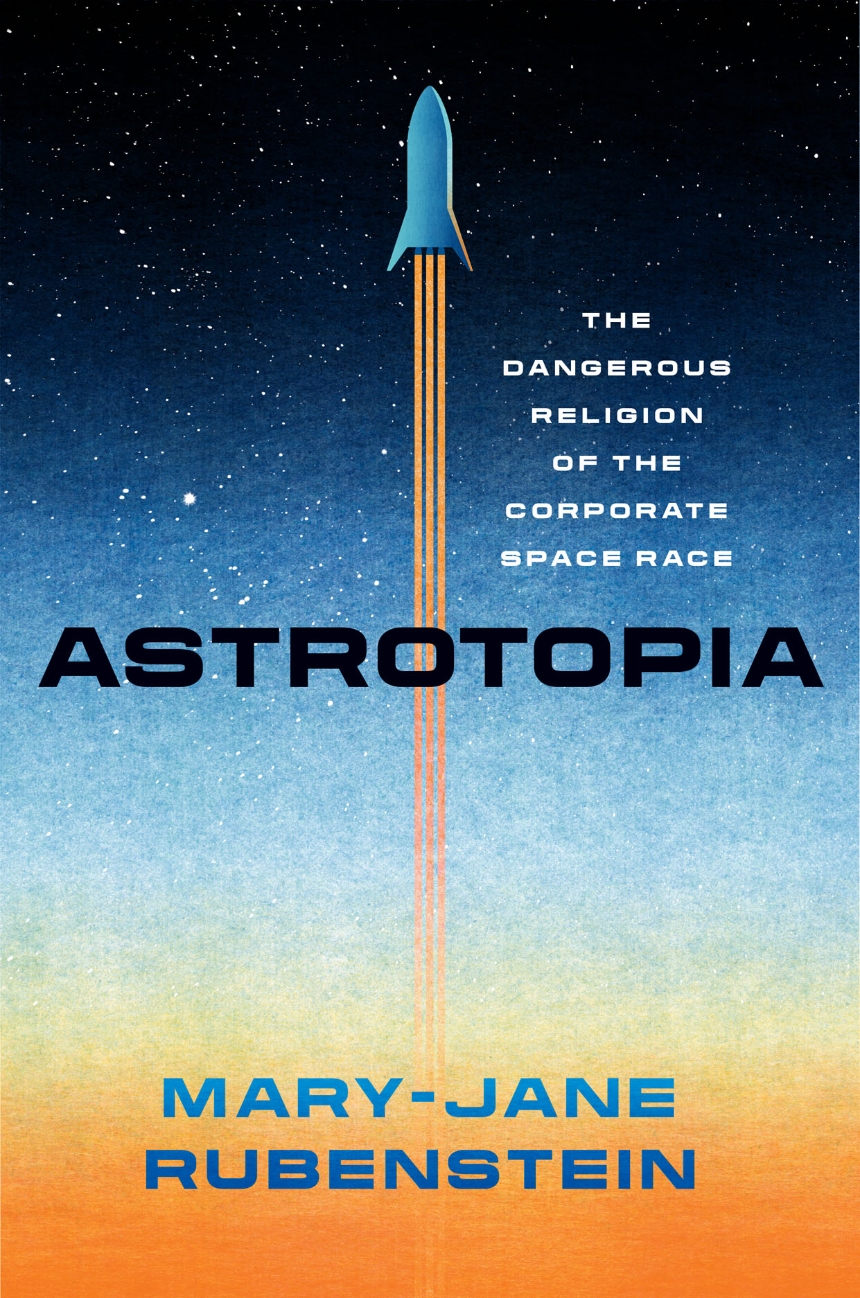
Professor David Williams reviews Mary-Jane Rubenstein, Astrotopia: the Dangerous Religion of the Corporate Space Race (University of Chicago Press, 2022) a book which raises the issue of humankind’s increasingly exploitative attitude to space exemplified in the attitudes of such figures as Elon Musk and Jeff Bezos, described by the reviewer as ‘both so grotesquely wealthy that they can have dreams of both colonising space and the funds to achieve those aims’. It is clear too that the United States no longer views ‘outer space as the common heritage of all humanity.’ In the light of this how should we progress human interaction with space?

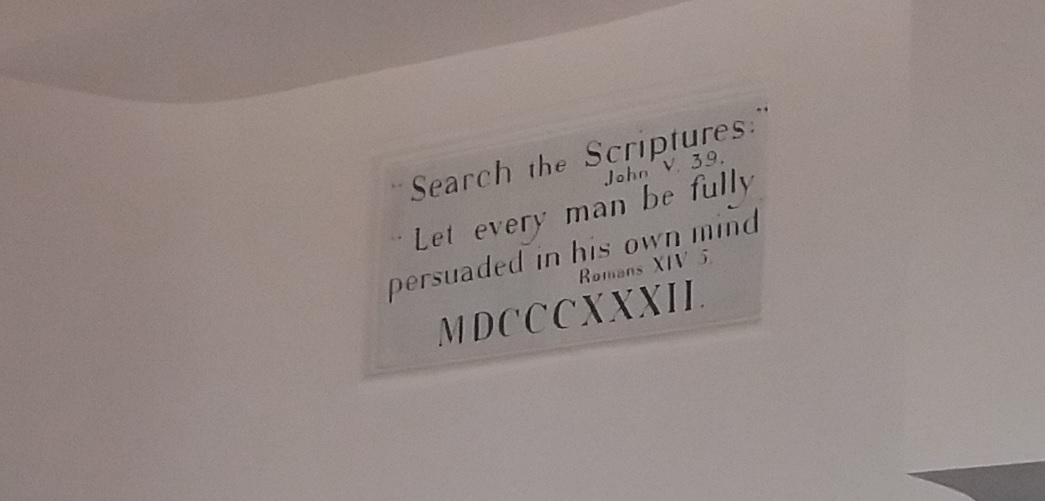
Inside the former NSP meeting-house Ballymoney (Photo: David Steers)

Liz McManus is a former Minister for Housing and Urban Renewal in the Republic of Ireland. Since leaving politics she has become a writer and in When Things Come To Light (Arlen House, 2023) she has drawn on her own family experiences to ‘craft an insightful and compelling novel’ in the words of Derek McAuley, our reviewer. Liz McManus’s grandparents were Unitarians/Non-Subscribers from County Antrim. Remarkably life took them to the Khasi Hills where (in the novel at least) they encounter the Rev Margaret Barr and Kissor Singh, the founder of the Unitarian Church in North India. In a strange piece of synchronicity Kissor Singh quotes St Paul ‘Let every man be fully persuaded in his own mind’, words which Liz McManus’s grandfather recognises as inscribed on the wall of his home church back in Ballymoney in Ulster. A fascinating novel incorporating Unitarians, family history, Ireland and India.

An annual subscription to Faith and Freedom (two issues) costs £16.00 (postage included) in the United Kingdom. Single copies can be ordered at a cost of £8.00 each (postage included). Cheques should be made out to Faith and Freedom and sent to the business manager:

Nigel Clarke,
Business Manager, Faith and Freedom,
16 Fairfields,
Kirton in Lindsey,
Gainsborough,
Lincolnshire.
DN21 4GA.

Overseas subscriptions are also available.

It is also possible to pay online. For more details see our website:

https://www.faithandfreedom.org.uk/subs.htm

The one constant in an ever changing world

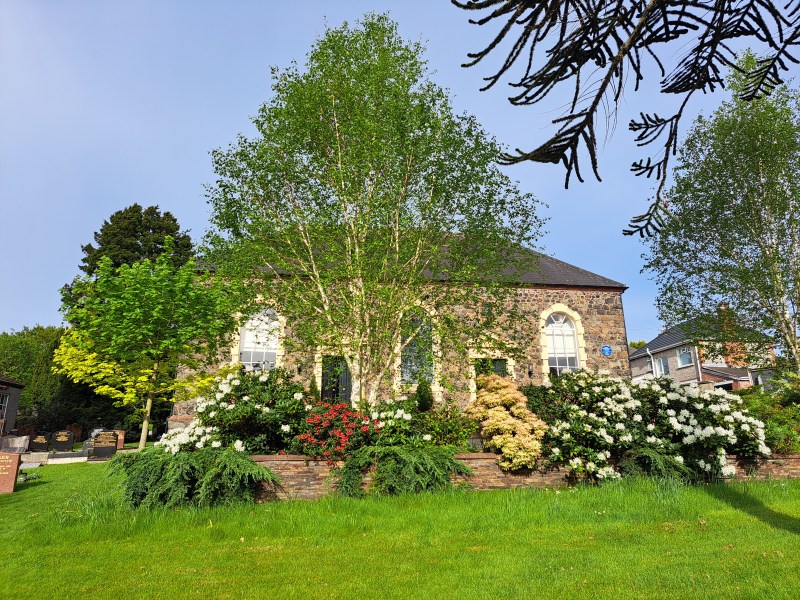
The congregation of First Dunmurry has existed since around 1676. The first meeting house was an old lime kiln, later a meeting house was built in 1714, and this was eventually replaced with the present remarkable building of 1779. So the congregation is almost 350 years old and the building itself is 245 years old. Since 1839 the church’s nearest neighbour has been the railway. That is a long time to be neighbours. The railway has run alongside the Church for all that time. Of course, it has been run by different operators over the years, steam trains have been supplanted by diesel, it has even changed gauge at one point, but the Belfast to Lisburn line was created back in 1839, the station at Dunmurry being added at the same time.

Because of this proximity the railway has inadvertently helped create for First Dunmurry a small footnote in film history. In June 1897 the cinematographer Alexandre Promio came to Ireland on behalf of the famous Lumière brothers to make the first moving film in Ireland. He filmed in Belfast, including street scenes in Castle Place and on Queen’s Bridge, fire-fighters practising, and a few seconds of the first football match ever to be filmed, which was Glentoran v Cliftonville at the Oval in East Belfast.

He also filmed short sections of the rail journey between Belfast and Dublin. Cameras were cumbersome and had to be hand cranked. To capture movement they had to be pointed at crowds or some human activity or placed on a moving platform like a train or a tram. So the train was an obvious place to go and filming the view as the train pulled out of a station was a good way to catch a local view.

As the steam train chugged out of Dunmurry station, sometime in the Summer of 1897, Promio filmed the view and the result was a 37 second burst of film called Départ de Dunmurry. The opening few seconds shows an intensely industrial scene based around the long demolished mill, not immediately recognisable as the modern Dunmurry. By the end of the film we are into open countryside.

This new video enables us to compare the trail blazing film of 1897 with a contemporary film of the same view in 2024. Départ de Dunmurry 2024 enables the viewer to make that comparison:

Click on the video to see Départ de Dunmurry 2024

We can reflect on what has changed over those 127 years between 1897 and 2024. In one way we have to marvel at the technological progress that has taken place. In 1897 film was in its infancy, cameras were cumbersome, very expensive and required a lot of skill to use. Alexandre Promio was an expert who had filmed all over the world, one of only a handful of people who could do that. Today I am just one of literally millions of people who has a phone that is also a camera which can take digital films in colour with sound merely by pointing it in the right direction.

Imagine if you could show Alexandre Promio a modern phone or a digital camera. He would be more astonished than we could imagine. So we might ask what will technology be like 127 years from now? It is impossible to imagine.

But in the film what do we see today that is different? Today there are cars, lots of cars, there is a significant quantity of graffiti, but actually more trees and more houses. We can notice too that the old steam train takes a bit longer to get up speed than the modern diesel one. You wouldn’t know just looking at the videos though that the railways were much more extensive in 1897 than today. There were around 5,630 km of railway lines in those days, more than twice what there is today, and you could go virtually anywhere in Ireland by rail then. You are restricted to very limited routes today, particularly in Northern Ireland.

But when you compare the two films from 1897 and 2024 one thing has not changed and that is our church. Indeed it has not changed in any big way since 1779 when it was built. As the train curves to the right you can look up Glebe Road and see the church in its prominent position on top of the hill.

It represents our faith, our witness,  and though the world changes around us in so many different ways, what we stand for and what we do is always equally important. As we look out of the window of the railway carriage we can see the changes and notice too our Church, the one constant in an ever changing world.

We also have another new video uploaded to YouTube. Non-Subscribing Presbyterian Reflections on Spring, Pentecost, and Psalm 104 from the newly refurbished Session Room and the grounds of First Dunmurry (NS) Presbyterian Church. With the Rev Dr David Steers, minister, and Allen Yarr, organist:

First Dunmurry (NS) Presbyterian Church

Visit to six churches in Belfast and county Down

Between 7th and 9th May, Dunmurry congregation was visited by four Unitarian ministers from Great Britain. These included Rev Laura Dobson, minister at Chorlton, Rev Mária Pap, minister at Mansfield, Francis Elliot-Wright, student minister at Knutsford, and Rev Jim Corrigall, the London District Minister. On the evening of Tuesday, 7th May Dunmurry congregation welcomed them, plus members of other congregations and a good number of local ministers, to a social evening in the McCleery Hall. I conducted an interview/dialogue with Jim who told us about his role as London District Minister, growing up in South Africa and his anti-apartheid activities, his decades as a journalist around the world which took him to Northern Ireland among other places, as well as the theological reflections which led him eventually to enter the ministry. As part of the evening Jim shared with us the reading that means most to him in his ministry – ‘God’s Grandeur’ by Gerard Manley Hopkins – and we listened to his favourite piece of music –  Nkosi Sikelel iAfrika, God Bless Africa. It was a great night enjoyed by everyone.

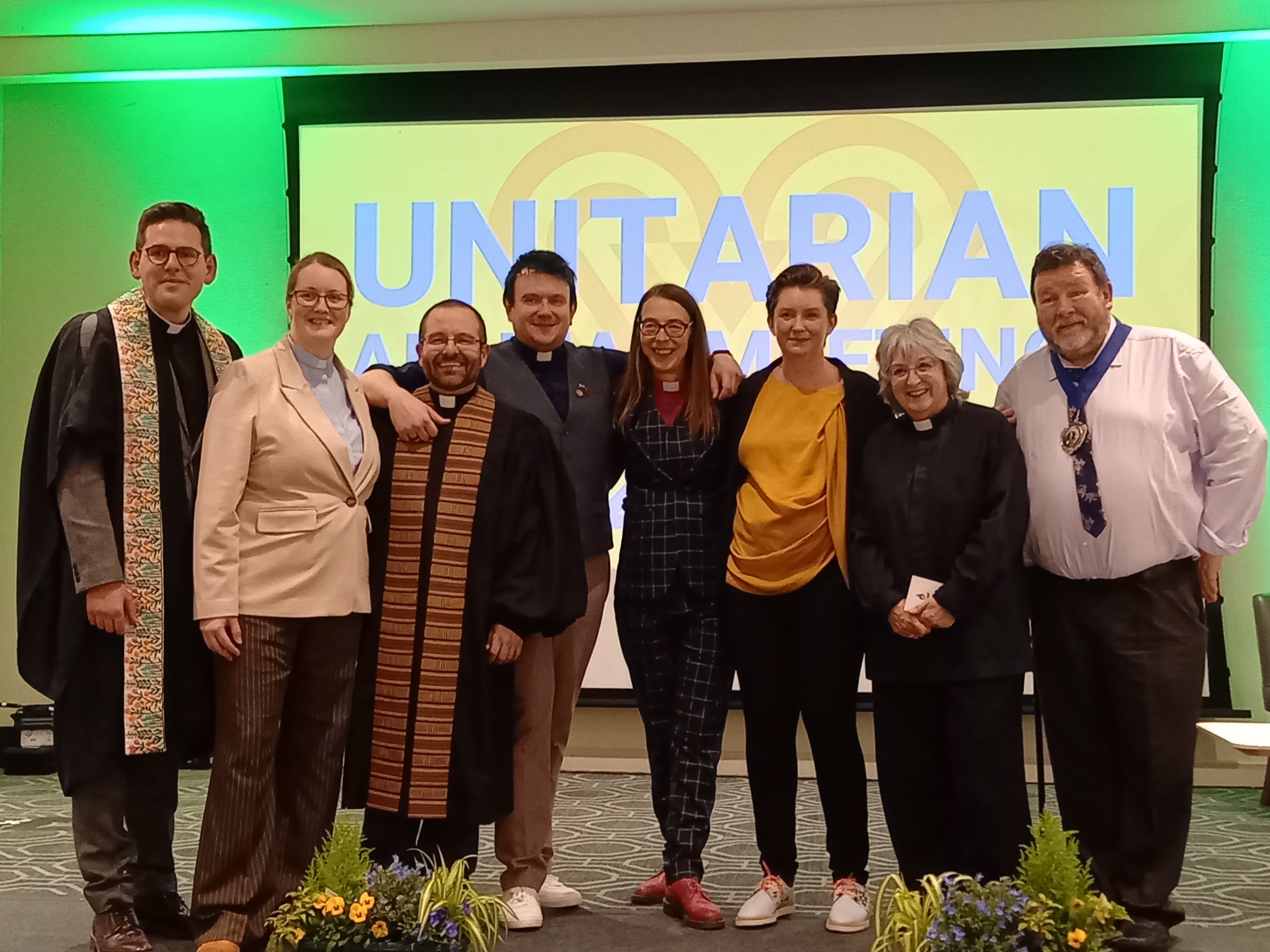
Left to right Rev Dr David Steers, Rev Mária Pap, Rev Lynda Kane, Rev Laura Dobson, Francis Elliot-Wright, Rev Jim Corrigall, Rev Stephen Reain Adair, Rev Brian Moodie in the McCleery Hall, Dunmurry.

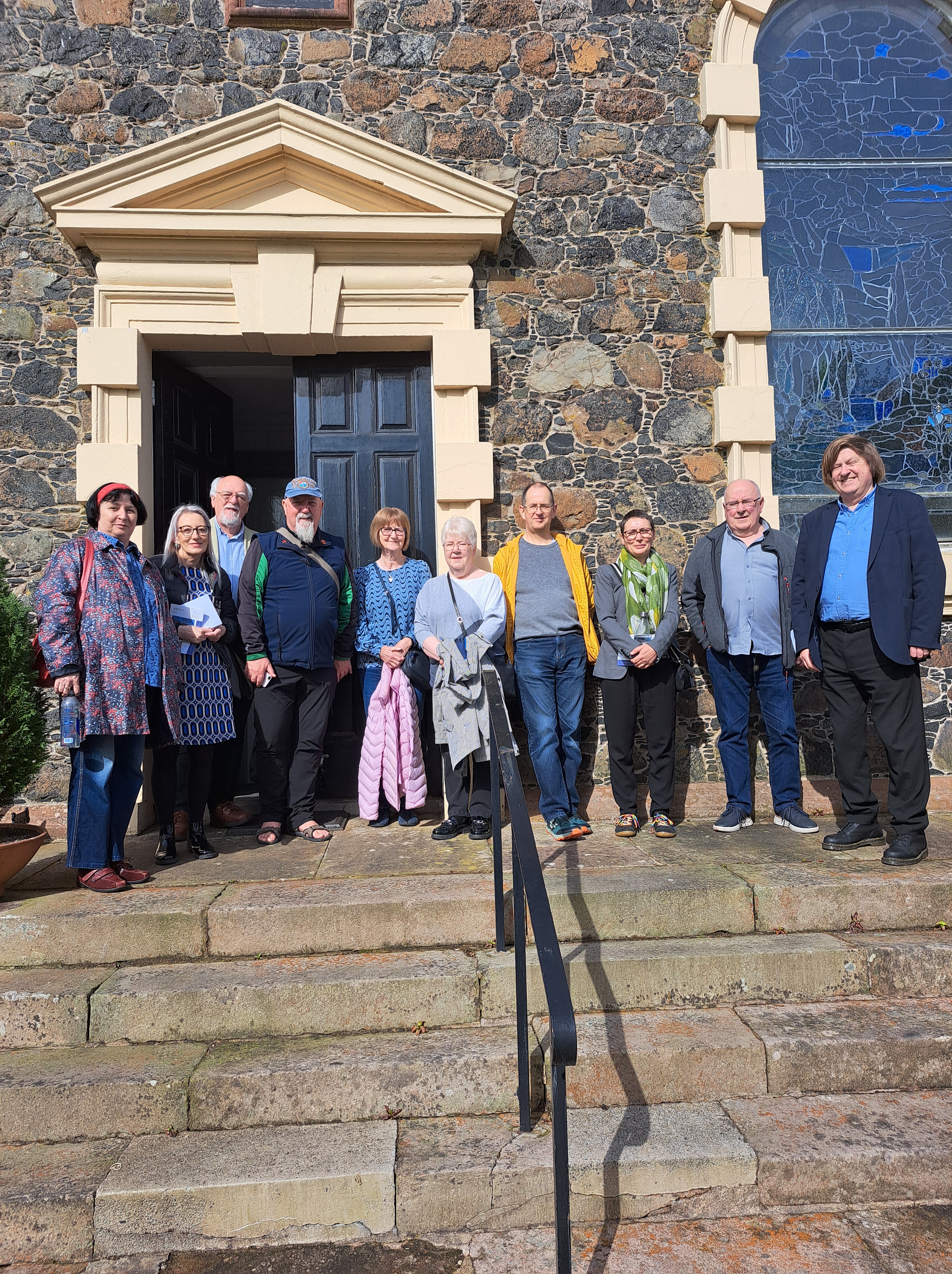
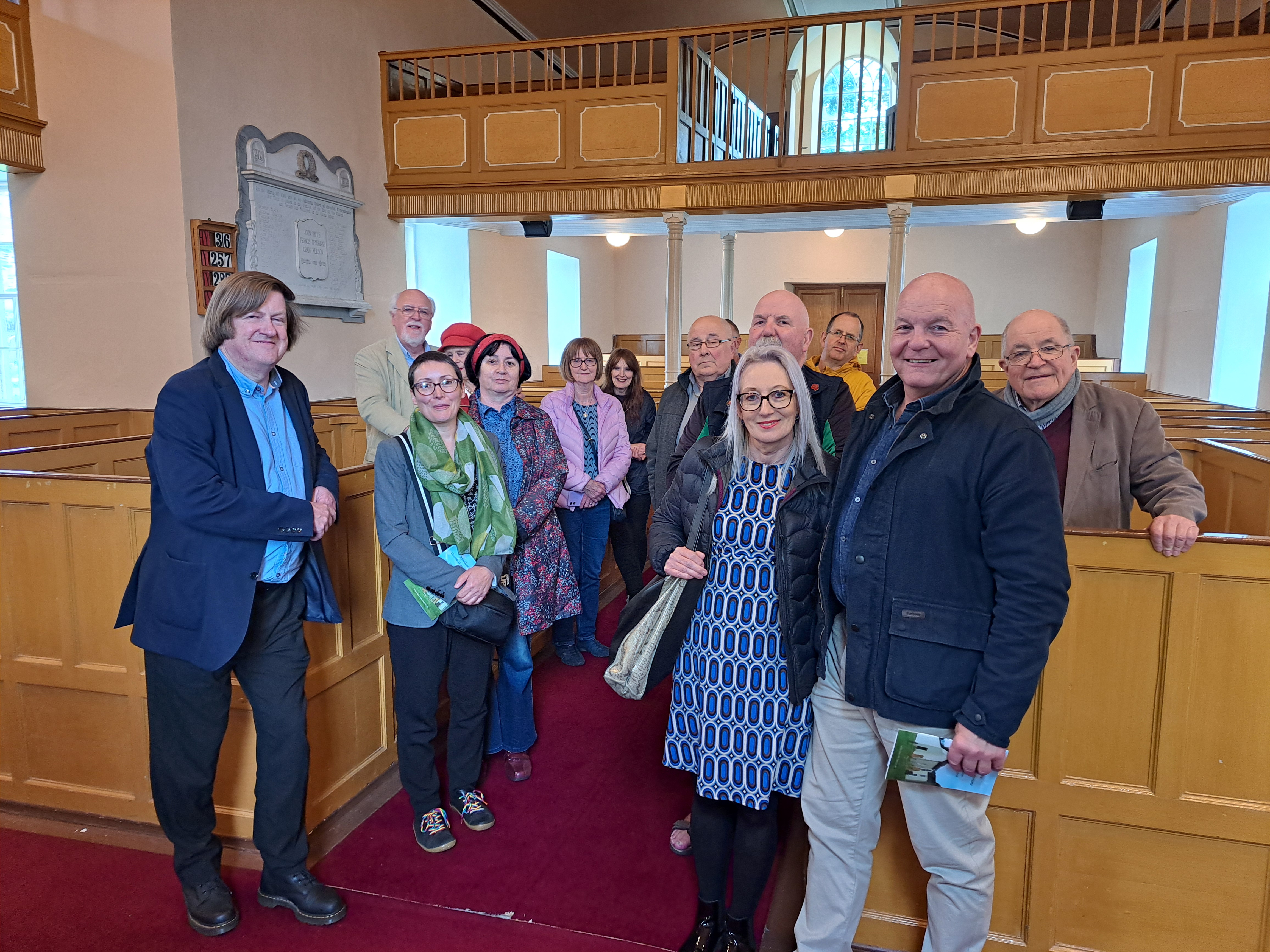
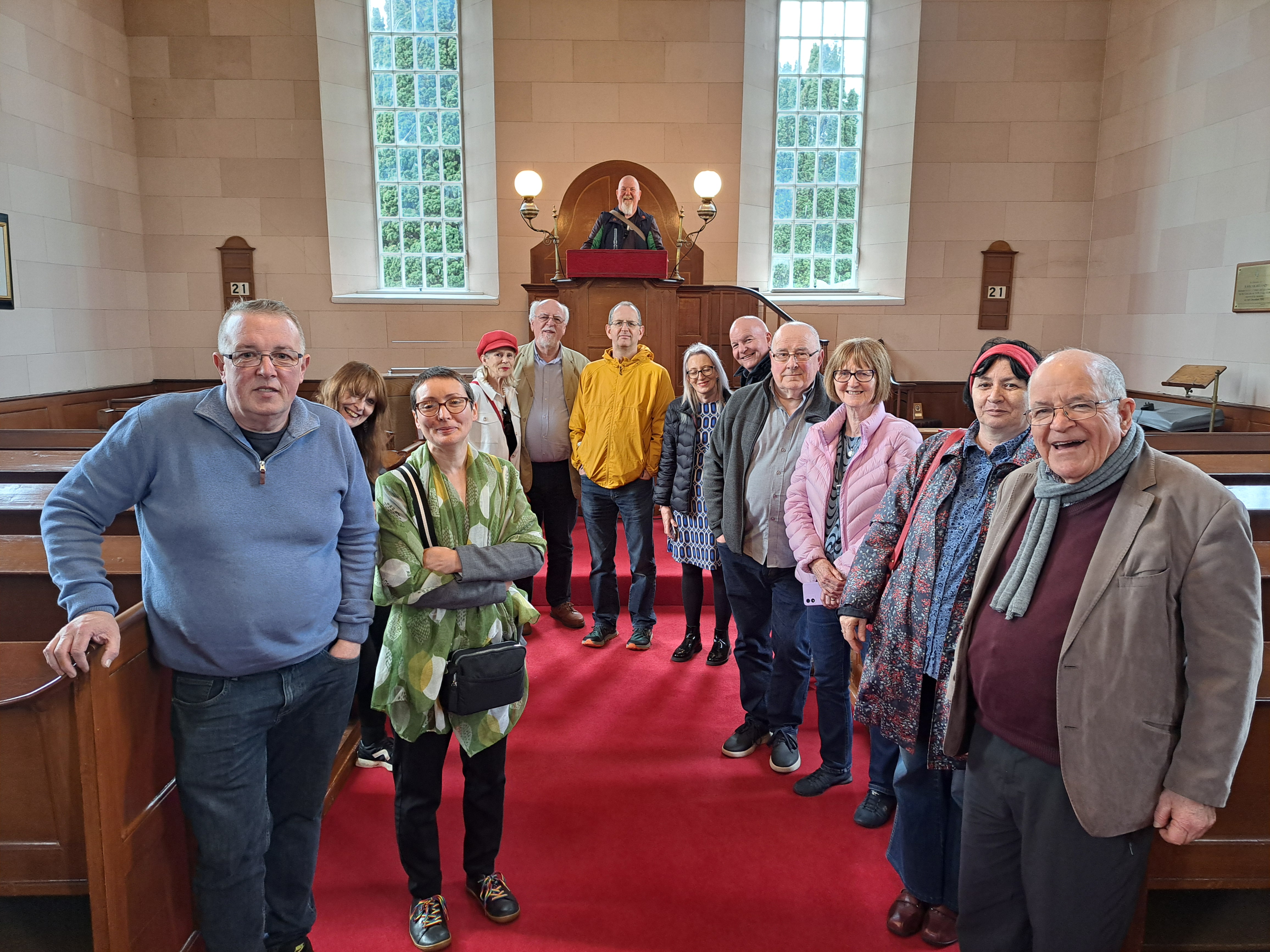
On Wednesday morning we made an early start in the company of a group of members of Dunmurry and First Church to visit six churches in Belfast and county Down and learn something about their history and witness. Thanks to Gary Douds we were taken around the churches in a minibus in great comfort and we were also blessed with fantastic weather.

Some of the party at Dunmurry, ready to set off at 9.00 am.
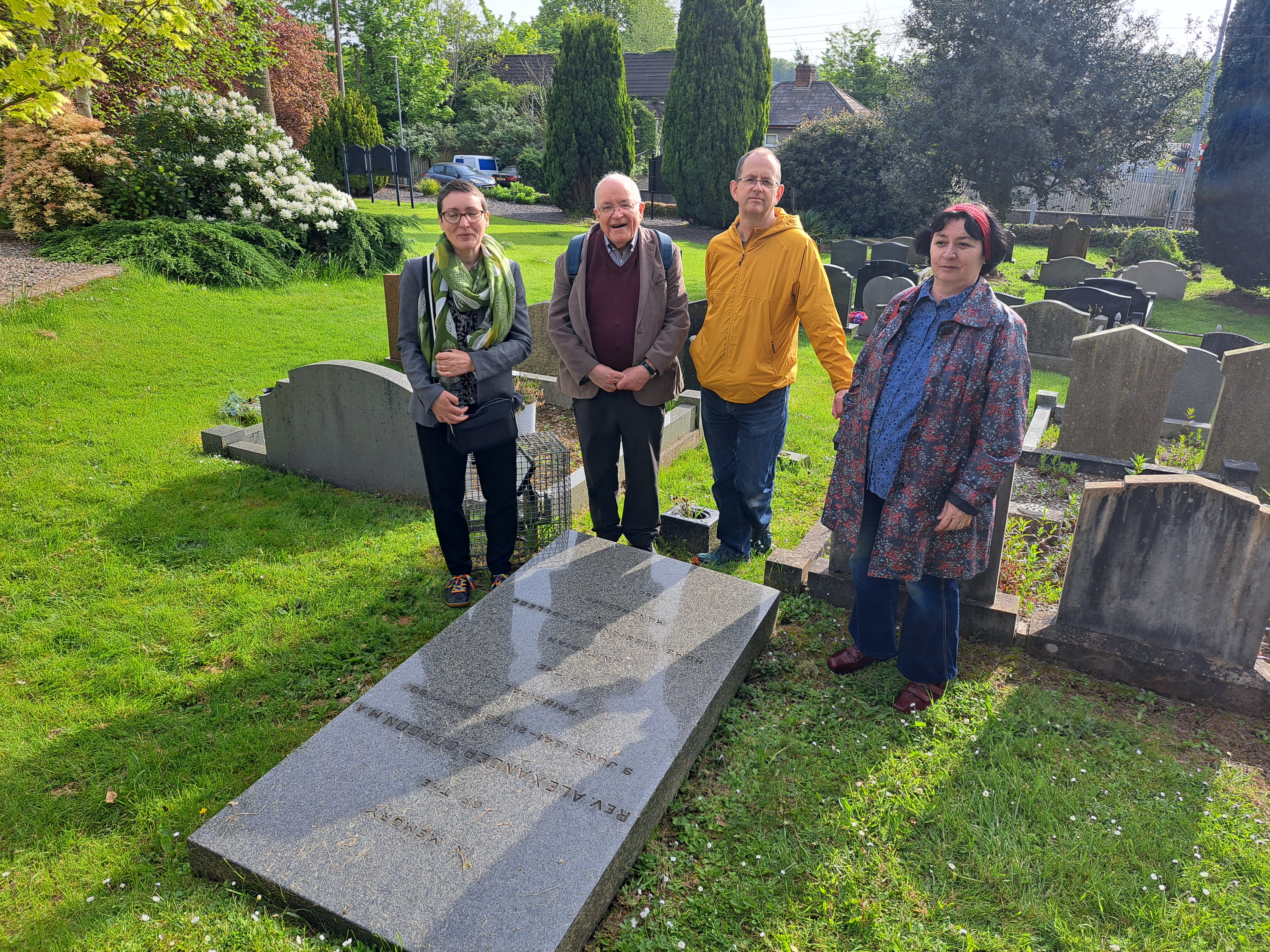
Laura, Jim, Francis and Mária visit the grave of Rev Alexander Gordon (Principal of the Unitarian Home Missionary College) at Dunmurry.
Outside Rademon later in the day.

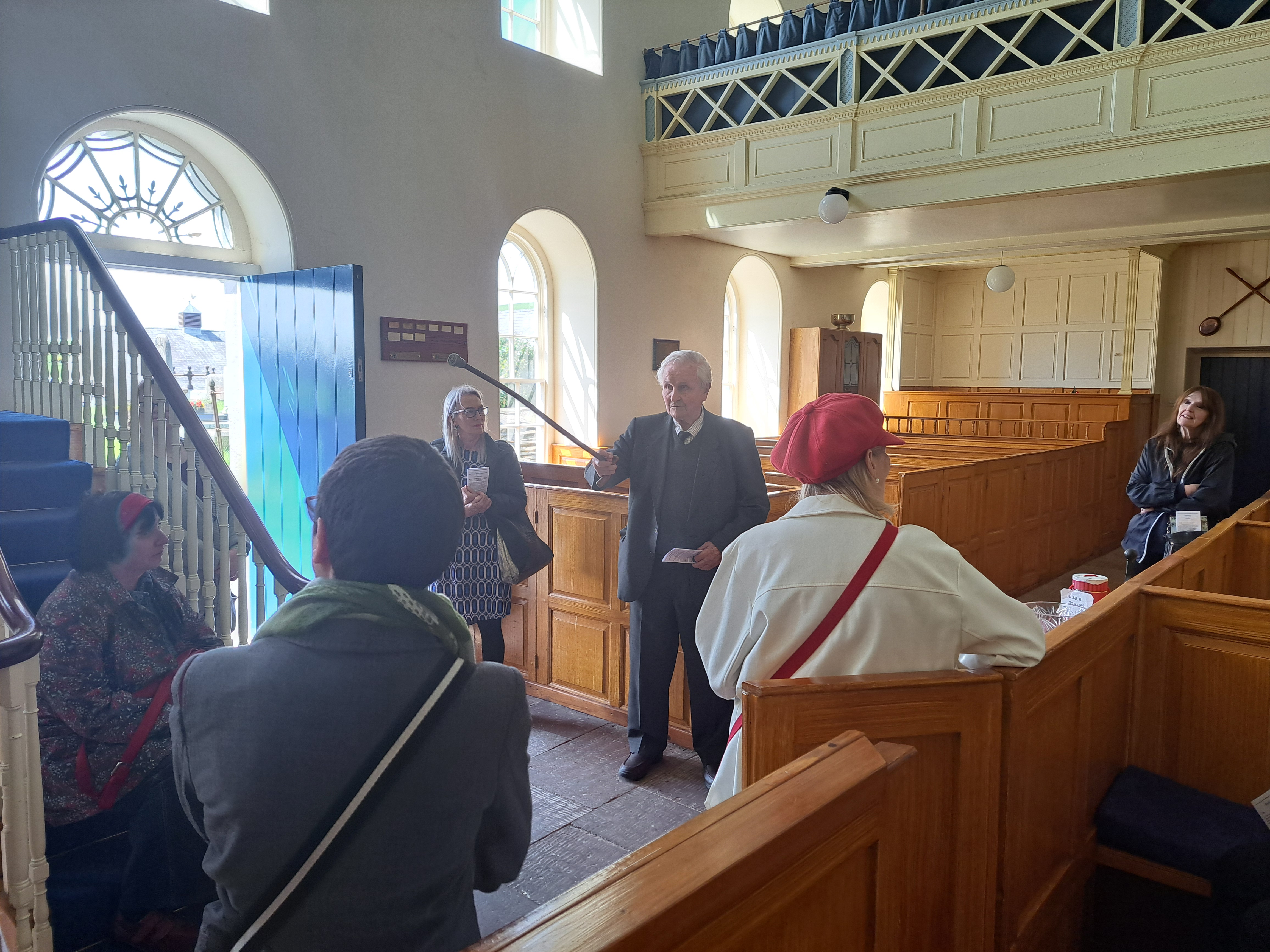
In most of the churches I said something about the building and the history of the congregation and in Rademon Jim Ferris shared his historical expertise to give us a talk about his congregation. Our thanks go to all the ministers and members who welcomed us in our travels including Des McKeown, Rev Chris Hudson, Rev Dr Heather Walker, Mary Stewart and David Rooney, as well as Jim Ferris.

Des McKeown welcomes everyone to First Church, Rosemary Street.
Rev Chris Hudson welcomes everyone in the chancel in All Souls’.

We had lunch in Denvir’s in Downpatrick and returned to Dunmurry just 15 minutes later than our planned schedule had anticipated, so all in all a great day out.

In Downpatrick.
Jim Ferris explains the history of Rademon.

We visited in turn Dunmurry (1779), First Belfast (1783), All Souls’ Belfast (1896), Rademon (1713), Downpatrick (1711) and Clough (1837), buildings of different styles and ages but all with their own story to tell as part of our distinctive tradition.

In Clough, the last visit of the day.

Reflections on Prayer

I added this short video to our YouTube channel featuring the church and some of the grounds at Dunmurry built around a short passage on prayer written by Valentine David Davis. V.D. Davis trained for the ministry at Manchester College when it was still in London and James Martineau was Principal. He was one of the last links between that generation of ministers and the mid-twentieth century. His little book The Lord’s Prayer An Interpretation. Together with an Address on The Offering of Prayer was published by the Lindsey Press in 1938.

Click on the video to see ‘Reflections on Prayer’ from Dunmurry

His book on prayer is full of insight. He is perhaps someone who is rather overlooked in our history. On leaving Manchester College he went to Christ Church, Nottingham as minister for a few years before moving on to the Ancient Chapel of Toxteth for eleven years. This was followed by a further ministry at Wallasey. In Merseyside he was greatly influenced by John Hamilton Thom whose devotional Services and Prayers he later edited along with a selection of J.H. Thom’s writings in a A Minister of God. Ministry in Liverpool and Wallasey was followed by eleven years as editor of The Inquirer before returning to the ministry in Bournemouth where he served for twenty years up to retirement. He made some more important contributions to devotional publishing and to history, producing A Book of Daily Strength as well as A History of Manchester College and a history of the London Domestic Mission Society. He was editor also of Hymns of Worship, first published in 1927, reprinted a number of times, then republished with a Supplement (1951), and later still republished in a revised format in 1962. Even Hymns of Faith and Freedom, published in 1991, described itself as a radical revision of Hymns of Worship. So as one of the first fruits of the collaboration that led to the new General Assembly and ‘offered, in the interest of unity and comprehension, with the prayer that it may be blessed in its ministry to the fellowship of our churches’ it proved remarkably successful.

We also uploaded to YouTube our full Easter Day service at Dunmurry recently. The full service, including hymns, prayers and readings can be seen here:

Easter Sunday Service, Dunmurry

General Assembly of Unitarian and Free Christian Churches 2024

I was very pleased to be able to attend this year’s General Assembly of Unitarian and Free Christian Churches held in Daventry. There were many stand out moments. One was the Unitarian Christian Association meeting at which Dr Lizzie Kingston Harrison gave an excellent talk entitled Joseph Priestley: radical roots and new beginnings. A wonderful presentation which showed how professional historical research can be alive with reflections for our present age in the hands of an expert. We look forward to publishing Lizzie’s paper in a future issue of Faith and Freedom.

The meetings were notable also for the large contingent of seven Non-Subscribing Presbyterians from Northern Ireland who were also able to be there for the welcoming onto the GA Roll of the Rev Lynda Kane. Now the minister of Ballyclare, Cairncastle and Ballymoney, Lynda was one of three new ministers recognised at the General Assembly Service.

Rev Lynda Kane with some of the ministers from Northern Ireland present at the GA (Photo: Sue Steers)
Rev Rory Castle Jones, Rev Lynda Kane, Rev Ant Howe, new ministers Rev Arek Malecki and Rev Jennifer Sanders, Liz Slade, Rev Melda Grantham and GA President Vince McCully, after the GA Service. (Photo: Sue Steers).

The Rev Ant Howe delivered a most inspiring sermon at the GA Service, and at the meetings Dot Hewerdine and the Rev John Midgley and the Rev Celia Midgely were all made honorary members of the GA.

We also held the annual meeting of the Unitarian Historical Society. There was a good turnout of people for the AGM and to hear Professor Grayson Ditchfield’s paper Essex Street Chapel in the Later Eighteenth Century. Unfortunately, because of disruption to the train services, Professor Ditchfield couldn’t be with us in person, and so his excellent paper was read for us by Rev Daniel Costley. There was a great deal of new information and new insight in the paper which will feature in next year’s Transactions of the Unitarian Historical Society.

Derek McAuley (President), Howard Hague (Secretary) with Rev Daniel Costley (left), who read Professor Ditchfield’s paper, at the meeting of the Unitarian Historical Society in Daventry. Saturday, 6th April.

Christmas Morning

On Christmas Eve, 2023, we held an excellent congregational Carol Service in Dunmurry. Below you can join the service via this video:

Excerpt from Hymn on the Morning of Christ’s Nativity by John Milton (1629):

No war or battle sound

Was heard the world around:

The idle spear and shield were high uphung;

The hooked chariot stood

Unstained with hostile blood;

The trumpet spake not to the armed throng,

And kings sat still with awful eye,

As if they surely knew their sovran Lord was by.

But peaceful was the night

Wherein the Prince of Light

His reign of peace upon the earth began:

The winds with wonder whist

Smoothly the waters kissed,

Whispering new joys to the mild ocean,

Who now hath quite forgot to rave,

While birds of calm sit brooding on the charmed wave.

And here is a short video of a heron in Derriaghy Glen, not far from Dunmurry. Filmed recently by Louise Steers:

Carols by Candlelight at Dunmurry

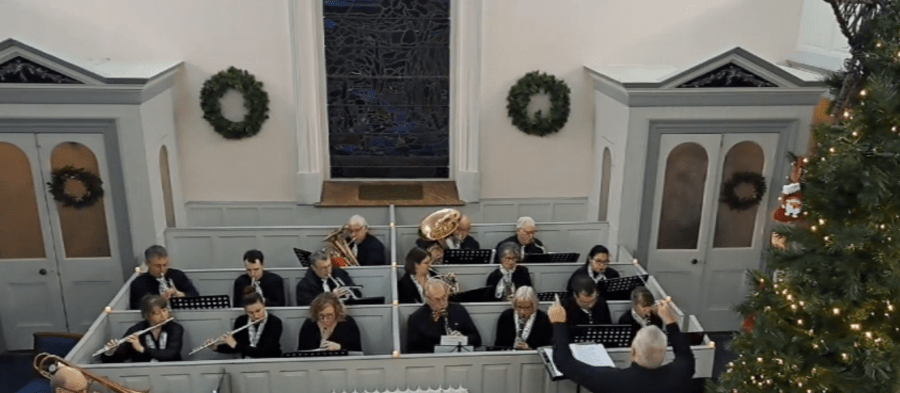
Harmonic Sounds Concert Band performing at Dunmurry

On Friday, 15th December we were delighted to welcome to Dunmurry Harmonic Sounds Concert Band under their Musical Director, Paul Hamilton to lead us in our service of Carols by Candlelight. The Church was beautifully decorated, there was a great attendance and readings were given by members and friends of the congregation.

Click on the video above to share in the service.

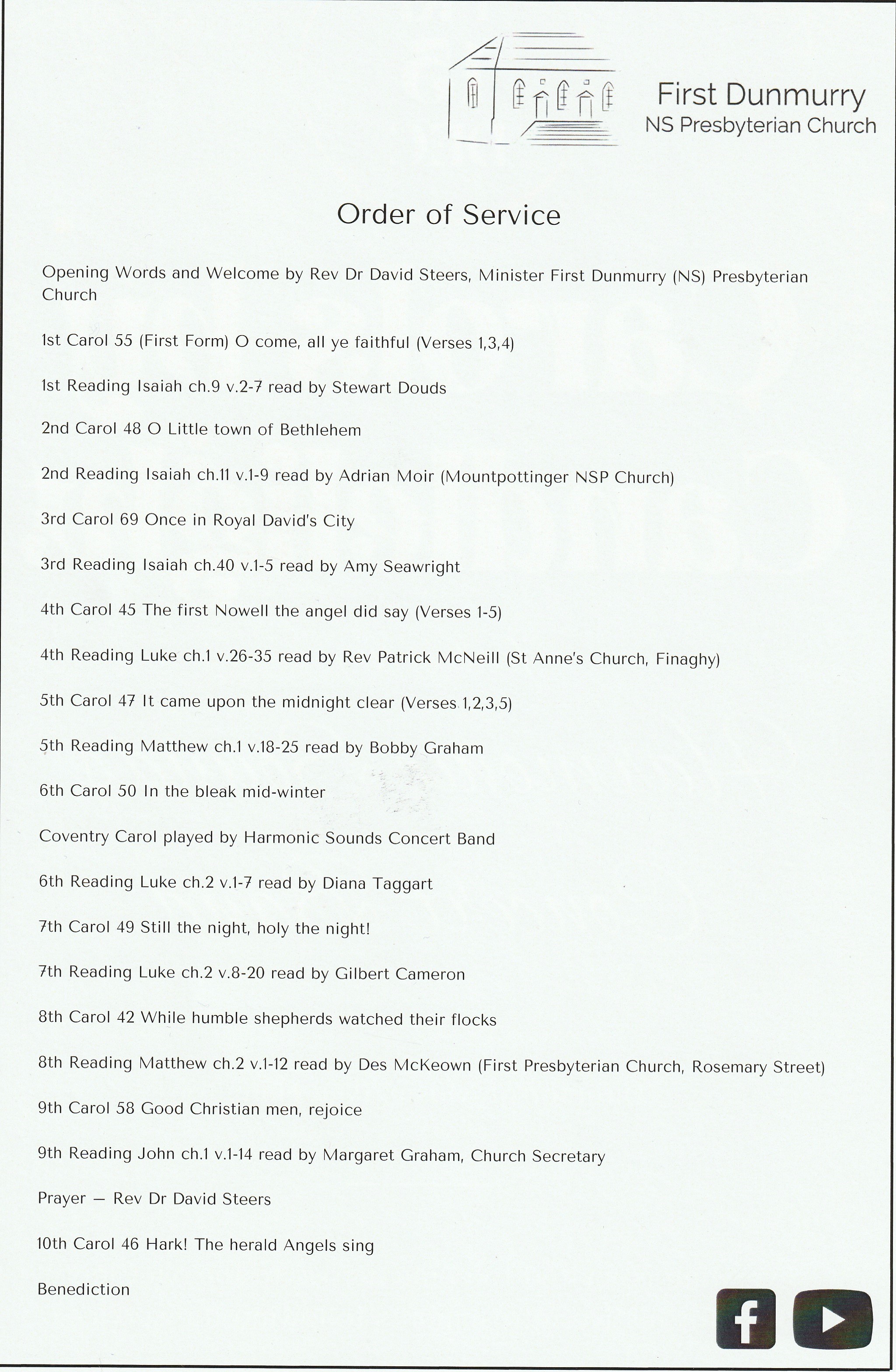
Order of Service

Another recent video which is available to view online is the sermon delivered in Church on Sunday, 10th December 2023, the second Sunday in Advent: