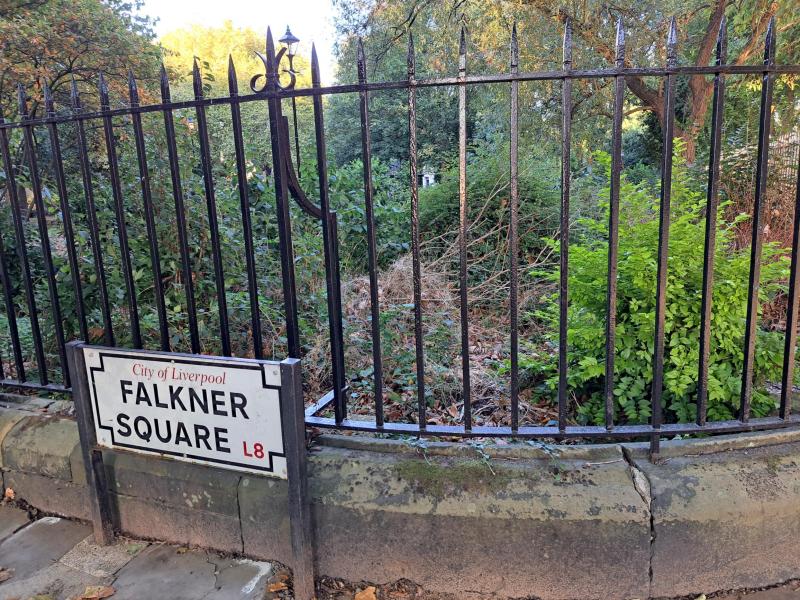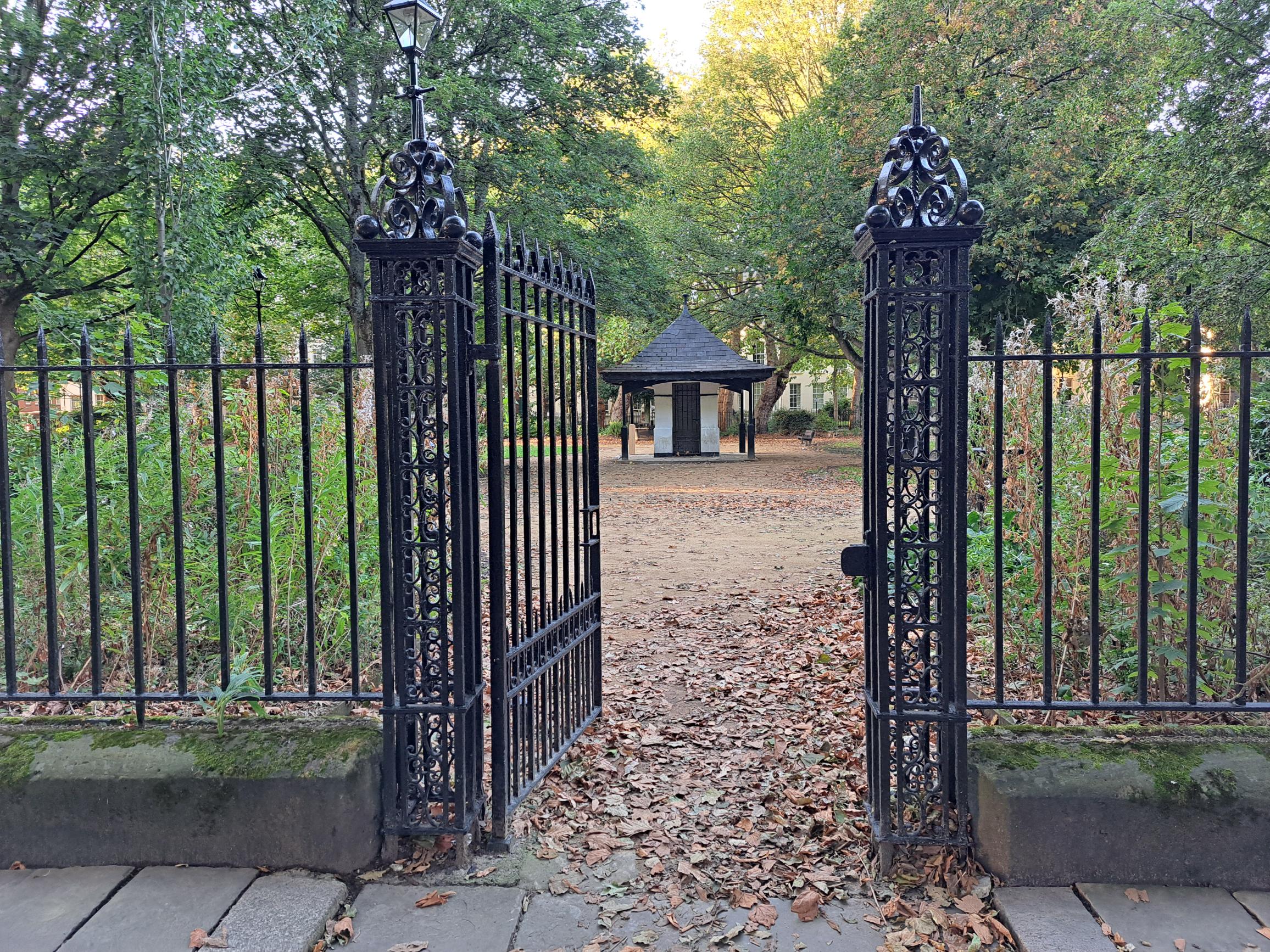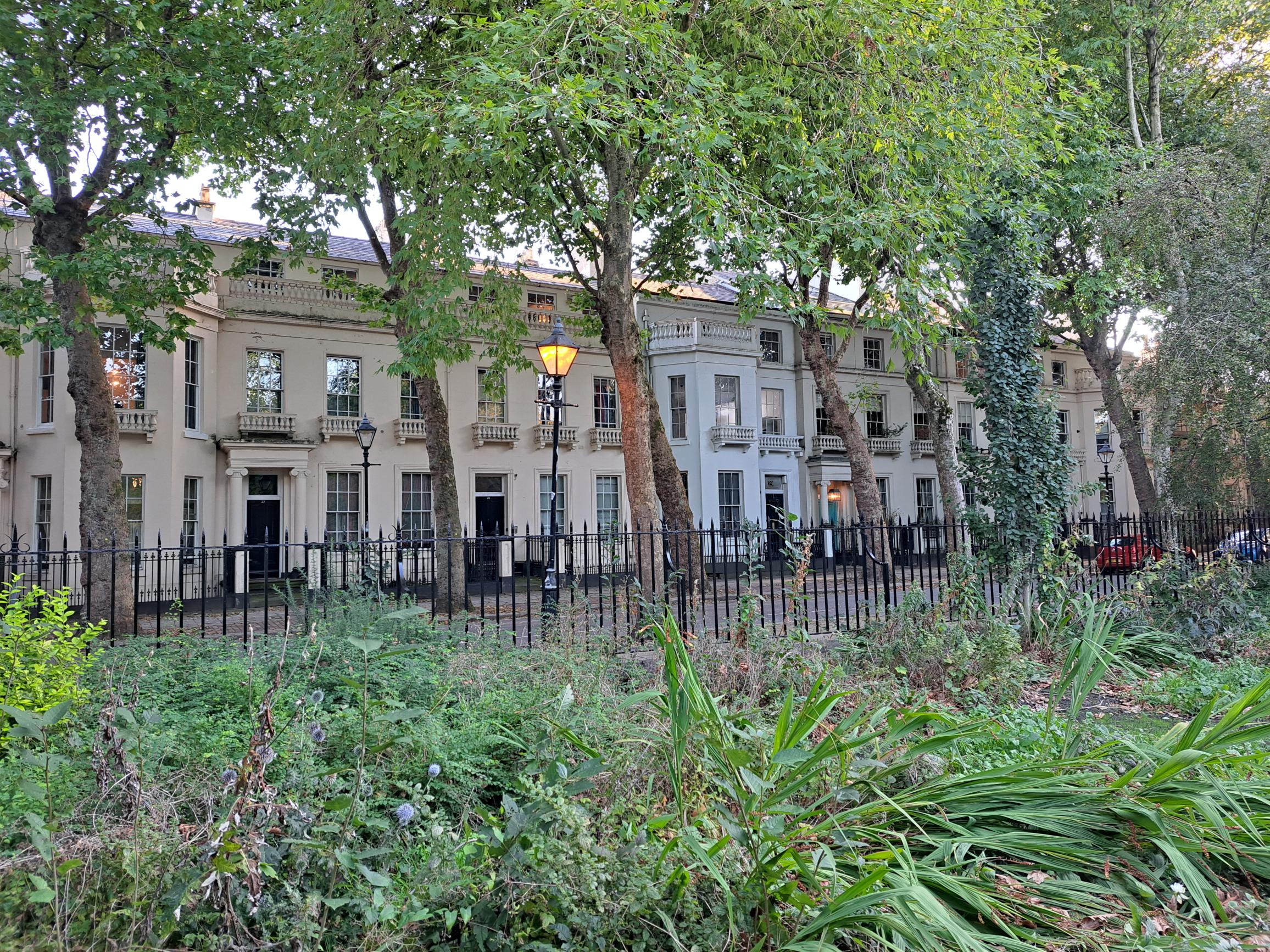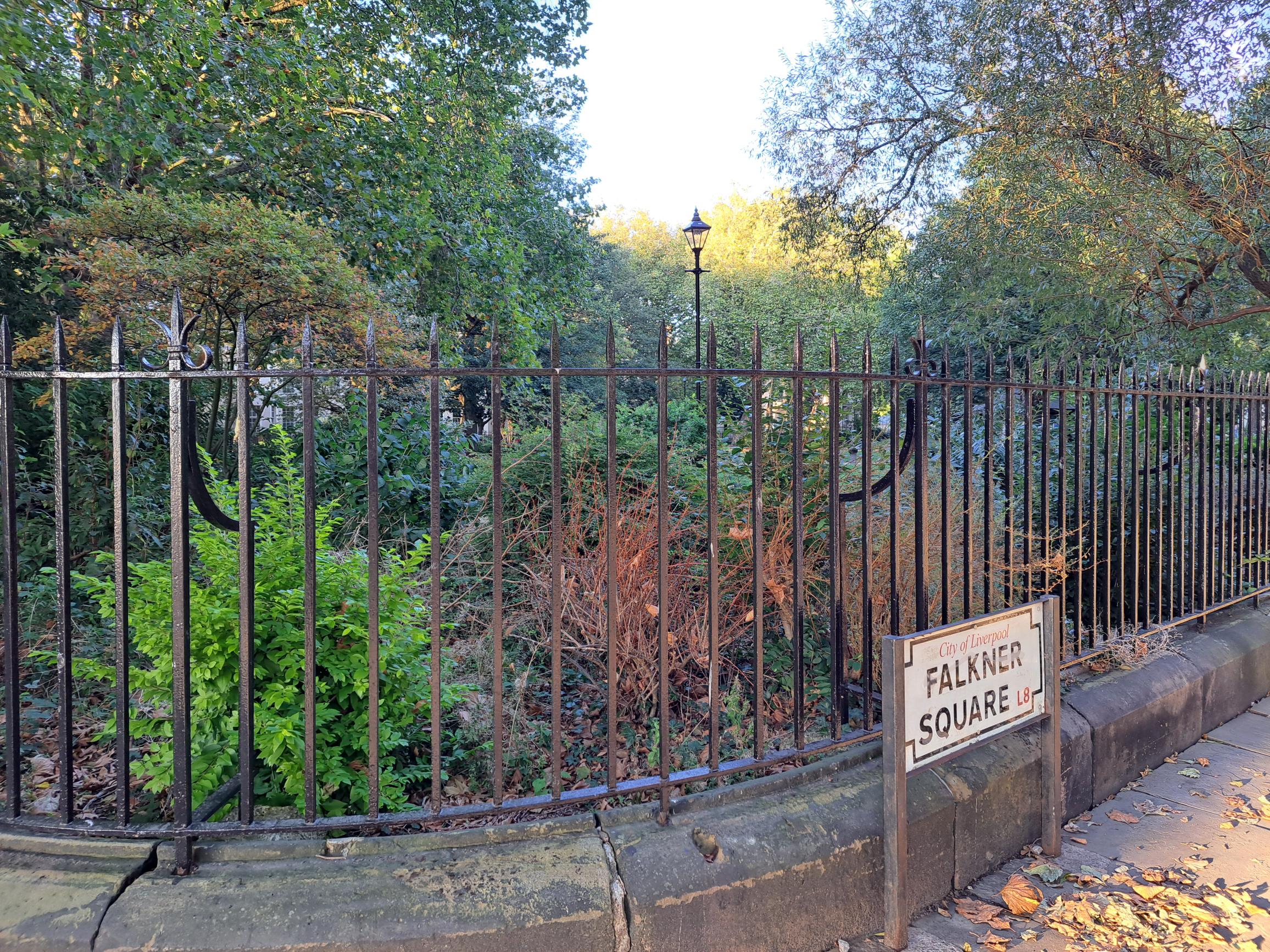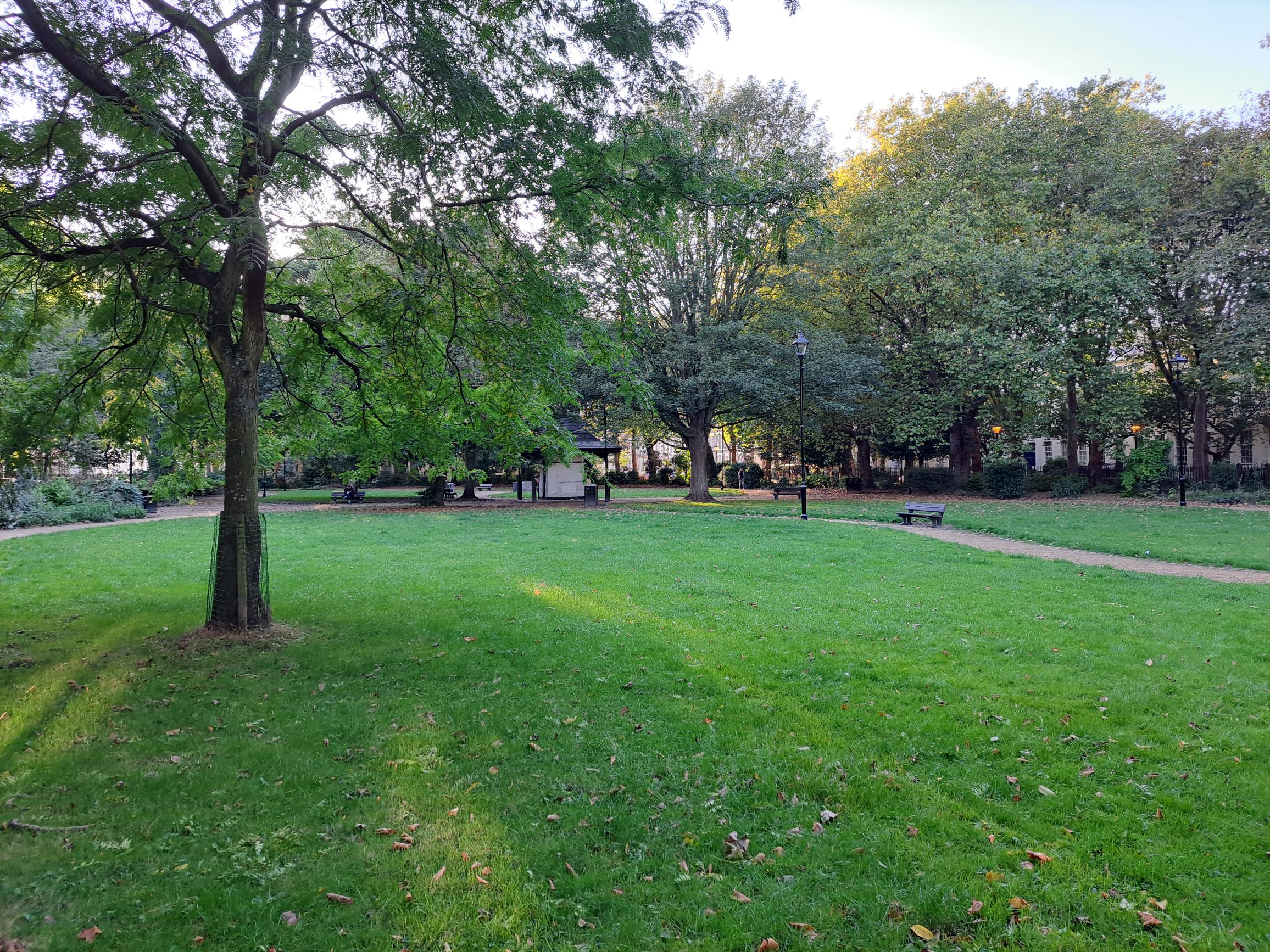
A walk around Falkner Square in Liverpool is always interesting. The buildings are quite impressive although not quite as grand as the houses in the nearby Georgian Quarter, now much utilised for film locations, although Falkner Square itself made a film appearance in the 1971 film Gumshoe with Albert Finney.
What’s attractive about it is that it has its own central park and resembles the sort of square you would find in Bloomsbury. I was always told, that in days gone by, only the people who lived in the Square had a key to the park, although the City Council now claims it as ‘one of the earliest public open spaces in the city’. I suspect it wasn’t open to the public in its earliest days.
Falkner Square is said to be named after Edward Falkner, an ex-soldier and former High Sheriff of Lancashire, who mustered a force of 1,000 men to defend Liverpool in 1797 when fears of a French invasion were at their highest. He was a successful merchant, involved inevitably in the slave trade, but who died in 1825, so he can’t have been directly involved in the development of the Square.
Joseph Sharples’ Pevsner Architectural Guides Liverpool says ‘The central garden is shown planted on a map of 1831, but the stuccoed houses did not begin to appear until the mid 1840s.’ The only architect he mentions is William Culshaw who designed number 29 in 1845 along with many Liverpool buildings.
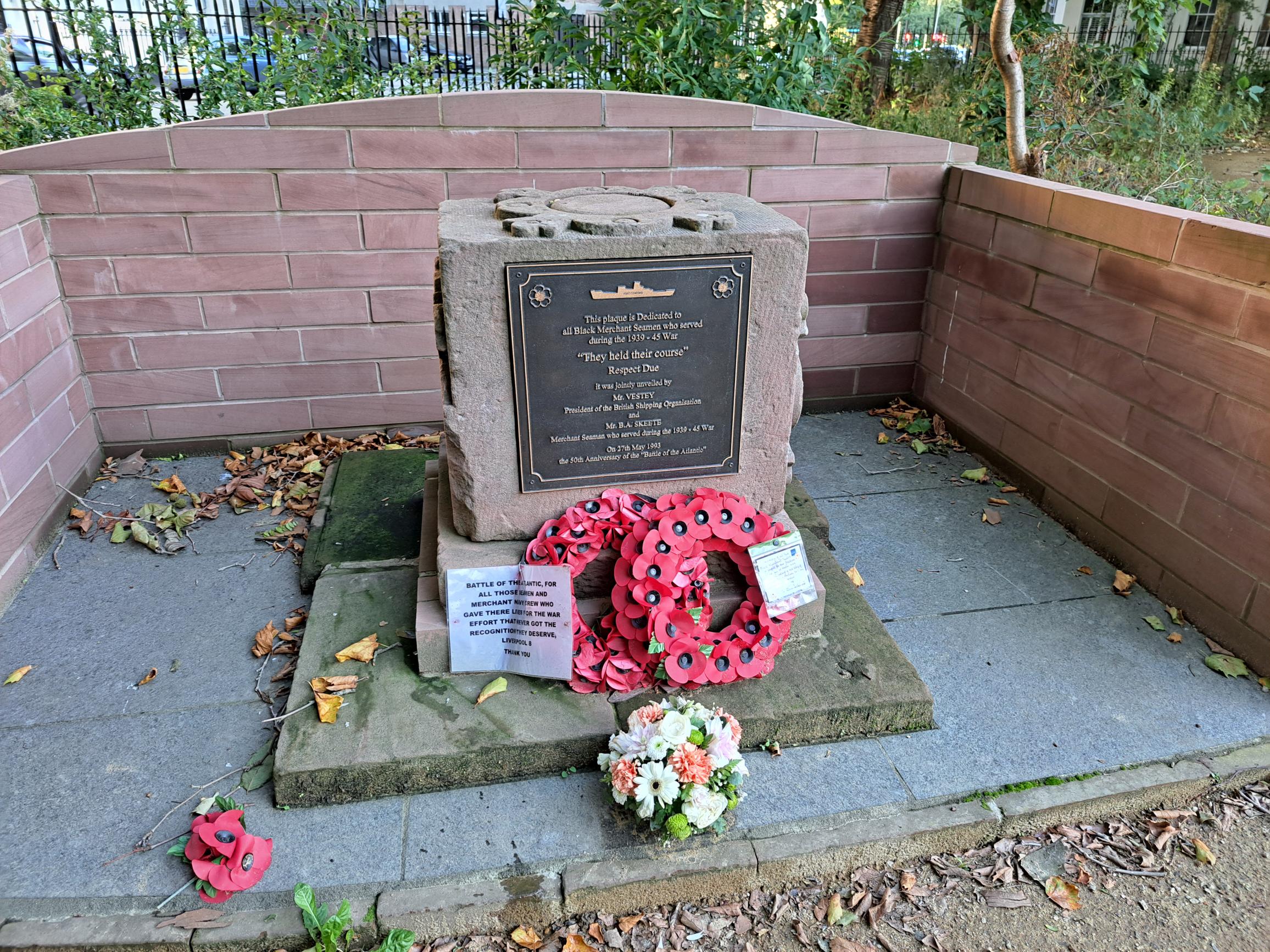
One relatively new feature is the Memorial to Black Merchant Seamen who served in the Second World War. This was unveiled in 1993 on the 50th anniversary of the Battle of the Atlantic and contains the words “They Held Their Course” RespectDue. The bronze plaque, which, shockingly, has endured some vandalism but is now restored, is attached to a large decorated piece of sandstone. This came from the old Liverpool Sailors’ Home, which was once a very prominent landmark in Canning Place near the city centre. Now only the ornate gates survive and can still be seen at the entrance to Liverpool 1.
Memorial to Black Merchant Seamen who served in the Second World War
In this post we are looking at some more examples of the work of Allen Daniel Coon. The total output of postcards he produced between 1902 and his death in 1938 must have been enormous and they covered a very wide geographical area. I hadn’t noticed that one card I picked up a few years ago was by him:
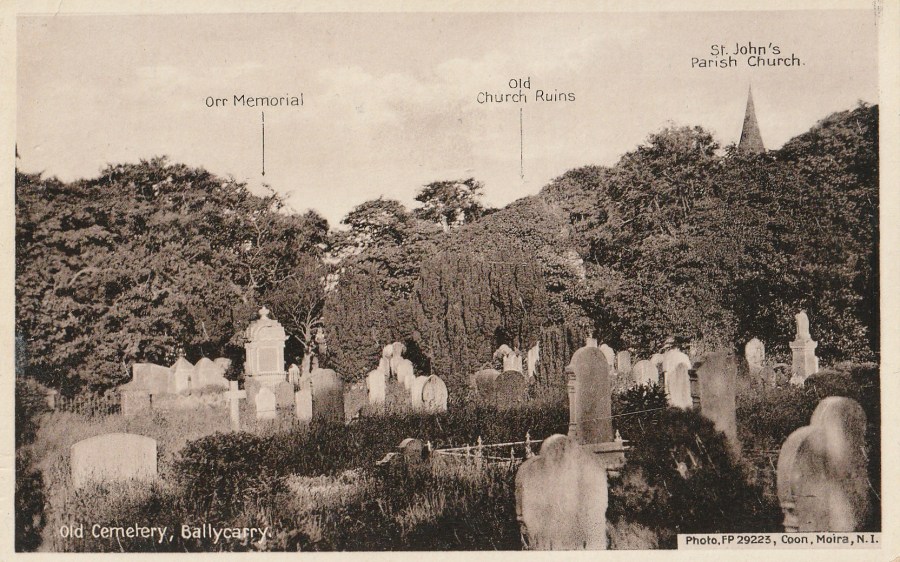
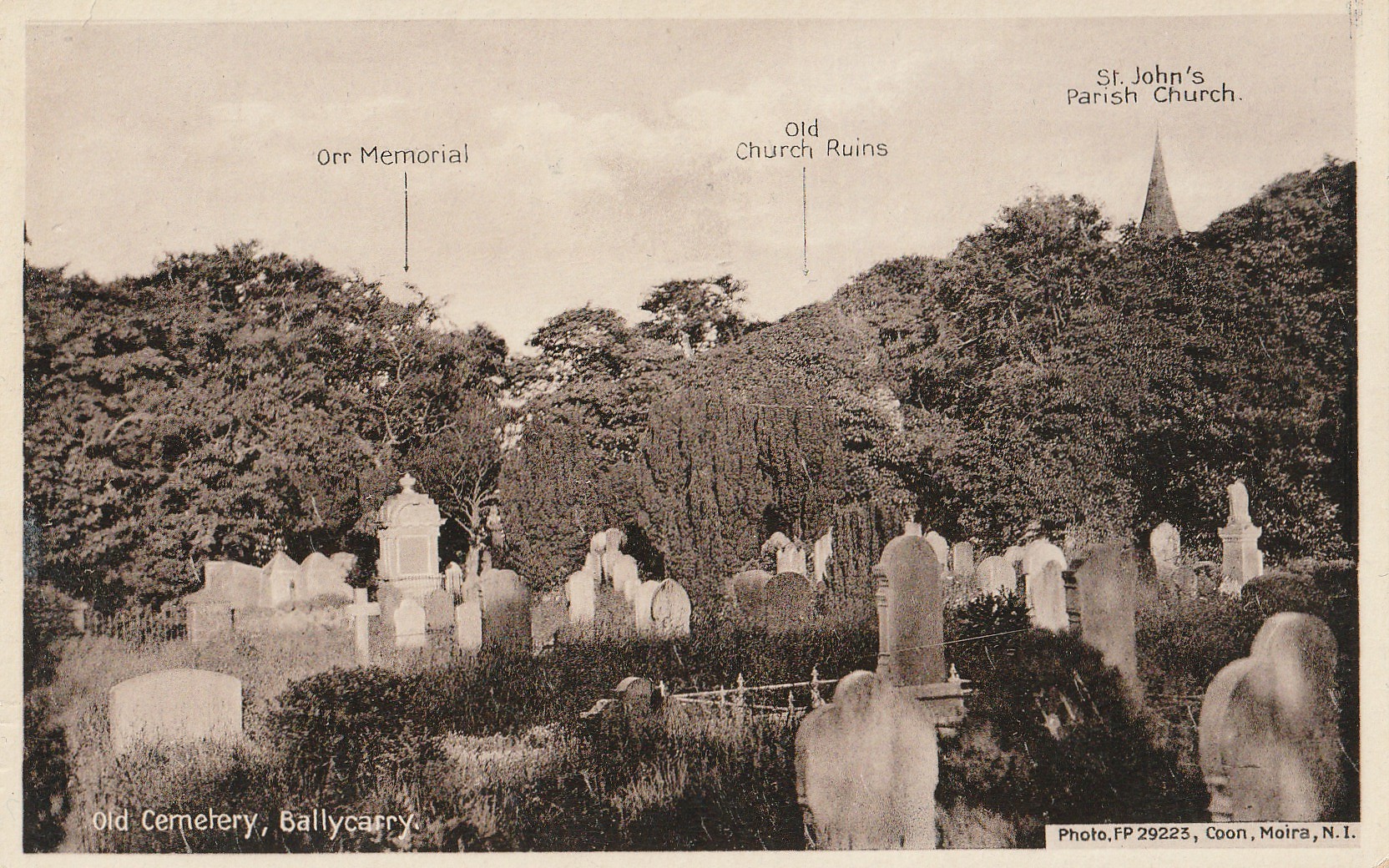
Old Cemetery, Ballycarry, 1929
This was produced for John McKee News Agent and Confectioner, Ballycarry, and is interesting because he has labelled different features of the graveyard, although you can only see the tip of the spire of St John’s Parish Church and can’t see the ruins of the old church at all as they are obscured by trees.
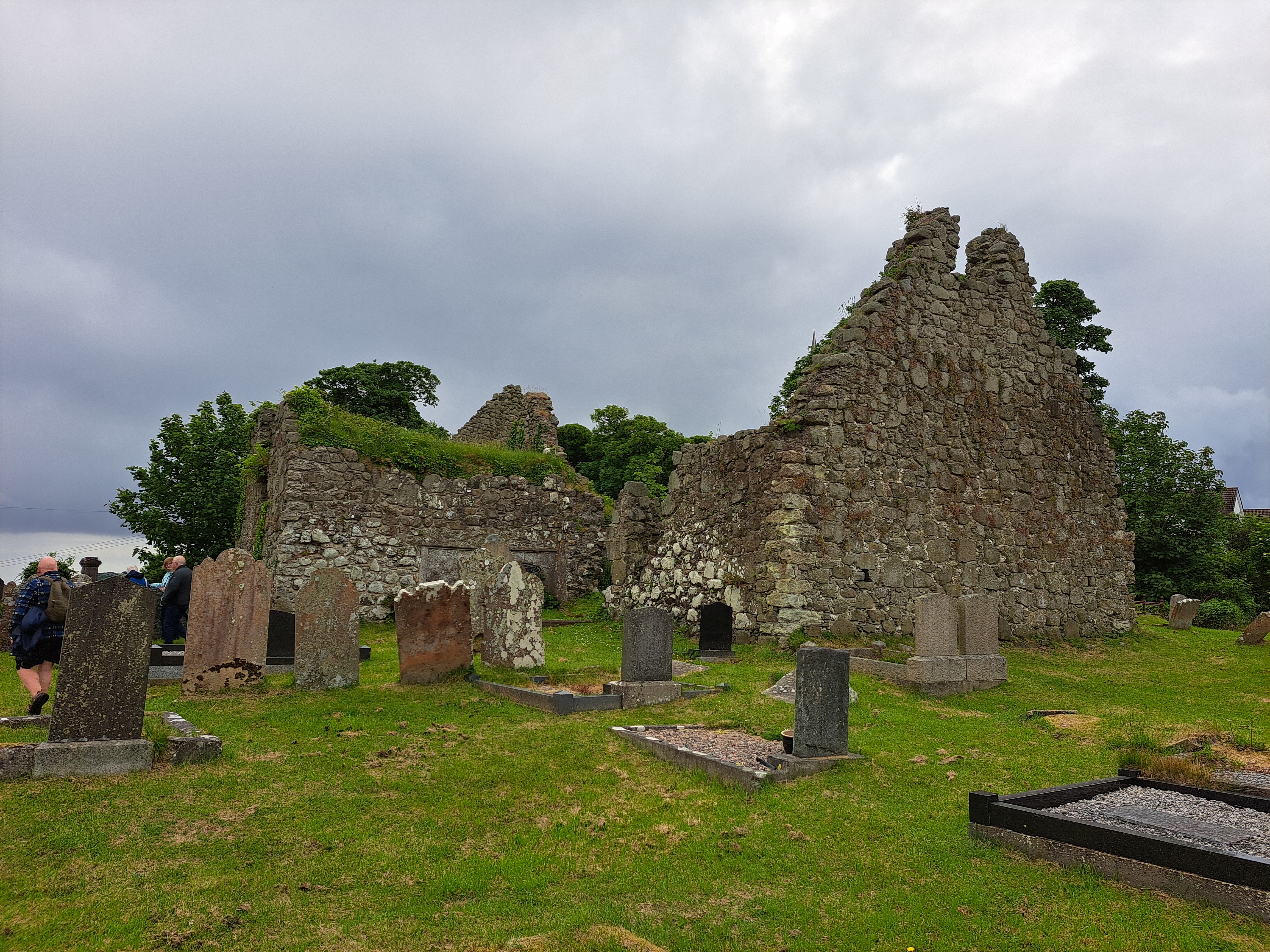
This is what the ruins look like today:
Ruins of Templecorran Church, Ballycarry
You can read about our recent visit to this graveyard here.
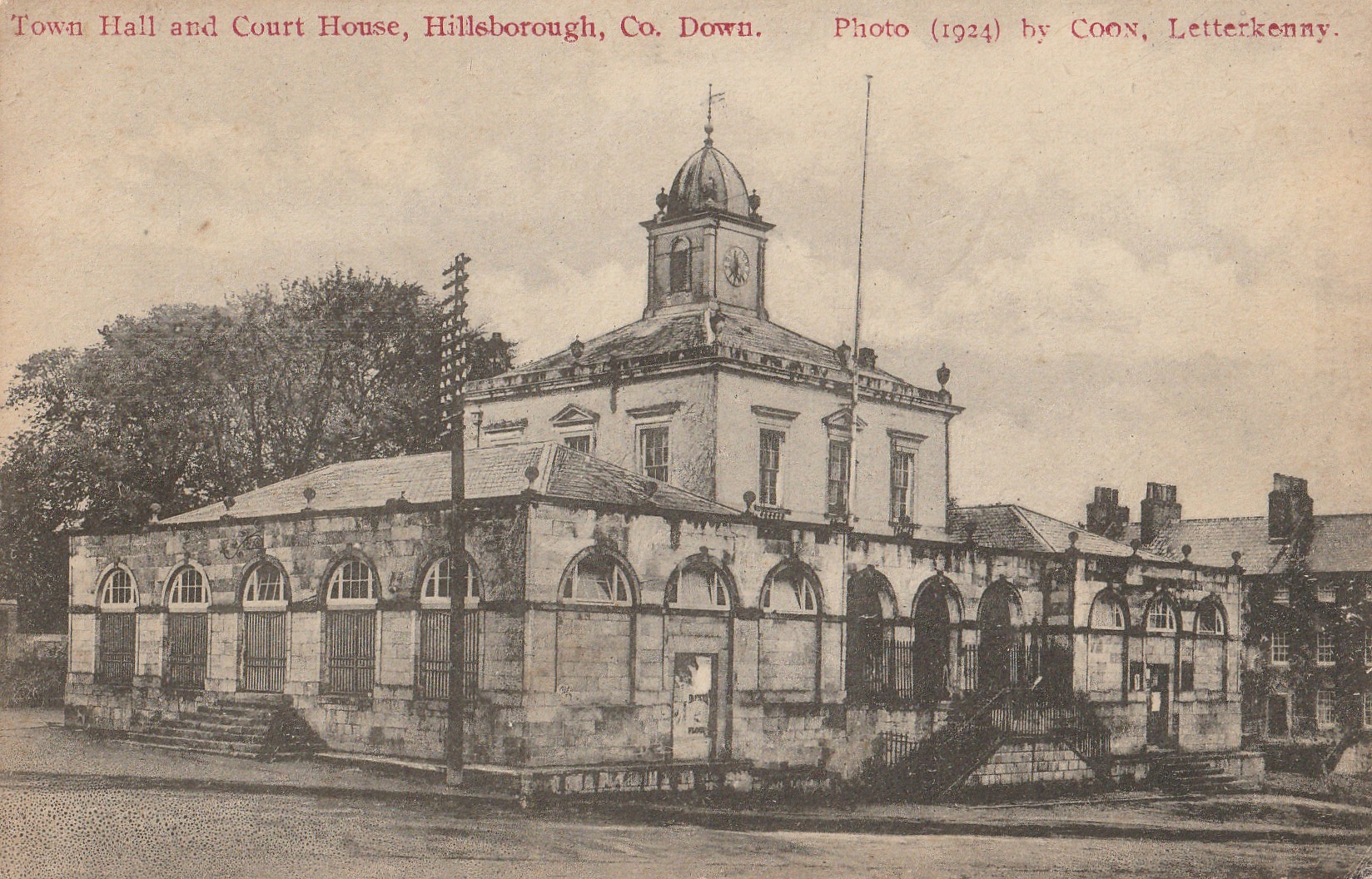
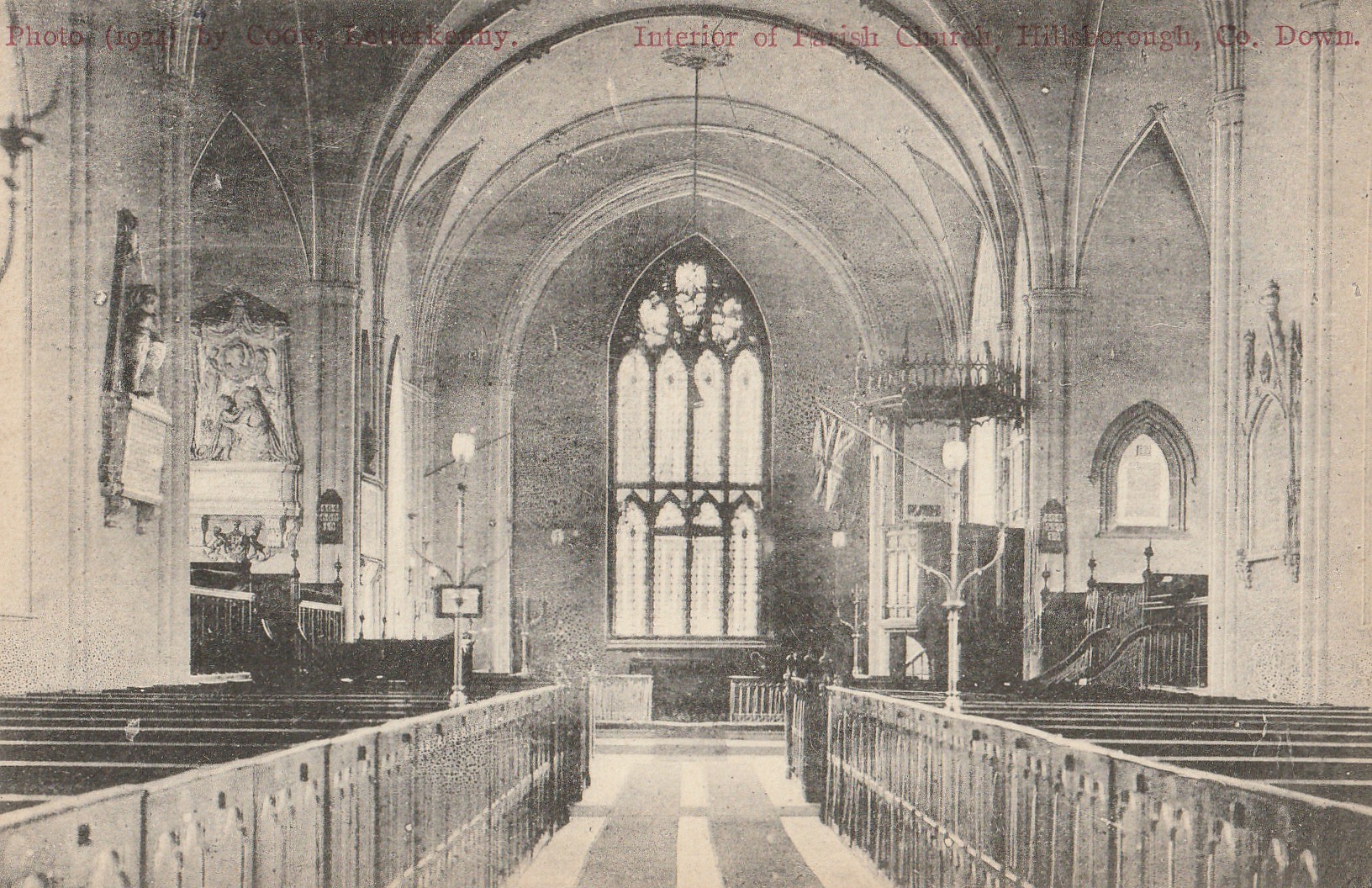
Allen Coon produced a lot of postcards for this part of County Antrim in the later 1920s, in this case giving his location as Moira, NI. Five years earlier his postcards produced for Mrs Johnston, Draper & Boot Merchant, Hillsborough still give his location as Letterkenny:
Town Hall and Court House, Hillsborough, 1924
Interior of Parish Church, Hillsborough, 1924
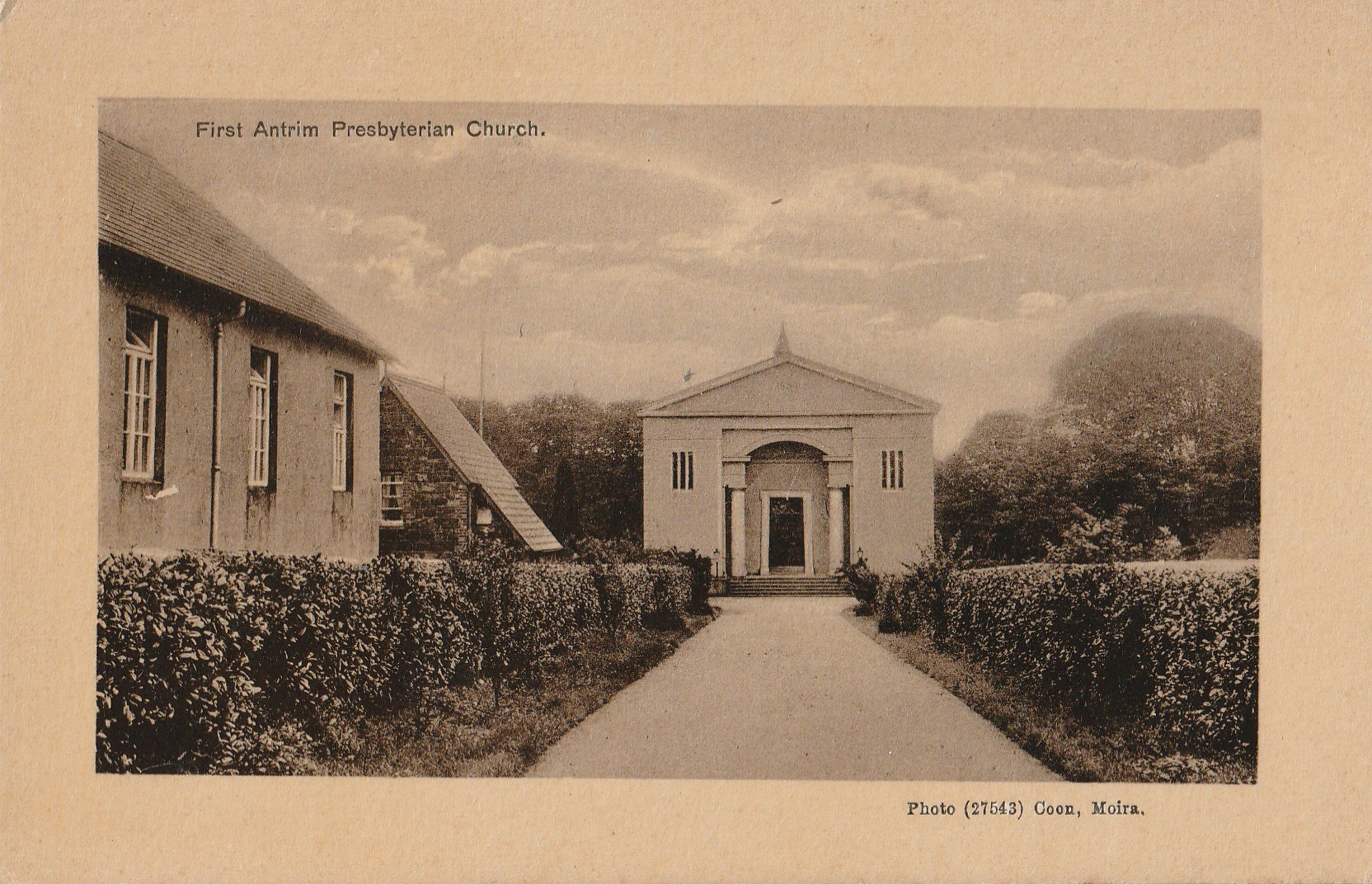
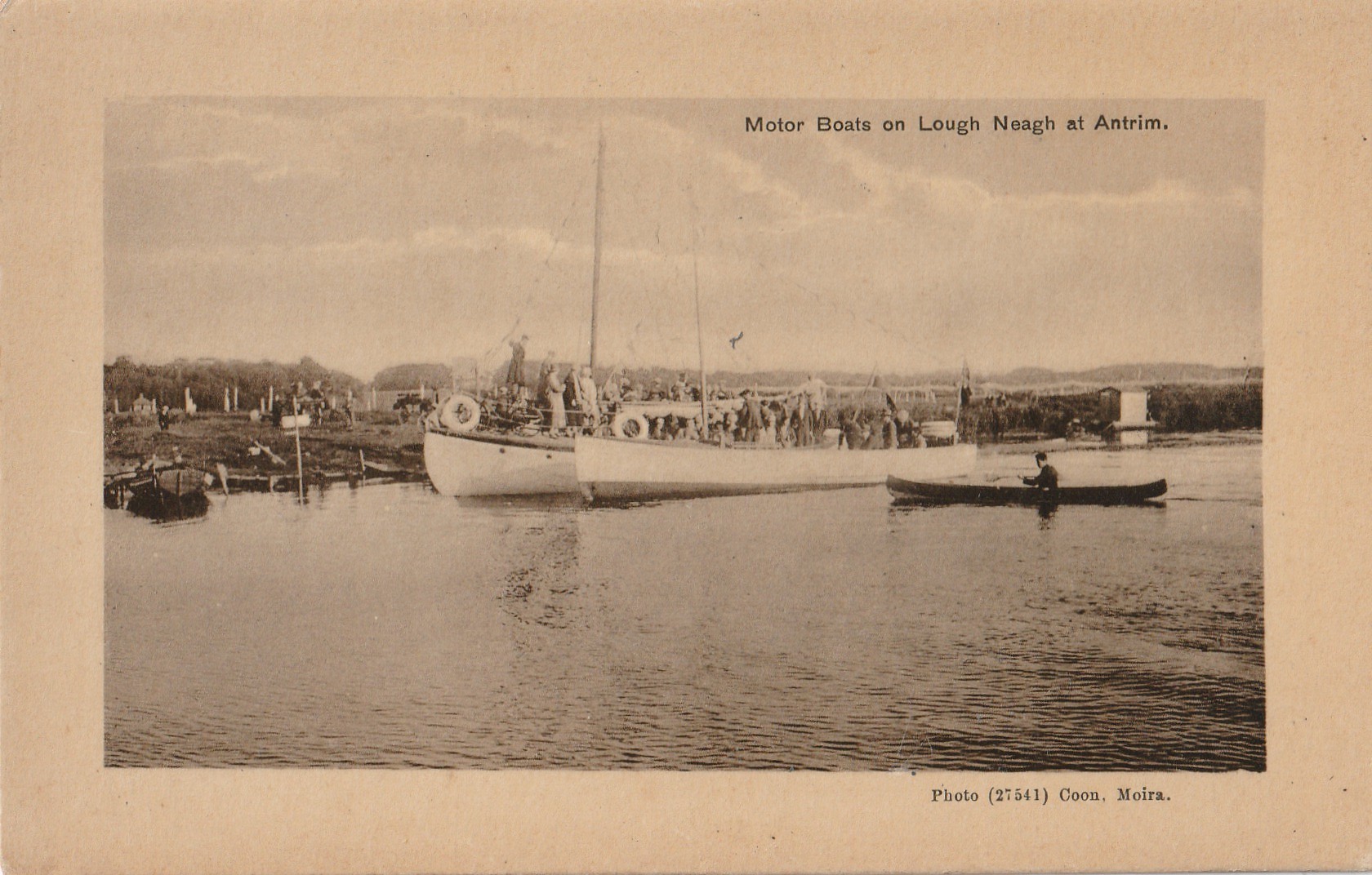
The cards produced in Antrim in 1927 stand out from the others having a large border and a glossy finish. This time they are published for Mrs Simpson, Newsagent and Stationer, Antrim, who must have wanted something different in terms of design. By this time he is well settled in Moira:
First Antrim Presbyterian Church, 1927
Motor Boats on Lough Neagh at Antrim, 1927
Presumably the motor boats were used as pleasure craft taking people on tours of the Lough.
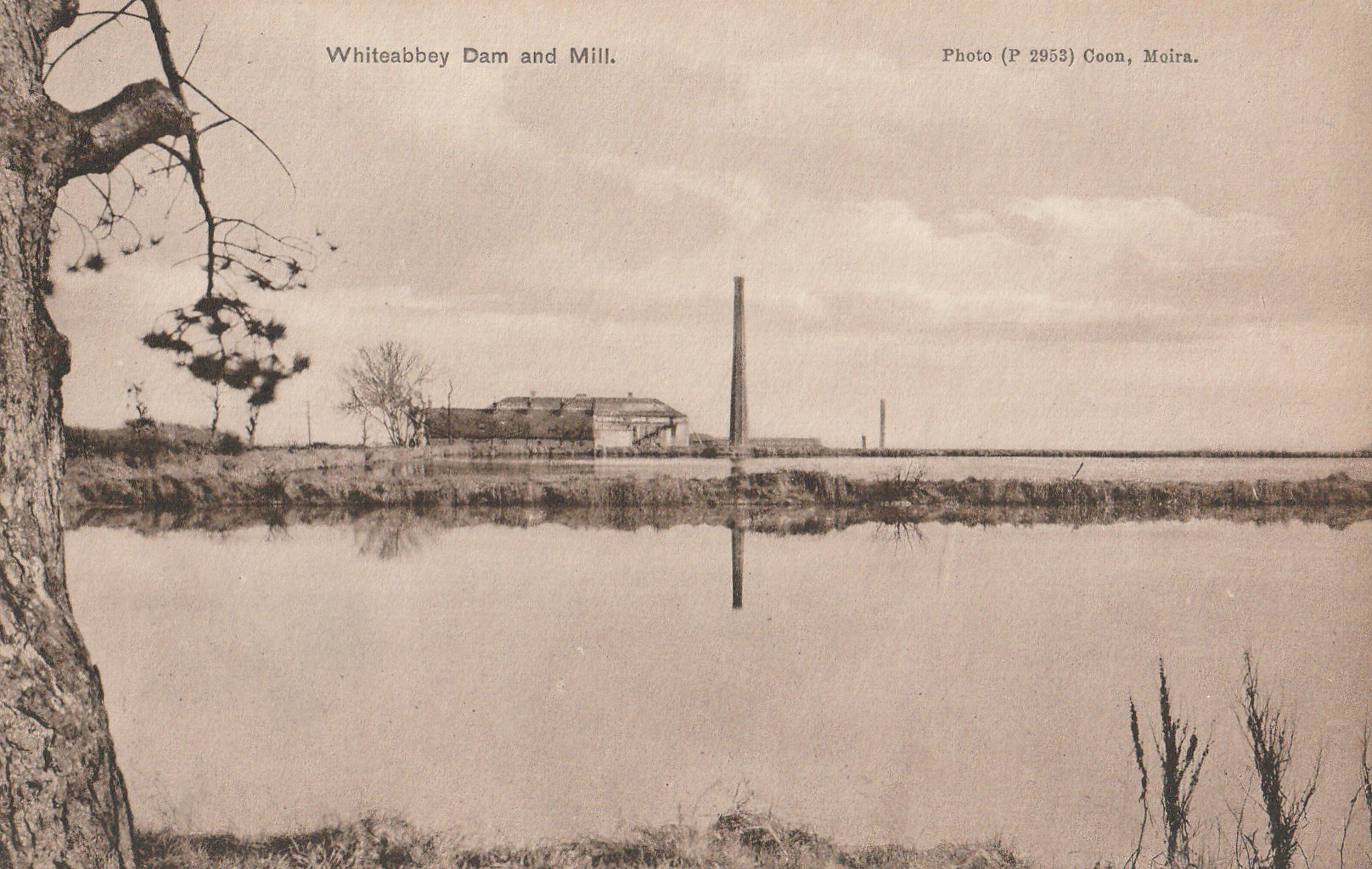
In Whiteabbey in 1929 he produced about 18 postcards for H. Quiery, Newsagent & Tobacconist. He must have exhausted all the possible views of the surroundings.
Whiteabbey Dam and Mill, 1929
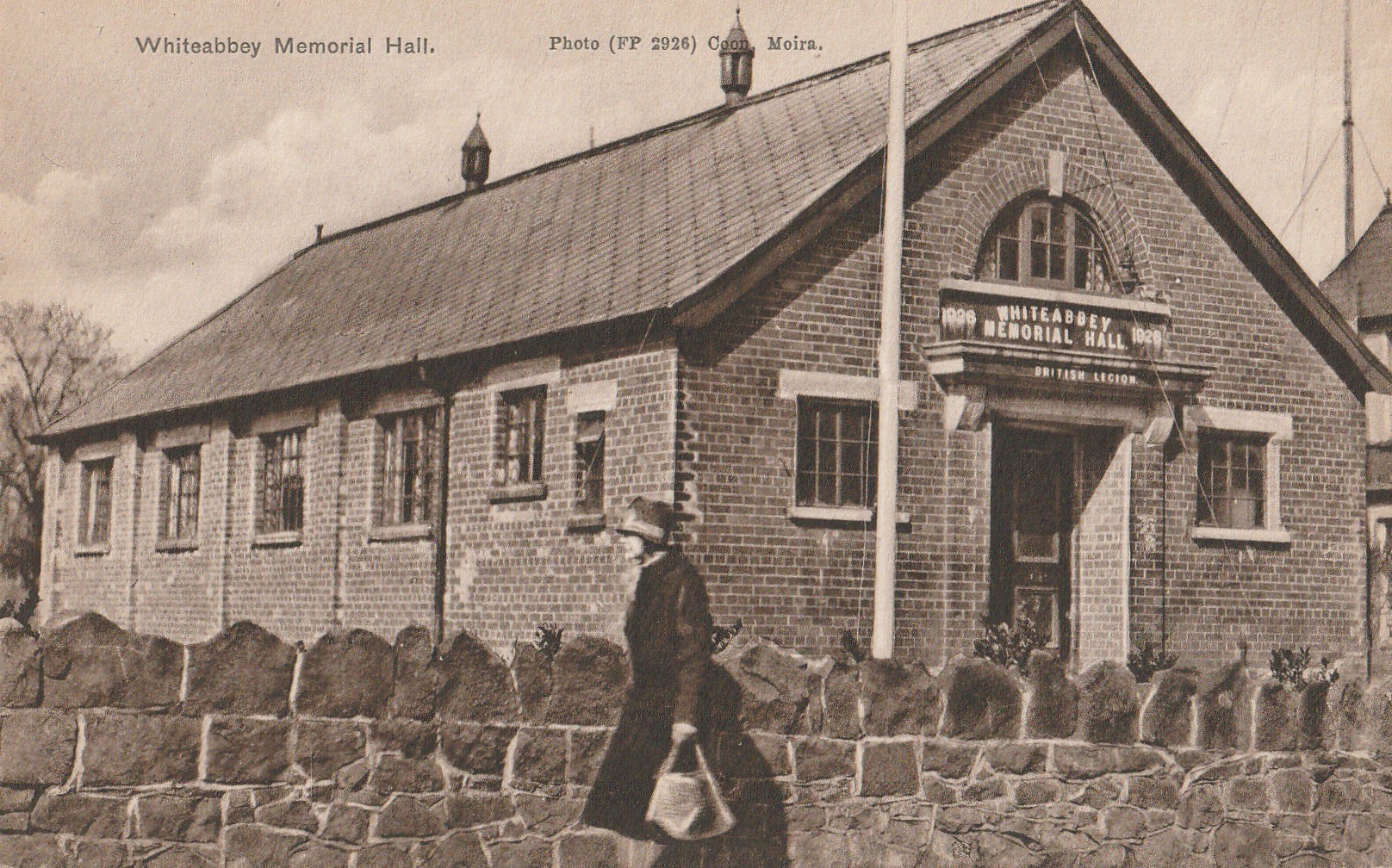
Whiteabbey Memorial Hall, 1929
A lot of Allen Coon’s pictures are straightforward architectural treatments of churches or halls. But this one is slightly different in that a passer-by boldly walks into shot in front of the Whiteabbey Memorial Hall (opened just two years earlier in 1927). Was this pre-arranged to add a bit of extra detail? Or did the lady accidently cross into the frame while he was standing there with his camera? If this was an unforeseen intrusion into his picture he must have liked the look of the finished article since he could easily have taken another one. But there she remains for posterity, out on her messages, captured on film.
In this video we take a look at the career of Allen Daniel Coon, one of the pioneers of photography and cinematography in Ulster. The video tells something of his story, with many examples of his postcards, and tracks down his last resting place.
Video: Allen Daniel Coon (1867 -1938) Photographer and Cinematographer
The previous post on this blog is all about Allen Coon’s postcards produced for W.J. Ross of Finaghy Stores in 1927, but these are just a small sample of his vast output produced between his arrival in Ireland in 1902 and his death in 1938.
Allen Daniel Coon was born in Buffalo, New York in 1867. The son of a Baptist pastor and, tradition has it, a native American mother, his career followed a fairly conventional path in its early years. He read law at university and then established himself as an attorney in Buffalo. But at some point he tired of this life and took the road to prospect for gold first in California and then in Alaska. One assumes this was not entirely successful because at some point he took up photography. He was a friend of George Eastman, the founder of Kodak, and may have been related to him. Either way he travelled to England with him in 1900 moving to Ireland a couple of years later to set up his own photography business.
This was right at the beginning of the boom in the sale of postcards. In 1902 you could send a picture postcard for a halfpenny and expect it to be at a local destination at lunchtime. For skilled photographers the opportunities were obvious and operating initially from Londonderry, later from Letterkenny and ultimately from Moira (each place was printed as his location on the front of his postcards) he produced hundreds of postcards of impressive views, street scenes, local landmarks, prominent buildings and sometimes interesting people.
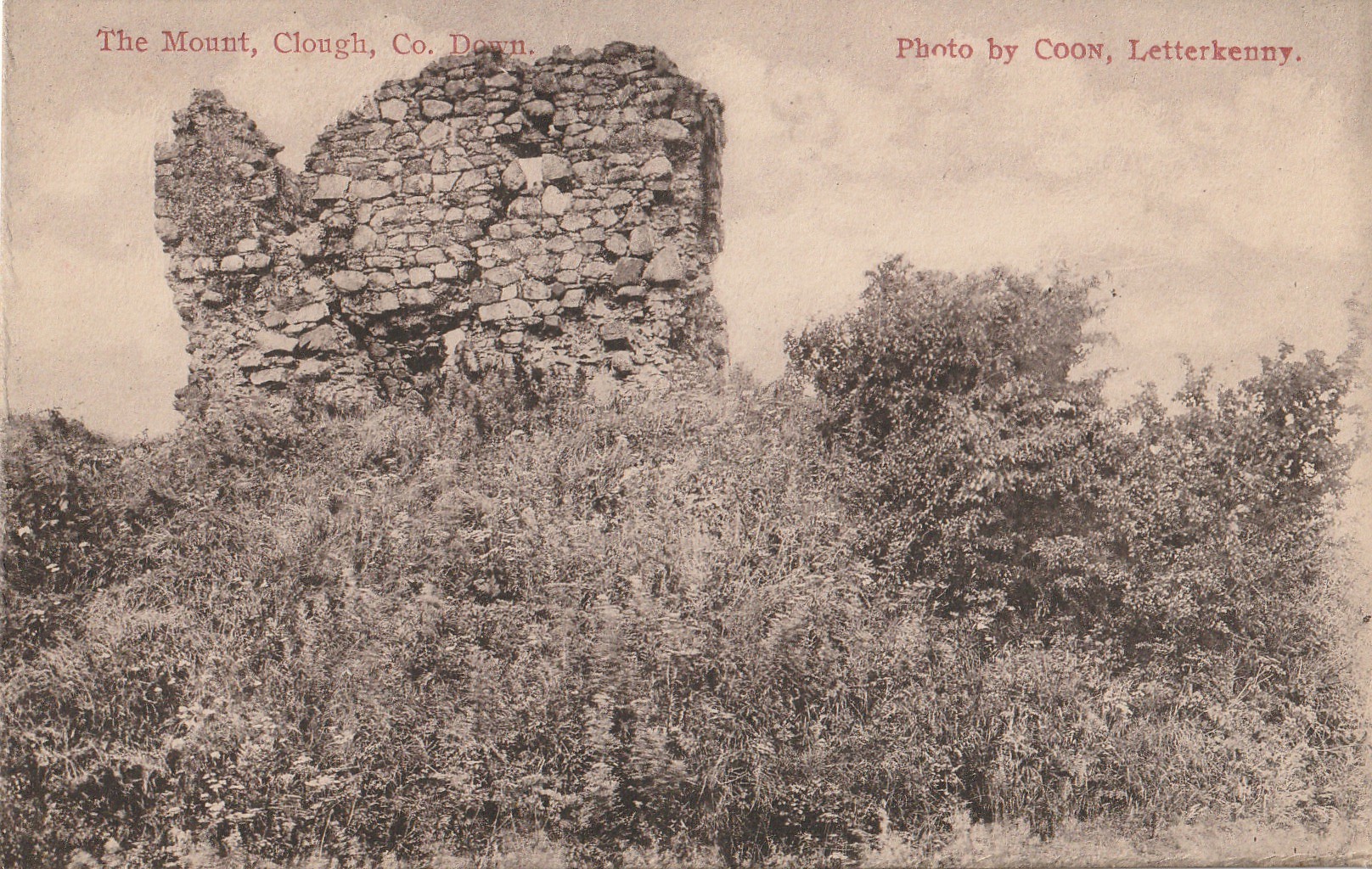
Clough Castle (no publisher listed on the back)
It is recorded that he charged local traders less than £5 for 2,000 postcards, which also included their name on the back of the card. From about 1924 he started numbering the cards starting with the last two digits of the year they were produced which is very helpful in dating the cards.
In the Census of 1911 he was recorded as living with his wife of three years, Clara, at Church Wall, Londonderry where he recorded his profession as Photographer and Theatrical Showman. Also recorded were their two eldest children (Gladys and Gaynor) and the fact that while his wife was a Presbyterian he declared himself to be an agnostic.
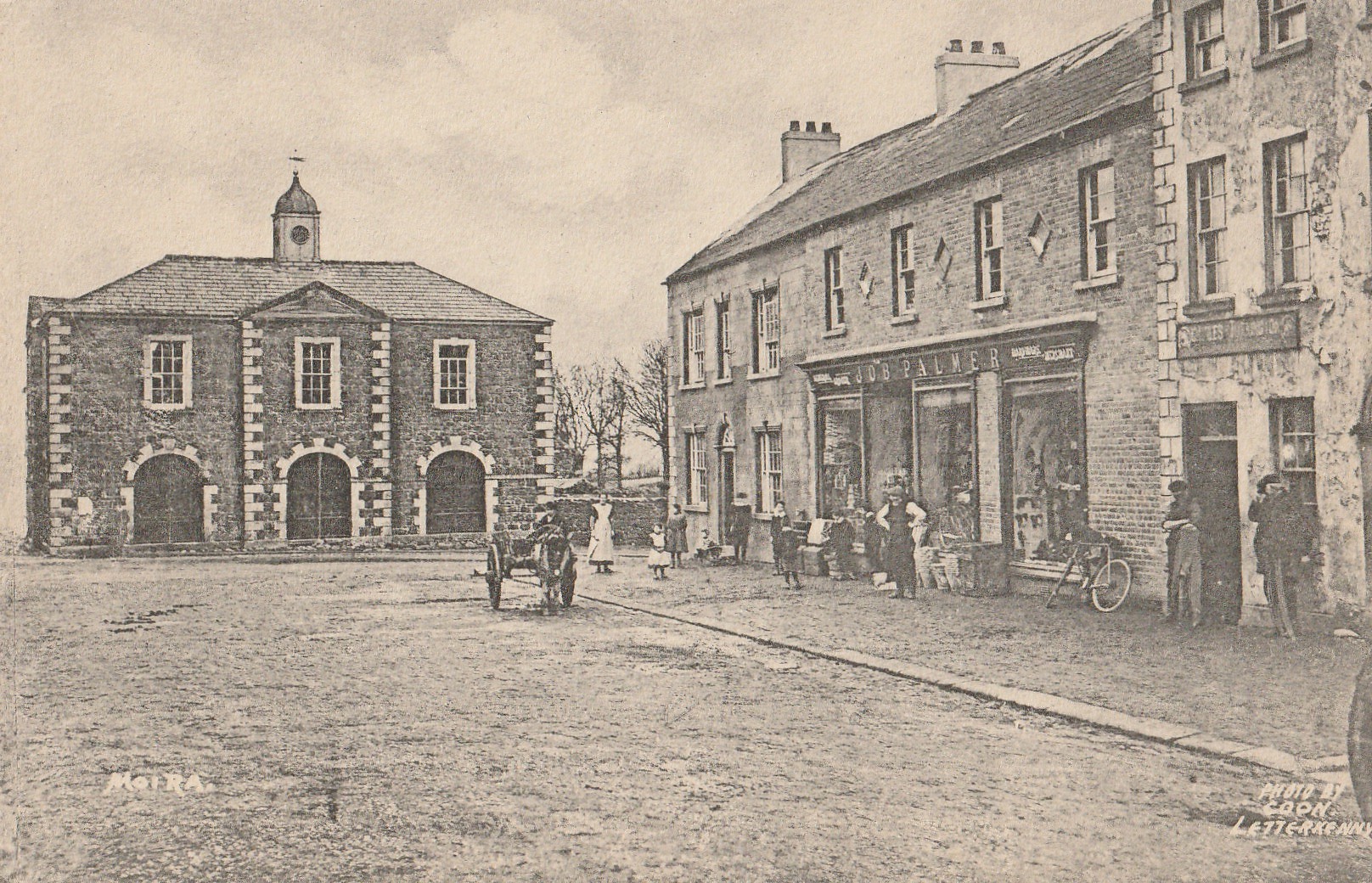
Moira Market House, published by Job Palmer, General Trader, whose shop can be seen on the right
The Theatrical Showman side of his profession was not an idle boast. Although his income from postcard sales must have been steady he was also perpetually ‘on tour’ travelling all over the north of Ireland with his camera and darkroom, setting up in towns as he went to film moving pictures and then show them to a fascinated populace along with films of Charlie Chaplin and other entertainers. In fact he also seems to have had an interest in some of the earliest cinemas established in county Donegal and in Belfast but his commitment to travelling from town to town with his films never waned right up to his death.
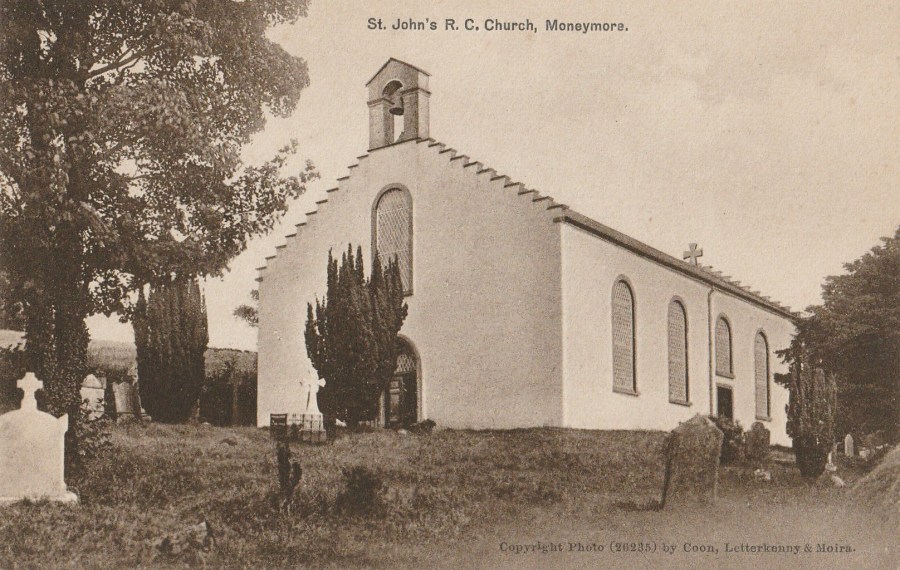
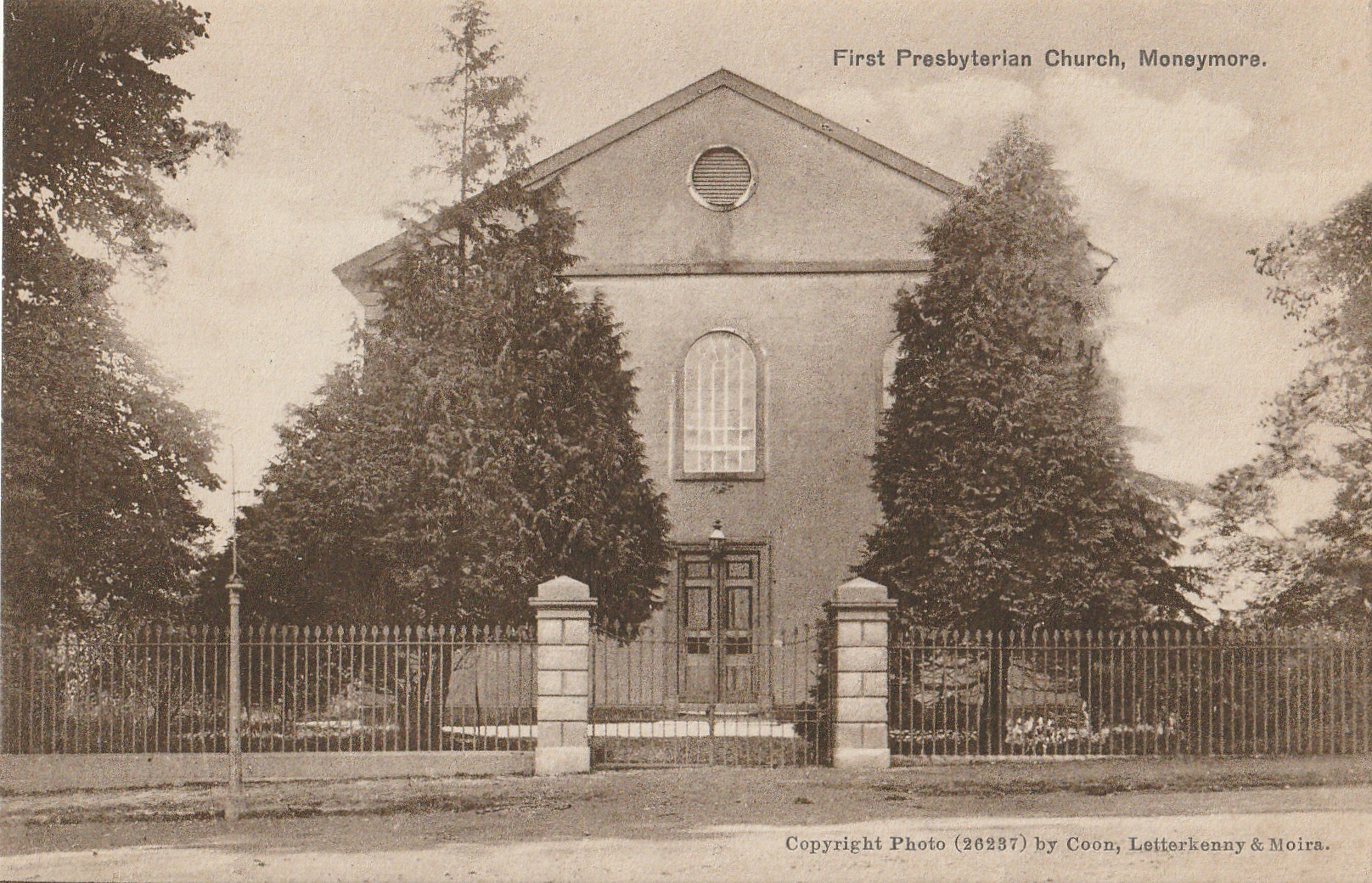
Moneymore, First Presbyterian Church (‘Published by Coon for Devlin, General Merchant, Moneymore’)
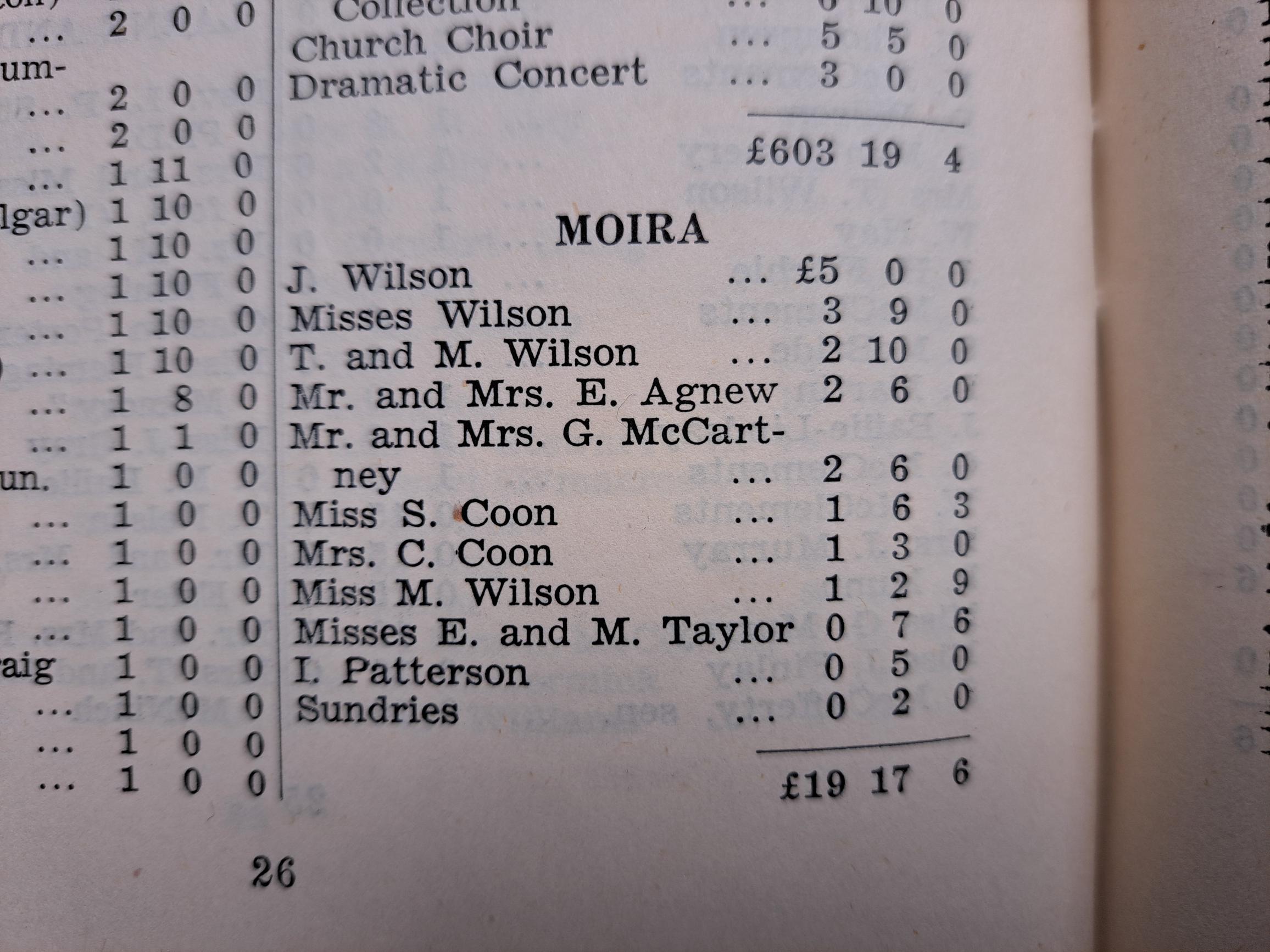
After partition he moved from Letterkenny to Moira and was ultimately buried there in the Non-Subscribing Presbyterian Church graveyard after his sudden death while on tour in Sligo. It is clear that his family had a close association with the Church, other family members are buried in the churchyard, but in the 1940s when the Non-Subscribing Presbyterian denomination launched a tercentenary appeal for the Sustentation Fund (1642 – 1942), Allen Coon’s wife Clara and his daughter Sylvia were amongst the members of the little congregation at Moira who gave their support. Indeed Miss Sylvia Coon was also one of the two local appeal officials for Moira.
Donations from Moira to the NSPCI Tercentenary Sustentation Fund Appeal, including Clara and Sylvia
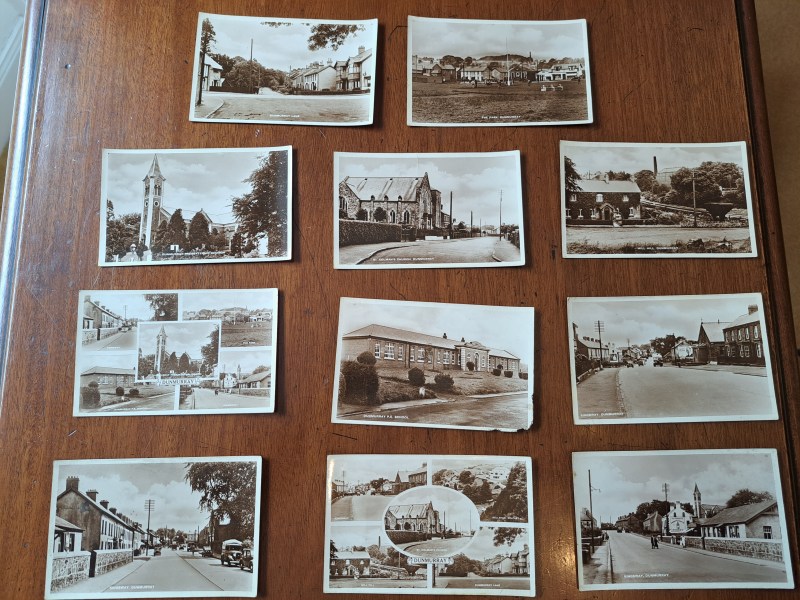
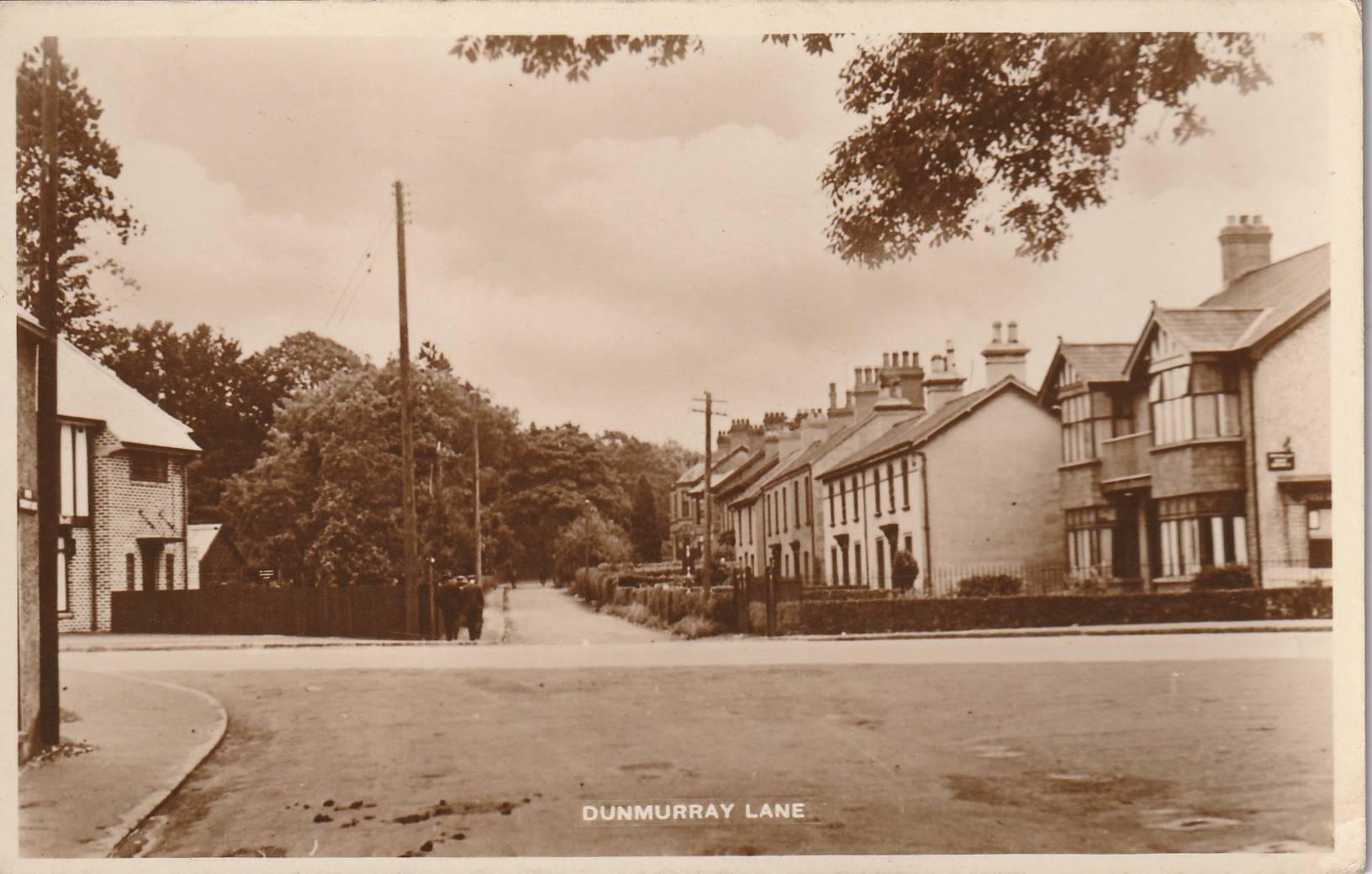
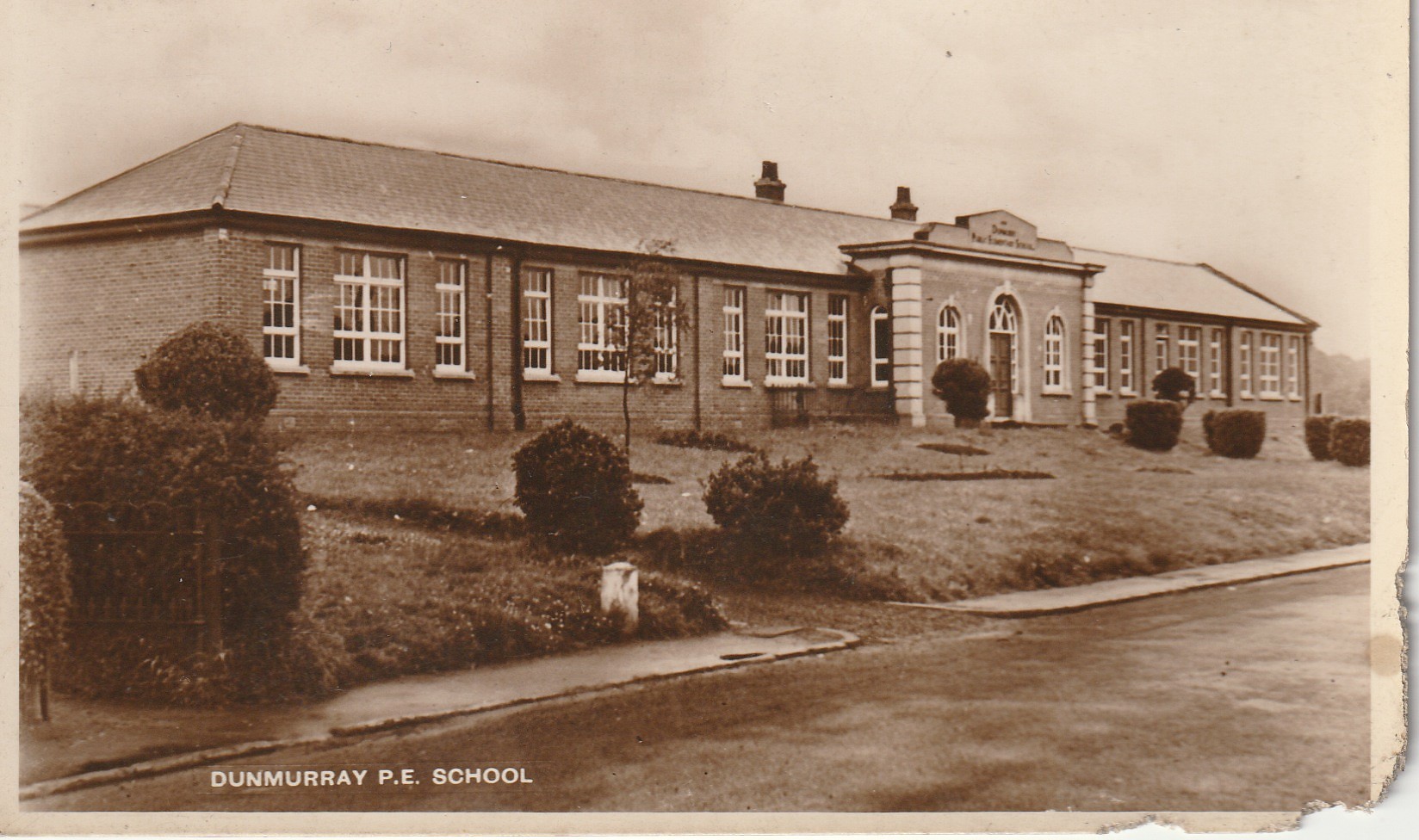
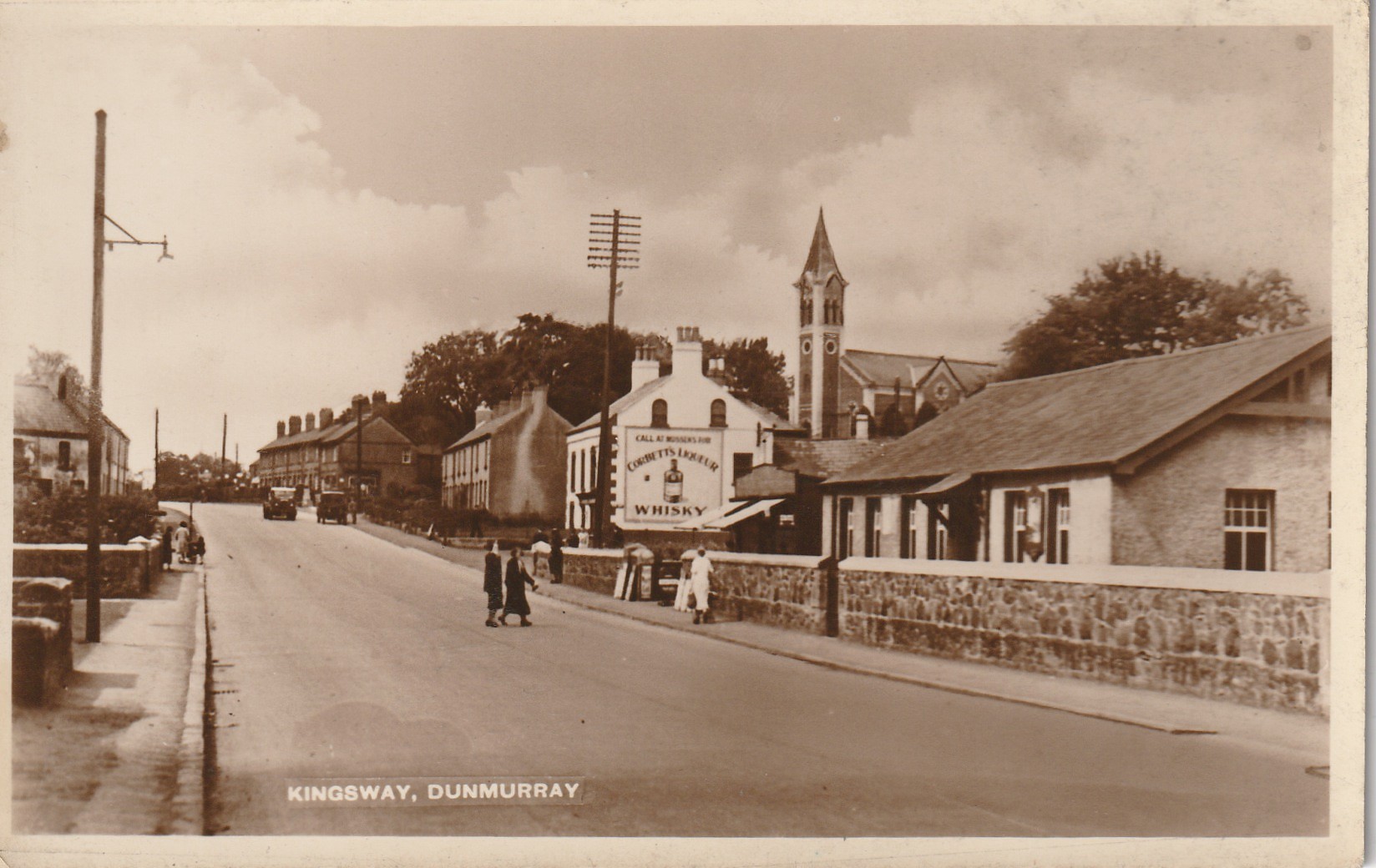
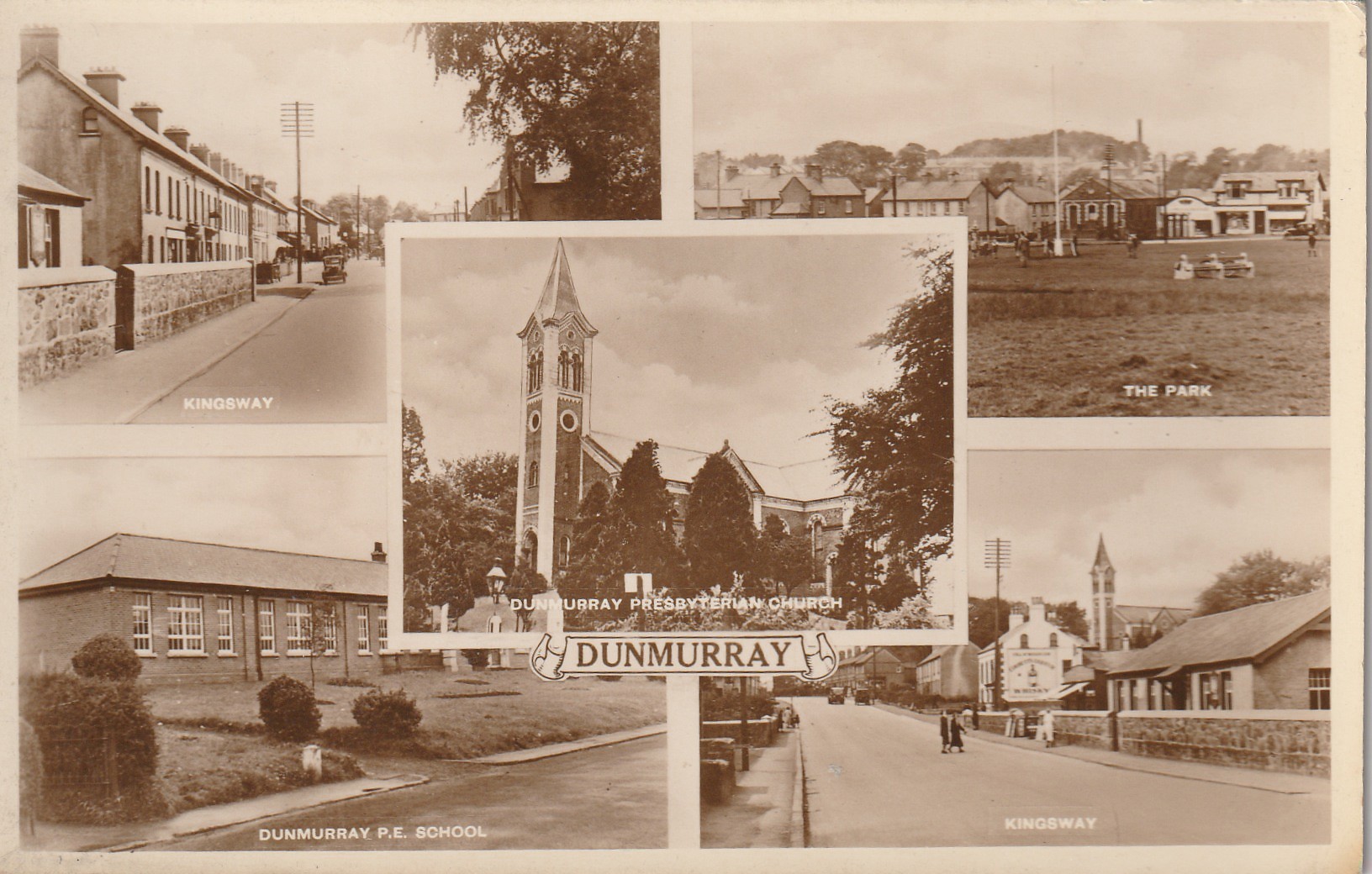
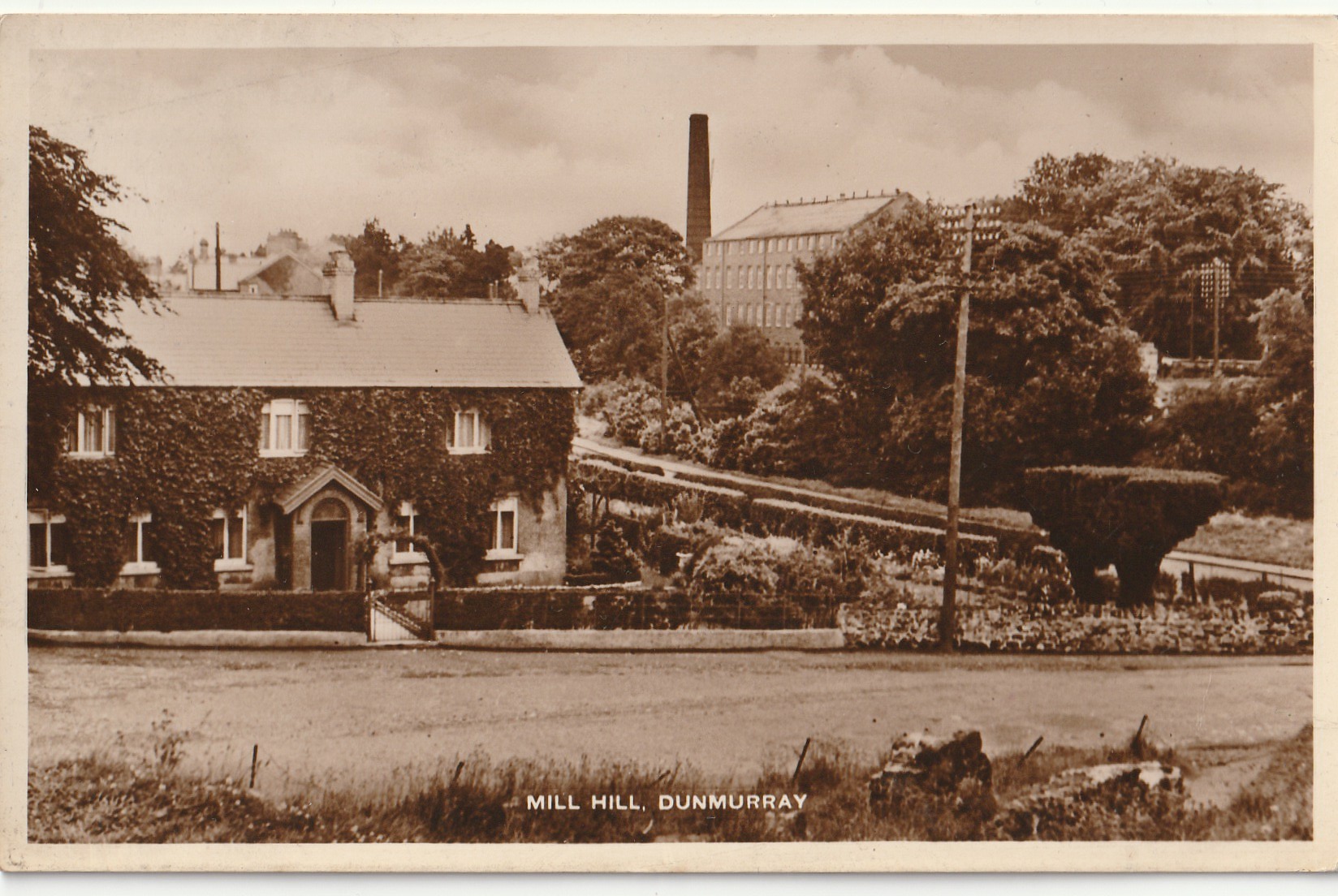
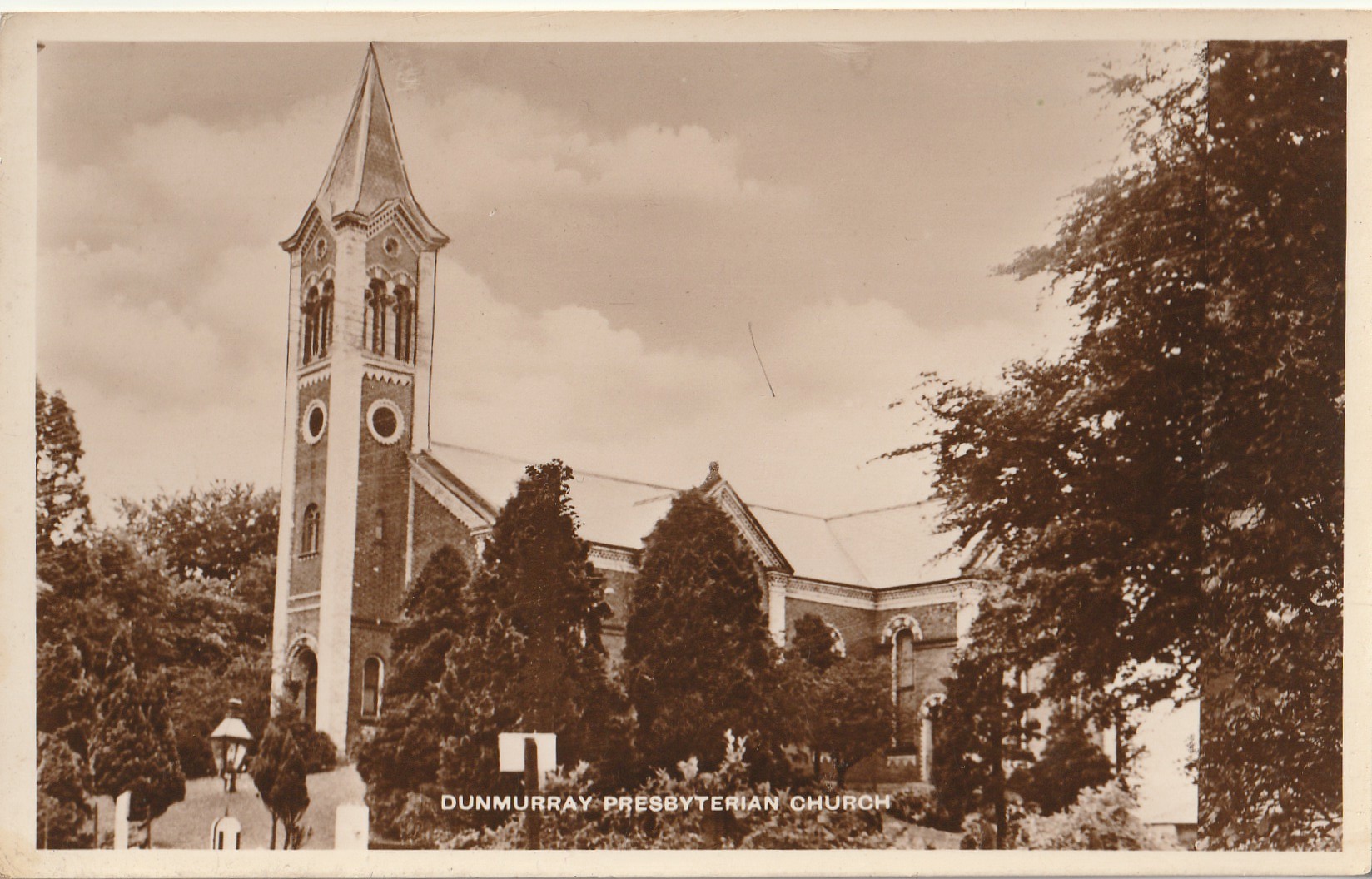
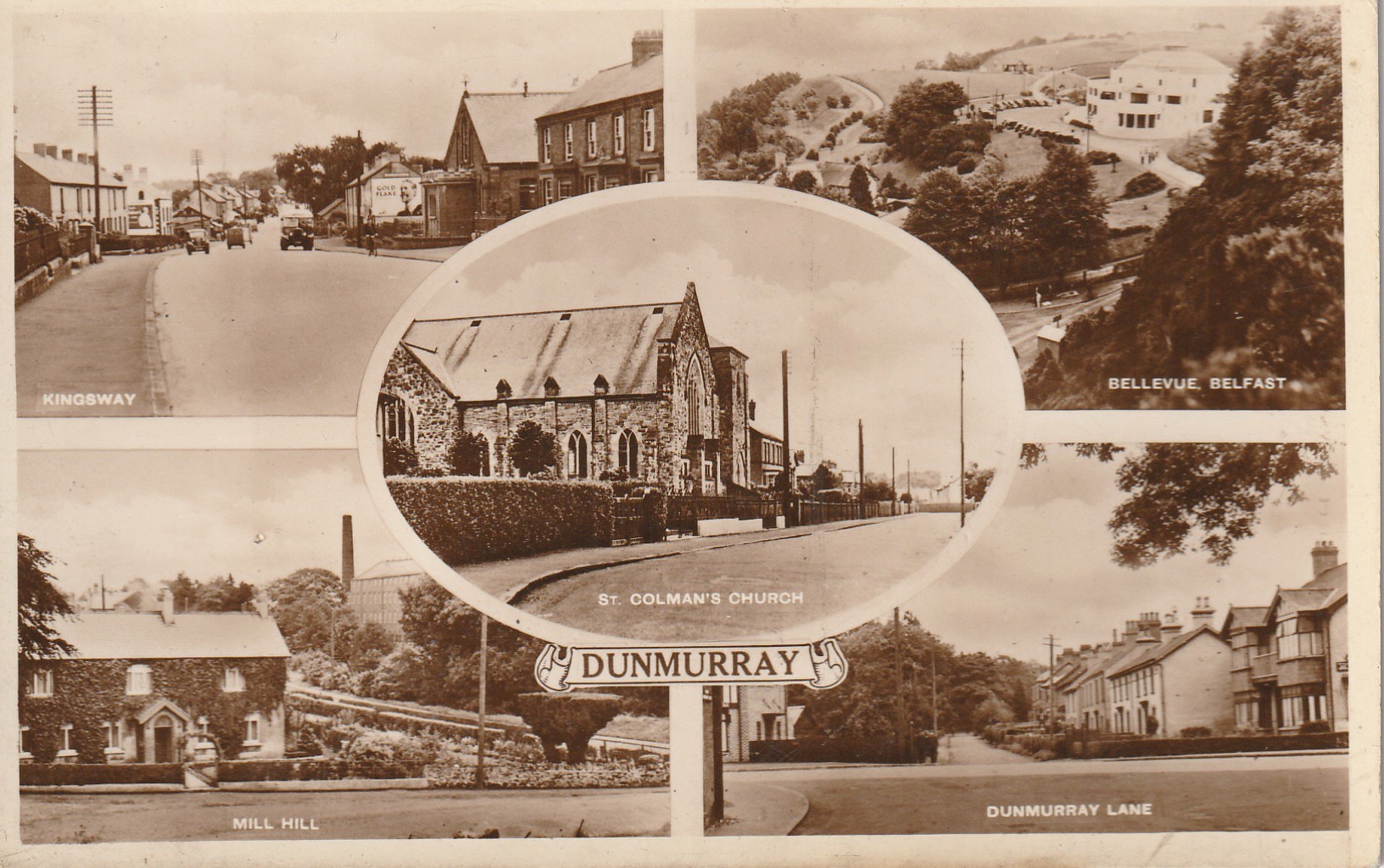
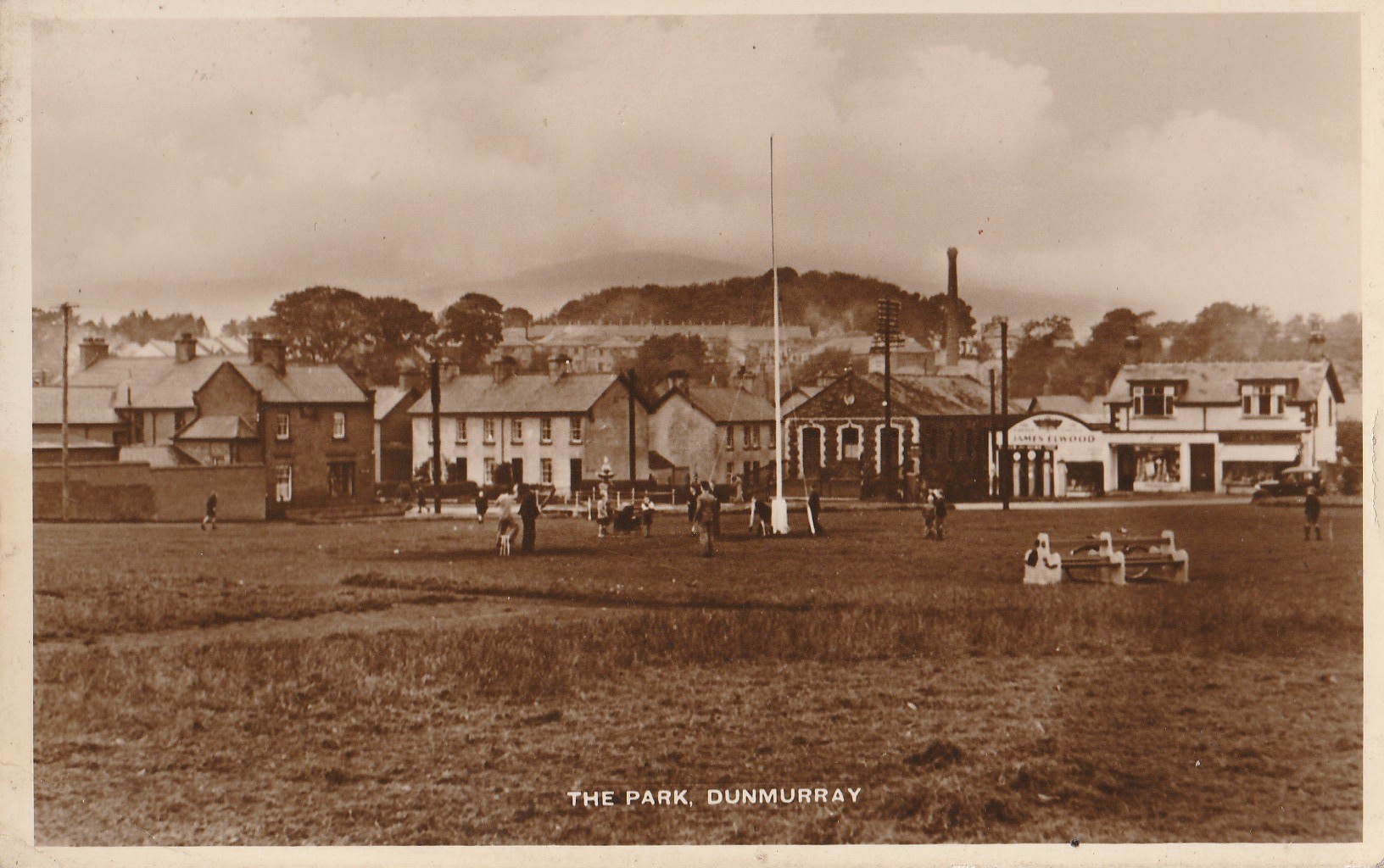
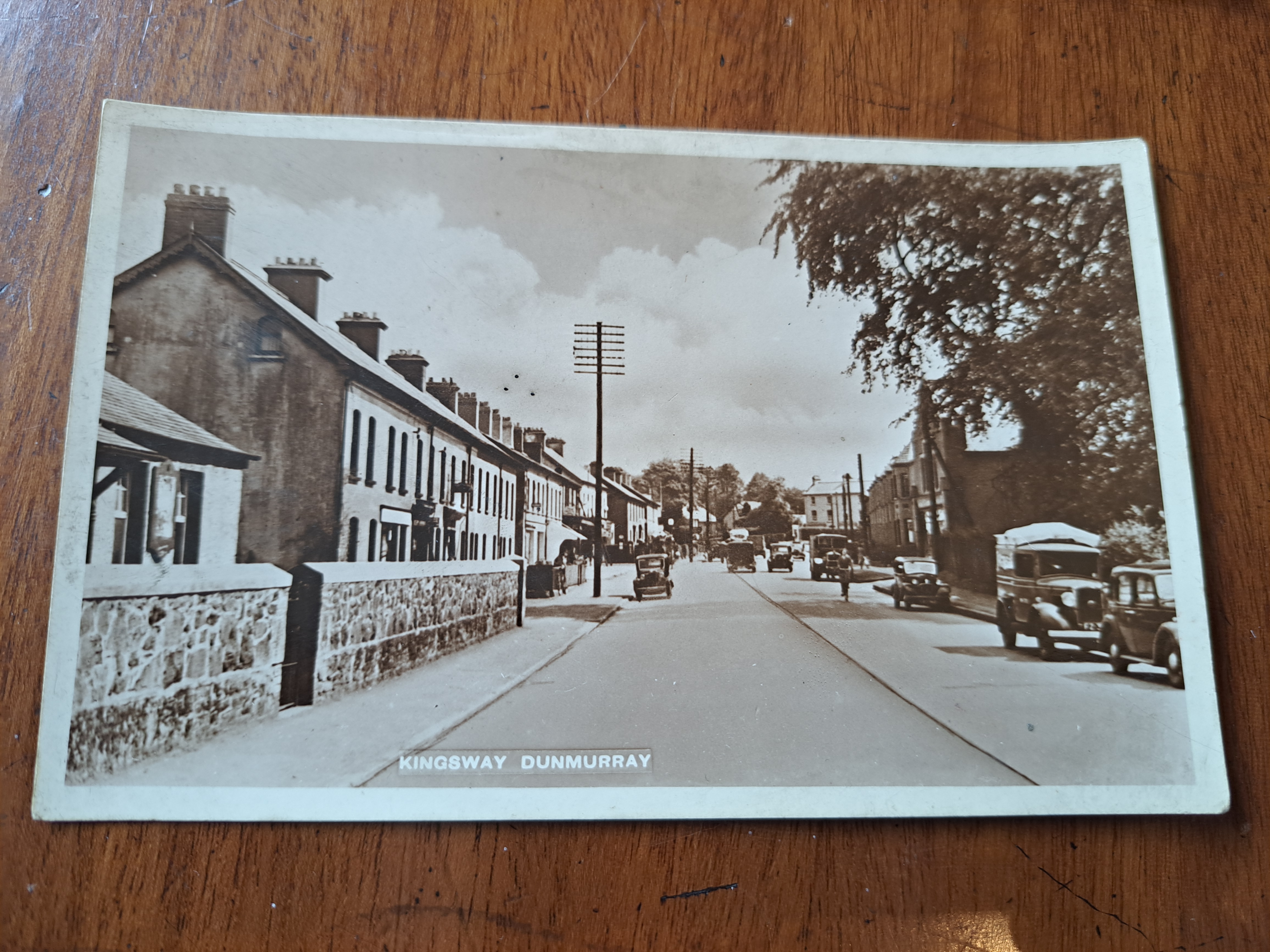
We have a good collection of postcards of Dunmurry in our Library at First Dunmurry (Non-Subscribing) Presbyterian Church. The following video tells their story:
Here are the postcards:
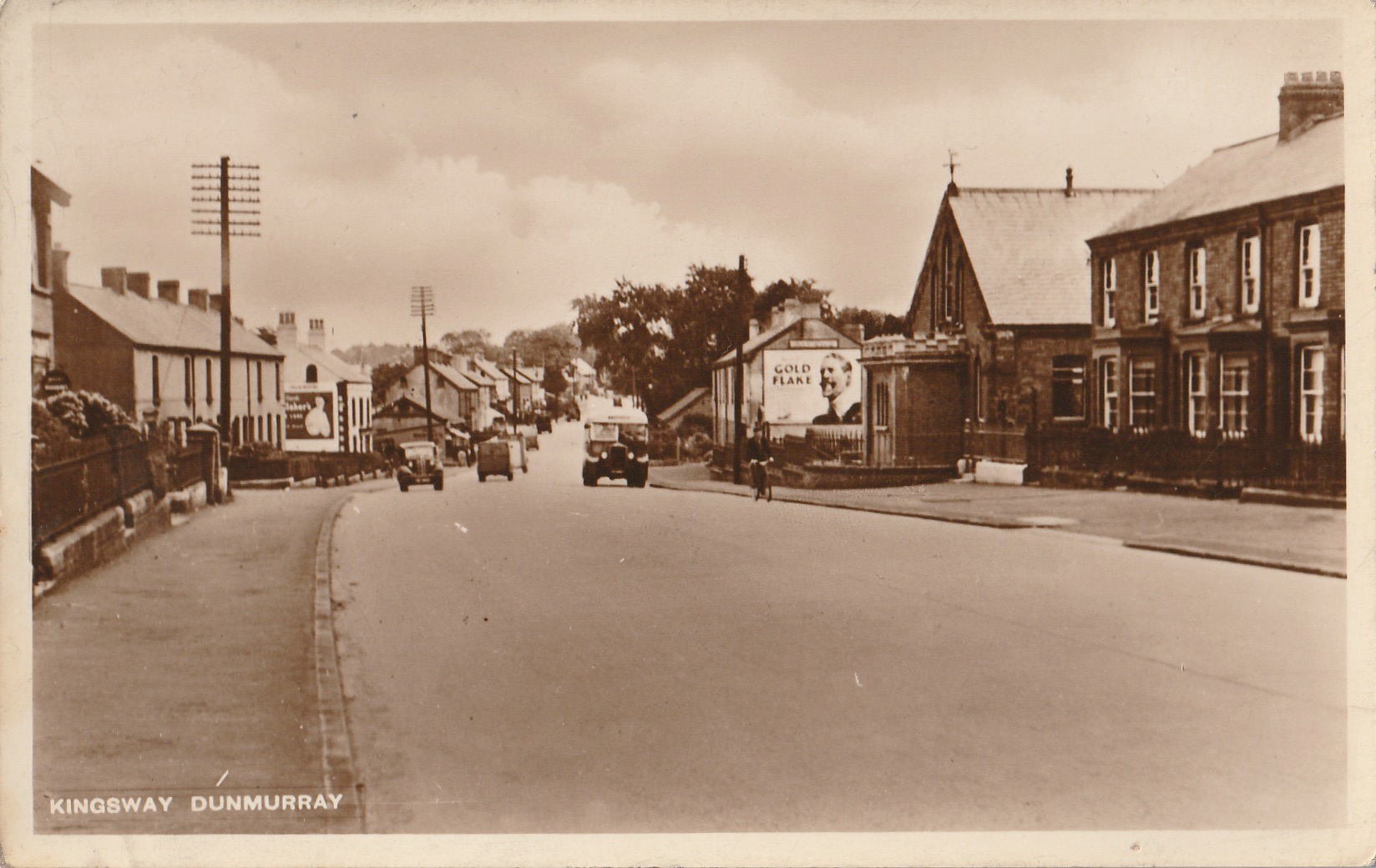
Kingsway 1
Dunmurry Lane
Dunmurry Primary School
Kingsway 2
Multi-view 1
Mill Hill
Presbyterian Church
Multi-view 2
The Park
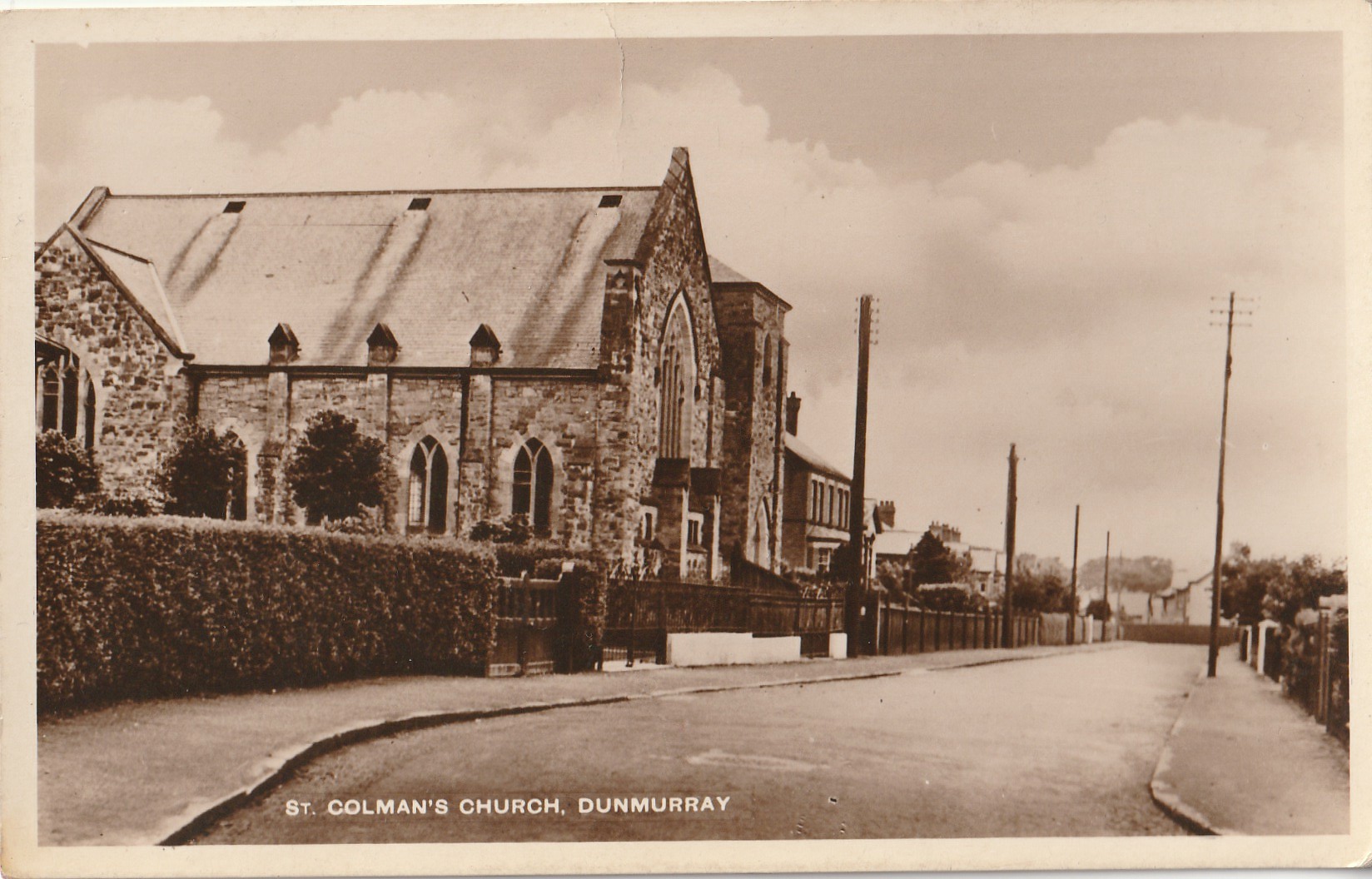
St Colman’s
Kingsway 3
All published by W. McCartney, Stationer, Newsagent & Tobacconist, Dunmurry. All with the unusual spelling of ‘Dunmurray’ on the front and back of each card!
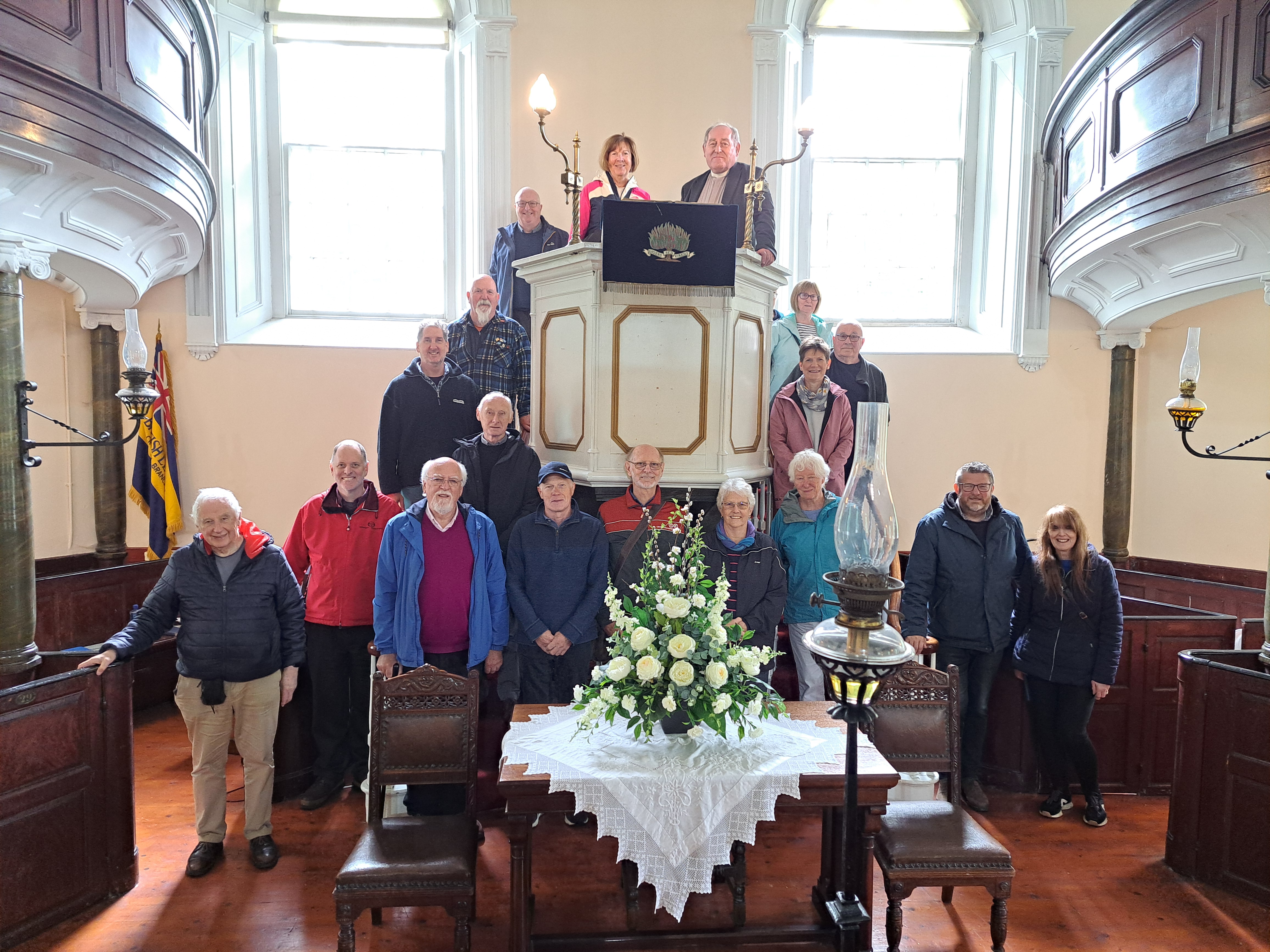
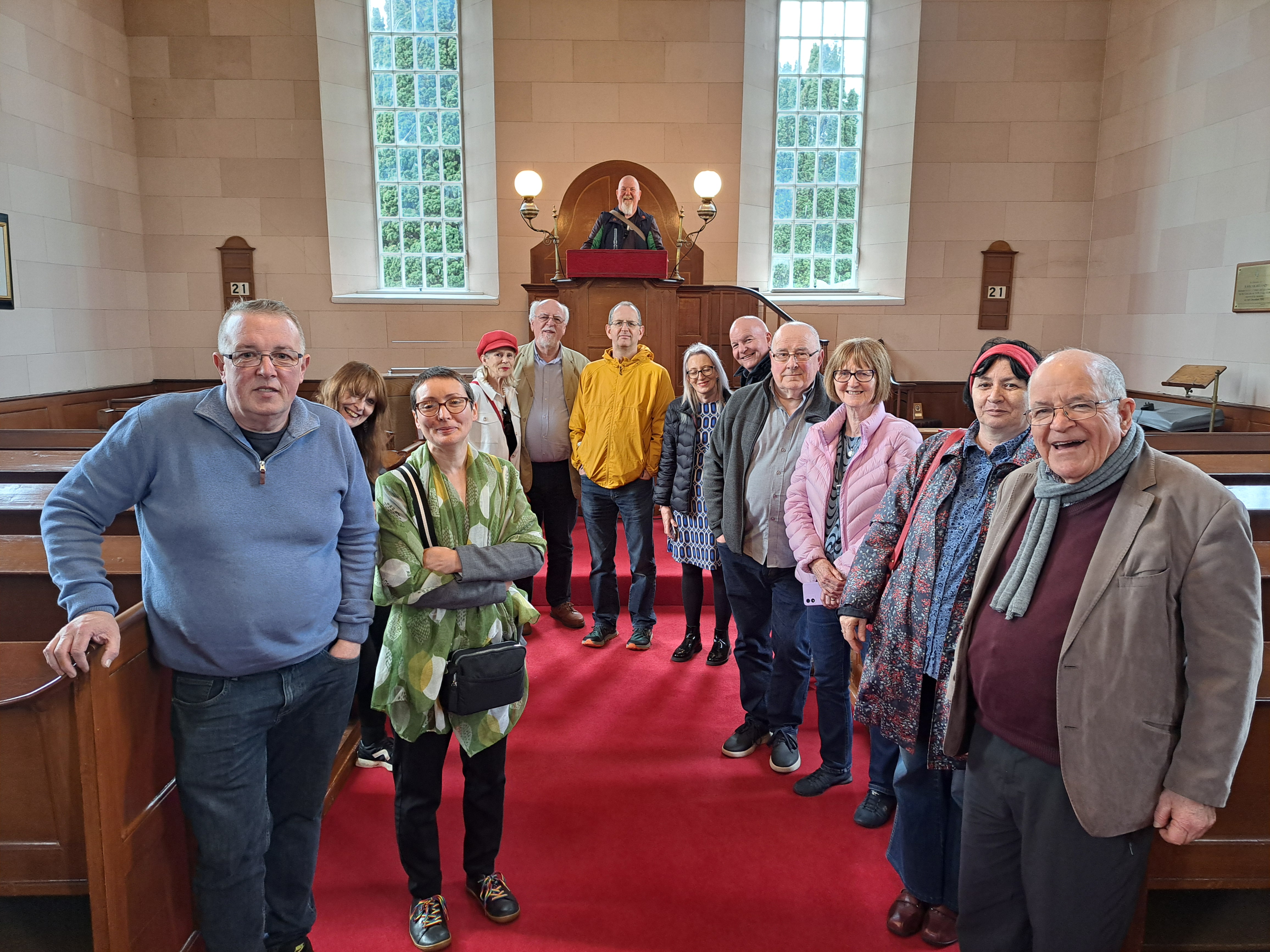
On 5th June 2025 a party of about 20 of us set off on a journey to visit four Non-Subscribing Presbyterian churches in county Antrim plus an historic graveyard (including the ruins of a very historic church) and met a Non-Subscribing Presbyterian peacock along the way. We had as our expert guide the Rev Dr John Nelson whose extensive knowledge kept us informed and entertained all day.
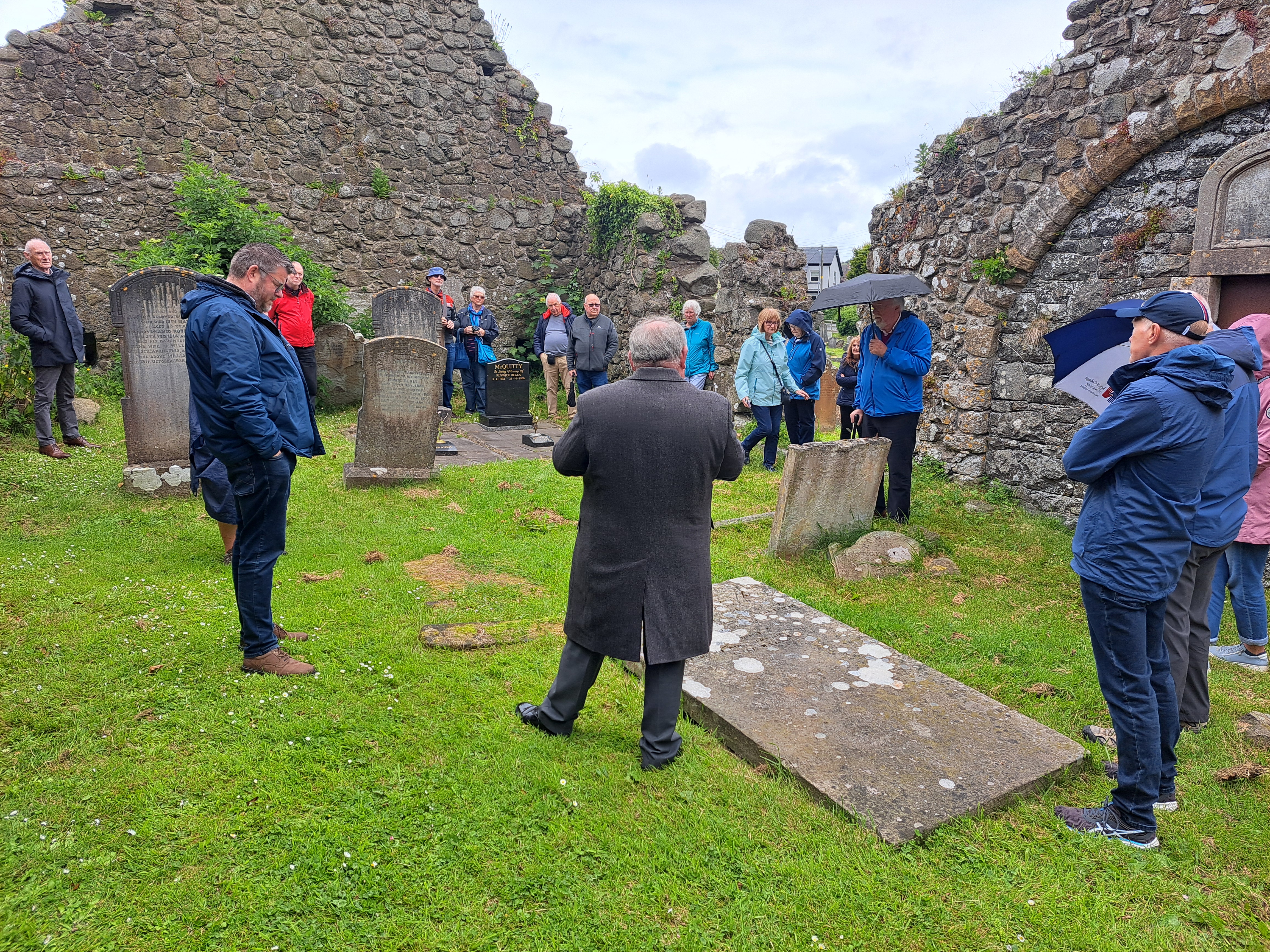
We left Dunmurry and headed for Ballycarry where we visited first Templecorran graveyard.
The ruins of Templecorran church
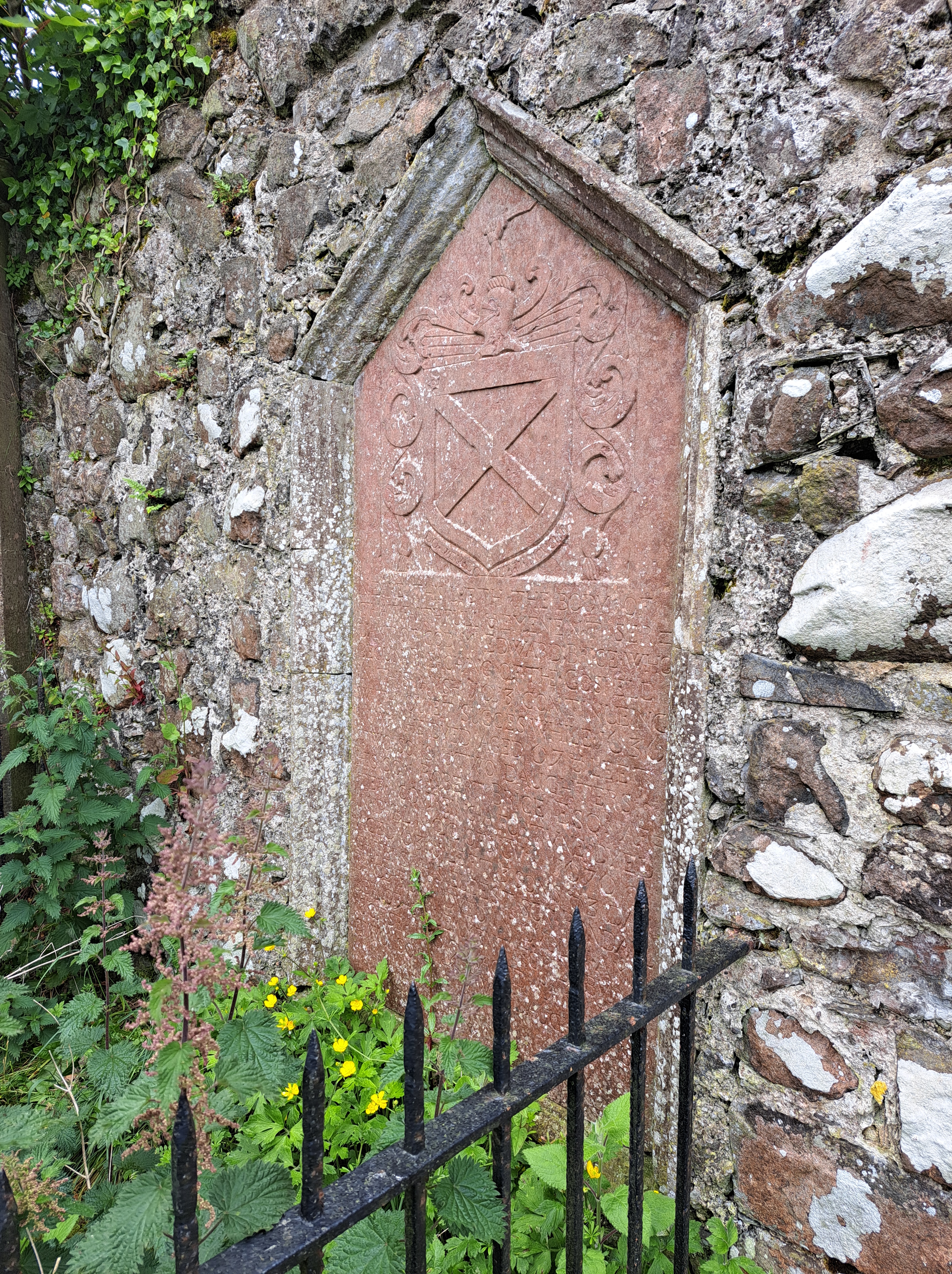
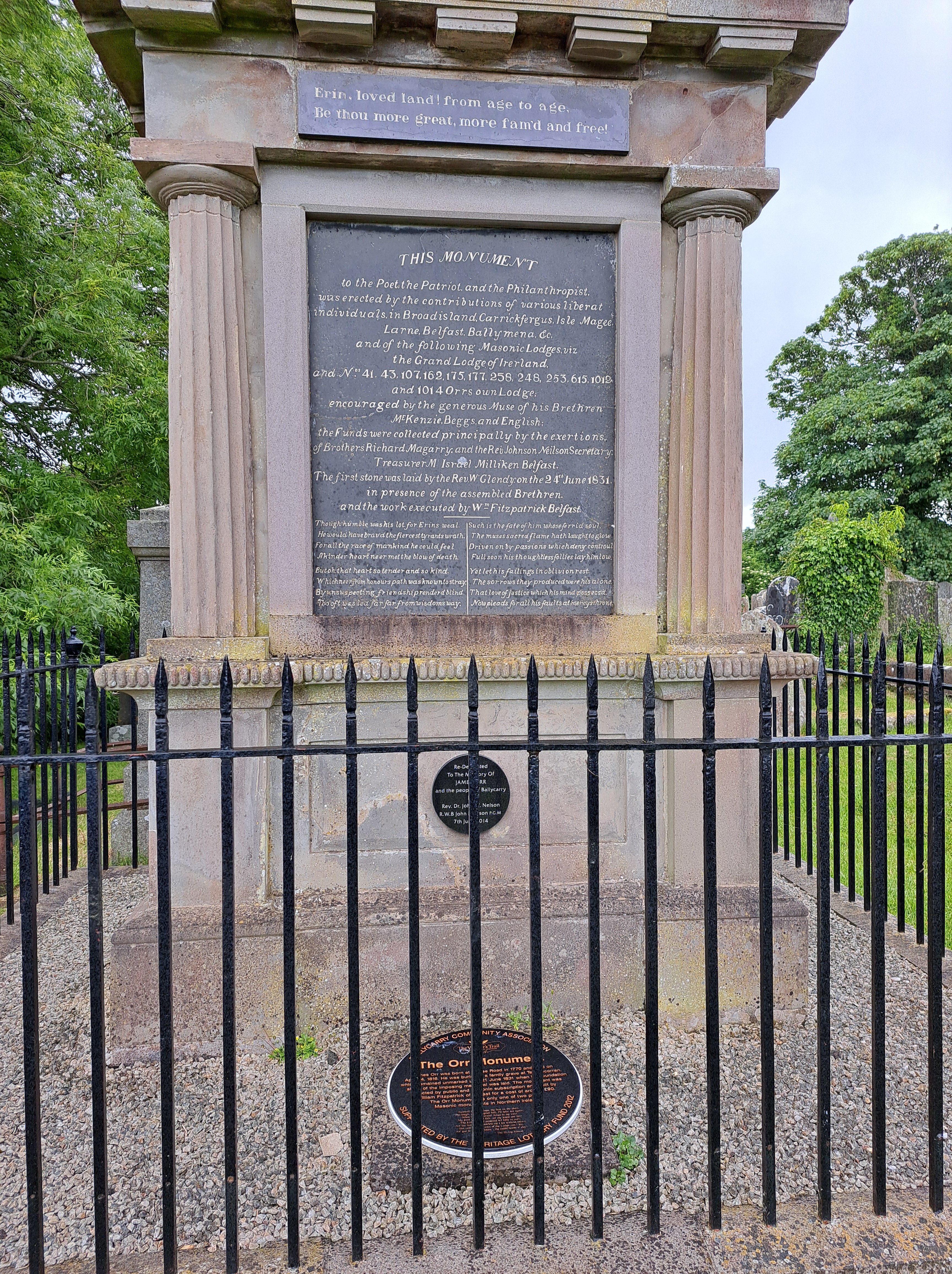
The original parish church used by Edward Brice, the first Presbyterian minister in Ireland in 1613, is now in ruins but it contains many interesting items, including Edward Brice’s grave, the grave of the Rev John Bankhead and a memorial to James Orr, the Bard of Ballycarry.
Grave of Edward Brice
James Orr memorial
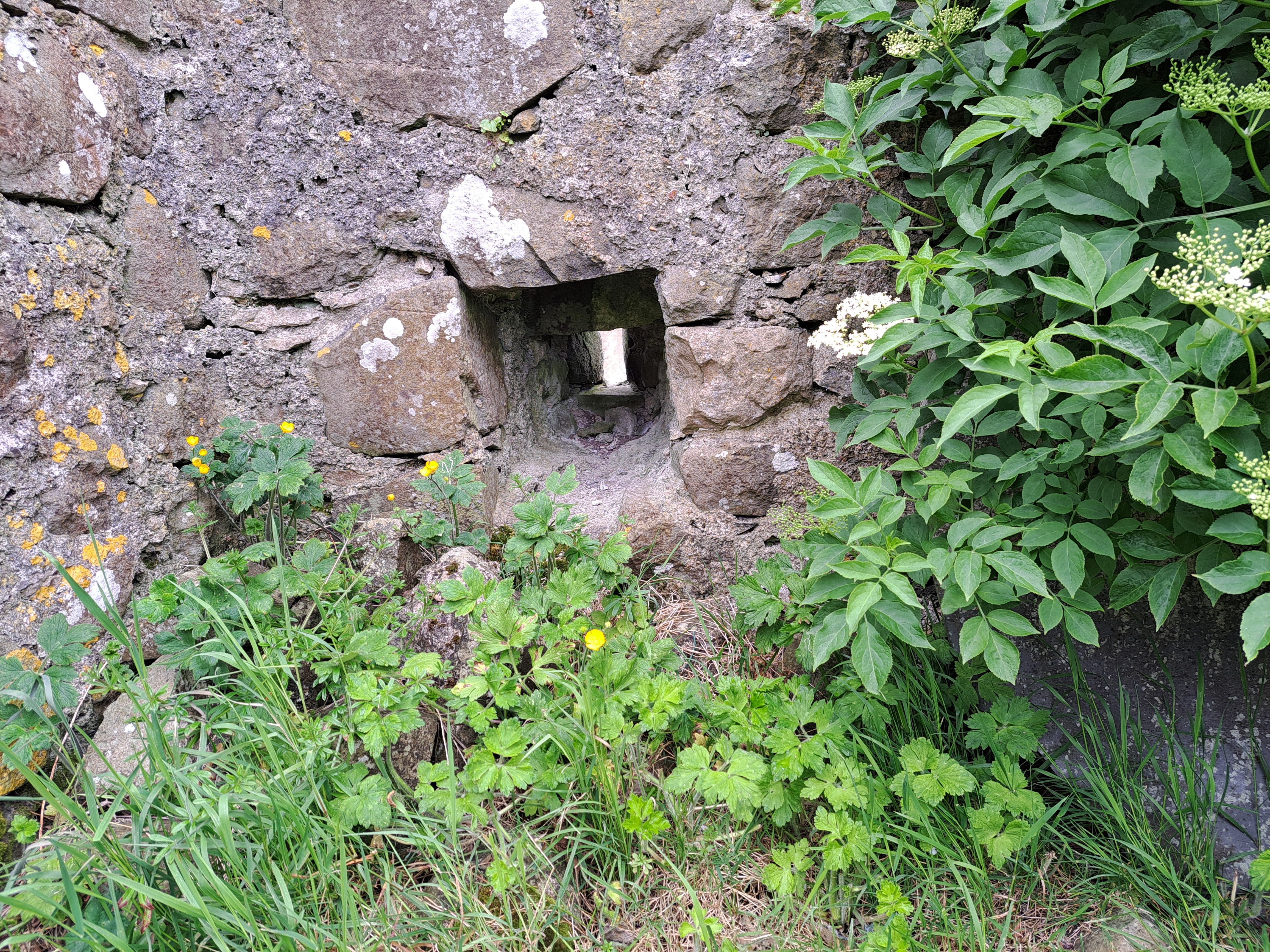
The church was renovated in 1622, during the ministry of Edward Brice, and being built in dangerous times was constructed to be defendable; musket loopholes can still be seen which would have covered all angles of the church should it ever have come under attack.
One of the musket loopholes
The church at Templecorran was slated (unlike the first Ballycarry meeting house which was thatched) and was occupied by Edward Brice and his congregation until he was ejected in 1637.
Inside Templecorran church
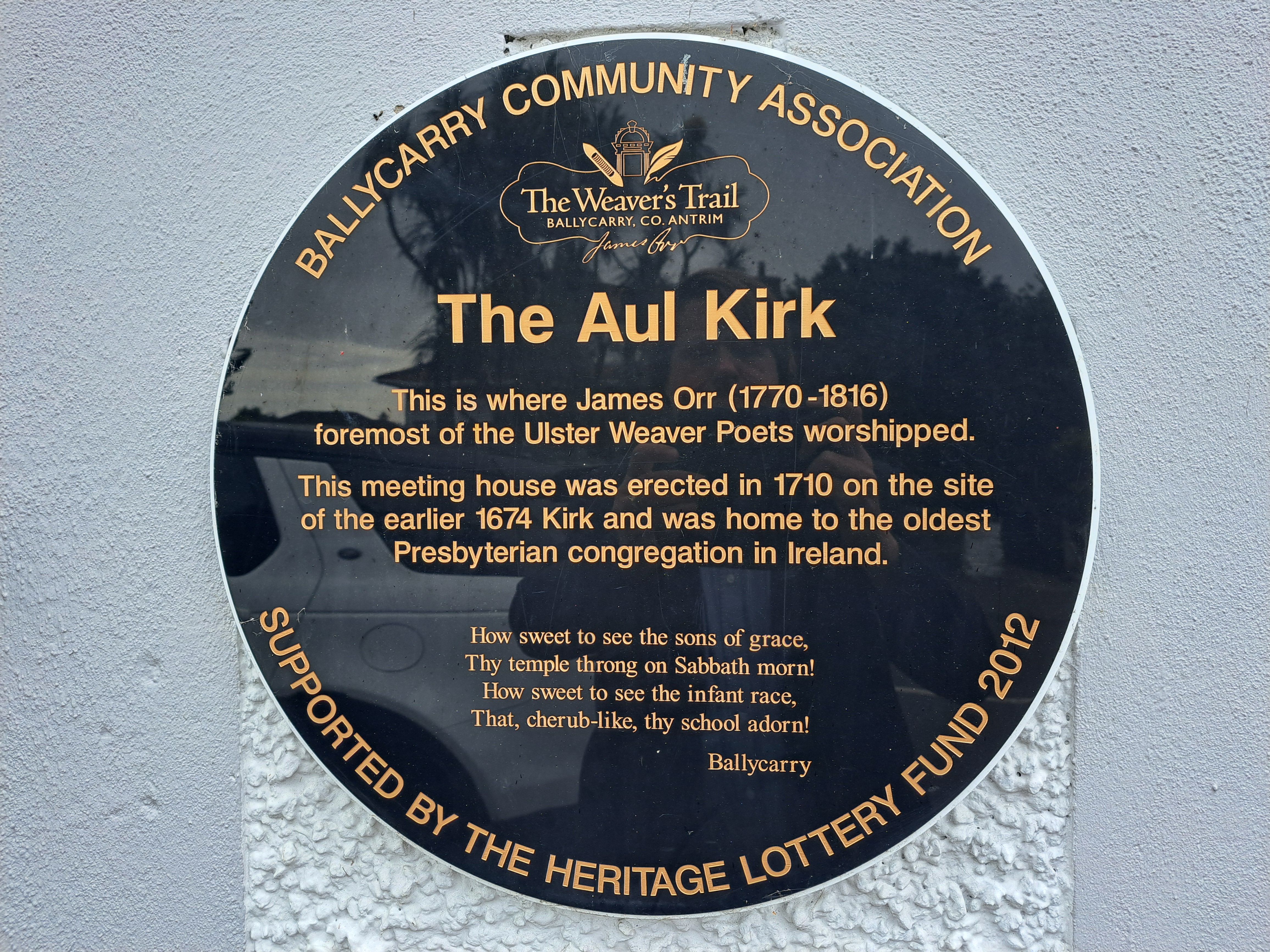
From the old church it is a short walk to Ballycarry where Dr Nelson told us the story of the meeting house, itself dating from the early 18th century.
Ballycarry plaque
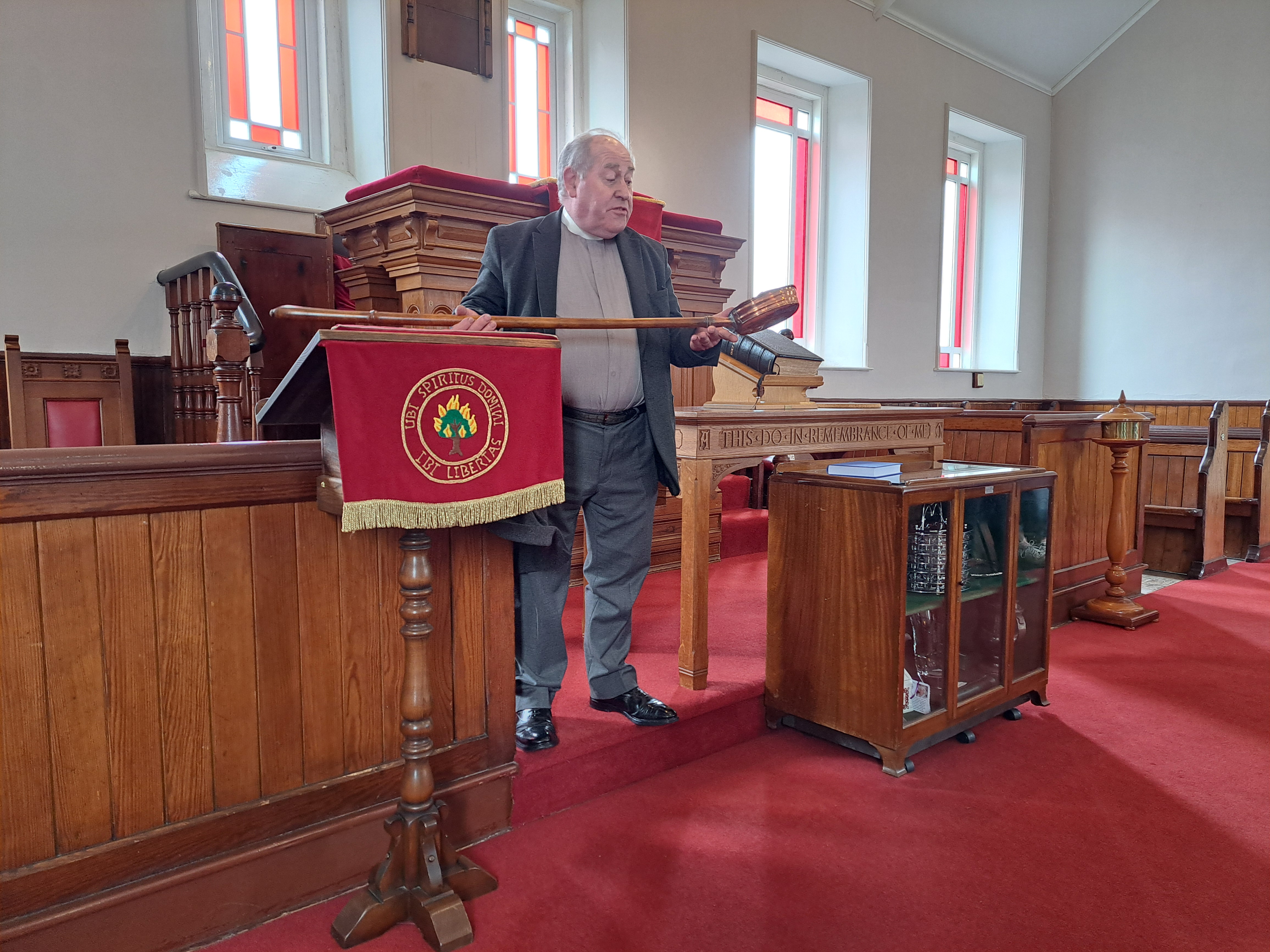
Inside Ballycarry meeting house
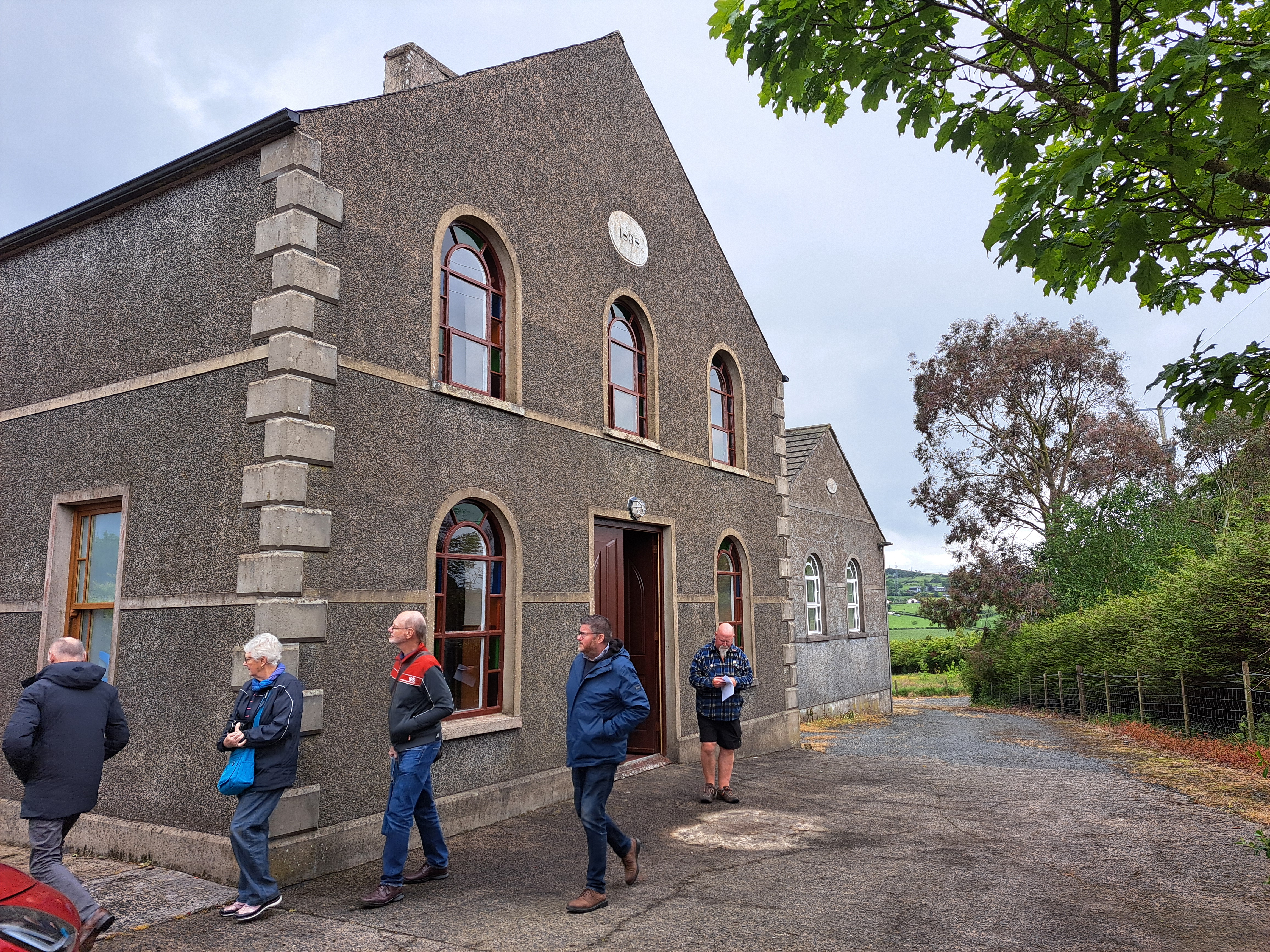
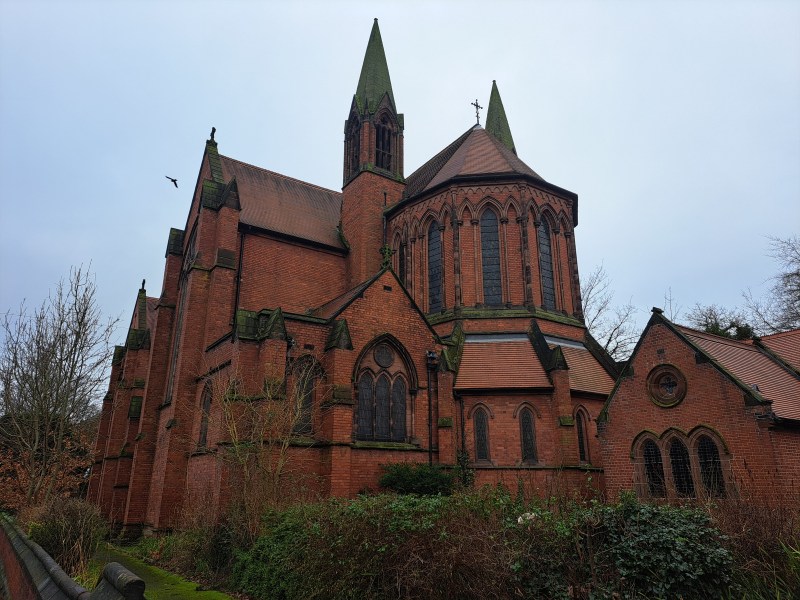
It’s not far from Ballycarry to Raloo but some of us still managed to get lost! But we got there in the end to enjoy the Remonstrant meeting house of 1838 and adjoining modern church hall.
Raloo
Raloo interior
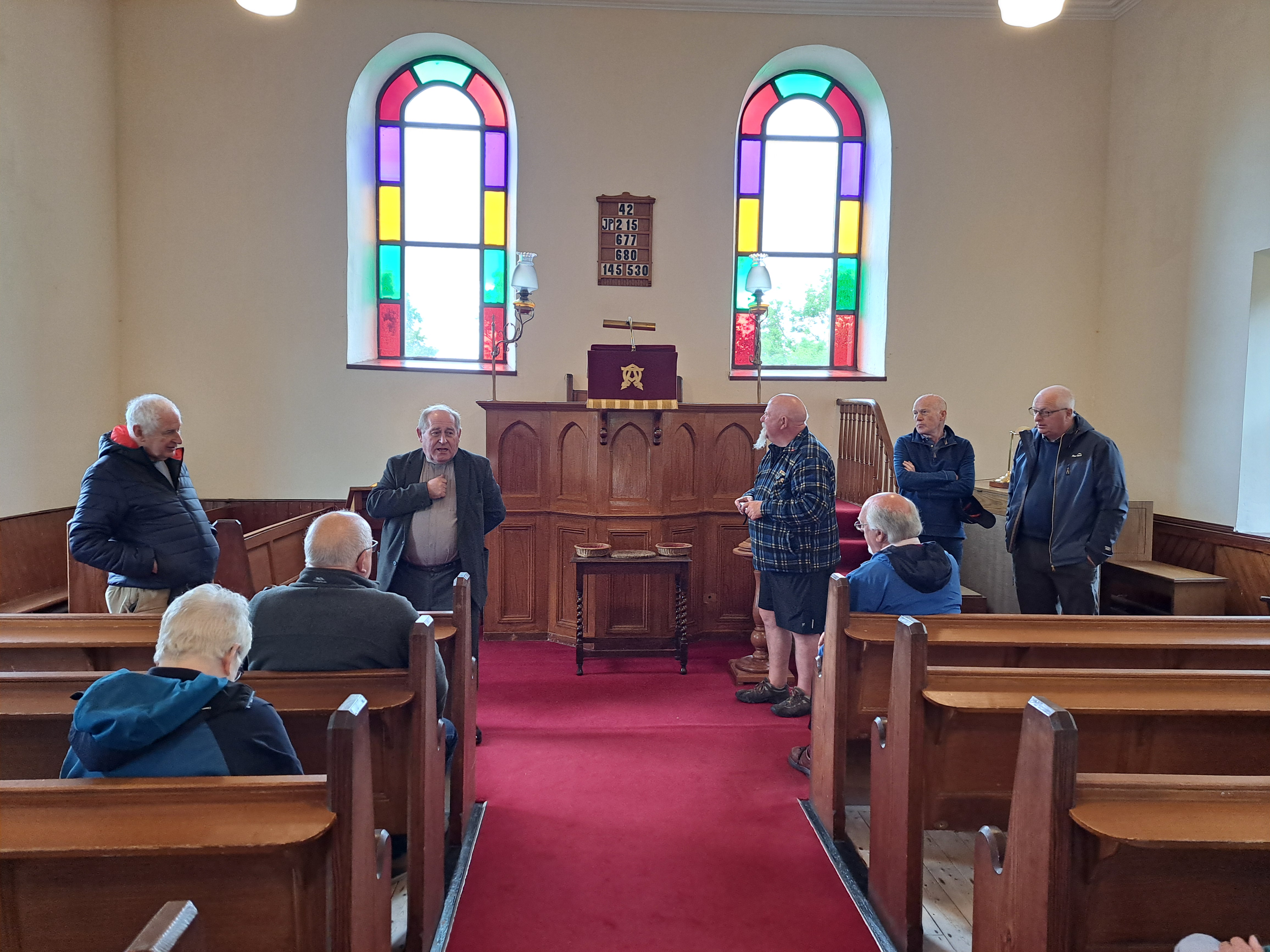
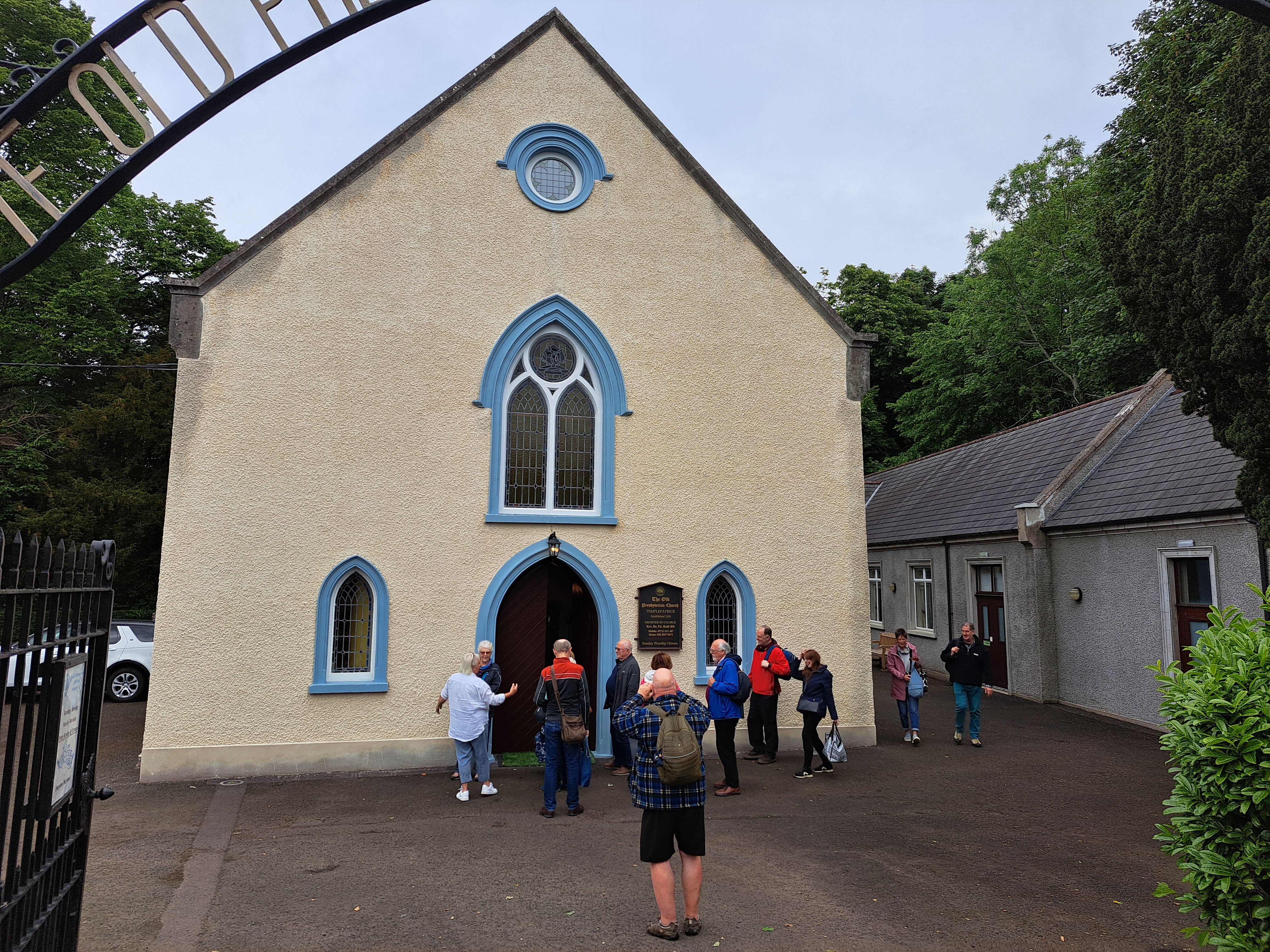
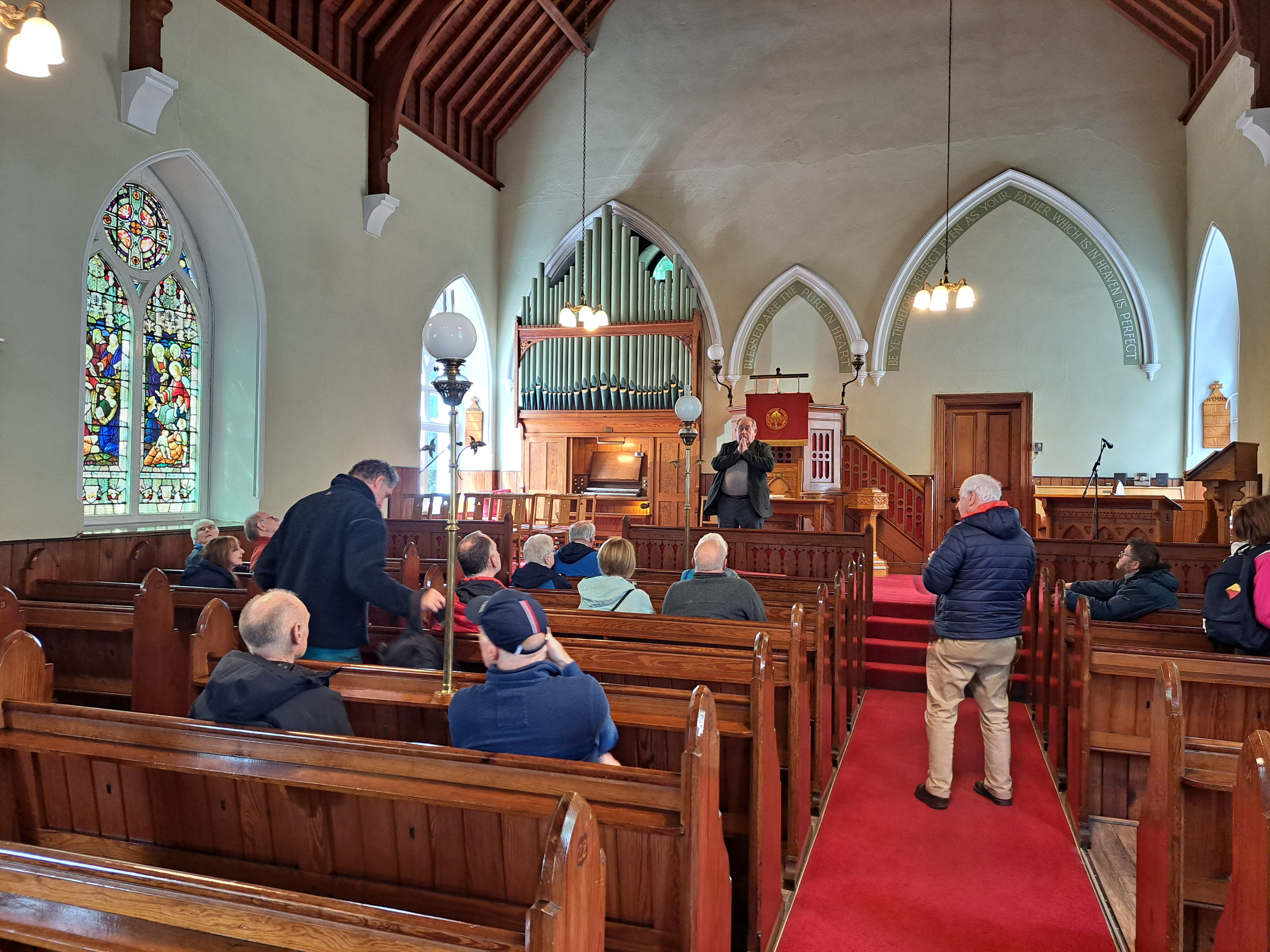
From Raloo we went to Templepatrick where we were able to enjoy our lunch thanks to the kindness of the congregation. Templepatrick is an attractive church which has often faced upheaval. In 1798 the brass canon used by the United Irishmen at the battle of Antrim were stored under the pews. One of these was dragged to the battle on a carriage which was fired once and blew the carriage to pieces.
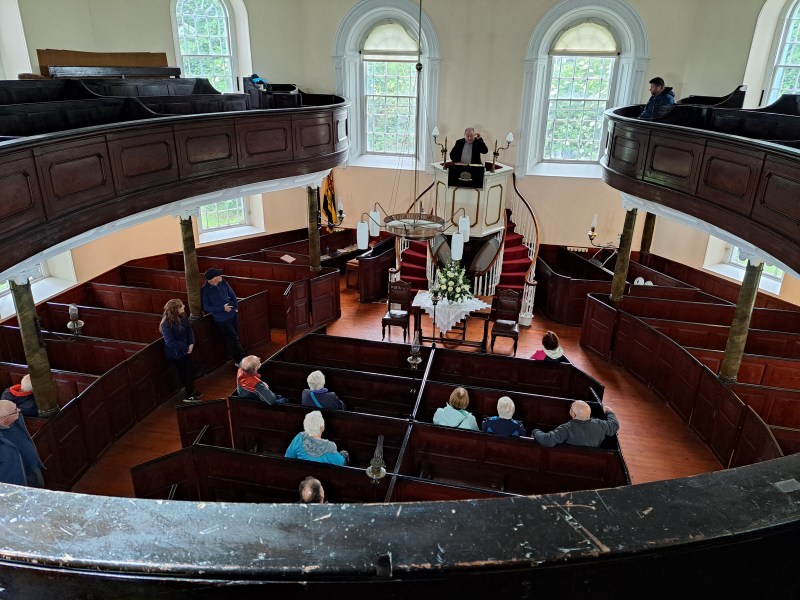
Templepatrick
Later when the congregation became Remonstrant the landlord Lord Templeton evicted the minister from the manse farm.
Templepatrick interior
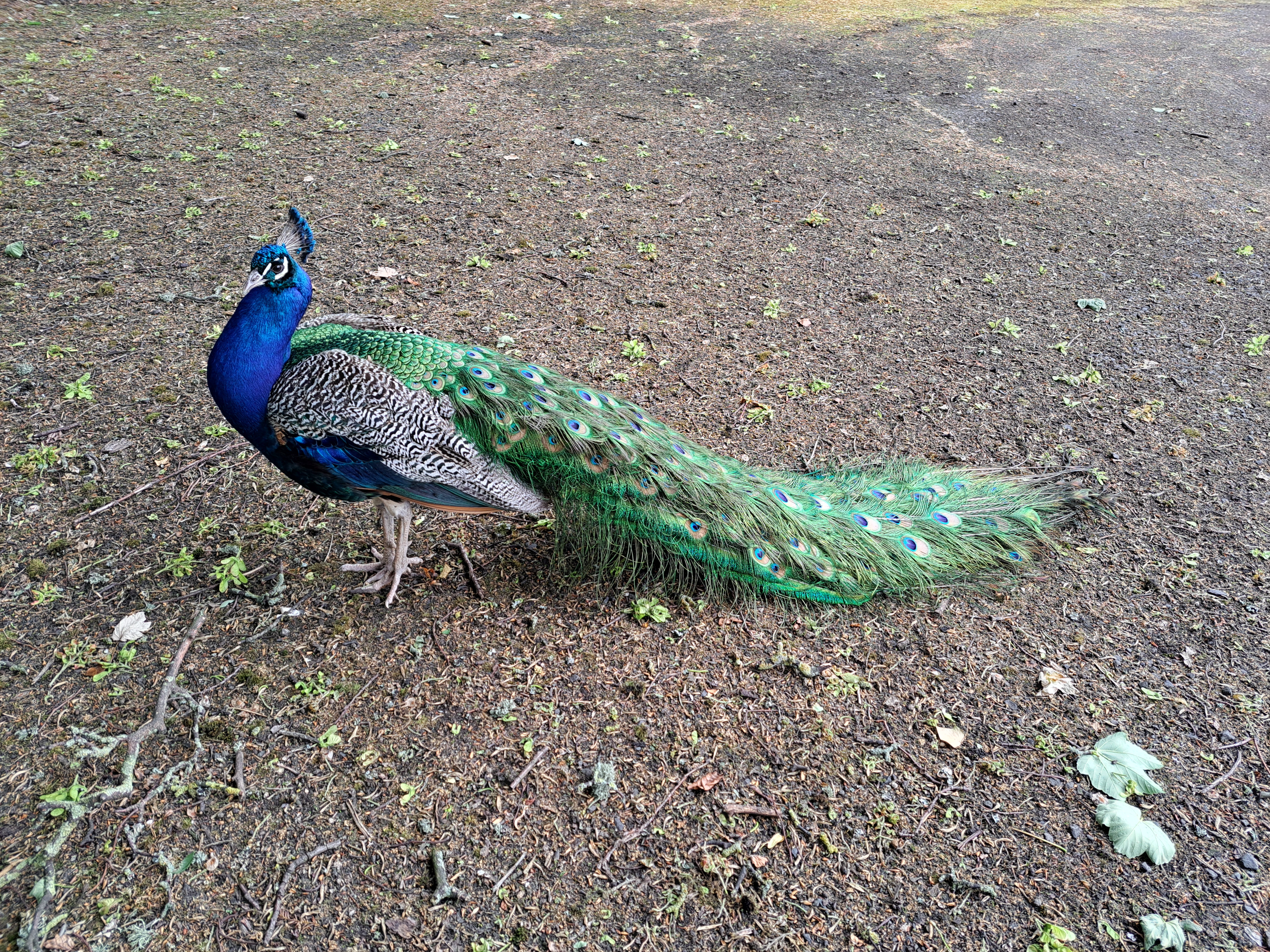
While we were in Templepatrick a peacock was spending some time in the car park:
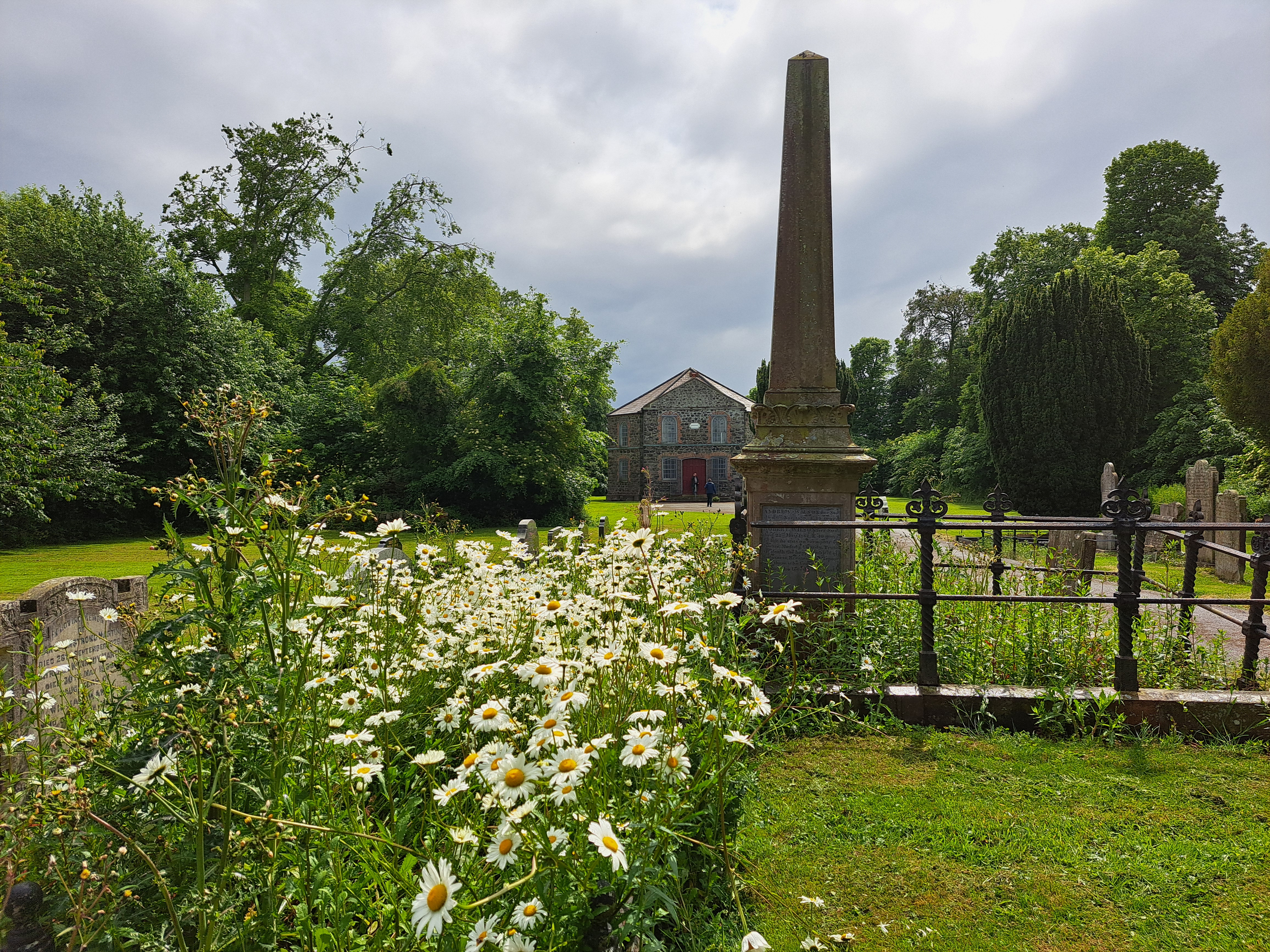
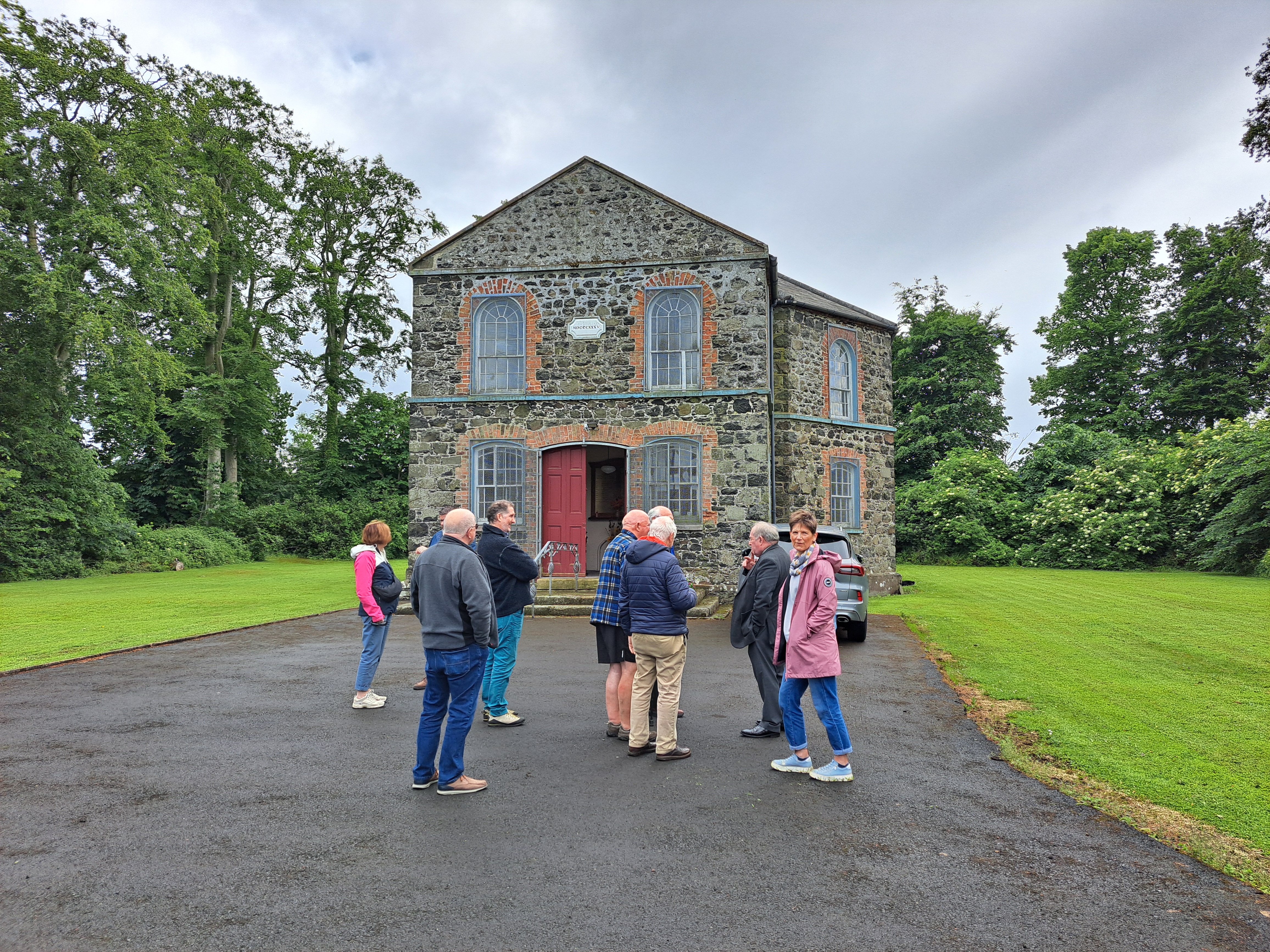
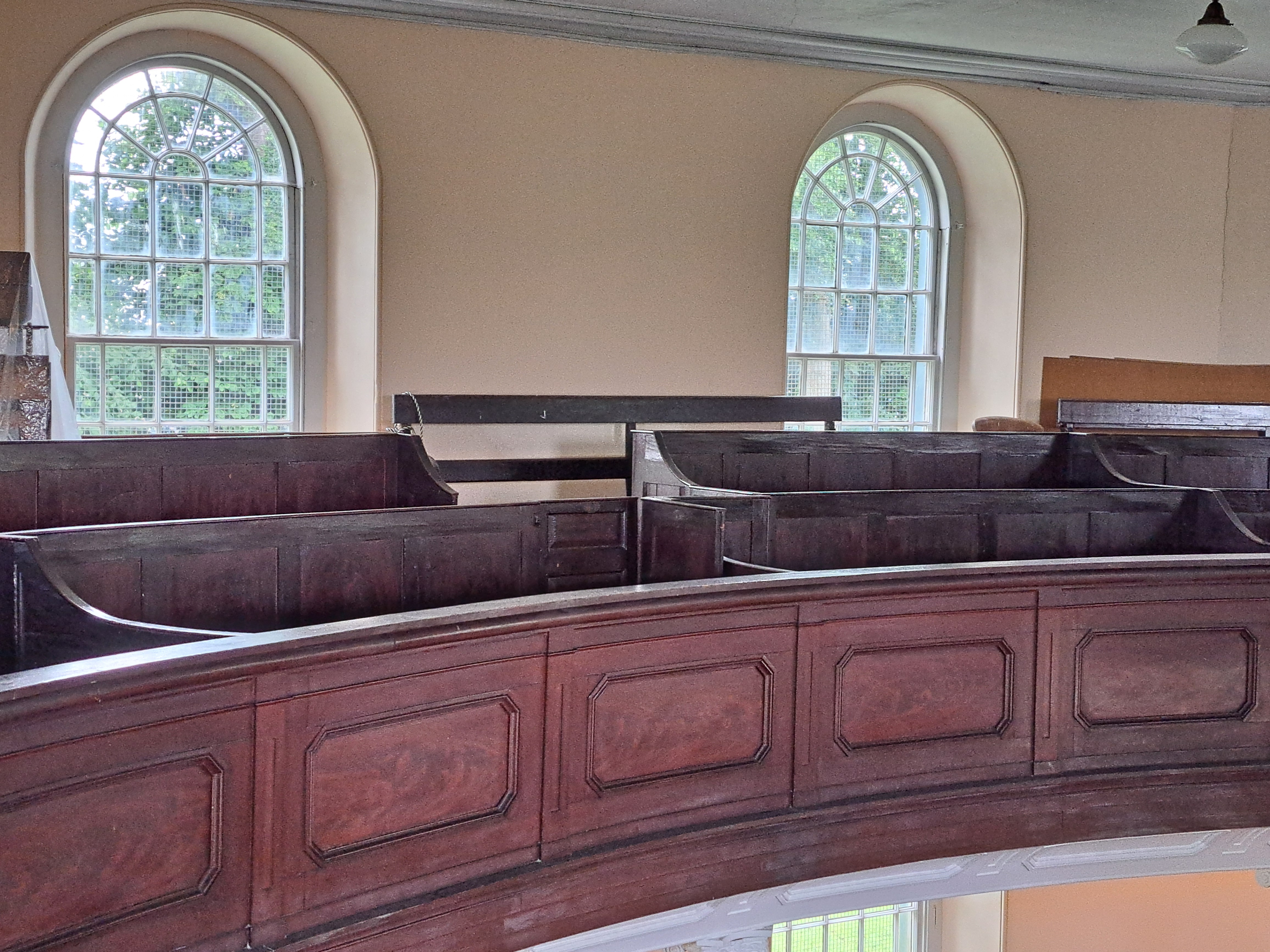
Finally we went off to Crumlin, a congregation founded in 1715, which built a new church in 1835 which was a miniature version of First Church, Belfast.
Looking through some wild flowers towards the church
Outside Crumlin
It is such an elegant building that deserves to be better known.
The church was particularly associated with the Rev Nathaniel Alexander who was 6 feet three inches tall. The pulpit consequently has a trap door that was open when he preached so he could stand at a slightly lower lever.
It was a great day out, many thanks go to Rev Dr John Nelson.
A few years ago a post on this blog attracted some interest about a ghost sign that emerged on Berry Street in Liverpool following the demolition of a neighbouring building. You can see that post here. Walking along Smithdown Road recently I was reminded of a number of ghost signs which can be found there which have long been visible and are probably quite well documented. But it means that Smithdown Road is something of a gold mine for ghost signs so I took a few pictures as I walked along.
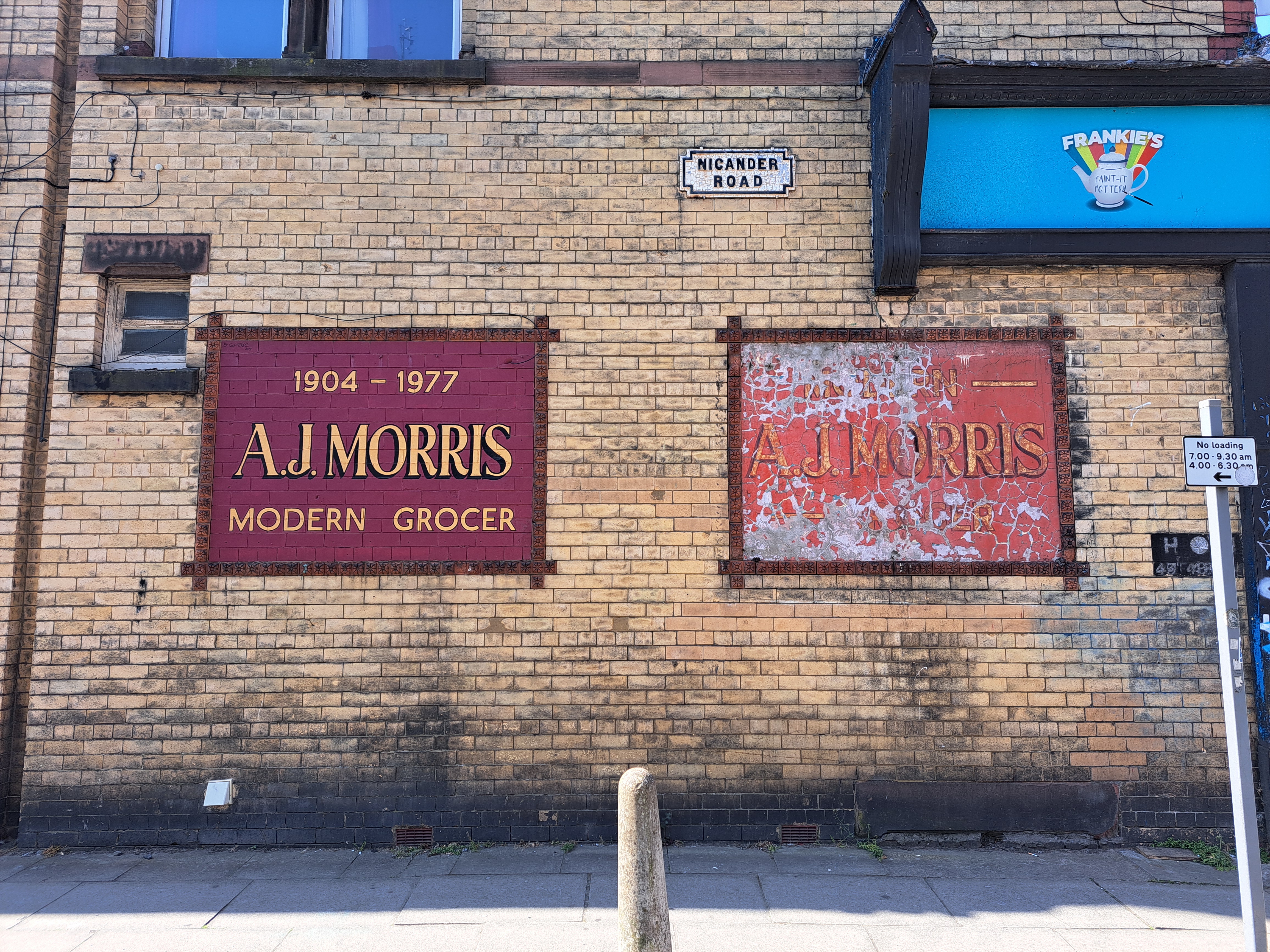
The first is close to the junction of Nicander Road and Smithdown Road. Presumably the shop on the corner was A.J. Morris’s ‘Modern Grocer’ but I have no recollection of it. It is interesting that the original sign just about survives and someone has painted a replica on the adjoining advertising square, which perhaps also once housed a similar message or perhaps was adorned with posters featuring special offers. The ornamental tiles that form the frames here are an interesting feature.
A.J. Morris Modern Grocer
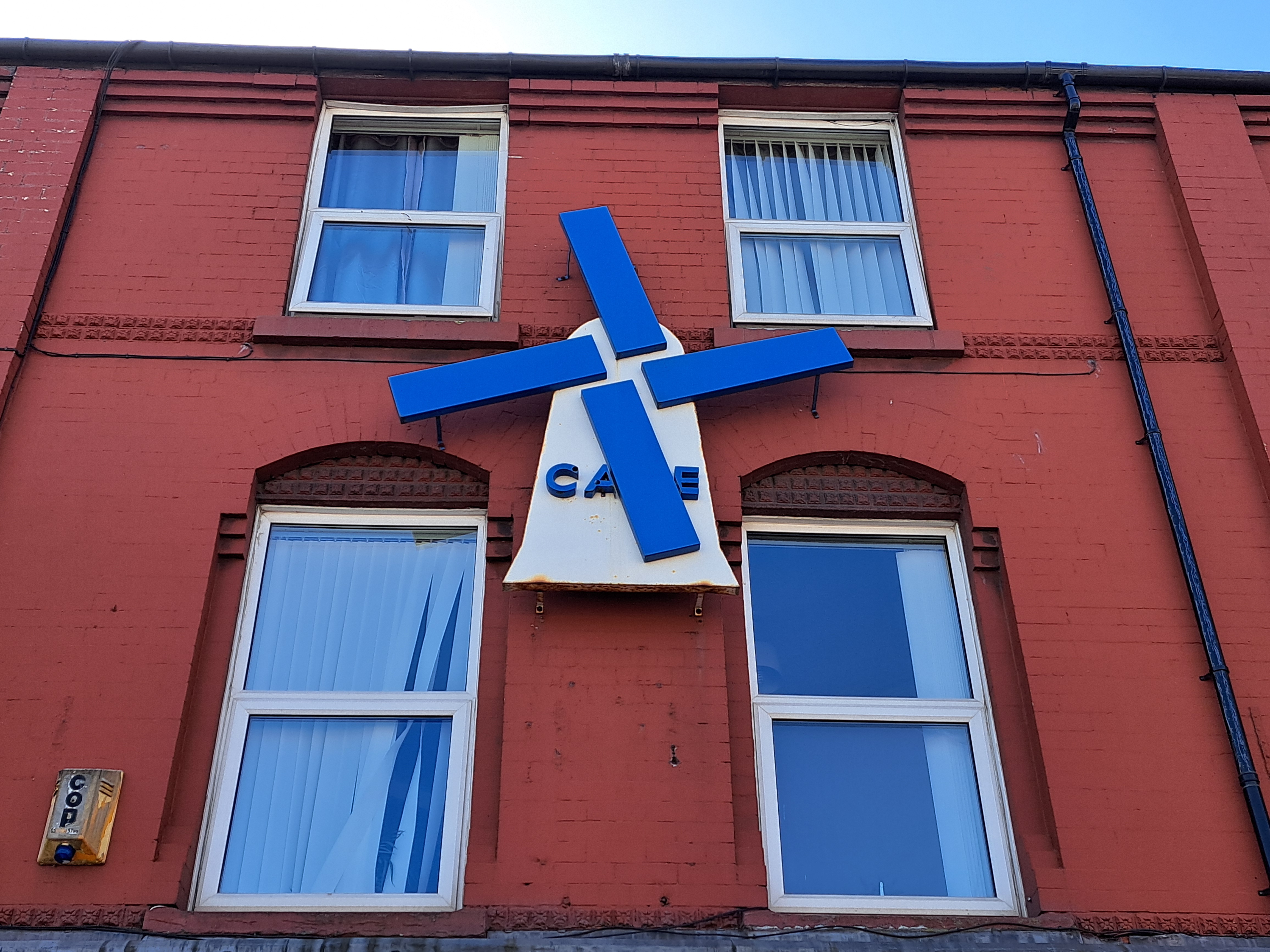
If you continue your perambulation under the railway bridge heading towards Allerton Road you will come across the next ghost sign. I have a long memory of this one, it is easy to miss but for years there was a rusty old windmill fixed above some of the shops. When I was a child I remember asking my mother why this was so and she told me that it marked the site of the Dutch Café. The Café had long gone by the time I remember first seeing the windmill but it must have had a fairly long-standing presence. Strangely when I was at school our history teacher told us about a difficult experience he had had with a group of Teds in the Dutch Café, presumably in the 1950s. I have forgotten whatever the point of his tale was but it was evidence for the existence of the Café. Other evidence has turned up on eBay over the years with black and white pictures of the staff dressed as Dutch girls being offered for sale. Tempting though it was I didn’t bid for them.
But although I am calling the windmill a ghost sign the people who own the Bathroom Centre underneath have had it restored and it looks quite smart, if slightly incongruous. And this is where this post starts to stray into Beatles territory. There are discussions of the Café online, also known as ‘Dutch Eddies’ and ‘Frank’s’. It had a very popular heyday with bikers and others and seems to have drawn John Lennon into its orbit. This is more than likely given its location. John and Paul apparently played pinball there. Other connections are claimed by various online sources but most interestingly John Lennon is said to have referred to the Café, as ‘the Dutch’, in the original lyrics for In My Life.
Dutch Café Windmill
So there is a lot you can say about a windmill fixed to the wall above a bathroom shop.
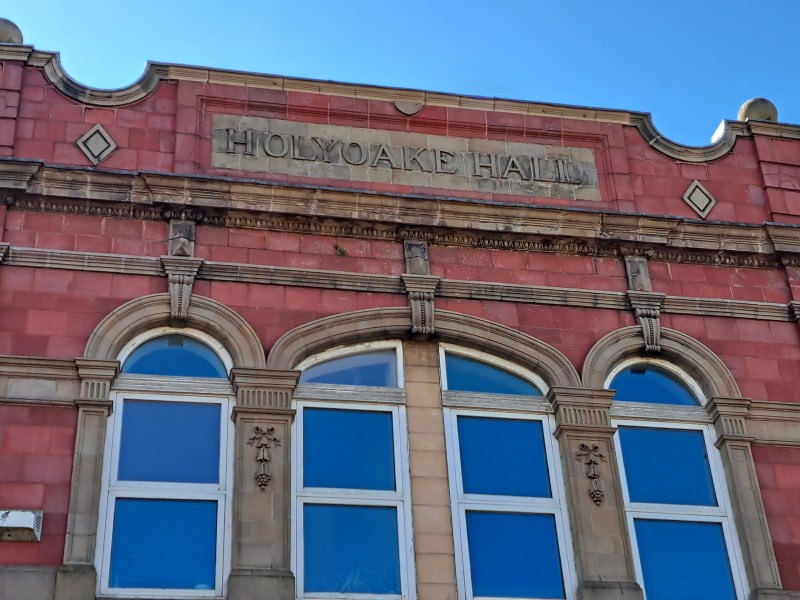
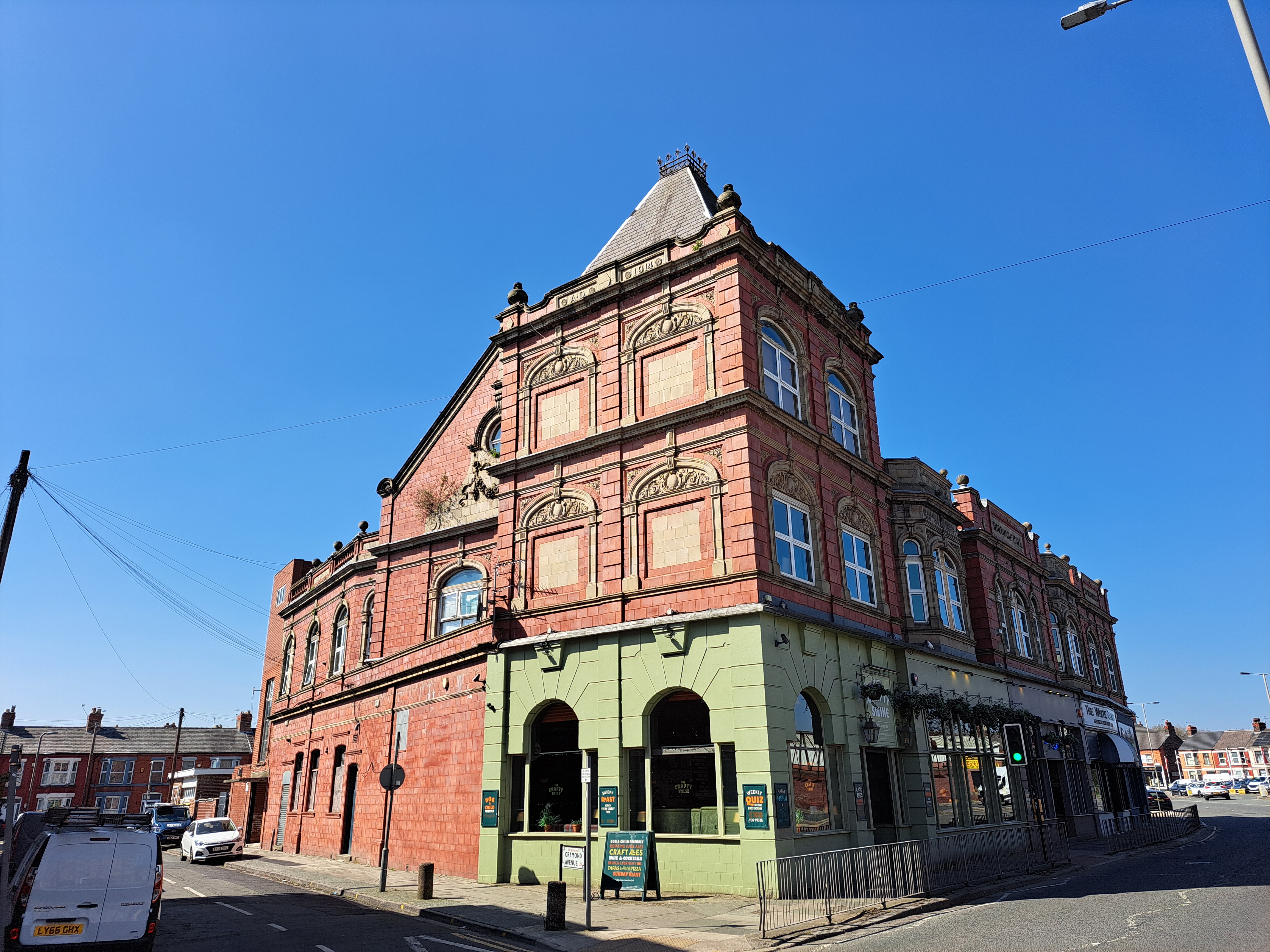
But further on the Beatles connection deepens. Some of the features, not quite ghost signs, of the Holyoake Hall are very redolent of the long departed Co-operative movement which built the Hall in 1913. It is actually quite an attractive building when judged as a whole, although the shop fronts of the modern occupants inevitably take the eye away from appreciating it as originally designed.
Holyoake Hall
I remember this being the Co-op supermarket which seemed pretty dreary at that time, although I am told by those with better memories that it was for a long time a very popular supermarket which sold many food items hard to get in Liverpool in those days. Above the shop there were what I presume were offices and also a large hall. In the 1960s and 1970s this was occupied by the British Legion and was a very popular venue because it was one of the few places you could get a drink in that part of the city. That would not be true today but there was certainly very strict adherence to the licensing laws at that time, as evidenced by the Hatfield Hotel near to the railway bridge on Smithdown Road. I neglected to take a picture of this place when I walked past during this odyssey, there were lorries, skips and scaffolding all around it, but it was clearly built as a pub and was never granted a license.
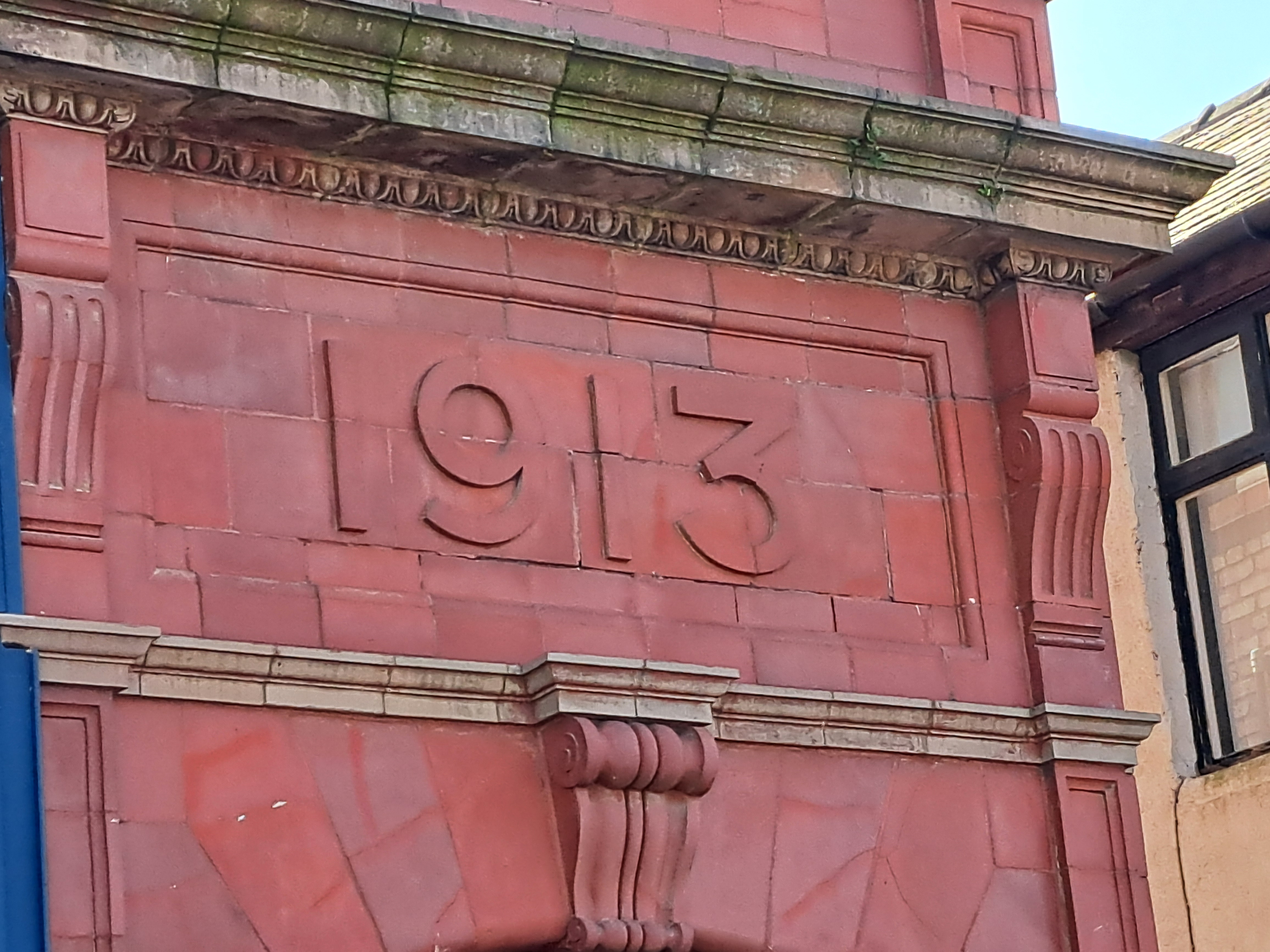
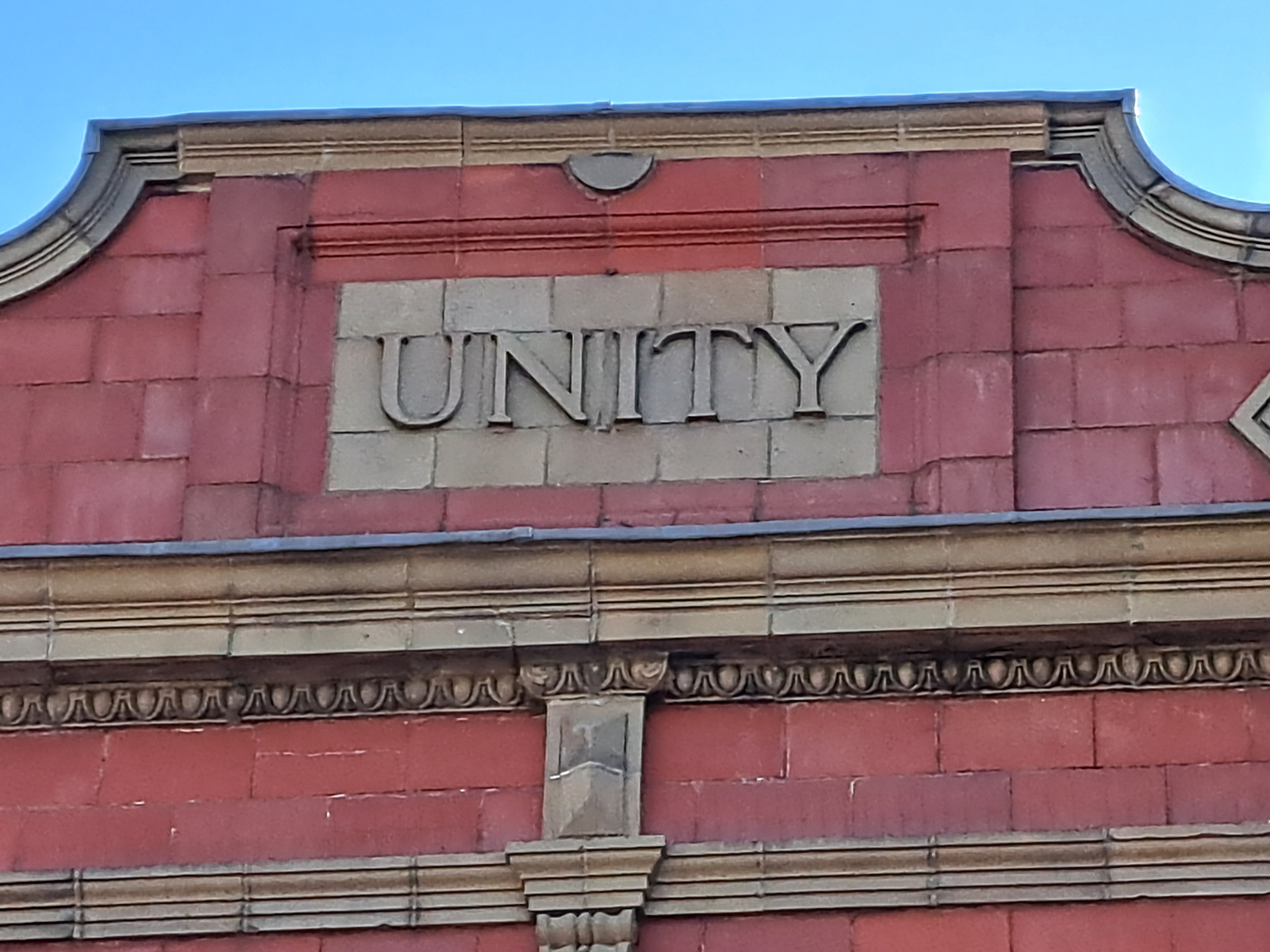
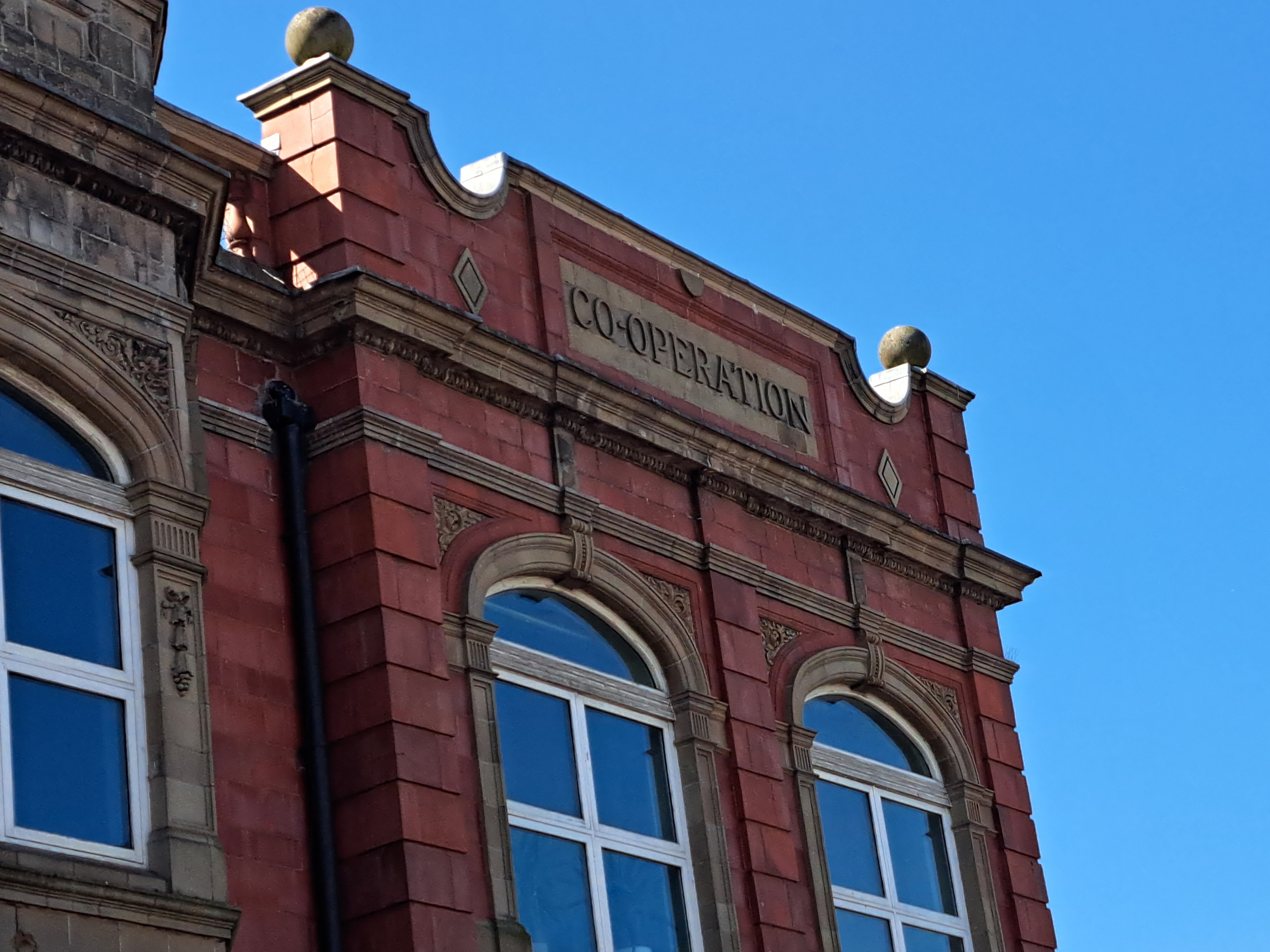
But to return to Holyoake Hall, it has many attractive stone details that proclaim things like Unity and Co-operation, as well as dates – 1913 and 1914.
Datestone 1913
Unity
Co-operation
But this is where the Beatles fit in again for they played the Holyoake Hall twice (on 15th and 22nd July 1961) and according to Mark Lewisohn in his superlative book All these years. Tune In they were paid £12 for each gig.
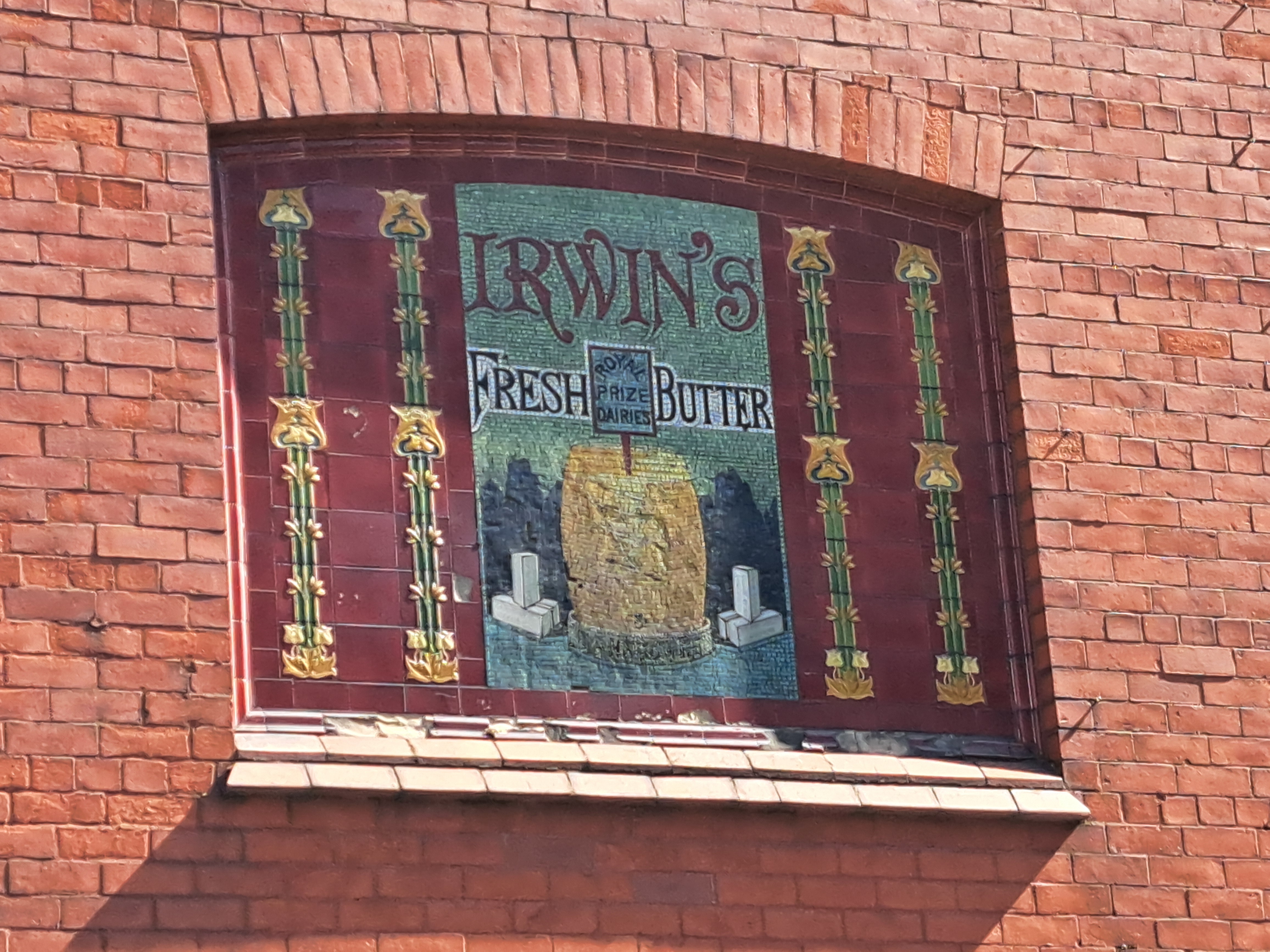
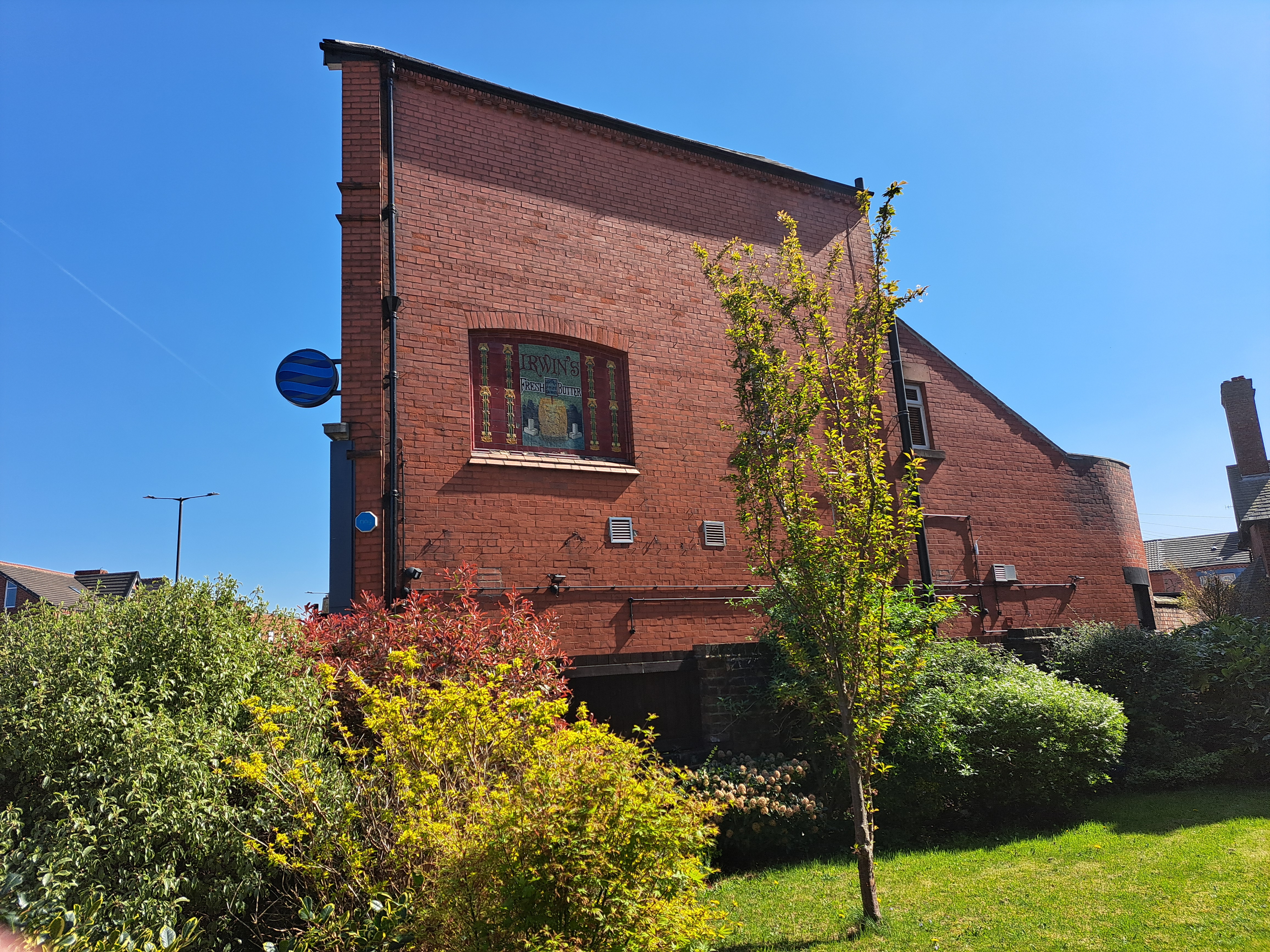
Holyoake Hall is also just around the corner from Penny Lane and if we walk along that route and across Penny Lane to the start of Allerton Road we come to the last ghost sign, an intricate mosaic for Irwin’s. These must have been expensive advertisements to produce for this Edwardian grocery chain. Irwin’s was a very successful supermarket in Liverpool and North Wales from the 1880s, eventually selling out to Tesco in about 1960. A number of these advertisements still exist but this one is a particularly good one. It can be seen in its setting right next to St Barnabas’ Church which itself has another Beatles connection in that this is the Church where Paul was once a choirboy. It is also located on Penny Lane and now has a statue of John Lennon right in front of it, so Beatles connections abound.
Irwin’s Ghost Sign
I know also that some of my readers might like a Unitarian/Non-Subscribing Presbyterian connection and one can cheerfully be given. The curate and then rector of St Barnabas’ Church between 1904 and 1929 was the Rev James Kirk Pike. However, he started out as a Unitarian and was minister of Chowbent Chapel from 1885 to 1890 and then at First Church, Belfast from 1890 to 1893, followed by a short ministry at Warwick before joining the Anglican Church. So there we have a link – for those who would like one – that ties the Beatles to Unitarianism, albeit in a very tenuous way!
The view across the front of St Barnabas to the Irwin’s sign
Ephemera is the term given for items that weren’t usually expected to last. Usually printed items, they had only a limited shelf-life and were generally expected to be thrown away when they had been used. Inevitably such things tend to become interesting to collectors because they often illuminate some aspect of social history that might otherwise be lost. Our new Very Rev William McMillan Library is rich in ephemera and this latest video explores two items held by the Library:
Click above to see Episode 3 of the explorations of Dunmurry NSP Library
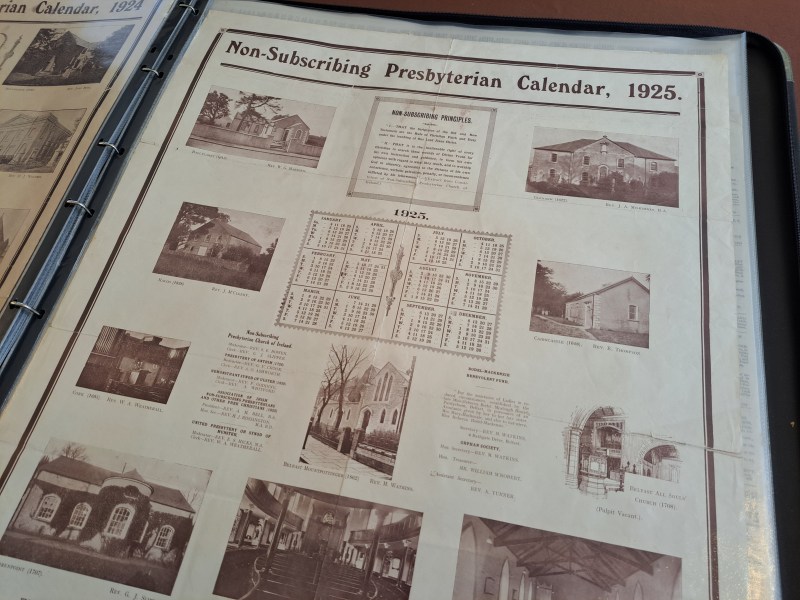
In 1924 and 1925 the congregation of York Street Church, Belfast, under the leadership of Rev Dr A.L. Agnew, produced a calendar to sell to the denomination. Over the two years they included a picture of all the churches in the denomination in Ireland and they make for interesting documents. Many of the pictures date from a bit before the mid-1920s but it makes for an interesting collection of early twentieth-century photographs. Some images are quite well-known and have often been published. Some are quite rare like this picture of Ballymoney:
There’s also a reminder of an attempt at outreach in Bangor which lasted for a few years, and seemed to be successful for these years at least:
But altogether they are interesting documents. They must have captured a lot of interest at the time but at the end of the year what do you do with an old calendar but throw it away? Which is why so few have survived. You can find out all about it by watching the video.
Between 7th and 9th May, Dunmurry congregation was visited by four Unitarian ministers from Great Britain. These included Rev Laura Dobson, minister at Chorlton, Rev Mária Pap, minister at Mansfield, Francis Elliot-Wright, student minister at Knutsford, and Rev Jim Corrigall, the London District Minister. On the evening of Tuesday, 7th May Dunmurry congregation welcomed them, plus members of other congregations and a good number of local ministers, to a social evening in the McCleery Hall. I conducted an interview/dialogue with Jim who told us about his role as London District Minister, growing up in South Africa and his anti-apartheid activities, his decades as a journalist around the world which took him to Northern Ireland among other places, as well as the theological reflections which led him eventually to enter the ministry. As part of the evening Jim shared with us the reading that means most to him in his ministry – ‘God’s Grandeur’ by Gerard Manley Hopkins – and we listened to his favourite piece of music – Nkosi Sikelel iAfrika, God Bless Africa. It was a great night enjoyed by everyone.
Left to right Rev Dr David Steers, Rev Mária Pap, Rev Lynda Kane, Rev Laura Dobson, Francis Elliot-Wright, Rev Jim Corrigall, Rev Stephen Reain Adair, Rev Brian Moodie in the McCleery Hall, Dunmurry.
On Wednesday morning we made an early start in the company of a group of members of Dunmurry and First Church to visit six churches in Belfast and county Down and learn something about their history and witness. Thanks to Gary Douds we were taken around the churches in a minibus in great comfort and we were also blessed with fantastic weather.
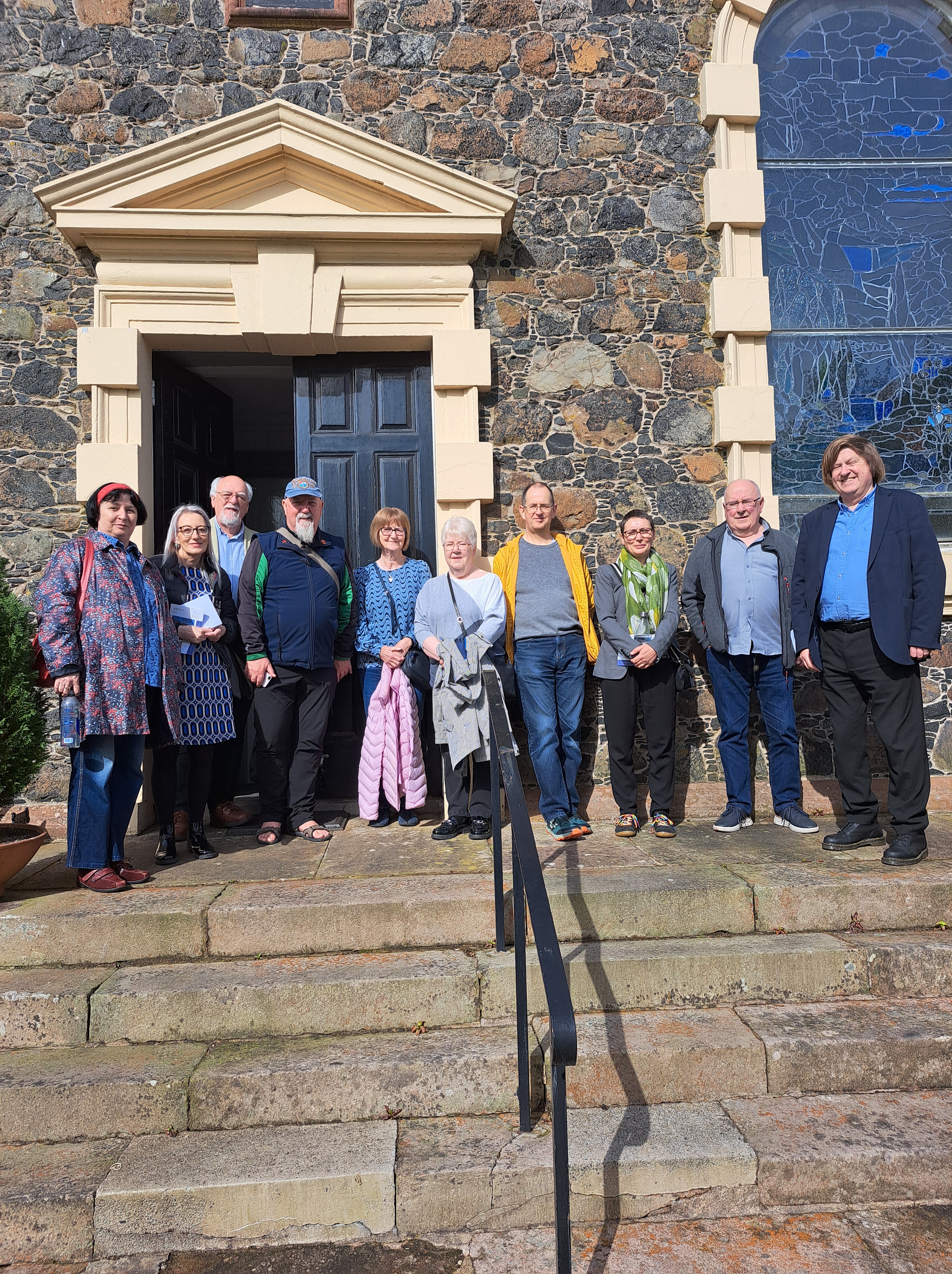
Some of the party at Dunmurry, ready to set off at 9.00 am.
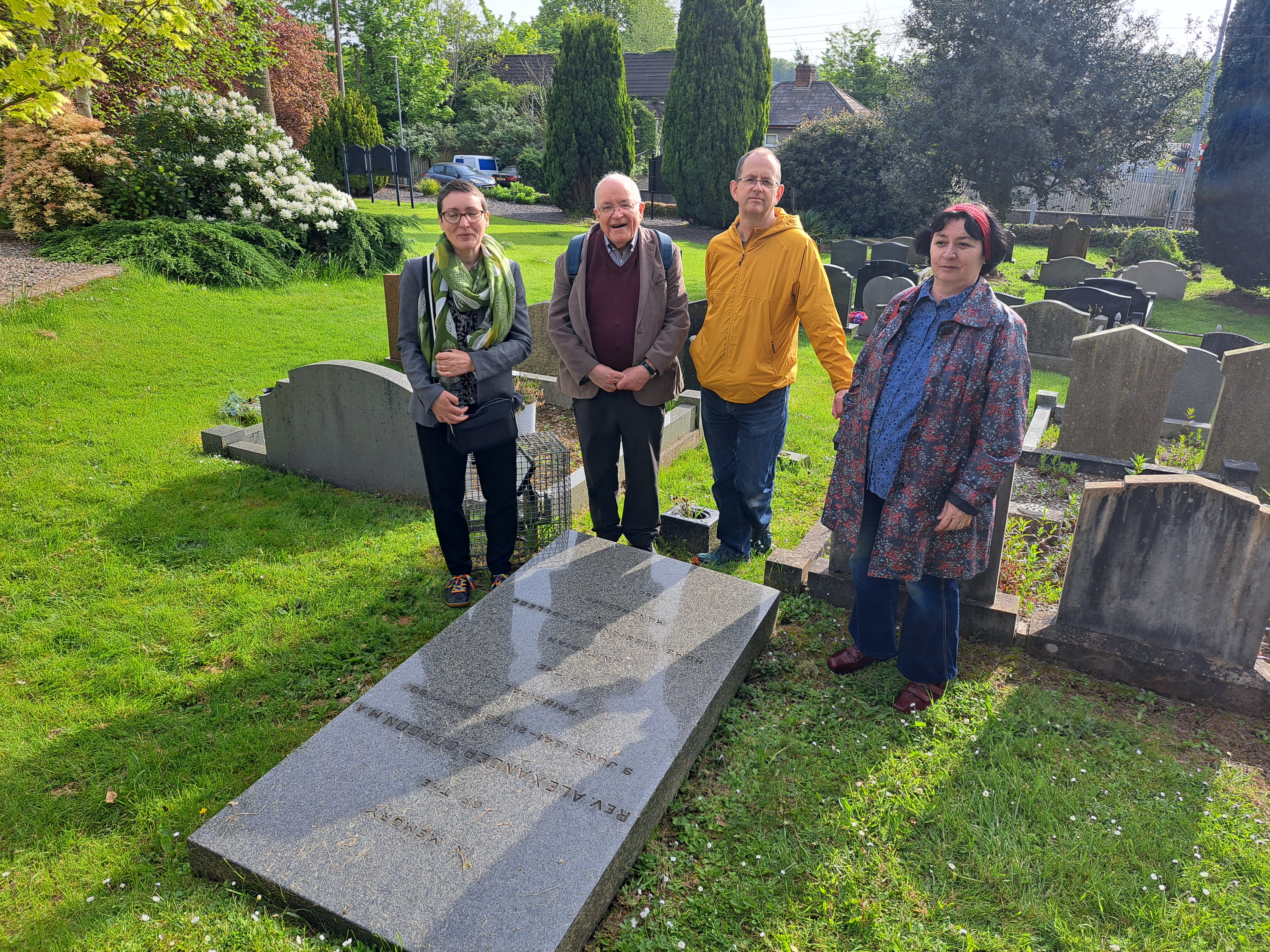
Laura, Jim, Francis and Mária visit the grave of Rev Alexander Gordon (Principal of the Unitarian Home Missionary College) at Dunmurry.
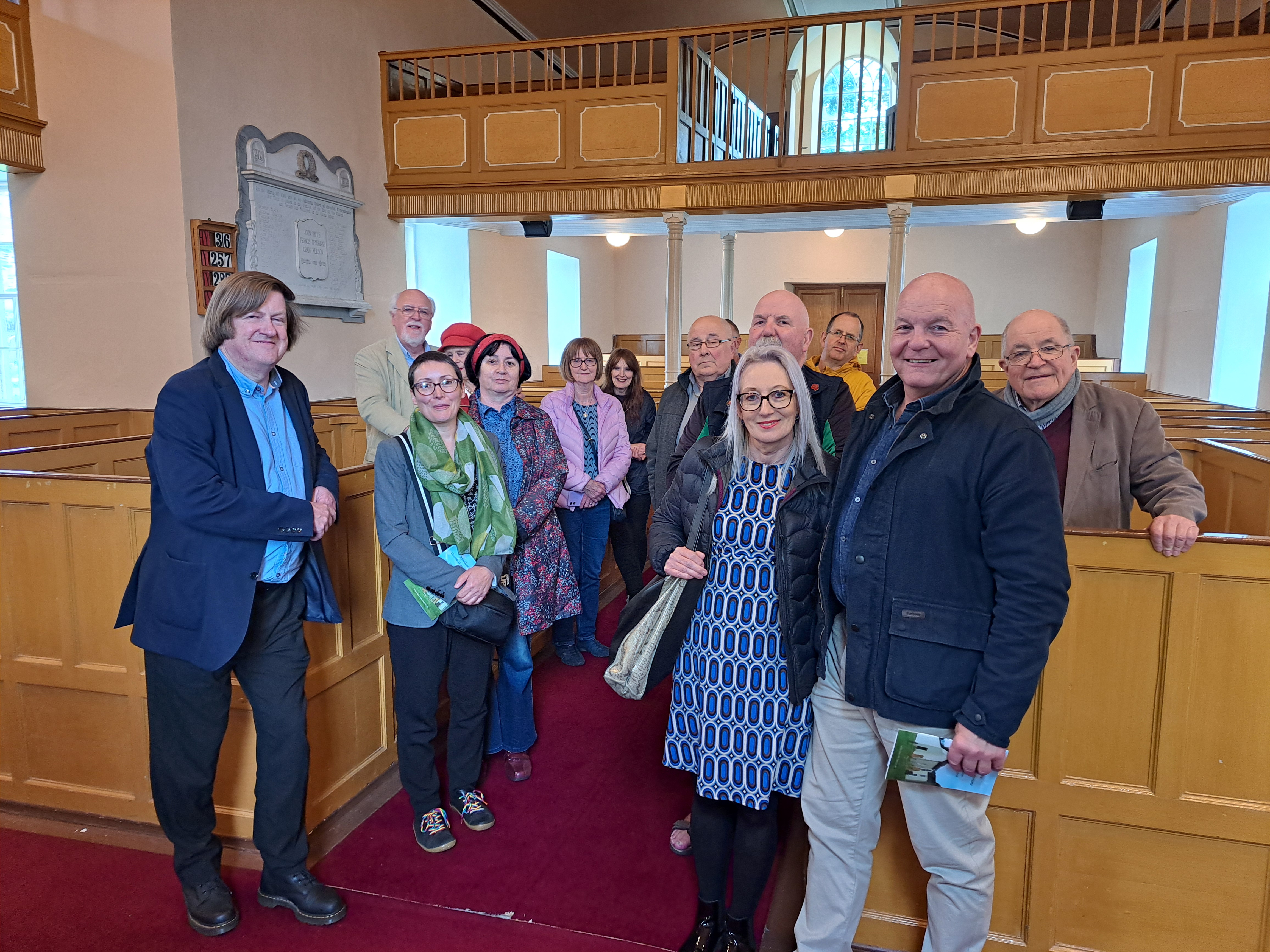
Outside Rademon later in the day.
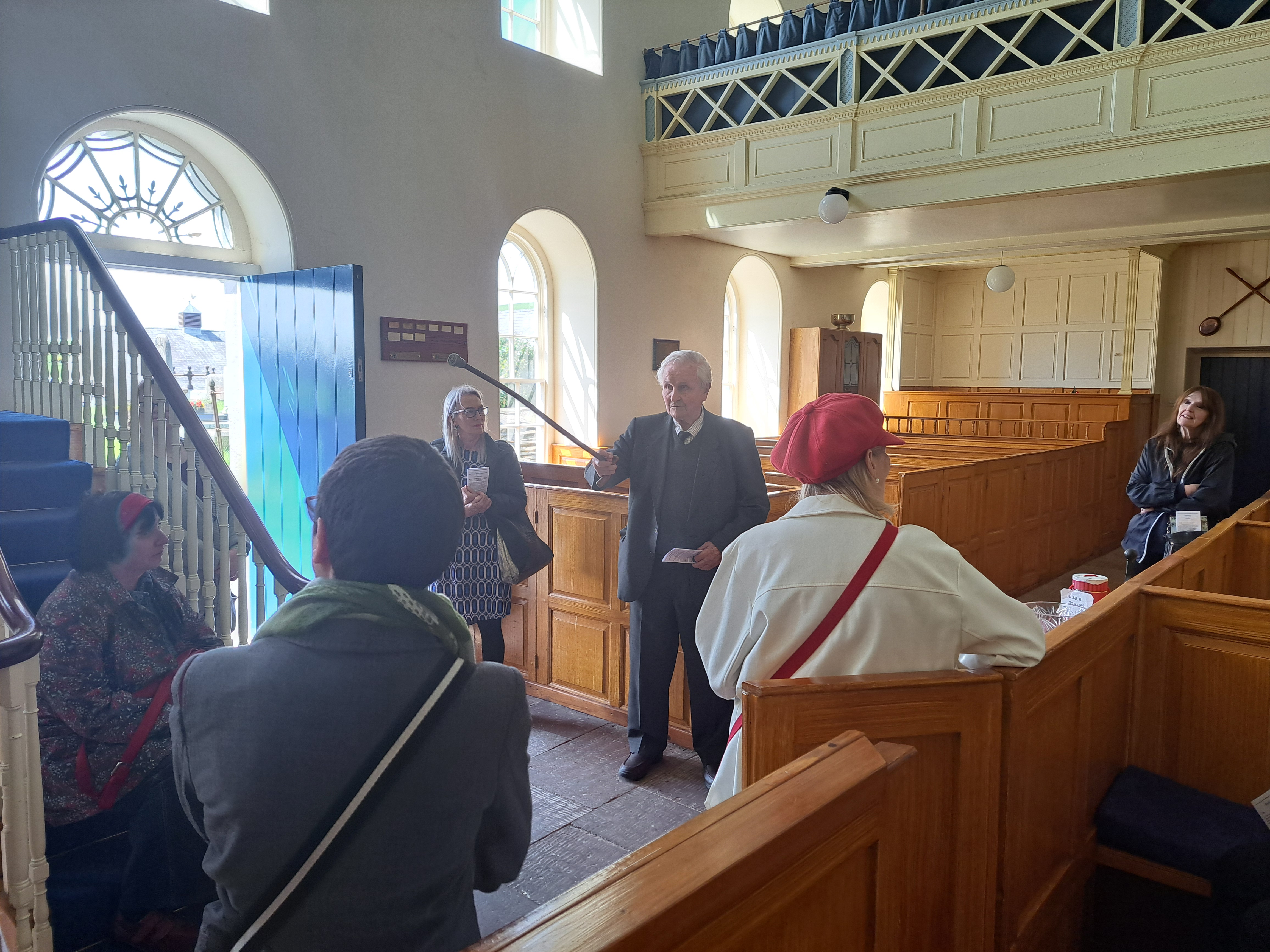
In most of the churches I said something about the building and the history of the congregation and in Rademon Jim Ferris shared his historical expertise to give us a talk about his congregation. Our thanks go to all the ministers and members who welcomed us in our travels including Des McKeown, Rev Chris Hudson, Rev Dr Heather Walker, Mary Stewart and David Rooney, as well as Jim Ferris.
Des McKeown welcomes everyone to First Church, Rosemary Street.
Rev Chris Hudson welcomes everyone in the chancel in All Souls’.
We had lunch in Denvir’s in Downpatrick and returned to Dunmurry just 15 minutes later than our planned schedule had anticipated, so all in all a great day out.
In Downpatrick.
Jim Ferris explains the history of Rademon.
We visited in turn Dunmurry (1779), First Belfast (1783), All Souls’ Belfast (1896), Rademon (1713), Downpatrick (1711) and Clough (1837), buildings of different styles and ages but all with their own story to tell as part of our distinctive tradition.
Back in January 2023 I posted a piece about a postcard of Dunmurry which showed the classic view of the church built in 1779. It was published in Lisburn by F.W. Harding and posted in November 1906. This is the picture:
As I mention in that post, postcards of Non-Subscribing Presbyterian churches are not that common. I have seen the 1906 view before and there is also a much later one but I was pleased to discover another postcard featuring the church, this one new to me:
This dates from a little later and although it is taken from a less popular vantage point in many ways it gives a much clearer view of the building. This card was published locally by ‘W. McCartney, Stationer and Tobacconist, Dunmurry’ in the ‘Signal Series’. It has at the bottom left hand corner the title ‘Unitarian Church, Dunmurry’ and was never posted. On the back, however, it is dated May 19th 1919 and has a message to an unnamed recipient which reads ‘With best wishes for your welfare from the People of Dunmurry and district from W. Laursen’. The name is actually a bit hard to make out but that is my best guess.
In a way it is a clearer picture than the 1906 view, being a Real Photograph, if a little damaged. But the view is not obscured by trees and you can clearly see the large amount of ivy that was then being allowed to grow over the left hand door. This is actually also present on the 1906 view although it is hard to make out behind the tree.
A modern image from more or less the same angle, taken a couple of weeks ago, shows the same view:
The view of the church hasn’t changed between 1919 and 2024. There are now houses along the side which weren’t there but the splendid building of 1779 is reassuringly the same.
On Sunday, 8th October we celebrated our service of Harvest Thanksgiving at First Dunmurry. There was a good attendance and the church was beautifully decorated. The choir sang Great is thy faithfulness and the hymns included were Come, ye thankful people, come, All things bright and beautiful, Fountain of mercy, God of love and We plough the fields, and scatter.
The whole service can be viewed on the following video:
Click on the video to see the Harvest Service
The organist and choirmaster was Allen Yarr and the service was conducted by the minister, the Rev Dr David Steers.
All donations of tinned and dried food were given to the Foodbank and fruit and vegetables were donated to FareShare.