Pictures of Harvest Festivals are amongst the most frequent early survivors of photographs of church or chapel interiors. The modern Harvest Festival, as it is known in churches today, was really invented by the Rev Robert Hawker, vicar of Morwenstow in Cornwall, in the 1840s. He was as colourful and eccentric as they come but devised the notion of a service in which the produce of the fields was brought into the church and used as decoration as an act of thanksgiving. The idea of the service quickly caught on and became a big part of the year for most churches, whether urban or rural. Harvest Festivals became and remain very popular with Unitarians, it would be interesting to study when and how they began to be incorporated into the cycle of services.
I don’t have any information to hand as to how harvest services spread and became popular but I see that in 1881, for instance, Alexander Gordon introduced the first Harvest Festival service to the First Presbyterian, Rosemary Street congregation in Belfast. This must be quite late, I would imagine. Was that something he had previously done over the preceding twenty years at Norwich, Hope Street, Liverpool, or Aberdeen? It would be an interesting avenue to pursue.
With the gradual development of photography as a medium, pictures were taken of churches and chapels. However, the difficulty – for all except the most skilled photographers – of taking good interior shots, and also, perhaps, a reluctance to take a picture of a scene that was so familiar as to be seen as hardly worth recording means that early shots of interiors of chapels and meetings houses are not that common. This seems to change when it comes to Harvest Festivals and a number of pictures that I have of now closed churches were taken to show off the harvest decoration that had been thoughtfully and faithfully put there by some parishioners.
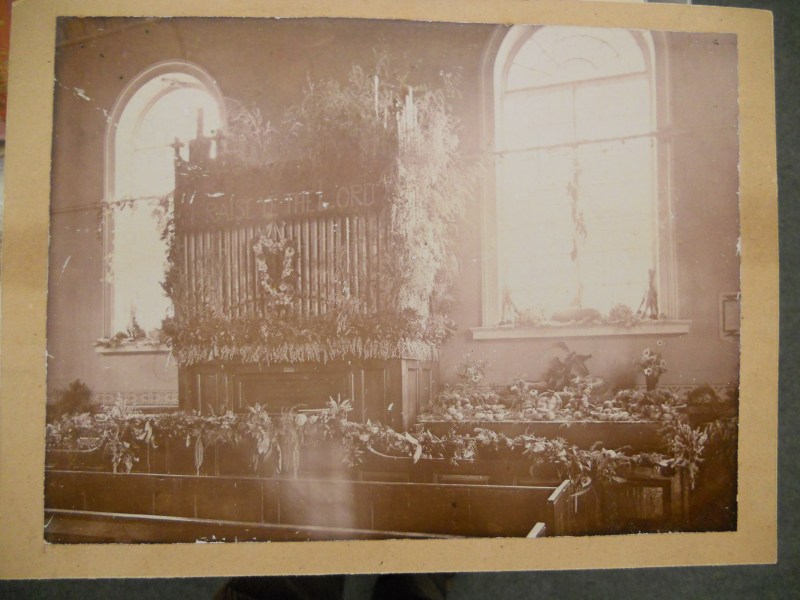
In the recent posts about Nantwich Unitarian Chapel I asked if anyone had any photographs of the interior. Andrew Lamberton has again found a fascinating image. He has sent me this picture of the area around the organ decorated for harvest. There is no date on the picture and it is very difficult to be at all precise although I would guess it was taken probably in the first decade of the twentieth century.
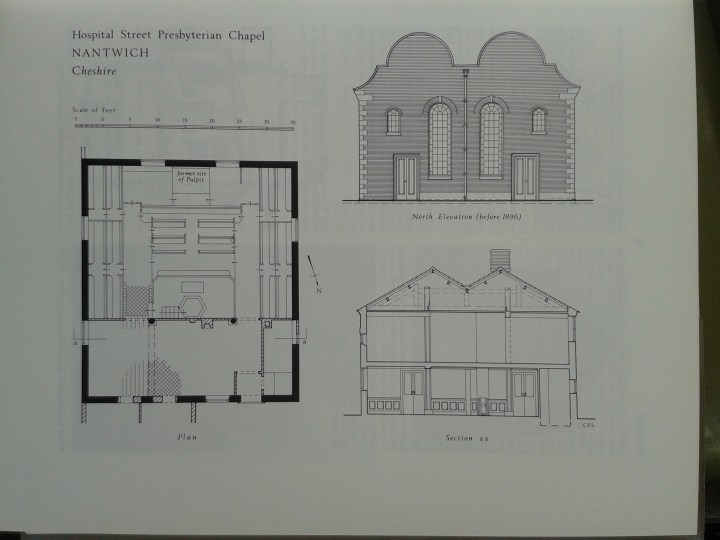
I gather the organ was installed in the 1870s so the picture shows a decorated scene around the organ sometime after that date. As I have mentioned in previous posts the chapel of 1725-26 was rebuilt and ‘turned’ in 1846-49 and this picture would appear to show the area on the plan between the windows and marked as ‘former site of Pulpit’ in Christopher Stell’s Nonconformist Chapels and Meeting-houses in the North of England:
Plan from Nonconformist Chapels and Meeting-houses in the North of England
It’s hard to make out too much detail in the photograph but it confirms the description also found in Nonconformist Chapels and Meeting-houses in the North of England (page 28) that the pews which incorporated original features from the 1720s were laid out in tiers:
“Seating: against E and W walls, two tiers of pews, partly reconstructed, include much early 18th-century fielded panelling, fronts renewed. The centre pews also incorporate original material.”
It is not an easy thing to take a picture of what is a dark wood-panelled interior while including the main source of light from two large windows. The light floods in through the window and the dark areas remain dark. But for all its limitations we have in this print a rare and useful image of a long forgotten building.
(Photo: Andrew Lamberton and Nantwich Museum Archives)
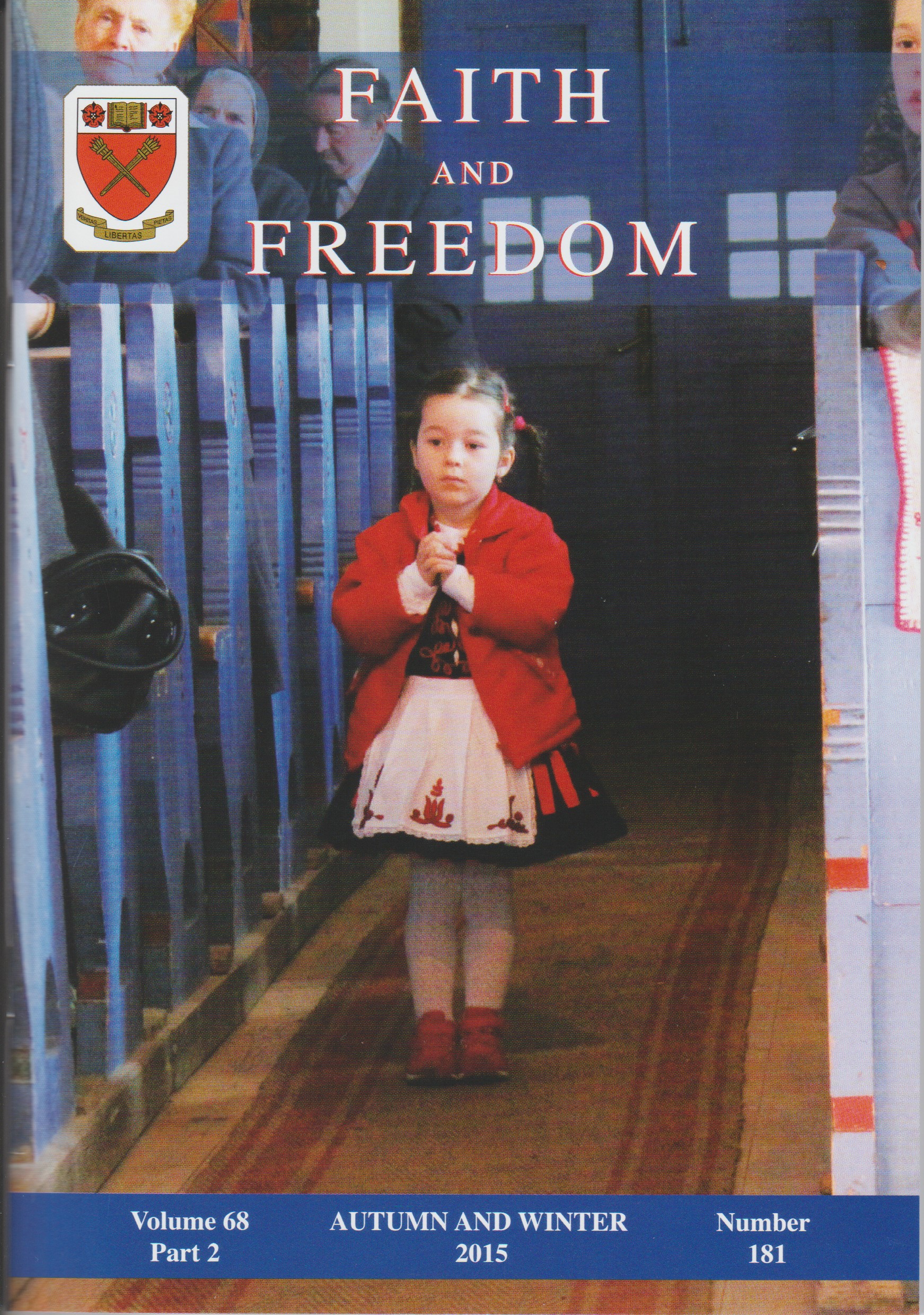
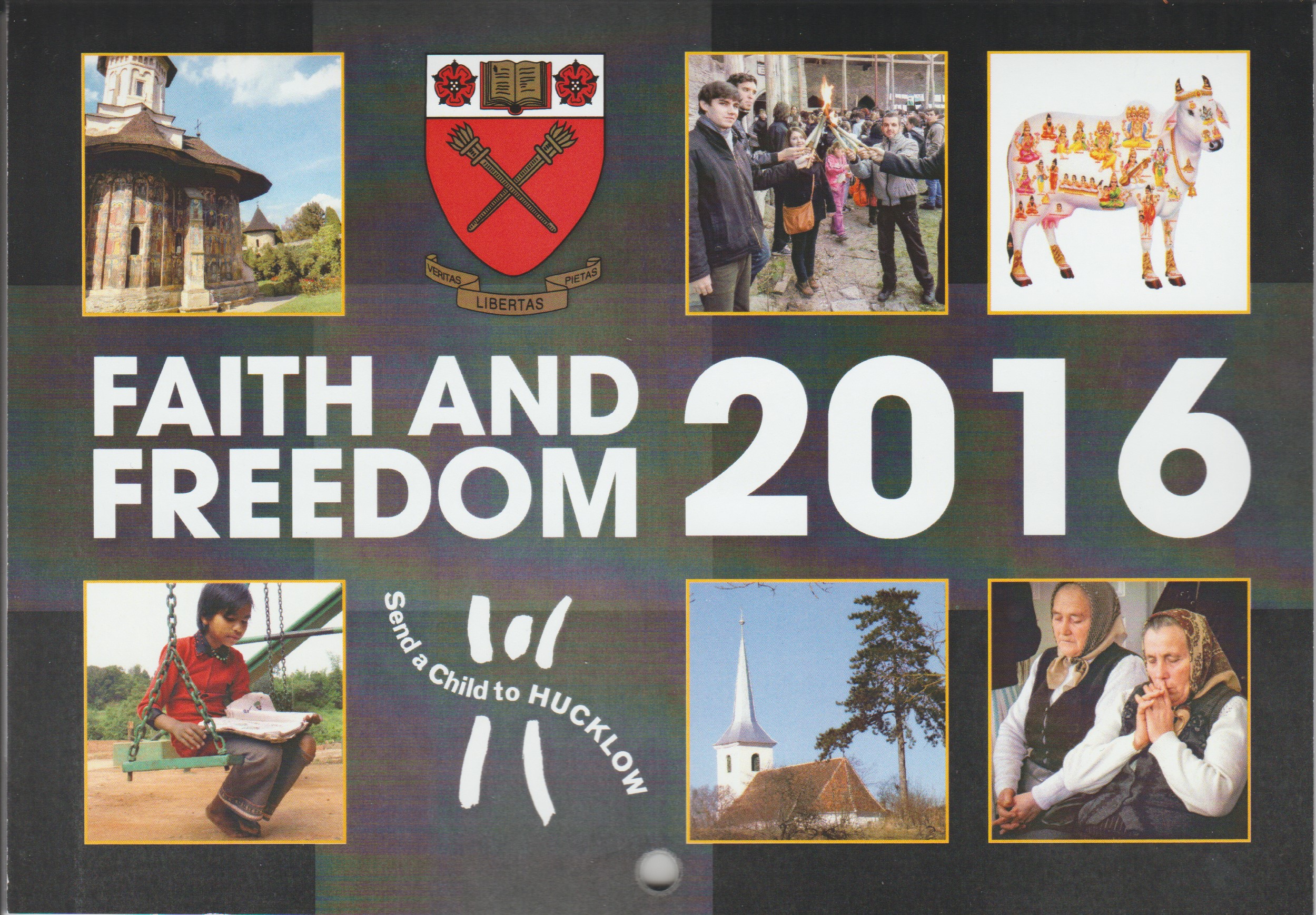
This latest issue of Faith and Freedom has a special cover. Taken from the above photograph by Márkó László it shows a scene from a Thanksgiving celebration at the Unitarian congregation in Oklánd, Hargita county, in Transylvania. This is a first for Faith and Freedom and ties in with a number of reviews in the Autumn and Winter 2015 issue which deal with the faith and practice of the Hungarian-speaking Unitarian churches in Romania. Márkó László’s photographs very effectively capture something of the cultural identity of the Unitarian folk there as well as their deeply held faith. There are more of his pictures in the 2016 Calendar.
The cover of the Autumn and Winter 2015 issue of ‘Faith and Freedom’, Vol. 68 Part 2, Number 181
Once again Faith and Freedom itself contains illustrations this time with a portrait of founding editor Eric Shirvell Price found inside and a photograph of the Rev Percival Godding, whose account of his time as a prisoner of war during the First World War also features.
An annual subscription costs £15 per annum (US $30 in the United States and Canada) and you can pay by post or online via PayPal. All details can be found on our website at:
The cover of the 2016 ‘Faith and Freedom’ Calendar – ‘Faith in the World’
If you are an individual subscriber you will also receive a copy of our 2016 Calendar. These are also being sold in aid of the Send a Child to Hucklow Fund. A £5 donation will have one wing its way to you. Again information about the Calendar (and a preview) can be found on our website.
Service of Thanksgiving, Oklánd church, Transylvania (Photo: Márkó László)
FAITH AND FREEDOM, Autumn and Winter issue, (Volume 68, Part 2, Number 181) will be on its way to subscribers very soon. In it you will find:
Finding God in Strangers
John Navone
On Reading the Gospel of Mark with Two Eyes
George Kimmich Beach
Grace and Disgrace: a Social Pilgrimage
Yvonne Joan Craig
The Unitarians of the West and the Brahmo Samajees of the East
at Manchester College, Oxford 1896 –1948 Part II
Victor Lal
Six Months in a Prisoner of War Camp
David Steers
Manchester College, Oxford during the First World War
Evelyn Taylor
A Bible for Neo-Liberals
Barrie Needham
Bridging the Years in Marriage
Sue Norton
As well as reviews by Pat Frankish, Ernest Baker, Peter B. Godfrey, Lena Cockroft and the editor, and a review article by Graham Murphy on Sarah Shaw, The Spirit of Buddhist Meditation, The Sacred Literature Series, Yale University Press, New Haven & London, 2014.
Other books reviewed include
Charles Marsh, Strange Glory: a Life of Dietrich Bonhoeffer, SPCK, London, 2014.
Sam Harris, Waking Up: Searching for spirituality without religion, Bantam Press, London, 2014.
Mária Pap, Hungarian Unitarians in Transylvania, 2015.
Zoltán Fülöp, Emőd Farkas (eds.), Humble in Front of God, Words for Worship from Transylvanian Unitarians, International Council of Unitarians and Universalists/Hungarian Unitarian Ministers’ Association, Kolozsvár 2014
Emma Percy,”What Clergy Do”: especially when it looks like nothing, SPCK, London, 2014.
Marcus Braybrooke, Peace in Our Hearts Peace in Our World a meditation for everyday, Braybrooke Press, 2015.
John Pritchard, The Second Intercessions Handbook, SPCK, London, 2015.
Individual subscribers will also receive a copy of our Faith and Freedom 2016 Calendar. These are free to personal subscribers but extra copies can be ordered at a cost of £5 each, all of which goes to the charity the Send a Child to Hucklow Fund.
If you would like a sneak preview of the Calendar it can be downloaded on the Faith and Freedom website.
If you haven’t taken out a subscription and would like to do so you can also do that from the Faith and Freedom website:
The photograph at the top of this page is a picture by Transylvanian photographer Márkó László who has kindly contributed a number of pictures to the 2016 Calendar.
For the second year running Faith and Freedom is producing a full-colour Calendar in aid of the charity, the Send a Child to Hucklow Fund.
After the success of last year’s Calendar we invited readers to send in their own images celebrating the theme of ‘Faith in the World’. This produced an excellent response with many more pictures being sent than we could use. The Calendar is now ready and will be sent out free to all subscribers to Faith and Freedom. An annual subscription costs only £15 and can be done online here: http://www.faithandfreedom.org.uk/subs.htm
With the Calendar you not only get the images covering people, places and religious celebrations from all around the world but an extensive record of dates and events covering all major religions and for all sorts of religious occasions and anniversaries in 2016.
A big thank you to everyone who sent in pictures. The volume and quality of images we received was overwhelming, making the final selection a very difficult task. We will try to include a range of images which didn’t appear in the Calendar on our website: www.faithandfreedom.org.uk.We also hope to upload the full Calendar for all to see on that site.
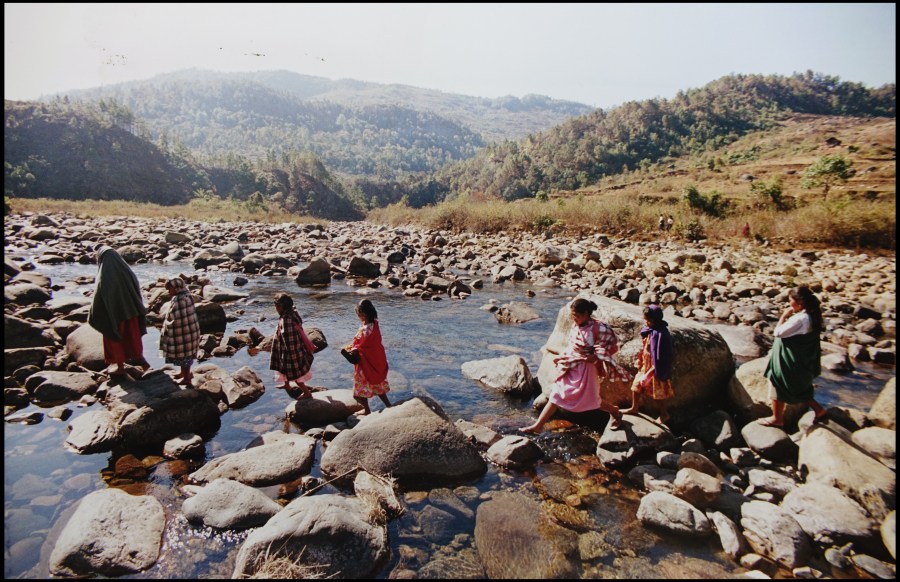
One of the images that we weren’t able to use in the Calendar is this picture, taken by John Hewerdine, of the five mile walk undertaken by Unitarian children each week to get to their Sunday School in the Khasi Hills, India.
Walking to Sunday School, Khasi Hills (Photo: John Hewerdine)
If you are not already a subscriber to Faith and Freedom you can purchase a copy of the Calendar for a suggested donation of £5, all of which will go to the Send a Child to Hucklow Fund to enable it to continue its invaluable work in giving disadvantaged children a much-needed holiday at the Nightingale Centre, Hucklow in the Peak District National Park.
If you would like to order a copy of the Calendar for yourself or for a friend email Nigel Clarke at faithandfreedom@btinternet.com
If you saw a copy of last year’s Faith and Freedom Calendar then you will recognise the three images on this page as from that publication. Last year’s Faith and Freedom Calendar was well received and helped to raise a good sum for the charity Send a Child to Hucklow Fund (SACH). The journal is planning to publish another Calendar for 2016 the proceeds from which will again go to the SACH.
Princes Road Synagogue Liverpool (January 2015)
Next year’s theme will be: Faith in the World
The publishers invite anyone to submit photographs for consideration for inclusion in next year’s Calendar in accordance with this theme. Please interpret the theme as broadly as you like – an act of worship, a faithful community or individual at work, a symbol of faith, a place of worship, it is up to you. However, the photograph should be your own work and you must be happy to give permission for it to be used in the Calendar should it be selected for inclusion. Photographs can be in colour or black and white, they should be landscape in orientation, of high resolution and sent, by email, to n.clarke884@btinternet.com
Pet service at St Andrew’s United Church, Kirton Lindsey, North Lincolnshire (March 2015)
All successful entrants will be sent a free copy of the Calendar and have the satisfaction of being part of an interesting project that shares the diversity and vibrancy of faith and which will also help to raise money for SACH. We may be able to include a broader number of pictures submitted in the journal’s website.
If there is a seasonal element to your entry please state it in your accompanying email as well as when and where it was taken. Please remember also that parental permission is usually required if your picture includes children under the age of 18. The deadline for submissions will be 18th September 2015.
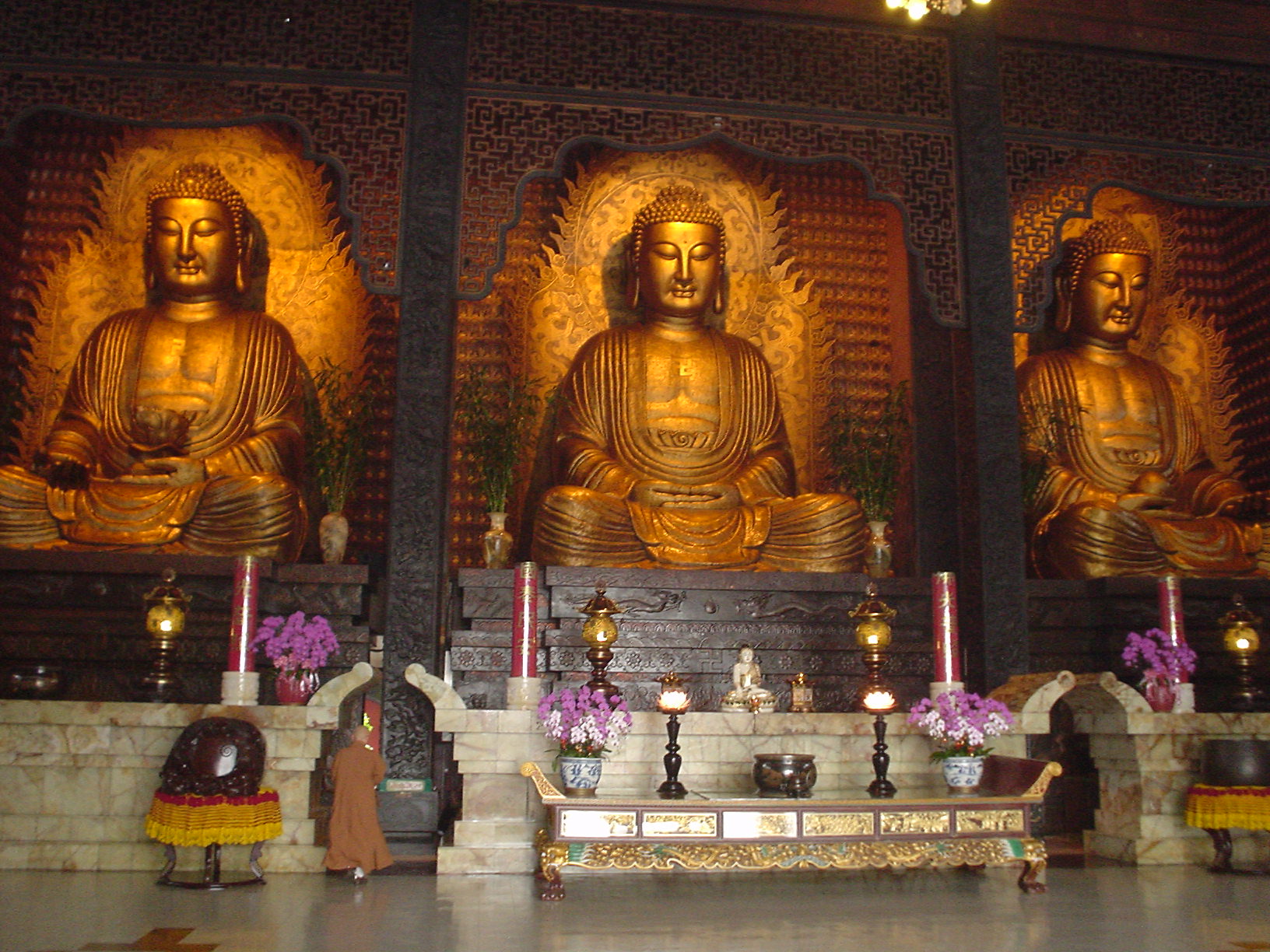
Buddhist Temple, Fo Guang Shan Monastery, Kaohsiung, Taiwan (August 2015)
I have sometimes been tempted to write a blog or a column entitled ‘The things I buy on eBay’. I have picked up lots of pieces of ephemera at very low cost on eBay which while certainly bearing very little intrinsic value and generally falling into the category of junk nevertheless have some historical interest.
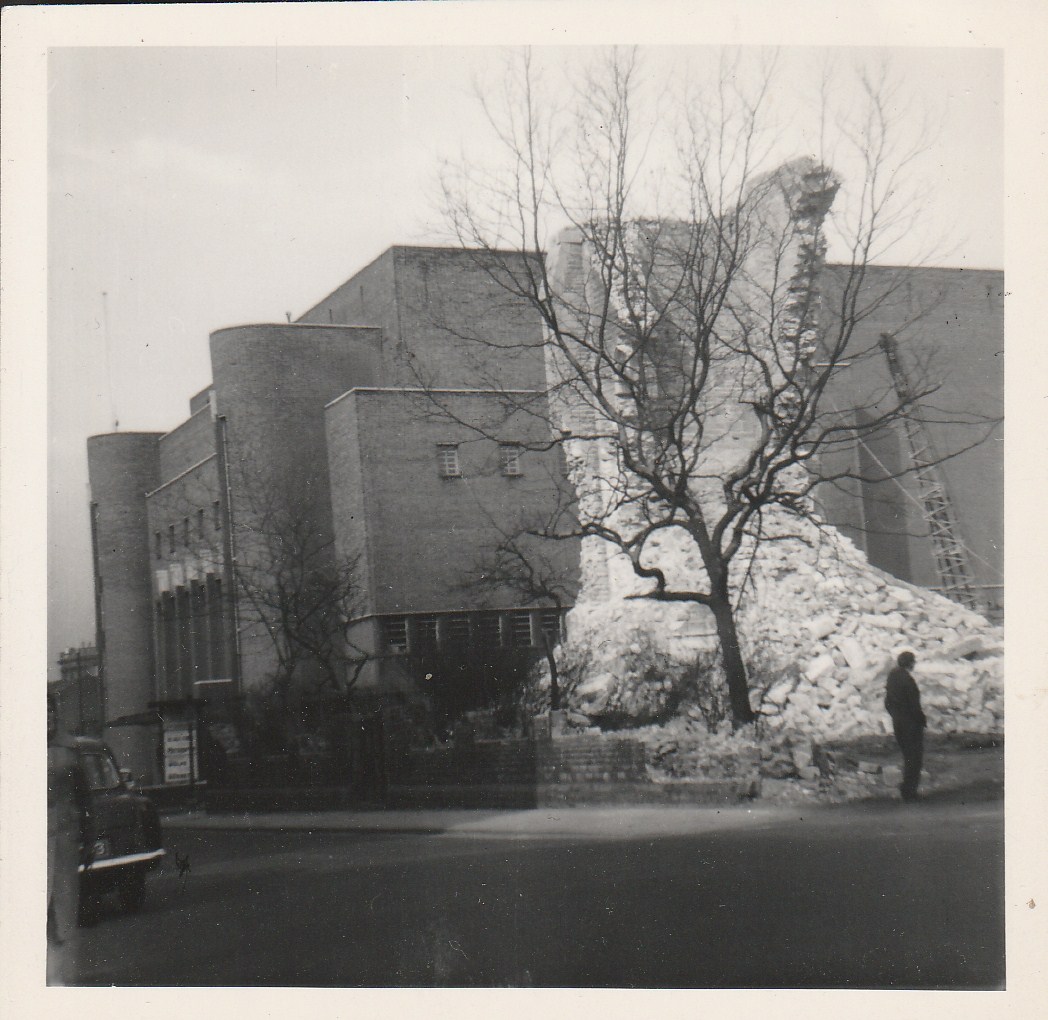
Hope Street Church, demolition 1962
The photograph above is a good example of this. It cost just 99p (which I suppose is actually quite a lot for a single, slightly blurry print) but it shows the very end of Hope Street Unitarian Church in Liverpool. Taken in 1962, probably by someone who habitually recorded views of buildings which he thought might one day be interesting, it catches the tower in the final stage of demolition. Somewhere under the rubble was a brass plate and a “hermetically sealed vase” containing a list of members, ground plans of the old and new chapels, a report of the congregation’s school, a plan of Liverpool, a print of the Dissenters’ Chapels Act, an engraved portrait of the minister and all the local papers from the week before the laying of the foundation stone on 9th May 1848. It was a sad end to a building that was opened for worship in 1849 and which occupied a prominent place in the city. Indeed it seems a shame that such a site, midway between the two cathedrals, could not have been saved for future use. It would be a great site today with enormous potential. But it is easy to be wise after the event, the world must have looked quite different to what was presumably a small and discouraged congregation by the early 1960s.
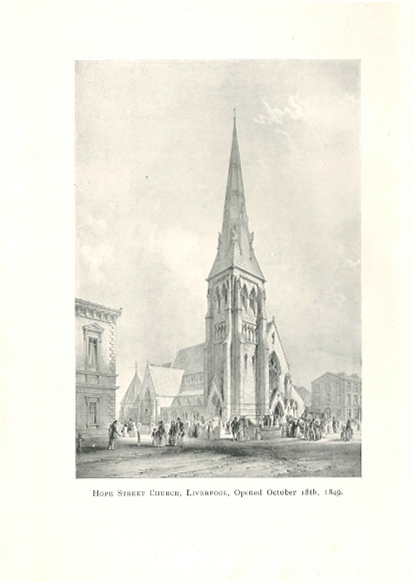
Hope Street had certainly known rather more glorious days. Built by James Martineau’s congregation to provide a place of worship that suited his style and popularity it was a thorough-going gothic construction that reflected his devotional approach. The classic image of it is this one:
Hope Street Church
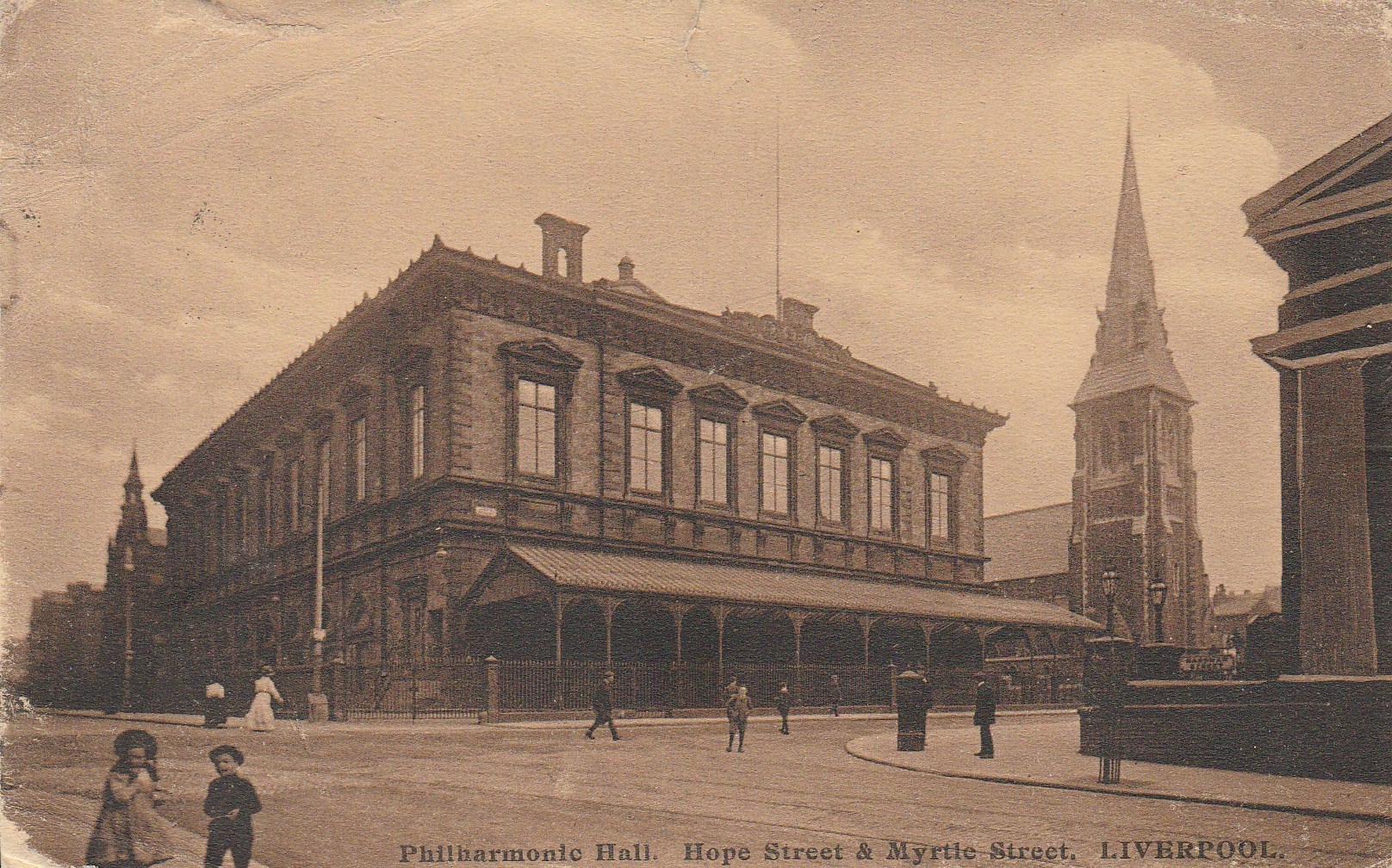
Its relationship to the next-door Philharmonic Hall can be seen from this Edwardian postcard. The original Philharmonic burnt down in the 1930s and was replaced by the present building in 1939. In the picture the classical church opposite, the corner of which can just be seen on the right of the postcard, was the Church for the Blind, attached to the Liverpool School for the Blind which was situated on Hardman Street.
Next door to the Philharmonic
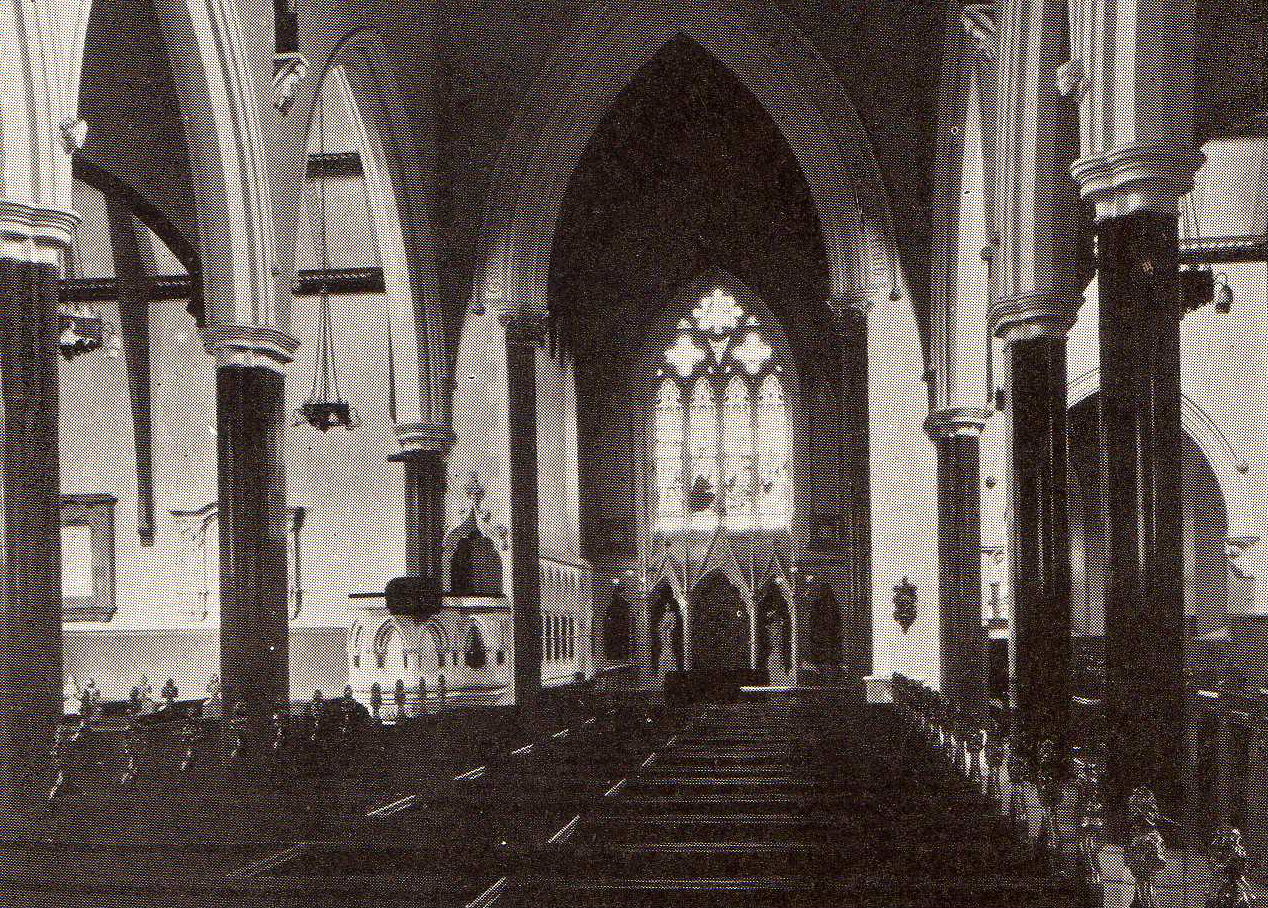
Nothing really remains of Hope Street Church today. Photographs of the interior are intriguing. This scan isn’t great but it shows the view looking towards the pulpit, the chancel and the font.
Church interior
After James Martineau and before the First World War the congregation had some high profile ministers including Charles Wicksteed, Alexander Gordon and Richard Acland Armstrong. The 1920s saw a revival of fortunes under the radical ministry of Stanley A. Mellor who mixed an advanced theology with Socialist ideas. But the crowds that came out to hear him did not last and by the time of the eccentric ministry of the highly scholarly Sidney Spencer the numbers were starting to reduce.
In the Winter 2008/9 of the Merseyside District Unitarian Newsletter The Honourable Dr Frank Paterson, a former member of Hope Street and a very distinguished circuit judge who died in 2014, wrote his reminiscences of the Church. They are a fascinating and rare account of the congregation in the twentieth century. I place them here with due acknowledgment to the MDMA Newsletter:
I reflect with pleasure on my childhood and early manhood, when I frequently accompanied my father to the morning and evening services. He had a wide interest in almost every religious creed. In latter years he reminded me of a character in Shaw’s Major Barbara who declared that he had studied several religions and found that he would be perfectly at home in any one of them. Having been born into a Scots Presbyterian household, he was attracted by the preaching of Dr Charles Aked, the charismatic minister of the then Pembroke Baptist Chapel in Liverpool, where he met my mother, whom he married in 1911. After the departure of Dr Aked for the United States (to what was known as ‘The Millionaires’ Church’ on 5th Avenue), my parents transferred their allegiance to Hope Street Unitarian Church to enjoy the benefits of the preaching of the Reverend Stanley Mellor. Following his death, they continued to attend Hope Street church throughout the ministry of the Reverend Sidney Spencer, I do not think my mother took any interest in the details of religious faiths, but was content to fulfil what she regarded as a spiritual duty by attendance at a church on a Sunday. It is perhaps not surprising that the idea of a free religious faith always appealed to me. It gave me great pleasure to follow in my father’s footsteps as chairman of the Hope Street Committee, which awakened in me the desire to enter a calling where I could participate in the cut and thrust of debate, and to promote harmony where there has been discord.
It has therefore been a source of satisfaction to me to find that Hope Street had its origins on the site of what is now The Queen Elizabeth II Law Courts, where I have spent the greater part of my professional life. When the buildings were opened by Queen Elizabeth II, I happened to be one of the longest standing circuit judges of the court and had the honour of being presented to Her Majesty. Whilst waiting for the ceremony I was placed in a line of those about to be presented immediately between the Anglican Bishop of Liverpool on one side and the Catholic Archbishop of Liverpool on the other. I regret I didn’t have the courage or the time to remind these prelates that I felt like the wonderful white church that once stood half way between the Anglican and Catholic cathedrals in Hope Street.
When I was a child services at Hope Street were almost as well attended as the Hope Hall Cinema (now the Everyman Theatre) down the road, and in order to secure two seats together my father was obliged to apply to the Church Secretary, Mr William Letcher. There was an interval of several weeks before a reply was received notifying my father that two places had been reserved for himself and my mother, and on the following Sunday they were met in the vestibule by Mr Letcher to be escorted past the queue waiting to be seated and down the aisle to a pew four rows from the front, on the back of which was a card bearing their names. This remained what we regarded as our family pew until the church was demolished several decades later. William Letcher remains in my memory as a formidable figure, well-suited to the task of controlling the crowds at Hope Street. He was, I believe, employed by one of Liverpool’s principle banks, in charge of the Stationary Department. As a small boy he appeared to me as a person of enormous power and influence. Whatever it meant for the Trinity to be present in one person, it seemed to me that person might as well be Mr William Letcher. He was highly thought of, and in due course enjoyed the distinction of becoming the subject of a light-hearted song, composed by my father and another member of the congregation, which recommended a variety of facetious changes to forms of worship, each one punctuated by the refrain: “But Will `e Letch `ya?” The authors sang it at a Christmas party.
Another innovation of my father’s as Chairman was the collection of “bun pennies`”. These were coins dating from the early days of the reign of Queen Victoria on which the monarch’s head appeared with hair drawn back in a bun, still current in the inter-war years but invariably worn very smooth. My father encouraged members of the congregation to deposit any they found in their possession in a wooden casket he had placed on the window-ledge of the church vestibule, similar to those designed for holding ashes with an incision made in the top and inscribed with the words: “The Hope Street Church Ancient Victorian Secret Society”. To what objects the fund accumulated therein was applied remains uncertain to this day.
The only photograph of the church I recall seeing was taken by a photographer from the Liverpool Daily Post and showed the spire wrapped in smoke. It dated from an evening on which my father had had to move a Committee Meeting from the Library to the Church Hall, and eventually – very reluctantly – to adjourn with business unfinished, because the premises had become unbearably hot. The neighbouring Philharmonic Hall was on fire. My father had a print framed and hung in the church to illustrate the perils to which the members of the Committee were prepared to subject themselves in pursuance of their duties.
Hope Street Church also survived the blitz a few years later. It may be that the enemy found the white spire of that Unitarian stronghold a useful pointer to the Liverpool docks and to the Cammell Laird shipyards and it took care to spare it. Be that as it may, incendiary bombs were such a menace that the government required all males over a certain age to register for fire-watching duties. The minister of Hope Street, the Reverend Sidney Spencer, an ardent pacifist, had no hesitation in fire-watching at his own church or anywhere else, but objected to doing so under compulsion of the State. He refused to register. The magistrates fined him £10 which he steadfastly refused to pay. In due course, he was sent to prison for a term of 14 days. The minister (an admirer of Mahatma Gandhi) was adamant that he did not wish the fine to be paid, but after a few days the Committee felt that he had made his point, and that somehow the fine should be paid anonymously. It was decided that, as a law student with access via the Magistrates’ Entrance to the courts on Dale Street, the Chairman’s son was best able to make the payment without drawing attention to himself. This I did. The first clerk I approached hesitated: “But Mr Spencer has said he doesn’t want this fine paid. I don’t think I can take it.” “If anyone offers us money – we take it!” declared his senior. A few hours later, the Reverend Sidney Spencer was a free man.
My father reimbursed me, from what source I do not know. Possibly he unlocked the coffer of the Hope Street Church Ancient Victorian Secret Society!





 velvethummingbee