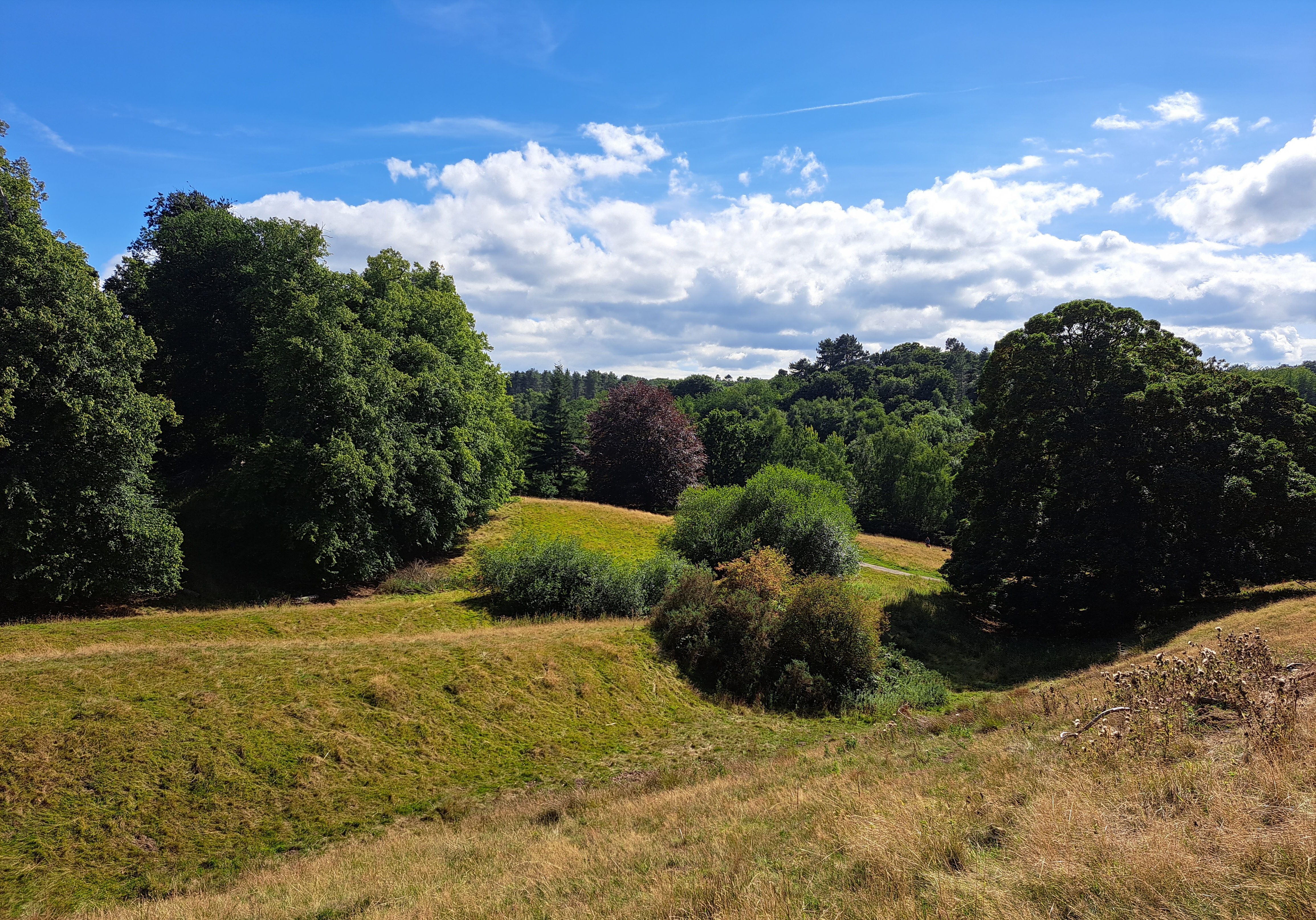
These opening lines from God’s Grandeur by Gerard Manley Hopkins supply us with the opening words and the theme of this week’s online service. Filmed at various locations in England, Wales and Northern Ireland places visited include the Hawarden estate, Flintshire, North Wales; the sand dunes at Formby near Liverpool; the Derbyshire Peak district; the River Thames (Isis) at Oxford; Norton Priory, Cheshire; Sefton Park, Liverpool; Rathmullan, county Down; and Dunmurry, county Antrim. As we look at these varied landscapes we explore the meaning of this idea of the divine presence in the natural world alongside readings from Gerard Manley Hopkins, Thomas Merton and Ernesto Cardenal.
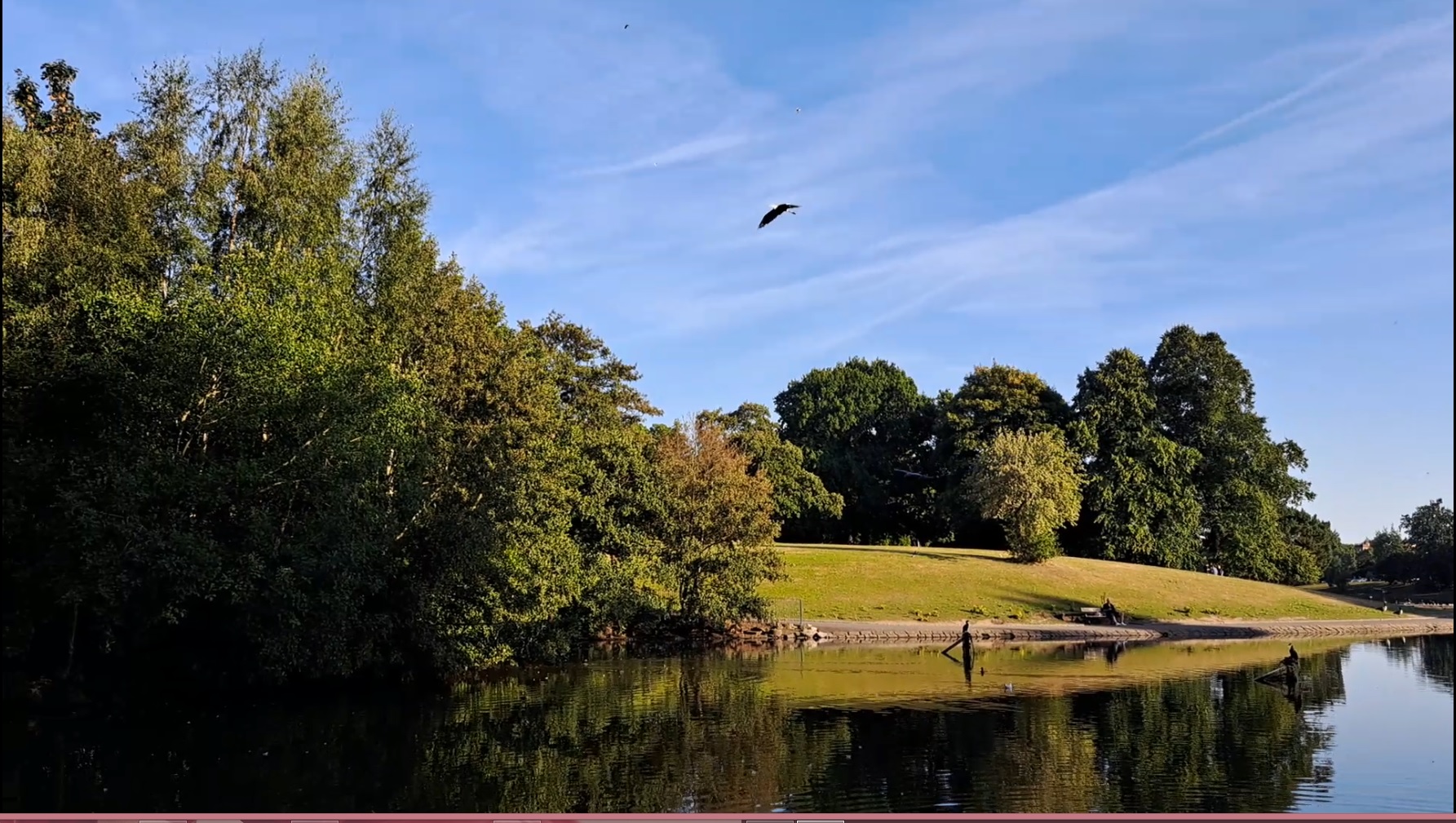
Sefton Park – the heron flies over the lake
The world is charged with the grandeur of God – click on the video above to see the meditation and reflections
In the service Graham Murphy reads two poems by Gerard Manley Hopkins – Binsey Poplars and Pied Beauty, both recorded at Gladstone’s Library, Hawarden, Flintshire. In addition Robert Neill and Emma McCrudden read extracts from the works of Thomas Merton and Ernesto Cardenal.
Binsey, near Oxford
Music played includes:
For the beauty of the earth, played by Allen Yarr, organist of First Presbyterian (NS) Church, Dunmurry.
Come let us sing of a wonderful love, played by John Strain, organist of Ballee Non-Subscribing Presbyterian Church.
O love that wilt not let me go, played by John Strain.
Let saints on earth in concert sing, played by Allen Yarr.
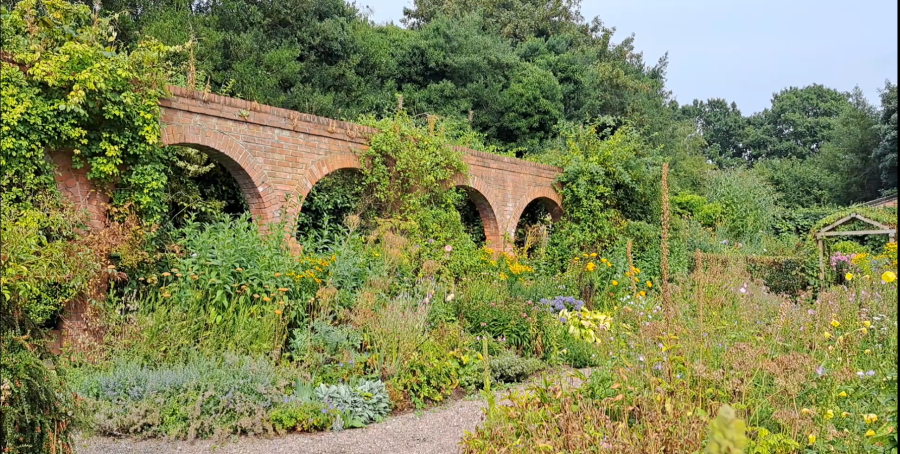
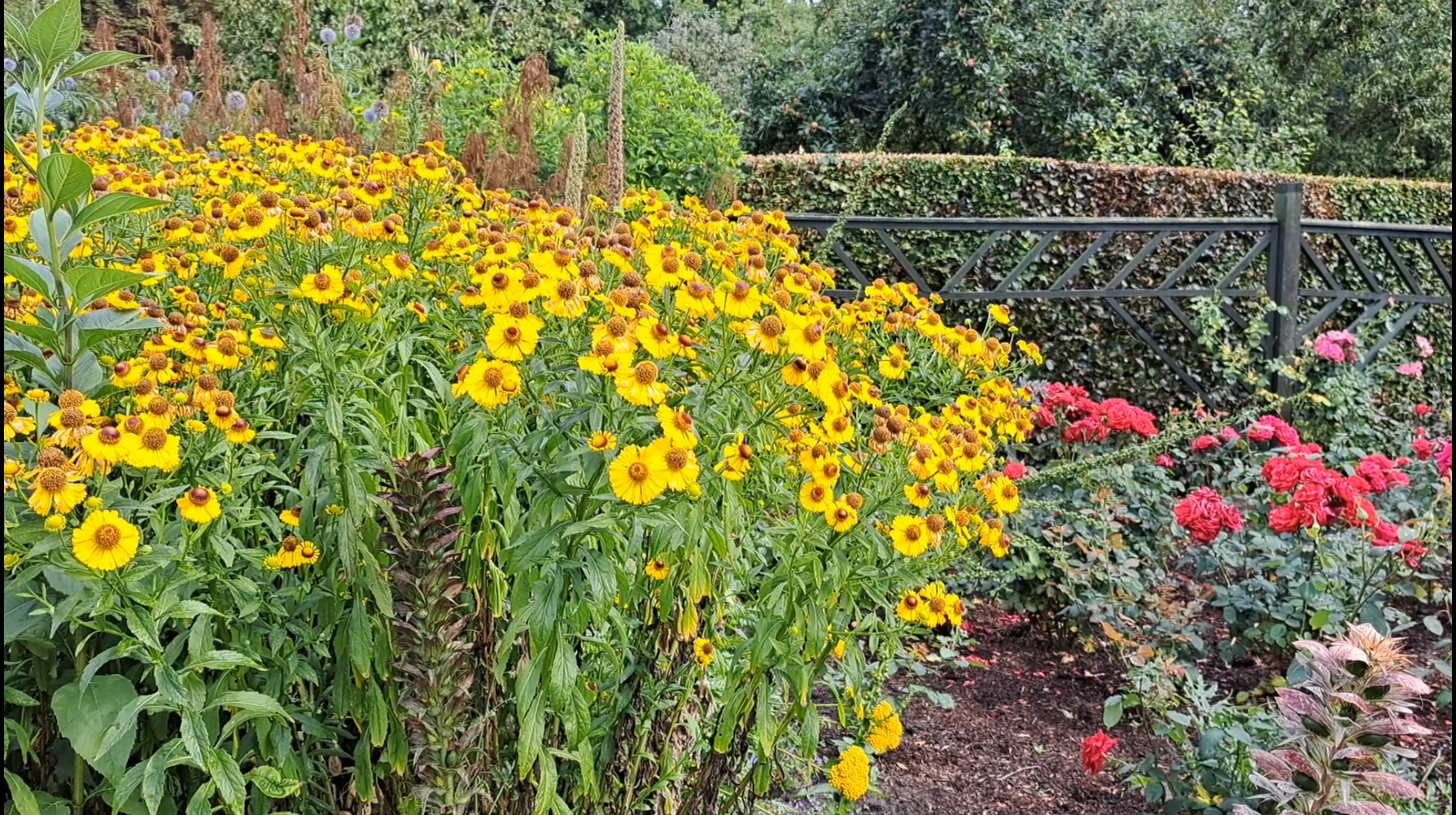
Norton Priory, Cheshire, walled garden
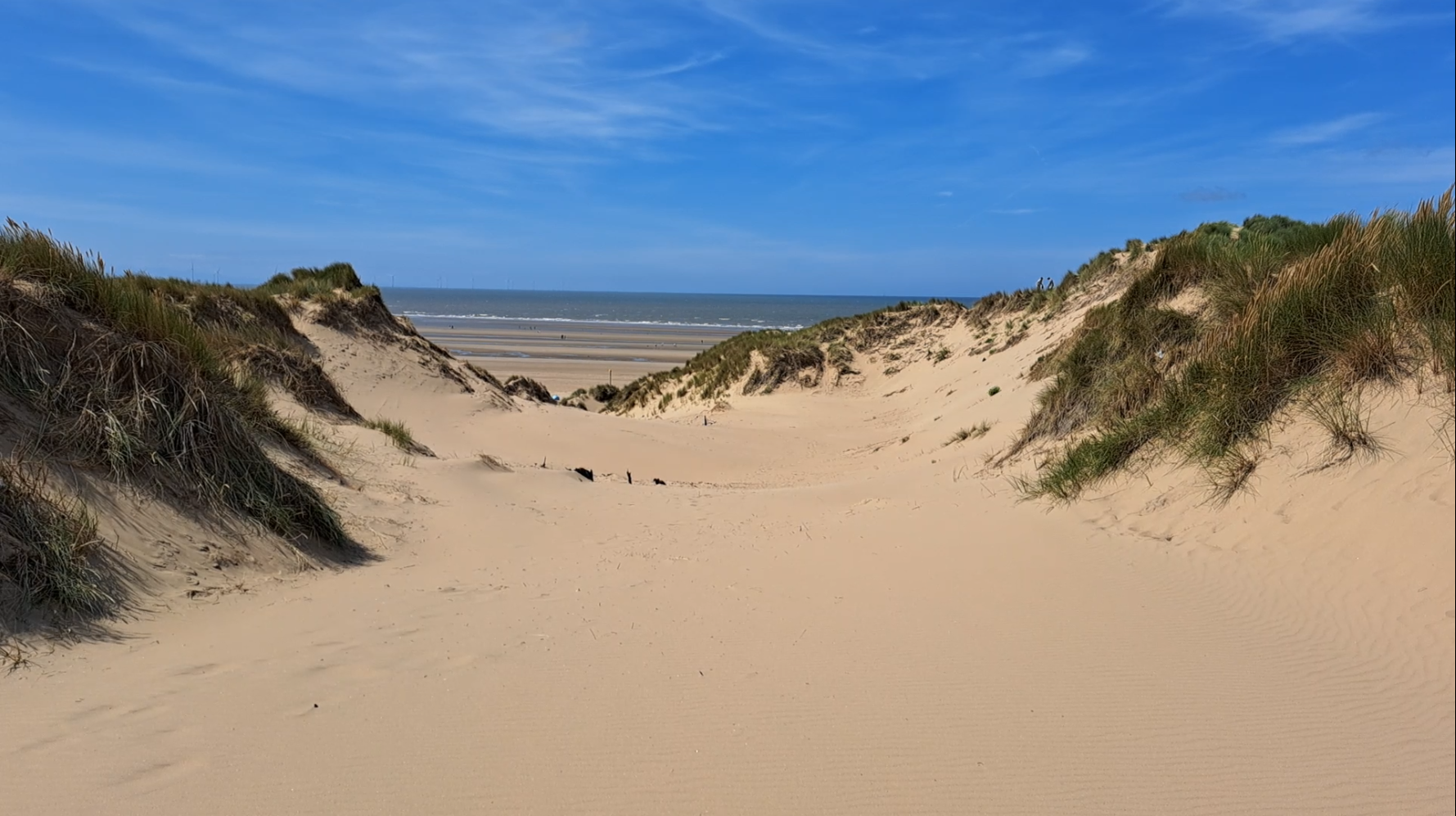
Formby, sand dunes
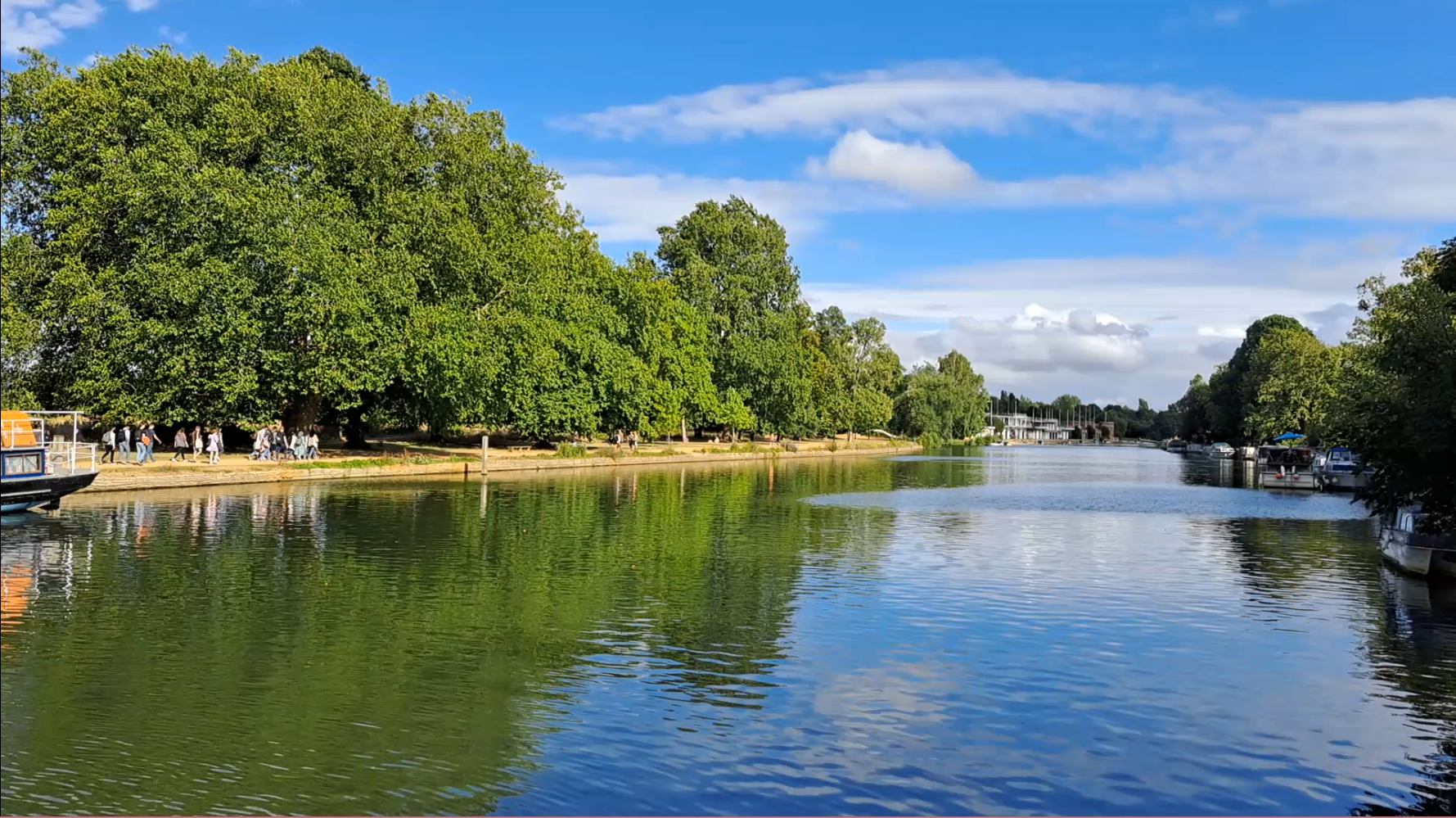
The River Thames at Oxford
Let me seek, then, the gift of silence, and poverty, and solitude, where everything I touch is turned into a prayer: where the sky is my prayer, the birds are my prayer, the wind in the trees is my prayer, for God is all in all. – Thomas Merton
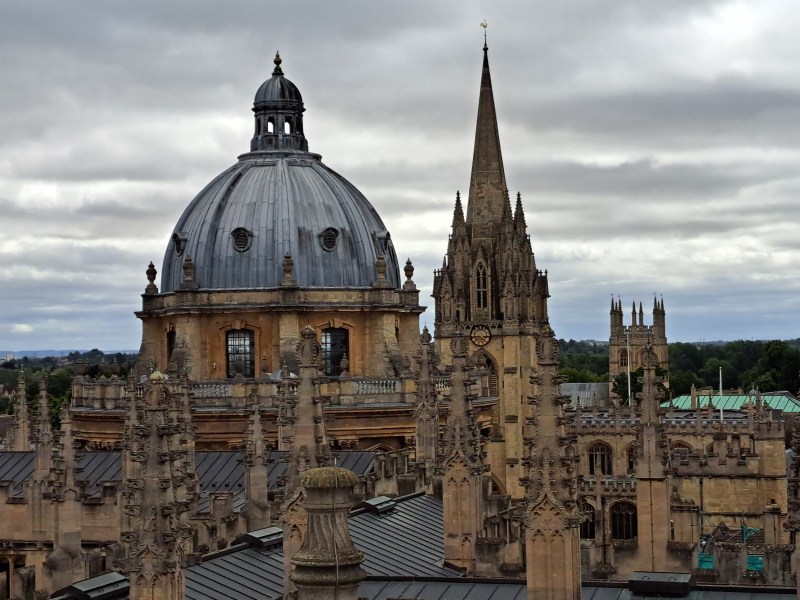
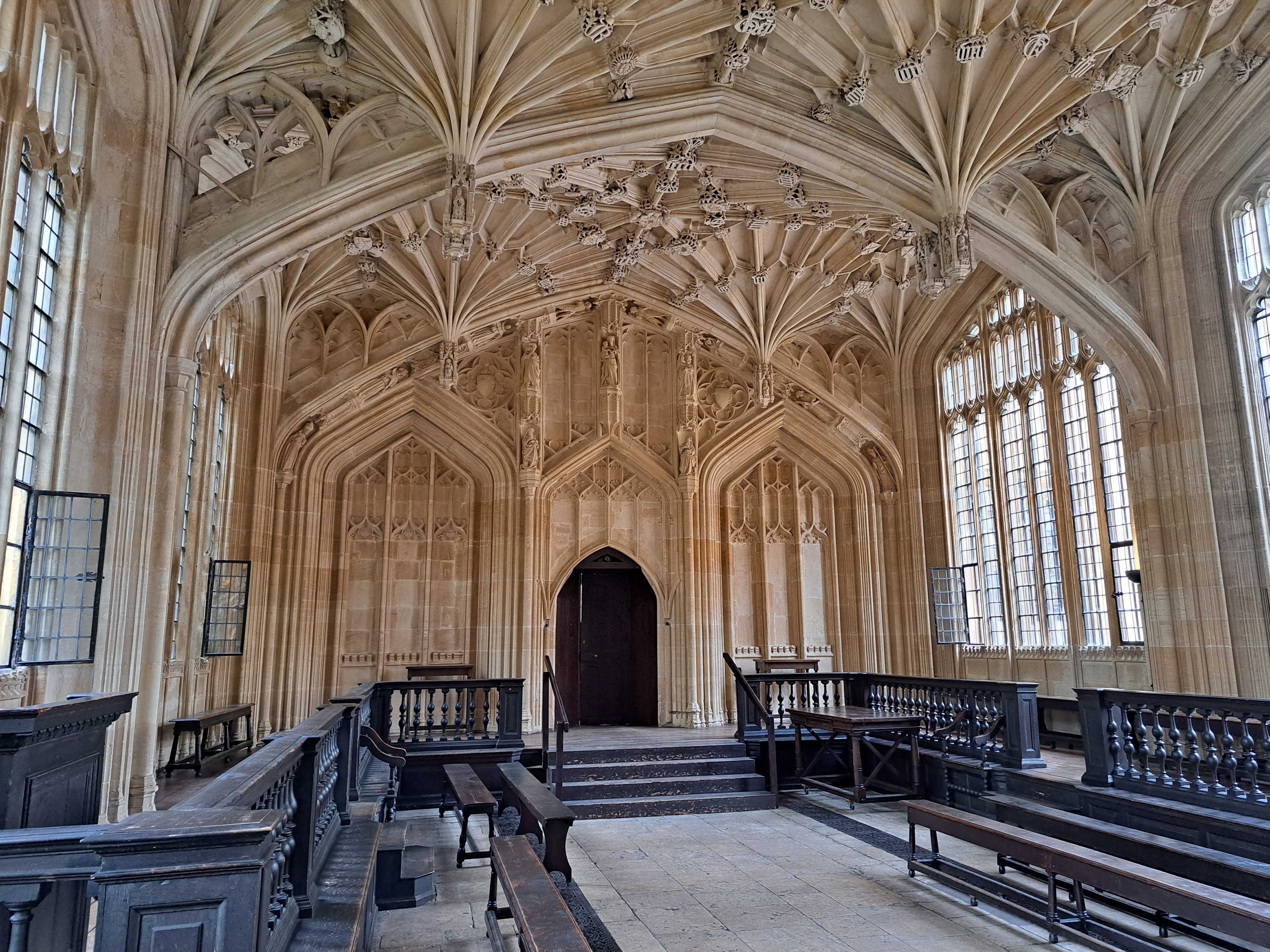
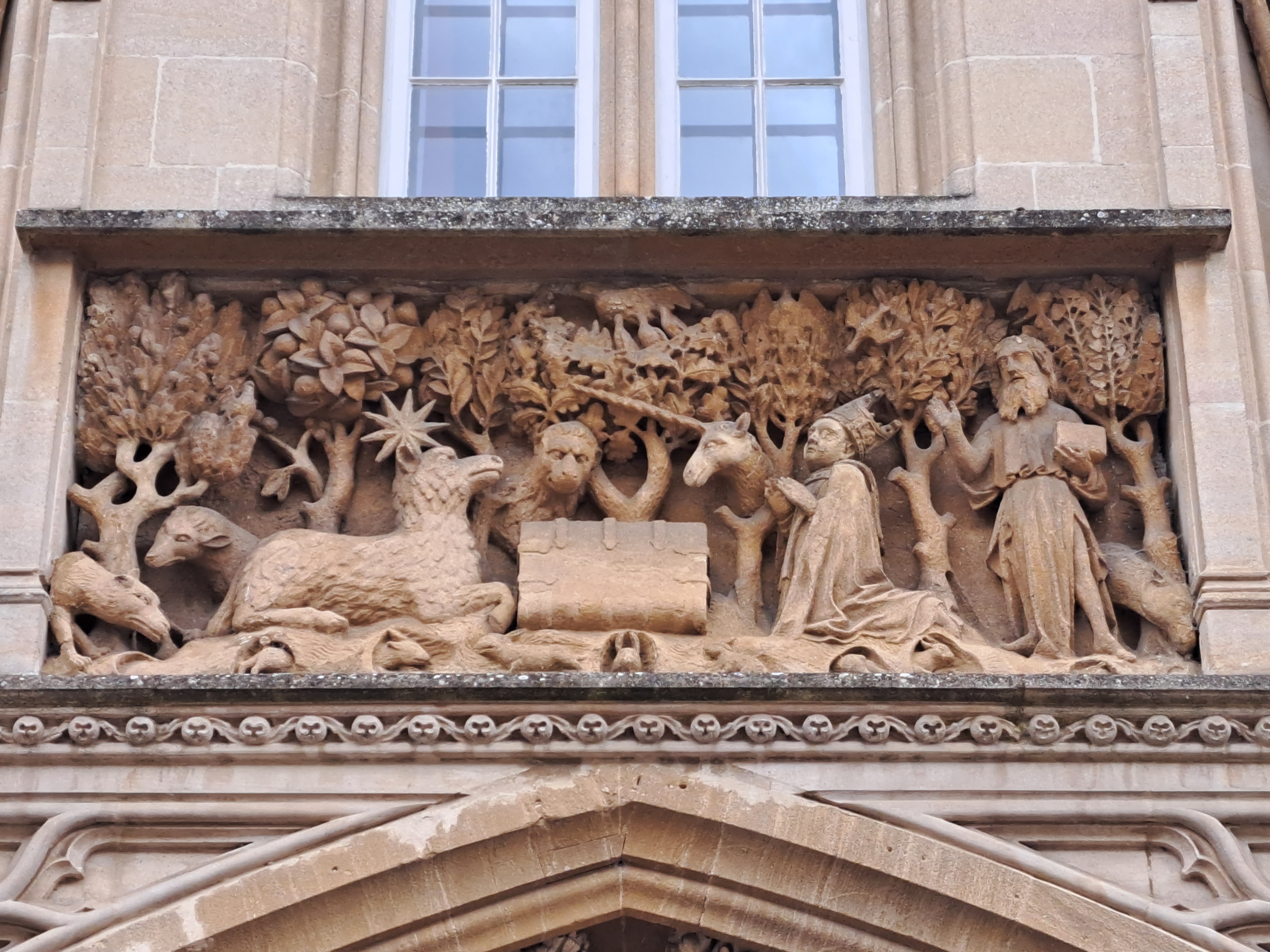
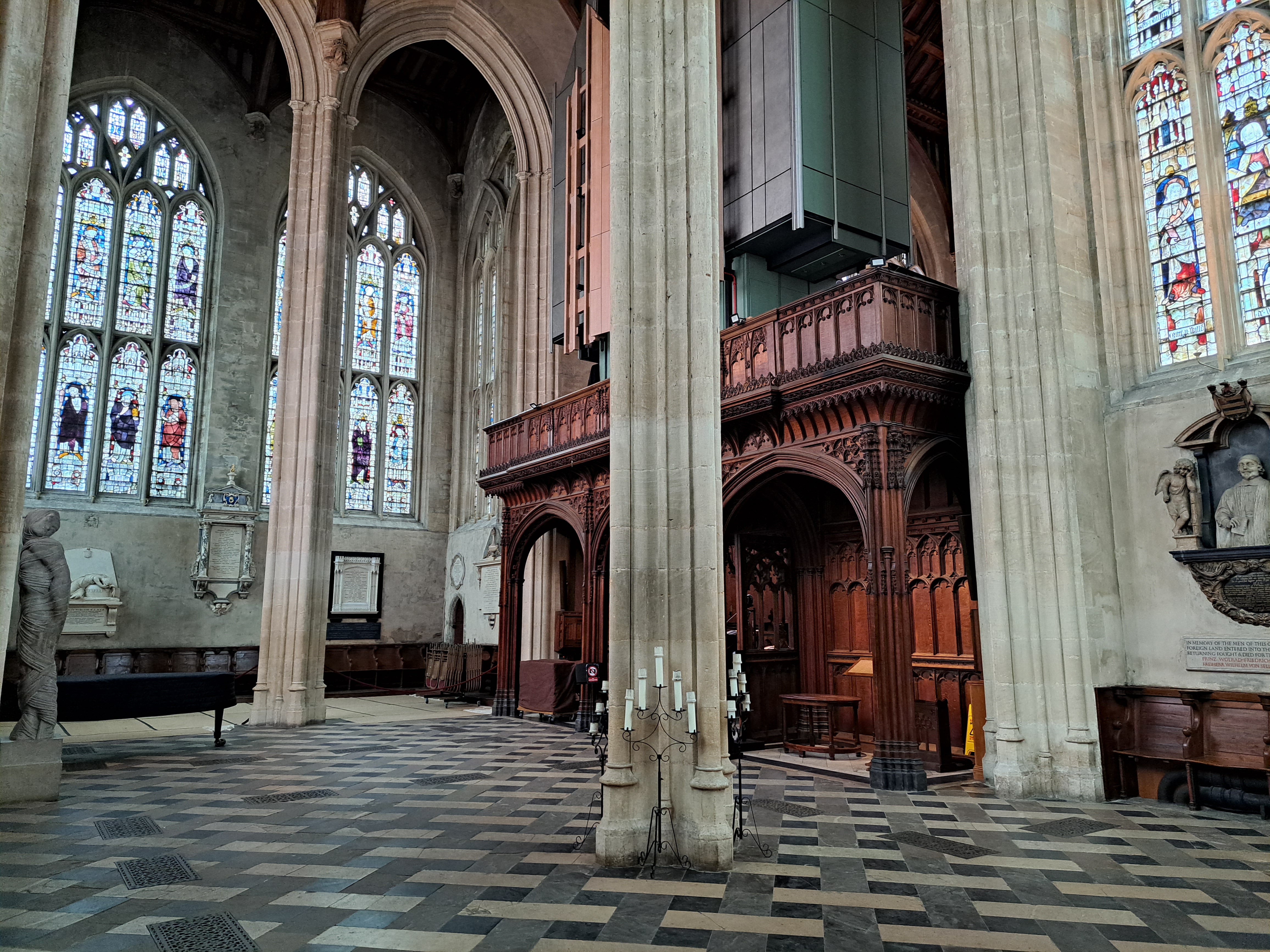
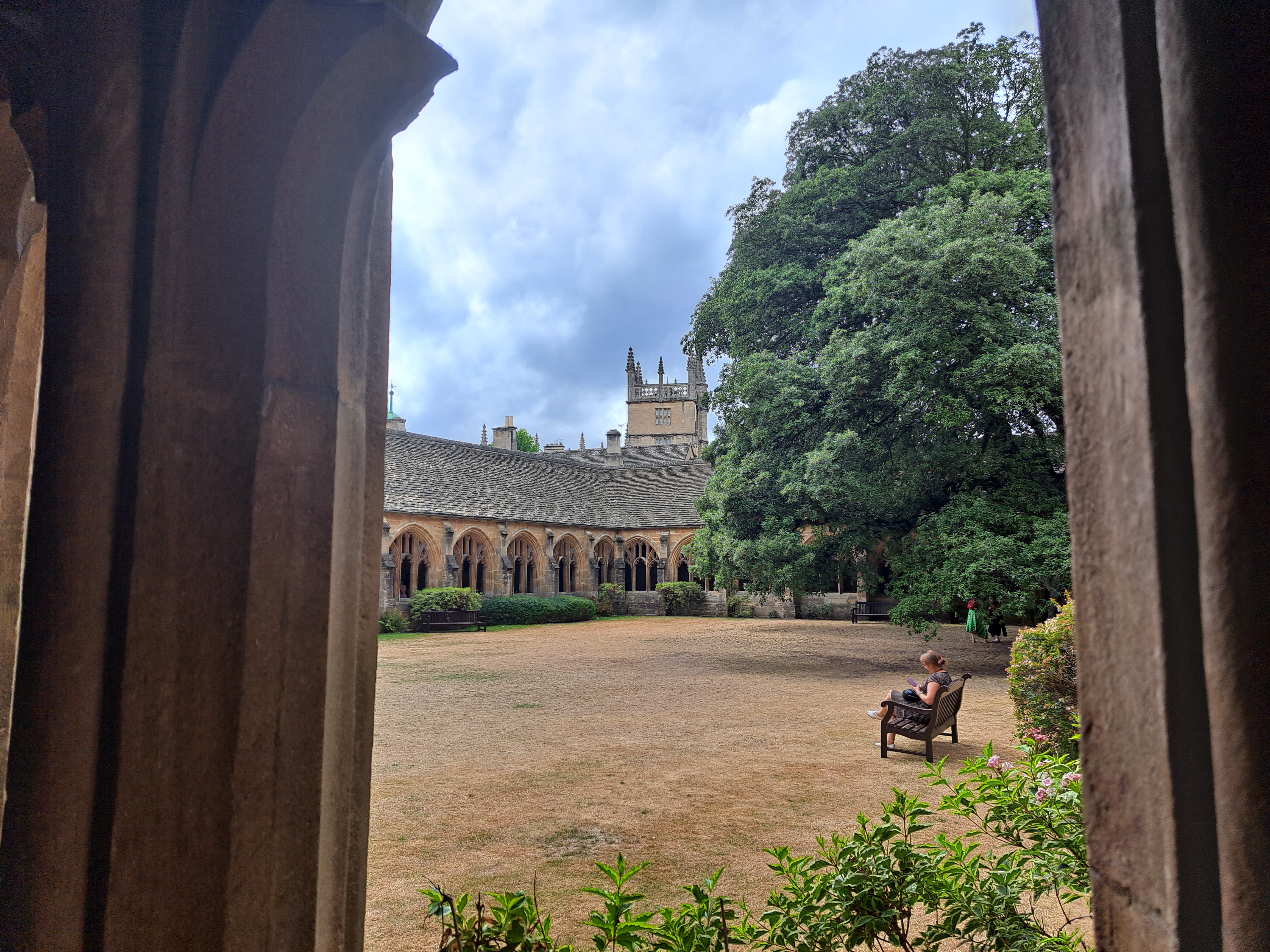
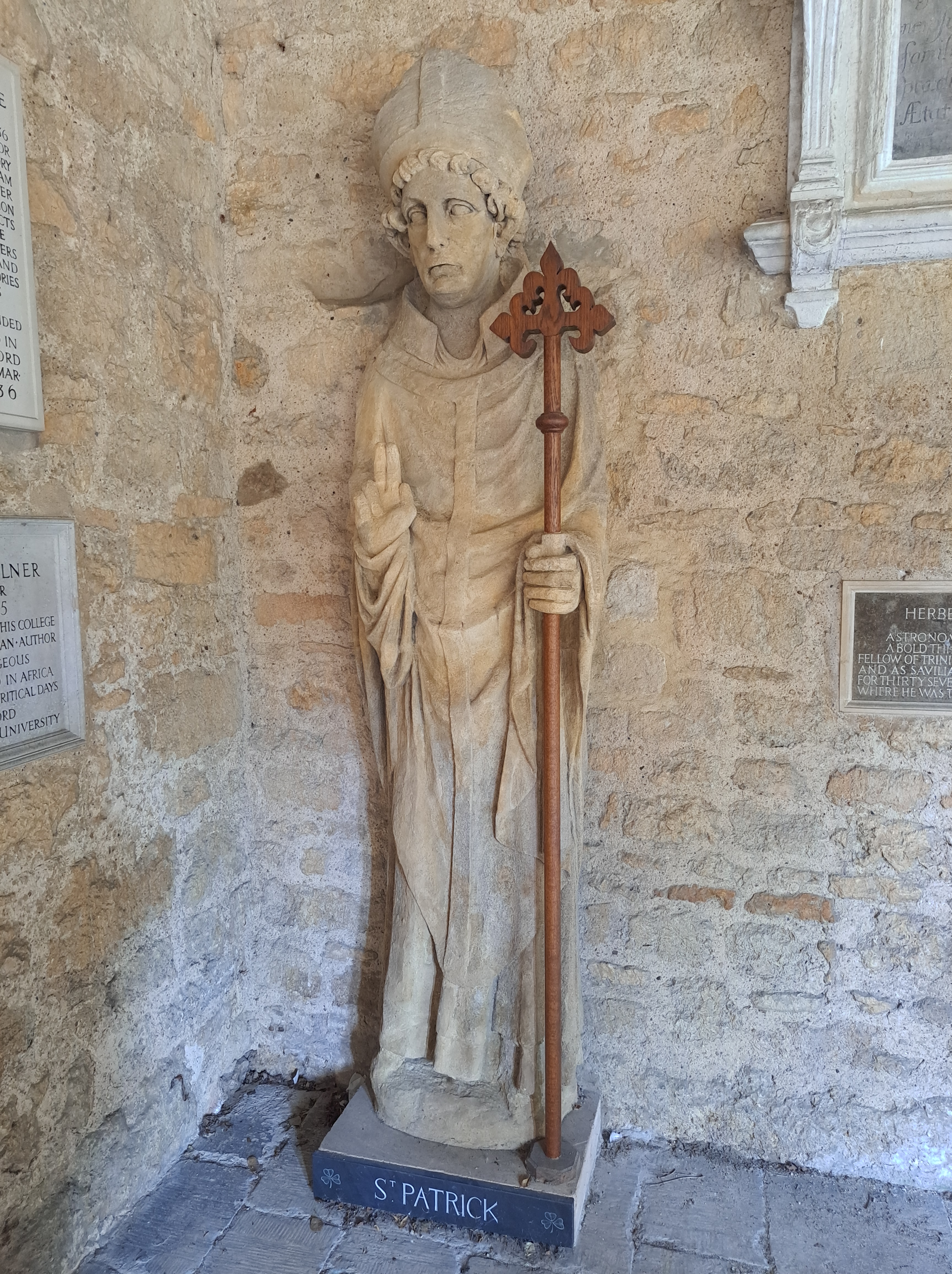
To accompany our service of worship conducted from Oxford we have a few views of various parts of the university and its environs.
Click on the video to see the service
The service features readings, hymns and prayers as well as poems relating to Oxford. As part of the service we are very pleased to have Graham Murphy read Duns Scotus’s Oxford, by Gerard Manley Hopkins, and Oxford, by C.S. Lewis.
Readings: Psalm 139 read by Rev Dr David Steers Duns Scotus’s Oxford by Gerard Manley Hopkins, read by Graham Murphy Oxford by C.S. Lewis, read by Graham Murphy Oxford (extract) by T. Lovatt Williams, read by Sue Steers
Hymns: ‘The King of Love my shepherd is’, Alfie McClelland (Clough) ‘From all that dwell below the skies’, Allen Yarr (Dunmurry) ‘Lord of all hopefulness’, John Strain (Ballee) ‘Be still for the presence of the Lord’, Laura Patterson (Downpatrick) ‘In Christ Alone’, John Strain (Ballee) ‘It is well with my soul’, Allen Yarr (Dunmurry)
In the service you will see: Radcliffe Camera, Brasenose College, River Thames (Isis), Harris Manchester College, Mansfield College, New College, Christ Church (Peckwater Quad, Tom Quad, Memorial Garden), Christ Church Meadow, Old English Longhorn Cattle, Divinity School, Bodleian Library, Sheldonian Theatre, Christ Church Cathedral, University Church, Martyrs Memorial.
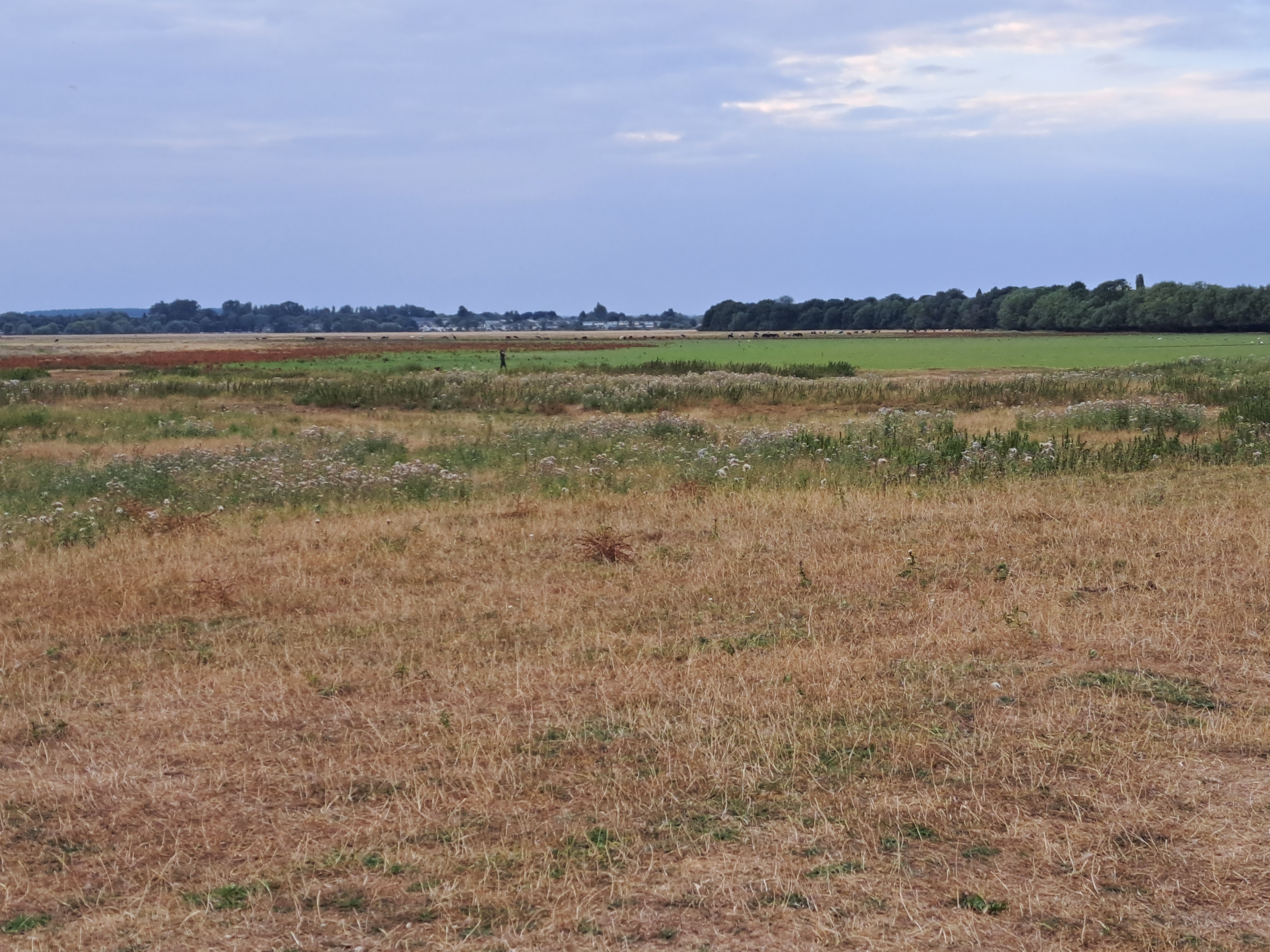
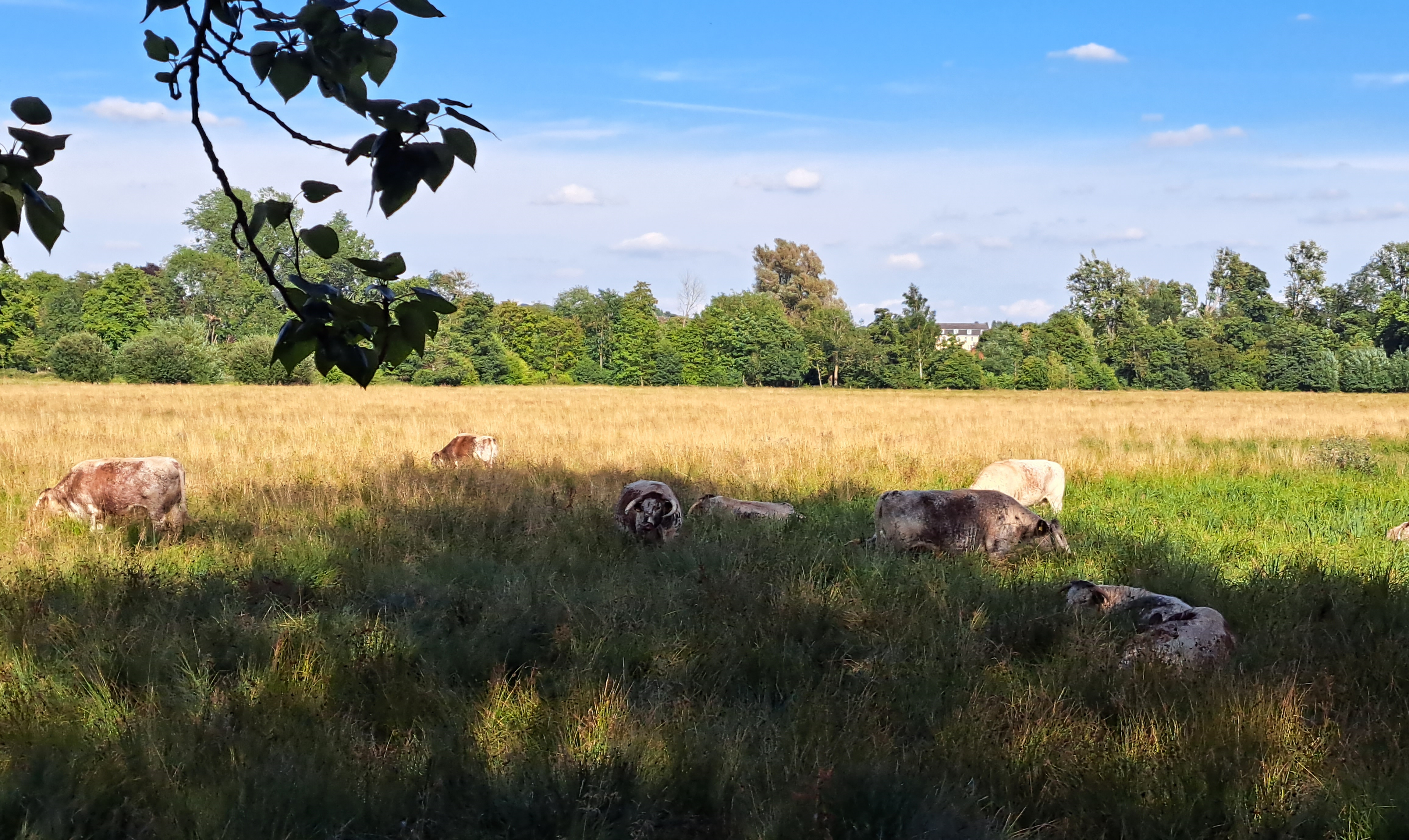
Portmeadow
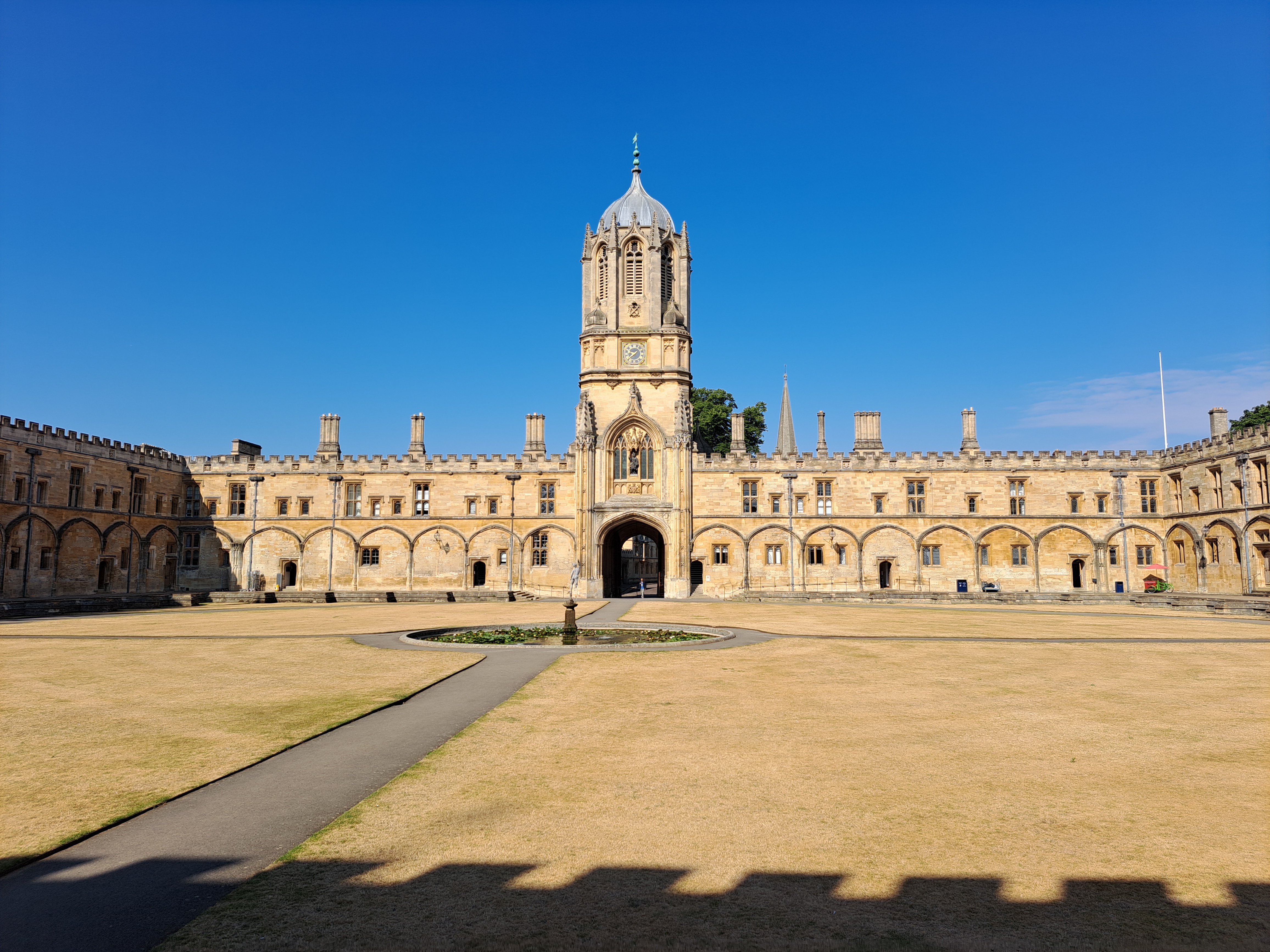
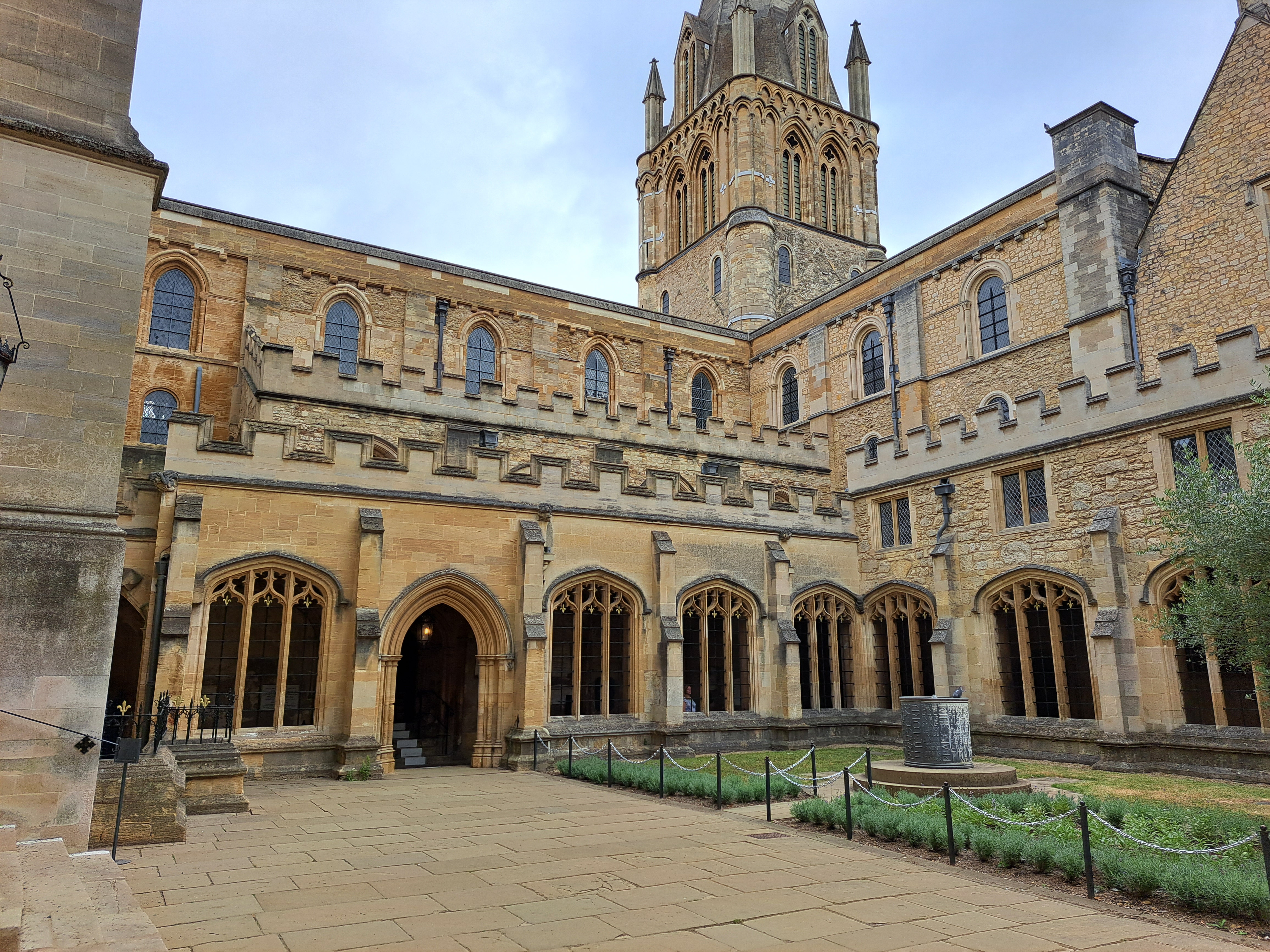
Tom Quad, Christ ChurchChrist Church cloisters
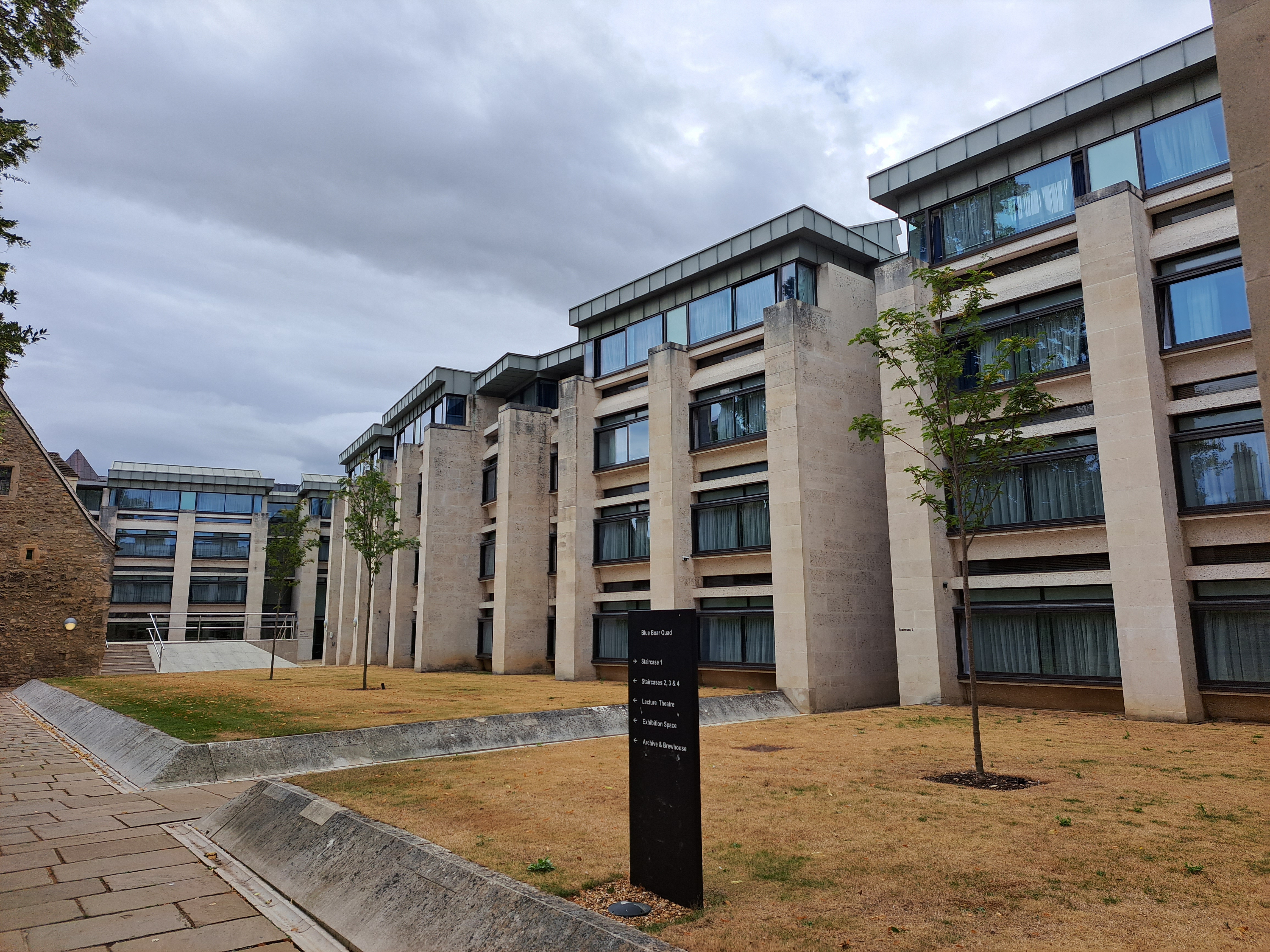
Blue Boar Quad
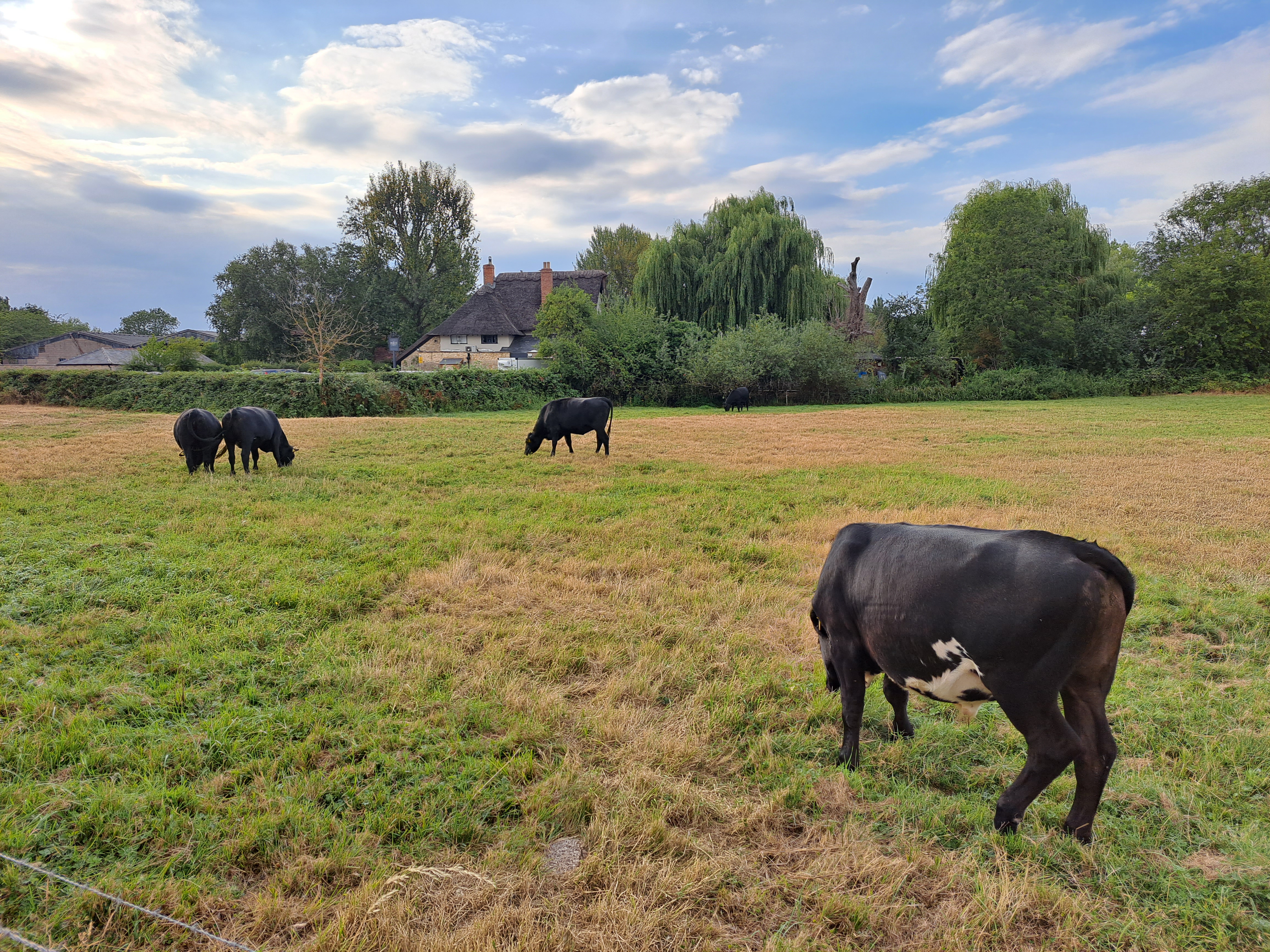
Old English Longhorn Cattle, Christ Church MeadowNew CollegeNew College, antechapel
Your enjoyment of the world is never right, till every morning you awake in Heaven: see yourself in your Father’s palace; and look upon the skies, the earth, and the air as celestial joys: having such a reverend esteem of all, as if you were among the angels.
Thomas Traherne
One of the beauties of Dunmurry is not just the gardens and grounds that surround the church but the variety of animal and bird life that lives there. Louise Steers has been busy filming many of the birds, animals and insects that live there and we have two videos that consist of Louise’s films and photographs of them accompanied by music provided by John Strain on the organ at Ballee. Among the animals you can expect to see in Part One are robins, blue tits, blackbirds, a thrush, grey squirrels, a mouse, ladybirds, a speckled wood butterfly and a peacock butterfly.
Dunmurry Garden Wildlife Part One
Click on the video above to see some of the birds, animals and insects that live in the gardens round the First Presbyterian (NS) Church, Dunmurry. Medley played by John Strain on the organ at Ballee Non-Subscribing Presbyterian Church.
Dunmurry Garden Wildlife Part One
The second of two films featuring some of the birds, animals and insects that live in the gardens round the First Presbyterian (NS) Church, Dunmurry. All pictures are by Louise. In this case the accompaniment is by John Strain on the organ at Ballee playing God speaks to us in bird and song, For the beauty of the earth, and God who made the earth.
Click on the video above to see Part Two. The video includes forty-two images featuring: blue tit, female chaffinch, male chaffinch. starling, thrush, shieldbug, lacewing, bumblebee, carder bumblebee, hoverfly, ladybird, peacock butterfly, speckled wood butterfly, grey squirrel, hedgehog, wood pigeon, blackbird, magpie, fledgling blue tit, male bullfinch, great tit, robin.
Louise also has her own animation channel (InkLightning), which includes animation like this short video:
On Saturday, 11th June members of Dunmurry along with members of First Belfast and All Souls’ Non-Subscribing Presbyterian churches enjoyed a great visit to to Dublin. We were made very welcome by the Unitarian congregation on St Stephen’s Green and treated to an excellent tour of sites connected with the roots of Protestant Dissent in Dublin by Rory Delany.
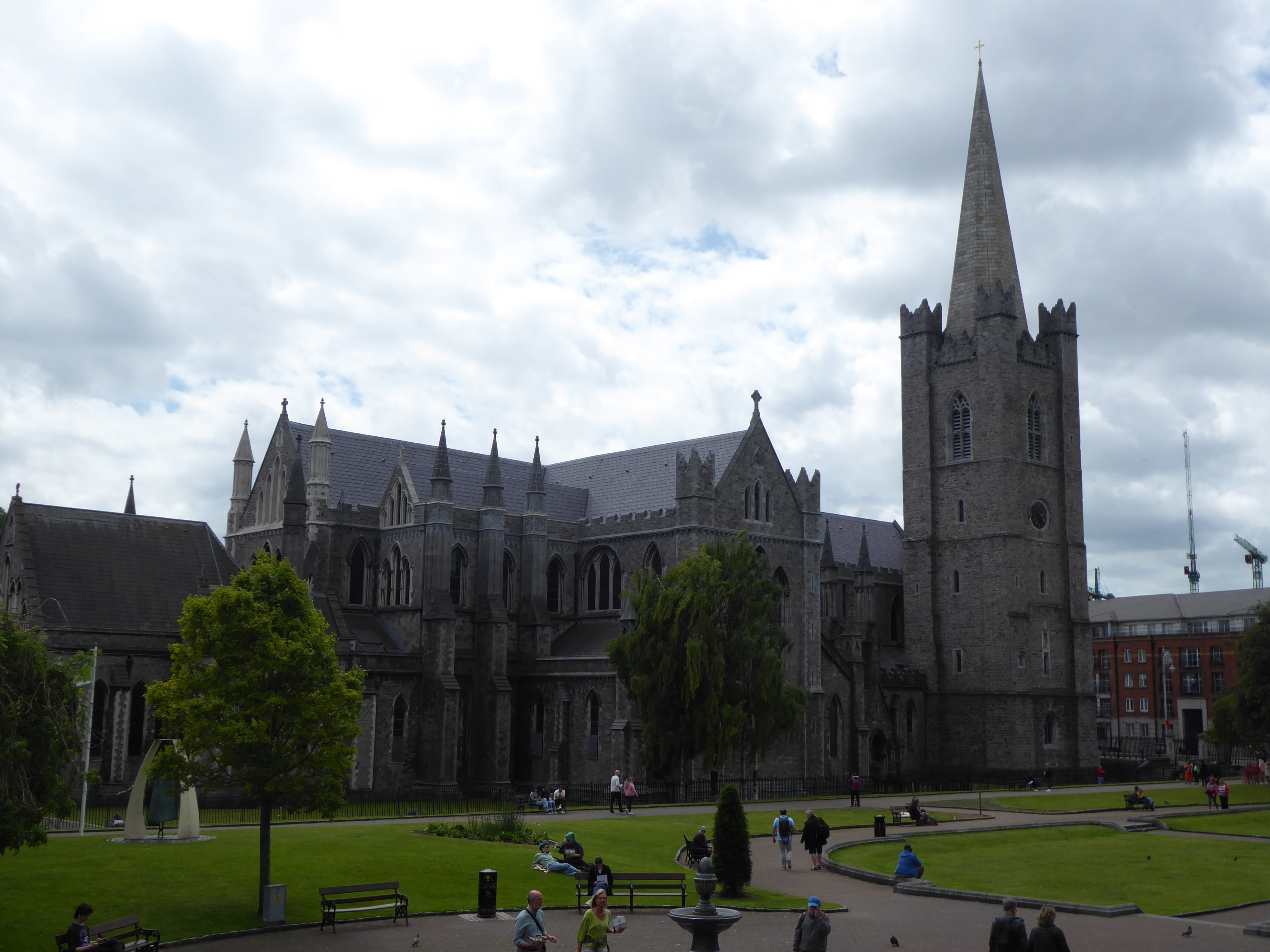
St Patrick’s Cathedral Dublin, where Cromwell is said to have stabled his horses in the 1650s
Rory has a fund of knowledge about the history of Dublin and of the different strands of Dissent in the city, which largely date back to the period of Oliver Cromwell. We were taken on a fascinating walk around some of both the familiar and not so familiar parts of Dublin and all of us gained a deep insight into the way Dissent – Independency – Presbyterianism – Unitarianism – developed in the city and the contribution made by members of the Dissenting churches to the history of the city.
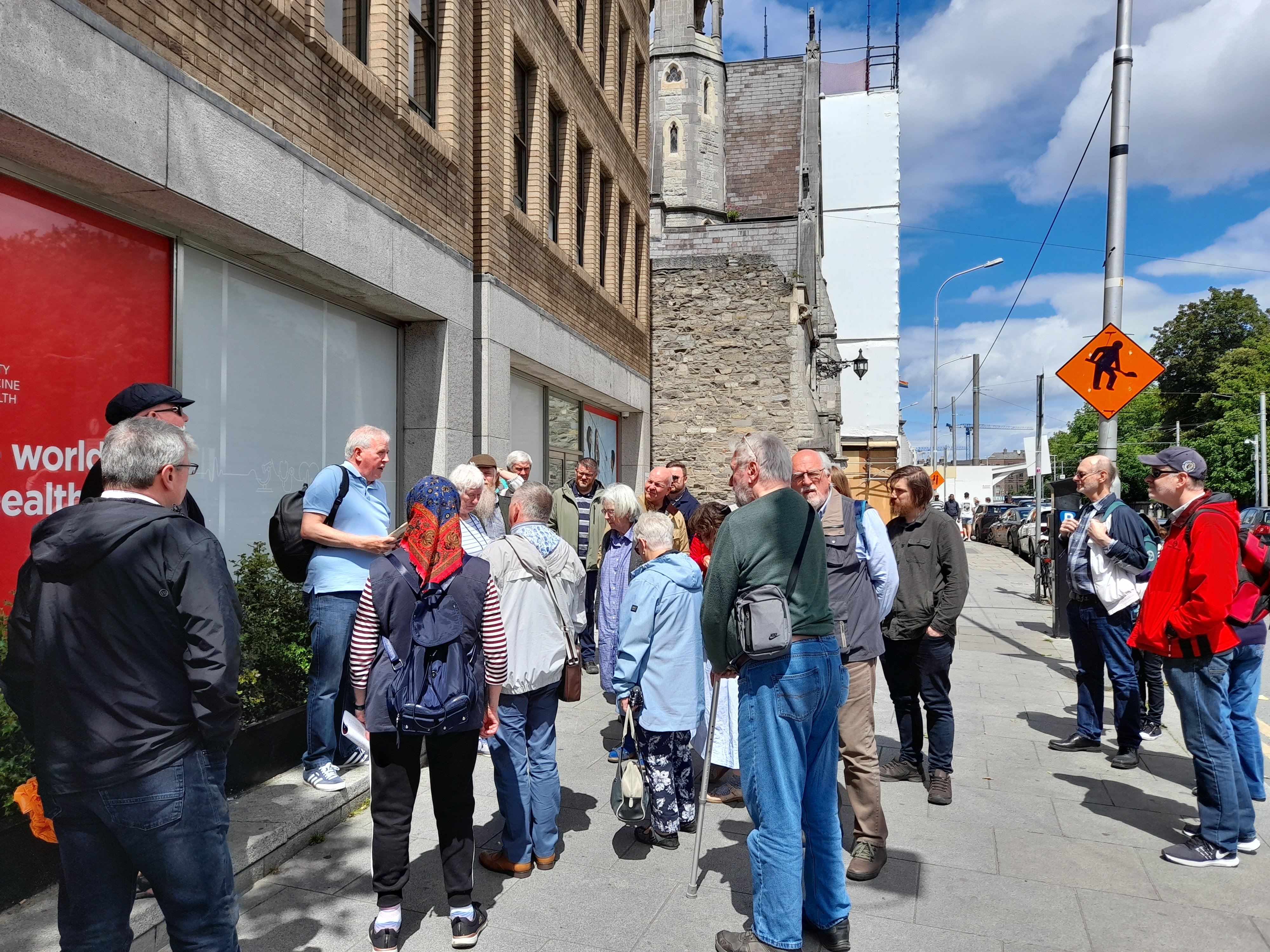
Starting the tour outside the church on St Stephen’s Green
Rory gave us an outline of the plan before we set off. The Unitarian Church was built in 1863 by the congregation of Strand Street and four years later it was joined by the congregation of Eustace Street. These two congregations contained many of the leading merchants in the city, families which had played an important part in civic life for decades, and were groups which were rooted in at least four churches which had maintained a continuity of existence from Cromwellian and Puritan times onwards.
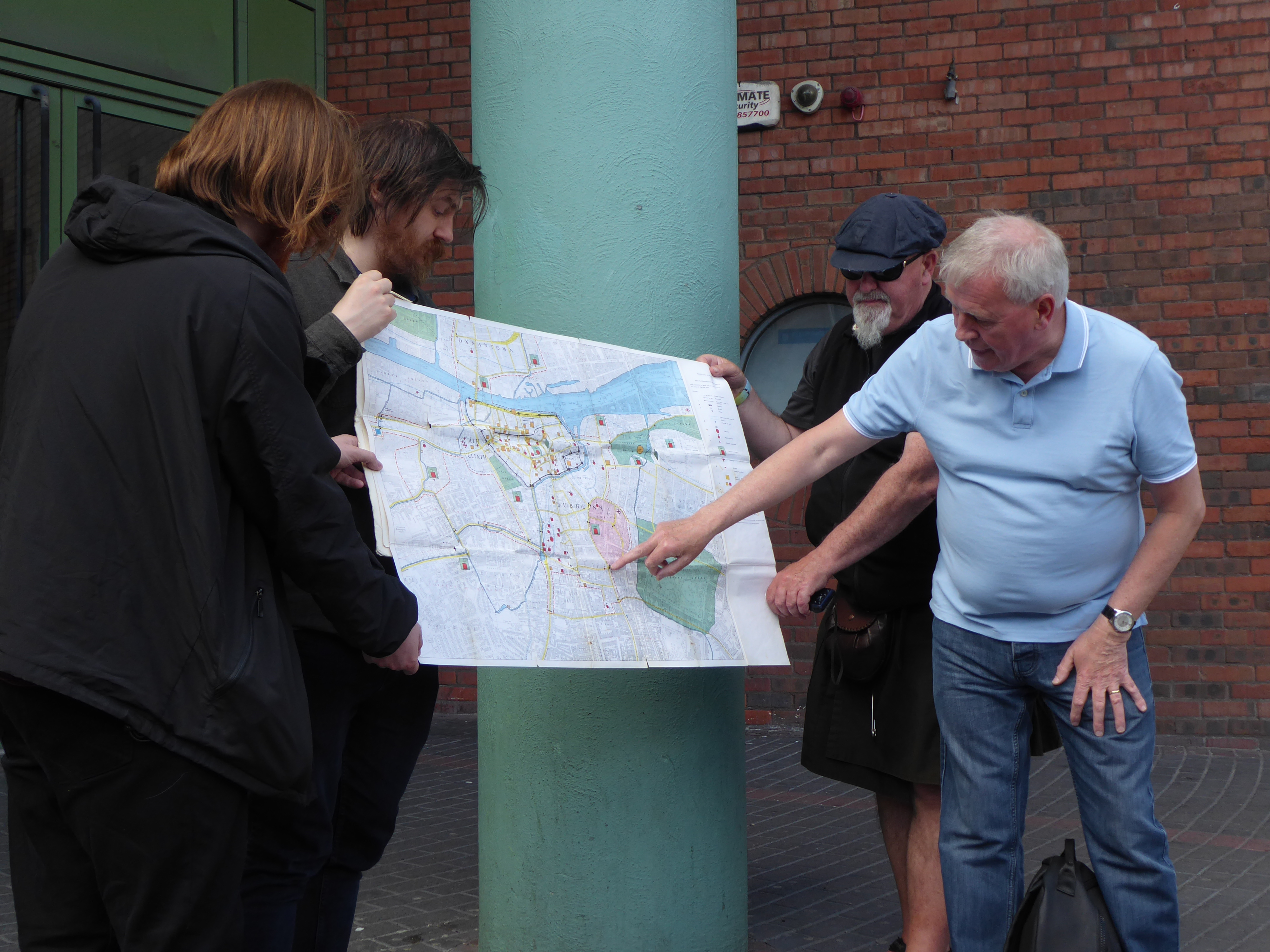
Rory explaining the location of the medieval city
Perhaps the most direct stream of religious life which fed in to the modern church on St Stephen’s Green was that of Wood Street. The first minister connected with this congregation is usually said to be John Owen, a leading Puritan divine who came to Dublin as chaplain to Oliver Cromwell and later became dean of Christ Church, Oxford during the Commonwealth. The congregation may date back to Elizabethan times but the first minister in Wood Street itself is thought to be Stephen Charnock who came to Dublin as chaplain to Henry Cromwell in 1655. A fellow of Trinity College, Dublin he was a ‘lecturer’ at St Werburgh’s and returned to England following the Restoration in 1660.
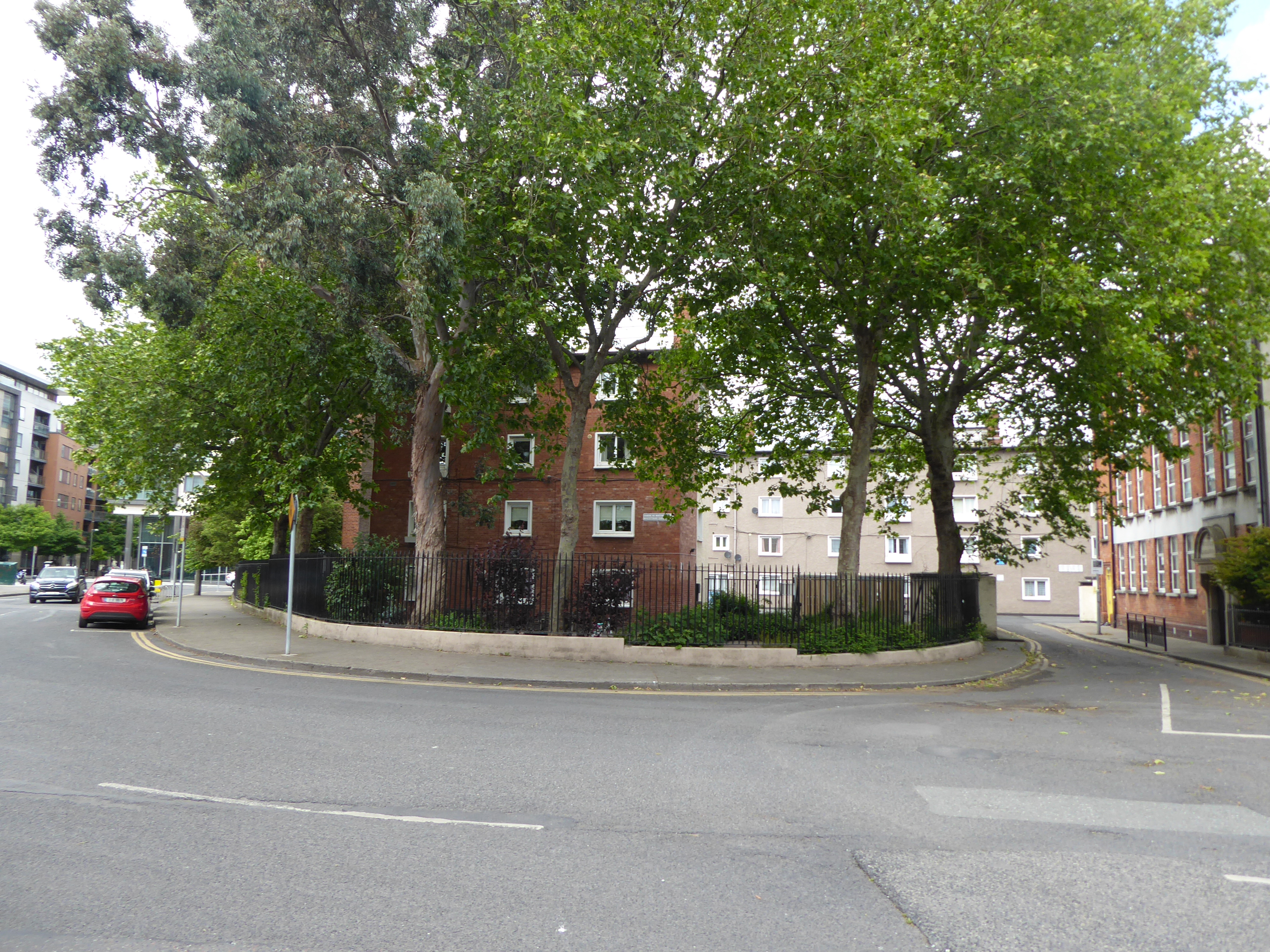
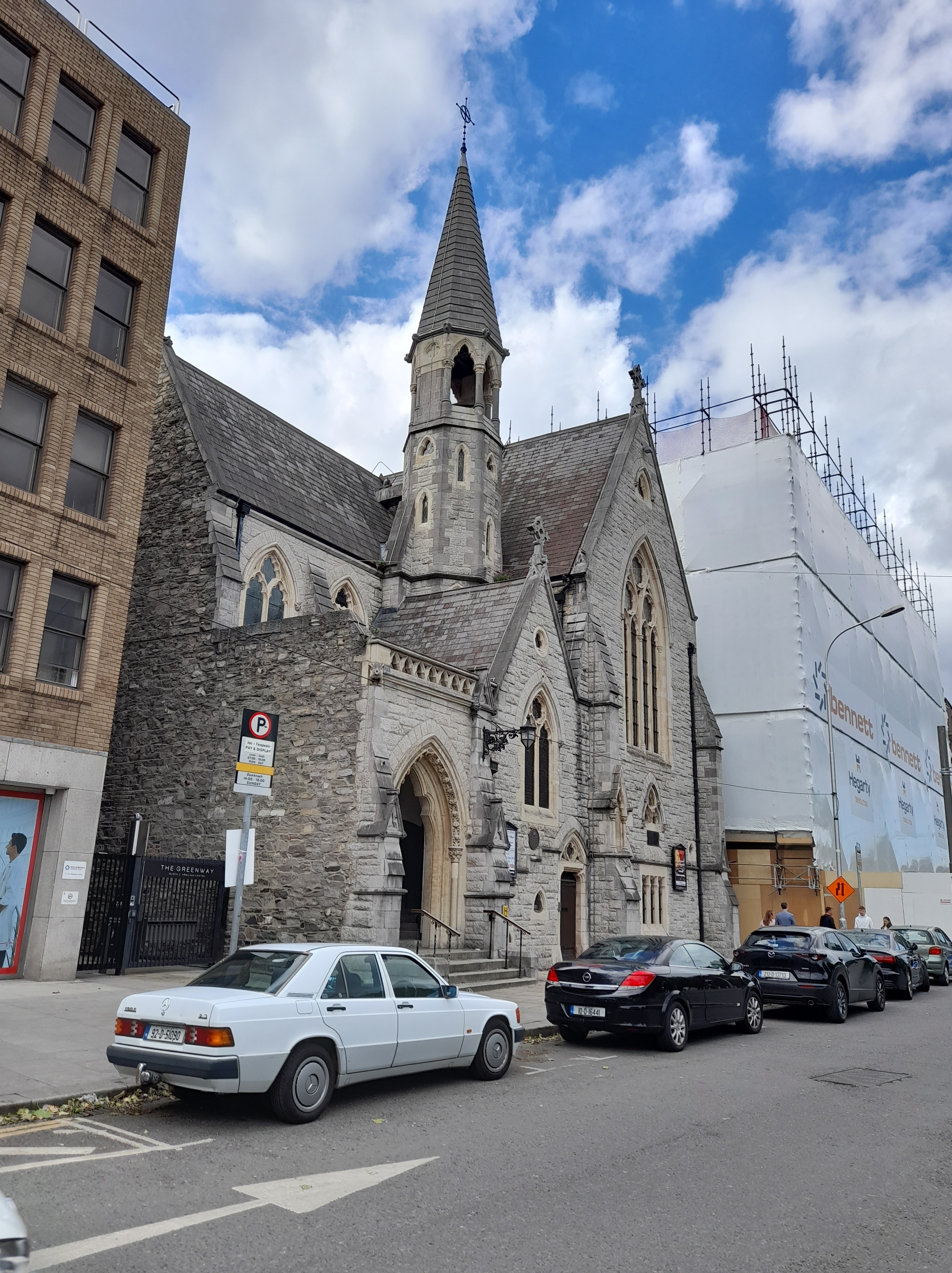
This unprepossessing view is actually the site of the Wood Street meeting-house
Wood Street was the scene of the ministry of Daniel Williams for approximately 20 years. Welsh-born he moved to London in 1687 and became the leading figure in English Dissent, establishing the library that bears his name to this day. Other distinguished and sometimes controversial ministers to serve this congregation include Joseph Boyse, Thomas Emlyn, John Abernethy and James Duchal (click on the links where shown for more information on this blog) . The congregation moved to Strand Street in 1764.
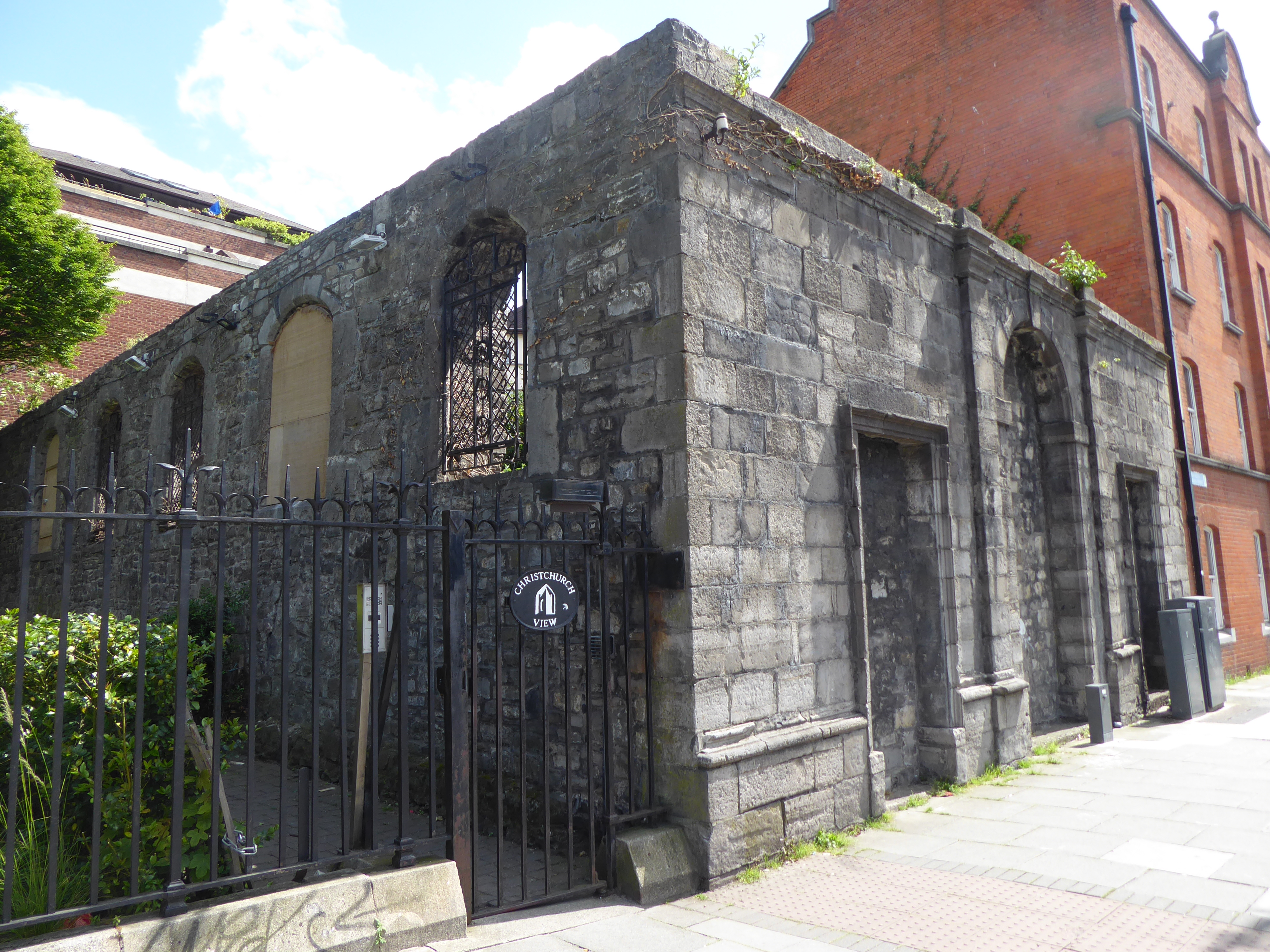
The ruins of St Nicholas’ Church just opposite Christ Church Cathedral
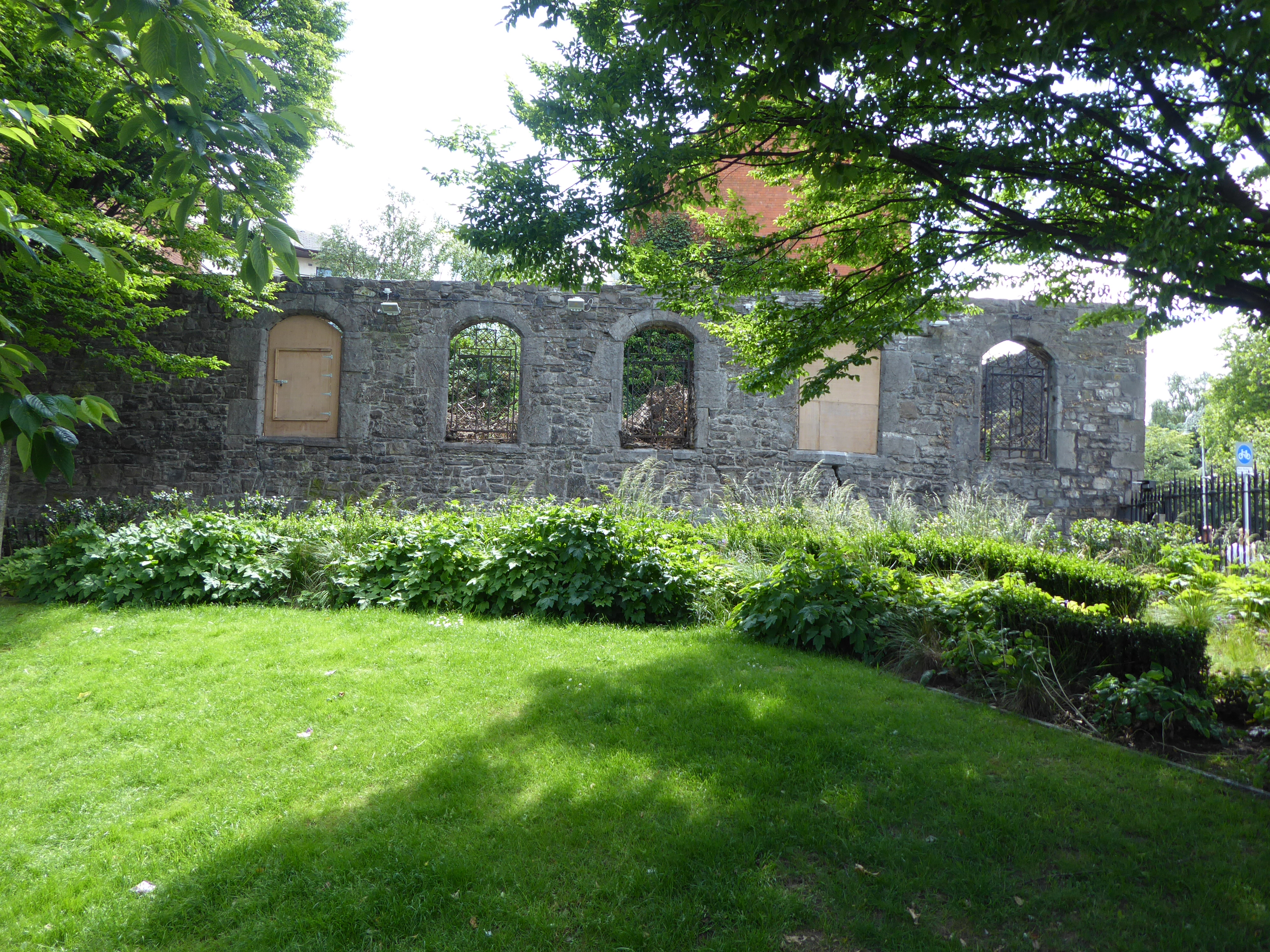
The burial ground of St Nicholas’ Church, now a Peace Garden
Samuel Winter, a key figure in Cromwellian Ireland and Provost of Trinity College, was also preacher at St Nicholas’ Church from 1650 and had as colleague from 1656 Samuel Mather, the son of Richard Mather (for more on his family and their connection with Toxteth click here) a leading Puritan in England, New England and Ireland. Samuel Mather was a lecturer at Christ Church and a Fellow of Trinity College. He died in 1671 and was buried in St Nicholas’ Church. He was later succeeded in the ministry by his brother Nathaniel, by which time the congregation had built their own meeting house on New Row.
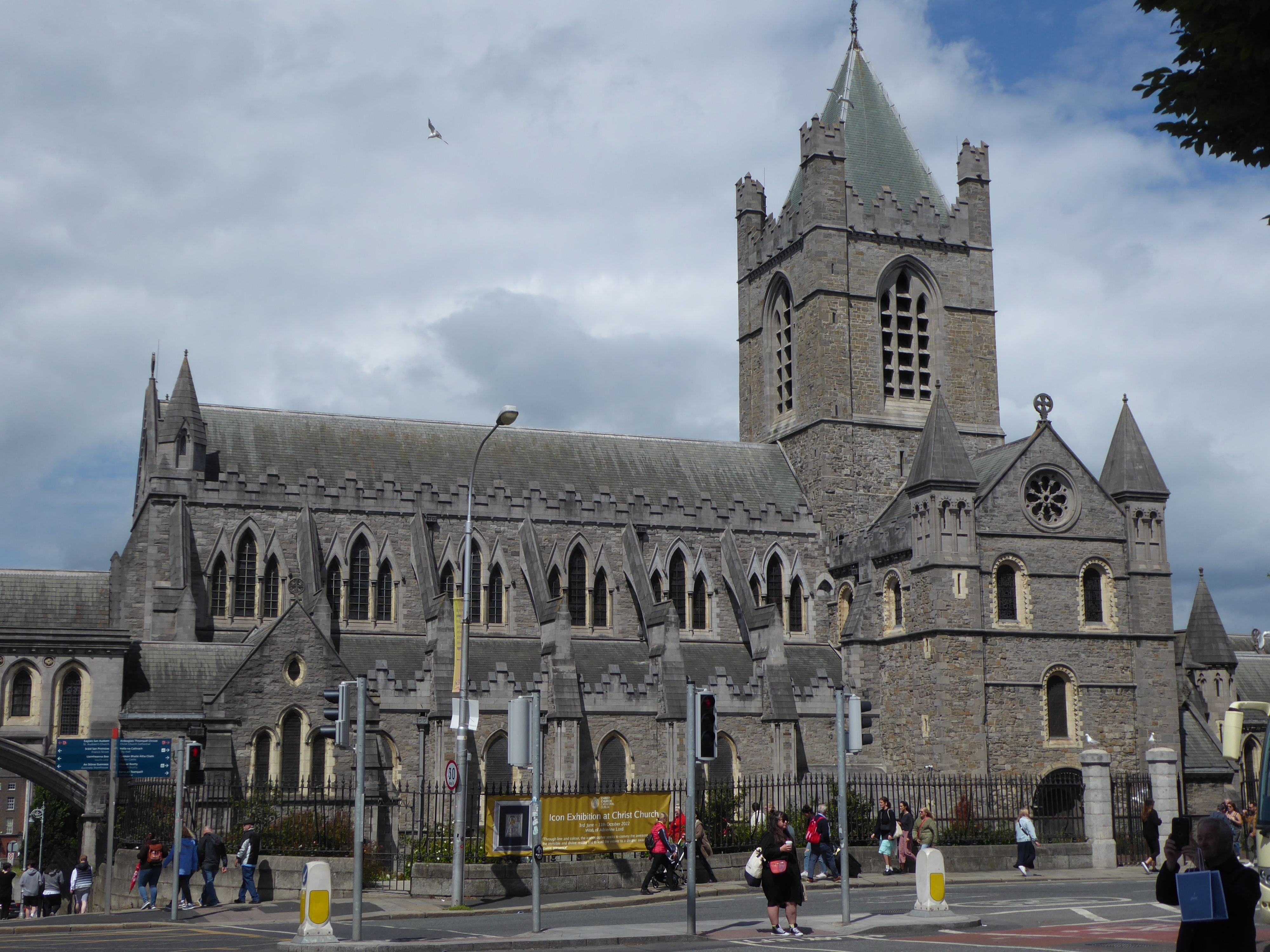
Christ Church Cathedral, Dublin
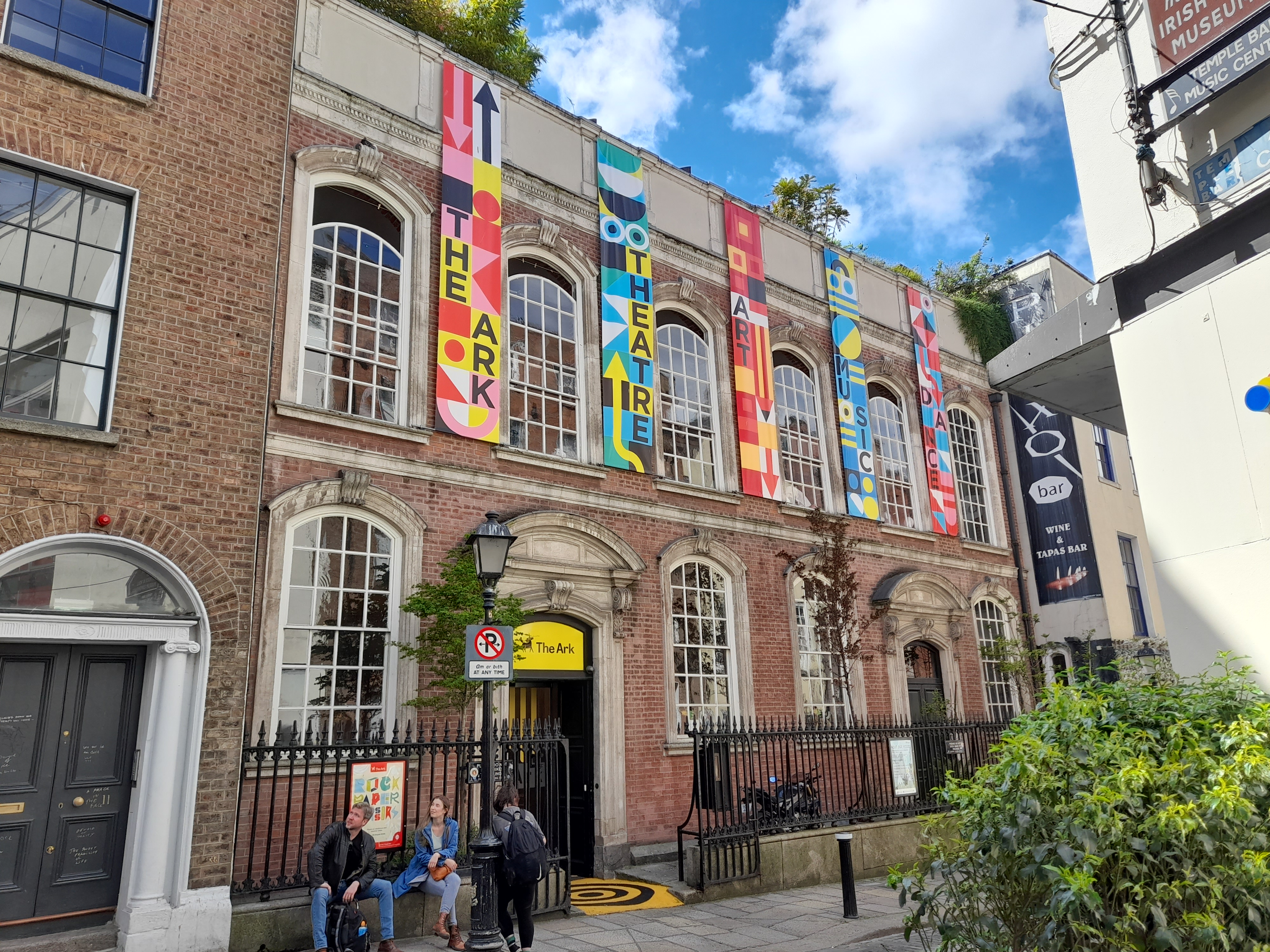
Eventually New Row moved to Eustace Street in 1728. Nearby was a Quaker meeting-house and Rory told us that one of the Quakers said of the Eustace Street meeting-house that ‘When there is so much vanity without, there won’t be much religion within’. But it is actually a very well-proportioned and elegant building, although eighteenth-century Quakers had their own view of such things. Having said that what survives of Eustace Street today is only the facade and that is not shown off to best effect by the banners hung outside by the Ark Theatre group that use the new building.
The surviving facade of Eustace Street meeting-house
Eustace Street was also the location of the first ministry of James Martineau (click here to read more about James Martineau on this blog).
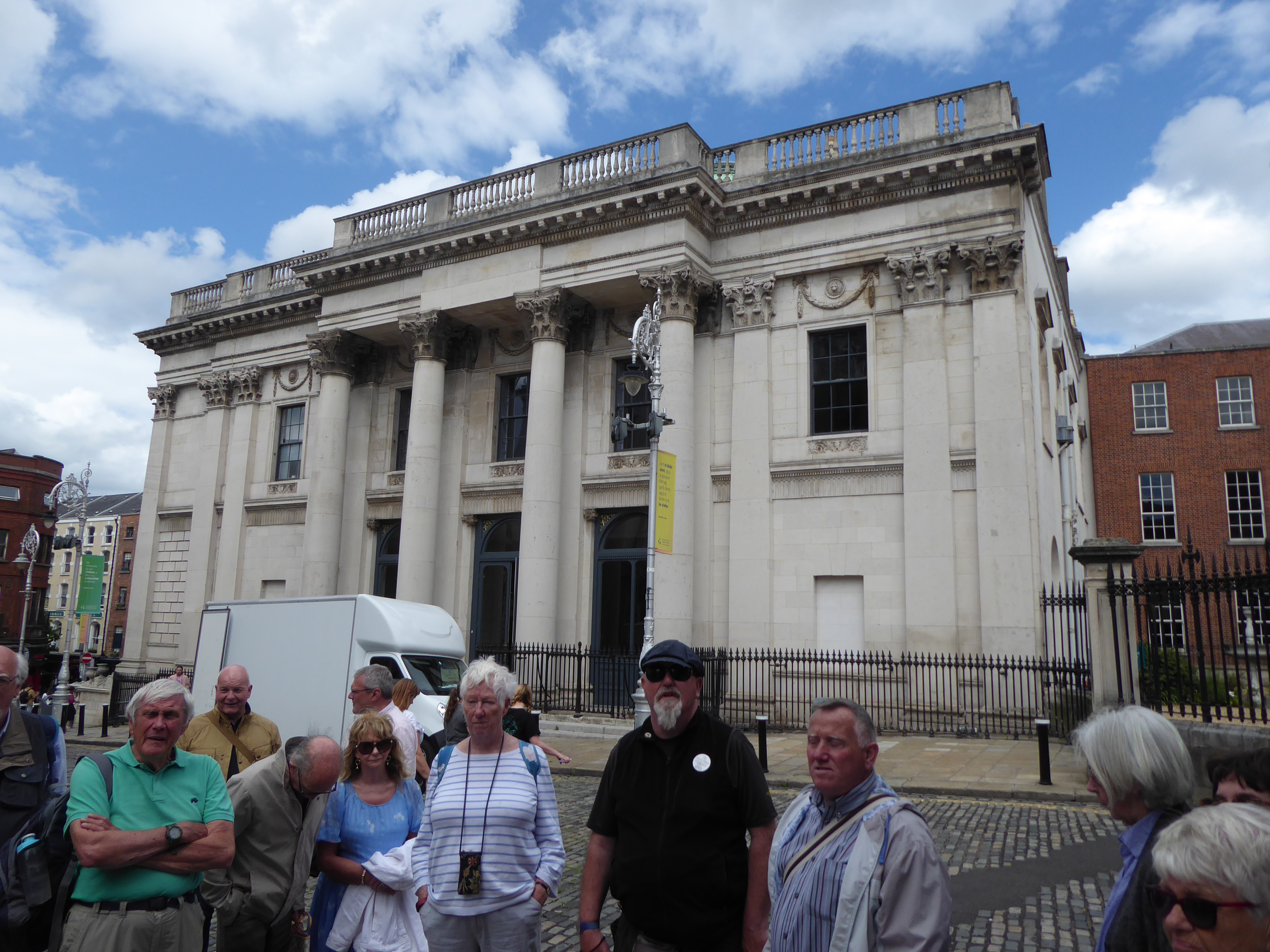
Side view of the City Hall, originally the Royal Exchange
We had a brief look at the City Hall, built originally as the Royal Exchange in 1779 by the precursor of the Chamber of Commerce. The merchants who made up the membership of the Chamber of Commerce included a disproportionate number of Protestant Dissenters, and of these a large proportion were members of one of the three Presbyterian (Unitarian) congregations in Dublin. Indeed, Rory told us, a majority of the Presidents of the Dublin Chamber of Commerce between 1785 and 1870 were trustees or members of the congregations which went on to form the St Stephens Green congregation.
It was a wonderful day full of interest and we are all indebted to Rory for sharing his considerable knowledge with us.
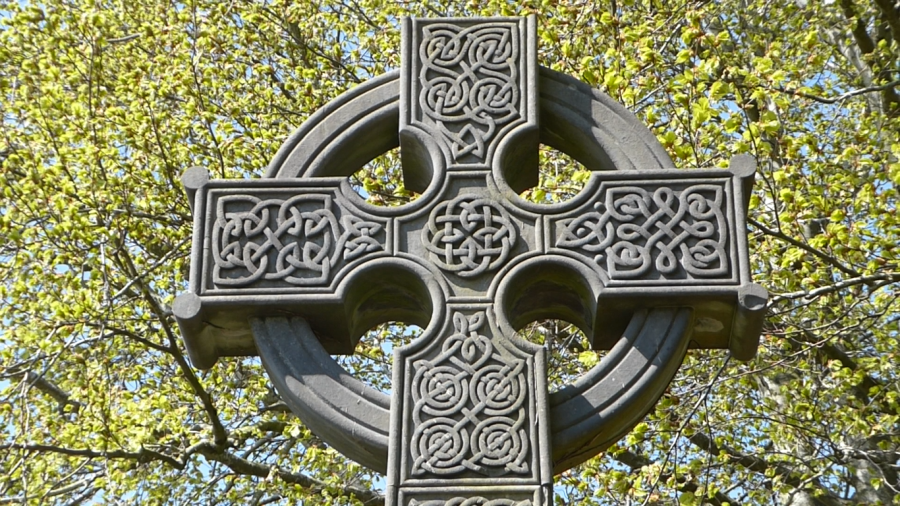
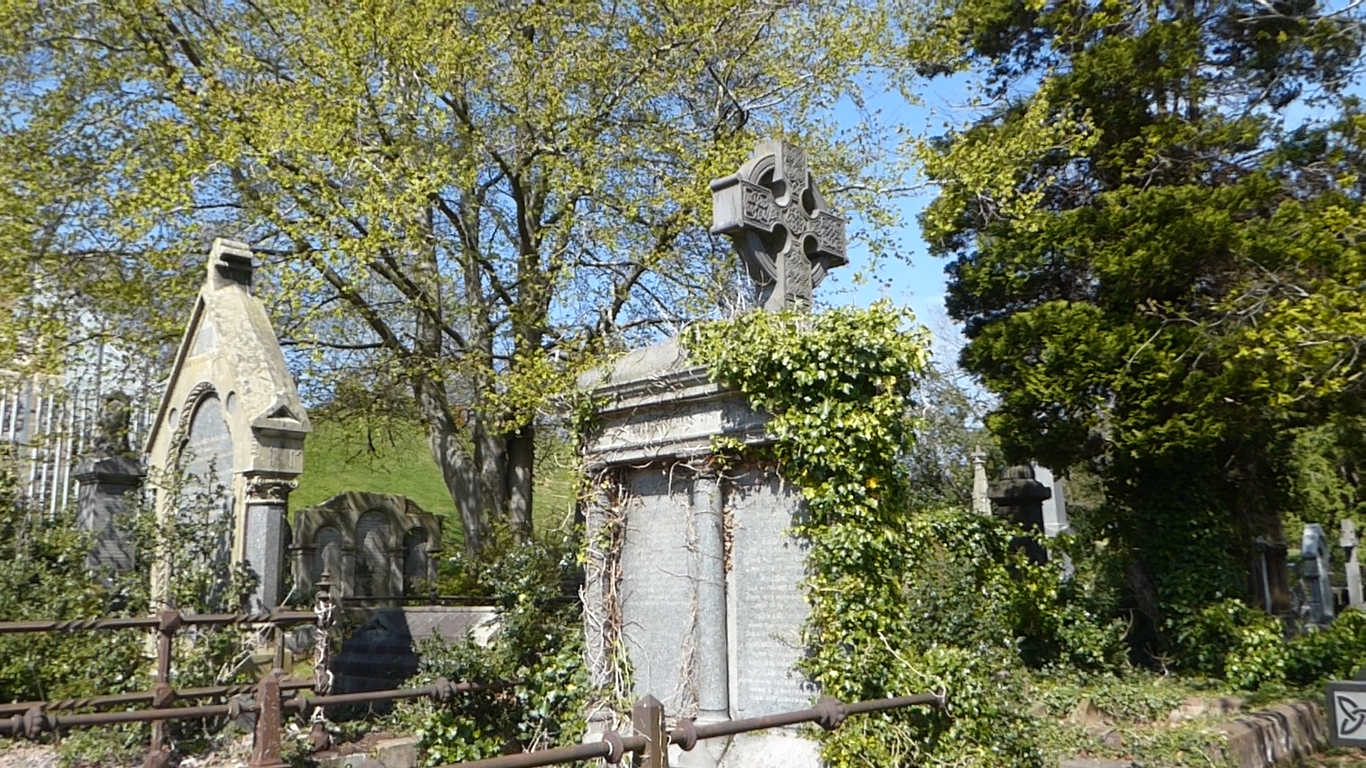
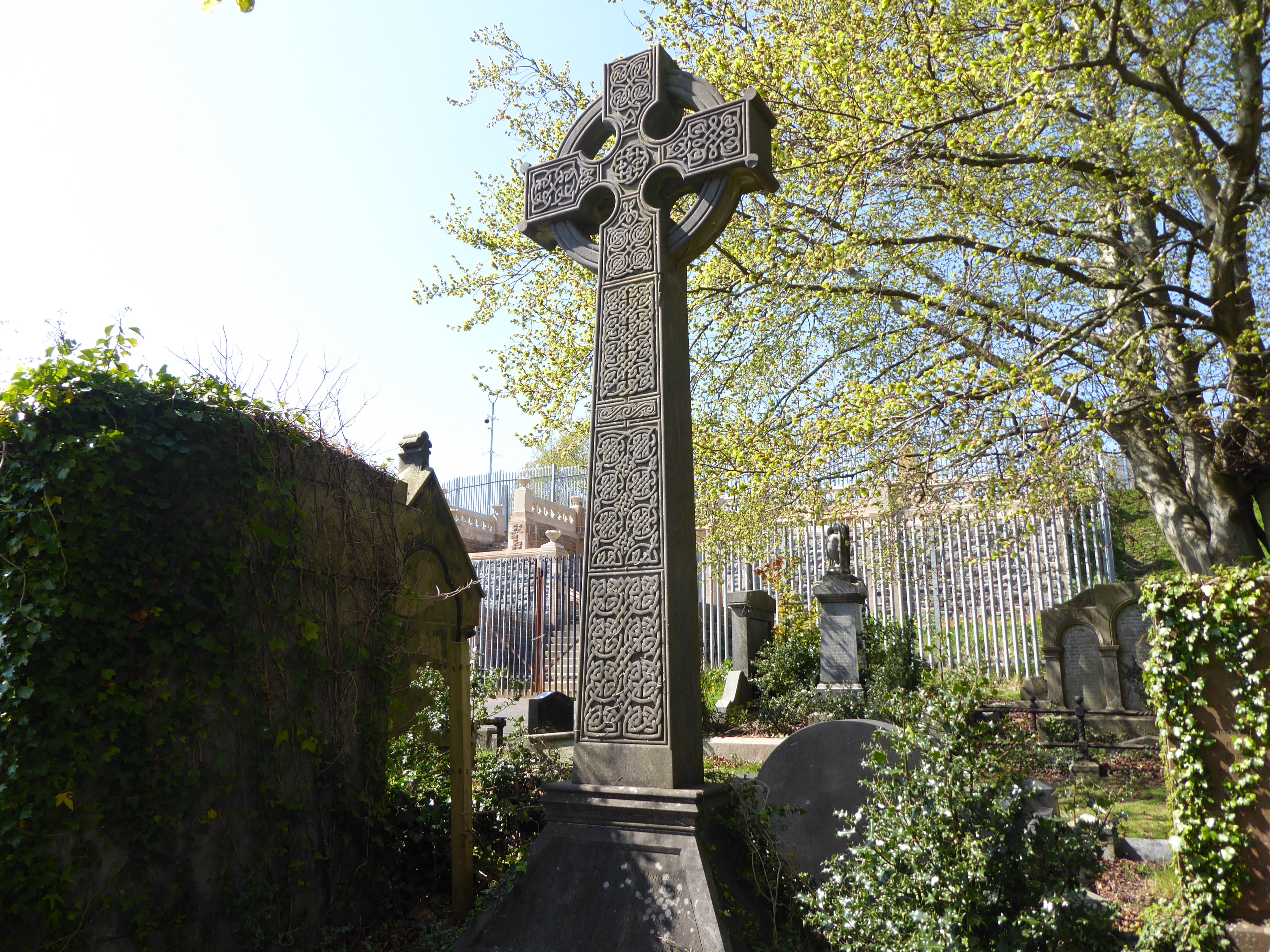
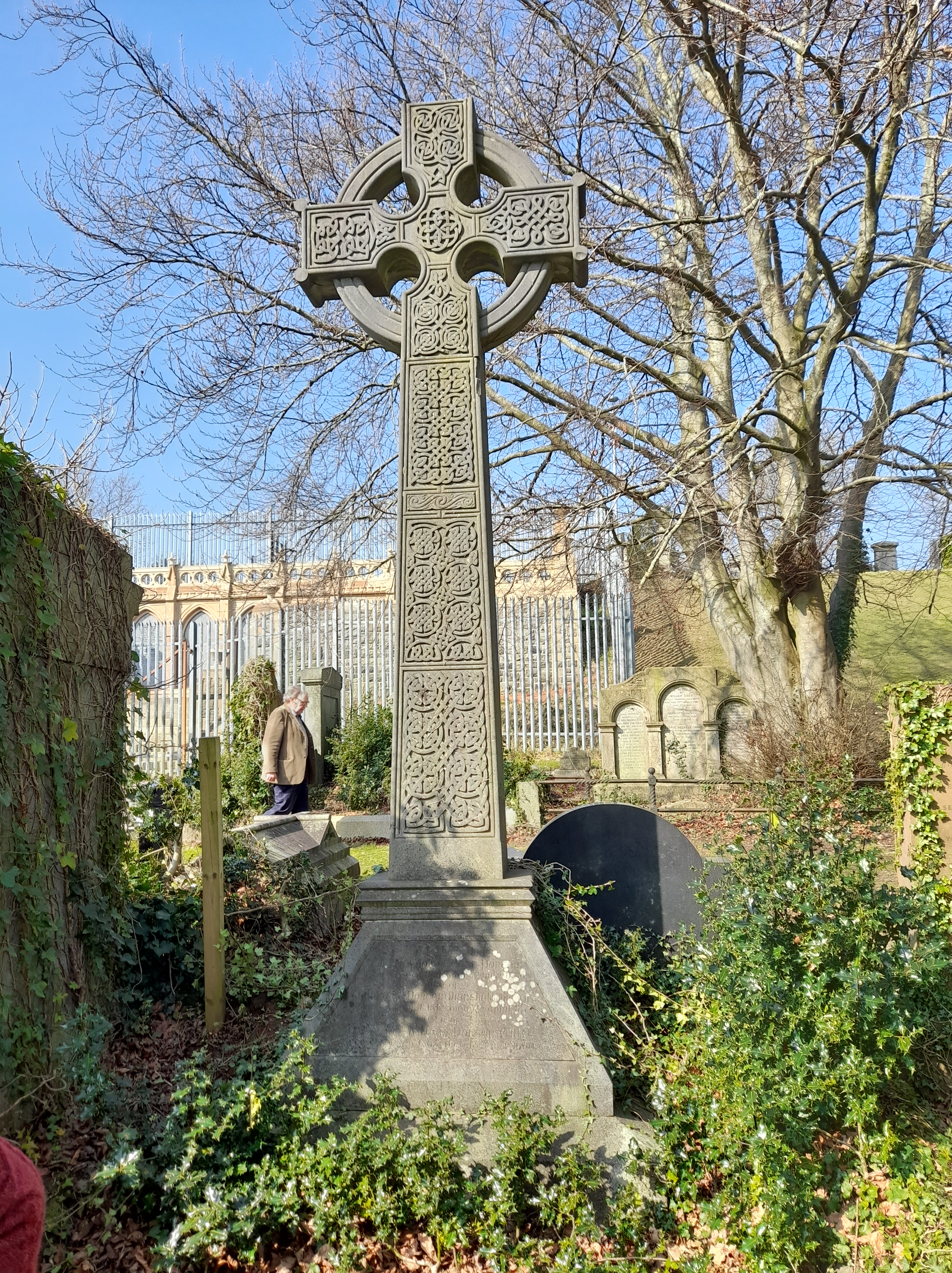
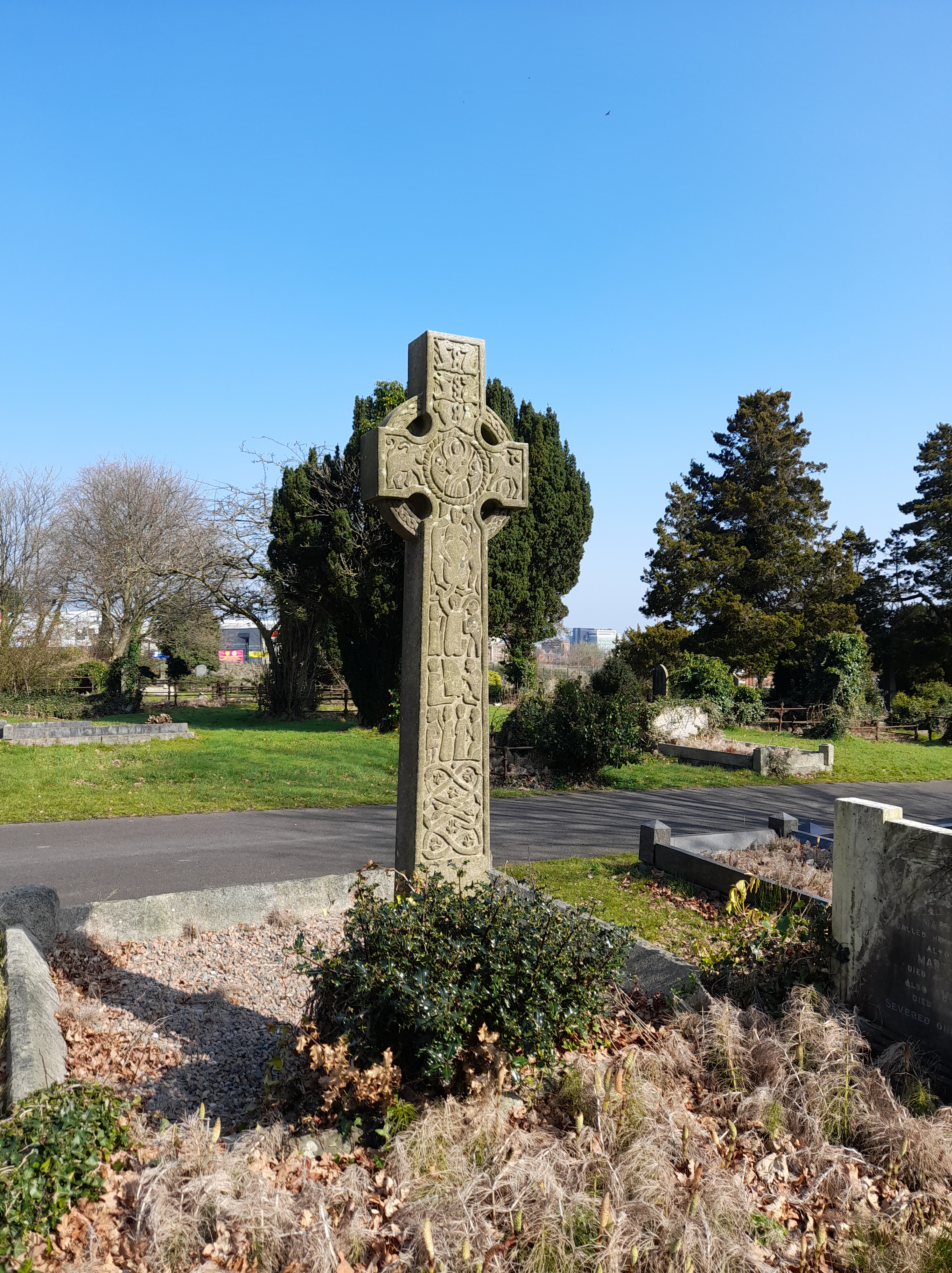
In an overgrown corner of Belfast’s City Cemetery stands a bold and intricately carved Celtic cross which marks the grave of the Rev John Scott Porter.
Son of a prominent Presbyterian minister and brother to two more he was part of a significant dynasty. This week’s Reflection looks at the life and work of John Scott Porter.
Rev John Scott Porter (1801-1880) – click on the video above (available from 8.00 am on Sunday, 8th May).
Educated at the Belfast Academical Institution he commenced his ministry at Carter Lane Chapel, London (which became Unity Chapel, Islington), where he became a prominent proponent of the Arian group within English Presbyterianism, editing the Christian Moderator. He returned to Belfast, to the First Presbyterian Church, in 1831.
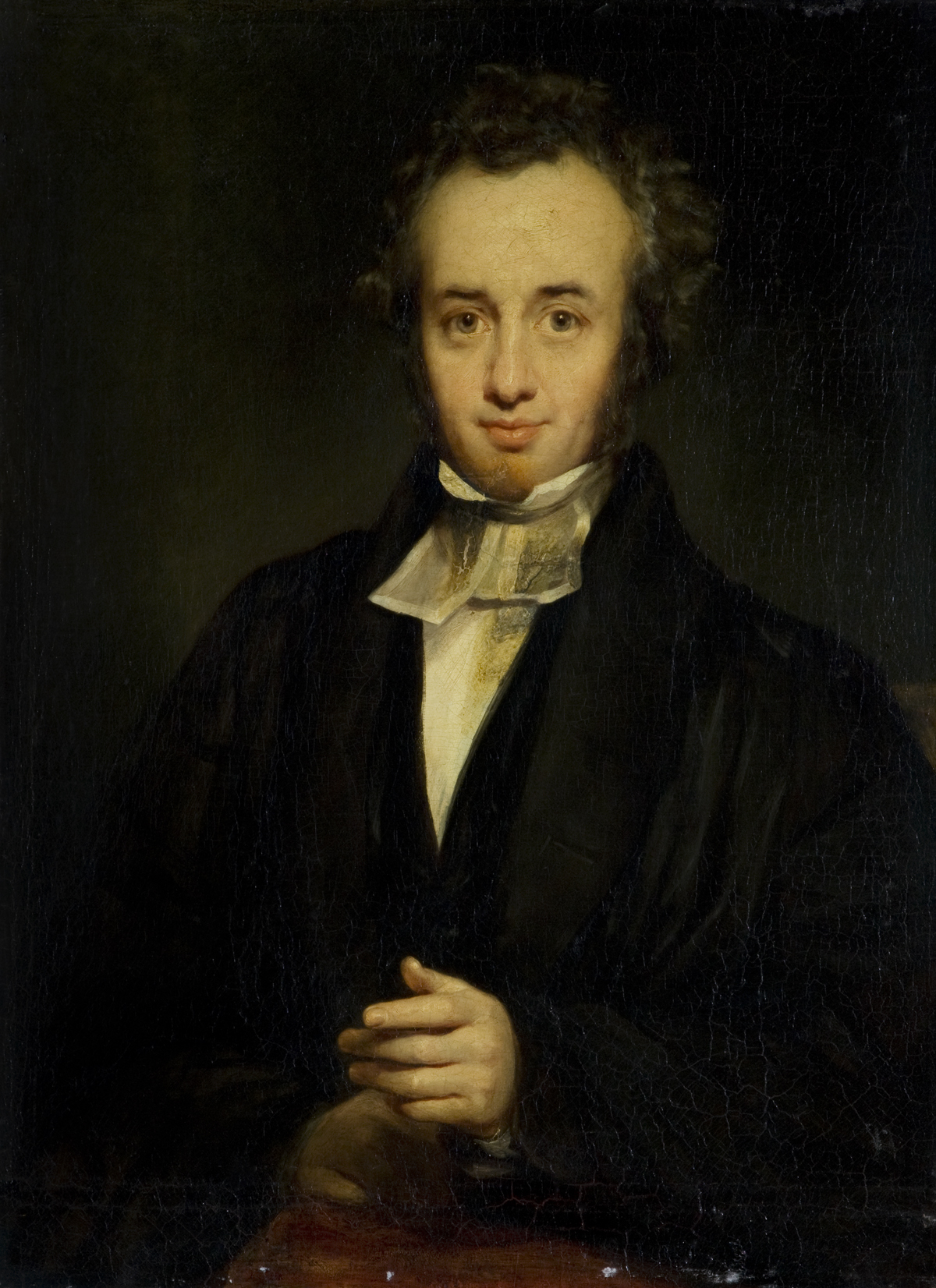
John Scott Porter c.1845 by Richard Rothwell (Ulster Museum/National Musuems Northern Ireland)
In the video we reflect on his career as a theologian, controversialist, Biblical scholar and Unitarian. Other members of his family are buried with him including his brother William, one time attorney general at the Cape Colony, who brought in a franchise that was inclusive of all races.
What can we learn from reflecting on the impressive Celtic cross that marks his grave? An eloquent Victorian statement of piety and memory, for decades long forgotten, yet still making a statement about his beliefs and his ministry.
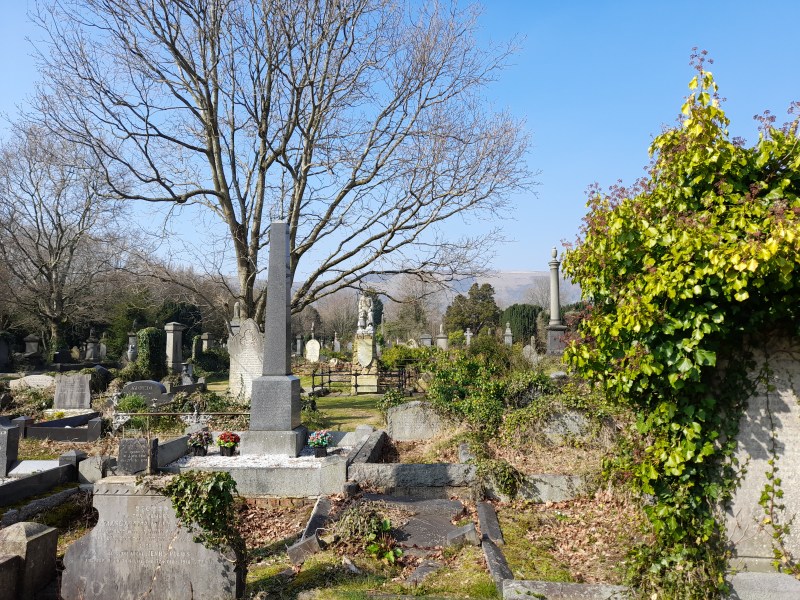
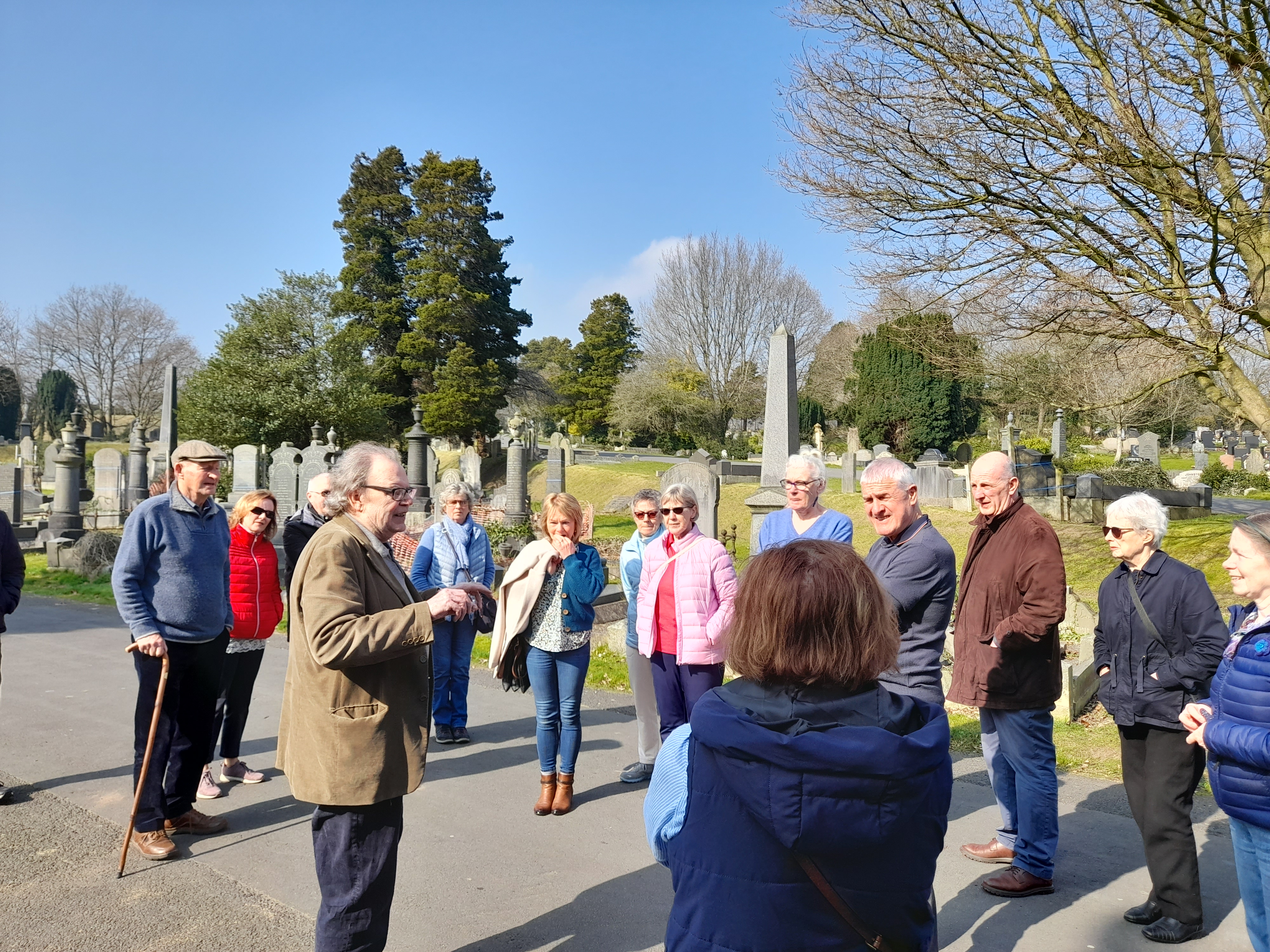
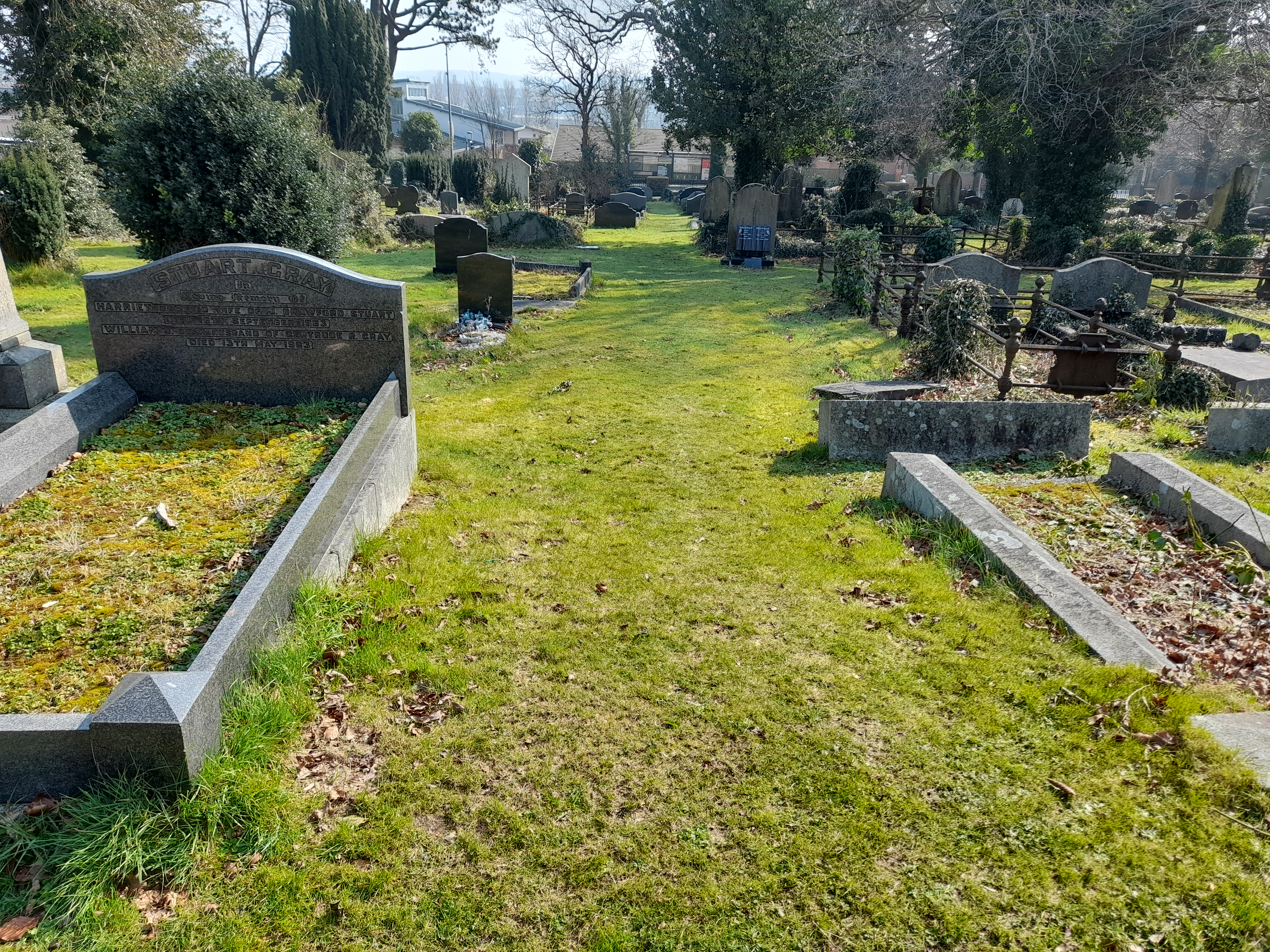
On Wednesday, 23rd March a group from the four Belfast Non-Subscribing Presbyterian Churches enjoyed an excellent visit to the Belfast City Cemetery. We were blessed by good weather, almost like a summer’s day, which showed off the whole site to its fullest advantage. Designed in the shape of a bell and opened in 1869 it has been the burial place of approximately 225,153 people ranging from the some of the poorest members of society, buried in paupers’ graves, to some of the wealthiest merchants, industrialists and businessmen of Victorian Belfast. Years of neglect and vandalism obscured the importance of the cemetery in the city’s history for a long time, but the remarkable work done by Tom Hartley on the graves and history of the cemetery, not least reflected in his book Belfast City Cemetery, has opened up the cemetery to a wider and appreciative public. It is good too to see the construction of a visitors’ centre and the restoration of some of the larger memorials. Tom Hartley has an encyclopaedic knowledge of the history and significance of the site and was our informative guide as he showed us round a large proportion of the original Victorian graveyard, so attractively laid out with the Belfast hills providing a dramatic backdrop. Tom made special reference to some of the Presbyterian and Non-Subscribing Presbyterian graves in the cemetery and we encountered the last resting places of some familiar figures from our tradition. Among others we saw the grave of Margaret Byers, the founder of Victoria College, and Elisha Scott, legendary Liverpool goalkeeper. Cemeteries are such important repositories of history: funeral monuments, grave inscriptions, memorial artwork all tell us a great deal and in this case Belfast City Cemetery provides a fascinating window into the growth, development and history of Belfast as a city. After the tour we had lunch at Cultúrlann McAdam Ó Fiaich. Below are some images of what we saw:
The grave of Rev John Scott Porter (Biblical scholar, theologian and Belfast Non-Subscribing minister) and his brother William Porter, attorney general at the Cape Colony who introduced a franchise into the colony that extended the vote, at the time, to all people irrespective of race.
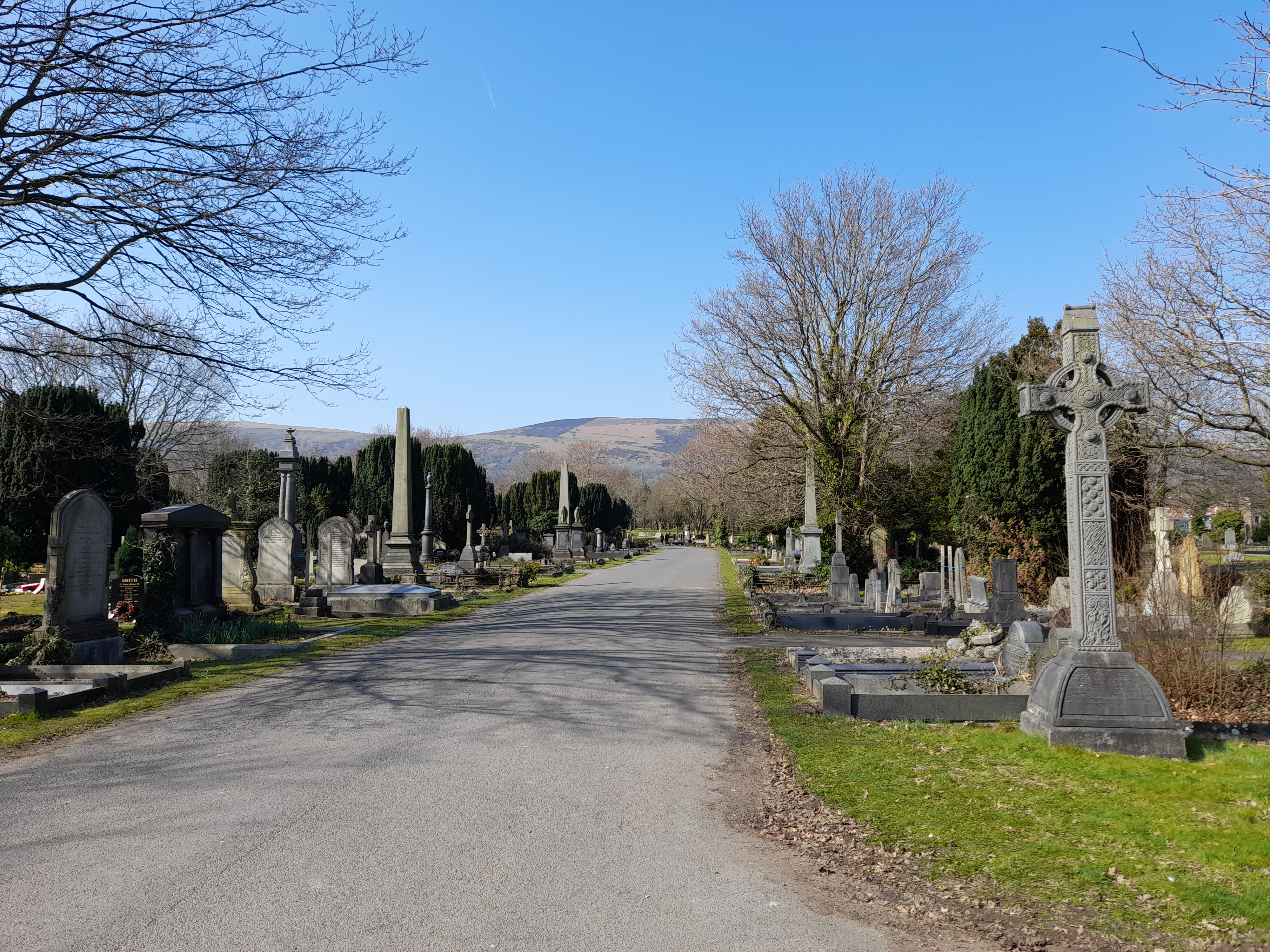
View across the cemetery showing the memorial to John Kirker (1891) on the right in the form of an ornamental Celtic Cross carved from a single piece of limestone. .
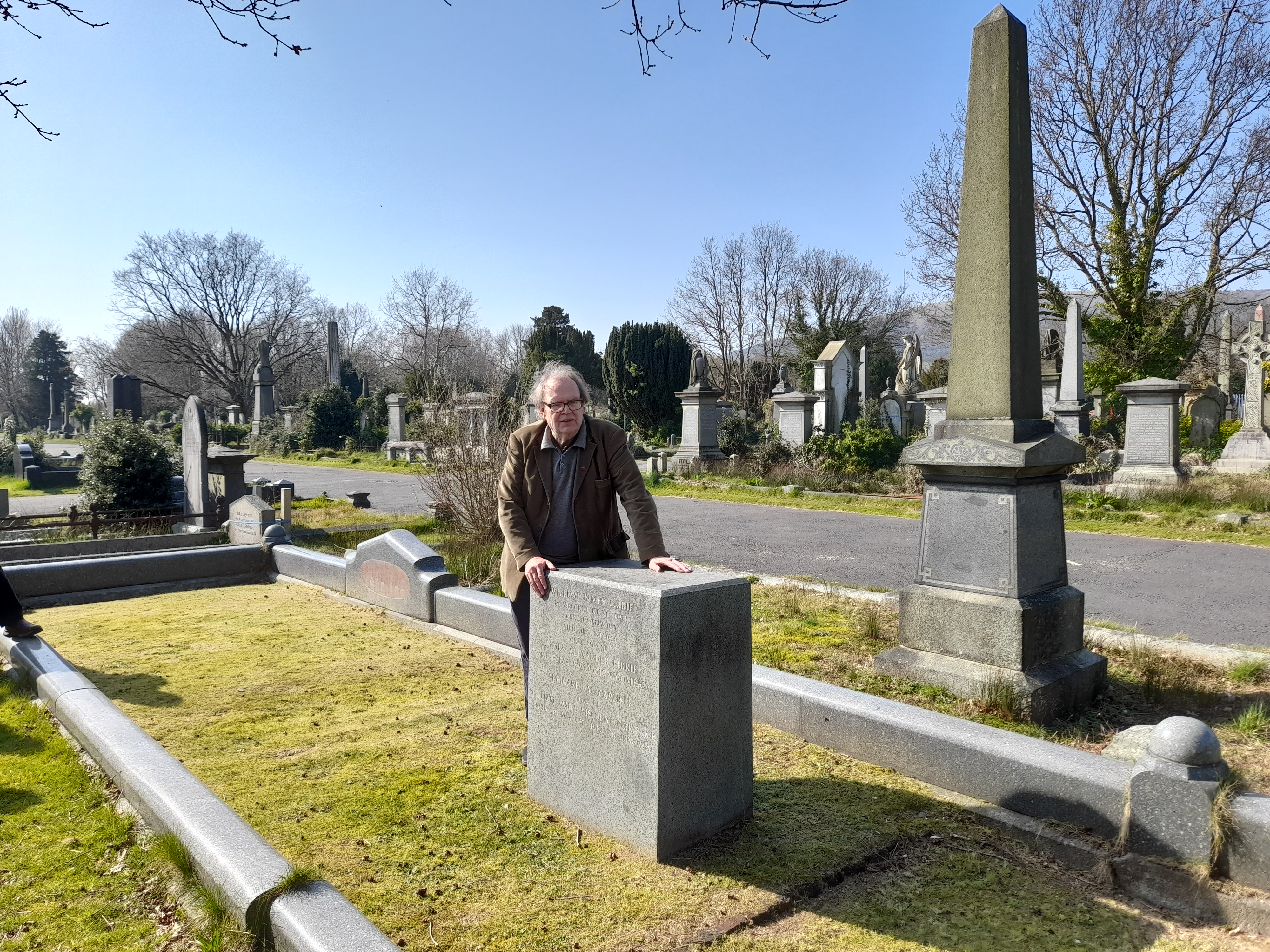
Tom Hartley at the grave of Lord and Lady Pirrie. William Pirrie was a leading Belfast politician and shipbuilder, chairman of Harland and Wolff and responsible for the building of the ‘Titanic’. His wife Margaret Montgomery Pirrie was a significant figure in her own right, closely involved in the establishment of the Royal Victoria Hospital and a granddaughter of the Rev Henry Montgomery of Dunmurry.
Another nineteenth-century Celtic Cross containing ancient religious imagery including, in this case, the Ouroboros (at the bottom of the Cross), the snake consuming its own tail.
The infamous location in the cemetery where an underground wall, six feet tall, divided what were planned to be the Catholic and Protestant plots.
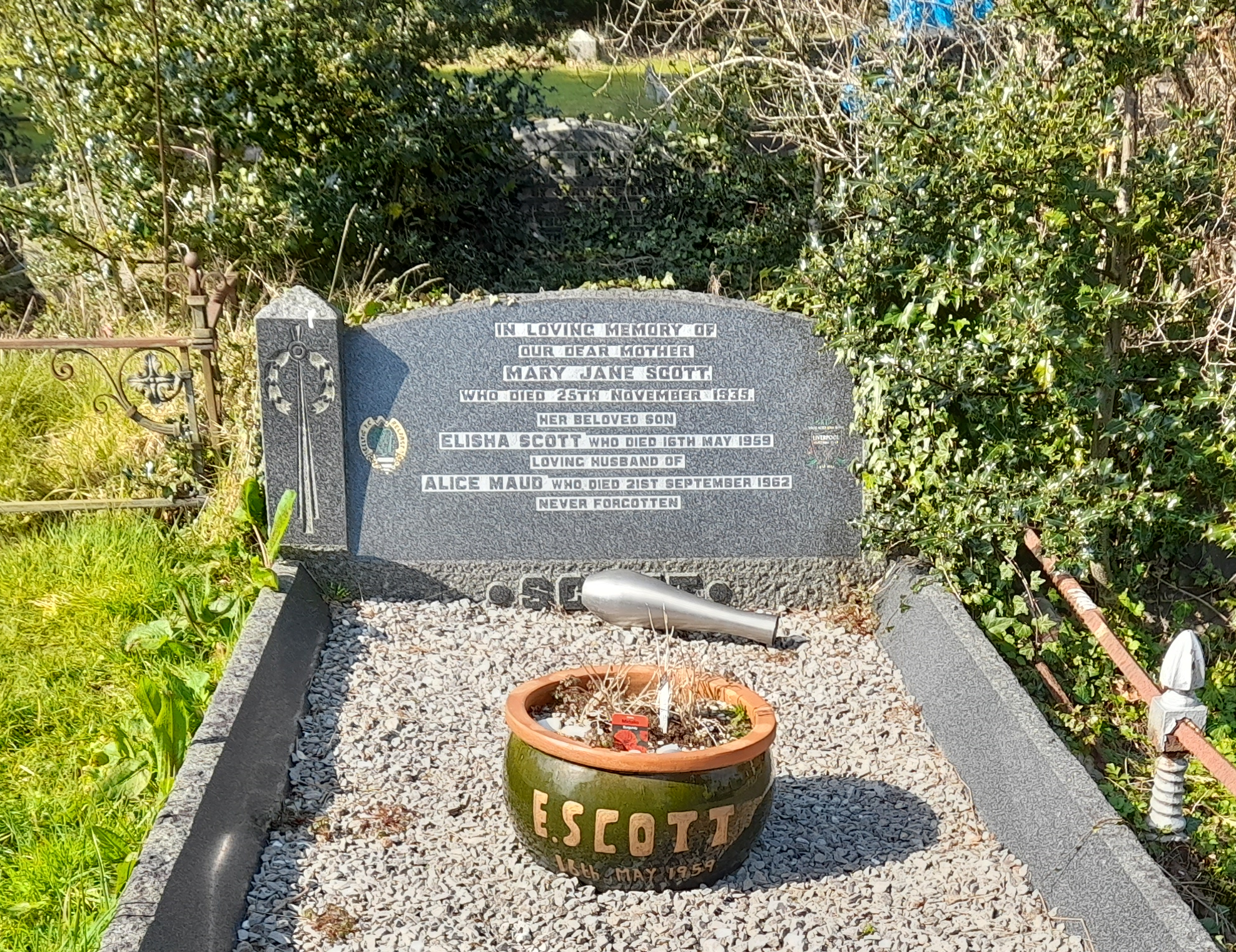
The grave of Elisha Scott, Belfast born Liverpool goalkeeper who played for the club for 22 years and made 468 appearances for Liverpool (which undoubtedly would have been more but for the First World War). He finished his career as a highly successful player-manager of Belfast Celtic until sectarian violence brought about the closure of that club.
So far in February we have had two online Reflections which look at verses from Matthew chapter 6; Look at the birds of the air, and from Psalm 46; Be still and know that I am God. But the call to still ourselves in the presence of God and an awareness of the natural world around us are both routes to closer engagement with the divine. There are different ways to centre ourselves in a way that leads to deeper communion with God.
I am very pleased too, to have images of birds taken by Graham Bonham which feature in the video, some of which are reproduced here.
Sparrow. Photo by Graham Bonham
Look at the birds of the air
February Reflections: Look at the birds of the air Rev Dr David Steers First Presbyterian (Non-Subscribing) Church, Dunmurry Pianist: Allen Yarr Hymn: ‘For the beauty of the earth’ Bird photographs all taken and kindly provided by Graham Bonham
Snowdrops, Ballee. Photo by Sue Steers
Be still and know that I am God (available after 8.00 am on Sunday, 13th February)
In the month of January 2022 we have uploaded four new short video Reflections to our YouTube channel. These cover Epiphany; the installation of the Rev István Kovács as the new bishop of the Hungarian Unitarian Church in Kolozsvár, Transylvania, Romania; the Week of Prayer for Christian Unity; and Psalm 8. John Strain and Allen Yarr provide music. The Reflections are by Rev David Steers and Jennifer Miles provides a reading. The picture at the top of the page and the thumbnail for the fourth video are images taken remotely from the camera on the International Space Station. The videos can be seen below.
January 2022 Epiphany
Hungary and Transylvania
The Week of Prayer for Christian Unity
When I look up to the night skies (available from 8.00 am on Sunday, 30th January)
The latest issue of Faith and Freedom (Volume 24 Part 2, Autumn and Winter 2021, Number 193) is now ready and on its way to subscribers. There has been a slight delay but it is now ready and available to subscribers old and new.
Cover of the new issue featuring Pandita Ramabai
In this issue we are delighted to have Margot Stevenson’s fascinating examination of the life and achievements of Pandita Ramabai (1858-1922): ‘Hindu reformer, scholar and educator, feminist and Christian’. Her religious affiliation changed during her lifetime, but while she became a Christian she was far from being an advocate for proselytism. Both a scholar and an activist she taught in the United States and United Kingdom and also set up schools in India. Although a convert she did not abandon her Hindu culture and Indian forms. Within Christianity she changed direction a few times and was linked to Unitarians for a time. Most of all she was defined by an ardent desire to ameliorate the lot of women, girls and widows in Indian society and would go to great lengths to personally rescue young girls who had been married as children and were subsequently widowed and faced a life of misery as a result. Her article also includes a number of illustrations of Ramabai and her work, a person who, in the words of Margot Stevenson, still ‘exudes a mysterious charisma’, almost a century after her death.
Barrie Needham asks about the idea of progress in religion (a very pertinent question for our journal since Faith and Freedom has described itself as ‘a journal of progressive religion’ since it was instituted in 1947). Truth, discovery about God, moral norms, a fulfilling life – how do we define a progressive religion?
Esther Suter is a journalist and ordained pastor in the Swiss Evangelical Church. She writes about ‘How do we become human?’ in the context of Fritz Buri (1907-1995) one of the most prominent liberal theologians in Europe in the twentieth century. An active member of the IARF with many close associations with Unitarians, Fritz Buri was a disciple of Albert Schweitzer who developed and extended his theology in his long career.
Csaba Tódor, a Unitarian minister and educator in Transylvania, looks at the difficulties experienced by churches behind what was once the ‘iron curtain’ as they transition and their societies transition from the centrally planned, authoritarian system of the Communist era to the market-led liberal democracies of the present era.
Helena Fyfe Thonemann gives us her exegesis of ‘Christ’s fury in the Jerusalem Temple at Passover, and the problem of vicarious sacrifice’ which looks at the meaning of communion in the context of replacing the covenant of the Old Testament.
As always we have some important reviews including Marcus Braybrooke on Andy Bannister, Do Muslims and Christians worship the same God?, (Inter-Varsity Press, 2021) and Peter Godfrey on Brian Holley’s personal journey ‘from fundamentalism to faith’. In addition Andrew Hill reviews Samuel Haliday by the editor of the journal and Mary Stewart’s book on her church graveyard.
An annual subscription costs £16 and is available from the business manager or through payment via PayPal. You can subscribe via the Faith and Freedom website here: https://www.faithandfreedom.org.uk/subs.htm
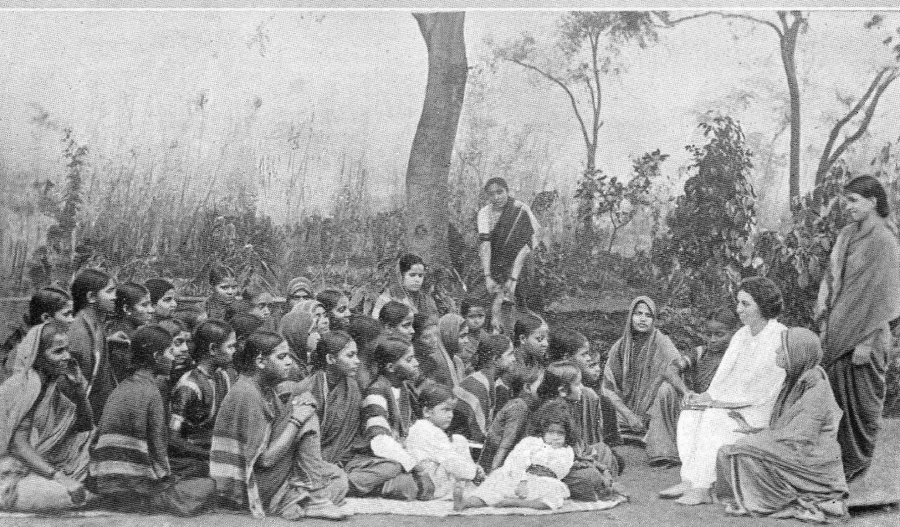
The illustration at the top of this page shows Pupils of Pandita Ramabai at the Sharada Sadan, Poona (Pune) from Helen Dyer, Pandita Ramabai: The Story of Her Life (1900)
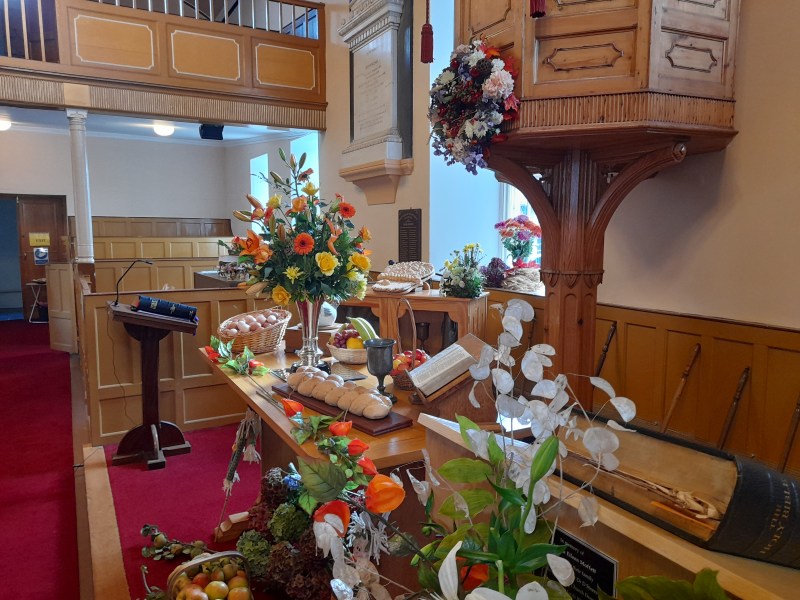
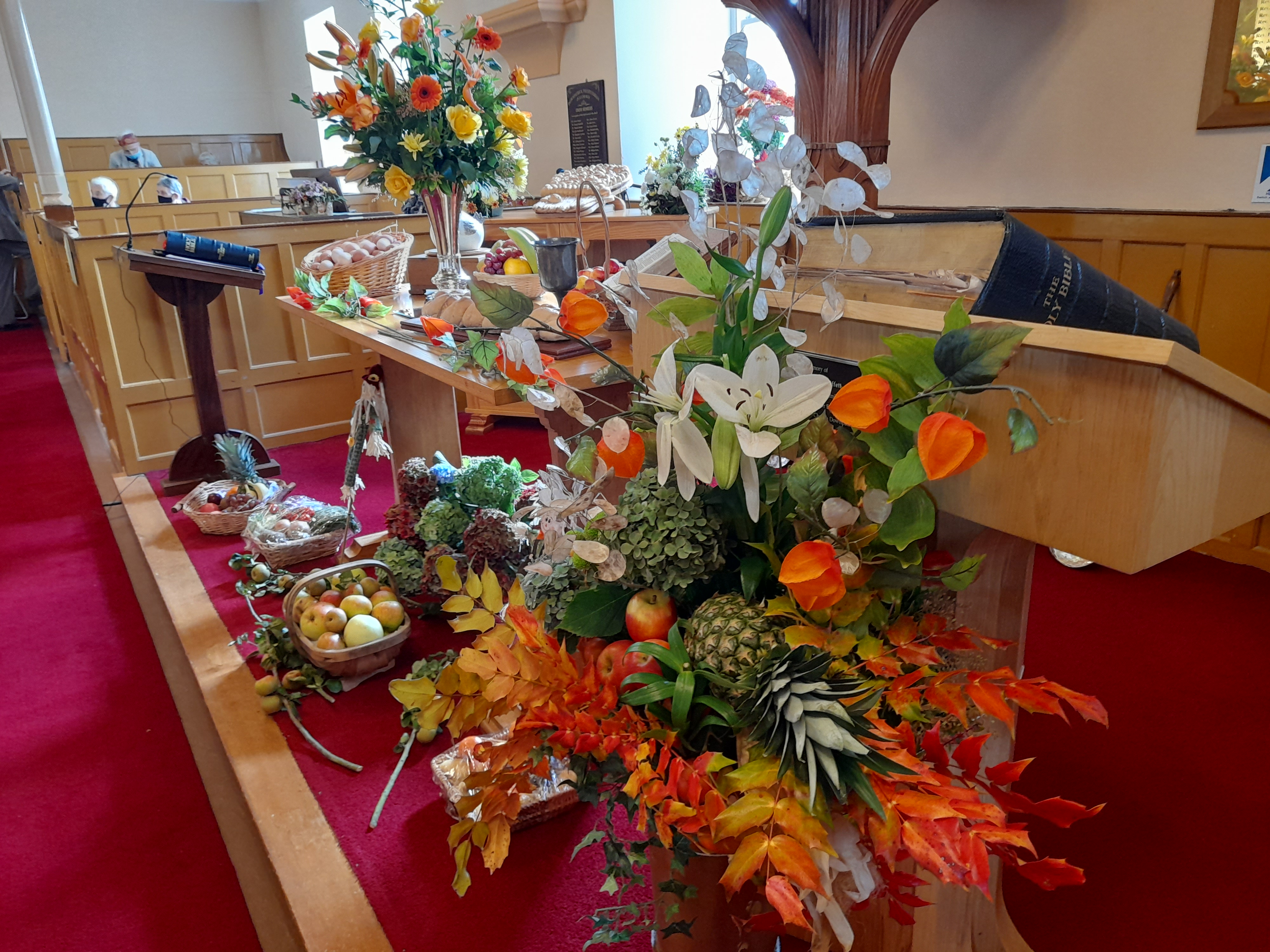
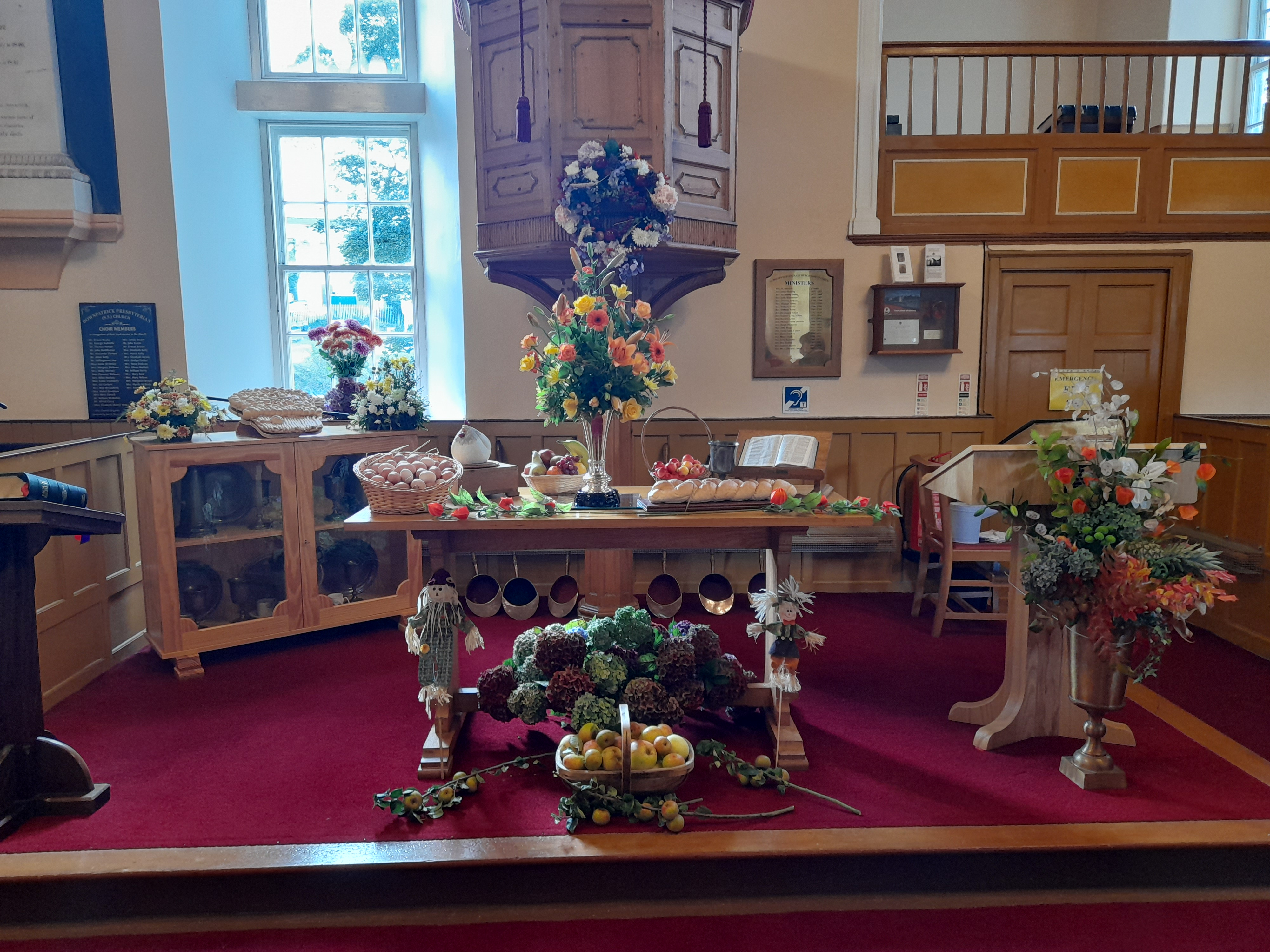
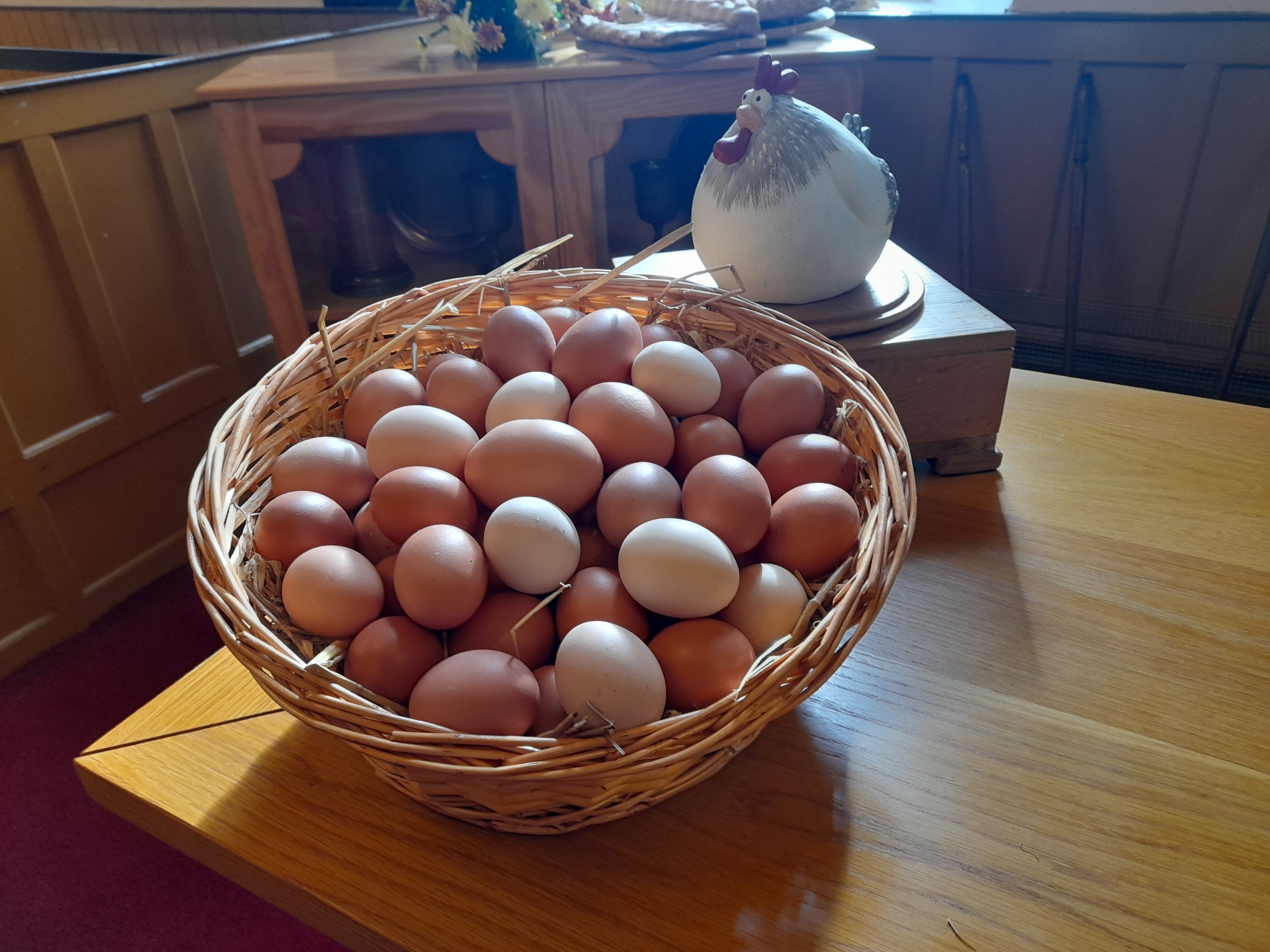
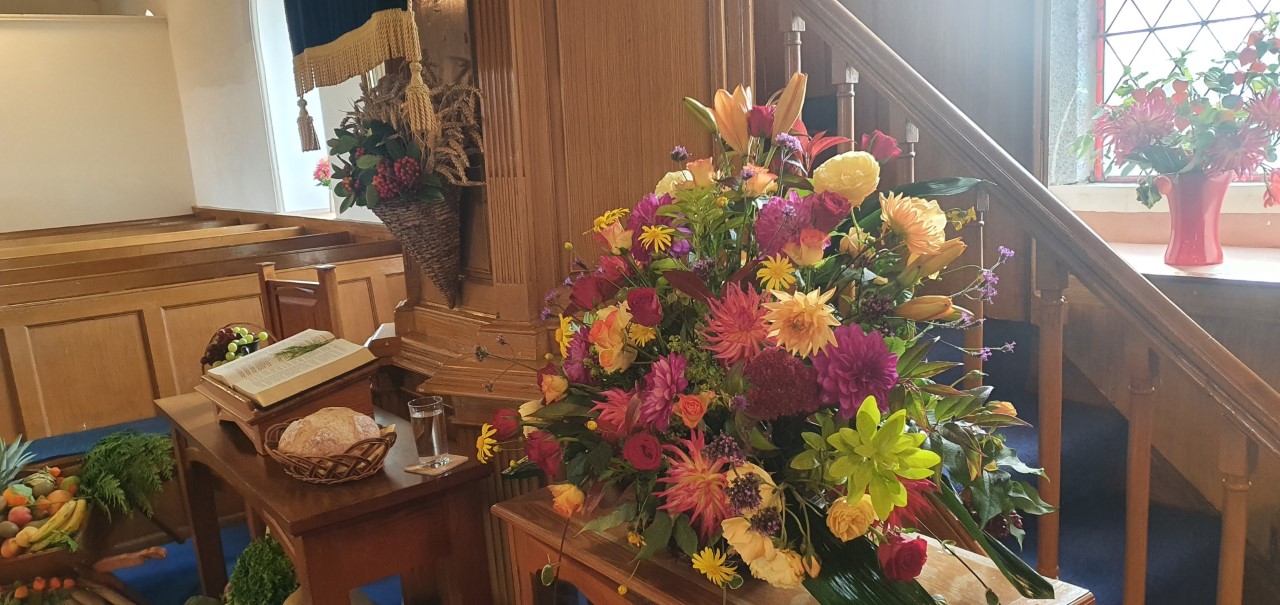
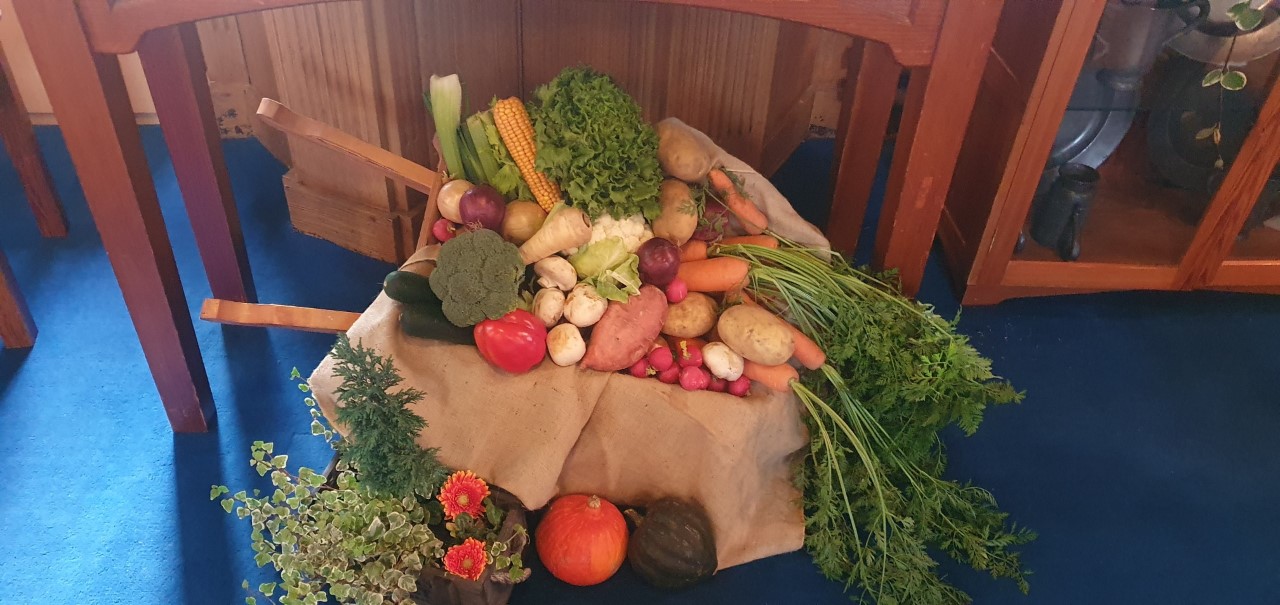
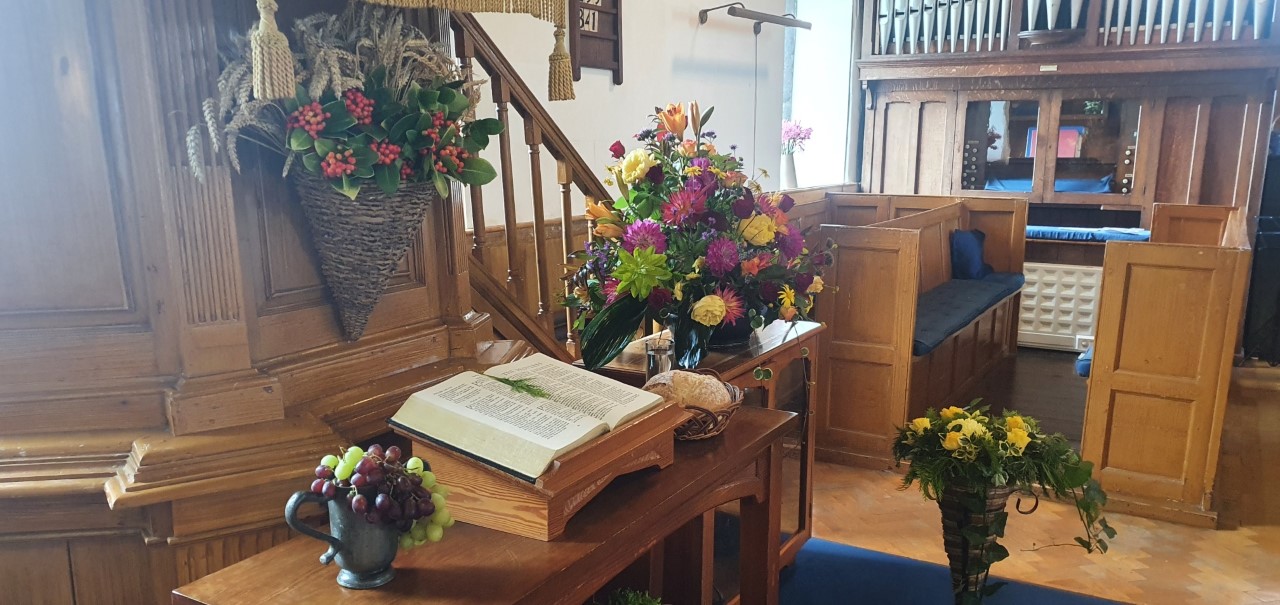
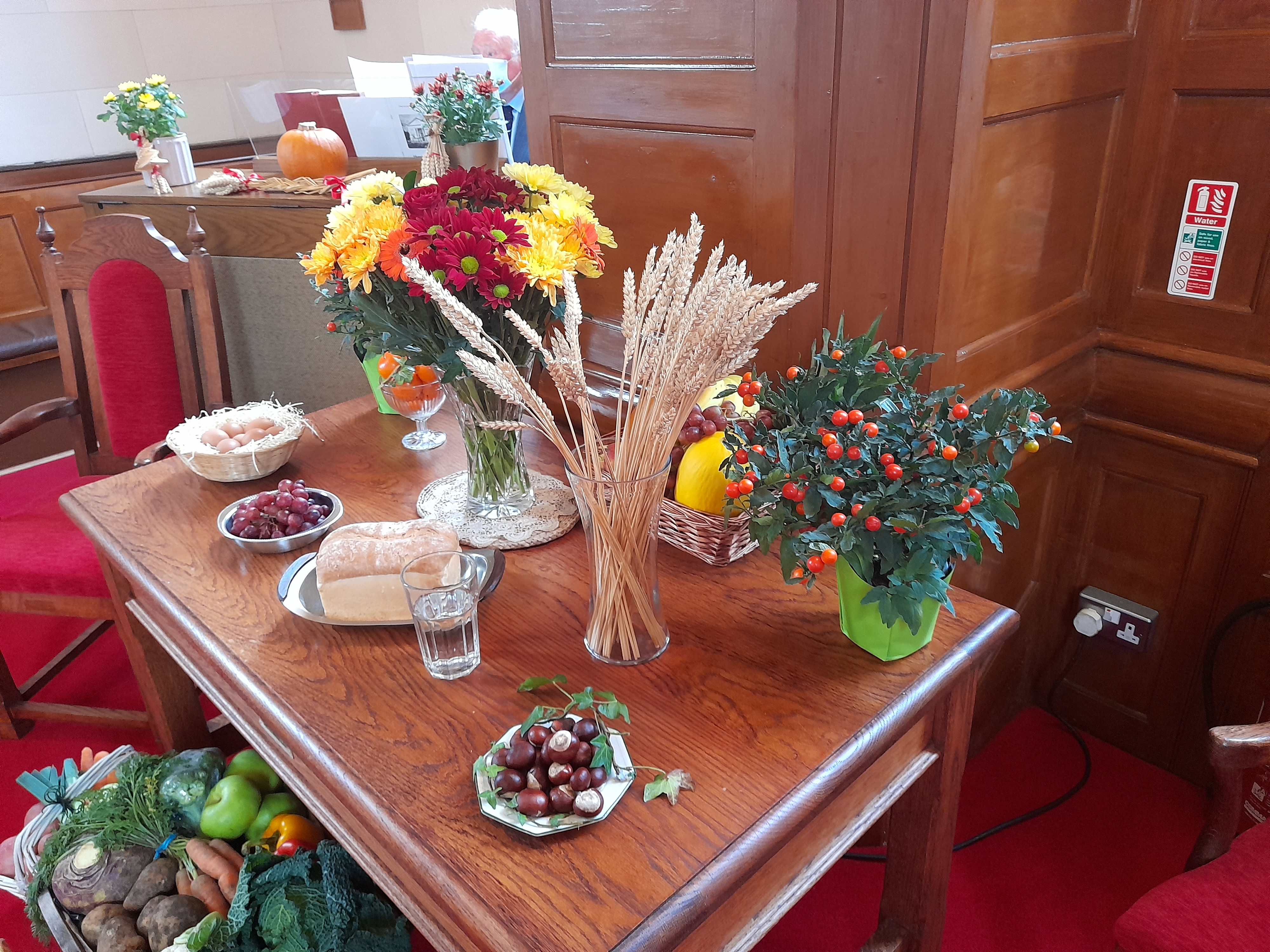
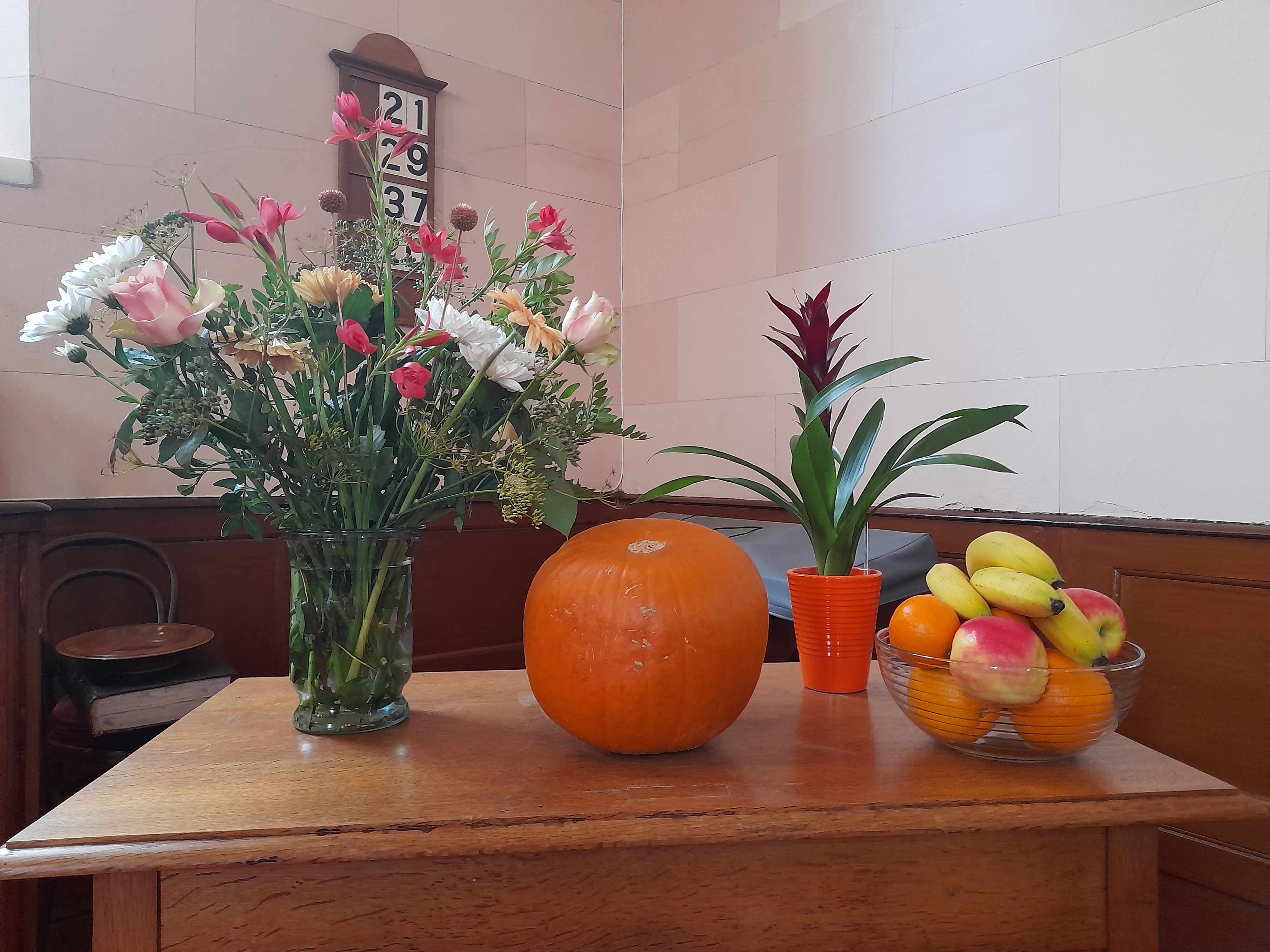
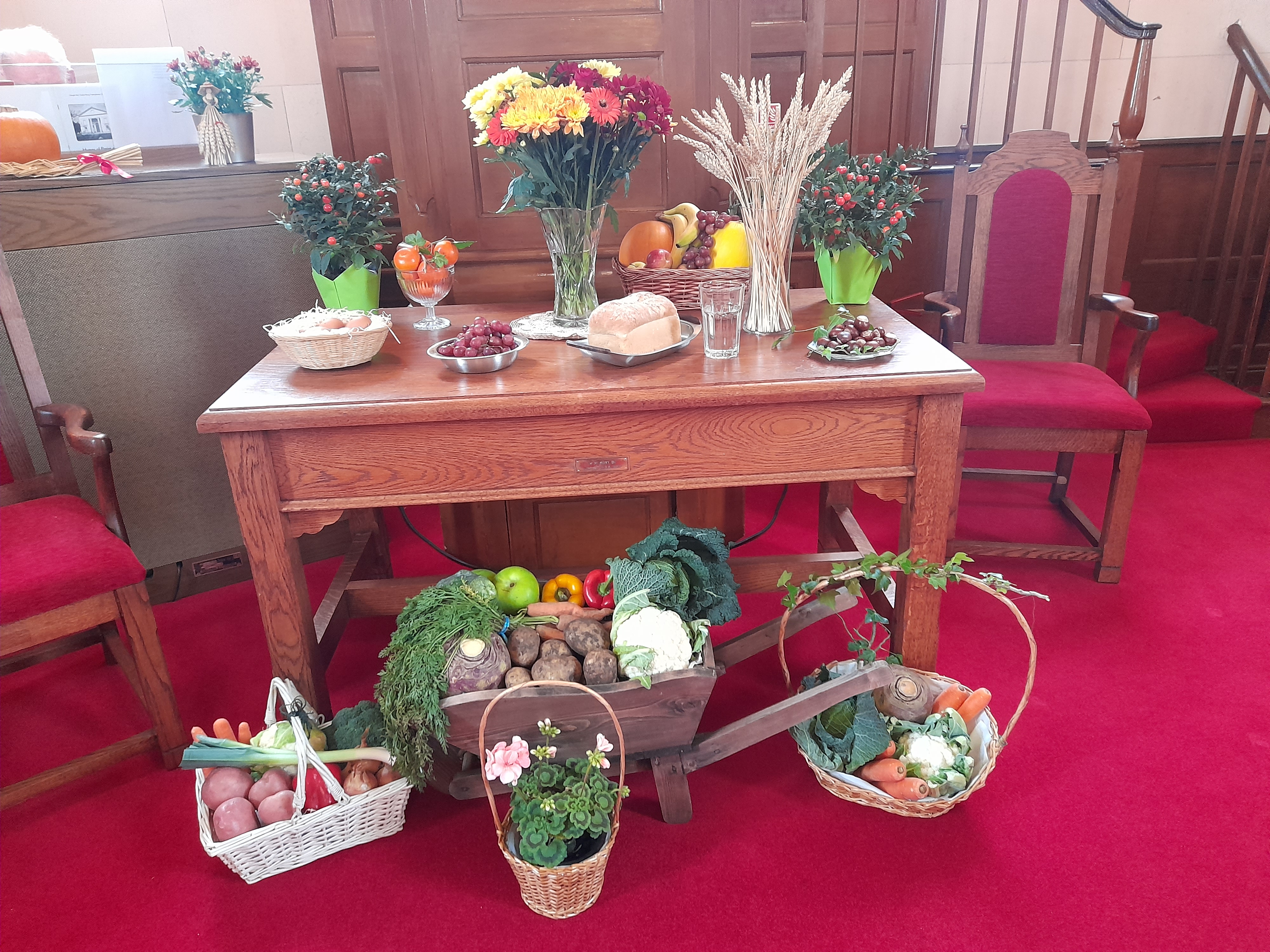
In Downpatrick, Ballee and Clough we held three successful Harvest Thanksgiving Services in the month of October. Always an important part of the year we were restricted by the ongoing rules relating to the pandemic but still we were able to to celebrate the Harvest in a meaningful way. Below are some images from the decoration of the church as well as a video that forms our online Harvest Thanksgiving.
Online Service of Harvest Thanksgiving (available after 9.45 am on Sunday, 24th October)
Our service includes:
Psalm 65 v.1-13 read by Dillon Howell John ch.4 v.31-38 read by Sophia Cleland Psalm 104 v.1-12 read by Robert Neill 2 Corinthians ch.9 v.6-11 read by Elsie Nelson Harvest Samba sung by Dillon and Haydn Howell Ode to Autumn by John Keats read by Sue Steers All things bright and beautiful sung by Sarah Rooney
As well as hymns played by John Strain: Come ye thankful people come (Hymns of Faith and Freedom 454) Welcome harvest, now beginning (Hymns of Faith and Freedom 462 We plough the fields and scatter (Hymns of Faith and Freedom 456) Plus a Harvest Medley



 velvethummingbee