Faith and Freedom Issue 201

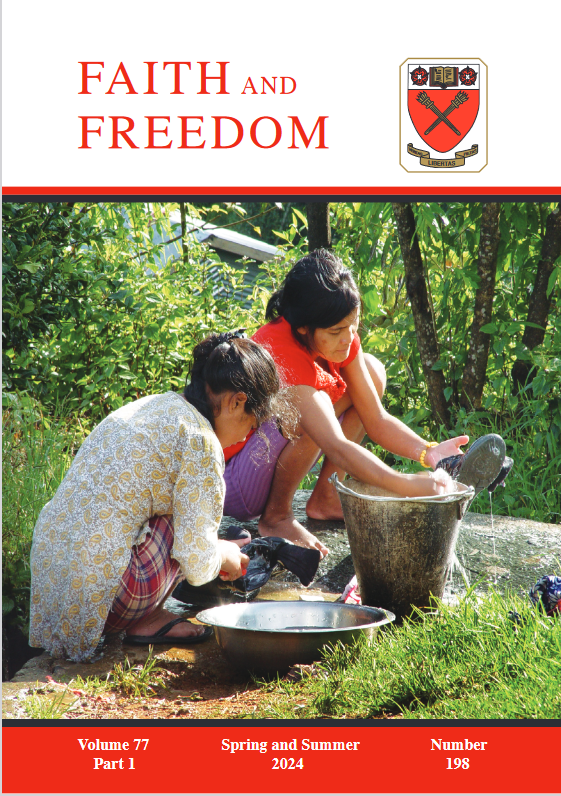
The latest issue of Faith and Freedom (Volume 79 Part 1, Issue 201, Autumn and Winter 2025) is now on its way to subscribers. Having been in print since 1947 we have now reached issue 201.
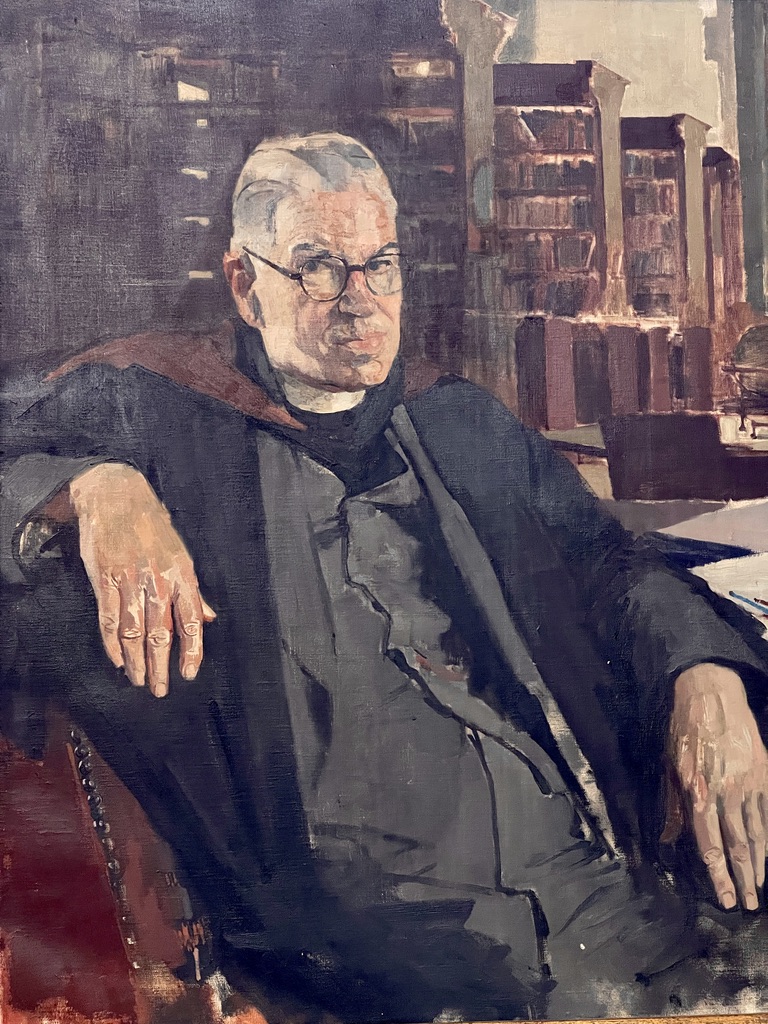
Rev Sidney Spencer by John Stanton Ward, Harris Manchester College, Oxford.

Sidney Spencer is a much neglected figure in twentieth-century Unitarian history and Jo James gives a comprehensive examination of his theological ideas. A Unitarian minister noted for his strongly pacifist witness both before and during the Second World War, with only limited formal academic credentials to his name he nevertheless became Principal of Manchester College, Oxford as well as one of the acknowledged world experts on mysticism. His interest in this subject resulted in a number of publications culminating in the Pelican Mysticism in World Religion in 1963, an influential work and something of a best seller in its day. Jo illuminates Spencer’s theology, sets it in its context and seeks out its relevance to the present day.

This year is the 100th anniversary of the ‘Scopes Monkey Trial’, the famous trial which took place in Dayton, Tennessee when local teacher John Scopes was taken to court for teaching Darwin’s theories in his classes, contrary to the law of the state of Tennessee. John Midgley gives a timely account of this key event, forever made famous by the movie Inherit the Wind, starring Spencer Tracey.

One hundred years is a long time yet the whole case has many uncomfortable resonances in the present age and these perhaps feed into the current situation in the United States. Dan C. West, who has ‘lived through 15 presidents since the beginning of the Second World War’, gives a very insightful analysis of the current political, theological and cultural trends which mark America today.

How do we understand our place in the universe, how do we understand the universe itself in theological terms? Feargus O’Connor provides an excellent examination of Our Mysterious Universe: Accident or Design? looking at the philosophical notions that underpin the argument from design.

Following on from Barrie Needham’s article considering the Koran/Quran from Western, liberal Christian eyes in our last issue, we are pleased to include a response from Imran Usmani who brings considerable insight to the topic through his extensive researches on Christianity, Judaism and Islam.

We are delighted to once again include a number of reviews, including Peter B. Godfrey’s review of Diarmaid MacCulloch’s Lower than the Angels: A History of Sex and Christianity; Peter’s review of the late Rev Art Lester’s  Thank God I’m an Agnostic: Trusting your Hunch about God, the Universe and All That and the editor’s review article on A Short History of the Non-Subscribing Presbyterian Church of Ireland. Including Sketches of Individual Congregations and a Fasti of Ministers who served in them by John Nelson.

You can take out a subscription via Nigel Clarke, our Business Manager, or online via PayPal. The details of how to subscribe can be found on our website here: https://www.faithandfreedom.org.uk/subs.htm
Christmas Readings

Our latest video (Number 7) exploring the collection of the Very Rev William McMillan Library at First Dunmurry looks at some Christmas readings. We also have O Come all ye faithful played by Jack Steers on the trumpet.

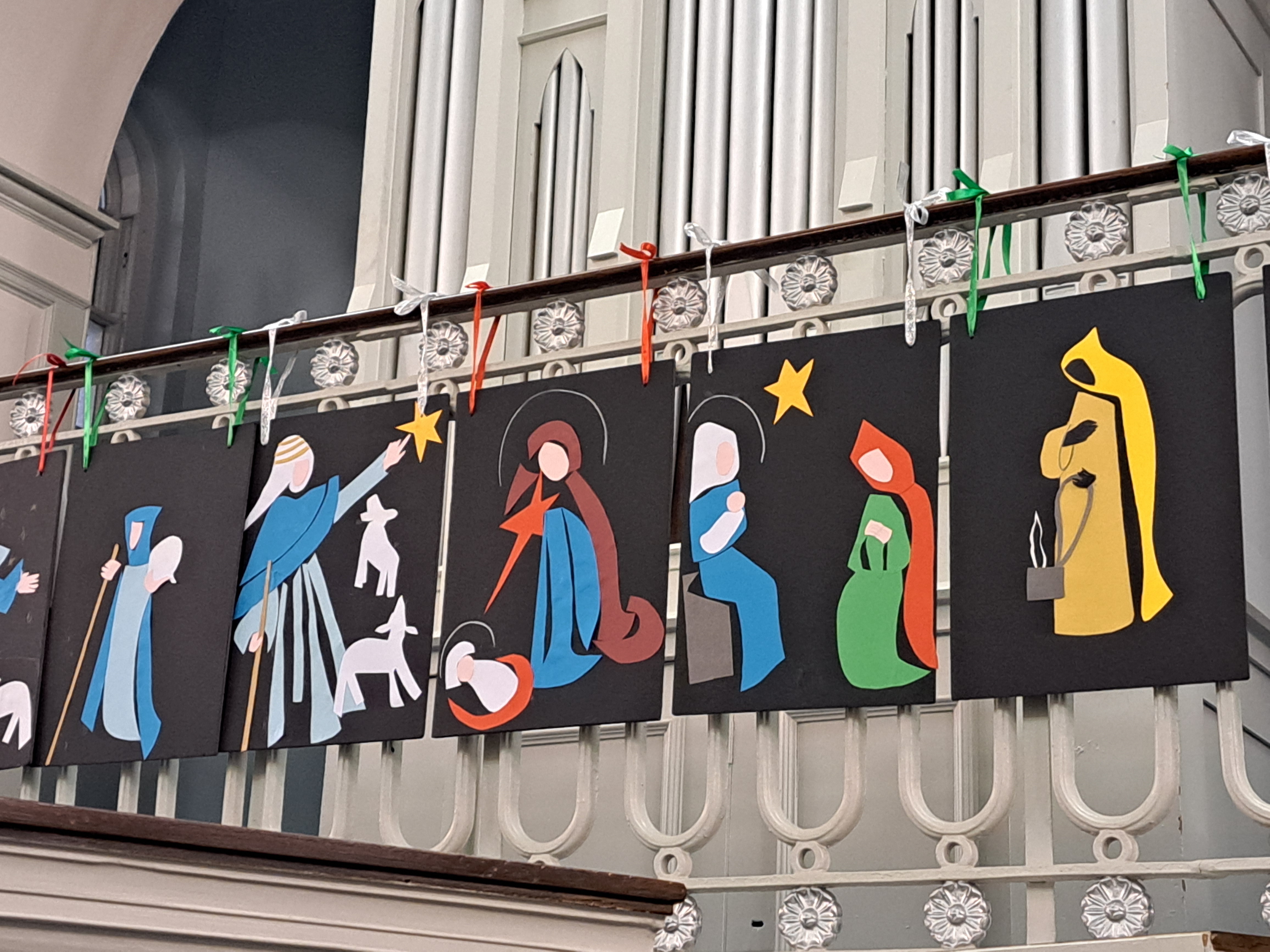
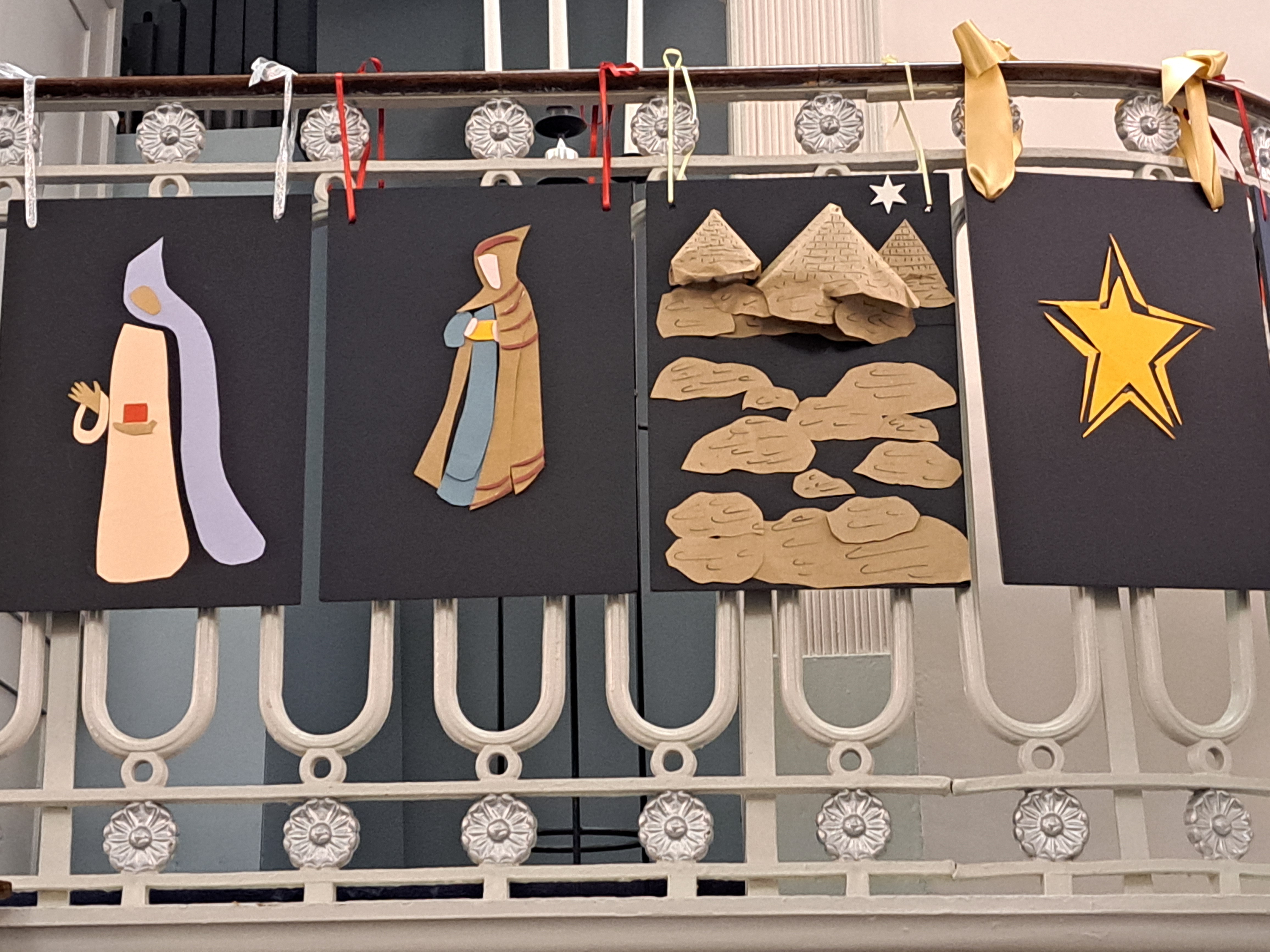
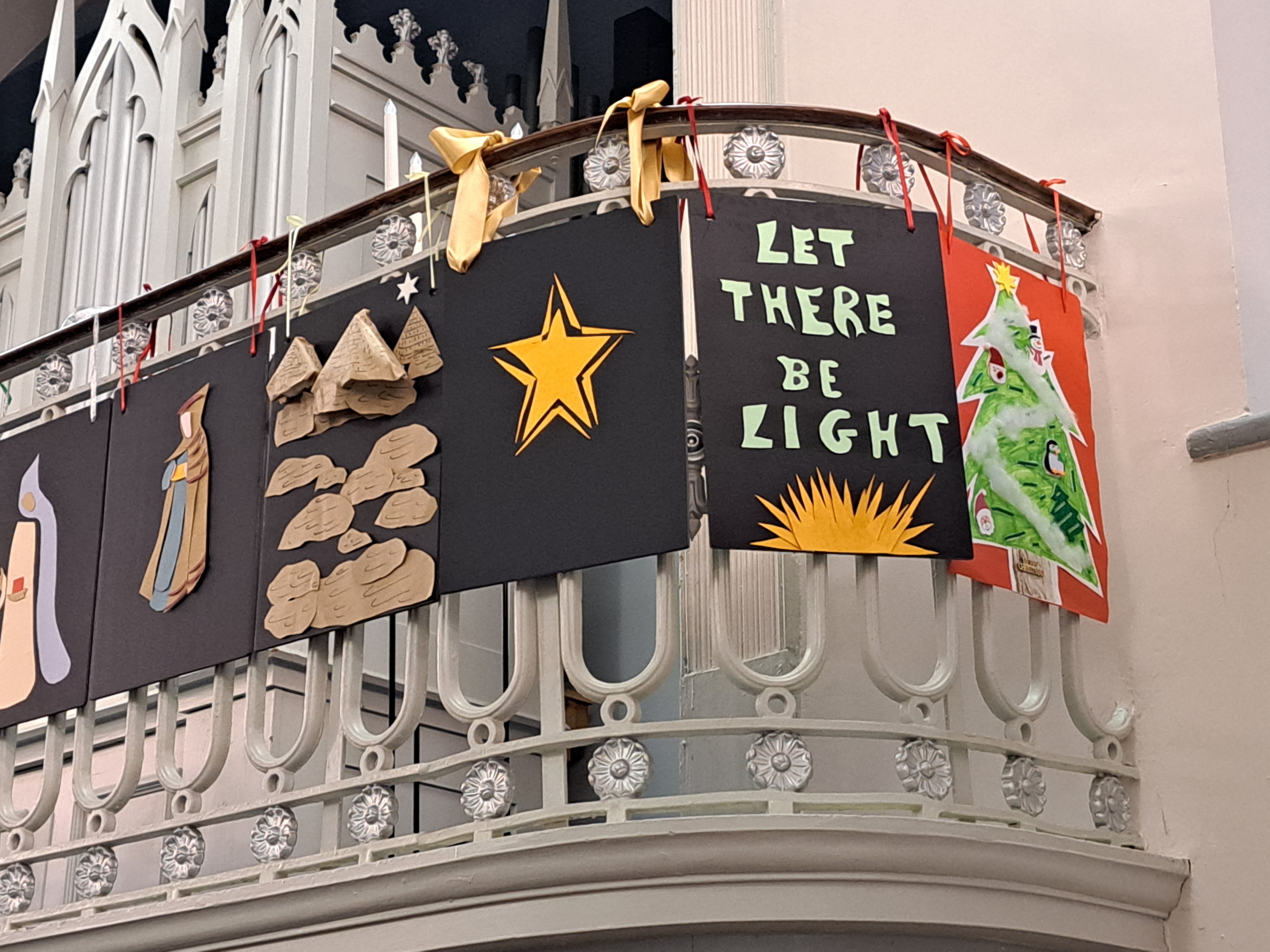
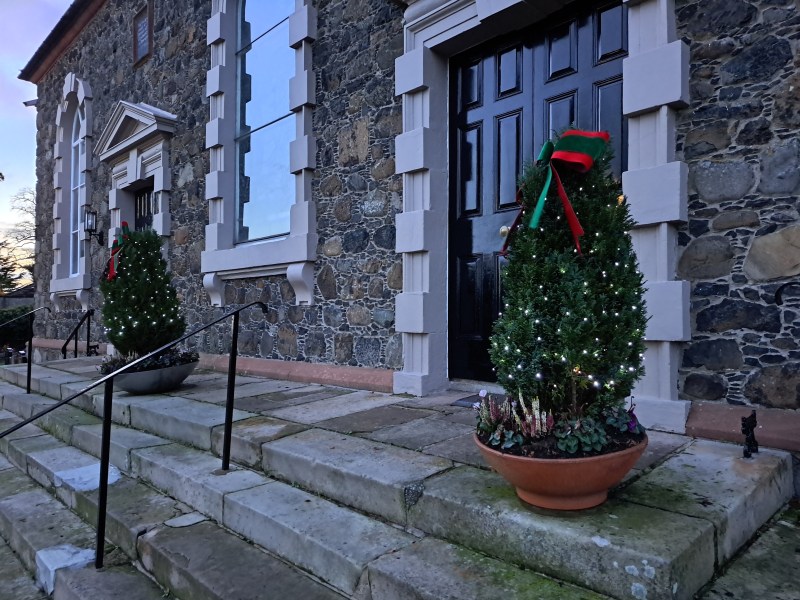
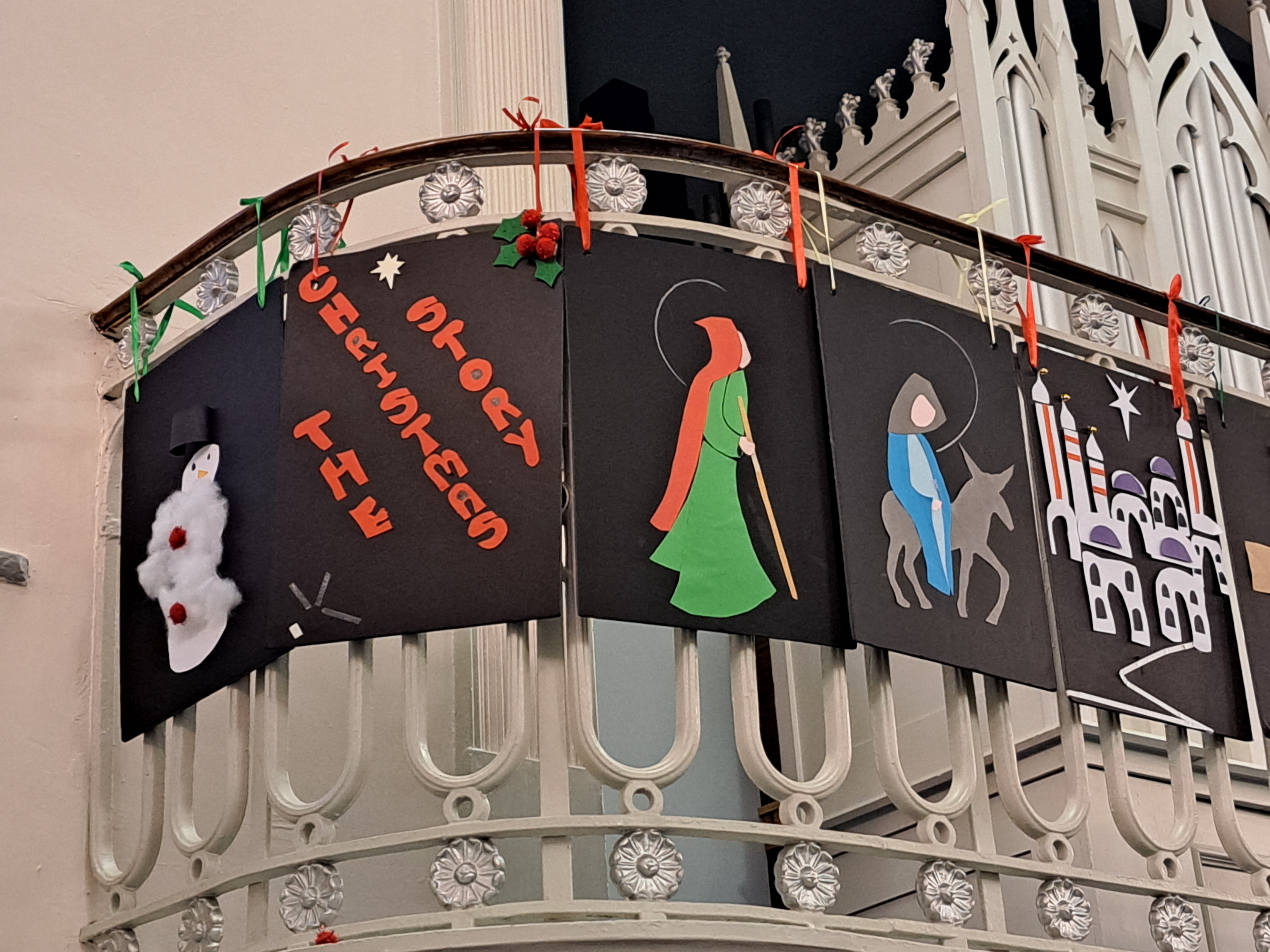
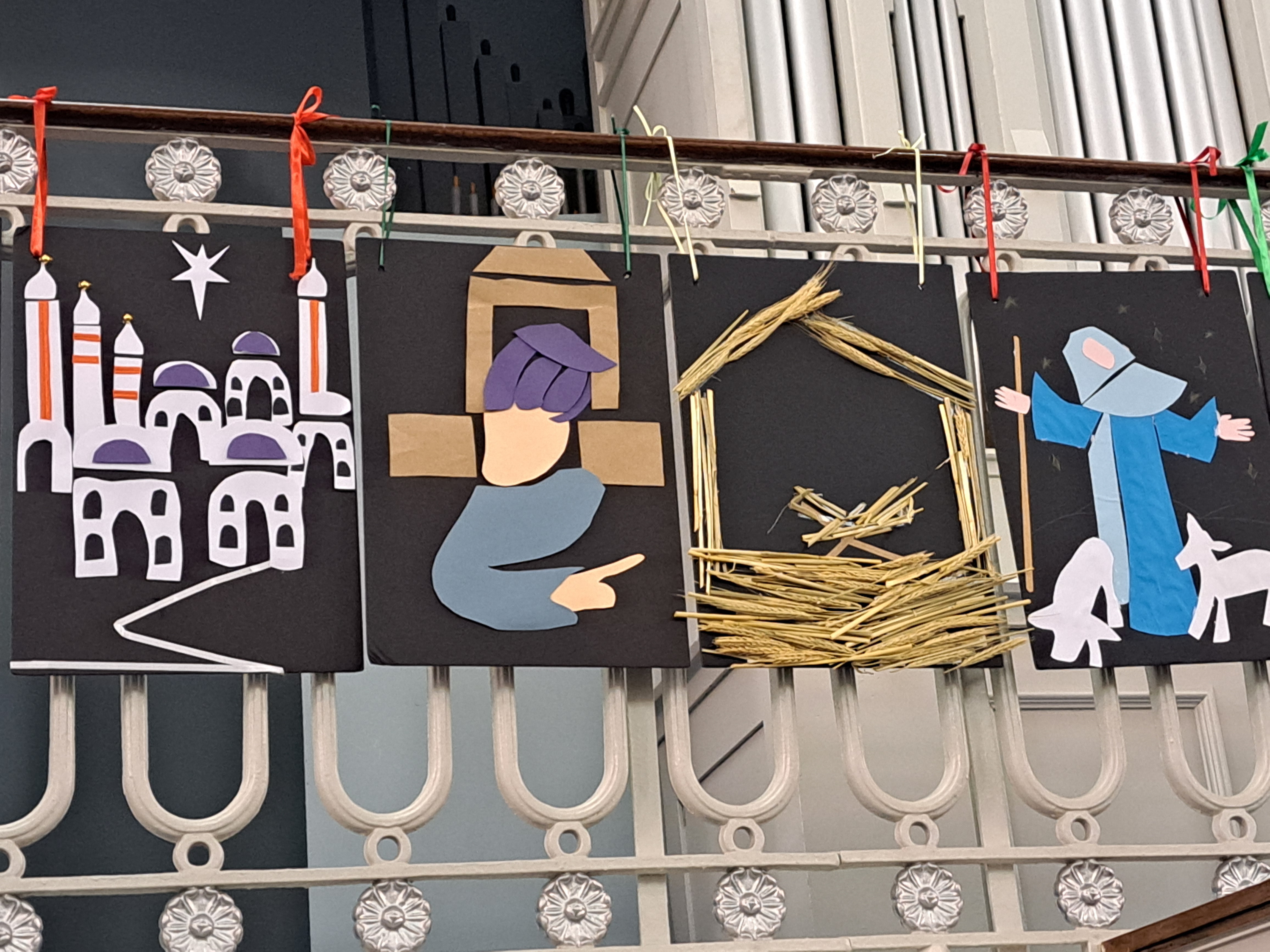
The video also includes some of the Christmas decoration in the Church including the excellent frieze created by the children of the Youth Group along the rail behind the pulpit, which can be seen in more detail below:

The Latest issue of Faith and Freedom

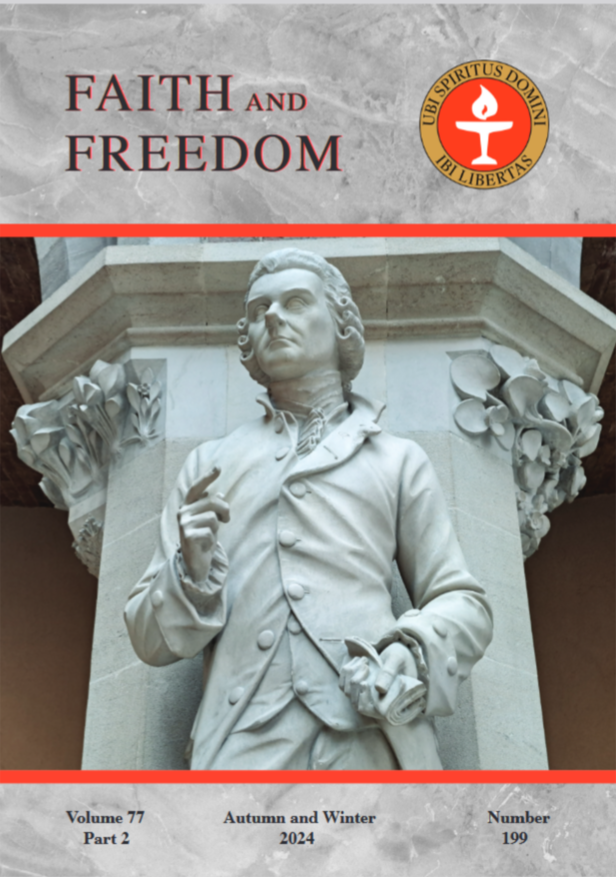
The latest issue – Volume 77, Part 2, Autumn and Winter 2024, Number 199 – is now available and will be with subscribers shortly. Details on how to subscribe (including a link to our website if you would like to pay via PayPal) can be found at the foot of this page.

This issue is special for a number of reasons. First of all we are pleased to announce the magnificent vote of approval given to us by the Merseyside and District Missionary Association who have given us very generous financial support. This is a tremendous help and together with the valued grant we already receive from the Daniel Jones Fund this means that Faith and Freedom can continue to serve our readers, maintaining the original vision set out by the Ministerial Old Students Association of Manchester College, Oxford for the promotion of liberal religious discussion and the free exchange of ideas.

Secondly we are also delighted to be able to launch our brand new Faith and Freedom Logo with this issue. Our Logo was previewed on this site a couple of weeks ago and it now takes its place atop our masthead. Specially designed for us, it is a striking representation of what we stand for as a journal and will let the world know who we are. We have already had requests for this to be produced as a badge which is something we are keen to look into.

It is very pleasing also that the journal continues to attract top quality articles from Unitarians and non-Unitarians alike from Britain and around the world. In this issue Elizabeth Kingston-Harrison, who is the Congregational Connections Lead for the General Assembly of Unitarian and Free Christians and has a PhD in Intellectual History, having studied the theology of Joseph Priestley and other eighteenth-century rational dissenters, contributes A Comet in the System: Joseph Priestley and the emergence of rational dissent in the eighteenth century. Elizabeth writes of Priestley’s role in the emergence of rational dissent and shows how, far from being a distant, dry historical study, this is something that is energising and alive today and helps us connect with our present-day religious identity. Joseph Priestley ‘was a courageous, “big picture” person’ whose scientific discoveries went hand in hand with his theological reflections. The discoverer of oxygen applied reason to scripture and developed a new way of understanding the universe.

Frank Walker considers Sir Lloyd Geering: Trinitarian-Unitarian, Humanistic Presbyterian, Centenarian and asks Can You Love the Human Race? Sir Lloyd Geering, a New Zealand Presbyterian Professor, who was once charged with heresy, may not be a name immediately familiar to most of our readers but I have no doubt that everyone will find Frank’s thoughtful examination of his theology and ideas incredibly life affirming and uplifting.

Peter Hewis addressed the Old Students Association at Harris Manchester College back in June and this paper is based on his sermon – Keep alive the dream in the heart – a quotation from Howard Thurman and an exploration of dreams in religious history and their continuing power to inspire us and drive us towards making a difference in the world,

As always we have a number of really interesting and informative reviews of a wide range of publications contributed by our readers. This issue includes:

Right Relationship in the Real World

Commissioning Editor: Jane Blackall, Right Relationship in the Real World, Learning to Live by our Unitarian Values, The Lindsey Press, London, 2024, pp 132, ISBN 978-0-8519-099-8, £7, pbk. The book can be ordered online at https://www.unitarian.org.uk/shop/

Reviewed by Peter B. Godfrey

Fideology

Richard F. Boeke, Fideology – Building Trust through the Shared Experience of Faith at the Root of the World’s Religions, 2024, pp 248, ISBN 97988844906686, £11.08 plus postage from Amazon.

Reviewed by Peter B. Godfrey

From the heights of politics via a spiritual journey to the ministry

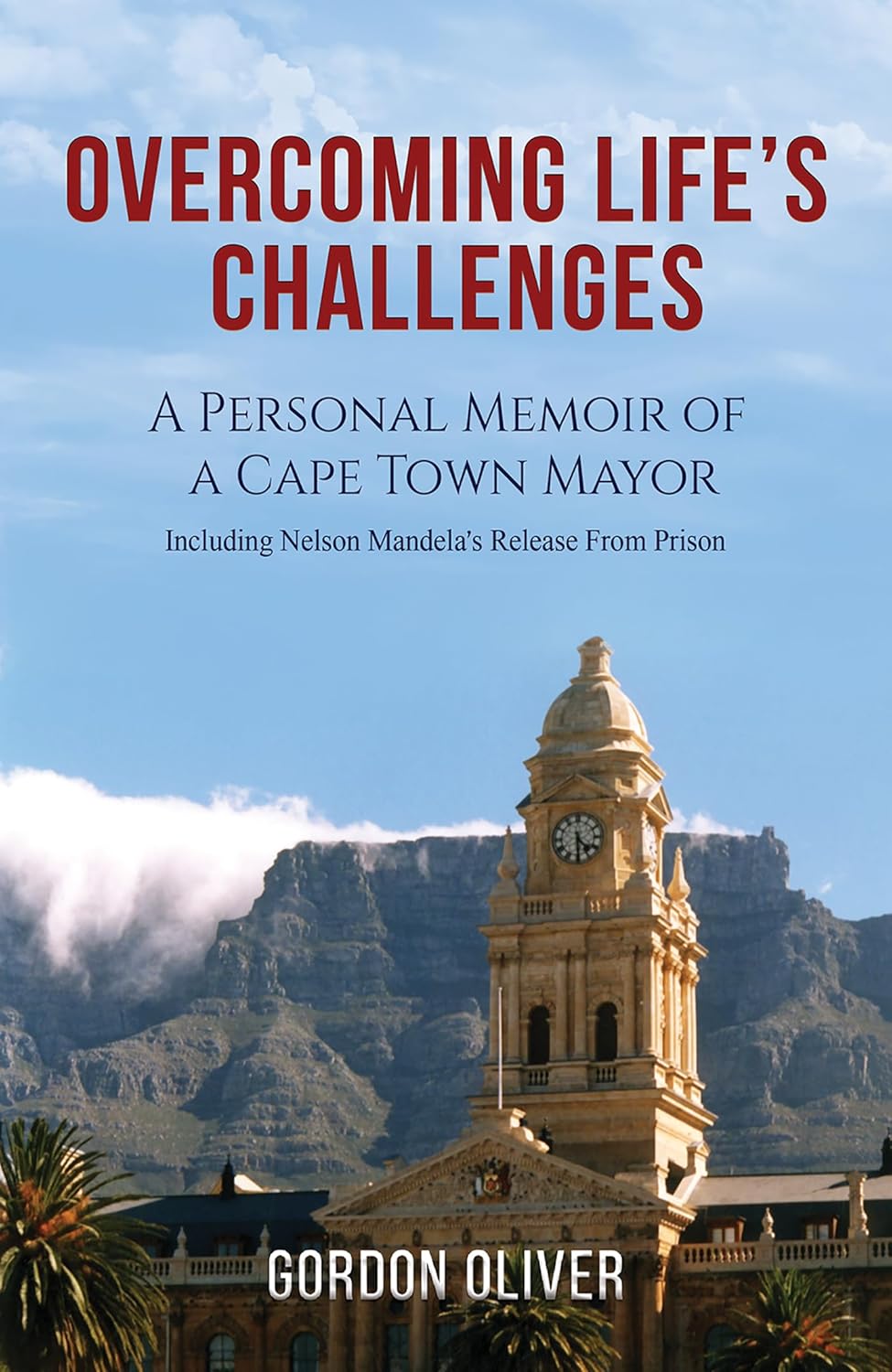
From the heights of politics via a spiritual journey to the ministry Gordon R. Oliver, Overcoming Life’s Challenges: A Personal Memoir of a Cape Town Mayor, Austin Macauley Publishers, 2024, pp.166, ISBN: 979-8891554146, £8.99, pbk.

Reviewed by John Midgley

An honest and liberal analysis of the Church

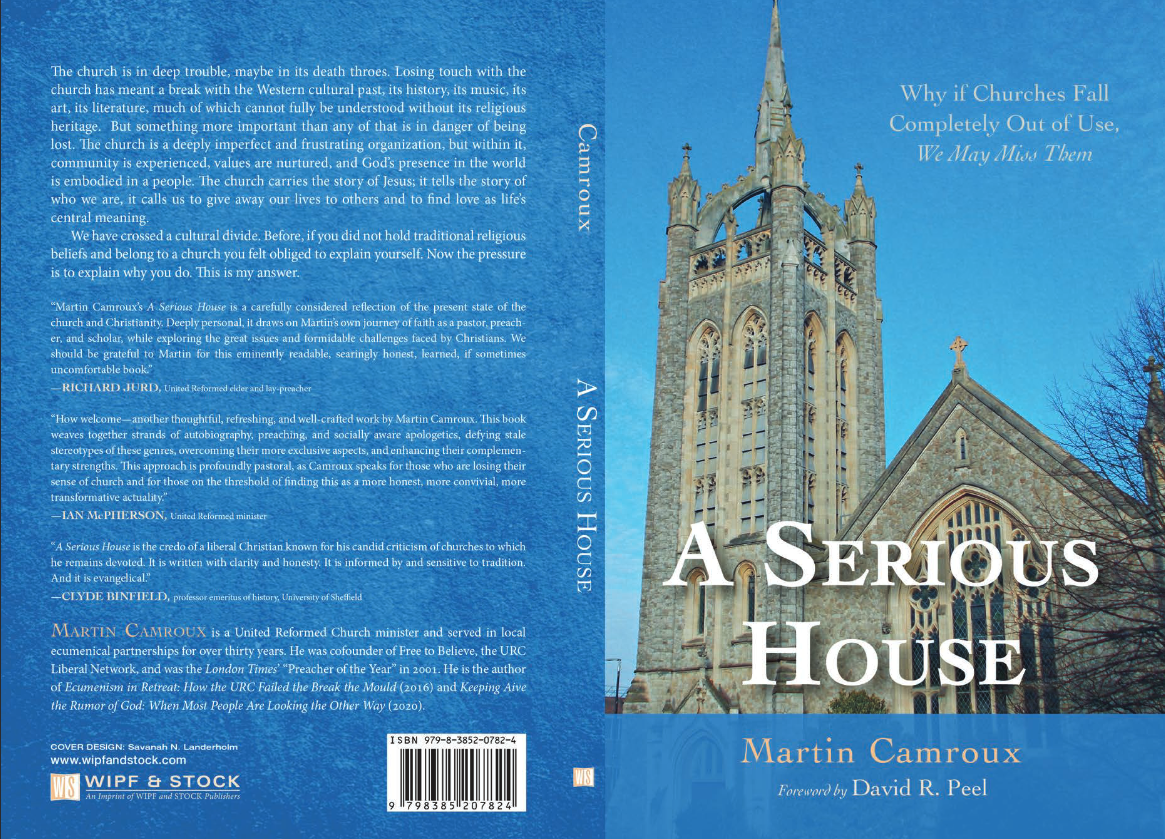
Martin Camroux, A Serious House, Why if Churches Fall Completely Out of Use We May Miss Them, Wipf and Stock, 2024, pp. 188, ISBN-13: 979-8385207824, £21 pbk, (also available direct fromthe author for £16, including postage, Martin Camroux, 4 Sorrel Close, Colchester, CO4 5UL).

Reviewed by Francis Elliot-Wright

Prayers of Many Faiths

Marcus Braybrooke, 1,000 Prayers from Around the World. Prayers of Many Faiths for Many Situations, independently published, 2024, pp.390, ISBN: 9798321565889, £39.99 hbk; ISBN: 97983439561609, £9.99 pbk black and white; ISBN: 798321565889, £19.99 pbk colour; also available on Kindle £4.99. Available to order on Amazon.

Reviewed by David Steers

An annual subscription to Faith and Freedom (two issues) costs £16.00 (postage included) in the United Kingdom. Single copies can be ordered at a cost of £8.00 each (postage included). Cheques should be made out to Faith and Freedom and sent to the business manager:

Nigel Clarke,
Business Manager, Faith and Freedom,
16 Fairfields,
Kirton in Lindsey,
Gainsborough,
Lincolnshire.
DN21 4GA.

Overseas subscriptions are also available.

It is also possible to pay online. For more details see our website:

https://www.faithandfreedom.org.uk/subs.htm
The new Faith and Freedom Logo

The next issue (Volume 77 Part 2, Number 199, Autumn and Winter 2024) is due out very soon, so this is a chance to preview our brilliant new Logo:

Faith and Freedom was founded in Oxford at the instance of the Ministerial Old Students’ Association of Manchester College, Oxford in 1947 and has been published continuously since. For the first time we have our own logo. Bold and attractive it expresses our identity and our long tradition of freedom of thought in matters of religion.

Remembrance

On Sunday, 10th November we held a well-attended Remembrance Service at Dunmurry and the video can be seen below. Special thanks go to John Neill for delivering Binyon’s Lines, to Jack Steers for playing the Last Post and Reveille, and to Allen Yarr for playing the organ.

Click above to see the Remembrance Service from First Dunmurry 10 November 2024

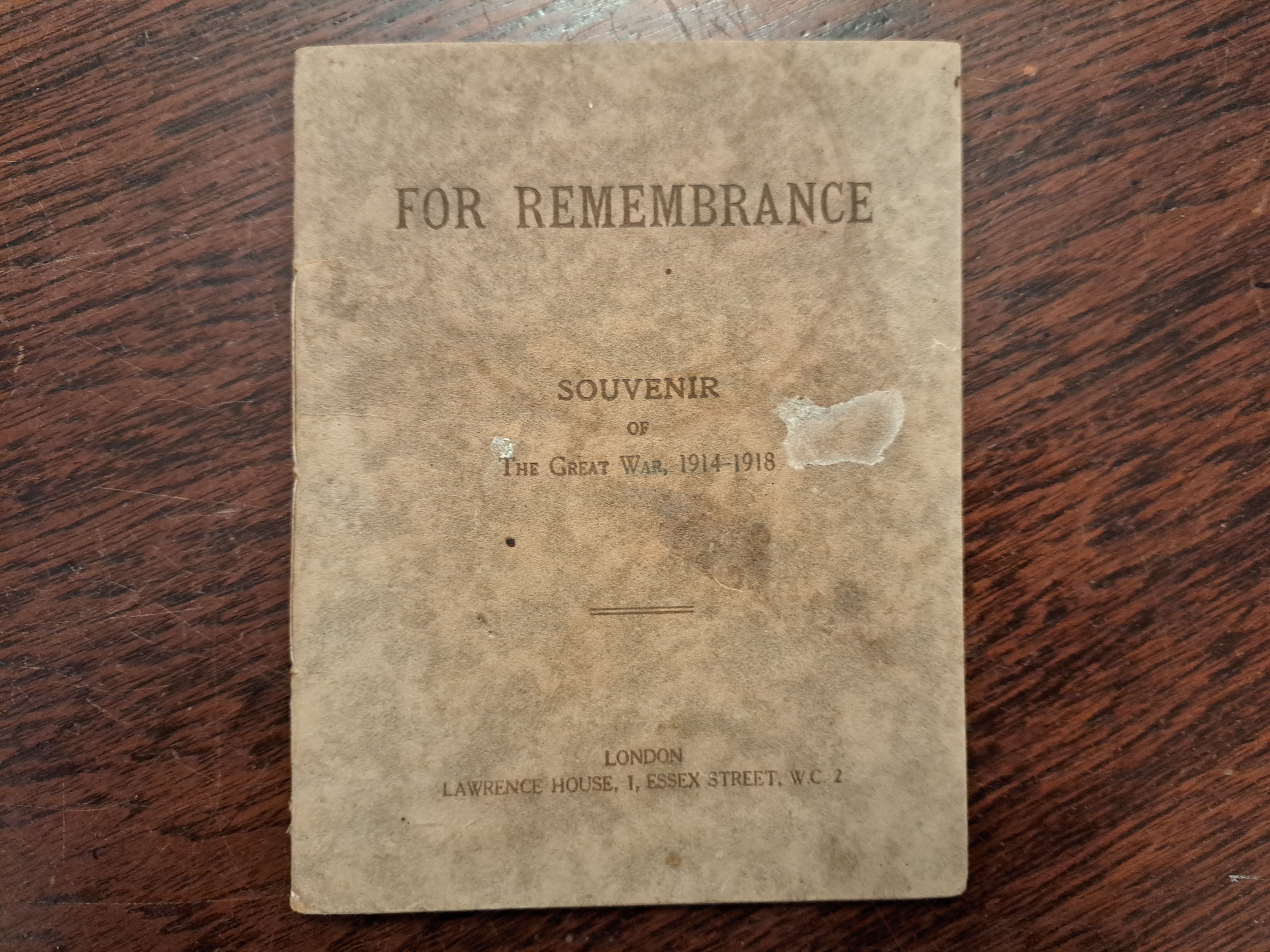
In the service I make full use of the booklet For Remembrance mentioned in the previous post. Indeed this little book, particularly the contribution by the Rev R. Nicol Cross, as it is mentioned in the previous video, has already sparked a lot of responses. Along with some of the other pieces it is a poignant and very honest reflection on the situation in 1919 for those returning from the front after the Armistice.

At the time he wrote his contribution Nicol Cross was minister of Mill Hill Chapel, Leeds, later he was minister of First Church, Belfast and later still Principal of Manchester College, Oxford. But from 1915 to 1919 he served as a private with the Royal Army Medical Corps. His perspective on the war was quite different from what you might otherwise have guessed.

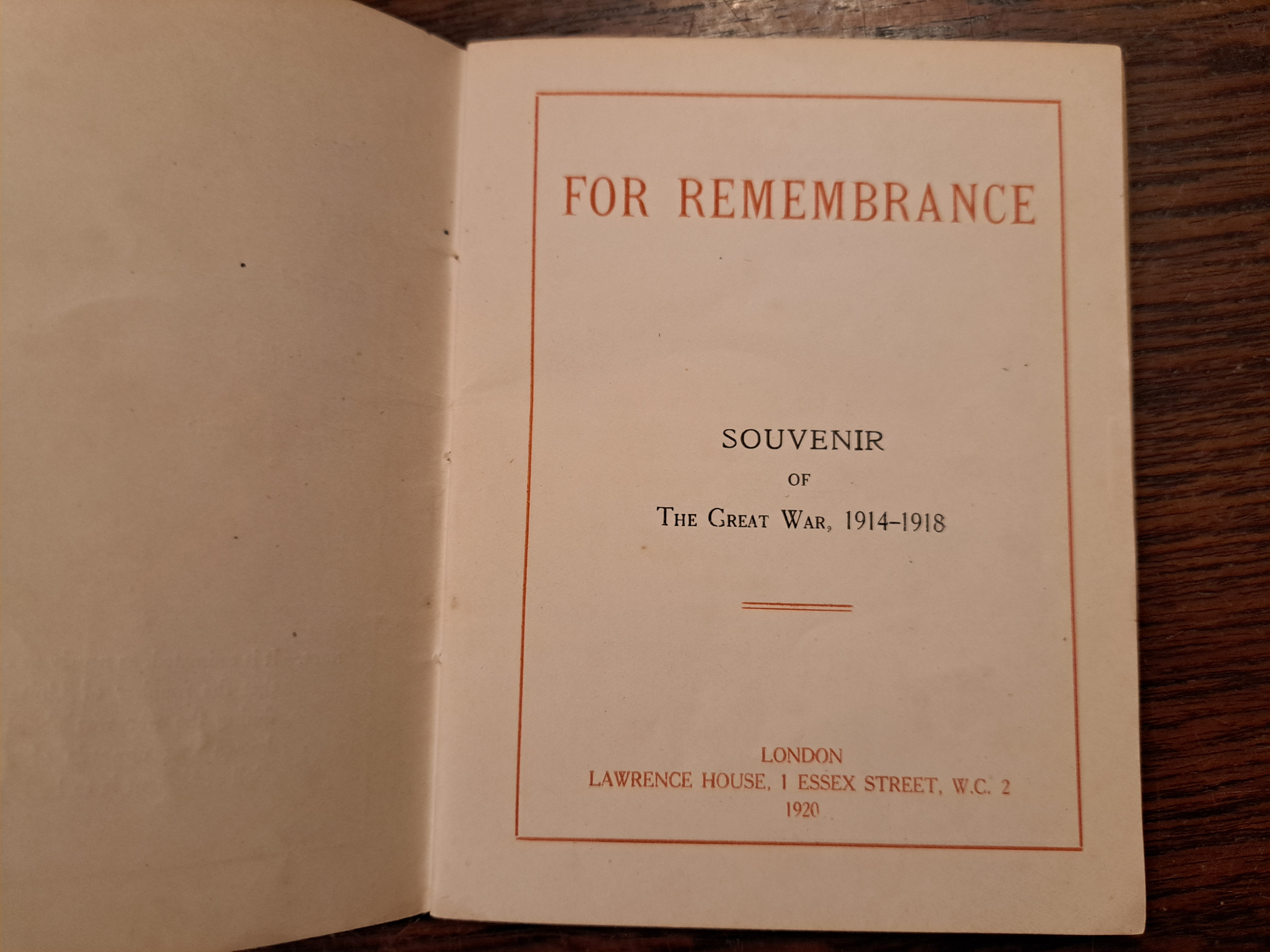
Title page of the booklet

It is a very rare book, very few copies have survived. In the 2019 issue of the Transactions of the Unitarian Historical Society Alan Ruston contributed an article entitled ‘1919 – a re-evaluation of the part played by Unitarians in the First World War’. In his article he reveals that he had not previously come across the book, the copy he was sent while writing the article was the only one known to him. It certainly has not made its way into library collections. So this copy, in the Very Rev William McMIllan Library, is one of only two known copies.

One feature of For Remembrance that I didn’t mention in the first video or in the service above is that there is also a short note from the American Unitarian Association (AUA) included in the booklet. It seems to have come from a message sent out by the AUA to reurning troops and reads:

OUR GREETING AND PLEDGE

You have successfully met the challenge of the most powerful armies the world ever saw. You have shared in the most significant victory in all history. By a devotion that has won the affectionate admiration of the civilized world, you have helped to make possible a new and nobler life for humanity, and a truer brotherhood of man.

We welcome you again to our homes and our homeland. We pledge ourselves anew to the ideals for which you went forth to suffer; and because of your example we will rise to meet the duties of the new day with unwavering faith. Through our church we will unite our powers with yours in defence of the principles for which so great a price has been paid.

Your courage, cheerfulness, and fortitude will strengthen the church of your fathers.

From the Message of the American Unitarian Association

It would be interesting to know if this was the whole message of the AUA or whether they produced a book similar to For Remembrance.

For Remembrance

Click on the video to see ‘For Remembrance’

From The Very Rev William McMillan Library of First Dunmurry (Non-Subscribing) Presbyterian Church.

Exploring the Library: Episode 5 For Remembrance. A booklet given to returning servicemen after the First World War.

A short talk by the Rev Dr David Steers. With thanks to Jack Steers for playing the Last Post and Reveille on the trumpet.

This is rather a scruffy looking booklet but it is a very rare survival of which the editors said: ‘If it attains to anything like its aim it will be a real “keepsake,” an abiding record of the owner’s place and part in our nation’s mightiest struggle…’ A copy was given to every Unitarian and Non-Subscribing serviceman who returned from the First World War. It contains some poignant quotes and six short reflections by ministers who had served alongside the troops.

Possibly as many as 9,000 copies were issued but very few survive, at least in libraries, so we are fortunate to have a copy in the Very Rev William McMIllan Library. Click on the video to find out more about ‘For Remembrance’.

Dedication of the William McMillan Library

Thank you to everyone who came along for our service of dedication and formal opening of the Very Rev William McMillan Library on Sunday, 22nd September. The service was livestreamed on Facebook and this video now on YouTube includes not just the service but also the Act of Dedication outside the Library, Sheila McMillan’s speech and cutting of the ribbon, the presentation to Sue Steers, and Colin Flinn’s speech after the tea as well as some scenes from the McCleery Hall, the Library and the Session Room.

Click above to see the service and the other events of the day

A big thank you goes to everyone who helped on the day, especially the ladies who prepared the wonderful refreshments. In his speech Colin Flinn commended them for their smart turn out and expressed a hope that on future occasions some men might join them in their ranks!

Dunmurry NSPCI Ladies Group

A big thank you goes to Elma McDowell for her floral arrangements and to Allen Yarr for playing the organ. All these things and more can be seen on the video.

Flowers in the Hall

The congregation of Dunmurry is grateful to the Bright Fund for their financial support for the project and to everyone who has made donations to the Library over the last few years. We gratefully acknowledge the receipt of books and other items donated to the Library. Special thanks also goes to Sue, Kathy and the members of the Library Group for all their hard work in cataloguing the Library over the last four years.

Ministerial Old Students’ Association Harris Manchester College, Oxford

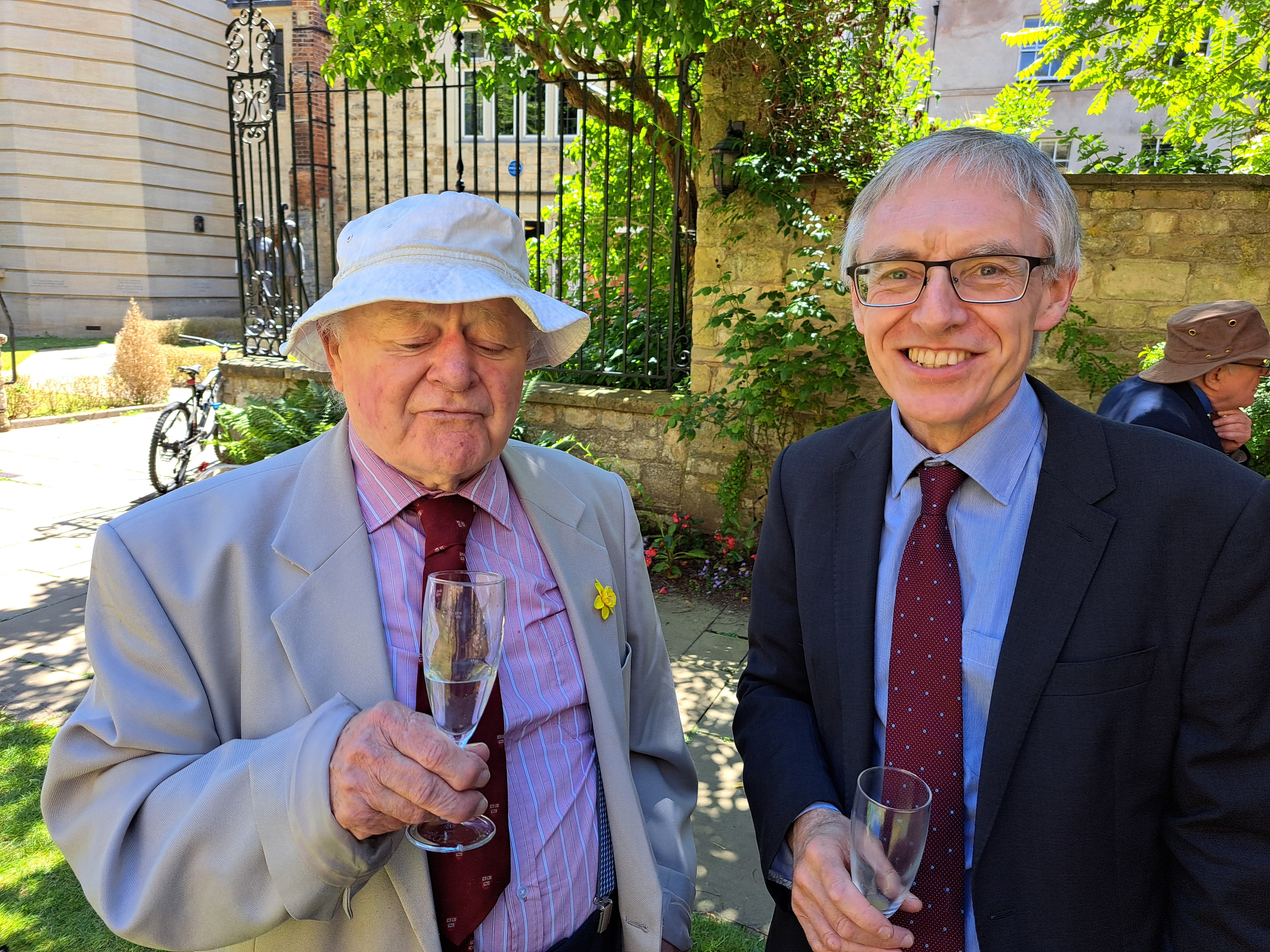
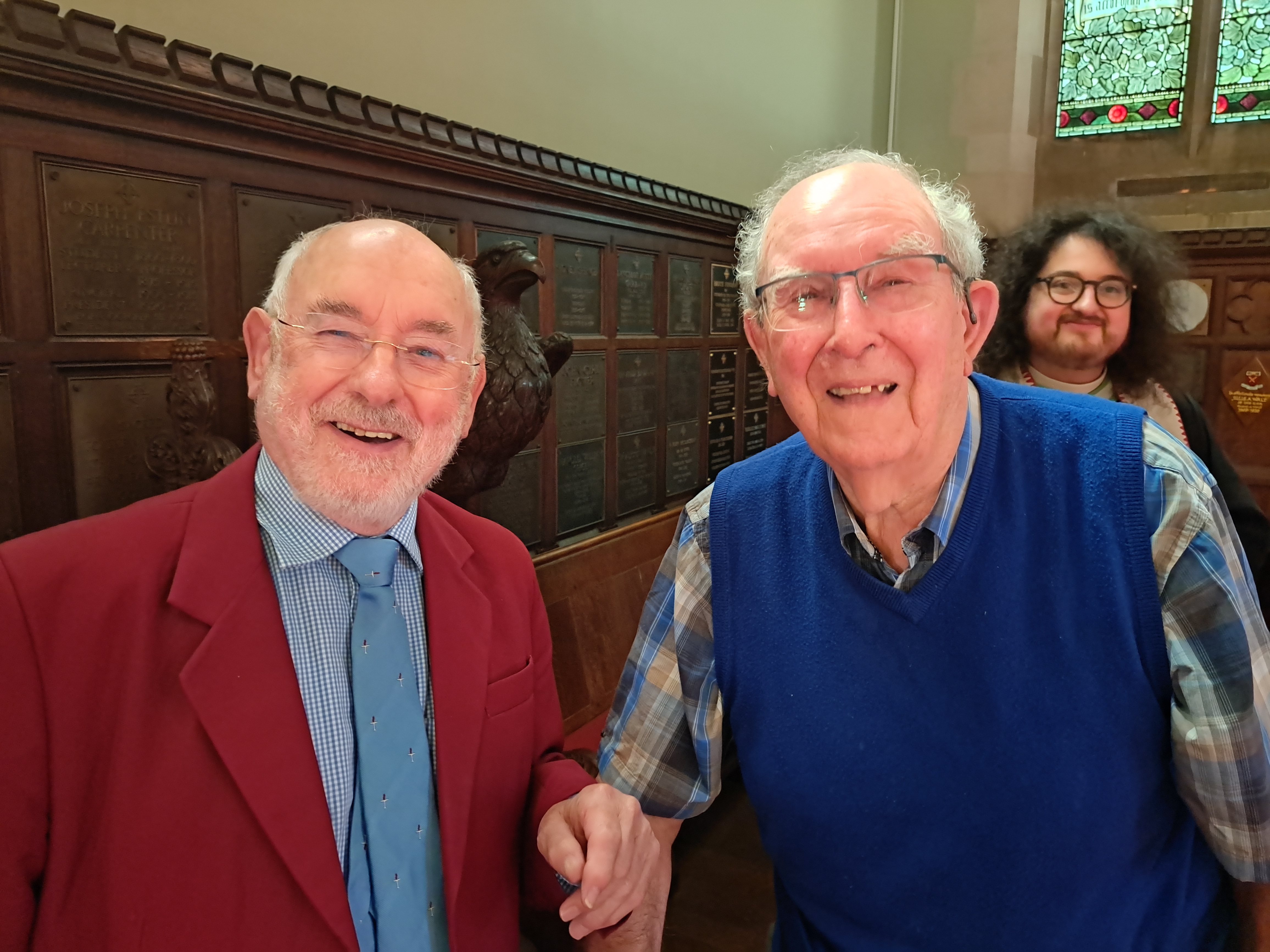
Faith and Freedom was founded by the Ministerial Old Students’ Assocation of Manchester (now Harris Manchester) College, Oxford in 1947. It is always good to attend the annual meetings along with the meeting of the Friends and Honorary Governors of the College.

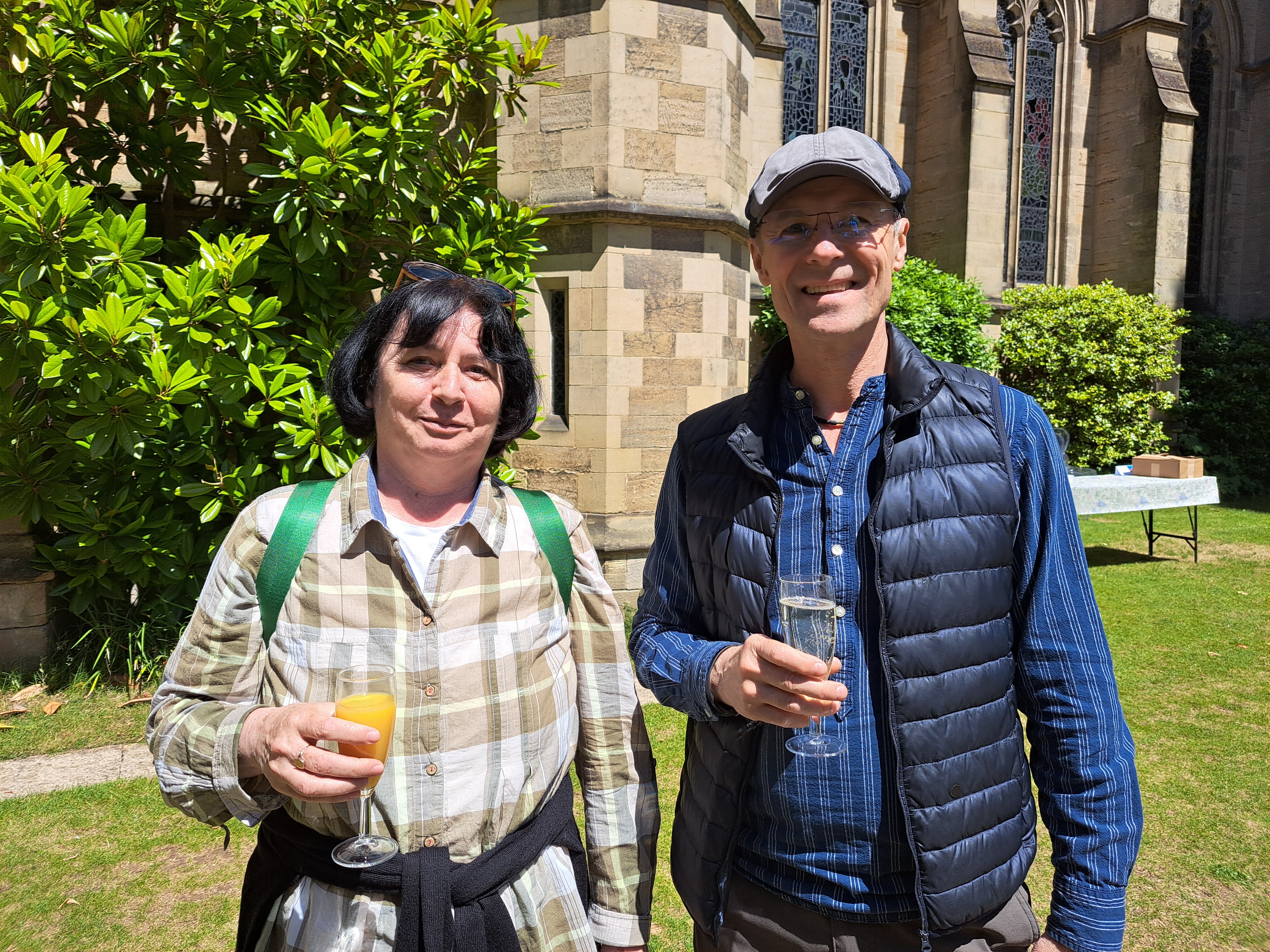
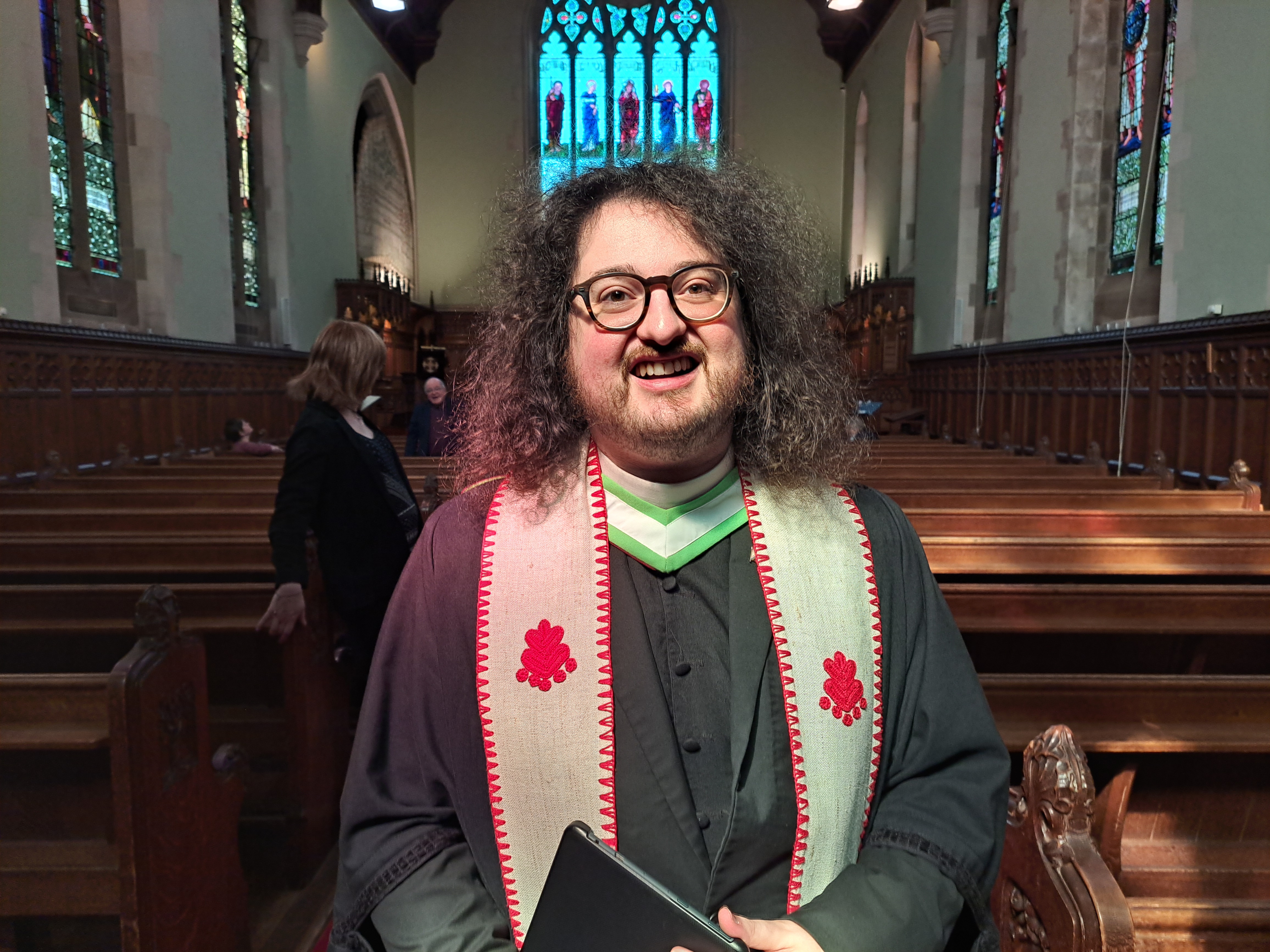
Attending both meetings gives the chance to see many contributors and supporters of Faith and Freedom. Amongst the attenders were three contributors to the latest issue (Ann Peart, Mária Pap and Lehel Molnár) as well as some whose writings will appear in the next issue.

Rev Mária Pap and Rev Dr Lehel Molnár
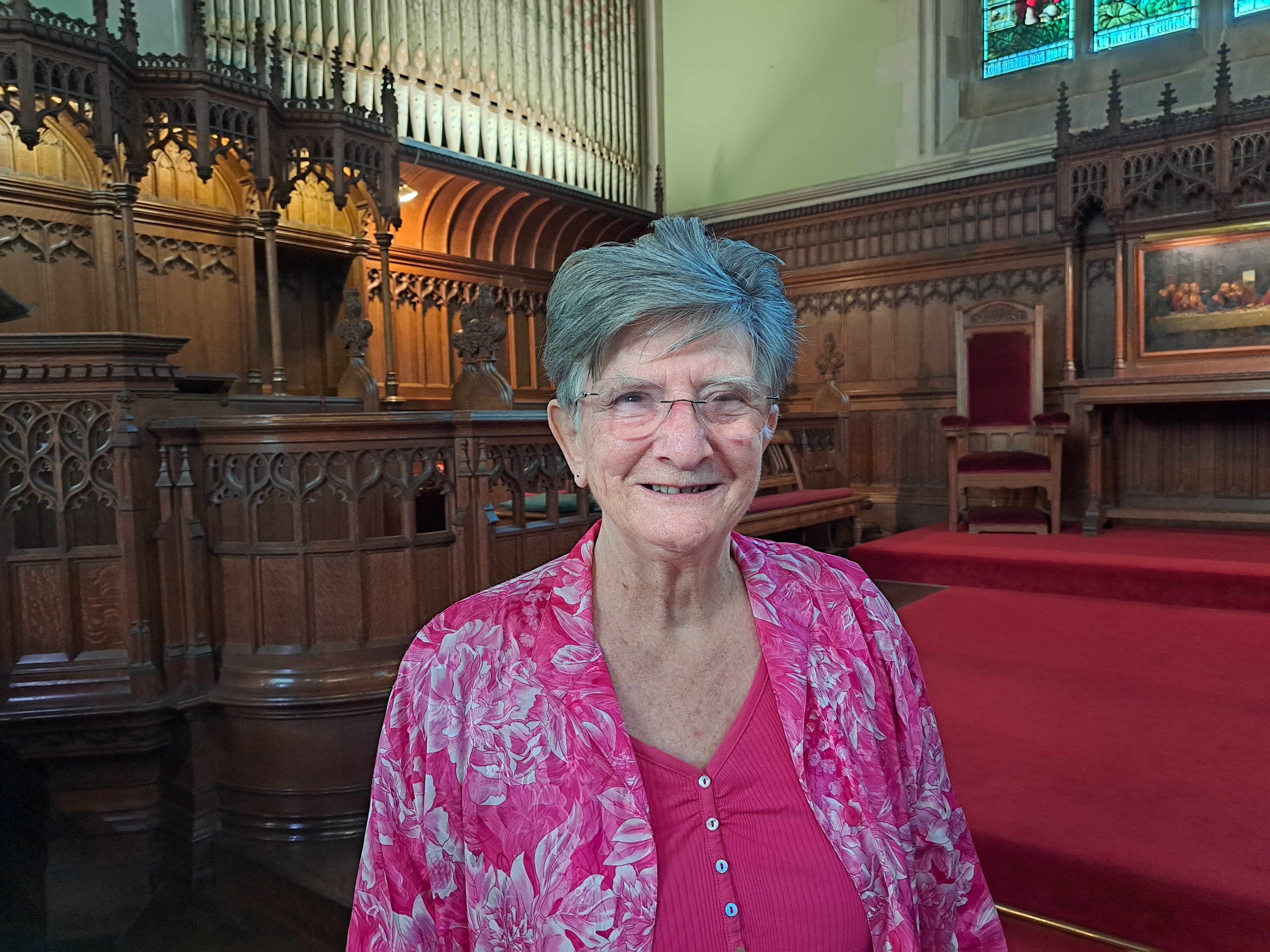
Rev Dr Ann Peart

Amongst the attenders there was also some cross-over with those associated with the Unitarian Historical Society and the concluding Old Students’ Association annual service on Friday, 21st June conducted by Rev Robin Hanford included an address, ‘Keep alive a dream in the heart’ by Rev Peter Hewis, which will appear in the next issue of the journal.

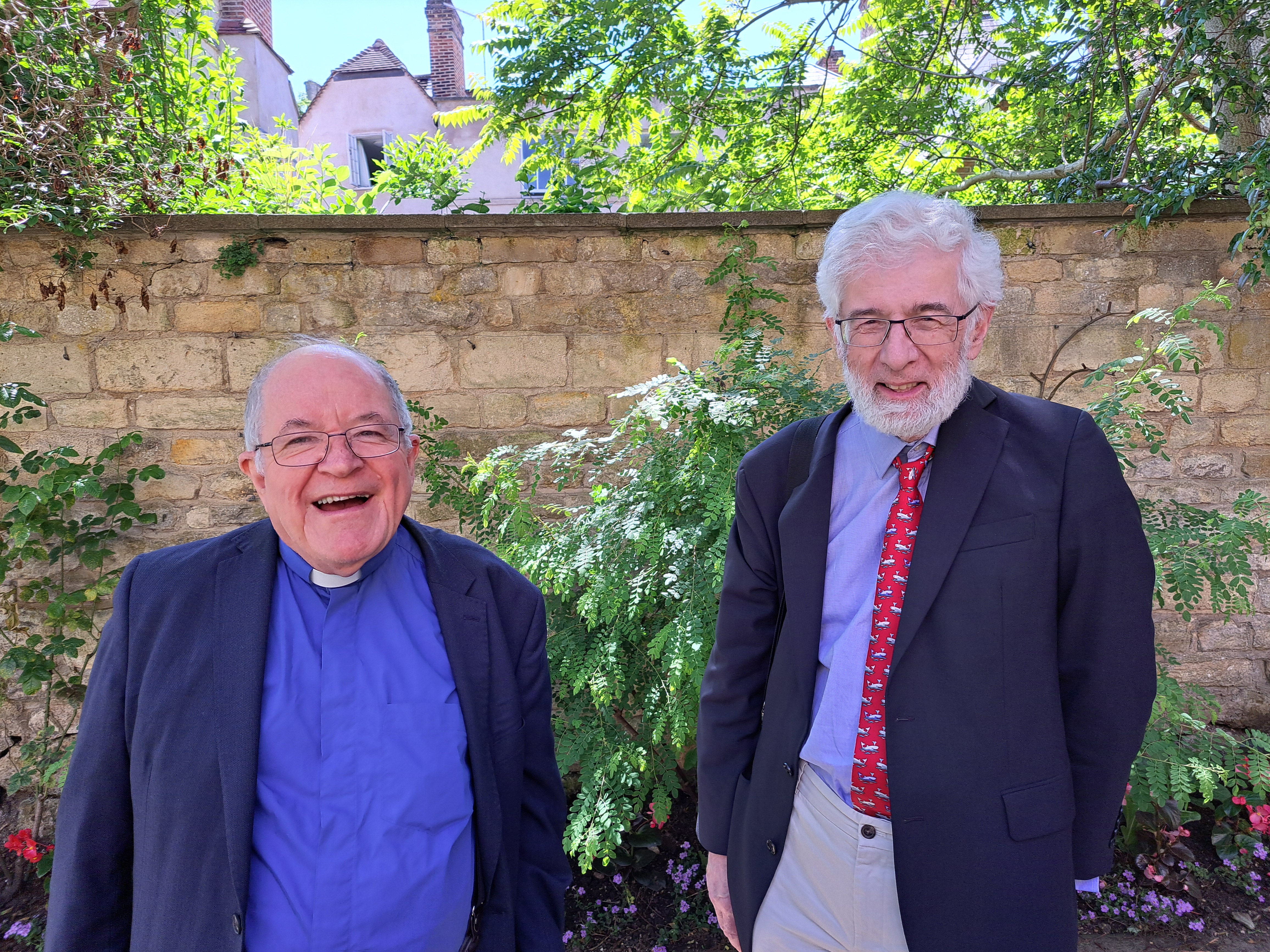
Rev Jim Corrigall and Dr David Wykes
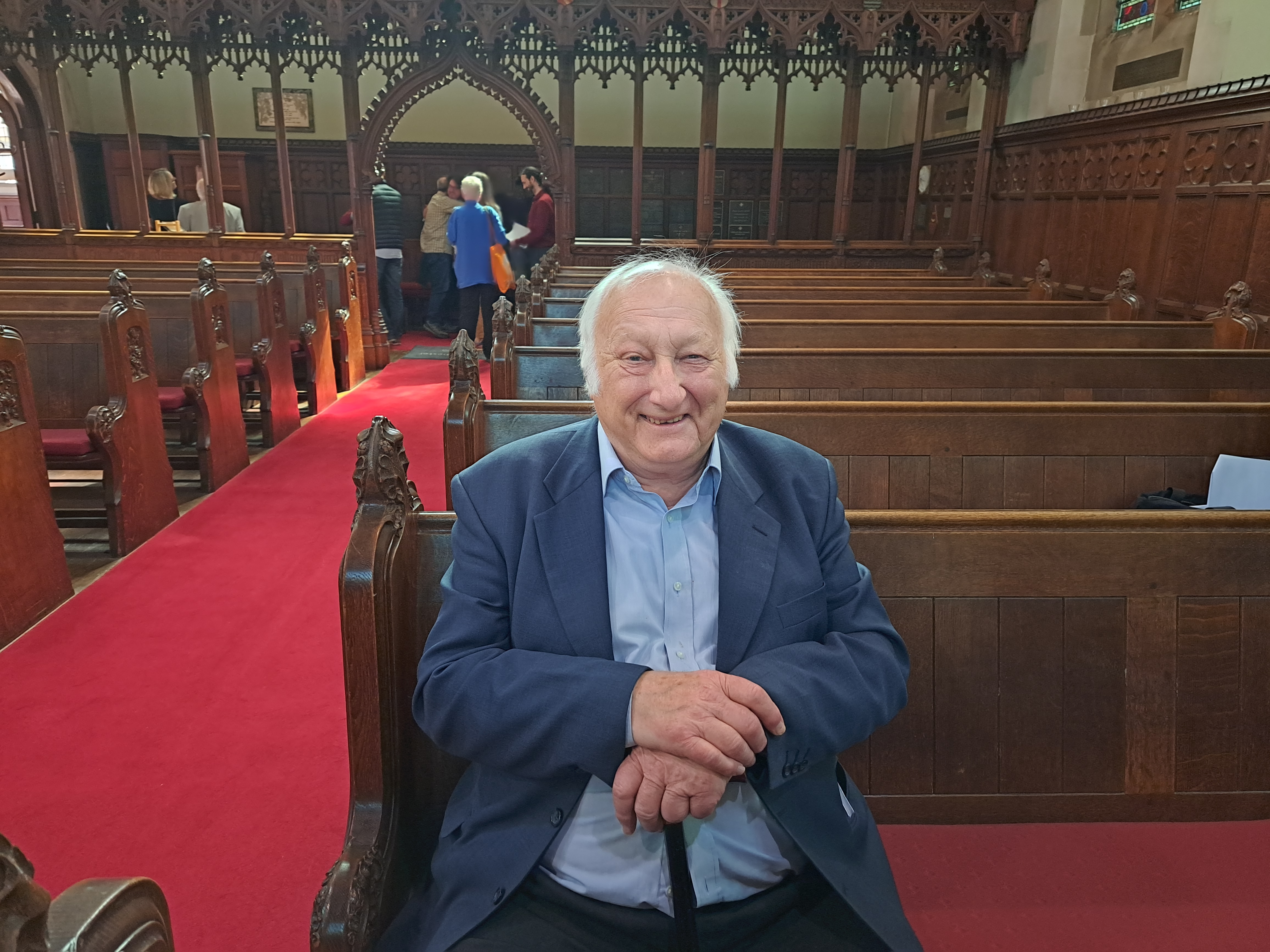
Alan Ruston in the College Chapel

Having been founded by MOSA, Faith and Freedom gives an annual report to the Association and it is also a good opportunity to keep that connection active.

Rev Frank Walker (a contributor to the forthcoming issue) with NIgel Clarke (‘Faith and Freedom’ Business Manager)
The Two Peters. Rev Peter Hewis and Rev Dr Peter Godfrey (Editor Emeritus)
Rev Robin Hanford of Hinckley who conducted the annual service in the College Chapel

To read more about the latest issue click here.

The one constant in an ever changing world

The congregation of First Dunmurry has existed since around 1676. The first meeting house was an old lime kiln, later a meeting house was built in 1714, and this was eventually replaced with the present remarkable building of 1779. So the congregation is almost 350 years old and the building itself is 245 years old. Since 1839 the church’s nearest neighbour has been the railway. That is a long time to be neighbours. The railway has run alongside the Church for all that time. Of course, it has been run by different operators over the years, steam trains have been supplanted by diesel, it has even changed gauge at one point, but the Belfast to Lisburn line was created back in 1839, the station at Dunmurry being added at the same time.

Because of this proximity the railway has inadvertently helped create for First Dunmurry a small footnote in film history. In June 1897 the cinematographer Alexandre Promio came to Ireland on behalf of the famous Lumière brothers to make the first moving film in Ireland. He filmed in Belfast, including street scenes in Castle Place and on Queen’s Bridge, fire-fighters practising, and a few seconds of the first football match ever to be filmed, which was Glentoran v Cliftonville at the Oval in East Belfast.

He also filmed short sections of the rail journey between Belfast and Dublin. Cameras were cumbersome and had to be hand cranked. To capture movement they had to be pointed at crowds or some human activity or placed on a moving platform like a train or a tram. So the train was an obvious place to go and filming the view as the train pulled out of a station was a good way to catch a local view.

As the steam train chugged out of Dunmurry station, sometime in the Summer of 1897, Promio filmed the view and the result was a 37 second burst of film called Départ de Dunmurry. The opening few seconds shows an intensely industrial scene based around the long demolished mill, not immediately recognisable as the modern Dunmurry. By the end of the film we are into open countryside.

This new video enables us to compare the trail blazing film of 1897 with a contemporary film of the same view in 2024. Départ de Dunmurry 2024 enables the viewer to make that comparison:

Click on the video to see Départ de Dunmurry 2024

We can reflect on what has changed over those 127 years between 1897 and 2024. In one way we have to marvel at the technological progress that has taken place. In 1897 film was in its infancy, cameras were cumbersome, very expensive and required a lot of skill to use. Alexandre Promio was an expert who had filmed all over the world, one of only a handful of people who could do that. Today I am just one of literally millions of people who has a phone that is also a camera which can take digital films in colour with sound merely by pointing it in the right direction.

Imagine if you could show Alexandre Promio a modern phone or a digital camera. He would be more astonished than we could imagine. So we might ask what will technology be like 127 years from now? It is impossible to imagine.

But in the film what do we see today that is different? Today there are cars, lots of cars, there is a significant quantity of graffiti, but actually more trees and more houses. We can notice too that the old steam train takes a bit longer to get up speed than the modern diesel one. You wouldn’t know just looking at the videos though that the railways were much more extensive in 1897 than today. There were around 5,630 km of railway lines in those days, more than twice what there is today, and you could go virtually anywhere in Ireland by rail then. You are restricted to very limited routes today, particularly in Northern Ireland.

But when you compare the two films from 1897 and 2024 one thing has not changed and that is our church. Indeed it has not changed in any big way since 1779 when it was built. As the train curves to the right you can look up Glebe Road and see the church in its prominent position on top of the hill.

It represents our faith, our witness,  and though the world changes around us in so many different ways, what we stand for and what we do is always equally important. As we look out of the window of the railway carriage we can see the changes and notice too our Church, the one constant in an ever changing world.

We also have another new video uploaded to YouTube. Non-Subscribing Presbyterian Reflections on Spring, Pentecost, and Psalm 104 from the newly refurbished Session Room and the grounds of First Dunmurry (NS) Presbyterian Church. With the Rev Dr David Steers, minister, and Allen Yarr, organist:

First Dunmurry (NS) Presbyterian Church

Transactions of the Unitarian Historical Society April 2024

The latest issue of the Transactions (Volume 28 Number 3) will soon be on its way to members. Details of how to join the Society can be found below.

As ever the journal is full of interesting articles and contains:

The National Conference 1882-1928 – a Unitarian Talking Shop

by Alan Ruston

James Martineau’s carte de visite

One year before the bi-centenary of the British & Foreign Unitarian Association Alan Ruston looks at the other less well-known institution which came together with the B&FUA to form the General Assembly of Unitarian and Free Christian Churches in 1928. Although not founded by James Martineau, The National Conference of Unitarian, Liberal Christian, Free Christian. Presbyterian, and Other Non-Subscribing or Kindred Congregations, to give it its full title, was always under the influence of the great man. Even if the body was essentially ‘a Unitarian Talking Shop’ it was nevertheless an institution that made an important contribution to the development of national Unitarian organization in the late nineteenth and early twentieth centuries.

‘Holding Space Sacred’: Struggles for Land and Home in Great Britain and Ireland, and Beyond

by Derek McAuley

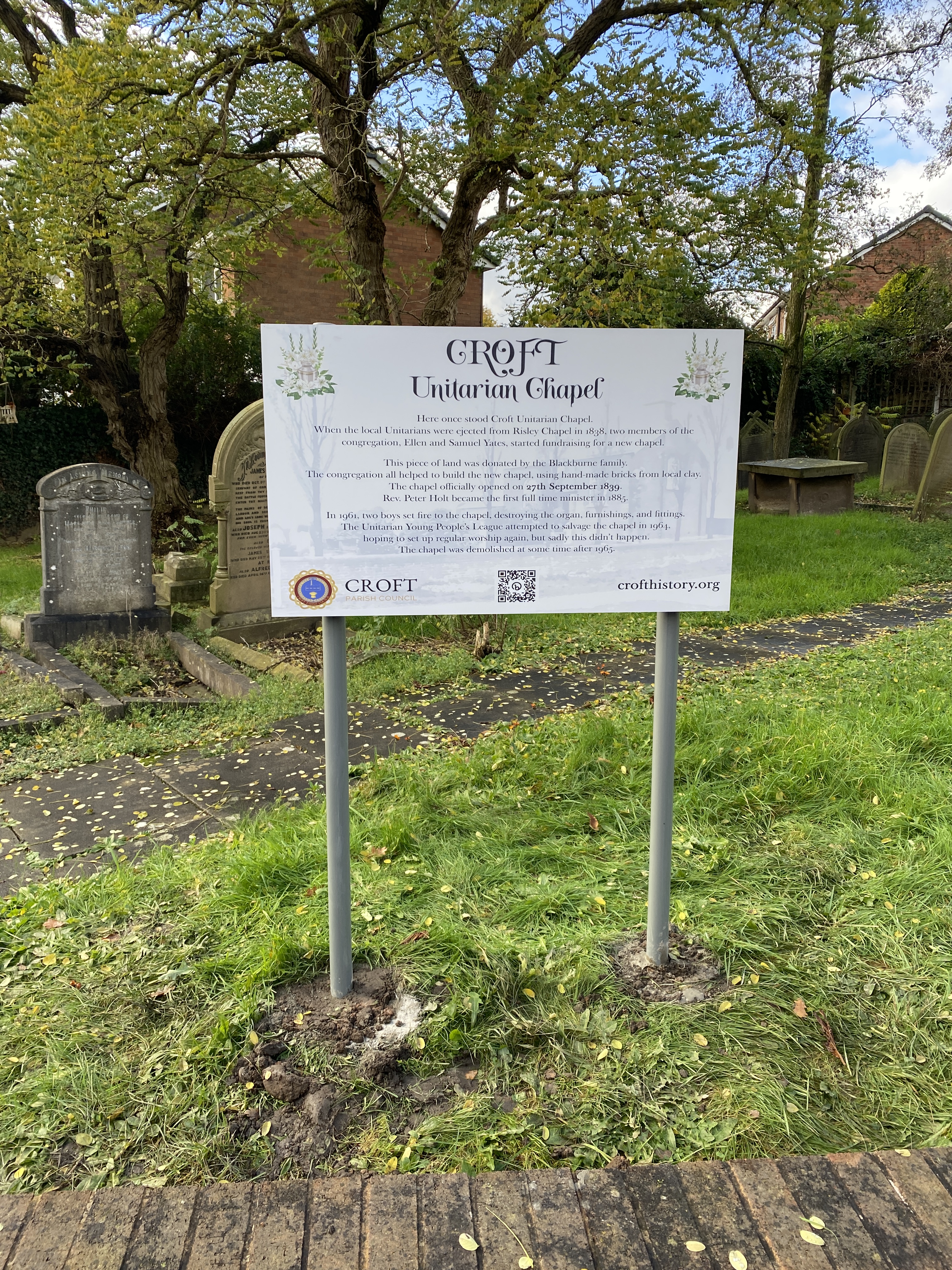
The site of Croft Unitarian Chapel today featuring the new signage erected through the efforts of Cheyvonne Bower who has done so much to restore and protect the site.

Based on a talk delivered as part of a webinar presented by the Reckoning International Unitarian/Universalist Histories Project on 15 November 2022 on ‘Global Struggles for Land and Home in Unitarian/Universalist Communities’, this paper explores the themes of ‘land and home’ within nineteenth-century Unitarianism. It looks particularly at events in Wales, Ireland, the British overseas Dominions plus the legal challenges that led to the Dissenters’ Chapels Act of 1844, and the role of women. One woman who is particularly highlighted is Ellen Yates who helped to establish the Unitarian cause at Croft after they were dispossessed of their chapel at Risley.

Training for the ministry, 1903-1910: Ernest Pickering at Manchester College Oxford

by Oliver Pickering

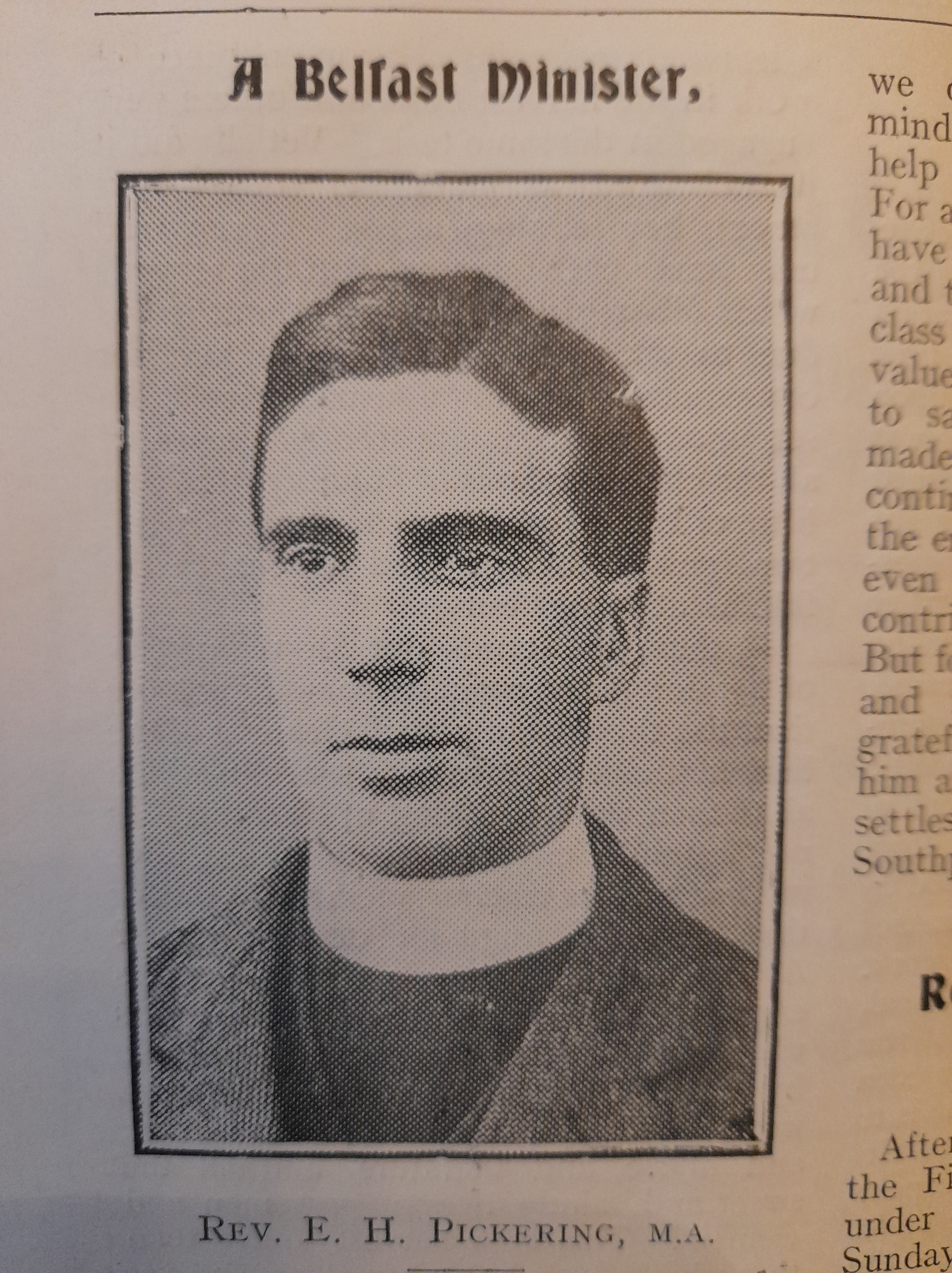
From ‘The Non-Subscribing Presbyterian’ 1921

Oliver Pickering examines the rich training for the ministry received by his grandfather at Manchester College, Oxford between the years 1907 and 1910 which were preceded by four years as an external exhibitioner at the College while also studying Classics at Exeter College. This seems to have been something of a golden age for ministerial training at Oxford, and his seven years at Manchester College were the prelude to a remarkable career as a minister (at Hyde; All Souls’ Church, Belfast; Southport and Oldham), a Member of Parliament and a professor of English Literature in Tokyo.

This issue also includes Reviews and a Supplement: Obituaries of Ministers of Unitarian
and Free Christian Congregations. Index and synopsis of references including new entries, additions and corrections from 1st February 2021
compiled by Alan Ruston.

An annual subscription costs just £10.

Visit the Unitarian Historical Society website to join: https://unitarianhistory.org.uk/

Click here to find out more about the work Cheyvonne Bower is doing at Croft.

A rare view of Croft Chapel from the field at the rear of the building. With thanks to Cheyvonne Bower for providing the image.