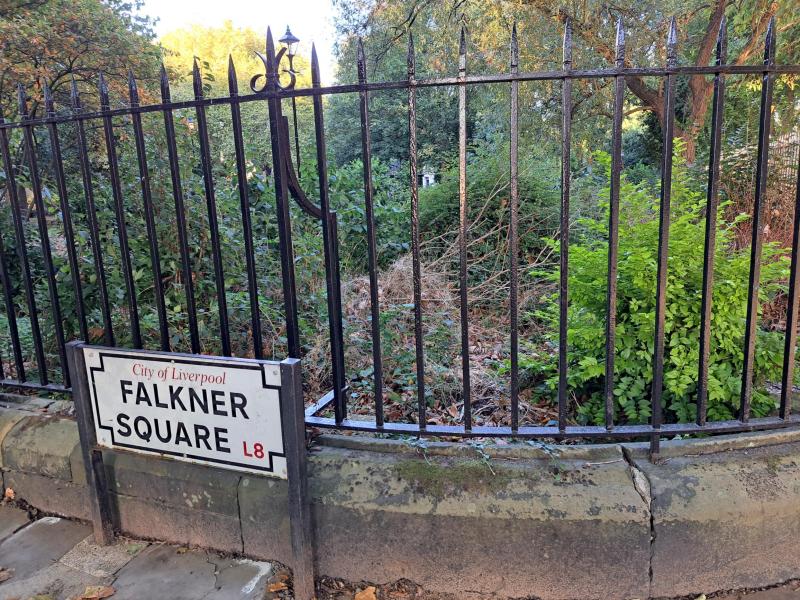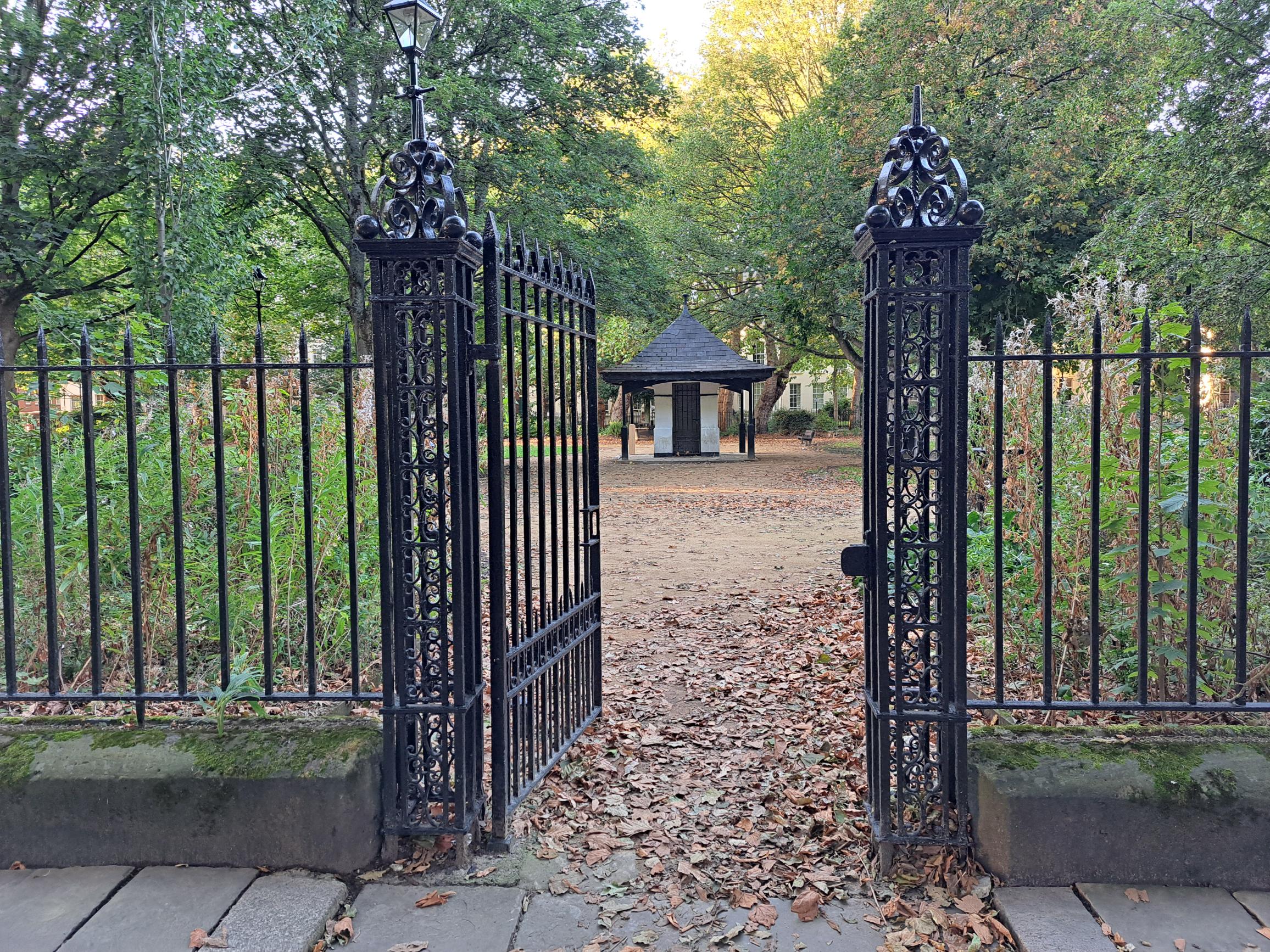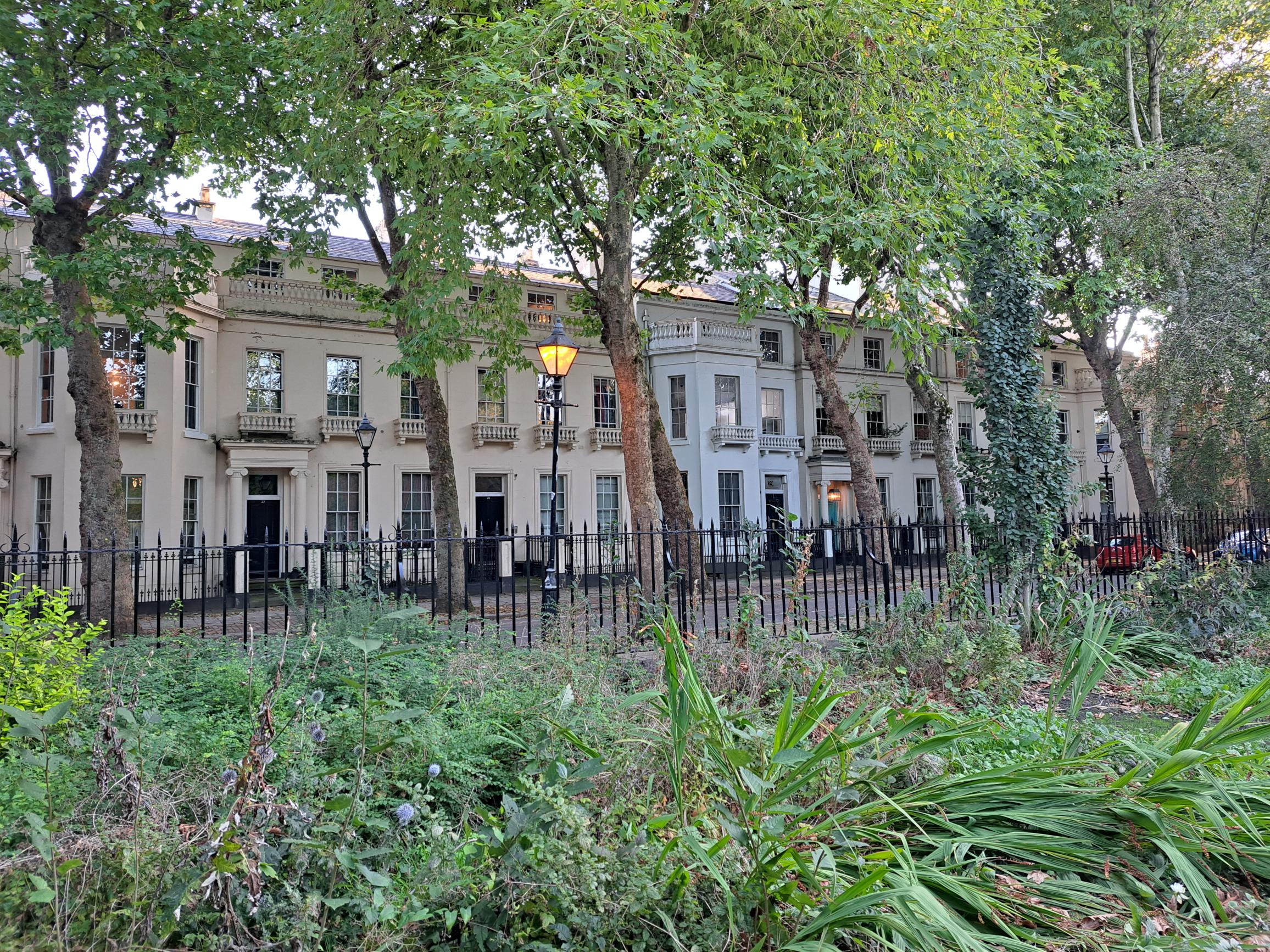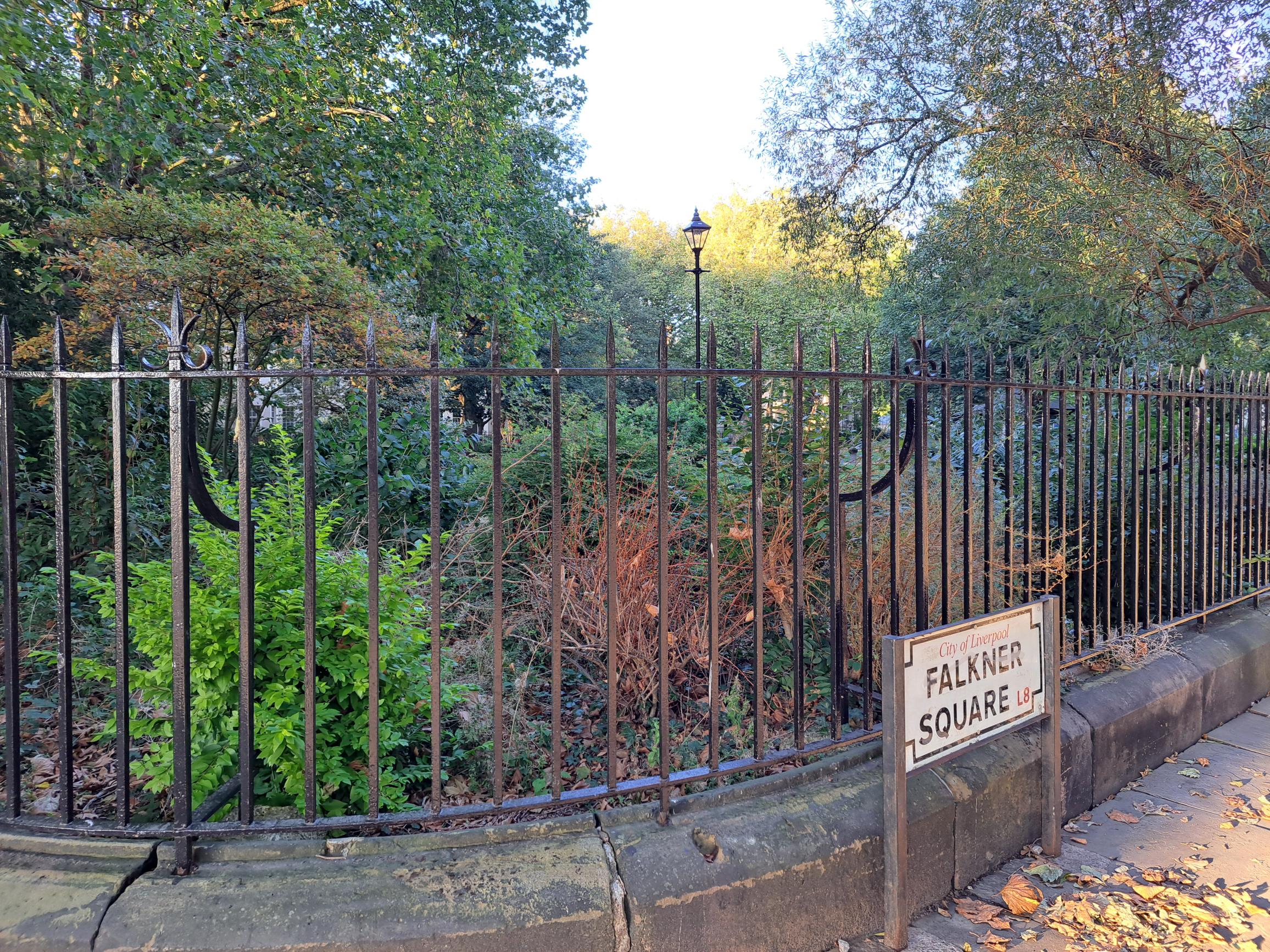
Falkner Square, Liverpool

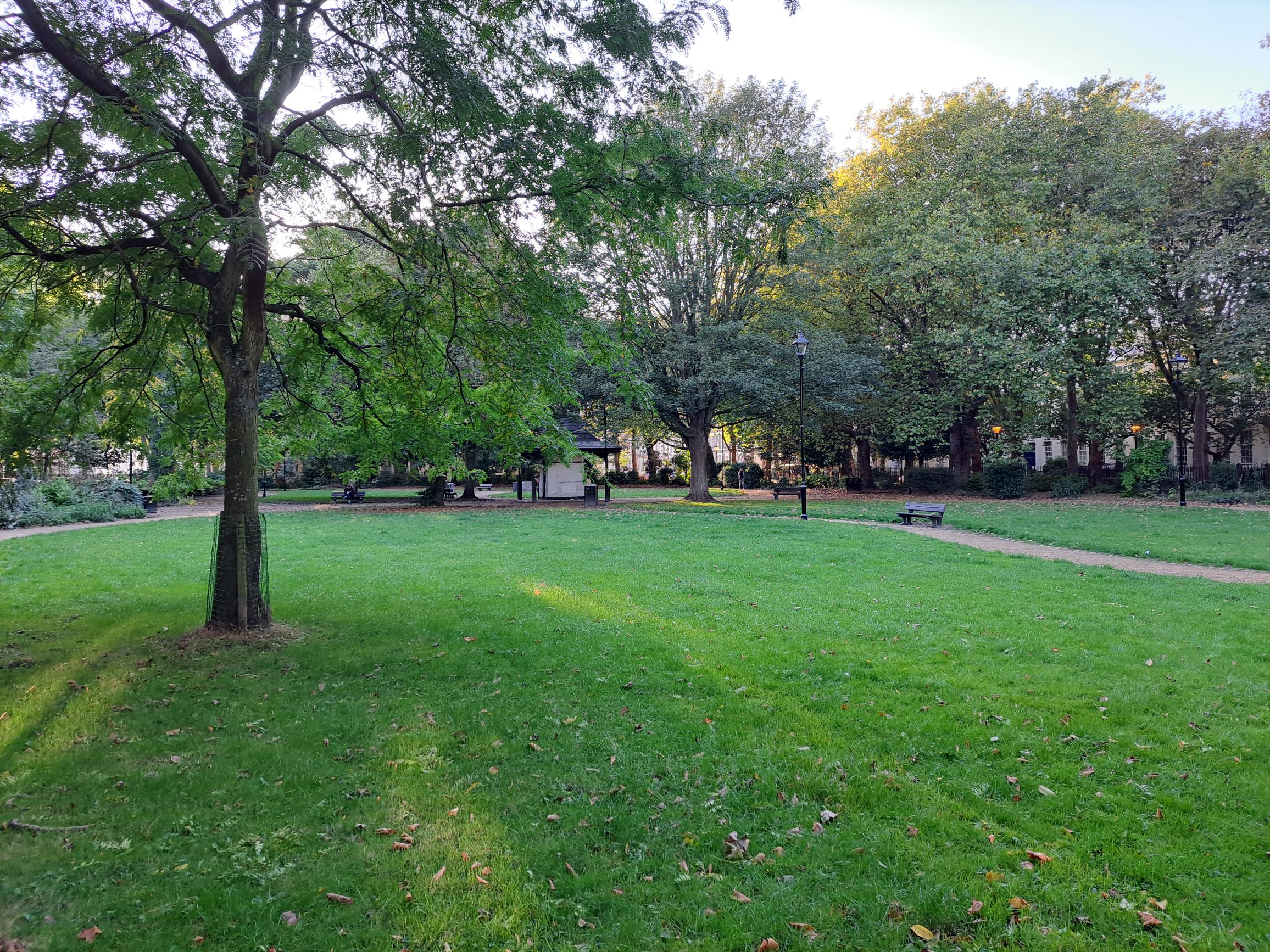
A walk around Falkner Square in Liverpool is always interesting. The buildings are quite impressive although not quite as grand as the houses in the nearby Georgian Quarter, now much utilised for film locations, although Falkner Square itself made a film appearance in the 1971 film Gumshoe with Albert Finney.

What’s attractive about it is that it has its own central park and resembles the sort of square you would find in Bloomsbury. I was always told, that in days gone by, only the people who lived in the Square had a key to the park, although the City Council now claims it as ‘one of the earliest public open spaces in the city’. I suspect it wasn’t open to the public in its earliest days.

Falkner Square is said to be named after Edward Falkner, an ex-soldier and former High Sheriff of Lancashire, who mustered a force of 1,000 men to defend Liverpool in 1797 when fears of a French invasion were at their highest. He was a successful merchant, involved inevitably in the slave trade, but who died in 1825, so he can’t have been directly involved in the development of the Square.

Joseph Sharples’ Pevsner Architectural Guides Liverpool says ‘The central garden is shown planted on a map of 1831, but the stuccoed houses did not begin to appear until the mid 1840s.’ The only architect he mentions is William Culshaw who designed number 29 in 1845 along with many Liverpool buildings.

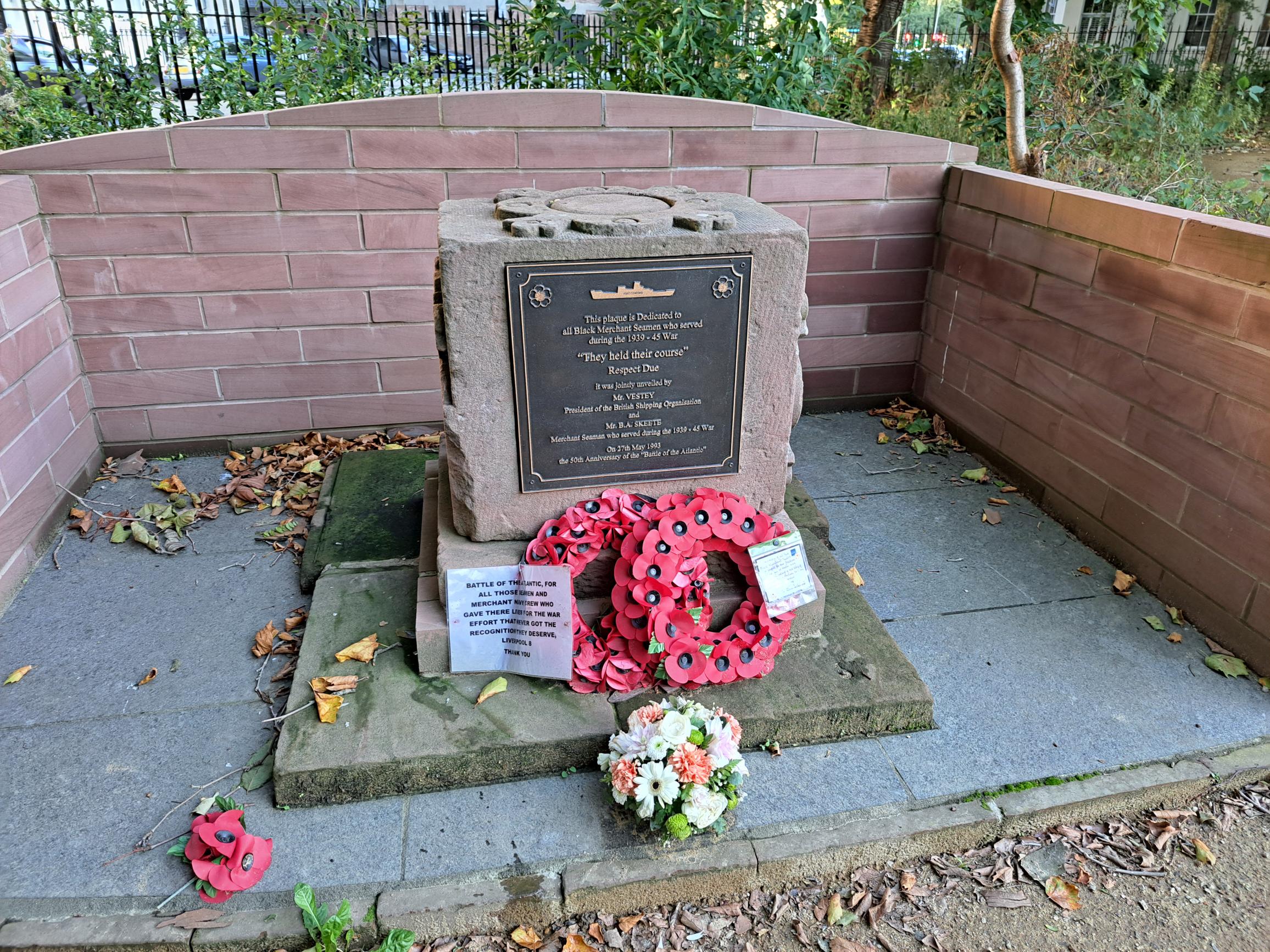
One relatively new feature is the Memorial to Black Merchant Seamen who served in the Second World War. This was unveiled in 1993 on the 50th anniversary of the Battle of the Atlantic and contains the words “They Held Their Course” Respect Due. The bronze plaque, which, shockingly, has endured some vandalism but is now restored, is attached to a large decorated piece of sandstone. This came from the old Liverpool Sailors’ Home, which was once a very prominent landmark in Canning Place near the city centre. Now only the ornate gates survive and can still be seen at the entrance to Liverpool 1.

Memorial to Black Merchant Seamen who served in the Second World War

Belfast City Cemetery

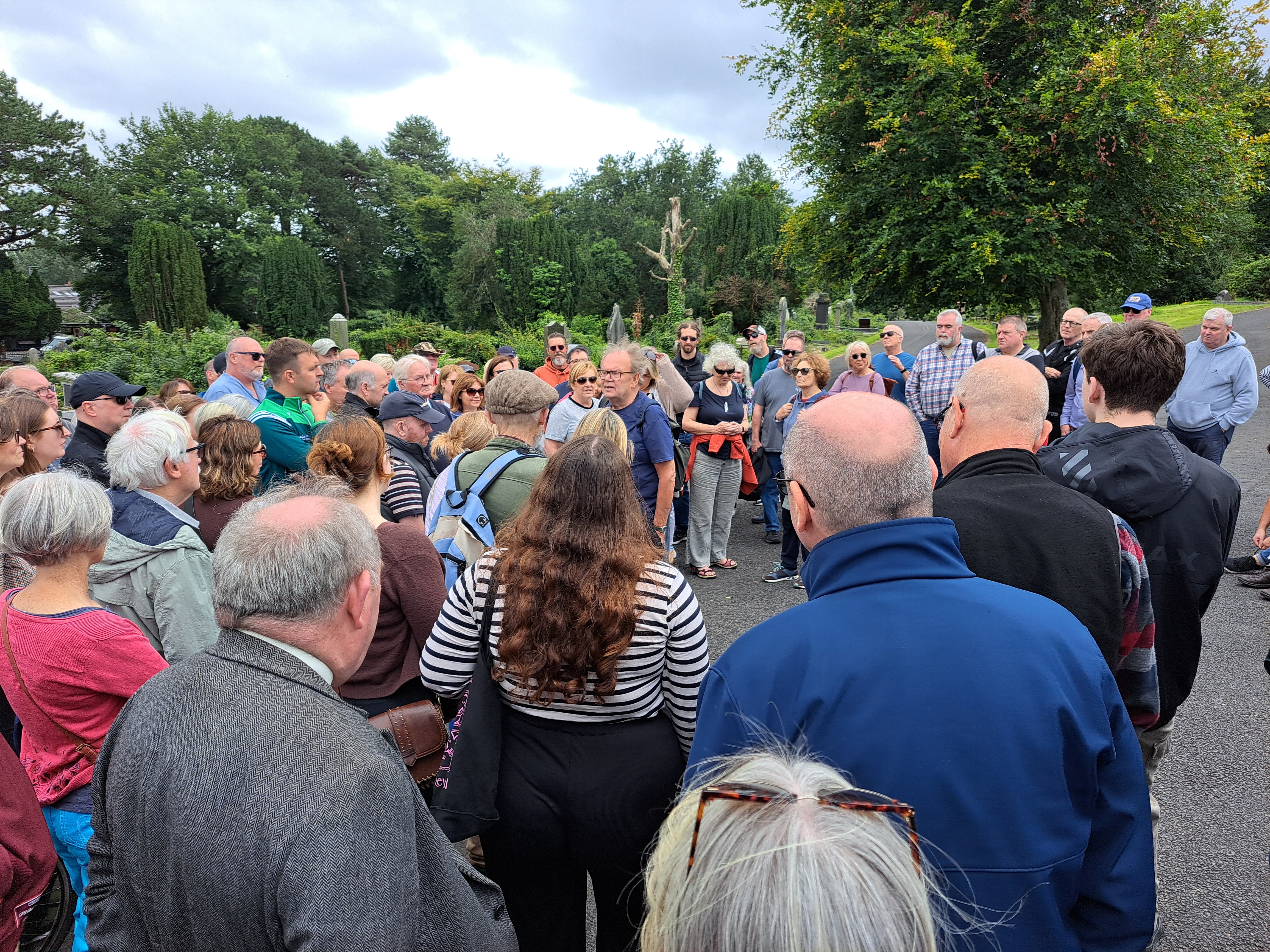
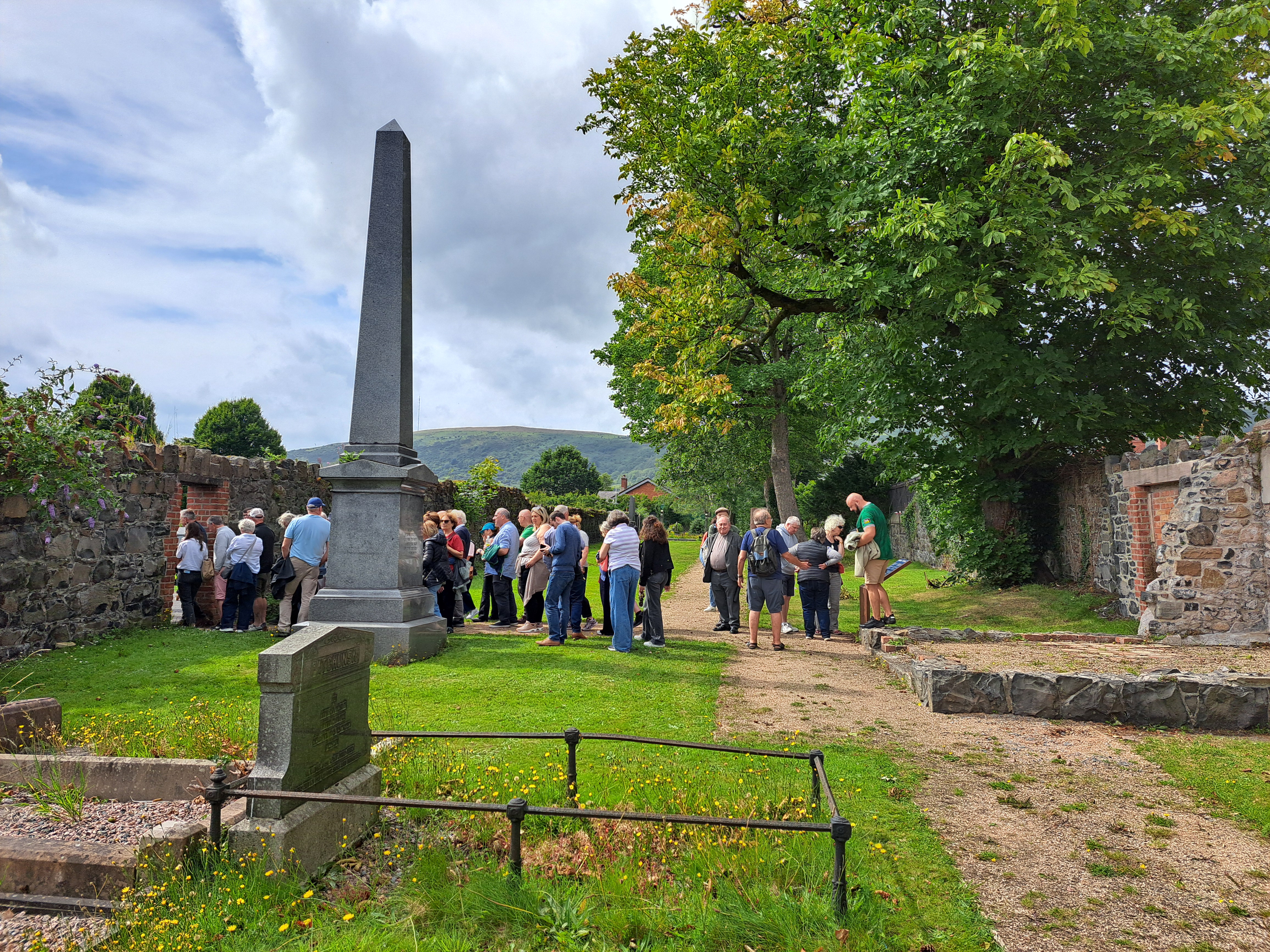
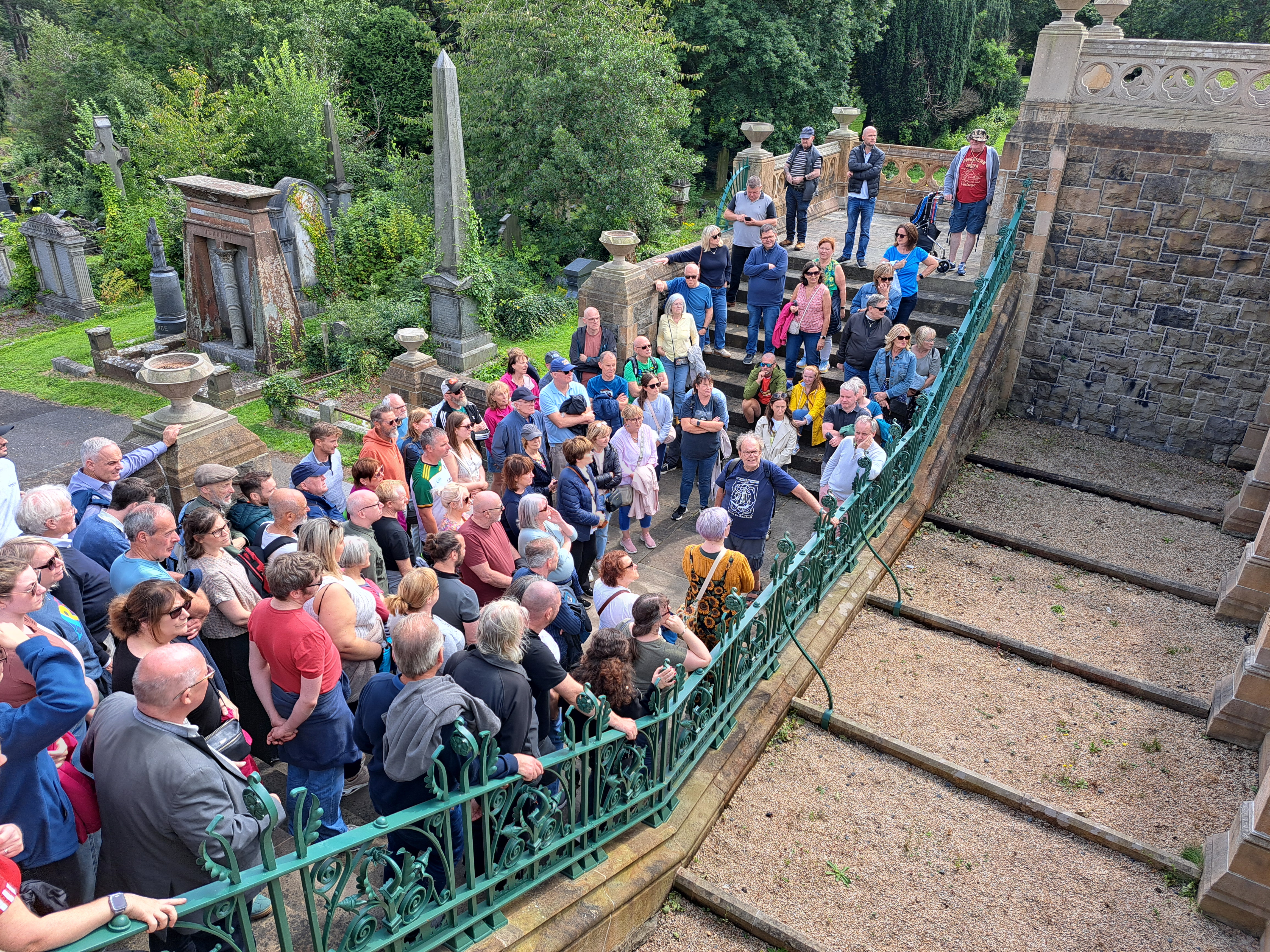
I was pleased to again take part in a tour of Belfast City Cemetery led by Tom Hartley. Tom is now the author of four books on the cemeteries of Belfast and I was pleased also to pick up a copy of his latest work, More Stories from the Belfast City Cemetery. This was his penultimate tour of the last series he would give as part of the Féile an Phobail and like all these tours there was a very large attendance.

Start of the tour, showing some of those present

I see the first guided tour I attended was in March 2022. You can read that account here – Silent yet eloquent Memorials. There are a number of changes to the Cemetery made since that time, like the completion of the visitors’ centre, new signage all around the Cemetery, the restoration of the Vaults – which house the remains of such industrial luminaries as Sir Edward Harland and Thomas Gallaher – and a lot of new planting.

It is a very impressive cemetery, imaginatively laid out and designed by William Gay of Bradford in the shape of a bell (as in Belfast) and it contains some incredible Victorian, Edwardian and later memorials.

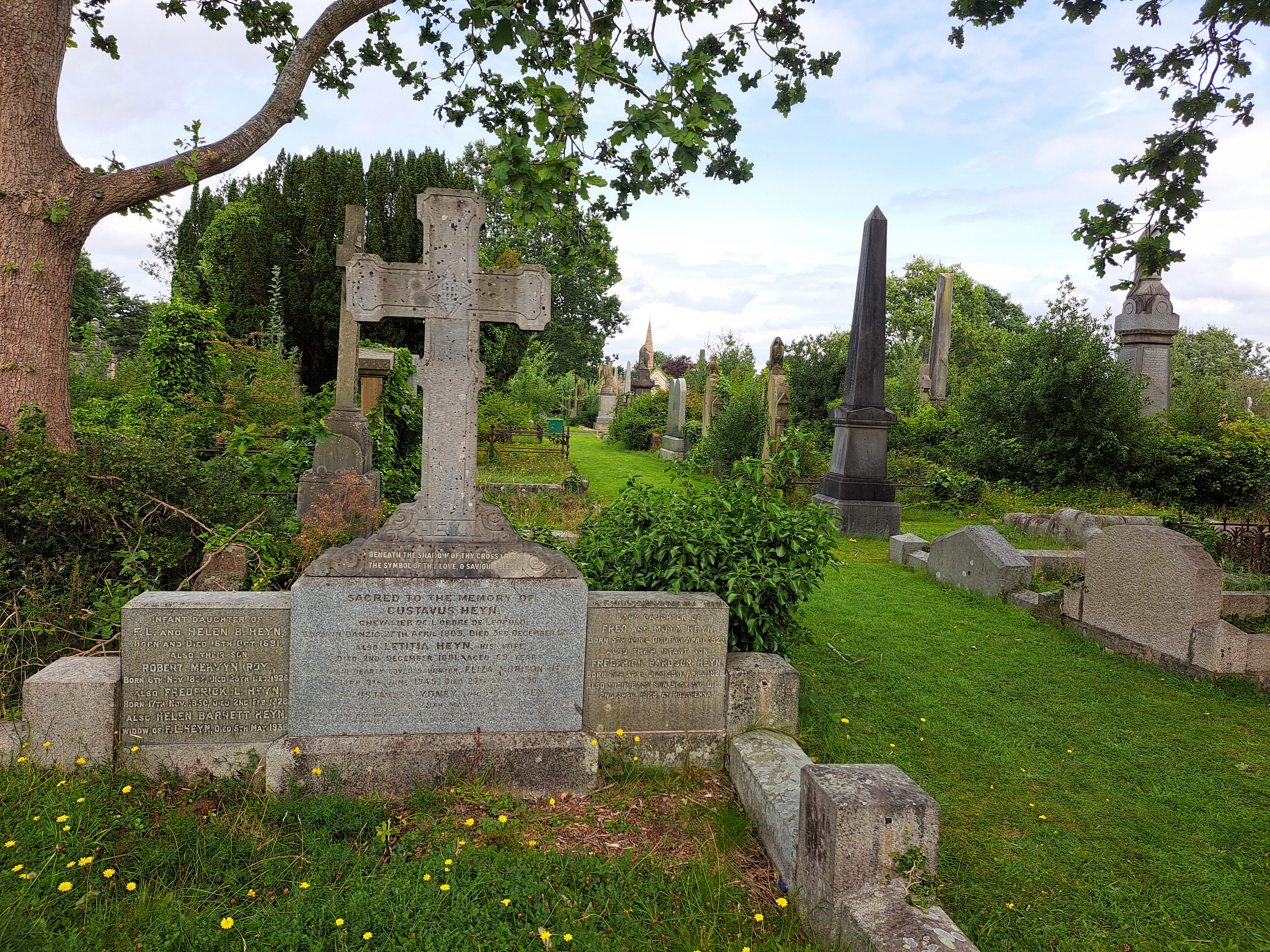
Gustavus Heyn, shipping magnate

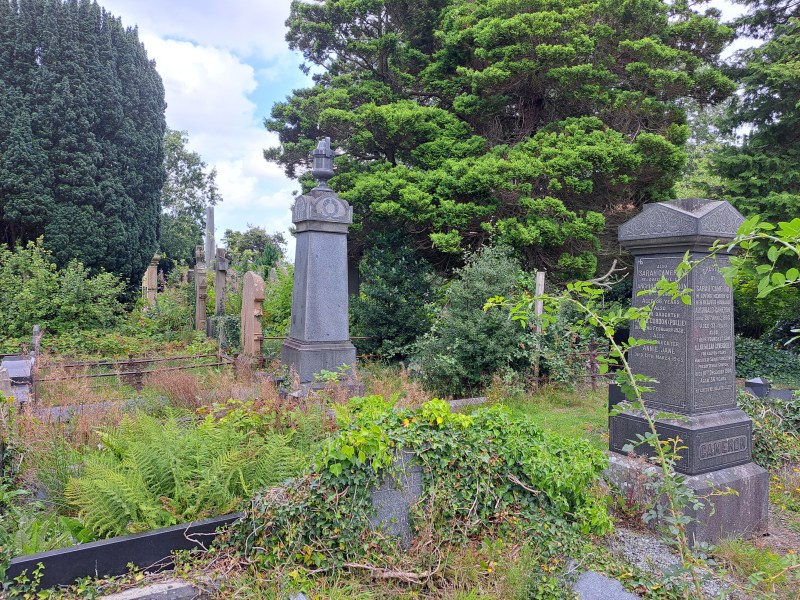
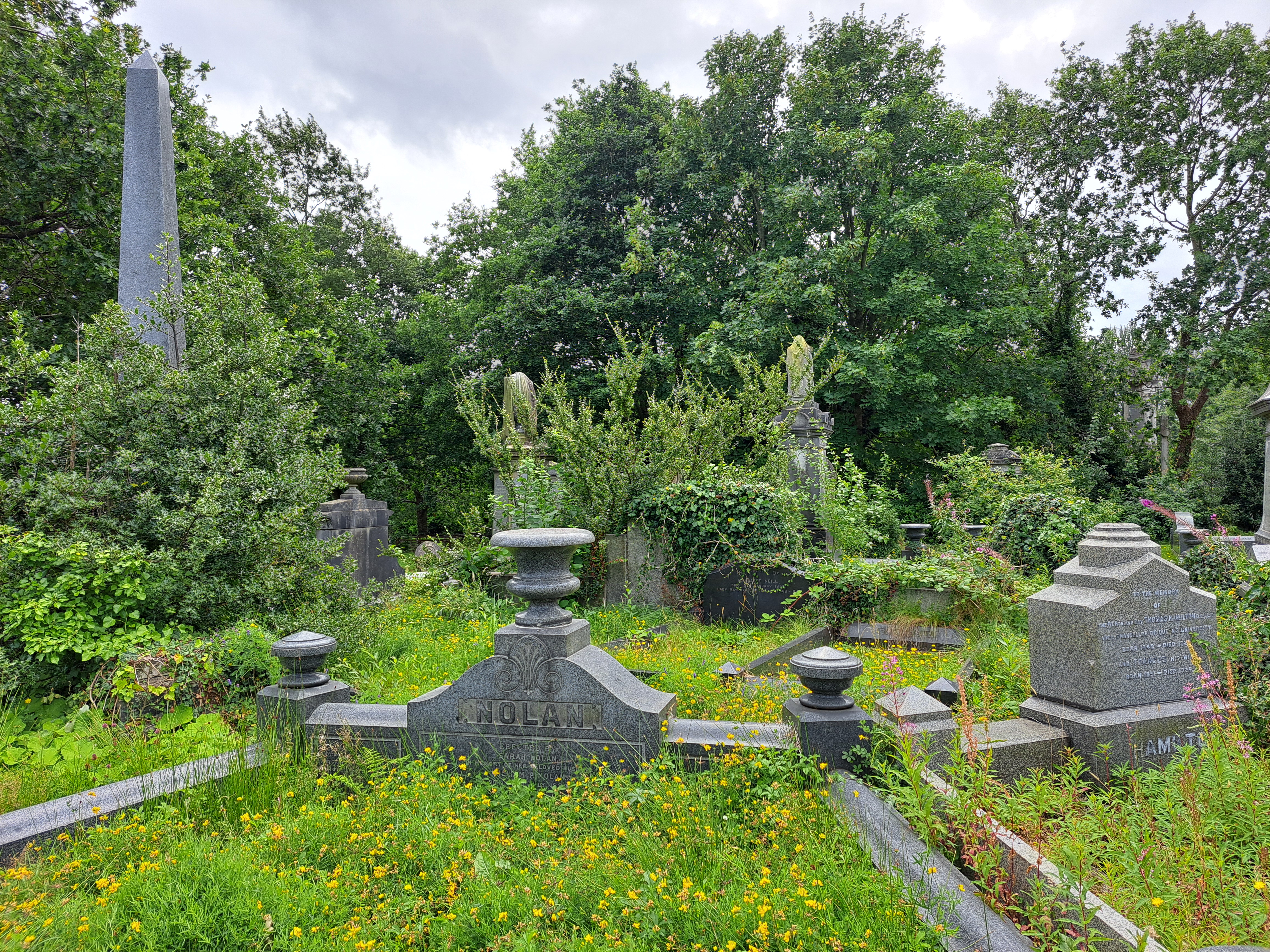
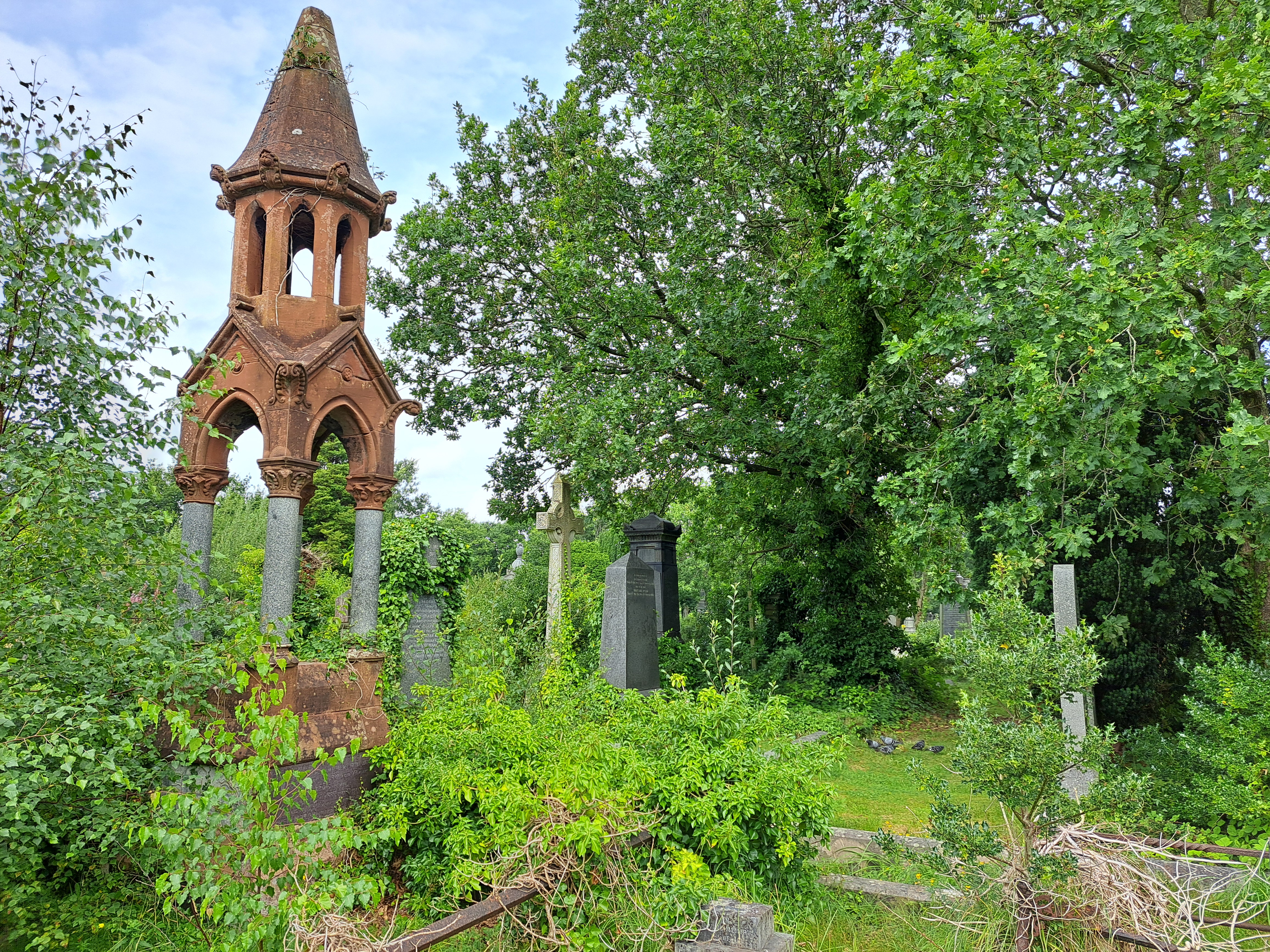
Some parts are still quite heavily overgrown and other parts have suffered badly from vandalism.

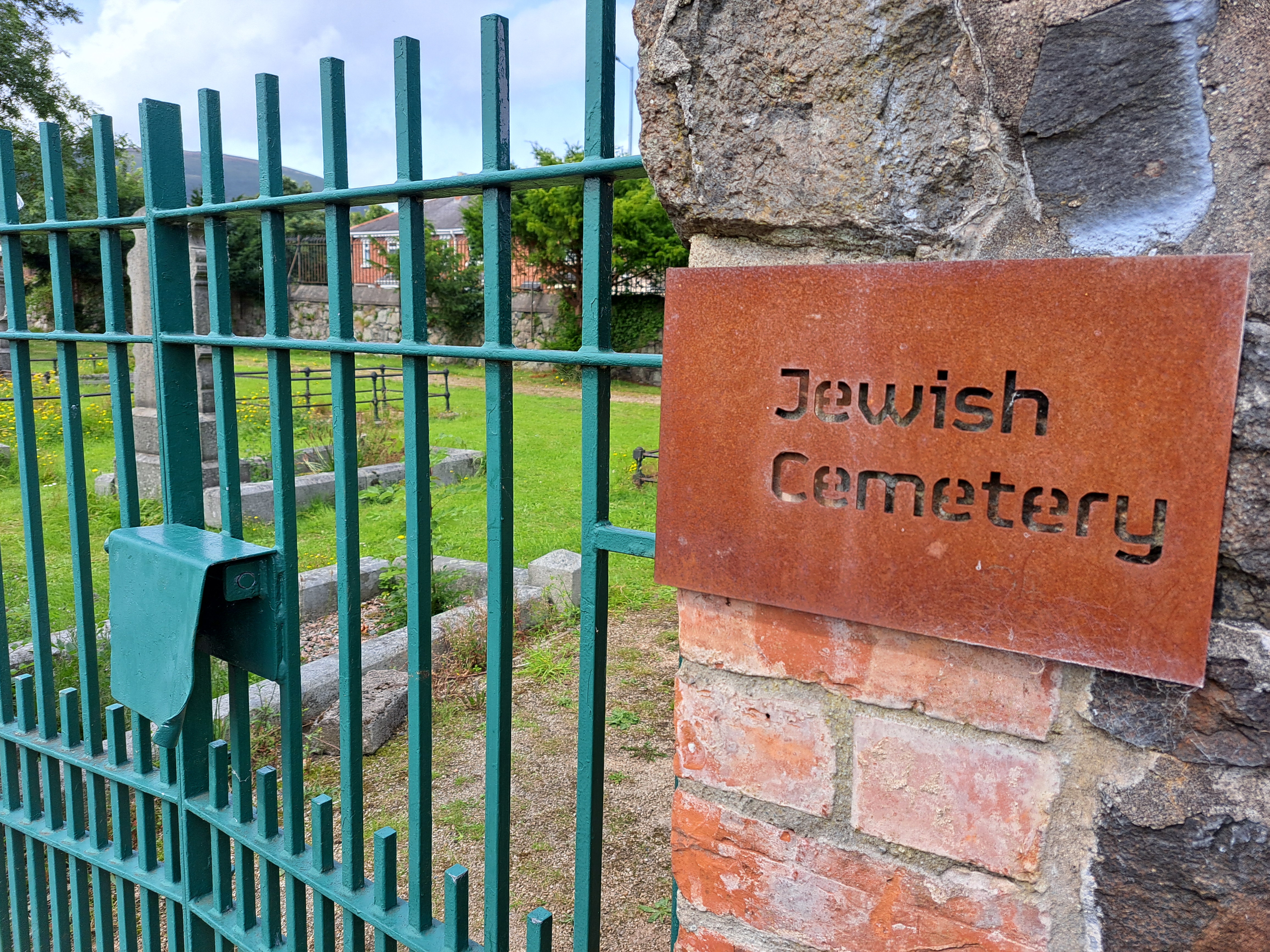
The Jewish section of the graveyard comprises a separate walled section although this has particularly suffered from vandalism and since 1964 Jewish burials now take place at Carnmoney Cemetery.

Entrance to the Jewish Cemetery
Inside the Jewish Cemetery. On the right is the remains of the Tahara, the mortuary chapel

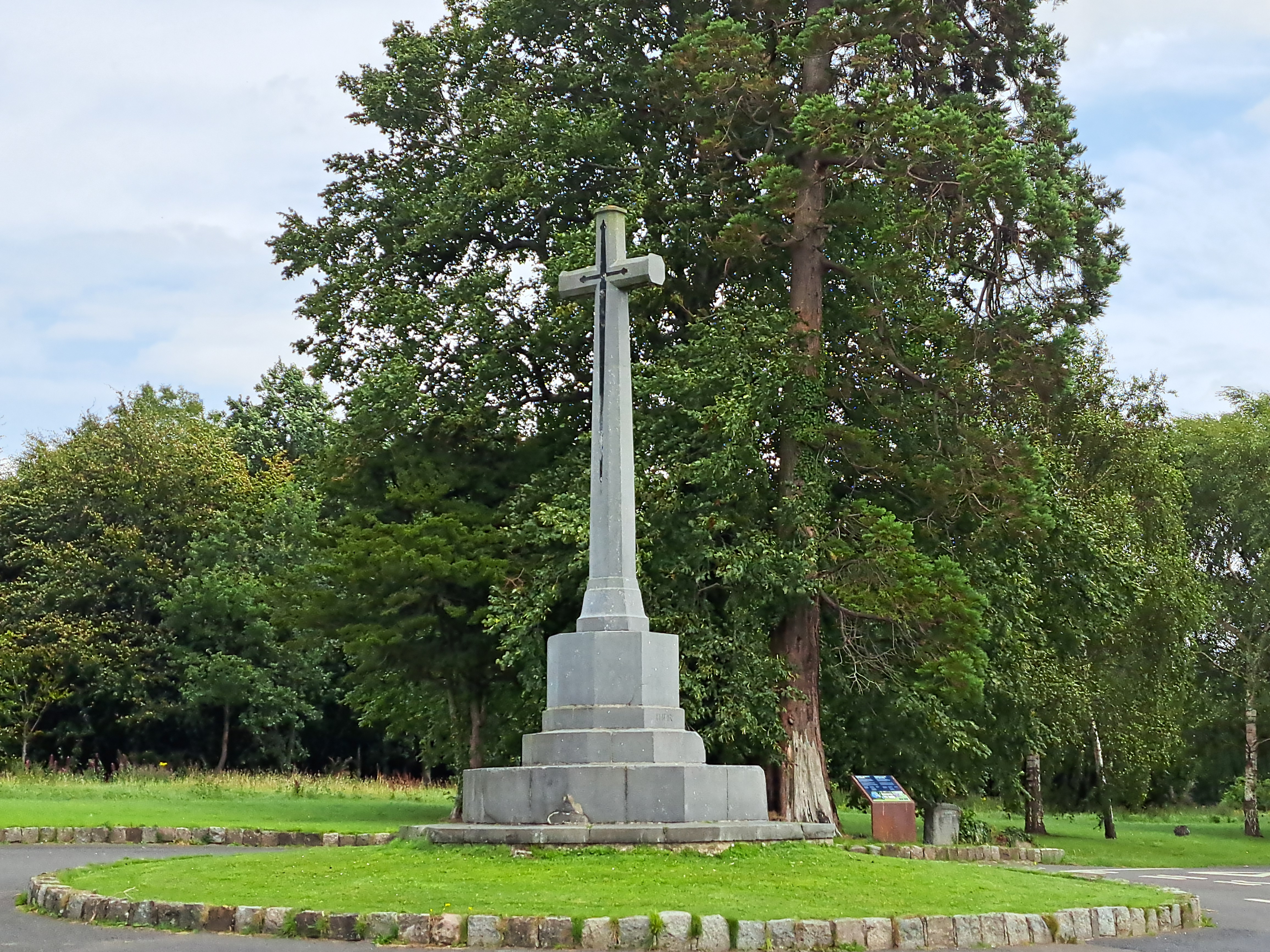
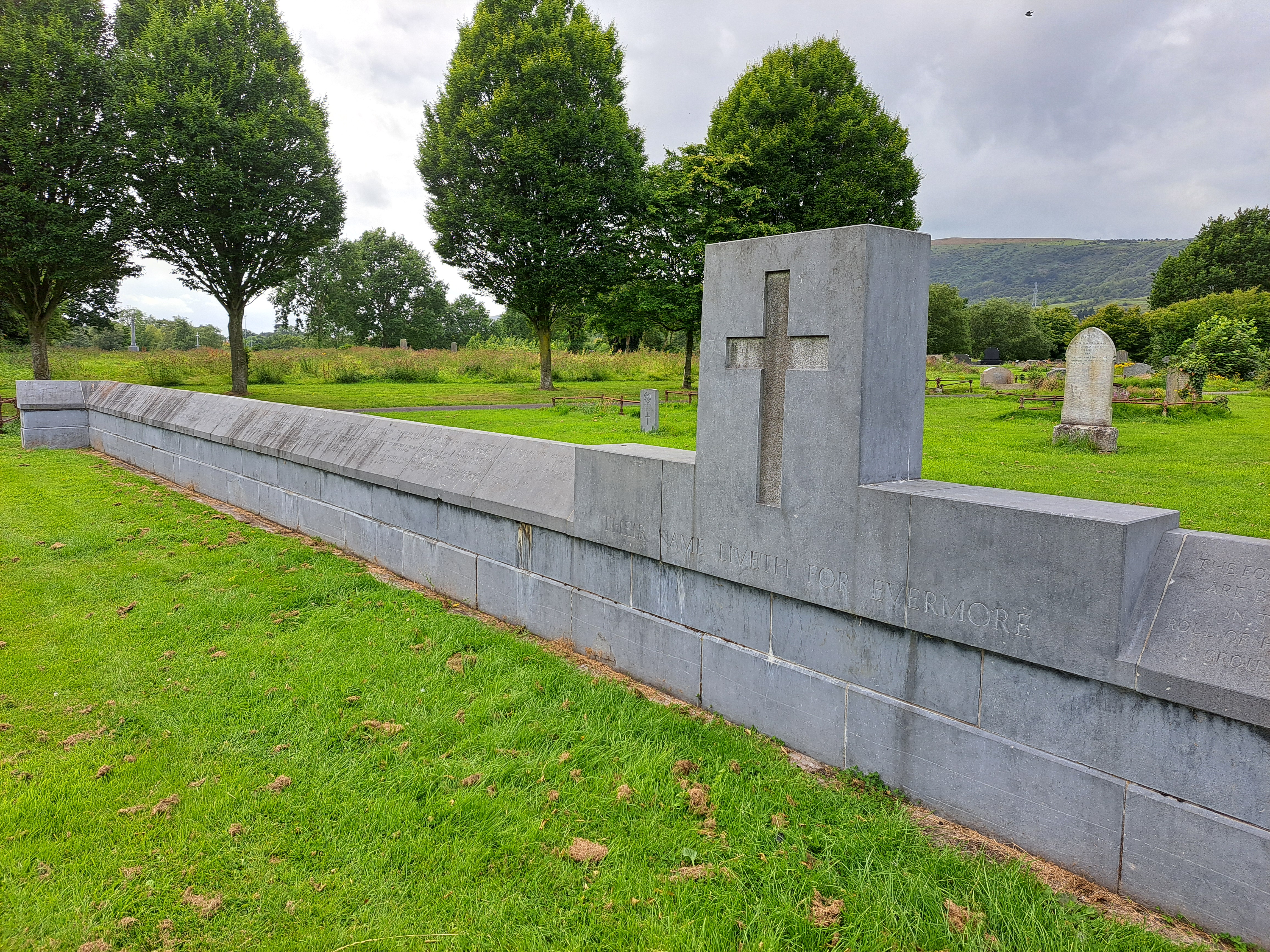
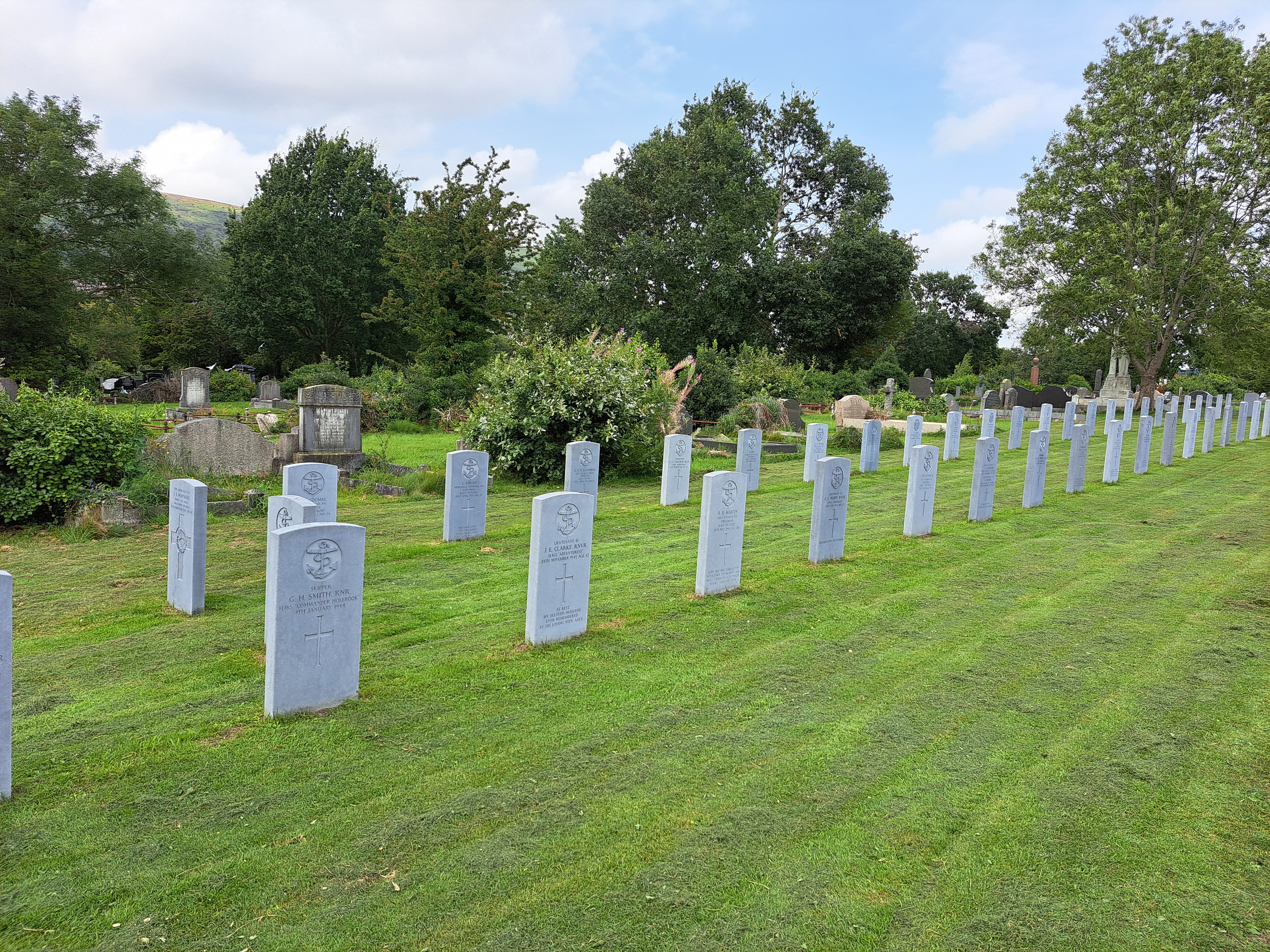
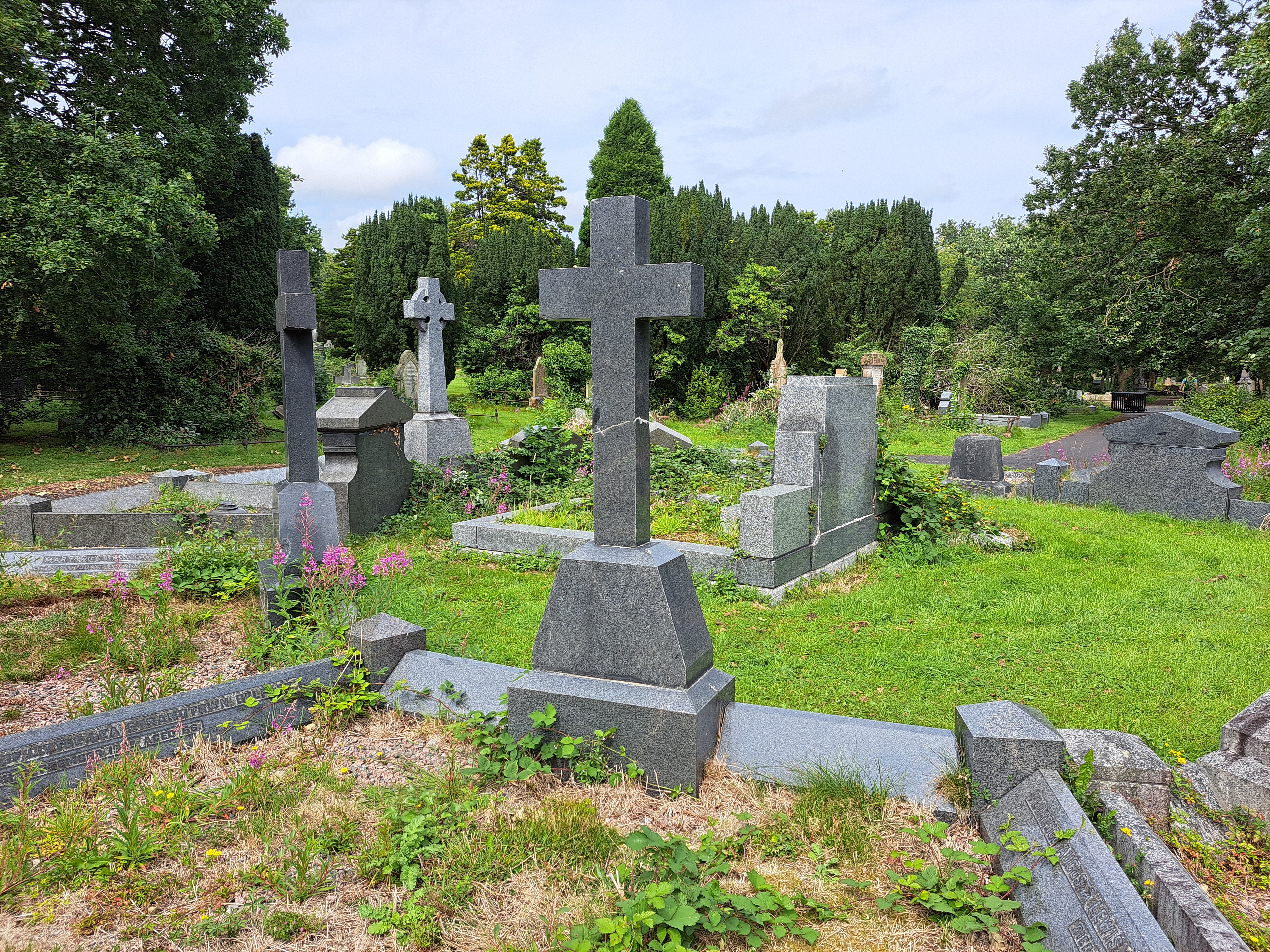
The Cemetery also includes a Commonwealth War Grave Cemetery with 296 burials from the First World War and 274 from the Second World War. There is also a Cross of Sacrifice (the same size as that in Botley Cemetery) and a First World War Screen Wall which carries the names of 74 soldiers who are buried in the First World War plot, 58 soldiers who are buried in unmarked graves and 8 soldiers who are buried elsewhere in the Cemetery.

Cross of Sacrifice
Part of the First World War Screen Wall
Second World War Royal Navy and Merchant Navy graves

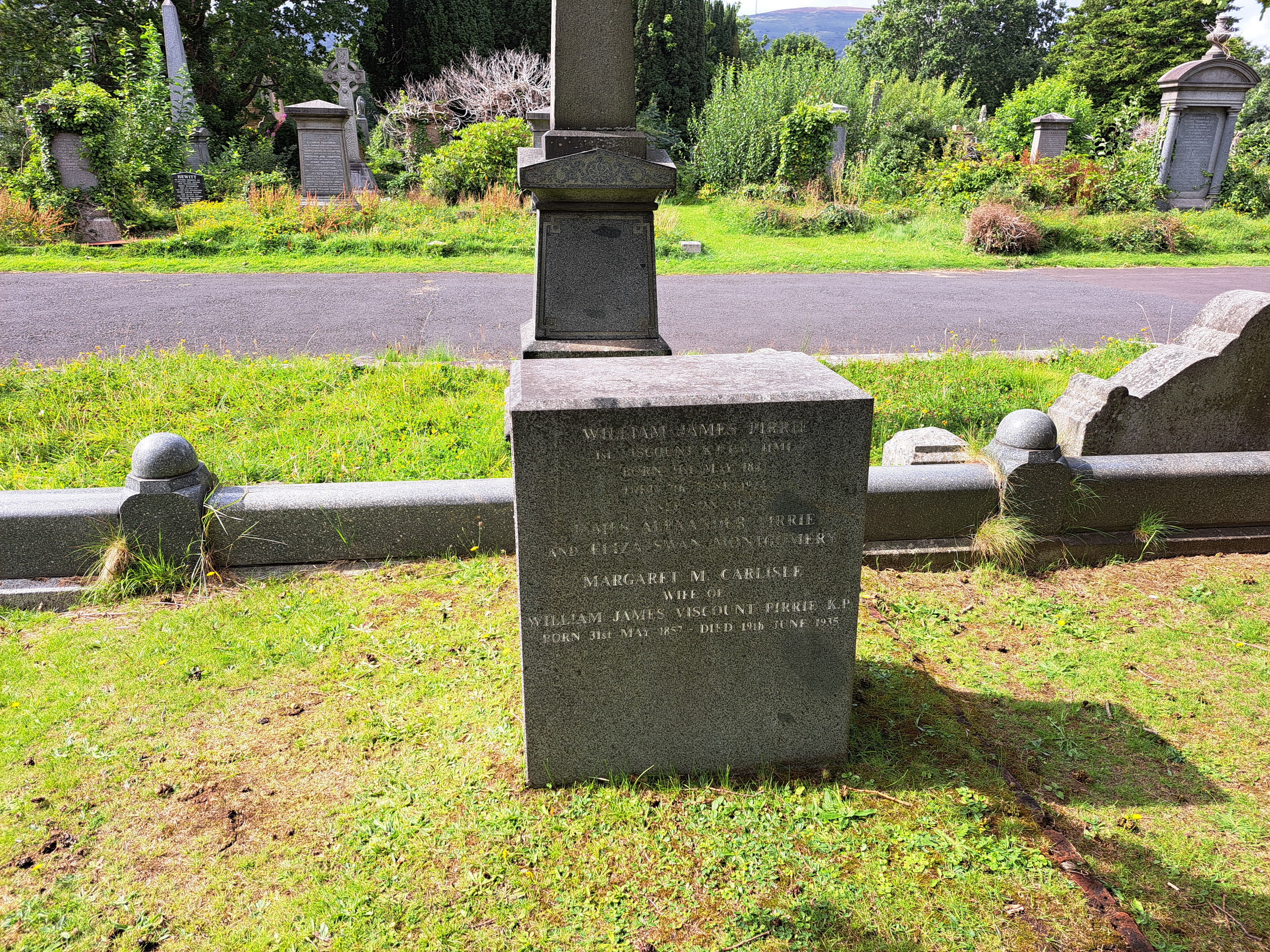
There are a lot of significant people from Belfast’s past who were Non-Subscribing Presbyterians who are buried here, perhaps most notable are Lord and Lady Pirrie. Viscount Pirrie was the chairman of Harland and Wolff when the Titanic was built and was to have sailed with his nephew, the designer Thomas Andrews, on its maiden voyage, but was prevented from doing so by illness.

Grave of Lord and Lady Pirrie

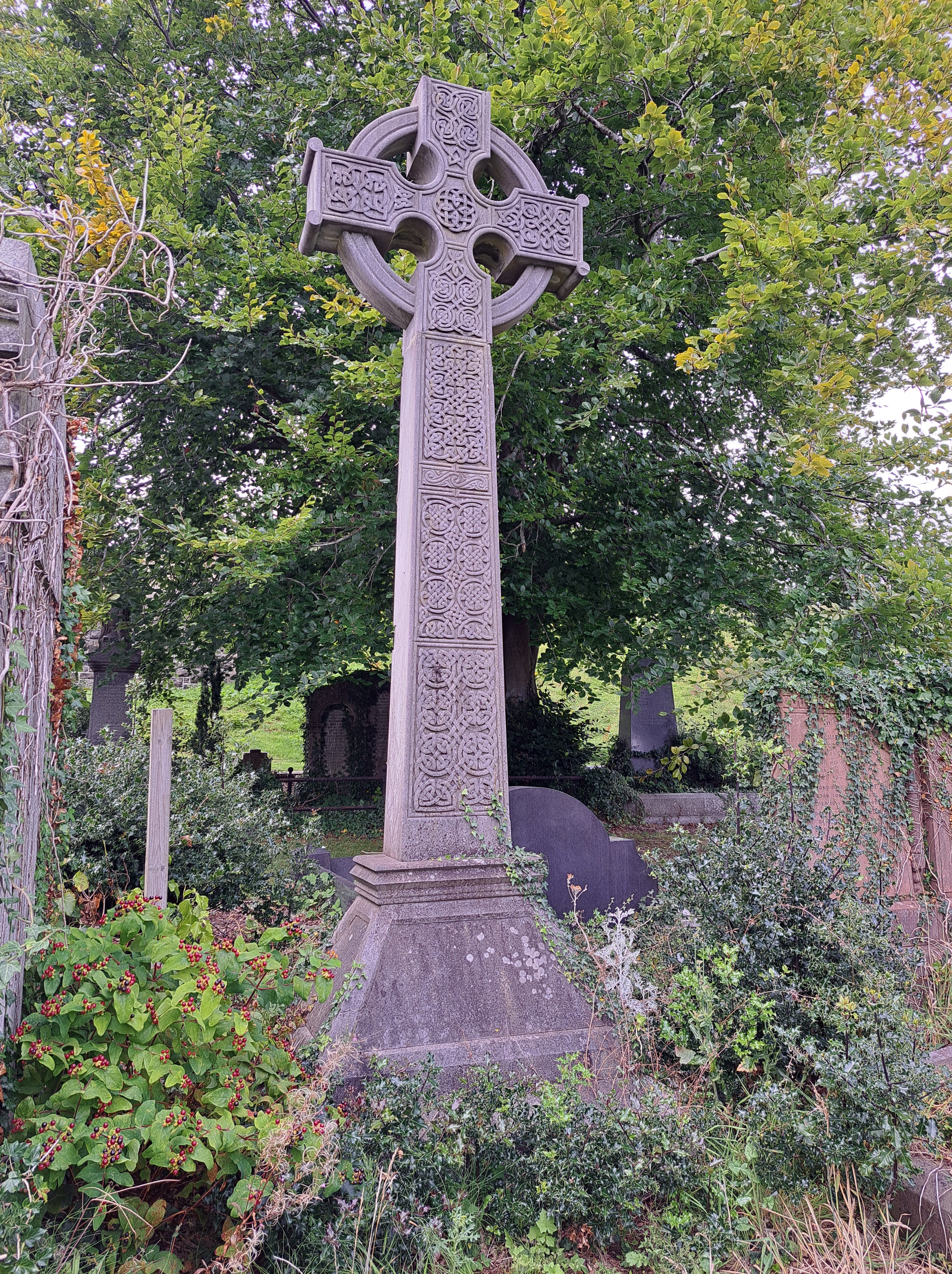
I have written before about one of the most notable Non-Subscribing Presbyterian ministers buried here, the Rev John Scott Porter, and was pleased to hear from his great great great granddaughter as a result. He is buried with his brother, William, who was once the attorney general at the Cape Colony, and actually introduced at that time a franchise that was inclusive of all races. The Celtic Cross that marks their grave is one of the most impressive in the cemetery:

The grave of Rev John Scott Porter and William Porter

I also produced a short video about John Scott Porter at that time. This is available to view here:

Click above to see the video
The grave of Florence and Albert James Lewis, the parents of C.S. Lewis
The tour at the Vaults and Central Steps

Commonwealth War Graves at Botley Cemetery, Oxford

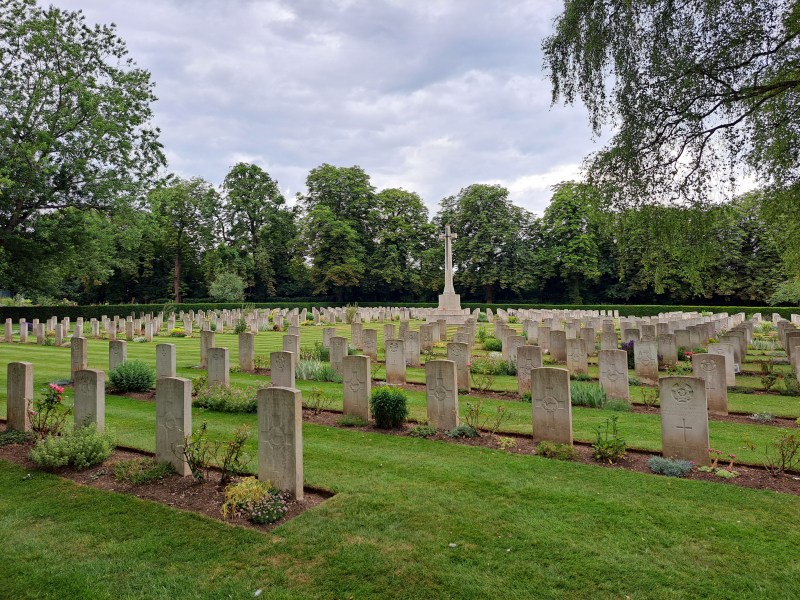
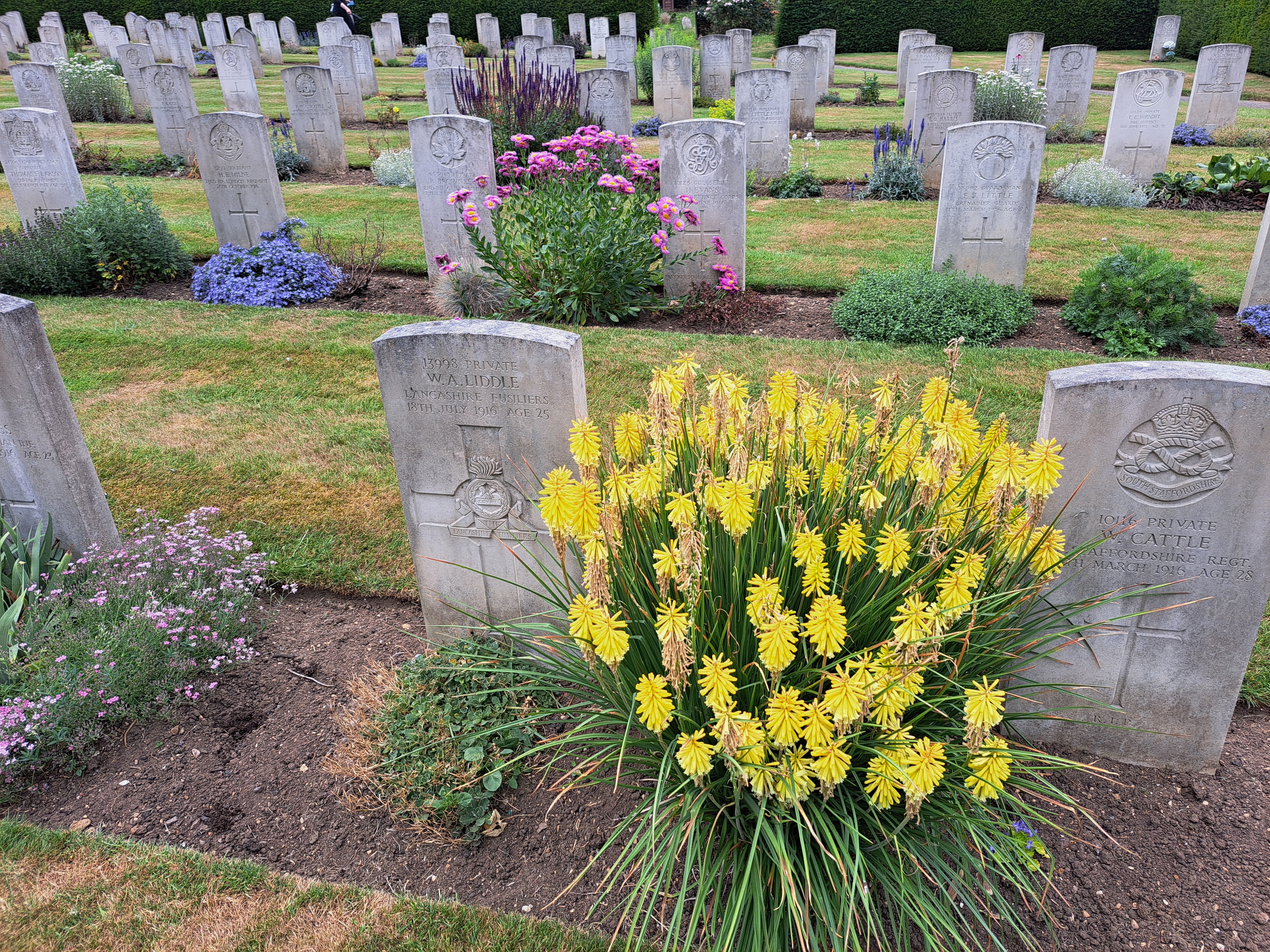
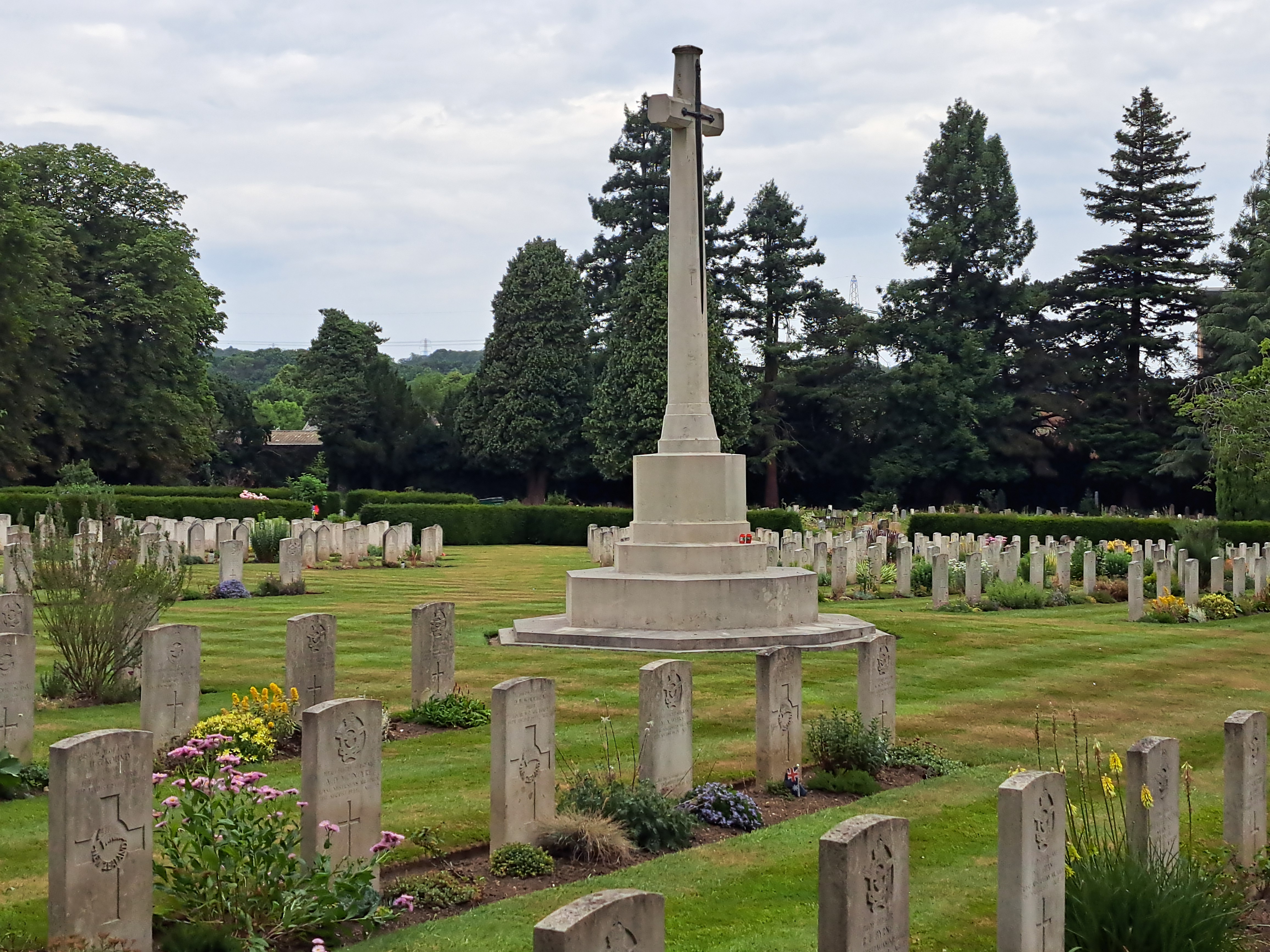
Visiting Botley Cemetery for the first time, despite seeing the signs for the Commonwealth War Graves, I didn’t expect to find such a large military cemetery of a size and with such features as you would expect to find in France or Flanders. Like all Commonwealth War Graves Commission cemeteries it is immaculately maintained, and a very moving place to visit.

I was surprised to find such a large graveyard of this sort in Oxfordshire, although it is inevitably true that many service men and women did die at home, either on home service, or were brought back because of wounds or found themselves in hospital because of accident or illness. Oxford provided a major regional hospital during the First World War, and again during the Second World War. Oxfordshire was also a major centre of RAF activity in the Second World War and Botley was then designated as a Royal Air Force Regional Cemetery. In the First World War the University Examination Schools housed the 3rd Southern General Hospital with room for 1,500 patients. The Schools weren’t the only venue for the war-time hospital, also put to use were Somerville College (for officers only), the Workhouse on Cowley Road, the Town Hall, University and New Colleges, and the Oxford Masonic Buildings on High Street. In the Second World War the Examination Schools were again used as a hospital.

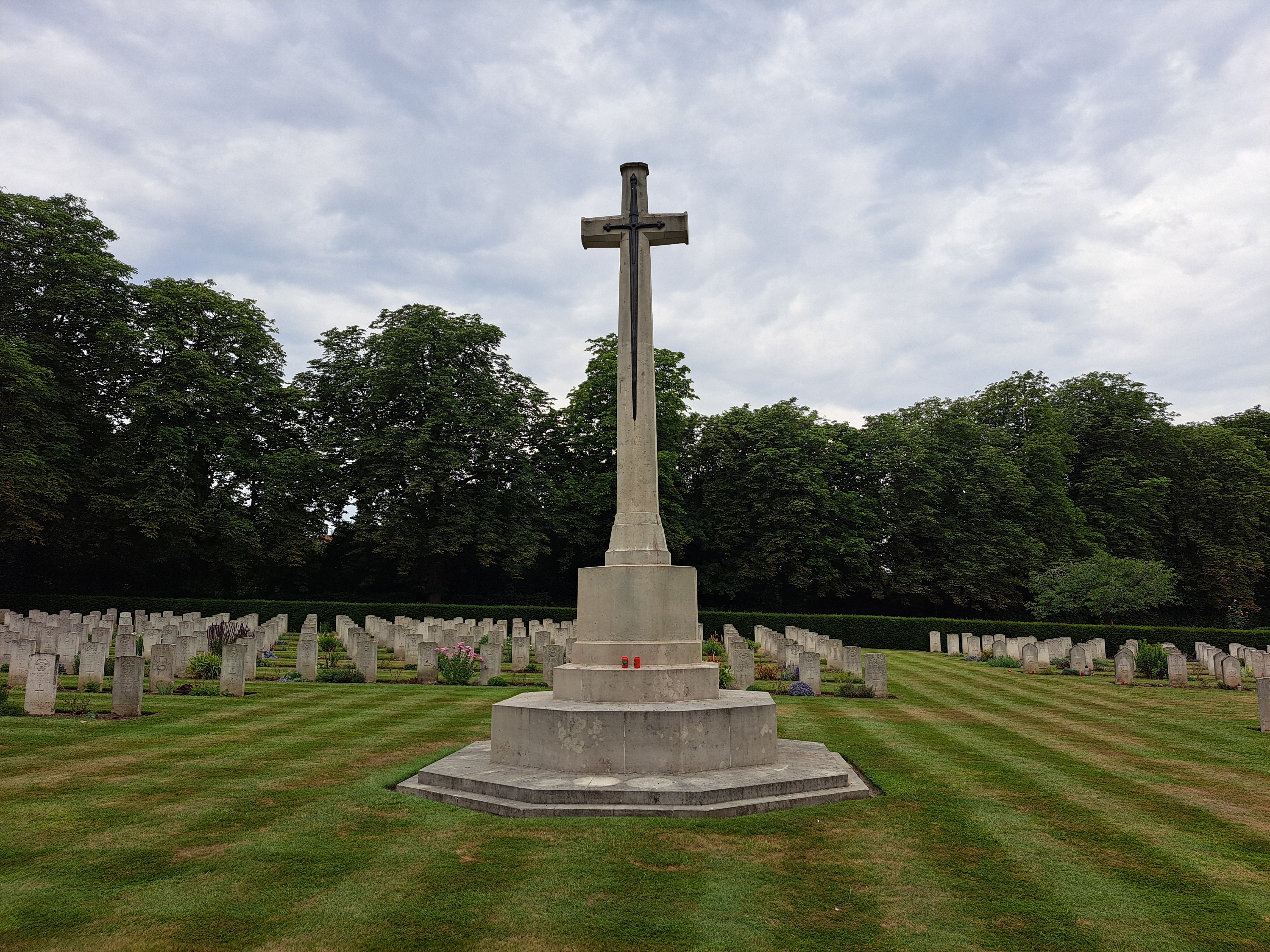
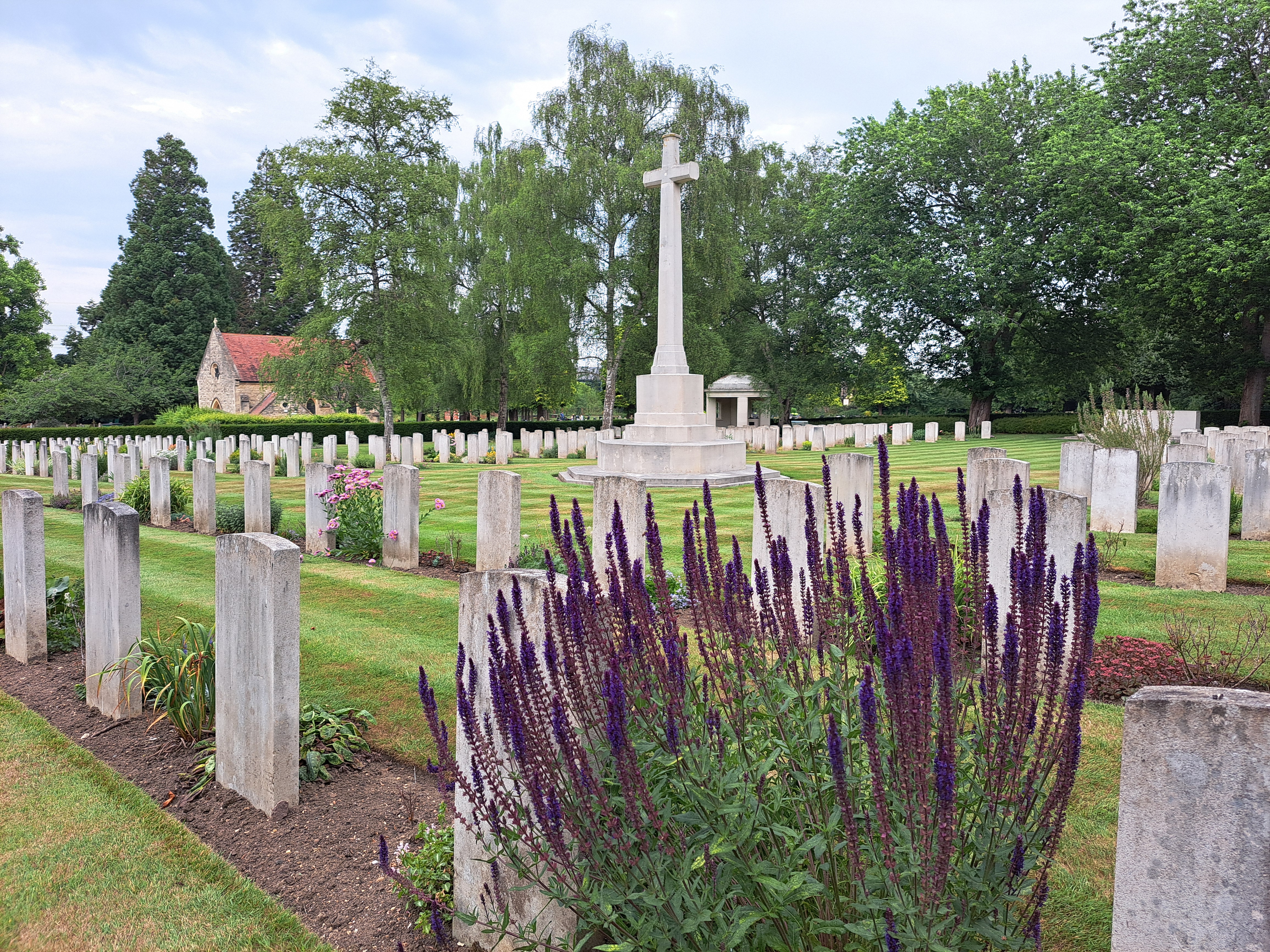
Botley Commonwealth War Graves Commission Cemetery has all the features that can be found in major cemeteries of this type. At the centre of the grave yard there is a Cross of Sacrifice, a large cross containing a bronze longsword, with its blade pointing down, it is said to be present in all graveyards containing 40 or more war graves. These were designed by Sir Reginald Blomfield and are a familiar symbol of sacrifice in so many places. By 1937 there were already over 1,000 of these crosses in Europe alone, more were to follow after the Second World War.

Cross of Sacrifice

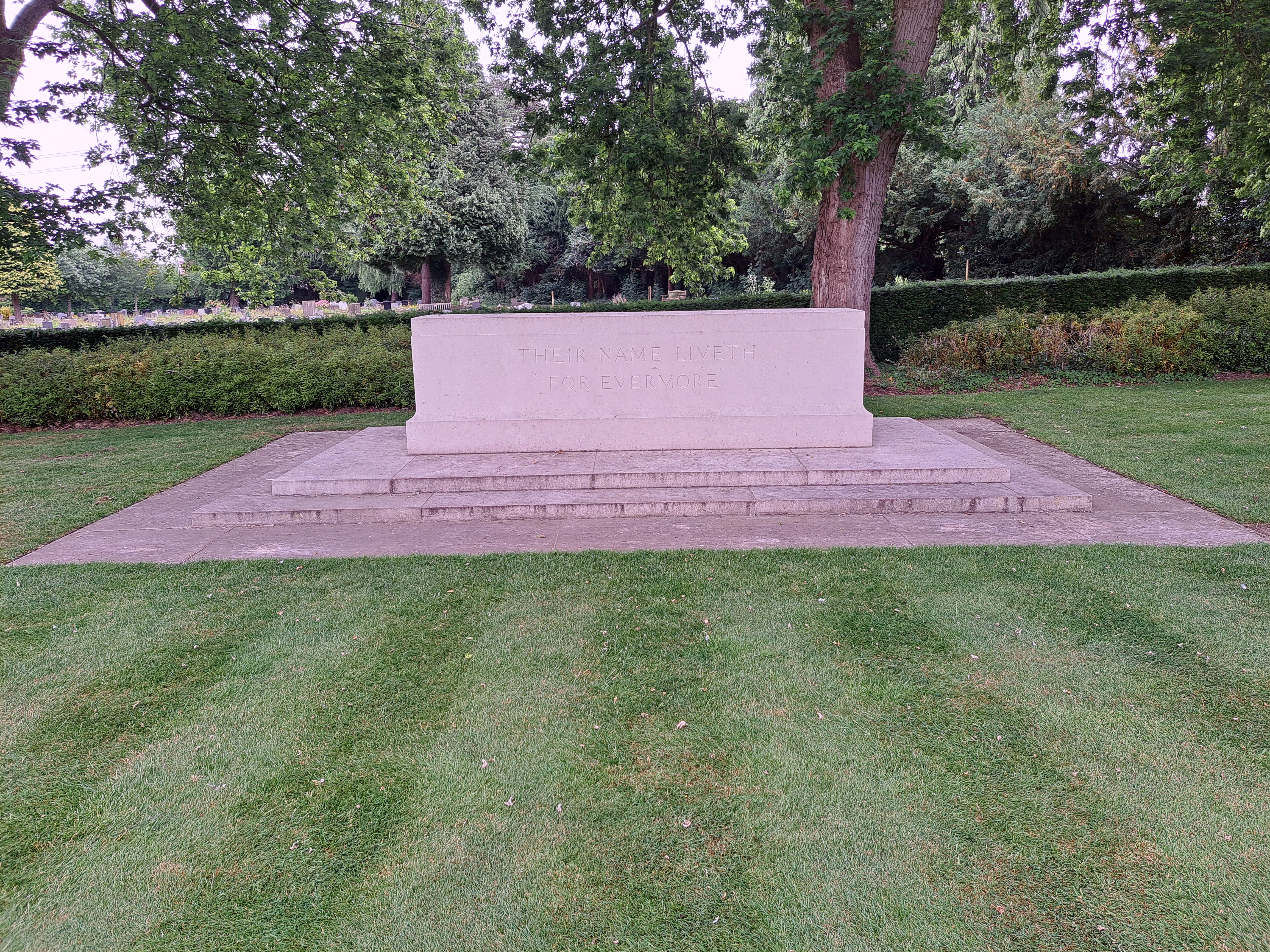
The Cemetery also has a Stone of Remembrance designed by Sir Edwin Lutyens for use in CWGC Cemeteries containing more than 1,000 graves. There are now hundreds of these all around the world but only 12 in the UK. With around 743 graves Botley was regarded as a special case, perhaps indicating that it is one of the dozen largest Commonwealth War Grave Cemeteries in the UK. Although not designed as such the Stone resembles an altar and carries a quotation from the book of Ecclesiasticus: Their Name Liveth for Evermore. Sir Edwin Lutyens was one of three principal architects of the Imperial War Graves Commission (as it was then called) and as well as his work in New Delhi and elsewhere is perhaps best remembered for his contribution to memorial architecture for the First World War, designing the Cenotaph in London and the Thiepval Memorial to the missing of the Somme.

Stone of Remembrance

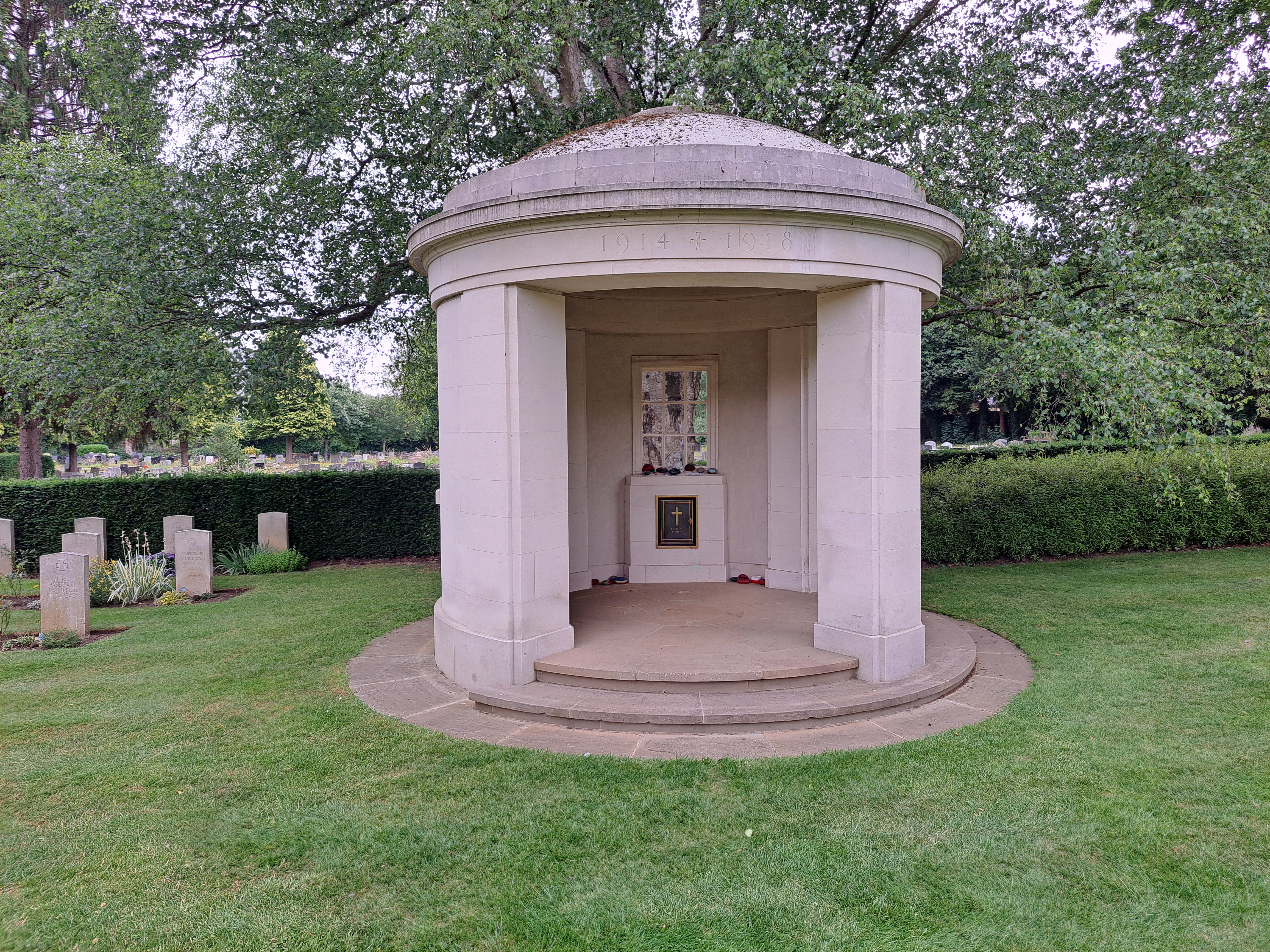
The third building found in the graveyard is the Shelter, designed by Sir Edward Maufe, the Principal architect of the Commonwealth War Grave Commission after the Second World War.

Domed Shelter

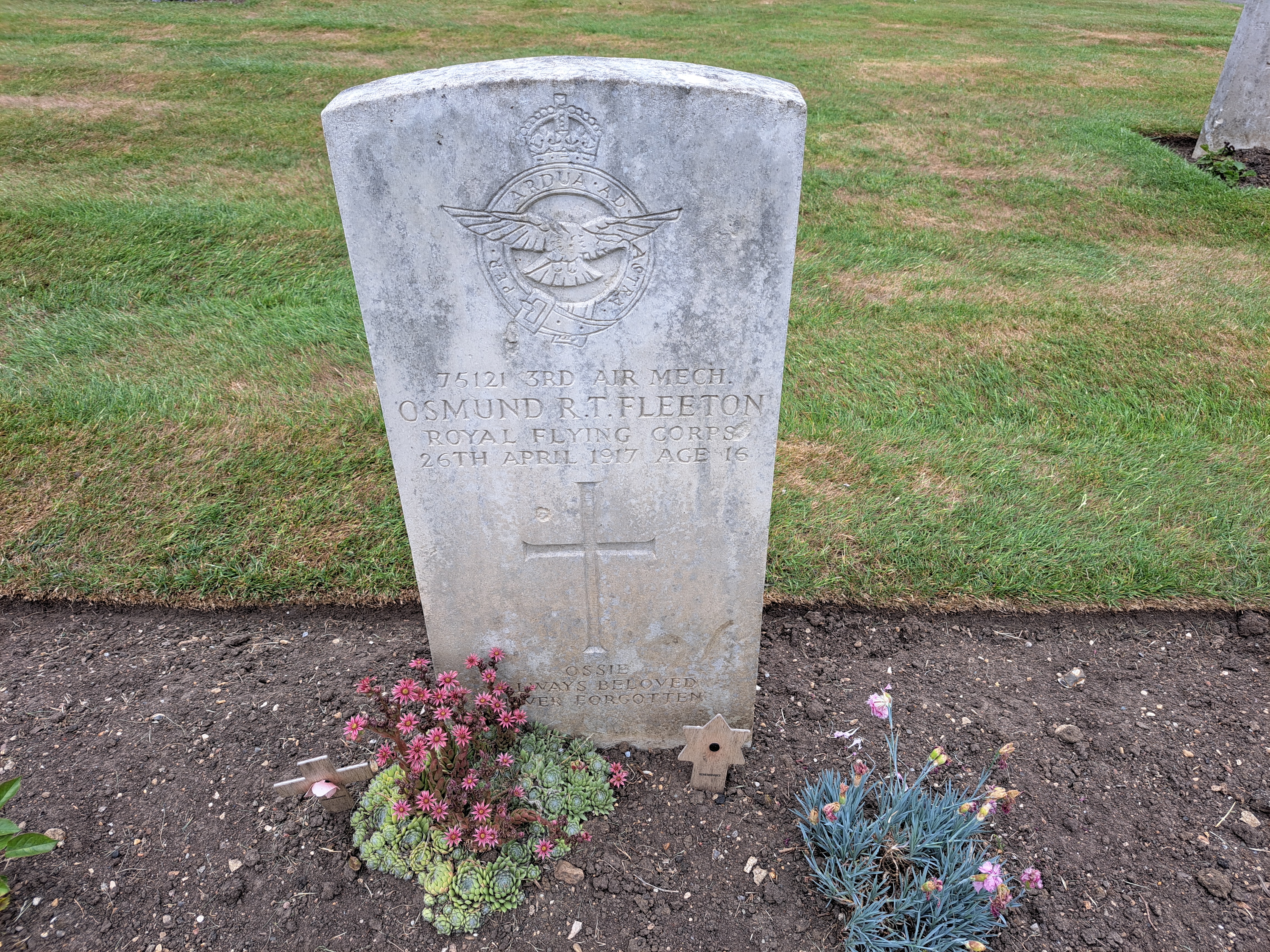
One of the first graves I noticed must be among the most poignant. It is that of Air Mechanic 3rd Class Osmund R.T. Fleeton of the Royal Flying Corps who was just 16 when he died. He came from Cork where his parents Robert and Jeanie Eloise Fleeton, lived at 1 Brookfield Villas, College Road. The official record says he ‘died of sickness 26th April, 1917’. ‘Ossie Always Beloved, Never Forgotten,’ his family inscribed on his grave.

Grave of Osmund Fleeton

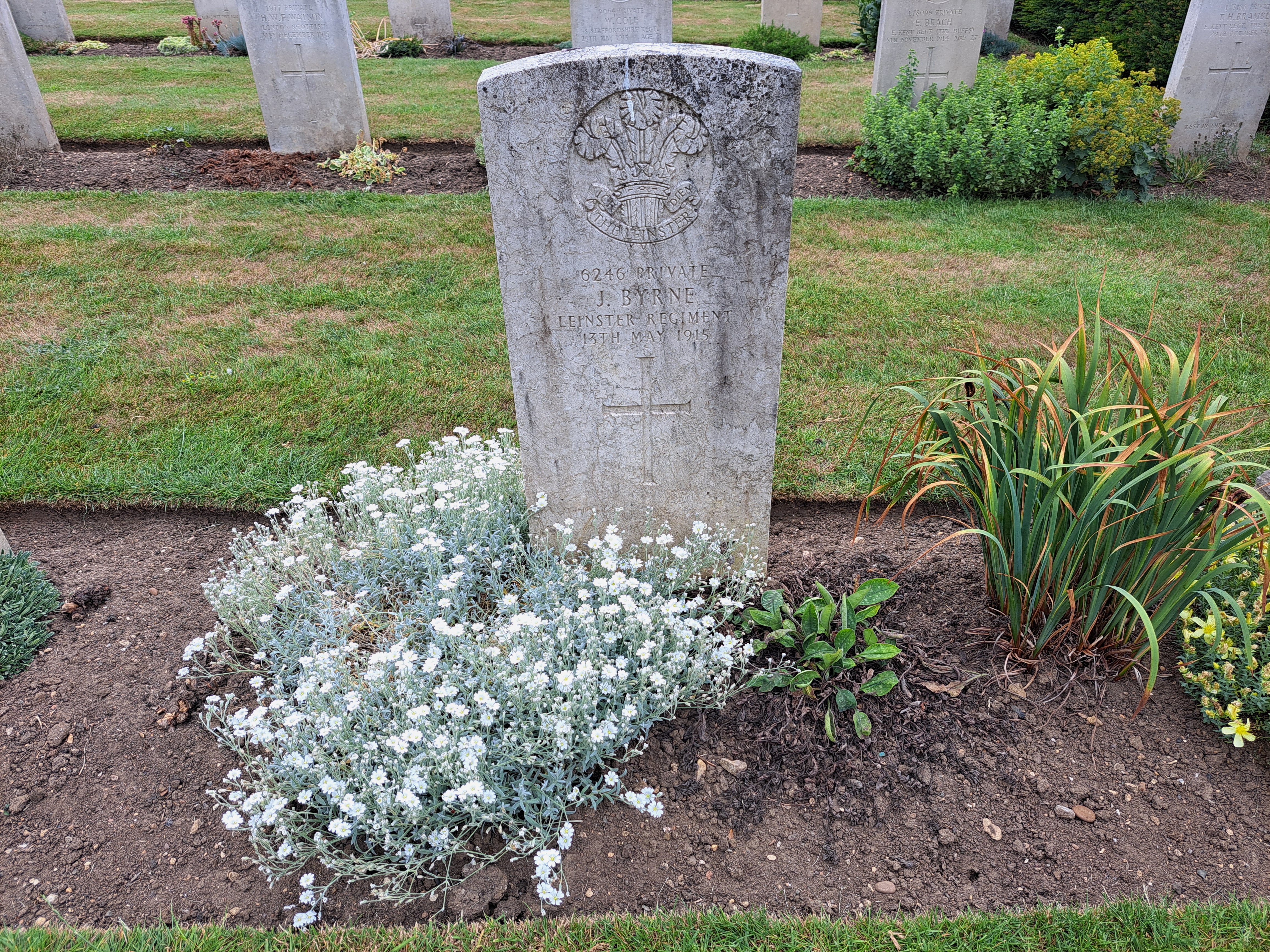
Another Irish grave is that of Private James Byrne from county Kilkenny of the 1st Battalion the Leinster Regiment who died on 13th May 1915.

Private James Byrne

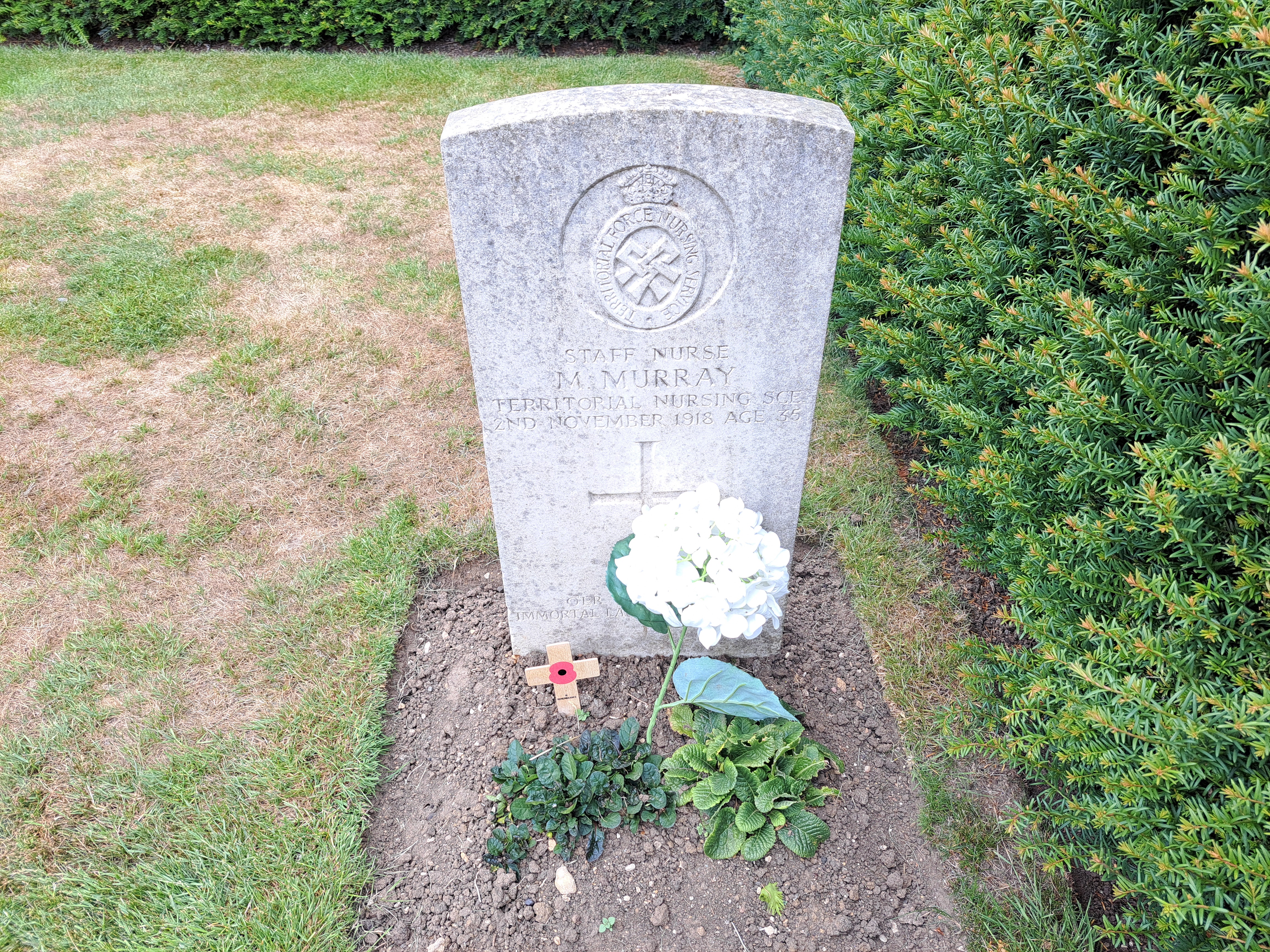
In one corner of the grave yard there is a solitary grave of a nurse – Staff Nurse Mabel Murray, of the Territorial Force Nursing Service, who worked at the 3rd Southern General Hospital and who died of influenza on 2nd November 1918 at the age of 35. She was one of the victims of the so-called ‘Spanish flu’ which swept over the nation at the end of the First World War, and it may be that the reason her grave is situated in a lonely corner is that they expected more of her colleagues to fall victim to influenza, but thankfully this did not transpire. She is not the only woman buried in the cemetery, however. Nineteen years old Aircraftwoman Glenys Doreen Harris is buried in the RAF section having been killed when an RAF Mosquito crashed in training at Upper Heyford on 24th September 1945.

Staff Nurse Mabel Murray

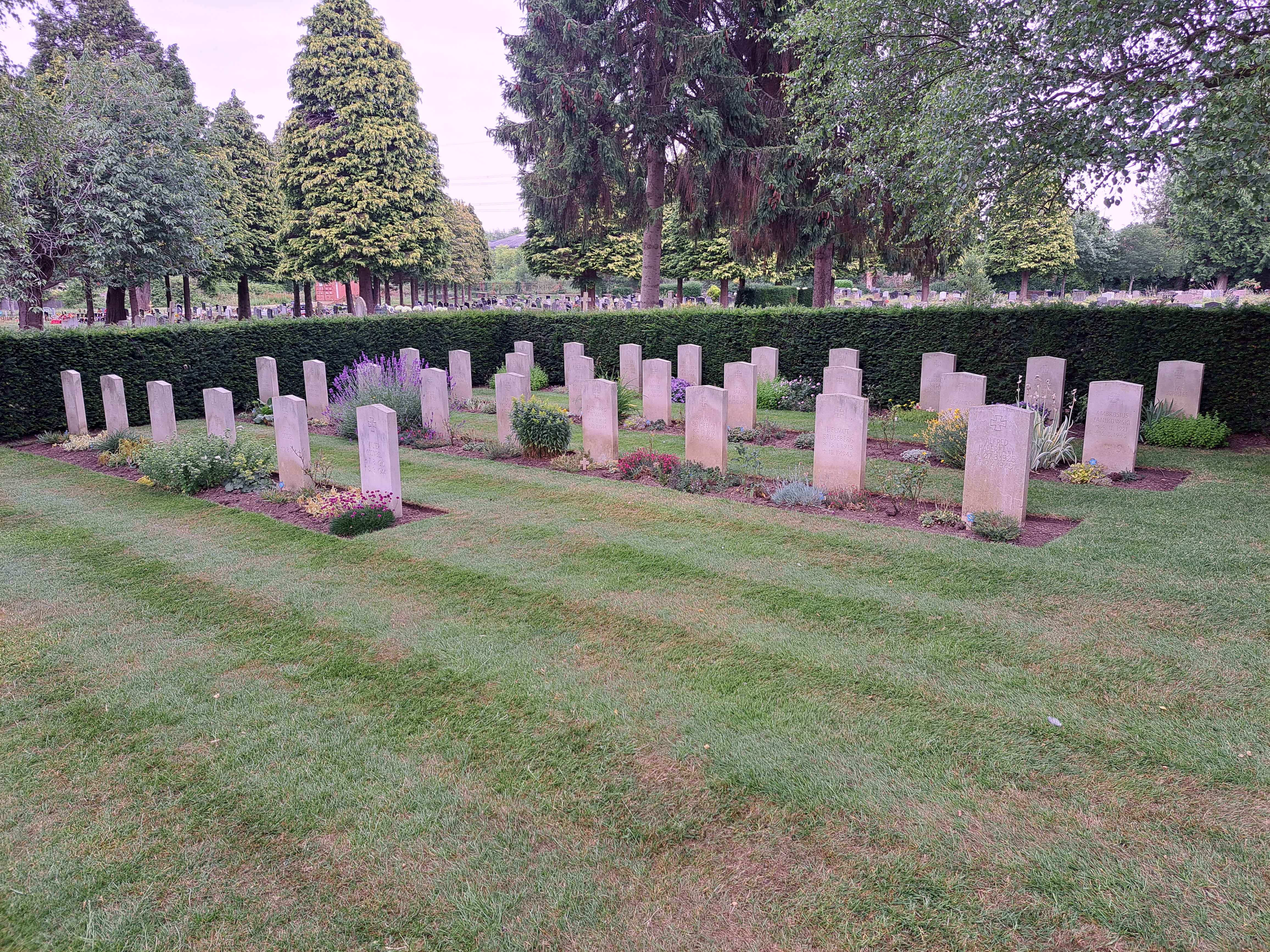
The graveyard contains the graves of many nationalities from both world wars including those who came from the then dominions of the British Empire (Australia, New Zealand, Canada, and South Africa) as well as other countries including Belgium, Czechoslovakia, Italy, The Netherlands, and Poland. Botley also contains the only grave of a Greek soldier in Britain – Private T. Lagos, who died in Oxford on 18th October 1944. His headstone is inscribed with a quotation from Pericles’ funeral oration as recorded by Thucydides: The whole earth is the tomb of famous men’. There are also a number of German graves from the First World War as well as a large section of 33 graves of German soldiers all dated 1944 who presumably were prisoners of war. It was strange to see the German war graves although their presence is perhaps slightly reminiscent of the memorial in New College Chapel to former German students who had been killed in the Great War.

German war graves

The precise number of graves in the CWGC cemetery at Botley varies according to which source you consult but I did notice a number of other military graves from the world wars located outside the Commonwealth War Graves area which might account for the variations. But it is certainly a very peaceful place, a well-cared-for corner of a municipal cemetery, a silent memorial to those who gave their lives.

George Cross (1909 – 2011) and the Normandy Landings

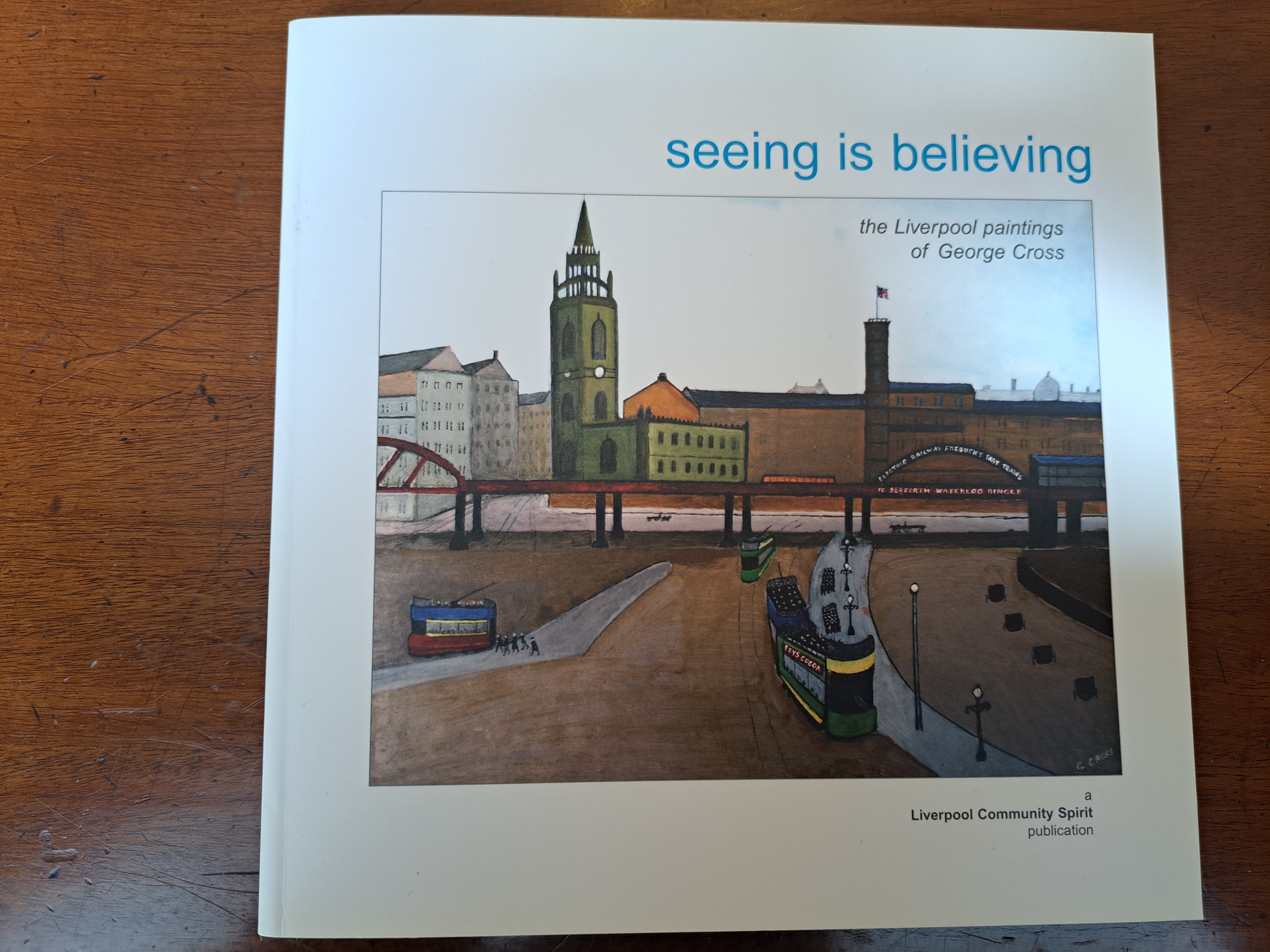
George Cross was born in Toxteth, Liverpool and lived all his life there apart from the war years. As a young man he took part in the D-Day Landings on 6 June 1944, not returning there until 2009 at the age of 100.

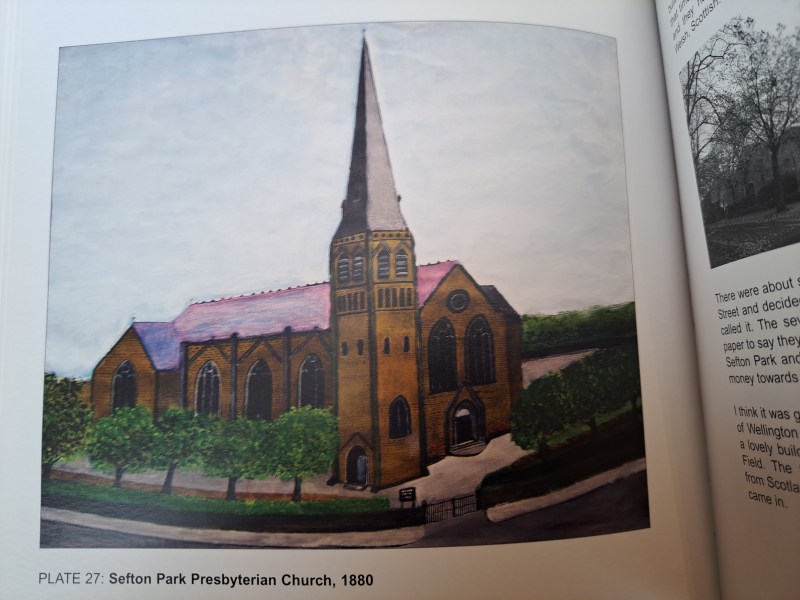
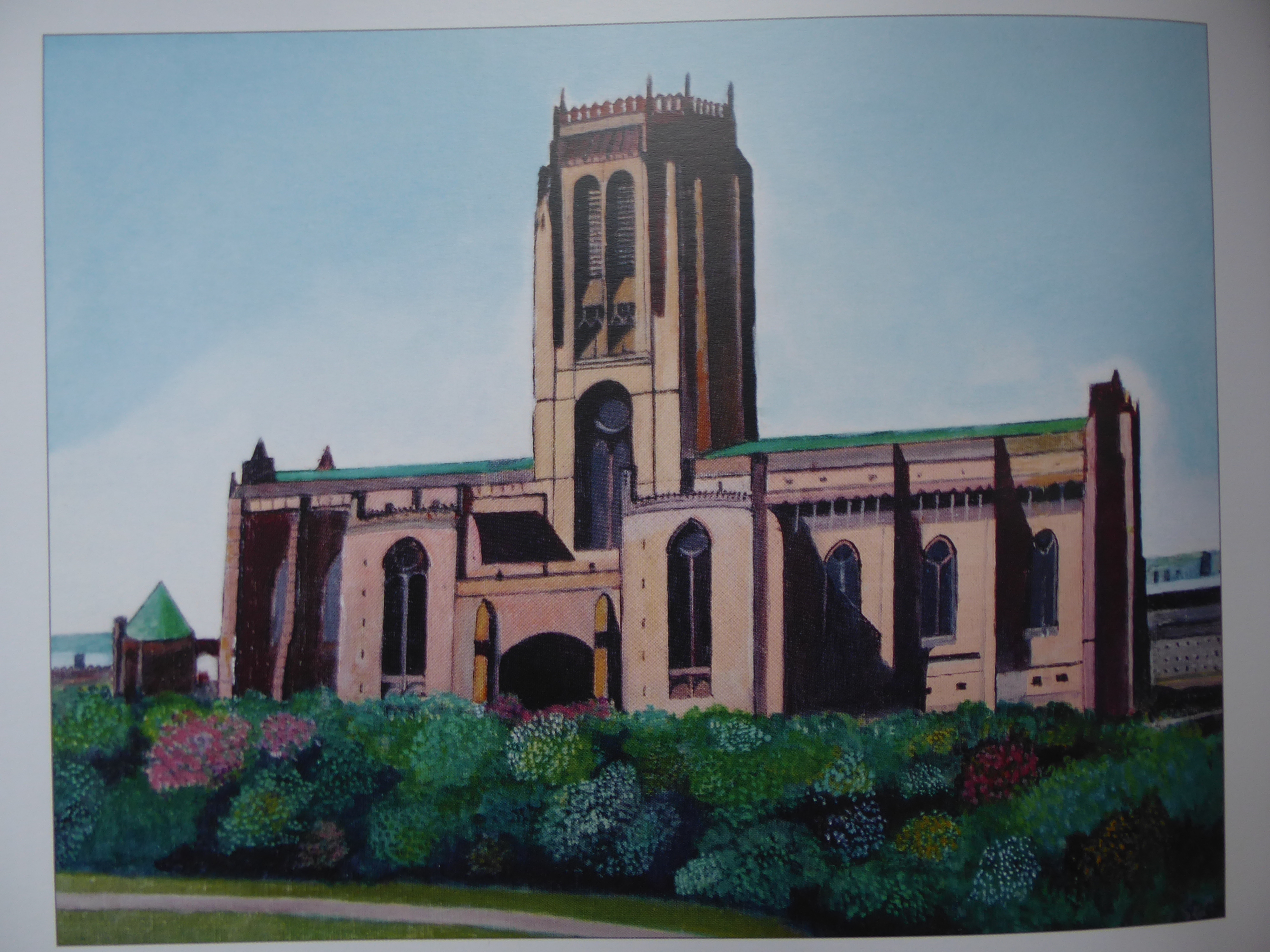
As a young man George attended Hyslop Street Mission, later moving to Sefton Park Presbyterian Church where he was an elder and lay preacher. George developed lots of interests and became a published author, writing about Liverpool history, and late in life emerged as an accomplished artist with public exhibitions and a book of his paintings which commemorated Liverpool buildings, many of them long demolished, including Sefton Park Church (at the top of the page).

In this video we tell some of the story of his life, particularly in relation to the D-Day Landings in which he participated. He has the distinction of having a building named after him in Toxteth and is remembered by a great many people for the warmth of his character and his kindness.

Click on the video to see George’s story
‘seeing is believing: the Liverpool paintings of George Cross’

The video includes some film of George’s return to Normandy in 2009 as well as film of him at one of his exhibitions.

Liverpool Cathedral by George Cross

Liverpool’s Titanic Memorial

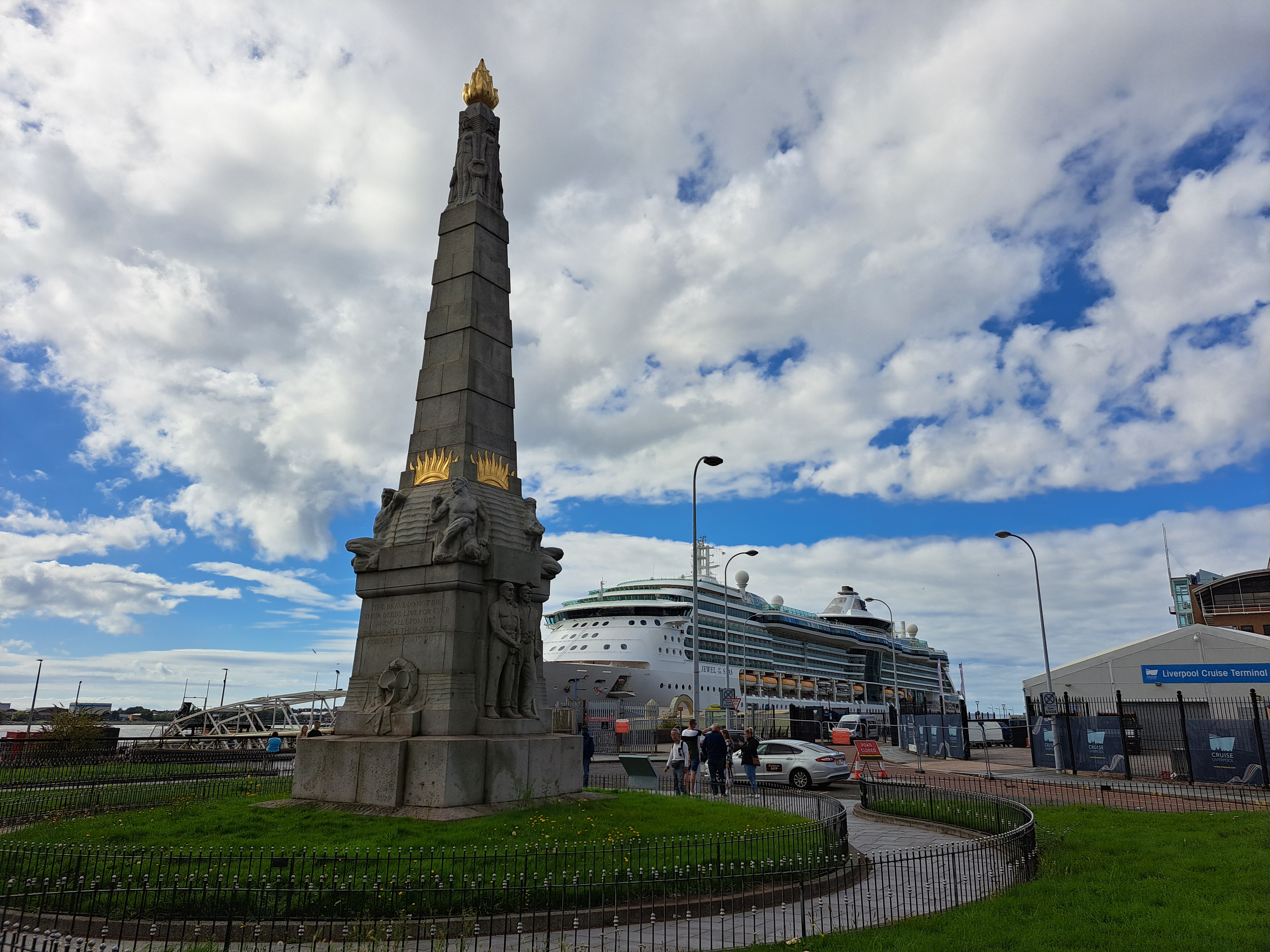
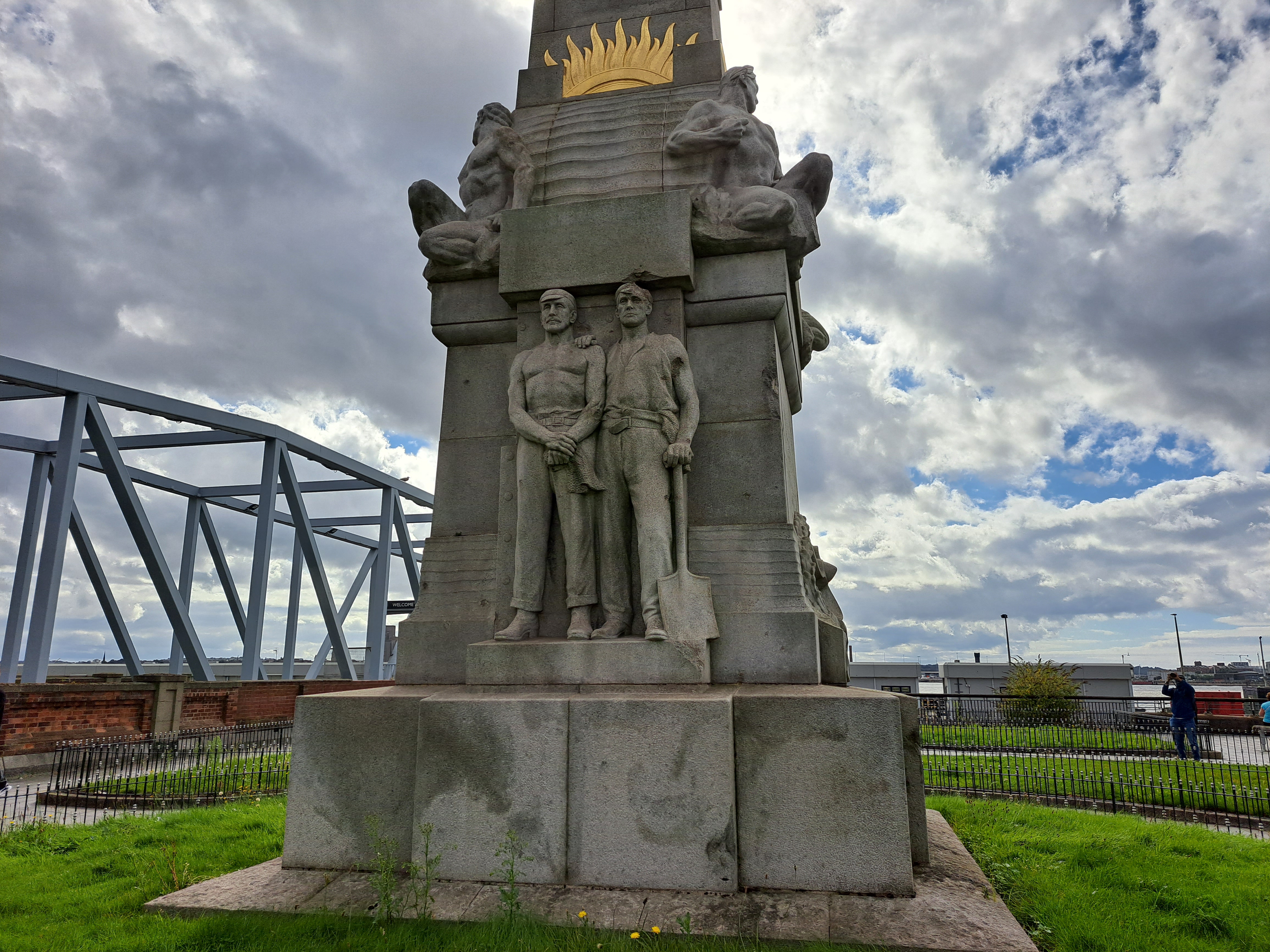
This memorial near Liverpool’s Pier Head is dedicated in honour of the Heroes of the Marine Engine Room. It is often referred to as the ‘Titanic Memorial’ because the original intention was to commemorate those lost in that disaster. The RMS Titanic was registered in Liverpool and the headquarters of the White Star Line was not far from the Pier Head, indeed the building is still there to this day. Although the Titanic didn’t visit Liverpool there were many local connections with the ship and there are a number of Titanic memorials in the city to this day.

But the original idea of the memorial was to commemorate the 244 engine room
staff who remained at their post after the ship struck the iceberg on 15th
April 1912 keeping the ship’s systems running as long as possible to help
people escape as the ship sank.

However, by the time it came to be erected, two other major naval disasters needed to be commemorated. The first was the sinking of the Empress of Ireland which was another Liverpool-registered ship which had regularly made the crossing from Liverpool to Quebec between 1906 and 1914. On 29th May 1914 it sank after a collision in the mouth of the Saint Lawrence River with the loss of 1,012 lives. The next year, during the First World War, another ship with very close Liverpool connections was sunk by a German U-boat on 7th May 1915. This was the Lusitania which was sunk about 11 miles off the coast of Ireland with the loss of 1,201 lives. It was a brutal attack on a passenger ship which also included a number of American citizens at a time when the United States had not yet entered the war.

The Memorial to Heroes of the Marine Engine Room in front of the Liver Building

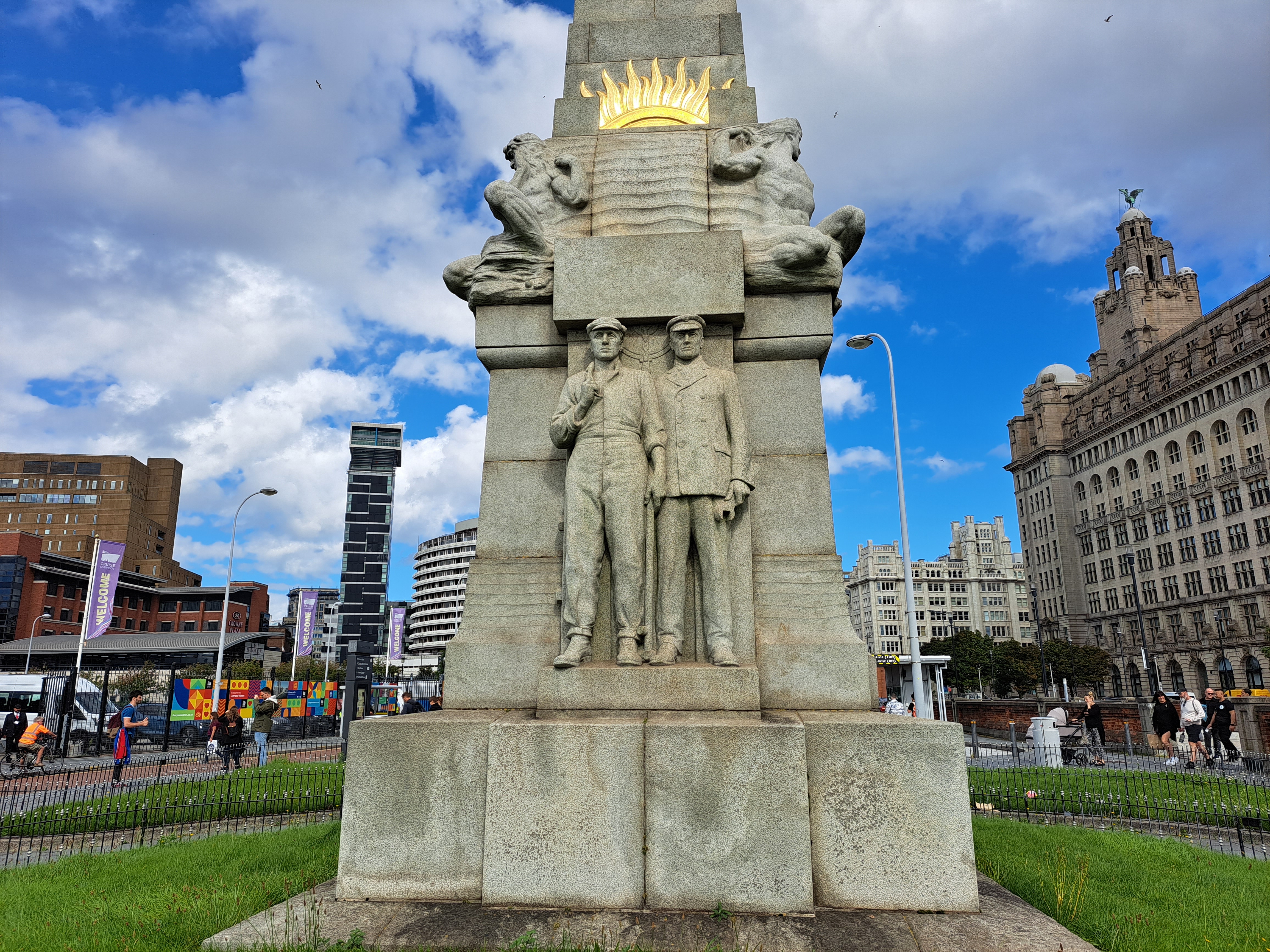
So when the memorial was unveiled in May 1916 it was dedicated to ‘All Heroes of the Marine Engine Room’. It was designed by Sir William Goscombe John and is seen as one of the first memorials to commemorate the heroism of working men who are depicted on the memorial. As Terry Cavanagh puts it in his Public Sculpture of Liverpool it is ‘a rare example in Liverpool of the commemoration not of a single, high-ranking individual but of the “ordinary” workers of the city’.

The west face of the memorial: Two engineers, one holds a stoking-hatch lever and the other a spanner
Figures on the east face: Two stokers, one holding a cloth, the other a shovel. The four figures above, on the corners, represent the elements and, at the very top, four female figures represent the sea

Something like £4,000 was raised from donations around the world before August 1912 to build the memorial. When it was finally unveiled on 9th May 1916 it was done with very little ceremony although it still attracted large crowds, many of them mourners of people who were lost on the Titanic and the Lusitania, although by then the intention was to honour all maritime engine room fatalities incurred during the performance of duty.

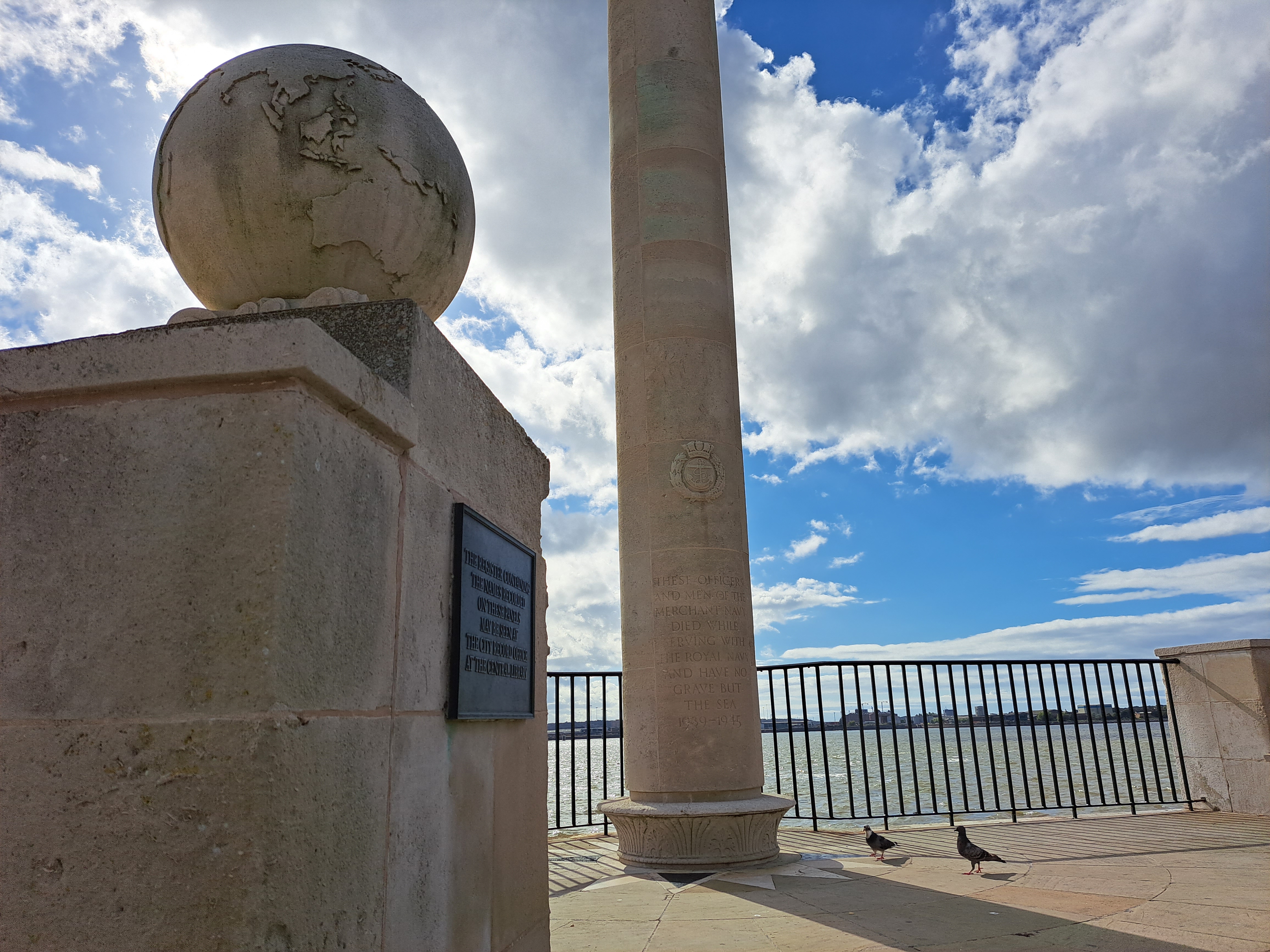
Memorial to the Missing of the Naval Auxiliary Personnel of the Second World War

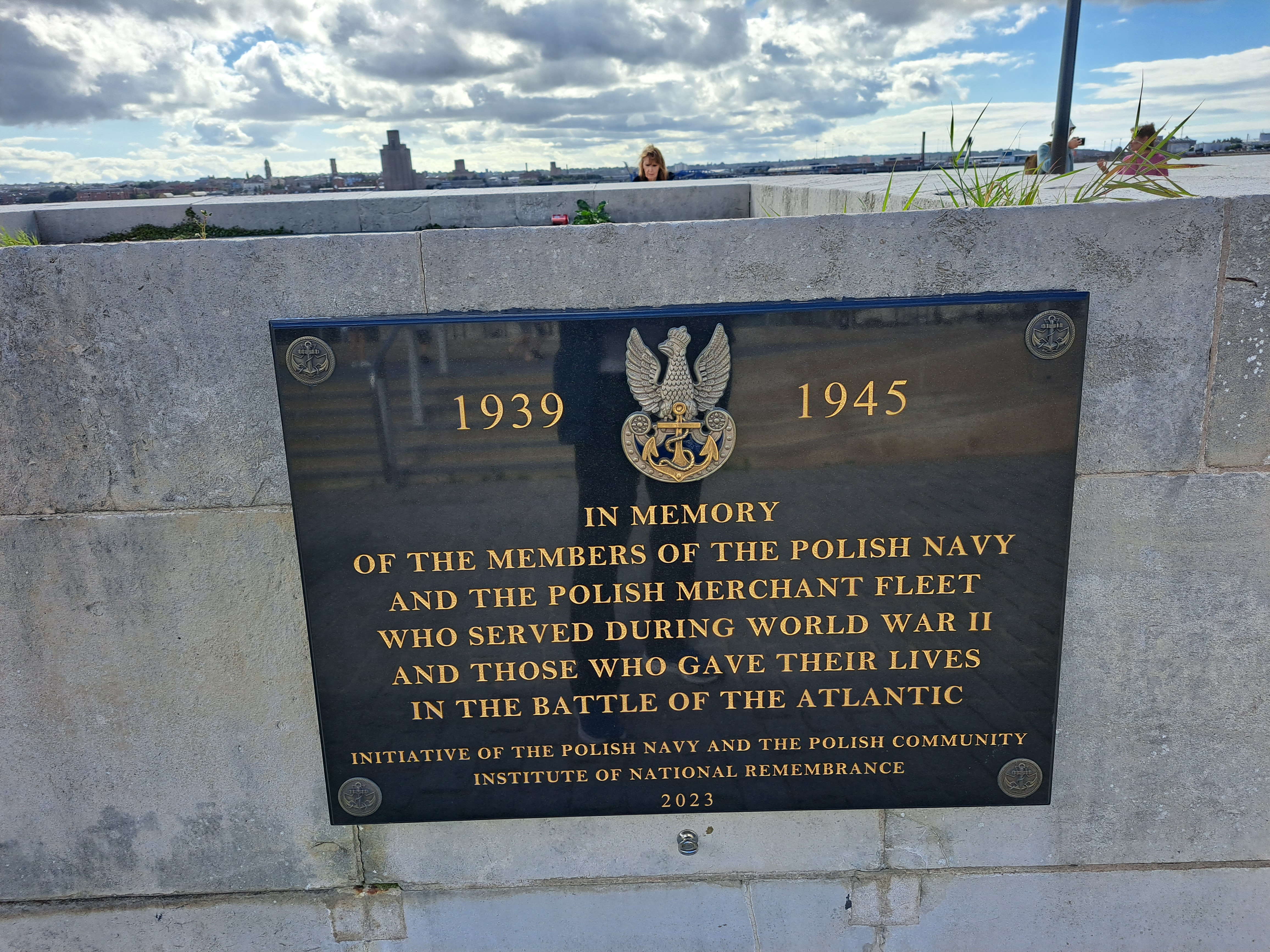
Many more memorials have been added to the Pier Head since the Second World War including the Merchant Navy War Memorial (Memorial to the Missing of the Naval Auxiliary Personnel of the Second World War), the Merchant Navy Memorial dedicated to the men and women who gave their lives in both World Wars and have no other grave than the sea, and an area with a succession of memorials of sailors of different nationalities who served in the Second World War including Belgian, Dutch, Chinese, Norwegian, and Polish merchant seamen and other servicemen and women. In addition there are plaques remembering the sinking of the SS Arandora Star, torpedoed off the coast of Donegal in 1940 with the loss of over 800 people, mainly non-combatants; HMT Lancastria which was sunk while evacuating servicemen at St Nazaire on 17th June 1940 with the loss of about 6,000 people (said to be the worst disaster in British maritime history); and a memorial to the ships that repatriated 20,000 people held in captivity in the Far East up to the end of the Second World War.

Merchant Navy Memorial
In memory of members of the Polish Navy and Polish Merchant Fleet
Video: The Royal Liver Building clock strikes 4 o’clock

Templepatrick service in memory of Flight Lieutenant John Alexander Bright

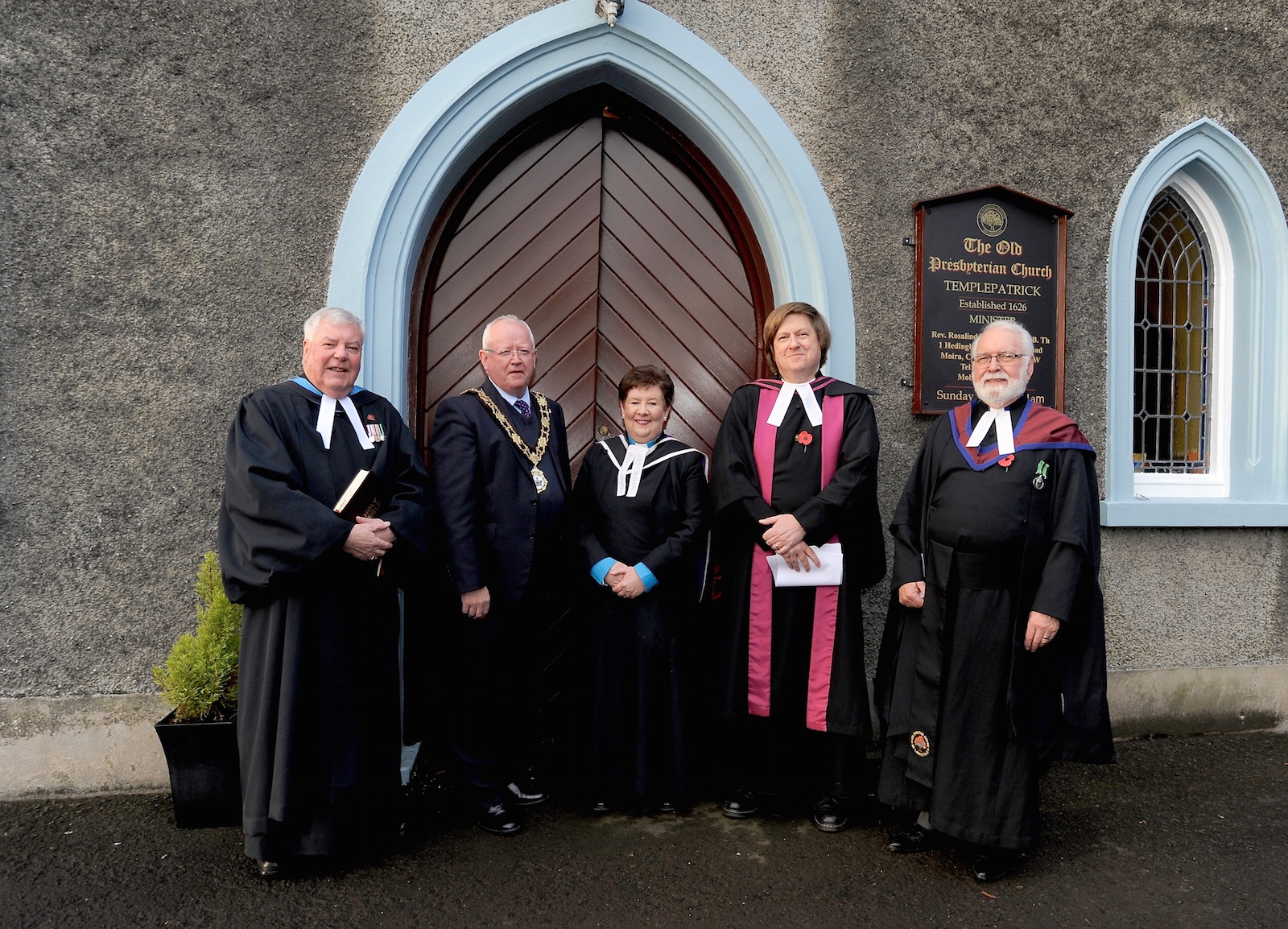
clergy 01

Rev Rosalind Taggart with the Mayor of  Antrim and Newtownabbey Borough Council with participating clergy (Photo: Maurice Montgomery)

On Sunday, 17th November 2019 the minister and congregation of the Old Presbyterian Church, Templepatrick put together a very thoughtful, impressive and moving service to commemorate the life of Flight Lieutenant John Alexander Bright who died in 1943 at the age of 24. The service was attended by a number of dignitaries and representatives of the RAF. I was asked to give the address which can be found below:

On a site at Runnymede in Surrey, over-looking the river Thames, in the same valley where the Magna Carta was sealed by King John in 1215, stands the Runnymede Memorial, also known as the Air Forces Memorial. This memorial commemorates the names of those airmen and women of the Commonwealth who were lost in the Second World War in western Europe and have no known grave. They came from all parts of the Commonwealth and served in Bomber, Fighter, Coastal, Transport, Flying Training and Maintenance Commands. Some were from countries in continental Europe which had been overrun but whose airmen continued to fight in the ranks of the Royal Air Force. There are 20,275 names listed on this memorial. They have no known grave.

Just outside the town of Lincoln stands the International Bomber Command Centre which was opened in 2013 and was built to acknowledge the efforts, sacrifices and commitment of the men and women, from 62 different nations, who came together in Bomber Command during the war. This branch of service included Aircrew, Ground Crew, Women’s Auxiliary Air Force, Auxiliary Air Transport, Auxiliary Transport Services, NAAFI and others. Of the 125,000 Aircrew who served in Bomber Command, 72% were killed, seriously injured or taken Prisoner of War. More than 44% were killed whilst serving, giving the highest rate of attrition of any Allied unit. Each man was a volunteer, and their average age of death was only 23. Here at Lincoln is a memorial known as the Walls of Names containing the names of 57,861 men and women who lost their lives serving or supporting Bomber Command during the Second World War.

In Belfast, in St Anne’s Cathedral, there is a Roll of Honour unveiled as recently as May of this year in memory of the unit of the Royal Air Force Volunteer Reserve (RAFVR) which was formed in Belfast in January 1939. The RAFVR in Belfast was setup to support the rapid expansion of the pilot and navigator establishment necessary once war had been declared. Over 300 young men joined the RAFVR in Belfast between the 1st January 1939 and 1st May 1940. On 3rd September 1939, 140 of them were called into full time service and posted to various RAF stations in England for further training. It is said that many of these young men could not drive a car or ride a motorcycle but within six months of advanced training were flying Lancaster bombers or Spitfire fighters over enemy held territory. Of these 140 some 92 were Killed in Action and Forty-eight survived. These names are the ones listed on this Roll of Honour in St Anne’s Cathedral in Belfast.

We are here today to remember one of the people listed on all three of these RAF memorials. A young man aged just 24, who has no known grave, and who served with Bomber Command in the Royal Air Force Volunteer Reserve. His name was John Alexander Bright and we are here to make our act of remembrance of him and to dedicate our own memorial to him.

John Alexander Bright was the only son of Victor Price Bright and Ellen, sometimes Ella, Bright, née Alexander. His mother, who was born in 1892, grew up on a farm not far from here at Kilgreel. Her family were long-time members of this congregation. Ellen Bright was also a great member and supporter of the Antrim congregation (information from Miss Olive Moore). Victor Price Bright was born in 1884 in Clones in county Monaghan where his family owned a tailors and drapers shop. Following their marriage in Belfast in 1915 they moved to Pembrokeshire where John Bright was born in 1919. It was here that he initially joined the RAFVR in January 1937, just a year after it was established, at the age of 18. Before the war he came to Northern Ireland with his family when they moved back to Stoneview, the family farm at Kilgreel. Nearby they also built a bungalow intended to be occupied by their son (information supplied by Dr Joan McMaster). With the outbreak of war J.A. Bright transferred to the Belfast RAFVR. His service number was 67597 and two years later, on 15th May 1941, Sergeant Bright was promoted to Pilot Officer. This was followed, the next year, by his appointment on 15th May 1942 as a Flying Officer. He was made Flight Lieutenant on 6th November 1942, although it is clear from his citation when mentioned in despatches in June 1942 that he had been an acting Flight Lieutenant for some months before that.

As a member of Bomber Command his experience of the war must have been intense. As I mentioned previously of the 125,000 Aircrew who served in Bomber Command a terrifyingly high number of 72% were either killed, seriously injured or captured by the enemy. It must have been a daily challenge of a high order to fly out into hostile airspace. J.A. Bright acquitted himself with some bravery. He was twice mentioned in despatches.

The efforts of the RAF Bomber Command significantly changed the outcome of the war. Their bombing raids did great damage to the enemies’ industrial capacity and forced them to direct large quantities of aircraft and artillery towards fighting the bombers. There is no doubt that the efforts of Bomber Command helped to contribute to the eventual Allied victory in Europe.
Memorial 03

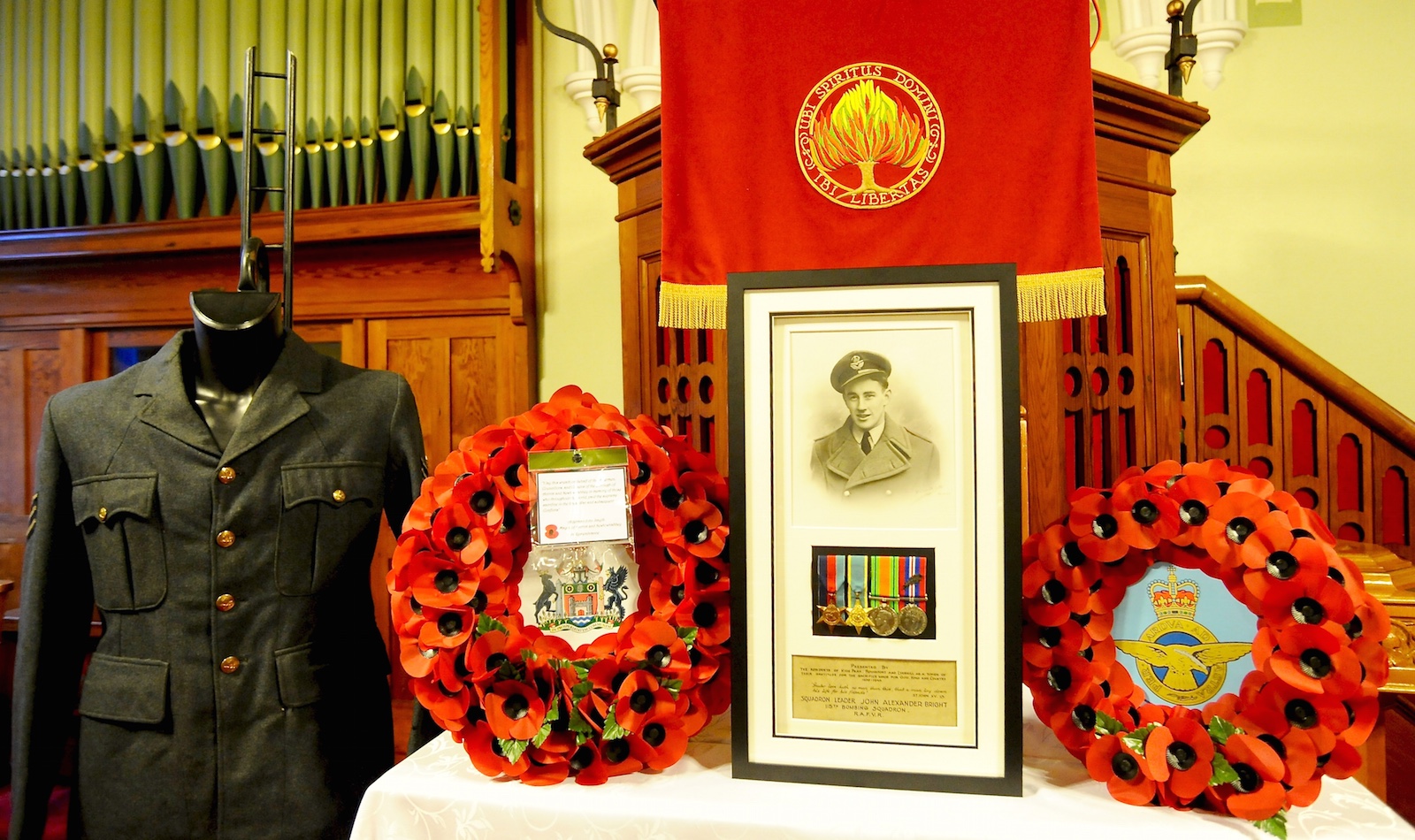
Memorial to Flight Lieutenant J. A. Bright (Photo: Maurice Montgomery)

John Alexander Bright served throughout the war until his death, reaching the rank of Flight Lieutenant, and it seems likely from the wording of his mother’s will in 1970, that promotion to Squadron Leader may have been imminent at the time he was killed. He was posthumously awarded the four medals that have been beautifully mounted and framed by the congregation. They are from left: the 1939-1945 Star, a medal awarded to all who served in any branch of the armed forces or merchant navy for at least six months during the war. The Air Crew Europe Star which was awarded to air crews of the Commonwealth forces who participated in operational flights over Europe from the United Kingdom during the war. The Defence Medal which was awarded to those who played a part in national defences on the home front which J.A. Bright will have done before he became a pilot. The War Medal which was issued to all who served in the forces for at least 28 days during the war. On this medal is attached an oak leaf which symbolises that J.A. Bright was mentioned in despatches. In other words his personal gallantry was recorded in the air force records during the war at the time, in his case not once but twice.

When J.A. Bright went to England to train to be a flyer he was stationed in a number of places. In the autumn and winter of 1941 he was training at RAF Edgehill, a satellite airfield for RAF Moreton-in -Marsh in Gloucestershire which was the base for 21 Operational Training Unit (OTU) RAF. One night, on 7th December 1941, when he was walking along the road with another pilot he saw a Wellington bomber which had recently taken off from the nearby airfield run into trouble in bad weather. It hit a telegraph pole before crashing into a field and bursting into flames about 500 yards away from the two of them and they ran to try and rescue the crew. Despite the fierce blaze, the intense heat, the continuing explosions as fuel and oxygen tanks caught fire, they managed to rescue two of the crew, although four others were also killed that night. (An account of this event can be found on the website The Fallen from the Villages of North and West Oxfordshire – The Fallen of the Sibfords)

On completion of his training at the OTU base, where he will have trained flying Wellington bombers, J.A. Bright transferred to an operational squadron where he will have had to convert to flying the Lancaster bomber. By February 1943 he was a member of 83 Squadron RAF based at RAF Wyton. On the evening of 19th February 1943 Flight Lieutenant Bright and the other six members of the crew set off on a night raid to Wilhelmshaven a coastal, shipyard town in northern Germany. They left their base at 18.16, flying with an Avro Lancaster, with serial number R5743 and code OL-K. This was the second mission in two days to this particular target and the first one had already failed. Sadly this mission was also to fail, the Lancaster bomber is presumed to have crashed into the North Sea at some point later that night with the loss of all members of the crew. The body of one of the crew was later washed ashore but the bodies of Flight Lieutenant Bright and the others were never recovered.

Like so many others, at the age of just 24, Flight Lieutenant Bright had given his life in the service of his country. We can only imagine the sense of desolation experienced by his family. With no other children, and following the death of her husband in 1949, Ellen Bright wanted to leave a legacy that was of use to others. In a will dated 27th January 1970 Mrs Bright, whose address was given simply as ‘Stoneview’, Templepatrick, bequeathed her estate to the Trustees of the Non-Subscribing Presbyterian Church of Ireland to be used “as the Trustees may in their sole discretion decide”, as the will was worded. The will further went on to say:

The said bequest is made to perpetuate the memory of my son Squadron Leader John Alexander Bright R.A.F.V.R. the Pilot of a Bomber lost over Wilhelmshaven on the Nineteenth/Twentieth day of February One Thousand nine hundred and forty-three aged Twenty-four years

It may be that young John Bright was an acting Squadron Leader and following on from Mrs Bright’s will it does seem to be the case that he was frequently referred to in denominational circles by this rank. However, the official records, including the Commonwealth War Graves Commission all describe him as a Flight Lieutenant at the time of his death.

Ellen Bright died on 8th May 1970 and her generous bequest passed to the Non-Subscribing Presbyterian Church of Ireland. It has been an invaluable Fund that has been used to support many denominational endeavours, especially by providing interest free loans to churches needing to undertake programmes of restoration. The Fund also provided the finance to publish the denominational Roll of Honour produced last year which listed all the men and women who served and who gave their lives in the First World War. So with that in mind it is only right that we make some act of remembrance today of John Alexander Bright and of Ellen Bright and her family as we dedicate these medals to the glory of God.

 Greater love hath no man than this, that a man lay down his life for his friends. (John ch.15 v.13)
Poppy Memorial

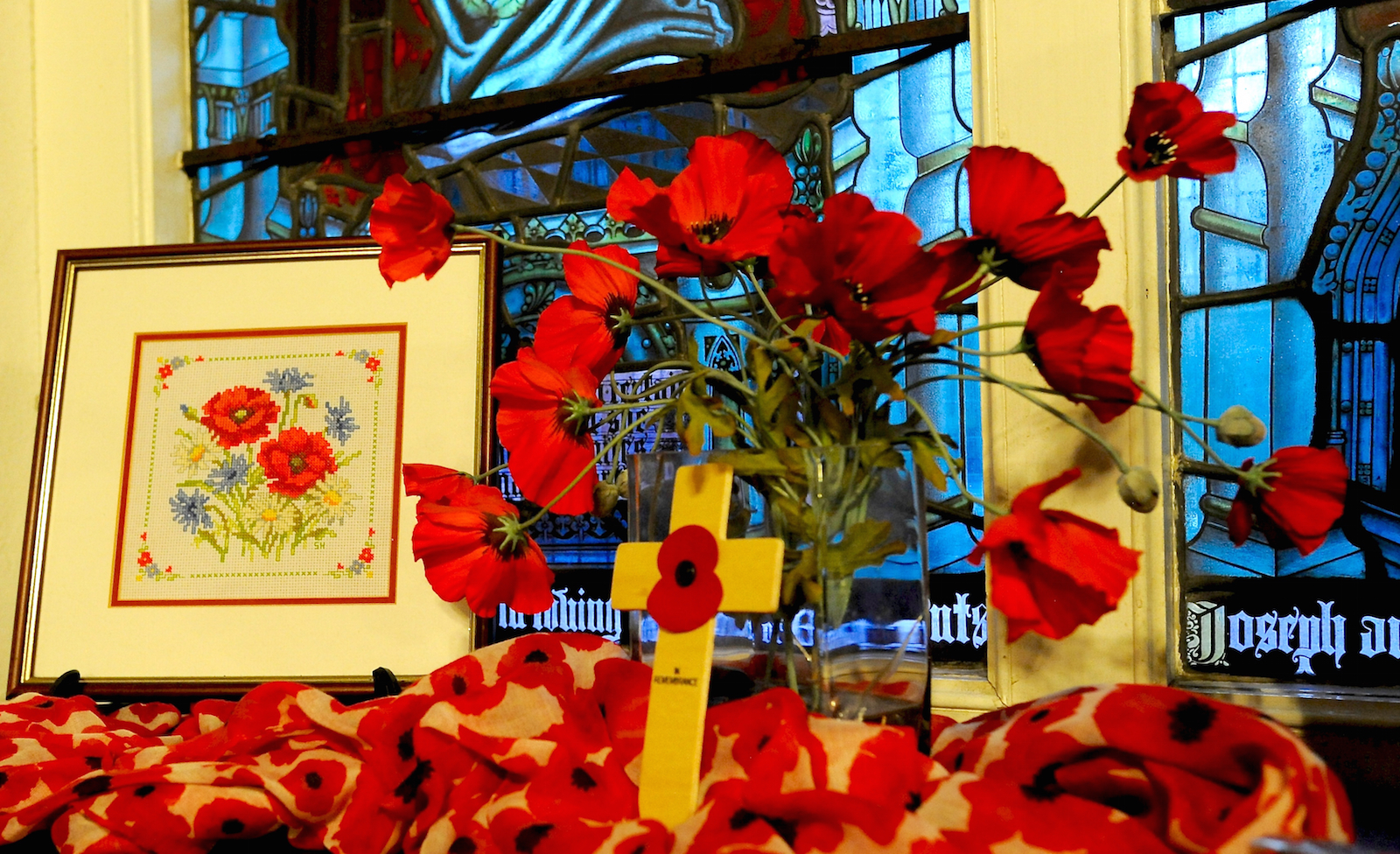
Window display Templepatrick (This photo and photo at the top of this page: Maurice Montgomery)