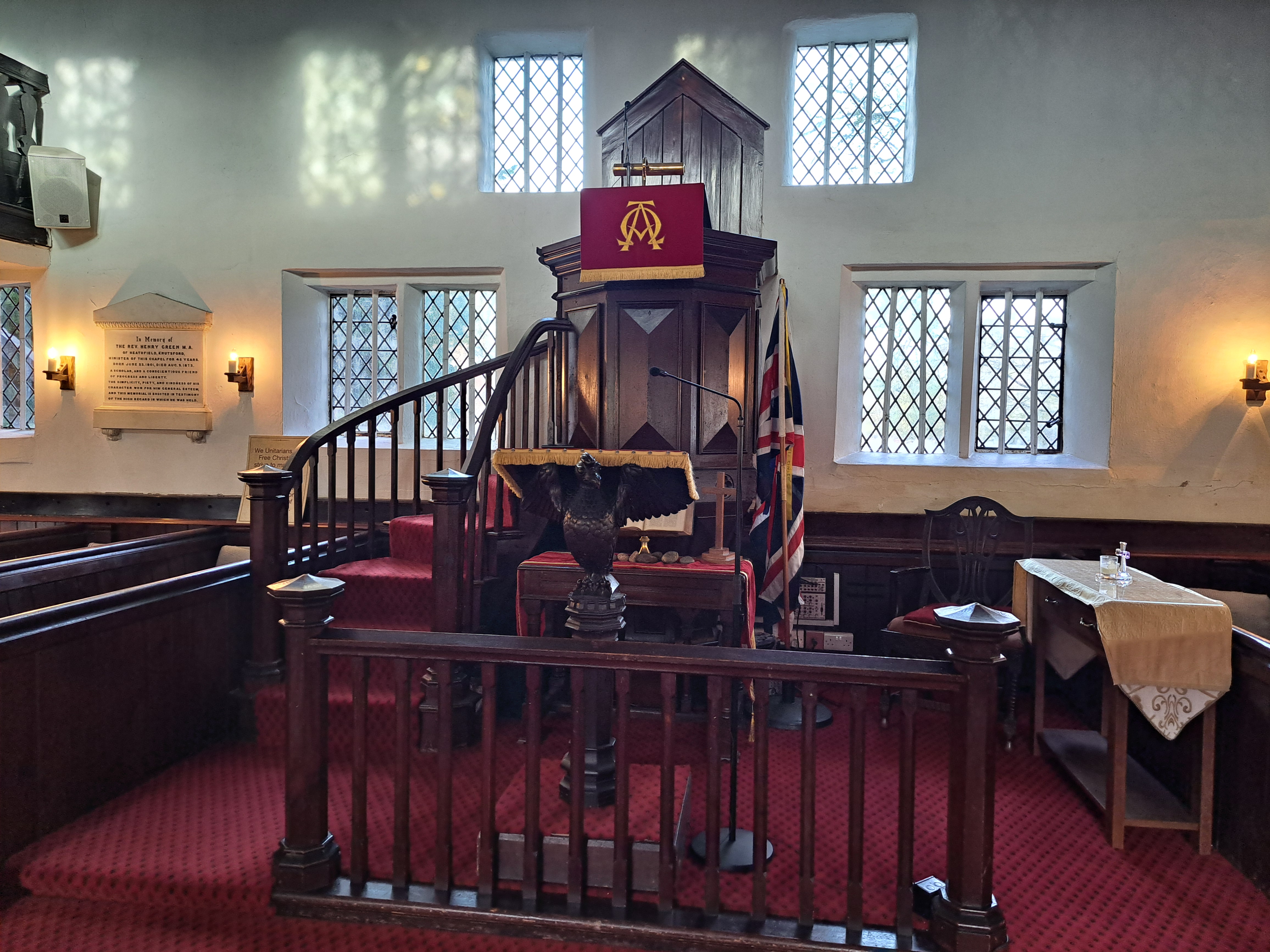
I was really pleased to be invited to Knutsford to give a talk on Unitarian history earlier in January and so pleased to see such a good turnout and to find such a lot of interest in the topics discussed. I was delighted too to be asked to preach on the Sunday in the impressive meeting-house of 1689.
I have put together a short video that looks at one of the connections between Knutsford and Dunmurry, mainly that represented by Rev Alexander Gordon and his wife Clara Maria Gordon (née Boult). It can be viewed here:
Elizabeth Gaskell, Clara Boult & Alexander Gordon. Click above to see the video
Alexander Gordon himself was descended on his mother’s side from an ejected minister of 1662 and part of his enornous contribution to history was to produce Freedom after Ejection and the Minutes of the Cheshire Classis, both still important works of reference which have close connections to the story of the early dissenting community of Knutsford.
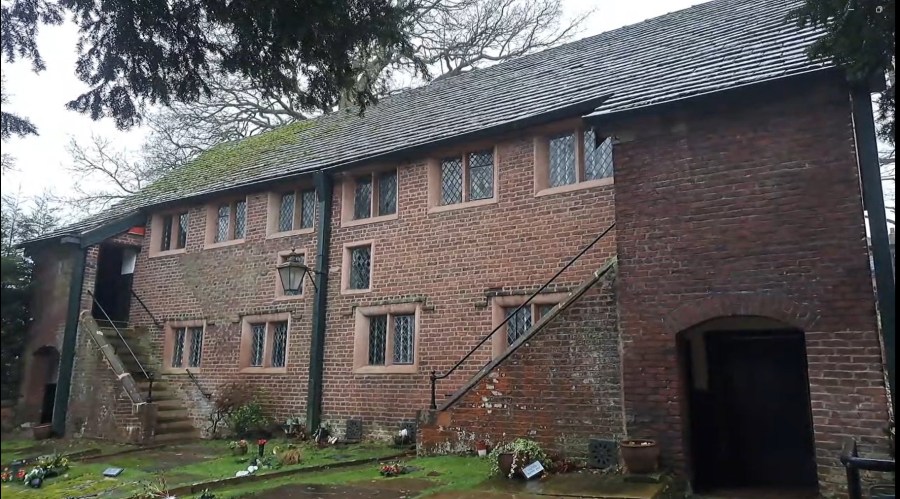
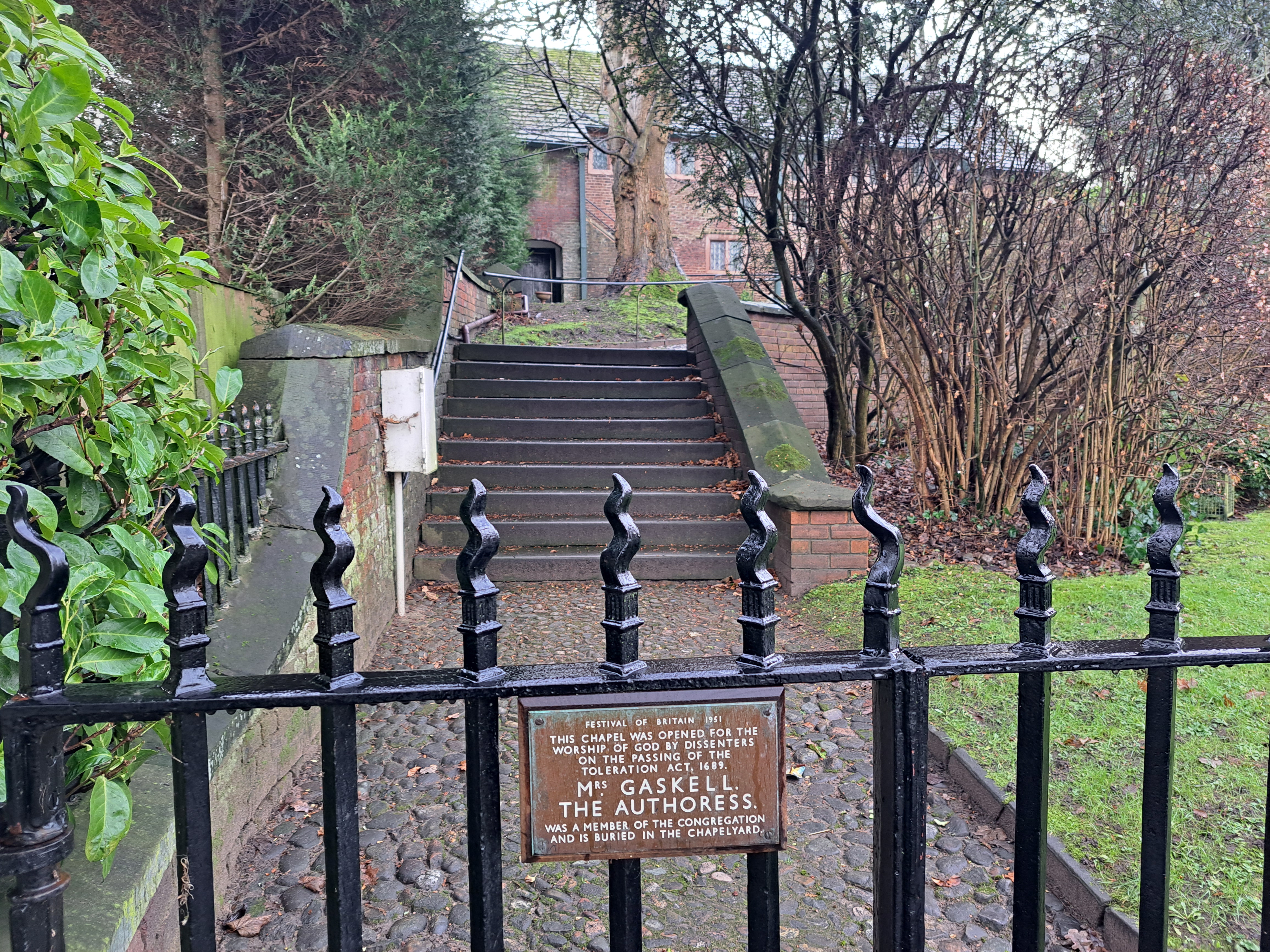
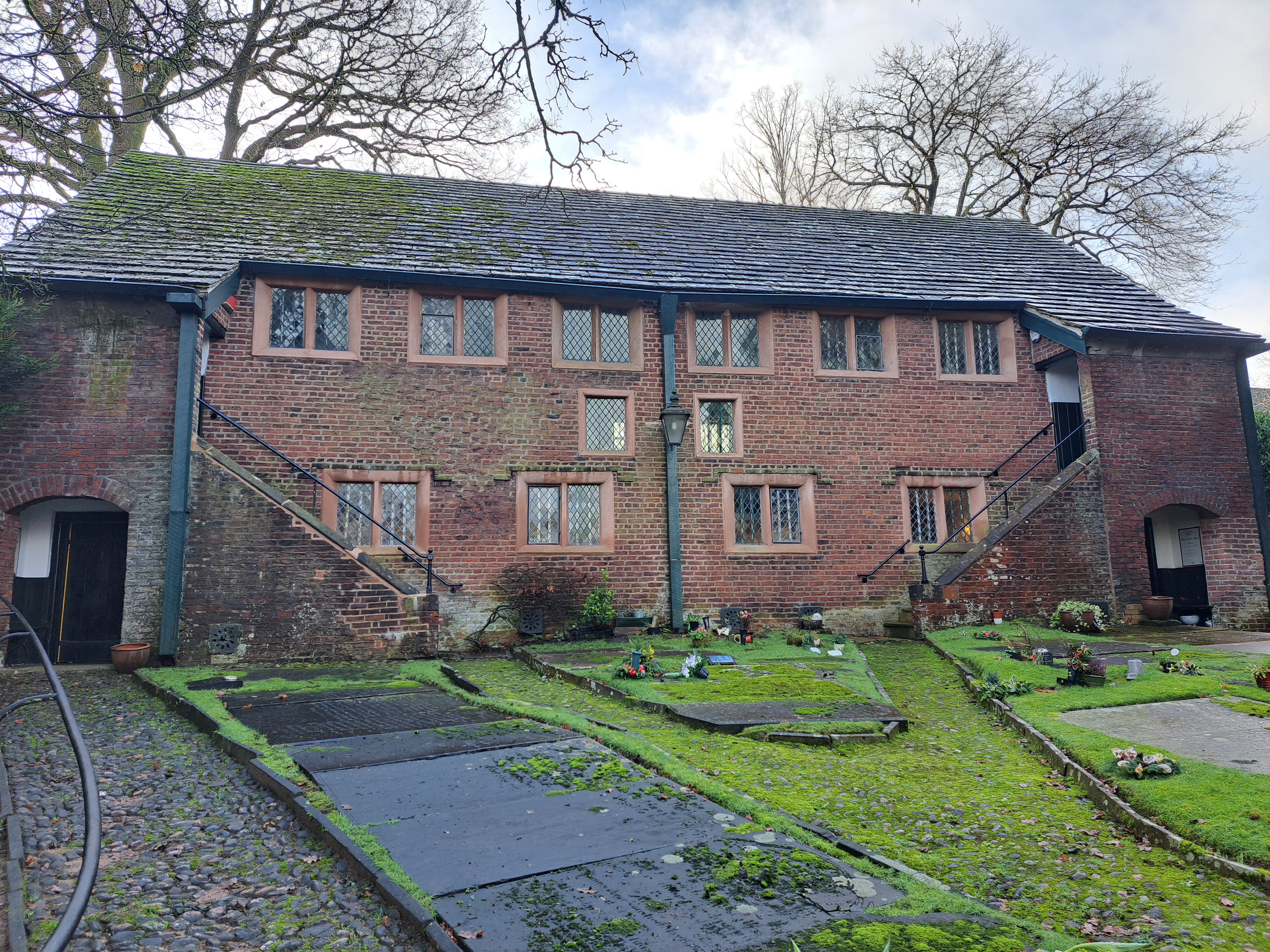
Of course, the most famous person connected with the chapel is undoubtedly Elizabeth Gaskell, who is buried in the chapel graveyard along with her husband Rev William Gaskell.
An old plaque commemorates ‘Mrs Gaskell, the Authoress’
Elizabeth Gaskell is possibly the most famous nineteenth-century Unitarian of all in terms of her continuing impact on modern culture and literature. She is also someone claimed as a Unitarian who really was exactly that; the daughter of a minister, raised in Knutsford Chapel, married to a prominent Unitarian minister and part of that extended community throughout the north west. Her religion was part of her, even to the extent of utlisiing some of the reports of the Manchester Domestic Mission for her descriptions of urban hardship in nineteenth-century Manchester in her novel North and South.
The exterior of the Chapel
Along with Elizabeth Gaskell, Knutsford is also the burial place of Clara Gordon and her gravestone is an invaluable aid in uncovering the tragedy of her and Alexander Gordon’s home life. Two children killed in war, a young daughter died in Rostrevor, county Down, and buried in Warrenpoint, a fact that can hardly be discovered anywhere else than from Clara’s gravestone.
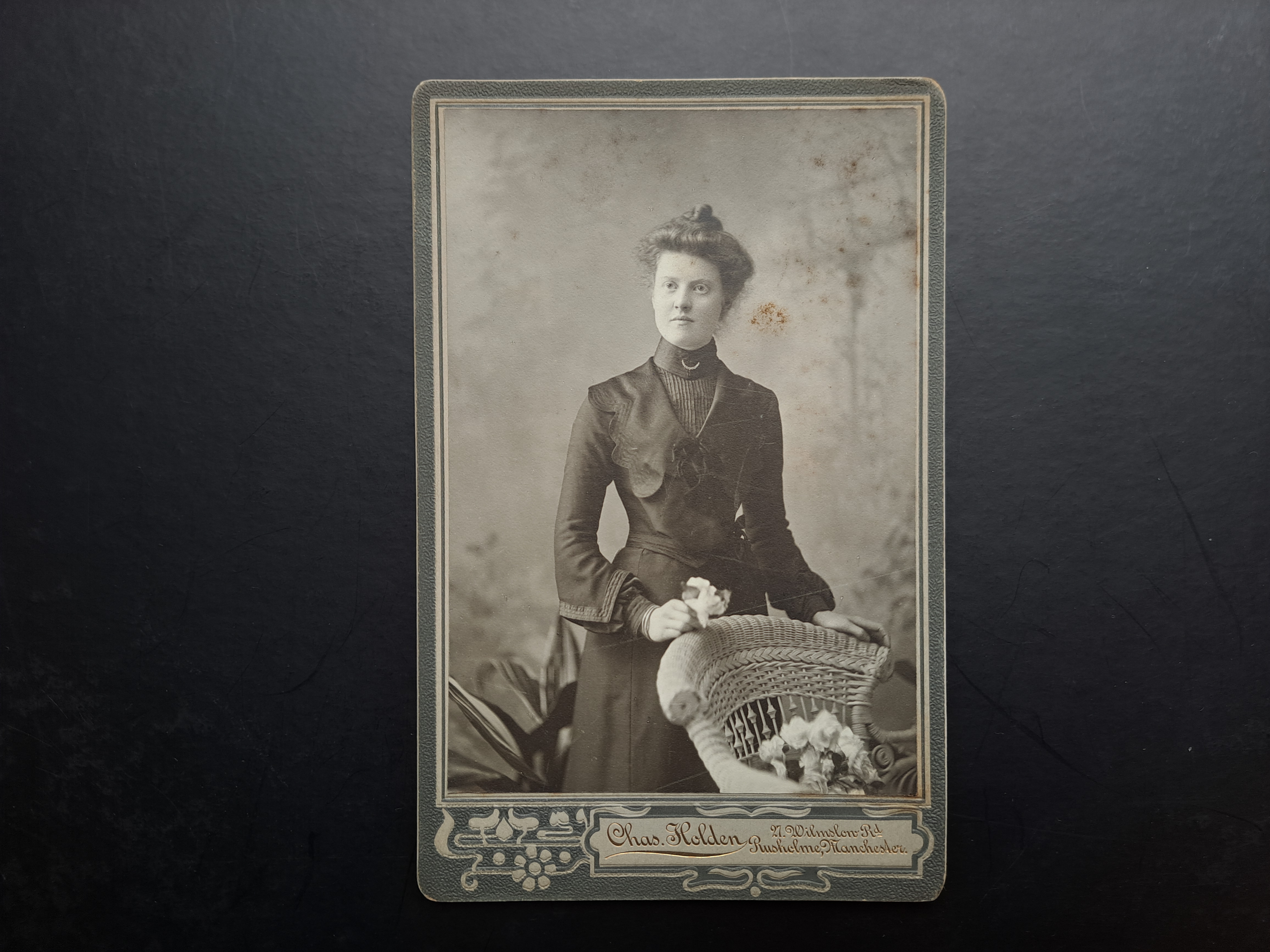
Mary (May) Gordon 1879-1904
The tragic story of the family is told in the video. May was born in Belfast, the above picture was taken in Manchester, in a studio in Rusholme.
The video also shows Alexander Gordon’s close allegiance to Dunmurry. A dedicated member there from 1889 to 1931 despite his commitments to the Unitarian Home Missionary College, the University of Manchester Faculty of Theology, and the churches in North West England.
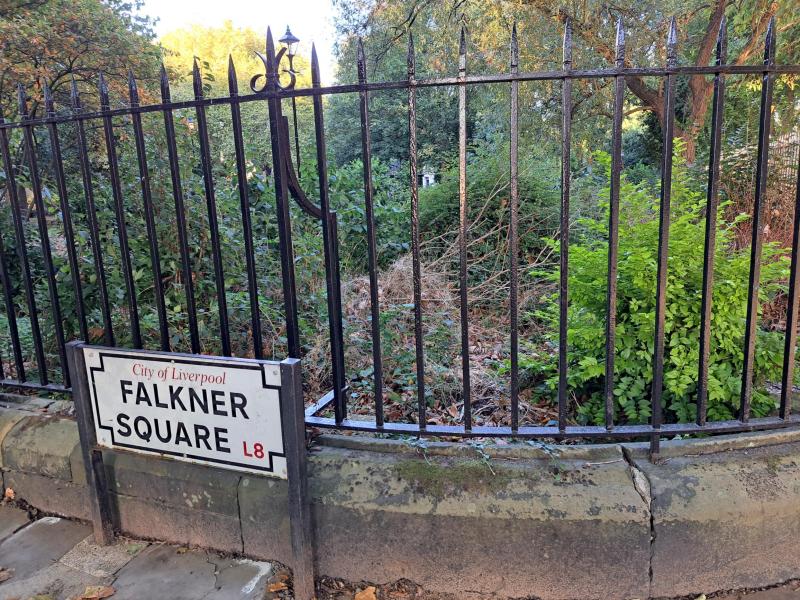
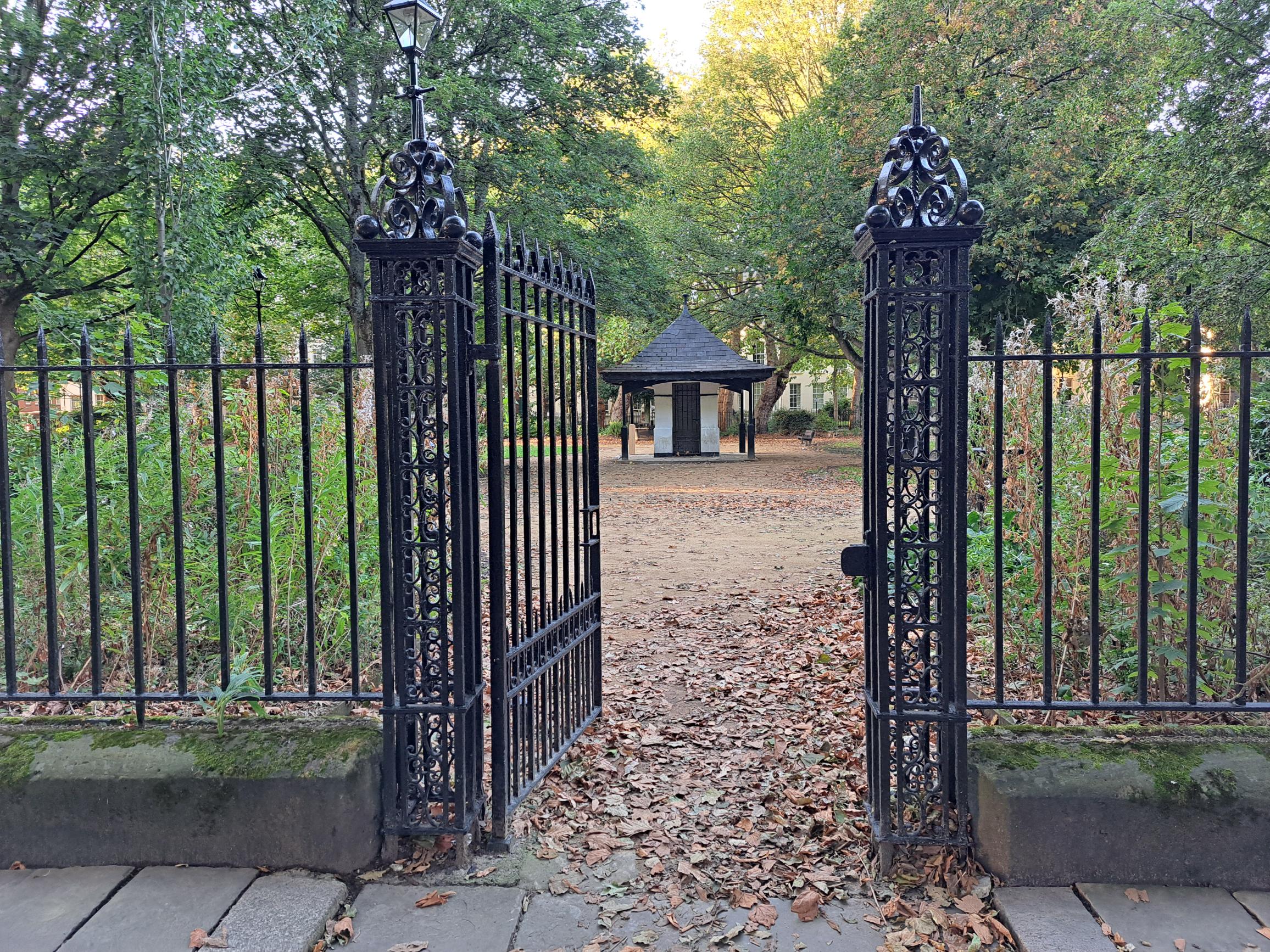
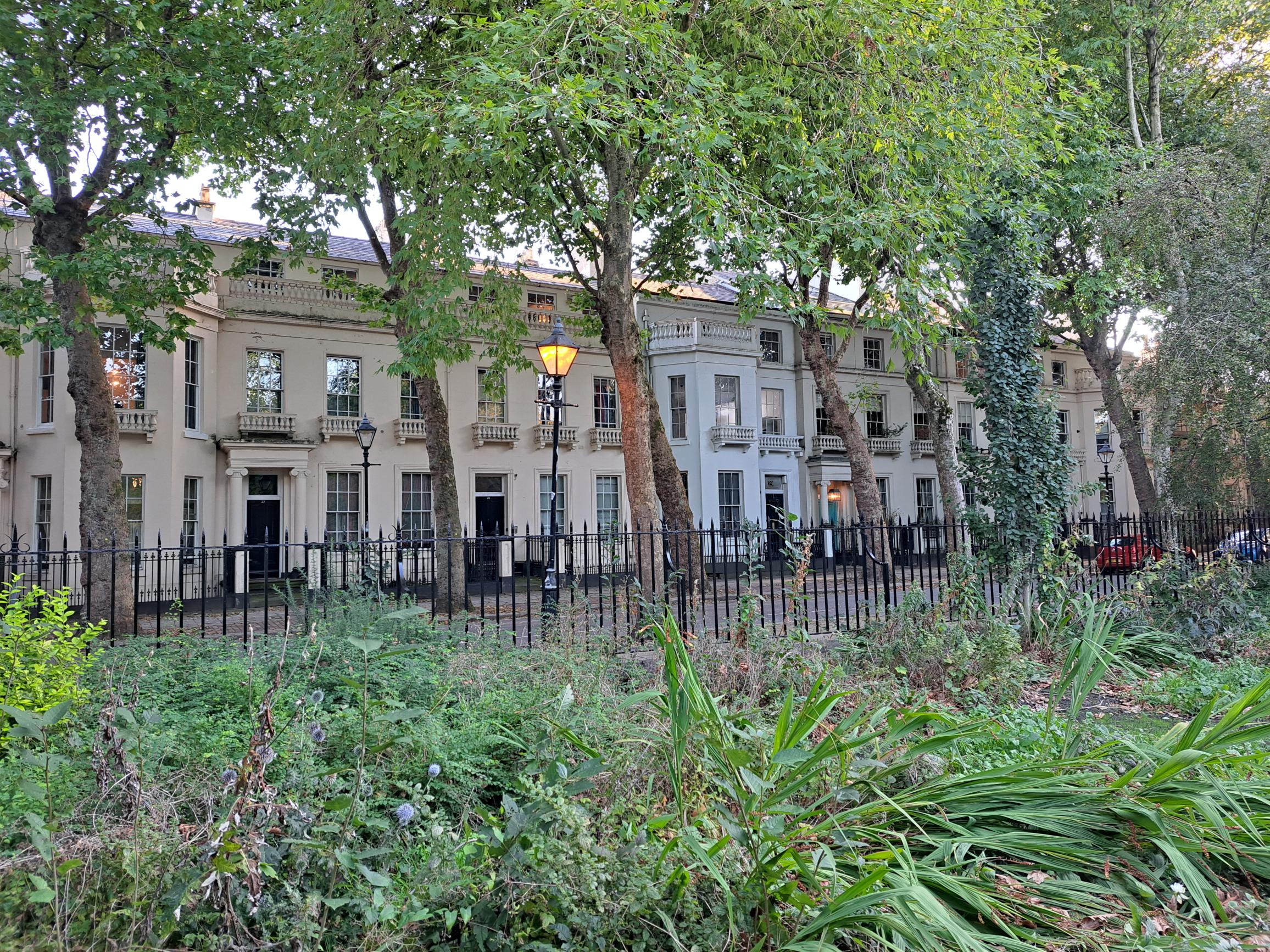
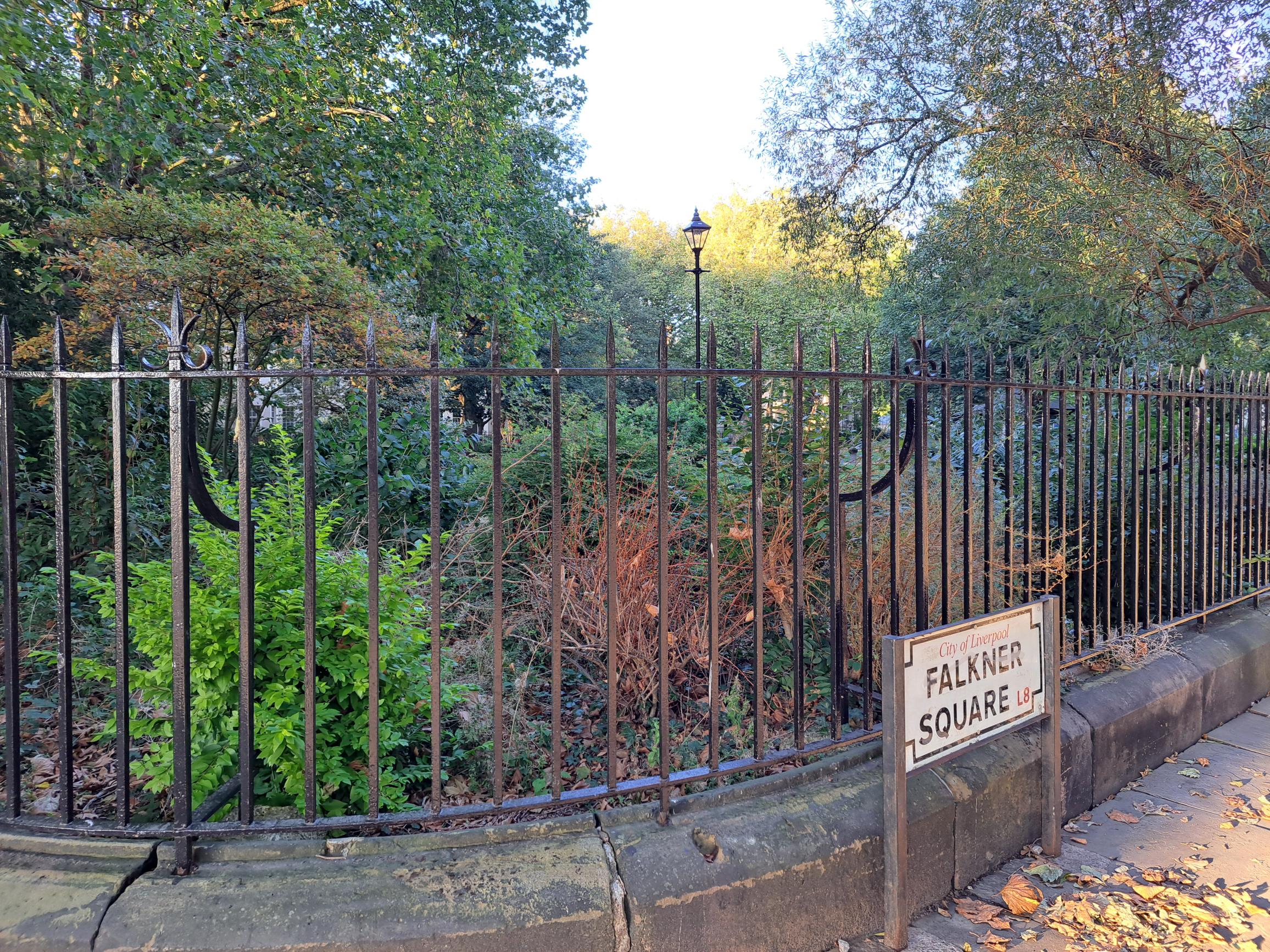
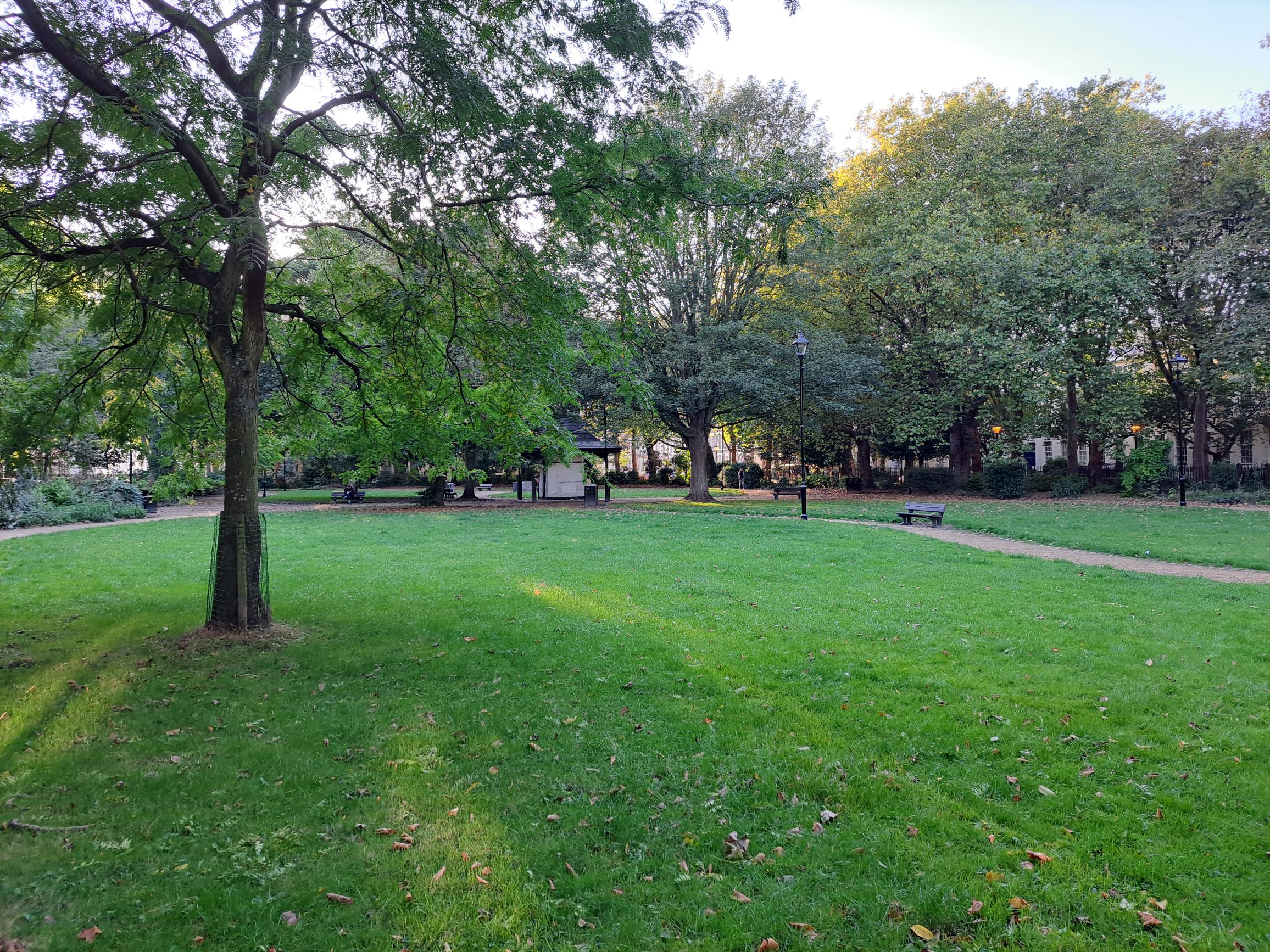
A walk around Falkner Square in Liverpool is always interesting. The buildings are quite impressive although not quite as grand as the houses in the nearby Georgian Quarter, now much utilised for film locations, although Falkner Square itself made a film appearance in the 1971 film Gumshoe with Albert Finney.
What’s attractive about it is that it has its own central park and resembles the sort of square you would find in Bloomsbury. I was always told, that in days gone by, only the people who lived in the Square had a key to the park, although the City Council now claims it as ‘one of the earliest public open spaces in the city’. I suspect it wasn’t open to the public in its earliest days.
Falkner Square is said to be named after Edward Falkner, an ex-soldier and former High Sheriff of Lancashire, who mustered a force of 1,000 men to defend Liverpool in 1797 when fears of a French invasion were at their highest. He was a successful merchant, involved inevitably in the slave trade, but who died in 1825, so he can’t have been directly involved in the development of the Square.
Joseph Sharples’ Pevsner Architectural Guides Liverpool says ‘The central garden is shown planted on a map of 1831, but the stuccoed houses did not begin to appear until the mid 1840s.’ The only architect he mentions is William Culshaw who designed number 29 in 1845 along with many Liverpool buildings.
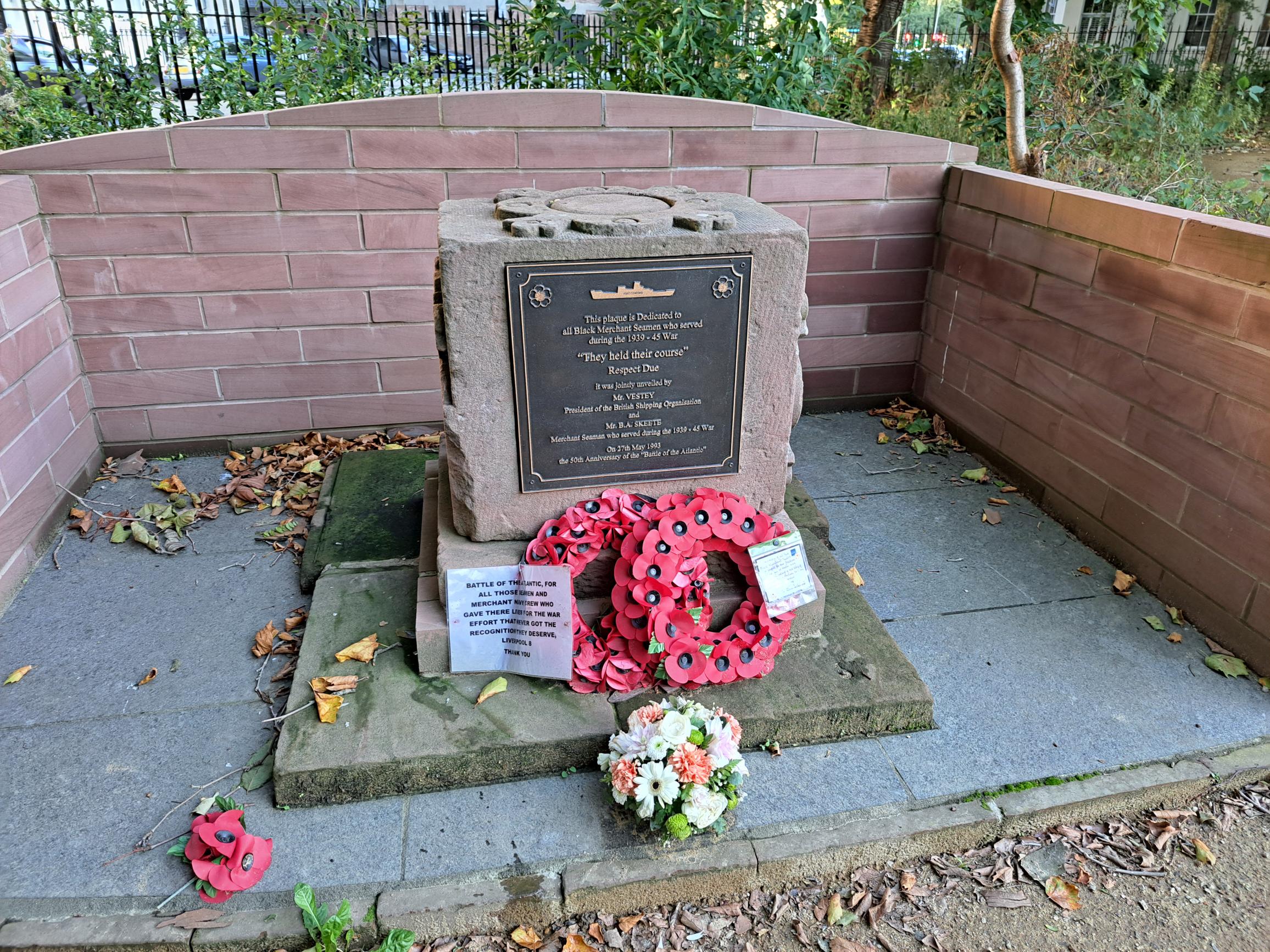
One relatively new feature is the Memorial to Black Merchant Seamen who served in the Second World War. This was unveiled in 1993 on the 50th anniversary of the Battle of the Atlantic and contains the words “They Held Their Course” RespectDue. The bronze plaque, which, shockingly, has endured some vandalism but is now restored, is attached to a large decorated piece of sandstone. This came from the old Liverpool Sailors’ Home, which was once a very prominent landmark in Canning Place near the city centre. Now only the ornate gates survive and can still be seen at the entrance to Liverpool 1.
Memorial to Black Merchant Seamen who served in the Second World War
In this video we take a look at the career of Allen Daniel Coon, one of the pioneers of photography and cinematography in Ulster. The video tells something of his story, with many examples of his postcards, and tracks down his last resting place.
Video: Allen Daniel Coon (1867 -1938) Photographer and Cinematographer
The previous post on this blog is all about Allen Coon’s postcards produced for W.J. Ross of Finaghy Stores in 1927, but these are just a small sample of his vast output produced between his arrival in Ireland in 1902 and his death in 1938.
Allen Daniel Coon was born in Buffalo, New York in 1867. The son of a Baptist pastor and, tradition has it, a native American mother, his career followed a fairly conventional path in its early years. He read law at university and then established himself as an attorney in Buffalo. But at some point he tired of this life and took the road to prospect for gold first in California and then in Alaska. One assumes this was not entirely successful because at some point he took up photography. He was a friend of George Eastman, the founder of Kodak, and may have been related to him. Either way he travelled to England with him in 1900 moving to Ireland a couple of years later to set up his own photography business.
This was right at the beginning of the boom in the sale of postcards. In 1902 you could send a picture postcard for a halfpenny and expect it to be at a local destination at lunchtime. For skilled photographers the opportunities were obvious and operating initially from Londonderry, later from Letterkenny and ultimately from Moira (each place was printed as his location on the front of his postcards) he produced hundreds of postcards of impressive views, street scenes, local landmarks, prominent buildings and sometimes interesting people.
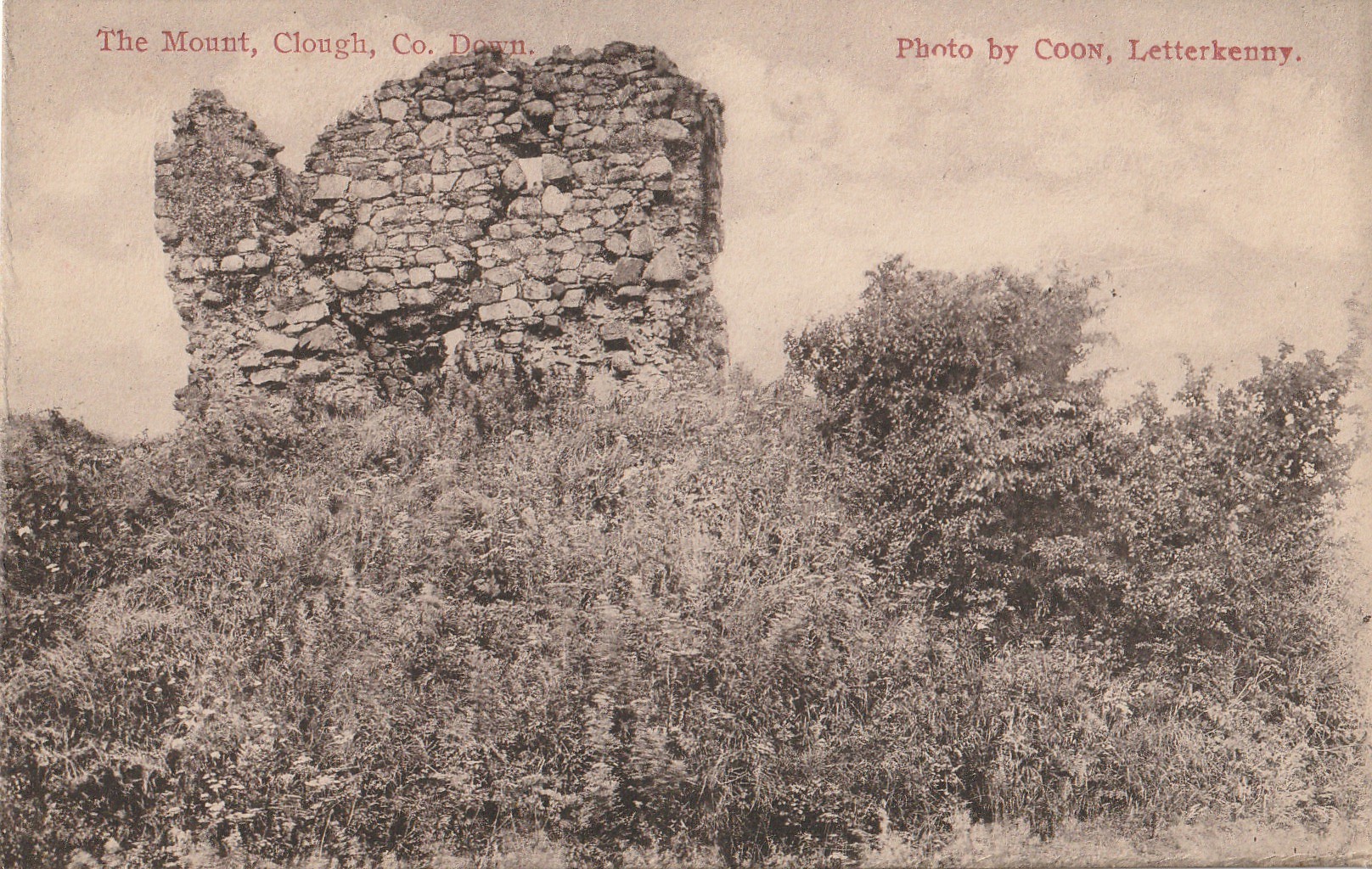
Clough Castle (no publisher listed on the back)
It is recorded that he charged local traders less than £5 for 2,000 postcards, which also included their name on the back of the card. From about 1924 he started numbering the cards starting with the last two digits of the year they were produced which is very helpful in dating the cards.
In the Census of 1911 he was recorded as living with his wife of three years, Clara, at Church Wall, Londonderry where he recorded his profession as Photographer and Theatrical Showman. Also recorded were their two eldest children (Gladys and Gaynor) and the fact that while his wife was a Presbyterian he declared himself to be an agnostic.
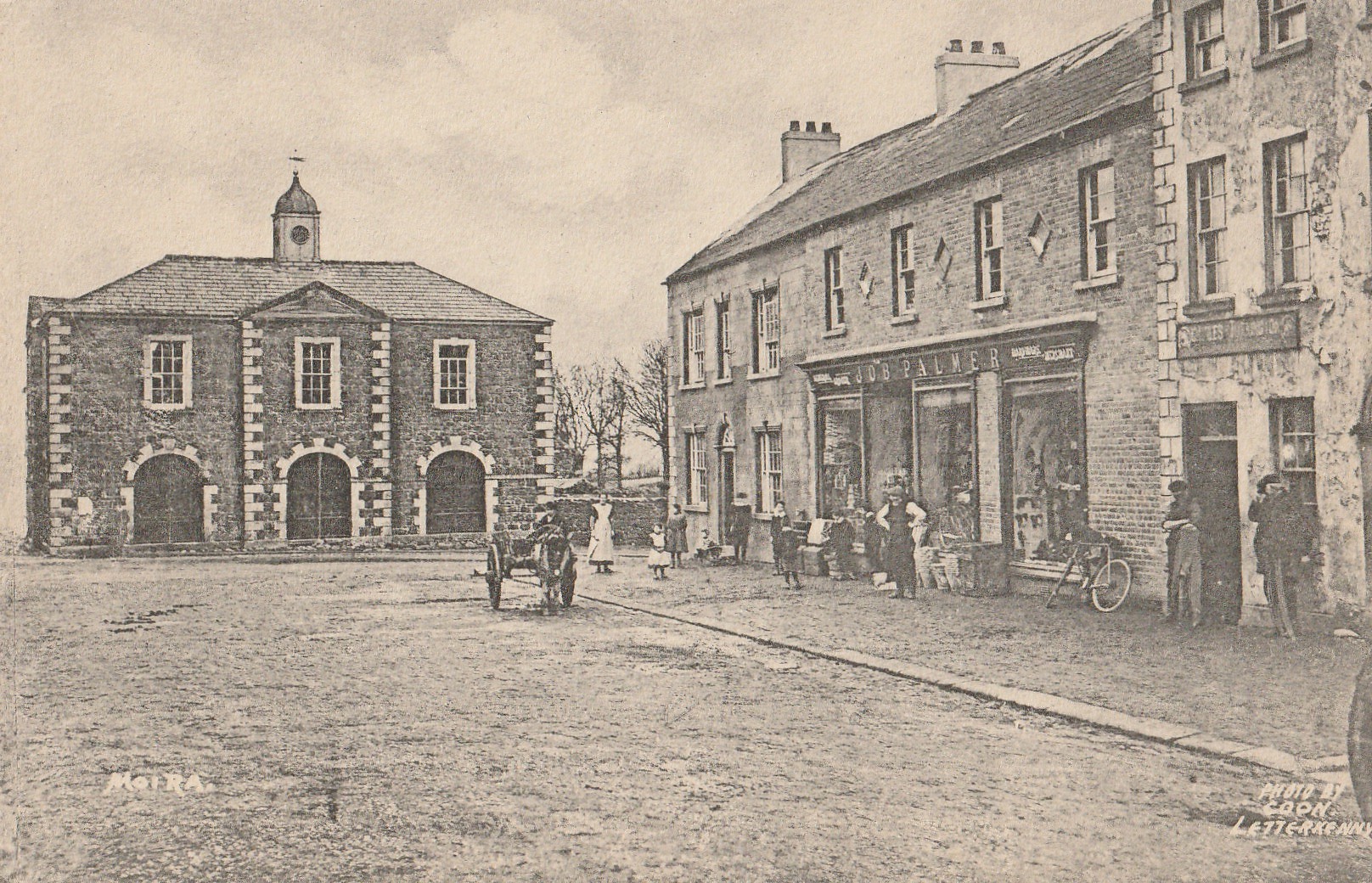
Moira Market House, published by Job Palmer, General Trader, whose shop can be seen on the right
The Theatrical Showman side of his profession was not an idle boast. Although his income from postcard sales must have been steady he was also perpetually ‘on tour’ travelling all over the north of Ireland with his camera and darkroom, setting up in towns as he went to film moving pictures and then show them to a fascinated populace along with films of Charlie Chaplin and other entertainers. In fact he also seems to have had an interest in some of the earliest cinemas established in county Donegal and in Belfast but his commitment to travelling from town to town with his films never waned right up to his death.
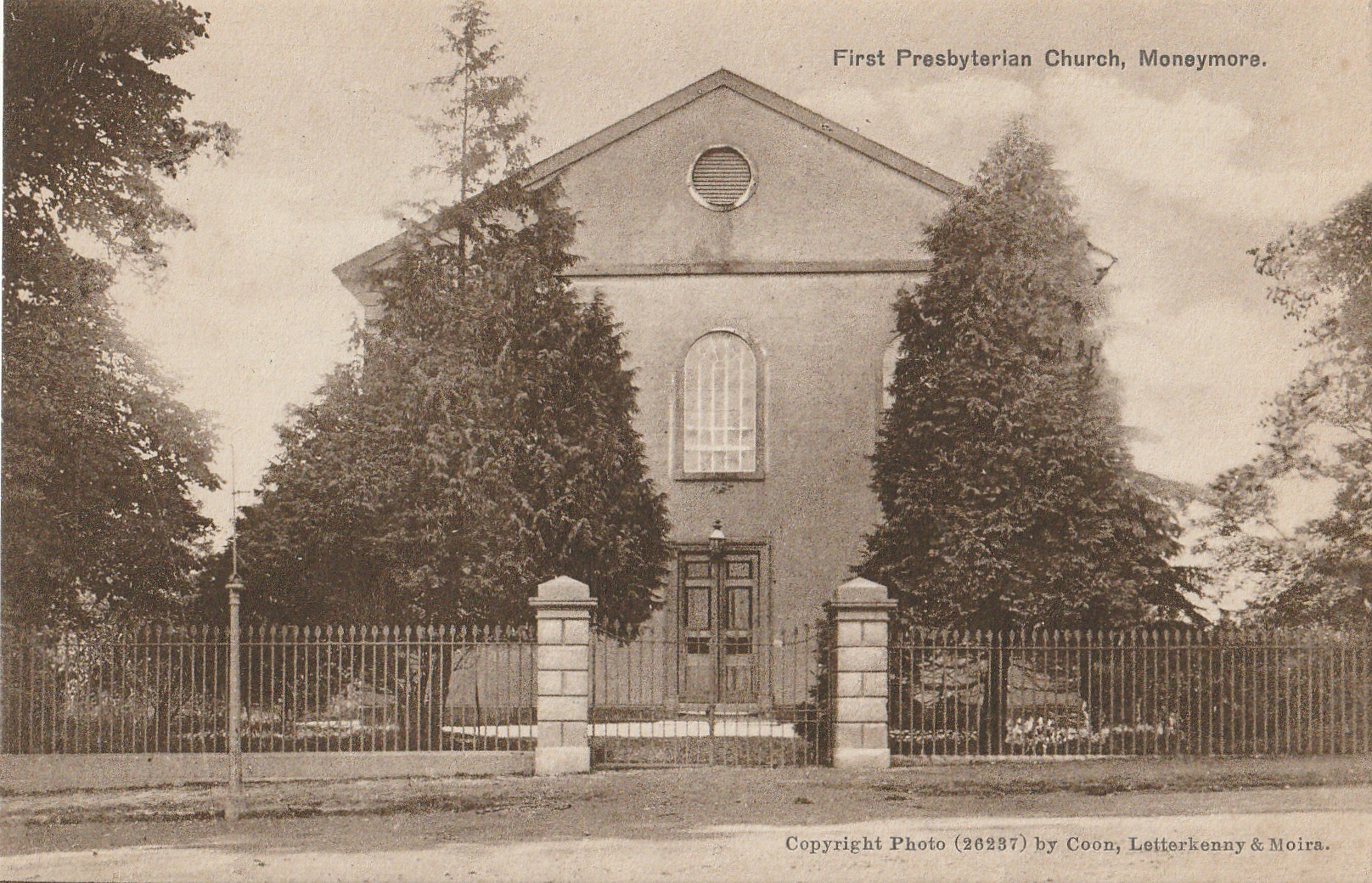
Moneymore, First Presbyterian Church (‘Published by Coon for Devlin, General Merchant, Moneymore’)
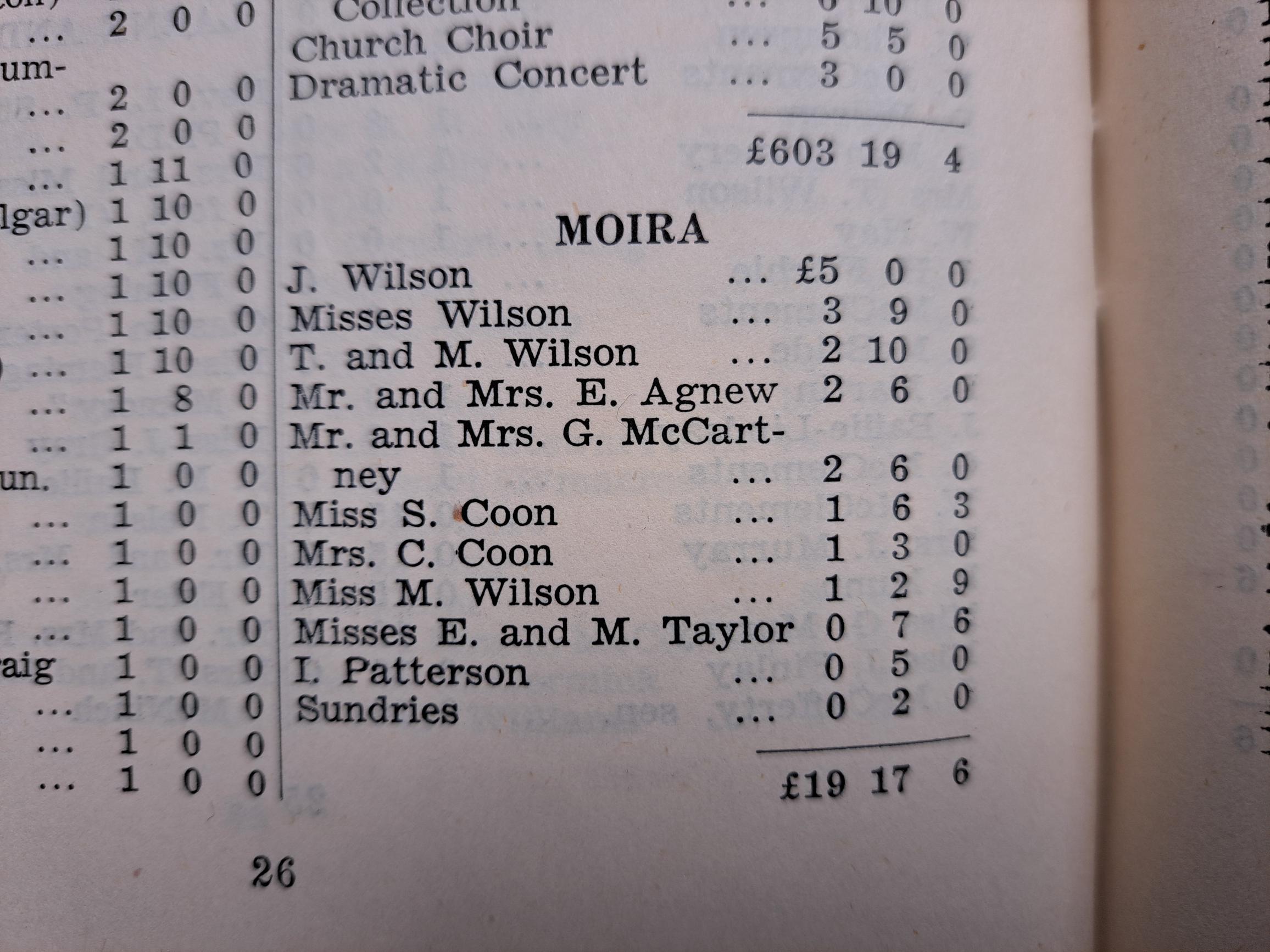
After partition he moved from Letterkenny to Moira and was ultimately buried there in the Non-Subscribing Presbyterian Church graveyard after his sudden death while on tour in Sligo. It is clear that his family had a close association with the Church, other family members are buried in the churchyard, but in the 1940s when the Non-Subscribing Presbyterian denomination launched a tercentenary appeal for the Sustentation Fund (1642 – 1942), Allen Coon’s wife Clara and his daughter Sylvia were amongst the members of the little congregation at Moira who gave their support. Indeed Miss Sylvia Coon was also one of the two local appeal officials for Moira.
Donations from Moira to the NSPCI Tercentenary Sustentation Fund Appeal, including Clara and Sylvia
Following our postcard views of Dunmurry in the 1930s I thought I would post some postcards from a place a short distance away; pictures of Finaghy, which probably date from a few years before, and which we know were taken by Allen Daniel Coon of Letterkenny and Moira.
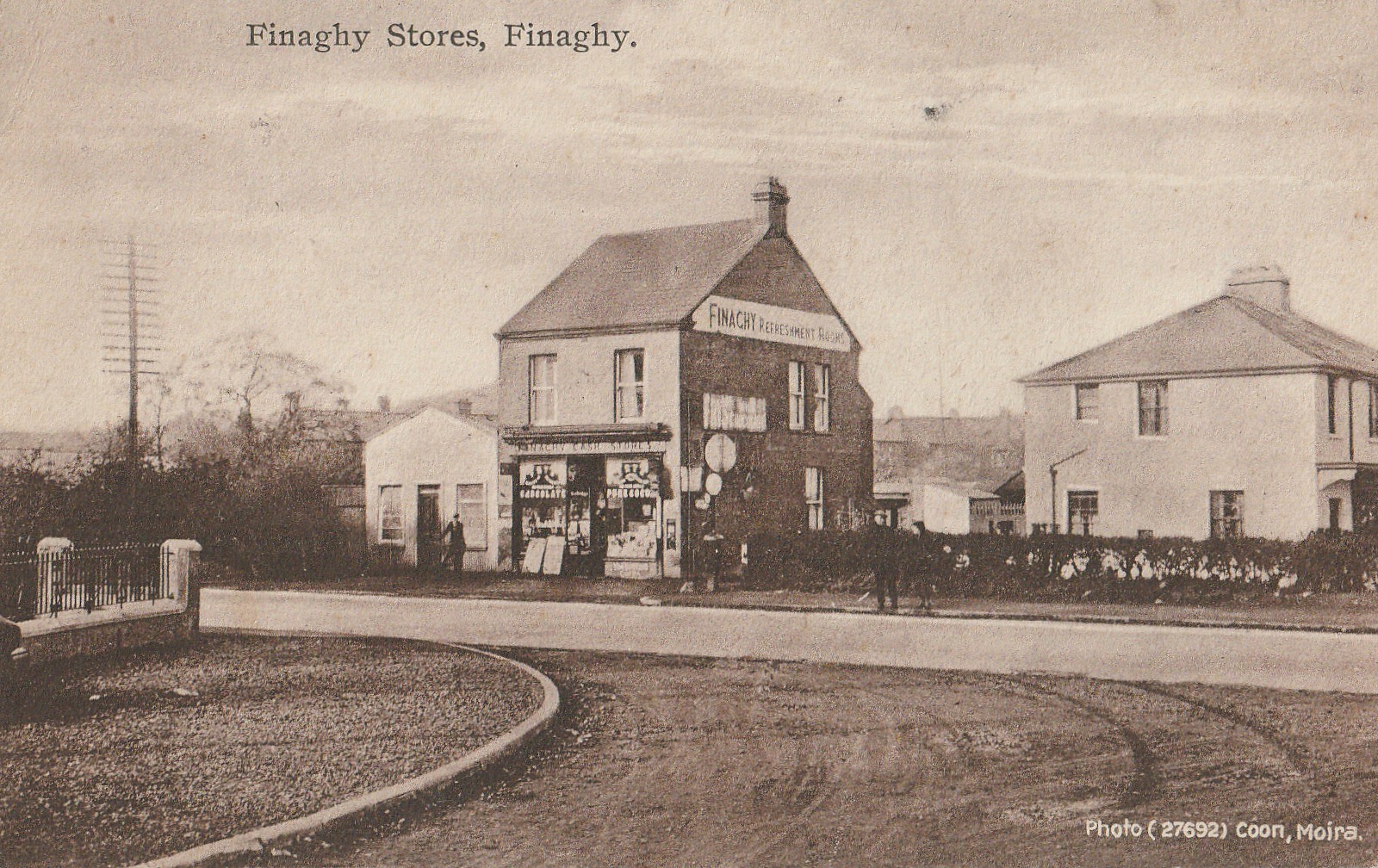
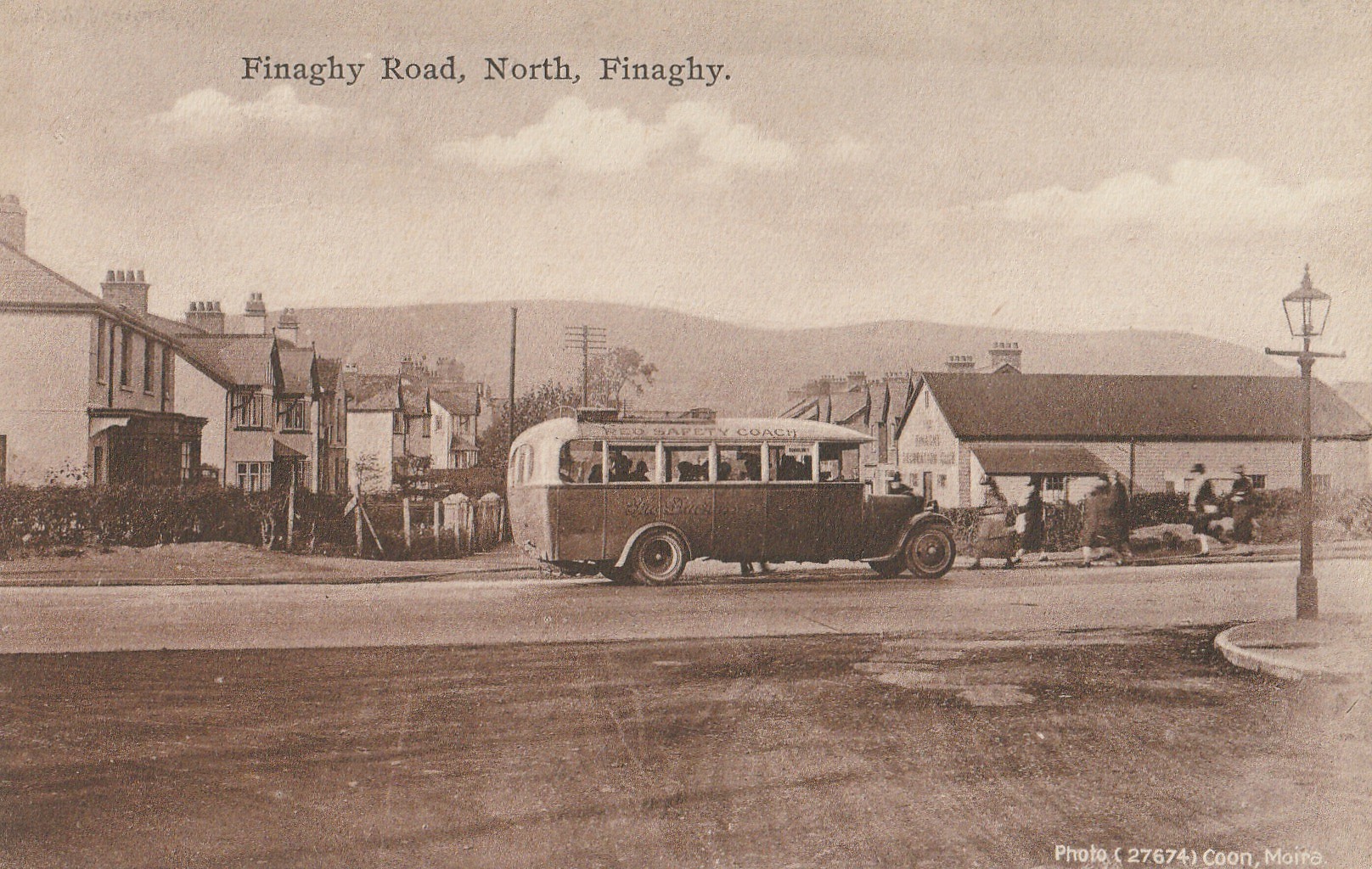
The numbering system on the four cards is believed to point to a date in 1927 for their production. According to the excellent catalogue of Allen Coon’s cards produced by Brian Hamilton in 2016 there were five cards published in this series for W.J. Ross of Finaghy Stores but I only have four of them. These four images are quite common but I have to admit that I have never seen an example of the fifth card which is named as ‘Finaghy Road South looking North’.
Finaghy Stores, Finaghy
The ‘Finaghy Stores’ postcard shows a solitary shop, that of W.J. Ross’s Cash Stores and Refreshment Rooms. It stands out very prominently in those days, but later had another shop joined to it and was surrounded by a number of other shops, including a couple of banks. The shop was well known to me in more recent times when it belonged to John Frazer, an active member of All Souls’ Church when I was minister there.
Finaghy Road, North, Finaghy
The postcard ‘Finaghy Road, North, Finaghy’ looks across the crossroads to Finaghy Road North and dates from a time when there was so little traffic that a bus could stop in the middle of the road to pick up passengers to be taken into town. This view has essentially not changed except for the addition of shops on one side and what was a bank on the other side of the road.
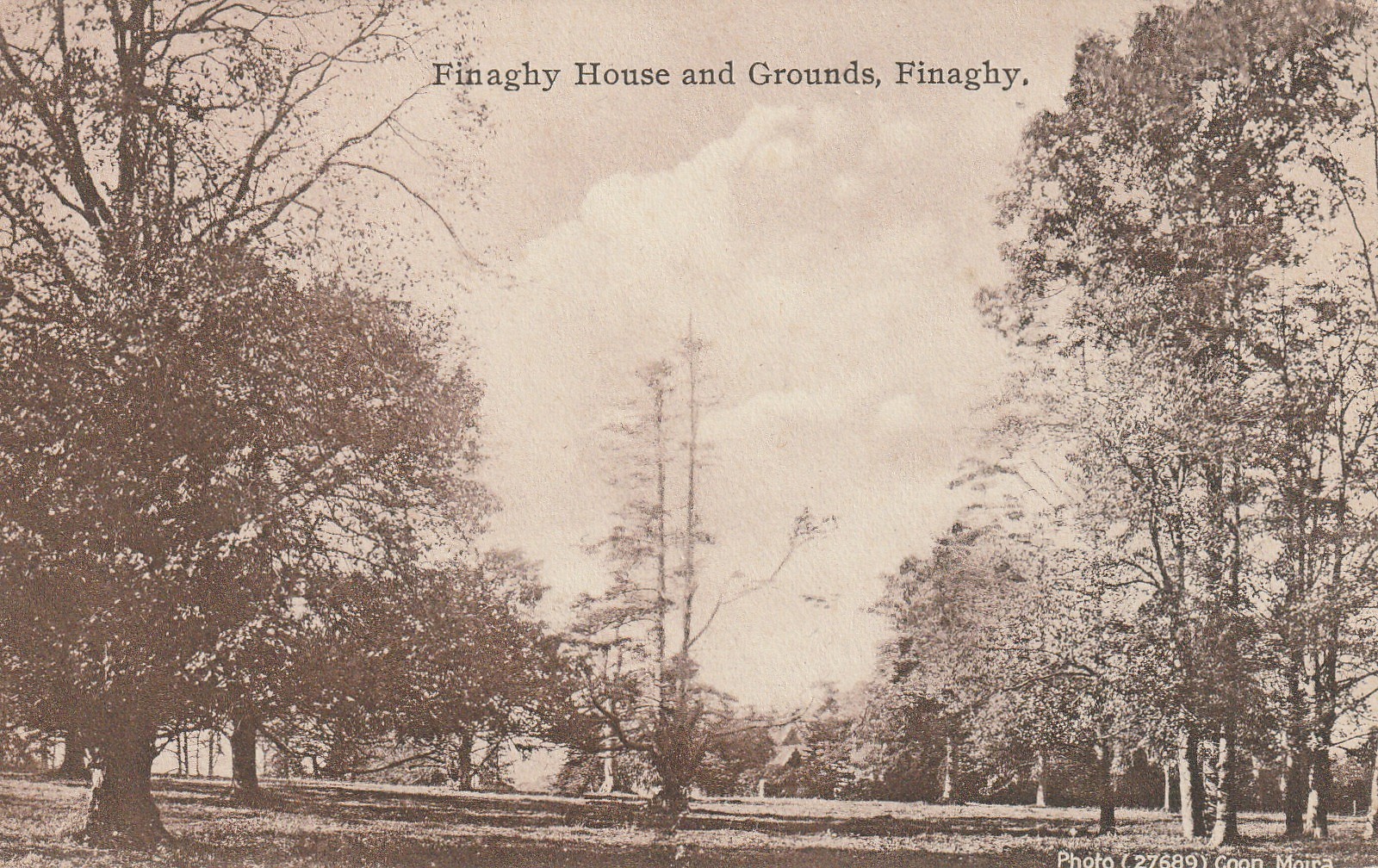
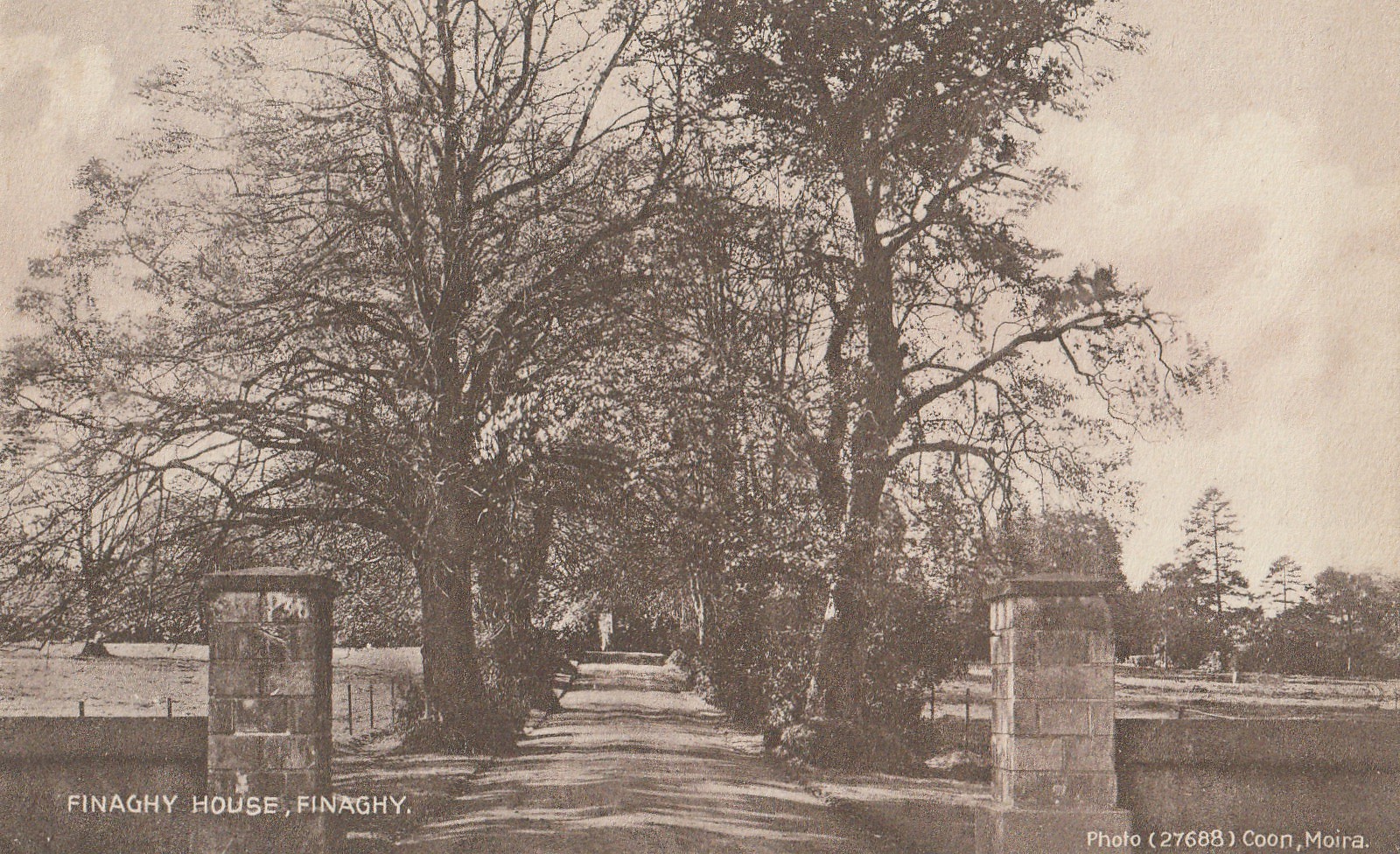
The other two postcards are a little more curious. Named as ‘Finaghy House’ and ‘Finaghy House and Grounds’, they could more accurately be titled ‘Finaghy House gateposts’ and ‘Finaghy House Grounds’ since neither card features any more than the merest suggestion of Finaghy House.
Finaghy House and Grounds
This is a pity really because Finaghy House will have been a major landmark at the time. Lord Belmont in Northern Ireland tells us all about Finaghy House in his excellent blog which you can read here. He tells us that the original house was built by Richard Woods at the end of the seventeenth century but was sold to the Charley family, a prominent linen family in 1727. Lord Belmont quotes the 1830 Ordnance Survey Memoirs as saying ‘the walls are nearly four feet thick and run together by grouted lime, similar to other ancient buildings.’ A descendant of the family said it was ‘an imposing mansion in a large park, with extensive outhouses and stables … a remarkable feature [of the interior] being a revolving fireplace between the drawing-room and the dining-room.’ The Charley family sold the house to a family named Brewis who, it is said, bred corgis, one of which had the distinction of being the first corgi owned by Queen Elizabeth, The Queen Mother.
In about 1890 Finaghy House was sold to James Moore and this is where a connection can be found with the Non-Subscribing Presbyterian Church of Ireland. James Moore was a direct descendant of Rev Henry Montgomery and the family were all members of our church at Dunmurry. In the 1901 Census he is listed as a Manufacturing Stationer living with his wife, Maria Lydia, who had been born in New Orleans. They and their three children (Harold Montgomery, Kenneth Montgomery and Sybil) all give their religion as Unitarian. As well as the five family members there are three servants listed as resident in the house. Harold and Kenneth are respectively stationer’s assistant and stationer’s apprentice to their father in 1901, Sybil is still at school. By the 1911 Census the three children are no longer living at home although there are still three (different) servants; a parlour maid, a cook and a housemaid.
Finaghy House by A.D. Coon
By 1911 James Moore was a JP in County Antrim. In the First World War Kenneth Montgomery Moore was commissioned into the 11th Battalion Royal Irish Rifles and was awarded the Military Cross. He returned home safely at the end of the war and his name is listed in the First World War Roll of Honour of the Non-Subscribing Presbyterian Church of Ireland (published 2018).
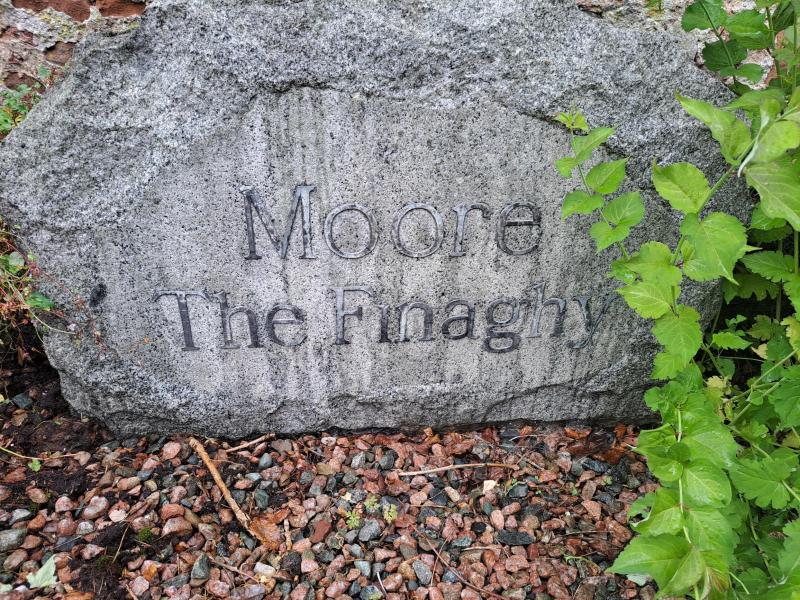
The Moore family burial ground can be found in their church, the First Presbyterian (NS) Church, Dunmurry. Marked simply as ‘Moore, The Finaghy’ it can be seen at the top of this page.
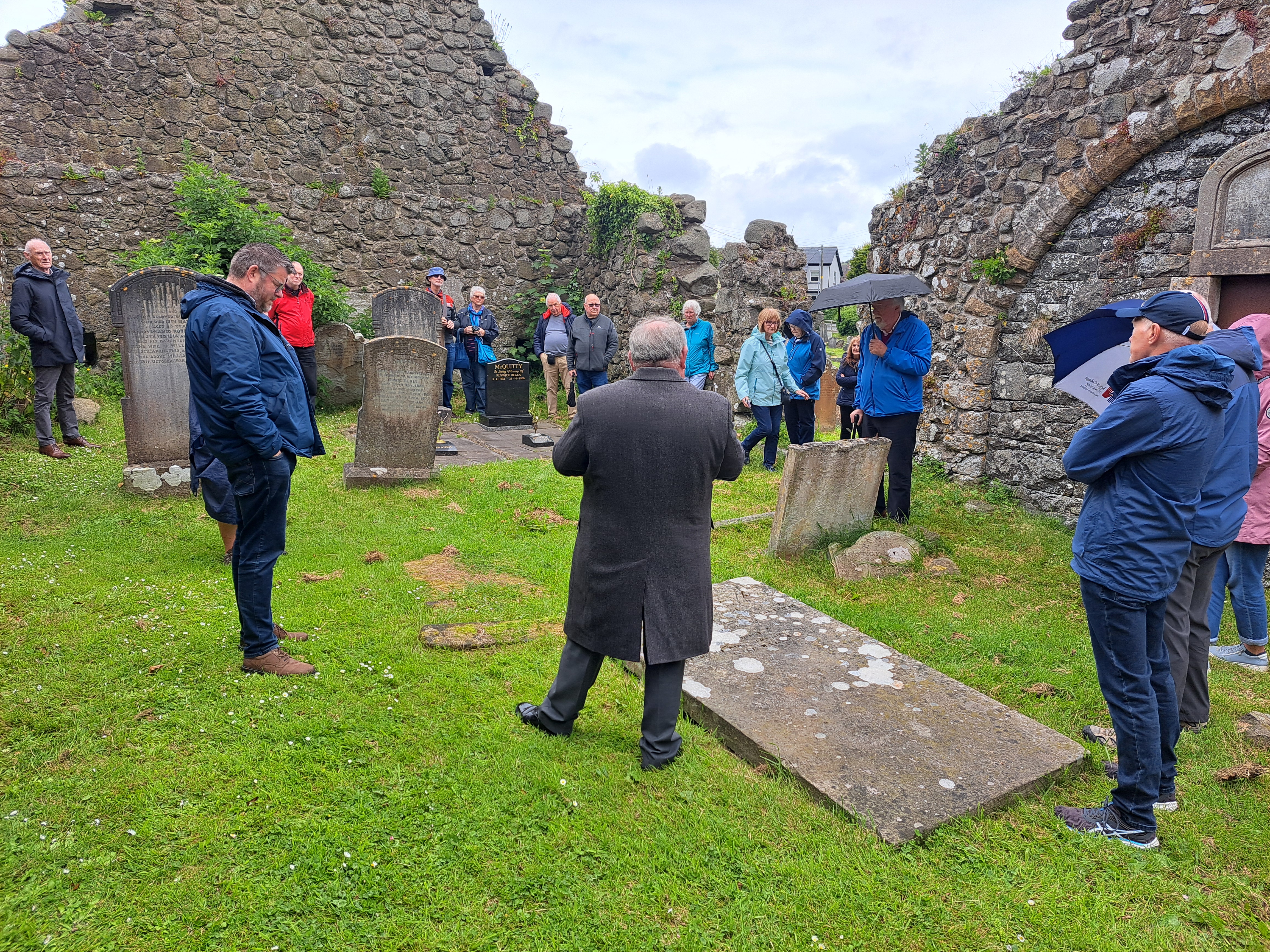
On 5th June 2025 a party of about 20 of us set off on a journey to visit four Non-Subscribing Presbyterian churches in county Antrim plus an historic graveyard (including the ruins of a very historic church) and met a Non-Subscribing Presbyterian peacock along the way. We had as our expert guide the Rev Dr John Nelson whose extensive knowledge kept us informed and entertained all day.
We left Dunmurry and headed for Ballycarry where we visited first Templecorran graveyard.
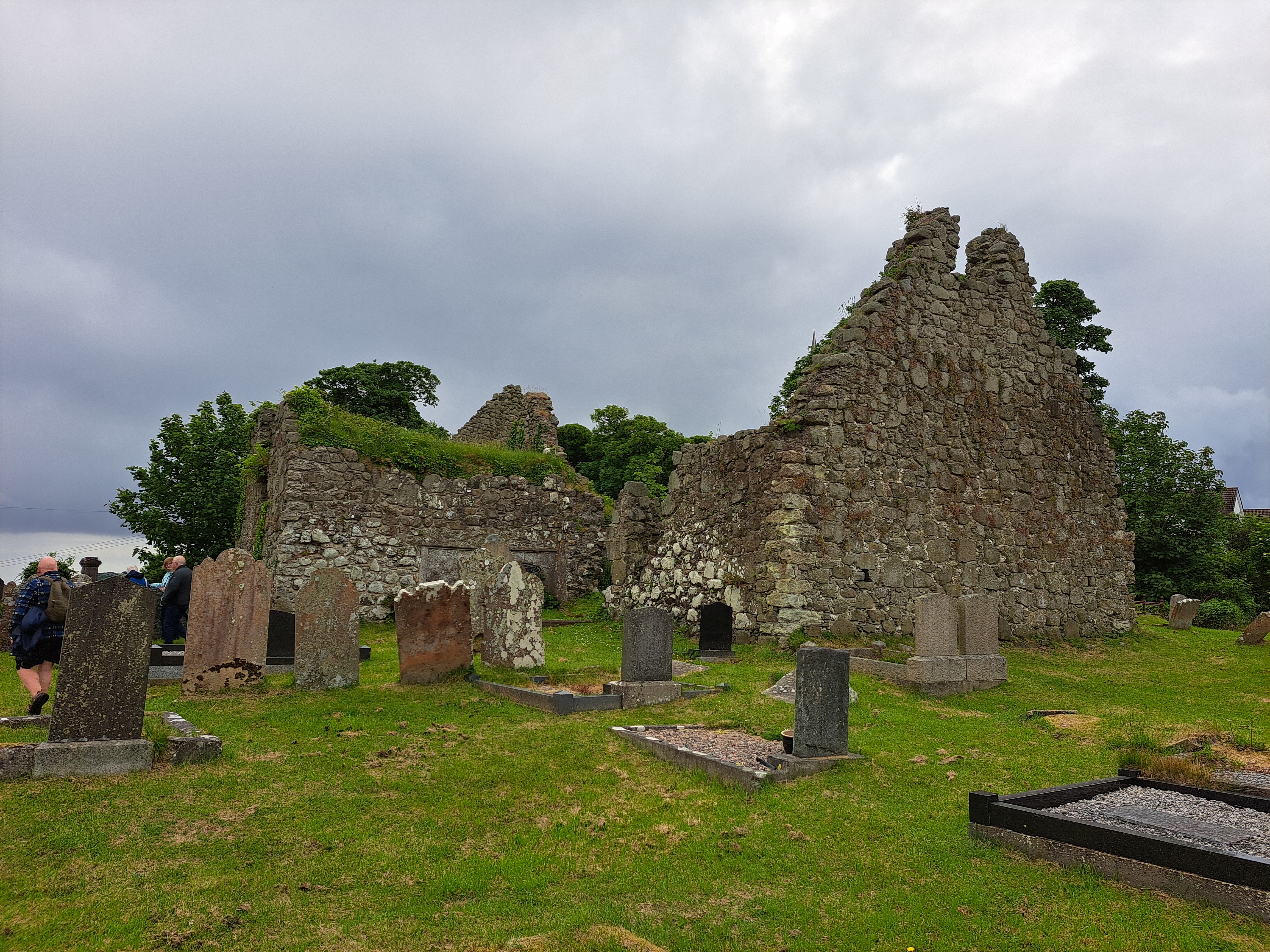
The ruins of Templecorran church
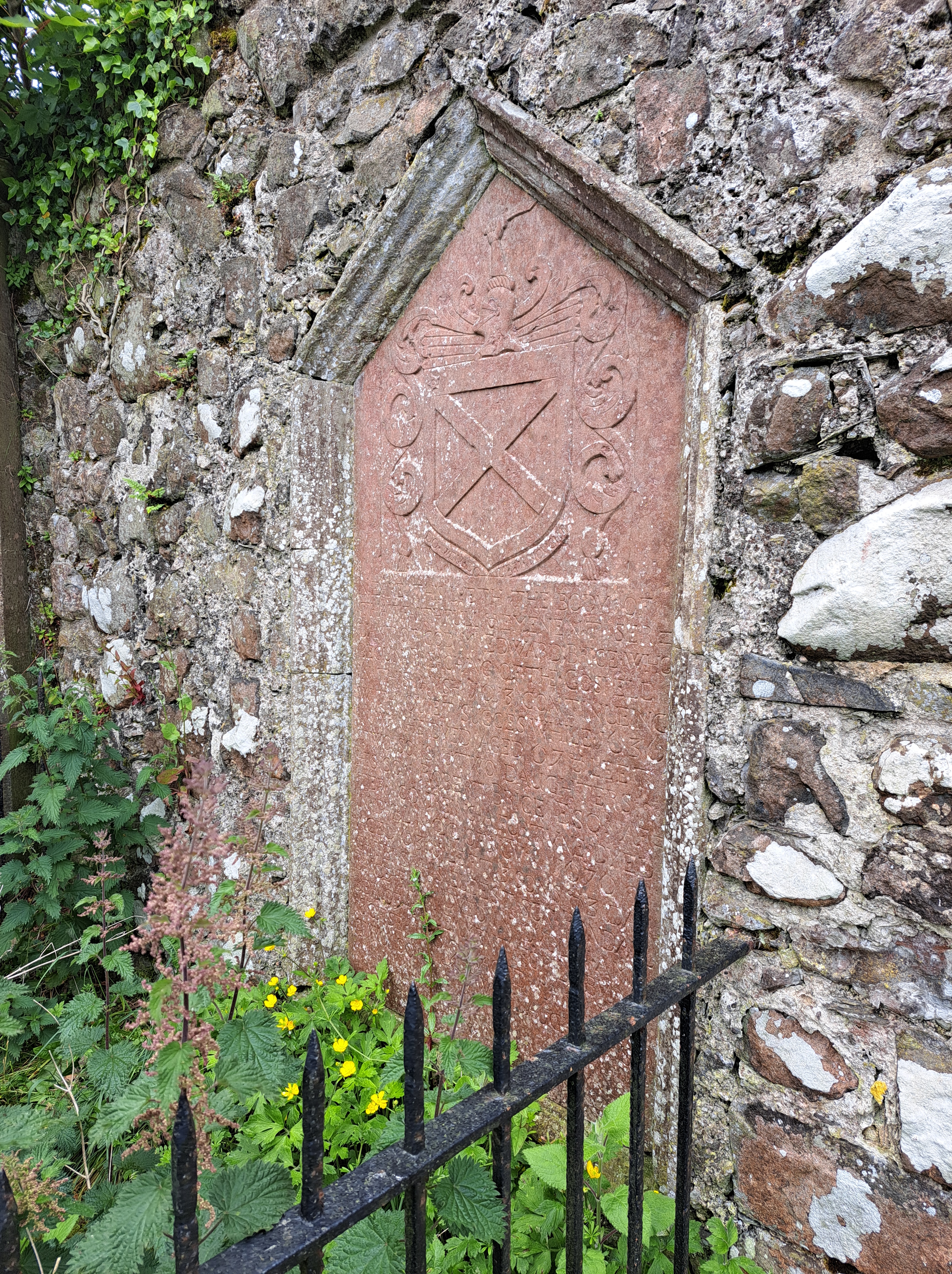
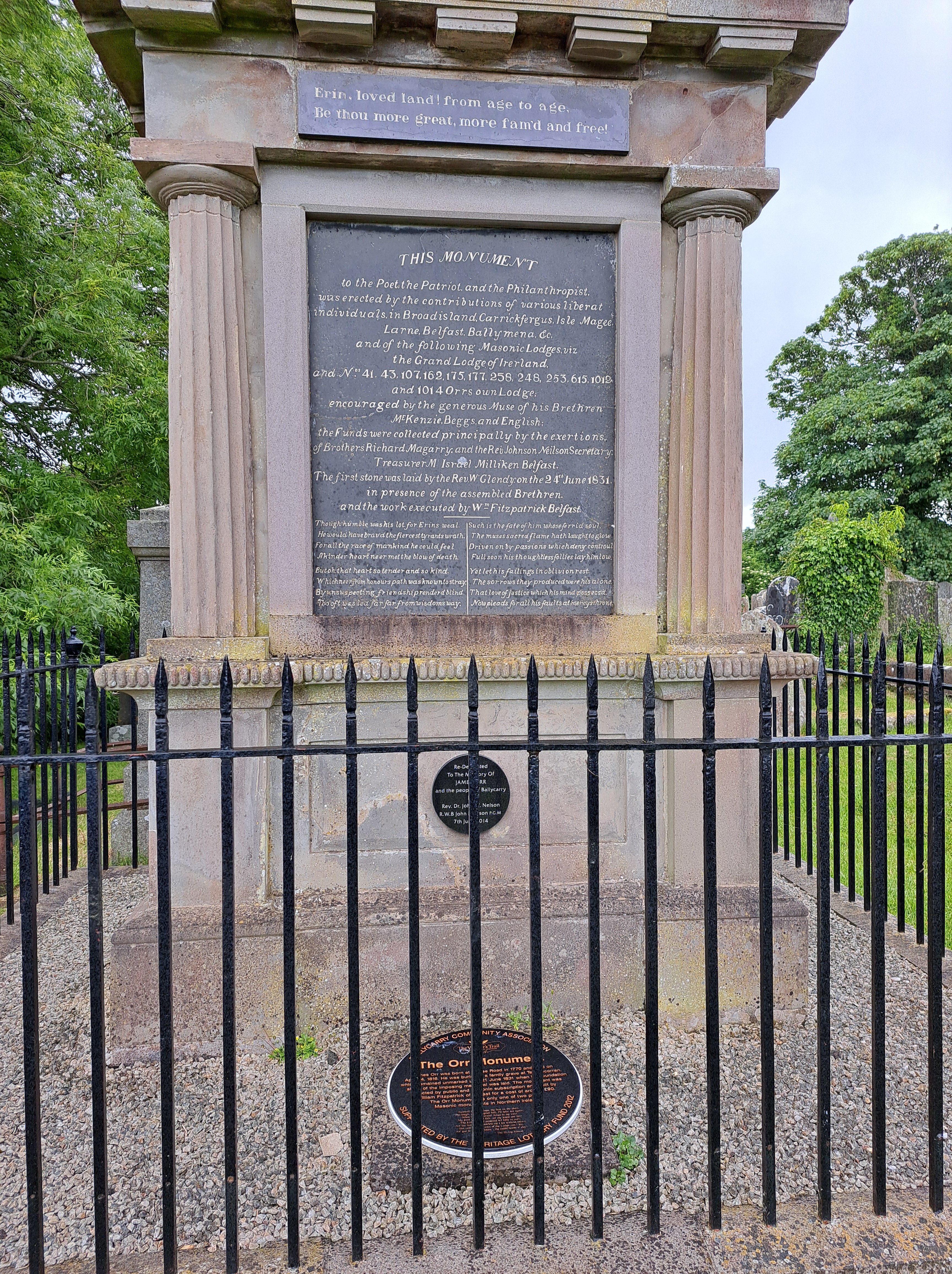
The original parish church used by Edward Brice, the first Presbyterian minister in Ireland in 1613, is now in ruins but it contains many interesting items, including Edward Brice’s grave, the grave of the Rev John Bankhead and a memorial to James Orr, the Bard of Ballycarry.
Grave of Edward Brice
James Orr memorial
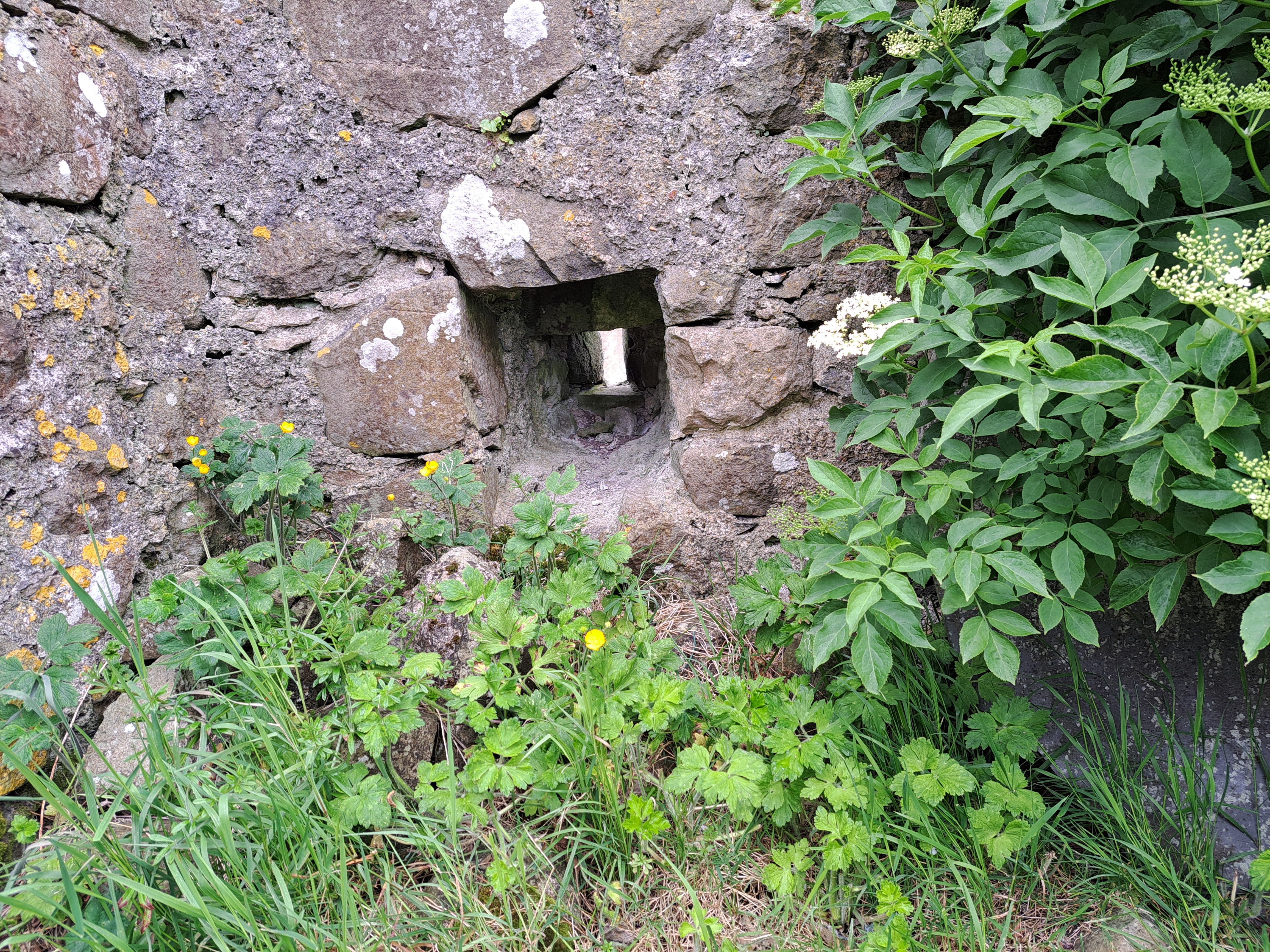
The church was renovated in 1622, during the ministry of Edward Brice, and being built in dangerous times was constructed to be defendable; musket loopholes can still be seen which would have covered all angles of the church should it ever have come under attack.
One of the musket loopholes
The church at Templecorran was slated (unlike the first Ballycarry meeting house which was thatched) and was occupied by Edward Brice and his congregation until he was ejected in 1637.
Inside Templecorran church
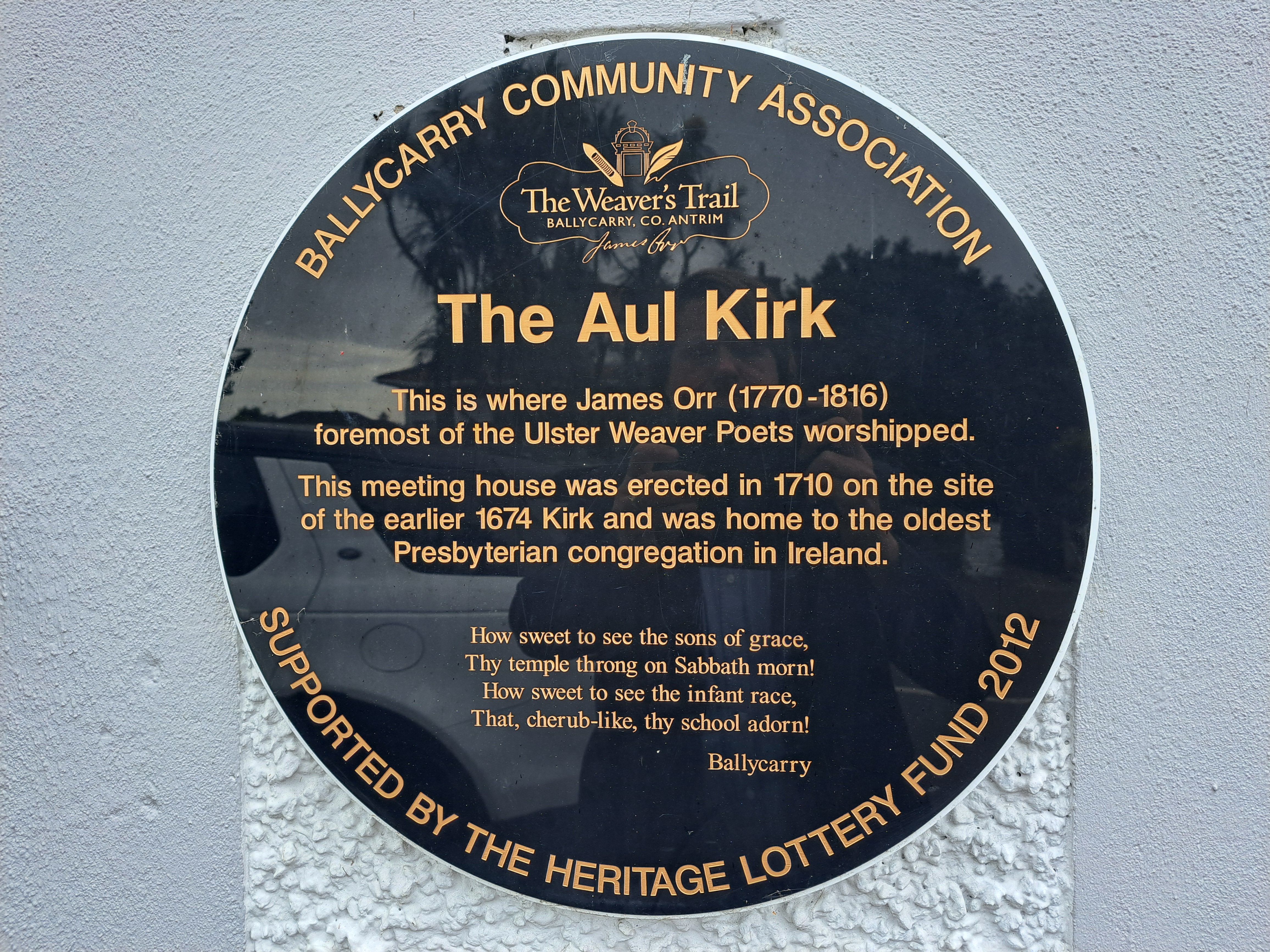
From the old church it is a short walk to Ballycarry where Dr Nelson told us the story of the meeting house, itself dating from the early 18th century.
Ballycarry plaque
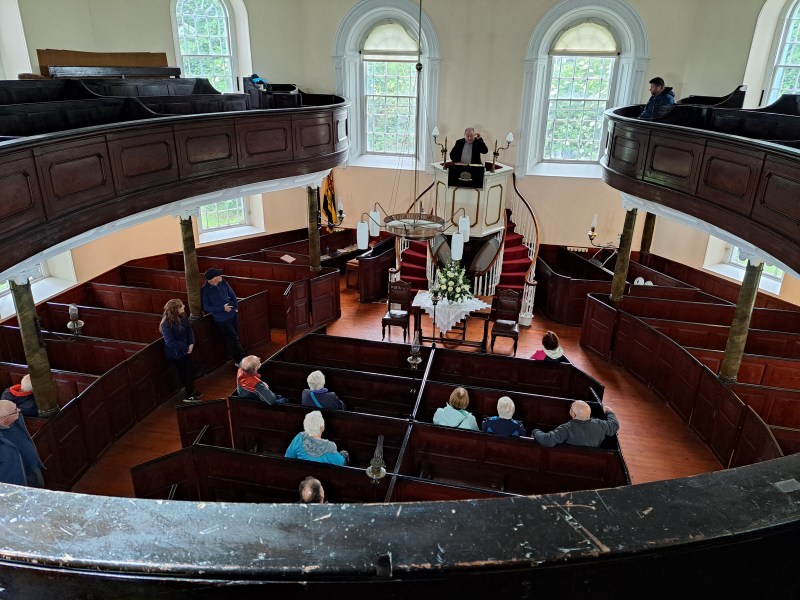
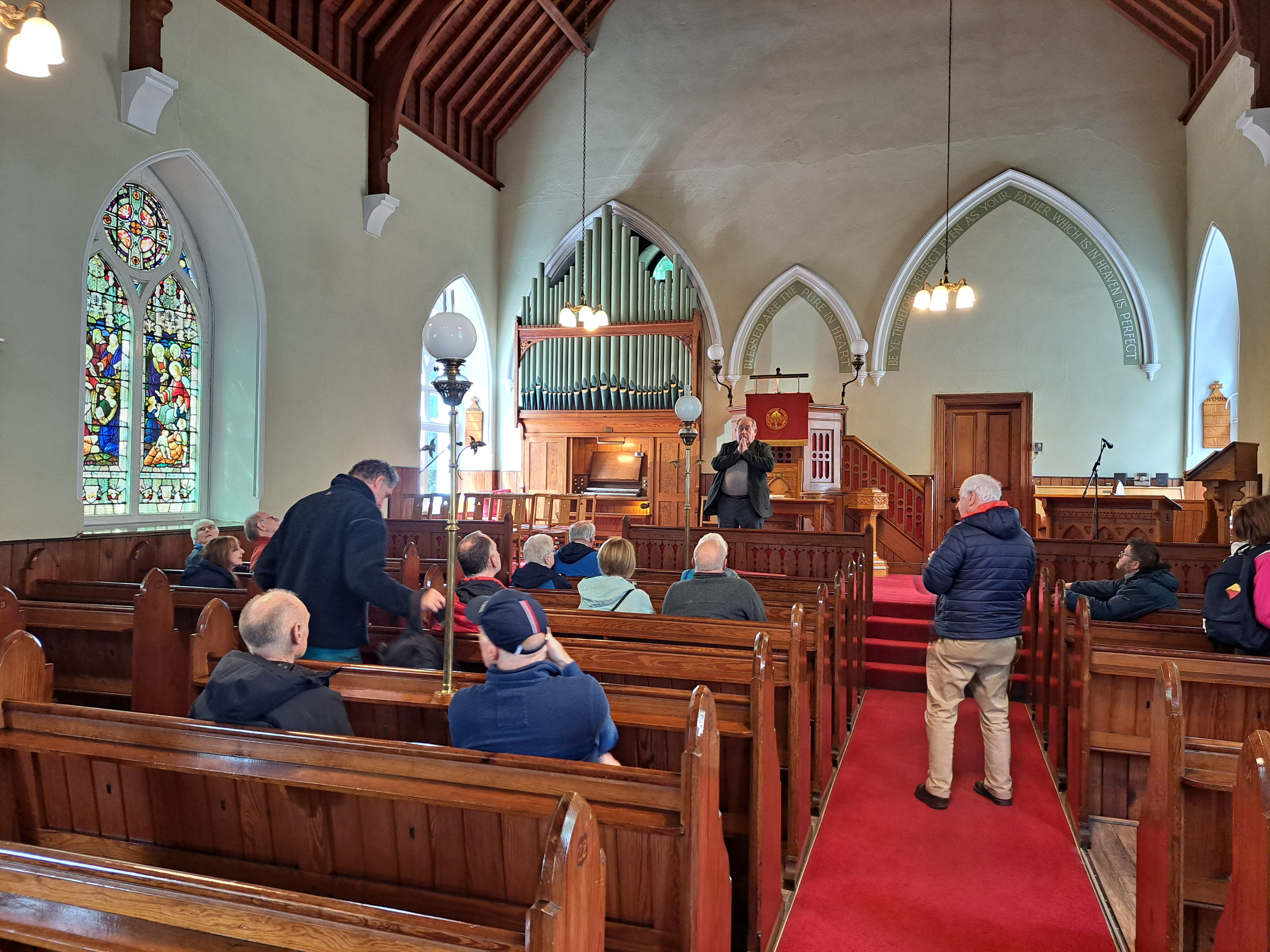
Inside Ballycarry meeting house
It’s not far from Ballycarry to Raloo but some of us still managed to get lost! But we got there in the end to enjoy the Remonstrant meeting house of 1838 and adjoining modern church hall.
Raloo
Raloo interior
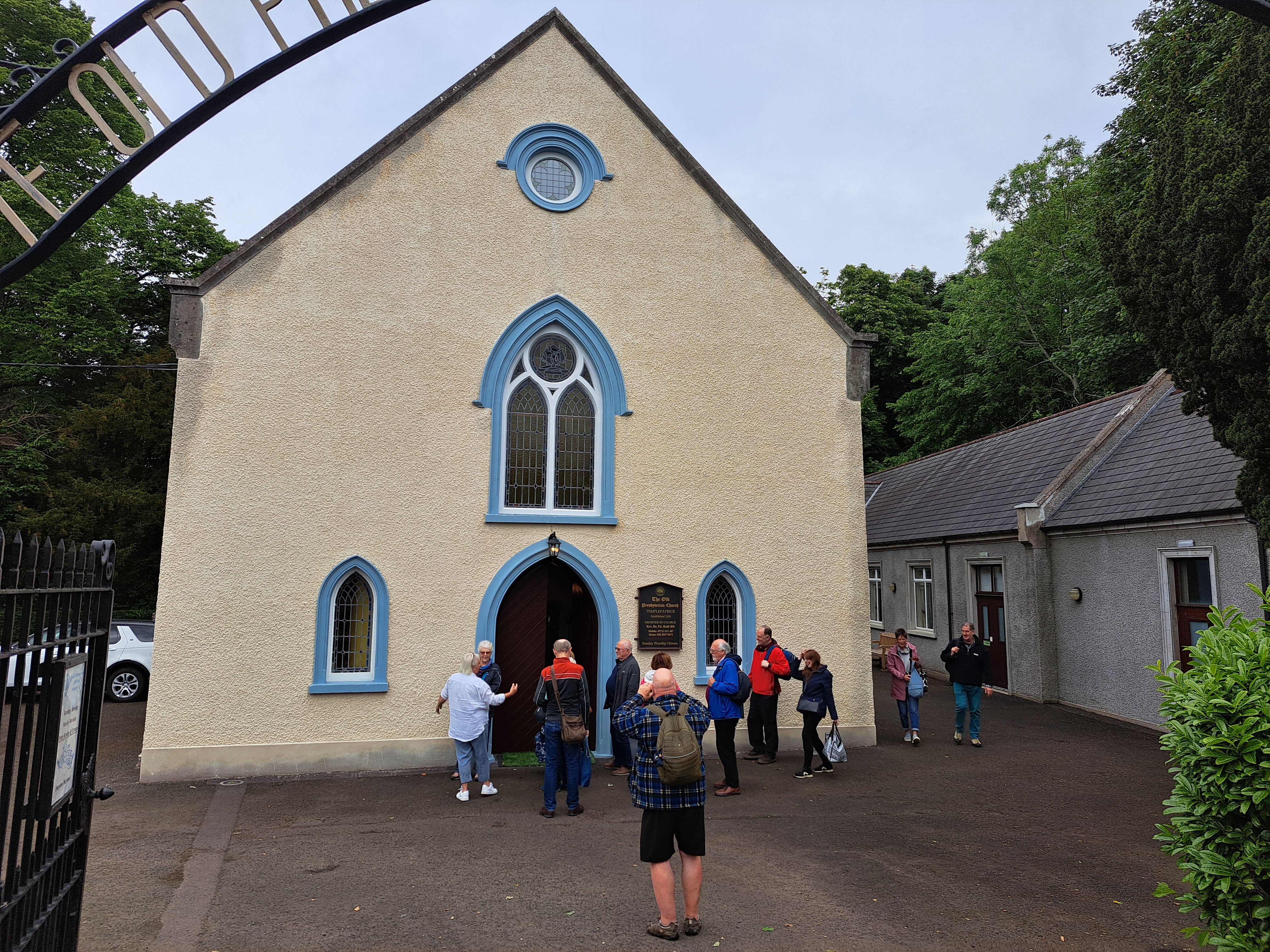
From Raloo we went to Templepatrick where we were able to enjoy our lunch thanks to the kindness of the congregation. Templepatrick is an attractive church which has often faced upheaval. In 1798 the brass canon used by the United Irishmen at the battle of Antrim were stored under the pews. One of these was dragged to the battle on a carriage which was fired once and blew the carriage to pieces.
Templepatrick
Later when the congregation became Remonstrant the landlord Lord Templeton evicted the minister from the manse farm.
Templepatrick interior
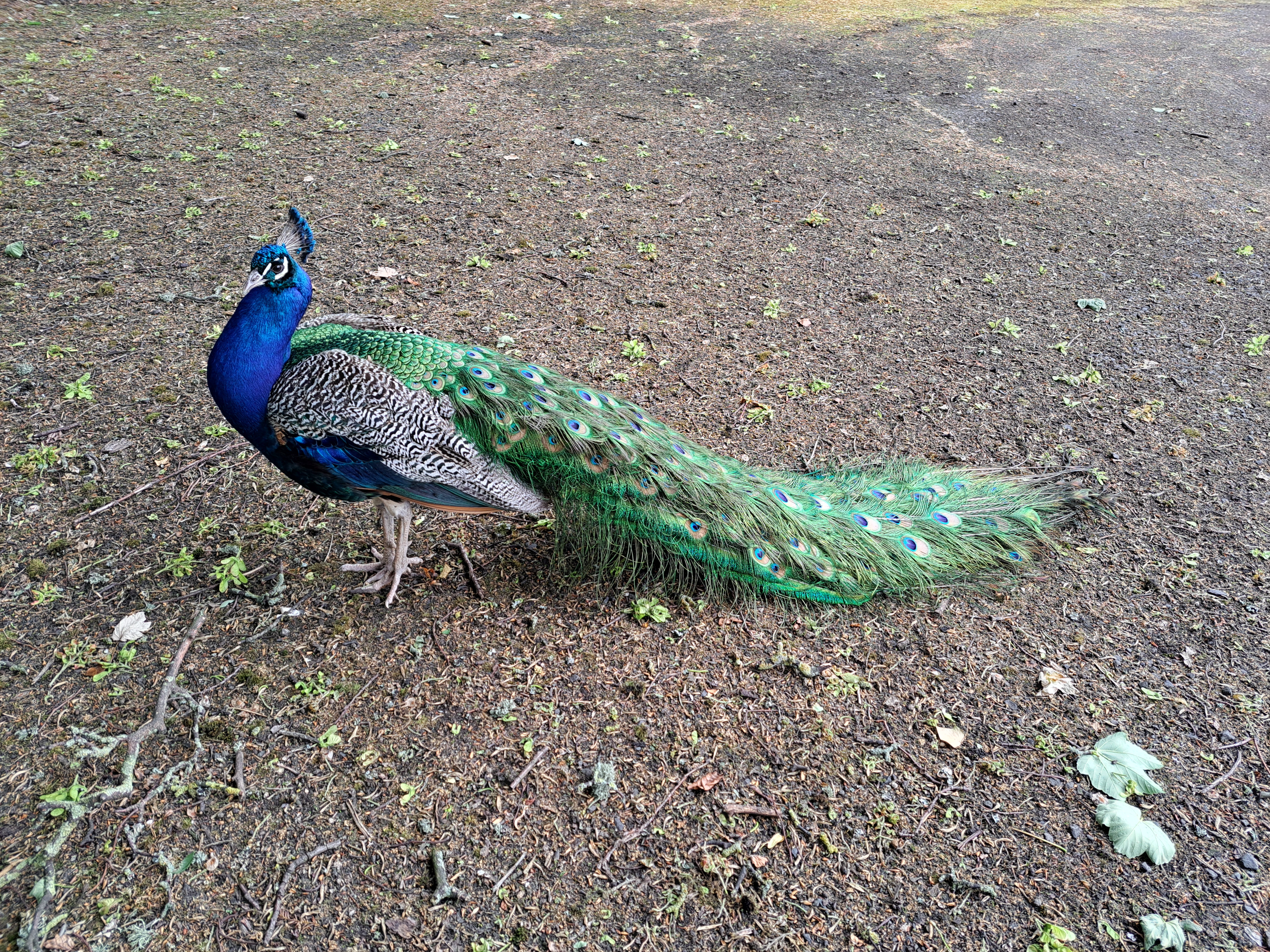
While we were in Templepatrick a peacock was spending some time in the car park:
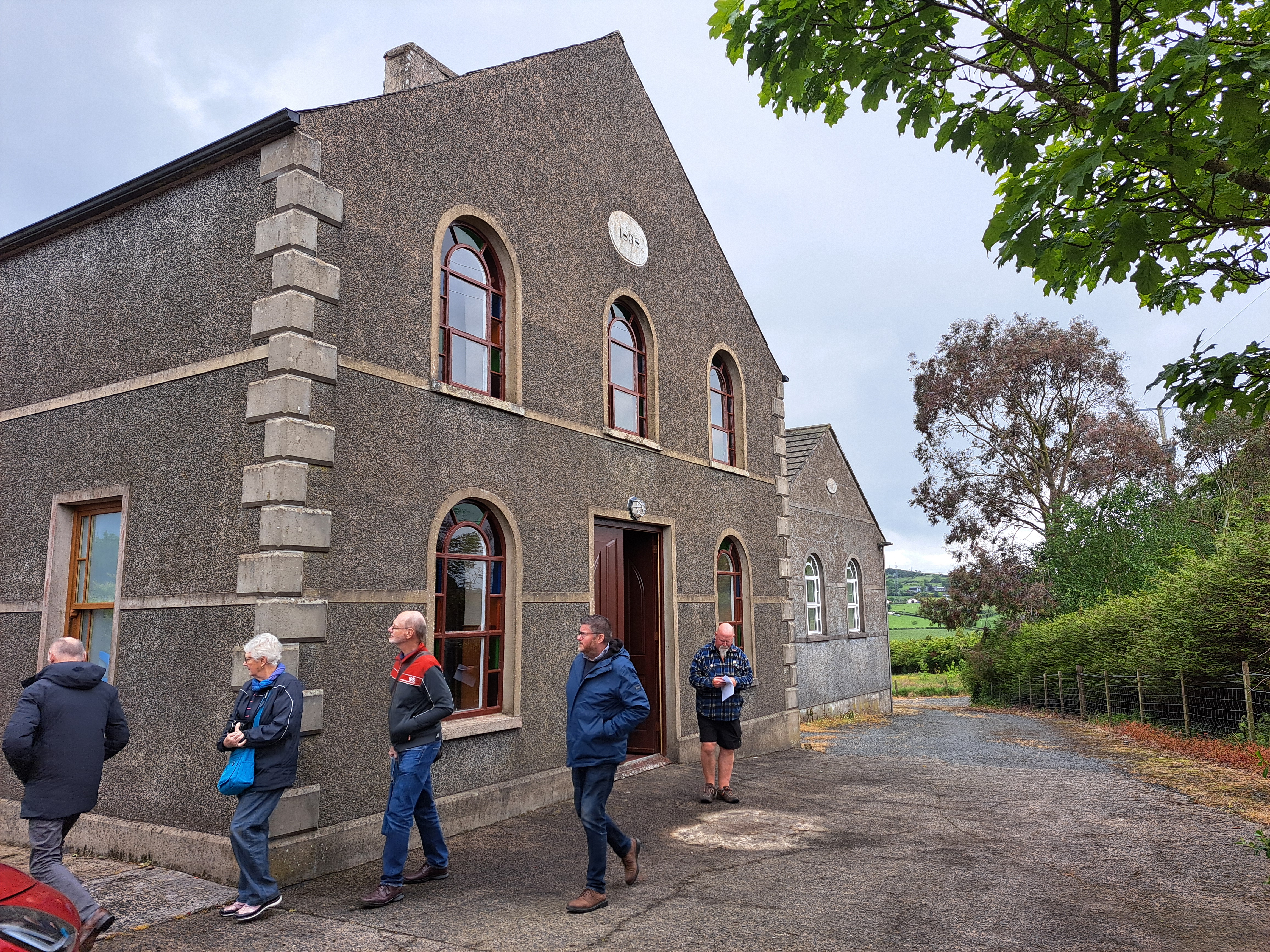
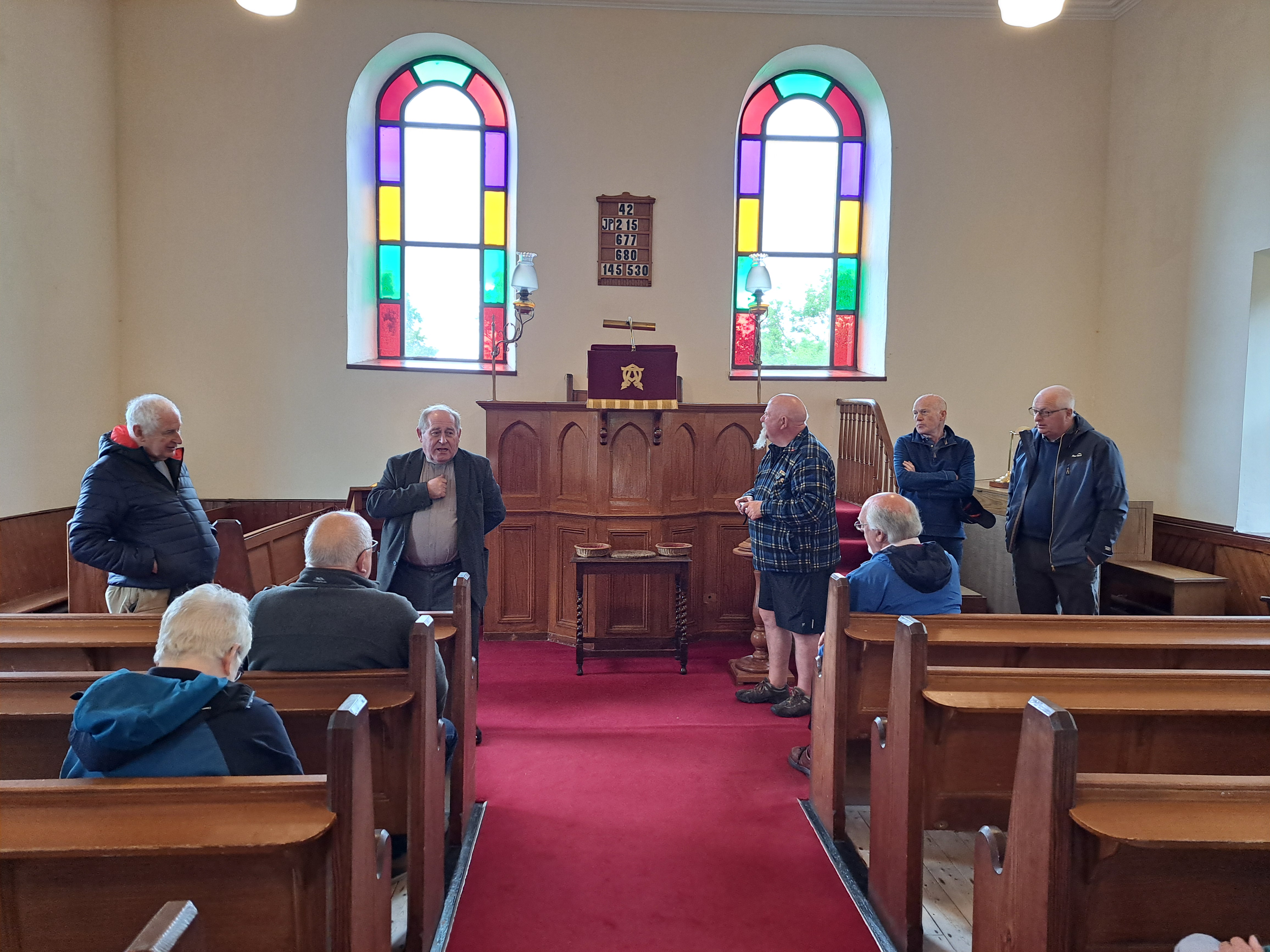
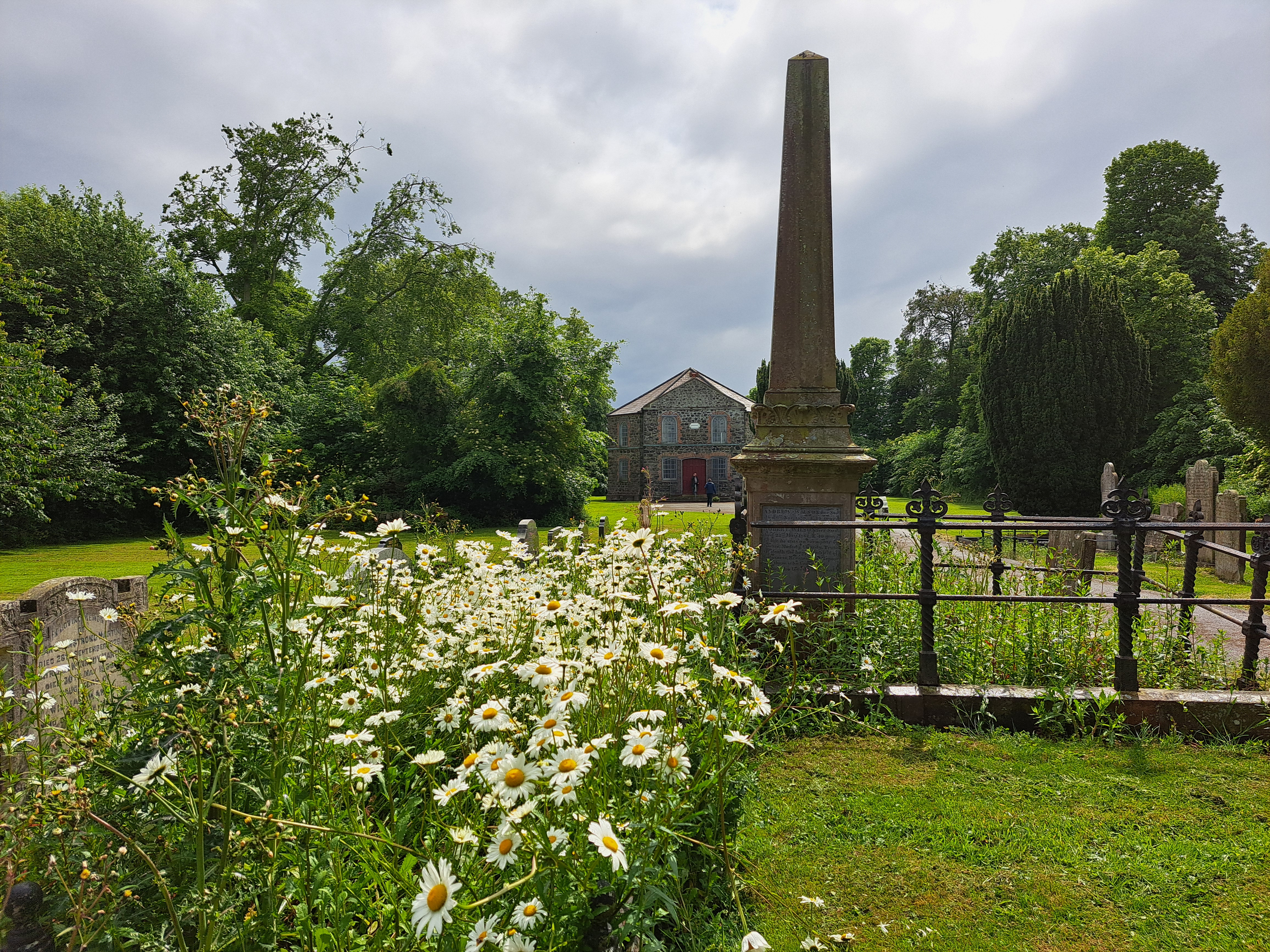
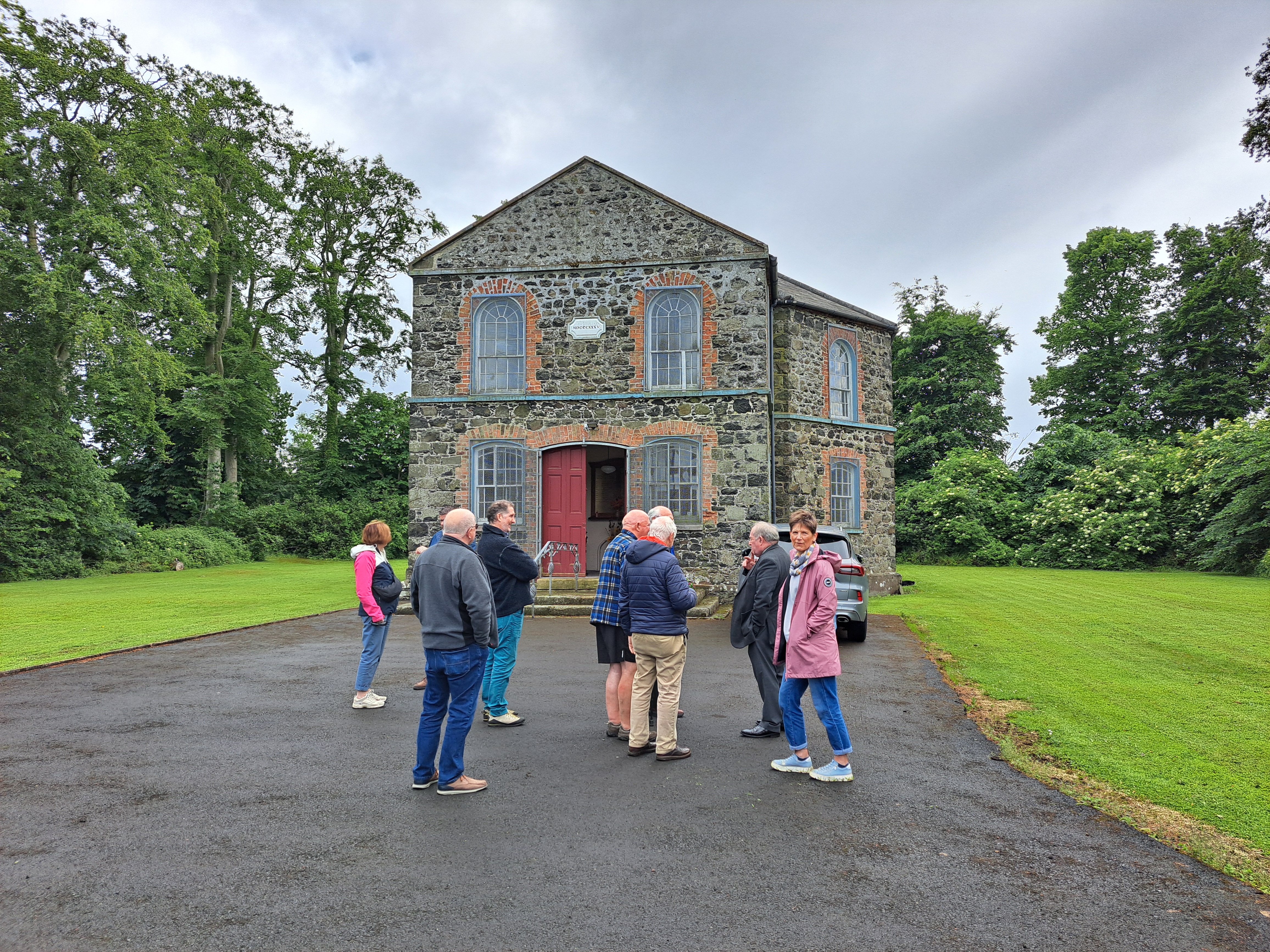
Finally we went off to Crumlin, a congregation founded in 1715, which built a new church in 1835 which was a miniature version of First Church, Belfast.
Looking through some wild flowers towards the church
Outside Crumlin
It is such an elegant building that deserves to be better known.
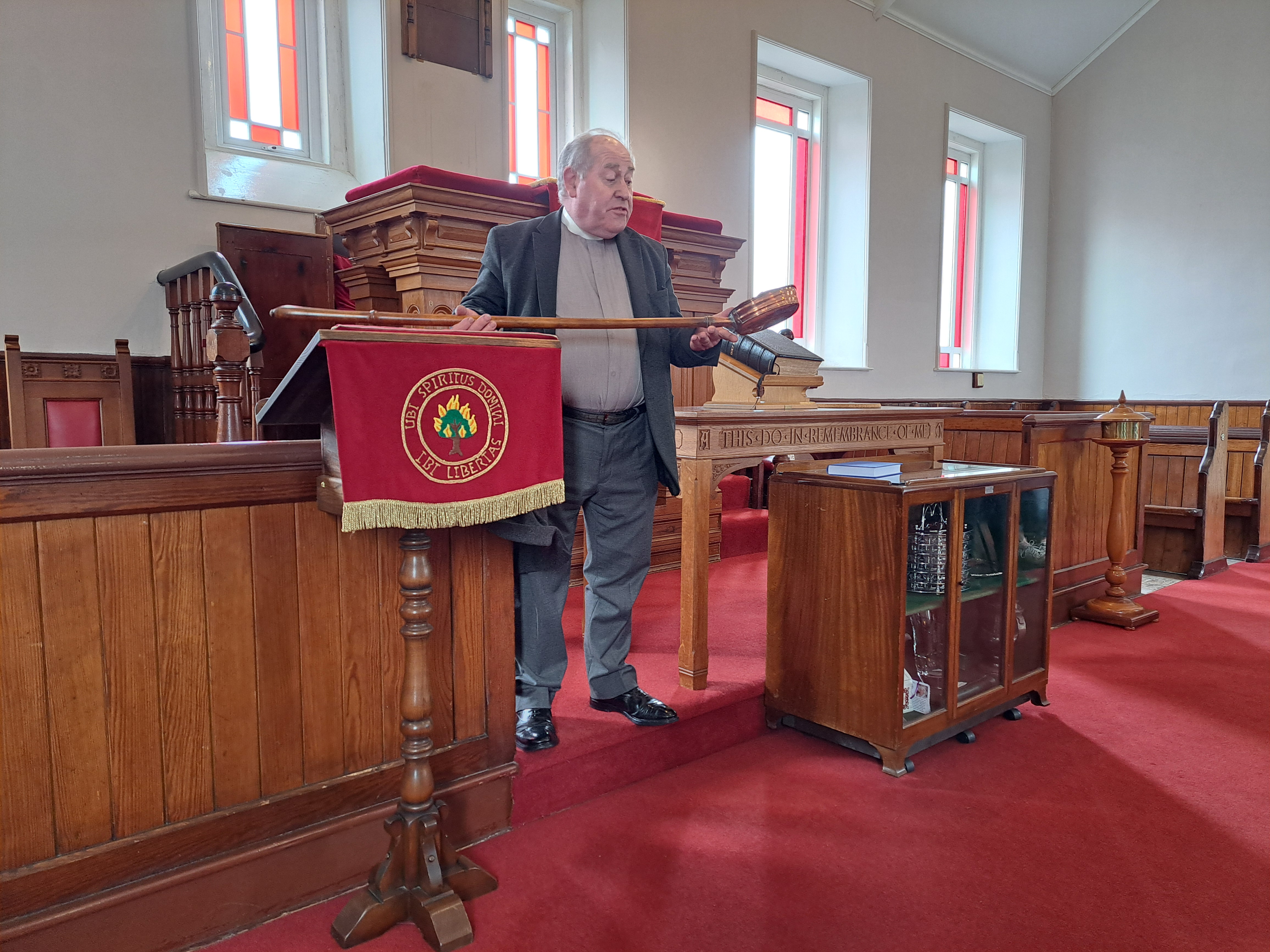
The church was particularly associated with the Rev Nathaniel Alexander who was 6 feet three inches tall. The pulpit consequently has a trap door that was open when he preached so he could stand at a slightly lower lever.
It was a great day out, many thanks go to Rev Dr John Nelson.
Hale is a pretty little place close to Liverpool and now in Cheshire, although traditionally located in Lancashire. Without doubt though, its most famous son is John Middleton, the ‘Childe of Hale’.
Click on the video above to discover the story of the Childe of Hale
Visiting the village recently I made this video to record the story of John Middleton who was said to have been 9 feet 3 inches tall, so tall that at night his feet were said to protrude out of the windows of his house.
John Middleton’s house
His life story is bound up with that of Sir Gilbert Ireland, whose body guard he was, and through whose connections he visited Brasenose College, Oxford and was presented to King James I in London.
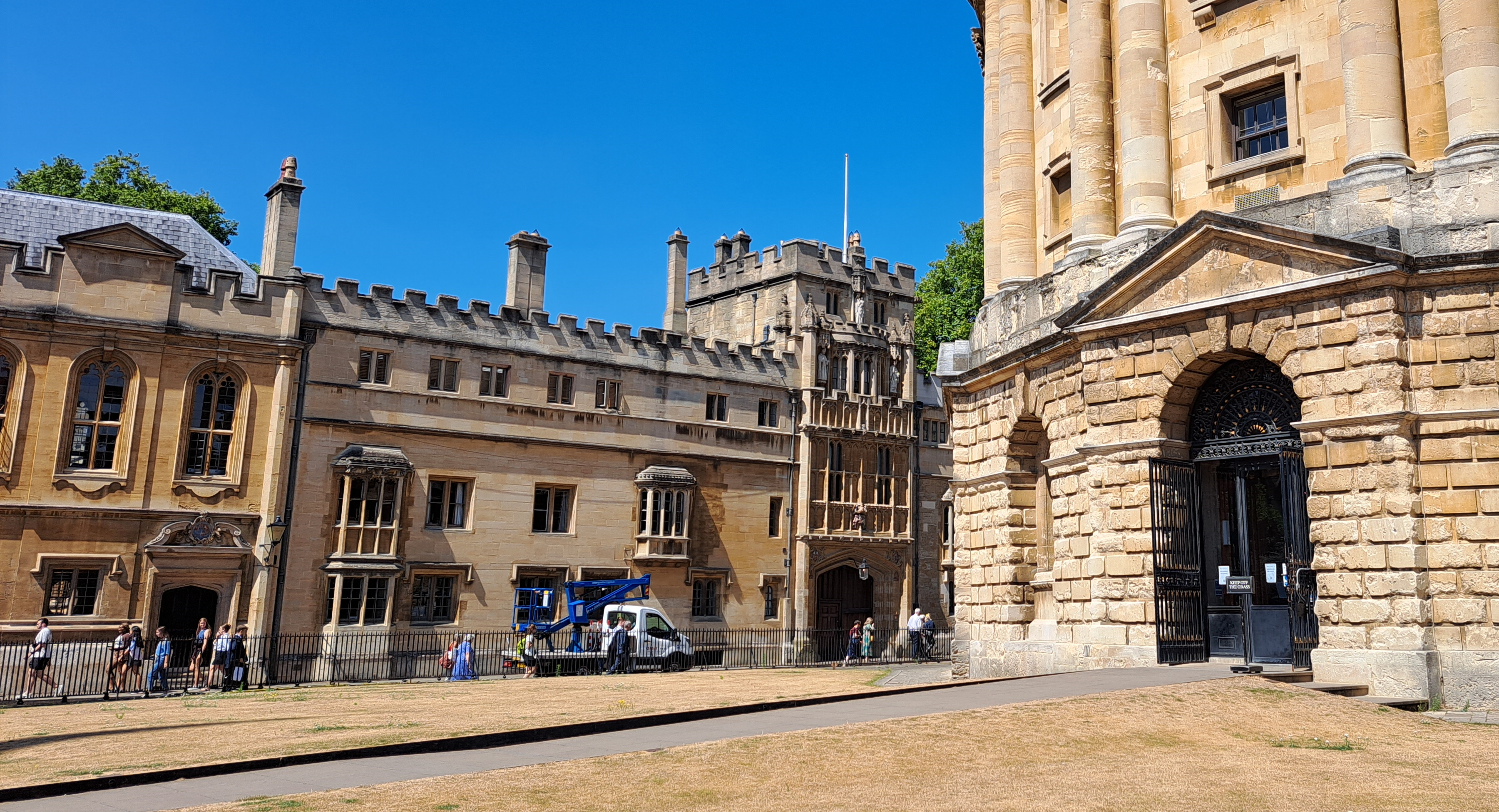
Brasenose College, Oxford which has a number of portraits of John Middleton and still names the eights boat of the rowing club ‘The Childe of Hale’.
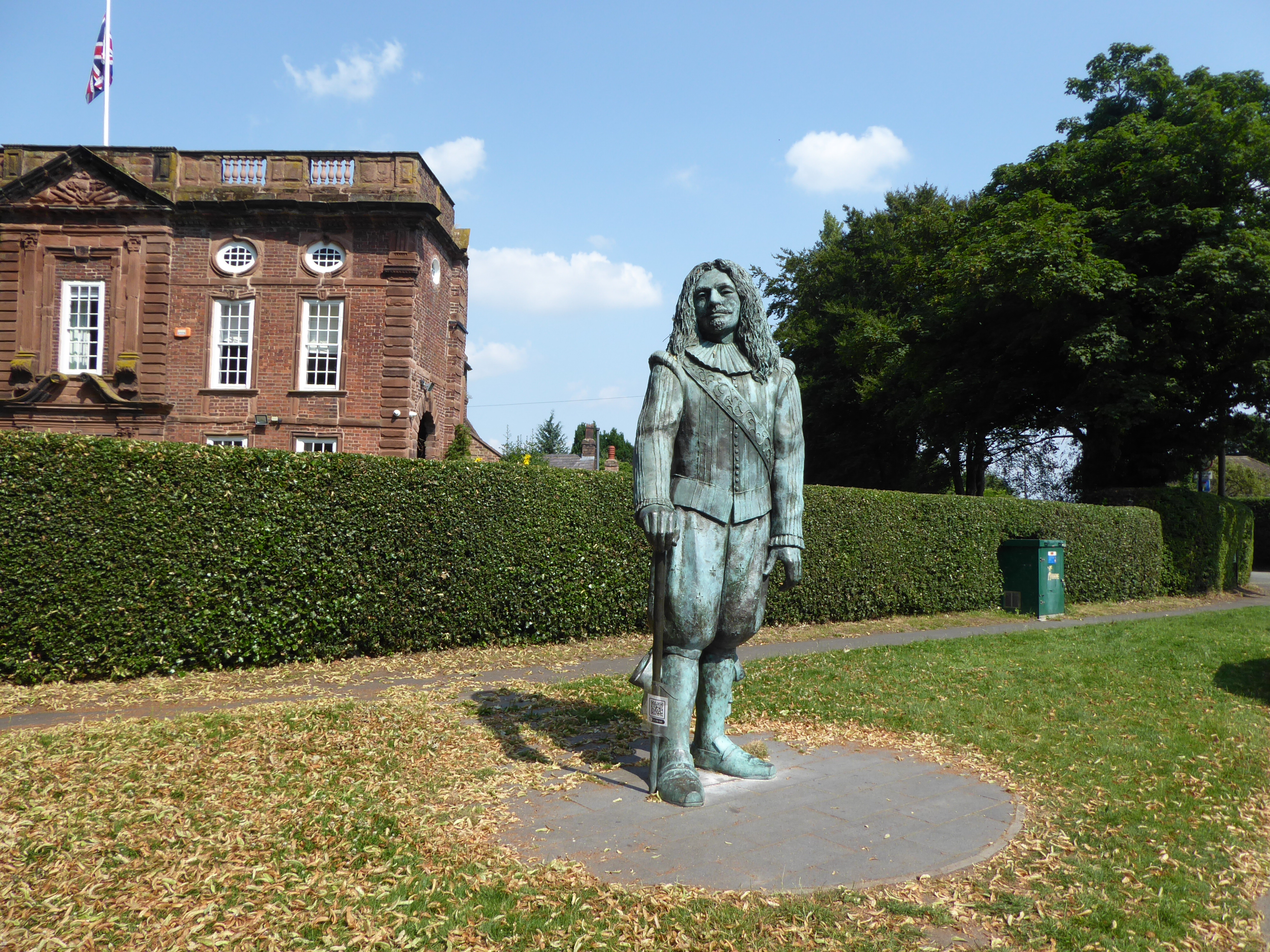
Modern statue of the Childe of Hale by Diane Gorvin
Although the village pub is named after him it used to be that there was a lot less visibly connected to him there, apart from his grave. Nowadays there is a plentiful supply of plaques and notices and a more than life size statue. But his grave is still the object of everyone’s visit to Hale. Strangely lettered the inscription reads, once you have worked it out, ‘Borne 1578 Dyede 1623 Here Lyeth the Bodie of John Middleton the Childe Nine Feet Three.’ Locally, in recent decades, he was always more associated with Speke Hall because his most famous portrait was long displayed there, but he had no direct connection with Speke Hall. The Ireland family, the local landowners whom he served, lived at the long demolished Hale Hall.
The grave of the Childe of Hale
Hale Hall, now demolished
Hale still has its Manor House, which once inspired John Betjeman to verse, and the local church is well worth seeing but you can hear the full story of the Childe of Hale by clicking on the video at the tope of this page.
The Manor House, Hale
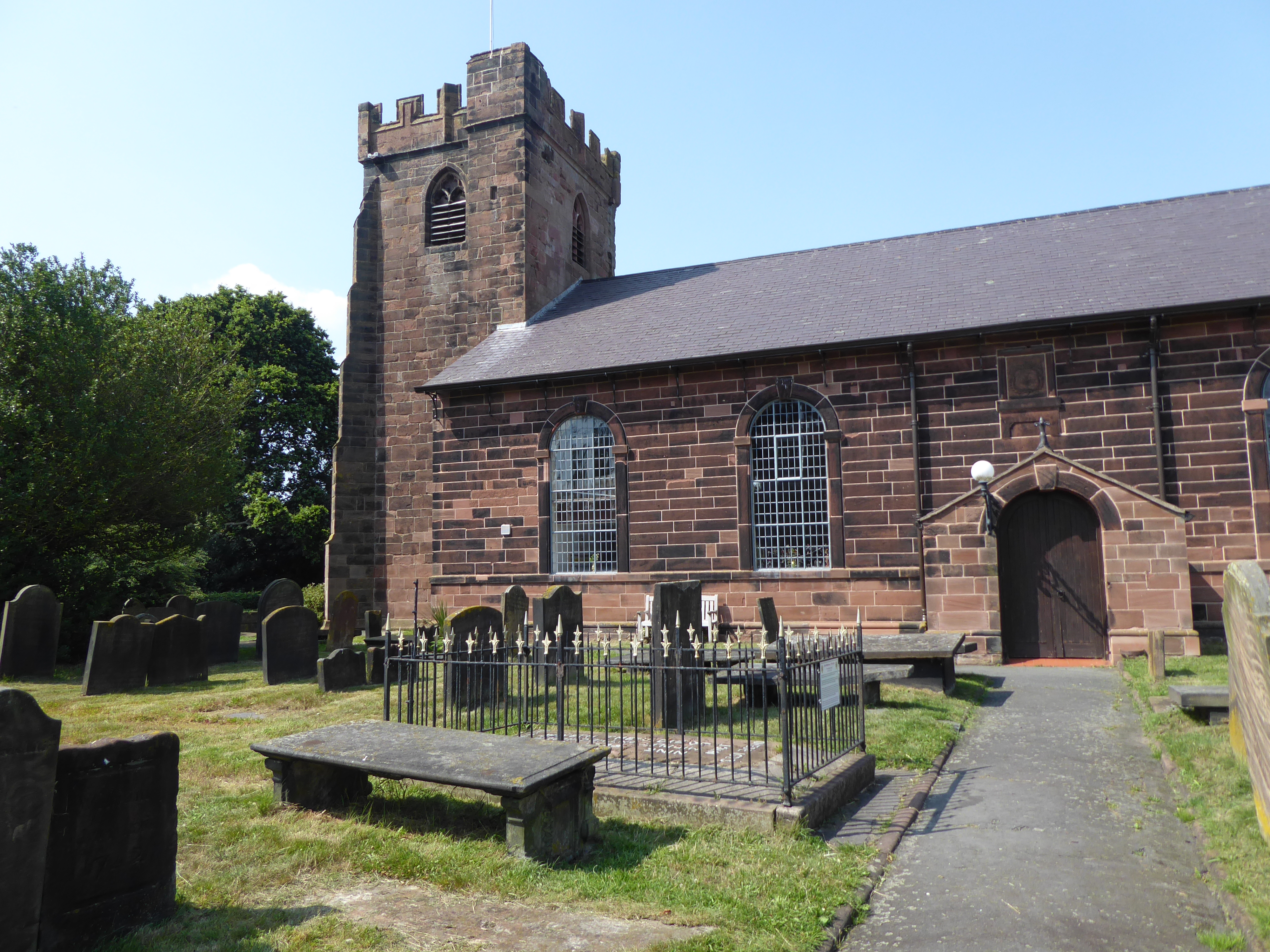
St Mary’s Church, Hale with John Middleton’s grave in the foreground
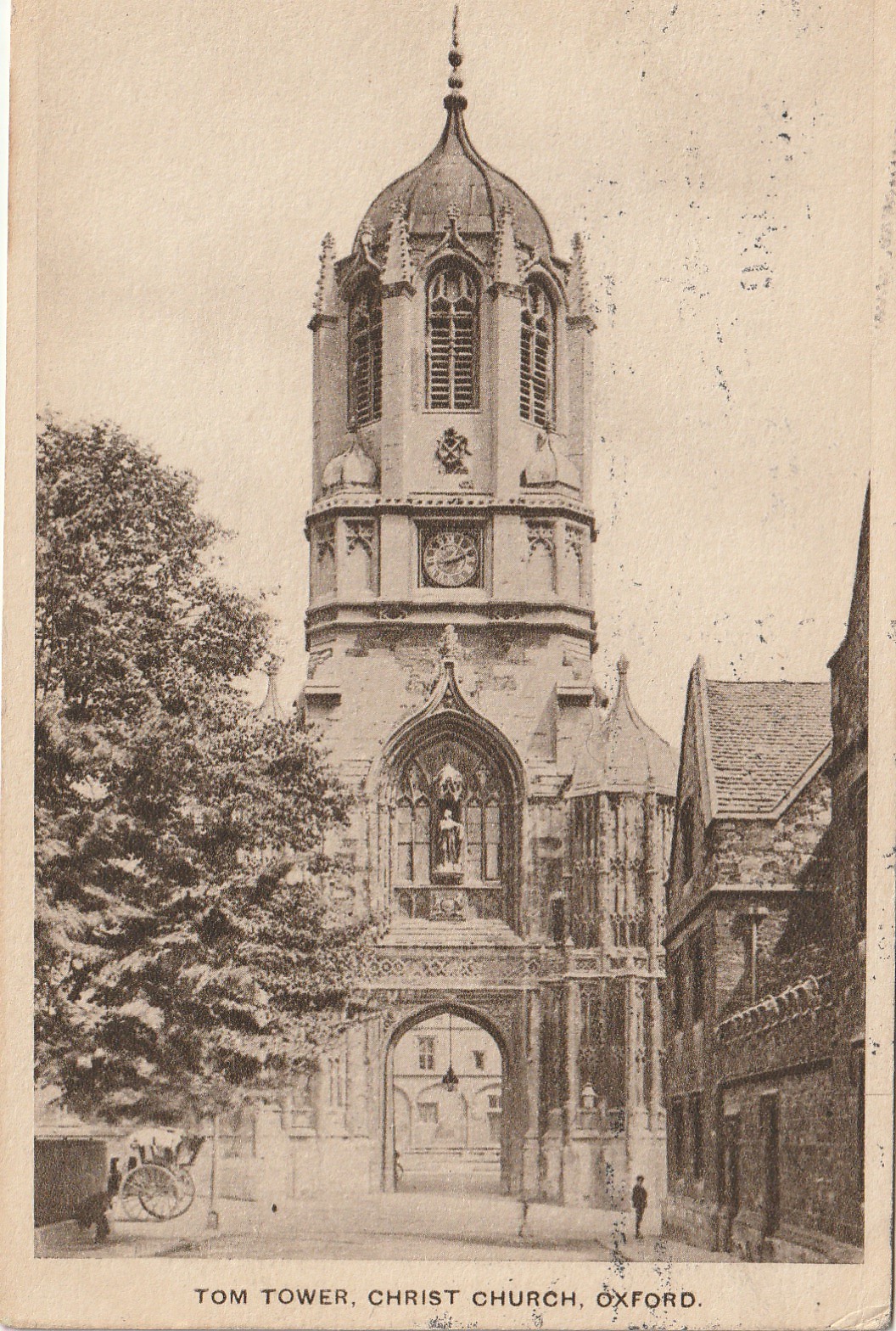
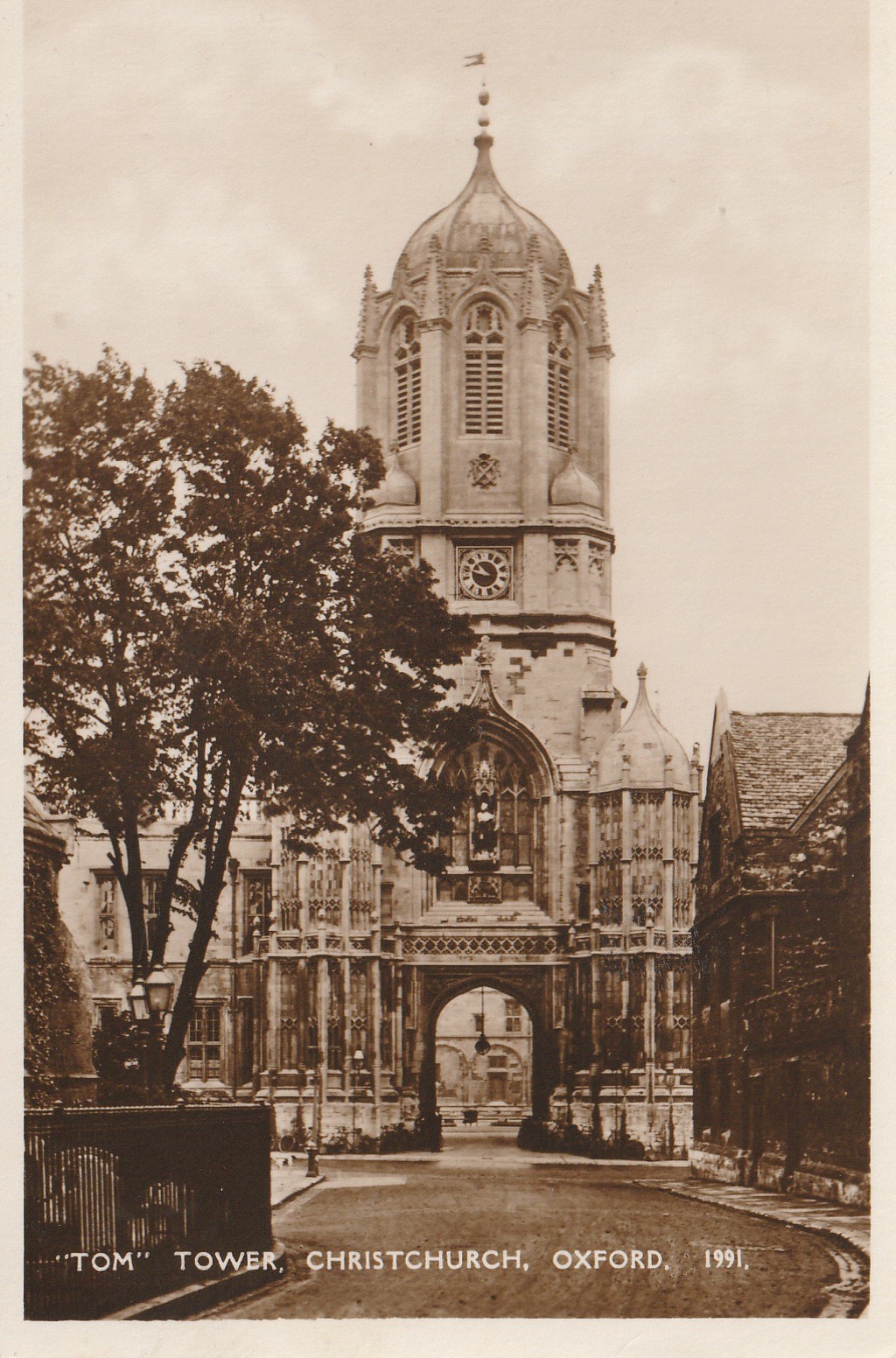
Recently, when in Oxford, I visited the Christ Church Picture Gallery where one of the exhibitions, entitled ‘WISH YOU WERE HERE!‘ (1 July – 30 October 2023) The attraction of Christ Church in early photographic postcards, caught my eye. It is always interesting (and rare) to see a serious art exhibition that contains items that you could afford to buy yourself. There are around 70 postcards in the Christ Church exhibition but seeing them encouraged me to start my own small collection. Prices can vary but generally cards like this should be quite cheap, they were produced and sold in vast quantities by a variety of printers and are hardly rare. So I decided to create my own small collection and focused on cheap examples of pictures of the West Front/St Aldate’s view of Tom Tower. I picked this view because although every postcard from 1900 to 1950 (or indeed to the present day) looks superficially the same you realise when you investigate closely that this is not the case. Since Tom Tower is situated on a main thoroughfare there are plenty of social changes that can be observed and a multitude of minor small details that are worth exploring in the foreground. I will work out the best way to display these images of the West Front.
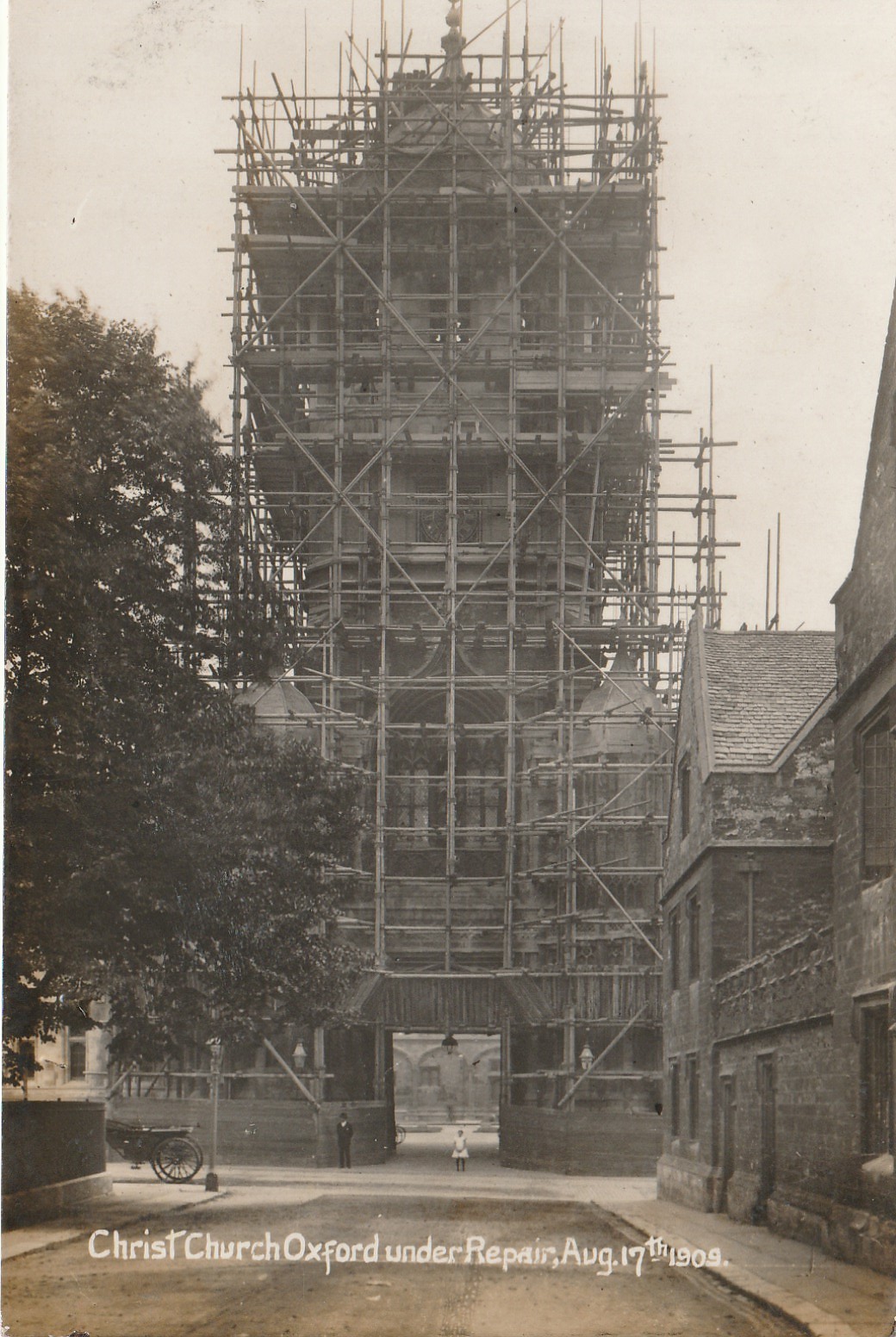
But I allowed myself a small diversion into a handful of pictures of Tom Tower itself. Mainly this was because I managed to get one picture that I had seen in the exhibition which must be quite rare and was accordingly slightly more expensive than the others. This is it:
‘Christ Church Oxford under Repair, Aug. 17th 1909’. No publisher named.
I think this is a wonderful postcard. All the pictures of Tom Tower alone, largely taken from over the road, somewhere near the entrance to Pembroke College, are basically the same. There might be a vehicle of some sort somewhere in view, or a bowler hatted figure standing under the entrance to the college, but not much more.
This picture, however, is very different. The publishers give us the exact date and show us Tom Tower, not as you would expect, but covered in scaffolding. If you had turned up in Oxford to do the touristy thing and saw the tower covered in scaffolding I imagine you would be disappointed. I don’t think you would want to buy a postcard that also obscured the view. If you turned up after the work was completed and the scaffolding had been taken away I don’t think you would want to buy a picture of how it looked during restoration, unless you were very interested in scaffolding. It can’t have had a long shelf-life and it can’t have been many people’s favourite view. And yet it is a compelling image, intriguing and lively. I am glad the unnamed publisher took this view and glad to get a copy for my collection.
This card, dated 14th January 1910, was sent by Emily to ‘Mr Hammond, “The Lilacs”, Skipton Cliffe, Andoversford, Glos.’ Mr Hammond appears to have been Emily’s uncle since she also included ‘love to Aunt’ at the end of the message. And it doubled as a birthday card – ‘With every Good Wish for Many Happy Returns of the Day’, she begins. Emily might have been a student in Oxford, she was certainly resident there because she also says ‘I sent you the paper for you to read Mr Whale’s speeches our Liberal Candidate for Oxford’. ‘Mr Whale’ was George Whale who stood in Oxford in the 1906 election and lost by just 100 votes. He stood again in January 1910 but a swing of 6.4% saw him lose by over 1,200 votes to Arthur Annesley his Conservative opponent. George Whale was a freethinker and the chairman of the Rationalist Press Association. A former Mayor of Woolwich he was never successful in getting elected to Parliament.
But this was the card that Emily chose to send to her uncle for his birthday along with news of the freethinking candidate on the eve of the election in Oxford. It was, I think, an inspired choice.
‘Tom Tower Christ Church, Oxford’. Published by Vincent of Oxford. Posted 4th September 1915. Sent to Mrs Ewan Jones of Cricklewood by ‘All’, they were planning to drive to Oxford ‘with little Julian’ in the afternoon.
The other postcards of Tom Tower are all difficult to date precisely, especially when they were unposted, but they were mostly taken before the First World War, although similar examples could remain in print right up to the 1940s.
‘”Tom” Tower Christchurch, Oxford’ by J. Salmon Ltd., Sevenoaks. Unposted.
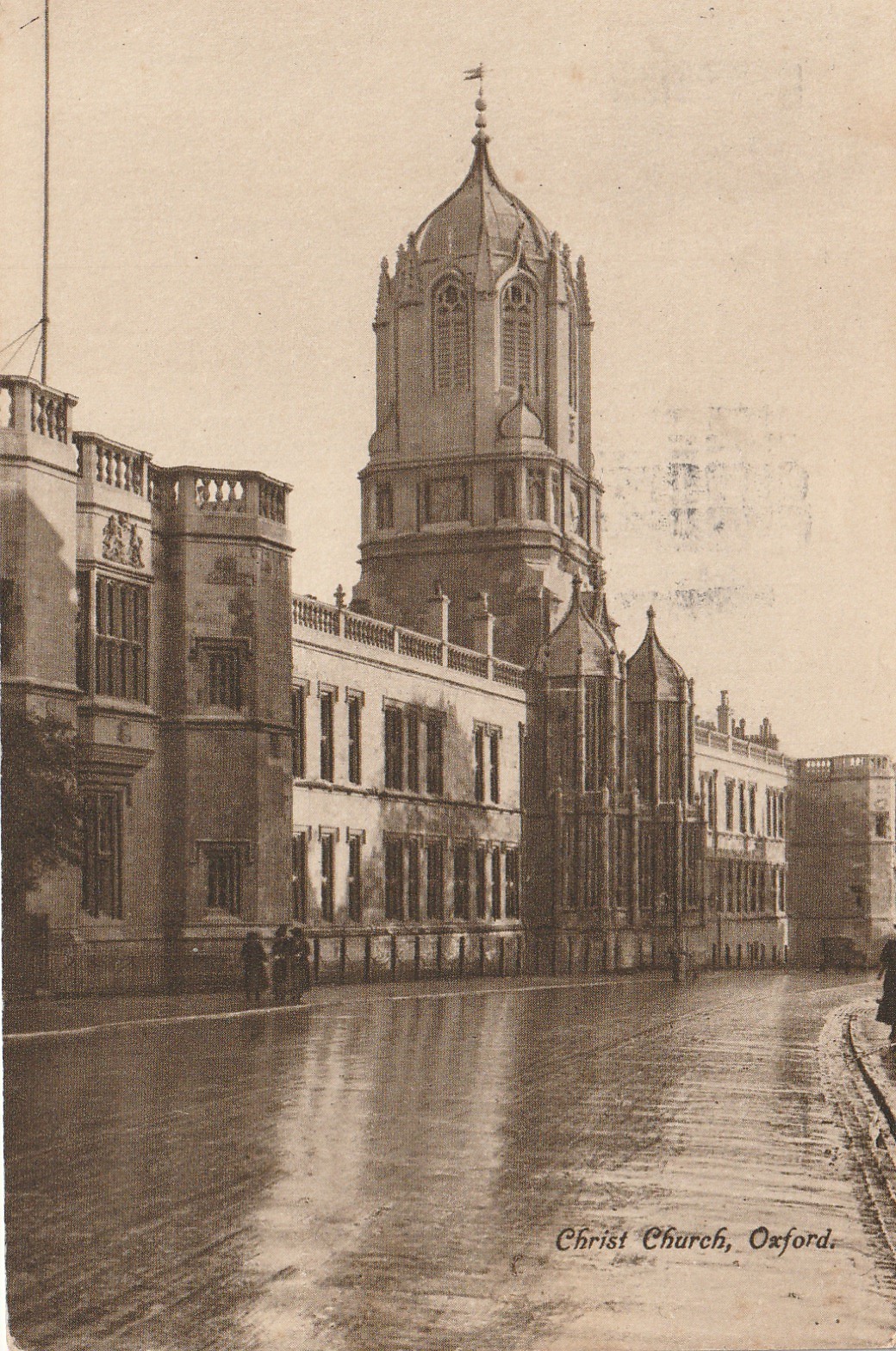
‘Christ Church, Oxford’. Published by Penrose and Palmer. Posted by Dorothy to Mrs England in Acocks Green, Birmingham on 12th November 1926.
This last photograph, published by the local firm of Penrose and Palmer, is another favourite of mine. The road is wet after a downpour and the photographer has caught a reflection of the building in the road. It’s a fine photograph. It falls somewhere between the direct images of Tom Tower on its own and the wider (landscape) views of the whole West Front but it is actually a more characterful and interesting picture than most of them.
No pictures or text may be reproduced from this site without the express permission of the author.
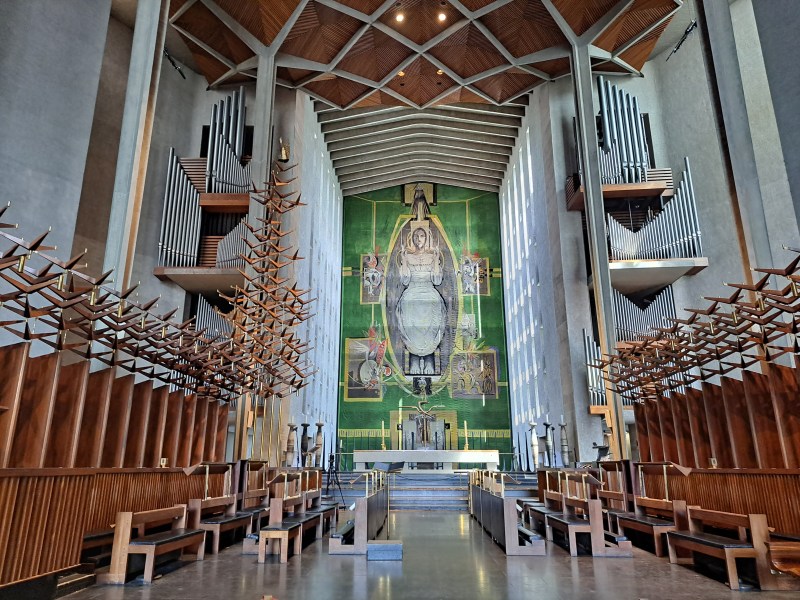
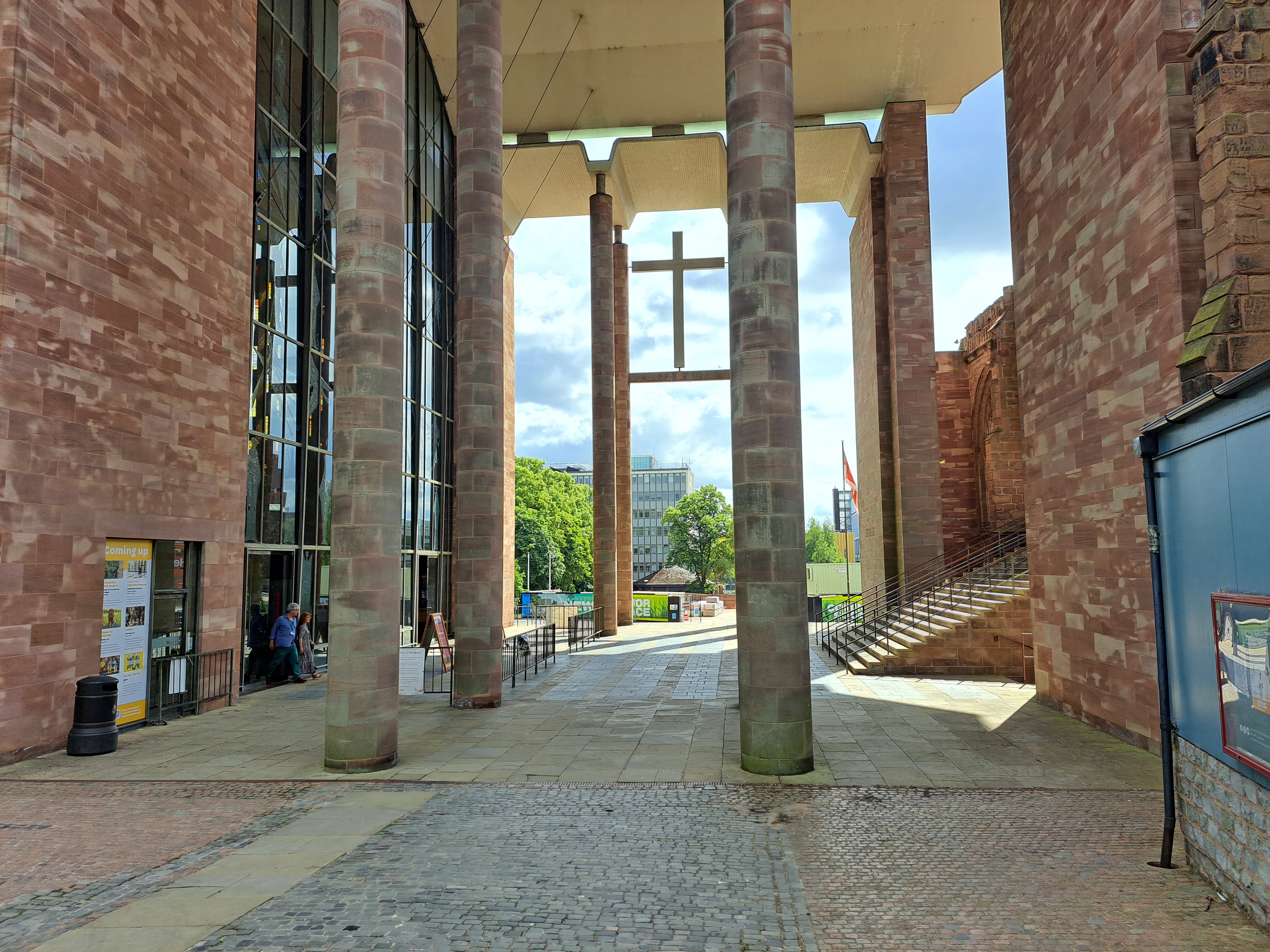
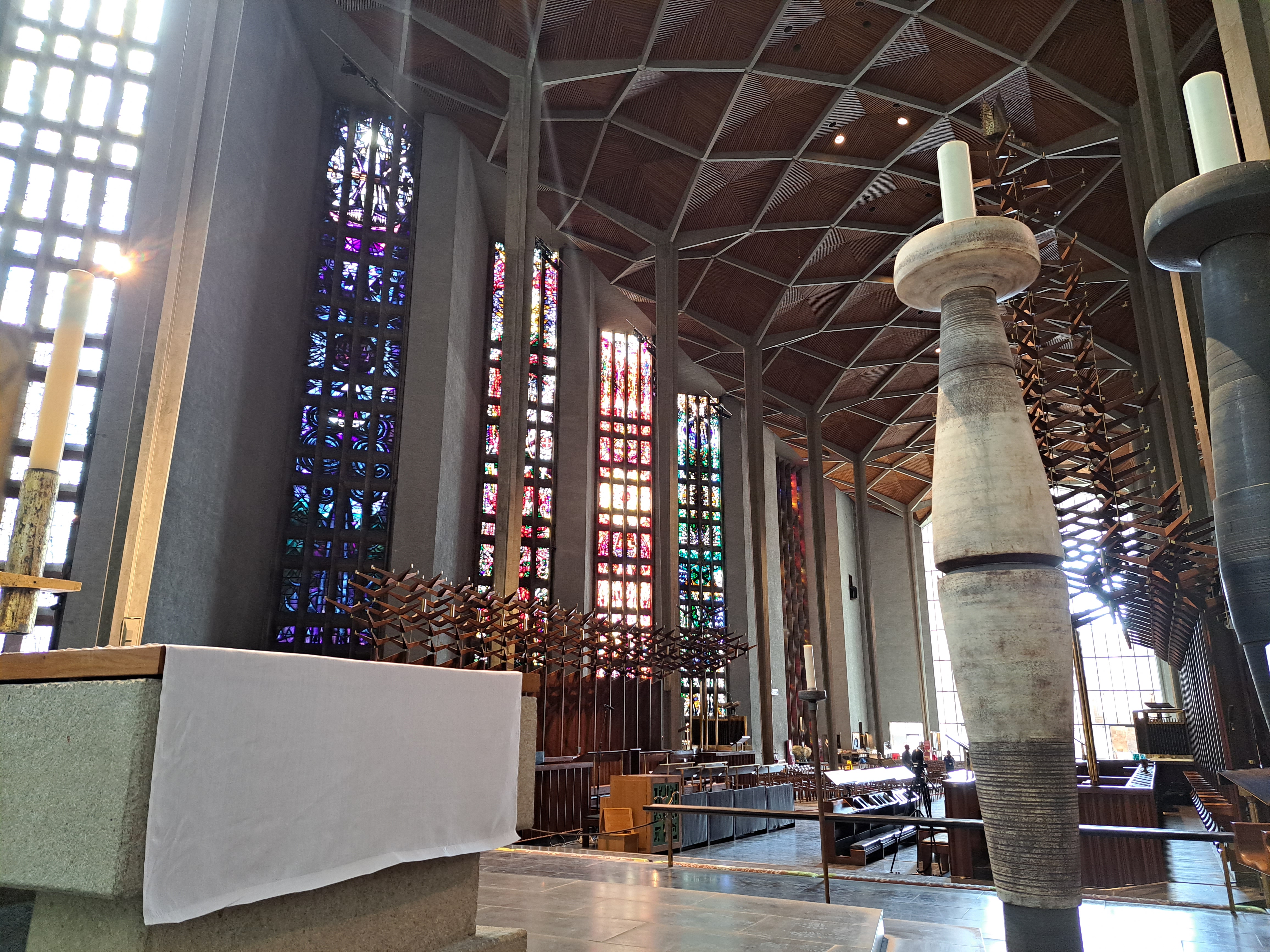
You can’t help but be impressed by Coventry Cathedral, impressed because everything is given such height. The entrance area that connects with the old cathedral; the glass entrance screen featuring angels and saints; the baptistry window; the Chapel of Unity; Graham Sutherland’s tapestry of Christ in Glory; the walls themselves – everything is so high. And it is all so redolent of the cutting edge of art in the mid-1950s. Of course, absolutely every building can only reflect the times it was built in but I think for a building as important as a cathedral some attempt at transcending the contraints of the present day are necessary. Now I may be very naive to imagine that a medieval Gothic cathedral ever did this, or any other type of cathedral for that matter, but if you want to be pointed to some deeper experience of the divine through the medium of a building you need something that says more than ‘This is 1954’ writ large. Even Liverpool’s Metropolitan Cathedral, which speaks volumes for the 1960s and the heavy constraints placed by money and circumstances on building a cathedral by that date, still communicates very well a more profound encounter with the truly spiritual.
Coventry Cathedral has developed a living and active ministry of reconciliation which has reached out to the whole world. Its response to the horrors of the blitz and the destruction of the old cathedral has been an inspiration to many. But as a visitor to the building, a very occasional one, I am never really sure how to respond.
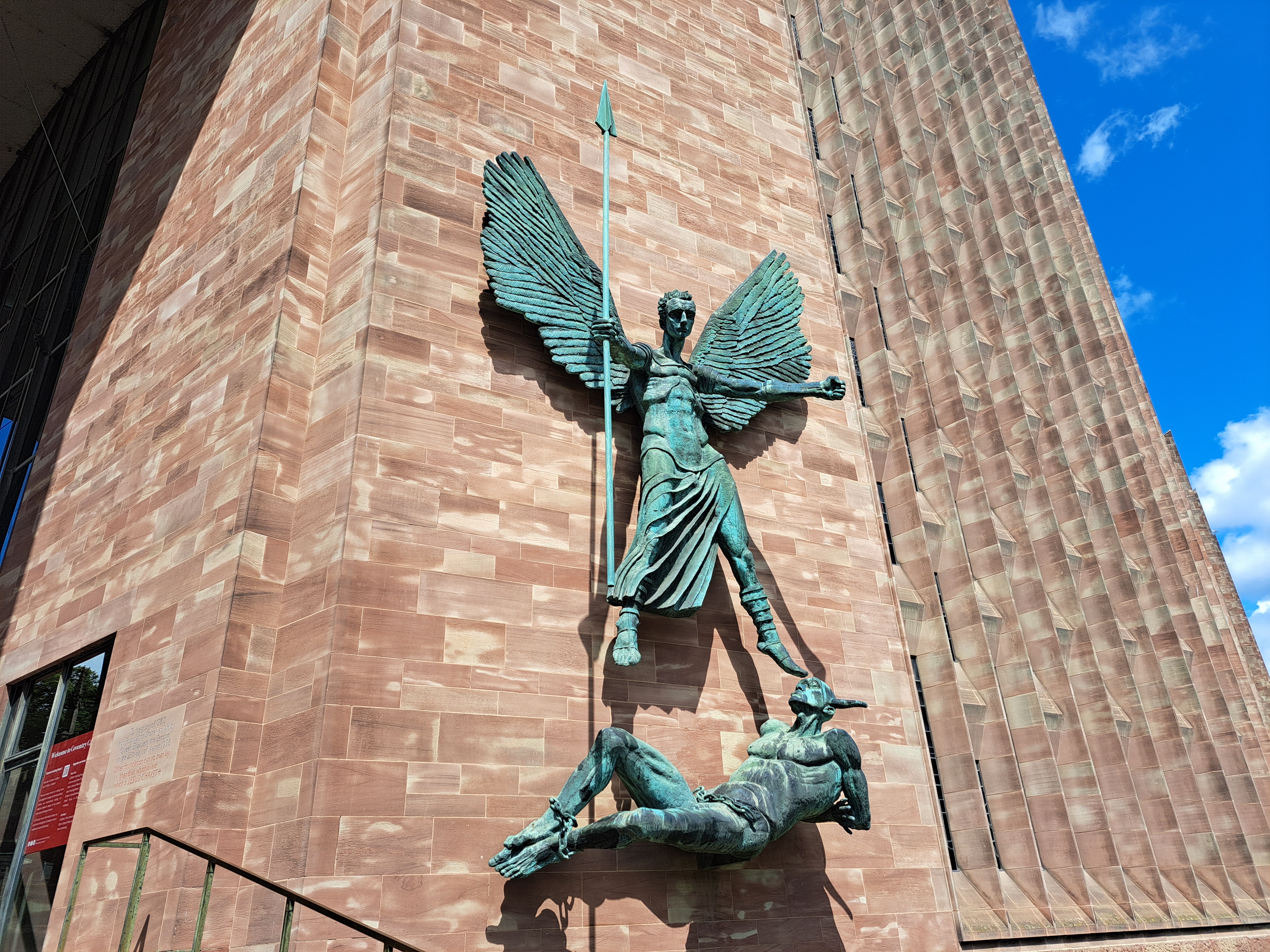
The thing I remember most about visiting as a child is Jacob Epstein’s figure of St Michael conquering the devil. I think I found it a bit unsettling as a kid and I am not sure I feel any better about it now. What is it meant to communicate? Of course, I know literally what it is meant to mean, but what did it say to the world in 1962 when it was unveiled? And what does it say now? Outside the cathedral there is a slightly cloying poster which stresses the extent of the welcome given to visitors but what the ‘keep-fit mums, football dads, starving artists, tree-huggers, latte-sippers, vegans, junk food eaters…those who think the earth is flat, work too hard, don’t work, can’t spell, or are here because granny is visiting and wanted to look round’ will make of Epstein’s work is a difficult question. Cutting edge art of the 1950s has now become the imagery of horror, fantasy, comic books, movies, cartoons and anime. Does anyone feel liberated by seeing St Michael with swan’s wings getting one over the character from Hellboy? One thing we know for sure today is that evil in the world does not take that form.
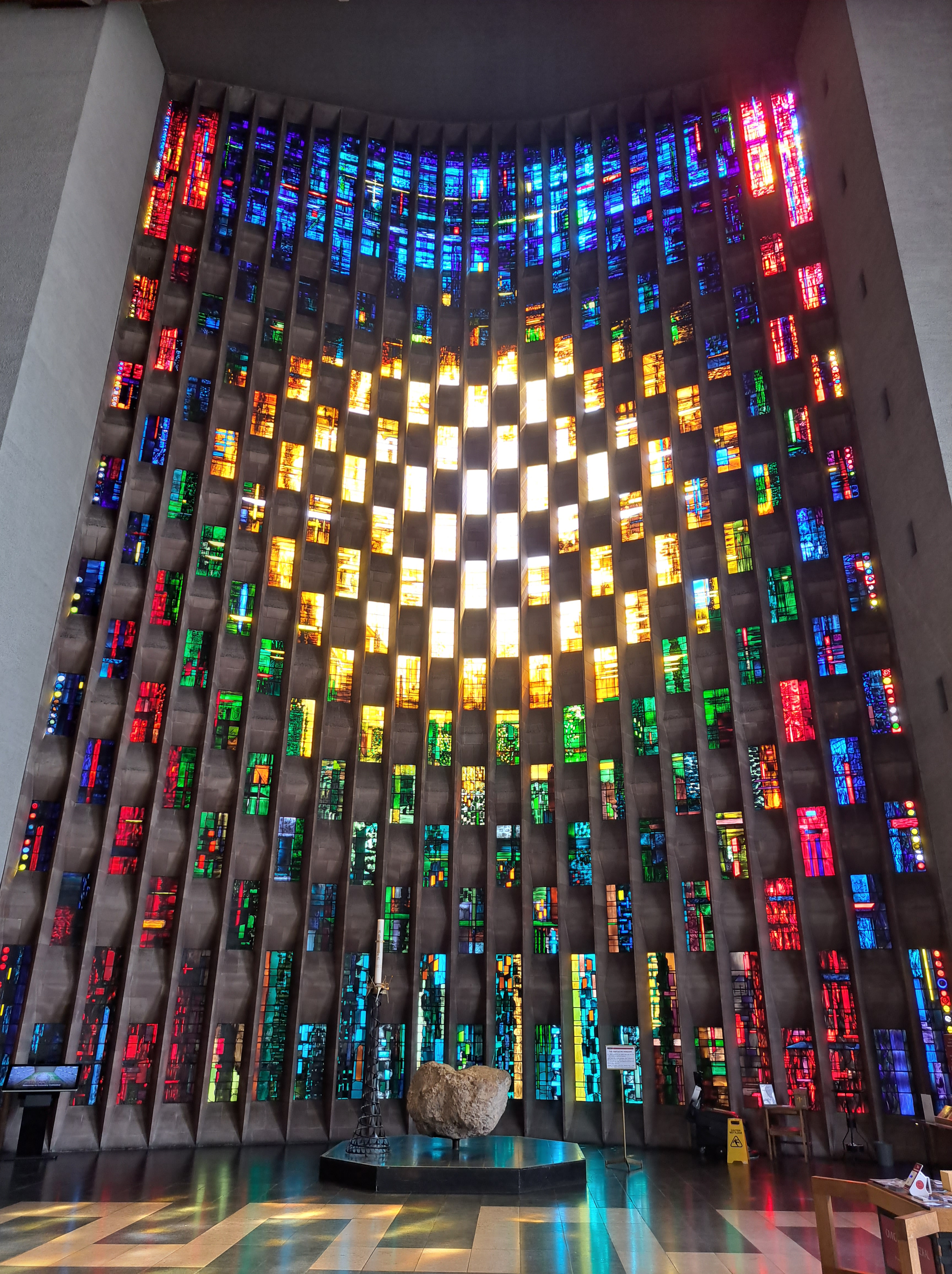
But some parts of the cathedral are breathtaking. The baptistry window, designed by John Piper, floods that part of the building with an explosion of light and colour. Again its immensity hits you full on.
The same is true when you look back at the entrance screen with its dozens of ascending figures flying up in front of the old cathedral.
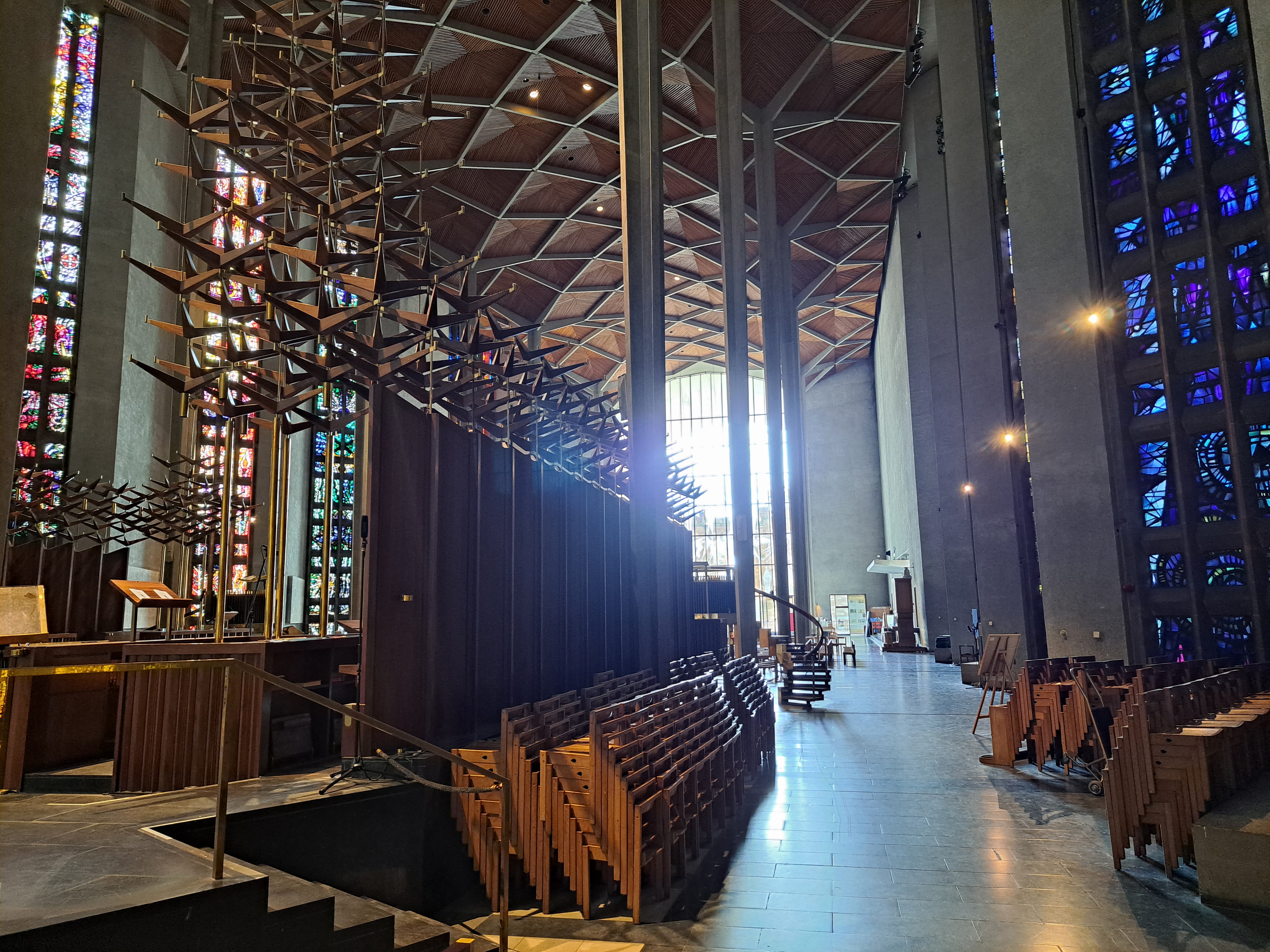
Again part of this is the scale, and the combination of massive candlesticks, the very high choir stalls and the stained glass that is only visible when you look back from the altar all contribute to this impressive immensity.
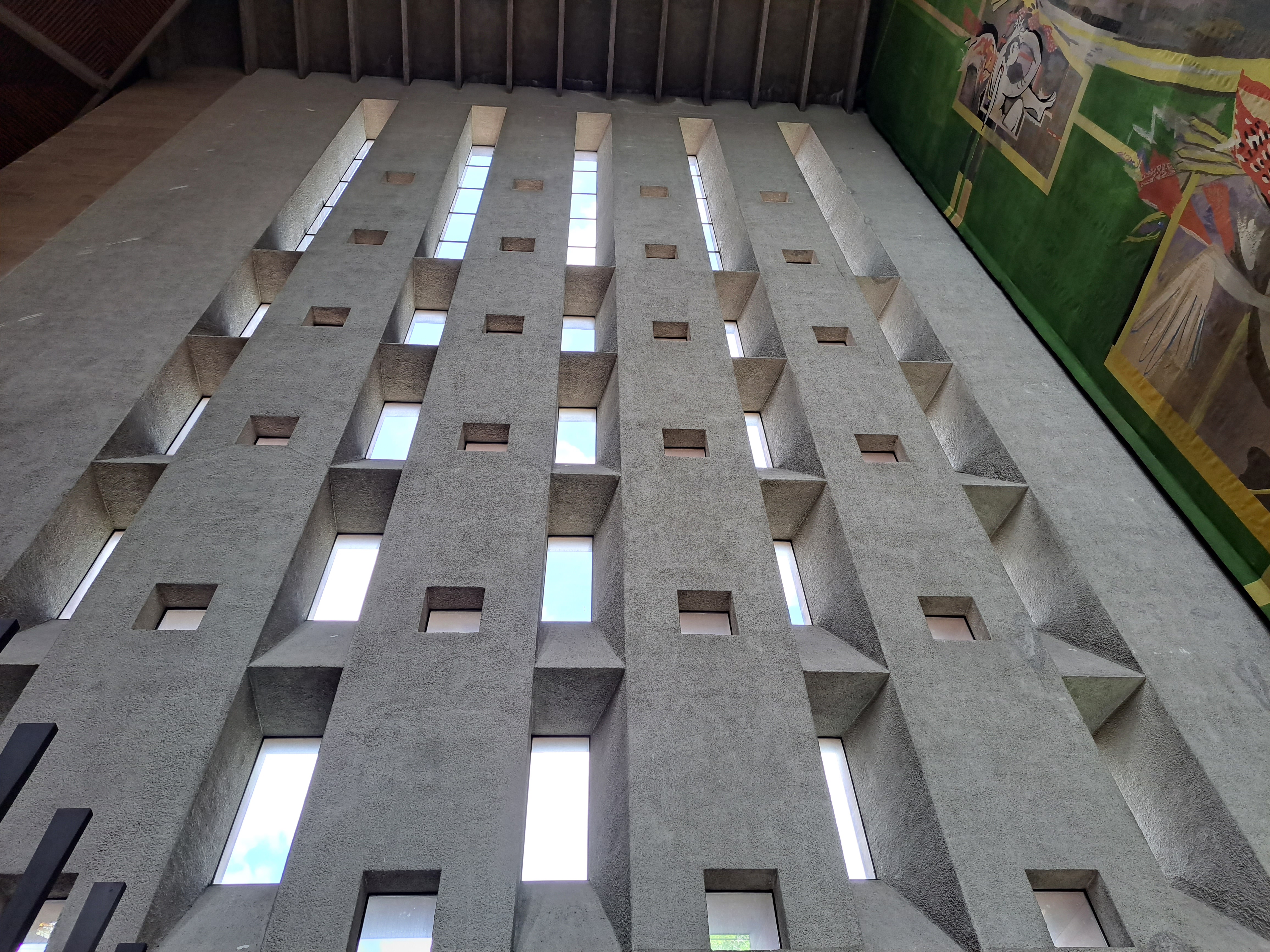
Even what might be termed the brutalist elements of the structure continue to impress. The wall that lets light on to the chancel and the tapestry has a grandeur and a solidity still, but if it had been placed out of doors in a housing estate or in a car park or shopping centre it would have had to have been demolished years ago:
The focus of the cathedral is Graham Sutherland’s tapestry of Christ in Glory. Once again this is so impressive because of its size; a massive tapestry, woven by hand in a single piece, weighing around a ton, it’s a remarkable piece of work. Standing between Christ’s feet is the figure of a man, emphasising humanity’s smallness before the grandeur of God.
The great height is continued in the Chapel of Unity
but not so much in the Chapel of Christ the Servant which is lined by walls of plain glass, giving a brightness and an openness to the chapel. When I was there a very moving exhibition of quotations from letters home from Indian soldiers serving in the First World War was on display, one on each window.
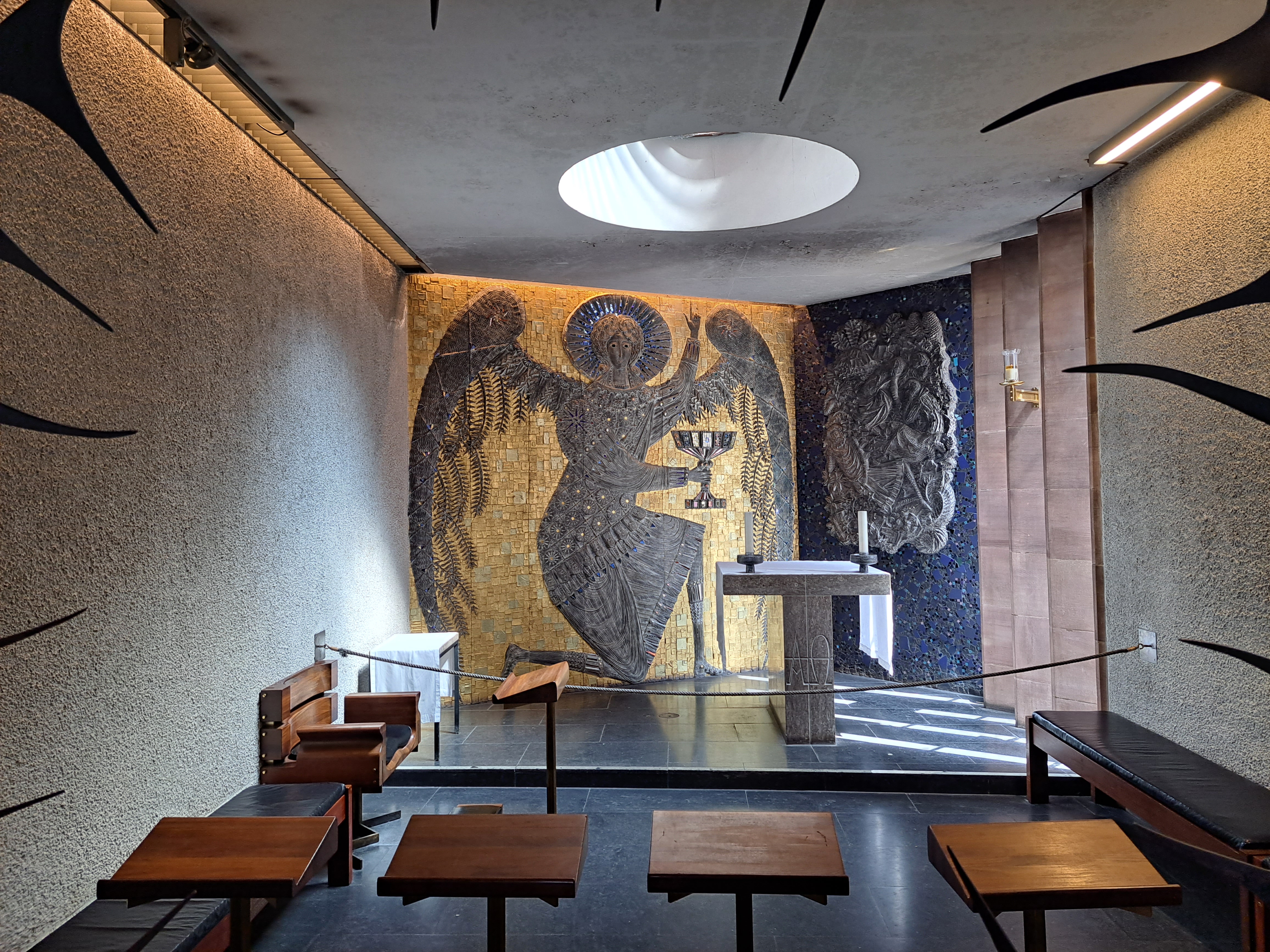
The Chapel of Christ in Gethsemane is also different, it resembles a cave and the sculpture on the wall by Steven Sykes shows Jesus being ministered to by an angel. It is viewed through a crown of thorns.
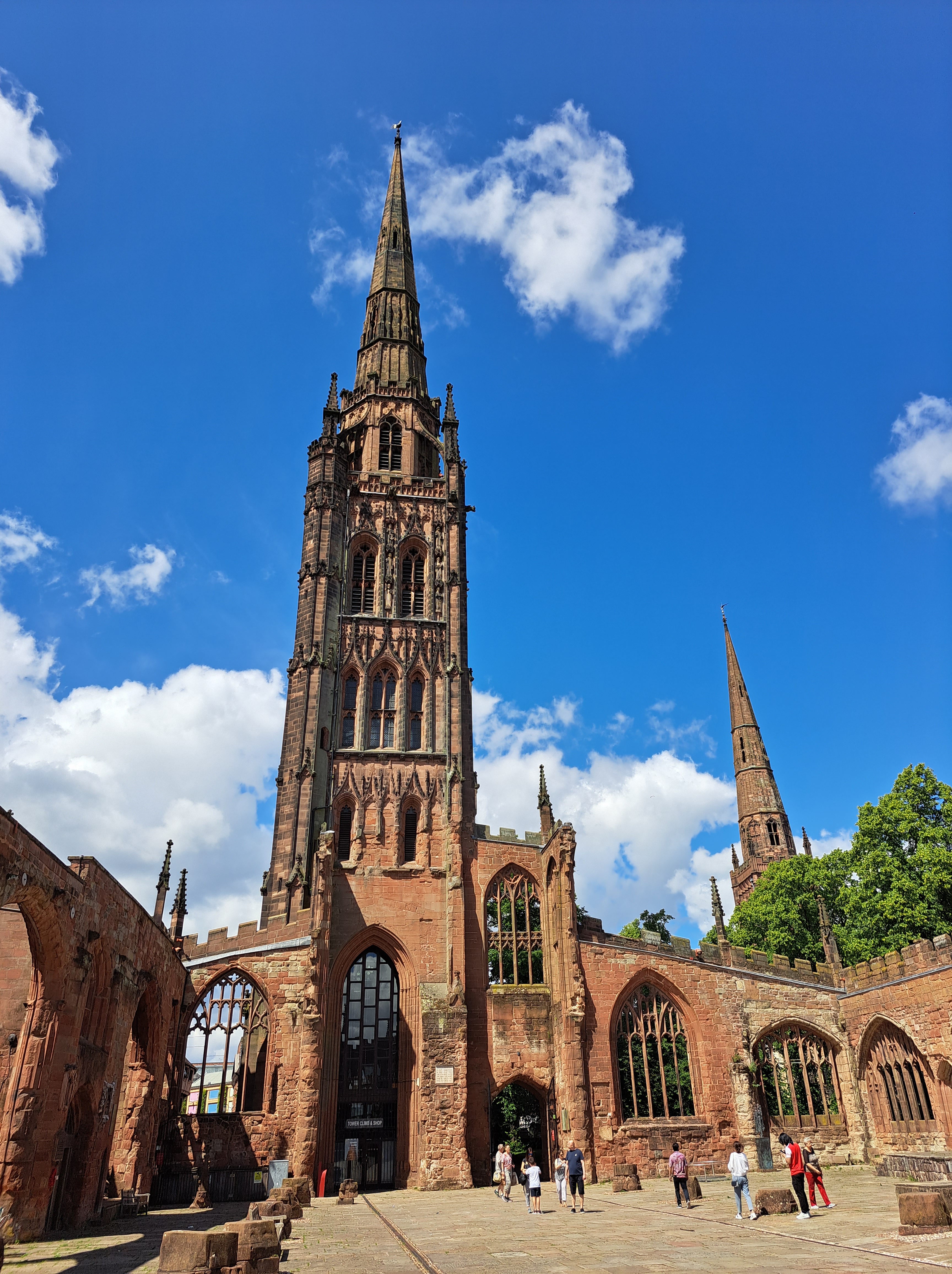
The ruins of the old cathedral emphasise the horrors of the blitz
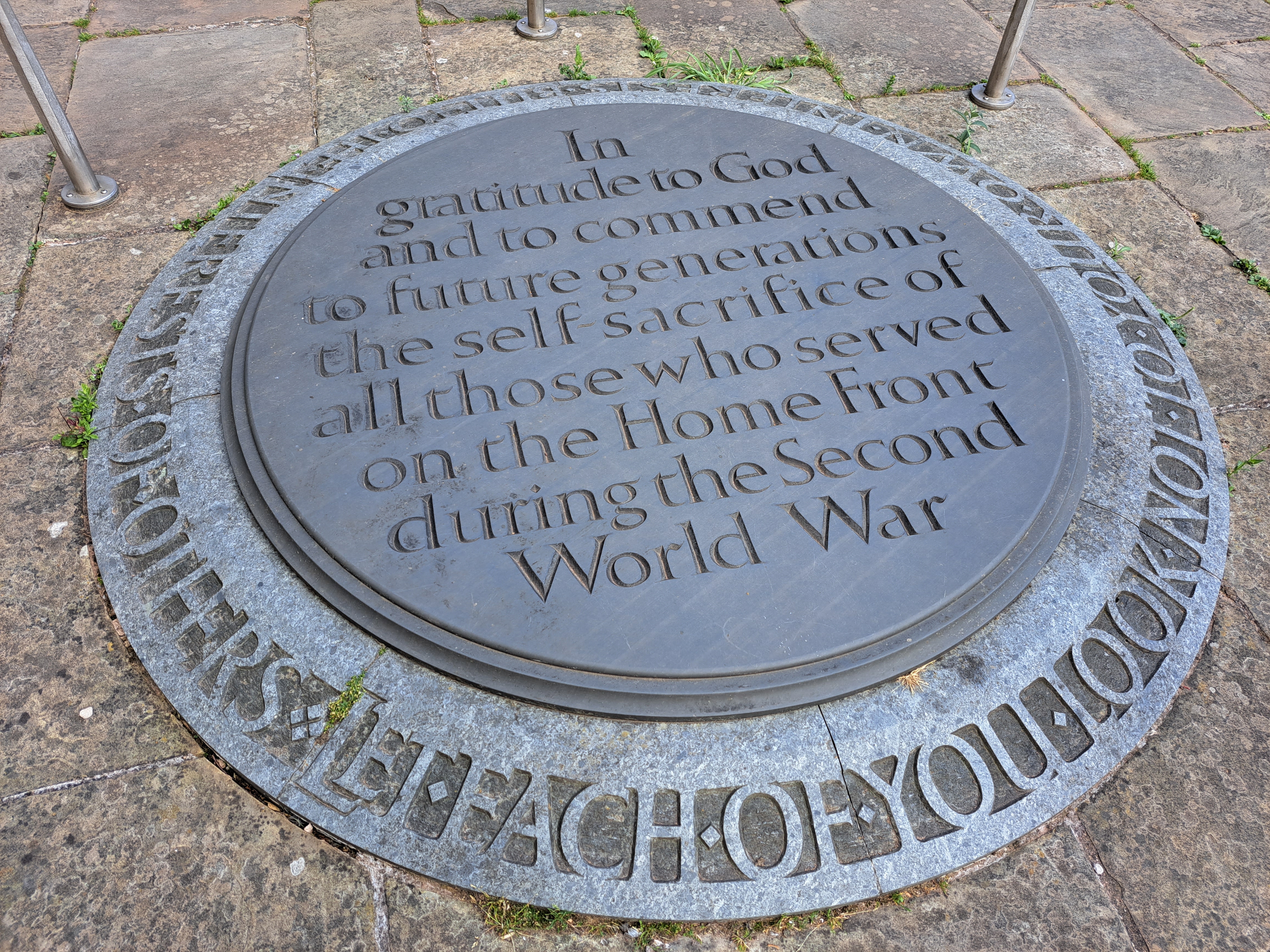
and fittingly a memorial records the sacrifices of those who served on the home front in the Second World War.
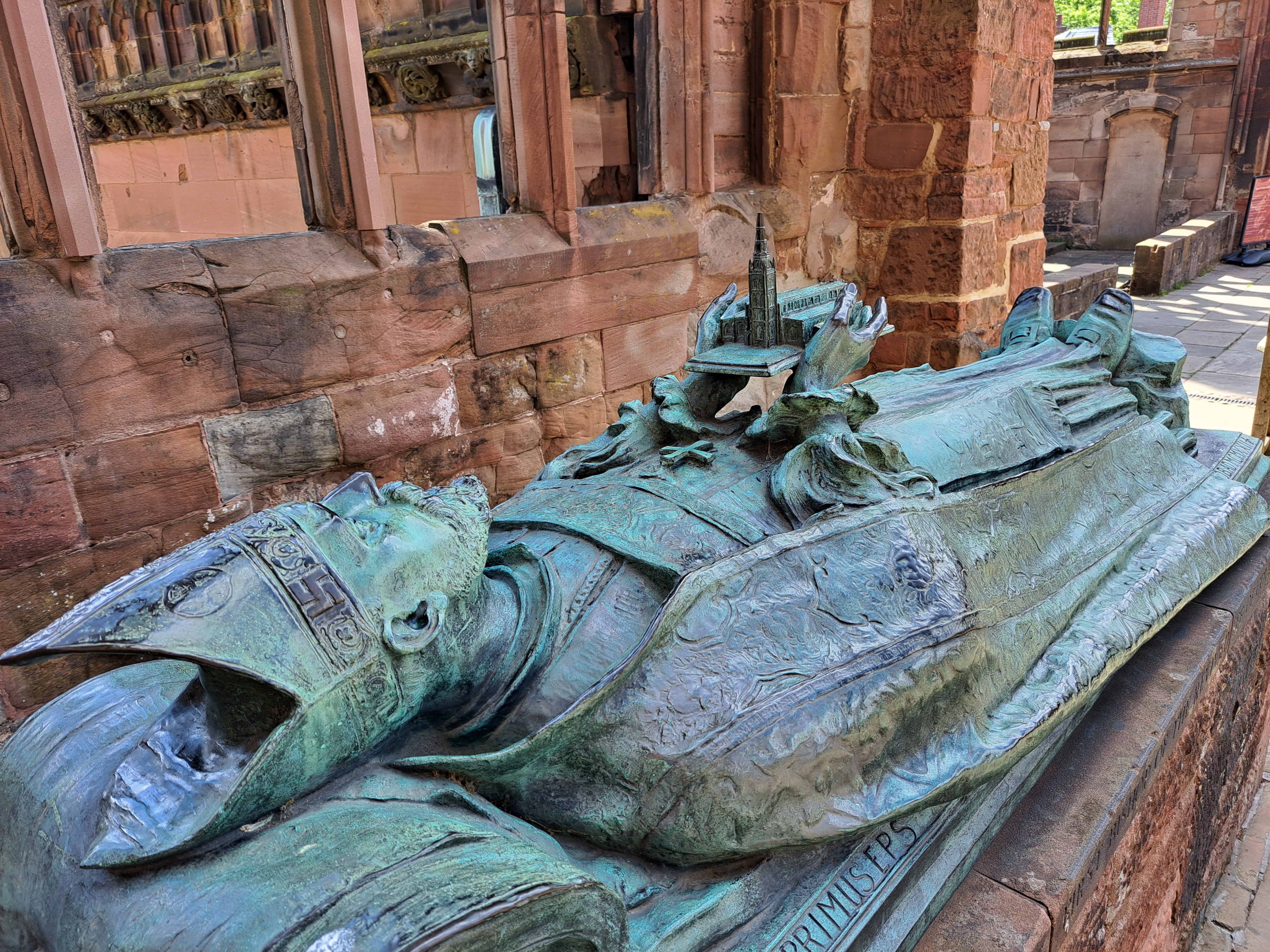
One of the few things to survive the blitz in the old cathedral is the tomb of Bishop Yeatman-Biggs, the first Bishop of Coventry. He holds a model of the cathedral and, curiously, his mitre includes a swastika in its decoration. The guide book doesn’t call it a swastika but names it as a fyflot. But as the guide book also says this was an ancient religious symbol, used in different cultures before it was adopted by Nazi Germany. But it does look strange on his mitre and it has gradually become shiny as generations of visitors have pointed to it in shock or surprise.
As a building it is somewhere that I find impressive and intriguing. It does represent a positive response to the horrors of war and an affirmation that faith can overcome suffering and reach out where there has been hatred, and this is all for the good. Parts of it are wonderfully impressive and uplifting but I can’t say that, as a building, it really speaks to me in the way other cathedrals do. But it will always communicate a certain kind of optimism and fortitude that came out of the immediate post-war period.
These opening lines from God’s Grandeur by Gerard Manley Hopkins supply us with the opening words and the theme of this week’s online service. Filmed at various locations in England, Wales and Northern Ireland places visited include the Hawarden estate, Flintshire, North Wales; the sand dunes at Formby near Liverpool; the Derbyshire Peak district; the River Thames (Isis) at Oxford; Norton Priory, Cheshire; Sefton Park, Liverpool; Rathmullan, county Down; and Dunmurry, county Antrim. As we look at these varied landscapes we explore the meaning of this idea of the divine presence in the natural world alongside readings from Gerard Manley Hopkins, Thomas Merton and Ernesto Cardenal.
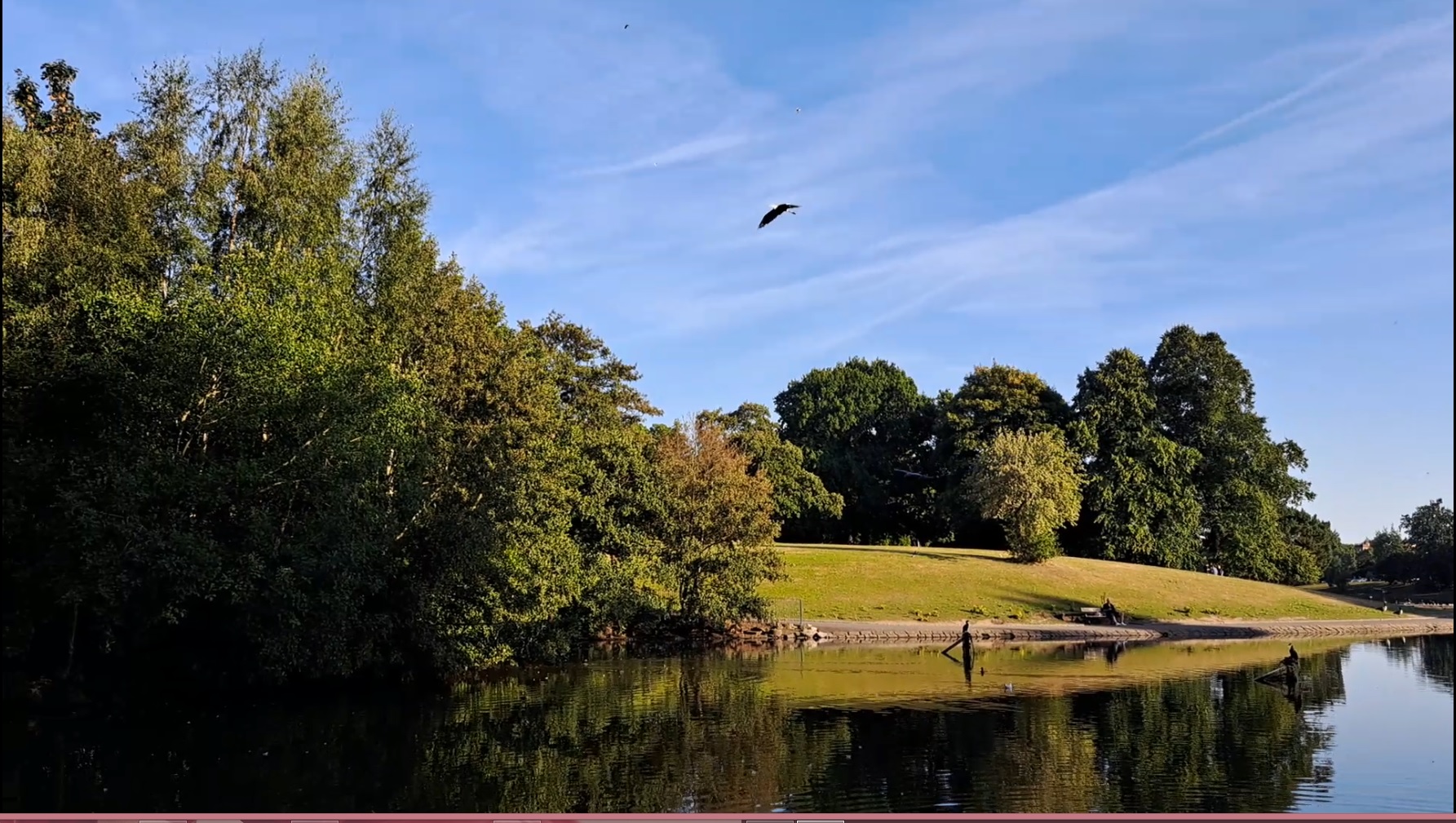
Sefton Park – the heron flies over the lake
The world is charged with the grandeur of God – click on the video above to see the meditation and reflections
In the service Graham Murphy reads two poems by Gerard Manley Hopkins – Binsey Poplars and Pied Beauty, both recorded at Gladstone’s Library, Hawarden, Flintshire. In addition Robert Neill and Emma McCrudden read extracts from the works of Thomas Merton and Ernesto Cardenal.
Binsey, near Oxford
Music played includes:
For the beauty of the earth, played by Allen Yarr, organist of First Presbyterian (NS) Church, Dunmurry.
Come let us sing of a wonderful love, played by John Strain, organist of Ballee Non-Subscribing Presbyterian Church.
O love that wilt not let me go, played by John Strain.
Let saints on earth in concert sing, played by Allen Yarr.
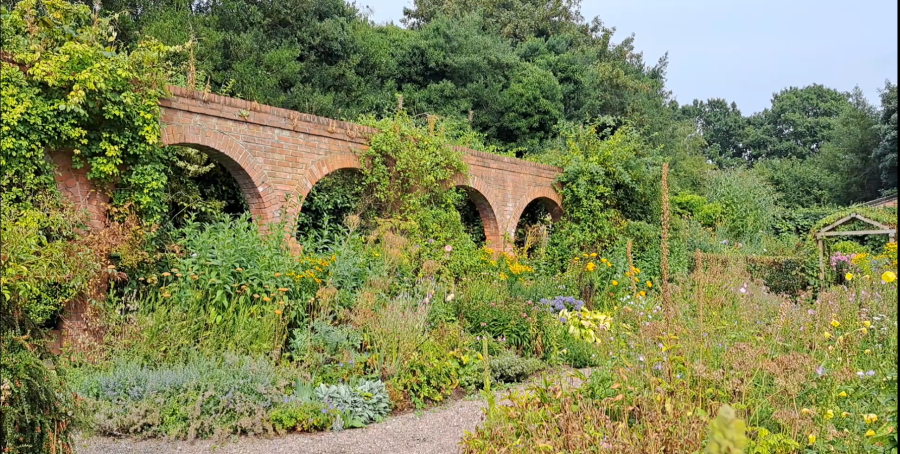
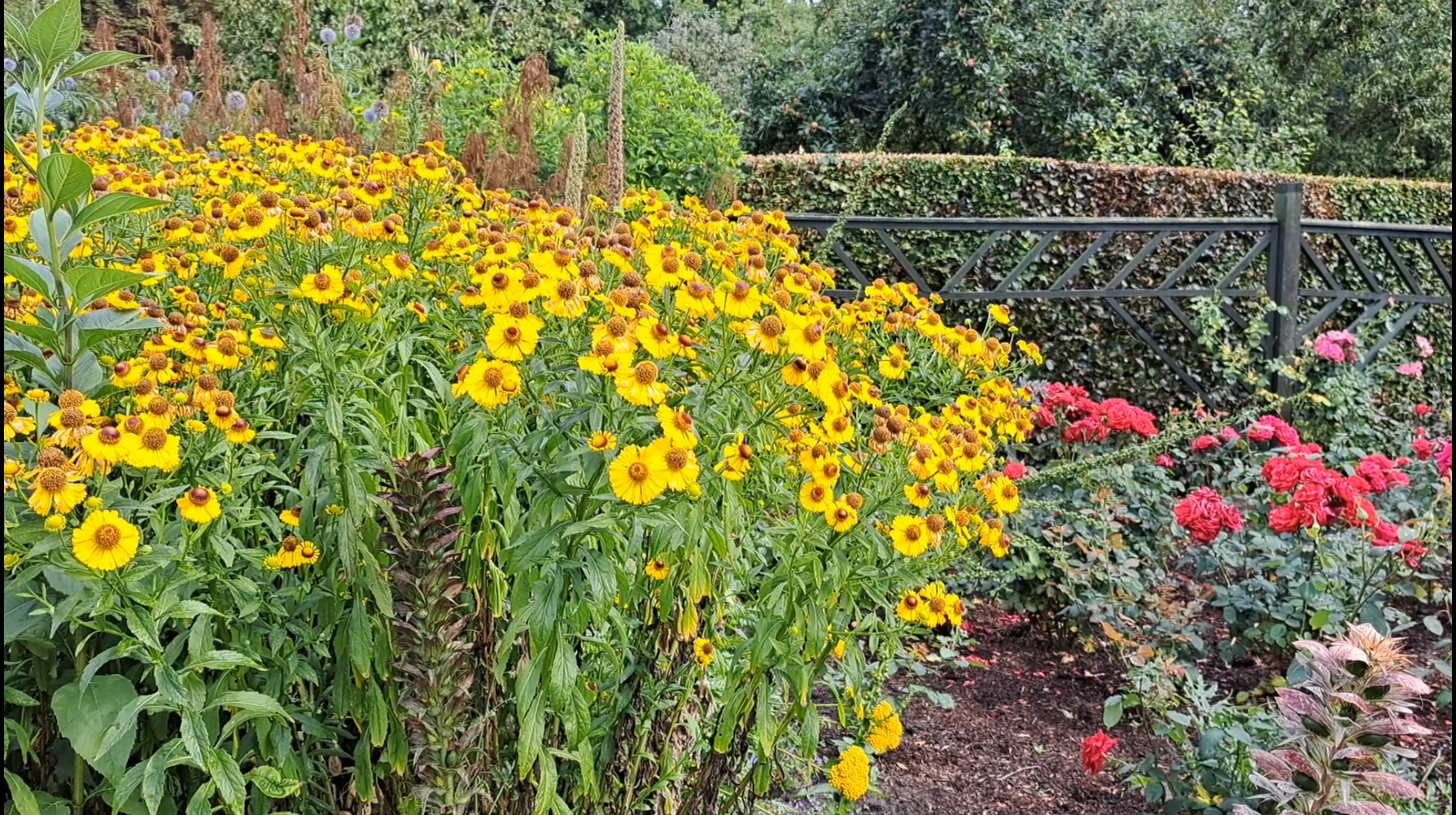
Norton Priory, Cheshire, walled garden
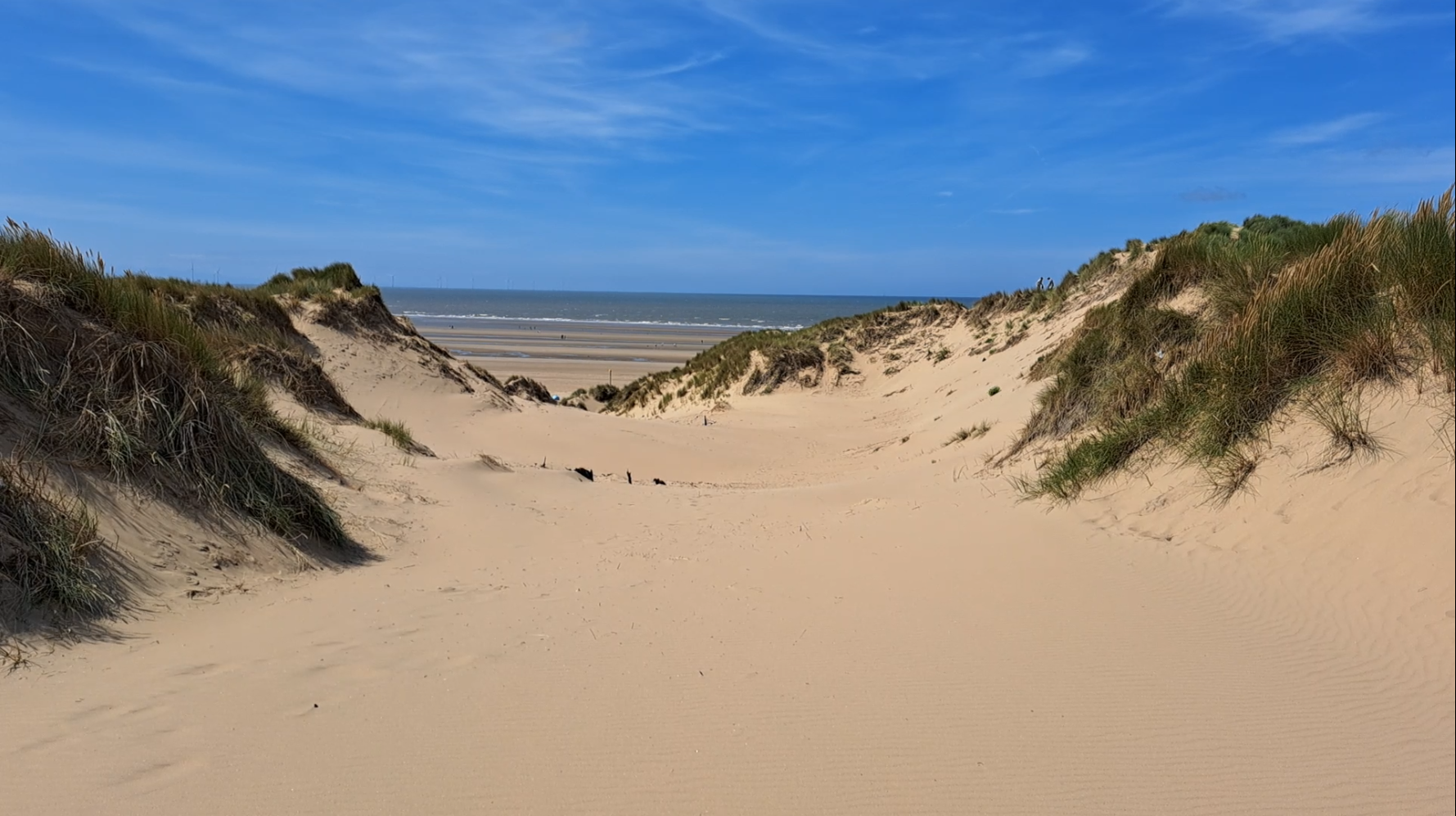
Formby, sand dunes
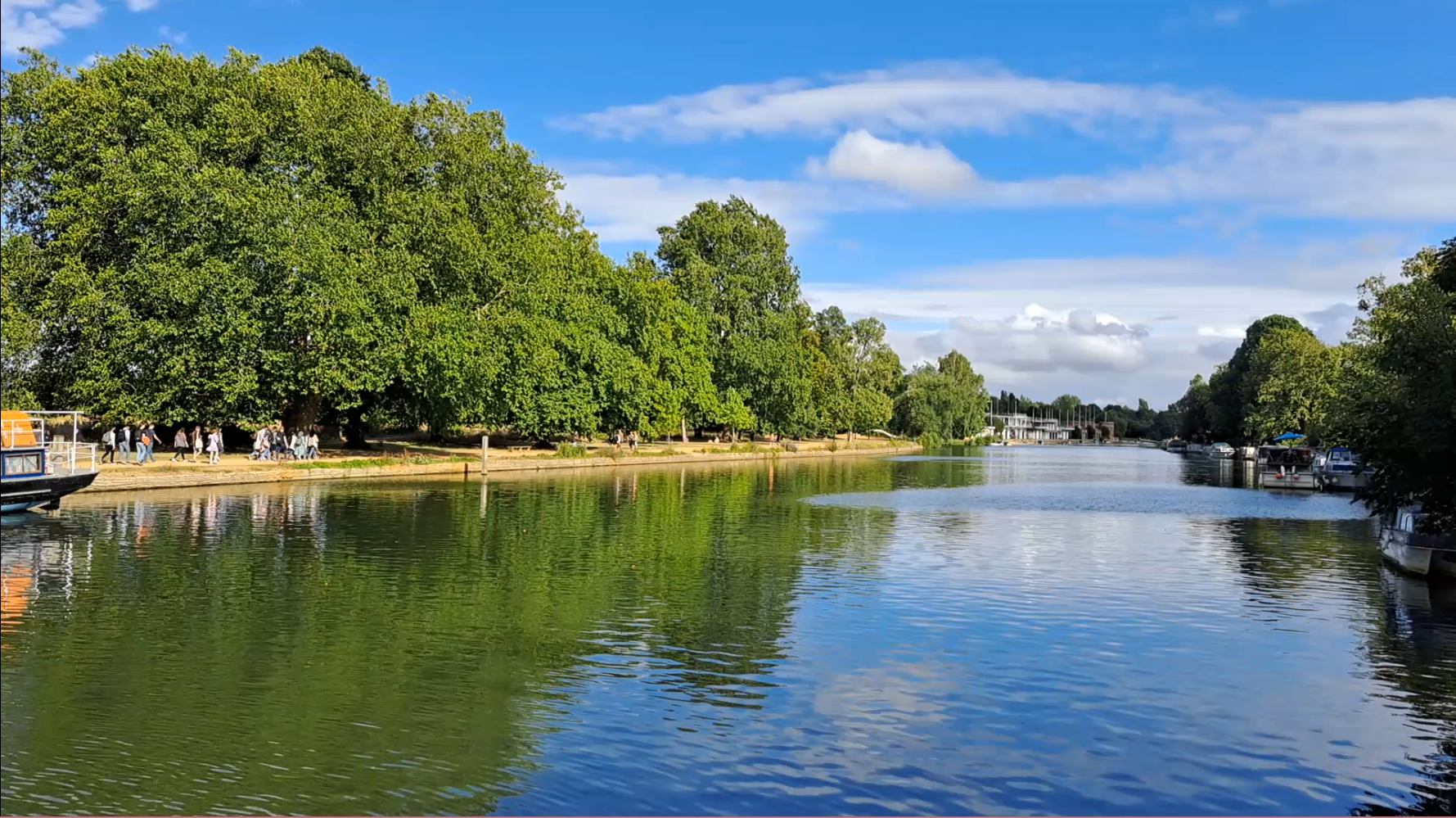
The River Thames at Oxford
Let me seek, then, the gift of silence, and poverty, and solitude, where everything I touch is turned into a prayer: where the sky is my prayer, the birds are my prayer, the wind in the trees is my prayer, for God is all in all. – Thomas Merton
To accompany our service of worship conducted from Oxford we have a few views of various parts of the university and its environs.
Click on the video to see the service
The service features readings, hymns and prayers as well as poems relating to Oxford. As part of the service we are very pleased to have Graham Murphy read Duns Scotus’s Oxford, by Gerard Manley Hopkins, and Oxford, by C.S. Lewis.
Readings: Psalm 139 read by Rev Dr David Steers Duns Scotus’s Oxford by Gerard Manley Hopkins, read by Graham Murphy Oxford by C.S. Lewis, read by Graham Murphy Oxford (extract) by T. Lovatt Williams, read by Sue Steers
Hymns: ‘The King of Love my shepherd is’, Alfie McClelland (Clough) ‘From all that dwell below the skies’, Allen Yarr (Dunmurry) ‘Lord of all hopefulness’, John Strain (Ballee) ‘Be still for the presence of the Lord’, Laura Patterson (Downpatrick) ‘In Christ Alone’, John Strain (Ballee) ‘It is well with my soul’, Allen Yarr (Dunmurry)
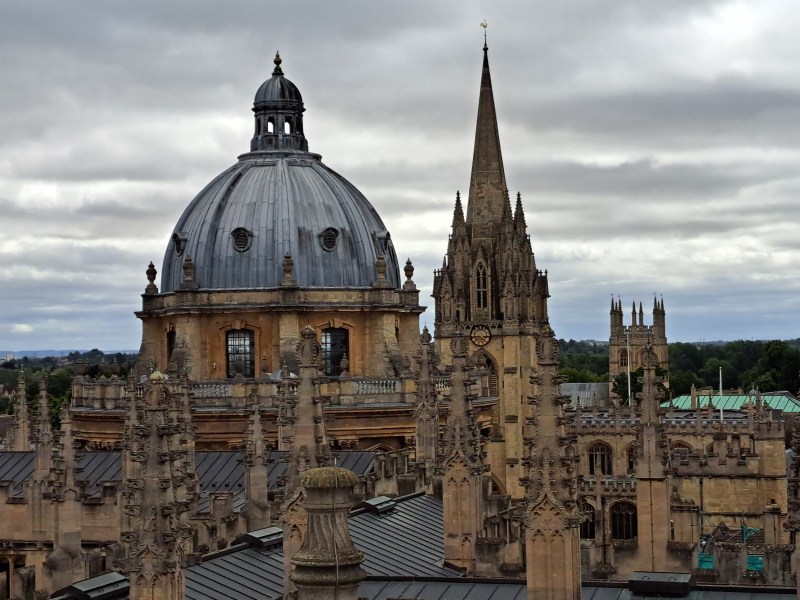
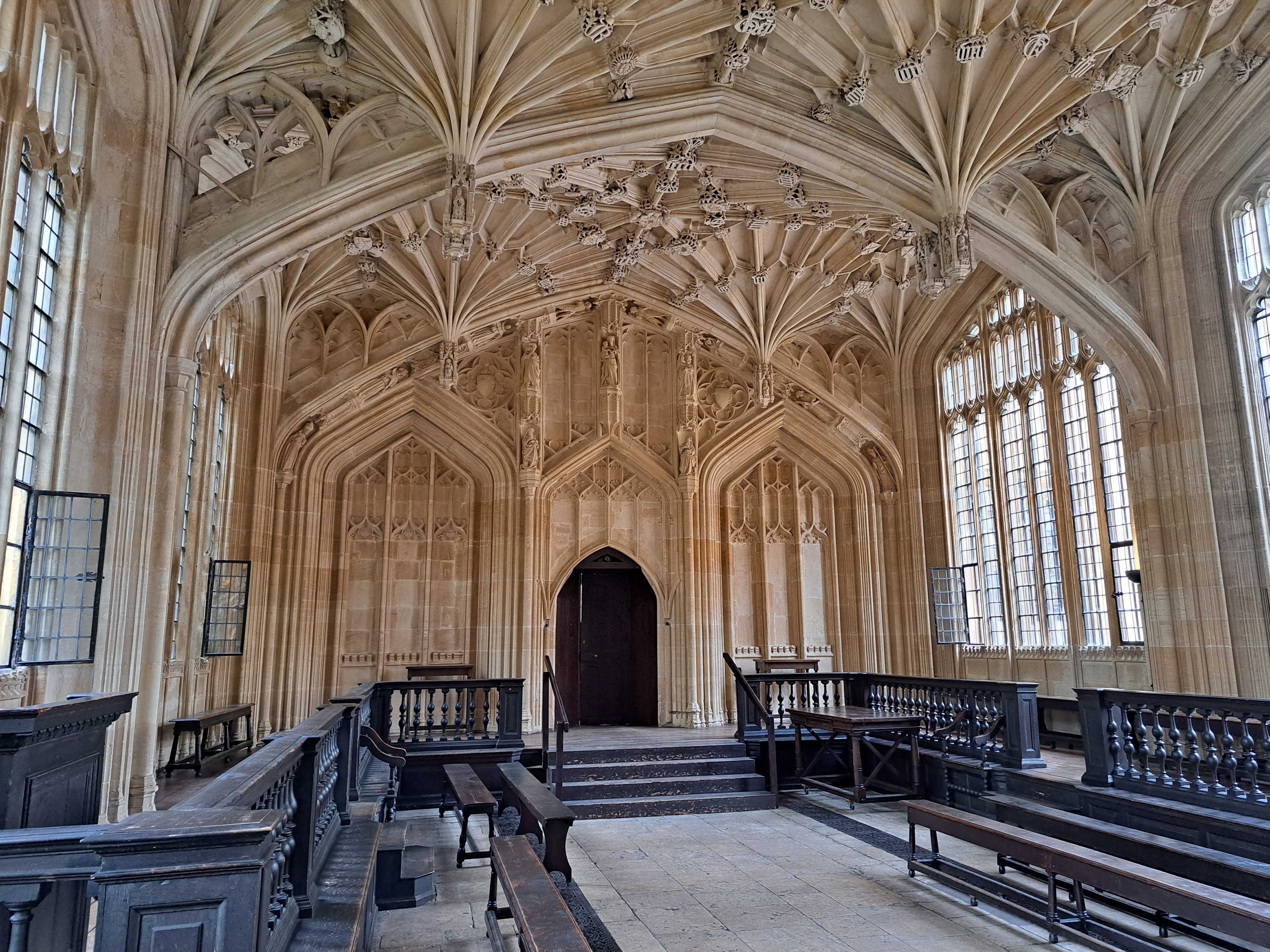
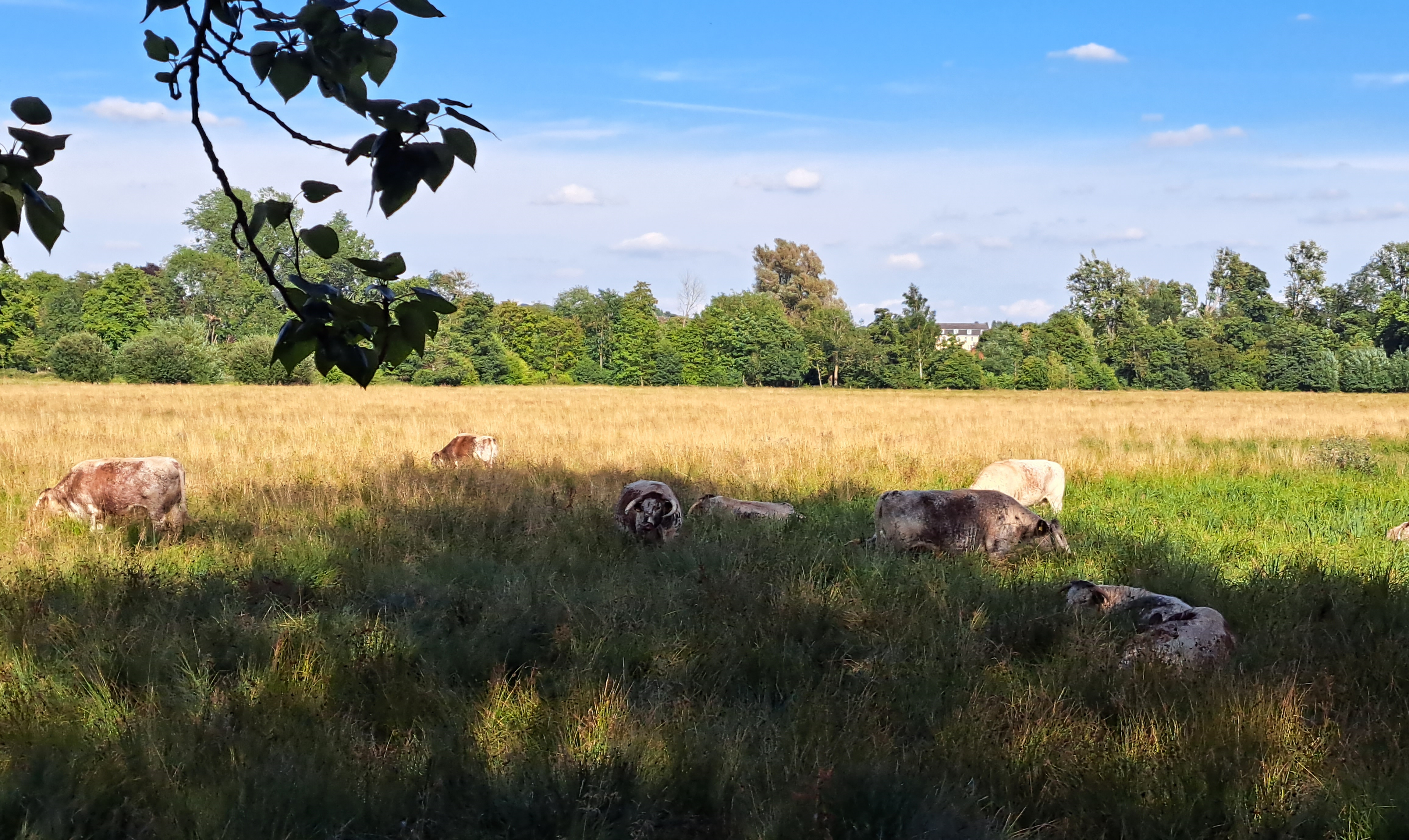
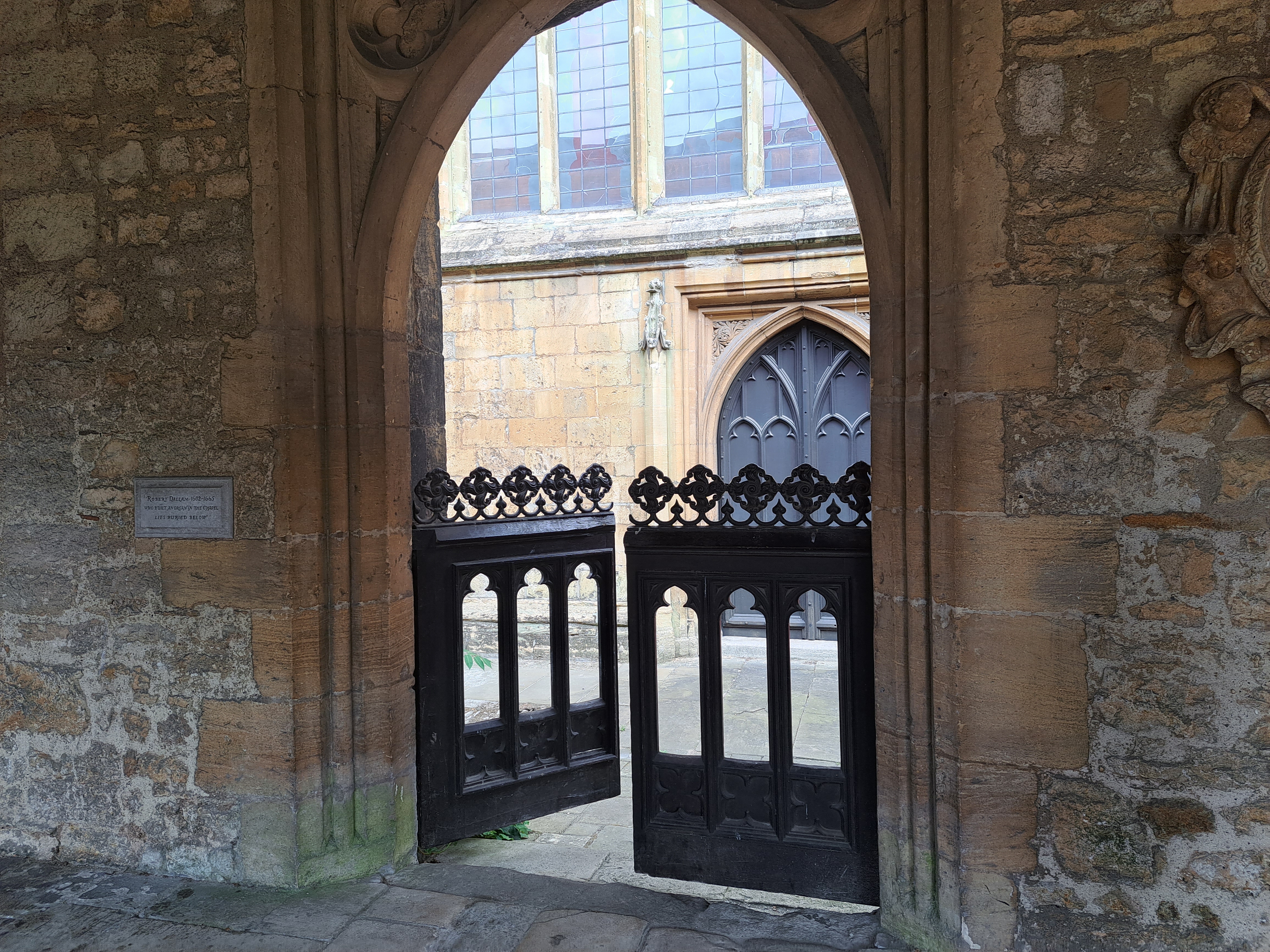
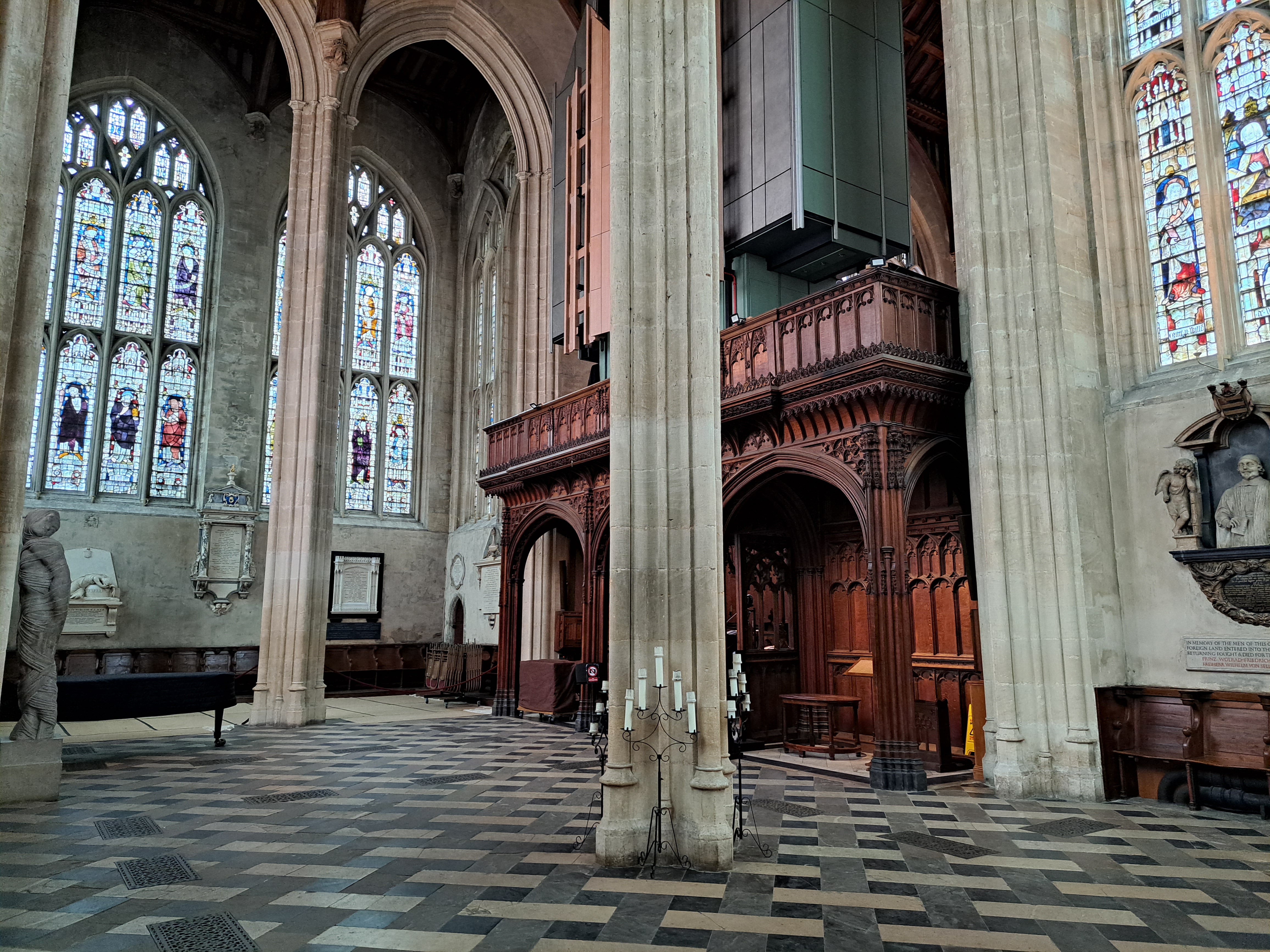
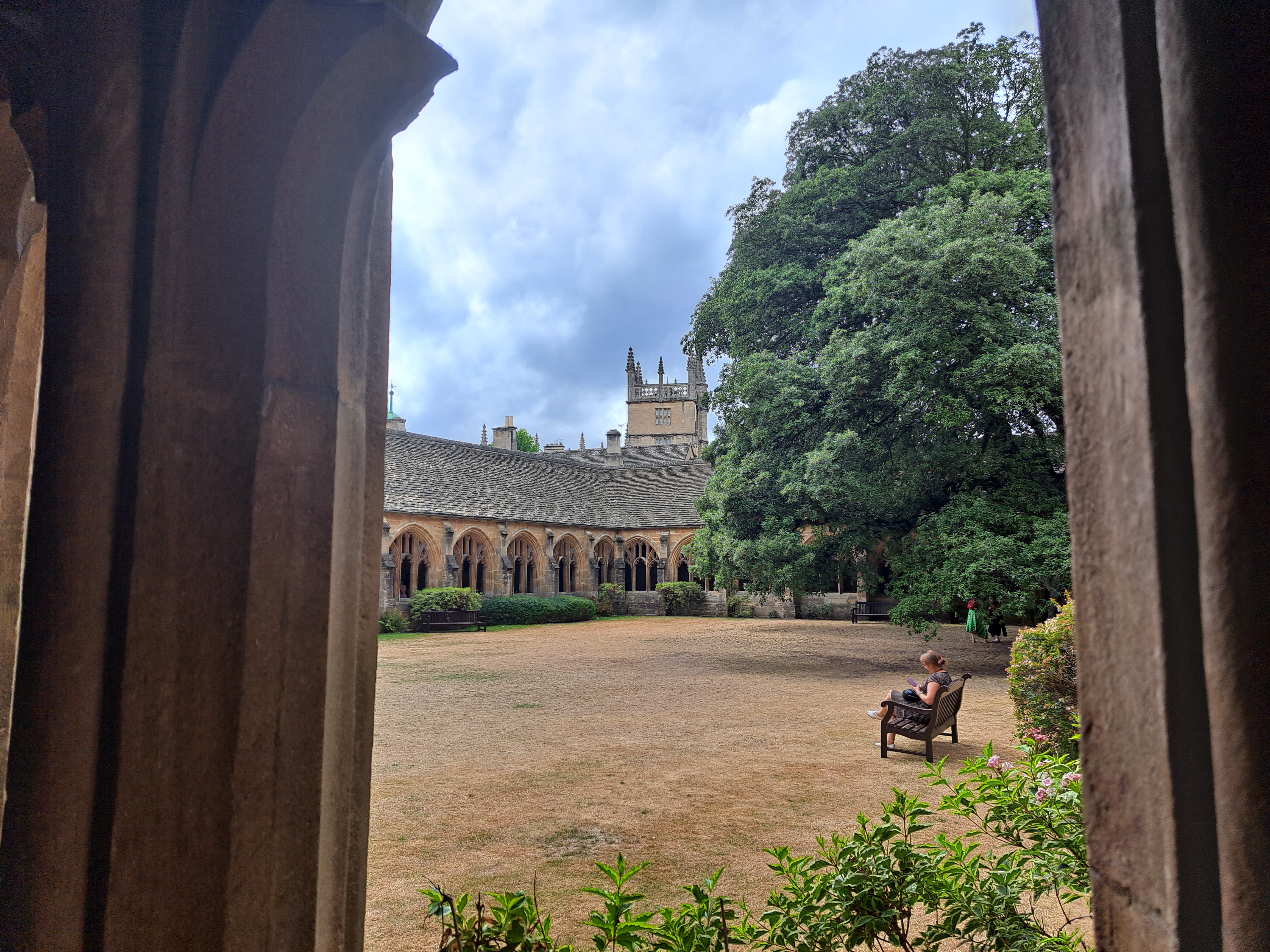
In the service you will see: Radcliffe Camera, Brasenose College, River Thames (Isis), Harris Manchester College, Mansfield College, New College, Christ Church (Peckwater Quad, Tom Quad, Memorial Garden), Christ Church Meadow, Old English Longhorn Cattle, Divinity School, Bodleian Library, Sheldonian Theatre, Christ Church Cathedral, University Church, Martyrs Memorial.
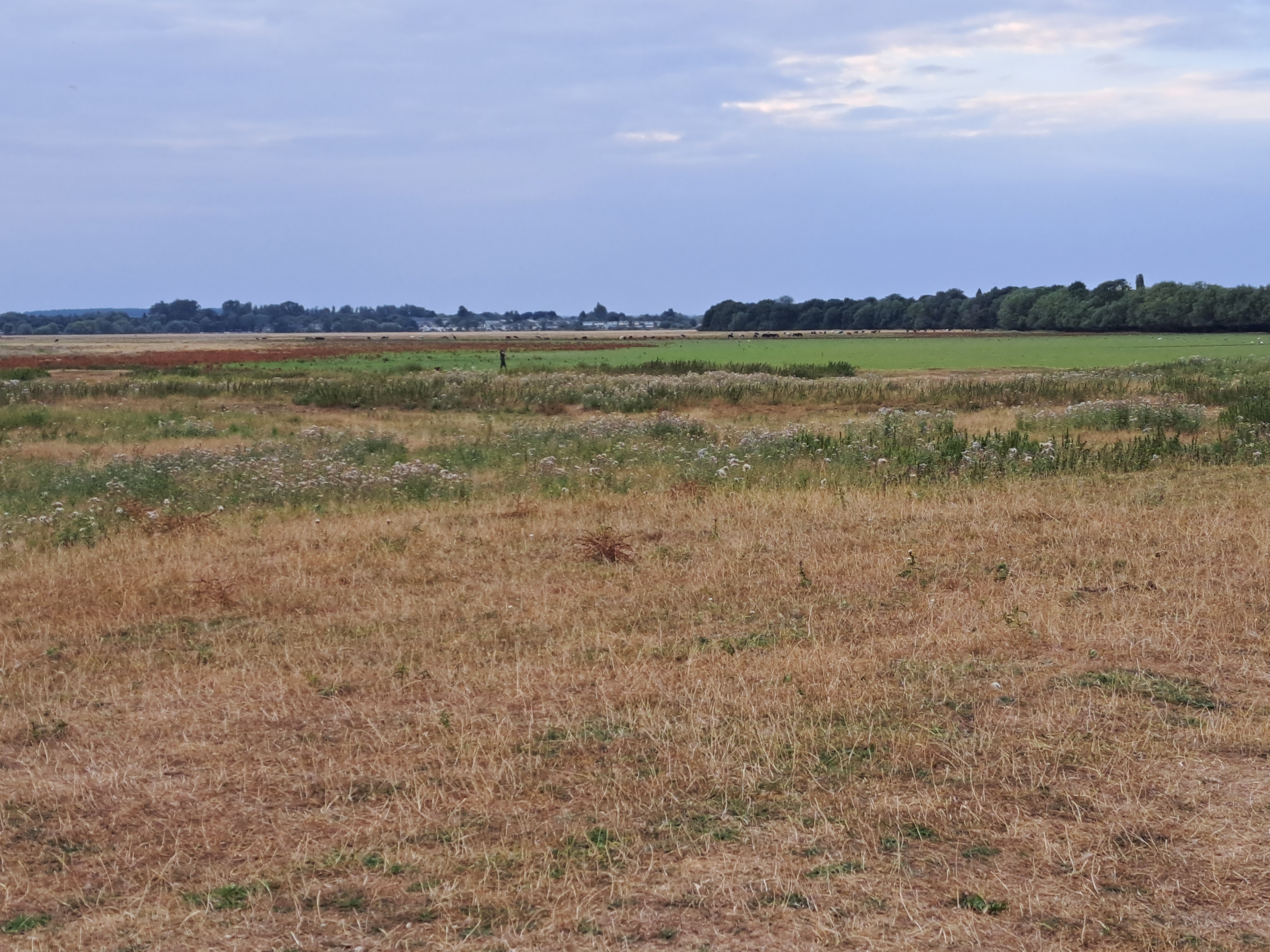
Portmeadow
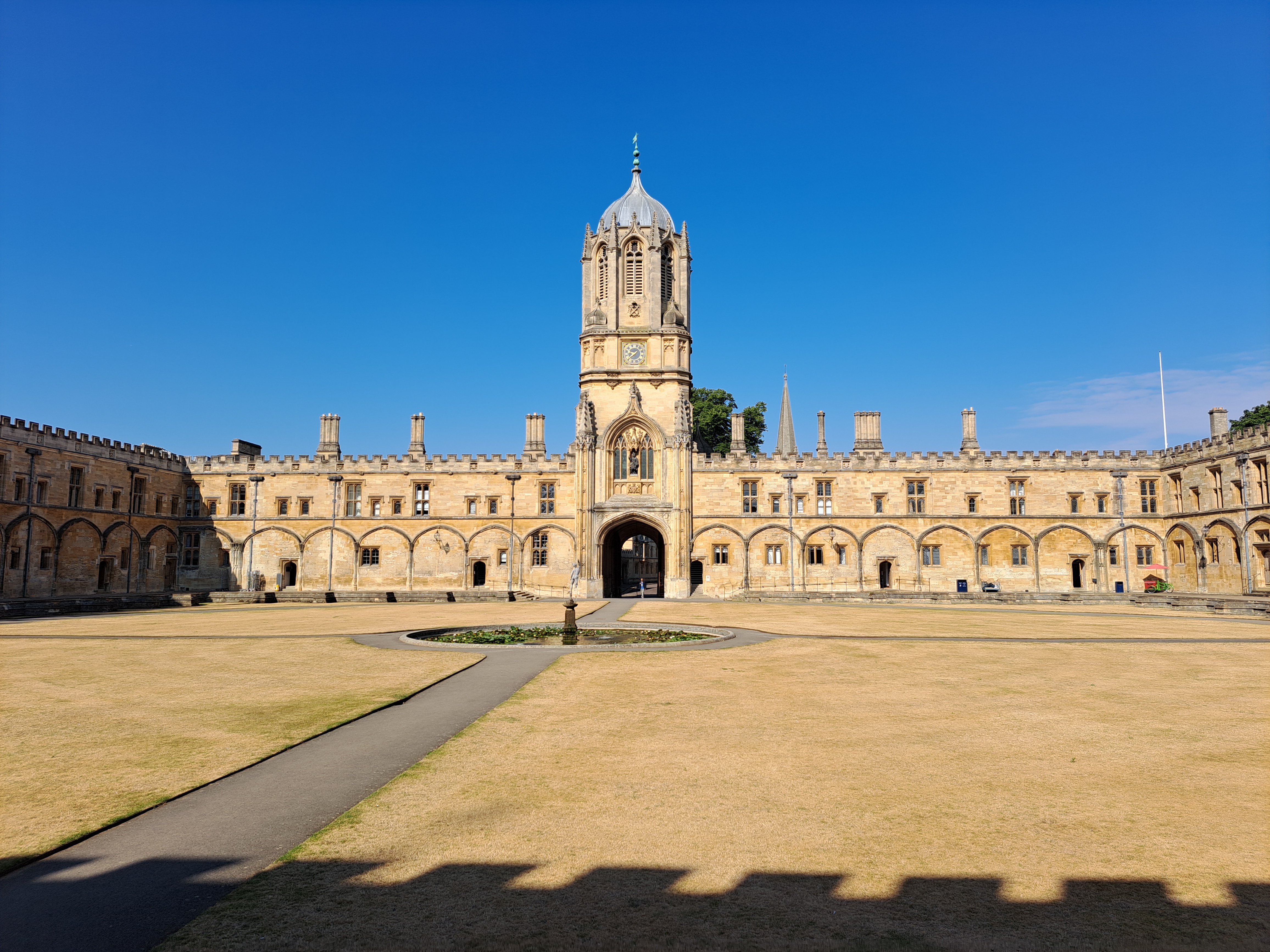
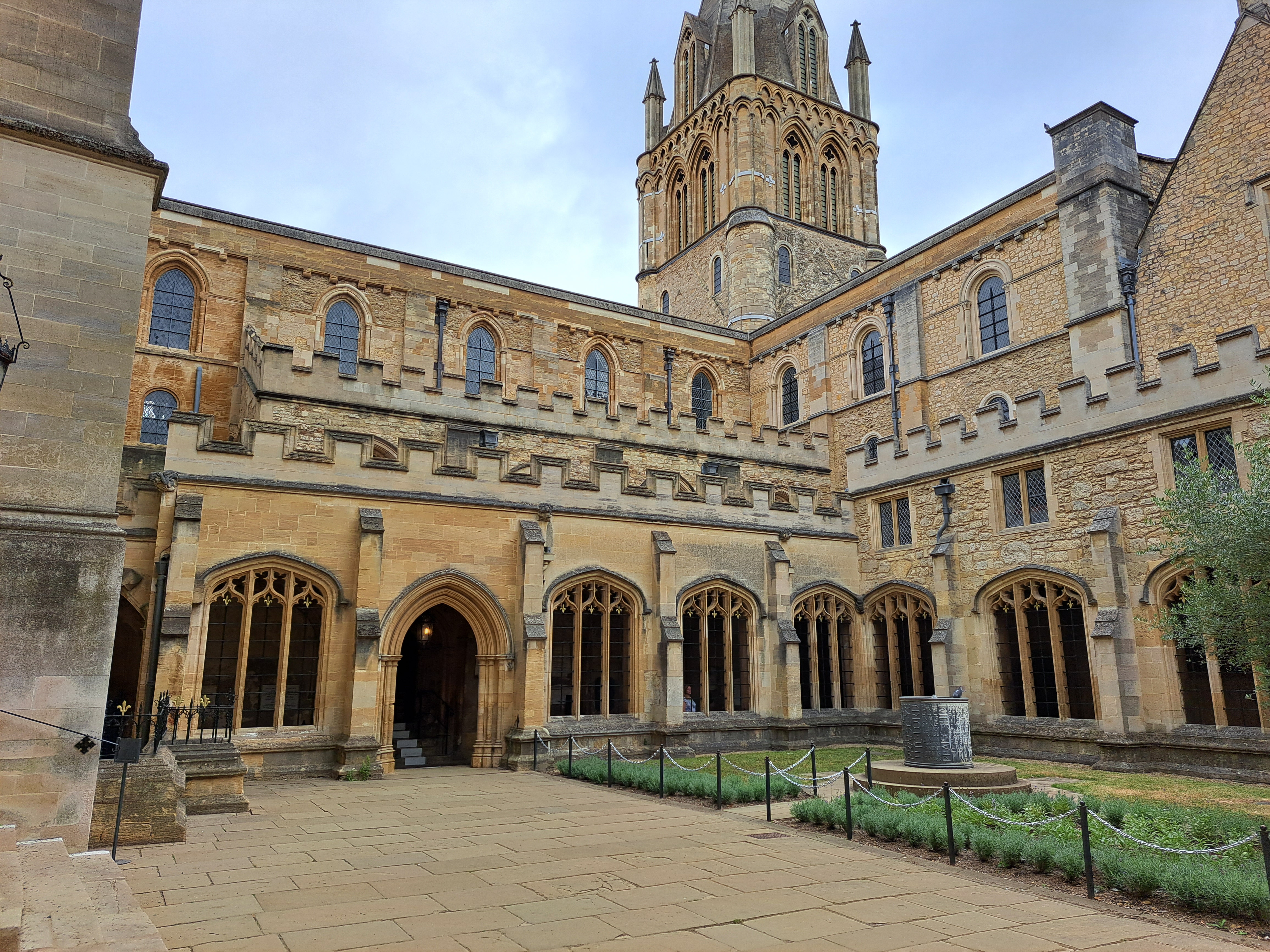
Tom Quad, Christ ChurchChrist Church cloisters
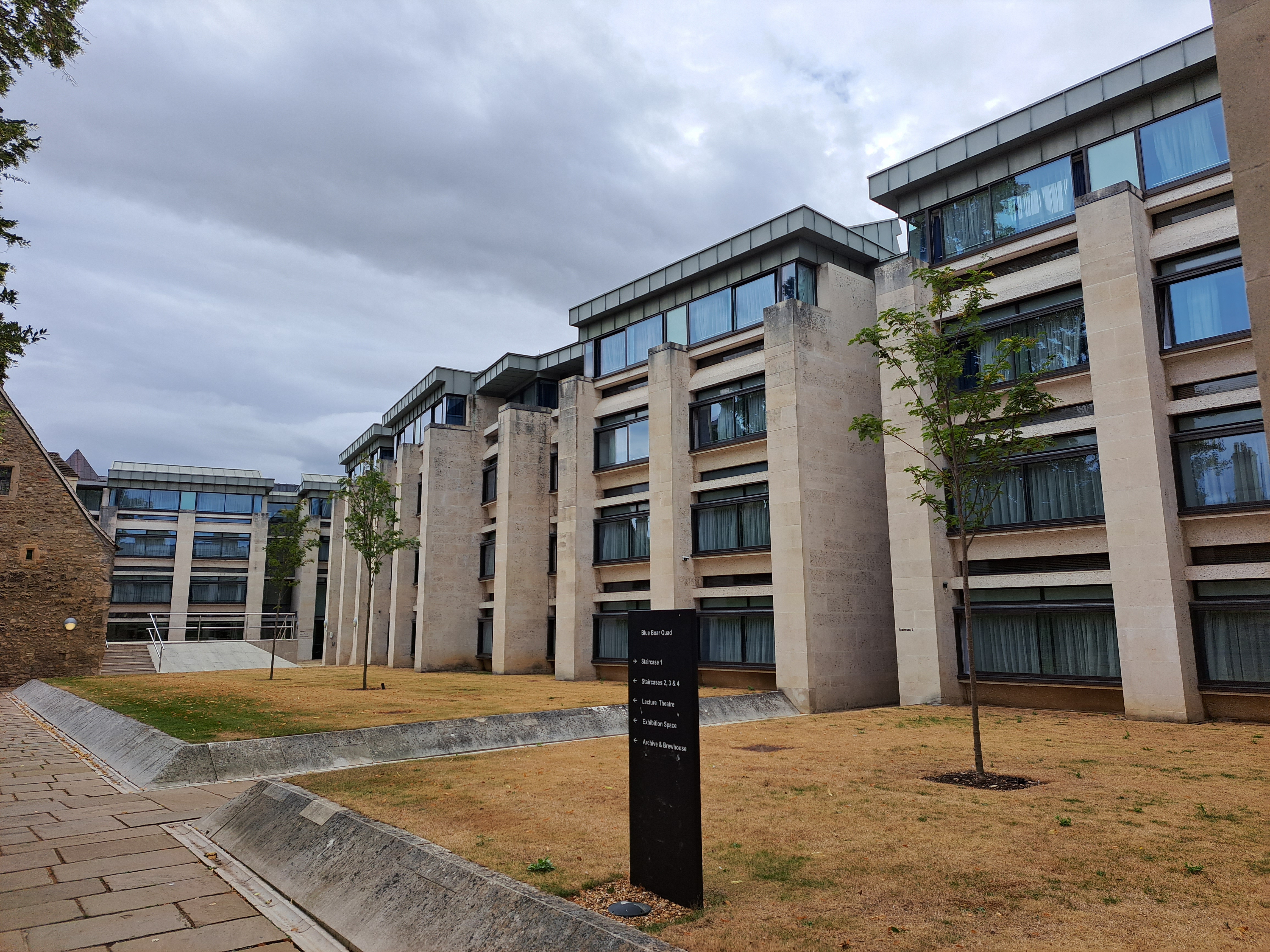
Blue Boar Quad
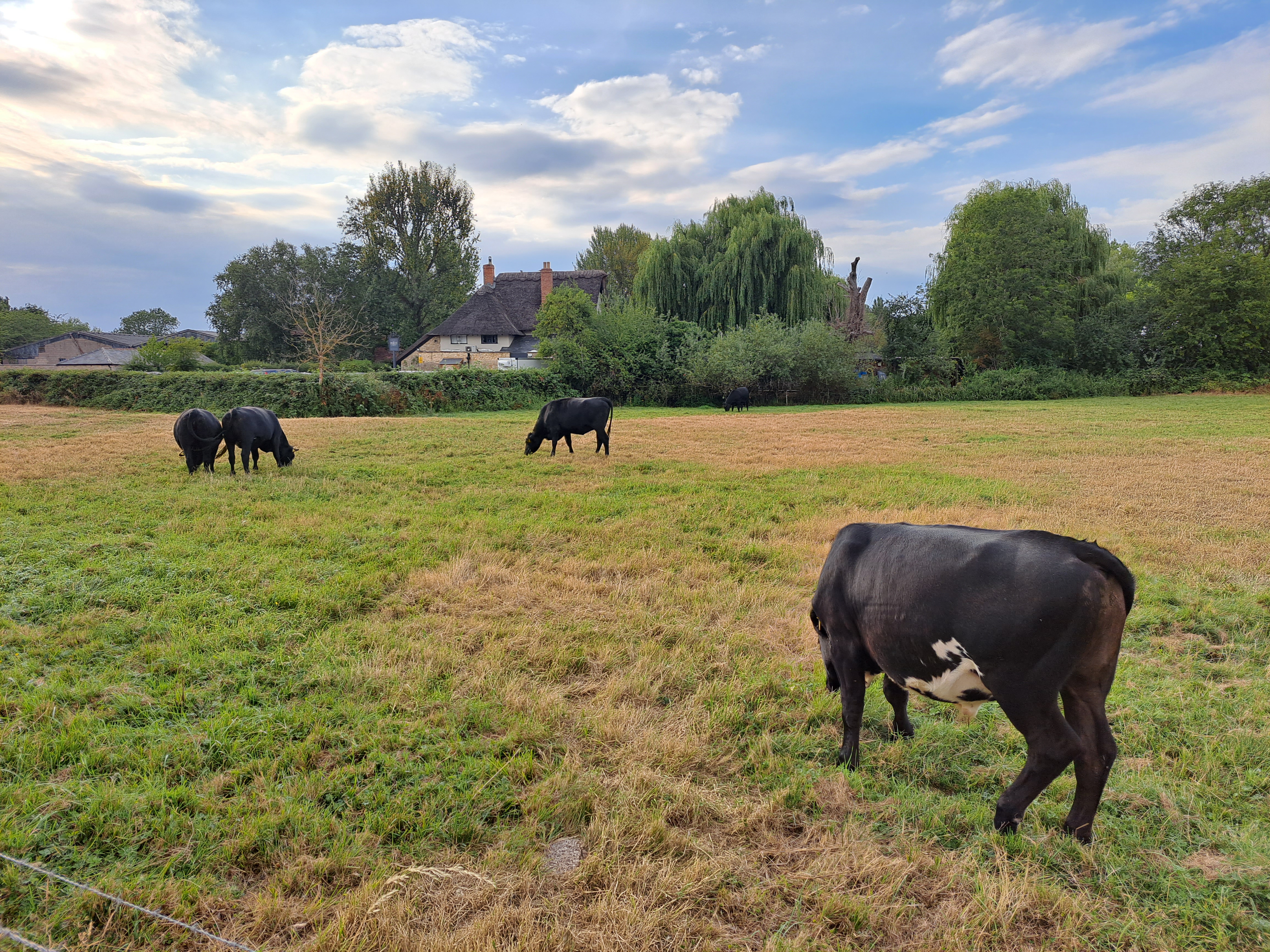
Old English Longhorn Cattle, Christ Church MeadowNew CollegeNew College, antechapel







 velvethummingbee