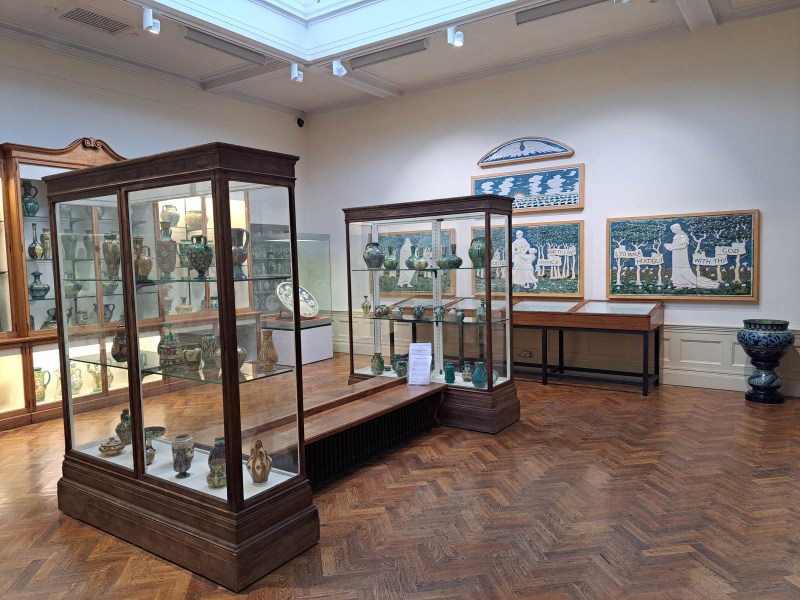
I can’t remember the last time I visited the Williamson Art Gallery in Birkenhead but a re-visit was long overdue and I was so pleased to see the exhibitions and collections there. There’s a lot to see, including a fine collection of ship’s models, but the stand out part for me was the collection of Della Robbia.
Only produced in Birkenhead from 1894 to 1906 the Della Robbia collection remains so striking that just entering the room it’s housed in lifts one’s spirits. It is replete, of course, with Unitarian connections not least through Harold Rathbone, the founder of the pottery and a member of the well-known Unitarian merchant family of that name. Harold Rathbone became an artist, studied at the Slade and in Paris, and set up the pottery in Birkenhead in 1894, a conscious revival of the work of Luca Della Robbia the 15th-century Florentine sculptor. His portrait was painted by William Holman Hunt and he looks every inch the sensitive Victorian artist influenced by William Morris and Edward Burne-Jones and the whole panoply of Arts and Crafts and Pre-Raphaelite artists amongst whose circle he moved.
Unusually for a modern gallery there is not a single label on any exhibit. In a way it is nice not to have the distraction but there is such a wealth of material it would be helpful to be given some background information. Nevertheless a lot of the production was geared towards a religious purpose and some of it was prominently Unitarian and this I recognized right away.
Panels from the Liverpool Domestic Mission
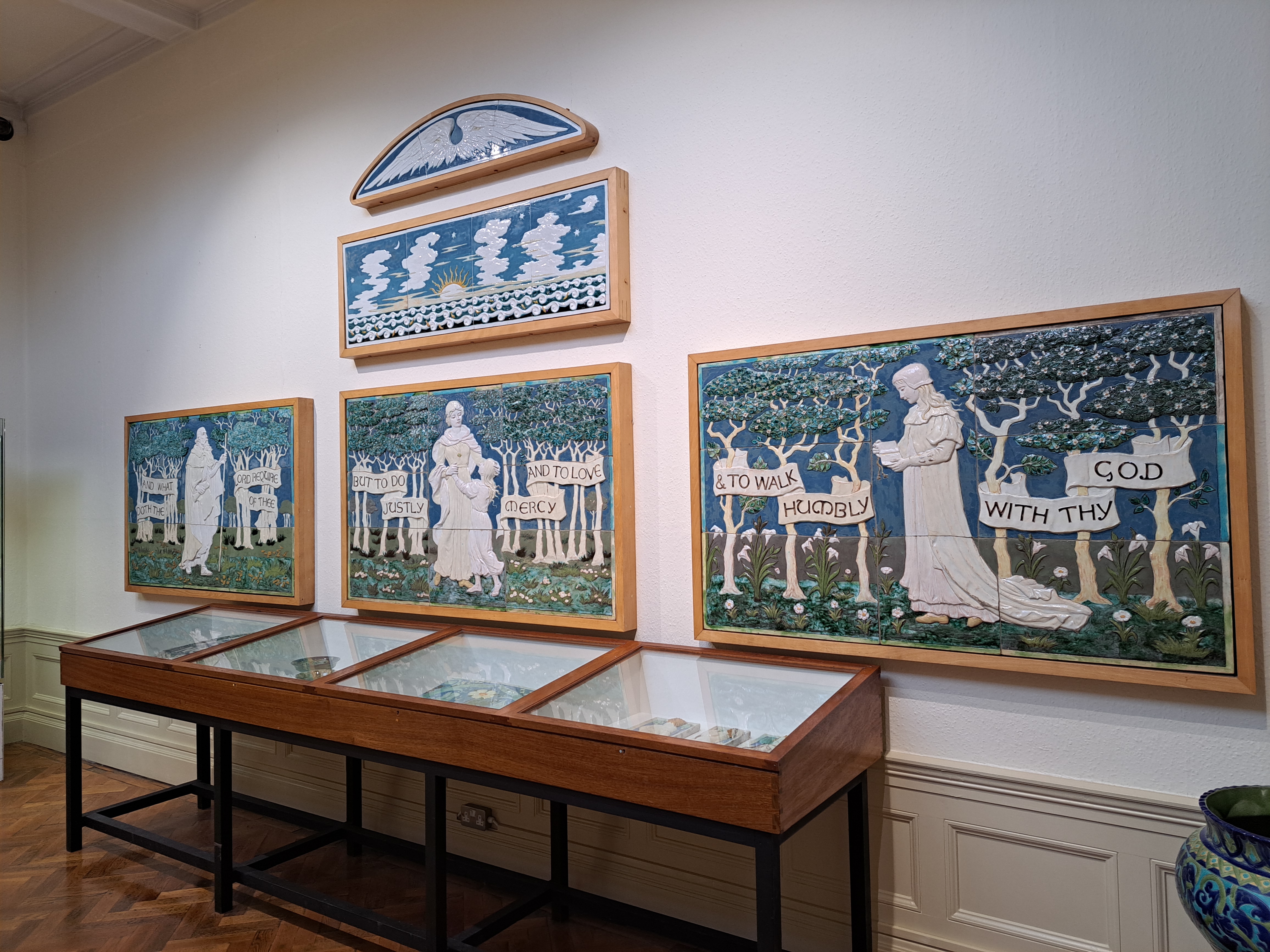
It is good that some of the decoration from the Liverpool Domestic Mission is there and quite prominently displayed. The Mission building closed in the early 1970s and it must have migrated to the Art Gallery then.
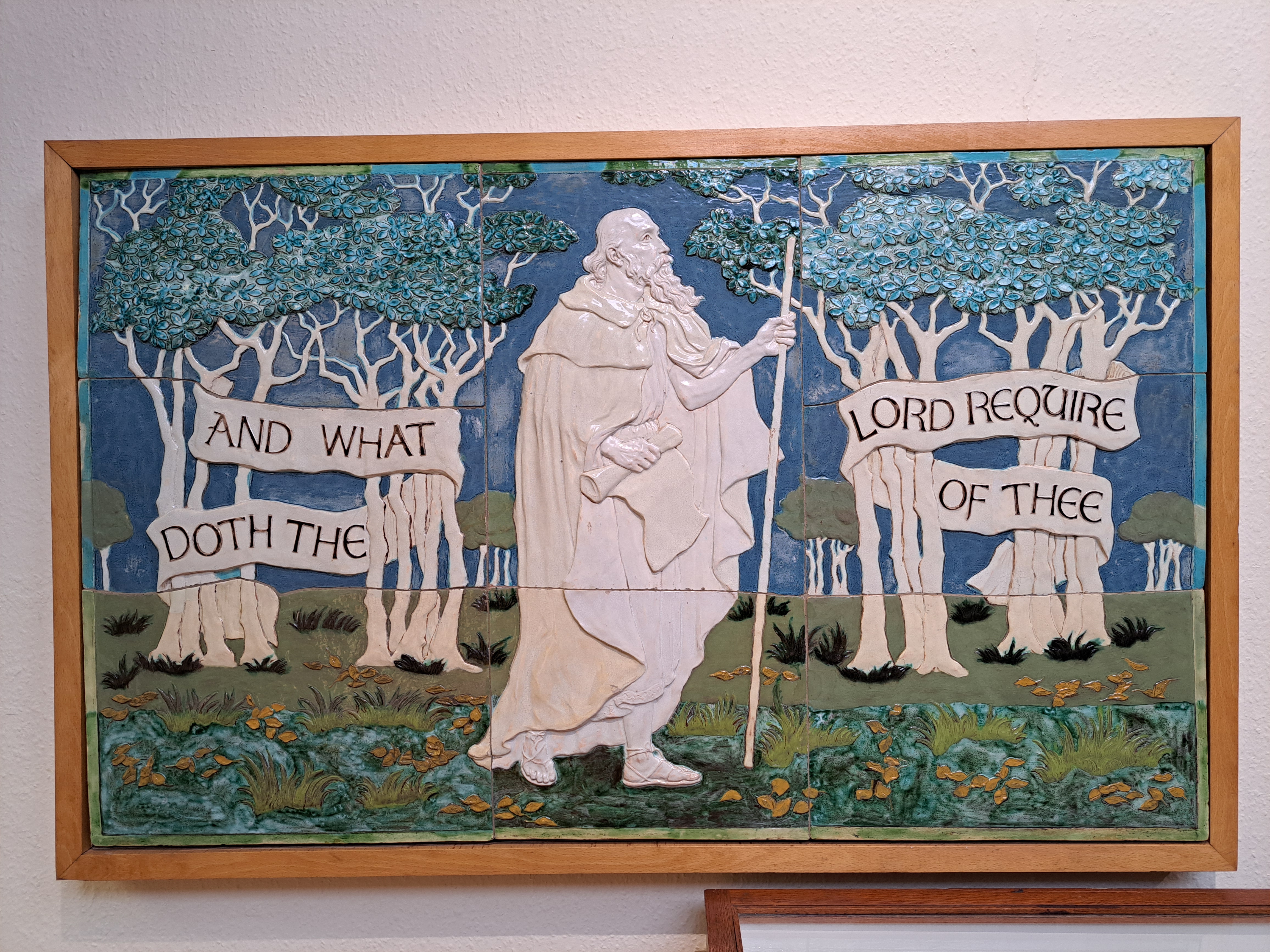
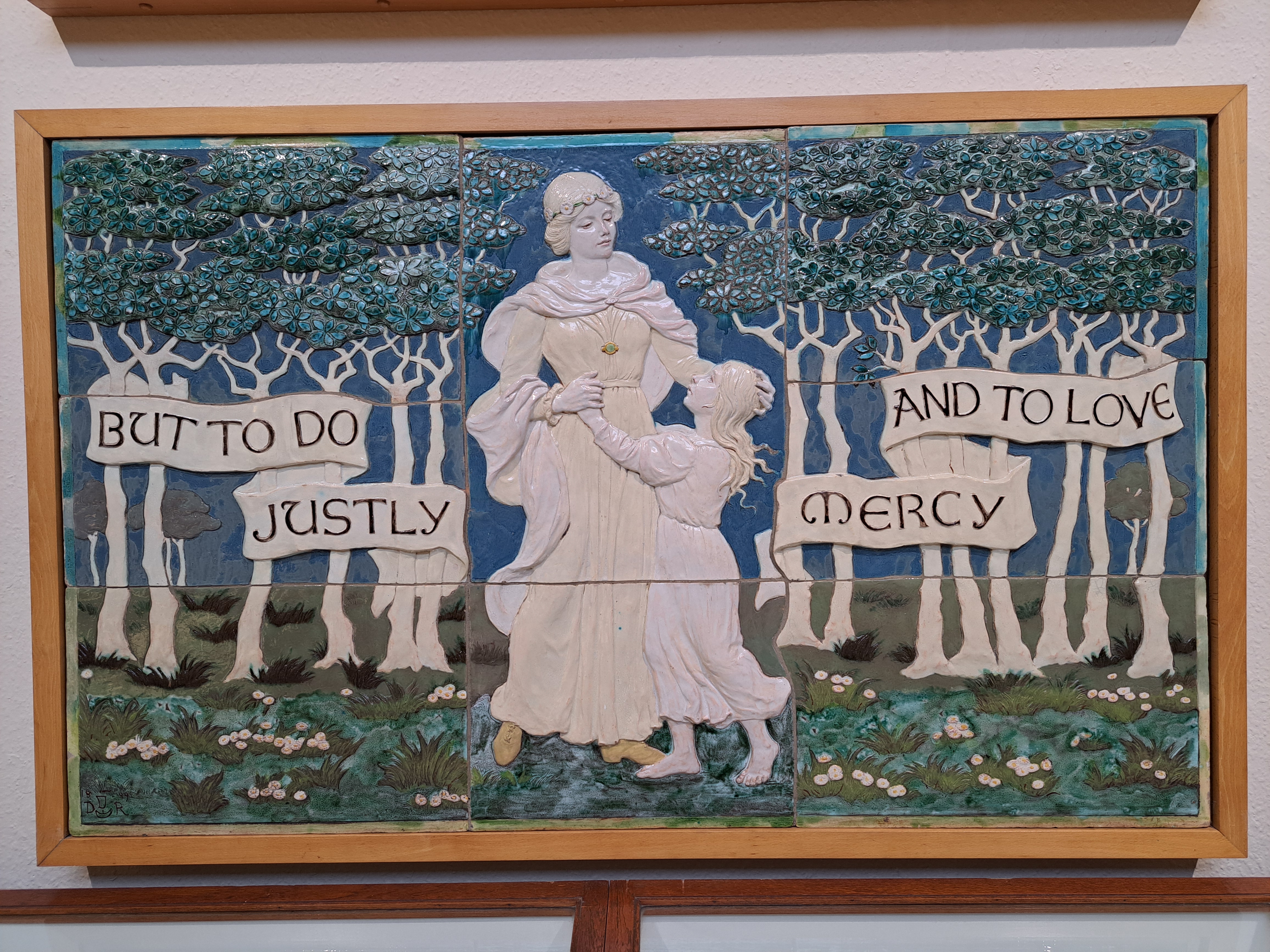
The display on the wall in the Art Gallery is laid out exactly as it was in the Domestic Mission building. It is also the same as the decoration in the Memorial Church, Manor Road, Wallasey which is still in situ. The text illustrated by the panels – And what doth the Lord require of thee / But to do justly and to love mercy / & to walk humbly with thy God – is a good one for Unitarians.
There are other panels that almost certainly have a Unitarian connection and two plaques after Edward Burne-Jones’ ‘Six Days of Creation’ may also have been part of the decoration at the Domestic Mission.
In the first catalogue for his pottery Harold Rathbone described his Della Robbia as ‘particularly applicable for church decoration on account of its silhouetted distinctiveness and architectural effect…it is a matter of congratulation, if of some wonder, that the honour of introducing this tender and attractive method of adornment has, in churches of the British Isles, we believe, been left entirely so far to ourselves.’
The exhibition in the Williamson Art Gallery is an impressive collection of this creative work that remains so vibrant and also so redolent of the art of that time and the religious impulses that were most closely connected to it.
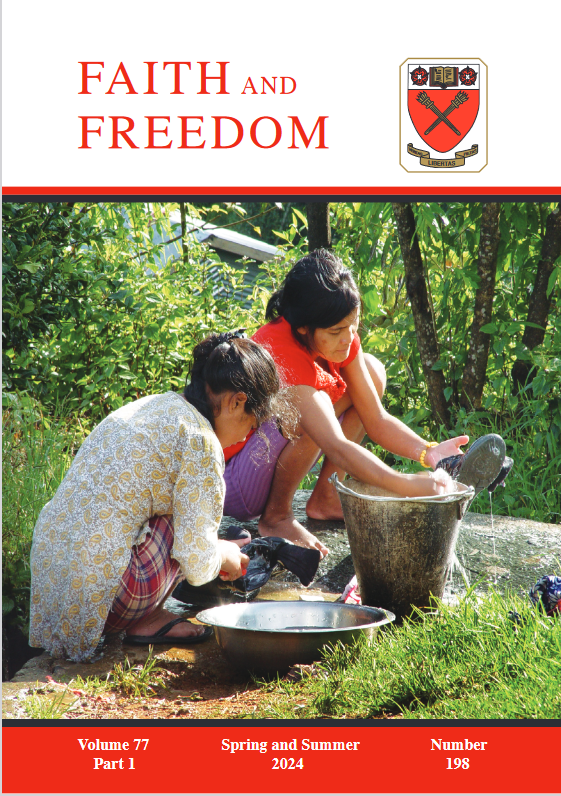
The latest issue of Faith and Freedom is now available. In this issue we are pleased to publish the entire transcript of the most recent Reckoning International Unitarian and Universalist Histories Project webinar. Entitled Uncovering the Hidden Power of Women in Unitarian and Universalist History the discussion comprises an international panel with an introduction by Lehel Molnár, Unitarian archivist at Koloszvár, Transylvania, and with Rosemary Bray McNatt, President of the Starr King School for Ministry, Berkeley, California, as the moderator and concluding responder. The main papers are ‘The Story of Pharienbon Rani and Unitarianism in the Khasi Hills, India’ by Alisha Rani, professor of sociology at Shillong, India, and ‘Profiling Black Women’s Ministries in Unitarian Universalism’ by Qiyamah A. Rahman, a UU minister and activist in the United States. Responses are given by Olga Flores (Bolivia), Ann Peart (UK), and Mária Pap (UK and Transylvania), with closing remarks by Mark W. Harris, one of the main planners for the Reckoning Histories Project. The journal also includes some photographs (including the cover – see above and top) by John Hewerdine taken at the Annie Margaret Barr Memorial Orphanage in Meghalaya which help illustrate the theme of both Alisha Rani’s paper and a review by Derek McAuley also found in this issue.
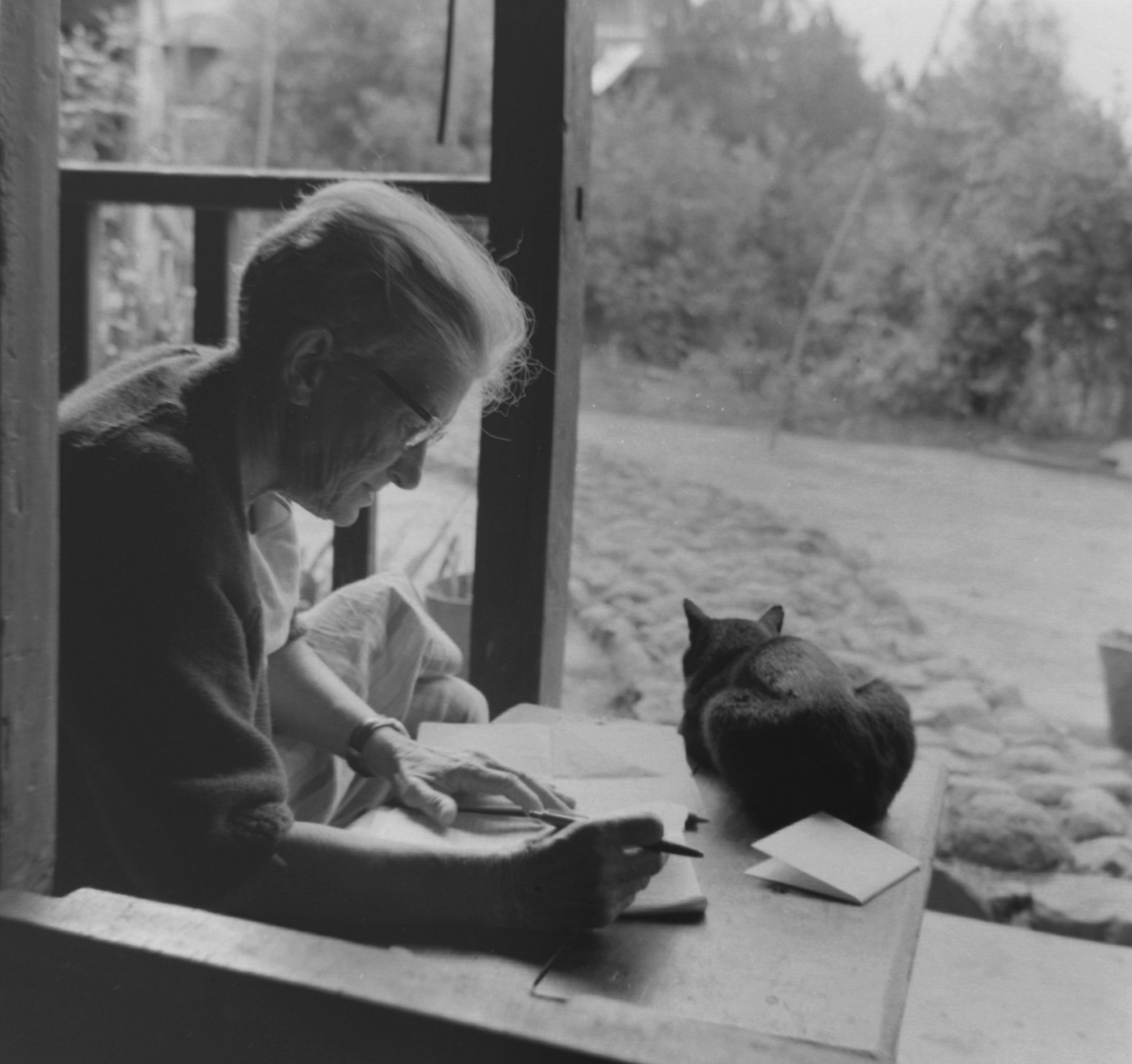
Margaret Barr in her office in the Khasi Hills (Photo: John Hewerdine)
Other papers include Wayne Facer’s Mr Jellie’s Romance, an account of the pioneering days of Unitarianism in New Zealand and how amidst his work to establish the cause he fell in love with and eventually married Ella Macky. She was a member of an active Unitarian family but her own commitments frequently took her to the other side of the world to attend University and to participate in the International Council of Unitarian and Other Liberal Religious Thinkers and Workers in Amsterdam in 1903, while Jellie carried out his work establishing the congregation in Auckland and supporting Unitarians elsewhere in New Zealand.
Barrie Needham examines the life and poetry of Gerard Manley Hopkins, Catholic convert and Jesuit priest, whose poetry remained unpublished in his own lifetime but which has gained a great following from the early twentieth century onwards. A Victorian poet but one whose style is as bold and striking as anything written at any point since. Barrie Needham shows how Hopkins wrestled with his poetry to express his faith in God and his understanding of God in nature, and shows the philosophical understanding that underscored his writing. If you have ever read any Hopkins or heard his poems being read you will find this article immensely helpful.
In addition we have four excellent reviews of notable recent books.
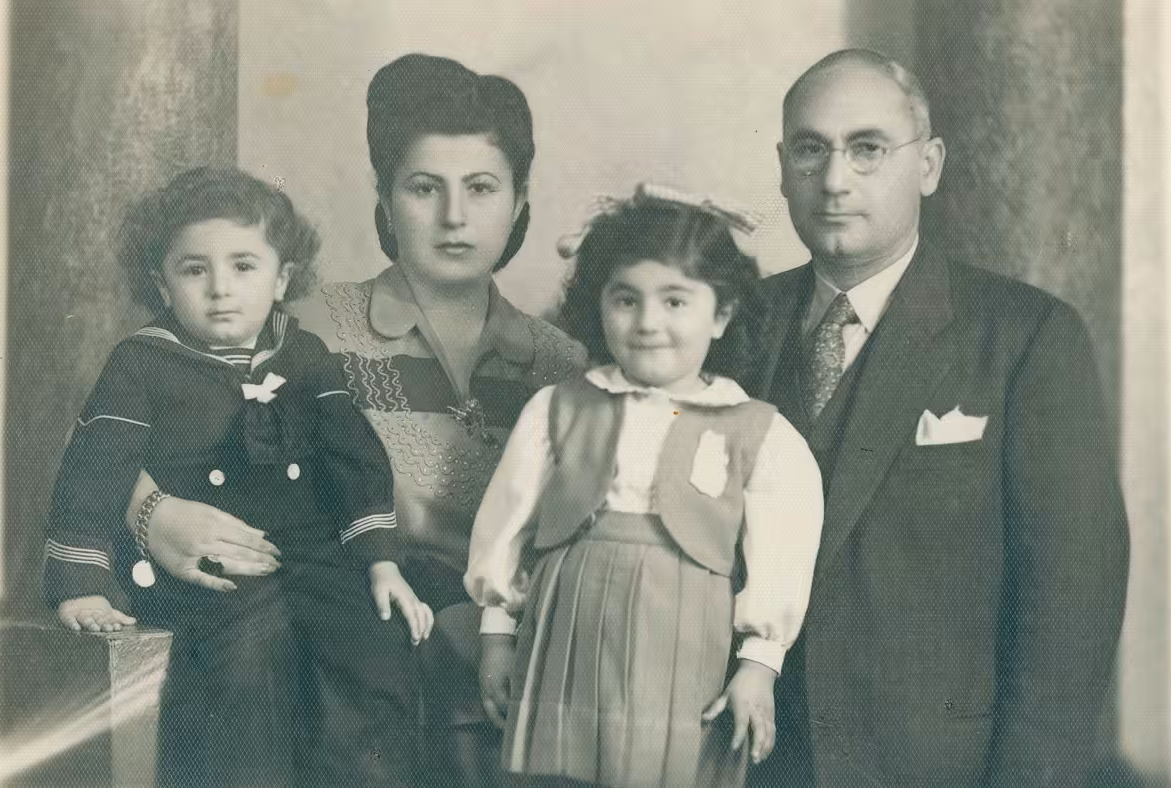
Avi Shlaim, aged two, with his parents and sister in Baghdad, 1947. From the cover of his book.
Graham Murphy reviews Avi Shlaim, Three Worlds, Memoirs of an Arab-Jew, (Oneworld Publications, 2023). The book of the year for both the Times Literary Supplement and the New Statesman, Avi Shlaim tells his own story as someone who was born into the prosperous and significant Jewish community of Iraq following the Second World War and who was forced, with most of the Jewish population, to emigrate to Israel in 1950. At the age of 15 his life changed when he managed to come to the UK, ending up at Cambridge and ultimately as Professor of International Relations at St Antony’s College, Oxford. As a young man he served in the Israel Defense Force but is not afraid to criticise Israel or Zionism. His most recent research has gone back to Iraq and his own origins as part of ‘a Diaspora that had been the living embodiment of Muslim-Jewish co-existence [which] was no more’. In Shlaim’s view ‘As Israel expanded, the Palestinians, Arab natives of historic Palestine, not the Germans or the Russians, would take the burden of punishment for the European pogroms of modern history and the Final Solution.’ His reflections on his Jewish past in Iraq and on Arab-Israeli relations ever since are well worth reading, especially at the present time.
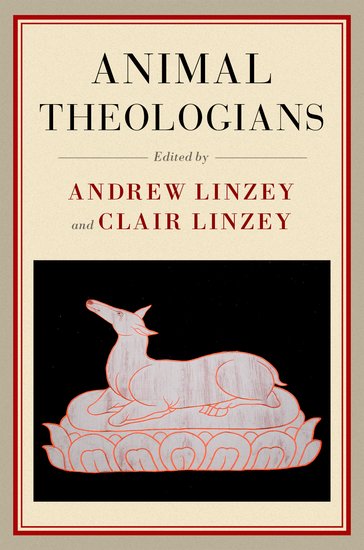
Andrew Linzey and Clair Linzey (eds.), Animal Theologians (Oxford Academic, Oxford University Press, 2023) is reviewed by Feargus O’Connor who takes us through the theological contributions to the consideration of animal rights, vivisection and animal cruelty. A number of the subjects of the book are Unitarians – most notably Frances Power Cobbe and Charles Hartshorne – and many would find agreement with Gandhi who Feargus quotes:
The greatness of a nation and its moral progress can be judged by the way animals are treated. Vivisection is the blackest of all the black crimes that man is at present committing against God and His fair creation. It ill becomes us to invoke in our daily prayers the blessings of God, the Compassionate, if we in turn will not practise elementary compassion towards our fellow creatures.
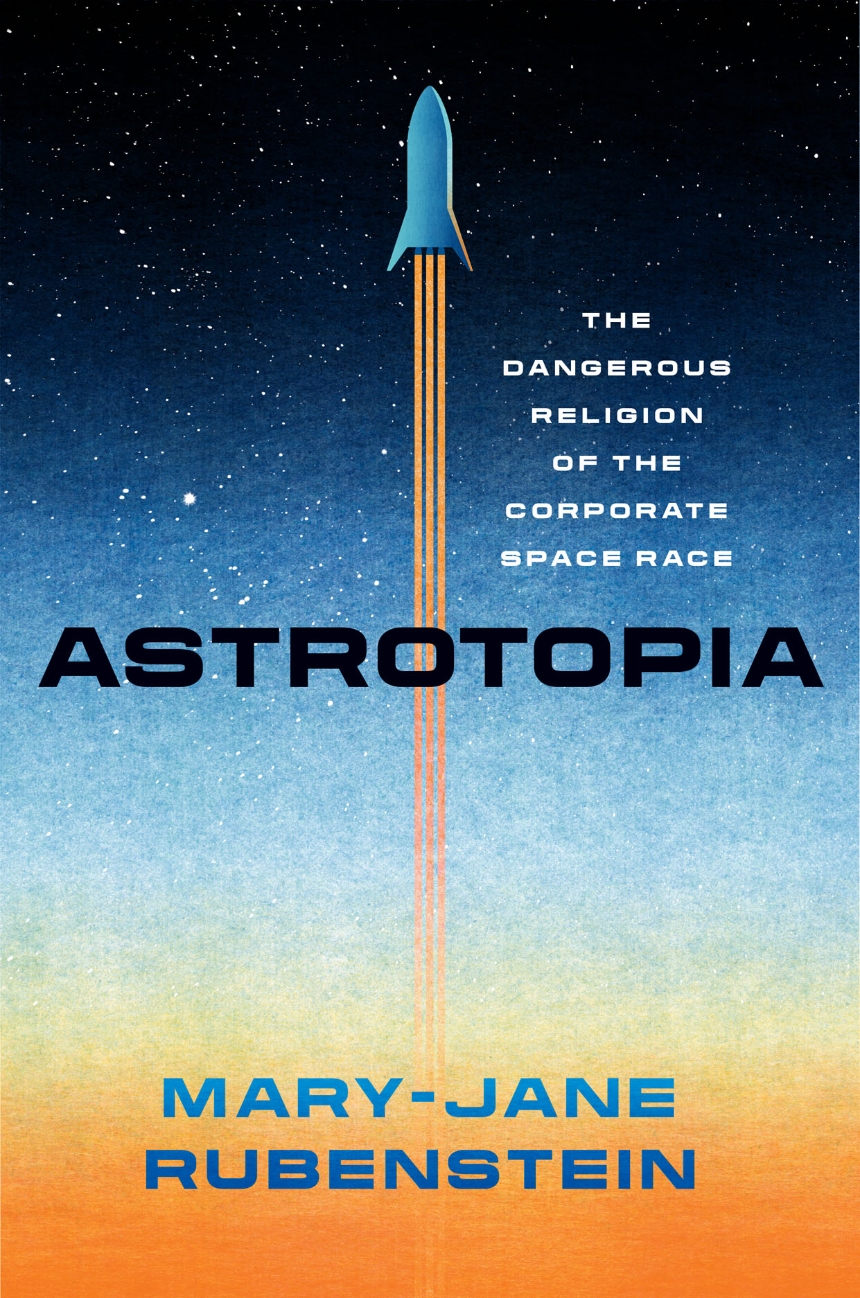
Professor David Williams reviews Mary-Jane Rubenstein, Astrotopia: the Dangerous Religion of the Corporate Space Race (University of Chicago Press, 2022) a book which raises the issue of humankind’s increasingly exploitative attitude to space exemplified in the attitudes of such figures as Elon Musk and Jeff Bezos, described by the reviewer as ‘both so grotesquely wealthy that they can have dreams of both colonising space and the funds to achieve those aims’. It is clear too that the United States no longer views ‘outer space as the common heritage of all humanity.’ In the light of this how should we progress human interaction with space?
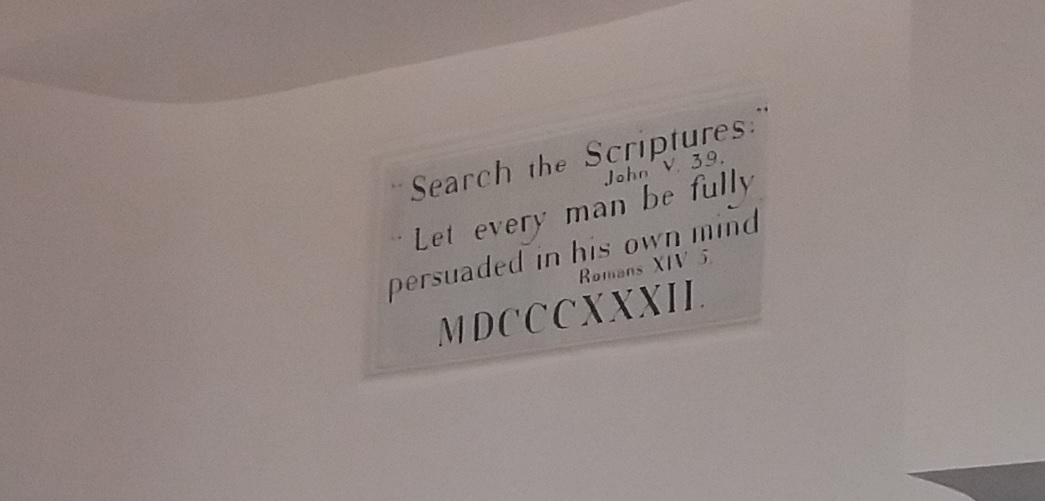
Inside the former NSP meeting-house Ballymoney (Photo: David Steers)
Liz McManus is a former Minister for Housing and Urban Renewal in the Republic of Ireland. Since leaving politics she has become a writer and in When Things Come To Light (Arlen House, 2023) she has drawn on her own family experiences to ‘craft an insightful and compelling novel’ in the words of Derek McAuley, our reviewer. Liz McManus’s grandparents were Unitarians/Non-Subscribers from County Antrim. Remarkably life took them to the Khasi Hills where (in the novel at least) they encounter the Rev Margaret Barr and Kissor Singh, the founder of the Unitarian Church in North India. In a strange piece of synchronicity Kissor Singh quotes St Paul ‘Let every man be fully persuaded in his own mind’, words which Liz McManus’s grandfather recognises as inscribed on the wall of his home church back in Ballymoney in Ulster. A fascinating novel incorporating Unitarians, family history, Ireland and India.
An annual subscription to Faith and Freedom (two issues) costs £16.00 (postage included) in the United Kingdom. Single copies can be ordered at a cost of £8.00 each (postage included). Cheques should be made out to Faith and Freedom and sent to the business manager:
Nigel Clarke, Business Manager, Faith and Freedom, 16 Fairfields, Kirton in Lindsey, Gainsborough, Lincolnshire. DN21 4GA.
Overseas subscriptions are also available.
It is also possible to pay online. For more details see our website:
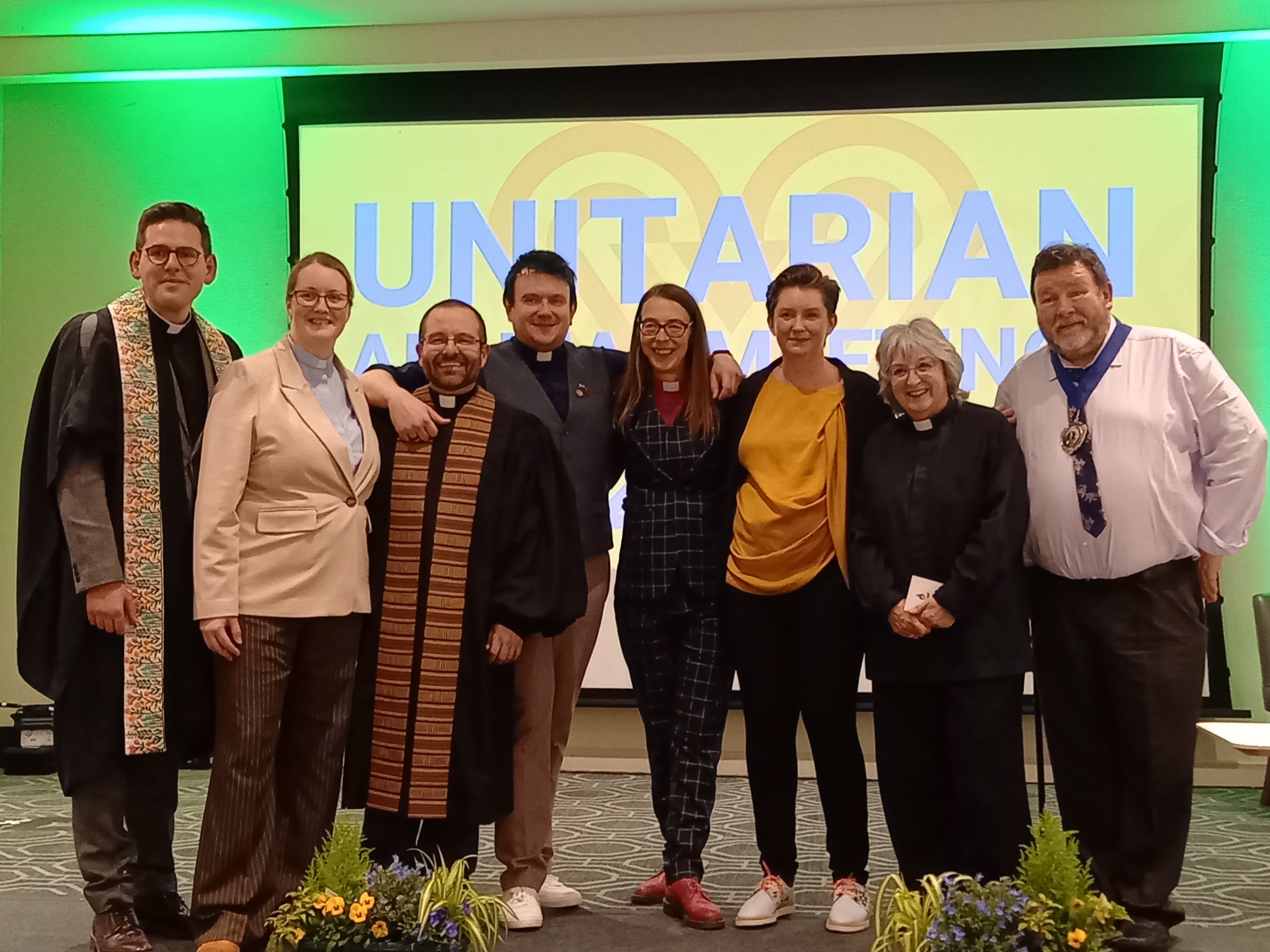
I was very pleased to be able to attend this year’s General Assembly of Unitarian and Free Christian Churches held in Daventry. There were many stand out moments. One was the Unitarian Christian Association meeting at which Dr Lizzie Kingston Harrison gave an excellent talk entitled Joseph Priestley: radical roots and new beginnings. A wonderful presentation which showed how professional historical research can be alive with reflections for our present age in the hands of an expert. We look forward to publishing Lizzie’s paper in a future issue of Faith and Freedom.
The meetings were notable also for the large contingent of seven Non-Subscribing Presbyterians from Northern Ireland who were also able to be there for the welcoming onto the GA Roll of the Rev Lynda Kane. Now the minister of Ballyclare, Cairncastle and Ballymoney, Lynda was one of three new ministers recognised at the General Assembly Service.
Rev Lynda Kane with some of the ministers from Northern Ireland present at the GA (Photo: Sue Steers)
Rev Rory Castle Jones, Rev Lynda Kane, Rev Ant Howe, new ministers Rev Arek Malecki and Rev Jennifer Sanders, Liz Slade, Rev Melda Grantham and GA President Vince McCully, after the GA Service. (Photo: Sue Steers).
The Rev Ant Howe delivered a most inspiring sermon at the GA Service, and at the meetings Dot Hewerdine and the Rev John Midgley and the Rev Celia Midgely were all made honorary members of the GA.
We also held the annual meeting of the Unitarian Historical Society. There was a good turnout of people for the AGM and to hear Professor Grayson Ditchfield’s paper Essex Street Chapel in the Later Eighteenth Century. Unfortunately, because of disruption to the train services, Professor Ditchfield couldn’t be with us in person, and so his excellent paper was read for us by Rev Daniel Costley. There was a great deal of new information and new insight in the paper which will feature in next year’s Transactions of the Unitarian Historical Society.
Derek McAuley (President), Howard Hague (Secretary) with Rev Daniel Costley (left), who read Professor Ditchfield’s paper, at the meeting of the Unitarian Historical Society in Daventry. Saturday, 6th April.
The latest issue of the Transactions (Volume 28 Number 3) will soon be on its way to members. Details of how to join the Society can be found below.
As ever the journal is full of interesting articles and contains:
The National Conference 1882-1928 – a Unitarian Talking Shop
by Alan Ruston
James Martineau’s carte de visite
One year before the bi-centenary of the British & Foreign Unitarian Association Alan Ruston looks at the other less well-known institution which came together with the B&FUA to form the General Assembly of Unitarian and Free Christian Churches in 1928. Although not founded by James Martineau, The National Conference of Unitarian, Liberal Christian, Free Christian. Presbyterian, and Other Non-Subscribing or Kindred Congregations, to give it its full title, was always under the influence of the great man. Even if the body was essentially ‘a Unitarian Talking Shop’ it was nevertheless an institution that made an important contribution to the development of national Unitarian organization in the late nineteenth and early twentieth centuries.
‘Holding Space Sacred’: Struggles for Land and Home in Great Britain and Ireland, and Beyond
by Derek McAuley
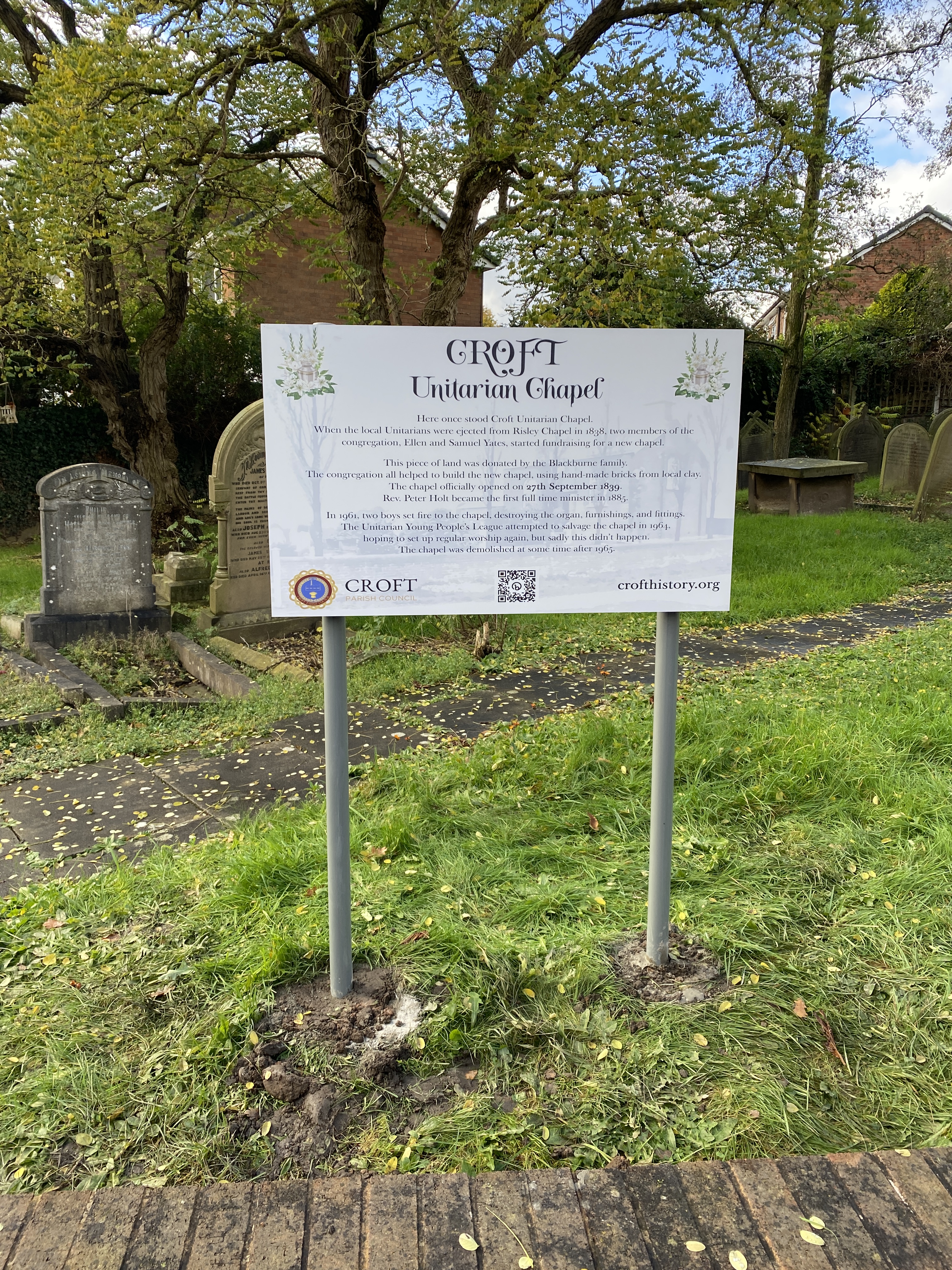
The site of Croft Unitarian Chapel today featuring the new signage erected through the efforts of Cheyvonne Bower who has done so much to restore and protect the site.
Based on a talk delivered as part of a webinar presented by the Reckoning International Unitarian/Universalist Histories Project on 15 November 2022 on ‘Global Struggles for Land and Home in Unitarian/Universalist Communities’, this paper explores the themes of ‘land and home’ within nineteenth-century Unitarianism. It looks particularly at events in Wales, Ireland, the British overseas Dominions plus the legal challenges that led to the Dissenters’ Chapels Act of 1844, and the role of women. One woman who is particularly highlighted is Ellen Yates who helped to establish the Unitarian cause at Croft after they were dispossessed of their chapel at Risley.
Training for the ministry, 1903-1910: Ernest Pickering at Manchester College Oxford
by Oliver Pickering
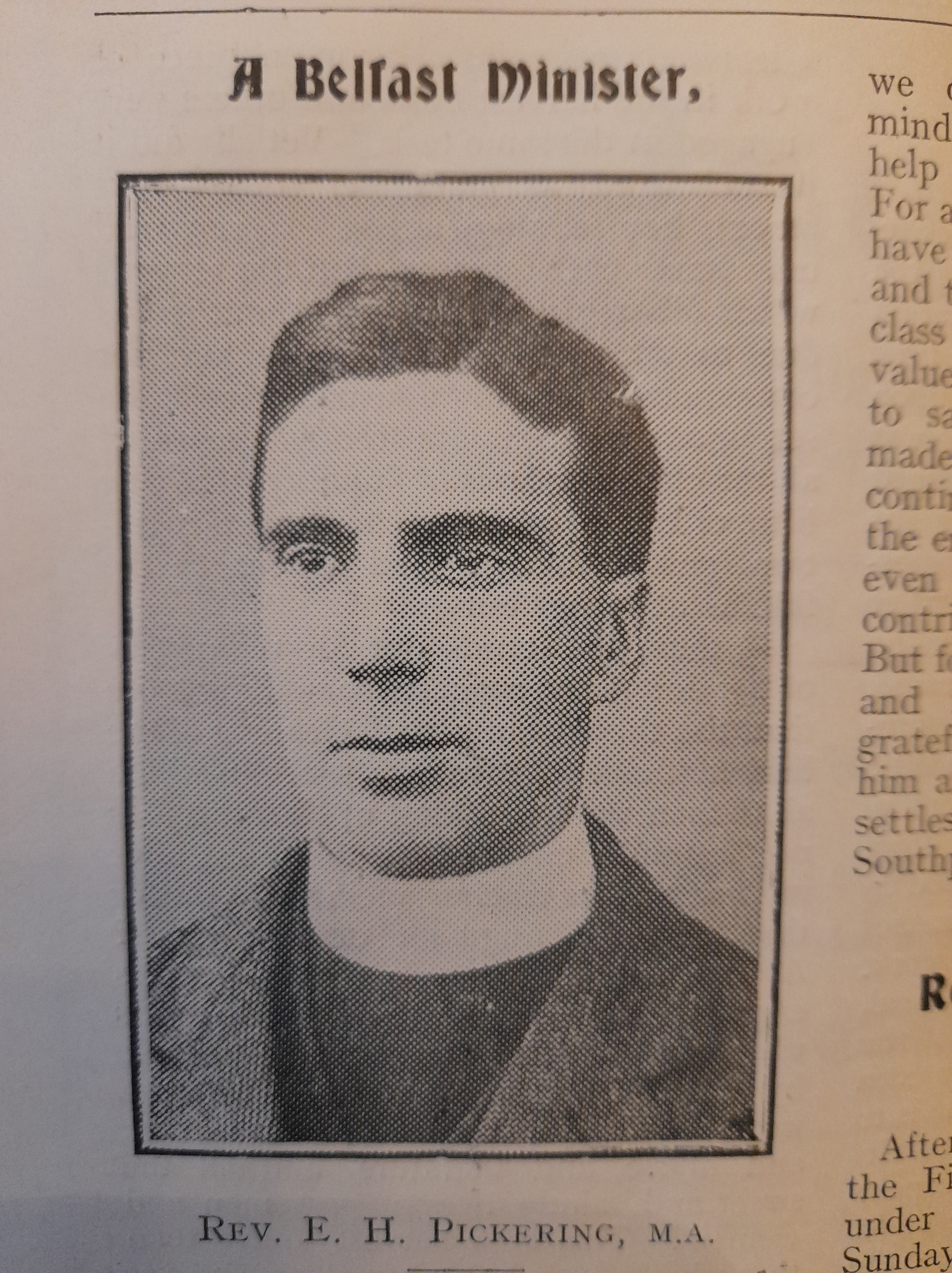
From ‘The Non-Subscribing Presbyterian’ 1921
Oliver Pickering examines the rich training for the ministry received by his grandfather at Manchester College, Oxford between the years 1907 and 1910 which were preceded by four years as an external exhibitioner at the College while also studying Classics at Exeter College. This seems to have been something of a golden age for ministerial training at Oxford, and his seven years at Manchester College were the prelude to a remarkable career as a minister (at Hyde; All Souls’ Church, Belfast; Southport and Oldham), a Member of Parliament and a professor of English Literature in Tokyo.
This issue also includes Reviews and a Supplement: Obituaries of Ministers of Unitarian and Free Christian Congregations. Index and synopsis of references including new entries, additions and corrections from 1st February 2021 compiled by Alan Ruston.
John Johns, the first Minister to the Poor in Liverpool – the first minister of the Liverpool Domestic Mission – died more than half a century before Ullet Road Church was built. Yet his memorial can be found there. In fact it is one of many memorials. When Ullet Road Church was built in 1899, purpose-built cloisters were added to house the many memorials which had covered the walls of their former Chapel on Renshaw Street.
Renshaw Street Chapel, Liverpool
But John John’s memorial wasn’t added with those from Renshaw Street. His memorial originally was placed in the Domestic Mission, and it was only after it was demolished in the 1970s that it was it removed to Ullet Road and kept in store for some years before being fixed in one of the entrances to the church.
Portrait of John Johns aged 18, held in Ullet Road Church and taken from ‘Liverpool Unitarians’
Using some of the memorials, including that of the Rev John Hamilton Thom, one of the founders of the Domestic Mission, this video tells the story of John Johns and his work as the first ‘minister to the poor’: ‘a medium of kind and Christian connection’, as Joseph Tuckerman put it. In this case a connection between the wealthy congregation of Renshaw Street/Ullet Road and the growing numbers of poor living in the same city.
Click on the video below to see the story of Rev John Johns, first minister to the poor in Liverpool:
Rev John Johns (1801-1847). First minister to the poor in Liverpool
This book (first published, I now realise, back in 2014!) has just been reprinted and, the original print run having sold out, is once again available. The publishers and printers have done an excellent job, it’s an attractive book, this time published in memory of Bernard Cliffe, Len Mooney and Rev Daphne Roberts, three contributors who have died since the original publication.
The full list of contributors and subjects is as follows:
Introduction, David Steers; Memorials of the Ancient Chapel of Toxteth Park, Bernard Cliffe; Jeremiah Horrocks 1618 – 1641, Bernard Cliffe; William Roscoe 1753 – 1831, David Steers; A Short History of the Rathbone Family, Annette Butler; The Unitarian Family of George Holt, Bernard Cliffe; Noah Jones 1801 – 1861, Philip Waldron; James Martineau 1805 – 1900, Len W. Mooney; Joseph Blanco White 1775 – 1841, David Steers; Kitty Wilkinson 1786 – 1860, Daphne Roberts; John Johns 1801 – 1847, David Steers; William Henry Channing 1810 – 1884, Richard Merritt; Charles Pierre Melly 1829 – 1888, John Keggen; Sir Henry Tate 1819 – 1899, Richard Merritt; Sir John Brunner 1842 – 1919, Len W. Mooney; Lawrence Redfern 1888 – 1967, Elizabeth Alley; Sir Adrian Boult 1889 – 1983, Richard Merritt; The Visitors’ Book of the Ancient Chapel, Bernard Cliffe.
Published by the Merseyside District Missionary Association the cover design is by Alison Steers and the book contains over 50 illustrations, many published here for the first time.
To accompany the republication we have produced a short video which incorporates a trip around Ullet Road Church which can be seen here:
Click on the video for a tour of Ullet Road Church and details of the book
The cover of the book
Liverpool Unitarians: Faith and Action Essays exploring the lives and contributions to society of notable figures in Liverpool Unitarian history
Edited by Daphne Roberts and David Steers
Published by Merseyside and District Missionary Association
ISBN: 978-0-9929031-0-7
Brand new edition for 2024
Price £10 (plus £2 post and packing). Available from Rev Phil Waldron, Ullet Road Church, 57 Ullet Road, Sefton Park, Liverpool. L17 2AA.
In the Introduction I say:
This book is not intended to be hagiography but it does try to outline how one group of people – members of a particular faith community with deep historical roots but with an aversion to fixed creeds – were inspired to serve their fellows in different ways. Their legacy can be seen all over the city – in its parks, in its monuments, in the university, in hospitals, in education, in art galleries and museums – and it exists in the long and continuing struggle to create a society that gives equality and opportunity to all its citizens. It is not meant to be an exhaustive account of all the eminent members of the churches and chapels in the region. Readers will notice that the names mentioned are part of wider connections of family and business which includes many others who could be included. There are other figures who could be the subject of such biographical accounts. But this is a selection of some of those who have followed the call of faith to be of service to wider society.
Until 1867 there were two Unitarian churches in Dublin. Both could trace their history back to at least the mid-seventeenth century and both had a succession of distinguished ministers and comprised congregations that had a significant role in Dublin life. After the restoration of 1660 the English Independent and Presbyterian clergy who had occupied the prime positions in religious life in Dublin during the Cromwellian interregnum were removed from their posts. This really was the start of the congregations of Wood Street, which later moved to Strand Street and ultimately to St Stephen’s Green, and New Row, which later built a new church on Eustace Street in 1728. In 1867 the congregations of Eustace Street and St Stephen’s Green amalgamated at St Stephen’s Green and have been a single congregation ever since. But the building on Eustace Street remained, for most of its history being used by Brindley’s the printers, and it is still there today, although today it is really little more than the façade.
The history of this building deserves to be better known and properly understood. I first went to see it in the early 1990s when it was empty but looked intact and was still recognisable as an old meeting-house. I took this picture which was published in the Inquirer at the time.
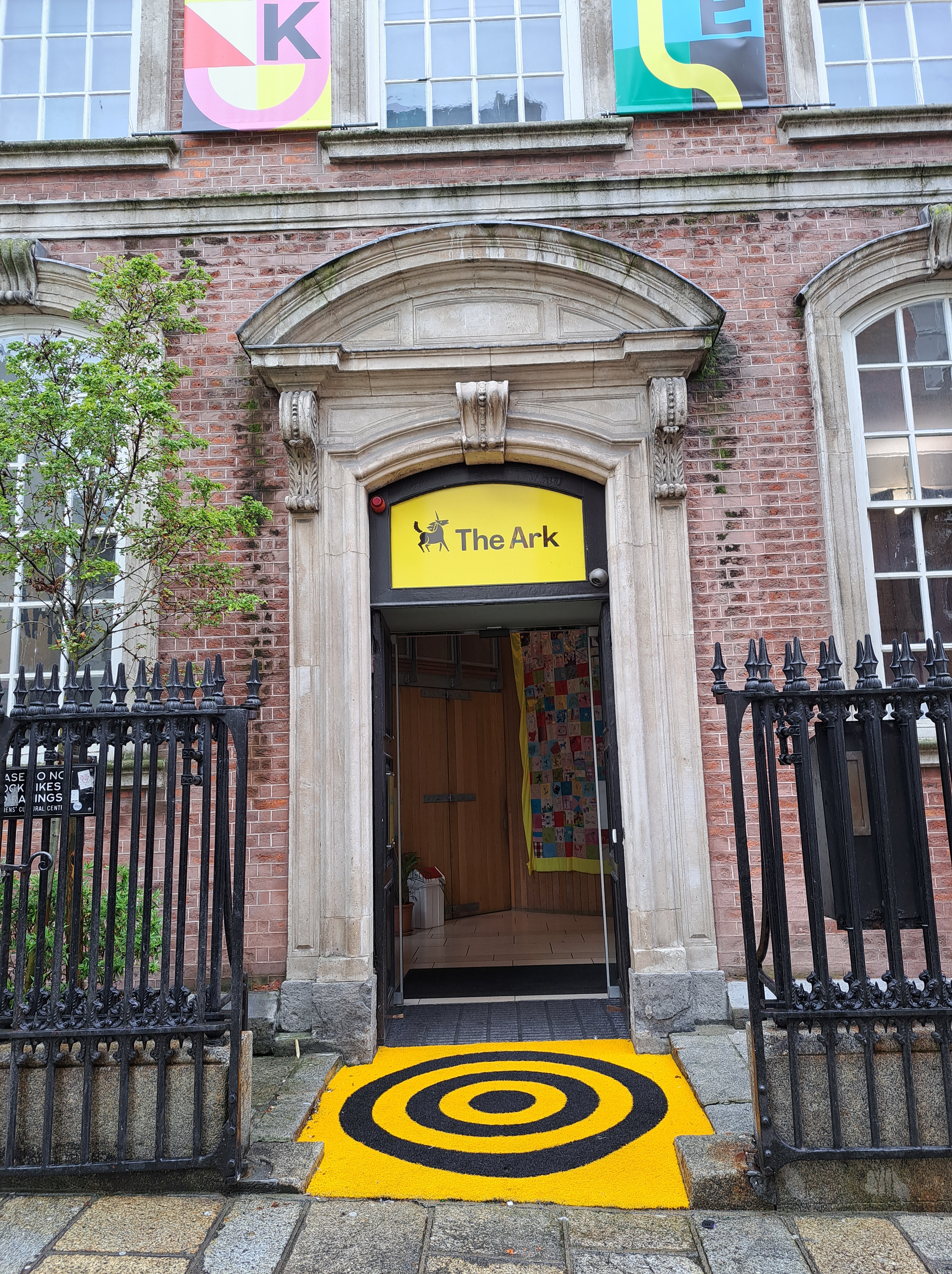
Within a few years, however, the whole area around it in Temple Bar underwent massive refurbishment and changed from a run down backwater to a busy cultural quarter. In about 1995 the building was turned into the Ark, a children’s theatre space.
The meeting-house today
Undoubtedly this is a good use for the building although it is a shame to think that so much of the original building had to be demolished to allow it to happen. Only the façade and the two side walls remain from the building of 1728. All the rendering from the old building has been removed to expose the brickwork both inside and out. But it is still a very impressive building.
One of the two entrances to the building
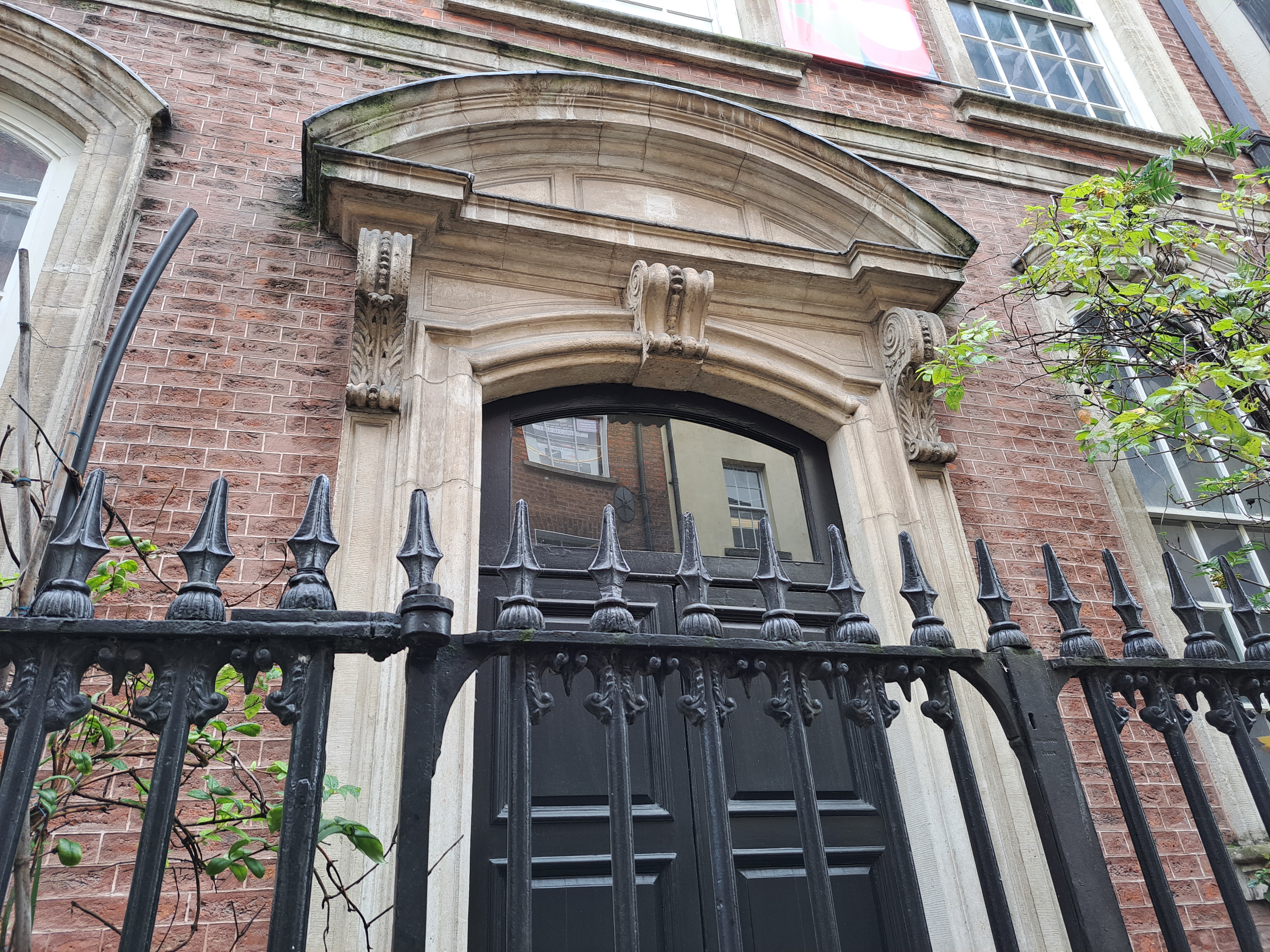
Christine Casey, in her book Dublin in the Buildings of Ireland series, says of the building: ‘The C18 facade is a handsome essay in retardataire Carolean classicism…A red-brick two-storey six-bay front with entrances in bays two and five and large segment-headed sash windows.’ It’s always good to see a bit of retardataire Carolean classicism. But it is a very fine frontage and even if the rest of the building is gone, it remains as an impressive testimony to the people who built the church.
Not everyone approved of it when it was built. According to Thomas Witherow a Quaker remarked (there was also a Quaker meeting-house on the same street) that ‘When there is so much vanity without, there cannot be much religion within’.
Visiting Eustace Street over the summer I took some pictures of the interior. We can see the bare brickwork which once echoed to the sound of the sermons of such luminaries as John Leland and James Martineau.
Upstairs window brickwork
Looking through one of the downstairs windows
Apart from the windows there is nothing remaining that tells us how the interior of Eustace Street looked. However, about 110 years ago the Non-Subscribing Presbyterian magazine published two engravings of the interior without giving any source for these interesting views. The first showed the position of the pulpit.
The Eustace Street pulpit as it may have looked
The foyer of the building today
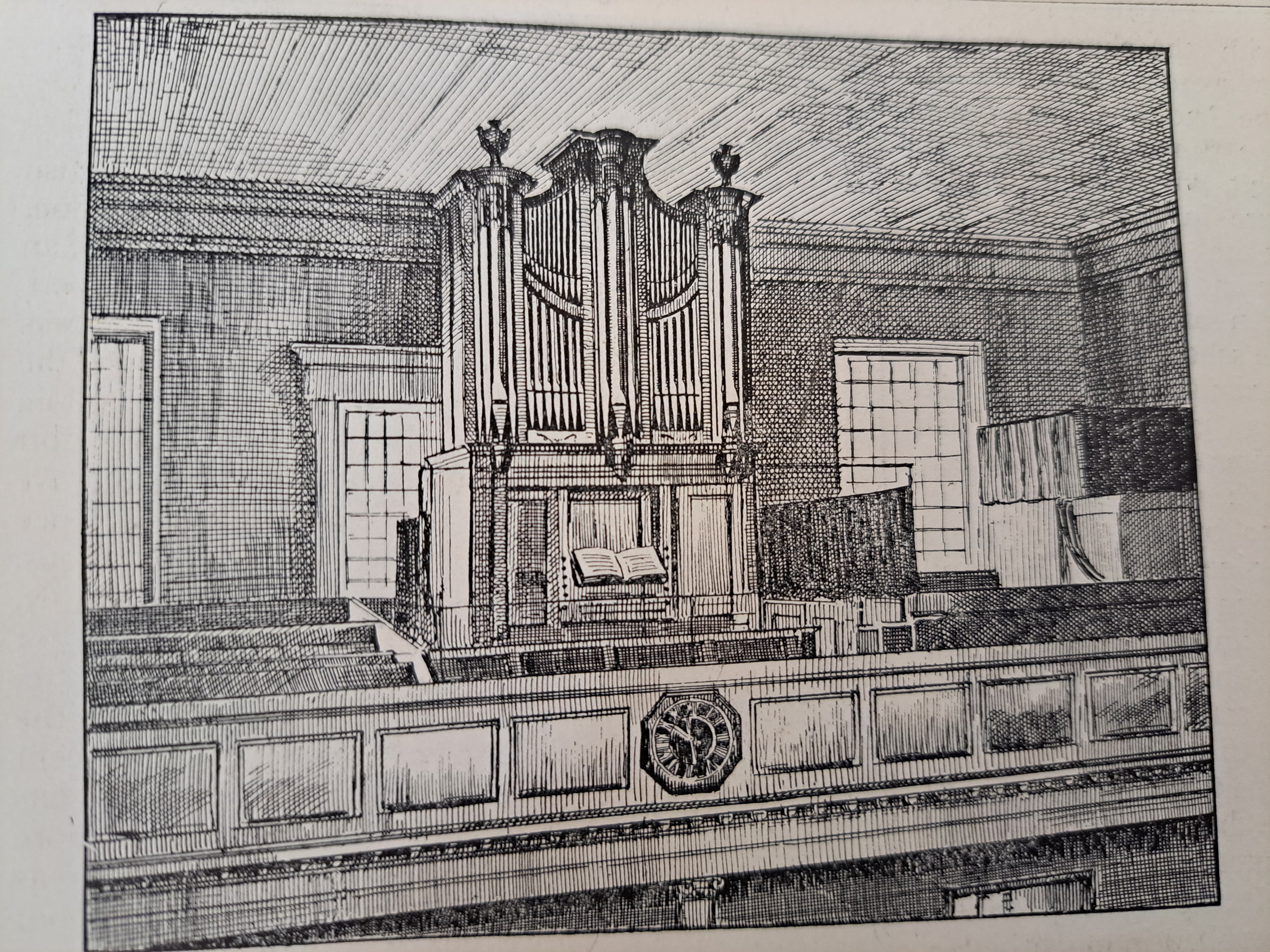
The windows that look on to Eustace Street are topped by a gentle arch but according to the Non-Subscribing Presbyterian images the now demolished windows at the back of the building were flat topped. At the back of the church there was a gallery which housed a clock and the organ.
The organ and gallery of Eustace Street as they looked before 1863
When Eustace Street was built times were difficult for Dissenters, they could frequently be the target of violent attacks, and from the earliest days there was a wall in front of the meeting-house. At some point before 1835 this was changed to the low wall and attractive railings which still stand there to this day. But neither the walls nor the railings were of much use when James Martineau added his name to a declaration in favour of Catholic emancipation which resulted in the windows being smashed by a mob.
The wall and railings today
It is good that this much has survived and that the space is obviously put to such good use. However, there has not always been such a clear understanding of the historical place of the meeting-house. Not long after the Ark was opened in 1995 members of Abbey Presbyterian Church were invited to hold a special service on the premises complete with baptisms of children as a way of connecting with the original history. This was a nice thing to do but rather misunderstood the nature of the history of the premises.
Inside the foyer today
James Martineau was ordained in this meeting-house on 26 October 1828. Back in 1992 I contributed an article to the Inquirer entitled ‘Martineau’s First Ministry’. If you would like to read it click on this link: Martineau’s First Ministry
The latest issue of Faith and Freedom (Spring and Summer 2023, Number 196) is now available and will be with subscribers. New subscribers are very welcome, details of how to subscribe can be found below.
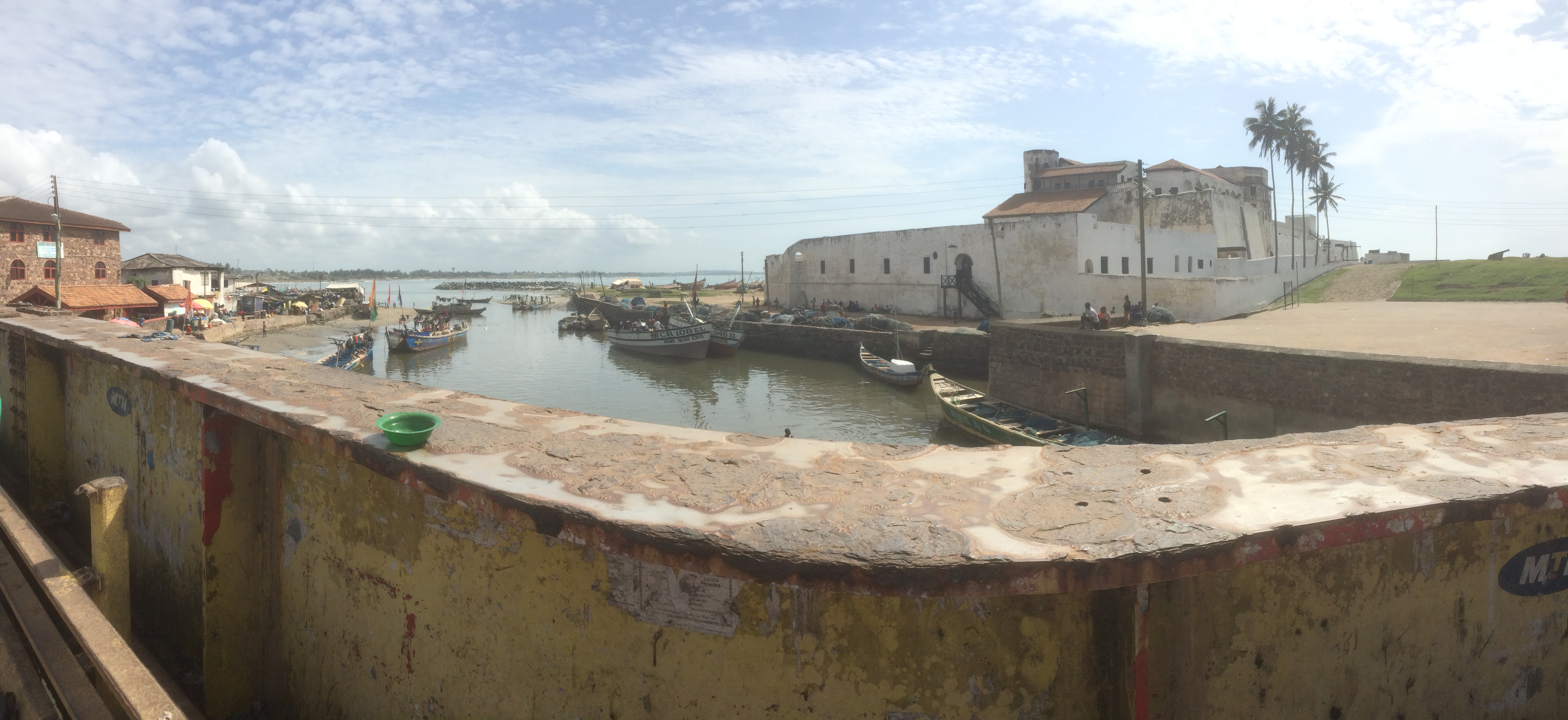
Elmina Castle, Ghana (Photo: Aidan McQuade)
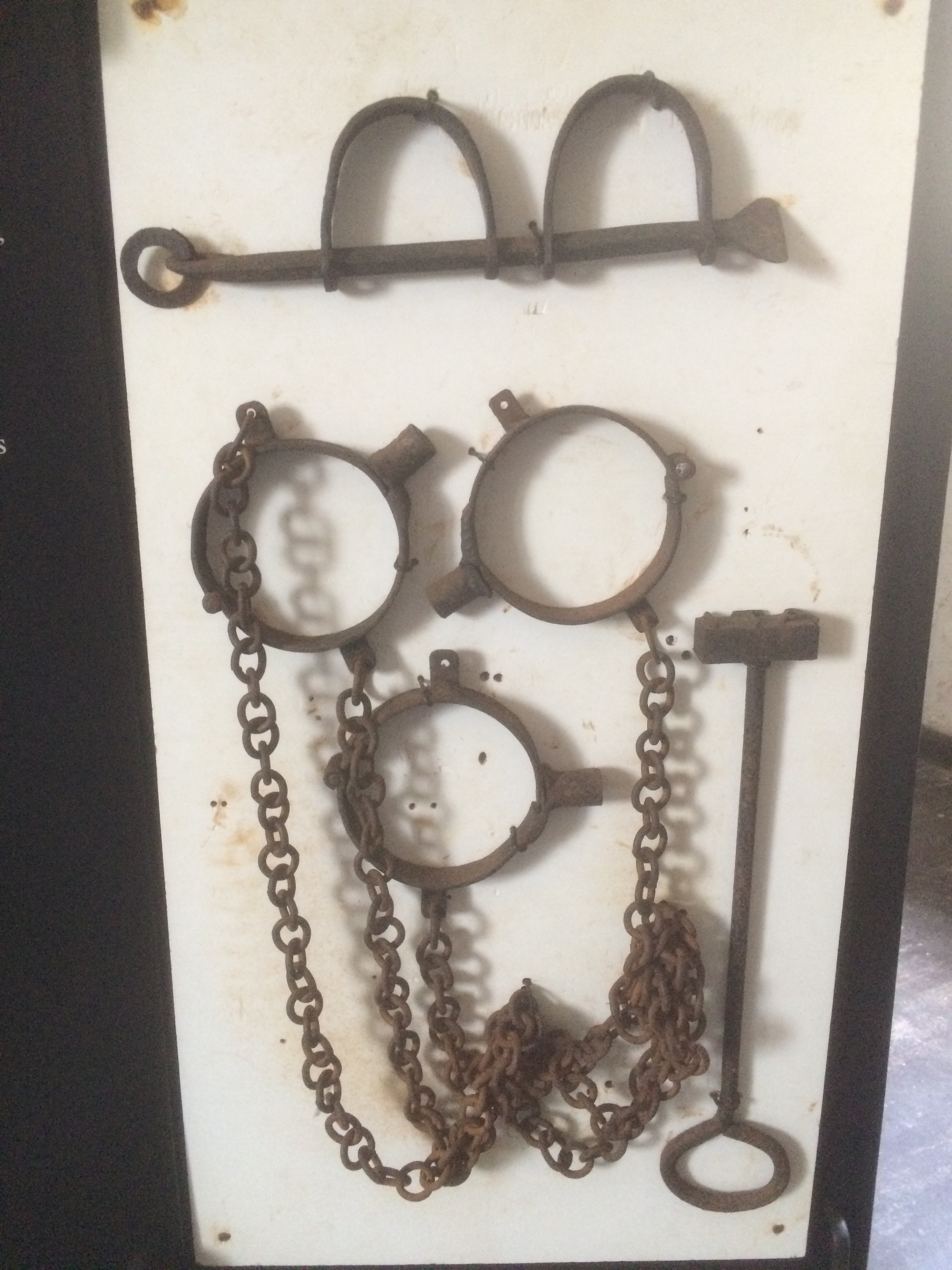
The cover picture features a collection of shackles used on slaves in Elmina Castle, Ghana, a photograph taken by Aidan McQuade who contributes our first article – Ireland – slavery and anti-slavery.
Cover picture – Photo Aidan McQuade
Aidan McQuade is a former director of Anti-Slavery International and has worked extensively in development and humanitarian operations, including leading Oxfam GB’s emergency responses to the civil war in Angola from 1996 to 2001. He writes of the horrors of the slave trade looking through the lens of Irish involvement and noting also those individuals who contributed to anti-slavery activism in the eighteenth century.
He writes:
“Over hundreds of years slavery devastated the African interior as wars and raids, encouraged by the European powers, kidnapped millions of people, many of them children, to feed the demand from the Americas for human beings who could and would be worked to death to produce cash crops, mostly for European markets.
As with today, it is easy to ignore the exploitation that occurs within the political economy – the systems that govern business, trade and employment – when the are concealed far away from us.
So, when it was first brought to public attention by Thomas Clarkson, the image of the Brookes ship shocked the world. It presented in stark detail a visceral reality of the slave trade: how slaves would be packed like sardines into the holds of the slave ships. Clarkson’s friend and comrade in the anti-slavery struggle Olaudah Equiano had direct personal experience of being treated as this sort of cargo and he described it in his auto-biography”:
…we were all put under deck …The stench of the hold while we were on the coast was so intolerably loathsome, … but now that the whole ship’s cargo were confined together, it became absolutely pestilential. The closeness of the place, and the heat of the climate, … almost suffocated us. … many died, …. This wretched situation was again aggravated by the galling of the chains, now become insupportable; and the filth of the [latrine buckets], into which the children often fell, and were almost suffocated. The shrieks of the women, and the groans of the dying, rendered the whole a scene of horror almost inconceivable… Every circumstance I met with served only to render my state more painful, and heighten my apprehensions, and my opinion of the cruelty of the whites.
The door of no return, through which slaves would leave Elmina Castle for the slave ships. (Photo: Aidan McQuade)
John Maxwell Kerr, is a founder member of the Society of Ordained Scientists. His paper, originally given at Harris Manchester College, examines The Search for Meaning in Nature. It is a wide-ranging and deep study using the author’s knowledge of science and religion, incorporating all the riches of literature and poetry, and reaching a surprising conclusion.
Rev John Maxwell Kerr
Barrie Needham’s article on ‘De-churching’ or To the church no more looks at patterns of belief and church attendance in the twenty-first century. What can churches do to overcome these tendencies, what do they need to offer?
Rev Frank Walker
We have an inspiring sermon by Frank Walker, Outlooks on life that still challenge and encourage us, and Graham Murphy provides a review article and essay on Matthew Teller’s valuable book Nine Quarters of Jerusalem, A new Biography of the Old City, which gives such insight to this troubled city, Graham writes:
“In his book about the Old City he describes a place we can visualise, though we may never have been there. We see in our minds eye a golden Dome set within castellated walls as if true to the plans in history books and illustrated bibles. How we imagine Jerusalem is freighted with biblical notions which Teller’s book tends to undermine with doses of reality. He draws our attention to lesser-known aspects of the city’s past and finds himself fascinated by the religious rituals. He interviews the people who live and work beside the pilgrim routes and sacred sites. He shows us how they regard their city, how they cope with its recurrent crises and the lack of rights for the majority who live there.”
And as ever we are blessed by some wonderful reviews. In this issue we feature:
Facing up to Climate Change
Mike Berners-Lee, There Is No Planet B – A Handbook for the Make or Break Years. Cambridge University Press, 2021 (updated edition) pp 316. ISBN 9781108821575, £9.99 pbk. Gaia Vince, Nomad Century – How to Survive the Climate Upheaval. Allen Lane, 2022, pp 260. ISBN 9780241522318, £20.00 hbk. Greta Thunberg, The Climate Book. Allen Lane, 2022, pp 446. ISBN 9780241547472, £25.00 hbk. Reviewed by Professor David A. Williams
A ‘warts and all’ attention to church history
John W. Nelson, A Short History of the Non-Subscribing Church of Ireland including sketches of individual congregations and a Fasti of ministers who served in them, published by The Rev Dr J.W. Nelson, 2022, pp 420, ISBN 9781739978501, £15 hbk. Reviewed by Philip Blair
Praying to an ‘unknowable God’
Bert Hoedemaker, Never-Ending Prayer – A Case for the Christian Tradition. The Lutterworth Press, 2022, pp 136. ISBN: 978 07188 96027, pbk £20. Reviewed by Jim Corrigall
Rev Jim Corrigall
and
Eavesdropping on fascinating conversations
Philip Allott, The Music of Time: Twenty-Four Fables for Today, Matador, 2022, pp 408. ISBN 9781803132228, £7.99 pbk. Reviewed by Frank Walker
Subscription Details
An annual subscription for each volume (two issues) costs £16.00 (postage included) in the United Kingdom. Single copies can be ordered at a cost of £8.00 each (postage included). Cheques should be made out to Faith and Freedom and sent to the business manager:
Nigel Clarke, Business Manager, Faith and Freedom, 16 Fairfields, Kirton in Lindsey, Gainsborough, Lincolnshire. DN21 4GA.
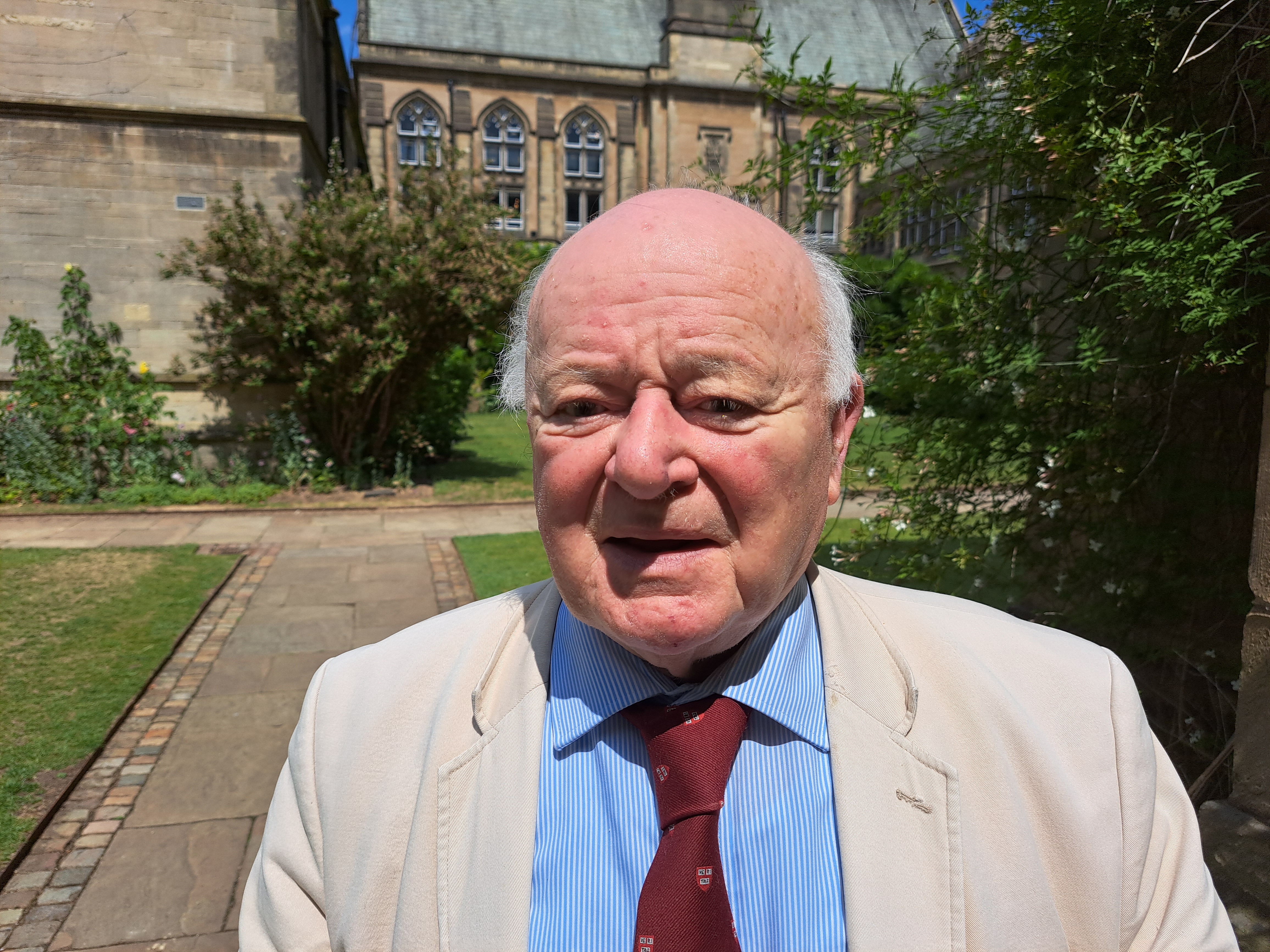
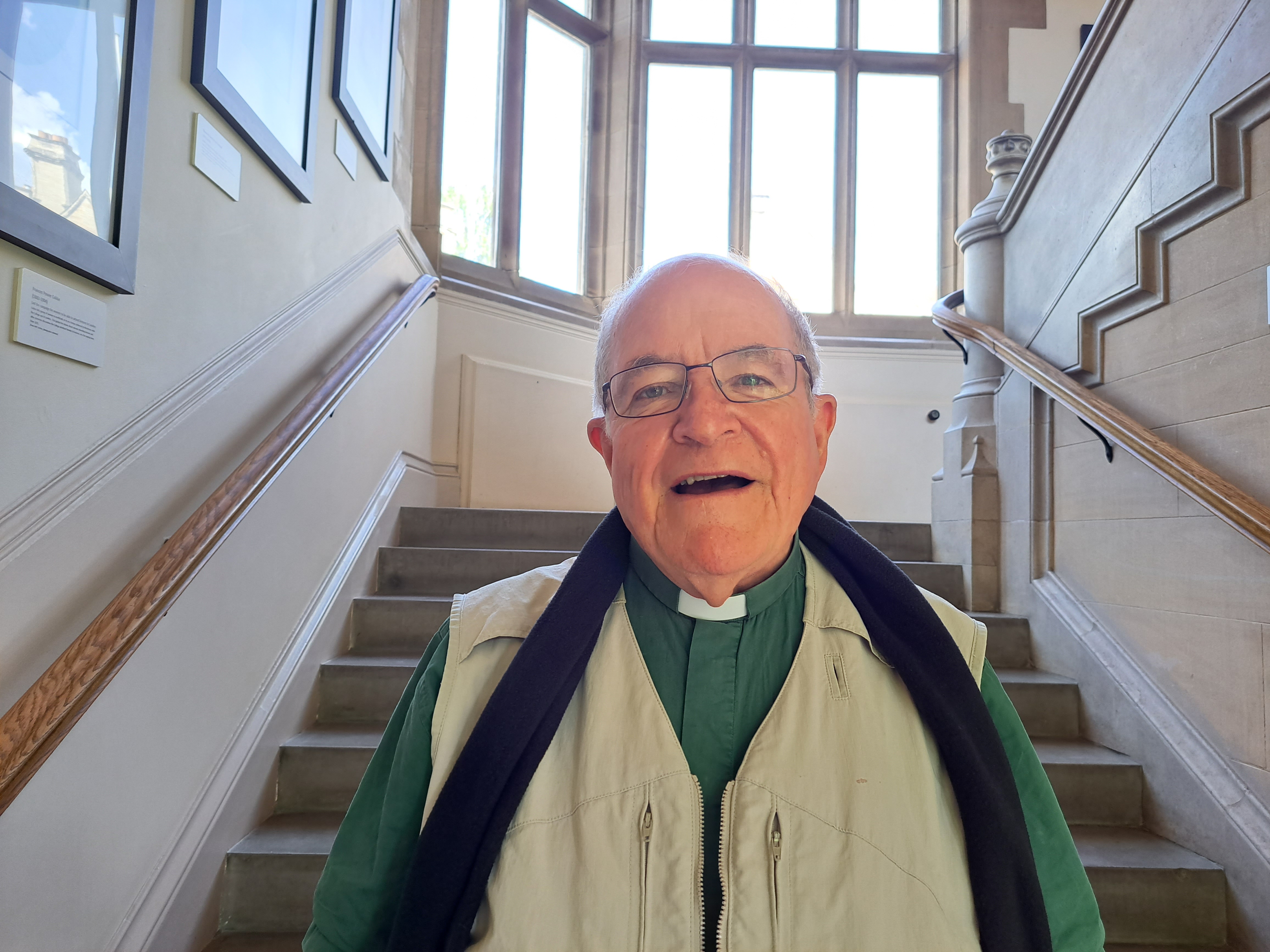
It was good to be at the Old Students Association meeting at Harris Manchester College, where some of the images of contributors seen above were taken. And good to see Rev Dr Peter Godfrey, Editor Emeritus of Faith and Freedom.
As we prepare to mark the Coronation of King Charles III on Saturday, 6th May 2023 I thought I would have a look at some of the ways Non-Subscribing Presbyterians have celebrated previous Coronations over the last 120 years.
Looking through the Non-Subscribing Presbyterian magazine for 1911 (the journal began publication in 1907) I could find little direct reference to congregational celebration. There was plenty going on in the churches in June 1911 but in terms of special services or special events there is not much record of specific events.
However, there certainly was a lot of interest and this video explains some of it:
Coronation celebrations by Non-Subscribers in 1902 and 1911
Filmed at First Dunmurry (NS) Church the video includes music played on the piano by Allen Yarr, the church organist, including Handel’s Water Music and Music for the Royal Fireworks.
In 1911 the magazine gives a hopeful editorial about the new reign as well as an account of the meaning of the Crown. It also describes the Royal visit to Ireland just a few weeks after the Coronation in July 1911. This was to be the last visit to Dublin by a reigning monarch until the visit of Queen Elizabeth II in 2011. While he was in Dublin a loyal address was presented to the King on behalf of the Non-Subscribing Presbyterian Church of Ireland.
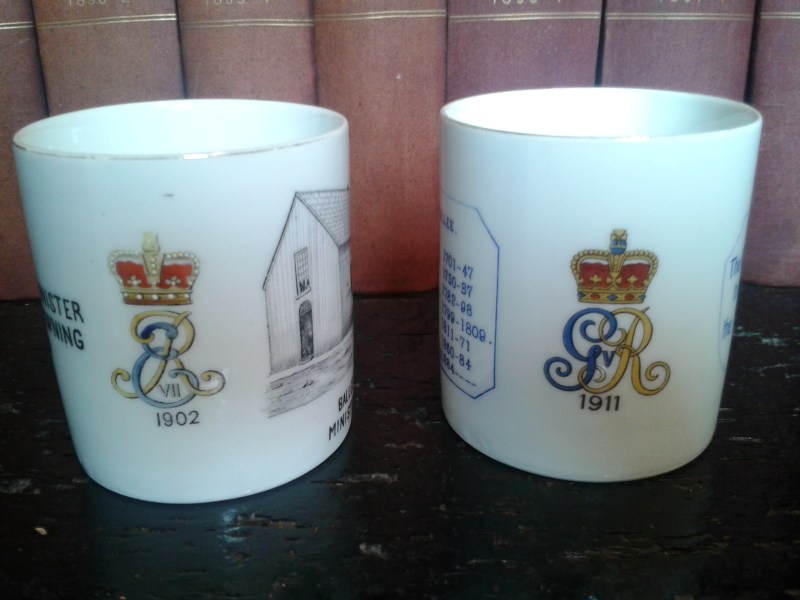
The main focus of the video though is the contribution of the Rev J.H. Bibby, minister at Ballee from 1884 to 1935. Originally from Warrington he was a member of a family connected to the ceramics business which no doubt helped in his gifting to the Sunday School and members of his church of commemorative mugs:
Ballee Commemorative Mugs
The Rev Joseph Henry Bibby was educated at the Unitarian Home Missionary College from 1880 to 1884 and spent the whole of his long ministry in Ballee, where he was closely involved in local life. He was a generous benefactor to the church and on his death left many of his books to the Unitarian College as well as his collection of ceramics and glass to Warrington Museum. Some of what he donated to the Museum can be seen in the video above.
Rev J.H. Bibby
What makes his gifts of the Coronation mugs stand out is that they are lithophanes, that is they contain an image impressed in the porcelain which can only be see when held to the light. Here’s the image of Edward VII as seen in the 1902 mug:
Edward VII as he appears on the Ballee mug
Many subsequent students at the Unitarian College, Manchester also had reason to thank J.H. Bibby because he bequeathed a sum of money to establish a prize for New Testament Greek. For those who could master the intricacies of Greek there was at least the reward of a small prize at the end of the course if you could prove your proficiency, and we have Joseph Henry Bibby to thank for that.
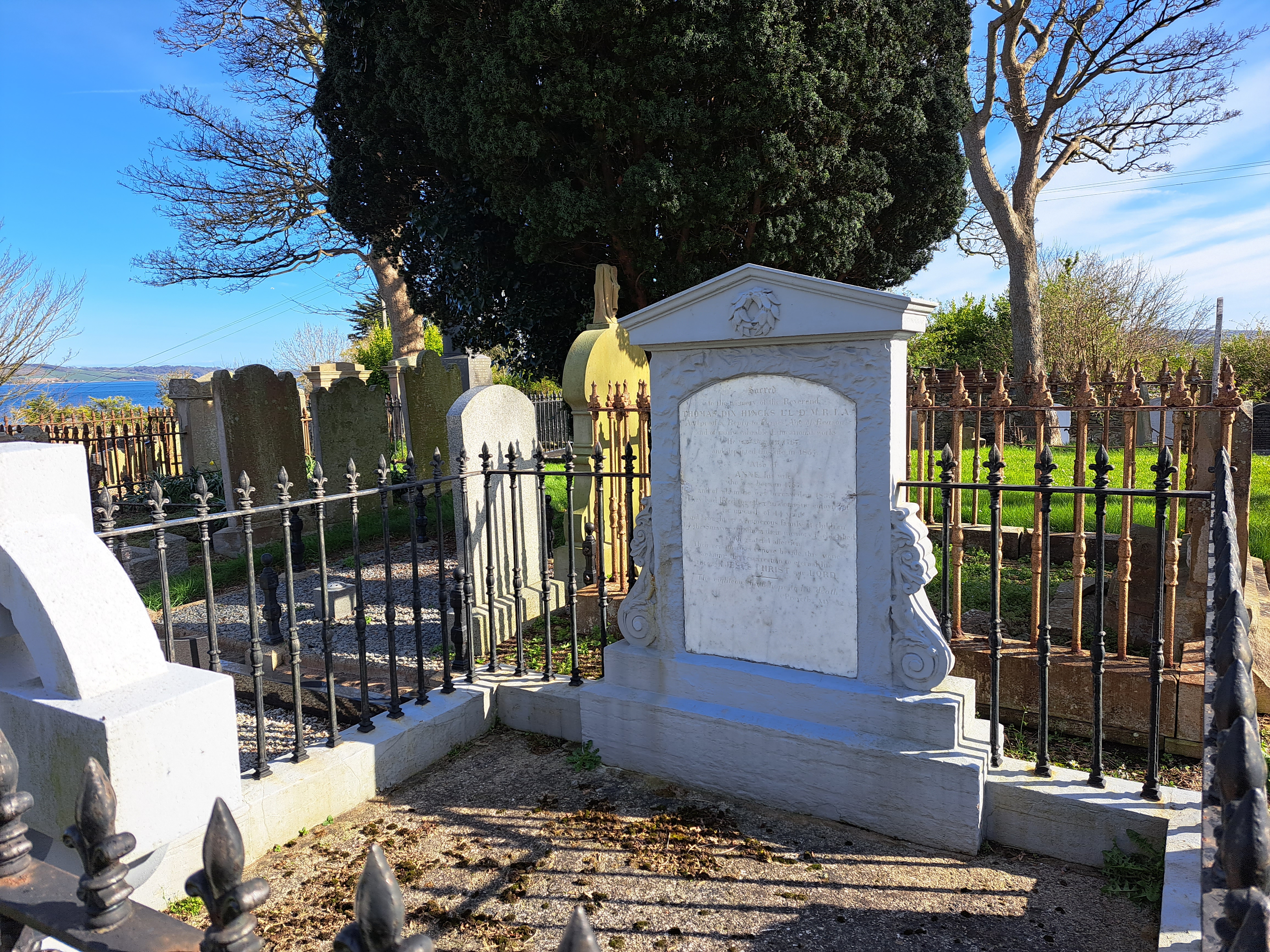
Killyleagh, county Down is a town remarkable for its history, much of this related to the Non-Subscribing tradition in Irish Presbyterianism. In this video we look at some of this history, including Sir Hans Sloane and local rector Rev Edward Hincks, Egyptologist and son of Rev Thomas Dix Hincks who is buried in the parsh graveyard.
Thomas Dix Hincks was born in Dublin and educated at Trinity College, Dublin and the dissenting academy of Hackney New College, London. He became minister of the Old Presbyterian Church, Princes Street, Cork in 1790 and the following year married Anne Boult. In Cork he kept a school and helped to establish the Royal Cork Institution. He later moved to Fermoy where he ran the Fermoy Academy before coming to Belfast as Professor of Oriental Languages at the Royal Belfast Academical Institution which was then also a training college for ministers as well as a school. A pioneering educationalist and teacher he published widely over the years, he was awarded the degree of LLD in 1834 by Glasgow University and was a Member of the Royal Irish Academy.
He and his wife are buried in Killyleagh alongside their eldest son but together they established a significant Unitarian/Non-Subscribing dynasty which was influential in England, Ireland and Canada.
The grave of Thomas Dix Hincks and Anne Hincks in Killyleagh
They had seven children, two girls and five boys:
Hannah Hincks (d.c1873)
Anne Hincks (d.1877)
Rev Edward Hincks (1792-1866)
Rev William Hincks c.1793-1871
Rev Thomas Hincks (1796-1882)
Rev John Hincks (1804-1831)
Sir Francis Hincks (1807-1885)
Two of the brothers became ministers of Renshaw Street Chapel in Liverpool, amongst other things.
To hear the full story and hear more about Killyleagh click on the video at the top of the page.
Memorial window to Thomas Dix Hincks, Anne Hincks and Hannah Hincks in the First Presbyterian Church, Rosemary Street, Belfast.
A previous video explores something of the life of Rev Thoms Hincks (1818-1899) the son of Rev William Hincks (c.1793-1871). It can be seen here:

























 velvethummingbee