A blog about church history and related matters, particularly unitarian and non-subscribing history, as well as matters of faith, theology, liberal christianity, non-creedal religion and related topics. By the editor of 'Faith and Freedom' and the 'Transactions of the Unitarian Historical Society'.
Our service for this Sunday comes from Ballee Non-Subscribing Presbyterian Church which this year celebrates its tercentenary.
The service is conducted by the minister, Rev Dr David Steers, and John Strain, the church organist, plays the hymns ‘O Love that wilt not let me go’ (Hymns of Faith and Freedom 276) and ‘Spirit of the living God’ (Hymns of Faith and Freedom 178) as well as ‘How deep the Father’s Love for us’ (Irish Church Hymnal 224) which is played at the beginning and end of the service. The reading is Psalm 139 v.1-12, 23-24.
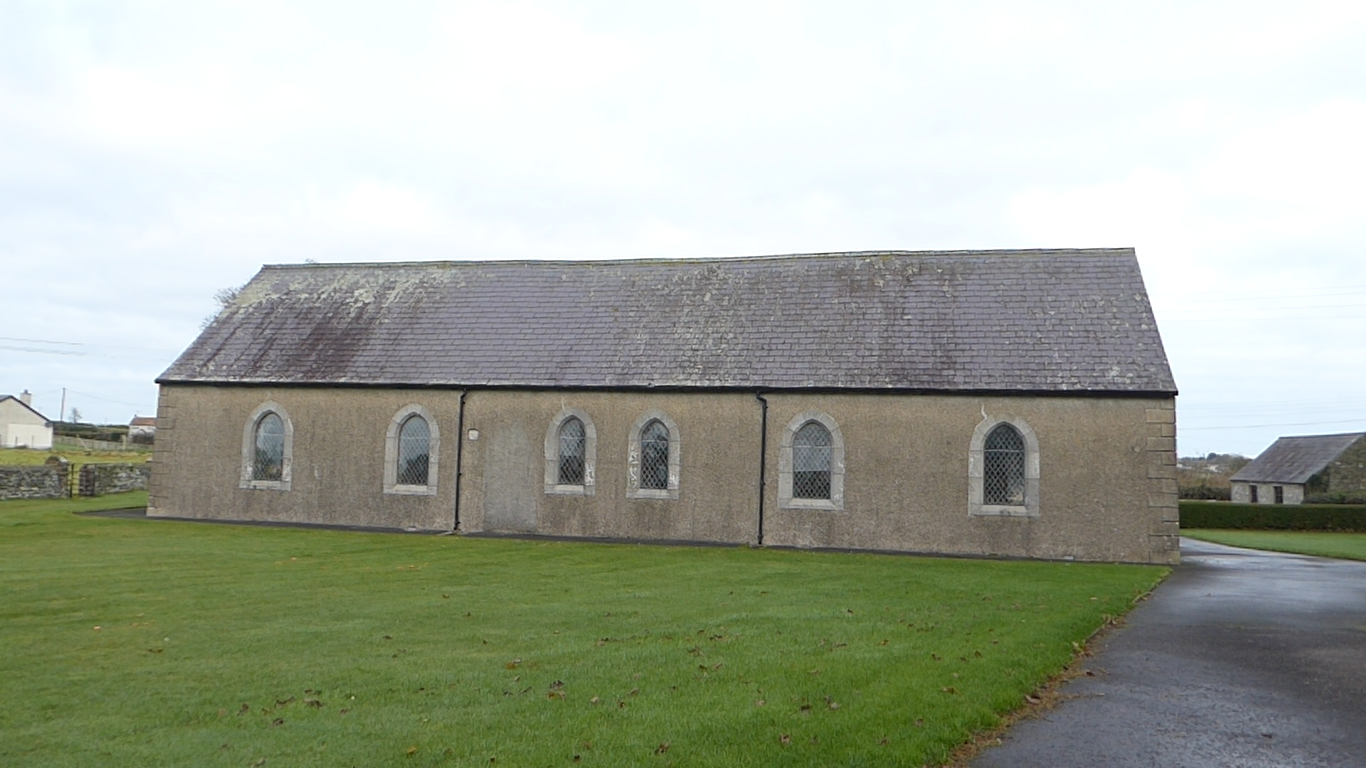
Click on the video to join in our serviceBallee NSP Church, built 1721
The above quotation comes from Meister Eckhart and it seems a fitting thought to have in mind at the start of a new year, especially after all the difficulties of the year that has gone before.
This new year is also the 300th anniversary of the building of the Ballee meeting-house and both the new year and this tercentenary feature in our service for Sunday, 3rd January. The date is close too, to the feast of the Epiphany and a reflection on the story and meaning of the Magi features in our worship.
Christmas Crib at Ballee from a couple of years ago
Service of worship
With music played by John Strain on the organ at Ballee Non-Subscribing Presbyterian Church, Jack Steers on the trumpet and Laura Neill on the bagpipes. The reading comes from Matthew ch.2 v.1-12.
Ballee Non-Subscribing Presbyterian Church traces its origins back to the middle of the seventeenth century but the present meeting-house was built in 1721, after the previous one blew down in a storm. For three hundred years the congregation have worshipped in this important example of an early eighteenth-century T-shaped meeting-house. We have a number of special events planned to celebrate this significant milestone.
We have three services online over the Christmas period all of which can be accessed from this post.
Christmas Eve
Dunmurry, Christmas Eve
Our service for Christmas Eve on Thursday 24th December is filmed in First Dunmurry (NS) Presbyterian Church and conducted by Rev Dr David Steers. The readings include A Visit from St Nicholas, read by Sue Steers, The Oxen by Thomas Hardy and It is a good thing to observe Christmas day by Henry van Dyke. Church organist Allen Yarr plays the carols O Come all ye faithful, O Little Town of Bethlehem and Hark! The Herald Angels Sing. Ballee organist John Strain plays It came upon the midnight clear and Laura Neill plays Jingle Bells on the bagpipes. Special thanks to InkLightning for the Father Christmas artwork.
Christmas Day
Christmas Day
Our Christmas Day service is filmed in Clough, Ballee and Downpatrick churches. Conducted by Rev Dr David Steers the readings are given by Sophia Cleland (Luke ch.2 v.8-20) and Eve Lightbody (Matthew ch.2 v.1-12). Music includes God rest ye merry gentlemen played on keyboards and sung by Dillon and Haydn Howell; Silent Night played by Laura Neill on the bagpipes and Laura Patterson on the organ of the First Presbyterian (NS) Church, Downpatrick; Mary’s Boy Child; Joy to the World; The First Nowell; Jingle Bells/Christ is born today; When a child is born, all played by John Strain on the organ of Ballee Non-Subscribing Presbyterian Church.
Sunday, 27th December
Inch Abbey
Filmed at Inch Abbey in county Down and conducted by Rev Dr David Steers our service for the last Sunday in 2020 includes as readings Llananno by R.S. Thomas and an extract from My Cathedral: A Vision of Friendship by Alexander Irvine. Jack Steers plays It came upon the midnight clear on the trumpet, Downpatrick organist Laura Patterson plays In the bleak mid-winter, and John Strain plays While shepherds watched their flocks by night and O little town of Bethlehem on the organ at Ballee.
If you can’t get to church on Sunday amidst all the current restrictions or, indeed, if you have been to church but would like to join in another Christmas service, you can click on our video and join in our Service of Carols and Readings.
Filmed partly in Downpatrick it features music played on the organs at Ballee and Downpatrick plus music on the trumpet and bagpipes as well as readers from different churches who re-tell the Christmas story.
Click on the video to see the service:
Service of Christmas Carols and Readings, Downpatrick
Non-Subscribing Presbyterian Church
First Presbyterian (NS) Church, Downpatrick
Christmas Carol Service
Sunday, 20th December 2020
O Come, O come, Emmanuel (played by Jack on the trumpet)
Opening Words Rev Dr David Steers
1st Reading Isaiah ch.9 v.2, 6-7 Nigel
1st Carol O Come, all ye faithful (played by Laura on the bagpipes)
1st Carol O Come, all ye faithful (played by John on the organ at Ballee)
2nd Reading Isaiah ch.11 v.1-9 Margaret
2nd Carol O little town of Bethlehem (John)
3rd Reading Isaiah ch.40 v.1-5 Rosemary
3rd Carol Once in Royal David’s City (John)
4th Reading Luke ch.1 v.26-35 Adele
4th Carol The first Nowell (played by Laura on the organ at Downpatrick))
5th Reading Matthew ch.1 v.18-25 Emma
5th Carol Mary’s Boy Child (Laura)
6th Reading Luke ch.2 v.1-7 Emma
6th Carol Silent night! (John)
7th Reading Luke ch.2 v.8-20 Noelle
7th Carol See amid the winter snow (Laura)
8th Reading Matthew ch.2 v.1-12 Mary
8th Carol Hark! The Herald Angels sing (John)
9th Reading John ch.1 v.1-14 Robert
Prayer
9th Carol Joy to the world (Laura)
Benediction
A Great and Mighty Wonder (John)
O thou eternal Wisdom, whom we partly know and partly do not know;
O thou eternal Justice, whom we partly acknowledge, but never wholly obey;
O thou eternal Love, whom we love a little, but fear to love too much:
The service for the Third Sunday in Advent is led by the members of the Sunday School at Clough who do a wonderful job of leading our worship in a very special Christmas service. Big thanks goes to Leanne Straney for organising the recordings and making the whole thing possible, and to all the children who have put together such a brilliant service. Thanks also goes to Laura Patterson who accompanies the service on the organ at Downpatrick and plays the hymns Come and join the celebration and Hark! the Herald Angels Sing. You can view the video here:
Worship from Clough NSP Church led by the Sunday School
Installation at Banbridge
On Friday, 11th December – the same day as the latest lockdown in Northern Ireland ended – the Presbytery of Antrim installed the Rev Brian Moodie as the new minister of Banbridge Non-Subscribing Presbyterian Church. In the present circumstances the occasion was much more scaled down than usual with no visitors or guests allowed to be present, no hymns, no speeches and no refreshments, but nevertheless it was a considerable achievement on the part of the Presbytery of Antrim and the congregation to arrange for all the necessary steps leading to an installation – candidature, taking the mind of the meeting as well as a full installation service – during a pandemic. We wish the Rev Brian Moodie and the congregation every blessing for the future.
Rev Brian Moodie, after the installation service, Friday, 11th December
An additional special issue of the Transactions is now on its way to subscribers (new subscribers are also very welcome, if you would like to join go to the Unitarian Historical Society website here).
This issue features:
WILLIAM HAZLITT, JOSEPH PRIESTLEY AND THE ORIGINS OF UNITARIANISM IN AMERICA by STEPHEN BURLEY
The “dark, cracked, dusty and unframed” portrait of the Rev William Hazlitt (1737-1820) painted by his son in 1805. (Image and quote from ‘The Day-Star of Liberty William Hazlitt’s Radical Style’ by Tom Paulin)Rev Joseph Priestley (1733-1804). Portrait by Ellen Sharples (Source: Wikipedia)
Dr Stephen Burley’s paper is a radical reassessment of the role of William Hazlitt in the development of Unitarianism in the United States. A difficult man, Hazlitt was a fervent propagandist for Unitarianism whose contribution has frequently been overlooked or downplayed. This article adds a great deal to our understanding of him.
Rev William Hazlitt, from a miniature portrait by his son John (Source: Wikipedia)
‘STEADFAST THROUGH TROUBLES’: MOUNTPOTTINGER AND THE LAWRENCES by SANDRA GILPIN
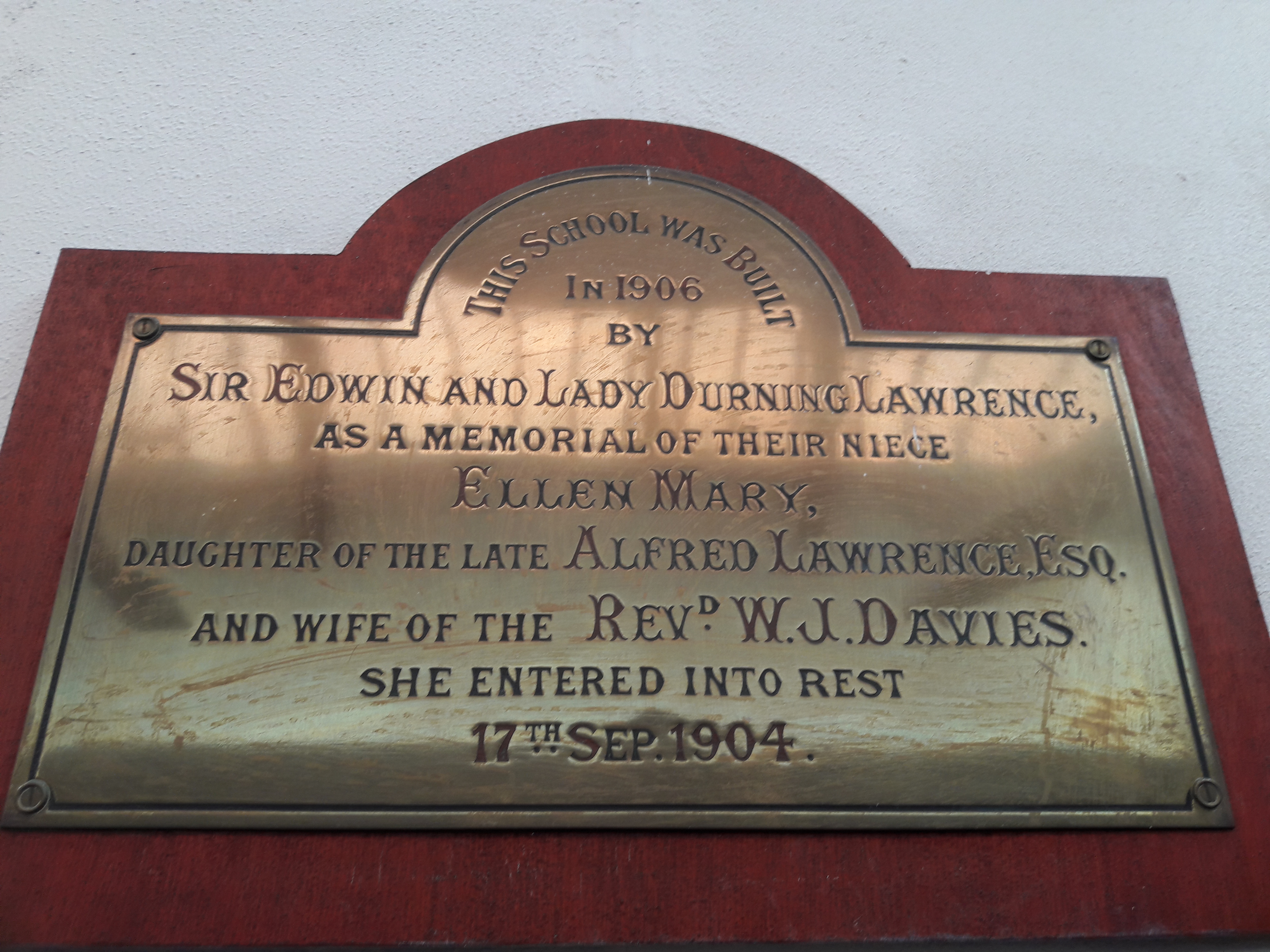
Ellen Mary Lawrence, from a portrait in Mountpottinger Church. (Photo: Adrian Moir)Plaque in the schoolroom in Mountpottinger Church in memory of Ellen Mary Lawrence (Photo: Adrian Moir)
Sandra Gilpin tells a story that weaves together Unitarian life in London, Wales and Belfast in the late nineteenth and early twentieth centuries through the lens of the Lawrence family. Its main focus is Ellen Mary Lawrence who was born in London and who married the Rev William Jenkin Davies. She died at a tragically young age and her memorial forms part of Mountpottinger NSP Church in east Belfast.
Mountpottinger Church before the extension was added in memory of Ellen Mary Lawrence and probably featuring Rev William Jenkin Davies standing in the centre. To read more about the building of Mountpottinger click on the above image.
HELEN K. WATTS – A UNITARIAN SUFFRAGETTE by ALAN RUSTON
The daughter of an Anglican vicar, Helen K. Watts became a Unitarian in Nottingham (Picture: Alan Ruston. From a booklet by Rowena Edlin-White, Nottingham Women’s History Group, Piecemeal Pamphlets, £2)
Plaque unveiled in Nottingham on 14 December 2018 in memory of Helen K. Watts (Picture: Alan Ruston. From a booklet by Rowena Edlin-White, Nottingham Women’s History Group, Piecemeal Pamphlets)
Alan Ruston brings together two sides of the life of Helen K. Watts. A ‘stalwart’ Unitarian, well-known in London and Sussex up until her death in 1972. She was also an active suffragette between 1907 to 1911 who was arrested for her campaigning and threatened with force feeding. This remarkable aspect of her life seems to have been forgotten in Unitarian circles and Alan paints a full picture of her life and achievements.
(Picture: Alan Ruston. From a booklet by Rowena Edlin-White, Nottingham Women’s History Group, Piecemeal Pamphlets)
In our Record Section Derek McAuley has used the Freedom of Information Act to uncover hitherto unknown aspects of the life of the Rev Gábor Kereki (1914-1995) who fled Hungary for Britain at the start of the Cold War in 1947. Throughout the rest of his life he made a great contribution to the Unitarian ministry in Britain and this will continue thanks to a substantial legacy left by his wife in 2016. She has established the ‘Gábor Kereki Trust’ to benefit ministers and students of the Hungarian Unitarian Church and enable them to study in the UK.
In our Reviews Derek McAuley begins what must be a long-overdue examination of the role Unitarians played in slavery prior to its abolition in 1833 with his review of Kate Donnington’s brand new book on the Hibbert family. Alan Ruston reviews the important Lindsey Press book Unitarian Women A Legacy of Dissent, edited by Ann Peart, and Andrew Hill reviews a new publication of the diaries of James Losh, a Newcastle Unitarian who observed and recorded detailed changes in nature, the environment and weather in his local area between 1803 and 1833.
Transactions of the Unitarian Historical Society
Volume 27 Number 3 December 2020 Edited by David Steers
Yet, O Lord, thou art our Father; we are the clay, and thou art our potter; we are all the work of thy hand.
Isaiah ch.64 v.8
Our service for the Second Sunday in Advent comes from First Presbyterian (Non-Subscribing) Church, Downpatrick and has as its reading Isaiah ch.64 v.1-9. In that passage God is likened to a potter and through interaction with our Creator we can be remade. This image of the potter at work at the wheel is a very powerful one in the Bible, it is suggestive of the ongoing process of creation of which we are a part.
The video can be seen here:
The organist is John Strain, playing the organ at Ballee Non-Subscribing Presbyterian Church, who plays Lo! He comes with clouds descending (Mission Praise 424) and Hark the glad sound! The saviour comes (Hymns of Faith and Freedom 107).
Our service for the first Sunday in Advent comes from Ballee Non-Subscribing Presbyterian Church. Advent begins this year with Northern Ireland once again back in lockdown, this time for two weeks. As before we are not allowed to have public worship in our churches, but as we have done throughout the pandemic we have an online service on our YouTube channel every Sunday.
The service for Advent can be seen here:
The people who walked in darkness have seen a great light; those who dwelt in a land of deep darkness, on them has light shined.
Isaiah ch.9 v.2
Today’s reading is from Jeremiah ch.33 v.14-16 and is read by Haydn Howell. Church organist John Strain plays the hymns Come, thou long-expected Jesus (‘Hymns of Faith and Freedom’ 110) and How lovely on the mountains are the feet of him (‘Hymns of Faith and Freedom’ 111). John also plays Promised Lord and Christ is he and Make way, make way.
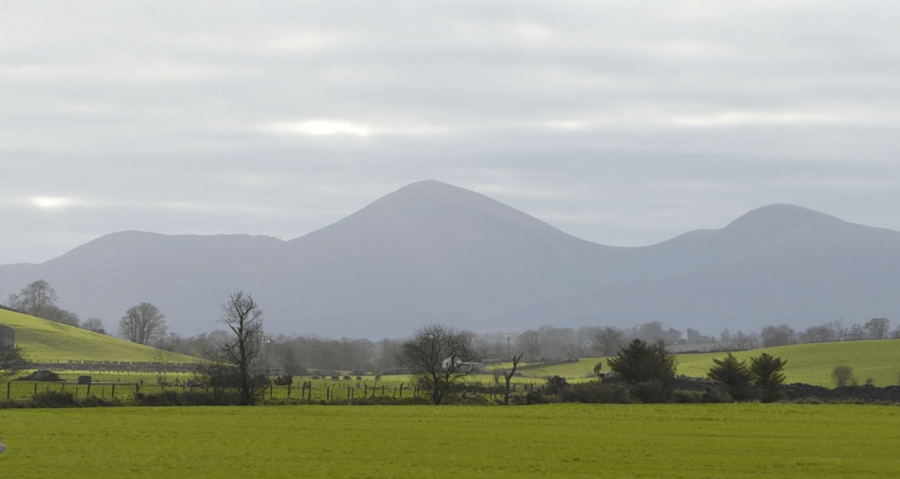
The closing scenes of the video includes film of some Whooper Swans in a field in the shadow of the Mountains of Mourne. Newly arrived from Iceland they spend the winter here and currently share their field with some Greylag Geese:
We thank Thee for the stars wherewith Thou hast spangled the raiment of darkness, giving beauty to the world when the sun withdraws its light. All this magnificence is but a little sparklet that has fallen from Thy presence, Thou Central Fire and Radiant Light of all! These are but reflections of Thy wisdom, Thy power, and Thy glory!
The words at the top of this page are by Marcus Braybrooke. They are a distillation of a longer quotation from William Temple (Archbishop of Canterbury 1942-1944) quoted in Marcus’s book Peace in Our Hearts, Peace in our World:
It is a great mistake to suppose that God
is interested only, or even, primarily in religion.
Religion is more than doing things a certain way, it is about the way we live our lives. Consequently faith is supposed to find its conclusion in the way we live. We are reminded of this in the Letter of James:
What does it profit, my brethren, if a man says he has faith but has not works? Can his faith save him? If a brother or sister is ill-clad and in lack of daily food, and one of you says to them, “Go in peace, be warmed and filled,” without giving them the things needed for the body, what does it profit? So faith by itself, if it has no works, is dead. James ch.2 v.14-17
How we live and how we interact with the world is a measure of how far the Kingdom of God is being constructed.
As Mahatma Gandhi said:
No work that is done in God’s name
And dedicated to God is small.
A scavenger who works in God’s service shares equal distinction
With a king who uses his gifts in God’s name.
This is the theme of today’s online service. Filmed in Clough Non-Subscribing Presbyterian Church Alfie McClelland plays the organ and Elsie Nelson gives the reading. The hymns played are Thou Whose Almighty Word (‘Hymns of Faith and Freedom’ 173) and Guide me, O Thou Great Jehovah (‘Hymns of Faith and Freedom’ 326).
The service can be seen here:
Sunday Worship Clough Non-Subscribing Presbyterian Church
The latest issue of Faith and Freedom (Autumn and Winter 2020, Number 191) is now available and on its way to subscribers.
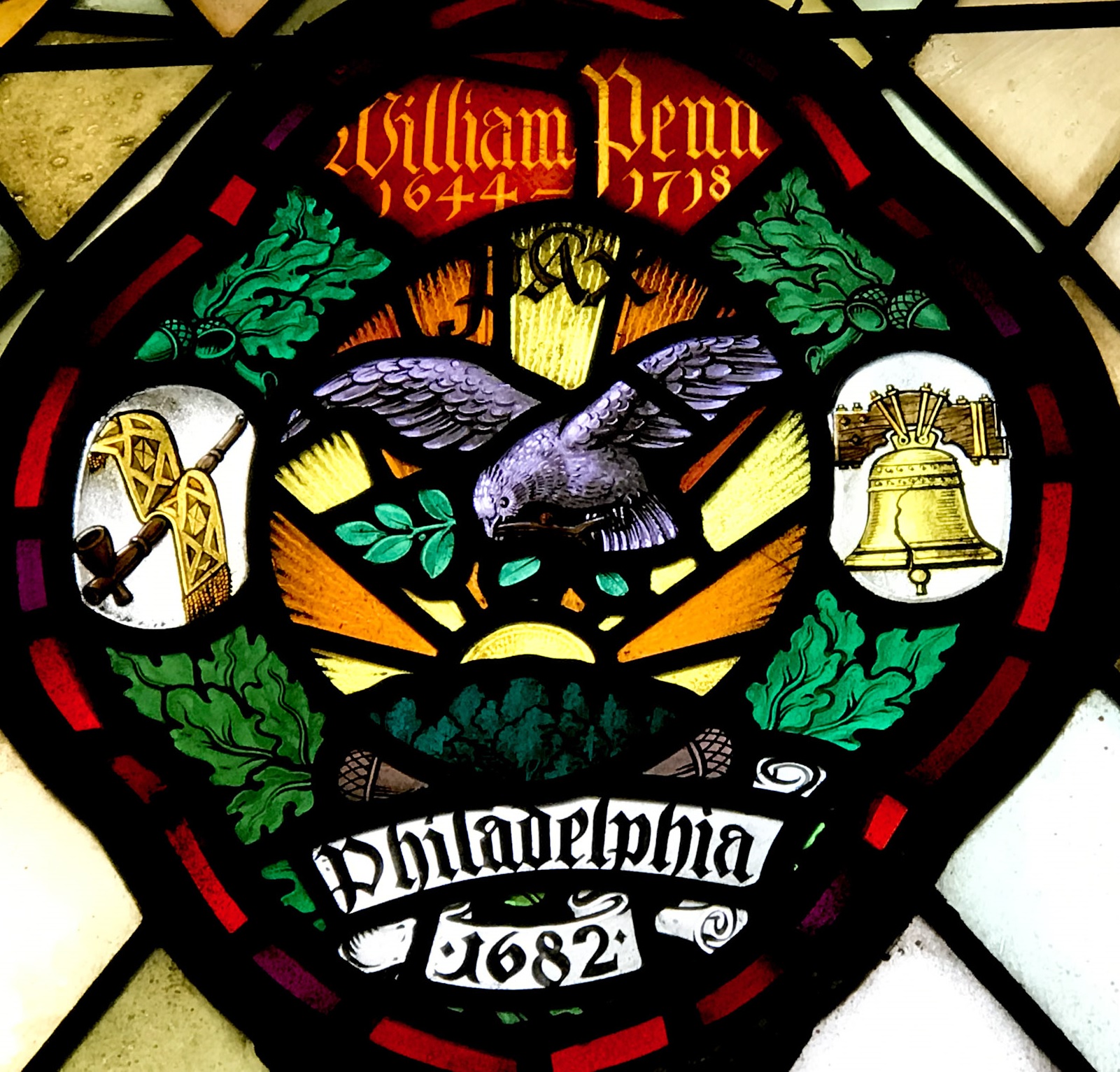
Detail from the William Penn window, Lancaster, Pennsylvania (Photo: Emily Klenin)
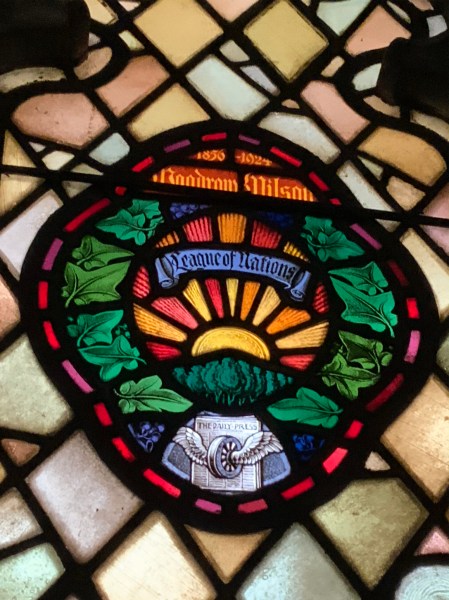
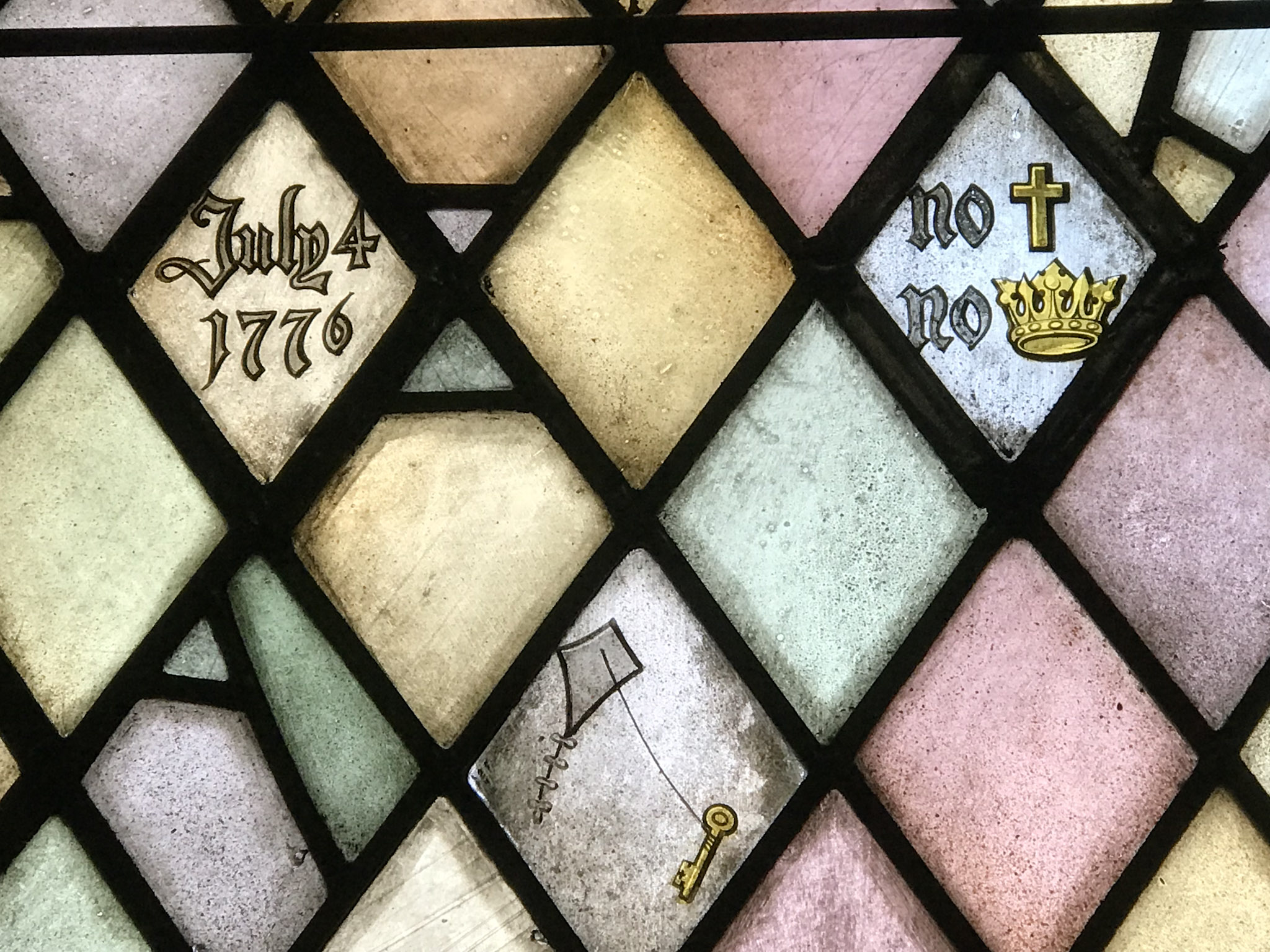
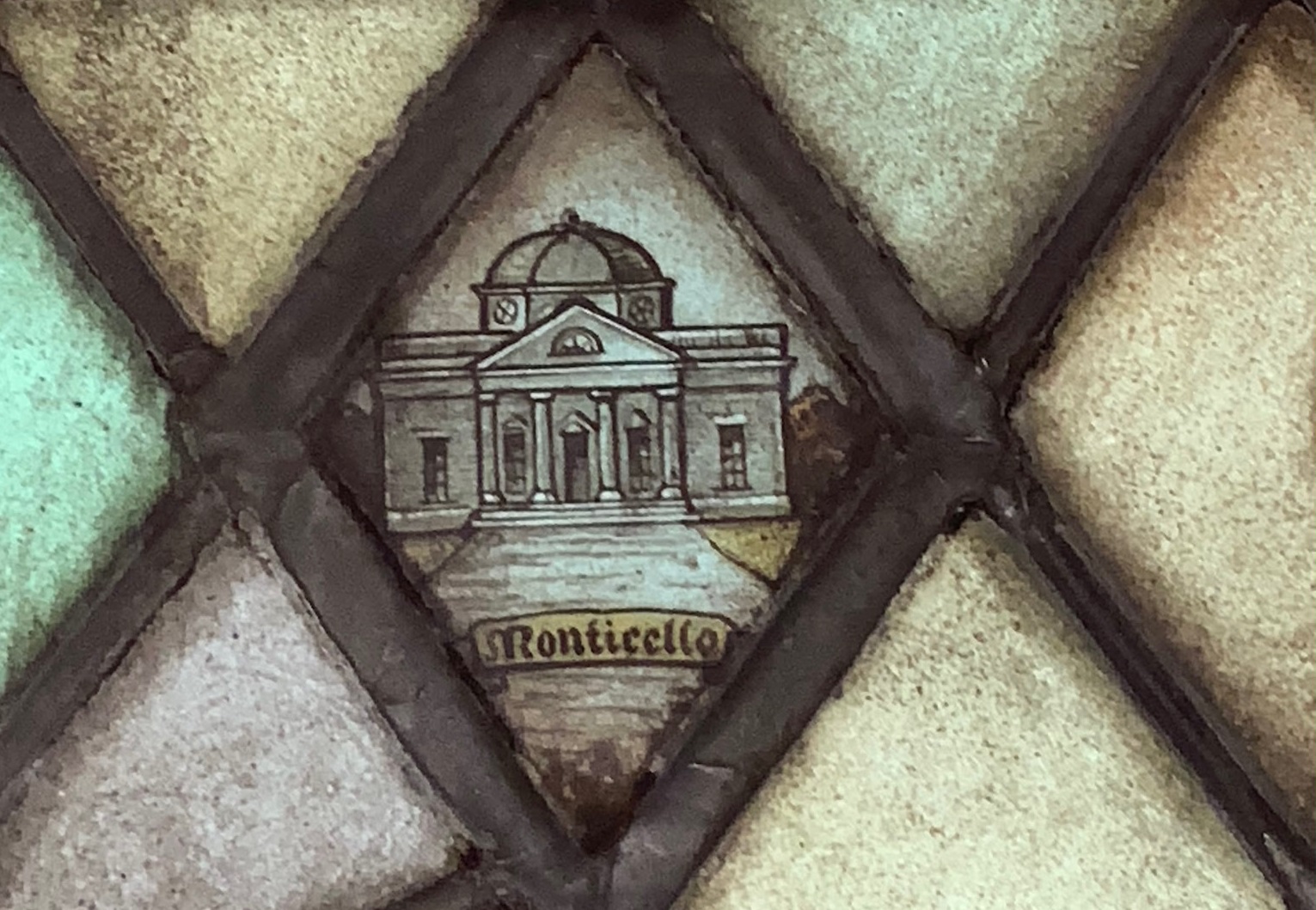
In this issue Professor Emily Klenin shares her research into a significant Unitarian Universalist Church building. Geography, History, and the Inner Light: Decorating a Unitarian Church in Central Pennsylvania, 1899 – 1932 explores the story of a unique building. The Unitarian Church of Our Father was established in Lancaster, Pennsylvania in 1902 and as the new church was built it became the venue for a remarkable experiment in art and design thanks to the involvement of local millionaire M.T. Garvin. According to Professor Klenin there is no evidence that ‘that any of his contemporaries thought him personally interesting’ but Garvin was a secretive and generous philanthropist who bequeathed his department store to his staff and funded the creation of this church in the American Gothic Revival style with Arts and Craft influences. Born a Quaker, M.T. Garvin became a Unitarian and built the church with its Chapel of the Emancipators decorated throughout with stained glass of the highest quality created by the Bavarian firm of F.X. Zettler. The ‘emancipators’ memorialized include William Ellery Channing, Theodore Parker, Joseph Priestley, William Penn, significant American Presidents and many more including a rare window celebrating the League of Nations. Devices and symbols incorporated in the windows are explained by Professor Klenin. In a masterful article Professor Klenin describes the building, its decoration and the influences that led M.T Garvin to create it. Blending theological knowledge with artistic appreciation and considerable technical knowledge she gives a brilliant account of this remarkable building:
The southeast window in this way becomes a focal point for force lines (a structural notion native to engineering…but borrowed by modernist painters) linking windows with pulpit, south window with south window opposite, and southeast with northeast and northwest. But there is more. The light from without, specified textually at the bottom of the window, also finds a vertical counterpart high above the pulpit, in the wooden bas relief showing Quaker founder George Fox, facing the congregation and accompanied by a text stating that he is ‘preaching the Inner Light’.
Further detail from William Penn’s window (Photo: Emily Klenin)
David A. Williams is a distinguished emeritus professor of astronomy and a former President of the Royal Astronomical Society. In Is anybody out there? he examines the most recent research that deals with the possibility of life elsewhere in the universe. How many ‘exoplanets’ have been found orbiting stars in the Milky Way? How many might be in the habitable zone? How long might civilizations last? How might they get in touch? All these things are discussed.
Coronavirus, conspiracy theories and paranoia is the topic discussed by Dr Charles Stewart, a pharmaceutical physician. Dr Stewart looks at how the current outbreak of Covid-19 began and ties this in with various conspiracies and fears. The Rev Frank Walker tells the story of Sebastian Castellio, the Pioneer of Toleration which includes discussion of the role played by Michael Servetus. Catherine Robinson is a member of the Unitarian congregation in Oxford which meets in the chapel of Harris Manchester College. In ‘A Sincere Communion of Souls’: Unitarians in Oxford 130 years ago she tells the story of how the congregation was founded in Oxford, a place then viewed by some Unitarians as ‘a bastion of conformity and orthodoxy’.
There are, as always, some insightful and important reviews – Jim Corrigall on Alastair McIntosh’s latest theological reflection on the climate crisis, Riders on the Storm: The Climate Crisis and the Survival of Being; and on Guy Shrubsole’s Who Owns England? How We Lost Our Green & Pleasant Land & How to Take it Back. Professor Alan Deacon reviews John Barton, A History of the Bible: A Book and its Faiths, a ‘beautiful, affirming book’ which looks at the creation and history of the Biblical texts and their relation to faith and the church. Finally, David Steers reviews a remarkable account by Gladys Ganiel and Jamie Yohanis of the theological impact of the ‘Troubles’ on members of one Irish denomination in Considering Grace. Presbyterians and the Troubles.
Window showing Monticello. Thomas Jefferson’s house, now a National Historic Landmark and a UNESCO World Heritage Site, saved partly through the exertions of M.T. Garvin (Photo: Emily Klenin)
Emily Klenin’s photographs of the windows of the Unitarian Universalist Church of Lancaster, Pennsylvania can be seen at this link:












 velvethummingbee