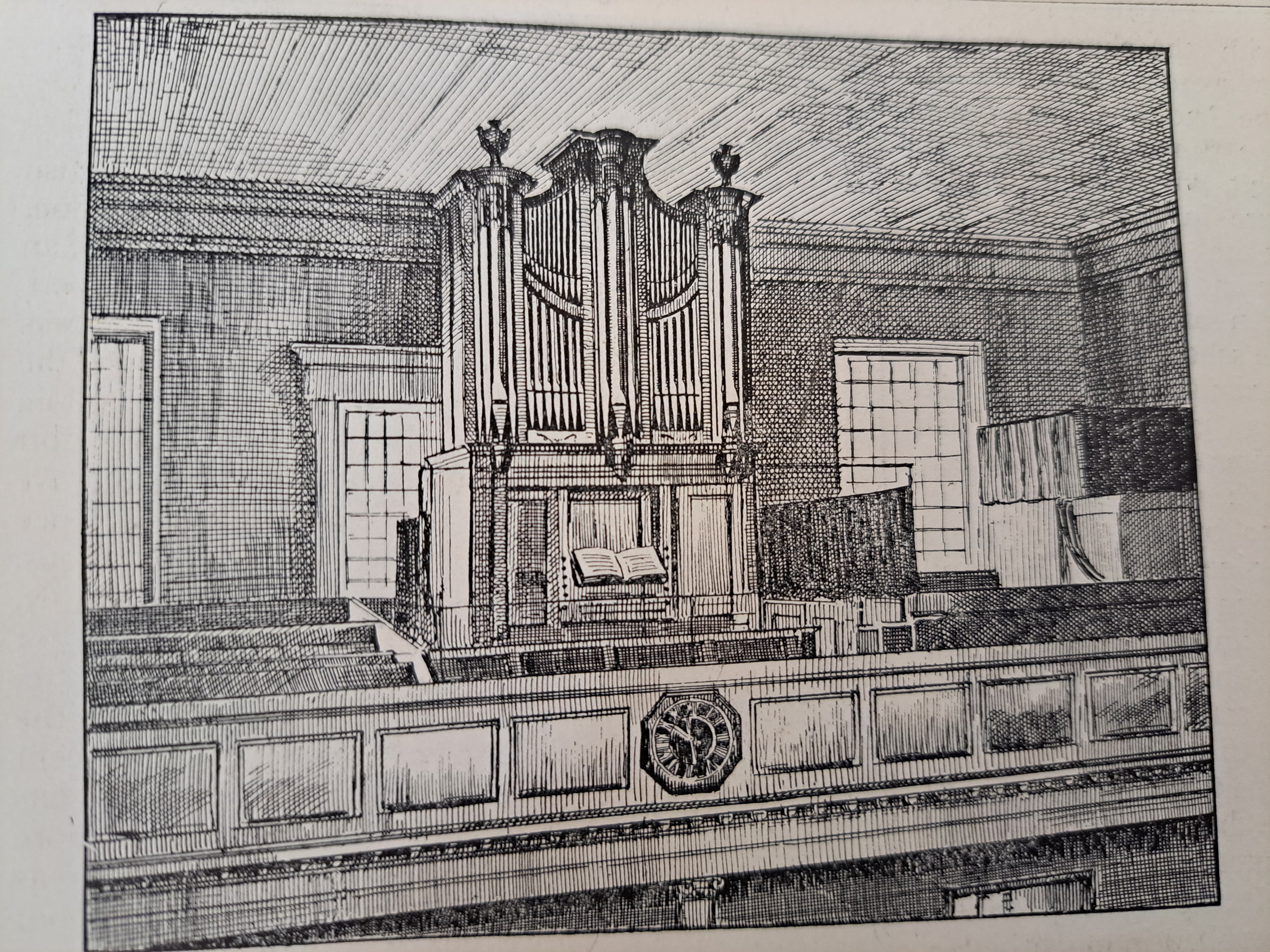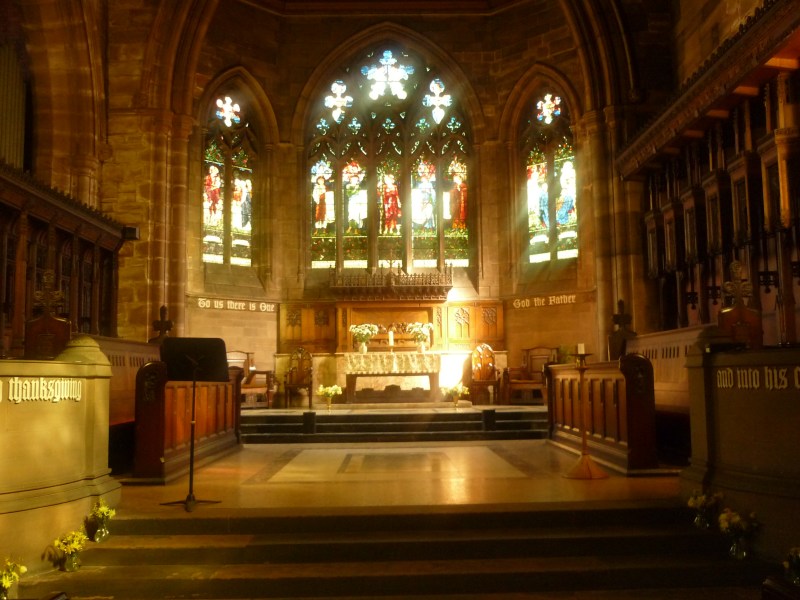
Liverpool Unitarians: Faith and Action

This book (first published, I now realise, back in 2014!) has just been reprinted and, the original print run having sold out, is once again available. The publishers and printers have done an excellent job, it’s an attractive book, this time published in memory of Bernard Cliffe, Len Mooney and Rev Daphne Roberts, three contributors who have died since the original publication.

The full list of contributors and subjects is as follows:

Introduction, David Steers; Memorials of the Ancient Chapel of Toxteth Park, Bernard Cliffe; Jeremiah Horrocks 1618 – 1641, Bernard Cliffe; William Roscoe 1753 – 1831, David Steers; A Short History of the Rathbone Family, Annette Butler; The Unitarian Family of George Holt, Bernard Cliffe; Noah Jones 1801 – 1861, Philip Waldron; James Martineau 1805 – 1900, Len W. Mooney; Joseph Blanco White 1775 – 1841, David Steers; Kitty Wilkinson 1786 – 1860, Daphne Roberts; John Johns 1801 – 1847, David Steers; William Henry Channing 1810 – 1884, Richard Merritt; Charles Pierre Melly 1829 – 1888, John Keggen; Sir Henry Tate 1819 – 1899, Richard Merritt; Sir John Brunner 1842 – 1919, Len W. Mooney; Lawrence Redfern 1888 – 1967, Elizabeth Alley; Sir Adrian Boult 1889 – 1983, Richard Merritt; The Visitors’ Book of the Ancient Chapel, Bernard Cliffe.

Published by the Merseyside District Missionary Association the cover design is by Alison Steers and the book contains over 50 illustrations, many published here for the first time.

To accompany the republication we have produced a short video which incorporates a trip around Ullet Road Church which can be seen here:

Click on the video for a tour of Ullet Road Church and details of the book
The cover of the book

Liverpool Unitarians: Faith and Action Essays exploring the lives and contributions to society of notable figures in Liverpool Unitarian history

Edited by Daphne Roberts and David Steers

Published by Merseyside and District Missionary Association

ISBN: 978-0-9929031-0-7

Brand new edition for 2024

Price £10 (plus £2 post and packing). Available from Rev Phil Waldron, Ullet Road Church, 57 Ullet Road, Sefton Park, Liverpool. L17 2AA.

In the Introduction I say:

This book is not intended to be hagiography but it does try to outline how one group of people – members of a particular faith community with deep historical roots but with an aversion to fixed creeds – were inspired to serve their fellows in different ways. Their legacy can be seen all over the city – in its parks, in its monuments, in the university, in hospitals, in education, in art galleries and museums – and it exists in the long and continuing struggle to create a society that gives equality and opportunity to all its citizens. It is not meant to be an exhaustive account of all the eminent members of the churches and chapels in the region. Readers will notice that the names mentioned are part of wider connections of family and business which includes many others who could be included. There are other figures who could be the subject of such biographical accounts. But this is a selection of some of those who have followed the call of faith to be of service to wider society.
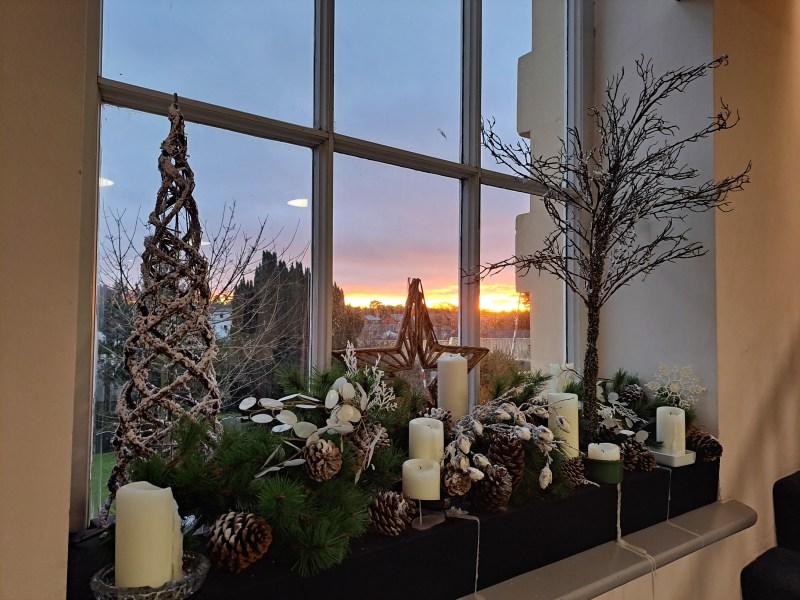
Christmas Morning

On Christmas Eve, 2023, we held an excellent congregational Carol Service in Dunmurry. Below you can join the service via this video:

Excerpt from Hymn on the Morning of Christ’s Nativity by John Milton (1629):

No war or battle sound

Was heard the world around:

The idle spear and shield were high uphung;

The hooked chariot stood

Unstained with hostile blood;

The trumpet spake not to the armed throng,

And kings sat still with awful eye,

As if they surely knew their sovran Lord was by.

But peaceful was the night

Wherein the Prince of Light

His reign of peace upon the earth began:

The winds with wonder whist

Smoothly the waters kissed,

Whispering new joys to the mild ocean,

Who now hath quite forgot to rave,

While birds of calm sit brooding on the charmed wave.

And here is a short video of a heron in Derriaghy Glen, not far from Dunmurry. Filmed recently by Louise Steers:

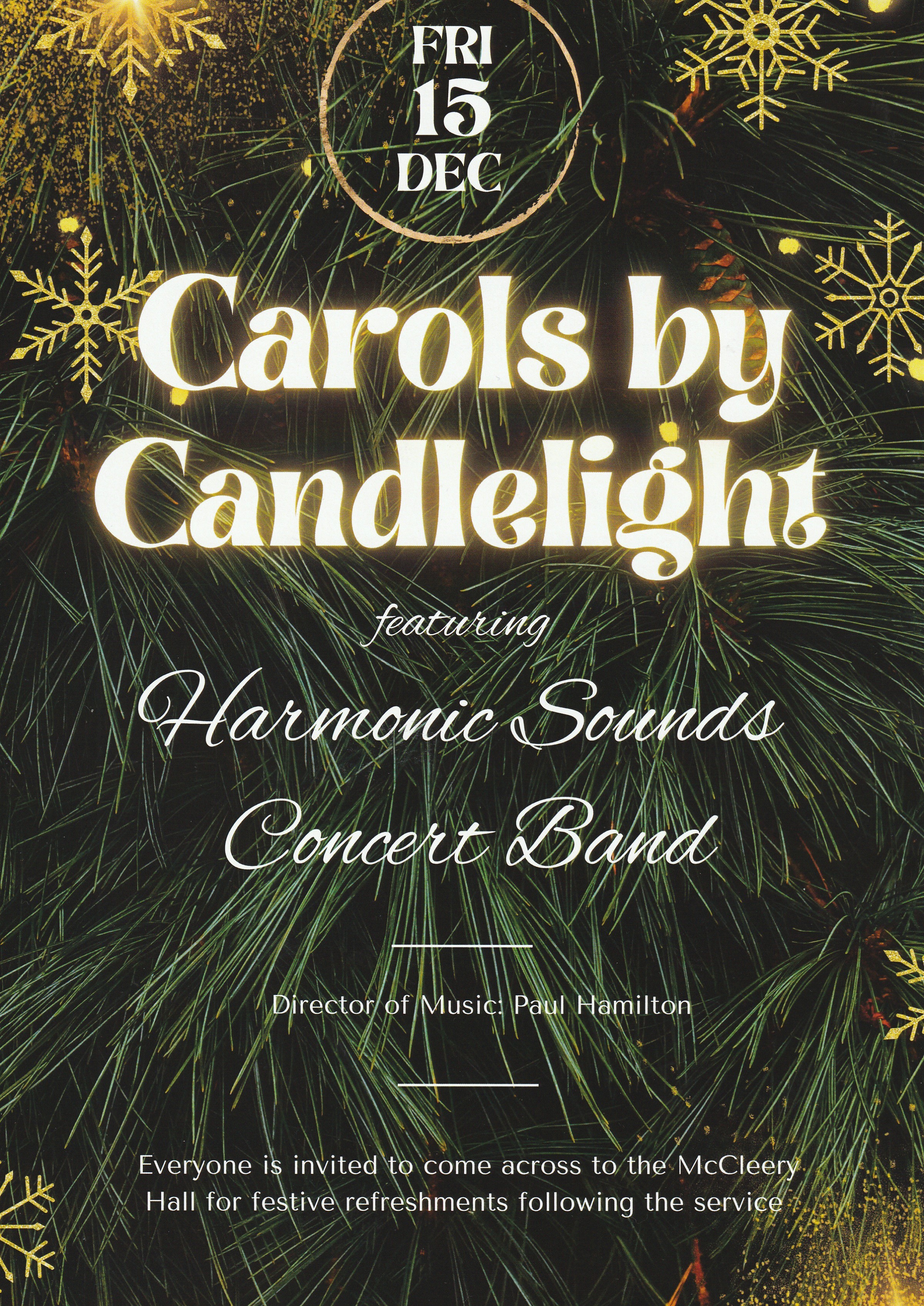
Carols by Candlelight at Dunmurry

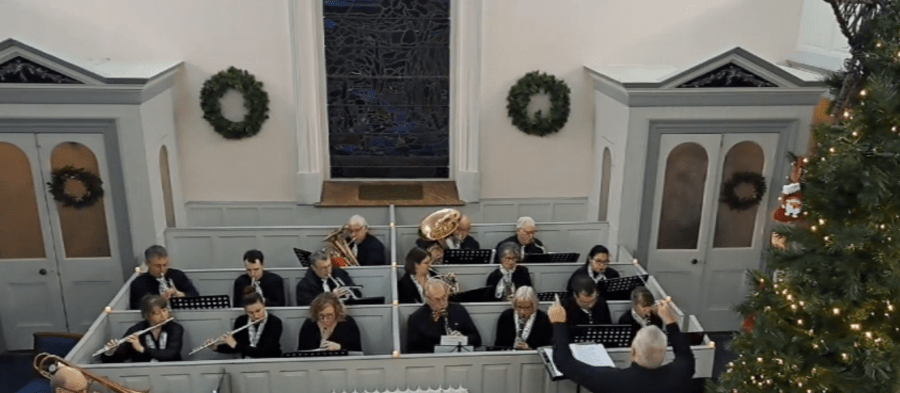
Harmonic Sounds Concert Band performing at Dunmurry

On Friday, 15th December we were delighted to welcome to Dunmurry Harmonic Sounds Concert Band under their Musical Director, Paul Hamilton to lead us in our service of Carols by Candlelight. The Church was beautifully decorated, there was a great attendance and readings were given by members and friends of the congregation.

Click on the video above to share in the service.

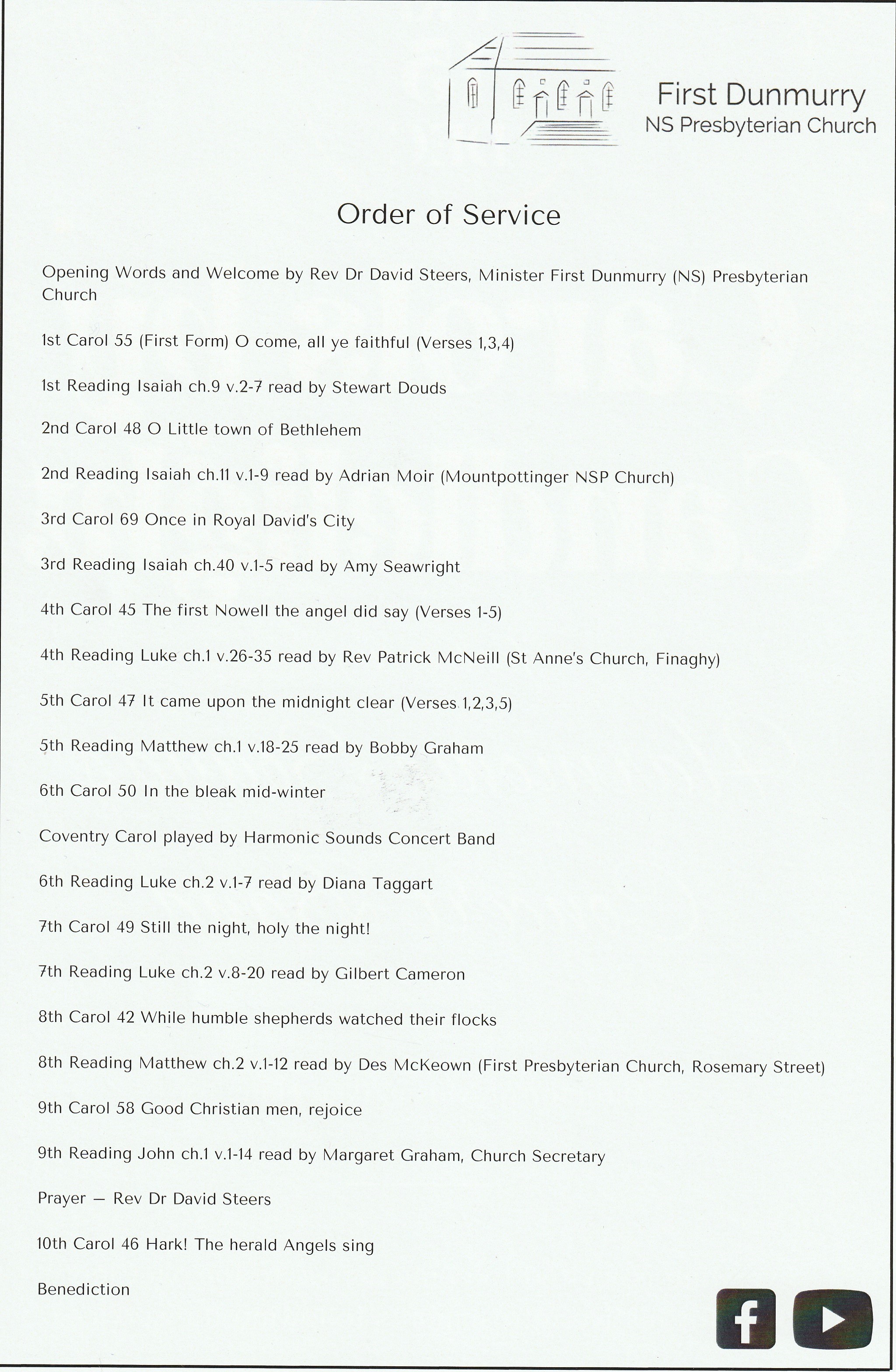
Order of Service

Another recent video which is available to view online is the sermon delivered in Church on Sunday, 10th December 2023, the second Sunday in Advent:

Carols at Dunmurry

Every Christmas Carol has its own backstory but there is none more intricate and unusual than O Come, all ye faithful, which is also one of the most universally popular of all Carols.

Adeste Fidelis

Click on the video above to see the Reflections on ‘O Come, all ye faithful

Carols by Candlelight

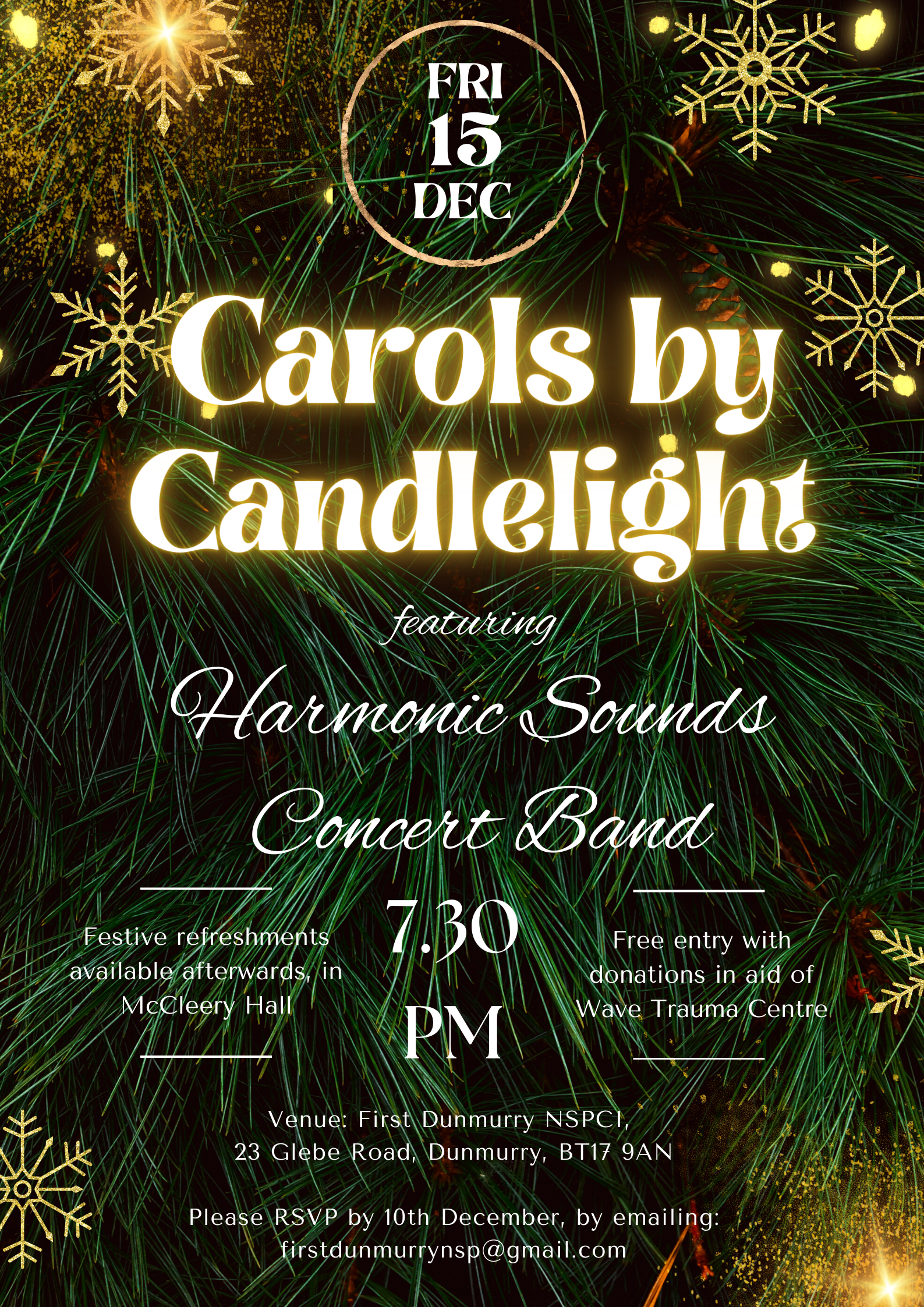
At Dunmurry we are really looking forward to our Carols by Candlelight service on Friday, 15th December at 7.30 pm when we will welcome Harmonic Sounds Concert Band with their Director of Music, Paul Hamilton. We will tell the story of Christmas through traditional carols and the traditional Christmas readings given by church members and friends from other churches. Everyone is welcome.

At the start of Advent

Just as we approach the start of Advent we were delighted to welcome to Dunmurry the Choir of Malone Integrated College who, guided by their Head of Music, Mrs Mitchell, and teacher, Mr Lennox, sang a wonderfully varied programme of pieces in the McCleery Hall for our regular Thursday Warm Space Coffee Morning on 30th November.

Malone College Choir singing at Dunmurry

It was great having the Choir with us, they had also walked all the way from their school to the church on a very cold day. But everyone was really impressed by their achievements as a Choir and the evident joy and enthusiasm they brought to their music. You can see some of their performance in the McCleery Hall on the following video:

Click on the video to see the Choir perform at Dunmurry

We wish the Choir every success in the future. It was a real pleasure to be able to start our Christmas celebrations in the company of the Choir.

Another video recorded at Dunmurry recently features a prayer from Orders of Worship. You can see this short video by clicking on the image below:

A short Act of Prayer at Dunmurry

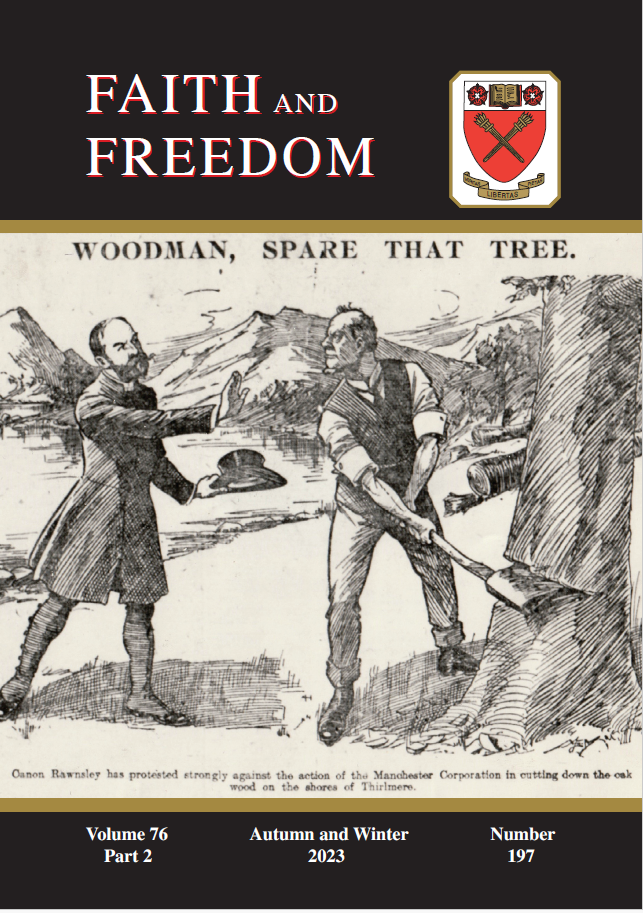
Faith and Freedom 197 (2023)

The latest issue of our journal is out now and will be with subscribers shortly. Anyone can subscribe and an annual subscription costs only £16 in the UK ($32 in the USA), details of how to subscribe can be found below.

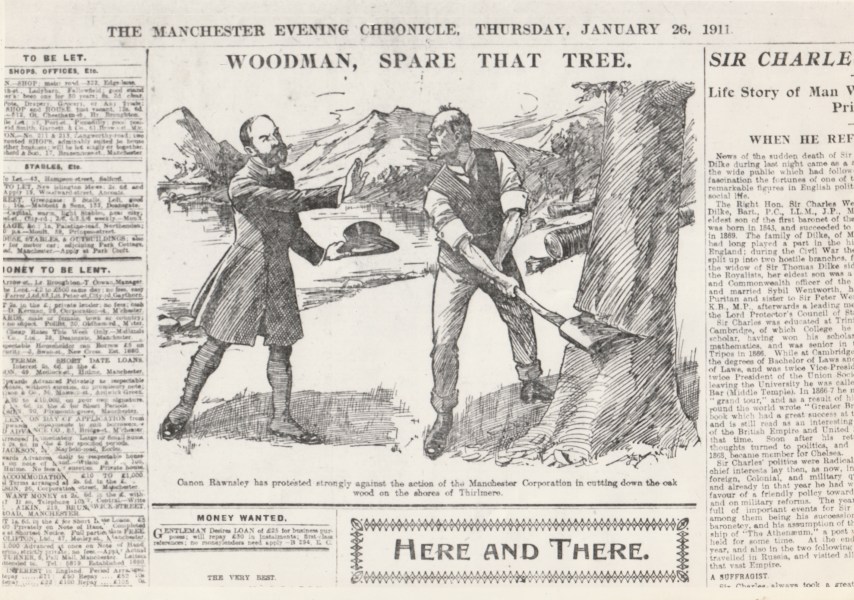
Our cover picture contains a cartoon from the Manchester Evening Chronicle of 26 January 1911 and features Canon Hardwicke Rawnsley, one of the founders of the National Trust, shown here trying to save some oaks on the bank of Thirlmere Reservoir in the Lake District. It links to Graham Murphy’s Review Article of a new biography by Michael Allen and Rosalind Rawnsley – Hardwicke Drummond Rawnsley, An Extraordinary Life, 1851-1920, (The New Beaver Press, 2023, pp 476. ISBN 978-1-7392194-1-3, £20 pbk.) The cartoon is strangely appropriate for today because it is also being used by campaigners trying to keep the public road along Thirlmere Reservoir open to walkers, cyclists and motorists. The Canon was not successful in his attempts in 1911 and the conifers which replaced the oaks now regularly blow down and block the road. You can read about the current campaign to keep the road open by clicking here.

Our journal opens with Sandra Gilpin’s pen portrait on the Rev William Hugh Doherty (c.1810-1890). His career began as the first minister of the Unitarian/Non-Subscribing Presbyterian Church in Comber county Down. He moved to the United States and embarked upon an unusual career firstly as a Unitarian minister in Rochester NY then moving to a denomination known as the ‘Christian Church’ where he became quite a prominent educator. But the suggestion of some scandal was never far away in his life and he managed to serve on both sides of the Civil War as well as hold views, at different times, that were both pro and anti slavery! His career ended with him becoming an assistant in the US Patent Office.

Other articles include Imran Usmani’s fascinating discussion of ‘The Crucifixion of Jesus in Islam’. Looking afresh at the traditional Muslim view of the Crucifixion the author presents ‘novel textual and contextual analysis of the Crucifixion Verse based on the Quran and traditional Muslim sources’ and concludes that the traditional view is actually a misunderstanding of the original intention. He concludes that the Quran does not deny the historical fact of the Crucifixion of Jesus, rather it denies that the Crucifixion was rightful. The author believes that ‘Crucifixion denial in the Muslim tradition created a chasm between Muslims and Christians because it made both parties sceptical of the other’s scriptures.’ His aim is to help bridge this chasm dividing the two religions.

Other articles include Dan C. West’s encouragement to Christians to turn from ‘preoccupation with the past to focus instead on the future is a courageous act of faith and hope’, in ‘With Courage and With Hope’; and a sermon by the editor, ‘Telling Our Stories’, which asks whether those of us in a liberal theological tradition fully understand and articulate our identities.

There is also a good number of reviews including:

Maria Curtis (ed.), Cherishing the Earth – Nourishing the Spirit, Lindsey Press, 2023, pp 264. ISBN: 978-0-85319-098-1, £12.00 pbk. Reviewed by Oscar Sinclair.

Stephen Hart, James Chuter Ede: Humane Reformer and Politician, Pen and Sword History, 2021, pp 352. ISBN 978-1-52678-372-1, £25.00, hbk. Reviewed by Derek McAuley.

George D. Chryssides and Dan Cohn-Sherbok (eds.), The Covid Pandemic and the World’s Religions. Bloomsbury Academic, 2023, pp 256. ISBN 978-1-3503-4963-6, £19.95 pbk, £65.00 hbk. Reviewed by Marcus Braybrooke.

Marcus Braybrooke, Interfaith Pioneers 1893-1939. The Legacy of the 1893 World Parliament of Religions, Braybrooke Press, 2023, pp 118. ISBN 9798392406180, £9.95 pbk.
Marcus Braybrooke, Jewish Friends and Neighbours. An Introduction for Christians, Braybrooke Press, 2023, pp 367. ISBN 979-8397750776, £19.95, pbk. Both reviewed by the Editor.

An annual subscription for each volume (two issues) costs £16.00 (postage included) in the United Kingdom. Single copies can be ordered at a cost of £8.00 each (postage included). Cheques should be made out to Faith and Freedom and sent to the business manager:

Nigel Clarke,
Business Manager, Faith and Freedom,
16 Fairfields,
Kirton in Lindsey,
Gainsborough,
Lincolnshire.
DN21 4GA.

It is also possible to pay online. For more details see our website: https://www.faithandfreedom.org.uk/subs.htm

Caught on Film in 1897

Which of the churches in our tradition do you think was the first to be filmed? Well, there is good evidence that this distinction belongs to Dunmurry. Indeed First Dunmurry (Non-Subscribing) Presbyterian Church must be among the first of all churches to appear on film in Ireland.

The original manse which appears in the film when viewed from the level crossing which itself can be seen slightly right of centre underneath the rainbow

In 1897 the famous Lumière brothers came to Ireland, or to be more precise their cinematographer Alexandre Promio did. Among other places, he filmed in Belfast and filmed segments of the rail journey from Belfast to Dublin. One day in 1897, sometime between June and October of that year, he filmed the view from the train as it pulled out of Dunmurry station. You can see this film – Départ de Dunmurry – in the video below.

The film lasts only 37 seconds and seems to have been made on a bright, sunny, probably summer’s day. As the train starts to pull out of the station the viewer sees the area around Upper Dunmurry Lane which is very hard to recognise, most of the buildings are quite different today compared to the complex of mills that were visible then. At about 22 seconds, though, you can quite clearly see Glebe Road from the vantage point of the level crossing. The wall of the Church is immediately identifiable as it curves round towards the gate, behind it you can see the grave yard and then you can see the Church through the trees as the train picks up speed. This is followed by the edge of the old manse before the view is taken up with more trees until the vista spreads out to an open field.

This film was first shown at Gatti’s Music Hall on Westminster Bridge Road, London on 21st October 1897.

It is a real piece of history and it does evoke a strange emotion to see a moving image of a place so familiar to us but as it looked 126 years ago. Yet, there we are, as we looked in the year of the Diamond Jubilee of Queen Victoria. Even then our Church was nearly 120 years old but caught in a fleeting glimpse as a steam train powers its way towards Lisburn. It is a reminder of the continuity of our witness and the unchanging core of our message set amidst an ever-changing world.

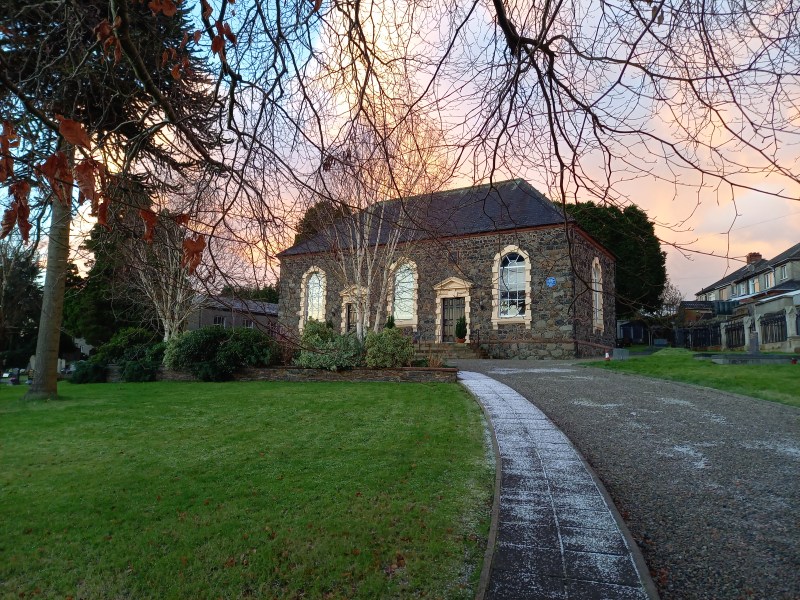
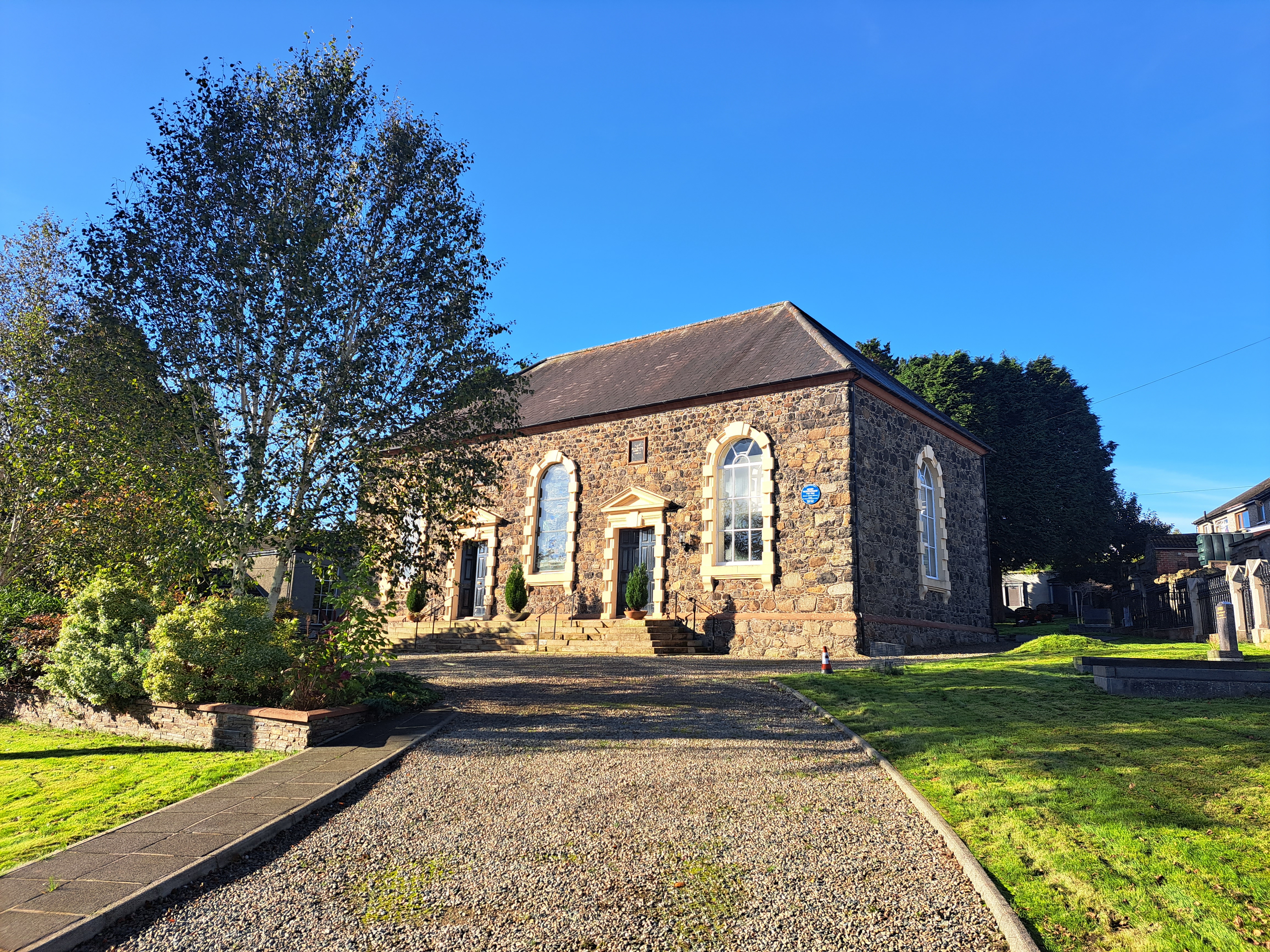
First Dunmurry, built in 1779, and possibly the first Church in Ireland to appear on film

Dunmurry Harvest

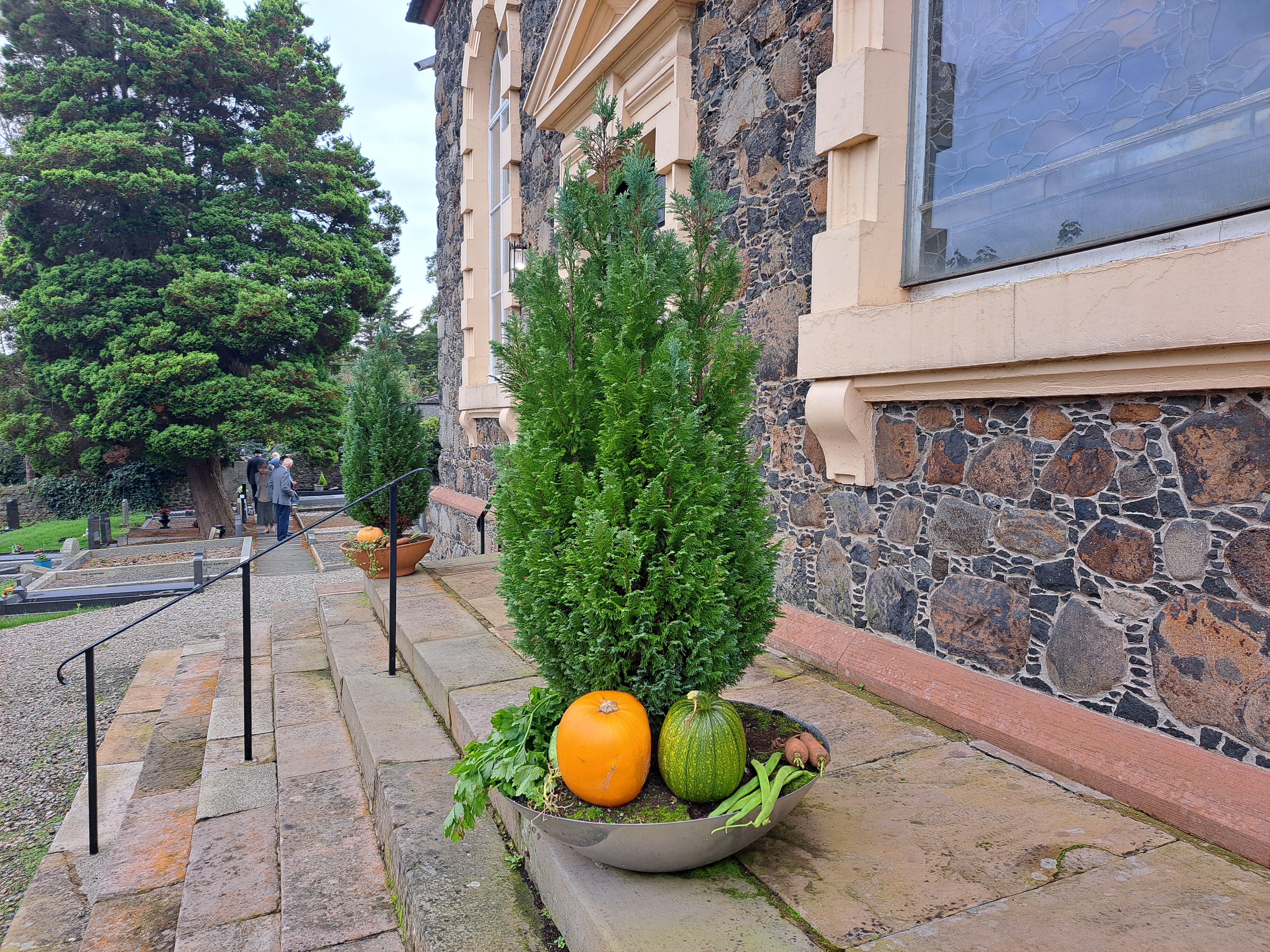
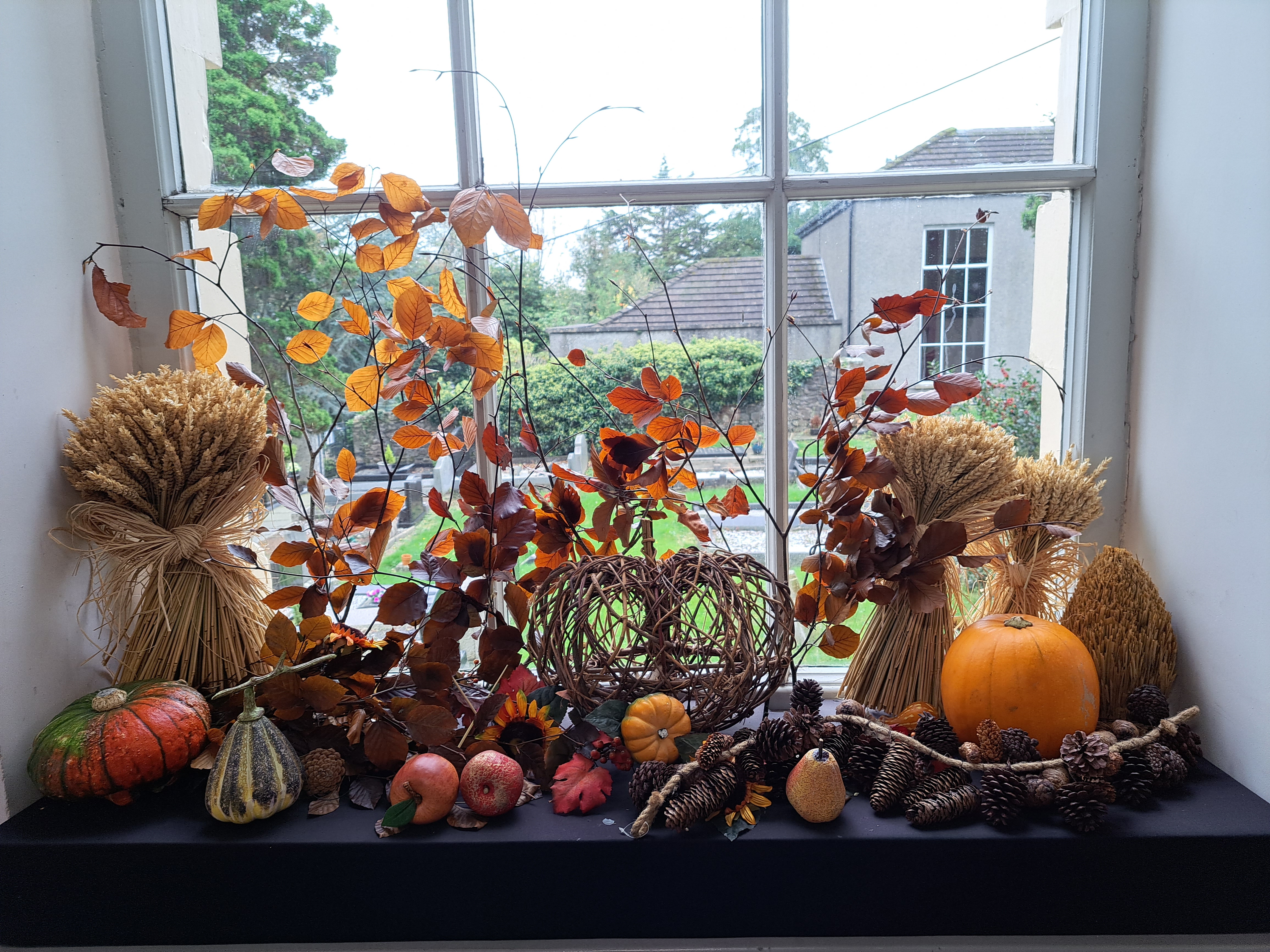
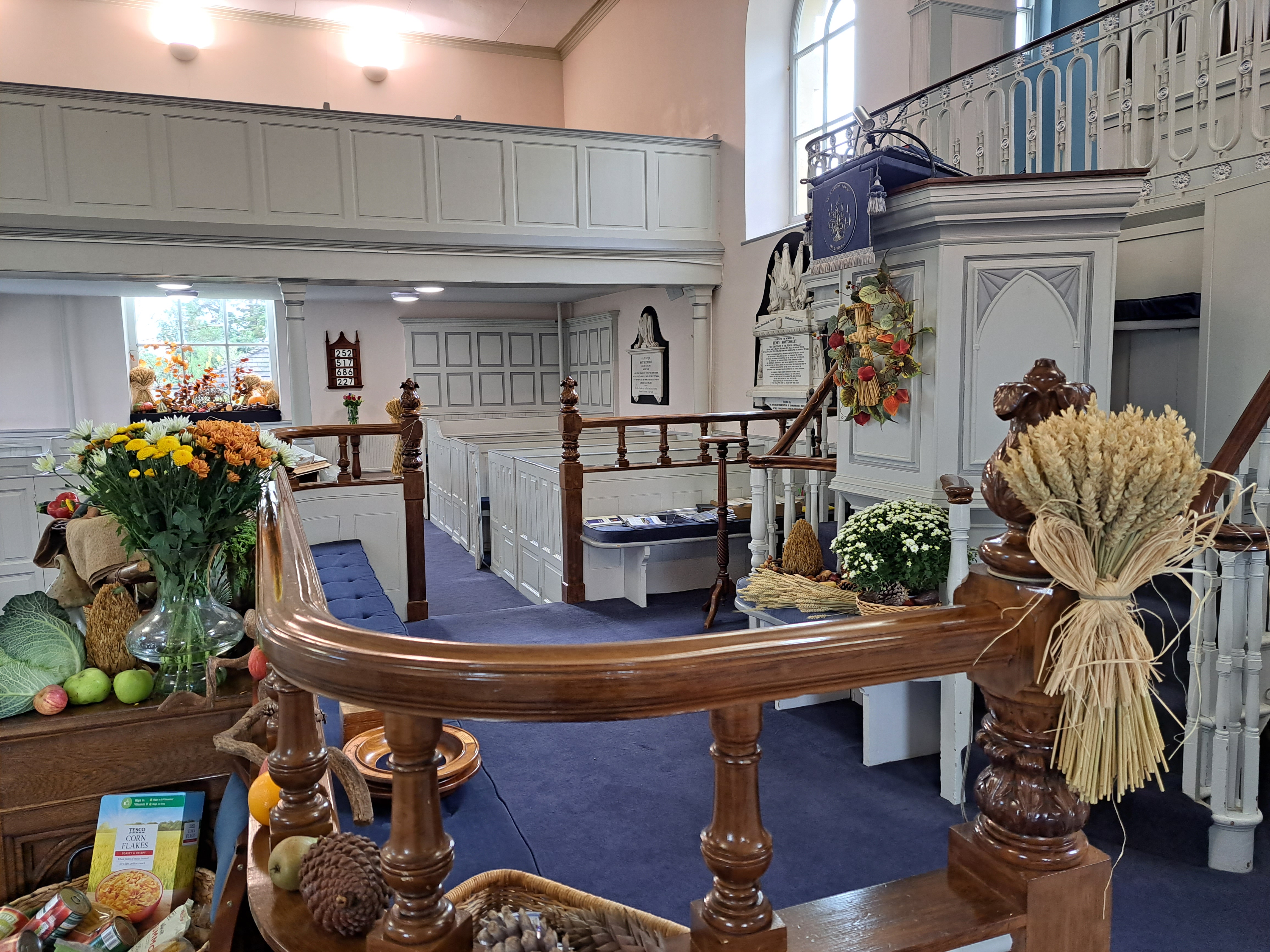
On Sunday, 8th October we celebrated our service of Harvest Thanksgiving at First Dunmurry. There was a good attendance and the church was beautifully decorated. The choir sang Great is thy faithfulness and the hymns included were Come, ye thankful people, come, All things bright and beautiful, Fountain of mercy, God of love and We plough the fields, and scatter.

The whole service can be viewed on the following video:

Click on the video to see the Harvest Service

The organist and choirmaster was Allen Yarr and the service was conducted by the minister, the Rev Dr David Steers.

All donations of tinned and dried food were given to the Foodbank and fruit and vegetables were donated to FareShare.

The Childe of Hale

Hale is a pretty little place close to Liverpool and now in Cheshire, although traditionally located in Lancashire. Without doubt though, its most famous son is John Middleton, the ‘Childe of Hale’.

Click on the video above to discover the story of the Childe of Hale

Visiting the village recently I made this video to record the story of John Middleton who was said to have been 9 feet 3 inches tall, so tall that at night his feet were said to protrude out of the windows of his house.

John Middleton’s house

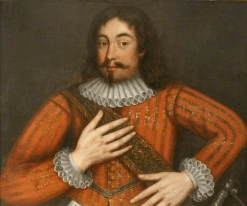
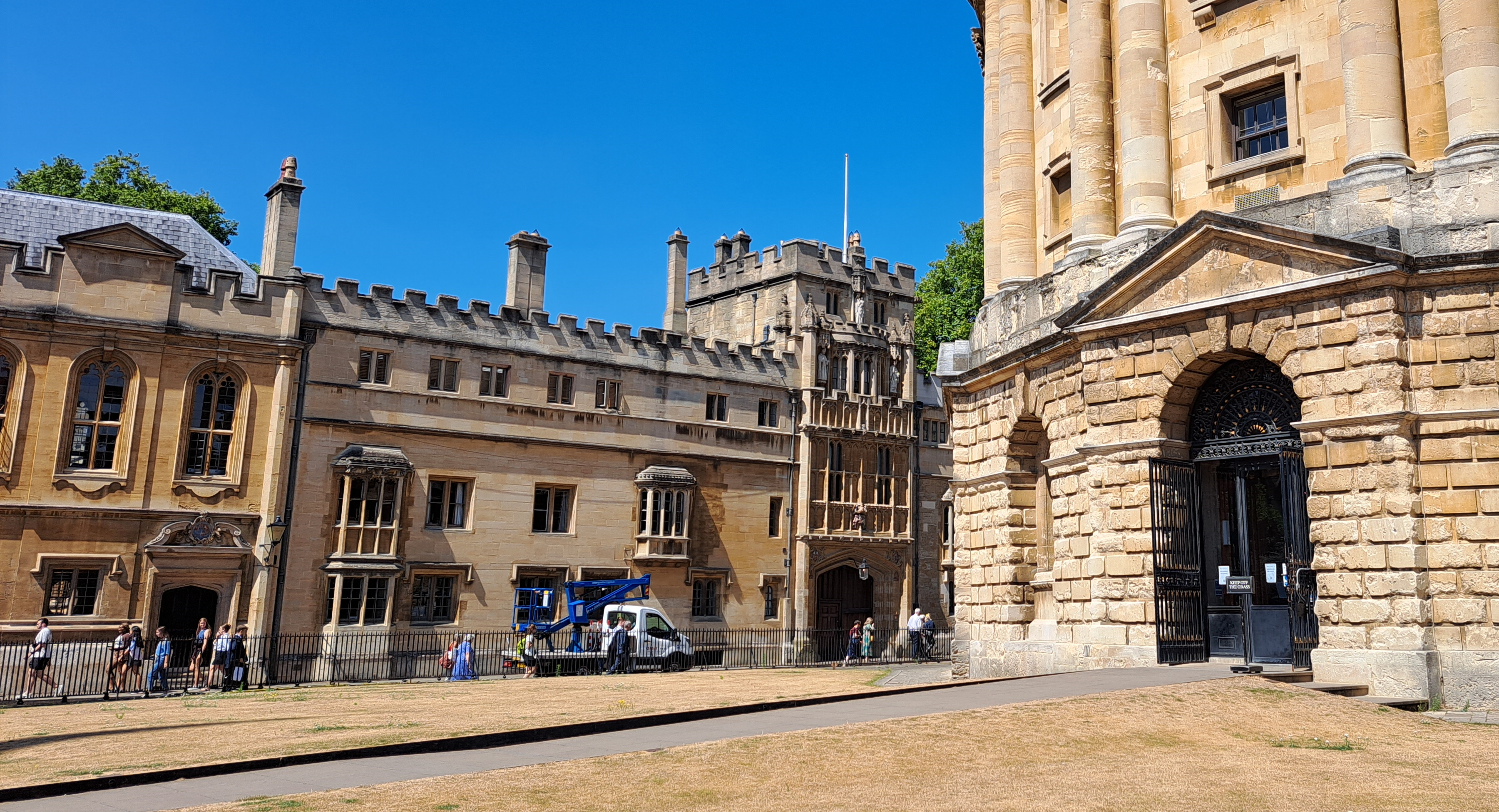
His life story is bound up with that of Sir Gilbert Ireland, whose body guard he was, and through whose connections he visited Brasenose College, Oxford and was presented to King James I in London.

Brasenose College, Oxford which has a number of portraits of John Middleton and still names the eights boat of the rowing club ‘The Childe of Hale’.
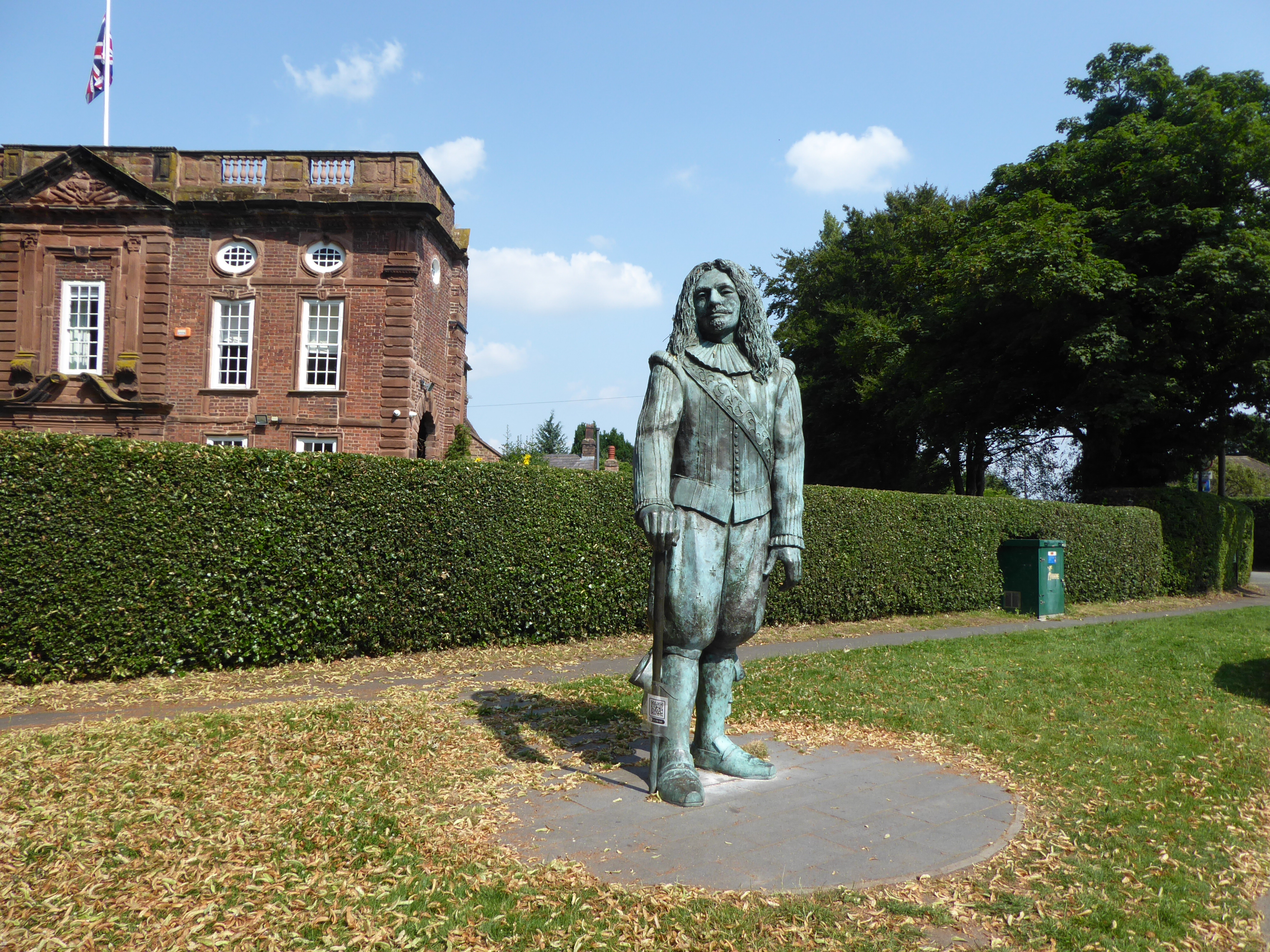
Modern statue of the Childe of Hale by Diane Gorvin

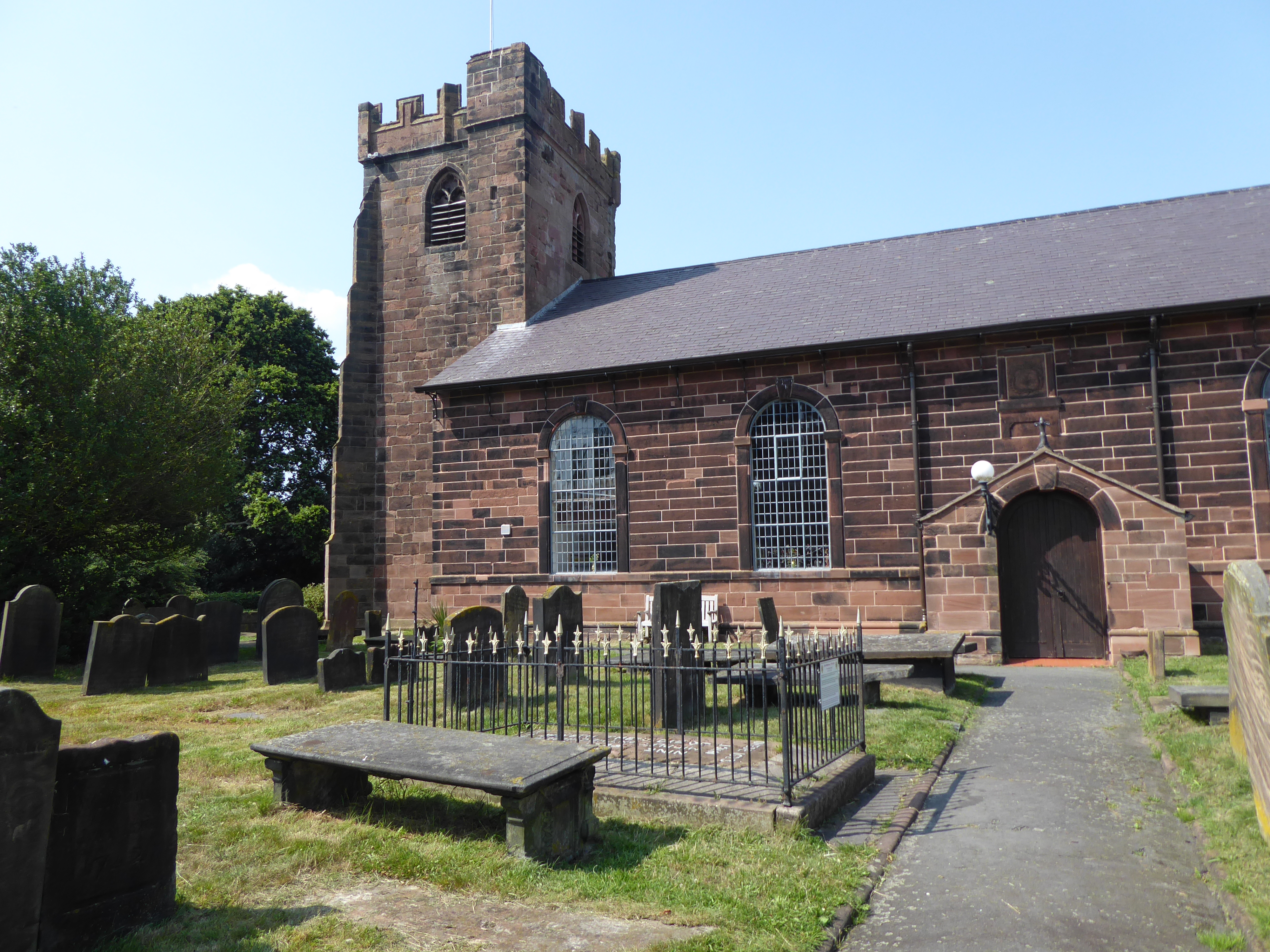
Although the village pub is named after him it used to be that there was a lot less visibly connected to him there, apart from his grave. Nowadays there is a plentiful supply of plaques and notices and a more than life size statue. But his grave is still the object of everyone’s visit to Hale. Strangely lettered the inscription reads, once you have worked it out, ‘Borne 1578 Dyede 1623 Here Lyeth the Bodie of John Middleton the Childe Nine Feet Three.’ Locally, in recent decades, he was always more associated with Speke Hall because his most famous portrait was long displayed there, but he had no direct connection with Speke Hall. The Ireland family, the local landowners whom he served, lived at the long demolished Hale Hall.

The grave of the Childe of Hale
Hale Hall, now demolished

Hale still has its Manor House, which once inspired John Betjeman to verse, and the local church is well worth seeing but you can hear the full story of the Childe of Hale by clicking on the video at the tope of this page.

The Manor House, Hale
St Mary’s Church, Hale with John Middleton’s grave in the foreground

Eustace Street meeting-house, Dublin

Until 1867 there were two Unitarian churches in Dublin. Both could trace their history back to at least the mid-seventeenth century and both had a succession of distinguished ministers and comprised congregations that had a significant role in Dublin life. After the restoration of 1660 the English Independent and Presbyterian clergy who had occupied the prime positions in religious life in Dublin during the Cromwellian interregnum were removed from their posts. This really was the start of the congregations of Wood Street, which later moved to Strand Street and ultimately to St Stephen’s Green, and New Row, which later built a new church on Eustace Street in 1728. In 1867 the congregations of Eustace Street and St Stephen’s Green amalgamated at St Stephen’s Green and have been a single congregation ever since. But the building on Eustace Street remained, for most of its history being used by Brindley’s the printers, and it is still there today, although today it is really little more than the façade.

The history of this building deserves to be better known and properly understood. I first went to see it in the early 1990s when it was empty but looked intact and was still recognisable as an old meeting-house. I took this picture which was published in the Inquirer at the time.

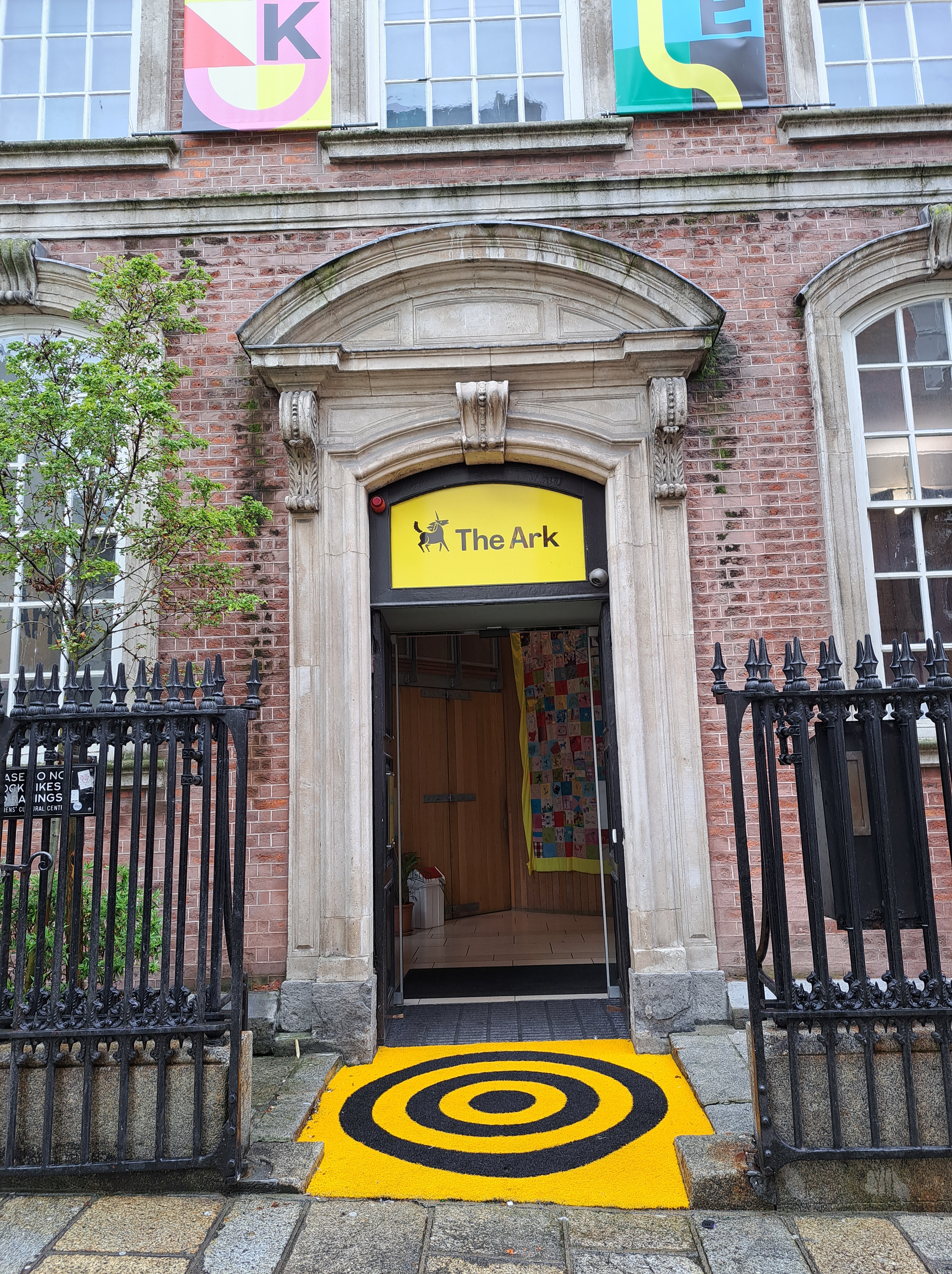
Within a few years, however, the whole area around it in Temple Bar underwent massive refurbishment and changed from a run down backwater to a busy cultural quarter. In about 1995 the building was turned into the Ark, a children’s theatre space.

The meeting-house today

Undoubtedly this is a good use for the building although it is a shame to think that so much of the original building had to be demolished to allow it to happen. Only the façade and the two side walls remain from the building of 1728. All the rendering from the old building has been removed to expose the brickwork both inside and out. But it is still a very impressive building.

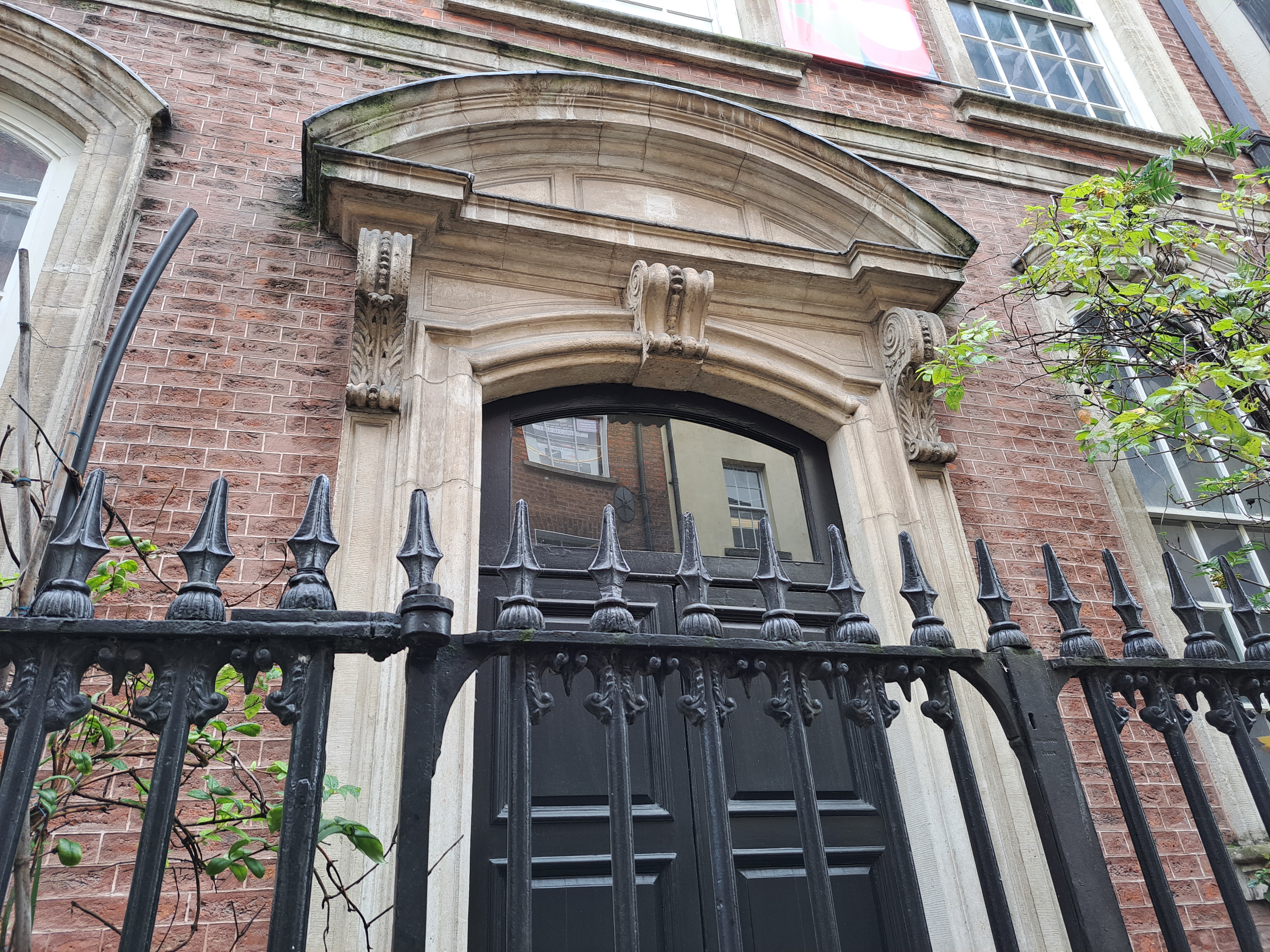
One of the two entrances to the building

Christine Casey, in her book Dublin in the Buildings of Ireland series, says of the building: ‘The C18 facade is a handsome essay in retardataire Carolean classicism…A red-brick two-storey six-bay front with entrances in bays two and five and large segment-headed sash windows.’ It’s always good to see a bit of retardataire Carolean classicism. But it is a very fine frontage and even if the rest of the building is gone, it remains as an impressive testimony to the people who built the church.

Not everyone approved of it when it was built. According to Thomas Witherow a Quaker remarked (there was also a Quaker meeting-house on the same street) that ‘When there is so much vanity without, there cannot be much religion within’.

Visiting Eustace Street over the summer I took some pictures of the interior. We can see the bare brickwork which once echoed to the sound of the sermons of such luminaries as John Leland and James Martineau.

Upstairs window brickwork
Looking through one of the downstairs windows

Apart from the windows there is nothing remaining that tells us how the interior of Eustace Street looked. However, about 110 years ago the Non-Subscribing Presbyterian magazine published two engravings of the interior without giving any source for these interesting views. The first showed the position of the pulpit.

The Eustace Street pulpit as it may have looked
The foyer of the building today

The windows that look on to Eustace Street are topped by a gentle arch but according to the Non-Subscribing Presbyterian images the now demolished windows at the back of the building were flat topped. At the back of the church there was a gallery which housed a clock and the organ.

The organ and gallery of Eustace Street as they looked before 1863

When Eustace Street was built times were difficult for Dissenters, they could frequently be the target of violent attacks, and from the earliest days there was a wall in front of the meeting-house. At some point before 1835 this was changed to the low wall and attractive railings which still stand there to this day. But neither the walls nor the railings were of much use when James Martineau added his name to a declaration in favour of Catholic emancipation which resulted in the windows being smashed by a mob.

The wall and railings today

It is good that this much has survived and that the space is obviously put to such good use. However, there has not always been such a clear understanding of the historical place of the meeting-house. Not long after the Ark was opened in 1995 members of Abbey Presbyterian Church were invited to hold a special service on the premises complete with baptisms of children as a way of connecting with the original history. This was a nice thing to do but rather misunderstood the nature of the history of the premises.

Inside the foyer today

James Martineau was ordained in this meeting-house on 26 October 1828. Back in 1992 I contributed an article to the Inquirer entitled ‘Martineau’s First Ministry’. If you would like to read it click on this link: Martineau’s First Ministry