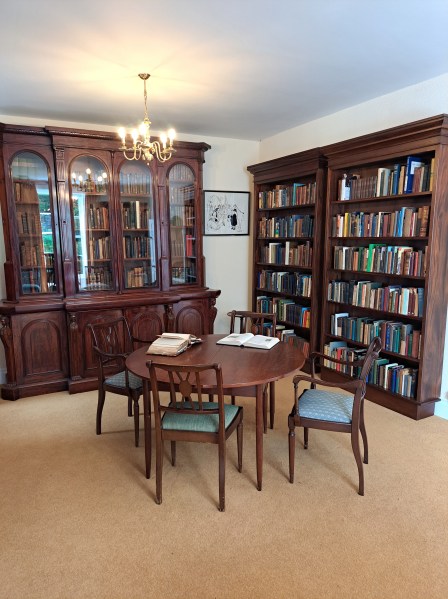
In the latest of our videos exploring the Very Rev William McMillan Library at Dunmurry we take a (brief) look at the eight volumes of the Journal of John Wesley. In particular we look at his visits to Belfast and his relationship with the Non-Subscribing Presbyterian churches in Belfast.
Exploring the Library at Dunmurry, episode 4. Click on the video above
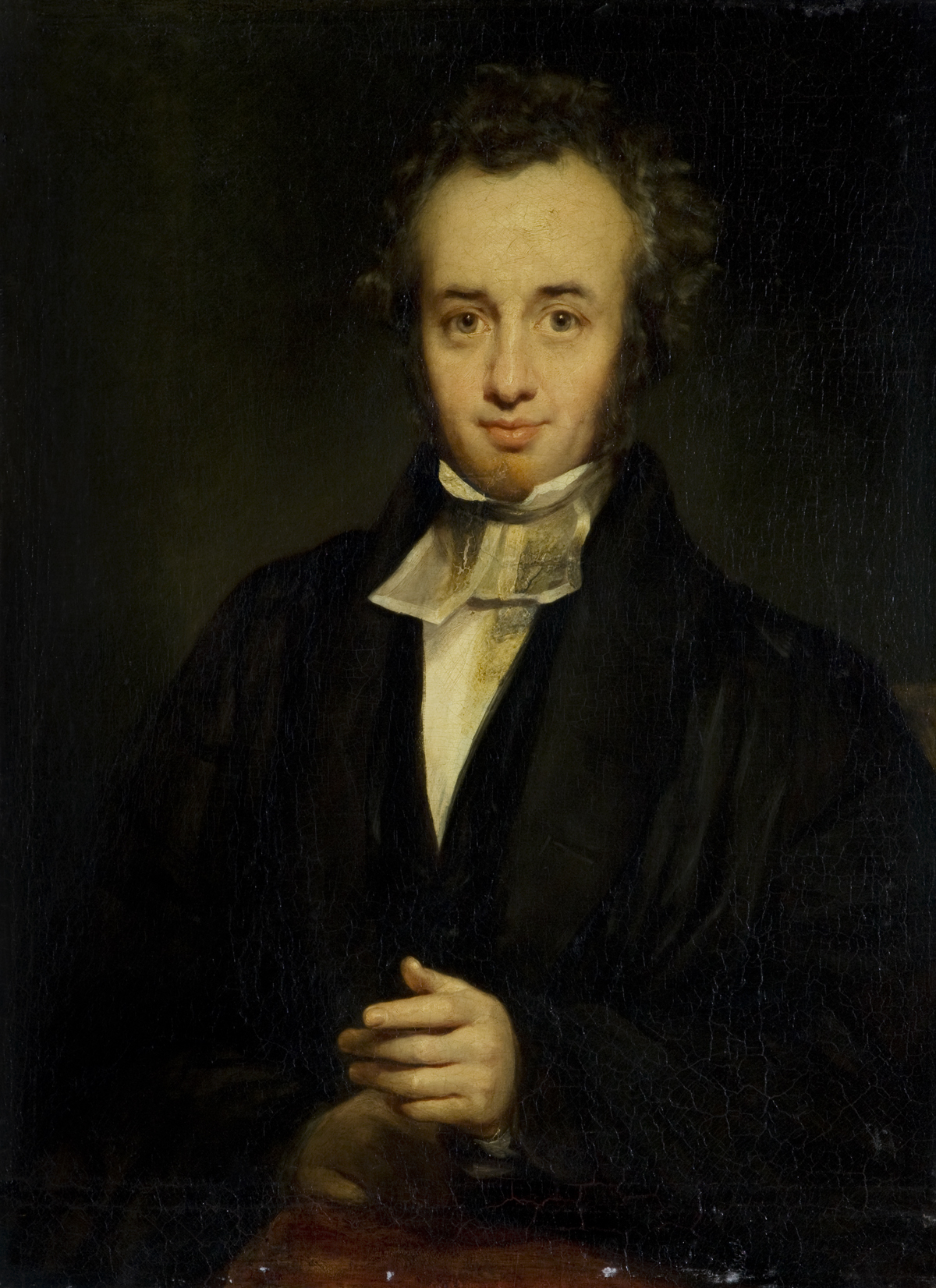
John Wesley visited Belfast 11 times in the course of his career, always preaching in the town, sometimes in the market-house, sometimes in the open air. Often it seems he visited at times of cold, windy or wet weather. Only once did he preach in a church and the only church to ever be open to him was First Presbyterian Church, Rosemary Street. But this visit was mired in controversy and was not repeated. I am grateful to Des McKeown of First Church who recently gave me a copy of a letter to The Northern Whig dated 3 December 1873 written by the minister of First Church, the Rev John Scott Porter. This features in the video and it is interesting to see his opinion of Wesley’s visit almost one hundred years previously.
A youthful John Scott Porter
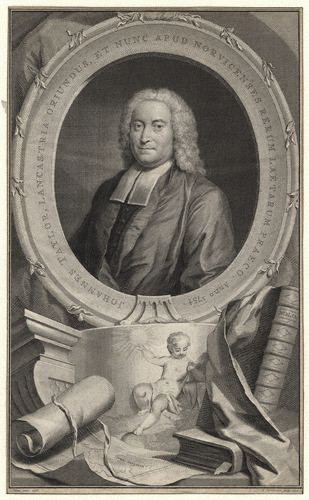
But another feature of Wesley’s Journal is his identification of followers of Dr John Taylor in the crowds that came to hear him in Belfast. John Taylor was minister of the Octagon Chapel in Norwich and the author of the The Scripture Doctrine of Original Sin. What are the implications of this in Belfast in the 1760s? We try to unpack the meaning of this for John Wesley’s reception in Belfast in the video.
This book (first published, I now realise, back in 2014!) has just been reprinted and, the original print run having sold out, is once again available. The publishers and printers have done an excellent job, it’s an attractive book, this time published in memory of Bernard Cliffe, Len Mooney and Rev Daphne Roberts, three contributors who have died since the original publication.
The full list of contributors and subjects is as follows:
Introduction, David Steers; Memorials of the Ancient Chapel of Toxteth Park, Bernard Cliffe; Jeremiah Horrocks 1618 – 1641, Bernard Cliffe; William Roscoe 1753 – 1831, David Steers; A Short History of the Rathbone Family, Annette Butler; The Unitarian Family of George Holt, Bernard Cliffe; Noah Jones 1801 – 1861, Philip Waldron; James Martineau 1805 – 1900, Len W. Mooney; Joseph Blanco White 1775 – 1841, David Steers; Kitty Wilkinson 1786 – 1860, Daphne Roberts; John Johns 1801 – 1847, David Steers; William Henry Channing 1810 – 1884, Richard Merritt; Charles Pierre Melly 1829 – 1888, John Keggen; Sir Henry Tate 1819 – 1899, Richard Merritt; Sir John Brunner 1842 – 1919, Len W. Mooney; Lawrence Redfern 1888 – 1967, Elizabeth Alley; Sir Adrian Boult 1889 – 1983, Richard Merritt; The Visitors’ Book of the Ancient Chapel, Bernard Cliffe.
Published by the Merseyside District Missionary Association the cover design is by Alison Steers and the book contains over 50 illustrations, many published here for the first time.
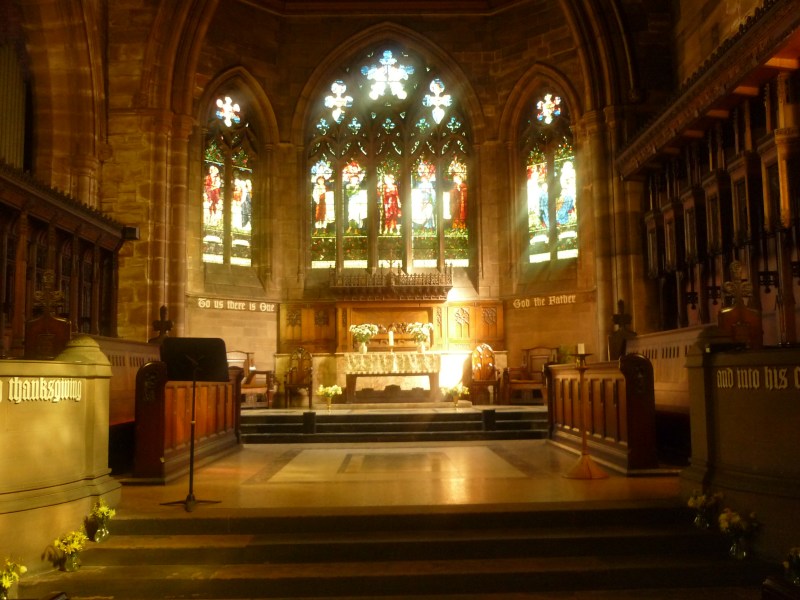
To accompany the republication we have produced a short video which incorporates a trip around Ullet Road Church which can be seen here:
Click on the video for a tour of Ullet Road Church and details of the book
The cover of the book
Liverpool Unitarians: Faith and Action Essays exploring the lives and contributions to society of notable figures in Liverpool Unitarian history
Edited by Daphne Roberts and David Steers
Published by Merseyside and District Missionary Association
ISBN: 978-0-9929031-0-7
Brand new edition for 2024
Price £10 (plus £2 post and packing). Available from Rev Phil Waldron, Ullet Road Church, 57 Ullet Road, Sefton Park, Liverpool. L17 2AA.
In the Introduction I say:
This book is not intended to be hagiography but it does try to outline how one group of people – members of a particular faith community with deep historical roots but with an aversion to fixed creeds – were inspired to serve their fellows in different ways. Their legacy can be seen all over the city – in its parks, in its monuments, in the university, in hospitals, in education, in art galleries and museums – and it exists in the long and continuing struggle to create a society that gives equality and opportunity to all its citizens. It is not meant to be an exhaustive account of all the eminent members of the churches and chapels in the region. Readers will notice that the names mentioned are part of wider connections of family and business which includes many others who could be included. There are other figures who could be the subject of such biographical accounts. But this is a selection of some of those who have followed the call of faith to be of service to wider society.