The Precentor’s Grave at Warrenpoint

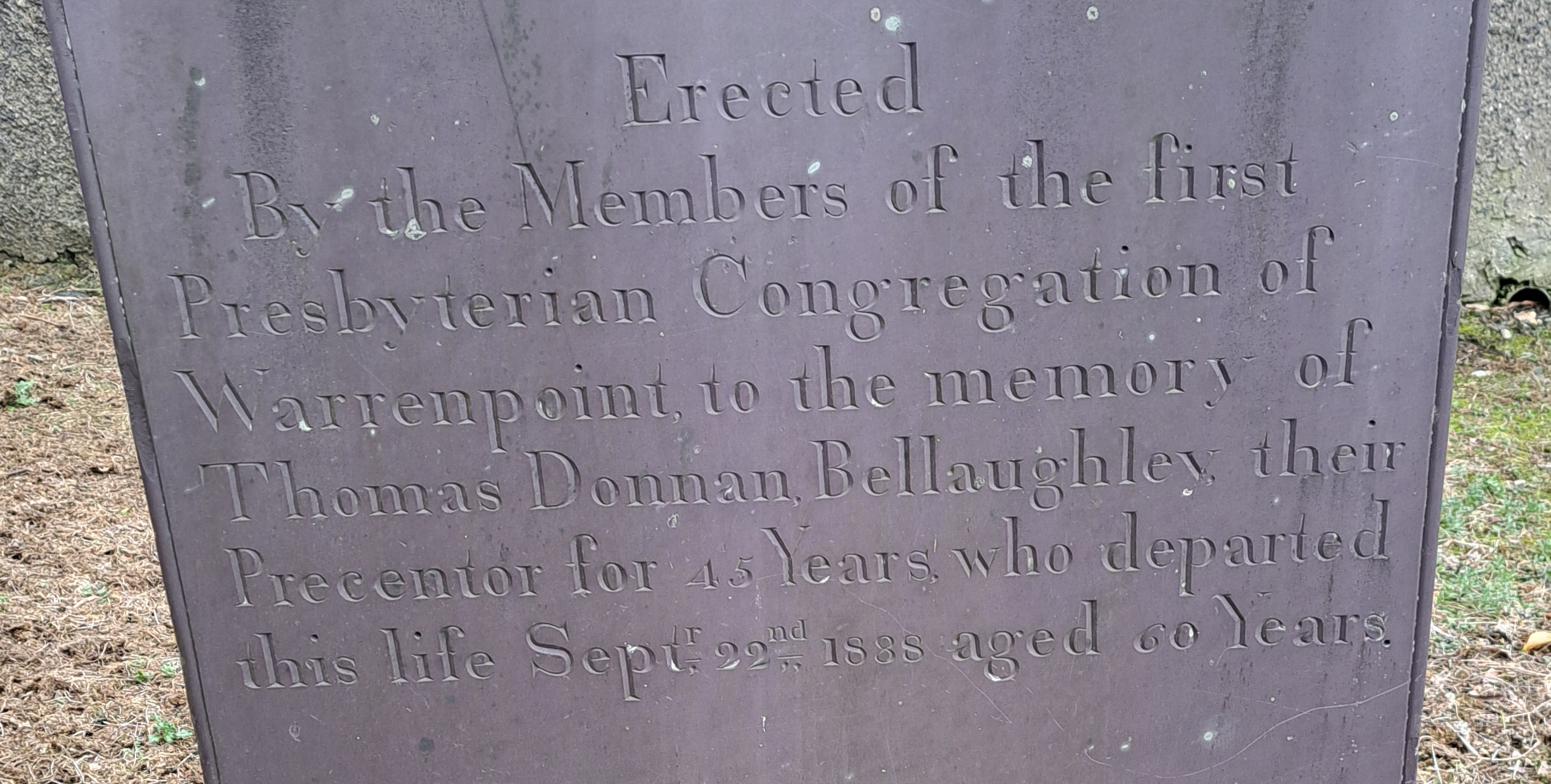
On a recent visit to Warrenpoint I noticed this gravestone and took a picture. Carved, it would appear, on a sheet of slate, the inscription is sharp and clear and I initially assumed it would be older than the date actually indicated. I didn’t have much time to study it but I am glad I took a picture, it is a fascinating artefact, a tribute to a key member of this congregation for almost half a century.
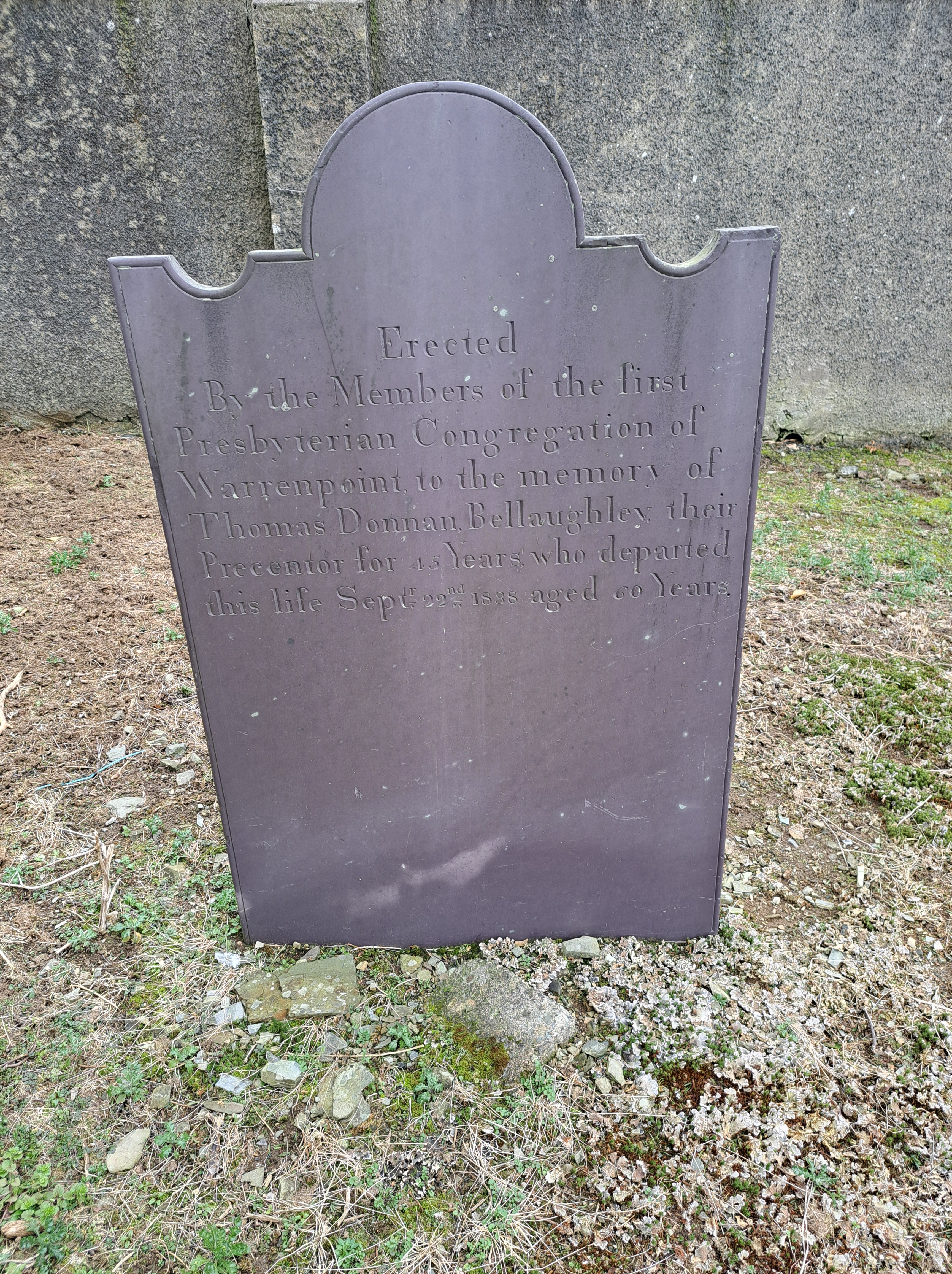
Thomas Donnan, of Bellaughley, was the Precentor of the Warrenpoint Non-Subscribing Presbyterian congregation for 45 years up to his death in 1888. He was 60 when he died so he must have been just 15 when he commenced this work in 1843.

It’s an intriguing gravestone because while it clearly tells of the high esteem in which Thomas Donnan was held and the long period of time he faithfully led the congregation in their singing it opens up so many more questions. Who was he? Did he have a family? Did he have any formal training in music? Did he have any other responsibilities or source of income?
Although a Non-Subscribing Presbyterian congregation the First Presbyterian congregation of Warrenpoint must have hung on to their traditional worship forms in singing by being led by the Precentor for a long time, perhaps because Thomas Donnan provided such acceptable leadership to them in their music.

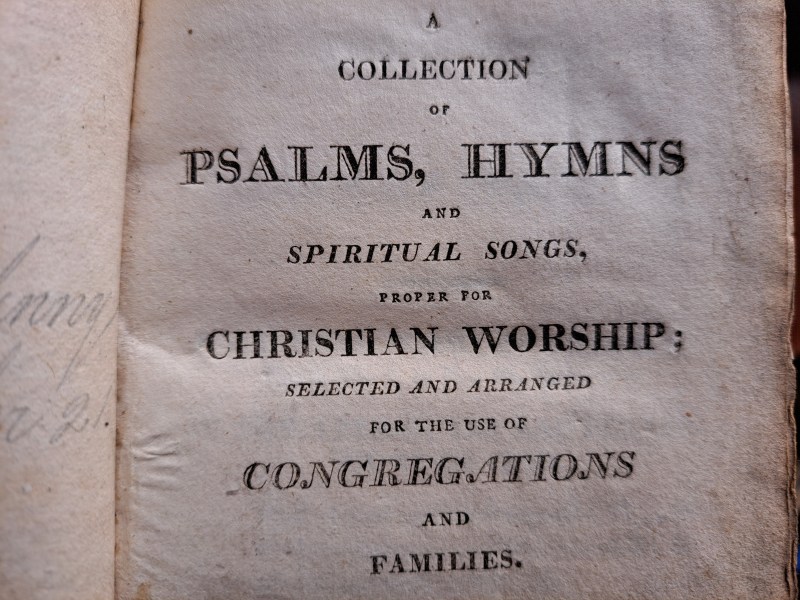
It’s interesting that close by in Newry the New Light minister the Rev A.G. Malcolm produced one of the first hymnbooks in use in any Presbyterian church in Ireland in 1811 with his Collection of Psalms, Hymns and Spiritual Songs proper for Christian Worship; selected and arranged for the use of Congregations and Families. But this doesn’t seem to have been used in Warrenpoint.

In her tercentenary booklet of 2007 Across the Narrow Water (the congregation of Warrenpoint was originally known as Narrow Water) Elaine Crozier records that in 1841 the committee appointed ‘a teacher to teach the choir’ at a salary of £3 per year. Was this the prelude to the appointment of Thomas Donnan? Undoubtedly connected with his eventual appointment was a decision in 1842 that ‘the new collection of psalms compiled by the Remonstrant Ministry be put into the hands of the families belonging to the church.’ This would be the 1841 publication Psalms, Paraphrases, and Hymns, for Christian Worship published in Belfast by the Bible Christian (the main Non-Subscribing Presbyterian journal), Rosemary Street. It must have been this book that provided the basis for congregational singing in Warrenpoint led by Thomas Donnan although the book was gradually expanded as the century wore on with hymns from other sources. All this took place during the long and effective ministry at Warrenpoint from 1836 to 1867 of the Rev Samuel Moore. Born in Rademon and educated at Glasgow University he enjoyed some success as minister of Warrenpoint although the congregation faced the heavy difficulties of the Famine during his ministry.

From 1843 onwards, though, Thomas Donnan was leading the praise. If they were using Psalms, Paraphrases, and Hymns, for Christian Worship they had already taken a step away from using a traditional Psalter and this does, perhaps, suggest that the Precentor was also leading a choir. But there at the centre of their congregational life was this young man appointed at the age of just 15 and leading the congregation’s worship for the next 45 years to their evident satisfaction
The Antrim Meeting of 1626 and Rowel Friers

A recent post looked at the two wonderful Rowel Friers cartoons which hang on the wall of the Library in Dunmurry, as well as the video which explains the story about them. As the post explains these pictures were commissioned by the Rev William McMillan for his impressive Exhibition illustrating the history of the Presbytery of Antrim held in January 1976.

It must have been an attractive display in the McCleery Hall, the Rev Mac sourced portraits, books, communion plate, swords and pikes from the ’98 Rebellion, sculptures by Rosamond Praegar, commmunion tokens, copper collecting pans and all sorts of material from all over Northern Ireland. There was even a mould for making eighteenth-century communion tokens from Ballycarry and – something I had not previously heard of – an eighteenth-century family token box, described as ‘a wooden box holding a small leadbox in which the token was taken to the meeting house.’

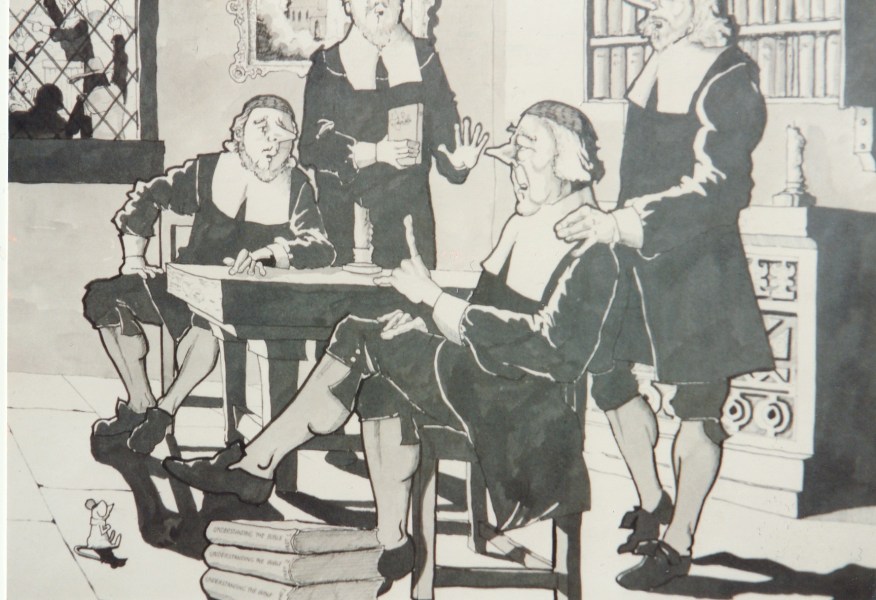
One feature of the Exhibition for the 250th anniversary of the Presbytery of Antrim is that there were in fact three, not two, Rowel Friers cartoons included. Unfortunately one of these has been missing for fifty years. However, we have now discovered a photograph of the lost picture and this features in our latest video:

Click on the video to see the video about the 1626 Antrim Meeting

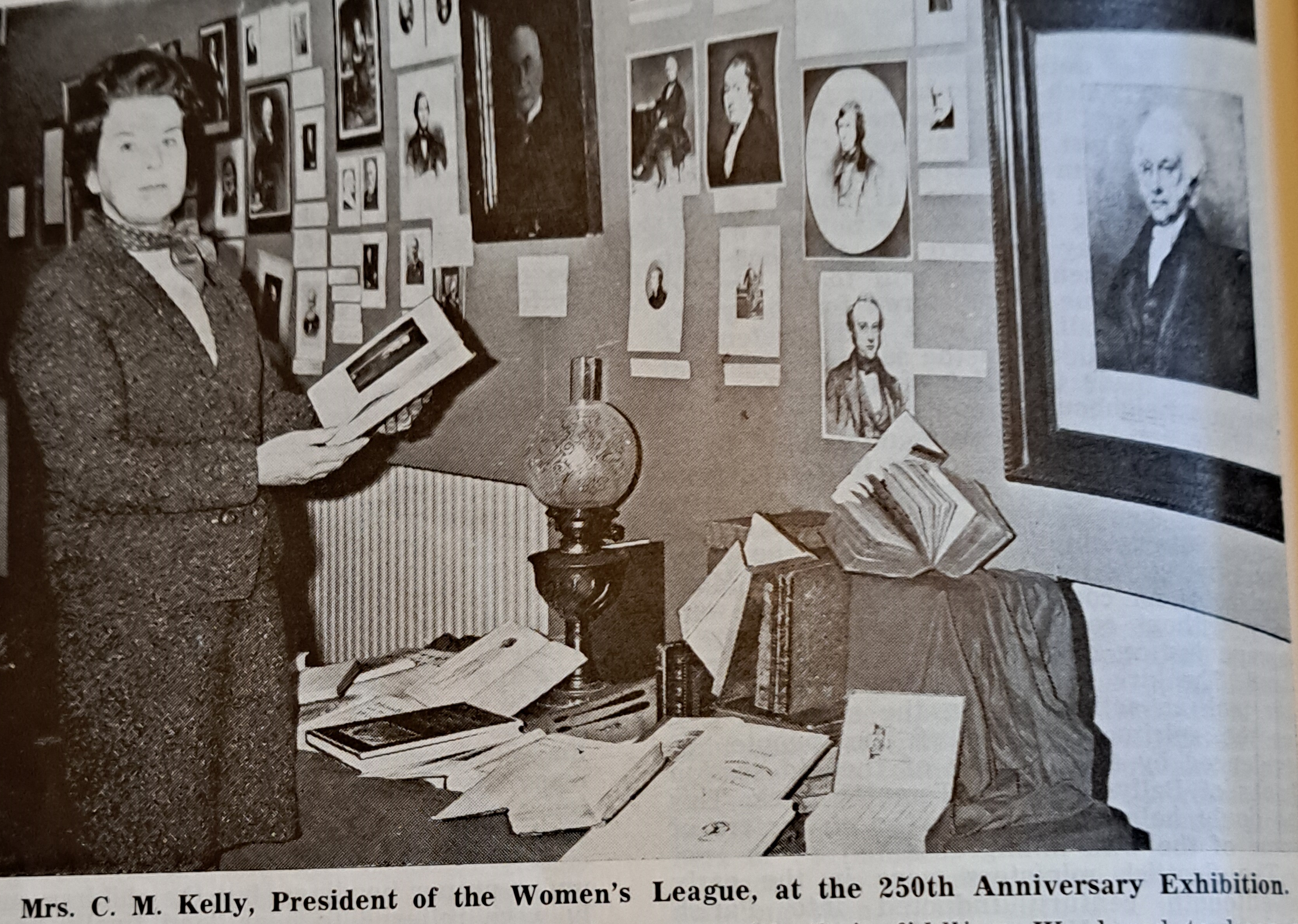
The Exhibition was held in January 1976 and covered both the creation of the Presbytery of Antrim in 1725 and its separation from the Synod of Ulster. It was also intended to cover the anniversary of the creation in 1626 of the original Antrim Meeting. The Exhibition must have been fascinating but unfortunately in that pre-digital age there were very few photographs taken. There is only one that shows the Exhibition in the Non-Subscribing Presbyterian magazine at the time:

Betty Kelly at the Exhibition in the McCleery Hall in 1976

There were a large number of dignitaries invited to the dinner that followed the Exhibition, representatives of all denominations, figures in public life, historians and international figures. Many of the speeches are recorded in the Non-Subscribing Presbyterian magazine and the Rev John Radcliffe, clerk of the Synod, made reference to the third Rowel Friers cartoon:

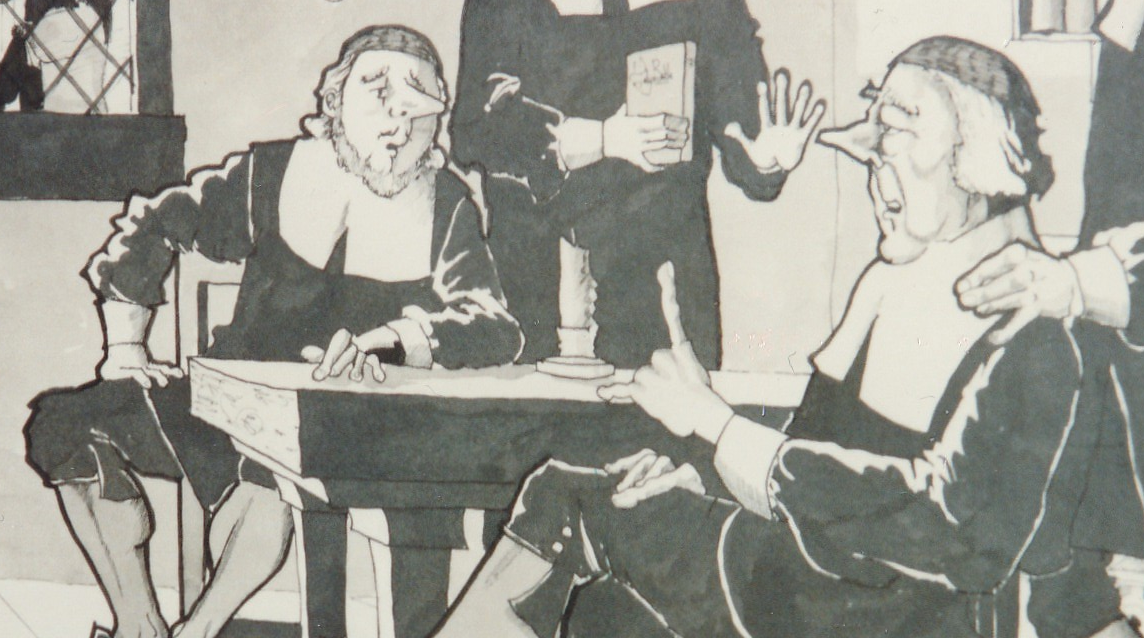
‘There are two extreme forms of the expression of religious sentiment. There is one that is very well expressed in the person here described: “His mind and voice had precisely the fluid quality of some clear, subtle liquid: one felt it could flow around anything and overcome nothing.” That is the extreme of presenting the Christian faith in such delightfully attractive style, with such a fluency of language, with such a vividness of imagery, that it will flow around anything and overcome nothing. At the other extreme there is another sort of Christianity, corybantic Christianity. There is a cartoon on the wall there, a drawing of four rather austere clerics, and the date is 1626. Outside you see somebody rousing a rabble – not unheard of in these days. The four rather serious looking clerics are trying to bring a bit of reason into it all; and the man outside is an exponent of corybantic Christianity, the Christianity that is the direct oppposite of that I have been describing tonight – and appeals all the time to the emotions in which people get carried away, and leads in the end to a very dangerous, in fact terrible, fanaticism – the very negation of the Christian spirit.’

Detail from the photograph

It is a fascinating footnote to our previous post and video about our Rowel Friers cartoons, another part of the story that takes us back even further in time, in this case to 1626.

Mountpottinger 150th Anniversary

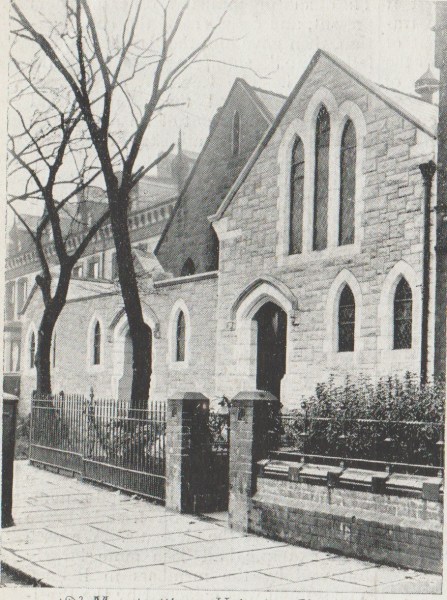
I’ve blogged before about Mountpottinger – most notably here and here where more details about its history can be seen – it is an interesting building on a prominent site in that part of Belfast and the congregation has a very distinctive history. Today the building is leased to the Bright Umbrella Drama Company who are turning the old school hall into the Studio Theatre and the church itself into the Sanctuary Theatre. But the congregation still has a place on the premises and the exact date of the anniversary of the opening of the building – 3rd January 2025 – was the occasion for this remarkable celebration of the 150 years of Mountpottinger.

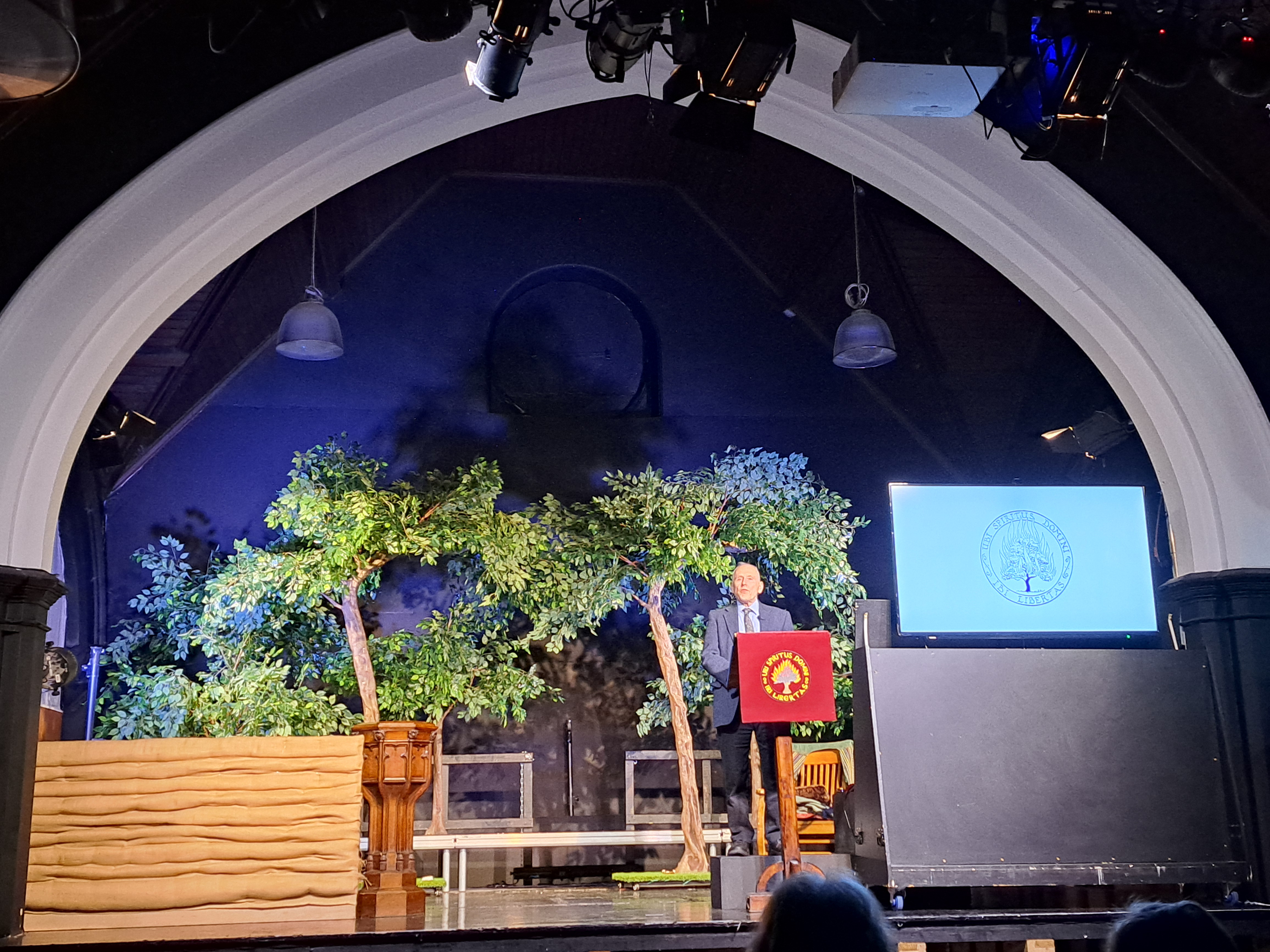
Adrian Moir introduces the evening

A lot of credit must go to Adrian Moir, the church secretary and former ‘Warden of the Fabrique’, as the Very Rev Charlie Kelly once termed him, who wrote and narrated this excellent celebration of the life of the congregation. It was a very positive collaboration between the church and the Drama Company which brought the history of the church to life covering three themes:

Foundation and Hope

Tragedy and Remembrance

Adapting to the times and a glimpse of the future

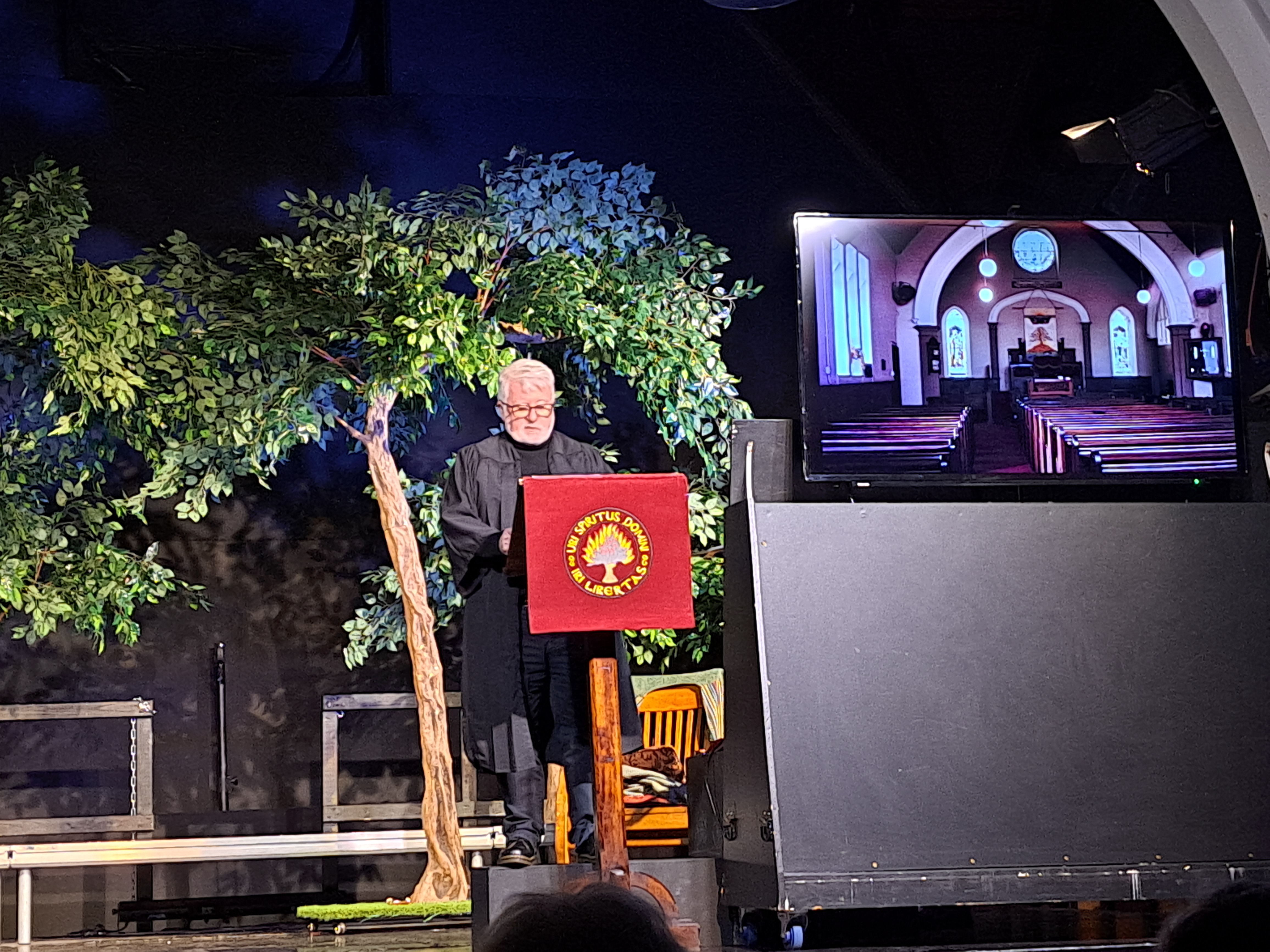
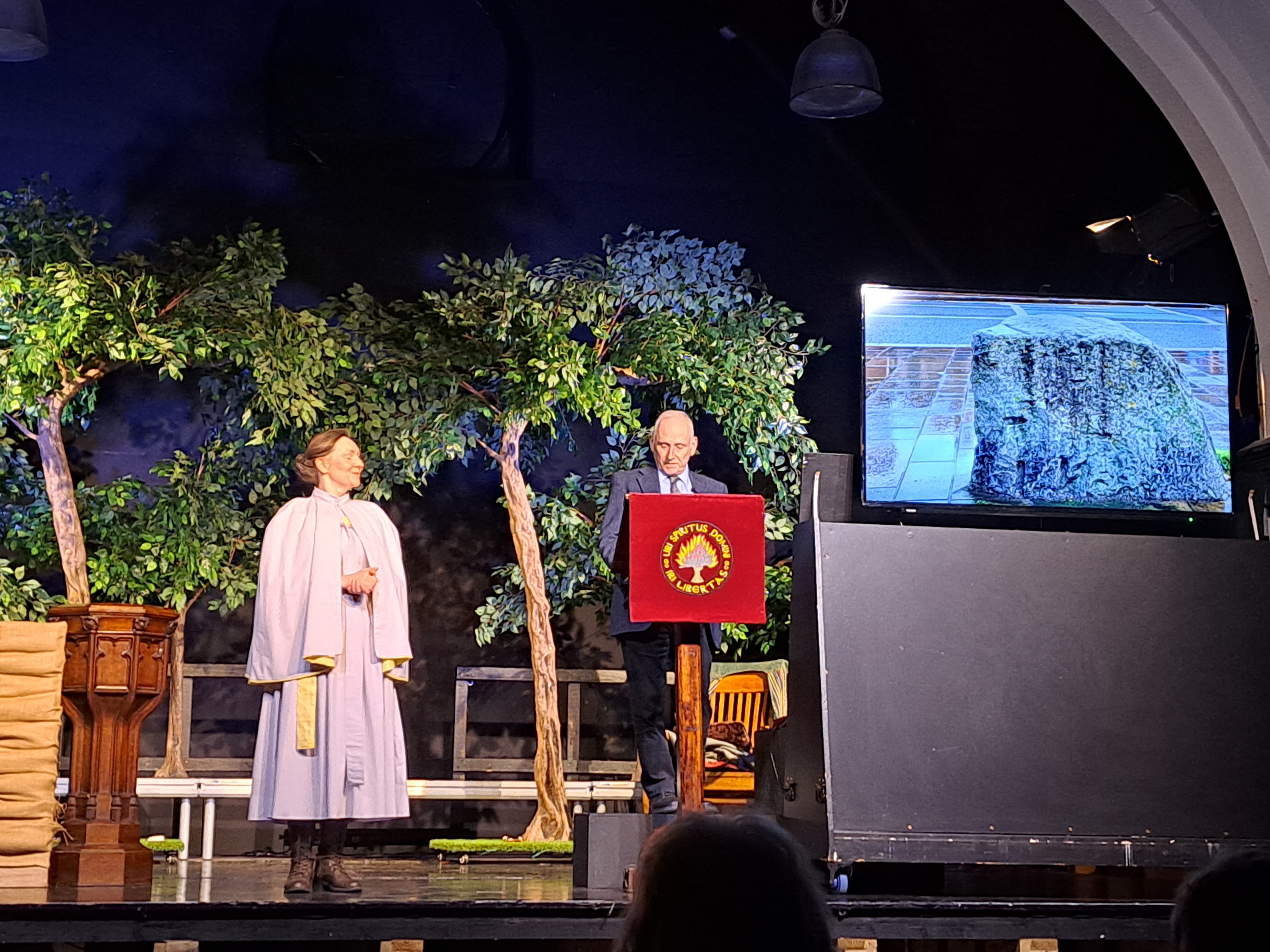
Trevor Gill delivers the Rev David Maginnis’s speech at the opening of the building in 1875. David Maginnis was a controversial but effective minister at York Street who came back to Belfast from Stourbridge to participate in the opening ceremony

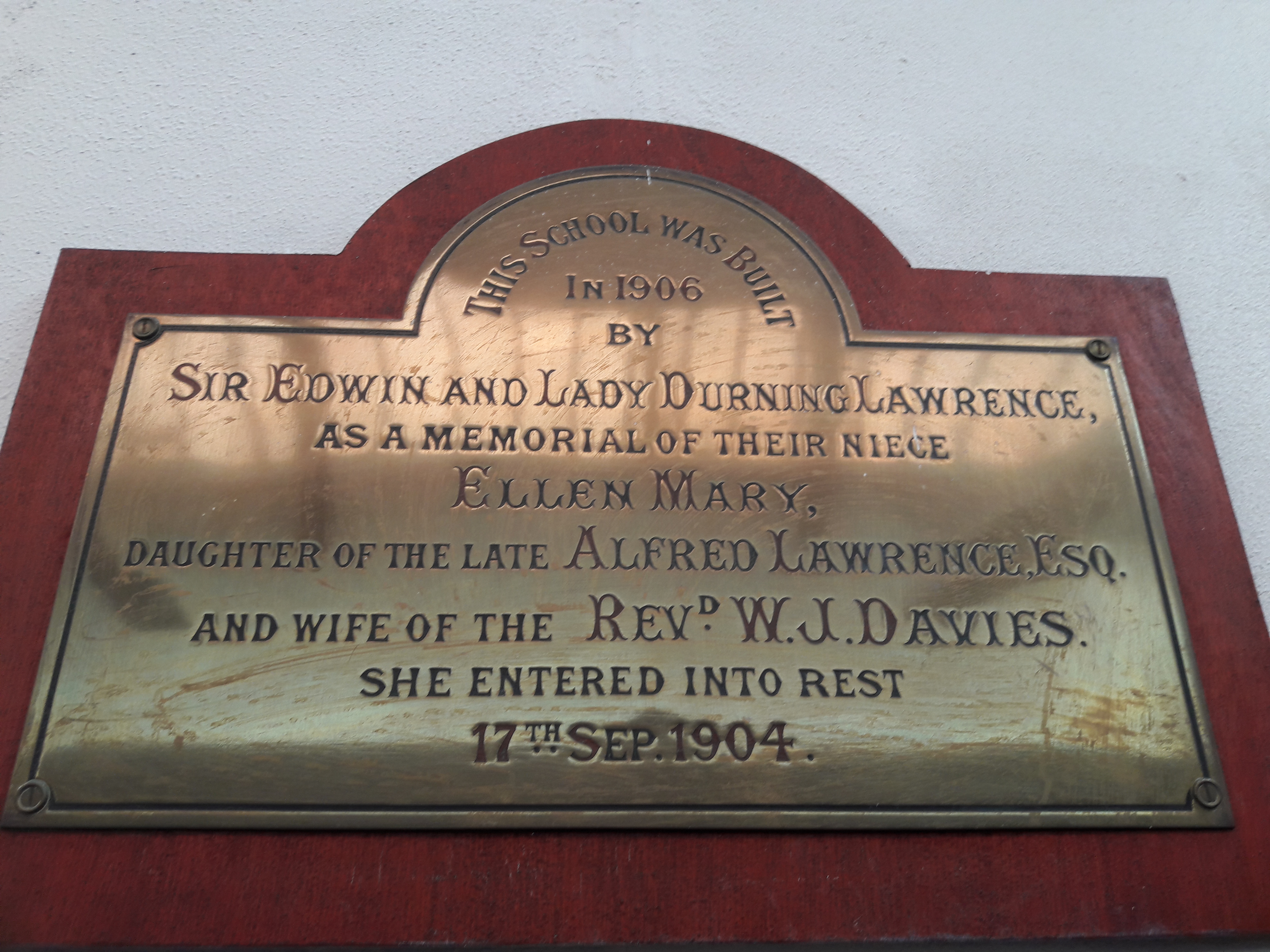
The evening was interesting, engaging and witty and also very moving as it looked at the story of Ellen Mary Davies, the wife of the Rev William Jenkin Davies, who died tragically young and in whose memory the school room was built.

Memorial in the School Room

Lindsay Charrington playing the role of Ellen Mary Davies

There was further tragedy with the loss of members of the church in the First World War, including Captain James Samuel Davidson in 1916, on the first day of the battle of the Somme. Also remembered on the evening was church member Sydney Agnew who was killed during the ‘Troubles’ in 1971 to prevent him giving evidence at a trial. It was both fitting and touching that members of Sydney’s family were there to lay a wreath in his memory.

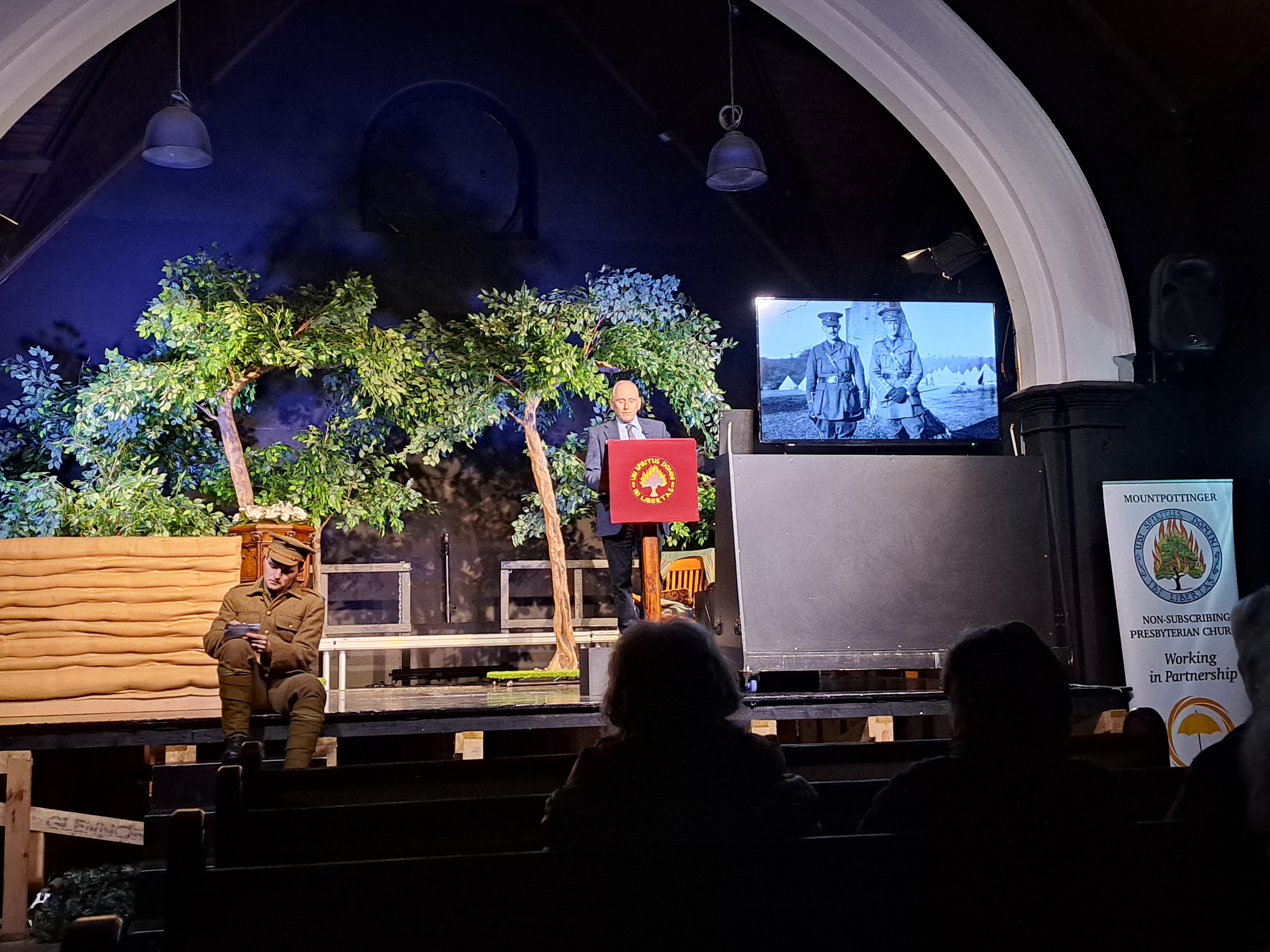
Glenn McGivern writing home from the front as Captain J.S. Davidson

But the whole evening was very impressive, a fitting tribute to 150 years of work and witness which now has the opportunity to be part of a brave new venture as a community hub working in the arts and in drama in the Mountpottinger area.

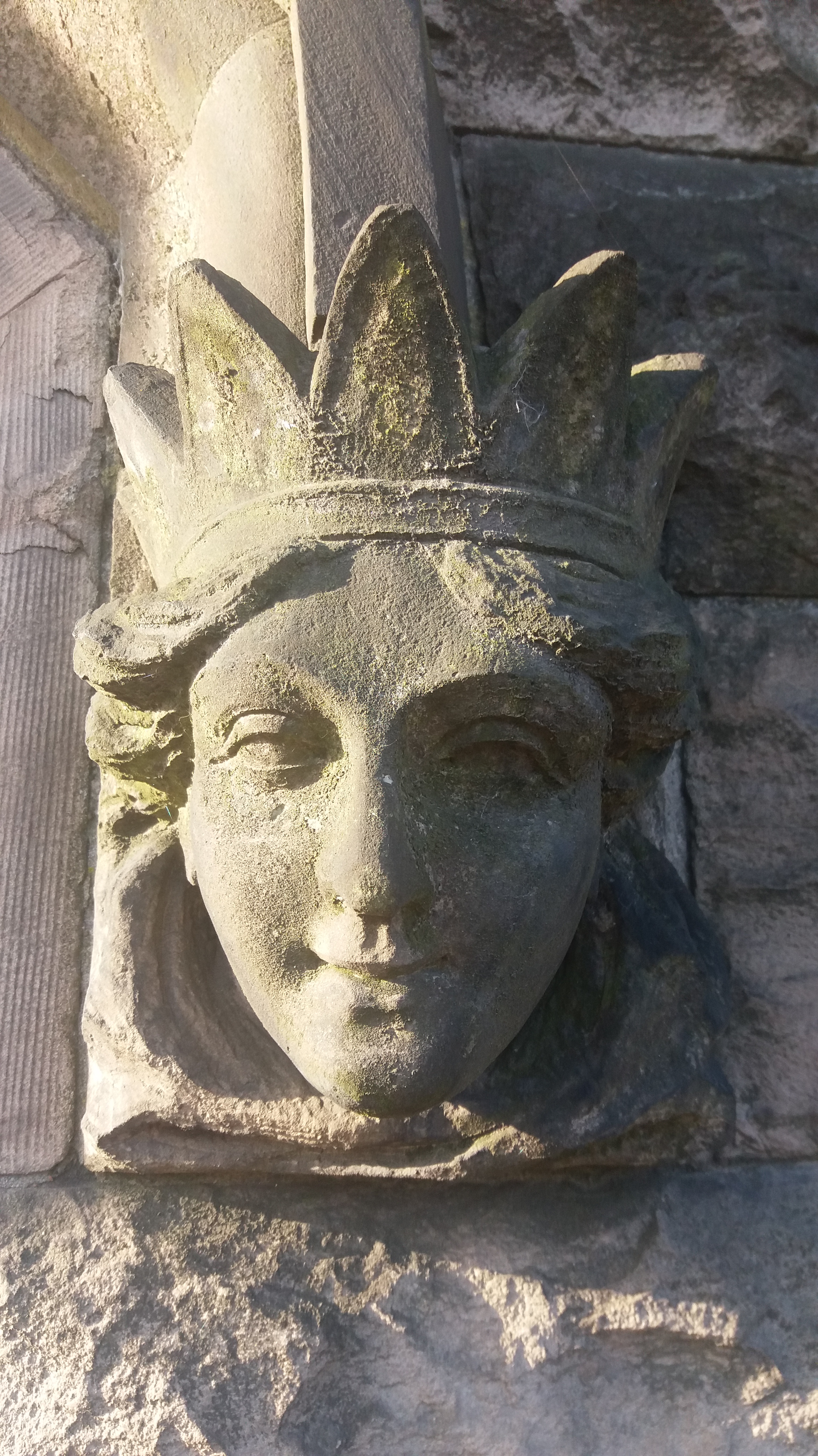
One of the ‘Regal Heads’ of Mountpottinger

Visit to six churches in Belfast and county Down

Between 7th and 9th May, Dunmurry congregation was visited by four Unitarian ministers from Great Britain. These included Rev Laura Dobson, minister at Chorlton, Rev Mária Pap, minister at Mansfield, Francis Elliot-Wright, student minister at Knutsford, and Rev Jim Corrigall, the London District Minister. On the evening of Tuesday, 7th May Dunmurry congregation welcomed them, plus members of other congregations and a good number of local ministers, to a social evening in the McCleery Hall. I conducted an interview/dialogue with Jim who told us about his role as London District Minister, growing up in South Africa and his anti-apartheid activities, his decades as a journalist around the world which took him to Northern Ireland among other places, as well as the theological reflections which led him eventually to enter the ministry. As part of the evening Jim shared with us the reading that means most to him in his ministry – ‘God’s Grandeur’ by Gerard Manley Hopkins – and we listened to his favourite piece of music –  Nkosi Sikelel iAfrika, God Bless Africa. It was a great night enjoyed by everyone.

Left to right Rev Dr David Steers, Rev Mária Pap, Rev Lynda Kane, Rev Laura Dobson, Francis Elliot-Wright, Rev Jim Corrigall, Rev Stephen Reain Adair, Rev Brian Moodie in the McCleery Hall, Dunmurry.

On Wednesday morning we made an early start in the company of a group of members of Dunmurry and First Church to visit six churches in Belfast and county Down and learn something about their history and witness. Thanks to Gary Douds we were taken around the churches in a minibus in great comfort and we were also blessed with fantastic weather.

Some of the party at Dunmurry, ready to set off at 9.00 am.
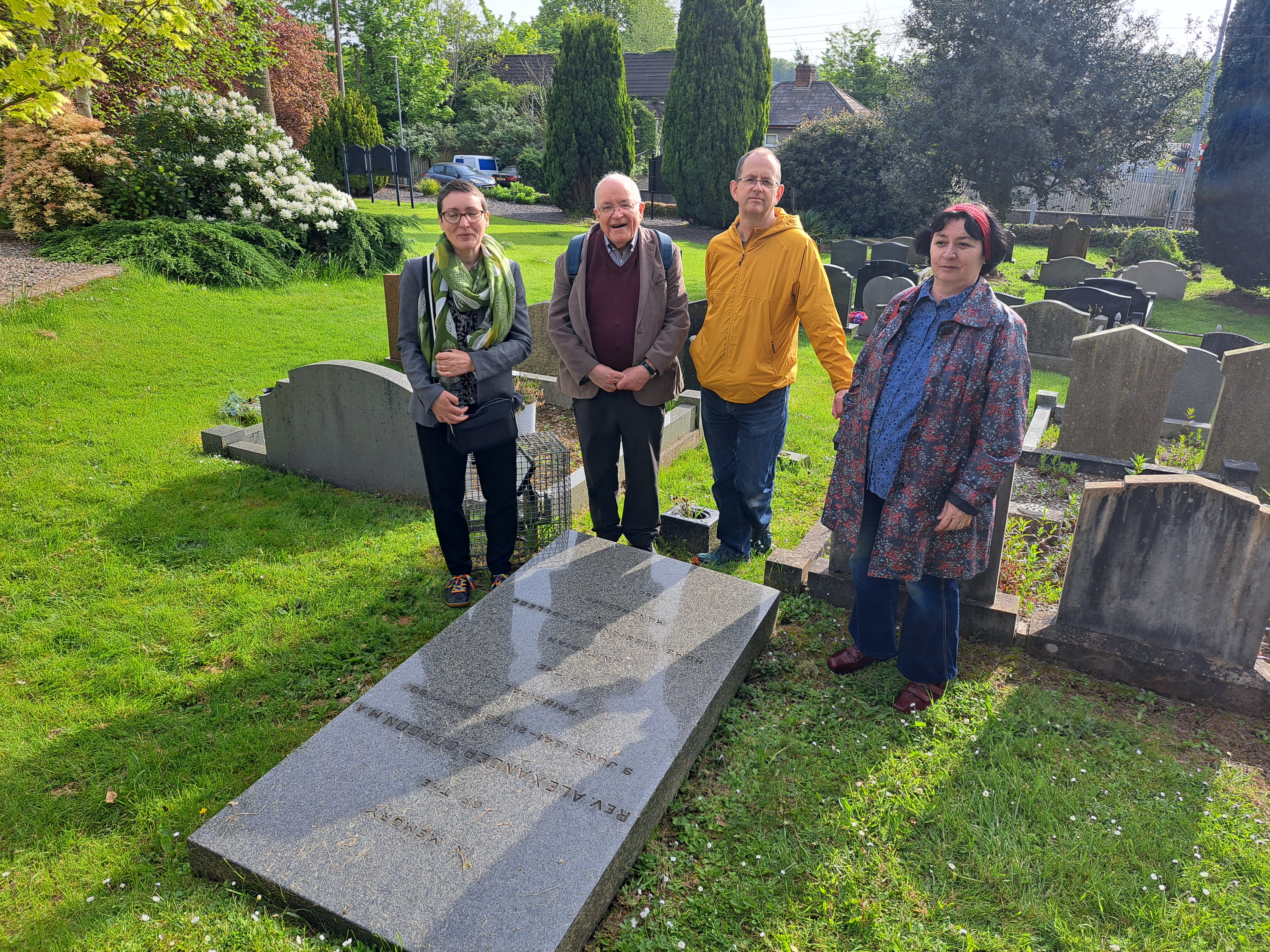
Laura, Jim, Francis and Mária visit the grave of Rev Alexander Gordon (Principal of the Unitarian Home Missionary College) at Dunmurry.
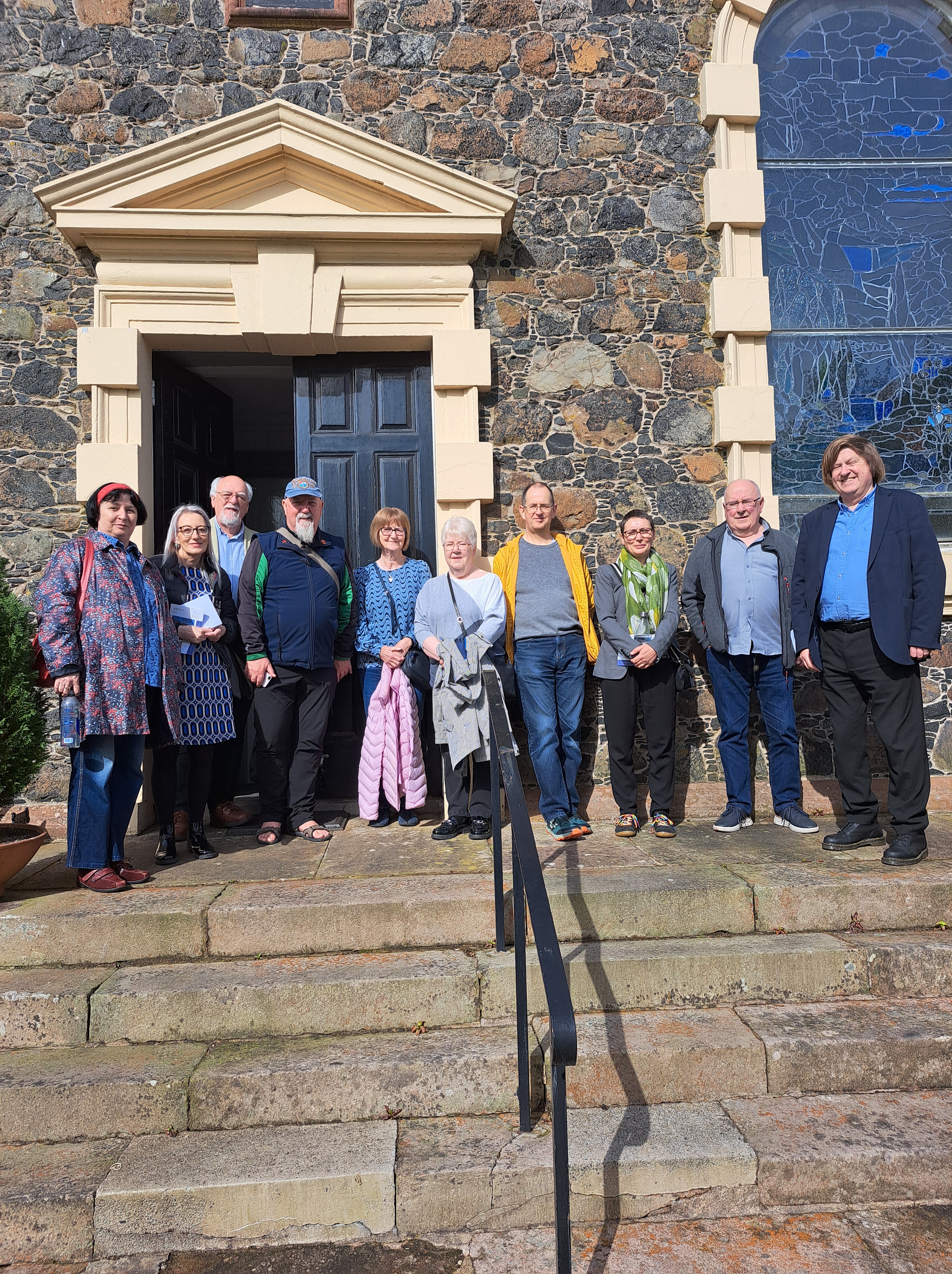
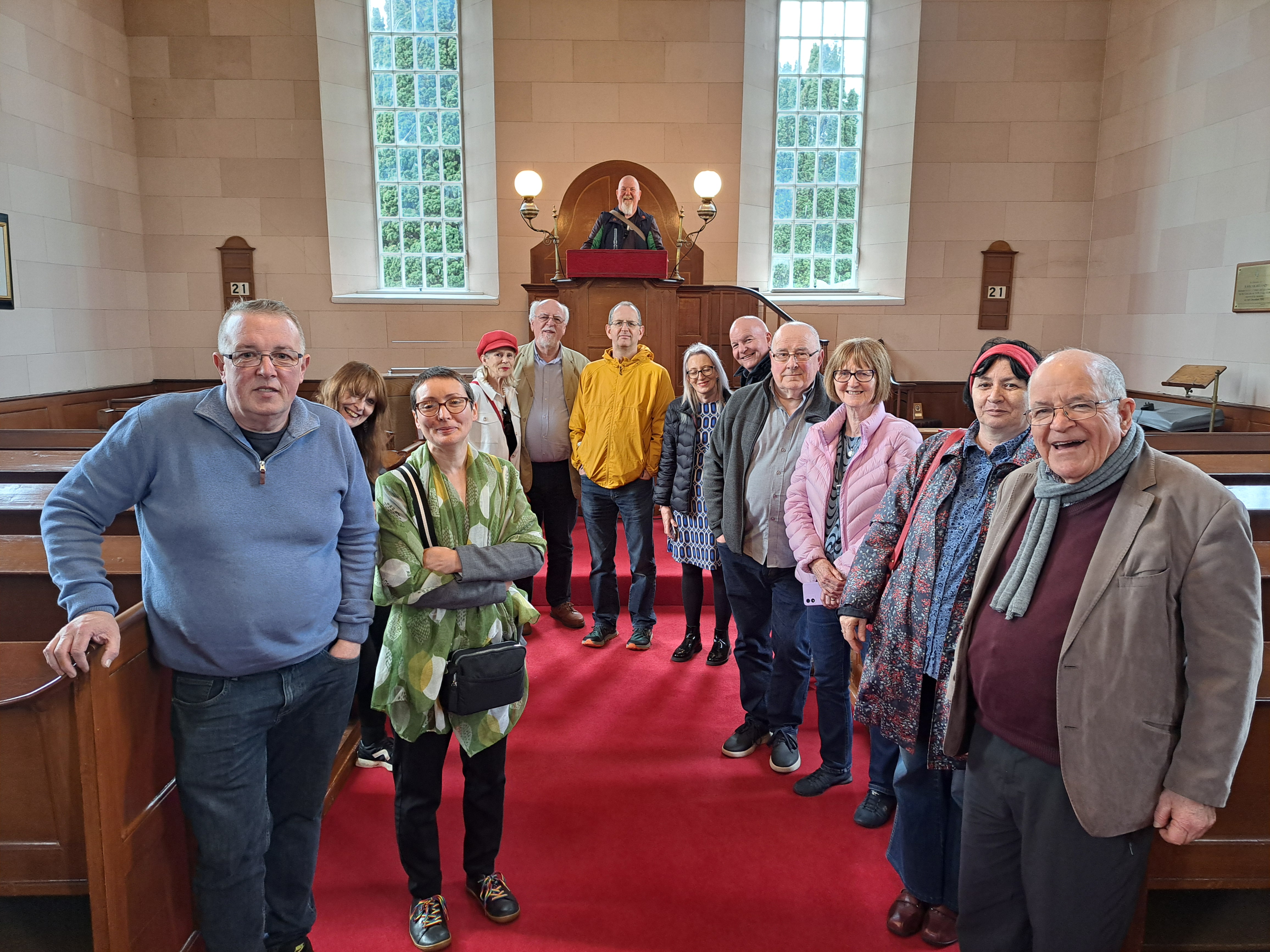
Outside Rademon later in the day.

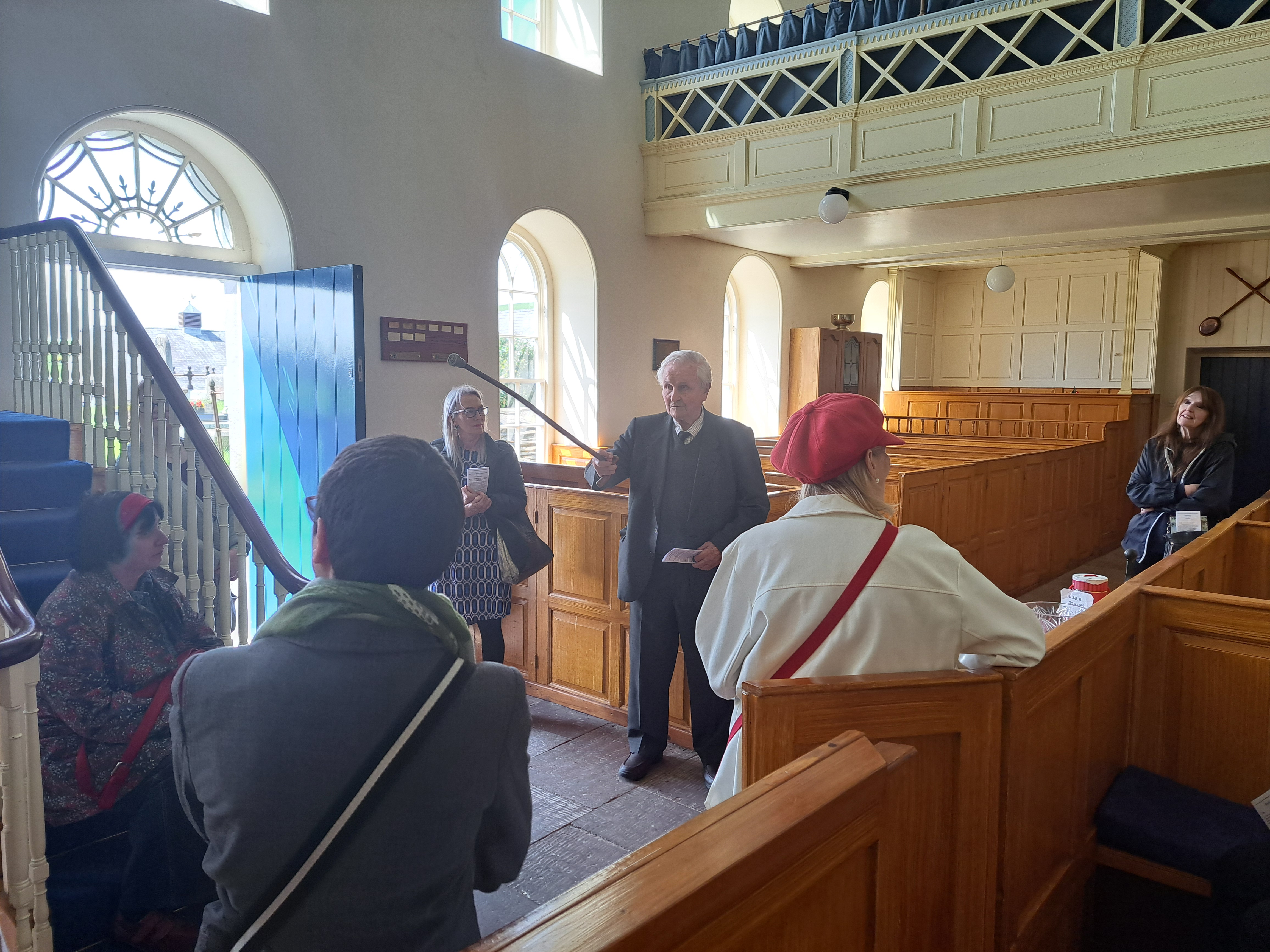
In most of the churches I said something about the building and the history of the congregation and in Rademon Jim Ferris shared his historical expertise to give us a talk about his congregation. Our thanks go to all the ministers and members who welcomed us in our travels including Des McKeown, Rev Chris Hudson, Rev Dr Heather Walker, Mary Stewart and David Rooney, as well as Jim Ferris.

Des McKeown welcomes everyone to First Church, Rosemary Street.
Rev Chris Hudson welcomes everyone in the chancel in All Souls’.

We had lunch in Denvir’s in Downpatrick and returned to Dunmurry just 15 minutes later than our planned schedule had anticipated, so all in all a great day out.

In Downpatrick.
Jim Ferris explains the history of Rademon.

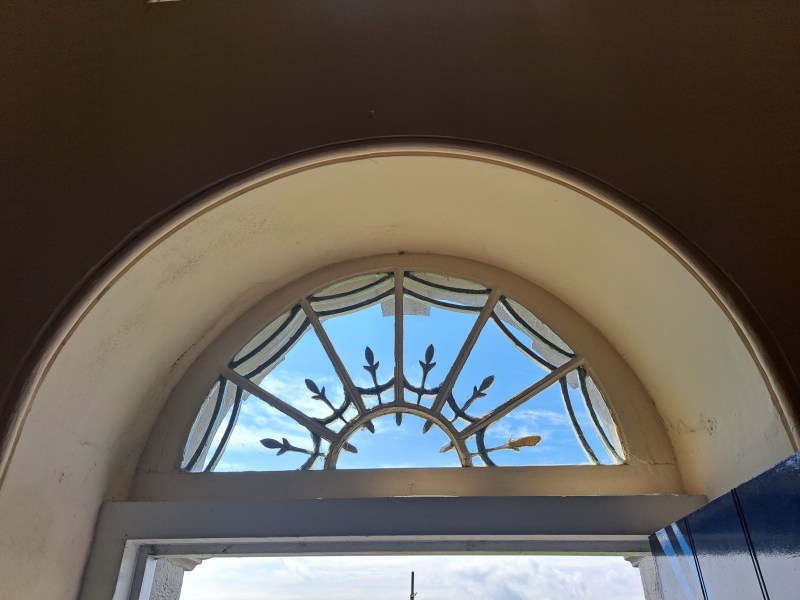
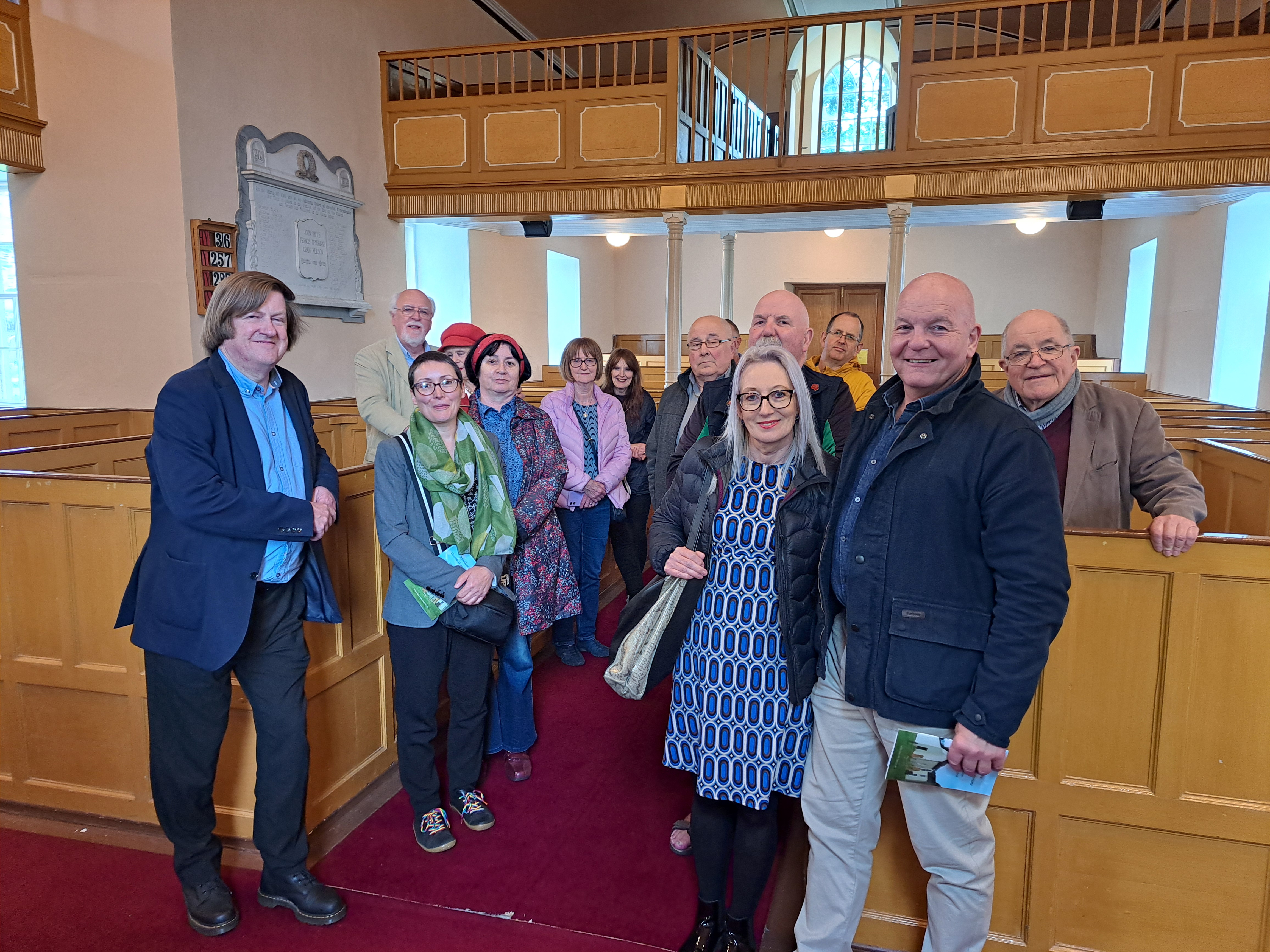
We visited in turn Dunmurry (1779), First Belfast (1783), All Souls’ Belfast (1896), Rademon (1713), Downpatrick (1711) and Clough (1837), buildings of different styles and ages but all with their own story to tell as part of our distinctive tradition.

In Clough, the last visit of the day.