On 5th June 2025 a party of about 20 of us set off on a journey to visit four Non-Subscribing Presbyterian churches in county Antrim plus an historic graveyard (including the ruins of a very historic church) and met a Non-Subscribing Presbyterian peacock along the way. We had as our expert guide the Rev Dr John Nelson whose extensive knowledge kept us informed and entertained all day.
We left Dunmurry and headed for Ballycarry where we visited first Templecorran graveyard.
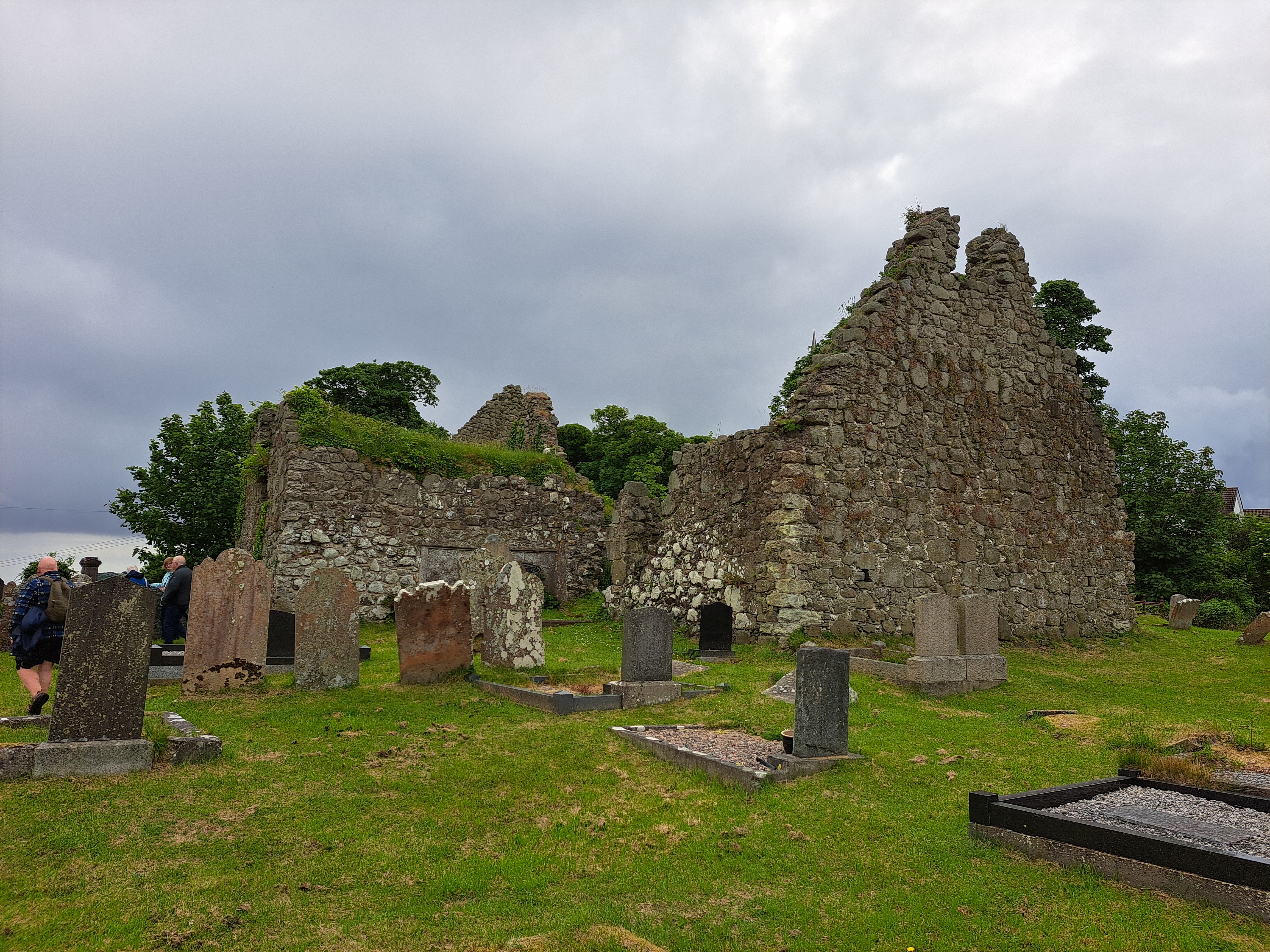
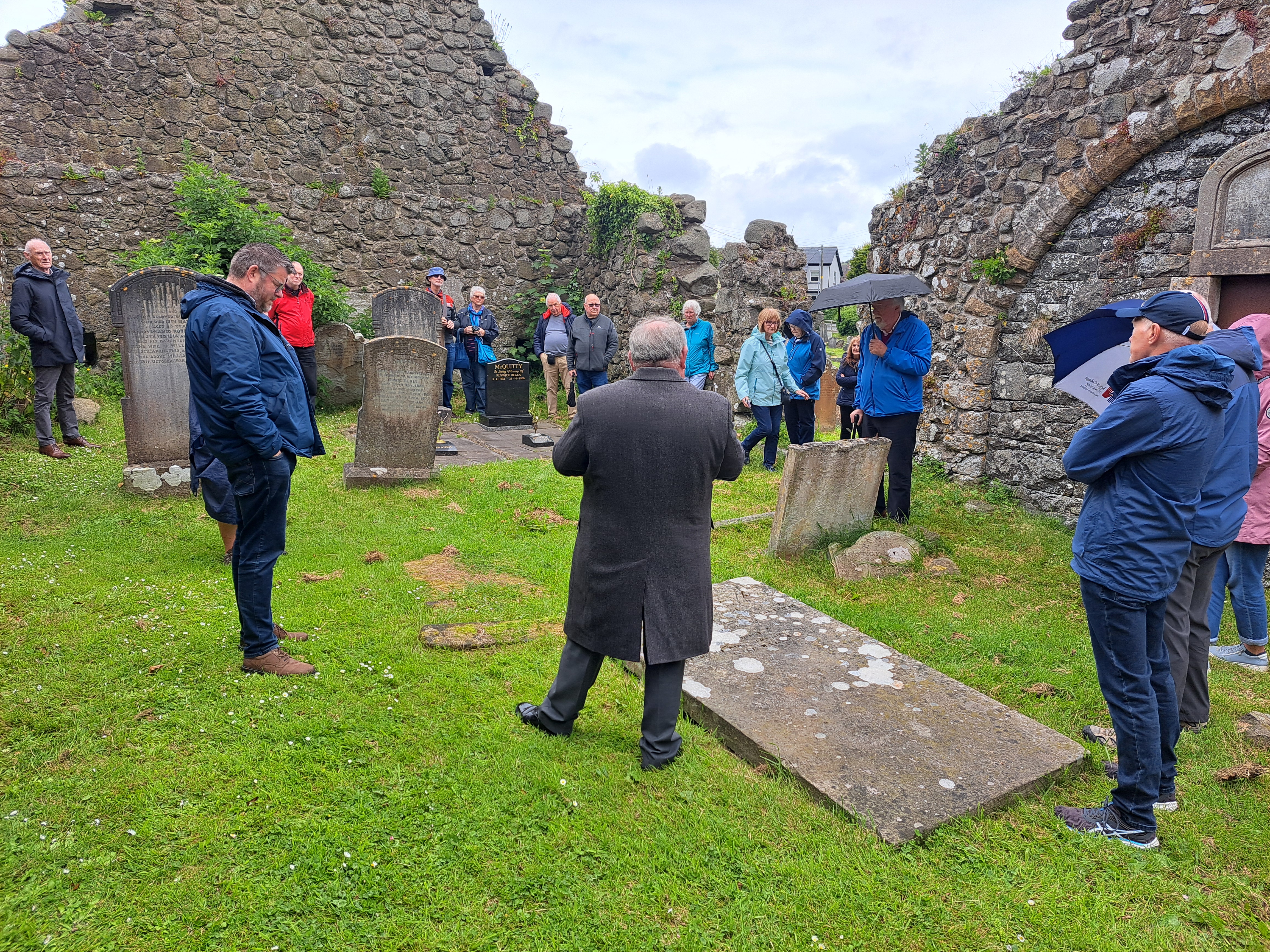
The ruins of Templecorran church
The original parish church used by Edward Brice, the first Presbyterian minister in Ireland in 1613, is now in ruins but it contains many interesting items, including Edward Brice’s grave, the grave of the Rev John Bankhead and a memorial to James Orr, the Bard of Ballycarry.
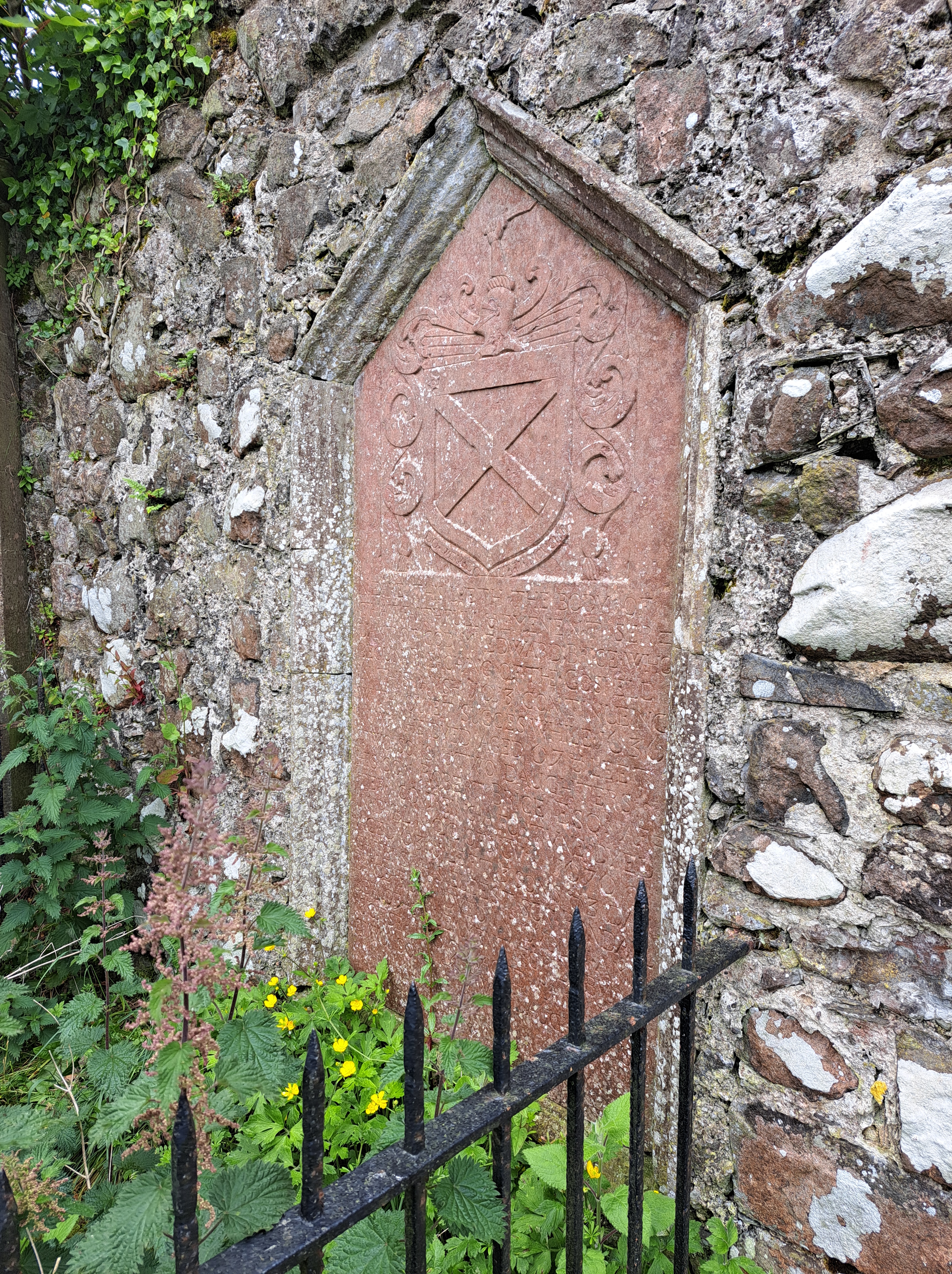
Grave of Edward Brice
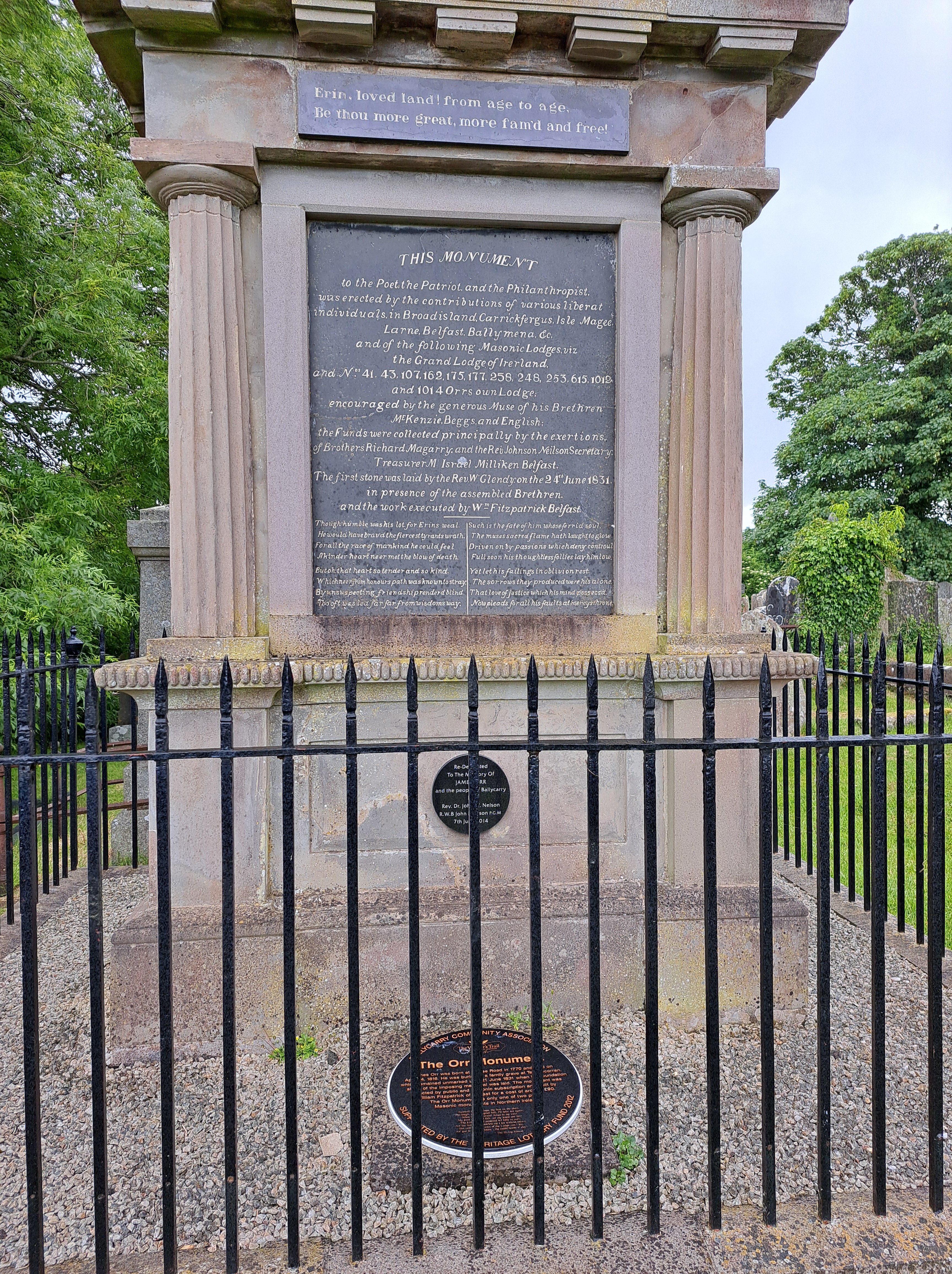
James Orr memorial
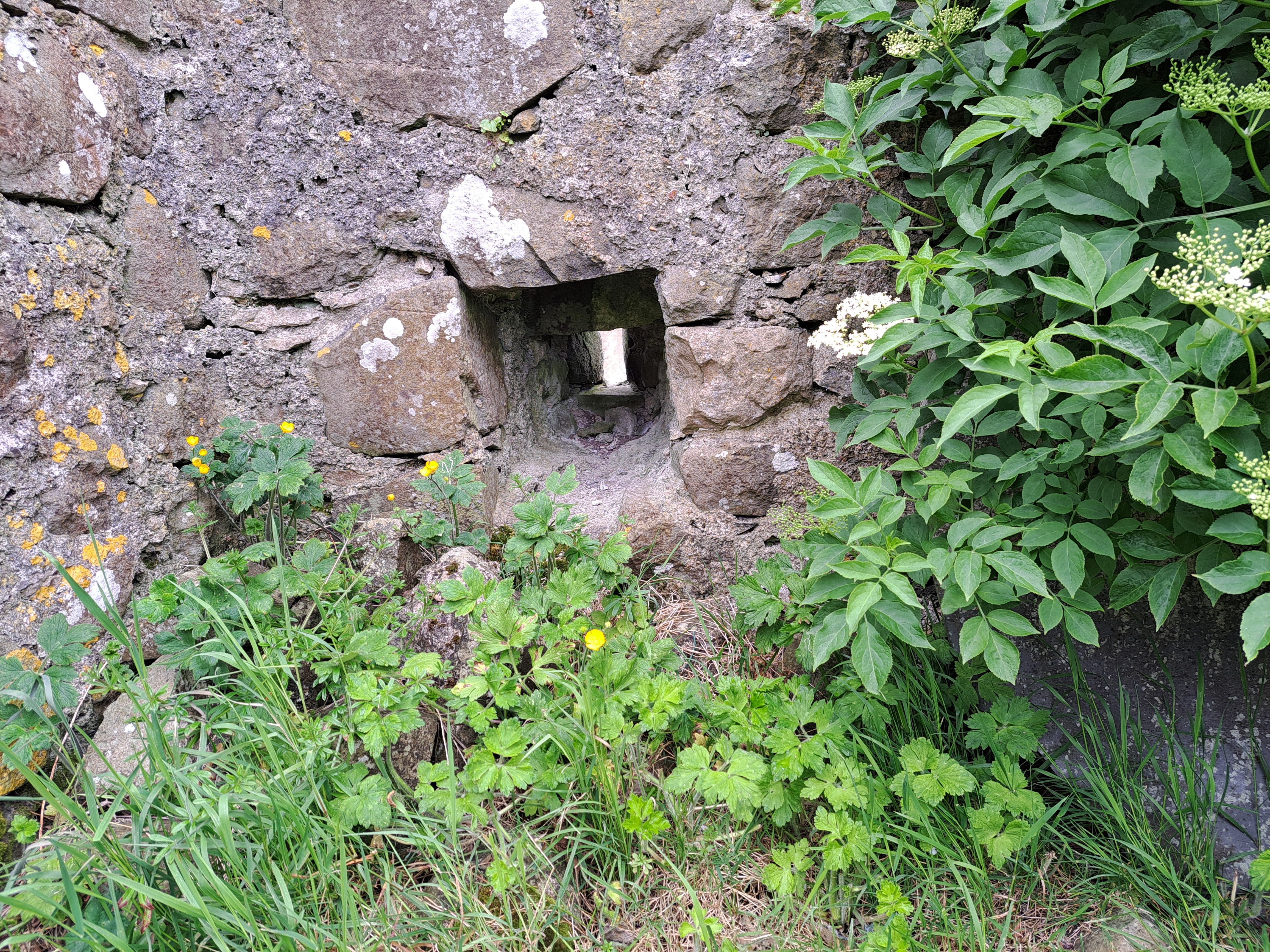
The church was renovated in 1622, during the ministry of Edward Brice, and being built in dangerous times was constructed to be defendable; musket loopholes can still be seen which would have covered all angles of the church should it ever have come under attack.
One of the musket loopholes
The church at Templecorran was slated (unlike the first Ballycarry meeting house which was thatched) and was occupied by Edward Brice and his congregation until he was ejected in 1637.
Inside Templecorran church
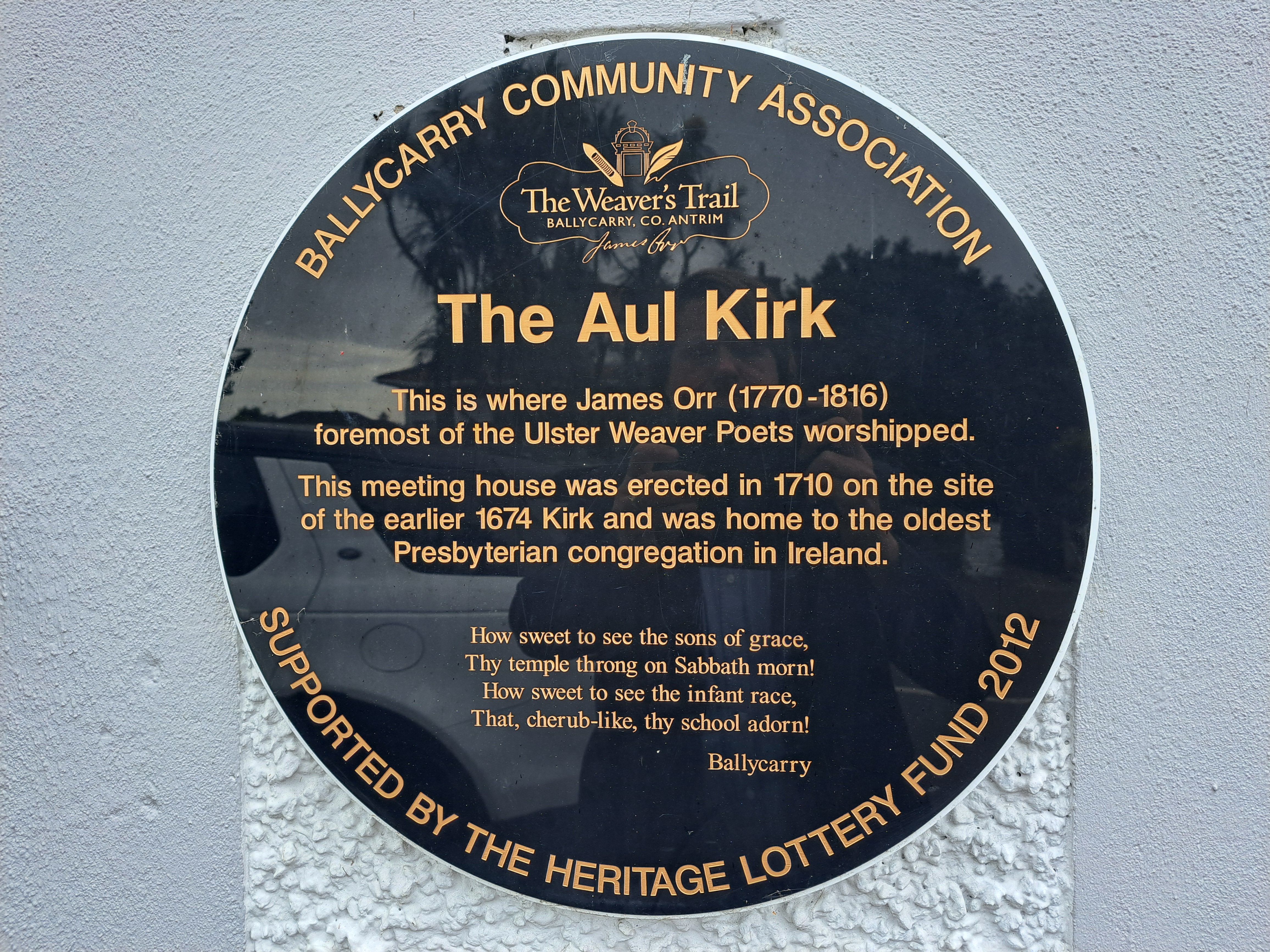
From the old church it is a short walk to Ballycarry where Dr Nelson told us the story of the meeting house, itself dating from the early 18th century.
Ballycarry plaque
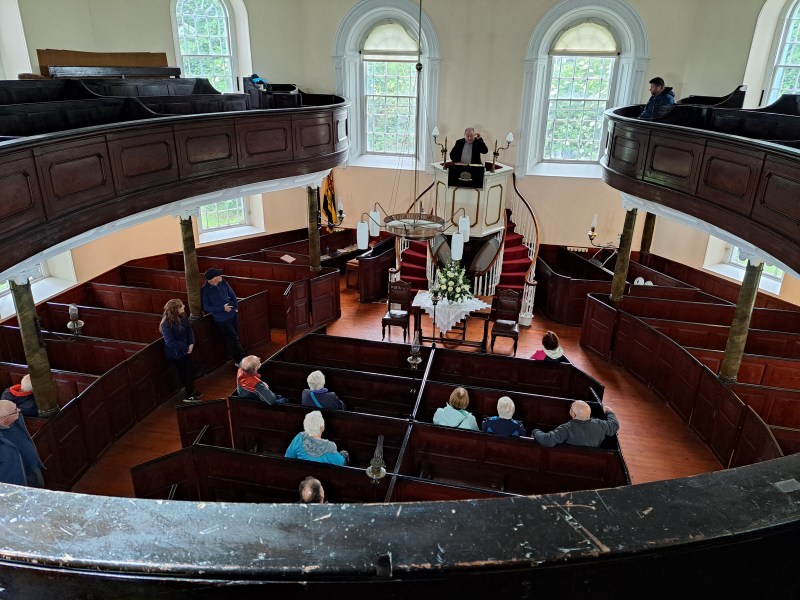
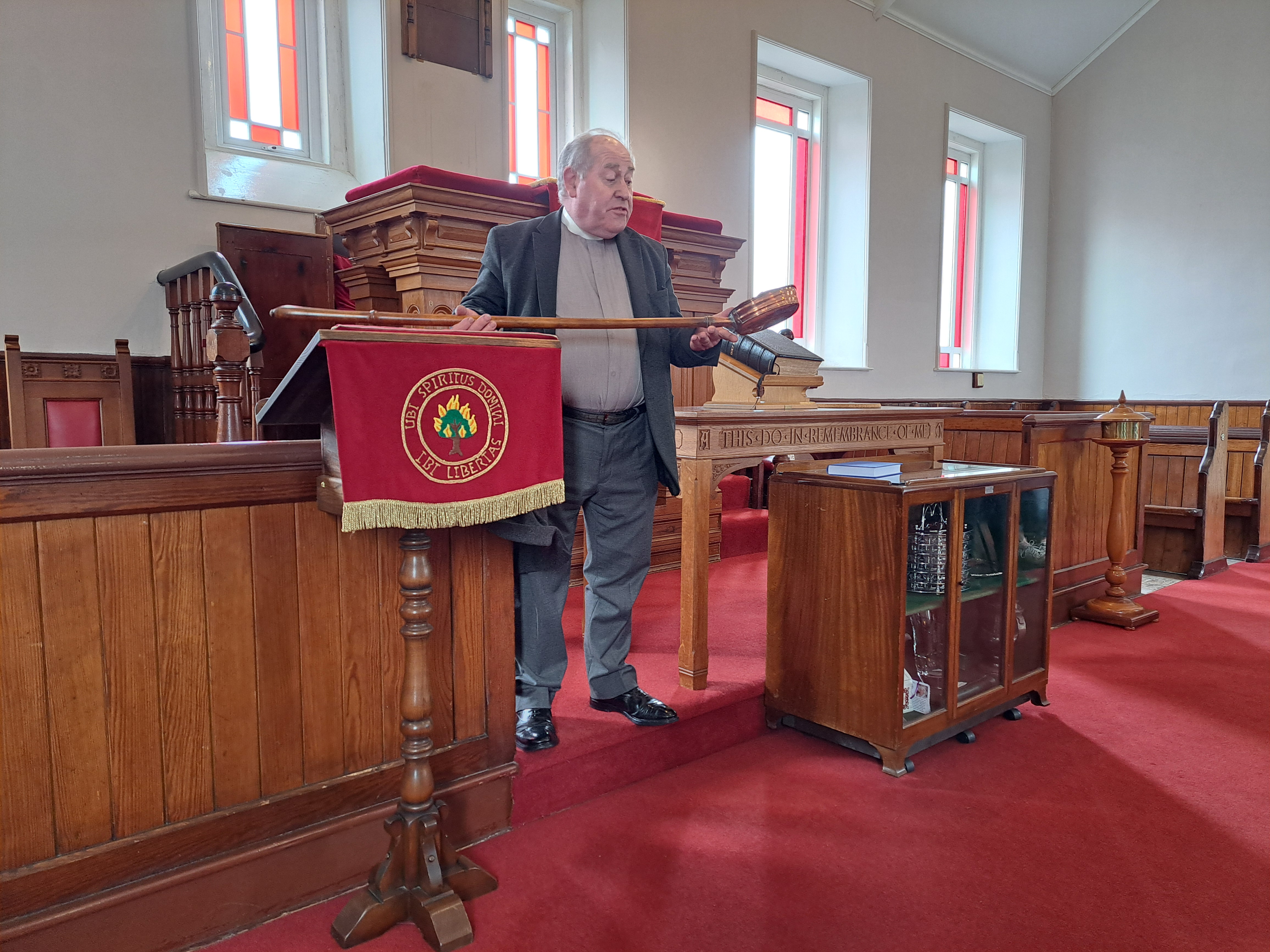
Inside Ballycarry meeting house
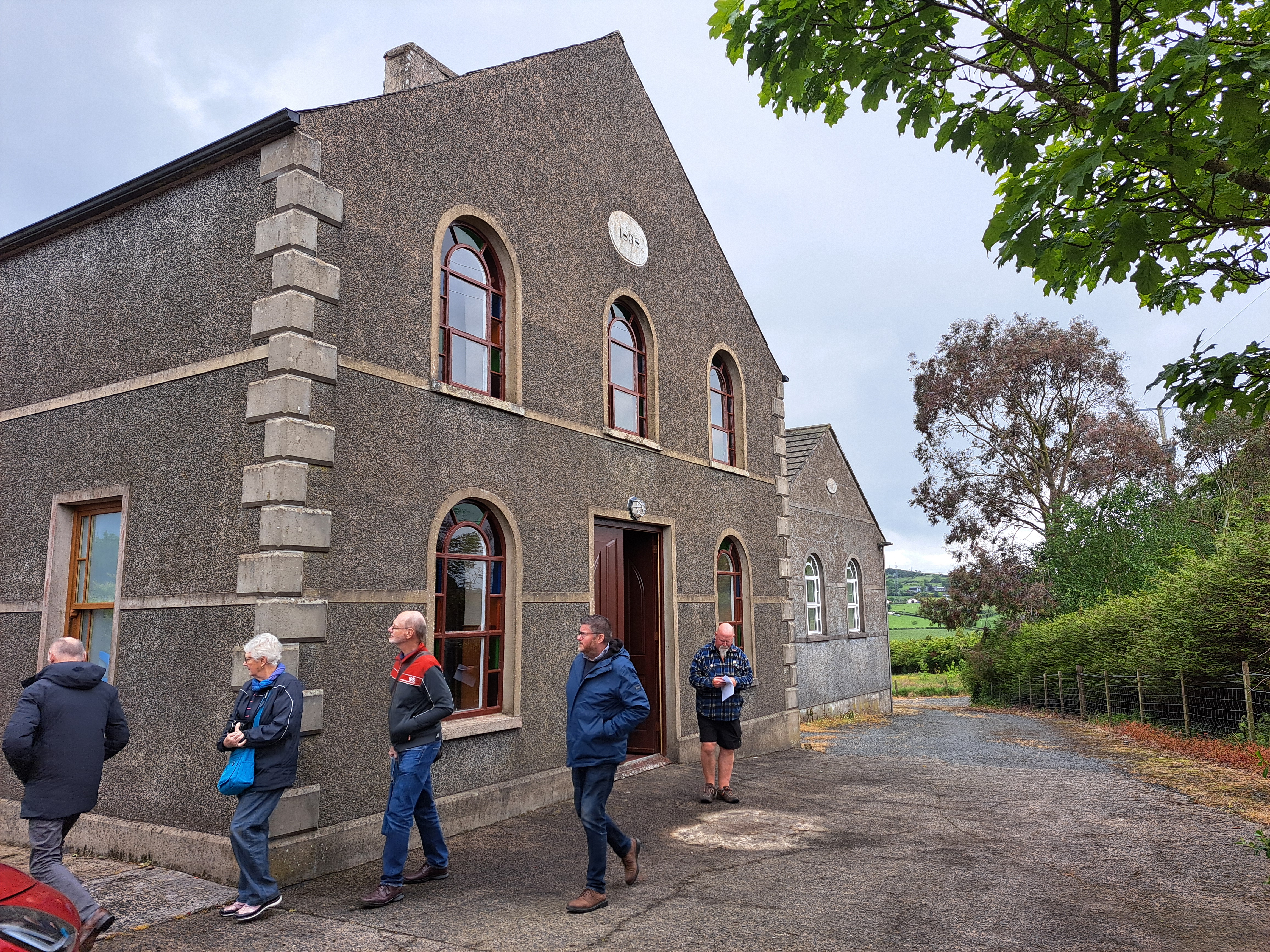
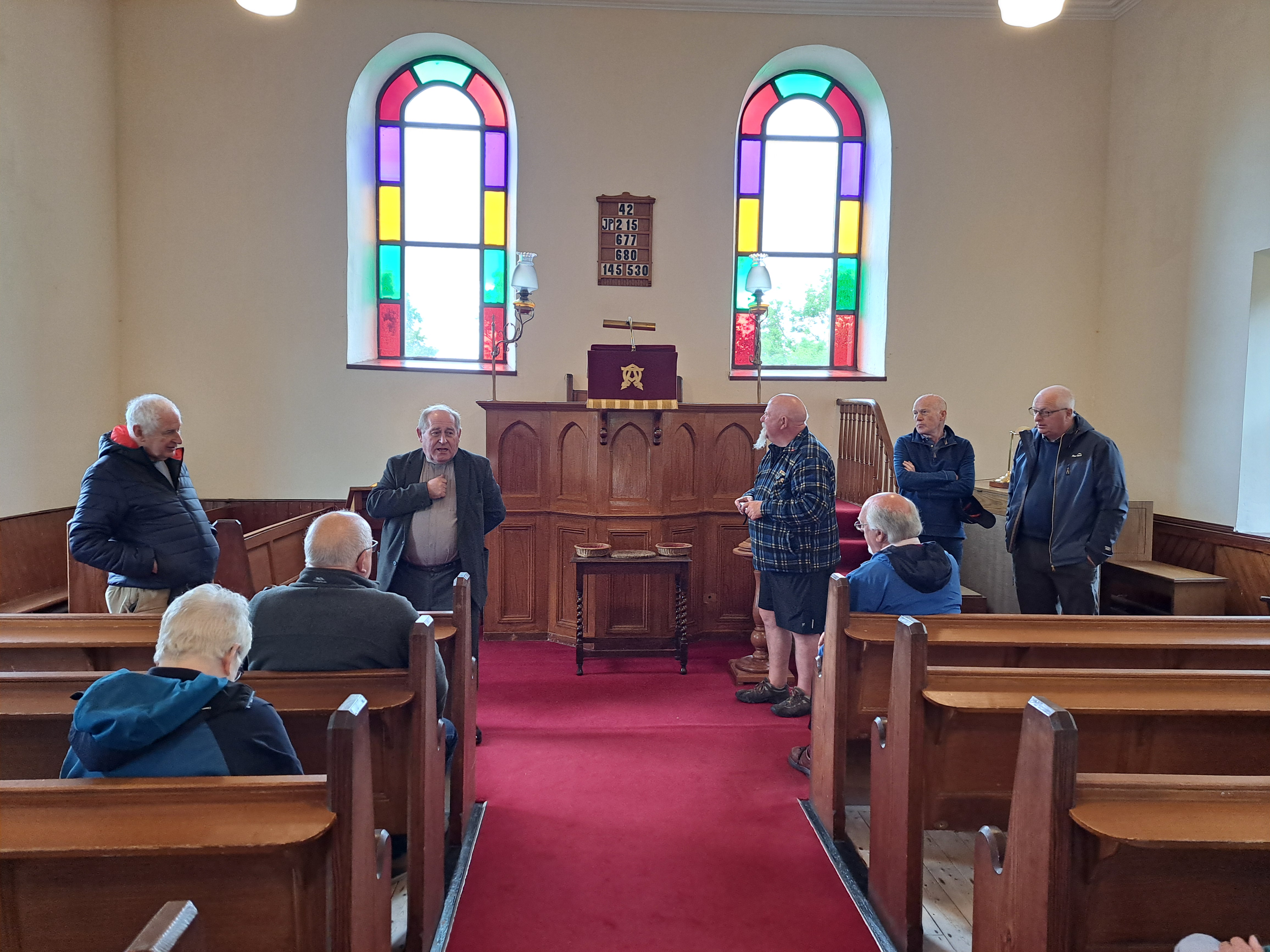
It’s not far from Ballycarry to Raloo but some of us still managed to get lost! But we got there in the end to enjoy the Remonstrant meeting house of 1838 and adjoining modern church hall.
Raloo
Raloo interior
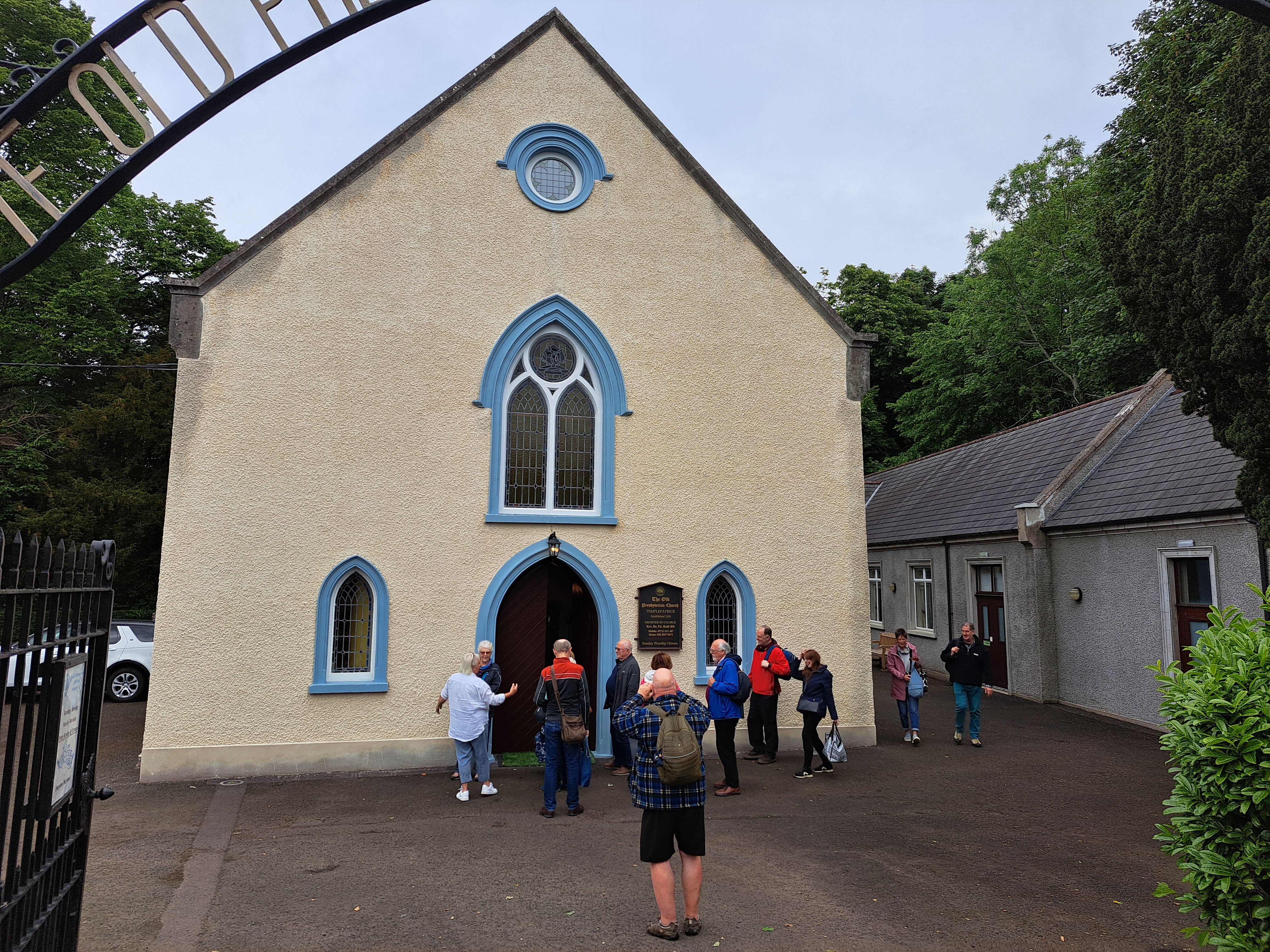
From Raloo we went to Templepatrick where we were able to enjoy our lunch thanks to the kindness of the congregation. Templepatrick is an attractive church which has often faced upheaval. In 1798 the brass canon used by the United Irishmen at the battle of Antrim were stored under the pews. One of these was dragged to the battle on a carriage which was fired once and blew the carriage to pieces.
Templepatrick
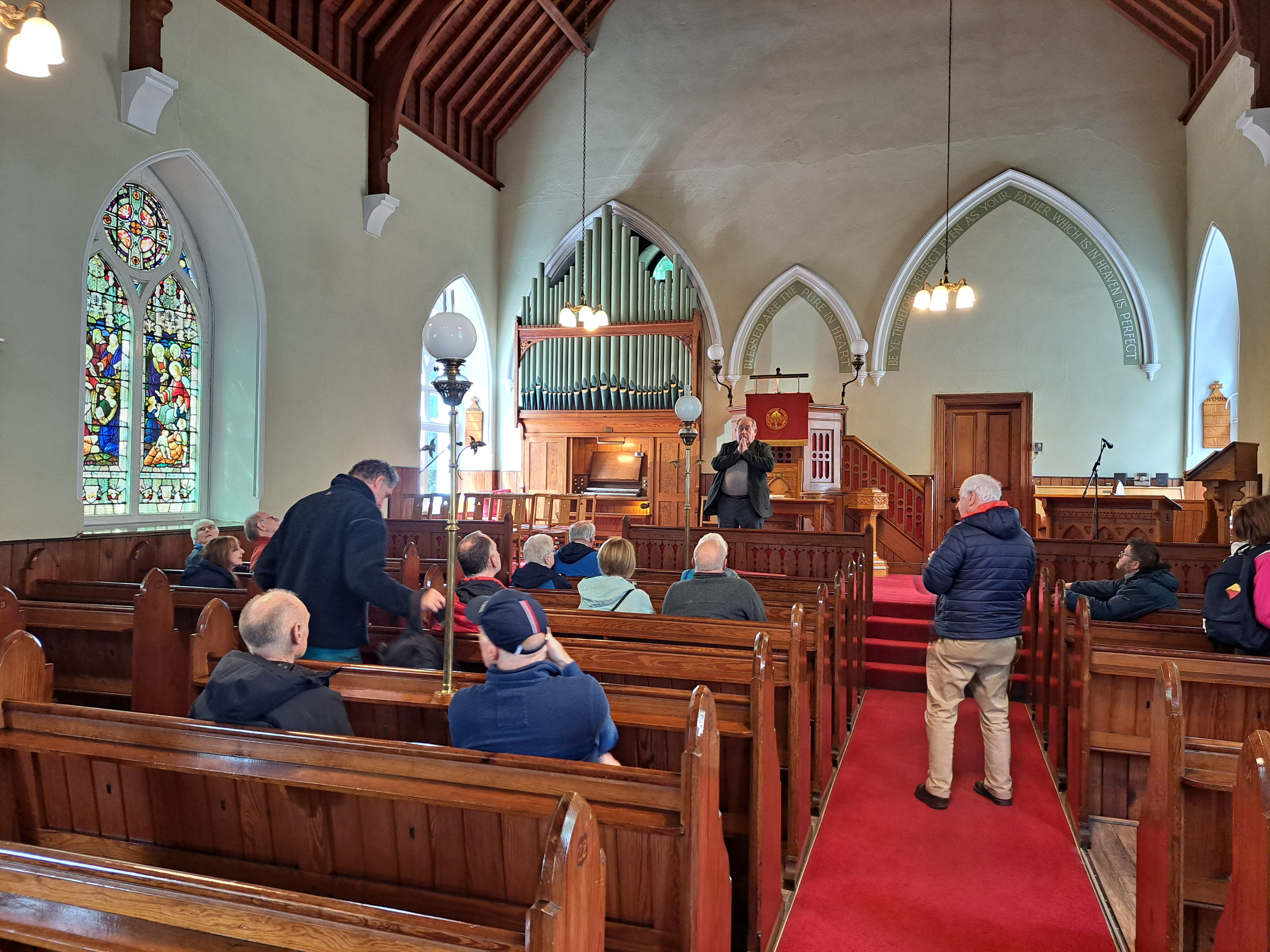
Later when the congregation became Remonstrant the landlord Lord Templeton evicted the minister from the manse farm.
Templepatrick interior
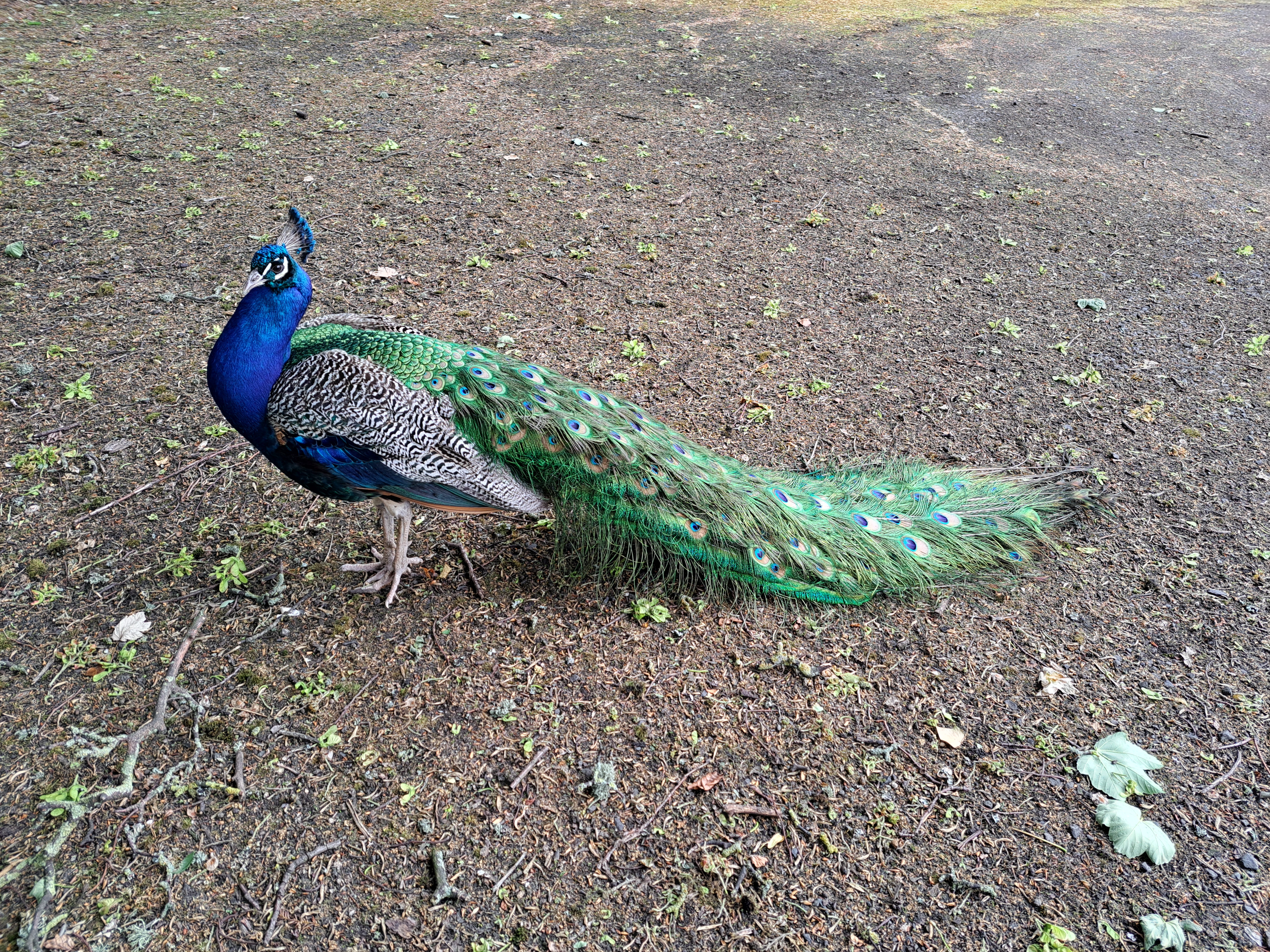
While we were in Templepatrick a peacock was spending some time in the car park:
Finally we went off to Crumlin, a congregation founded in 1715, which built a new church in 1835 which was a miniature version of First Church, Belfast.
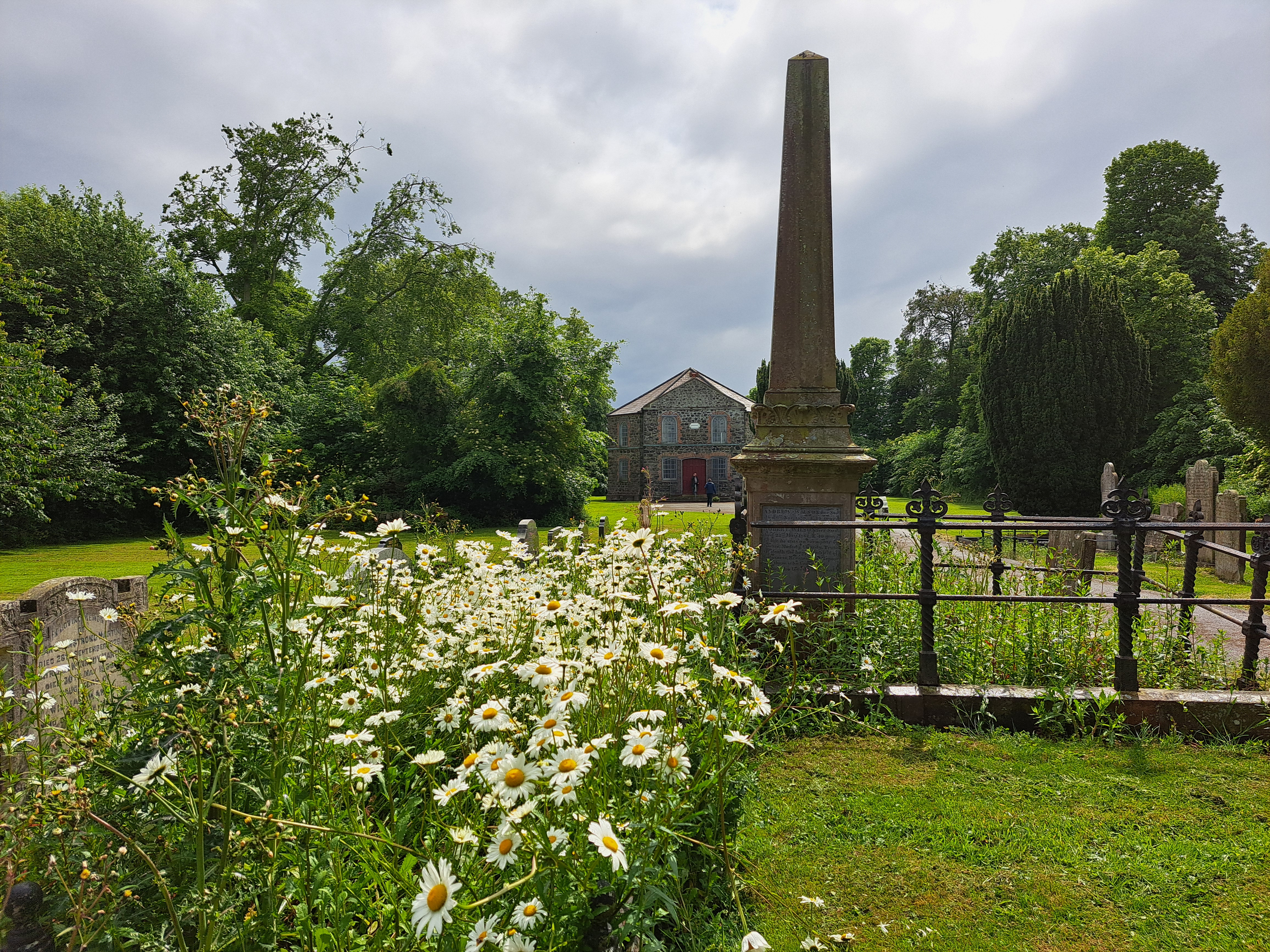
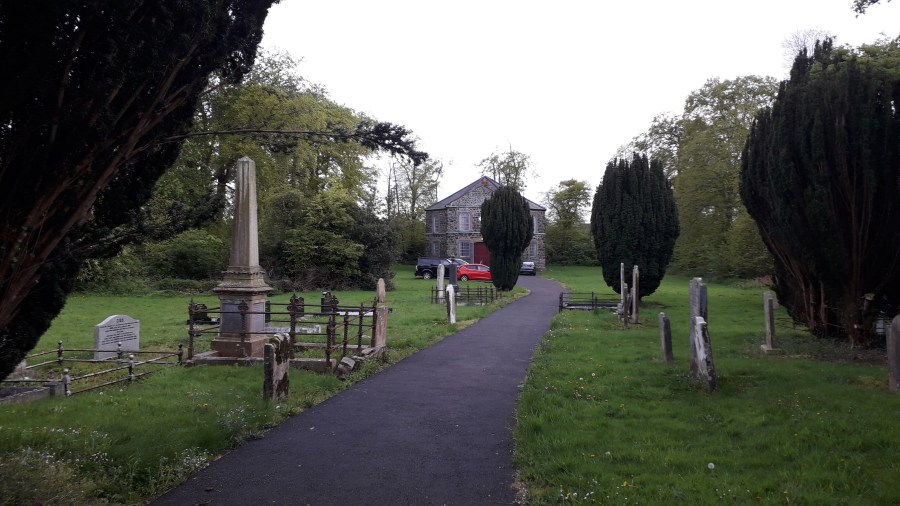
Looking through some wild flowers towards the church
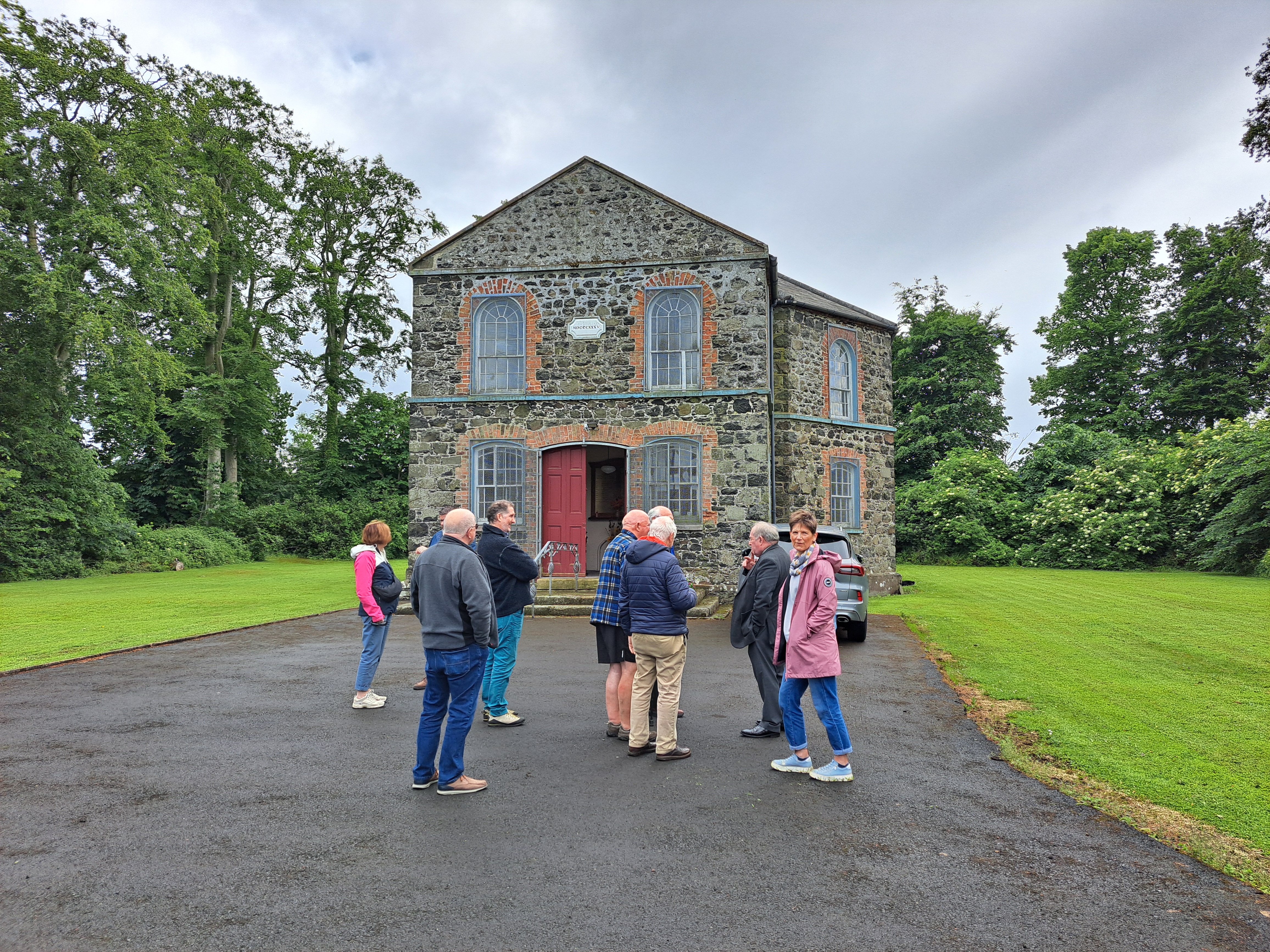
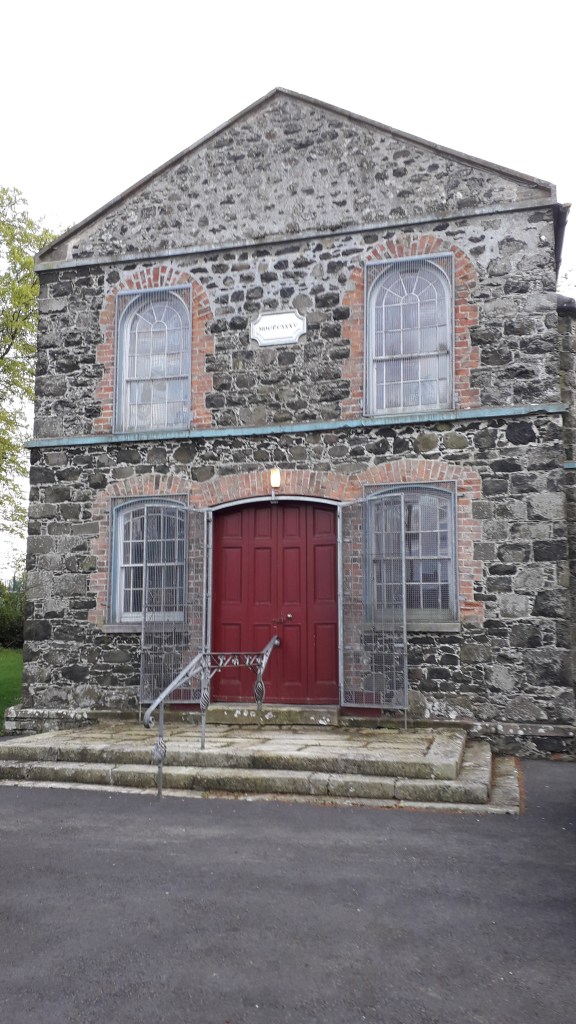
Outside Crumlin
It is such an elegant building that deserves to be better known.
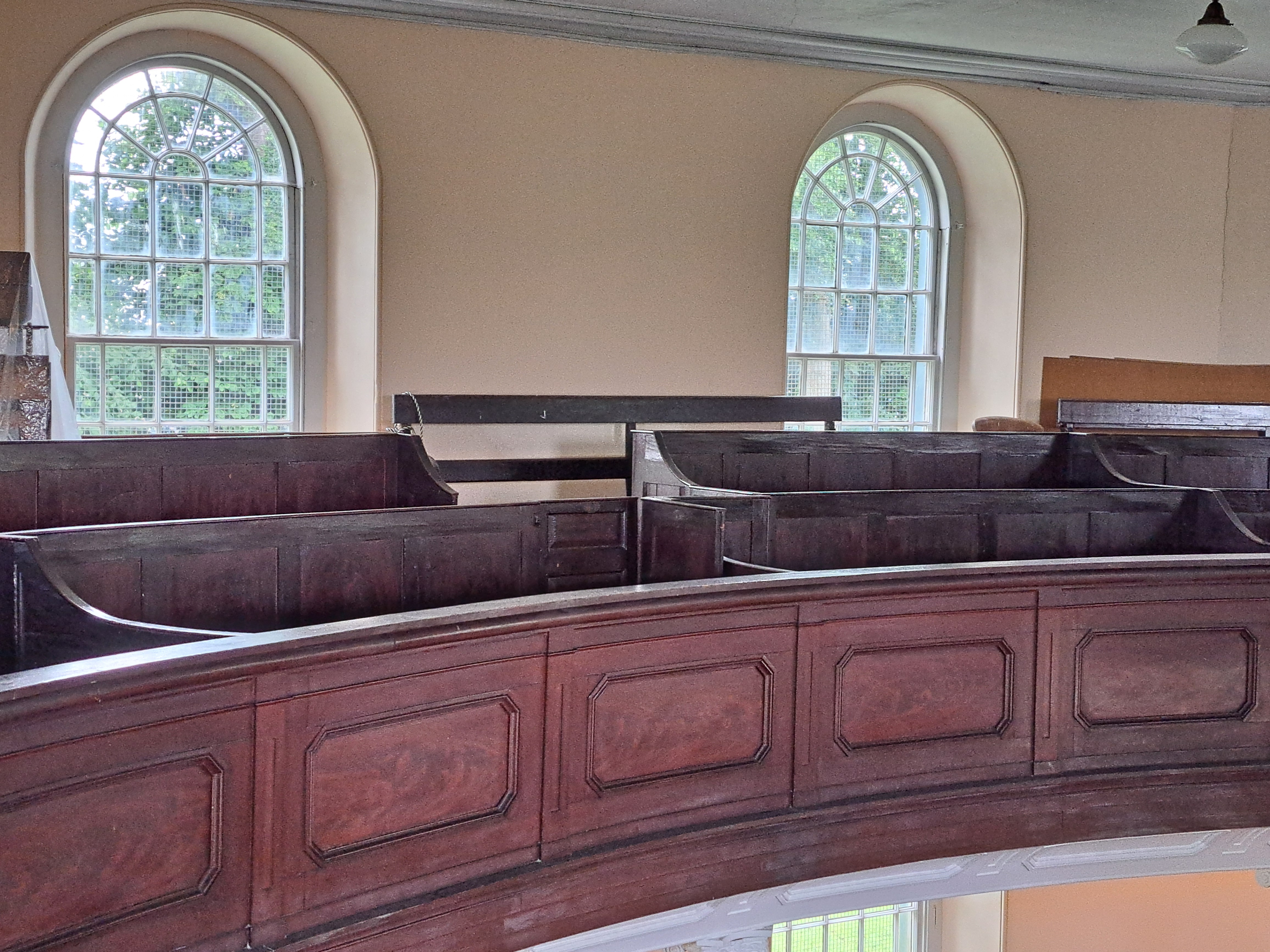
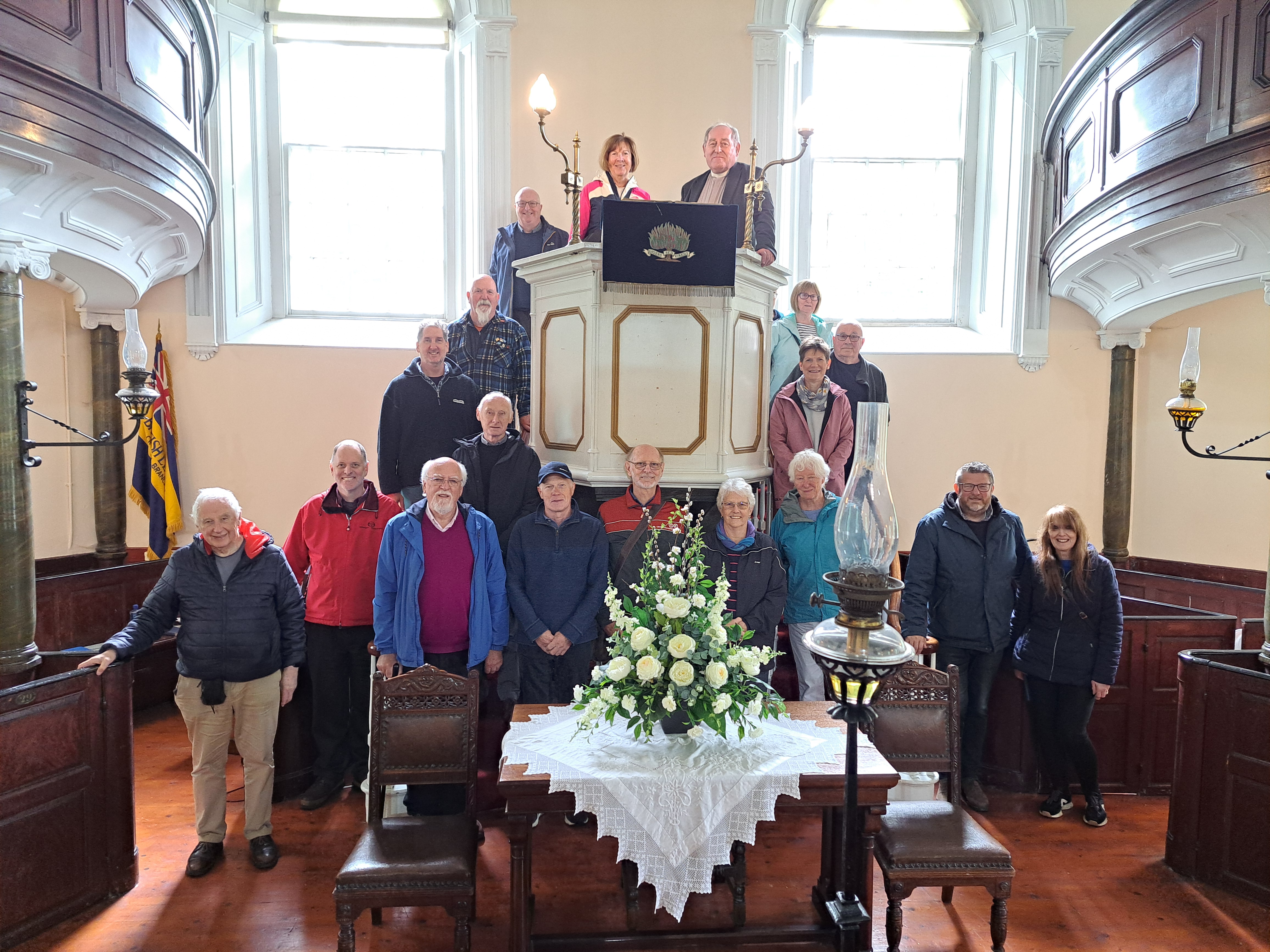
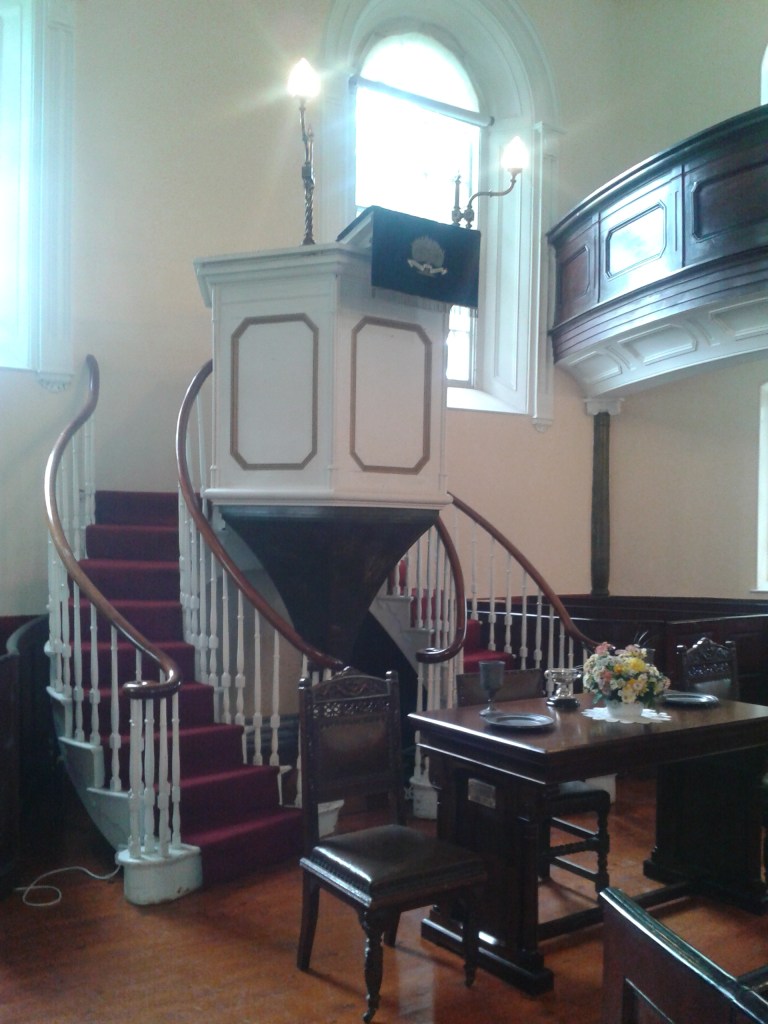
The church was particularly associated with the Rev Nathaniel Alexander who was 6 feet three inches tall. The pulpit consequently has a trap door that was open when he preached so he could stand at a slightly lower lever.
It was a great day out, many thanks go to Rev Dr John Nelson.
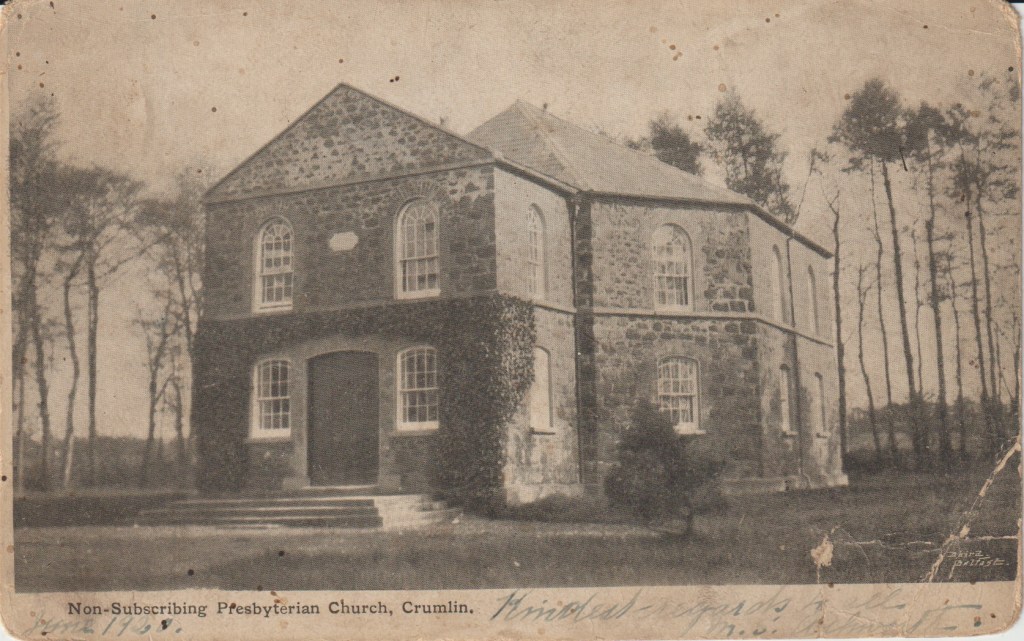
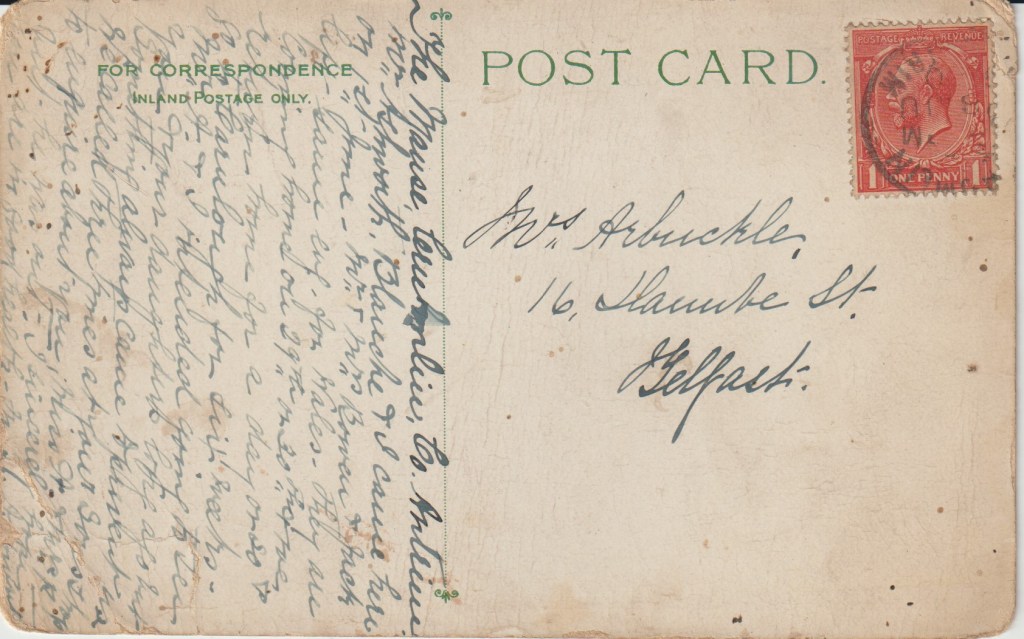
I purchased this postcard on eBay recently. It is not in great condition but it is a fairly rare example of a Baird of Belfast postcard of the Non-Subscribing Presbyterian Church at Crumlin. It came with added interest because it was sent by Mrs Ashworth to her friend Mrs Arbuckle of 16 Danube Street, Belfast in June 1908. The message gives us a little glimpse into Non-Subscribing Presbyterian church life in 1908.
Mrs Ashworth, the author, writes in friendly, yet also fairly formal tones to Mrs Arbuckle. Mrs Ashworth (as she describes herself) was the wife of the Rev Alexander Osborne Ashworth minister of York Street Non-Subscribing Presbyterian Church at the time. She refers to her husband only as Mr Ashworth in her short note although also mentions a person called Blanche who appears to be their daughter. They are also staying in the manse at Crumlin. ‘Mr Ashworth, Blanche and I’ came to the manse on 1st June, ‘Mr & Mrs Bowen & Jack’ left the same evening for Wales where they would remain for most of the month before returning for a six week stay at Carnlough. Prior to sending the card the Ashworths had made some unsuccessful attempts to meet up with Mrs Arbuckle and her family.
It’s not possible to identify the Mrs Arbuckle, but there is a good chance that she was a member of York Street Church, indeed there was a Mary Arbuckle living on York Street itself in the 1901 census and Danube Street is certainly within the catchment area of York Street Church.
Most of the contents reveal mundane domestic arrangements involving three Belfast families over 110 years ago. But knowing that two of those families were the families of NSP ministers and the fact that it was all written on a postcard depicting Crumlin Church enables us to put some flesh on the bones of this brief correspondence.
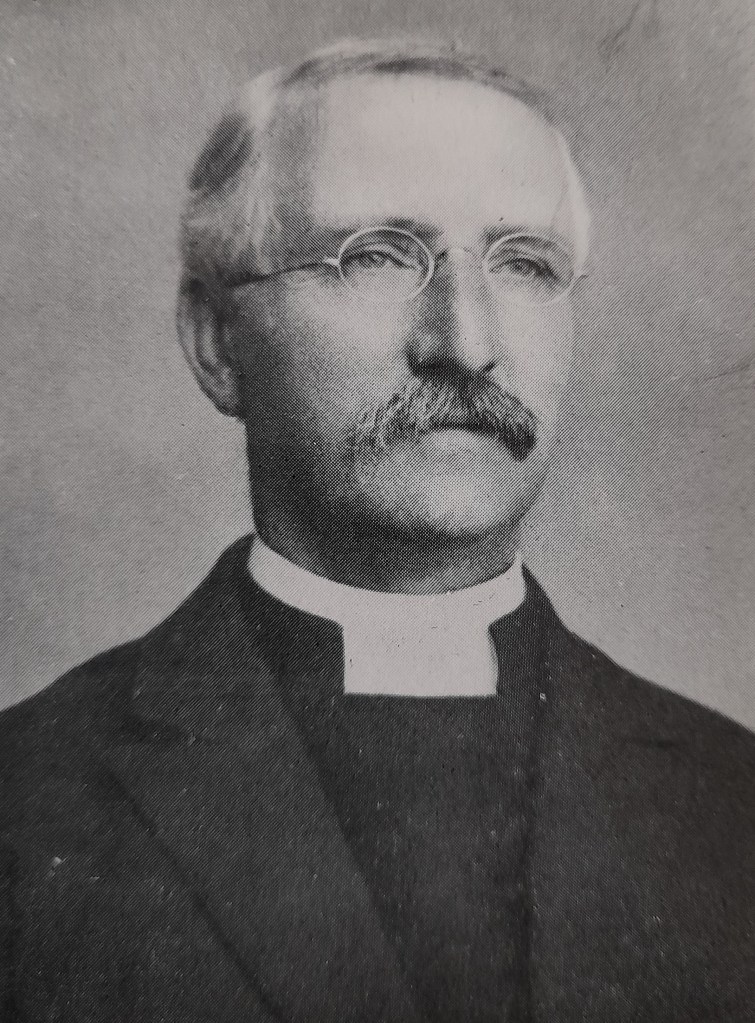
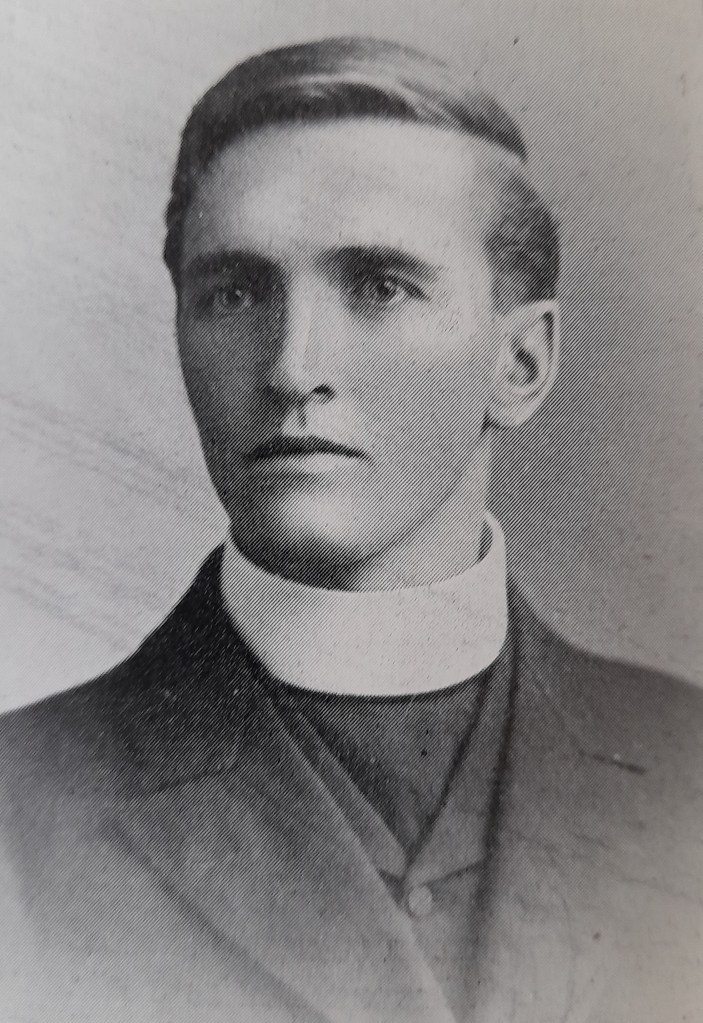
Mr and Mrs Bowen were the Rev Samuel Evans Bowen and his wife. S. E. Bowen was called to be minister of Crumlin in 1908, he was ordained later in the year on 3rd September by the Presbytery of Templepatrick. It may be that Alexander Ashworth and his wife were preparing the manse for their arrival, although he was clerk of the Presbytery of Antrim at that time and was still minister of York Street until 1909 when he retired, although he continued as a very active senior minister until 1913 and remained active in his denomination for many years afterwards until his death in 1935. Ashworth was born in the Rossendale valley in Lancashire in 1846 and trained at the Unitarian Home Missionary College. He came to York Street in 1893 after previous ministries in Chatham, Stalybridge, Doncaster and South Shields. For many years he was also the Sunday School Convenor for the Non-Subscribers. This job was no sinecure, in 1909, for instance, he organised the Annual Sunday School Conference at Downpatrick, an event which attracted 450 participants.
Rev A. O. Ashworth in 1909
The Rev Alexander Ashworth is probably hardly remembered today, for one thing the church where he had his longest and most significant ministry was destroyed in the blitz of 1941, but he gave devoted service in many different ways for decades.
Rev S. E. Bowen in 1908
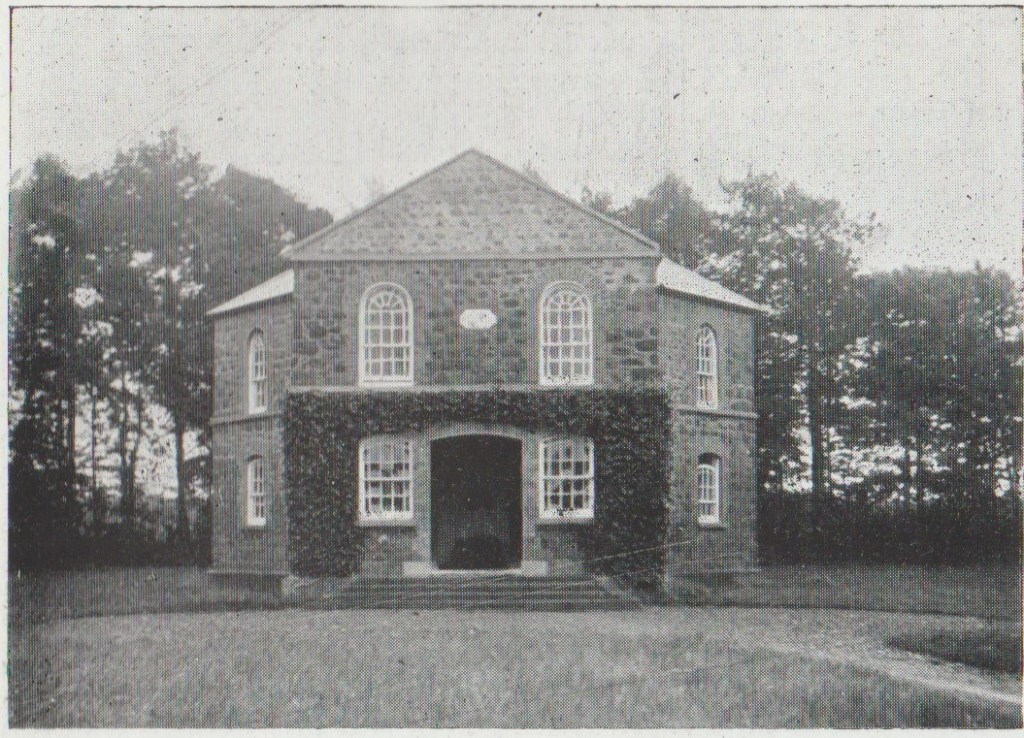
The same was true of S.E. Bowen. Another former student of the Unitarian College in Manchester he was minister in Crumlin for over twenty years (to 1929) before returning to his native Wales to minister at Allt-y-placa, Capel-y-bryn and Cwm Sychbant for 27 years. But with this postcard we get a view of the Crumlin meeting-house. Judging by the trees it is of a similar, although not identical, vintage to the photograph that appeared in the Non-Subscribing Presbyterian magazine in October 1908 to accompany the account of his ordination. In both pictures the ivy seems to be contained in identical positions but the postcard shows a small tree or bush to the right of the church which is not there in the magazine image. The postcard could be quite a few years older than the other photograph.
The Crumlin meeting-house is fairly secluded and can’t be seen from the main road. Built in 1835 it replaced an earlier church of 1715. It is a miniature replica of Belfast’s First Presbyterian Church designed by Roger Mulholland. It is interesting that the congregation of Crumlin took that building as a template for their new church over 60 years later.
Crumlin in 1908 (NSP Magazine)
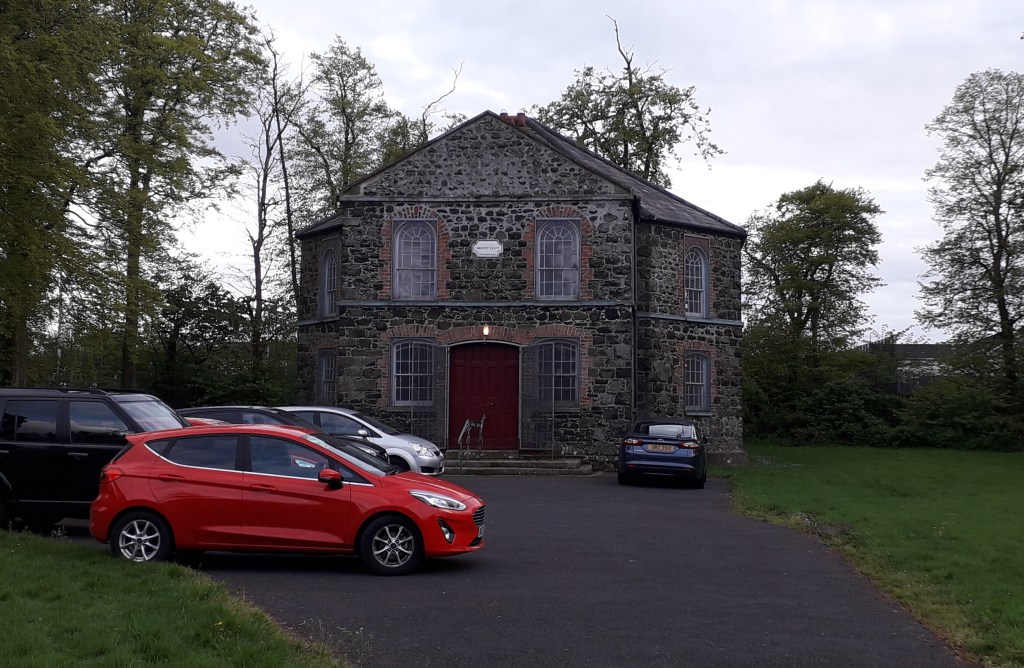
Crumlin in 2019
Whenever I try to take an architectural photograph I always aim to get a shot of the building without the distractions of either people or vehicles. I wasn’t able to do this with this picture of Crumlin taken in the autumn of 2019. The foreground is crowded with cars. But in the long term a photograph of something like a church which includes other details that date it actually makes it more interesting to the viewer. But if I was going to compose the cars for a photograph I wouldn’t park them like that!
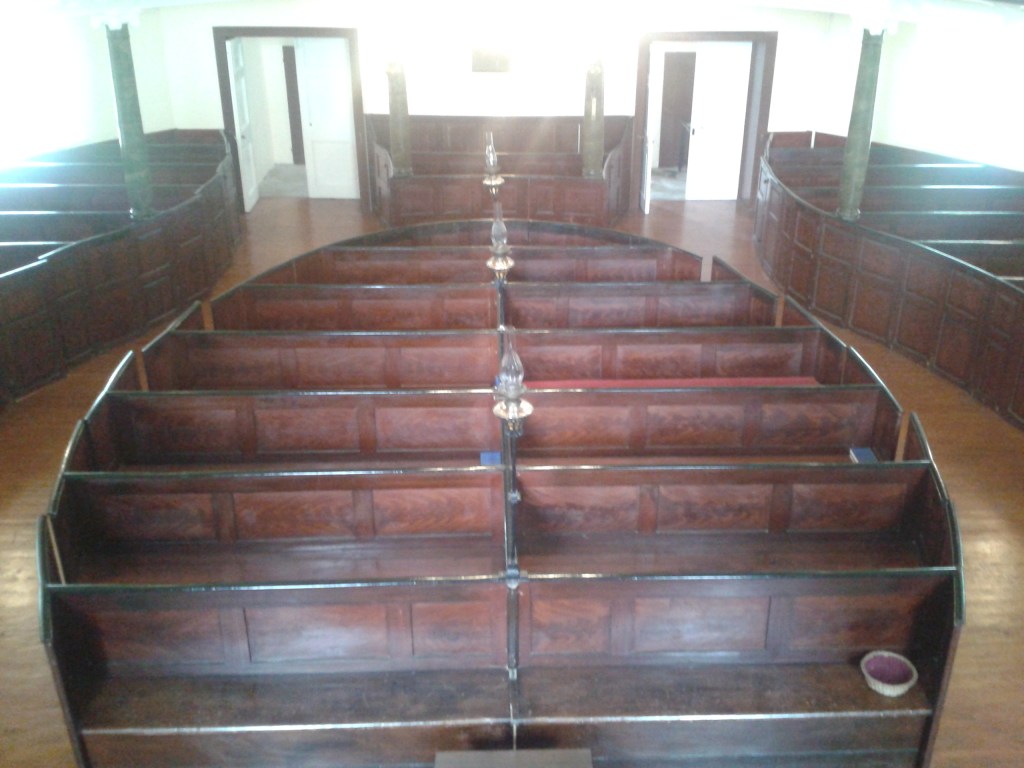
The interior of Crumlin has an elegant charm.
Pulpit
Pews
The account of S.E. Bowen’s ordination published in the Non-Subscribing Presbyterian magazine is quite full and interesting. In the service the Rev S.E. Bowen said that ‘Unitarians were a people who believed not so much in attempting a definition of religion as in working for truth and liberty, being bound together by a profound belief in the Fatherhood of God and the brotherhood of man.’ Later, over the welcome dinner there were a number of speeches given. Representing the Presbytery of Antrim the Rev W.S. Smith told the whole congregation to pick a day in October and arrive at the manse with a spade ready for three hours of work, leading the author of the report to note that the manse garden must ‘to say the least, be inferior in condition to the Garden of Eden when it was given to the father of all living to dress it and keep it’. The Rev Alexander Gordon was also there speaking highly of S.E. Bowen as a former student of his. He also related how he had recently been in the south of France and attended worship in a Protestant congregation there where the service was conducted by a young man in a congregation that only numbered sixteen, ‘yet he had been favourably impressed with the manifest consciousness of the congregation that they had come to worship, and with the energy and the earnestness of the preacher.’ It made me wonder what else Alexander Gordon did in the south of France in the summer of 1908, I can’t imagine that he just went there to sunbathe.
 velvethummingbee