The Roots of Protestant Dissent in Dublin

On Saturday, 11th June members of Dunmurry along with members of First Belfast and All Souls’ Non-Subscribing Presbyterian churches enjoyed a great visit to to Dublin. We were made very welcome by the Unitarian congregation on St Stephen’s Green and treated to an excellent tour of sites connected with the roots of Protestant Dissent in Dublin by Rory Delany.
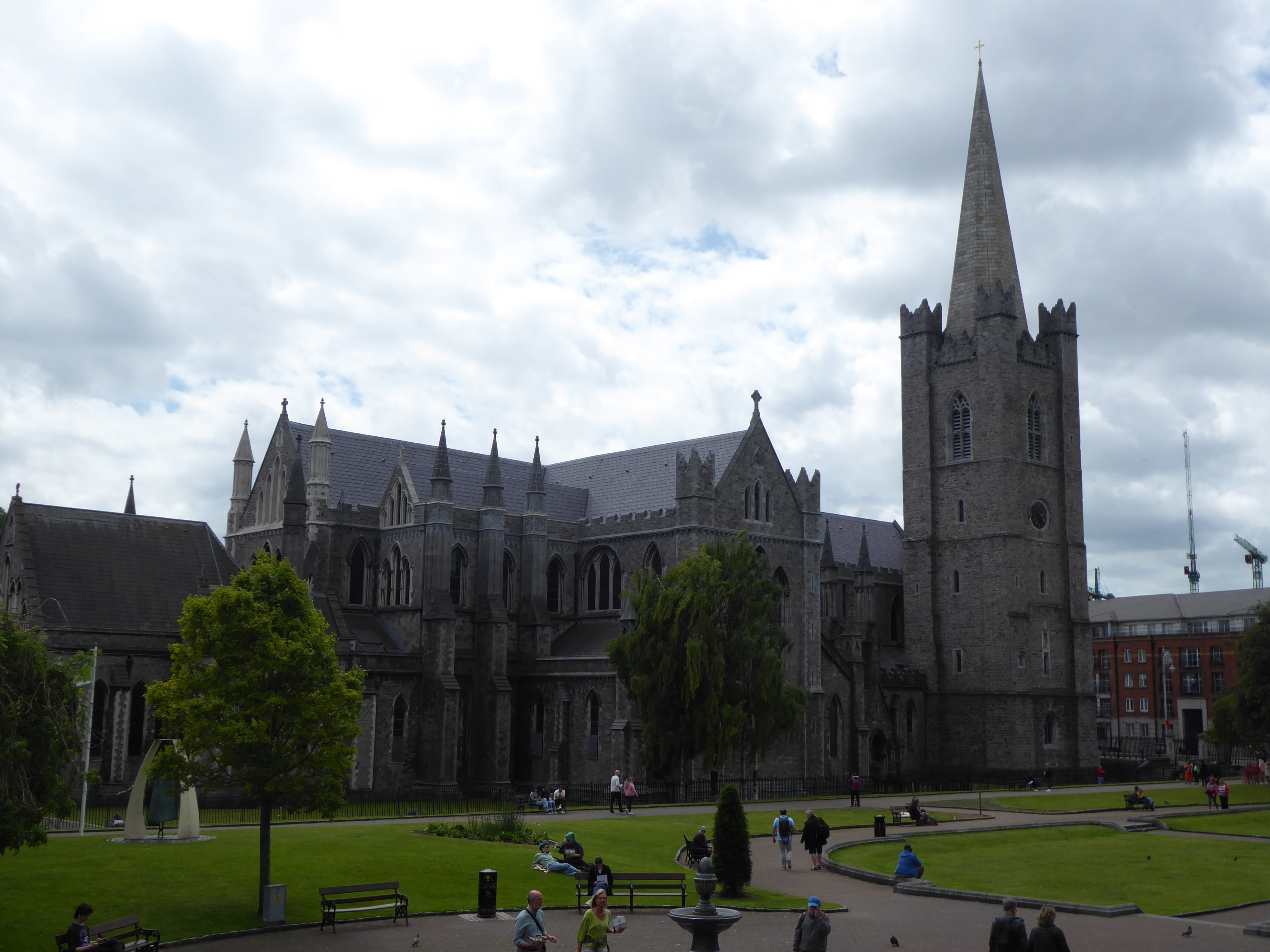
St Patrick’s Cathedral Dublin, where Cromwell is said to have stabled his horses in the 1650s

Rory has a fund of knowledge about the history of Dublin and of the different strands of Dissent in the city, which largely date back to the period of Oliver Cromwell. We were taken on a fascinating walk around some of both the familiar and not so familiar parts of Dublin and all of us gained a deep insight into the way Dissent – Independency – Presbyterianism – Unitarianism – developed in the city and the contribution made by members of the Dissenting churches to the history of the city.
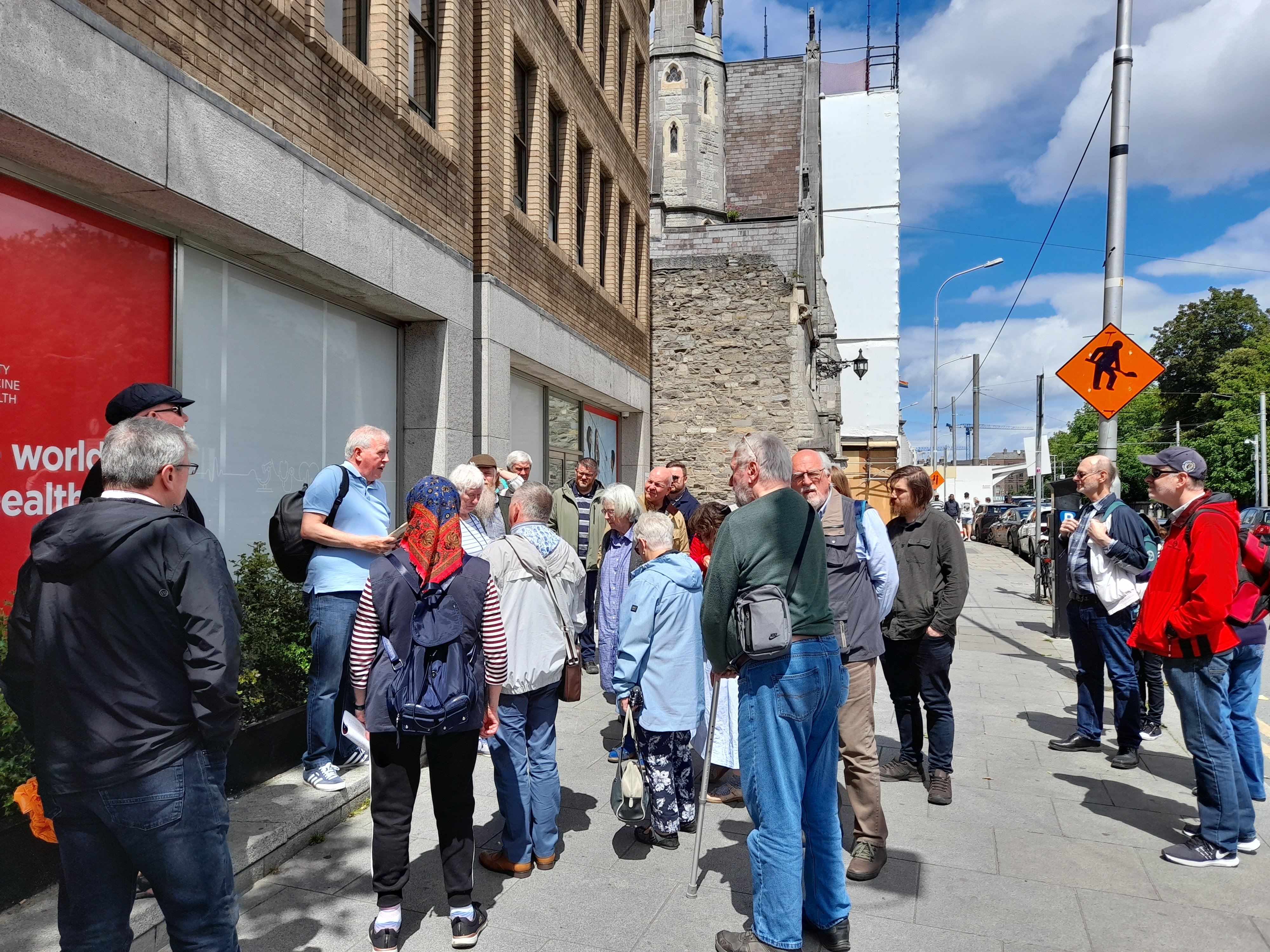
Starting the tour outside the church on St Stephen’s Green

Rory gave us an outline of the plan before we set off. The Unitarian Church was built in 1863 by the congregation of Strand Street and four years later it was joined by the congregation of Eustace Street. These two congregations contained many of the leading merchants in the city, families which had played an important part in civic life for decades, and were groups which were rooted in at least four churches which had maintained a continuity of existence from Cromwellian and Puritan times onwards.
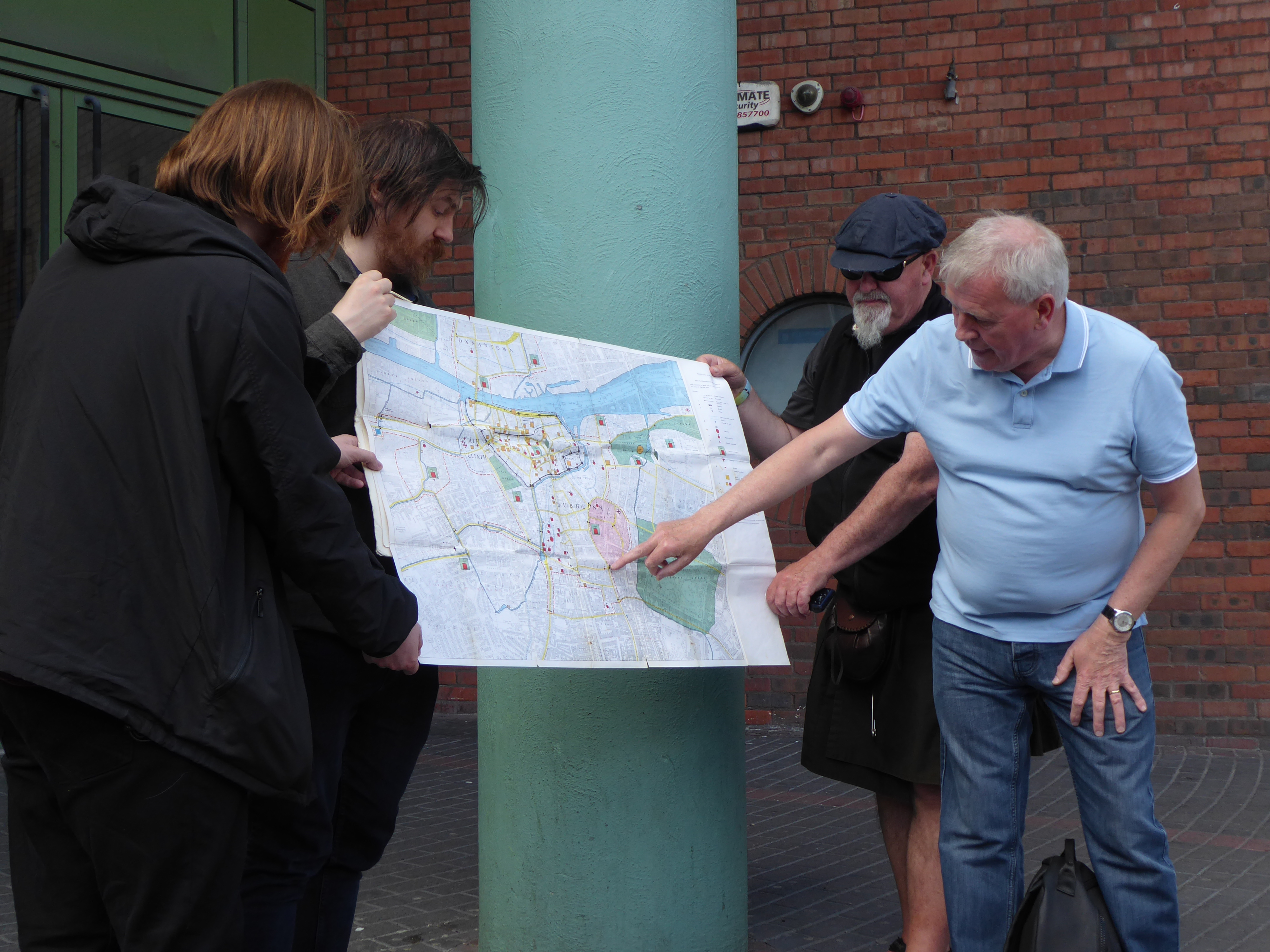
Rory explaining the location of the medieval city

Perhaps the most direct stream of religious life which fed in to the modern church on St Stephen’s Green was that of Wood Street. The first minister connected with this congregation is usually said to be John Owen, a leading Puritan divine who came to Dublin as chaplain to Oliver Cromwell and later became dean of Christ Church, Oxford during the Commonwealth. The congregation may date back to Elizabethan times but the first minister in Wood Street itself is thought to be Stephen Charnock who came to Dublin as chaplain to Henry Cromwell in 1655. A fellow of Trinity College, Dublin he was a ‘lecturer’ at St Werburgh’s and returned to England following the Restoration in 1660.
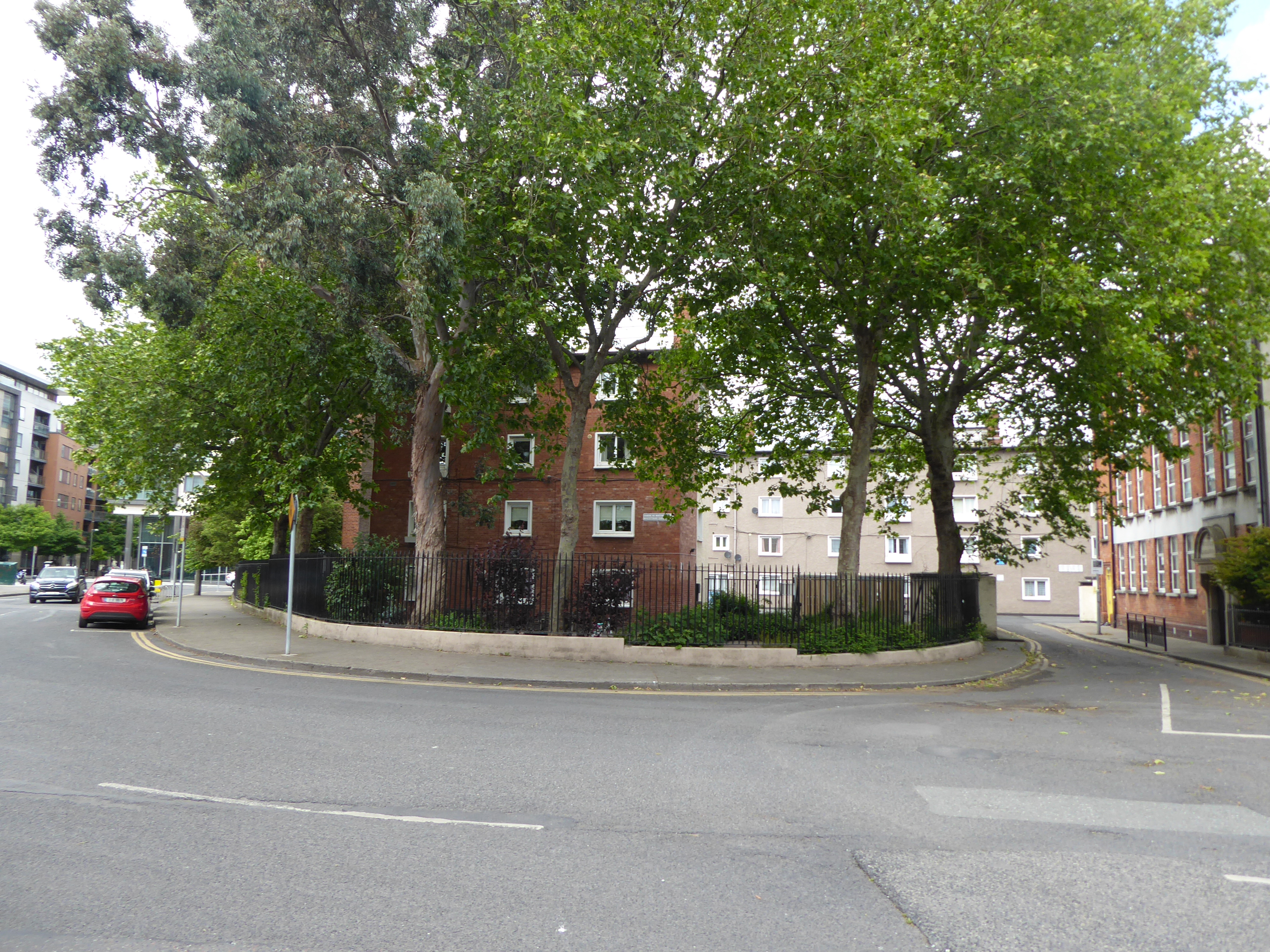
This unprepossessing view is actually the site of the Wood Street meeting-house

Wood Street was the scene of the ministry of Daniel Williams for approximately 20 years. Welsh-born he moved to London in 1687 and became the leading figure in English Dissent, establishing the library that bears his name to this day. Other distinguished and sometimes controversial ministers to serve this congregation include Joseph Boyse, Thomas Emlyn, John Abernethy and James Duchal (click on the links where shown for more information on this blog) . The congregation moved to Strand Street in 1764.
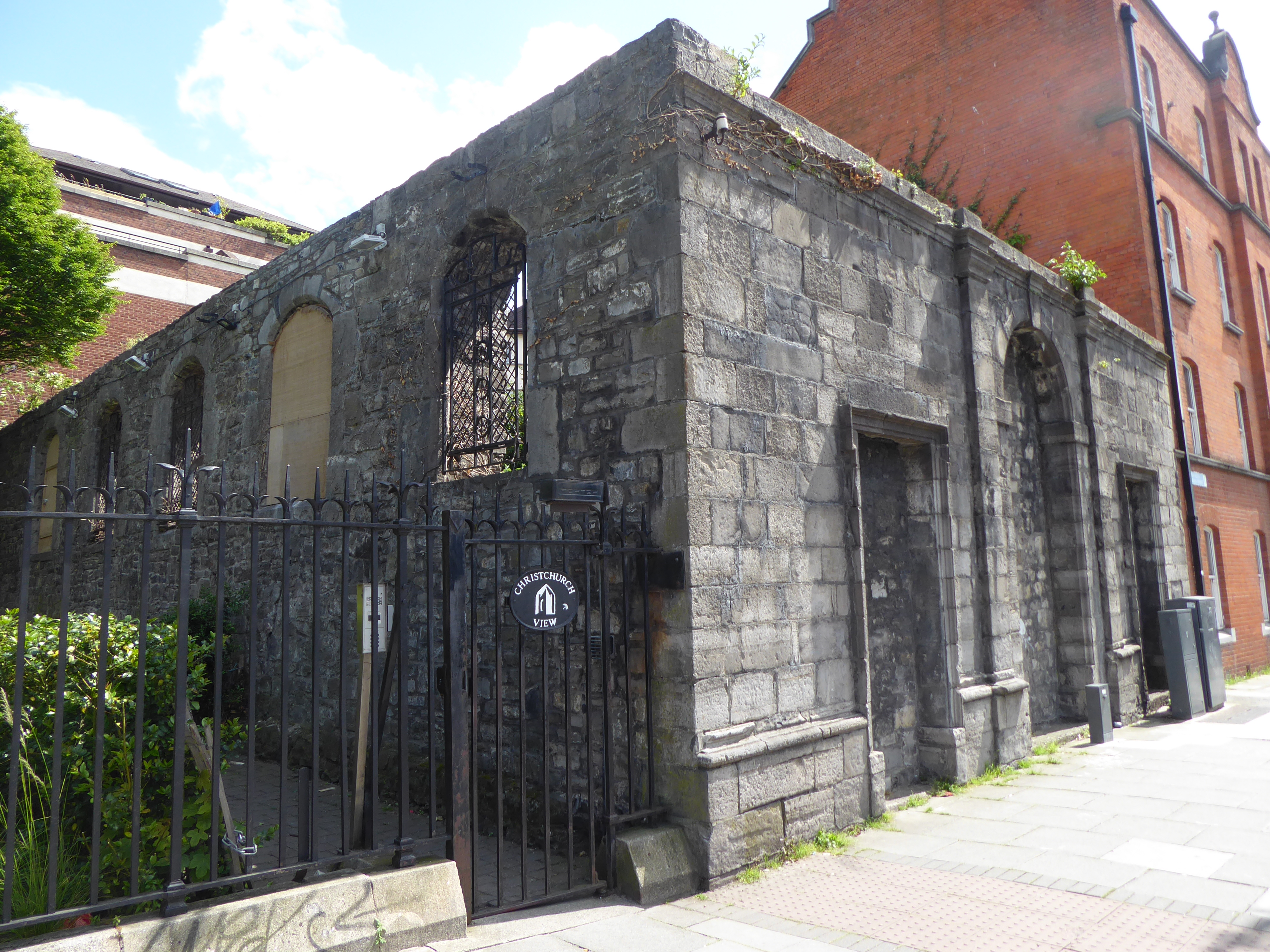
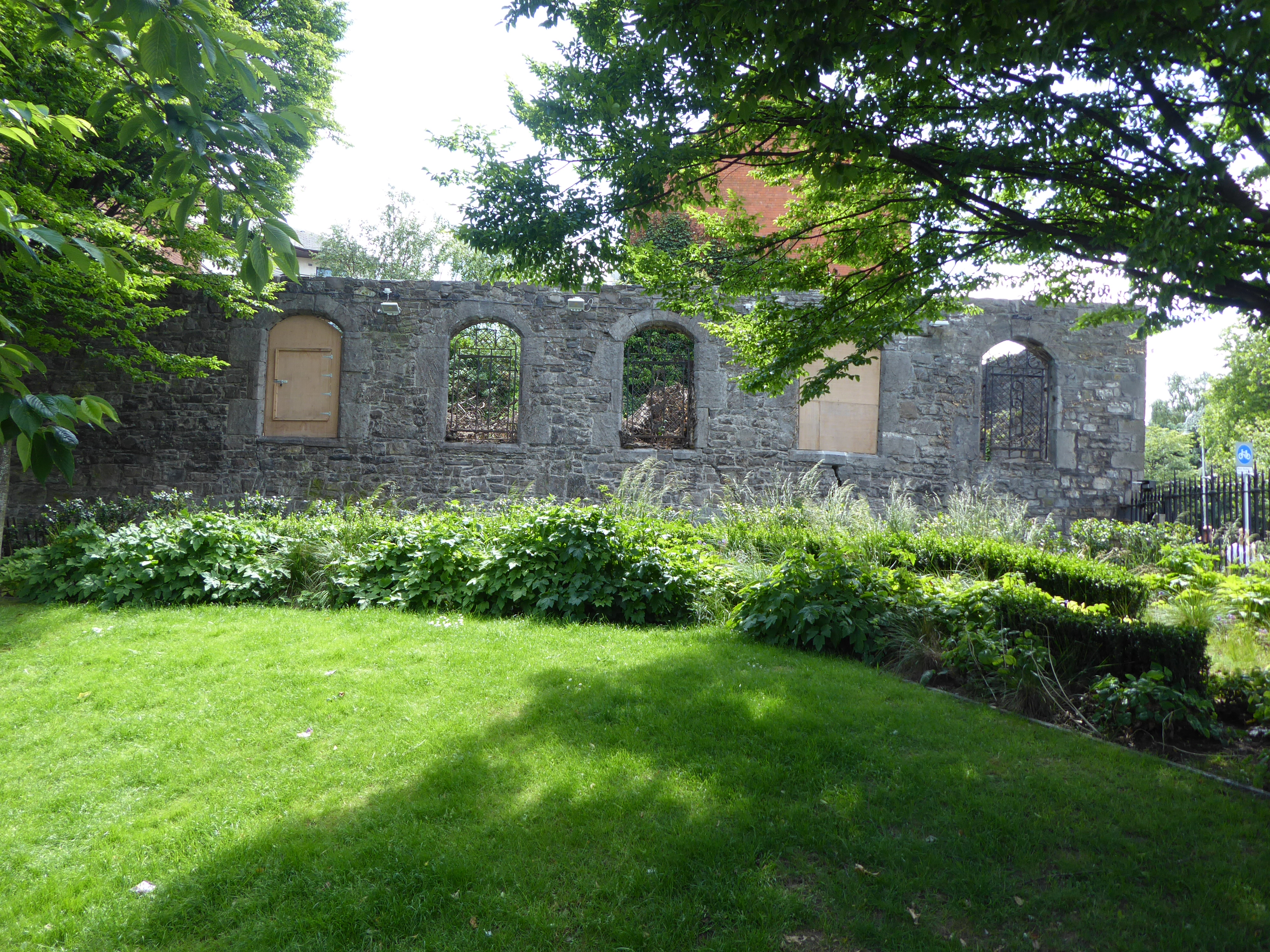
The ruins of St Nicholas’ Church just opposite Christ Church Cathedral
The burial ground of St Nicholas’ Church, now a Peace Garden

Samuel Winter, a key figure in Cromwellian Ireland and Provost of Trinity College, was also preacher at St Nicholas’ Church from 1650 and had as colleague from 1656 Samuel Mather, the son of Richard Mather (for more on his family and their connection with Toxteth click here) a leading Puritan in England, New England and Ireland. Samuel Mather was a lecturer at Christ Church and a Fellow of Trinity College. He died in 1671 and was buried in St Nicholas’ Church. He was later succeeded in the ministry by his brother Nathaniel, by which time the congregation had built their own meeting house on New Row.
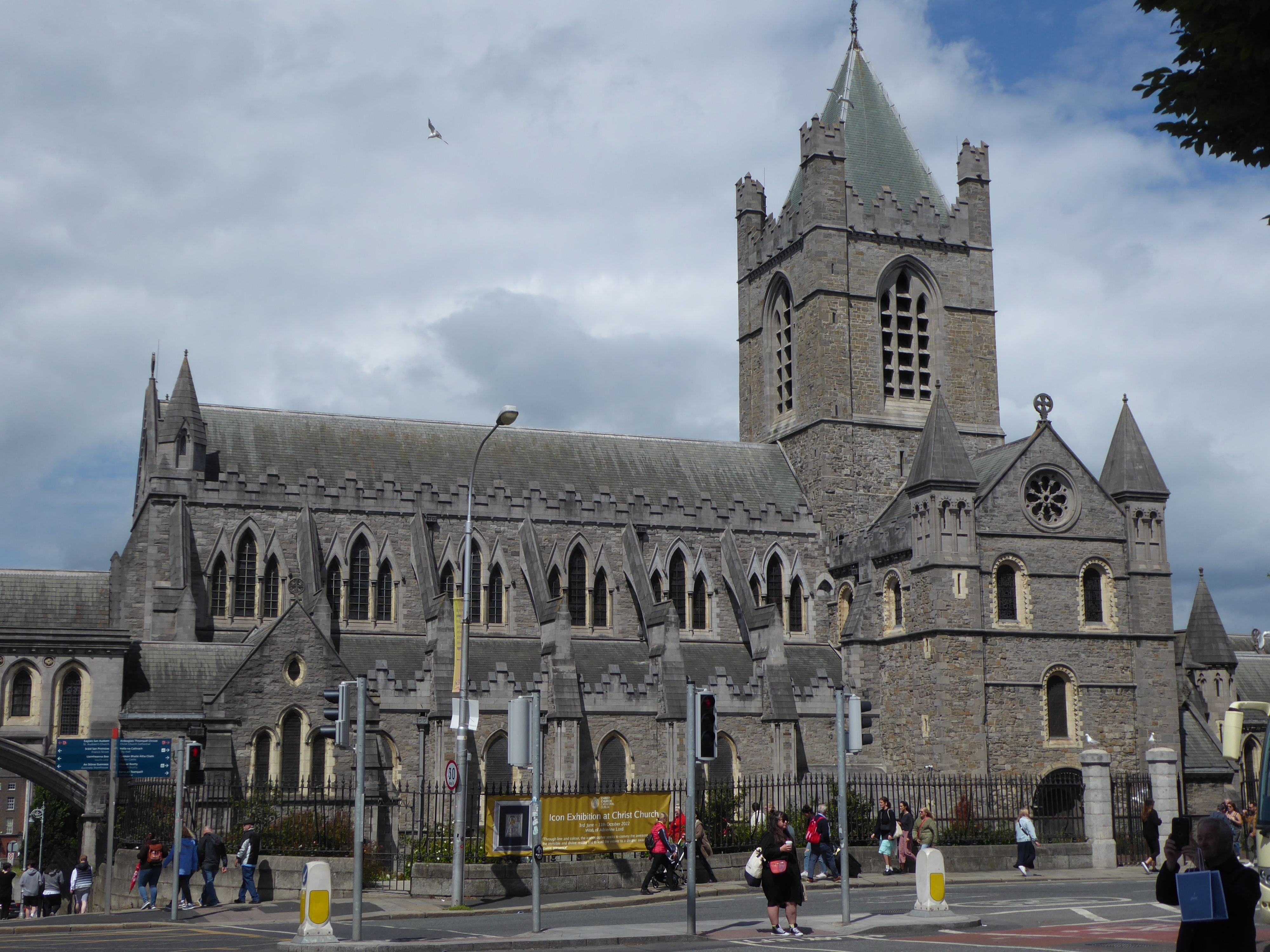
Christ Church Cathedral, Dublin

Eventually New Row moved to Eustace Street in 1728. Nearby was a Quaker meeting-house and Rory told us that one of the Quakers said of the Eustace Street meeting-house that ‘When there is so much vanity without, there won’t be much religion within’. But it is actually a very well-proportioned and elegant building, although eighteenth-century Quakers had their own view of such things. Having said that what survives of Eustace Street today is only the facade and that is not shown off to best effect by the banners hung outside by the Ark Theatre group that use the new building.
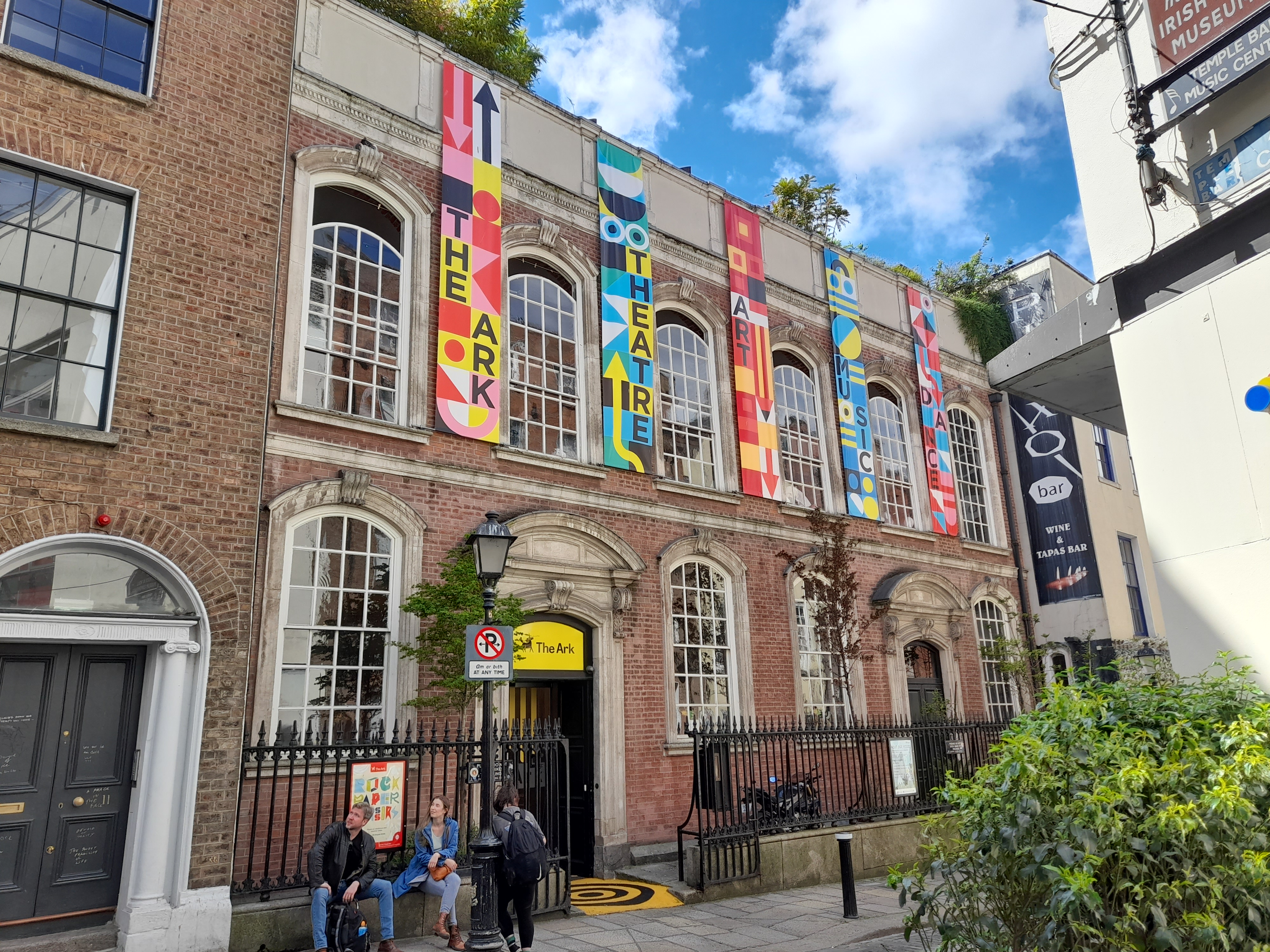
The surviving facade of Eustace Street meeting-house

Eustace Street was also the location of the first ministry of James Martineau (click here to read more about James Martineau on this blog).
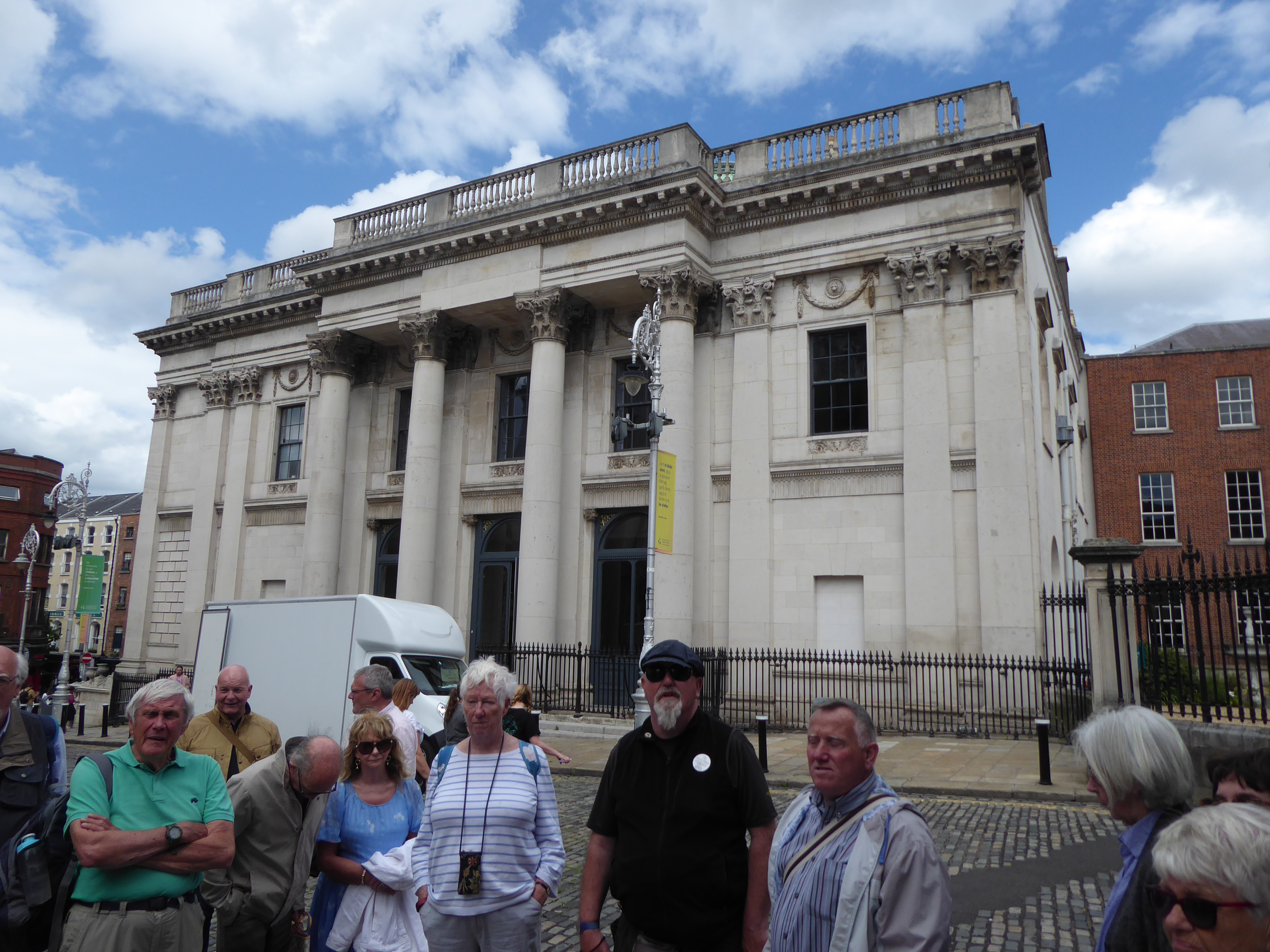
Side view of the City Hall, originally the Royal Exchange

We had a brief look at the City Hall, built originally as the Royal Exchange in 1779 by the precursor of the Chamber of Commerce. The merchants who made up the membership of the Chamber of Commerce included a disproportionate number of Protestant Dissenters, and of these a large proportion were members of one of the three Presbyterian (Unitarian) congregations in Dublin. Indeed, Rory told us, a majority of the Presidents of the Dublin Chamber of Commerce between 1785 and 1870 were trustees or members of the congregations which went on to form the St Stephens Green congregation.

It was a wonderful day full of interest and we are all indebted to Rory for sharing his considerable knowledge with us.
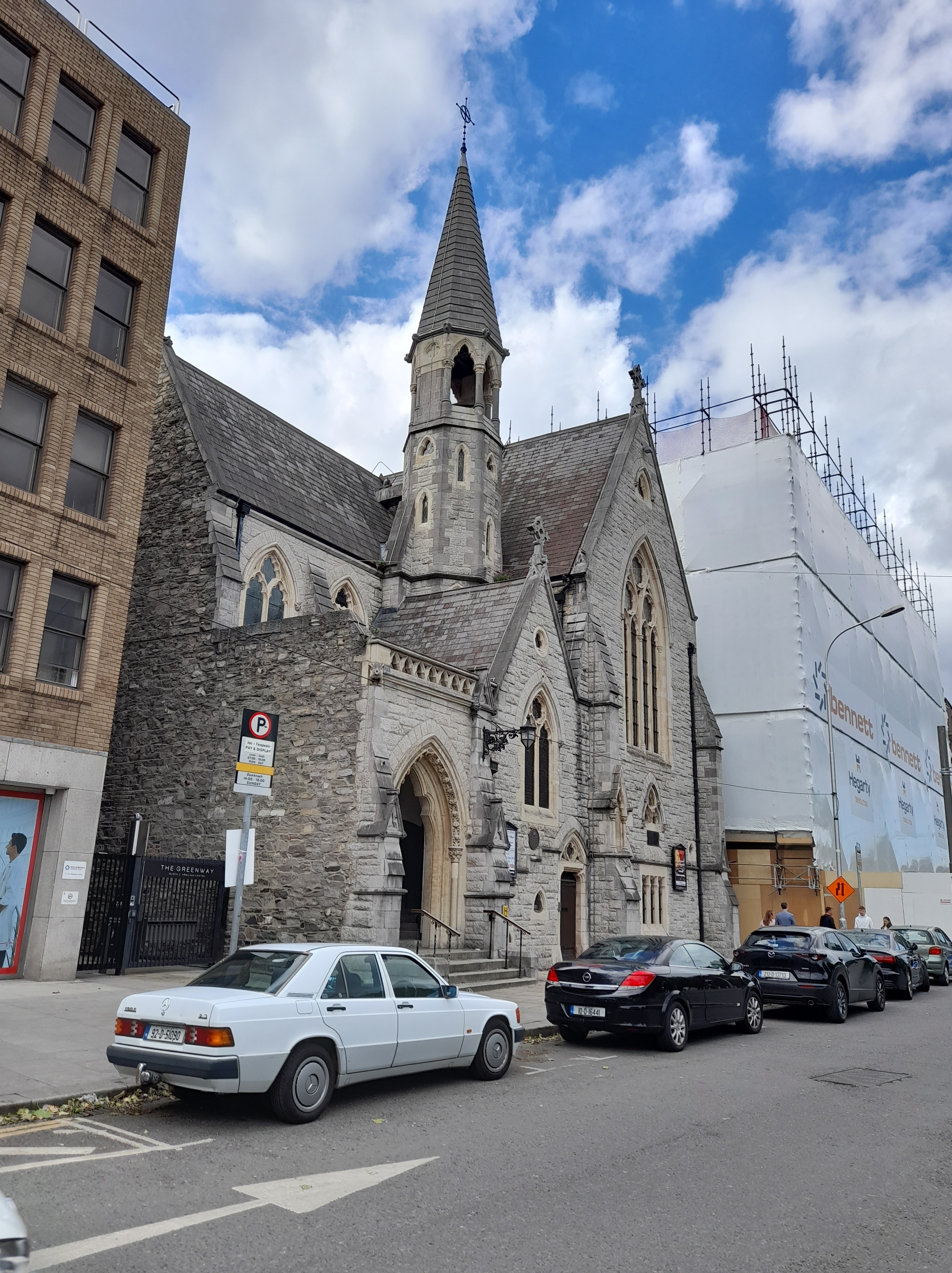
Dublin Unitarian Church, St Stephen’s Green

Transactions of the Unitarian Historical Society April 2022

The issue for 2022 (vol 28 No.1) will be with subscribers shortly and once again this is a very full and very special issue because members will receive two journals for their subscription. Part One contains three important articles plus reviews and more, Part Two is produced in collaboration with the Reckoning International Unitarian and Unitarian Universalist Histories Project.

Part One

The cloisters, Ullet Road Church Liverpool

In Part One our main articles look at Unitarianism, slavery and philanthropy. A number of Unitarians were actively involved in the abolition of slavery. One very prominent example of this was William Roscoe whose memorial is located in the cloisters in Ullet Road Church, a set of buildings constructed at the end of the nineteenth and start of the twentieth centuries which perfectly illustrate the enormous philanthropic contributions of wealthy Unitarians at this time.

‘Jewel Case’ – The Man and his Money Derek McAuley

Very Rev George Case, MA, DD (used with permission of Clifton Diocesan Archives)

Derek McAuley traces the story of the Very Rev George Case whose journey from the Anglican to Catholic priesthood was followed by a very generous bequest to the Unitarian movement. His father was a contemporary of William Roscoe in Liverpool but unlike Roscoe he was deeply implicated in the slave trade. Using modern tools and databases Derek examines the source of Dr Case’s wealth.

Reflections on a Window Rory Delany

The Wilson Memorial Window, Dublin Unitarian Church (Photo: Rory Delany)

The most prominent and striking window within Dublin Unitarian Church, St Stephen’s Green is the Wilson Memorial Window which memorializes Thomas Wilson, long standing member of the congregation and generous benefactor. In this article Rory Delany looks at the source of Thomas Wilson’s wealth, again using the databases and records which have become available and which highlight those families involved in the slave trade. He contrasts Thomas Wilson’s attitudes and business interests with his contemporary and fellow church member James Haughton who was a noted anti-slavery campaigner.

Unitarians and Philanthropy 1860-1914 Alan Ruston

Looking towards the library at Harris Manchester College

Alan Ruston gives a substantial survey of Unitarian philanthropy between 1860 and 1914. Many wealthy Unitarians gave vast sums to build churches, establish charities and develop educational institutions such as Manchester College (see above) which was founded in 1786 in Manchester but moved to Oxford in 1893 following a number of very generous donations.

Books Reviewed

Reviewed by David Wykes, Alan Ruston and David Steers

Part Two

The ethnographic composition of Hungary in 1910 (Map: Lehel Molnár)

Part Two of this issue develops the successful initial event of the Reckoning International U/UU Histories Project which was entitled ‘Transylvanian Unitarians Resisting and Surviving in Authoritarian Times’ and which took place on Thursday, 4 November 2021. This can be viewed online at the Starr King School for the Ministry YouTube channel (https://youtu.be/ozH1fnDkSHk).

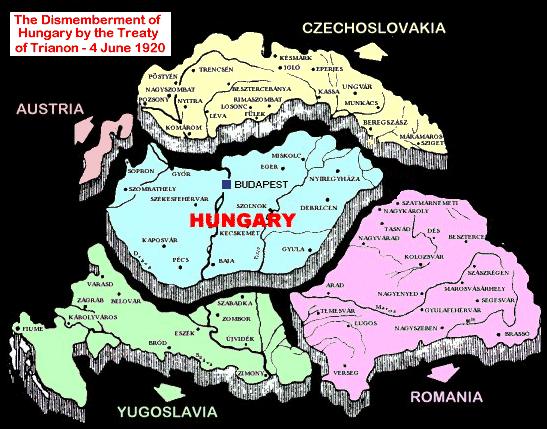
The dismemberment of Hungary by the Treaty of Trianon (Map: Lehel Molnár)

We are very pleased to be able to carry in this issue an introduction and summary of the whole Reckoning project compiled by its co-ordinators Claudia Elferdink and Lehel Molnár This is followed by two articles which are not transcripts of the original webinar but which give additional insight and information on the experience of Hungarian Unitarians over the last one hundred years, particularly following the Communist takeover in Romania after the Second World War. The first of these is ‘The Hungarian Unitarian Church in the Twentieth Century’ by Sándor Kovács and Lehel Molnár, an explanation of the struggles of the church from the Treaty of Trianon – when Hungary lost two thirds of its historic territory – to the present century. This is followed by ‘Resistance or/and Compromise. The Struggles and Service of Unitarian Bishop Elek Kiss (1888–1971) in Communist Romania’ by Sándor Kovács which gives a very detailed view of the problems and stresses experienced by the church in the Communist era.

The ethnographic compostion of Hungary in 1880

New subscribers are very welcome, annual membership costs only £10. If you haven’t yet taken out a subscription or would like to renew your subscription that can be done through the Society’s treasurer who can be contacted via the Unitarian Historical Society website here.

A First World War Roll of Honour

Another resource that will be added to the Faith and Freedom Great War Project in the near future is the Roll of Honour of the Non-Subscribing Presbyterian Church of Ireland – or at least as much of this that was printed in the Non-Subscribing Presbyterian magazine at the time.

Not surprisingly that magazine carries a great deal of information about the impact of the war on the denomination. The war brings about much comment and theological reflection from ministers and lay people but the extent of the impact only gradually comes to be realised as more and more members take up arms. The magazine decided to compile a Roll of Honour and in December 1914, four or so months after the outbreak, this was printed for the first time. Already it contained 141 names, all of them obviously volunteers, and representing 24 congregations. The list includes two who have been wounded and already the first loss – a member of the Dromore congregation – David Prentice who was lost in action on HMS Monmouth in a naval engagement off the coast of Chile. HMS Monmouth was an armoured cruiser that was built in 1901 and used mostly around Chinese waters. At the start of the First World War it was sent to the West Indies fleet and was part of the battle of Coronel, here it was sunk by the Germans with the loss of all hands.

In the next year the Roll of Honour was reprinted in March 1915, when it had been expanded to include 27 congregations. In January 1916 the list is updated when 360 names (including some women involved in nursing and other war work in some congregations) were listed in 29 congregations (out of a notional total of about 35). To this denominational list an additional three names were added in February. For the denomination as a whole of these 363 names eleven were listed as killed, missing or lost.

Rev Alfred Turner, minister of Templepatrick, at the front in the uniform of the YMCA

Having kept this Roll of Honour up until February 1916, strangely, it is not updated in the pages of the magazine again. At one point mention is made of an intention to publish on card the full Roll of Honour for the congregations but it is not clear if this was ever done. Why the Roll was never updated is hard to tell. The editor, the Rev Alfred Turner, was now working in France with the YMCA but the responsibility for providing this information lay with the individual congregations. Having begun keeping the record it seems strange that it stops.

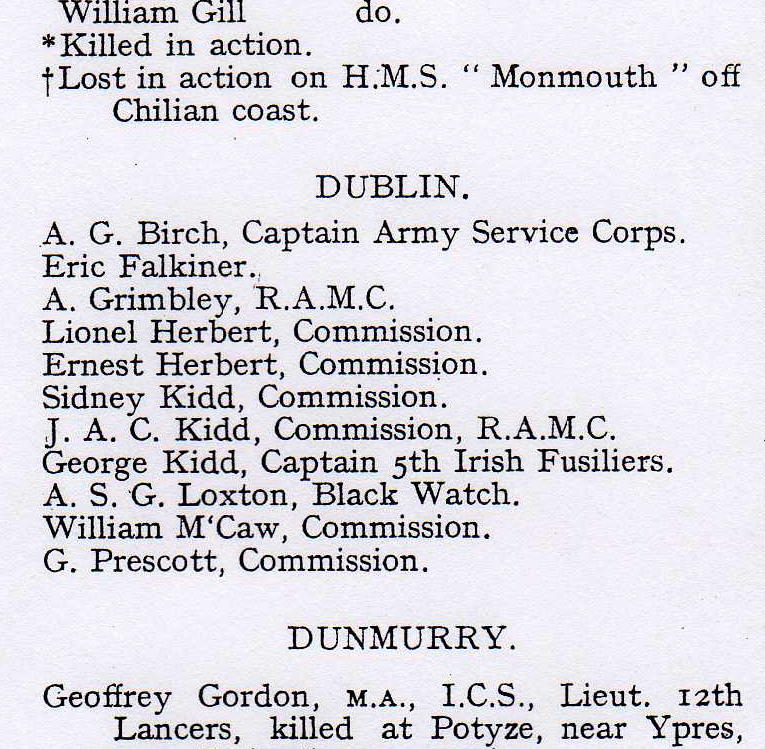
A result of the Roll never being completed is that we do not know the exact numbers of those who served in the First World War. But both the total number on the Roll of Honour and the number of those killed in the war are likely to be far greater than the numbers published between 1914 and 1916. There are, for instance, 16 obituaries of men killed in action (in two cases died of war wounds) in the magazine. Of these only three died before the publication of the January 1916 list and they do appear on the Roll of Honour but of the other thirteen only seven are listed and six are not, possibly because they had not joined up until after that date. The number of fatal casualties is likely to be much higher and a perusal of each church’s war memorial would give the true figure. If we look at the example of the Dublin congregation, for instance, on the January 1916 list there are eleven names included as having joined the armed forces. Yet the war memorial in the Church lists only those who were killed (all of them in 1917 and 1918) and of the five names preserved there three do not appear on the January 1916 list. To take another example in the case of Clough there are seven names on the published Roll of Honour, and no fatalities. However, on the Roll of Honour in the Church there are ten names, three of whom were killed in the war.

Detail of the Dublin names in the Non-Subscribing Presbyterian January 1916

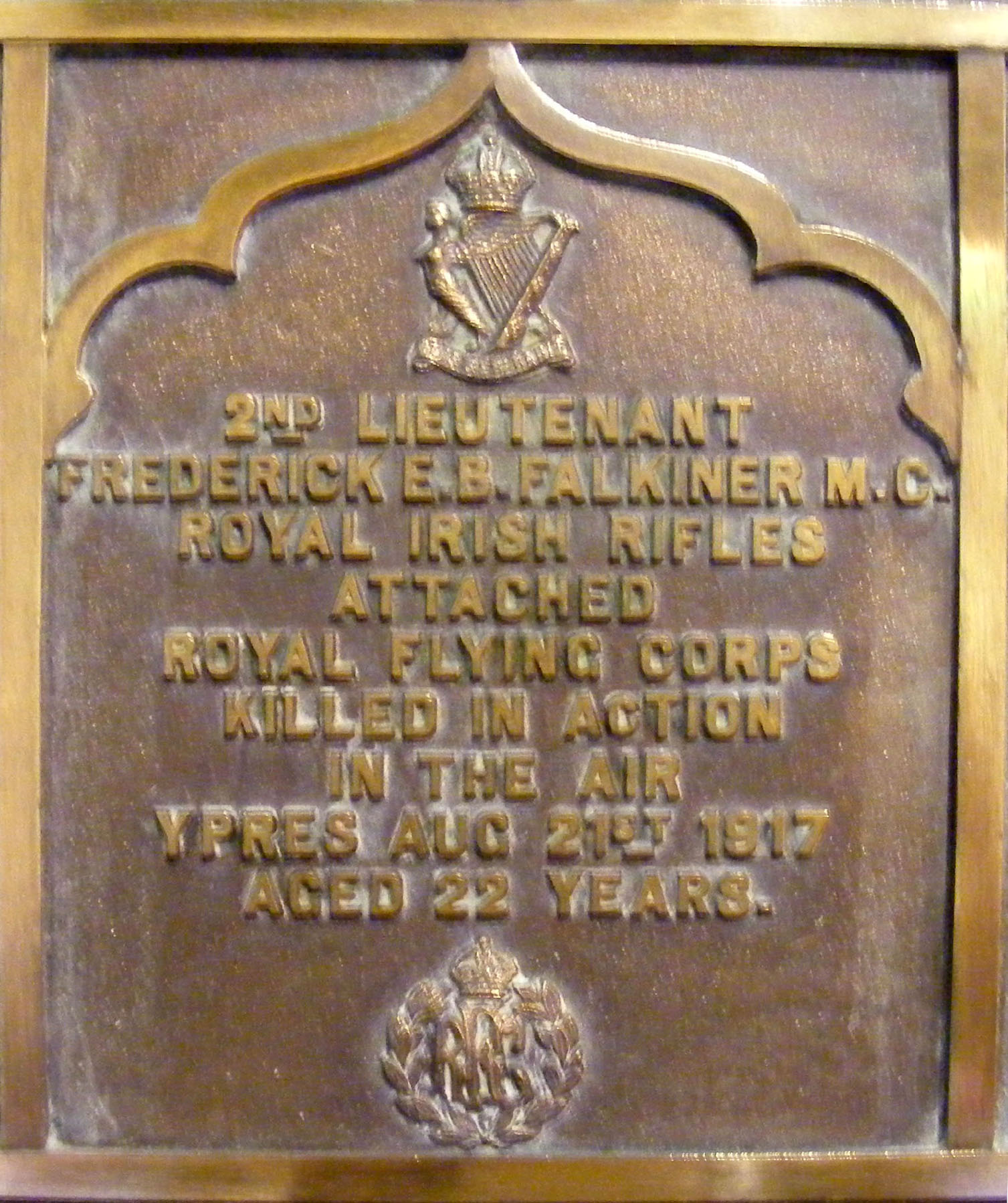
Memorial to 2nd Lieut. Frederick E.B. Falkiner MC in Dublin Unitarian Church. Killed serving with the Royal Flying Corps near Ypres August 1917 aged 22. (With thanks to P. Spain for photo)

But taking the denomination as a whole the Roll of Honour plus the additional obituaries makes a total of 24 killed in the First World War noted in the magazine in this way although clearly this cannot be the final total.

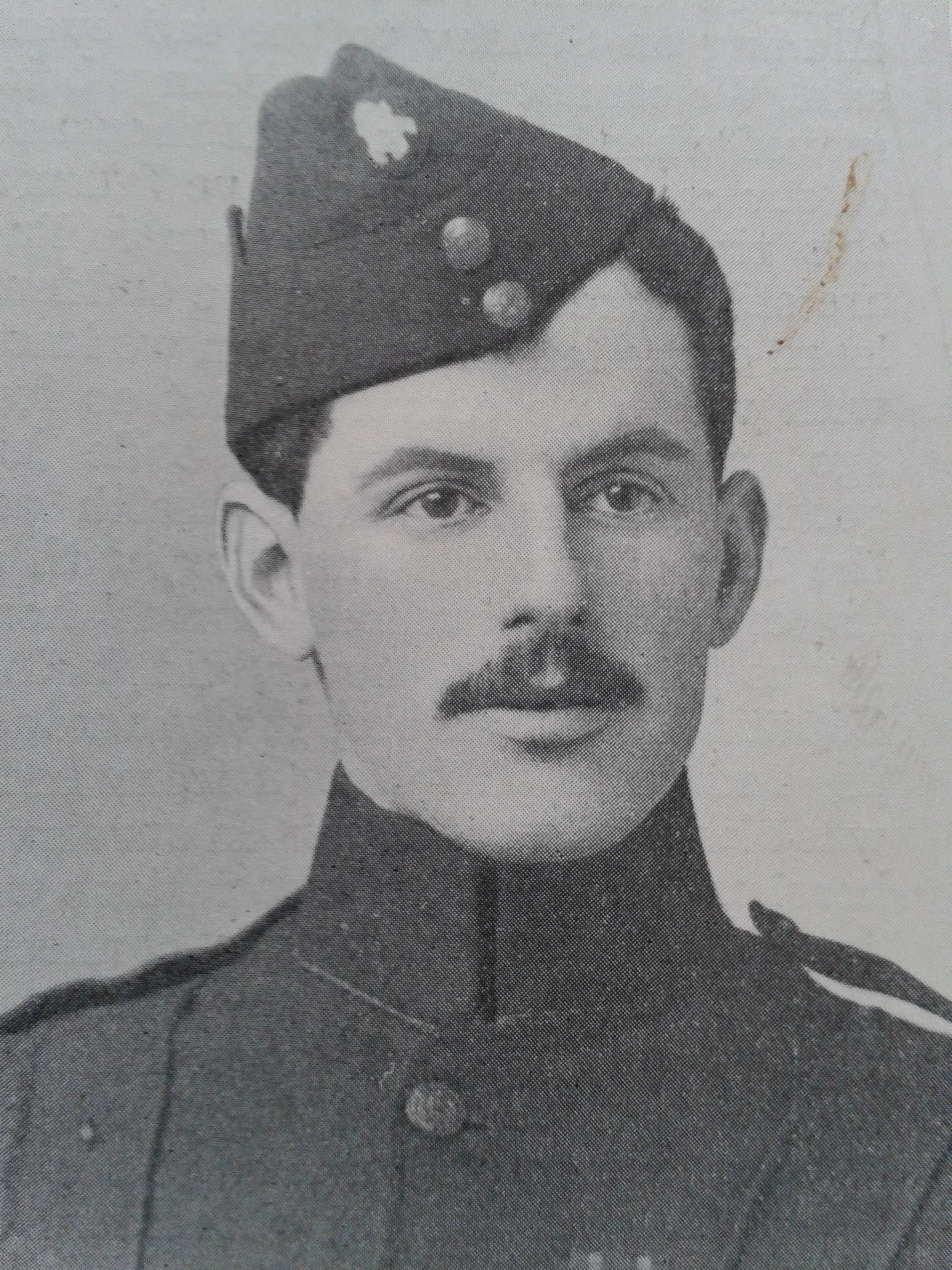
Of the 16 obituaries in the magazine 14 are of officers and most include a photograph of the deceased. Four obituaries appear in the August 1916 issue, all of them of soldiers apparently killed on the first day of the battle of the Somme. Whether an obituary appeared or not seemed to be entirely due to chance but was very unlikely for those who weren’t commissioned. There are in addition three brief notices, one of them of one of the sons of the Rev Alexander Gordon, and one mention of a death in a Rademon ‘News of the Churches’ report. This would make a total of 28 names of men killed in the war mentioned in the magazine, again certainly not the final total.

But a careful comparison of all the church memorials plus the obituaries found in the magazine plus the names on the Roll of Honour would at least give us a working total for those from the Non-Subscribing Presbyterian churches in Ireland who served and lost their lives in the First World War.

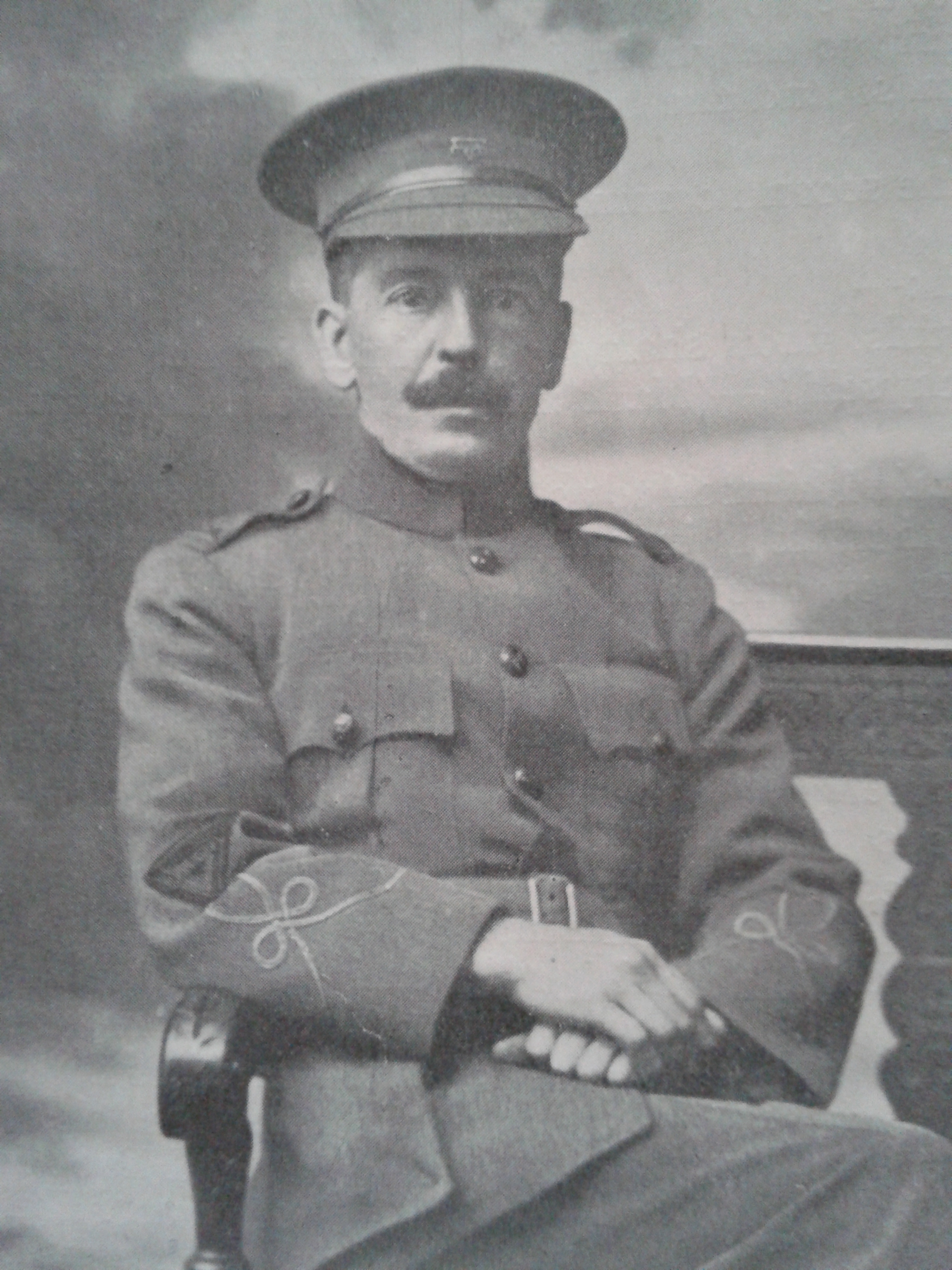
Although so many of those who died did not receive an obituary in the magazine some of the obituaries in the Non-Subscribing Presbyterian are quite informative. Most of the casualties were people who joined up at the start of the war but some had been career soldiers. One such was Captain Craig Nelson of Downpatrick who was killed in action on 26th September 1915. He was an officer in the 3rd Brahman regiment, part of the Indian army and a grandson of Rev S.C. Nelson, minister of Downpatrick. His father was Dr Edwin Field Nelson, the fifth son of Samuel Craig Nelson, a senior surgeon in the locality who had himself attained the rank of Surgeon-Major in the local Militia and continued as medical officer for soldiers in the Downpatrick district during the war up to his death in May 1916. But his son, Craig Nelson, was killed the year before, his other two sons both serving officers in the navy or the army. Craig Nelson was a career officer who had been commissioned into the Royal Irish Rifles and served throughout the South African war. He subsequently transferred to the Indian Army and served first in Egypt and then on the Western Front.

The Downpatrick minister, Rev M.S. Dunbar, said of him:

We cannot help our feelings being moved when we think of the thousands of our countrymen who have fallen in this titanic struggle, but our feelings are still more acute when we suddenly learn of the fate of one who we knew, with whom we conversed not so long ago, and who, when we bade him good-bye, was in perfect health and the best of spirits. The War, with all its dread consequences, comes home to us as it never did before. Captain Nelson was brought up amongst us, and when on furlough from India, was always pleased to join in our service here, and to recall his associations with the church and the people connected with it.

Captain Craig Nelson

The Faith and Freedom Great War Project can be seen here:

http://www.faithandfreedom.org.uk/GWindex.htm