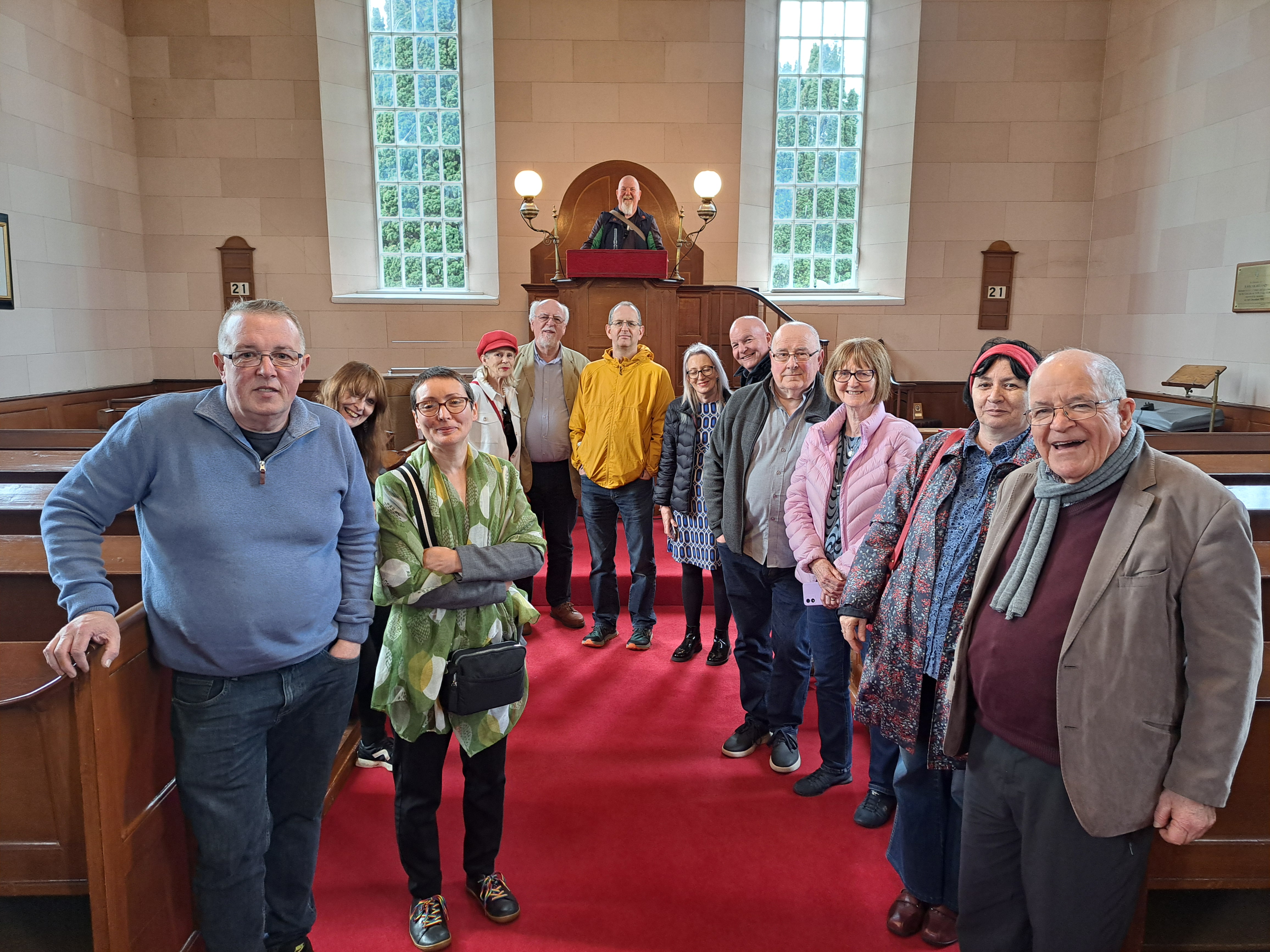
I was delighted to have visited Portaferry this morning and to get the chance to meet the wonderful congregation. The building is really impressive. Opened in 1841 by no less a person than Henry Cooke, it replaced a previous T-shaped building of 1751 which was damaged on the ‘Night of the Big Wind’ on 7th January 1839.
Portaferry Presbyterian Church
The new meeting house was built under the ministry of the Rev John Orr, who enjoyed a long and highly successful ministry from 1822 until his death in 1878. He is commemorated in a very tasteful room which was added to the building when it was restored in 2015.
Rev John Orr Room
Rev John Orr engaged the architect John Millar who produced a unique building. Simon Walker says of it: ‘In appearance this is an amazing neo-classical church, and is quite unlike any other of its kind. Millar used the ancient Temple of Nemesis at Rhammus as his influence and produced a very robust Greek Revival structure.’ (Historic Ulster Churches, p.85).
James Stevens Curl says in Classical Churches in Ulster: ‘Hexastyle Doric porticoes on a high podium distinguish John Millar’s nobly conceived Portaferry Presbyterian Church, Co. Down, of 1841, a building that would not look out of place in Helsinki or in Leningrad [St Petersburg]. Indeed, this marvellous Greek temple is one of the most distinguished Neoclassical buildings in Ulster, and is in the first rank of Neoclassical designs in the whole of the British Isles.’
The church was opened on 2nd September 1841 at a cost of £1,999 12s 6d. The building has a blue plaque in memory of its most famous minister, the United Irishman Rev William Steel Dickson. Ordained at Ballyhalbert in 1771, he was installed at Portaferry by the Presbytery of Killyleagh on 6th March 1780 and did not subscribe to the Westminster Confession of Faith on either occasion. Moderator of the Synod of Ulster in 1793 he was awarded the degree of DD by the University of Glasgow.
During the 1798 Rebellion he was imprisoned first in Belfast then in Fort George in Scotland, although prior to that he also conducted some services at Ballee on the other side of Strangford Lough. After three years in prison he became minister of Second Keady. He died on 27th December 1824, in much reduced circumstances, and was buried in a pauper’s grave in Clifton Street Cemetery in Belfast. Only eight or nine people attended his funeral, although they included the Rev Dr Henry Montgomery of Dunmurry. ‘An impressive and eloquent address’ was given at the graveside by the Rev W.D.H. McEwen, another Non-Subscriber.
The building underwent extensive restoration in 2014-15 and is now a Grade A listed building and serves as an Arts and Heritage Centre as well as the home to the historic congregation.
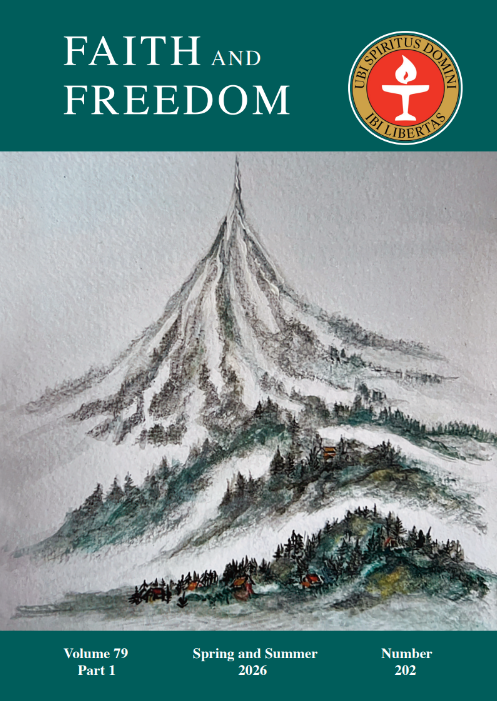
In this new issue (Volume 79, Part 1, Spring and Summer 2026, Number 202) we are delighted to include some of the papers, addresses and reflections given at the MOSA (Ministerial Old Students’ Association) meeting held at Harris Manchester College at the end of June 2026 with the theme of ‘Exploring Spiritual Experience’.
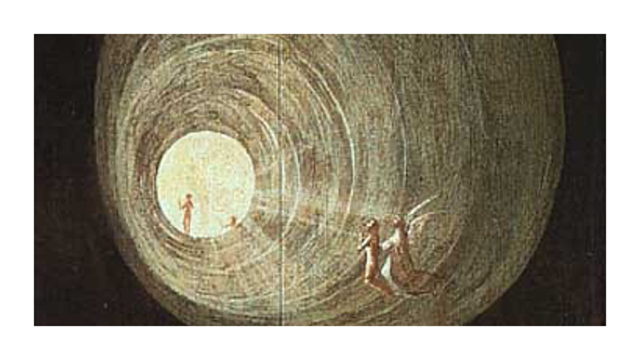
‘The Ascent of the Blessed’ by Hieronymous Bosch (1450-1516)
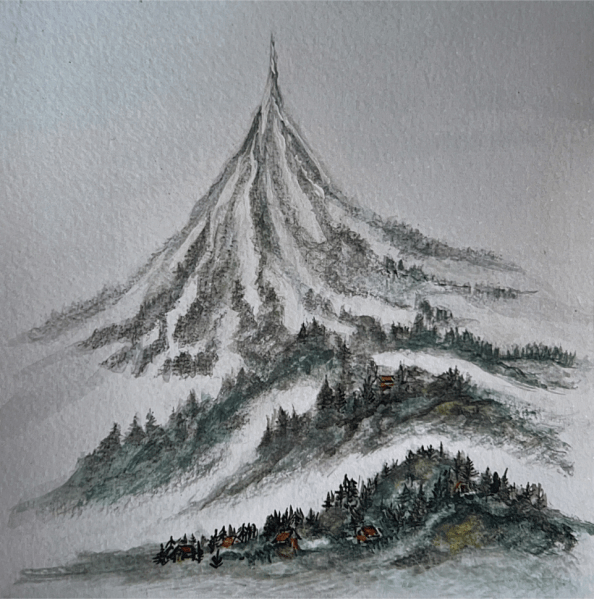
Our cover picture includes ‘Paths up the Mountain’ a picture by Dr Marianne Rankin, one of our speakers and also a painter who mixes Oriental and Western styles. As such it is a great illustration of one of the themes of this issue. Dr Rankin contributes Alister Hardy and Research into Spiritual Experience. A former Chair of the Alister Hardy Society and a former Director of Communications for the Alister Hardy Trust, and the author of An Introduction to Religious and Spiritual Experience, Dr Rankin re-acquaints us with the work, thought and activity of Alister Hardy. This was an important part of Harris Manchester College for such a long time as well as for Faith and Freedom which carried regular reports and papers from Sir Alister Hardy and his co-workers in what was initially called the Religious Experience Research Unit. Alister Hardy began his research by asking a simple question:
Have you ever been aware of or influenced by a presence or power, whether you call it God or not, which is different from your everyday self?
We are pleased to include too Peter Godfrey’s Morning Devotions from 30th June. These Devotions, which incorporate Cliff Reed’s reading ‘Partakers of the Divine’, proved such an appropriate focus for our day’s activity.
At the end of our gathering Jo James delivered a masterful summary of all our deliberations. A pattern in spiritual experience: a plenary summary to Manchester College Old Students Association was delivered with such erudition and insight on our last morning and summarised our experience so fluently that there was much demand to see Jo’s remarks committed to print. It is so kind of him to bring all his thoughts together in time for this issue.
The Sermon has always been an important literary form, for Unitarians and others. We have perhaps lost sight of what a powerful means of communication it can be but in this issue we also celebrate the Sermon with four marvellous examples of preaching in different places and different contexts. The first is Jim Corrigall’s Becoming a Servant-Leader preached at the ordination of the Rev Robert Foreman at Padiham last November. Moving on consecutively the next is Feargus O’Connor’s exposition of The Global Ethic delivered at an inter-faith event held at Golders Green in May. The third sermon – When the Spirit Will Not Be Contained – was preached in the Non-Subscribing Presbyterian meeting-house in Downpatrick on the occasion of the annual meeting of the Remonstrant Synod of Ulster on the day of Pentecost in May 2026. The Remonstrant Synod dates back to 1830 but has undergone a revival in the last couple of years and now again meets as a public body which is exploring its purpose and direction in the 21st century. There was added poignancy to the occasion in that the preacher, Brian Moodie, minister of Dromore and Banbridge, was attending the Synod for the last time before returning to his native South Africa. Our fourth sermon is Robin Hanford’s address given at the College Service on Wednesday, 1st July. It was an exemplary expression of the connection between Unitarianism, spirituality, academia and ministry. As such it fits perfectly with our emphasis in this issue on Sermons – as Literature.
The Chapel, Harris Manchester College
Following the Sermons we have A Tribute to Dan C. West one of our most loyal supporters and contributors in recent years who died in March 2026. Dan was a Presbyterian minister, an academic and a college administrator who supported our journal with powerful articles that questioned the way we looked at the world and those in power.
All this is followed by reviews contributed by Professor David Williams (Paul Morland. No One Left: Why the World Needs More Children) and Rev Jim Corrigall (Sean J. McGrath, The Lost Road – A Search for the Soul of the West).
You can take out a subscription via Nigel Clarke, our Business Manager, or online via PayPal. The details of how to subscribe can be found on our website here: https://www.faithandfreedom.org.uk/subs.htm
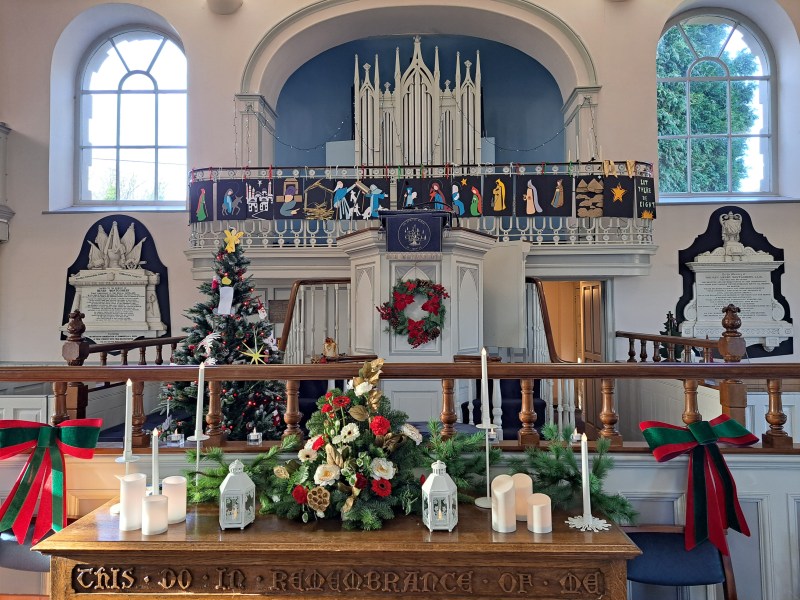
We’ve had a splendid succession of Christmas events and services at Dunmurry beginning with the Visit of the Choir of Malone Integrated College.
We were delighted to welcome the Malone Choir with their musical director Caroline Mitchell to our Warm Space on Thursday, 4th December. The Choir sang a wonderful, varied programme for the best part of two hours. It is always such a treat to have them with us and above is a video of some of the pieces they sang.
On Friday, 12th December we held our Candlelight Carol Service with Harmonic Sounds Concert Band. It was an excellent night with readings given by Church members and two special guests – John Neill, Kathy Yuille, Sylvia McBride, Claire Cromie, Adele Johnston, Diana Taggart, Des McKeown (First Church), Rt Rev Alister Bell (Moderator NSPCI) and Dr Chamindra Weerawardhana.
Click on the video to see our Candlelight Carol Service with Harmonic Sounds
During the service a Collection was taken for the Motor Neurone Disease Association Northern Ireland. This raised the magnificent total of £344.50. When that is added to the £1,405 already raised for the MND Association at our Table Quiz that means that we have raised £1,749.50 altogether for our charity. An excellent result that will be presented to the Association in the New Year. Well done everyone.
Over the period before Christmas there was another wonderful response from the congregation for the Salvation Army Christmas Appeal. Bags and bags of new toys were brought to the Church by our members and these were taken to the Salvation Army for distribution to children in need on Monday, 15th December. Our support of this appeal is greatly appreciated and helps make a difference to many children’s lives over Christmas.
View our Congregational Carol Service – click on the video above
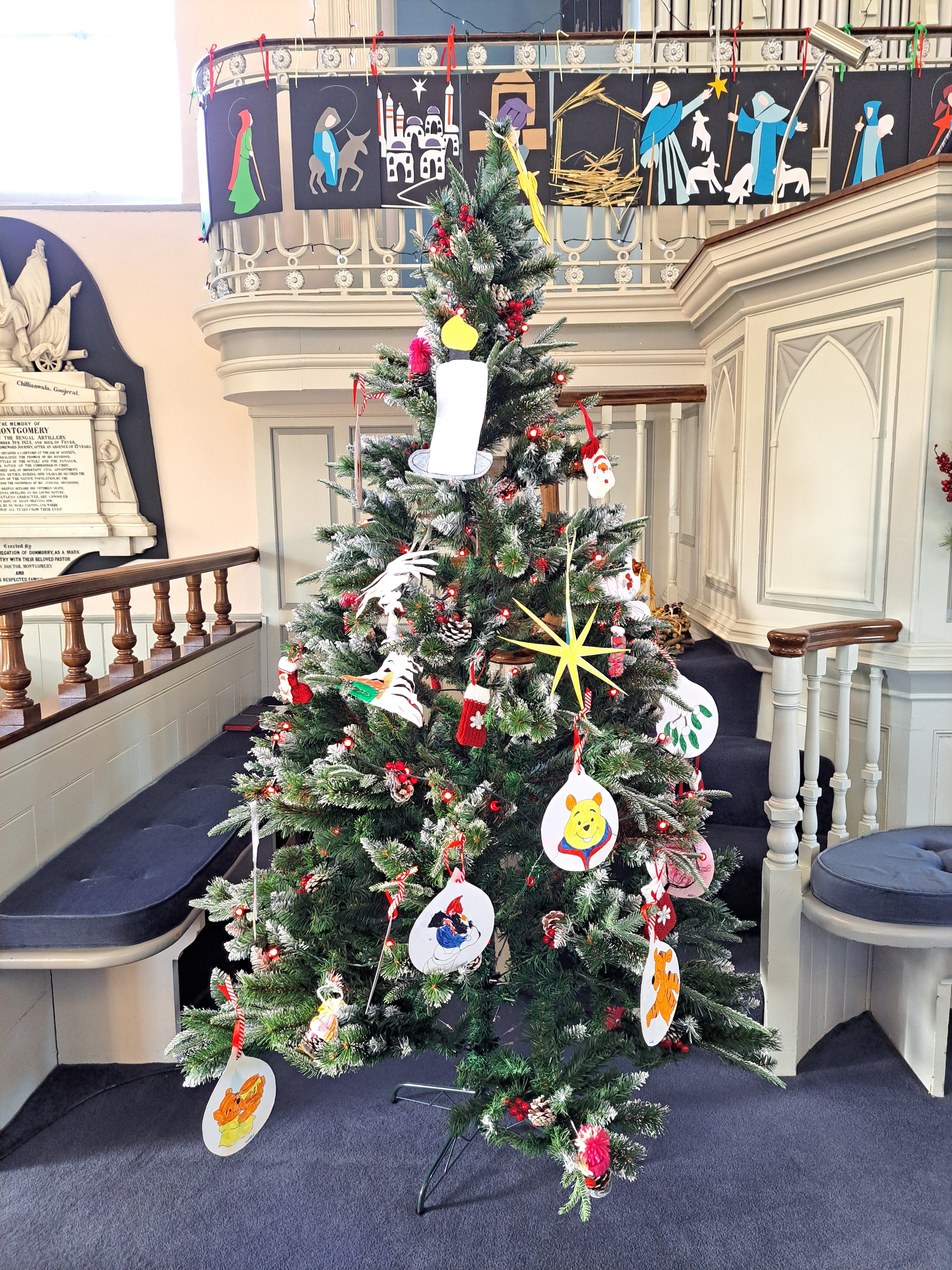
Our Congregational Carol Service took place on Sunday, 21st December at 11.30 am and was a great occasion. The service was led by members of the Sunday School and Youth Group and readings were given for us by Lochlan, Erin, Darcee, Holly, Jenna, Bryn, Adele and Sue. Music was provided for us by Jack Steers on trumpet and Allen Yarr on organ and the members of the Sunday School decorated the Christmas Tree with decorations they had made.
On Christmas Day we were pleased to welcome Richard Yarr to the organ bench and enjoyed readings from Lochlan, Erin and Sue. It was a lovely short service.
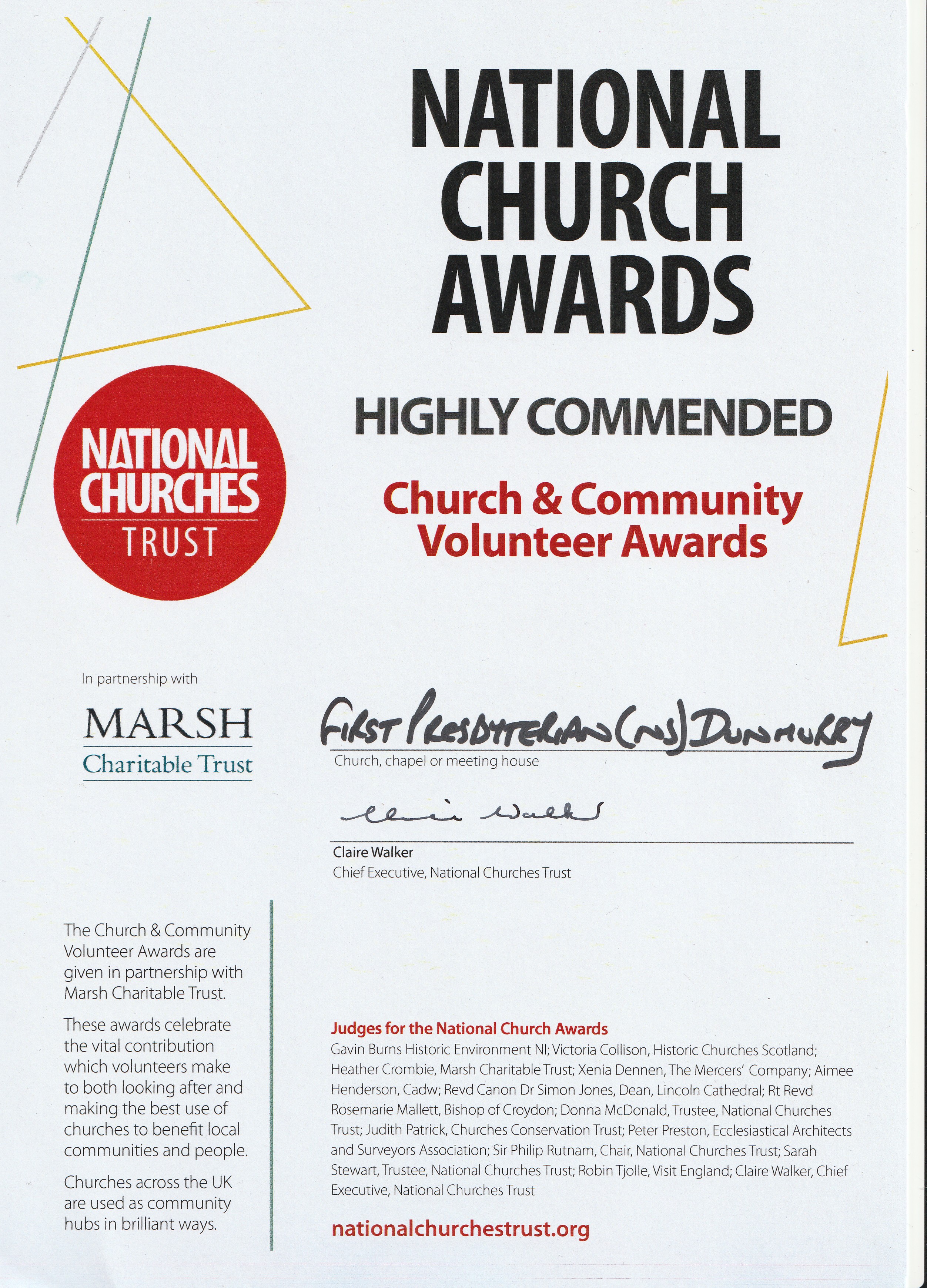
Over we also received our Highly Commended certificate from the National Churches Trust in the Church and Community Volunteer Awards section for the work done in developing and cataloguing the Very Rev William McMillan Library. It’s great to see the Library taking shape and playing such an important role in the life of the congregation and the denomination, with visitors coming from across the UK. It’s a great achievement to reach the last 16 in a UK-wide event, and well done to Sue Steers and Kathy Yuille for all their hard work over the years. The Library will take on even more importance in the New Year when we celebrate our 350th Anniversary as a congregation.
The latest issue of Faith and Freedom (Volume 79 Part 1, Issue 201, Autumn and Winter 2025) is now on its way to subscribers. Having been in print since 1947 we have now reached issue 201.
Rev Sidney Spencer by John Stanton Ward, Harris Manchester College, Oxford.
Sidney Spencer is a much neglected figure in twentieth-century Unitarian history and Jo James gives a comprehensive examination of his theological ideas. A Unitarian minister noted for his strongly pacifist witness both before and during the Second World War, with only limited formal academic credentials to his name he nevertheless became Principal of Manchester College, Oxford as well as one of the acknowledged world experts on mysticism. His interest in this subject resulted in a number of publications culminating in the Pelican Mysticism in World Religion in 1963, an influential work and something of a best seller in its day. Jo illuminates Spencer’s theology, sets it in its context and seeks out its relevance to the present day.
This year is the 100th anniversary of the ‘Scopes Monkey Trial’, the famous trial which took place in Dayton, Tennessee when local teacher John Scopes was taken to court for teaching Darwin’s theories in his classes, contrary to the law of the state of Tennessee. John Midgley gives a timely account of this key event, forever made famous by the movie Inherit the Wind, starring Spencer Tracey.
One hundred years is a long time yet the whole case has many uncomfortable resonances in the present age and these perhaps feed into the current situation in the United States. Dan C. West, who has ‘lived through 15 presidents since the beginning of the Second World War’, gives a very insightful analysis of the current political, theological and cultural trends which mark America today.
How do we understand our place in the universe, how do we understand the universe itself in theological terms? Feargus O’Connor provides an excellent examination of Our Mysterious Universe: Accident or Design? looking at the philosophical notions that underpin the argument from design.
Following on from Barrie Needham’s article considering the Koran/Quran from Western, liberal Christian eyes in our last issue, we are pleased to include a response from Imran Usmani who brings considerable insight to the topic through his extensive researches on Christianity, Judaism and Islam.
We are delighted to once again include a number of reviews, including Peter B. Godfrey’s review of Diarmaid MacCulloch’s Lower than the Angels: A History of Sex and Christianity; Peter’s review of the late Rev Art Lester’s Thank God I’m an Agnostic: Trusting your Hunch about God, the Universe and All That and the editor’s review article on A Short History of the Non-Subscribing Presbyterian Church of Ireland. Including Sketches of Individual Congregations and a Fasti of Ministers who served in them by John Nelson.
You can take out a subscription via Nigel Clarke, our Business Manager, or online via PayPal. The details of how to subscribe can be found on our website here: https://www.faithandfreedom.org.uk/subs.htm
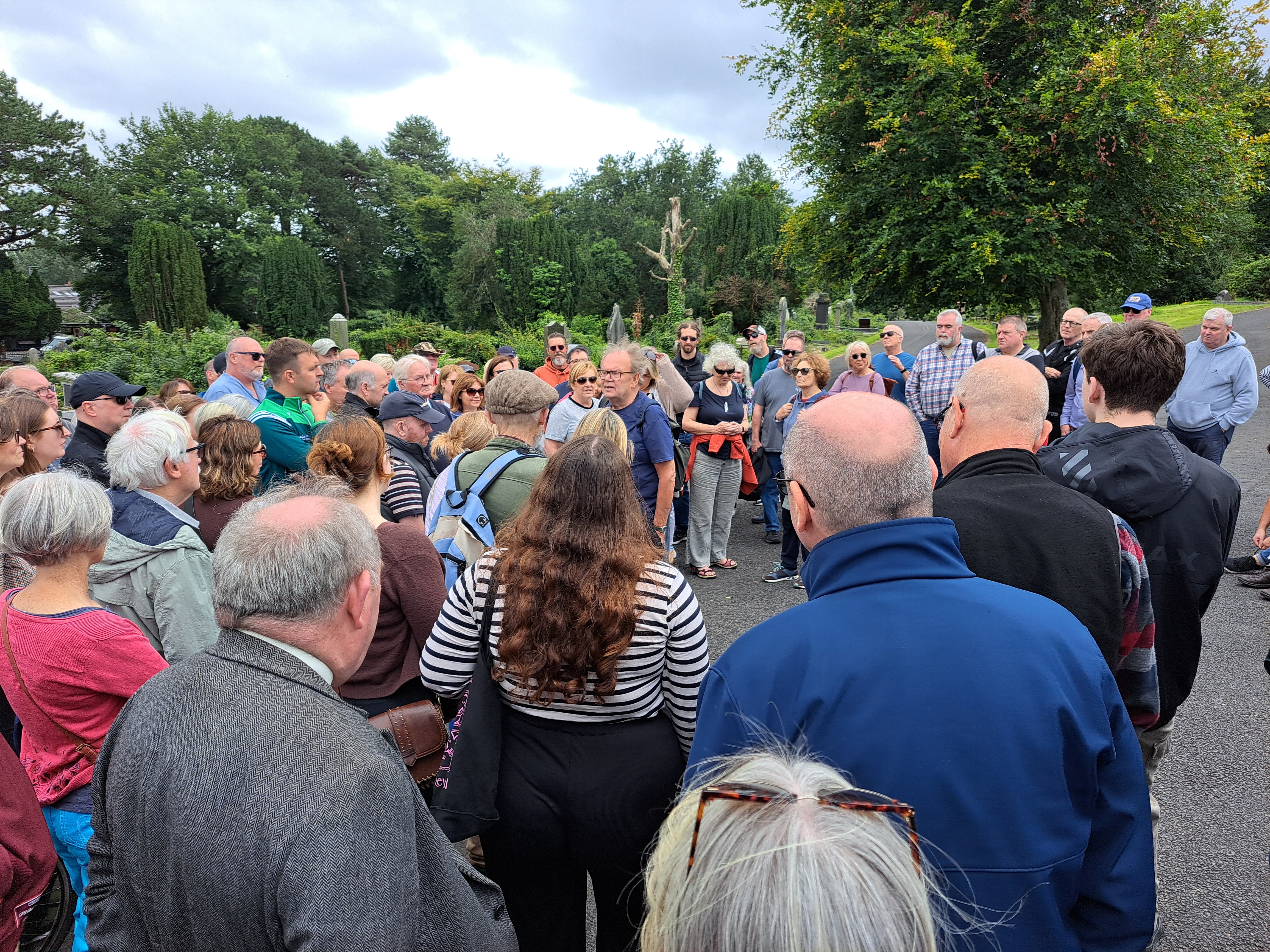
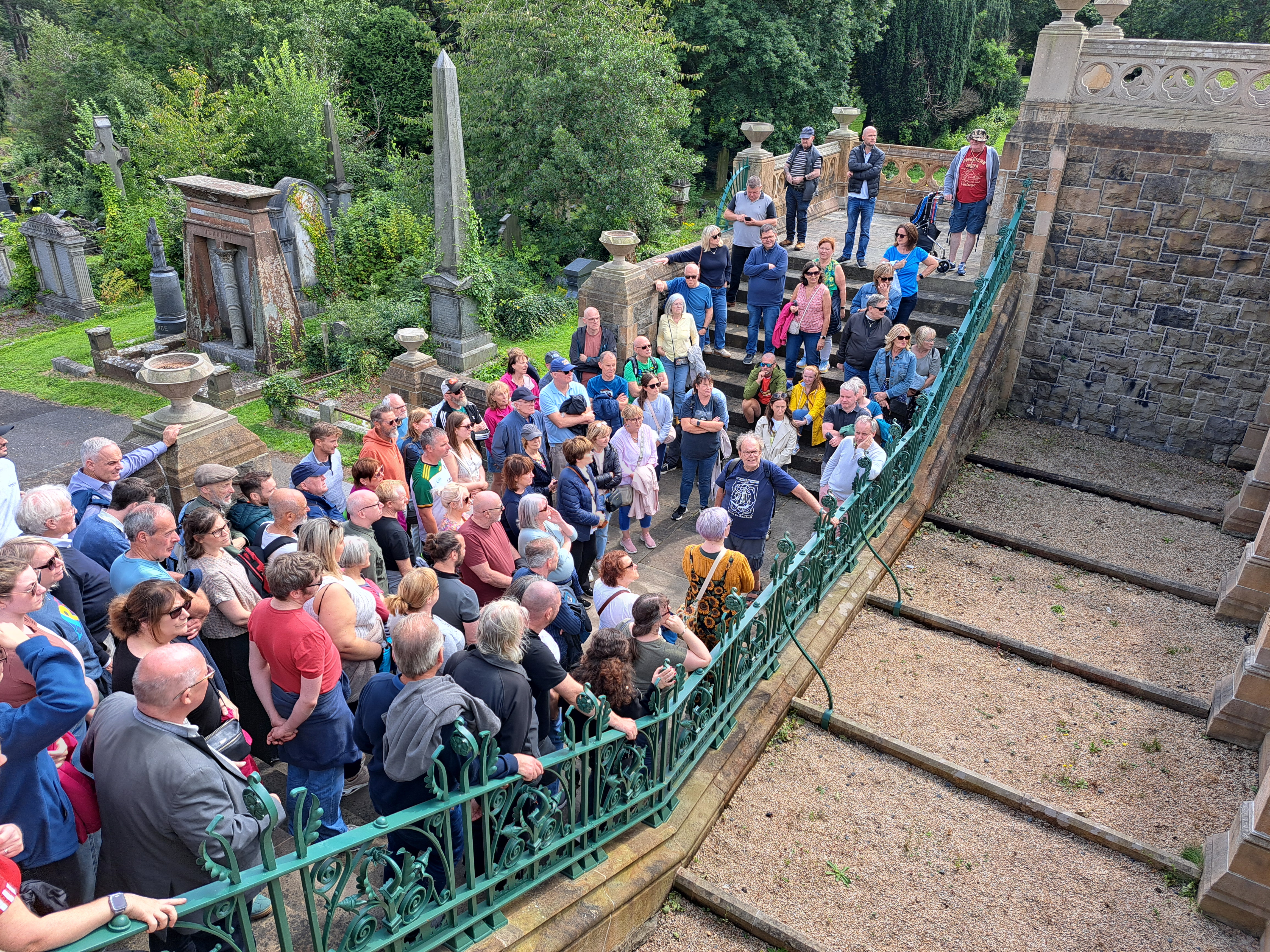
I was pleased to again take part in a tour of Belfast City Cemetery led by Tom Hartley. Tom is now the author of four books on the cemeteries of Belfast and I was pleased also to pick up a copy of his latest work, More Stories from the Belfast City Cemetery. This was his penultimate tour of the last series he would give as part of the Féile an Phobail and like all these tours there was a very large attendance.

Start of the tour, showing some of those present
I see the first guided tour I attended was in March 2022. You can read that account here – Silent yet eloquent Memorials. There are a number of changes to the Cemetery made since that time, like the completion of the visitors’ centre, new signage all around the Cemetery, the restoration of the Vaults – which house the remains of such industrial luminaries as Sir Edward Harland and Thomas Gallaher – and a lot of new planting.
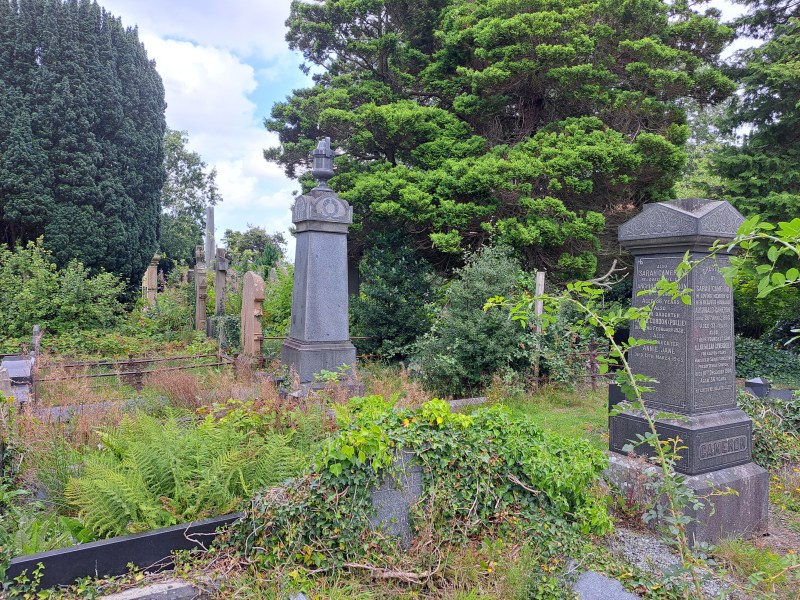
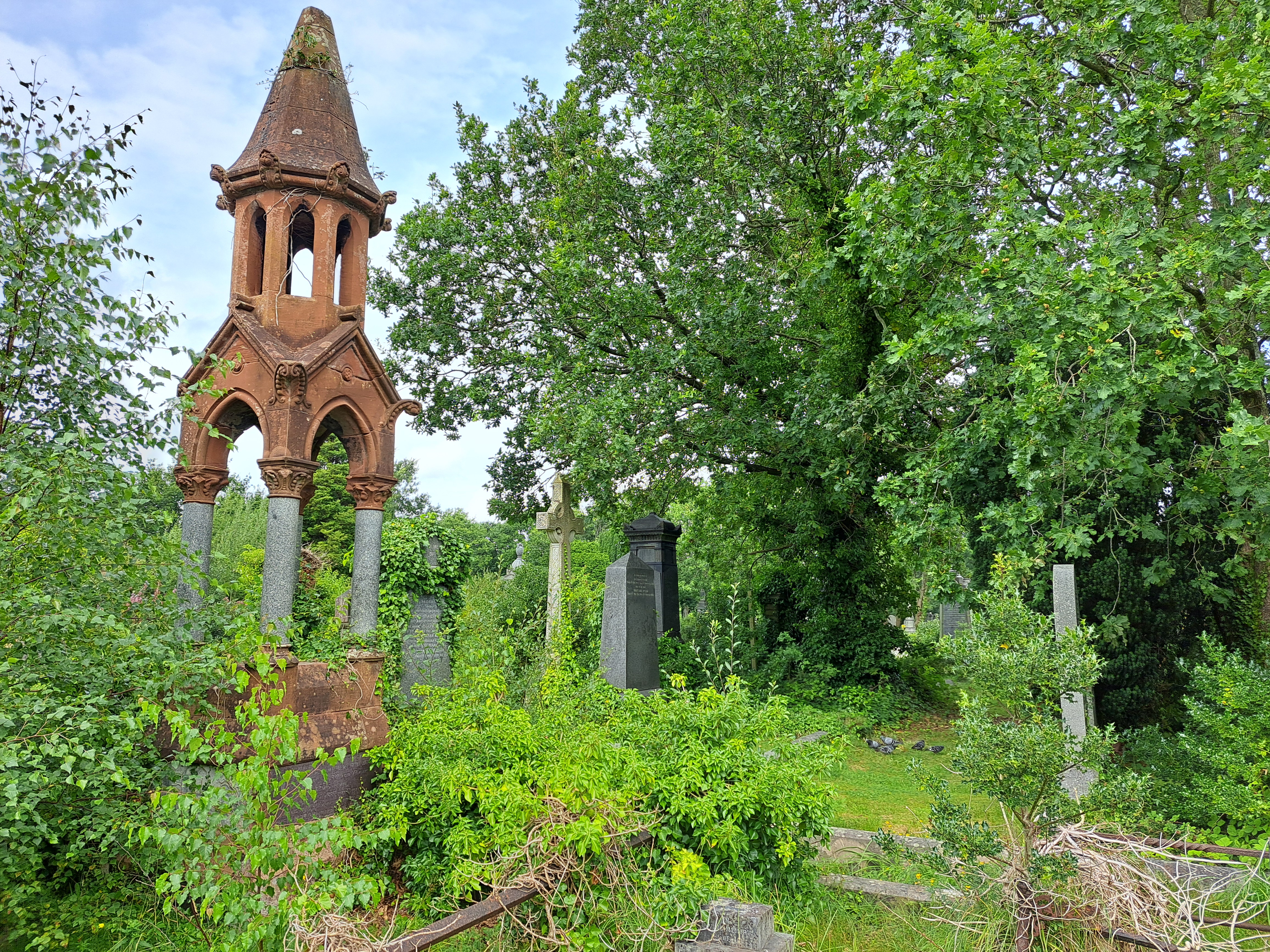
It is a very impressive cemetery, imaginatively laid out and designed by William Gay of Bradford in the shape of a bell (as in Belfast) and it contains some incredible Victorian, Edwardian and later memorials.
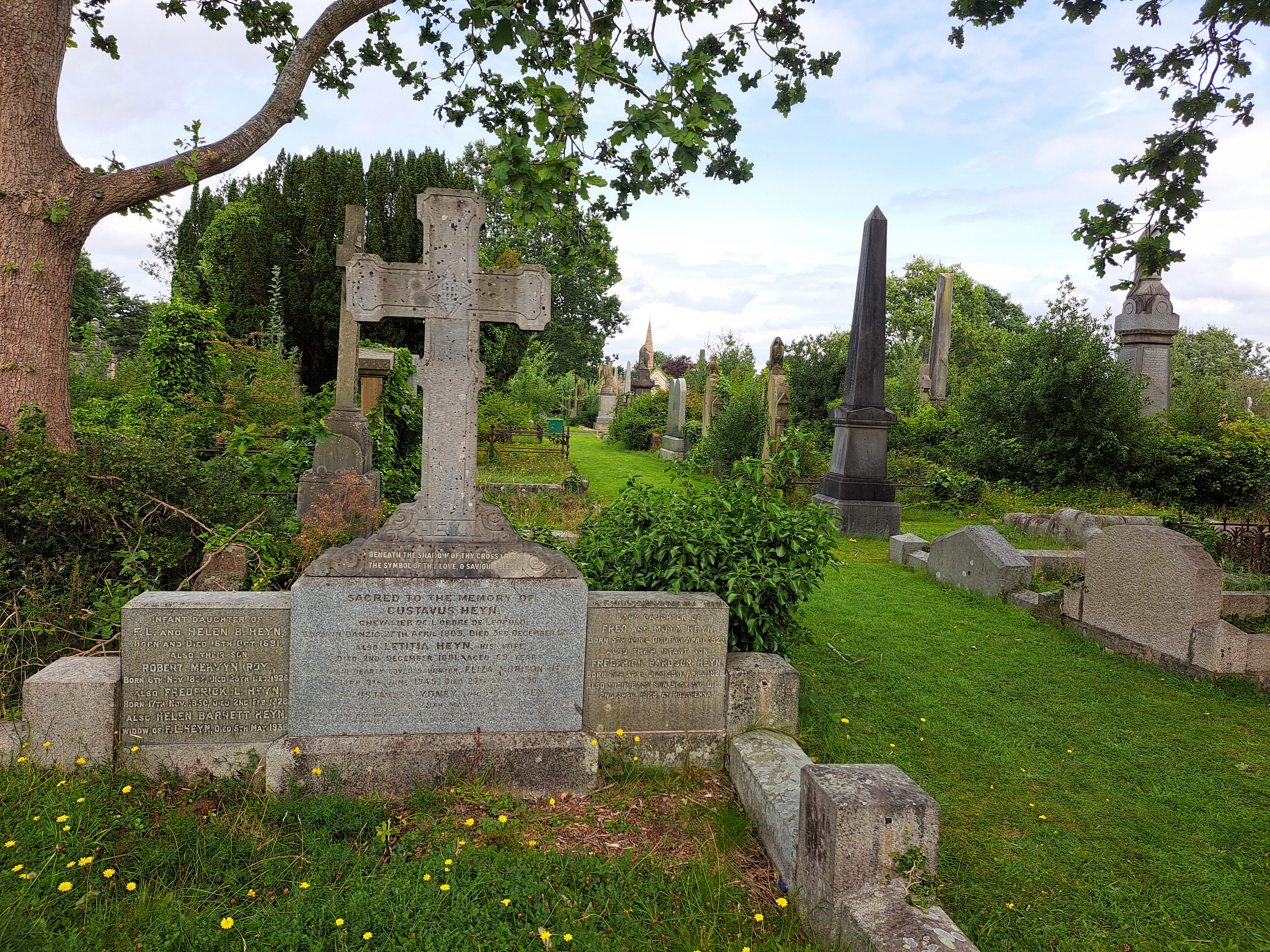
Gustavus Heyn, shipping magnate
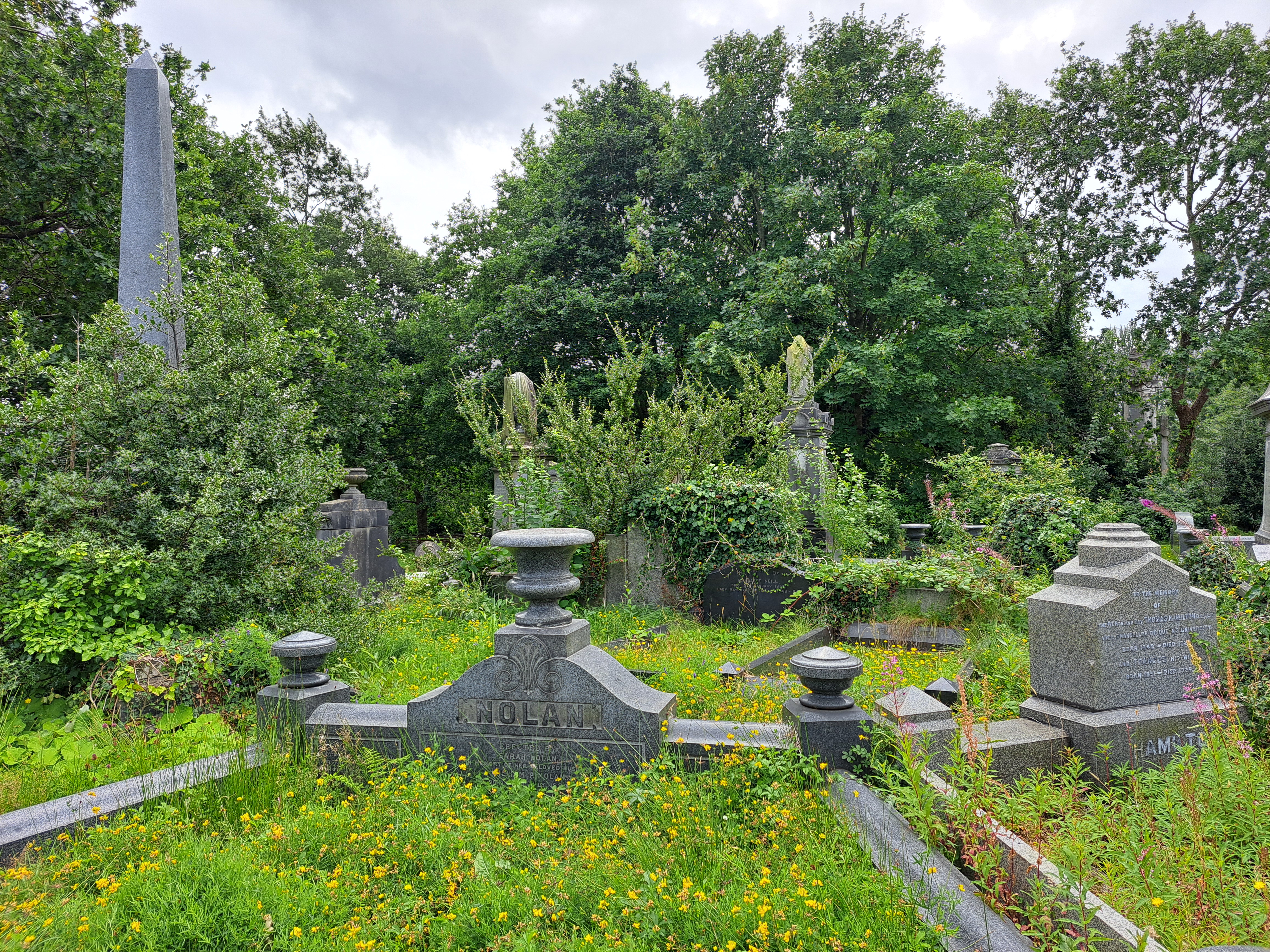
Some parts are still quite heavily overgrown and other parts have suffered badly from vandalism.
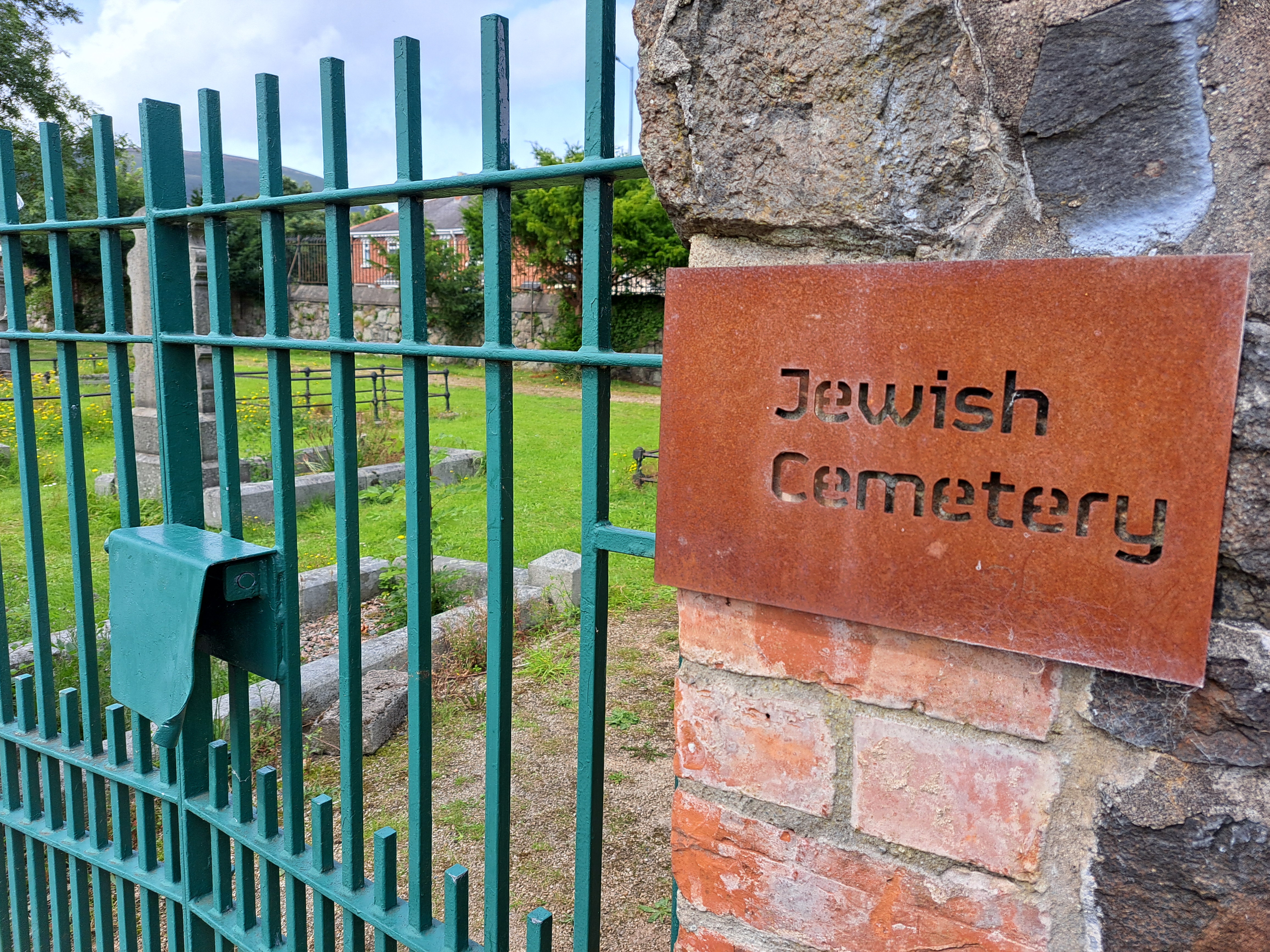
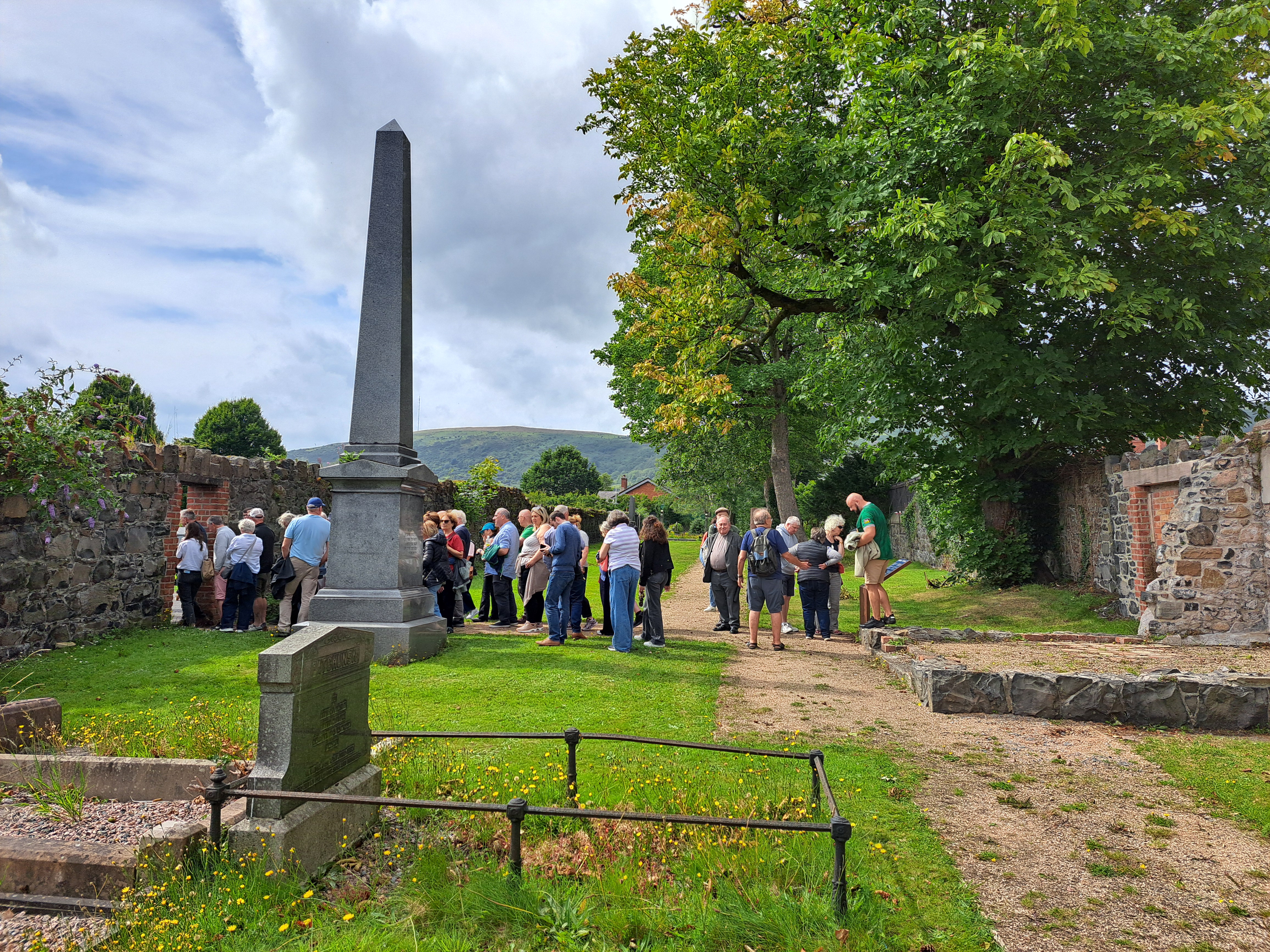
The Jewish section of the graveyard comprises a separate walled section although this has particularly suffered from vandalism and since 1964 Jewish burials now take place at Carnmoney Cemetery.
Entrance to the Jewish Cemetery
Inside the Jewish Cemetery. On the right is the remains of the Tahara, the mortuary chapel
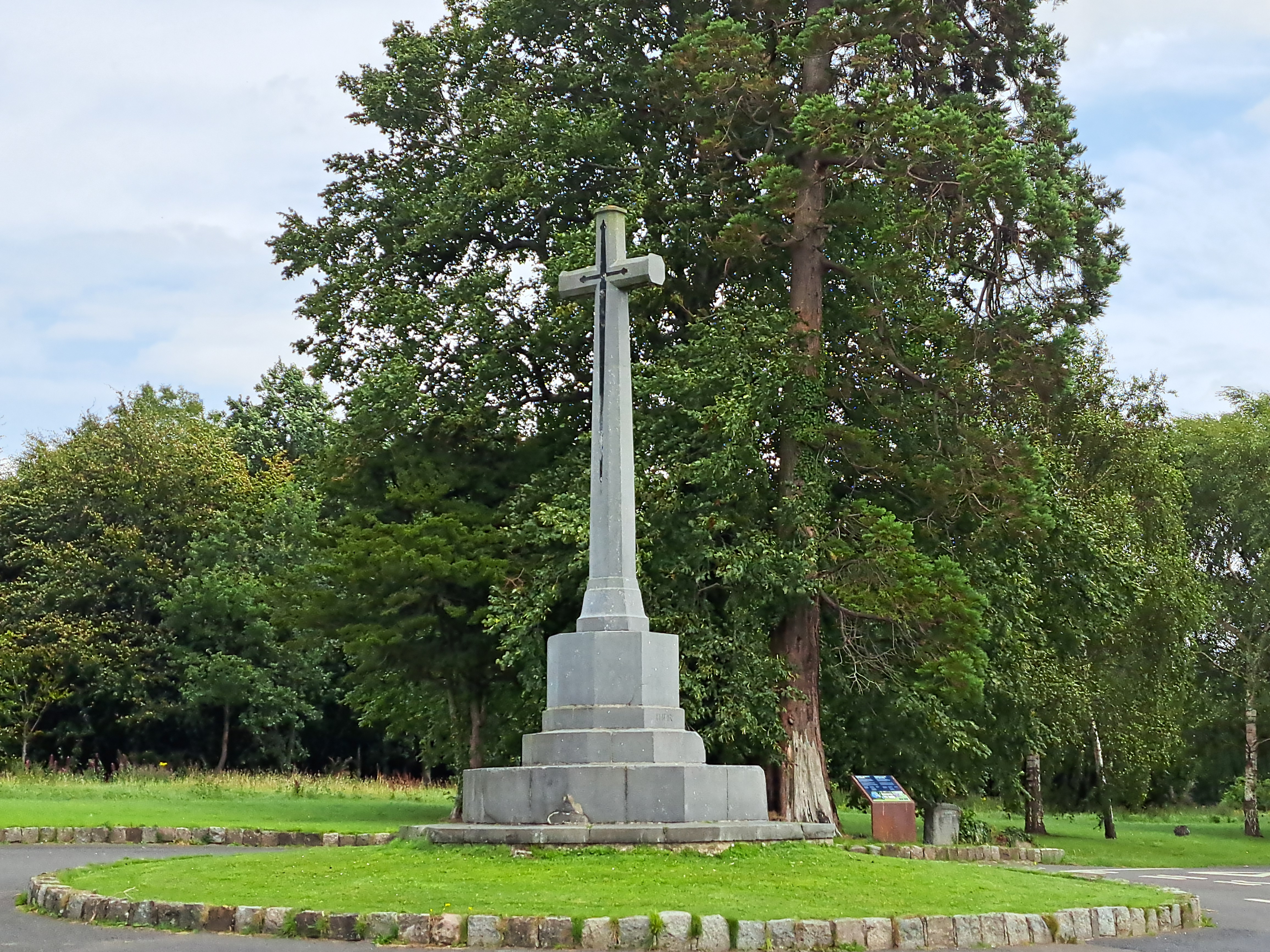
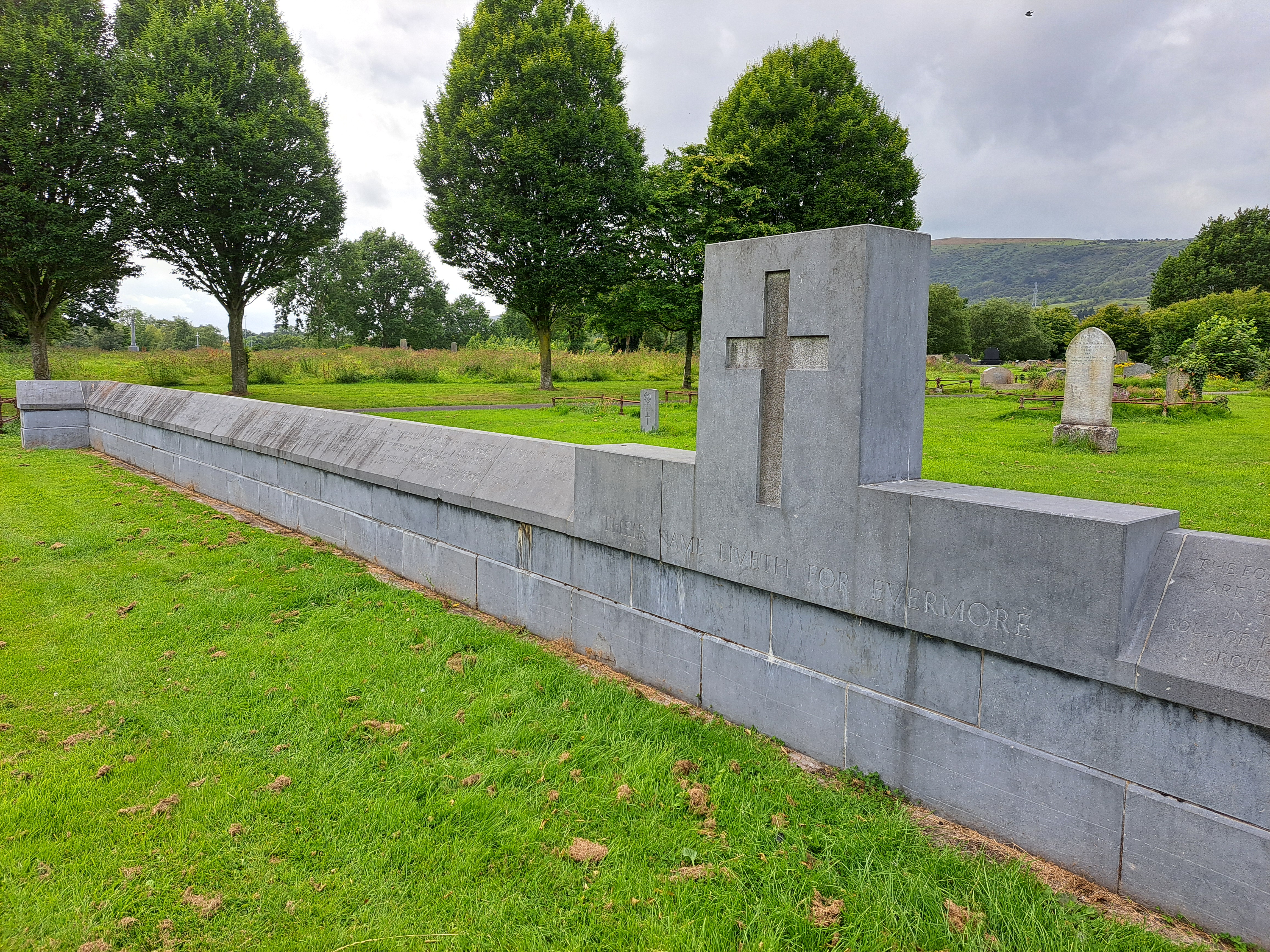
The Cemetery also includes a Commonwealth War Grave Cemetery with 296 burials from the First World War and 274 from the Second World War. There is also a Cross of Sacrifice (the same size as that in Botley Cemetery) and a First World War Screen Wall which carries the names of 74 soldiers who are buried in the First World War plot, 58 soldiers who are buried in unmarked graves and 8 soldiers who are buried elsewhere in the Cemetery.
Cross of Sacrifice
Part of the First World War Screen Wall
Second World War Royal Navy and Merchant Navy graves
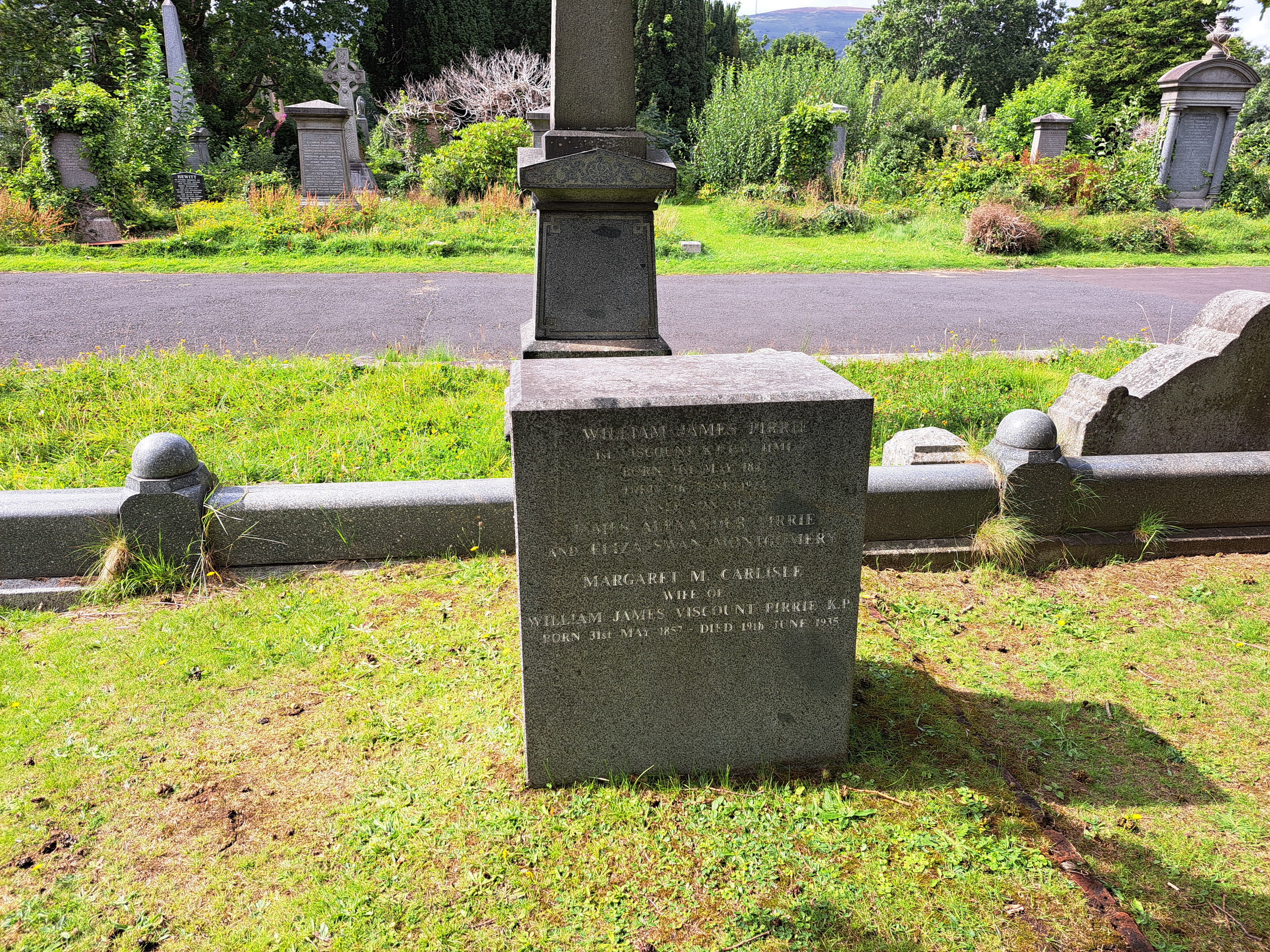
There are a lot of significant people from Belfast’s past who were Non-Subscribing Presbyterians who are buried here, perhaps most notable are Lord and Lady Pirrie. Viscount Pirrie was the chairman of Harland and Wolff when the Titanic was built and was to have sailed with his nephew, the designer Thomas Andrews, on its maiden voyage, but was prevented from doing so by illness.
Grave of Lord and Lady Pirrie
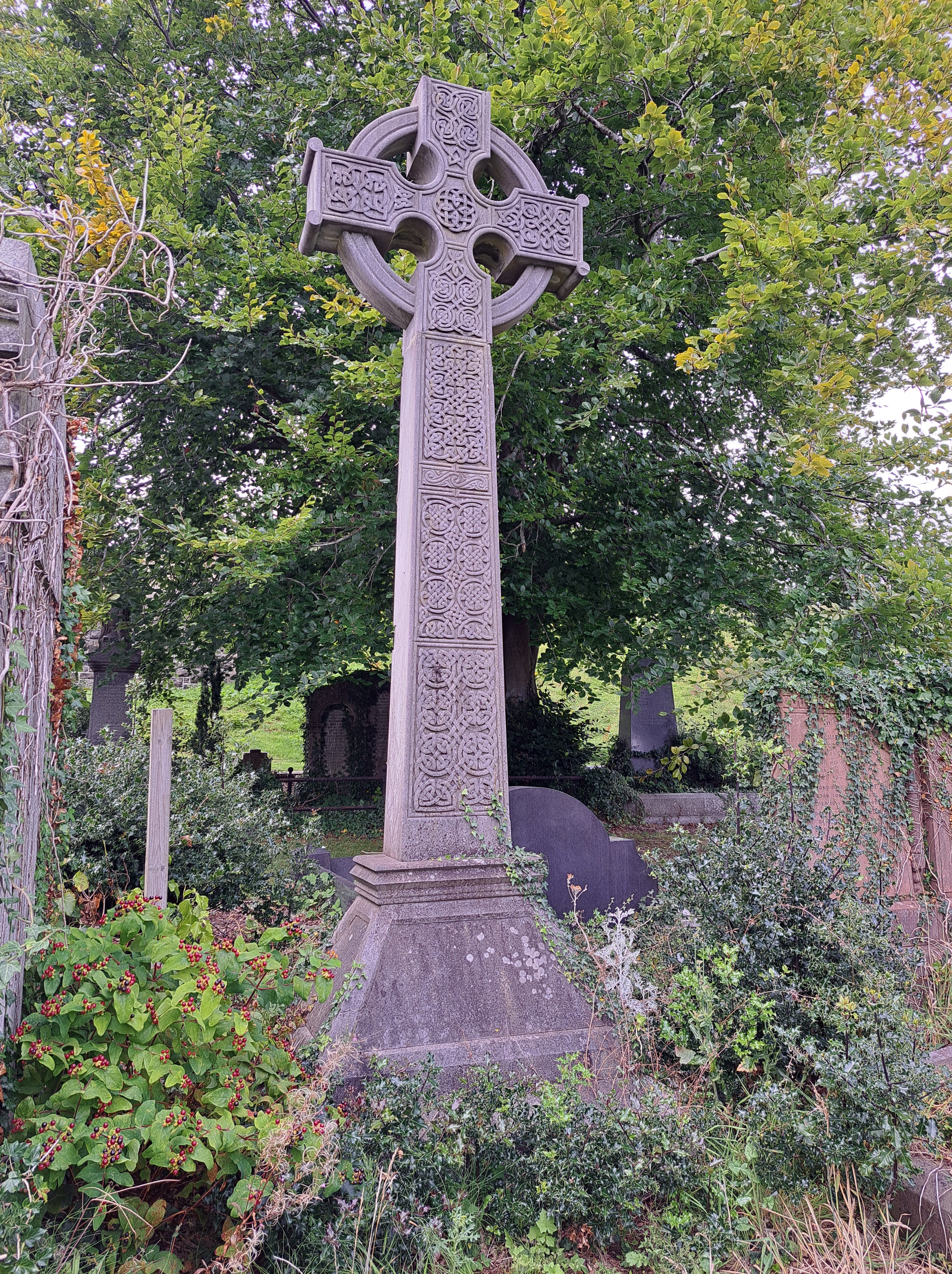
I have written before about one of the most notable Non-Subscribing Presbyterian ministers buried here, the Rev John Scott Porter, and was pleased to hear from his great great great granddaughter as a result. He is buried with his brother, William, who was once the attorney general at the Cape Colony, and actually introduced at that time a franchise that was inclusive of all races. The Celtic Cross that marks their grave is one of the most impressive in the cemetery:
The grave of Rev John Scott Porter and William Porter
I also produced a short video about John Scott Porter at that time. This is available to view here:
Click above to see the videoThe grave of Florence and Albert James Lewis, the parents of C.S. LewisThe tour at the Vaults and Central Steps
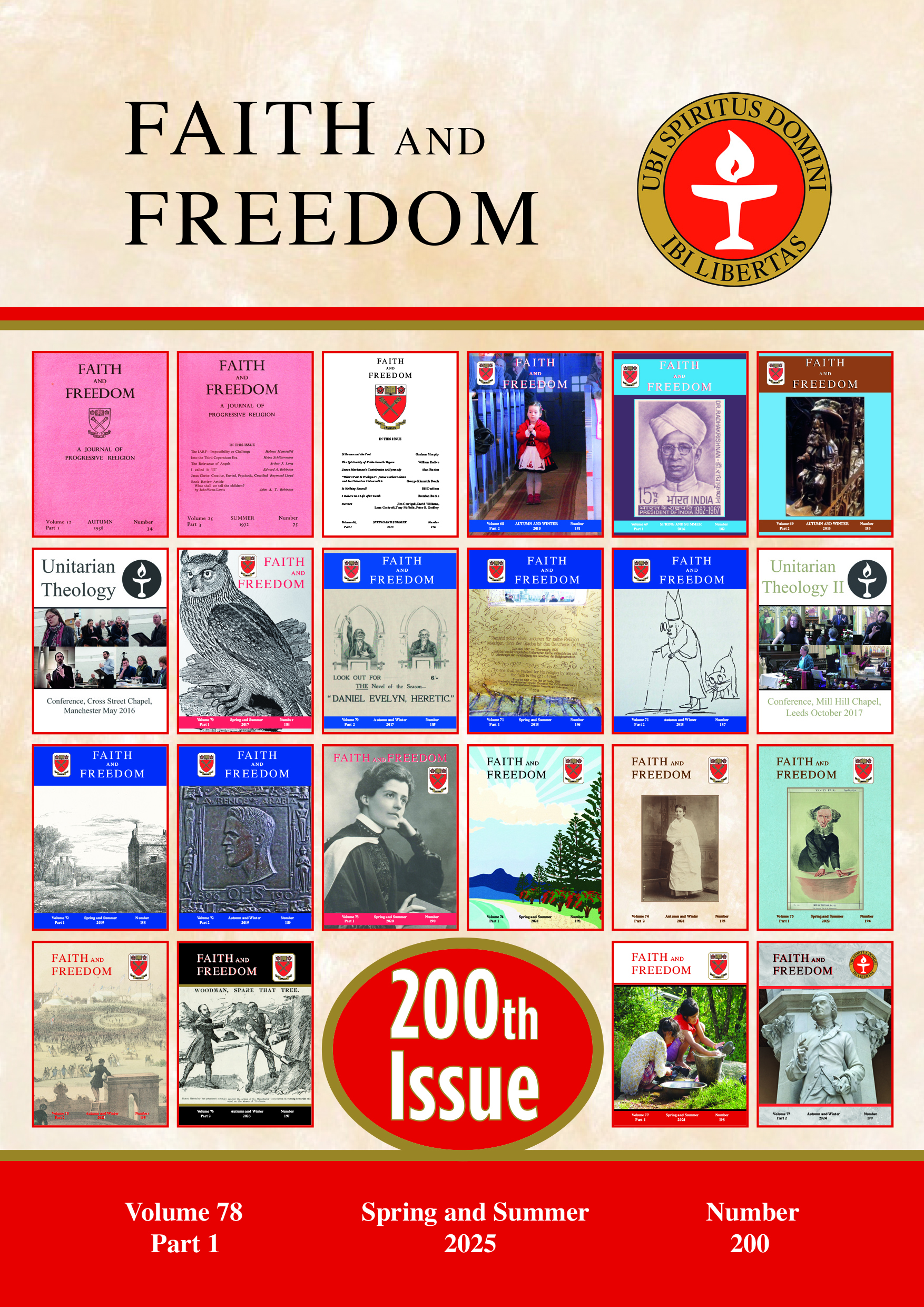
Having been founded in 1947 we have now reached the significant milestone of our 200th issue. Still proudly flying the flag for a thoughtful, liberal approach to religion our journal goes all round the world and has readers on every continent.
200th Issue Cover
Our Cover includes pictures of a selection of some of our 200 issues. We’ve had some splendid images in the last few years with photographs taken by some notable photographers as well some historic pictures or artworks that have really stood out.
With this being such a special issue we have selected three articles from our back catalogue that shed some light on our development over the last 78 years..
The first is from our very first issue. A Declaration of Faith by Dr Albert Schweitzer set the tone at the very genesis of this journal. It is hard to over estimate the importance of Albert Schweitzer within liberal circles at that time. A polymath thinker, theologian, humanitarian, philosopher, physician, he epitomised the cutting edge of a liberal, questioning approach to religion in the mid-twentieth century. Written for a meeting of the International Association for Religious Freedom, the world’s oldest interfaith organisation, a body which we have often had close interactions with, it was a considerable coup to have his contribution in the very first issue.
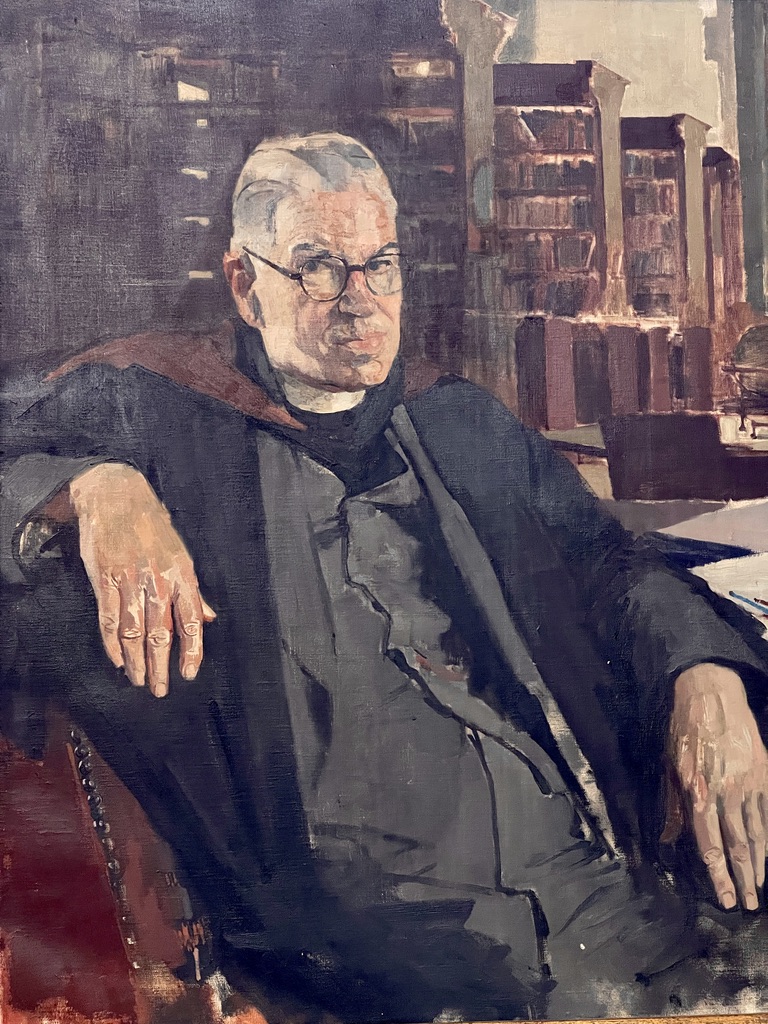
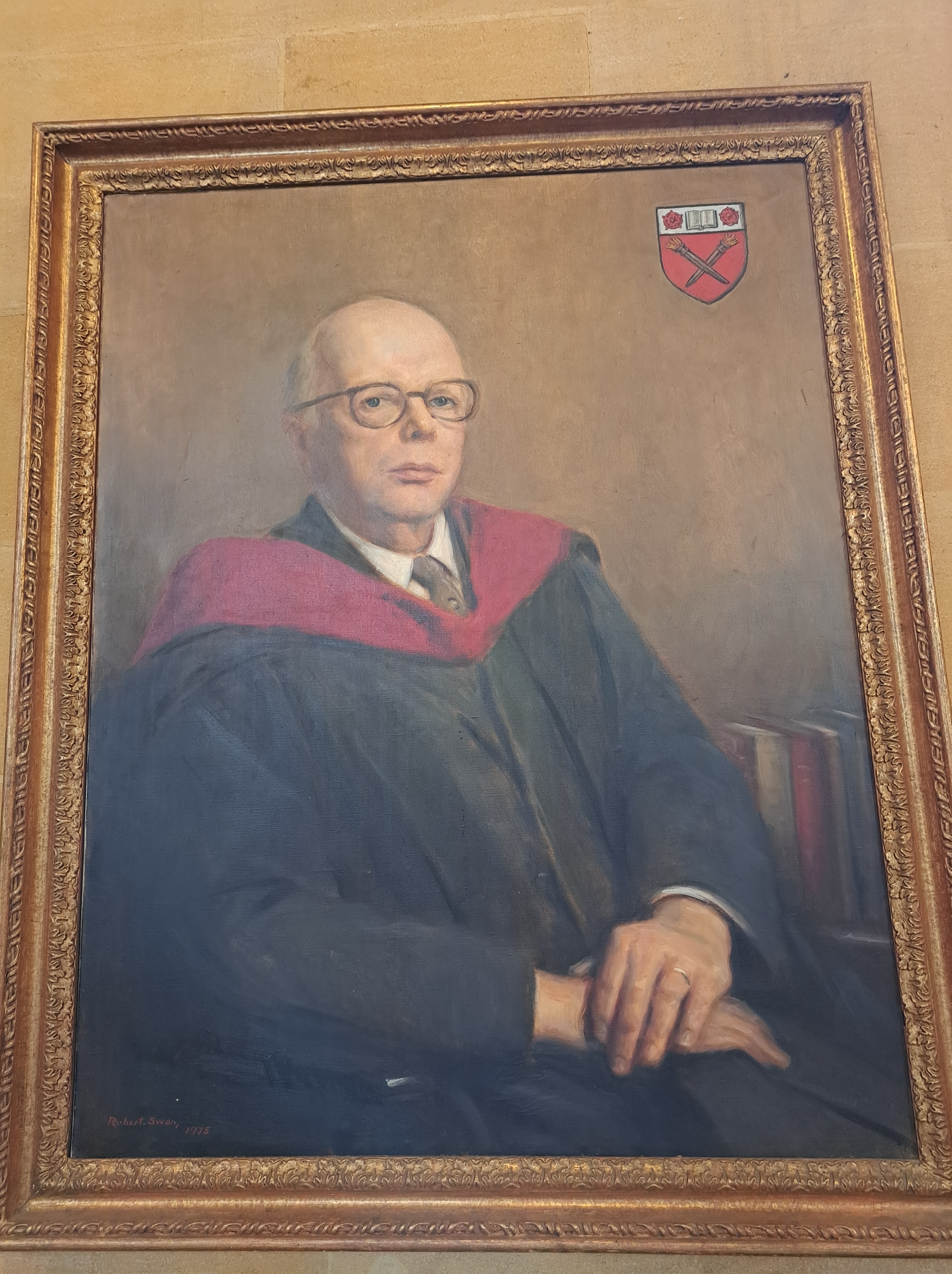
The second article is God is Necessary by H. Lismer Short published in Autumn 1958. At the time he was a future Principal of Manchester College, and his article displays the depth and breadth of his scholarship. Essentially an answer to the humanism of that age and the development of a scientific thinking that had unsettled the traditional Unitarian approach to the divine. The article declares that we ‘have been satisfied with cosmic explanations or enquiring agnosticisms, and have not sufficiently tackled religion from the end of human anxiety and dread.’ The traditional proofs of God no longer hold but ‘all the burden of living’ still required a place for faith in a personal God.
Harry Lismer Short. Portrait in Harris Manchester College
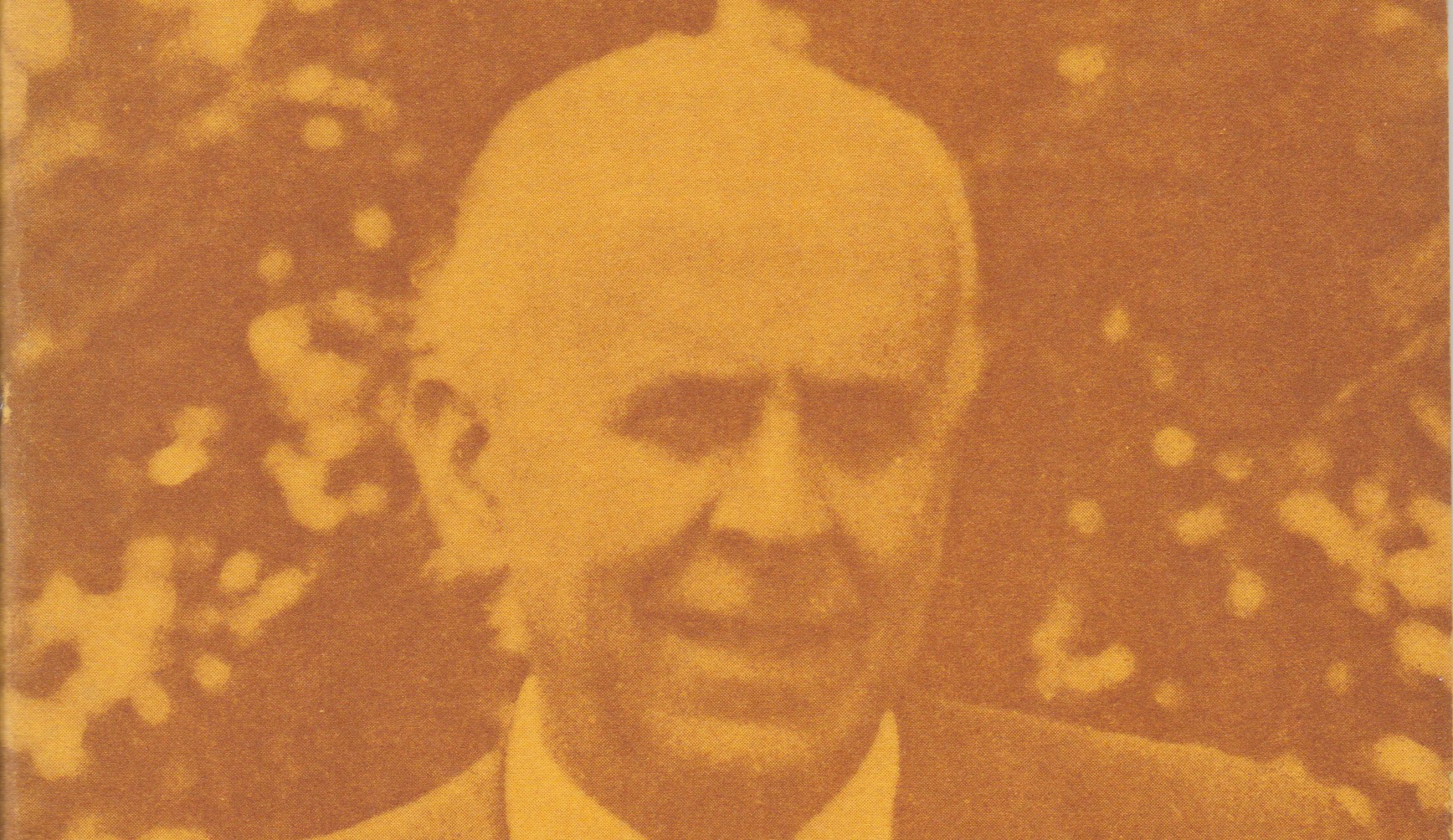
The final article from our back catalogue in this issue is A Rational Basis for Religious Belief by Arthur J. Long dating from Summer 1974. Another Unitarian Principal (this time of the Unitarian College, Manchester) this is another article which displays the writer’s considerable erudition as well, in Arthur’s case, of his irrepressible sense of humour. What is particularly interesting about this paper is that it was prepared for a long-forgotten meeting between Unitarian and Roman Catholic theologians which took place in 1973. The papers for this encounter still exist and it might be profitable at some stage to revisit them. The basis of this article is not to ask ‘Does God exist?’ but rather ‘What sort of God?’, he rejects the argument from revelation and the argument from experience and roots religious belief in a rational theism, ‘underpinned by a rational empirical theology’, and uses Peter Berger’s A Rumour of Angels to frame his apologia.
Rev Arthur Long (from the cover of his 1978 Essex Hall Lecture)
New pieces for this issue include On Reading the Koran by Barrie Needham, a timely, fair and objective assessment of this crucial text which is so frequently mentioned but very seldom examined. The other is Frank Walker’s The Sybil’s Request. Death and Our Human Imagination which explores how we understand death, Heaven and eternity and ranges over the thinking contained in the poetry and literature of such figures as T.S. Eliot, T.F. Powys and Julian Barnes, and ends, appropriately enough, with a quotation from Harry Lismer Short.
The articles are followed by a great selection of reviews:
Reviewed by Graham Murphy
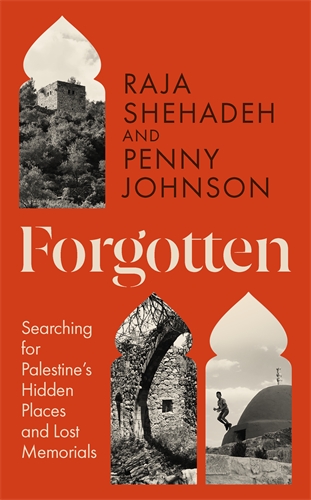
Raja Shehadeh and Penny Johnson, ‘Forgotten, Searching for Palestine’s Hidden Places and Lost Memorials’, Profile Books, 2025 reviewed by Graham Murphy
Michael Allured and Kate Dean, ‘Soul Deep: Exploring Spirituality, Together’, Lindsey Press, 2024, reviewed by Laura Dobson
Jade C. Angelica, ‘Where two worlds touch’, Skinner House Books, 2024, reviewed by Peter Hewis
Patrick Riordan SJ, ‘Human Dignity and Liberal Politics: Catholic possibilities for the common good’, Georgetown University Press, Washington DC, 2023, reviewed by Helena Fyfe Thonemann.
Reviewed by Laura Dobson
An annual subscription to Faith and Freedom (two issues) costs £16.00 (postage included) in the United Kingdom. Single copies can be ordered at a cost of £8.00 each (postage included). Cheques should be made out to Faith and Freedom and sent to the business manager:
Nigel Clarke, Business Manager, Faith and Freedom, 16 Fairfields, Kirton in Lindsey, Gainsborough, Lincolnshire. DN21 4GA.
Overseas subscriptions are also available.
It is also possible to pay online. For more details see our website:
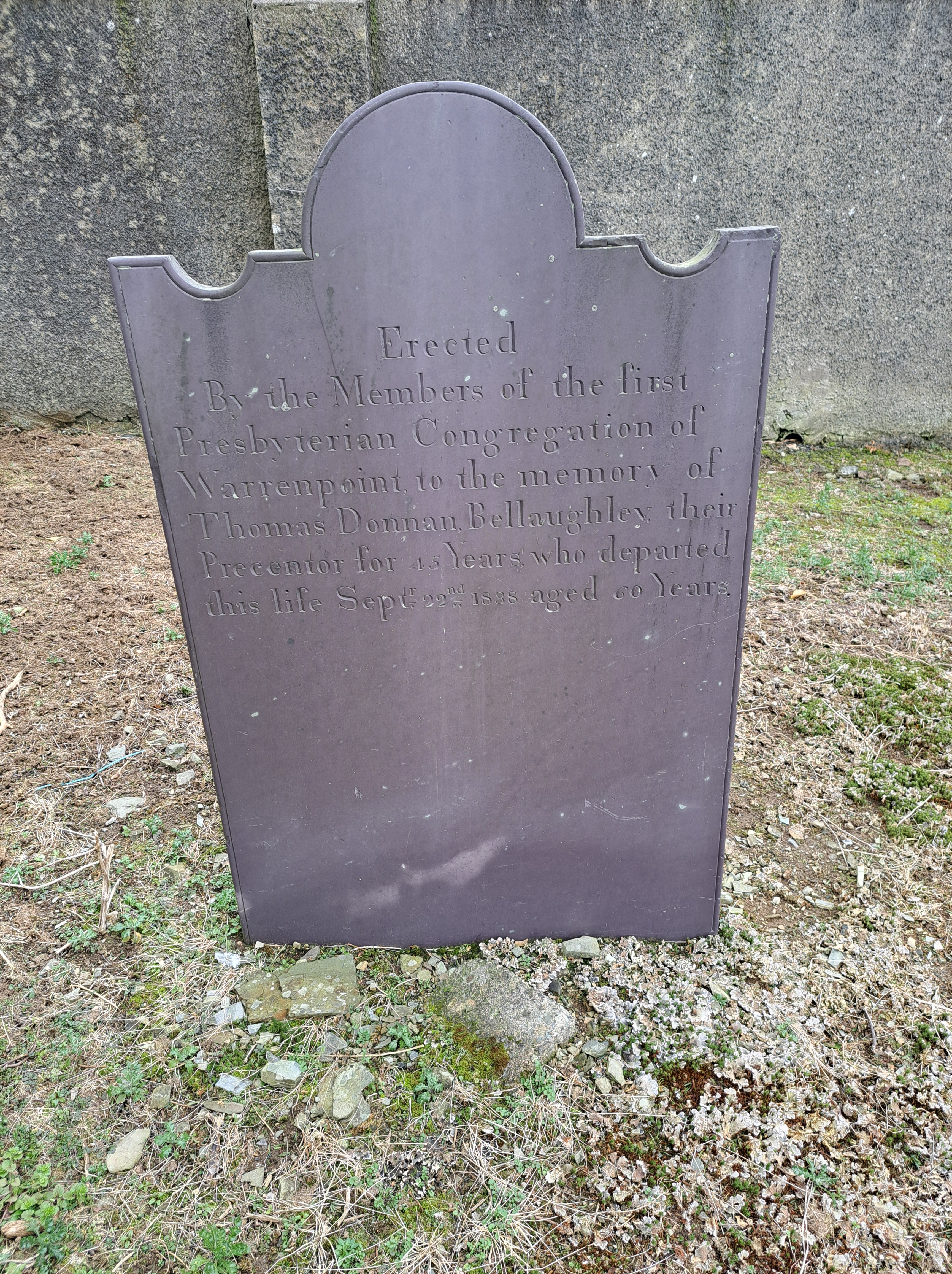
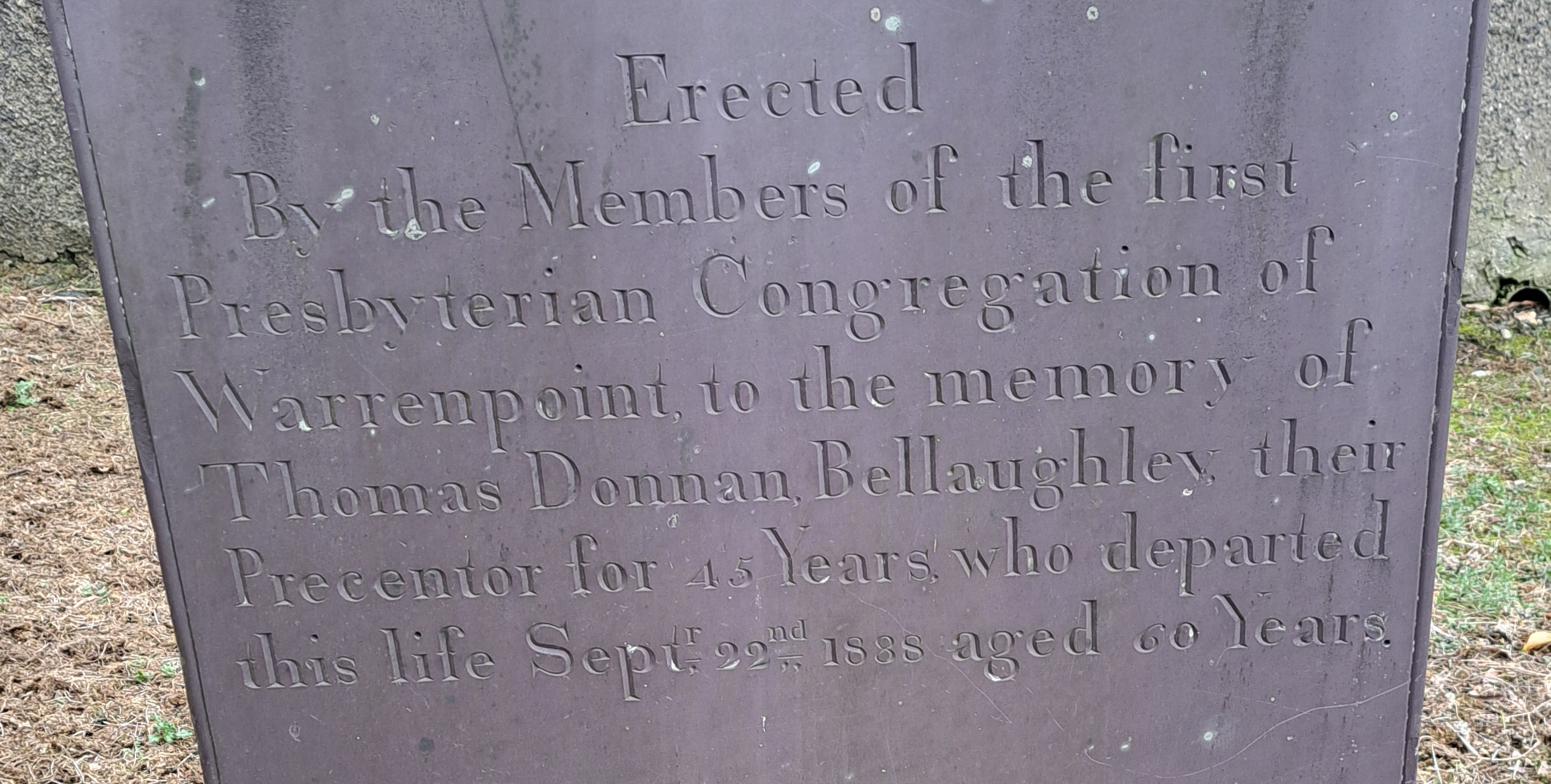
On a recent visit to Warrenpoint I noticed this gravestone and took a picture. Carved, it would appear, on a sheet of slate, the inscription is sharp and clear and I initially assumed it would be older than the date actually indicated. I didn’t have much time to study it but I am glad I took a picture, it is a fascinating artefact, a tribute to a key member of this congregation for almost half a century.
Thomas Donnan, of Bellaughley, was the Precentor of the Warrenpoint Non-Subscribing Presbyterian congregation for 45 years up to his death in 1888. He was 60 when he died so he must have been just 15 when he commenced this work in 1843.
It’s an intriguing gravestone because while it clearly tells of the high esteem in which Thomas Donnan was held and the long period of time he faithfully led the congregation in their singing it opens up so many more questions. Who was he? Did he have a family? Did he have any formal training in music? Did he have any other responsibilities or source of income?
Although a Non-Subscribing Presbyterian congregation the First Presbyterian congregation of Warrenpoint must have hung on to their traditional worship forms in singing by being led by the Precentor for a long time, perhaps because Thomas Donnan provided such acceptable leadership to them in their music.
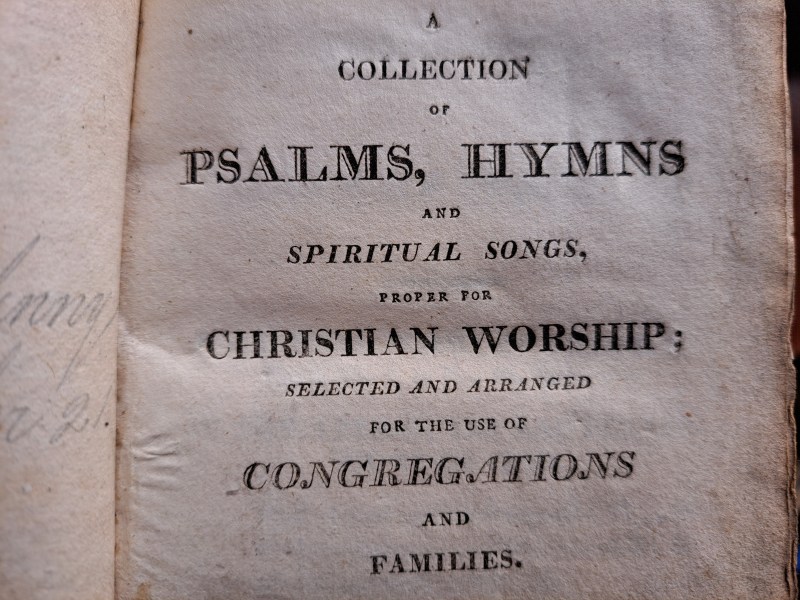
It’s interesting that close by in Newry the New Light minister the Rev A.G. Malcolm produced one of the first hymnbooks in use in any Presbyterian church in Ireland in 1811 with his Collection of Psalms, Hymns and Spiritual Songs proper for Christian Worship; selected and arranged for the use of Congregations and Families. But this doesn’t seem to have been used in Warrenpoint.
In her tercentenary booklet of 2007 Across the Narrow Water (the congregation of Warrenpoint was originally known as Narrow Water) Elaine Crozier records that in 1841 the committee appointed ‘a teacher to teach the choir’ at a salary of £3 per year. Was this the prelude to the appointment of Thomas Donnan? Undoubtedly connected with his eventual appointment was a decision in 1842 that ‘the new collection of psalms compiled by the Remonstrant Ministry be put into the hands of the families belonging to the church.’ This would be the 1841 publication Psalms, Paraphrases, and Hymns, for Christian Worship published in Belfast by the Bible Christian (the main Non-Subscribing Presbyterian journal), Rosemary Street. It must have been this book that provided the basis for congregational singing in Warrenpoint led by Thomas Donnan although the book was gradually expanded as the century wore on with hymns from other sources. All this took place during the long and effective ministry at Warrenpoint from 1836 to 1867 of the Rev Samuel Moore. Born in Rademon and educated at Glasgow University he enjoyed some success as minister of Warrenpoint although the congregation faced the heavy difficulties of the Famine during his ministry.
From 1843 onwards, though, Thomas Donnan was leading the praise. If they were using Psalms, Paraphrases, and Hymns, for Christian Worship they had already taken a step away from using a traditional Psalter and this does, perhaps, suggest that the Precentor was also leading a choir. But there at the centre of their congregational life was this young man appointed at the age of just 15 and leading the congregation’s worship for the next 45 years to their evident satisfaction
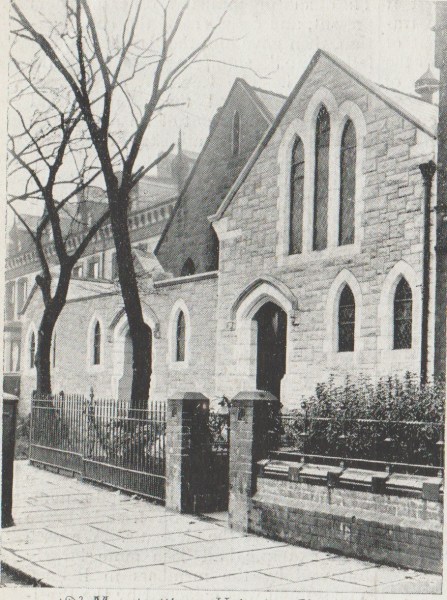
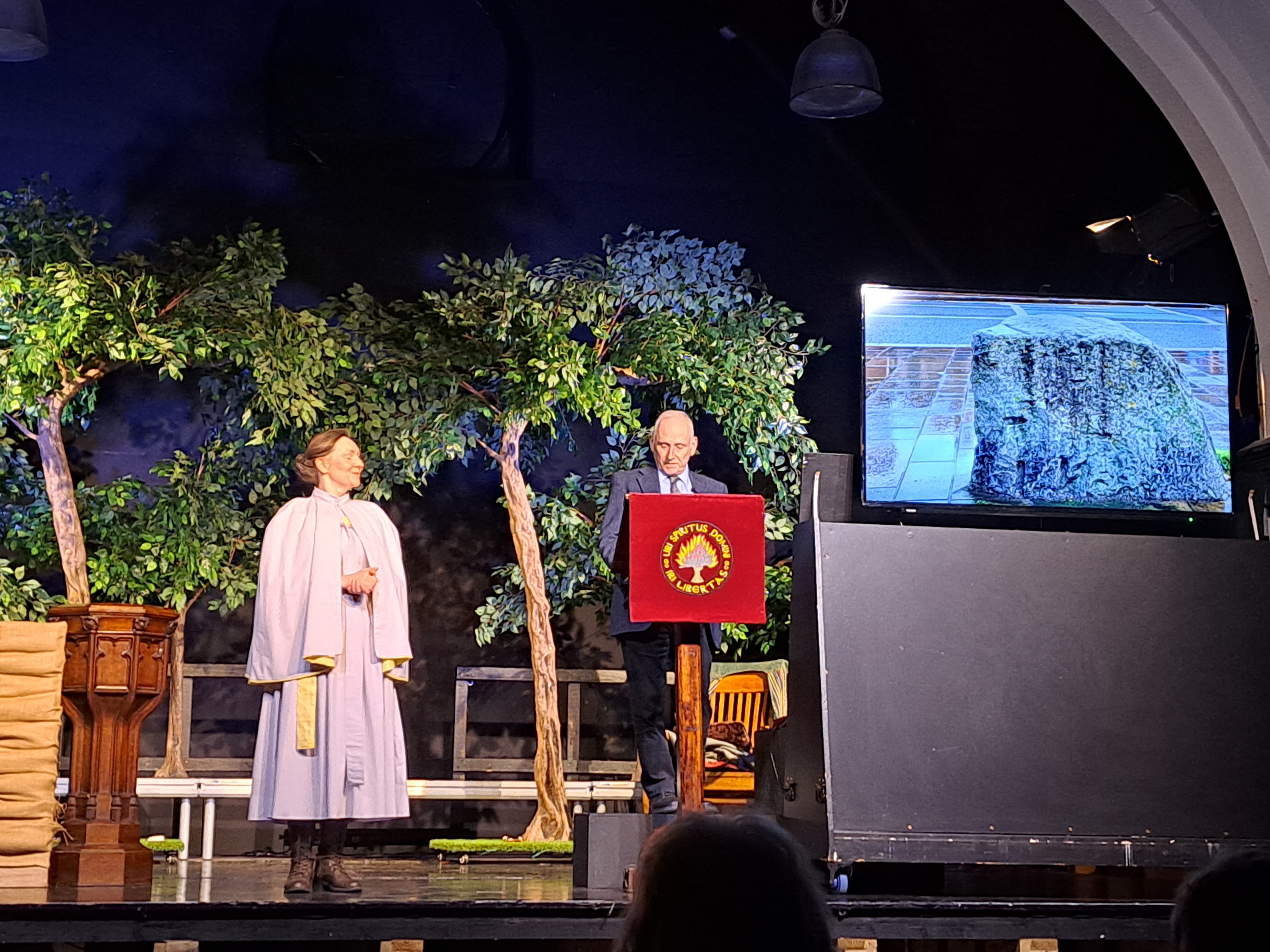
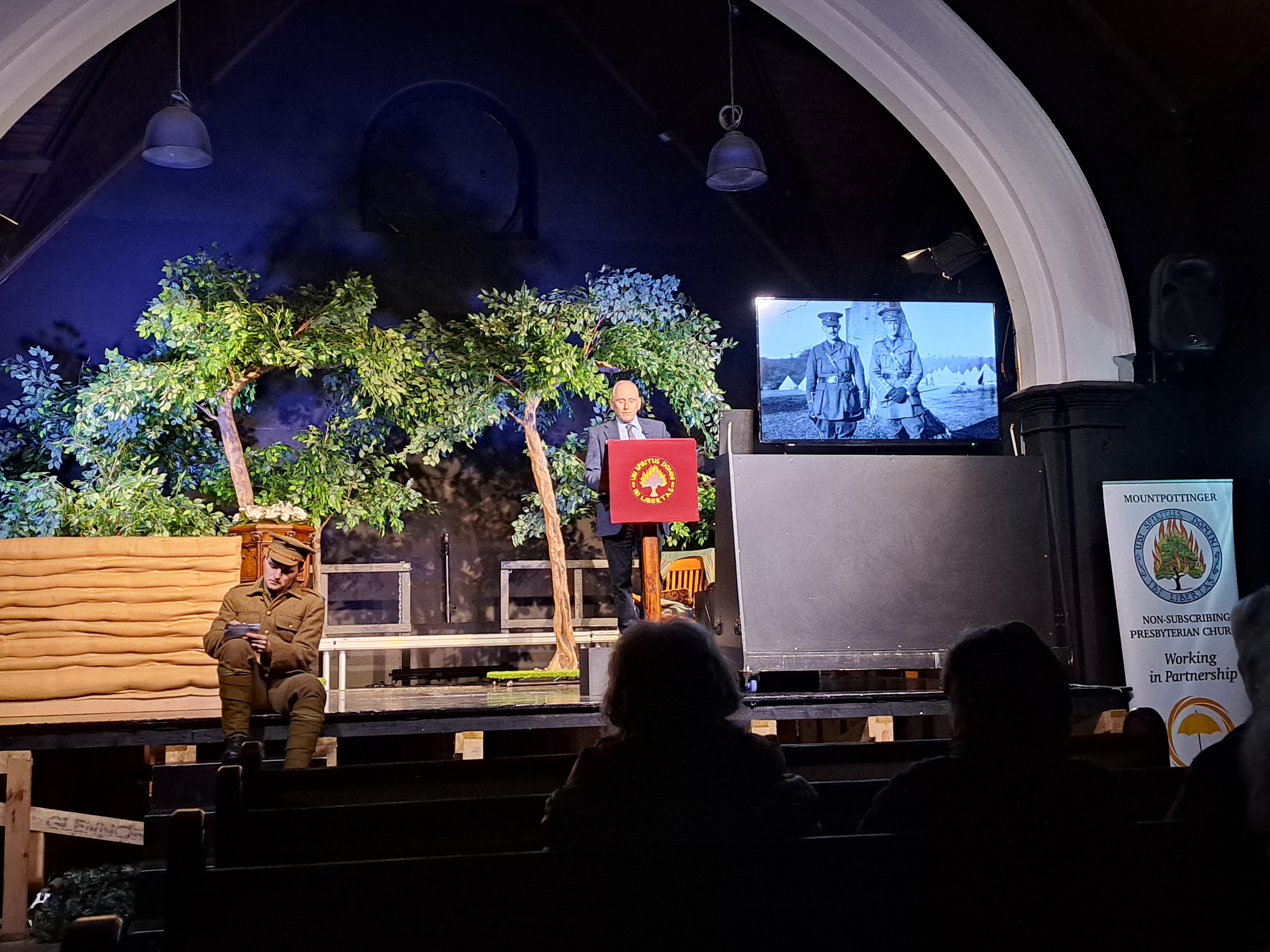
I’ve blogged before about Mountpottinger – most notably here and here where more details about its history can be seen – it is an interesting building on a prominent site in that part of Belfast and the congregation has a very distinctive history. Today the building is leased to the Bright Umbrella Drama Company who are turning the old school hall into the Studio Theatre and the church itself into the Sanctuary Theatre. But the congregation still has a place on the premises and the exact date of the anniversary of the opening of the building – 3rd January 2025 – was the occasion for this remarkable celebration of the 150 years of Mountpottinger.
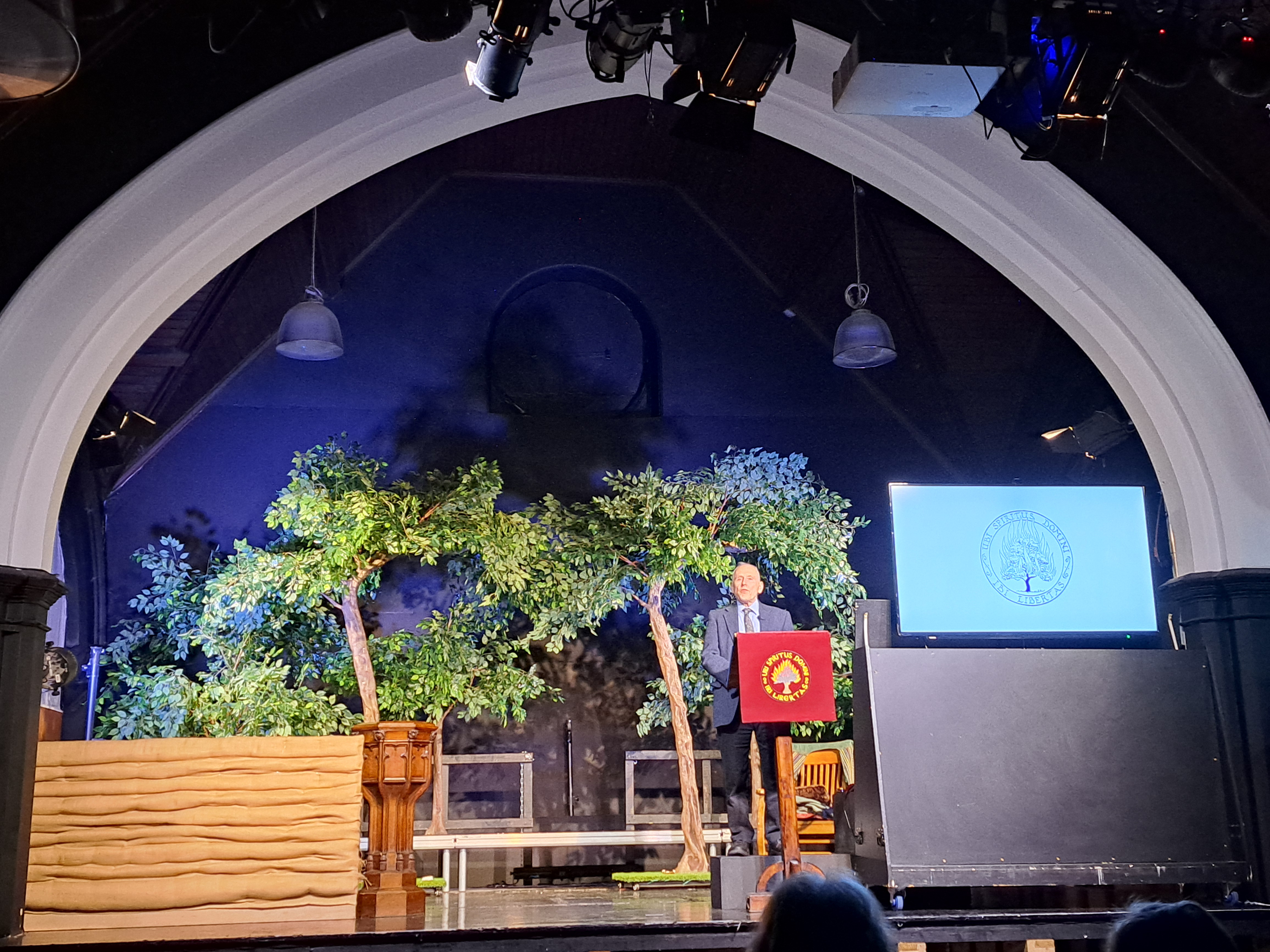
Adrian Moir introduces the evening
A lot of credit must go to Adrian Moir, the church secretary and former ‘Warden of the Fabrique’, as the Very Rev Charlie Kelly once termed him, who wrote and narrated this excellent celebration of the life of the congregation. It was a very positive collaboration between the church and the Drama Company which brought the history of the church to life covering three themes:
Foundation and Hope
Tragedy and Remembrance
Adapting to the times and a glimpse of the future
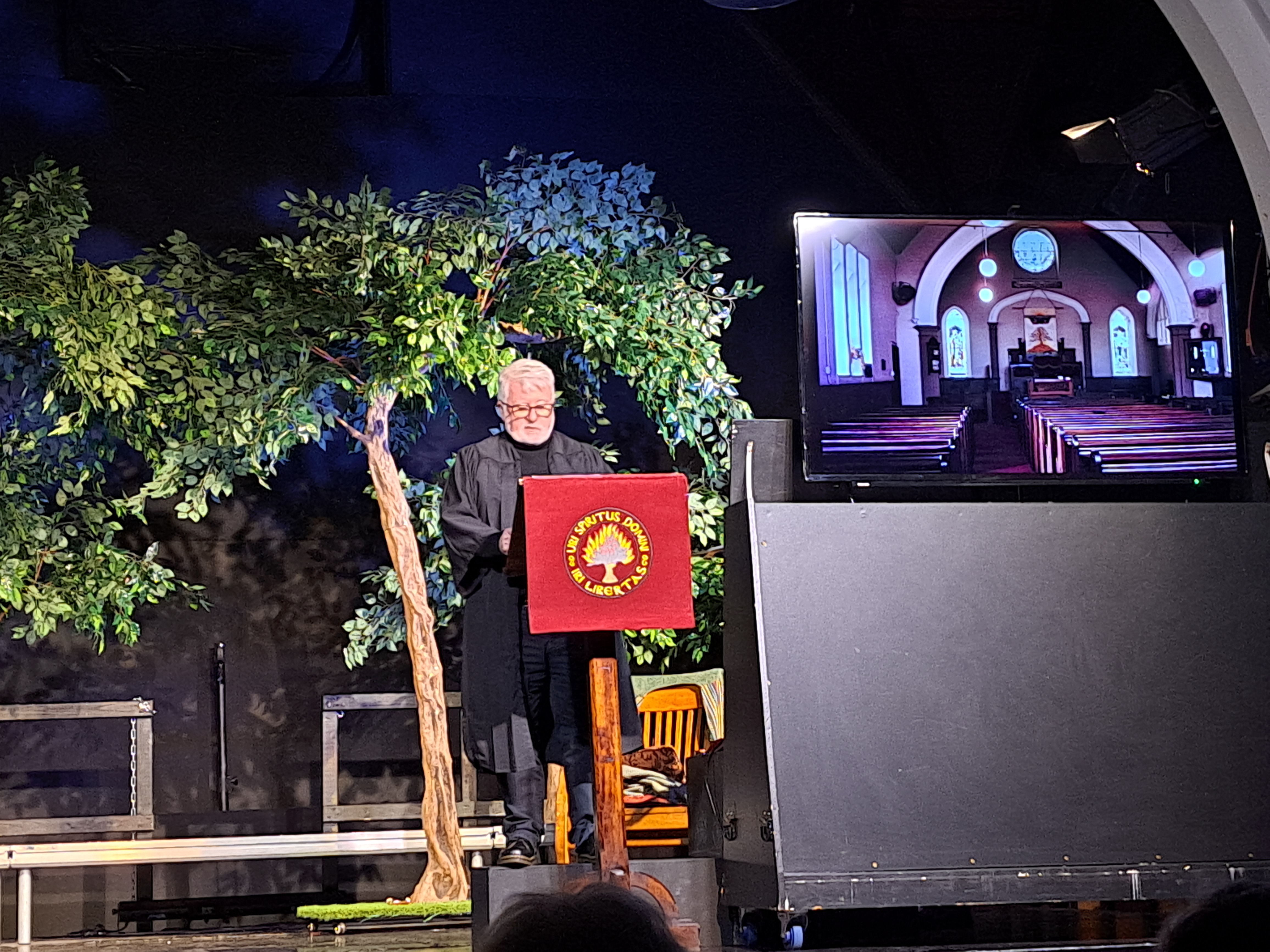
Trevor Gill delivers the Rev David Maginnis’s speech at the opening of the building in 1875. David Maginnis was a controversial but effective minister at York Street who came back to Belfast from Stourbridge to participate in the opening ceremony
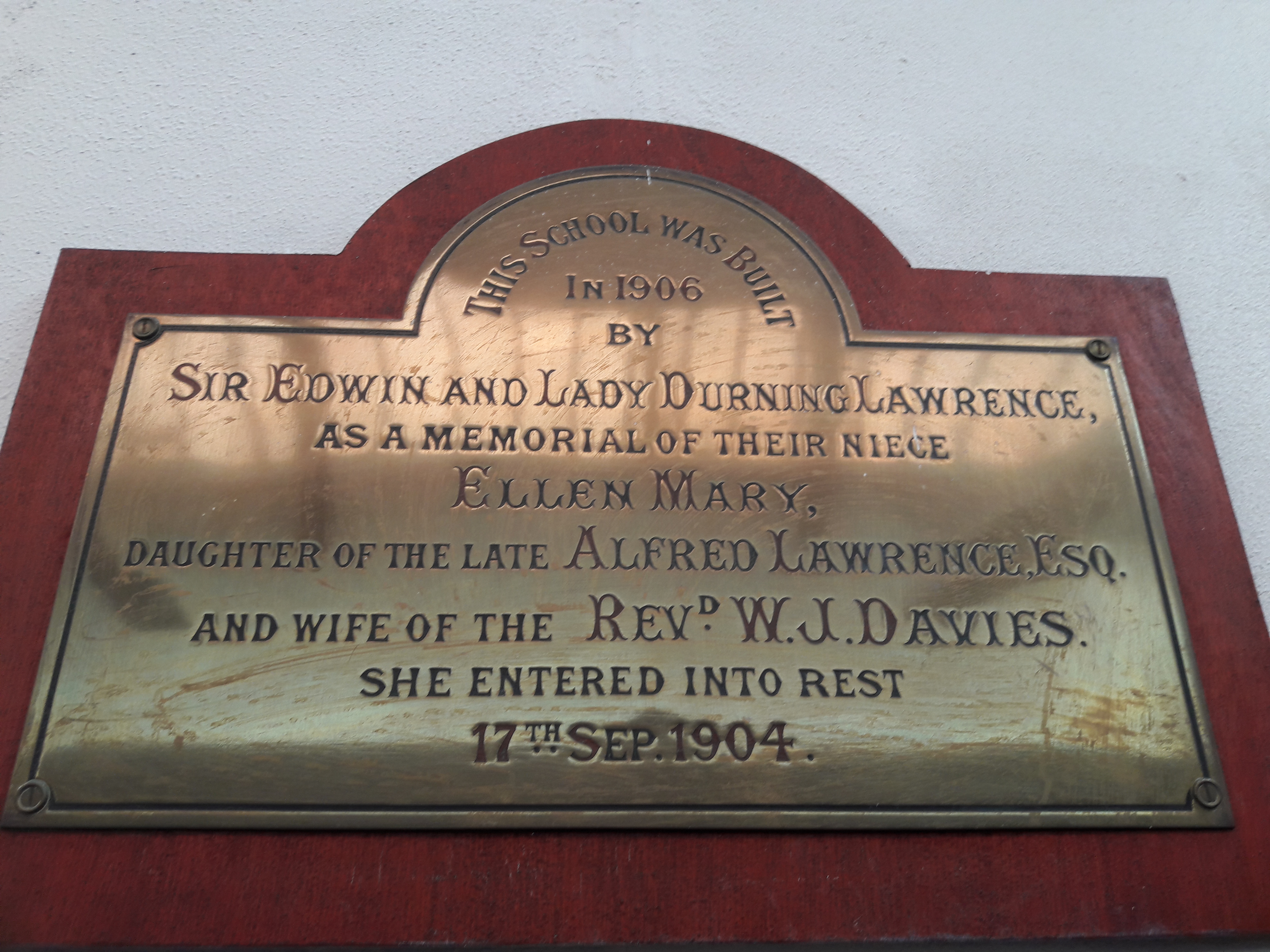
The evening was interesting, engaging and witty and also very moving as it looked at the story of Ellen Mary Davies, the wife of the Rev William Jenkin Davies, who died tragically young and in whose memory the school room was built.
Memorial in the School Room
Lindsay Charrington playing the role of Ellen Mary Davies
There was further tragedy with the loss of members of the church in the First World War, including Captain James Samuel Davidson in 1916, on the first day of the battle of the Somme. Also remembered on the evening was church member Sydney Agnew who was killed during the ‘Troubles’ in 1971 to prevent him giving evidence at a trial. It was both fitting and touching that members of Sydney’s family were there to lay a wreath in his memory.
Glenn McGivern writing home from the front as Captain J.S. Davidson
But the whole evening was very impressive, a fitting tribute to 150 years of work and witness which now has the opportunity to be part of a brave new venture as a community hub working in the arts and in drama in the Mountpottinger area.
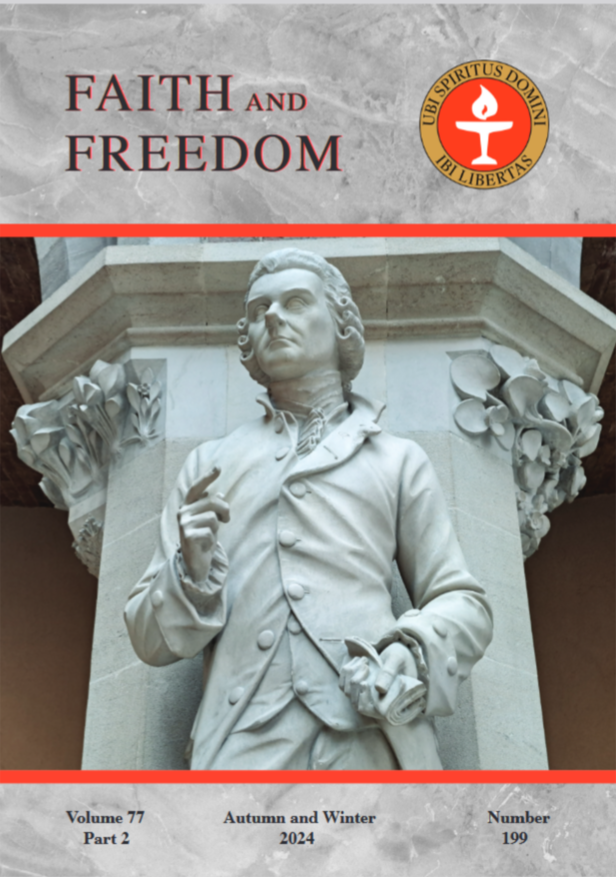
The latest issue – Volume 77, Part 2, Autumn and Winter 2024, Number 199 – is now available and will be with subscribers shortly. Details on how to subscribe (including a link to our website if you would like to pay via PayPal) can be found at the foot of this page.
This issue is special for a number of reasons. First of all we are pleased to announce the magnificent vote of approval given to us by the Merseyside and District Missionary Association who have given us very generous financial support. This is a tremendous help and together with the valued grant we already receive from the Daniel Jones Fund this means that Faith and Freedom can continue to serve our readers, maintaining the original vision set out by the Ministerial Old Students Association of Manchester College, Oxford for the promotion of liberal religious discussion and the free exchange of ideas.
Secondly we are also delighted to be able to launch our brand new Faith and Freedom Logo with this issue. Our Logo was previewed on this site a couple of weeks ago and it now takes its place atop our masthead. Specially designed for us, it is a striking representation of what we stand for as a journal and will let the world know who we are. We have already had requests for this to be produced as a badge which is something we are keen to look into.
It is very pleasing also that the journal continues to attract top quality articles from Unitarians and non-Unitarians alike from Britain and around the world. In this issue Elizabeth Kingston-Harrison, who is the Congregational Connections Lead for the General Assembly of Unitarian and Free Christians and has a PhD in Intellectual History, having studied the theology of Joseph Priestley and other eighteenth-century rational dissenters, contributes A Comet in the System: Joseph Priestley and the emergence of rational dissent in the eighteenth century. Elizabeth writes of Priestley’s role in the emergence of rational dissent and shows how, far from being a distant, dry historical study, this is something that is energising and alive today and helps us connect with our present-day religious identity. Joseph Priestley ‘was a courageous, “big picture” person’ whose scientific discoveries went hand in hand with his theological reflections. The discoverer of oxygen applied reason to scripture and developed a new way of understanding the universe.
Frank Walker considers Sir Lloyd Geering: Trinitarian-Unitarian, Humanistic Presbyterian, Centenarian and asks Can You Love the Human Race? Sir Lloyd Geering, a New Zealand Presbyterian Professor, who was once charged with heresy, may not be a name immediately familiar to most of our readers but I have no doubt that everyone will find Frank’s thoughtful examination of his theology and ideas incredibly life affirming and uplifting.
Peter Hewis addressed the Old Students Association at Harris Manchester College back in June and this paper is based on his sermon – Keep alive the dream in the heart – a quotation from Howard Thurman and an exploration of dreams in religious history and their continuing power to inspire us and drive us towards making a difference in the world,
As always we have a number of really interesting and informative reviews of a wide range of publications contributed by our readers. This issue includes:
Right Relationship in the Real World
Commissioning Editor: Jane Blackall, Right Relationship in the Real World, Learning to Live by our Unitarian Values, The Lindsey Press, London, 2024, pp 132, ISBN 978-0-8519-099-8, £7, pbk. The book can be ordered online at https://www.unitarian.org.uk/shop/
Reviewed by Peter B. Godfrey
Fideology
Richard F. Boeke, Fideology – Building Trust through the Shared Experience of Faith at the Root of the World’s Religions, 2024, pp 248, ISBN 97988844906686, £11.08 plus postage from Amazon.
Reviewed by Peter B. Godfrey
From the heights of politics via a spiritual journey to the ministry
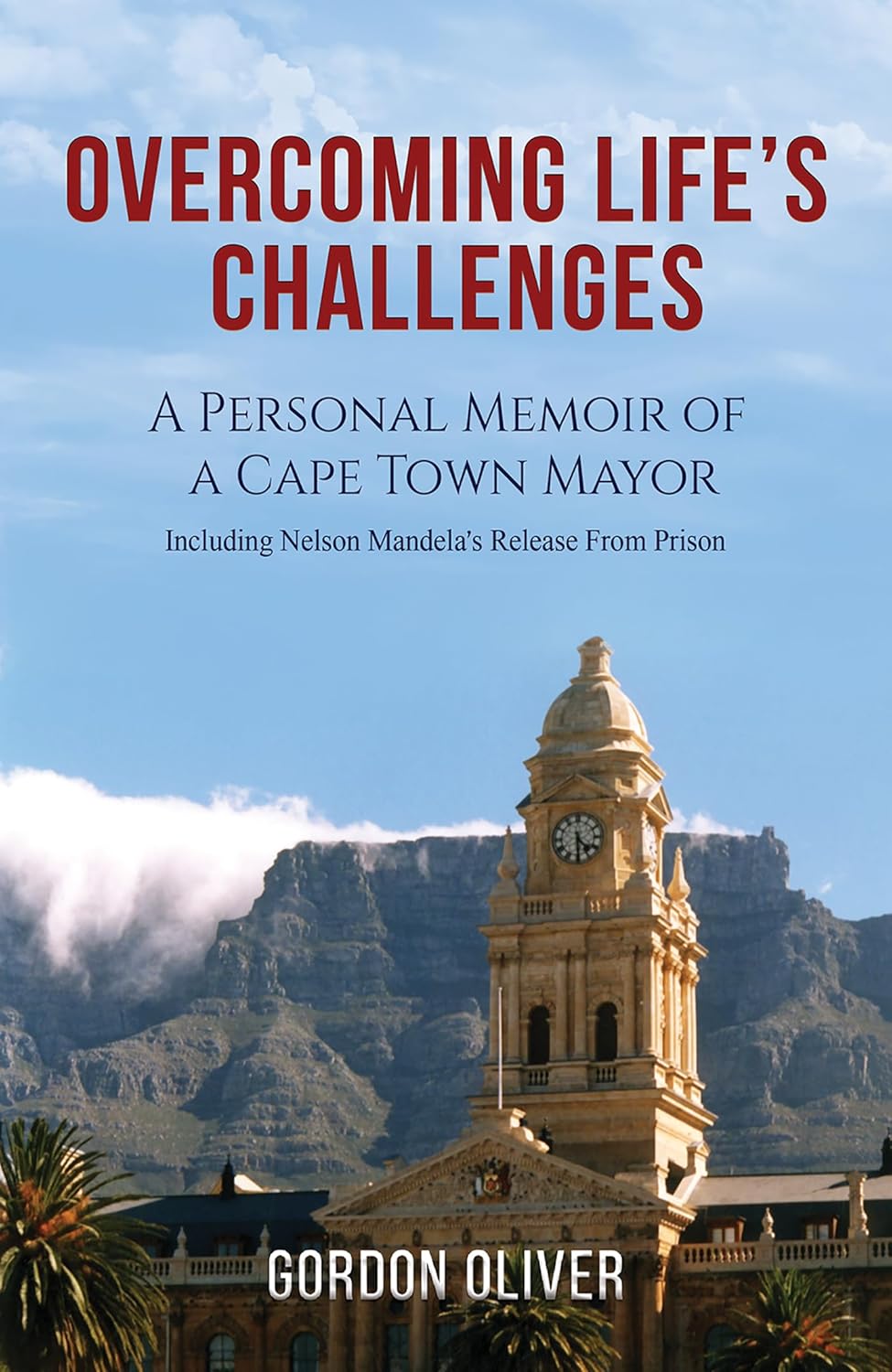
From the heights of politics via a spiritual journey to the ministry Gordon R. Oliver, Overcoming Life’s Challenges: A Personal Memoir of a Cape Town Mayor, Austin Macauley Publishers, 2024, pp.166, ISBN: 979-8891554146, £8.99, pbk.
Reviewed by John Midgley
An honest and liberal analysis of the Church
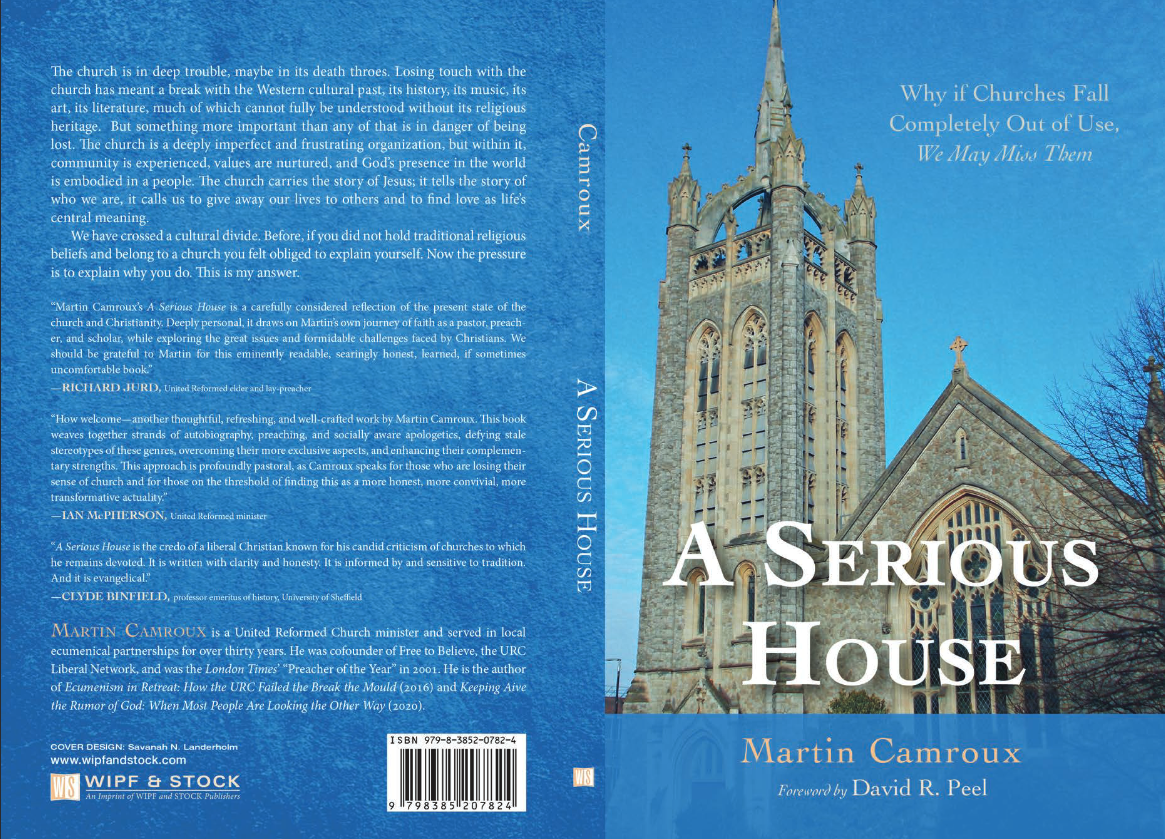
Martin Camroux, A Serious House, Why if Churches Fall Completely Out of Use We May Miss Them, Wipf and Stock, 2024, pp. 188, ISBN-13: 979-8385207824, £21 pbk, (also available direct fromthe author for £16, including postage, Martin Camroux, 4 Sorrel Close, Colchester, CO4 5UL).
Reviewed by Francis Elliot-Wright
Prayers of Many Faiths
Marcus Braybrooke, 1,000 Prayers from Around the World. Prayers of Many Faiths for Many Situations, independently published, 2024, pp.390, ISBN: 9798321565889, £39.99 hbk; ISBN: 97983439561609, £9.99 pbk black and white; ISBN: 798321565889, £19.99 pbk colour; also available on Kindle £4.99. Available to order on Amazon.
Reviewed by David Steers
An annual subscription to Faith and Freedom (two issues) costs £16.00 (postage included) in the United Kingdom. Single copies can be ordered at a cost of £8.00 each (postage included). Cheques should be made out to Faith and Freedom and sent to the business manager:
Nigel Clarke, Business Manager, Faith and Freedom, 16 Fairfields, Kirton in Lindsey, Gainsborough, Lincolnshire. DN21 4GA.
Overseas subscriptions are also available.
It is also possible to pay online. For more details see our website:
Between 7th and 9th May, Dunmurry congregation was visited by four Unitarian ministers from Great Britain. These included Rev Laura Dobson, minister at Chorlton, Rev Mária Pap, minister at Mansfield, Francis Elliot-Wright, student minister at Knutsford, and Rev Jim Corrigall, the London District Minister. On the evening of Tuesday, 7th May Dunmurry congregation welcomed them, plus members of other congregations and a good number of local ministers, to a social evening in the McCleery Hall. I conducted an interview/dialogue with Jim who told us about his role as London District Minister, growing up in South Africa and his anti-apartheid activities, his decades as a journalist around the world which took him to Northern Ireland among other places, as well as the theological reflections which led him eventually to enter the ministry. As part of the evening Jim shared with us the reading that means most to him in his ministry – ‘God’s Grandeur’ by Gerard Manley Hopkins – and we listened to his favourite piece of music – Nkosi Sikelel iAfrika, God Bless Africa. It was a great night enjoyed by everyone.
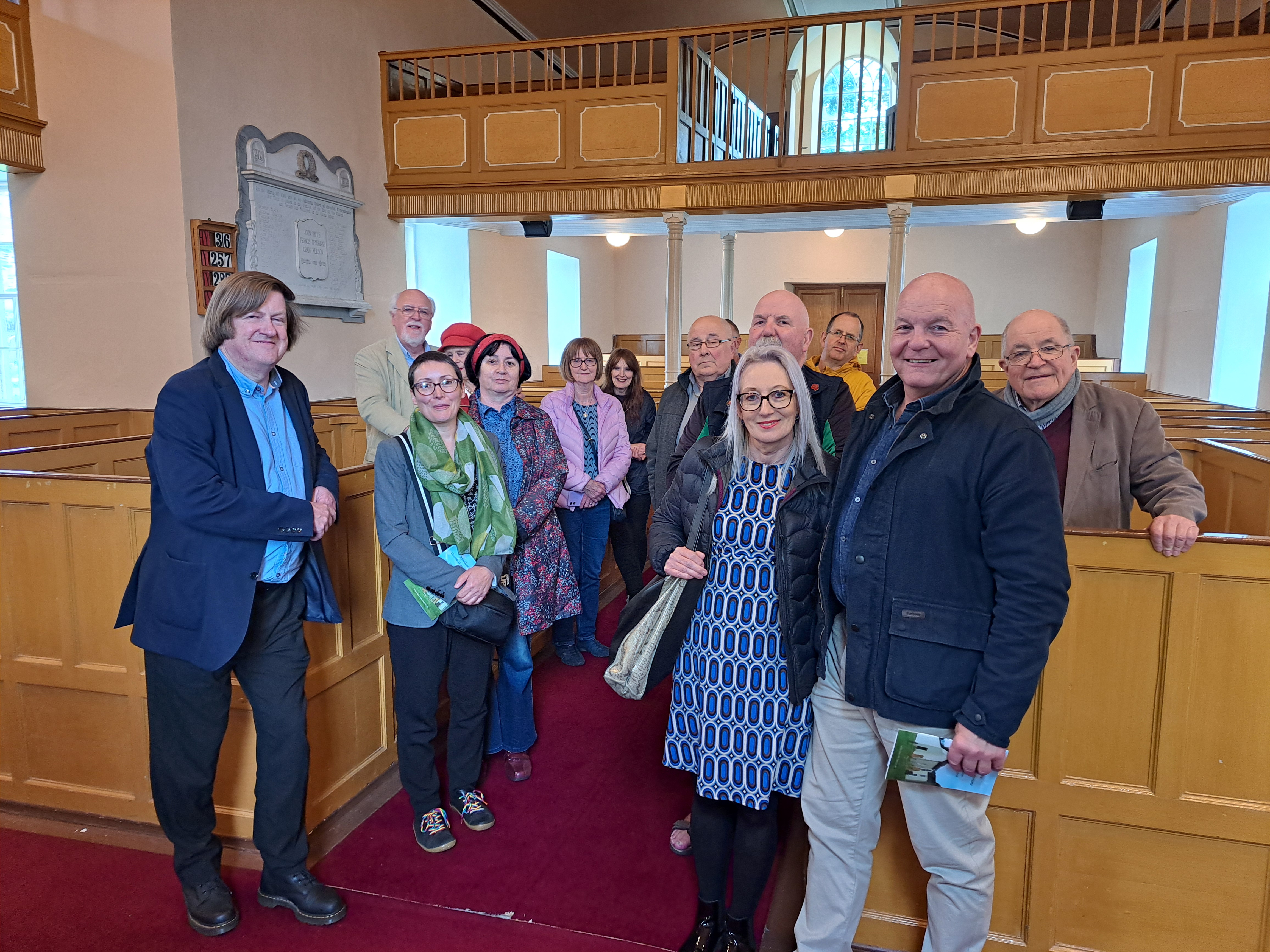
Left to right Rev Dr David Steers, Rev Mária Pap, Rev Lynda Kane, Rev Laura Dobson, Francis Elliot-Wright, Rev Jim Corrigall, Rev Stephen Reain Adair, Rev Brian Moodie in the McCleery Hall, Dunmurry.
On Wednesday morning we made an early start in the company of a group of members of Dunmurry and First Church to visit six churches in Belfast and county Down and learn something about their history and witness. Thanks to Gary Douds we were taken around the churches in a minibus in great comfort and we were also blessed with fantastic weather.
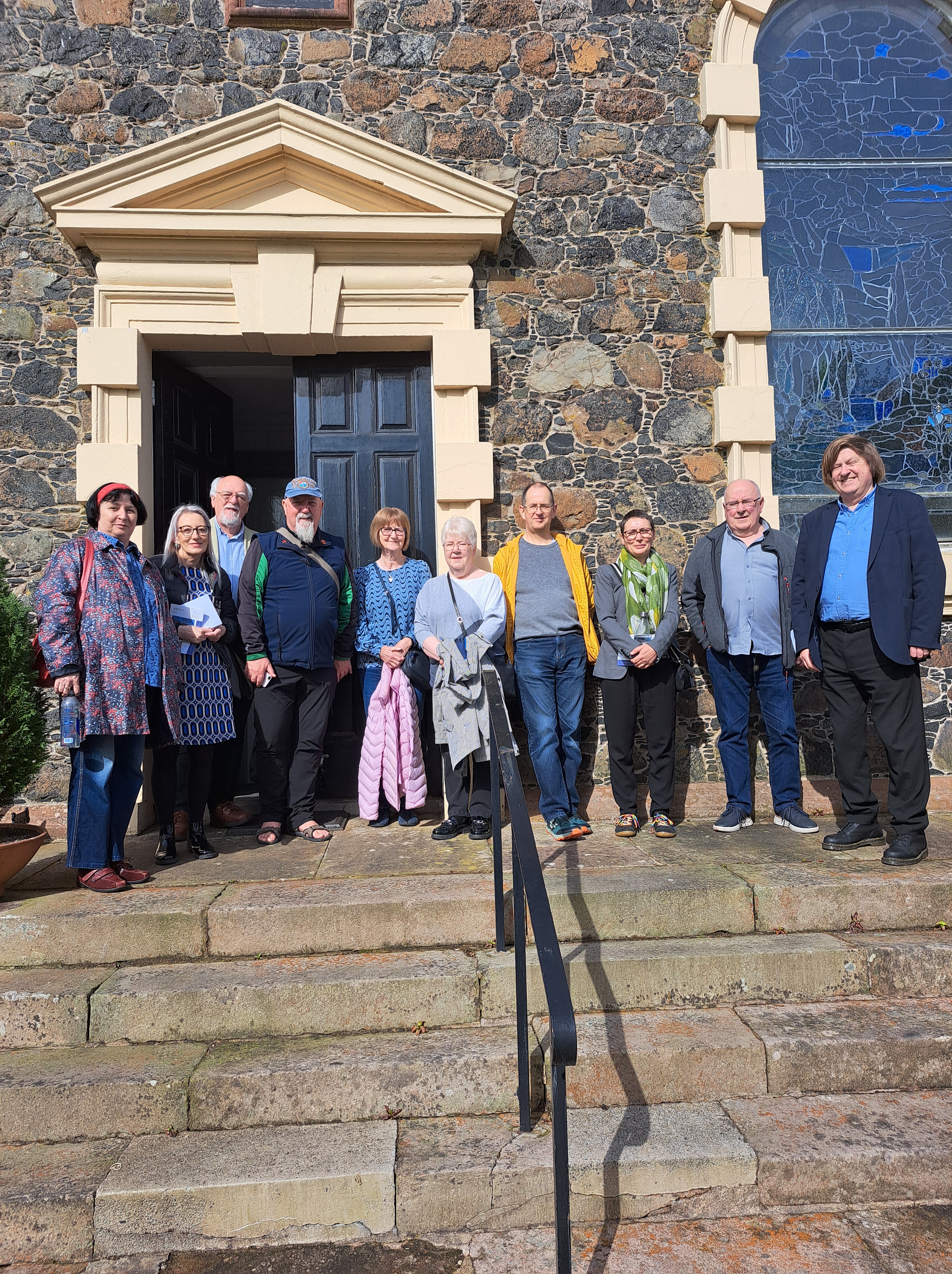
Some of the party at Dunmurry, ready to set off at 9.00 am.
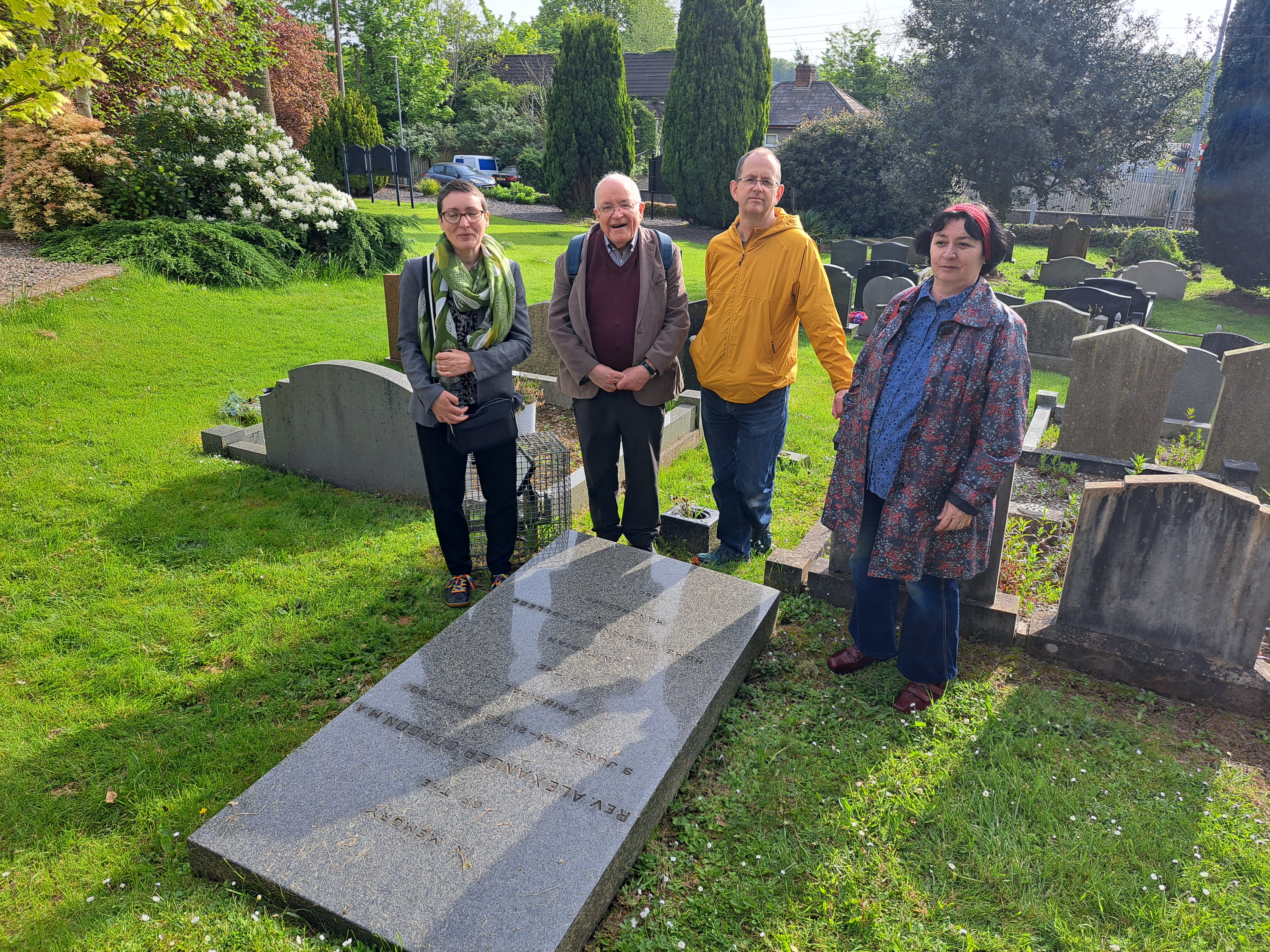
Laura, Jim, Francis and Mária visit the grave of Rev Alexander Gordon (Principal of the Unitarian Home Missionary College) at Dunmurry.
Outside Rademon later in the day.
In most of the churches I said something about the building and the history of the congregation and in Rademon Jim Ferris shared his historical expertise to give us a talk about his congregation. Our thanks go to all the ministers and members who welcomed us in our travels including Des McKeown, Rev Chris Hudson, Rev Dr Heather Walker, Mary Stewart and David Rooney, as well as Jim Ferris.
Des McKeown welcomes everyone to First Church, Rosemary Street.
Rev Chris Hudson welcomes everyone in the chancel in All Souls’.
We had lunch in Denvir’s in Downpatrick and returned to Dunmurry just 15 minutes later than our planned schedule had anticipated, so all in all a great day out.
In Downpatrick.
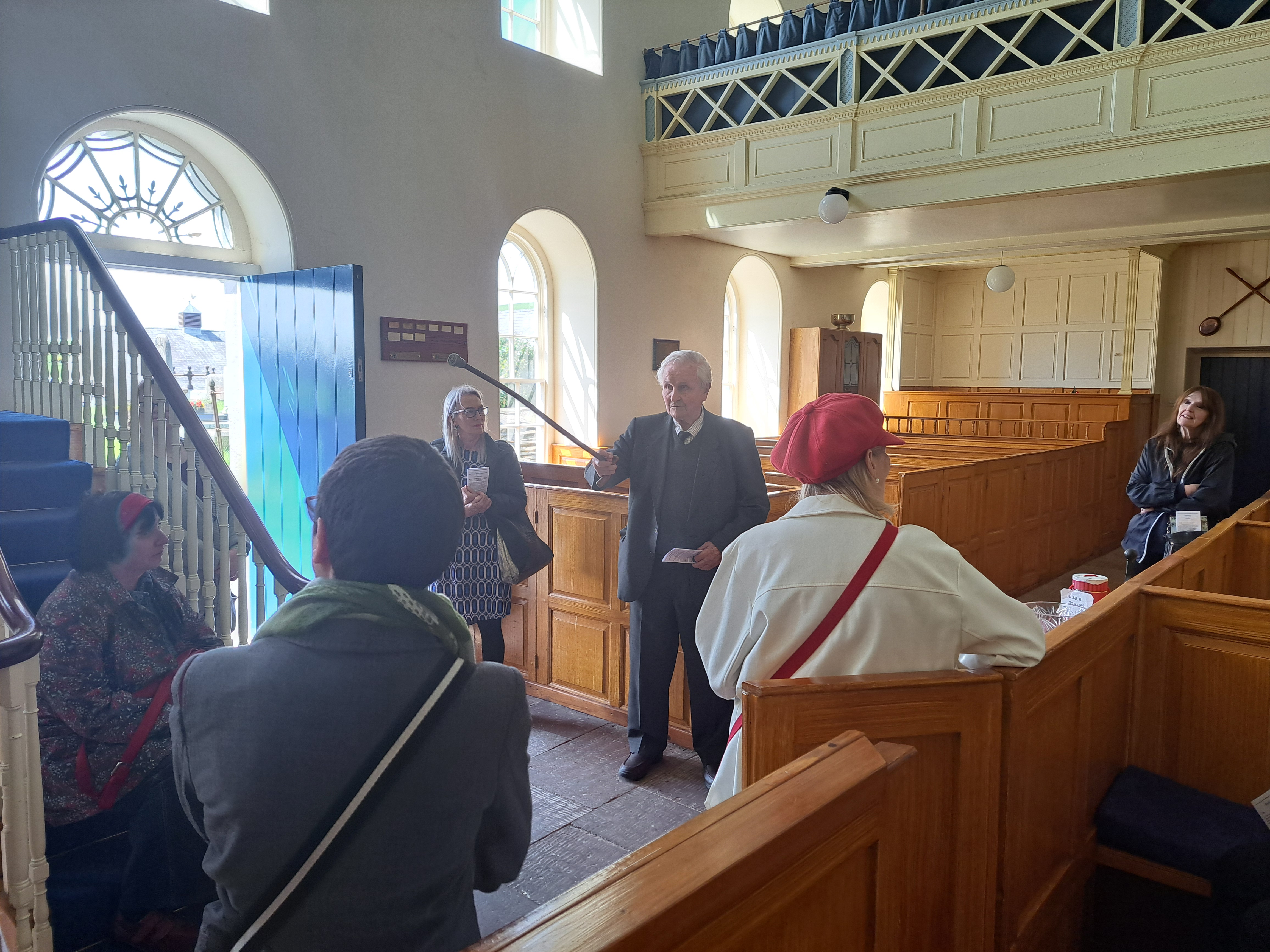
Jim Ferris explains the history of Rademon.
We visited in turn Dunmurry (1779), First Belfast (1783), All Souls’ Belfast (1896), Rademon (1713), Downpatrick (1711) and Clough (1837), buildings of different styles and ages but all with their own story to tell as part of our distinctive tradition.