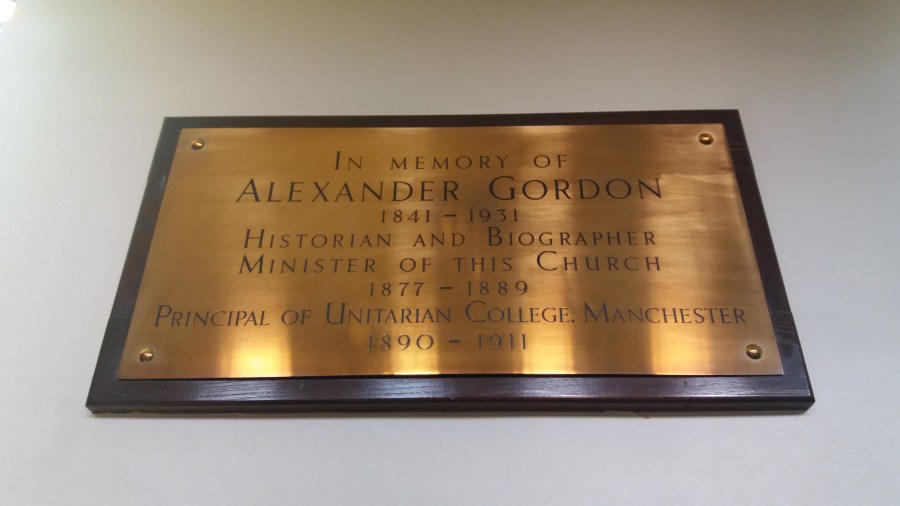
Alexander Gordon (1841 – 1931)

Historian, Biographer, Minister of First Church, Belfast. ‘An Englishman by birth, a Scotsman by education and an Irishman by inclination’.

On Thursday, 22nd May, 2025, we had an illustrated talk in First Dunmurry (NS) Presbyterian Church about the great historian Alexander Gordon.

Talk at Dunmurry by Rev Dr David Steers

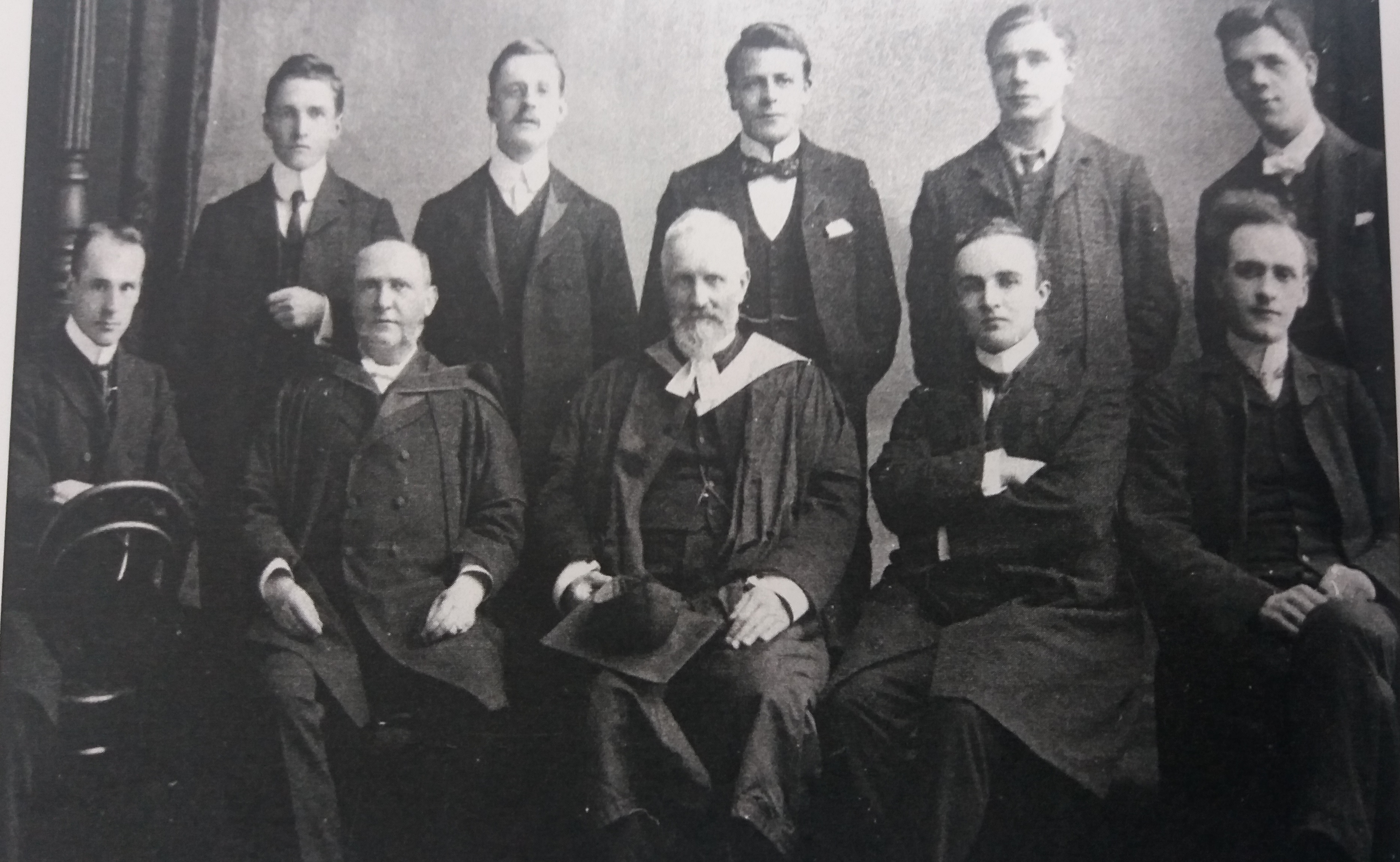
A distinguished minister in England and Ireland, he served at Aberdeen; Hope Street, Liverpool; Norwich and at First Church, Belfast, before becoming Principal of the Unitarian Home Missionary College, Manchester and a lecturer in Ecclesiastical History in the first Free Faculty of Theology in the British Isles.

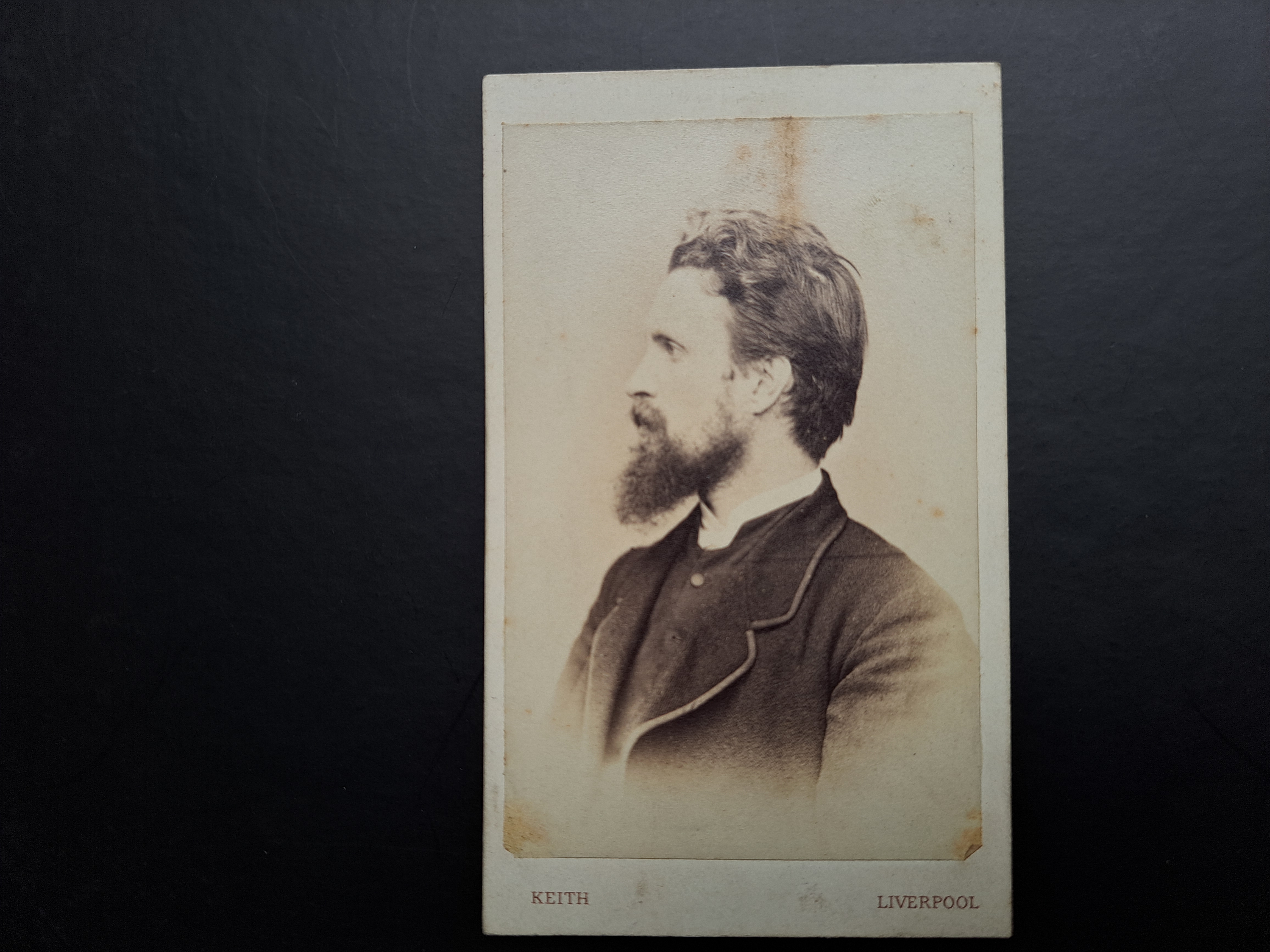
The earliest known photograph of Alexander Gordon, taken in Liverpool c.1872 at the time of his marriage to Clara Maria Boult

His scholarship was widely acknowledged all over the world, contributing 778 entries to the Dictionary of National Biography, 39 articles to the eleventh edition of the Encyclopaedia Britannica and much more. A superb linguist and experienced traveller his researches took him all over Europe. Among other things he was closely involved in the creation of the Non-Subscribing Presbyterian Church of Ireland in 1910.

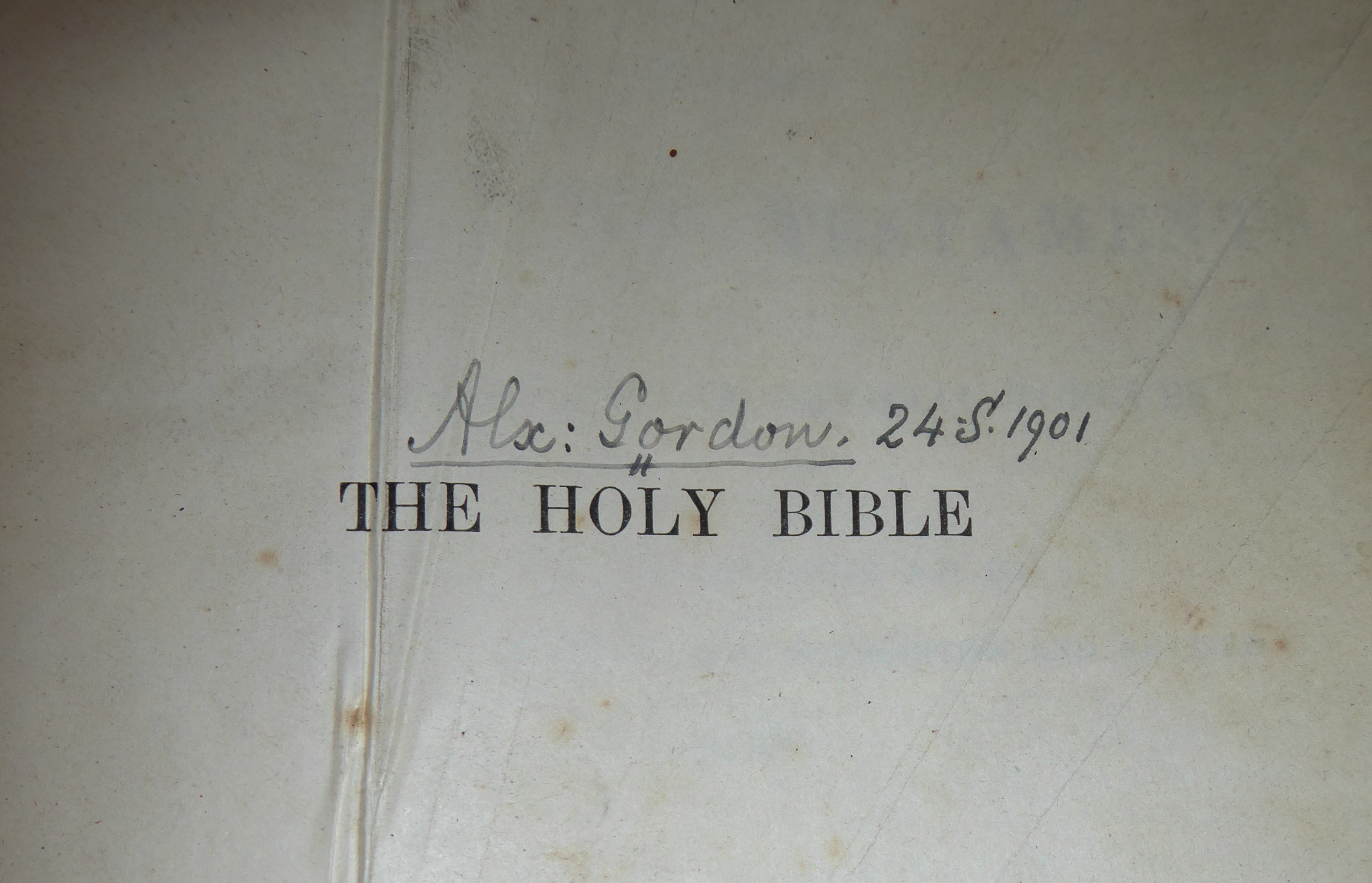
Gordon’s distinctive signature in a personal copy of his Bible (Revised Version)

The talk looks at his education, his work as a biographer and historian, and his commitment to the churches in Ireland which he served as secretary to the Association of Irish Non-Subscribing Presbyterians and later being closely involved in the setting up of the Non-Subscribing Presbyterian Church of Ireland itself.

He was a distinguished minister at First Church but even after leaving for Manchester kept a very close connection with the Irish churches, particularly through Dunmurry where he was regarded as the unpaid curate of his friend the Rev J.A. Kelly, despite the incredible heavy work load of his high profile work. From 1895 until the year of his death in 1931 he only missed one communion service at Dunmurry – and that was because of an unexpected train timetable change that left him stranded in Dublin one weekend during the First World War. For a very experienced traveller, particularly rail traveller, this must have been especially galling for Gordon. The lecture also looks at Alexander Gordon as a travel writer.

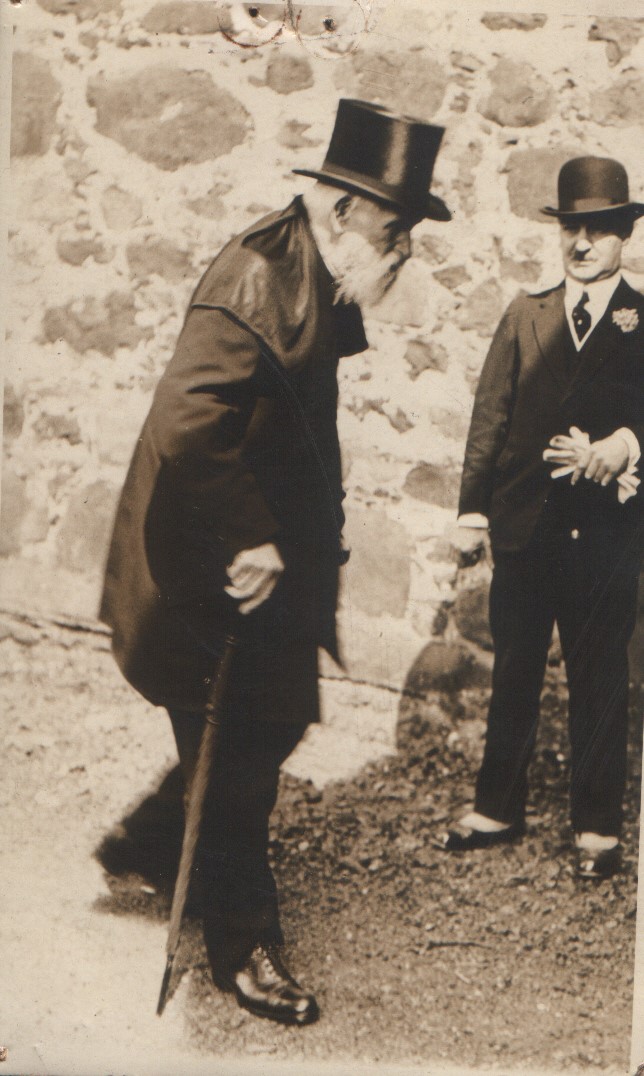
The last photograph of Alexander Gordon taken at Dunmurry on 18th January 1931

It examines too his family background, which was frequently touched by tragedy. But he inspired great loyalty and affection in the generations of students he trained for the ministry.

Principal of the Unitarian Home Missionary College, Manchester

He was buried in Dunmurry, just a short time after he conducted his final service there on 18th January 1931.

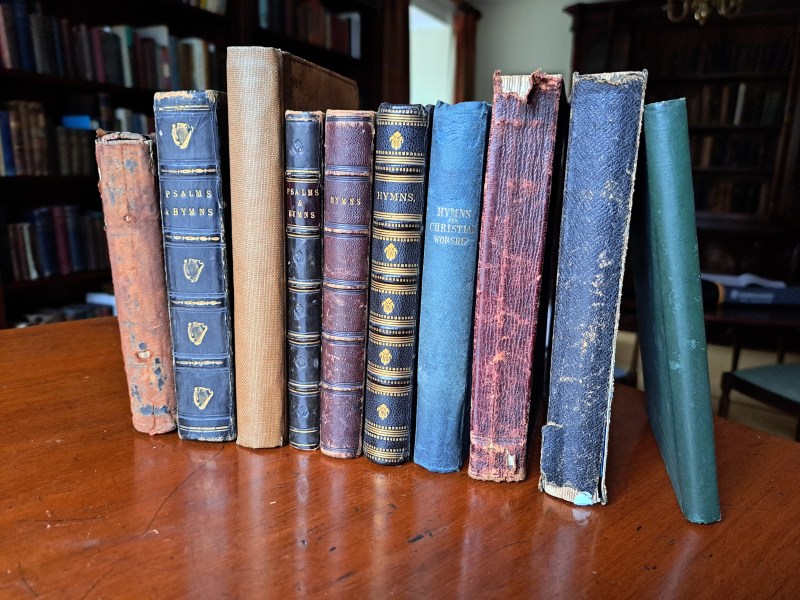
‘Let divine worship be observed, by all who would aspire after the happiness of heaven’. 19th-century Non-Subscribing Presbyterian Hymnbooks

The title of this post comes from the Preface to A Collection of Psalms, Hymns and Spiritual Songs written by the Rev A.G. Malcolm for his hymnbook published in Newry in 1811.

Click on the video to explore Irish Non-Subscribing Presbyterian hymnbooks

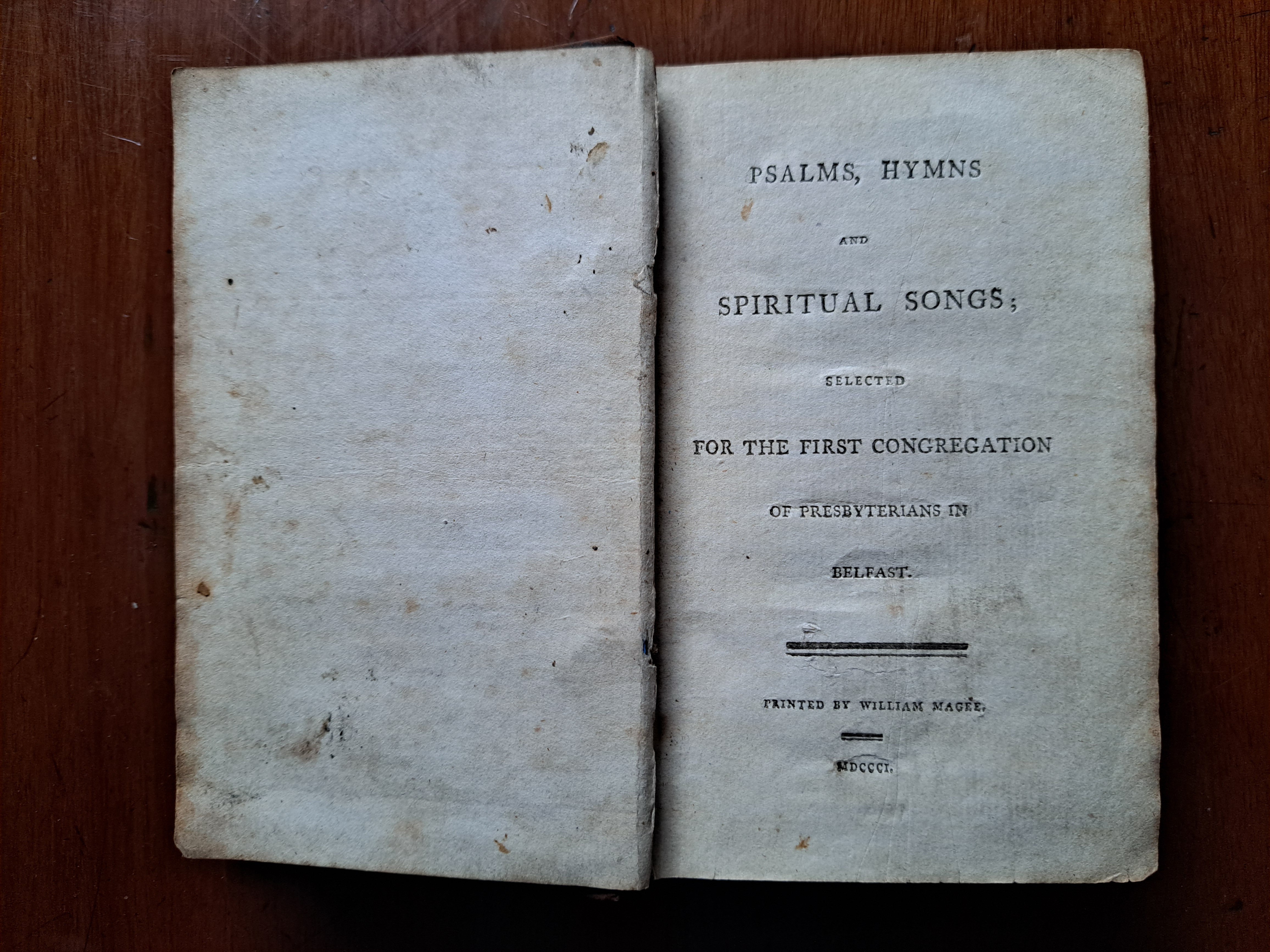
Prior to about 1800 Non-Subscribing or New Light Presbyterian churches, in common with other Presbyterians, would have worshipped with a Psalter or Psalm book. The first distinctly Non-Subscribing hymnbook appeared in First Church in 1801. What is surprising about this publication is that in the same year Edward Bunting offered to supply an organ to the church. This offer wasn’t taken up although in just a few years the Second Congregation were to become the first church with an organ, First Church not acquiring one until 1853. The Rev William Bruce edited this collection and 1,200 copies were published. A choir seems to have led the singing which initially contained boys but was later expanded to include adults.

First Church’s Collection of 1801

William Bruce’s book contained 246 hymns, with an index of first lines and a brief one page table of subjects. The next hymnbook, the Newry edition of A.G. Malcolm, contained 405 hymns with a more substantial table of subjects running over eight pages. Plus it had an index of first lines with the names of authors (for example Barbauld, Watts, Doddridge, Kippis, Merrick, Wesley, Addison, Enfield) which showed the eclectic sources the book drew on from within Dissenting circles and beyond.

An interesting preface also explained their intentions:

…care has been taken, to select psalms and hymns, which treat of of the leading points both of faith and practice; and it is hoped, that the compilation will be found to contain a sufficient variety of the best compositions, in sacred poetry, adapted to all the principal subjects of Christian devotion.

A.G. Malcolm went on:

Correctness, both in sentiment and style, has also been made an object of considerable attention. Hence, many verses have been altered; and such psalms and hymns as seemed, in any degree, unsuitable to the simplicity and solemnity of divine worship have been omitted.

As the work is intended for general use, and must be expected to fall into the hands of persons, who unavaoidably differ from one another, in their opinions, on religious subjects, all expressions, which appeared likely to give offence to any sincere Christian, have been studiously avoided.

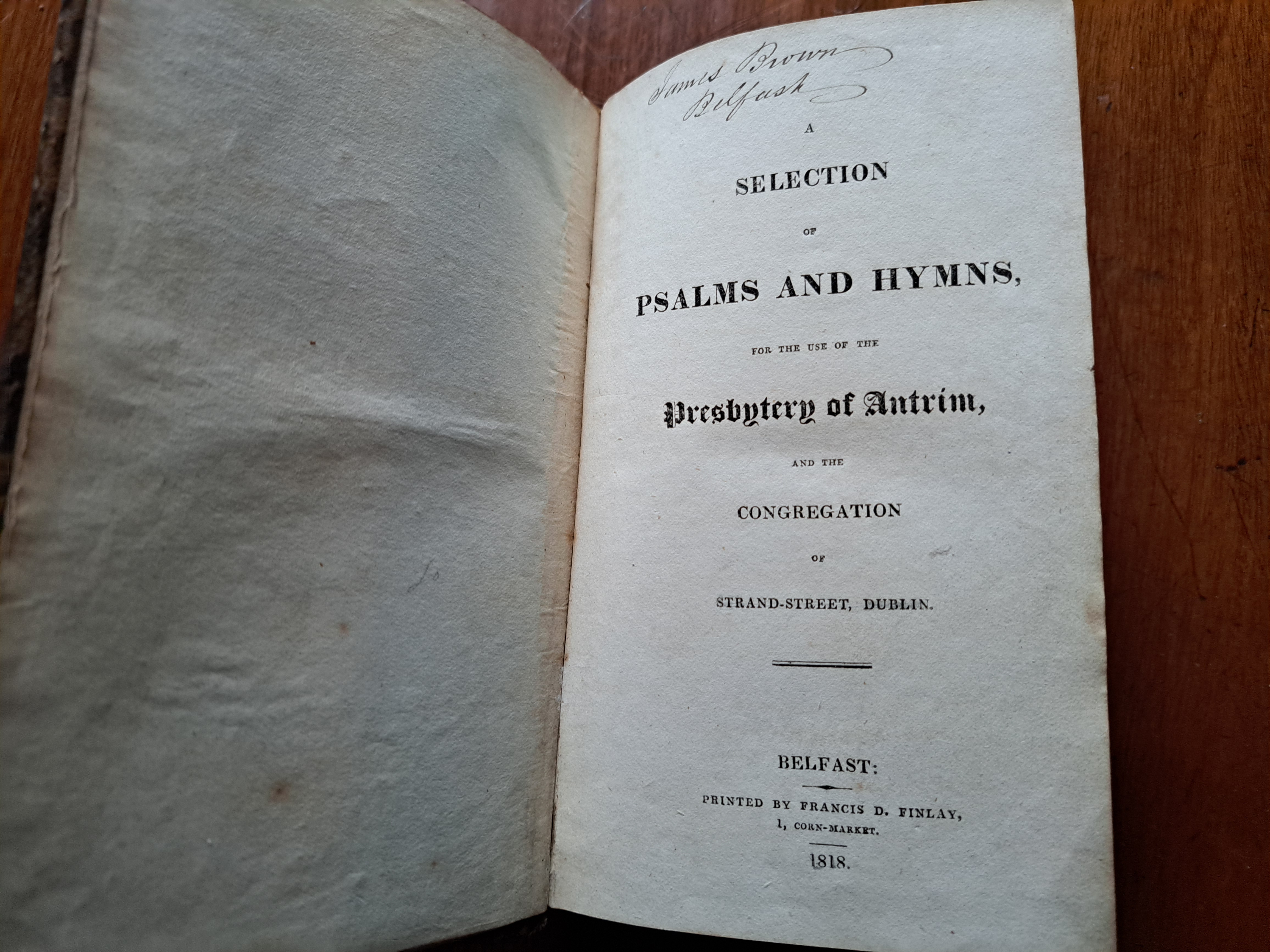
Interestingly the next hymnbook, dated Belfast, July 1818 and edited by Rev W.D.H. McEwen, made a similar point in a slightly more forceful way in its Preface:

Some doctrines are so offensive to the societies, for whose use this compilation is principally intended, that they are carefully avoided. As to others, the same scrupulosity is not observed; for, with respect to them, there may exist a diversity of sentiment. This selection may, therefore, be thought defective, but it will not disgust by a pertinacious obtrusion of doctrine.

So certain doctrines weren’t allowed to get in the way! Some were left out all together – the Trinity, the theory of the atonement based on penal substitution – and on some doctrines Non-Subscribers were able to agree to differ.

W.D.H. McEwen,s hymnbook

The book was published for the Presbytery of Antrim and the congregation of Strand Street, Dublin but it came from the minister of the Second Congregation. Curiously they had installed an organ in 1806 and had Edward Bunting as their organist from then until 1817. So they don’t appear to have had a hymnbook of their own for the first dozen years after installing the organ.

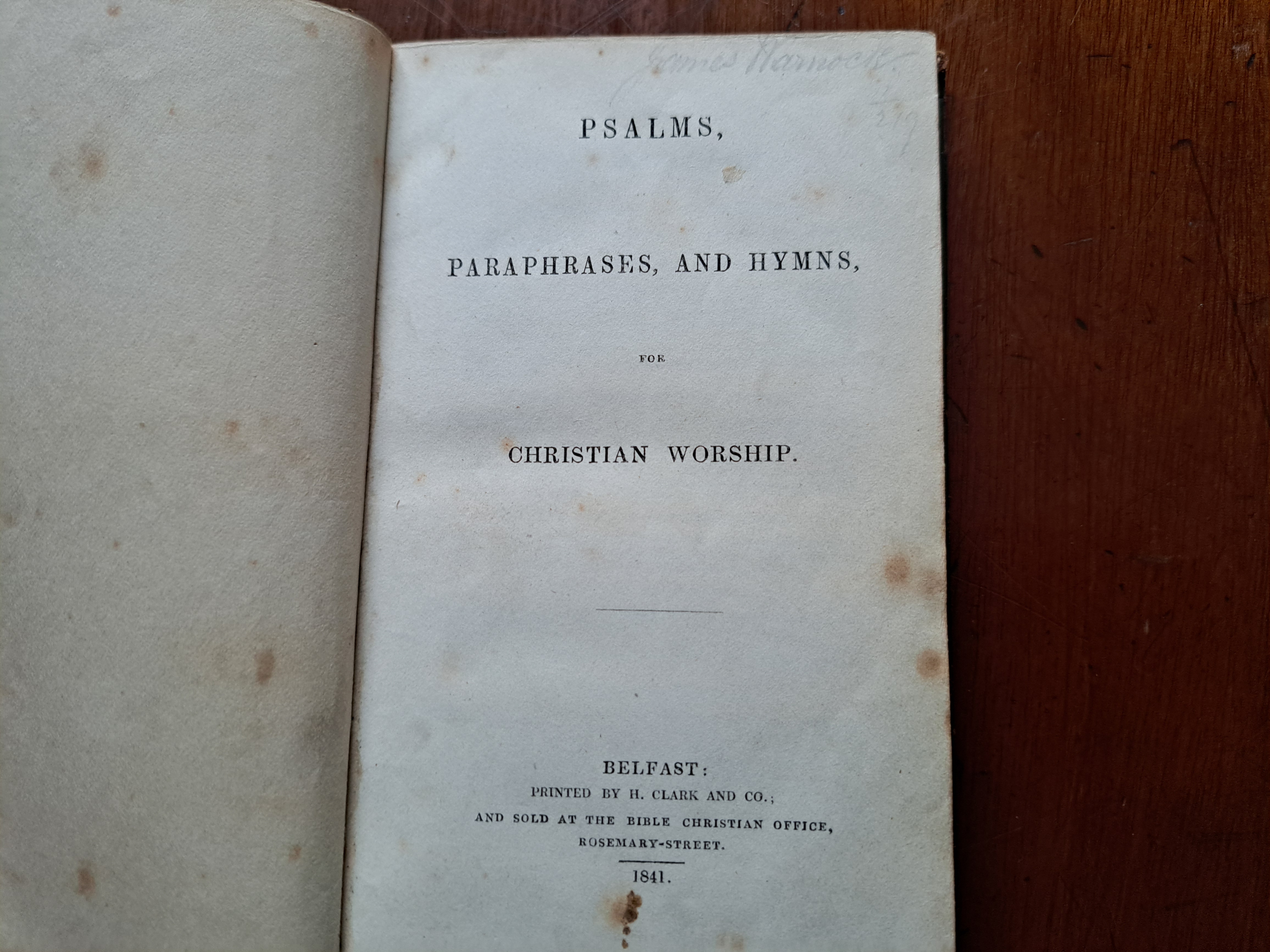
Following the establishment of the Remonstrant Synod of Ulster in 1830 Non-Subscribers moved towards the development of a hymnbook for all churches. This is Psalms, Paraphrases, and Hymns, for Christian Worship published in Belfast in 1841:

Psalms, Paraphrases, and Hymns, for Christian Worship 1841

This is the first edition of what became Hymns for Christian Worship, a book which went into at least four further editions before the end of the century and was followed by a supplement in 1899. Throughout this time this was the main series of hymnbooks in use in the churches in Ireland. More detail can be seen in the video above.

Remembrance

On Sunday, 10th November we held a well-attended Remembrance Service at Dunmurry and the video can be seen below. Special thanks go to John Neill for delivering Binyon’s Lines, to Jack Steers for playing the Last Post and Reveille, and to Allen Yarr for playing the organ.

Click above to see the Remembrance Service from First Dunmurry 10 November 2024

In the service I make full use of the booklet For Remembrance mentioned in the previous post. Indeed this little book, particularly the contribution by the Rev R. Nicol Cross, as it is mentioned in the previous video, has already sparked a lot of responses. Along with some of the other pieces it is a poignant and very honest reflection on the situation in 1919 for those returning from the front after the Armistice.

At the time he wrote his contribution Nicol Cross was minister of Mill Hill Chapel, Leeds, later he was minister of First Church, Belfast and later still Principal of Manchester College, Oxford. But from 1915 to 1919 he served as a private with the Royal Army Medical Corps. His perspective on the war was quite different from what you might otherwise have guessed.

Title page of the booklet

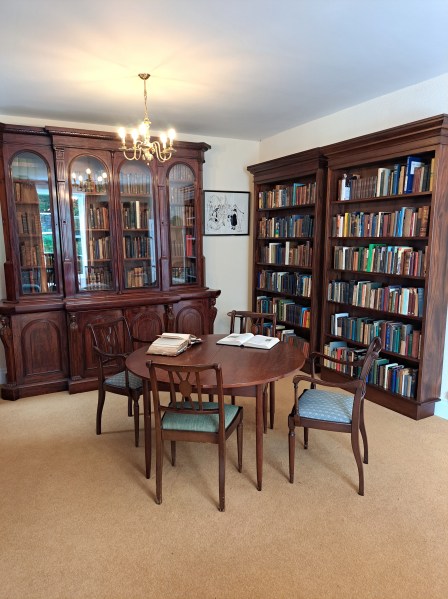
It is a very rare book, very few copies have survived. In the 2019 issue of the Transactions of the Unitarian Historical Society Alan Ruston contributed an article entitled ‘1919 – a re-evaluation of the part played by Unitarians in the First World War’. In his article he reveals that he had not previously come across the book, the copy he was sent while writing the article was the only one known to him. It certainly has not made its way into library collections. So this copy, in the Very Rev William McMIllan Library, is one of only two known copies.

One feature of For Remembrance that I didn’t mention in the first video or in the service above is that there is also a short note from the American Unitarian Association (AUA) included in the booklet. It seems to have come from a message sent out by the AUA to reurning troops and reads:

OUR GREETING AND PLEDGE

You have successfully met the challenge of the most powerful armies the world ever saw. You have shared in the most significant victory in all history. By a devotion that has won the affectionate admiration of the civilized world, you have helped to make possible a new and nobler life for humanity, and a truer brotherhood of man.

We welcome you again to our homes and our homeland. We pledge ourselves anew to the ideals for which you went forth to suffer; and because of your example we will rise to meet the duties of the new day with unwavering faith. Through our church we will unite our powers with yours in defence of the principles for which so great a price has been paid.

Your courage, cheerfulness, and fortitude will strengthen the church of your fathers.

From the Message of the American Unitarian Association

It would be interesting to know if this was the whole message of the AUA or whether they produced a book similar to For Remembrance.

John Wesley and Belfast

In the latest of our videos exploring the Very Rev William McMillan Library at Dunmurry we take a (brief) look at the eight volumes of the Journal of John Wesley. In particular we look at his visits to Belfast and his relationship with the Non-Subscribing Presbyterian churches in Belfast.

Exploring the Library at Dunmurry, episode 4. Click on the video above

John Wesley visited Belfast 11 times in the course of his career, always preaching in the town, sometimes in the market-house, sometimes in the open air. Often it seems he visited at times of cold, windy or wet weather. Only once did he preach in a church and the only church to ever be open to him was First Presbyterian Church, Rosemary Street. But this visit was mired in controversy and was not repeated. I am grateful to Des McKeown of First Church who recently gave me a copy of a letter to The Northern Whig dated 3 December 1873 written by the minister of First Church, the Rev John Scott Porter. This features in the video and it is interesting to see his opinion of Wesley’s visit almost one hundred years previously.

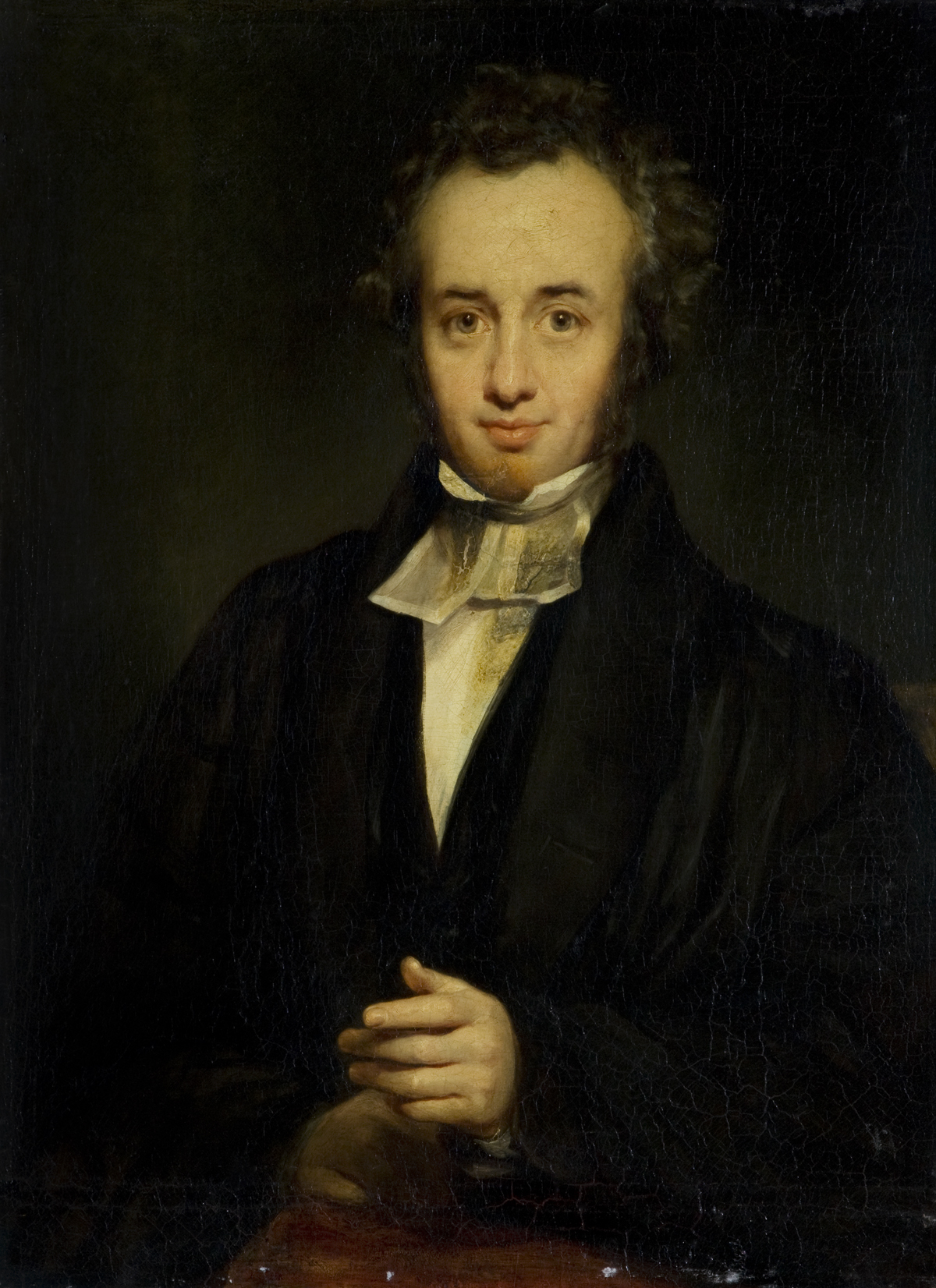
A youthful John Scott Porter

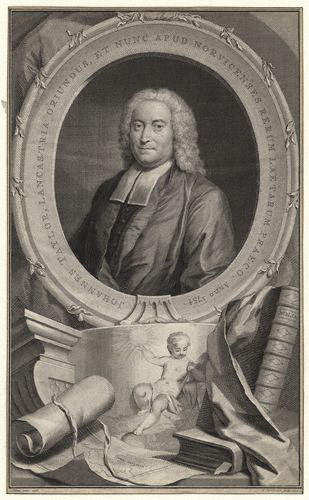
But another feature of Wesley’s Journal is his identification of followers of Dr John Taylor in the crowds that came to hear him in Belfast. John Taylor was minister of the Octagon Chapel in Norwich and the author of the The Scripture Doctrine of Original Sin. What are the implications of this in Belfast in the 1760s? We try to unpack the meaning of this for John Wesley’s reception in Belfast in the video.

John Taylor (Source: Wikipedia)

Visit to six churches in Belfast and county Down

Between 7th and 9th May, Dunmurry congregation was visited by four Unitarian ministers from Great Britain. These included Rev Laura Dobson, minister at Chorlton, Rev Mária Pap, minister at Mansfield, Francis Elliot-Wright, student minister at Knutsford, and Rev Jim Corrigall, the London District Minister. On the evening of Tuesday, 7th May Dunmurry congregation welcomed them, plus members of other congregations and a good number of local ministers, to a social evening in the McCleery Hall. I conducted an interview/dialogue with Jim who told us about his role as London District Minister, growing up in South Africa and his anti-apartheid activities, his decades as a journalist around the world which took him to Northern Ireland among other places, as well as the theological reflections which led him eventually to enter the ministry. As part of the evening Jim shared with us the reading that means most to him in his ministry – ‘God’s Grandeur’ by Gerard Manley Hopkins – and we listened to his favourite piece of music –  Nkosi Sikelel iAfrika, God Bless Africa. It was a great night enjoyed by everyone.

Left to right Rev Dr David Steers, Rev Mária Pap, Rev Lynda Kane, Rev Laura Dobson, Francis Elliot-Wright, Rev Jim Corrigall, Rev Stephen Reain Adair, Rev Brian Moodie in the McCleery Hall, Dunmurry.

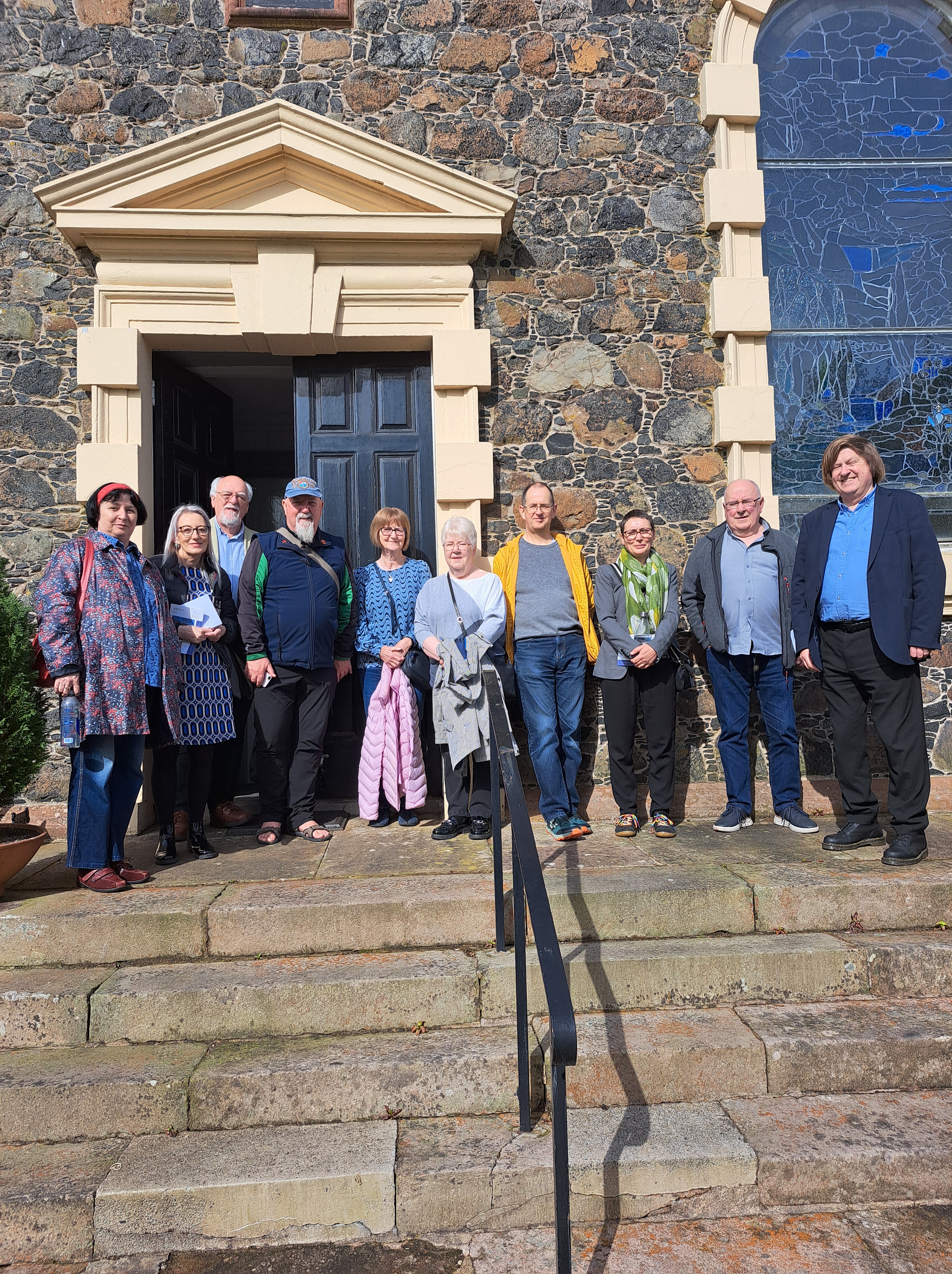
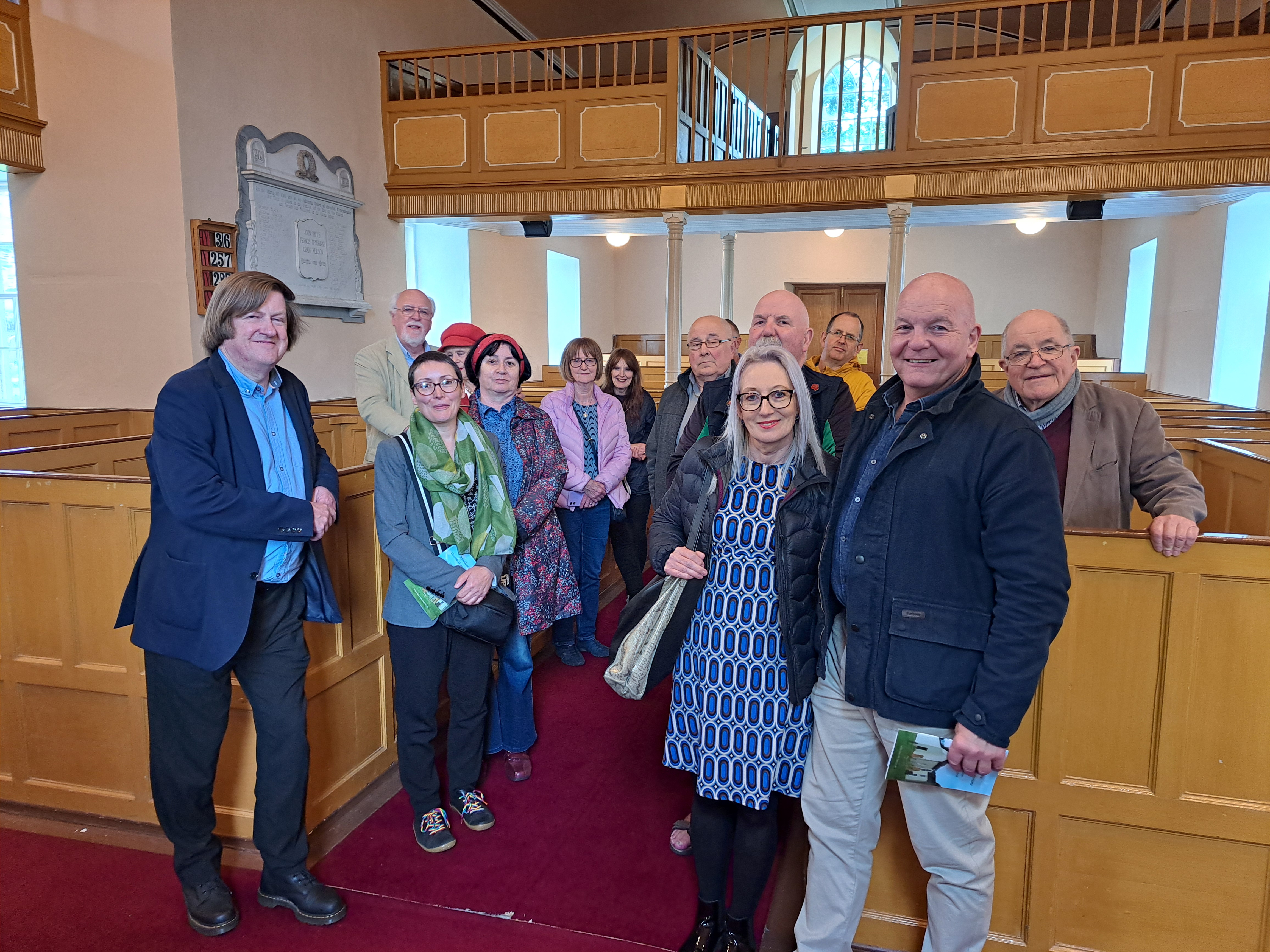
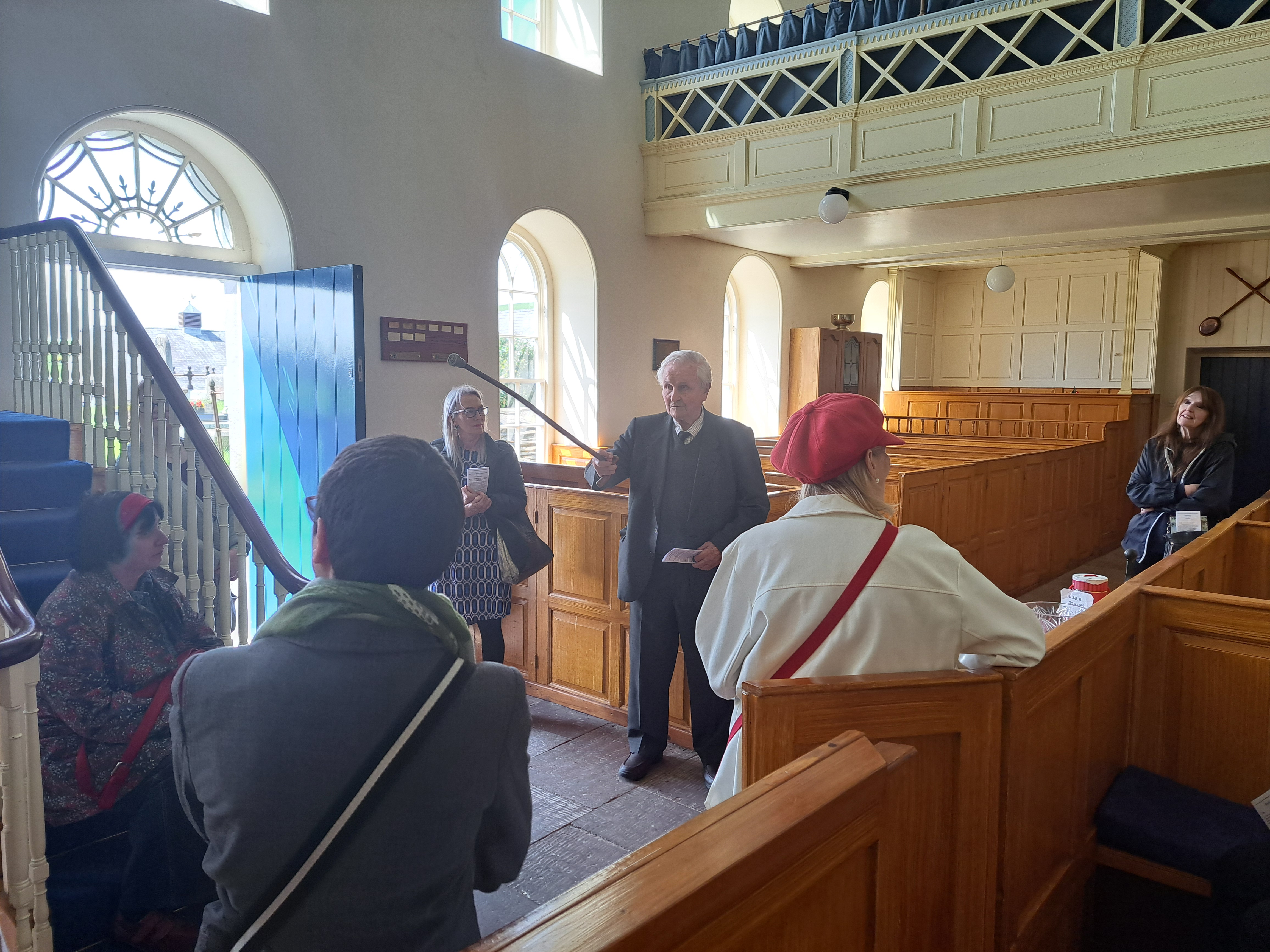
On Wednesday morning we made an early start in the company of a group of members of Dunmurry and First Church to visit six churches in Belfast and county Down and learn something about their history and witness. Thanks to Gary Douds we were taken around the churches in a minibus in great comfort and we were also blessed with fantastic weather.

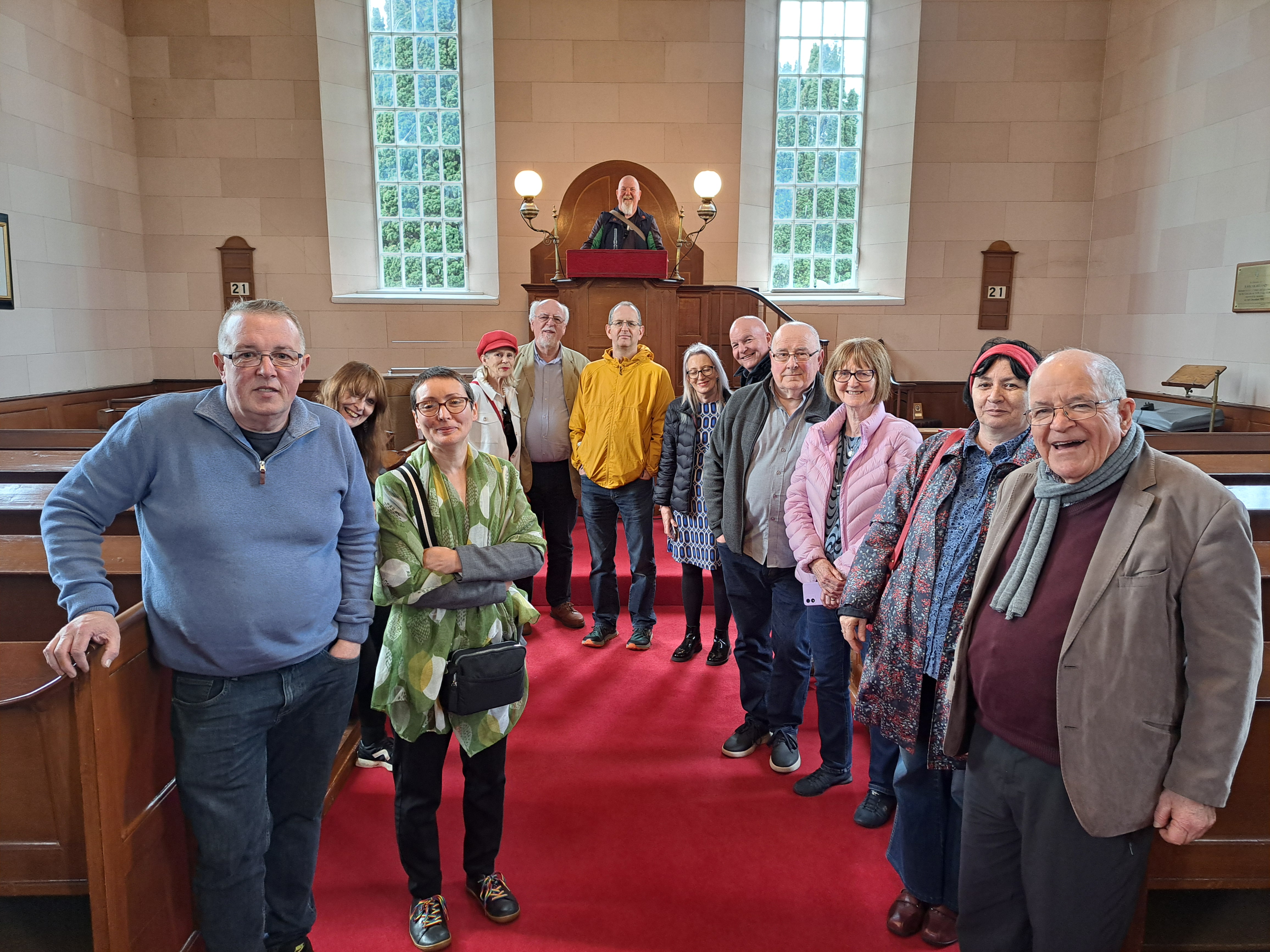
Some of the party at Dunmurry, ready to set off at 9.00 am.
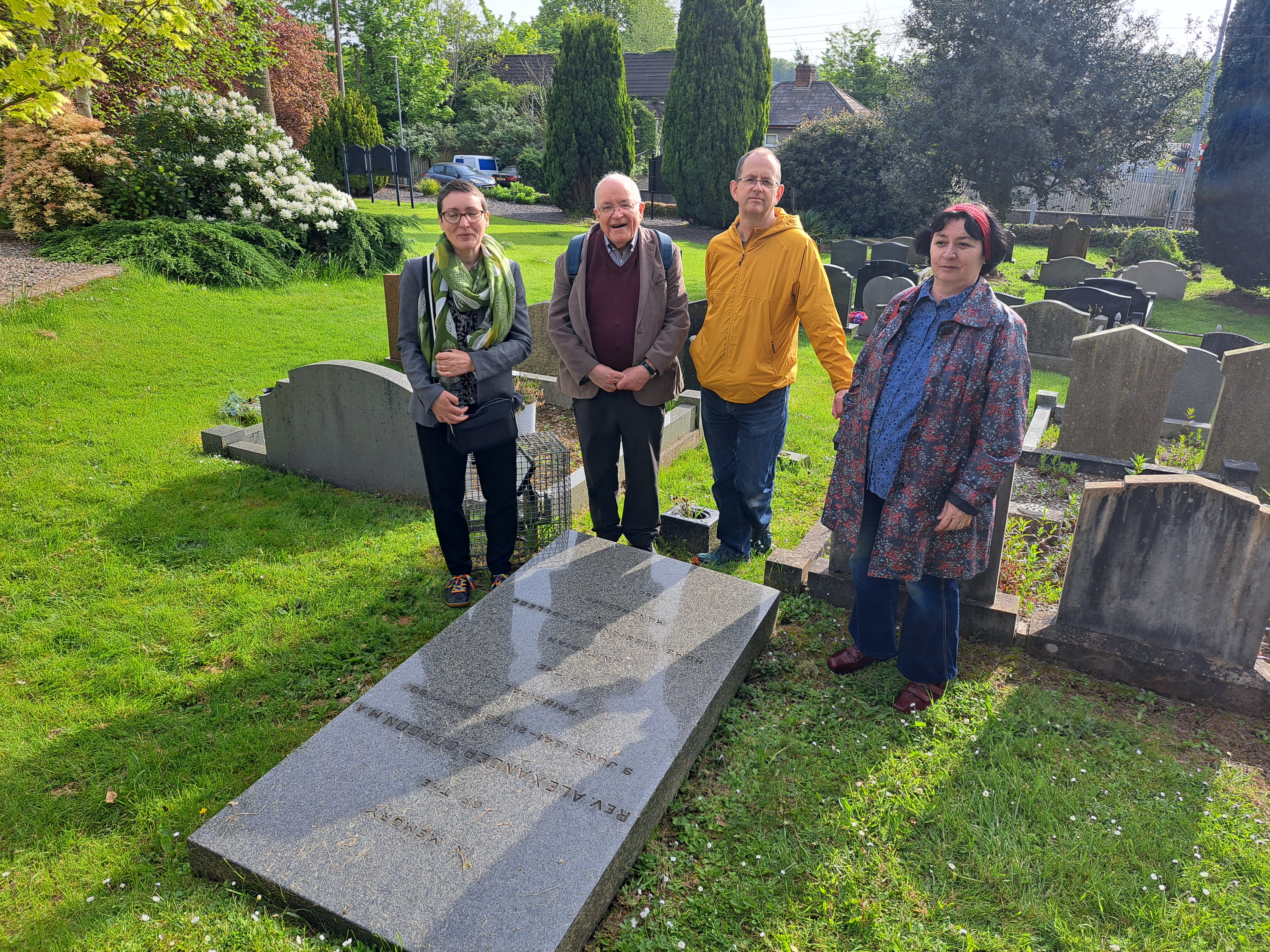
Laura, Jim, Francis and Mária visit the grave of Rev Alexander Gordon (Principal of the Unitarian Home Missionary College) at Dunmurry.
Outside Rademon later in the day.

In most of the churches I said something about the building and the history of the congregation and in Rademon Jim Ferris shared his historical expertise to give us a talk about his congregation. Our thanks go to all the ministers and members who welcomed us in our travels including Des McKeown, Rev Chris Hudson, Rev Dr Heather Walker, Mary Stewart and David Rooney, as well as Jim Ferris.

Des McKeown welcomes everyone to First Church, Rosemary Street.
Rev Chris Hudson welcomes everyone in the chancel in All Souls’.

We had lunch in Denvir’s in Downpatrick and returned to Dunmurry just 15 minutes later than our planned schedule had anticipated, so all in all a great day out.

In Downpatrick.
Jim Ferris explains the history of Rademon.

We visited in turn Dunmurry (1779), First Belfast (1783), All Souls’ Belfast (1896), Rademon (1713), Downpatrick (1711) and Clough (1837), buildings of different styles and ages but all with their own story to tell as part of our distinctive tradition.

In Clough, the last visit of the day.

Rev Tom Banham – An Appreciation

The Rev Tom Banham died suddenly, but peacefully, on Wednesday, 14 August. His funeral took place at Roselawn Crematorium on Monday, 20 August. I gave the address and reproduce it here as my tribute to someone who achieved so much in his ministry and who was also a great friend.

‘He had been instructed in the way of the Lord; and being fervent in spirit, he spoke and taught accurately the things concerning Jesus,

When he came and saw the grace of God, he was glad; and he exhorted them all to remain faithful to the Lord with steadfast purpose;
for he was a good man, full of the Holy Spirit and of faith. And a large company was added to the Lord.’

Some verses from the book of Acts which sum up something of Tom Banham, the faithful minister. Tom passed away on Wednesday, quite suddenly but also very peacefully in the Somme Nursing Home where he had settled quite comfortably. Tom was in his 91st year but as interested and intellectually involved in his church, his denomination and the world of theology as he always had been. Indeed two of the topics for debate brought to the Synod last June had originated with issues directly raised by Tom.

Tom served this denomination, his presbytery and his churches with tremendous loyalty and devotion over the best part of 50 years. In fact so much of the shape and form of our Non-Subscribing Presbyterian Church life was formed by Tom’s vision and endeavour. Tom was a minister, a theologian, an educator, a pastor, a liturgist. Innovative, dynamic and creative he achieved so much. For many of us here today Tom was also a friend, a colleague, a guide, a mentor. For everyone in our churches he was someone who played a key role on so many levels for decades. Typical of Tom he wanted his funeral to be conducted with a minimum of fuss. To be honest, given his achievements, no one deserves more fuss than Tom, but that isn’t the way he would have wanted it.

Tom was one of those people who had tremendous depth. He wasn’t just a leading minister in Northern Ireland throughout the period of the Troubles and beyond, although that would be enough to deservedly win the admiration of everyone. Tom had two consecutive high achieving careers – the first, of course, as an officer in the Royal Navy.

Tom was born in Devon and I think felt the call of the sea from an early age. He went to the Royal Naval College and was trained as an Engineer as he embarked upon his service in the Navy. Tom joined the Navy at a time when you really did see the world and he visited so many places in the course of his naval service. Tom kept pictures on his wall of all the ships he had served on but was unsentimental about the past. His medals and ceremonial sword were donated to the Royal Naval Association some years ago to be auctioned for service charities. He often lamented though that he seemed to have outlived so many of his comrades from the service. As an engineering officer Tom reached the senior rank of Lieutenant Commander bringing a highly specialised technical knowledge to the management of ships.

Tom was someone who was always keen to contribute to society, to make a difference to those in need. He had a long-time association with Scouting and it was this that brought him towards the ministry. As his time in the Navy was drawing to a close Tom was running the Sea Scouts in Bristol which was based at Lewin’s Mead Chapel, a famous and then very large dissenting congregation in the city. Through this association he felt called to the ministry and after around 20 years in the Navy went to the Unitarian College in Manchester to train for the ministry, studying theology at Manchester University leading to the award of the degree of Bachelor of Divinity by the University of London. In those days most of the students were young men, Tom was older and much more experienced, yet everyone who was a student in Manchester in those days remembers him with tremendous affection as a friend.

Had circumstances been only slightly different Tom might well have returned to Bristol to minister but instead Tom was called to Northern Ireland, to be minister of Ballycarry and Raloo churches. So commenced a connection that was to dominate the rest of his life, as a Non-Subscribing Presbyterian church minister.

Tom was ordained by the Presbytery of Antrim in September 1971 and valued his membership of that ancient body. He was clerk for eight years and moderator on a number of occasions. And we can see here what an impact Tom had on the structure of the denomination. He found the method of visitation of congregations to be cumbersome and in need of reform. He straight away set about reconstituting the method of visitation by the presbytery, now basing it on four separate commissions. And so it was that the Presbytery of Antrim, and then the other presbyteries in the denomination, had a new more efficient system of visitation. It was based, Tom always liked to say, on the system used by the Navy for inspecting battleships.

Tom was well respected and very happy in county Antrim but after four years he received a call for a new sphere of work, to First Church, Belfast, the congregation with which he was to be associated for the rest of his life. In 1975 this was a very challenging settlement indeed. The previous minister had been killed in a tragic road accident, the Troubles were at their height, the city centre was under considerable pressure, and the church itself had been badly damaged in a bomb attack; the windows were smashed and the eighteenth-century ceiling lay on the floor. The late Tom Moore, who was such a stalwart member of First Church and a good friend of Tom’s, once said to me that without Tom he didn’t think there would be a First Church today. Tom was the right man in the right place at the right time and under his leadership the Church was resurrected and able to flourish once more.

Both when he was minister and later, when he had retired, Tom could be found every Wednesday morning in Rosemary Street, along with his band of co-workers. Tom was a scholar and a fine preacher and a thinker but he was also an immensely practical person and if there were jobs to be done about the premises Tom would take them on himself. And when the work on the premises was completed there were always books to catalogue in the church library and the index to compile for the Non-Subscribing Presbyterian magazine. Tom was a voracious reader, the arrival of the Postscript catalogue meant more books needed to be bought, many of which he later donated to Rosemary Street. Even in recent times when his health began to decline Tom was, thankfully, still able to read and in the Nursing Home he got to work grappling with the finer points of the theology of Paul Tillich.

So Tom was a minister and a theologian. He was also an educator. He was involved in education both outside the church and inside. He was a governor and ultimately the chairman of the board of governors of Malvern School in Belfast for many years. One major educational contribution he made to the denomination was the creation of the Academic Training Board. With Tom’s vision and energy this body was established for the denomination and for years it provided training and educational courses first of all for ministers but then later for lay people, preachers, church officers and so on. It became an invaluable and essential part of denominational life. Tom devised many of the early courses himself and others followed in his footsteps developing this body for a great many years.

Tom was a liturgist too. The version of the communion service which he devised has been used by many of us in the ministry since and elements of it were later published in Andrew Hill’s Celebrating Life and it was published in full in European Perspectives on Communion in 2001. A couple of years later Tom edited for publication European Perspectives on Baptism in the same series.

Tom was also strongly ecumenical in all his work, most notably serving as the secretary of the Department of Theological Questions of the Irish Inter-Church Meeting, the body which brought the Catholic and Protestant churches together. Here Tom held his own with the leading theologians in Ireland and was soon on first-name terms with Cardinals, Bishops and Moderators of all denominations. Indeed he had many friends across the denominations. Tom effectively wrote the DTQ’s paper on the church in modern society and was disappointed when narrow spirits prevented its publication. For a long time Ireland had some of the most sophisticated top-level ecumenical bodies in the British Isles, but what it lacked, particularly during the Troubles was much grass-roots ecumenical contact. Not so for Tom. As a parish minister Tom was keen to work on a cross-community basis. He was a member of the Eclectic Fraternal, which brought all sides together, and in his church he maintained the close connection between Rosemary Street, St Mary’s and St George’s which bore fruit particularly in the joint Christmas Carol services held between the three churches in Rosemary Street every year when Tom was minister. The importance of such events, particularly during the years of the Troubles, cannot be overestimated.

But Tom also loved music and he found in that a way to bring people together, particularly to celebrate God’s love in a broad and joyful way. For the denomination this meant the Choirs’ Festival which Tom set up and which alternated between All Souls’ and Rosemary Street, great gatherings of choirs large and small from all over the denomination singing praises together as well as their own favourite pieces. Tom greatly enjoyed and valued the musical tradition in First Church and right up to this year was helping to see this flourish.

Tom was throughout his life always kind and generous. Sue and myself and our children all have reason to know this, as do many here. It was part of Tom’s nature to be generous. And it extended far and wide. As a pastoral visiting minister Tom would call on those who were elderly or infirm or lonely. But he didn’t just bring prayers and support to those he visited. If he saw situations that needed practical resolution he would return armed with his tool box, and shelves would be fixed, pictures hung up and other items knocked into shape.

In Belfast Tom ran for a great many years what was then called the handicapped Scouts. Tom put in many hours – organising events, transporting young people to different occasions, working with young people with disabilities and doing so much good across the communities all against a background of civil upheaval. But such work was typical of Tom, done quietly without fanfare but so important and appreciated by those he worked with.

Tom believed in the importance of inter-faith dialogue and understanding and was one of the founders of the Northern Ireland Inter-Faith Forum. I know his presence and counsel was much valued in that body.

Based on his understanding of the history of this denomination and his knowledge of the development of its witness Tom had a vision of how to make his church most effective and most true to its calling as a liberal Christian community. Tom always had an eye for the practical solution or identified a need to devise a new structure when necessary. So something as simple and useful as the Aide Memoire for the denomination was created by Tom – and physically put together by him and his co-workers for many years. The Sunday School Games was his brainchild too and for many years he participated and led in that. Tom helped at every level of this event and once was sitting acting as scribe for a team in the under 5 section of the quiz. In one round the children were asked ‘Who was swallowed by a whale’. Four small faces all looked blank until one turned to Tom and answered brightly ‘Pinocchio’. Tom felt he had no choice but to nod and dutifully write down the answer, for Pinocchio certainly was swallowed by a whale.

On top of all this Tom found time to do even more. He was secretary or chair or convenor or treasurer of many different committees and bodies. And though he was primarily minister first of all of Ballycarry and Raloo and later of First Church he was minister in charge of a great many other churches over the years, that is the minister during a vacancy, bringing pastoral care and help to many other congregations. I don’t think I could prepare an adequate list of the many churches he helped over the last fifty years. But many people will have memories of Tom coming to their church all over the country at different times.

It was a big upheaval for Tom to give up his home on the Cliftonville Road but it was a necessary move and he felt very comfortable in the Somme Nursing Home. At the time of his move I arranged for his papers to be sent to Harris Manchester College, Oxford to be stored there. It took three enormous boxes to carry them and the College had to buy additional archive boxes to store them in but it means so much of Tom’s working life – in the church, in the presbytery, in the denomination, in the DTQ, in ecumenical and inter-faith bodies is preserved for the future.

A few years ago Tom gave me his old Book of Occasional Services which is a minister’s book for the conduct of baptisms, weddings and funerals and so on. In one of the annotations which Tom has added he has written:

To live in the hearts of those we leave behind is not to die

I am sure that is true and we will all long remember Tom, as the valued colleague or minister or friend he was to us.

We commend him to God now in glad thanksgiving for having known him and shared in life with him in all its fullness. And I would close with some words from John Bunyan’s Pilgrim’s Progress:

Then said he, ’I am going to my Father’s, and though with great difficulty I am got hither, yet now I do not repent me of all the trouble I have been at to arrive where I am. My sword I give to him that shall succeed me in my pilgrimage, and my courage and skill to him that can get it. My marks and scars I carry with me, to be a witness for me that I have fought his battles who now will be my rewarder.’ When the day that he must go hence, was come, many accompanied him to the river side, into which, as he went, he said, ‘Death where is thy sting?’ and as he went down deeper, he said, ‘Grave where is thy victory?’ So he passed over, and all the trumpets sounded for him on the other side.”