Faith and Freedom 200th Issue

Having been founded in 1947 we have now reached the significant milestone of our 200th issue. Still proudly flying the flag for a thoughtful, liberal approach to religion our journal goes all round the world and has readers on every continent.
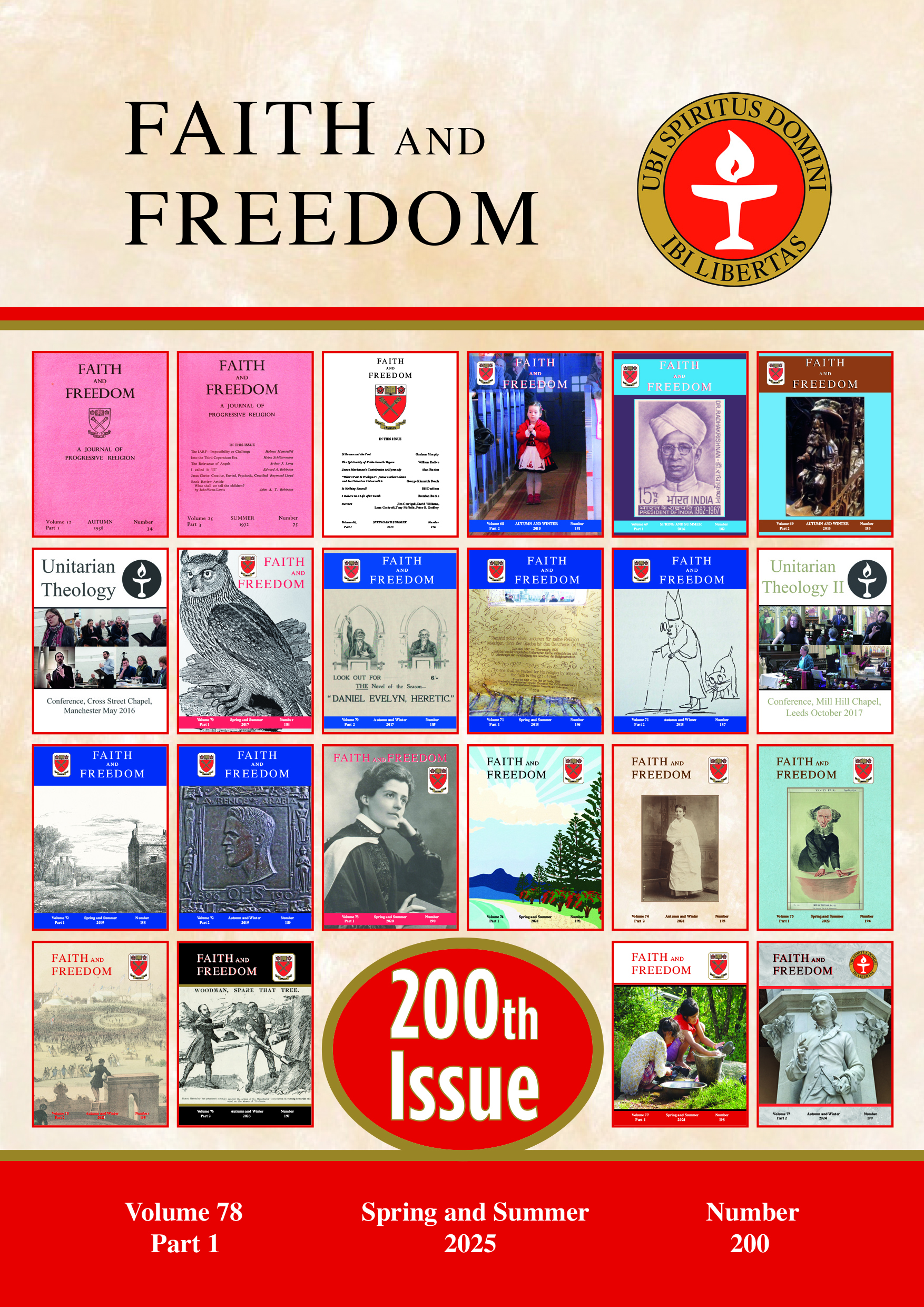
200th Issue Cover

Our Cover includes pictures of a selection of some of our 200 issues. We’ve had some splendid images in the last few years with photographs taken by some notable photographers as well some historic pictures or artworks that have really stood out.

With this being such a special issue we have selected three articles from our back catalogue that shed some light on our development over the last 78 years..

The first is from our very first issue. A Declaration of Faith by Dr Albert Schweitzer set the tone at the very genesis of this journal. It is hard to over estimate the importance of Albert Schweitzer within liberal circles at that time. A polymath thinker, theologian, humanitarian, philosopher, physician, he epitomised the cutting edge of a liberal, questioning approach to religion in the mid-twentieth century. Written for a meeting of the International Association for Religious Freedom, the world’s oldest interfaith organisation, a body which we have often had close interactions with, it was a considerable coup to have his contribution in the very first issue.

The second article is God is Necessary by H. Lismer Short published in Autumn 1958. At the time he was a future Principal of Manchester College, and his article displays the depth and breadth of his scholarship. Essentially an answer to the humanism of that age and the development of a scientific thinking that had unsettled the traditional Unitarian approach to the divine. The article declares that we ‘have been satisfied with cosmic explanations or enquiring agnosticisms, and have not sufficiently tackled religion from the end of human anxiety and dread.’ The traditional proofs of God no longer hold but ‘all the burden of living’ still required a place for faith in a personal God.
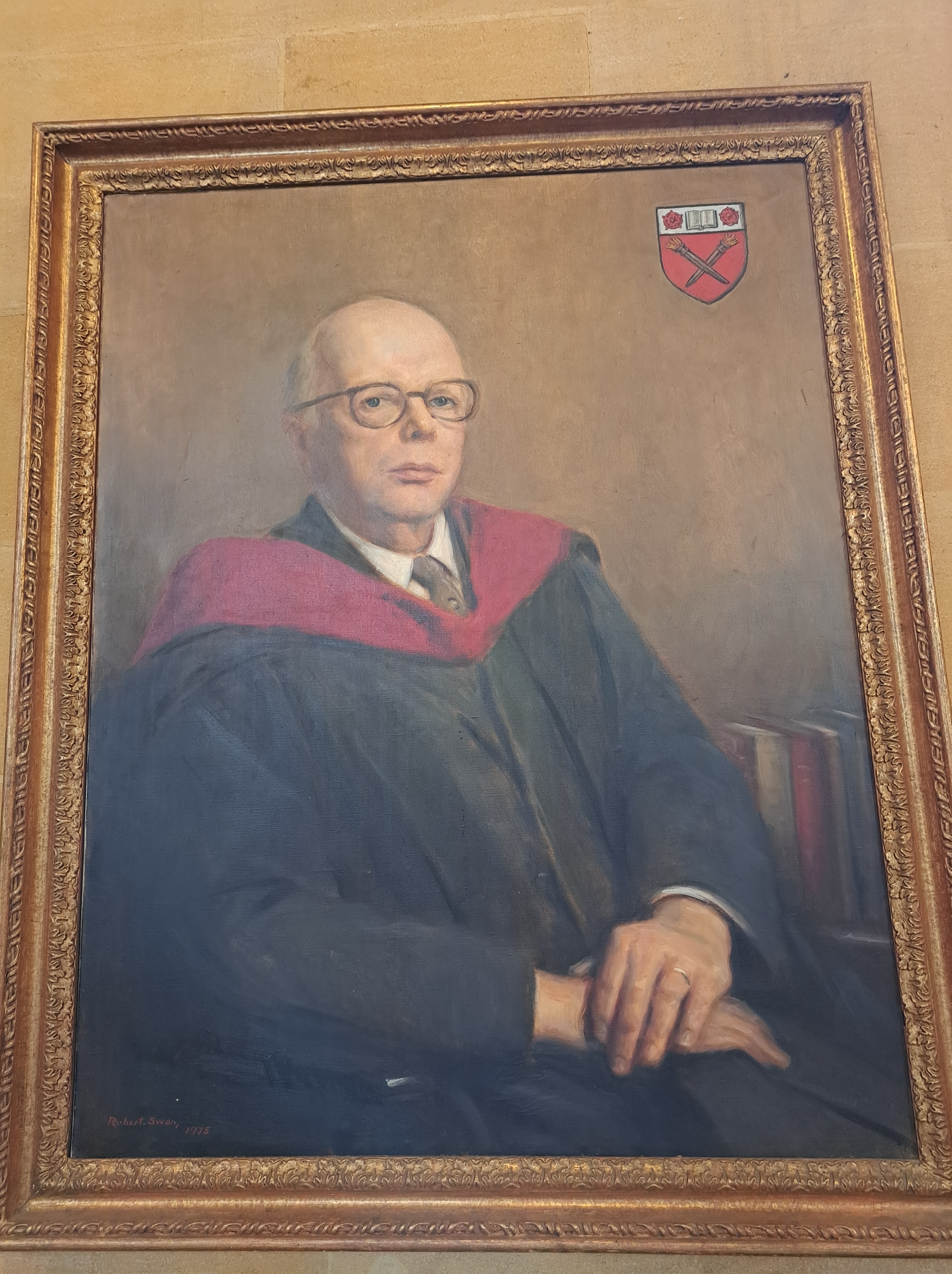
Harry Lismer Short. Portrait in Harris Manchester College

The final article from our back catalogue in this issue is A Rational Basis for Religious Belief by Arthur J. Long dating from Summer 1974. Another Unitarian Principal (this time of the Unitarian College, Manchester) this is another article which displays the writer’s considerable erudition as well, in Arthur’s case, of his irrepressible sense of humour. What is particularly interesting about this paper is that it was prepared for a long-forgotten meeting between Unitarian and Roman Catholic theologians which took place in 1973. The papers for this encounter still exist and it might be profitable at some stage to revisit them. The basis of this article is not to ask ‘Does God exist?’ but rather ‘What sort of God?’, he rejects the argument from revelation and the argument from experience and roots religious belief in a rational theism, ‘underpinned by a rational empirical theology’, and uses Peter Berger’s A Rumour of Angels to frame his apologia.
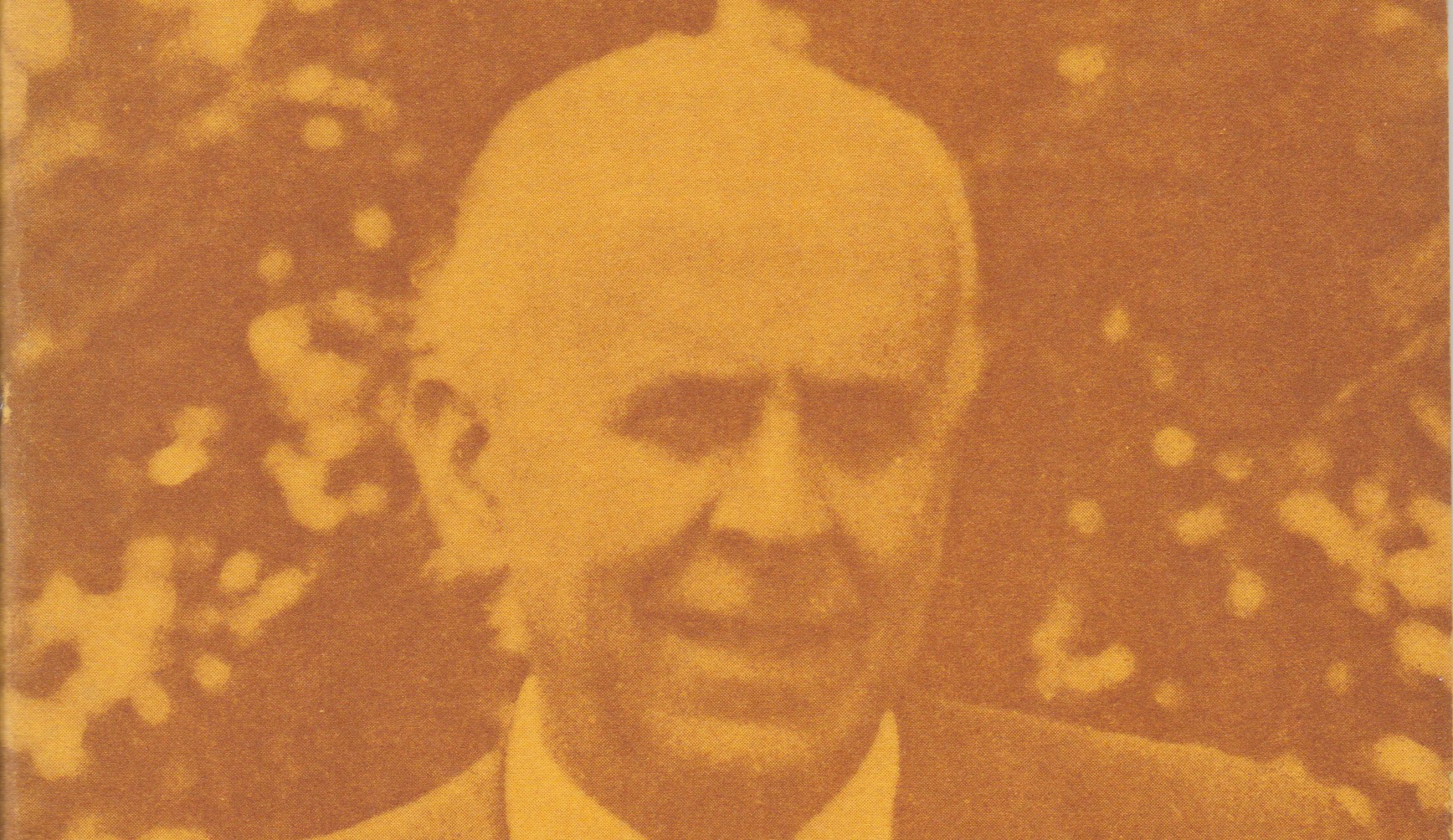
Rev Arthur Long (from the cover of his 1978 Essex Hall Lecture)

New pieces for this issue include On Reading the Koran by Barrie Needham, a timely, fair and objective assessment of this crucial text which is so frequently mentioned but very seldom examined. The other is Frank Walker’s The Sybil’s Request. Death and Our Human Imagination which explores how we understand death, Heaven and eternity and ranges over the thinking contained in the poetry and literature of such figures as T.S. Eliot, T.F. Powys and Julian Barnes, and ends, appropriately enough, with a quotation from Harry Lismer Short.

The articles are followed by a great selection of reviews:
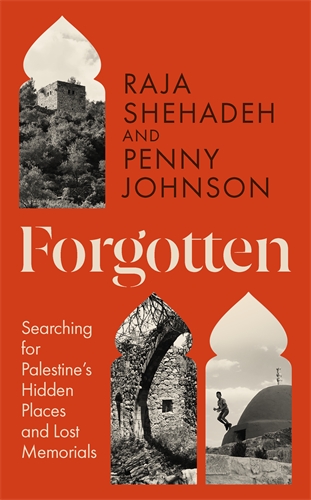
Reviewed by Graham Murphy

Raja Shehadeh and Penny Johnson, ‘Forgotten, Searching for Palestine’s Hidden Places and Lost Memorials’, Profile Books, 2025 reviewed by Graham Murphy

Michael Allured and Kate Dean, ‘Soul Deep: Exploring Spirituality, Together’, Lindsey Press, 2024, reviewed by Laura Dobson

Jade C. Angelica, ‘Where two worlds touch’, Skinner House Books, 2024, reviewed by Peter Hewis

Patrick Riordan SJ, ‘Human Dignity and Liberal Politics: Catholic possibilities for the common good’, Georgetown University Press, Washington DC, 2023, reviewed by Helena Fyfe Thonemann.

Reviewed by Laura Dobson

An annual subscription to Faith and Freedom (two issues) costs £16.00 (postage included) in the United Kingdom. Single copies can be ordered at a cost of £8.00 each (postage included). Cheques should be made out to Faith and Freedom and sent to the business manager:

Nigel Clarke,
Business Manager, Faith and Freedom,
16 Fairfields,
Kirton in Lindsey,
Gainsborough,
Lincolnshire.
DN21 4GA.

Overseas subscriptions are also available.

It is also possible to pay online. For more details see our website:

https://www.faithandfreedom.org.uk/subs.htm

Faith and Freedom Spring and Summer 2024

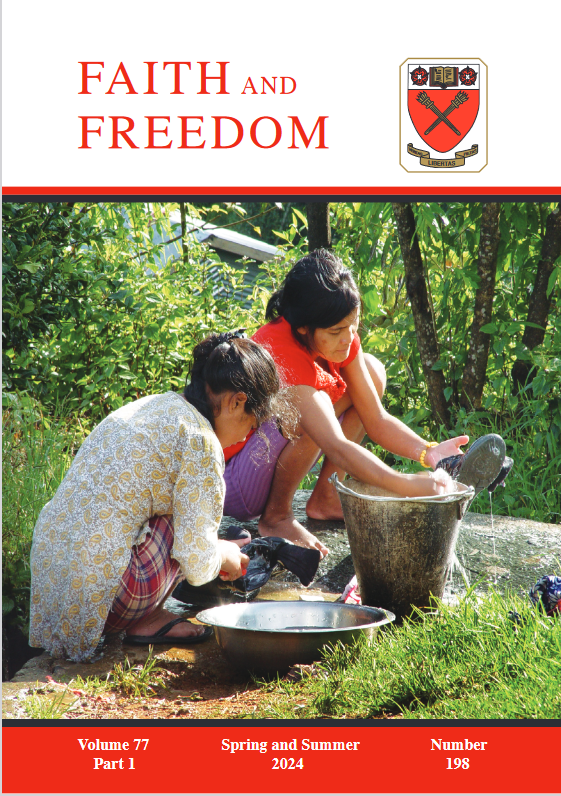
The latest issue of Faith and Freedom is now available. In this issue we are pleased to publish the entire transcript of the most recent Reckoning International Unitarian and Universalist Histories Project webinar. Entitled Uncovering the Hidden Power of Women in Unitarian and Universalist History the discussion comprises an international panel with an introduction by Lehel Molnár, Unitarian archivist at Koloszvár, Transylvania, and with Rosemary Bray McNatt, President of the Starr King School for Ministry, Berkeley, California, as the moderator and concluding responder. The main papers are ‘The Story of Pharienbon Rani and Unitarianism in the Khasi Hills, India’ by Alisha Rani, professor of sociology at Shillong, India, and ‘Profiling Black Women’s Ministries in Unitarian Universalism’ by Qiyamah A. Rahman, a UU minister and activist in the United States. Responses are given by Olga Flores (Bolivia), Ann Peart (UK), and Mária Pap (UK and Transylvania), with closing remarks by Mark W. Harris, one of the main planners for the Reckoning Histories Project. The journal also includes some photographs (including the cover – see above and top) by John Hewerdine taken at the Annie Margaret Barr Memorial Orphanage in Meghalaya which help illustrate the theme of both Alisha Rani’s paper and a review by Derek McAuley also found in this issue.

Margaret Barr in her office in the Khasi Hills (Photo: John Hewerdine)

Other papers include Wayne Facer’s Mr Jellie’s Romance, an account of the pioneering days of Unitarianism in New Zealand and how amidst his work to establish the cause he fell in love with and eventually married Ella Macky. She was a member of an active Unitarian family but her own commitments frequently took her to the other side of the world to attend University and to participate in the International Council of Unitarian and Other Liberal Religious Thinkers and Workers in Amsterdam in 1903, while Jellie carried out his work establishing the congregation in Auckland and supporting Unitarians elsewhere in New Zealand.

Barrie Needham examines the life and poetry of Gerard Manley Hopkins, Catholic convert and Jesuit priest, whose poetry remained unpublished in his own lifetime but which has gained a great following from the early twentieth century onwards. A Victorian poet but one whose style is as bold and striking as anything written at any point since. Barrie Needham shows how Hopkins wrestled with his poetry to express his faith in God and his understanding of God in nature, and shows the philosophical understanding that underscored his writing. If you have ever read any Hopkins or heard his poems being read you will find this article immensely helpful.

In addition we have four excellent reviews of notable recent books.

Avi Shlaim, aged two, with his parents and sister in Baghdad, 1947. From the cover of his book.

Graham Murphy reviews Avi Shlaim, Three Worlds, Memoirs of an Arab-Jew, (Oneworld Publications, 2023). The book of the year for both the Times Literary Supplement and the New Statesman, Avi Shlaim tells his own story as someone who was born into the prosperous and significant Jewish community of Iraq following the Second World War and who was forced, with most of the Jewish population, to emigrate to Israel in 1950. At the age of 15 his life changed when he managed to come to the UK, ending up at Cambridge and ultimately as Professor of International Relations at St Antony’s College, Oxford. As a young man he served in the Israel Defense Force but is not afraid to criticise Israel or Zionism. His most recent research has gone back to Iraq and his own origins as part of ‘a Diaspora that had been the living embodiment of Muslim-Jewish co-existence [which] was no more’. In Shlaim’s view ‘As Israel expanded, the Palestinians, Arab natives of historic Palestine, not the Germans or the Russians, would take the burden of punishment for the European pogroms of modern history and the Final Solution.’ His reflections on his Jewish past in Iraq and on Arab-Israeli relations ever since are well worth reading, especially at the present time.

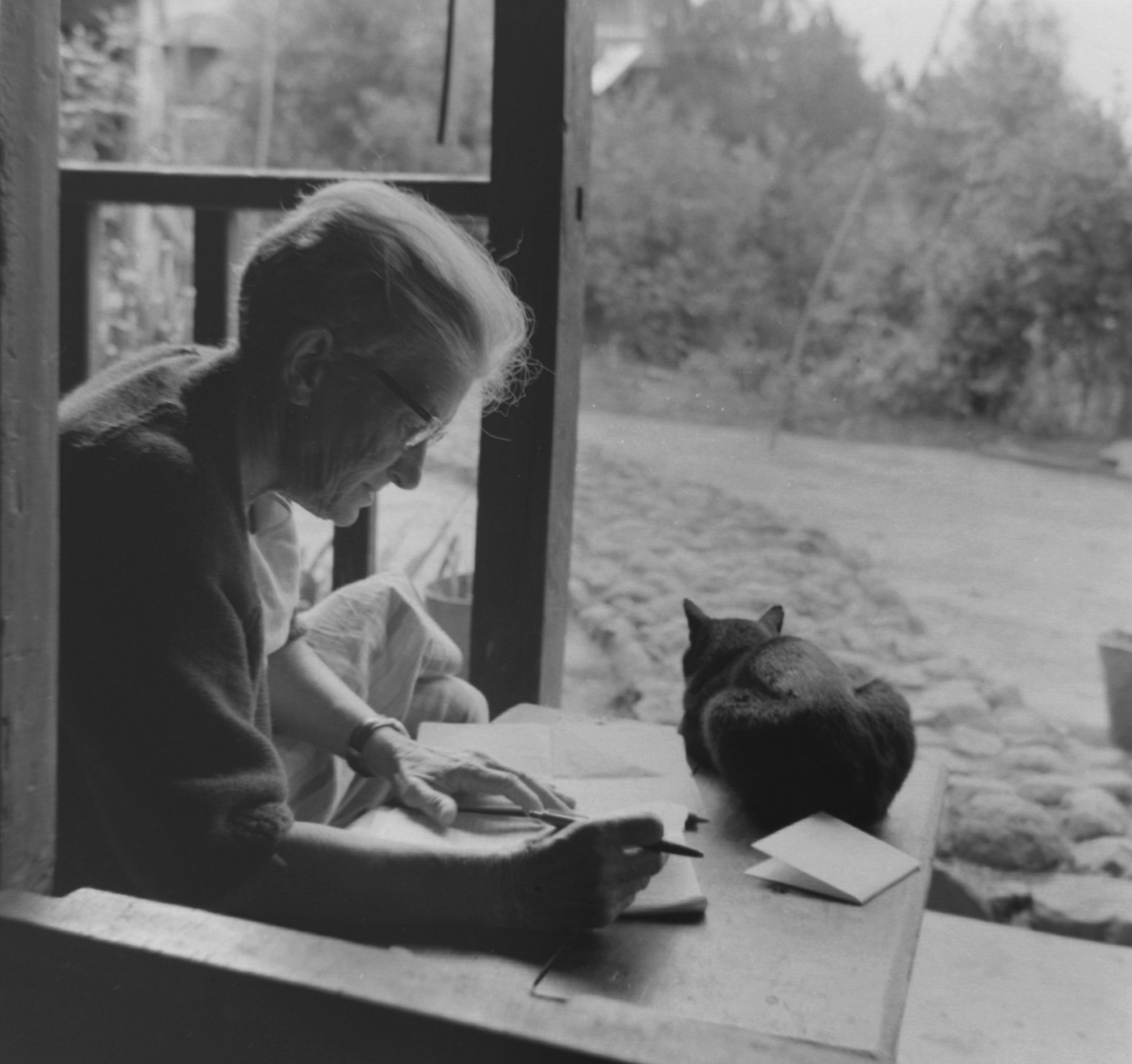
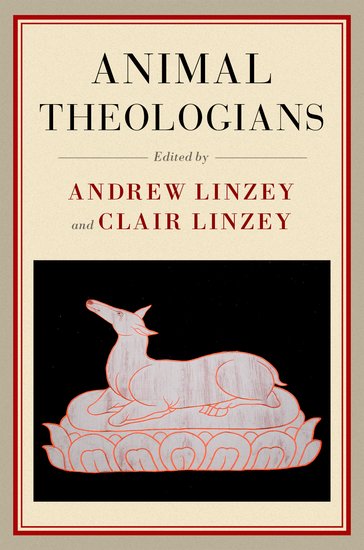
Andrew Linzey and Clair Linzey (eds.), Animal Theologians (Oxford Academic, Oxford University Press, 2023) is reviewed by Feargus O’Connor who takes us through the theological contributions to the consideration of animal rights, vivisection and animal cruelty. A number of the subjects of the book are Unitarians – most notably Frances Power Cobbe and Charles Hartshorne – and many would find agreement with Gandhi who Feargus quotes:

The greatness of a nation and its moral progress can be judged by the way animals are treated. Vivisection is the blackest of all the black crimes that man is at present committing against God and His fair creation. It ill becomes us to invoke in our daily prayers the blessings of God, the Compassionate, if we in turn will not practise elementary compassion towards our fellow creatures.

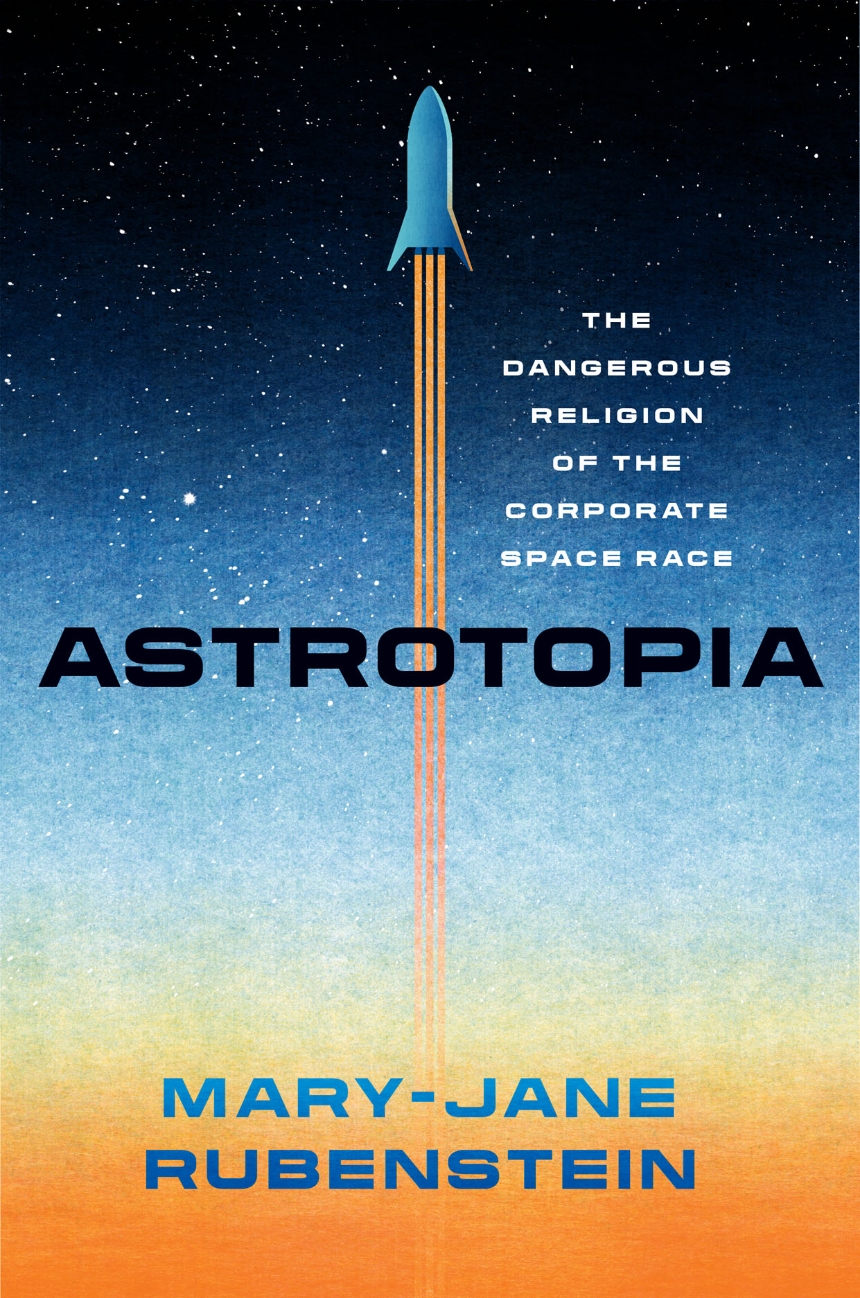
Professor David Williams reviews Mary-Jane Rubenstein, Astrotopia: the Dangerous Religion of the Corporate Space Race (University of Chicago Press, 2022) a book which raises the issue of humankind’s increasingly exploitative attitude to space exemplified in the attitudes of such figures as Elon Musk and Jeff Bezos, described by the reviewer as ‘both so grotesquely wealthy that they can have dreams of both colonising space and the funds to achieve those aims’. It is clear too that the United States no longer views ‘outer space as the common heritage of all humanity.’ In the light of this how should we progress human interaction with space?

Inside the former NSP meeting-house Ballymoney (Photo: David Steers)

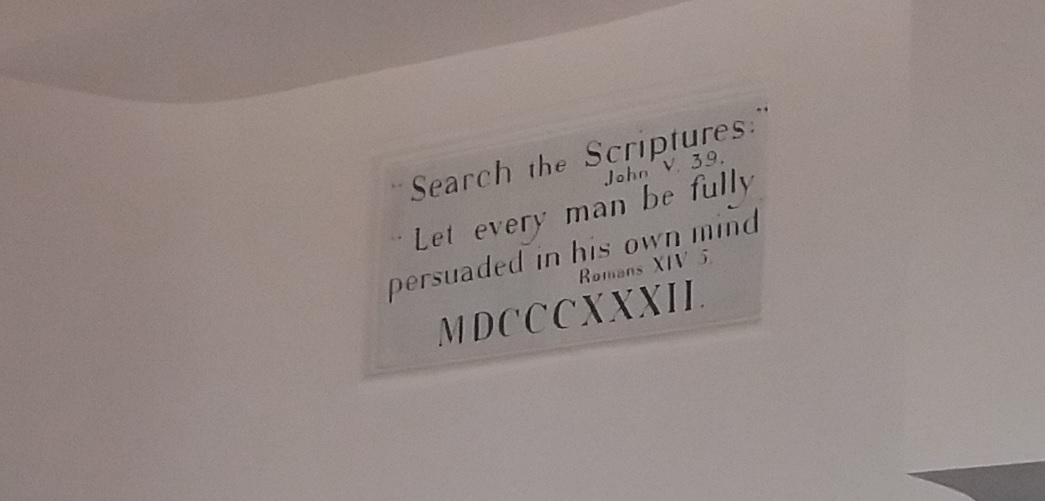
Liz McManus is a former Minister for Housing and Urban Renewal in the Republic of Ireland. Since leaving politics she has become a writer and in When Things Come To Light (Arlen House, 2023) she has drawn on her own family experiences to ‘craft an insightful and compelling novel’ in the words of Derek McAuley, our reviewer. Liz McManus’s grandparents were Unitarians/Non-Subscribers from County Antrim. Remarkably life took them to the Khasi Hills where (in the novel at least) they encounter the Rev Margaret Barr and Kissor Singh, the founder of the Unitarian Church in North India. In a strange piece of synchronicity Kissor Singh quotes St Paul ‘Let every man be fully persuaded in his own mind’, words which Liz McManus’s grandfather recognises as inscribed on the wall of his home church back in Ballymoney in Ulster. A fascinating novel incorporating Unitarians, family history, Ireland and India.

An annual subscription to Faith and Freedom (two issues) costs £16.00 (postage included) in the United Kingdom. Single copies can be ordered at a cost of £8.00 each (postage included). Cheques should be made out to Faith and Freedom and sent to the business manager:

Nigel Clarke,
Business Manager, Faith and Freedom,
16 Fairfields,
Kirton in Lindsey,
Gainsborough,
Lincolnshire.
DN21 4GA.

Overseas subscriptions are also available.

It is also possible to pay online. For more details see our website:
https://www.faithandfreedom.org.uk/subs.htm

Faith and Freedom 197 (2023)

The latest issue of our journal is out now and will be with subscribers shortly. Anyone can subscribe and an annual subscription costs only £16 in the UK ($32 in the USA), details of how to subscribe can be found below.

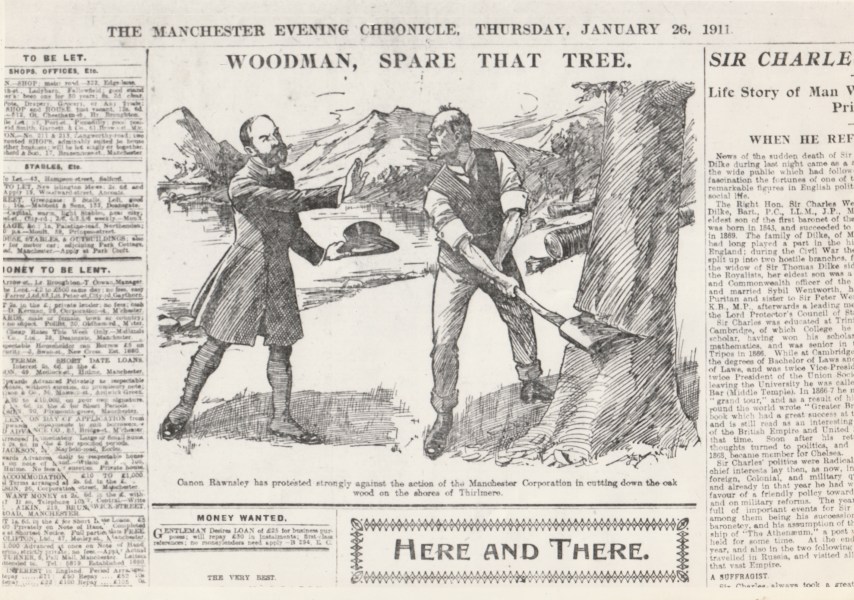
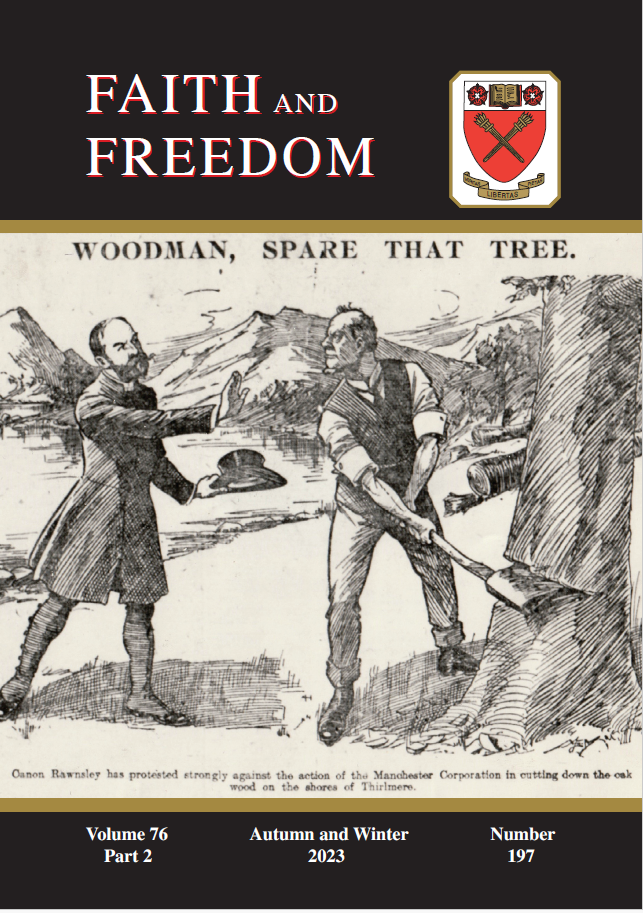
Our cover picture contains a cartoon from the Manchester Evening Chronicle of 26 January 1911 and features Canon Hardwicke Rawnsley, one of the founders of the National Trust, shown here trying to save some oaks on the bank of Thirlmere Reservoir in the Lake District. It links to Graham Murphy’s Review Article of a new biography by Michael Allen and Rosalind Rawnsley – Hardwicke Drummond Rawnsley, An Extraordinary Life, 1851-1920, (The New Beaver Press, 2023, pp 476. ISBN 978-1-7392194-1-3, £20 pbk.) The cartoon is strangely appropriate for today because it is also being used by campaigners trying to keep the public road along Thirlmere Reservoir open to walkers, cyclists and motorists. The Canon was not successful in his attempts in 1911 and the conifers which replaced the oaks now regularly blow down and block the road. You can read about the current campaign to keep the road open by clicking here.

Our journal opens with Sandra Gilpin’s pen portrait on the Rev William Hugh Doherty (c.1810-1890). His career began as the first minister of the Unitarian/Non-Subscribing Presbyterian Church in Comber county Down. He moved to the United States and embarked upon an unusual career firstly as a Unitarian minister in Rochester NY then moving to a denomination known as the ‘Christian Church’ where he became quite a prominent educator. But the suggestion of some scandal was never far away in his life and he managed to serve on both sides of the Civil War as well as hold views, at different times, that were both pro and anti slavery! His career ended with him becoming an assistant in the US Patent Office.

Other articles include Imran Usmani’s fascinating discussion of ‘The Crucifixion of Jesus in Islam’. Looking afresh at the traditional Muslim view of the Crucifixion the author presents ‘novel textual and contextual analysis of the Crucifixion Verse based on the Quran and traditional Muslim sources’ and concludes that the traditional view is actually a misunderstanding of the original intention. He concludes that the Quran does not deny the historical fact of the Crucifixion of Jesus, rather it denies that the Crucifixion was rightful. The author believes that ‘Crucifixion denial in the Muslim tradition created a chasm between Muslims and Christians because it made both parties sceptical of the other’s scriptures.’ His aim is to help bridge this chasm dividing the two religions.

Other articles include Dan C. West’s encouragement to Christians to turn from ‘preoccupation with the past to focus instead on the future is a courageous act of faith and hope’, in ‘With Courage and With Hope’; and a sermon by the editor, ‘Telling Our Stories’, which asks whether those of us in a liberal theological tradition fully understand and articulate our identities.

There is also a good number of reviews including:

Maria Curtis (ed.), Cherishing the Earth – Nourishing the Spirit, Lindsey Press, 2023, pp 264. ISBN: 978-0-85319-098-1, £12.00 pbk. Reviewed by Oscar Sinclair.

Stephen Hart, James Chuter Ede: Humane Reformer and Politician, Pen and Sword History, 2021, pp 352. ISBN 978-1-52678-372-1, £25.00, hbk. Reviewed by Derek McAuley.

George D. Chryssides and Dan Cohn-Sherbok (eds.), The Covid Pandemic and the World’s Religions. Bloomsbury Academic, 2023, pp 256. ISBN 978-1-3503-4963-6, £19.95 pbk, £65.00 hbk. Reviewed by Marcus Braybrooke.

Marcus Braybrooke, Interfaith Pioneers 1893-1939. The Legacy of the 1893 World Parliament of Religions, Braybrooke Press, 2023, pp 118. ISBN 9798392406180, £9.95 pbk.
Marcus Braybrooke, Jewish Friends and Neighbours. An Introduction for Christians, Braybrooke Press, 2023, pp 367. ISBN 979-8397750776, £19.95, pbk. Both reviewed by the Editor.

An annual subscription for each volume (two issues) costs £16.00 (postage included) in the United Kingdom. Single copies can be ordered at a cost of £8.00 each (postage included). Cheques should be made out to Faith and Freedom and sent to the business manager:

Nigel Clarke,
Business Manager, Faith and Freedom,
16 Fairfields,
Kirton in Lindsey,
Gainsborough,
Lincolnshire.
DN21 4GA.

It is also possible to pay online. For more details see our website: https://www.faithandfreedom.org.uk/subs.htm
Faith and Freedom Number 196 (2023)

The latest issue of Faith and Freedom (Spring and Summer 2023, Number 196) is now available and will be with subscribers. New subscribers are very welcome, details of how to subscribe can be found below.

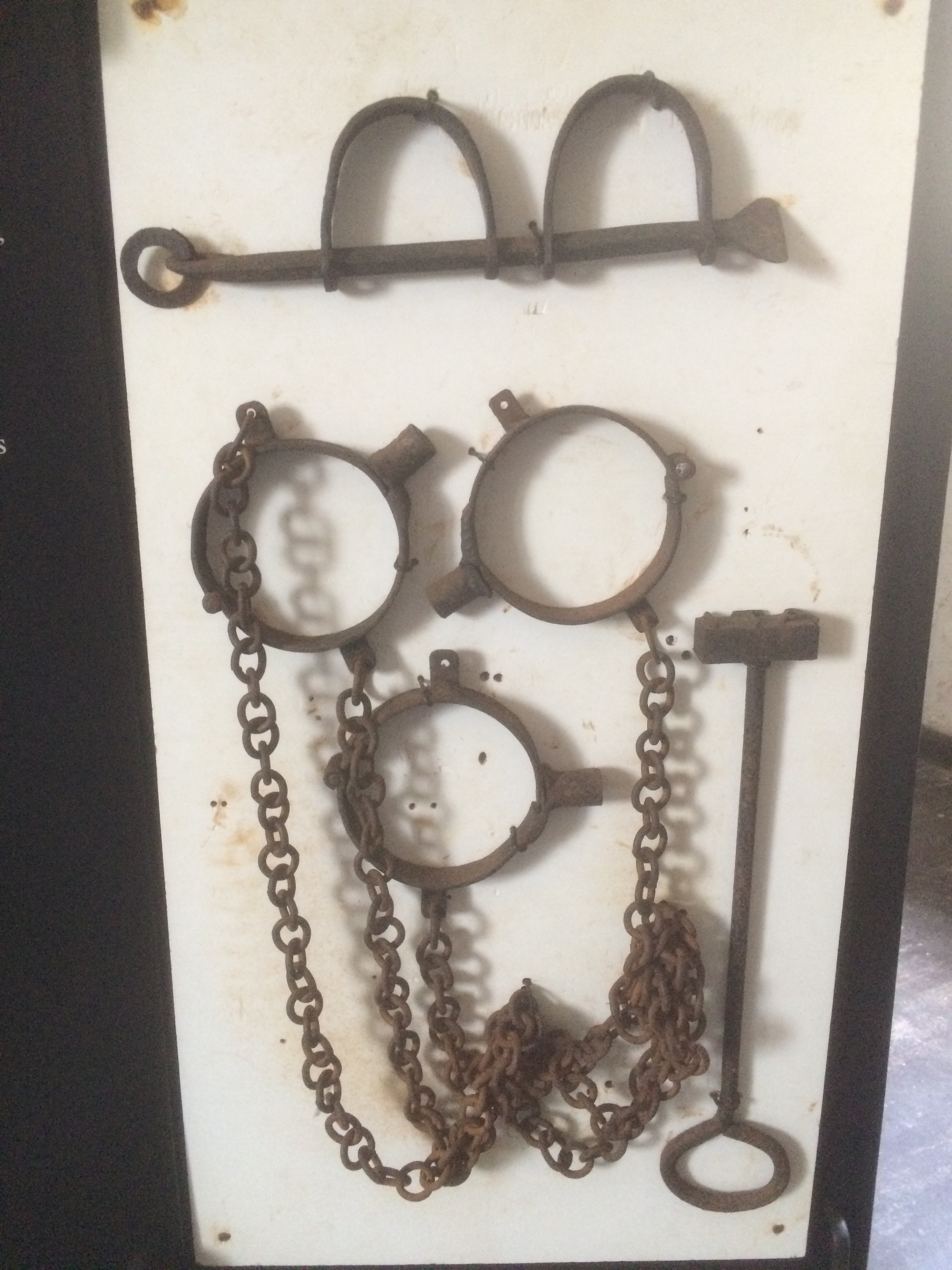
Elmina Castle, Ghana (Photo: Aidan McQuade)

The cover picture features a collection of shackles used on slaves in Elmina Castle, Ghana, a photograph taken by Aidan McQuade who contributes our first article – Ireland – slavery and anti-slavery.

Cover picture – Photo Aidan McQuade

Aidan McQuade is a former director of Anti-Slavery International and has worked extensively in development and humanitarian operations, including leading Oxfam GB’s emergency responses to the civil war in Angola from 1996 to 2001. He writes of the horrors of the slave trade looking through the lens of Irish involvement and noting also those individuals who contributed to anti-slavery activism in the eighteenth century.

He writes:

“Over hundreds of years slavery devastated the African interior as wars and raids, encouraged by the European powers, kidnapped millions of people, many of them children, to feed the demand from the Americas for human beings who could and would be worked to death to produce cash crops, mostly for European markets.

As with today, it is easy to ignore the exploitation that occurs within the political economy – the systems that govern business, trade and employment – when the are concealed far away from us.

So, when it was first brought to public attention by Thomas Clarkson, the image of the Brookes ship shocked the world. It presented in stark detail a visceral reality of the slave trade: how slaves would be packed like sardines into the holds of the slave ships. Clarkson’s friend and comrade in the anti-slavery struggle Olaudah Equiano had direct personal experience of being treated as this sort of cargo and he described it in his auto-biography”:

 …we were all put under deck …The stench of the hold while we were on the coast was so intolerably loathsome, … but now that the whole ship’s cargo were confined together, it became absolutely pestilential. The closeness of the place, and the heat of the climate, … almost suffocated us. … many died, …. This wretched situation was again aggravated by the galling of the chains, now become insupportable; and the filth of the [latrine buckets], into which the children often fell, and were almost suffocated. The shrieks of the women, and the groans of the dying, rendered the whole a scene of horror almost inconceivable… Every circumstance I met with served only to render my state more painful, and heighten my apprehensions, and my opinion of the cruelty of the whites.

The door of no return, through which slaves would leave Elmina Castle for the slave ships. (Photo: Aidan McQuade)

John Maxwell Kerr, is a founder member of the Society of Ordained Scientists. His paper, originally given at Harris Manchester College, examines The Search for Meaning in Nature. It is a wide-ranging and deep study using the author’s knowledge of science and religion, incorporating all the riches of literature and poetry, and reaching a surprising conclusion.

Rev John Maxwell Kerr

Barrie Needham’s article on ‘De-churching’ or To the church no more looks at patterns of belief and church attendance in the twenty-first century. What can churches do to overcome these tendencies, what do they need to offer?

Rev Frank Walker

We have an inspiring sermon by Frank Walker, Outlooks on life that still challenge and encourage us, and Graham Murphy provides a review article and essay on Matthew Teller’s valuable book Nine Quarters of Jerusalem, A new Biography of the Old City, which gives such insight to this troubled city, Graham writes:

“In his book about the Old City he describes a place we can visualise, though we may never have been there. We see in our minds eye a golden Dome set within castellated walls as if true to the plans in history books and illustrated bibles. How we imagine Jerusalem is freighted with biblical notions which Teller’s book tends to undermine with doses of reality. He draws our attention to lesser-known aspects of the city’s past and finds himself fascinated by the religious rituals. He interviews the people who live and work beside the pilgrim routes and sacred sites. He shows us how they regard their city, how they cope with its recurrent crises and the lack of rights for the majority who live there.”

And as ever we are blessed by some wonderful reviews. In this issue we feature:

Facing up to Climate Change

Mike Berners-Lee, There Is No Planet B – A Handbook for the Make or Break Years. Cambridge University Press, 2021 (updated edition) pp 316. ISBN 9781108821575, £9.99 pbk. Gaia Vince, Nomad Century – How to Survive the Climate Upheaval. Allen Lane, 2022, pp 260. ISBN 9780241522318, £20.00 hbk. Greta Thunberg, The Climate Book. Allen Lane, 2022, pp 446. ISBN 9780241547472, £25.00 hbk. Reviewed by Professor David A. Williams

A ‘warts and all’ attention to church history

John W. Nelson, A Short History of the Non-Subscribing Church of Ireland including sketches of individual congregations and a Fasti of ministers who served in them, published by The Rev Dr J.W. Nelson, 2022, pp 420, ISBN 9781739978501, £15 hbk. Reviewed by Philip Blair

Praying to an ‘unknowable God’

Bert Hoedemaker, Never-Ending Prayer – A Case for the Christian Tradition. The Lutterworth Press, 2022, pp 136. ISBN: 978 07188 96027, pbk £20. Reviewed by Jim Corrigall

Rev Jim Corrigall

and

Eavesdropping on fascinating conversations

Philip Allott, The Music of Time: Twenty-Four Fables for Today, Matador, 2022, pp 408. ISBN 9781803132228, £7.99 pbk. Reviewed by Frank Walker

Subscription Details

An annual subscription for each volume (two issues) costs £16.00 (postage included) in the United Kingdom. Single copies can be ordered at a cost of £8.00 each (postage included). Cheques should be made out to Faith and Freedom and sent to the business manager:

Nigel Clarke,
Business Manager, Faith and Freedom,
16 Fairfields,
Kirton in Lindsey,
Gainsborough,
Lincolnshire.
DN21 4GA.

It is also possible to pay online. For more details see our website: https://www.faithandfreedom.org.uk/subs.htm

Rev Dr Peter Godfrey, Editor Emeritus

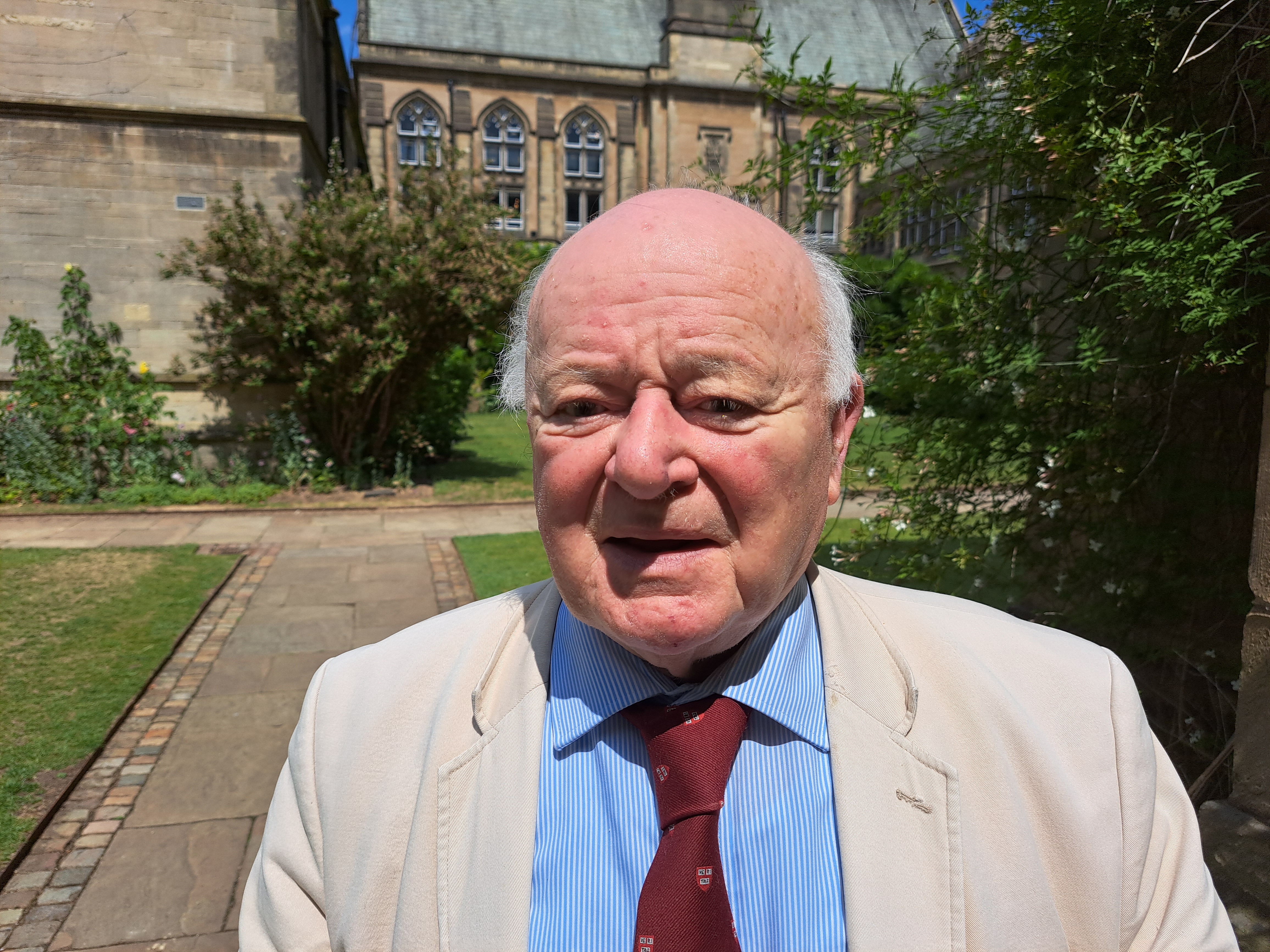
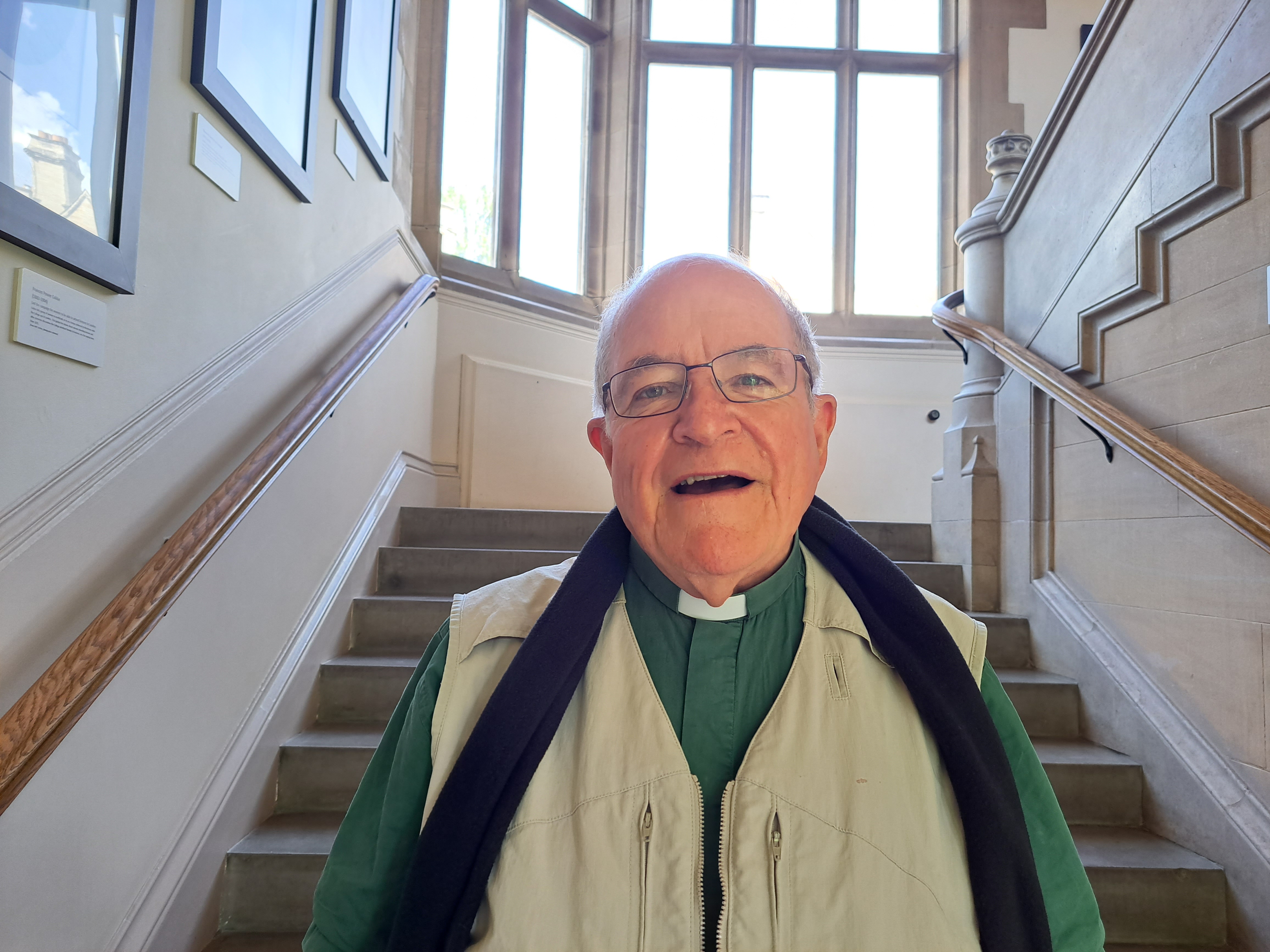
It was good to be at the Old Students Association meeting at Harris Manchester College, where some of the images of contributors seen above were taken. And good to see Rev Dr Peter Godfrey, Editor Emeritus of Faith and Freedom.

Faith and Freedom – Autumn and Winter 2022

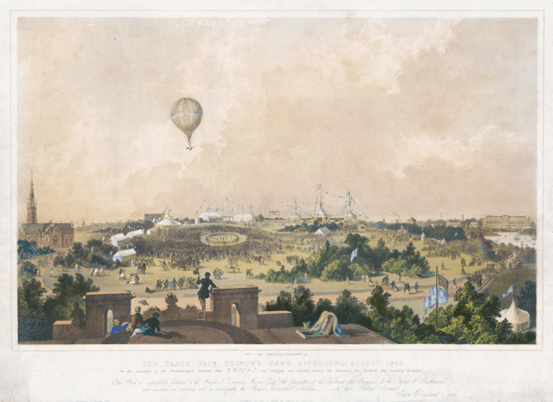
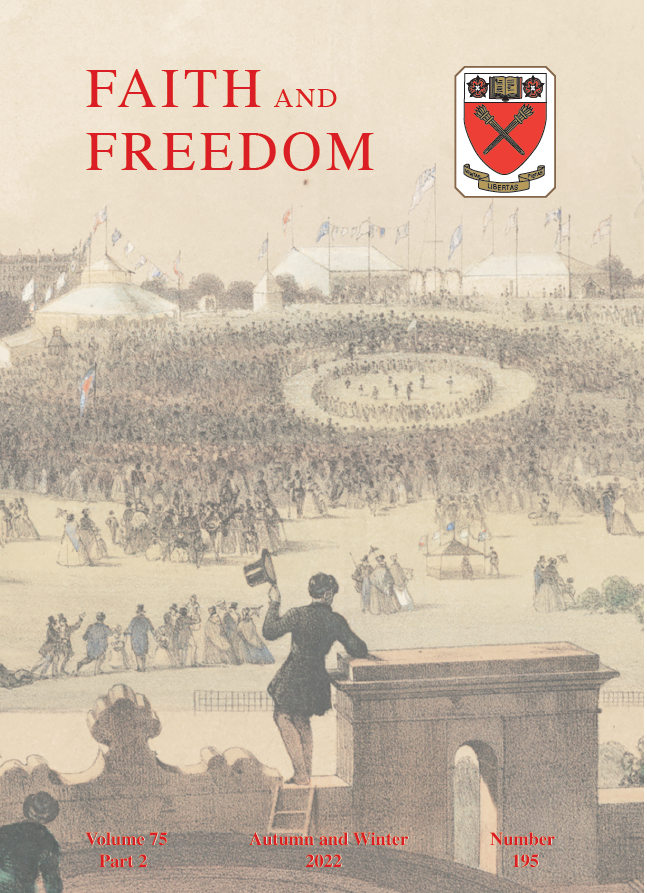
The new issue of Faith and Freedom is available now. Our cover picture shows James Martineau on top of his house in Prince’s Park, Liverpool (from a lithograph by John R. Isaac and now held by the Library of Congress).

The cover of our latest issue

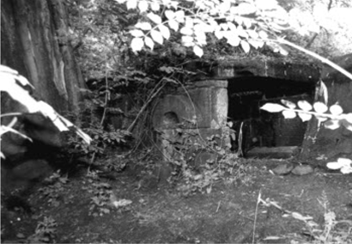
Historian Jim Kenny (well known for his blog The Priory and the Cast Iron Shore, which he publishes under the name Glen Huntley) gives the first full account of the house Martineau built in Liverpool overlooking the Park. Planned in detail by Martineau himself, including a curious network of subterranean passages, it was described by a visitor as A pie-crust sort of house, with all the “curiosities and niceties that a Unitarian Minister could wish.” In the lithograph, based on an original watercolour by W.G. Herdman, James Martineau looks down on the ‘Fancy Fair’ in aid of local hospitals. The building is long gone now although the site became the centre of a struggle between developers and conservationists in recent times and the underground passages were still discoverable then, and may yet have survived to the present day.

Passage entrance on the site of Martineau’s house, c.2001. Courtesy of Friends of Williamson’s Tunnels

These and more illustrations accompany the article which tell this fascinating story of a unique house, the brainchild of the most significant Unitarian theologian of the nineteenth century, and built in the most prosperous suburb of Liverpool.

An Edwardian postcard showing nearby Prince’s Park and the Prince’s Park Mansions, neighbours of James Martineau.

Ian Rocksborough-Smith, assistant professor of US history at the University of Fraser Valley in S’ólh Téméxw/British Columbia, Canada, writes about ‘The Ambiguities of White Catholic Liberalism’ in the context of a ‘A Case Study in the Aftermath of the 1951 Race Riot in Cicero, Illinois’. He writes:

‘What did religiously-inclined white racial liberalism look like through the mid-twentieth century at a local level? This article looks at the intersections of race, religion, and civil rights in the wake of the 1951 race riot in Cicero, Illinois. Specifically, it considers the efforts of white Catholic liberals who advocated for racial reform measures well ahead of the mainstream orthodoxies of the Catholic Church – the latter of which did not pivot substantively towards civil and human rights until after Vatican II in the early-mid 1960s.’

We also have two fine examples of thoughtful and challenging sermons, the first on ‘Catching the Spirit’ given by London District Minister Jim Corrigall at New Unity congregation, North London, and the second ‘On Agreeing – But Not Quite – with Adam Gopnik’s Liberal Credo’ by Frank Walker given in the chapel of Harris Manchester College, Oxford.

Reviews include two books (in English and Welsh) reviewed by Graham Murphy, former Principal of Unitarian College, Manchester, and a Welsh-speaker, which explore the identity of Y Smotyn Du, ‘the Black Spot’, the heartland of Welsh-speaking Unitarianism, as well as two reviews on peacebuilding in the Middle East and Christian pluralism in Britain today. These are by Marcus Braybrooke, Anglican minister and a leading figure in inter-faith relations both nationally and internationally. In addition Lena Cockroft, current moderator of the Non-Subscribing Presbyterian Church of Ireland, reviews a book on mindfulness and golf.

Books Reviewed

Eric Jones, Best Foot Forward, South East Wales Unitarian Society, 2020, pp 112, £6.95 pbk.

Goronwy Evans, Procio’r Cof, Y Lolfa, 2021, pp 208, ISBN 978-1-80099-042-5, £9.99 pbk.

Ron Kronish, Profiles in Peace: Voices of Peacebuilders in the Midst of the Israeli-Palestinian Conflict, Publisher Ron Kronish in Israel, 2022. Available on Amazon Kindle and as a paperback 978-1734470093, $ 22.97.

Alan Race, My Journey as a Religious Pluralist: A Christian Theology of Religions Reclaimed. An Imprint of Wipf and Stock Publishers, pp.202. ISBN 978-1-7252-9823-1, pbk £20.00. Hbk 978-1-7252-9822-4, e-bk 978-1-7252-9824-8

Martin Wells, No One Playing. The essence of mindfulness in golf and in life. John Hunt Publishing, 2022, pp 108. ISBN: 978-1-78904-781-3, pbk £ 8.99. ISBN: 978-1-78904-782-0, e-book £ 4.99.

Subscription Details

An annual subscription for each volume (two issues) costs £16.00 (postage included) in the United Kingdom. Single copies can be ordered at a cost of £8.00 each (postage included). Cheques should be made out to Faith and Freedom and sent to the business manager:

Nigel Clarke,
Business Manager, Faith and Freedom,
16 Fairfields,
Kirton in Lindsey,
Gainsborough,
Lincolnshire.
DN21 4GA.

It is also possible to pay online. For more details see our website: https://www.faithandfreedom.org.uk/subs.htm
The world is charged with the grandeur of God

Hawarden, North Wales

The world is charged with the grandeur of God.

    It will flame out, like shining from shook foil

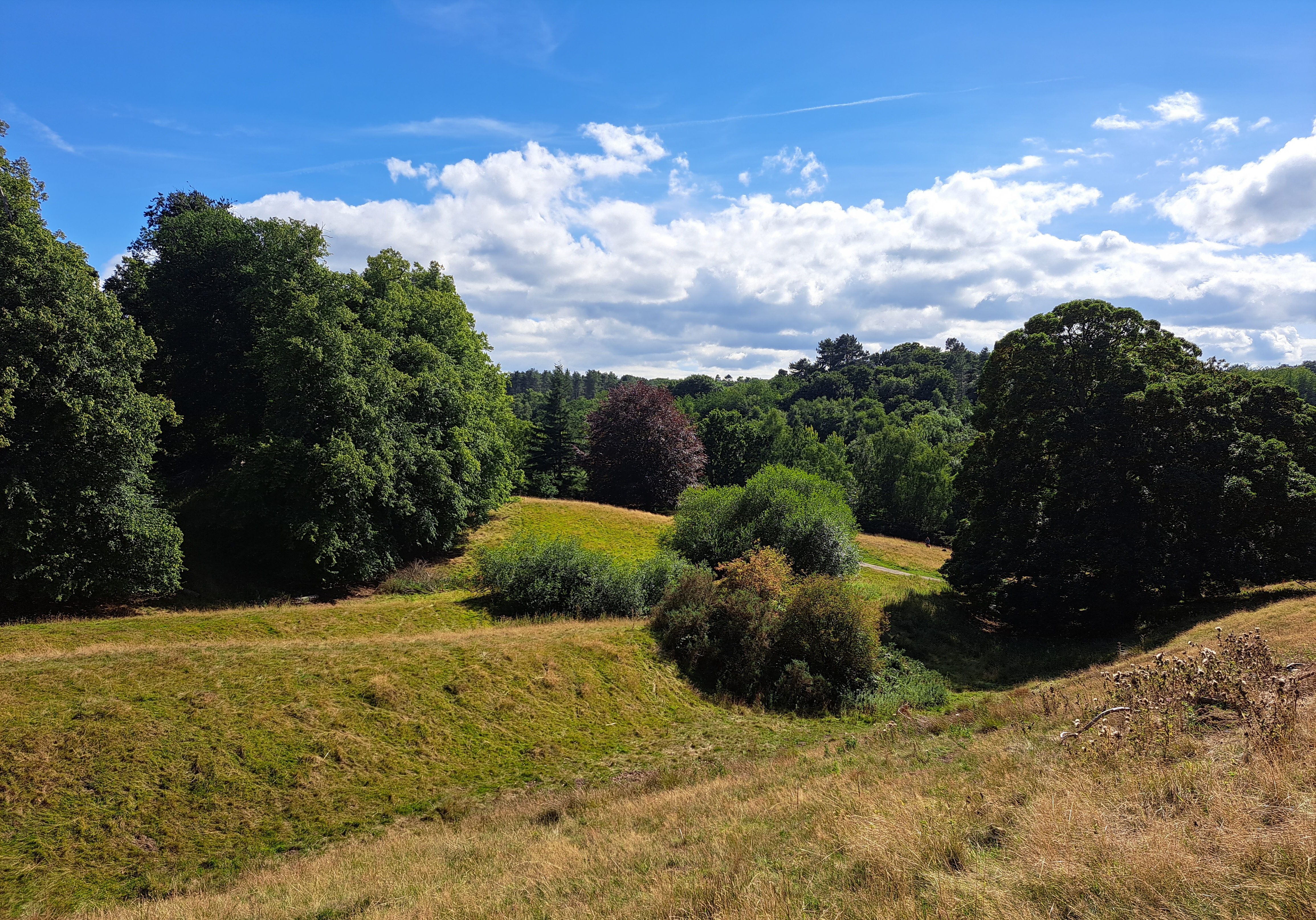
These opening lines from God’s Grandeur by Gerard Manley Hopkins supply us with the opening words and the theme of this week’s online service. Filmed at various locations in England, Wales and Northern Ireland places visited include the Hawarden estate, Flintshire, North Wales; the sand dunes at Formby near Liverpool; the Derbyshire Peak district; the River Thames (Isis) at Oxford; Norton Priory, Cheshire; Sefton Park, Liverpool; Rathmullan, county Down; and Dunmurry, county Antrim. As we look at these varied landscapes we explore the meaning of this idea of the divine presence in the natural world alongside readings from Gerard Manley Hopkins, Thomas Merton and Ernesto Cardenal.

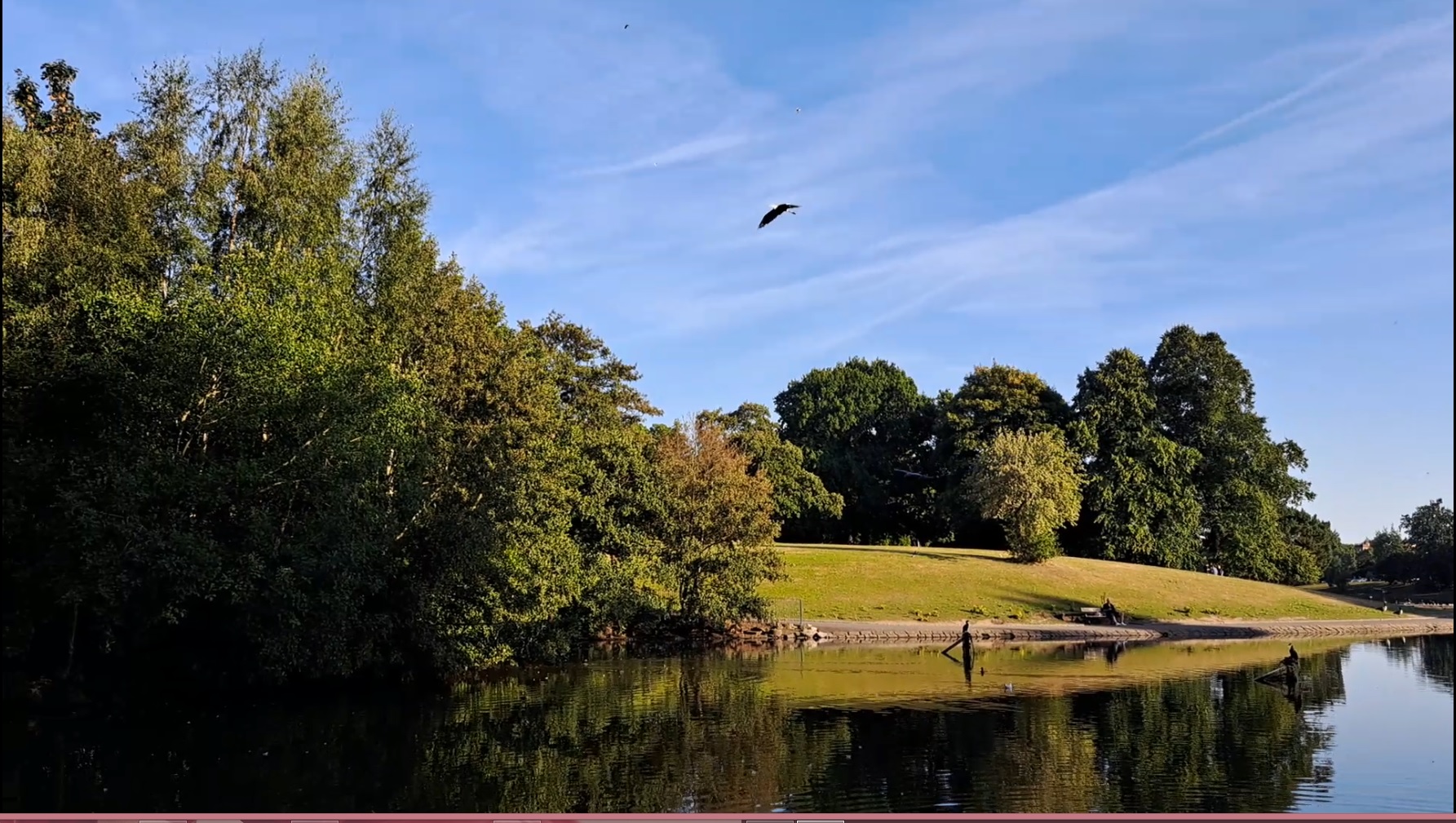
Sefton Park – the heron flies over the lake

The world is charged with the grandeur of God – click on the video above to see the meditation and reflections

In the service Graham Murphy reads two poems by Gerard Manley Hopkins – Binsey Poplars and Pied Beauty, both recorded at Gladstone’s Library, Hawarden, Flintshire. In addition Robert Neill and Emma McCrudden read extracts from the works of Thomas Merton and Ernesto Cardenal.

Binsey, near Oxford

Music played includes:

For the beauty of the earth, played by Allen Yarr, organist of First Presbyterian (NS) Church, Dunmurry.

Come let us sing of a wonderful love, played by John Strain, organist of Ballee Non-Subscribing Presbyterian Church.

O love that wilt not let me go, played by John Strain.

Let saints on earth in concert sing, played by Allen Yarr.

Norton Priory, Cheshire, walled garden
Formby, sand dunes
The River Thames at Oxford

Let me seek, then, the gift of silence, and poverty, and solitude, where everything I touch is turned into a prayer: where the sky is my prayer, the birds are my prayer, the wind in the trees is my prayer, for God is all in all. – Thomas Merton

Faith and Freedom Spring and Summer 2021

The latest issue of Faith and Freedom (Spring and Summer 2021, Number 192) has just been published.

Cover, Issue 192

Our cover features a striking image that is a piece of ‘discovered art’. A picture by an unknown New Zealand artist which complements so well Wayne Facer’s book A Vision Splendid: The Influential Life of William Jellie, A British Unitarian in New Zealand, which has recently gone into its second edition. The picture also appears on the cover of that book. This publication is the subject of an extensive essay and review by Graham Murphy. In Unitarianism in New Zealand: Essay and Review he uncovers the origins of Unitarianism in New Zealand through the exertions of British and Irish expatriates, most notably Moneyreagh-born William Jellie, and their relationship with Maori culture and the development of the colony right up to the devastating impact of the First World War.

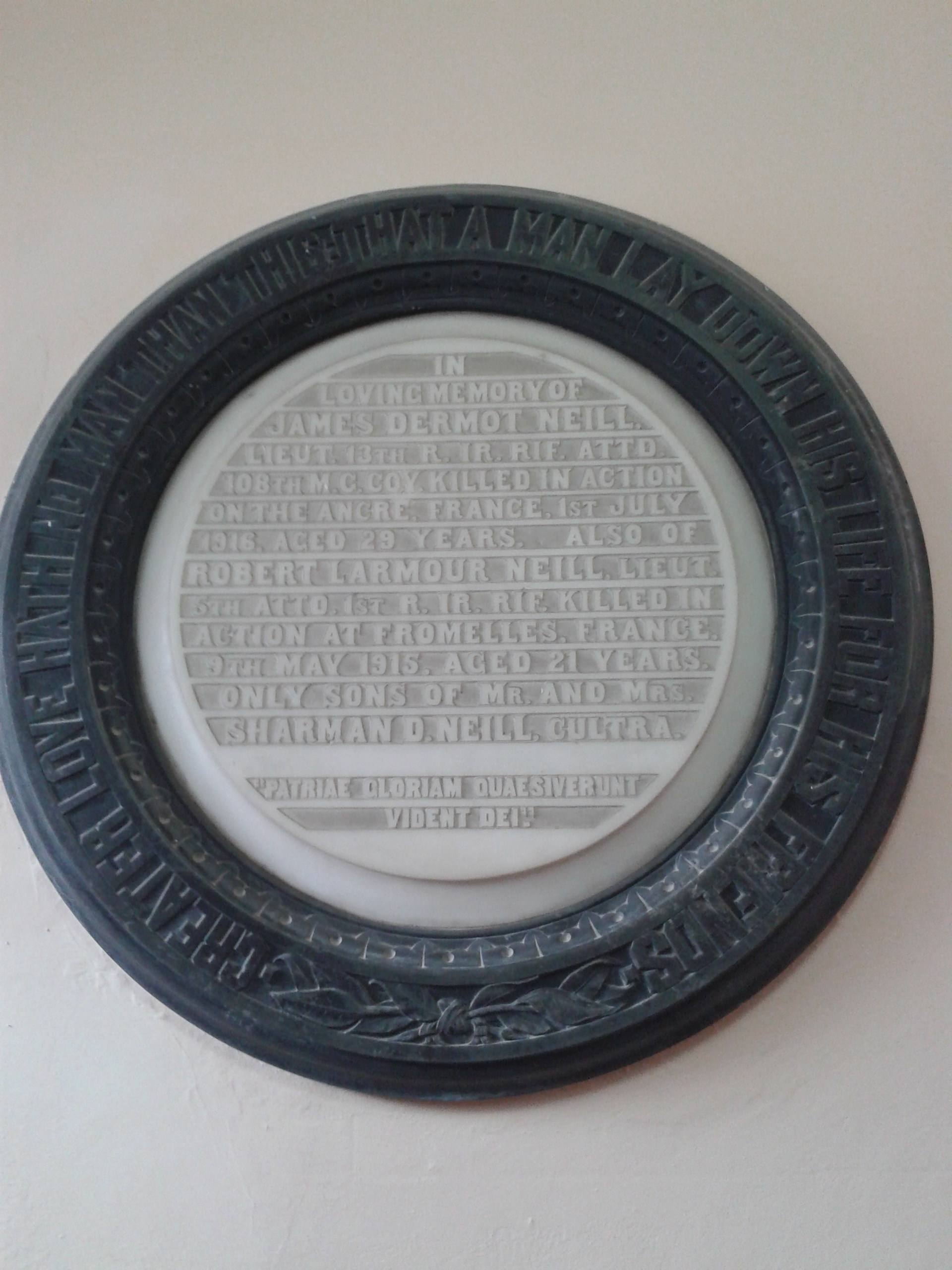
Memorial to Robert and Dermot Neill in Holywood Non-Subscribing Presbyterian Church

Colin Walker writes about The commemoration of three Ulster Unitarians who died at the Somme: Captain James Samuel Davidson, Lieutenant James Dermot Neill and Second Lieutenant Ernest George Boas. They were all the sons of prominent Ulster businessmen, all served in the 36th ‘Ulster’ Division and all were commemorated by plaques created by Ulster artist Rosamond Praeger who was herself a Unitarian and probably knew all three of them personally. All were caught up in the Home Rule Crisis immediately before the war and all of them signed the Ulster Covenant, including Ernest Boas who was Jewish by descent but brought up in the Non-Subscribing Presbyterian Church. Dr Walker skilfully unpacks the connections between them and also Rosamond Praeger (who like Ernest Boas was also from an originally Jewish family) and reflects on their faith and their legacy.
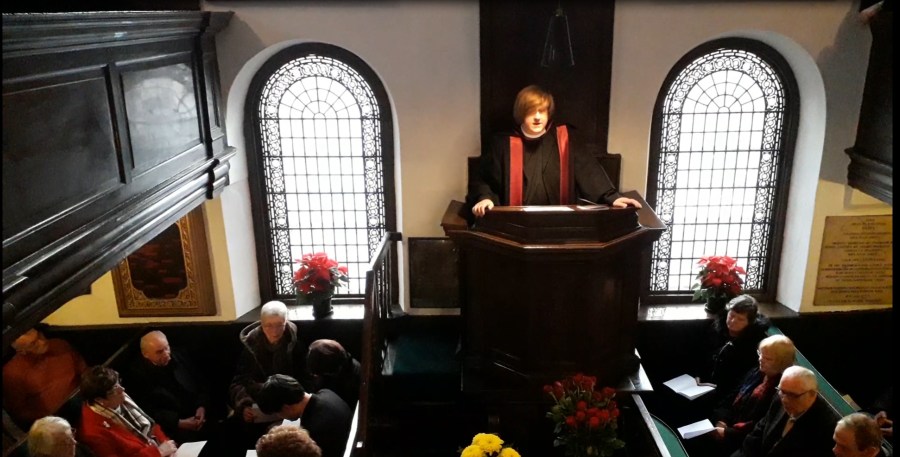
Rev Frank Walker

In Incarnation: the Supernaturalist Story and the Humanitarian Story, a sermon originally preached in Cambridge, Frank Walker assesses the way the Christian doctrine of the Incarnation can be understood in the light of humanity’s repeated cruelty and excesses, seen most notably in the Holocaust. Despite the obvious problems he finds reason to be optimistic: ‘Incarnation is a continuing reality. Creative energy is forever expressing itself in all the glorious and stupendous variety of life on earth and in the whole universe. And life, which often seems so fragile and vulnerable, subject to catastrophes and extinctions, is so tenacious and adaptable, and is constantly renewing itself’.
William Ellery Channing by Henry Cheever Pratt 1857. (Wikipedia, Public Domain)

A Chautauqua performance is ‘a uniquely American dramatic format’ in which is portrayed an individual historic figure, ‘as if returning to life to address the audience’. Back in the Spring and Summer issue of Faith and Freedom in 2019 Kevin Murphy provided us with a Chautauqua performance concerning Francis David. In this issue he does the same for one of the most prominent American Unitarian theologians in history. An Appearance of William Ellery Channing: A Chautauqua Performance is a wonderfully insightful exploration of the theology that Channing came to espouse in the context of the circumstances of his life.

Books Reviewed

Martin Camroux (foreword by David R. Peel), Keeping Alive the Rumor of God: When Most People are Looking the Other Way, WIPF & Stock, Eugene, Oregon, 2020, pp 204, ISBN 978-1-7252-6241-6, £20 pbk.

Accessing a reliable grounding in wonder

Reviewed by BOB JANIS DILLON

Bert Clough, Dancing with Mortality: Reflections of a Lapsed Atheist, Bert Clough, Newbury, England, 2020, pp 111, ISBN 978-1-8381695- 0-3, £10 pbk.

Finding truth through the lives of ‘great souls’

Reviewed by JIM CORRIGALL

Marcus Braybrooke, Meeting Jewish Friends and Neighbours, Marcus Braybrooke, 17 Courtiers Green, Abingdon, OX14 3EN, marcusbraybrooke4@gmail.com, 2020, pp 225, ISBN 9798564270243, £12.50 post free.

A comprehensive analysis of Jewish faith and life

Reviewed by PETER GODFREY

Wayne Facer, Prophet at the Gate. Norman Murray Bell and the Quest for Peace, Blackstone Editions, Toronto, 2021, ISBN 9781775355656, $25 NZD pbk.

Norman Murray Bell – Pacifist and anti-war campaigner in New Zealand

Reviewed by GRAHAM MURPHY

Catherine Robinson (ed.), Fragments of Holiness, The Lindsey Press, London, 2019, pp 205, ISBN 978-0-85319-091-2, £9 pbk.

An anthology for daily use

Reviewed by LENA COCKROFT

Cliff Reed. Beyond Darkness Words for Reflection, Lindsey Press, London, pp 134, ISBN 978-0-85319-095-0, £9 pbk.

Waking up to the Divine within you

Reviewed by DAVID STEERS

An annual subscription for each volume (two issues) costs £15.00 (postage included) in the United Kingdom. Single copies can be ordered at a cost of £8.00 each (postage included). Cheques should be made out to Faith and Freedom and sent to the business manager:

Nigel Clarke,
Business Manager, Faith and Freedom,
16 Fairfields,
Kirton in Lindsey,
Gainsborough,
Lincolnshire.
DN21 4GA.

Email: faithandfreedom@btinternet.com

Alternatively you can pay via PayPal by clicking here.

Transactions of the Unitarian Historical Society June 2021

The latest issue of the Transactions, including a special Supplement, is now ready. New subscribers are very welcome, annual membership costs only £10. If you haven’t yet taken out a subscription or would like to renew your subscription that can be done through the Society’s treasurer who can be contacted via the Unitarian Historical Society website here.

The new issue contains the following articles:

The History of the Kolozsvár English Conversation Club

Sándor Kovács

The Unitarian College Kolozsvár/Cluj Napoca shortly after its opening in 1901


Sándor Kovács relates the hitherto unresearched story of the Kolozsvár English Conversation Club. A major source for illuminating the relationship between Unitarians in Transylvania and Hungary and in the UK and USA. The Club was founded in 1876 by János Kovács and gave local people the opportunity to learn English. It became the main point of contact for visiting Unitarians throughout the rest of the century, over the period of the celebration of the Hungarian Millennium in 1896 and on into the twentieth century.

Received with Thanks. Unitarian Hymns sung by Mainstream Churches

Nigel Lemon

Nigel Lemon investigates hymns penned by Unitarian writers which have found favour in mainstream hymnbooks. He looks at around 50 Unitarian hymns which are found in a selection of mainstream books published in the twentieth and twenty-first centuries and focusses on thirteen Unitarian authors.

Thomas Aikenhead: An Historiographical Introduction

Rob Whiteman

Old Tolbooth, Edinburgh (Wikimedia Commons)

Thomas Aikenhead was an Edinburgh student who stood trial for blasphemy in December 1696, and was put to death in the following January. Said to be the last person to be executed for blasphemy in Britain he is often also claimed as a Unitarian martyr. Rob Whiteman examines the way his trial and execution has been understood across the centuries.

Tercentenary of a Unique Donation: Glasgow University and Chowbent Chapel

David Steers

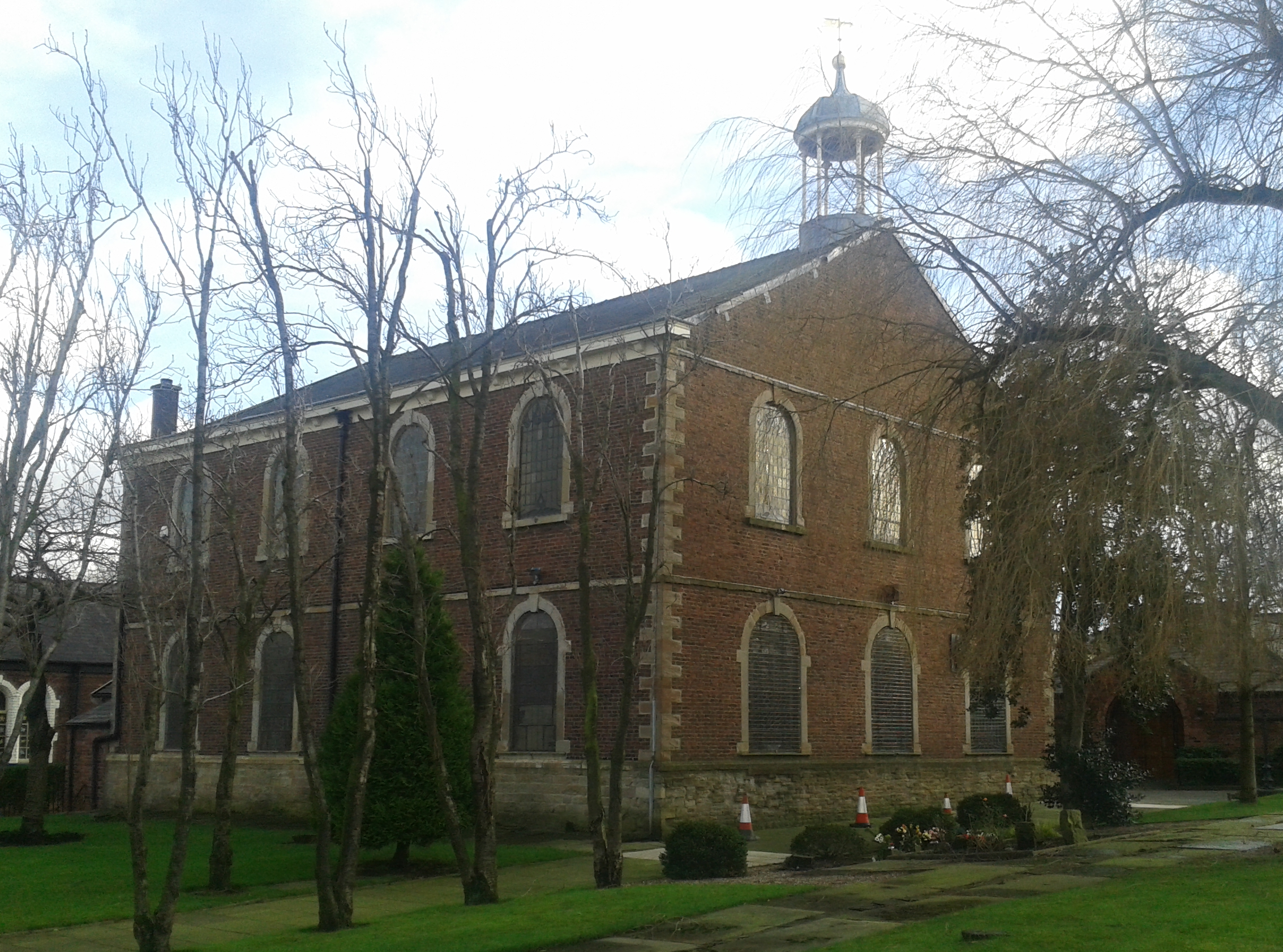
Chowbent Chapel, Atherton

Universities are not known for their generosity to outside bodies but in 1721 the University of Glasgow (see image at the top of this page which shows Glasgow College at the end of the seventeenth century) made a donation to Chowbent Chapel whilst it was being built. The congregation had just been dispossessed from their old chapel by a new landlord. This short article explains how and why Glasgow University supported the building of the new chapel (pictured above).

Books Reviewed

Protestant Dissent and Philanthropy 1660-1914,
edited by Clyde Binfield, G.M. Ditchfield and David L. Wykes,
The Boydell Press, 2020,
hardback, 264 pages, ISBN 978-1-78327-451-2. Studies in Modern British History Vol 39. Price £65.
Reviewed by Alan Ruston
Subscribers to the Transactions will be pleased to know that they are able to purchase this book with a  special 35% discount using the code given in the issue.

A Radical Religious Heritage, by John Maindonald,
second edition, 2020,
paperback, 68 pages ISBN 978-0-473-52784-6. Price $NZ 25.00
Reviewed by Graham Murphy

Supplement

Obituaries of Ministers of Unitarian Congregations
Index and synopsis of references
New entries, and Additions and Corrections
extended from 1 February 2014 to 31 January 2021
Compiled by ALAN RUSTON

This issue comes with Alan’s latest Supplement which brings over twenty years of research by Alan on Unitarian obituaries right up to date. It also makes use of the late Professor R.K. Webb’s index cards based on a wide variety of sources for biographical details of Unitarian ministers from circa 1780 to the early 1990s.

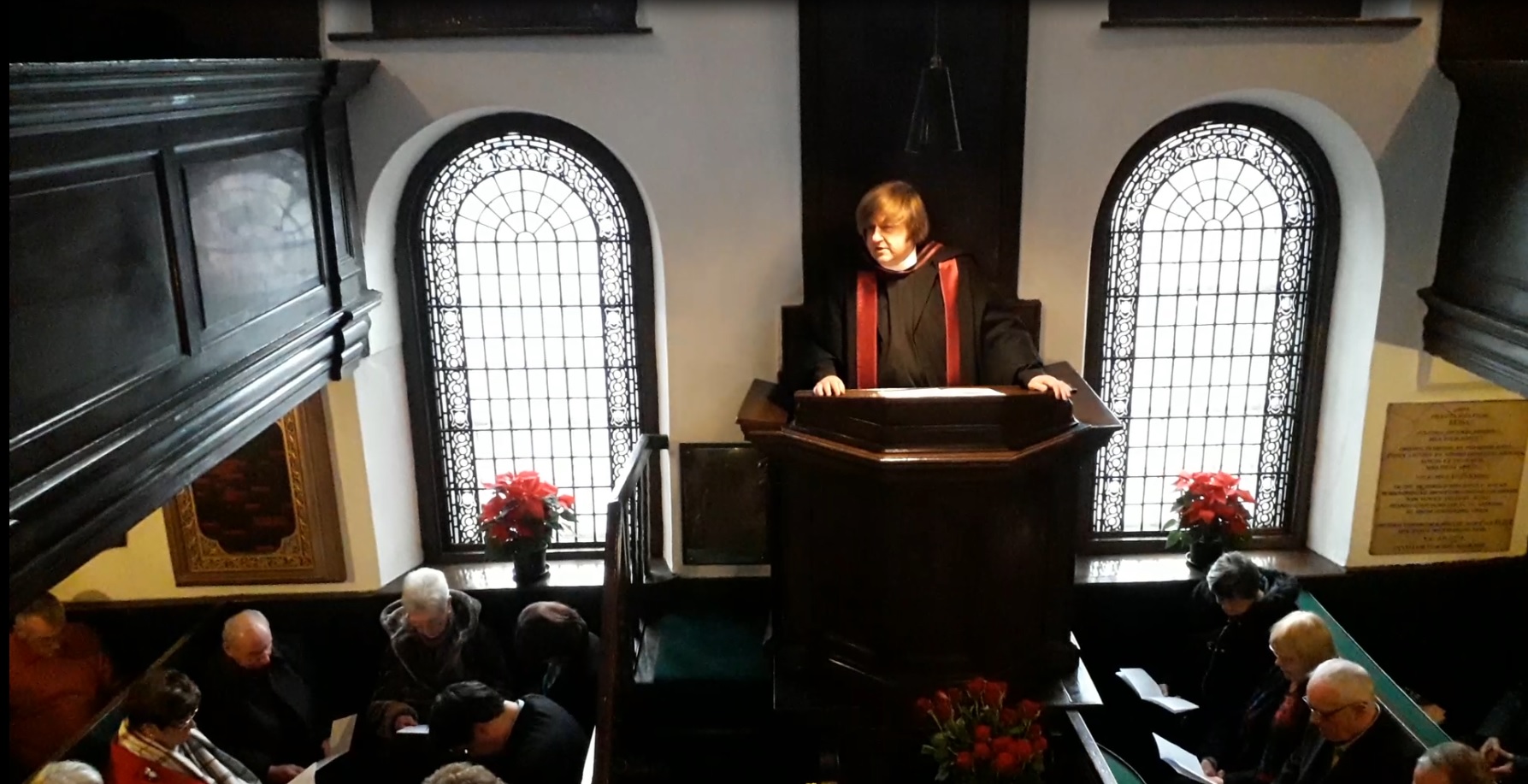
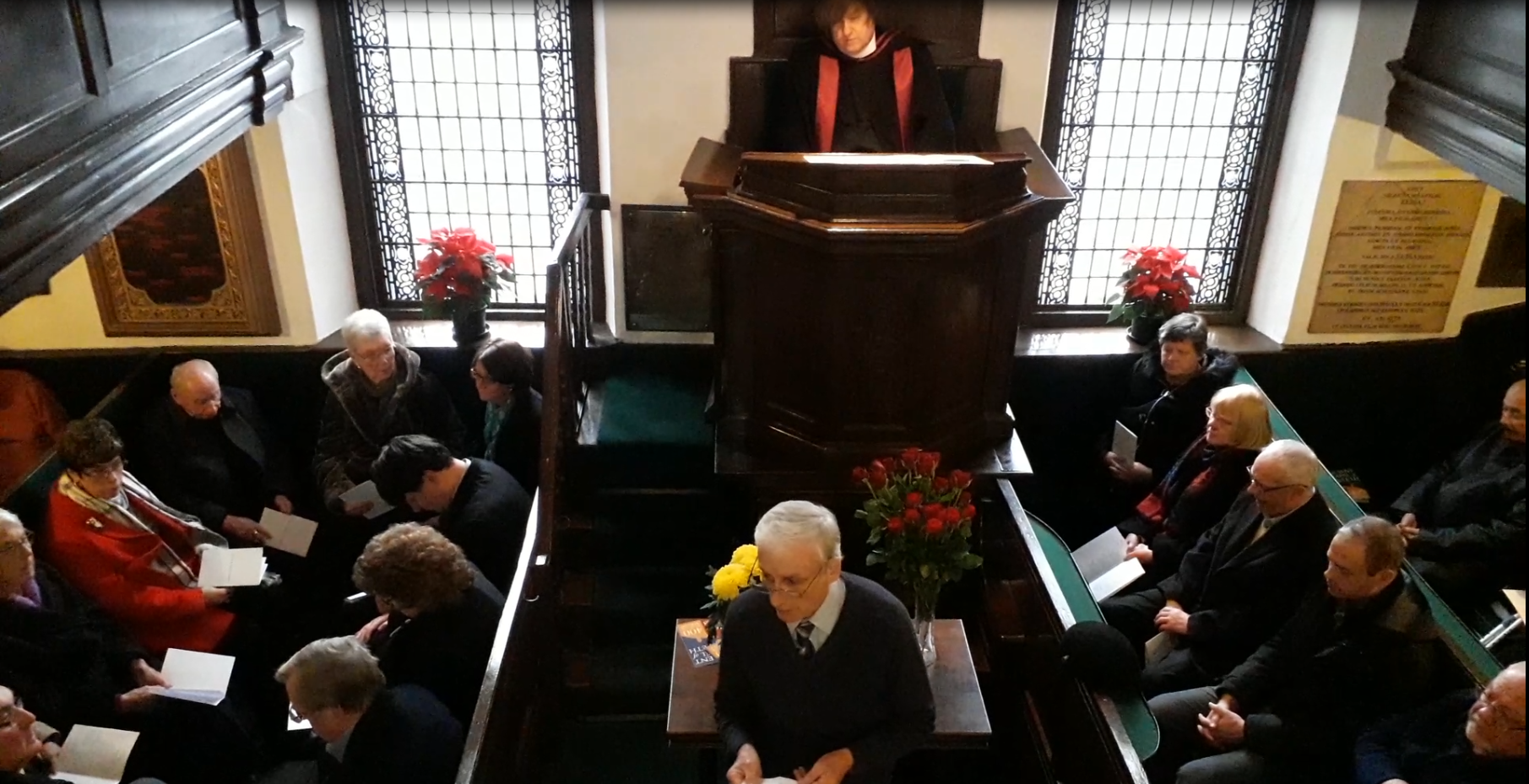
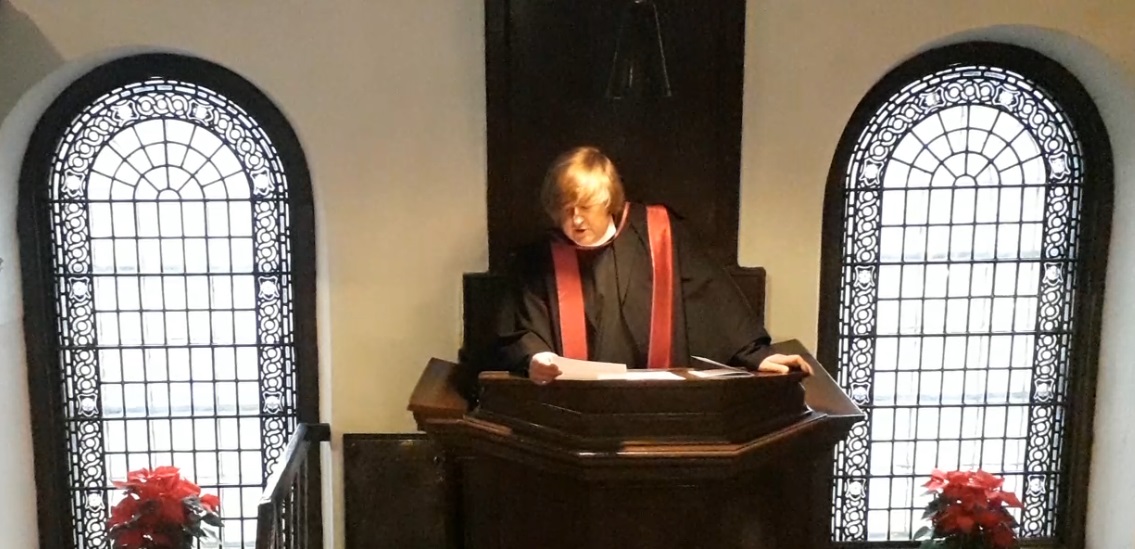
What do those stones mean to you? The 400th anniversary of the Ancient Chapel of Toxteth

“But before he had spent so much time in Oxford as he could have wished that he might have done; the People in Toxteth, whose Children had been taught by him, sent to him, desiring that he would return unto them to instruct not so much their Children as themselves, and that not in meer Humane Literature, but in the things of God. This Call, after due Consideration, for weighty Reasons he accepted of. Being then returned to Toxteth, he Preached his first Sermon November 30. 1618. There was a very great Concourse of people to hear him, and his Labours were highly accepted of by the judicious.”

…part of the reading given by Beryl Black at the 400th anniversary service of the Ancient Chapel of Toxteth on Sunday, 25th November. This section of the reading (from: The Life and Death of That Reverend Man of GOD, Mr. Richard Mather Teacher of the Church in Dorchester in New-England by Increase Mather, Cambridge Mass. 1670) was also reproduced on the back page of the printed order of service.


Ancient Chapel 25 November 04

At the opening of worship (Photo: Sue Steers)

It was a tremendous occasion; well attended and enthusiastically received by all who were present. Readings were also given by Graham Murphy, Annette Butler and Leslie Gabriel while Cliff Barton played the organ.

Ancient Chapel 25 November 03

Graham Murphy gives a reading (Photo: Sue Steers)

In addition to the above reading there were readings from T.S. Eliot’s Little Gidding, from Robert Griffith’s The History of the Royal and Ancient Park of Toxteth, Liverpool (1907) and from Joshua ch.4 v.1-9 and John ch.4 v.31-38.

A message was also read from the First Parish Dorchester, Massachusetts, to which place Richard Mather, emigrated in 1635.

Ancient Chapel 25 November 16

Reading the message from Dorchester (Photo: Sue Steers)

The message from Dorchester:

Dear Members of the Ancient Chapel of Toxteth:

First Parish Dorchester sends you our heartfelt greetings and best wishes upon the occasion of your 400th anniversary of your founding. It is rare for us to know a Unitarian congregation older than ours, as we will not mark our 400th anniversary until 2030!  Rev Richard Mather, your first minister and our third minister (1636-1669),  certainly sowed good seeds in our two long-standing faith communities.

It may interest you to know that First Parish Dorchester established the oldest elementary public school in the United States, which is situated right next to the church- and it is called the Mather School!

In our weekly service, we have a time when we light candles of celebration or concern. This Sunday, November 25th, I will light a candle for the Ancient Chapel of Toxteth, in celebration of your four centuries as a gathered community. We rejoice with you in spirit.

Faithfully,

Rev Patricia Brennan

Interim Minister

First Parish Dorchester

Massachusetts

Yo can read more about the Ancient Chapel via these links:

Then and now pictures

Richard Mather and the Ancient Chapel

Jeremiah Horrocks and the Ancient Chapel

Jeremiah Horrocks and the transit of Venus

Two views of a junction in Toxteth

This post has been made on the day of the 400th anniversary of Richard Mather’s first sermon in Toxteth.

With special thanks to Jim Kenny who devised the logo used for the 400th anniversary.

ACoT landscape logo


Faith and Freedom: Autumn and Winter 2017


Faith and Freedom

Autumn and Winter issue 2017

Volume 70 Part 2. Number 185.

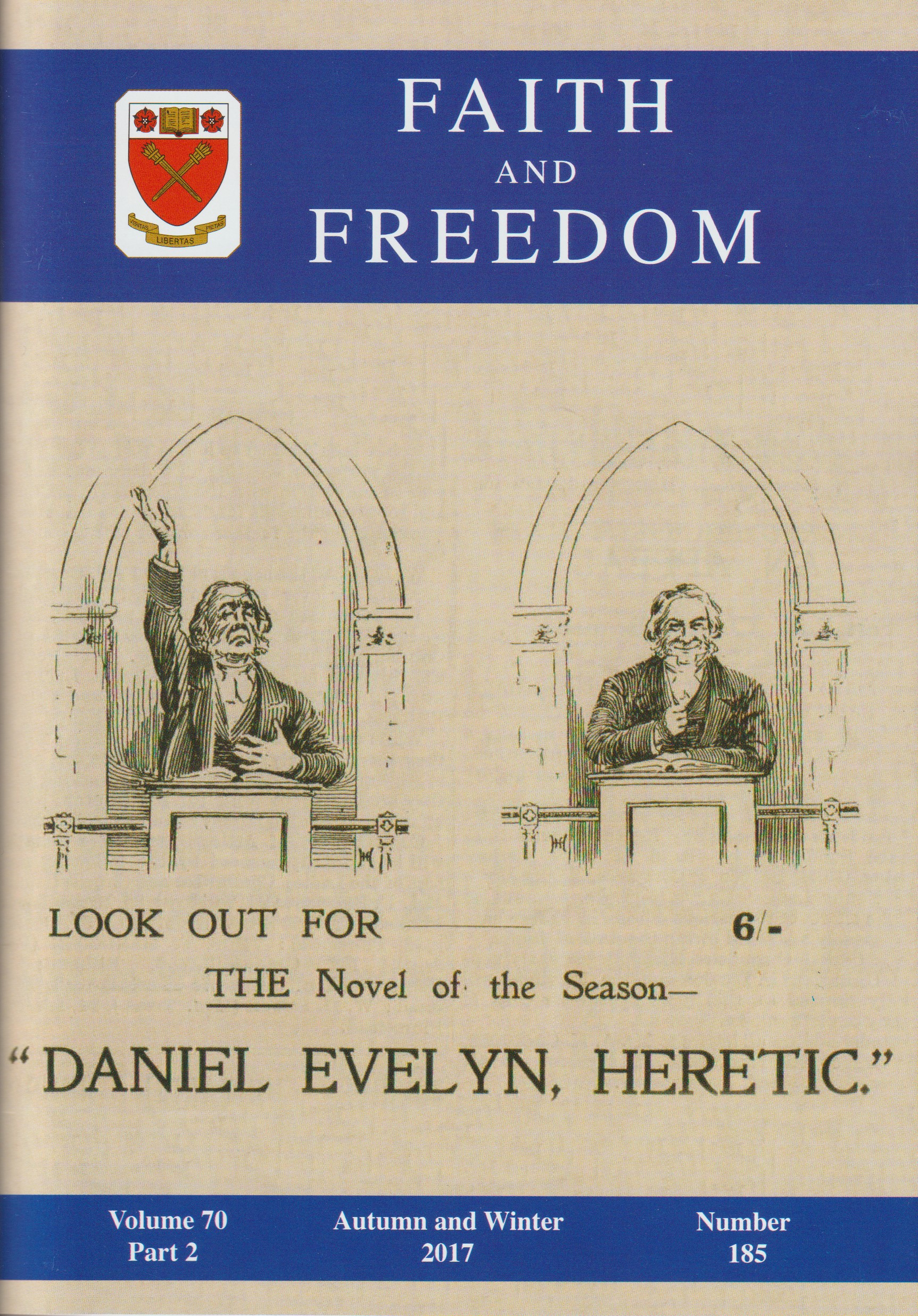
In the latest issue of Faith and Freedom Professor Emily Klenin breaks new ground with an exploration of the writings of David Delta Evans, the Flintshire-born son of a miner who went on to become a Unitarian minister, printer, editor of the Christian Life, novelist and poet in English and Welsh. Emily looks in detail at his 1913 novel Daniel Evelyn, Heretic, which is both a fictionalized account of his childhood and youth and a confession of faith. She draws out the importance of this long-forgotten novel in the religious and social landscape of England and Wales at the time. It’s a fascinating account of a remarkable man who has been long neglected.

Stephen Lingwood develops ‘A Unitarian Theology of Tradition’. He asks “in what sense do we claim religious continuity in a non-creedal tradition that allows the freedom of religious evolution? In what sense is the Unitarianism of the past the same thing as the Unitarianism of the present?” These are important questions for Unitarians to grapple with and drawing on sources such as James Luther Adams, Susan B. Anthony, George Lindbeck and Alasdair MacIntyre and taking scientific method as an analogy he gives a compelling explanation of the way Unitarians can understand their own tradition.

In ‘Manchester College Oxford Old Students Association – The Early Years’ Alan Ruston uncovers the early history of the OSA and describes its birth pangs and early development, concluding with its creation of Faith and Freedom and the encouraging observation: “F&F has proved to be a successful long-lasting journal of mainly intellectual content representing the Unitarian position, which is now in its seventieth year. Its creation can be considered the single most important initiative to have been undertaken by MOSA.”

F&FCover185

Our review section is extensive and wide-ranging. Graham Murphy reviews Diarmaid MacCulloch’s All Things Made, New Writings on the Reformation (Allen Lane/Penguin). It’s an excellent review of a timely and important book, Graham writes: “MacCulloch guides us around rooms of the past, noting progress, noting dystopia, and here and there a glimmer of light: ‘a Declaration in the parish church of a town called Torda, a place which should be more of a centre of pilgrimage than it is’ – Toleration.”

Stephen Lingwood’s incisive review of Frederic Muir’s edited collection Turning Point: essays on a new Unitarian Universalism (Skinner House) draws out the ‘trinity of errors’ identified there, including exceptionalism, an aversion to authority and, especially, individualism. This latter tendency is the root of the philosophy of Samuel Smiles and in his fascinating review of John Hunter’s The Spirit of Self-Help. A Life of Samuel Smiles (Shepheard-Walwyn) Bob Janis-Dillon shows how the sometime attender at Mill Hill Chapel, Leeds adapted Emersonian individualism to his ‘Self-Help’ idea, “a mode of thinking we need to challenge if we are to advance as a species”.

Rev Dr Marcus Braybrooke, joint president of the World Congress of Faiths, looks at three books that inform on the place of Islam in modern Britain (James Ferguson, Al-Britainnia, My Country: A Journey Through Muslim Britain, Bantam Press; Richard Sudworth, Encountering Islam: Christian Muslim Relations in the Public Square, SCM Press; Rahim Snow, Remember Who You Are, 28 Spiritual Verses from the Holy Quran, Remembrance Studio), an essential starting point for those who wish to open up dialogue and debate in this area. Marcus also provides two reviews of works that deal with Jewish–Christian relations and pluralism – Tony Bayfield (ed.), Deep Calls to Deep: Transforming Conversations between Jews and Christians (SCM Press) and Hans Ucko (ed.), Thanking Together: On Pluralism, Violence, and the Other (Journal of Ecumenical Studies).

In his review of what may be Don Cupitt’s “last and most important book” (Ethics in the Last Days of Humanity, Polebridge Press) Frank Walker lifts about fifteen random insights from the book. These all bear careful reflection. One takes up the theme of Muslim relations (“Western scholars should publish fully critical studies of the origins and the developing theology of the Qur’an and of the hadith”). In another Don Cupitt asserts: “Ordinary people will need a religious discipline like that of the Buddhist sangha to help people to calm their violent passions and to think rationally about how best to live.” It’s difficult not reflect on the plight of Muslims in Myanmar on reading this. But it is an important book concerned, as Frank says, “in the most down-to-earth way” with the end-times.

Faith, hope and healing are the themes of three reviews. Pat Frankish reviews The Enduring Melody (Darton, Longman Todd) by Michael Mayne about one man’s struggle with cancer, “a powerful and painful book, with a thread of reality and hope”. Christian Wiman’s book My bright abyss: meditations of a modern believer (Farrar, Straus and Giroux) is similarly a tale of a struggle with cancer, in this case that of a poet who tries to make sense of religion and God through his suffering. It is reviewed by Barrie Needham who draws out many profound insights from it. Barrie writes: “Faith which is self-centred does not, according to Wiman, recognise God impinging on this world through love. ‘The only way to ascertain the truth of religious experience: it propels you back towards the world and other people, and not simply more deeply within yourself’.” Andrew Hill also reviews a new book of hymns: Hymns of Hope and Healing: words and music to refresh the church’s ministry of healing (Stainer & Bell), a modern, progressive collection of hymns which covers a subject index of more than 250 topics. Andrew mentions some of them but those listed alphabetically from A to D give an idea of the books radical emphases: “ageing, balance, birth, carers, dementia, DNA, drugs…”

So many of the reviews are about finding and connecting with the divine in one way or another and Jim Corrigall reviews Lorraine Cavanagh’s new book Waiting on the Word: Preaching Sermons that connect people with God (Darton, Longman and Todd). Jim quotes the author “Sermon preparation is a matter of waiting in the pain of others, rather than worrying what we are going to say.” Finally Peter Godfrey reviews Crocodiles do not swim here (Avian House) by John Smith Wilkinson who looks at doctrine, Biblical interpretation and religious understanding from fresh angles.

If you would like to take out an annual subscription to Faith and Freedom you can do so online at http://www.faithandfreedom.org.uk/subs.htm or by sending a cheque for £15 to the Business Manager, Nigel Clarke., 16 Fairfields, Kirton in Lindsey, Gainsborough, Lincs, DN21 4GA.