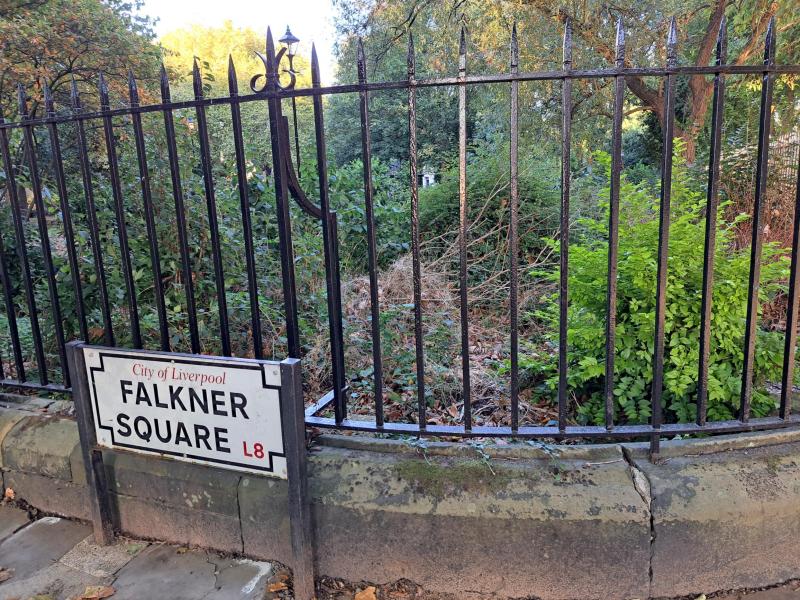
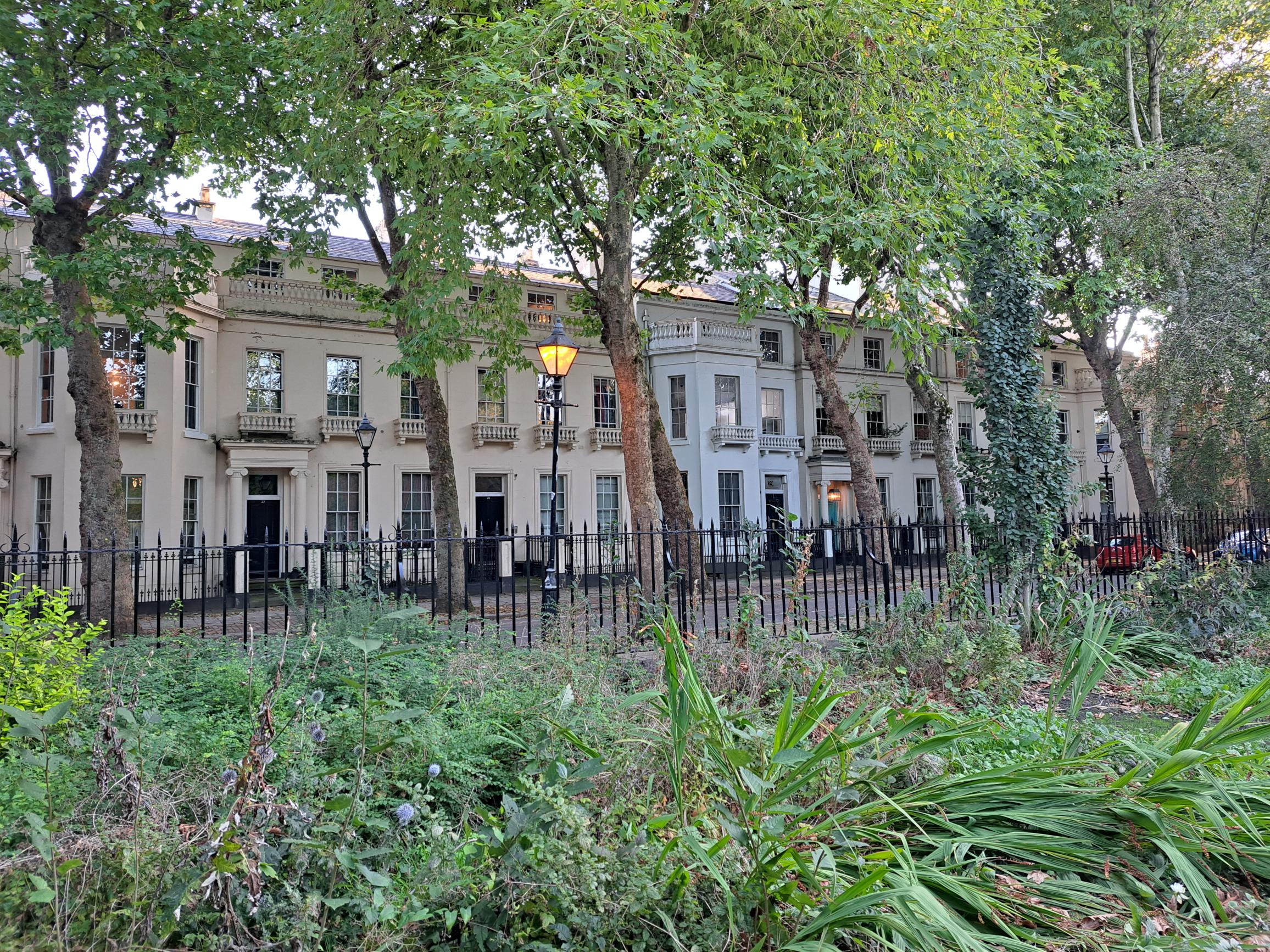
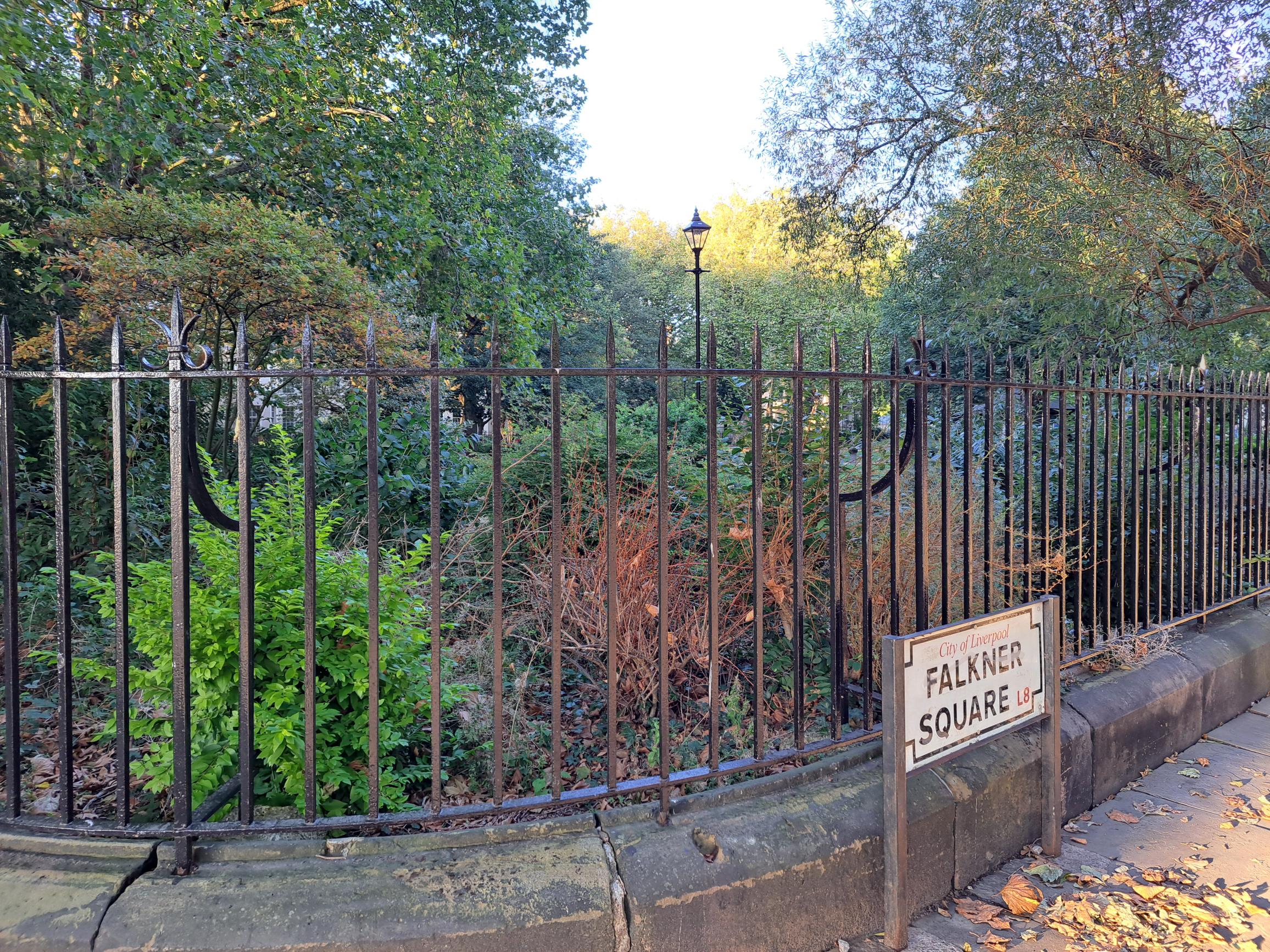
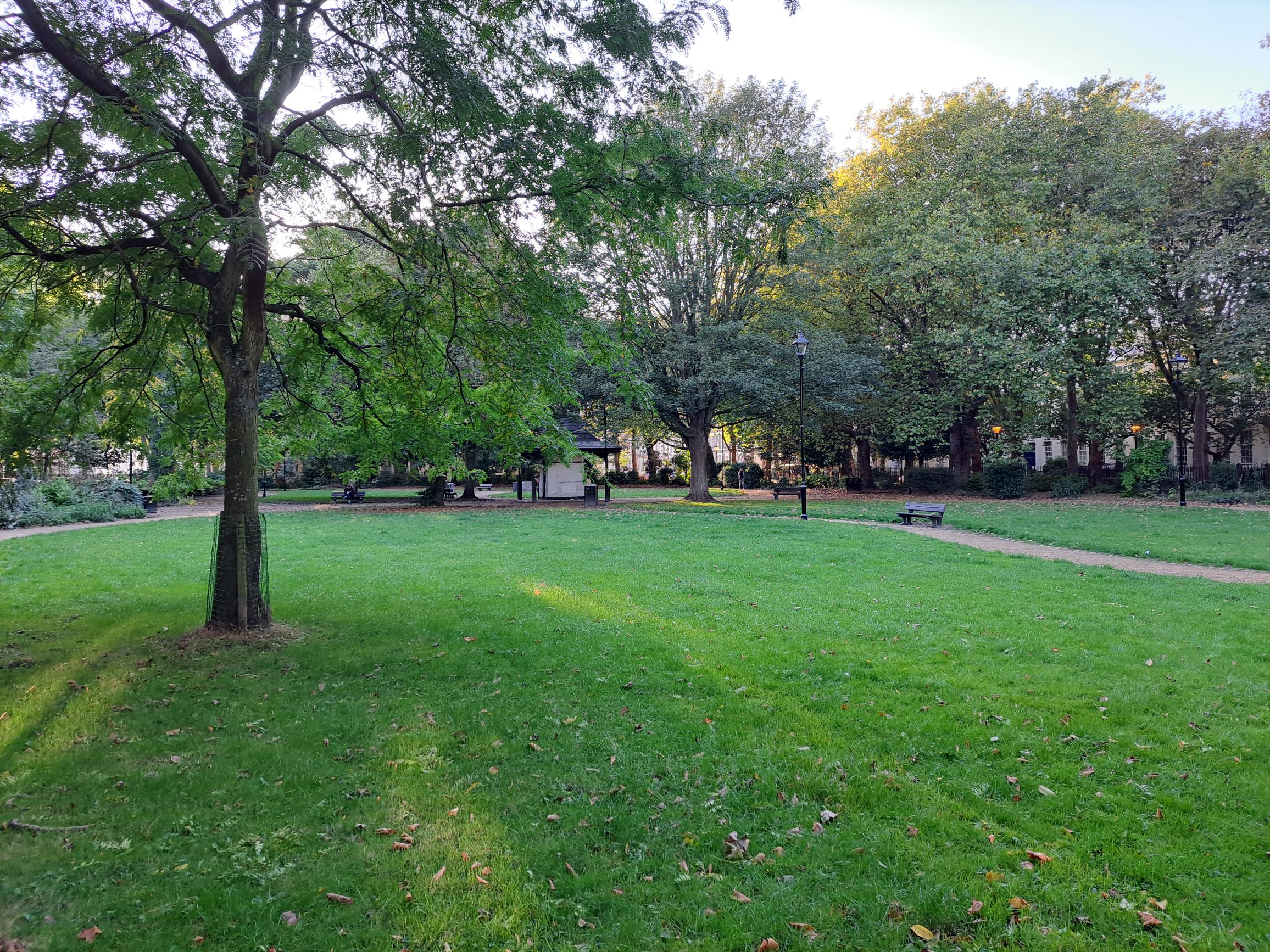
A walk around Falkner Square in Liverpool is always interesting. The buildings are quite impressive although not quite as grand as the houses in the nearby Georgian Quarter, now much utilised for film locations, although Falkner Square itself made a film appearance in the 1971 film Gumshoe with Albert Finney.
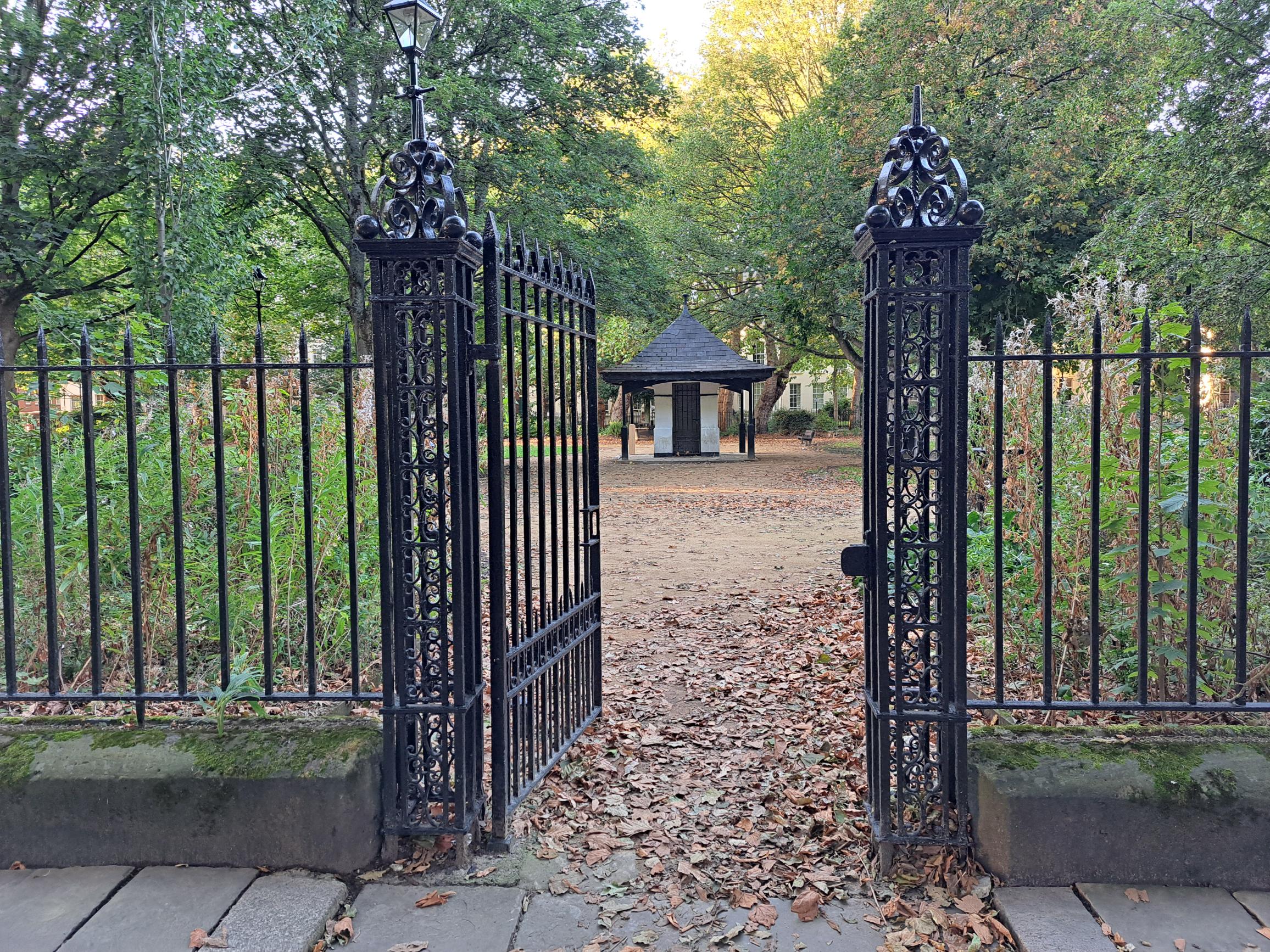
What’s attractive about it is that it has its own central park and resembles the sort of square you would find in Bloomsbury. I was always told, that in days gone by, only the people who lived in the Square had a key to the park, although the City Council now claims it as ‘one of the earliest public open spaces in the city’. I suspect it wasn’t open to the public in its earliest days.
Falkner Square is said to be named after Edward Falkner, an ex-soldier and former High Sheriff of Lancashire, who mustered a force of 1,000 men to defend Liverpool in 1797 when fears of a French invasion were at their highest. He was a successful merchant, involved inevitably in the slave trade, but who died in 1825, so he can’t have been directly involved in the development of the Square.
Joseph Sharples’ Pevsner Architectural Guides Liverpool says ‘The central garden is shown planted on a map of 1831, but the stuccoed houses did not begin to appear until the mid 1840s.’ The only architect he mentions is William Culshaw who designed number 29 in 1845 along with many Liverpool buildings.
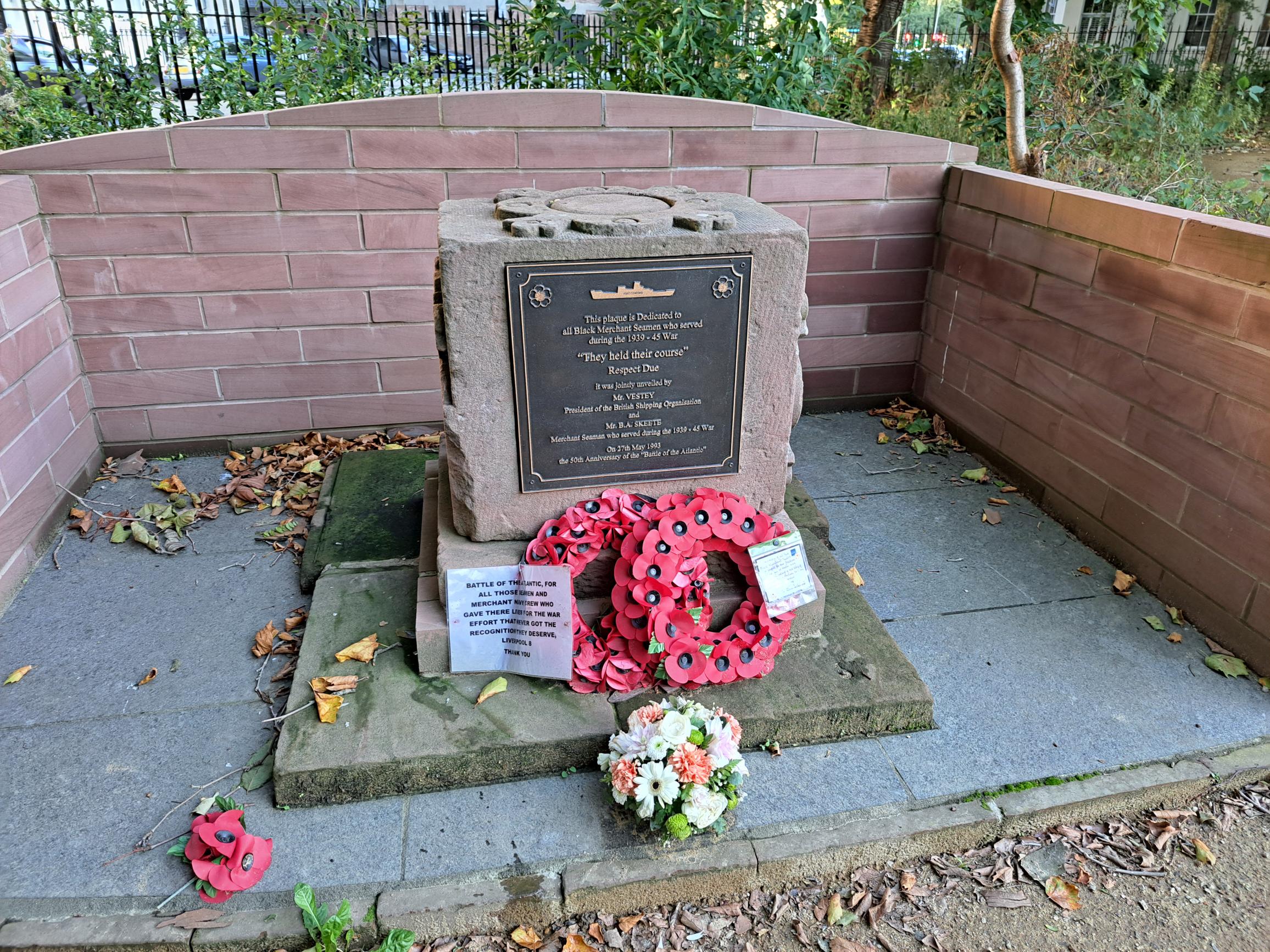
One relatively new feature is the Memorial to Black Merchant Seamen who served in the Second World War. This was unveiled in 1993 on the 50th anniversary of the Battle of the Atlantic and contains the words “They Held Their Course” RespectDue. The bronze plaque, which, shockingly, has endured some vandalism but is now restored, is attached to a large decorated piece of sandstone. This came from the old Liverpool Sailors’ Home, which was once a very prominent landmark in Canning Place near the city centre. Now only the ornate gates survive and can still be seen at the entrance to Liverpool 1.
Memorial to Black Merchant Seamen who served in the Second World War
In this video we take a look at the career of Allen Daniel Coon, one of the pioneers of photography and cinematography in Ulster. The video tells something of his story, with many examples of his postcards, and tracks down his last resting place.
Video: Allen Daniel Coon (1867 -1938) Photographer and Cinematographer
The previous post on this blog is all about Allen Coon’s postcards produced for W.J. Ross of Finaghy Stores in 1927, but these are just a small sample of his vast output produced between his arrival in Ireland in 1902 and his death in 1938.
Allen Daniel Coon was born in Buffalo, New York in 1867. The son of a Baptist pastor and, tradition has it, a native American mother, his career followed a fairly conventional path in its early years. He read law at university and then established himself as an attorney in Buffalo. But at some point he tired of this life and took the road to prospect for gold first in California and then in Alaska. One assumes this was not entirely successful because at some point he took up photography. He was a friend of George Eastman, the founder of Kodak, and may have been related to him. Either way he travelled to England with him in 1900 moving to Ireland a couple of years later to set up his own photography business.
This was right at the beginning of the boom in the sale of postcards. In 1902 you could send a picture postcard for a halfpenny and expect it to be at a local destination at lunchtime. For skilled photographers the opportunities were obvious and operating initially from Londonderry, later from Letterkenny and ultimately from Moira (each place was printed as his location on the front of his postcards) he produced hundreds of postcards of impressive views, street scenes, local landmarks, prominent buildings and sometimes interesting people.
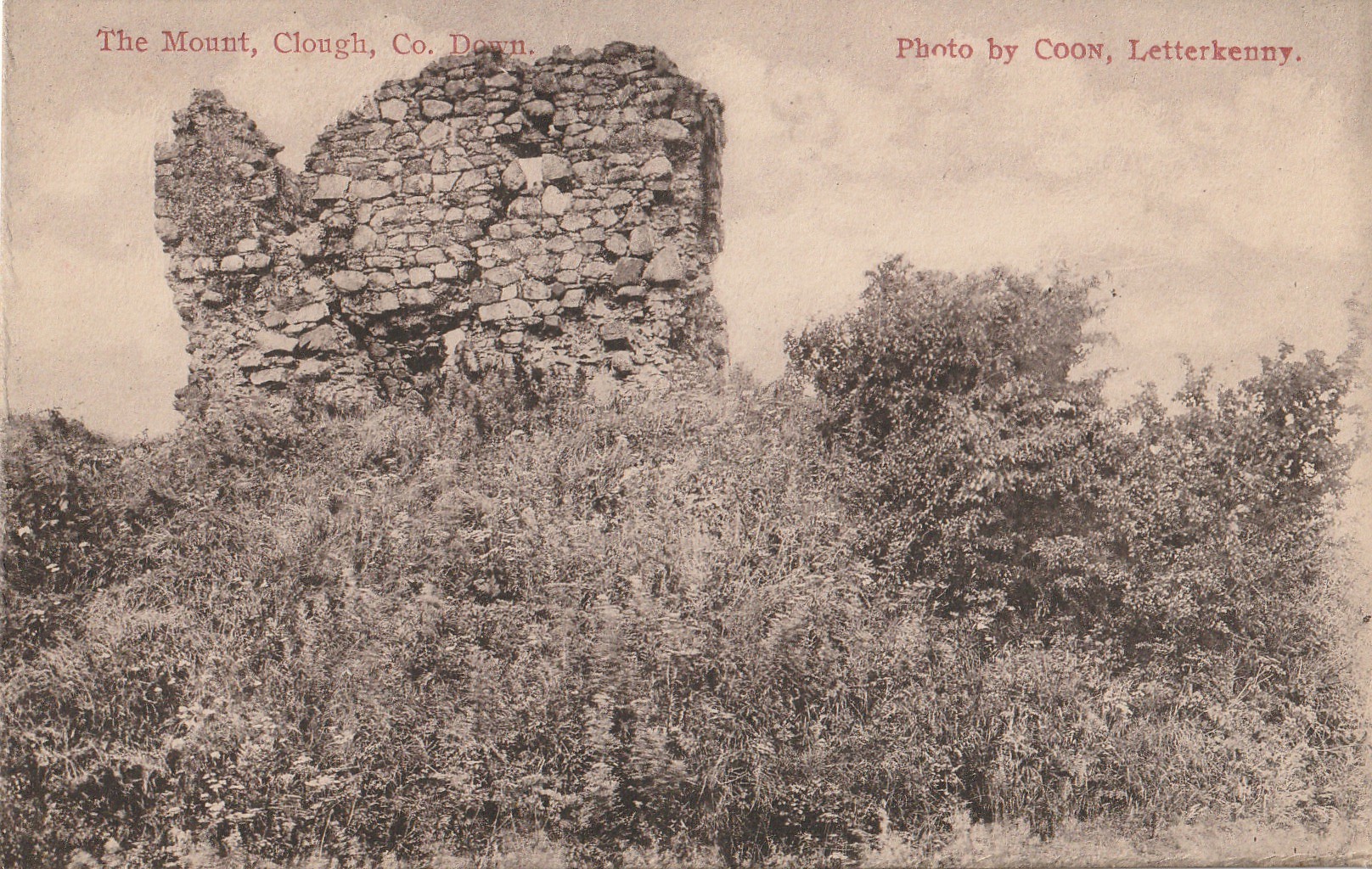
Clough Castle (no publisher listed on the back)
It is recorded that he charged local traders less than £5 for 2,000 postcards, which also included their name on the back of the card. From about 1924 he started numbering the cards starting with the last two digits of the year they were produced which is very helpful in dating the cards.
In the Census of 1911 he was recorded as living with his wife of three years, Clara, at Church Wall, Londonderry where he recorded his profession as Photographer and Theatrical Showman. Also recorded were their two eldest children (Gladys and Gaynor) and the fact that while his wife was a Presbyterian he declared himself to be an agnostic.
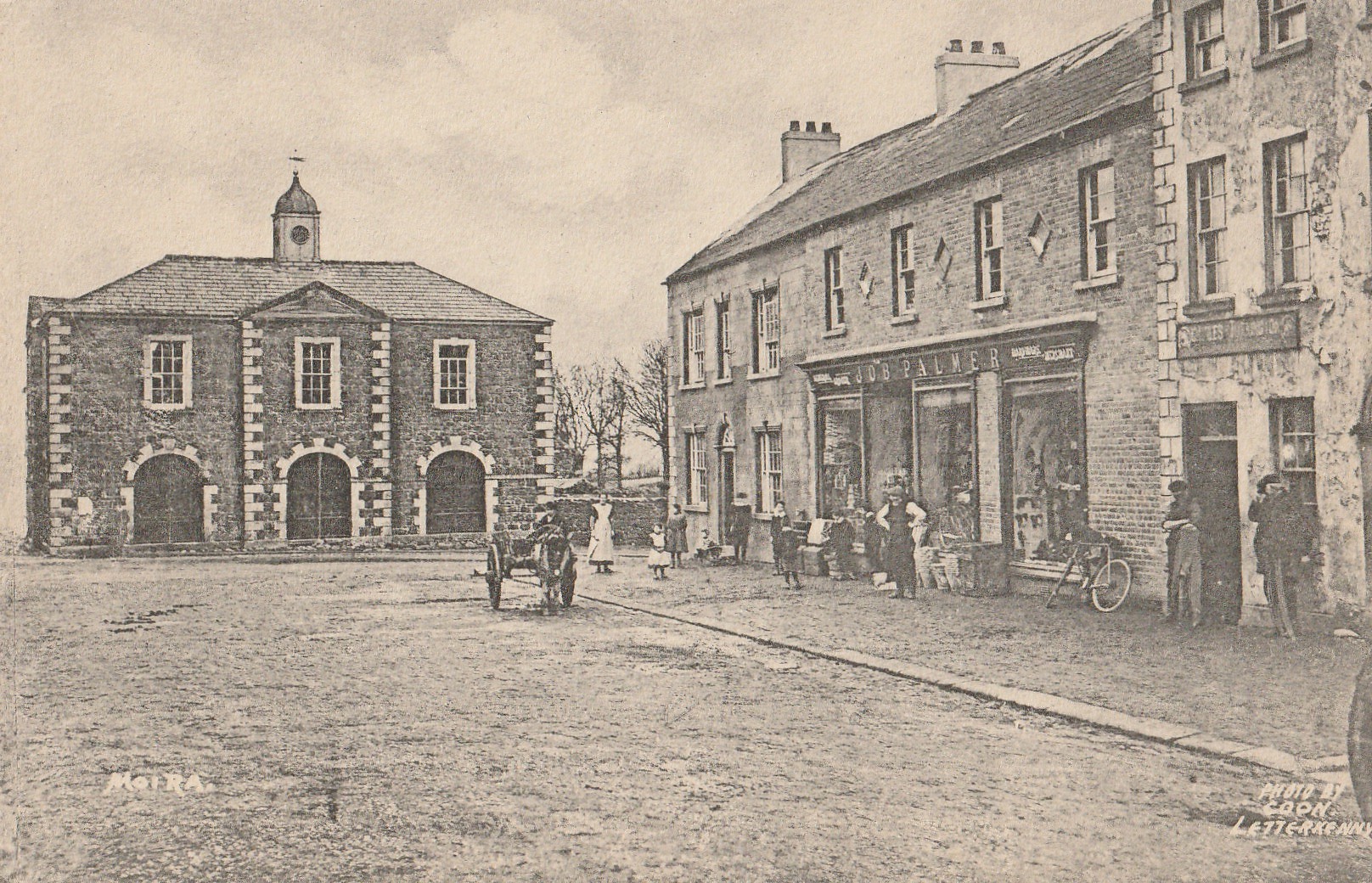
Moira Market House, published by Job Palmer, General Trader, whose shop can be seen on the right
The Theatrical Showman side of his profession was not an idle boast. Although his income from postcard sales must have been steady he was also perpetually ‘on tour’ travelling all over the north of Ireland with his camera and darkroom, setting up in towns as he went to film moving pictures and then show them to a fascinated populace along with films of Charlie Chaplin and other entertainers. In fact he also seems to have had an interest in some of the earliest cinemas established in county Donegal and in Belfast but his commitment to travelling from town to town with his films never waned right up to his death.
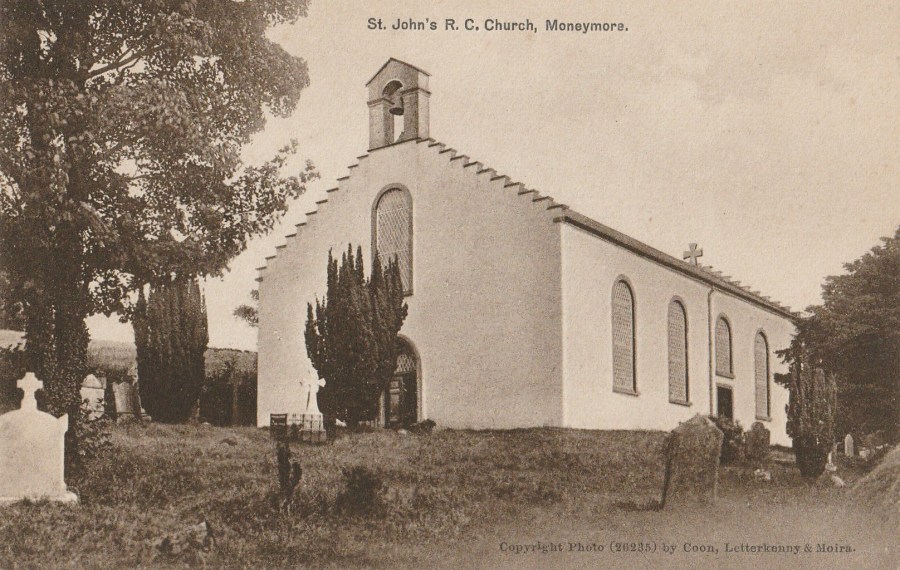
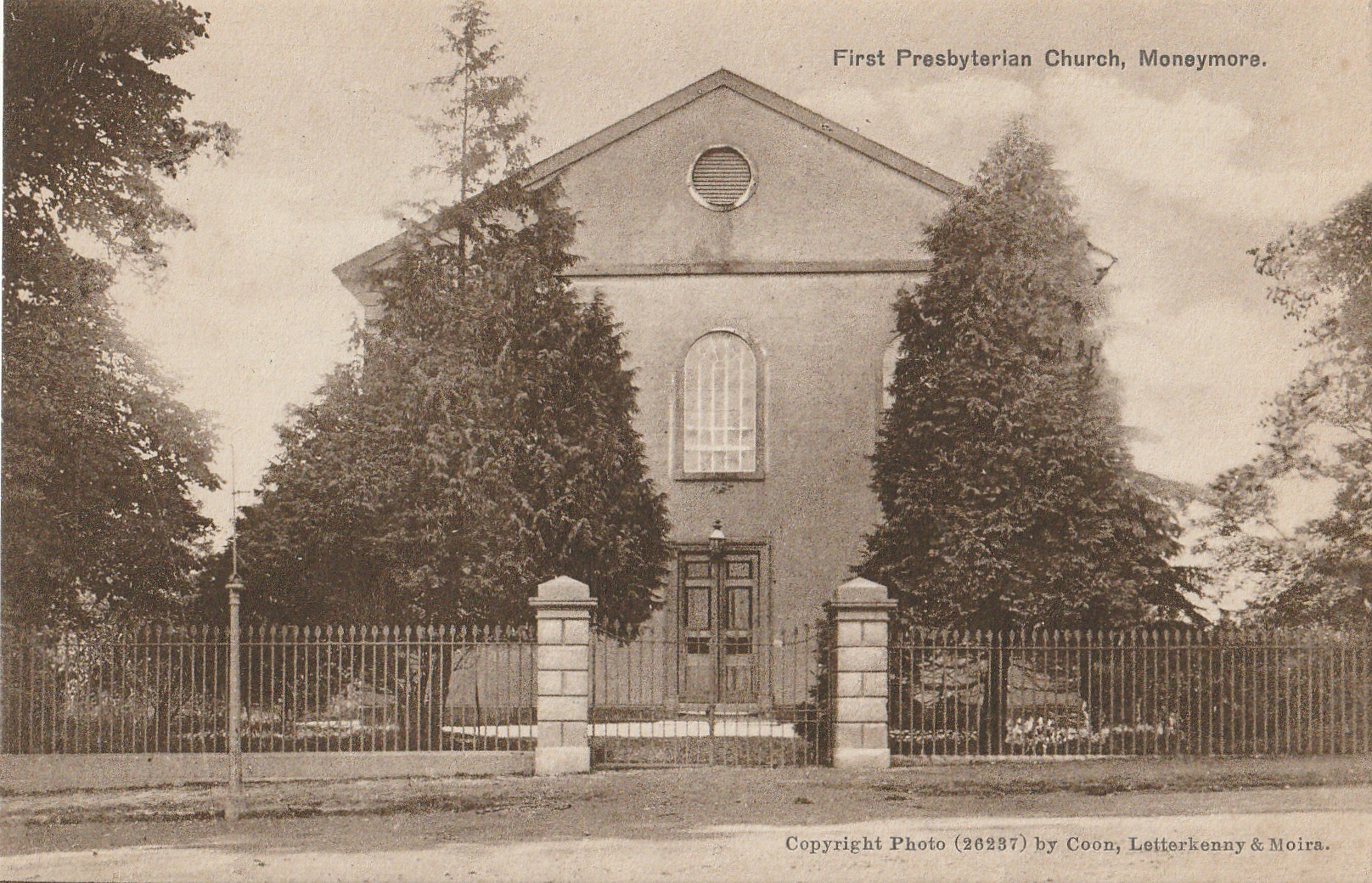
Moneymore, First Presbyterian Church (‘Published by Coon for Devlin, General Merchant, Moneymore’)
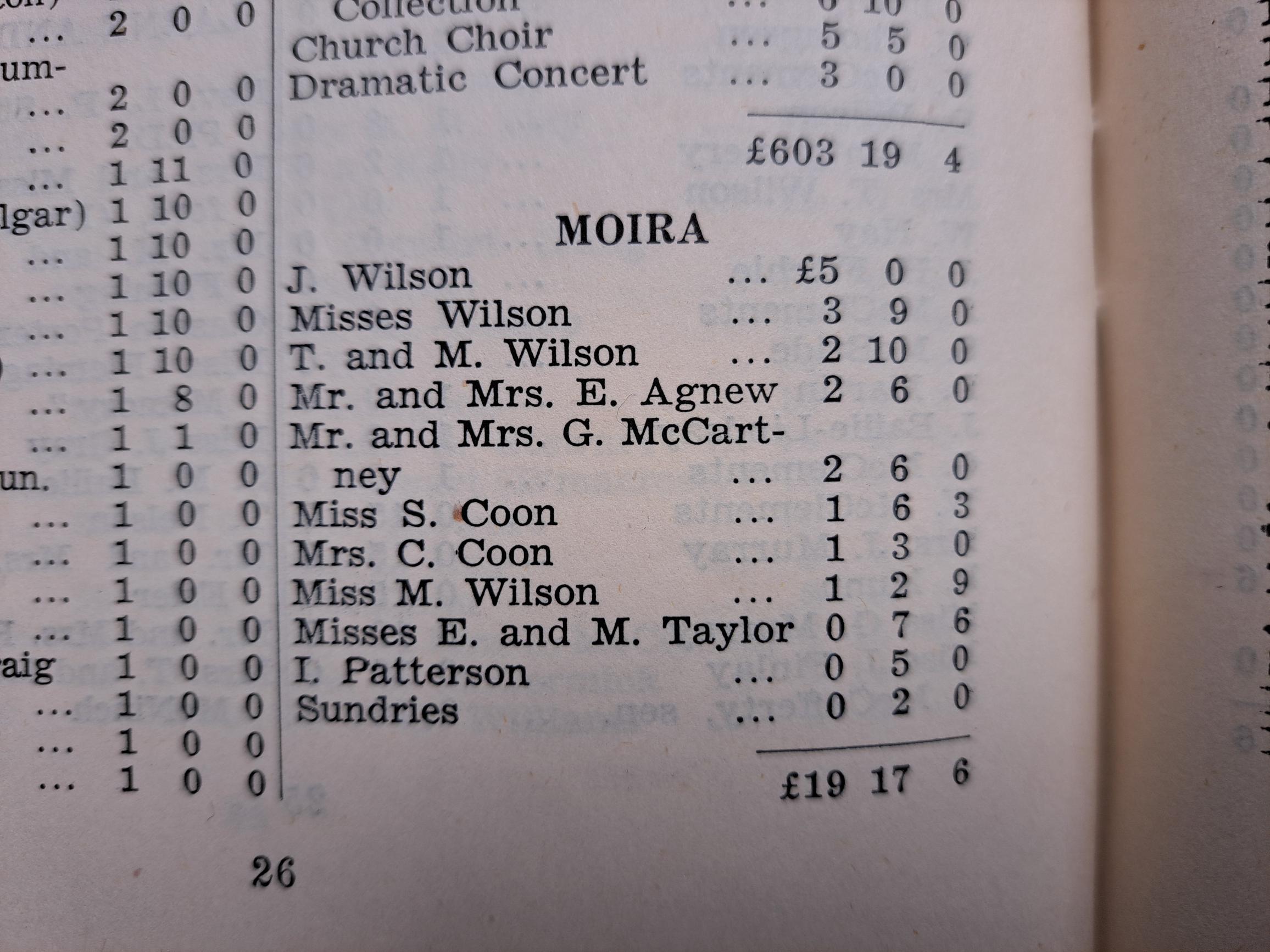
After partition he moved from Letterkenny to Moira and was ultimately buried there in the Non-Subscribing Presbyterian Church graveyard after his sudden death while on tour in Sligo. It is clear that his family had a close association with the Church, other family members are buried in the churchyard, but in the 1940s when the Non-Subscribing Presbyterian denomination launched a tercentenary appeal for the Sustentation Fund (1642 – 1942), Allen Coon’s wife Clara and his daughter Sylvia were amongst the members of the little congregation at Moira who gave their support. Indeed Miss Sylvia Coon was also one of the two local appeal officials for Moira.
Donations from Moira to the NSPCI Tercentenary Sustentation Fund Appeal, including Clara and Sylvia
Following our postcard views of Dunmurry in the 1930s I thought I would post some postcards from a place a short distance away; pictures of Finaghy, which probably date from a few years before, and which we know were taken by Allen Daniel Coon of Letterkenny and Moira.
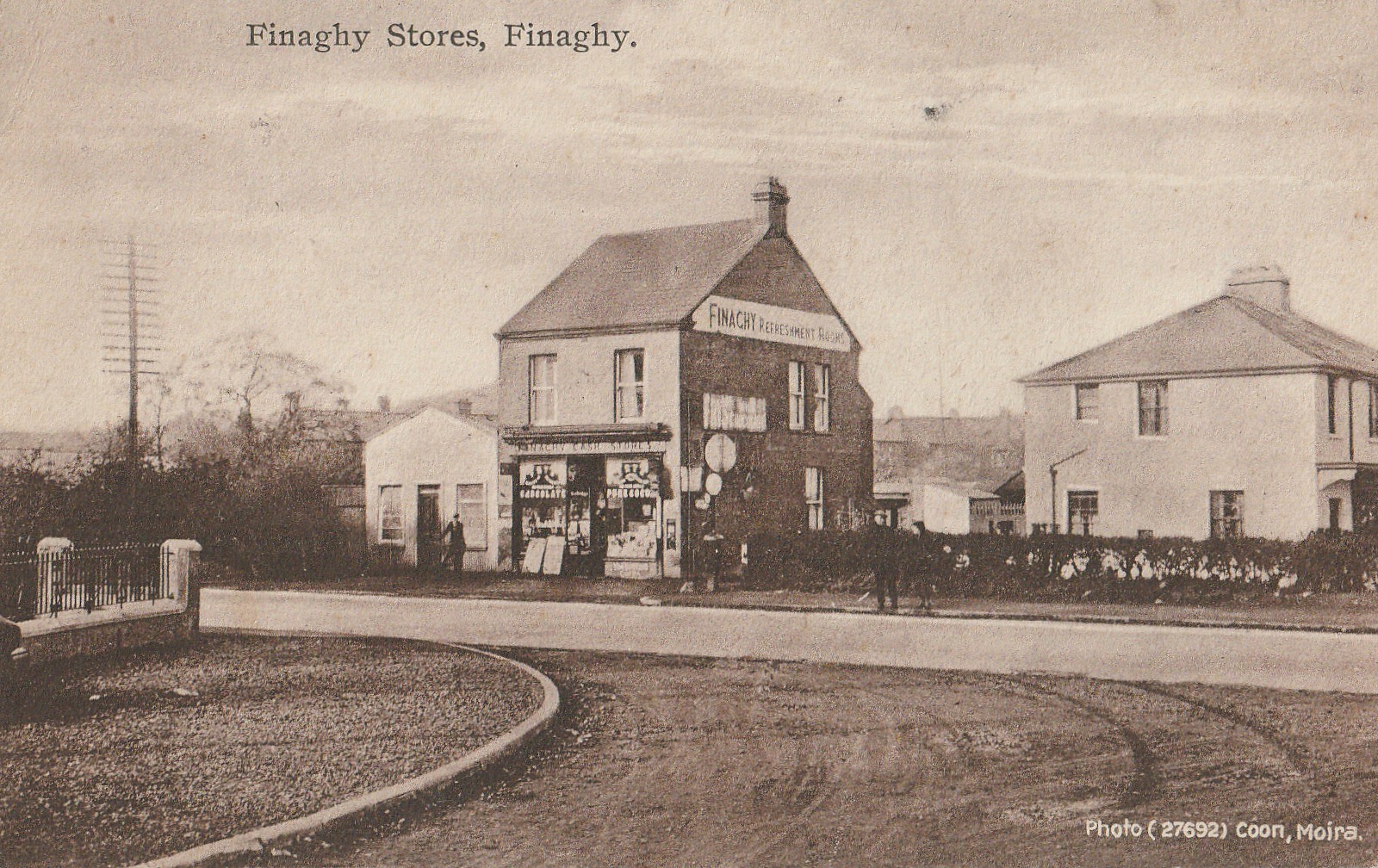
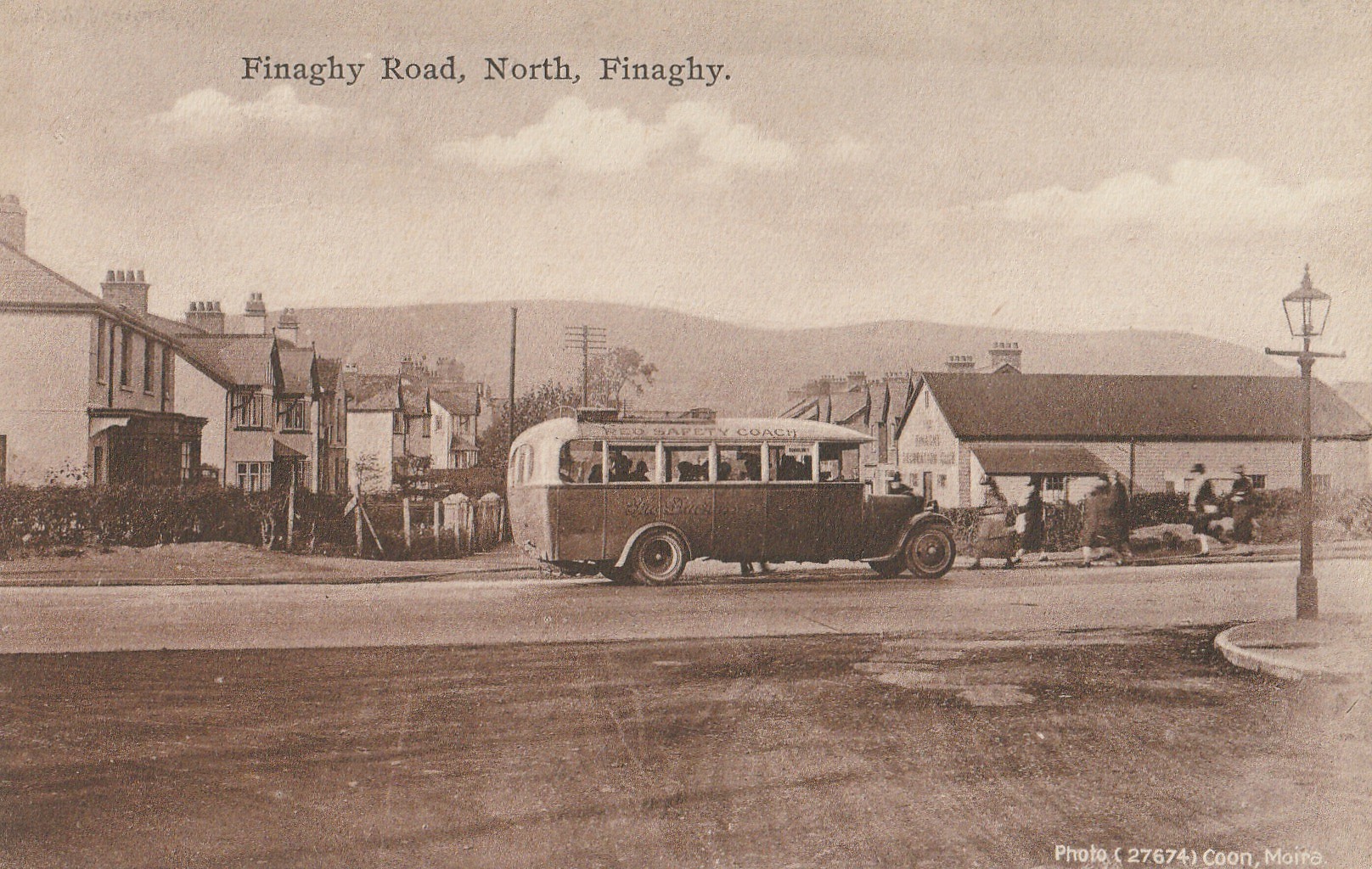
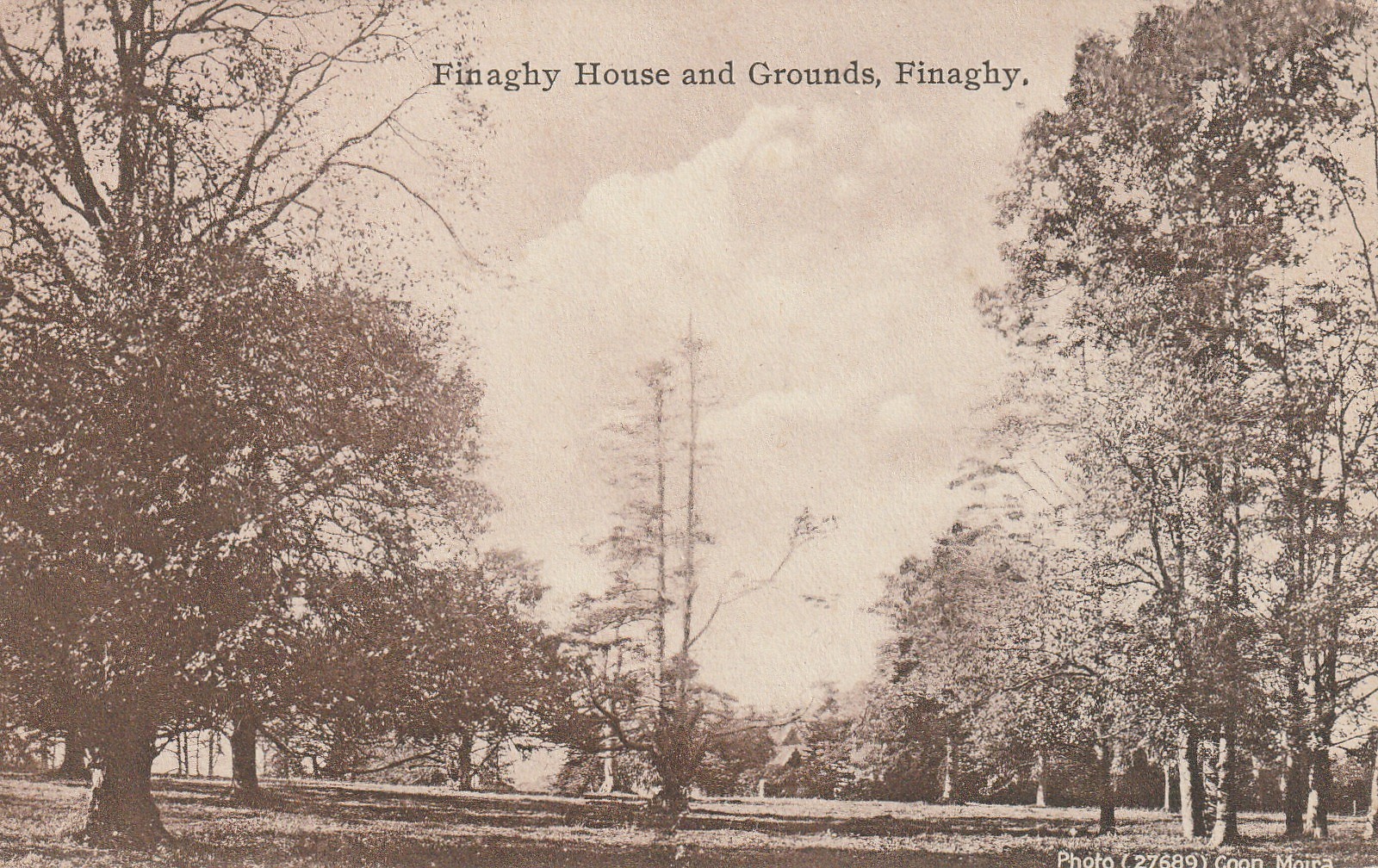
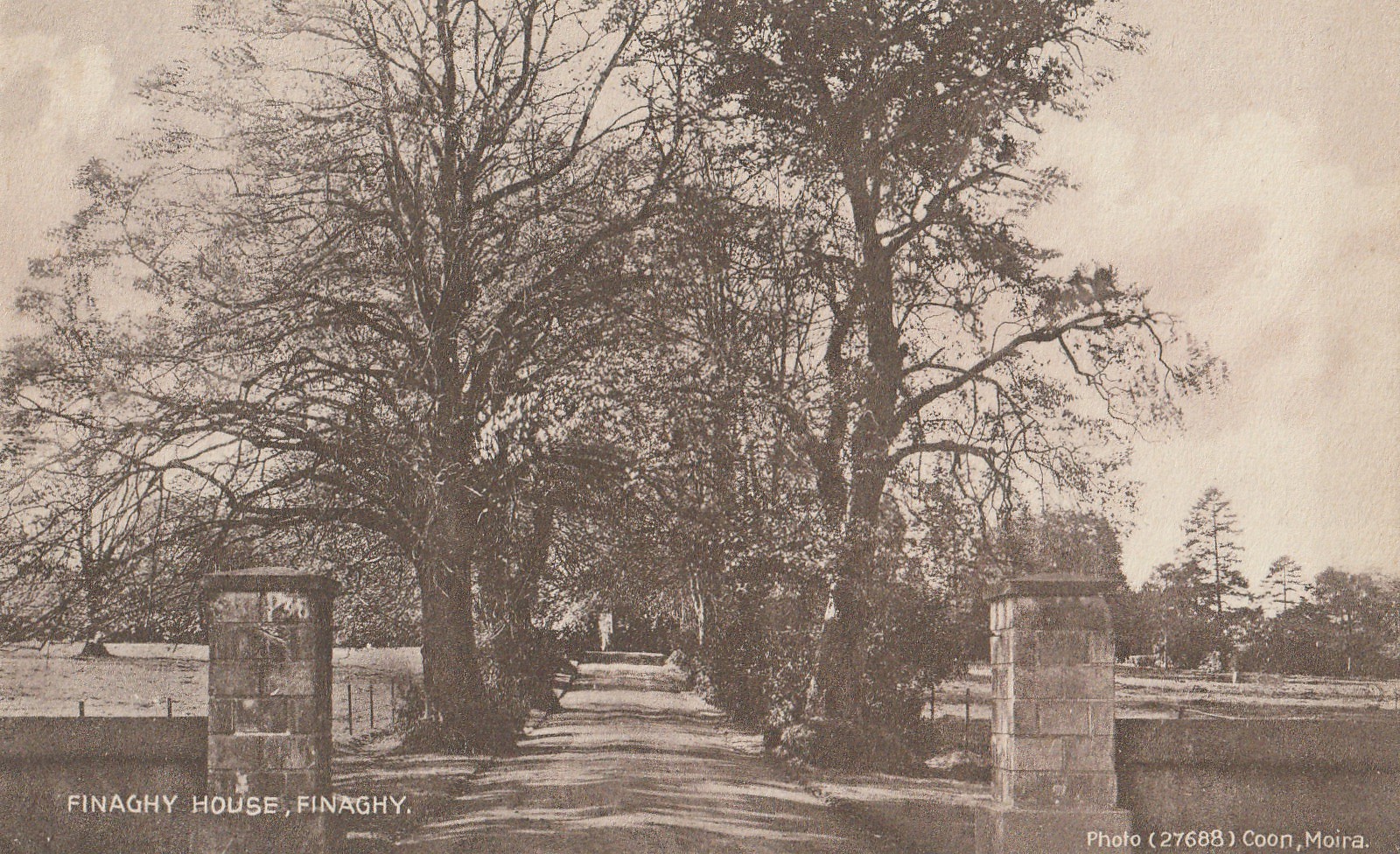
The numbering system on the four cards is believed to point to a date in 1927 for their production. According to the excellent catalogue of Allen Coon’s cards produced by Brian Hamilton in 2016 there were five cards published in this series for W.J. Ross of Finaghy Stores but I only have four of them. These four images are quite common but I have to admit that I have never seen an example of the fifth card which is named as ‘Finaghy Road South looking North’.
Finaghy Stores, Finaghy
The ‘Finaghy Stores’ postcard shows a solitary shop, that of W.J. Ross’s Cash Stores and Refreshment Rooms. It stands out very prominently in those days, but later had another shop joined to it and was surrounded by a number of other shops, including a couple of banks. The shop was well known to me in more recent times when it belonged to John Frazer, an active member of All Souls’ Church when I was minister there.
Finaghy Road, North, Finaghy
The postcard ‘Finaghy Road, North, Finaghy’ looks across the crossroads to Finaghy Road North and dates from a time when there was so little traffic that a bus could stop in the middle of the road to pick up passengers to be taken into town. This view has essentially not changed except for the addition of shops on one side and what was a bank on the other side of the road.
The other two postcards are a little more curious. Named as ‘Finaghy House’ and ‘Finaghy House and Grounds’, they could more accurately be titled ‘Finaghy House gateposts’ and ‘Finaghy House Grounds’ since neither card features any more than the merest suggestion of Finaghy House.
Finaghy House and Grounds
This is a pity really because Finaghy House will have been a major landmark at the time. Lord Belmont in Northern Ireland tells us all about Finaghy House in his excellent blog which you can read here. He tells us that the original house was built by Richard Woods at the end of the seventeenth century but was sold to the Charley family, a prominent linen family in 1727. Lord Belmont quotes the 1830 Ordnance Survey Memoirs as saying ‘the walls are nearly four feet thick and run together by grouted lime, similar to other ancient buildings.’ A descendant of the family said it was ‘an imposing mansion in a large park, with extensive outhouses and stables … a remarkable feature [of the interior] being a revolving fireplace between the drawing-room and the dining-room.’ The Charley family sold the house to a family named Brewis who, it is said, bred corgis, one of which had the distinction of being the first corgi owned by Queen Elizabeth, The Queen Mother.
In about 1890 Finaghy House was sold to James Moore and this is where a connection can be found with the Non-Subscribing Presbyterian Church of Ireland. James Moore was a direct descendant of Rev Henry Montgomery and the family were all members of our church at Dunmurry. In the 1901 Census he is listed as a Manufacturing Stationer living with his wife, Maria Lydia, who had been born in New Orleans. They and their three children (Harold Montgomery, Kenneth Montgomery and Sybil) all give their religion as Unitarian. As well as the five family members there are three servants listed as resident in the house. Harold and Kenneth are respectively stationer’s assistant and stationer’s apprentice to their father in 1901, Sybil is still at school. By the 1911 Census the three children are no longer living at home although there are still three (different) servants; a parlour maid, a cook and a housemaid.
Finaghy House by A.D. Coon
By 1911 James Moore was a JP in County Antrim. In the First World War Kenneth Montgomery Moore was commissioned into the 11th Battalion Royal Irish Rifles and was awarded the Military Cross. He returned home safely at the end of the war and his name is listed in the First World War Roll of Honour of the Non-Subscribing Presbyterian Church of Ireland (published 2018).
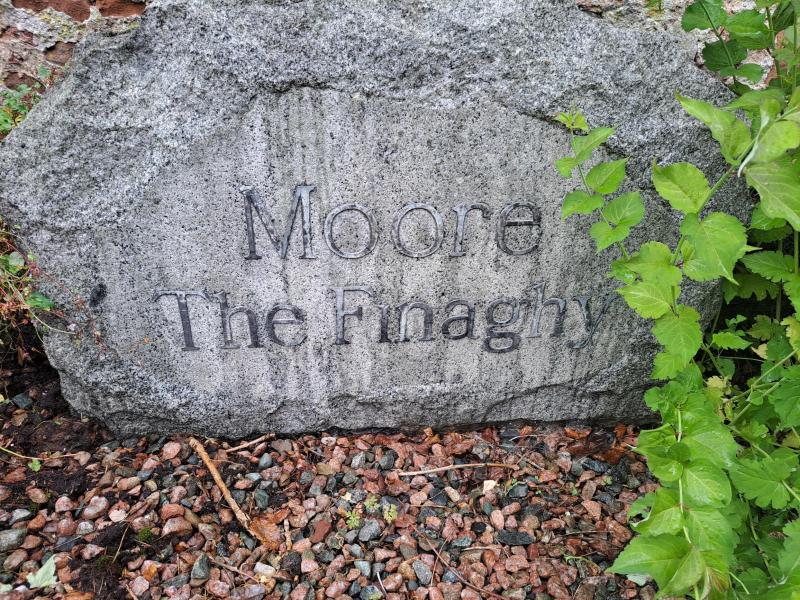
The Moore family burial ground can be found in their church, the First Presbyterian (NS) Church, Dunmurry. Marked simply as ‘Moore, The Finaghy’ it can be seen at the top of this page.
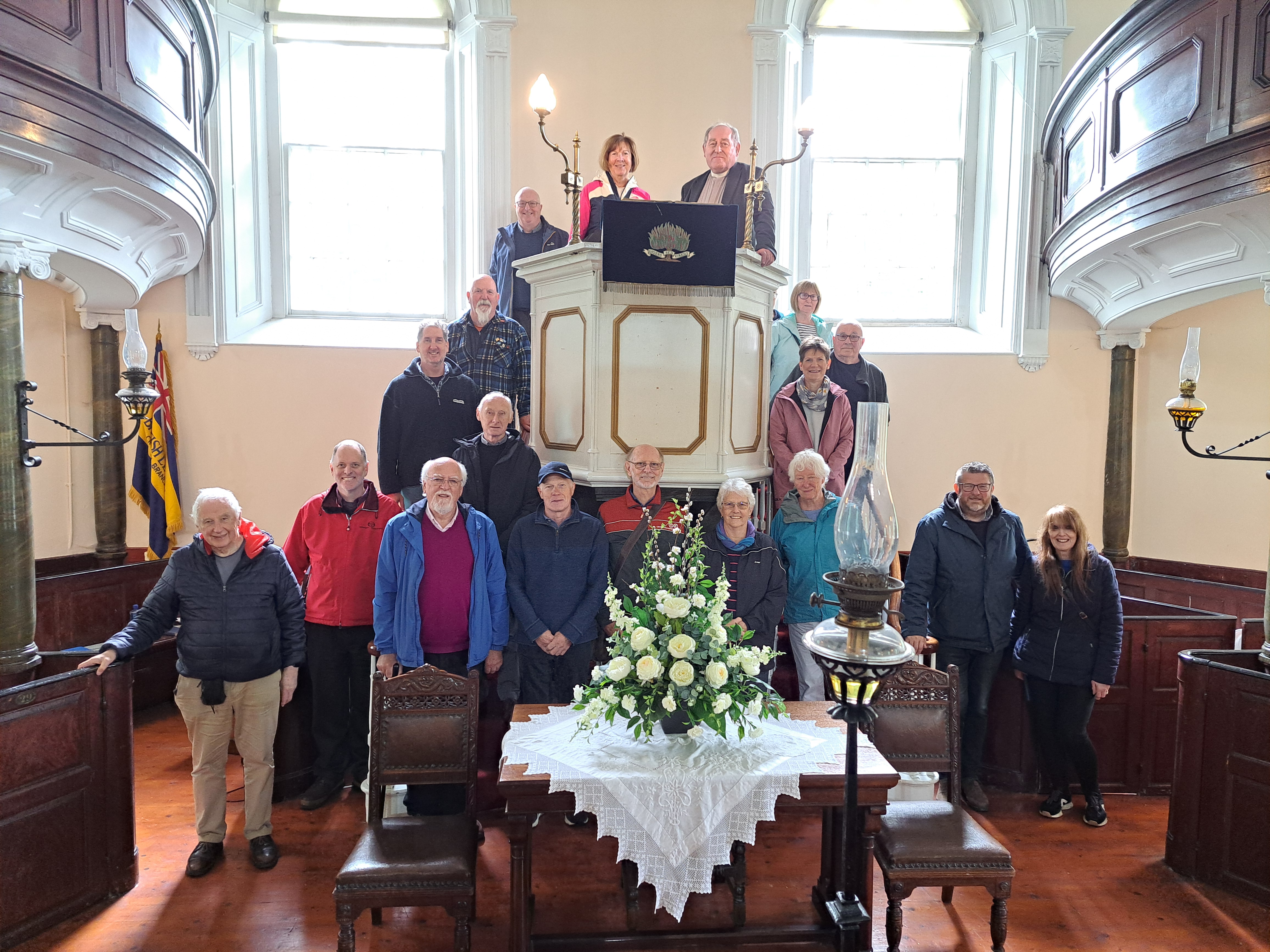
On 5th June 2025 a party of about 20 of us set off on a journey to visit four Non-Subscribing Presbyterian churches in county Antrim plus an historic graveyard (including the ruins of a very historic church) and met a Non-Subscribing Presbyterian peacock along the way. We had as our expert guide the Rev Dr John Nelson whose extensive knowledge kept us informed and entertained all day.
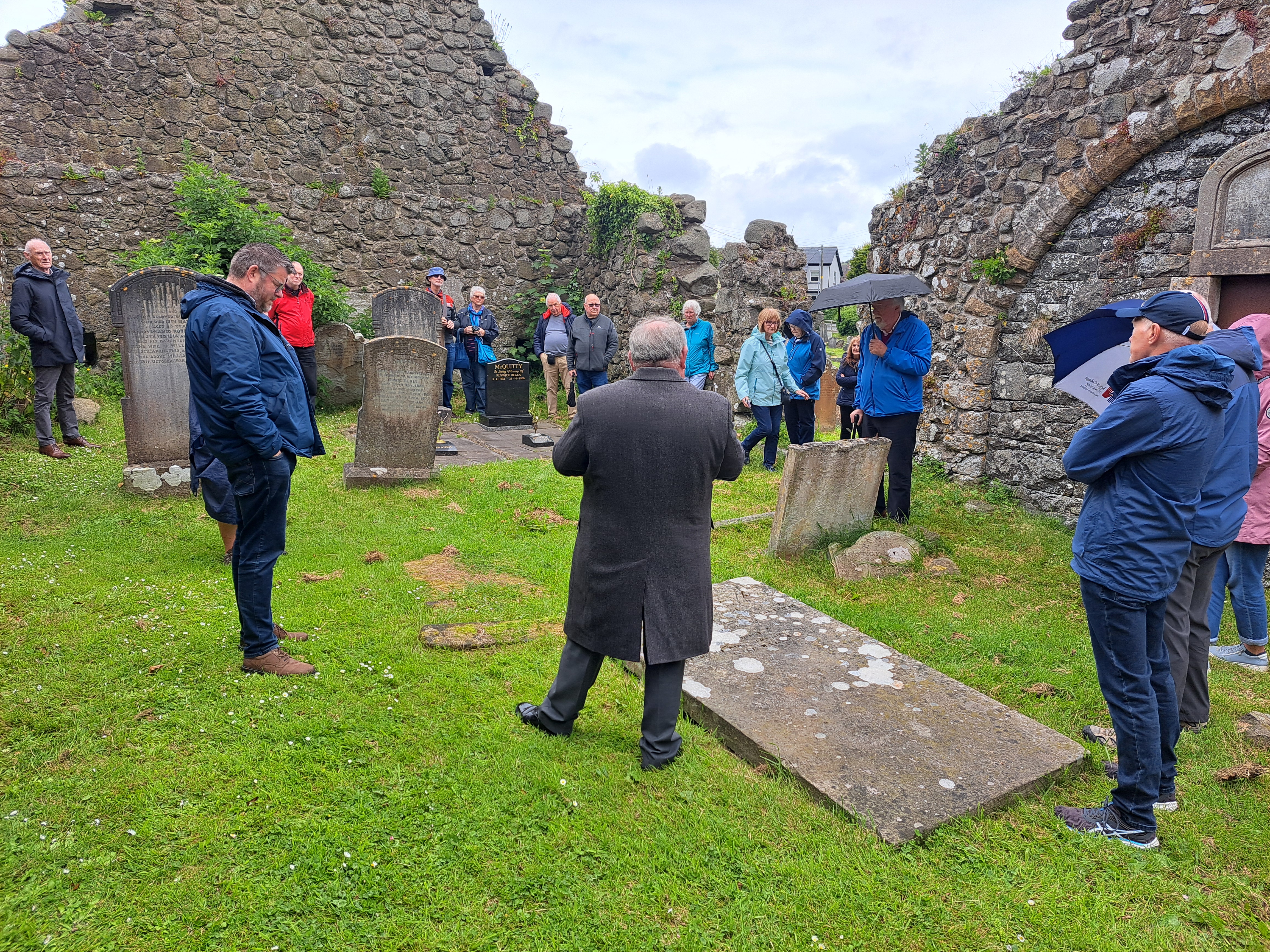
We left Dunmurry and headed for Ballycarry where we visited first Templecorran graveyard.
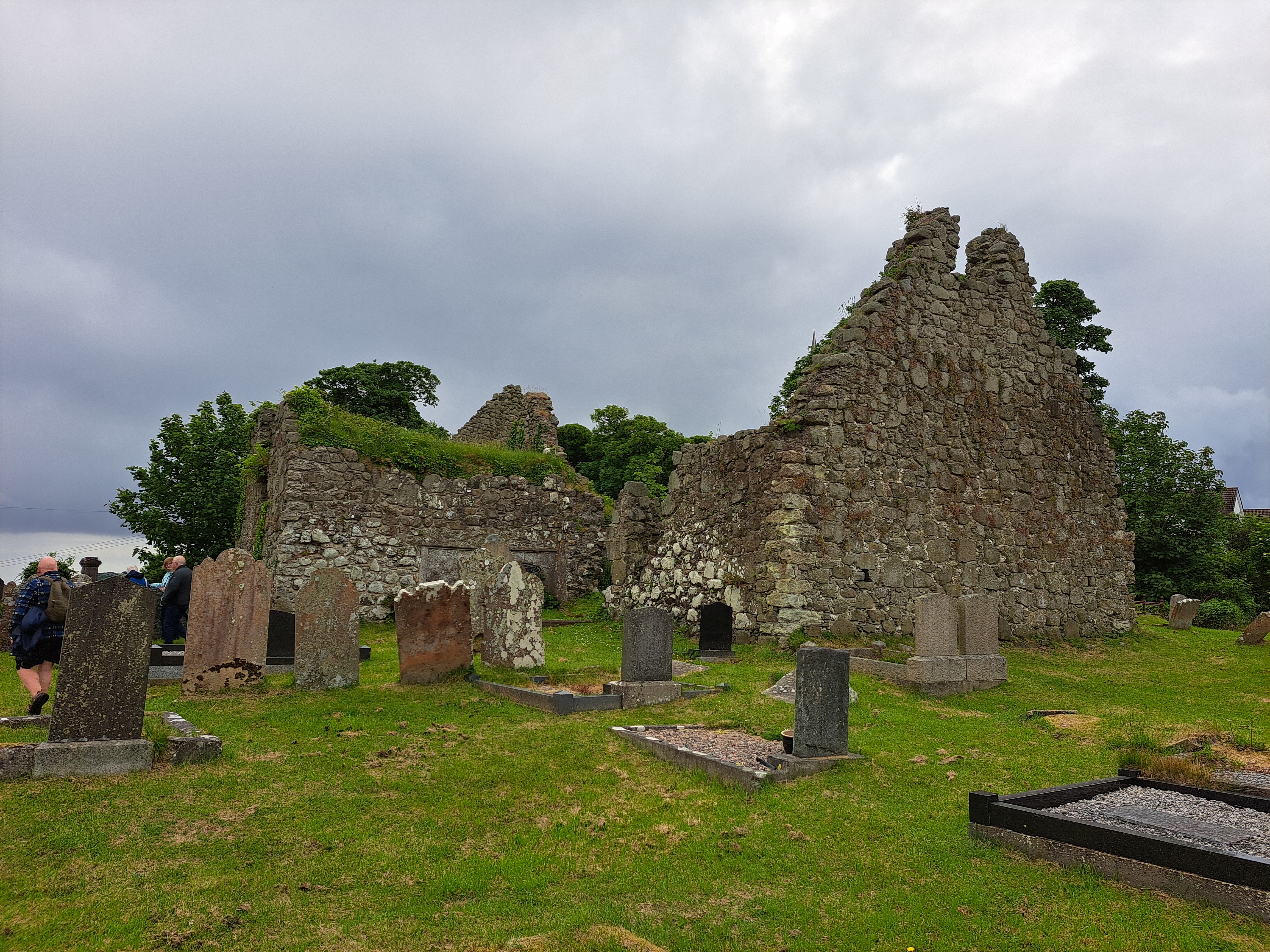
The ruins of Templecorran church
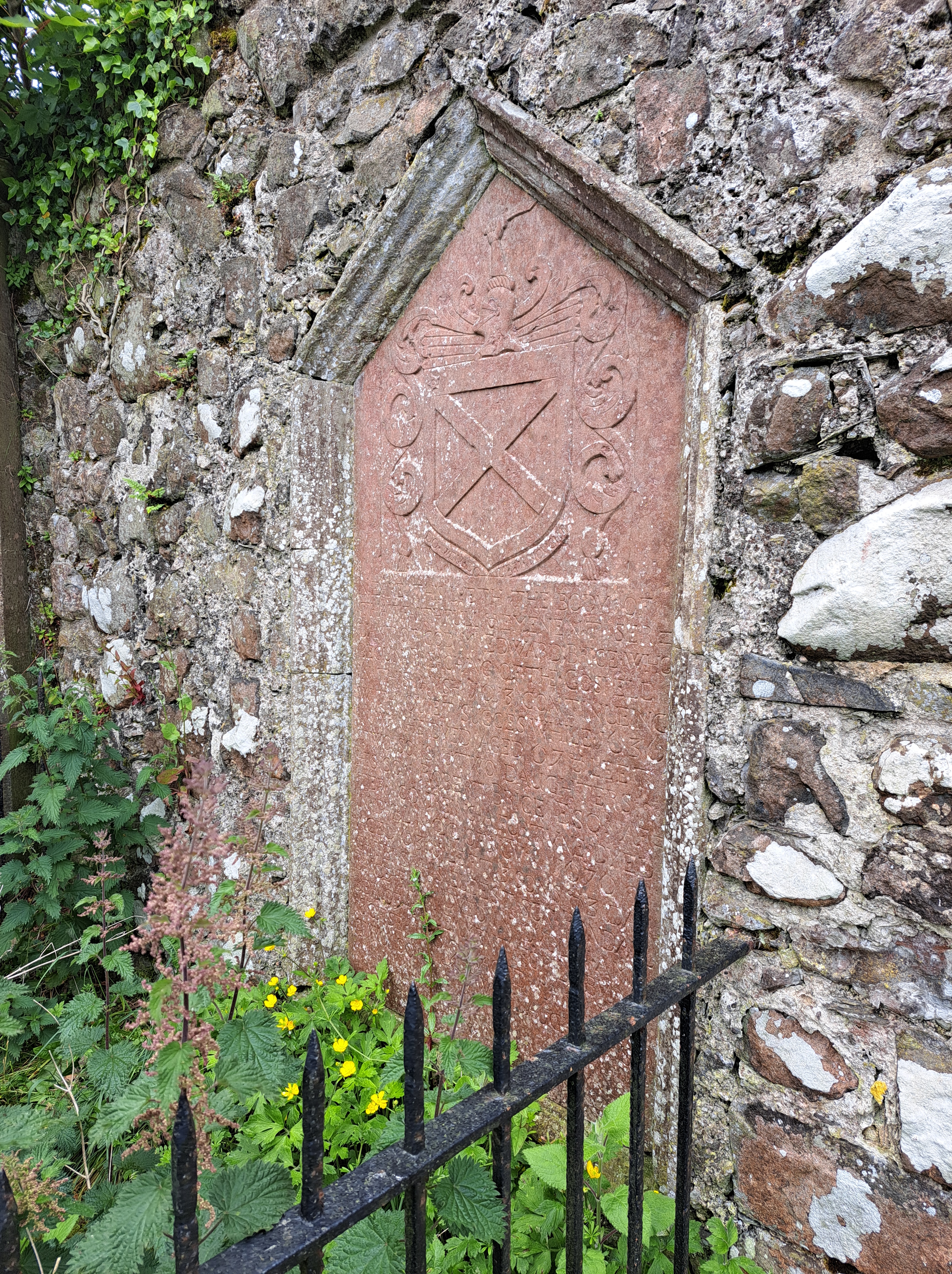
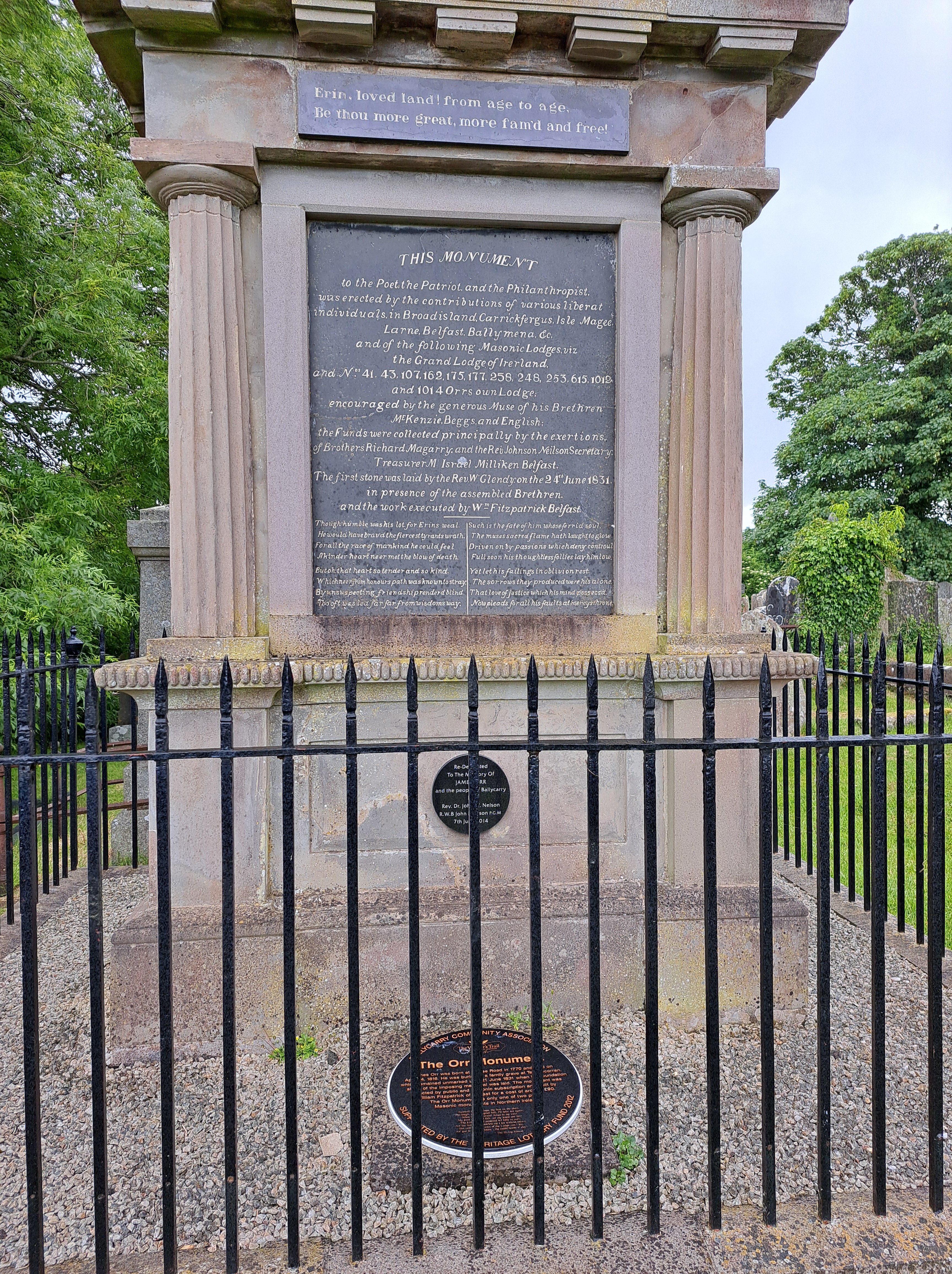
The original parish church used by Edward Brice, the first Presbyterian minister in Ireland in 1613, is now in ruins but it contains many interesting items, including Edward Brice’s grave, the grave of the Rev John Bankhead and a memorial to James Orr, the Bard of Ballycarry.
Grave of Edward Brice
James Orr memorial
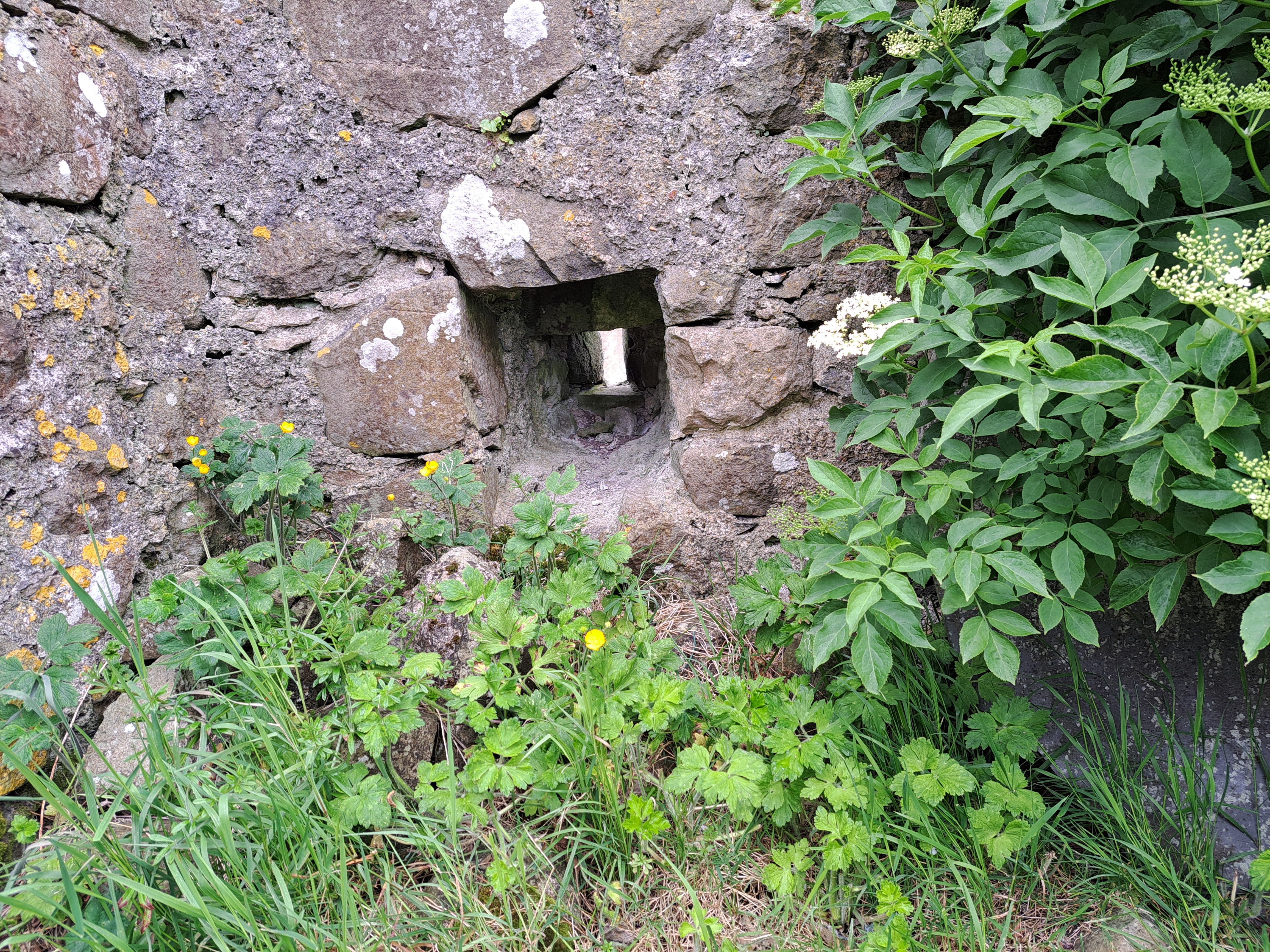
The church was renovated in 1622, during the ministry of Edward Brice, and being built in dangerous times was constructed to be defendable; musket loopholes can still be seen which would have covered all angles of the church should it ever have come under attack.
One of the musket loopholes
The church at Templecorran was slated (unlike the first Ballycarry meeting house which was thatched) and was occupied by Edward Brice and his congregation until he was ejected in 1637.
Inside Templecorran church
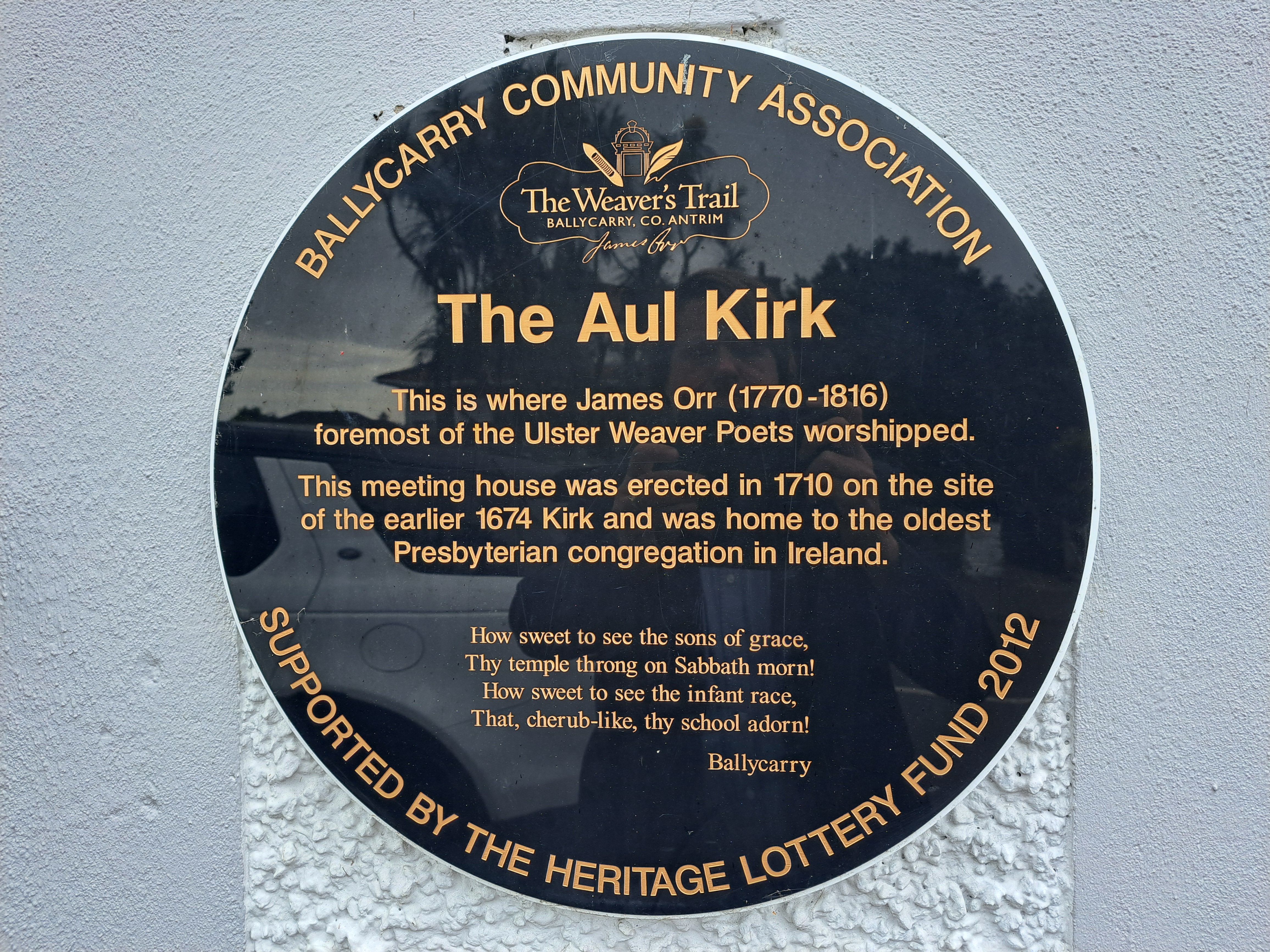
From the old church it is a short walk to Ballycarry where Dr Nelson told us the story of the meeting house, itself dating from the early 18th century.
Ballycarry plaque
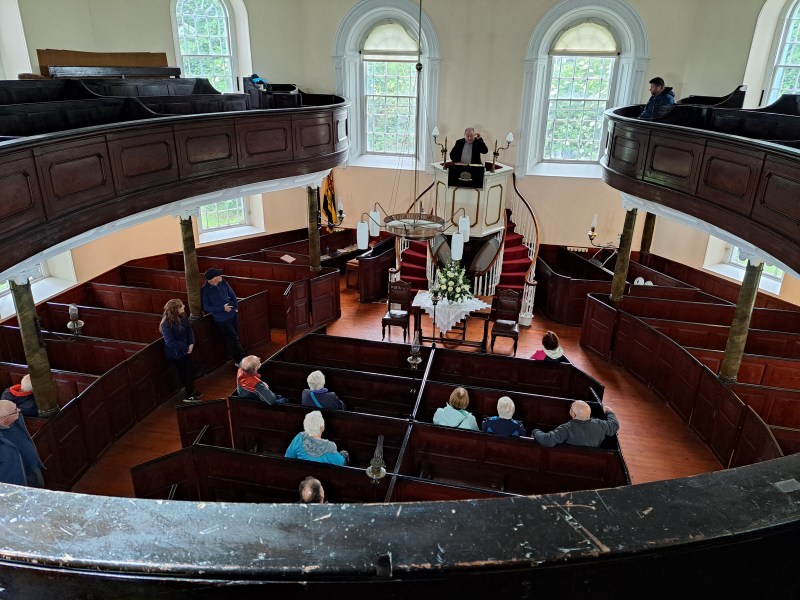
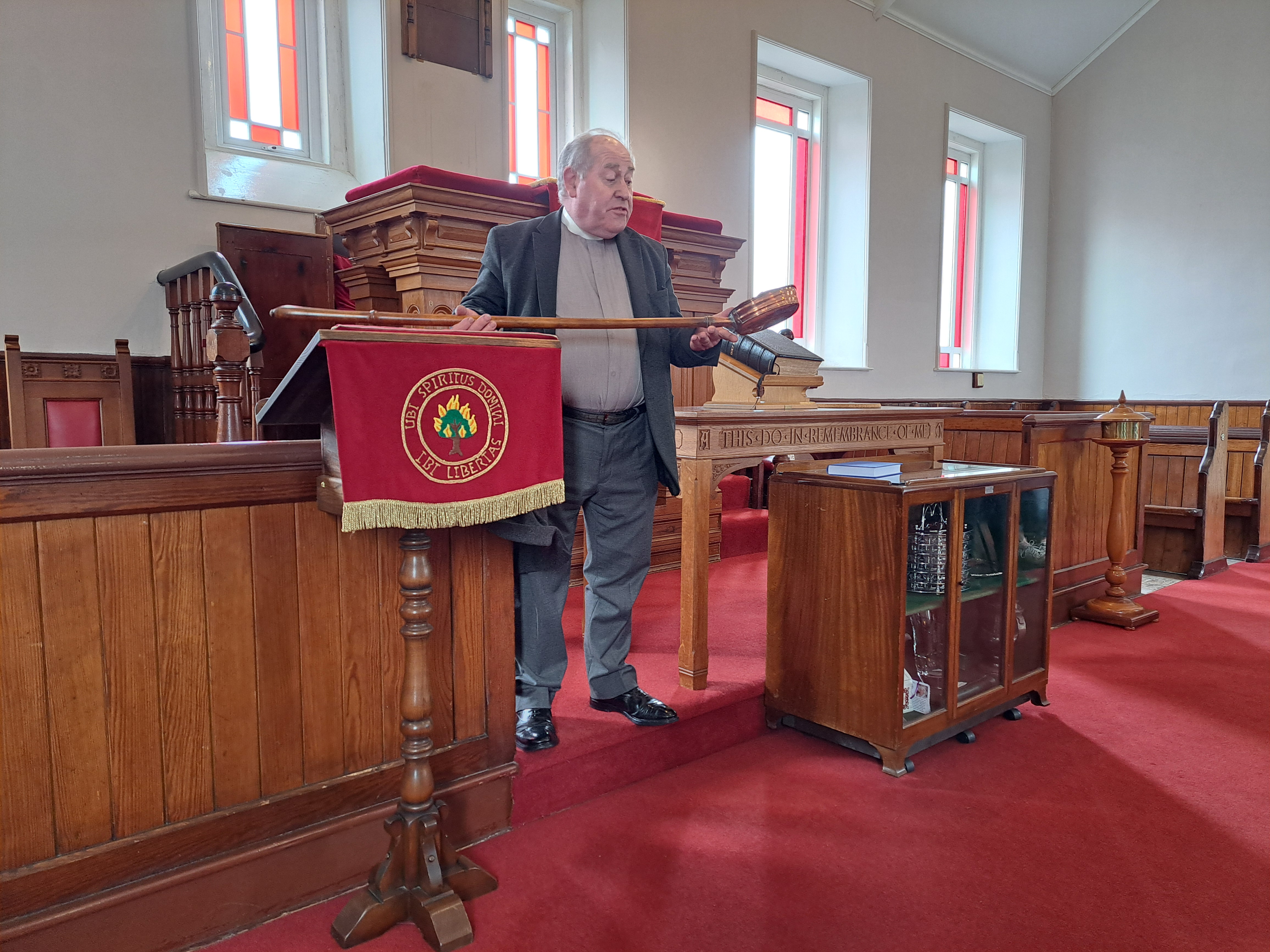
Inside Ballycarry meeting house
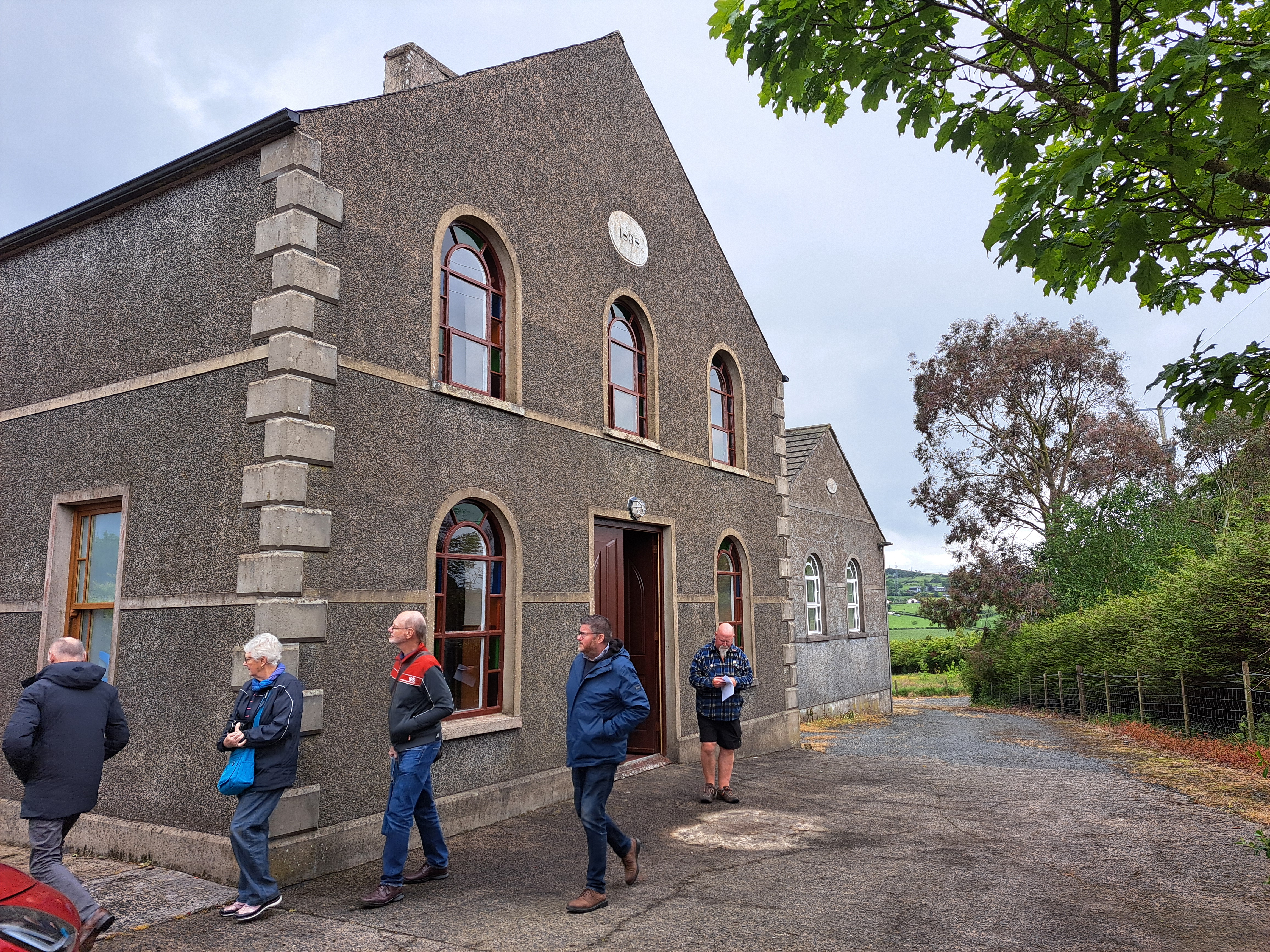
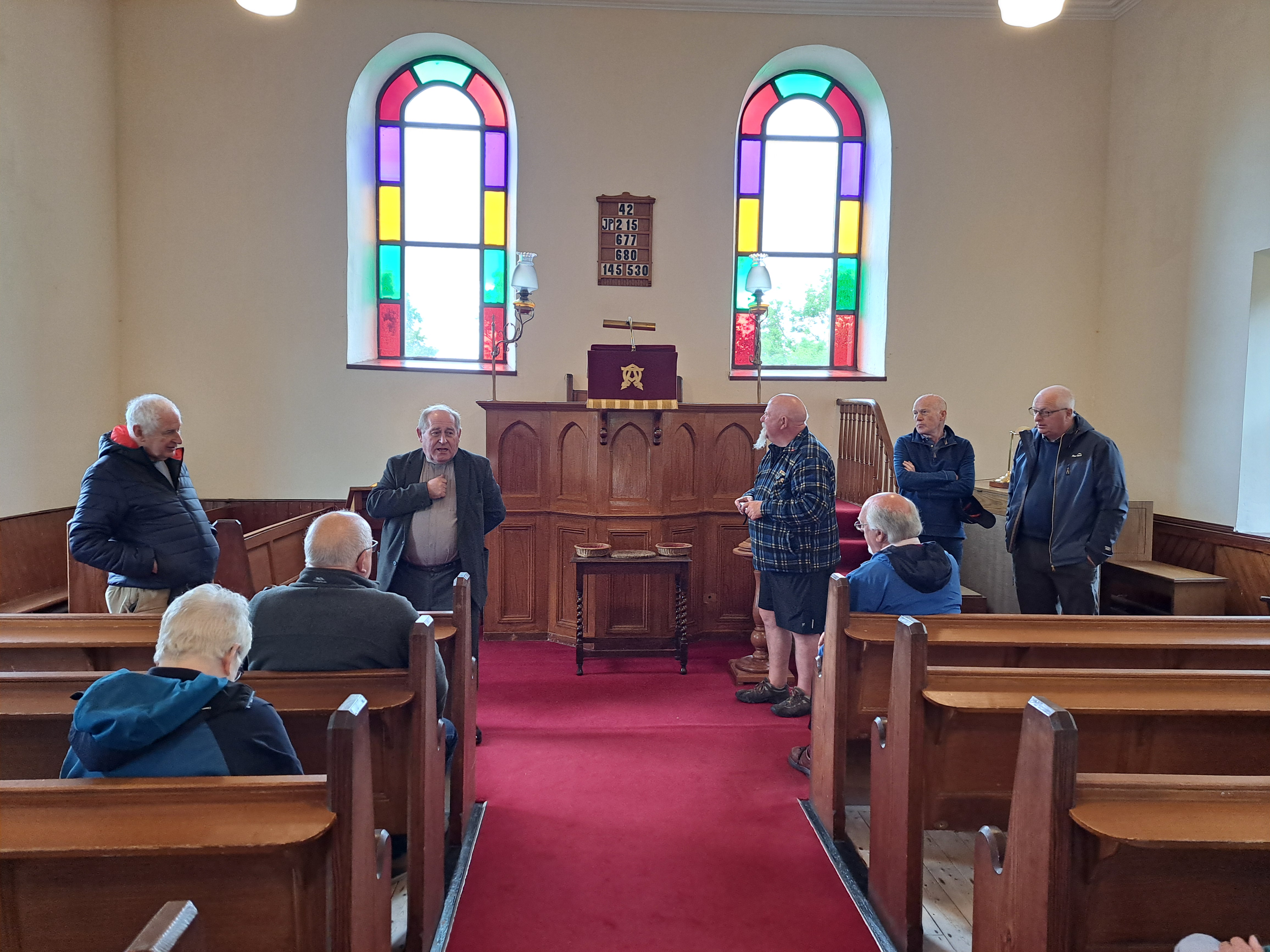
It’s not far from Ballycarry to Raloo but some of us still managed to get lost! But we got there in the end to enjoy the Remonstrant meeting house of 1838 and adjoining modern church hall.
Raloo
Raloo interior
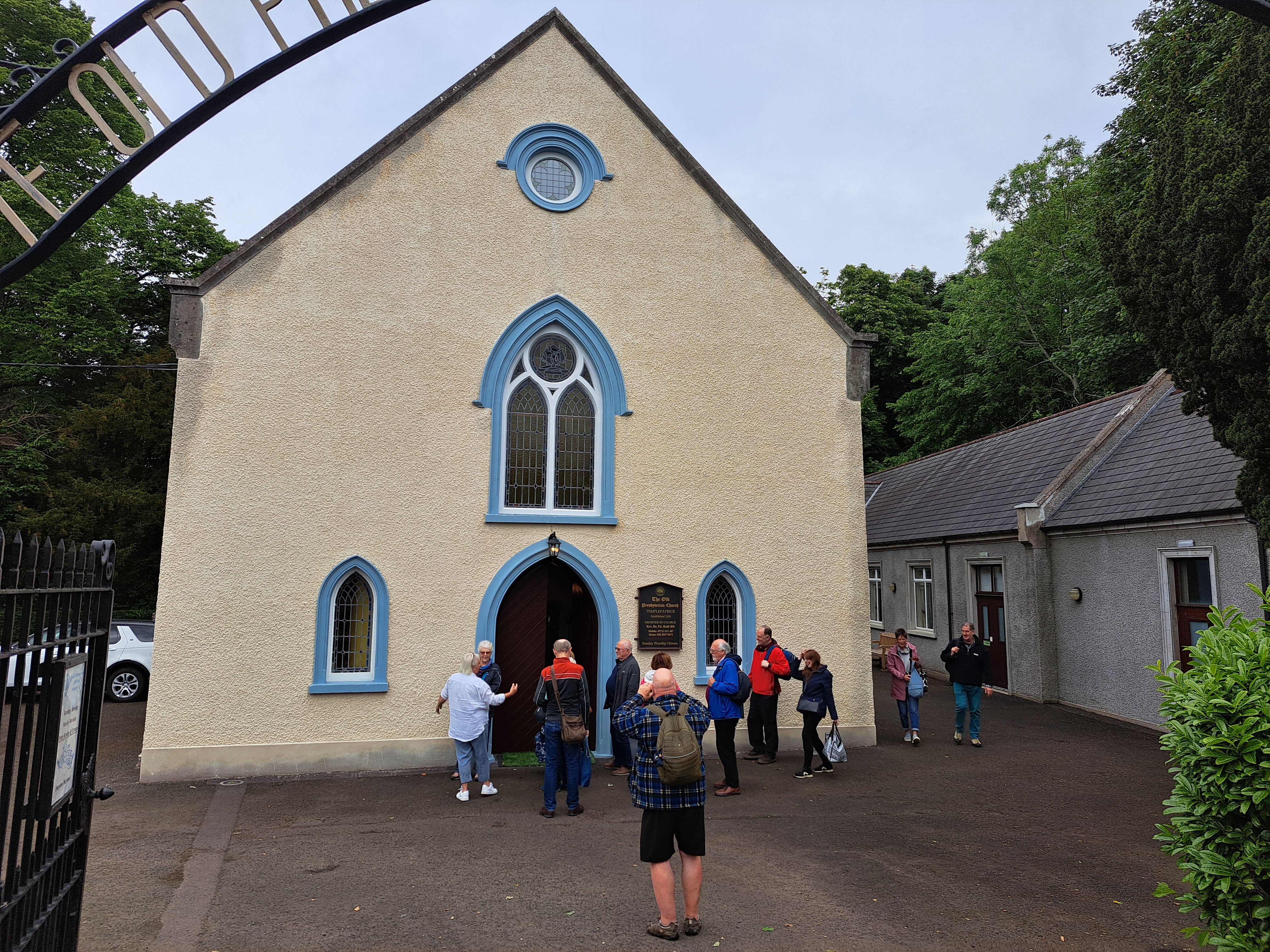
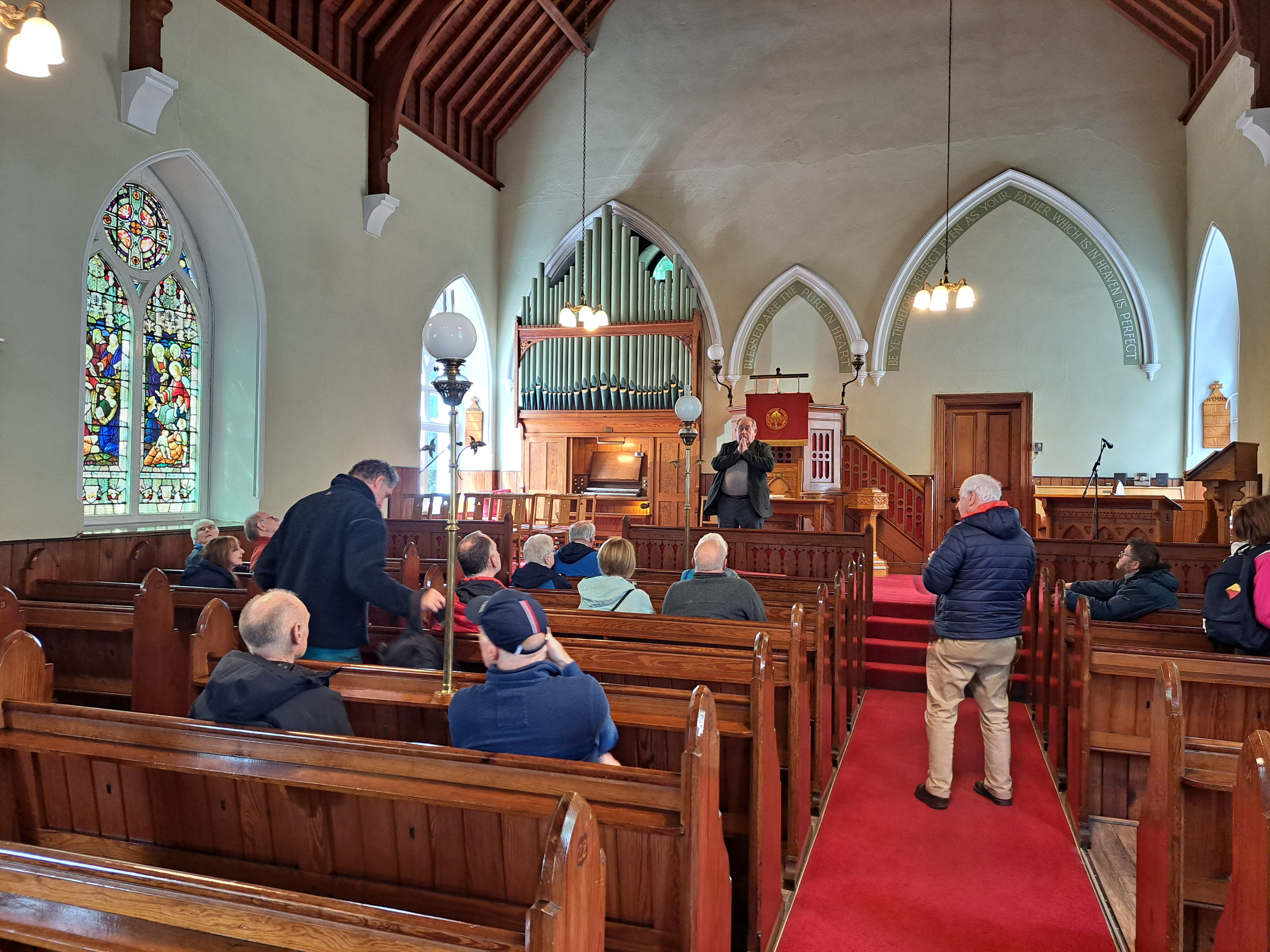
From Raloo we went to Templepatrick where we were able to enjoy our lunch thanks to the kindness of the congregation. Templepatrick is an attractive church which has often faced upheaval. In 1798 the brass canon used by the United Irishmen at the battle of Antrim were stored under the pews. One of these was dragged to the battle on a carriage which was fired once and blew the carriage to pieces.
Templepatrick
Later when the congregation became Remonstrant the landlord Lord Templeton evicted the minister from the manse farm.
Templepatrick interior
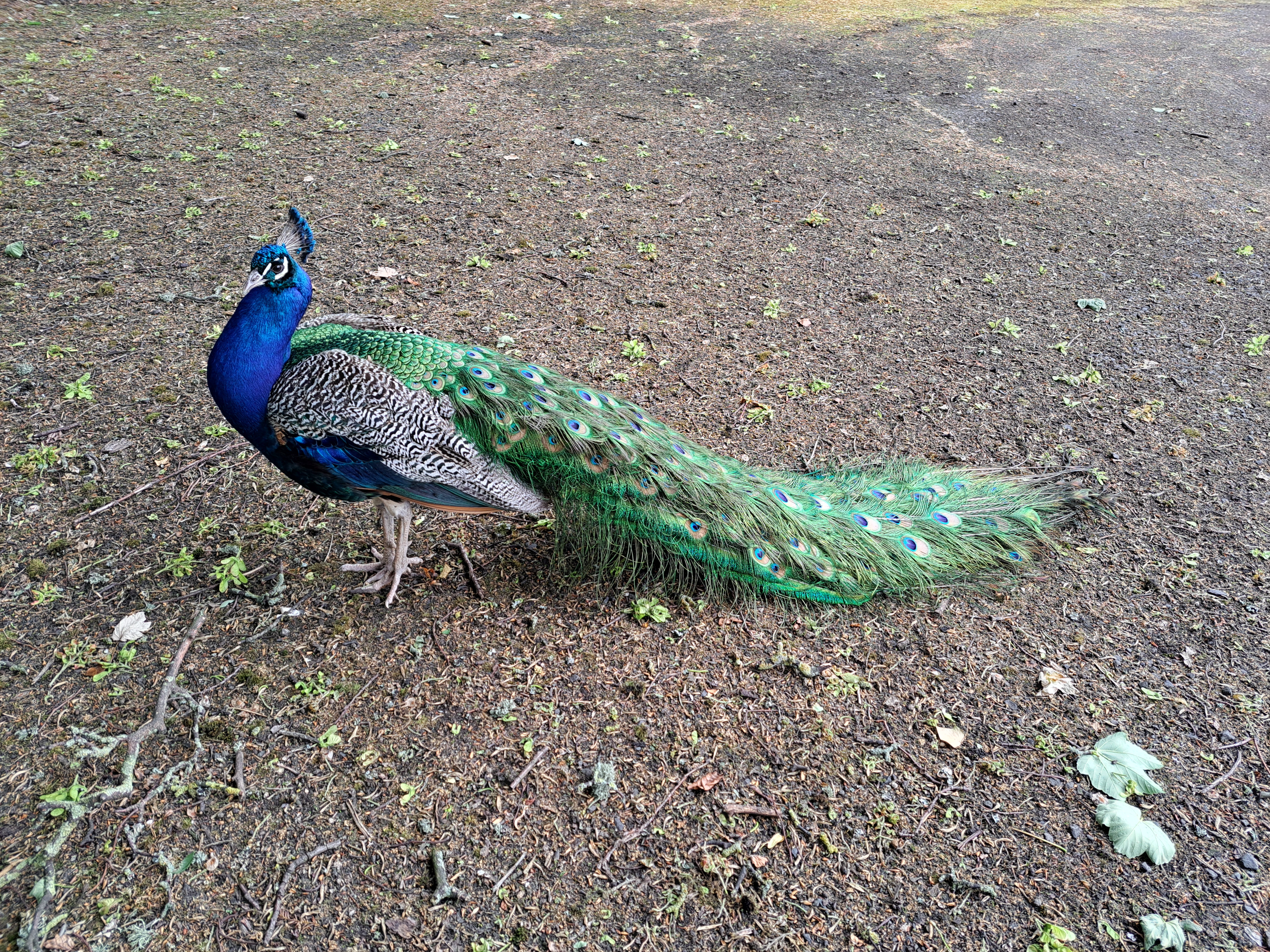
While we were in Templepatrick a peacock was spending some time in the car park:
Finally we went off to Crumlin, a congregation founded in 1715, which built a new church in 1835 which was a miniature version of First Church, Belfast.
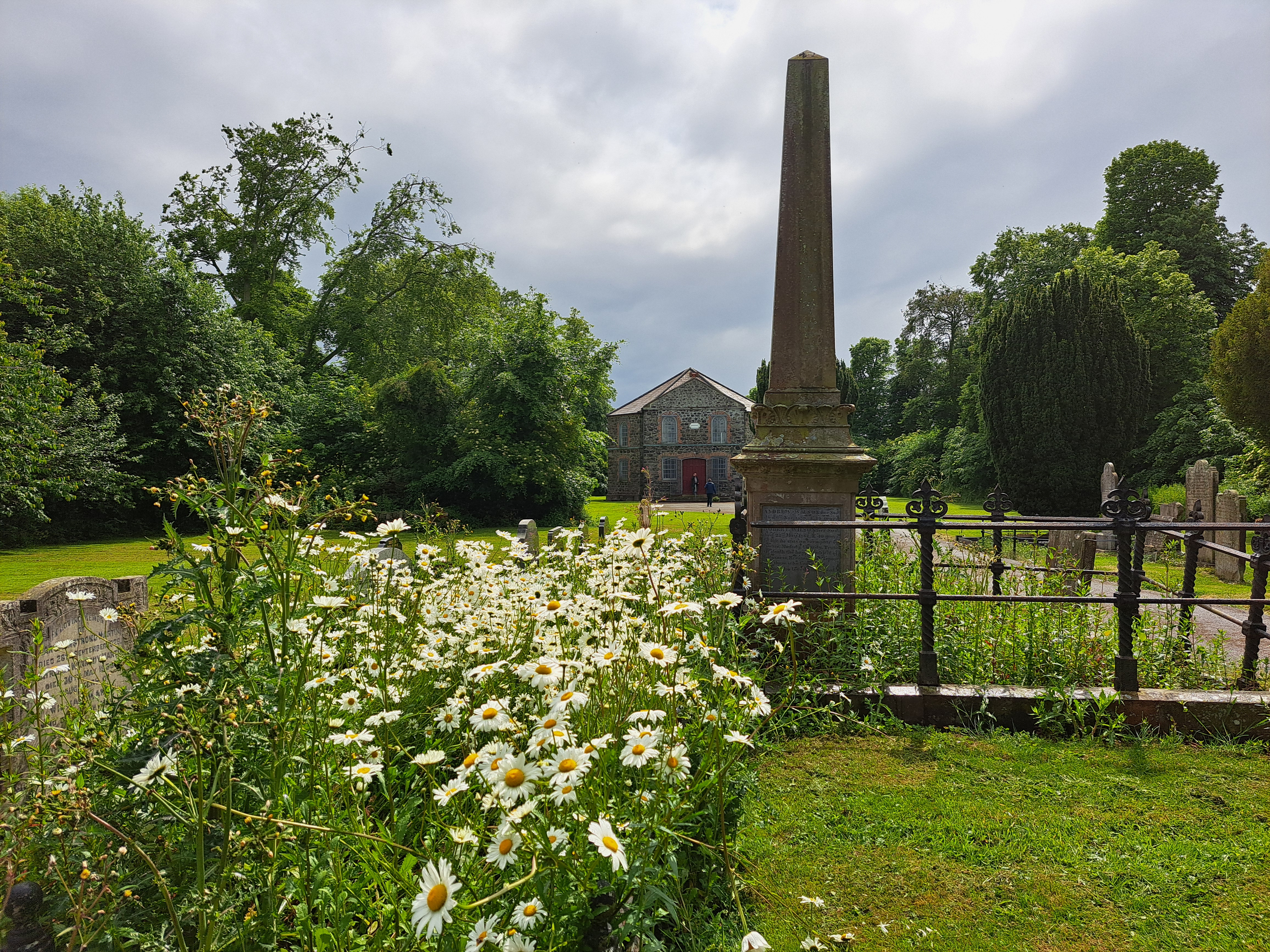
Looking through some wild flowers towards the church
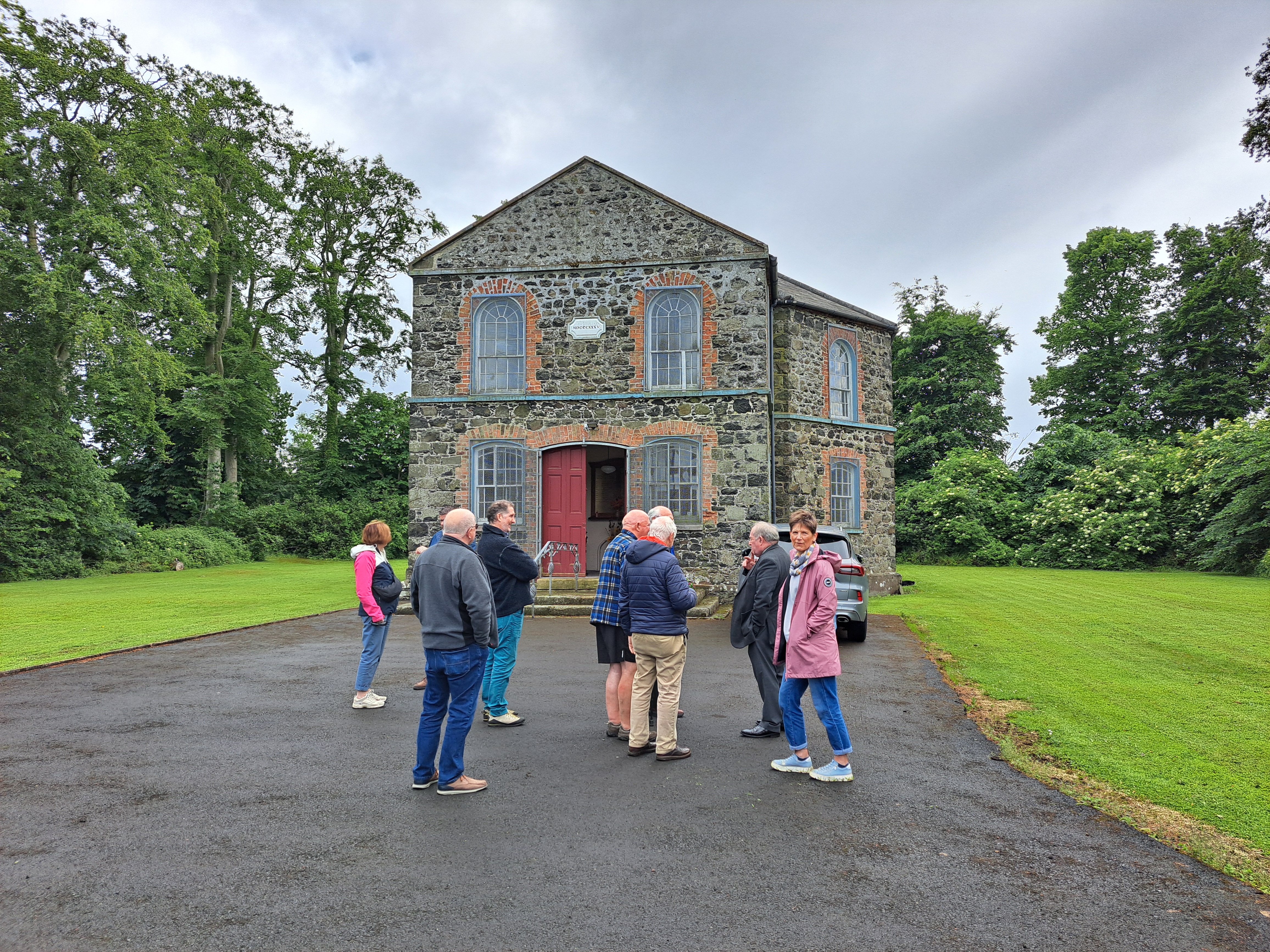
Outside Crumlin
It is such an elegant building that deserves to be better known.
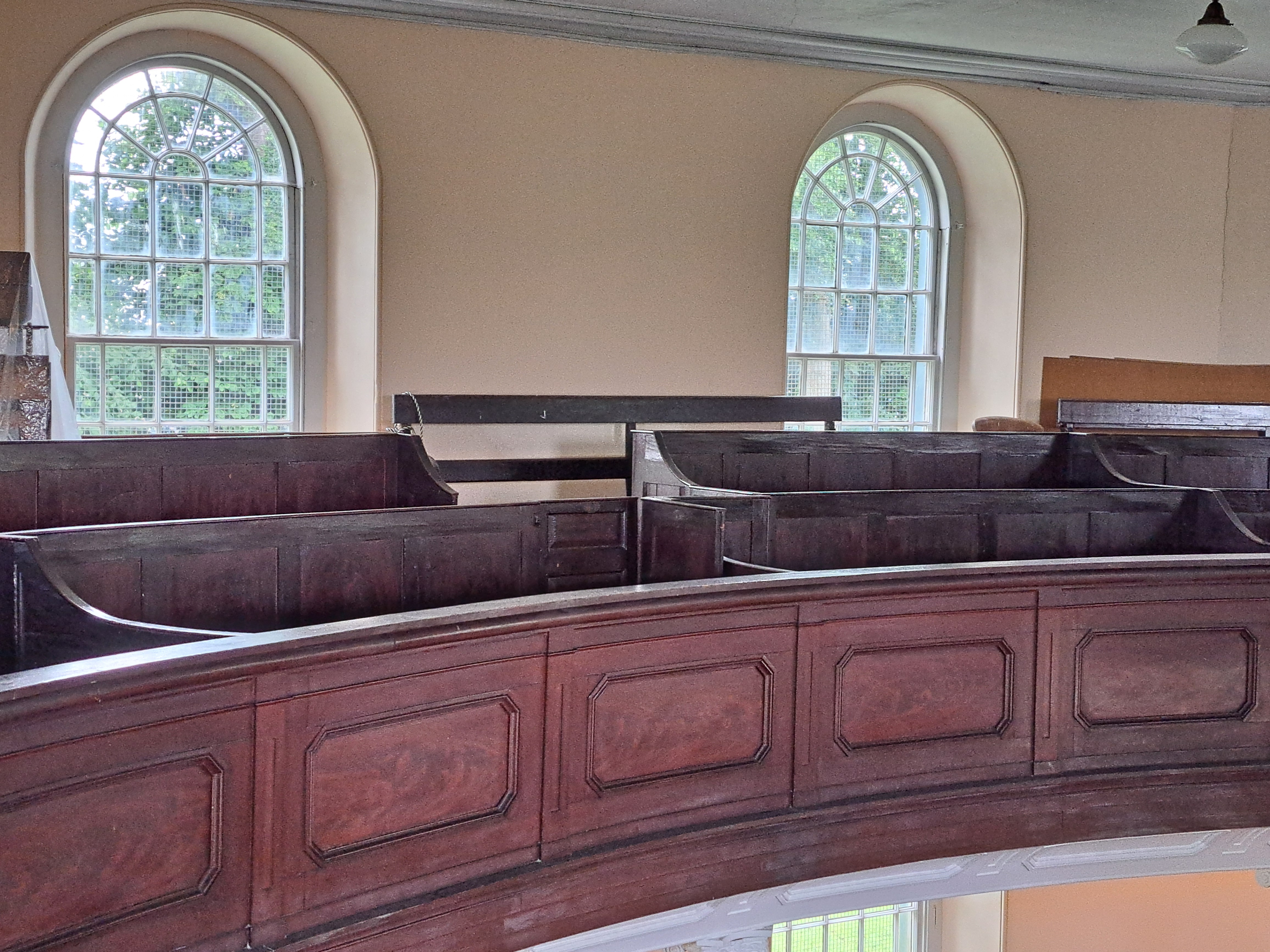
The church was particularly associated with the Rev Nathaniel Alexander who was 6 feet three inches tall. The pulpit consequently has a trap door that was open when he preached so he could stand at a slightly lower lever.
It was a great day out, many thanks go to Rev Dr John Nelson.
A recent post looked at the two wonderful Rowel Friers cartoons which hang on the wall of the Library in Dunmurry, as well as the video which explains the story about them. As the post explains these pictures were commissioned by the Rev William McMillan for his impressive Exhibition illustrating the history of the Presbytery of Antrim held in January 1976.
It must have been an attractive display in the McCleery Hall, the Rev Mac sourced portraits, books, communion plate, swords and pikes from the ’98 Rebellion, sculptures by Rosamond Praegar, commmunion tokens, copper collecting pans and all sorts of material from all over Northern Ireland. There was even a mould for making eighteenth-century communion tokens from Ballycarry and – something I had not previously heard of – an eighteenth-century family token box, described as ‘a wooden box holding a small leadbox in which the token was taken to the meeting house.’
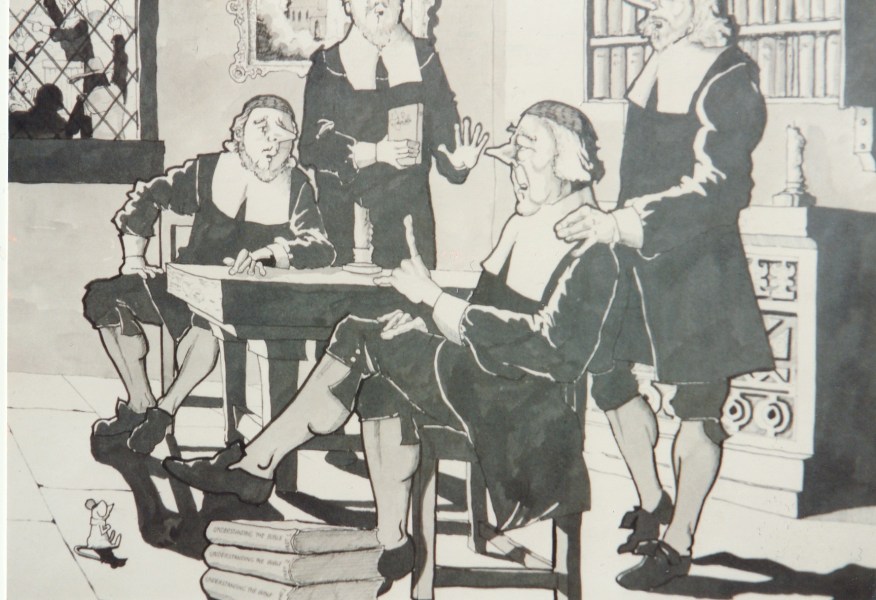
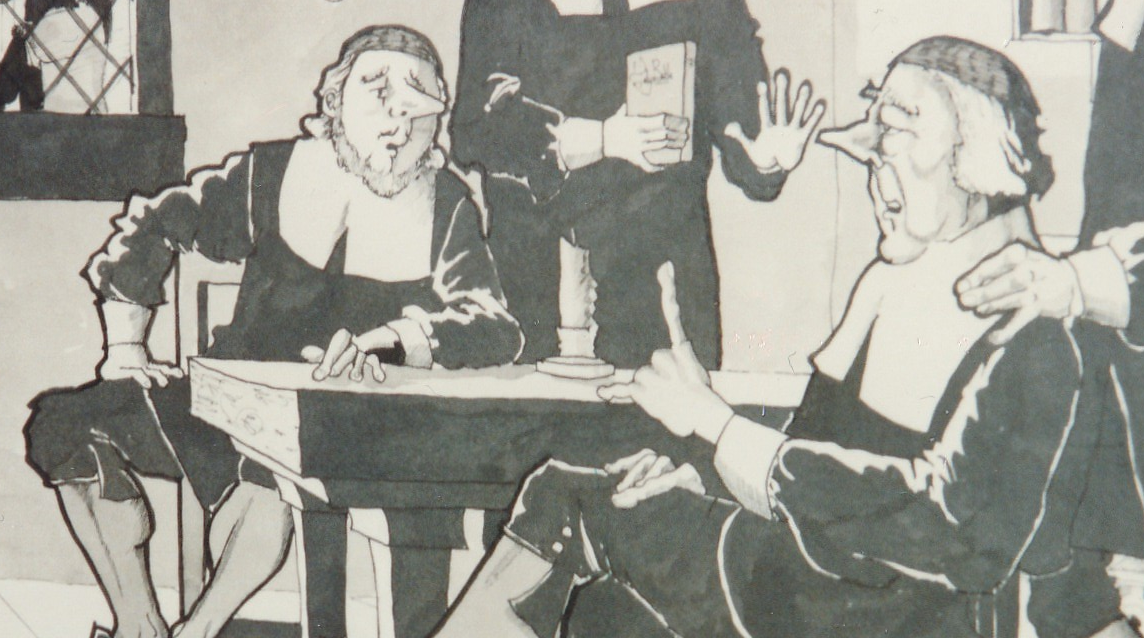
One feature of the Exhibition for the 250th anniversary of the Presbytery of Antrim is that there were in fact three, not two, Rowel Friers cartoons included. Unfortunately one of these has been missing for fifty years. However, we have now discovered a photograph of the lost picture and this features in our latest video:
Click on the video to see the video about the 1626 Antrim Meeting
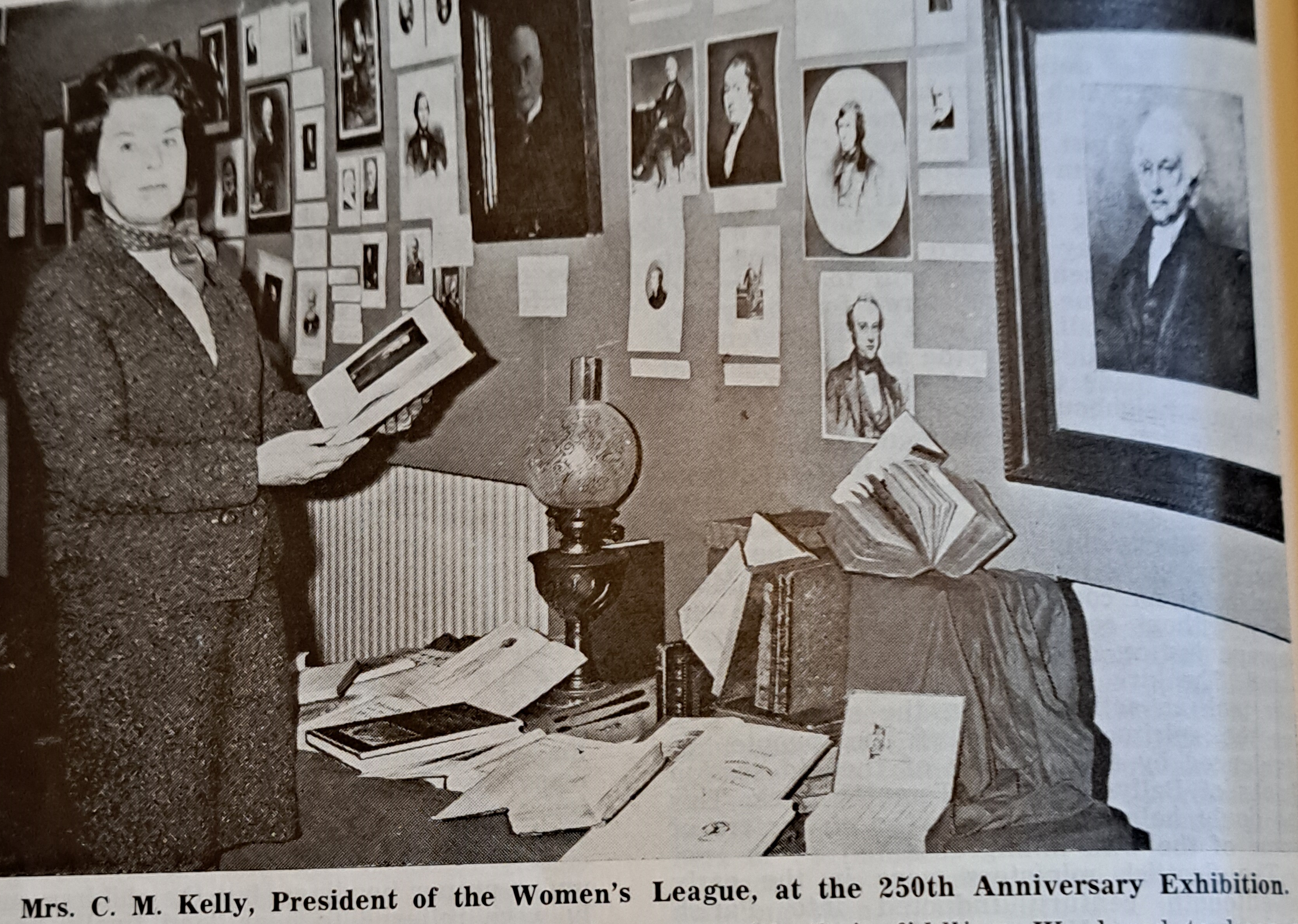
The Exhibition was held in January 1976 and covered both the creation of the Presbytery of Antrim in 1725 and its separation from the Synod of Ulster. It was also intended to cover the anniversary of the creation in 1626 of the original Antrim Meeting. The Exhibition must have been fascinating but unfortunately in that pre-digital age there were very few photographs taken. There is only one that shows the Exhibition in the Non-Subscribing Presbyterian magazine at the time:
Betty Kelly at the Exhibition in the McCleery Hall in 1976
There were a large number of dignitaries invited to the dinner that followed the Exhibition, representatives of all denominations, figures in public life, historians and international figures. Many of the speeches are recorded in the Non-Subscribing Presbyterian magazine and the Rev John Radcliffe, clerk of the Synod, made reference to the third Rowel Friers cartoon:
‘There are two extreme forms of the expression of religious sentiment. There is one that is very well expressed in the person here described: “His mind and voice had precisely the fluid quality of some clear, subtle liquid: one felt it could flow around anything and overcome nothing.” That is the extreme of presenting the Christian faith in such delightfully attractive style, with such a fluency of language, with such a vividness of imagery, that it will flow around anything and overcome nothing. At the other extreme there is another sort of Christianity, corybantic Christianity. There is a cartoon on the wall there, a drawing of four rather austere clerics, and the date is 1626. Outside you see somebody rousing a rabble – not unheard of in these days. The four rather serious looking clerics are trying to bring a bit of reason into it all; and the man outside is an exponent of corybantic Christianity, the Christianity that is the direct oppposite of that I have been describing tonight – and appeals all the time to the emotions in which people get carried away, and leads in the end to a very dangerous, in fact terrible, fanaticism – the very negation of the Christian spirit.’
Detail from the photograph
It is a fascinating footnote to our previous post and video about our Rowel Friers cartoons, another part of the story that takes us back even further in time, in this case to 1626.
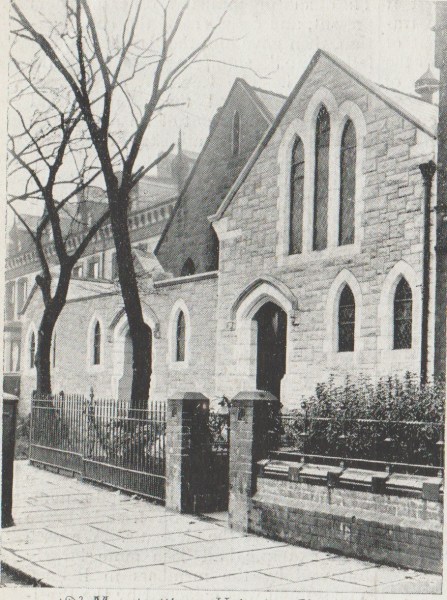
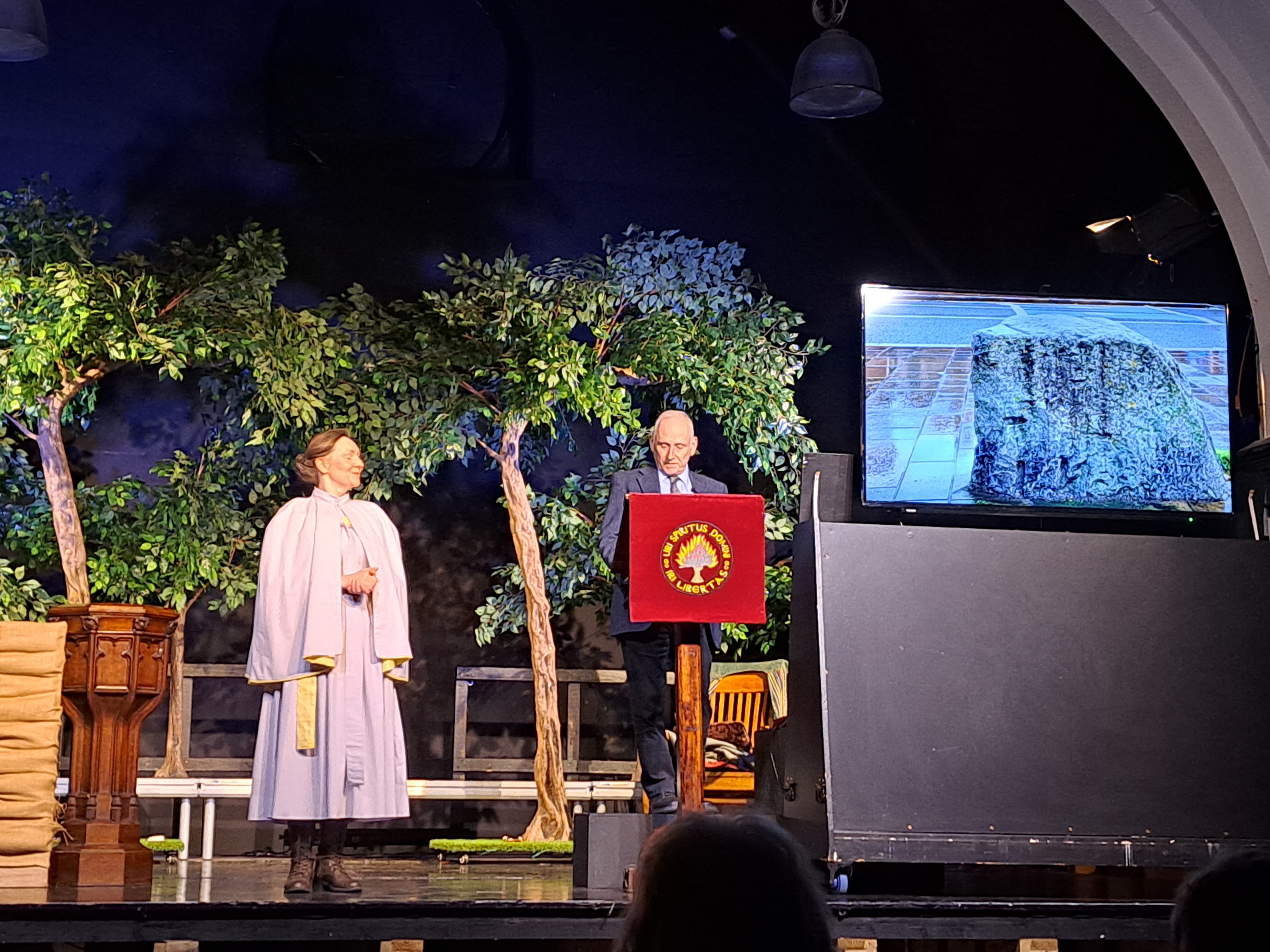
I’ve blogged before about Mountpottinger – most notably here and here where more details about its history can be seen – it is an interesting building on a prominent site in that part of Belfast and the congregation has a very distinctive history. Today the building is leased to the Bright Umbrella Drama Company who are turning the old school hall into the Studio Theatre and the church itself into the Sanctuary Theatre. But the congregation still has a place on the premises and the exact date of the anniversary of the opening of the building – 3rd January 2025 – was the occasion for this remarkable celebration of the 150 years of Mountpottinger.
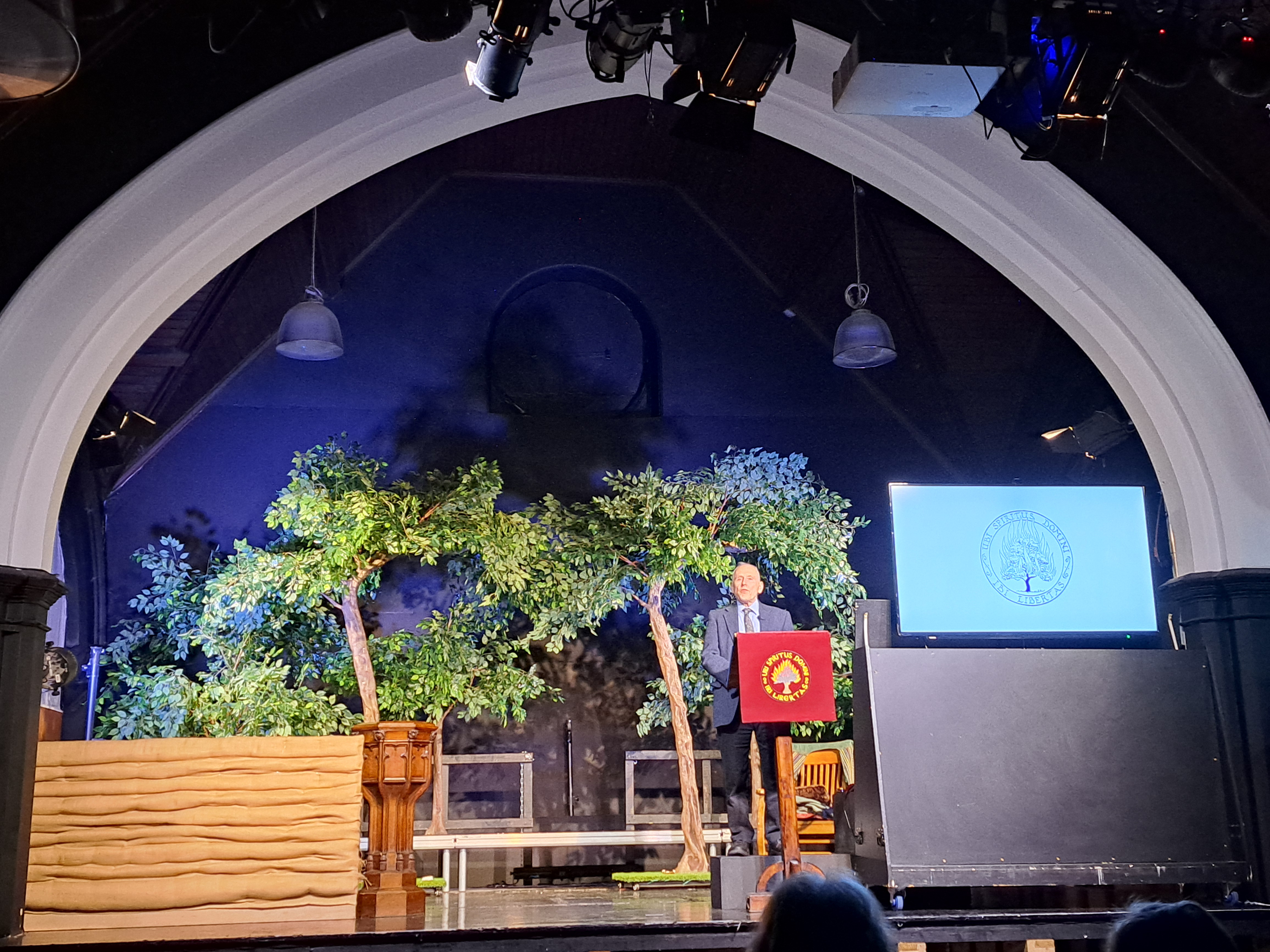
Adrian Moir introduces the evening
A lot of credit must go to Adrian Moir, the church secretary and former ‘Warden of the Fabrique’, as the Very Rev Charlie Kelly once termed him, who wrote and narrated this excellent celebration of the life of the congregation. It was a very positive collaboration between the church and the Drama Company which brought the history of the church to life covering three themes:
Foundation and Hope
Tragedy and Remembrance
Adapting to the times and a glimpse of the future
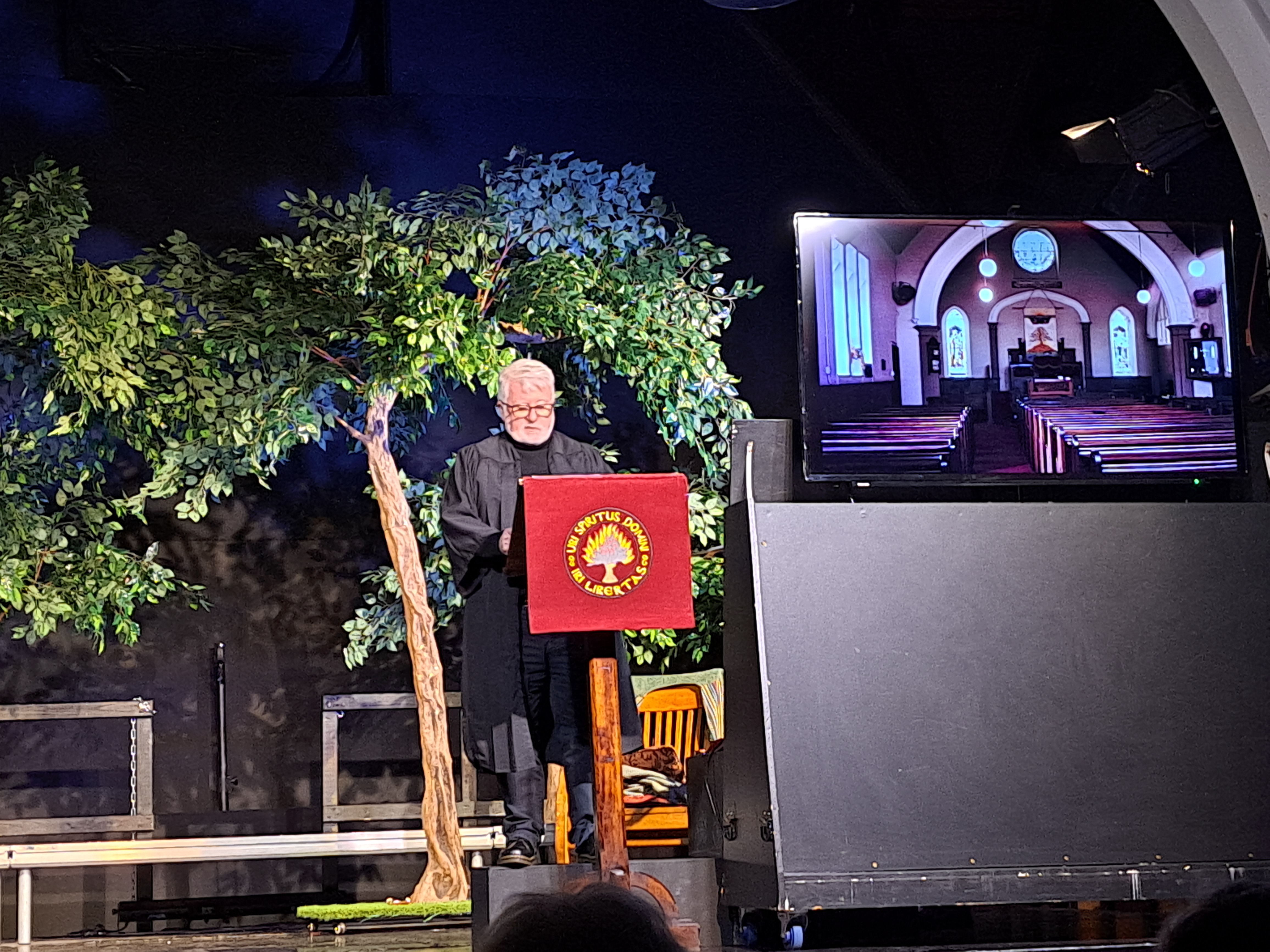
Trevor Gill delivers the Rev David Maginnis’s speech at the opening of the building in 1875. David Maginnis was a controversial but effective minister at York Street who came back to Belfast from Stourbridge to participate in the opening ceremony
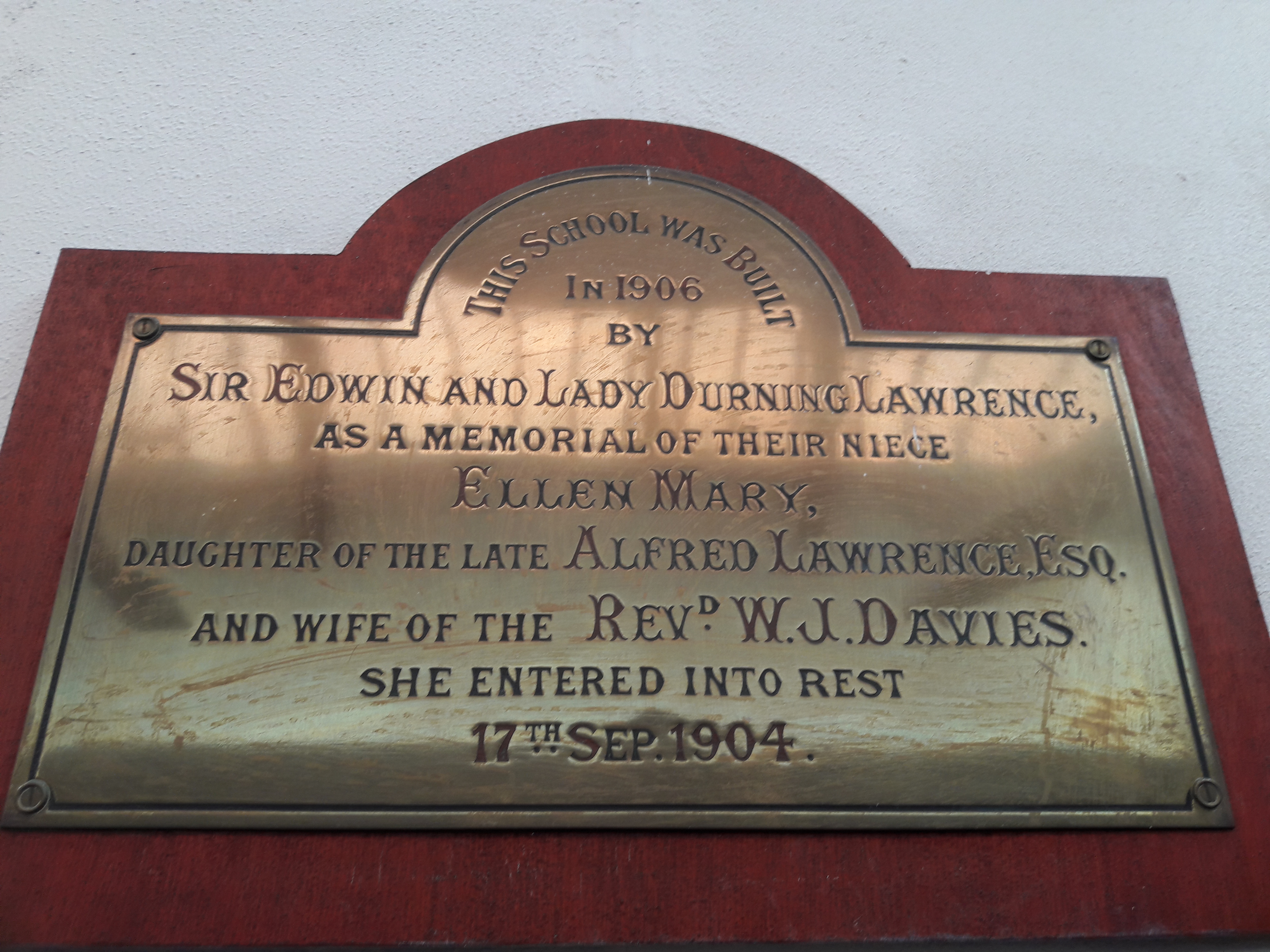
The evening was interesting, engaging and witty and also very moving as it looked at the story of Ellen Mary Davies, the wife of the Rev William Jenkin Davies, who died tragically young and in whose memory the school room was built.
Memorial in the School Room
Lindsay Charrington playing the role of Ellen Mary Davies
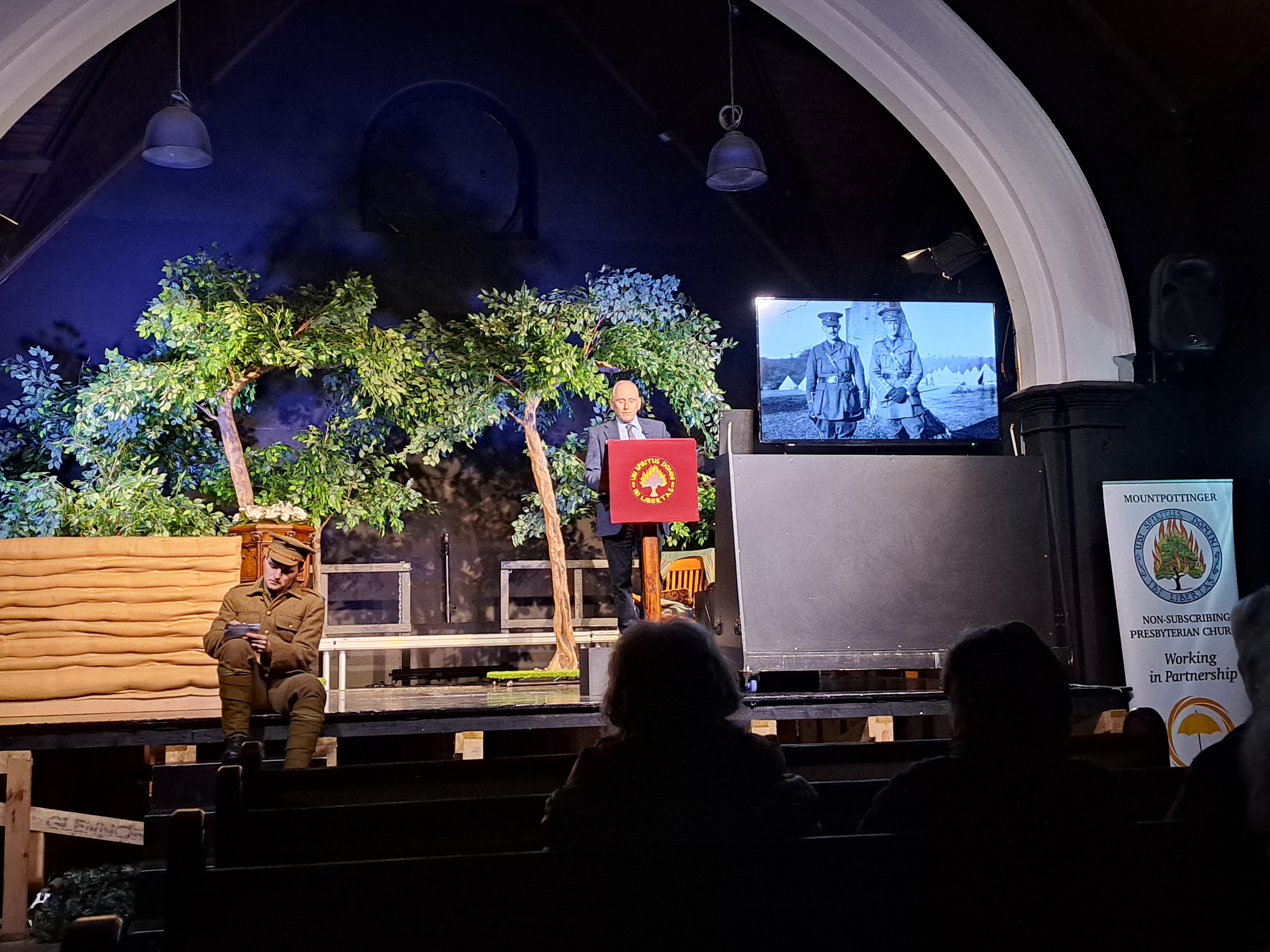
There was further tragedy with the loss of members of the church in the First World War, including Captain James Samuel Davidson in 1916, on the first day of the battle of the Somme. Also remembered on the evening was church member Sydney Agnew who was killed during the ‘Troubles’ in 1971 to prevent him giving evidence at a trial. It was both fitting and touching that members of Sydney’s family were there to lay a wreath in his memory.
Glenn McGivern writing home from the front as Captain J.S. Davidson
But the whole evening was very impressive, a fitting tribute to 150 years of work and witness which now has the opportunity to be part of a brave new venture as a community hub working in the arts and in drama in the Mountpottinger area.
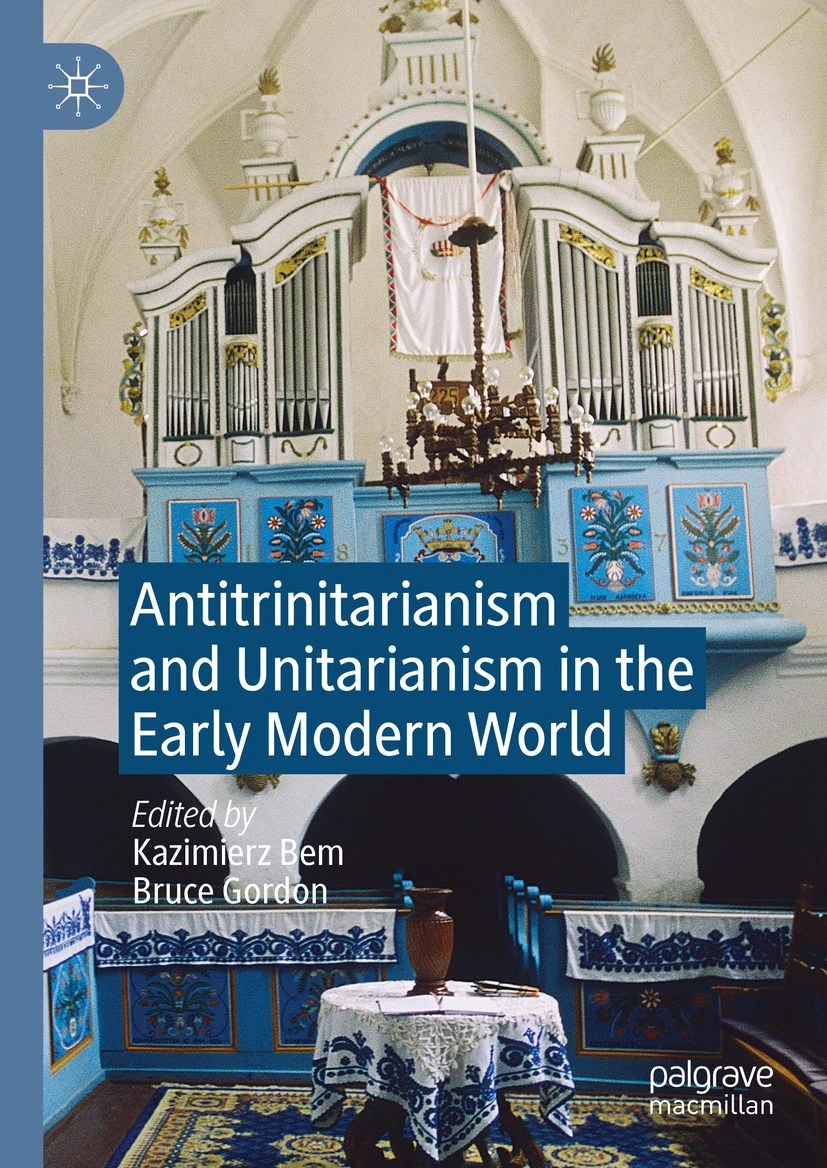
I was very pleased to be asked to contribute to this book which has just been published by Palgrave Macmillan:
Antitrinitarianism and Unitarianism in the Early Modern World
The publishers describe the volume in these terms:
This collection offers an innovative and fresh interpretation of Antitrinitarian and rational dissent in the early modern world. The central themes focus on the fierce debates surrounding Antitrinitarianism and Unitarianism that emerged from the Reformation and the lived cultures of these dissenting movements. The chapters take an interdisciplinary approach addressing ideas in context, their reception and appropriation, and the diverse and often conflicting visions of Christianity. Drawing on previously unused sources, many from Eastern Europe and often in inaccessible languages, this book challenges our understanding of dissent as marginal and eccentric and places it at the center of contesting convictions about the nature of religious reform.
The contents are as follows:
Introduction
The Porous Boundaries of Dissent
Bruce Gordon
Antitrinitarianism and Its Influence in Italy and Poland
Italian Antitrinitarianism and the Legitimacy of Dissent
Odile Panetta
Scripture, Piety, and Christian Community in the Thought of the Polish Brethren
Sarah Mortimer
Religiosity in the Ethos of Polish Brethren in Light of Funeral and Wedding Speeches from the Seventeenth Century
Maria Barłowska
True Heirs of Jan Łaski: Polish Brethren Church Discipline in the Polish-Lithuanian Commonwealth and During Their Exile in Transylvania
Kazimierz Bem
Transylvanian Unitarianism
The Late Confessionalization of the Transylvanian Unitarian Church and the Polish Brethren
Gizella Keserű
Introduction to the Transylvanian Unitarian Disciplina Ecclesiastica
Lehel Molnár
De Disciplina Ecclesiastica: On Ecclesiastical Discipline (1626)
Alexander Batson
The Term, Development, Purpose, and Practice of Church or Canonical Visitation: Unitarians in Háromszék in the Seventeenth Century Between Conventional Rhetoric and Reality
Lehel Molnár
Some Aspects of the Hungarian Unitarian Liturgy in the Sixteenth to Eighteenth Centuries
Sándor Kovács
Engagement and Divorce Cases Before the Unitarian Consistory in Seventeenth-Century Transylvania. Frameworks in Church Law and the Doctrine of Marriage
David Szigeti Molnar
England, Ireland, and New England
The Historical Critique of Heresiology in the Seventeenth Century and the Origins of John Milton’s Arianism
R. Bradley Holden, Samuel J. Loncar
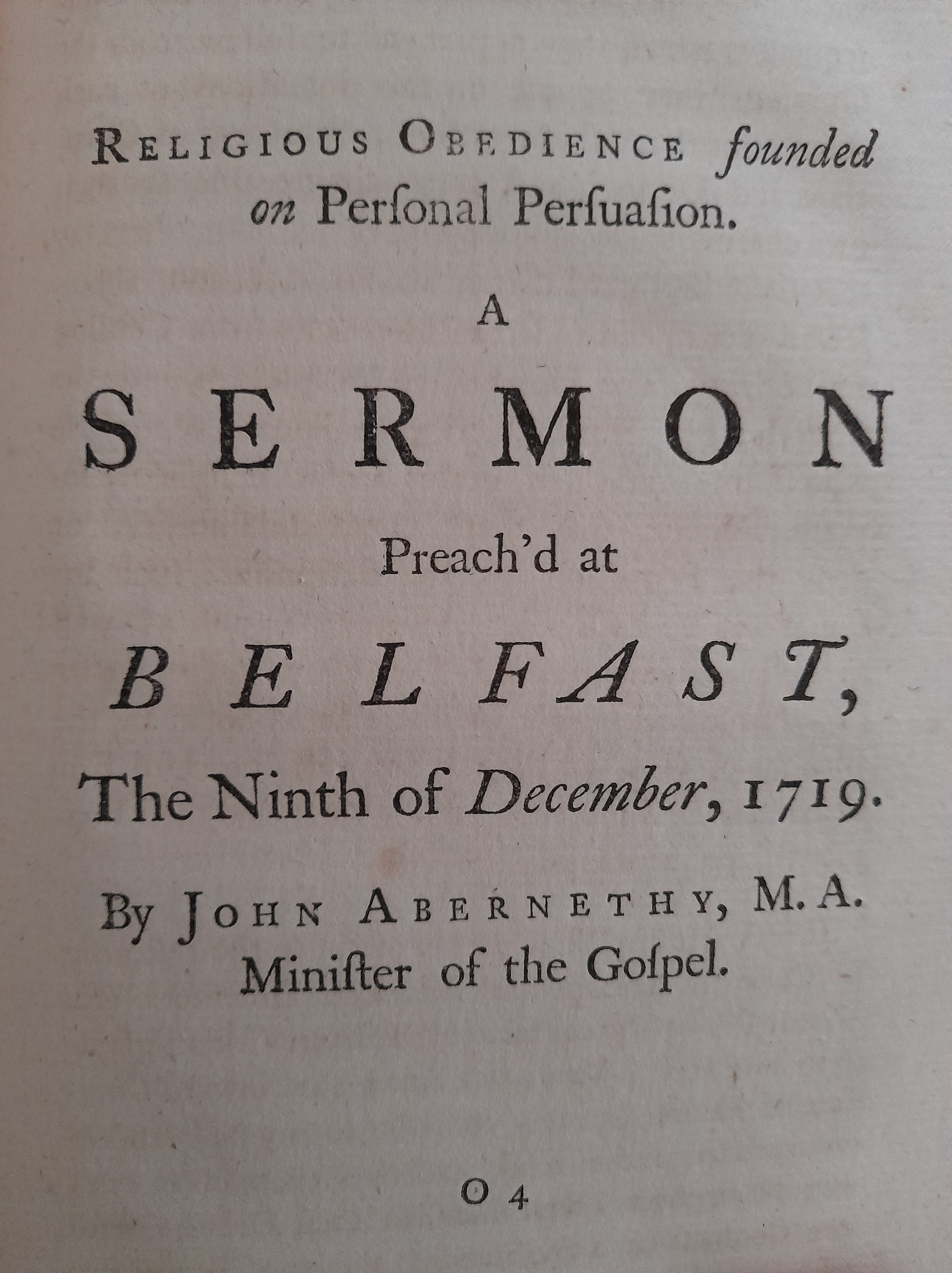
Authority, Reason, and Anti-trinitarianism: John Abernethy and the Competing Pressures Within Irish Presbyterianism in the Early Eighteenth Century
A. D. G. Steers
The 1662 Book of Common Prayer and Its Adaptation in Eighteenth-Century Rational Dissent
Bryan Spinks
New England Congregationalists and Unitarianism in Late Eighteenth Century/Early Nineteenth Century
Peter Field
The editors are:
Kazimierz Bem, Pastor of First Church in Marlborough (UCC), USA and a senior lecturer in Church History at the Evangelical School of Theology in Wrocław, Poland.
Bruce Gordon, Titus Street Professor of Ecclesiastical History at Yale Divinity School, USA.
Hardcover ISBN978-3-031-69657-2
Softcover ISBN978-3-031-69660-2
eBook ISBN978-3-031-69658-9
You can find out more about this book via this link.
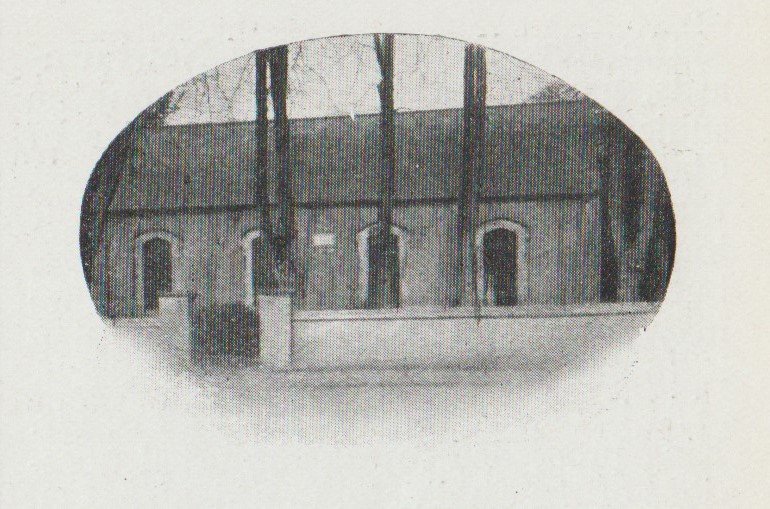
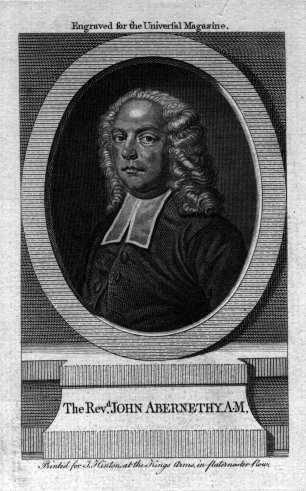
Episode 6 of our explorations of the Very Rev William McMillan Library at Dunmurry looks at the writings of the Rev John Abernethy (1680-1740). Without doubt the most prominent Presbyterian minister in Ireland in the early eighteenth century and the foremost exponent of Non-Subscription, he was minister at Antrim (see picture above) and later Wood Street, Dublin.
Click on the video to see John Abernethy’s books
Some of his books were the best sellers of their day and some of his publications were seen as either controversial theological statements or the key to opening up a new way to understand faith, depending on your point of view. Ironically at the time of the first subscription controversy the minister of Dunmurry, the Rev John Malcome, was a vocal opponent of the Non-Subscribers and was the first to use the term ‘New-Light’ about them. But Dunmurry Library has a good selection of his published works, most of them published after Abernethy’s death.
The founder of the Belfast Society in 1705, an outspoken advocate of the rights of the dissenting minority in Ireland and an established philosopher of some importance, John Abernethy’s books had considerable influence and this video looks at his publications held by our Library in Dunmurry.
From The Very Rev William McMillan Library of First Dunmurry (Non-Subscribing) Presbyterian Church.
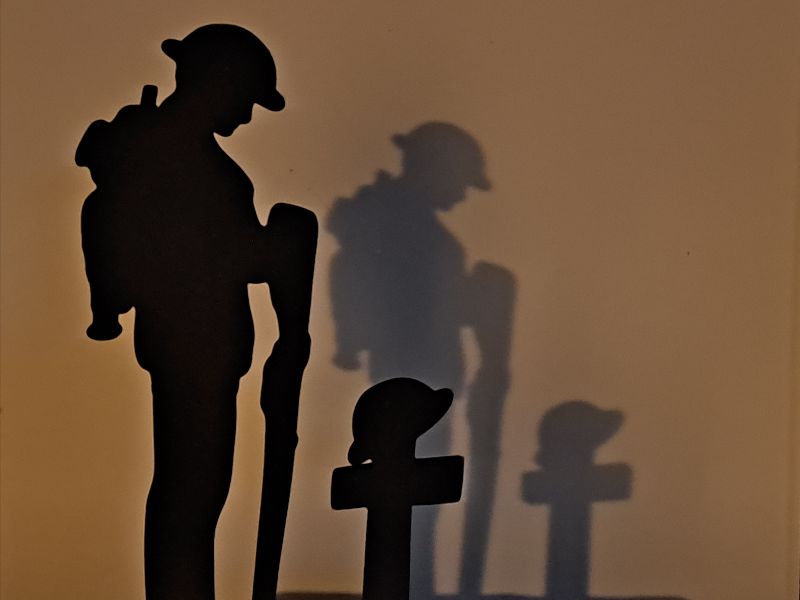
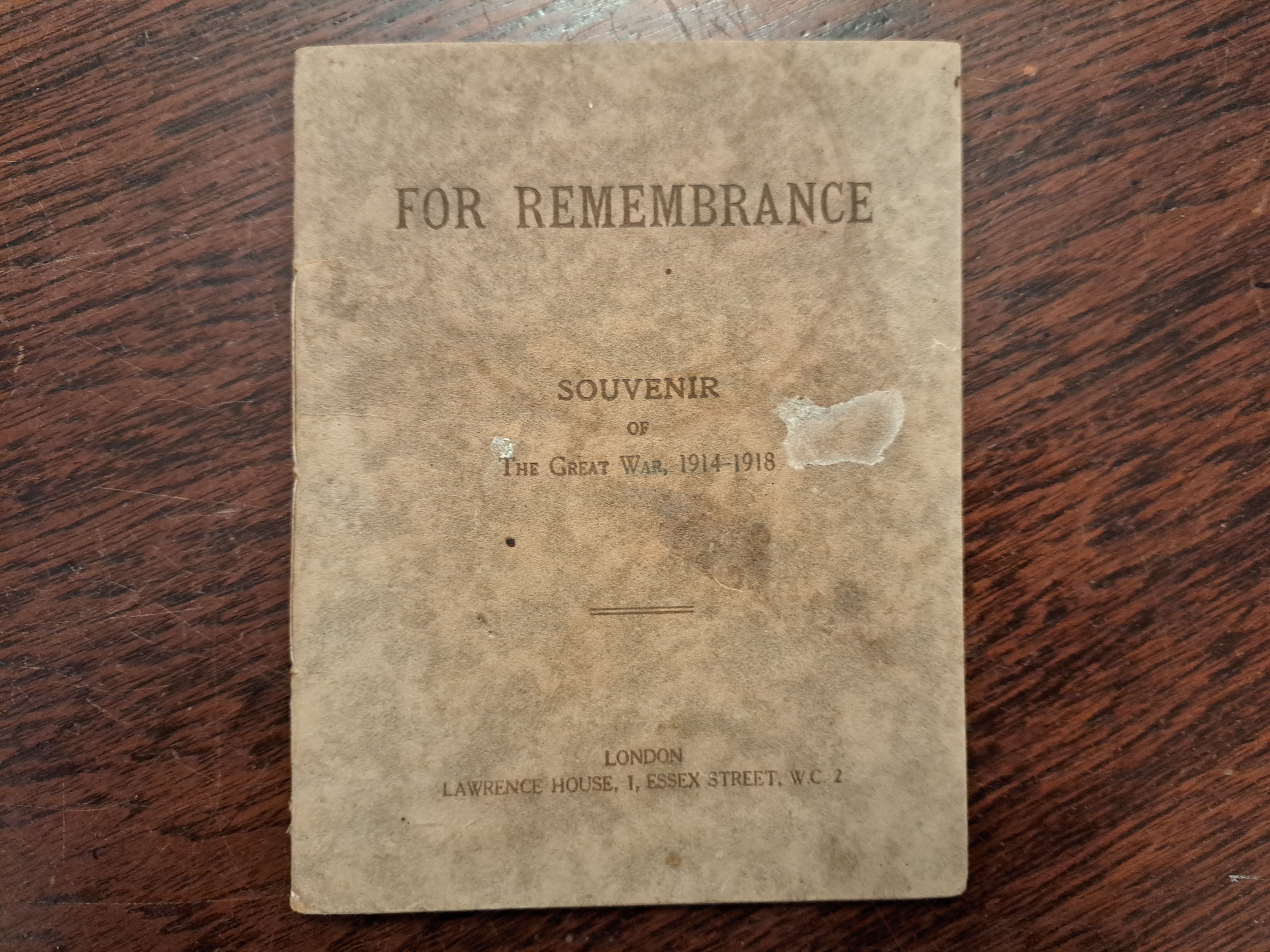
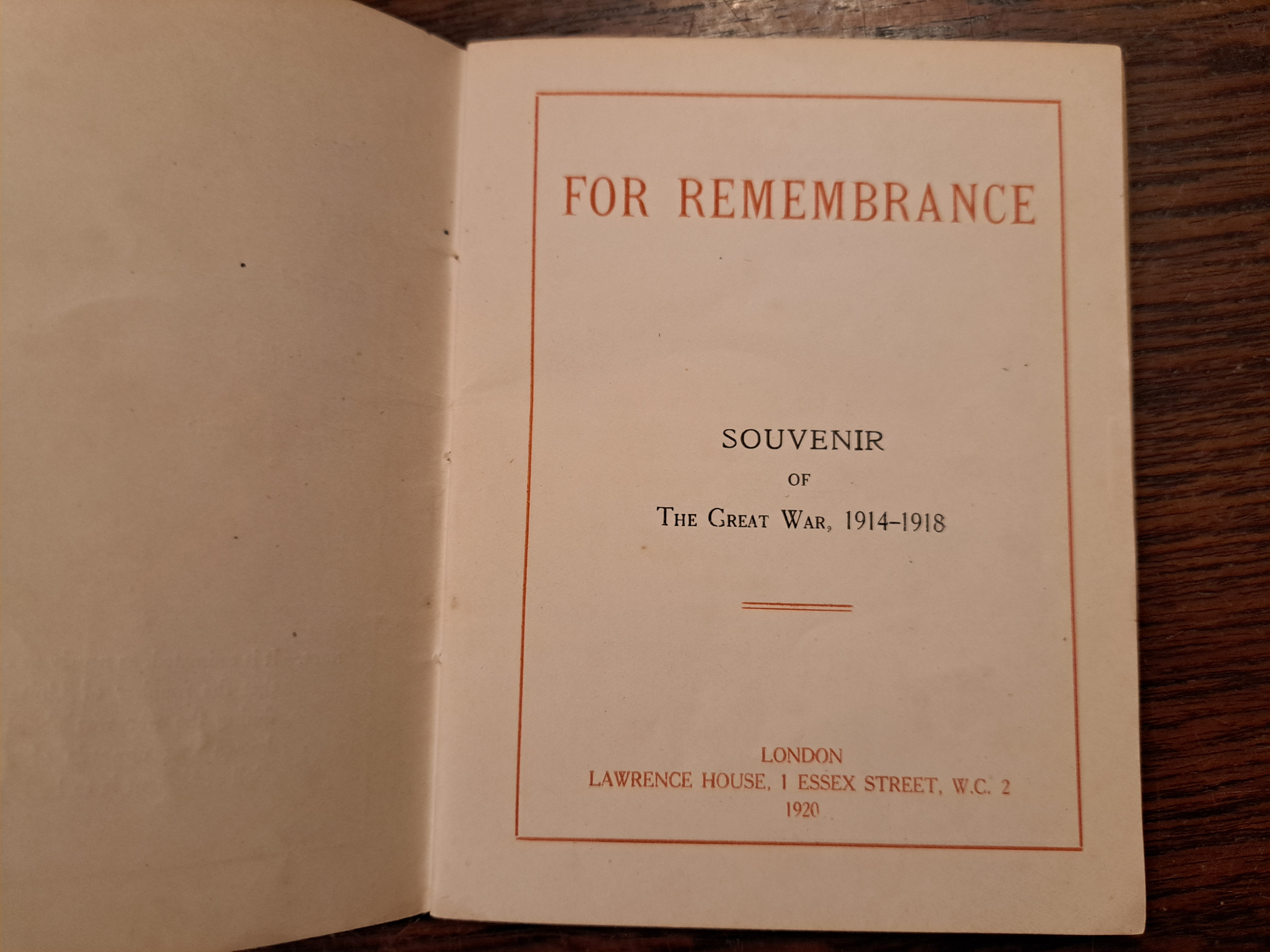
Exploring the Library: Episode 5 For Remembrance. A booklet given to returning servicemen after the First World War.
A short talk by the Rev Dr David Steers. With thanks to Jack Steers for playing the Last Post and Reveille on the trumpet.
This is rather a scruffy looking booklet but it is a very rare survival of which the editors said: ‘If it attains to anything like its aim it will be a real “keepsake,” an abiding record of the owner’s place and part in our nation’s mightiest struggle…’ A copy was given to every Unitarian and Non-Subscribing serviceman who returned from the First World War. It contains some poignant quotes and six short reflections by ministers who had served alongside the troops.
Possibly as many as 9,000 copies were issued but very few survive, at least in libraries, so we are fortunate to have a copy in the Very Rev William McMIllan Library. Click on the video to find out more about ‘For Remembrance’.
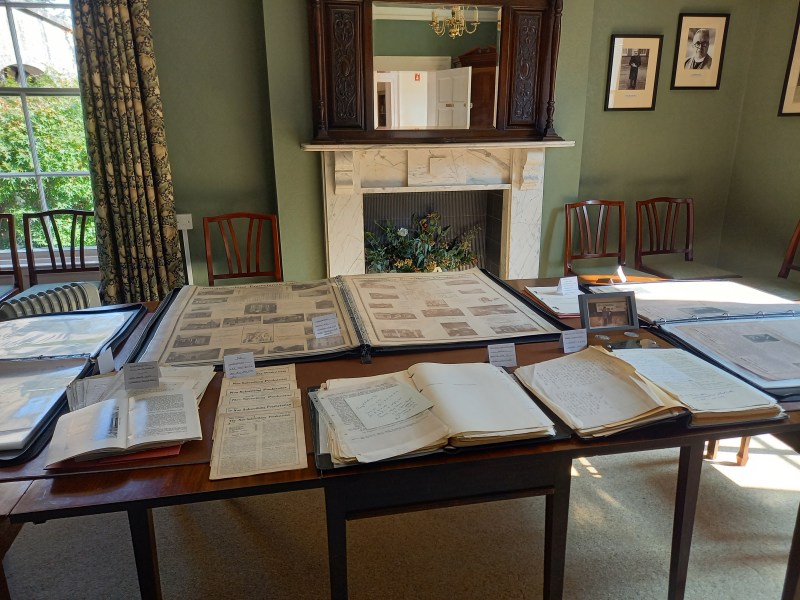
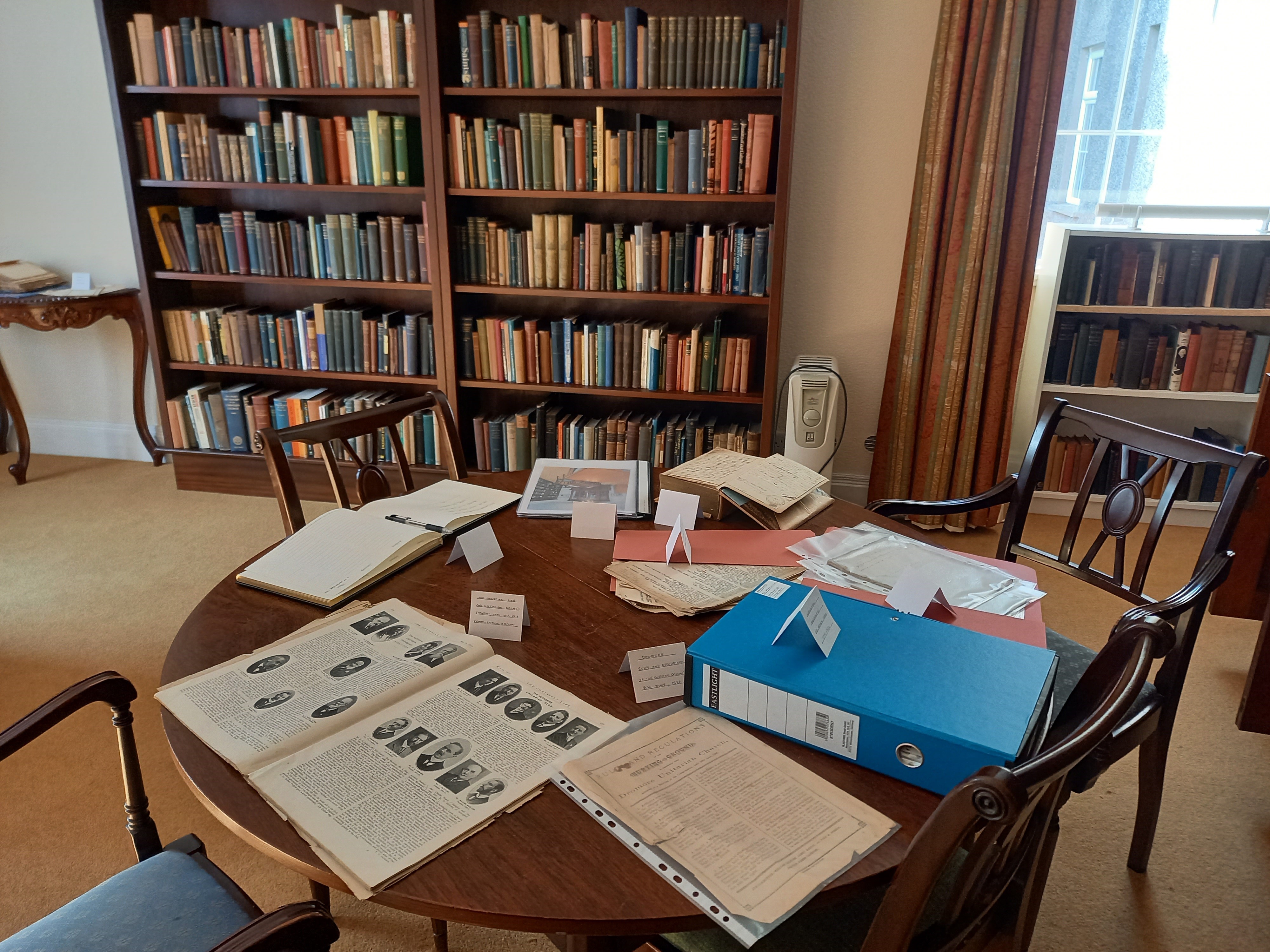
Thank you to everyone who came along for our service of dedication and formal opening of the Very Rev William McMillan Library on Sunday, 22nd September. The service was livestreamed on Facebook and this video now on YouTube includes not just the service but also the Act of Dedication outside the Library, Sheila McMillan’s speech and cutting of the ribbon, the presentation to Sue Steers, and Colin Flinn’s speech after the tea as well as some scenes from the McCleery Hall, the Library and the Session Room.
Click above to see the service and the other events of the day
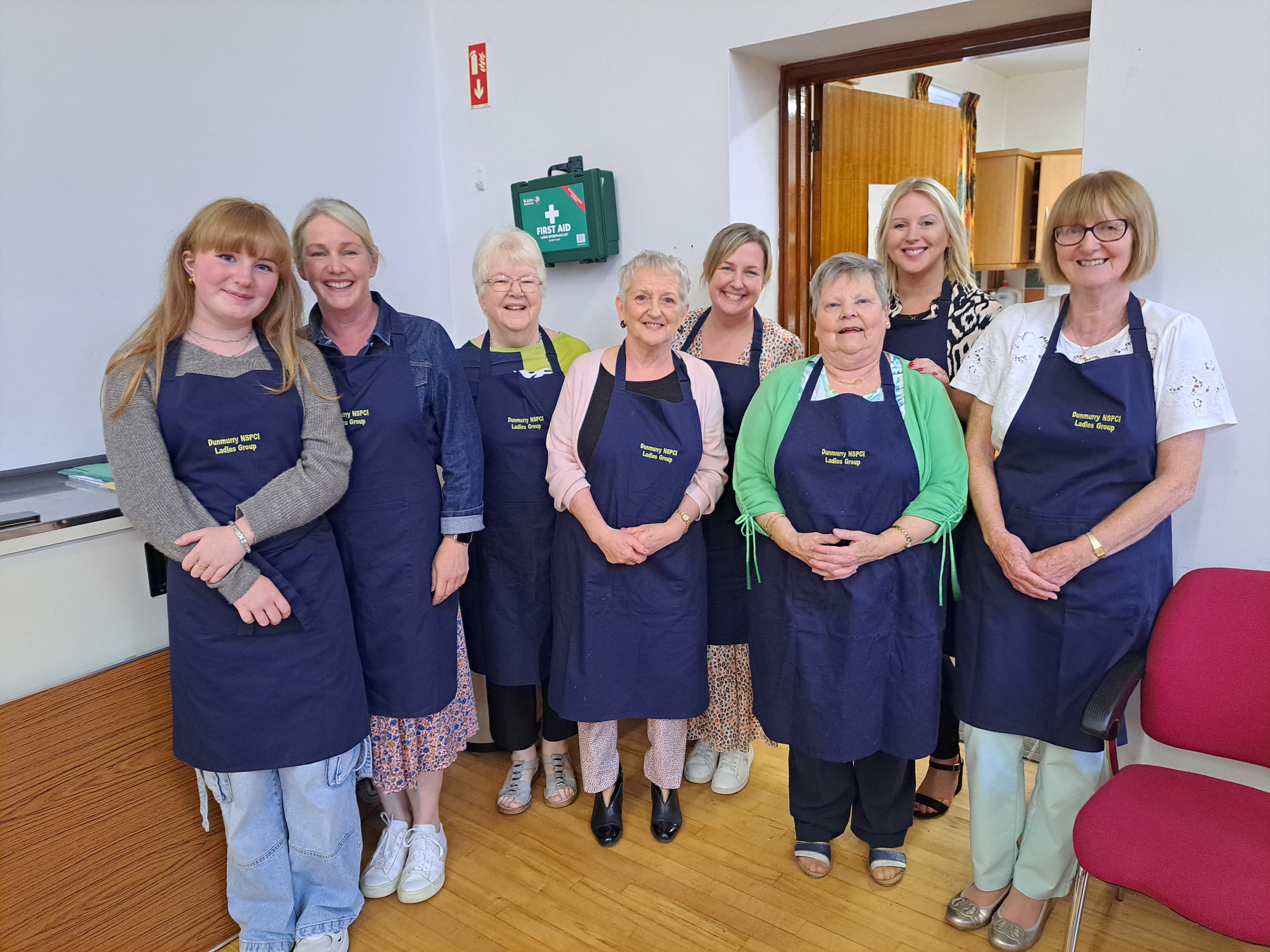
A big thank you goes to everyone who helped on the day, especially the ladies who prepared the wonderful refreshments. In his speech Colin Flinn commended them for their smart turn out and expressed a hope that on future occasions some men might join them in their ranks!
Dunmurry NSPCI Ladies Group
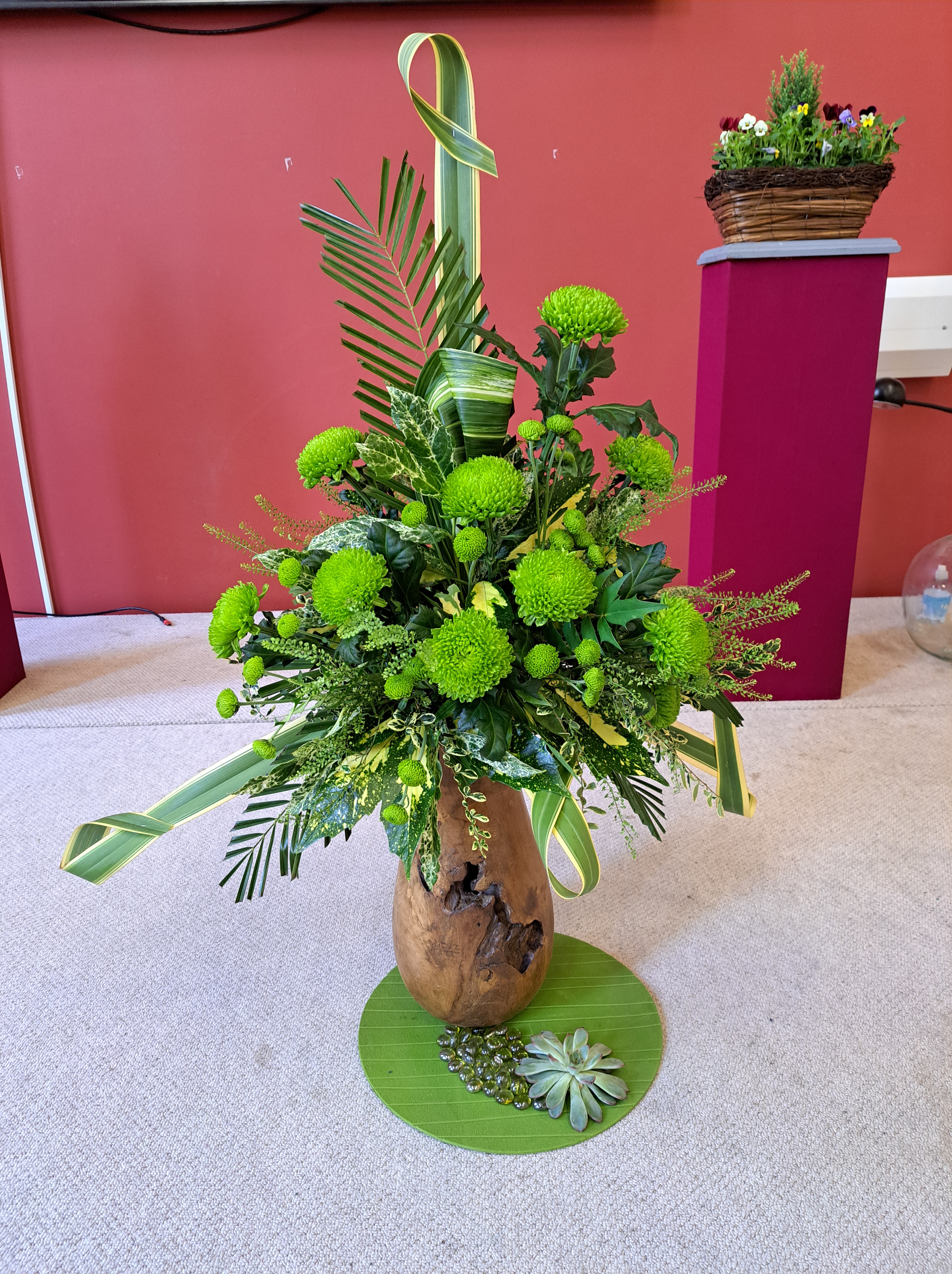
A big thank you goes to Elma McDowell for her floral arrangements and to Allen Yarr for playing the organ. All these things and more can be seen on the video.
Flowers in the Hall
The congregation of Dunmurry is grateful to the Bright Fund for their financial support for the project and to everyone who has made donations to the Library over the last few years. We gratefully acknowledge the receipt of books and other items donated to the Library. Special thanks also goes to Sue, Kathy and the members of the Library Group for all their hard work in cataloguing the Library over the last four years.
 velvethummingbee