Today’s top selling toy

A news report earlier this year said:


“Astronomical sales of a tiny figurine of the Protestant Reformation figure Martin Luther, have confounded its maker, Playmobil, by becoming the fastest-selling Playmobil figure of all time.”


It was widely reported in the press that the first edition of 34,000 of these figures sold out in less than 72 hours when they were launched in February. The company urgently requested its factory to produce more of them such was the demand.


The journal Newsweek observed:

“The plastic toy, complete with a quill, German-language bible and cheery grin, was produced for the German and Nuremberg tourist boards and the Evangelical Lutheran Church in Bavaria, as Germany gears up to celebrate the 500th anniversary of the Protestant Reformation in 2017”.
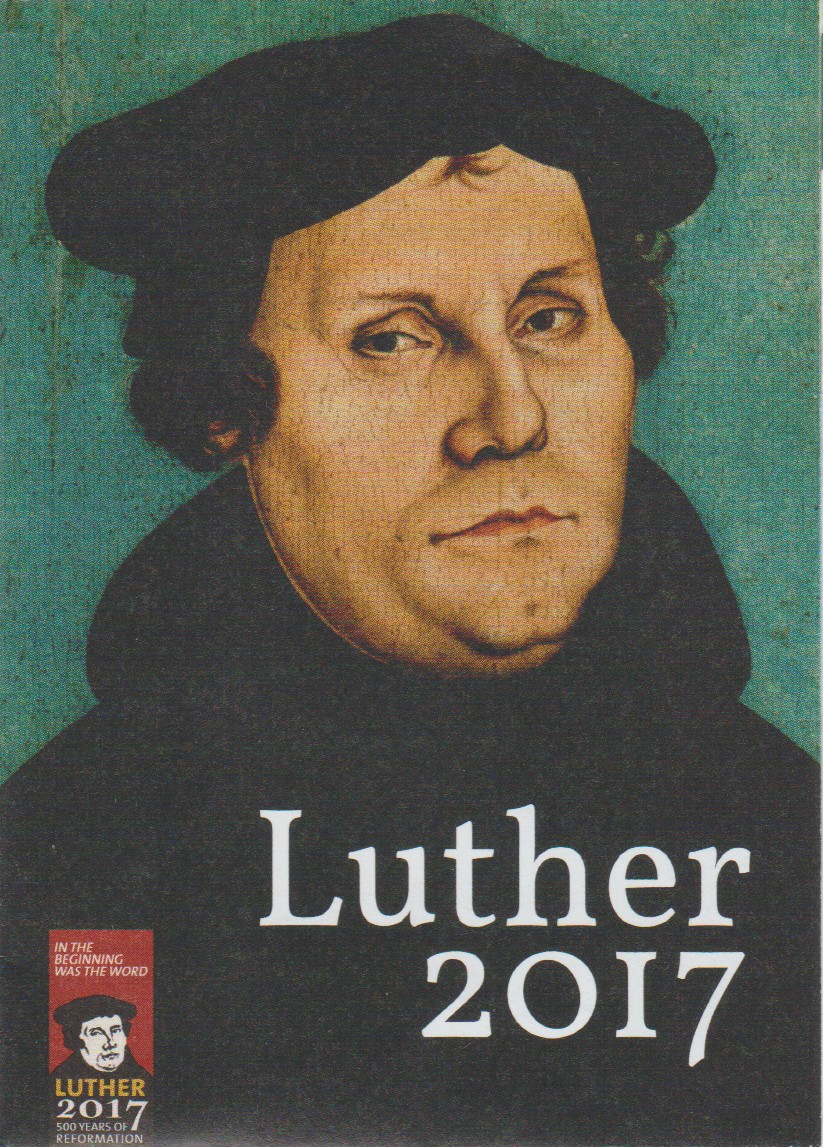
 

Martin Luther's portrait which comes with the figurine
Martin Luther’s portrait which comes with the figurine


It’s a curious phenomenon that a toy of an historical figure taken from religious history should prove so popular. The 500th anniversary of the reformation (in this case being dated from Luther’s nailing of his 95 Theses to the door of the Cathedral in Wittenberg on 31st October 1517) is an important event and it looks like it is catching people’ imagination, especially in Germany. A lot of the sites particularly associated with Luther are in Eastern Germany and consequently have not been over-visited. Writing in the Times in August Mark Greaves said “As a result of the lack of modernisation and development during the communist years, folksy towns with their beautiful old architecture have been left untouched.”


Quite probably this anniversary is the biggest event of all that could be connected with a reformation person or event. A few years ago (in 2009) the 500th anniversary of the birth of John Calvin was celebrated. There were no John Calvin toys so far as I know although one Presbyterian Church did have a free download of a John Calvin mask which was just about the scariest looking mask you could imagine.


The Playmobil box
The Playmobil box


I was sufficiently impressed by the story of the sales of the Luther figure to track one down via eBay. Martin Luther seems to be only on general sale in Germany although one imagines he would sell very well in the USA. It’s hard to imagine a similar figure being produced over here and one wonders what would be the equivalent? John Wycliffe? John Wesley?


But the Luther figure is an attractive little model. It comes with its own Bible referencing his part in translating it into German and a quill pen. In addition you get a leaflet featuring his portrait and a map of places in Germany associated with Luther.
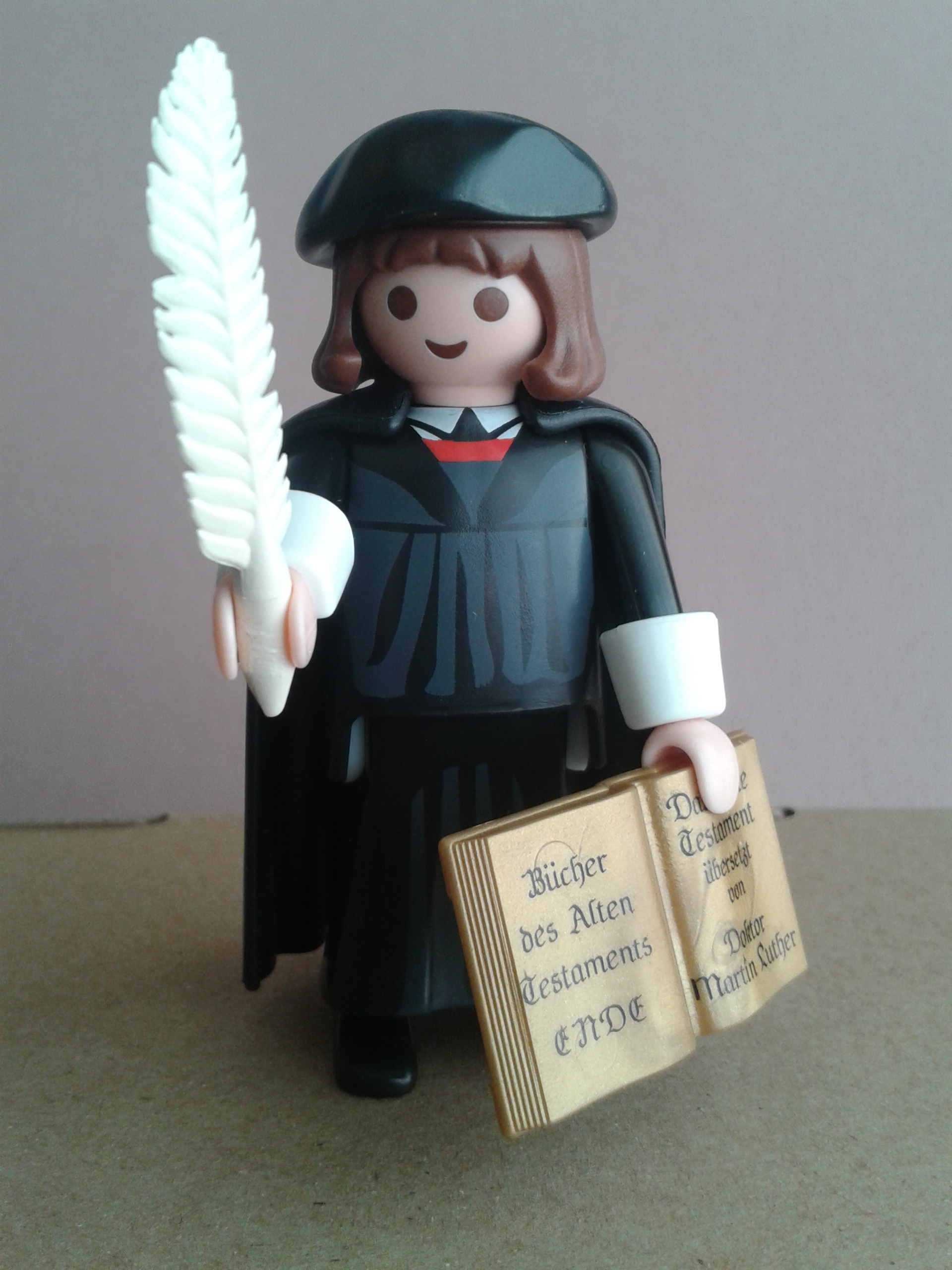
 

Martin Luther
Martin Luther


I wouldn’t think there would be too much of a market for Martin Luther figures in the UK today. However, from the 1930s to the 1950s British toy companies such as Britains and Johillco both marketed lead models of clergymen. These weren’t named but were part of the wide range of civilian figures that were available in those days. To my knowledge there were at least four clergy figures on sale, black clad and generally hatted they must have sold in their thousands. The hardest to track down today is the Britain’s ‘thin vicar’ who ceased production just before the war. But it is good to see Martin Luther enjoying such vogue.


Ye that live on mid English pastures green, remember us and think what might have been

The Faith and Freedom Great War project continues to expand and we hope to see added to the site in the near future a number of new articles, including Alan Ruston’s piece for the Transactions of the Unitarian Historical Society (1993), ‘Killed Fighting in the First World War’; and a moving sermon by Andrew Hill who recounts his father’s experiences during the First World War as a ministerial student who was assigned to “Non Combatant service only on conscientious grounds”.


We have also received a good number of images of war memorials from many different places. Brendan Burke has sent a whole sequence of pictures of the memorial in the South Mall in Cork. Of course it is not related directly to the Unitarian (or any church) in Cork but unveiled in 1925 it is a rare example of such a public memorial in the Irish Republic. It shows a soldier of the Royal Munster Fusiliers with the names of the war dead (which almost certainly includes some members of the Princes Street congregation) on a plinth underneath.


Cork Peace Park (Photo: Brendan Burke)


We’ve a good number of images of war memorials too from churches in Northern Ireland, many of them designed by Rosamund Praeger, the famous sculptor who was also a member of the Holywood NSP congregation.


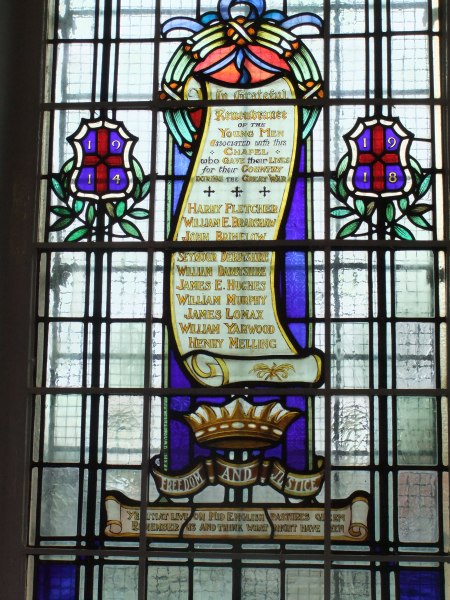
Lynne Readett has sent some fascinating material from Park Lane Chapel, Ashton in Makerfield. Here the memorial takes two forms – the first a stained glass window listing the names of those who were killed in the war. This was beautifully restored and rededicated at a service to mark the outbreak of the First World War in August 2014. The congregation also built an extension to their school house as a further memorial in 1925.


Memorial window Park Lane (Photo: Lynne Readett)


The window contains a list of the Chapel’s fallen as well as the legend ‘Freedom and Justice’ and the quotation ‘Ye that live on mid English pastures green, remember us and think what might have been’. This was a commonly used verse on memorials all over England at the time but I don’t know the source, does anyone know where it comes from?


Lynne has supplied the site with photographs and accounts of special services held both there and at Cairo Street, Warrington, together with details of those who were killed in the war who belonged to Cairo Street. Susan Naylor has also supplied details of the members of Park Lane who died in the First World War.


Jennifer Young has sent a picture of the war memorial at Lincoln Unitarian Chapel. I have only visited this Chapel once, some years ago when it was refurbished under the ministry of the Rev Paul Travis but I have to confess that I don’t remember seeing this memorial. It seems rather verbose, it carries the names of no individuals and is quite unlike any other memorial that I am aware of. It is interesting to compare it with the Park Lane memorial window. If like so many church war memorials it dates from the early 1920s then I would guess it is the work of the minister at the time the Rev J. Lionel Tayler.


Lincoln War Memorial (Photo: Jennifer Young)


But it is very pleasing to record that a wide variety of material is being sent in for the Project and more is very much welcomed, including anything that forms part of the church experience of the Great War.


The Faith and Freedom Great War Project can be viewed at:
http://www.faithandfreedom.org.uk/GWindex.htm

Faith and Freedom Great War Project

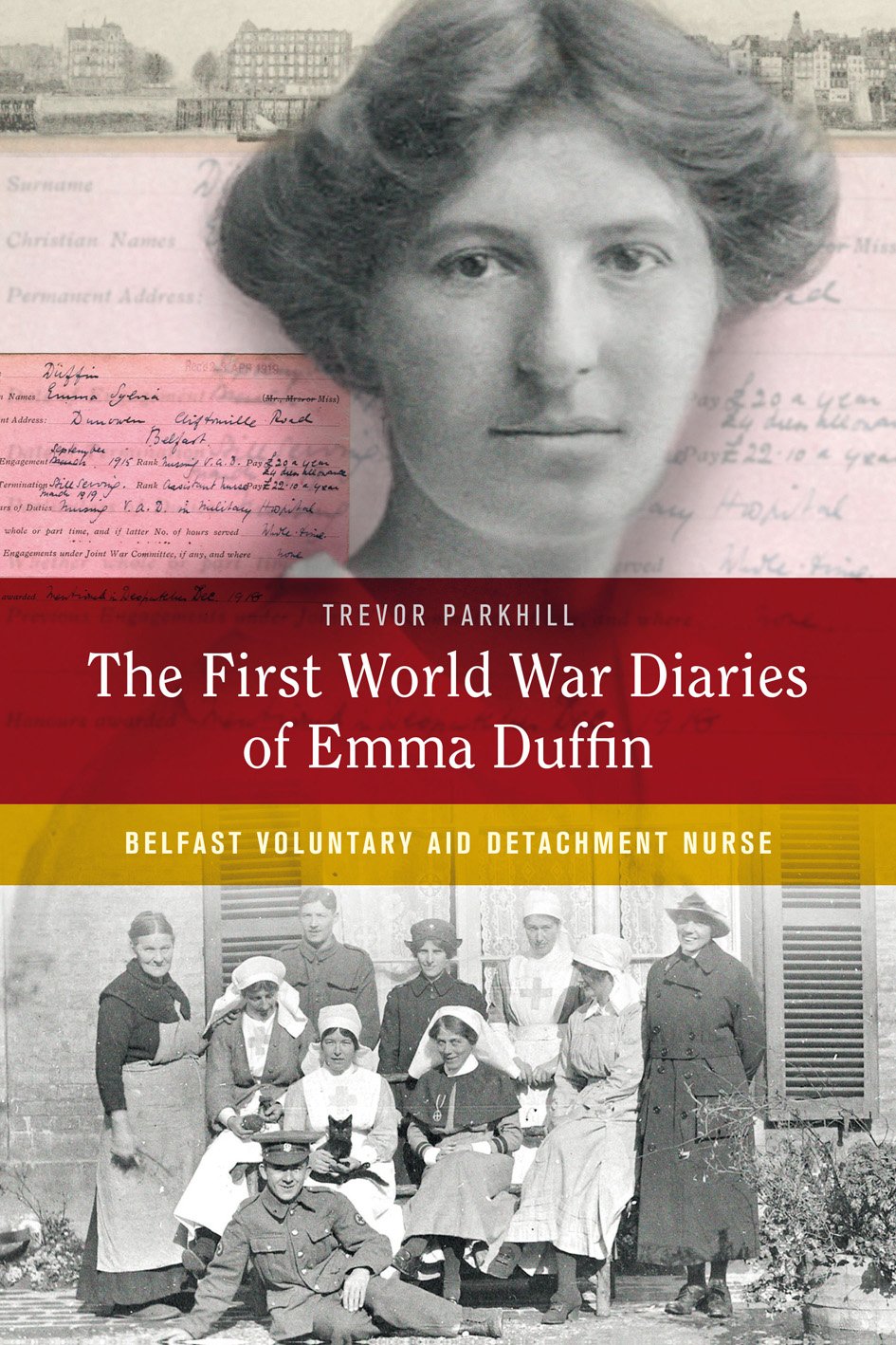
The First World War cast an enormous shadow over the past century. It had a cataclysmic effect on all aspects of society, no one was left untouched by it – homes, families, schools, factories, businesses, and, of course, churches. There are many ways in which the centenary of the Great War is being marked and most churches are spending some time over the current period reflecting on the conflict, its impact and its legacy. Faith and Freedom is establishing a special section of its website to reflect upon the conflict from the point of view of the churches and other faith groups. The website will be developed in a number of different ways. It will contain scholarly and thoughtful articles on the Great War, particularly in relation to churches and their participation in the War. The first three articles to go online are Unitarian Attitudes to the First World War, by Alan Ruston, The Centenary of the First World War and the Non-Subscribing Presbyterian Church of Ireland, by David Steers; and ‘Their sister in both senses’. The memoirs of Emma Duffin V.A.D. nurse in the First World War by Trevor Parkhill. Trevor is editor of The First World War Diaries of Emma Duffin, Belfast Voluntary Aid Detachment Nurse (Four Courts Press, Dublin, 2014) and his article gives an intensely moving account of the First World War experiences in hospitals at the front of Belfast-born Unitarian Emma Duffin (a direct descendant of William Drennan, the founder of the United Irishmen and a cousin of Thomas Andrews designer of the Titanic) who volunteered to serve as a nurse and spent three harrowing years tending the wounded.

Emma Duffin

The second section will contain accounts of commemorations and acts of remembrance made during the current centenary period and readers are very much encouraged to send in reports of their events. The first example is a thoughtful and intensely moving service held at Rosslyn Hill Chapel, Hampstead to mark the centenary of the outbreak of the War. We are also seeking to record the names and details of church members who served in the First World War and we begin with a very full account of the contribution and service, with pictures, of members of the Great Meeting, Hinckley.

Private Stanley Jennings of Hinckley, of the 15th Battalion Durham Light Infantry. Killed in France 3rd May 1917, aged 29

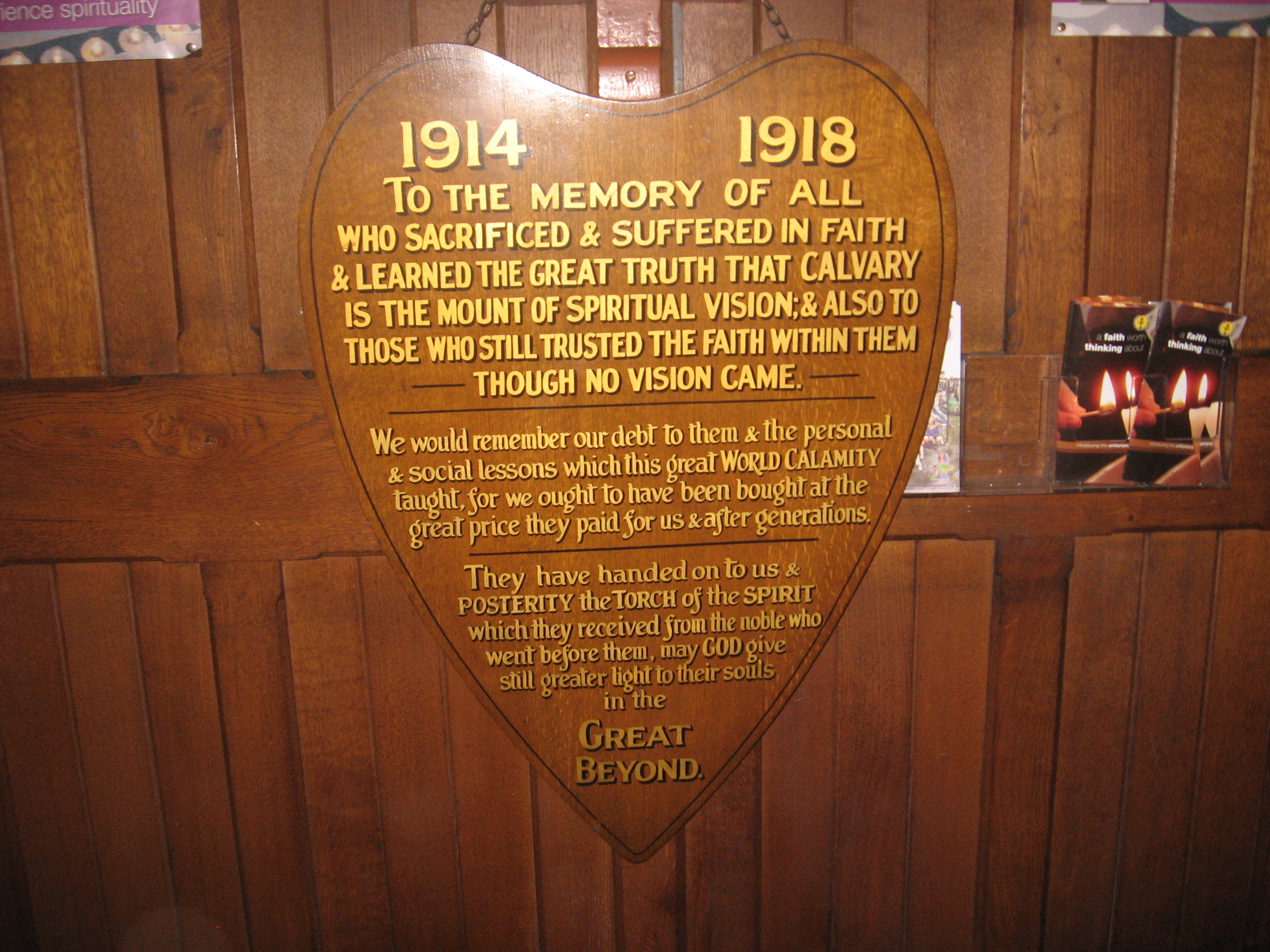
We also aim to build up a database of images of First World War memorials. Does your church have a memorial to its members who served in the First World War? If it does then please send a digital picture to go on the website. We are also actively seeking images and details of memorials that were placed in churches that are now closed, which may now be lost or which may have been put in a different location.

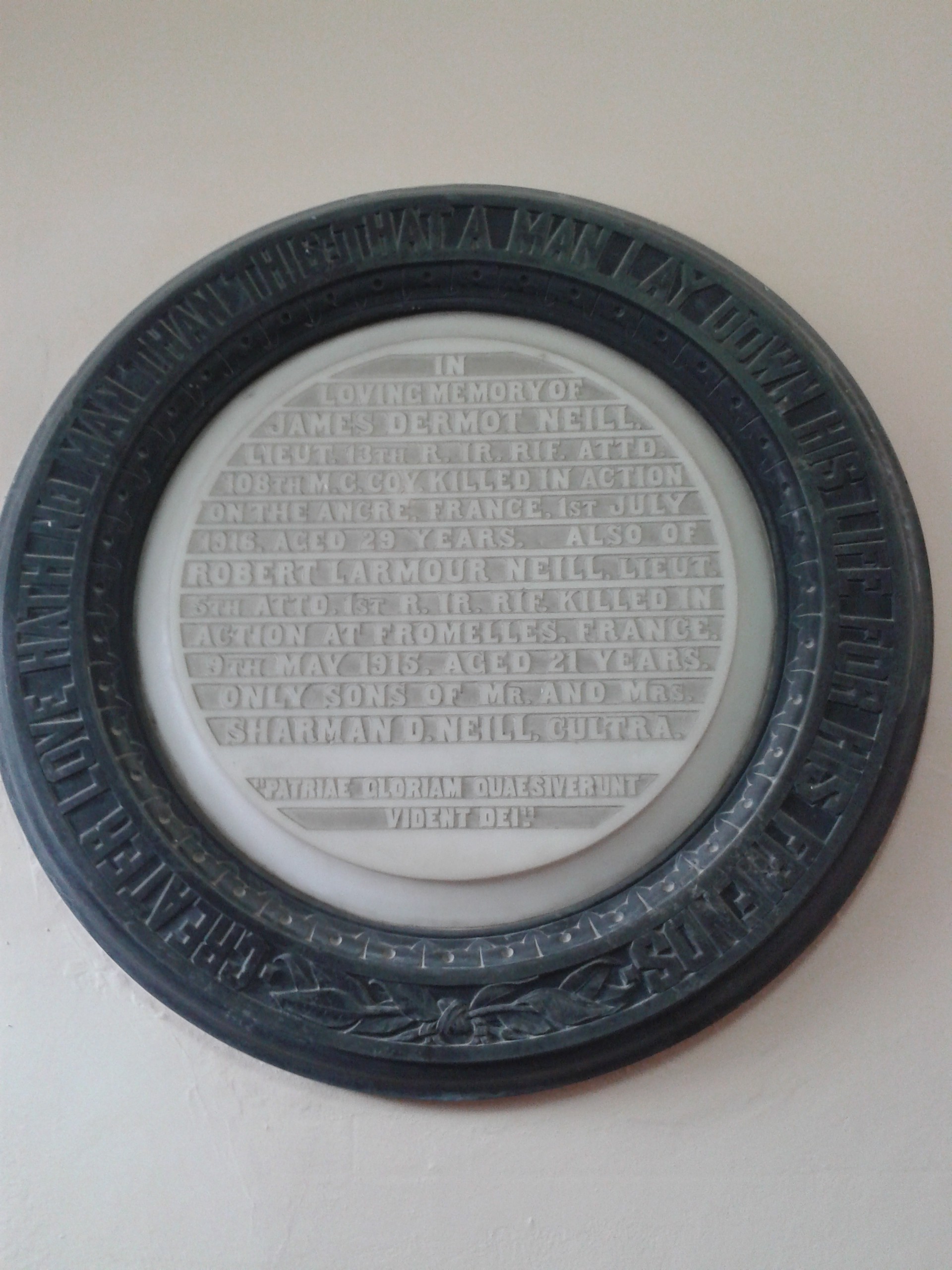
Memorial to Lieutenant R.L. Neill, Holywood co. Down.  Killed at the battle fo the Somme
Memorial to Lieutenant R.L. Neill, Holywood co. Down. Killed at the battle fo the Somme

We also hope to include material – including photographs, sermons, writings, printed ephemera etc that date from the time of the War which can then be studied on our site.

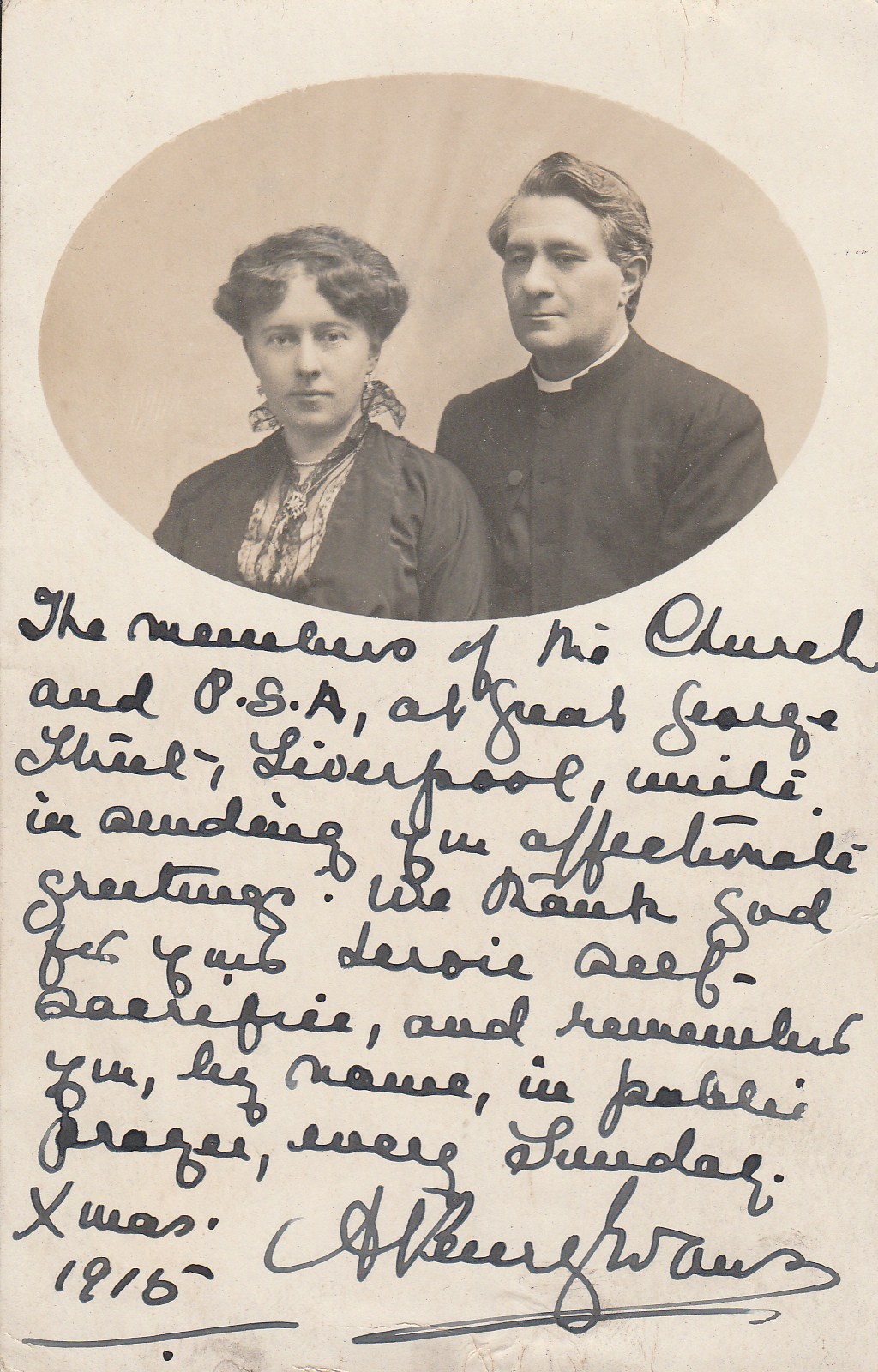
A postcard sent to members of Great George Street Congregational Chapel, Liverpool,  serving at the front. Featuring a picture of the minister and his wife and a written message. P.S.A. stands for Pleasant Sunday Afternoon, a popular form of church entertainment at the time
A postcard sent to members of Great George Street Congregational Chapel, Liverpool serving at the front. Featuring a picture of the minister and his wife and a written message. P.S.A. stands for Pleasant Sunday Afternoon, a popular form of church entertainment at the time

We might also eventually include complete Rolls of Honour – for individual congregations and denominations. The whereabouts of the Roll of Honour relating to the churches that are now part of the General Assembly of Unitarian and Free Christian Churches has been a matter of some discussion recently. If we had the full list of names we could add it to the site. The Roll of Honour of the Non-Subscribing Presbyterian Church of Ireland also seems to have been begun but not completed. It would be good to see that completed and available online. With the co-operation of readers the site will be built up over time. If you would like to participate please contact the editor at editor@faithandfreedom.org.uk To view the website go to: http://www.faithandfreedom.org.uk/GWindex.htm

History of the First Presbyterian (Non-Subscribing) Church Downpatrick

The meeting house of the First Presbyterian (Non-Subscribing) Church in Downpatrick was opened in 1711 at the start of the ministry of the Rev Thomas Nevin. Recognised as one of the most significant architectural examples of the T-shaped meeting-house in Ireland the building celebrated 300 years of continuous worship and witness in 2011.

Central high pulpit originally built for Thomas Nevin (Down Museum photograph)

To mark the tercentenary of the church building the congregation published the History of the First Presbyterian (Non-Subscribing) Church Downpatrick. Written and compiled by Mary Stewart, the church secretary, the book is a remarkable record of three centuries of church life in the historic building. The book details the history of the congregation in the context of Downpatrick and Irish Presbyterianism, the conflict between subscribers and non-subscribers in the 18th century, the history of the building, the congregation’s engagement with education and much more. The book includes biographies of all the ministers of the congregation going back to the 17th century, extracts from the records of the Synod of Ulster, accounts of services, special events and financial matters, and contains details of committee and session members over the centuries, lists of members going back to the 1860s, and a complete record of all the graveyard inscriptions. It will be valued by all those with an interest in Non-Subscribing Presbyterian Church history, local history, and genealogy.

Celebrating the tercentenary

In the first of the two Forewords the Very Rev William McMillan says:

Miss Stewart is to be congratulated on a truly comprehensive publication. She not only presents us with a history of the Downpatrick congregation but has collated a remarkable number of newspaper accounts, together with other printed material which will be of considerable help to future historians.

 Her commitment to the congregation is evident from the immense research that she has done and I am delighted to recommend this valuable contribution to the Denomination’s Historical Record in which Downpatrick congregation has played such an important role.

and in the second Foreword the Rev Dr JohnNelson says:

The congregation of Downpatrick has a long and notable history, reflected in the lives of the ministers and lay people who have been part of that church. A congregation which has held a significant place both within Non-Subscribing Presbyterian circles and the wider Presbyterian community.

 Perhaps the most outstanding theme of that history is the fact that for the last 300 years the congregation have worshiped in the wonderful building that is Stream Street Meeting House. While that building has always been well maintained, the interior has never been substantially altered, leaving it to-day essentially as built and evoking a sense of history, of presence, and of worship in all who enter there. It is highly appropriate that this book is published as part of the celebrations to mark the 300th anniversary of that meeting house.

Mary Stewart is to be congratulated in producing such a thorough and detailed history of the congregation. Not only does she give the story of the church, but her painstaking researches have produced a wealth of source material which will be a delight to historians, church members, and everyone interested in the heritage of Downpatrick town and community.

This book both opens a door on the past and links it with the living present.

At the tercentenary service

The book contains 408 pages and over 150 illustrations. It is bound in a full colour hard-back cover the book and is excellent value at only £15.

The cover of the book

A sense of what it contains can be seen from the list of contents:

Chapter 1        Background History of Downpatrick

Chapter 2        Arrival and Settlement of Presbyterians

Chapter 3        Subscribers and Non-Subscribers, the Faith of the Non-Subscribers

Chapter 4        Presbytery Records from 1691 including Thomas Nevin’s Trial and Consequences

Chapter 5        List of Ministers of Downpatrick, Details of Ministers

Chapter 6        The Church Building

Chapter 7        Church Site and Schools

Chapter 8        Life and Times of Samuel Craig Nelson   

Chapter 9        Special Services

Chapter 10      Special Events and Reports

Chapter 11      Church Excursions from 1881

Chapter 12      Social Evenings and Gatherings

Chapter 13      Harvest Services from 1908

Chapter 14      Financial Matters (Inc. Committee Record from 1886)

Appendix I       Rules and Regulations of the Downpatrick Congregation

Appendix II    Church Elders, Committee and Sunday School Teachers (From 1861-2007)

Appendix III   The Church Graveyard and Inscriptions

Appendix IV   Sermon by Alexander Colvill A.M. M.D. on the Death of Thomas Nevin 24th March 1744

Congregation at the tercentenary service

The cost of the book is just £15. Postage within the UK is £5. If you are interested in having a copy posted abroad please enquire for postal rates. Details of how to purchase the book can be found on the Church’s website: http://www.downpatricknsp.org.uk/History.html

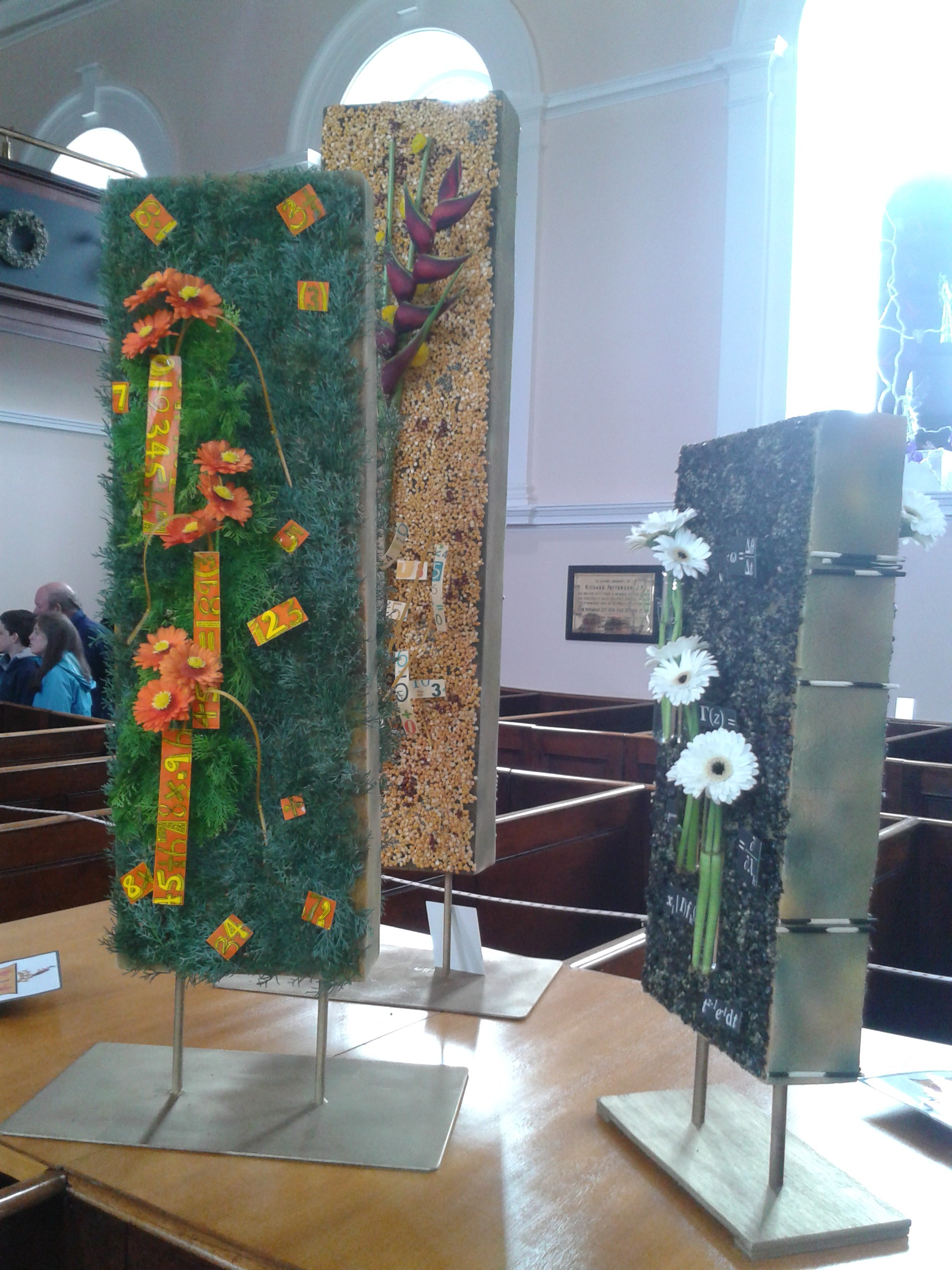
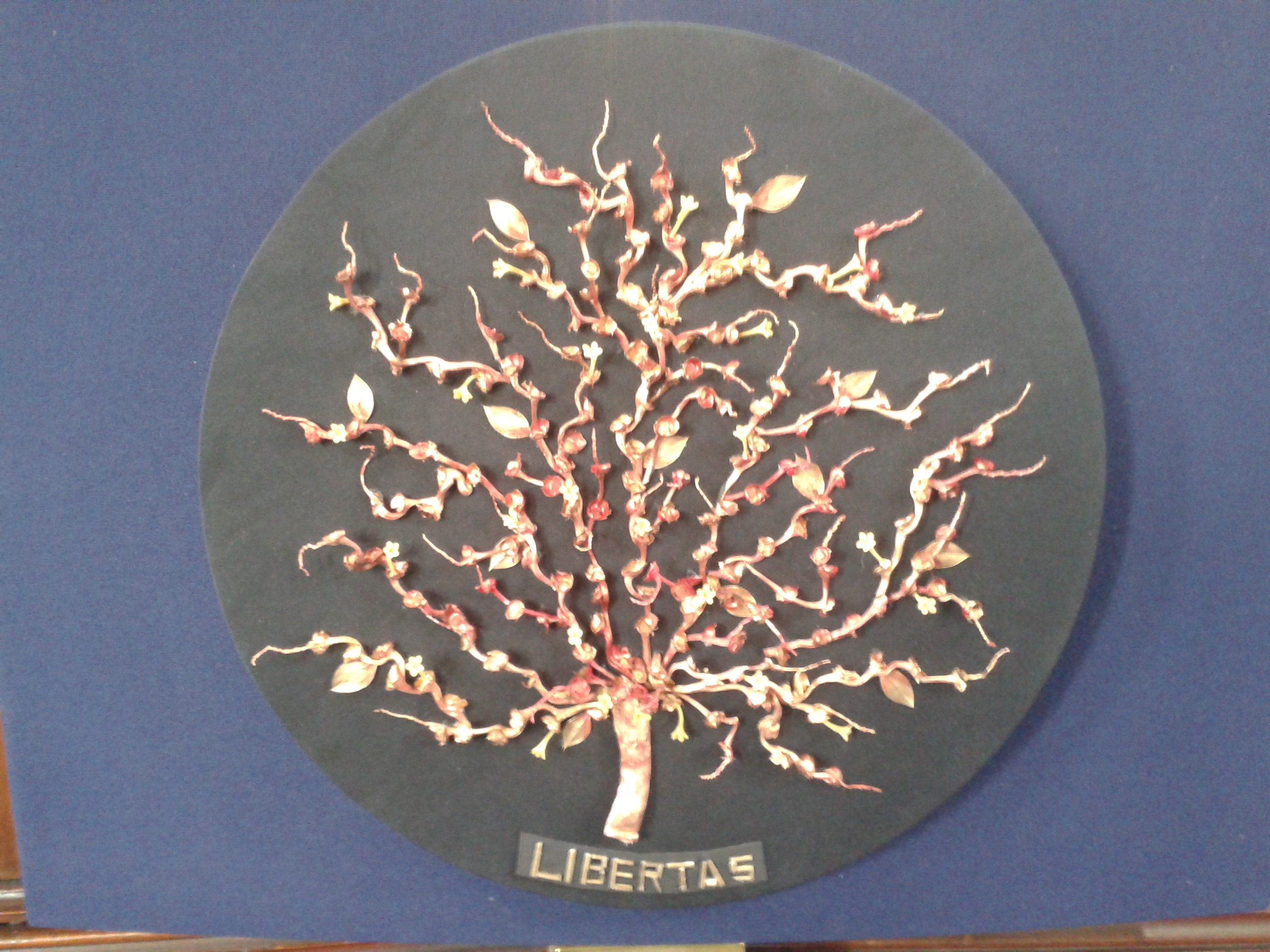
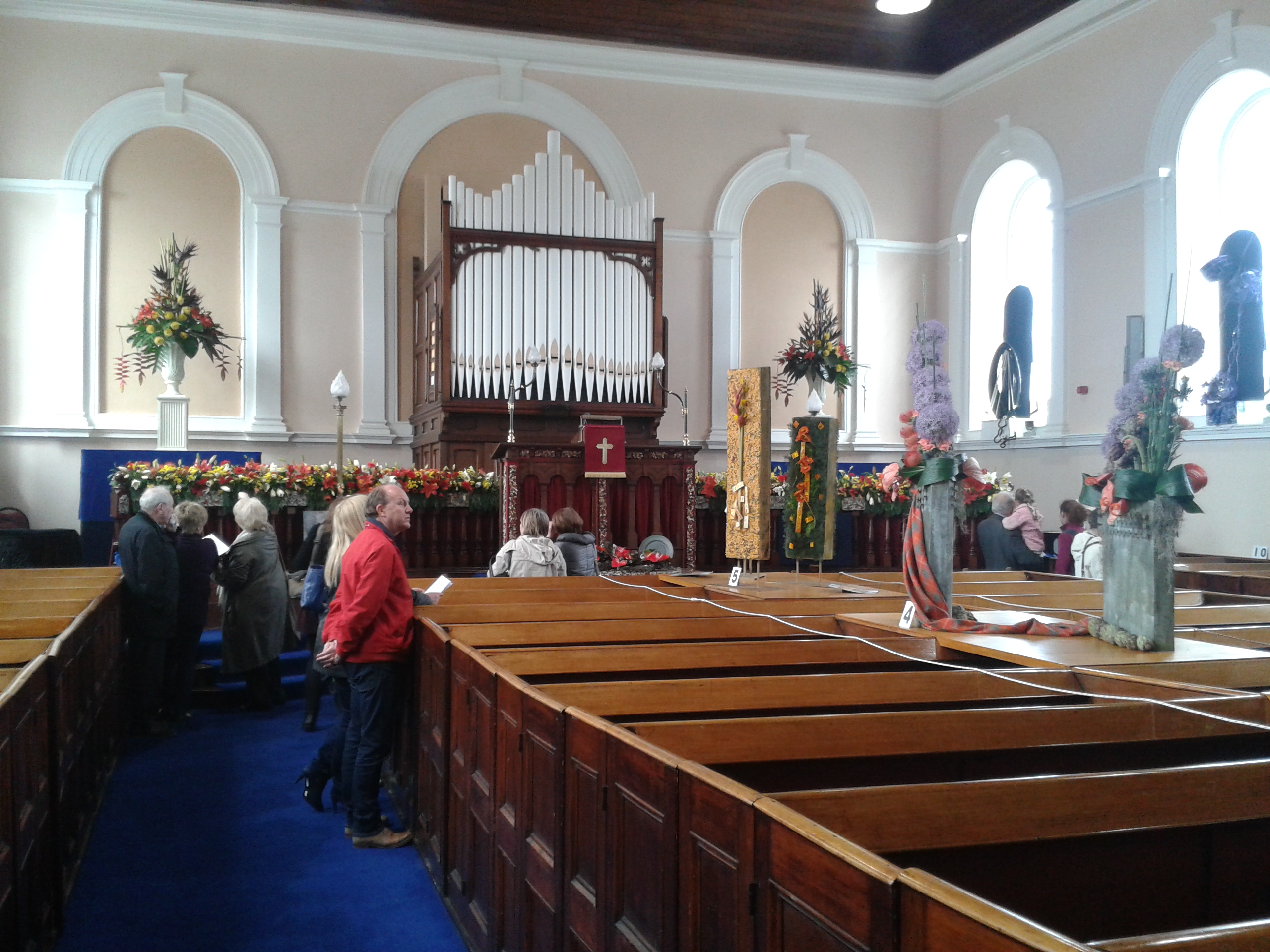
Festival of Floral Art First Holywood (NS) Presbyterian Church, co. Down

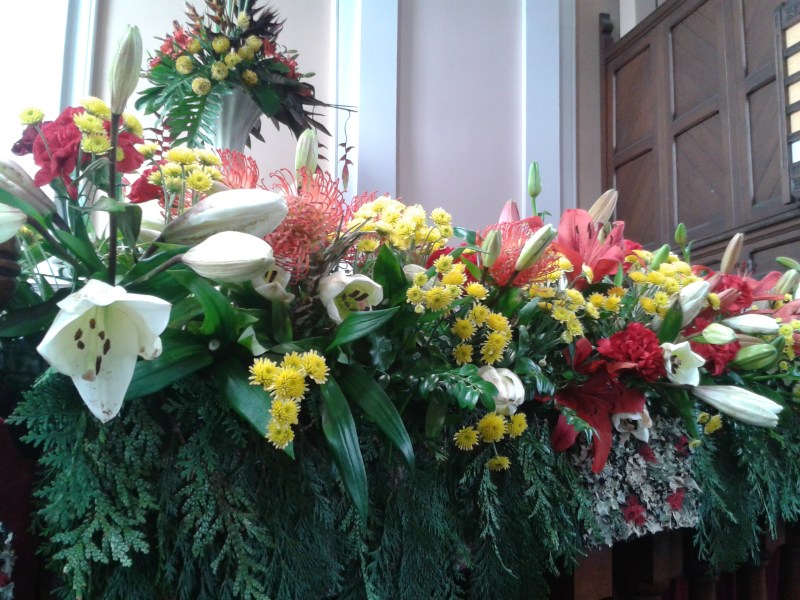
The Very Rev William McMillan has many strings to his bow. He is not just a distinguished and much loved pastoral minister, he is also a highly regarded historian who shares his knowledge readily with all enquirers. In both these areas – and others – he is highly respected but the area in which he is most pre-eminent is undoubtedly that of floral art. His fame in this role is world-wide and a few years ago he was appointed world champion no less. The Rev Mac regularly travels the world as a floral artist and over the decades must have helped to raise thousands of pounds for various charities through his artistic efforts. His latest exhibition is at Holywood Non-Subscribing Presbyterian church which not only utilises a wonderful space but also incorporates his historical knowledge and feel for the theological traditions that have contributed to the development of the church.

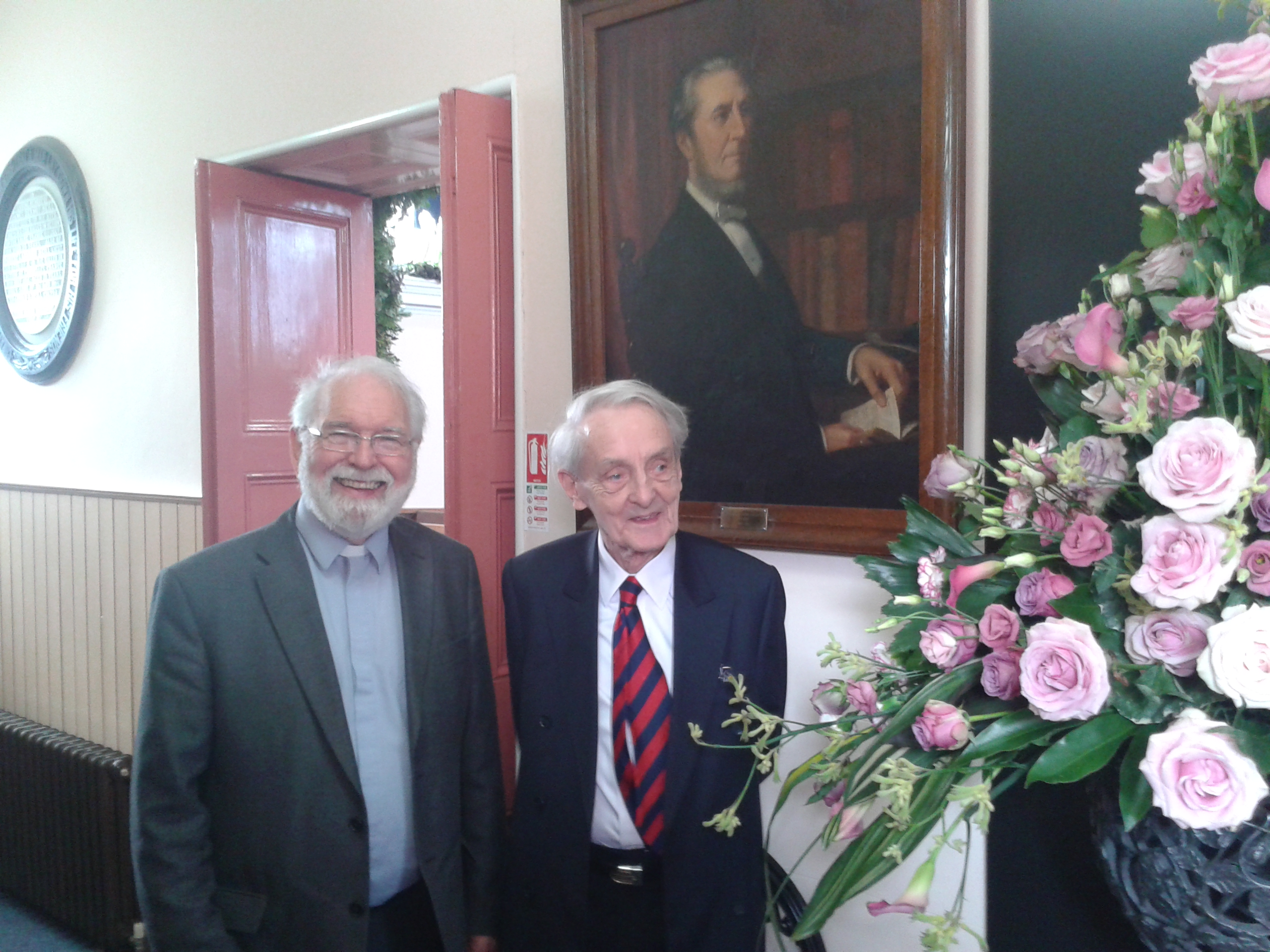
Rev Colin Campbell (left) and Rev Bill McMIllan in front of the portrait of Rev C.J. McAlester, in the vestibule of the church
Rev Colin Campbell (left) and Rev Bill McMillan in front of the portrait of Rev C.J. McAlester, in the vestibule of the church

Holywood N.S. Presbyterian church is a substantial classical fronted church dating from the mid-nineteenth century (and designed by Sir Charles Lanyon) but the congregation dates back over 400 years and this exhibition is part of the celebration of the continuation of all branches of Presbyterian witness in the town over that long period. Mac uses the Benedicite, the Song of Creation, as the theme for the exhibition and incorporates references to the rich history of the congregation including the Praeger and Bruce families.

Sophia Rosamond Praeger was, in the words of the exhibition brochure, an “acclaimed sculptor, poet and artist” and as a member of the congregation there are numerous examples of her work housed in the church. Most notable of these is the First World War memorial which she designed to include two children carrying baskets of flowers representing hope; they kneel on either side of the names of those who were killed, including one of her own brothers. Her other brother, Robert Lloyd Praeger, was a world famous botanist who became librarian of the National Library of Ireland.

Rev Michael Bruce was one of the first members of the Presbytery of Antrim and introduced the principles of non-subscription to the congregation in the 1720s. Supposedly a direct descendant of Robert the Bruce his family produced generations of Presbyterian ministers in Ireland.

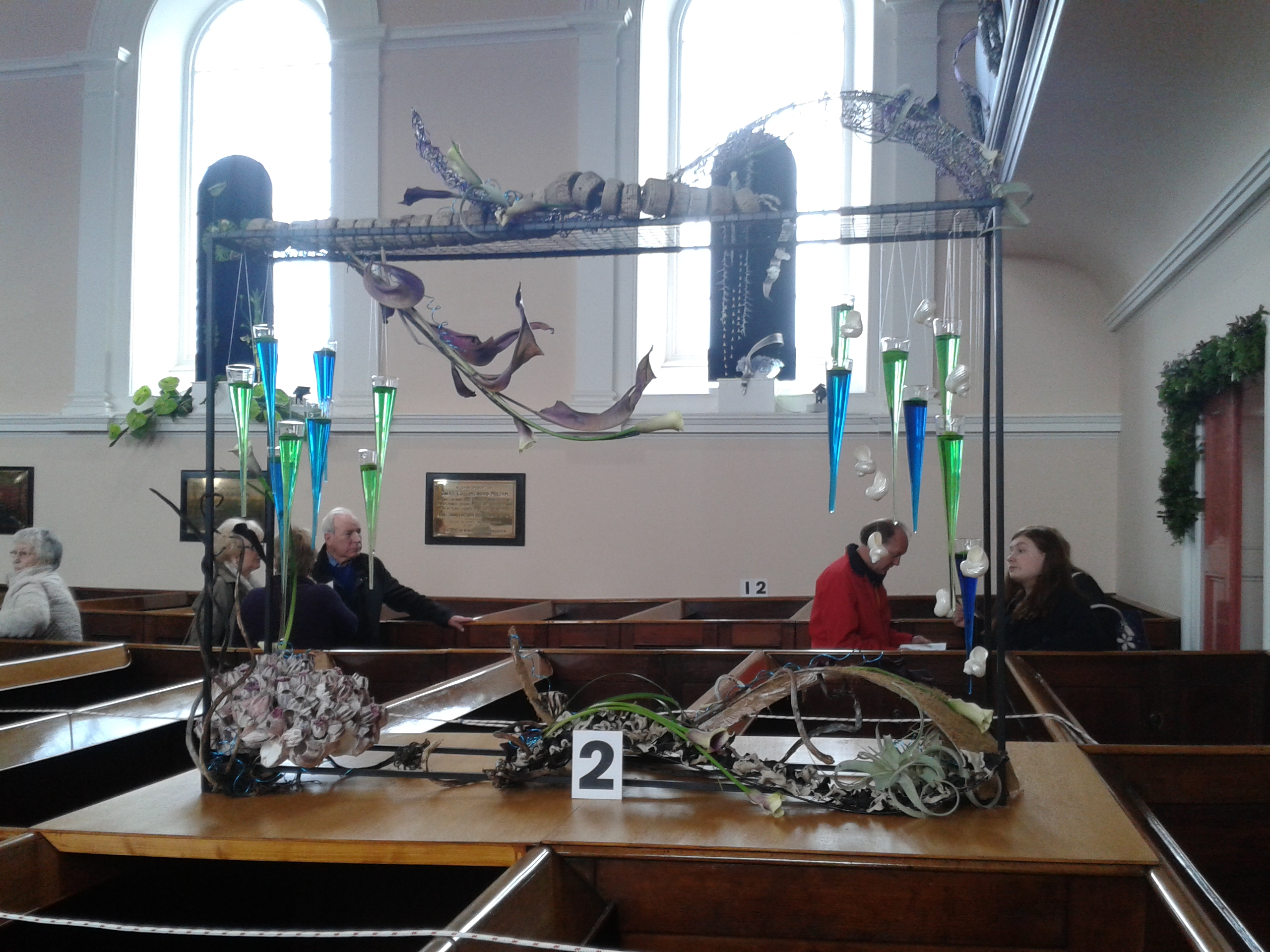
The exhibition contains material that is both traditional and strikingly modern. The line O ye Seas and Floods, bless ye the Lord takes as its cue the fact (quite new to me) that the first two buildings used by the congregation are now both submerged by the sea, and marine plants, shells and liquid are used in the design.

O ye Seas and Floods, bless ye the Lord

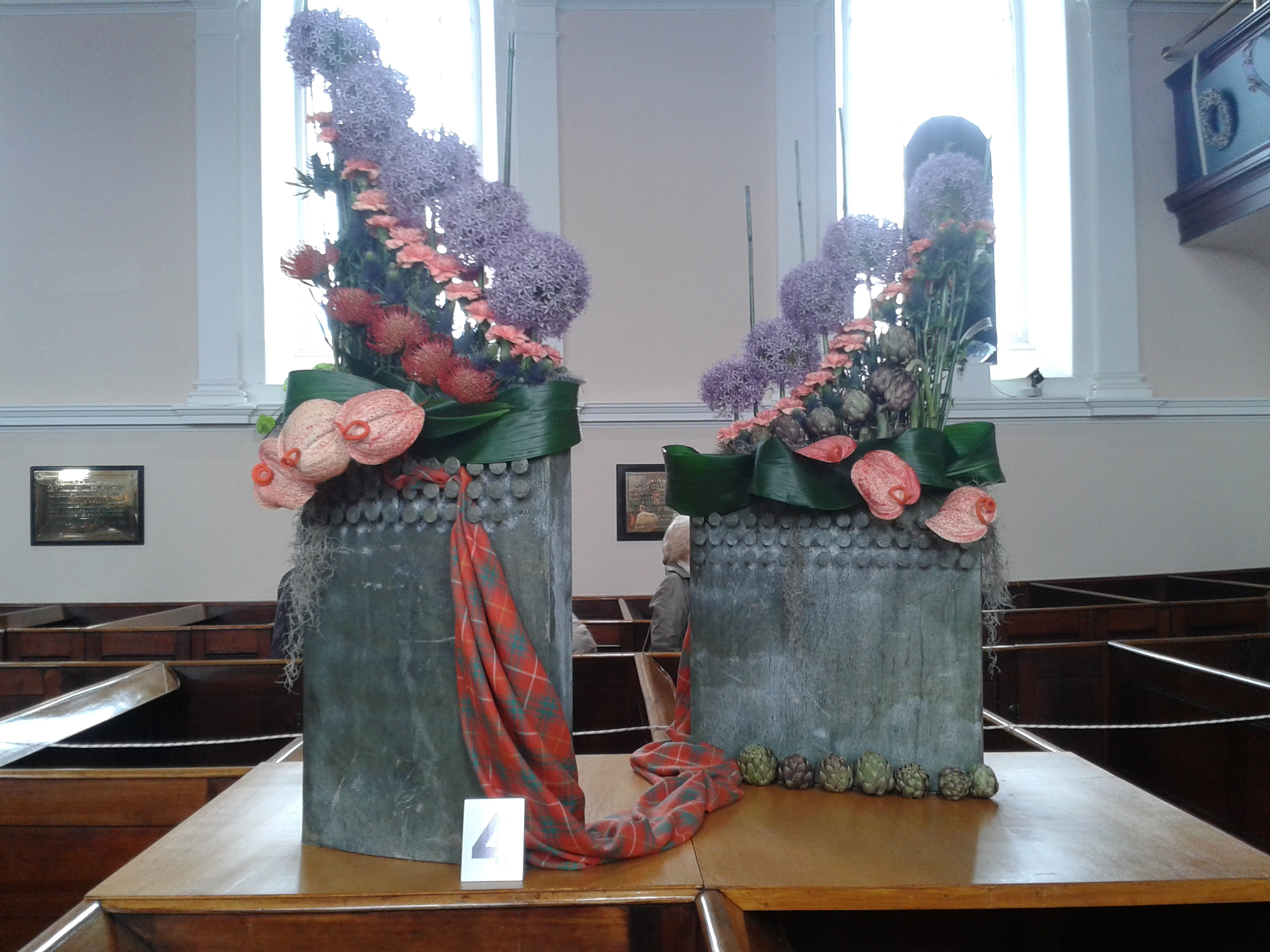
O ye Servants of the Lord, bless ye the Lord pays tributes to the Bruces and incorporates the colours of the Bruce tartan.

O ye Servants of the Lord, bless ye the Lord

O ye Children of men, bless ye the Lord is inspired by the logo of Sullivan Upper School as a tribute to the Rev C.J. McAlester, nineteenth-century minister of the church and a scholar and a teacher. He was involved in the foundation of this school and also ran an “underground academy” in the basement of his church.

O ye Children of men, bless ye the Lord

Panels on the front of the gallery were inspired by a sketch by Rosamond Praeger entitled “County Donegal” as well as Robert Lloyd Praeger’s most famous book The Way that I Went.

The Burning Bush symbol of the two varieties of Presbyterianism found in the town are both represented by sculptures in dried plant material and the communion table has a suitable decoration. My photographs probably don’t do the whole exhibition justice but it is nice to record at least some of what is on show in Holywood.

Burning Bush H2

Festival of Floral Art, First Holywood (NS) Presbyterian Church 23-26 April 2015, to celebrate 400 years of Presbyterian witness in Holywood.

Inside the church
Inside the church

Liverpool Unitarians: Faith and Action. Essays exploring the lives and contributions to society of notable figures in Liverpool Unitarian history. Edited by Daphne Roberts and David Steers

In September of 2014 we launched – in fine style, it must be said, in the impressive surroundings of the Liverpool Athenaeum, thanks to Philip Waldron – the book Liverpool Unitarians: Faith and Action. Essays exploring the lives and contributions to society of notable figures in Liverpool Unitarian history. Published by the Merseyside District Missionary Association it should also be added that the District took to the role of publisher with great aplomb – not necessarily the most usual role for any church administrative body.  The book is available in many book shops and museums in Liverpool as well as online from the District and via Amazon.

Liverpool Unitarians was a long time in preparation but I think is a better book for the extra time spent on its production. All the contributors have some connection with Merseyside Unitarianism and all write about different aspects of the contribution made by members of this household of faith to wider society over the centuries.

The full list of contributors and subjects is as follows:

Introduction, David Steers; Memorials of the Ancient Chapel of Toxteth Park, Bernard Cliffe; Jeremiah Horrocks 1618 – 1641, Bernard Cliffe; William Roscoe 1753 – 1831, David Steers; A Short History of the Rathbone Family, Annette Butler; The Unitarian Family of George Holt, Bernard Cliffe; Noah Jones 1801 – 1861, Philip Waldron; James Martineau 1805 – 1900, Len W. Mooney; Joseph Blanco White 1775 – 1841, David Steers; Kitty Wilkinson 1786 – 1860, Daphne Roberts; John Johns 1801 – 1847, David Steers; William Henry Channing 1810 – 1884, Richard Merritt; Charles Pierre Melly 1829 – 1888, John Keggen; Sir Henry Tate 1819 – 1899, Richard Merritt; Sir John Brunner 1842 – 1919, Len W. Mooney; Lawrence Redfern 1888 – 1967, Elizabeth Alley; Sir Adrian Boult 1889 – 1983, Richard Merritt; The Visitors’ Book of the Ancient Chapel, Bernard Cliffe

It was particularly pleasing to see Len Mooney’s contributions published in the book in light of Len’s sad death just a few months later. Someone who had been a devoted member of Ullet Road Church for many decades Len was a thoughtful and wise person whose gifts shine through in his chapters published here.

The cover of the book

The book has a full colour cover designed by Alison Steers which incorporates ‘The Triumph of Truth’, the central detail from the library ceiling of Ullet Road Church, painted by Gerald Moira; the Good Samaritan Window at Gateacre Chapel, which was erected in memory of Sir Henry Tate; a bronze representation of the James, (the ship on which Richard Mather and the local puritans sailed to Massachusetts in 1635) made in 1934 for the hall door at the Ancient Chapel of Toxteth; the front elevation of Ullet Road Church built in 1899; and detail of the Liverpool Town Plan of 1725 by J. Chadwick.


The book also contains more than fifty illustrations, many of them never before published, and all of them helping to tell the story of Liverpool Unitarianism. Some of the stories told in the book are well known, others are not so familiar to the general reader, yet others break entirely new ground – Bernard Cliffe’s analysis of the memorials and graves in the Ancient Chapel is a first, as is his examination of the chapel’s visitors’ book.

In the Introduction I say:

This book is not intended to be hagiography but it does try to outline how one group of people – members of a particular faith community with deep historical roots but with an aversion to fixed creeds – were inspired to serve their fellows in different ways. Their legacy can be seen all over the city – in its parks, in its monuments, in the university, in hospitals, in education, in art galleries and museums – and it exists in the long and continuing struggle to create a society that gives equality and opportunity to all its citizens. It is not meant to be an exhaustive account of all the eminent members of the churches and chapels in the region. Readers will notice that the names mentioned are part of wider connections of family and business which includes many others who could be included. There are other figures who could be the subject of such biographical accounts. But this is a selection of some of those who have followed the call of faith to be of service to wider society.


It is pleasing also to report positive reviews in various publications.

In Faith and Freedom Peter Godfrey says: a splendid book… chapters that are full of interest and fill the reader with admiration and often wonder at the scope of the achievements of these Liverpool Unitarians

and in The Inquirer Alan Ruston says:

readers of this book will come to the conclusion that Unitarianism has not been just a faith of the mind but one of action as well.

The title and full publication and order details are as follows:

Liverpool Unitarians Faith and Action Essays exploring the lives and contributions to society of notable figures in Liverpool Unitarian history

Edited by Daphne Roberts and David Steers

Published by the Merseyside and District Missionary Association 2014 ISBN 978-0-9929031-0-7 Price £12.99 plus £2.50 post and packing 128 pages, 52 illustrations, full colour cover

Available from: Philip Waldron, Ullet Road Church, 57 Ullet Road, Sefton Park, Liverpool L17 2AA or liverpoolunitarians@gmail.com also available for purchase on Amazon

Joseph Blanco White (Ullet Road Church)


A journey of a thousand miles begins with a single step

These words of the Chinese philosopher Lau Tzu seem appropriate for the beginning of any new enterprise, they also tie in, for me personally, with the picture of the Ancient Chapel of Toxteth, a place which was very much a starting point for me. But the purpose of this blog will be to flag up things that interest me particularly in relation to the journals Faith and Freedom and the Transactions of the Unitarian Historical Society, both of which I edit. Not that I intend to confine myself to either of those publications – anything that catches my eye will go in here – the blog will have a special remit towards faith, religious history and associated matters but it will by no means confine itself to matters of religion.