The Latest issue of Faith and Freedom

The latest issue – Volume 77, Part 2, Autumn and Winter 2024, Number 199 – is now available and will be with subscribers shortly. Details on how to subscribe (including a link to our website if you would like to pay via PayPal) can be found at the foot of this page.

This issue is special for a number of reasons. First of all we are pleased to announce the magnificent vote of approval given to us by the Merseyside and District Missionary Association who have given us very generous financial support. This is a tremendous help and together with the valued grant we already receive from the Daniel Jones Fund this means that Faith and Freedom can continue to serve our readers, maintaining the original vision set out by the Ministerial Old Students Association of Manchester College, Oxford for the promotion of liberal religious discussion and the free exchange of ideas.

Secondly we are also delighted to be able to launch our brand new Faith and Freedom Logo with this issue. Our Logo was previewed on this site a couple of weeks ago and it now takes its place atop our masthead. Specially designed for us, it is a striking representation of what we stand for as a journal and will let the world know who we are. We have already had requests for this to be produced as a badge which is something we are keen to look into.
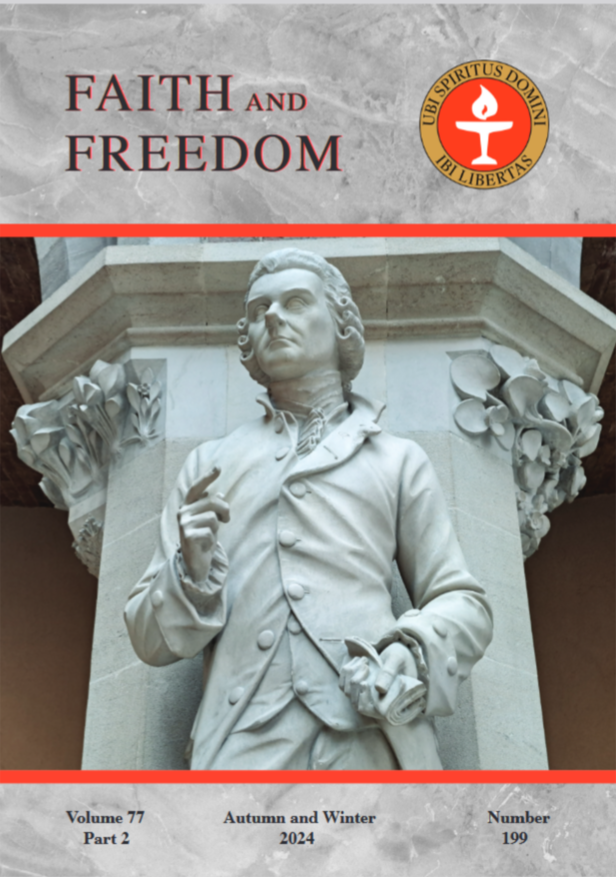
It is very pleasing also that the journal continues to attract top quality articles from Unitarians and non-Unitarians alike from Britain and around the world. In this issue Elizabeth Kingston-Harrison, who is the Congregational Connections Lead for the General Assembly of Unitarian and Free Christians and has a PhD in Intellectual History, having studied the theology of Joseph Priestley and other eighteenth-century rational dissenters, contributes A Comet in the System: Joseph Priestley and the emergence of rational dissent in the eighteenth century. Elizabeth writes of Priestley’s role in the emergence of rational dissent and shows how, far from being a distant, dry historical study, this is something that is energising and alive today and helps us connect with our present-day religious identity. Joseph Priestley ‘was a courageous, “big picture” person’ whose scientific discoveries went hand in hand with his theological reflections. The discoverer of oxygen applied reason to scripture and developed a new way of understanding the universe.

Frank Walker considers Sir Lloyd Geering: Trinitarian-Unitarian, Humanistic Presbyterian, Centenarian and asks Can You Love the Human Race? Sir Lloyd Geering, a New Zealand Presbyterian Professor, who was once charged with heresy, may not be a name immediately familiar to most of our readers but I have no doubt that everyone will find Frank’s thoughtful examination of his theology and ideas incredibly life affirming and uplifting.

Peter Hewis addressed the Old Students Association at Harris Manchester College back in June and this paper is based on his sermon – Keep alive the dream in the heart – a quotation from Howard Thurman and an exploration of dreams in religious history and their continuing power to inspire us and drive us towards making a difference in the world,

As always we have a number of really interesting and informative reviews of a wide range of publications contributed by our readers. This issue includes:

Right Relationship in the Real World

Commissioning Editor: Jane Blackall, Right Relationship in the Real World, Learning to Live by our Unitarian Values, The Lindsey Press, London, 2024, pp 132, ISBN 978-0-8519-099-8, £7, pbk. The book can be ordered online at https://www.unitarian.org.uk/shop/

Reviewed by Peter B. Godfrey

Fideology

Richard F. Boeke, Fideology – Building Trust through the Shared Experience of Faith at the Root of the World’s Religions, 2024, pp 248, ISBN 97988844906686, £11.08 plus postage from Amazon.

Reviewed by Peter B. Godfrey

From the heights of politics via a spiritual journey to the ministry
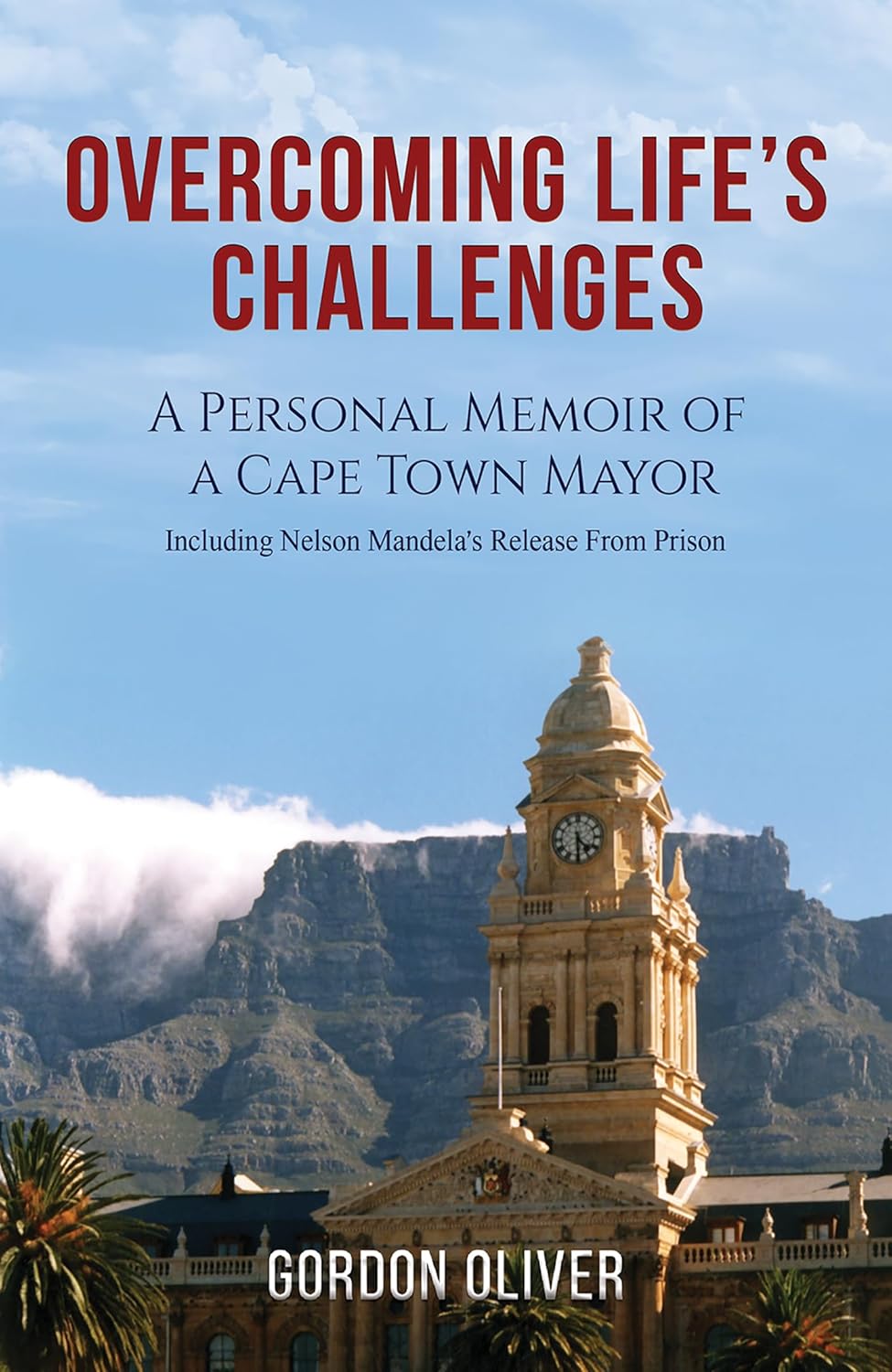
From the heights of politics via a spiritual journey to the ministry Gordon R. Oliver, Overcoming Life’s Challenges: A Personal Memoir of a Cape Town Mayor, Austin Macauley Publishers, 2024, pp.166, ISBN: 979-8891554146, £8.99, pbk.

Reviewed by John Midgley

An honest and liberal analysis of the Church
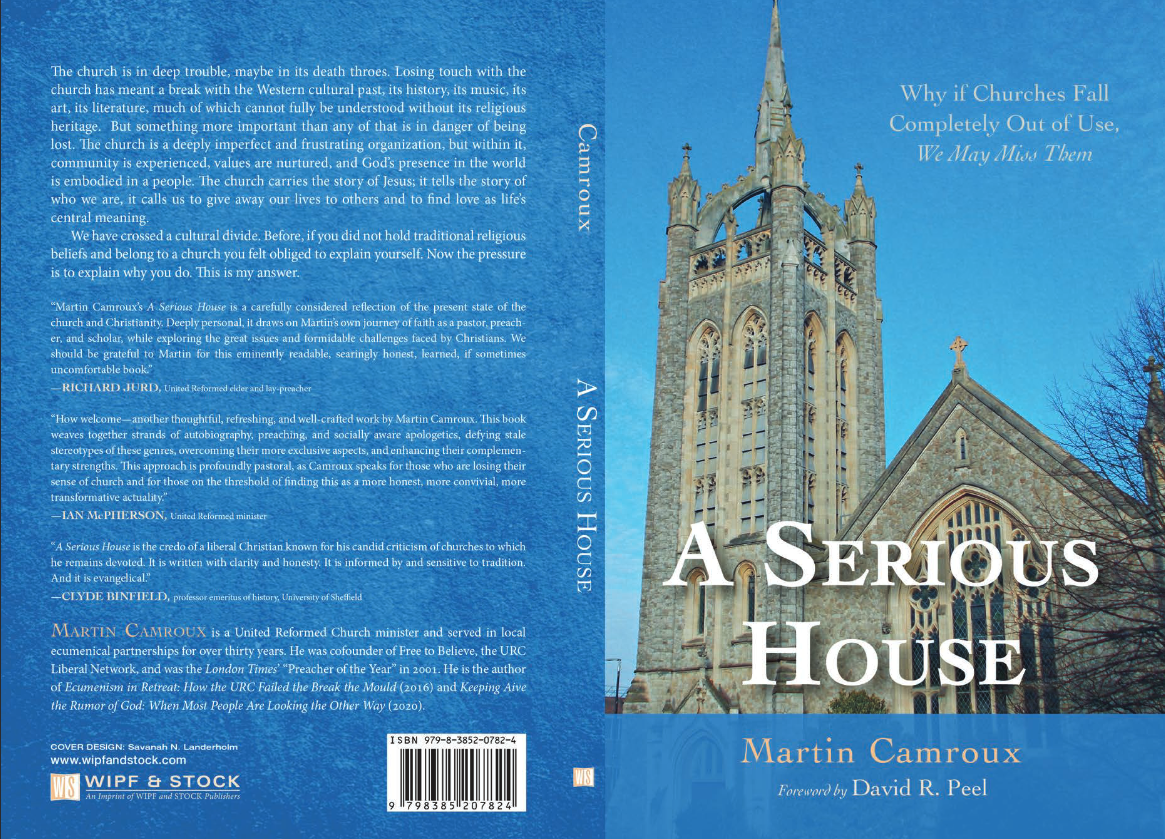
Martin Camroux, A Serious House, Why if Churches Fall Completely Out of Use We May Miss Them, Wipf and Stock, 2024, pp. 188, ISBN-13: 979-8385207824, £21 pbk, (also available direct fromthe author for £16, including postage, Martin Camroux, 4 Sorrel Close, Colchester, CO4 5UL).

Reviewed by Francis Elliot-Wright

Prayers of Many Faiths

Marcus Braybrooke, 1,000 Prayers from Around the World. Prayers of Many Faiths for Many Situations, independently published, 2024, pp.390, ISBN: 9798321565889, £39.99 hbk; ISBN: 97983439561609, £9.99 pbk black and white; ISBN: 798321565889, £19.99 pbk colour; also available on Kindle £4.99. Available to order on Amazon.

Reviewed by David Steers

An annual subscription to Faith and Freedom (two issues) costs £16.00 (postage included) in the United Kingdom. Single copies can be ordered at a cost of £8.00 each (postage included). Cheques should be made out to Faith and Freedom and sent to the business manager:

Nigel Clarke,
Business Manager, Faith and Freedom,
16 Fairfields,
Kirton in Lindsey,
Gainsborough,
Lincolnshire.
DN21 4GA.

Overseas subscriptions are also available.

It is also possible to pay online. For more details see our website:

https://www.faithandfreedom.org.uk/subs.htm

Transactions of the Unitarian Historical Society December 2020

An additional special issue of the Transactions is now on its way to subscribers (new subscribers are also very welcome, if you would like to join go to the Unitarian Historical Society website here).

This issue features:

WILLIAM HAZLITT, JOSEPH PRIESTLEY AND THE ORIGINS OF UNITARIANISM
IN AMERICA
by STEPHEN BURLEY

The “dark, cracked, dusty and unframed” portrait of the Rev William Hazlitt (1737-1820) painted by his son in 1805. (Image and quote from ‘The Day-Star of Liberty William Hazlitt’s Radical Style’ by Tom Paulin)
Rev Joseph Priestley (1733-1804). Portrait by Ellen Sharples (Source: Wikipedia)

Dr Stephen Burley’s paper is a radical reassessment of the role of William Hazlitt in the development of Unitarianism in the United States. A difficult man, Hazlitt was a fervent propagandist for Unitarianism whose contribution has frequently been overlooked or downplayed. This article adds a great deal to our understanding of him.

Rev William Hazlitt, from a miniature portrait by his son John (Source: Wikipedia)

‘STEADFAST THROUGH TROUBLES’: MOUNTPOTTINGER AND THE LAWRENCES
by SANDRA GILPIN

Ellen Mary Lawrence, from a portrait in Mountpottinger Church. (Photo: Adrian Moir)
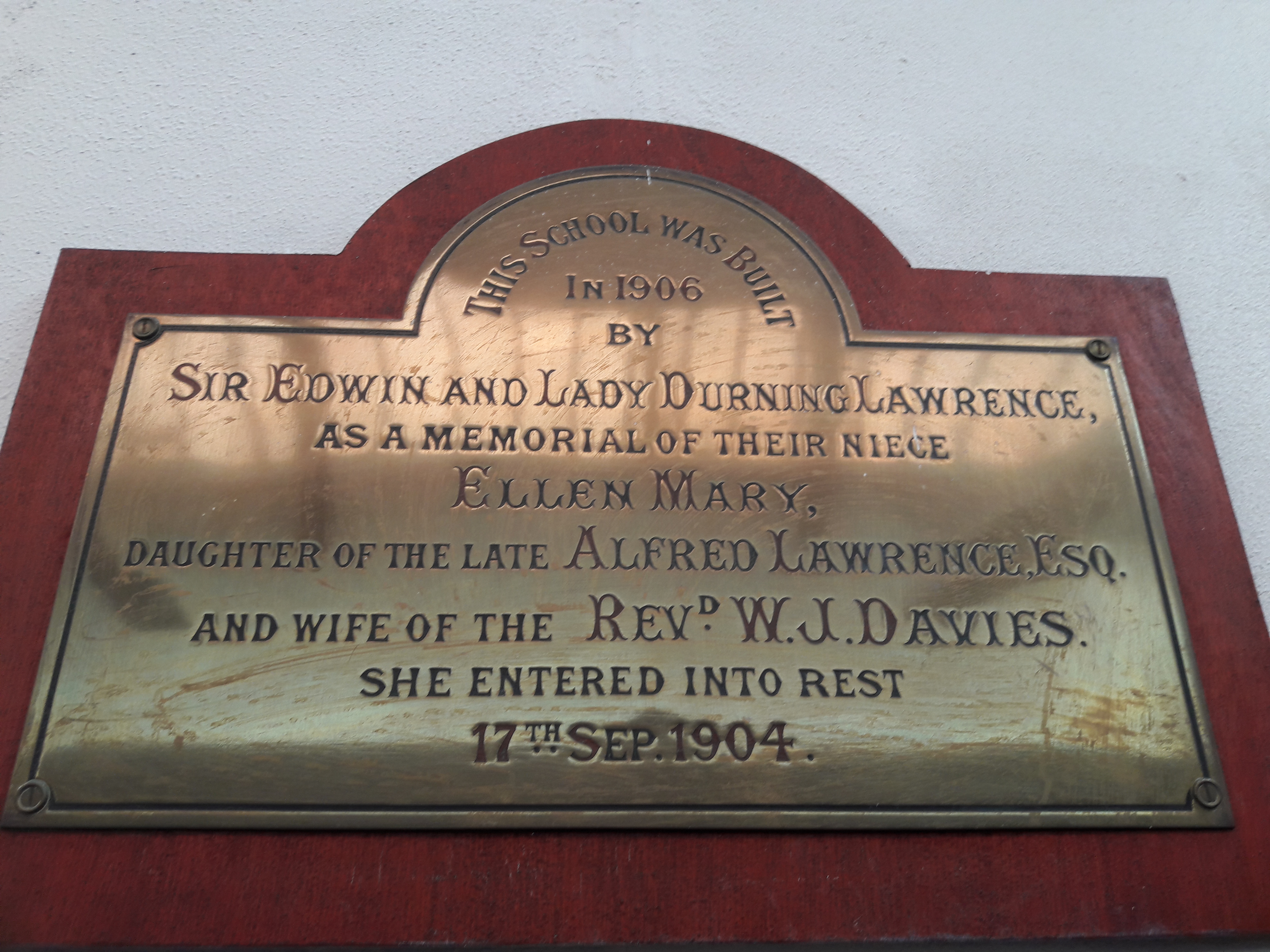
Plaque in the schoolroom in Mountpottinger Church in memory of Ellen Mary Lawrence (Photo: Adrian Moir)

Sandra Gilpin tells a story that weaves together Unitarian life in London, Wales and Belfast in the late nineteenth and early twentieth centuries through the lens of the Lawrence family. Its main focus is Ellen Mary Lawrence who was born in London and who married the Rev William Jenkin Davies. She died at a tragically young age and her memorial forms part of Mountpottinger NSP Church in east Belfast.

Mountpottinger Church before the extension was added in memory of Ellen Mary Lawrence and probably featuring Rev William Jenkin Davies standing in the centre. To read more about the building of Mountpottinger click on the above image.

HELEN K. WATTS – A UNITARIAN SUFFRAGETTE
by ALAN RUSTON

The daughter of an Anglican vicar, Helen K. Watts became a Unitarian in Nottingham (Picture: Alan Ruston. From a booklet by Rowena Edlin-White, Nottingham Women’s History Group, Piecemeal Pamphlets, £2)
Plaque unveiled in Nottingham on 14 December 2018 in memory of Helen K. Watts (Picture: Alan Ruston. From a booklet by Rowena Edlin-White, Nottingham Women’s History Group, Piecemeal Pamphlets)

Alan Ruston brings together two sides of the life of Helen K. Watts. A ‘stalwart’ Unitarian, well-known in London and Sussex up until her death in 1972. She was also an active suffragette between 1907 to 1911 who was arrested for her campaigning and threatened with force feeding. This remarkable aspect of her life seems to have been forgotten in Unitarian circles and Alan paints a full picture of her life and achievements.

(Picture: Alan Ruston. From a booklet by Rowena Edlin-White, Nottingham Women’s History Group, Piecemeal Pamphlets)

In our Record Section Derek McAuley has used the Freedom of Information Act to uncover hitherto unknown aspects of the life of the Rev Gábor Kereki (1914-1995) who fled Hungary for Britain at the start of the Cold War in 1947. Throughout the rest of his life he made a great contribution to the Unitarian ministry in Britain and this will continue thanks to a substantial legacy left by his wife in 2016. She has established the ‘Gábor Kereki Trust’ to benefit ministers and students of the Hungarian Unitarian Church and enable them to study in the UK.

In our Reviews Derek McAuley begins what must be a long-overdue examination of the role Unitarians played in slavery prior to its abolition in 1833 with his review of Kate Donnington’s brand new book on the Hibbert family. Alan Ruston reviews the important Lindsey Press book Unitarian Women A Legacy of Dissent, edited by Ann Peart, and Andrew Hill reviews a new publication of the diaries of James Losh, a Newcastle Unitarian who observed and recorded detailed changes in nature, the environment and weather in his local area between 1803 and 1833.

Transactions of the Unitarian Historical Society

Volume 27 Number 3 December 2020
Edited by David Steers

is now available. An annual subscription costs £10. Contact the treasurer via our website to join: https://www.unitarianhistory.org.uk/hsmembership4.html

The Warrington Academy


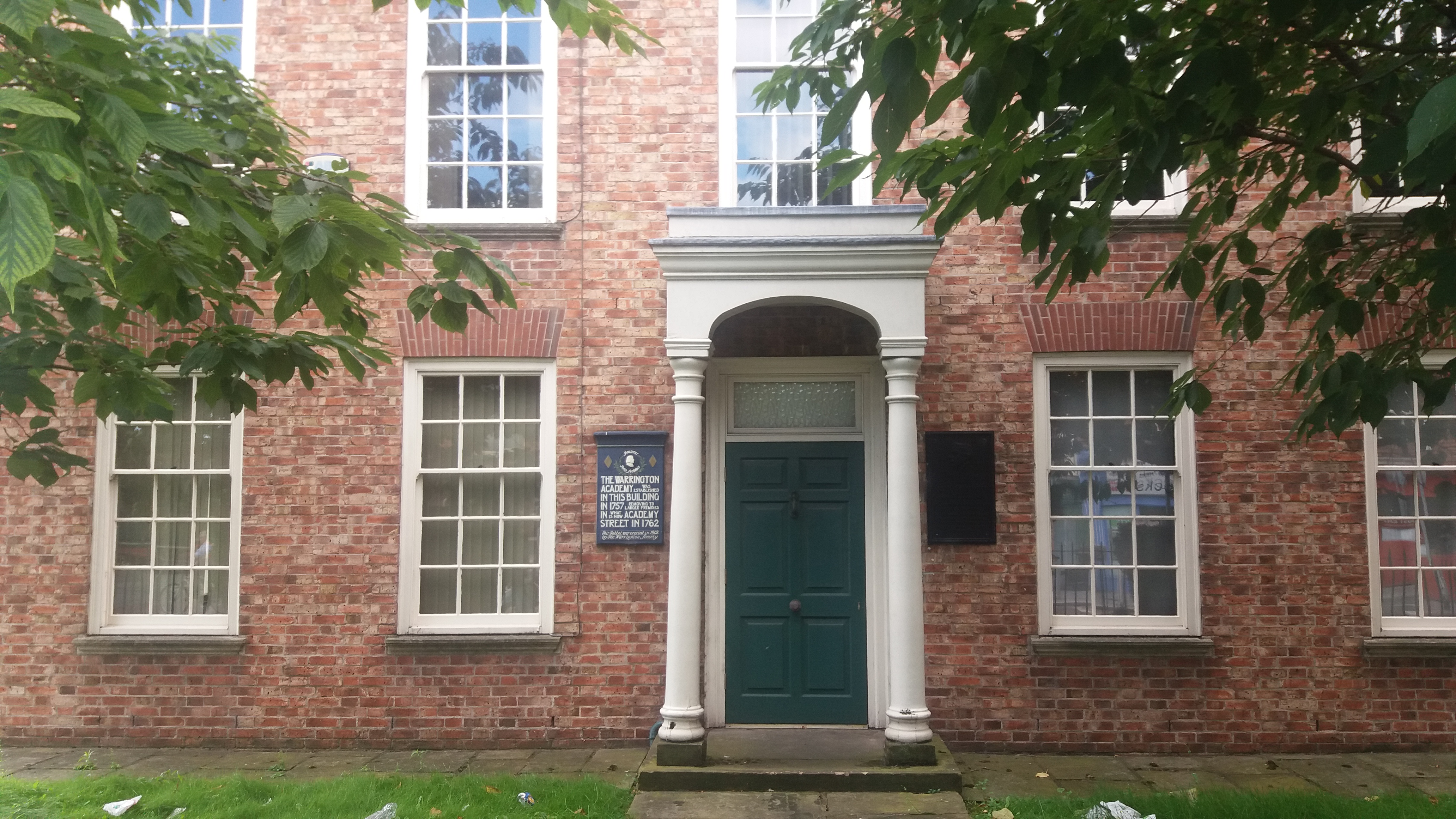
On a recent visit to Warrington I realised that I had been in the town many times but had never knowingly seen the famous Academy, or what remains of it. Famously the Academy was physically moved on rollers to preserve it after road widening in the early 1980s. I hadn’t realised, however, that this careful and no doubt expensive feat of engineering had not prevented it being demolished and rebuilt with hardly any original features in the 1990s.


20160812_144559

Two plaques still stand on either side of the entrance of what is left of the Academy. One commemorates the Academy, and another which is difficult, if not impossible, to read, was deciphered for me by Luke who tells me it recalls Arthur Bennett. The wording of the plaque is recorded on the Open Plaques site (http://openplaques.org/)  as being:

A poet who had dreams and to his dreams gave life. Arthur Bennett 1862-1931 Honorary Freeman and Alderman of the Borough of Warrington Mayor 1925-1927 A founder and president of the Warrington Society, the members of which erected this tablet in recognition of his services to the town he loved.

Clearly very proud of his Warrington heritage Arthur Bennett’s poem on eighteenth-century prison reformer, humanitarian and Warrington citizen ‘John Howard’ concludes with a stanza on his friendship with Dr John Aikin, son of one the founding tutors of the Academy and brother of Anna Laetitia Barbauld:

Then to “the Doctor’s, whom he loved so well,
Past the still halls with Memory’s laurels wreathed,
The sacred “seats where Science loved to dwell
Where liberty her ardent spirit breathed”.
The day’s work tested, he would journey home
To take his simple cup of tea and creep
Up the quaint old stairs in the familiar gloom,
Content to catch four fleeting hours of sleep.

I am sure Anna Laetitia’s poems relating to the Academy are better known today, one of her earliest poems discussed its educational role:


The Muses here have fixed their sacred seats.

Mark where its simple front yon mansion rears,

The nursery of men for future years!

Here callow chiefs and embryo statesmen lie,

And unfledged poets short excursions try….

Here Nature opens all her secret springs,

And heaven-born Science plumes her eagle-wings.


The Open Plaques site also tells me there is a plaque for Joseph Priestley in Warrington which I didn’t realise. He was perhaps the most eminent of all the staff of the Warrington Academy and another subject that inspired Anna Laetitia to poetry, writing to tease Priestley after she found a mouse caught in a trap which was destined to be a part of his experiments on air. She wrote:


O hear a pensive prisoner’s prayer,

For liberty that sighs;

And never let thine heart be shut

Against the wretch’s cries!


For here forlorn and sad I sit,

Within the wiry grate;

And tremble at the approaching morn,

Which brings impending fate.


If e’er thy breast with freedom glowed,

And spurned a tyrant’s chain,

Let not thy strong oppressive force

A free-born mouse detain!


The cheerful light, the vital air,

Are blessings widely given;

Let Nature’s commoners enjoy

The common gifts of Heaven.


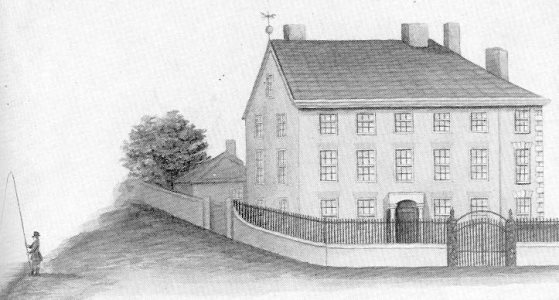
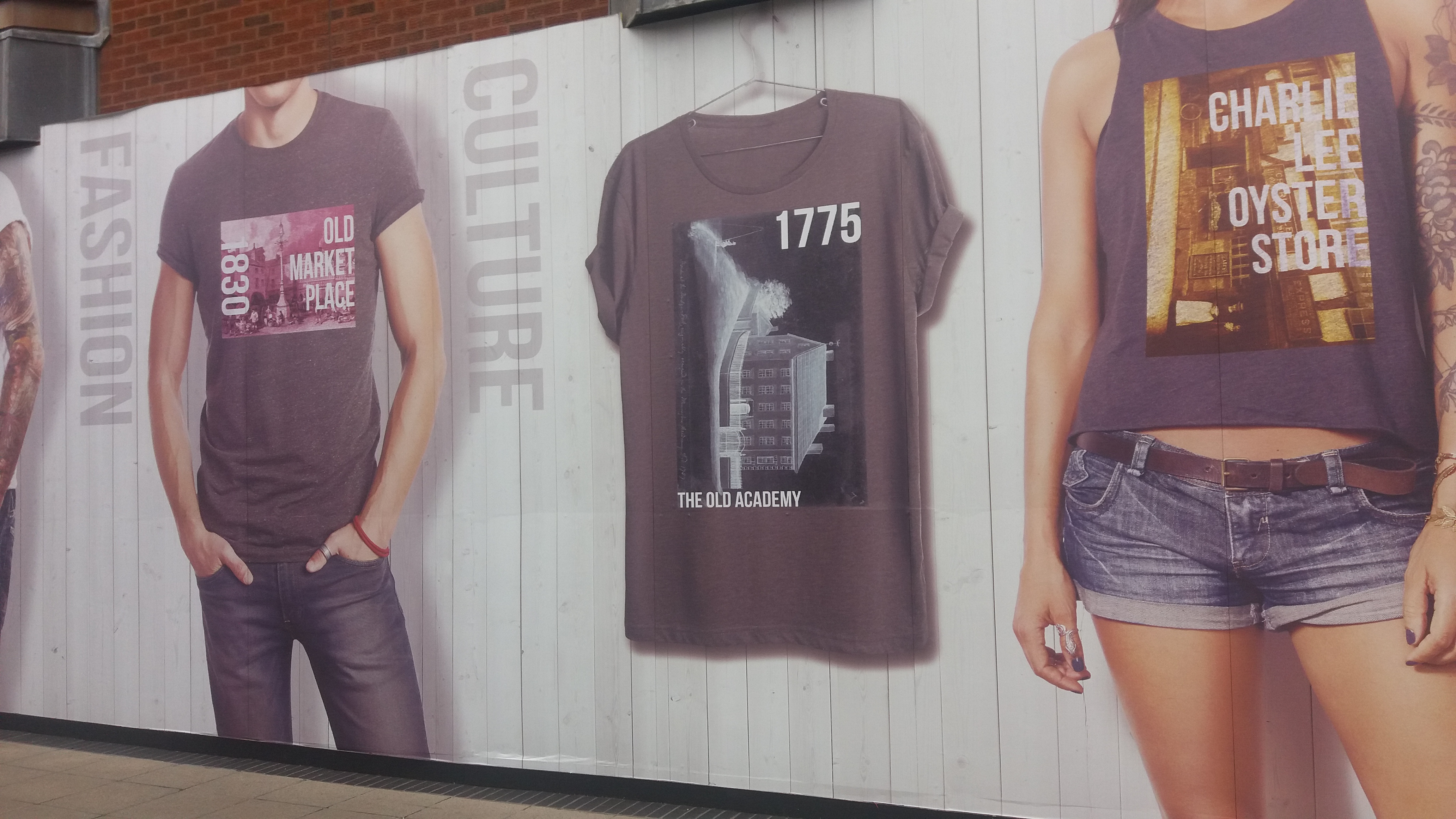
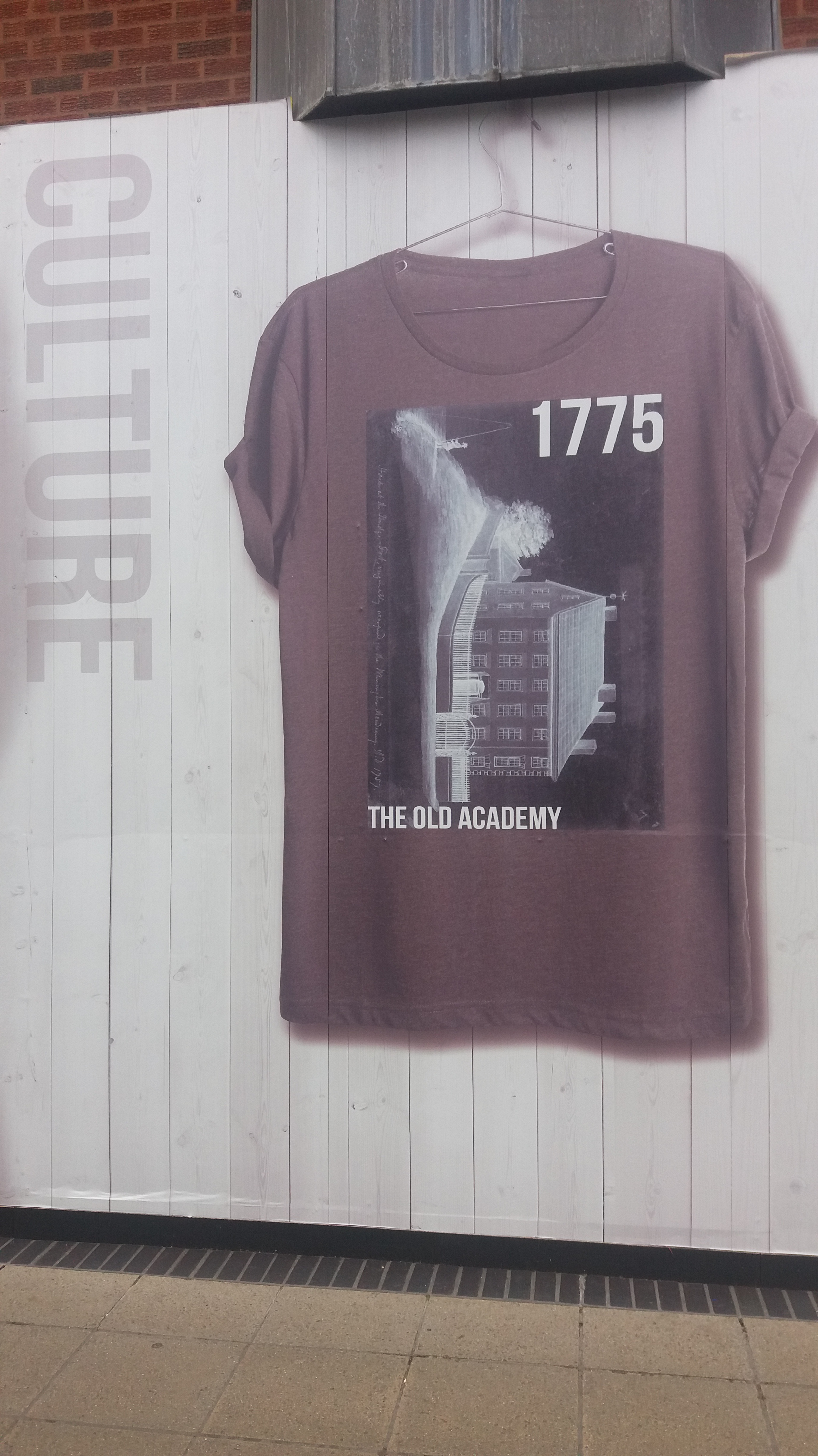
One of the things you notice when you visit Warrington is that even if the original building of the Academy has not been preserved its story is still valued in the town. An advertising hoarding promoting the town outside the Golden Square shopping centre makes use of the image of the first Academy:

20160812_151453

20160812_151500


I am not sure what the date 1775 is meant to commemorate. It may be an error for the date of foundation in 1757.

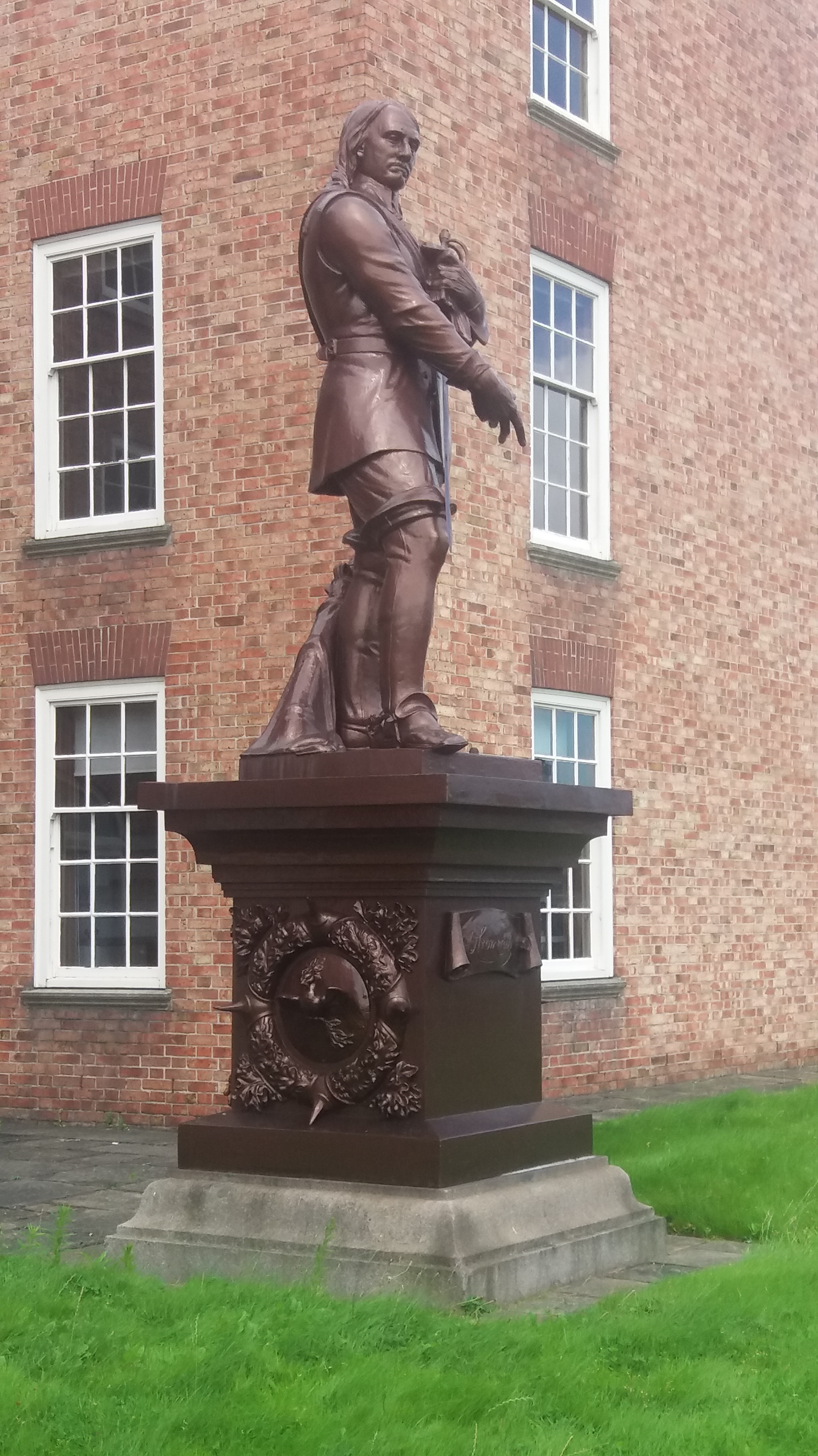
The most notable feature of the modern Academy building is a large statue of Oliver Cromwell. This was put up in 1899 although I am not sure if this was the original site.

20160812_144738

Nantwich Unitarian Chapel

Willaston School Nantwich was created through the will of Philip Barker who lived at the Grove, a house originally built by his brother in 1837. It’s clear also that Philip Barker and his brothers were the main supporters of the Unitarian Chapel, their vision – and financial contribution – seems to have been what maintained what was otherwise quite a weak cause.


Nantwich 1950s

The chapel and associated buildings, probably dating from the 1950s. Photo courtesy of Andrew Lamberton


I found myself in Nantwich once, almost by accident, and carried out an ineffective and inevitably fruitless search for anything left of the Chapel. If I had checked The Unitarian Heritage book first I would have known that it was long demolished (in 1969), eventually meeting, it would appear, quite a sad end. However, the town of Nantwich is fortunate in having a very active History Group (which published Willaston School Nantwich – see the two previous posts) and through the kind help of Andrew Lamberton – who supplied me with a number of fascinating images and other information –  I’ve been able to piece together something of the history of the congregation that was once served by Joseph Priestley.


The congregation dated from the ejection and registered a former malt-kiln on Pepper Street as a meeting house in 1689. Between 1725 and 1726 they built the Chapel on Hospital Street.


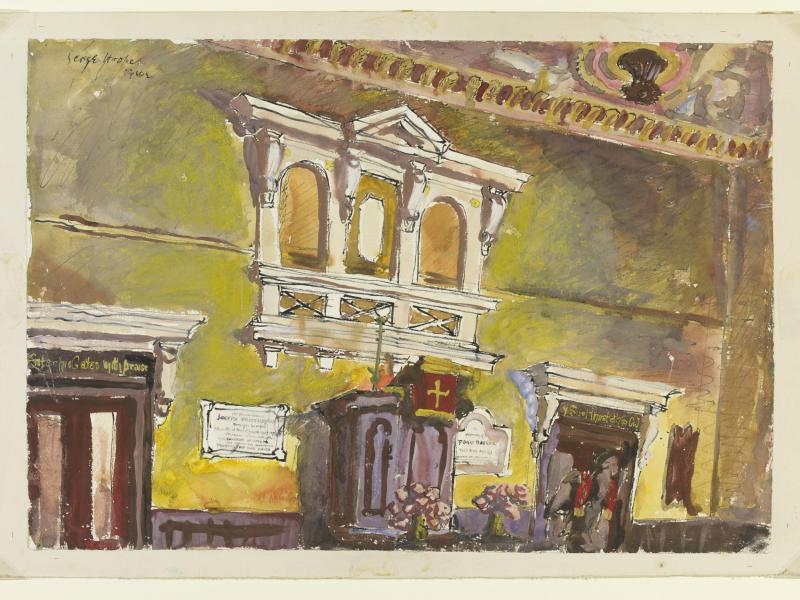
The lively painting of the interior on this page was painted in 1942 by George Hooper as part of the ‘Recording Britain’ series of images, held in the V & A which describes the scheme in the following way:

The ‘Recording Britain’ collection of topographical watercolours and drawings [was] made in the early 1940s during the Second World War. In 1940 the Committee for the Employment of Artists in Wartime, part of the Ministry of Labour and National Service, launched a scheme to employ artists to record the home front in Britain, funded by a grant from the Pilgrim Trust. It ran until 1943 and some of the country’s finest watercolour painters, such as John Piper, Sir William Russell Flint and Rowland Hilder, were commissioned to make paintings and drawings of buildings, scenes, and places which captured a sense of national identity. Their subjects were typically English: market towns and villages, churches and country estates, rural landscapes and industries, rivers and wild places, monuments and ruins. 


It’s an interesting choice of subject and shows the pulpit with memorials to Joseph Priestley and Philip Barker on either side. You probably wouldn’t guess from the painting but the interior had been completely re-ordered. The chapel had been turned through 180 degrees and the pulpit placed on a false wall with a vestibule and ancillary rooms located behind it. Andrew Lamberton has supplied me with this plan of the interior of the remodelled chapel (from the Cheshire Record Office):


Nantwich plan

Plan of the interior c.1850 (Cheshire Record Office)

Strangely this plan does not show the pulpit which would have been in the centre of the wall on the right hand side of the drawing as we look at it. Opposite it is an area described as ‘orchestra’ on the plan. Is this meant to imply some instrumental accompaniment for hymns or would it be the place for the choir? Philip Barker’s pew can be seen in the top left hand corner.


The major repairs that resulted in the re-ordering of the interior took place in 1846-49 according to Christoper Stell’s Nonconformist Chapels and Meeting-houses in the North of England (1994). His plan of the interior can be compared with the one above. By 1850, however, it was not a large congregation as this subscription list, also supplied by Andrew Lamberton from the Cheshire Record Office, shows


Nantwich subscribers

Subscribers List 1850 (Cheshire Record Office)

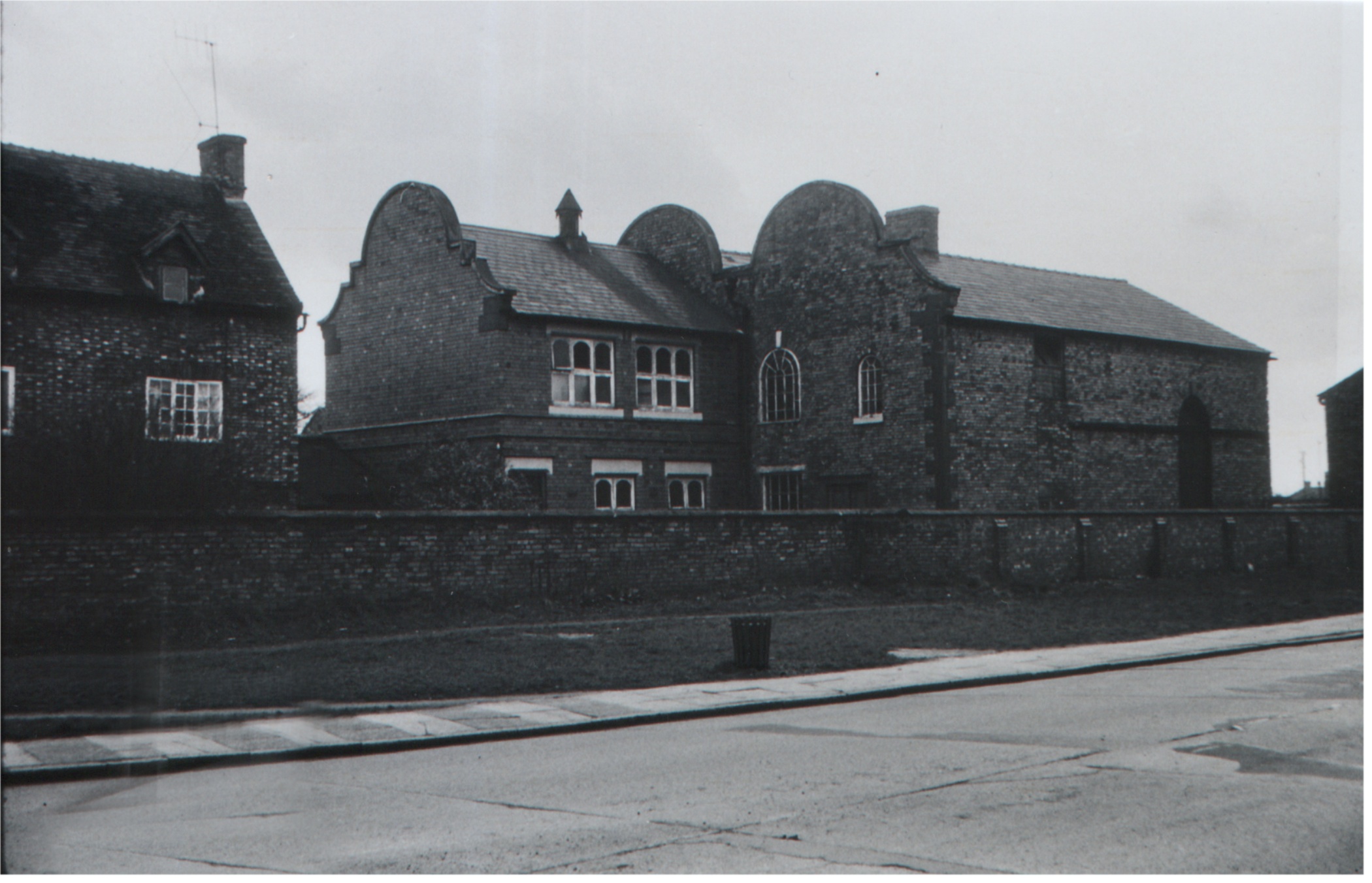
The chapel was clearly very dependent on the Barker family and the Rev J Morley Mills, minister at the end of the nineteenth and start of the twentieth centuries, recorded that it was known in those days as “Mr Barker’s Chapel”. By the time of the Second World War it was clearly at a very low ebb. Surviving photographs show the building in a very sorry state.

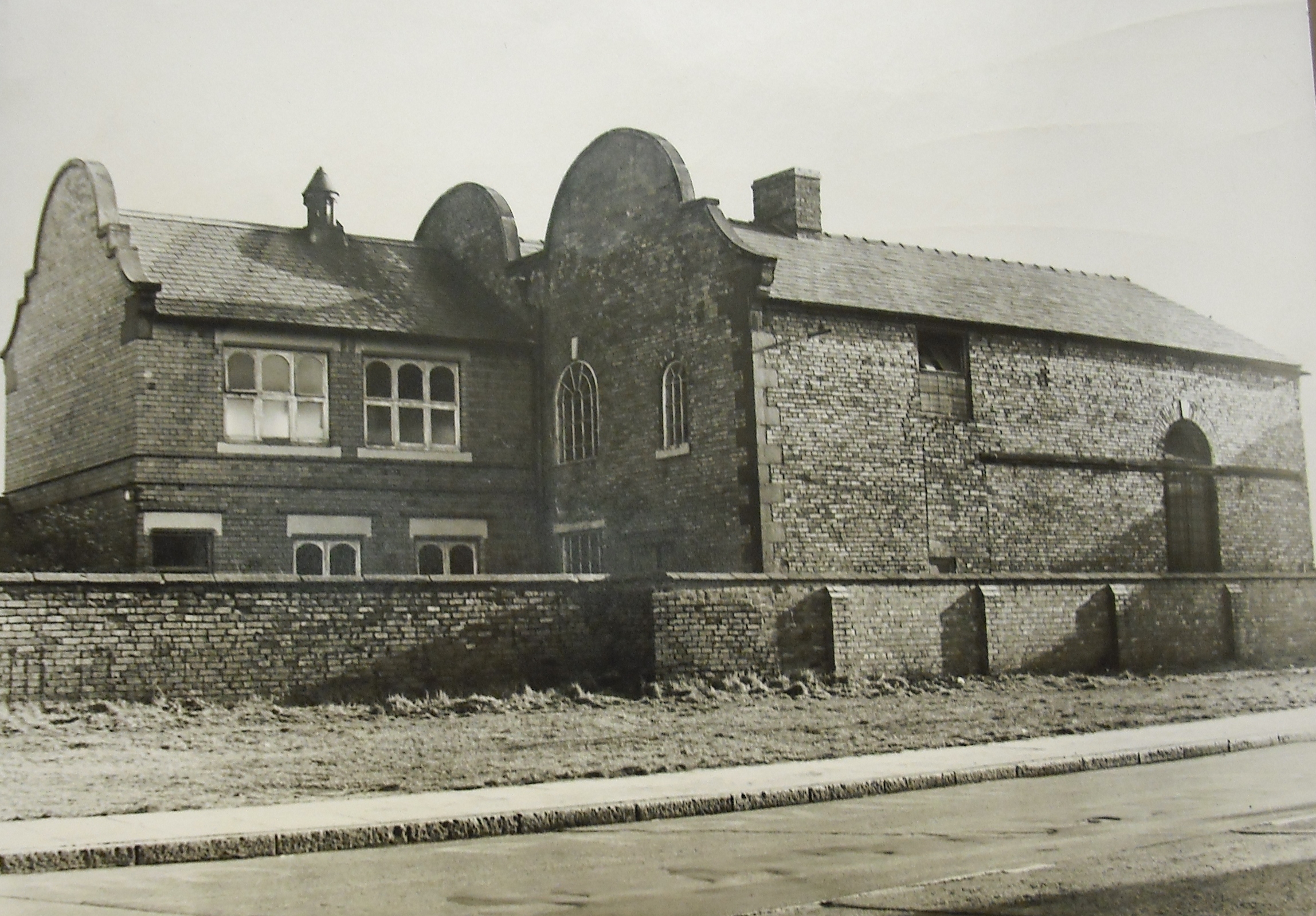
In 1896 a schoolroom had been built right in front of the chapel. This obscured the distinctive outline of the frontage with the Dutch style gables. However, Christopher Stell suggests this design may not have been original and could have been added in a rebuilding of 1870. Either way the Victorian schoolroom obscured the look of the chapel:

Nantwich 1960s

The chapel probably in the 1960s. Photo from Andrew Lamberton

Curiously The Unitarian Heritage carries a photograph of Nantwich chapel taken, presumably, after the school house had been demolished and showing the frontage as it had been built:

Nantwich UH

From The Unitarian Heritage

It seems a reasonable assumption to make that this photograph was taken at the start of the demolition process, after the Victorian school house had been taken down. However, if you compare this photograph and the previous one which dates from the 1960s it is clear that the two long windows are both intact and fully glazed and the stone work and frames around the window are no longer painted. Could this photograph actually date from a different period?


I’d be interested to hear from anyone who has any more information and any additional photographs of the chapel, especially of the interior.


Andrew Lamberton has also sent me this newspaper cutting taken form the Nantwich Chronicle in about 1966 and indicating the sad end the chapel faced:

Nantwich Chronicle

From the Nantwich Chronicle c.1966

It is a shame that such a an unusual and interesting building was lost to the locality, one that had been thought significant enough to record for posterity during the  darkest years of the Second World War.

2012FG9670_2500

The Presbyterian Unitarian Chapel, Nantwich; Recording Britain; Chapel, Hospital Street, Nantwich. © Victoria and Albert Museum, London