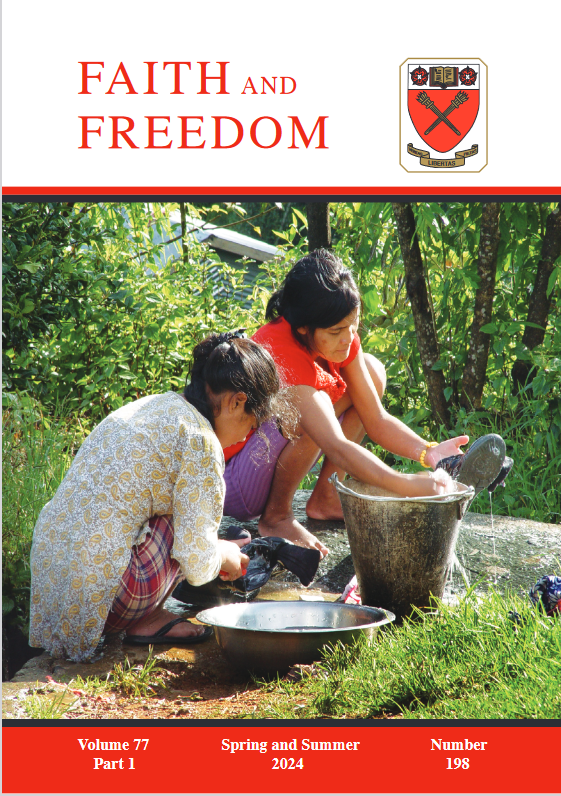
Faith and Freedom was founded by the Ministerial Old Students’ Assocation of Manchester (now Harris Manchester) College, Oxford in 1947. It is always good to attend the annual meetings along with the meeting of the Friends and Honorary Governors of the College.
Attending both meetings gives the chance to see many contributors and supporters of Faith and Freedom. Amongst the attenders were three contributors to the latest issue (Ann Peart, Mária Pap and Lehel Molnár) as well as some whose writings will appear in the next issue.
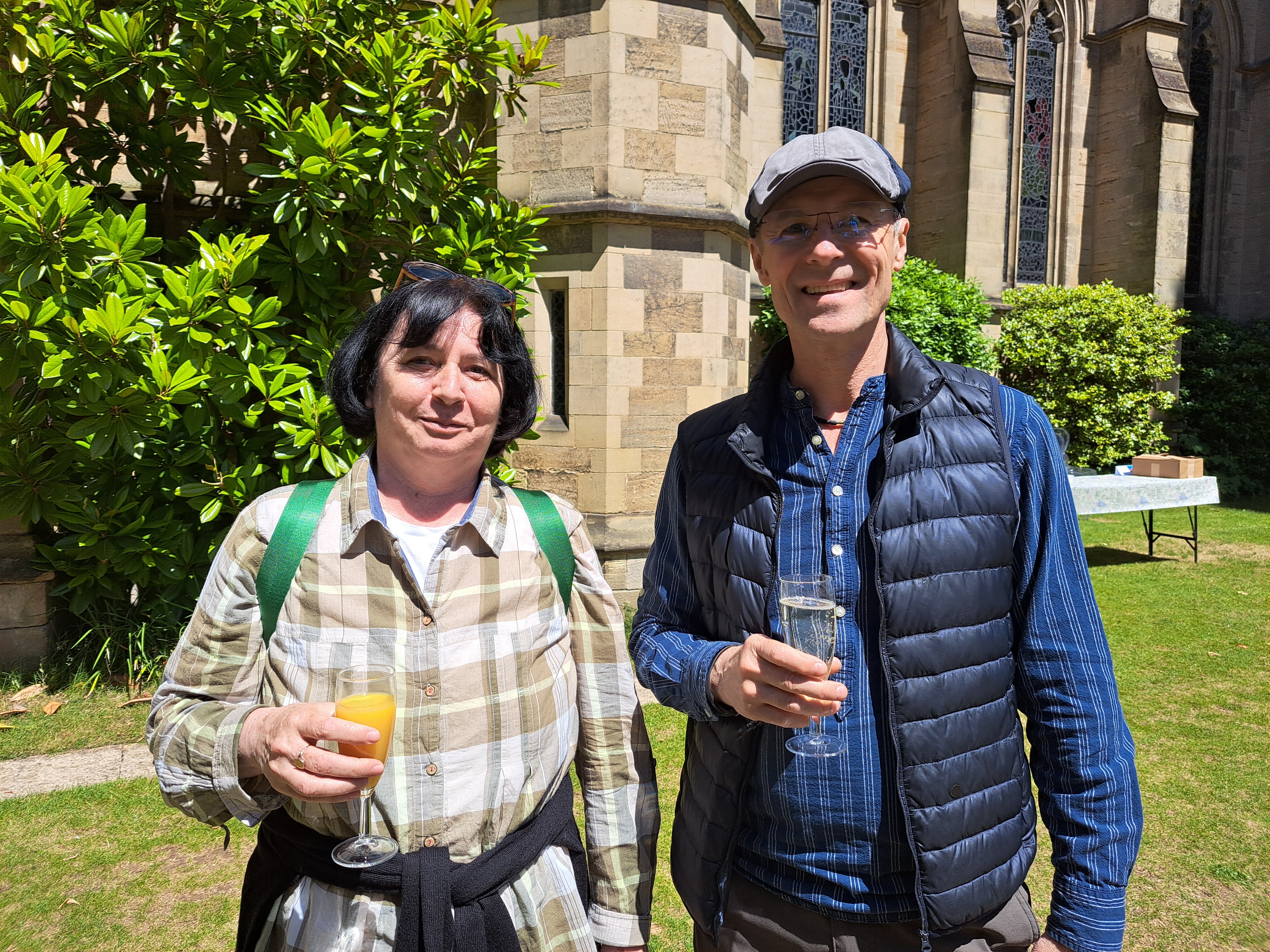
Rev Mária Pap and Rev Dr Lehel Molnár
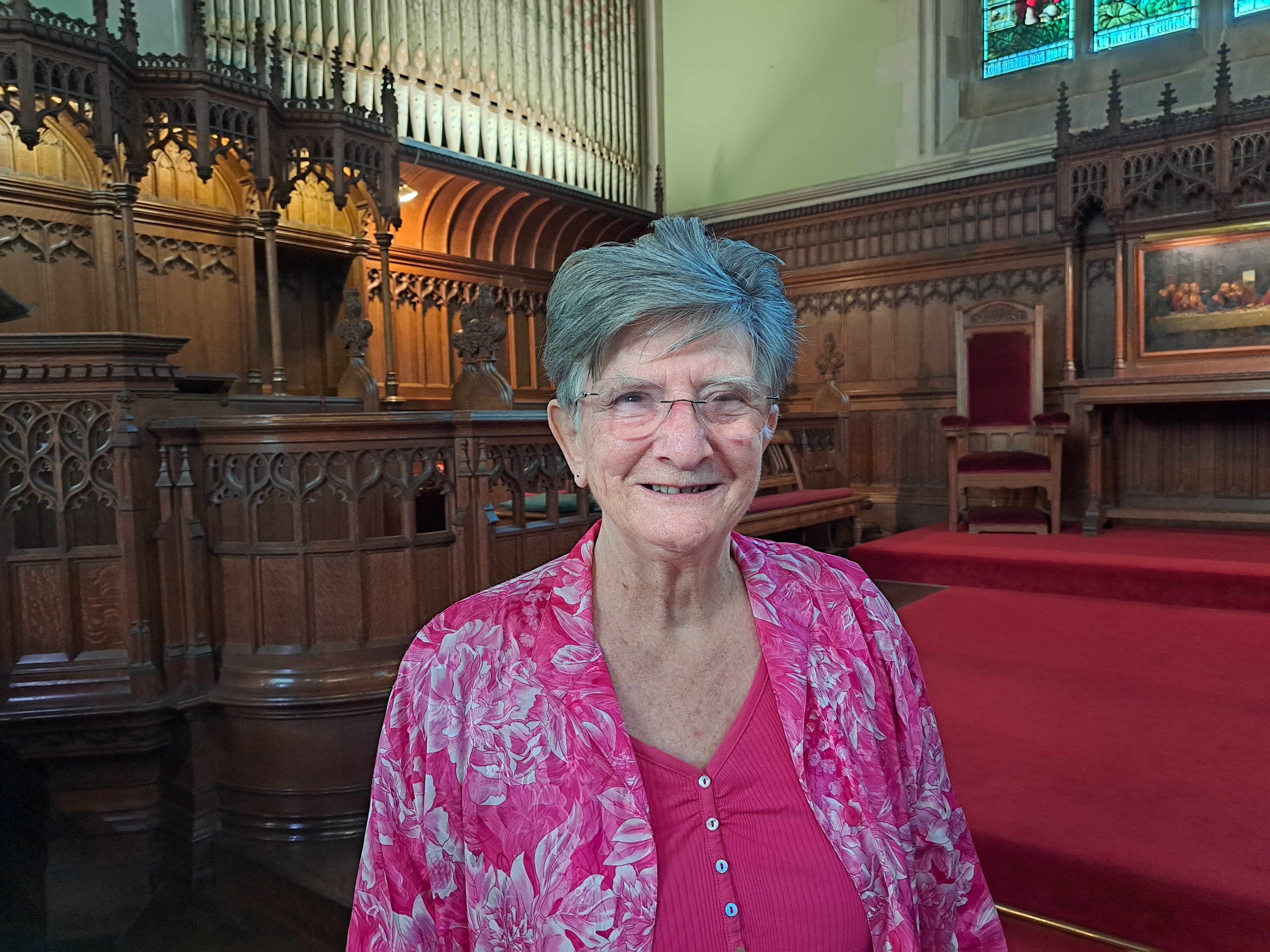
Rev Dr Ann Peart
Amongst the attenders there was also some cross-over with those associated with the Unitarian Historical Society and the concluding Old Students’ Association annual service on Friday, 21st June conducted by Rev Robin Hanford included an address, ‘Keep alive a dream in the heart’ by Rev Peter Hewis, which will appear in the next issue of the journal.
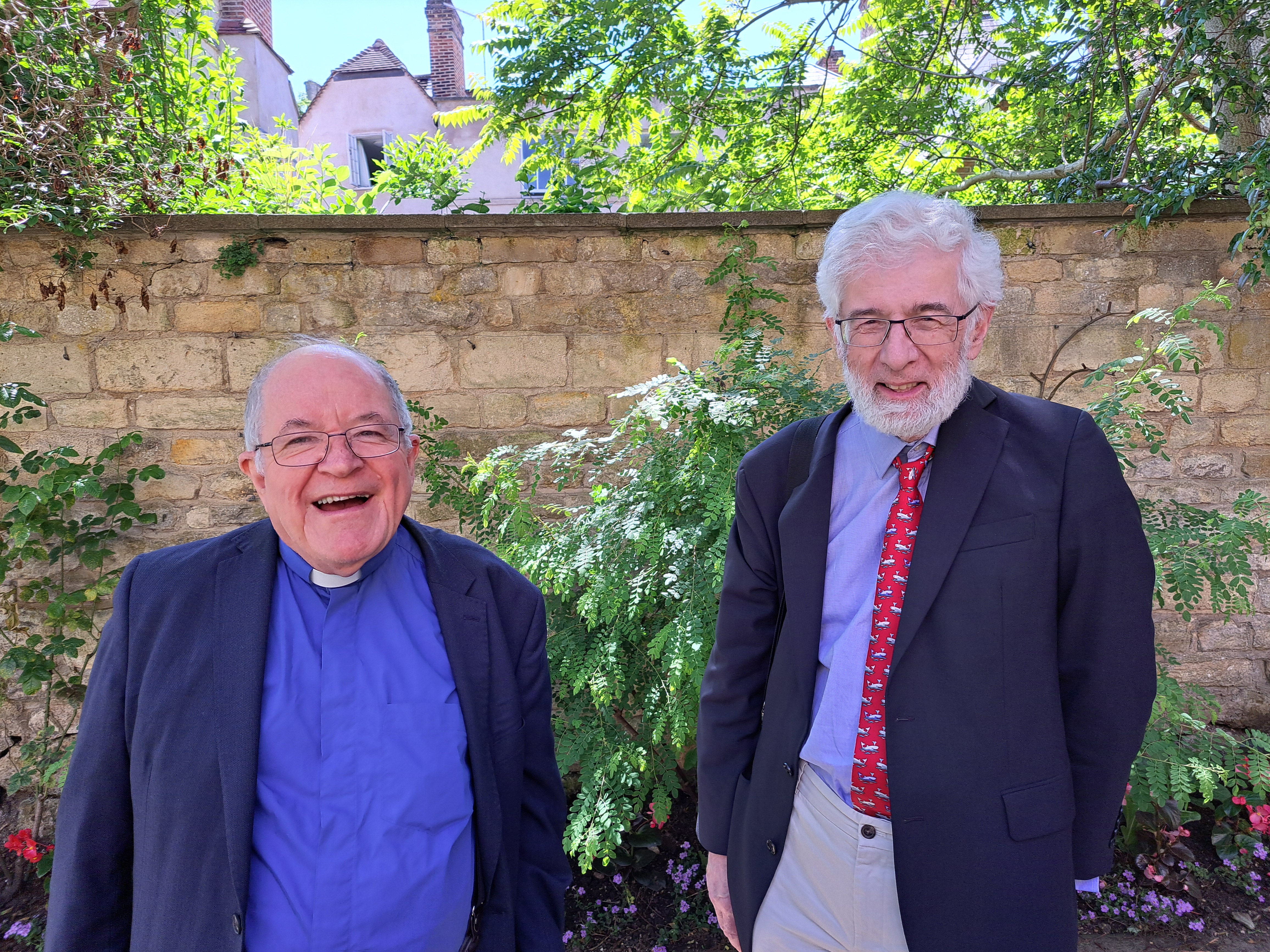
Rev Jim Corrigall and Dr David Wykes
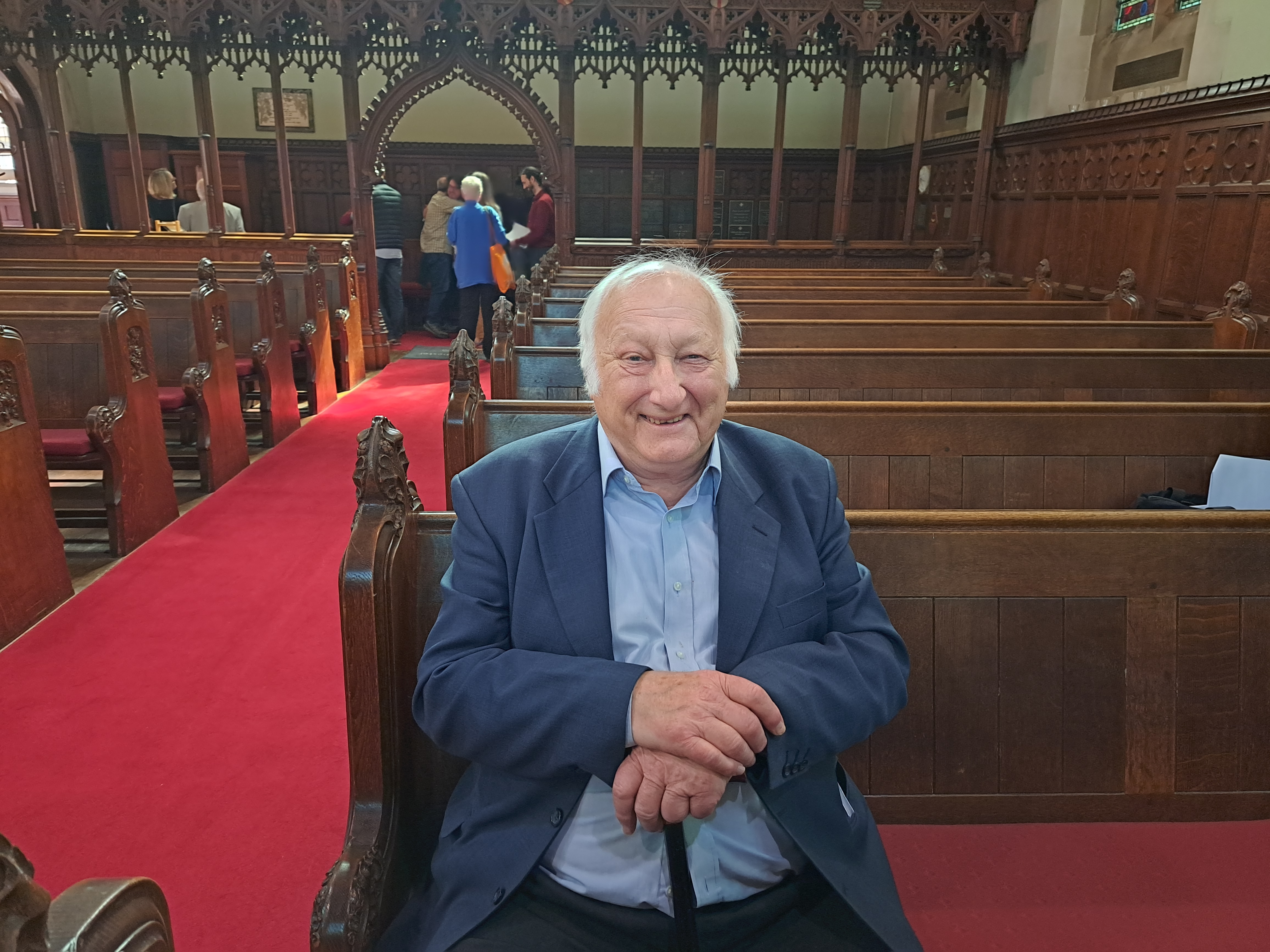
Alan Ruston in the College Chapel
Having been founded by MOSA, Faith and Freedom gives an annual report to the Association and it is also a good opportunity to keep that connection active.
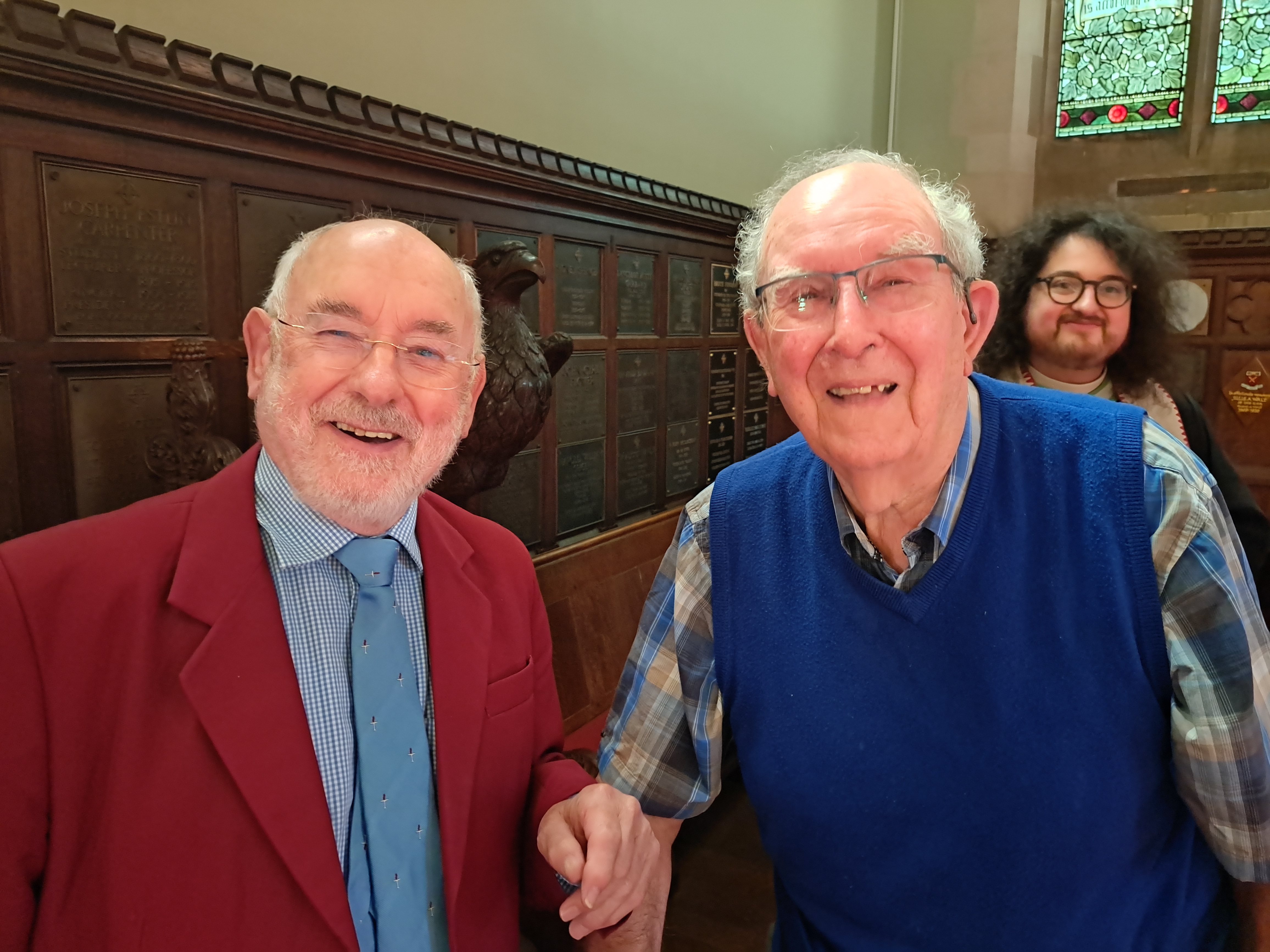
Rev Frank Walker (a contributor to the forthcoming issue) with NIgel Clarke (‘Faith and Freedom’ Business Manager)
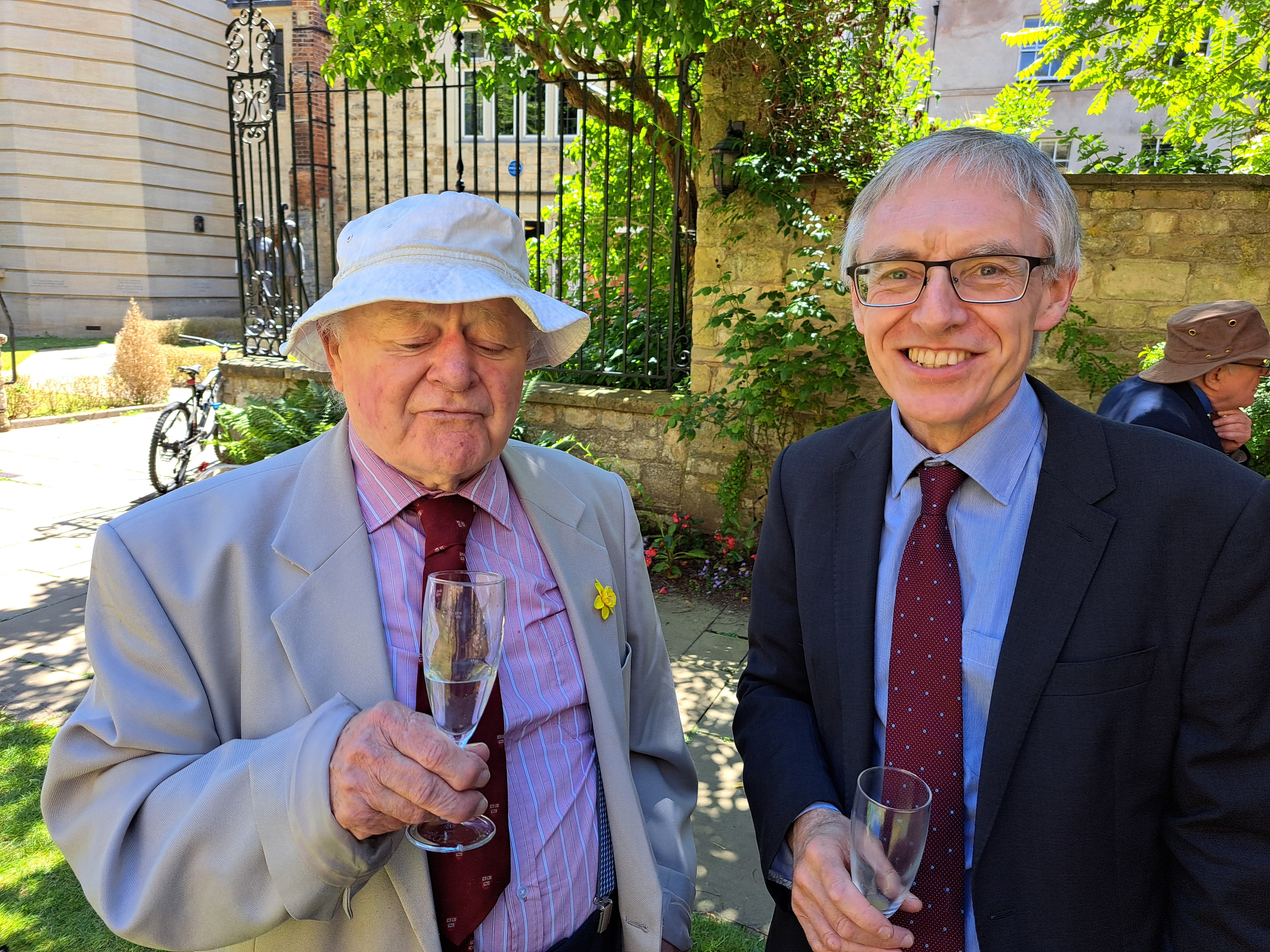
The Two Peters. Rev Peter Hewis and Rev Dr Peter Godfrey (Editor Emeritus)
Rev Robin Hanford of Hinckley who conducted the annual service in the College Chapel
The issue for 2022 (vol 28 No.1) will be with subscribers shortly and once again this is a very full and very special issue because members will receive two journals for their subscription. Part One contains three important articles plus reviews and more, Part Two is produced in collaboration with the Reckoning International Unitarian and Unitarian Universalist Histories Project.
Part One
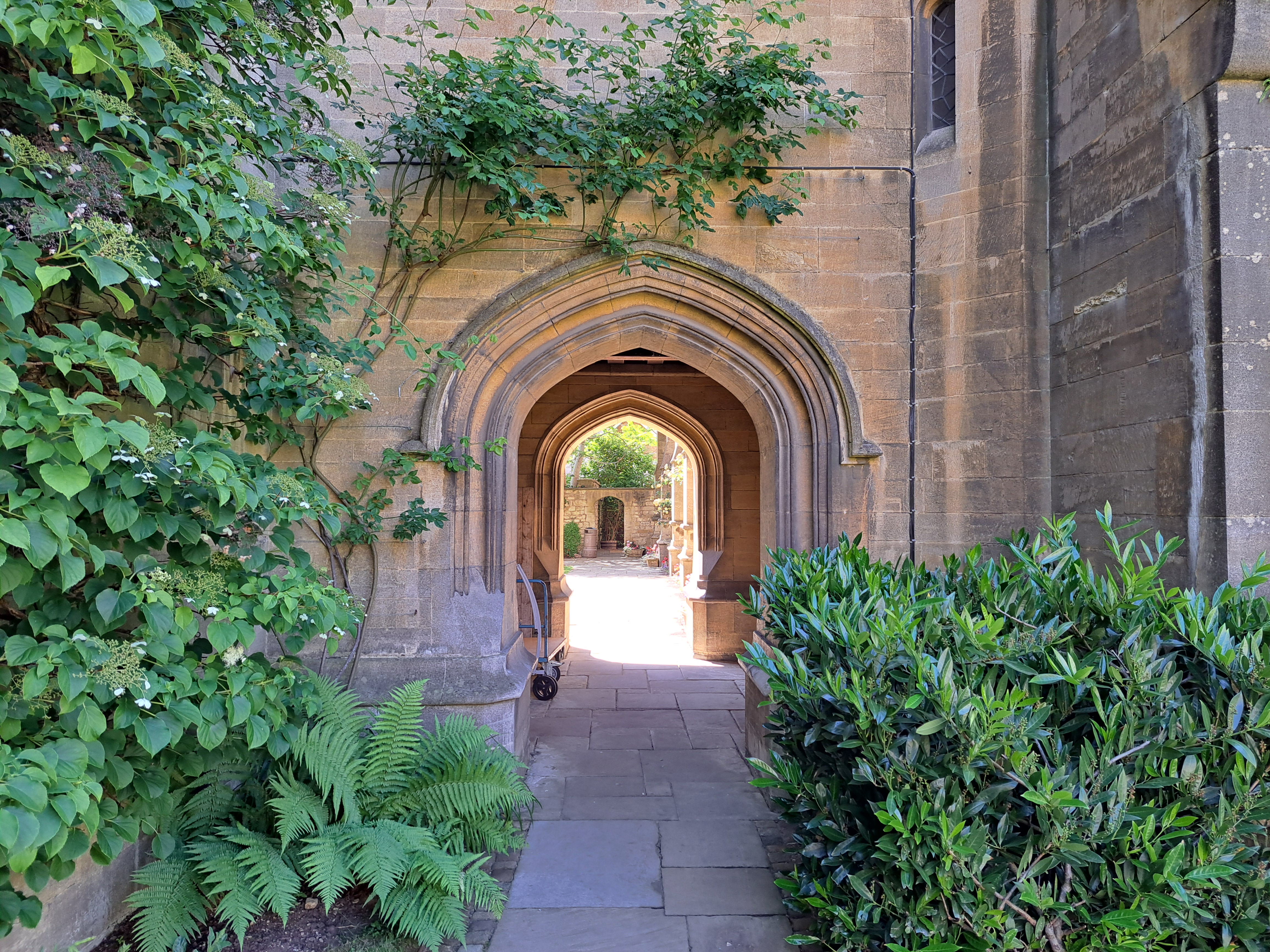
The cloisters, Ullet Road Church Liverpool
In Part One our main articles look at Unitarianism, slavery and philanthropy. A number of Unitarians were actively involved in the abolition of slavery. One very prominent example of this was William Roscoe whose memorial is located in the cloisters in Ullet Road Church, a set of buildings constructed at the end of the nineteenth and start of the twentieth centuries which perfectly illustrate the enormous philanthropic contributions of wealthy Unitarians at this time.
‘Jewel Case’ – The Man and his Money Derek McAuley
Very Rev George Case, MA, DD (used with permission of Clifton Diocesan Archives)
Derek McAuley traces the story of the Very Rev George Case whose journey from the Anglican to Catholic priesthood was followed by a very generous bequest to the Unitarian movement. His father was a contemporary of William Roscoe in Liverpool but unlike Roscoe he was deeply implicated in the slave trade. Using modern tools and databases Derek examines the source of Dr Case’s wealth.
Reflections on a Window Rory Delany
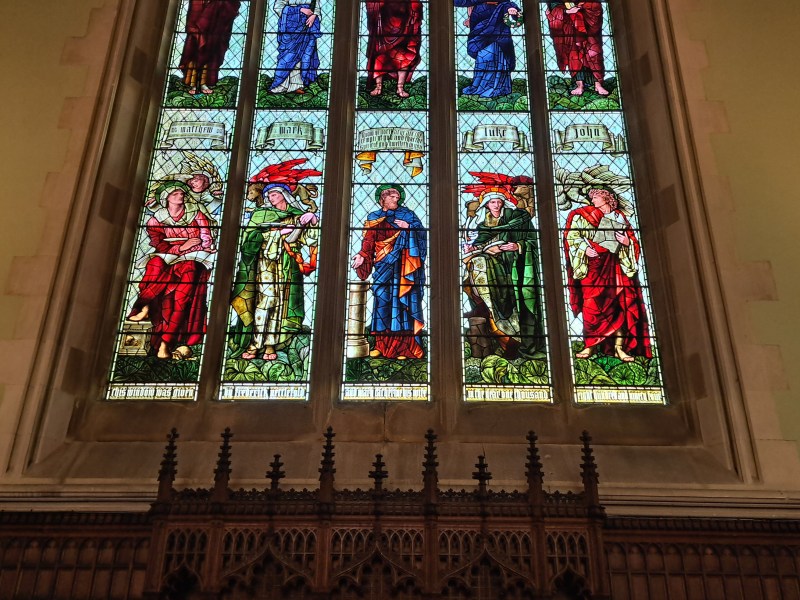
The Wilson Memorial Window, Dublin Unitarian Church (Photo: Rory Delany)
The most prominent and striking window within Dublin Unitarian Church, St Stephen’s Green is the Wilson Memorial Window which memorializes Thomas Wilson, long standing member of the congregation and generous benefactor. In this article Rory Delany looks at the source of Thomas Wilson’s wealth, again using the databases and records which have become available and which highlight those families involved in the slave trade. He contrasts Thomas Wilson’s attitudes and business interests with his contemporary and fellow church member James Haughton who was a noted anti-slavery campaigner.
Unitarians and Philanthropy 1860-1914 Alan Ruston
Looking towards the library at Harris Manchester College
Alan Ruston gives a substantial survey of Unitarian philanthropy between 1860 and 1914. Many wealthy Unitarians gave vast sums to build churches, establish charities and develop educational institutions such as Manchester College (see above) which was founded in 1786 in Manchester but moved to Oxford in 1893 following a number of very generous donations.
Books Reviewed
Reviewed by David Wykes, Alan Ruston and David Steers
Part Two
The ethnographic composition of Hungary in 1910 (Map: Lehel Molnár)
Part Two of this issue develops the successful initial event of the Reckoning International U/UU Histories Project which was entitled ‘Transylvanian Unitarians Resisting and Surviving in Authoritarian Times’ and which took place on Thursday, 4 November 2021. This can be viewed online at the Starr King School for the Ministry YouTube channel (https://youtu.be/ozH1fnDkSHk).
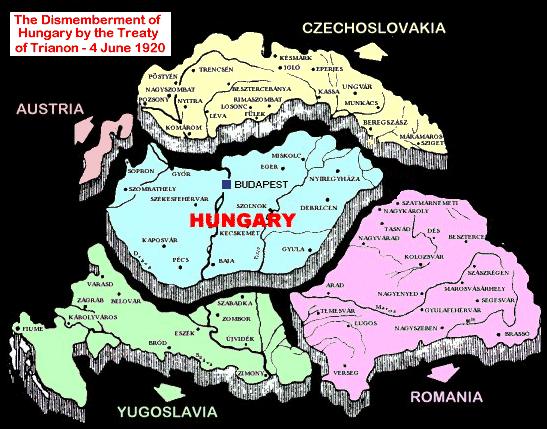
The dismemberment of Hungary by the Treaty of Trianon (Map: Lehel Molnár)
We are very pleased to be able to carry in this issue an introduction and summary of the whole Reckoning project compiled by its co-ordinators Claudia Elferdink and Lehel Molnár This is followed by two articles which are not transcripts of the original webinar but which give additional insight and information on the experience of Hungarian Unitarians over the last one hundred years, particularly following the Communist takeover in Romania after the Second World War. The first of these is ‘The Hungarian Unitarian Church in the Twentieth Century’ by Sándor Kovács and Lehel Molnár, an explanation of the struggles of the church from the Treaty of Trianon – when Hungary lost two thirds of its historic territory – to the present century. This is followed by ‘Resistance or/and Compromise. The Struggles and Service of Unitarian Bishop Elek Kiss (1888–1971) in Communist Romania’ by Sándor Kovács which gives a very detailed view of the problems and stresses experienced by the church in the Communist era.
The ethnographic compostion of Hungary in 1880
New subscribers are very welcome, annual membership costs only £10. If you haven’t yet taken out a subscription or would like to renew your subscription that can be done through the Society’s treasurer who can be contacted via the Unitarian Historical Society website here.





 velvethummingbee