Saturday, 15th August was our long-awaited visit to churches and places of Non-Subscribing Presbyterian interest in Warrenpoint, Newry, and Banbridge. A group from Dunmurry and First Belfast made an early start from Dunmurry and kept brilliantly to the timetable all day. Our first stop was Warrenpoint where Anthony and Anne Holmes made us very welcome.
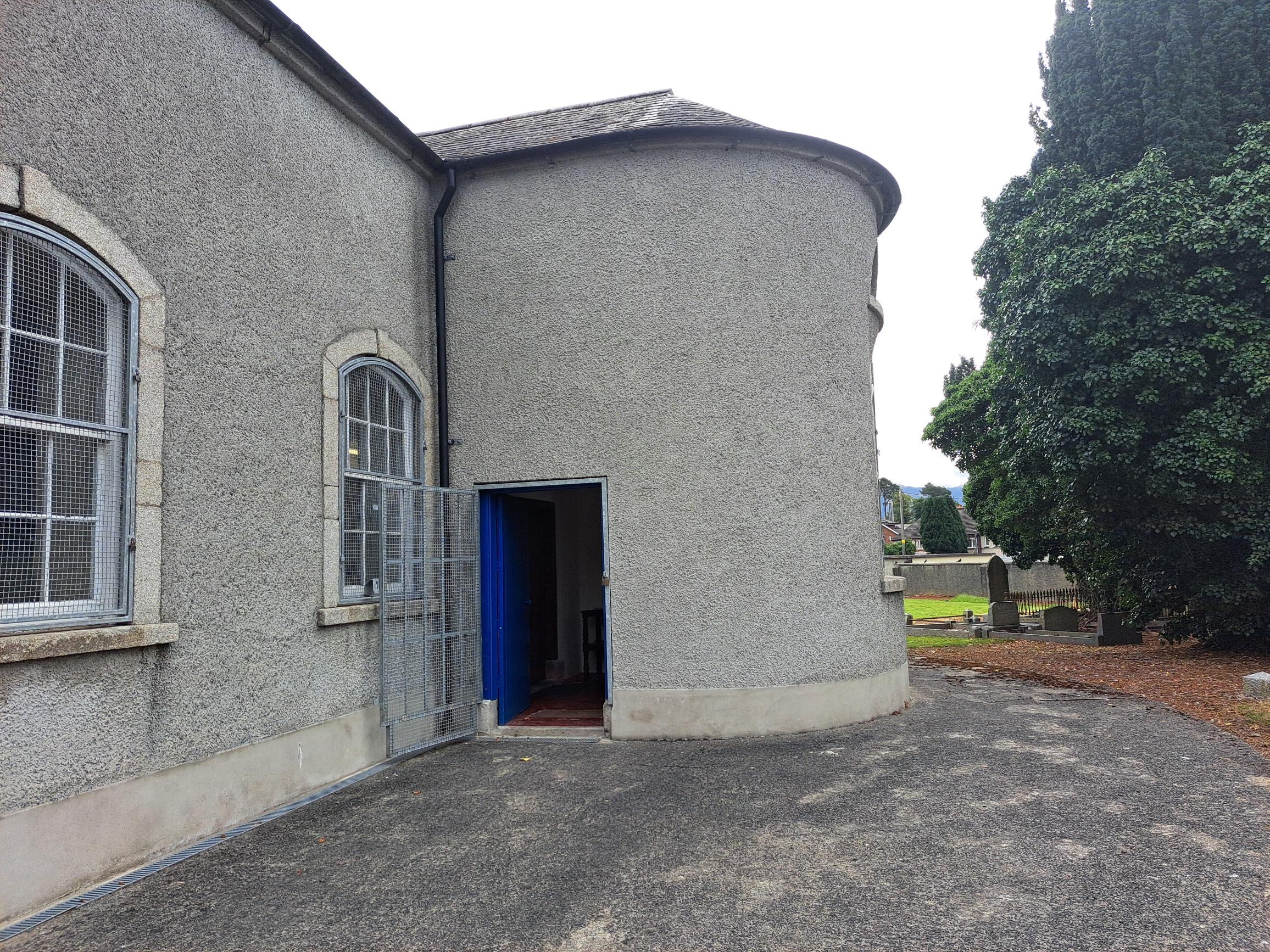
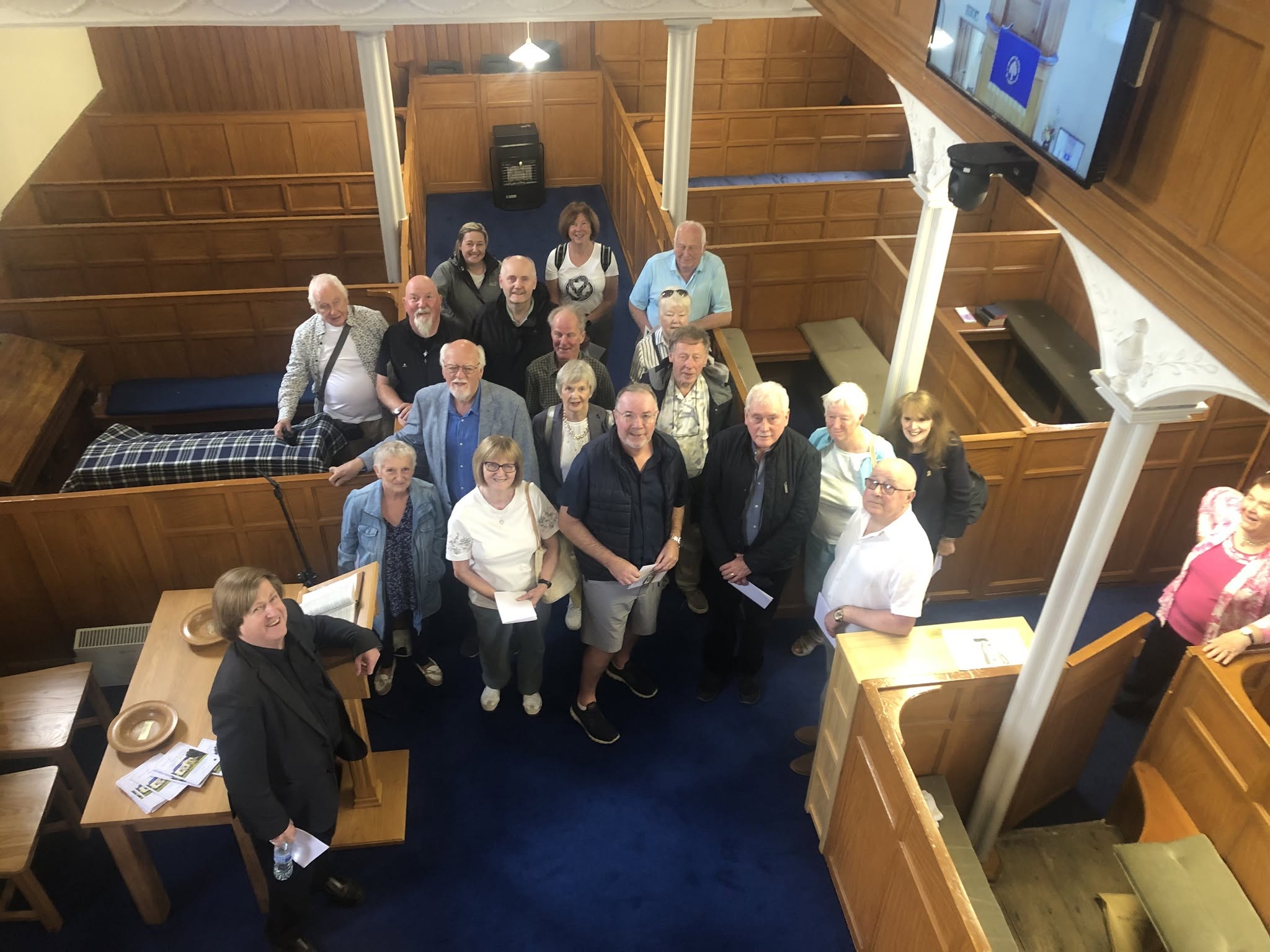
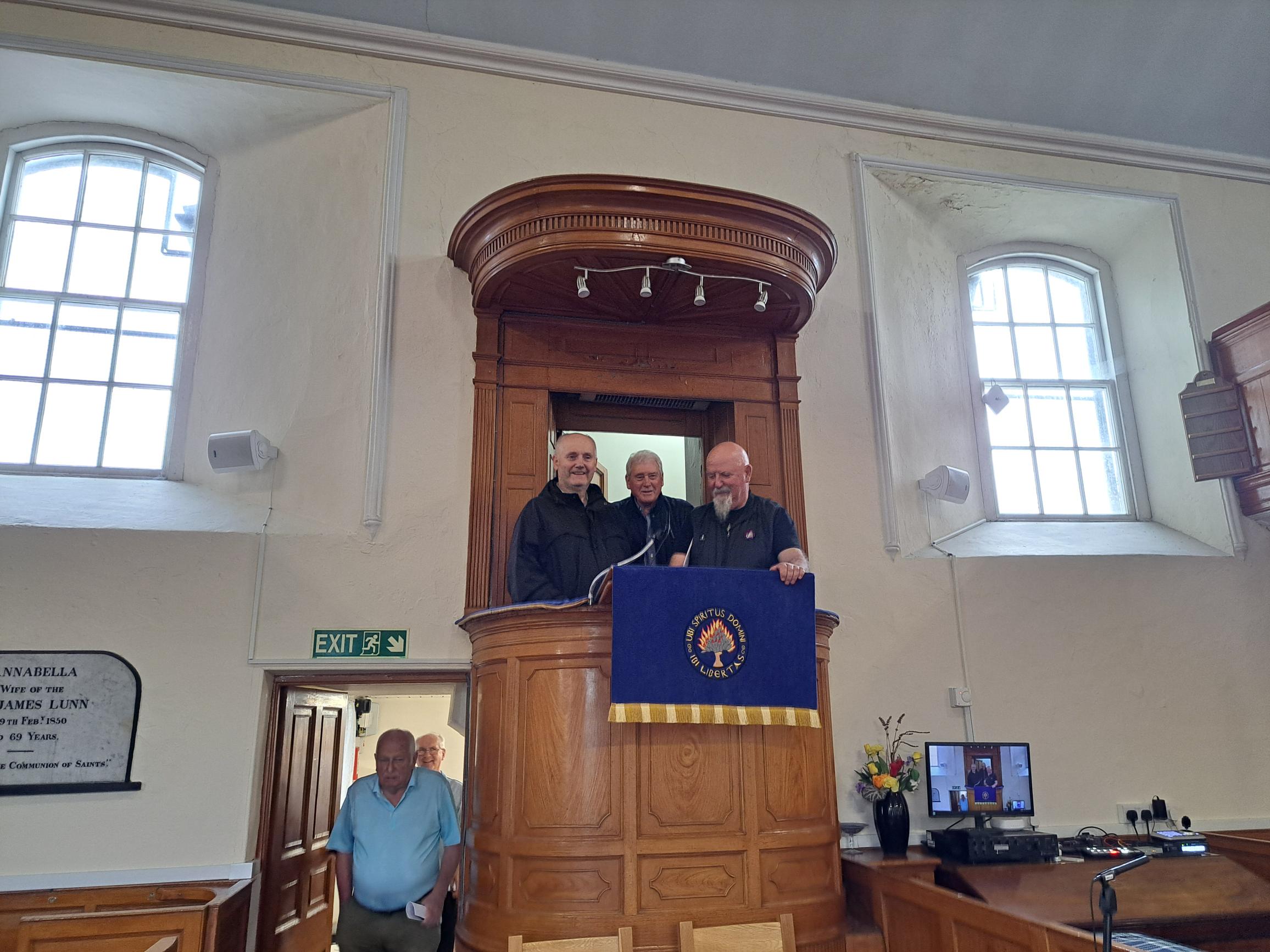
Warrenpoint is a unique church in our tradition, there is no other quite like it. When you approach it through the unusual curved porch you come into a building with a curved pulpit and three galleries supported by cast iron columns and leaving only a narrow rectangle not covered by the galleries. There is a date stone of 1707 and part of it must date from then but it was extensively rebuilt in about 1820. Founded in 1697 and identified as the congregation of Narrow-Water until 1875 when it was named Warrenpoint, it was made a joint charge with Carlingford, situated on the other side of the Lough, in 1707. This made for a complicated life for the minister who had to travel backward and forward across the Lough to conduct worship in both places. The Rev Samuel Arnold was the last minister to do this between 1805 and 1820 when he left Carlingford to concentrate on Narrow-Water. This proved a great success for Narrow-Water although it confirmed a downward trend for Carlingford. The last minister on that side of the Lough was the Rev James Lunn, the Carlingford congregation eventually closing in 1859.
On the county Down side the congregation flourished with Samuel Arnold able to concentrate on its needs and extensively rebuilding the meeting house in about 1820. It was badly hit by the Famine although managed to maintain itself as a single charge until 1910 when it was linked to Newry, an arrangement that has remained ever since. The congregation had the services of some high profile ministers including G.W. Bannister and W.E. Mellone and many of them are buried in the adjoining graveyard where we also saw the grave of Thomas Donnan, for 45 years the precentor of the congregation.
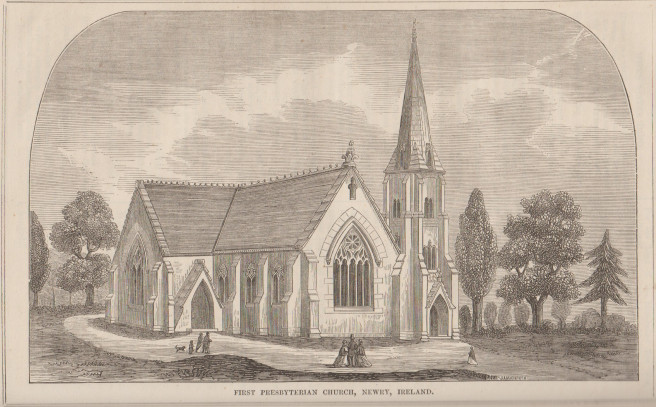
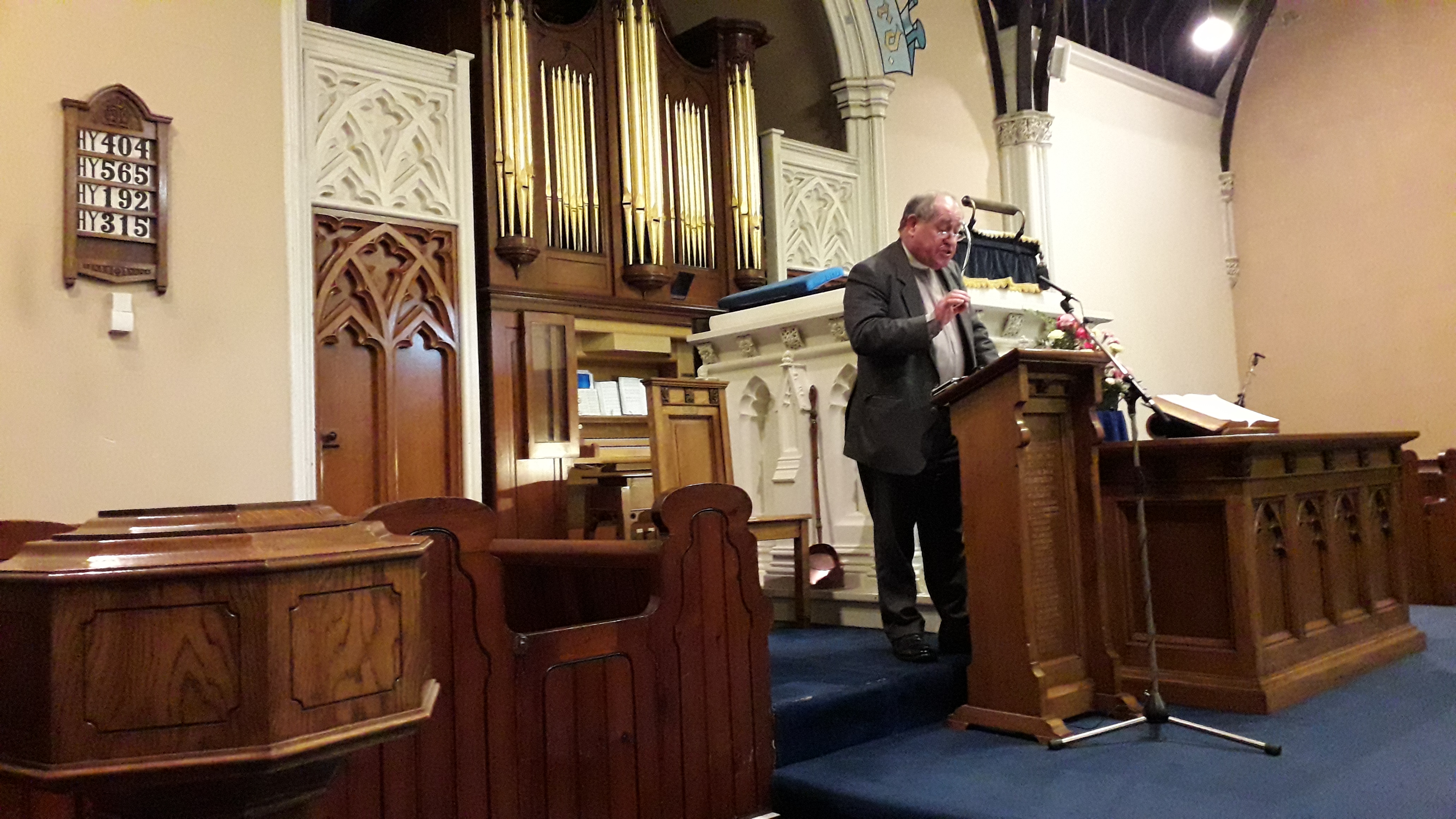
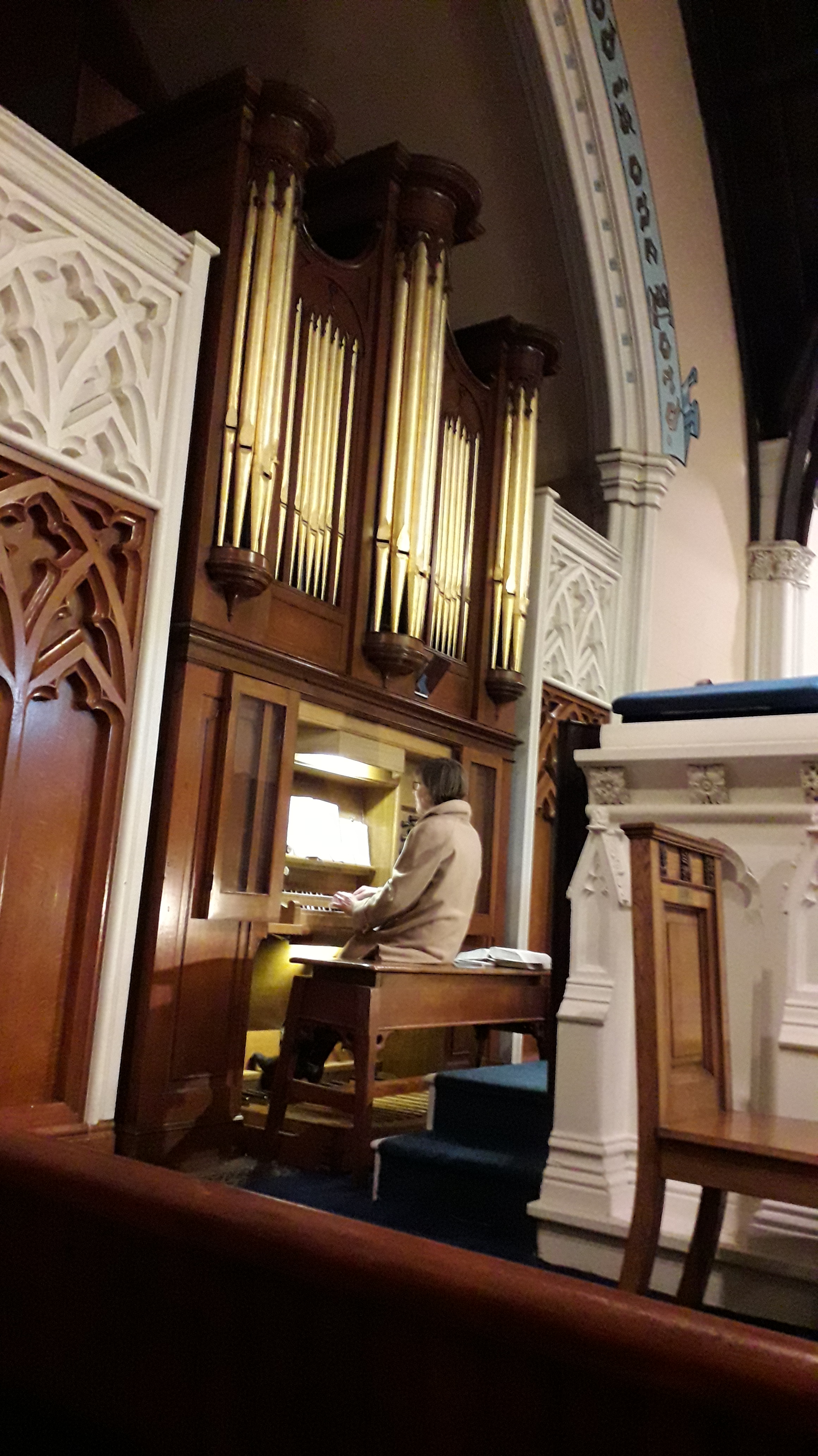
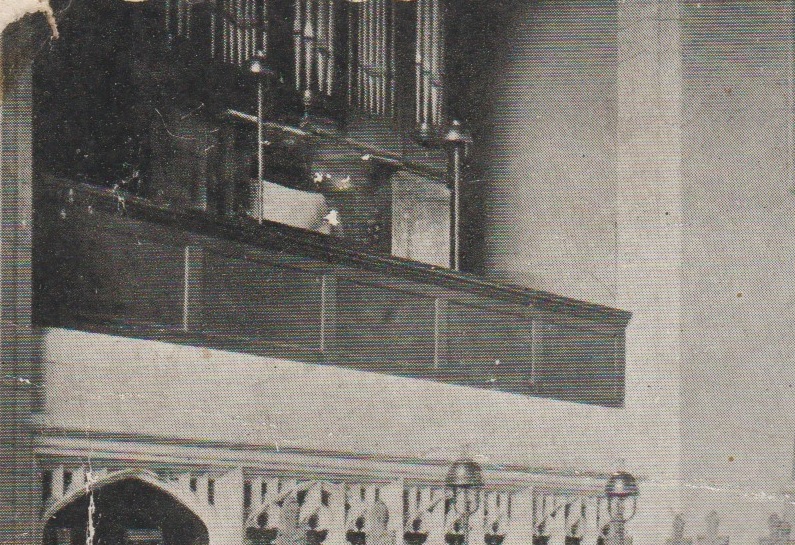
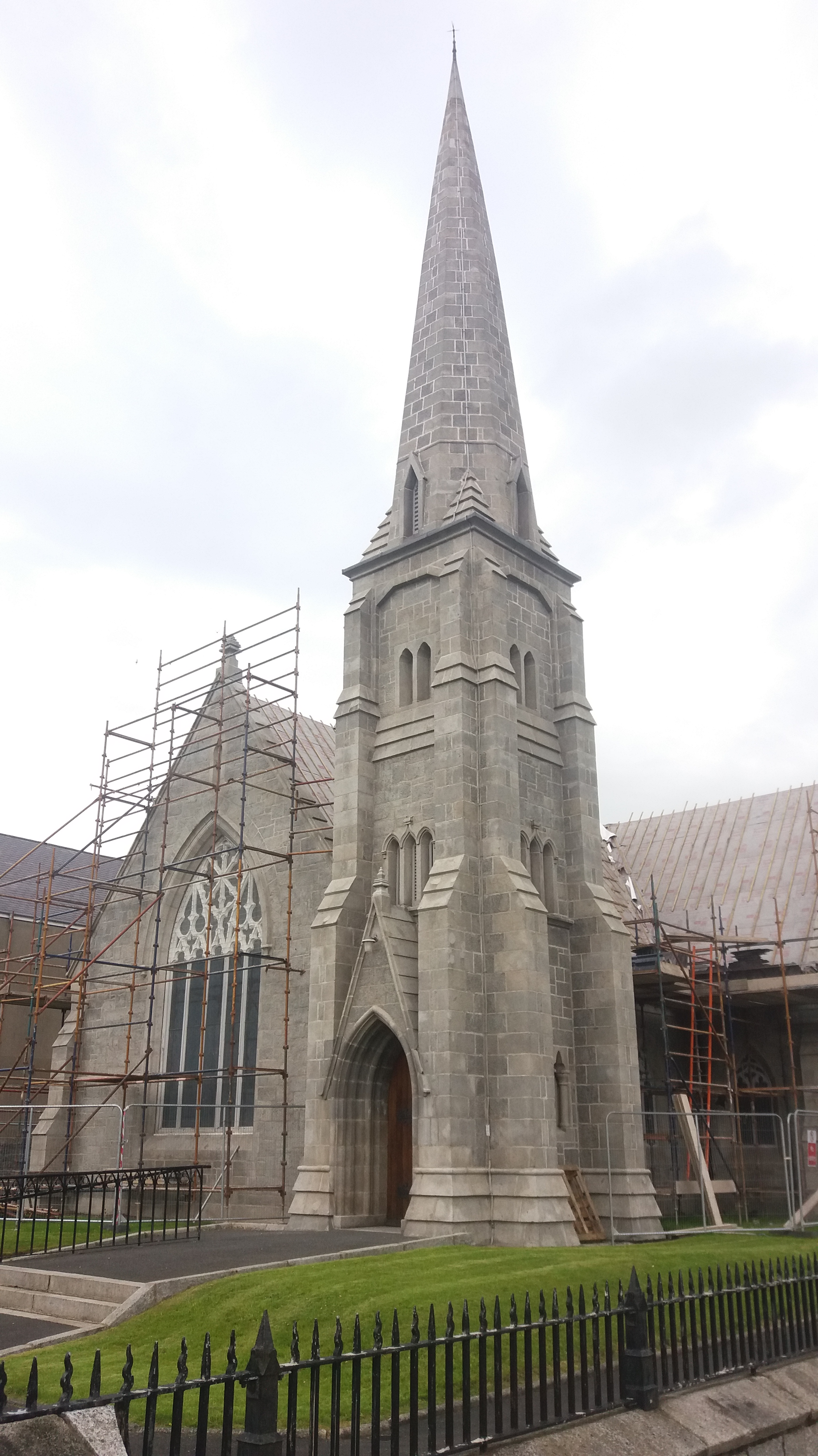
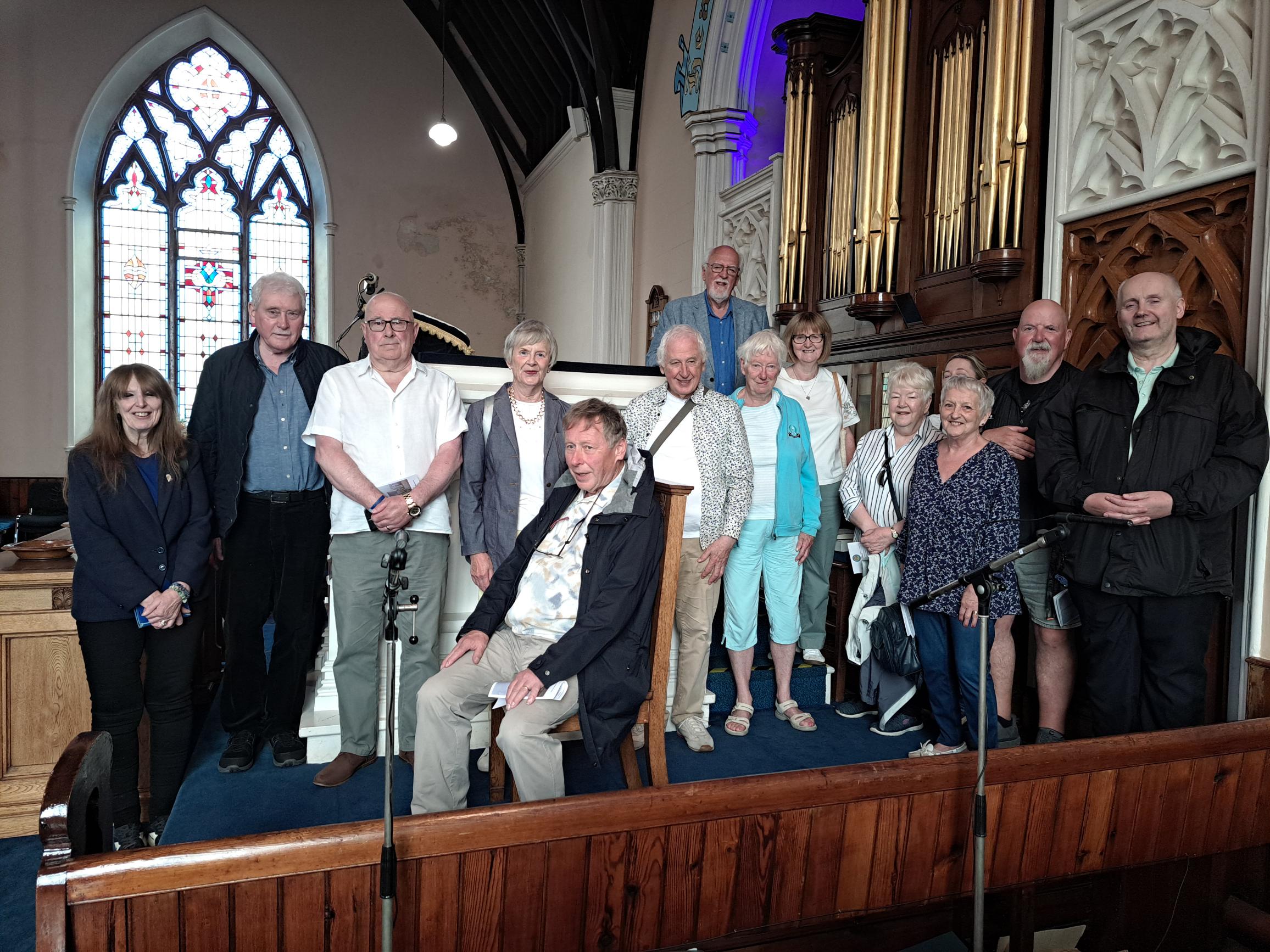
From Warrenpoint we moved on to Newry, generally said to be the first non-conformist church in Ireland to be built in the Gothic style. Designed by W.J. Barre, it is an impressive building with a spire and as well as a big, white pulpit also houses the first organ installed in a Presbyterian church in Ireland. The organ was built for Belfast’s Second Congregation and despite rumours that it had once been in St George’s Chapel, Windsor perhaps built by Snetzler and indeed played (and haunted) by Handel we do know now that it was built by an organ builder named White who operated out of Orr’s Entry in Belfast. When the Second Congregation moved to All Souls’ the organ came with them but in the 1920s it was sold to Newry where it continues in regular use, the same organ that was once played by Edward Bunting.
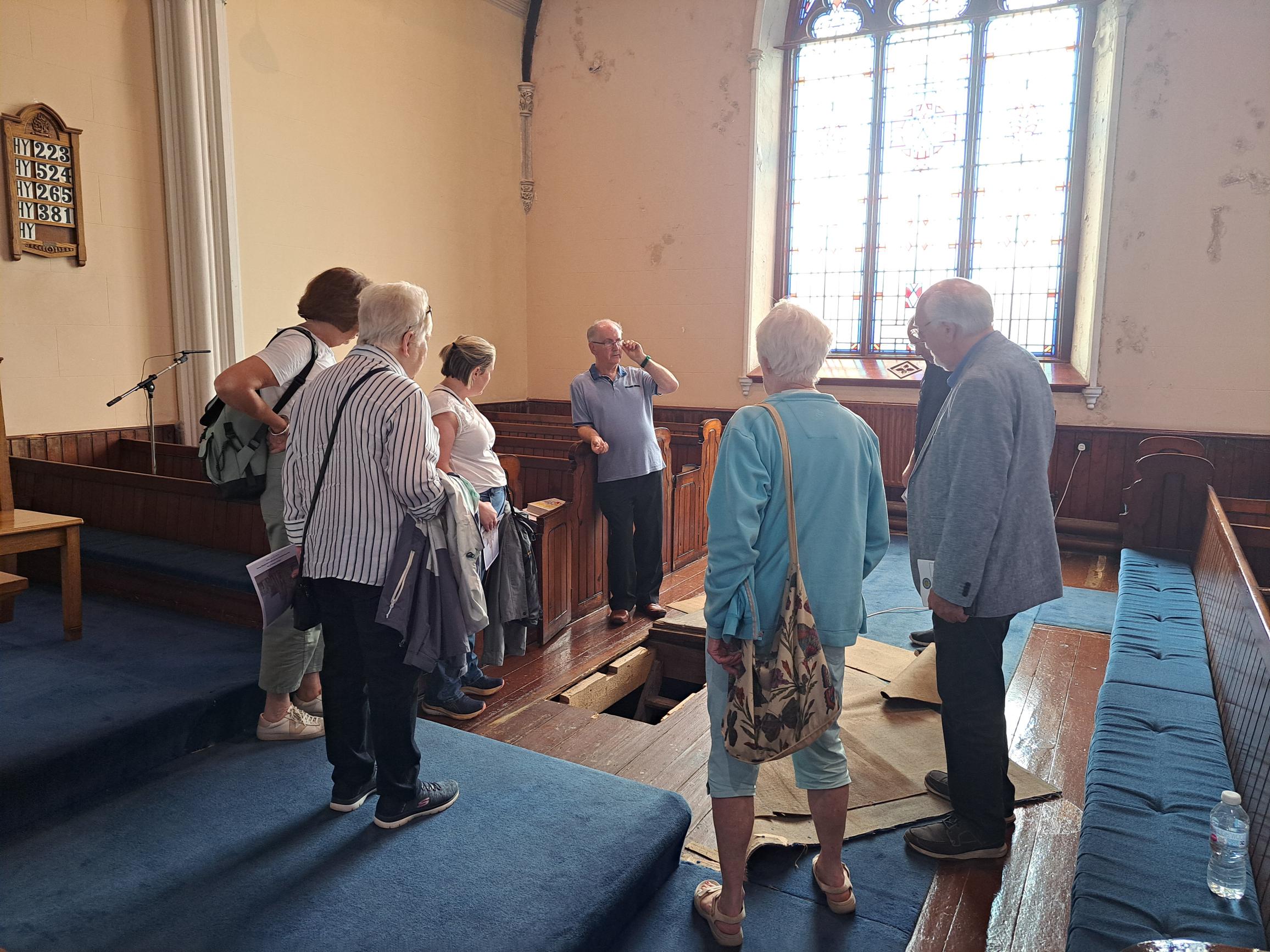
While we were at Newry Anthony opened up the trapdoor to the underground passages that are hidden away under the building. Only one of our number was brave enough to venture into this hidden realm and modesty prevents me from naming that intrepid explorer but the passages seem to be there to house a large stove that once heated the church. Made by Musgrave & Co. Ltd, a firm based in Belfast in the middle of the nineteenth century, there must have been a flue somewhere, but it hasn’t been used for a long time.
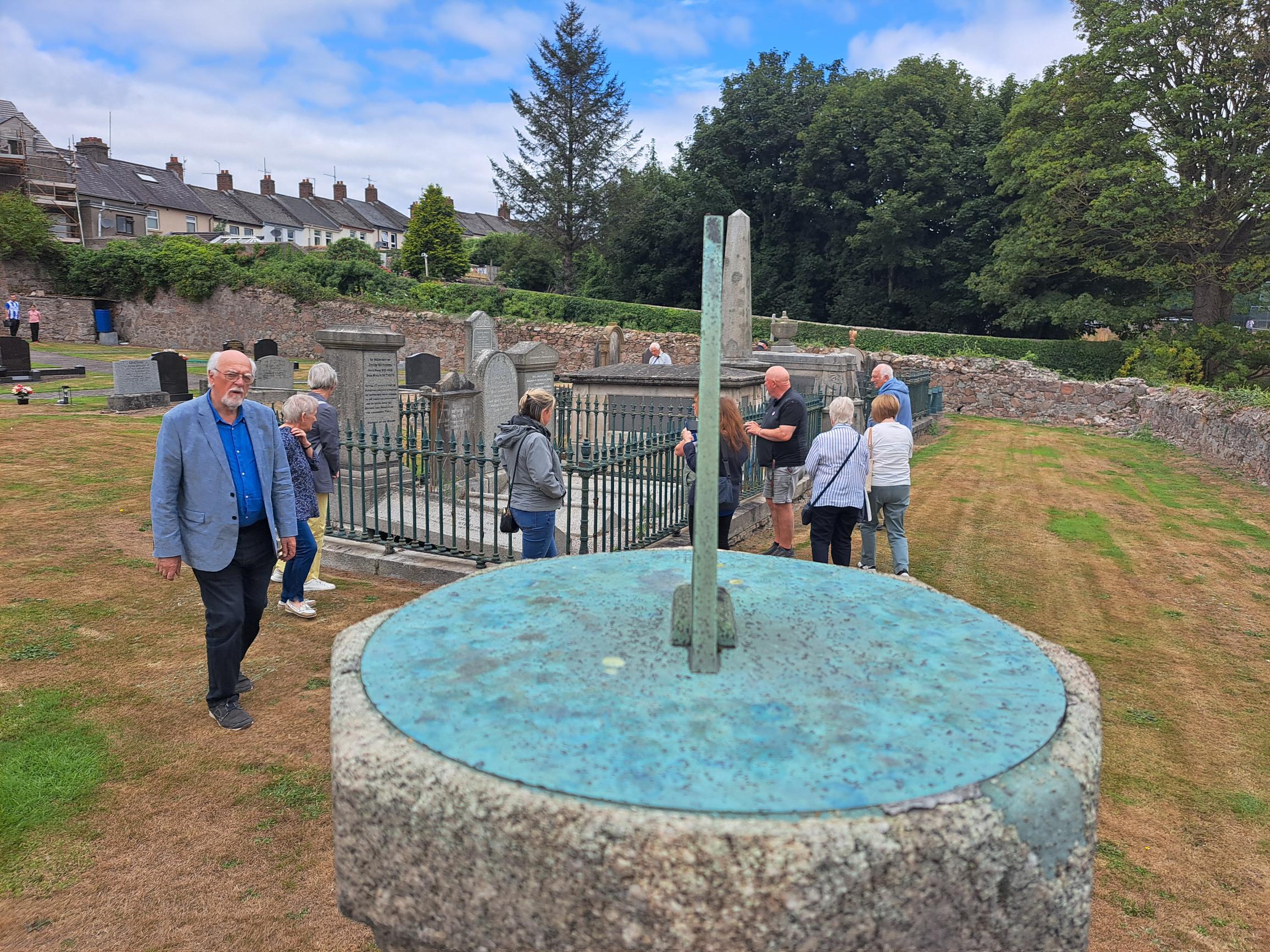
From the Newry church we went on to the Old Meeting House Green on High Street. Despite extensive redevelopment on all sides this spot remains a beautifully maintained peaceful oasis which contains not only ancient and modern graves but the ruins of the previous meeting house.
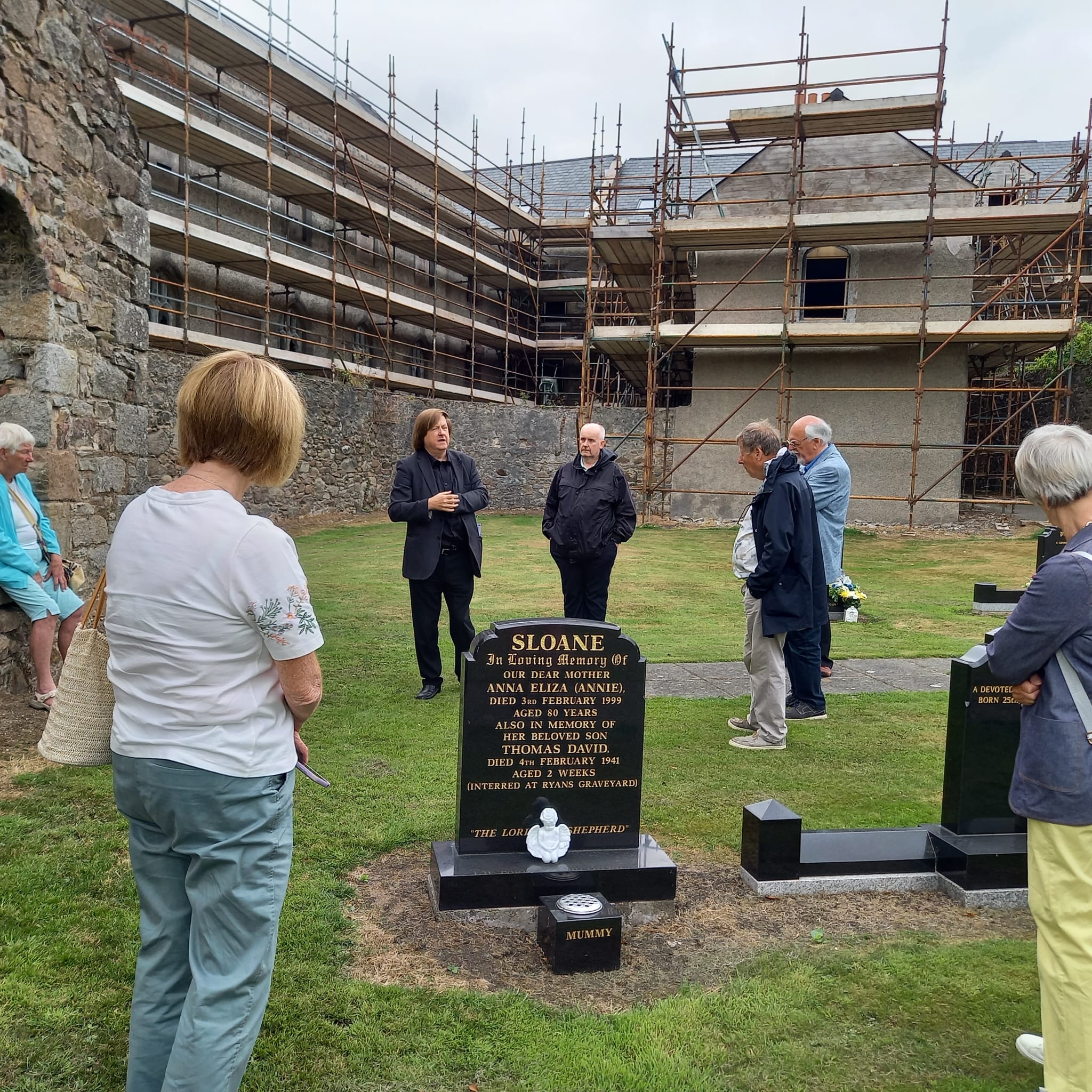
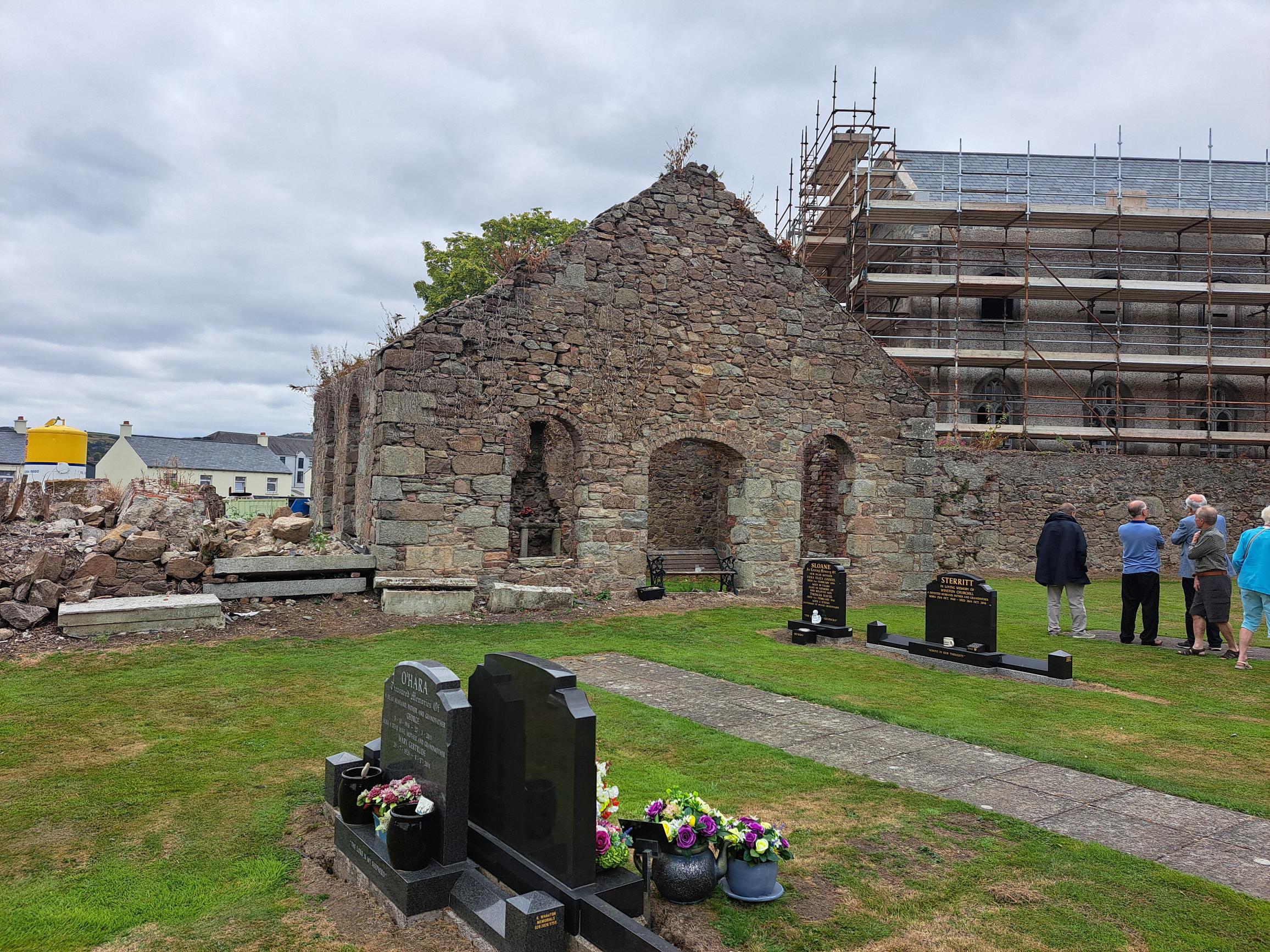
The old meeting house was built in 1724 but abandoned when the new church was built in 1853. It was here that John Wesley preached when he came to Newry and until fairly recently the remains of the pulpit could be seen. The graveyard is particularly notable for containing the last resting place of John Mitchel, Young Irelander, Nationalist leader and a son of the manse, as well as the grave of Rev A.G. Malcolm an innovative minister who edited the first major Non-Subscribing hymnbook and who began his ministry at Dunmurry before moving to Newry.
On leaving Newry we travelled to Banbridge for lunch before going off to the Masonic Hall which was built as the Second Non-Subscribing congregation in Banbridge. This congregation built a grand church opened in 1849 after a large portion of the original congregation left that church following the appointment of the Rev John Montgomery, a nephew of Henry Montgomery. There were deep divisions amongst Non-Subscribers at that time and this was one of the places where this manifested itself in congregational division.
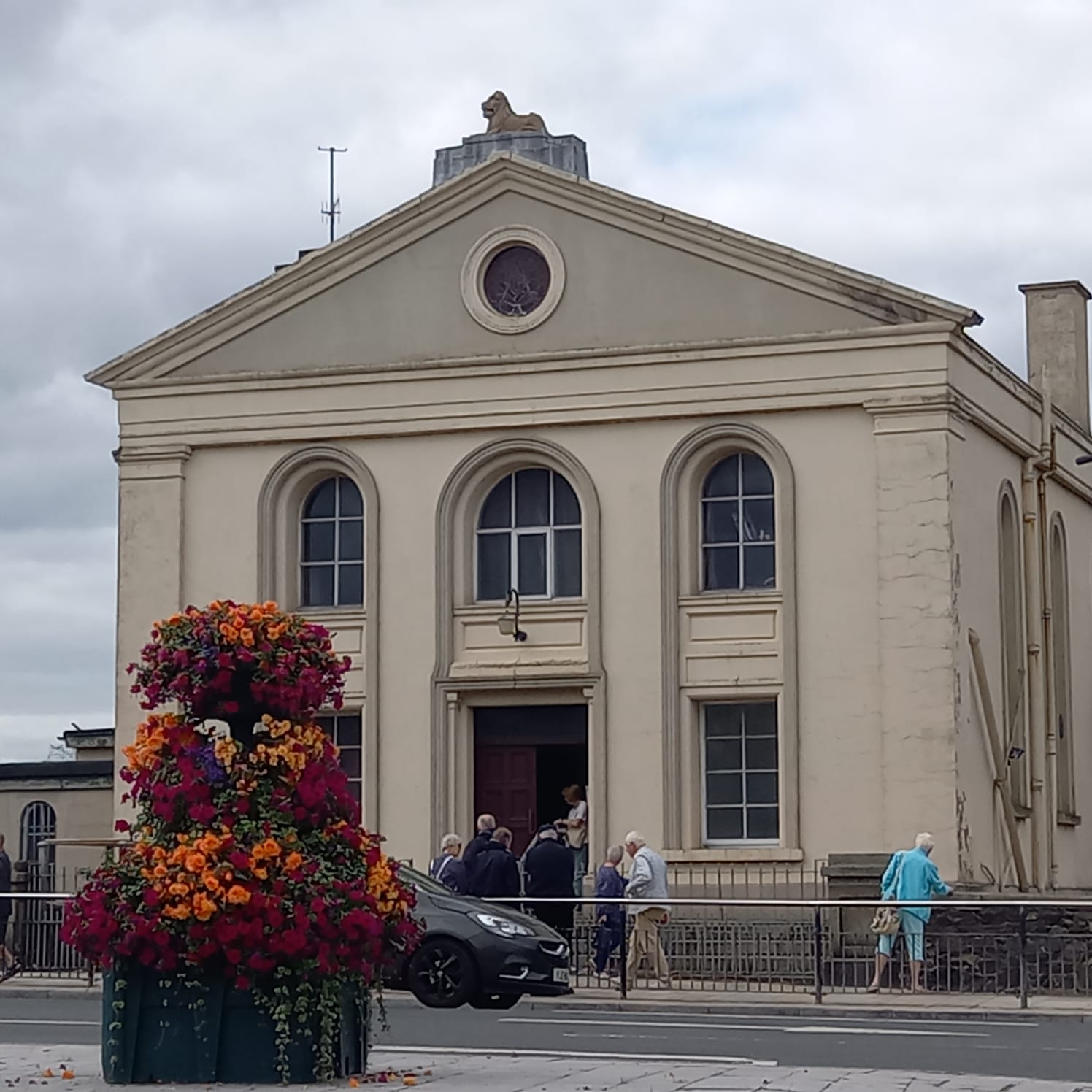
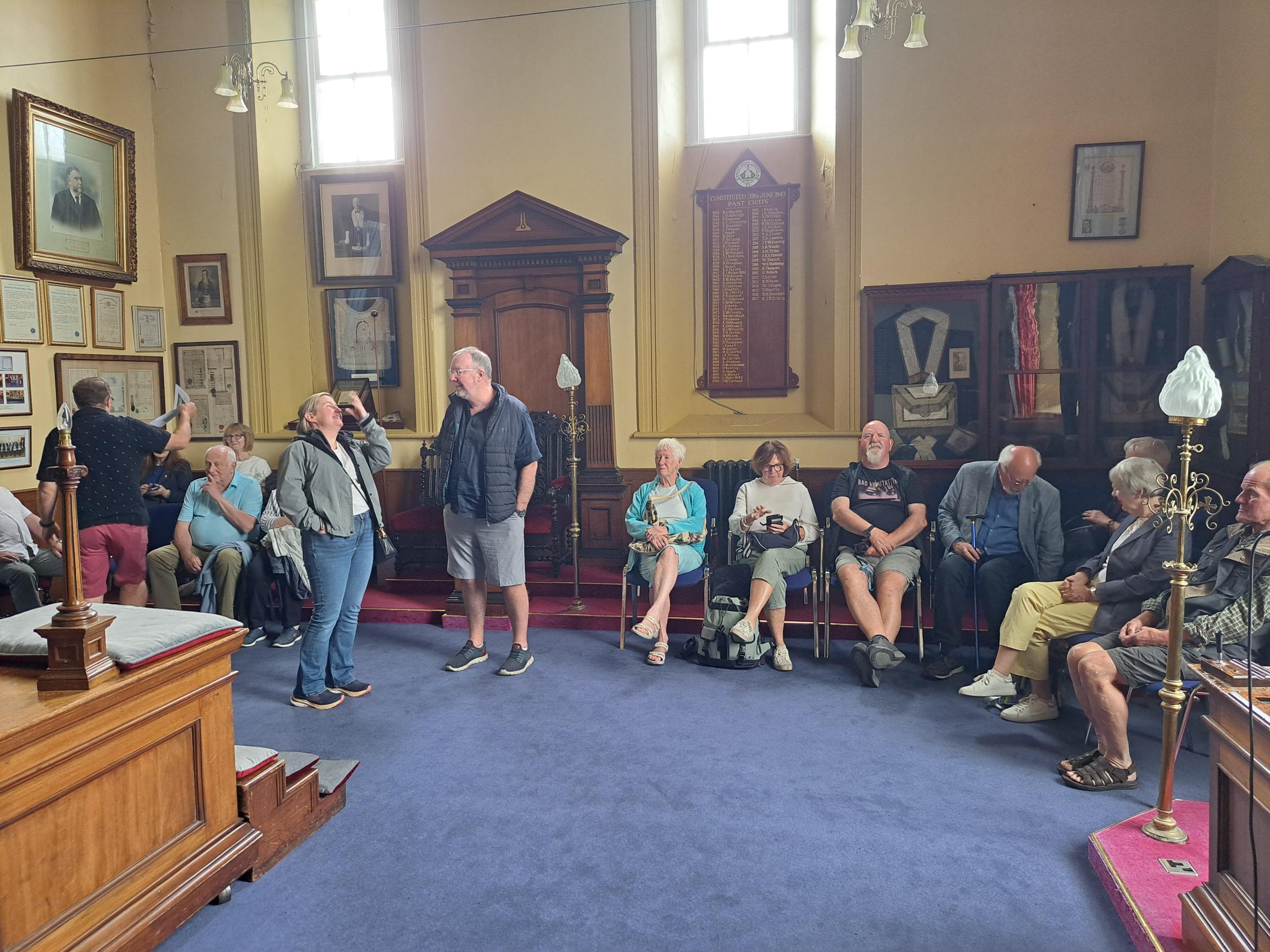
I am sure most people that pass the Masonic Hall don’t realise it began life as one of our churches and we were given the rare privilege of visiting the building, being shown round by Willy McCoy, one of the officers. The interior was extensively remodelled, probably in the 1890s and most of the rooms give nothing away of its ecclesiastical origins. Nearly all the windows are covered in, and new floors have been added, but the original church must have filled both the length and height of the building, probably with galleries. It must have been a magnificent space built to compete with the church building they had left.
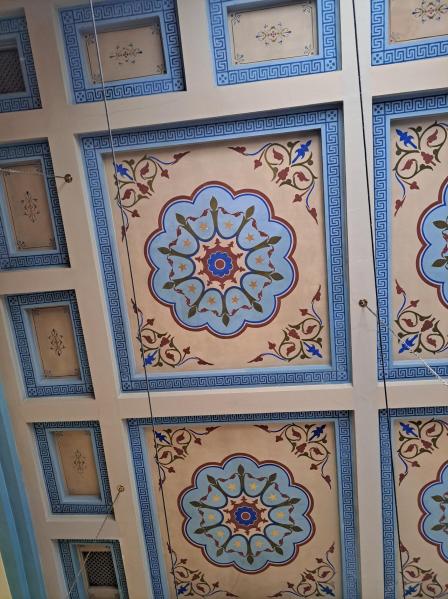
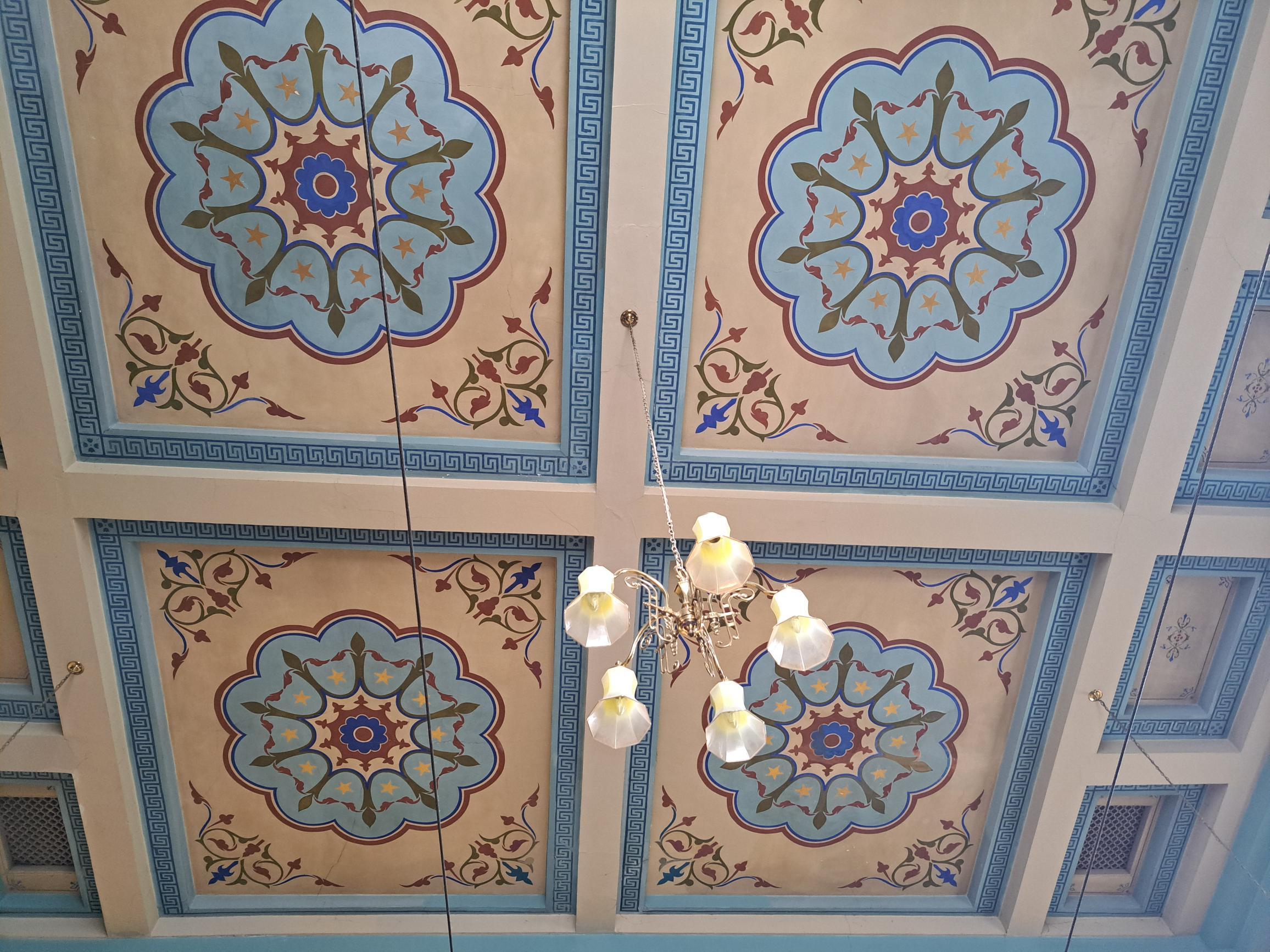
It doesn’t quite match the splendid building that is the first congregation but it can’t have been far off. But the one detail that does survive and which is quite exceptional is the ceiling that remains in the Lodge Room.
The ceiling dates from 1849 when the building was opened and is a stunning piece of work that has not been dimmed by age at all.
The one thing we could not discover was the origin of the stone lion that sits atop the structure. This does not seem to have been placed there by the Masonic Lodge, but would it be put there by the congregation? It is nevertheless an attractive and distinctive feature. You can read more about this congregation here.
From there it was a short walk to First Banbridge. Founded in 1716 this church was built in 1844 towards the end of the ministry of the Rev James Davis, Non-Subscriber and Remonstrant. We were greeted by Carol McAlister and Karen Bushby who again were excellent hosts. We know that the Second Congregation’s building was designed by Edward Gardner (who may have had a connection with our Downpatrick congregation), but we don’t know who designed First Banbridge.
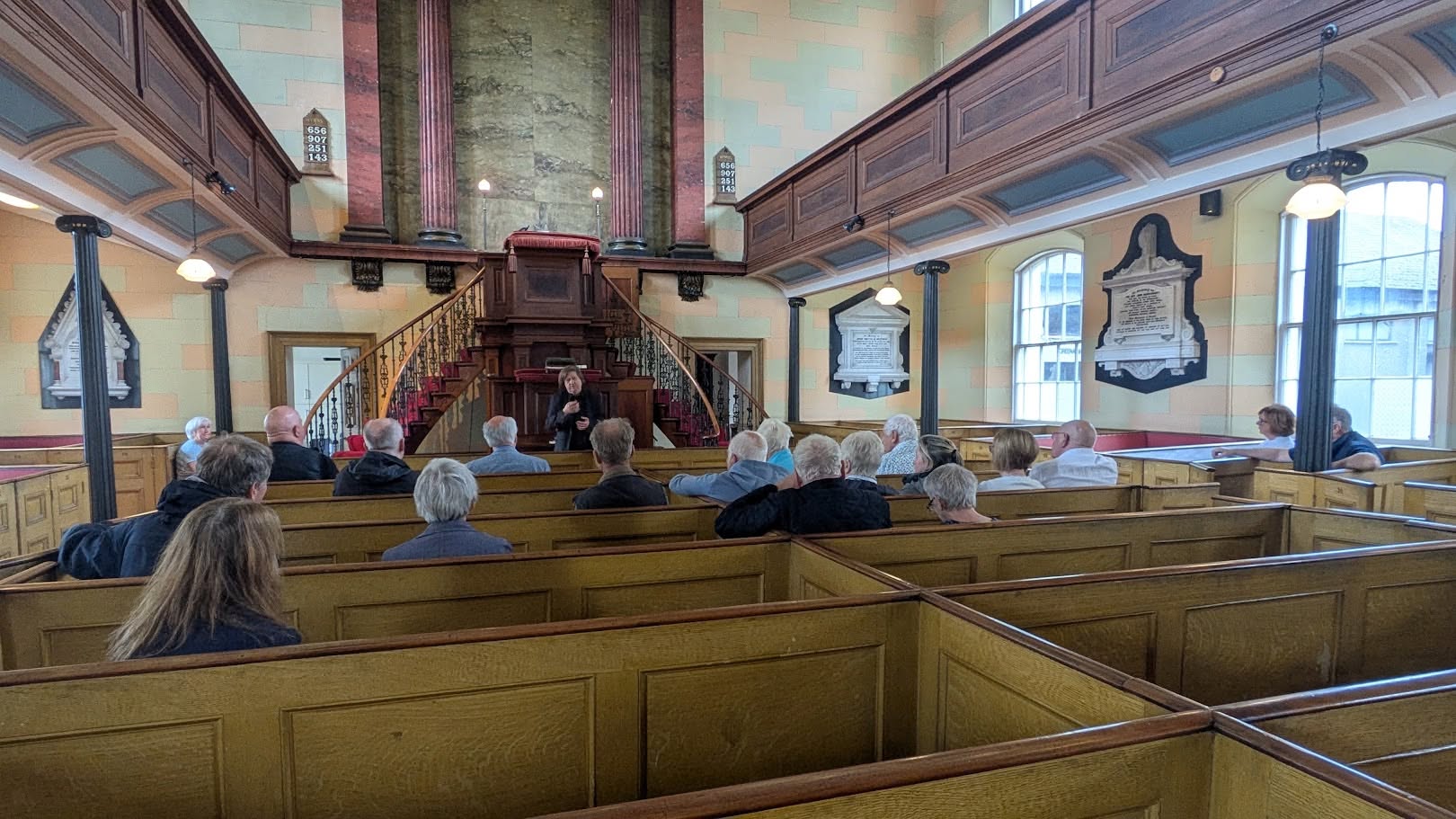
If Newry is an example of the beginnings of the use of Gothic architecture then Banbridge is a stunning example of the adoption of the fullest Neo-Classical design. It is a complete and splendid example of Classical architecture with Ionic columns at the entrance, a large vestibule with a curved staircase on either side leading to a U-shaped gallery and a magnificent two-decker pulpit.
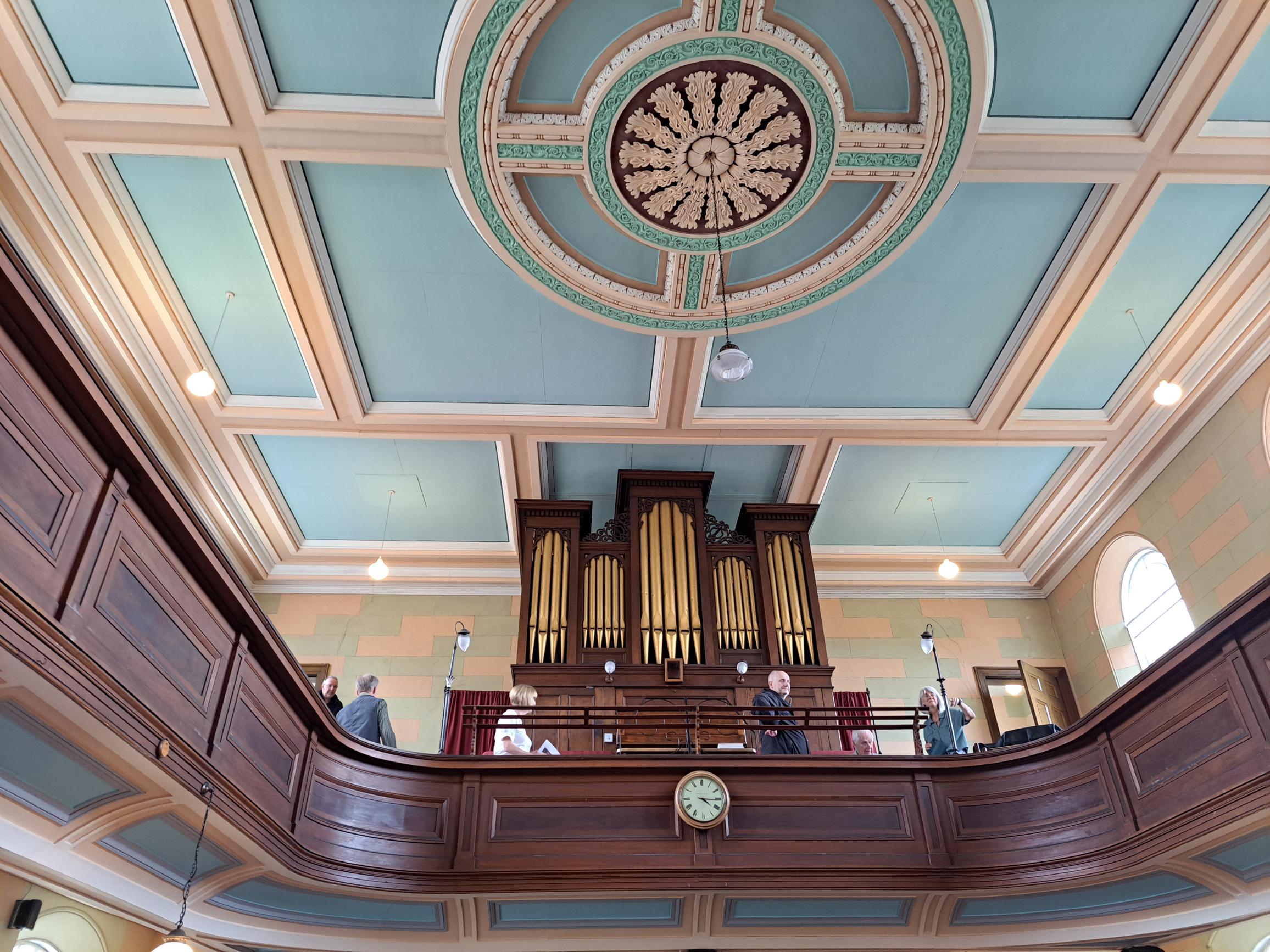
The Classical features extend all the way around the building both inside and outside, which is not always the case, but here it makes for a very impressive church.
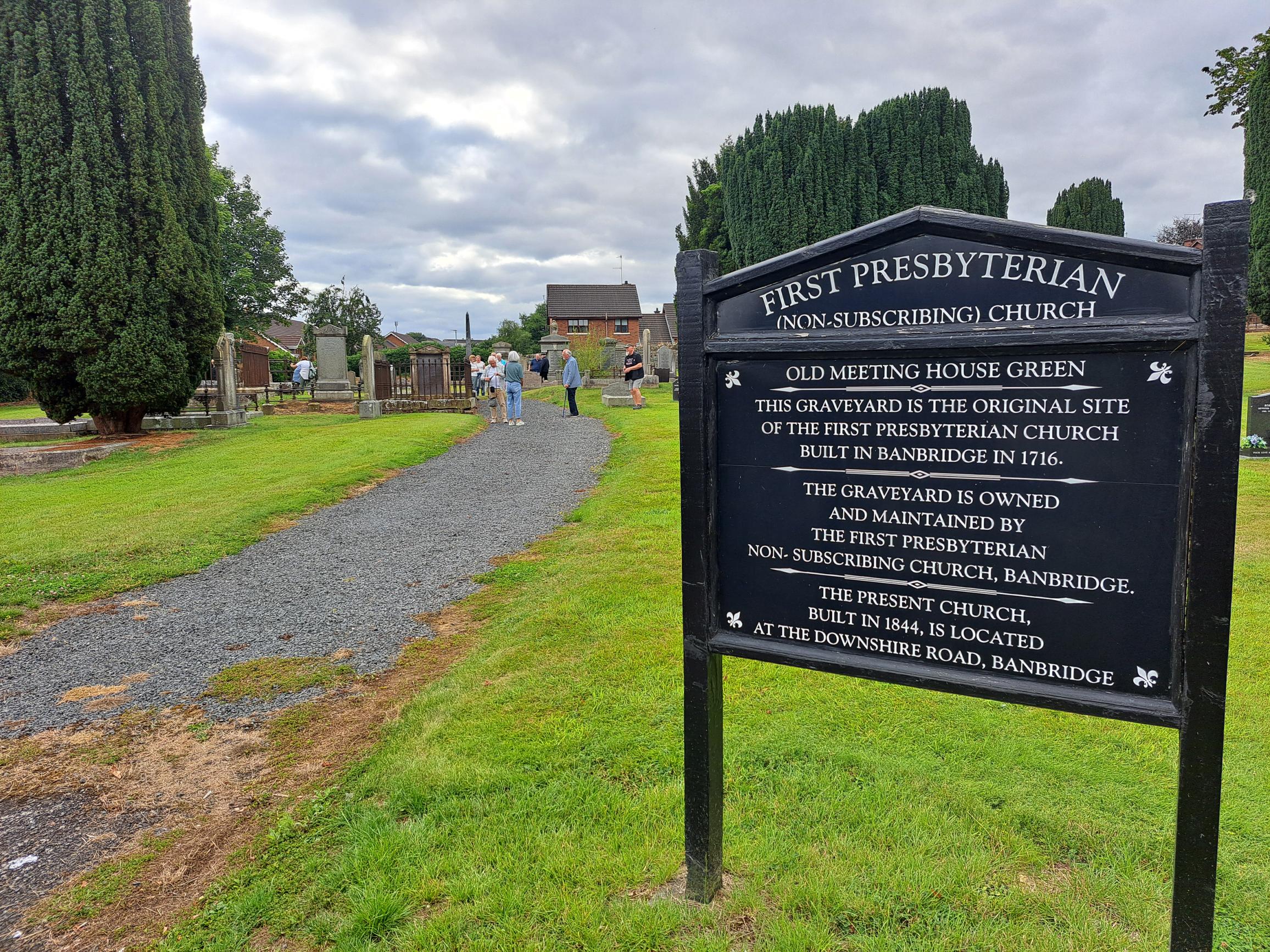
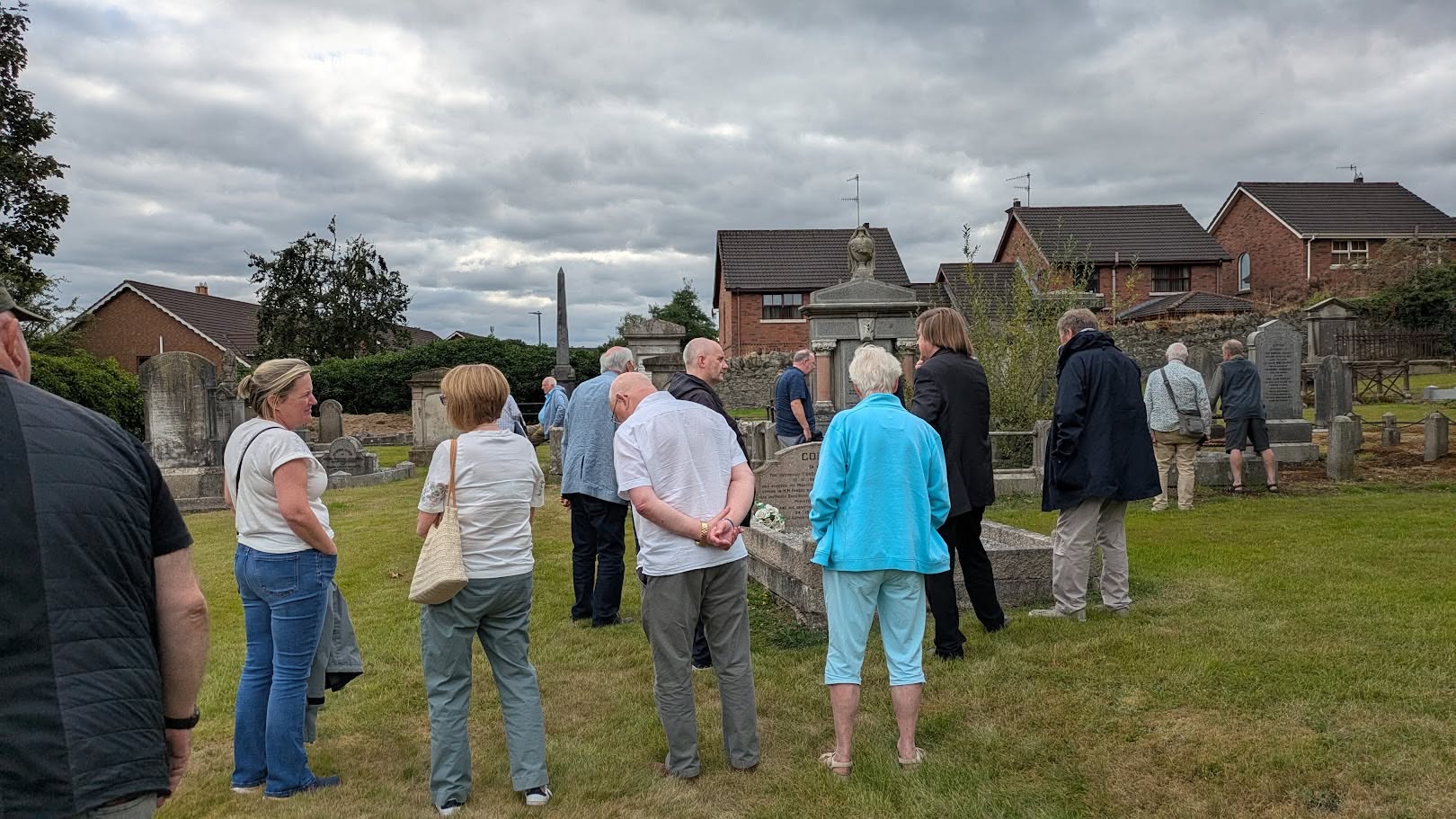
After leaving the church we stopped off at the Banbridge Meeting House Green. This was also once the site of the first meeting-house and is the burial place of many members and ministers such as James Davis and John Montgomery as well as Rev Percival Godding who served in the First World War, you can read a little bit about him here.
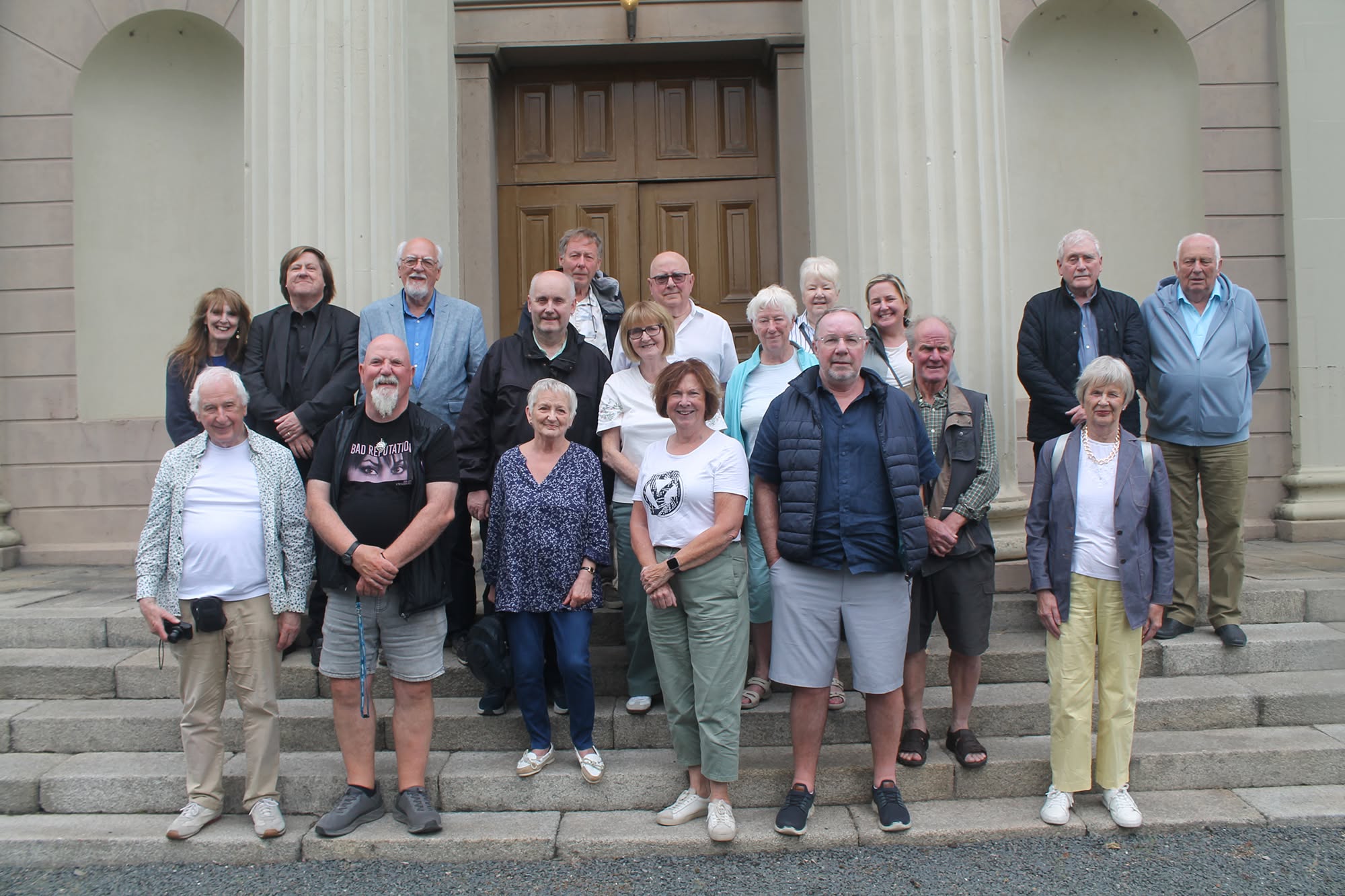
It was an excellent day, thank you to everyone who came along or helped organise the day, especially to Kathy. We are already preparing for next year when a trip to Carlingford is planned.