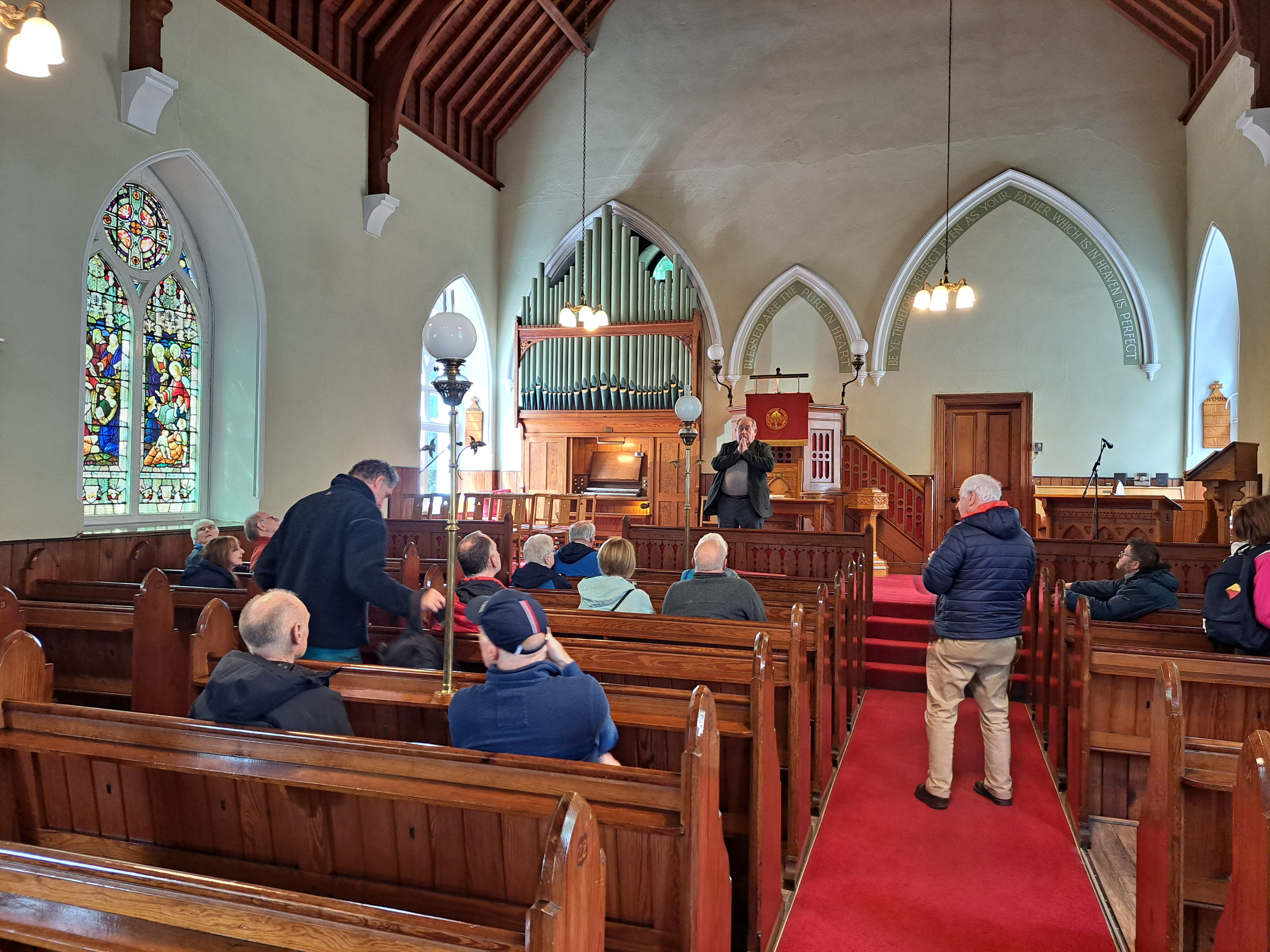
Visit to Warrenpoint, Newry and Banbridge

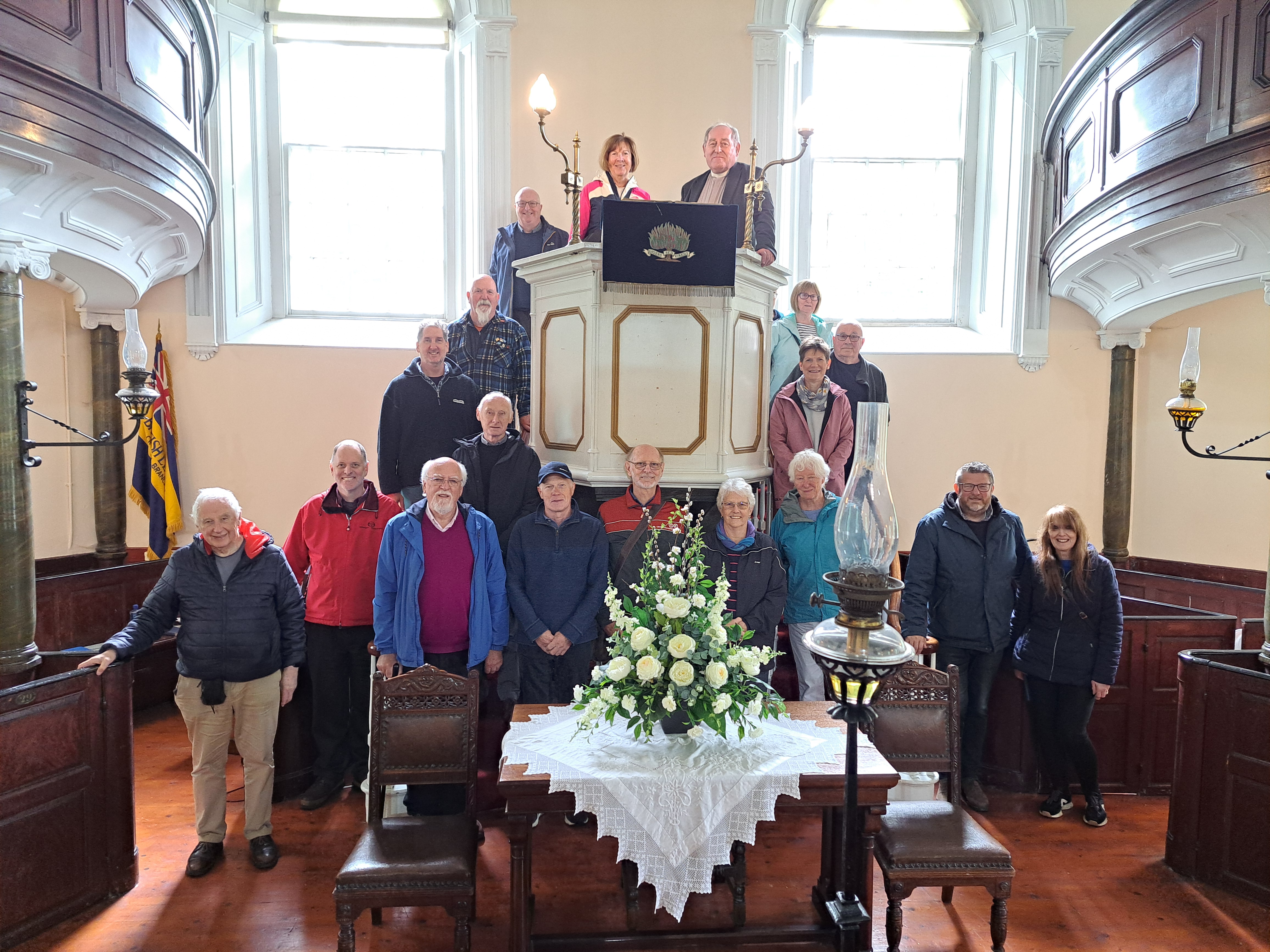
Saturday, 15th August was our long-awaited visit to churches and places of Non-Subscribing Presbyterian interest in Warrenpoint, Newry, and Banbridge. A group from Dunmurry and First Belfast made an early start from Dunmurry and kept brilliantly to the timetable all day. Our first stop was Warrenpoint where Anthony and Anne Holmes made us very welcome.
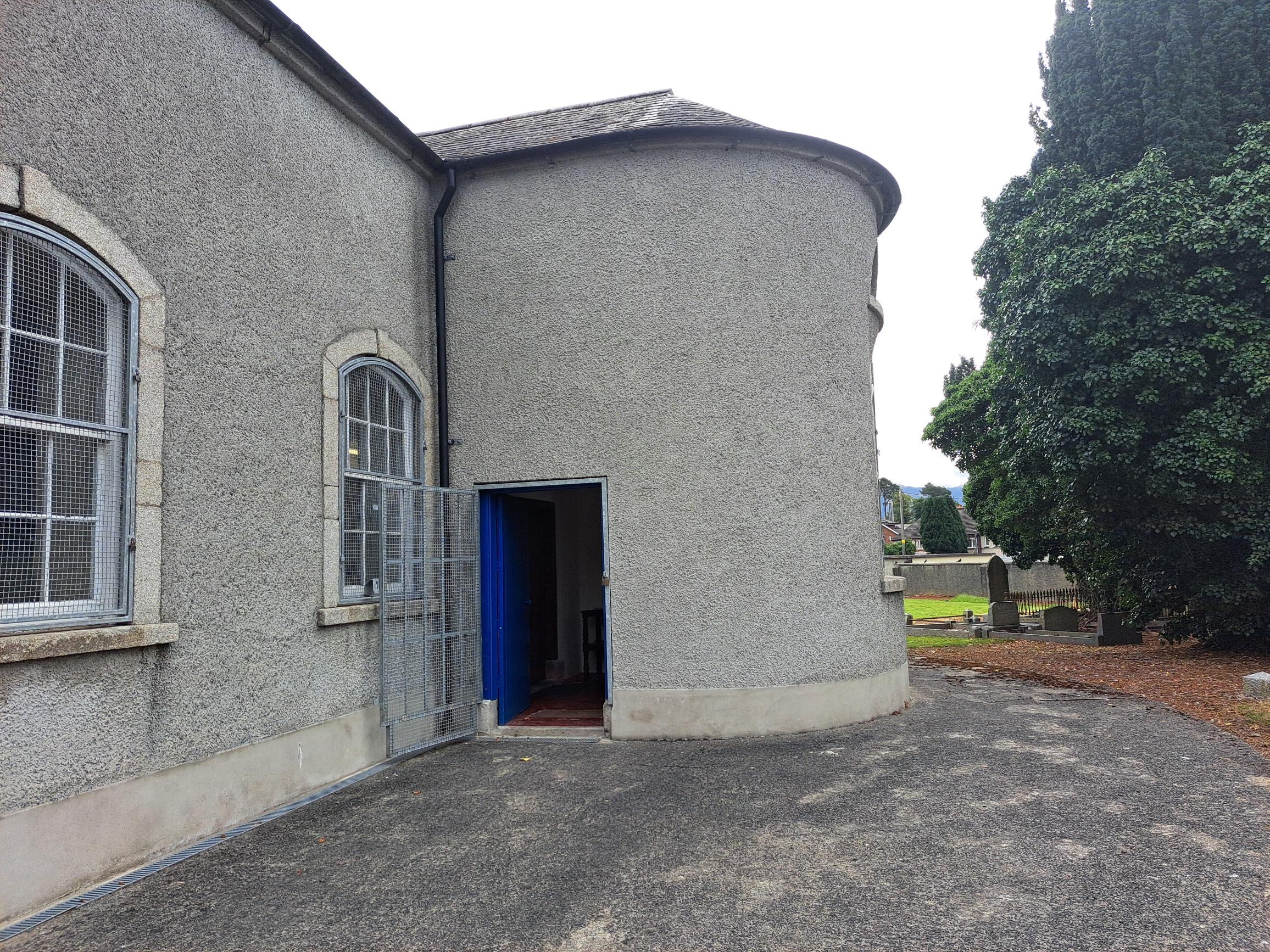
Warrenpoint

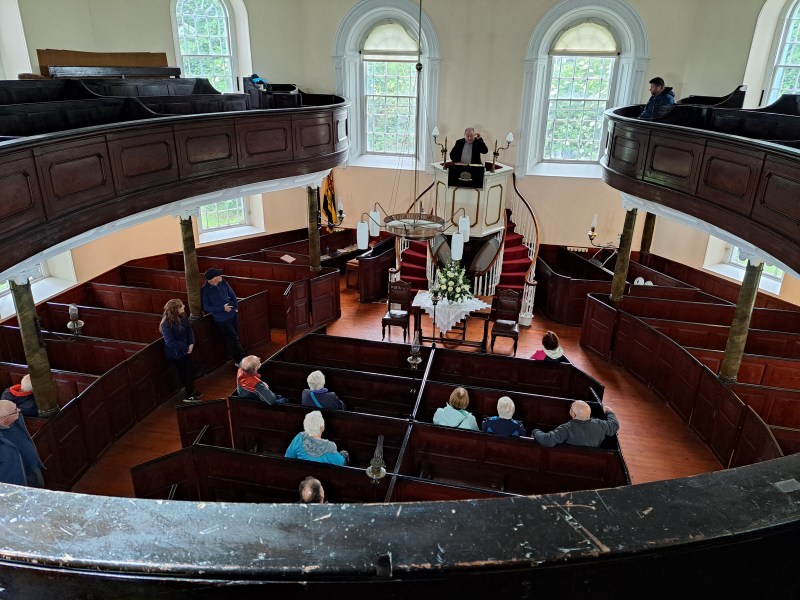
Warrenpoint is a unique church in our tradition, there is no other quite like it. When you approach it through the unusual curved porch you come into a building with a curved pulpit and three galleries supported by cast iron columns and leaving only a narrow rectangle not covered by the galleries. There is a date stone of 1707 and part of it must date from then but it was extensively rebuilt in about 1820. Founded in 1697 and identified as the congregation of Narrow-Water until 1875 when it was named Warrenpoint, it was made a joint charge with Carlingford, situated on the other side of the Lough, in 1707. This made for a complicated life for the minister who had to travel backward and forward across the Lough to conduct worship in both places. The Rev Samuel Arnold was the last minister to do this between 1805 and 1820 when he left Carlingford to concentrate on Narrow-Water. This proved a great success for Narrow-Water although it confirmed a downward trend for Carlingford. The last minister on that side of the Lough was the Rev James Lunn, the Carlingford congregation eventually closing in 1859.
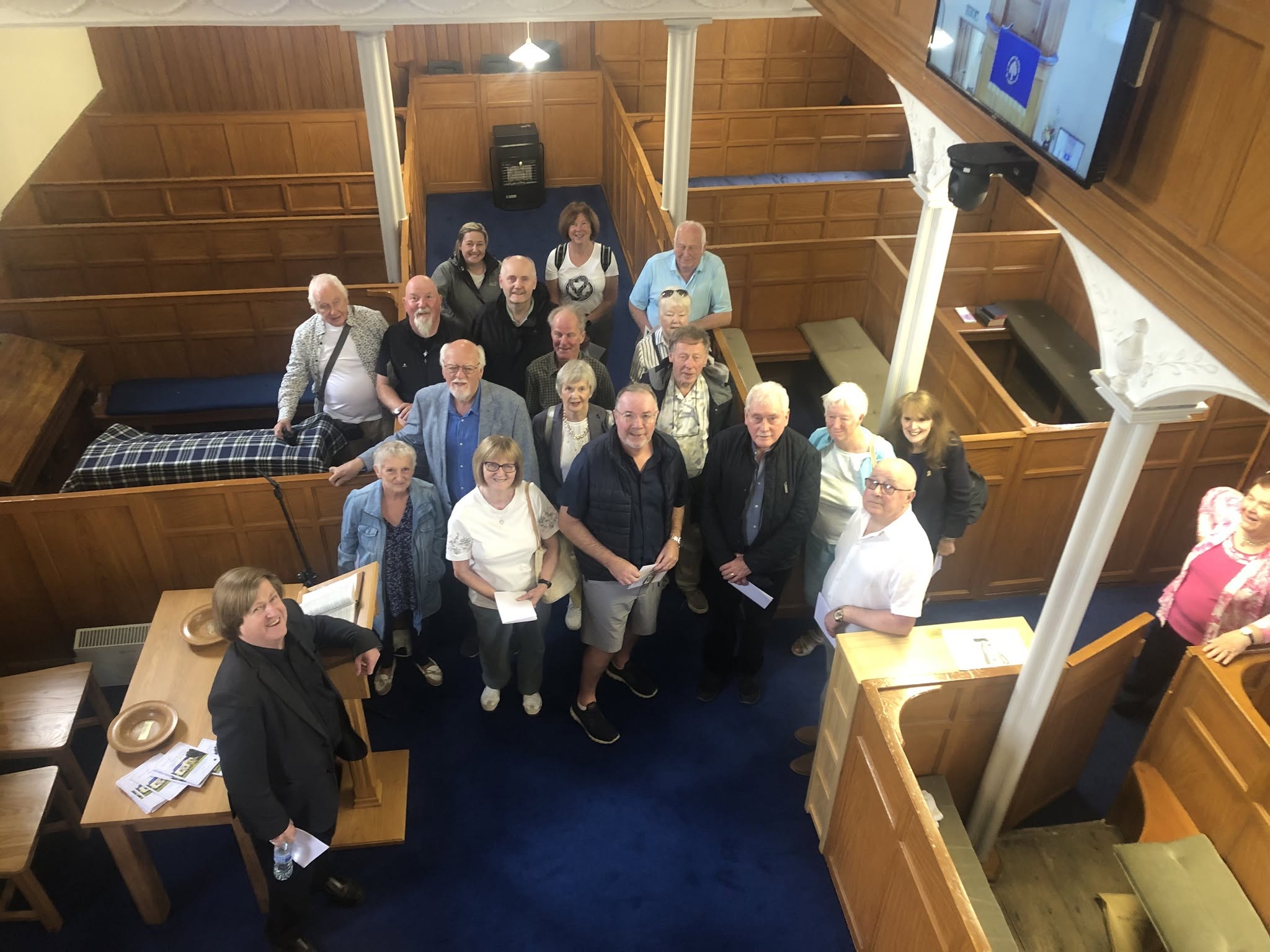
Warrenpoint interior (Photo: Anthony Holmes)

On the county Down side the congregation flourished with Samuel Arnold able to concentrate on its needs and extensively rebuilding the meeting house in about 1820. It was badly hit by the Famine although managed to maintain itself as a single charge until 1910 when it was linked to Newry, an arrangement that has remained ever since. The congregation had the services of some high profile ministers including G.W. Bannister and W.E. Mellone and many of them are buried in the adjoining graveyard where we also saw the grave of Thomas Donnan, for 45 years the precentor of the congregation.
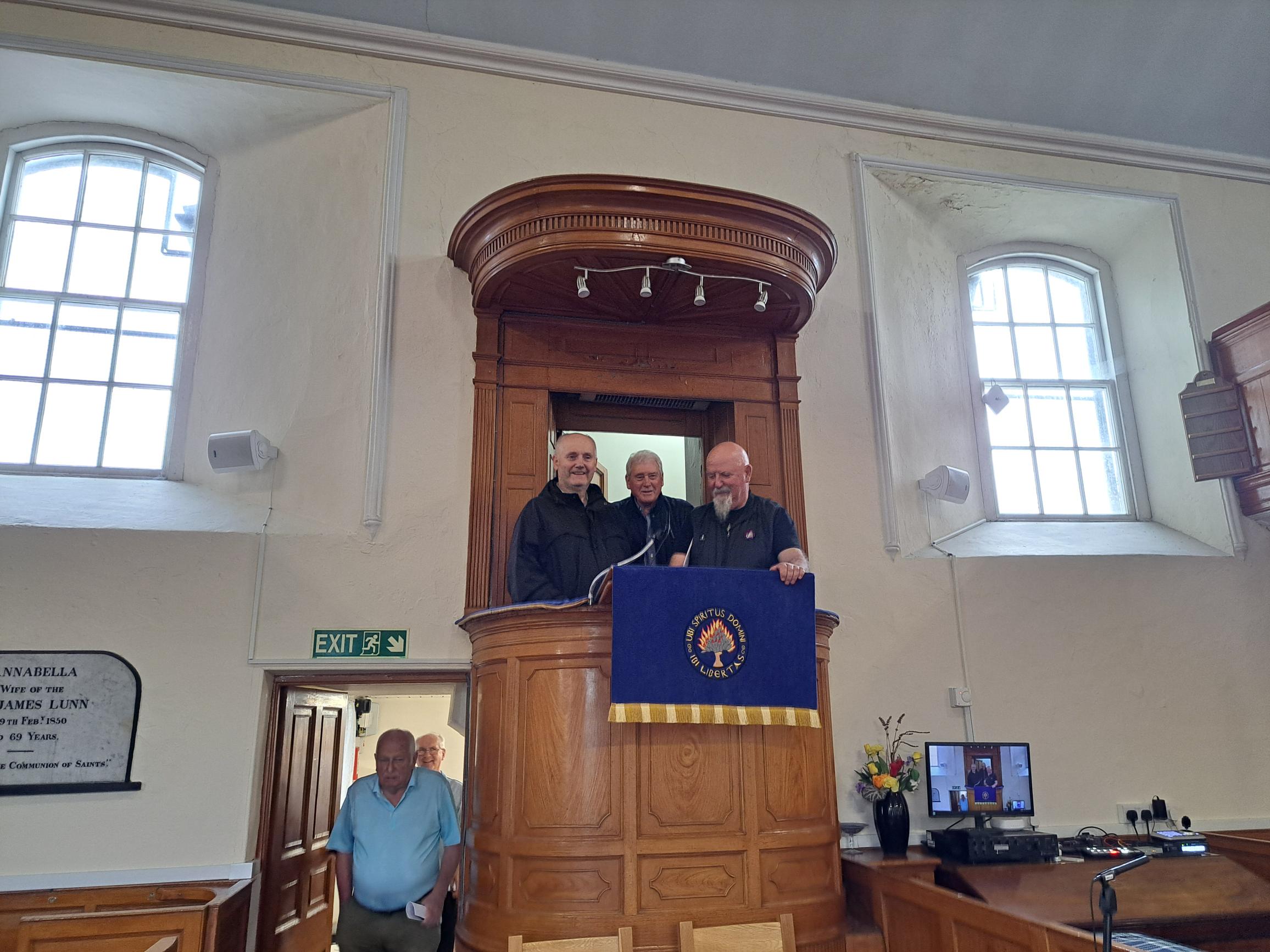
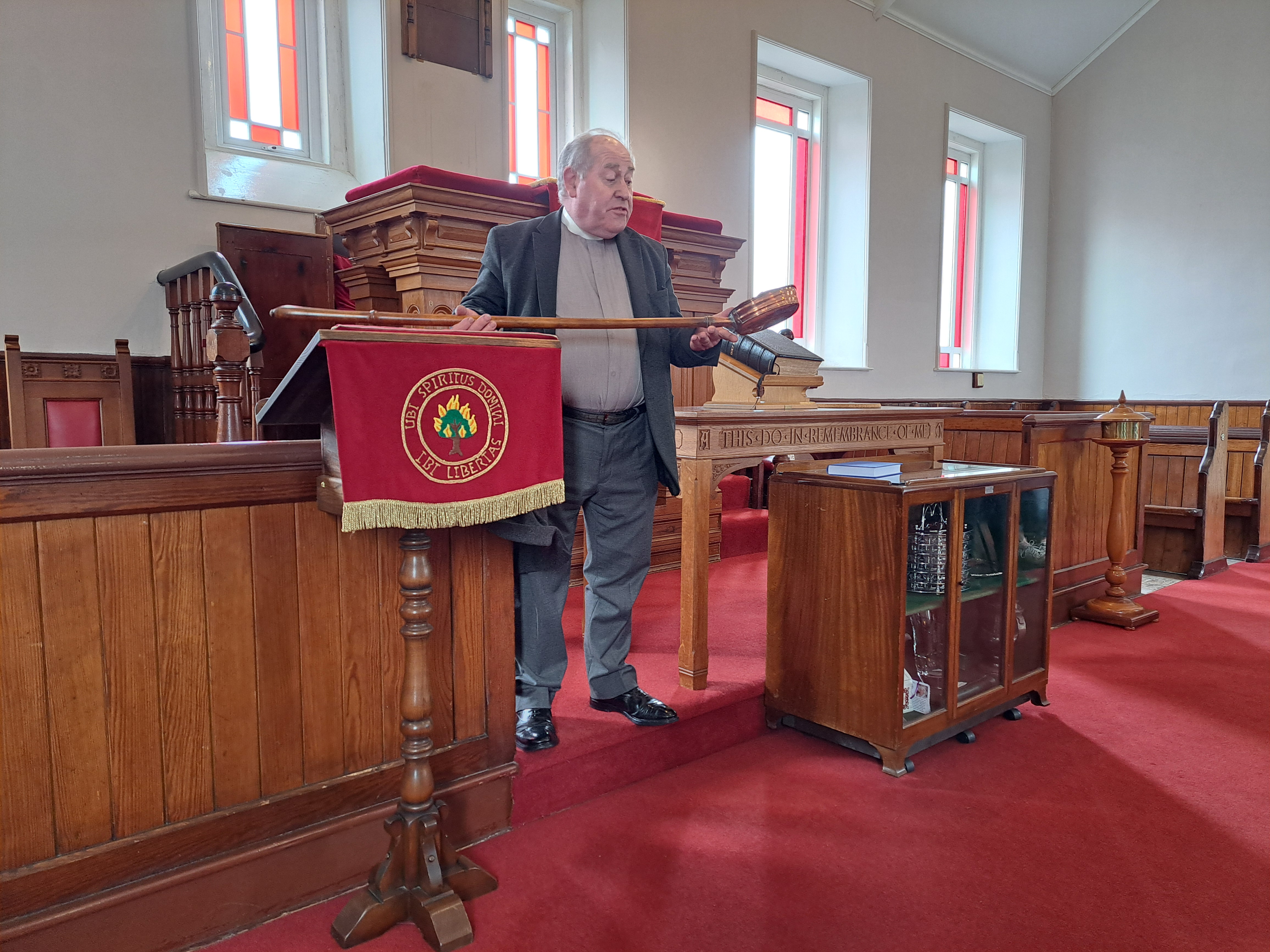
In the pulpit

From Warrenpoint we moved on to Newry, generally said to be the first non-conformist church in Ireland to be built in the Gothic style. Designed by W.J. Barre, it is an impressive building with a spire and as well as a big, white pulpit also houses the first organ installed in a Presbyterian church in Ireland. The organ was built for Belfast’s Second Congregation and despite rumours that it had once been in St George’s Chapel, Windsor perhaps built by Snetzler and indeed played (and haunted) by Handel we do know now that it was built by an organ builder named White who operated out of Orr’s Entry in Belfast. When the Second Congregation moved to All Souls’ the organ came with them but in the 1920s it was sold to Newry where it continues in regular use, the same organ that was once played by Edward Bunting.
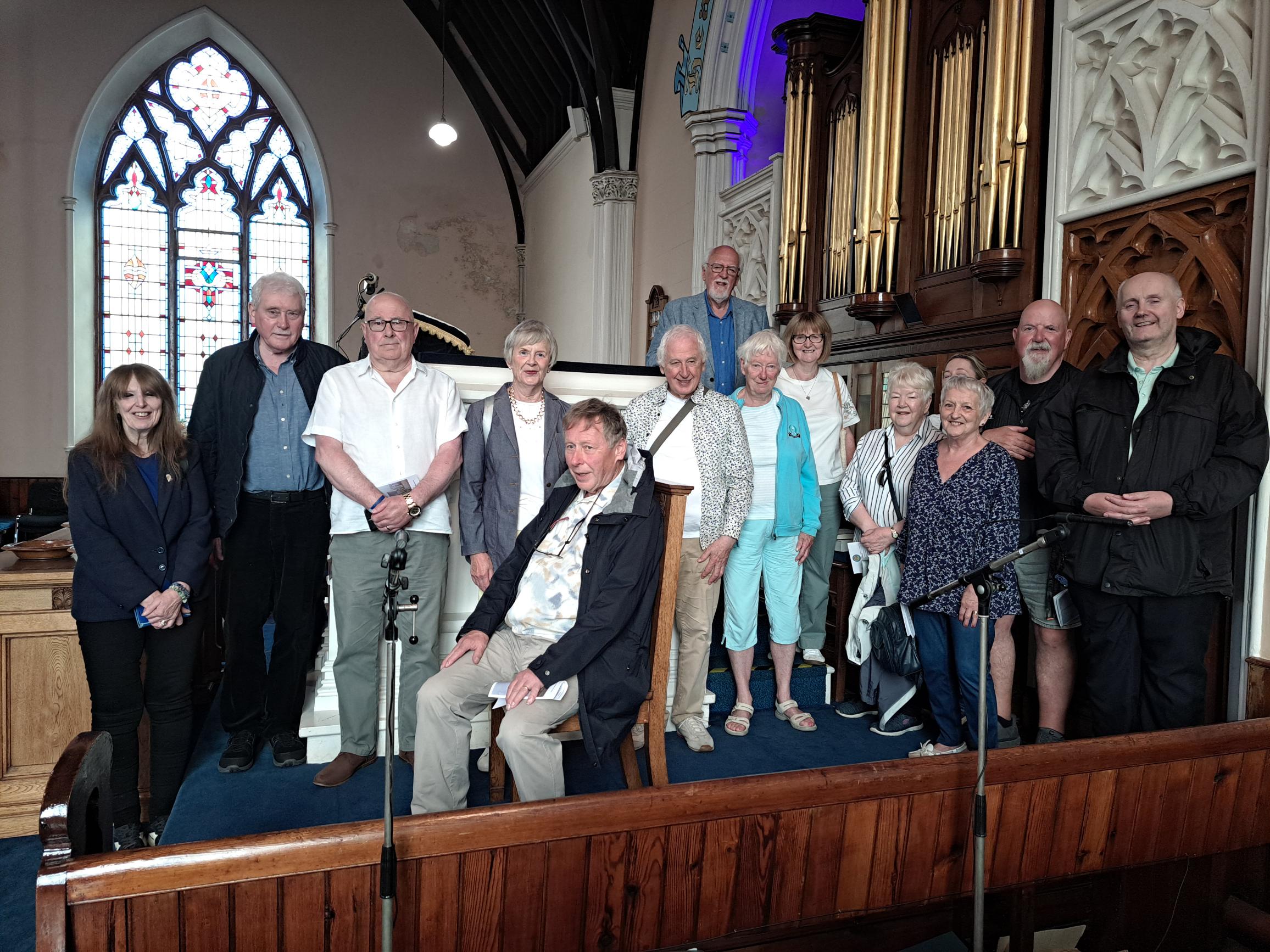
Some of our group in front of the organ of 1806

While we were at Newry Anthony opened up the trapdoor to the underground passages that are hidden away under the building. Only one of our number was brave enough to venture into this hidden realm and modesty prevents me from naming that intrepid explorer but the passages seem to be there to house a large stove that once heated the church. Made by Musgrave & Co. Ltd, a firm based in Belfast in the middle of the nineteenth century, there must have been a flue somewhere, but it hasn’t been used for a long time.
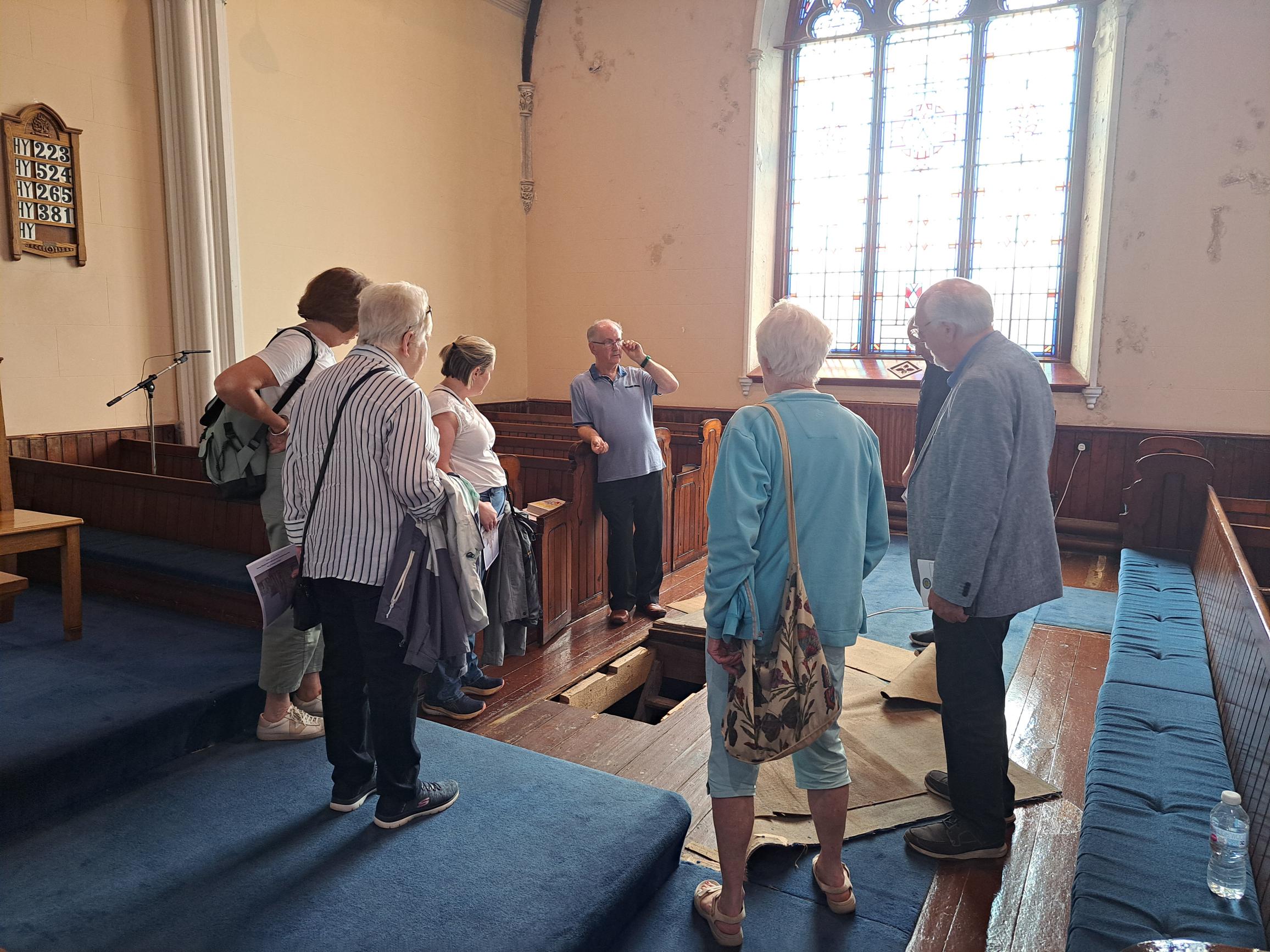
Anthony opens the trap door

Click on the video for Anthony Holmes’s video of the underground passageway

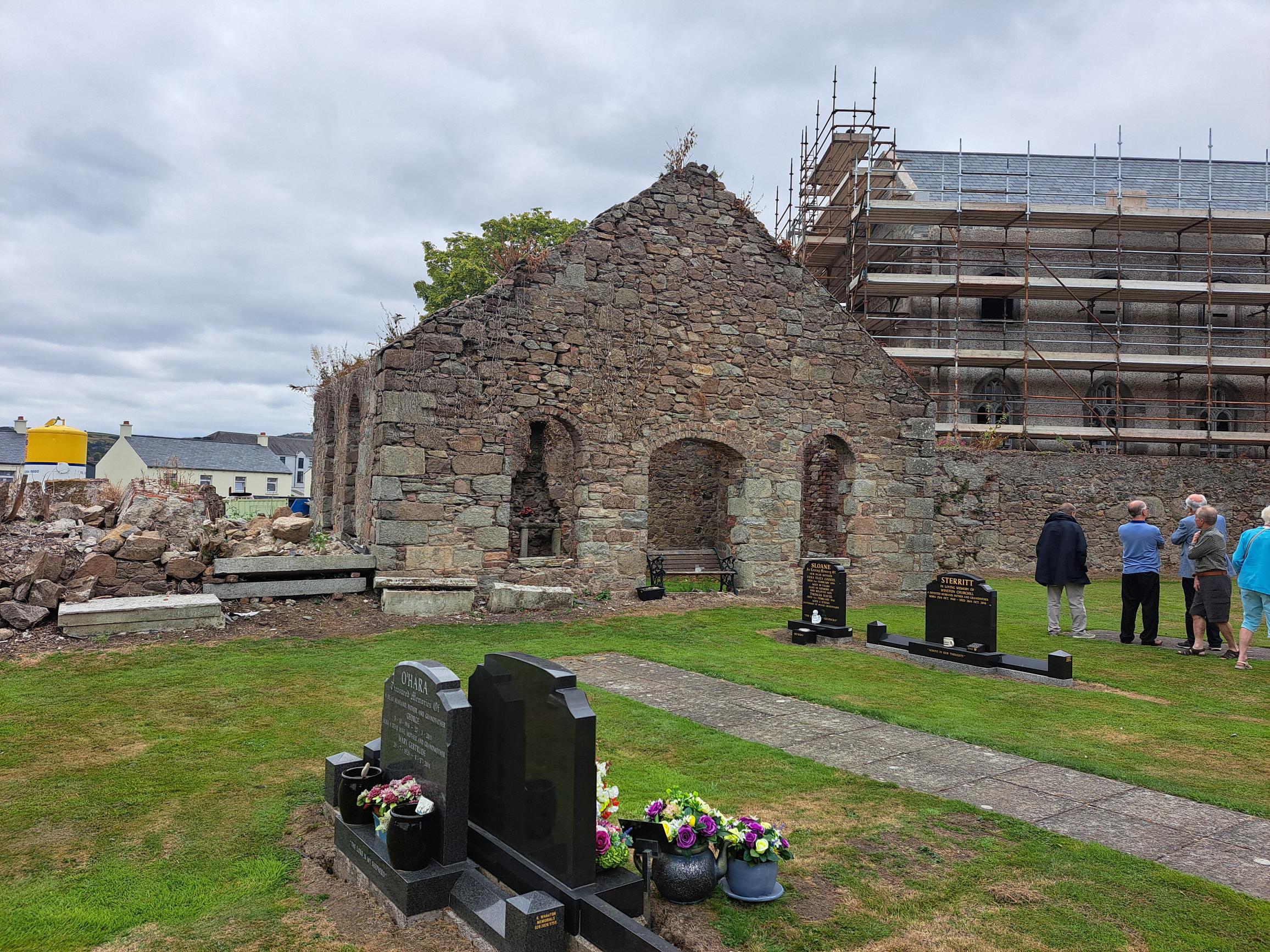
From the Newry church we went on to the Old Meeting House Green on High Street. Despite extensive redevelopment on all sides this spot remains a beautifully maintained peaceful oasis which contains not only ancient and modern graves but the ruins of the previous meeting house.
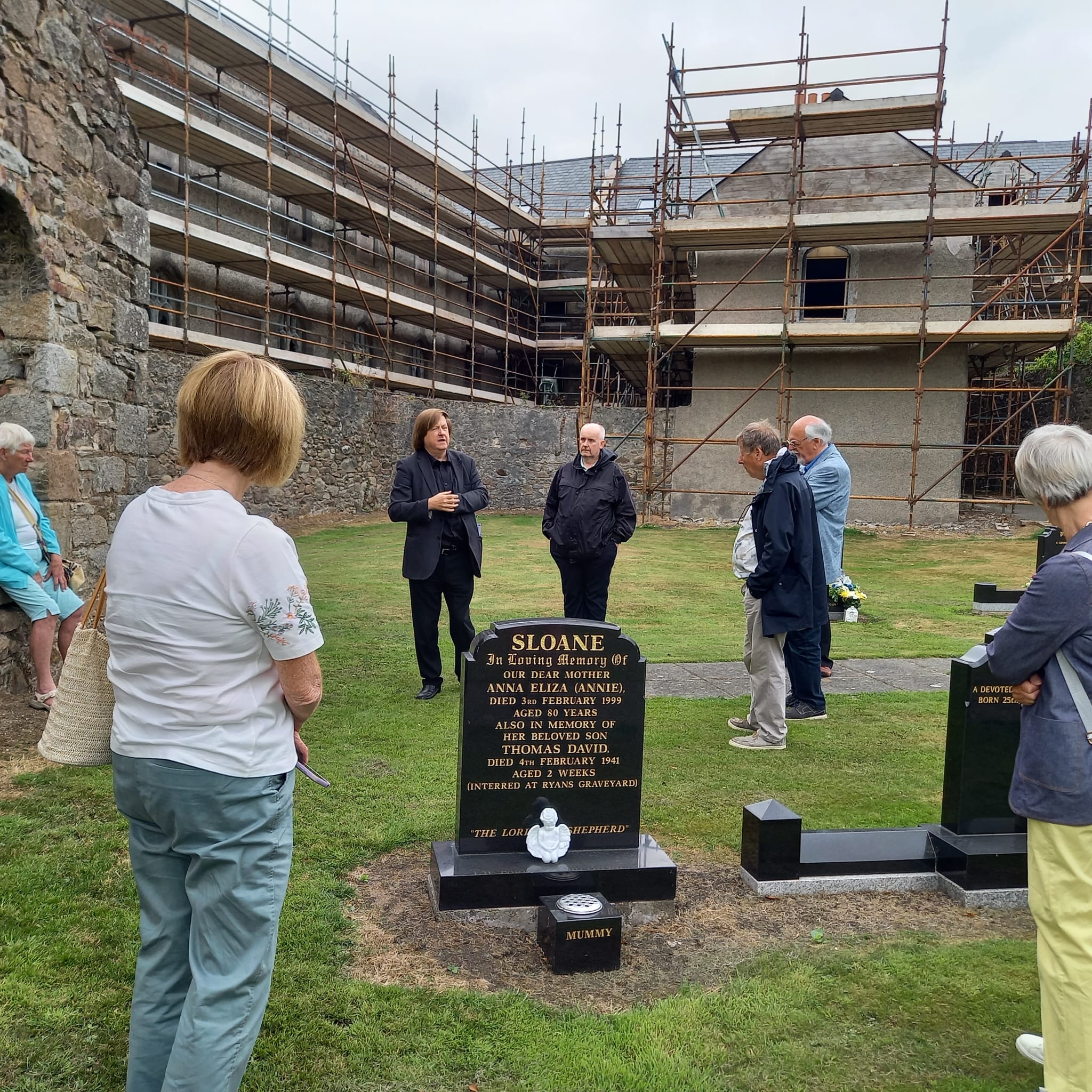
Inside the old graveyard (Photo: Sue Steers)
All that remains of the old meeting house (Photo: Sue Steers)

The old meeting house was built in 1724 but abandoned when the new church was built in 1853. It was here that John Wesley preached when he came to Newry and until fairly recently the remains of the pulpit could be seen. The graveyard is particularly notable for containing the last resting place of John Mitchell, Young Irelander, Nationalist leader and a son of the manse, as well as the grave of Rev A.G. Malcolm an innovative minister who edited the first major Non-Subscribing hymnbook and who began his ministry at Dunmurry before moving to Newry.
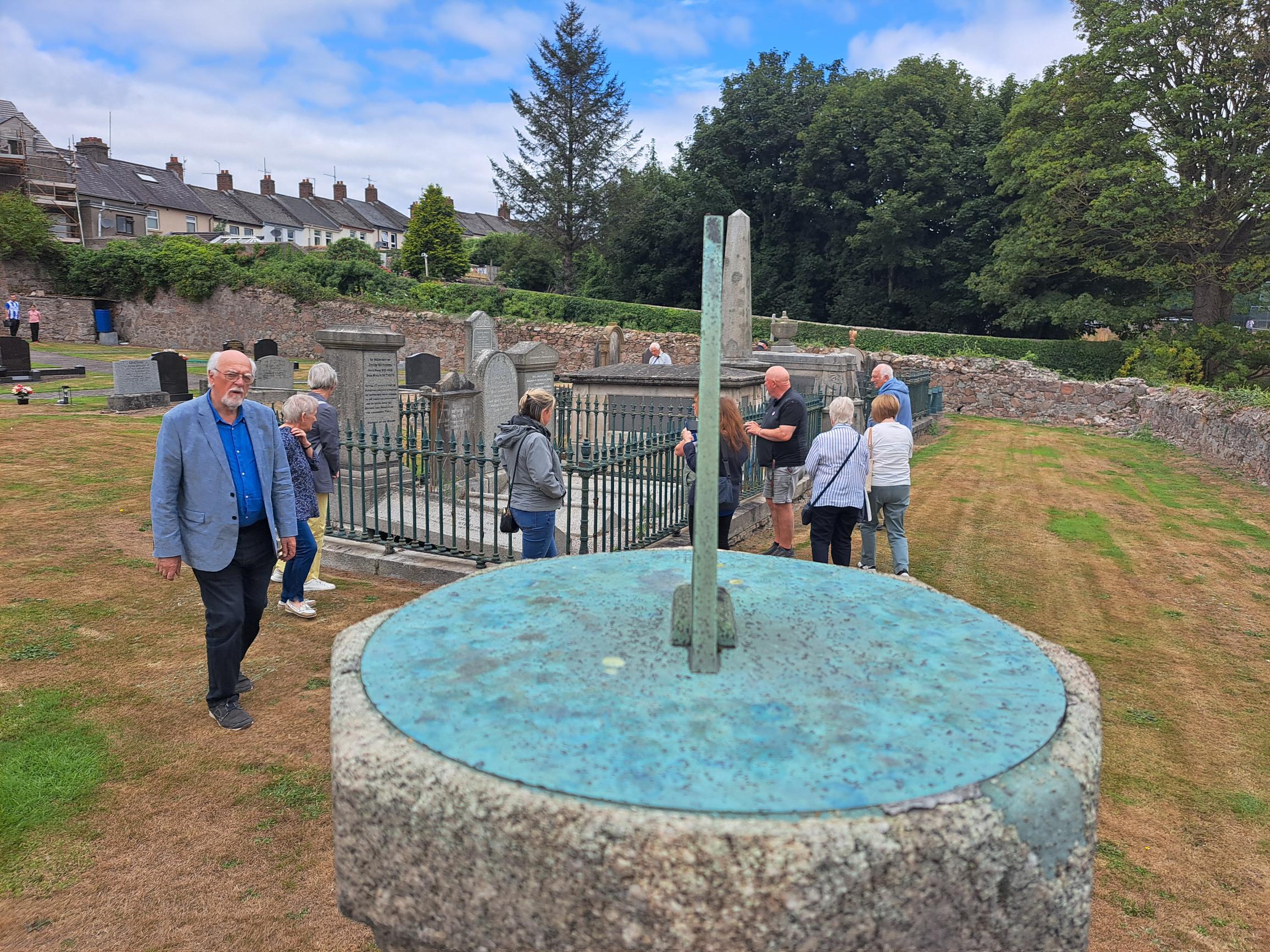
A view of the graveyard from the sundial, said to date from 1757

On leaving Newry we travelled to Banbridge for lunch before going off to the Masonic Hall which was built as the Second Non-Subscribing congregation in Banbridge. This congregation built a grand church opened in 1849 after a large portion of the original congregation left that church following the appointment of the Rev John Montgomery, a nephew of Henry Montgomery. There were deep divisions amongst Non-Subscribers at that time and this was one of the places where this manifested itself in congregational division.
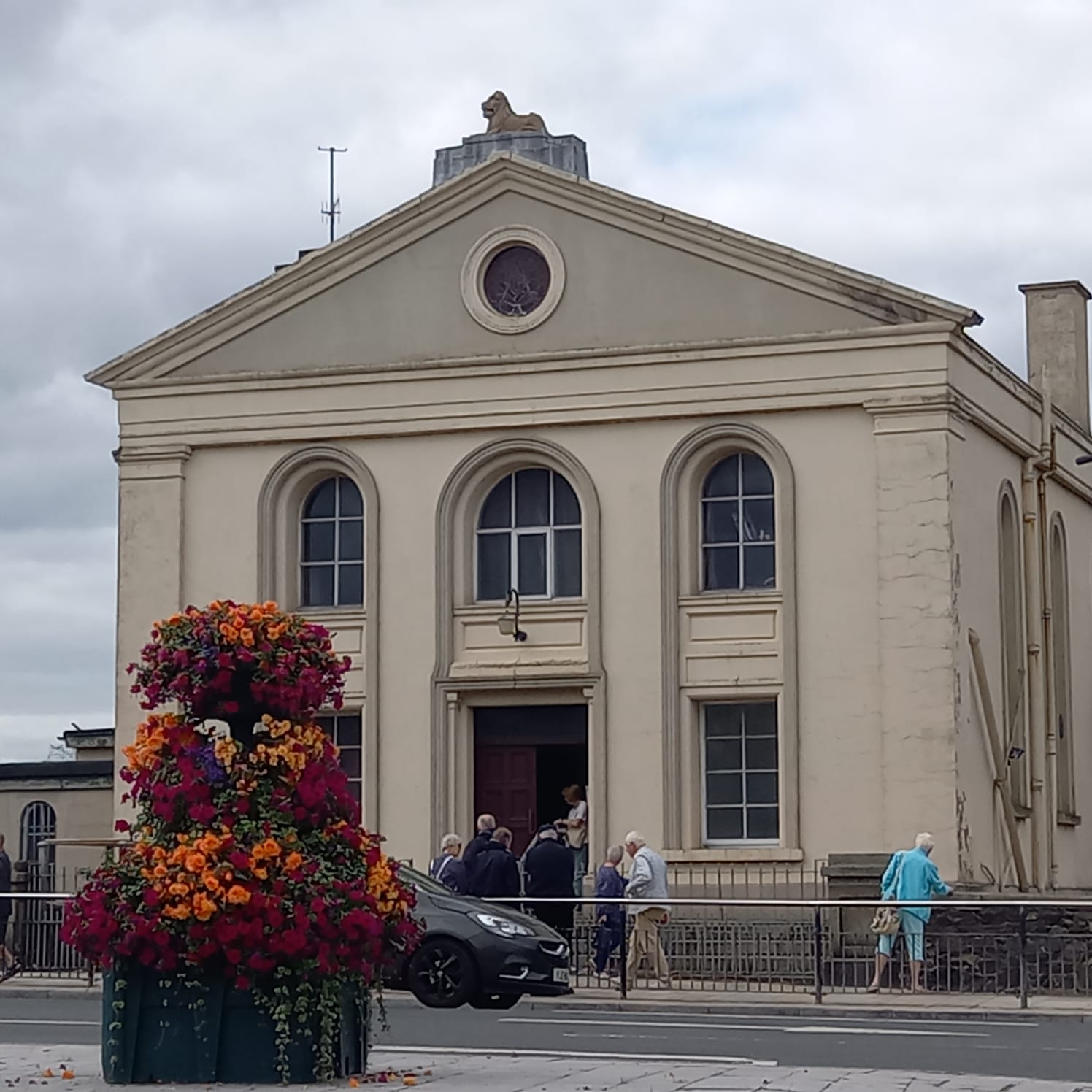
Second Banbridge (Photo: Sue Steers). Note the lion on top of the pediment

I am sure most people that pass the Masonic Hall don’t realise it began life as one of our churches and we were given the rare privilege of visiting the building, being shown round by Willy McCoy, one of the officers. The interior was extensively remodelled, probably in the 1890s and most of the rooms give nothing away of its ecclesiastical origins. Nearly all the windows are covered in, and new floors have been added, but the original church must have filled both the length and height of the building, probably with galleries. It must have been a magnificent space built to compete with the church building they had left.

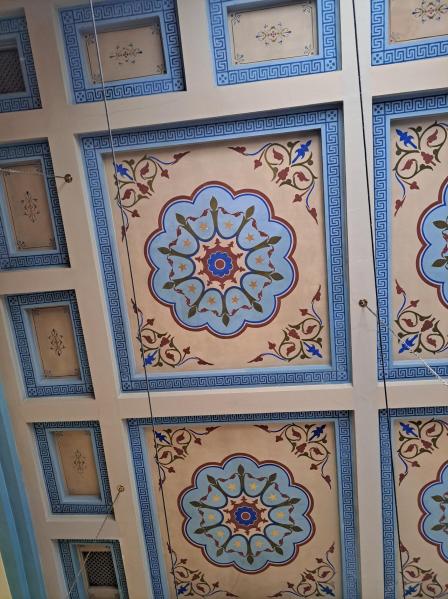
It doesn’t quite match the splendid building that is the first congregation but it can’t have been far off. But the one detail that does survive and which is quite exceptional is the ceiling that remains in the Lodge Room.
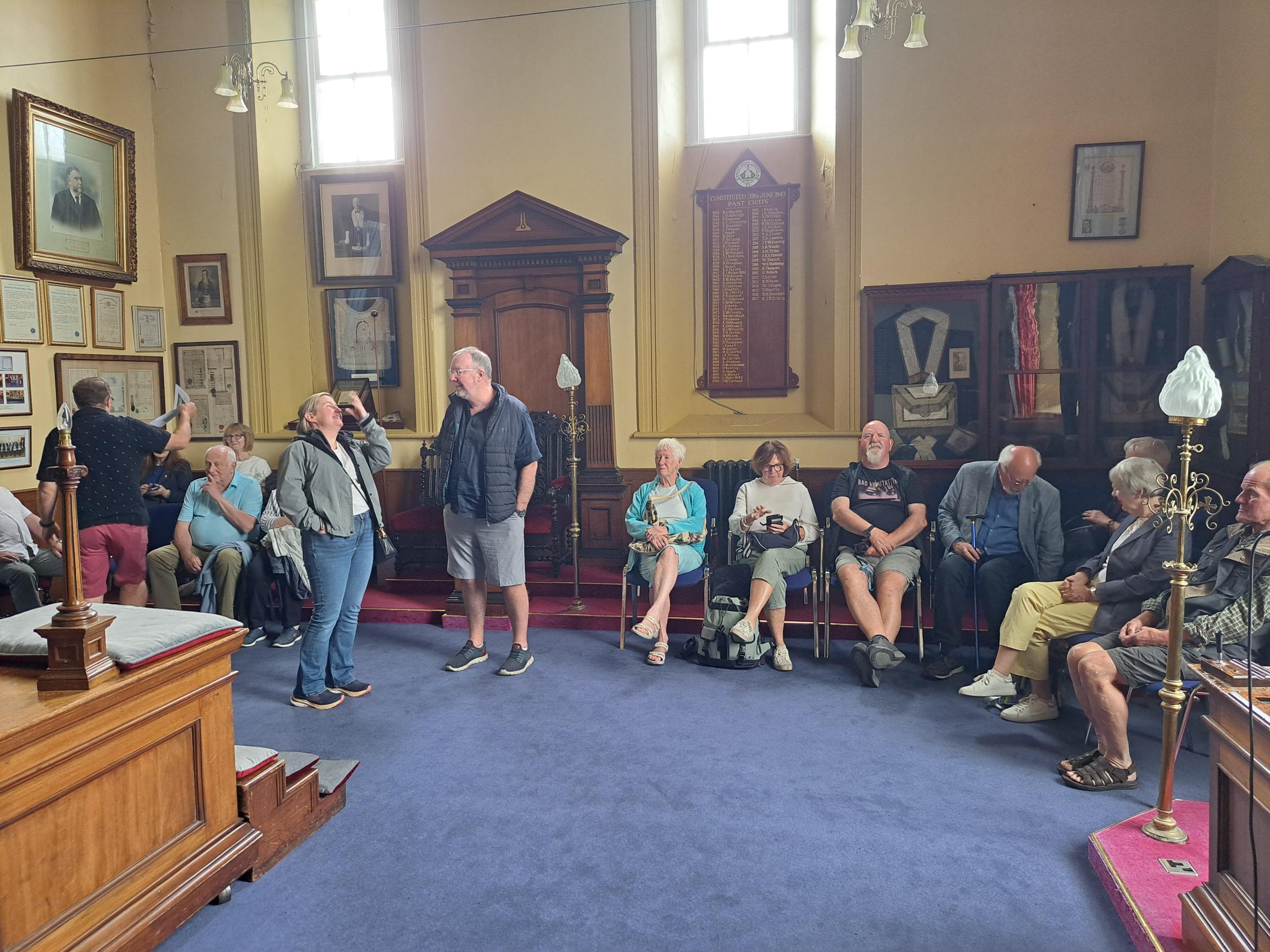
The Lodge Room

The ceiling dates from 1849 when the building was opened and is a stunning piece of work that has not been dimmed by age at all.
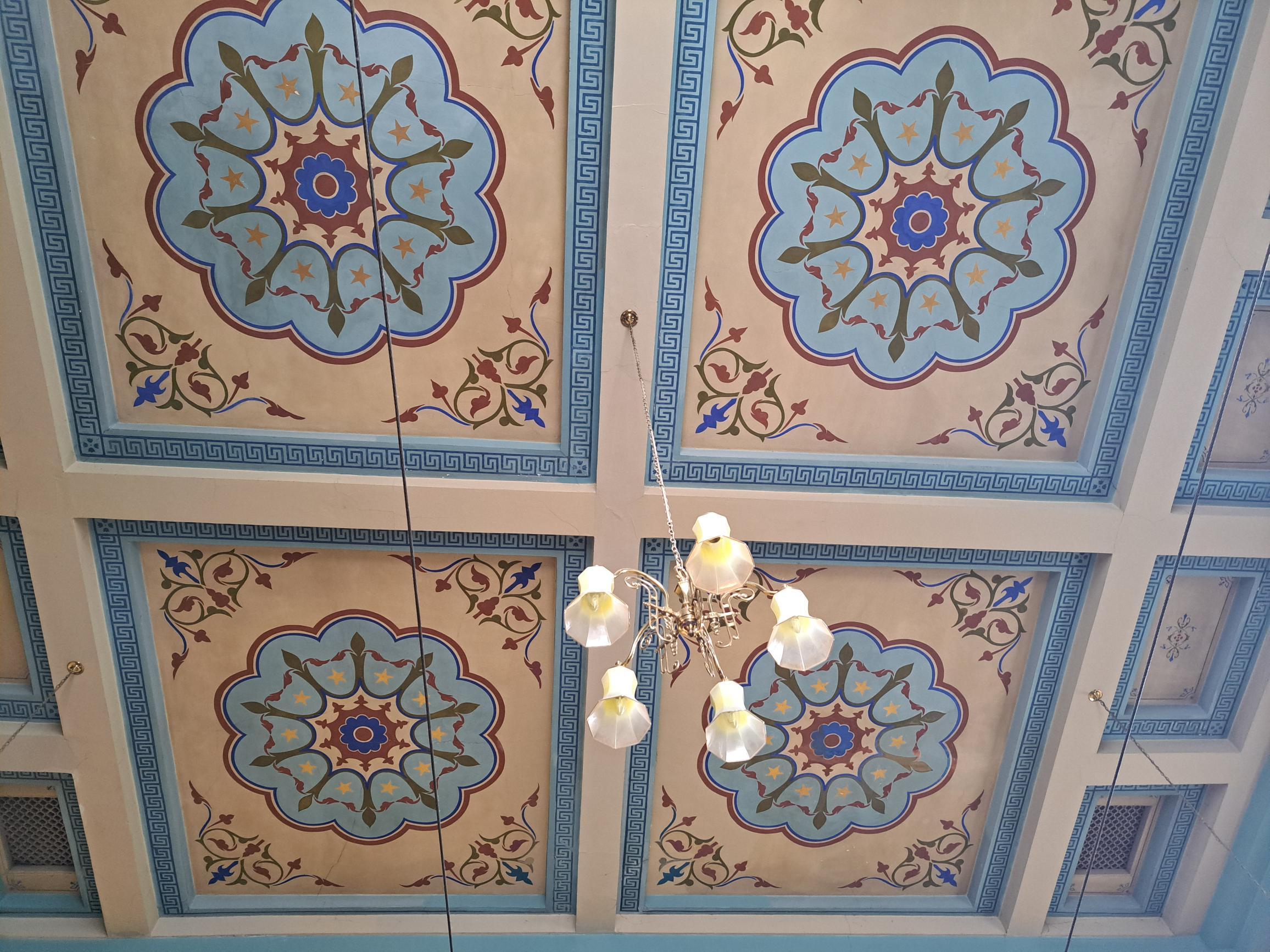
The impressive ceiling in Second Banbridge

The one thing we could not discover was the origin of the stone lion that sits atop the structure. This does not seem to have been placed there by the Masonic Lodge, but would it be put there by the congregation? It is nevertheless an attractive and distinctive feature. You can read more about this congregation here.

From there it was a short walk to First Banbridge. Founded in 1716 this church was built in 1844 towards the end of the ministry of the Rev James Davis, Non-Subscriber and Remonstrant. We were greeted by Carol McAlister and Karen Bushby who again were excellent hosts. We know that the Second Congregation’s building was designed by Edward Gardner (who may have had a connection with our Downpatrick congregation), but we don’t know who designed First Banbridge.
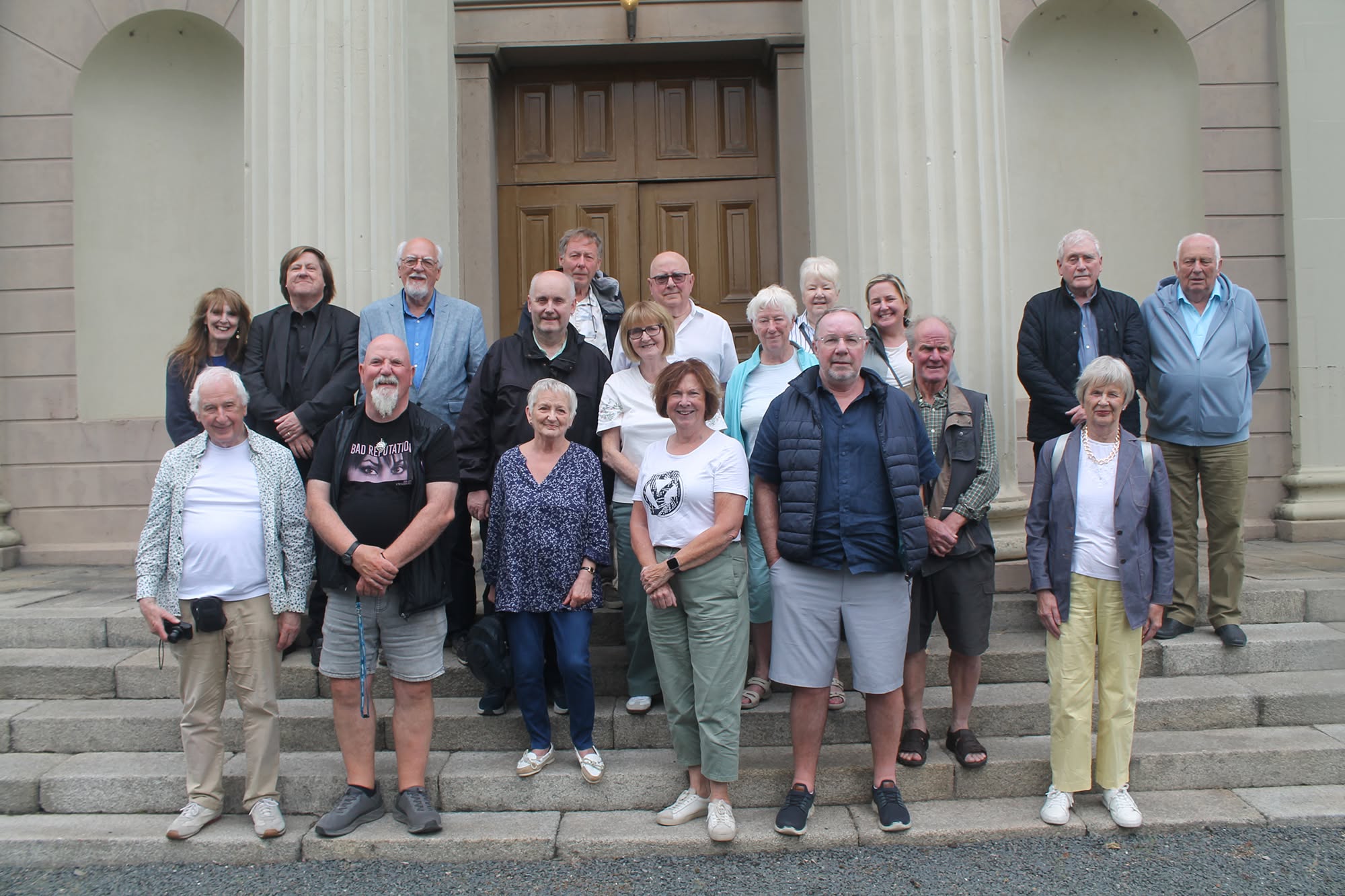
Outside Banbridge (Photo: Karen Bushby)

If Newry is an example of the beginnings of the use of Gothic architecture then Banbridge is a stunning example of the adoption of the fullest Neo-Classical design. It is a complete and splendid example of Classical architecture with Ionic columns at the entrance, a large vestibule with a curved staircase on either side leading to a U-shaped gallery and a magnificent two-decker pulpit.
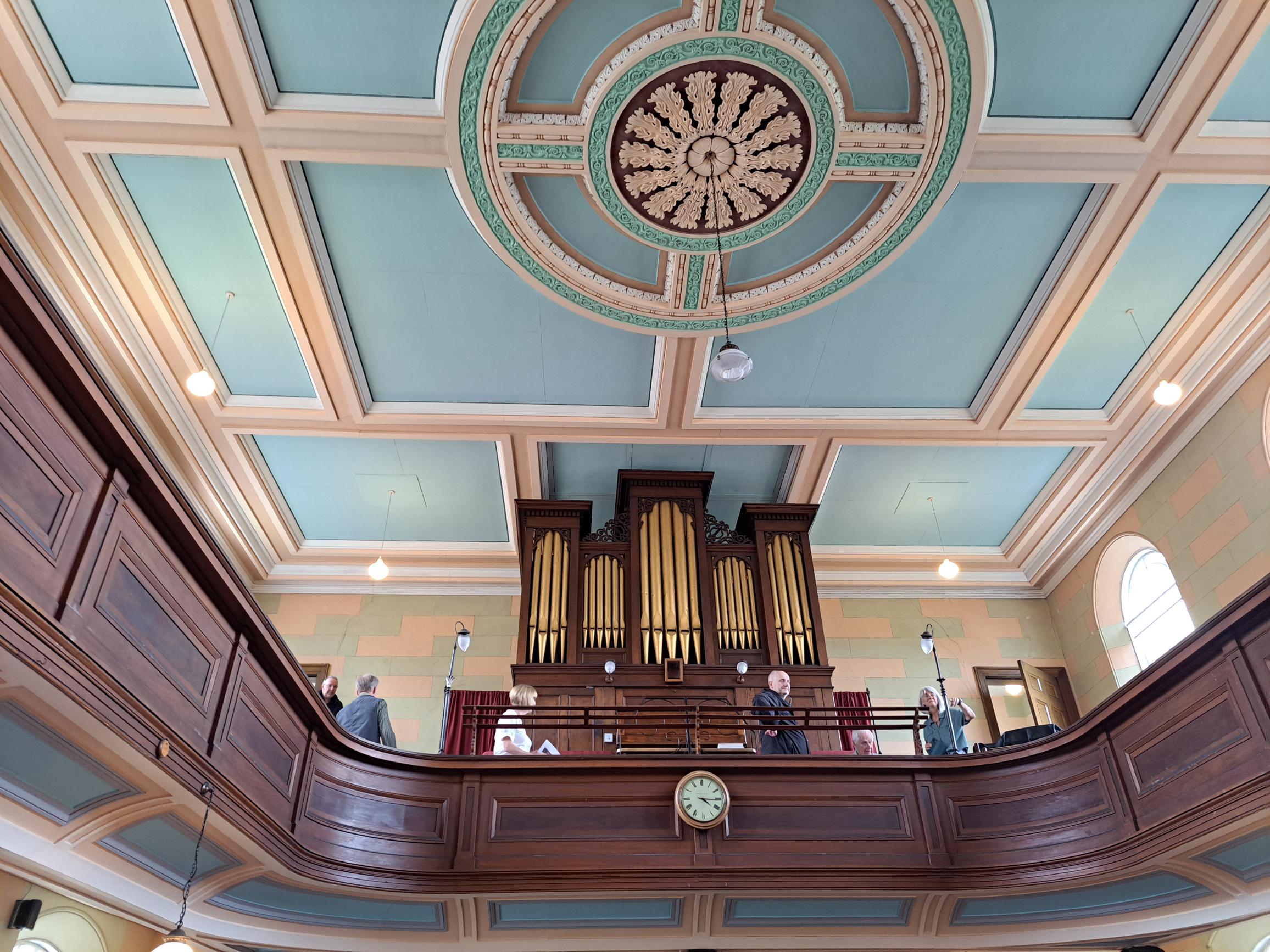
Ceiling and Organ, First Banbridge (Photo: Sue Steers)

The Classical features extend all the way around the building both inside and outside, which is not always the case, but here it makes for a very impressive church.
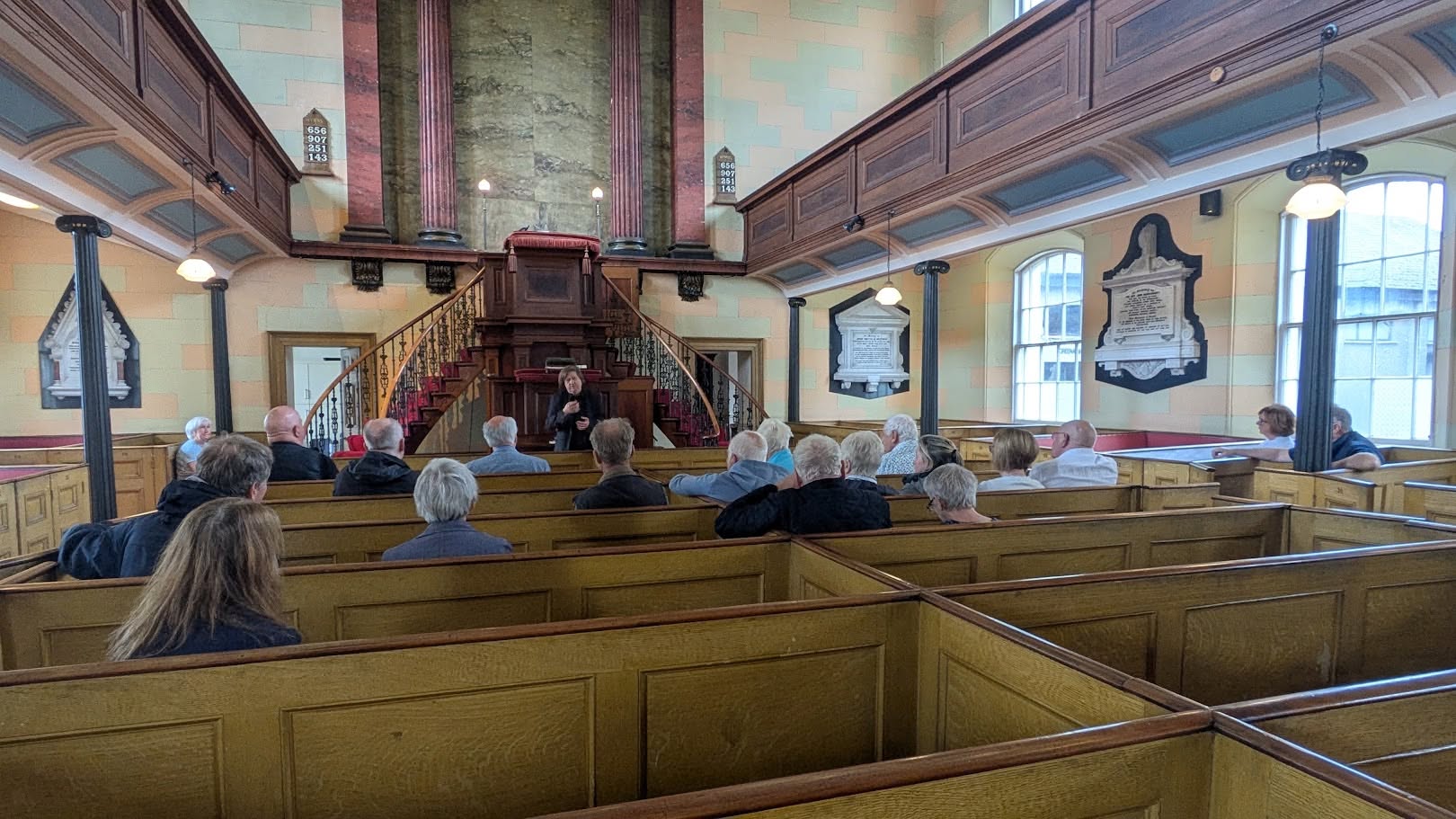
Looking towards the pulpit (Photo: Karen Bushby)

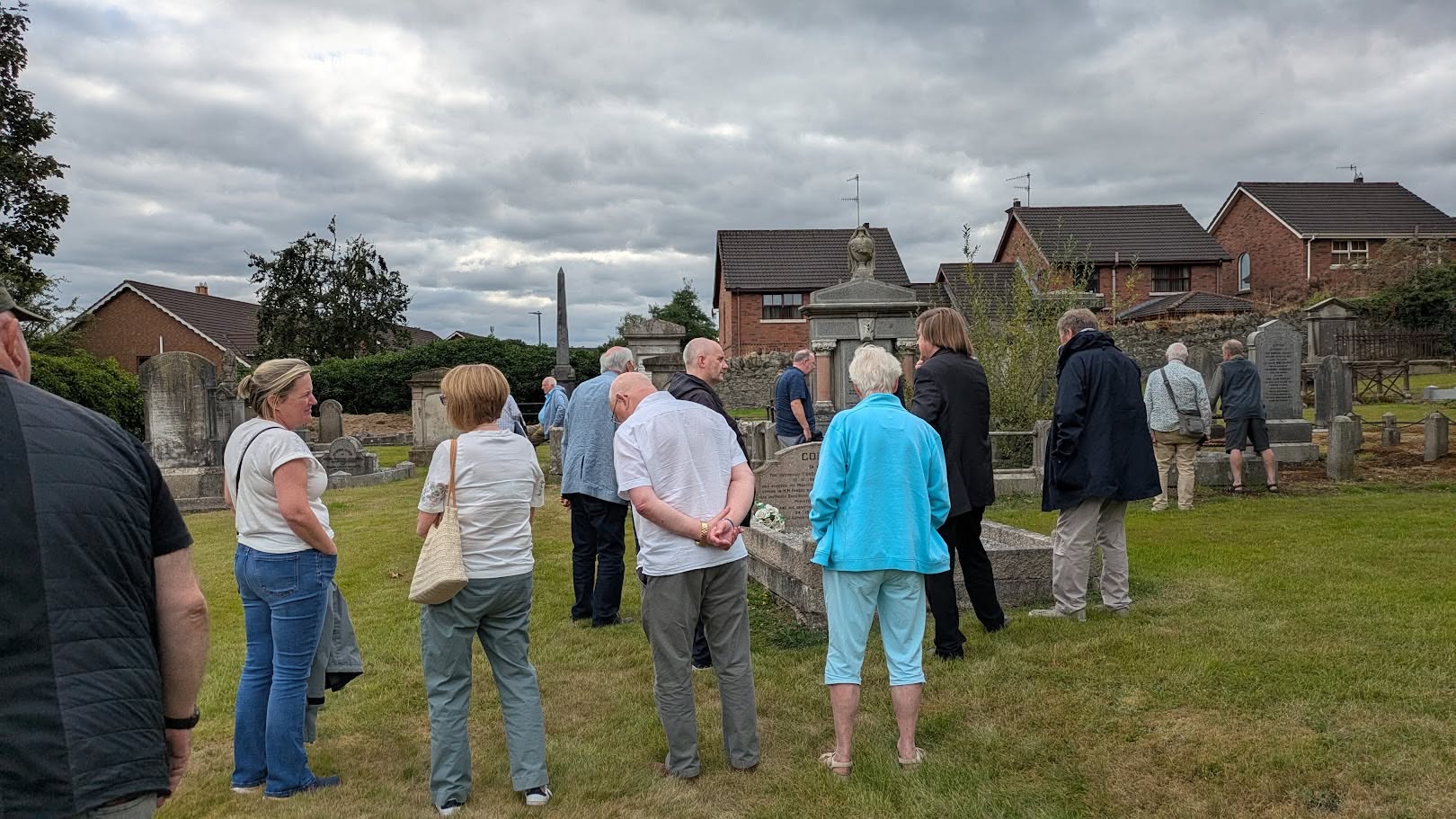
After leaving the church we stopped off at the Banbridge Meeting House Green. This was also once the site of the first meeting-house and is the burial place of many members and ministers such as James Davis and John Montgomery as well as Rev Percival Godding who served in the First World War, you can read a little bit about him here.
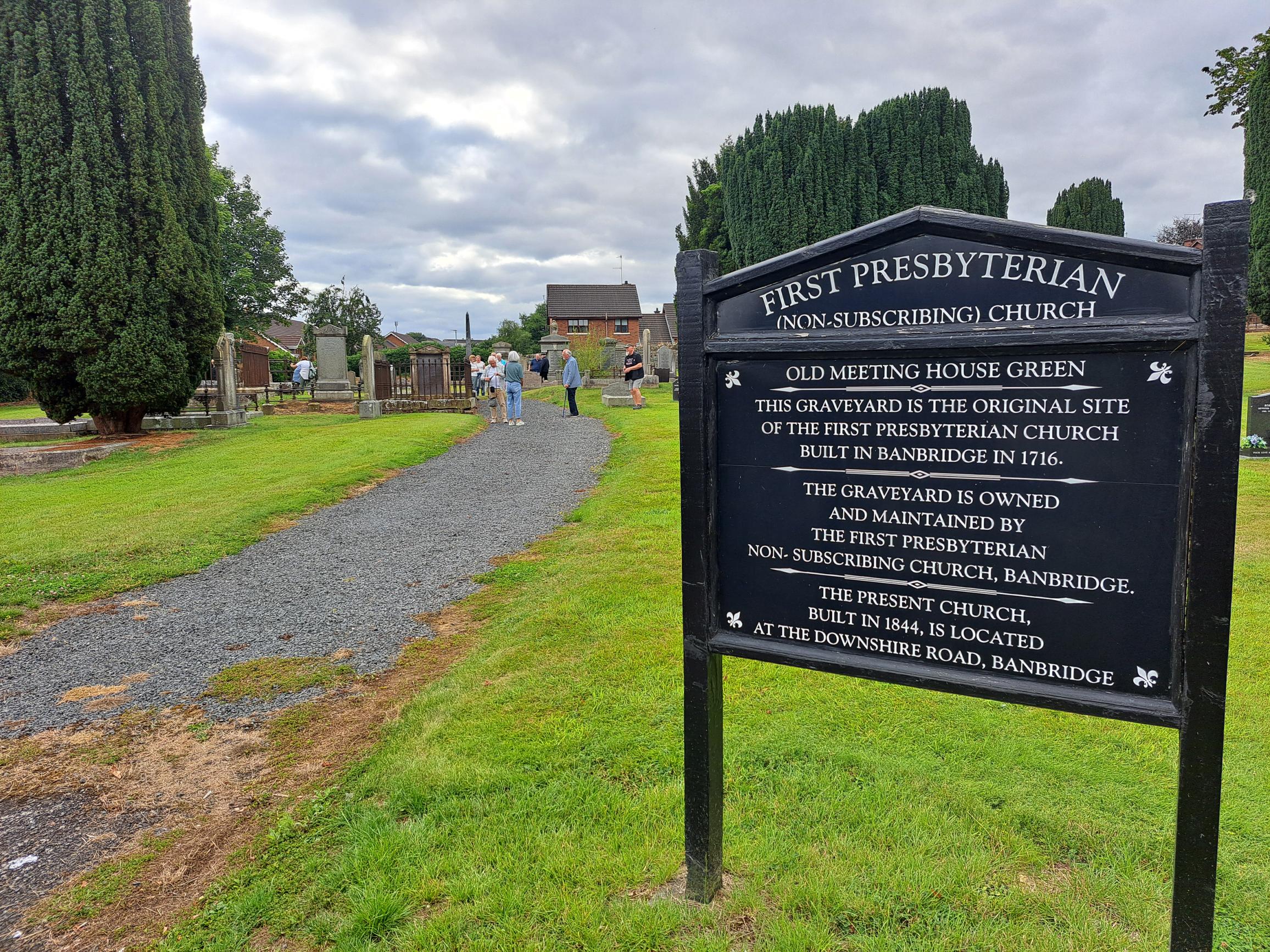
Entrance to Banbridge Old Meeting House Green

Inside the graveyard (Photo: Karen Bushby)

It was an excellent day, thank you to everyone who came along or helped organise the day, especially to Kathy. We are already preparing for next year when a trip to Carlingford is planned.
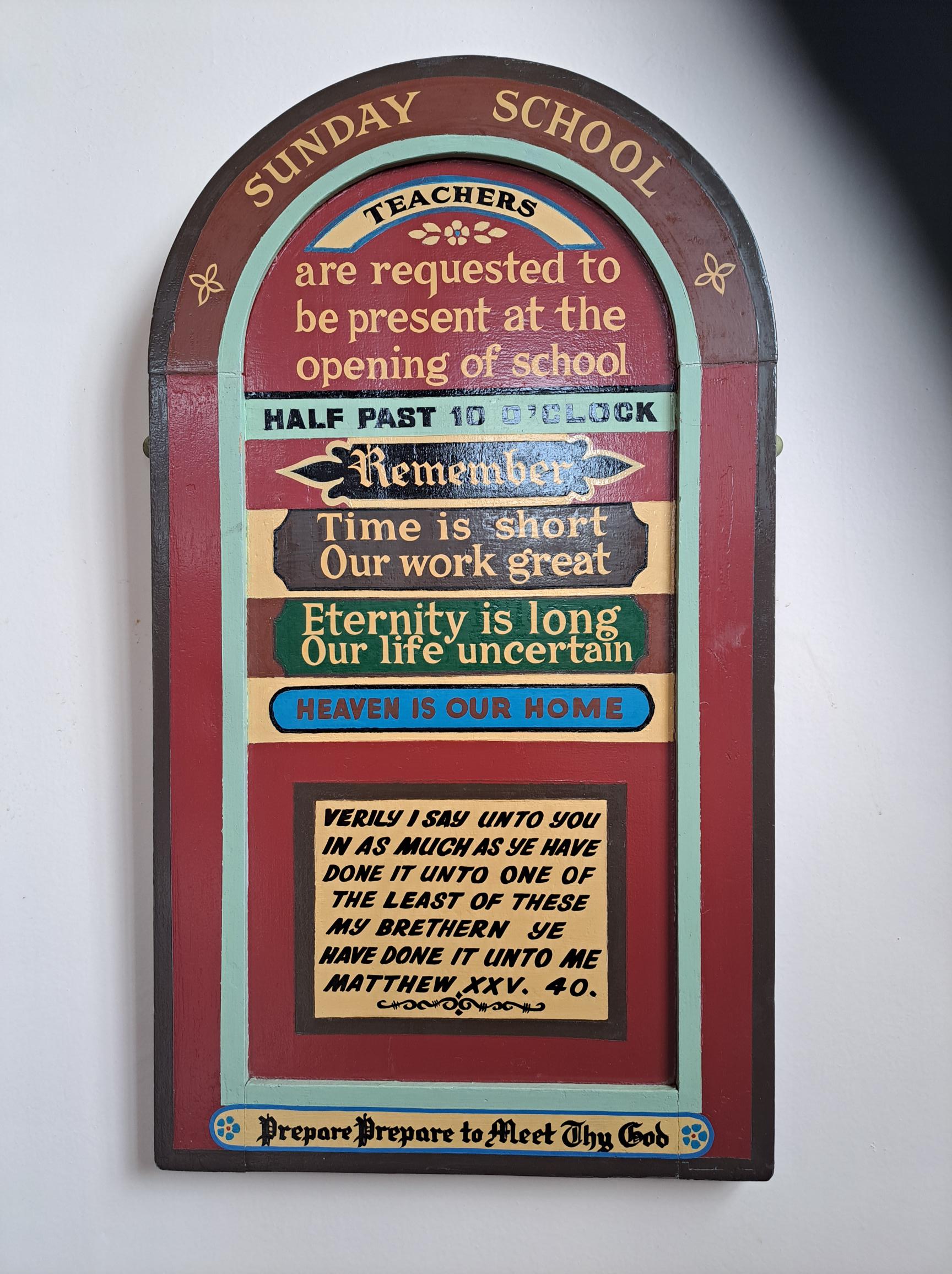
Sunday School notice at Newry

Dunmurry 350th Anniversary

On Sunday, 7th June 2026 the First Dunmurry (Non-Subscribing) Presbyterian Church celebrated its 350th anniversary. The church dates its foundation to 1676 with the first minister being called in 1683, the Rev Alexander Glass, the first of the 15 ministers who have served the church in those 350 years.

Click on the video to see the 350th anniversary service

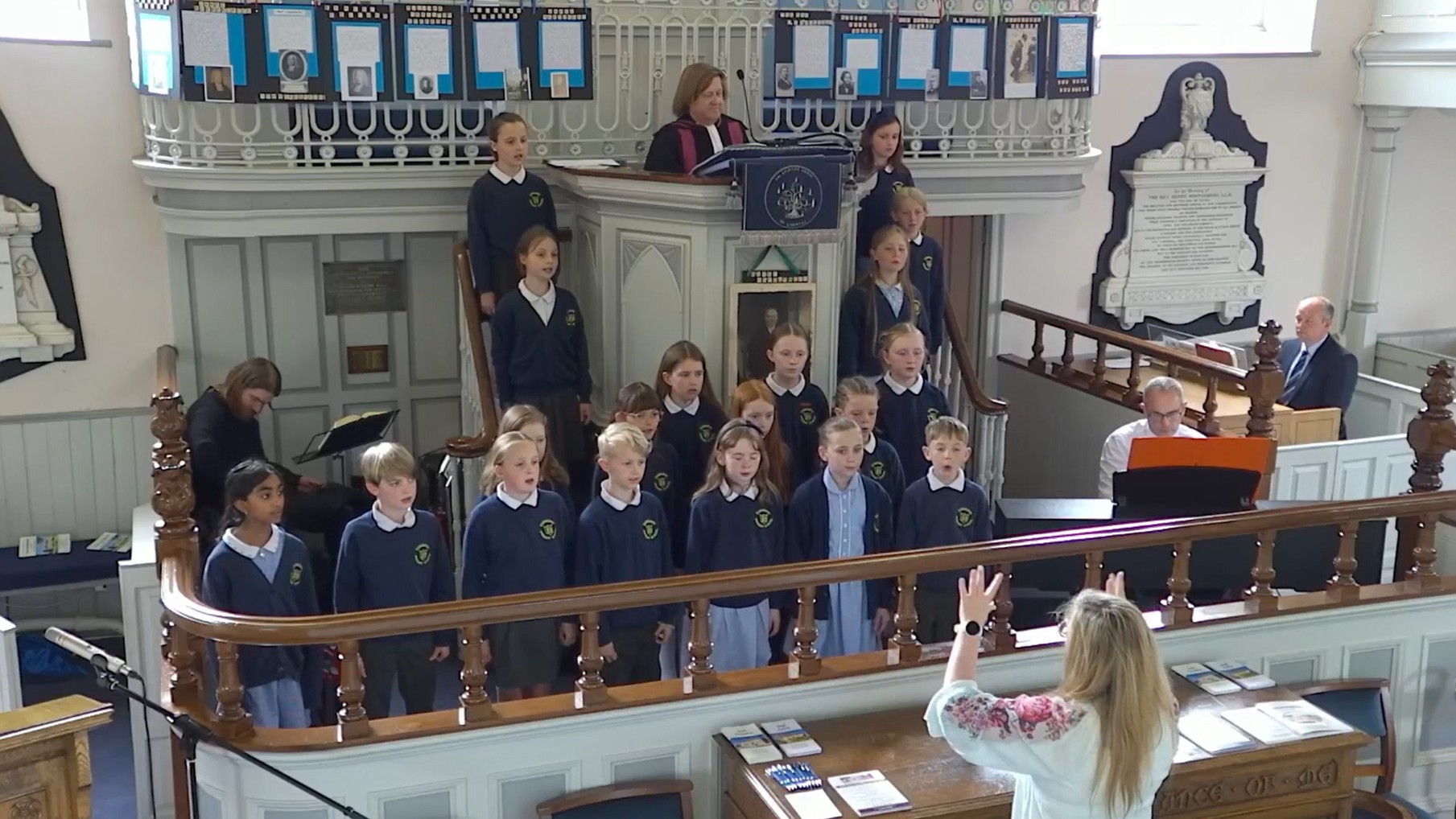
There was a good attendance and it was very pleasing to welcome the Choir of Dunmurry Primary School who sang Hakuna Mungu Kama Wewe and When you believe.

Dunmurry Primary School Choir

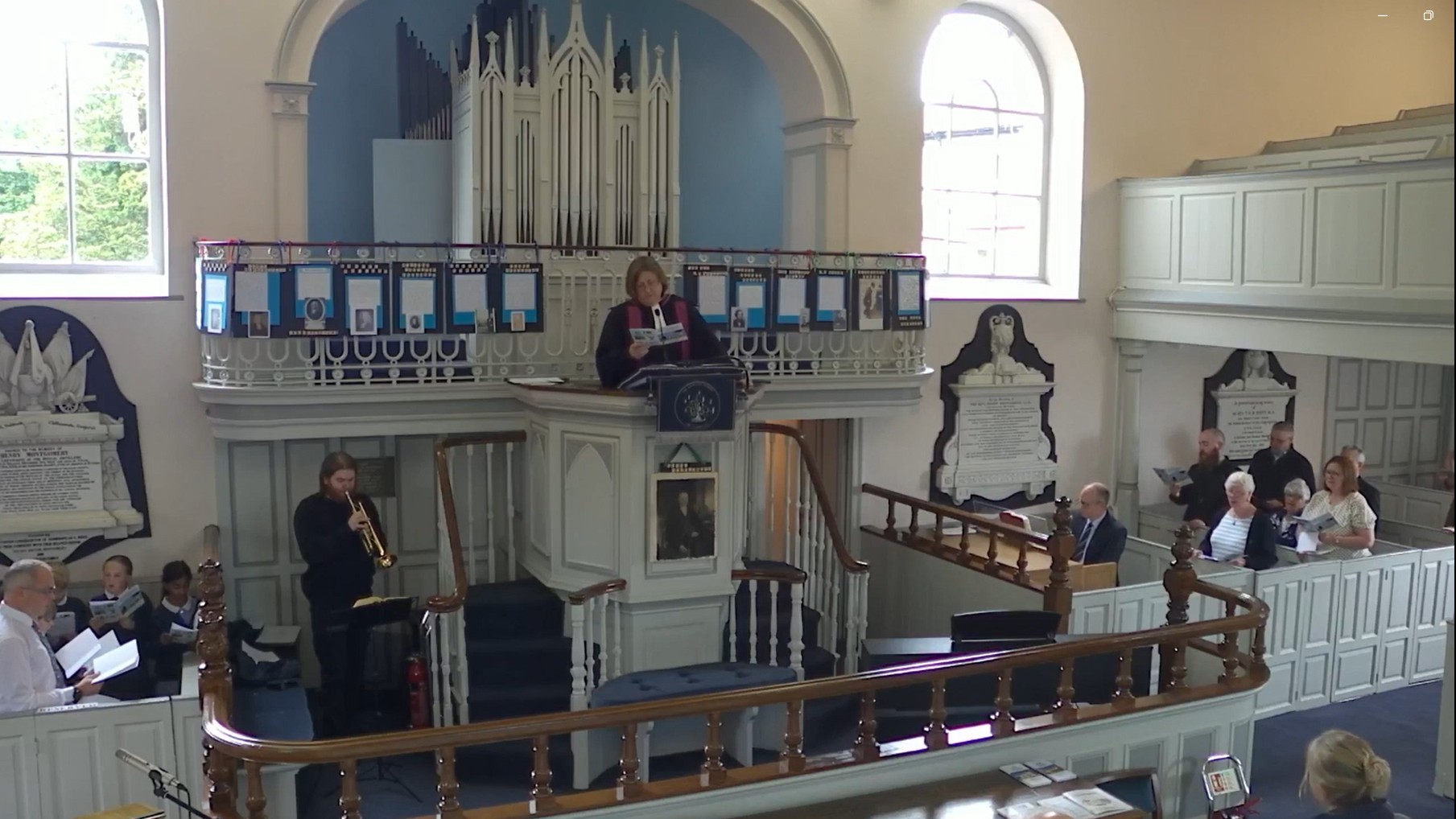
Our organist Allen Yarr played the hymns, accompanied by Jack Steers on the trumpet. Jack also played Jeremiah Clarke’s Trumpet Voluntary accompanied by Allen on the organ. Readings were given by Adele Johnston, Clerk of Session, and Kathy Yuillle, Church Secretary. Sue Steers led the congregation in prayer.

During the worship

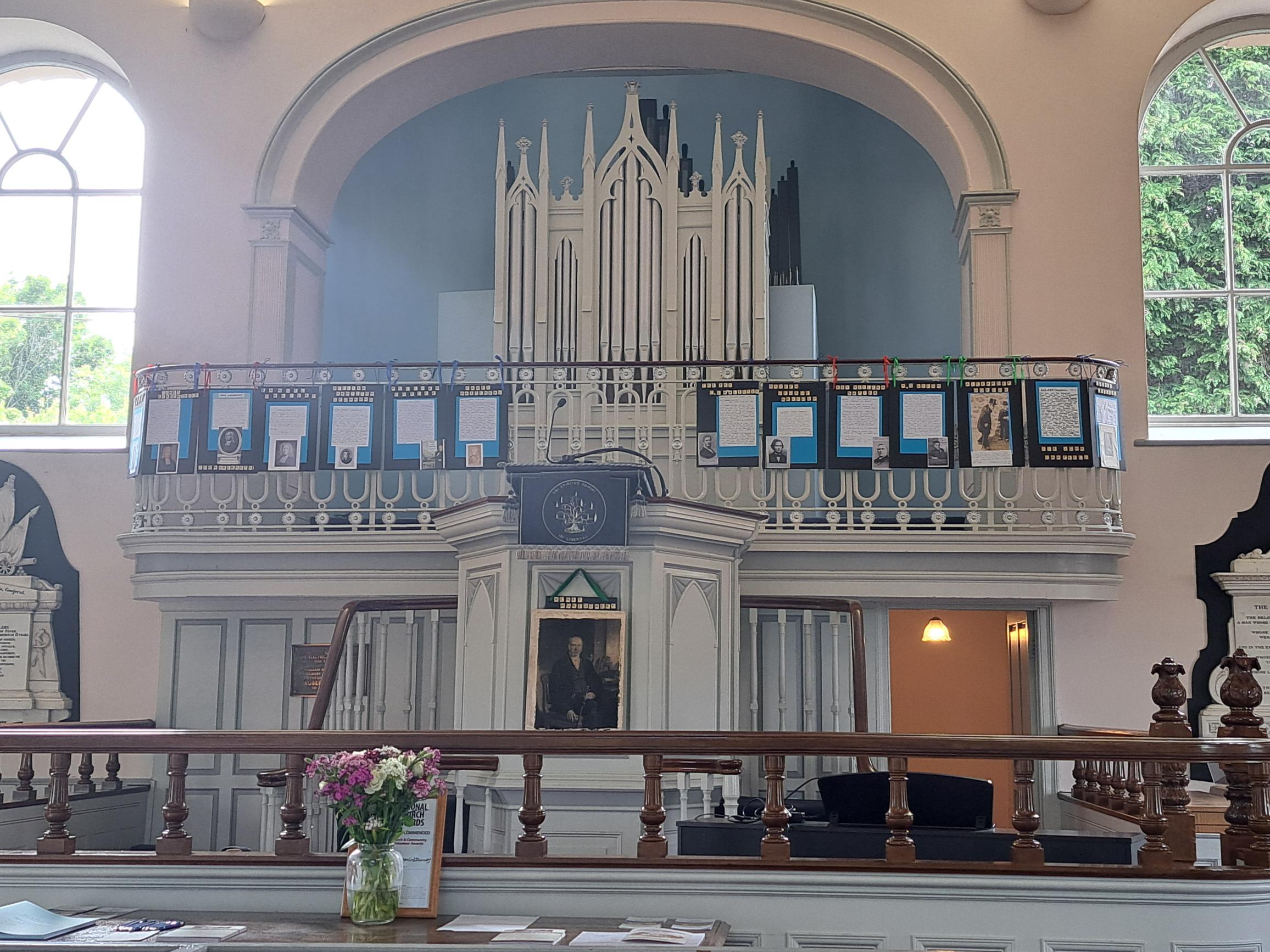
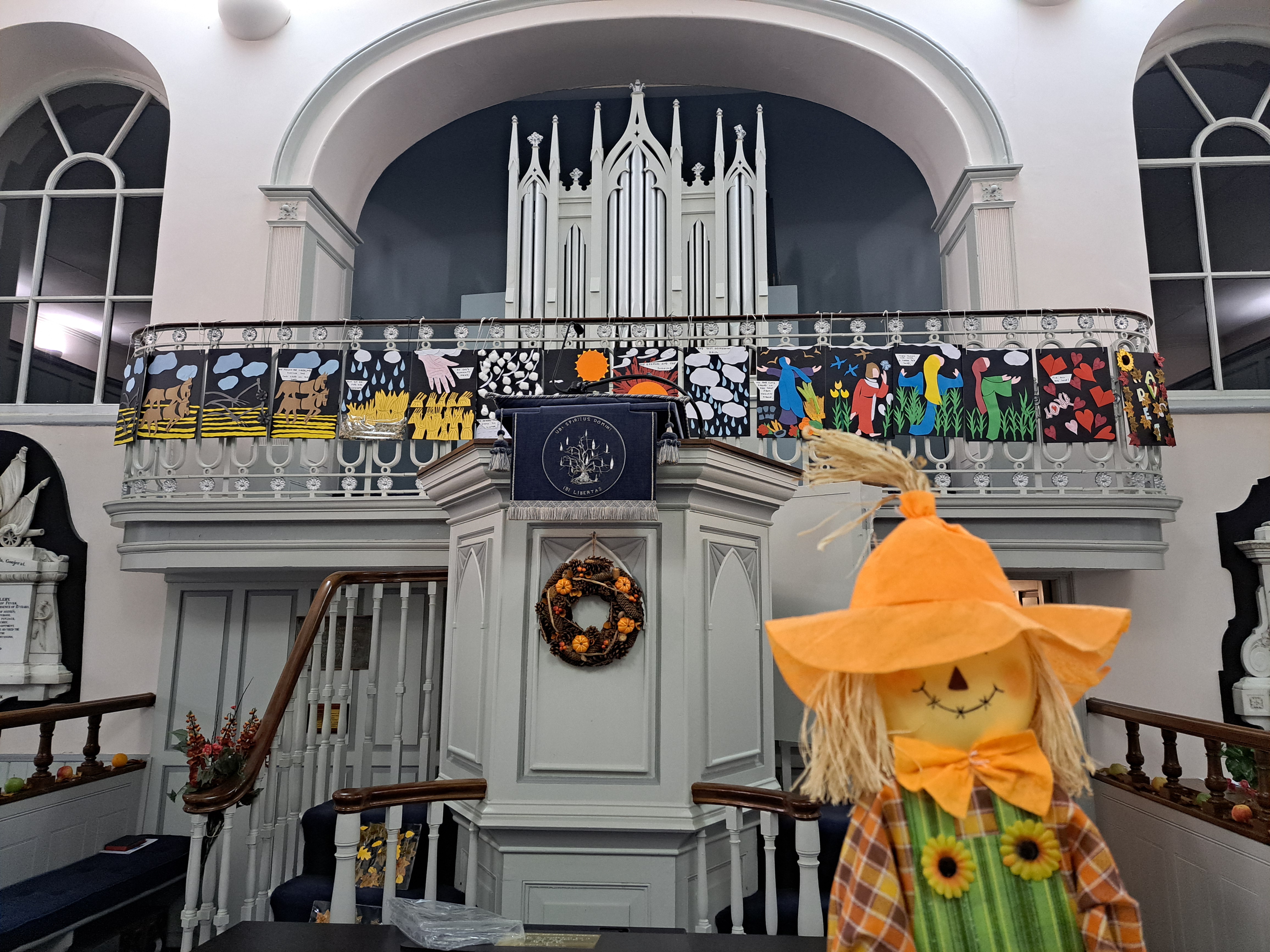
The Dunmurry Youth Group had created a series of panels detailing prominent people in the history of the Non-Subscribing Presbyterian Church and these were displayed along the outside of the organ loft.

Panels depicting NSPCI history

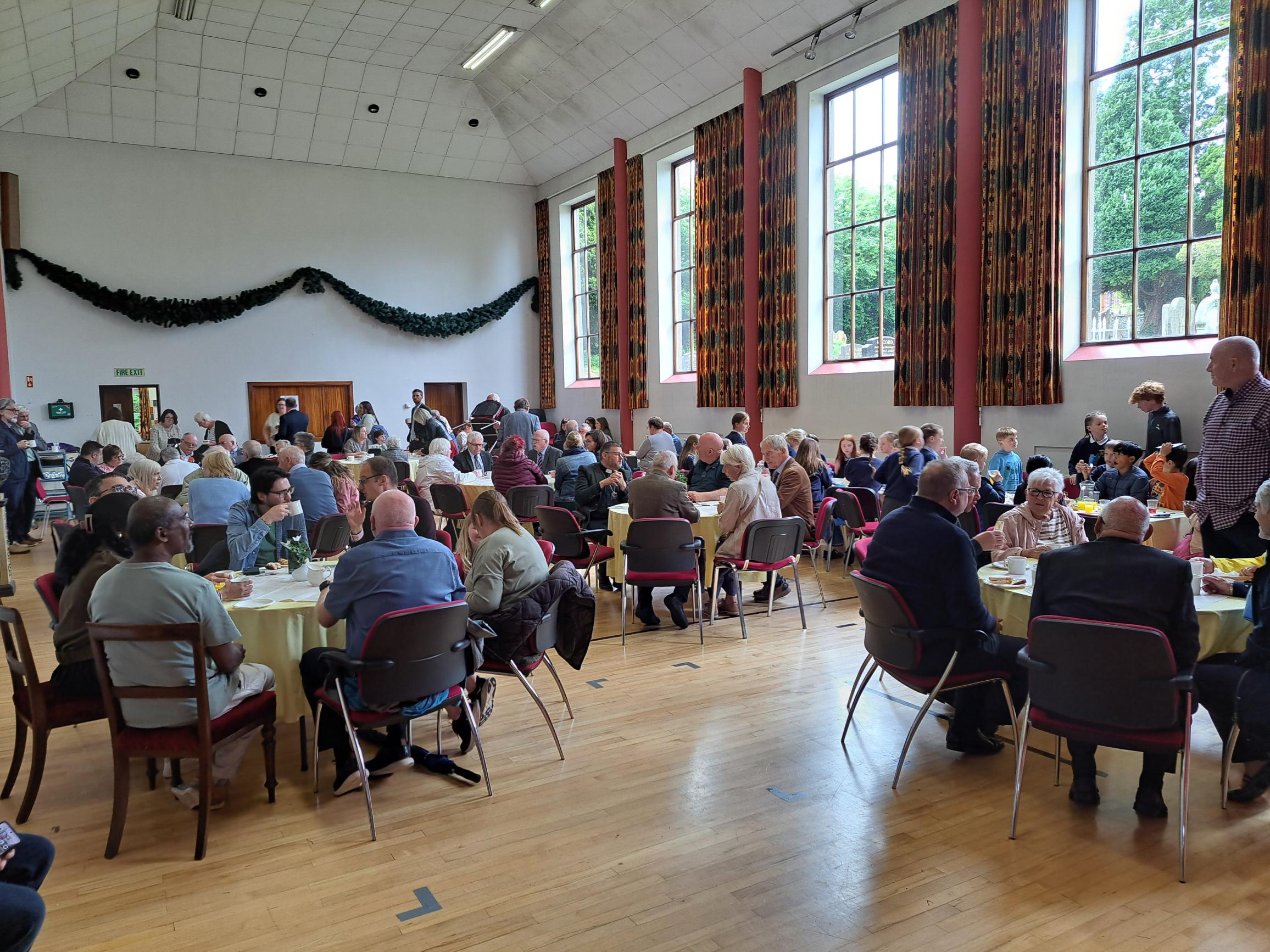
And following the service a large number of those present went over to the Hall for refreshments. It was encouraging to see so many visiting clergy from the Synod and many different denominations.

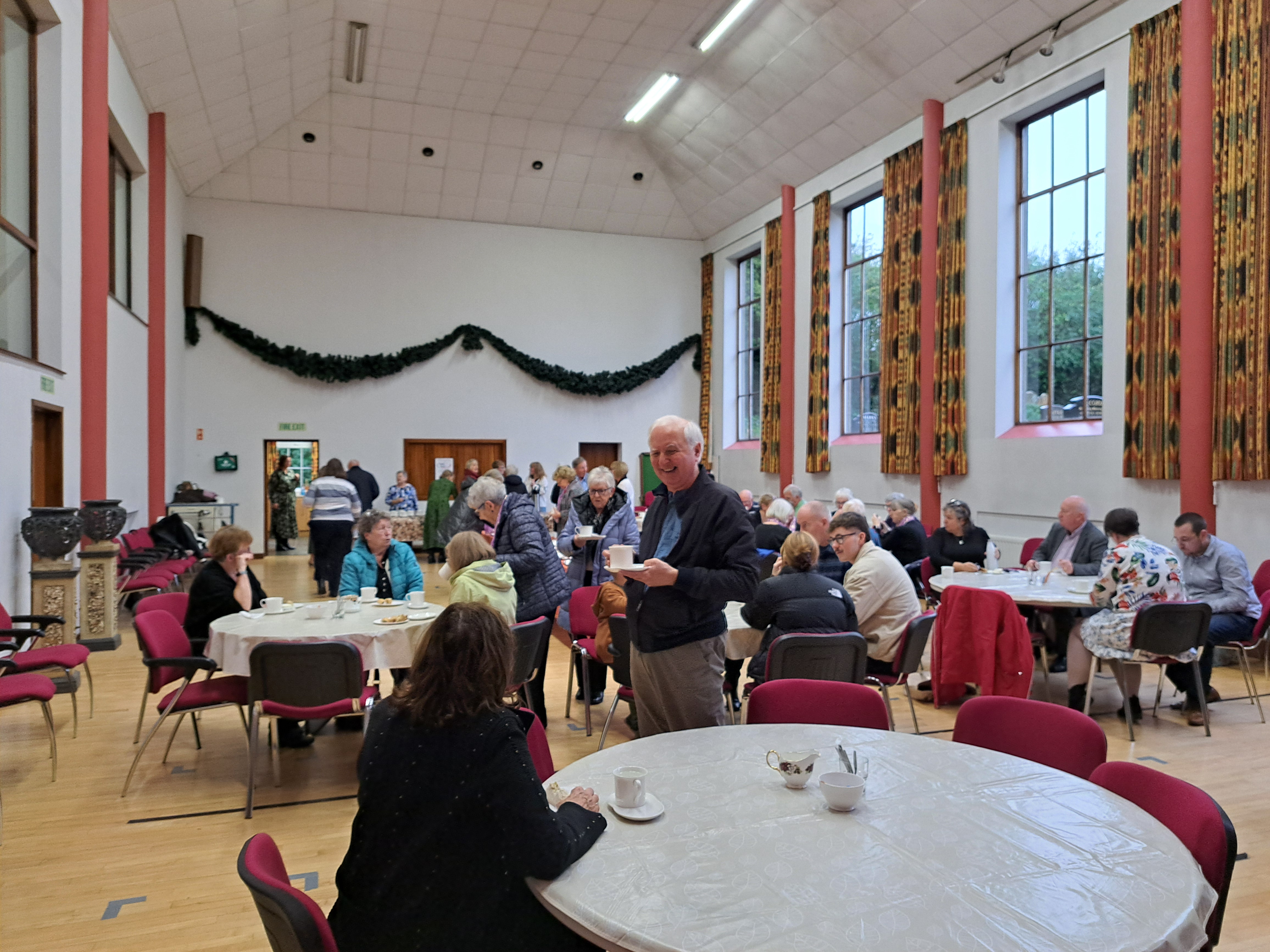
Refreshments in the hall

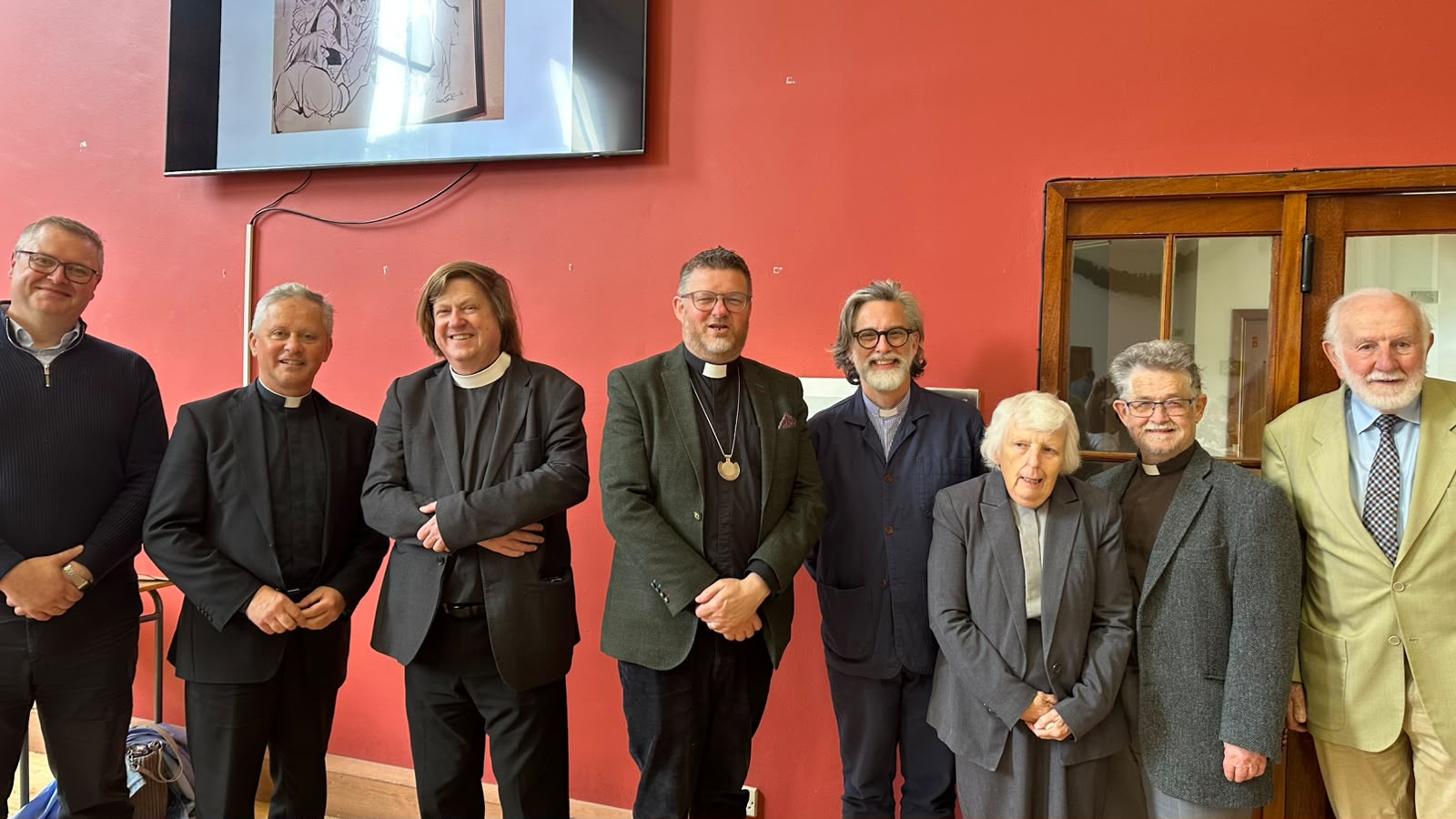
Visiting clergy

Christmas at Dunmurry

We’ve had a splendid succession of Christmas events and services at Dunmurry beginning with the Visit of the Choir of Malone Integrated College.

We were delighted to welcome the Malone Choir with their musical director Caroline Mitchell to our Warm Space on Thursday, 4th December. The Choir sang a wonderful, varied programme for the best part of two hours. It is always such a treat to have them with us and above is a video of some of the pieces they sang.

On Friday, 12th December we held our Candlelight Carol Service with Harmonic Sounds Concert Band. It was an excellent night with readings given by Church members and two special guests – John Neill, Kathy Yuille, Sylvia McBride, Claire Cromie, Adele Johnston, Diana Taggart, Des McKeown (First Church), Rt Rev Alister Bell (Moderator NSPCI) and Dr Chamindra Weerawardhana.

Click on the video to see our Candlelight Carol Service with Harmonic Sounds

During the service a Collection was taken for the Motor Neurone Disease Association Northern Ireland. This raised the magnificent total of £344.50. When that is added to the £1,405 already raised for the MND Association at our Table Quiz that means that we have raised £1,749.50 altogether for our charity. An excellent result that will be presented to the Association in the New Year. Well done everyone.

Over the period before Christmas there was another wonderful response from the congregation for the Salvation Army Christmas Appeal. Bags and bags of new toys were brought to the Church by our members and these were taken to the Salvation Army for distribution to children in need on Monday, 15th December. Our support of this appeal is greatly appreciated and helps make a difference to many children’s lives over Christmas.

View our Congregational Carol Service – click on the video above

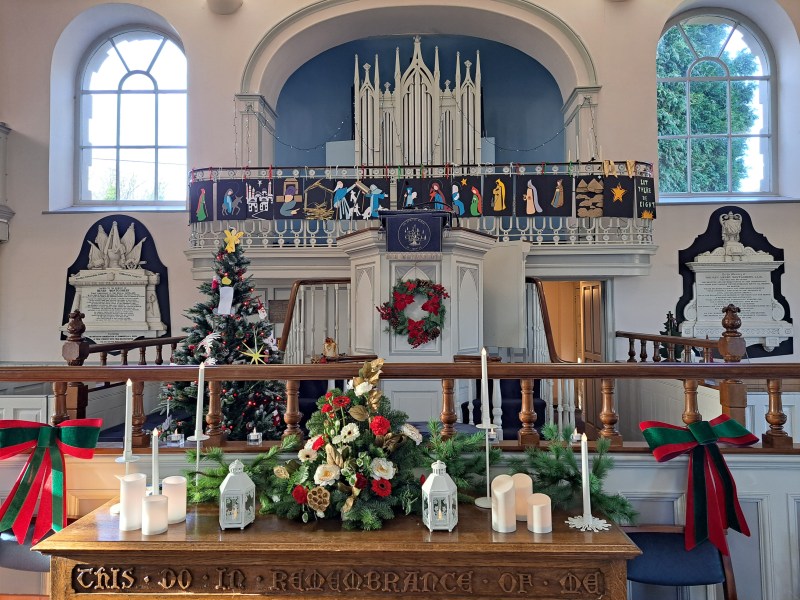
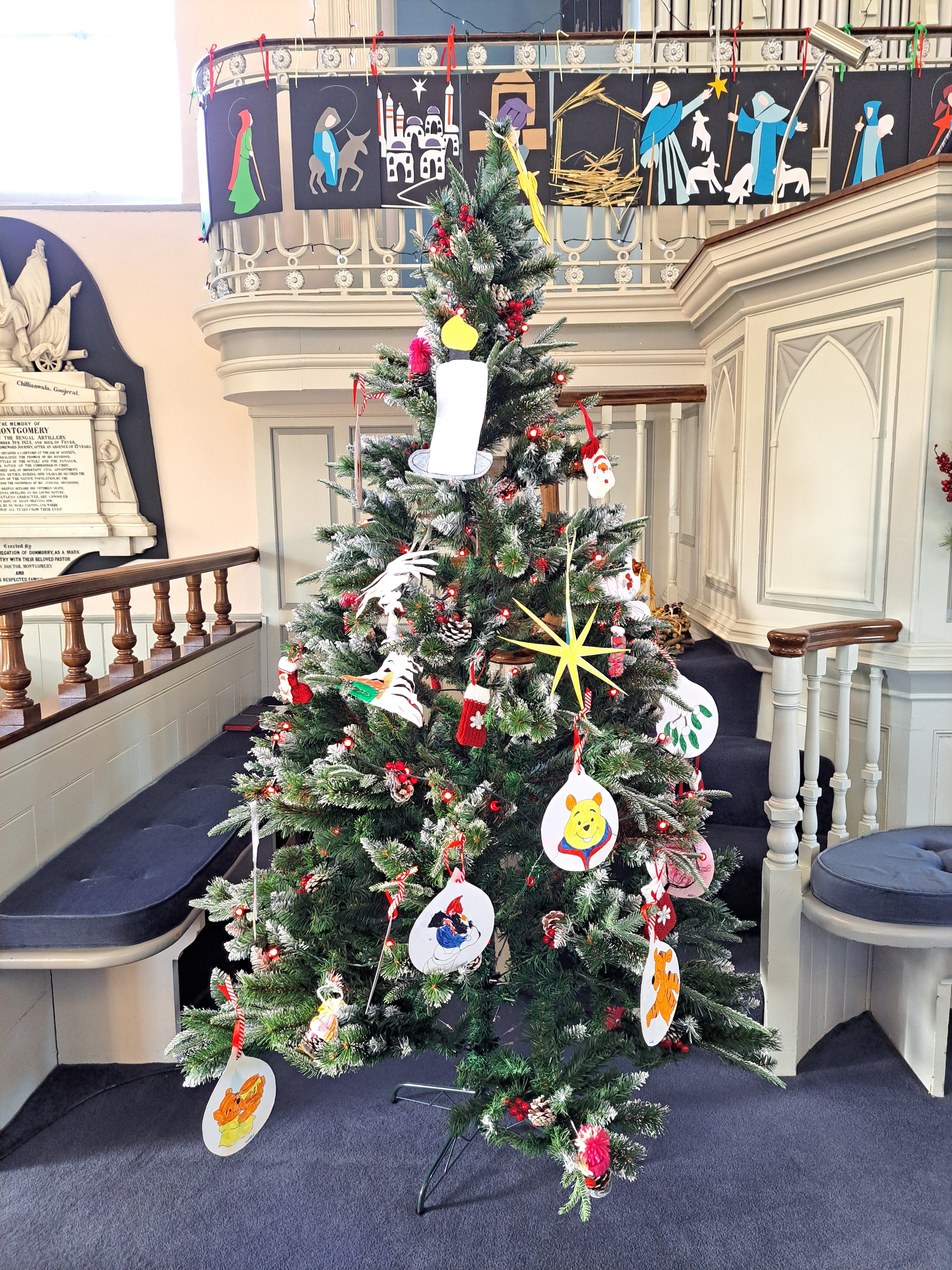
Our Congregational Carol Service took place on Sunday, 21st December at 11.30 am and was a great occasion. The service was led by members of the Sunday School and Youth Group and readings were given for us by Lochlan, Erin, Darcee, Holly, Jenna, Bryn, Adele and Sue. Music was provided for us by Jack Steers on trumpet and Allen Yarr on organ and the members of the Sunday School decorated the Christmas Tree with decorations they had made.

On Christmas Day we were pleased to welcome Richard Yarr to the organ bench and enjoyed readings from Lochlan, Erin and Sue. It was a lovely short service.

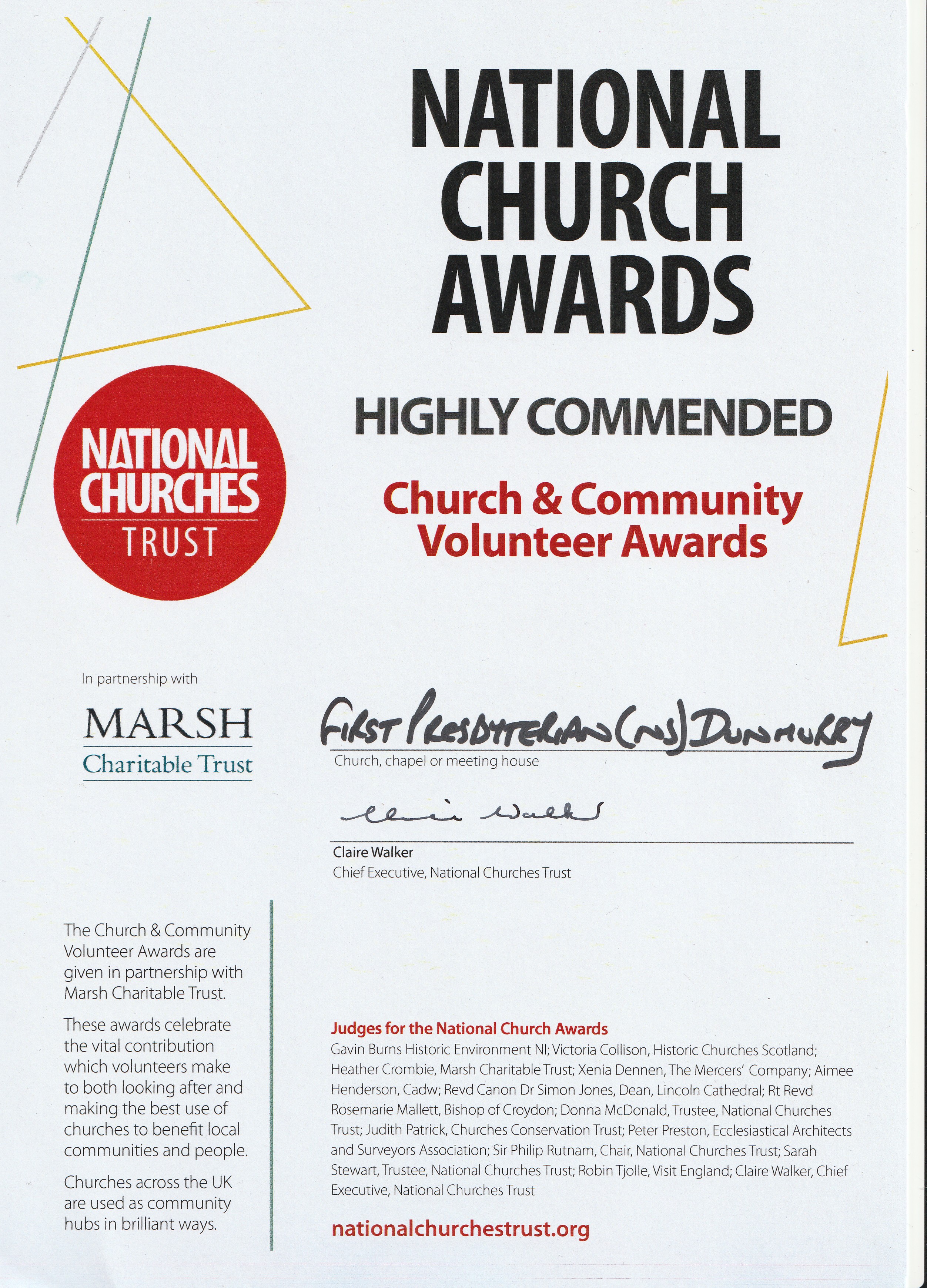
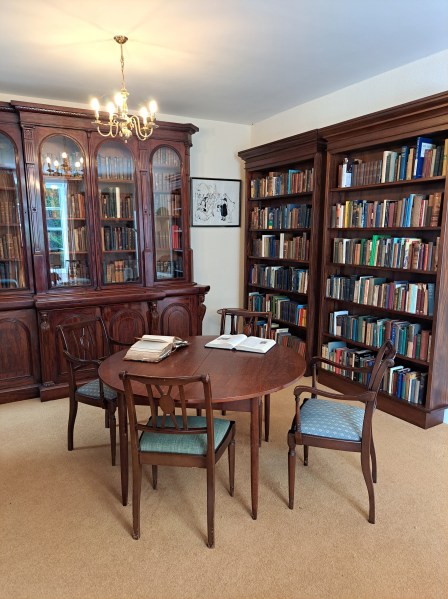
Over we also received our Highly Commended certificate from the National Churches Trust in the Church and Community Volunteer Awards section for the work done in developing and cataloguing the Very Rev William McMillan Library. It’s great to see the Library taking shape and playing such an important role in the life of the congregation and the denomination, with visitors coming from across the UK. It’s a great achievement to reach the last 16 in a UK-wide event, and well done to Sue Steers and Kathy Yuille for all their hard work over the years. The Library will take on even more importance in the New Year when we celebrate our 350th Anniversary as a congregation.


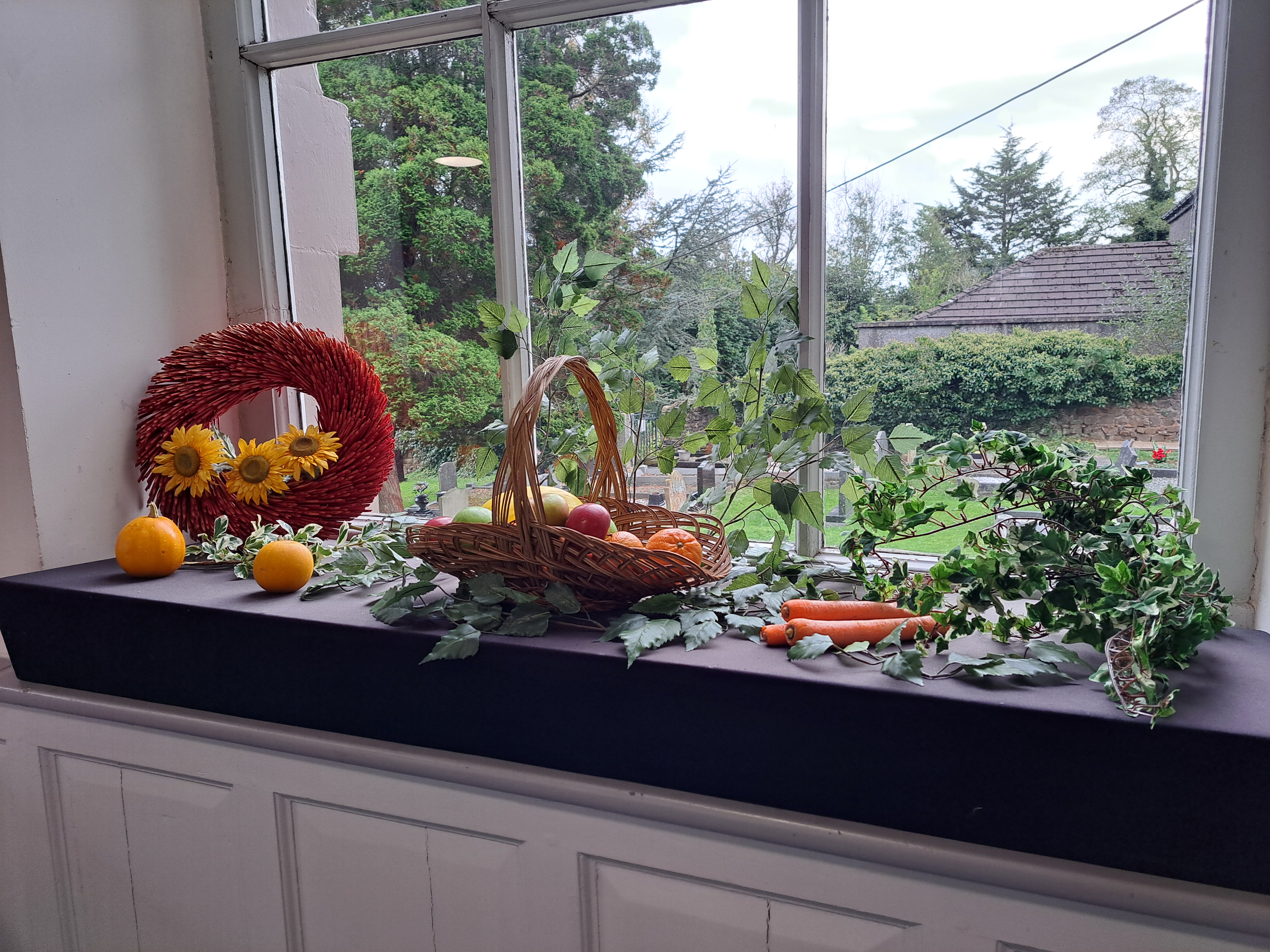
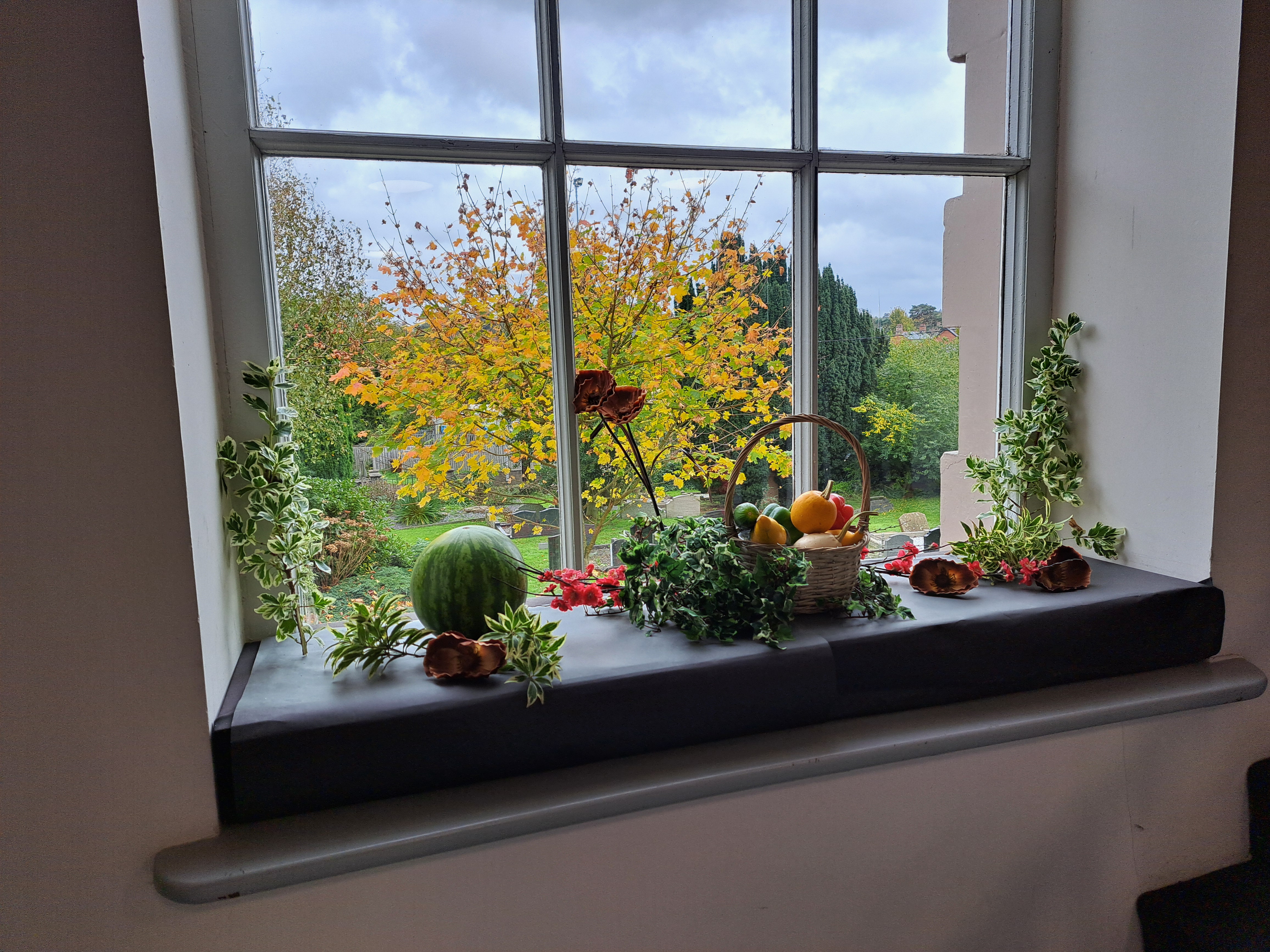
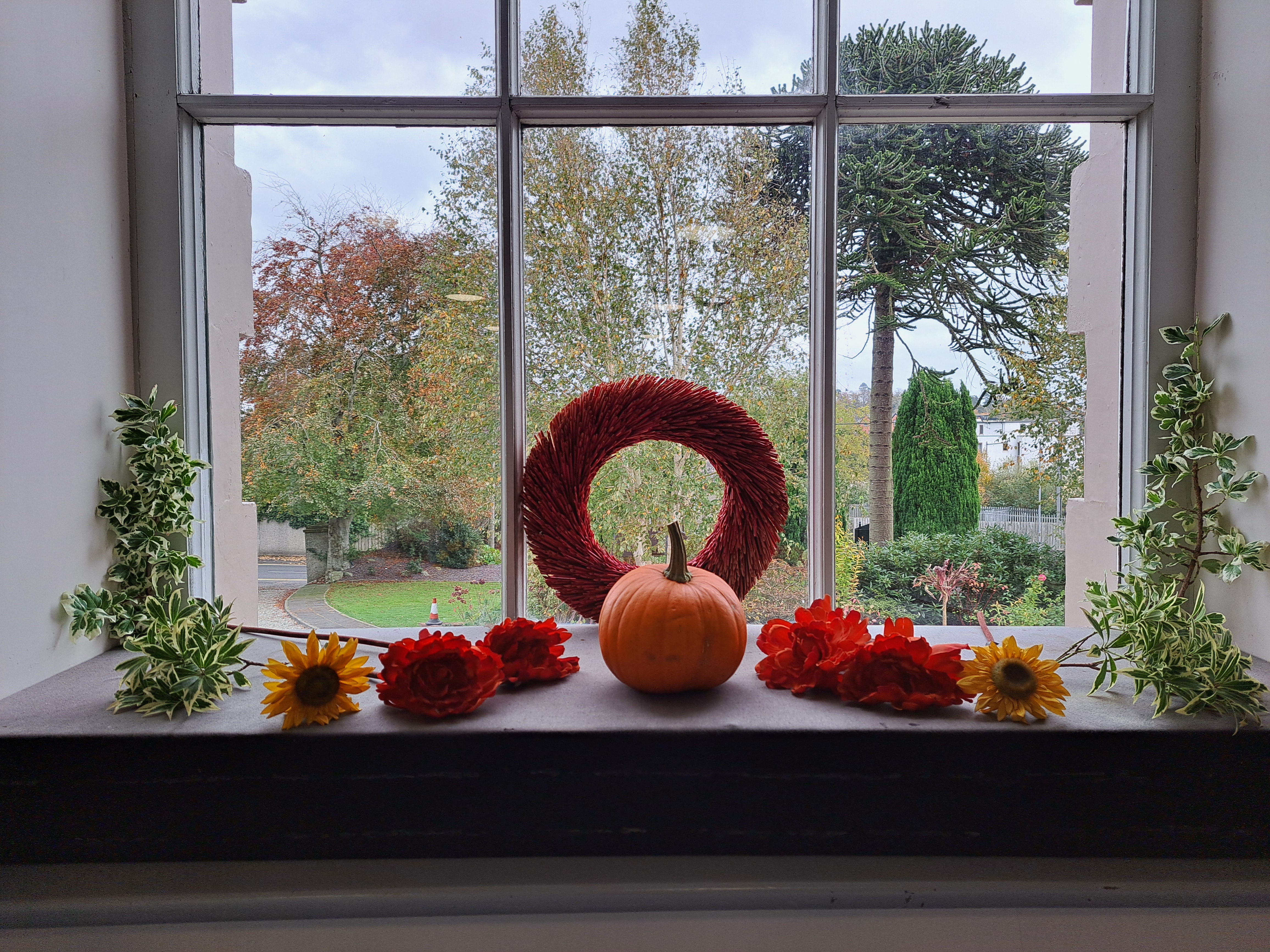
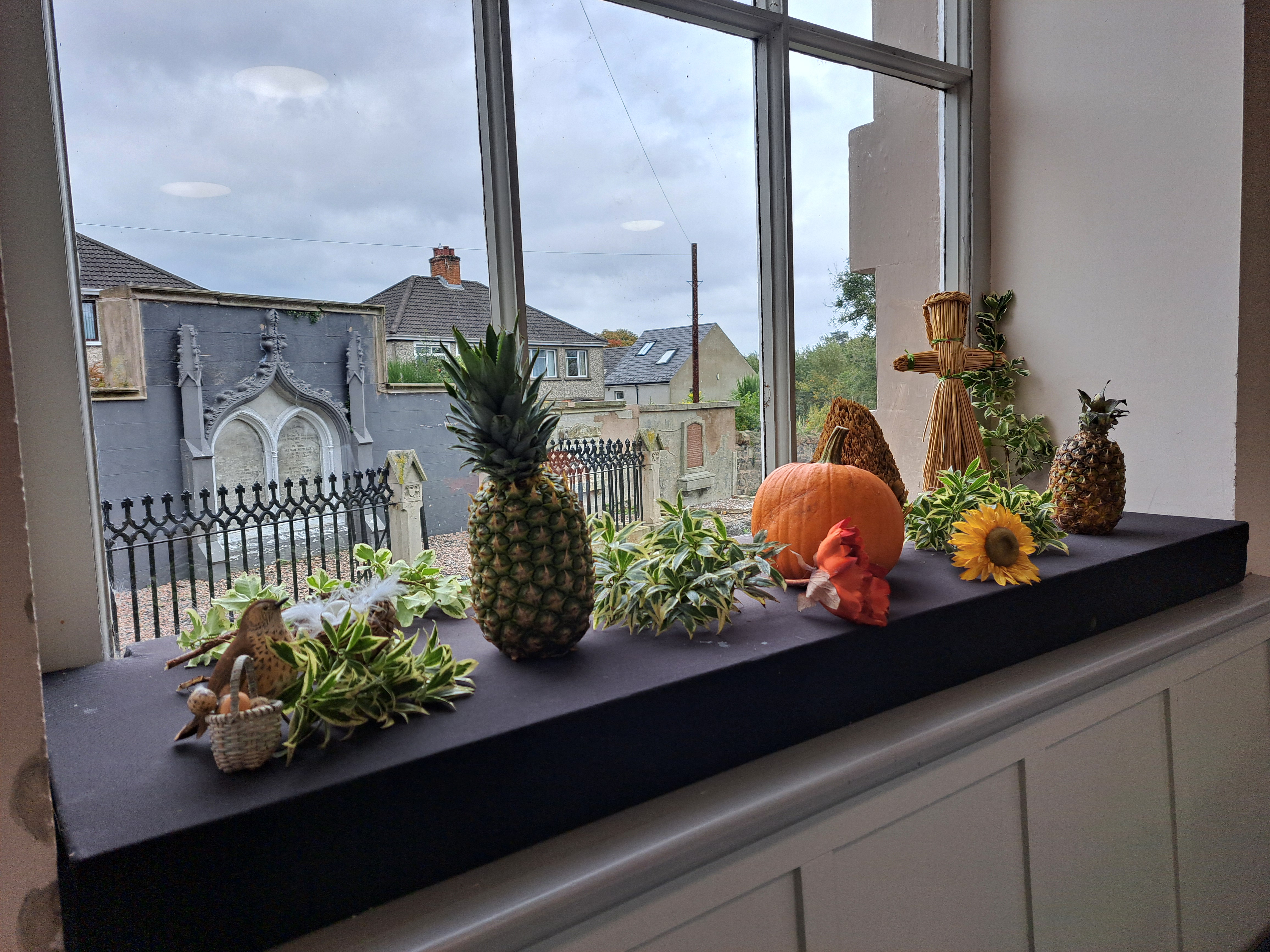
Dunmurry Harvest 2025

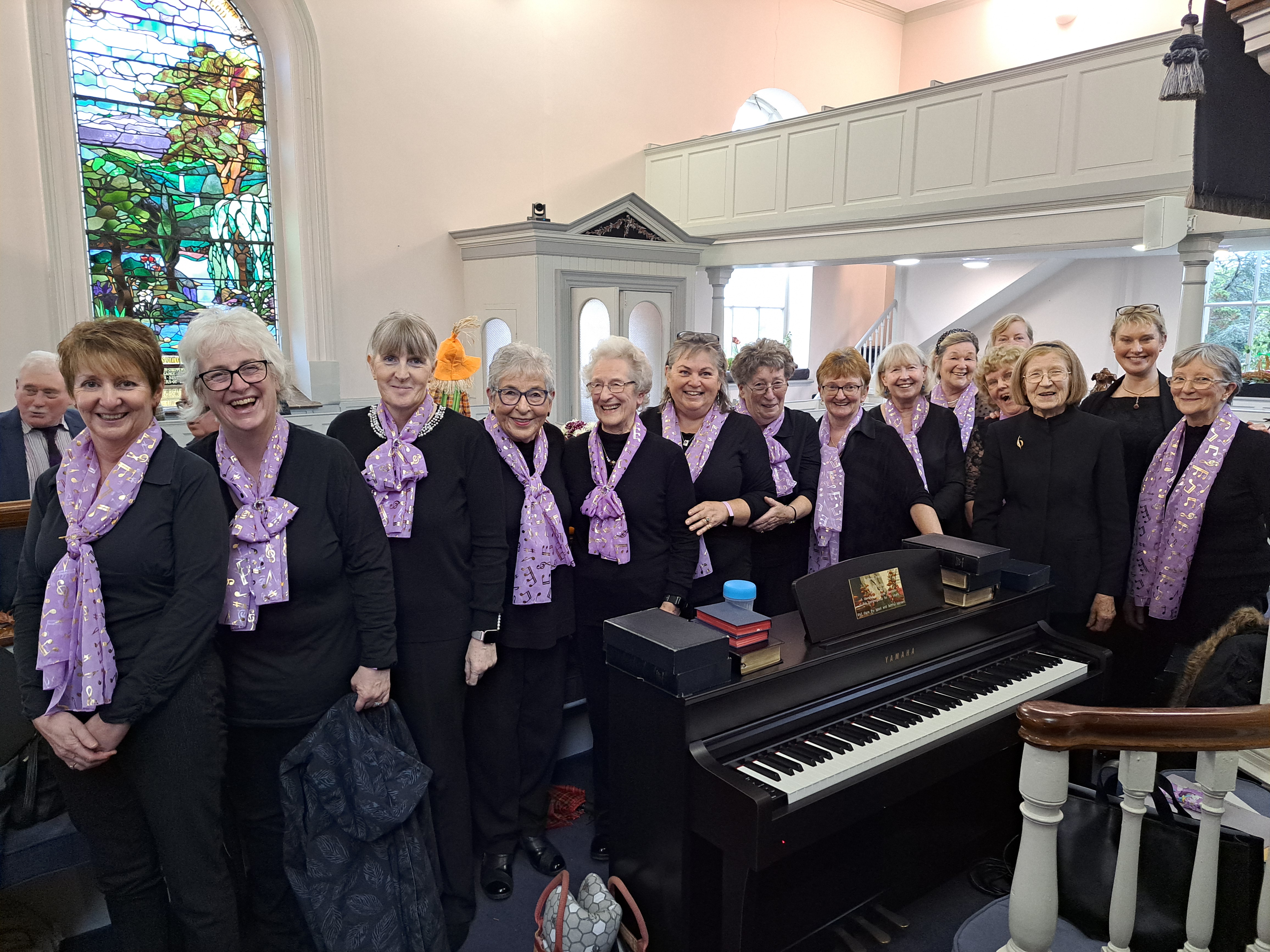
Quoile Area WI Choir at Dunmurry
Click on the video above to see Dunmurry Harvest Thanksgiving Service as recorded live

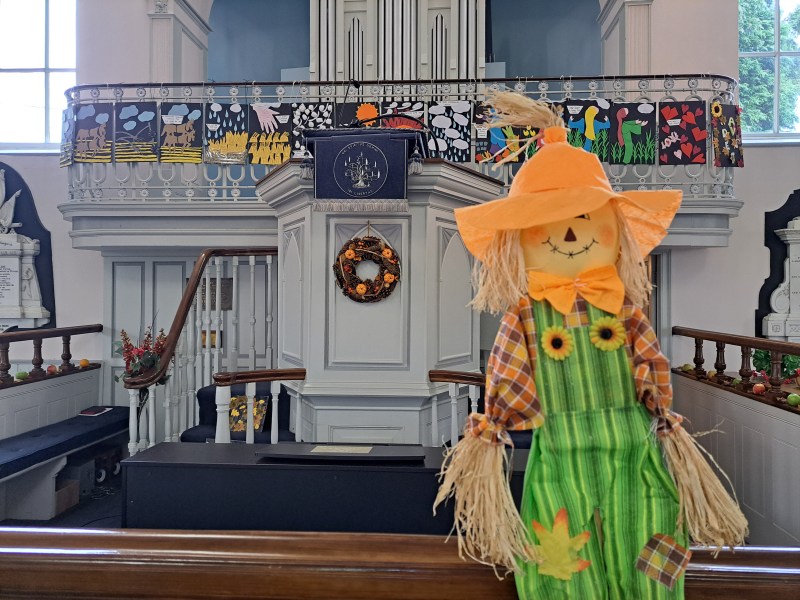
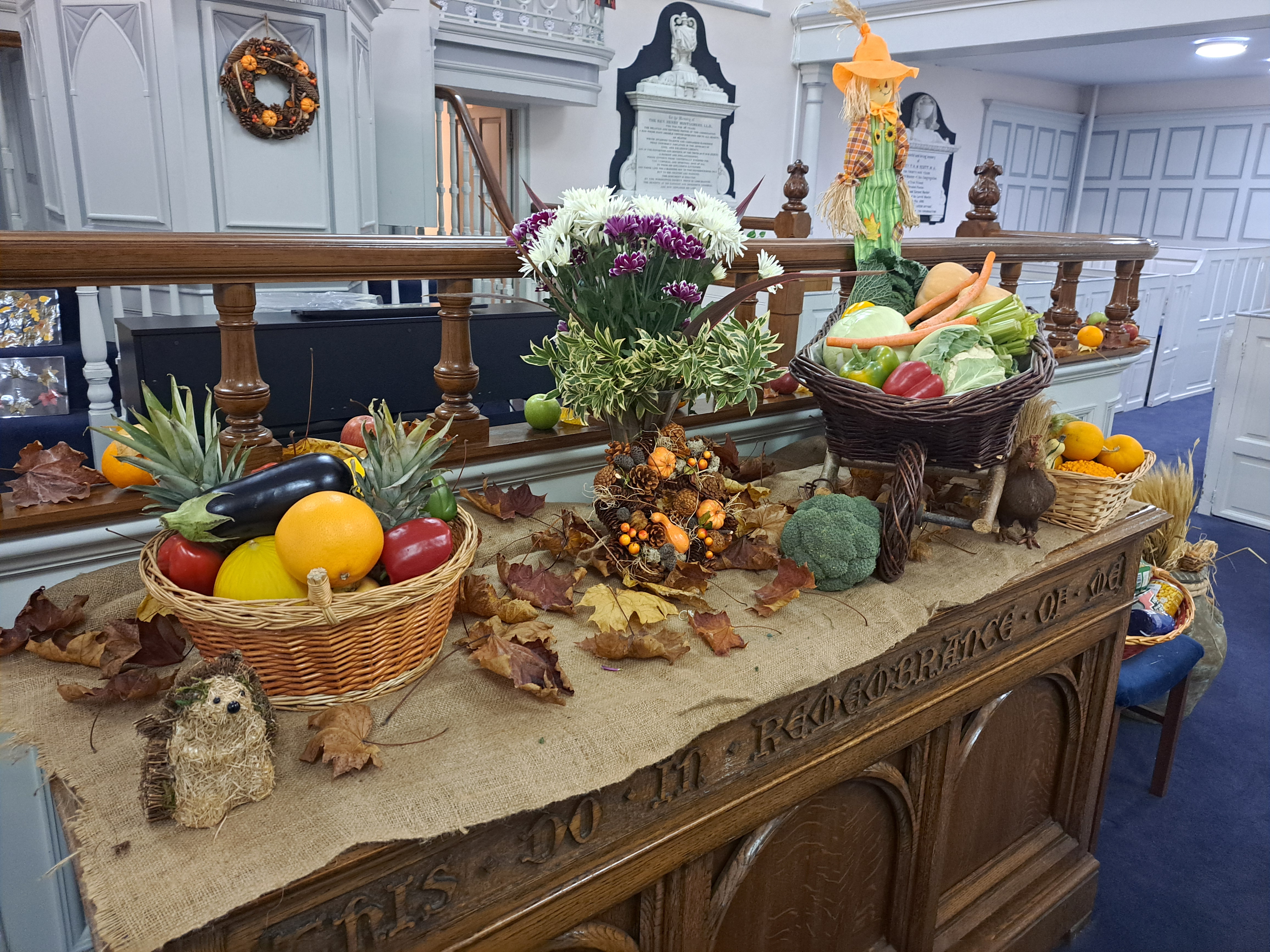
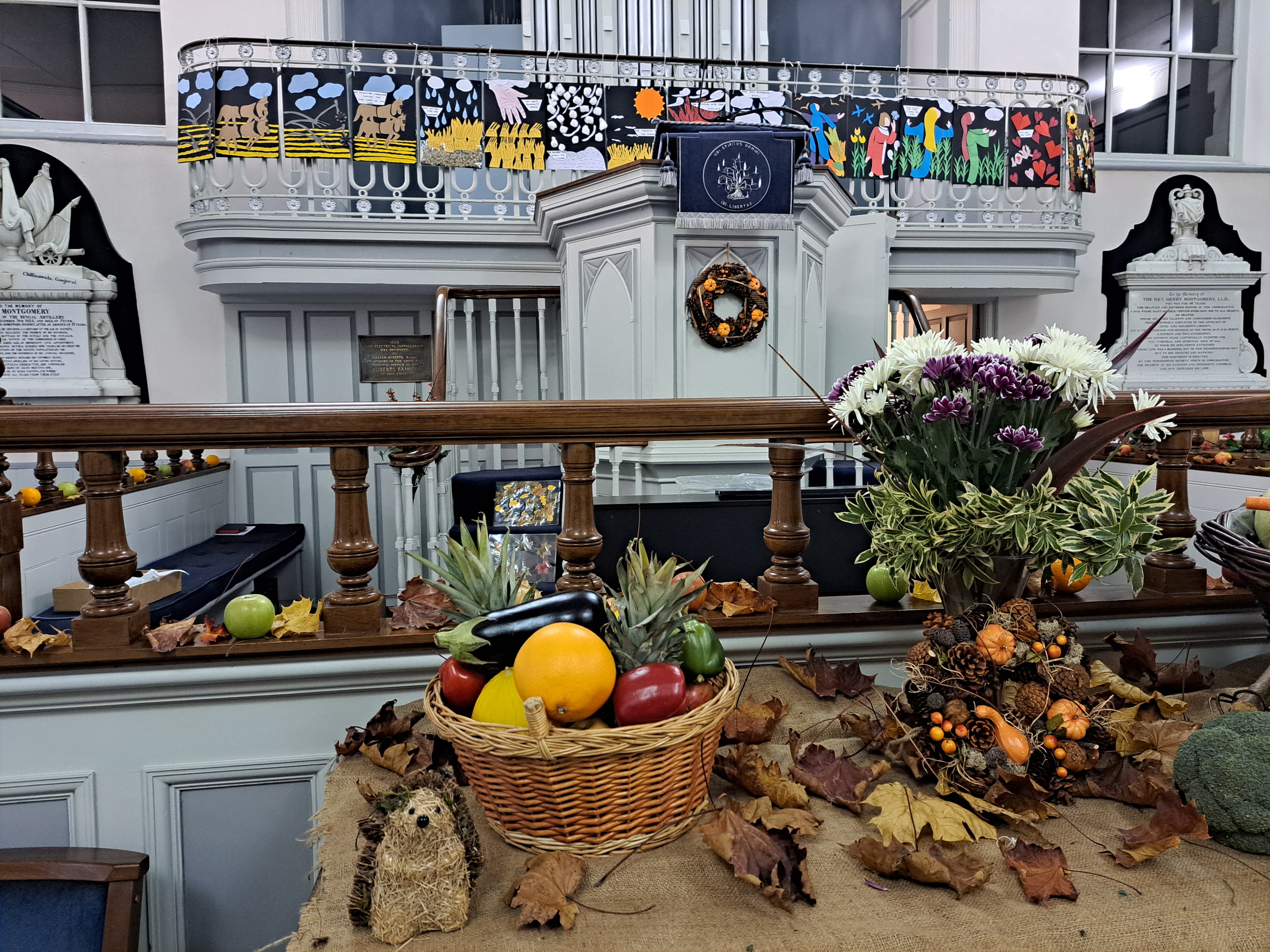
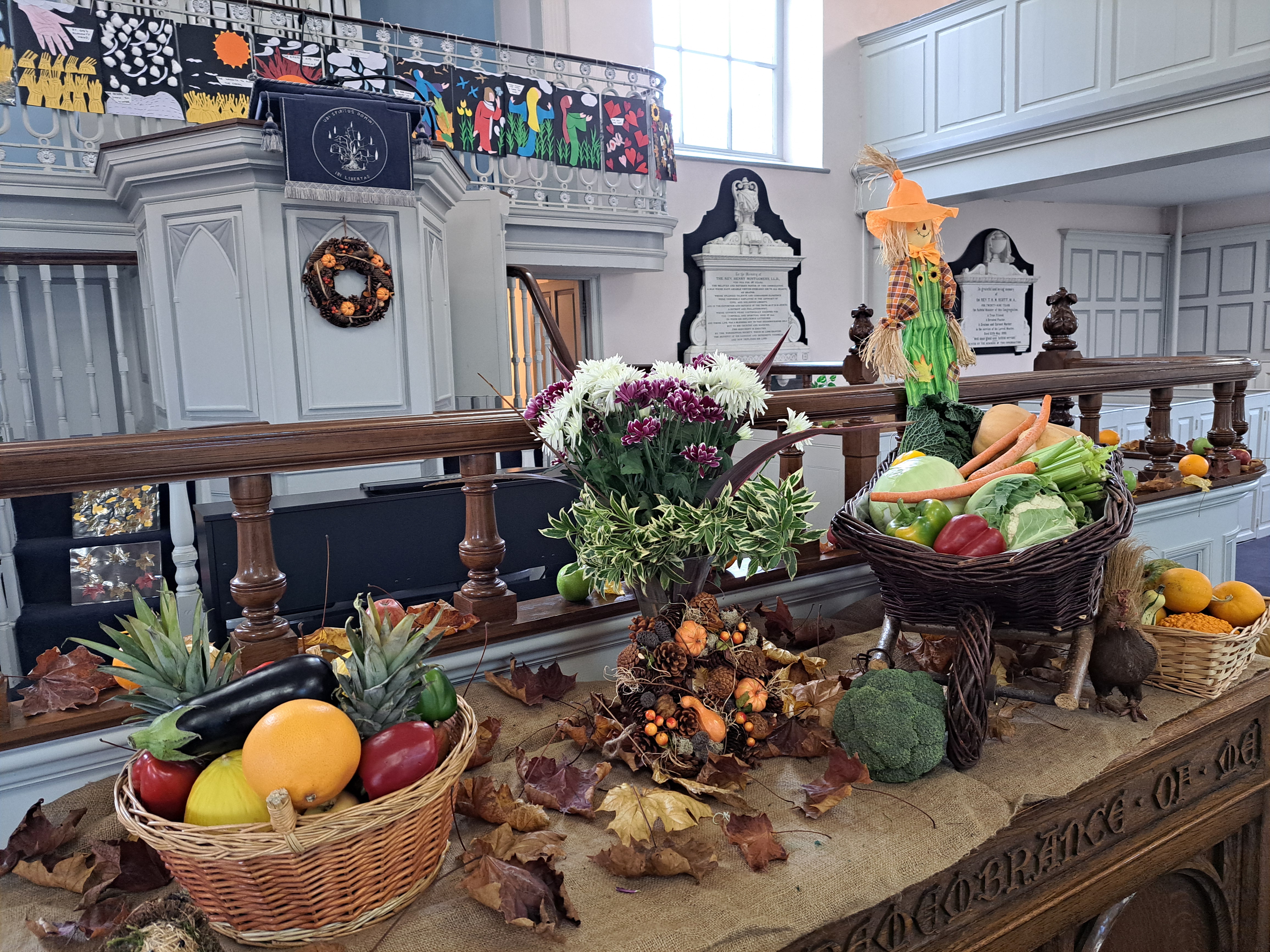
We held a wonderful service of Harvest Thanksgiving at Dunmurry on Sunday, 19th October 2025. We were particularly pleased to welcome the Quoile Area WI Choir conducted by Judith Harper with their accompanist Kathleen Gill. They sang three pieces – This Day, All things bright and beautiful(a setting by Philip Stopford), River Song, plus the vesper Go Now in Peace (arranged by I.E. Keenan), while Allen Yarr, our organist, played for the hymns and Jack Steers played Trumpet Voluntary during the collection.

The service was led by members of the Sunday School and Youth Group with Harry opening the service with words of welcome, readings being given by Jenna, Lochlan, Erin, and Bryn, and Adele and Sue, leading us in prayer. The church was beautifully decorated throughout and the Youth Group made the frieze depicting scenes from the hymn We plough the fields and scatter (which we also sang) which adorned the rail above the pulpit.

Following the service we had refreshments and a time of fellowship in the Hall, with many people coming back for that.

On the following Monday members of the congregation distributed the all the produce which had been donated to  L’Arche Village, Belfast.

Balloo, Killinchy, A Hidden History

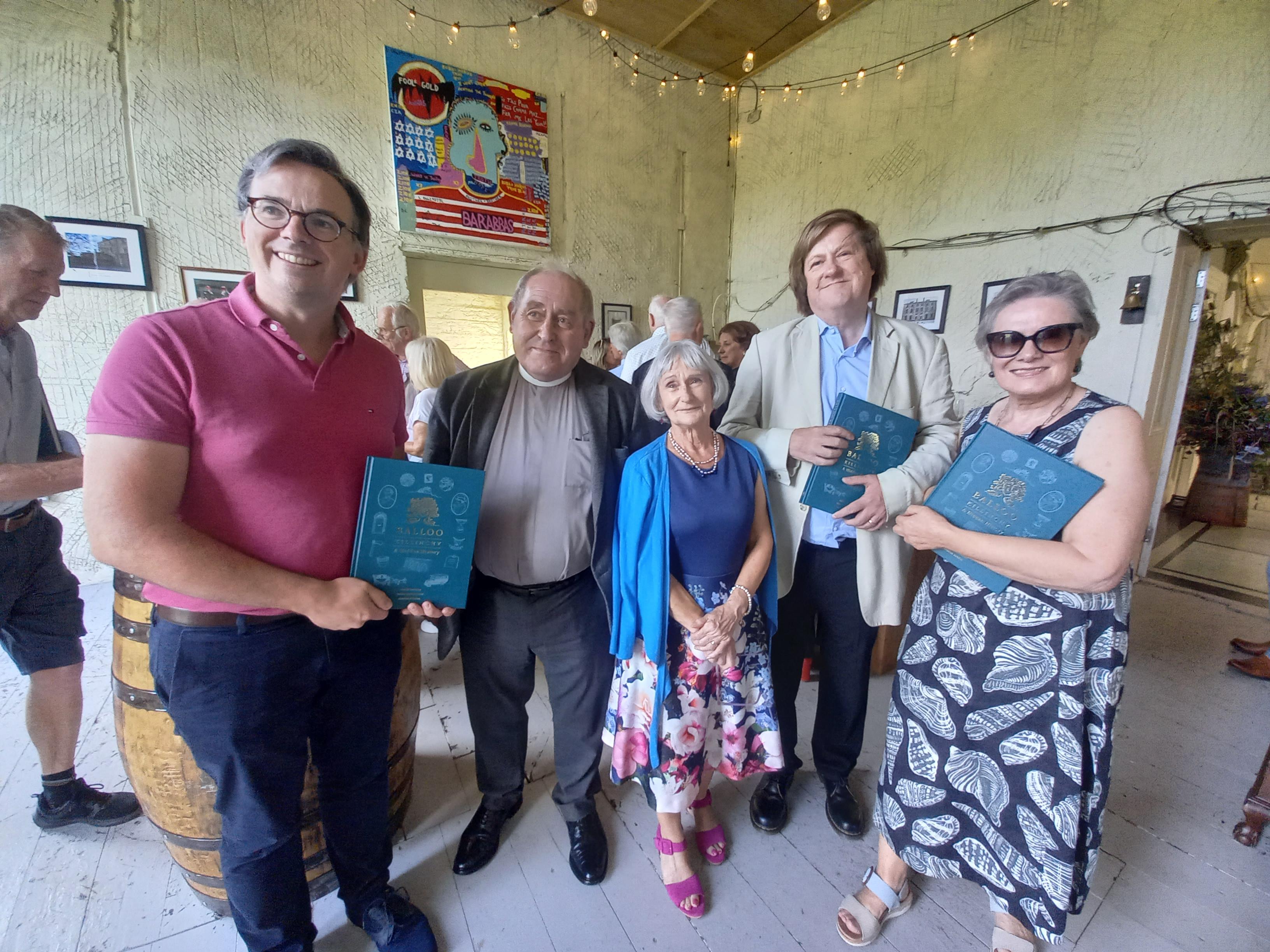
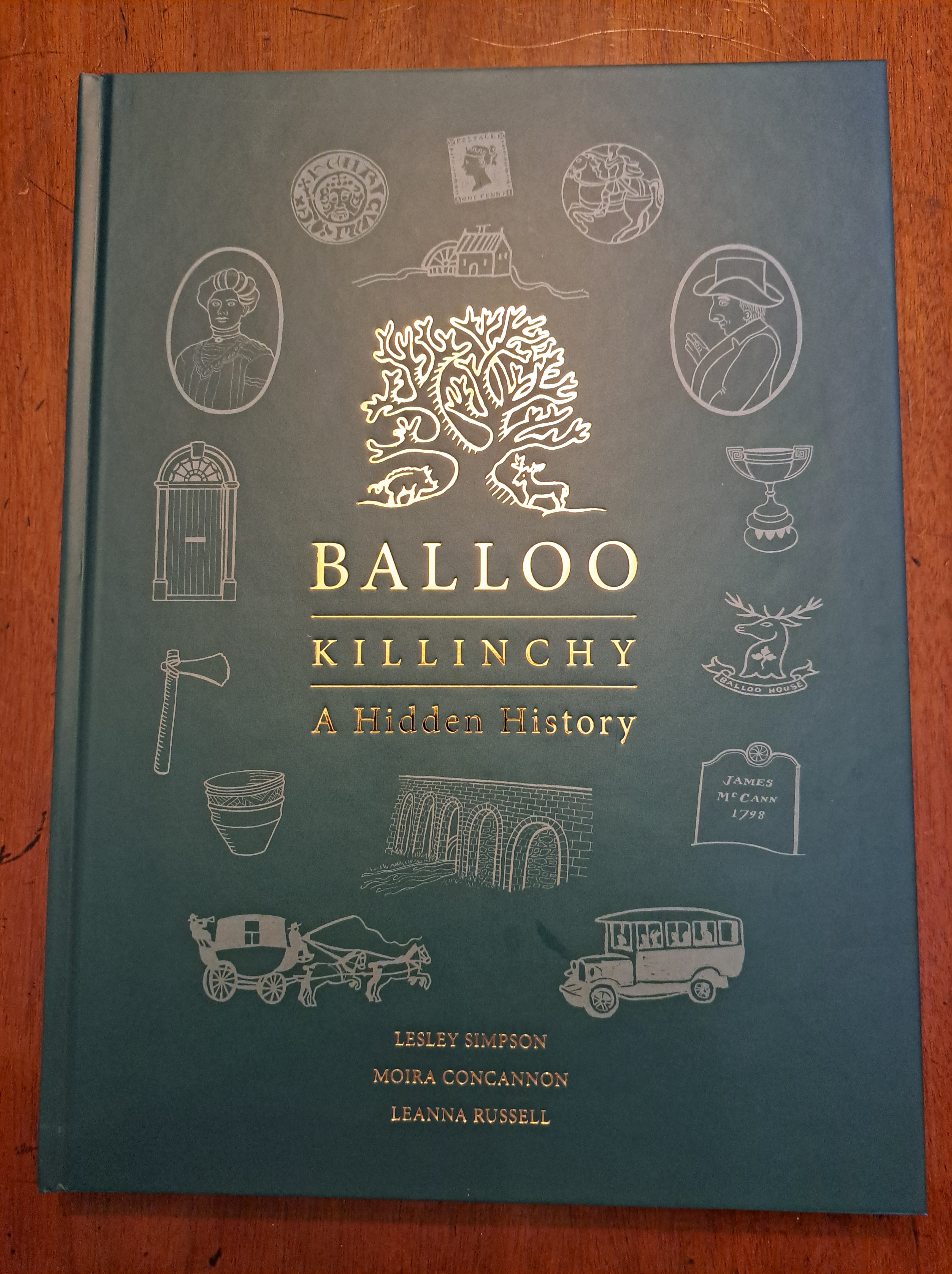
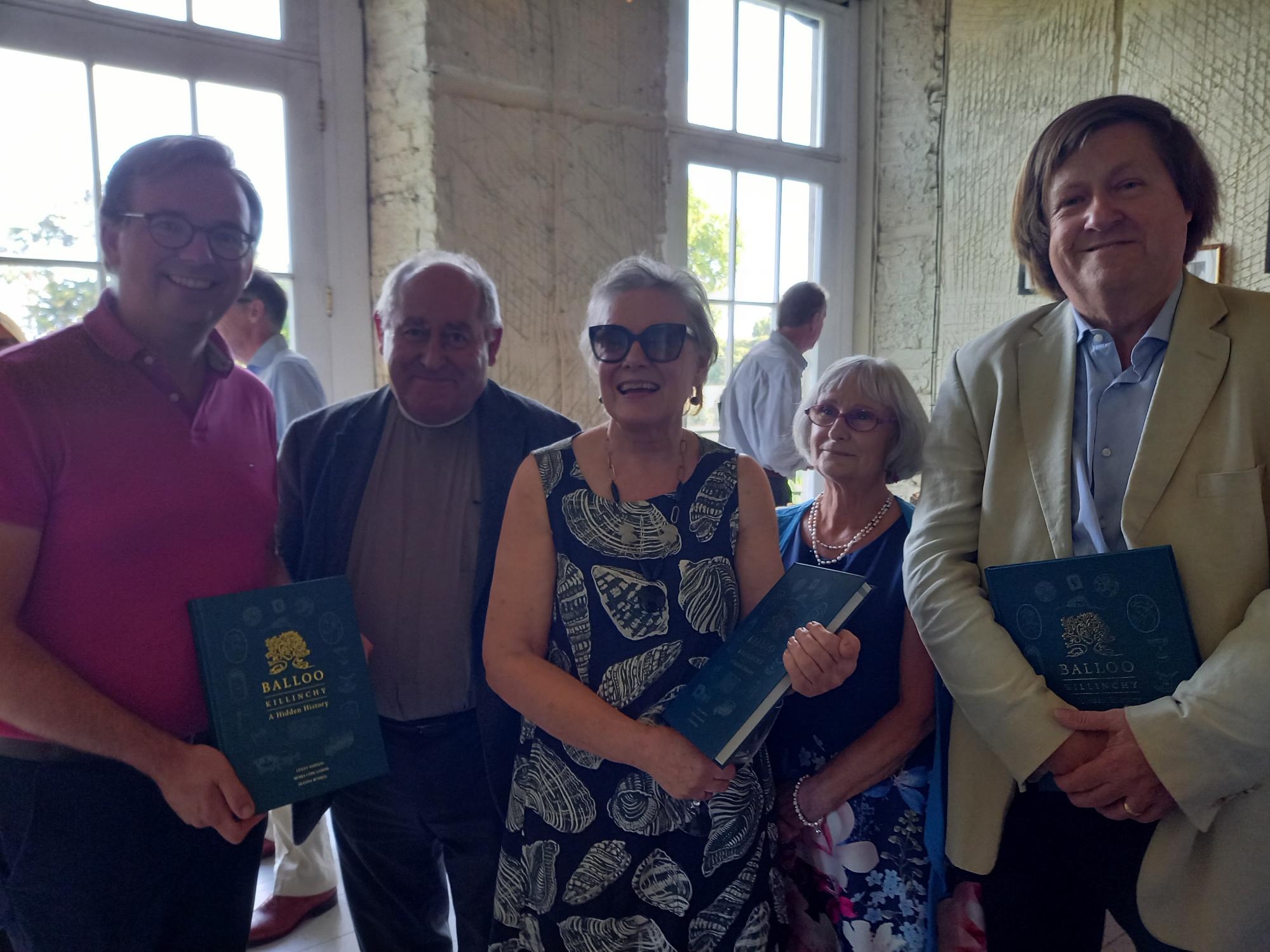
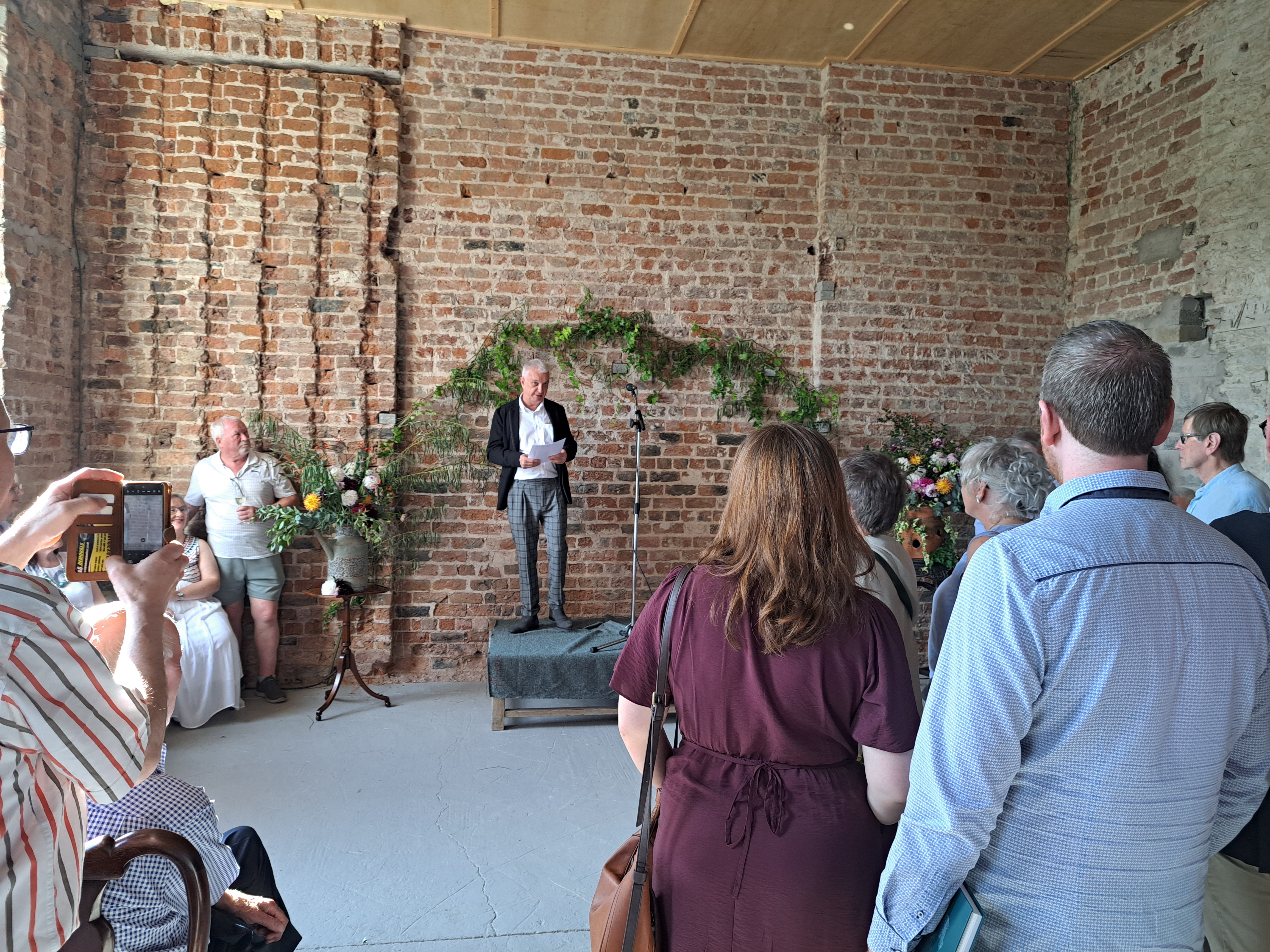
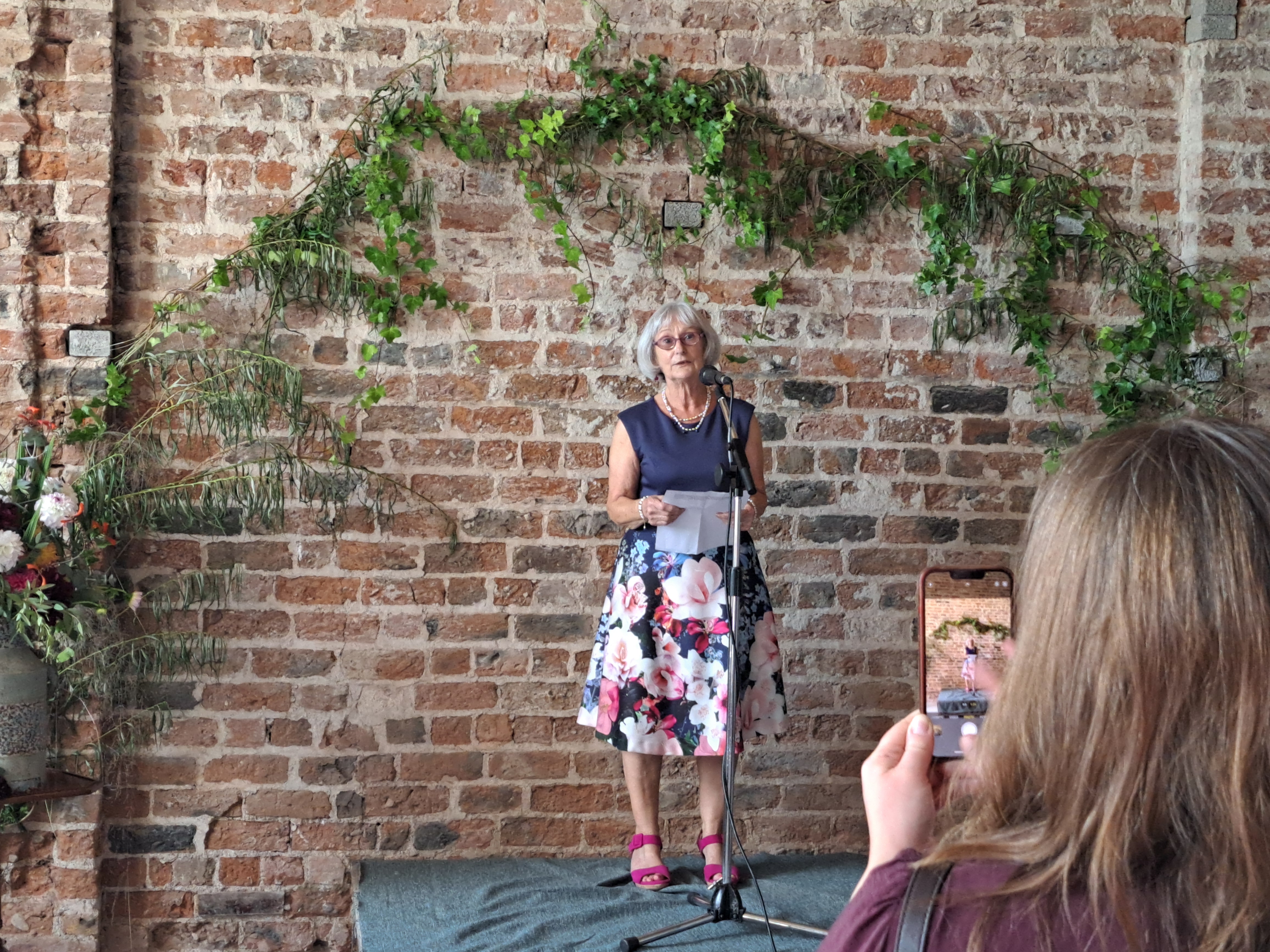
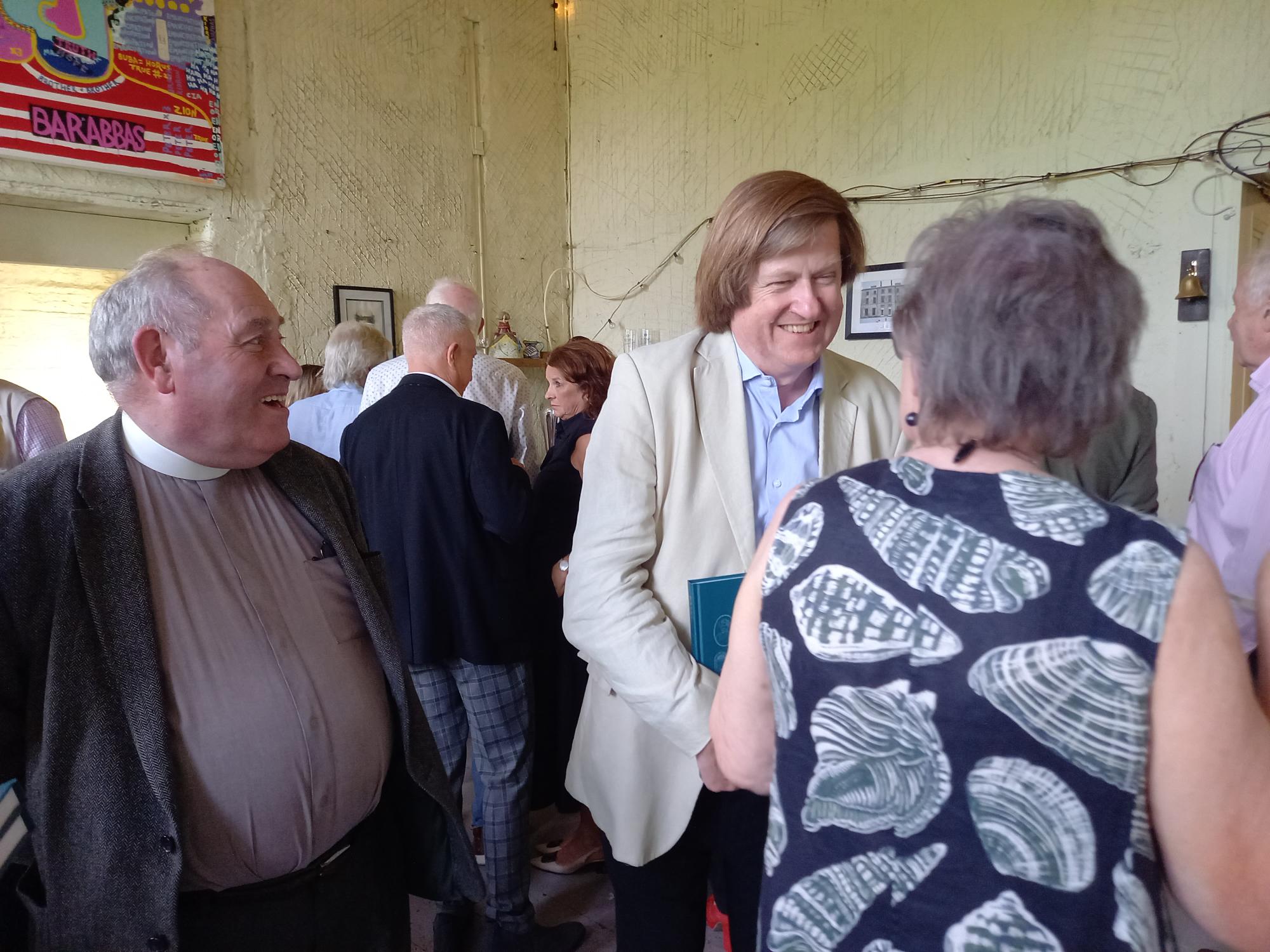
I was delighted to attend the launch of Balloo, Killinchy, A Hidden History by Lesley Simpson, Moira Concannon and Leanna Russell on Saturday, 15th August at Florida Manor, Killinchy. It was a wonderful occasion and a great start for a fascinating and beautifully produced book.

With Rev Dr Stanley Gamble, Rev Dr John Nelson, Lesley Simpson and Moira Concannon

The authors tell the story of the locality through maps, family history, newspaper reports, churches, mills and stores and, most of all, the local houses. Of particular interest to me is the house known as Templebrook Valley which was the home of the Rev Samuel Watson minister in Killinchy from 1797 up to his death in 1856. He was at the centre of one of the major disputes between the Synod of Ulster and the Non-Subscribers in the 1830s and the new Remonstrant meeting house was built for him in Killinchy in 1846.

When the Non-Subscribers were ejected from their original meeting-house, for three years they held services in the grounds of his house. The book tells the story of the Rev Samuel Watson and his ‘long and interesting life from his suspected involvement with the United Irishmen to his move towards Unitarianism’. One of 13 children, three of them becoming Non-Subscribing Presbyterian ministers, Samuel Watson was also a significant farmer in the locality. Sadly his house was left to fall into dereliction in the twentieth century although a new house has now been restored on the site.

There is a great deal in the book about Samuel Watson. At the stone-laying ceremony for his new meeting-house it was reported that:

…seventy clergymen and strangers joined the congregation for a celebration which culminated in a substantial dinner, in a commodious wooden house that had been erected for the occasion with the Rev. Samuel Watson presiding.

I was particularly amused by one quotation taken from James Gourley in 1874, a perhaps not entirely unbiased commentator, who asked an old man who had sat under Samuel Watson’s feet:

What sort of doctrines did he preach? ‘Ohm’ said he ‘at that time there was no word about doctrine.’ ‘And what then did he preach about?’ ’Mainly about far away countries and wild beasts’.

Samuel Watson’s obituary in the Northern Whig described him as ‘…one of the oldest and ablest Ministers of the Church.’

The book is full of detail and uncovers such fascinating stories as the 1893 excavation of Templebrook Valley by the Belfast Natural History and Philosophical Society with the co-operation of Samuel Watson’s two youngest daughters – Anna and Sarah who were photographed at the excavation which uncovered Bronze Age vessels now in the Ulster Museum.

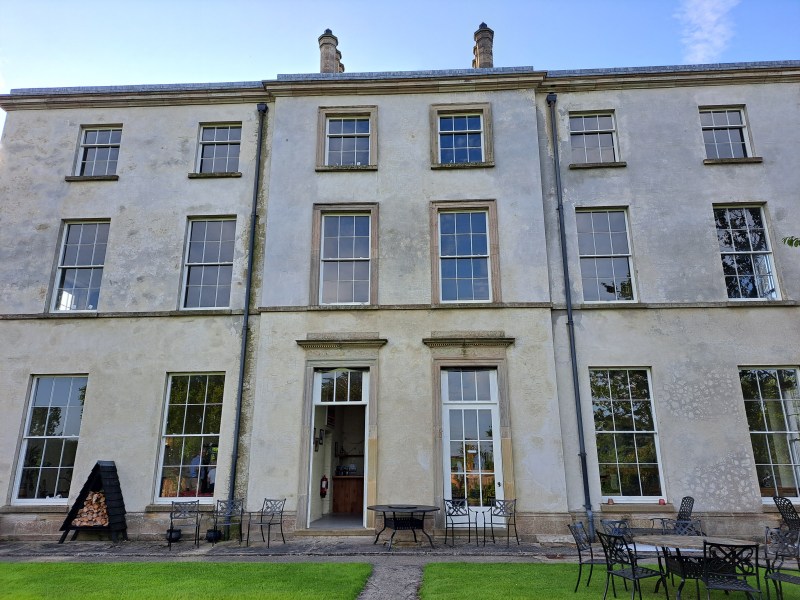
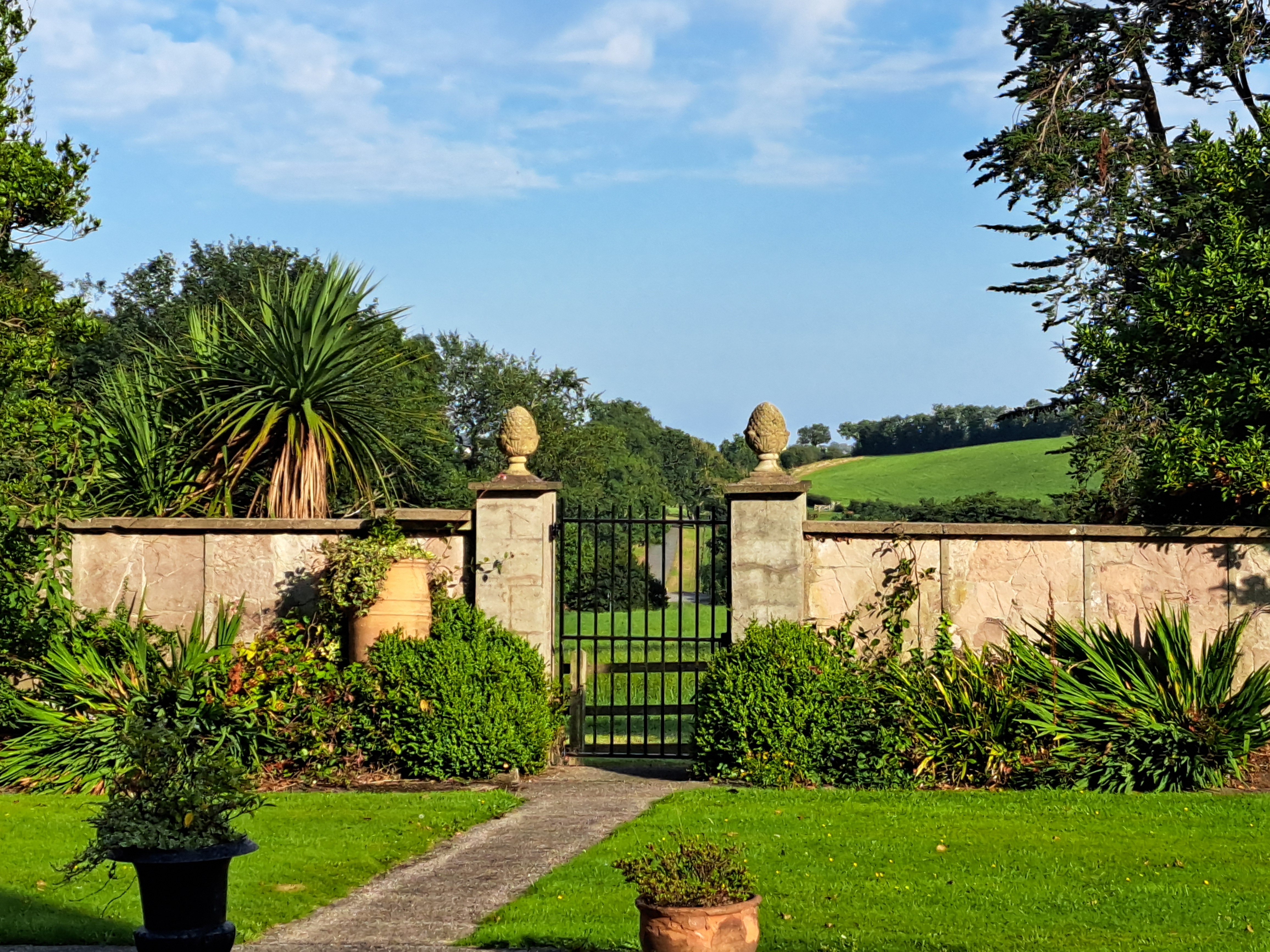
The view from the back of Florida Manor

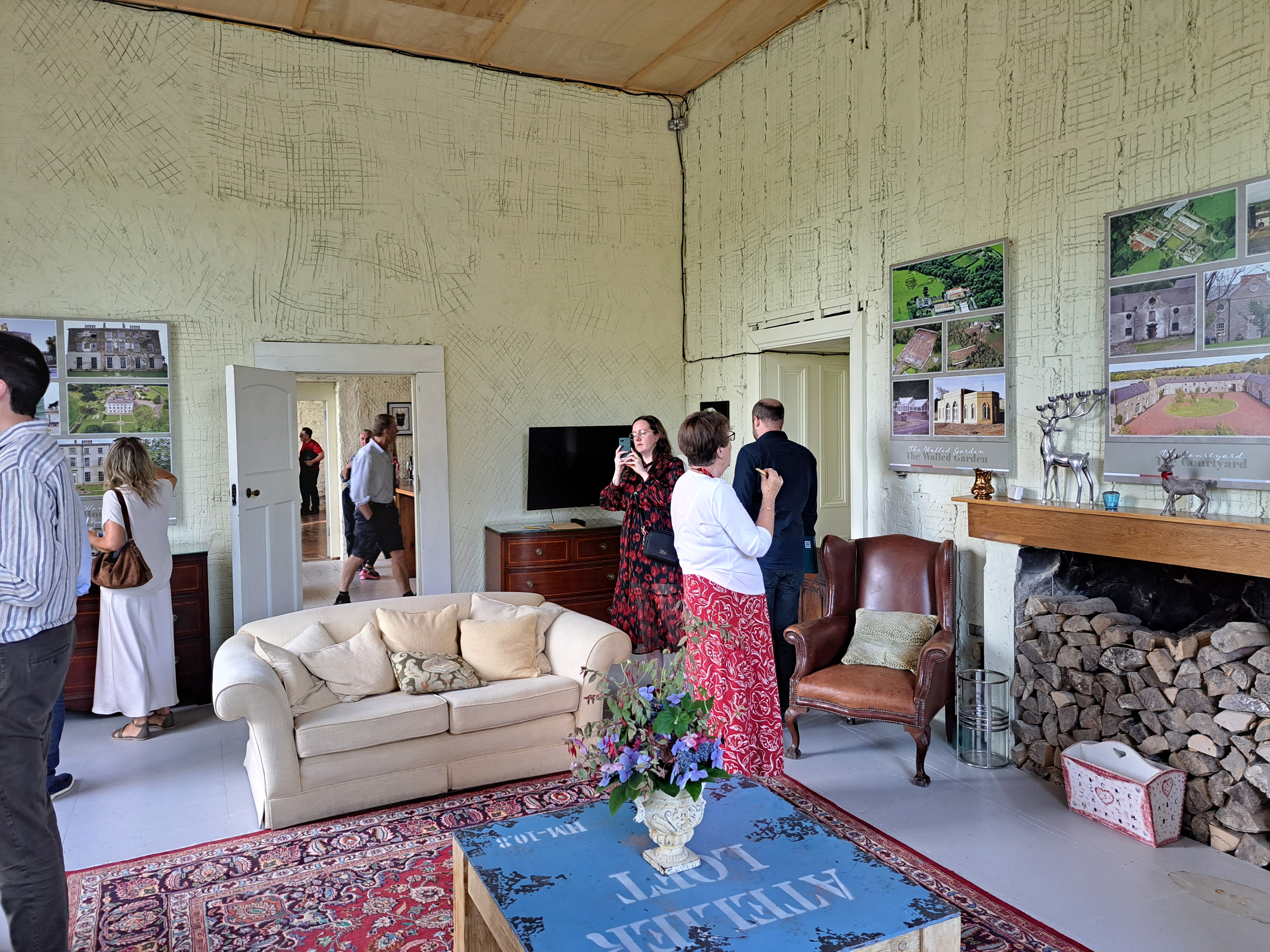
The book is richly illustrated throughout and is full of fascinating information. It is a credit to its authors and will be enjoyed by all with an interest in local history, the history of county Down and Irish Presbyterian history. The launch was a splendid occasion at Florida Manor, as the following photographs show.

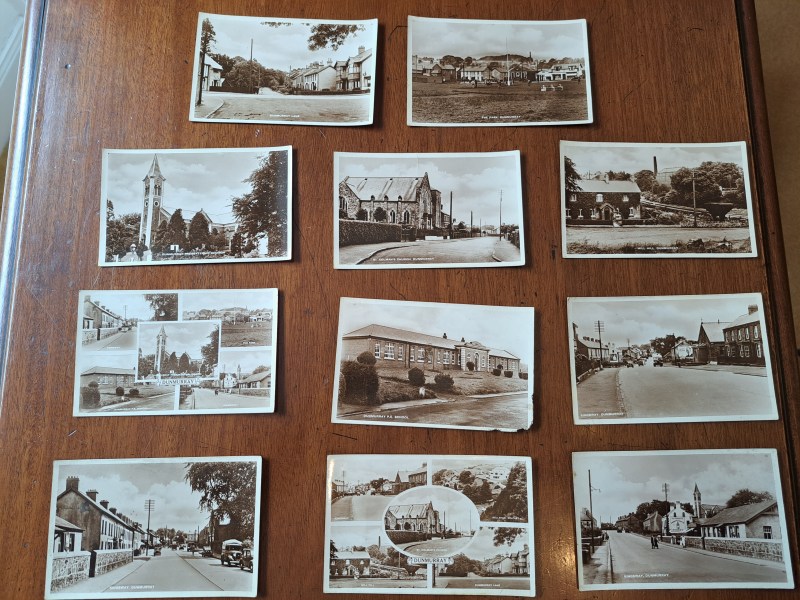
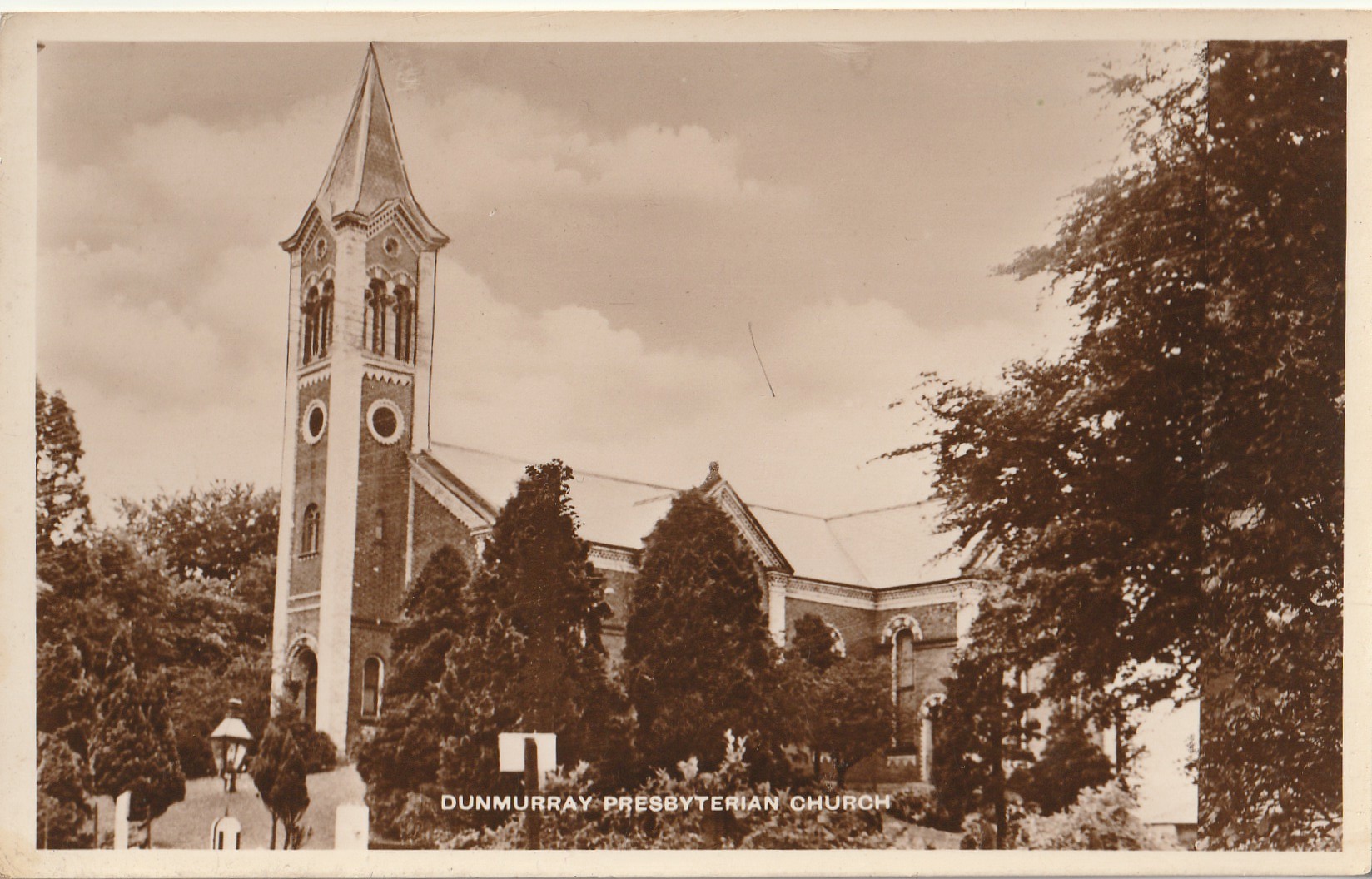
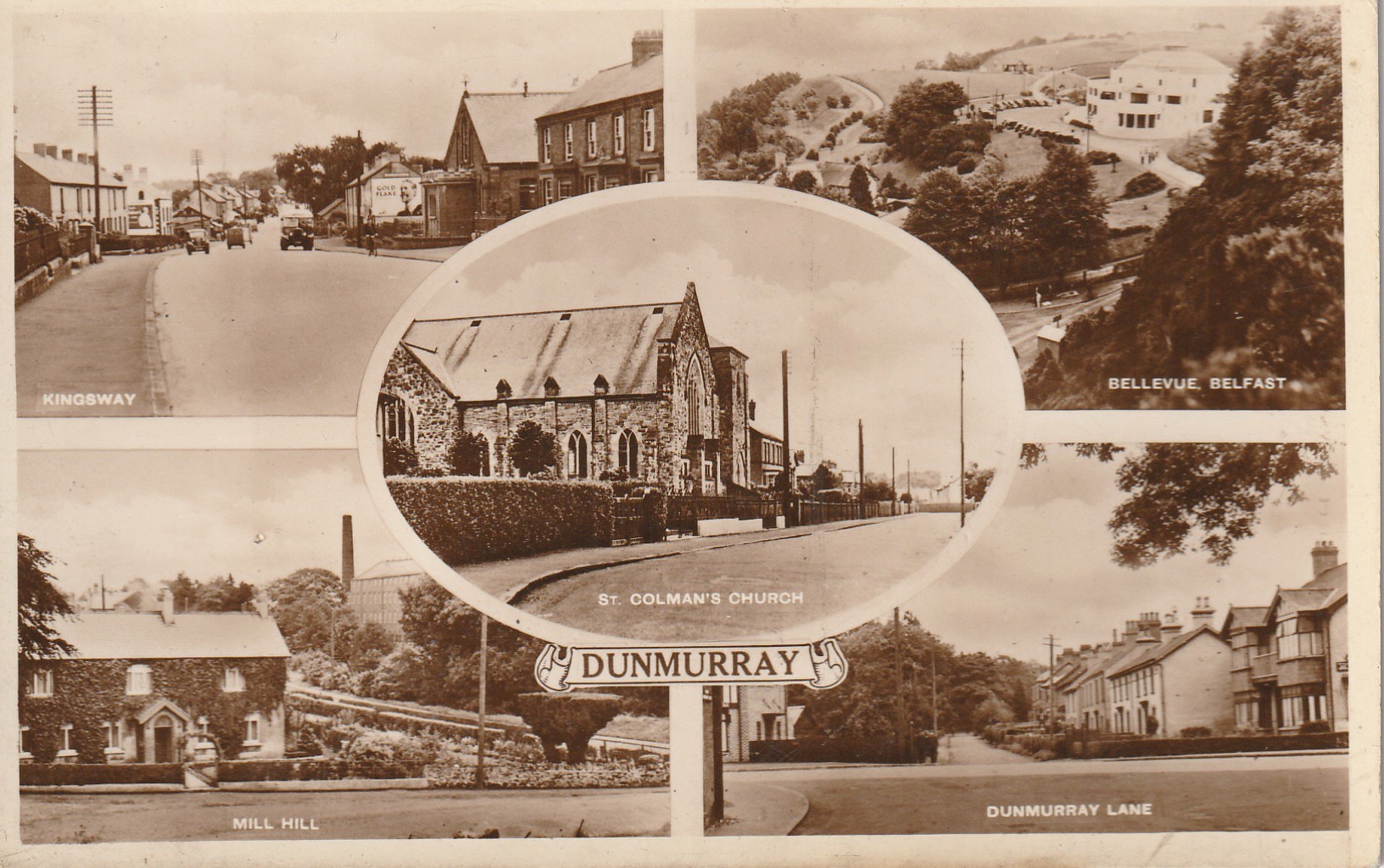
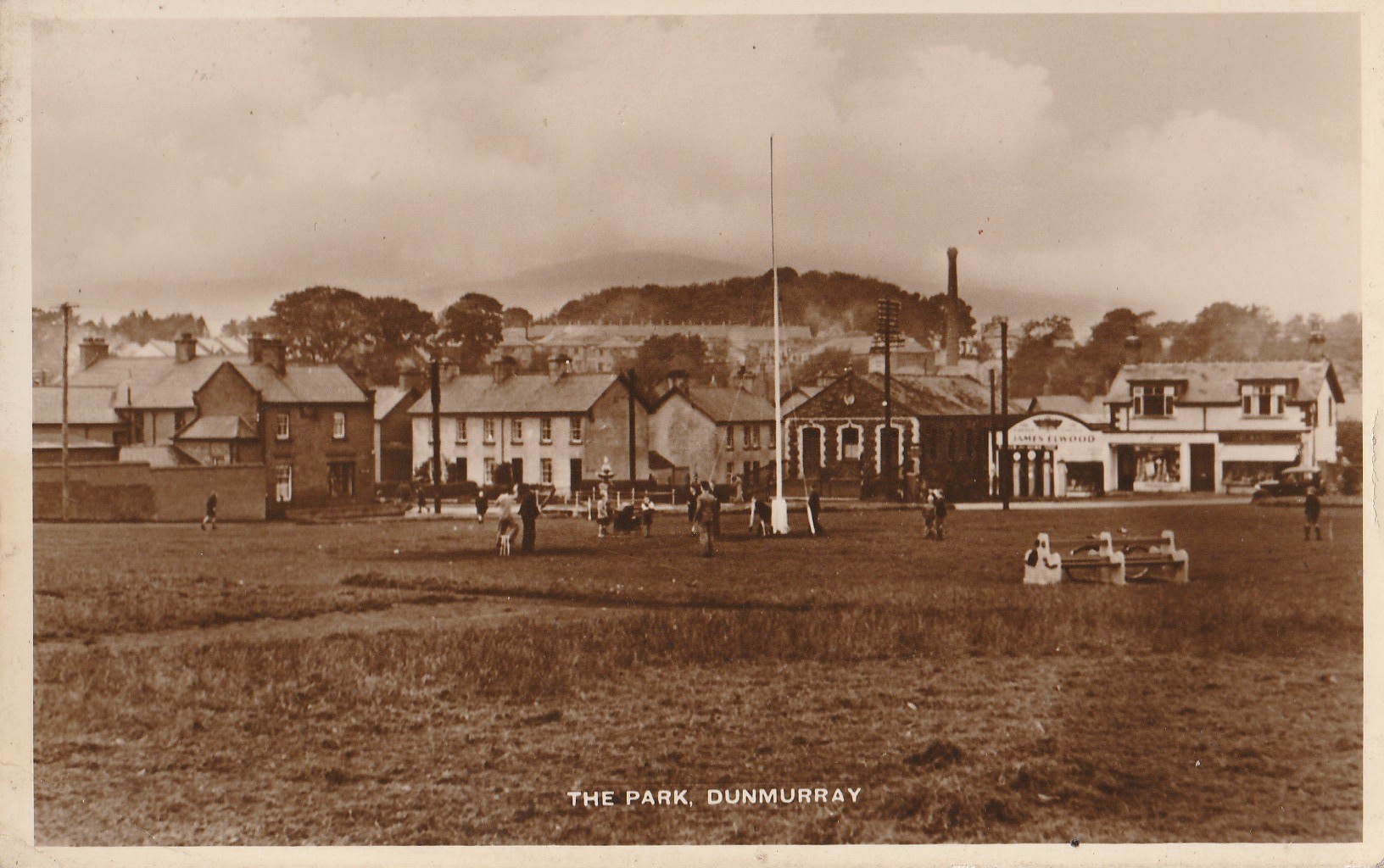
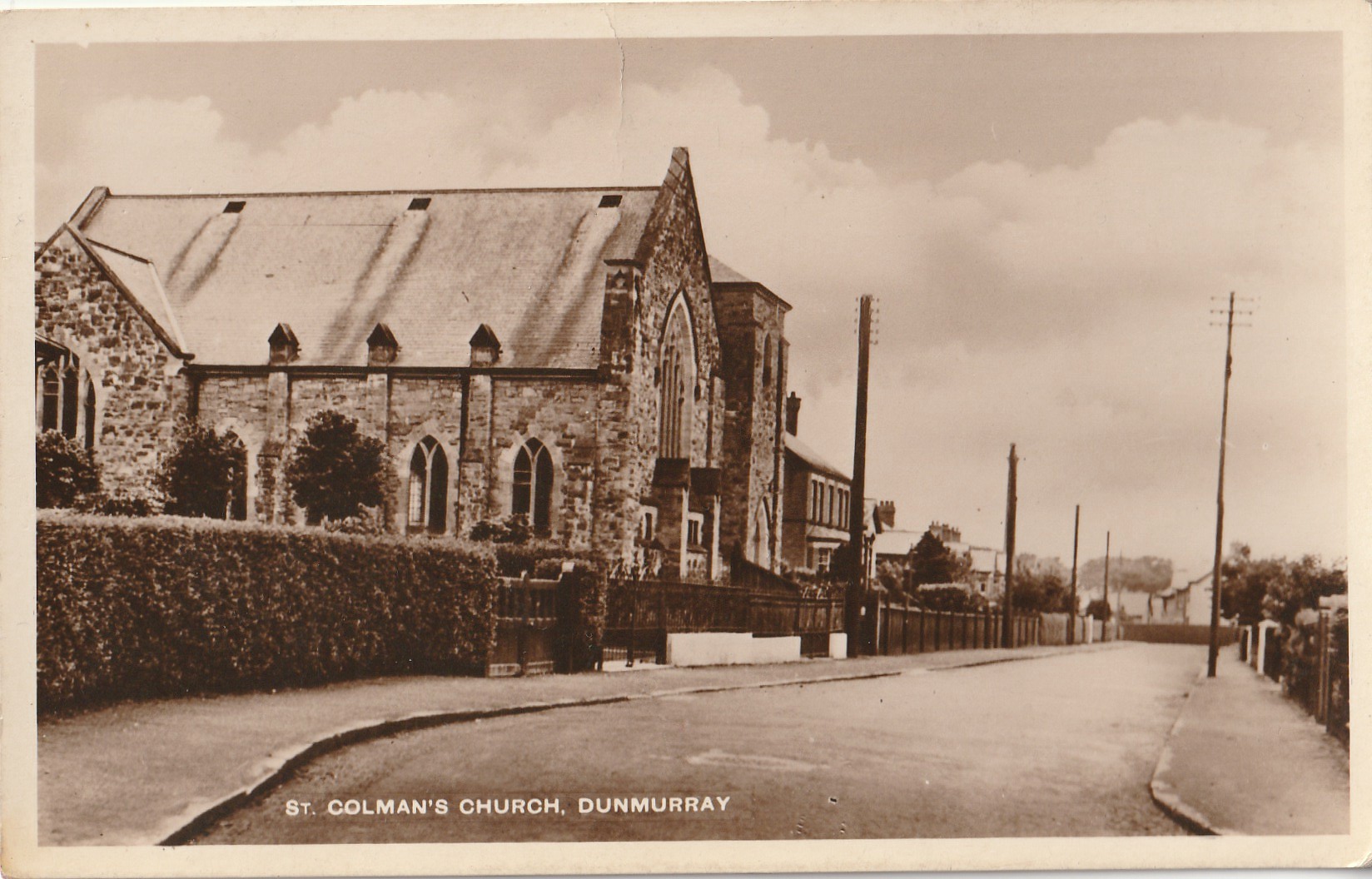
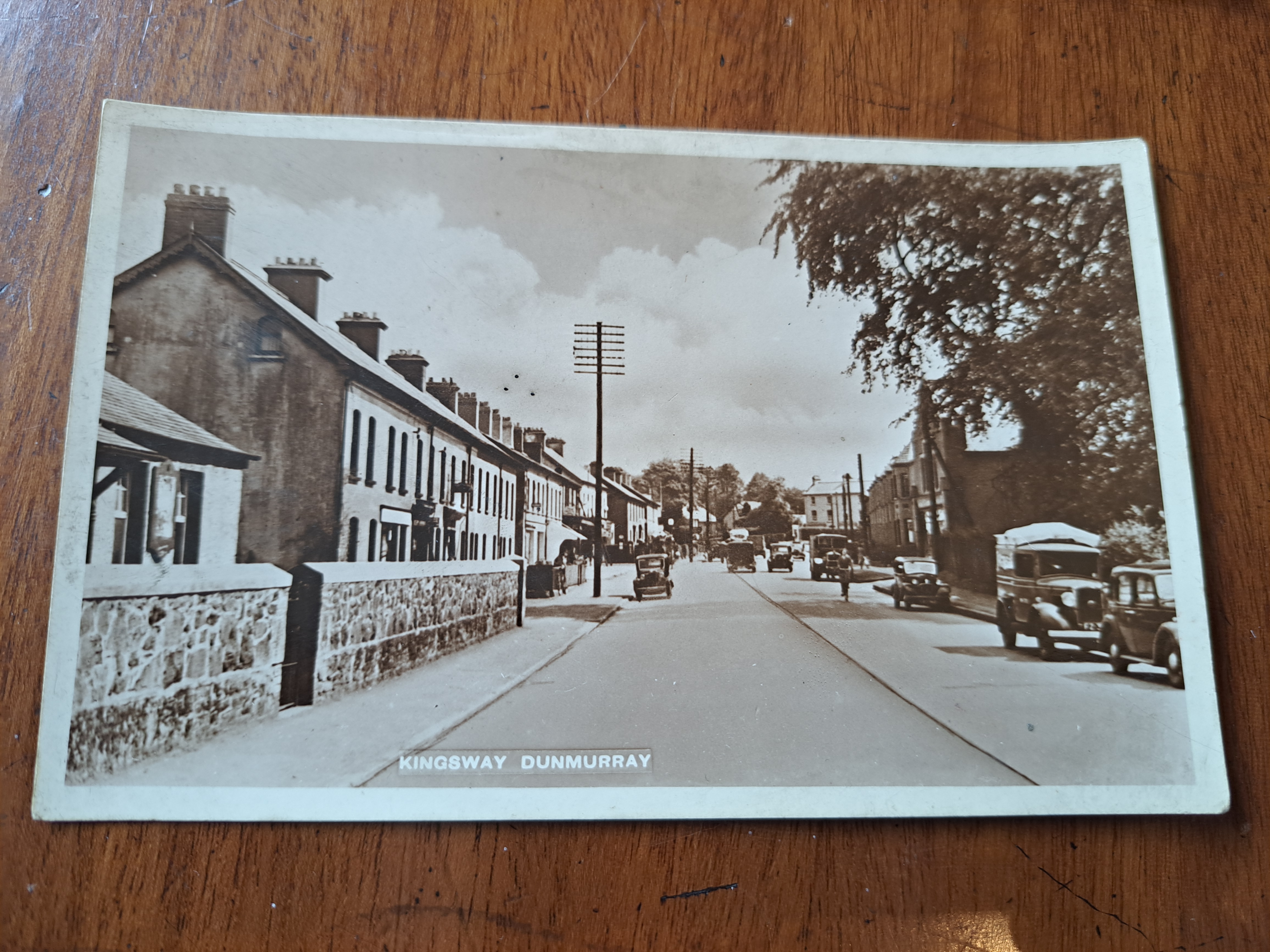
Dunmurry Postcards

We have a good collection of postcards of Dunmurry in our Library at First Dunmurry (Non-Subscribing) Presbyterian Church. The following video tells their story:

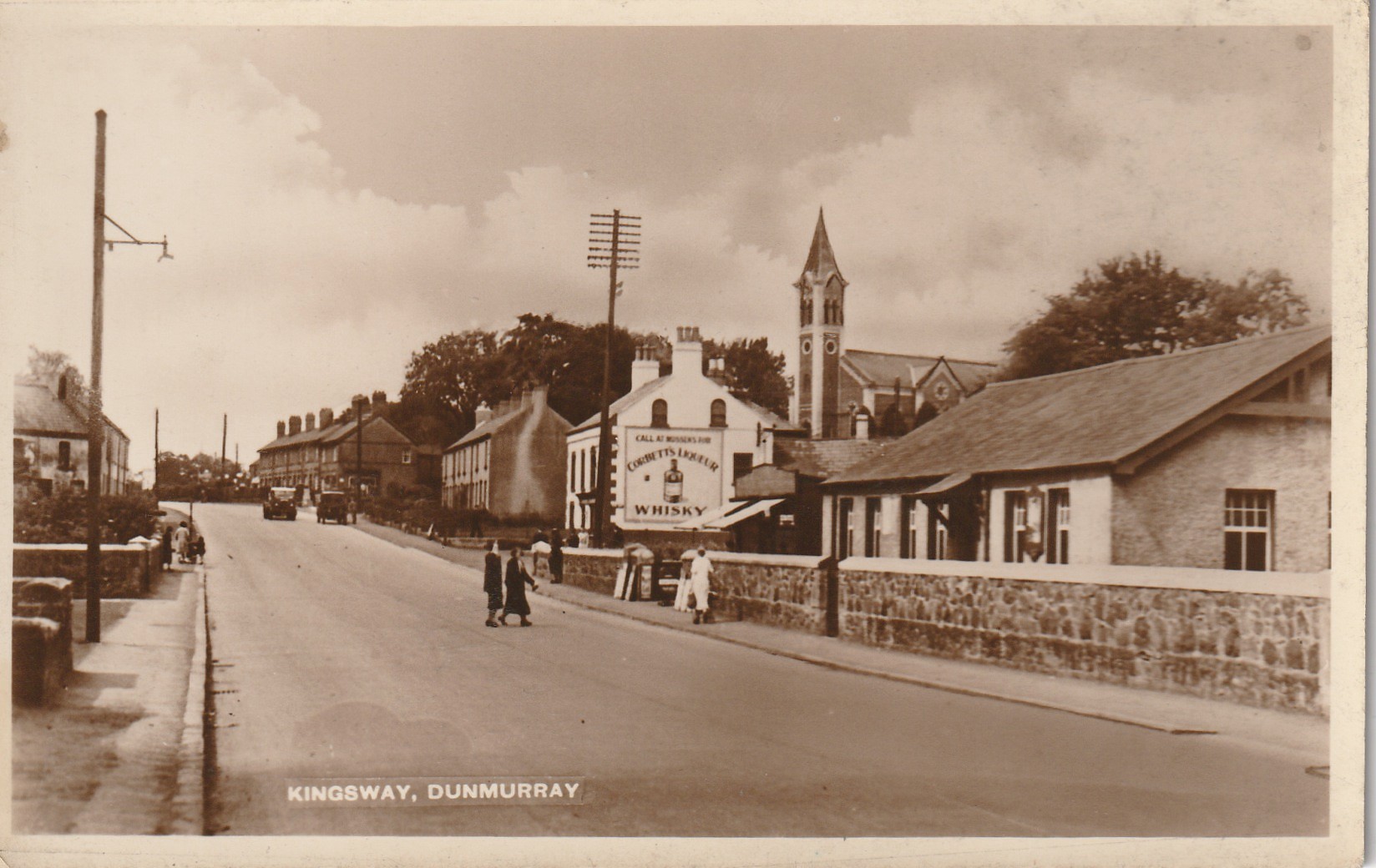
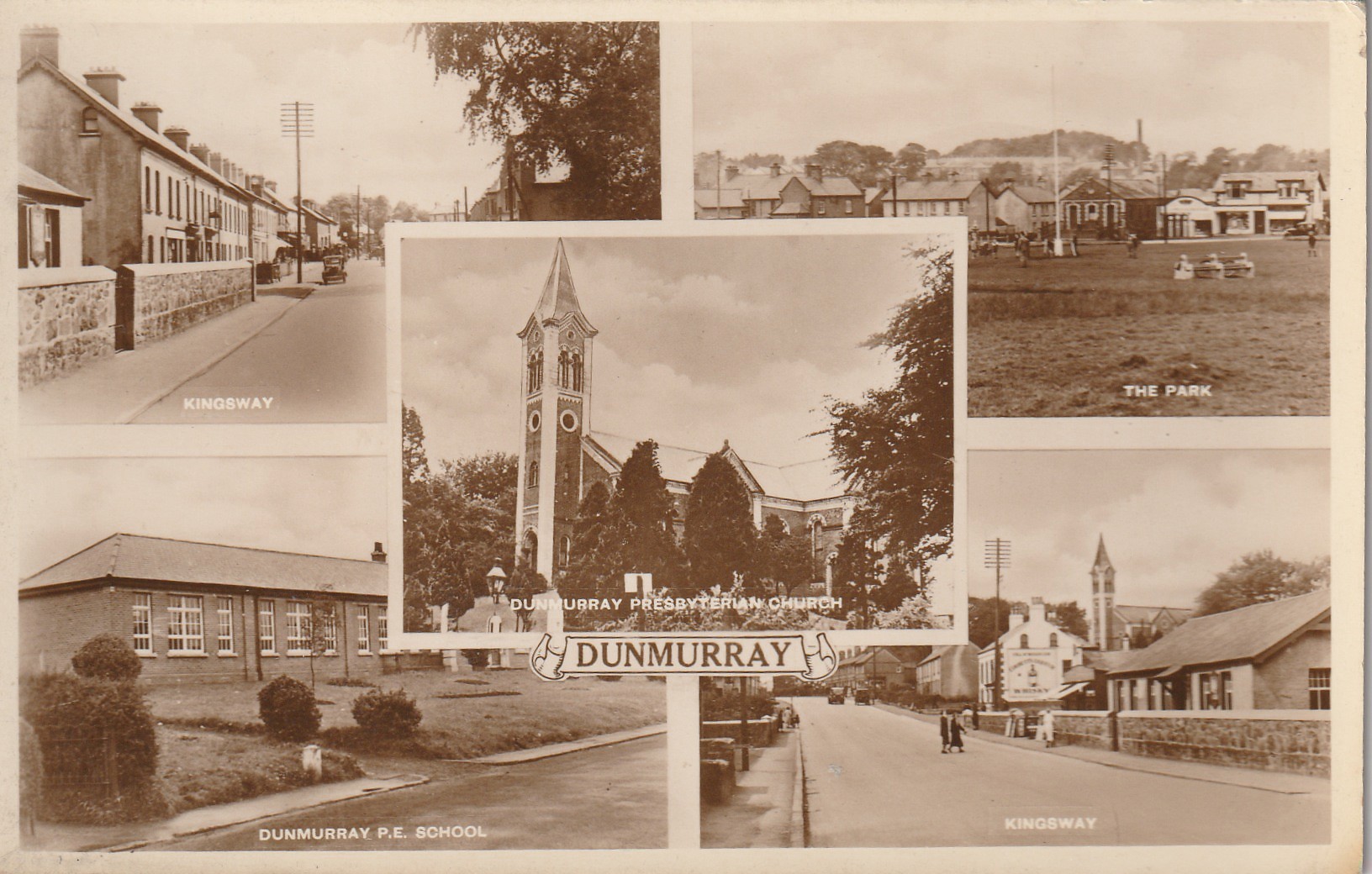
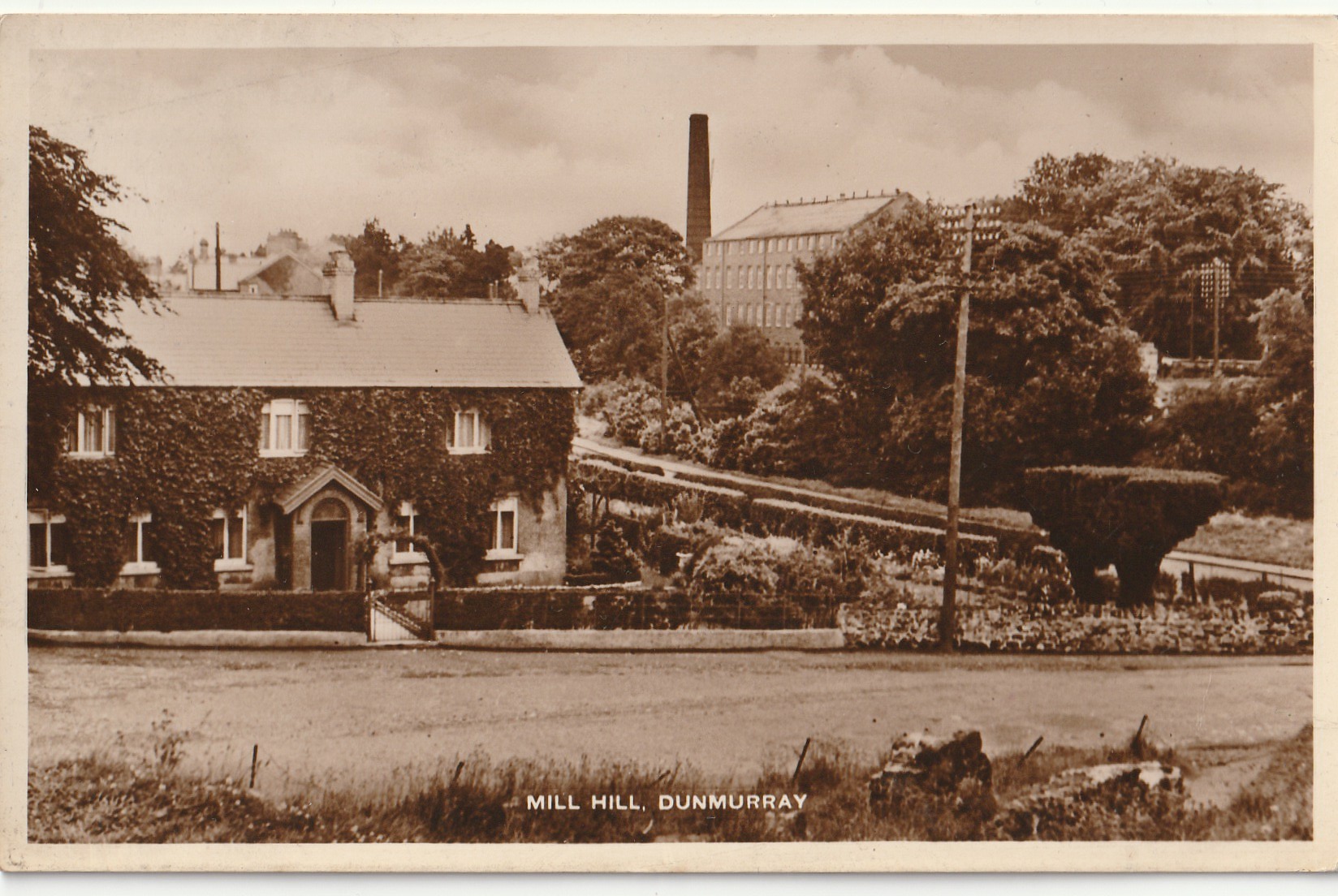
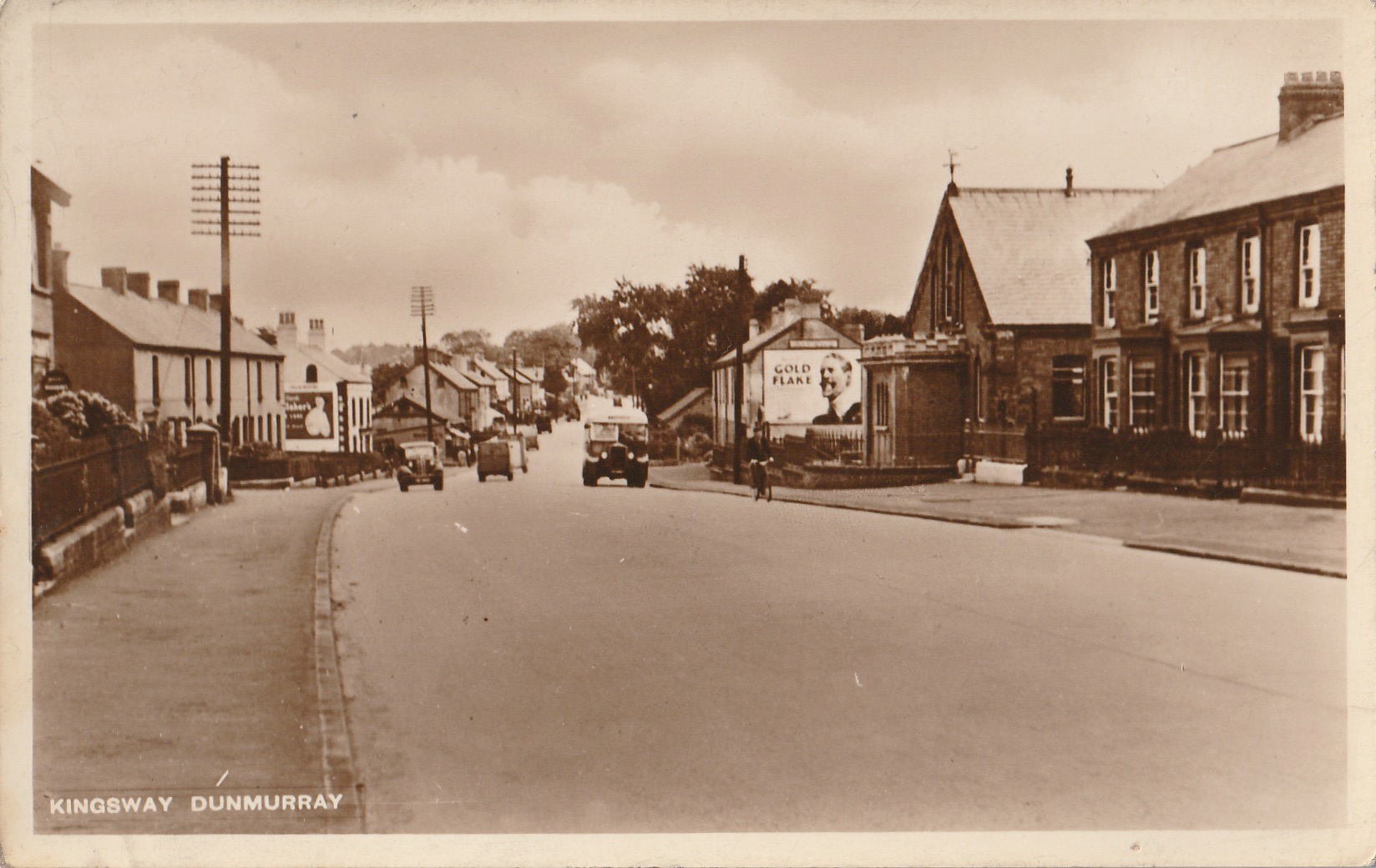
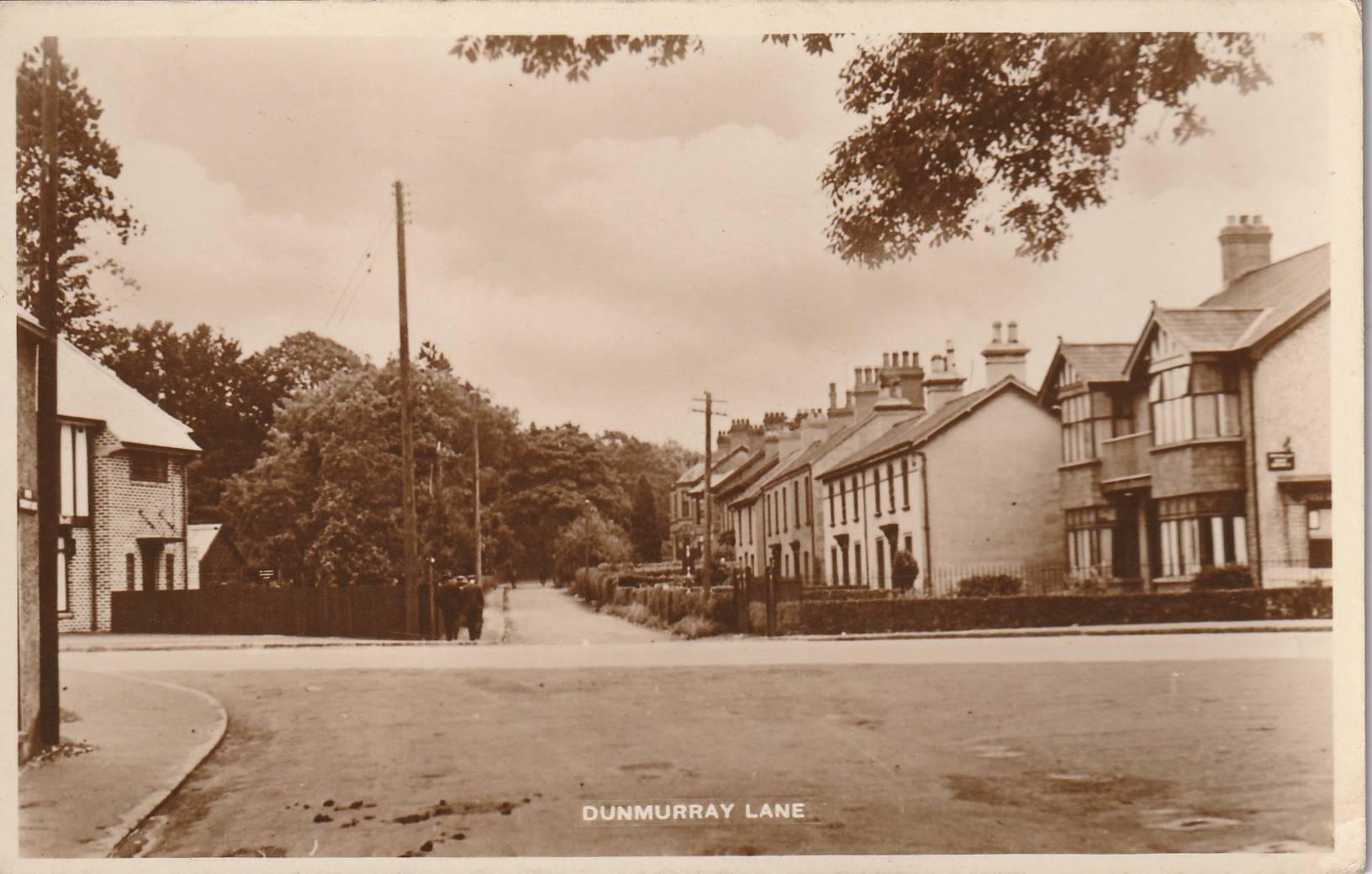
Here are the postcards:

Kingsway 1
Dunmurry Lane
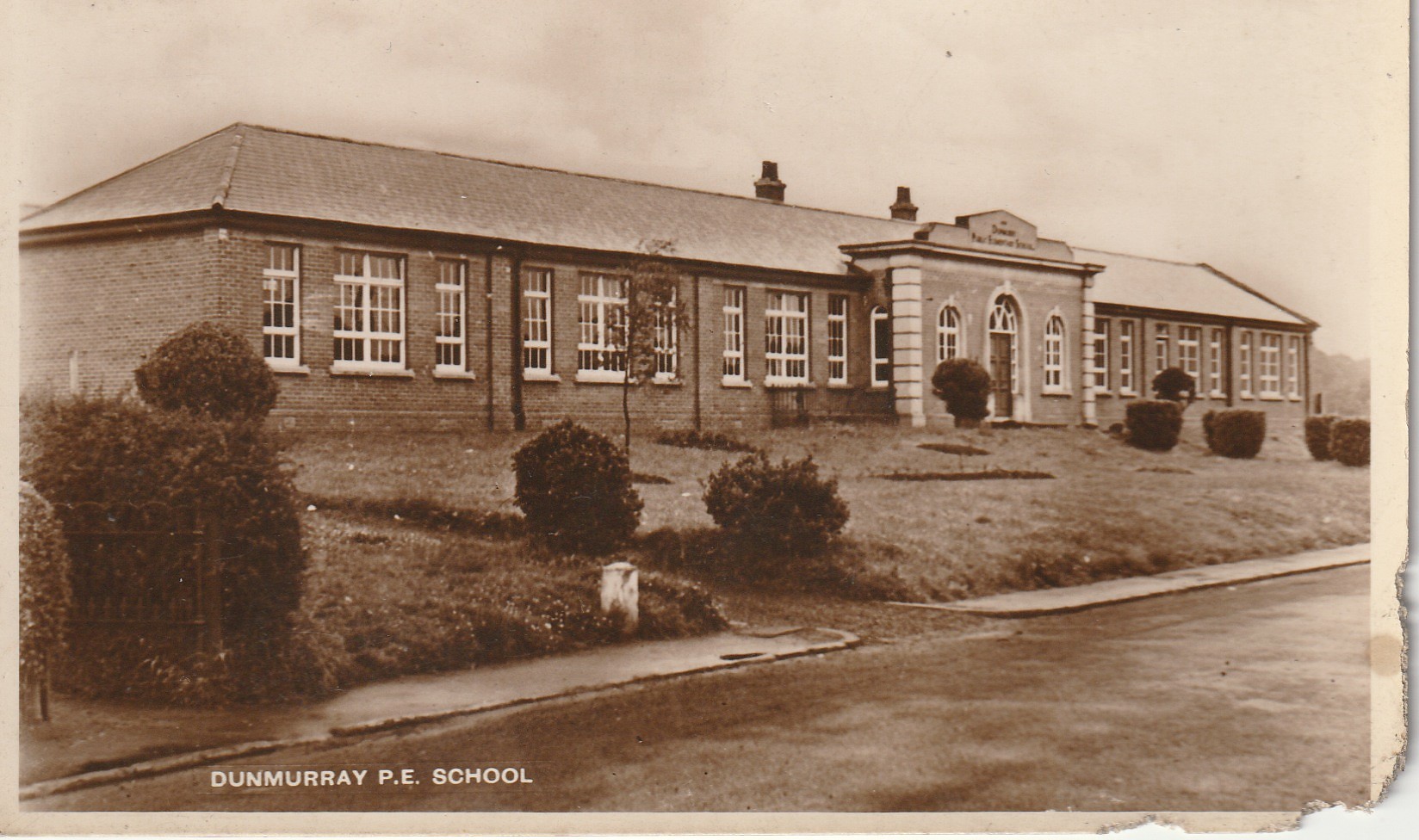
Dunmurry Primary School
Kingsway 2
Multi-view 1
Mill Hill
Presbyterian Church
Multi-view 2
The Park
St Colman’s
Kingsway 3

All published by W. McCartney, Stationer, Newsagent & Tobacconist, Dunmurry. All with the unusual spelling of ‘Dunmurray’ on the front and back of each card!

Four churches, a graveyard and a peacock

On 5th June 2025 a party of about 20 of us set off on a journey to visit four Non-Subscribing Presbyterian churches in county Antrim plus an historic graveyard (including the ruins of a very historic church) and met a Non-Subscribing Presbyterian peacock along the way. We had as our expert guide the Rev Dr John Nelson whose extensive knowledge kept us informed and entertained all day.

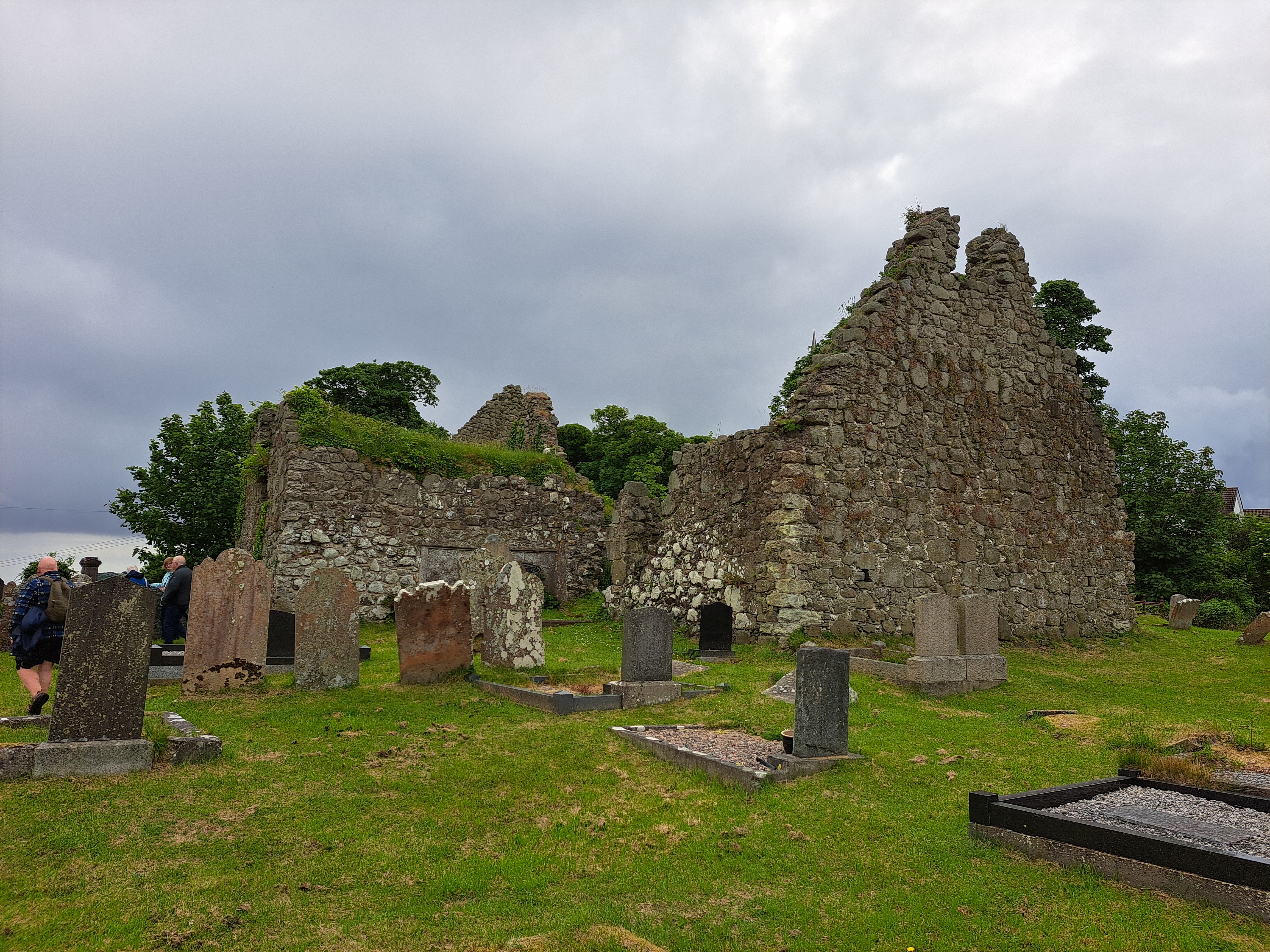
We left Dunmurry and headed for Ballycarry where we visited first Templecorran graveyard.

The ruins of Templecorran church

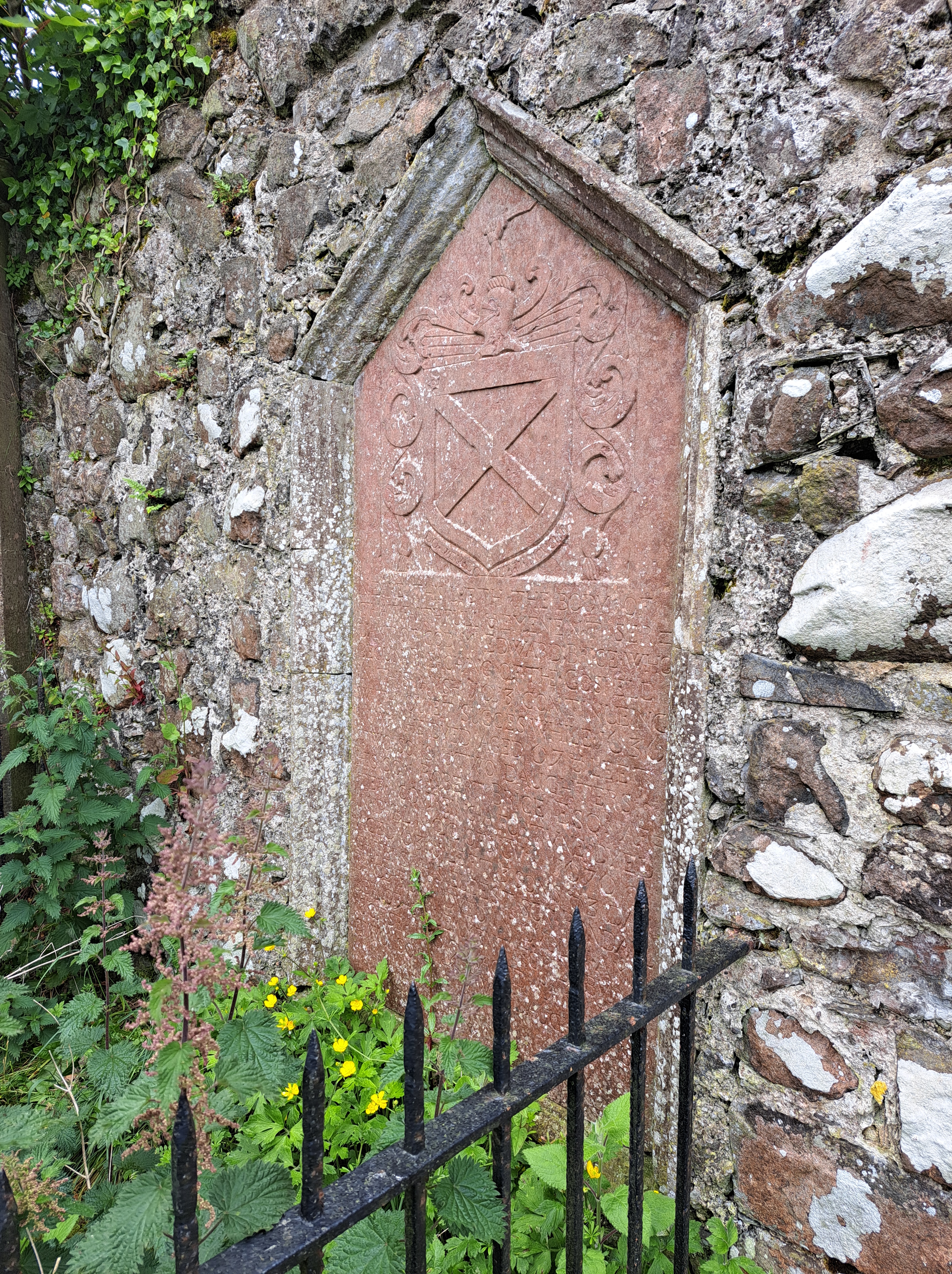
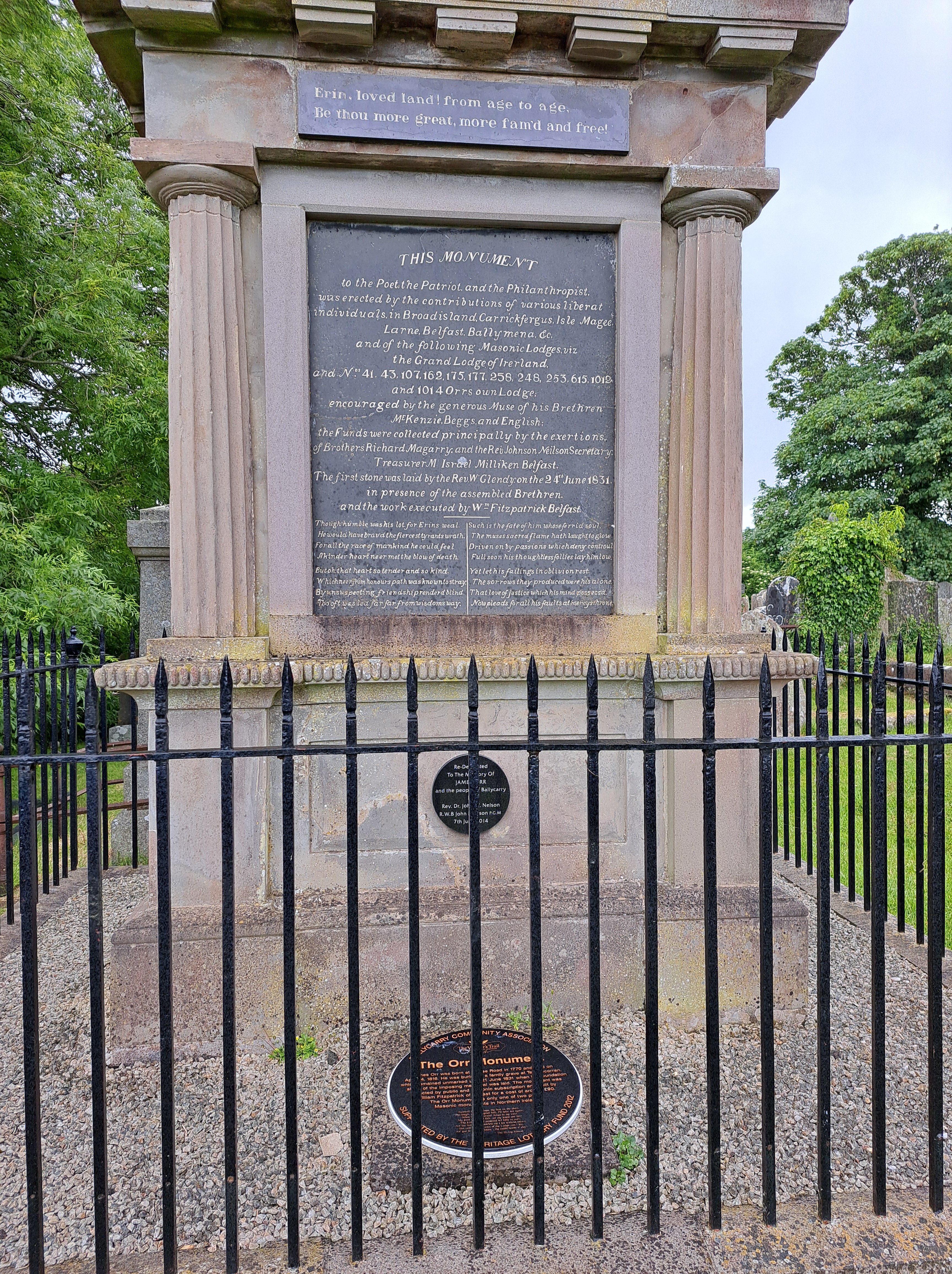
The original parish church used by Edward Brice, the first Presbyterian minister in Ireland in 1613, is now in ruins but it contains many interesting items, including Edward Brice’s grave, the grave of the Rev John Bankhead and a memorial to James Orr, the Bard of Ballycarry.

Grave of Edward Brice
James Orr memorial

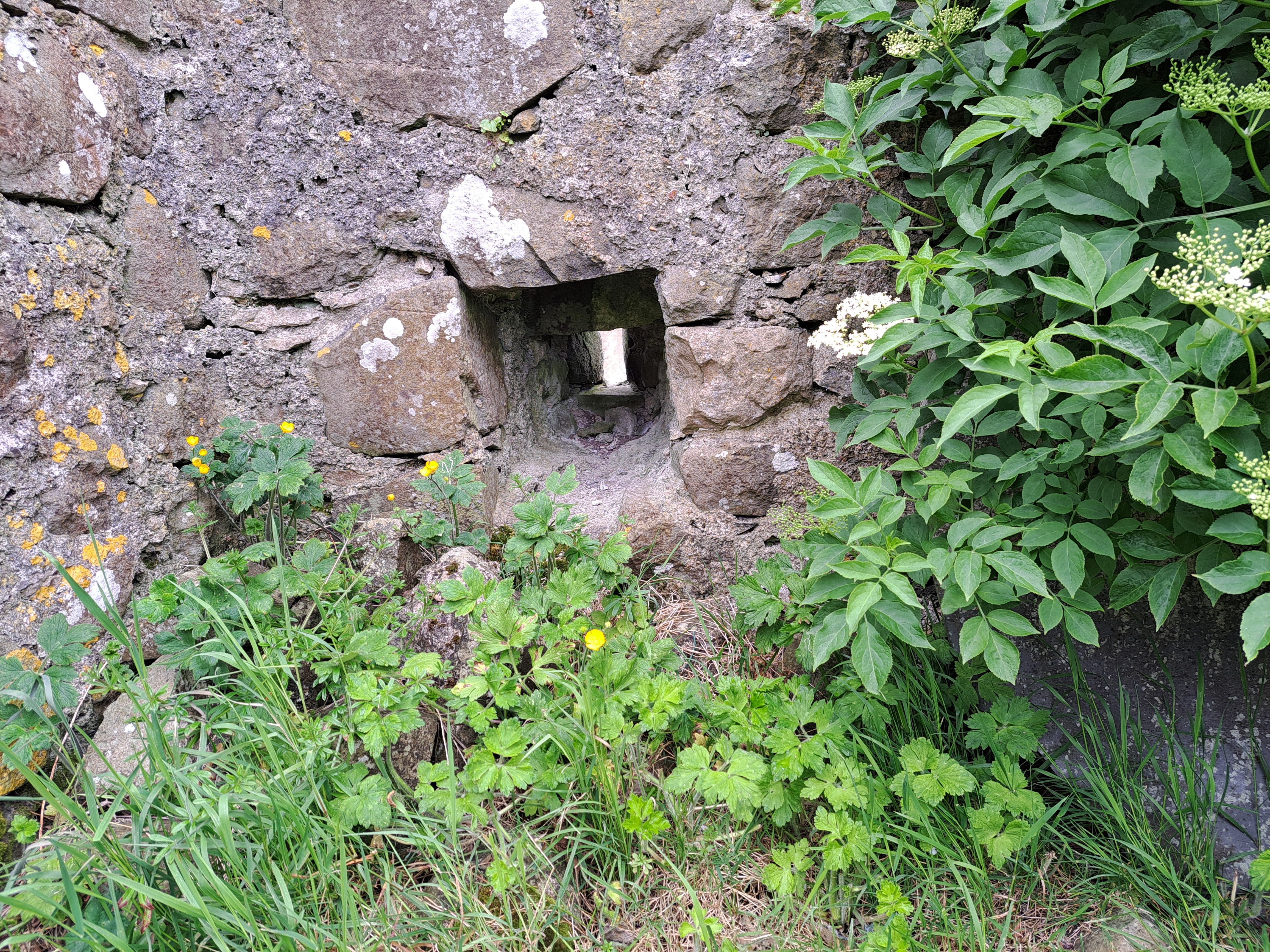
The church was renovated in 1622, during the ministry of Edward Brice, and being built in dangerous times was constructed to be defendable; musket loopholes can still be seen which would have covered all angles of the church should it ever have come under attack.

One of the musket loopholes

The church at Templecorran was slated (unlike the first Ballycarry meeting house which was thatched) and was occupied by Edward Brice and his congregation until he was ejected in 1637.

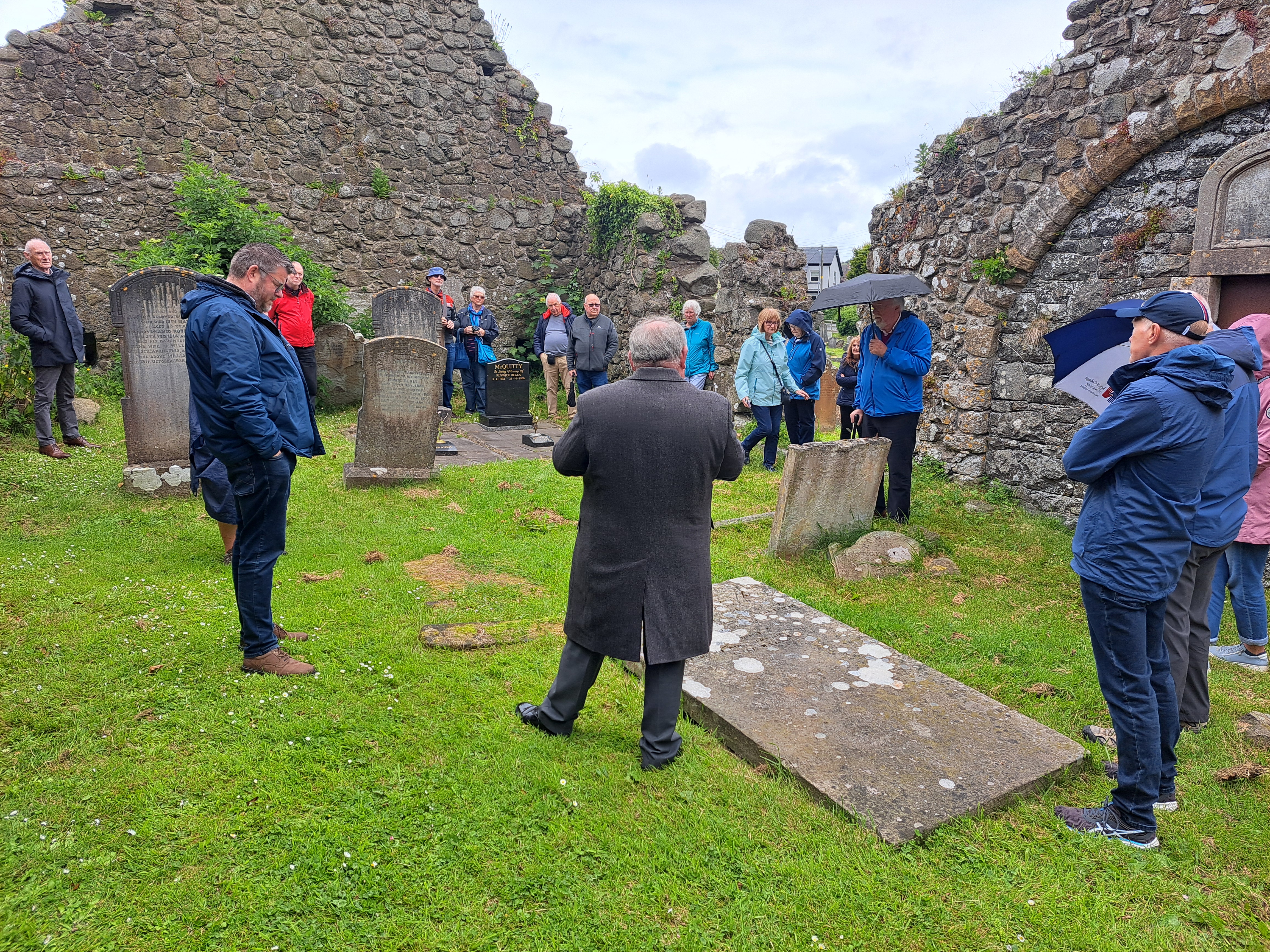
Inside Templecorran church

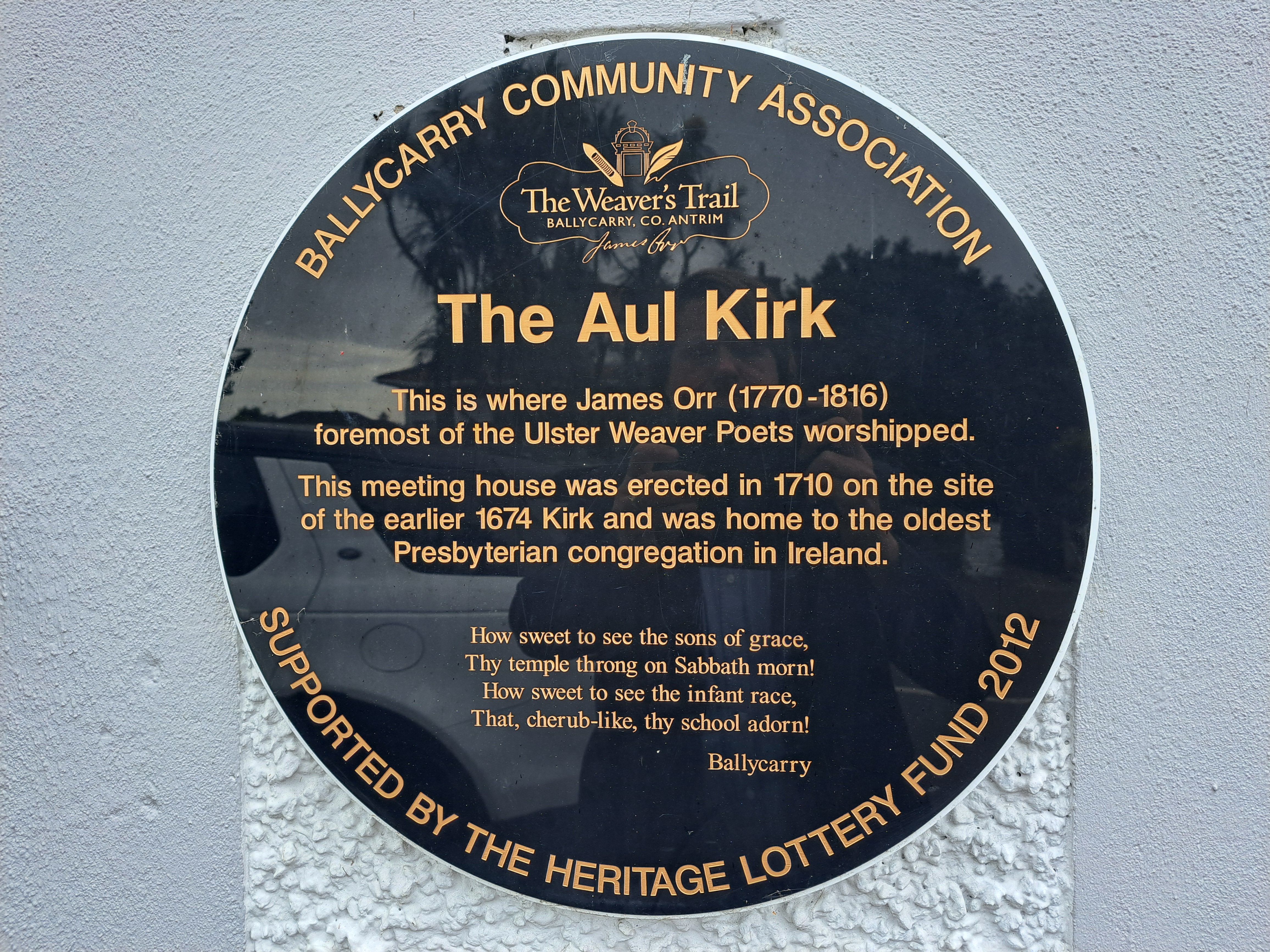
From the old church it is a short walk to Ballycarry where Dr Nelson told us the story of the meeting house, itself dating from the early 18th century.

Ballycarry plaque
Inside Ballycarry meeting house

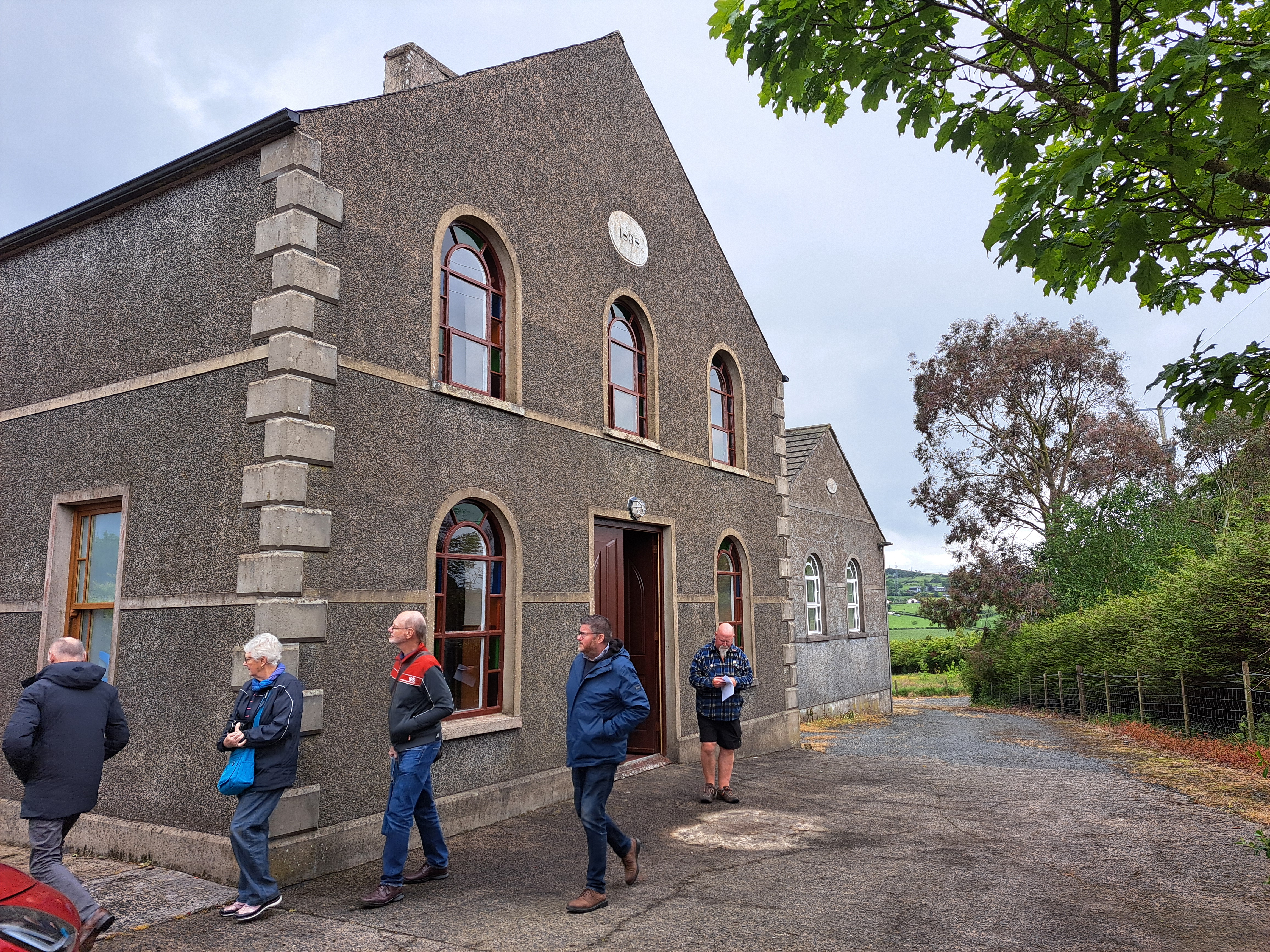
It’s not far from Ballycarry to Raloo but some of us still managed to get lost! But we got there in the end to enjoy the Remonstrant meeting house of 1838 and adjoining modern church hall.

Raloo
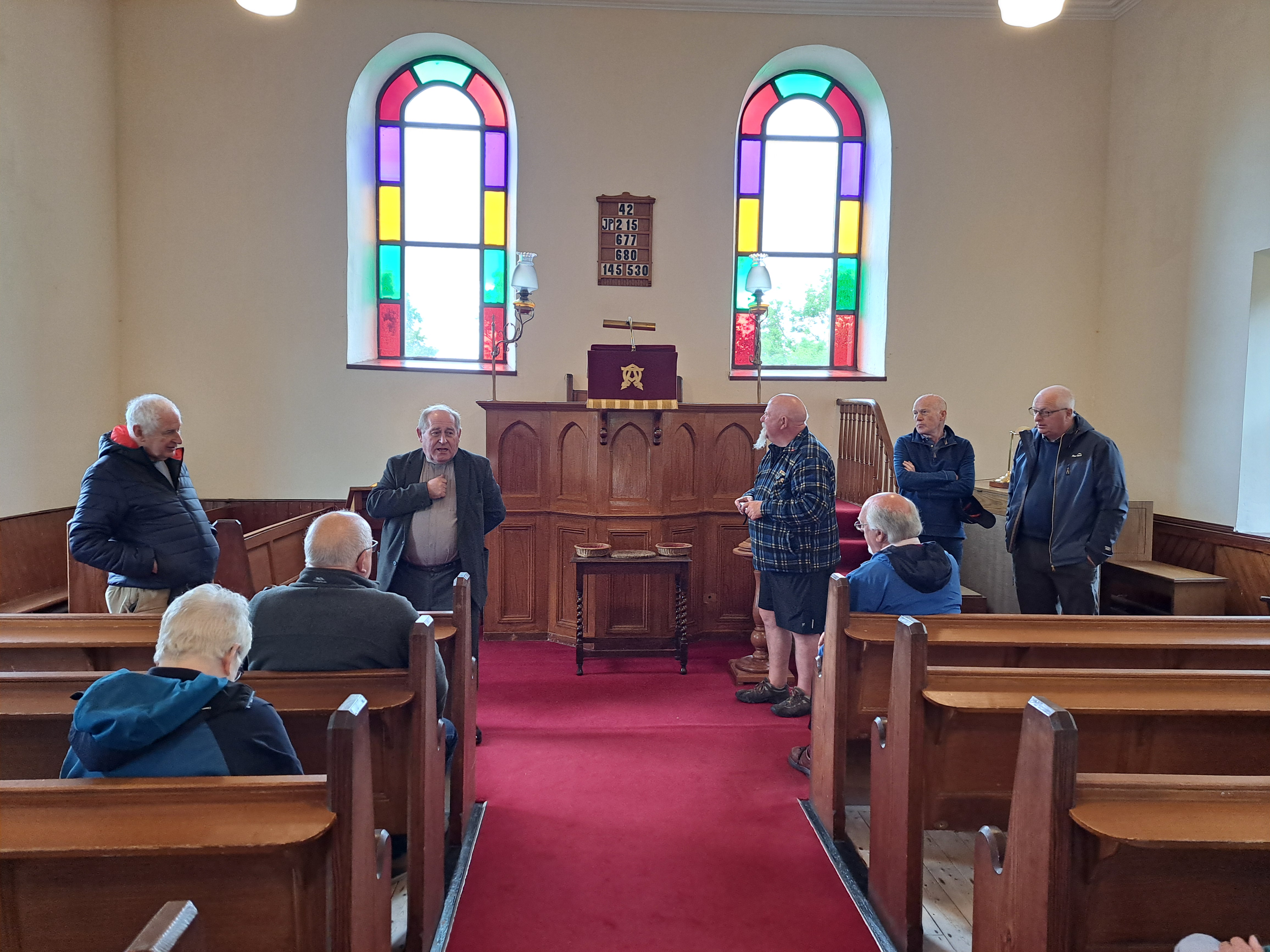
Raloo interior

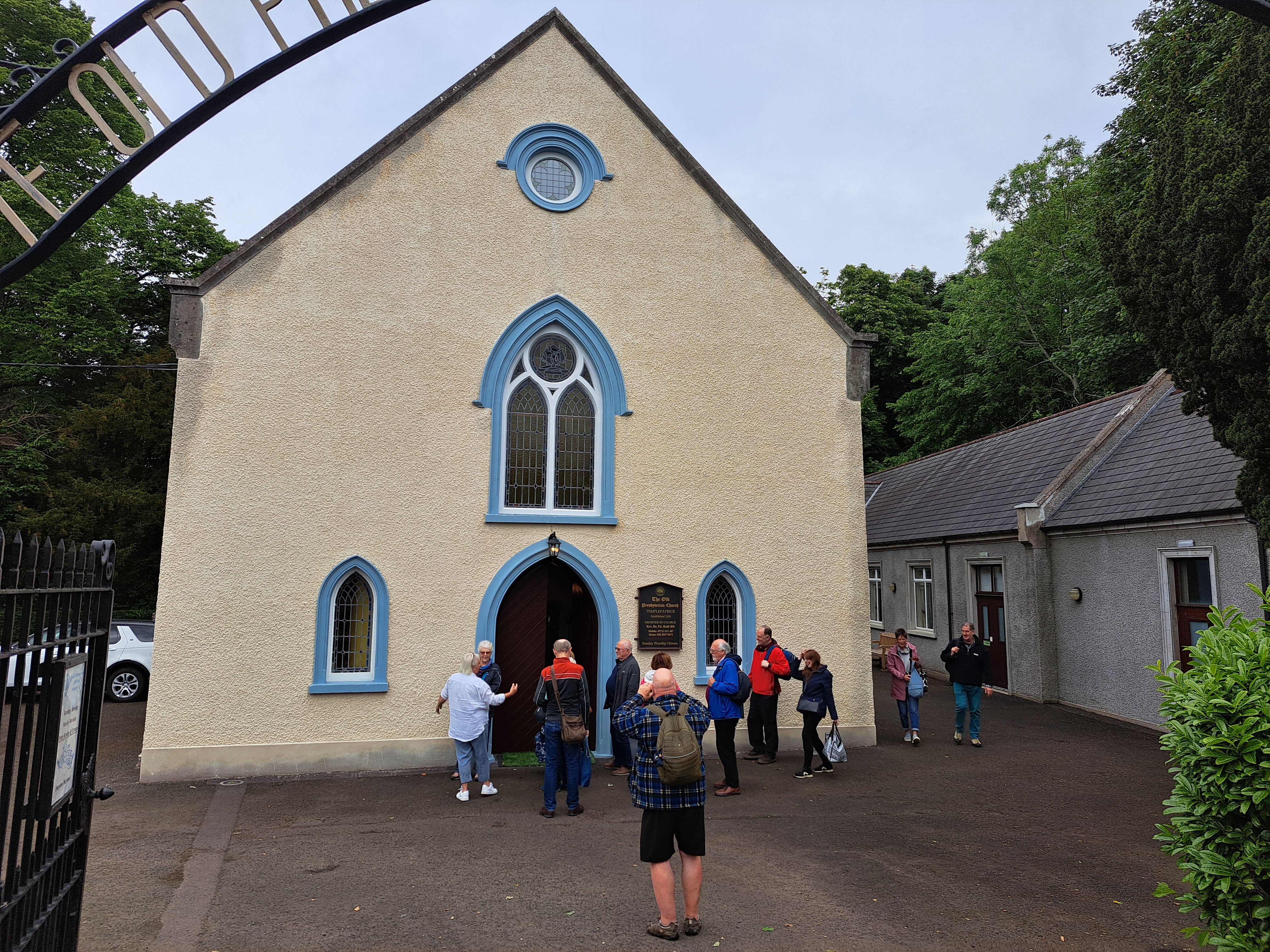
From Raloo we went to Templepatrick where we were able to enjoy our lunch thanks to the kindness of the congregation. Templepatrick is an attractive church which has often faced upheaval. In 1798 the brass canon used by the United Irishmen at the battle of Antrim were stored under the pews. One of these was dragged to the battle on a carriage which was fired once and blew the carriage to pieces.

Templepatrick

Later when the congregation became Remonstrant the landlord Lord Templeton evicted the minister from the manse farm.

Templepatrick interior

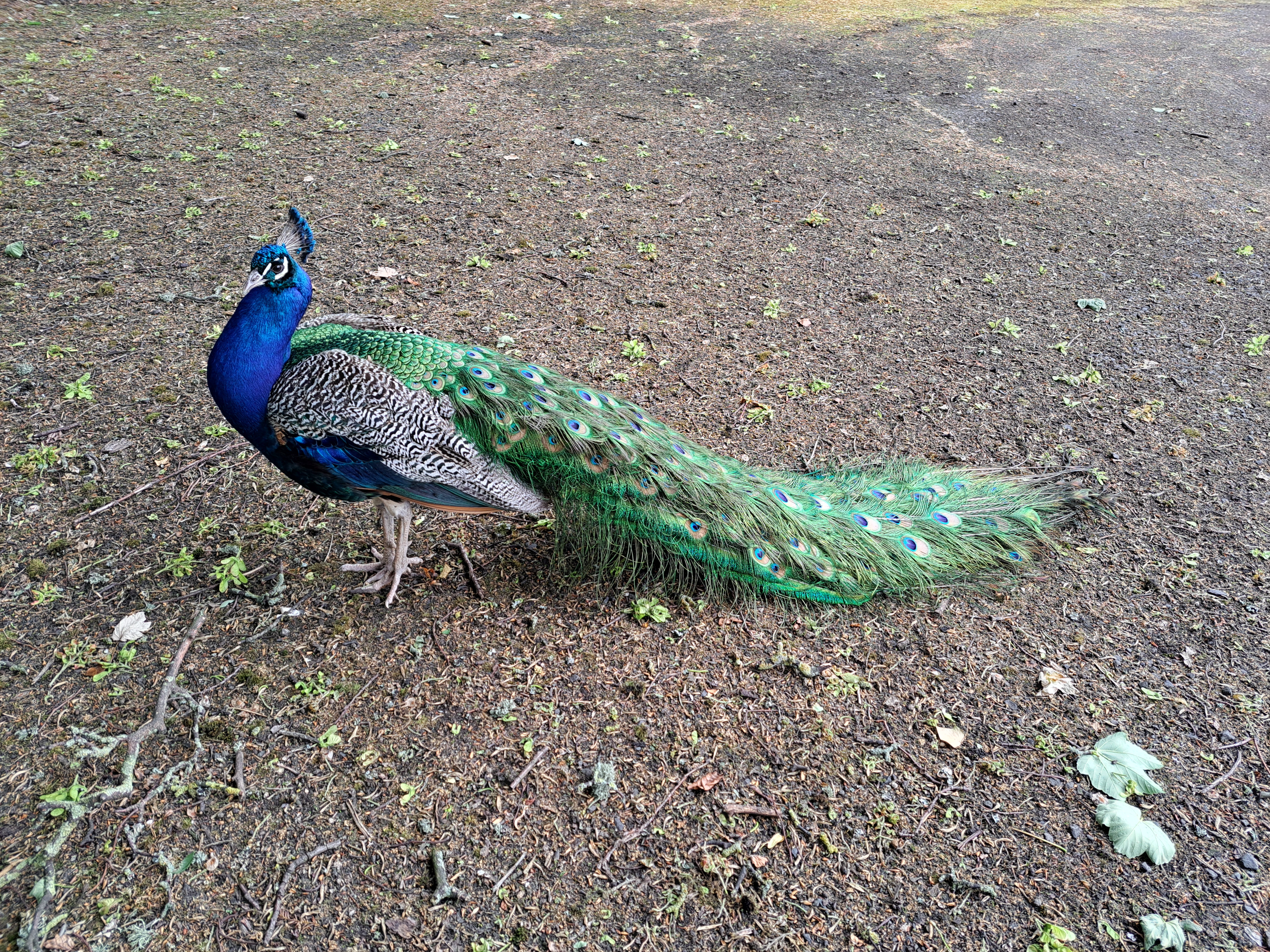
While we were in Templepatrick a peacock was spending some time in the car park:

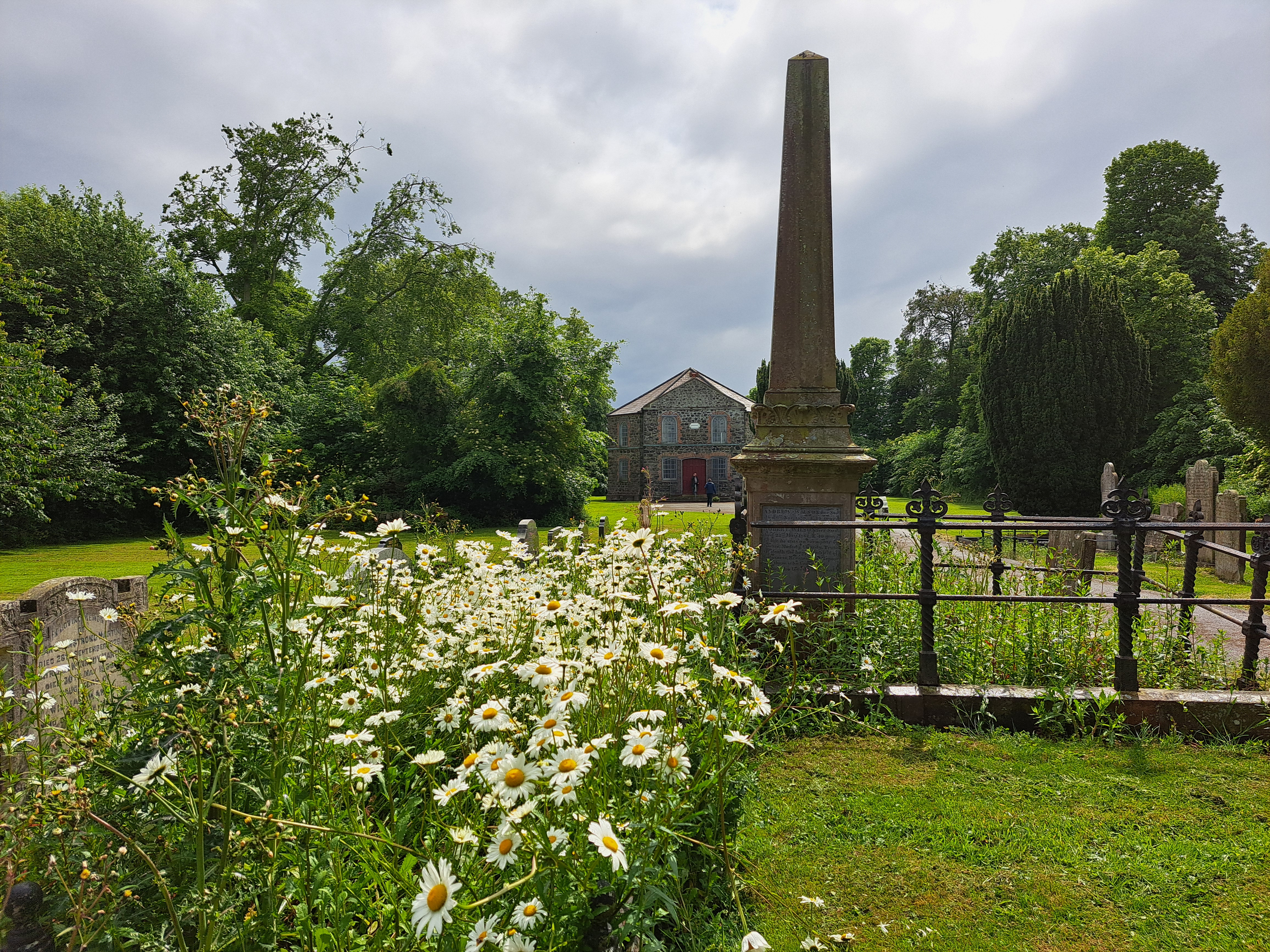
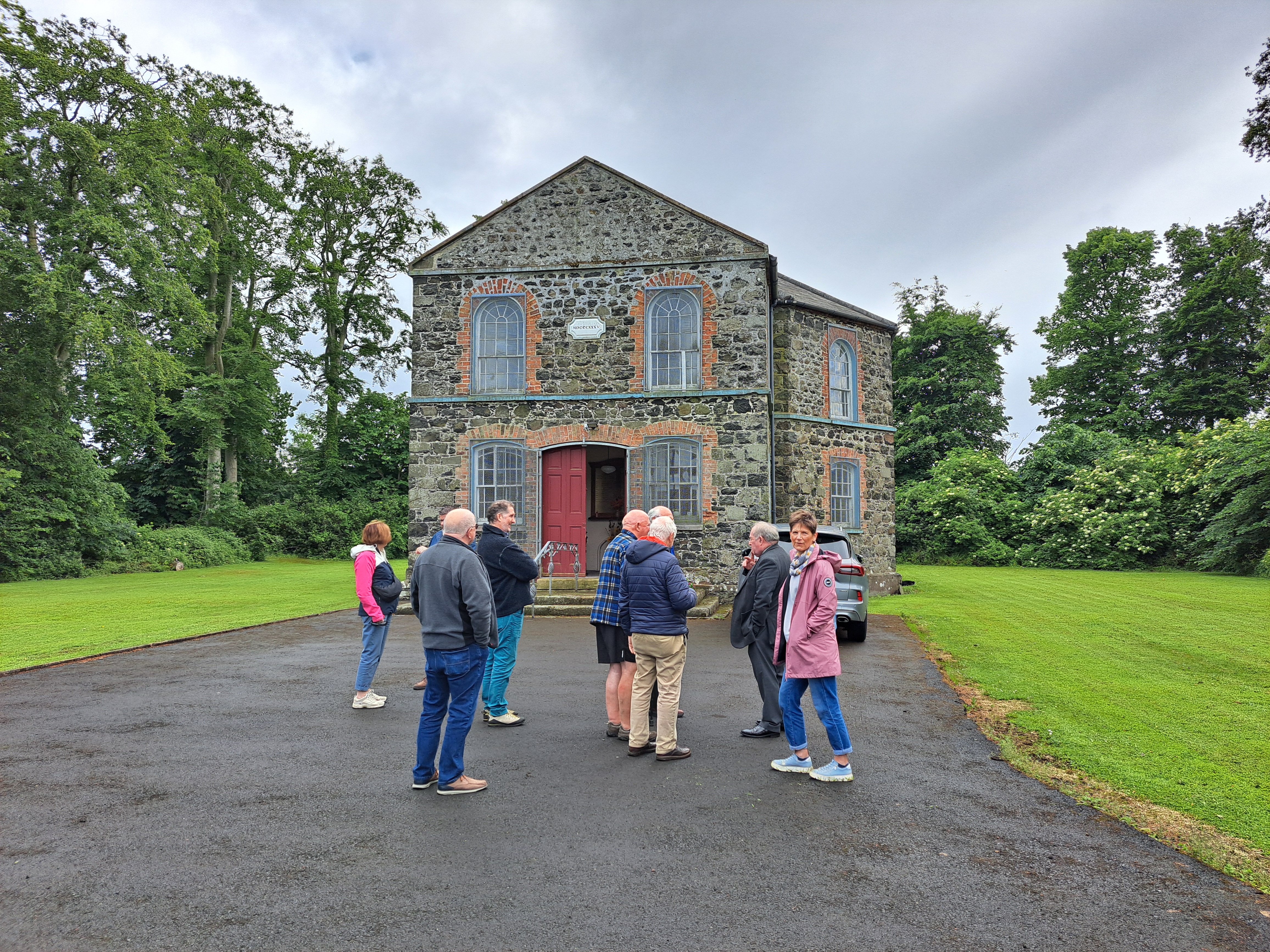
Finally we went off to Crumlin, a congregation founded in 1715, which built a new church in 1835 which was a miniature version of First Church, Belfast.

Looking through some wild flowers towards the church
Outside Crumlin

It is such an elegant building that deserves to be better known.

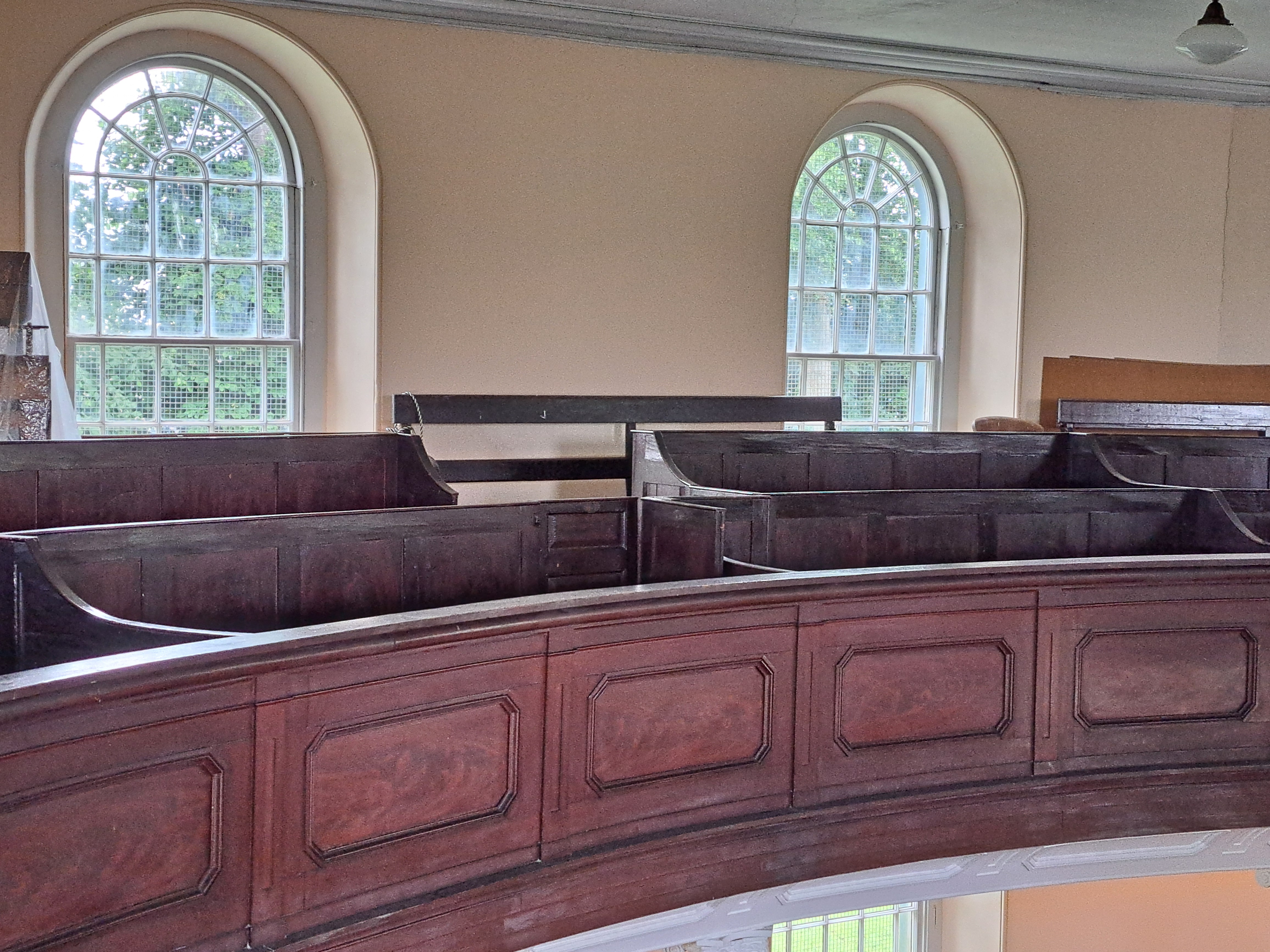
Crumlin gallery
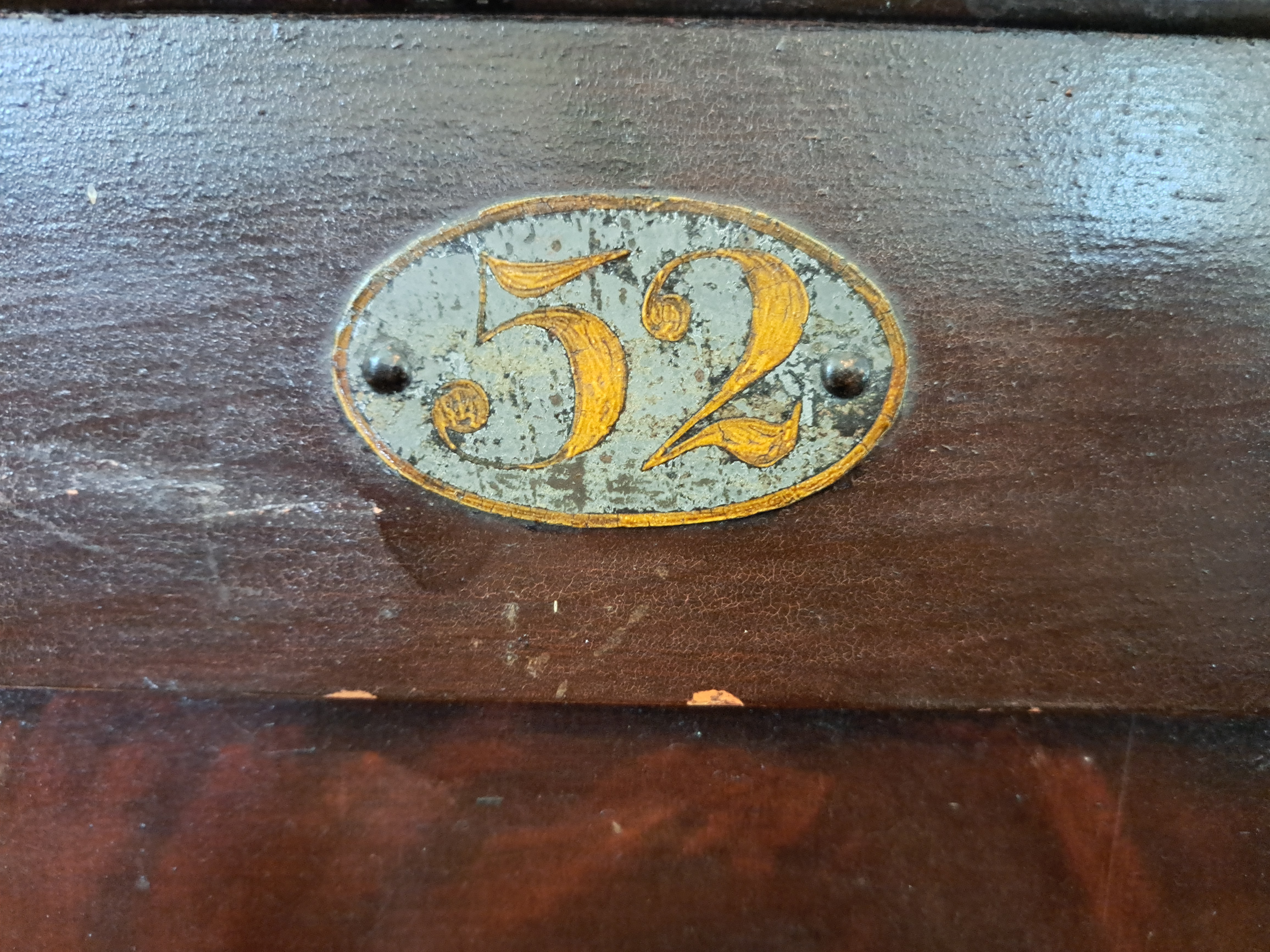
Crumlin pew number

The church was particularly associated with the Rev Nathaniel Alexander who was 6 feet three inches tall. The pulpit consequently has a trap door that was open when he preached so he could stand at a slightly lower lever.

It was a great day out, many thanks go to Rev Dr John Nelson.

Our group in Crumlin

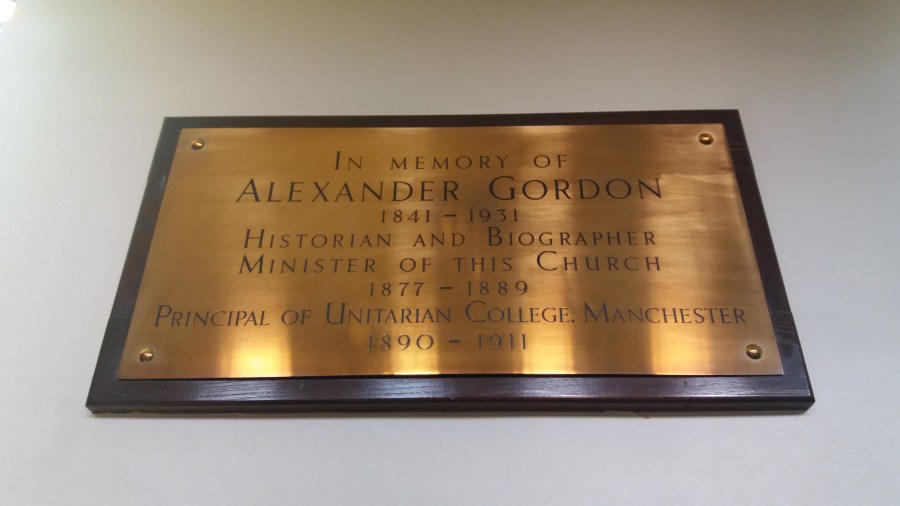
Alexander Gordon (1841 – 1931)

Historian, Biographer, Minister of First Church, Belfast. ‘An Englishman by birth, a Scotsman by education and an Irishman by inclination’.

On Thursday, 22nd May, 2025, we had an illustrated talk in First Dunmurry (NS) Presbyterian Church about the great historian Alexander Gordon.

Talk at Dunmurry by Rev Dr David Steers

A distinguished minister in England and Ireland, he served at Aberdeen; Hope Street, Liverpool; Norwich and at First Church, Belfast, before becoming Principal of the Unitarian Home Missionary College, Manchester and a lecturer in Ecclesiastical History in the first Free Faculty of Theology in the British Isles.

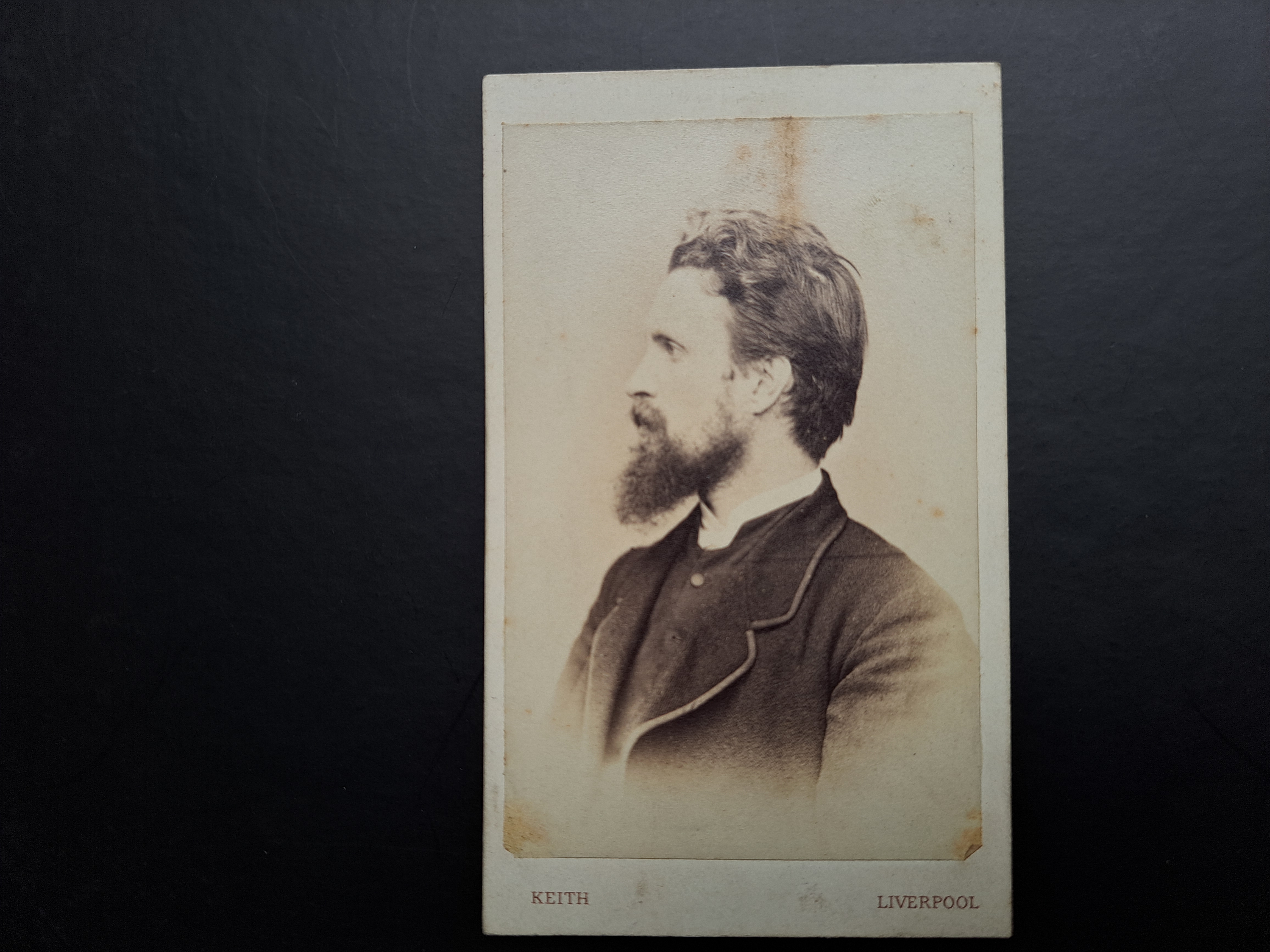
The earliest known photograph of Alexander Gordon, taken in Liverpool c.1872 at the time of his marriage to Clara Maria Boult

His scholarship was widely acknowledged all over the world, contributing 778 entries to the Dictionary of National Biography, 39 articles to the eleventh edition of the Encyclopaedia Britannica and much more. A superb linguist and experienced traveller his researches took him all over Europe. Among other things he was closely involved in the creation of the Non-Subscribing Presbyterian Church of Ireland in 1910.

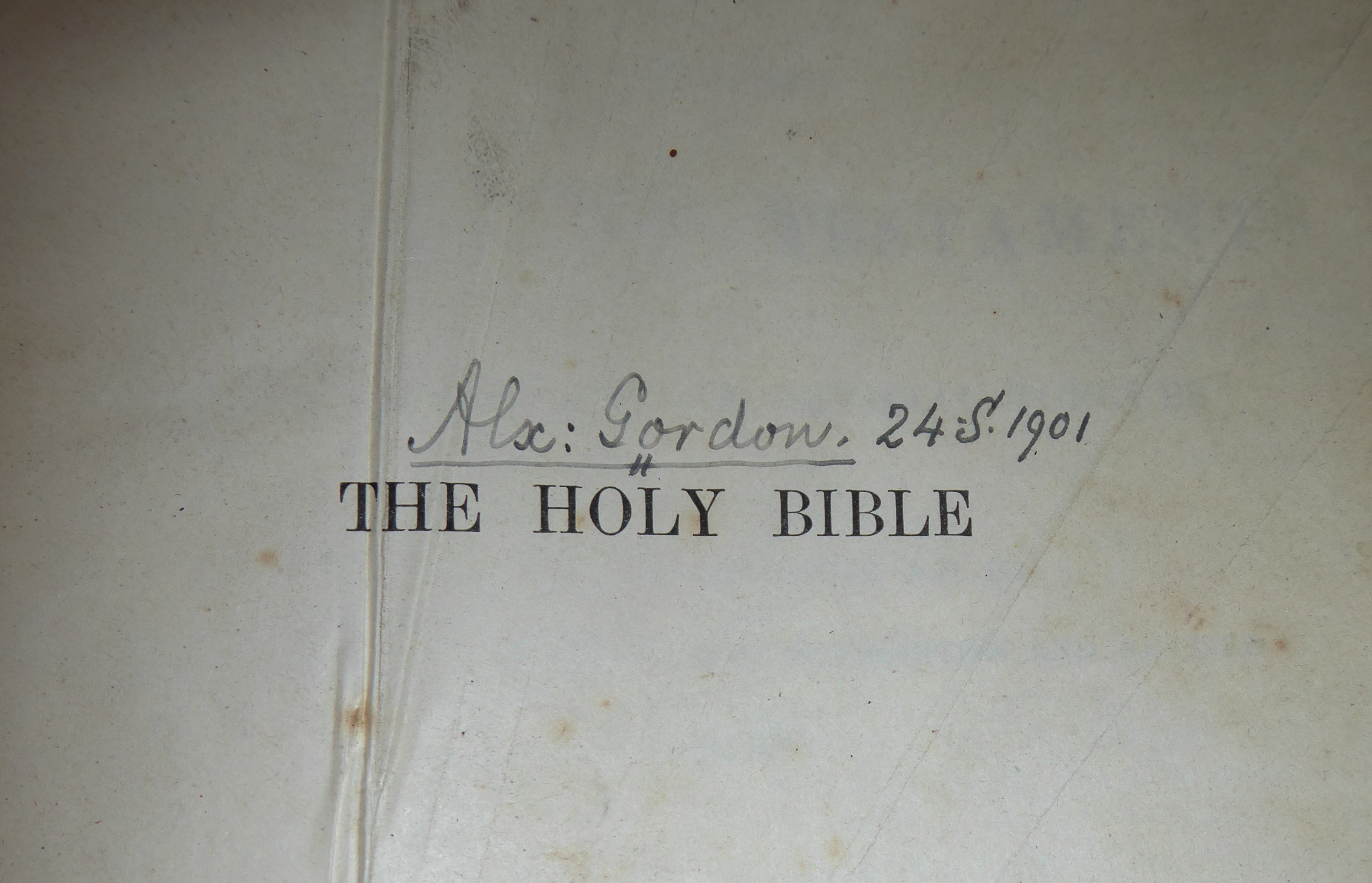
Gordon’s distinctive signature in a personal copy of his Bible (Revised Version)

The talk looks at his education, his work as a biographer and historian, and his commitment to the churches in Ireland which he served as secretary to the Association of Irish Non-Subscribing Presbyterians and later being closely involved in the setting up of the Non-Subscribing Presbyterian Church of Ireland itself.

He was a distinguished minister at First Church but even after leaving for Manchester kept a very close connection with the Irish churches, particularly through Dunmurry where he was regarded as the unpaid curate of his friend the Rev J.A. Kelly, despite the incredible heavy work load of his high profile work. From 1895 until the year of his death in 1931 he only missed one communion service at Dunmurry – and that was because of an unexpected train timetable change that left him stranded in Dublin one weekend during the First World War. For a very experienced traveller, particularly rail traveller, this must have been especially galling for Gordon. The lecture also looks at Alexander Gordon as a travel writer.

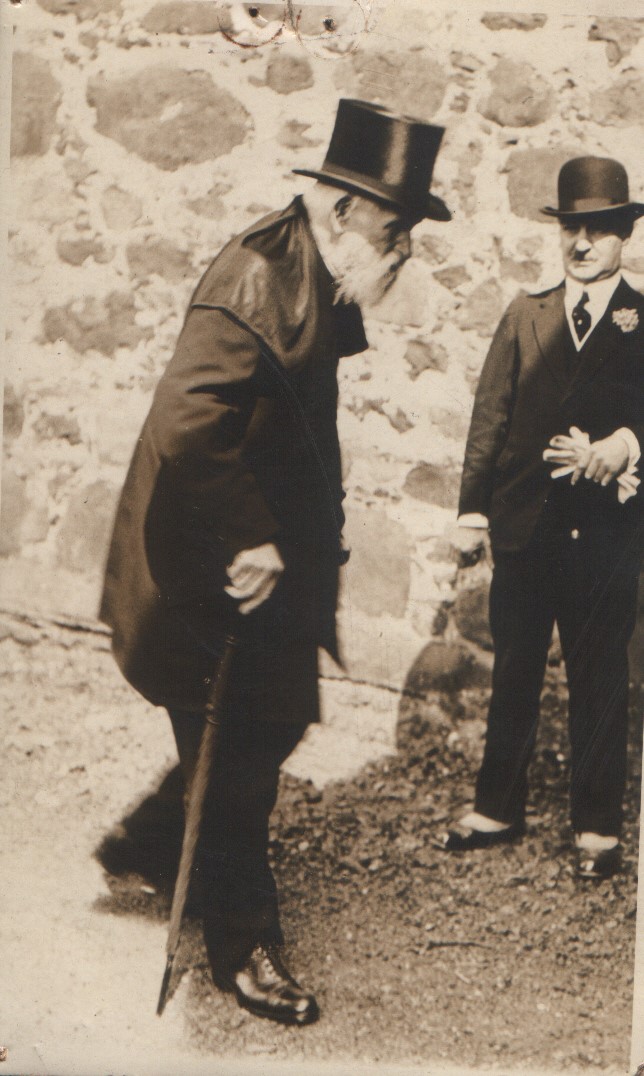
The last photograph of Alexander Gordon taken at Dunmurry on 18th January 1931

It examines too his family background, which was frequently touched by tragedy. But he inspired great loyalty and affection in the generations of students he trained for the ministry.

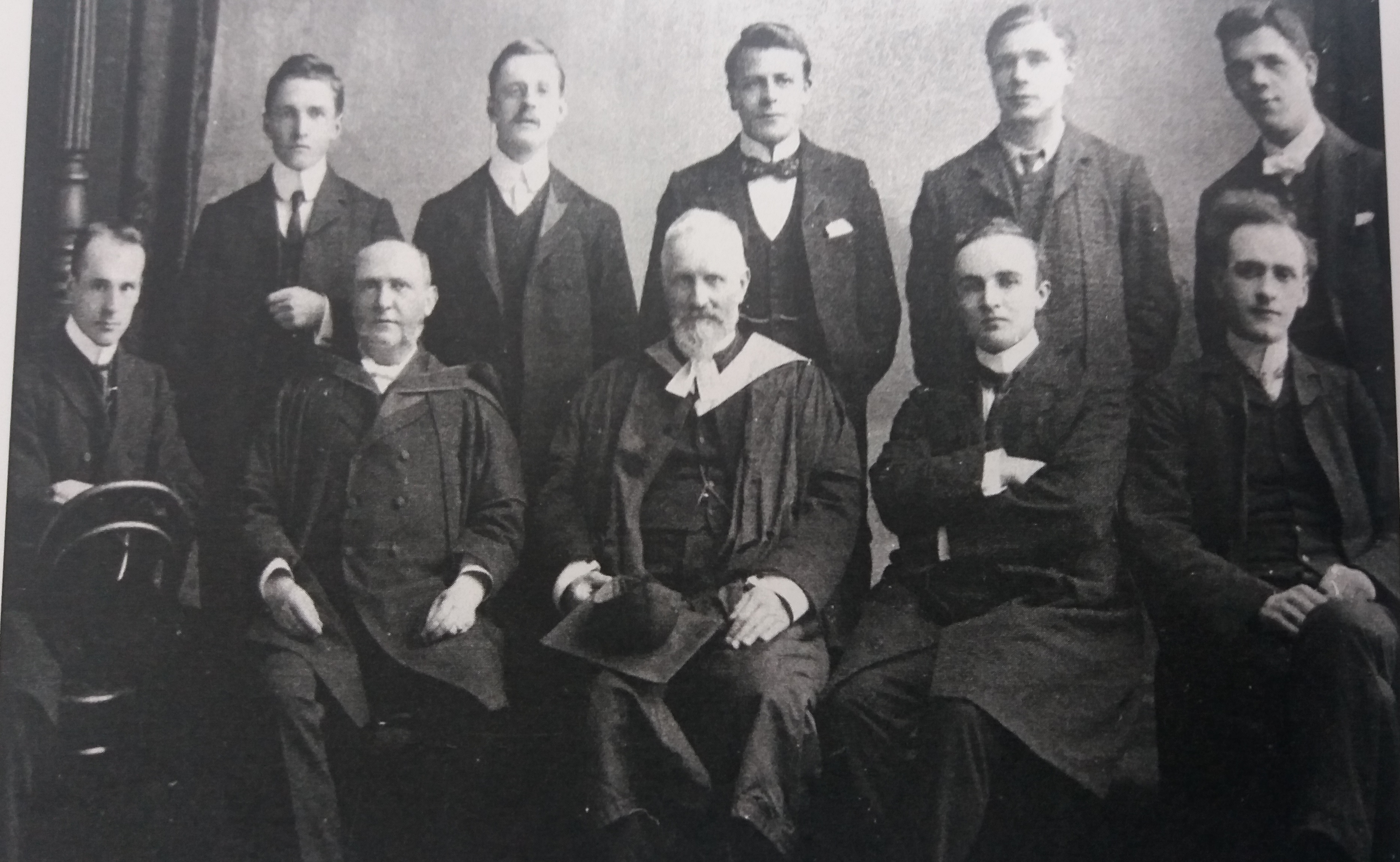
Principal of the Unitarian Home Missionary College, Manchester

He was buried in Dunmurry, just a short time after he conducted his final service there on 18th January 1931.

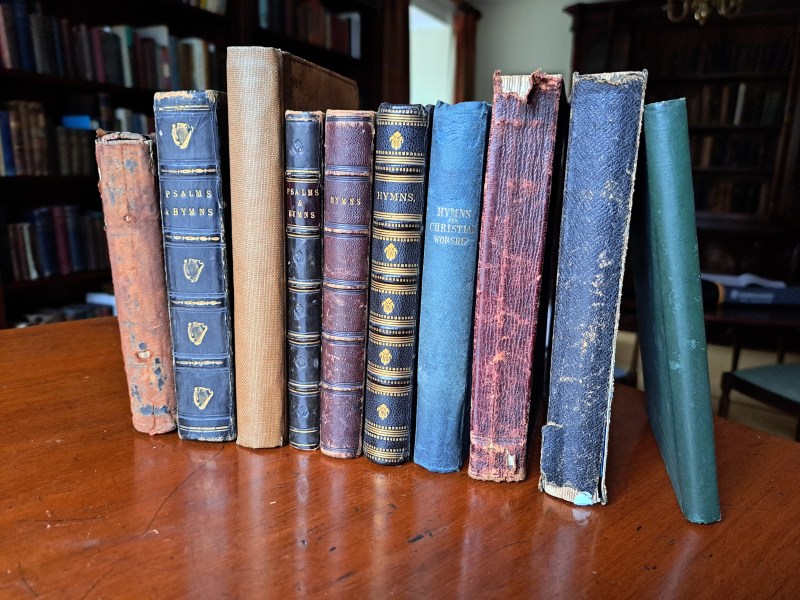
‘Let divine worship be observed, by all who would aspire after the happiness of heaven’. 19th-century Non-Subscribing Presbyterian Hymnbooks

The title of this post comes from the Preface to A Collection of Psalms, Hymns and Spiritual Songs written by the Rev A.G. Malcolm for his hymnbook published in Newry in 1811.

Click on the video to explore Irish Non-Subscribing Presbyterian hymnbooks

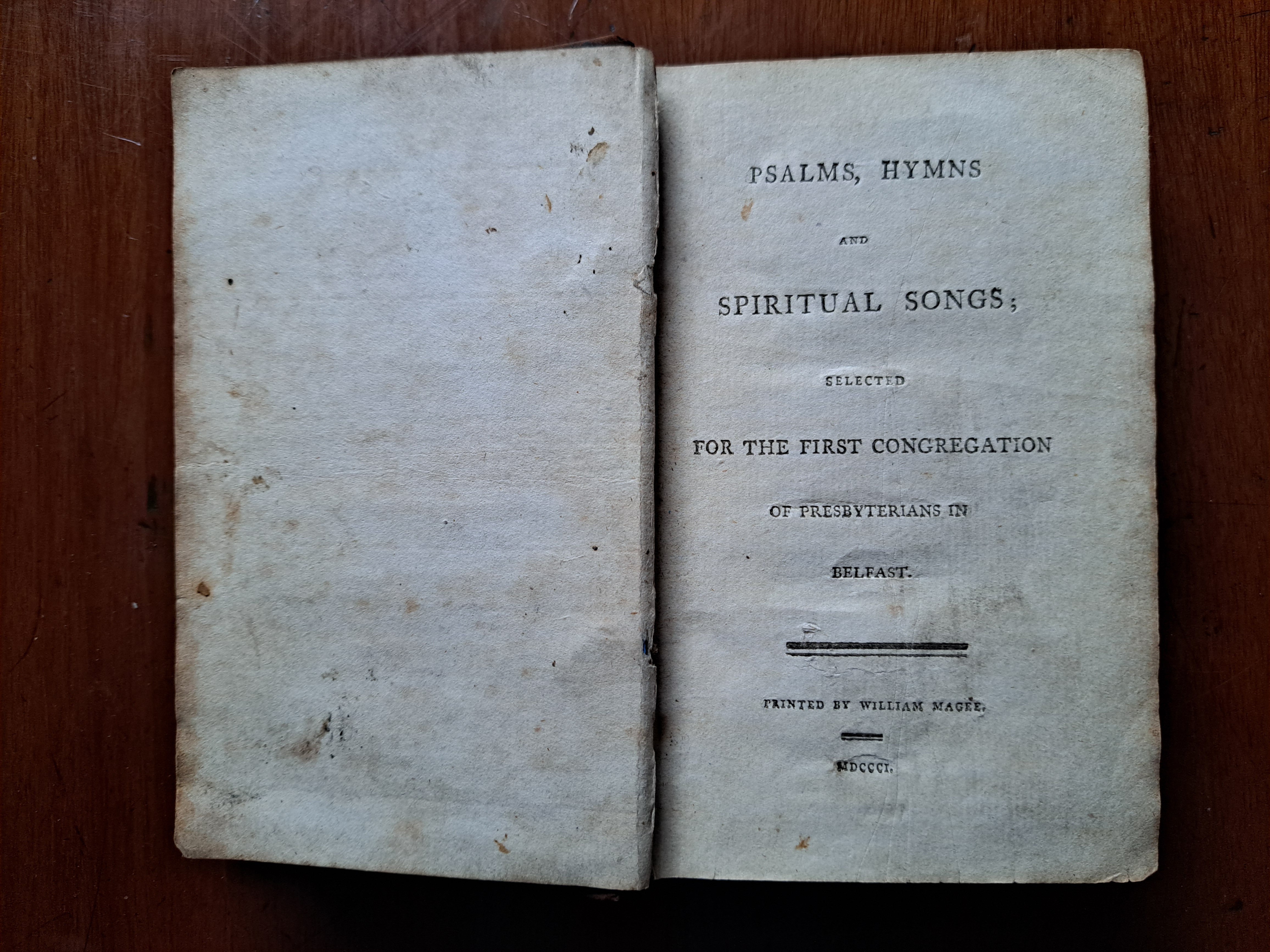
Prior to about 1800 Non-Subscribing or New Light Presbyterian churches, in common with other Presbyterians, would have worshipped with a Psalter or Psalm book. The first distinctly Non-Subscribing hymnbook appeared in First Church in 1801. What is surprising about this publication is that in the same year Edward Bunting offered to supply an organ to the church. This offer wasn’t taken up although in just a few years the Second Congregation were to become the first church with an organ, First Church not acquiring one until 1853. The Rev William Bruce edited this collection and 1,200 copies were published. A choir seems to have led the singing which initially contained boys but was later expanded to include adults.
First Church’s Collection of 1801

William Bruce’s book contained 246 hymns, with an index of first lines and a brief one page table of subjects. The next hymnbook, the Newry edition of A.G. Malcolm, contained 405 hymns with a more substantial table of subjects running over eight pages. Plus it had an index of first lines with the names of authors (for example Barbauld, Watts, Doddridge, Kippis, Merrick, Wesley, Addison, Enfield) which showed the eclectic sources the book drew on from within Dissenting circles and beyond.
An interesting preface also explained their intentions:

…care has been taken, to select psalms and hymns, which treat of of the leading points both of faith and practice; and it is hoped, that the compilation will be found to contain a sufficient variety of the best compositions, in sacred poetry, adapted to all the principal subjects of Christian devotion.
A.G. Malcolm went on:

Correctness, both in sentiment and style, has also been made an object of considerable attention. Hence, many verses have been altered; and such psalms and hymns as seemed, in any degree, unsuitable to the simplicity and solemnity of divine worship have been omitted.

As the work is intended for general use, and must be expected to fall into the hands of persons, who unavaoidably differ from one another, in their opinions, on religious subjects, all expressions, which appeared likely to give offence to any sincere Christian, have been studiously avoided.

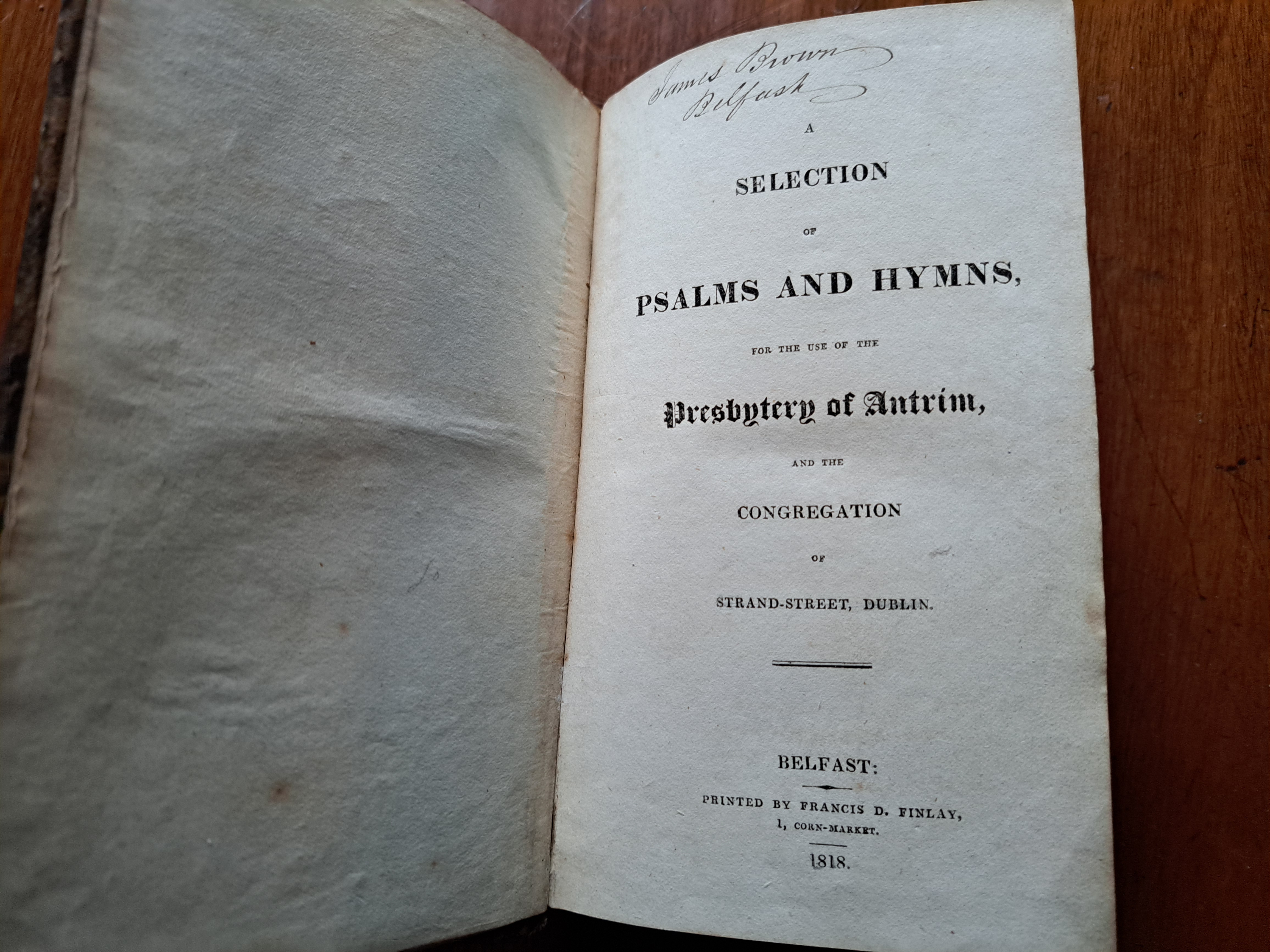
Interestingly the next hymnbook, dated Belfast, July 1818 and edited by Rev W.D.H. McEwen, made a similar point in a slightly more forceful way in its Preface:

Some doctrines are so offensive to the societies, for whose use this compilation is principally intended, that they are carefully avoided. As to others, the same scrupulosity is not observed; for, with respect to them, there may exist a diversity of sentiment. This selection may, therefore, be thought defective, but it will not disgust by a pertinacious obtrusion of doctrine.

So certain doctrines weren’t allowed to get in the way! Some were left out all together – the Trinity, the theory of the atonement based on penal substitution – and on some doctrines Non-Subscribers were able to agree to differ.

W.D.H. McEwen,s hymnbook

The book was published for the Presbytery of Antrim and the congregation of Strand Street, Dublin but it came from the minister of the Second Congregation. Curiously they had installed an organ in 1806 and had Edward Bunting as their organist from then until 1817. So they don’t appear to have had a hymnbook of their own for the first dozen years after installing the organ.

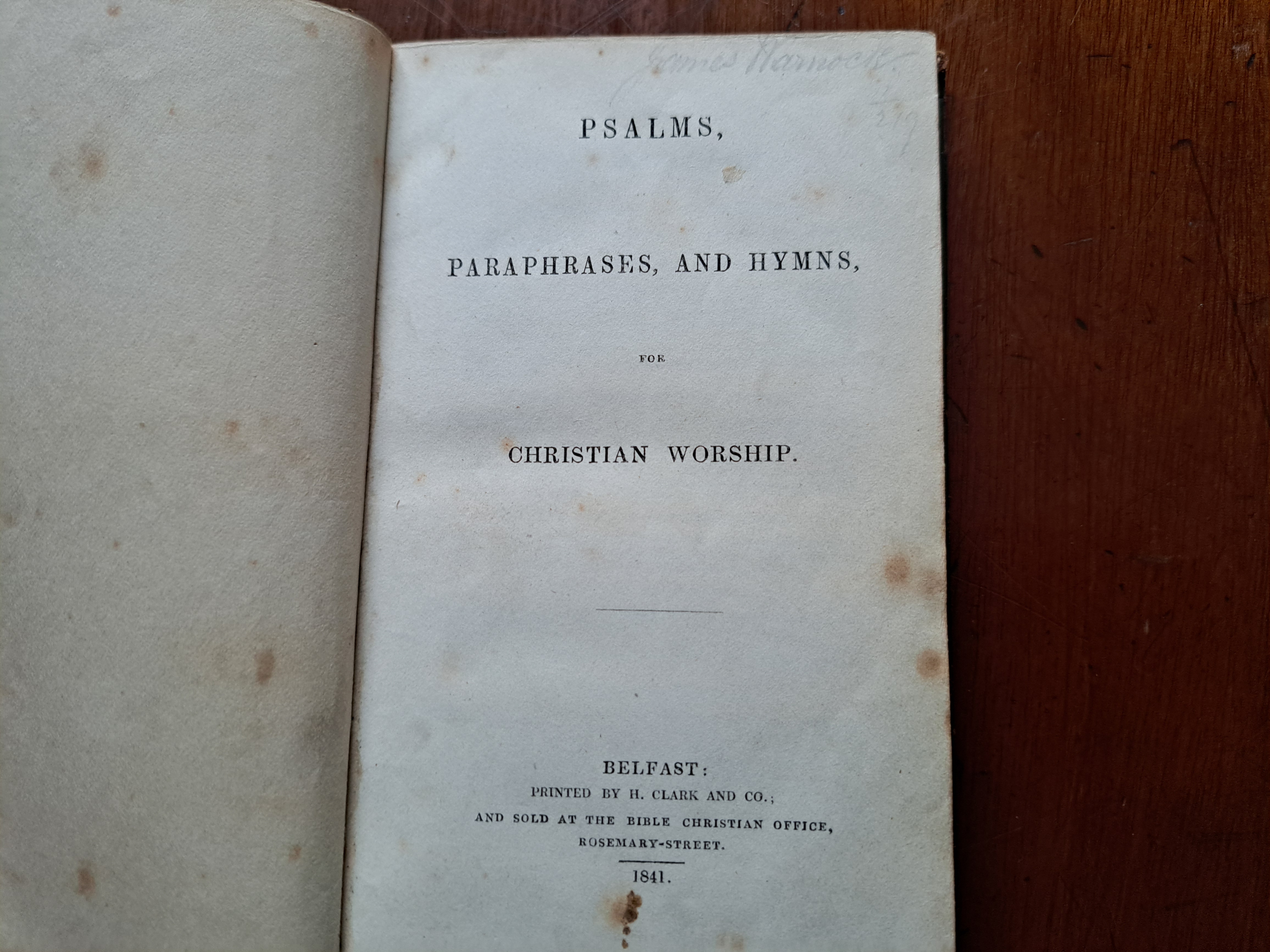
Following the establishment of the Remonstrant Synod of Ulster in 1830 Non-Subscribers moved towards the development of a hymnbook for all churches. This is Psalms, Paraphrases, and Hymns, for Christian Worship published in Belfast in 1841:

Psalms, Paraphrases, and Hymns, for Christian Worship 1841

This is the first edition of what became Hymns for Christian Worship, a book which went into at least four further editions before the end of the century and was followed by a supplement in 1899. Throughout this time this was the main series of hymnbooks in use in the churches in Ireland. More detail can be seen in the video above.

Harry Midgley: 1938 Election Address

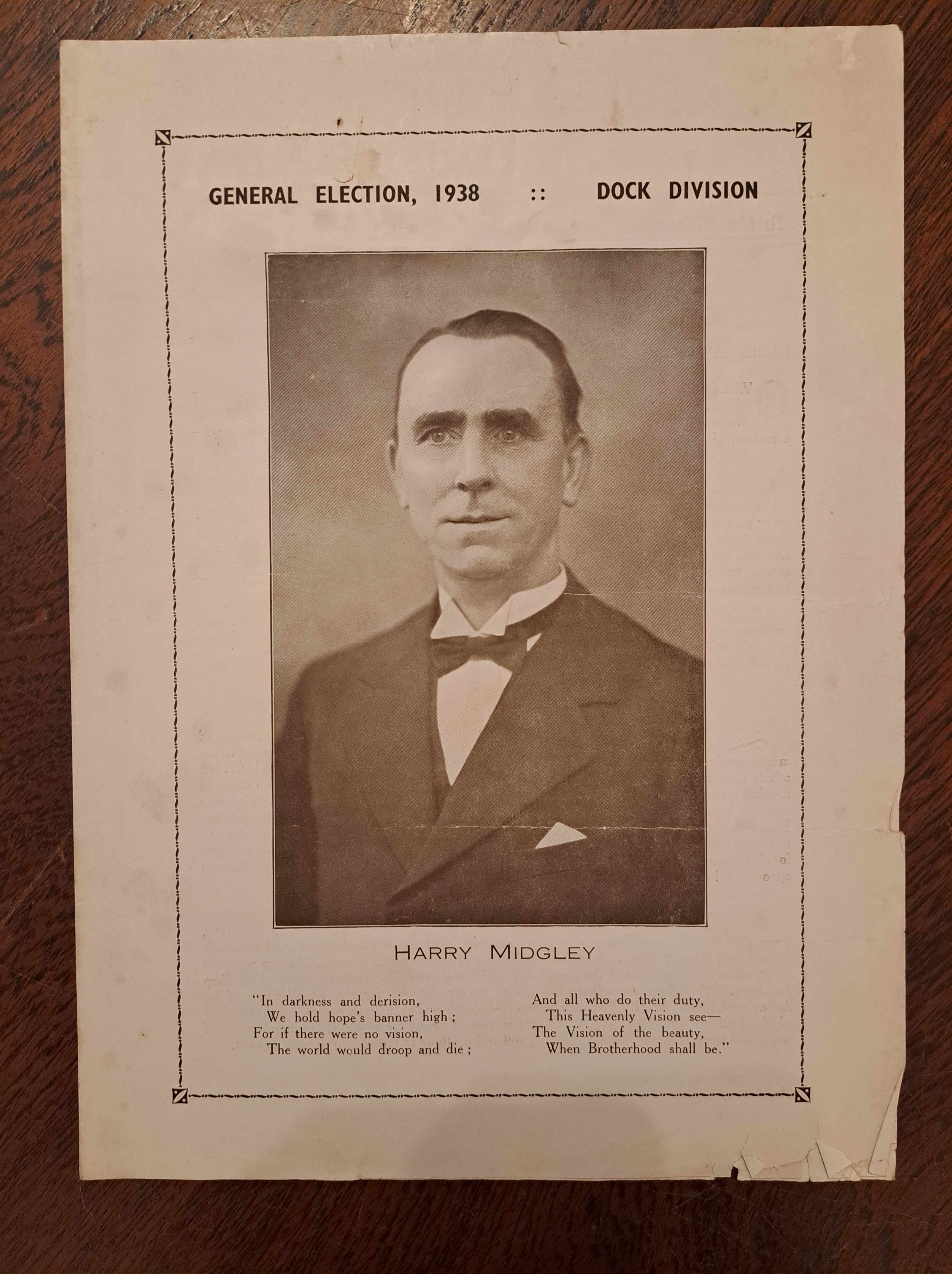
One of the recently discovered items in the Very Rev William McMillan Library is the election address produced by Harry Midgley for the Dock Constituency in the 1938 Stormont Election. This is a fascinating piece of history, a very rare survival, that tells us about the career of a controversial figure in Belfast political history:

Click above to see the video

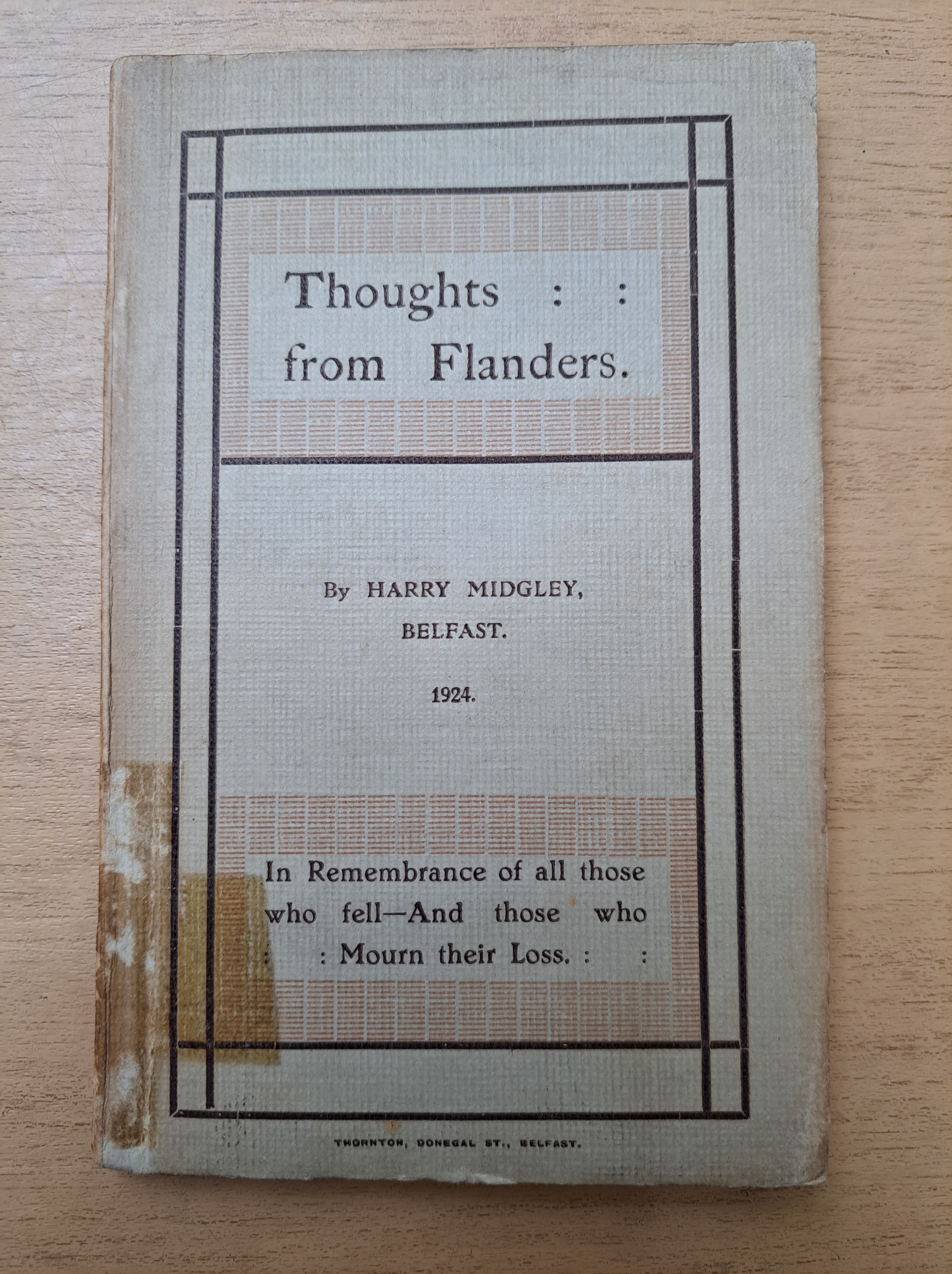
Harry Midgley was born in North Belfast, in Tiger’s Bay, and from his youth was involved in the nascent Labour movement in Northern Ireland. According to the ‘Dictionary of Irish Biography’ as a boy he attended a Sunday School connected with the Independent Labour Party in Belfast and he certainly met Keir Hardy in Befast as a youth and began speaking on behalf of the ILP on the Custom House steps while still a teenager. In his early days, right up to the early 1920s, Harry Midgley supported the all-Ireland Socialist ideals of James Connolly, nevertheless on the outbreak of war in 1914, along with his brothers, he joined up, enlisting in the Royal Inniskilling Fusiliers and served throughout the First World War. Later, in 1924, he published his reflections on his war-time experiences in poetic form. Much influenced by Kipling his verses also show the mixture of Christian values coupled with utopian socialist ideals which underpinned his politics throughout his career.

On his return from the war he immersed himself in politics, firstly getting a job as a shipyard joiner with Harland and Wolff, and soon after being appointed as organising secretary of the Irish Linenlappers’ and Warehouse Workers’ Union. This was his entry into the Labour movement and he became active in different organisations particularly the Belfast Labour Party.

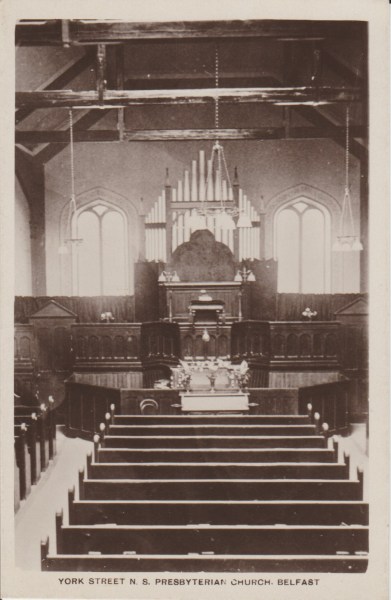
He also became a member of York Street Non-Subscribing Presbyterian Church (see picture at the top of this page) at a time when it was perceived as very left-orientated under the ministry of the Rev A.L. Agnew. Indeed when he fought the West Belfast Westminster constituency in 1924 (gaining over 21,000 votes, although not proving victorious) A.L. Agnew and the Rev E.I. Fripp, minister of All Souls’ NSP Church, were amongst his most prominent supporters. York Street Church was also characterised by very open political debate in the early 1920s, and welcomed speakers of all political backgrounds to its ‘mock parliaments’.

The Belfast Labour Party had proved very successful at its inception. In 1920 it won 10 out of the 60 seats in the municipal elections in Belfast. The Party gradually transformed to the Northern Ireland Labour Party and Harry Midgley became the first secretary.

In 1925 he was a elected to the council as a representative of the Dock Ward and a few years later, in 1933, he was successful in winning the Dock Constituency in the Stormont Parliament. However, in 1938 he lost this seat, partly due to the fall out from the Spanish Civil War. It is this from this election that the printed address in the Dunmurry Library comes. To see it and find out more about it click on the video above.

Gradually the Northern Ireland Labour Party adopted a pragmatic view of partition and Harry Midgley went along with this view. But for a party that tried to stand outside the sectarian divide the issue of the border was one that would not go away. The Northern Ireland Labour Party itself became divided over the position to take on the question of the border and eventually Harry Midgley was expelled, partly because of the strongly pro-Union position he ultimately adopted. He then formed his own Commonwealth Labour Party which enjoyed some success and as a Member of Parliament in Stormont he served in the war-time government, the first non-Unionist representative to be in government in Northern Ireland. Later he joined the Ulster Unionist Party, reconciled by the party’s willingness to follow the post-war social policies of the Westminster government. Having been elected as the MP for the Belfast Willowfield constituency at a by election in 1941 he continued to represent the same constituency up to the time of his death in 1957, first for the Northern Ireland Labour Party, then the Commonwealth Labour Party and ultimately for the Ulster Unionist Party, the only member of the Stormont Parliament to represent the same constituency for three different parties.

In later life he joined the Orange Order and the Royal Black Preceptory. A life-long supporter of Linfield FC he became a director of the club and ultimately the Chairman. At the time of his death he was Minister of Education.