Click on the video for readings from Holy Week 2026
During Holy Week members of the Church and Youth Group at First Dunmurry gave a reading each day which was uploaded to Facebook. These are now collected together in this video marking Easter along with Isaac Watts’s famous hymn When I survey the wondrous Cross played by church organist Allen Yarr on the piano. Isaac Watts (1674-1748) was an Independent minister who was forced by circumstances to live a quiet life but who became a prolific and deservedly popular hymn writer. James Moffatt says of him ‘His tolerant spirit, his liberal views, and above all his deservedly popular hymns, did much to sweeten relations between Anglicans and Dissenters…Judged by his best hymns, he takes rank with the greatest of English hymn-writers.’
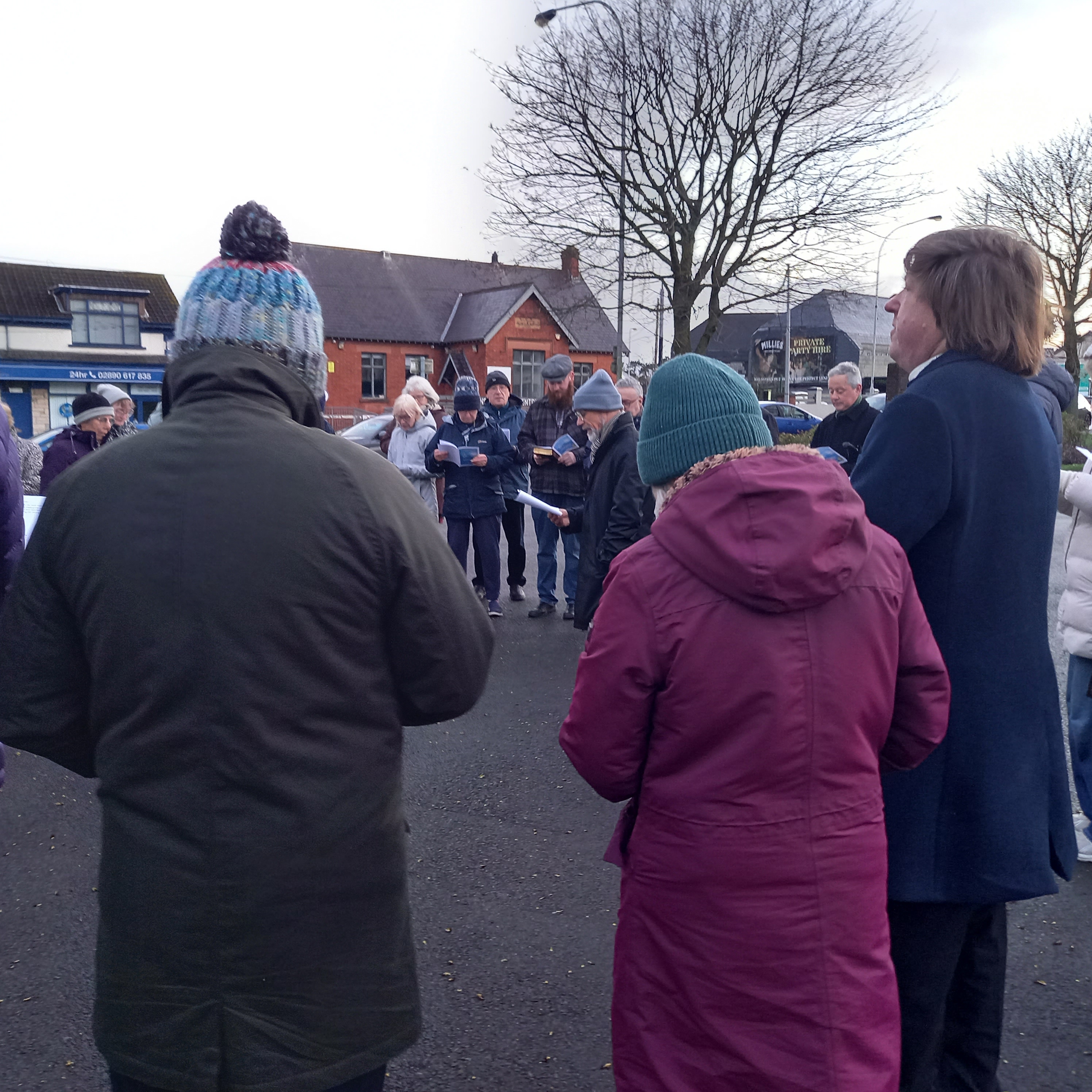
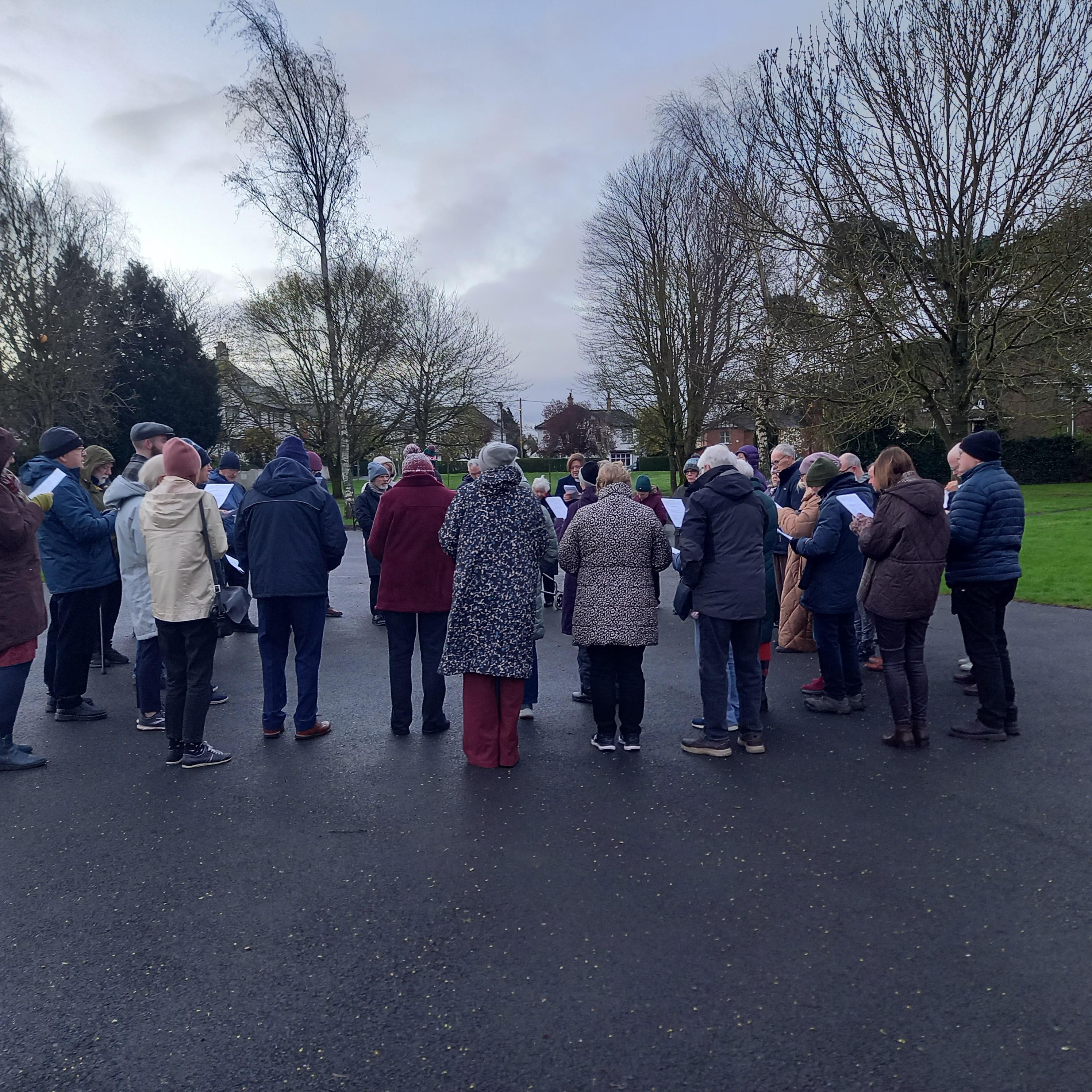
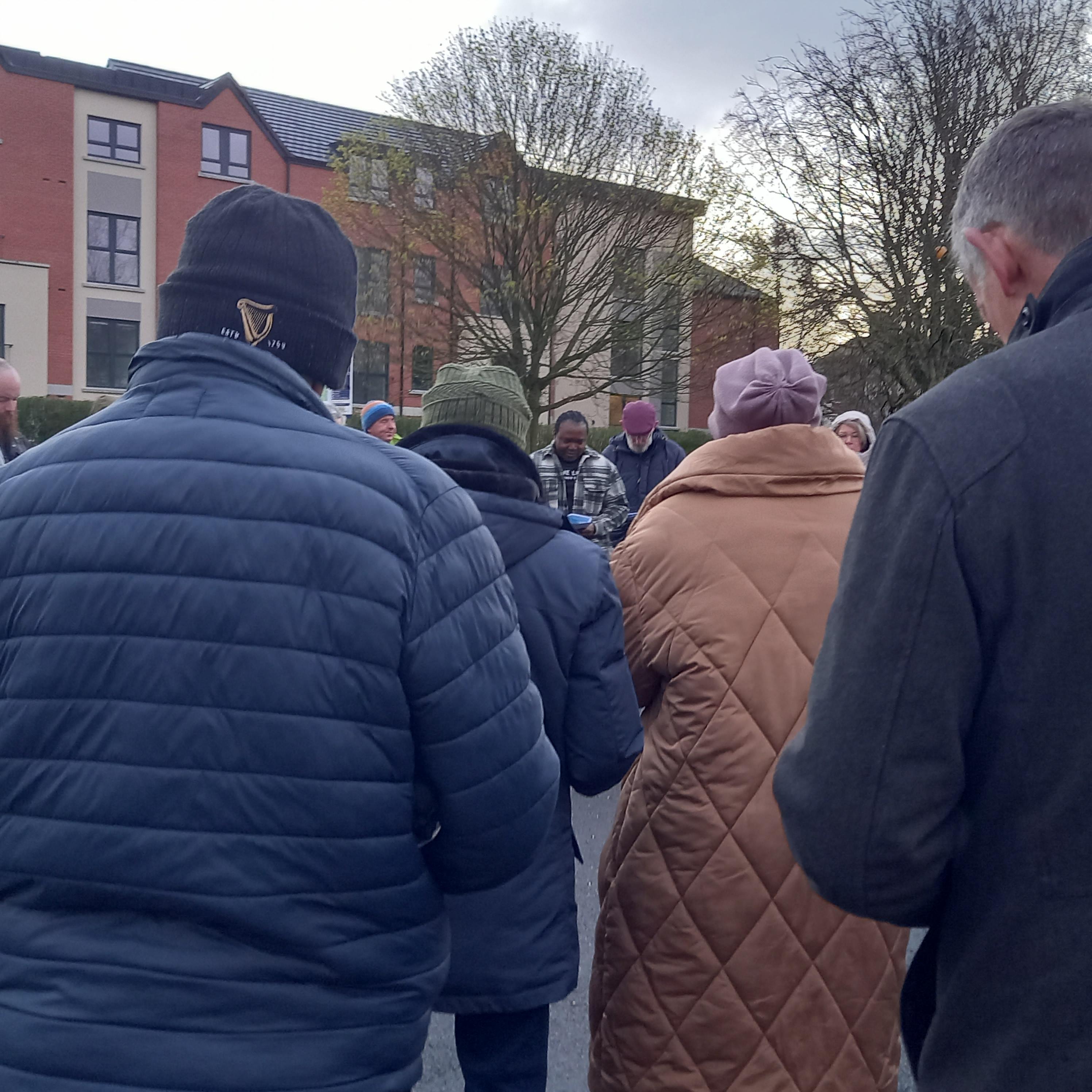
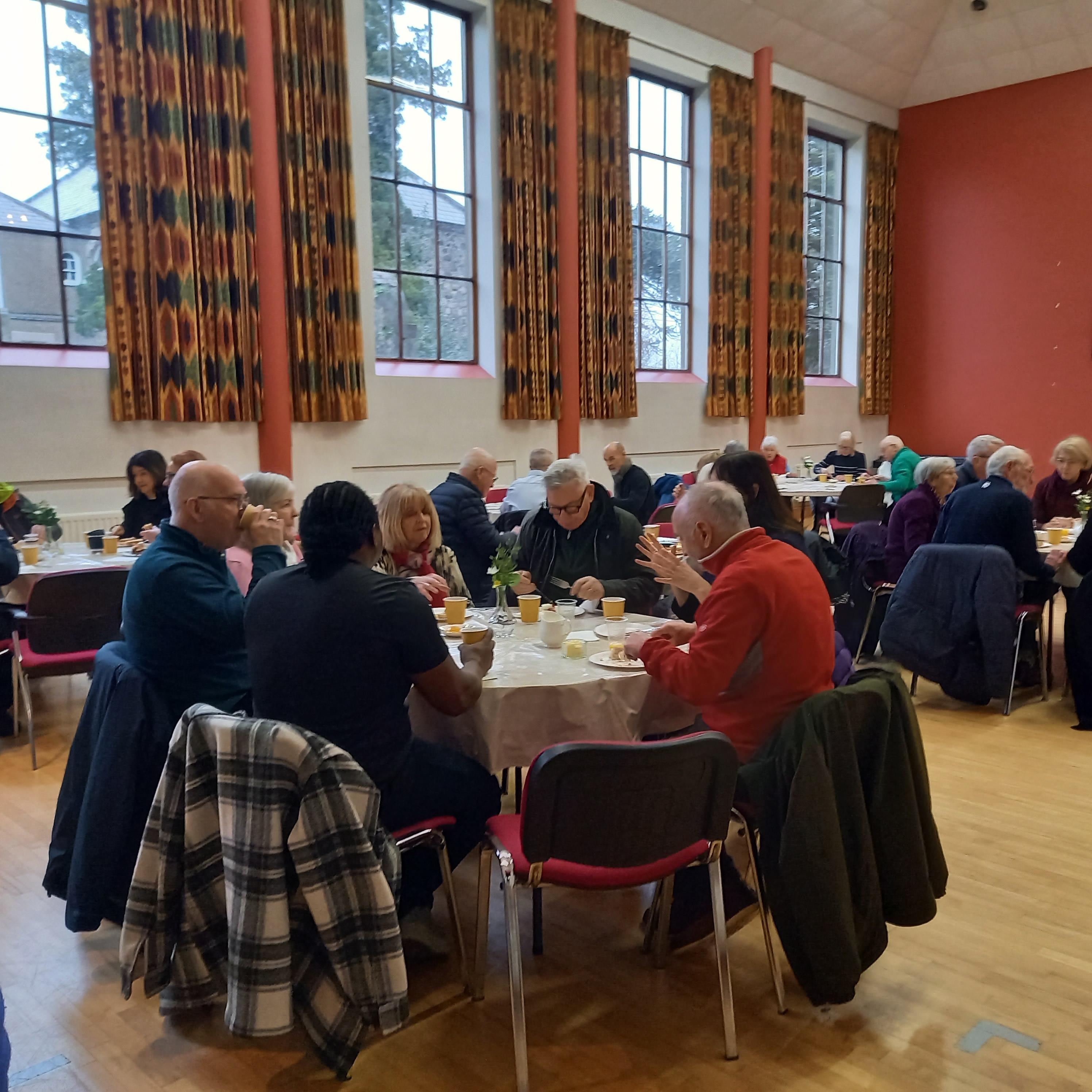
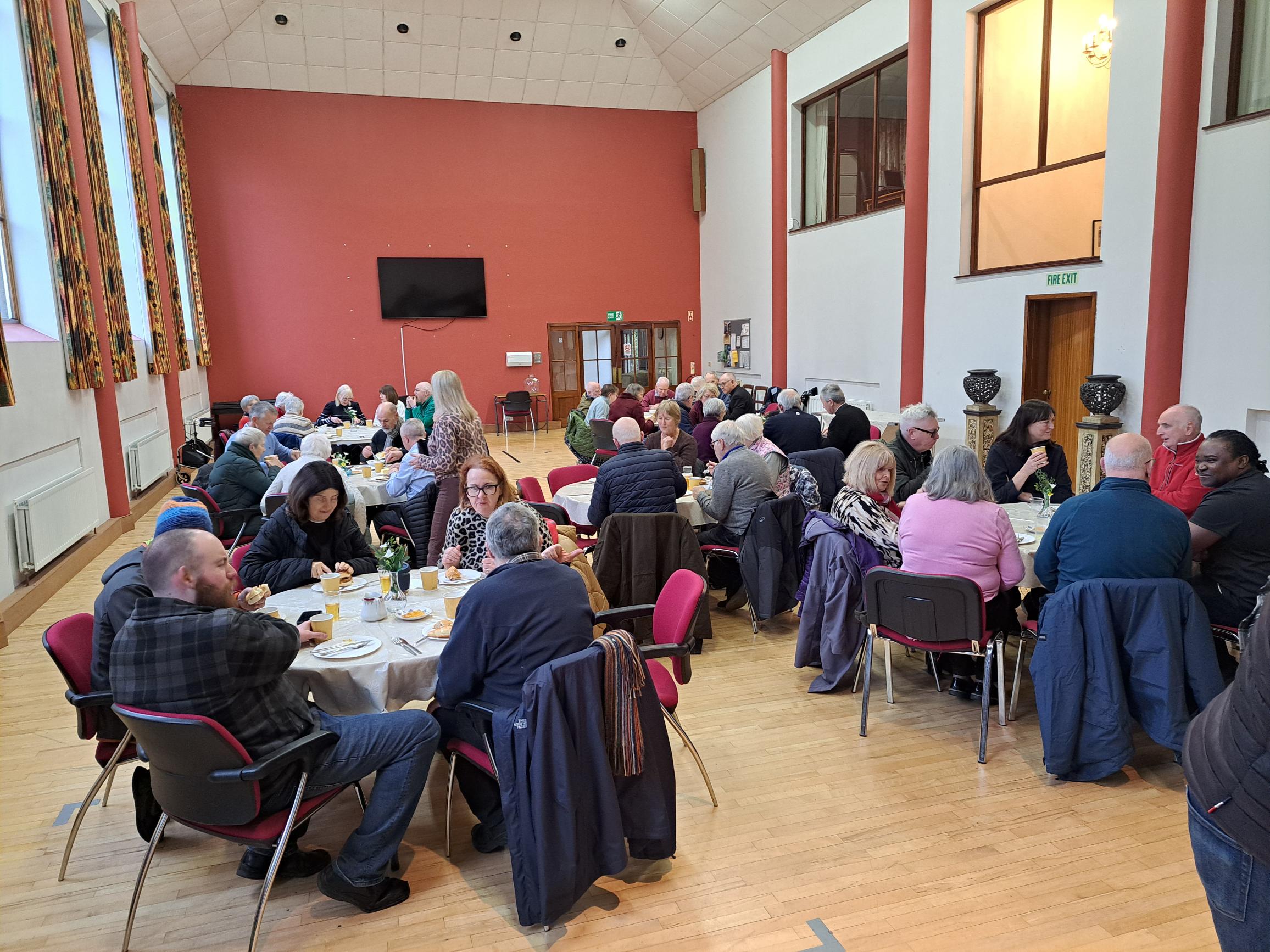
On Easter Day we held our own service at 11.30 am and prior to that at 7.00 am shared in a Dawn Service in Dunmurry Park with the local churches as part of Dunmurry Churches Together. This was followed by breakfast in our Church Hall. ‘Storm Dave’ threatened to disrupt our plans but thankfully had no impact, by 7.00 am the weather was calm and serene and we had a wonderful act of worship together to mark Easter.
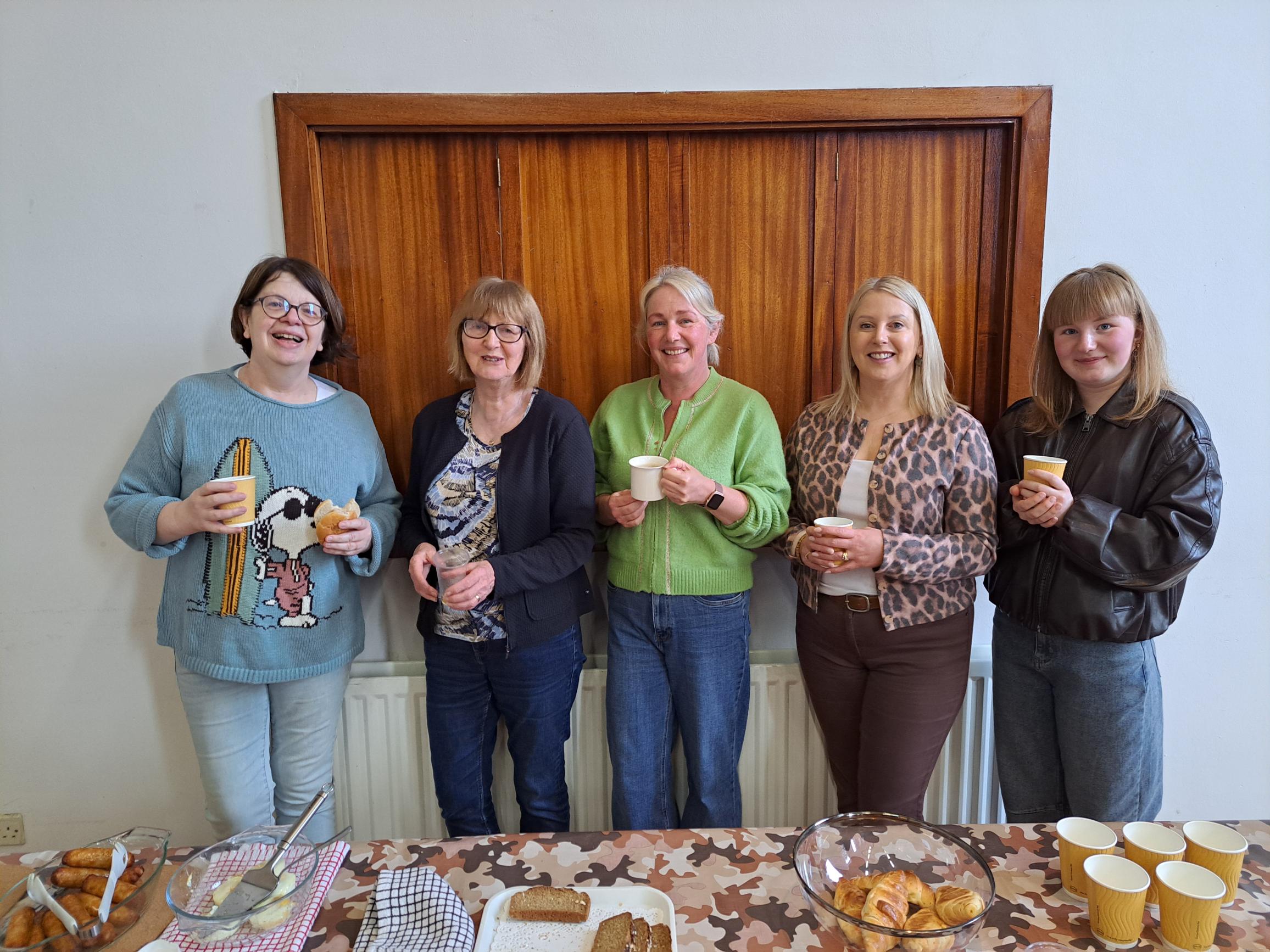
Some images from our service in Dunmurry at dawn followed by breakfast in the Church Hall and some of our members who provided the breakfasts.
Click on the video above to see Dunmurry Harvest Thanksgiving Service as recorded live
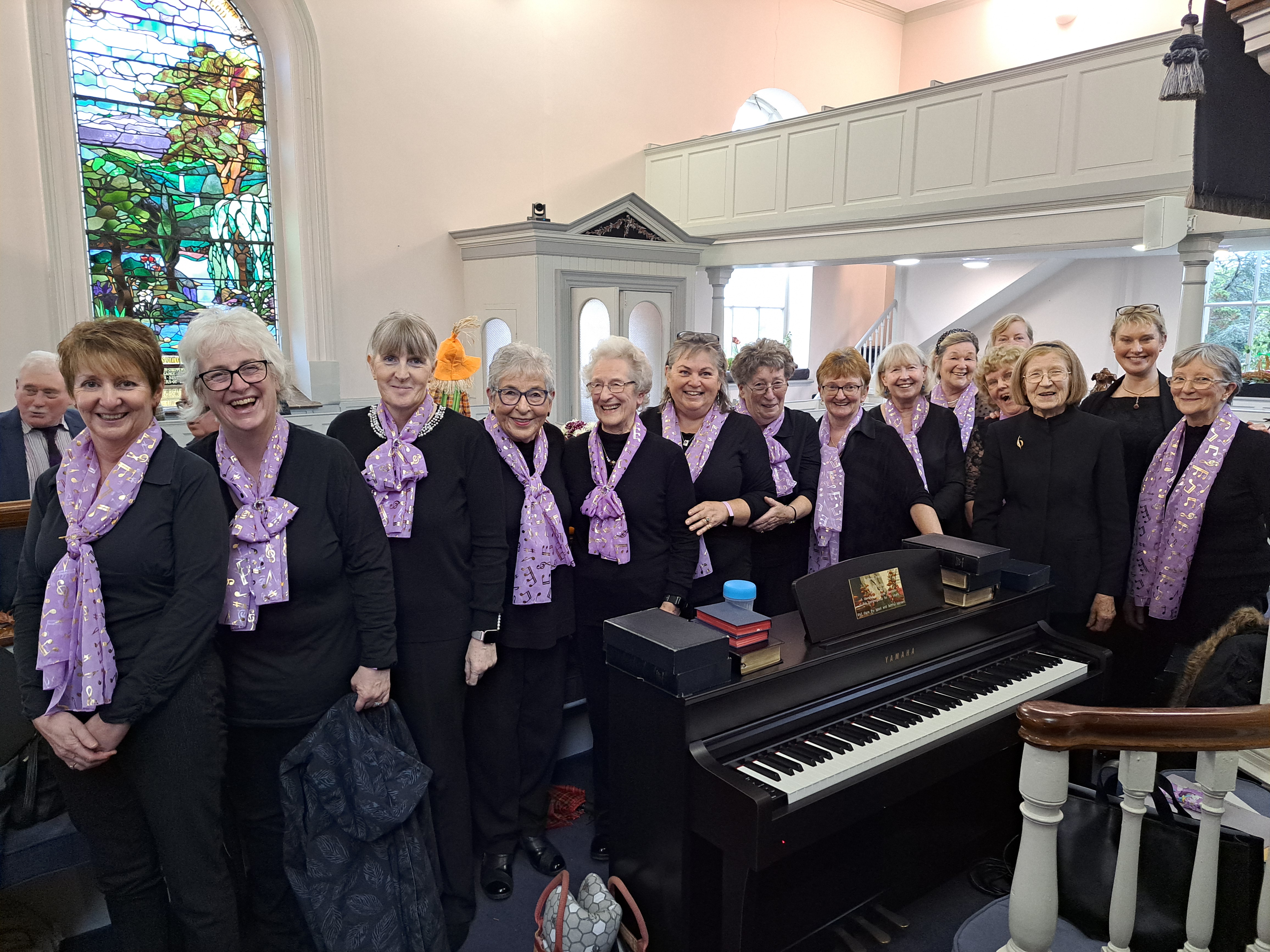
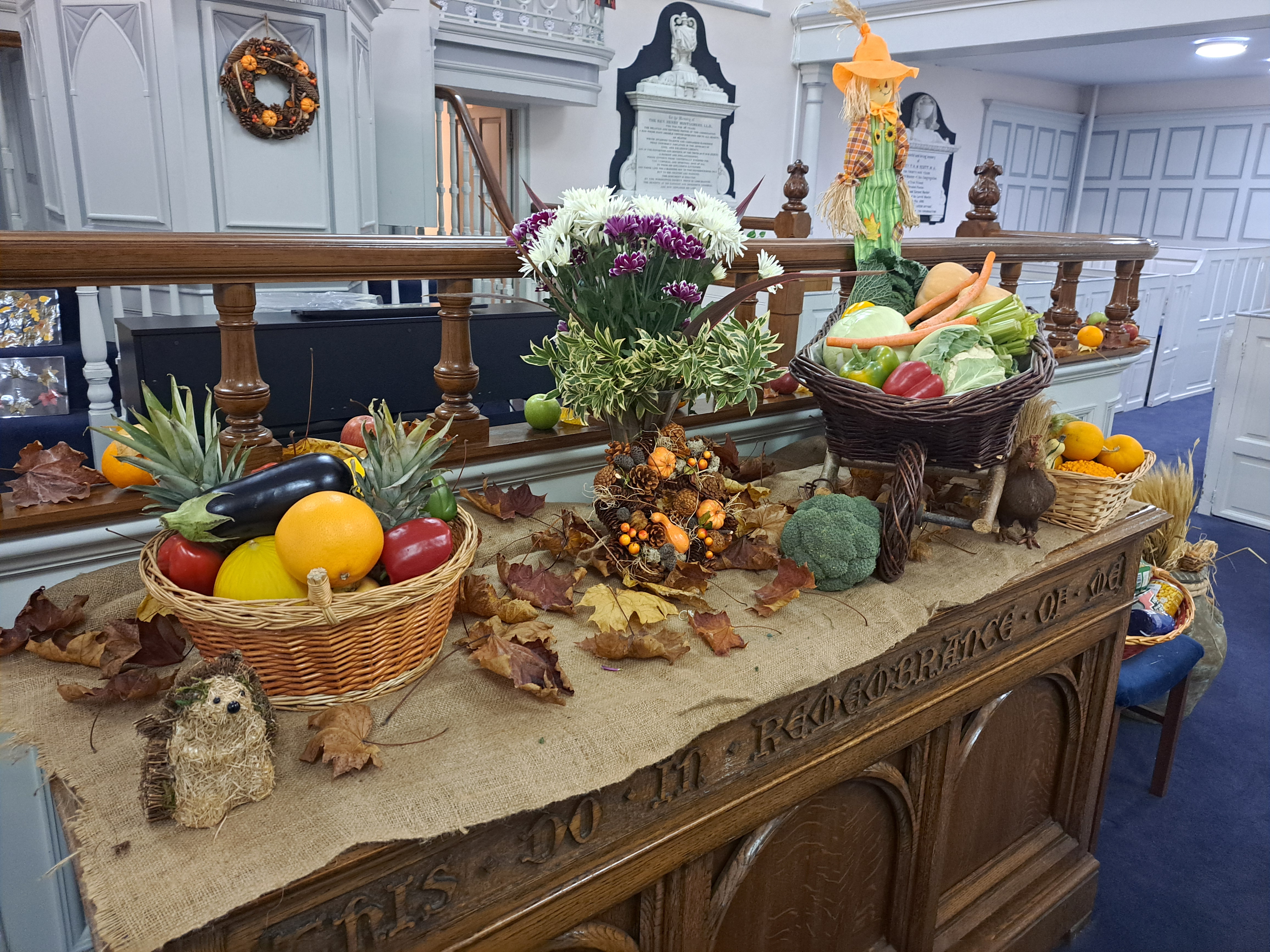
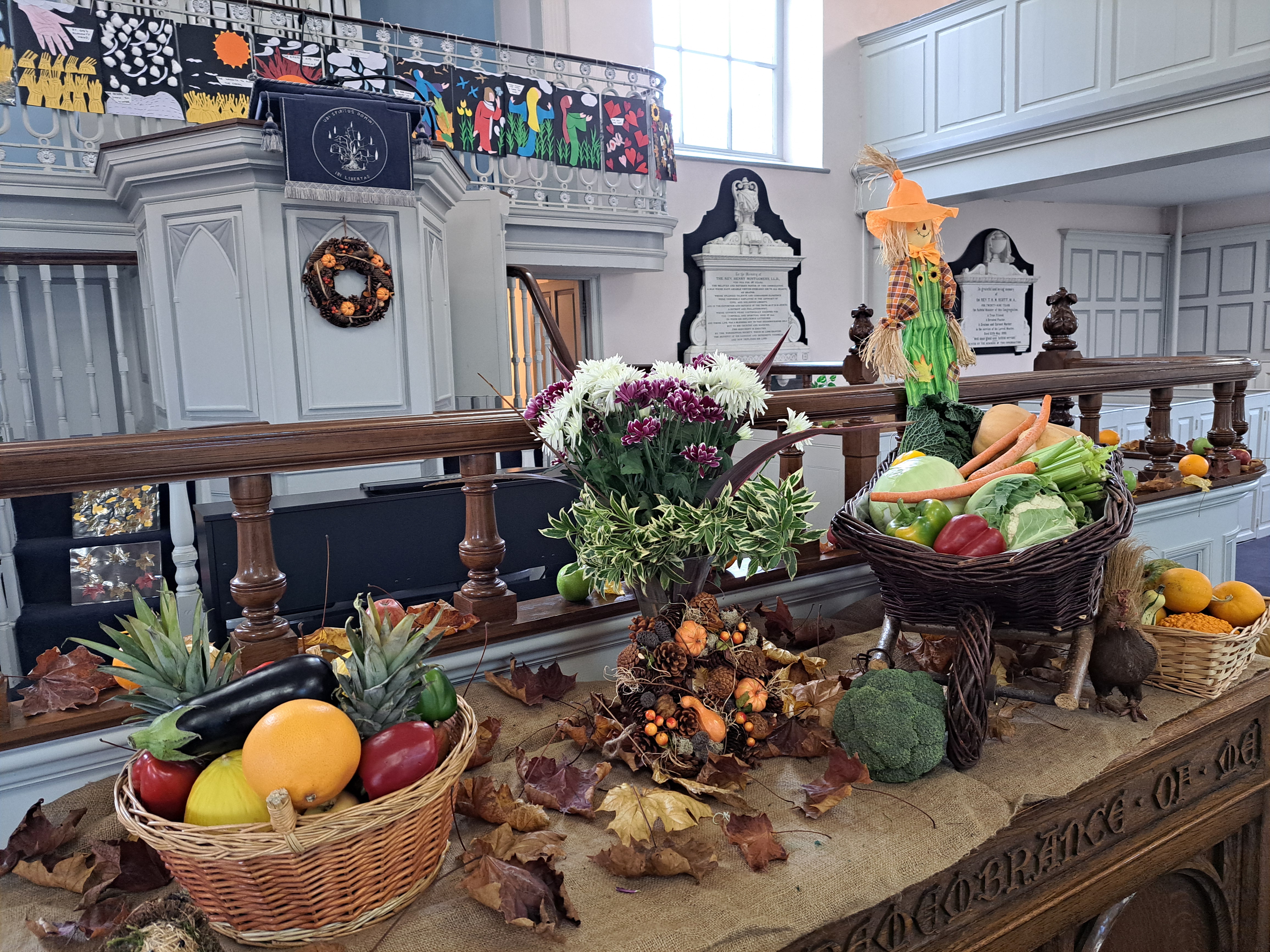
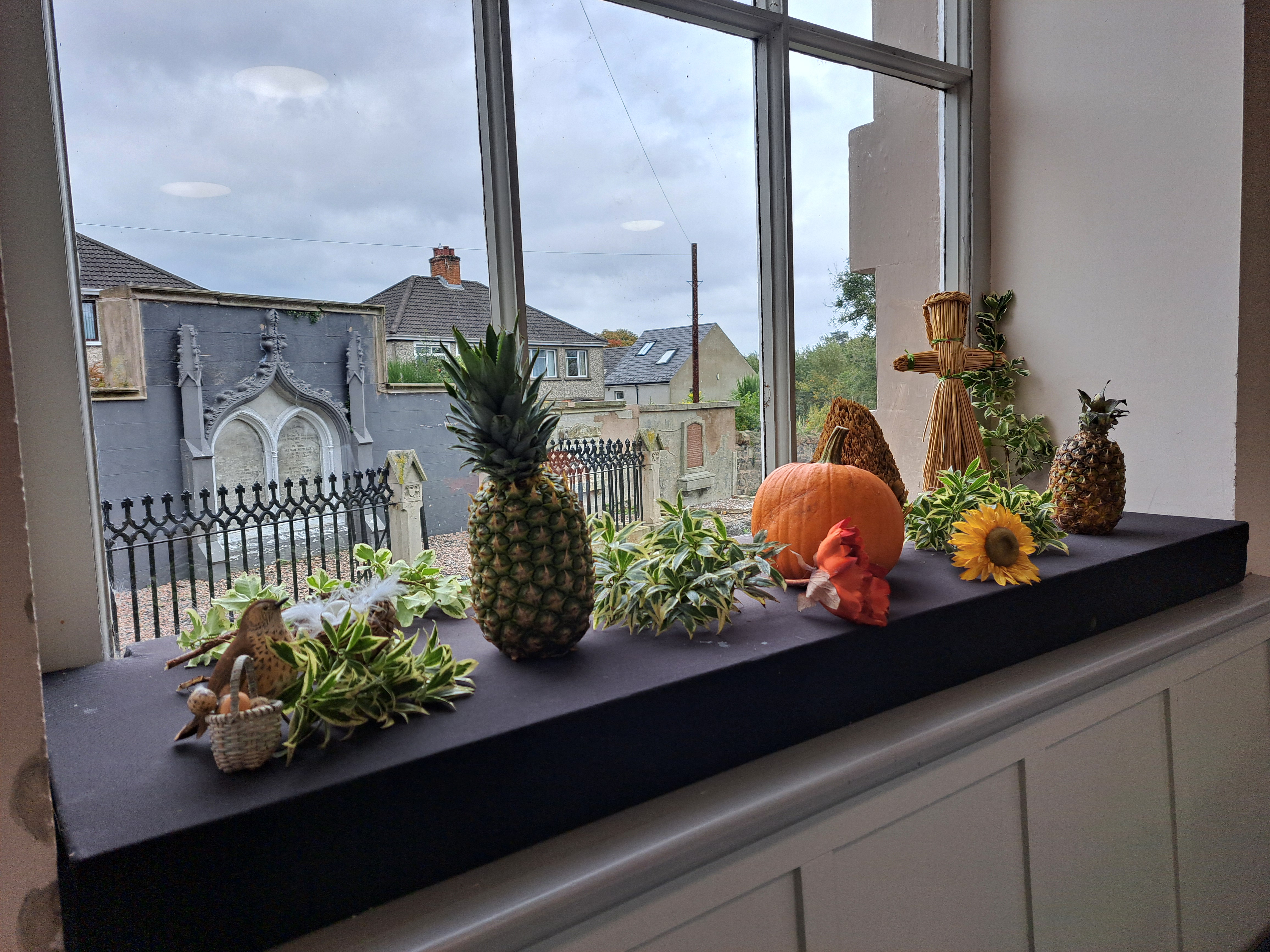
We held a wonderful service of Harvest Thanksgiving at Dunmurry on Sunday, 19th October 2025. We were particularly pleased to welcome the Quoile Area WI Choir conducted by Judith Harper with their accompanist Kathleen Gill. They sang three pieces – This Day, All things bright and beautiful(a setting by Philip Stopford), River Song, plus the vesper Go Now in Peace (arranged by I.E. Keenan), while Allen Yarr, our organist, played for the hymns and Jack Steers played Trumpet Voluntary during the collection.
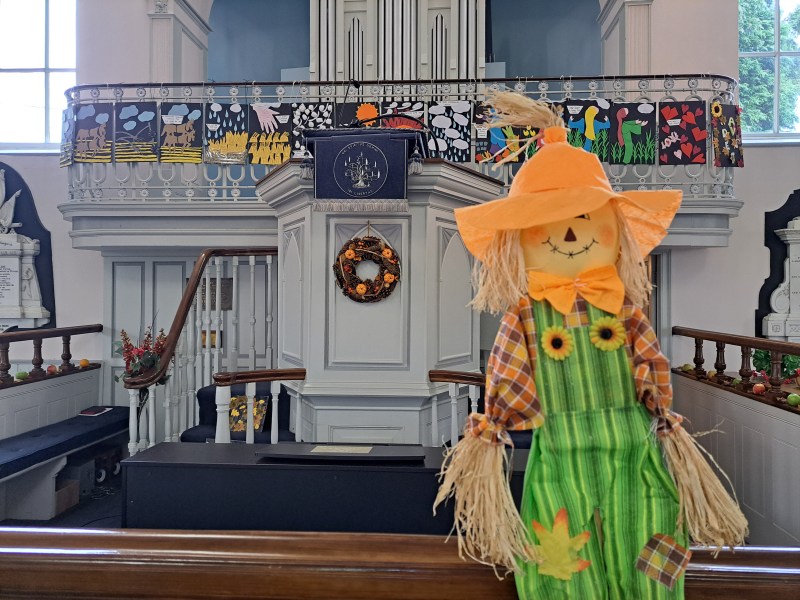
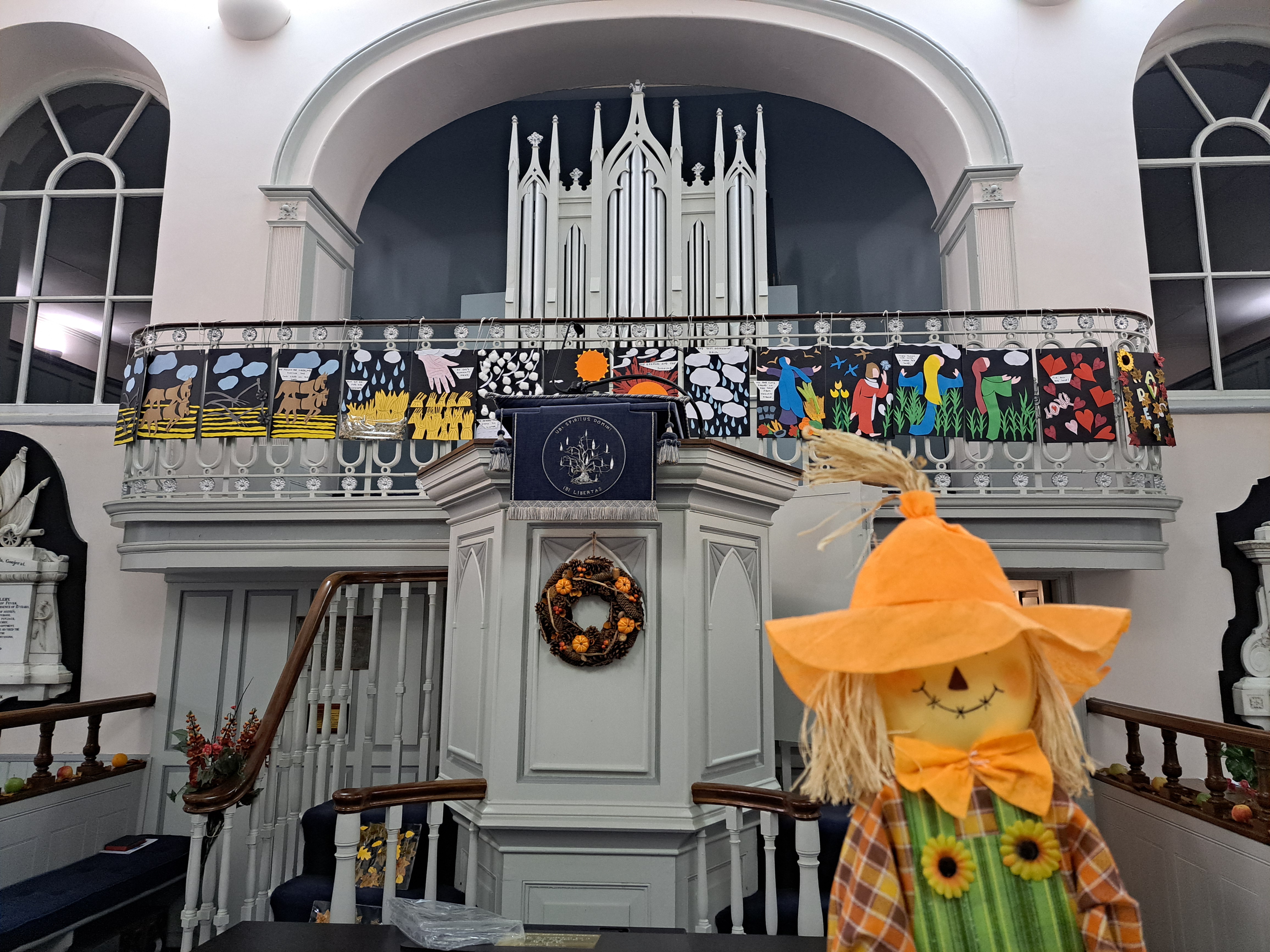
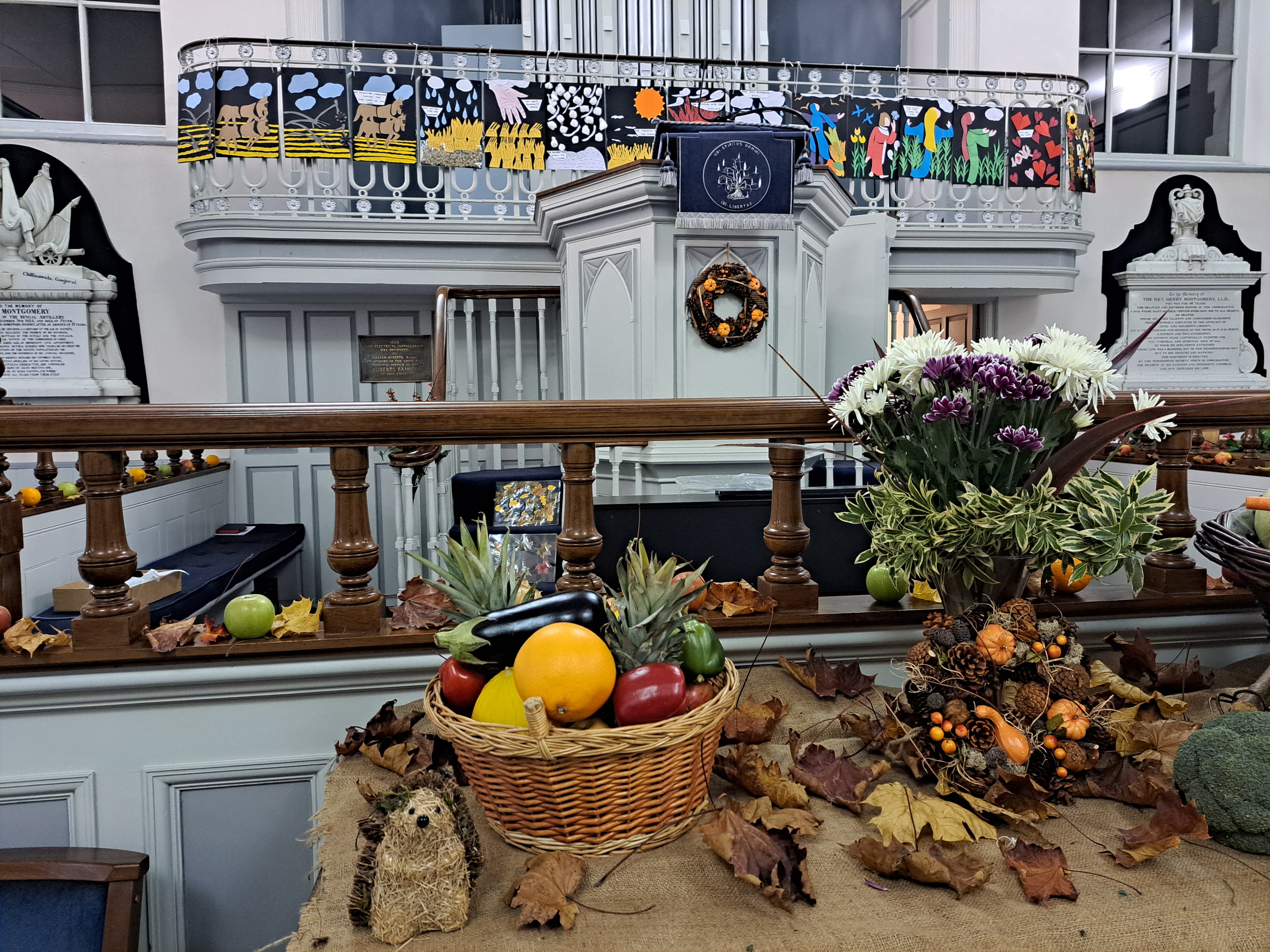
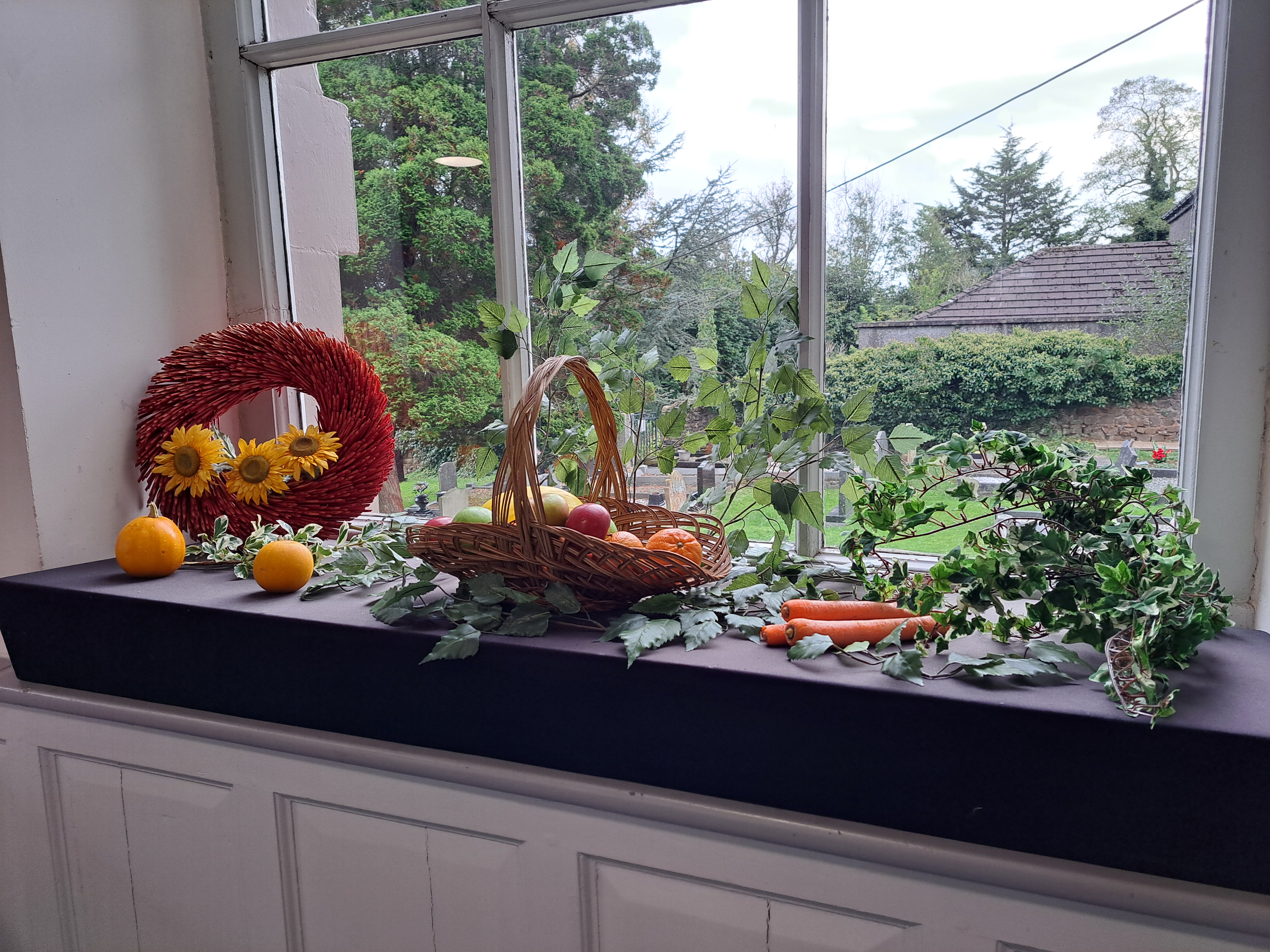
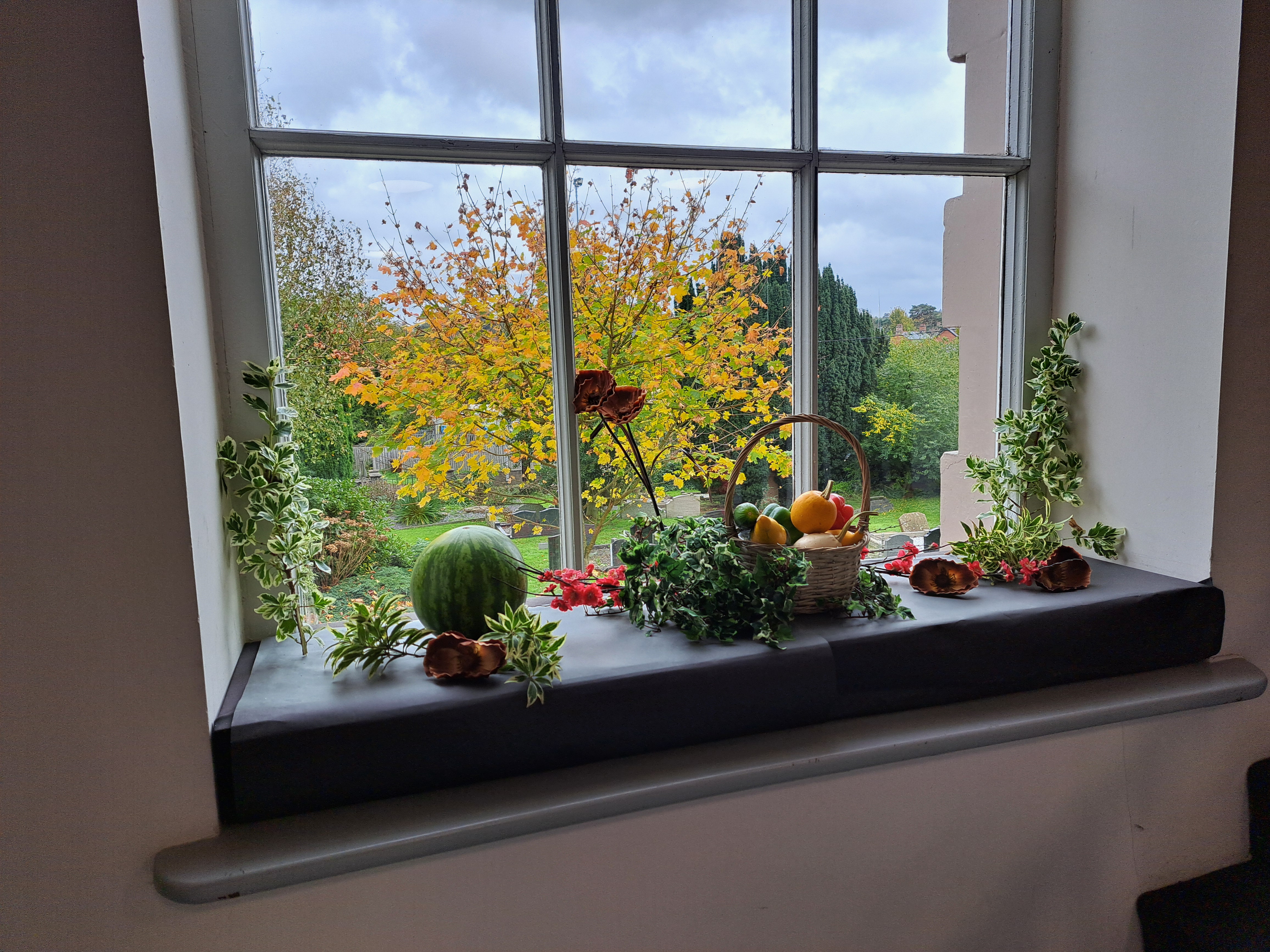
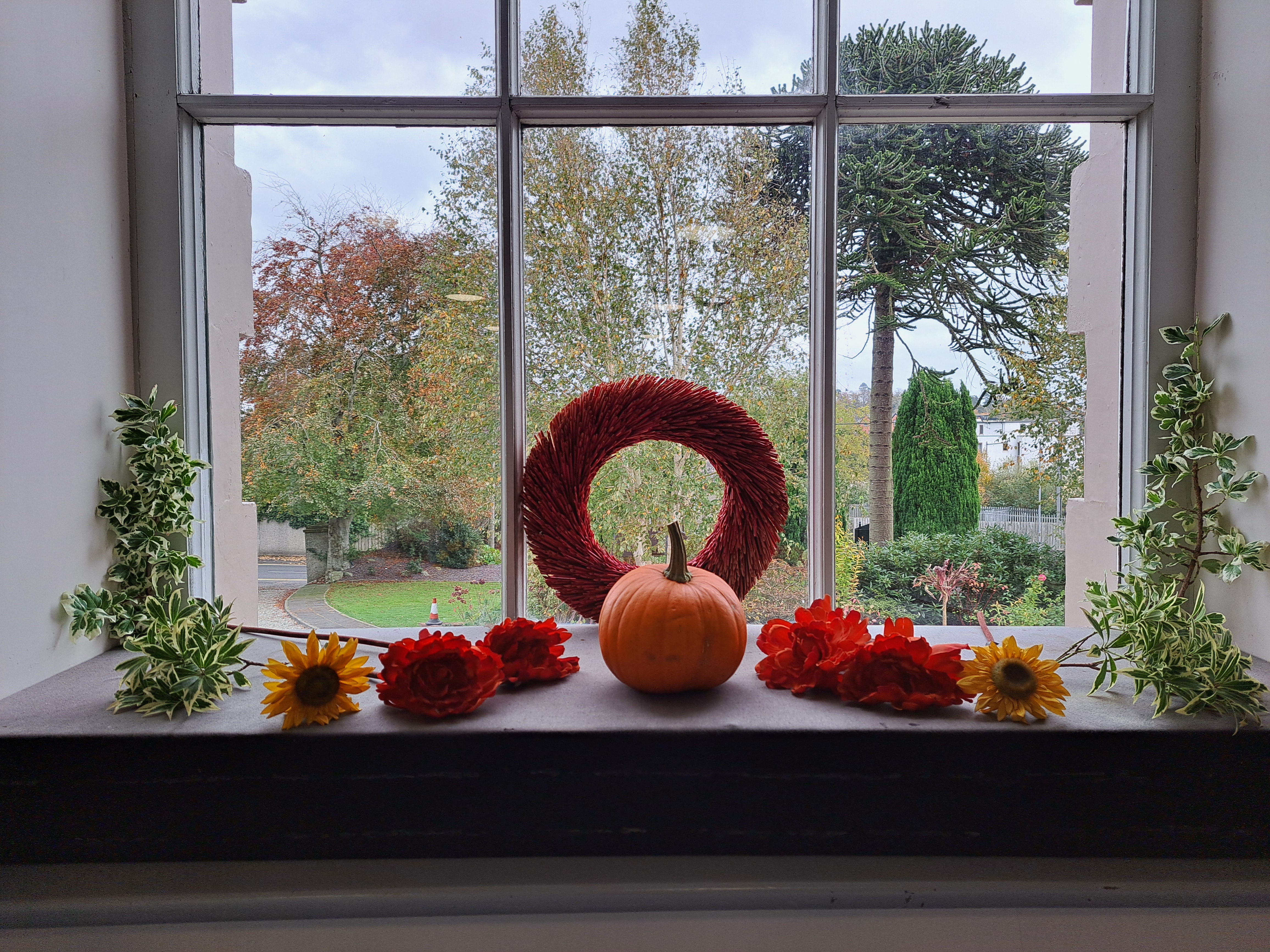
The service was led by members of the Sunday School and Youth Group with Harry opening the service with words of welcome, readings being given by Jenna, Lochlan, Erin, and Bryn, and Adele and Sue, leading us in prayer. The church was beautifully decorated throughout and the Youth Group made the frieze depicting scenes from the hymn We plough the fields and scatter (which we also sang) which adorned the rail above the pulpit.
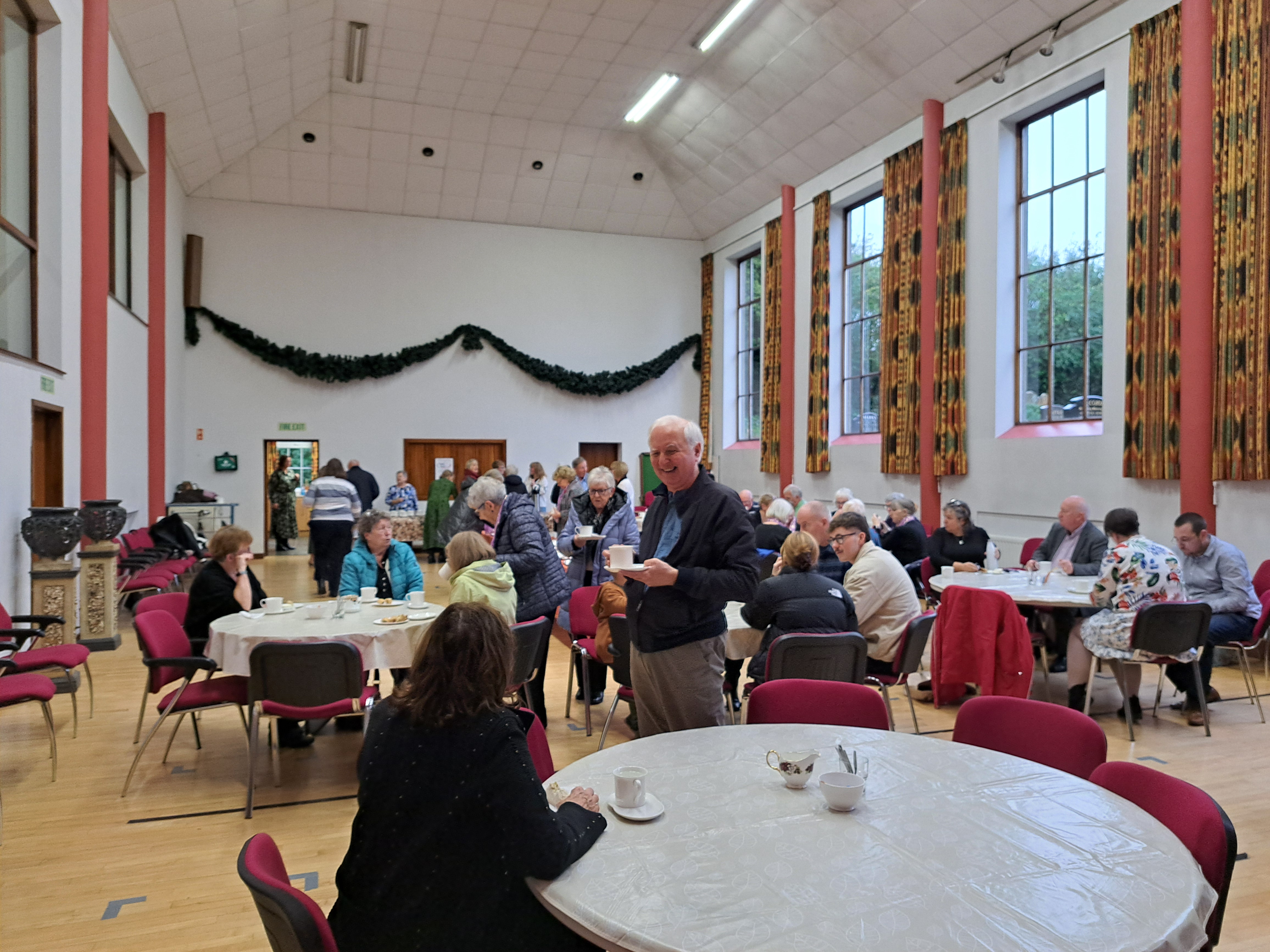
Following the service we had refreshments and a time of fellowship in the Hall, with many people coming back for that.
On the following Monday members of the congregation distributed the all the produce which had been donated to L’Arche Village, Belfast.
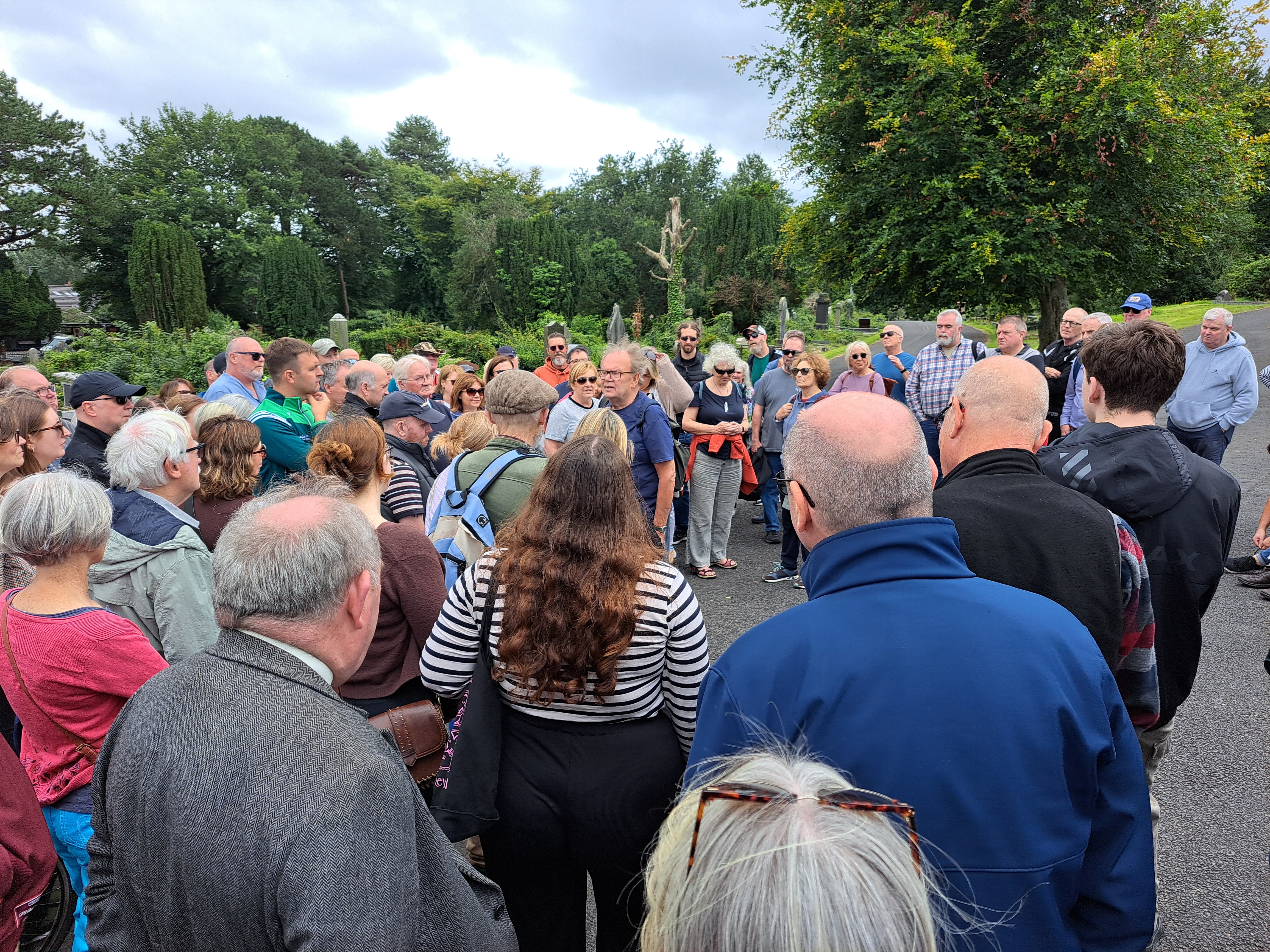
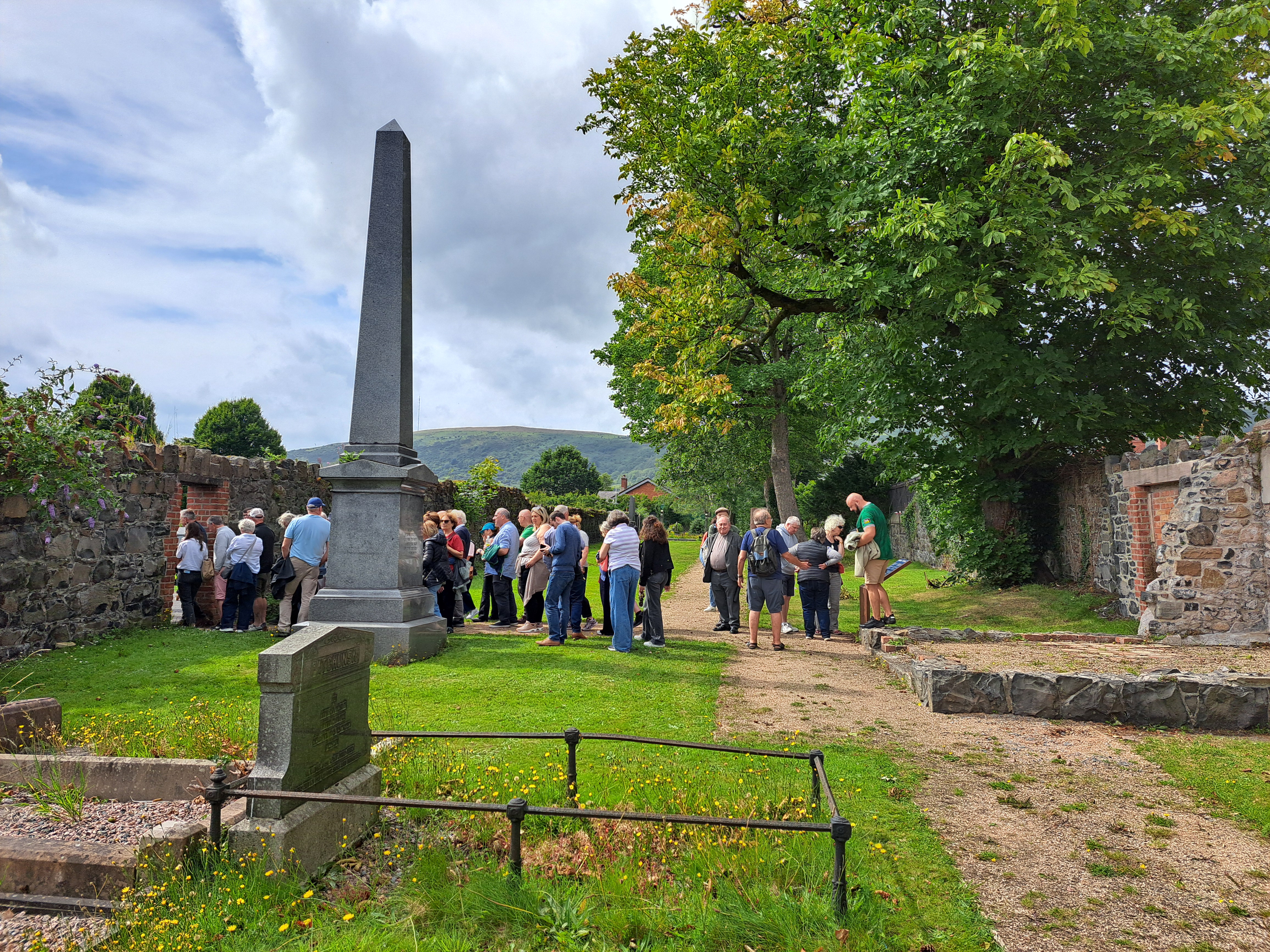
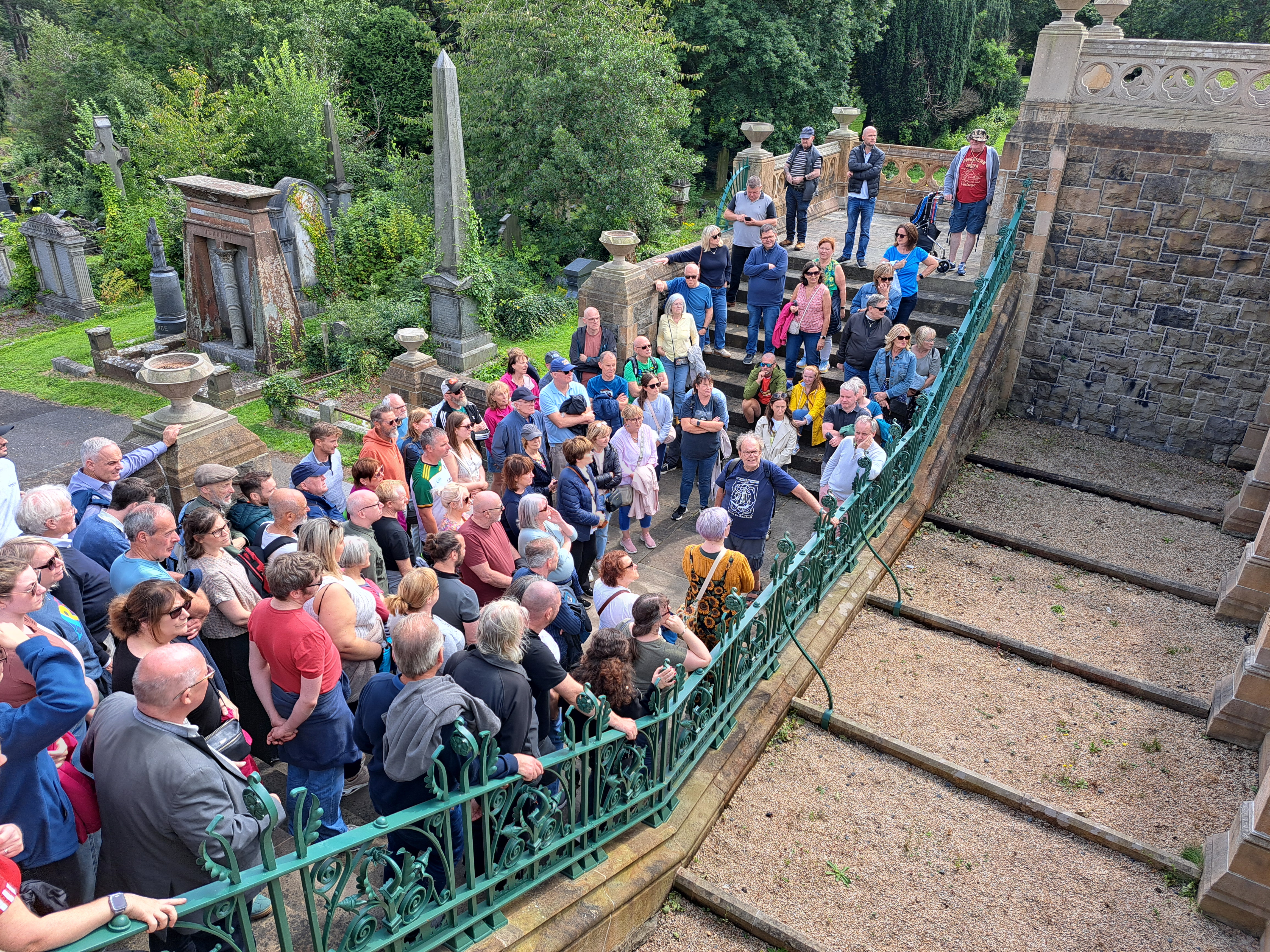
I was pleased to again take part in a tour of Belfast City Cemetery led by Tom Hartley. Tom is now the author of four books on the cemeteries of Belfast and I was pleased also to pick up a copy of his latest work, More Stories from the Belfast City Cemetery. This was his penultimate tour of the last series he would give as part of the Féile an Phobail and like all these tours there was a very large attendance.
Start of the tour, showing some of those present
I see the first guided tour I attended was in March 2022. You can read that account here – Silent yet eloquent Memorials. There are a number of changes to the Cemetery made since that time, like the completion of the visitors’ centre, new signage all around the Cemetery, the restoration of the Vaults – which house the remains of such industrial luminaries as Sir Edward Harland and Thomas Gallaher – and a lot of new planting.
It is a very impressive cemetery, imaginatively laid out and designed by William Gay of Bradford in the shape of a bell (as in Belfast) and it contains some incredible Victorian, Edwardian and later memorials.
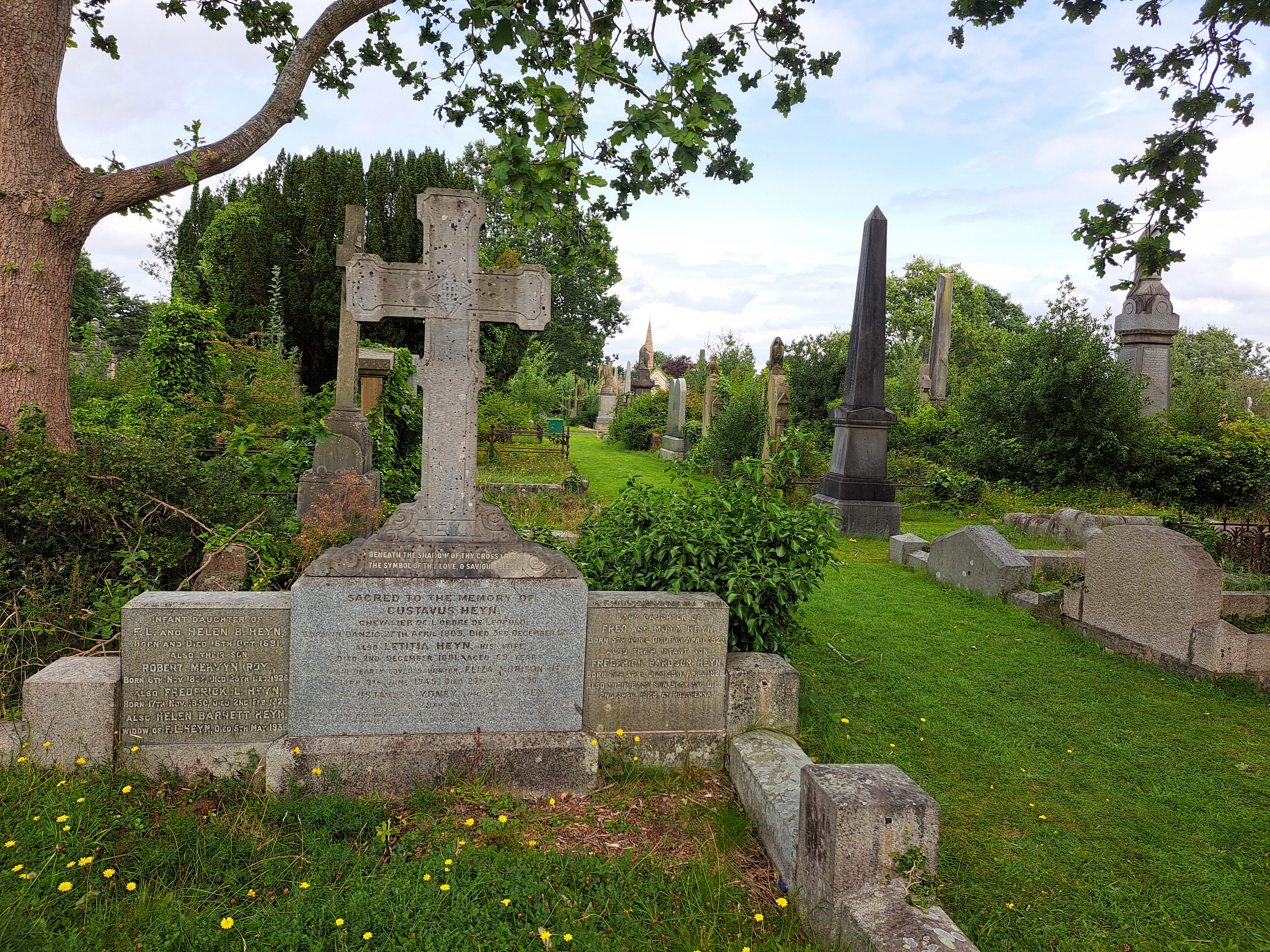
Gustavus Heyn, shipping magnate
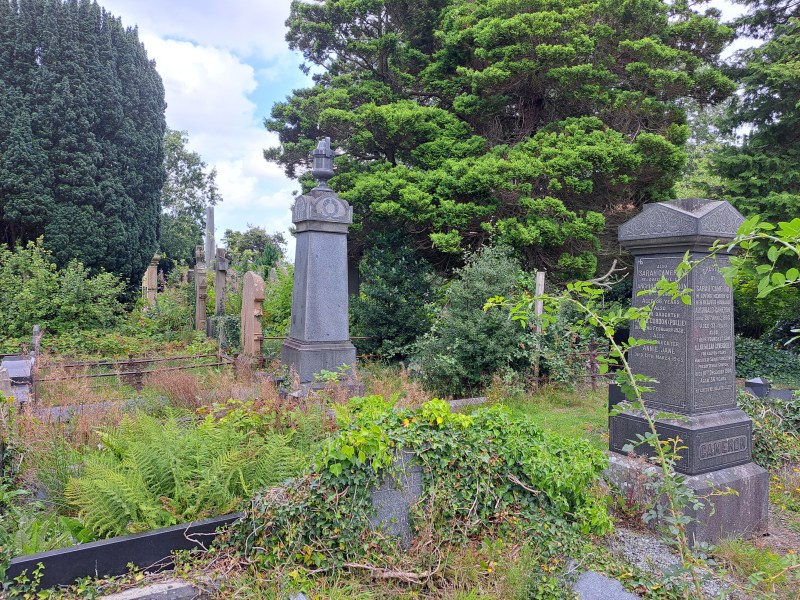
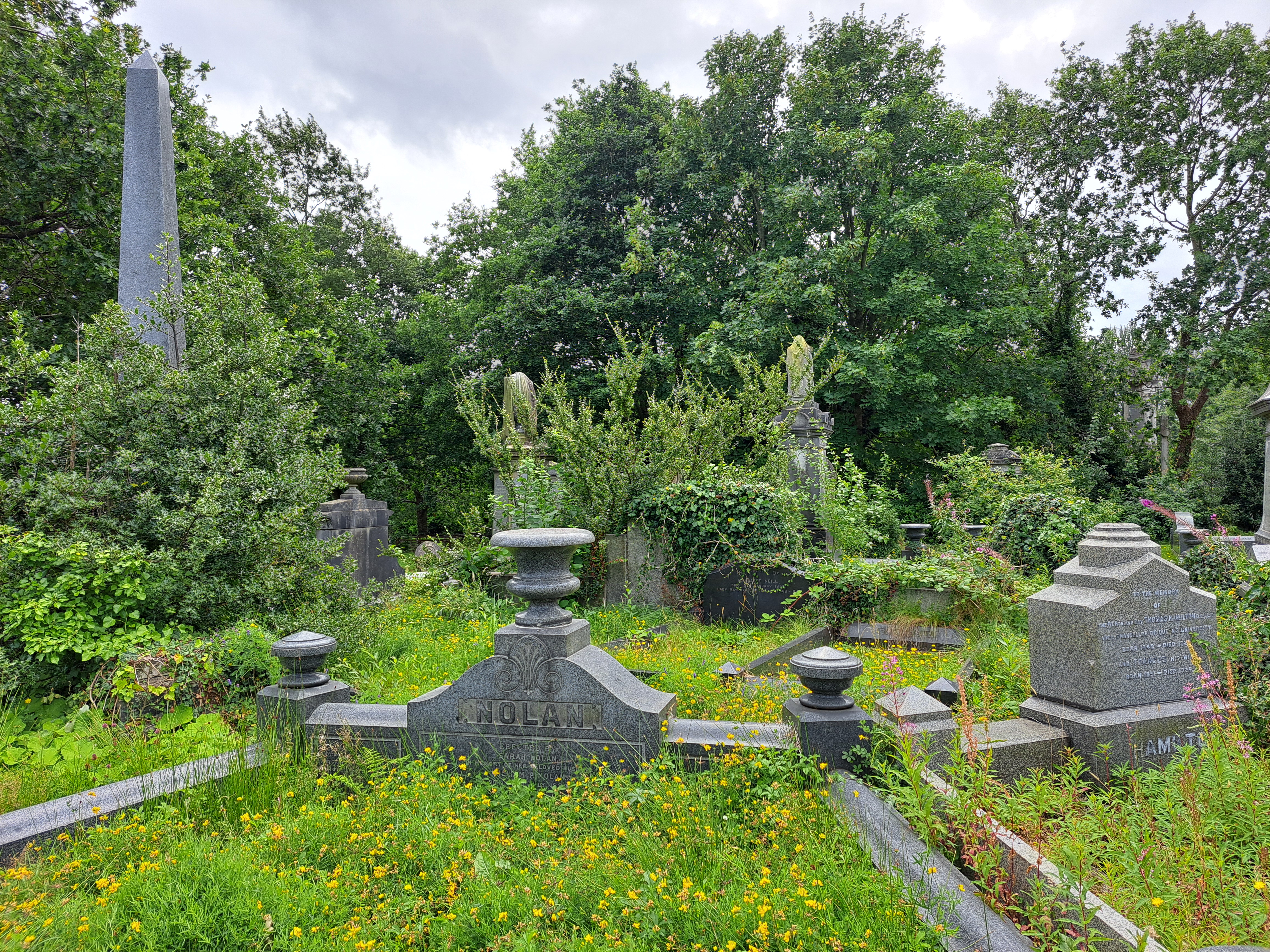
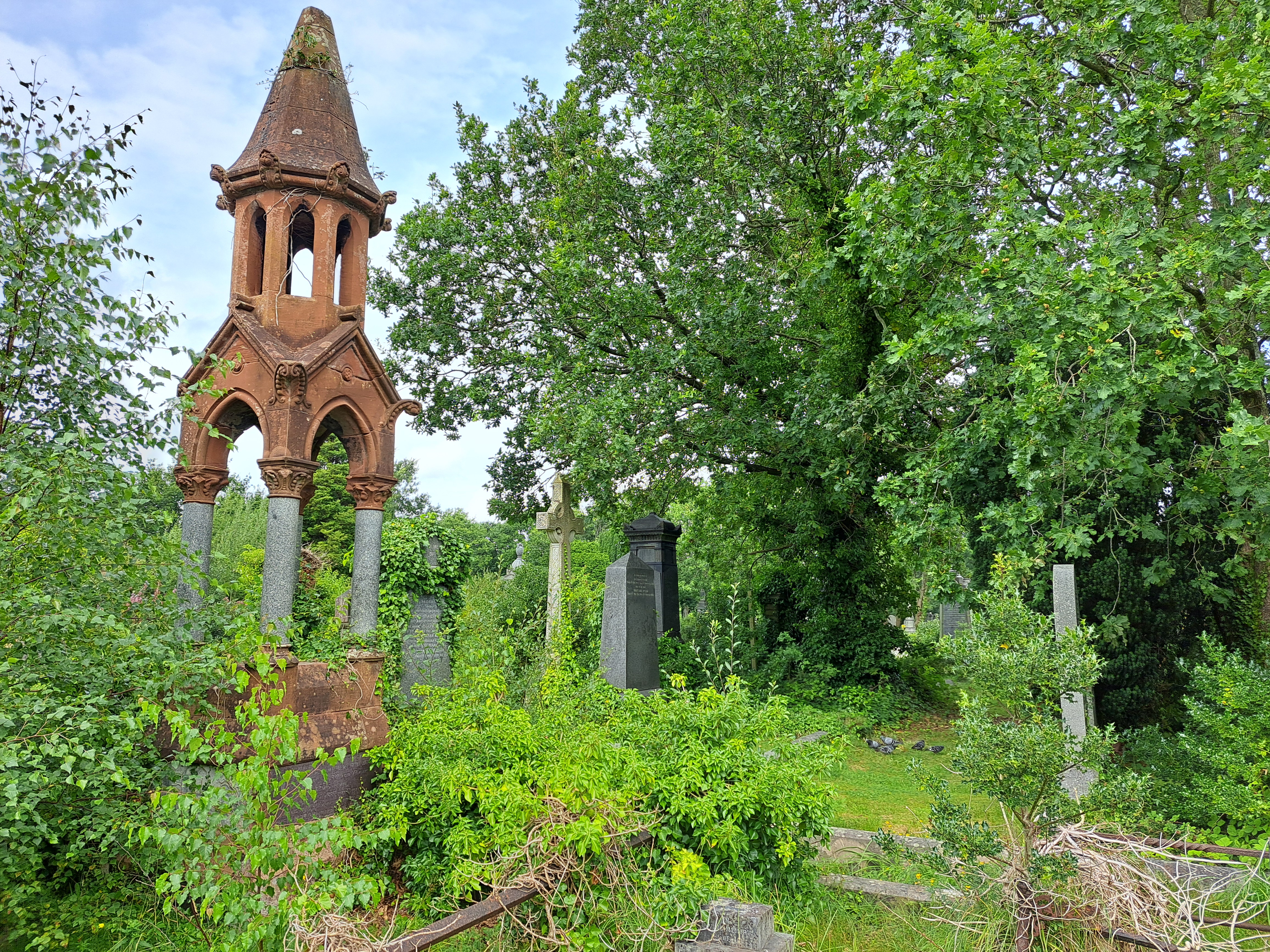
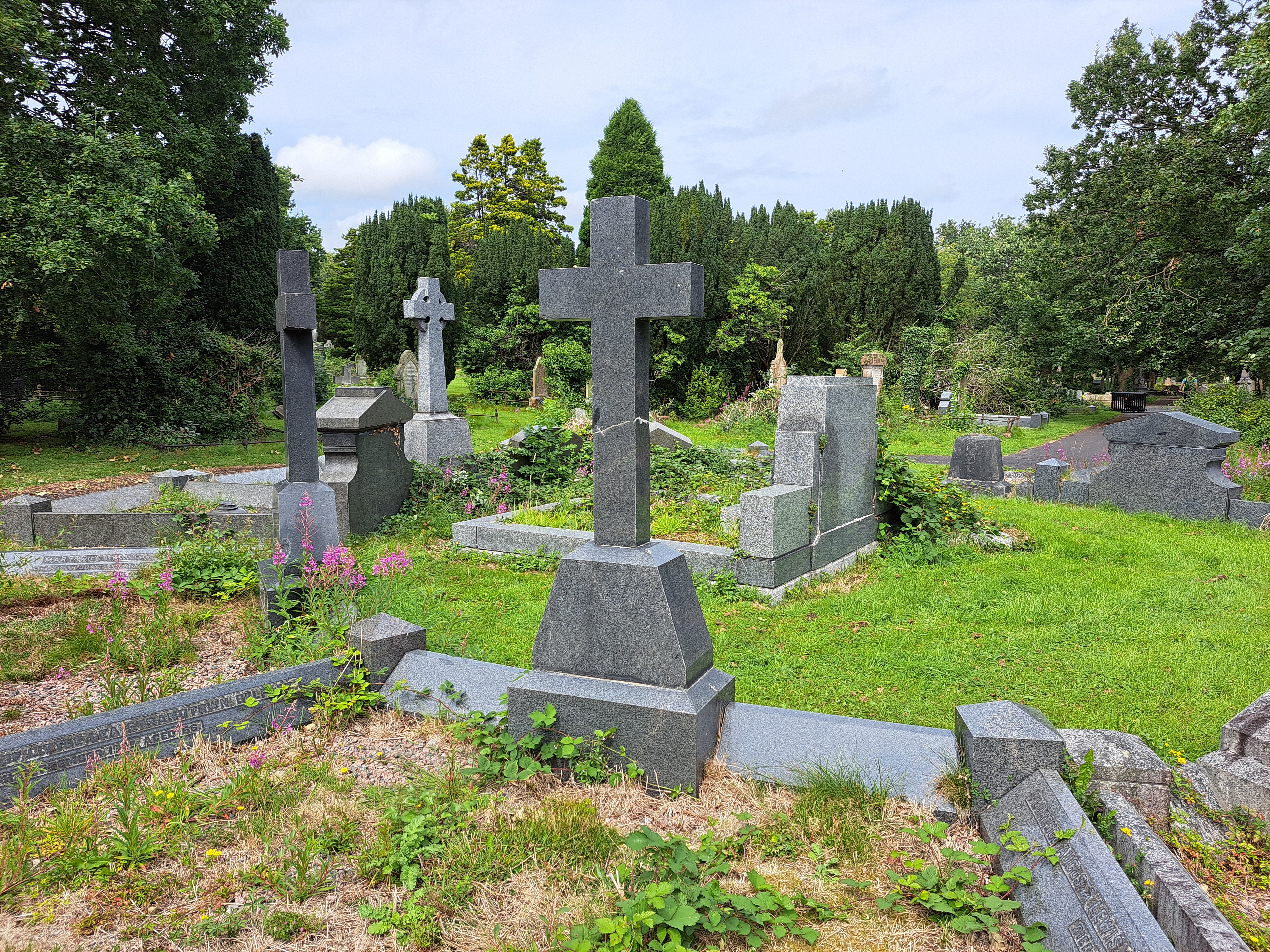
Some parts are still quite heavily overgrown and other parts have suffered badly from vandalism.
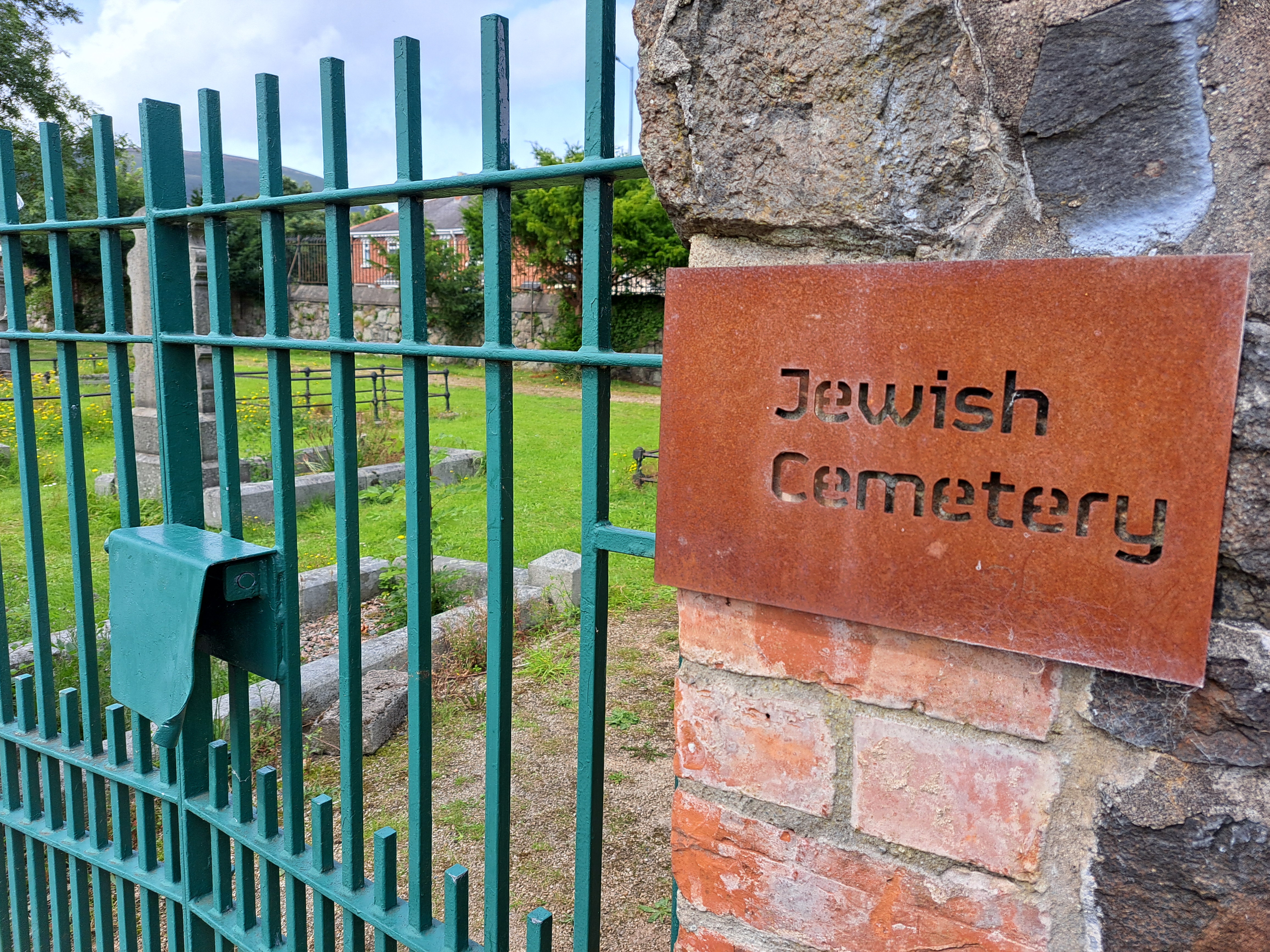
The Jewish section of the graveyard comprises a separate walled section although this has particularly suffered from vandalism and since 1964 Jewish burials now take place at Carnmoney Cemetery.
Entrance to the Jewish Cemetery
Inside the Jewish Cemetery. On the right is the remains of the Tahara, the mortuary chapel
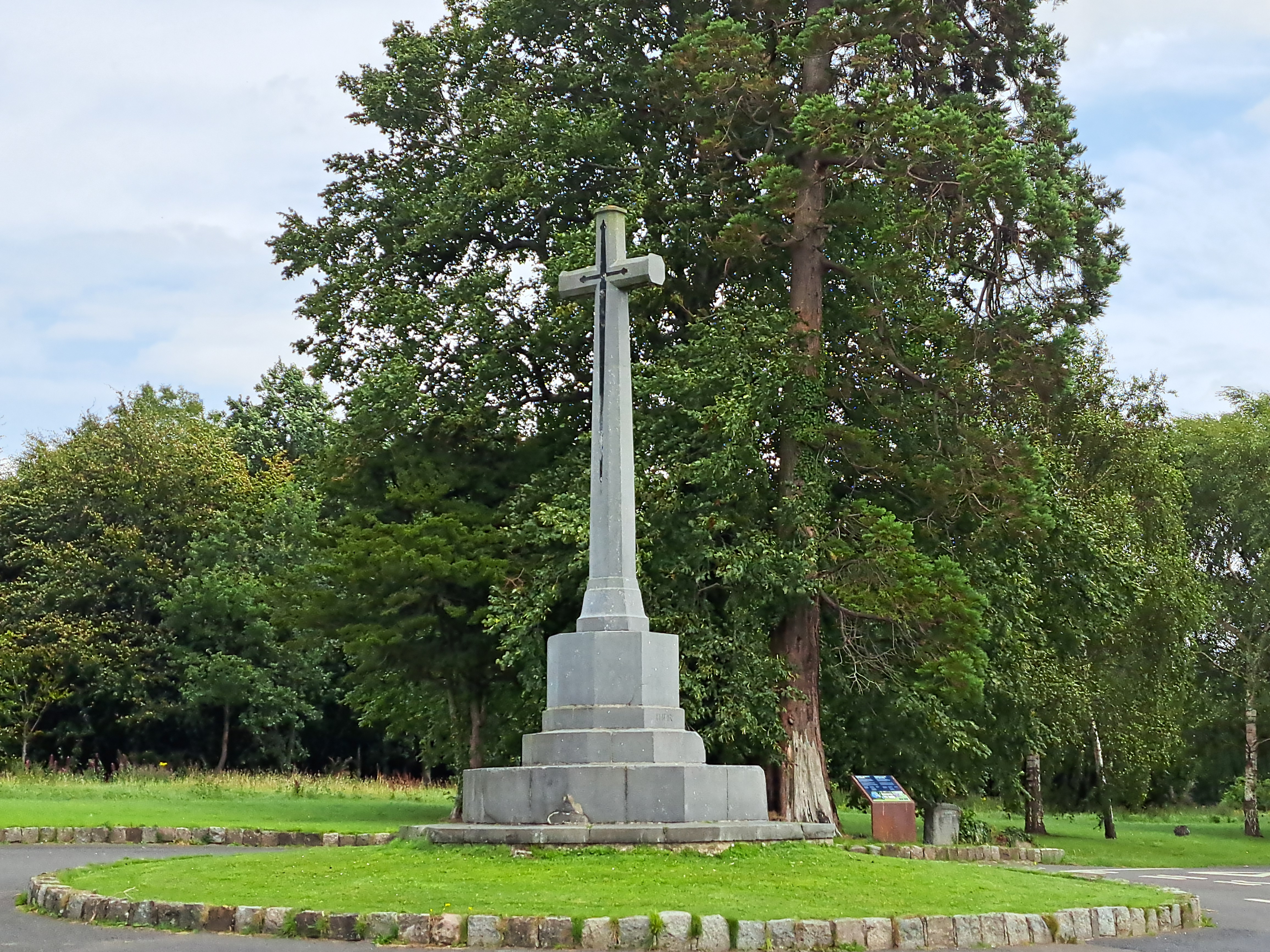
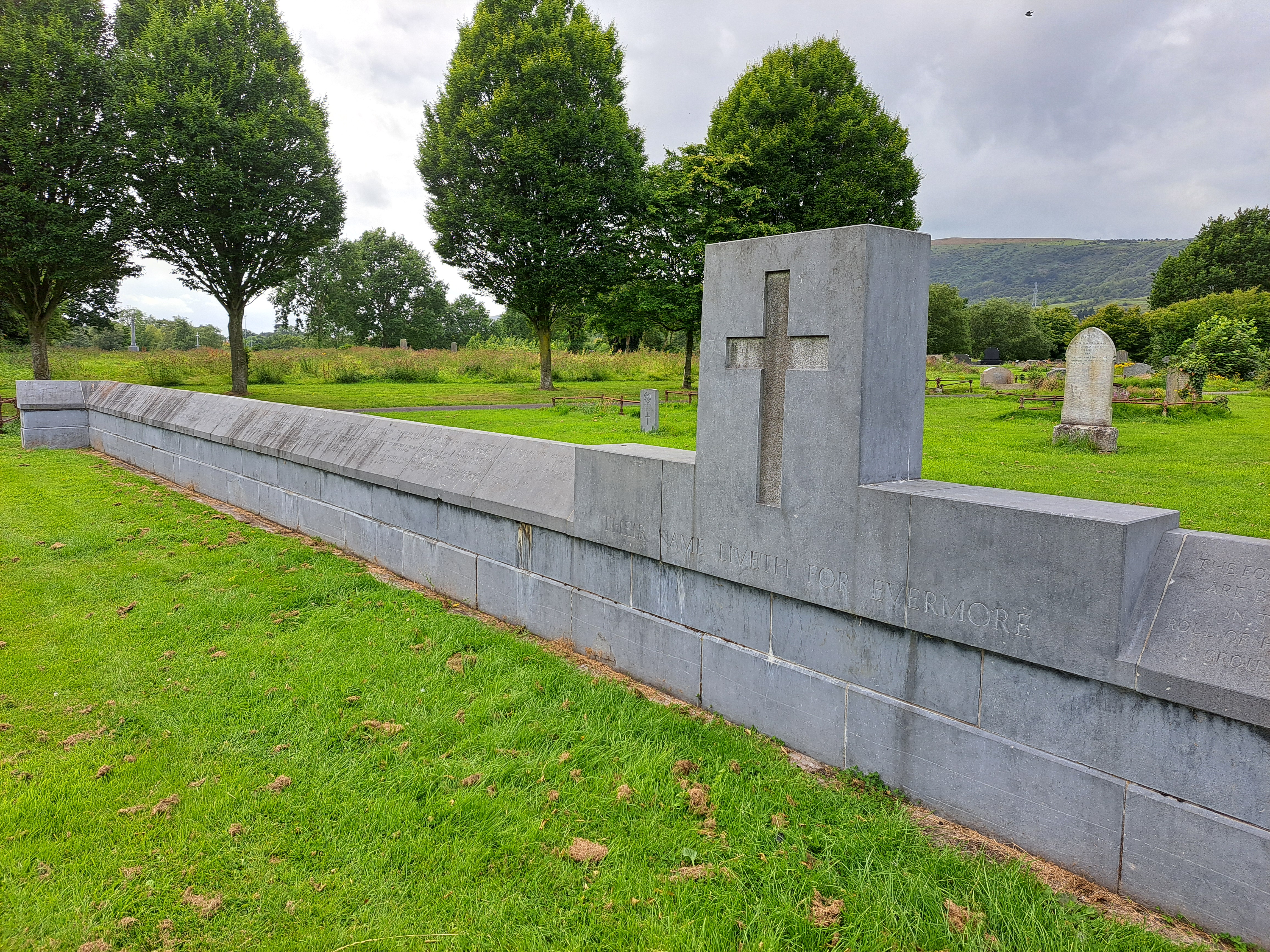
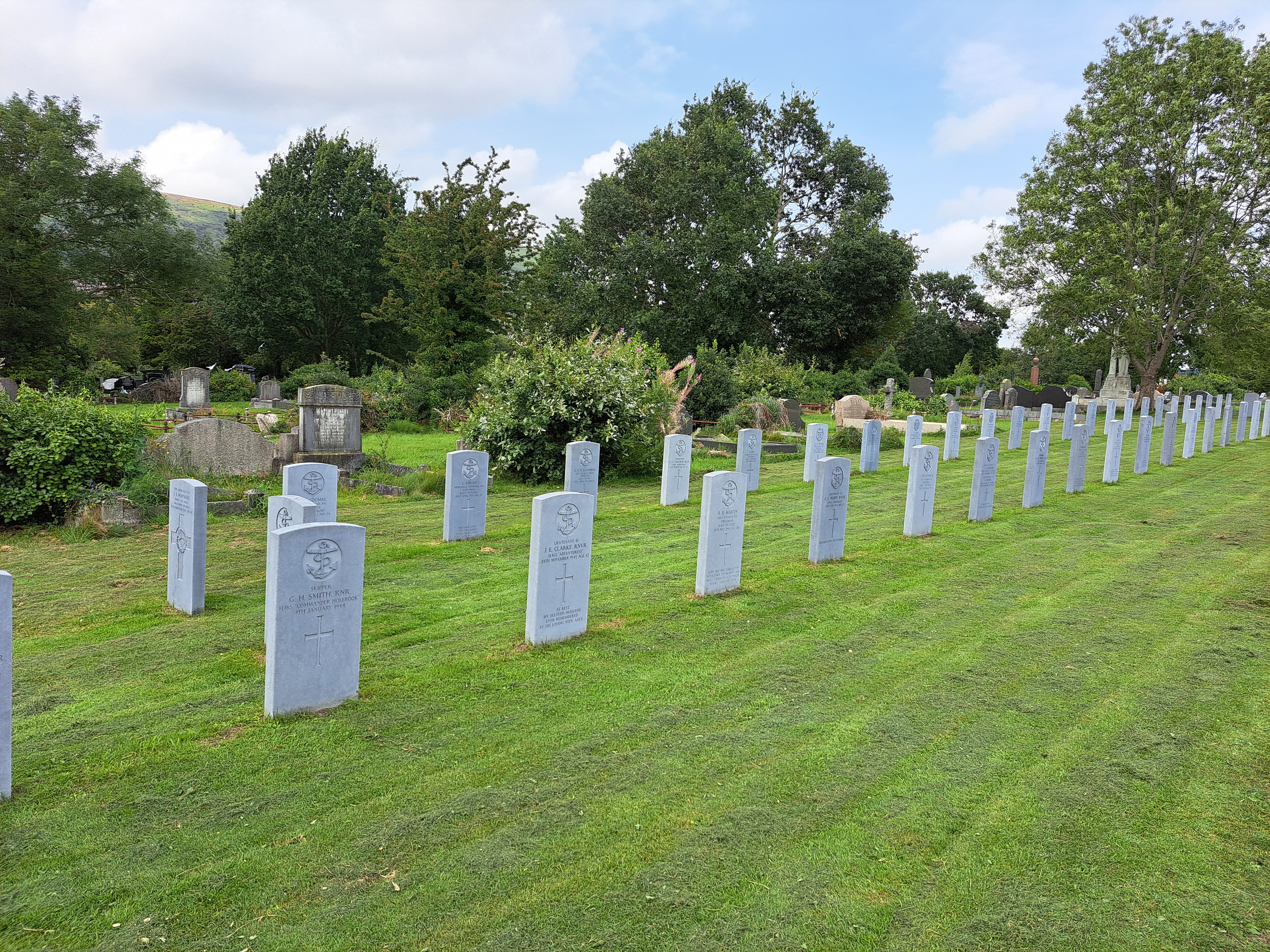
The Cemetery also includes a Commonwealth War Grave Cemetery with 296 burials from the First World War and 274 from the Second World War. There is also a Cross of Sacrifice (the same size as that in Botley Cemetery) and a First World War Screen Wall which carries the names of 74 soldiers who are buried in the First World War plot, 58 soldiers who are buried in unmarked graves and 8 soldiers who are buried elsewhere in the Cemetery.
Cross of Sacrifice
Part of the First World War Screen Wall
Second World War Royal Navy and Merchant Navy graves
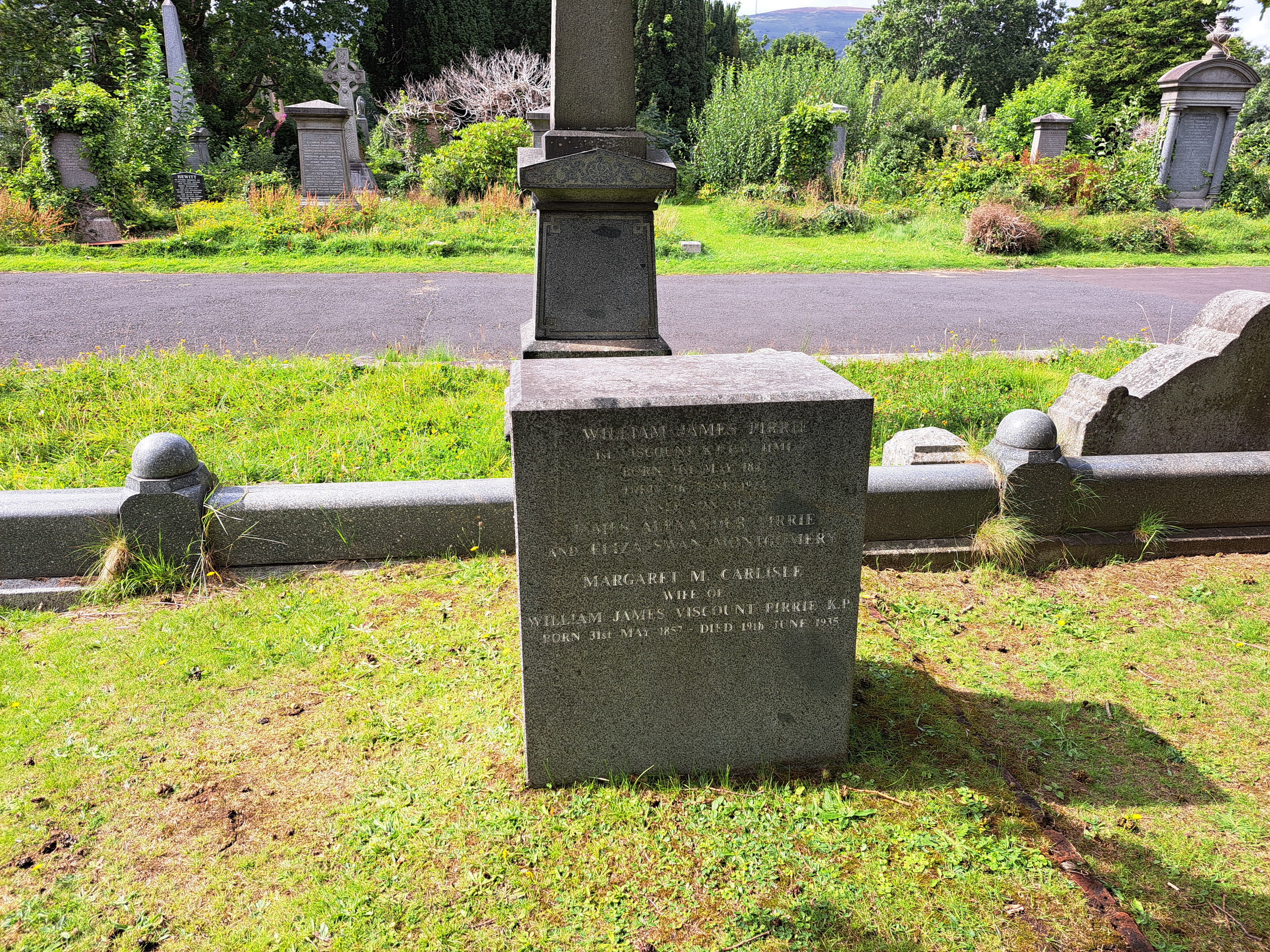
There are a lot of significant people from Belfast’s past who were Non-Subscribing Presbyterians who are buried here, perhaps most notable are Lord and Lady Pirrie. Viscount Pirrie was the chairman of Harland and Wolff when the Titanic was built and was to have sailed with his nephew, the designer Thomas Andrews, on its maiden voyage, but was prevented from doing so by illness.
Grave of Lord and Lady Pirrie
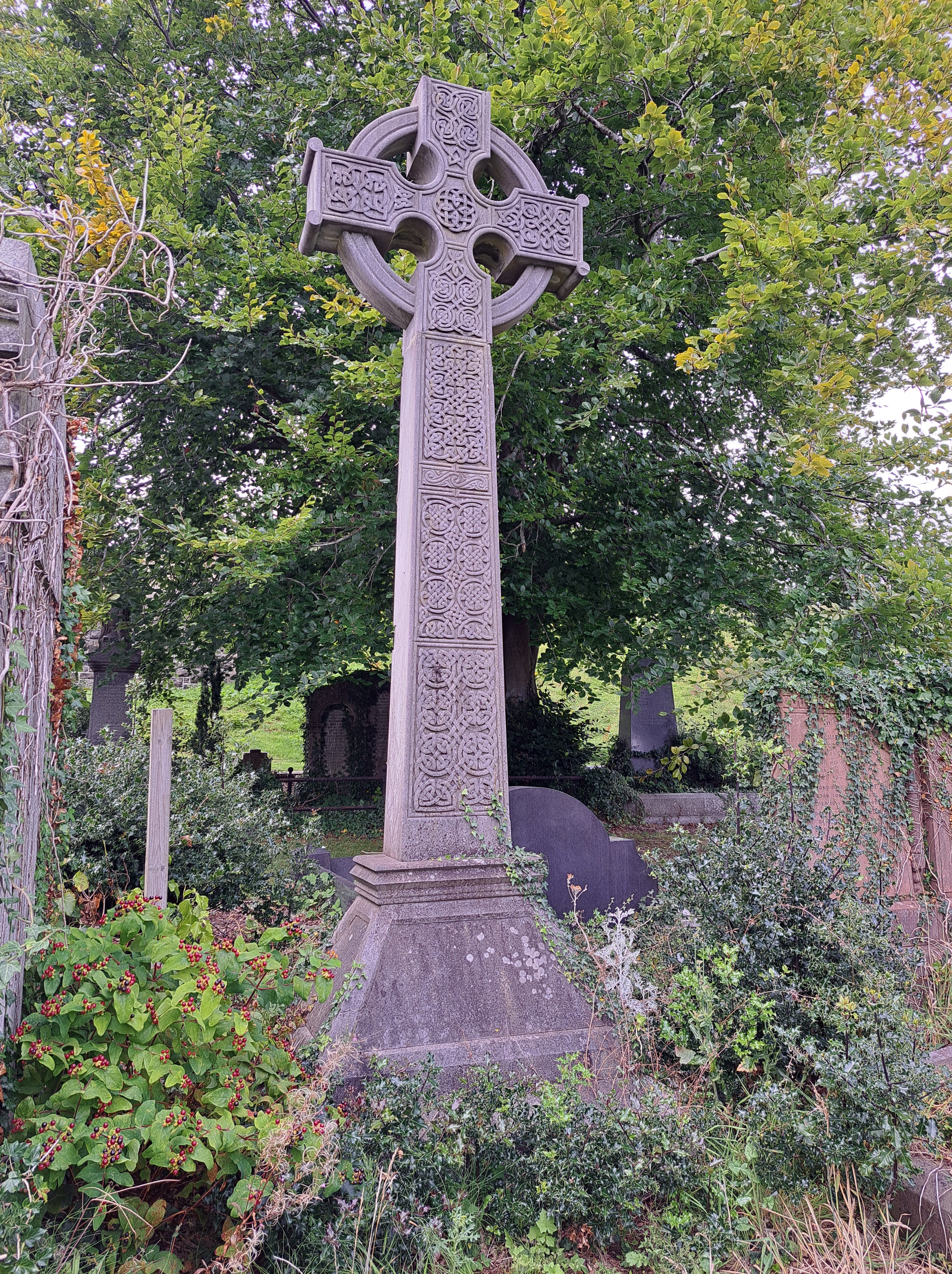
I have written before about one of the most notable Non-Subscribing Presbyterian ministers buried here, the Rev John Scott Porter, and was pleased to hear from his great great great granddaughter as a result. He is buried with his brother, William, who was once the attorney general at the Cape Colony, and actually introduced at that time a franchise that was inclusive of all races. The Celtic Cross that marks their grave is one of the most impressive in the cemetery:
The grave of Rev John Scott Porter and William Porter
I also produced a short video about John Scott Porter at that time. This is available to view here:
Click above to see the videoThe grave of Florence and Albert James Lewis, the parents of C.S. LewisThe tour at the Vaults and Central Steps
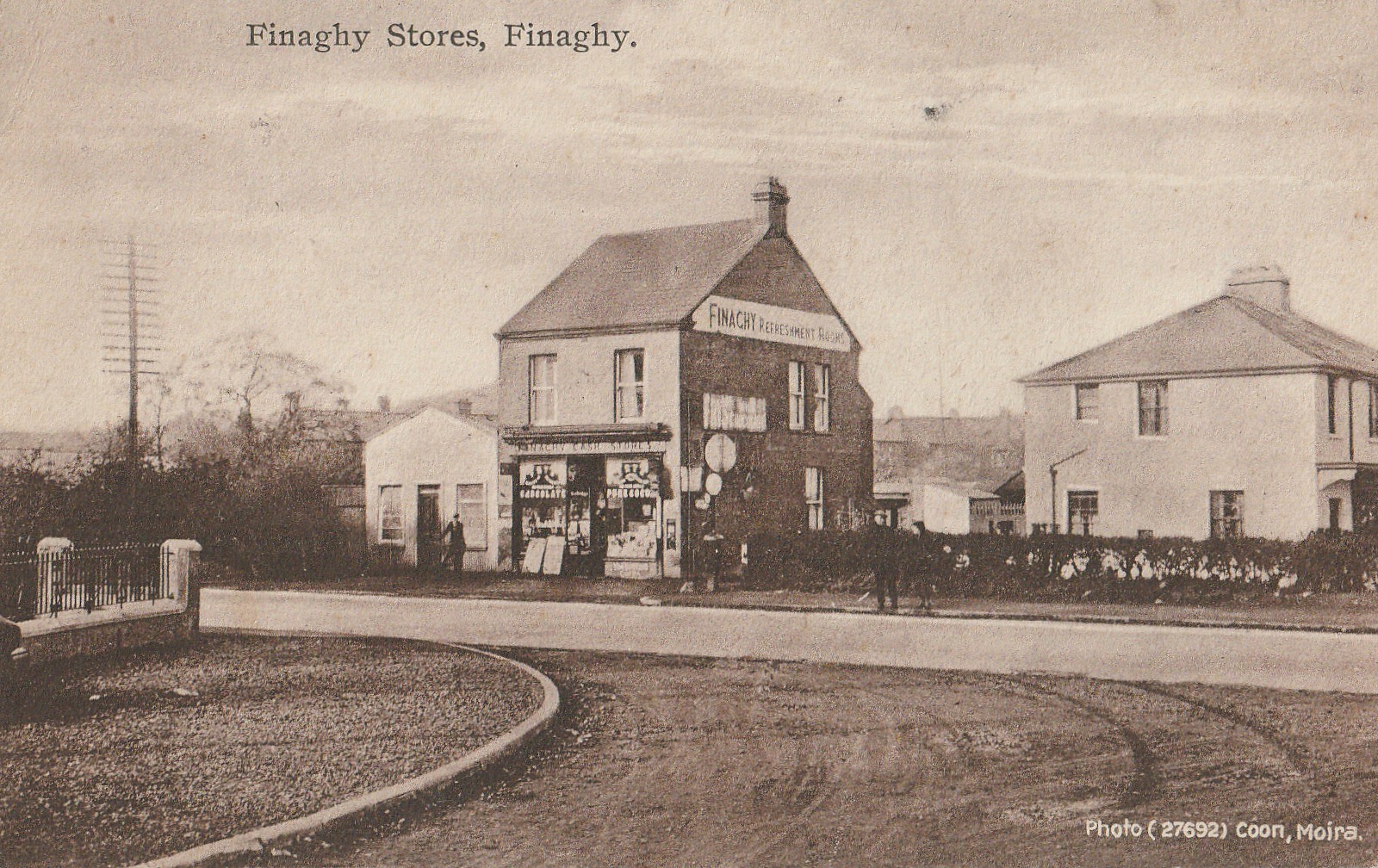
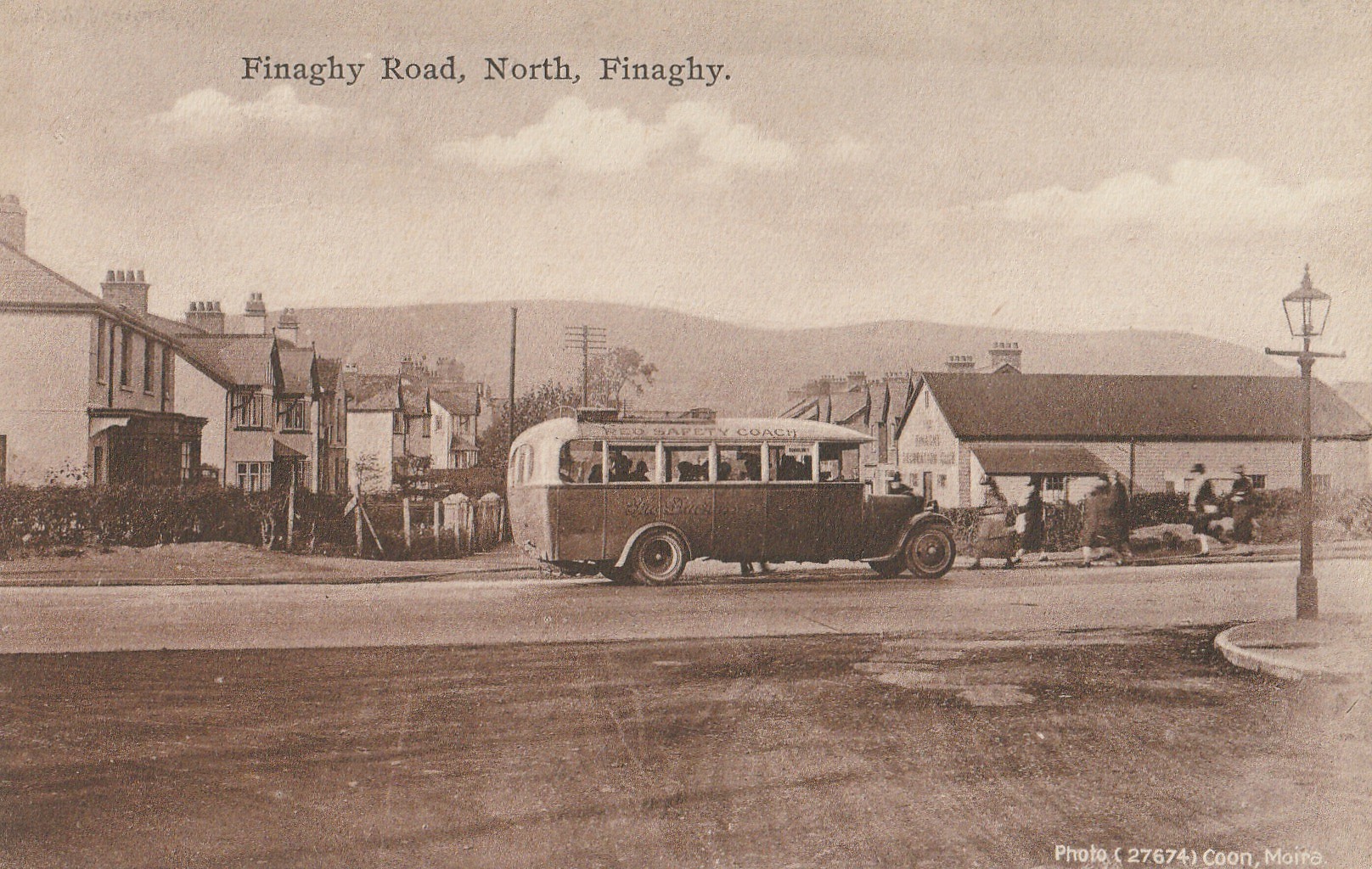
Following our postcard views of Dunmurry in the 1930s I thought I would post some postcards from a place a short distance away; pictures of Finaghy, which probably date from a few years before, and which we know were taken by Allen Daniel Coon of Letterkenny and Moira.
The numbering system on the four cards is believed to point to a date in 1927 for their production. According to the excellent catalogue of Allen Coon’s cards produced by Brian Hamilton in 2016 there were five cards published in this series for W.J. Ross of Finaghy Stores but I only have four of them. These four images are quite common but I have to admit that I have never seen an example of the fifth card which is named as ‘Finaghy Road South looking North’.
Finaghy Stores, Finaghy
The ‘Finaghy Stores’ postcard shows a solitary shop, that of W.J. Ross’s Cash Stores and Refreshment Rooms. It stands out very prominently in those days, but later had another shop joined to it and was surrounded by a number of other shops, including a couple of banks. The shop was well known to me in more recent times when it belonged to John Frazer, an active member of All Souls’ Church when I was minister there.
Finaghy Road, North, Finaghy
The postcard ‘Finaghy Road, North, Finaghy’ looks across the crossroads to Finaghy Road North and dates from a time when there was so little traffic that a bus could stop in the middle of the road to pick up passengers to be taken into town. This view has essentially not changed except for the addition of shops on one side and what was a bank on the other side of the road.
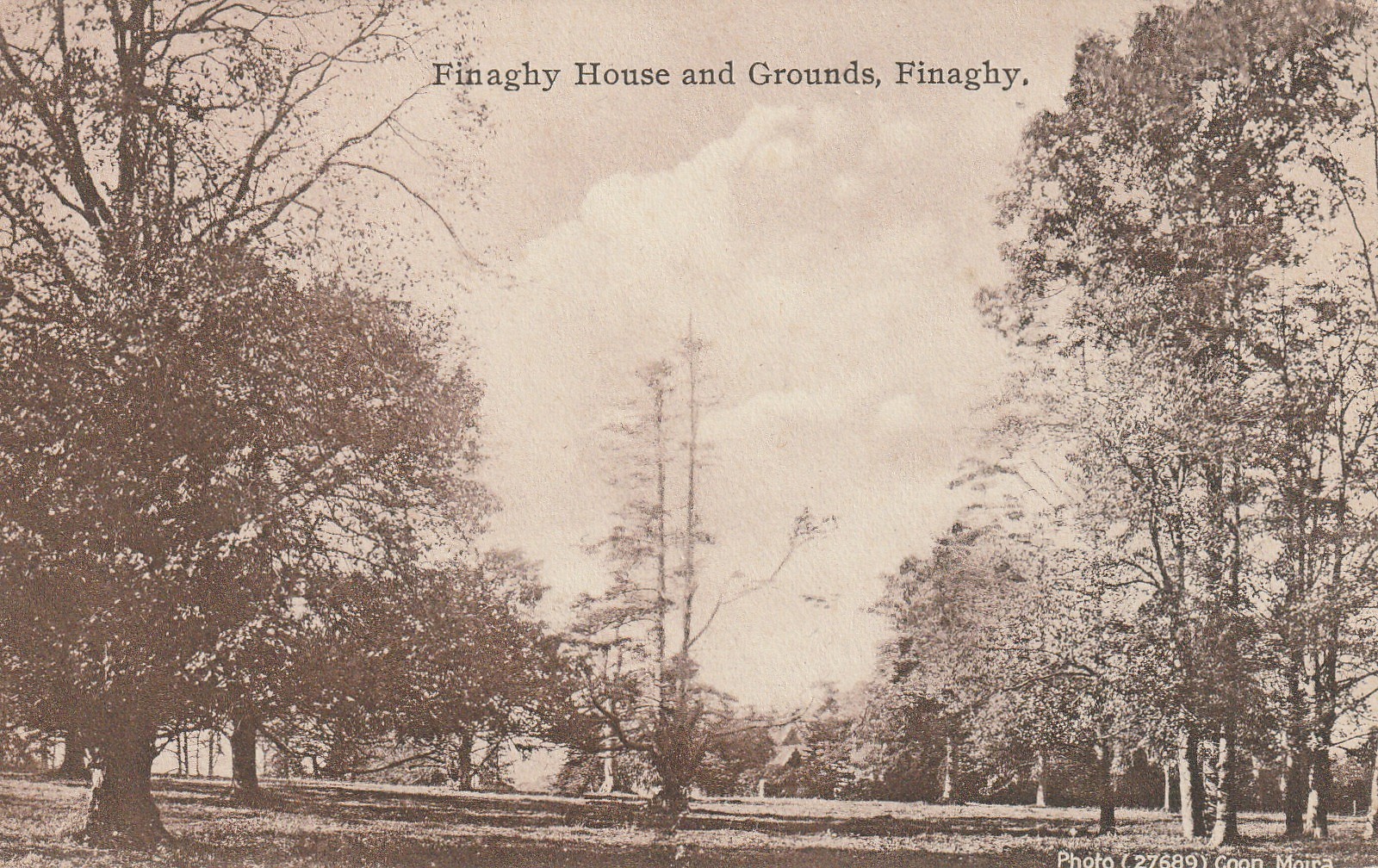
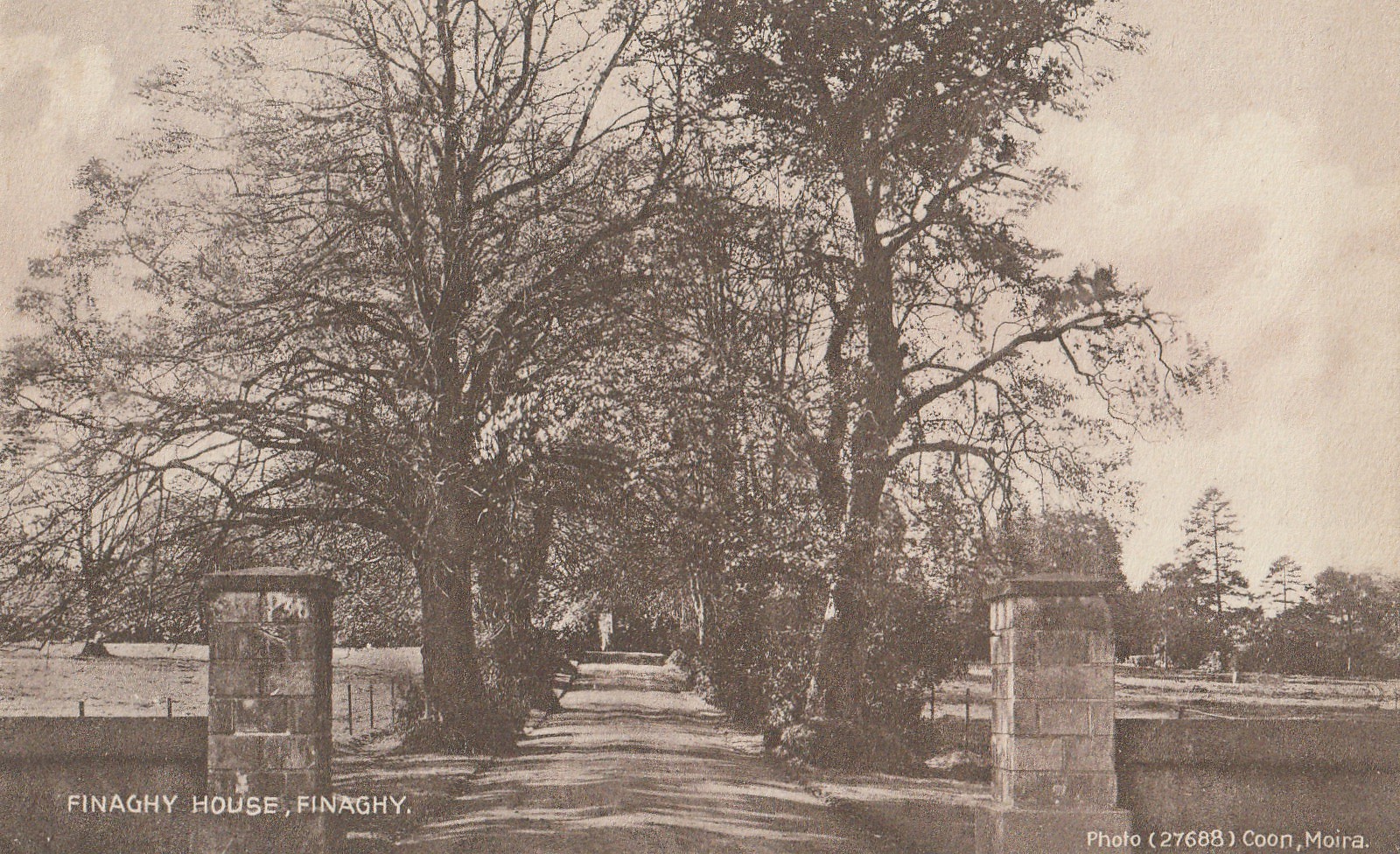
The other two postcards are a little more curious. Named as ‘Finaghy House’ and ‘Finaghy House and Grounds’, they could more accurately be titled ‘Finaghy House gateposts’ and ‘Finaghy House Grounds’ since neither card features any more than the merest suggestion of Finaghy House.
Finaghy House and Grounds
This is a pity really because Finaghy House will have been a major landmark at the time. Lord Belmont in Northern Ireland tells us all about Finaghy House in his excellent blog which you can read here. He tells us that the original house was built by Richard Woods at the end of the seventeenth century but was sold to the Charley family, a prominent linen family in 1727. Lord Belmont quotes the 1830 Ordnance Survey Memoirs as saying ‘the walls are nearly four feet thick and run together by grouted lime, similar to other ancient buildings.’ A descendant of the family said it was ‘an imposing mansion in a large park, with extensive outhouses and stables … a remarkable feature [of the interior] being a revolving fireplace between the drawing-room and the dining-room.’ The Charley family sold the house to a family named Brewis who, it is said, bred corgis, one of which had the distinction of being the first corgi owned by Queen Elizabeth, The Queen Mother.
In about 1890 Finaghy House was sold to James Moore and this is where a connection can be found with the Non-Subscribing Presbyterian Church of Ireland. James Moore was a direct descendant of Rev Henry Montgomery and the family were all members of our church at Dunmurry. In the 1901 Census he is listed as a Manufacturing Stationer living with his wife, Maria Lydia, who had been born in New Orleans. They and their three children (Harold Montgomery, Kenneth Montgomery and Sybil) all give their religion as Unitarian. As well as the five family members there are three servants listed as resident in the house. Harold and Kenneth are respectively stationer’s assistant and stationer’s apprentice to their father in 1901, Sybil is still at school. By the 1911 Census the three children are no longer living at home although there are still three (different) servants; a parlour maid, a cook and a housemaid.
Finaghy House by A.D. Coon
By 1911 James Moore was a JP in County Antrim. In the First World War Kenneth Montgomery Moore was commissioned into the 11th Battalion Royal Irish Rifles and was awarded the Military Cross. He returned home safely at the end of the war and his name is listed in the First World War Roll of Honour of the Non-Subscribing Presbyterian Church of Ireland (published 2018).
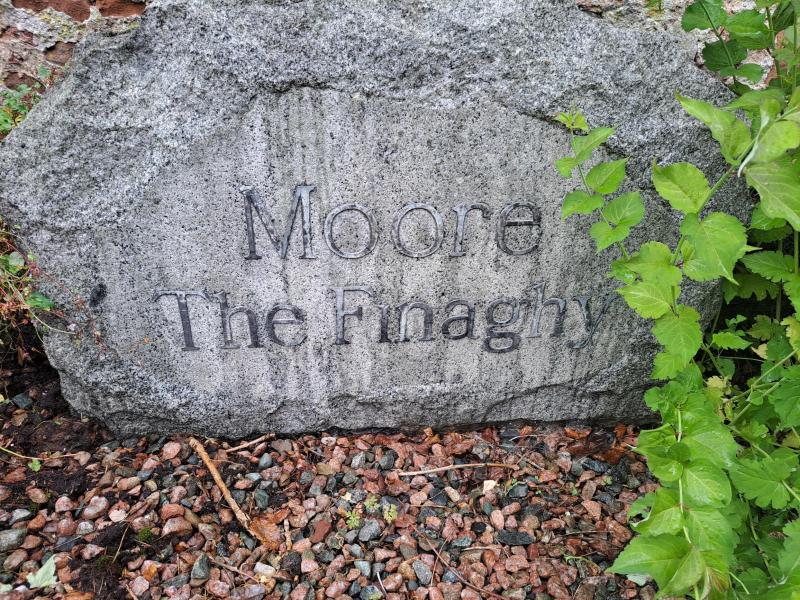
The Moore family burial ground can be found in their church, the First Presbyterian (NS) Church, Dunmurry. Marked simply as ‘Moore, The Finaghy’ it can be seen at the top of this page.
The title of this post comes from the Preface to A Collection of Psalms, Hymns and Spiritual Songs written by the Rev A.G. Malcolm for his hymnbook published in Newry in 1811.
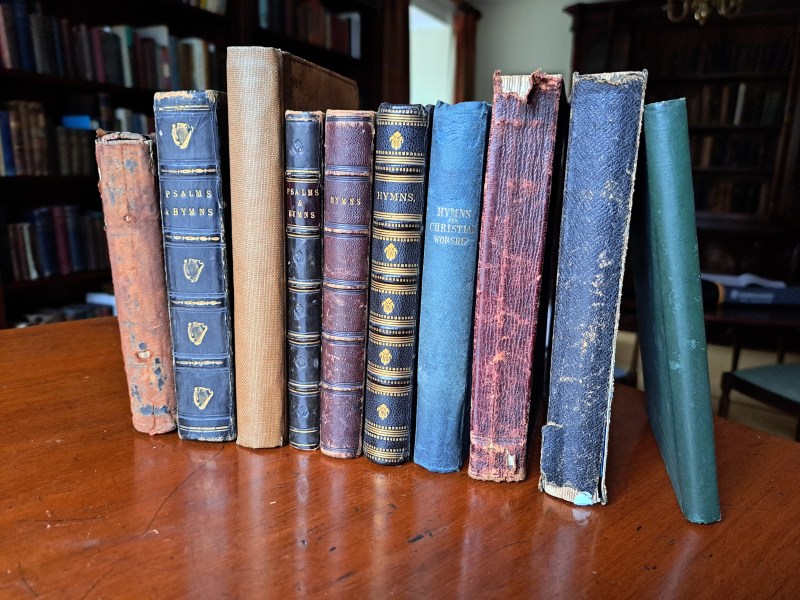
Click on the video to explore Irish Non-Subscribing Presbyterian hymnbooks
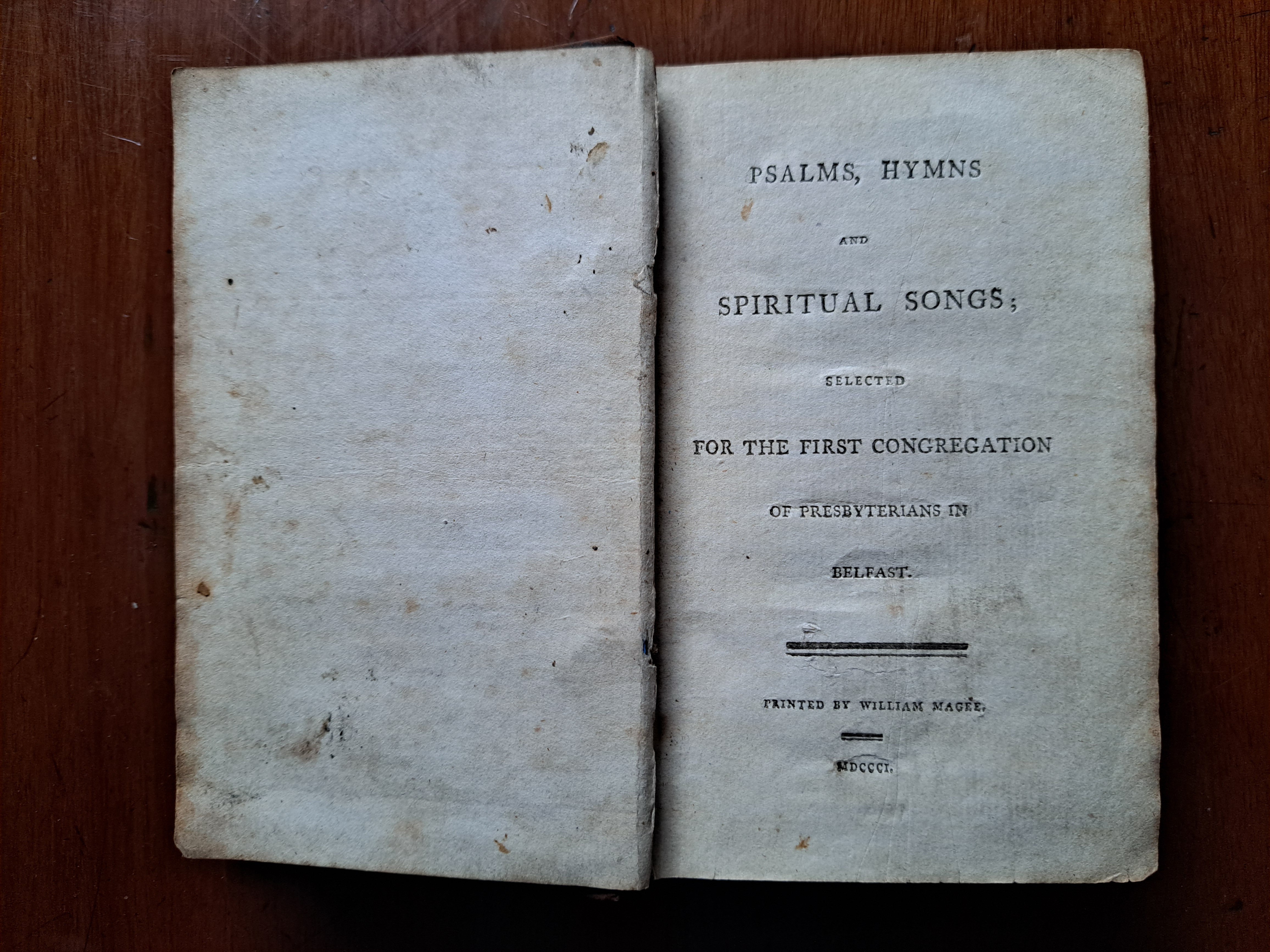
Prior to about 1800 Non-Subscribing or New Light Presbyterian churches, in common with other Presbyterians, would have worshipped with a Psalter or Psalm book. The first distinctly Non-Subscribing hymnbook appeared in First Church in 1801. What is surprising about this publication is that in the same year Edward Bunting offered to supply an organ to the church. This offer wasn’t taken up although in just a few years the Second Congregation were to become the first church with an organ, First Church not acquiring one until 1853. The Rev William Bruce edited this collection and 1,200 copies were published. A choir seems to have led the singing which initially contained boys but was later expanded to include adults.
First Church’s Collection of 1801
William Bruce’s book contained 246 hymns, with an index of first lines and a brief one page table of subjects. The next hymnbook, the Newry edition of A.G. Malcolm, contained 405 hymns with a more substantial table of subjects running over eight pages. Plus it had an index of first lines with the names of authors (for example Barbauld, Watts, Doddridge, Kippis, Merrick, Wesley, Addison, Enfield) which showed the eclectic sources the book drew on from within Dissenting circles and beyond.
An interesting preface also explained their intentions:
…care has been taken, to select psalms and hymns, which treat of of the leading points both of faith and practice; and it is hoped, that the compilation will be found to contain a sufficient variety of the best compositions, in sacred poetry, adapted to all the principal subjects of Christian devotion.
A.G. Malcolm went on:
Correctness, both in sentiment and style, has also been made an object of considerable attention. Hence, many verses have been altered; and such psalms and hymns as seemed, in any degree, unsuitable to the simplicity and solemnity of divine worship have been omitted.
As the work is intended for general use, and must be expected to fall into the hands of persons, who unavaoidably differ from one another, in their opinions, on religious subjects, all expressions, which appeared likely to give offence to any sincere Christian, have been studiously avoided.
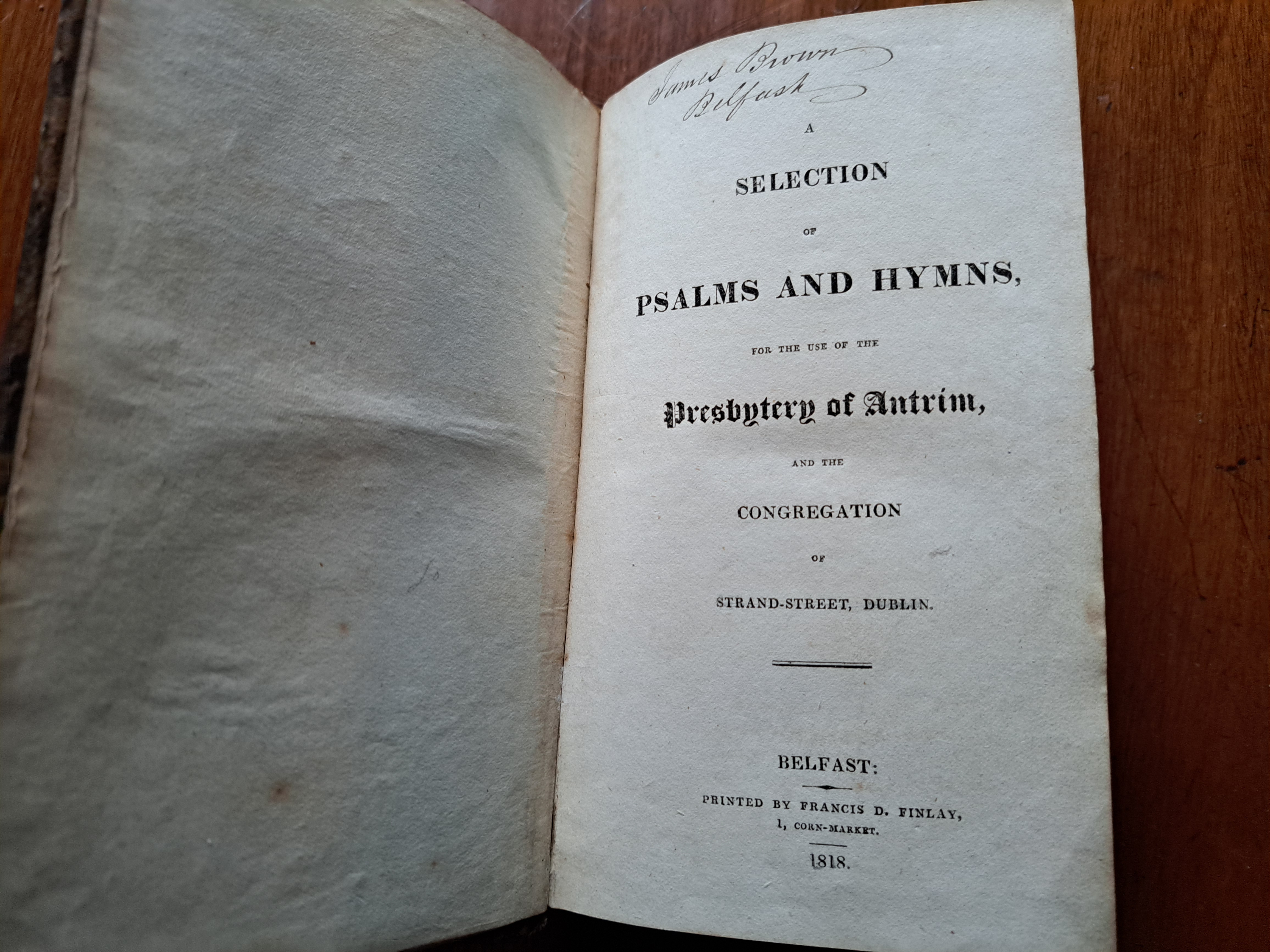
Interestingly the next hymnbook, dated Belfast, July 1818 and edited by Rev W.D.H. McEwen, made a similar point in a slightly more forceful way in its Preface:
Some doctrines are so offensive to the societies, for whose use this compilation is principally intended, that they are carefully avoided. As to others, the same scrupulosity is not observed; for, with respect to them, there may exist a diversity of sentiment. This selection may, therefore, be thought defective, but it will not disgust by a pertinacious obtrusion of doctrine.
So certain doctrines weren’t allowed to get in the way! Some were left out all together – the Trinity, the theory of the atonement based on penal substitution – and on some doctrines Non-Subscribers were able to agree to differ.
W.D.H. McEwen,s hymnbook
The book was published for the Presbytery of Antrim and the congregation of Strand Street, Dublin but it came from the minister of the Second Congregation. Curiously they had installed an organ in 1806 and had Edward Bunting as their organist from then until 1817. So they don’t appear to have had a hymnbook of their own for the first dozen years after installing the organ.
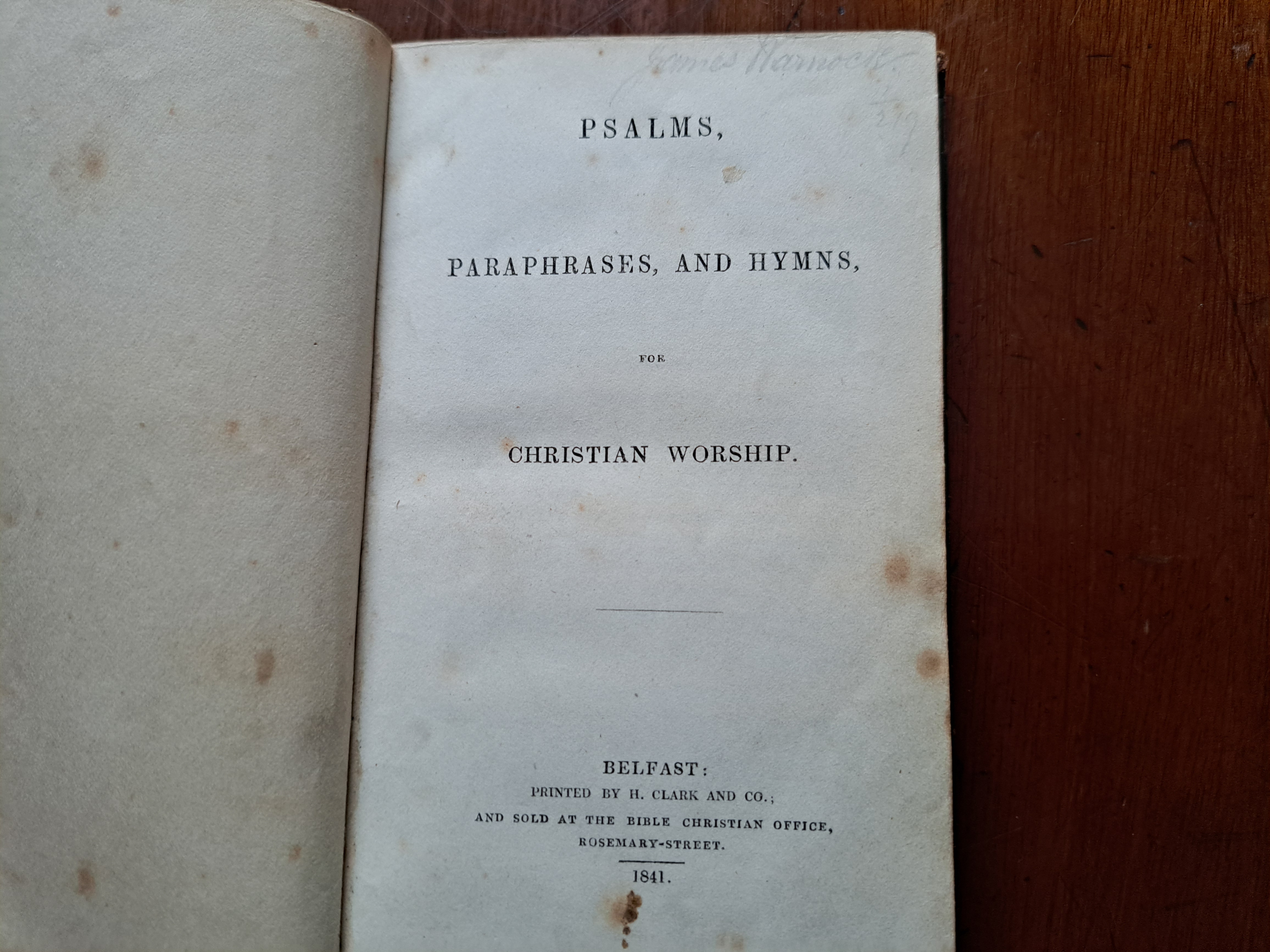
Following the establishment of the Remonstrant Synod of Ulster in 1830 Non-Subscribers moved towards the development of a hymnbook for all churches. This is Psalms, Paraphrases, and Hymns, for Christian Worship published in Belfast in 1841:
Psalms, Paraphrases, and Hymns, for Christian Worship 1841
This is the first edition of what became Hymns for Christian Worship, a book which went into at least four further editions before the end of the century and was followed by a supplement in 1899. Throughout this time this was the main series of hymnbooks in use in the churches in Ireland. More detail can be seen in the video above.
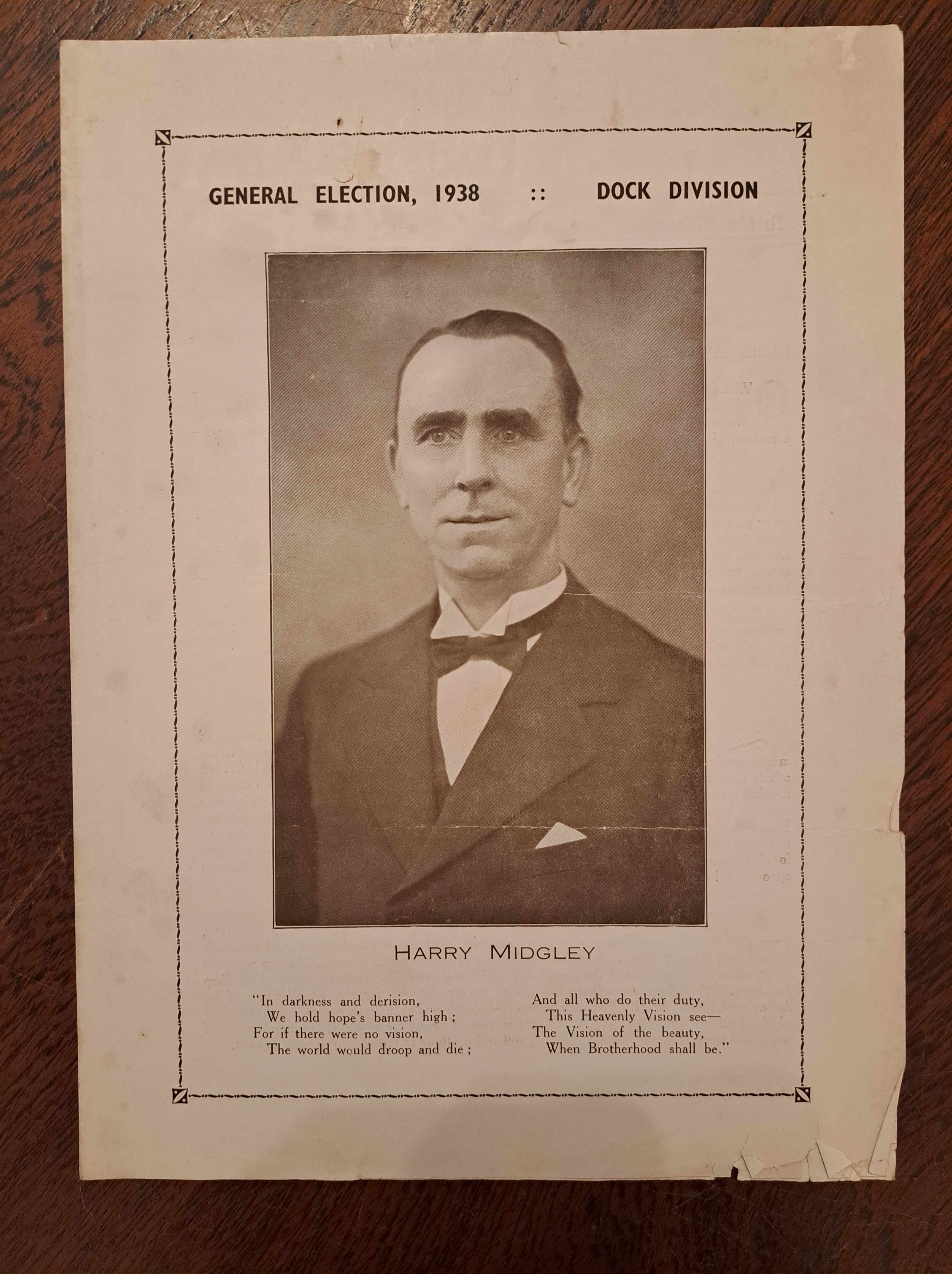
One of the recently discovered items in the Very Rev William McMillan Library is the election address produced by Harry Midgley for the Dock Constituency in the 1938 Stormont Election. This is a fascinating piece of history, a very rare survival, that tells us about the career of a controversial figure in Belfast political history:
Click above to see the video
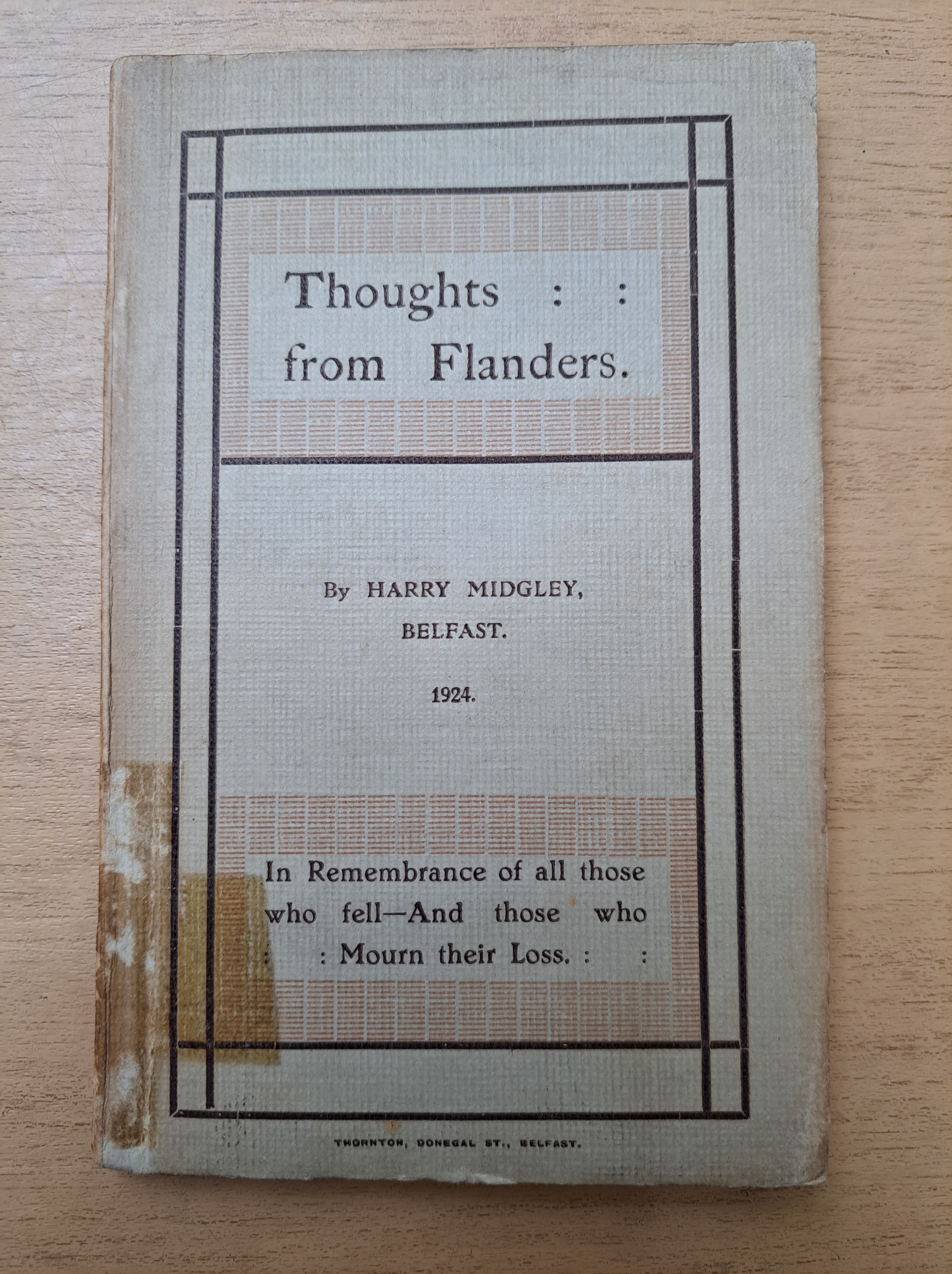
Harry Midgley was born in North Belfast, in Tiger’s Bay, and from his youth was involved in the nascent Labour movement in Northern Ireland. According to the ‘Dictionary of Irish Biography’ as a boy he attended a Sunday School connected with the Independent Labour Party in Belfast and he certainly met Keir Hardy in Befast as a youth and began speaking on behalf of the ILP on the Custom House steps while still a teenager. In his early days, right up to the early 1920s, Harry Midgley supported the all-Ireland Socialist ideals of James Connolly, nevertheless on the outbreak of war in 1914, along with his brothers, he joined up, enlisting in the Royal Inniskilling Fusiliers and served throughout the First World War. Later, in 1924, he published his reflections on his war-time experiences in poetic form. Much influenced by Kipling his verses also show the mixture of Christian values coupled with utopian socialist ideals which underpinned his politics throughout his career.
On his return from the war he immersed himself in politics, firstly getting a job as a shipyard joiner with Harland and Wolff, and soon after being appointed as organising secretary of the Irish Linenlappers’ and Warehouse Workers’ Union. This was his entry into the Labour movement and he became active in different organisations particularly the Belfast Labour Party.
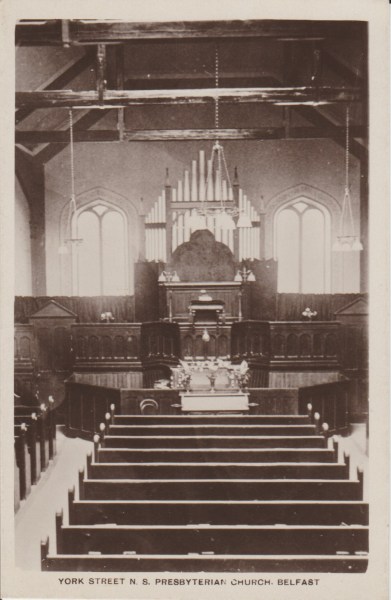
He also became a member of York Street Non-Subscribing Presbyterian Church (see picture at the top of this page) at a time when it was perceived as very left-orientated under the ministry of the Rev A.L. Agnew. Indeed when he fought the West Belfast Westminster constituency in 1924 (gaining over 21,000 votes, although not proving victorious) A.L. Agnew and the Rev E.I. Fripp, minister of All Souls’ NSP Church, were amongst his most prominent supporters. York Street Church was also characterised by very open political debate in the early 1920s, and welcomed speakers of all political backgrounds to its ‘mock parliaments’.
The Belfast Labour Party had proved very successful at its inception. In 1920 it won 10 out of the 60 seats in the municipal elections in Belfast. The Party gradually transformed to the Northern Ireland Labour Party and Harry Midgley became the first secretary.
In 1925 he was a elected to the council as a representative of the Dock Ward and a few years later, in 1933, he was successful in winning the Dock Constituency in the Stormont Parliament. However, in 1938 he lost this seat, partly due to the fall out from the Spanish Civil War. It is this from this election that the printed address in the Dunmurry Library comes. To see it and find out more about it click on the video above.
Gradually the Northern Ireland Labour Party adopted a pragmatic view of partition and Harry Midgley went along with this view. But for a party that tried to stand outside the sectarian divide the issue of the border was one that would not go away. The Northern Ireland Labour Party itself became divided over the position to take on the question of the border and eventually Harry Midgley was expelled, partly because of the strongly pro-Union position he ultimately adopted. He then formed his own Commonwealth Labour Party which enjoyed some success and as a Member of Parliament in Stormont he served in the war-time government, the first non-Unionist representative to be in government in Northern Ireland. Later he joined the Ulster Unionist Party, reconciled by the party’s willingness to follow the post-war social policies of the Westminster government. Having been elected as the MP for the Belfast Willowfield constituency at a by election in 1941 he continued to represent the same constituency up to the time of his death in 1957, first for the Northern Ireland Labour Party, then the Commonwealth Labour Party and ultimately for the Ulster Unionist Party, the only member of the Stormont Parliament to represent the same constituency for three different parties.
In later life he joined the Orange Order and the Royal Black Preceptory. A life-long supporter of Linfield FC he became a director of the club and ultimately the Chairman. At the time of his death he was Minister of Education.
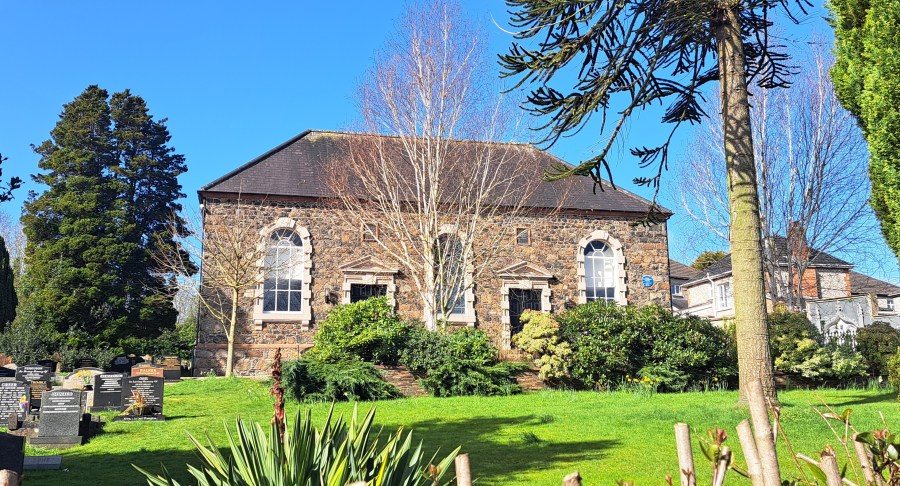
The congregation of First Dunmurry has existed since around 1676. The first meeting house was an old lime kiln, later a meeting house was built in 1714, and this was eventually replaced with the present remarkable building of 1779. So the congregation is almost 350 years old and the building itself is 245 years old. Since 1839 the church’s nearest neighbour has been the railway. That is a long time to be neighbours. The railway has run alongside the Church for all that time. Of course, it has been run by different operators over the years, steam trains have been supplanted by diesel, it has even changed gauge at one point, but the Belfast to Lisburn line was created back in 1839, the station at Dunmurry being added at the same time.
Because of this proximity the railway has inadvertently helped create for First Dunmurry a small footnote in film history. In June 1897 the cinematographer Alexandre Promio came to Ireland on behalf of the famous Lumière brothers to make the first moving film in Ireland. He filmed in Belfast, including street scenes in Castle Place and on Queen’s Bridge, fire-fighters practising, and a few seconds of the first football match ever to be filmed, which was Glentoran v Cliftonville at the Oval in East Belfast.
He also filmed short sections of the rail journey between Belfast and Dublin. Cameras were cumbersome and had to be hand cranked. To capture movement they had to be pointed at crowds or some human activity or placed on a moving platform like a train or a tram. So the train was an obvious place to go and filming the view as the train pulled out of a station was a good way to catch a local view.
As the steam train chugged out of Dunmurry station, sometime in the Summer of 1897, Promio filmed the view and the result was a 37 second burst of film called Départ de Dunmurry. The opening few seconds shows an intensely industrial scene based around the long demolished mill, not immediately recognisable as the modern Dunmurry. By the end of the film we are into open countryside.
This new video enables us to compare the trail blazing film of 1897 with a contemporary film of the same view in 2024. Départ de Dunmurry 2024 enables the viewer to make that comparison:
Click on the video to seeDépart de Dunmurry 2024
We can reflect on what has changed over those 127 years between 1897 and 2024. In one way we have to marvel at the technological progress that has taken place. In 1897 film was in its infancy, cameras were cumbersome, very expensive and required a lot of skill to use. Alexandre Promio was an expert who had filmed all over the world, one of only a handful of people who could do that. Today I am just one of literally millions of people who has a phone that is also a camera which can take digital films in colour with sound merely by pointing it in the right direction.
Imagine if you could show Alexandre Promio a modern phone or a digital camera. He would be more astonished than we could imagine. So we might ask what will technology be like 127 years from now? It is impossible to imagine.
But in the film what do we see today that is different? Today there are cars, lots of cars, there is a significant quantity of graffiti, but actually more trees and more houses. We can notice too that the old steam train takes a bit longer to get up speed than the modern diesel one. You wouldn’t know just looking at the videos though that the railways were much more extensive in 1897 than today. There were around 5,630 km of railway lines in those days, more than twice what there is today, and you could go virtually anywhere in Ireland by rail then. You are restricted to very limited routes today, particularly in Northern Ireland.
But when you compare the two films from 1897 and 2024 one thing has not changed and that is our church. Indeed it has not changed in any big way since 1779 when it was built. As the train curves to the right you can look up Glebe Road and see the church in its prominent position on top of the hill.
It represents our faith, our witness, and though the world changes around us in so many different ways, what we stand for and what we do is always equally important. As we look out of the window of the railway carriage we can see the changes and notice too our Church, the one constant in an ever changing world.
We also have another new video uploaded to YouTube. Non-Subscribing Presbyterian Reflections on Spring, Pentecost, and Psalm 104 from the newly refurbished Session Room and the grounds of First Dunmurry (NS) Presbyterian Church. With the Rev Dr David Steers, minister, and Allen Yarr, organist:
Back in January 2023 I posted a piece about a postcard of Dunmurry which showed the classic view of the church built in 1779. It was published in Lisburn by F.W. Harding and posted in November 1906. This is the picture:
As I mention in that post, postcards of Non-Subscribing Presbyterian churches are not that common. I have seen the 1906 view before and there is also a much later one but I was pleased to discover another postcard featuring the church, this one new to me:
This dates from a little later and although it is taken from a less popular vantage point in many ways it gives a much clearer view of the building. This card was published locally by ‘W. McCartney, Stationer and Tobacconist, Dunmurry’ in the ‘Signal Series’. It has at the bottom left hand corner the title ‘Unitarian Church, Dunmurry’ and was never posted. On the back, however, it is dated May 19th 1919 and has a message to an unnamed recipient which reads ‘With best wishes for your welfare from the People of Dunmurry and district from W. Laursen’. The name is actually a bit hard to make out but that is my best guess.
In a way it is a clearer picture than the 1906 view, being a Real Photograph, if a little damaged. But the view is not obscured by trees and you can clearly see the large amount of ivy that was then being allowed to grow over the left hand door. This is actually also present on the 1906 view although it is hard to make out behind the tree.
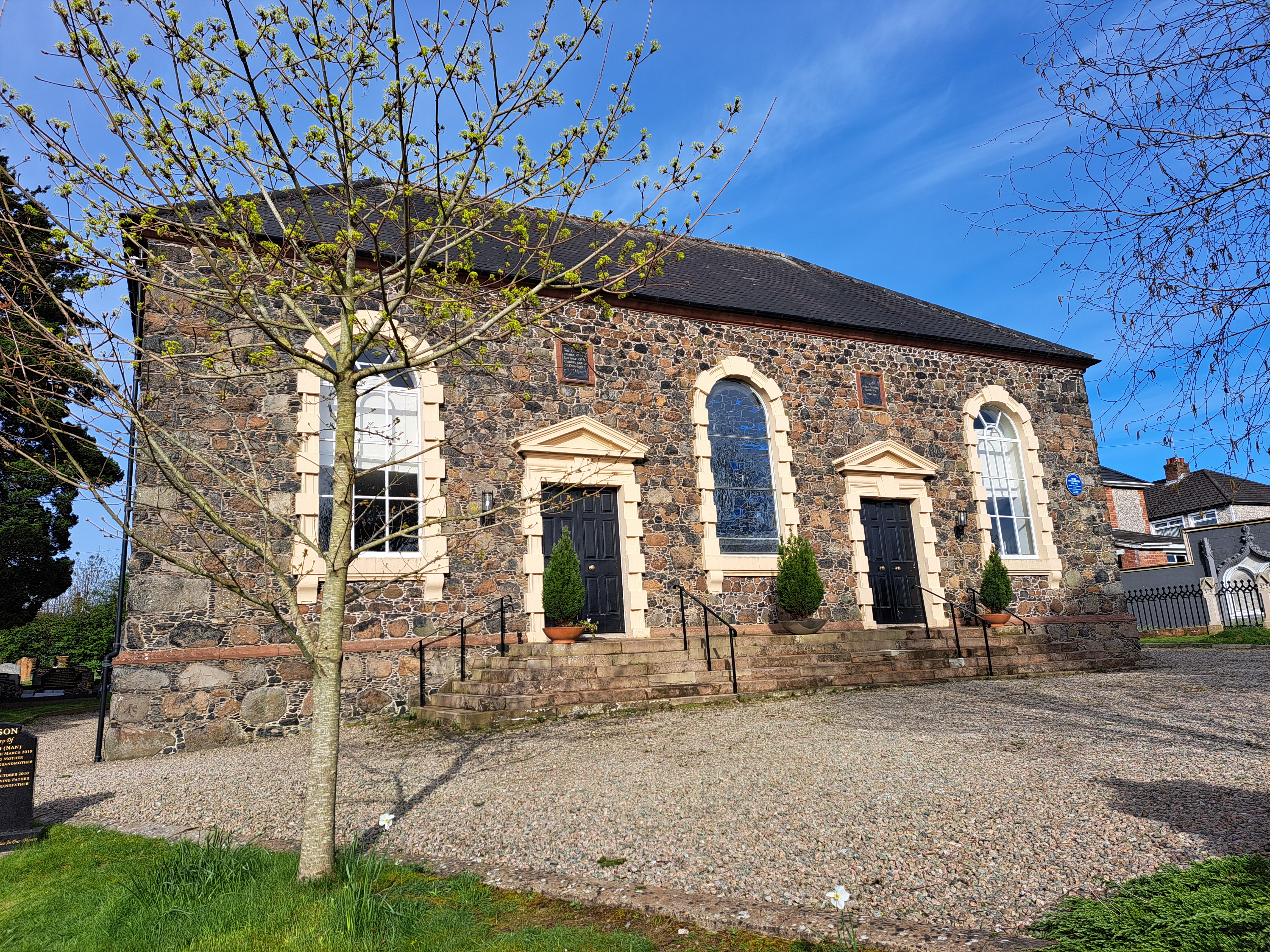
A modern image from more or less the same angle, taken a couple of weeks ago, shows the same view:
The view of the church hasn’t changed between 1919 and 2024. There are now houses along the side which weren’t there but the splendid building of 1779 is reassuringly the same.
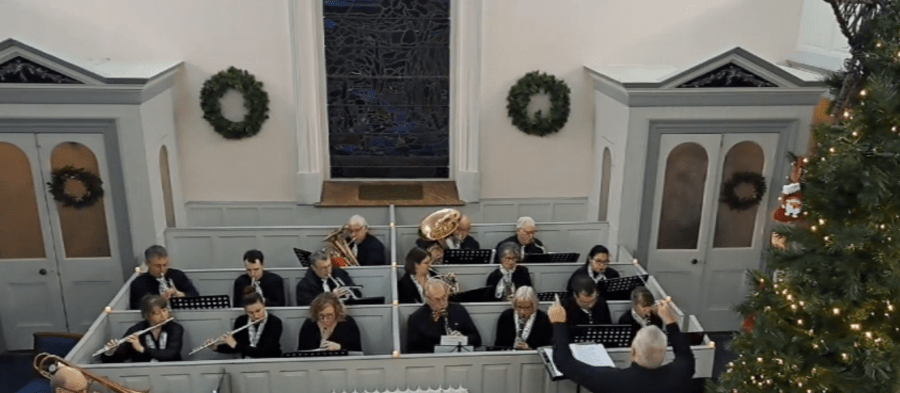
Harmonic Sounds Concert Band performing at Dunmurry
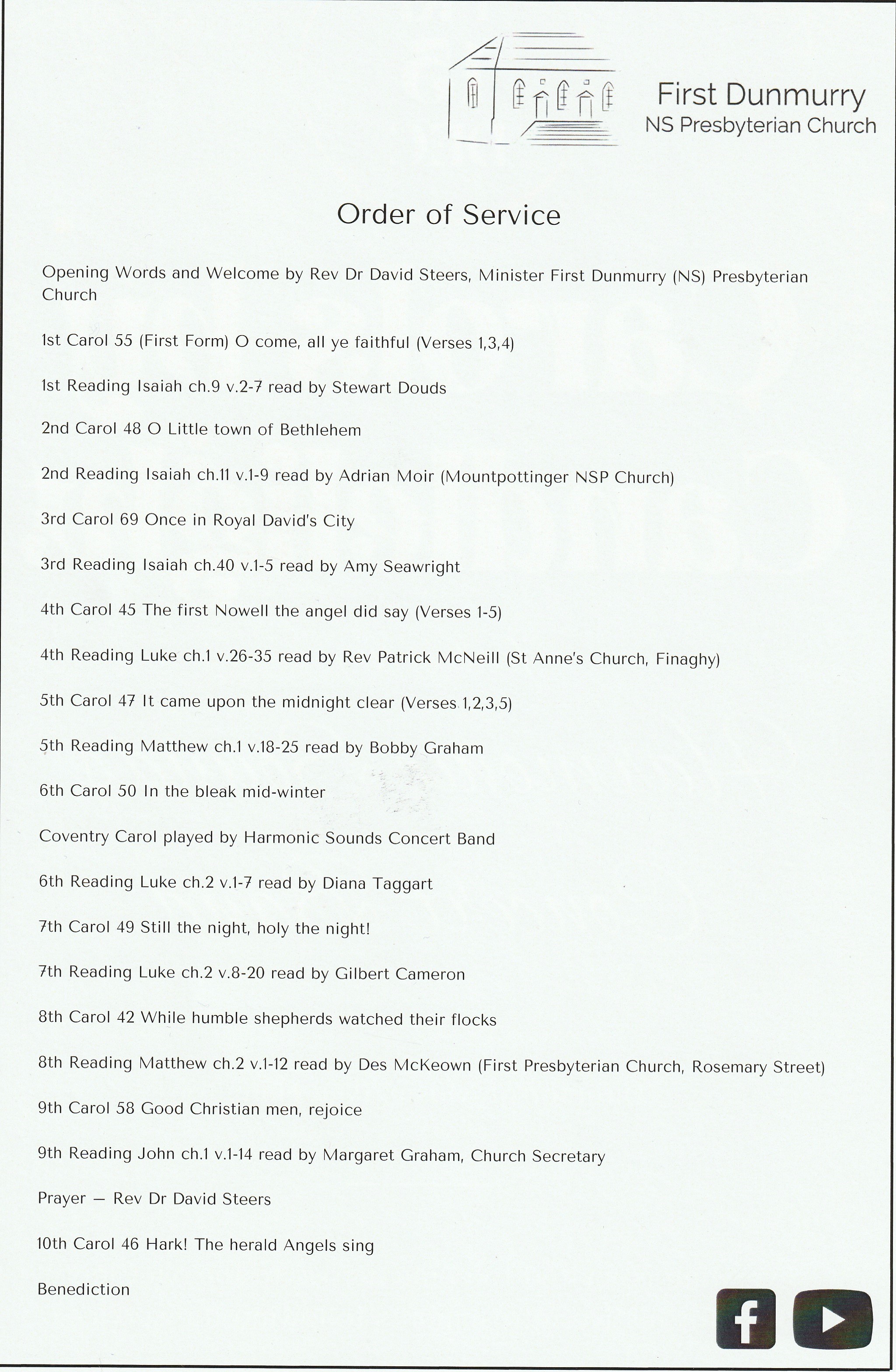
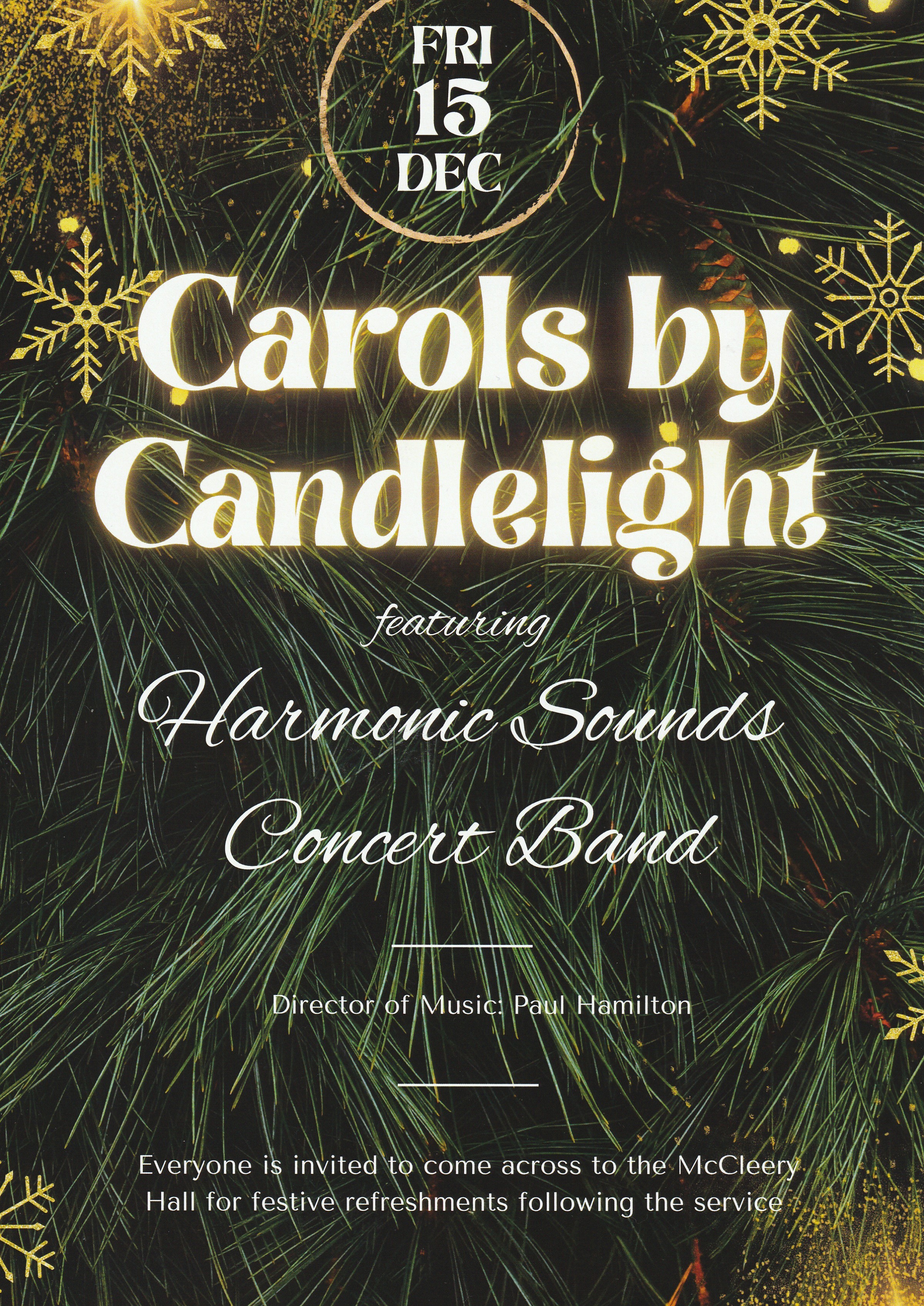
On Friday, 15th December we were delighted to welcome to Dunmurry Harmonic Sounds Concert Band under their Musical Director, Paul Hamilton to lead us in our service of Carols by Candlelight. The Church was beautifully decorated, there was a great attendance and readings were given by members and friends of the congregation.
Click on the video above to share in the service.
Order of Service
Another recent video which is available to view online is the sermon delivered in Church on Sunday, 10th December 2023, the second Sunday in Advent:


 velvethummingbee