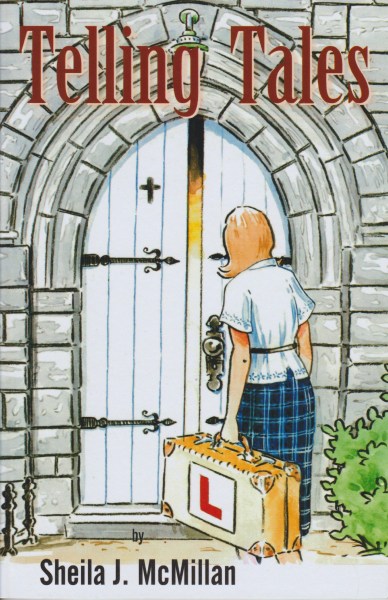
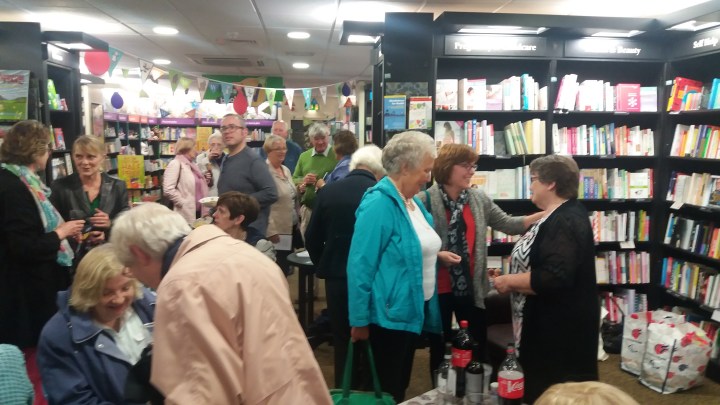
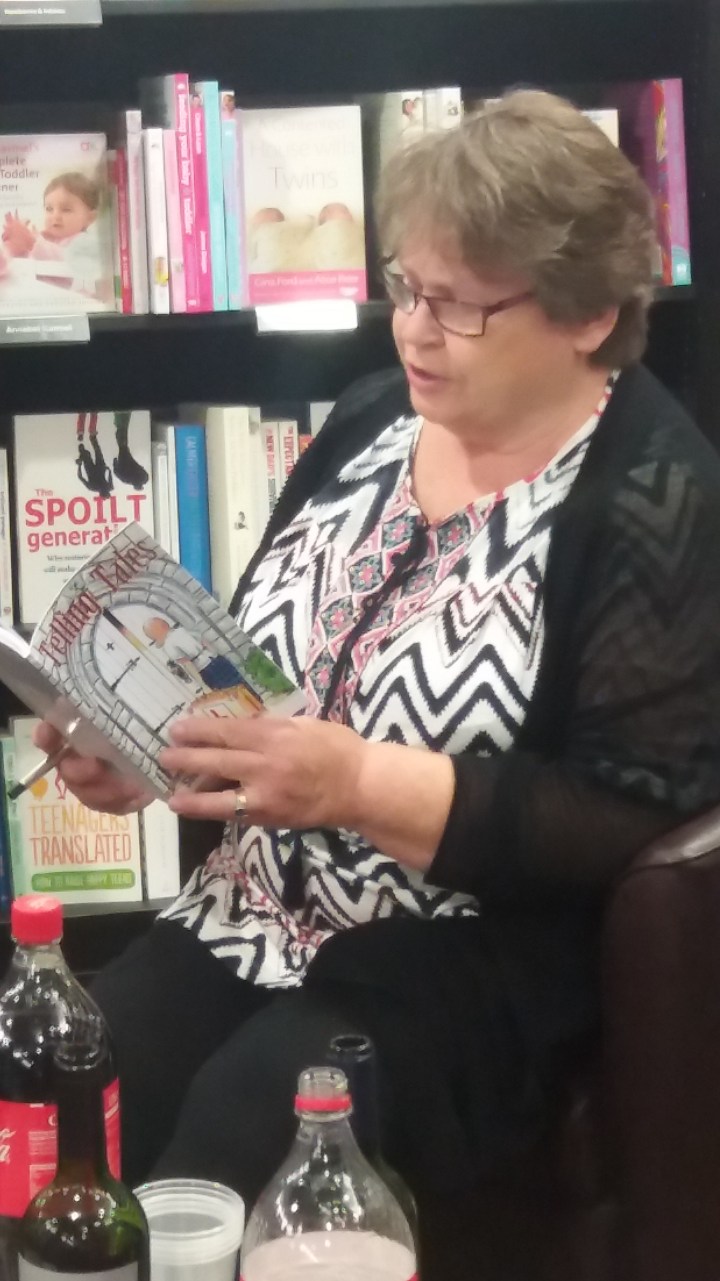
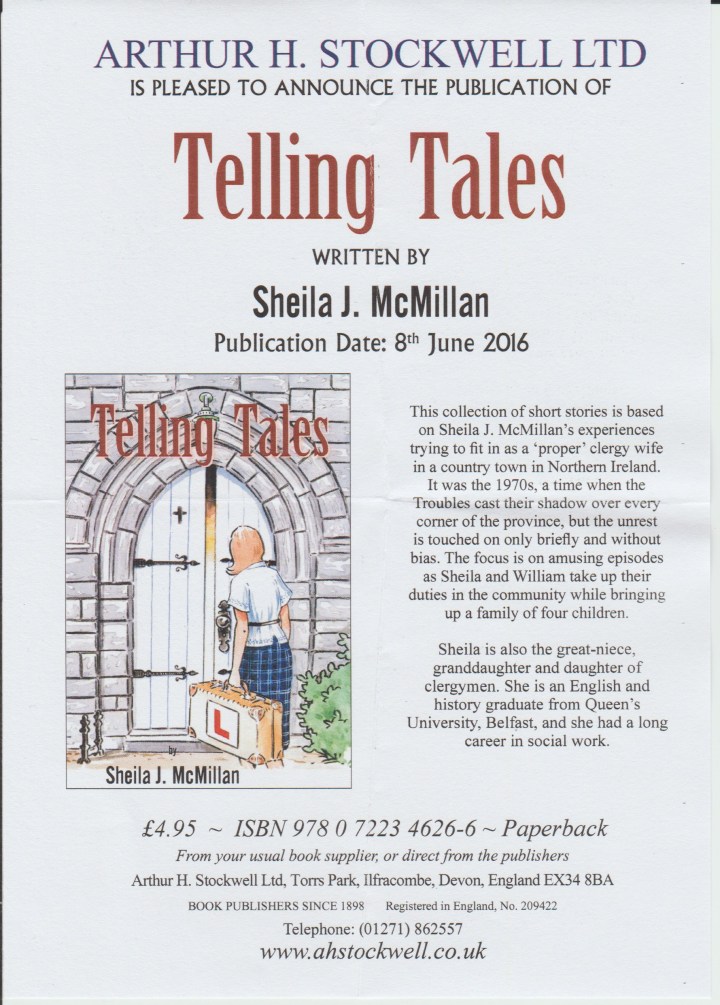
Sheila McMillan’s new book Telling Tales was officially launched at a reception in Waterstone’s, Lisburn on 30th June. It is good to see a large retailer like that supporting local authors and it was encouraging to see such a lot of people there for the occasion.
As the wife, daughter, granddaughter and great niece of ministers Sheila is well placed to write about life inside the manse. But this is no pious collection of platitudes and improving tales as one suspects that many ministerial or ministerial family memoirs must be. Sheila writes well and entertainingly. As one of the speakers said at the launch she can handle humour which is a rare skill and the book is full of good stories told with great humour. What makes them funnier is that they are all true (although in some cases the names have been changed to protect the guilty) and they have an honesty and directness which appeals.
Some of the people Sheila has known are truly remarkable. Her pen portrait of Elizabeth Law Barbour Andrews (who considered her names unsuitable and preferred to be known as Elba), the orphaned daughter of Thomas Andrews who designed the Titanic, and who bustled into Sheila’s life with some force is one that stays in the mind.
Some of the tales told will make you laugh out loud but Sheila also has some very moving stories. If you want to know what it felt like to be a mother anxious about a son who had disappeared for 24 hours in Belfast at the height of the Troubles then her story ‘A Nightmare in the Northern Ireland Eighties’ does that.
The benefits of coming from a clerical household are enormous. Having to ascertain from an elderly patient with a neurological complaint whether he was unable or unwilling to speak the answer comes when he remembers her clergyman grandfather who shut down the only pub in his village. In ‘A “Religious Experience”’ Sheila recounts a trip to Japan to take part in an IARF inter-faith conference and to experience the Shinto religion first hand. This is insightful and witty and tells you more about such encounters in a few pages than most earnest official reports of such gatherings ever do.
But it is a good read and one that can be recommended. All proceeds go to the Northern Ireland Branch of the Multiple Sclerosis Society.
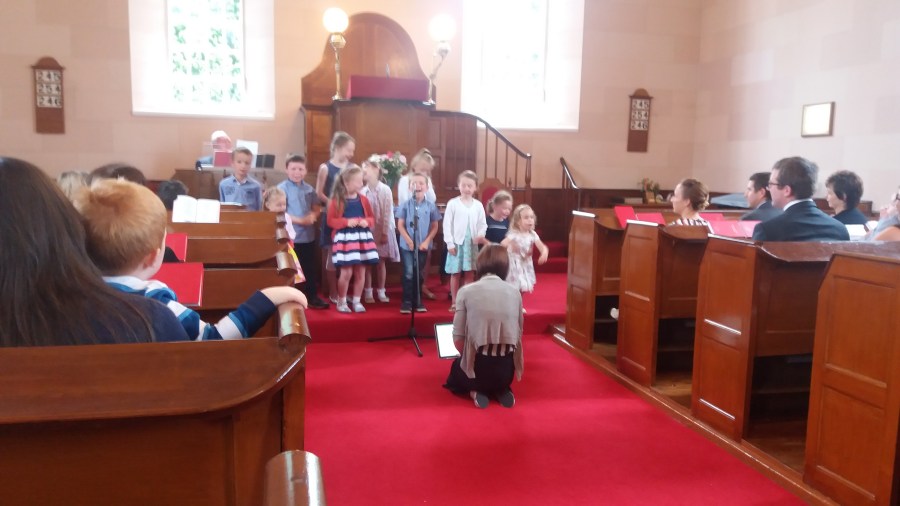
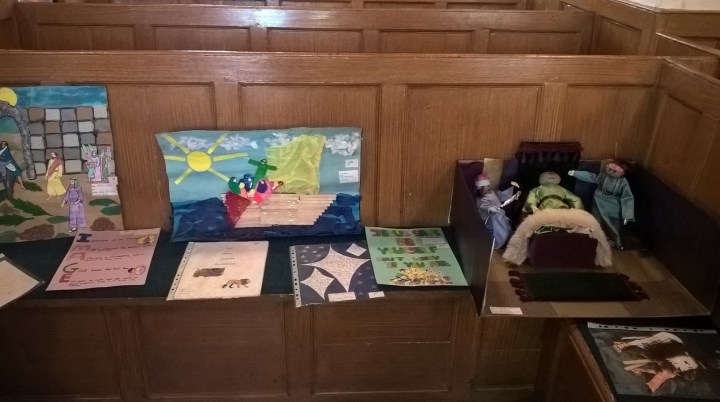
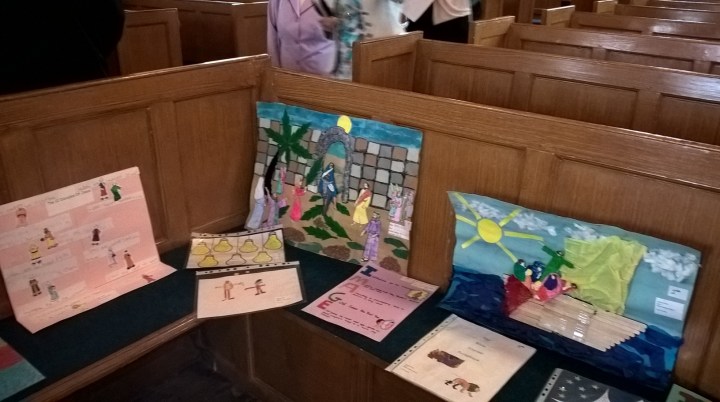
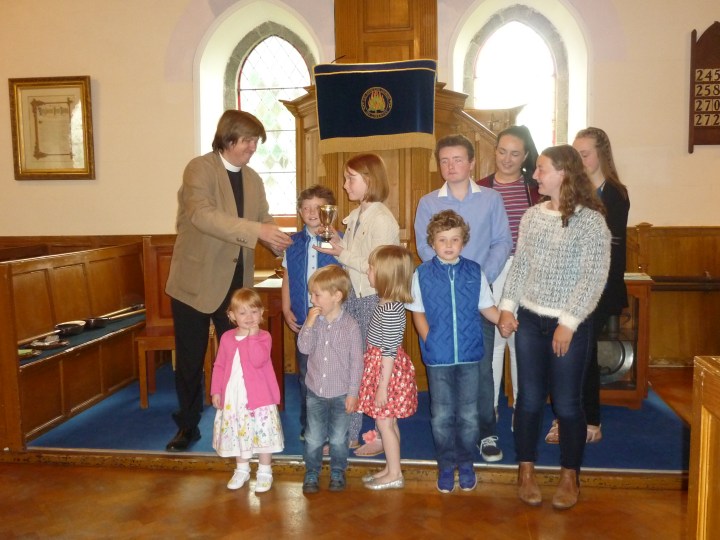
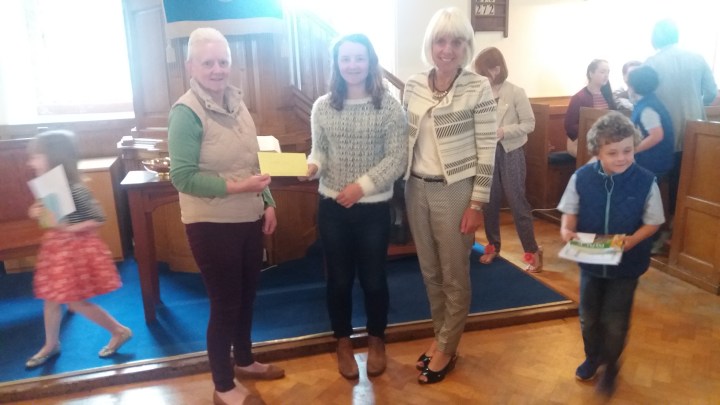
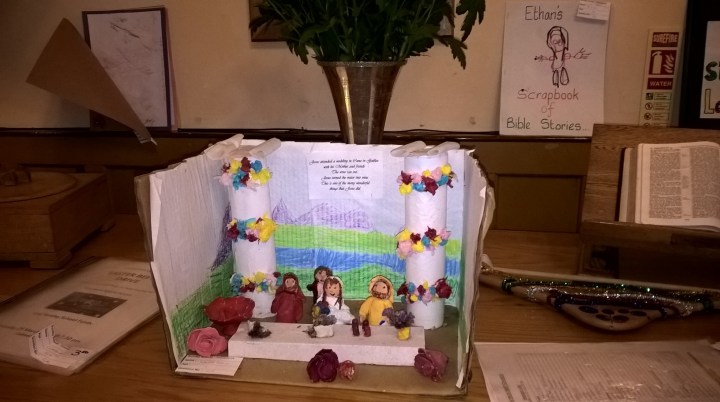
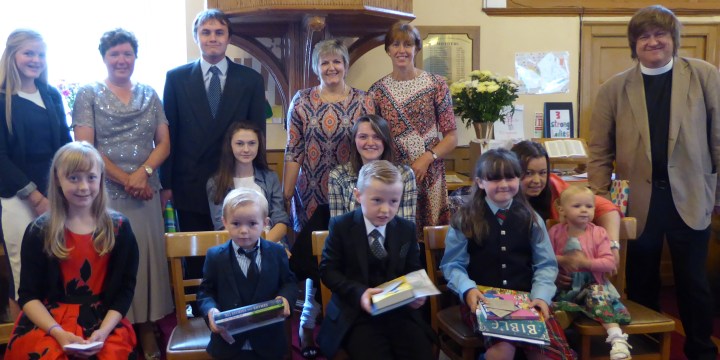
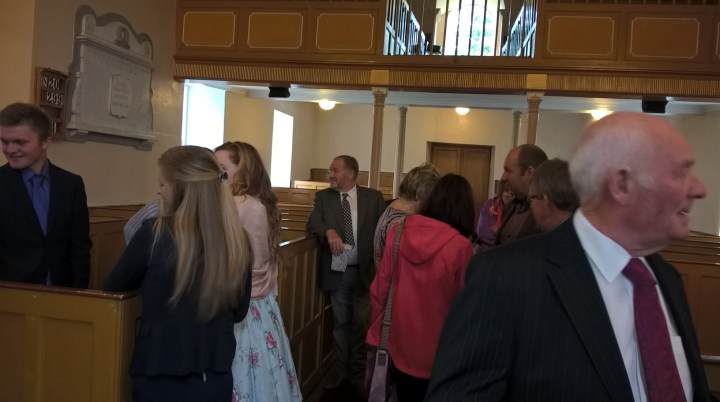
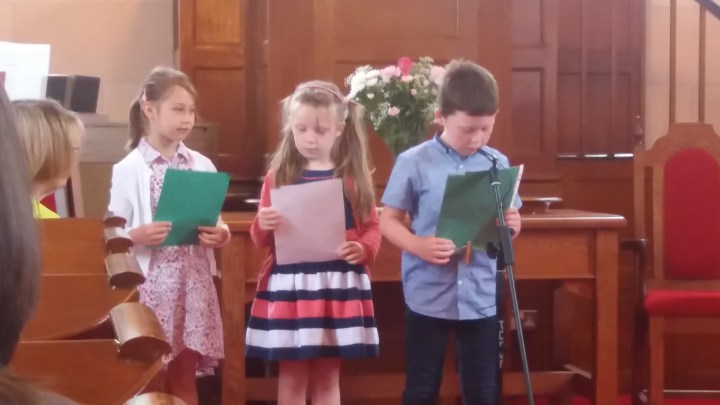
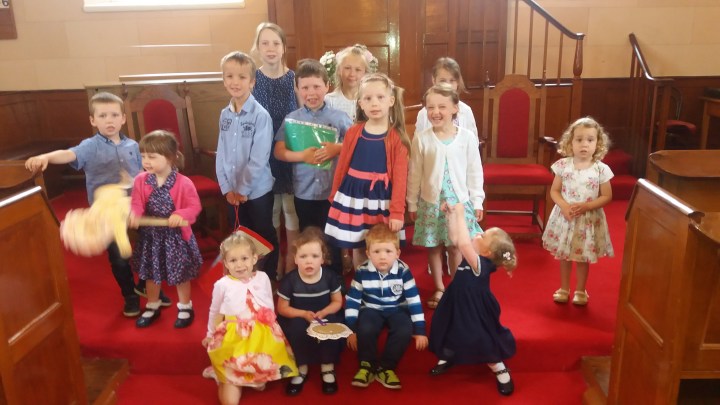
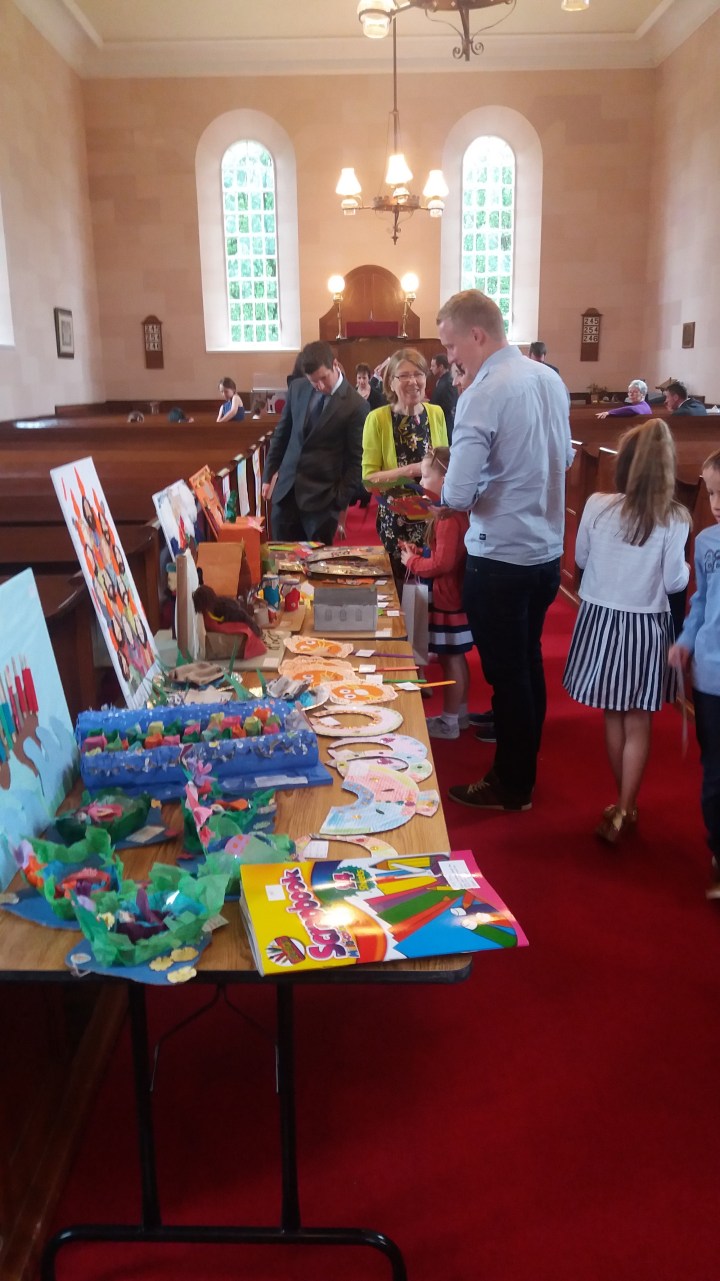
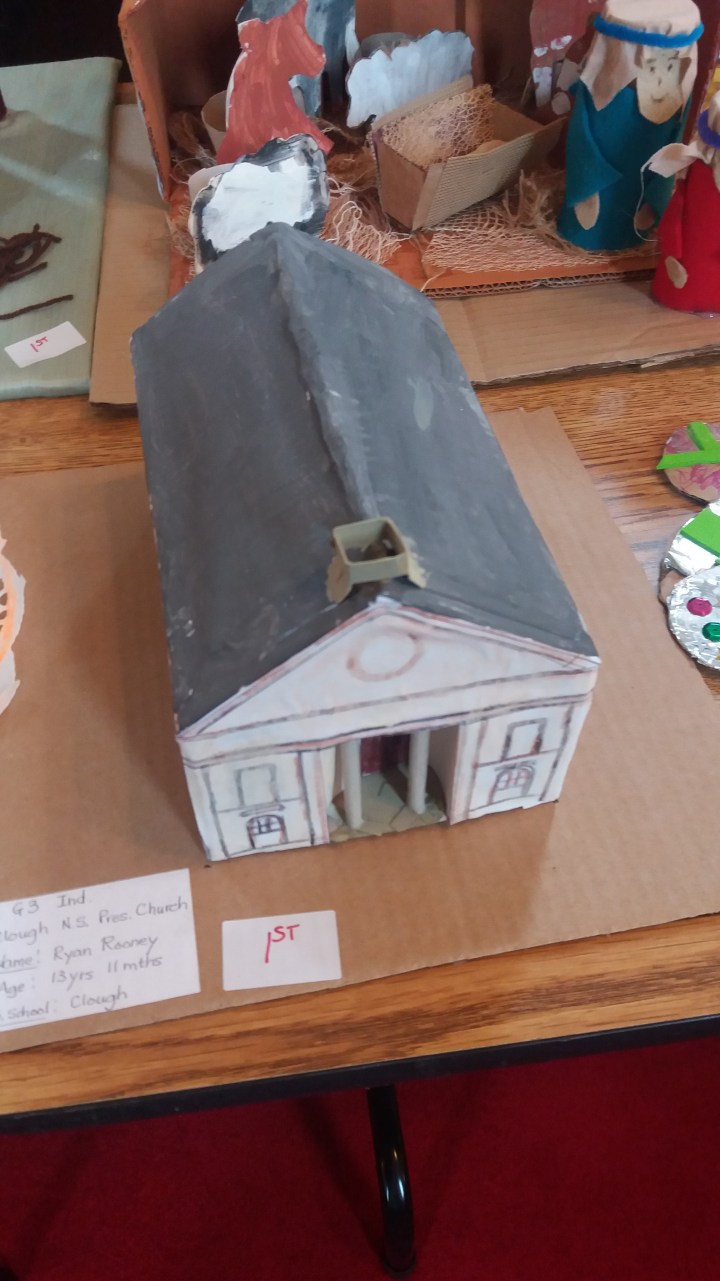
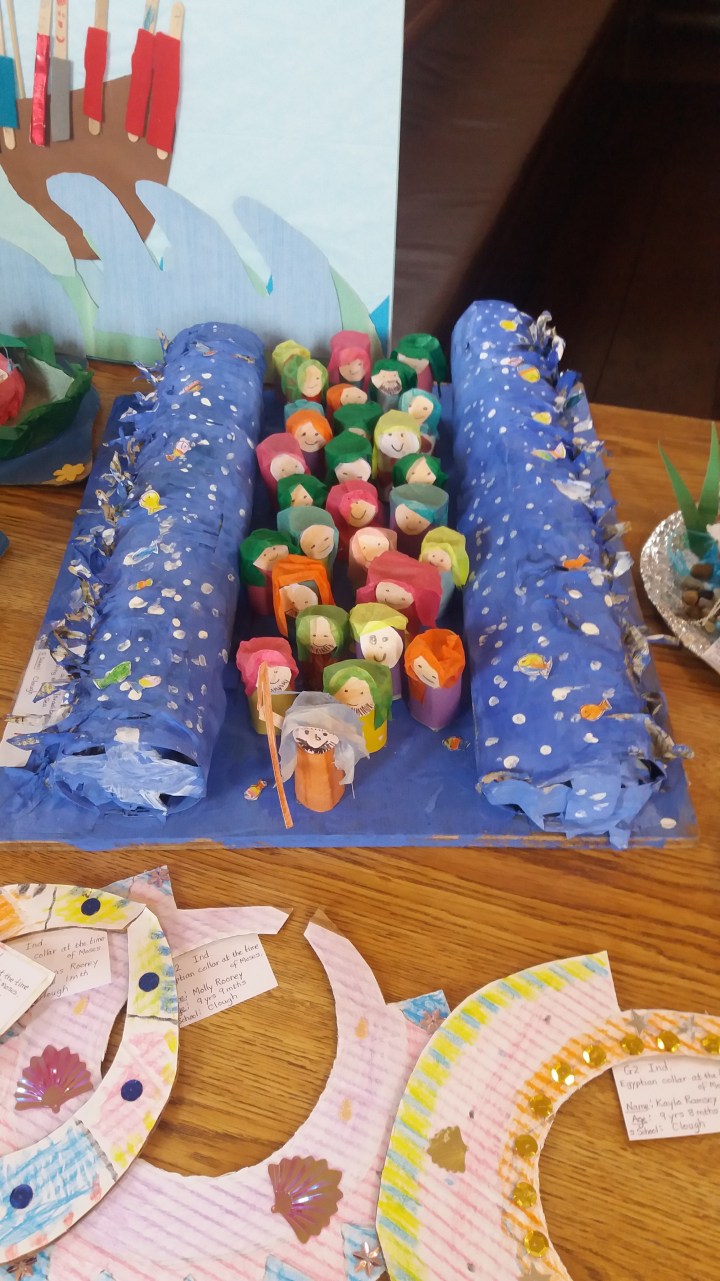
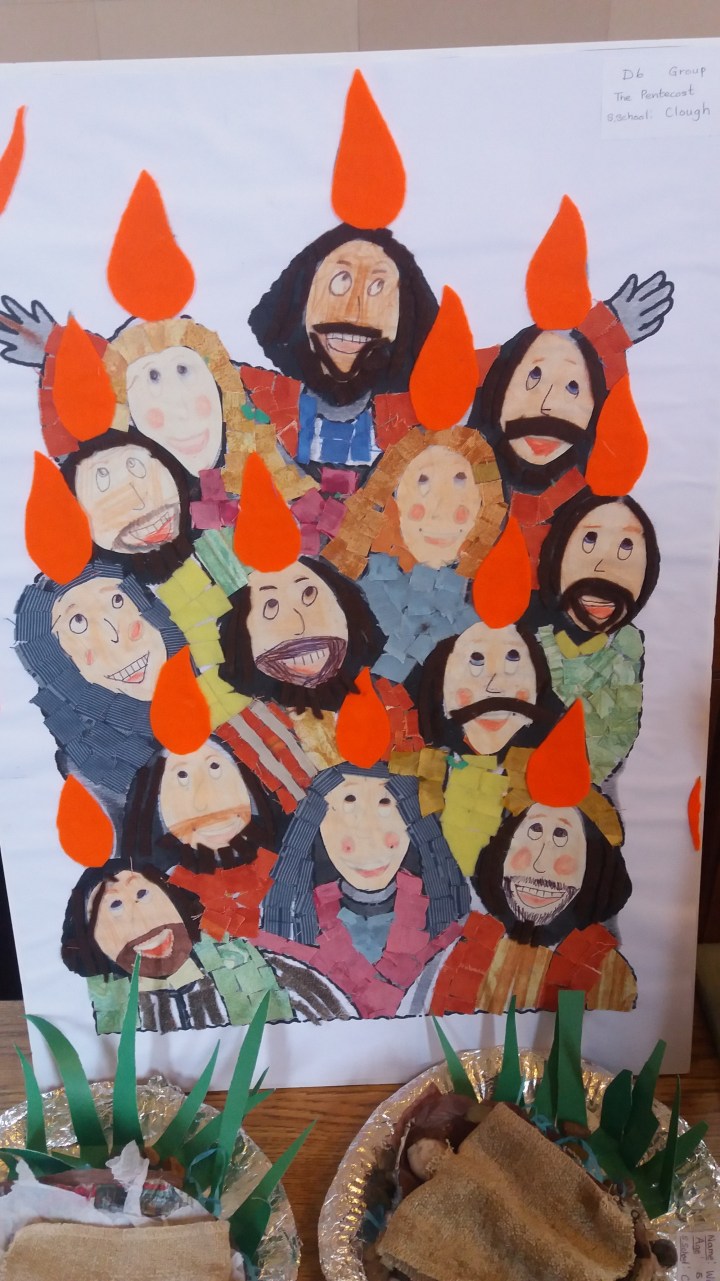
The Children’s Day services held in June each ear are always important occasions for all three of our churches. They bring to the front the tremendous work done by the children and young people and the Sunday School teachers in the churches throughout the whole year. All the work prepared for the denominational Sunday School Exhibition held at the start of June is displayed in our churches and the prizes won by the children at the exhibition are distributed along with prizes for attendance. Between the three congregations the Sunday Schools won an astonishing 34 prizes, a considerable achievement. On top of that the children lead the worship with songs, readings, prayers and often dramatic pieces which have been carefully written and prepared. Each of the Sunday Schools also work at fundraising for an appropriate charity over the year which is an expression of their awareness of the needs and concerns of wider society.
Below I will post some pictures of the occasions held on 19th and 26th June.
Ballee
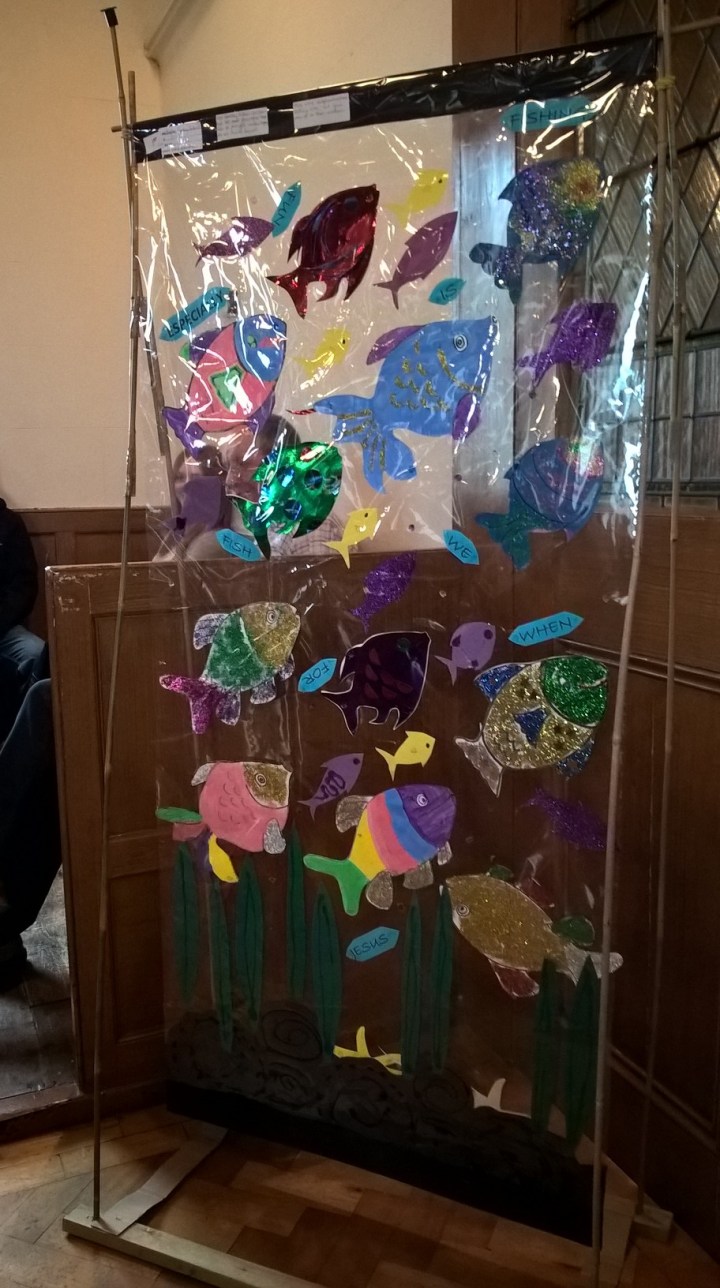
High points this year included Ballee winning the Millennium Cup for the Most Original Entry (for the sculpture featuring the fish) and the presentation to Joy McBride of a cheque for all the money they have raised for Mainstay DRP.
Downpatrick
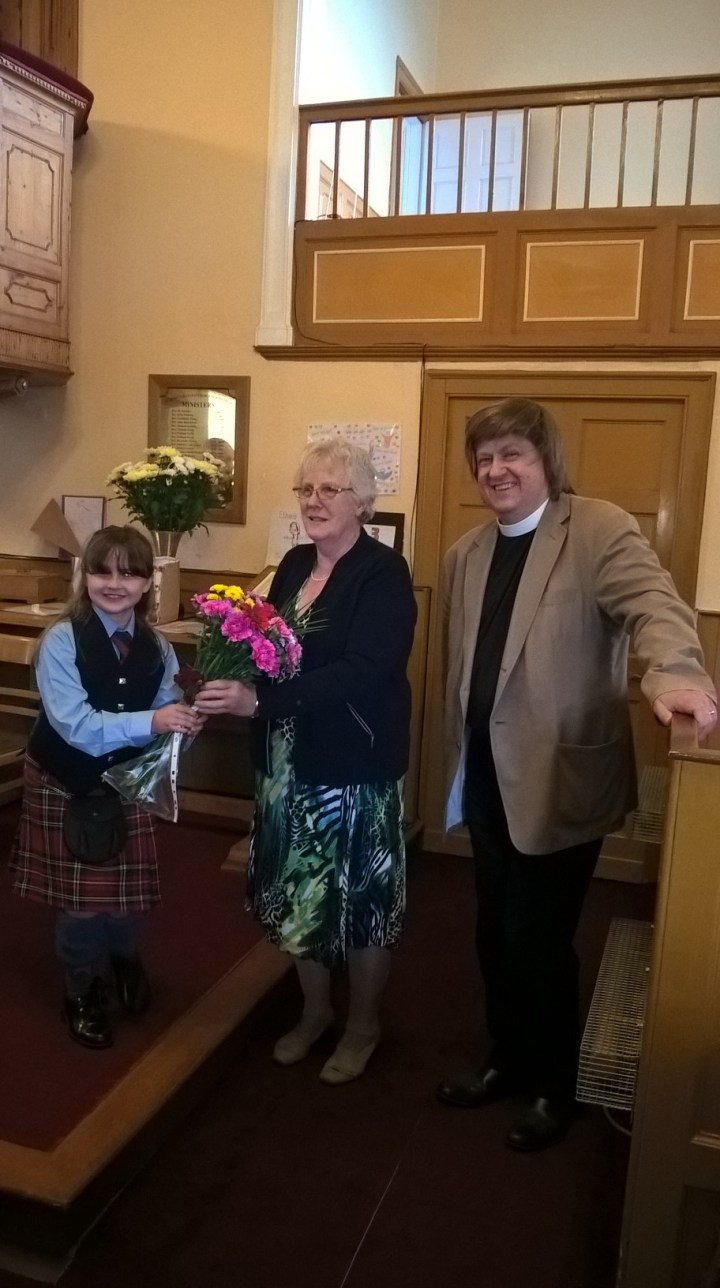
There was some great work on display in Downpatrick and as well as music and readings the service included a presentation to Mary Stewart, the church secretary, by Laura Neill on behalf of the Sunday School. Mary has recently been awarded the British Empire Medal in the Queen’s Birthday Honours List for services to the Downpatrick community and it was good to be able to congratulate her as a congregation.
Clough
The Sunday School excelled itself in both the denominational Sunday School Exhibition (winning an astonishing total of 18 prizes) and the first class service they led at Clough. Kayla Ramsey presented a cheque for £280 raised for charity by the children.
The Spring and Summer 2016 issue of Faith and Freedom (Volume 69 Part 1, Number 182) is now available.
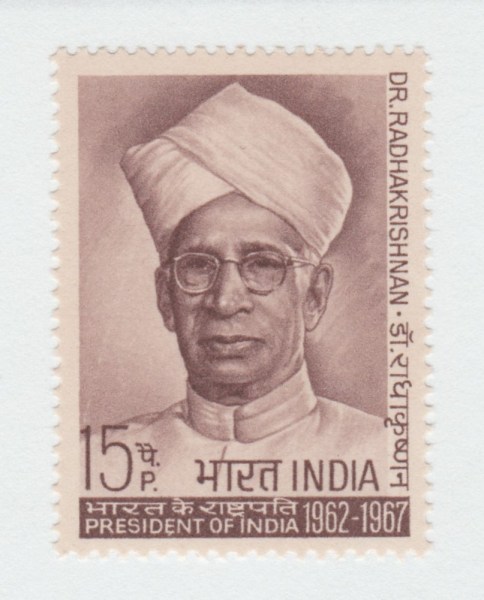
There’s a great deal in it, including Rachel Muers’ and Rhiannon Grant’s examination of the subtle checks and balances of Quaker decision-making processes in ‘At the Threshold of Community’. Ralph Catts discusses ‘Child spiritual development and the role of a liberal church’ and Victor Lal gives us the third part of his research on ‘The Unitarians of the West and the Brahmo Samajees of the East at Manchester College, Oxford 1896 –1948’. Indeed the cover picture on the latest issue includes an Indian 15P. stamp dating from 1967 and featuring Dr Sarvepalli Radhakrishnan who was Upton Lecturer in Comparative Religion, Manchester College, Oxford, from 1929 to 1930, later becoming President of India between 1962 and 1967. Dan C. West discusses ‘The Emerging Church’ and Susan Fogarty examines questions of ‘Faith Tourism’ in the context of poet and Welsh Anglican minister R.S. Thomas. Mark Adair’s paper ‘Once upon a time’ on the use of stories in religious discourse takes as its starting point a line of dialogue from the 1987 film Planes, Trains and Automobiles: “Everything is not an anecdote. You have to discriminate… Here’s a good idea: have a point. It makes it so much more interesting for the listener…”
This issue also includes a review article of the Unitarian Historical Society’s Essays in Honour of Alan Ruston contributed by Martin Fitzpatrick as well as reviews by Marcus Braybrooke, Pat Frankish, Rosemary Arthur, Lena Cockroft, and Iain Brown. There’s much that will interest any reader on a whole range of subjects.
If you would like to subscribe to Faith and Freedom, which is published twice a year, you can do so online via PayPal through the Faith and Freedom website:
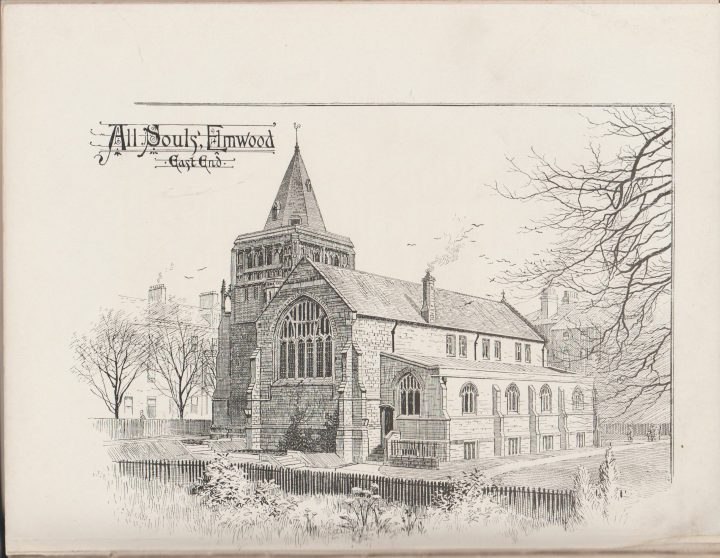
The current celebrations of the 400th anniversary of the death of William Shakespeare prompt me to think about the Rev Edgar Innes Fripp. His is not a name widely remembered today but I was very aware of him when I was minister of All Souls’ Church in Belfast as a very distinguished predecessor in that pulpit, indeed the minister under whose leadership that church was built in 1896.
E.I. Fripp didn’t really get the attention he deserved in the congregation, although I wrote and spoke about him on a number of occasions. If the congregation looked to anyone as an historical exemplar it was A.L. Agnew whose own particular heroic story in the course of a 54 year ministry was partly based on an undoing of the achievements of his predecessor Fripp. He did away with the ‘Fripperies’ that remained from early in the century even to the extent – or so I was told – of having a bonfire of old service books along with assorted hassocks, communion table cloths and pulpit hangings. Fripp had introduced an edited version of the prayer book to the church, a robed choir and a much more devotional style of worship than had been the case before. More than that he had built the church, a little medieval English parish church in suburban Belfast. It was his vision in achieving this that had enabled the church to survive. Without this move it would have been unlikely to have lasted in Rosemary Street, and although there may have been a falling off in attendances between the wars it suited the narrative of the later arrival of Dr Agnew and the York Street congregation following the blitz of 1941, to write off everything that had gone before. In fact the destruction of the York Street building made an eventual union of the two congregations inevitable but without the intervention of the German Luftwaffe even that probably would not have taken place.
All Souls’ in 1900
By the time I was minister at All Souls’ a large majority of the congregation had belonged to York Street or were descendants of that congregation. The Second Congregation families, the original All Souls’ people, were a minority yet there were a few who remembered Edgar Innes Fripp. This wasn’t because they were extraordinarily old, because although he had built the church in 1896 and left in 1900 he had returned at the start of the 1920s for a few years. In the 1990s there were some people who had childhood memories of Fripp and what they remembered in particular was his interest in Shakespeare. He was much given to quoting him and increasingly found inspiration in his writings for his sermons.
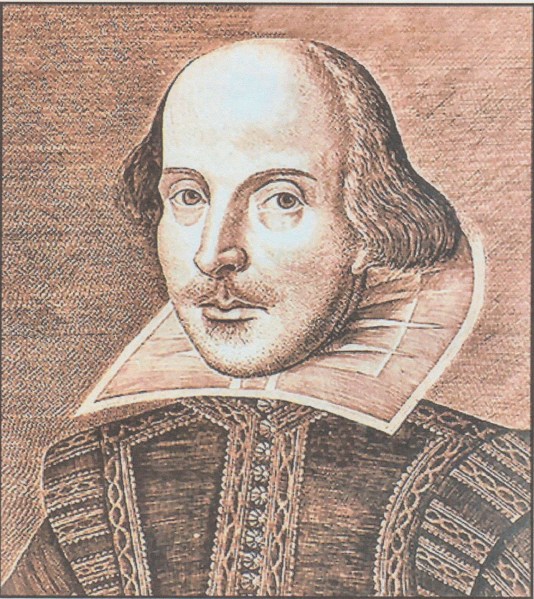
The title page of Shakespeare’s Stratford
In Belfast he had been innovative, imaginative and creative. He was a genuine scholar, he had been a Hibbert Scholar in Germany before entering the ministry, and was a caring and effective pastor. All this can be seen in his Kalendar, the first monthly magazine to be distributed within a church of the Non-Subscribing tradition in Ireland. Before he had arrived the Second Congregation had left the presbyterian structures to pursue their own course although they were rooted in the Free Christian theological traditions exemplified by James Martineau.
Early in his ministry he had produced an account of the composition of the book of Genesis, by the end of his ministry he was completely absorbed in Shakespearean studies. He published a number of works on Shakespeare, and his life and times, and became a trustee of Shakespeare’s birthplace. Indeed it is interesting to see that today the Shakespeare Birthplace Trust has a short video examining E.I. Fripp’s analysis of Iago:
At the end of his life Fripp’s funeral took place in Shakespeare’s church and he was buried in Stratford on Avon. But he produced a large amount of work on Shakespeare and I have often been tempted to seek out a contemporary Shakespearean scholar to give an assessment of how these works are regarded today for Faith and Freedom. There is and has long been a vast industry around Shakespeare and each age finds a different set of interpretations that reflect its own circumstances. It would be nice to know from the point of view of an English literature specialist what endures from Fripp’s writings. But if nothing else he had an enduring impact on the topography of South Belfast, something that continues to this day.
The view of All Souls’ today from the Belfast City Hospital
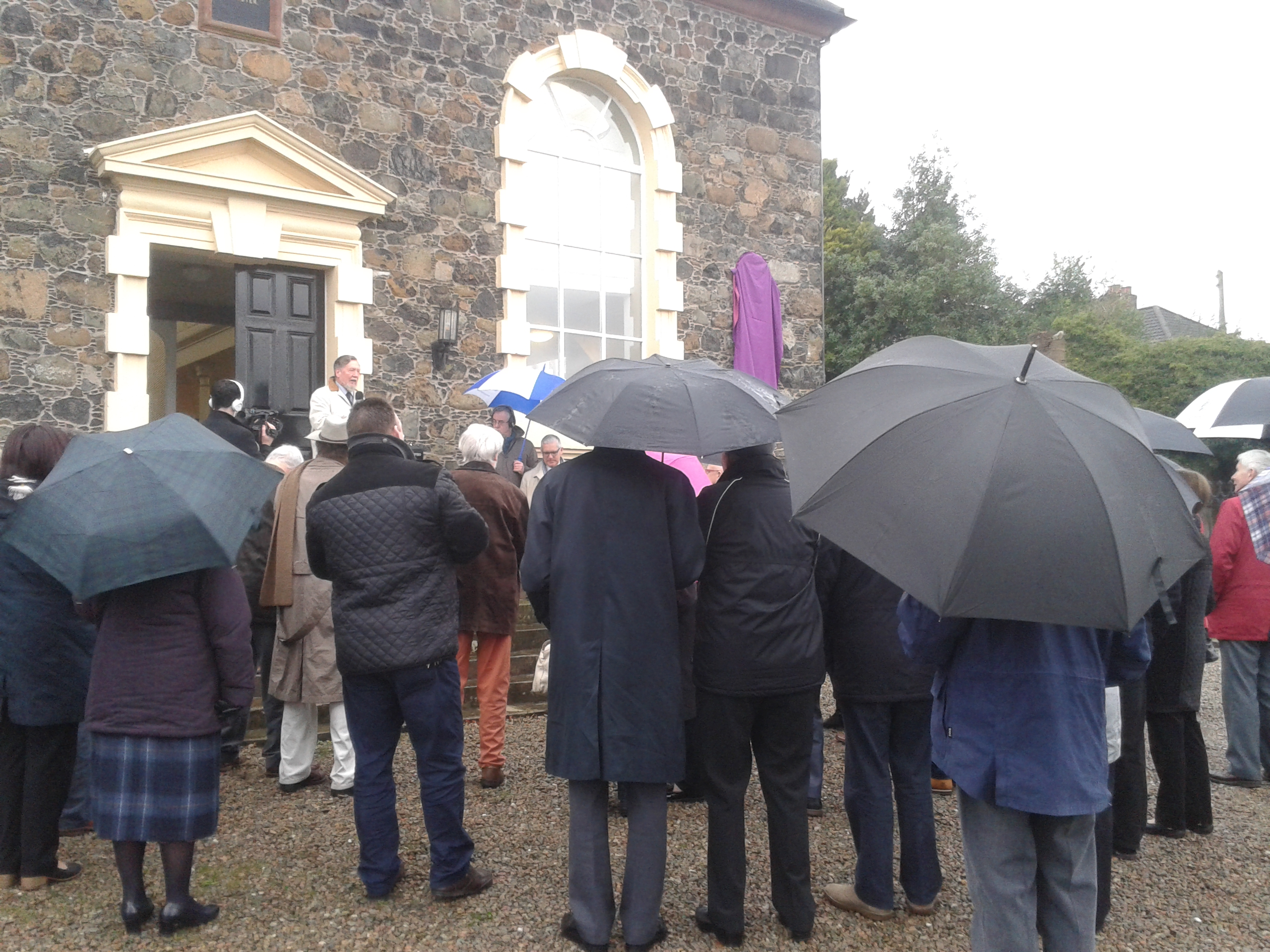
A good number of people braved winter weather, heavy traffic and seasonal busy-ness to attend the unveiling of the Ulster History Circle Blue Plaque commemorating the Rev Henry Montgomery (1788-1865) on the walls of his old meeting house in Dunmurry on 18th December 2015. Appropriately enough the unveiling was done by the Very Rev William McMillan, Henry Montgomery’s successor for 45 years and undoubtedly the person most knowledgeable about his life and career.
People gather outside the meeting house in anticipation of the unveiling of the blue plaque
The premises and grounds of Dunmurry have always been immaculately kept and the meeting house provided a very suitable space for the speeches immediately after the unveiling. This has been a year of commemoration marking the 150th anniversary of Henry Montgomery’s death and, as Ian Crozier observed in his speech, the Ulster Scots Agency had assisted in the republication of Bill McMillan’s booklet on Montgomery, A Profile in Courage, first published fifty years ago and still the most useful introduction to his life and work.
As was also pointed out in the speeches this is not the first blue plaque to a Rev Henry Montgomery (the other one being the founder of the Shankill Road Mission), and it is certainly not the first blue plaque for a Non-Subscribing Presbyterian, but I think it is the first blue plaque for a Non-Subscribing Presbyterian minister (although at least two sons of the manse have already made it onto a blue plaque).
Rev Mac unveils the plaque
In his speech the Rev Bill McMillan quoted comments made by the Banner of Ulster, a newspaper not sympathetic to Montgomery’s religious position. At the time of his death it said:
Never did his powers of eloquence shine out more conspicuously than when he was denouncing tyranny, in other lands or his own; or pleading for the rights of humanity. He contended that a man’s religion should never subject him to penalty or inconvenience and he claimed liberty alike for Protestant and Catholic, for Christian, Jew and Deist.
Very much a pioneer and champion of what today would be called human rights it seems fitting that he should be remembered. Henry Cooke, his old opponent, after all has a prominent statue, Henry Montgomery certainly deserves his plaque.
Rev Henry Montgomery (1788-1865) . Minister, teacher, reformer
Another resource that will be added to the Faith and Freedom Great War Project in the near future is the Roll of Honour of the Non-Subscribing Presbyterian Church of Ireland – or at least as much of this that was printed in the Non-Subscribing Presbyterian magazine at the time.
Not surprisingly that magazine carries a great deal of information about the impact of the war on the denomination. The war brings about much comment and theological reflection from ministers and lay people but the extent of the impact only gradually comes to be realised as more and more members take up arms. The magazine decided to compile a Roll of Honour and in December 1914, four or so months after the outbreak, this was printed for the first time. Already it contained 141 names, all of them obviously volunteers, and representing 24 congregations. The list includes two who have been wounded and already the first loss – a member of the Dromore congregation – David Prentice who was lost in action on HMS Monmouth in a naval engagement off the coast of Chile. HMS Monmouth was an armoured cruiser that was built in 1901 and used mostly around Chinese waters. At the start of the First World War it was sent to the West Indies fleet and was part of the battle of Coronel, here it was sunk by the Germans with the loss of all hands.
In the next year the Roll of Honour was reprinted in March 1915, when it had been expanded to include 27 congregations. In January 1916 the list is updated when 360 names (including some women involved in nursing and other war work in some congregations) were listed in 29 congregations (out of a notional total of about 35). To this denominational list an additional three names were added in February. For the denomination as a whole of these 363 names eleven were listed as killed, missing or lost.
Rev Alfred Turner, minister of Templepatrick, at the front in the uniform of the YMCA
Having kept this Roll of Honour up until February 1916, strangely, it is not updated in the pages of the magazine again. At one point mention is made of an intention to publish on card the full Roll of Honour for the congregations but it is not clear if this was ever done. Why the Roll was never updated is hard to tell. The editor, the Rev Alfred Turner, was now working in France with the YMCA but the responsibility for providing this information lay with the individual congregations. Having begun keeping the record it seems strange that it stops.
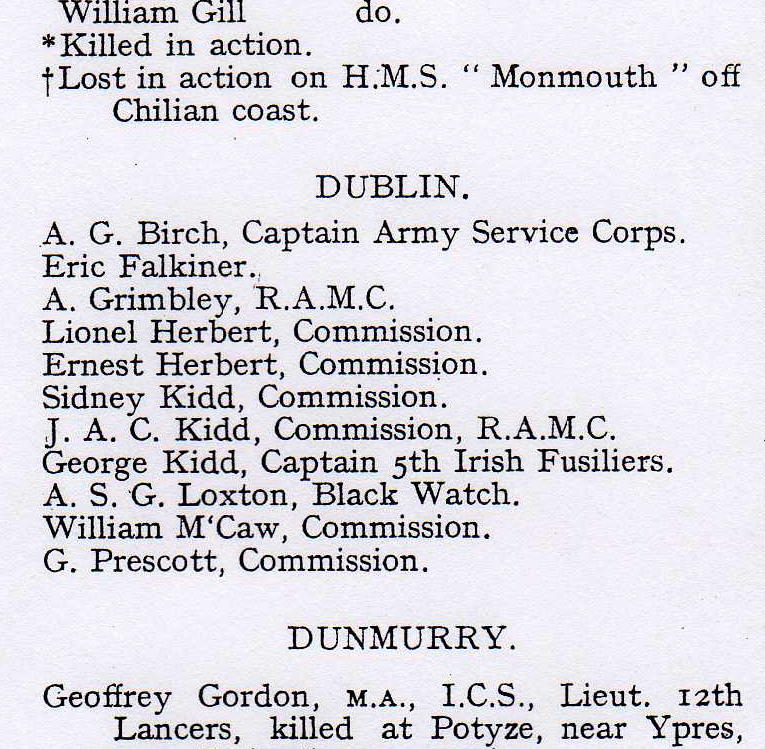
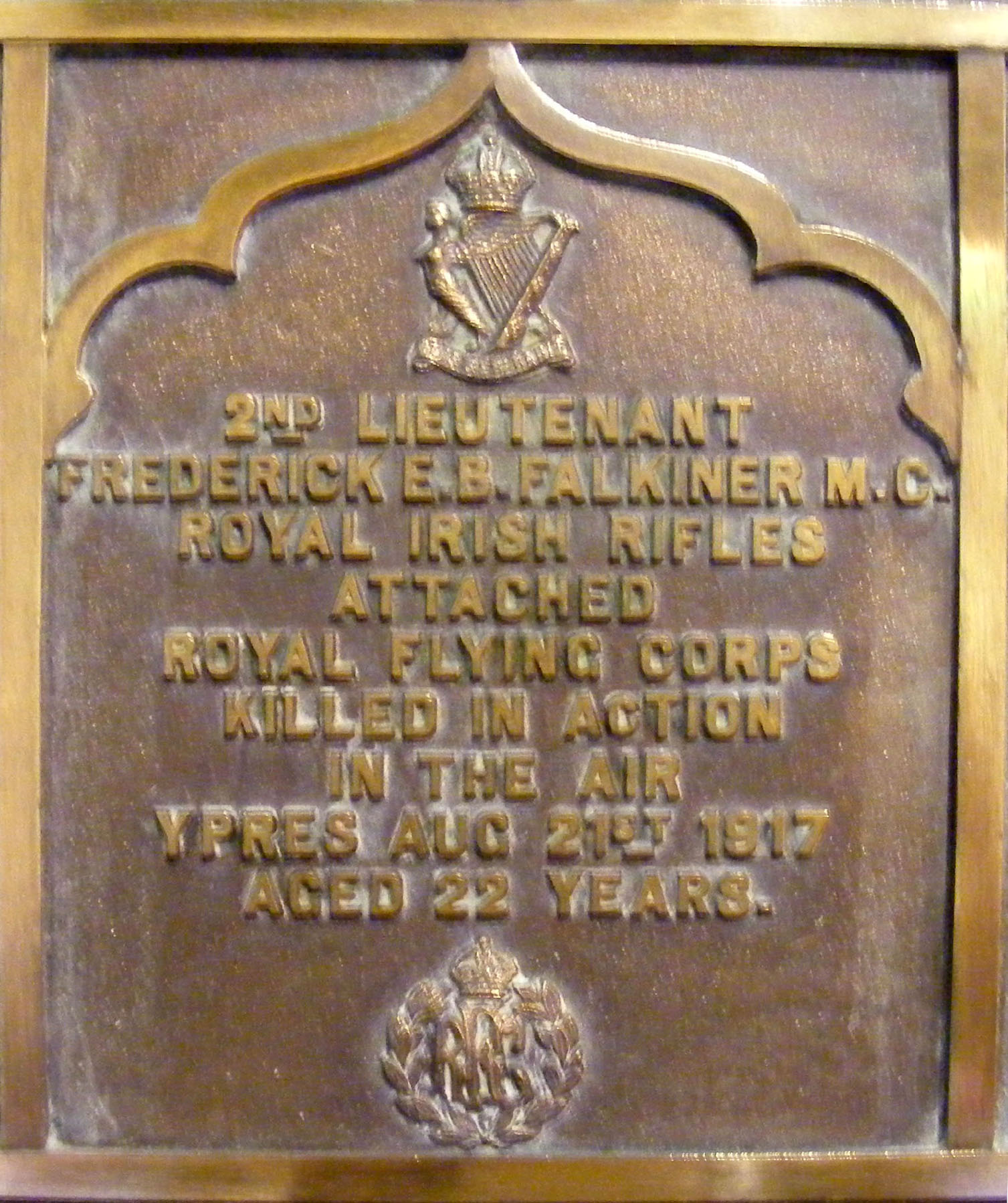
A result of the Roll never being completed is that we do not know the exact numbers of those who served in the First World War. But both the total number on the Roll of Honour and the number of those killed in the war are likely to be far greater than the numbers published between 1914 and 1916. There are, for instance, 16 obituaries of men killed in action (in two cases died of war wounds) in the magazine. Of these only three died before the publication of the January 1916 list and they do appear on the Roll of Honour but of the other thirteen only seven are listed and six are not, possibly because they had not joined up until after that date. The number of fatal casualties is likely to be much higher and a perusal of each church’s war memorial would give the true figure. If we look at the example of the Dublin congregation, for instance, on the January 1916 list there are eleven names included as having joined the armed forces. Yet the war memorial in the Church lists only those who were killed (all of them in 1917 and 1918) and of the five names preserved there three do not appear on the January 1916 list. To take another example in the case of Clough there are seven names on the published Roll of Honour, and no fatalities. However, on the Roll of Honour in the Church there are ten names, three of whom were killed in the war.
Detail of the Dublin names in the Non-Subscribing Presbyterian January 1916Memorial to 2nd Lieut. Frederick E.B. Falkiner MC in Dublin Unitarian Church. Killed serving with the Royal Flying Corps near Ypres August 1917 aged 22. (With thanks to P. Spain for photo)
But taking the denomination as a whole the Roll of Honour plus the additional obituaries makes a total of 24 killed in the First World War noted in the magazine in this way although clearly this cannot be the final total.
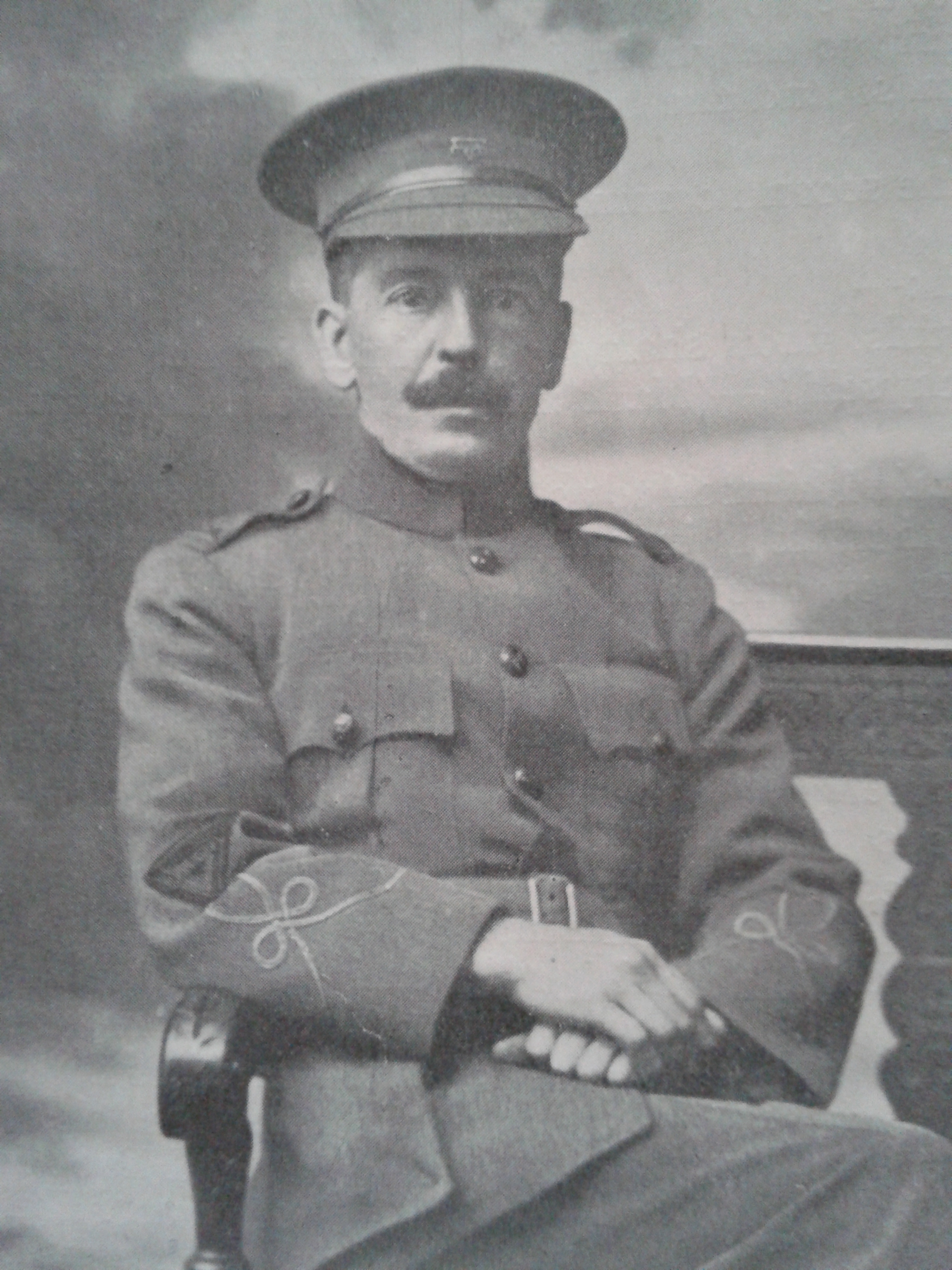
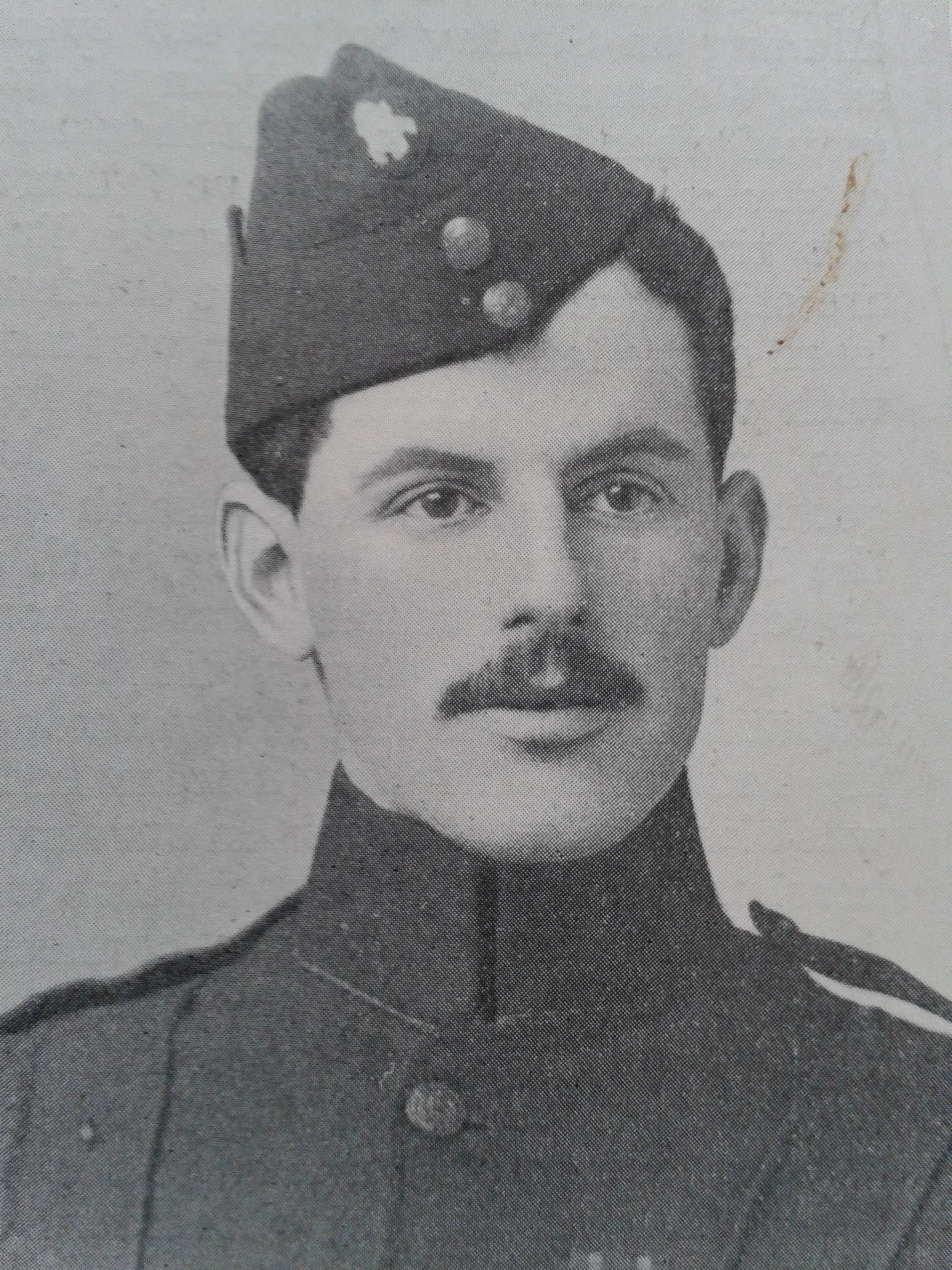
Of the 16 obituaries in the magazine 14 are of officers and most include a photograph of the deceased. Four obituaries appear in the August 1916 issue, all of them of soldiers apparently killed on the first day of the battle of the Somme. Whether an obituary appeared or not seemed to be entirely due to chance but was very unlikely for those who weren’t commissioned. There are in addition three brief notices, one of them of one of the sons of the Rev Alexander Gordon, and one mention of a death in a Rademon ‘News of the Churches’ report. This would make a total of 28 names of men killed in the war mentioned in the magazine, again certainly not the final total.
But a careful comparison of all the church memorials plus the obituaries found in the magazine plus the names on the Roll of Honour would at least give us a working total for those from the Non-Subscribing Presbyterian churches in Ireland who served and lost their lives in the First World War.
Although so many of those who died did not receive an obituary in the magazine some of the obituaries in the Non-Subscribing Presbyterian are quite informative. Most of the casualties were people who joined up at the start of the war but some had been career soldiers. One such was Captain Craig Nelson of Downpatrick who was killed in action on 26th September 1915. He was an officer in the 3rd Brahman regiment, part of the Indian army and a grandson of Rev S.C. Nelson, minister of Downpatrick. His father was Dr Edwin Field Nelson, the fifth son of Samuel Craig Nelson, a senior surgeon in the locality who had himself attained the rank of Surgeon-Major in the local Militia and continued as medical officer for soldiers in the Downpatrick district during the war up to his death in May 1916. But his son, Craig Nelson, was killed the year before, his other two sons both serving officers in the navy or the army. Craig Nelson was a career officer who had been commissioned into the Royal Irish Rifles and served throughout the South African war. He subsequently transferred to the Indian Army and served first in Egypt and then on the Western Front.
The Downpatrick minister, Rev M.S. Dunbar, said of him:
We cannot help our feelings being moved when we think of the thousands of our countrymen who have fallen in this titanic struggle, but our feelings are still more acute when we suddenly learn of the fate of one who we knew, with whom we conversed not so long ago, and who, when we bade him good-bye, was in perfect health and the best of spirits. The War, with all its dread consequences, comes home to us as it never did before. Captain Nelson was brought up amongst us, and when on furlough from India, was always pleased to join in our service here, and to recall his associations with the church and the people connected with it.
Captain Craig Nelson
The Faith and Freedom Great War Project can be seen here:
The Faith and Freedom Great War project continues to expand and we hope to see added to the site in the near future a number of new articles, including Alan Ruston’s piece for the Transactions of the Unitarian Historical Society (1993), ‘Killed Fighting in the First World War’; and a moving sermon by Andrew Hill who recounts his father’s experiences during the First World War as a ministerial student who was assigned to “Non Combatant service only on conscientious grounds”.
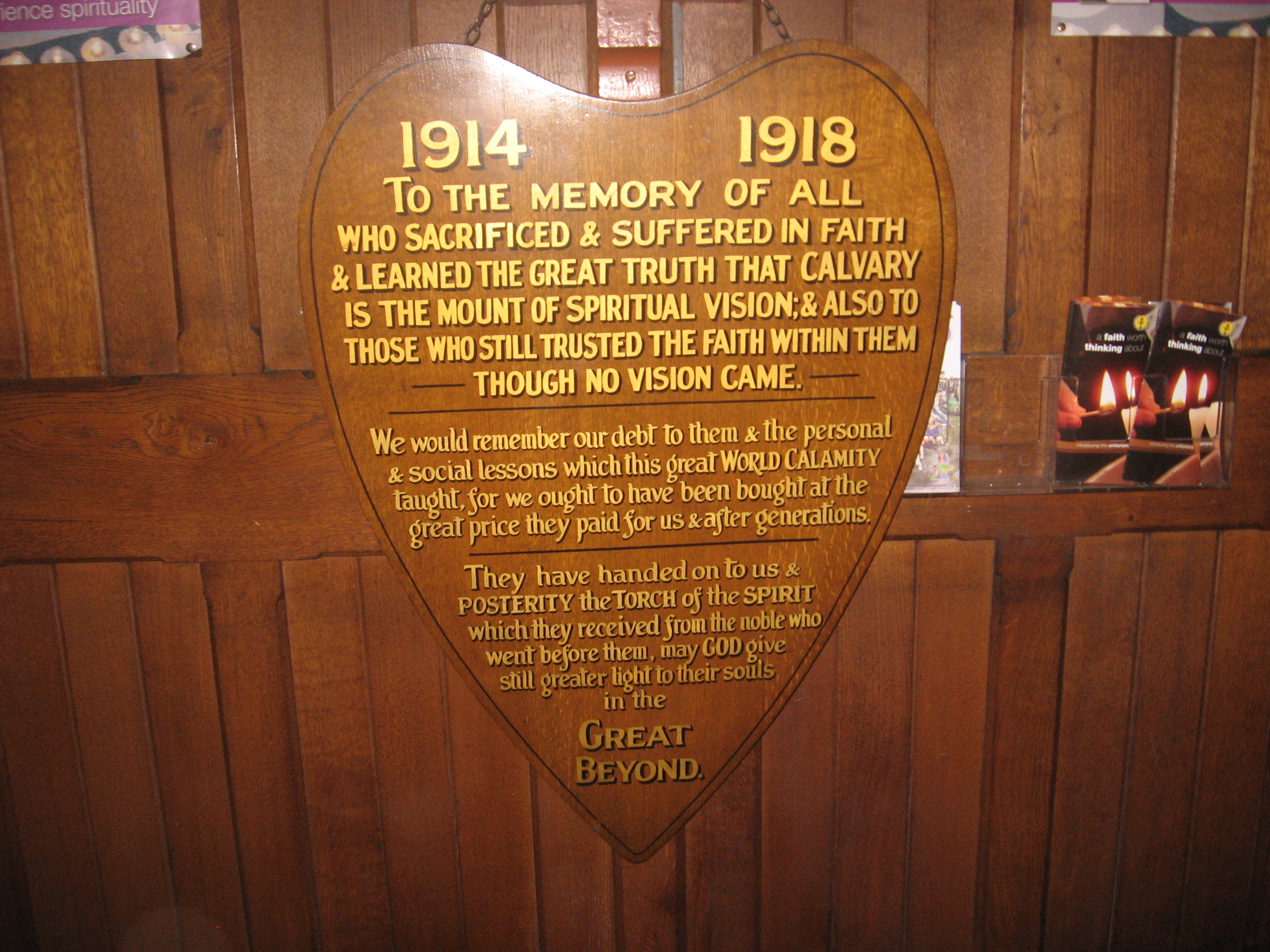
We have also received a good number of images of war memorials from many different places. Brendan Burke has sent a whole sequence of pictures of the memorial in the South Mall in Cork. Of course it is not related directly to the Unitarian (or any church) in Cork but unveiled in 1925 it is a rare example of such a public memorial in the Irish Republic. It shows a soldier of the Royal Munster Fusiliers with the names of the war dead (which almost certainly includes some members of the Princes Street congregation) on a plinth underneath.
Cork Peace Park (Photo: Brendan Burke)
We’ve a good number of images of war memorials too from churches in Northern Ireland, many of them designed by Rosamund Praeger, the famous sculptor who was also a member of the Holywood NSP congregation.
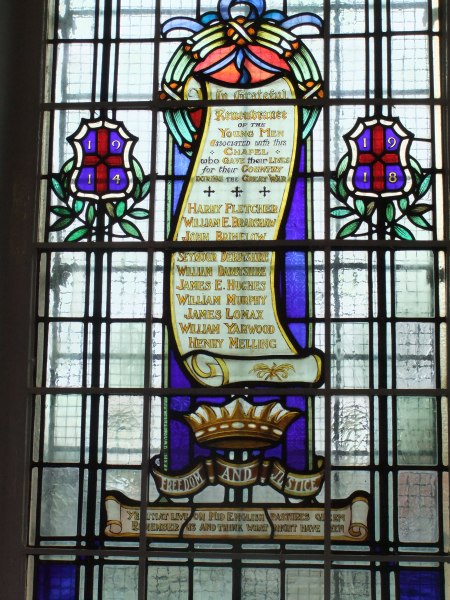
Lynne Readett has sent some fascinating material from Park Lane Chapel, Ashton in Makerfield. Here the memorial takes two forms – the first a stained glass window listing the names of those who were killed in the war. This was beautifully restored and rededicated at a service to mark the outbreak of the First World War in August 2014. The congregation also built an extension to their school house as a further memorial in 1925.
Memorial window Park Lane (Photo: Lynne Readett)
The window contains a list of the Chapel’s fallen as well as the legend ‘Freedom and Justice’ and the quotation ‘Ye that live on mid English pastures green, remember us and think what might have been’. This was a commonly used verse on memorials all over England at the time but I don’t know the source, does anyone know where it comes from?
Lynne has supplied the site with photographs and accounts of special services held both there and at Cairo Street, Warrington, together with details of those who were killed in the war who belonged to Cairo Street. Susan Naylor has also supplied details of the members of Park Lane who died in the First World War.
Jennifer Young has sent a picture of the war memorial at Lincoln Unitarian Chapel. I have only visited this Chapel once, some years ago when it was refurbished under the ministry of the Rev Paul Travis but I have to confess that I don’t remember seeing this memorial. It seems rather verbose, it carries the names of no individuals and is quite unlike any other memorial that I am aware of. It is interesting to compare it with the Park Lane memorial window. If like so many church war memorials it dates from the early 1920s then I would guess it is the work of the minister at the time the Rev J. Lionel Tayler.
Lincoln War Memorial (Photo: Jennifer Young)
But it is very pleasing to record that a wide variety of material is being sent in for the Project and more is very much welcomed, including anything that forms part of the church experience of the Great War.
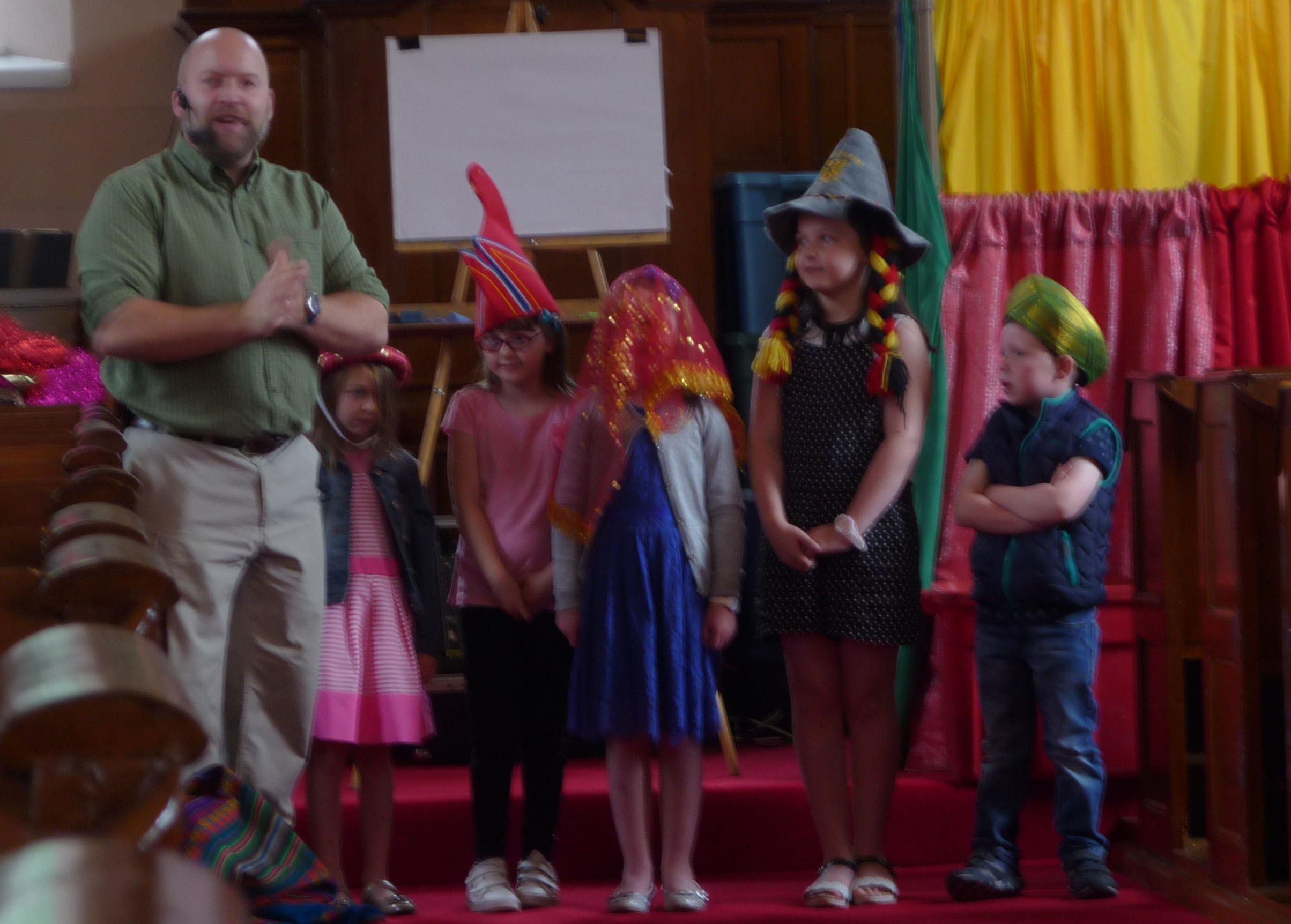
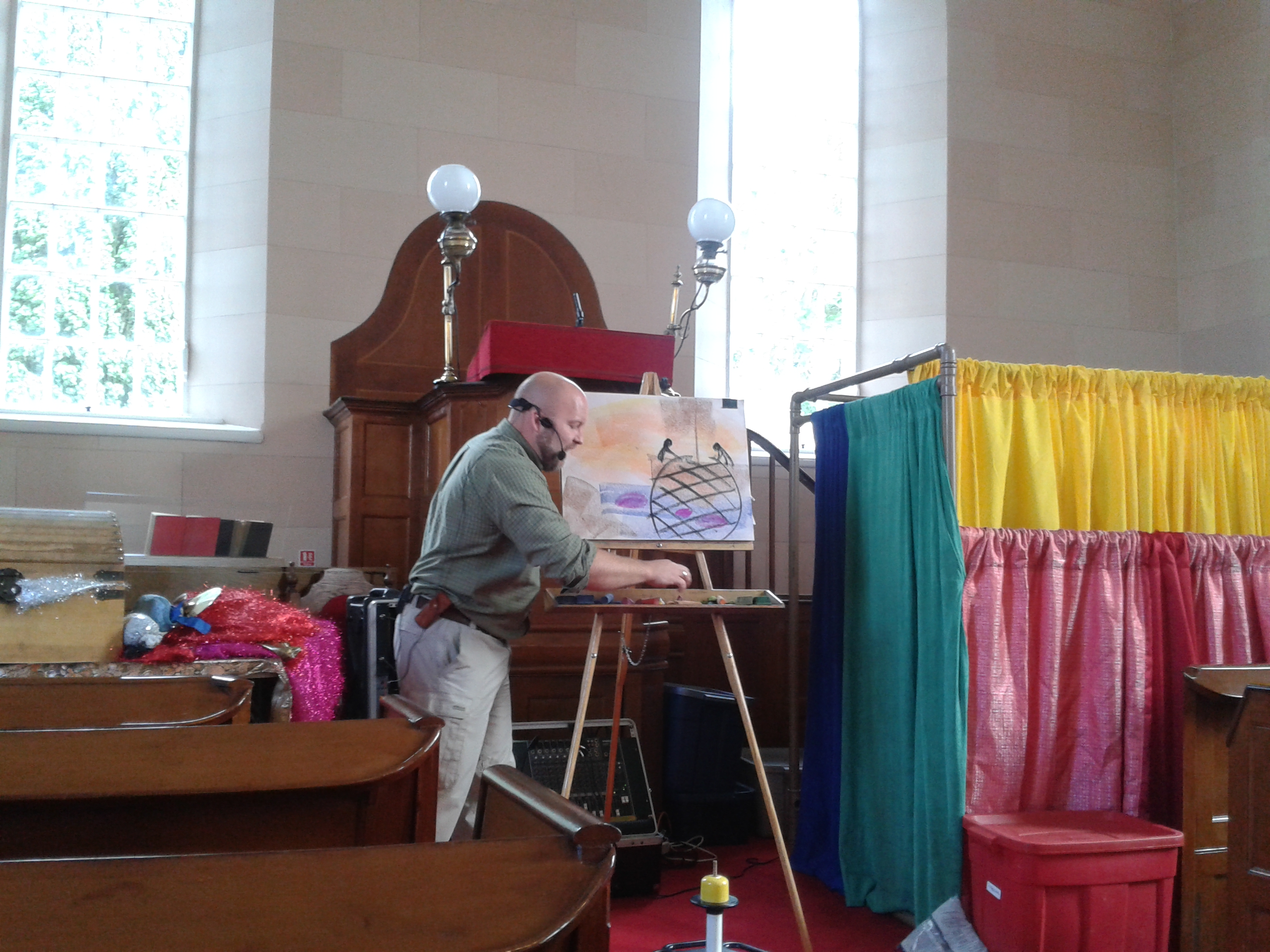
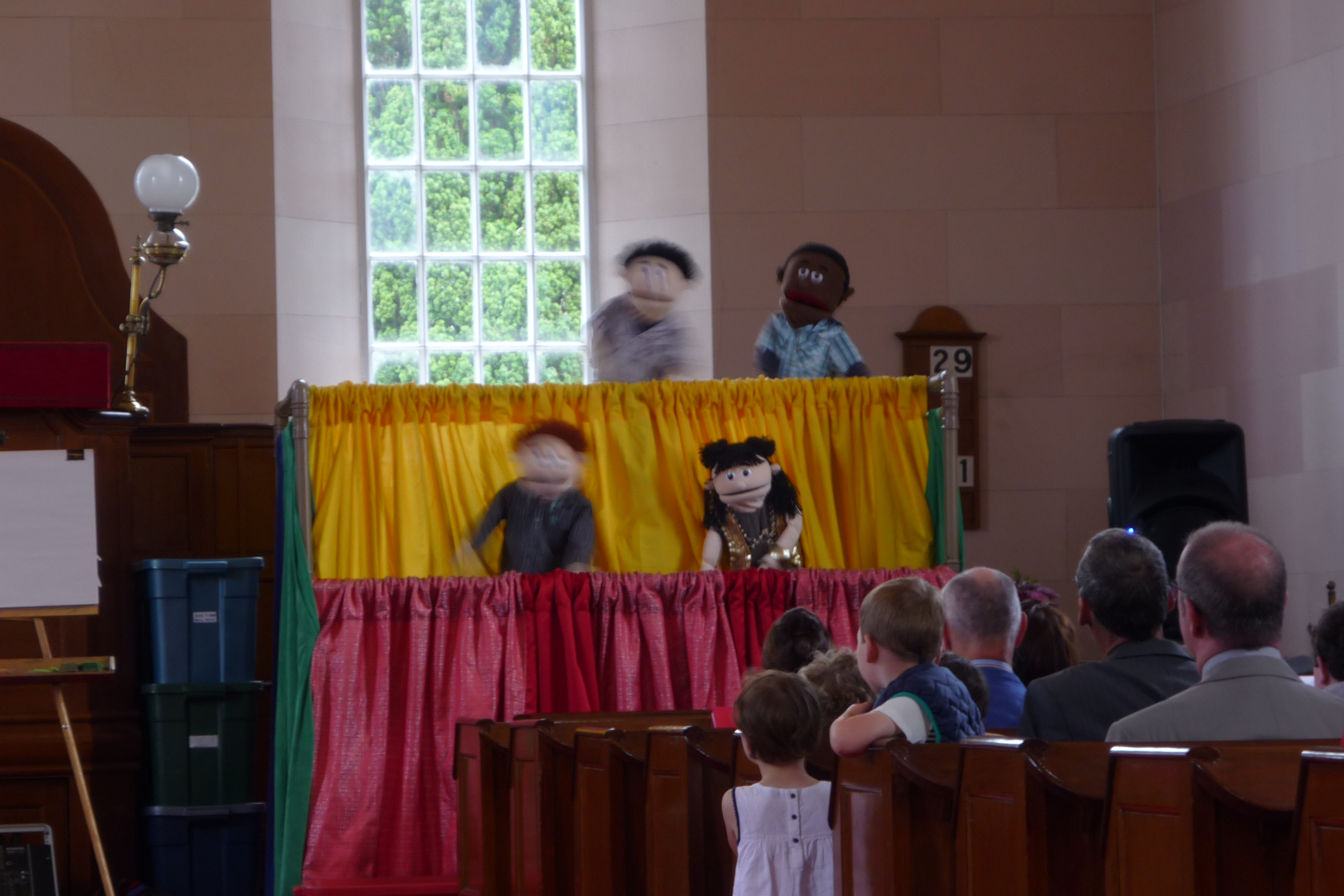
On Sunday, 19th July worship at Clough was led by Sam Shaw and Godshandiwork Puppets. There was a large congregation of members, both young and old, and from Ballee and Downpatrick as well as Clough and everyone was enthralled by the wonderful, varied presentation given by Sam and his team which included puppets, music, drawing and lots of fun.
Wearing hats from all around the worldPuppet quartetTelling the story through artPuppets in songWatching the puppetsBrown bear and polar bear
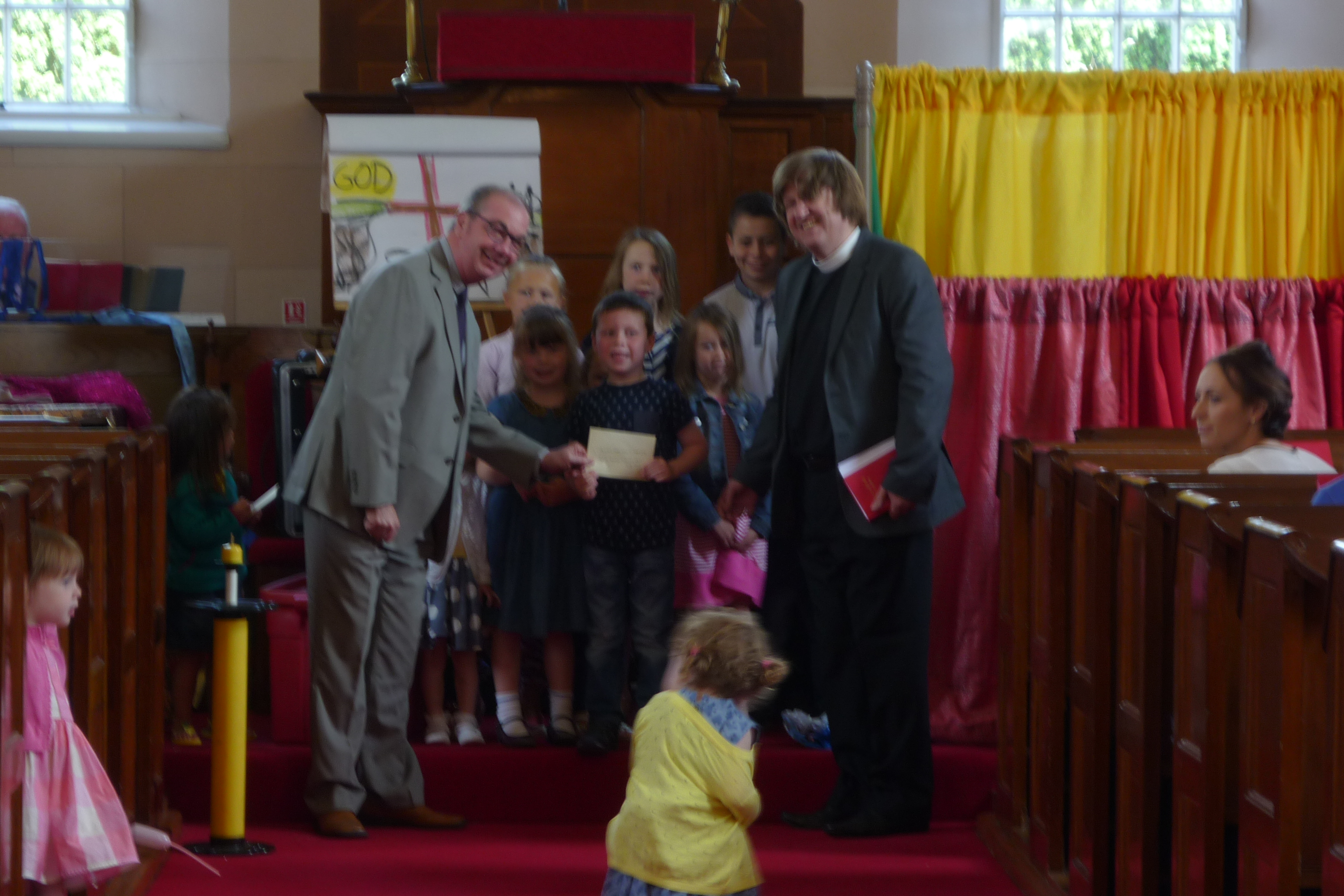
Over the last year Clough Sunday School have also been raising money for the Downpatrick and District Autism NI Parents Support Group and at the end of the service Sunday School member Thomas Rooney presented a cheque for £230 to Ashley McKinley on behalf of the Parents Support Group.
Thomas Rooney makes the presentation to Ashley McKinleySome of the congregation
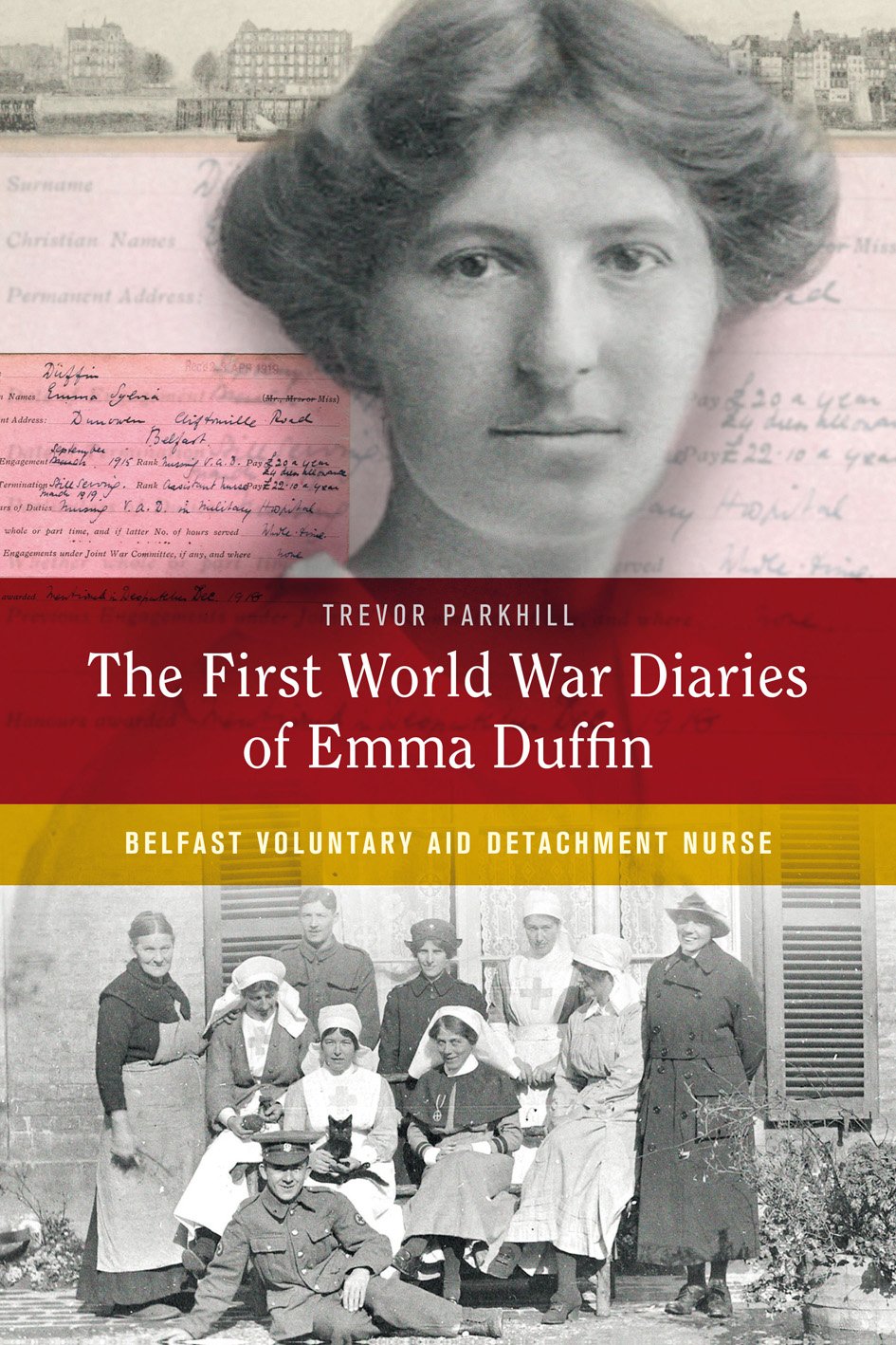
The First World War cast an enormous shadow over the past century. It had a cataclysmic effect on all aspects of society, no one was left untouched by it – homes, families, schools, factories, businesses, and, of course, churches. There are many ways in which the centenary of the Great War is being marked and most churches are spending some time over the current period reflecting on the conflict, its impact and its legacy. Faith and Freedom is establishing a special section of its website to reflect upon the conflict from the point of view of the churches and other faith groups. The website will be developed in a number of different ways. It will contain scholarly and thoughtful articles on the Great War, particularly in relation to churches and their participation in the War. The first three articles to go online are Unitarian Attitudes to the First World War, by Alan Ruston, The Centenary of the First World War and the Non-Subscribing Presbyterian Church of Ireland, by David Steers; and ‘Their sister in both senses’. The memoirs of Emma Duffin V.A.D. nurse in the First World War by Trevor Parkhill. Trevor is editor of The First World War Diaries of Emma Duffin, Belfast Voluntary Aid Detachment Nurse (Four Courts Press, Dublin, 2014) and his article gives an intensely moving account of the First World War experiences in hospitals at the front of Belfast-born Unitarian Emma Duffin (a direct descendant of William Drennan, the founder of the United Irishmen and a cousin of Thomas Andrews designer of the Titanic) who volunteered to serve as a nurse and spent three harrowing years tending the wounded.
The second section will contain accounts of commemorations and acts of remembrance made during the current centenary period and readers are very much encouraged to send in reports of their events. The first example is a thoughtful and intensely moving service held at Rosslyn Hill Chapel, Hampstead to mark the centenary of the outbreak of the War. We are also seeking to record the names and details of church members who served in the First World War and we begin with a very full account of the contribution and service, with pictures, of members of the Great Meeting, Hinckley.
Private Stanley Jennings of Hinckley, of the 15th Battalion Durham Light Infantry. Killed in France 3rd May 1917, aged 29
We also aim to build up a database of images of First World War memorials. Does your church have a memorial to its members who served in the First World War? If it does then please send a digital picture to go on the website. We are also actively seeking images and details of memorials that were placed in churches that are now closed, which may now be lost or which may have been put in a different location.
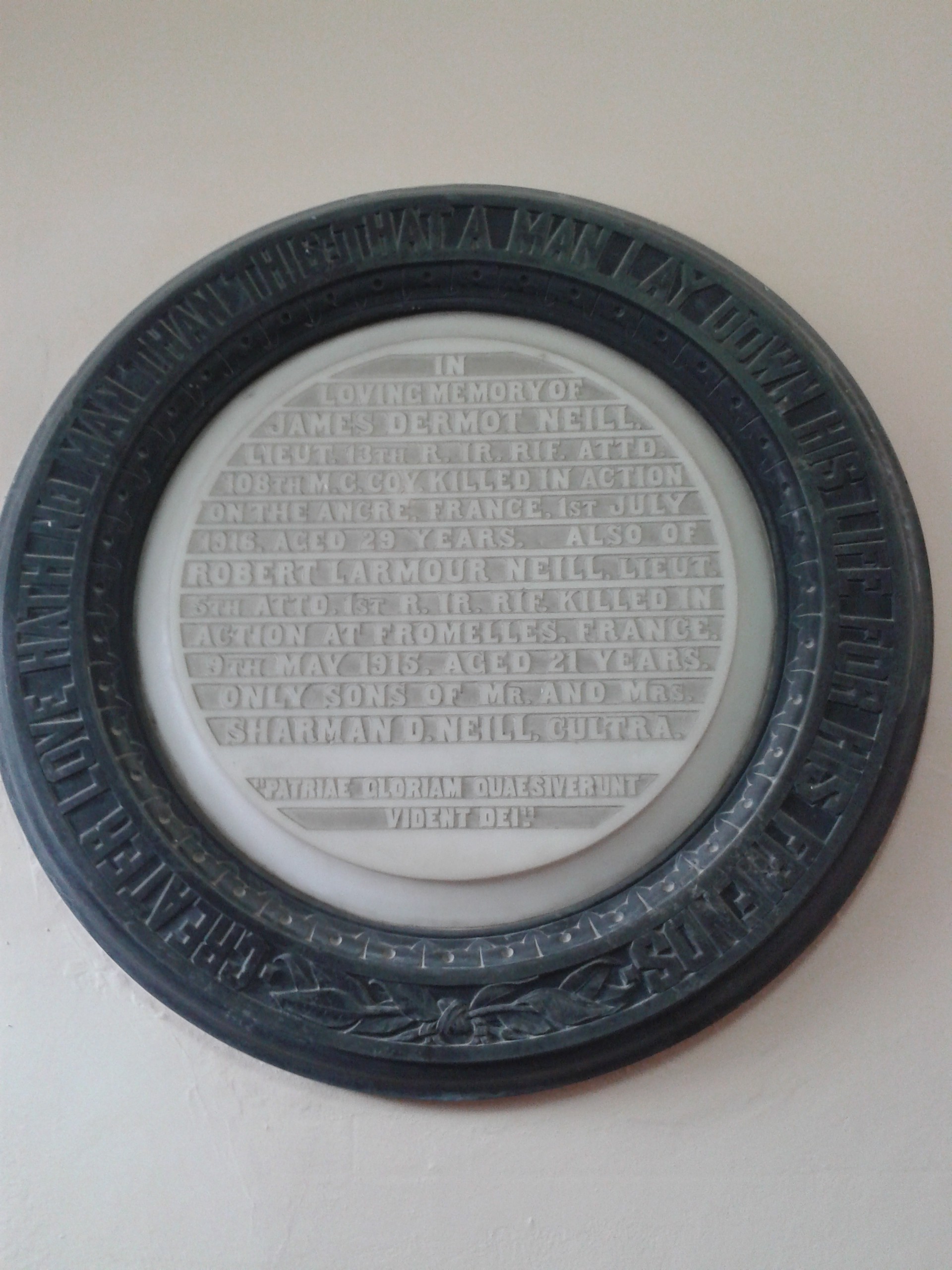
Memorial to Lieutenant R.L. Neill, Holywood co. Down. Killed at the battle fo the Somme
We also hope to include material – including photographs, sermons, writings, printed ephemera etc that date from the time of the War which can then be studied on our site.
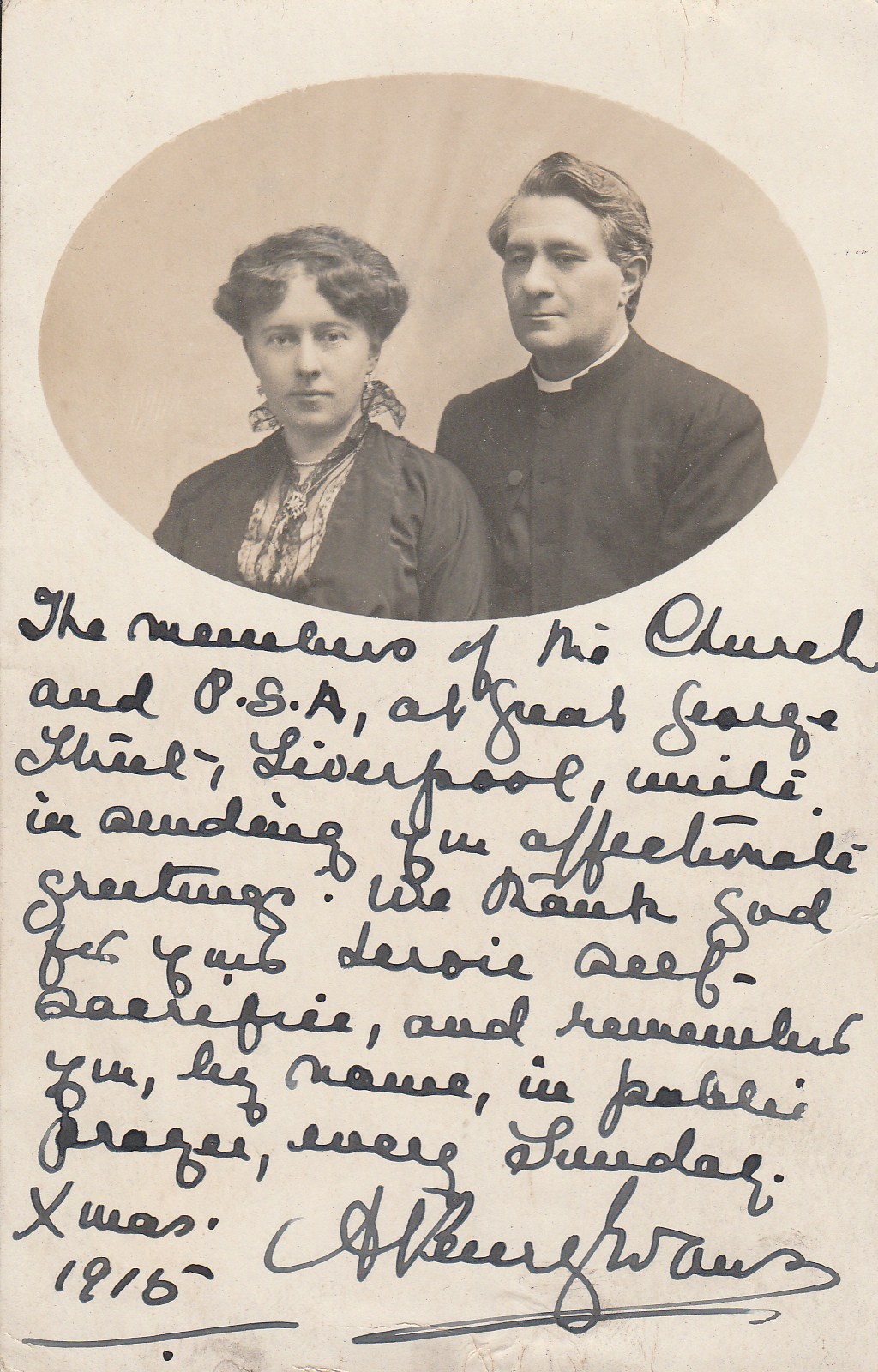
A postcard sent to members of Great George Street Congregational Chapel, Liverpool serving at the front. Featuring a picture of the minister and his wife and a written message. P.S.A. stands for Pleasant Sunday Afternoon, a popular form of church entertainment at the time
We might also eventually include complete Rolls of Honour – for individual congregations and denominations. The whereabouts of the Roll of Honour relating to the churches that are now part of the General Assembly of Unitarian and Free Christian Churches has been a matter of some discussion recently. If we had the full list of names we could add it to the site. The Roll of Honour of the Non-Subscribing Presbyterian Church of Ireland also seems to have been begun but not completed. It would be good to see that completed and available online. With the co-operation of readers the site will be built up over time. If you would like to participate please contact the editor at editor@faithandfreedom.org.uk To view the website go to: http://www.faithandfreedom.org.uk/GWindex.htm
The meeting house of the First Presbyterian (Non-Subscribing) Church in Downpatrick was opened in 1711 at the start of the ministry of the Rev Thomas Nevin. Recognised as one of the most significant architectural examples of the T-shaped meeting-house in Ireland the building celebrated 300 years of continuous worship and witness in 2011.
Central high pulpit originally built for Thomas Nevin (Down Museum photograph)
To mark the tercentenary of the church building the congregation published the History of the First Presbyterian (Non-Subscribing) Church Downpatrick. Written and compiled by Mary Stewart, the church secretary, the book is a remarkable record of three centuries of church life in the historic building. The book details the history of the congregation in the context of Downpatrick and Irish Presbyterianism, the conflict between subscribers and non-subscribers in the 18th century, the history of the building, the congregation’s engagement with education and much more. The book includes biographies of all the ministers of the congregation going back to the 17th century, extracts from the records of the Synod of Ulster, accounts of services, special events and financial matters, and contains details of committee and session members over the centuries, lists of members going back to the 1860s, and a complete record of all the graveyard inscriptions. It will be valued by all those with an interest in Non-Subscribing Presbyterian Church history, local history, and genealogy.
Celebrating the tercentenary
In the first of the two Forewords the Very Rev William McMillan says:
Miss Stewart is to be congratulated on a truly comprehensive publication. She not only presents us with a history of the Downpatrick congregation but has collated a remarkable number of newspaper accounts, together with other printed material which will be of considerable help to future historians.
Her commitment to the congregation is evident from the immense research that she has done and I am delighted to recommend this valuable contribution to the Denomination’s Historical Record in which Downpatrick congregation has played such an important role.
and in the second Foreword the Rev Dr JohnNelson says:
The congregation of Downpatrick has a long and notable history, reflected in the lives of the ministers and lay people who have been part of that church. A congregation which has held a significant place both within Non-Subscribing Presbyterian circles and the wider Presbyterian community.
Perhaps the most outstanding theme of that history is the fact that for the last 300 years the congregation have worshiped in the wonderful building that is Stream Street Meeting House. While that building has always been well maintained, the interior has never been substantially altered, leaving it to-day essentially as built and evoking a sense of history, of presence, and of worship in all who enter there. It is highly appropriate that this book is published as part of the celebrations to mark the 300th anniversary of that meeting house.
Mary Stewart is to be congratulated in producing such a thorough and detailed history of the congregation. Not only does she give the story of the church, but her painstaking researches have produced a wealth of source material which will be a delight to historians, church members, and everyone interested in the heritage of Downpatrick town and community.
This book both opens a door on the past and links it with the living present.
At the tercentenary service
The book contains 408 pages and over 150 illustrations. It is bound in a full colour hard-back cover the book and is excellent value at only £15.
The cover of the book
A sense of what it contains can be seen from the list of contents:
Chapter 1 Background History of Downpatrick
Chapter 2 Arrival and Settlement of Presbyterians
Chapter 3 Subscribers and Non-Subscribers, the Faith of the Non-Subscribers
Chapter 4 Presbytery Records from 1691 including Thomas Nevin’s Trial and Consequences
Chapter 5 List of Ministers of Downpatrick, Details of Ministers
Chapter 6 The Church Building
Chapter 7 Church Site and Schools
Chapter 8 Life and Times of Samuel Craig Nelson
Chapter 9 Special Services
Chapter 10 Special Events and Reports
Chapter 11 Church Excursions from 1881
Chapter 12 Social Evenings and Gatherings
Chapter 13 Harvest Services from 1908
Chapter 14 Financial Matters (Inc. Committee Record from 1886)
Appendix I Rules and Regulations of the Downpatrick Congregation
Appendix II Church Elders, Committee and Sunday School Teachers (From 1861-2007)
Appendix III The Church Graveyard and Inscriptions
Appendix IV Sermon by Alexander Colvill A.M. M.D. on the Death of Thomas Nevin 24th March 1744
Congregation at the tercentenary service
The cost of the book is just £15. Postage within the UK is £5. If you are interested in having a copy posted abroad please enquire for postal rates. Details of how to purchase the book can be found on the Church’s website: http://www.downpatricknsp.org.uk/History.html















 velvethummingbee