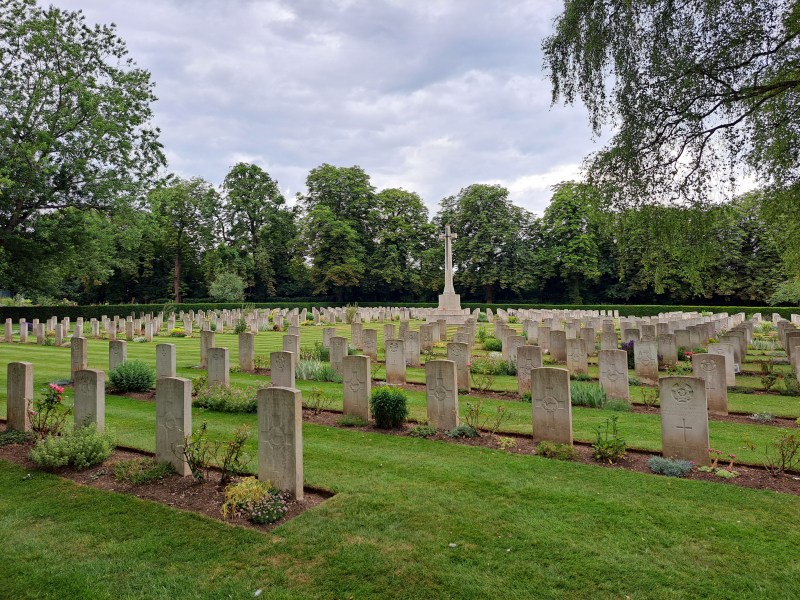
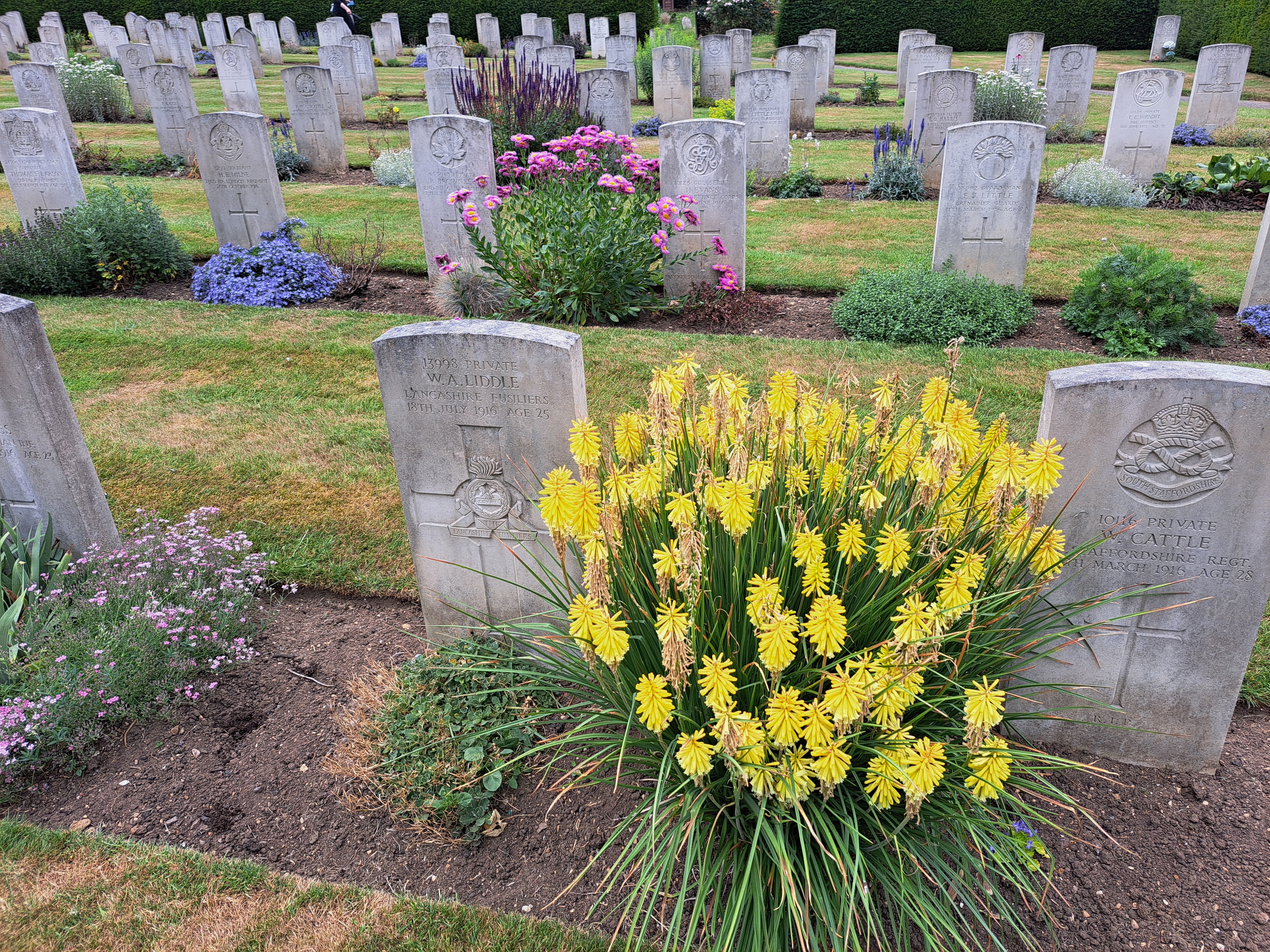
Commonwealth War Graves at Botley Cemetery, Oxford

Visiting Botley Cemetery for the first time, despite seeing the signs for the Commonwealth War Graves, I didn’t expect to find such a large military cemetery of a size and with such features as you would expect to find in France or Flanders. Like all Commonwealth War Graves Commission cemeteries it is immaculately maintained, and a very moving place to visit.
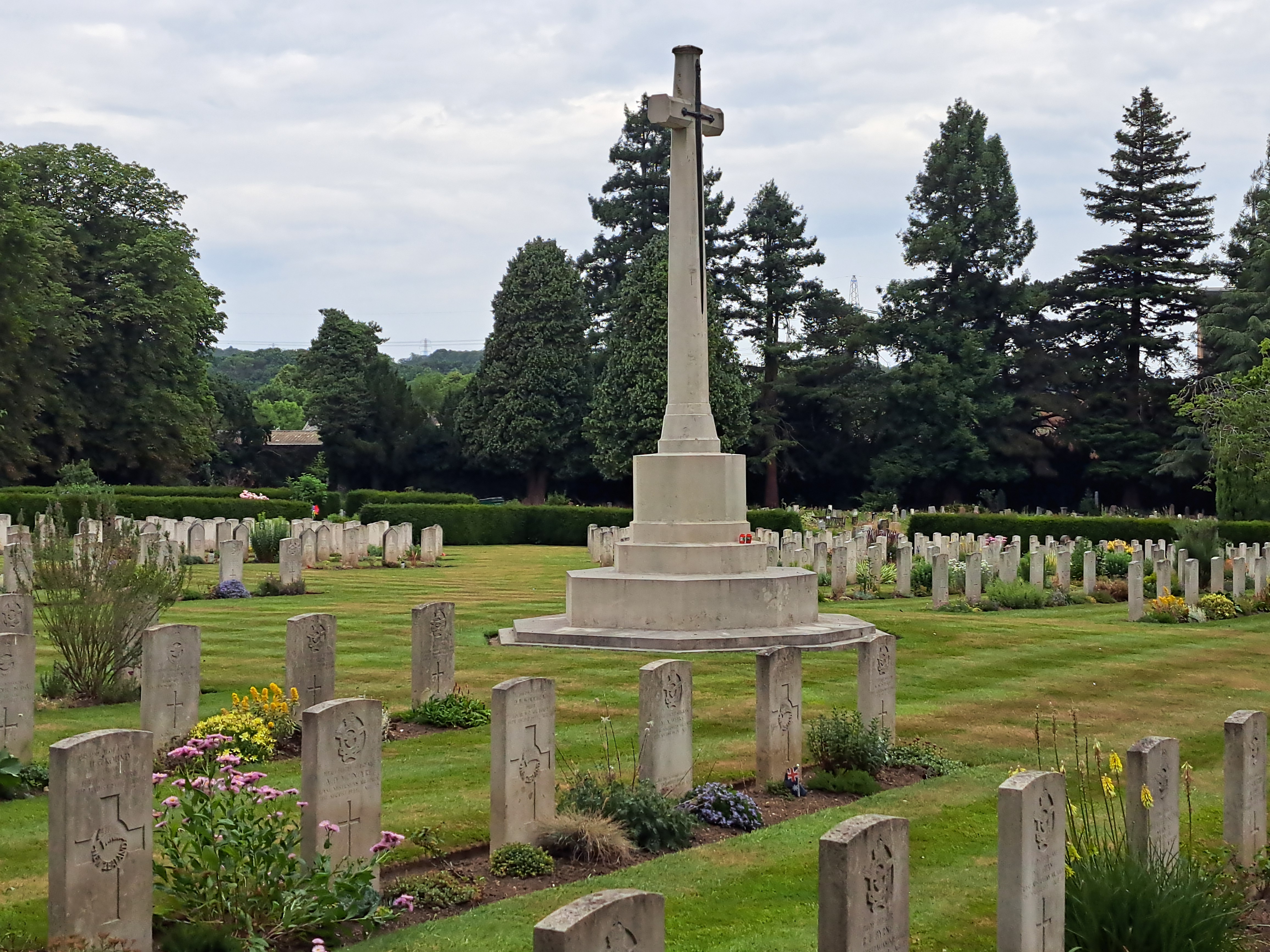
I was surprised to find such a large graveyard of this sort in Oxfordshire, although it is inevitably true that many service men and women did die at home, either on home service, or were brought back because of wounds or found themselves in hospital because of accident or illness. Oxford provided a major regional hospital during the First World War, and again during the Second World War. Oxfordshire was also a major centre of RAF activity in the Second World War and Botley was then designated as a Royal Air Force Regional Cemetery. In the First World War the University Examination Schools housed the 3rd Southern General Hospital with room for 1,500 patients. The Schools weren’t the only venue for the war-time hospital, also put to use were Somerville College (for officers only), the Workhouse on Cowley Road, the Town Hall, University and New Colleges, and the Oxford Masonic Buildings on High Street. In the Second World War the Examination Schools were again used as a hospital.

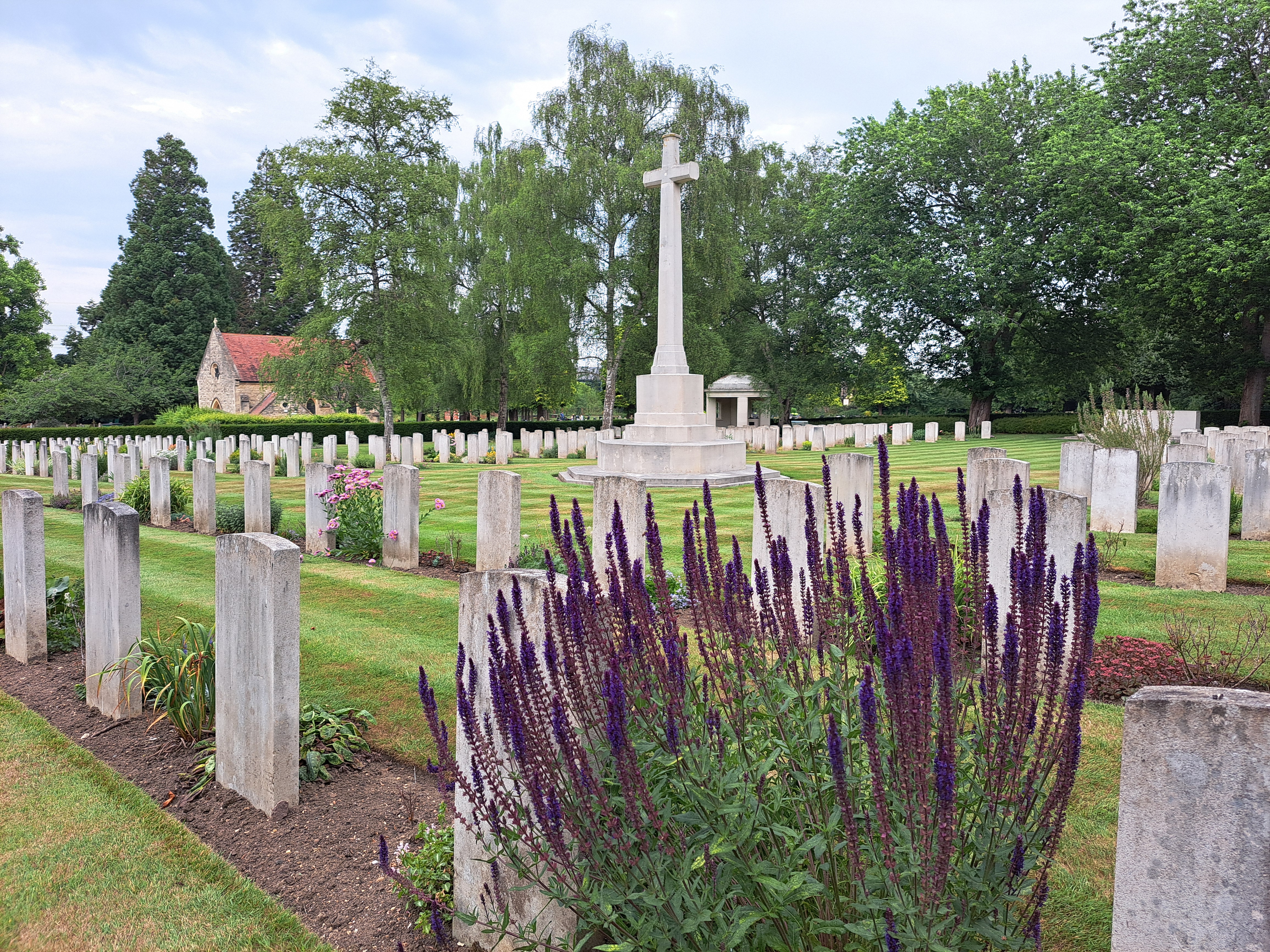
Botley Commonwealth War Graves Commission Cemetery has all the features that can be found in major cemeteries of this type. At the centre of the grave yard there is a Cross of Sacrifice, a large cross containing a bronze longsword, with its blade pointing down, it is said to be present in all graveyards containing 40 or more war graves. These were designed by Sir Reginald Blomfield and are a familiar symbol of sacrifice in so many places. By 1937 there were already over 1,000 of these crosses in Europe alone, more were to follow after the Second World War.
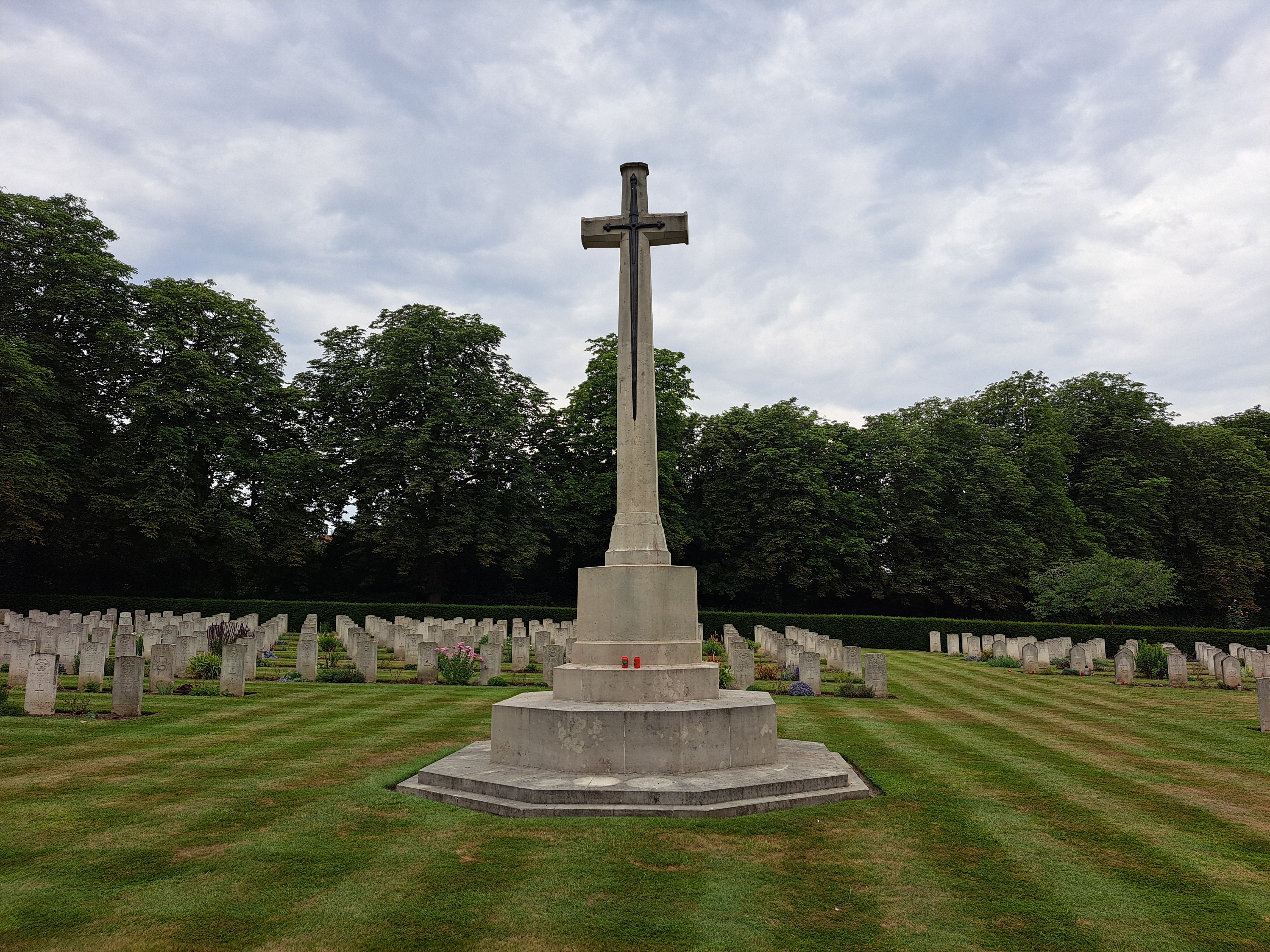
Cross of Sacrifice

The Cemetery also has a Stone of Remembrance designed by Sir Edwin Lutyens for use in CWGC Cemeteries containing more than 1,000 graves. There are now hundreds of these all around the world but only 12 in the UK. With around 743 graves Botley was regarded as a special case, perhaps indicating that it is one of the dozen largest Commonwealth War Grave Cemeteries in the UK. Although not designed as such the Stone resembles an altar and carries a quotation from the book of Ecclesiasticus: Their Name Liveth for Evermore. Sir Edwin Lutyens was one of three principal architects of the Imperial War Graves Commission (as it was then called) and as well as his work in New Delhi and elsewhere is perhaps best remembered for his contribution to memorial architecture for the First World War, designing the Cenotaph in London and the Thiepval Memorial to the missing of the Somme.
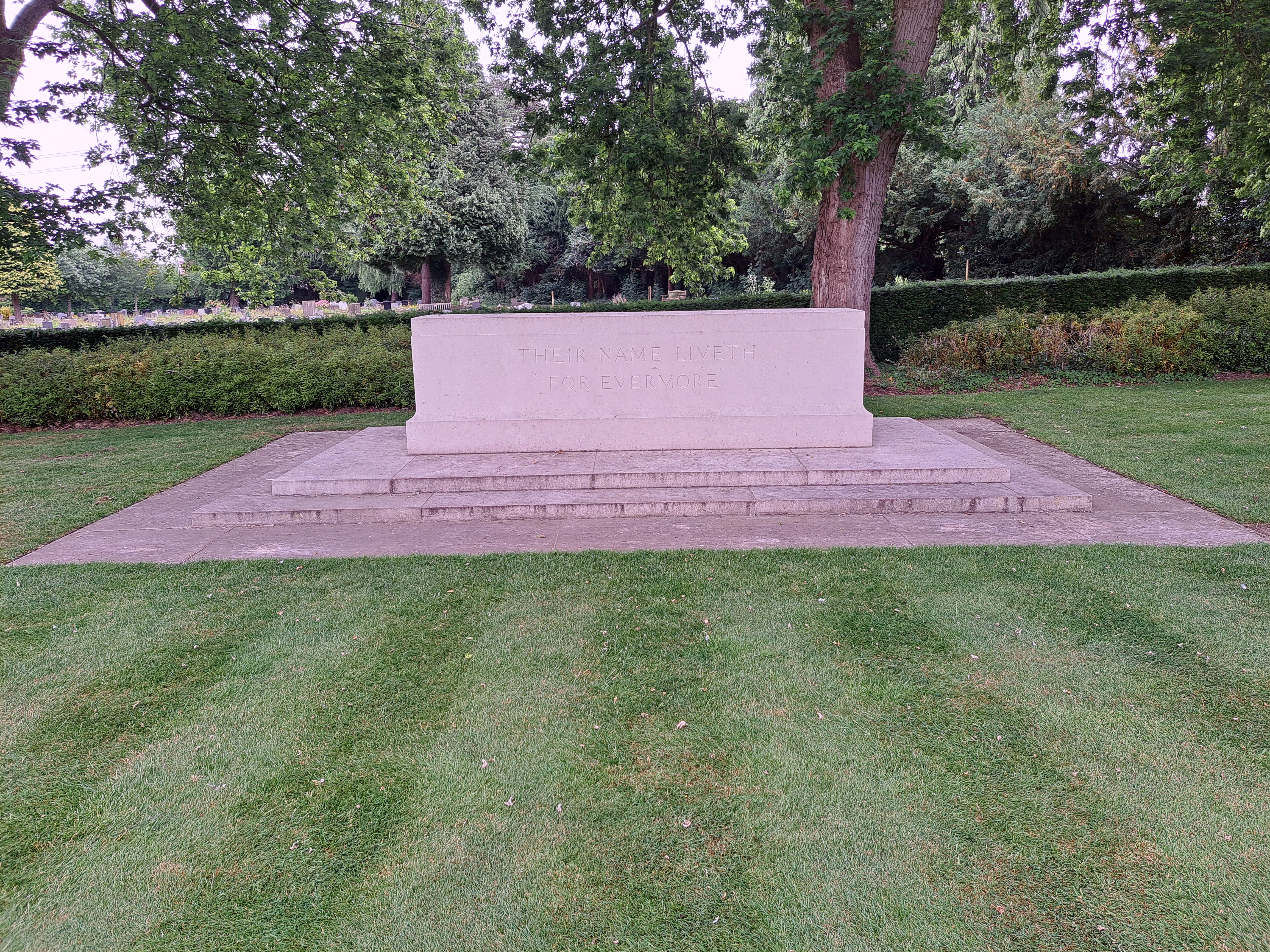
Stone of Remembrance

The third building found in the graveyard is the Shelter, designed by Sir Edward Maufe, the Principal architect of the Commonwealth War Grave Commission after the Second World War.
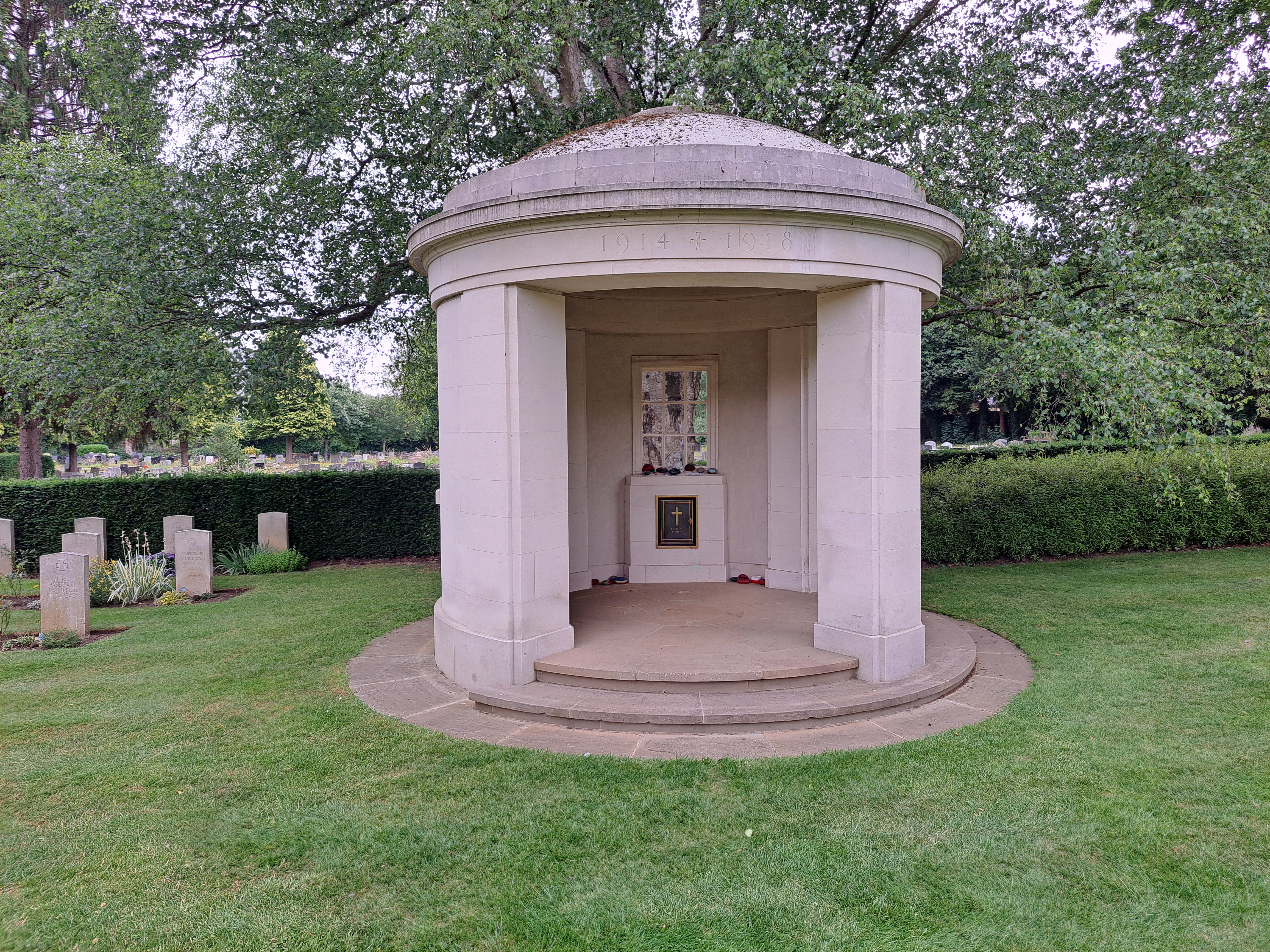
Domed Shelter

One of the first graves I noticed must be among the most poignant. It is that of Air Mechanic 3rd Class Osmund R.T. Fleeton of the Royal Flying Corps who was just 16 when he died. He came from Cork where his parents Robert and Jeanie Eloise Fleeton, lived at 1 Brookfield Villas, College Road. The official record says he ‘died of sickness 26th April, 1917’. ‘Ossie Always Beloved, Never Forgotten,’ his family inscribed on his grave.
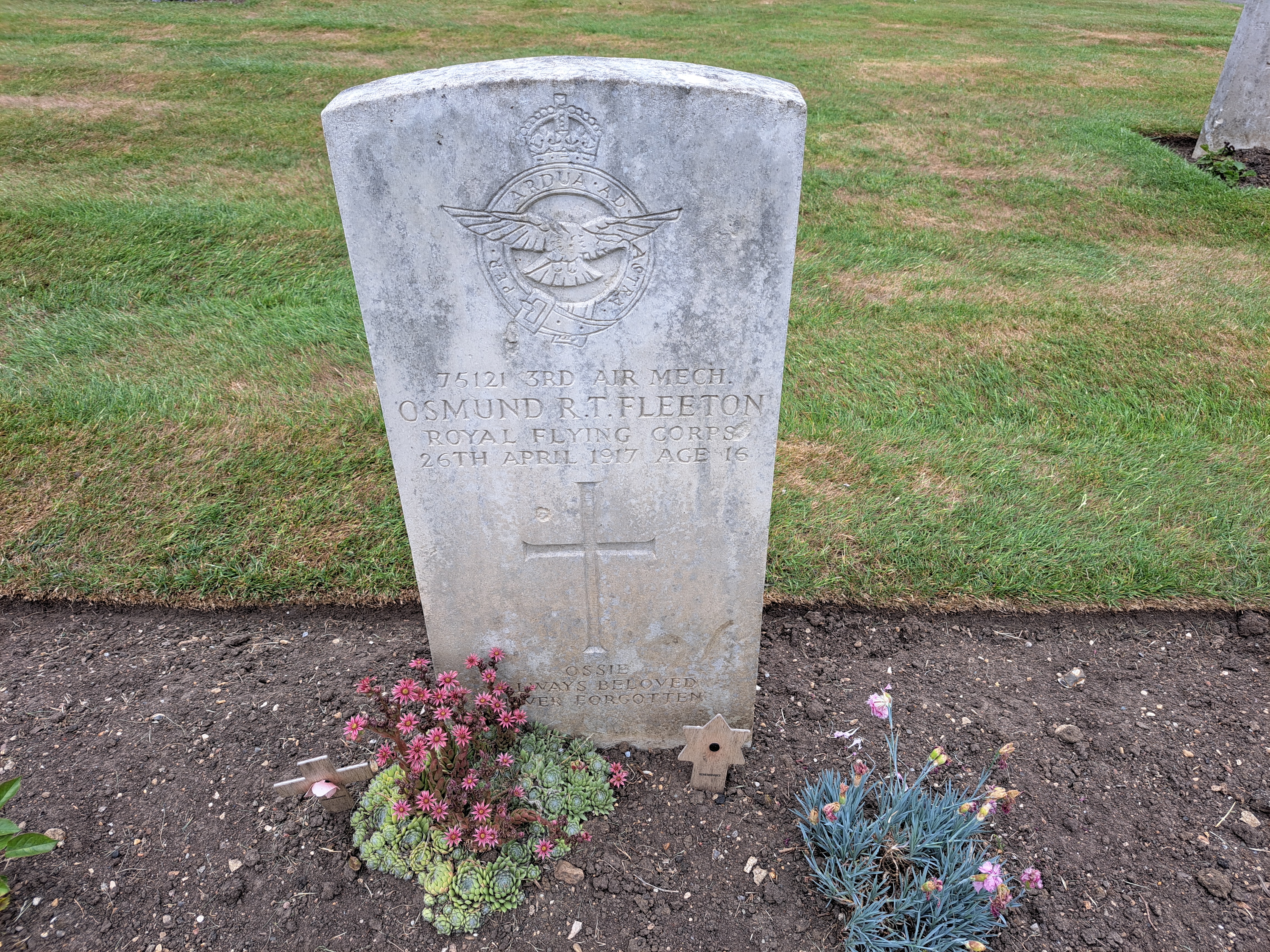
Grave of Osmund Fleeton

Another Irish grave is that of Private James Byrne from county Kilkenny of the 1st Battalion the Leinster Regiment who died on 13th May 1915.
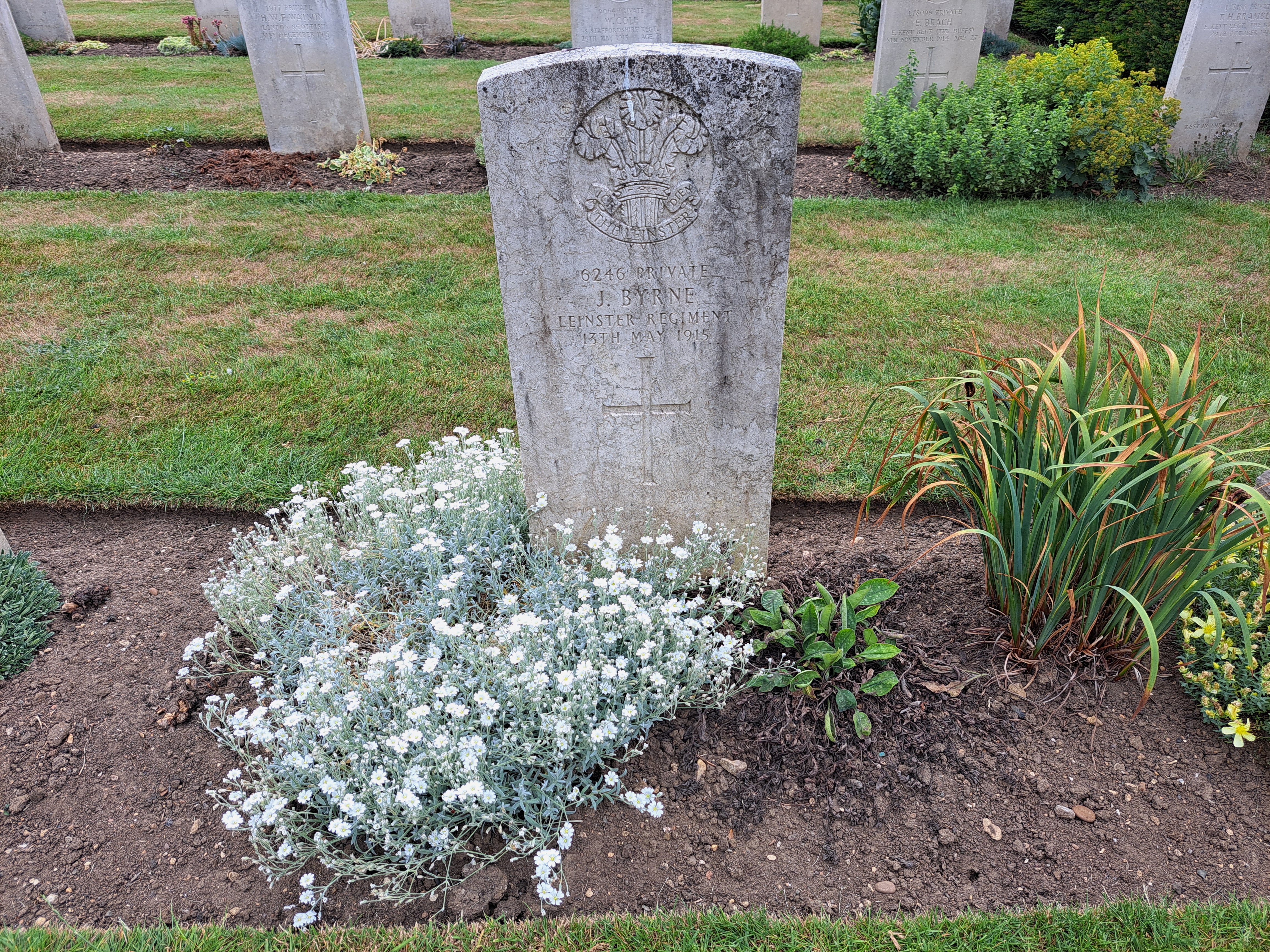
Private James Byrne

In one corner of the grave yard there is a solitary grave of a nurse – Staff Nurse Mabel Murray, of the Territorial Force Nursing Service, who worked at the 3rd Southern General Hospital and who died of influenza on 2nd November 1918 at the age of 35. She was one of the victims of the so-called ‘Spanish flu’ which swept over the nation at the end of the First World War, and it may be that the reason her grave is situated in a lonely corner is that they expected more of her colleagues to fall victim to influenza, but thankfully this did not transpire. She is not the only woman buried in the cemetery, however. Nineteen years old Aircraftwoman Glenys Doreen Harris is buried in the RAF section having been killed when an RAF Mosquito crashed in training at Upper Heyford on 24th September 1945.
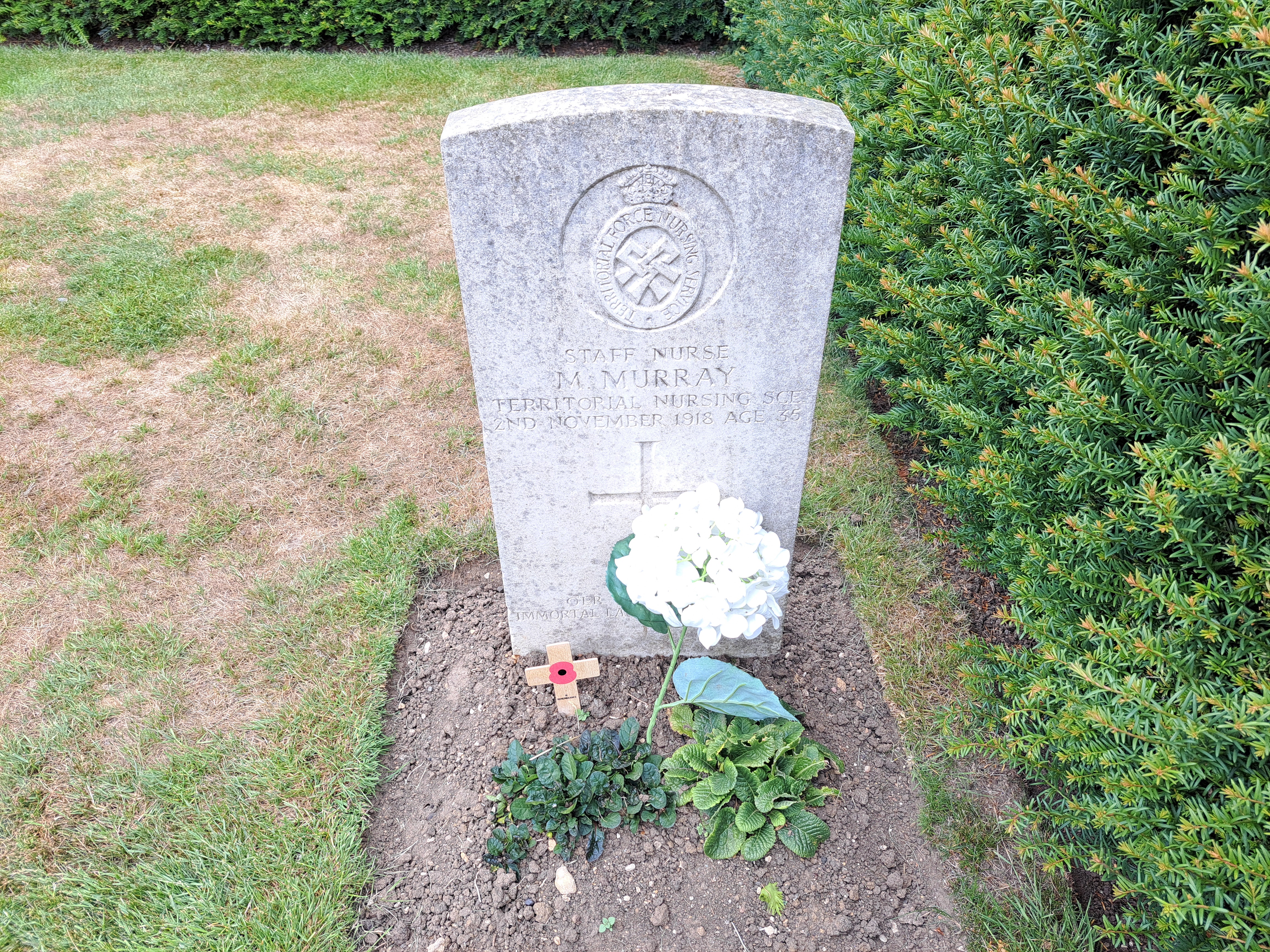
Staff Nurse Mabel Murray

The graveyard contains the graves of many nationalities from both world wars including those who came from the then dominions of the British Empire (Australia, New Zealand, Canada, and South Africa) as well as other countries including Belgium, Czechoslovakia, Italy, The Netherlands, and Poland. Botley also contains the only grave of a Greek soldier in Britain – Private T. Lagos, who died in Oxford on 18th October 1944. His headstone is inscribed with a quotation from Pericles’ funeral oration as recorded by Thucydides: The whole earth is the tomb of famous men’. There are also a number of German graves from the First World War as well as a large section of 33 graves of German soldiers all dated 1944 who presumably were prisoners of war. It was strange to see the German war graves although their presence is perhaps slightly reminiscent of the memorial in New College Chapel to former German students who had been killed in the Great War.
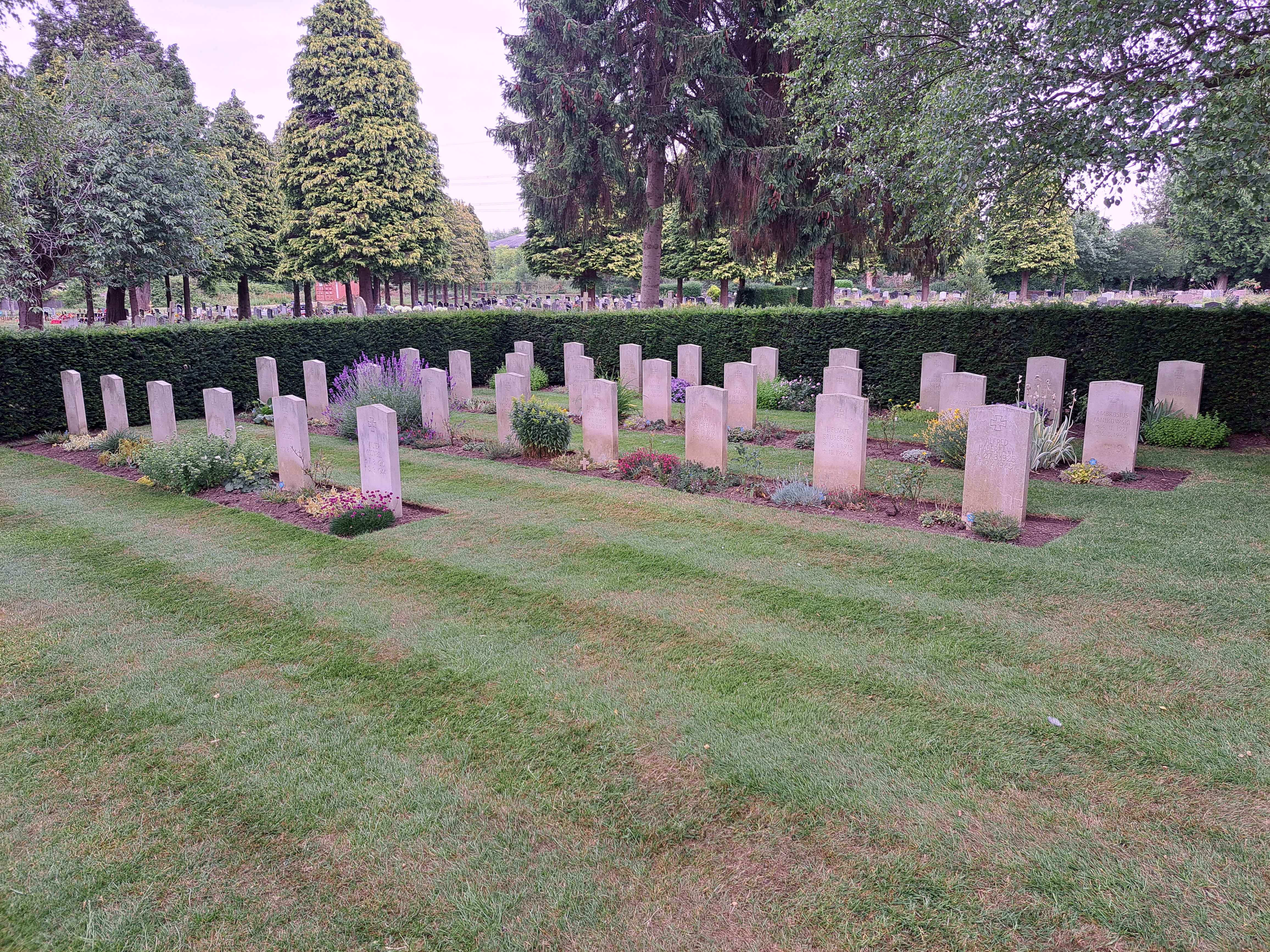
German war graves

The precise number of graves in the CWGC cemetery at Botley varies according to which source you consult but I did notice a number of other military graves from the world wars located outside the Commonwealth War Graves area which might account for the variations. But it is certainly a very peaceful place, a well-cared-for corner of a municipal cemetery, a silent memorial to those who gave their lives.
The new Faith and Freedom Logo

The next issue (Volume 77 Part 2, Number 199, Autumn and Winter 2024) is due out very soon, so this is a chance to preview our brilliant new Logo:

Faith and Freedom was founded in Oxford at the instance of the Ministerial Old Students’ Association of Manchester College, Oxford in 1947 and has been published continuously since. For the first time we have our own logo. Bold and attractive it expresses our identity and our long tradition of freedom of thought in matters of religion.

Tom Tower, Christ Church, Oxford

Recently, when in Oxford, I visited the Christ Church Picture Gallery where one of the exhibitions, entitled ‘WISH YOU WERE HERE!‘ (1 July – 30 October 2023) The attraction of Christ Church in early photographic postcards, caught my eye. It is always interesting (and rare) to see a serious art exhibition that contains items that you could afford to buy yourself. There are around 70 postcards in the Christ Church exhibition but seeing them encouraged me to start my own small collection. Prices can vary but generally cards like this should be quite cheap, they were produced and sold in vast quantities by a variety of printers and are hardly rare. So I decided to create my own small collection and focused on cheap examples of pictures of the West Front/St Aldate’s view of Tom Tower. I picked this view because although every postcard from 1900 to 1950 (or indeed to the present day) looks superficially the same you realise when you investigate closely that this is not the case. Since Tom Tower is situated on a main thoroughfare there are plenty of social changes that can be observed and a multitude of minor small details that are worth exploring in the foreground. I will work out the best way to display these images of the West Front.

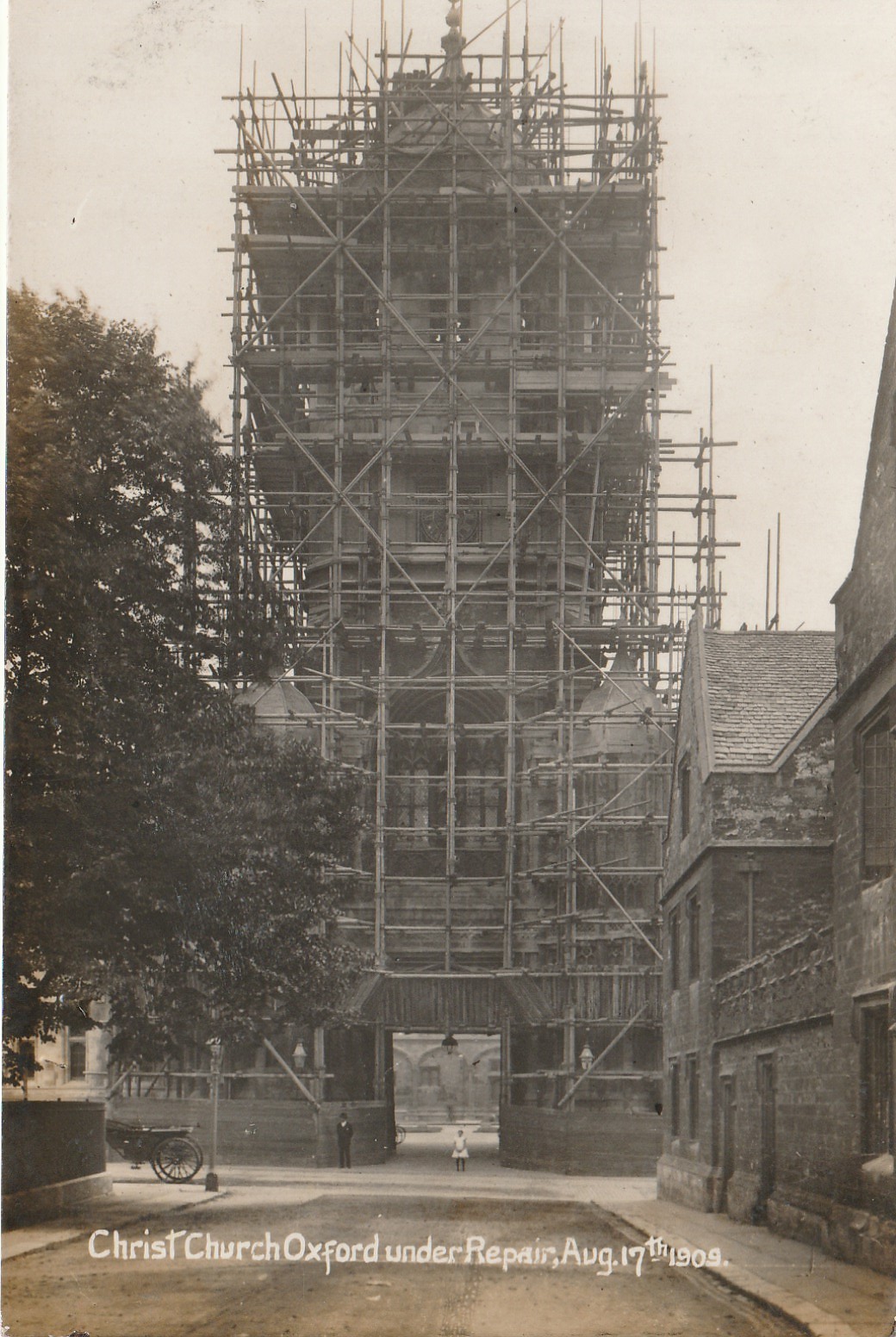
But I allowed myself a small diversion into a handful of pictures of Tom Tower itself. Mainly this was because I managed to get one picture that I had seen in the exhibition which must be quite rare and was accordingly slightly more expensive than the others. This is it:

‘Christ Church Oxford under Repair, Aug. 17th 1909’. No publisher named.

I think this is a wonderful postcard. All the pictures of Tom Tower alone, largely taken from over the road, somewhere near the entrance to Pembroke College, are basically the same. There might be a vehicle of some sort somewhere in view, or a bowler hatted figure standing under the entrance to the college, but not much more.

This picture, however, is very different. The publishers give us the exact date and show us Tom Tower, not as you would expect, but covered in scaffolding. If you had turned up in Oxford to do the touristy thing and saw the tower covered in scaffolding I imagine you would be disappointed. I don’t think you would want to buy a postcard that also obscured the view. If you turned up after the work was completed and the scaffolding had been taken away I don’t think you would want to buy a picture of how it looked during restoration, unless you were very interested in scaffolding. It can’t have had a long shelf-life and it can’t have been many people’s favourite view. And yet it is a compelling image, intriguing and lively. I am glad the unnamed publisher took this view and glad to get a copy for my collection.

This card, dated 14th January 1910, was sent by Emily to ‘Mr Hammond, “The Lilacs”, Skipton Cliffe, Andoversford, Glos.’ Mr Hammond appears to have been Emily’s uncle since she also included ‘love to Aunt’ at the end of the message. And it doubled as a birthday card – ‘With every Good Wish for Many Happy Returns of the Day’, she begins. Emily might have been a student in Oxford, she was certainly resident there because she also says ‘I sent you the paper for you to read Mr Whale’s speeches our Liberal Candidate for Oxford’. ‘Mr Whale’ was George Whale who stood in Oxford in the 1906 election and lost by just 100 votes. He stood again in January 1910 but a swing of 6.4% saw him lose by over 1,200 votes to Arthur Annesley his Conservative opponent. George Whale was a freethinker and the chairman of the Rationalist Press Association. A former Mayor of Woolwich he was never successful in getting elected to Parliament.
But this was the card that Emily chose to send to her uncle for his birthday along with news of the freethinking candidate on the eve of the election in Oxford. It was, I think, an inspired choice.

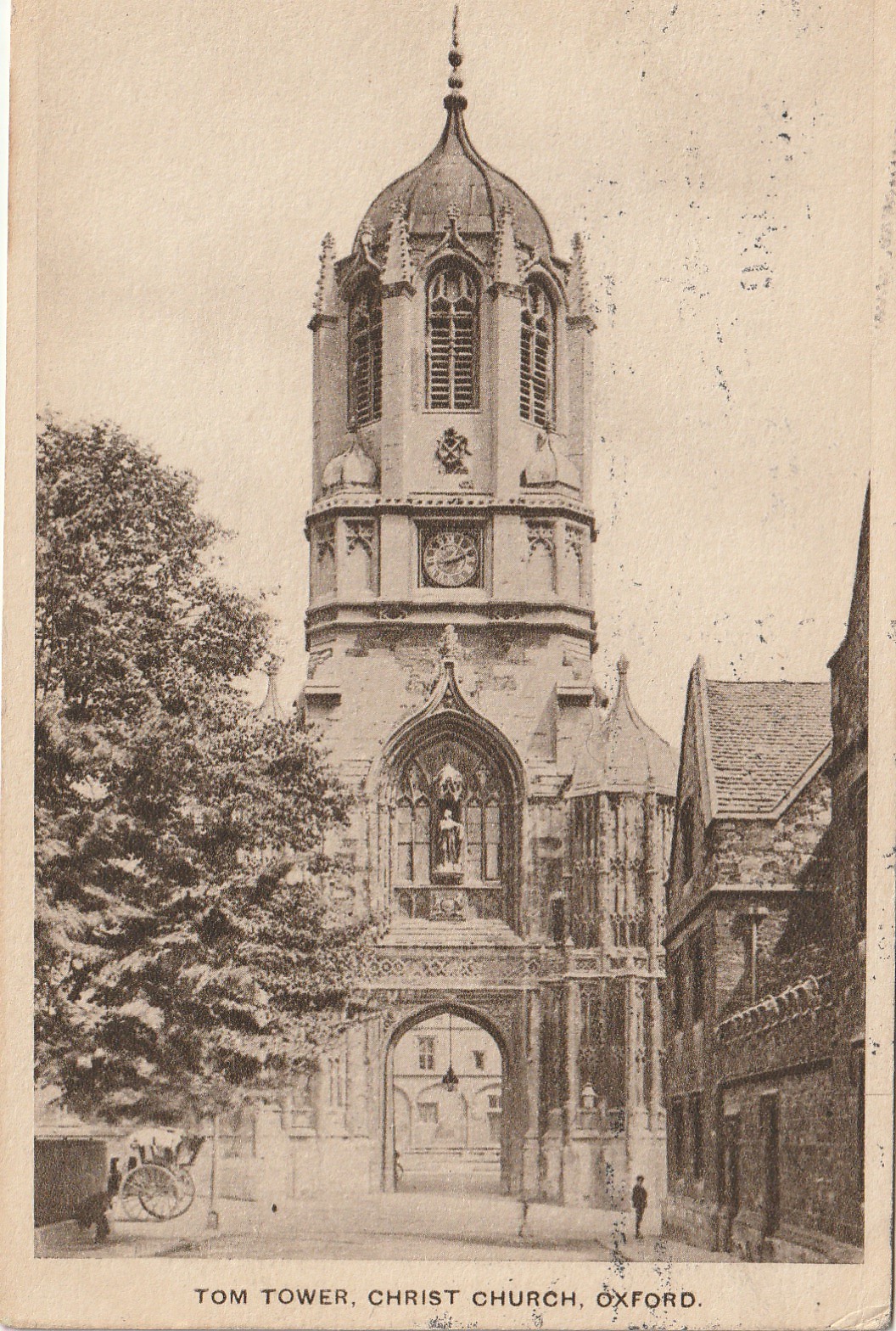
‘Tom Tower Christ Church, Oxford’. Published by Vincent of Oxford. Posted 4th September 1915. Sent to Mrs Ewan Jones of Cricklewood by ‘All’, they were planning to drive to Oxford ‘with little Julian’ in the afternoon.

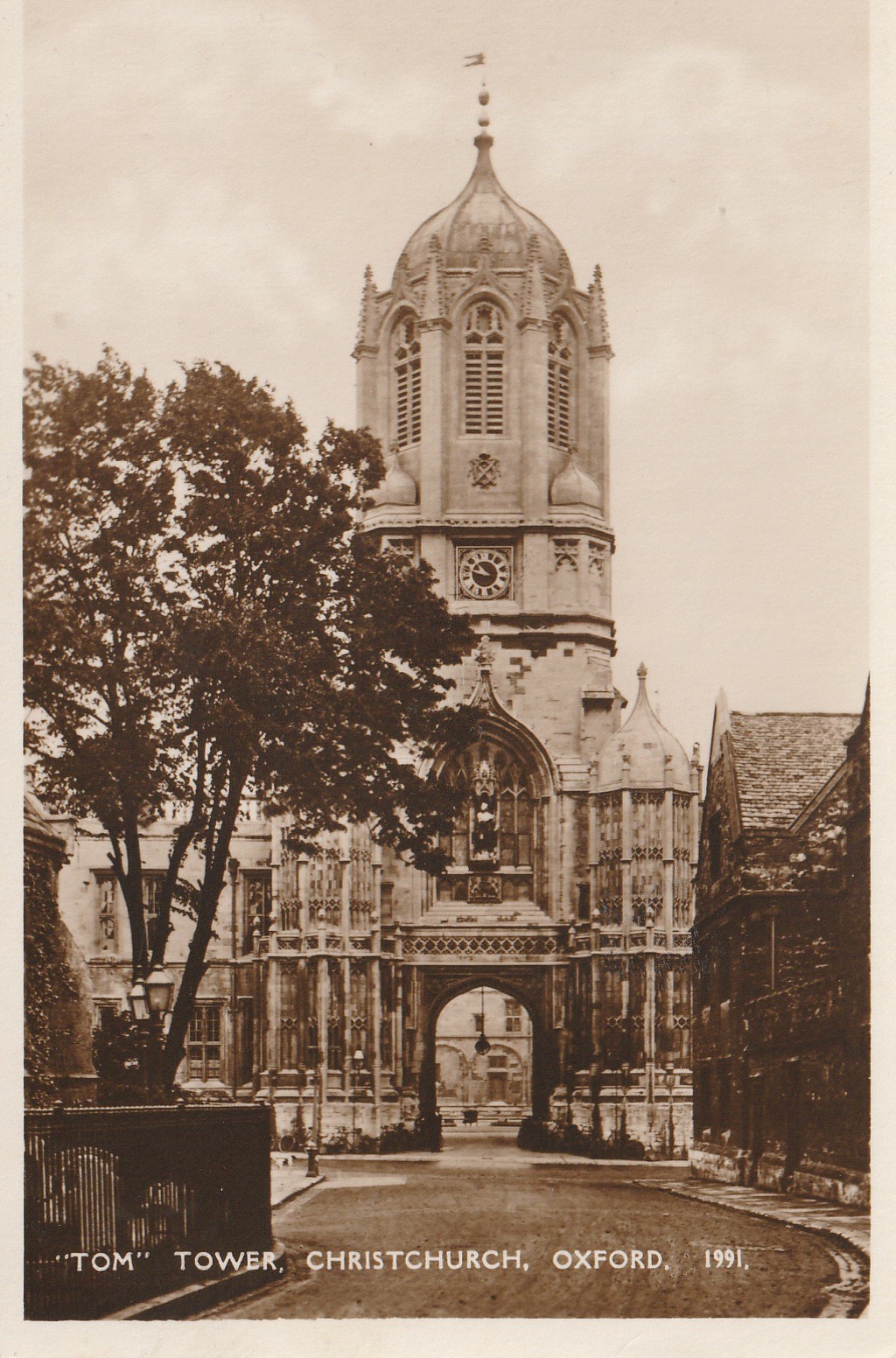
The other postcards of Tom Tower are all difficult to date precisely, especially when they were unposted, but they were mostly taken before the First World War, although similar examples could remain in print right up to the 1940s.
‘”Tom” Tower Christchurch, Oxford’ by J. Salmon Ltd., Sevenoaks. Unposted.
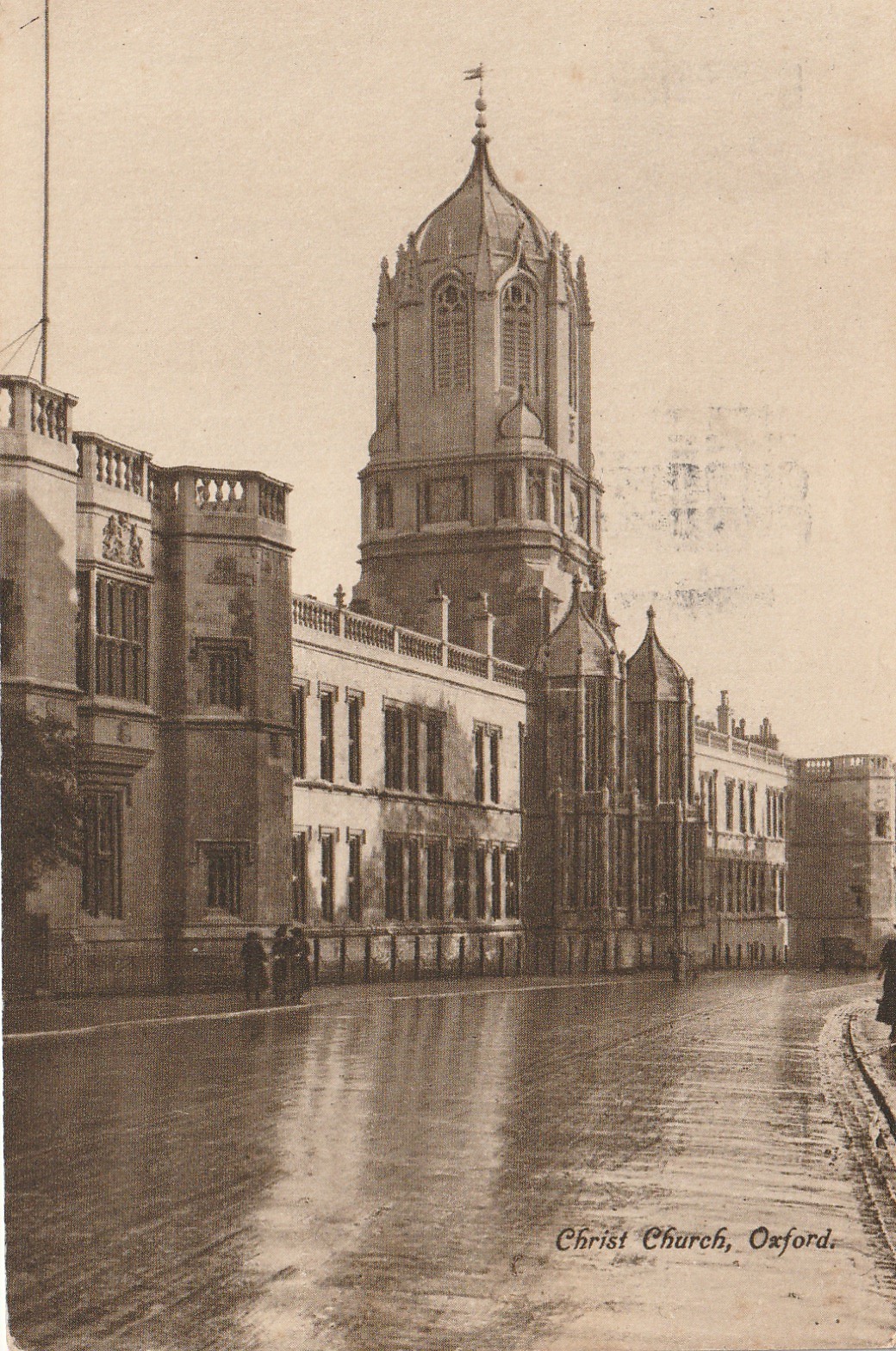
‘Christ Church, Oxford’. Published by Penrose and Palmer. Posted by Dorothy to Mrs England in Acocks Green, Birmingham on 12th November 1926.

This last photograph, published by the local firm of Penrose and Palmer, is another favourite of mine. The road is wet after a downpour and the photographer has caught a reflection of the building in the road. It’s a fine photograph. It falls somewhere between the direct images of Tom Tower on its own and the wider (landscape) views of the whole West Front but it is actually a more characterful and interesting picture than most of them.

No pictures or text may be reproduced from this site without the express permission of the author.

The world is charged with the grandeur of God

Hawarden, North Wales

The world is charged with the grandeur of God.

    It will flame out, like shining from shook foil

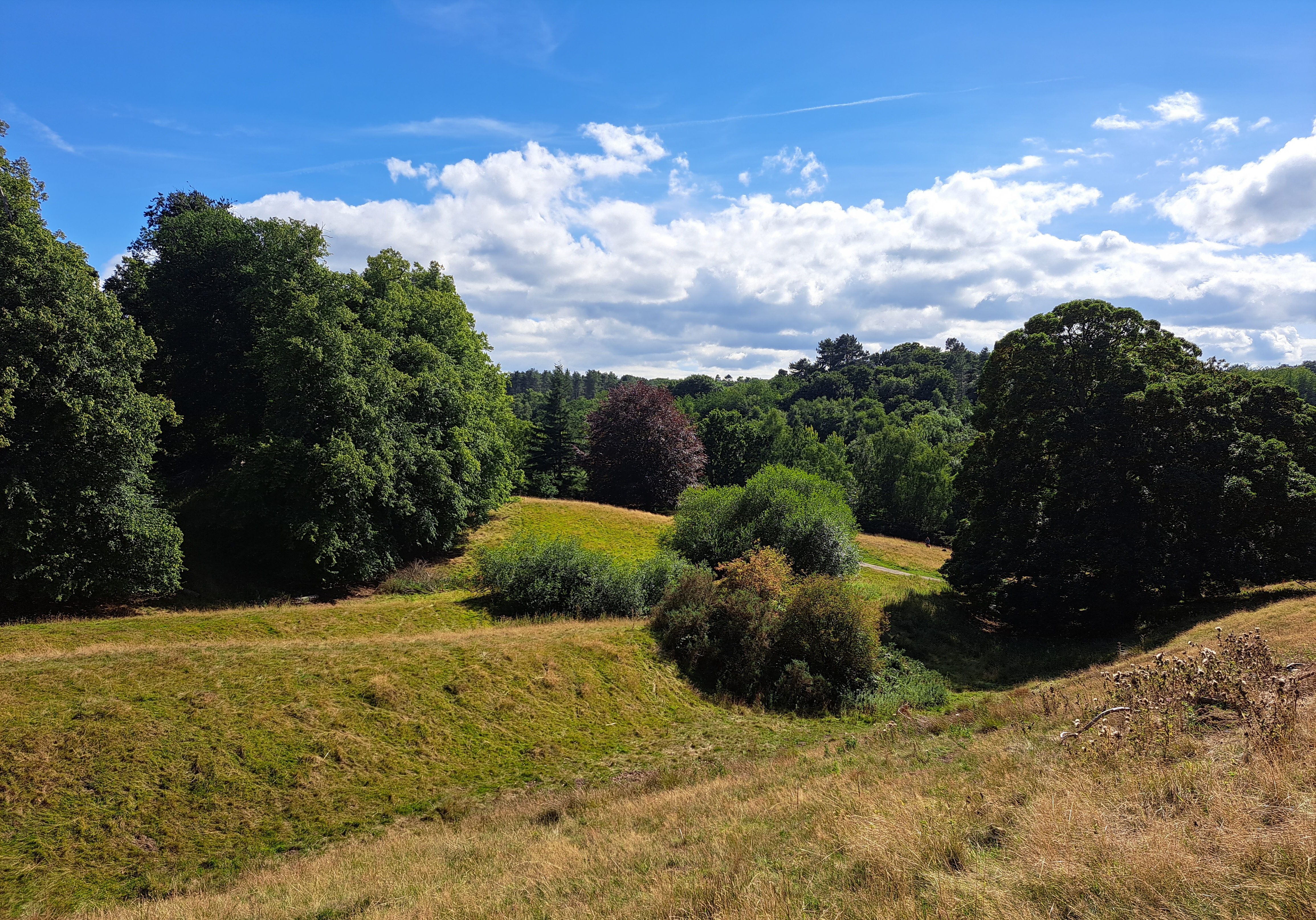
These opening lines from God’s Grandeur by Gerard Manley Hopkins supply us with the opening words and the theme of this week’s online service. Filmed at various locations in England, Wales and Northern Ireland places visited include the Hawarden estate, Flintshire, North Wales; the sand dunes at Formby near Liverpool; the Derbyshire Peak district; the River Thames (Isis) at Oxford; Norton Priory, Cheshire; Sefton Park, Liverpool; Rathmullan, county Down; and Dunmurry, county Antrim. As we look at these varied landscapes we explore the meaning of this idea of the divine presence in the natural world alongside readings from Gerard Manley Hopkins, Thomas Merton and Ernesto Cardenal.

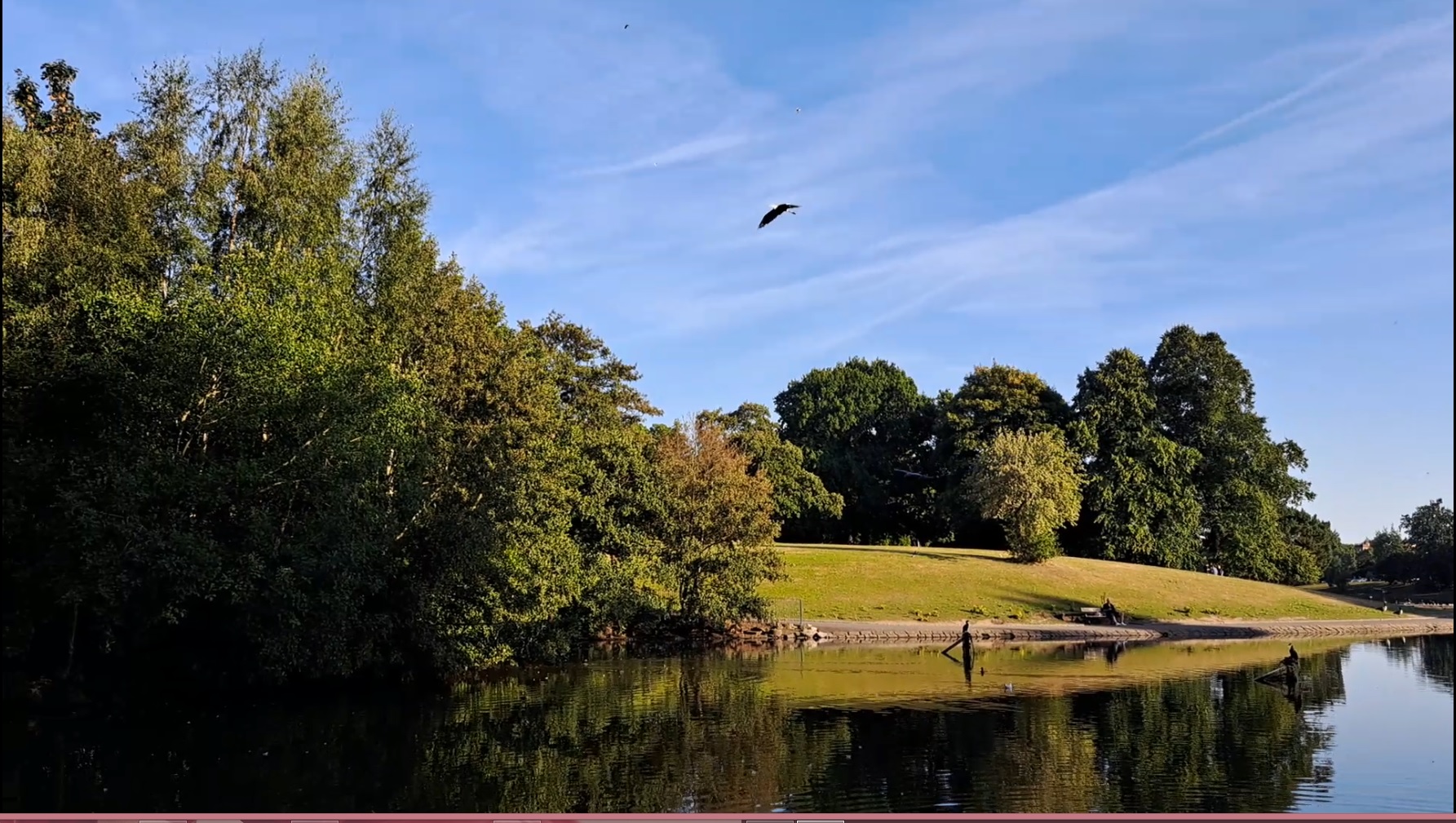
Sefton Park – the heron flies over the lake

The world is charged with the grandeur of God – click on the video above to see the meditation and reflections

In the service Graham Murphy reads two poems by Gerard Manley Hopkins – Binsey Poplars and Pied Beauty, both recorded at Gladstone’s Library, Hawarden, Flintshire. In addition Robert Neill and Emma McCrudden read extracts from the works of Thomas Merton and Ernesto Cardenal.

Binsey, near Oxford

Music played includes:

For the beauty of the earth, played by Allen Yarr, organist of First Presbyterian (NS) Church, Dunmurry.

Come let us sing of a wonderful love, played by John Strain, organist of Ballee Non-Subscribing Presbyterian Church.

O love that wilt not let me go, played by John Strain.

Let saints on earth in concert sing, played by Allen Yarr.

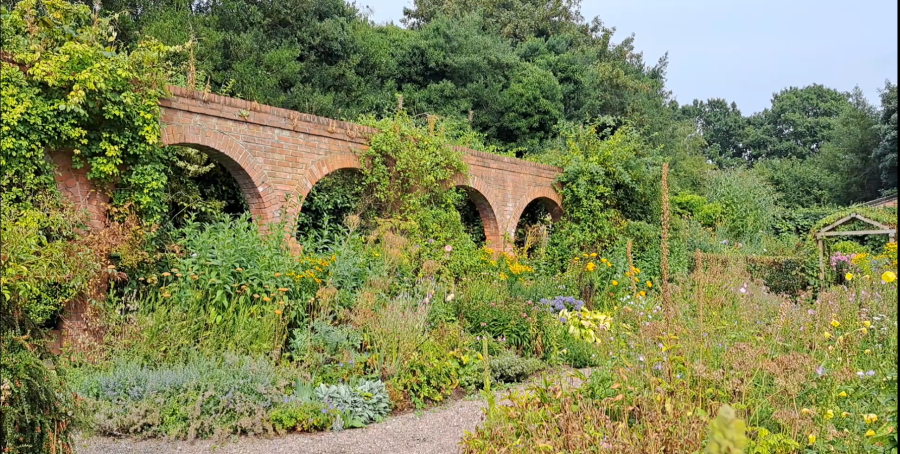
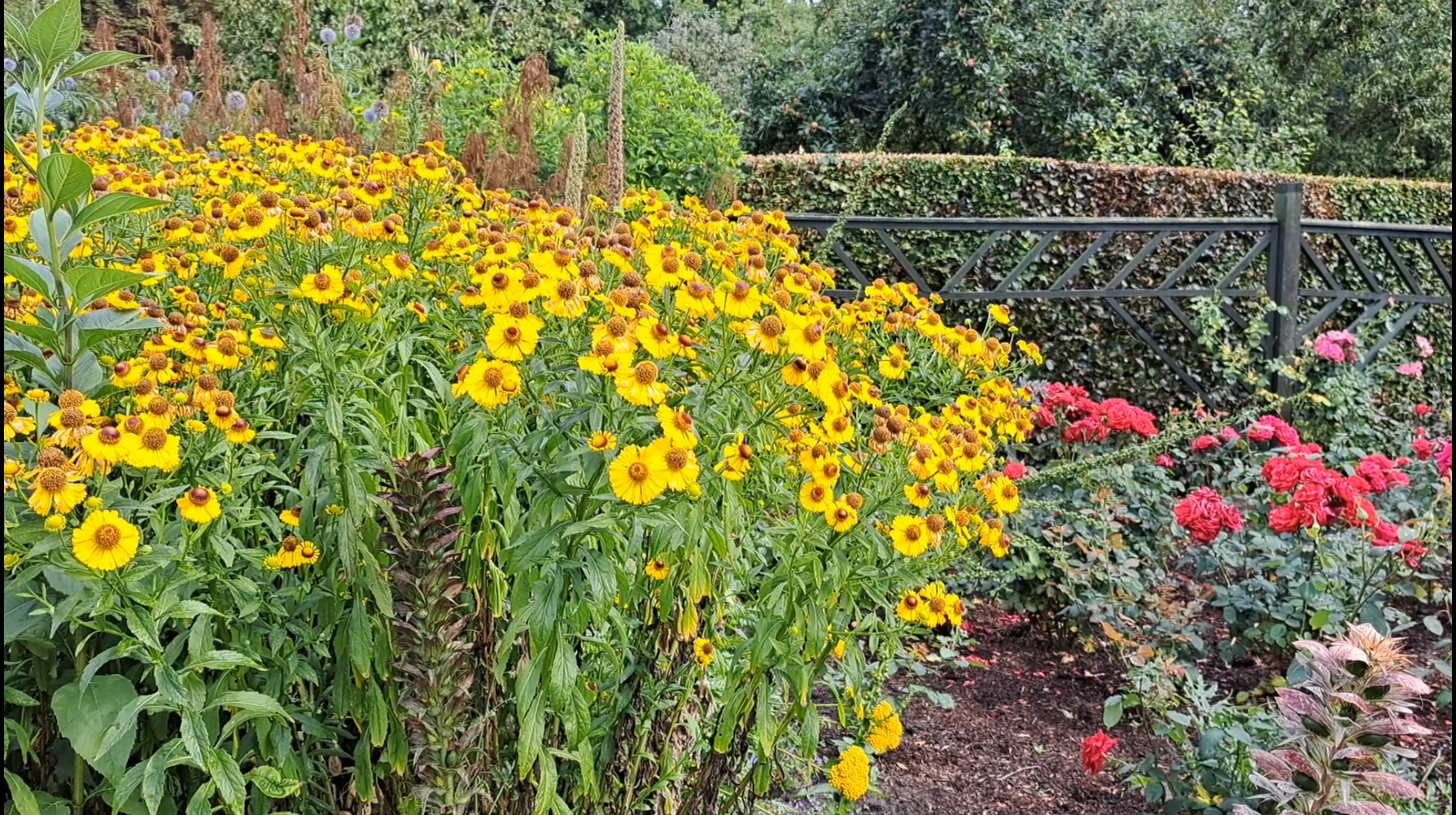
Norton Priory, Cheshire, walled garden
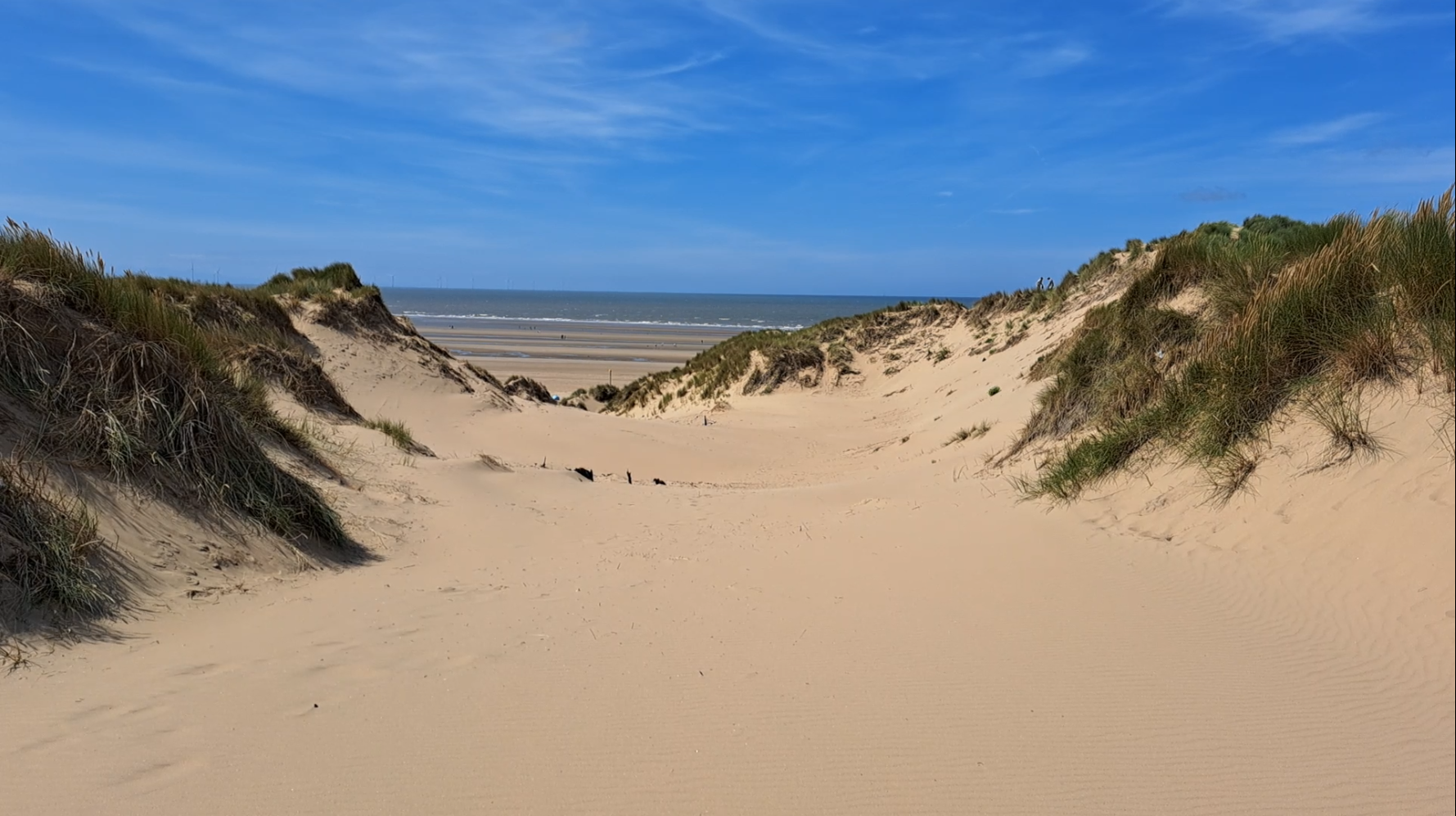
Formby, sand dunes
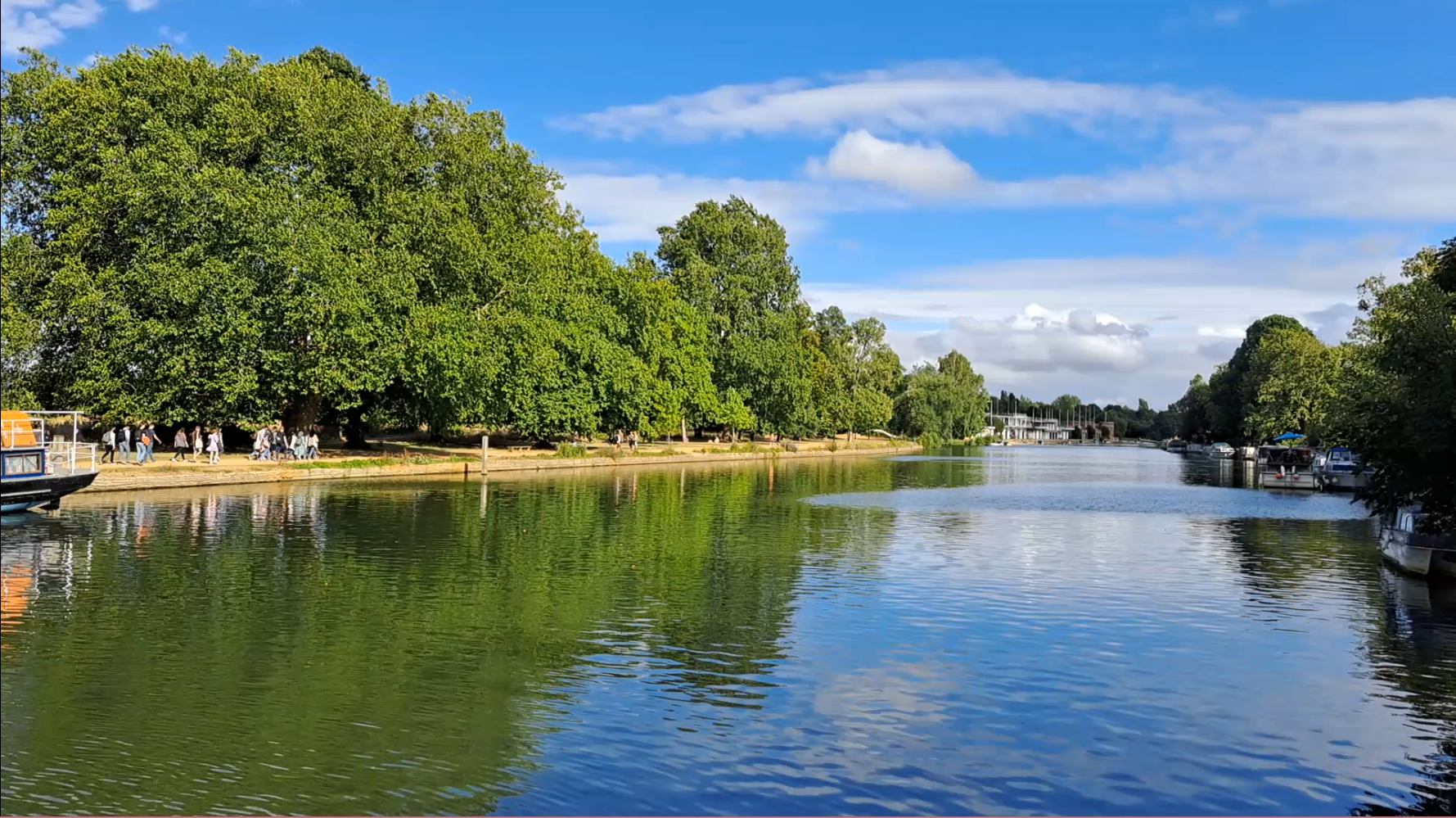
The River Thames at Oxford

Let me seek, then, the gift of silence, and poverty, and solitude, where everything I touch is turned into a prayer: where the sky is my prayer, the birds are my prayer, the wind in the trees is my prayer, for God is all in all. – Thomas Merton

Sunday Service, from Oxford

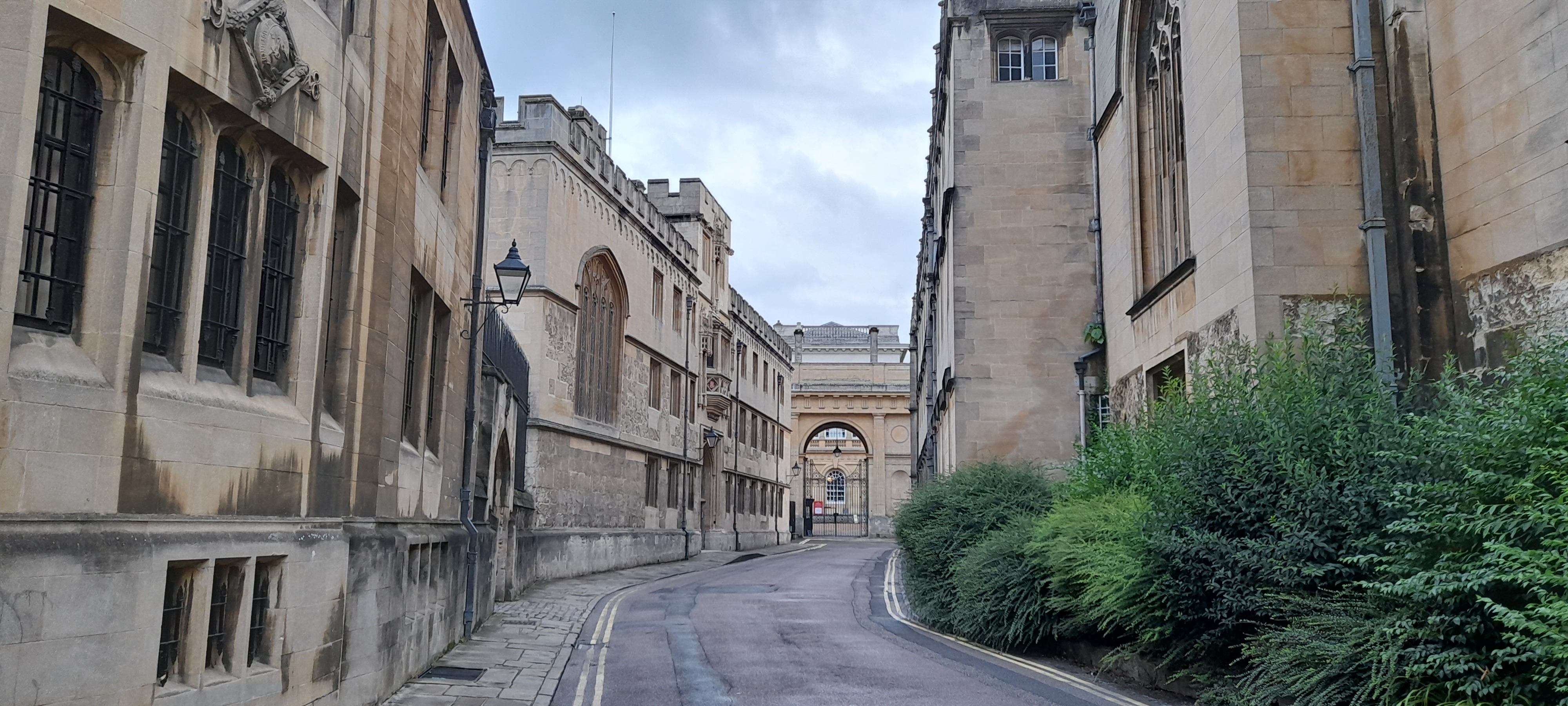
Merton Street, looking towards Canterbury Gate
Today’s online Sunday service comes from Oxford (click on the video above after 9.45 am on Sunday, 15th August 2021)

Our service is filmed in Oxford and features some of the well-known as well as some lesser-known sights of Oxford. Sue Steers reads Psalm 96 and Jenny Narramore shares an important part of College life in Christ Church. We also have a short reading from ex-slave and abolitionist’s autobiography The Interesting Narrative of the Life of Olaudah Equiano. Our organists play five hymns: Thine be the glory, John Strain, Ballee; Be still for the presence of the Lord, Laura Patterson Downpatrick; Praise to the Lord, the Almighty, Alfie McClelland, Clough; How deep the Father’s love, Allen Yarr, Dunmurry; Blest are the pure in heart, John Strain, Ballee.

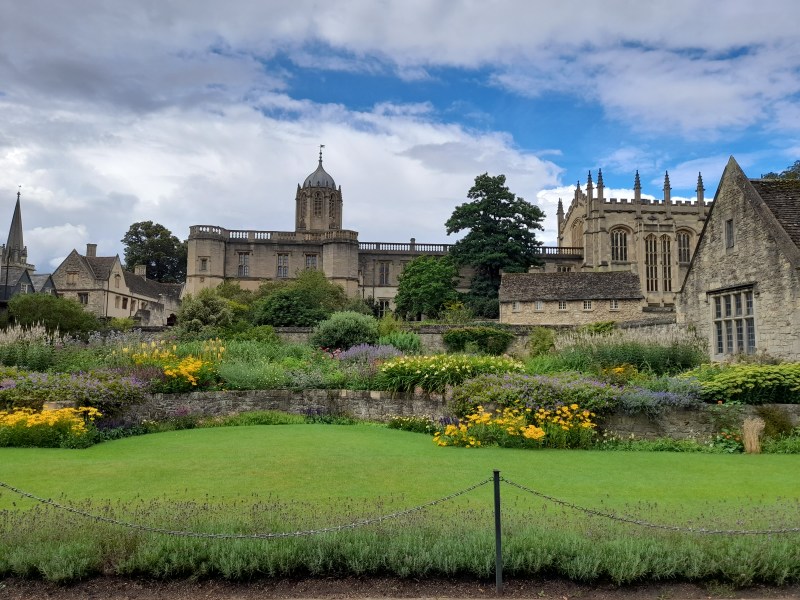
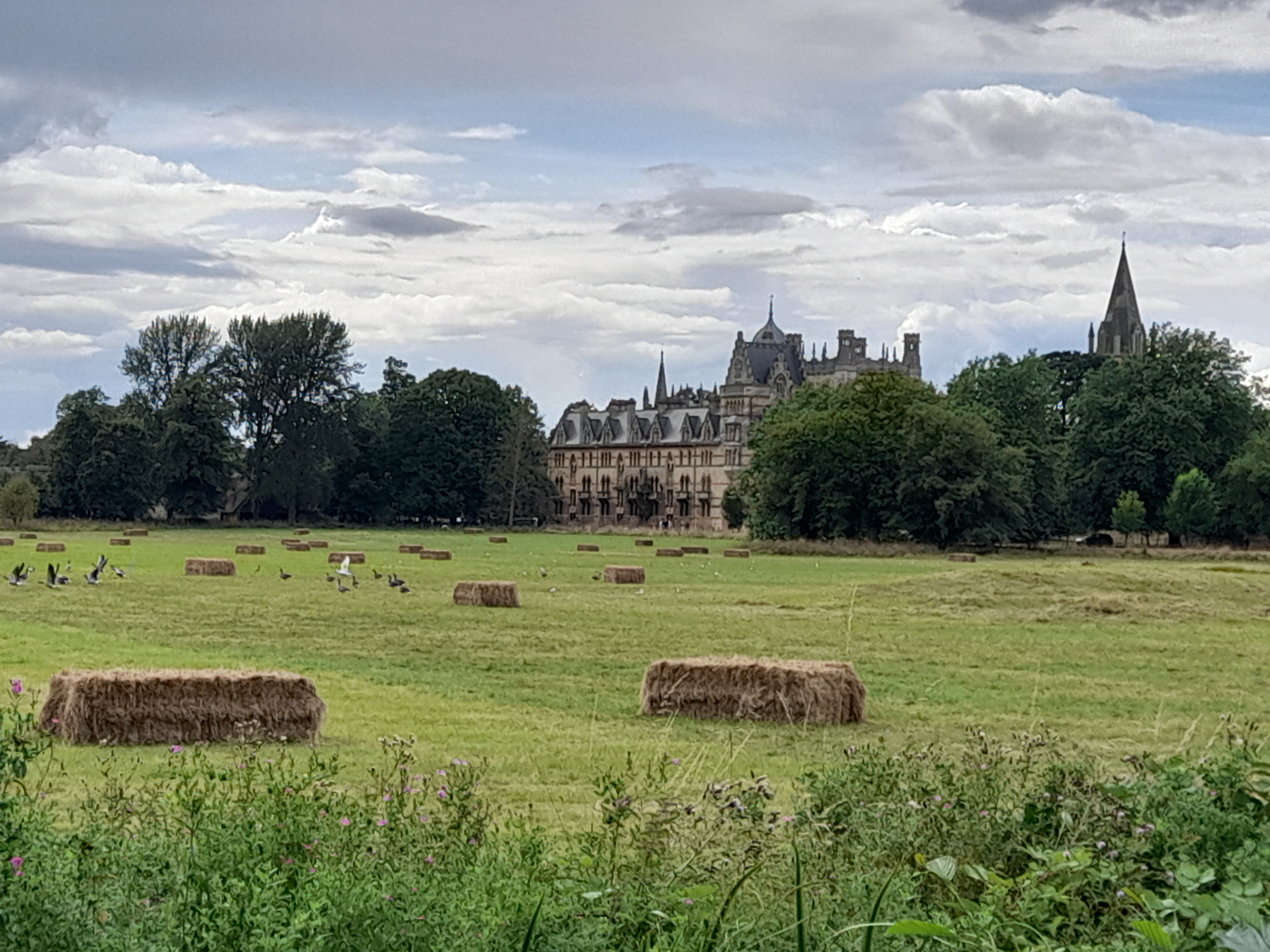
View across the Meadows to Christ Church
Mercury, Tom Quad

Oxford

As a visual experience Oxford never disappoints. As the seasons change, as the weather or the light changes even in a single day, so the buildings repay careful scrutiny, with the colours of the stone reflecting the sun, the rain, a glowering sky or the bright blue backdrop of recent sunny days. There are less tourists now. Even the lure of Harry Potter and Inspector Morse are no longer sufficient to cram the streets with eager faces, although the city is busy enough despite the pandemic.

But here are a few images I took recently over a couple of days.

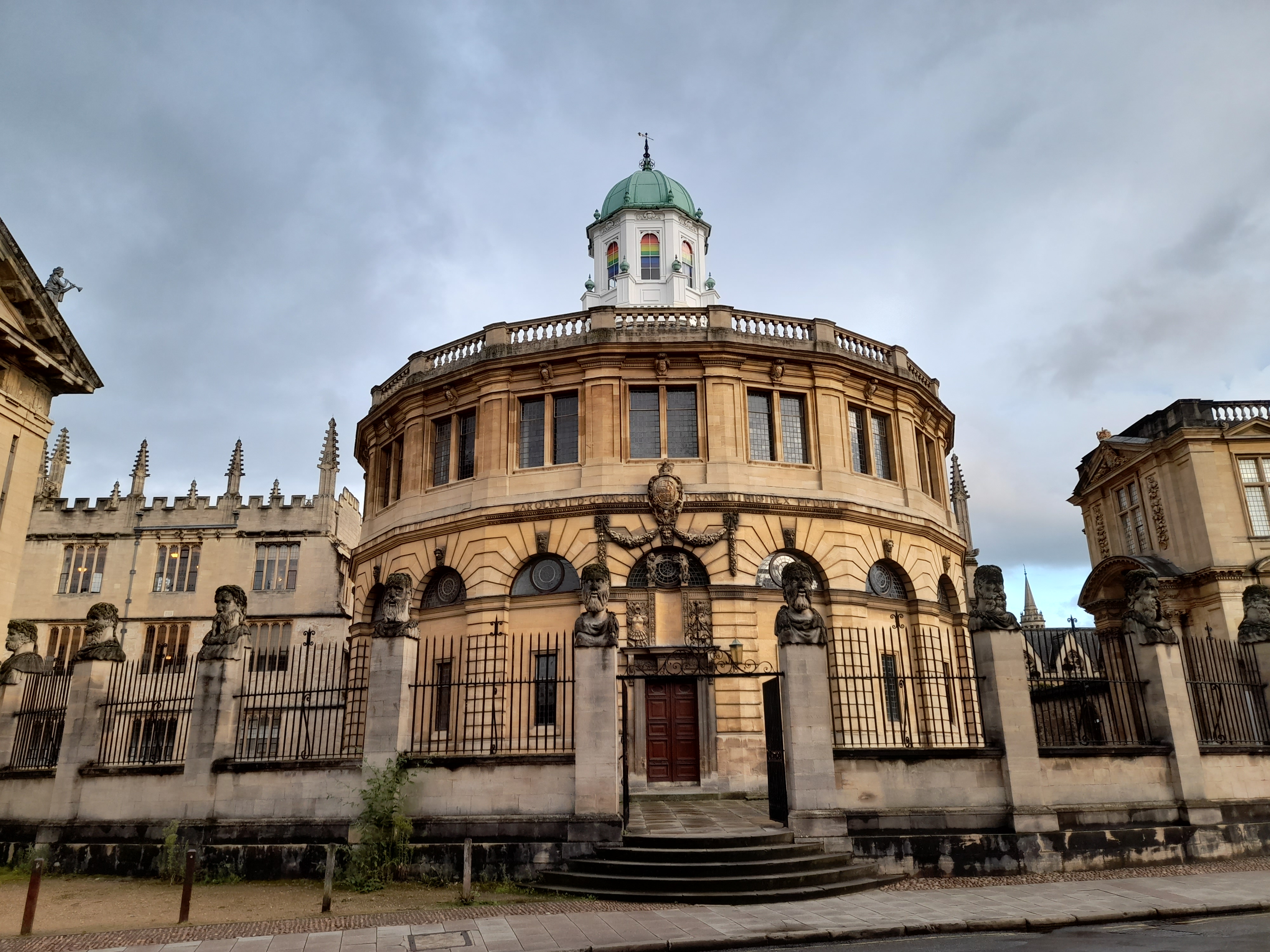
The Sheldonian Theatre, designed by Sir Christopher Wren
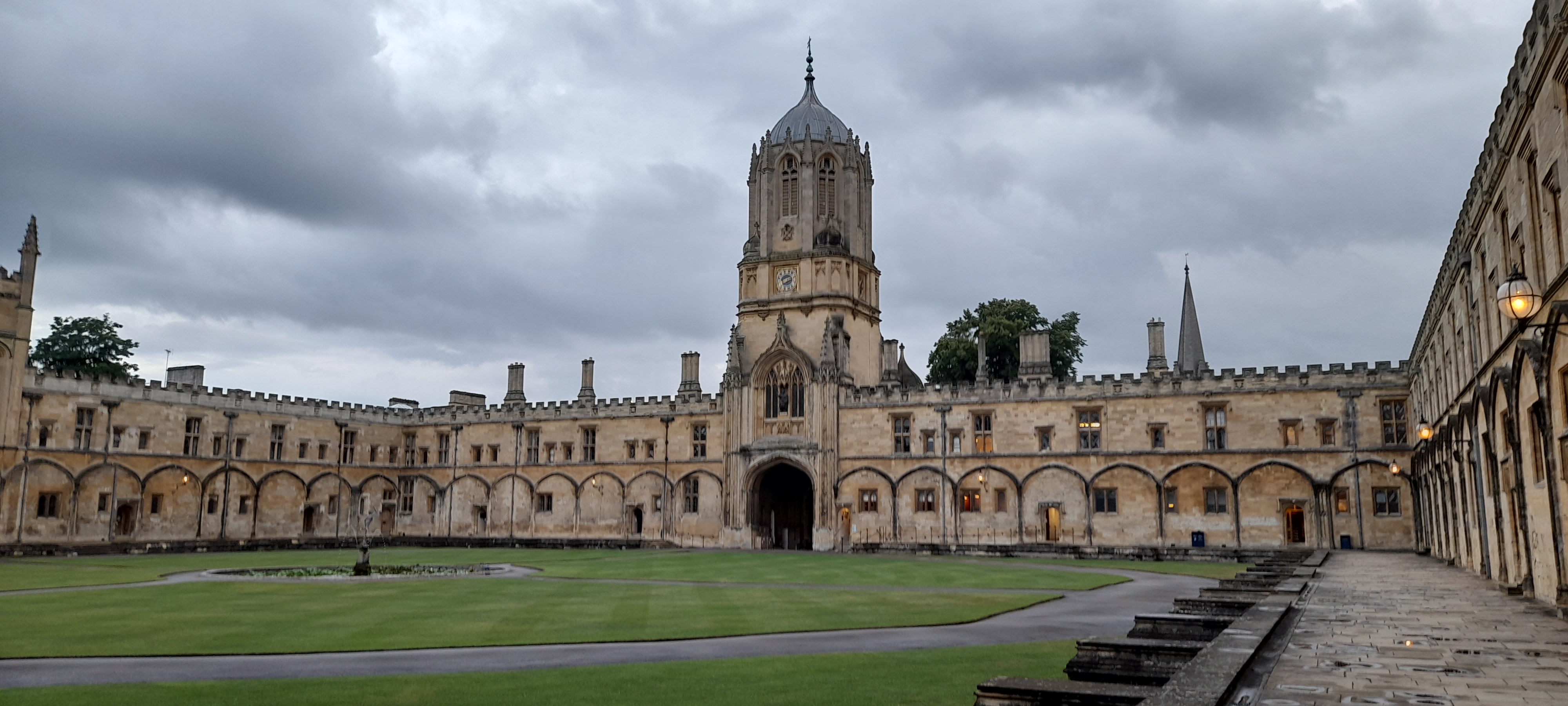
Tom Quad at Christ Church, with more work from Sir Christopher Wren in Tom Tower
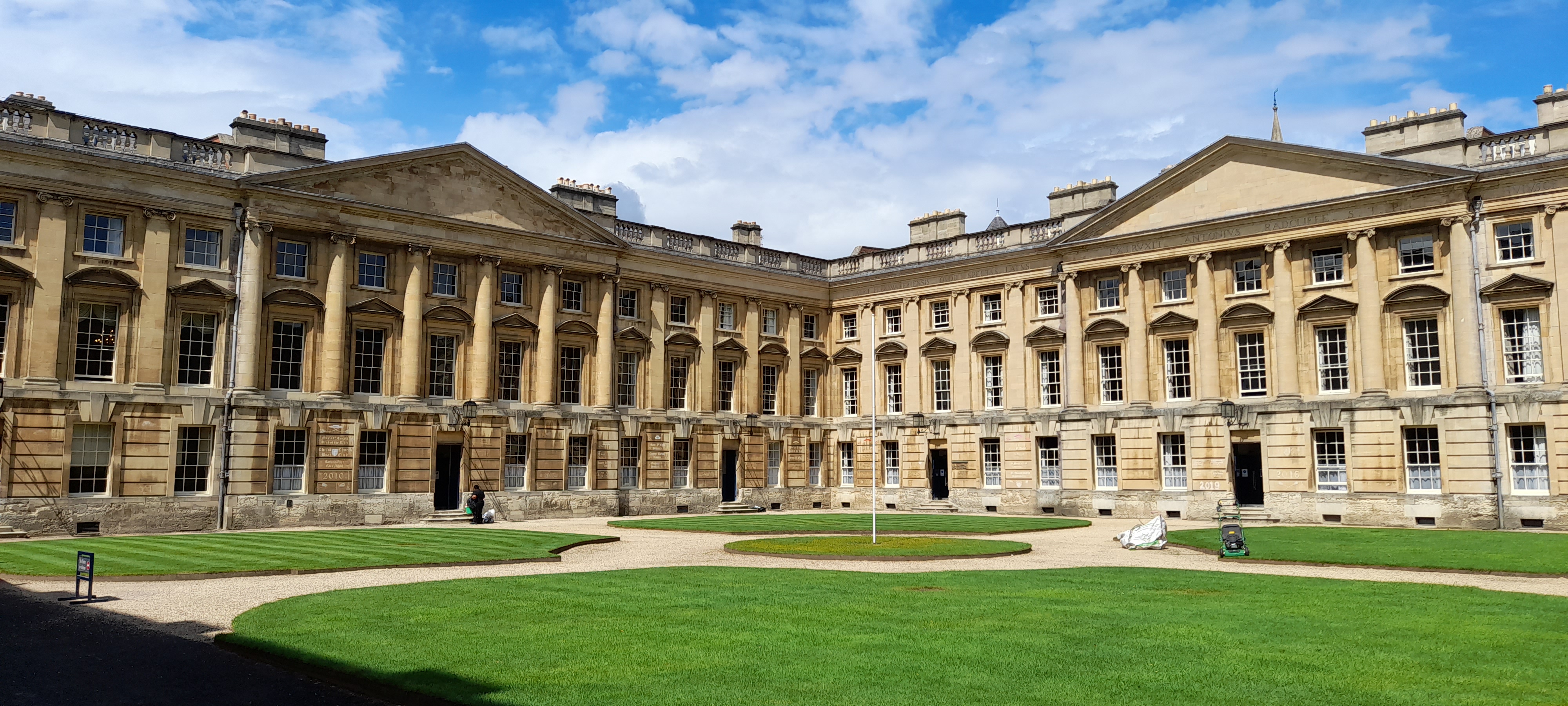
Peckwater Quad, Christ Church
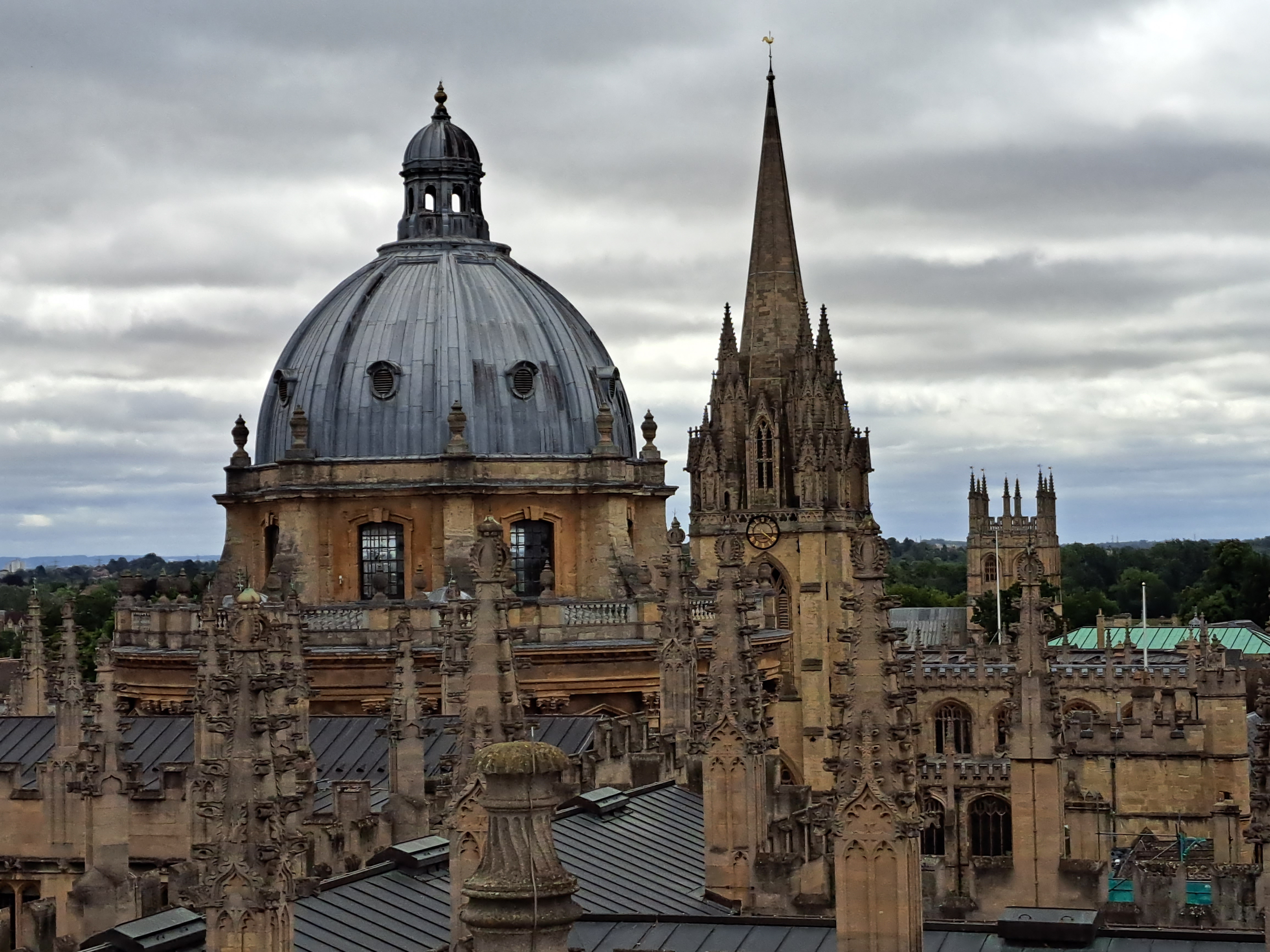
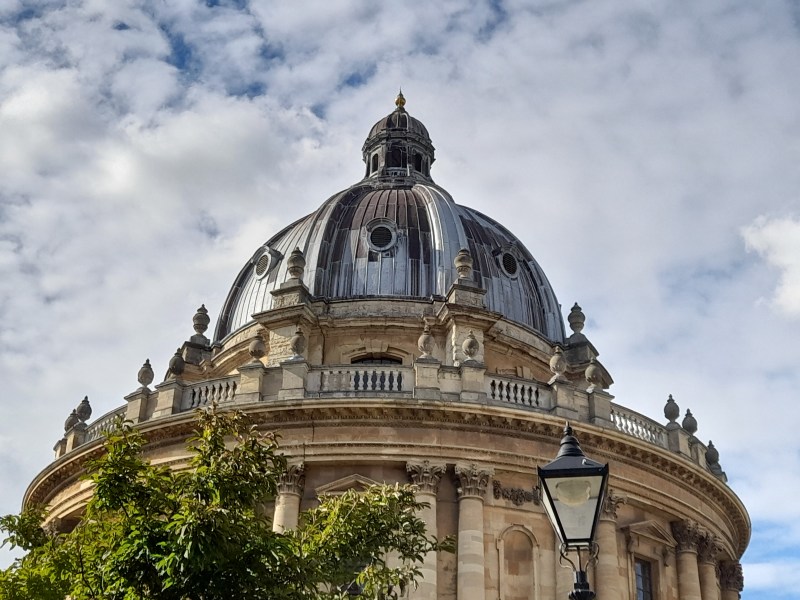
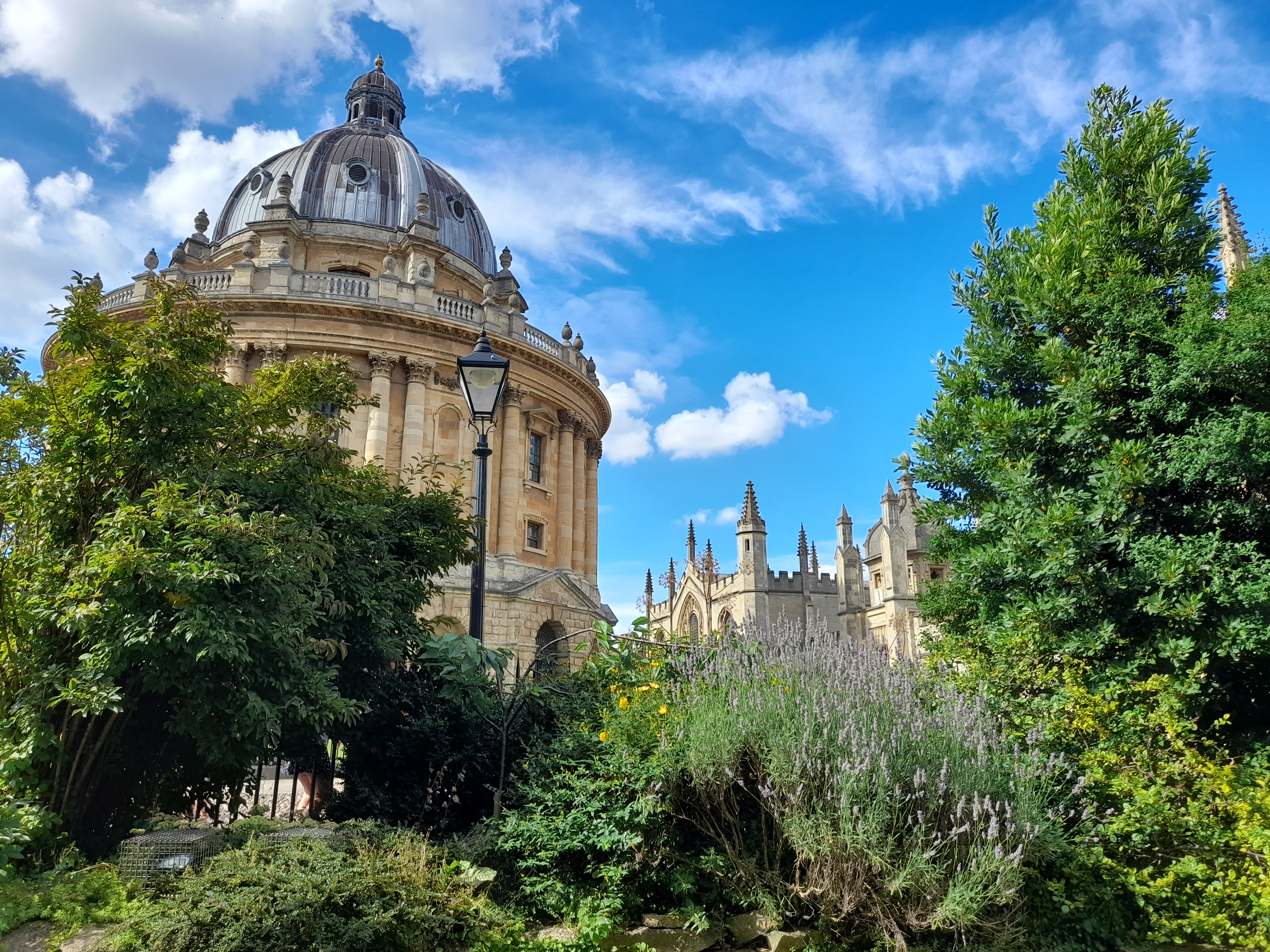
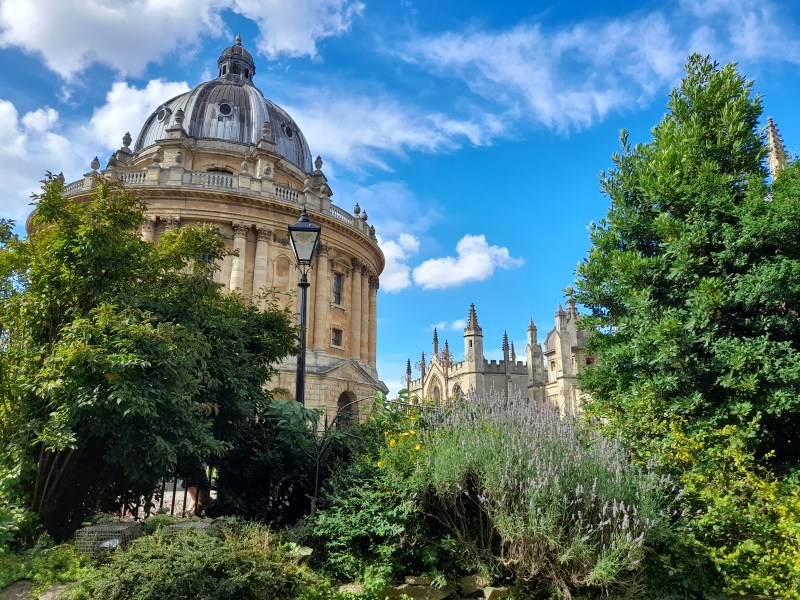
View of the Radcliffe Camera and All Souls College from the University Church
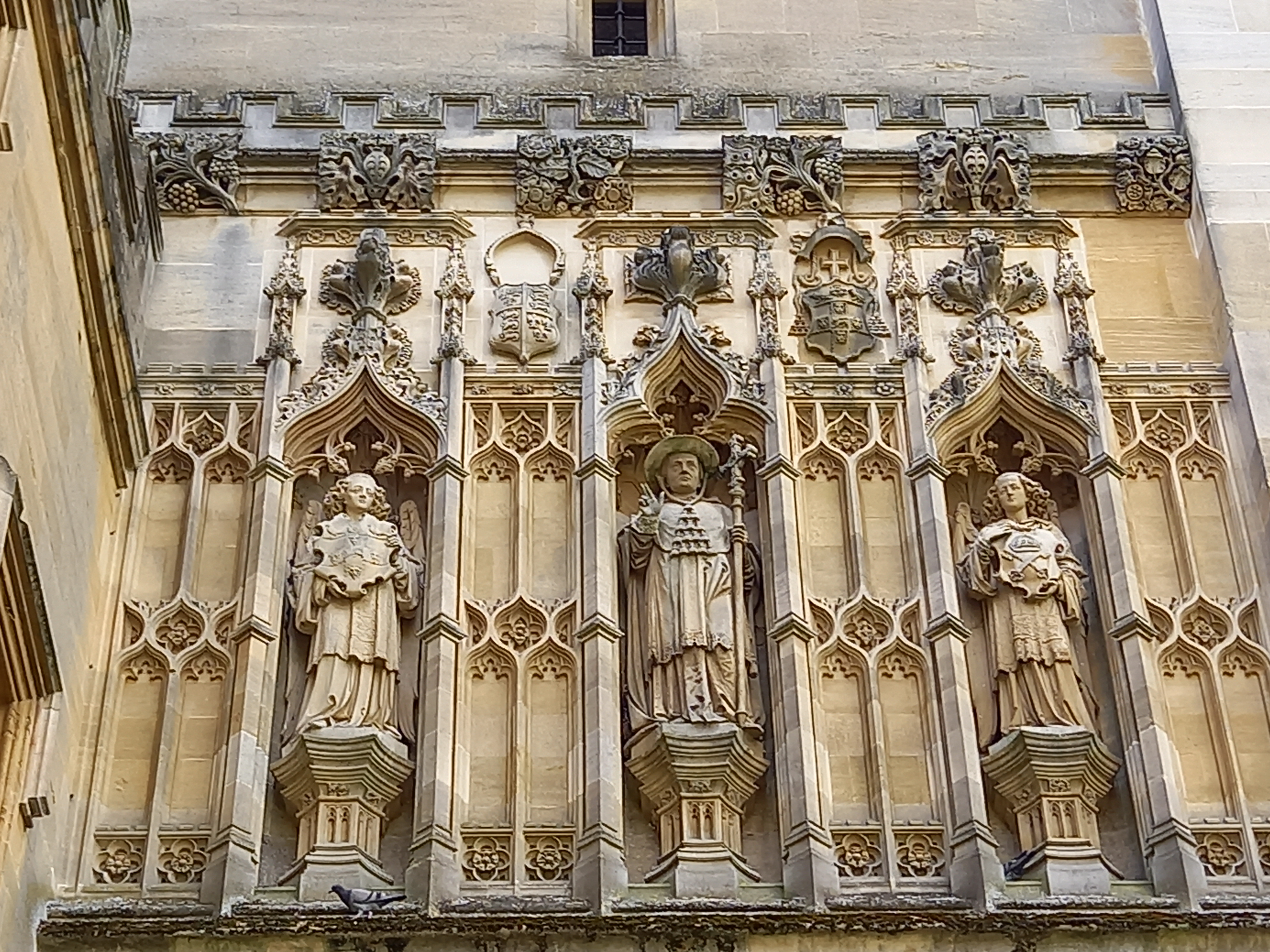
Statue of Cardinal Wolsey, Christ Church (Photo: Sue Steers)
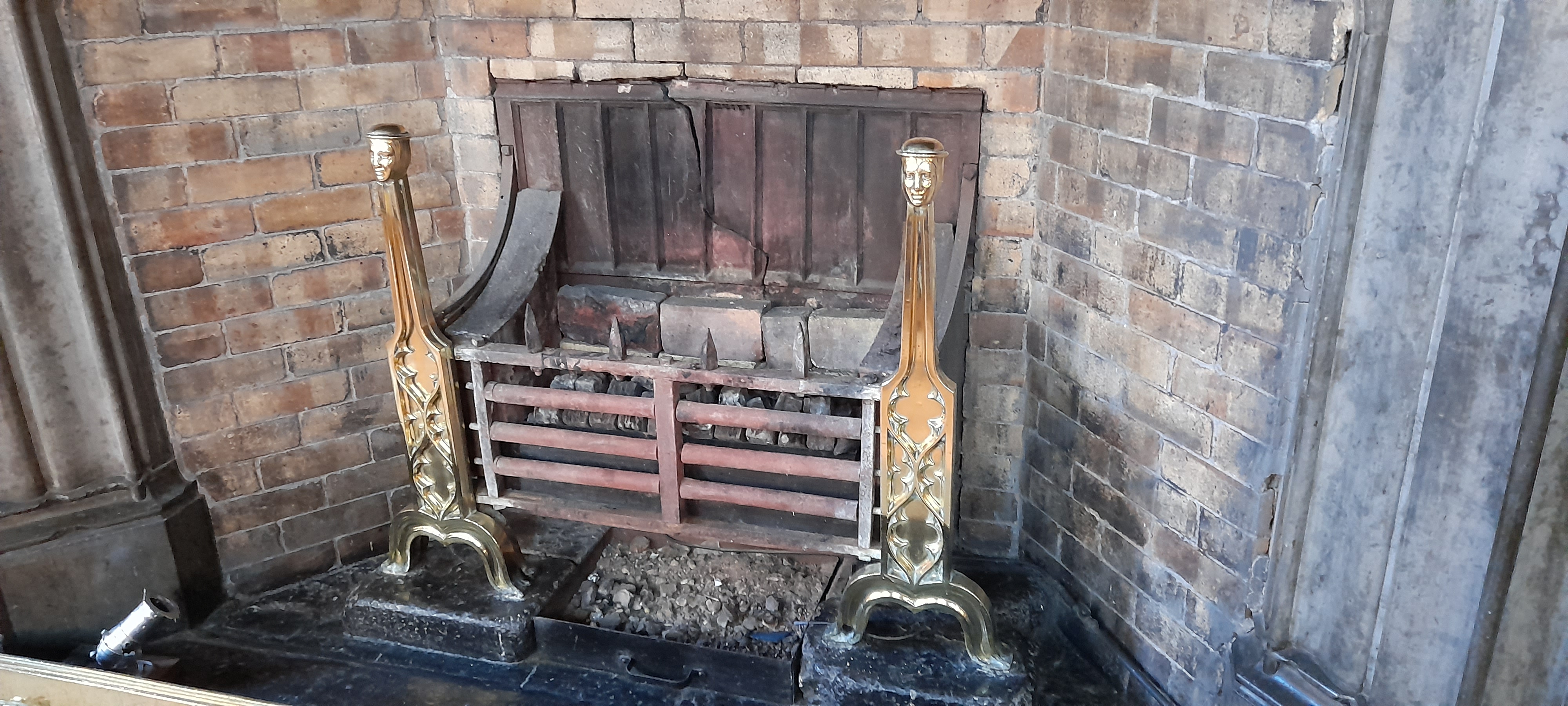
Fireplace in Christ Church Hall. The elongated necks on the brass figures on either side of the fire are said to have inspired one of the scenes in ‘Alice in Wonderland’. Lewis Carroll was a Student (ie Fellow) of Christ Church
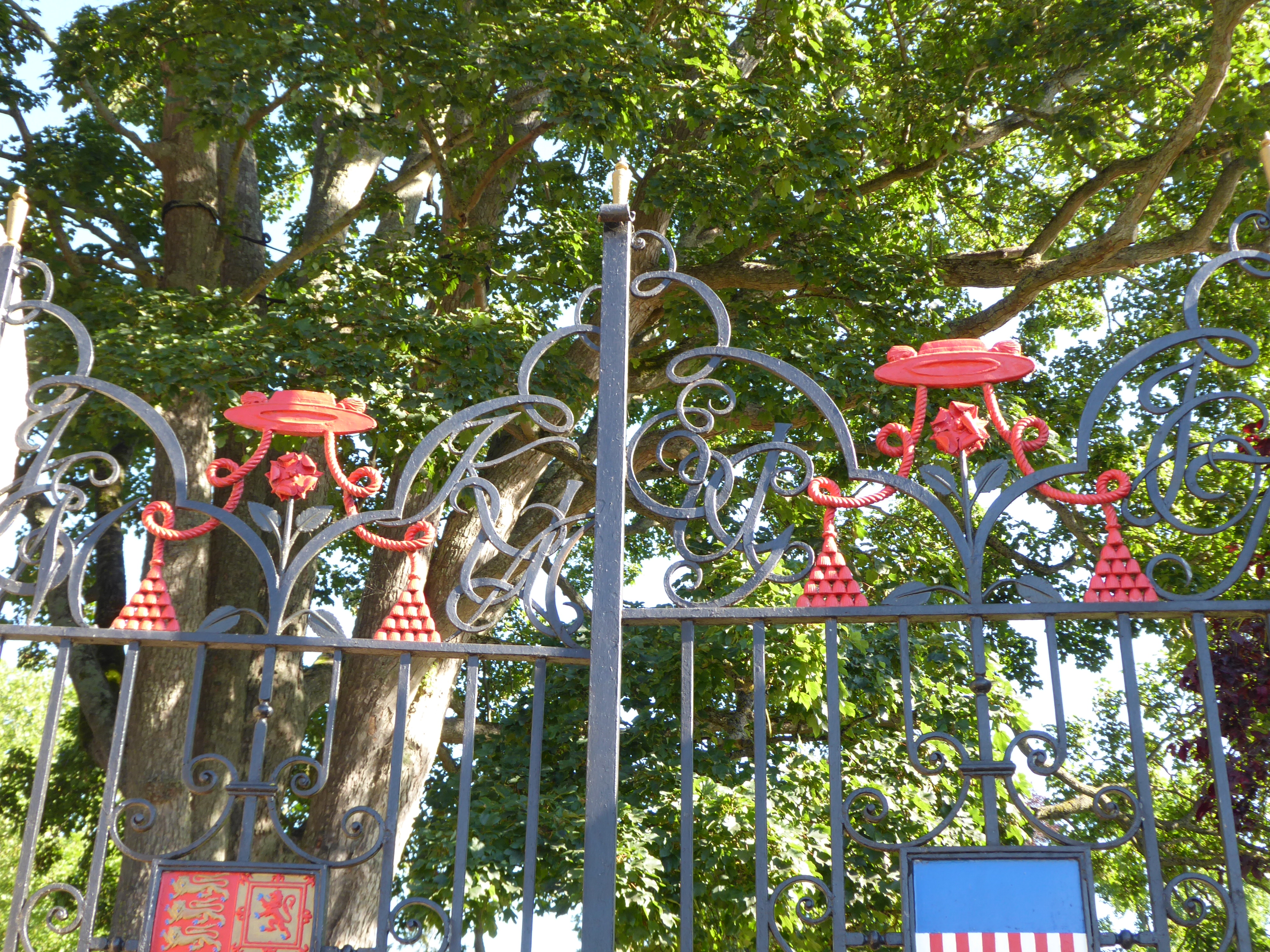
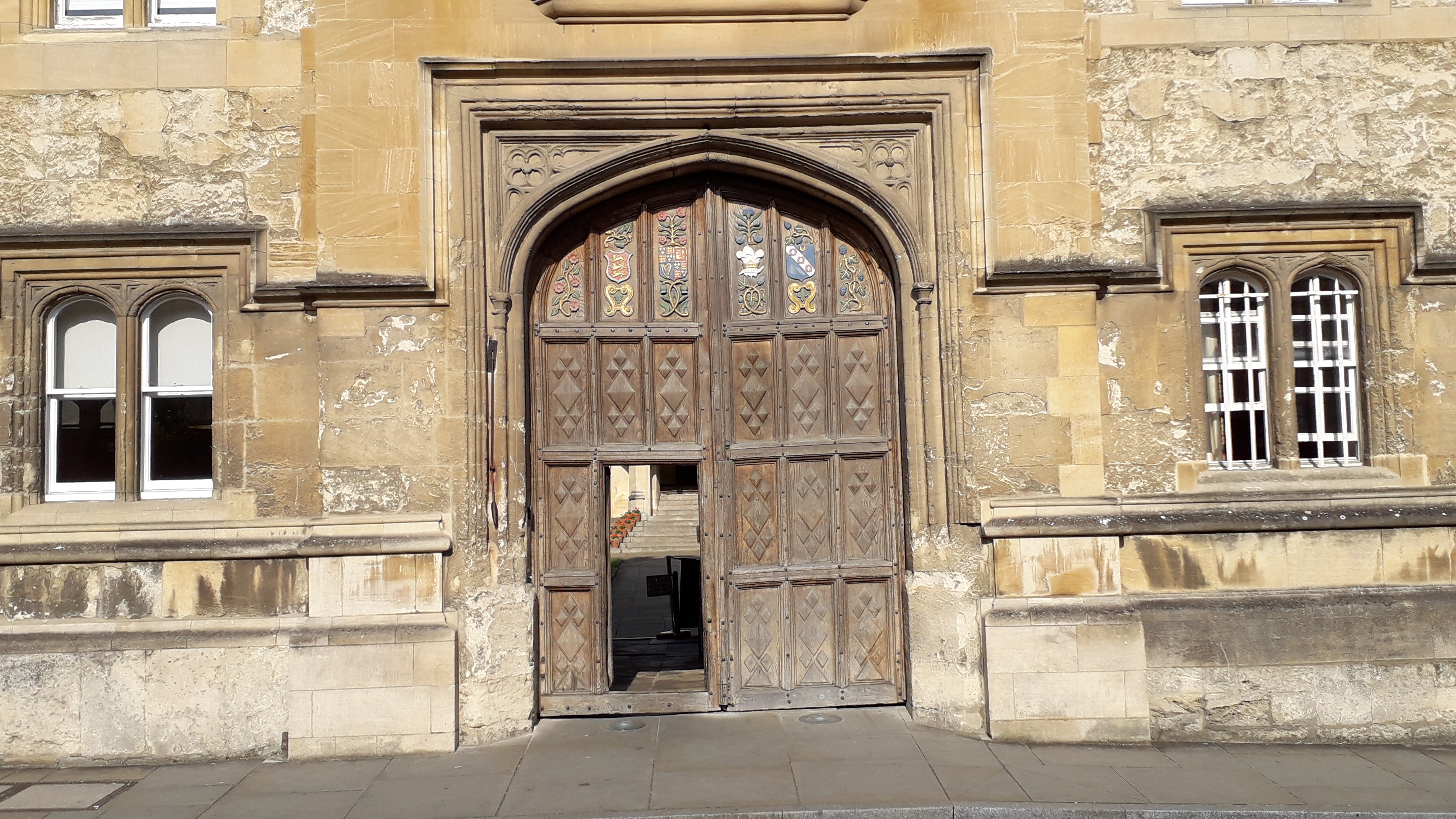
Cardinal’s hats on gates at Christ Church
Cloisters at Christ Church Cathedral, with organ playing in the Cathedral. A short video (49 seconds)

Faith and Freedom, Autumn and Winter 2020

The latest issue of Faith and Freedom (Autumn and Winter 2020, Number 191) is now available and on its way to subscribers.

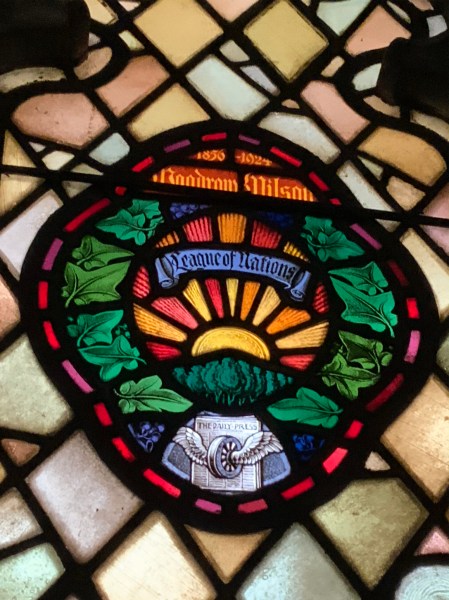
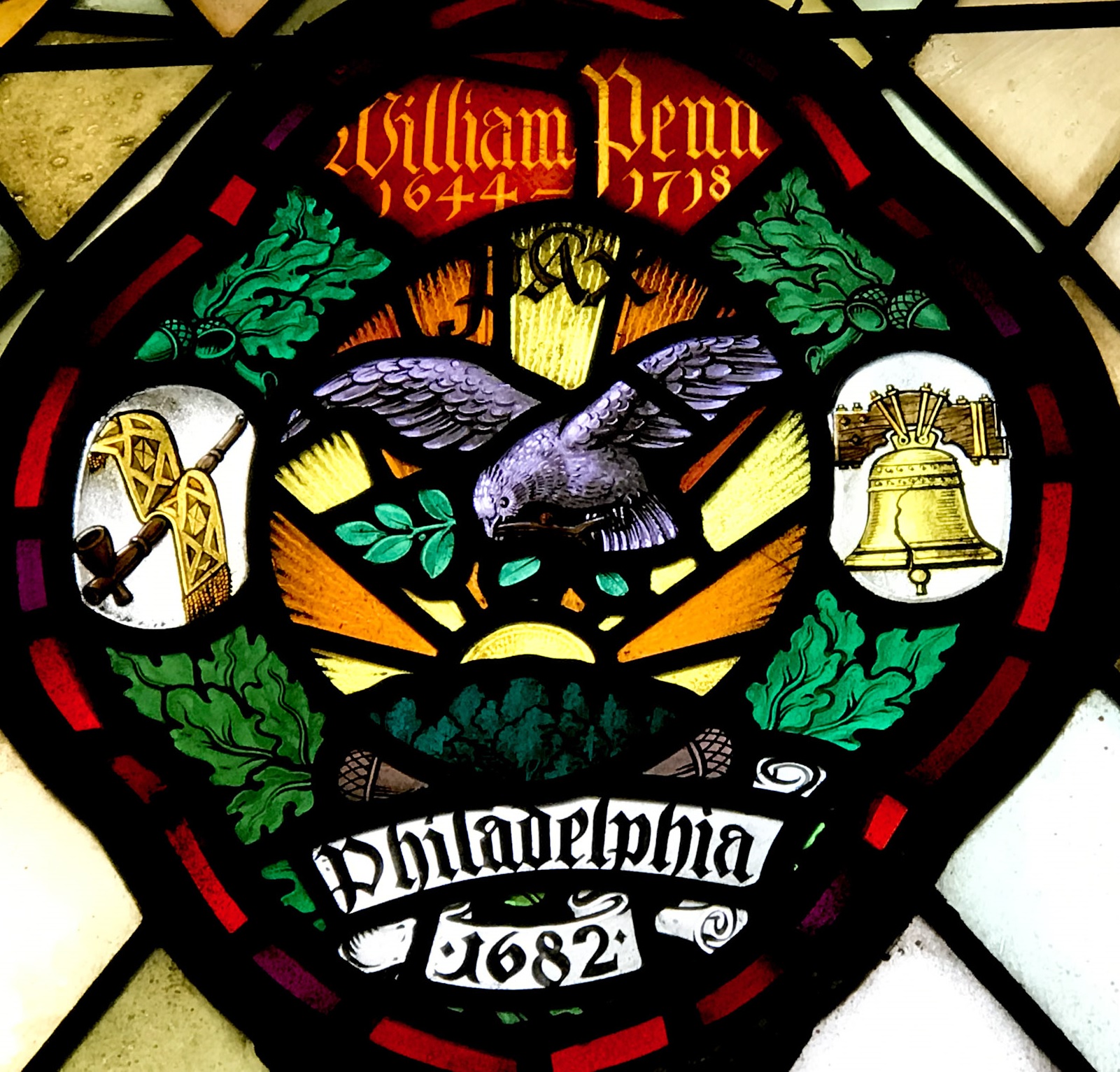
Detail from the William Penn window, Lancaster, Pennsylvania (Photo: Emily Klenin)

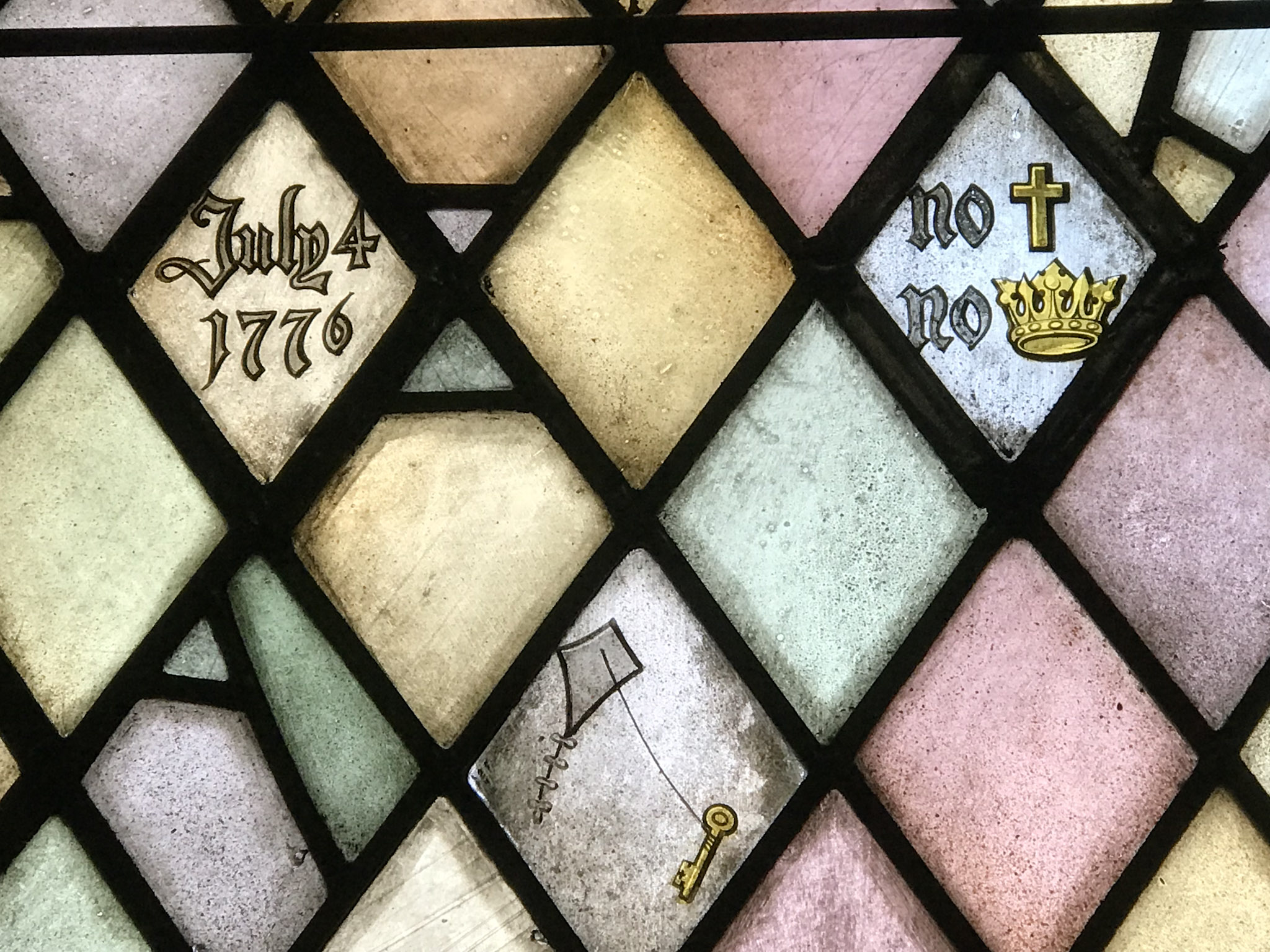
In this issue Professor Emily Klenin shares her research into a significant Unitarian Universalist Church building. Geography, History, and the Inner Light: Decorating a Unitarian Church in Central Pennsylvania, 1899 – 1932 explores the story of a unique building. The Unitarian Church of Our Father was established in Lancaster, Pennsylvania in 1902 and as the new church was built it became the venue for a remarkable experiment in art and design thanks to the involvement of local millionaire M.T. Garvin. According to Professor Klenin there is no evidence that ‘that any of his contemporaries thought him personally interesting’ but Garvin was a secretive and generous philanthropist who bequeathed his department store to his staff and funded the creation of this church in the American Gothic Revival style with Arts and Craft influences. Born a Quaker, M.T. Garvin became a Unitarian and built the church with its Chapel of the Emancipators decorated throughout with stained glass of the highest quality created by the Bavarian firm of F.X. Zettler. The ‘emancipators’ memorialized include William Ellery Channing, Theodore Parker, Joseph Priestley, William Penn, significant American Presidents and many more including a rare window celebrating the League of Nations. Devices and symbols incorporated in the windows are explained by Professor Klenin. In a masterful article Professor Klenin describes the building, its decoration and the influences that led M.T Garvin to create it. Blending theological knowledge with artistic appreciation and considerable technical knowledge she gives a brilliant account of this remarkable building:

The southeast window in this way becomes a focal point for force lines (a structural notion native to engineering…but borrowed by modernist painters) linking windows with pulpit, south window with south window opposite, and southeast with northeast and northwest. But there is more. The light from without, specified textually at the bottom of the window, also finds a vertical counterpart high above the pulpit, in the wooden bas relief showing Quaker founder George Fox, facing the congregation and accompanied by a text stating that he is ‘preaching the Inner Light’.

Further detail from William Penn’s window (Photo: Emily Klenin)

David A. Williams is a distinguished emeritus professor of astronomy and a former President of the Royal Astronomical Society. In Is anybody out there? he examines the most recent research that deals with the possibility of life elsewhere in the universe. How many ‘exoplanets’ have been found orbiting stars in the Milky Way? How many might be in the habitable zone? How long might civilizations last? How might they get in touch? All these things are discussed.

Coronavirus, conspiracy theories and paranoia is the topic discussed by Dr Charles Stewart, a pharmaceutical physician. Dr Stewart looks at how the current outbreak of Covid-19 began and ties this in with various conspiracies and fears. The Rev Frank Walker tells the story of Sebastian Castellio, the Pioneer of Toleration which includes discussion of the role played by Michael Servetus. Catherine Robinson is a member of the Unitarian congregation in Oxford which meets in the chapel of Harris Manchester College. In ‘A Sincere Communion of Souls’: Unitarians in Oxford 130 years ago she tells the story of how the congregation was founded in Oxford, a place then viewed by some Unitarians as ‘a bastion of conformity and orthodoxy’.

There are, as always, some insightful and important reviews – Jim Corrigall on Alastair McIntosh’s latest theological reflection on the climate crisis, Riders on the Storm: The Climate Crisis and the Survival of Being; and on Guy Shrubsole’s Who Owns England? How We Lost Our Green & Pleasant Land & How to Take it Back. Professor Alan Deacon reviews John Barton, A History of the Bible: A Book and its Faiths, a ‘beautiful, affirming book’ which looks at the creation and history of the Biblical texts and their relation to faith and the church. Finally, David Steers reviews a remarkable account by Gladys Ganiel and Jamie Yohanis of the theological impact of the ‘Troubles’ on members of one Irish denomination in Considering Grace. Presbyterians and the Troubles.

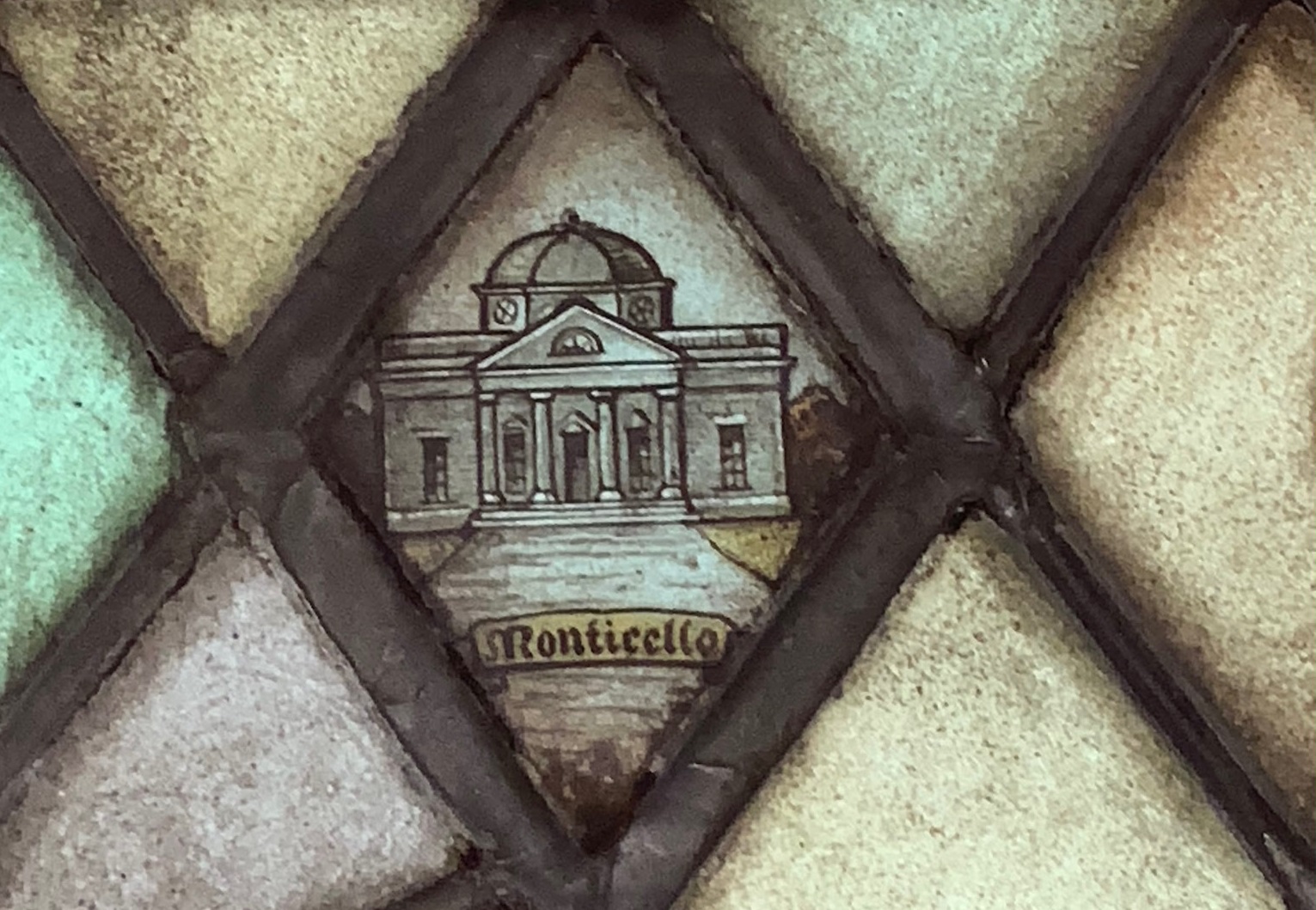
Window showing Monticello. Thomas Jefferson’s house, now a
National Historic Landmark and a UNESCO World Heritage Site, saved partly through the exertions of M.T. Garvin (Photo: Emily Klenin)

Emily Klenin’s photographs of the windows of the Unitarian Universalist Church of Lancaster, Pennsylvania can be seen at this link:

https://adobe.ly/31HHxiX

An annual subscription to Faith and Freedom costs £15 (postage included). Contact the business manager:

Nigel Clarke,
Business Manager, Faith and Freedom,
16 Fairfields, Kirton in Lindsey,
Gainsborough, Lincolnshire.  DN21 4GA.

It’s also possible to pay via PayPal via clicking here.

Email: faithandfreedom@btinternet.com

Images of Oxford

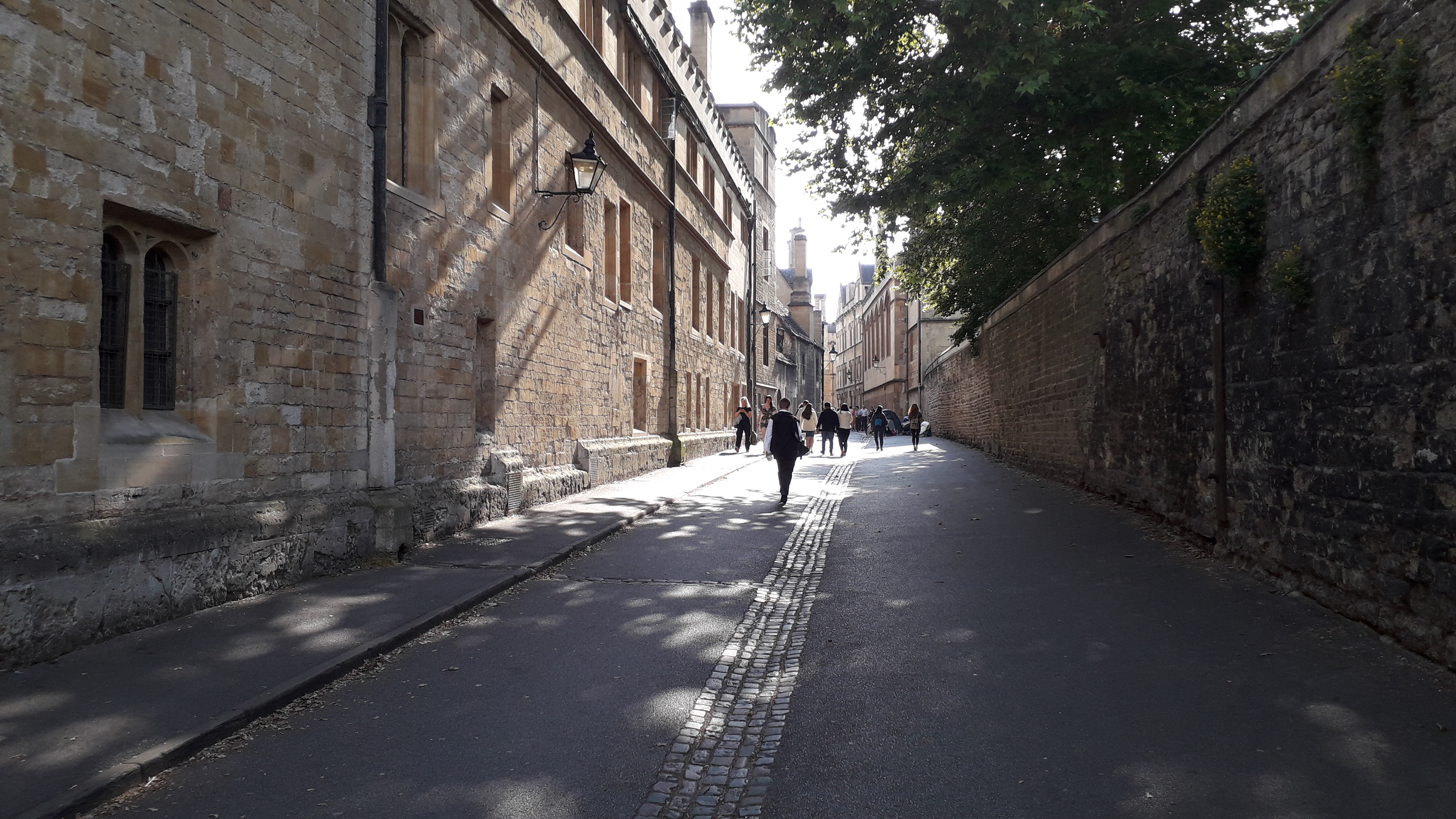
Oxon Brasenose Lane

Brasenose Lane

Whenever I am in Oxford I always tend to take pictures as I walk about. This is easily done with modern mobile phones and if the pictures are unlikely to win any prizes they at least can give pleasure to the photographer. I took a lot of pictures when I was an undergraduate at Oxford, in those far-off days using a Russian Zenith EM camera, which was then the cheapest SLR camera that was available. I was reminded of this as I walked around Oxford recently because of certain items in the news. One of the inevitable consequences of being at Oxford is that you rub shoulders with all sorts and conditions of persons, including many would-be politicians. There were not a few from those days who went on to be government ministers both Labour and Conservative, at least one was party leader and another one looks like becoming Prime Minister. But when I was a student at Christ Church I shared rooms with a person who was an activist in the Oxford University Conservative Association (OUCA). This had the side effect of frequent visits to our rooms of his associates from the (to me) rather dull and pointless world of Oxford student politics. For now I will draw a veil over the various political figures who were around in those days. For the most part they didn’t really impact that closely on my life but one of them came to mind when I was back in Oxford recently. One frequent visitor to my roommate was another OUCA activist who would come to discuss issues with his colleague, on one occasion pacing around the living room in a very heated way complaining about a story that Cherwell, the student newspaper, was threatening to run about him. Most of the time his presence didn’t impinge on me nor I on him but he couldn’t always ignore me and so on one occasion, when his friend disappeared for a while, asked to have a look at a fresh roll of film I had just had printed. “These really are marvellous photographs” he said. “Really quite excellent photographs” he enthused. He went through the prints one by one and then through them again, all the time praising each of them to the skies. Such use of light! What a composition! How ingenious! On and on he droned. A friend of mine who was visiting found this very amusing. This was standard ‘hack’ behaviour, to butter people up and ingratiate yourself so completely in the hope that one day you might vote for them in some election or other. The years go by and I had thought that this particular individual had never made it into politics. But at some point he does appear to have been elected to Parliament and recently achieved significantly high office and so is involved in the manoeuvres that will see the appointment of a new Prime Minister. Of course, maybe he really did think my photographs were superlative. Who knows? But being a successful politician is rather like being a great actor. You have got to have sincerity. If you can’t fake sincerity you will never be a great actor.

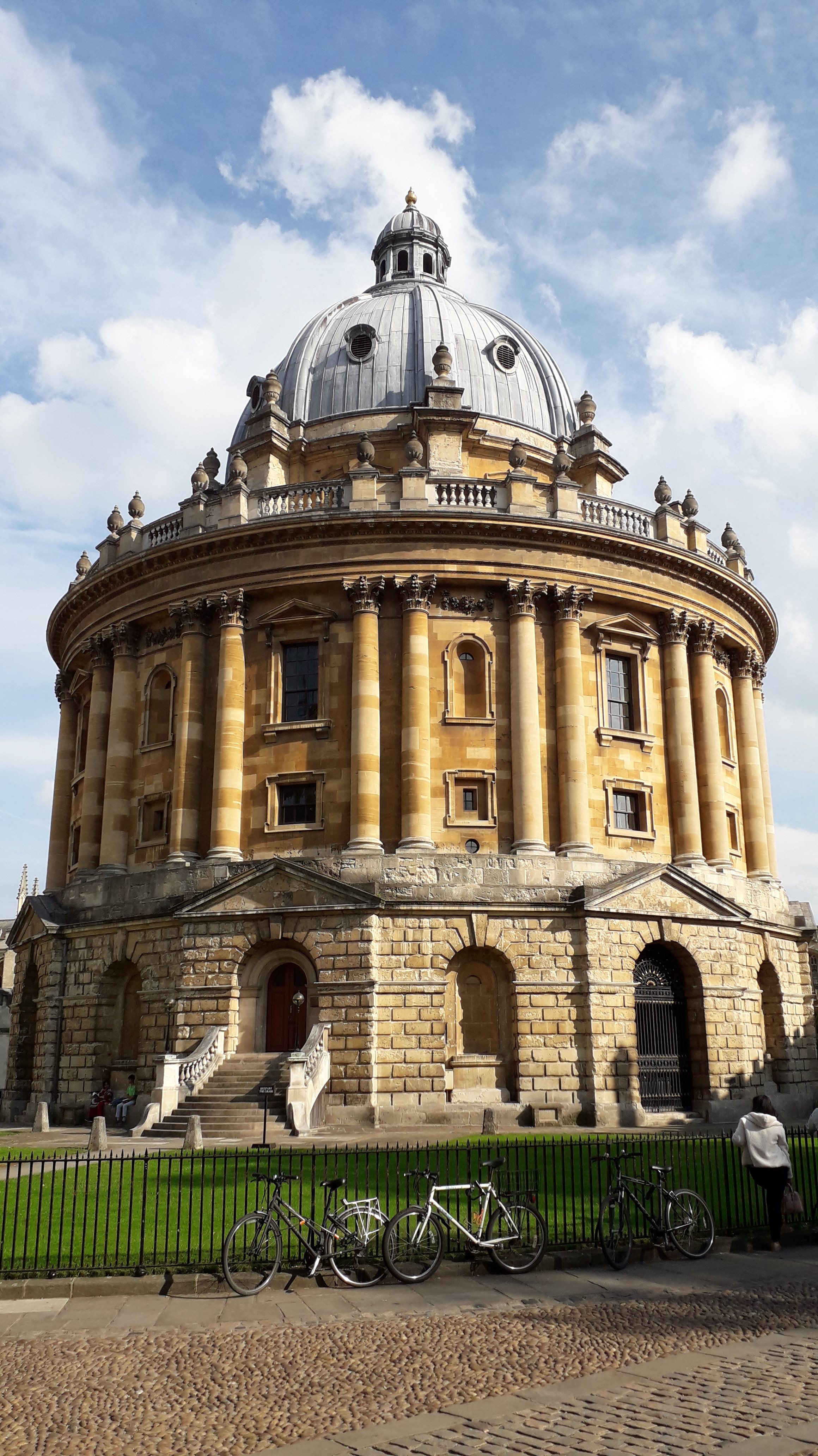
Radcliffe Camera

Radcliffe Camera

Oxon Oriel gate

Oriel College gate

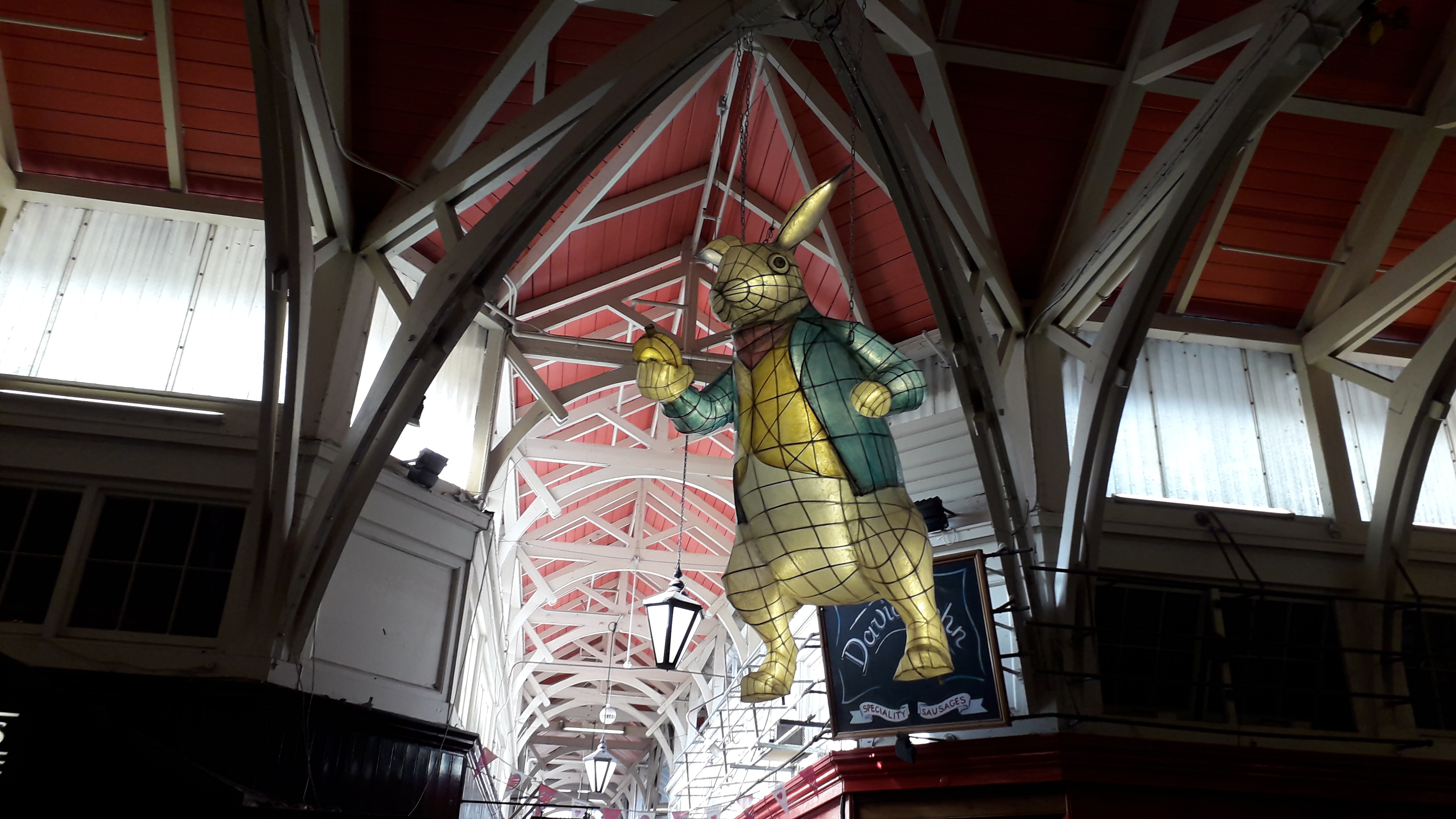
Oxon White Rabbit 02

White Rabbit in the covered market

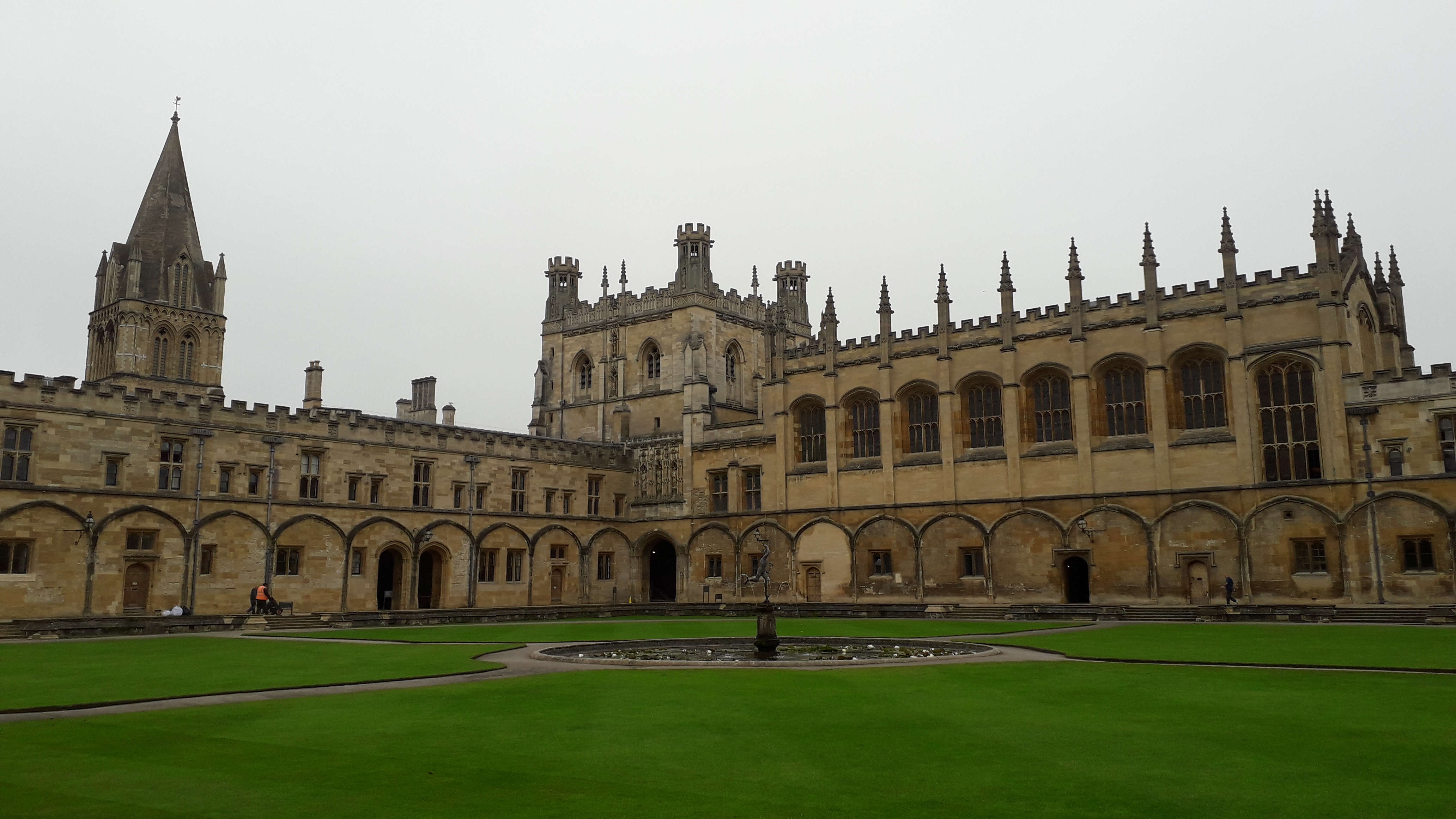
Ch Ch Tom Quad

Tom Quad, Christ Church

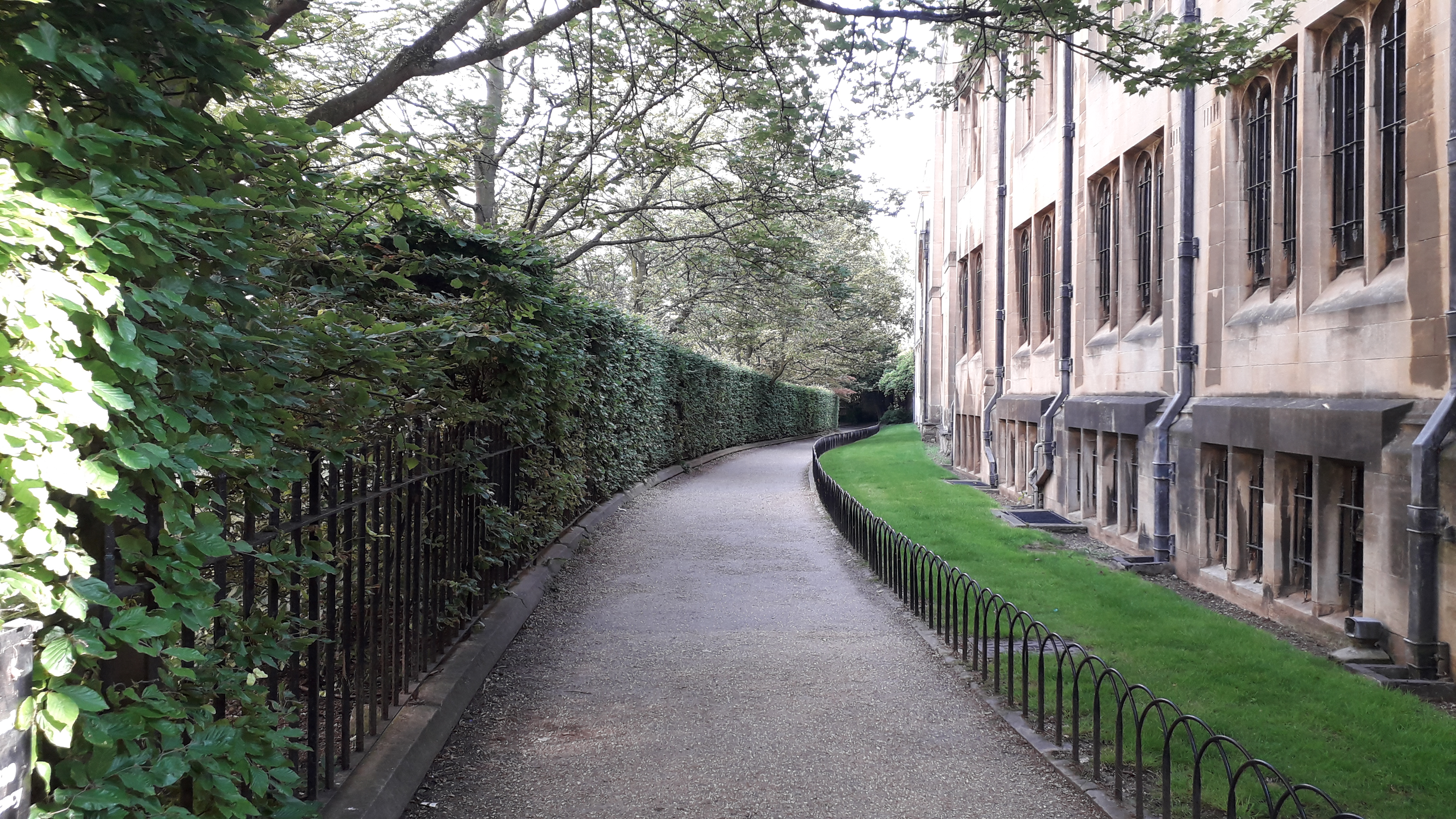
Oxon Merton lane

Grove Walk