I was pleased to again take part in a tour of Belfast City Cemetery led by Tom Hartley. Tom is now the author of four books on the cemeteries of Belfast and I was pleased also to pick up a copy of his latest work, More Stories from the Belfast City Cemetery. This was his penultimate tour of the last series he would give as part of the Féile an Phobail and like all these tours there was a very large attendance.
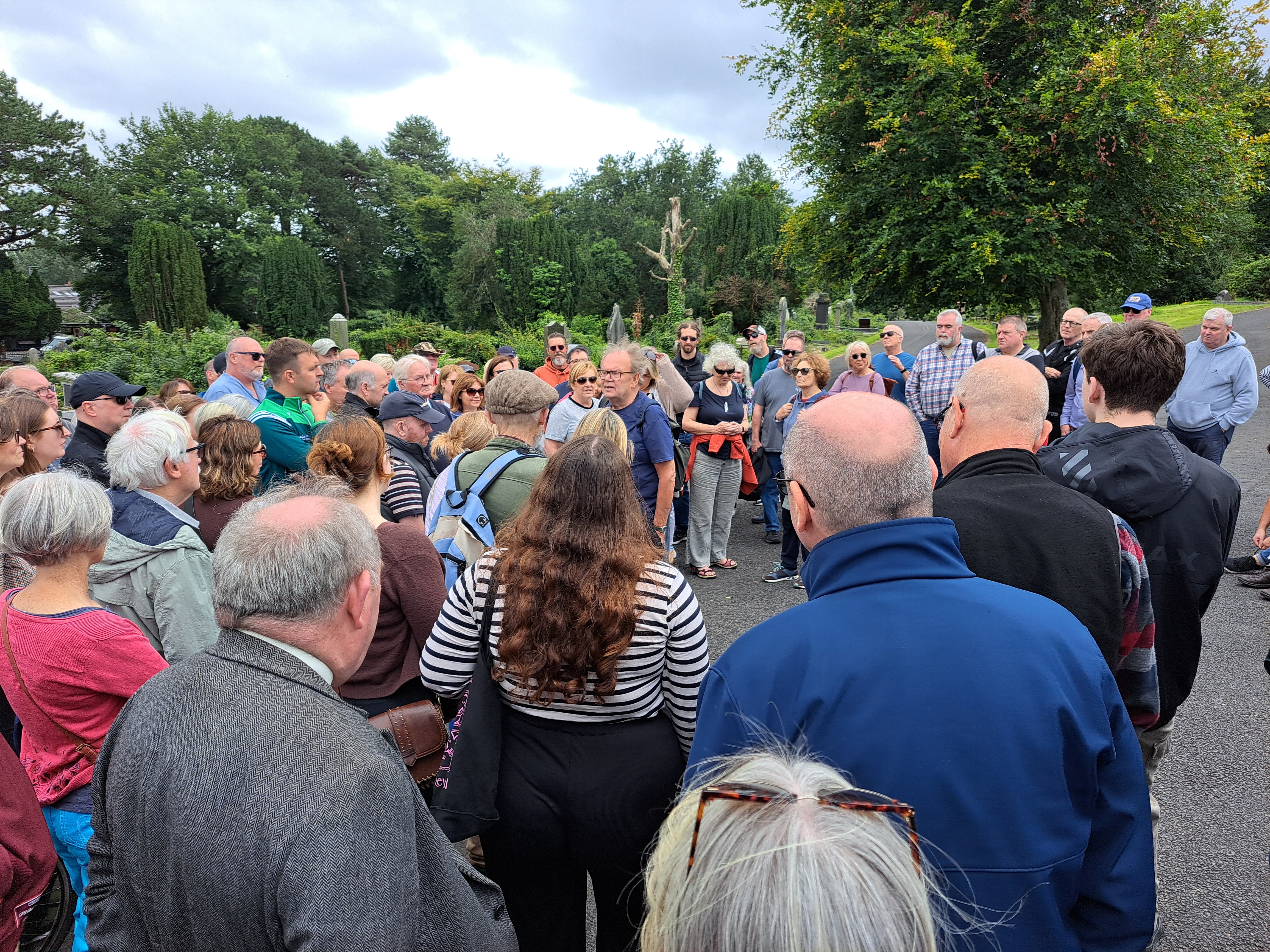
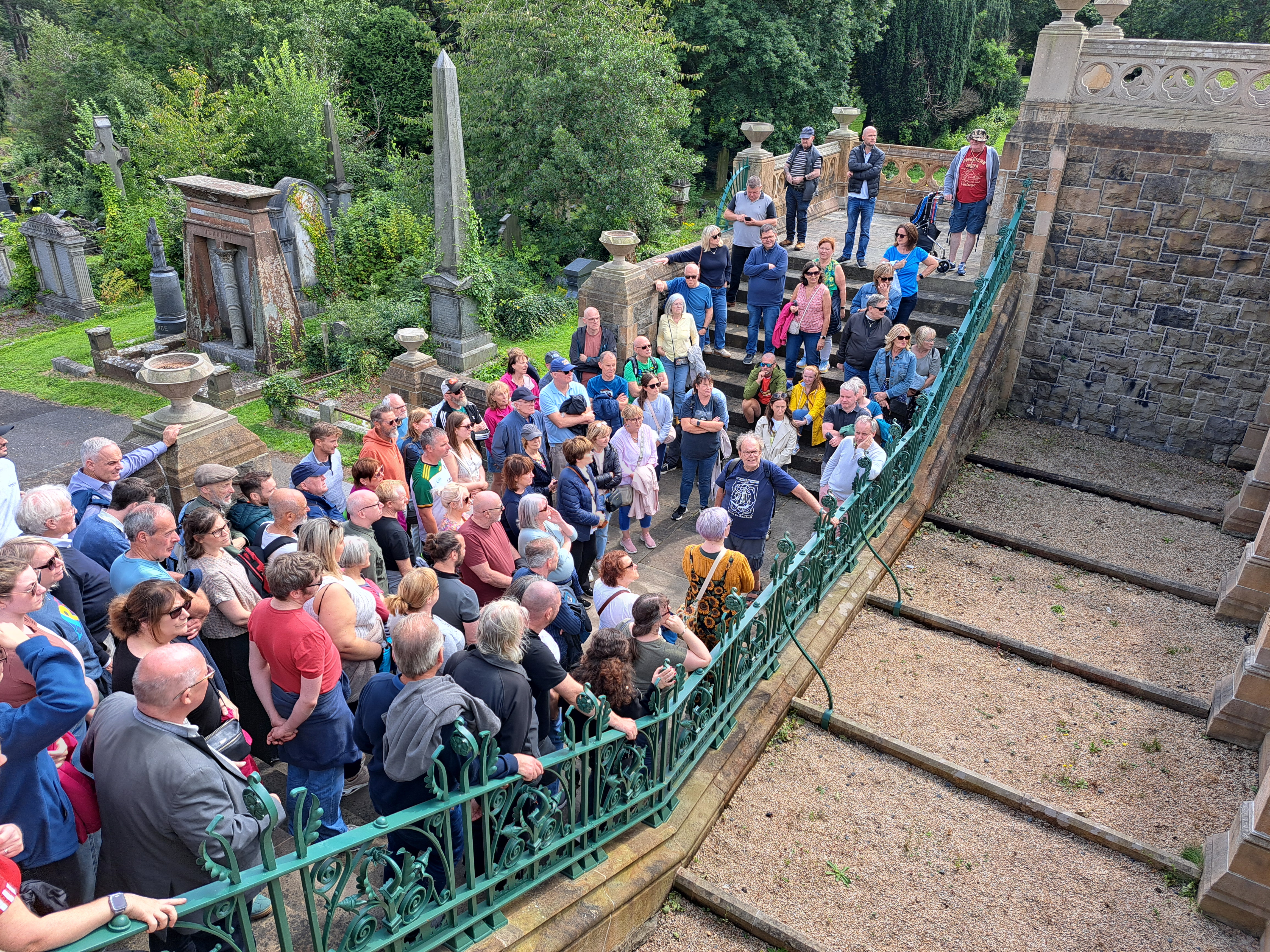
Start of the tour, showing some of those present
I see the first guided tour I attended was in March 2022. You can read that account here – Silent yet eloquent Memorials. There are a number of changes to the Cemetery made since that time, like the completion of the visitors’ centre, new signage all around the Cemetery, the restoration of the Vaults – which house the remains of such industrial luminaries as Sir Edward Harland and Thomas Gallaher – and a lot of new planting.
It is a very impressive cemetery, imaginatively laid out and designed by William Gay of Bradford in the shape of a bell (as in Belfast) and it contains some incredible Victorian, Edwardian and later memorials.
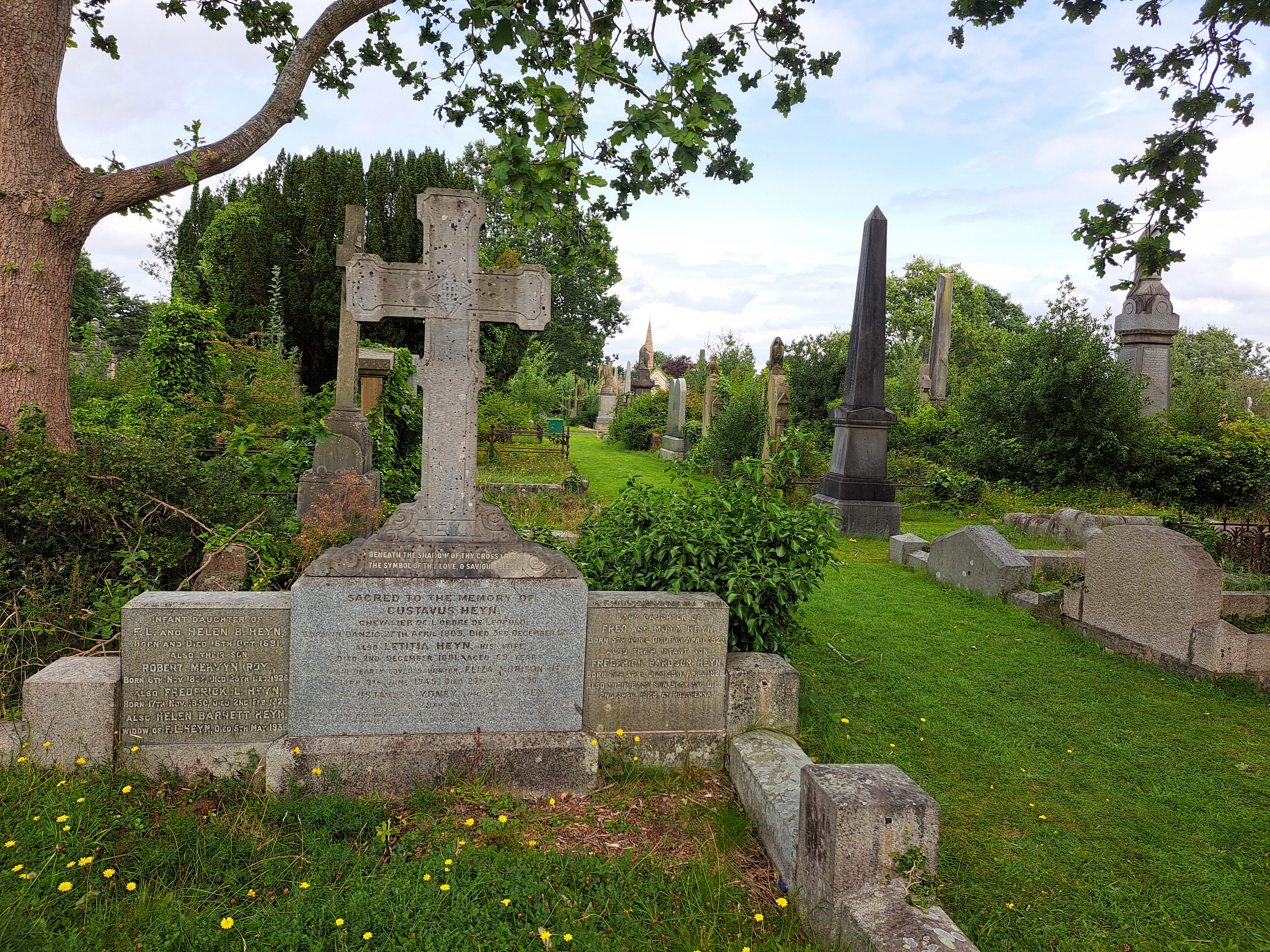
Gustavus Heyn, shipping magnate
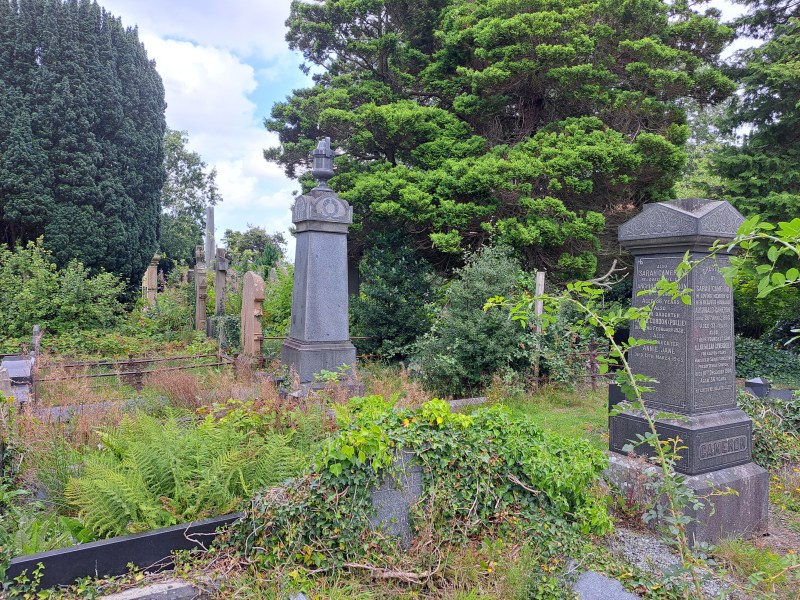
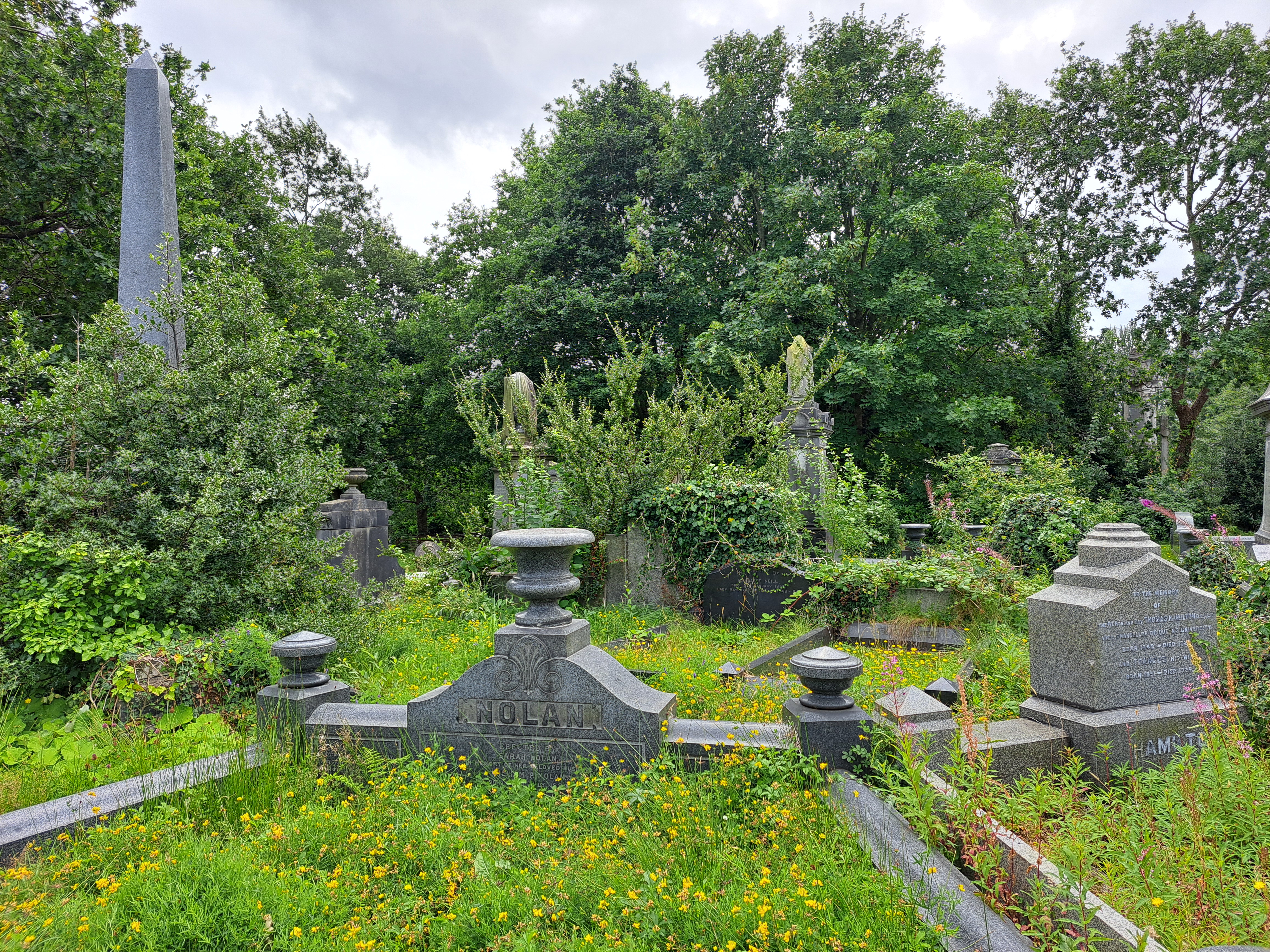
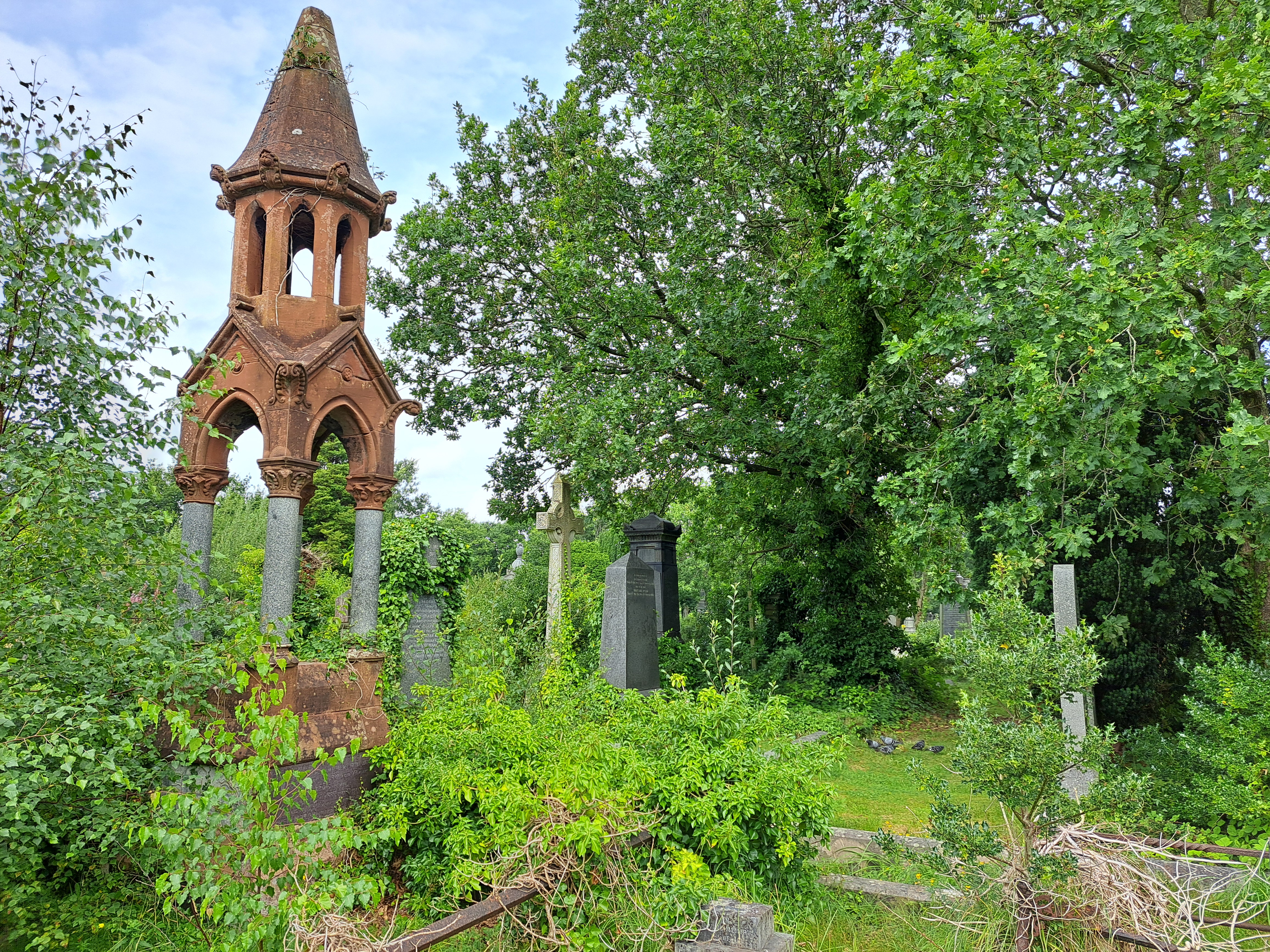
Some parts are still quite heavily overgrown and other parts have suffered badly from vandalism.
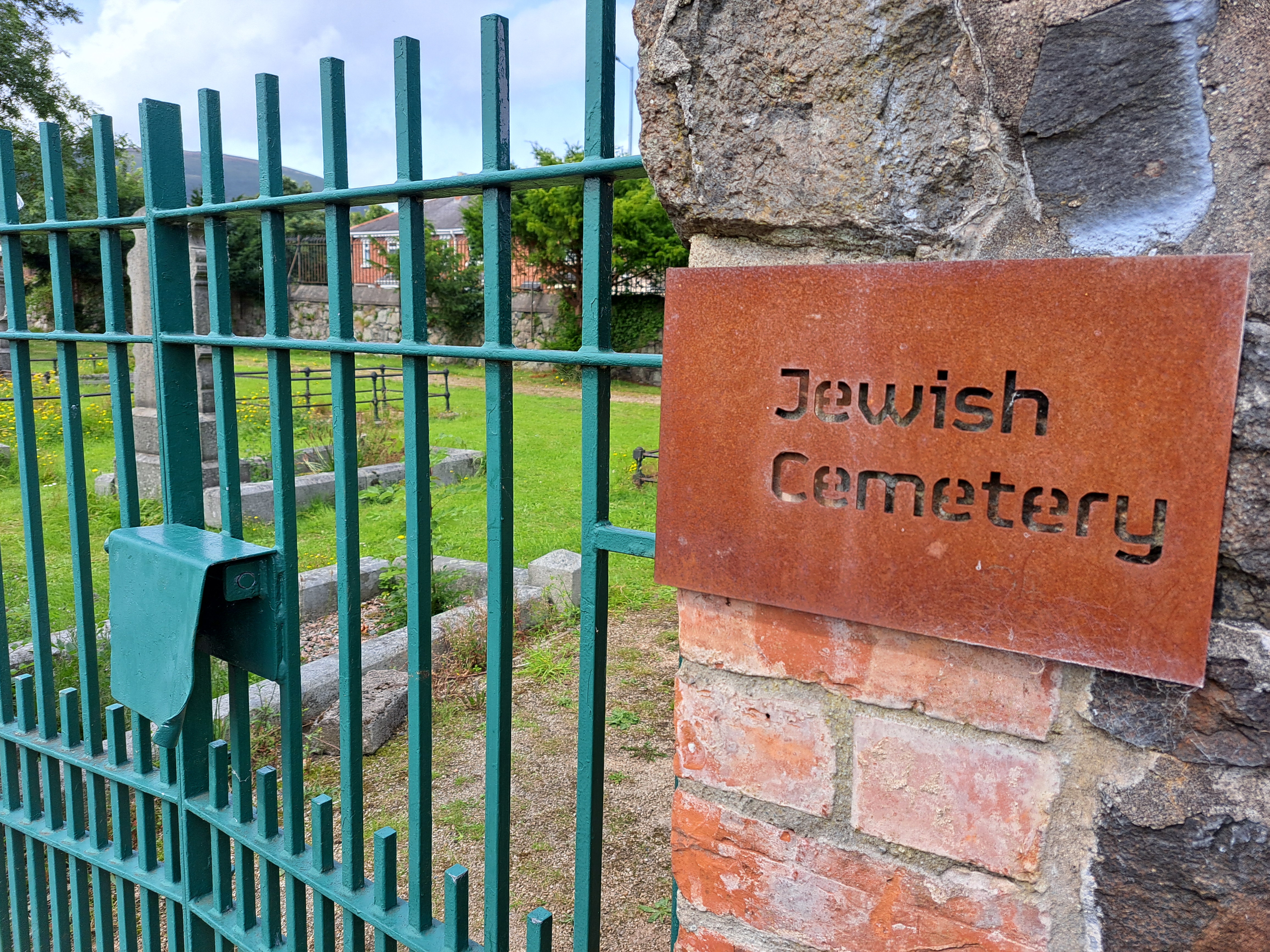
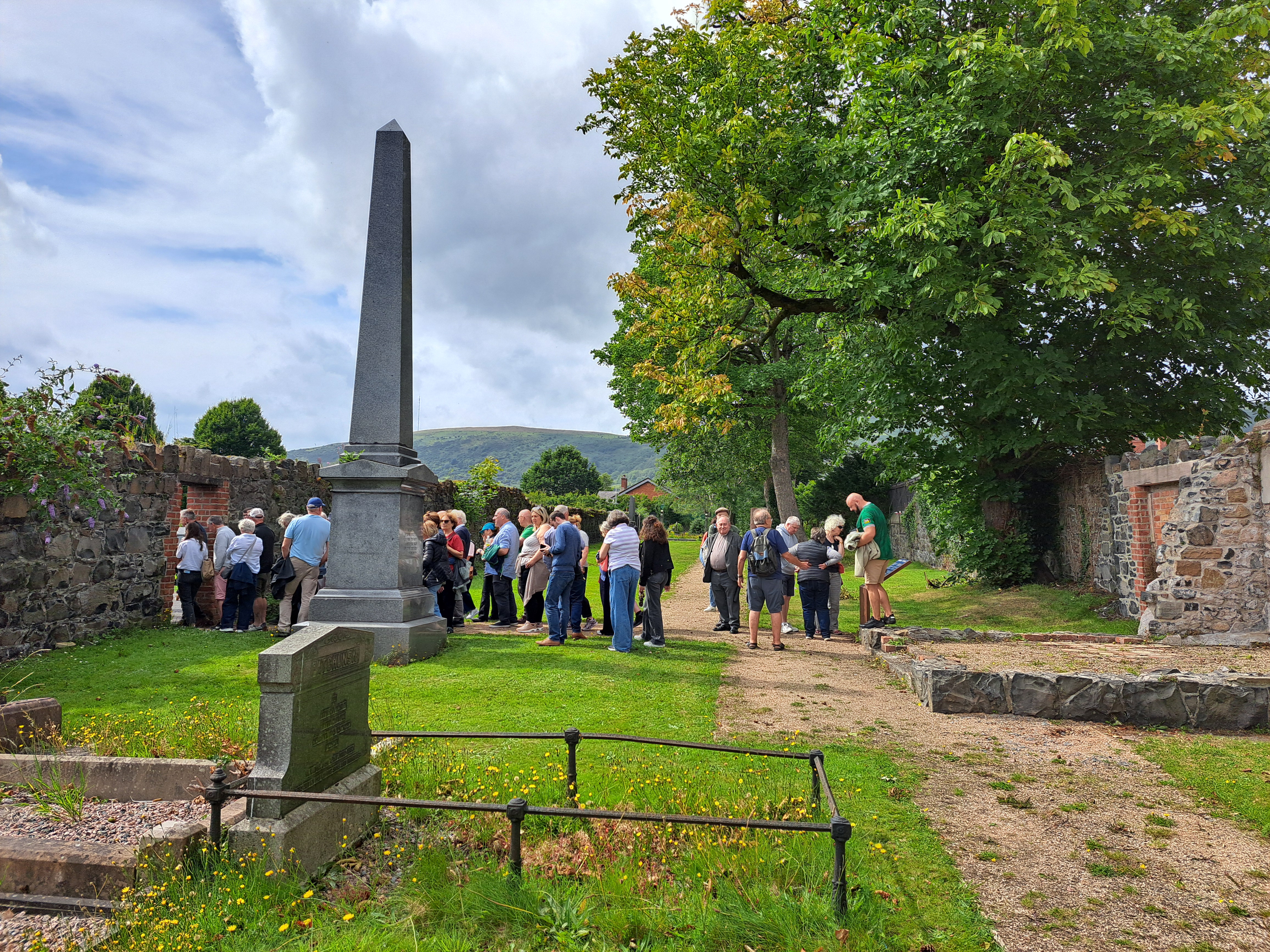
The Jewish section of the graveyard comprises a separate walled section although this has particularly suffered from vandalism and since 1964 Jewish burials now take place at Carnmoney Cemetery.
Entrance to the Jewish Cemetery
Inside the Jewish Cemetery. On the right is the remains of the Tahara, the mortuary chapel
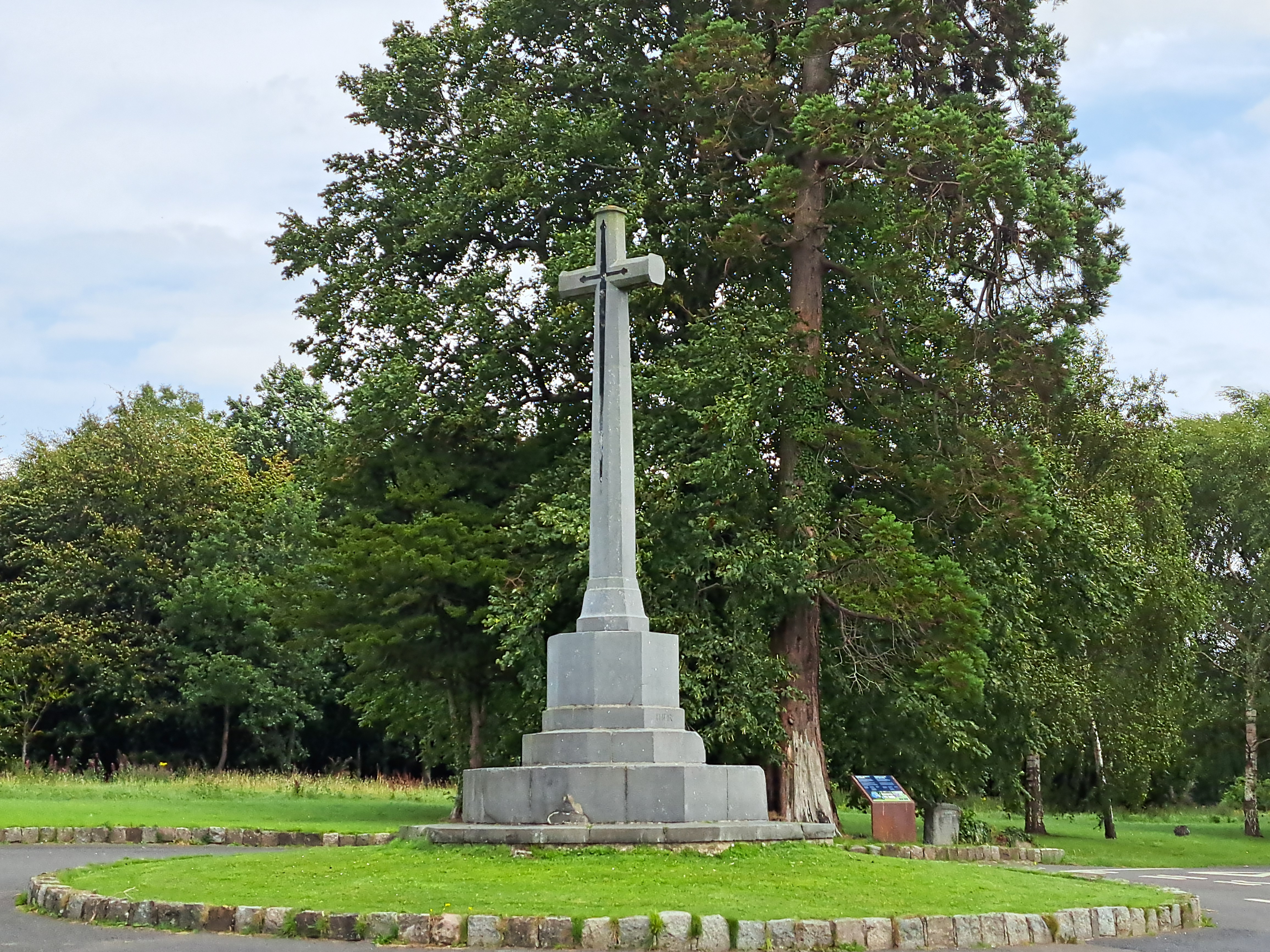
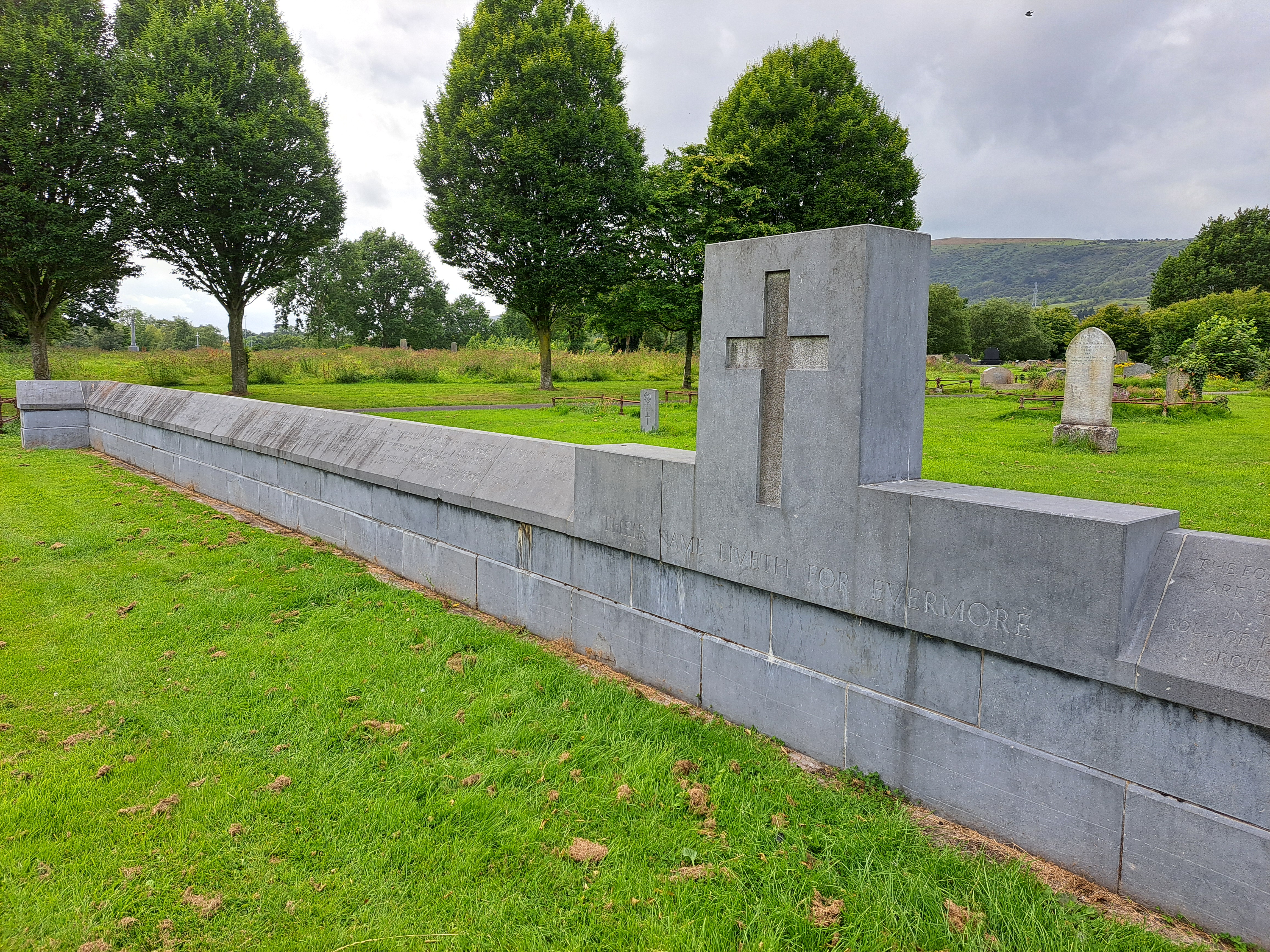
The Cemetery also includes a Commonwealth War Grave Cemetery with 296 burials from the First World War and 274 from the Second World War. There is also a Cross of Sacrifice (the same size as that in Botley Cemetery) and a First World War Screen Wall which carries the names of 74 soldiers who are buried in the First World War plot, 58 soldiers who are buried in unmarked graves and 8 soldiers who are buried elsewhere in the Cemetery.
Cross of Sacrifice
Part of the First World War Screen Wall
Second World War Royal Navy and Merchant Navy graves
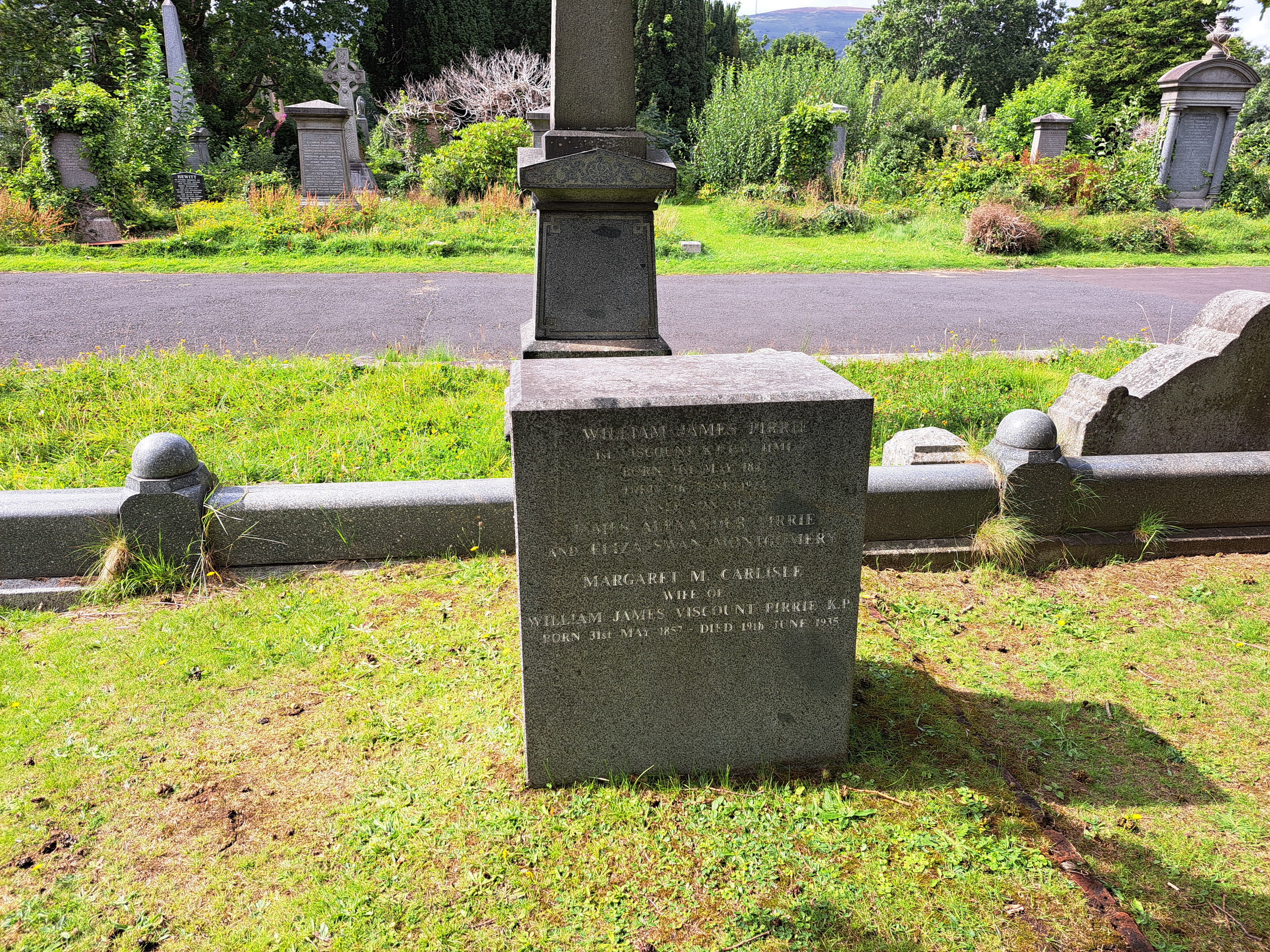
There are a lot of significant people from Belfast’s past who were Non-Subscribing Presbyterians who are buried here, perhaps most notable are Lord and Lady Pirrie. Viscount Pirrie was the chairman of Harland and Wolff when the Titanic was built and was to have sailed with his nephew, the designer Thomas Andrews, on its maiden voyage, but was prevented from doing so by illness.
Grave of Lord and Lady Pirrie
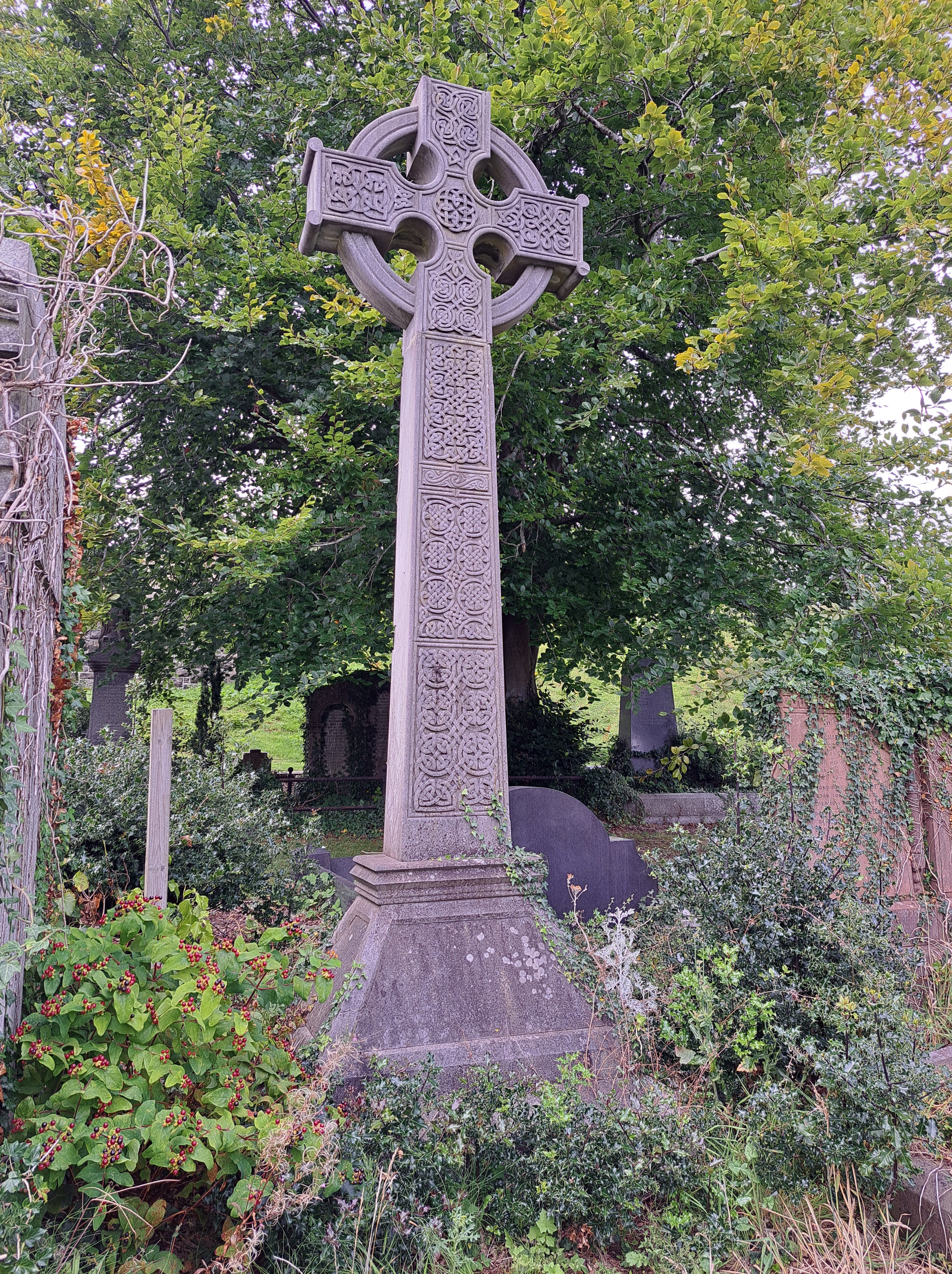
I have written before about one of the most notable Non-Subscribing Presbyterian ministers buried here, the Rev John Scott Porter, and was pleased to hear from his great great great granddaughter as a result. He is buried with his brother, William, who was once the attorney general at the Cape Colony, and actually introduced at that time a franchise that was inclusive of all races. The Celtic Cross that marks their grave is one of the most impressive in the cemetery:
The grave of Rev John Scott Porter and William Porter
I also produced a short video about John Scott Porter at that time. This is available to view here:
Click above to see the videoThe grave of Florence and Albert James Lewis, the parents of C.S. LewisThe tour at the Vaults and Central Steps
I was very pleased to be asked to contribute to this book which has just been published by Palgrave Macmillan:
Antitrinitarianism and Unitarianism in the Early Modern World
The publishers describe the volume in these terms:
This collection offers an innovative and fresh interpretation of Antitrinitarian and rational dissent in the early modern world. The central themes focus on the fierce debates surrounding Antitrinitarianism and Unitarianism that emerged from the Reformation and the lived cultures of these dissenting movements. The chapters take an interdisciplinary approach addressing ideas in context, their reception and appropriation, and the diverse and often conflicting visions of Christianity. Drawing on previously unused sources, many from Eastern Europe and often in inaccessible languages, this book challenges our understanding of dissent as marginal and eccentric and places it at the center of contesting convictions about the nature of religious reform.
The contents are as follows:
Introduction
The Porous Boundaries of Dissent
Bruce Gordon
Antitrinitarianism and Its Influence in Italy and Poland
Italian Antitrinitarianism and the Legitimacy of Dissent
Odile Panetta
Scripture, Piety, and Christian Community in the Thought of the Polish Brethren
Sarah Mortimer
Religiosity in the Ethos of Polish Brethren in Light of Funeral and Wedding Speeches from the Seventeenth Century
Maria Barłowska
True Heirs of Jan Łaski: Polish Brethren Church Discipline in the Polish-Lithuanian Commonwealth and During Their Exile in Transylvania
Kazimierz Bem
Transylvanian Unitarianism
The Late Confessionalization of the Transylvanian Unitarian Church and the Polish Brethren
Gizella Keserű
Introduction to the Transylvanian Unitarian Disciplina Ecclesiastica
Lehel Molnár
De Disciplina Ecclesiastica: On Ecclesiastical Discipline (1626)
Alexander Batson
The Term, Development, Purpose, and Practice of Church or Canonical Visitation: Unitarians in Háromszék in the Seventeenth Century Between Conventional Rhetoric and Reality
Lehel Molnár
Some Aspects of the Hungarian Unitarian Liturgy in the Sixteenth to Eighteenth Centuries
Sándor Kovács
Engagement and Divorce Cases Before the Unitarian Consistory in Seventeenth-Century Transylvania. Frameworks in Church Law and the Doctrine of Marriage
David Szigeti Molnar
England, Ireland, and New England
The Historical Critique of Heresiology in the Seventeenth Century and the Origins of John Milton’s Arianism
R. Bradley Holden, Samuel J. Loncar
Authority, Reason, and Anti-trinitarianism: John Abernethy and the Competing Pressures Within Irish Presbyterianism in the Early Eighteenth Century
A. D. G. Steers
The 1662 Book of Common Prayer and Its Adaptation in Eighteenth-Century Rational Dissent
Bryan Spinks
New England Congregationalists and Unitarianism in Late Eighteenth Century/Early Nineteenth Century
Peter Field
The editors are:
Kazimierz Bem, Pastor of First Church in Marlborough (UCC), USA and a senior lecturer in Church History at the Evangelical School of Theology in Wrocław, Poland.
Bruce Gordon, Titus Street Professor of Ecclesiastical History at Yale Divinity School, USA.
Hardcover ISBN978-3-031-69657-2
Softcover ISBN978-3-031-69660-2
eBook ISBN978-3-031-69658-9
You can find out more about this book via this link.
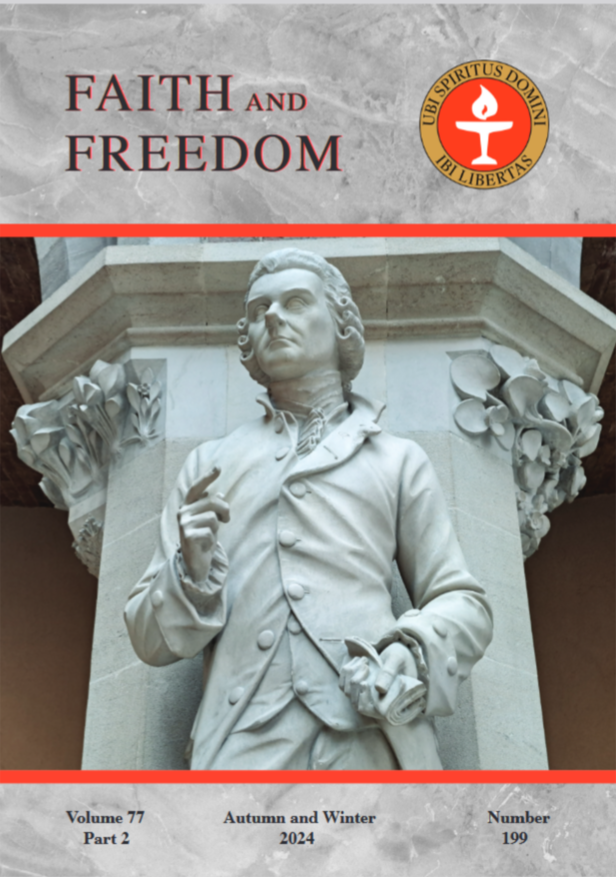
The latest issue – Volume 77, Part 2, Autumn and Winter 2024, Number 199 – is now available and will be with subscribers shortly. Details on how to subscribe (including a link to our website if you would like to pay via PayPal) can be found at the foot of this page.
This issue is special for a number of reasons. First of all we are pleased to announce the magnificent vote of approval given to us by the Merseyside and District Missionary Association who have given us very generous financial support. This is a tremendous help and together with the valued grant we already receive from the Daniel Jones Fund this means that Faith and Freedom can continue to serve our readers, maintaining the original vision set out by the Ministerial Old Students Association of Manchester College, Oxford for the promotion of liberal religious discussion and the free exchange of ideas.
Secondly we are also delighted to be able to launch our brand new Faith and Freedom Logo with this issue. Our Logo was previewed on this site a couple of weeks ago and it now takes its place atop our masthead. Specially designed for us, it is a striking representation of what we stand for as a journal and will let the world know who we are. We have already had requests for this to be produced as a badge which is something we are keen to look into.
It is very pleasing also that the journal continues to attract top quality articles from Unitarians and non-Unitarians alike from Britain and around the world. In this issue Elizabeth Kingston-Harrison, who is the Congregational Connections Lead for the General Assembly of Unitarian and Free Christians and has a PhD in Intellectual History, having studied the theology of Joseph Priestley and other eighteenth-century rational dissenters, contributes A Comet in the System: Joseph Priestley and the emergence of rational dissent in the eighteenth century. Elizabeth writes of Priestley’s role in the emergence of rational dissent and shows how, far from being a distant, dry historical study, this is something that is energising and alive today and helps us connect with our present-day religious identity. Joseph Priestley ‘was a courageous, “big picture” person’ whose scientific discoveries went hand in hand with his theological reflections. The discoverer of oxygen applied reason to scripture and developed a new way of understanding the universe.
Frank Walker considers Sir Lloyd Geering: Trinitarian-Unitarian, Humanistic Presbyterian, Centenarian and asks Can You Love the Human Race? Sir Lloyd Geering, a New Zealand Presbyterian Professor, who was once charged with heresy, may not be a name immediately familiar to most of our readers but I have no doubt that everyone will find Frank’s thoughtful examination of his theology and ideas incredibly life affirming and uplifting.
Peter Hewis addressed the Old Students Association at Harris Manchester College back in June and this paper is based on his sermon – Keep alive the dream in the heart – a quotation from Howard Thurman and an exploration of dreams in religious history and their continuing power to inspire us and drive us towards making a difference in the world,
As always we have a number of really interesting and informative reviews of a wide range of publications contributed by our readers. This issue includes:
Right Relationship in the Real World
Commissioning Editor: Jane Blackall, Right Relationship in the Real World, Learning to Live by our Unitarian Values, The Lindsey Press, London, 2024, pp 132, ISBN 978-0-8519-099-8, £7, pbk. The book can be ordered online at https://www.unitarian.org.uk/shop/
Reviewed by Peter B. Godfrey
Fideology
Richard F. Boeke, Fideology – Building Trust through the Shared Experience of Faith at the Root of the World’s Religions, 2024, pp 248, ISBN 97988844906686, £11.08 plus postage from Amazon.
Reviewed by Peter B. Godfrey
From the heights of politics via a spiritual journey to the ministry
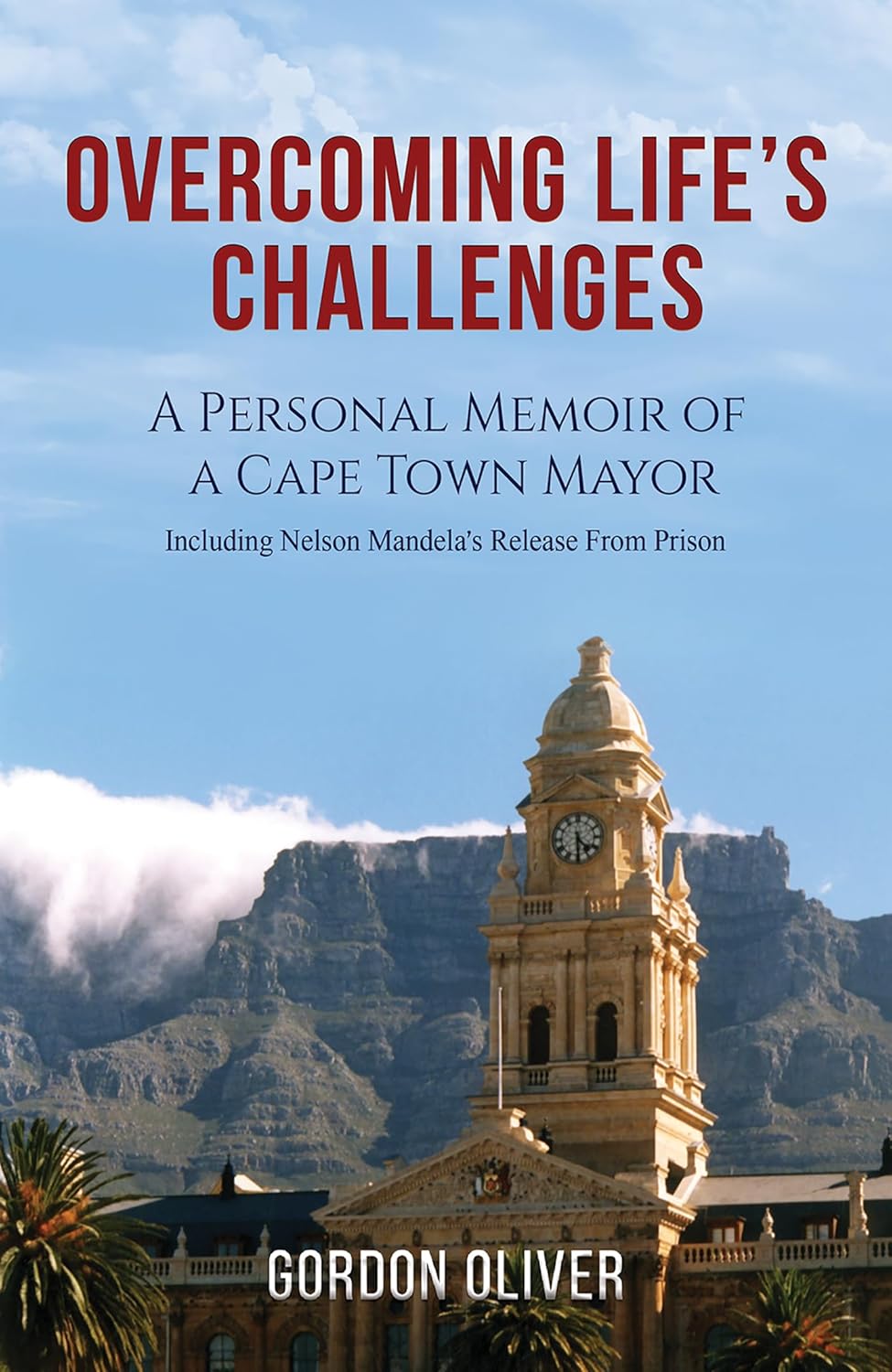
From the heights of politics via a spiritual journey to the ministry Gordon R. Oliver, Overcoming Life’s Challenges: A Personal Memoir of a Cape Town Mayor, Austin Macauley Publishers, 2024, pp.166, ISBN: 979-8891554146, £8.99, pbk.
Reviewed by John Midgley
An honest and liberal analysis of the Church
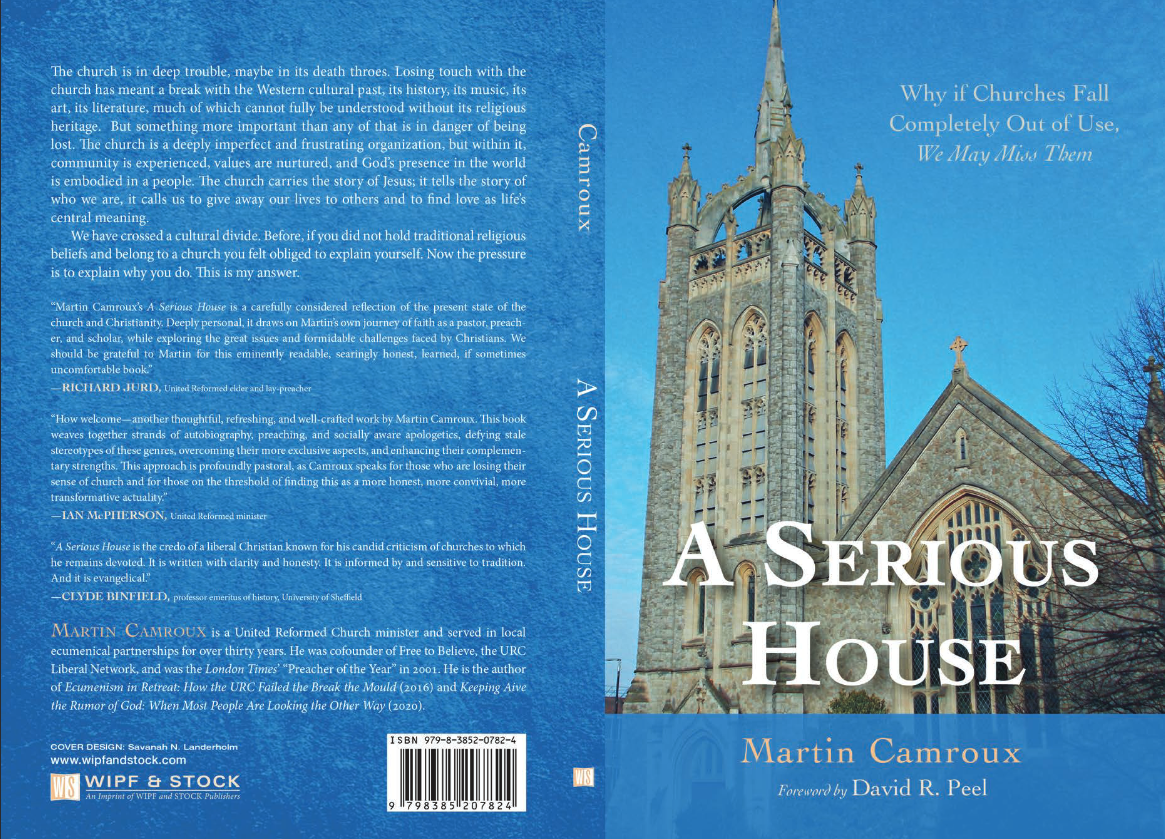
Martin Camroux, A Serious House, Why if Churches Fall Completely Out of Use We May Miss Them, Wipf and Stock, 2024, pp. 188, ISBN-13: 979-8385207824, £21 pbk, (also available direct fromthe author for £16, including postage, Martin Camroux, 4 Sorrel Close, Colchester, CO4 5UL).
Reviewed by Francis Elliot-Wright
Prayers of Many Faiths
Marcus Braybrooke, 1,000 Prayers from Around the World. Prayers of Many Faiths for Many Situations, independently published, 2024, pp.390, ISBN: 9798321565889, £39.99 hbk; ISBN: 97983439561609, £9.99 pbk black and white; ISBN: 798321565889, £19.99 pbk colour; also available on Kindle £4.99. Available to order on Amazon.
Reviewed by David Steers
An annual subscription to Faith and Freedom (two issues) costs £16.00 (postage included) in the United Kingdom. Single copies can be ordered at a cost of £8.00 each (postage included). Cheques should be made out to Faith and Freedom and sent to the business manager:
Nigel Clarke, Business Manager, Faith and Freedom, 16 Fairfields, Kirton in Lindsey, Gainsborough, Lincolnshire. DN21 4GA.
Overseas subscriptions are also available.
It is also possible to pay online. For more details see our website:
The latest issue of the Transactions (Volume 28 Number 3) will soon be on its way to members. Details of how to join the Society can be found below.
As ever the journal is full of interesting articles and contains:
The National Conference 1882-1928 – a Unitarian Talking Shop
by Alan Ruston
James Martineau’s carte de visite
One year before the bi-centenary of the British & Foreign Unitarian Association Alan Ruston looks at the other less well-known institution which came together with the B&FUA to form the General Assembly of Unitarian and Free Christian Churches in 1928. Although not founded by James Martineau, The National Conference of Unitarian, Liberal Christian, Free Christian. Presbyterian, and Other Non-Subscribing or Kindred Congregations, to give it its full title, was always under the influence of the great man. Even if the body was essentially ‘a Unitarian Talking Shop’ it was nevertheless an institution that made an important contribution to the development of national Unitarian organization in the late nineteenth and early twentieth centuries.
‘Holding Space Sacred’: Struggles for Land and Home in Great Britain and Ireland, and Beyond
by Derek McAuley
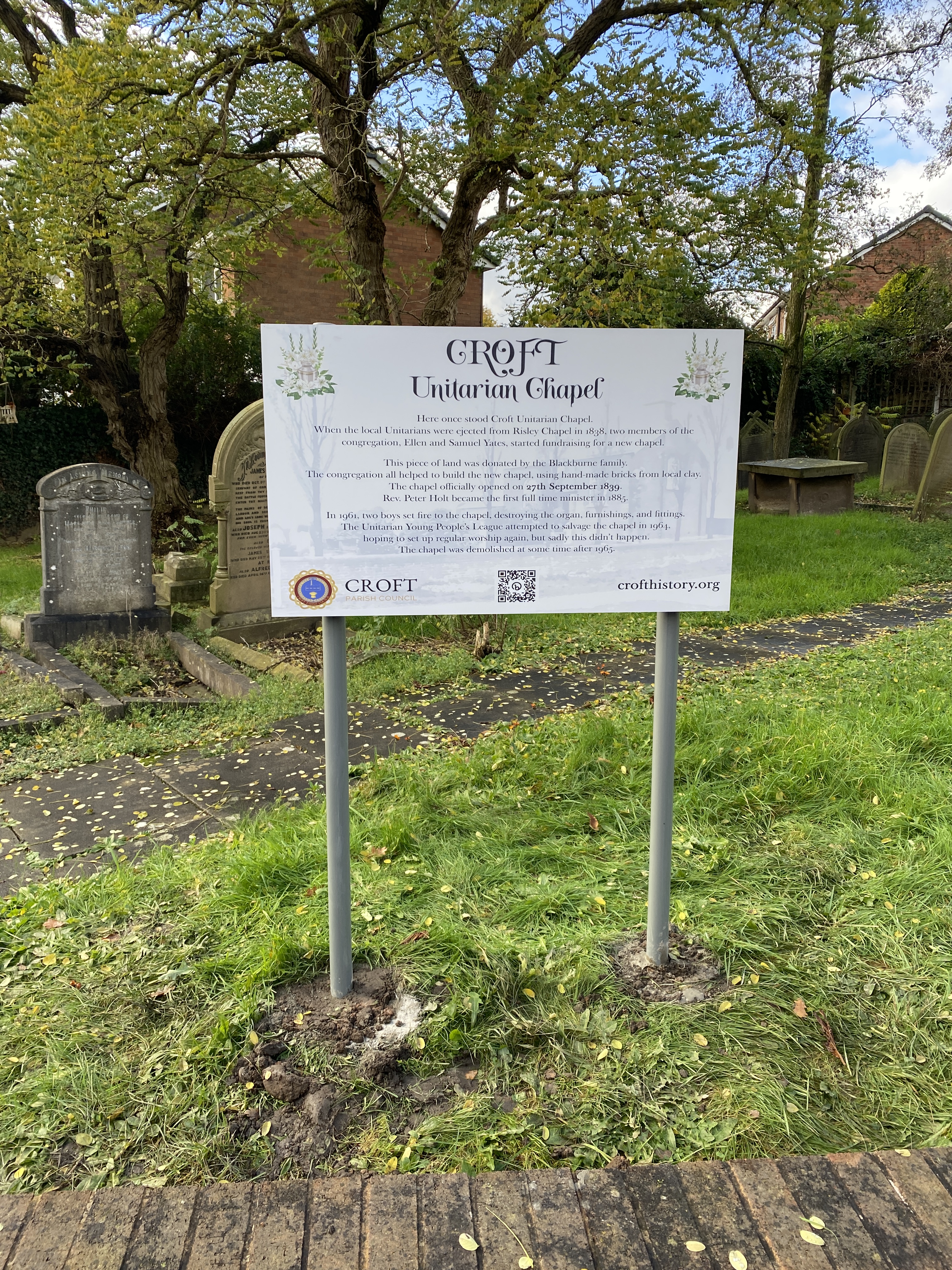
The site of Croft Unitarian Chapel today featuring the new signage erected through the efforts of Cheyvonne Bower who has done so much to restore and protect the site.
Based on a talk delivered as part of a webinar presented by the Reckoning International Unitarian/Universalist Histories Project on 15 November 2022 on ‘Global Struggles for Land and Home in Unitarian/Universalist Communities’, this paper explores the themes of ‘land and home’ within nineteenth-century Unitarianism. It looks particularly at events in Wales, Ireland, the British overseas Dominions plus the legal challenges that led to the Dissenters’ Chapels Act of 1844, and the role of women. One woman who is particularly highlighted is Ellen Yates who helped to establish the Unitarian cause at Croft after they were dispossessed of their chapel at Risley.
Training for the ministry, 1903-1910: Ernest Pickering at Manchester College Oxford
by Oliver Pickering
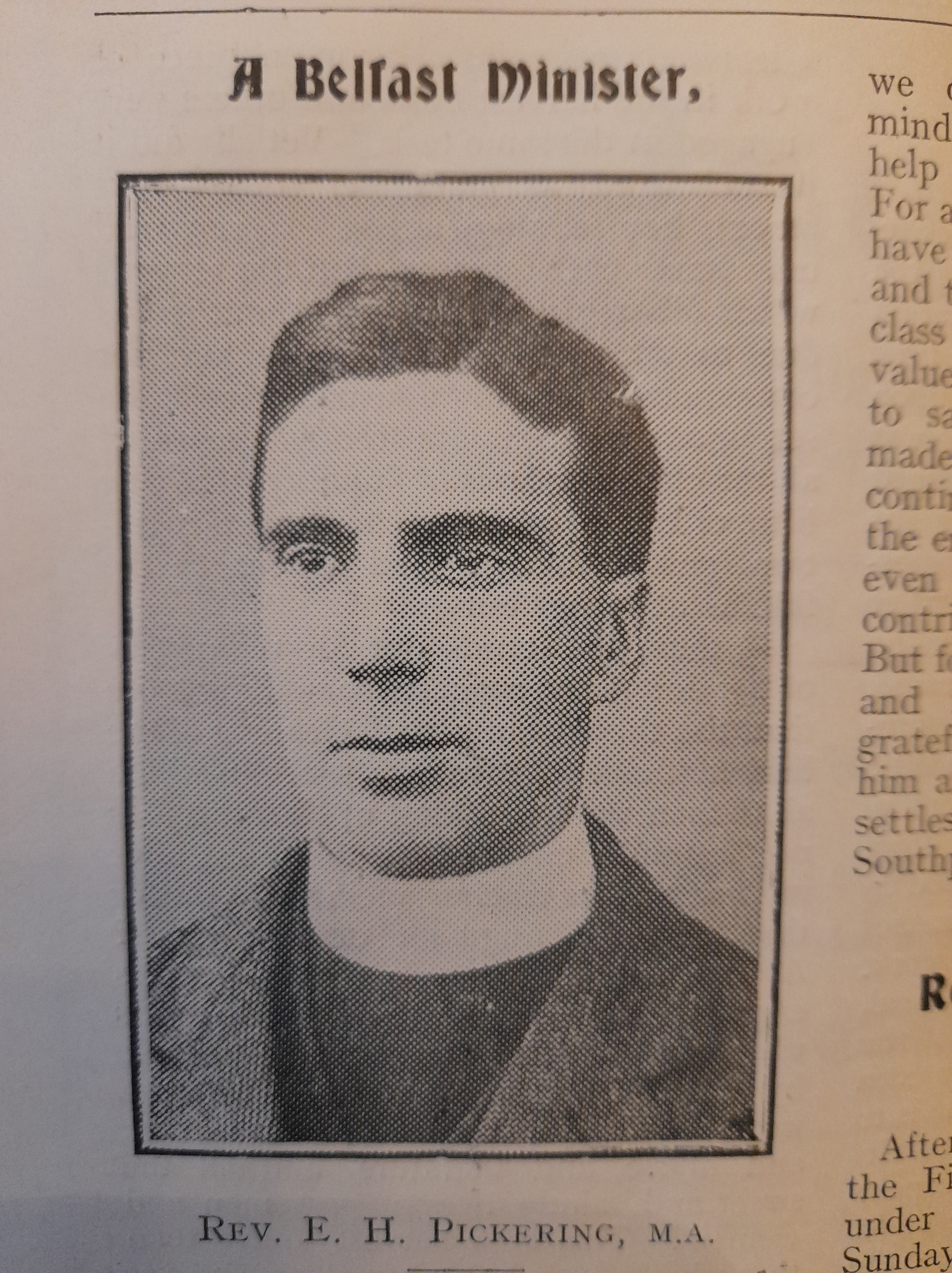
From ‘The Non-Subscribing Presbyterian’ 1921
Oliver Pickering examines the rich training for the ministry received by his grandfather at Manchester College, Oxford between the years 1907 and 1910 which were preceded by four years as an external exhibitioner at the College while also studying Classics at Exeter College. This seems to have been something of a golden age for ministerial training at Oxford, and his seven years at Manchester College were the prelude to a remarkable career as a minister (at Hyde; All Souls’ Church, Belfast; Southport and Oldham), a Member of Parliament and a professor of English Literature in Tokyo.
This issue also includes Reviews and a Supplement: Obituaries of Ministers of Unitarian and Free Christian Congregations. Index and synopsis of references including new entries, additions and corrections from 1st February 2021 compiled by Alan Ruston.
This book (first published, I now realise, back in 2014!) has just been reprinted and, the original print run having sold out, is once again available. The publishers and printers have done an excellent job, it’s an attractive book, this time published in memory of Bernard Cliffe, Len Mooney and Rev Daphne Roberts, three contributors who have died since the original publication.
The full list of contributors and subjects is as follows:
Introduction, David Steers; Memorials of the Ancient Chapel of Toxteth Park, Bernard Cliffe; Jeremiah Horrocks 1618 – 1641, Bernard Cliffe; William Roscoe 1753 – 1831, David Steers; A Short History of the Rathbone Family, Annette Butler; The Unitarian Family of George Holt, Bernard Cliffe; Noah Jones 1801 – 1861, Philip Waldron; James Martineau 1805 – 1900, Len W. Mooney; Joseph Blanco White 1775 – 1841, David Steers; Kitty Wilkinson 1786 – 1860, Daphne Roberts; John Johns 1801 – 1847, David Steers; William Henry Channing 1810 – 1884, Richard Merritt; Charles Pierre Melly 1829 – 1888, John Keggen; Sir Henry Tate 1819 – 1899, Richard Merritt; Sir John Brunner 1842 – 1919, Len W. Mooney; Lawrence Redfern 1888 – 1967, Elizabeth Alley; Sir Adrian Boult 1889 – 1983, Richard Merritt; The Visitors’ Book of the Ancient Chapel, Bernard Cliffe.
Published by the Merseyside District Missionary Association the cover design is by Alison Steers and the book contains over 50 illustrations, many published here for the first time.
To accompany the republication we have produced a short video which incorporates a trip around Ullet Road Church which can be seen here:
Click on the video for a tour of Ullet Road Church and details of the book
The cover of the book
Liverpool Unitarians: Faith and Action Essays exploring the lives and contributions to society of notable figures in Liverpool Unitarian history
Edited by Daphne Roberts and David Steers
Published by Merseyside and District Missionary Association
ISBN: 978-0-9929031-0-7
Brand new edition for 2024
Price £10 (plus £2 post and packing). Available from Rev Phil Waldron, Ullet Road Church, 57 Ullet Road, Sefton Park, Liverpool. L17 2AA.
In the Introduction I say:
This book is not intended to be hagiography but it does try to outline how one group of people – members of a particular faith community with deep historical roots but with an aversion to fixed creeds – were inspired to serve their fellows in different ways. Their legacy can be seen all over the city – in its parks, in its monuments, in the university, in hospitals, in education, in art galleries and museums – and it exists in the long and continuing struggle to create a society that gives equality and opportunity to all its citizens. It is not meant to be an exhaustive account of all the eminent members of the churches and chapels in the region. Readers will notice that the names mentioned are part of wider connections of family and business which includes many others who could be included. There are other figures who could be the subject of such biographical accounts. But this is a selection of some of those who have followed the call of faith to be of service to wider society.







 velvethummingbee