Remembrance

On Sunday, 10th November we held a well-attended Remembrance Service at Dunmurry and the video can be seen below. Special thanks go to John Neill for delivering Binyon’s Lines, to Jack Steers for playing the Last Post and Reveille, and to Allen Yarr for playing the organ.

Click above to see the Remembrance Service from First Dunmurry 10 November 2024

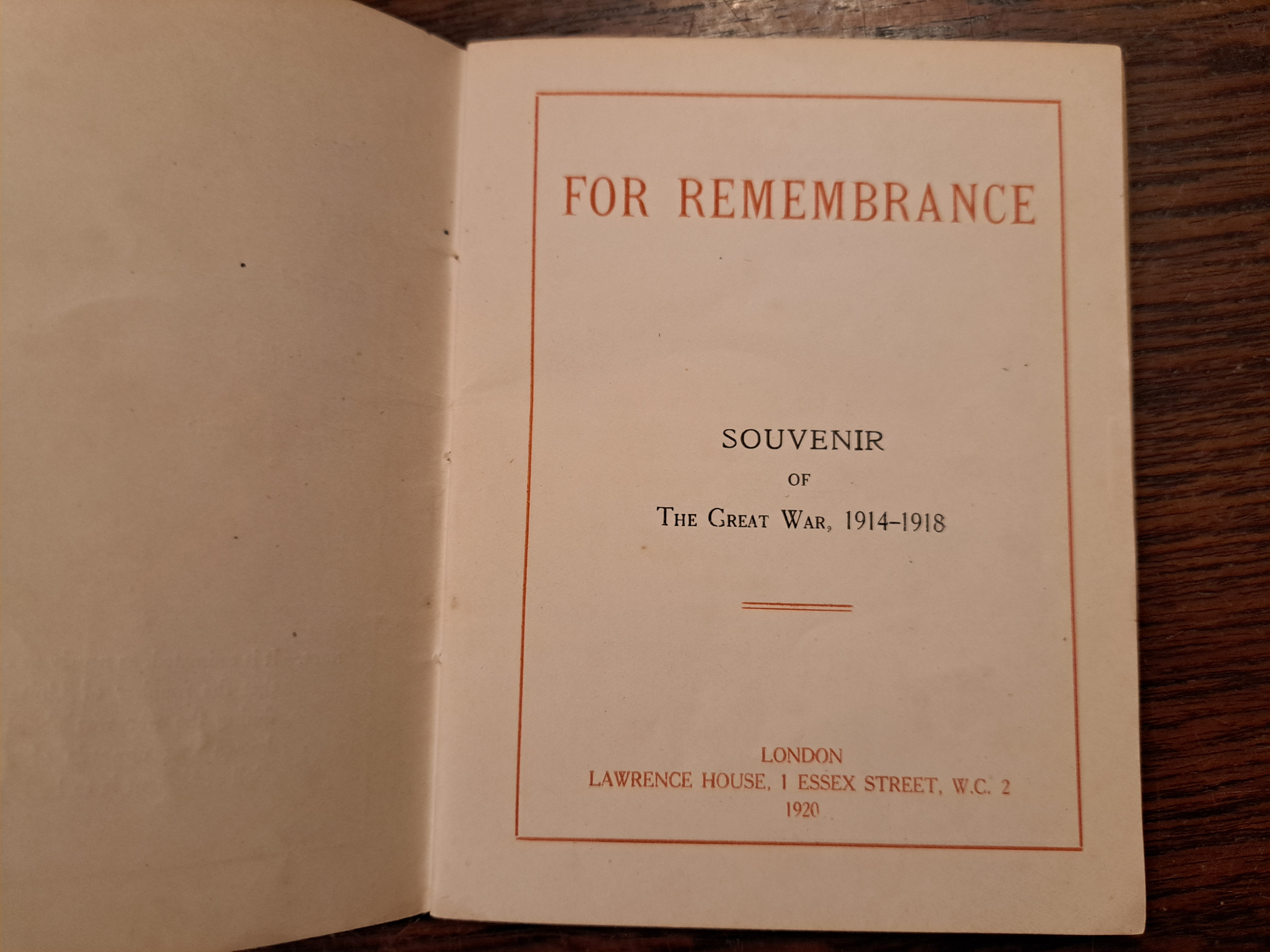
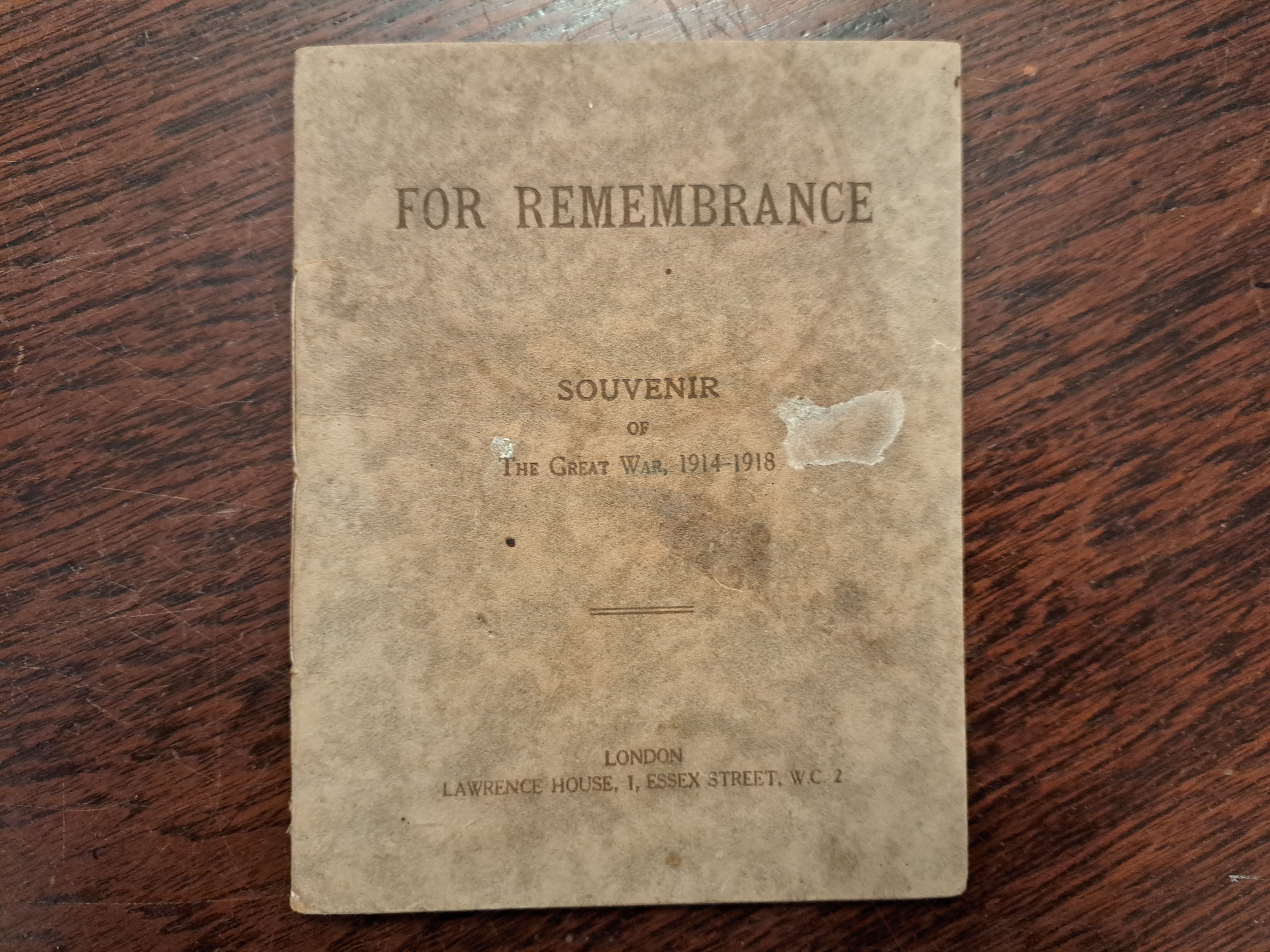
In the service I make full use of the booklet For Remembrance mentioned in the previous post. Indeed this little book, particularly the contribution by the Rev R. Nicol Cross, as it is mentioned in the previous video, has already sparked a lot of responses. Along with some of the other pieces it is a poignant and very honest reflection on the situation in 1919 for those returning from the front after the Armistice.

At the time he wrote his contribution Nicol Cross was minister of Mill Hill Chapel, Leeds, later he was minister of First Church, Belfast and later still Principal of Manchester College, Oxford. But from 1915 to 1919 he served as a private with the Royal Army Medical Corps. His perspective on the war was quite different from what you might otherwise have guessed.

Title page of the booklet

It is a very rare book, very few copies have survived. In the 2019 issue of the Transactions of the Unitarian Historical Society Alan Ruston contributed an article entitled ‘1919 – a re-evaluation of the part played by Unitarians in the First World War’. In his article he reveals that he had not previously come across the book, the copy he was sent while writing the article was the only one known to him. It certainly has not made its way into library collections. So this copy, in the Very Rev William McMIllan Library, is one of only two known copies.

One feature of For Remembrance that I didn’t mention in the first video or in the service above is that there is also a short note from the American Unitarian Association (AUA) included in the booklet. It seems to have come from a message sent out by the AUA to reurning troops and reads:

OUR GREETING AND PLEDGE

You have successfully met the challenge of the most powerful armies the world ever saw. You have shared in the most significant victory in all history. By a devotion that has won the affectionate admiration of the civilized world, you have helped to make possible a new and nobler life for humanity, and a truer brotherhood of man.

We welcome you again to our homes and our homeland. We pledge ourselves anew to the ideals for which you went forth to suffer; and because of your example we will rise to meet the duties of the new day with unwavering faith. Through our church we will unite our powers with yours in defence of the principles for which so great a price has been paid.

Your courage, cheerfulness, and fortitude will strengthen the church of your fathers.

From the Message of the American Unitarian Association

It would be interesting to know if this was the whole message of the AUA or whether they produced a book similar to For Remembrance.
For Remembrance

Click on the video to see ‘For Remembrance’

From The Very Rev William McMillan Library of First Dunmurry (Non-Subscribing) Presbyterian Church.

Exploring the Library: Episode 5 For Remembrance. A booklet given to returning servicemen after the First World War.

A short talk by the Rev Dr David Steers. With thanks to Jack Steers for playing the Last Post and Reveille on the trumpet.

This is rather a scruffy looking booklet but it is a very rare survival of which the editors said: ‘If it attains to anything like its aim it will be a real “keepsake,” an abiding record of the owner’s place and part in our nation’s mightiest struggle…’ A copy was given to every Unitarian and Non-Subscribing serviceman who returned from the First World War. It contains some poignant quotes and six short reflections by ministers who had served alongside the troops.

Possibly as many as 9,000 copies were issued but very few survive, at least in libraries, so we are fortunate to have a copy in the Very Rev William McMIllan Library. Click on the video to find out more about ‘For Remembrance’.

Remembrance Sunday 2020

In so many places tomorrow Remembrance Services have either been curtailed or cancelled because of the pandemic. This is one of the many inevitable consequences of the situation around the coronavirus. Nevertheless, many churches will hold a service of Remembrance on Sunday morning, at least they will in Northern Ireland although obviously not in other places such as England where a lockdown has again closed the churches. I will be leading two Remembrance services tomorrow and we also have an online Remembrance Service which can be viewed here:

Non-Subscribing Presbyterian Remembrance Service, Sunday, 8th November 2020

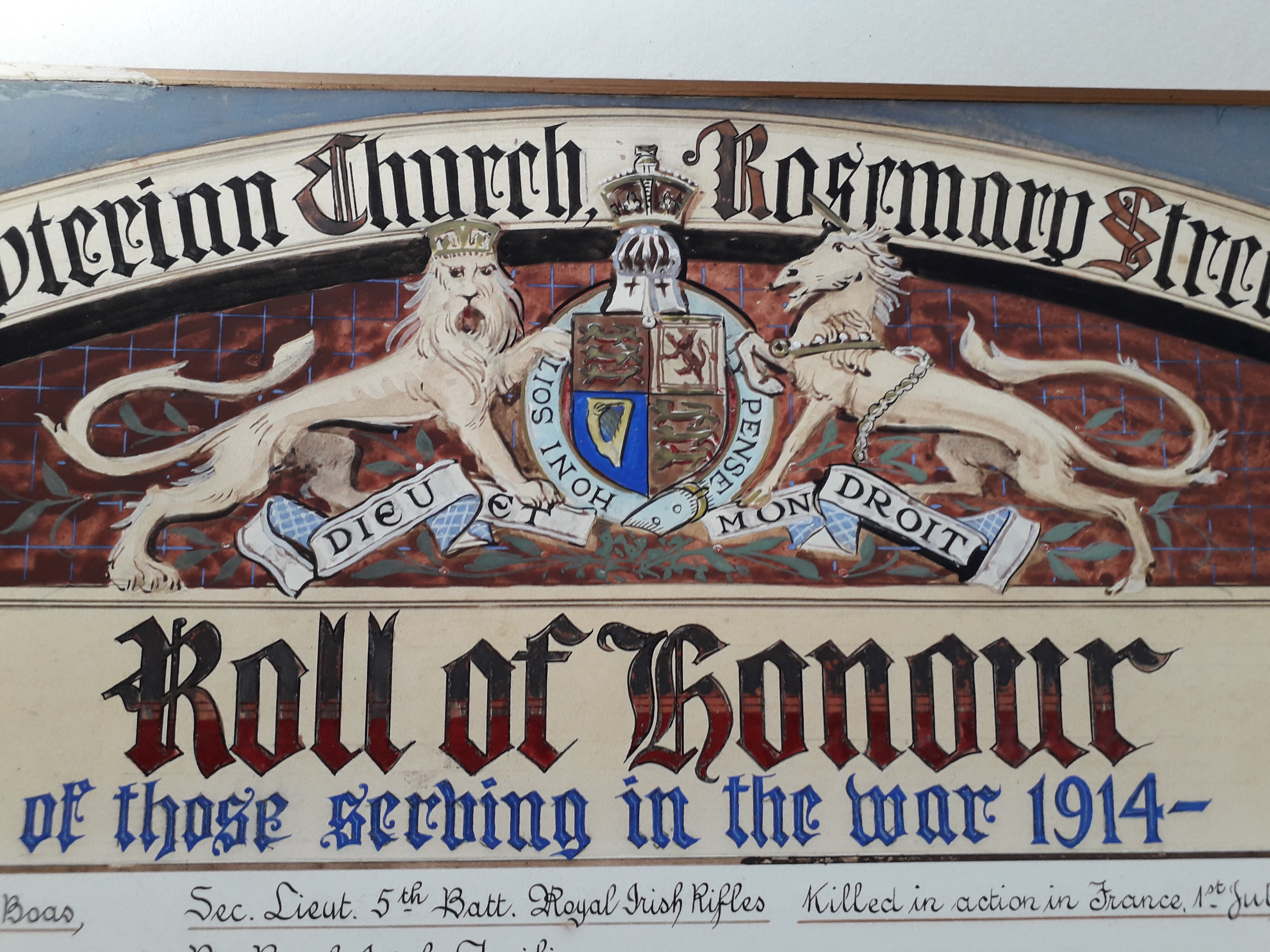
Our service comes from Downpatrick and features the two memorials which we have in the church. One is the First World War memorial which includes the names of all the members of the congregation who served in the war as well as three who are listed as having died in the war. When I researched the details for the Roll of Honour of the Non-Subscribing Presbyterian Church of Ireland in 2018 I discovered that many church war memorials, although often cast in bronze or carved in marble, sometimes didn’t quite match the records as we know them today. So in the case of the Downpatrick memorial one of the members who is listed as having served actually died in 1920 from wounds he received at Ypres and his grave is recorded by the Commonwealth War Graves Commission. So four members of the congregation were killed through fighting in the First World War.

We also have a second memorial which includes a poppy from the Blood Swept Lands and Seas of Red installation which was on show in the Tower of London in 2014 and which was given in memory of Rifleman John Hayes. Click on the following link to read about this:

Blood Swept Lands and Seas of Red poppy dedicated at Downpatrick

In today’s video I have also included an image of every Non-Subscribing Presbyterian twentieth-century war memorial of which I am aware.

Detail from the illuminated Roll of Honour of the First Presbyterian Church, Rosemary Street, Belfast

Time for a Story

On 4th November 1922 Howard Carter finally discovered the entrance to the tomb of Tutankhamun. In this week’s Time for a Story Sue Steers tells this fascinating tale. The video can be seen here:

Time for a Story: Tutankhamun

The only Unitarian Cenotaph?

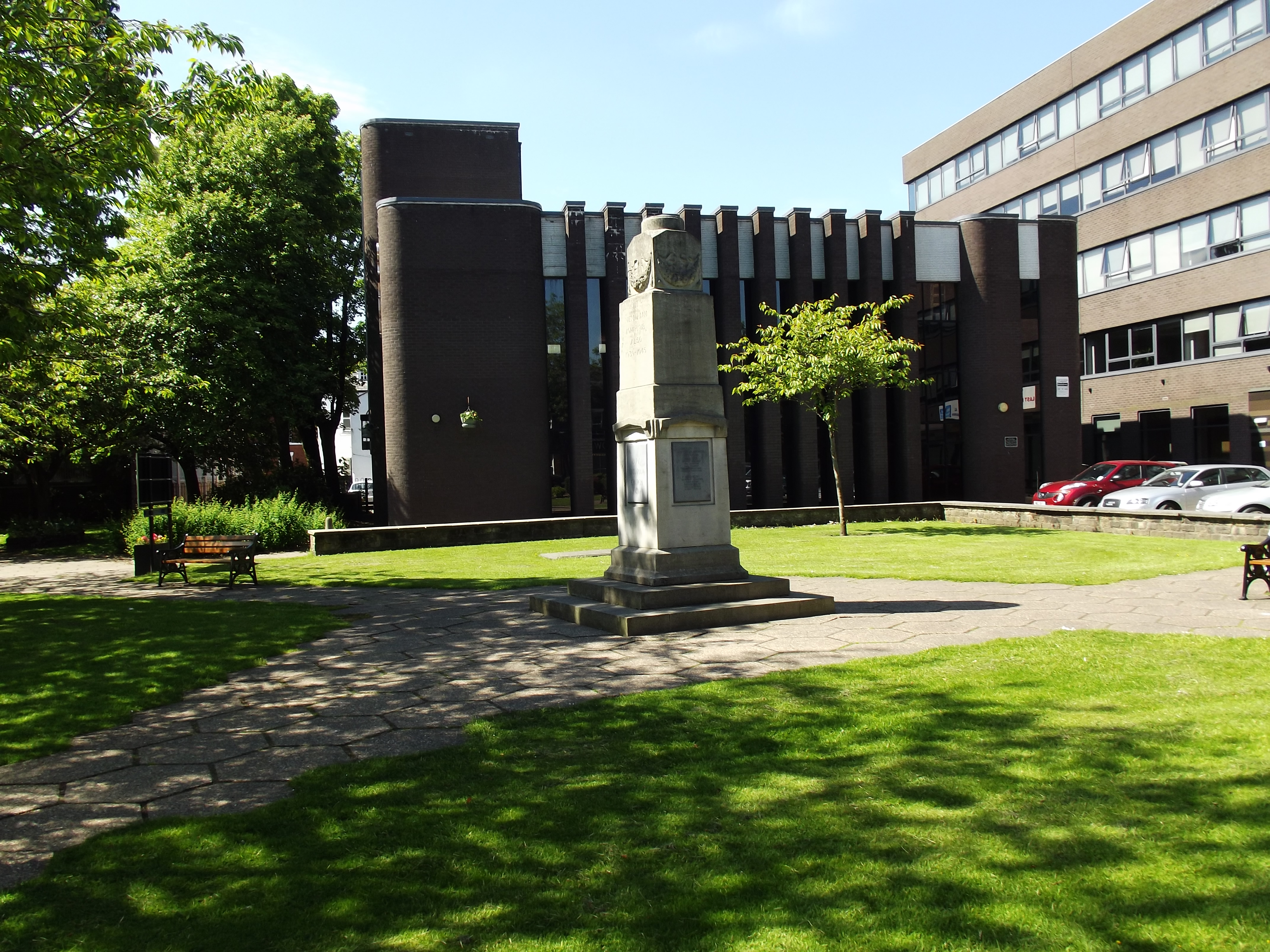
The Great War Project begun by Faith and Freedom is attracting a lot of positive interest and more material is being added, almost on a daily basis. Within the memorial section there soon will be added some pictures of the Cenotaph at Bury Unitarian Church which have been sent in by Neville Kenyon, many of which are reproduced here.

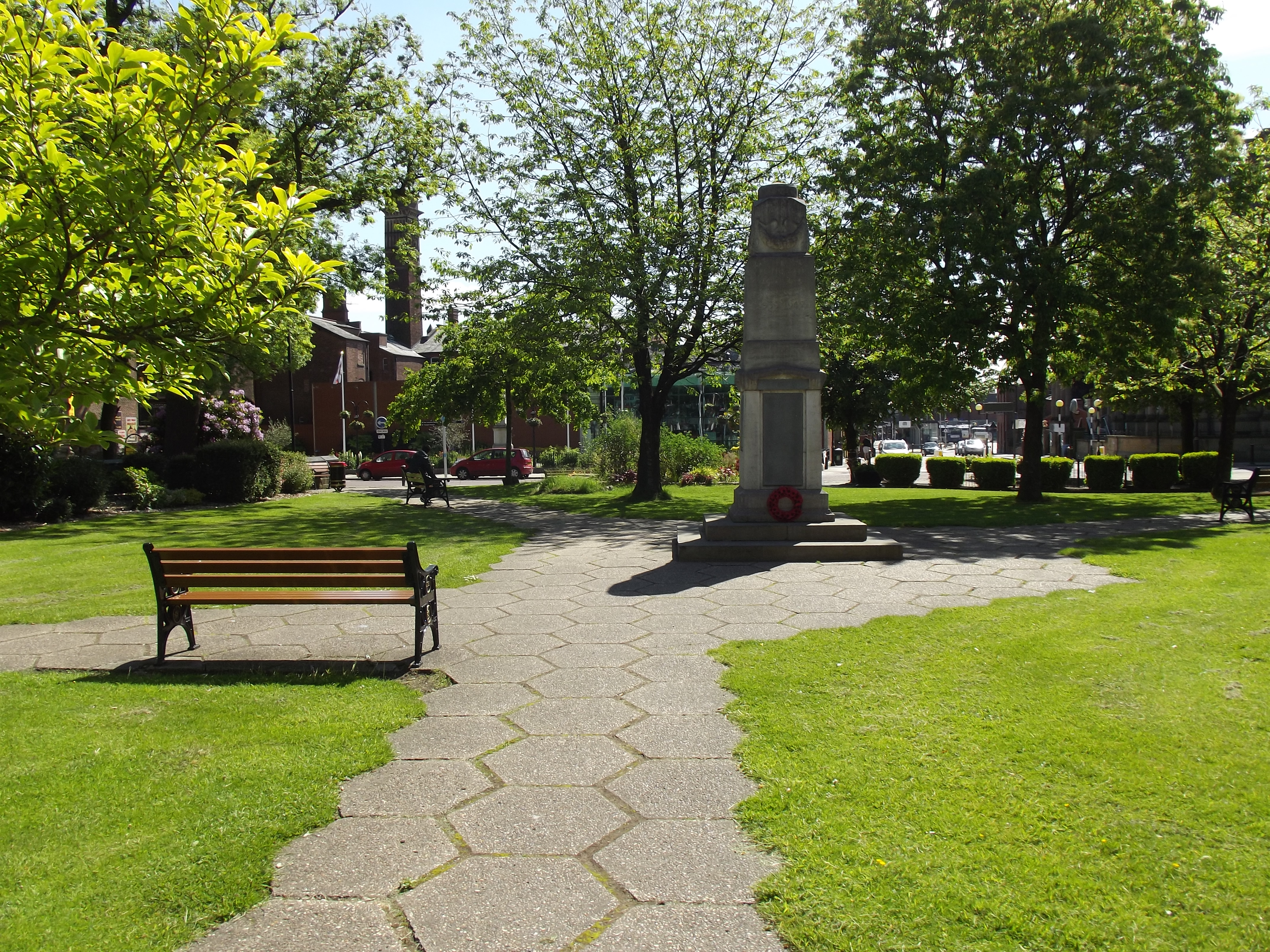
Cenotaph, Bury Unitarian Church

Neville suggests that this is the only Unitarian Cenotaph and I suspect that he must be right. Of course, Cenotaph means, literally, ‘empty tomb’ and in amongst the many old and quite extensive graveyards that exist around the country there must be a few tombs that fall into that category for one reason or another. But by Cenotaph we generally mean a freestanding public monument inspired by the Cenotaph in Whitehall, and repeated in many cities, towns and villages.

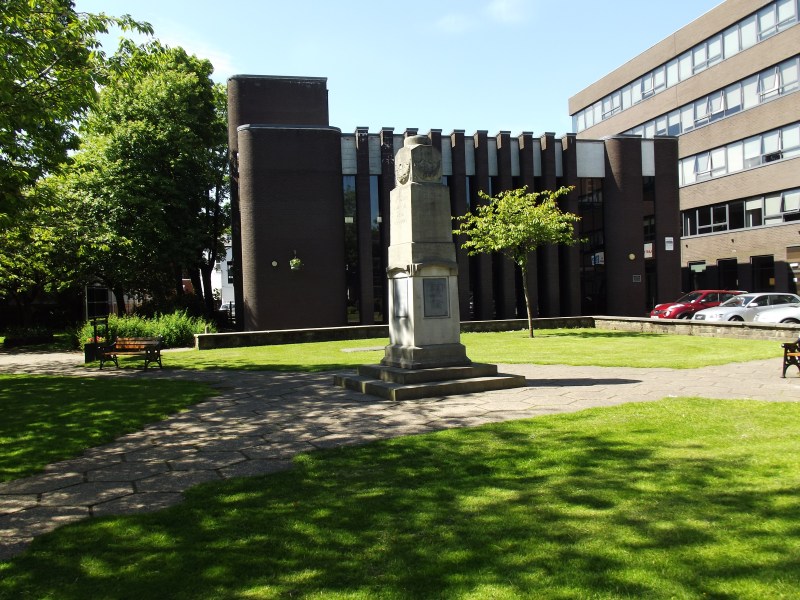
The Bury Cenotaph
The Bury Cenotaph

The idea for Cenotaphs came from the experience of the First World War when so many soldiers had no known grave. In such a situation there was a need for a focus of remembrance, something that could symbolise the sacrifice and loss that was felt by so many people. To this end the Whitehall Cenotaph and all those that came after it fulfilled a very special role in national consciousness. And how different such monuments are when we compare them with other memorials that were erected following wars such as the Arc de Triomphe or the Brandenburg Gate, to name just two. Unlike them there is no overt military symbolism in the Cenotaph. It is much more restrained, much more dignified.

In 1924 the author H.V. Morton described his feelings as he stood near the Cenotaph on an ordinary morning:

I look up at the Cenotaph. A parcels delivery boy riding a tricycle van takes off his worn cap. An omnibus goes by. The men lift their hats. Men passing with papers and documents under their arms, attache and despatch cases in their hands – all the business of life – bare their heads as they hurry by.
Six years have made no difference here. The Cenotaph – that mass of national emotion frozen in stone – is holy to this generation. Although I have seen it so many times on that day once a year when it comes alive to an accompaniment of pomp as simple and as beautiful as church ritual, I think that I like it best just standing here in a grey morning, with its feet in flowers and ordinary folk going by, remembering.

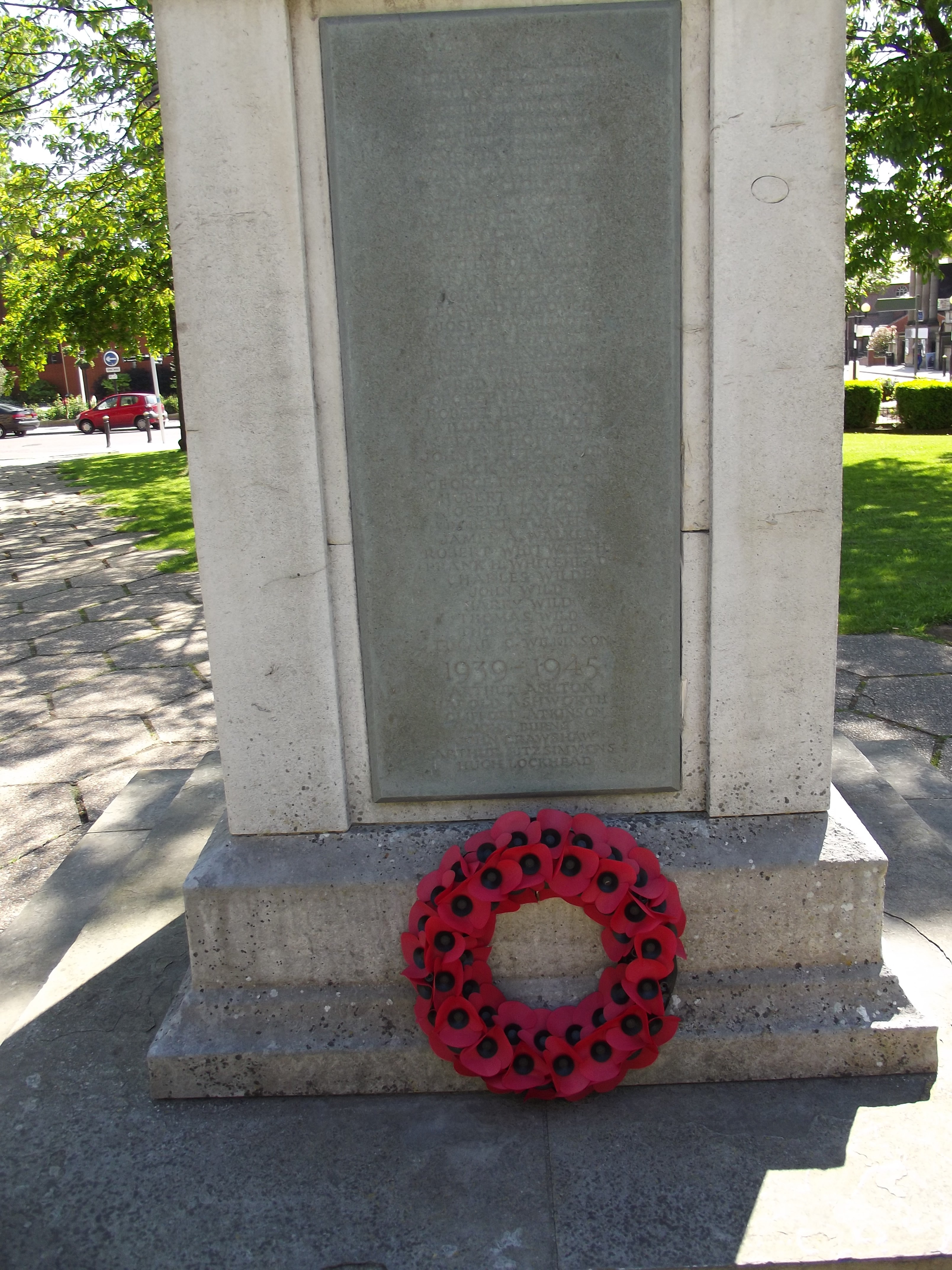
The Bury Cenotaph is very public and very similar to the memorials that are more often  municipal, regimental or governmental in origin. It commemorates the members of three congregations who served in the First World War, with the names of those who served in the Second World War being added later. These were three long-established local congregations, who amalgamated into one with a bold new meeting house in 1974.

A view from the other side

The Cenotaph is situated in front of the church in the centre of what was the graveyard but which is now a public space. This space was originally called Library Gardens but has recently been renamed by the council with what seems a much more satisfying designation of Church Gardens. Neville tells me that on Remembrance Sunday the congregation meets at 11.00 am at the Cenotaph for the one minute silence, the Last Post is played, before the congregation goes into the church for a service of remembrance, the names of those inscribed on the memorial being read.

There is a plaque to commemorate each of the three congregations represented by the modern congregation – Chesham, Heywood and Bank Street, Bury. The Bank Street plaque – beneath the title ‘Bank Street Presbyterian Chapel Unitarian’ – has the longest list of names (I counted 40 names from the First World War) but it is by far the most weathered.

Bank Street Presbyterian Chapel Unitarian

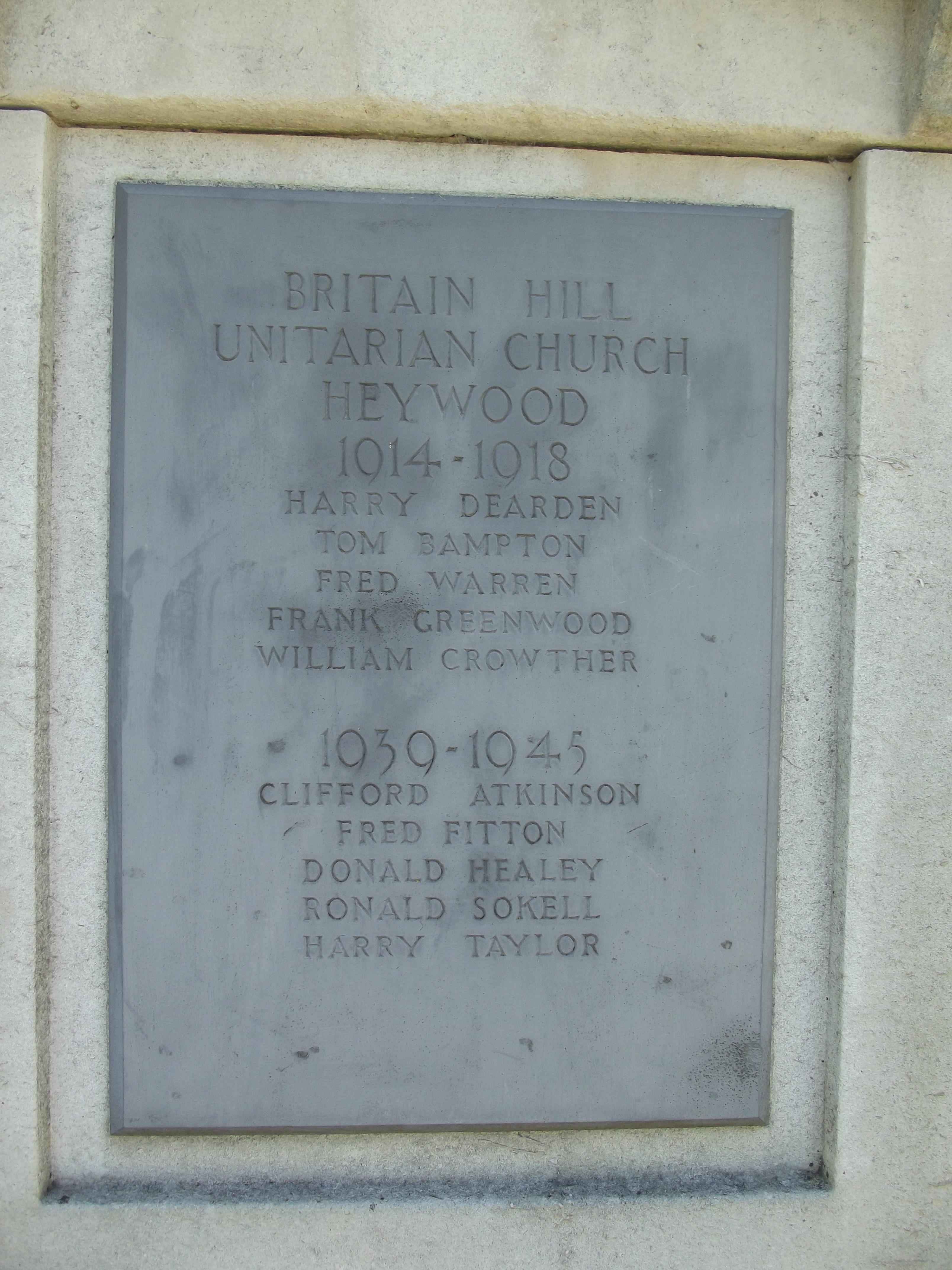
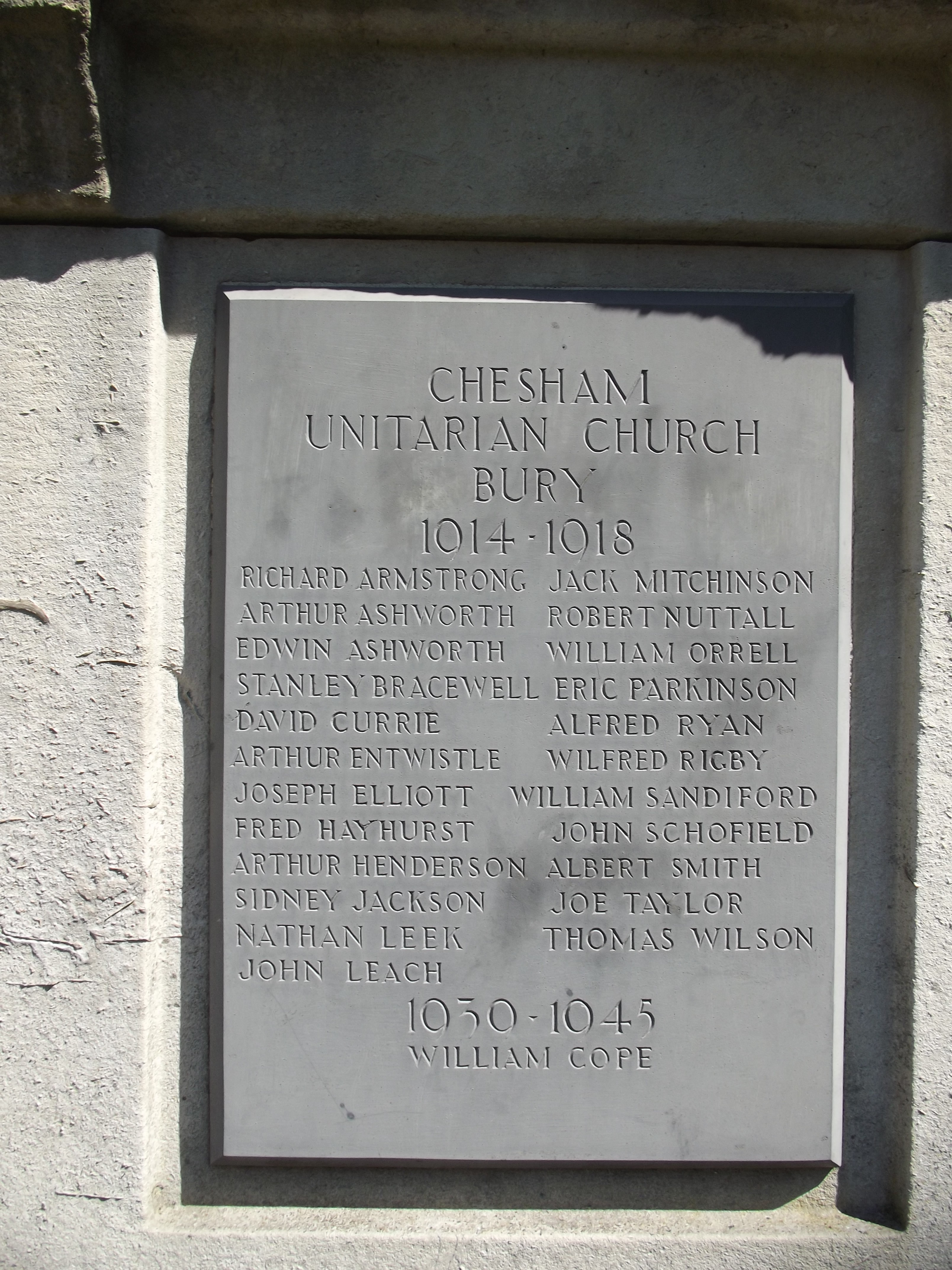
There are 23 names from the First World War on the Heywood memorial and five on the Chesham memorial.

Britain Hill Unitarian Church Heywood

Chesham Unitarian Church Bury

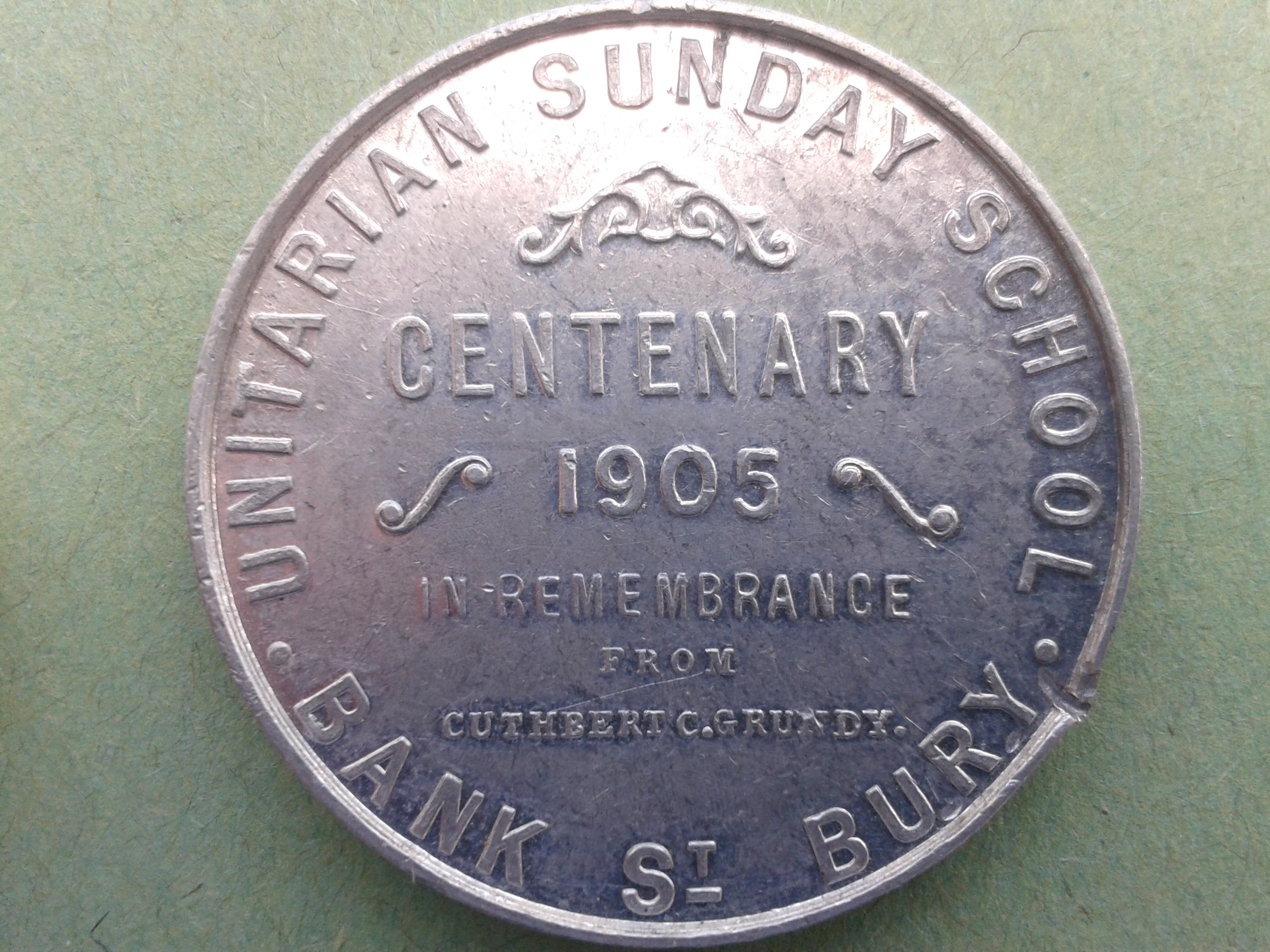
In my possession I have a medal struck to commemorate the centenary of the Bank Street Sunday School in 1905. The medal is inscribed ‘In Remembrance from Cuthbert C. Grundy’ and it must have been given to all the Sunday School scholars at the time. It is sad to think that so many of the children who received this medal in 1905 will be amongst the long list of volunteers whose names were inscribed on the Cenotaph just a few years later.

The Bury Sunday School medal

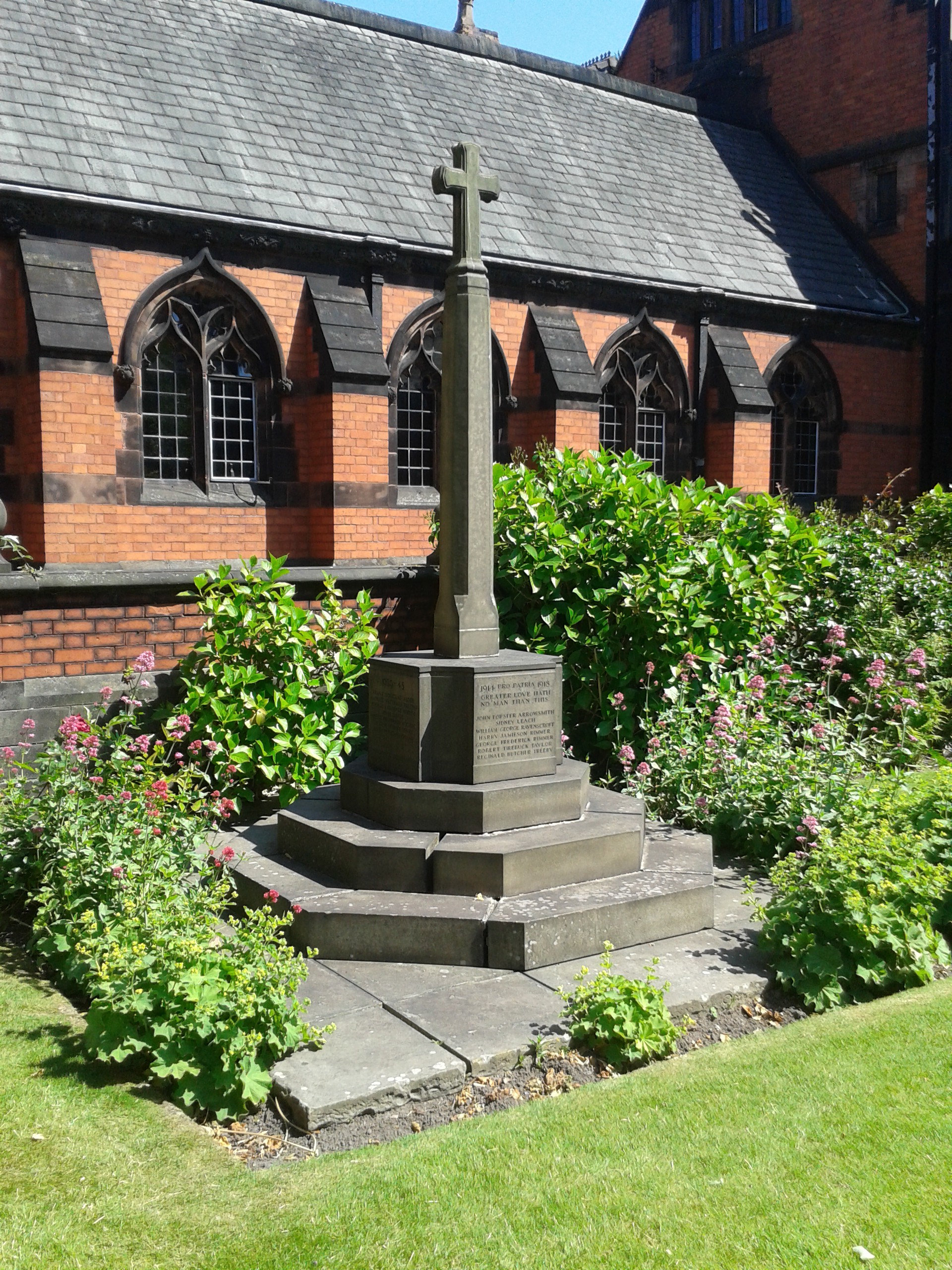
Is it the only Unitarian Cenotaph? If you know of any other please let me know and, best of all, send a picture. The only place that I know that comes near is Ullet Road Church in Liverpool which has a memorial set in its own large and well-kept grounds. But although it is a First World War Memorial that performs the same role as a Cenotaph the design is different to that of Bury, although not dissimilar to ones found in many places around the UK.

War Memorial Ullet Road Church Liverpool

But it would be nice to hear if anywhere else possesses a memorial in any way similar to that of Bury. Or maybe Bury is unique?

BuryCenotaph04