Transactions of the Unitarian Historical Society April 2024

The latest issue of the Transactions (Volume 28 Number 3) will soon be on its way to members. Details of how to join the Society can be found below.

As ever the journal is full of interesting articles and contains:

The National Conference 1882-1928 – a Unitarian Talking Shop

by Alan Ruston

James Martineau’s carte de visite

One year before the bi-centenary of the British & Foreign Unitarian Association Alan Ruston looks at the other less well-known institution which came together with the B&FUA to form the General Assembly of Unitarian and Free Christian Churches in 1928. Although not founded by James Martineau, The National Conference of Unitarian, Liberal Christian, Free Christian. Presbyterian, and Other Non-Subscribing or Kindred Congregations, to give it its full title, was always under the influence of the great man. Even if the body was essentially ‘a Unitarian Talking Shop’ it was nevertheless an institution that made an important contribution to the development of national Unitarian organization in the late nineteenth and early twentieth centuries.

‘Holding Space Sacred’: Struggles for Land and Home in Great Britain and Ireland, and Beyond

by Derek McAuley
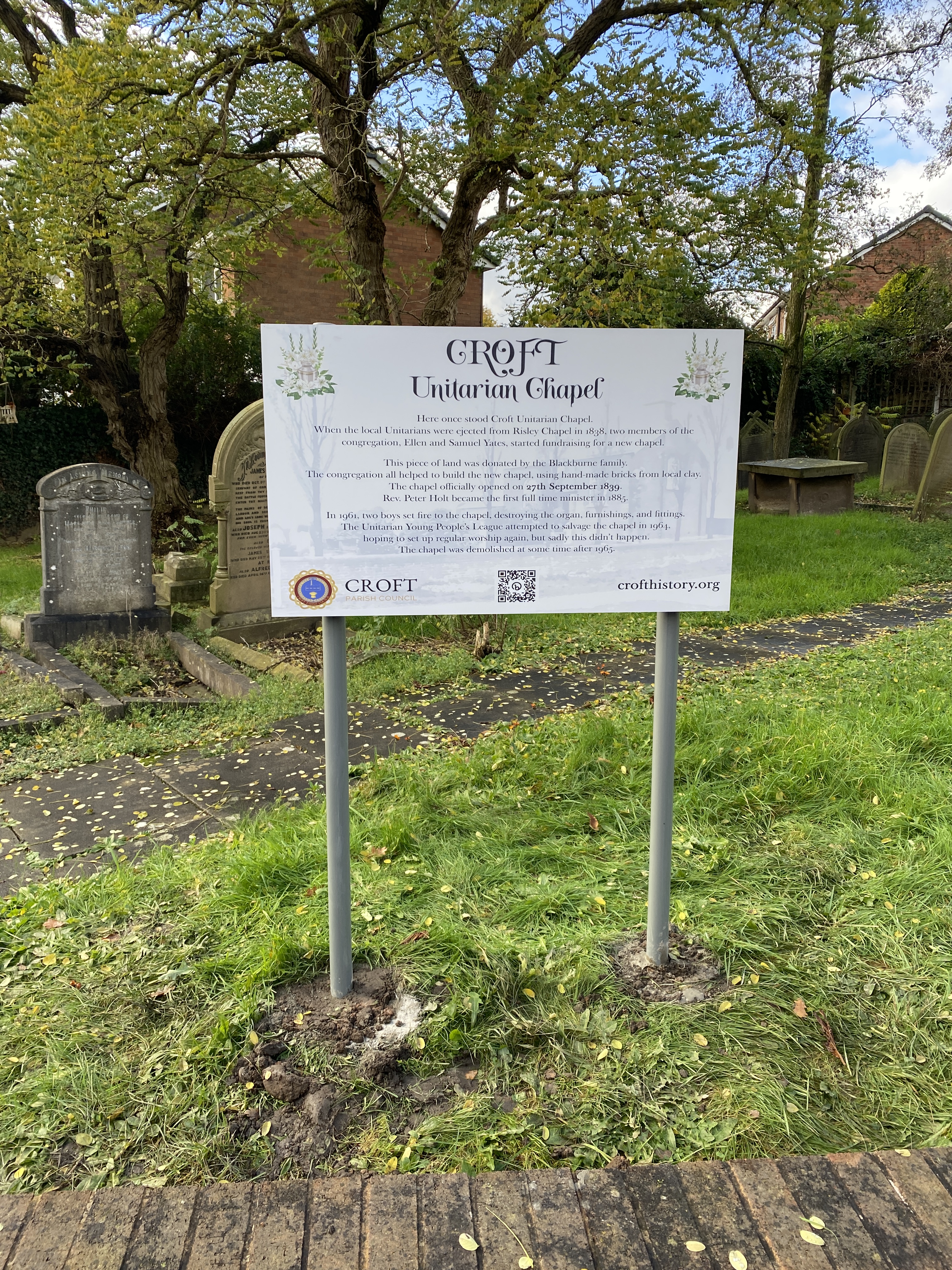
The site of Croft Unitarian Chapel today featuring the new signage erected through the efforts of Cheyvonne Bower who has done so much to restore and protect the site.

Based on a talk delivered as part of a webinar presented by the Reckoning International Unitarian/Universalist Histories Project on 15 November 2022 on ‘Global Struggles for Land and Home in Unitarian/Universalist Communities’, this paper explores the themes of ‘land and home’ within nineteenth-century Unitarianism. It looks particularly at events in Wales, Ireland, the British overseas Dominions plus the legal challenges that led to the Dissenters’ Chapels Act of 1844, and the role of women. One woman who is particularly highlighted is Ellen Yates who helped to establish the Unitarian cause at Croft after they were dispossessed of their chapel at Risley.

Training for the ministry, 1903-1910: Ernest Pickering at Manchester College Oxford

by Oliver Pickering
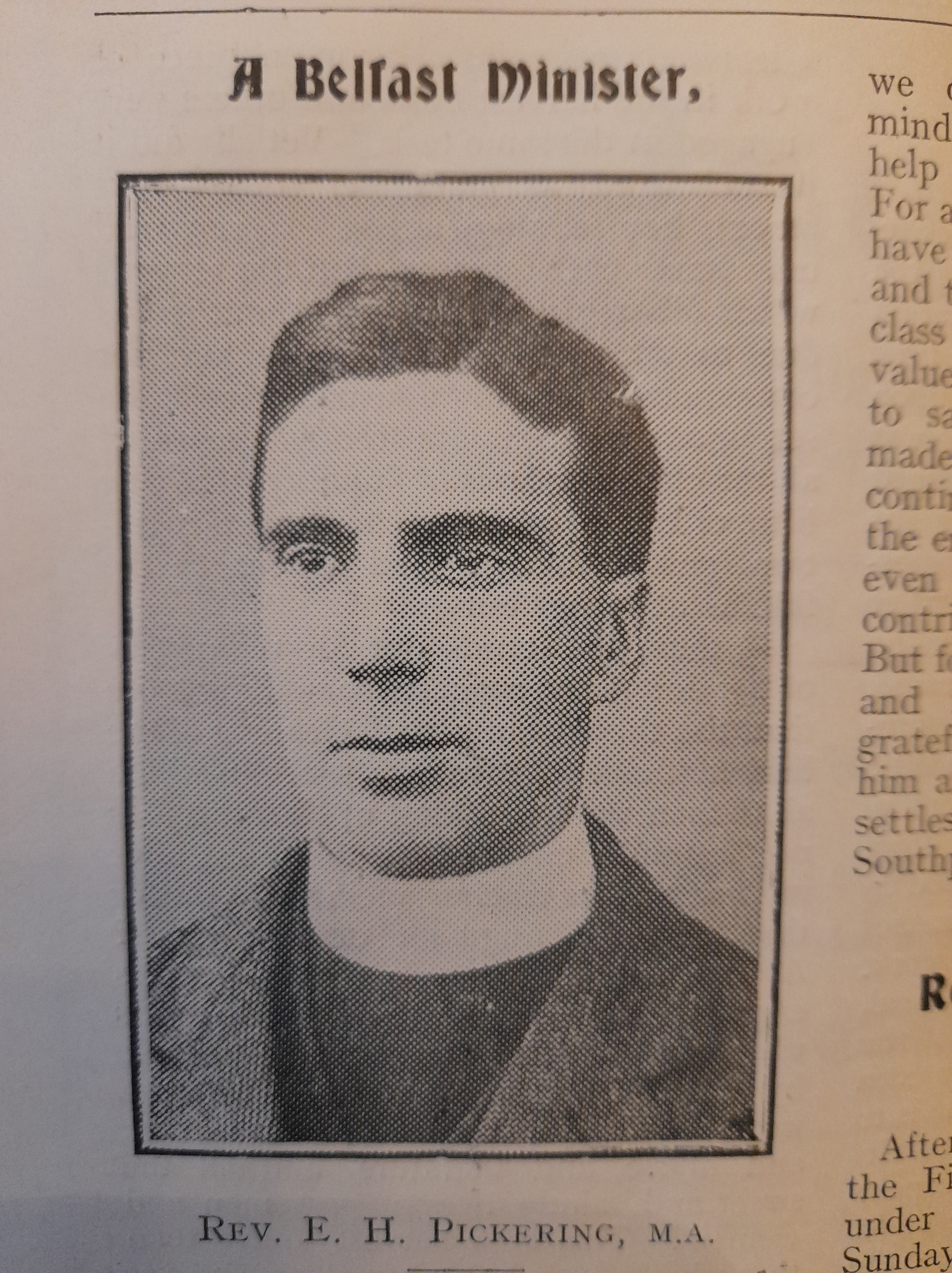
From ‘The Non-Subscribing Presbyterian’ 1921

Oliver Pickering examines the rich training for the ministry received by his grandfather at Manchester College, Oxford between the years 1907 and 1910 which were preceded by four years as an external exhibitioner at the College while also studying Classics at Exeter College. This seems to have been something of a golden age for ministerial training at Oxford, and his seven years at Manchester College were the prelude to a remarkable career as a minister (at Hyde; All Souls’ Church, Belfast; Southport and Oldham), a Member of Parliament and a professor of English Literature in Tokyo.

This issue also includes Reviews and a Supplement: Obituaries of Ministers of Unitarian
and Free Christian Congregations. Index and synopsis of references including new entries, additions and corrections from 1st February 2021
compiled by Alan Ruston.

An annual subscription costs just £10.

Visit the Unitarian Historical Society website to join: https://unitarianhistory.org.uk/

Click here to find out more about the work Cheyvonne Bower is doing at Croft.

A rare view of Croft Chapel from the field at the rear of the building. With thanks to Cheyvonne Bower for providing the image.

Eustace Street meeting-house, Dublin

Until 1867 there were two Unitarian churches in Dublin. Both could trace their history back to at least the mid-seventeenth century and both had a succession of distinguished ministers and comprised congregations that had a significant role in Dublin life. After the restoration of 1660 the English Independent and Presbyterian clergy who had occupied the prime positions in religious life in Dublin during the Cromwellian interregnum were removed from their posts. This really was the start of the congregations of Wood Street, which later moved to Strand Street and ultimately to St Stephen’s Green, and New Row, which later built a new church on Eustace Street in 1728. In 1867 the congregations of Eustace Street and St Stephen’s Green amalgamated at St Stephen’s Green and have been a single congregation ever since. But the building on Eustace Street remained, for most of its history being used by Brindley’s the printers, and it is still there today, although today it is really little more than the façade.

The history of this building deserves to be better known and properly understood. I first went to see it in the early 1990s when it was empty but looked intact and was still recognisable as an old meeting-house. I took this picture which was published in the Inquirer at the time.

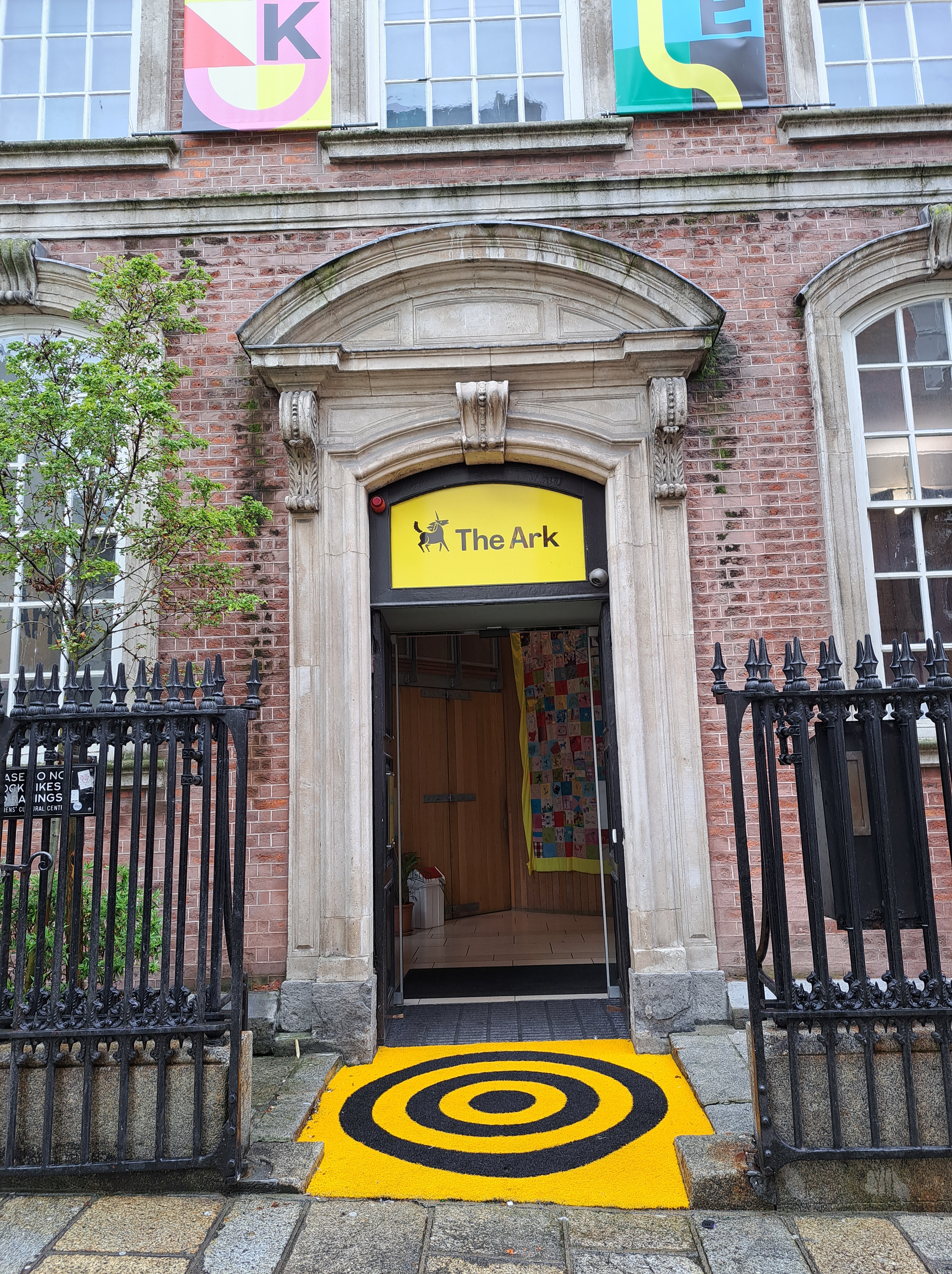
Within a few years, however, the whole area around it in Temple Bar underwent massive refurbishment and changed from a run down backwater to a busy cultural quarter. In about 1995 the building was turned into the Ark, a children’s theatre space.

The meeting-house today

Undoubtedly this is a good use for the building although it is a shame to think that so much of the original building had to be demolished to allow it to happen. Only the façade and the two side walls remain from the building of 1728. All the rendering from the old building has been removed to expose the brickwork both inside and out. But it is still a very impressive building.

One of the two entrances to the building

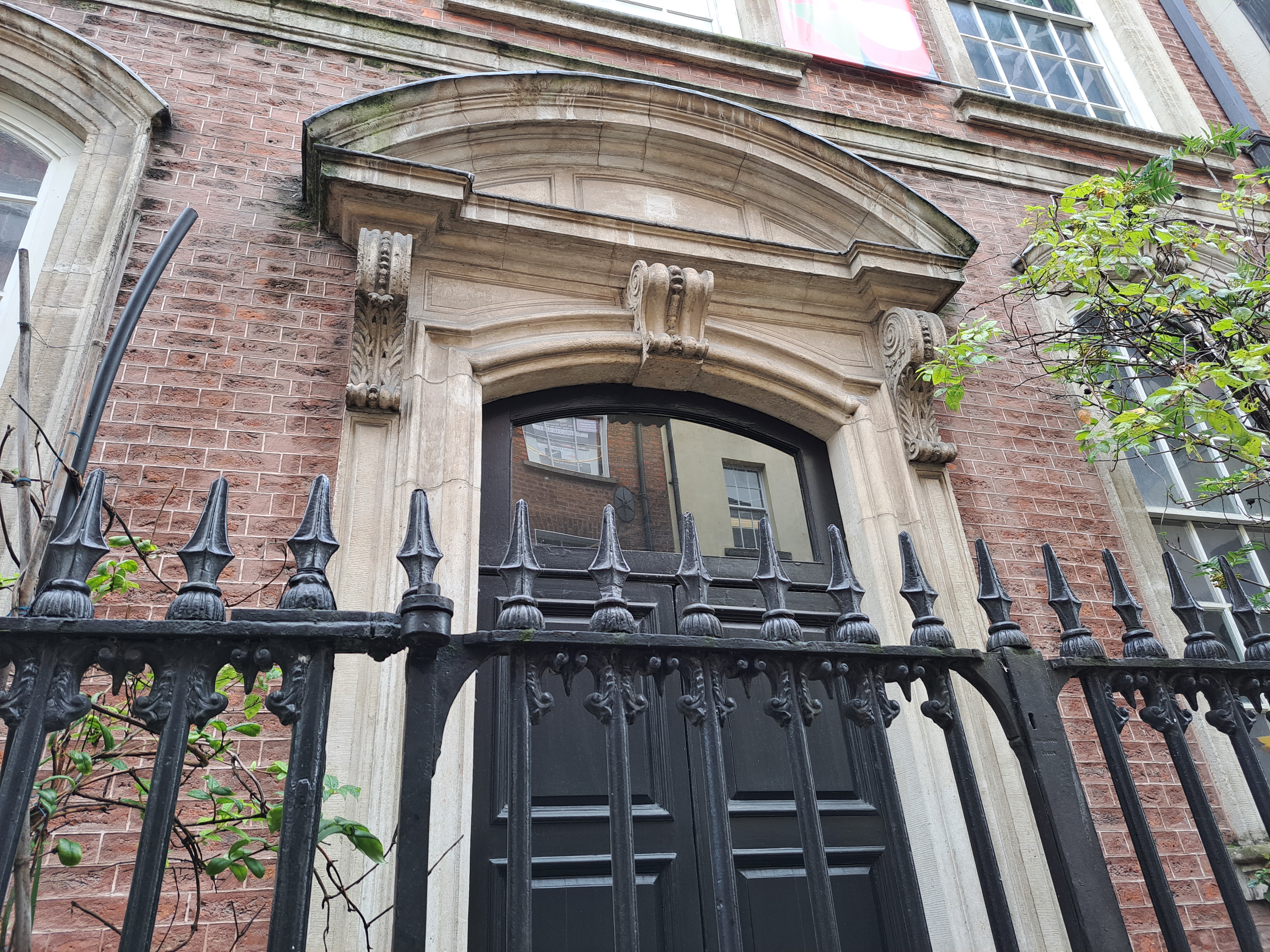
Christine Casey, in her book Dublin in the Buildings of Ireland series, says of the building: ‘The C18 facade is a handsome essay in retardataire Carolean classicism…A red-brick two-storey six-bay front with entrances in bays two and five and large segment-headed sash windows.’ It’s always good to see a bit of retardataire Carolean classicism. But it is a very fine frontage and even if the rest of the building is gone, it remains as an impressive testimony to the people who built the church.

Not everyone approved of it when it was built. According to Thomas Witherow a Quaker remarked (there was also a Quaker meeting-house on the same street) that ‘When there is so much vanity without, there cannot be much religion within’.

Visiting Eustace Street over the summer I took some pictures of the interior. We can see the bare brickwork which once echoed to the sound of the sermons of such luminaries as John Leland and James Martineau.

Upstairs window brickwork
Looking through one of the downstairs windows

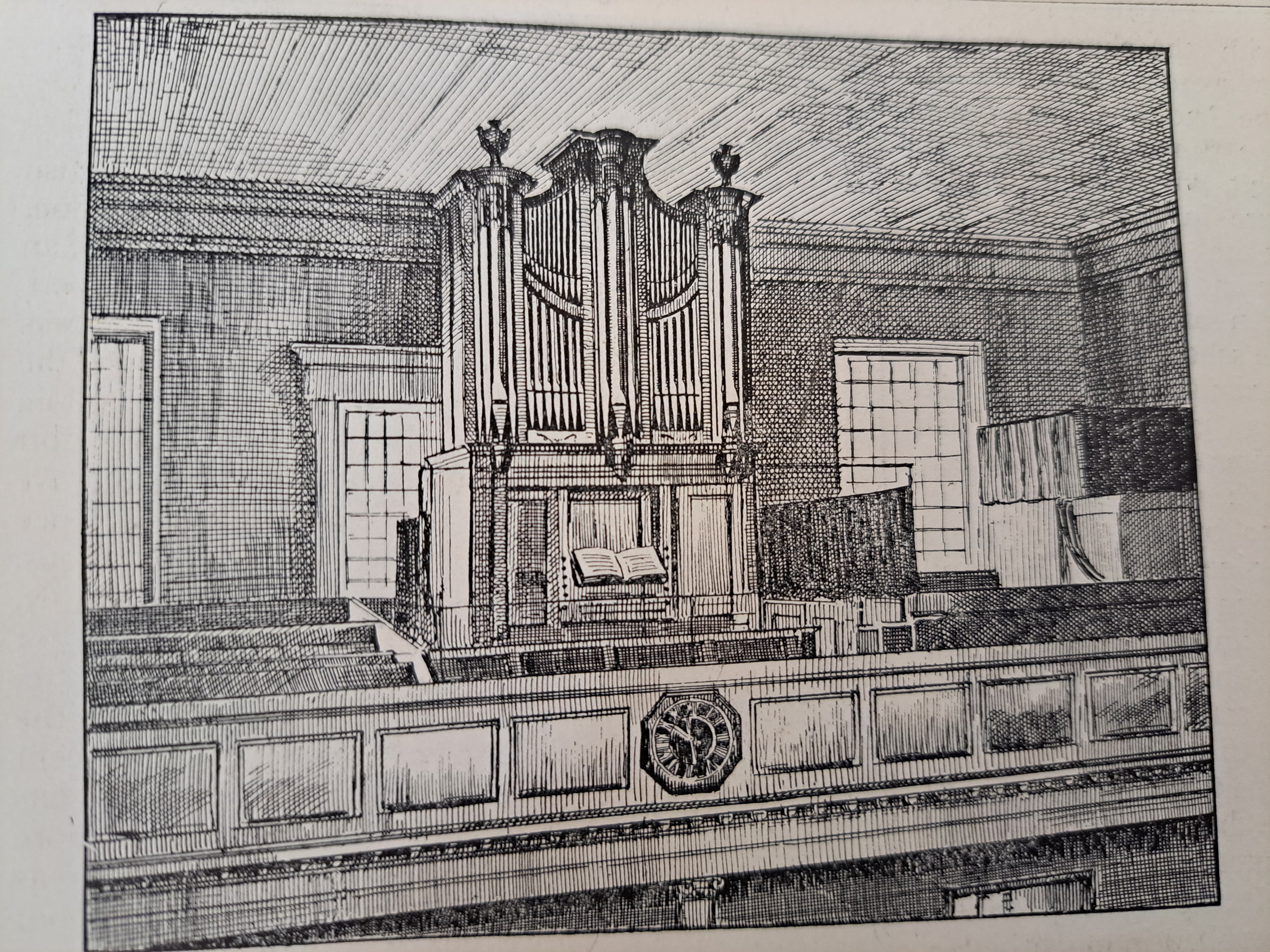
Apart from the windows there is nothing remaining that tells us how the interior of Eustace Street looked. However, about 110 years ago the Non-Subscribing Presbyterian magazine published two engravings of the interior without giving any source for these interesting views. The first showed the position of the pulpit.

The Eustace Street pulpit as it may have looked
The foyer of the building today

The windows that look on to Eustace Street are topped by a gentle arch but according to the Non-Subscribing Presbyterian images the now demolished windows at the back of the building were flat topped. At the back of the church there was a gallery which housed a clock and the organ.

The organ and gallery of Eustace Street as they looked before 1863

When Eustace Street was built times were difficult for Dissenters, they could frequently be the target of violent attacks, and from the earliest days there was a wall in front of the meeting-house. At some point before 1835 this was changed to the low wall and attractive railings which still stand there to this day. But neither the walls nor the railings were of much use when James Martineau added his name to a declaration in favour of Catholic emancipation which resulted in the windows being smashed by a mob.

The wall and railings today

It is good that this much has survived and that the space is obviously put to such good use. However, there has not always been such a clear understanding of the historical place of the meeting-house. Not long after the Ark was opened in 1995 members of Abbey Presbyterian Church were invited to hold a special service on the premises complete with baptisms of children as a way of connecting with the original history. This was a nice thing to do but rather misunderstood the nature of the history of the premises.

Inside the foyer today

James Martineau was ordained in this meeting-house on 26 October 1828. Back in 1992 I contributed an article to the Inquirer entitled ‘Martineau’s First Ministry’. If you would like to read it click on this link: Martineau’s First Ministry

The A to Z of Non-Subscribing Presbyterianism: Bible

In this service we look at some Bibles that also give us a hint of the historical identity of Non-Subscribing Presbyterians.

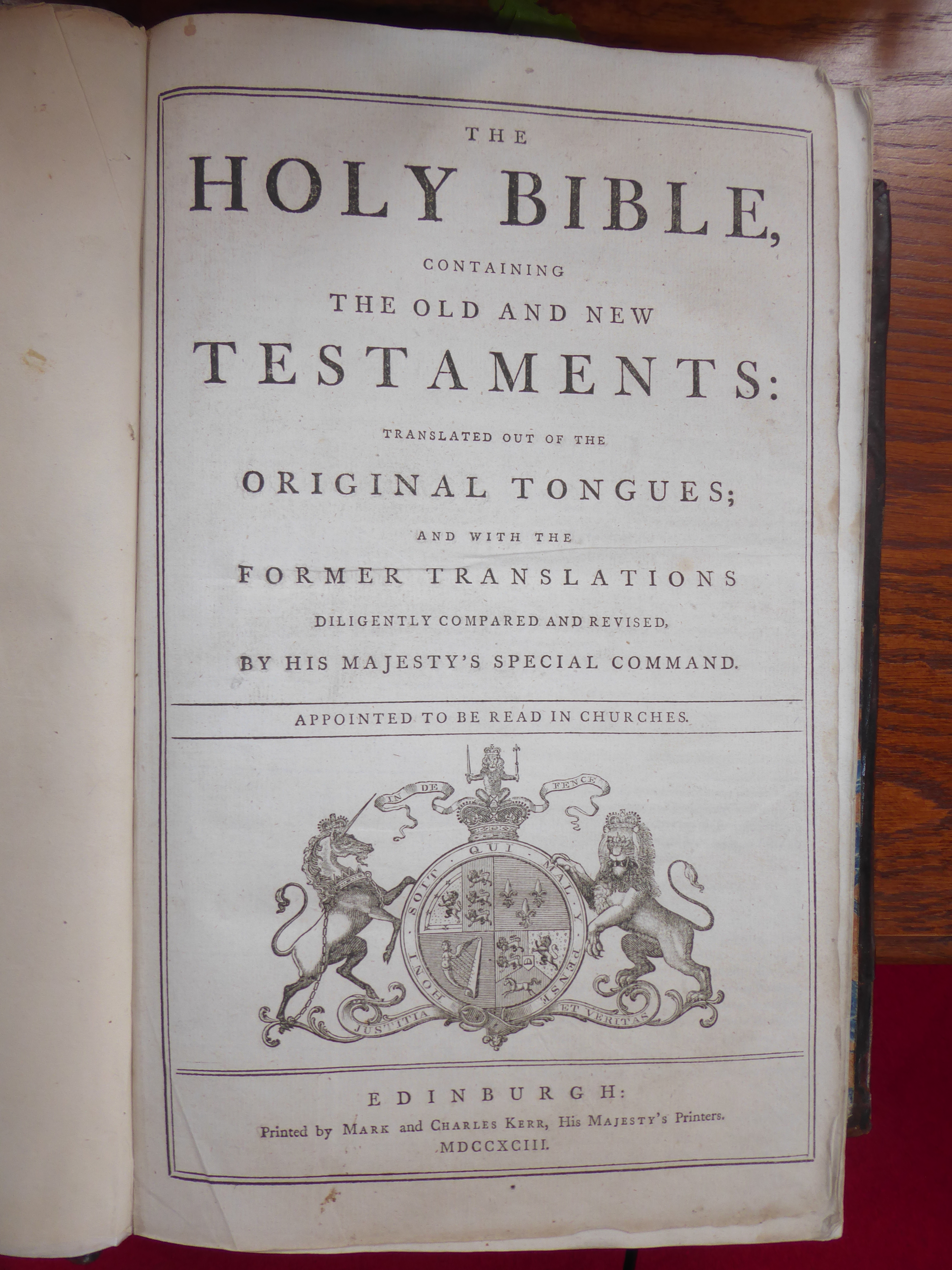
All Souls’ Church, Belfast possesses a number of very interesting Bibles, including one printed by the printer James Blow in Belfast in the early eighteenth cnetury. We look at the Clough Bible of 1793 as well as Bibles that belonged to Rev Alexander Gordon and Rev James Martineau.

The Clough Bible, dated 1793

Clough’s old Bible was presented to the church by the first minister in the new meeting- house of 1837, some 44 years after it was printed in Edinburgh. The inscription, which is shown in today’s video, emphasises the Rev David Watson’s belief that the Non-Subscribing church represented contuity with the original congregation or, as he styled them, ‘the Members of the New Presbyterian House of Worship in Clough’.

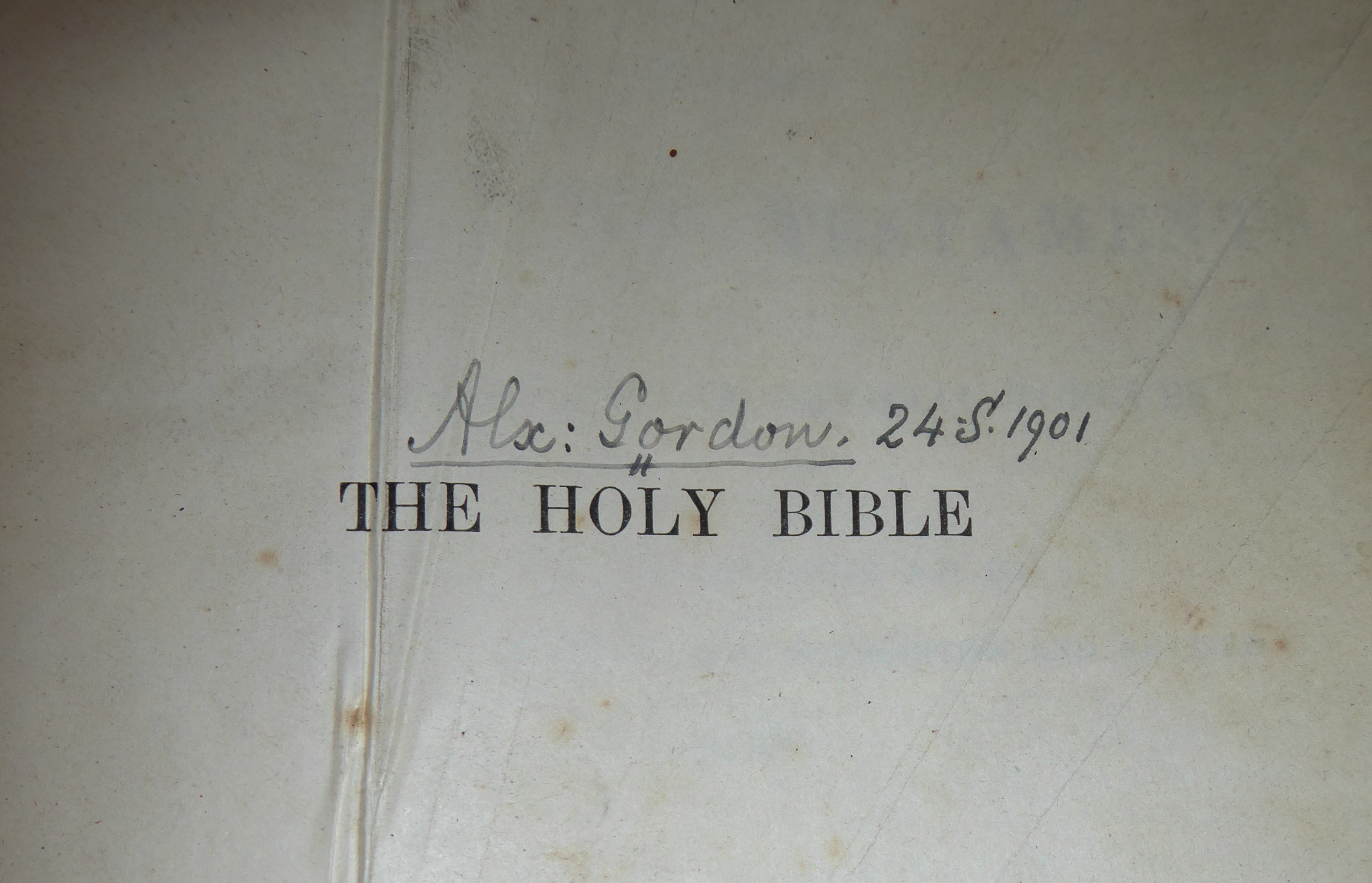
We also look at a Bible that once belonged to the Rev Alexander Gordon. You can discover more about him in this video. But this Bible stands out because it is the Revised Version of 1881-1885 (the New Testament was brought out first in 1881) ‘Newly Edited by the American Revision Committee’ in 1901 and published in New York.

Alexander Gordon’s signature on the title page

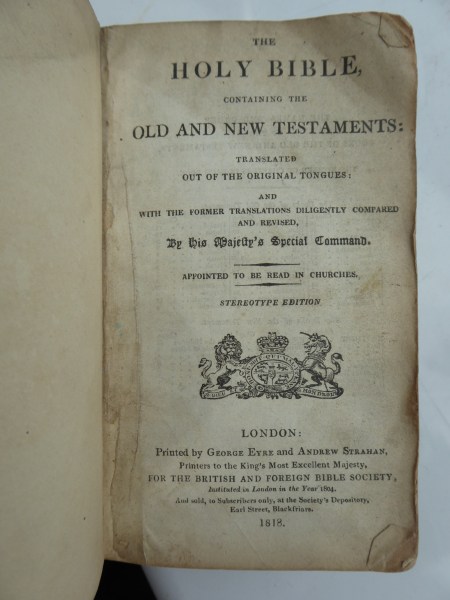
Another Bible is one that once belonged to Rev James Martineau when he was minister of Eustace Street in Dublin from 1828 to 1832. There is some information about James Martineau on this blog here. He left Eustace Street after only a short ministry but judging by the date of this Bible, 1818, and the fact that it was discovered in Ireland, it seems likely that it was one he used in this ministry in Dublin. All this and more can be found in today’s service.

Click on the video to see the service (after 9.45 am on Sunday, 4th July)

Filmed in Ballee, Downpatrick and Clough Ballee organist John Strain plays the hymns I am not worthy Holy Lord (Irish Presbyterian Hymn Book 384) and Just as I am (Hymns of Faith and Freedom 268). The reading is from Acts ch.8 v.26-40. The service is conducted by Rev Dr David Steers.