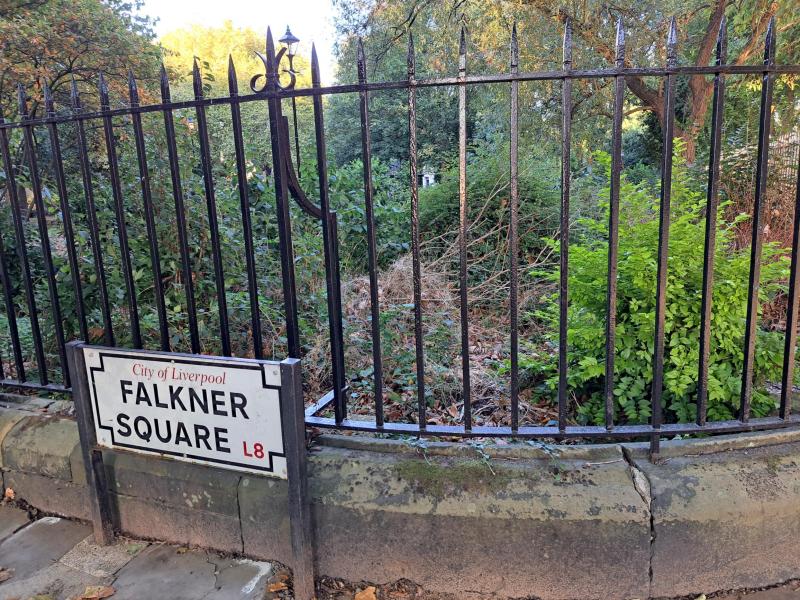
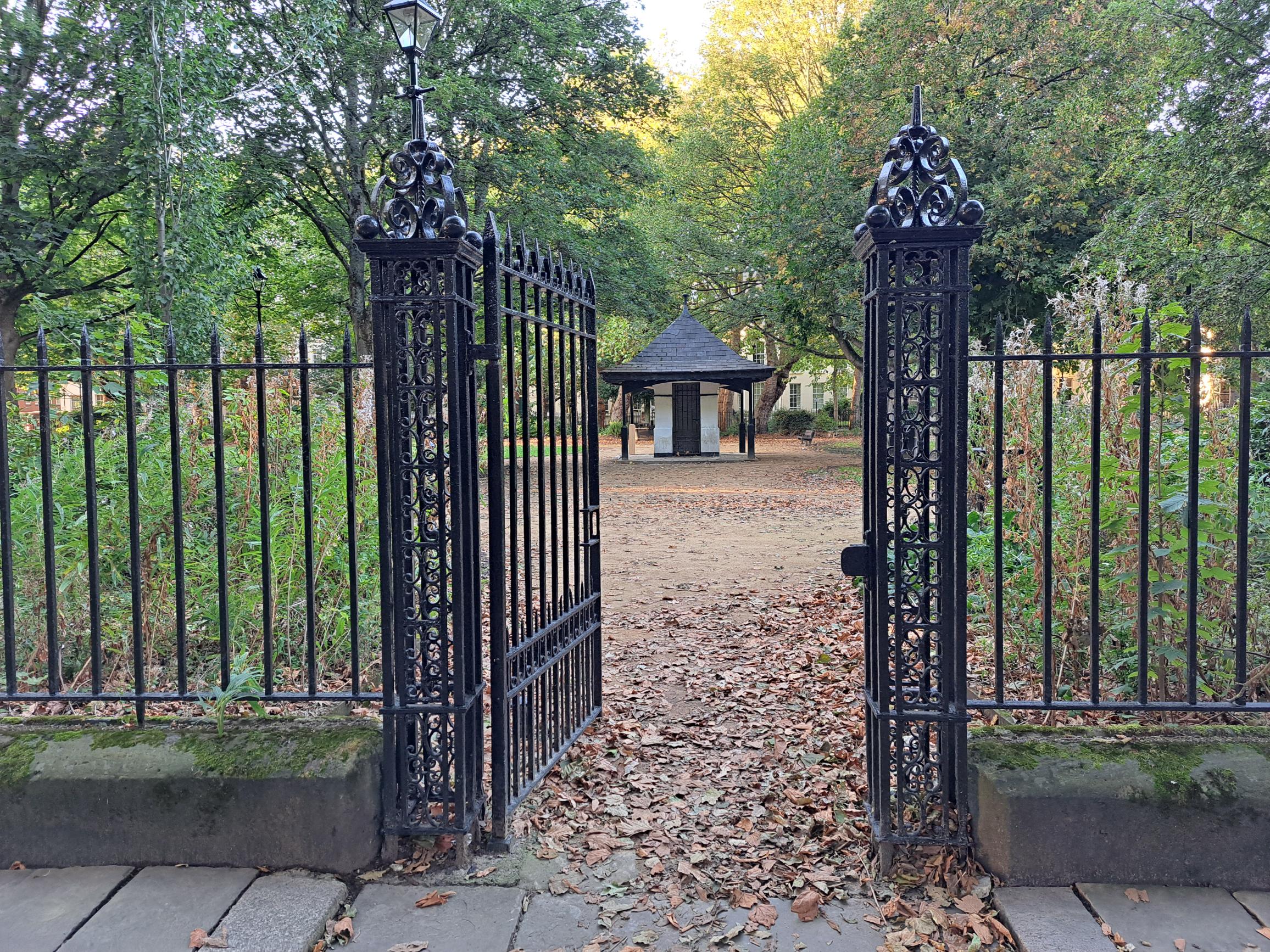
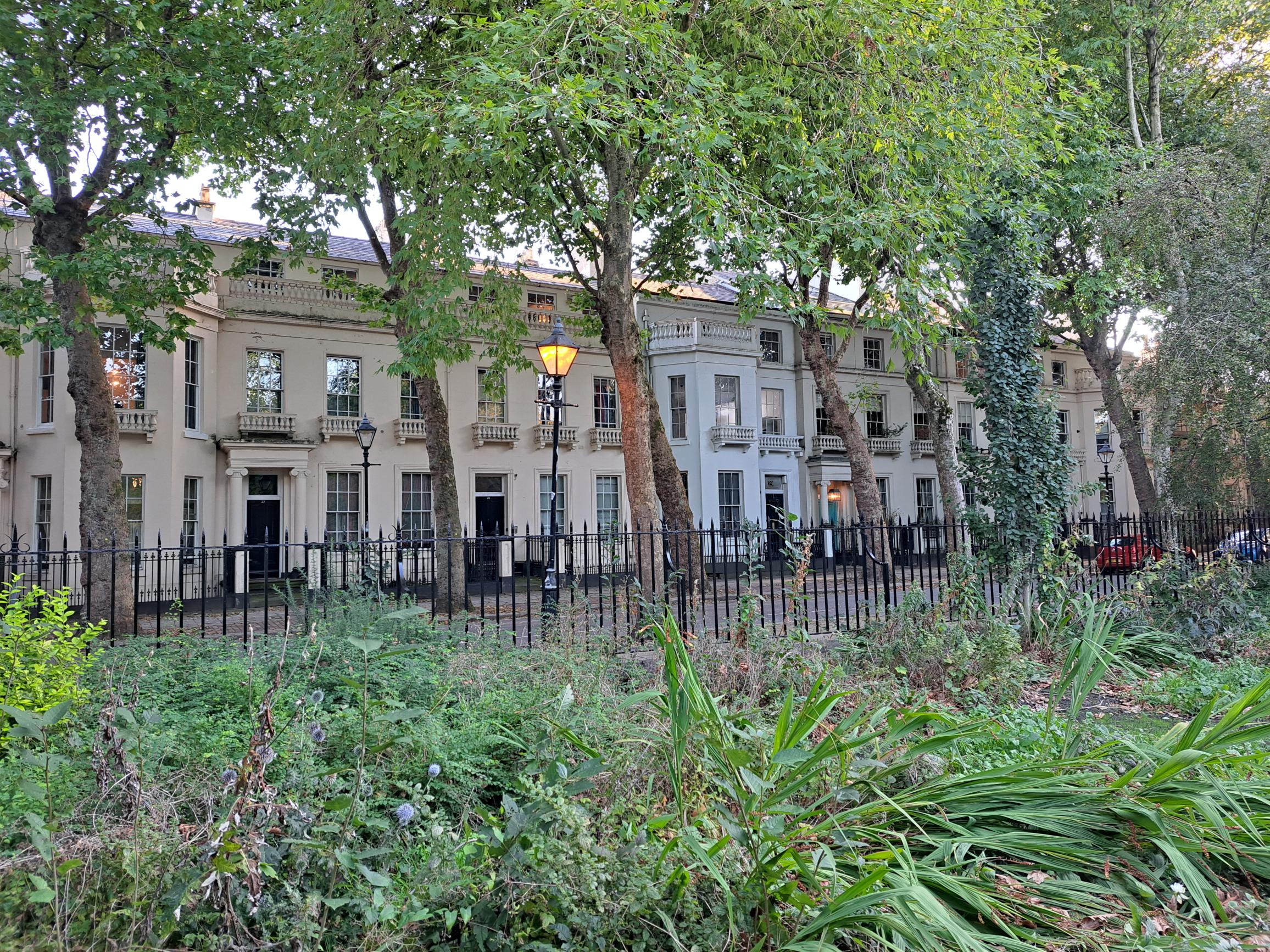
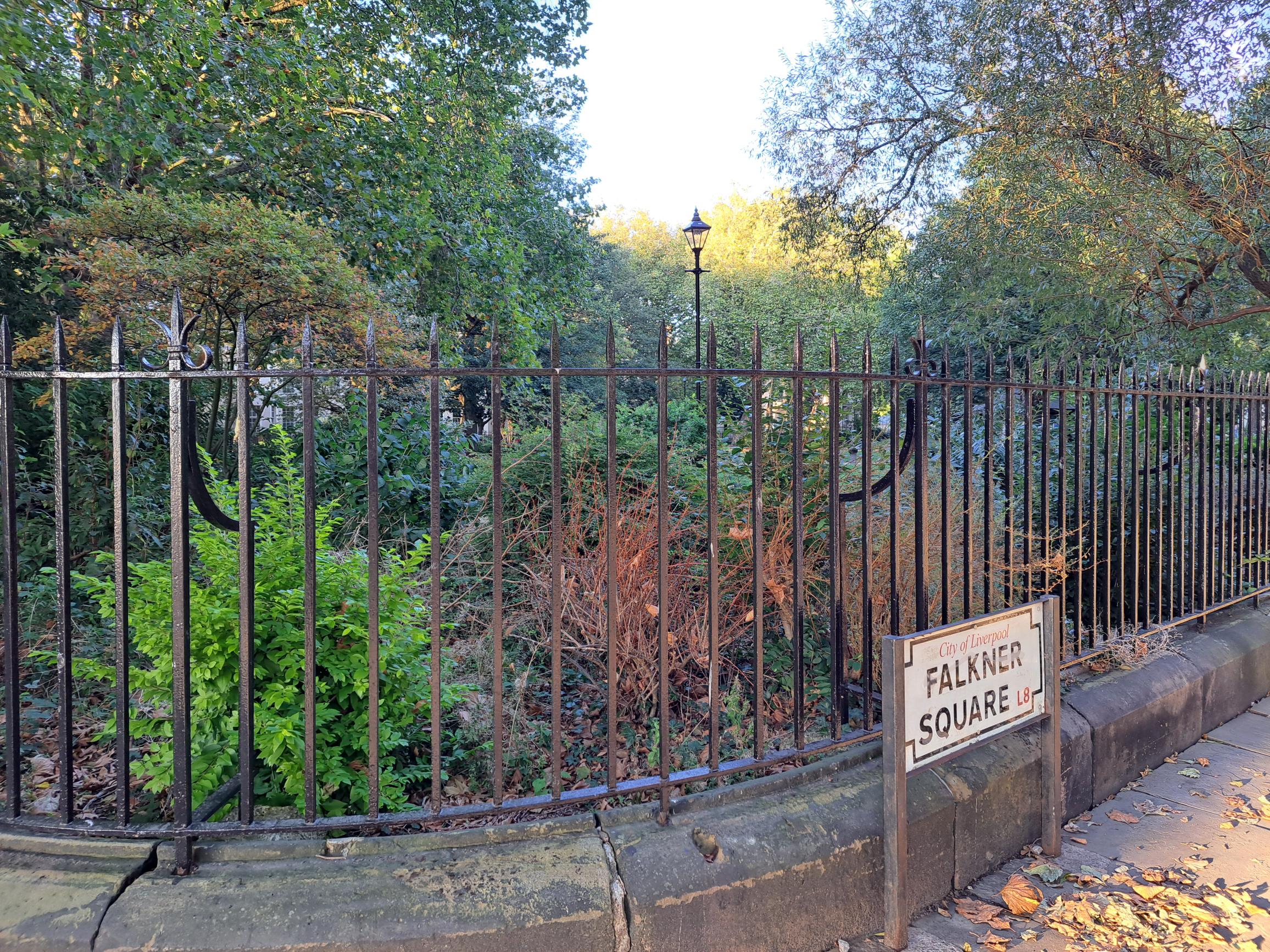
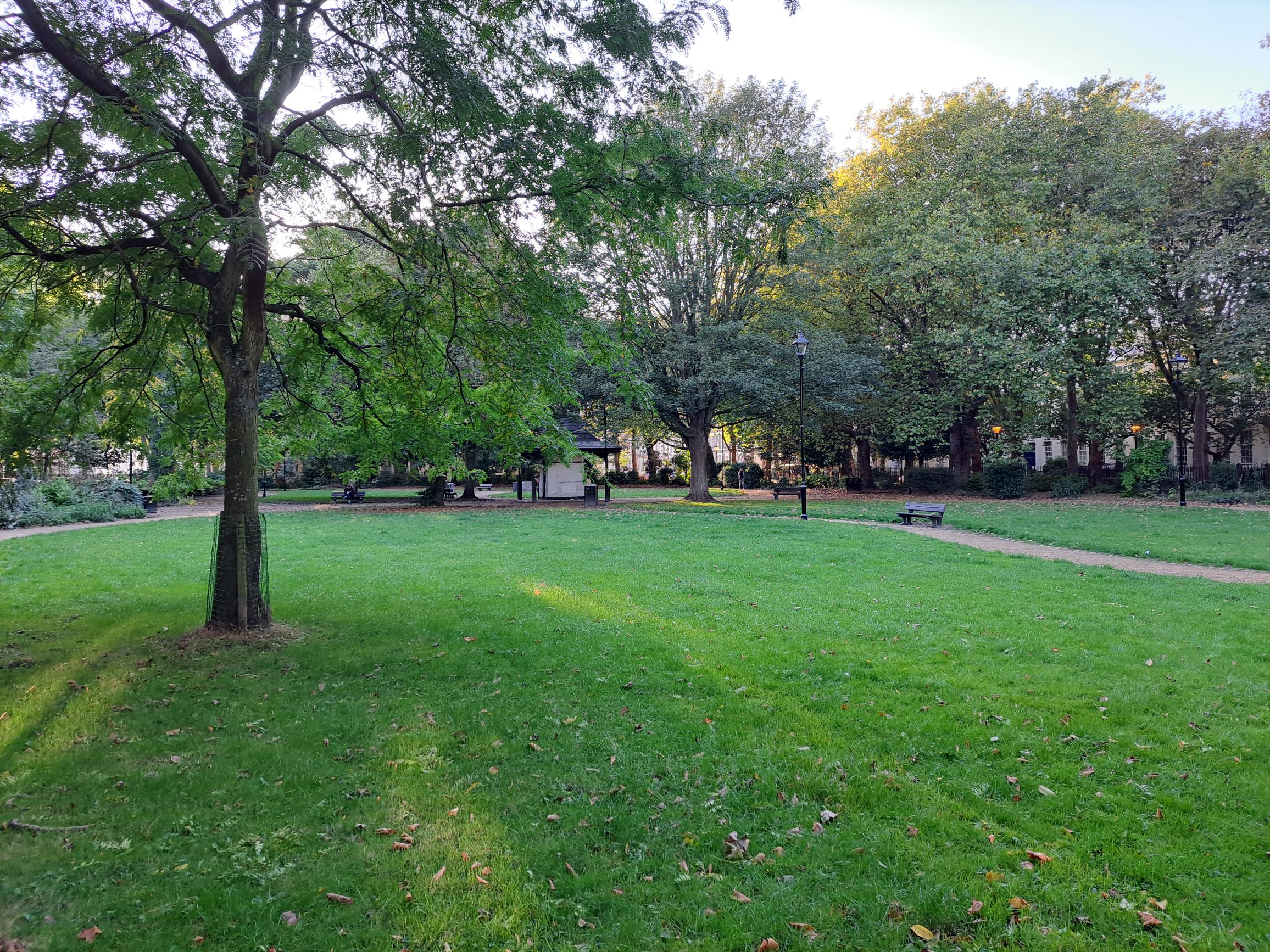
A walk around Falkner Square in Liverpool is always interesting. The buildings are quite impressive although not quite as grand as the houses in the nearby Georgian Quarter, now much utilised for film locations, although Falkner Square itself made a film appearance in the 1971 film Gumshoe with Albert Finney.
What’s attractive about it is that it has its own central park and resembles the sort of square you would find in Bloomsbury. I was always told, that in days gone by, only the people who lived in the Square had a key to the park, although the City Council now claims it as ‘one of the earliest public open spaces in the city’. I suspect it wasn’t open to the public in its earliest days.
Falkner Square is said to be named after Edward Falkner, an ex-soldier and former High Sheriff of Lancashire, who mustered a force of 1,000 men to defend Liverpool in 1797 when fears of a French invasion were at their highest. He was a successful merchant, involved inevitably in the slave trade, but who died in 1825, so he can’t have been directly involved in the development of the Square.
Joseph Sharples’ Pevsner Architectural Guides Liverpool says ‘The central garden is shown planted on a map of 1831, but the stuccoed houses did not begin to appear until the mid 1840s.’ The only architect he mentions is William Culshaw who designed number 29 in 1845 along with many Liverpool buildings.
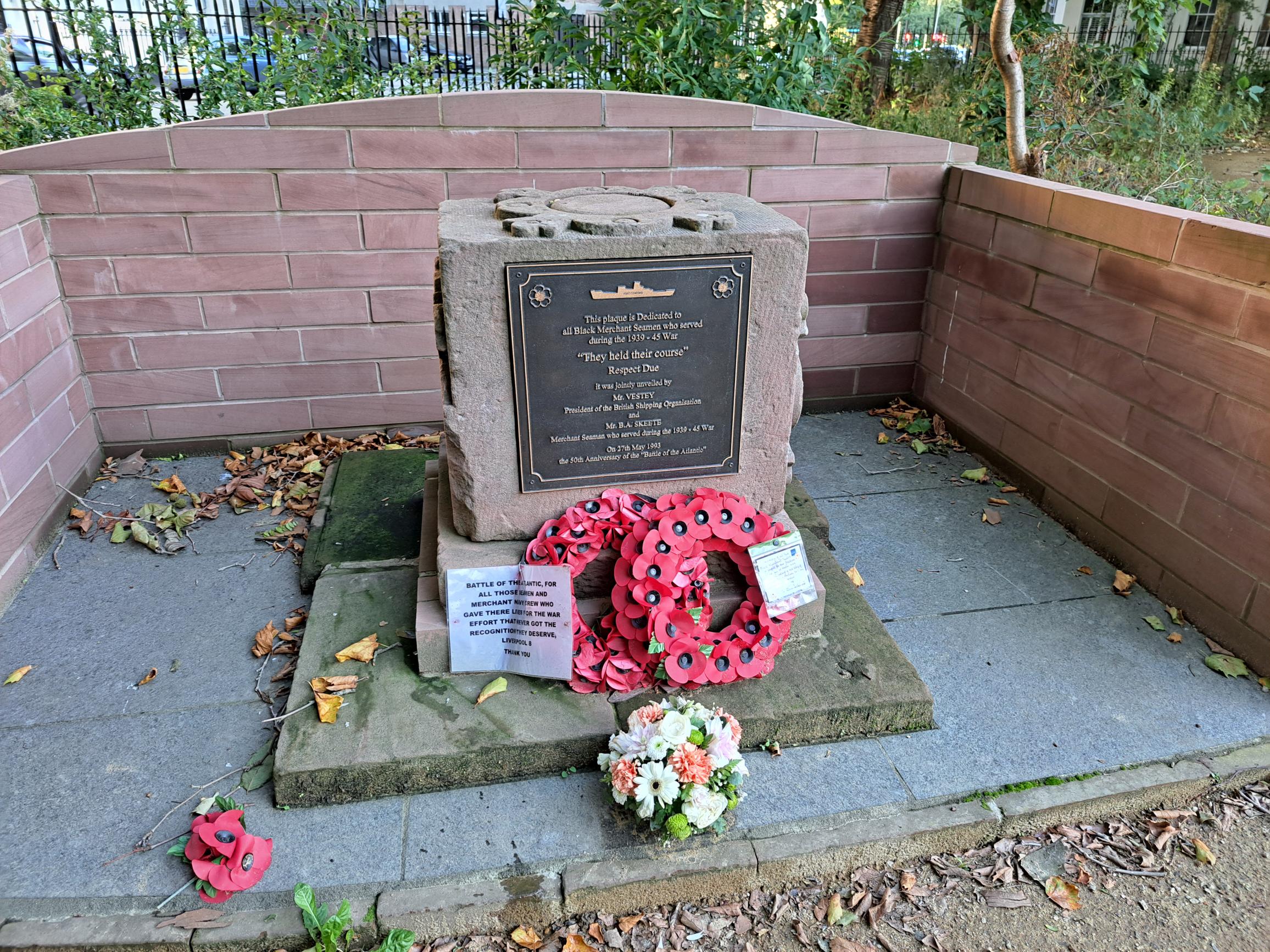
One relatively new feature is the Memorial to Black Merchant Seamen who served in the Second World War. This was unveiled in 1993 on the 50th anniversary of the Battle of the Atlantic and contains the words “They Held Their Course” RespectDue. The bronze plaque, which, shockingly, has endured some vandalism but is now restored, is attached to a large decorated piece of sandstone. This came from the old Liverpool Sailors’ Home, which was once a very prominent landmark in Canning Place near the city centre. Now only the ornate gates survive and can still be seen at the entrance to Liverpool 1.
Memorial to Black Merchant Seamen who served in the Second World War
A few years ago a post on this blog attracted some interest about a ghost sign that emerged on Berry Street in Liverpool following the demolition of a neighbouring building. You can see that post here. Walking along Smithdown Road recently I was reminded of a number of ghost signs which can be found there which have long been visible and are probably quite well documented. But it means that Smithdown Road is something of a gold mine for ghost signs so I took a few pictures as I walked along.
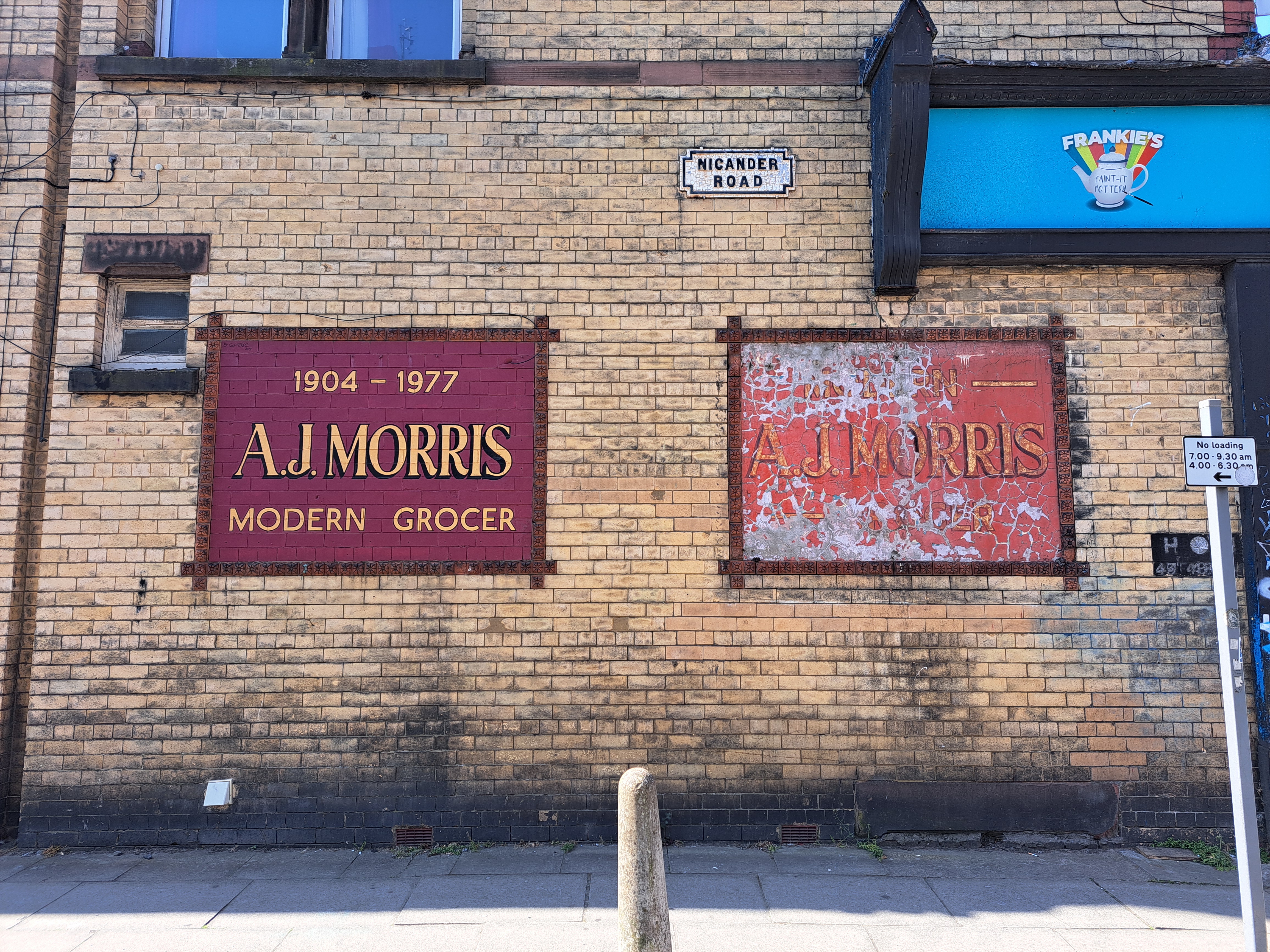
The first is close to the junction of Nicander Road and Smithdown Road. Presumably the shop on the corner was A.J. Morris’s ‘Modern Grocer’ but I have no recollection of it. It is interesting that the original sign just about survives and someone has painted a replica on the adjoining advertising square, which perhaps also once housed a similar message or perhaps was adorned with posters featuring special offers. The ornamental tiles that form the frames here are an interesting feature.
A.J. Morris Modern Grocer
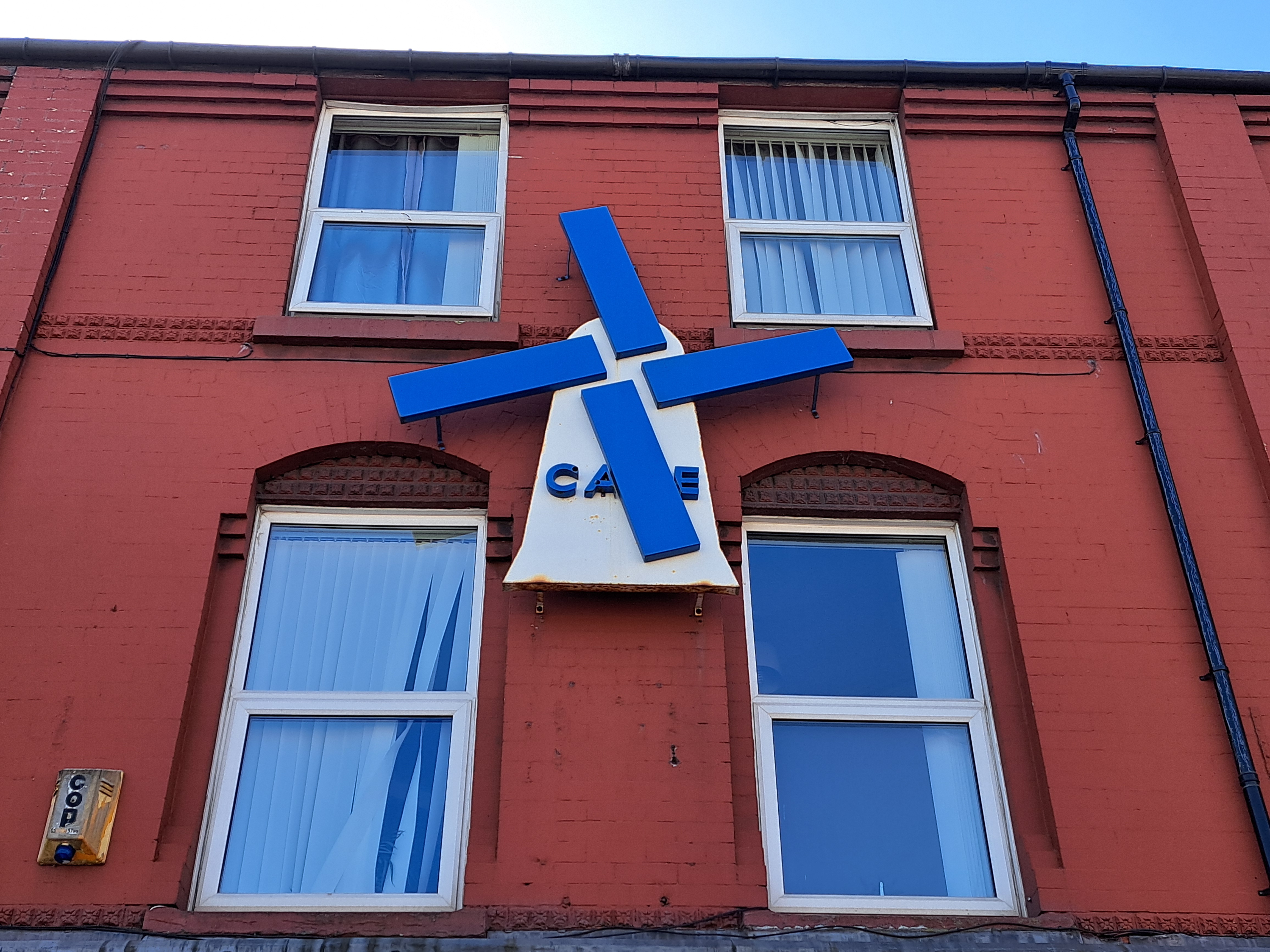
If you continue your perambulation under the railway bridge heading towards Allerton Road you will come across the next ghost sign. I have a long memory of this one, it is easy to miss but for years there was a rusty old windmill fixed above some of the shops. When I was a child I remember asking my mother why this was so and she told me that it marked the site of the Dutch Café. The Café had long gone by the time I remember first seeing the windmill but it must have had a fairly long-standing presence. Strangely when I was at school our history teacher told us about a difficult experience he had had with a group of Teds in the Dutch Café, presumably in the 1950s. I have forgotten whatever the point of his tale was but it was evidence for the existence of the Café. Other evidence has turned up on eBay over the years with black and white pictures of the staff dressed as Dutch girls being offered for sale. Tempting though it was I didn’t bid for them.
But although I am calling the windmill a ghost sign the people who own the Bathroom Centre underneath have had it restored and it looks quite smart, if slightly incongruous. And this is where this post starts to stray into Beatles territory. There are discussions of the Café online, also known as ‘Dutch Eddies’ and ‘Frank’s’. It had a very popular heyday with bikers and others and seems to have drawn John Lennon into its orbit. This is more than likely given its location. John and Paul apparently played pinball there. Other connections are claimed by various online sources but most interestingly John Lennon is said to have referred to the Café, as ‘the Dutch’, in the original lyrics for In My Life.
Dutch Café Windmill
So there is a lot you can say about a windmill fixed to the wall above a bathroom shop.
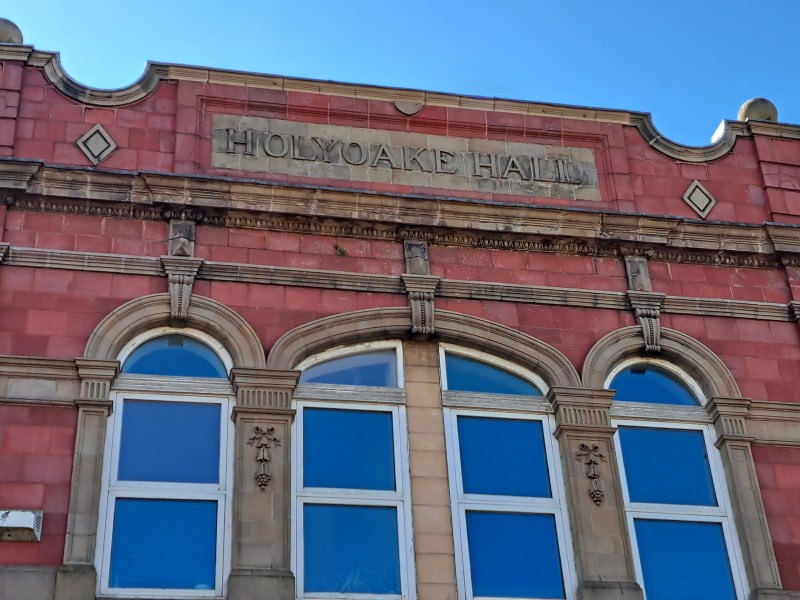
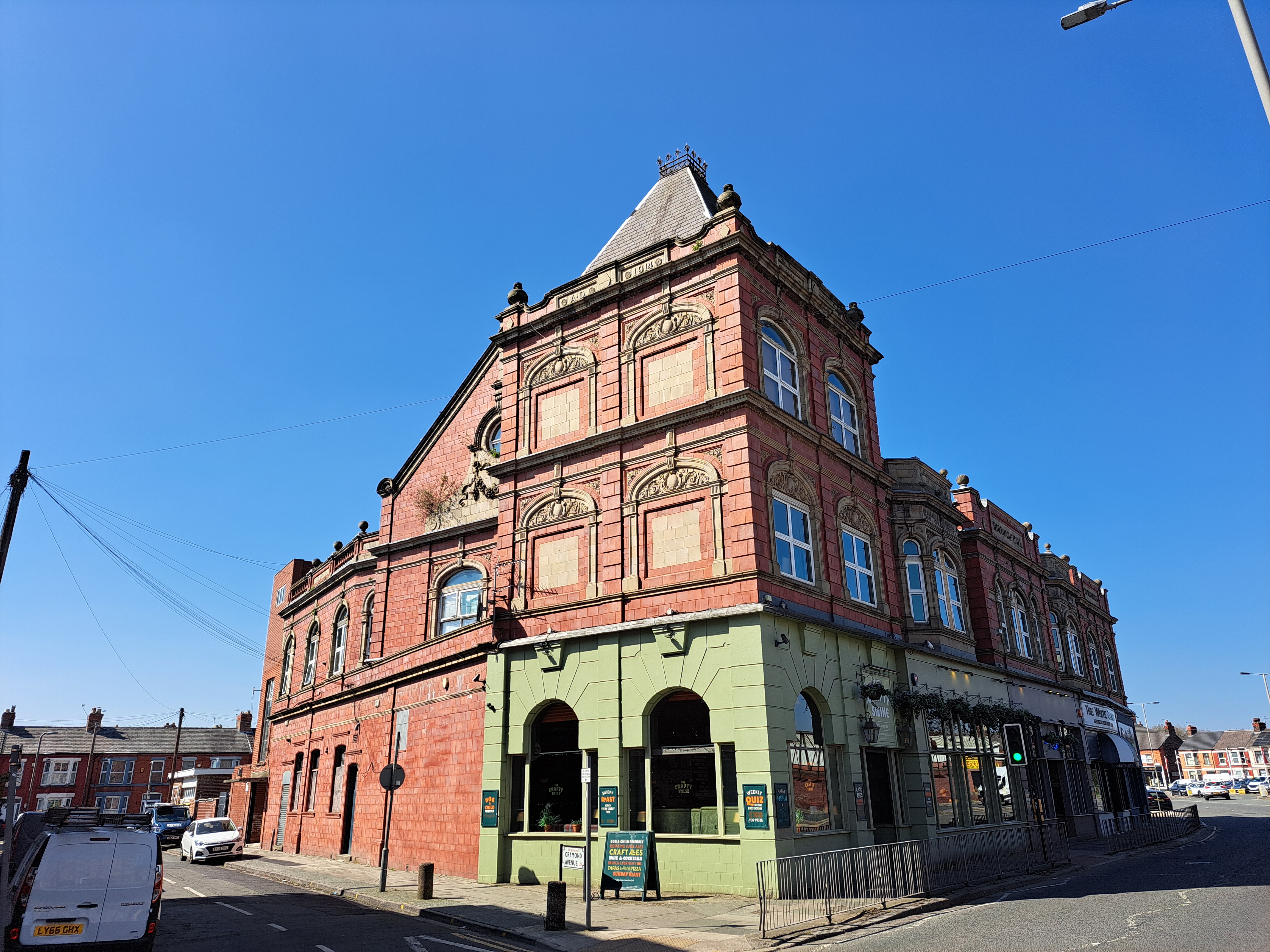
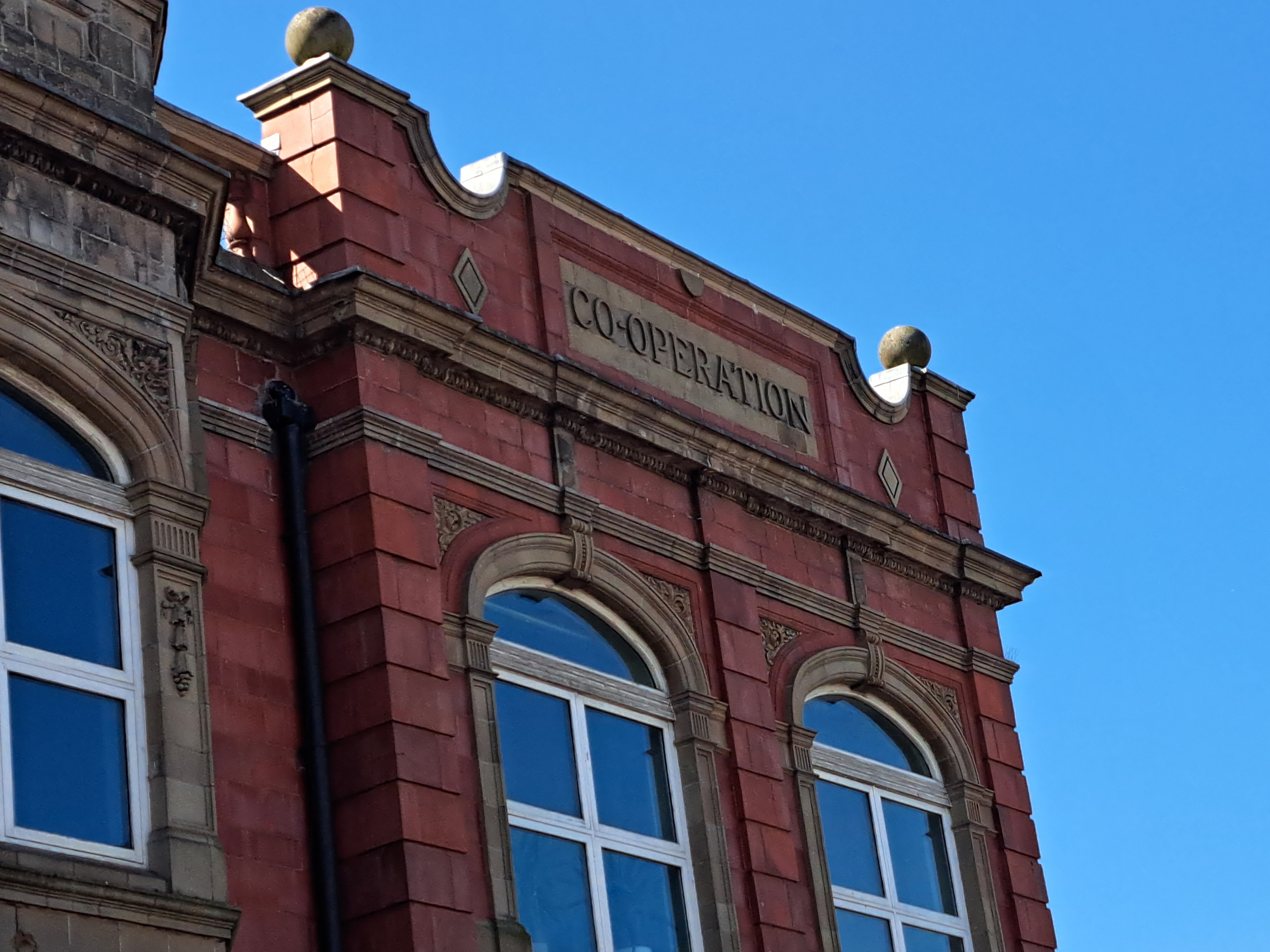
But further on the Beatles connection deepens. Some of the features, not quite ghost signs, of the Holyoake Hall are very redolent of the long departed Co-operative movement which built the Hall in 1913. It is actually quite an attractive building when judged as a whole, although the shop fronts of the modern occupants inevitably take the eye away from appreciating it as originally designed.
Holyoake Hall
I remember this being the Co-op supermarket which seemed pretty dreary at that time, although I am told by those with better memories that it was for a long time a very popular supermarket which sold many food items hard to get in Liverpool in those days. Above the shop there were what I presume were offices and also a large hall. In the 1960s and 1970s this was occupied by the British Legion and was a very popular venue because it was one of the few places you could get a drink in that part of the city. That would not be true today but there was certainly very strict adherence to the licensing laws at that time, as evidenced by the Hatfield Hotel near to the railway bridge on Smithdown Road. I neglected to take a picture of this place when I walked past during this odyssey, there were lorries, skips and scaffolding all around it, but it was clearly built as a pub and was never granted a license.
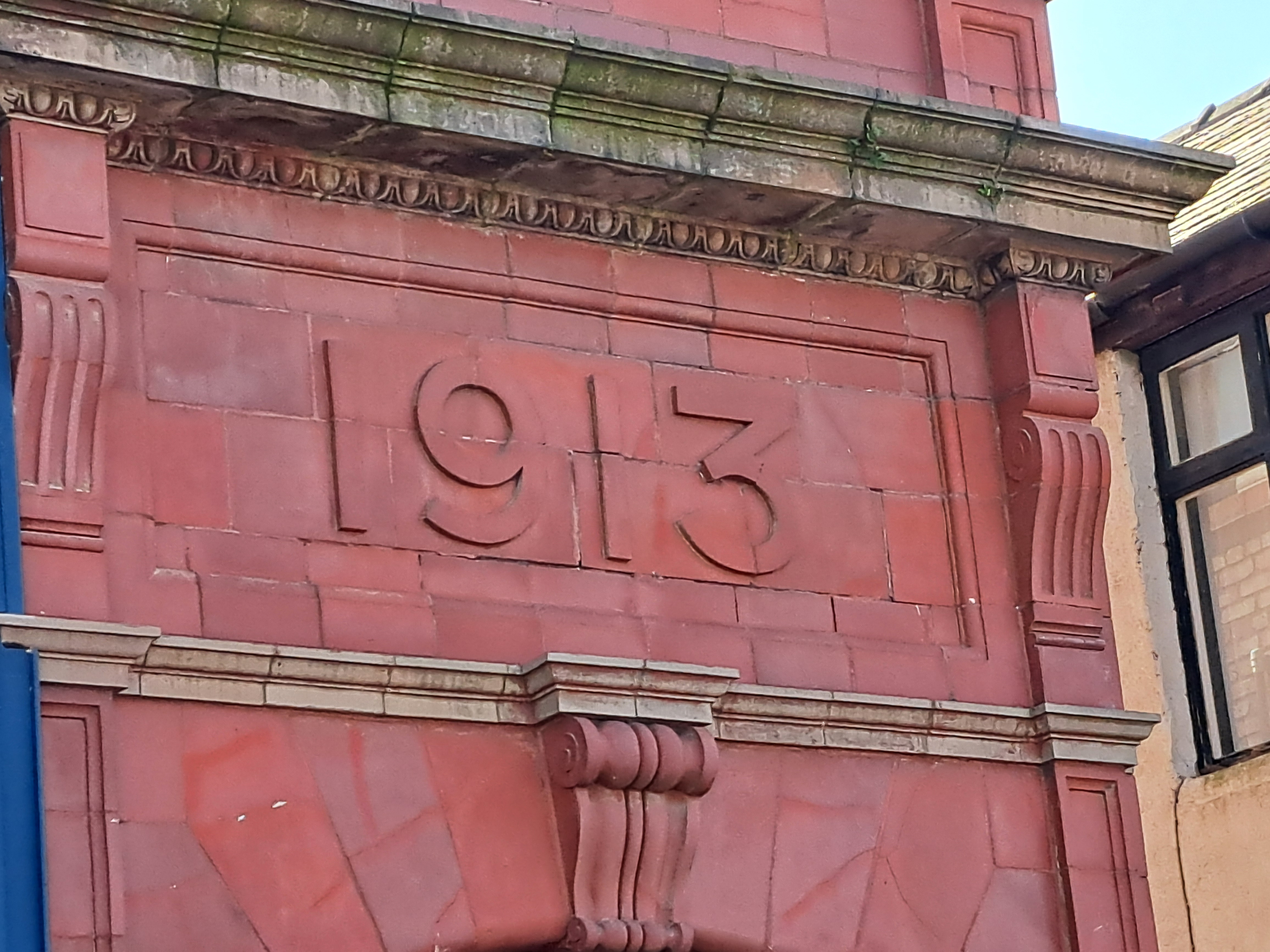
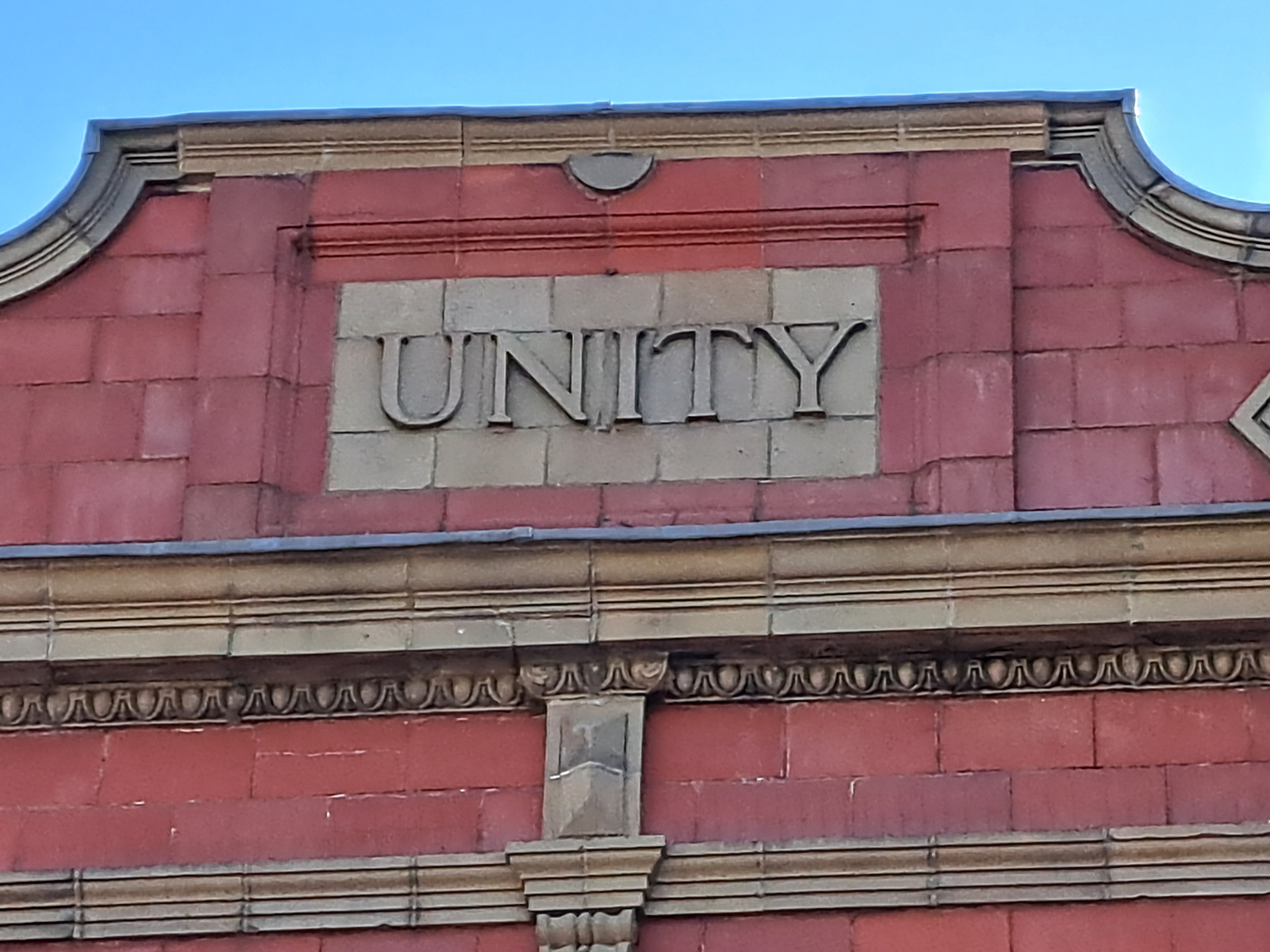
But to return to Holyoake Hall, it has many attractive stone details that proclaim things like Unity and Co-operation, as well as dates – 1913 and 1914.
Datestone 1913
Unity
Co-operation
But this is where the Beatles fit in again for they played the Holyoake Hall twice (on 15th and 22nd July 1961) and according to Mark Lewisohn in his superlative book All these years. Tune In they were paid £12 for each gig.
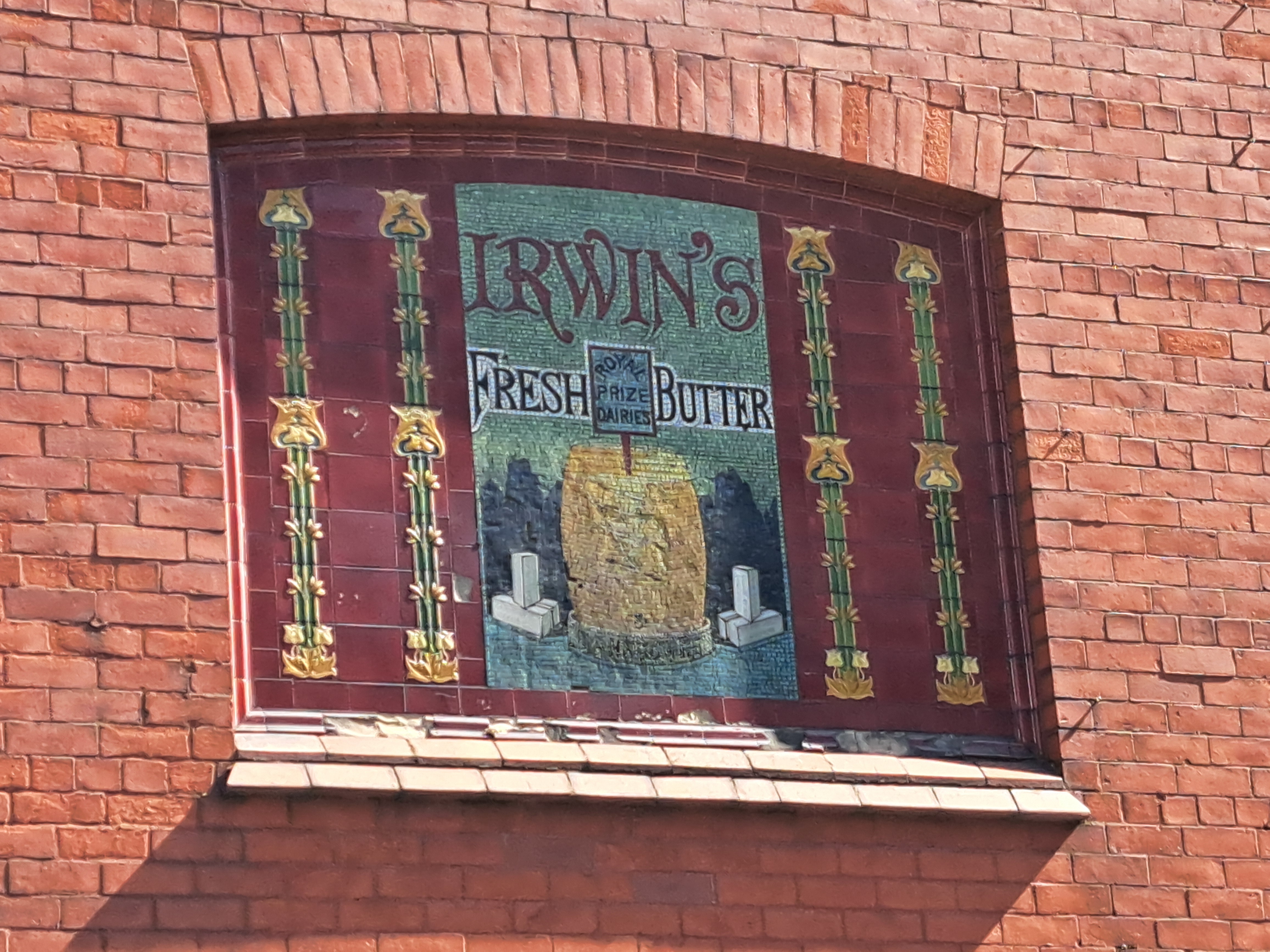
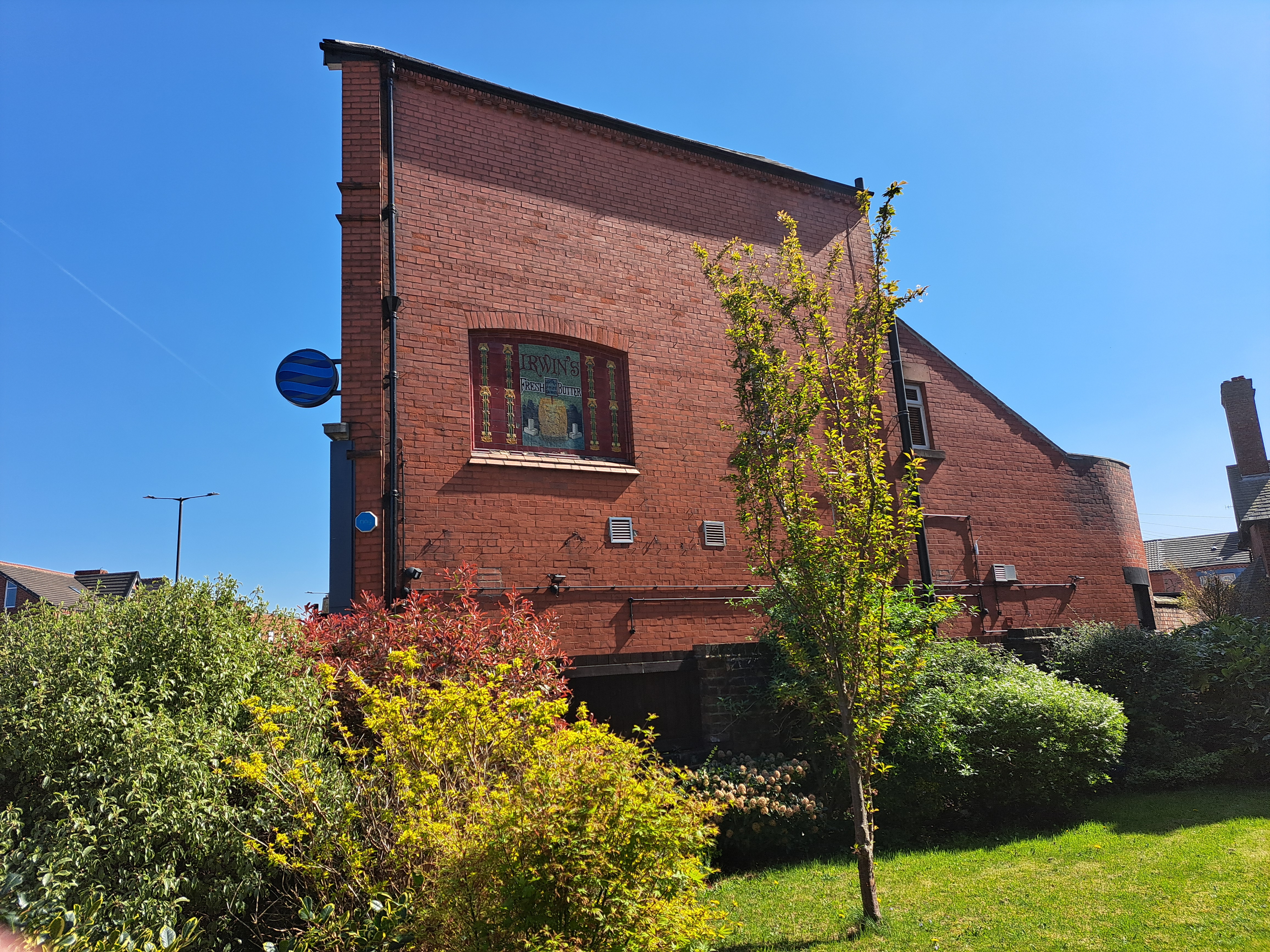
Holyoake Hall is also just around the corner from Penny Lane and if we walk along that route and across Penny Lane to the start of Allerton Road we come to the last ghost sign, an intricate mosaic for Irwin’s. These must have been expensive advertisements to produce for this Edwardian grocery chain. Irwin’s was a very successful supermarket in Liverpool and North Wales from the 1880s, eventually selling out to Tesco in about 1960. A number of these advertisements still exist but this one is a particularly good one. It can be seen in its setting right next to St Barnabas’ Church which itself has another Beatles connection in that this is the Church where Paul was once a choirboy. It is also located on Penny Lane and now has a statue of John Lennon right in front of it, so Beatles connections abound.
Irwin’s Ghost Sign
I know also that some of my readers might like a Unitarian/Non-Subscribing Presbyterian connection and one can cheerfully be given. The curate and then rector of St Barnabas’ Church between 1904 and 1929 was the Rev James Kirk Pike. However, he started out as a Unitarian and was minister of Chowbent Chapel from 1885 to 1890 and then at First Church, Belfast from 1890 to 1893, followed by a short ministry at Warwick before joining the Anglican Church. So there we have a link – for those who would like one – that ties the Beatles to Unitarianism, albeit in a very tenuous way!
The view across the front of St Barnabas to the Irwin’s sign
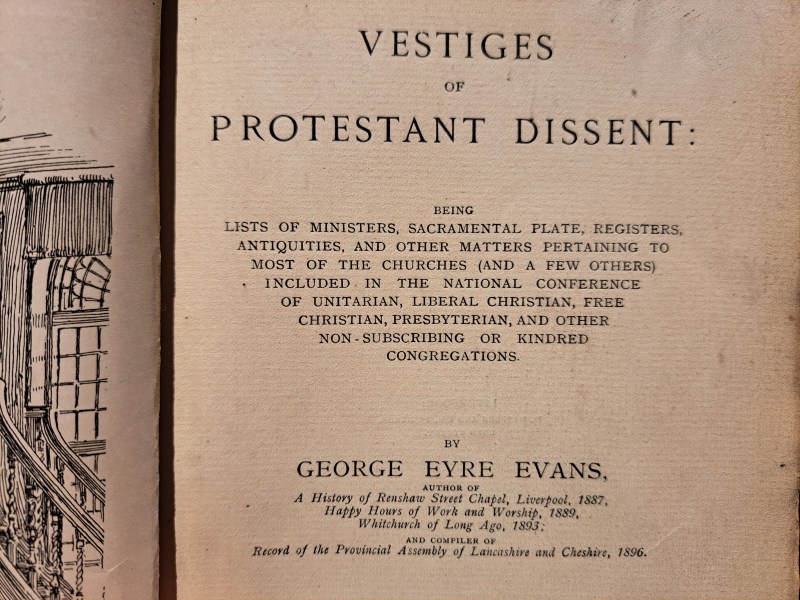
Everyone who has an interest in the study of Non-Subscribing Presbyterian/Unitarian history in the British Isles will know George Eyre Evans’s book the Vestiges of Protestant Dissent. Published in 1897 it was just one publication that came out of the extensive researches of G.E. Evans. His book is the subject of our latest video which is the second to explore the contents of the Very Rev William McMillan Library here at Dunmurry which will be opened and dedicated on Sunday, 22nd September 2024 at 3.00 pm:
Click on the video above for Vestiges of Protestant Dissent
The Library copy once belonged to a prominent lay member of the congregation who gave it to his minister before the end of the nineteenth century, but the full story can be seen on the video.
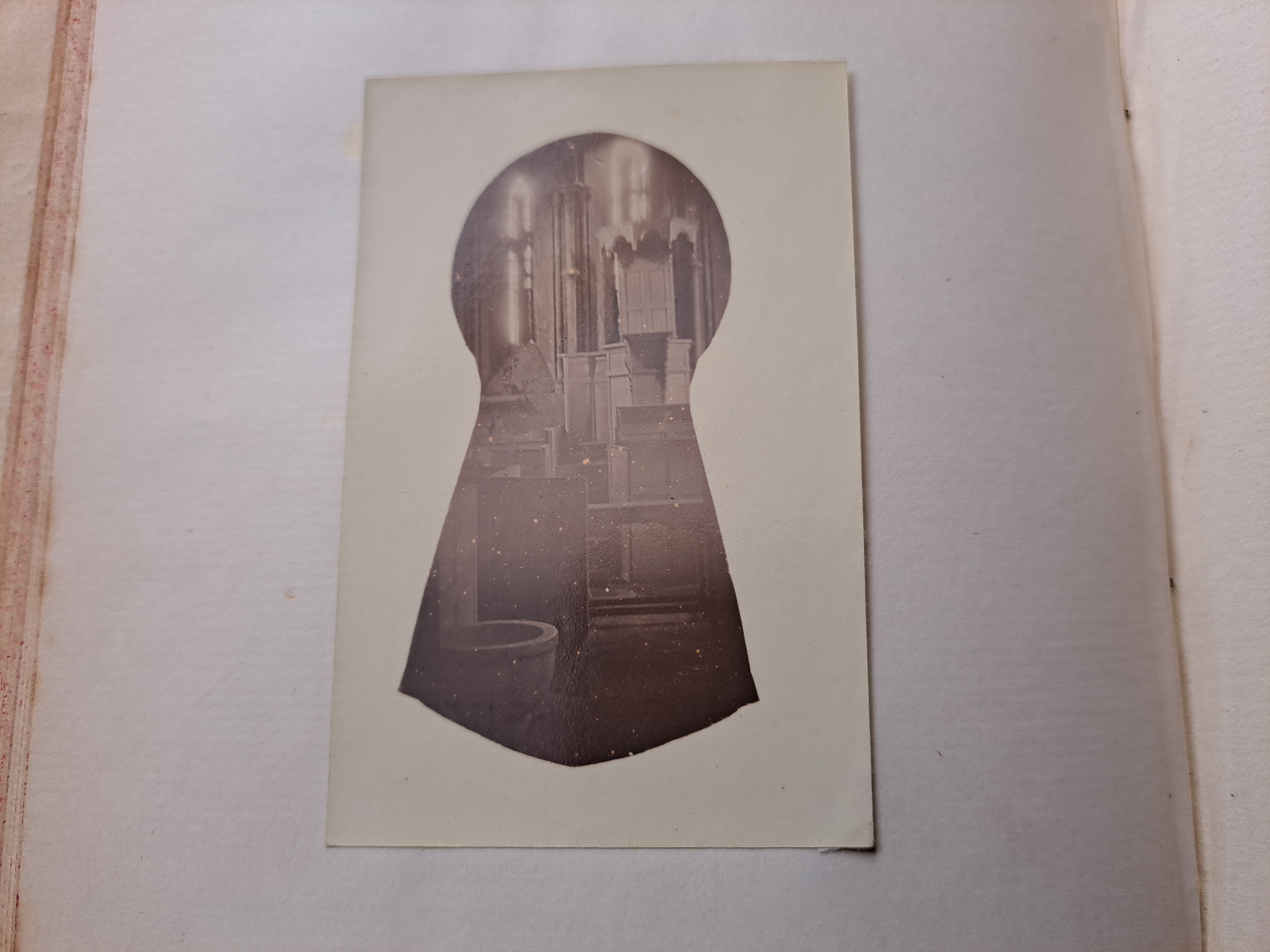
One of the things I try to draw attention to in the video is the occasional unusual detail G.E. Evans adds to the book, such as this picture, which exists in every copy as a real photograph pasted in to the book:
The picture from opposite page 123 of ‘Vestiges of Protestant Dissent’
The meaning of the photograph is explained in the video.
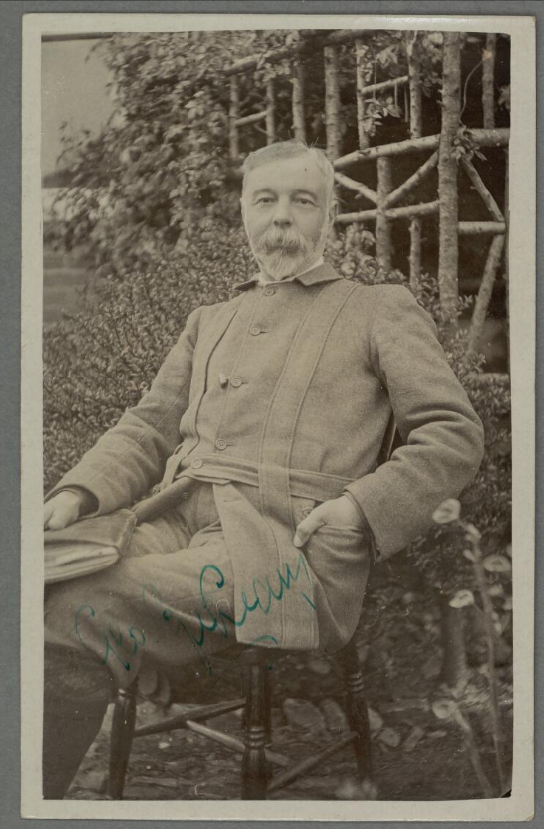
George Eyre Evans (photo: Dictionary of Welsh BiographY)
G.E. Evans was born in Colyton, Devon, the son of Welsh parents. His father was Rev David Lewis Evans, Unitarian minister at a number of places in Wales and England, including Colyton where his son was born, and ultimately being tutor in Hebrew, mathematics, and natural philosophy at the Presbyterian College, Carmarthen. He was also one of the founders of Yr Ymofynydd, although he wrote little in Welsh himself.
George E. Evans followed his father into the ministry and served at the Church of the Saviour at Whitchurch (1889-1897) as well as unpaid minister at Aberystwyth later in life. Primarily though he was an historian and antiquarian. Many of his publications relate to his interest in the history Unitarianism. Vestiges of Protestant Dissent is probably his best known work of this type although he also produced Record of the Provincial Assembly of Lancashire and Cheshire, a very useful detailed study of churches and their ministers in the north west of England, and Midland Churches: A History Of The Congregations On The Roll Of The Midland Christian Union. This all displays his wide geographical interests, also seen in publishing works about places such as Whitchurch, Colyton and Lampeter. He also wrote the first history of Renshaw Street Chapel in Liverpool, a city where he studied after being at the school of Gwilym Marles, the noted Unitarian minister and social reformer.
His main research interests increasingly centred on Wales, however. He was a founder member, secretary and editor of the journal of the Carmarthenshire Antiquarian Society. A member of the Cambrian Archaeological Society, he sat on its general committee and became a member of its editorial board, contributing to its journal Archaeologia Cambrensis. He was active in helping to establish two local museums in Wales and served on the Court of Governors of the University College of Wales, Aberystwyth, the Council of the National Museum of Wales, Cardiff, and the Council of the National Library of Wales, Aberystwyth. But this is by no means the full extent of his labours. He was made an Inspecting Officer of the Royal Commission on Ancient Monuments in Wales and Monmouthshire and in that capacity visited almost every monument or historic site in Wales. He joined the Boy Scouts in his 60s and became a County Scout Commissioner for Carmarthenshire and in 1928 became deputy Scout Commissioner for Wales. In 1937, two years before he died at the age of 82, he was made a Freeman of the Borough of Carmarthen where the Carmarthenshire Antiquarian Society has placed a blue plaque on one of the museums he founded and worked in.
He was a member of the Council of the Unitarian Historical Society and a frequent contributor to the Transactions, particularly writing about ‘Our communion plate and other treasures’. He visited Ireland in preparation for producing the Vestiges, mainly to inspect the communion plate, and from notes in his book we can follow his progress through Ireland in August 1892 when he went from Dublin (16th August), to Newry and Warrenpoint (17th), Clough, Downpatrick, and Rademon (19th), Moneyrea and Newtownards (20th), Ballycarry, Carrickfergus, and Larne, (22nd), and finishing up at Antrim, Templepatrick and Belfast (23rd). The only visit outside this sequence came on 14th October 1896, just a year before publication, when he visited Dunmurry and where he will have met the Rev J.A. Kelly who had been installed as minister on 23rd July of that year.
Back in January 2023 I posted a piece about a postcard of Dunmurry which showed the classic view of the church built in 1779. It was published in Lisburn by F.W. Harding and posted in November 1906. This is the picture:
As I mention in that post, postcards of Non-Subscribing Presbyterian churches are not that common. I have seen the 1906 view before and there is also a much later one but I was pleased to discover another postcard featuring the church, this one new to me:
This dates from a little later and although it is taken from a less popular vantage point in many ways it gives a much clearer view of the building. This card was published locally by ‘W. McCartney, Stationer and Tobacconist, Dunmurry’ in the ‘Signal Series’. It has at the bottom left hand corner the title ‘Unitarian Church, Dunmurry’ and was never posted. On the back, however, it is dated May 19th 1919 and has a message to an unnamed recipient which reads ‘With best wishes for your welfare from the People of Dunmurry and district from W. Laursen’. The name is actually a bit hard to make out but that is my best guess.
In a way it is a clearer picture than the 1906 view, being a Real Photograph, if a little damaged. But the view is not obscured by trees and you can clearly see the large amount of ivy that was then being allowed to grow over the left hand door. This is actually also present on the 1906 view although it is hard to make out behind the tree.
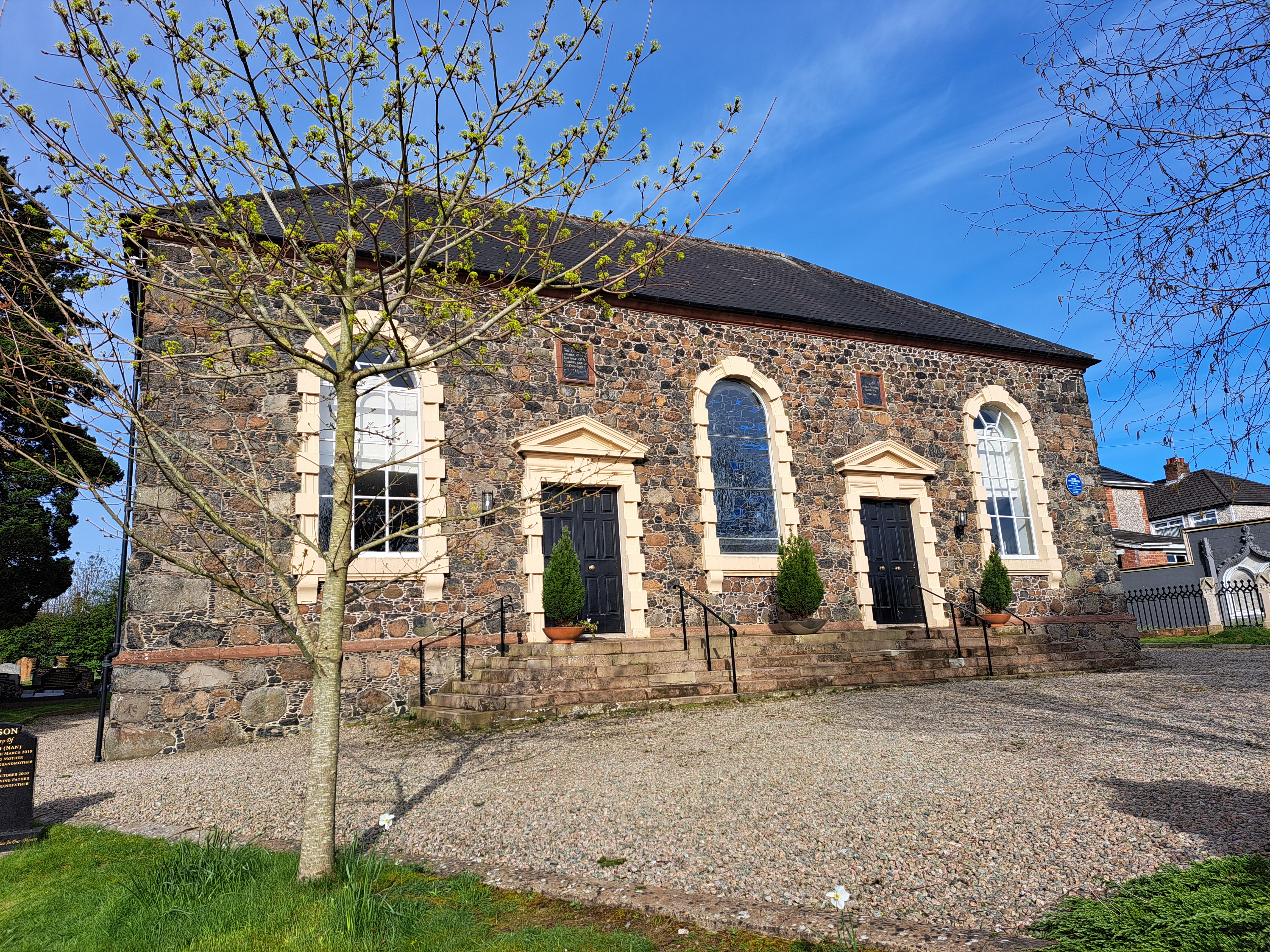
A modern image from more or less the same angle, taken a couple of weeks ago, shows the same view:
The view of the church hasn’t changed between 1919 and 2024. There are now houses along the side which weren’t there but the splendid building of 1779 is reassuringly the same.


 velvethummingbee