Visit to Warrenpoint, Newry and Banbridge

Saturday, 15th August was our long-awaited visit to churches and places of Non-Subscribing Presbyterian interest in Warrenpoint, Newry, and Banbridge. A group from Dunmurry and First Belfast made an early start from Dunmurry and kept brilliantly to the timetable all day. Our first stop was Warrenpoint where Anthony and Anne Holmes made us very welcome.
Warrenpoint

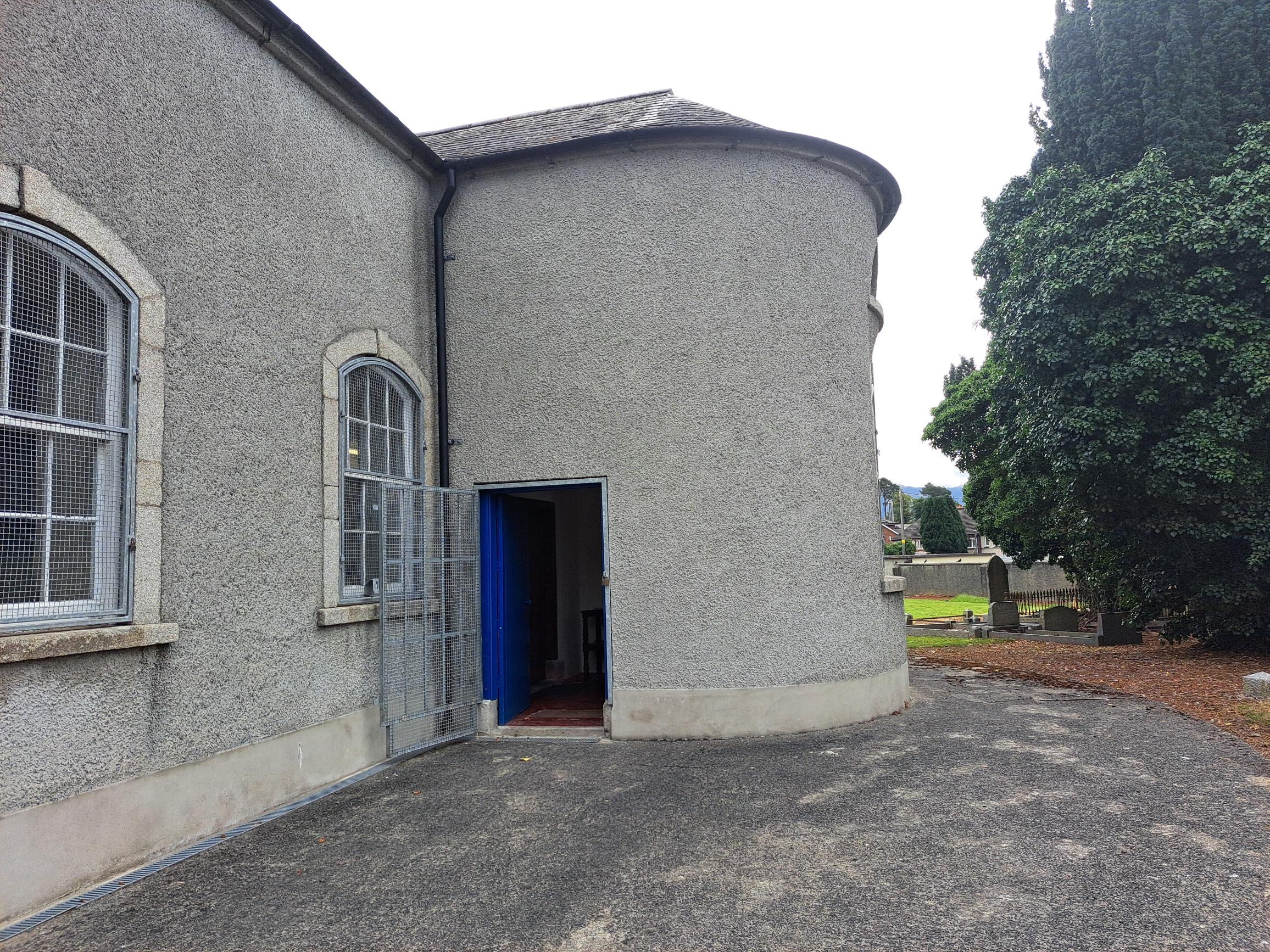
Warrenpoint is a unique church in our tradition, there is no other quite like it. When you approach it through the unusual curved porch you come into a building with a curved pulpit and three galleries supported by cast iron columns and leaving only a narrow rectangle not covered by the galleries. There is a date stone of 1707 and part of it must date from then but it was extensively rebuilt in about 1820. Founded in 1697 and identified as the congregation of Narrow-Water until 1875 when it was named Warrenpoint, it was made a joint charge with Carlingford, situated on the other side of the Lough, in 1707. This made for a complicated life for the minister who had to travel backward and forward across the Lough to conduct worship in both places. The Rev Samuel Arnold was the last minister to do this between 1805 and 1820 when he left Carlingford to concentrate on Narrow-Water. This proved a great success for Narrow-Water although it confirmed a downward trend for Carlingford. The last minister on that side of the Lough was the Rev James Lunn, the Carlingford congregation eventually closing in 1859.
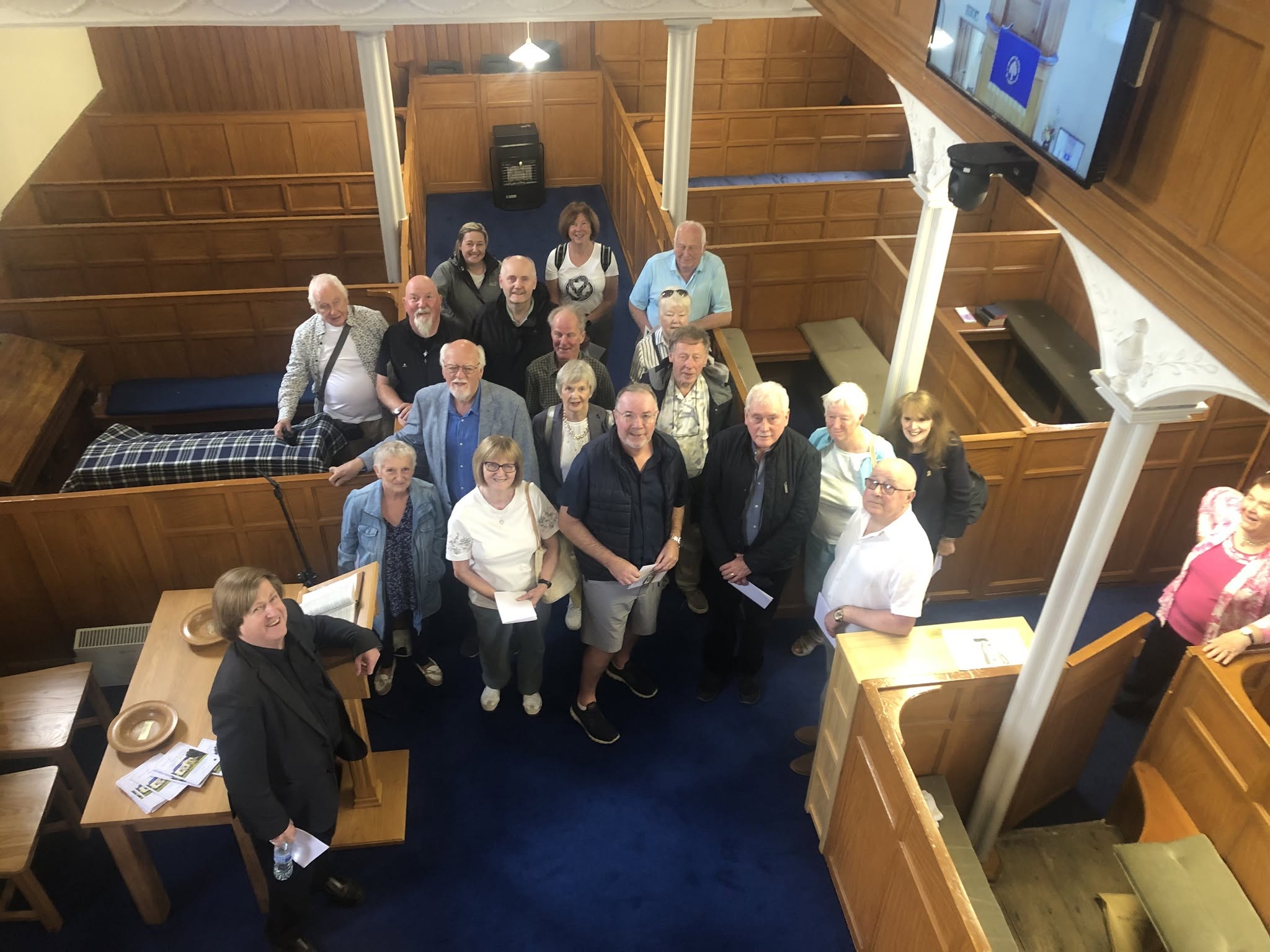
Warrenpoint interior (Photo: Anthony Holmes)

On the county Down side the congregation flourished with Samuel Arnold able to concentrate on its needs and extensively rebuilding the meeting house in about 1820. It was badly hit by the Famine although managed to maintain itself as a single charge until 1910 when it was linked to Newry, an arrangement that has remained ever since. The congregation had the services of some high profile ministers including G.W. Bannister and W.E. Mellone and many of them are buried in the adjoining graveyard where we also saw the grave of Thomas Donnan, for 45 years the precentor of the congregation.
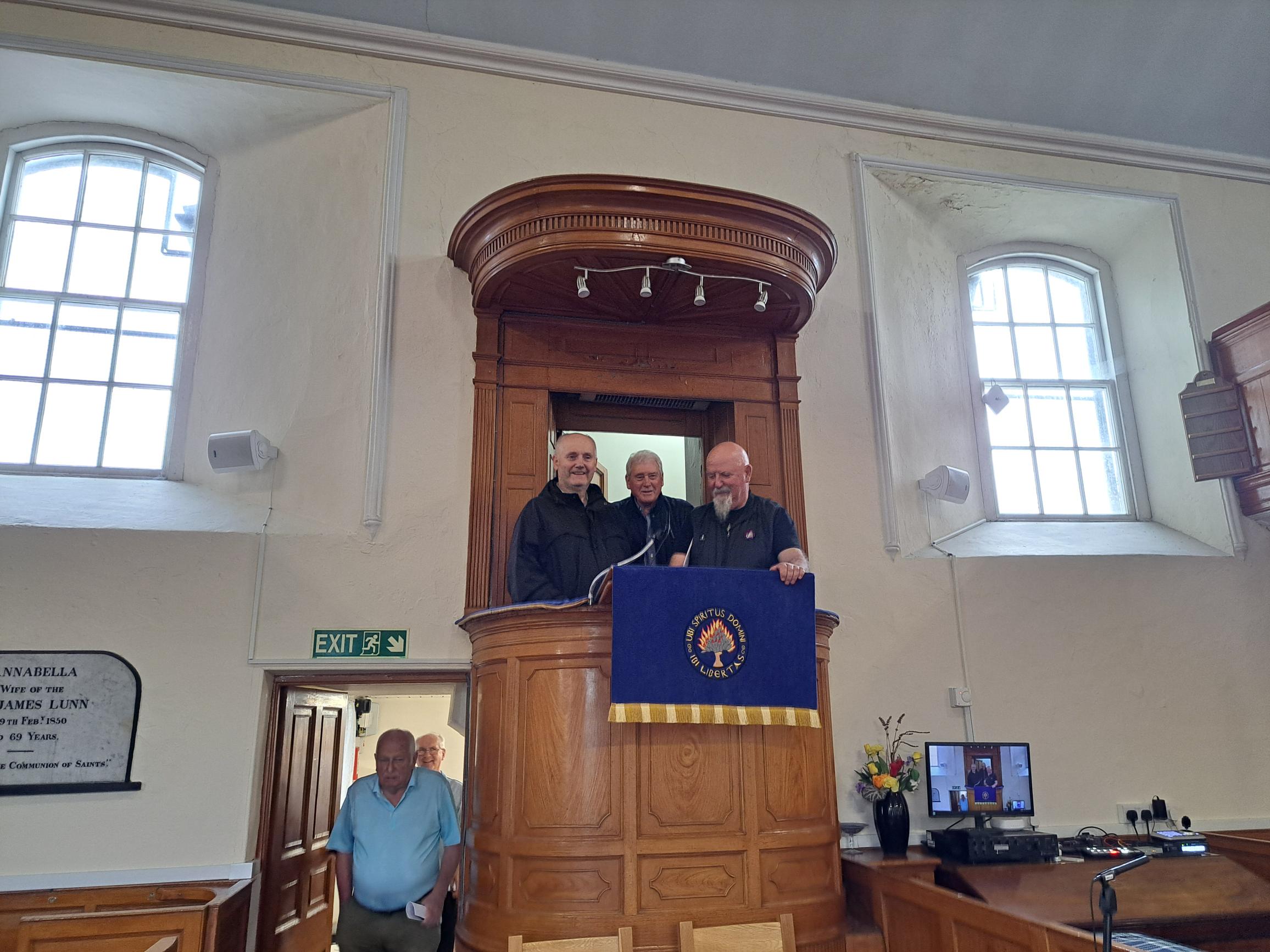
In the pulpit

From Warrenpoint we moved on to Newry, generally said to be the first non-conformist church in Ireland to be built in the Gothic style. Designed by W.J. Barre, it is an impressive building with a spire and as well as a big, white pulpit also houses the first organ installed in a Presbyterian church in Ireland. The organ was built for Belfast’s Second Congregation and despite rumours that it had once been in St George’s Chapel, Windsor perhaps built by Snetzler and indeed played (and haunted) by Handel we do know now that it was built by an organ builder named White who operated out of Orr’s Entry in Belfast. When the Second Congregation moved to All Souls’ the organ came with them but in the 1920s it was sold to Newry where it continues in regular use, the same organ that was once played by Edward Bunting.
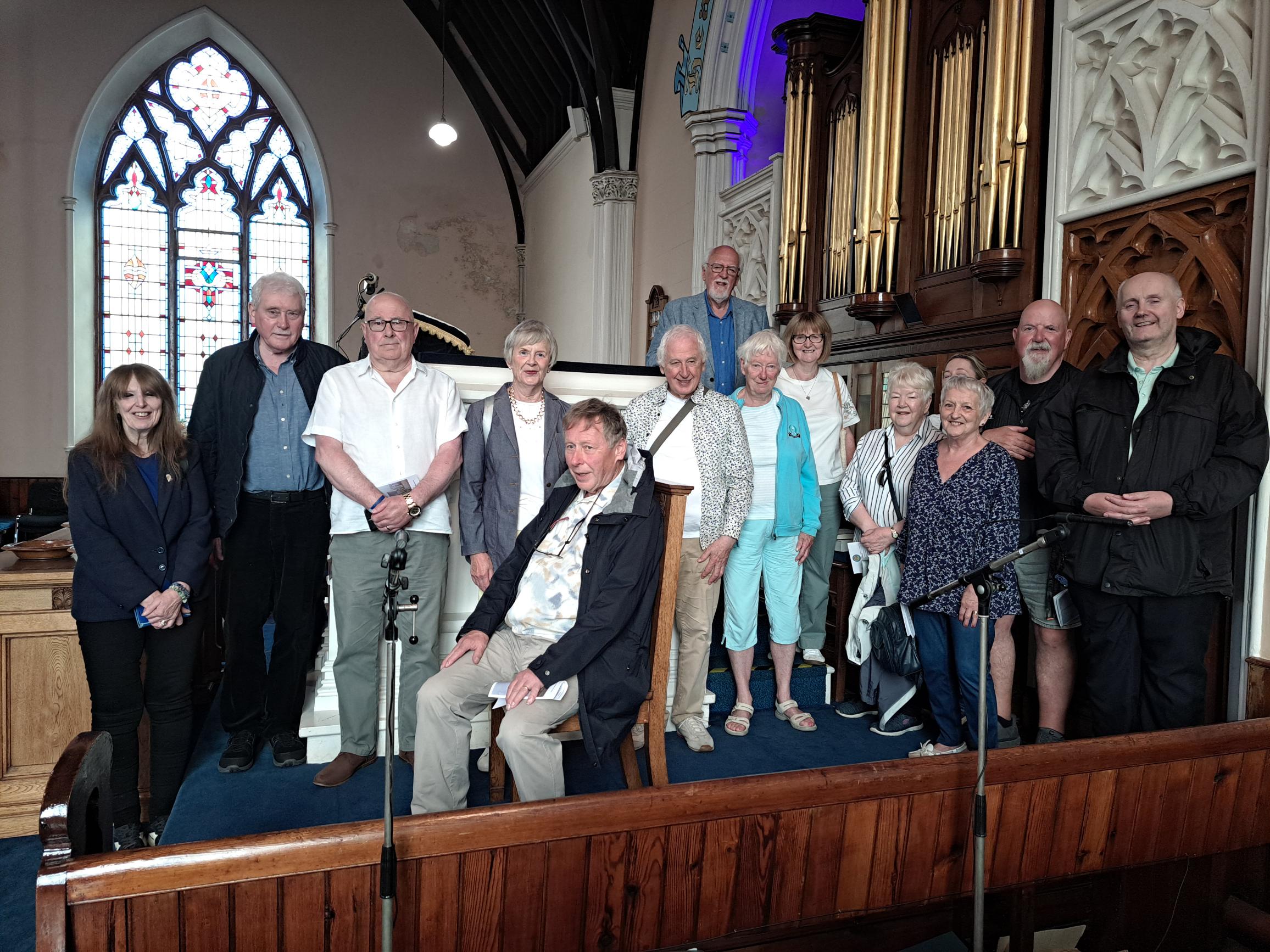
Some of our group in front of the organ of 1806

While we were at Newry Anthony opened up the trapdoor to the underground passages that are hidden away under the building. Only one of our number was brave enough to venture into this hidden realm and modesty prevents me from naming that intrepid explorer but the passages seem to be there to house a large stove that once heated the church. Made by Musgrave & Co. Ltd, a firm based in Belfast in the middle of the nineteenth century, there must have been a flue somewhere, but it hasn’t been used for a long time.
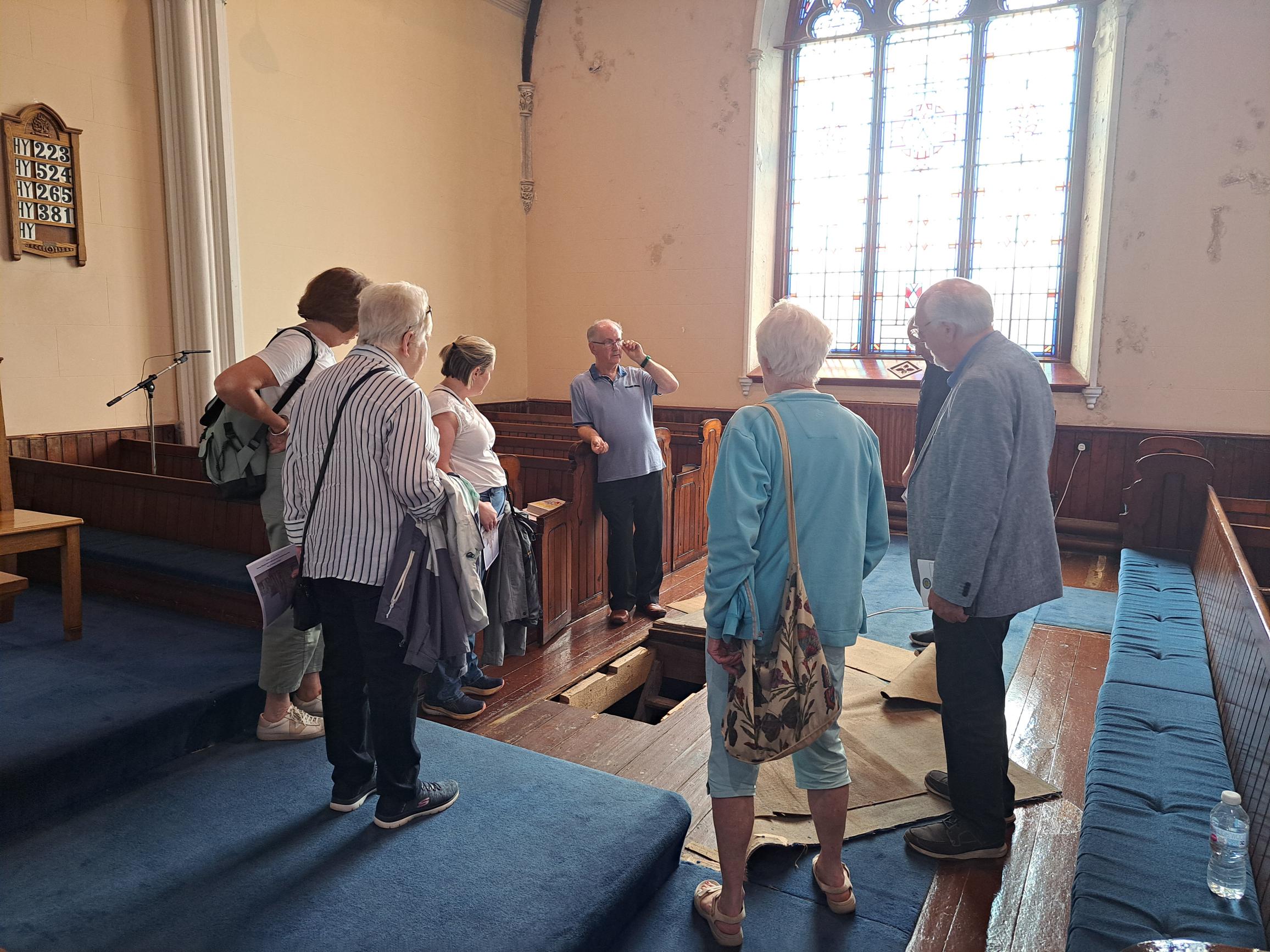
Anthony opens the trap door

Click on the video for Anthony Holmes’s video of the underground passageway

From the Newry church we went on to the Old Meeting House Green on High Street. Despite extensive redevelopment on all sides this spot remains a beautifully maintained peaceful oasis which contains not only ancient and modern graves but the ruins of the previous meeting house.
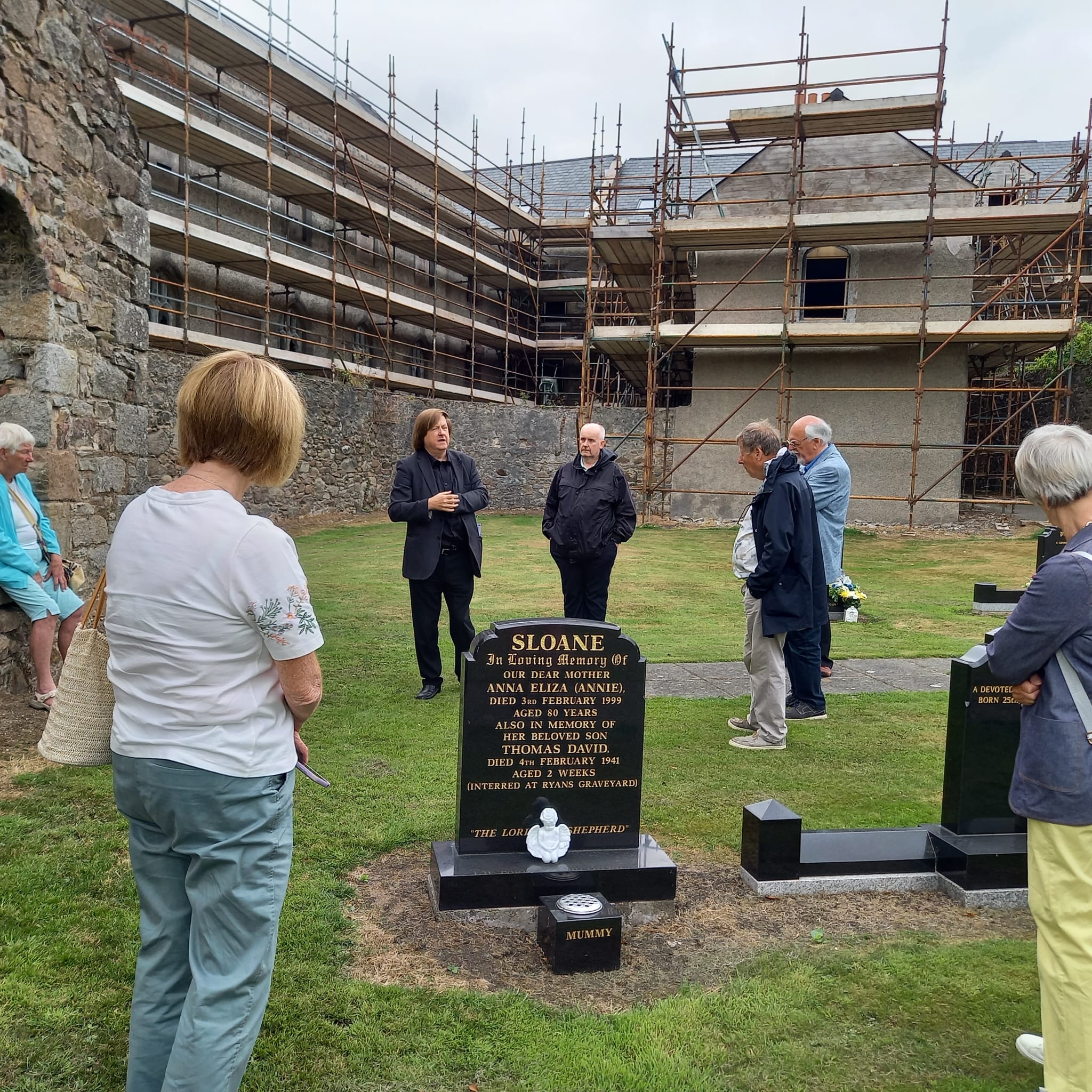
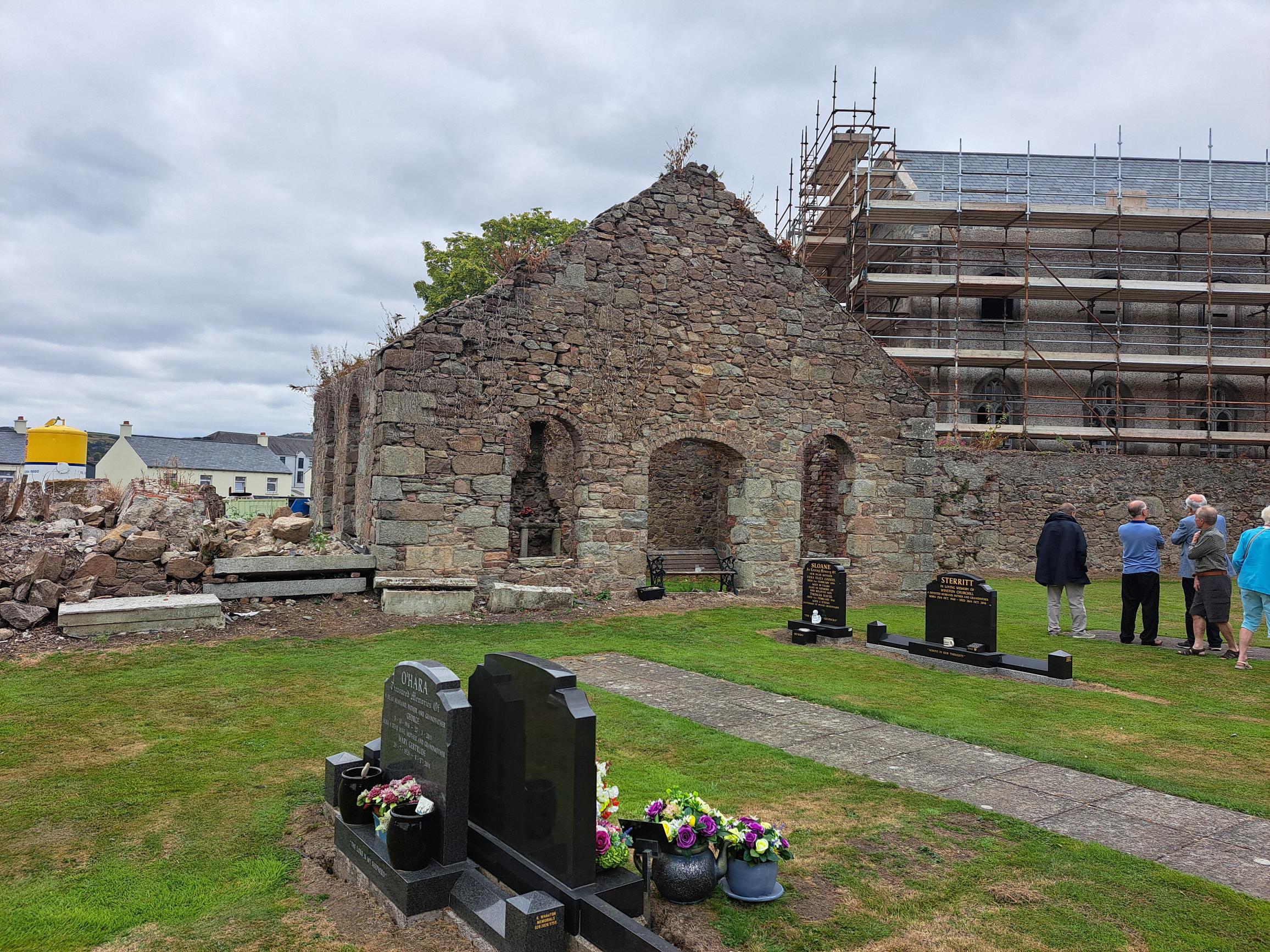
Inside the old graveyard (Photo: Sue Steers)
All that remains of the old meeting house (Photo: Sue Steers)

The old meeting house was built in 1724 but abandoned when the new church was built in 1853. It was here that John Wesley preached when he came to Newry and until fairly recently the remains of the pulpit could be seen. The graveyard is particularly notable for containing the last resting place of John Mitchel, Young Irelander, Nationalist leader and a son of the manse, as well as the grave of Rev A.G. Malcolm an innovative minister who edited the first major Non-Subscribing hymnbook and who began his ministry at Dunmurry before moving to Newry.
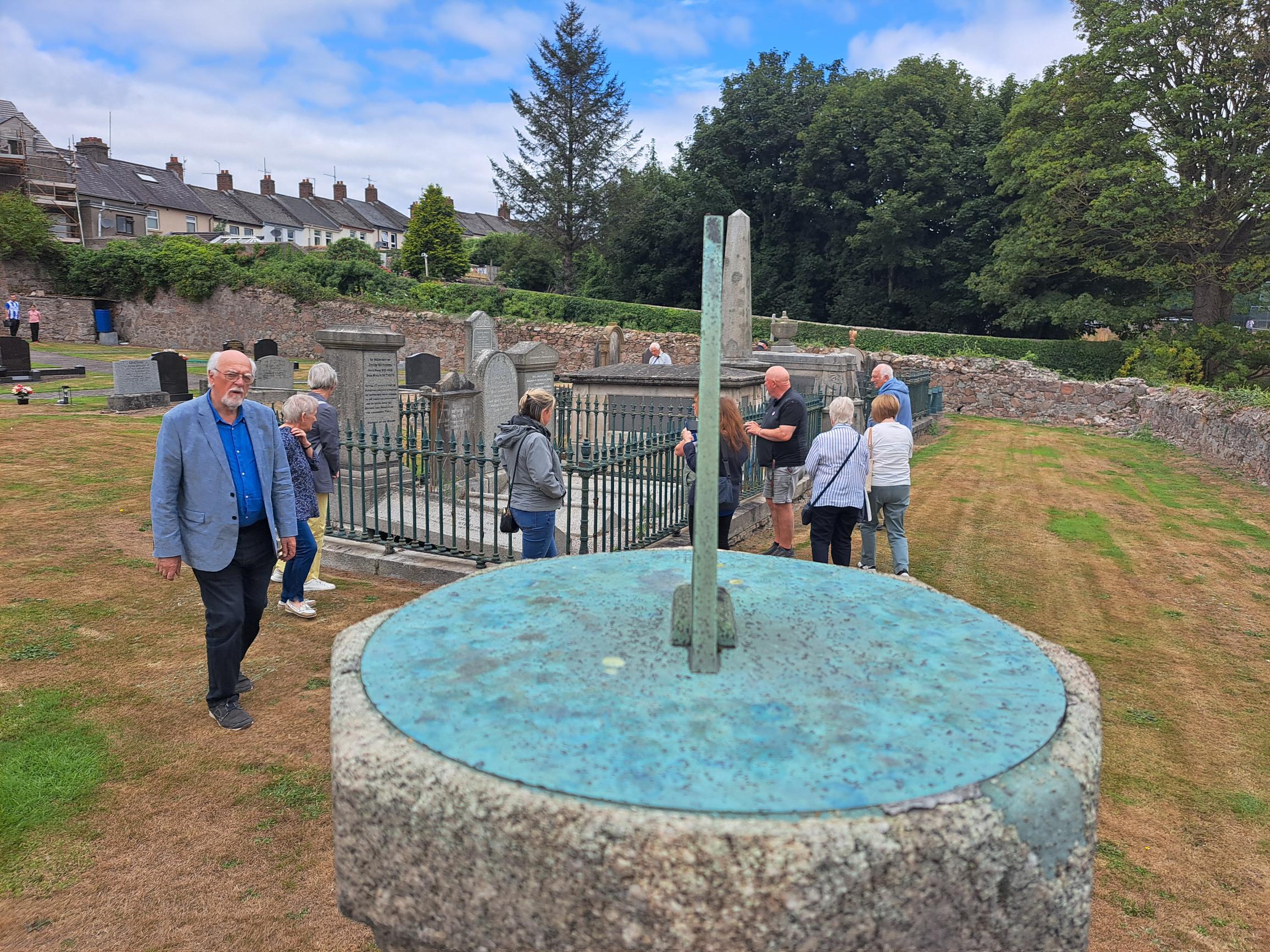
A view of the graveyard from the sundial, said to date from 1757

On leaving Newry we travelled to Banbridge for lunch before going off to the Masonic Hall which was built as the Second Non-Subscribing congregation in Banbridge. This congregation built a grand church opened in 1849 after a large portion of the original congregation left that church following the appointment of the Rev John Montgomery, a nephew of Henry Montgomery. There were deep divisions amongst Non-Subscribers at that time and this was one of the places where this manifested itself in congregational division.
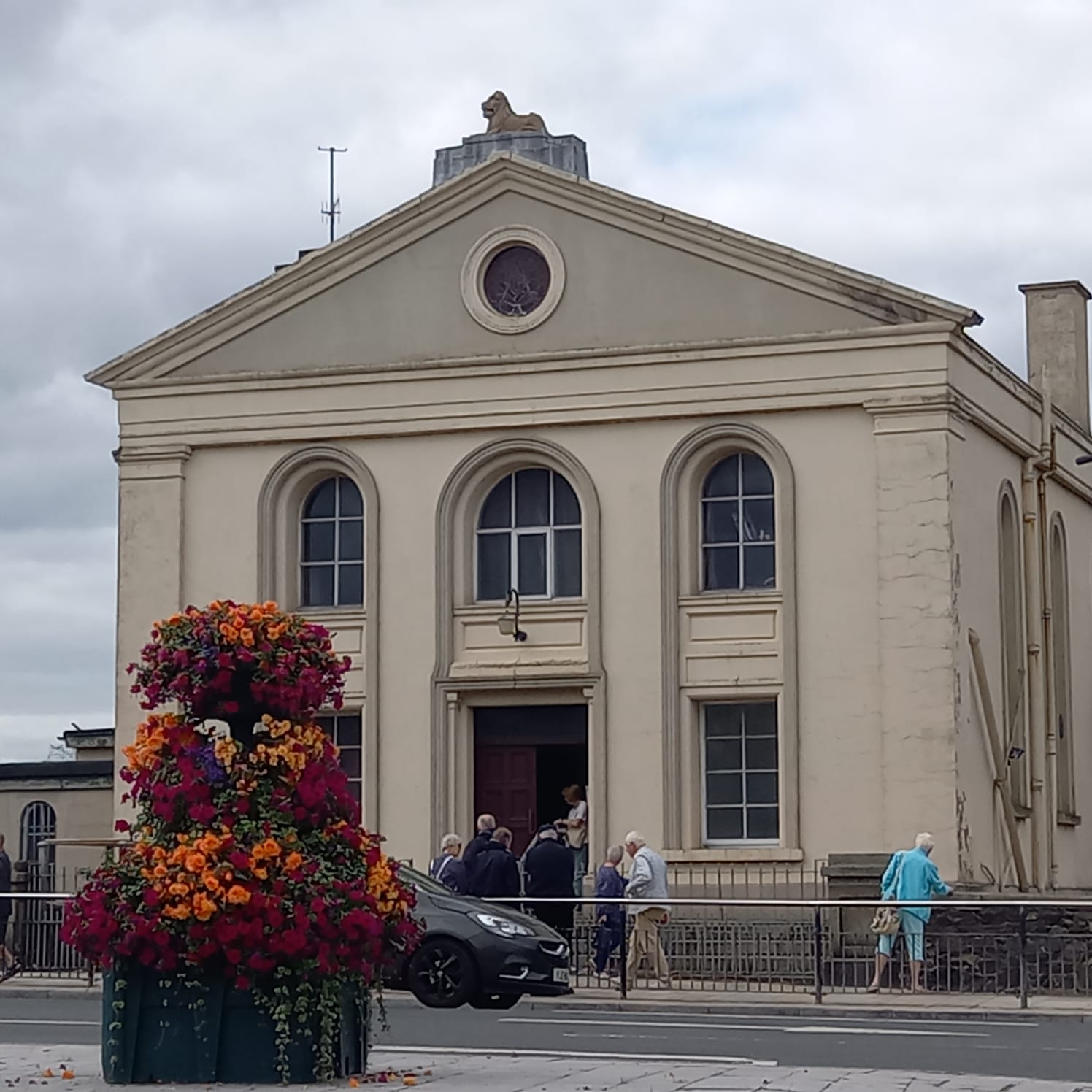
Second Banbridge (Photo: Sue Steers). Note the lion on top of the pediment

I am sure most people that pass the Masonic Hall don’t realise it began life as one of our churches and we were given the rare privilege of visiting the building, being shown round by Willy McCoy, one of the officers. The interior was extensively remodelled, probably in the 1890s and most of the rooms give nothing away of its ecclesiastical origins. Nearly all the windows are covered in, and new floors have been added, but the original church must have filled both the length and height of the building, probably with galleries. It must have been a magnificent space built to compete with the church building they had left.

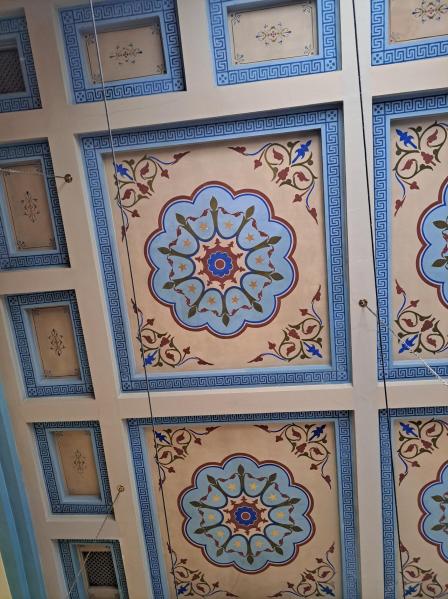
It doesn’t quite match the splendid building that is the first congregation but it can’t have been far off. But the one detail that does survive and which is quite exceptional is the ceiling that remains in the Lodge Room.
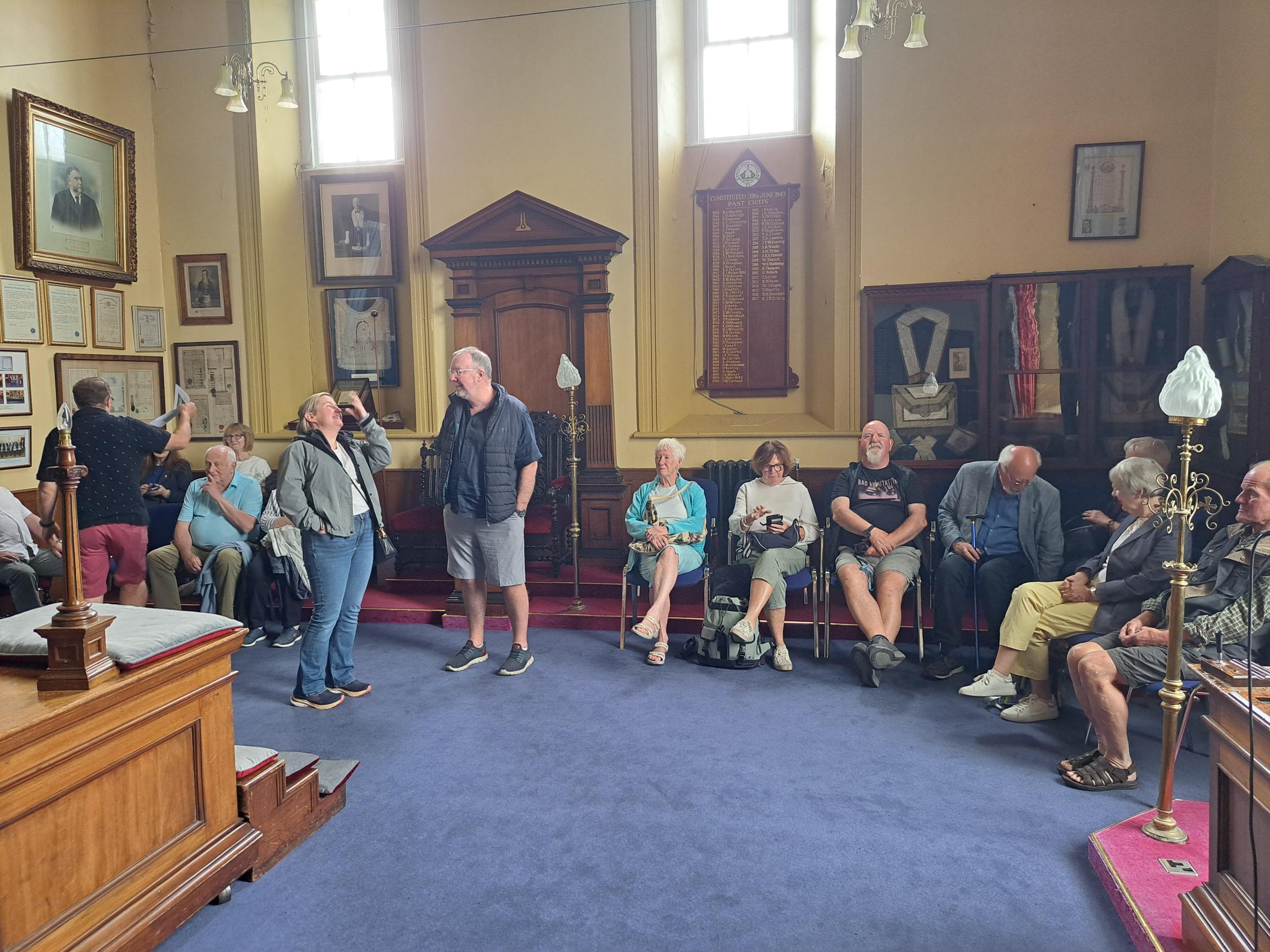
The Lodge Room

The ceiling dates from 1849 when the building was opened and is a stunning piece of work that has not been dimmed by age at all.
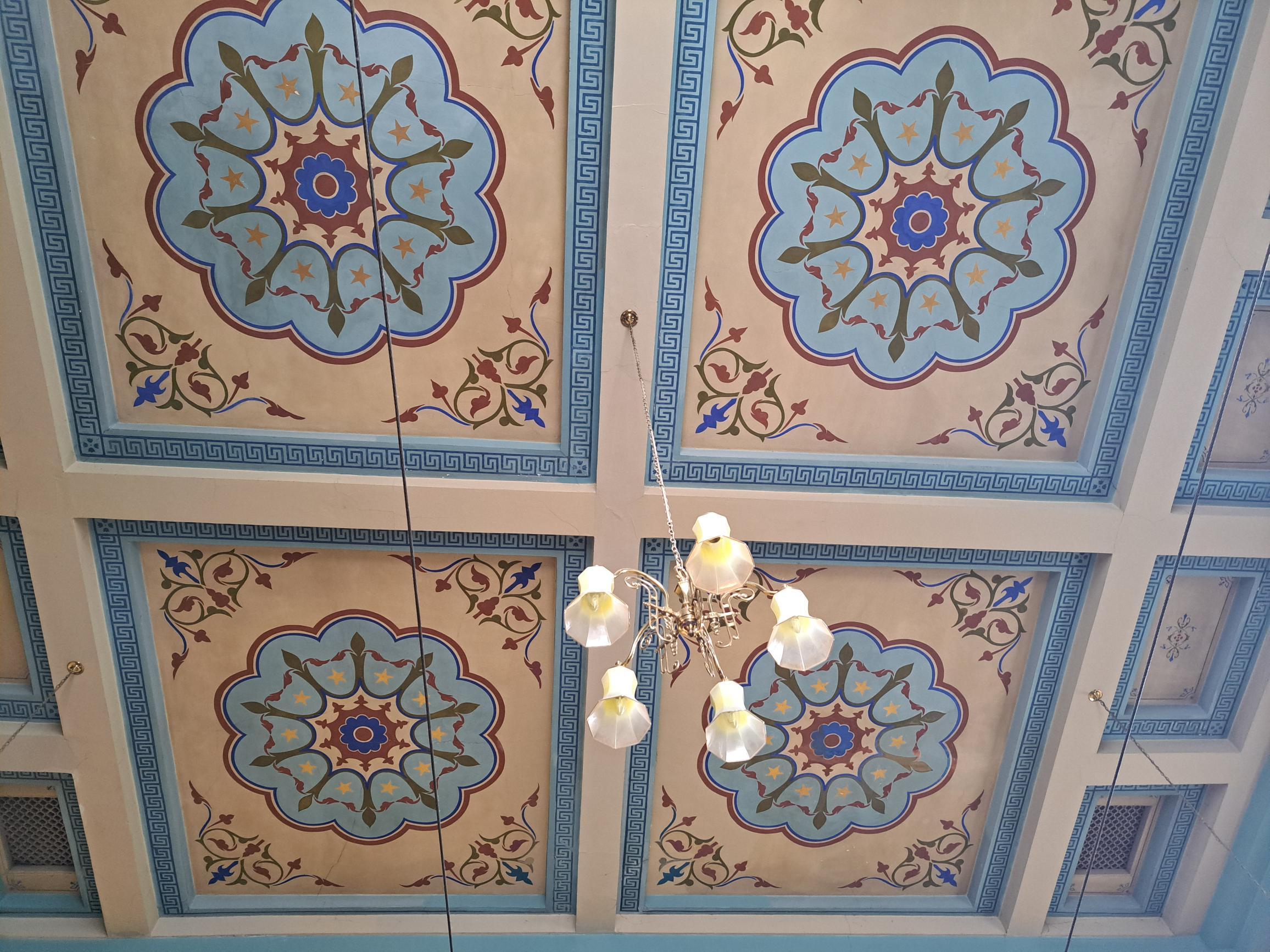
The impressive ceiling in Second Banbridge

The one thing we could not discover was the origin of the stone lion that sits atop the structure. This does not seem to have been placed there by the Masonic Lodge, but would it be put there by the congregation? It is nevertheless an attractive and distinctive feature. You can read more about this congregation here.

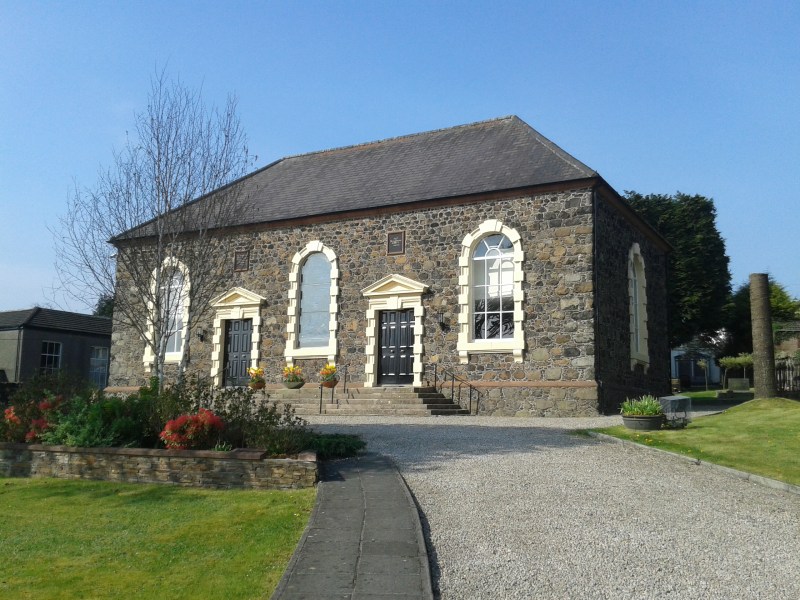
From there it was a short walk to First Banbridge. Founded in 1716 this church was built in 1844 towards the end of the ministry of the Rev James Davis, Non-Subscriber and Remonstrant. We were greeted by Carol McAlister and Karen Bushby who again were excellent hosts. We know that the Second Congregation’s building was designed by Edward Gardner (who may have had a connection with our Downpatrick congregation), but we don’t know who designed First Banbridge.
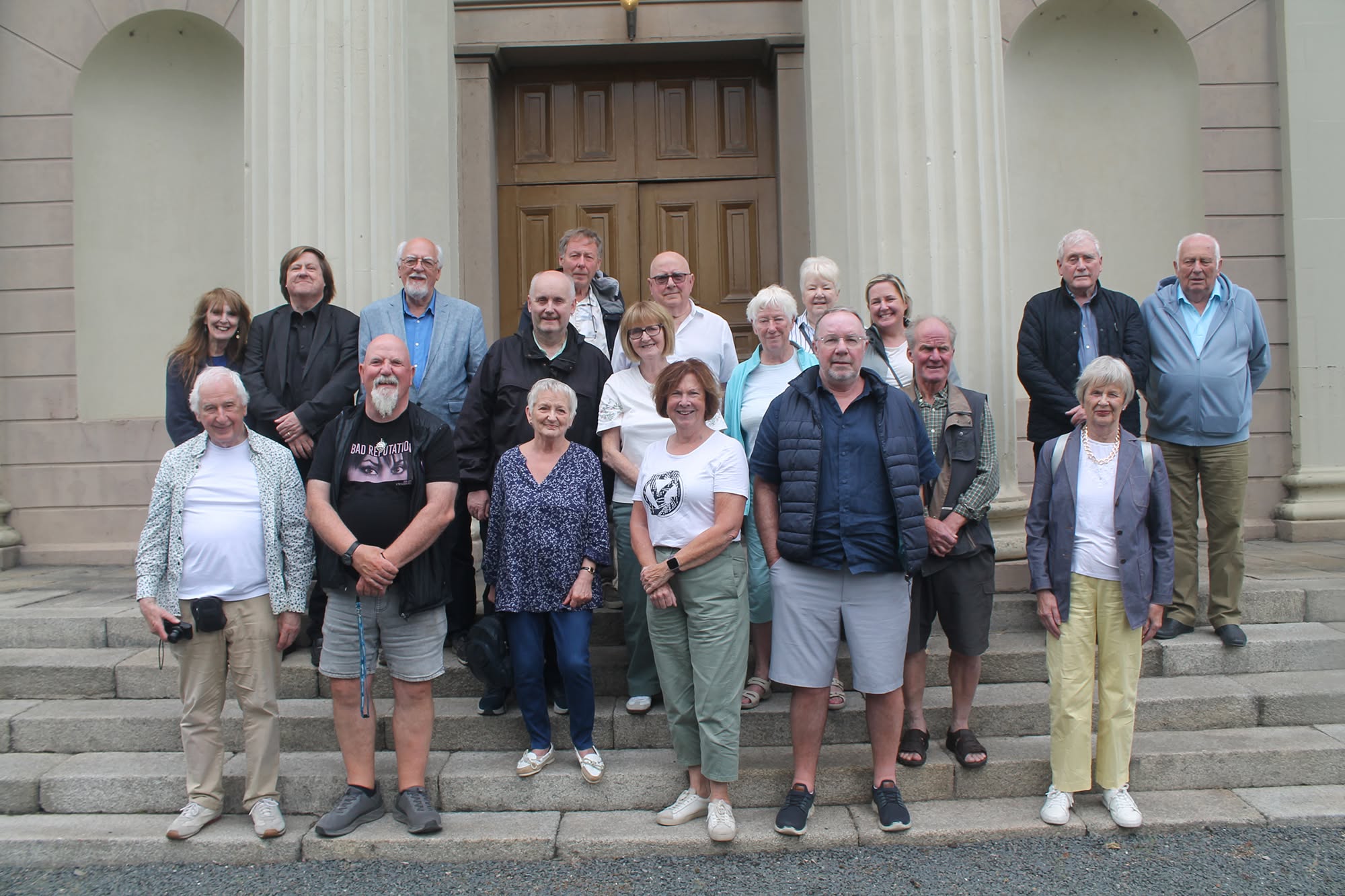
Outside Banbridge (Photo: Karen Bushby)

If Newry is an example of the beginnings of the use of Gothic architecture then Banbridge is a stunning example of the adoption of the fullest Neo-Classical design. It is a complete and splendid example of Classical architecture with Ionic columns at the entrance, a large vestibule with a curved staircase on either side leading to a U-shaped gallery and a magnificent two-decker pulpit.
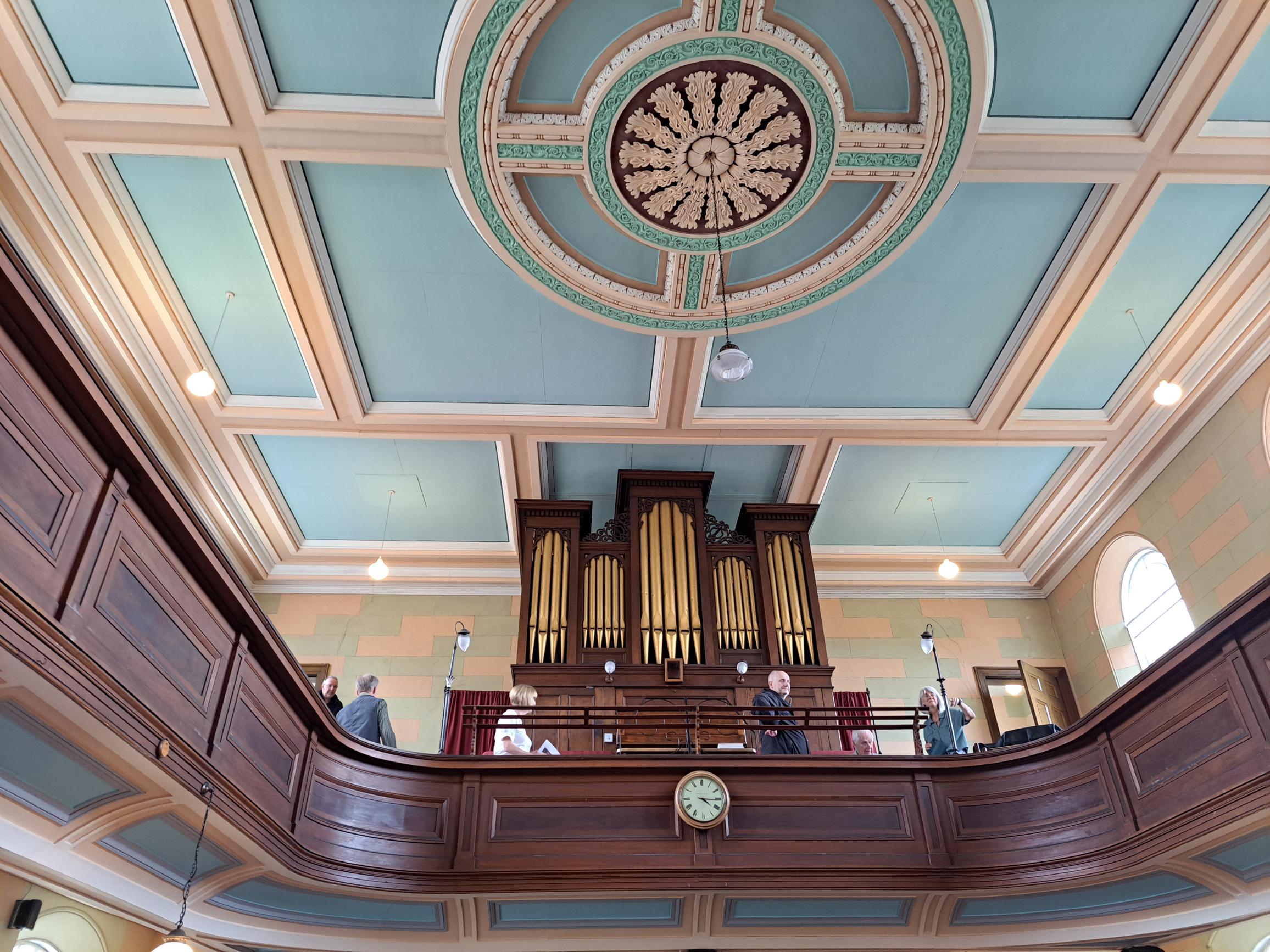
Ceiling and Organ, First Banbridge (Photo: Sue Steers)

The Classical features extend all the way around the building both inside and outside, which is not always the case, but here it makes for a very impressive church.
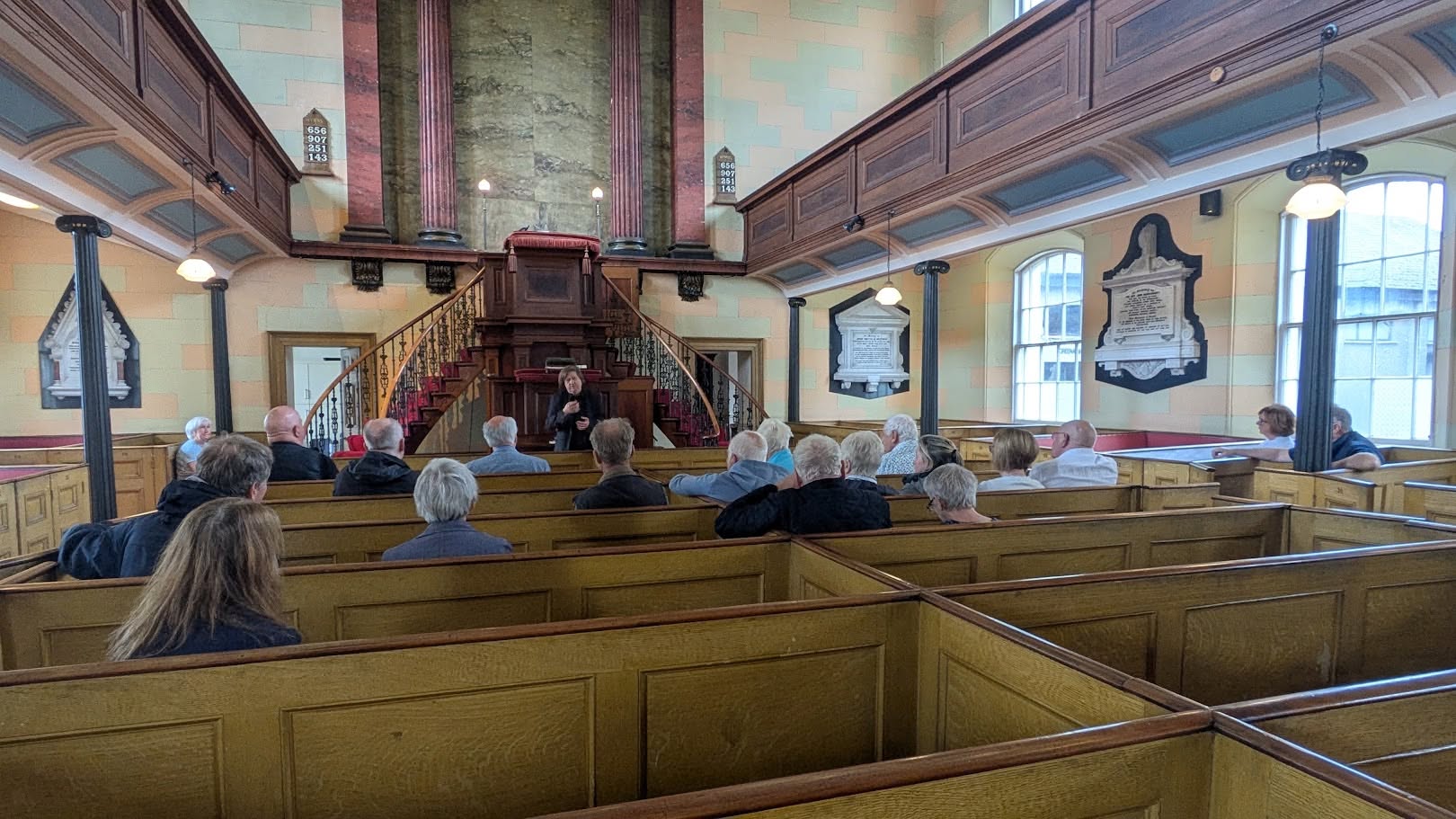
Looking towards the pulpit (Photo: Karen Bushby)

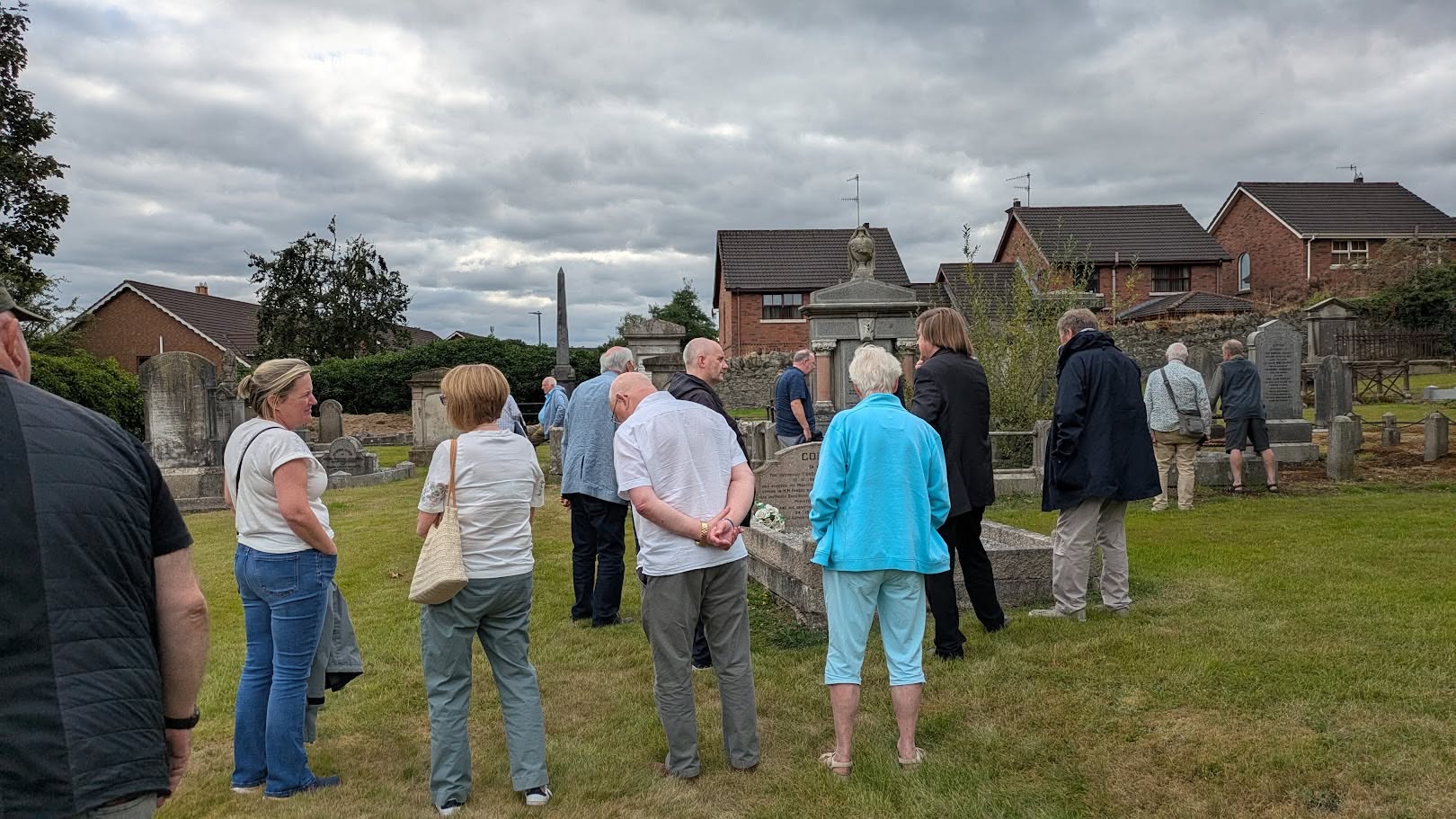
After leaving the church we stopped off at the Banbridge Meeting House Green. This was also once the site of the first meeting-house and is the burial place of many members and ministers such as James Davis and John Montgomery as well as Rev Percival Godding who served in the First World War, you can read a little bit about him here.
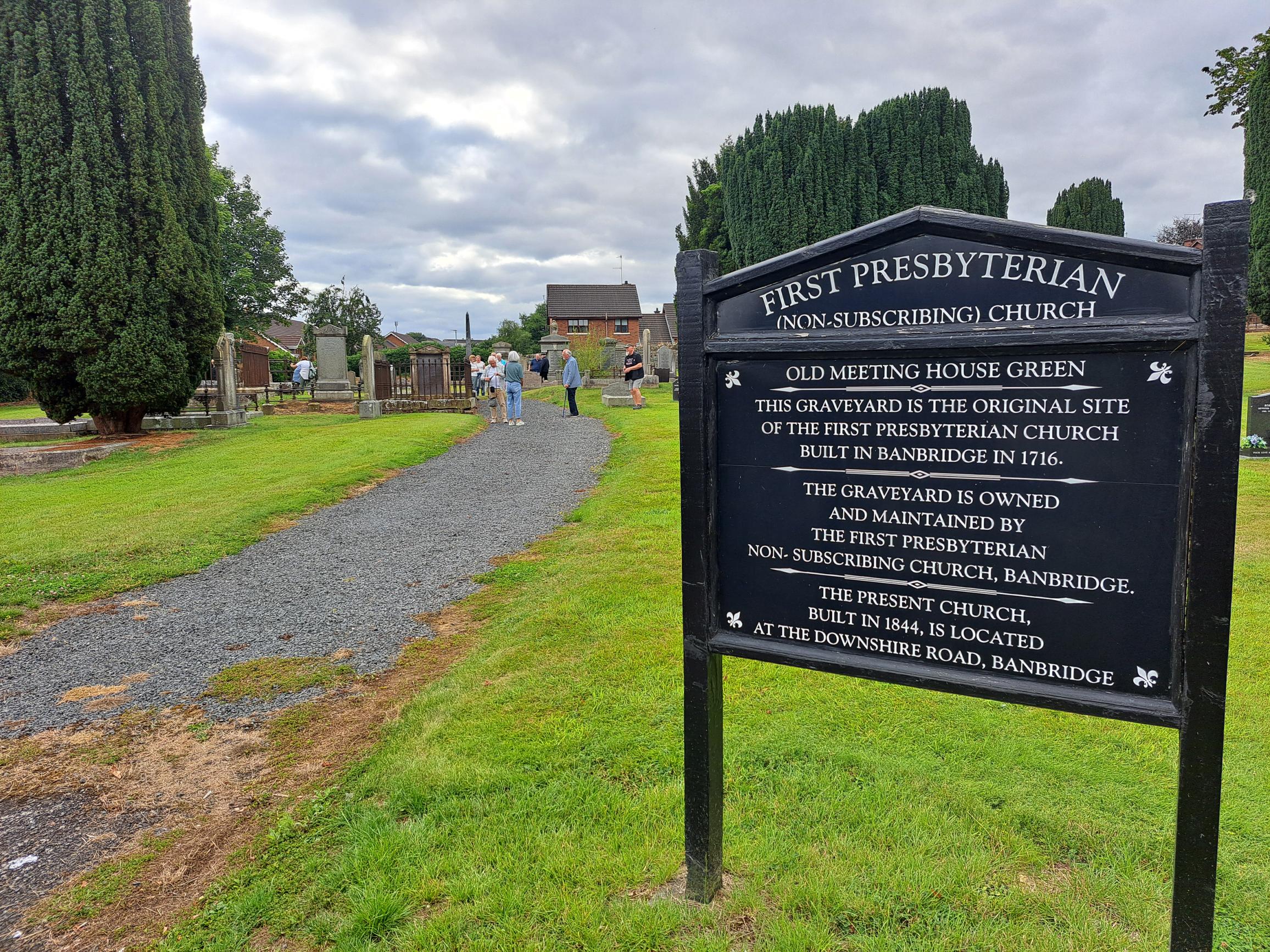
Entrance to Banbridge Old Meeting House Green

Inside the graveyard (Photo: Karen Bushby)

It was an excellent day, thank you to everyone who came along or helped organise the day, especially to Kathy. We are already preparing for next year when a trip to Carlingford is planned.
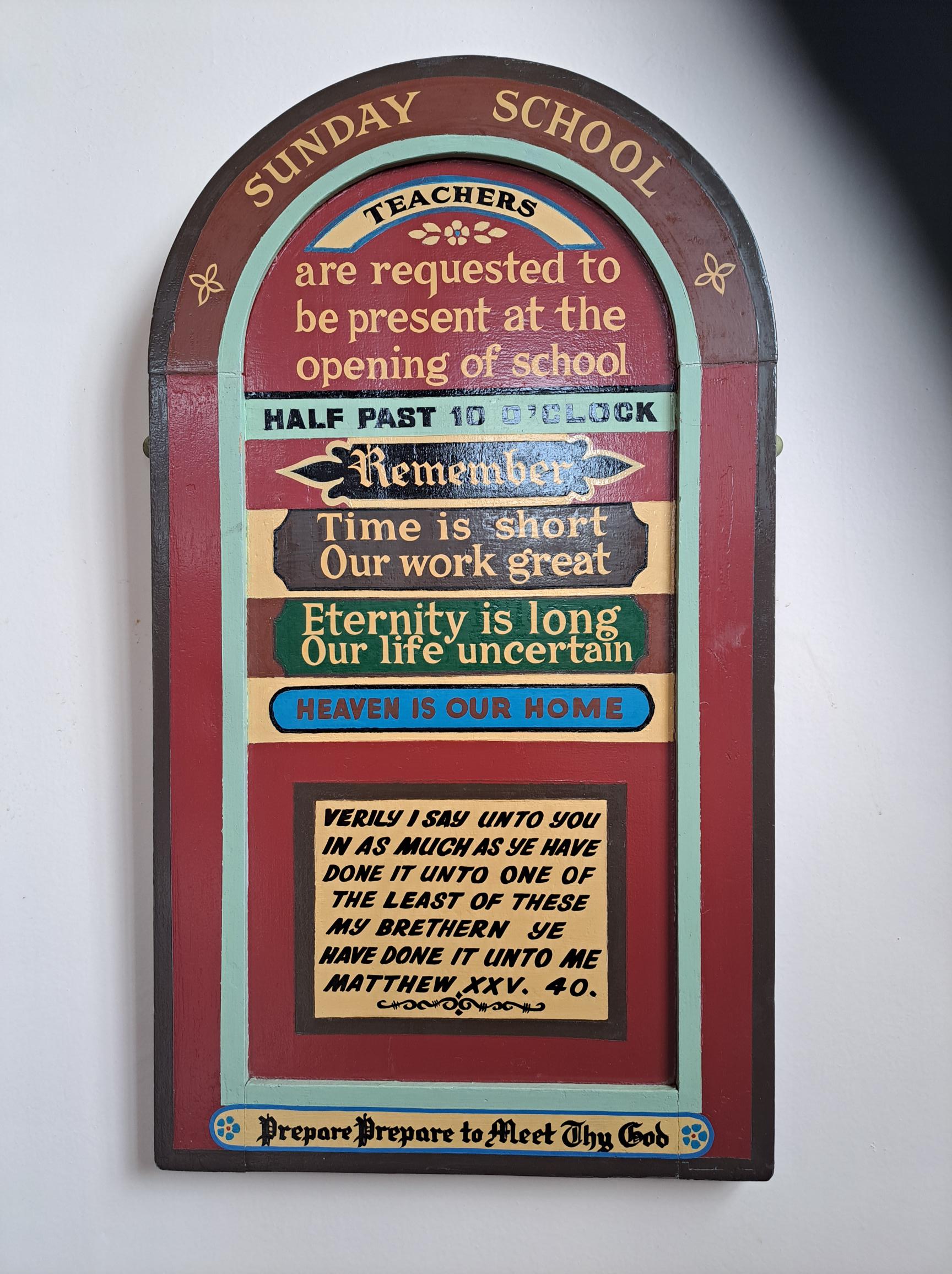
Sunday School notice at Newry

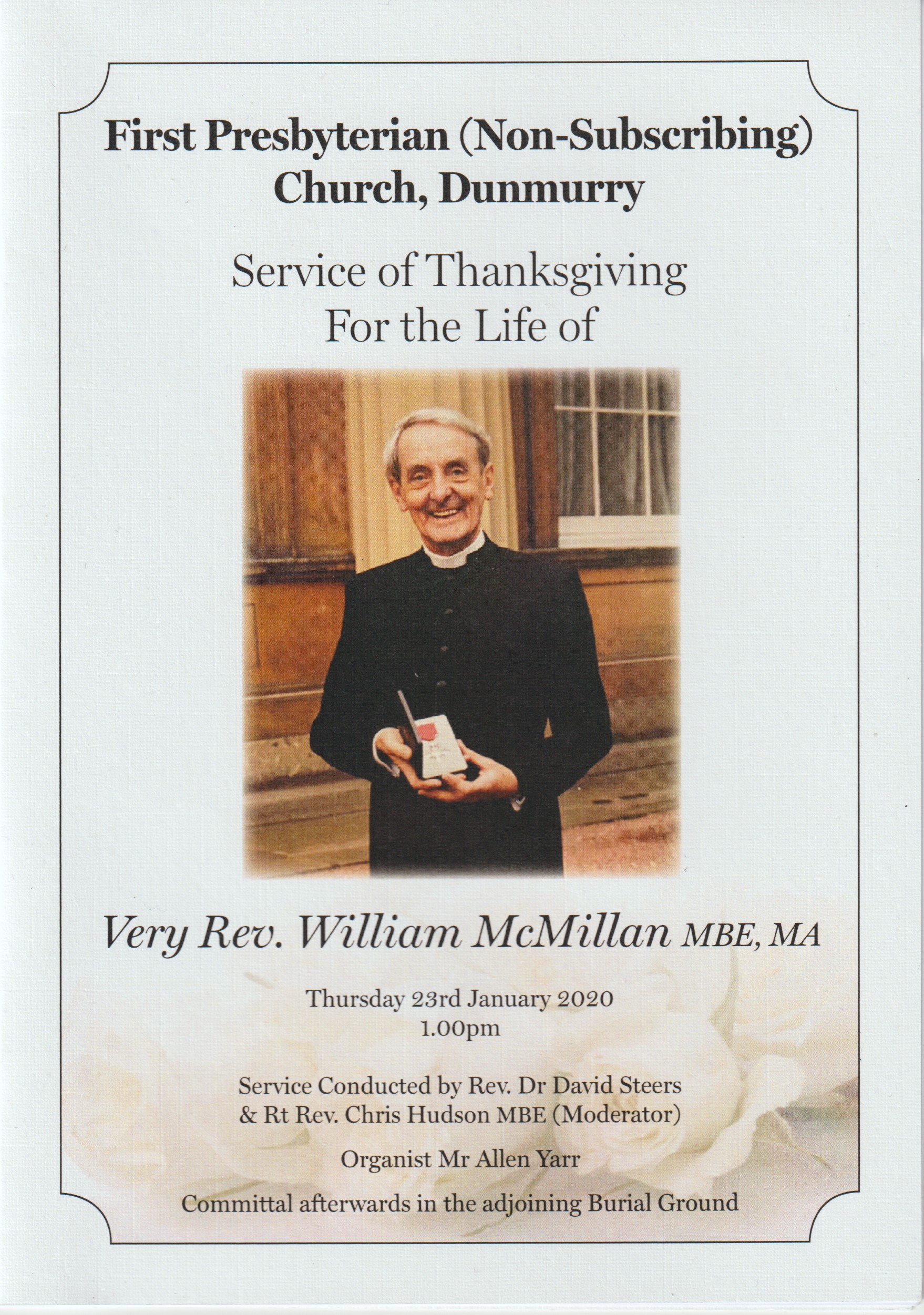
Very Rev William McMillan MBE, MA

I was honoured to be asked to take part in the service of thanksgiving for the life of the Very Rev William McMillan at First Presbyterian (Non-Subscribing) Church, Dunmurry on Thursday, 23rd January 2020. I am posting here the short address I gave as a tribute to a truly inspirational minister.


How do we do justice to a person as vivid, as lively, as remarkable as the Rev Mac? There were so many facets to his character, so many ways in which he touched such a wide variety of people, so many ways in which he came to our attention and was such a force for good.

In 2004 the Oxford Dictionary of National Biography was published in 60 volumes and launch ceremonies were held across the British Isles including one at Queen’s University. Mac was a contributor to this important publication that lists tens of thousands of biographies and I was there at the publication’s launch with Mac. But one of the features of this set of books when it was first produced was that there was a handful of people whose eminence in different, not necessarily connected, disciplines meant that more than one person had to write their biography. Well Mac is such a person today. It is hard for one person to do justice for the range of achievements, interests and accomplishments which Mac displayed in his life.

First and foremost we should say that Mac was a minister, someone who preached the gospel in our liberal Christian tradition and who was not afraid to stand up for what was right often in difficult circumstances, especially through the period of the Troubles. But I think that everything else he did – and he did such a lot – was rooted in his call to ministry, in his sense of vocation.

So, widely and affectionately known as the Rev Mac, the hosta that was named after him was also called just that and whether it was working in the church or working with flowers in the horticultural world or in many of the other spheres he operated in he brought the values of a reflective, thoughtful, tolerant faith that inspired him all his life through.

When I was minister of All Souls’ Church in the 1990s Mac came to do a floral display to celebrate the centenary of the church building. He flew in through the door like a force of nature bringing friends and collaborators in his wake and creating – what he did in so many places  – a wonderful display that drew on the history, theology, and the architecture of the building using flowers and blooms and plant material which spoke of God’s love and God’s creation, a true expression of faith using natural materials.

This was something that Mac did all around the world, his fame in this area was literally spread across the globe. I remember once asking some ladies in St Giles Cathedral in Edinburgh if they knew the Rev Mac, “O yes”, they told me and began to reel off when he had been in Scotland what he had done when he was next coming. Indeed I often think you could play a game to find the most remote place where someone has come into contact with someone else who knew the Rev Mac. For starters I would offer the members of my church at Ballee who were on honeymoon in Barbados who met a local person on a beach who somehow found out they were Non-Subscribers. “Do you know the Rev Mac?” was the inevitable next question.

I remember being at the Synod one year when news reached us that Mac had become the leading floral artist in the world. In those pre-internet days news did not travel rapidly but we heard of this great achievement and everyone was truly impressed. It was something to learn that one of our number had achieved this accolade, someone who was also a scholarly minister, a great preacher, a devoted and hard-working pastor, someone who through his work was, like Gamaliel, held in honour by all the people.

Mac was a distinguished minister of this denomination, born into the Dromore church and who went into training after beginning work as a journalist, working for the Dromore Leader. Mac had so many anecdotes about people and places but his account of being taken on as a student, having to preach on trial before the whole presbytery and the severe attitudes of some of the clergy in those days was frightening. Mac went to train at the Unitarian College in Manchester and at Manchester University. There was no financial scholarship to train for the ministry and very little income to do that but was supported anonymously by members of his church.

I don’t think it was easy for Mac in the early days of his training and at one point he had to re-sit the entirety of his exams becoming in the process the only person who had ever done this in one go. He also apparently had – for reasons I don’t understand – to learn a bit of the Icelandic language. I have to confess that I very much doubt that Icelandic ever came to be in any way useful in the work of the ministry.

Mac’s training included a stint doing a pastorate in our church in Cork, quite a different world then in so many ways but the culmination of all his work was to be called to be minister of Newry and Warrenpoint where he also took on a role teaching. Mac was minister to those two churches from 1959 to 1970 and was held in high regard and great affection by all the congregations. His ministry there coincided with the start of the Troubles and Mac was at the forefront of those who tried to calm down the growing tension, at one point being hit on the head by a breeze block when he was attempting to stop a riot. This was a serious enough injury and the situation was so dangerous that he and some other clergy had to take shelter overnight in the convent, but it did also end the painful migraines he had been experiencing. Not a conventional cure or one you could expect on the NHS but effective nevertheless.

In 1970 Mac accepted a call to Dunmurry in succession to his father in law, the Rev John McCleery, and remained as minister here until 2016 when he retired and became the senior minister. The congregation flourished under his leadership and I know that everyone is devastated by the loss of their senior minister. From 1976 to 1980 he also had charge of the Moira congregation.

Mac’s service to this denomination on different committees, funds and organisations was enormous. But among other things he was moderator of the General Synod from 1969 to 1971 and again from 1985 to 1987.

But his ministry was multi-faceted, it reached into so many places and manifested itself in different ways.

In one way it was truly international. Mac represented this denomination on the International Association for Religious Freedom, the world’s oldest international inter-faith organisation for twenty years from 1961. He was held in very high regard by all his colleagues there. Partly through that organisation Mac travelled to many places as a preacher and lecturer. He preached at the famous King’s Chapel in Boston in the 1960s and told me that he received more for that one service than he was paid for a whole year at the time! In Europe he had a close link with many church people of a similar mind, particularly with liberal and free Christian groups in Switzerland, France and Germany where the affection in which he was held by the professors and church leaders of those groups was always palpable when you met them. He also travelled to Romania during the Communist era to visit the Unitarian Church in Transylvania, enduring the challenge of the arduous and lengthy night time rail journey across the border from Budapest to Kolozsvár which was then the only way in to that city. Here he was one of the first Westerners allowed to preach at that time but always under the watchful scrutiny of the Securitate, the secret police.

Mac’s work in Northern Ireland throughout the Troubles, particularly in regard to the establishment of cross-community nursery schools, at a time when such things were regarded as dangerously novel was recognised and supported by the IARF and resulted in him being awarded the Albert Schweitzer Award at the 1978 Congress in Oxford, a signal honour for his work in breaking down barriers.

But another aspect of his ministry was his tremendous achievement as an historian. This grew out of his training for the ministry in Manchester where he went on to be awarded a Master’s degree on ‘The Subscription Controversy in Irish Presbyterianism from the Plantation of Ulster to the Present Day’ by Manchester University in 1959. Mac’s knowledge and understanding of the history of this denomination was unparalleled. It was sustained by his interest in antiquarian books which led him to build up a tremendous library, originally by careful scrutiny of what was available in Smithfield Market until he built up an astonishing collection of books, periodicals, prints and sermons. Mac’s knowledge was formidable, often I would ring him with random questions about obscure figures and Mac would tell me who I was looking for and all there was to know about him. Mac had developed a wonderful fasti or biographical resource of everyone who had entered the ministry in our tradition and with these he had amassed a great collection of images and illustrations. From this he was able to produce many excellent books, articles and pamphlets often drawn out of lectures or talks that he had given. There is not time to list them all here but his writings displayed both a depth and breadth of knowledge presented in a style that was eloquent, accurate and instructive. He was always so willing to help any inquirer with information.

At the end of his biography of Henry Montgomery, A Profile in Courage, Mac quotes the Rev C.J. McAlester preaching at his memorial service in this church in 1865 and I will close my words with that quote which is equally applicable to Mac:

More acceptable to our venerated friend than ‘storied urn or animated bust’ would be the earnest efforts of those who honour him to cultivate with diligence, and guard with jealous care, those principles of Christian freedom, truth and love, which it was the noblest labour of his lengthened life to vindicate and extend.

Rev Mac