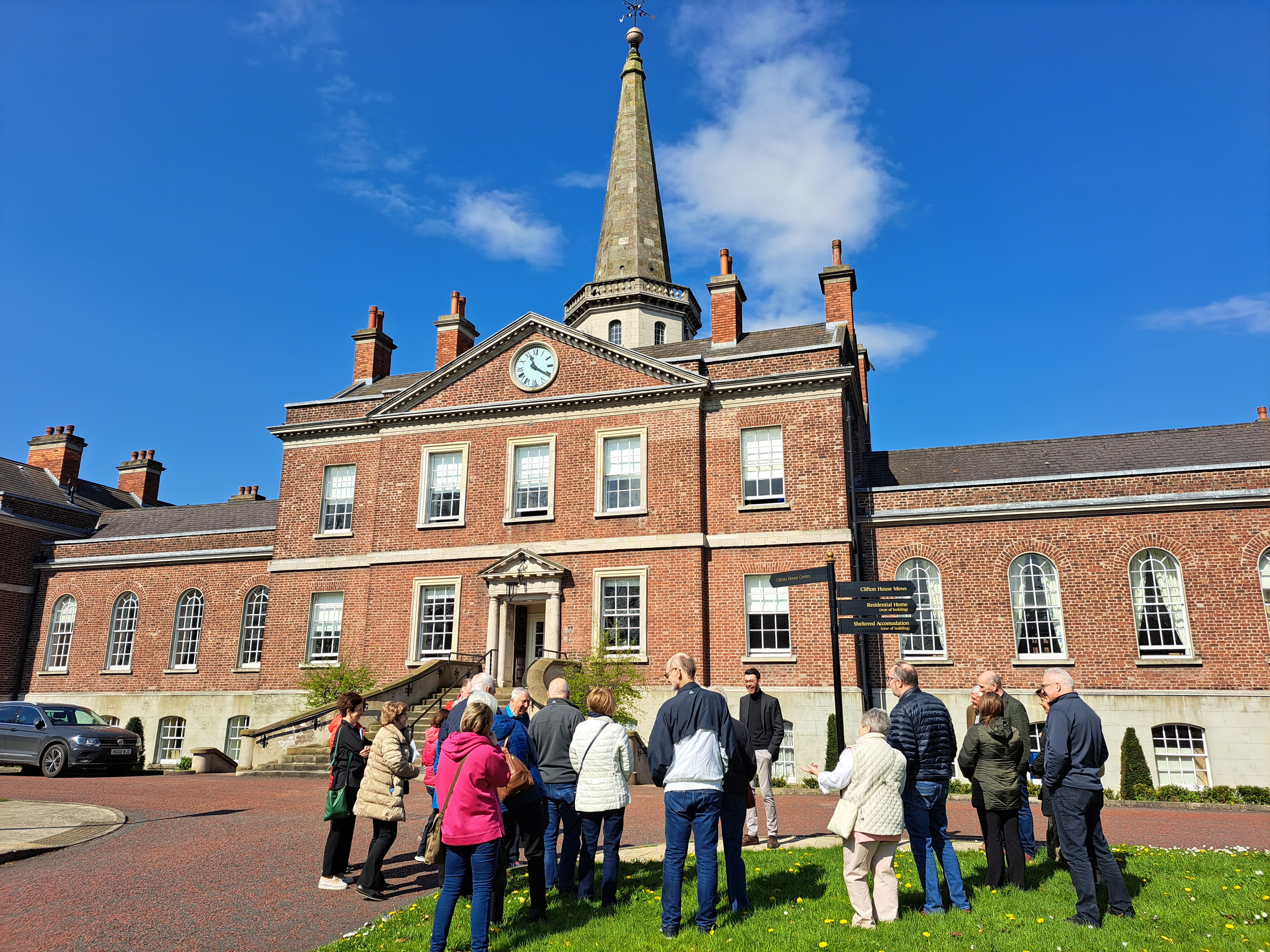
Clifton House and Clifton Street Cemetery

Assembling outside Clifton House at the start of the tour

On Friday, 21st April we had a wonderful congregational visit to Clifton House. Reputedly one of the oldest buildings in Belfast, having been built in 1774, it is actually only five years older than our own church in Dunmurry. But it is a very impressive building featuring its unusual spire which must have towered over Belfast when it was first built and certainly angered the Earl of Donegall who gave the land not expecting a building that would dominate the skyline and overshadow St Anne’s parish church.
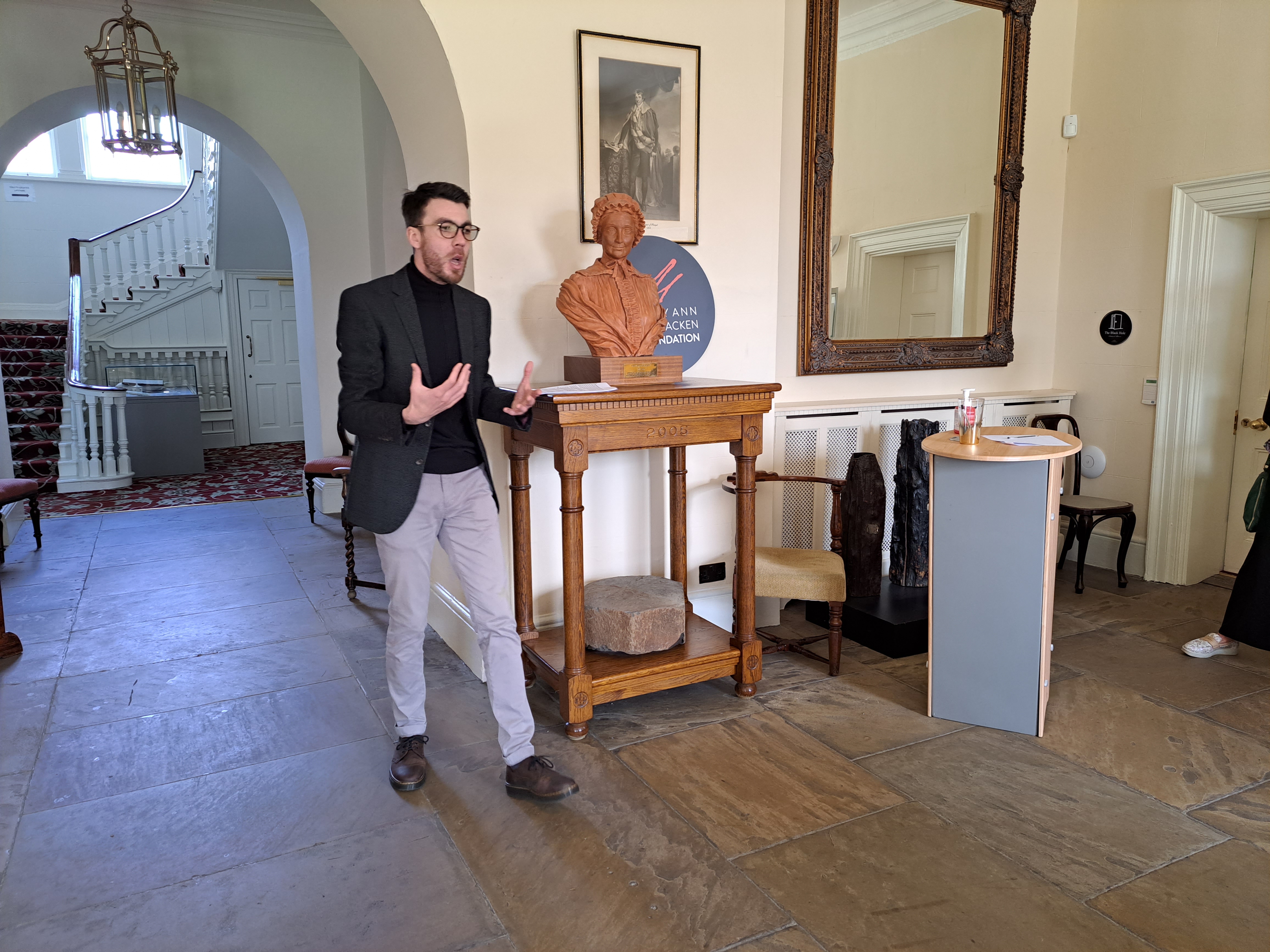
Jason Burke, one of our guides, in front of a bust of Mary Ann McCracken

Right from the start it was a much more enlightened institution than its usual name of ‘Poor House’ would indicate. Even the ‘punishment room’ was equipped with a bed, something ordinary inmates of institutions such as the workhouse might not expect in the nineteenth century. Curiously the mostly Presbyterian founders had no hesitation in employing a lottery to set up Clifton House but through that scheme were able to build a Poor House and an infirmary.

I hadn’t realised either that the Belfast Charitable Society (to give it its full name) was set up by Act of Parliament and also had responsibility for the provision of water in Belfast as well as street lighting.
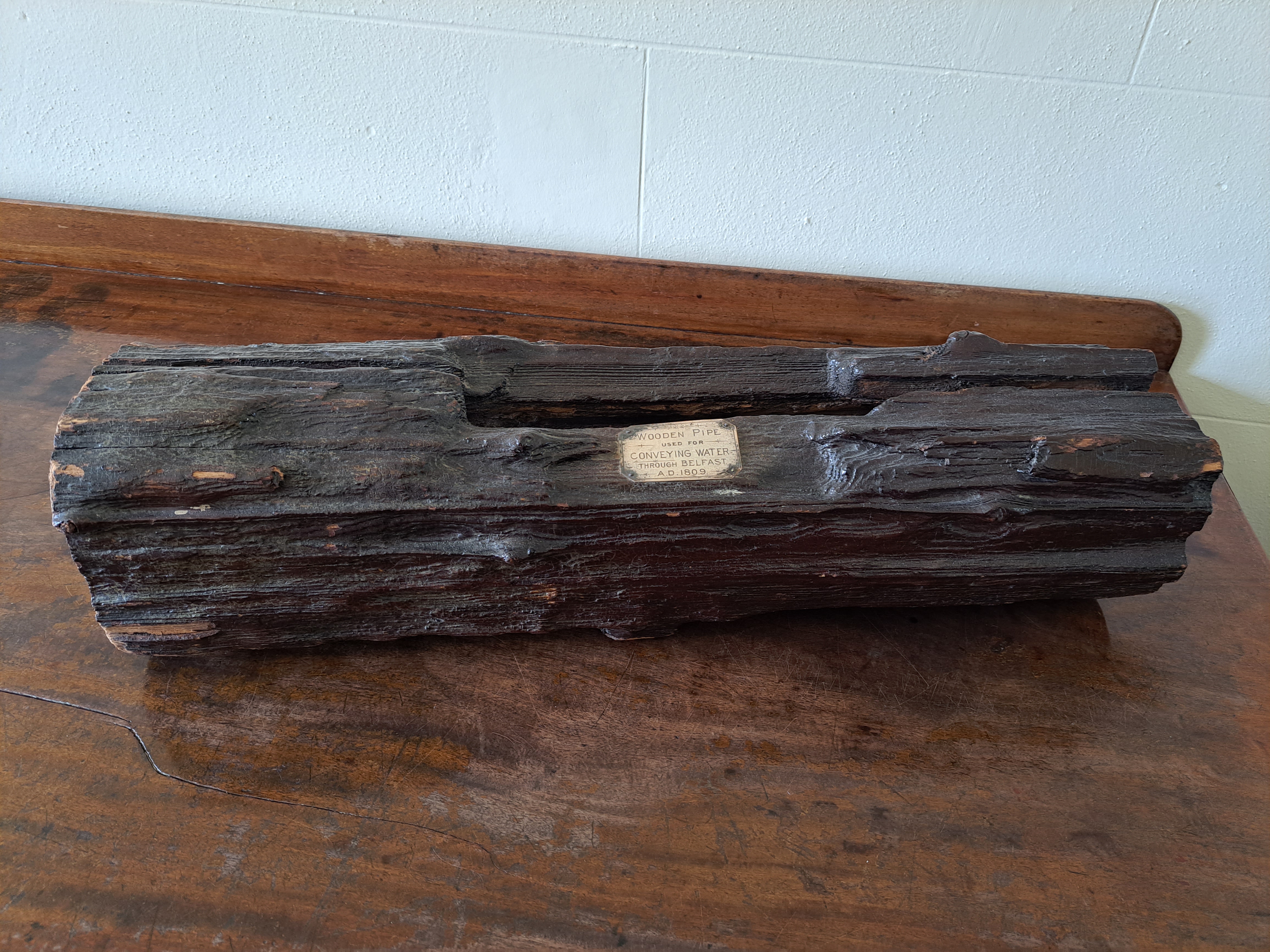
Water pipe made from elm dating from 1809
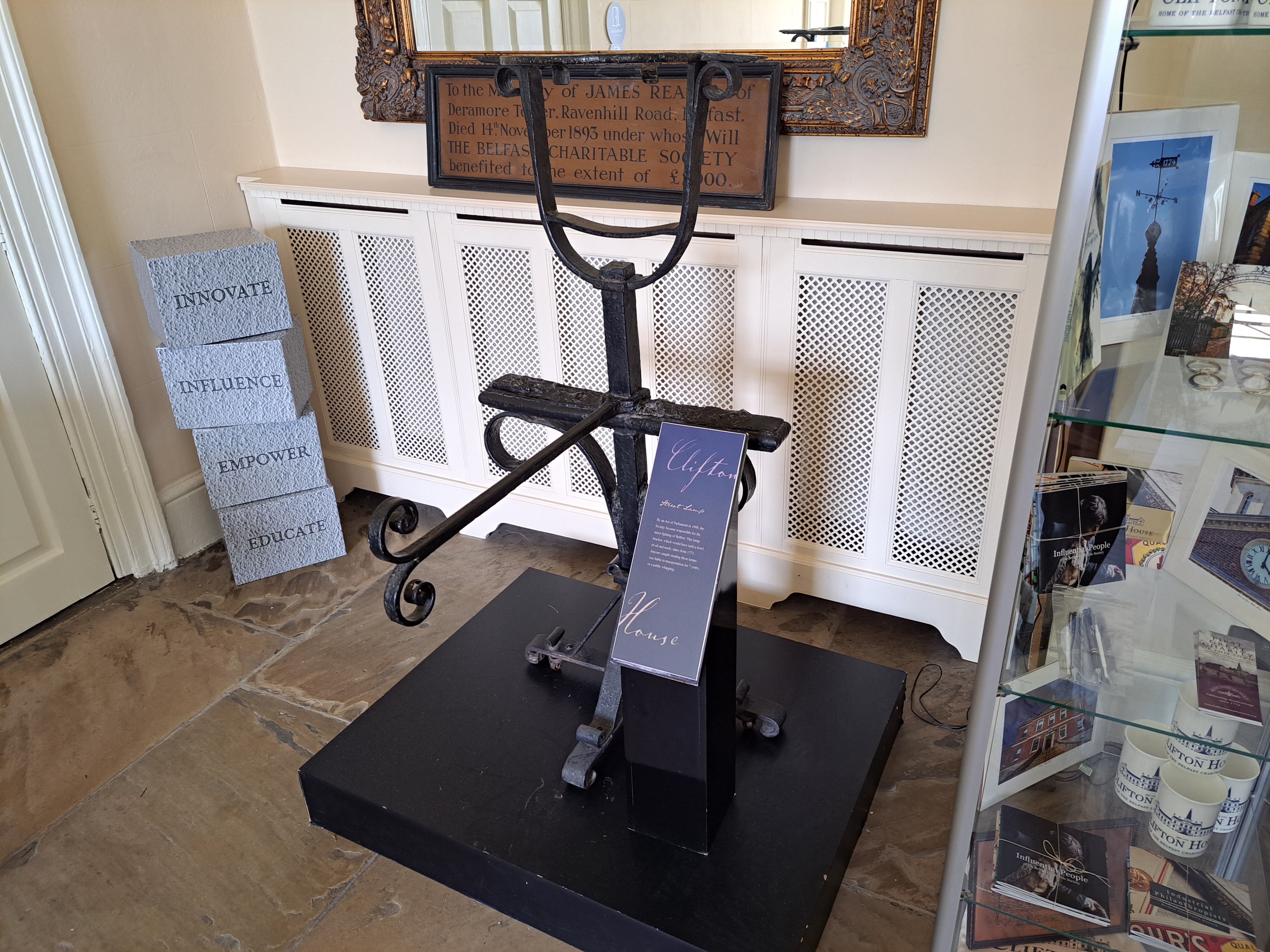
Early lamp bracket in use in Belfast in the 1770s

Examples of the English Elm which were used as water pipes were on show and such was the importance of this function the Water Commissioners had to make an annual payment of £800 in perpetuity to the Belfast Charitable Society. This still continues to this day with NI Water having taken the place of the Water Commissioners and still being obliged to pay £800 per annum to the Charitable Society.
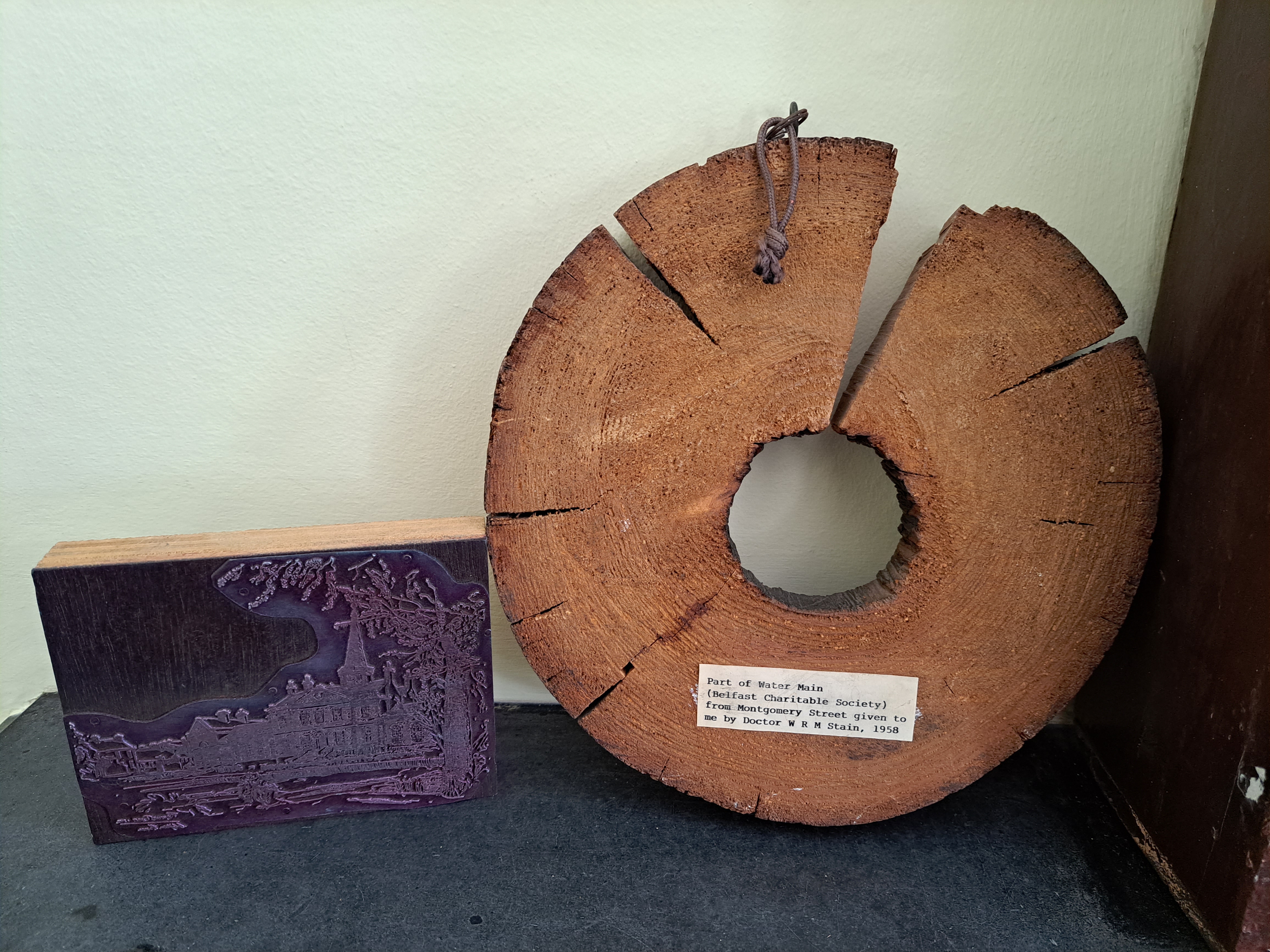
Cross-section of water pipe

The Society played its part in the development of cotton spinning and weaving in Belfast when machinery was established in the basement of the building for children to work on.

It is an impressive and dignified building, beautifully restored in recent decades and still fulfilling its original function of caring for those in need.
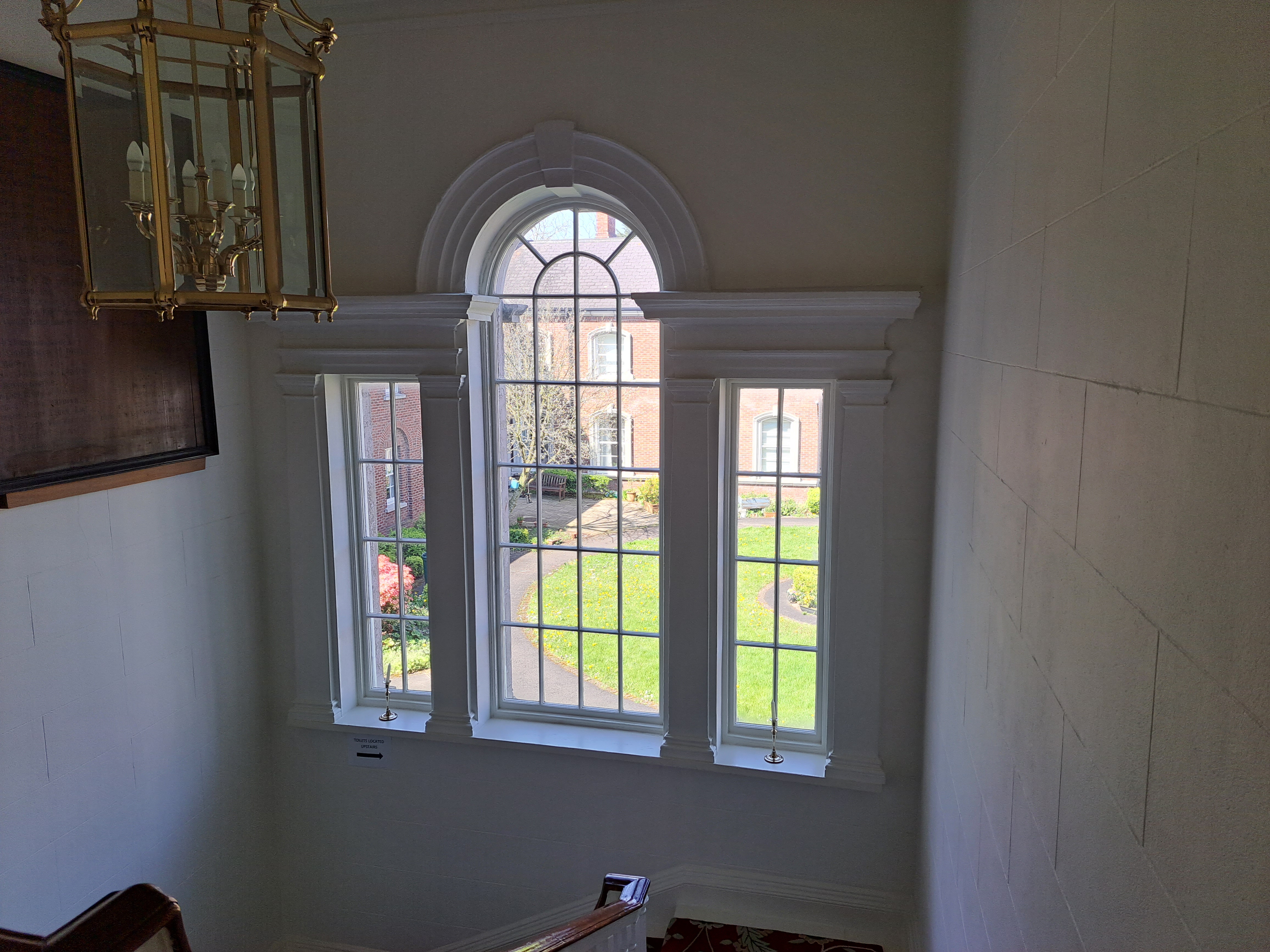
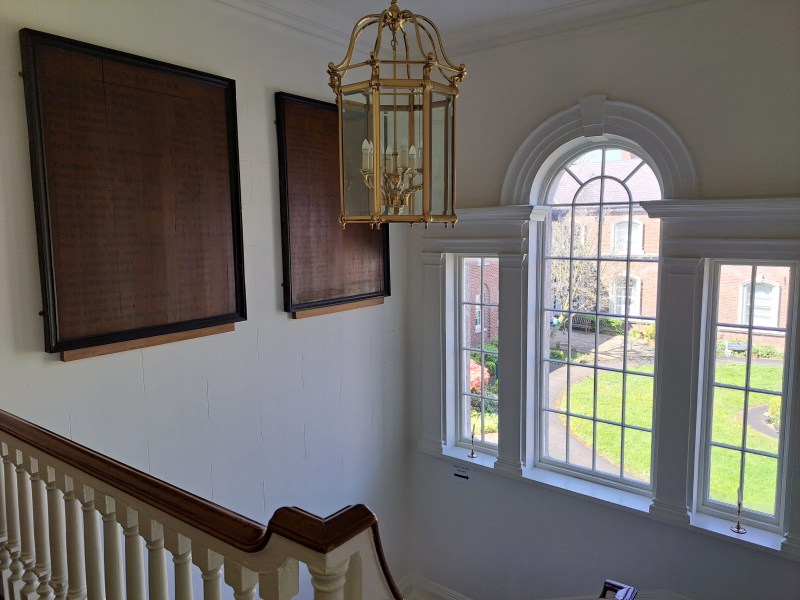
View from the staircase

At the heart of the building is the boardroom, a room which also has a key place in so many aspects of the history of Belfast:
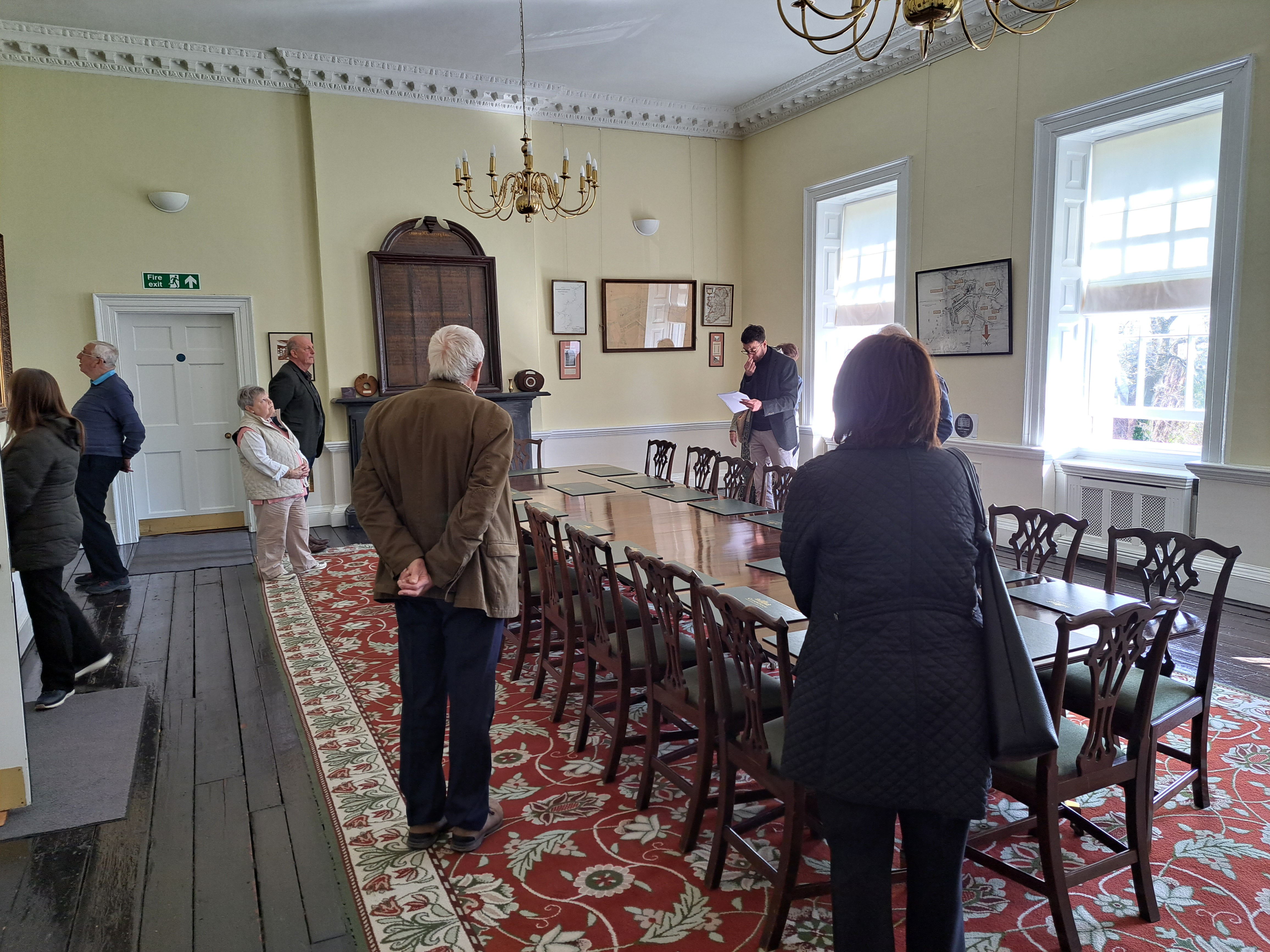
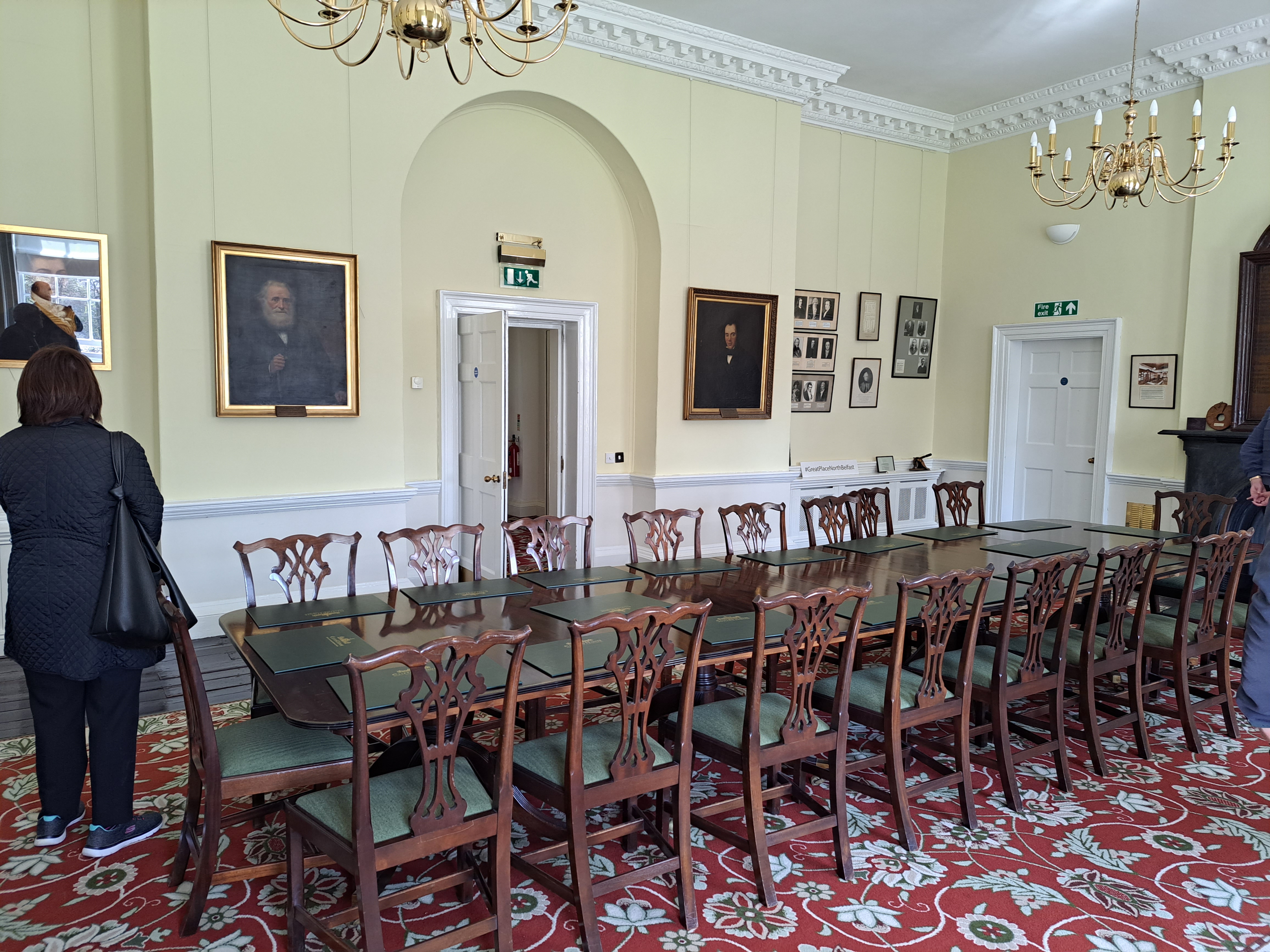
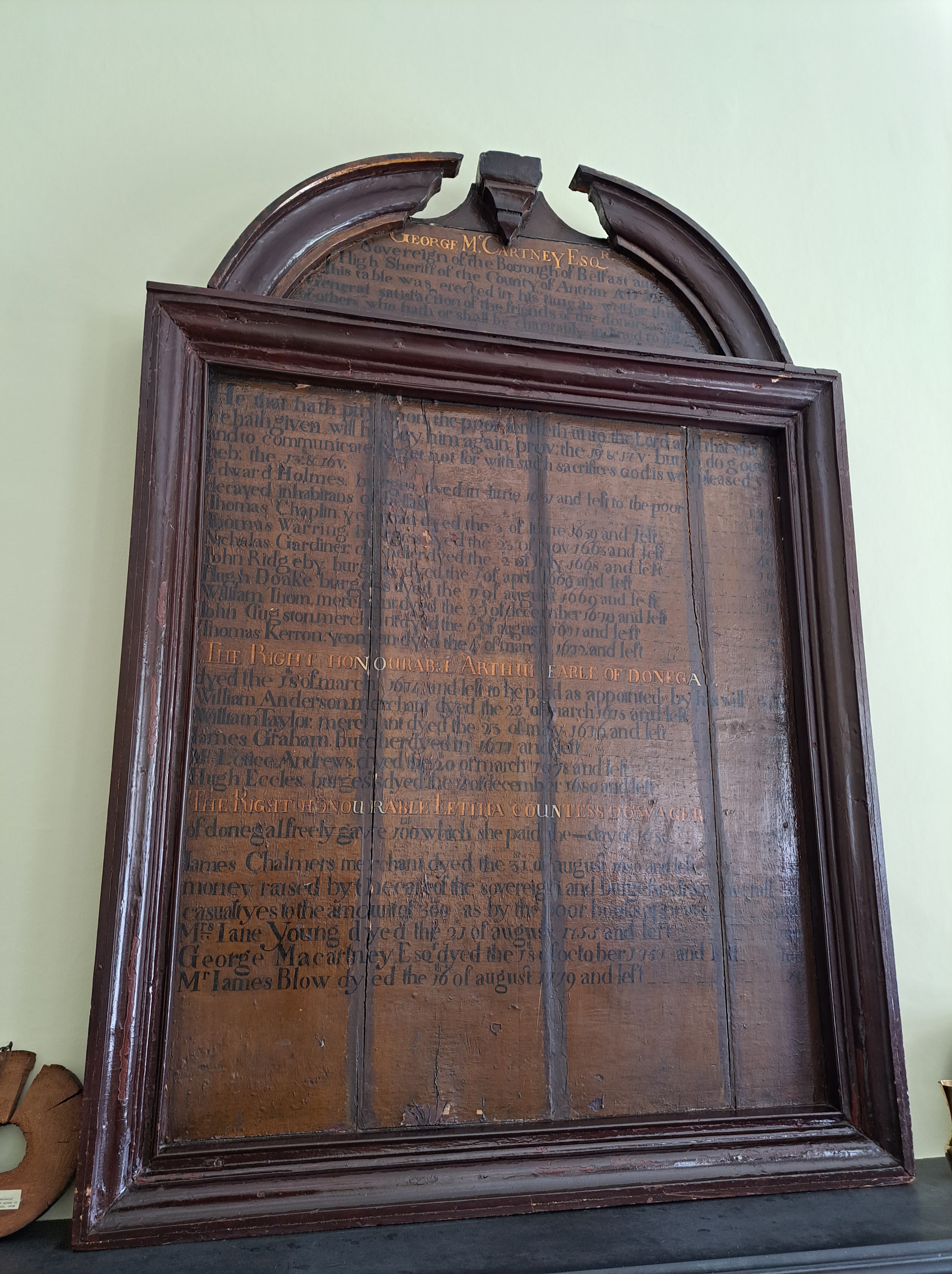
Charity board in the Boardroom

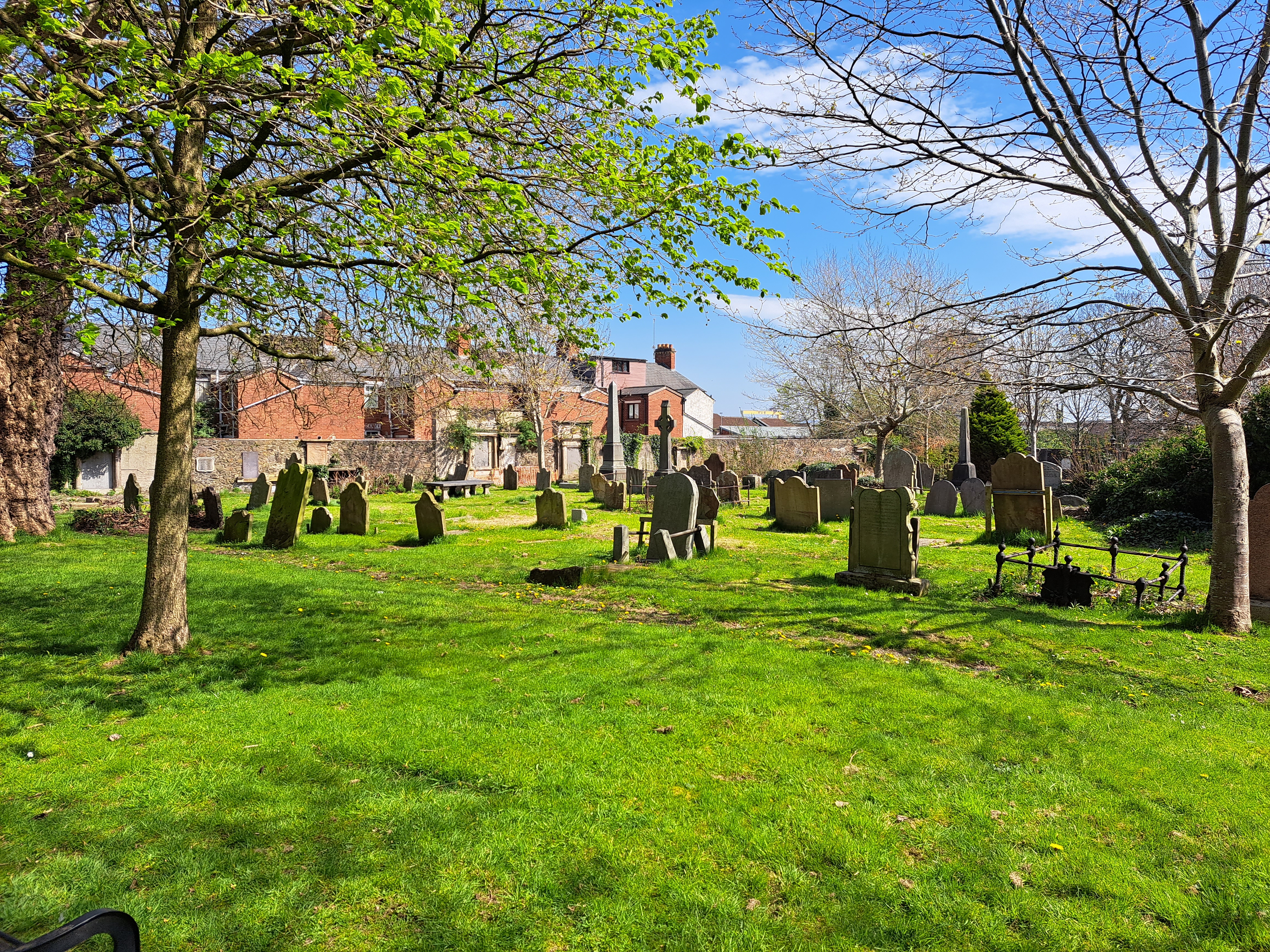
The extensive tour also took us round the Clifton Street graveyard. Another repository of Belfast history.
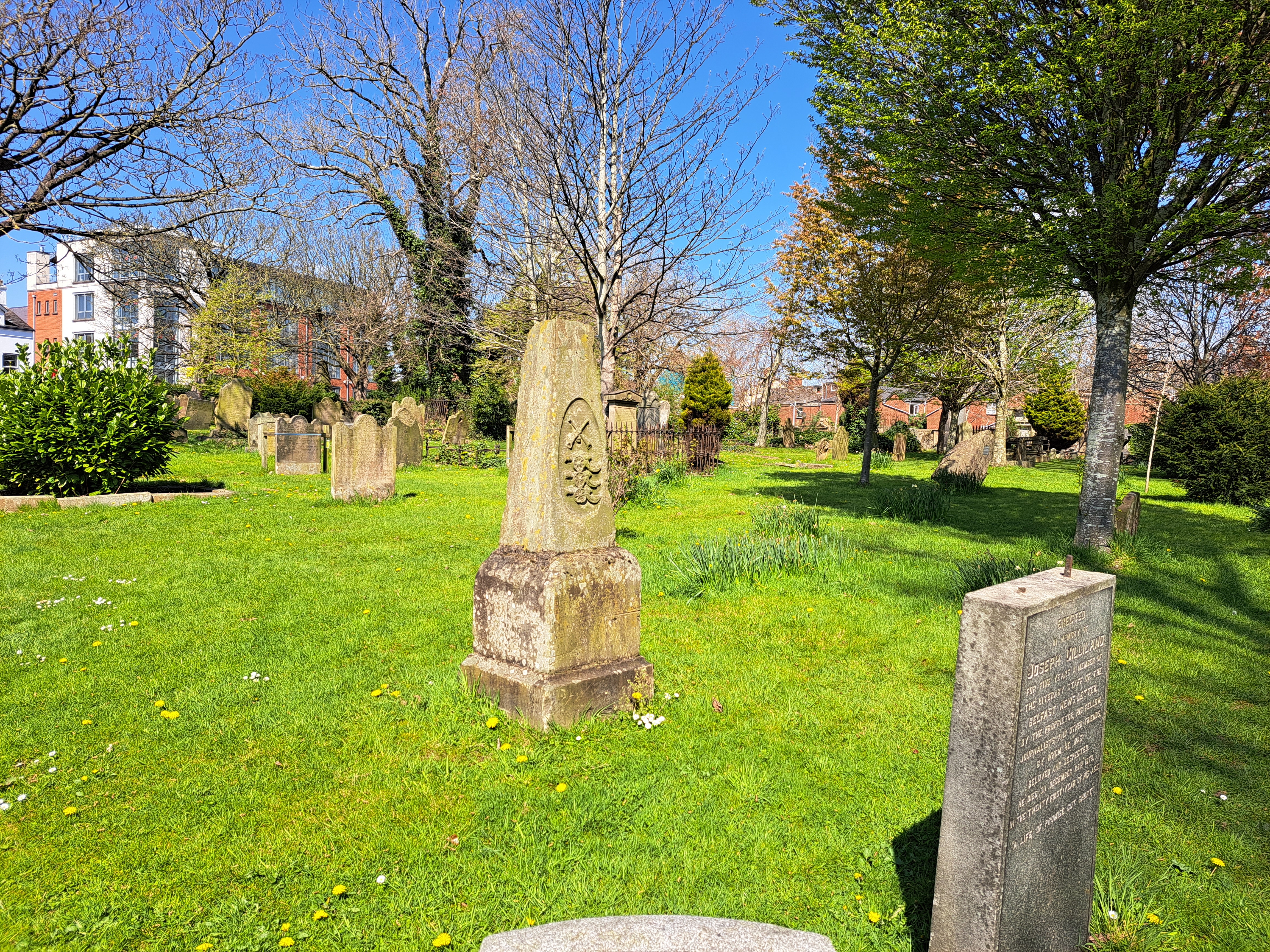
Sadly the graveyard suffered greatly from vandalism at the start of the Troubles, although its existence was threatened fairly dramatically in its early days when it was frequently targeted by grave robbers and we were told many tales of their nefarious activities over the years.

Vandalised grave of Robert Haliday

But there is still a great deal there that connects us with Belfast’s past, many of the people buried there being Non-Subscribers. Indeed throughout the tour many of the names we heard who had been associated with Clifton House were members of our denomination.

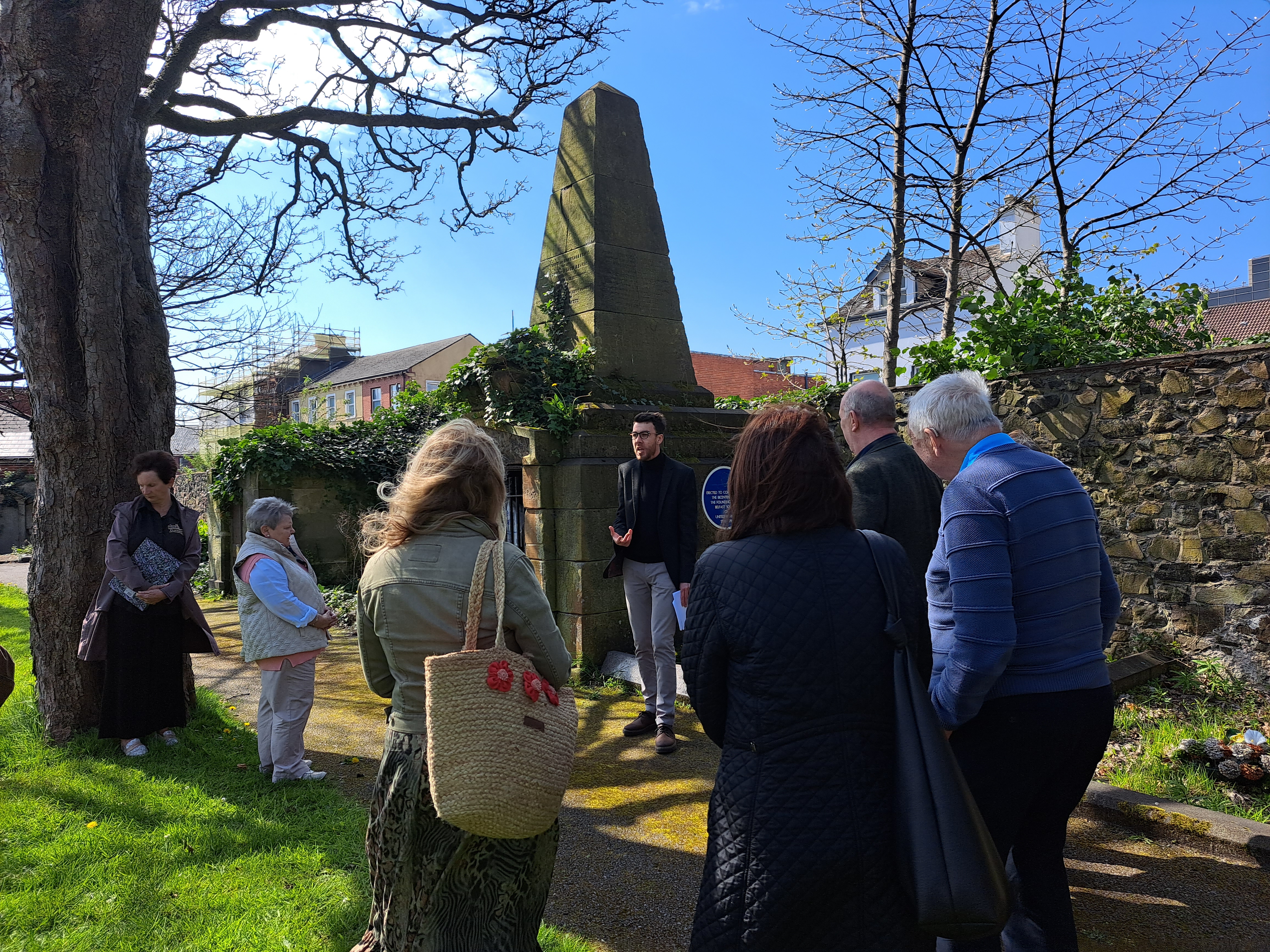
Grave of Mary Ann McCracken and possible resting place of Henry Joy McCracken

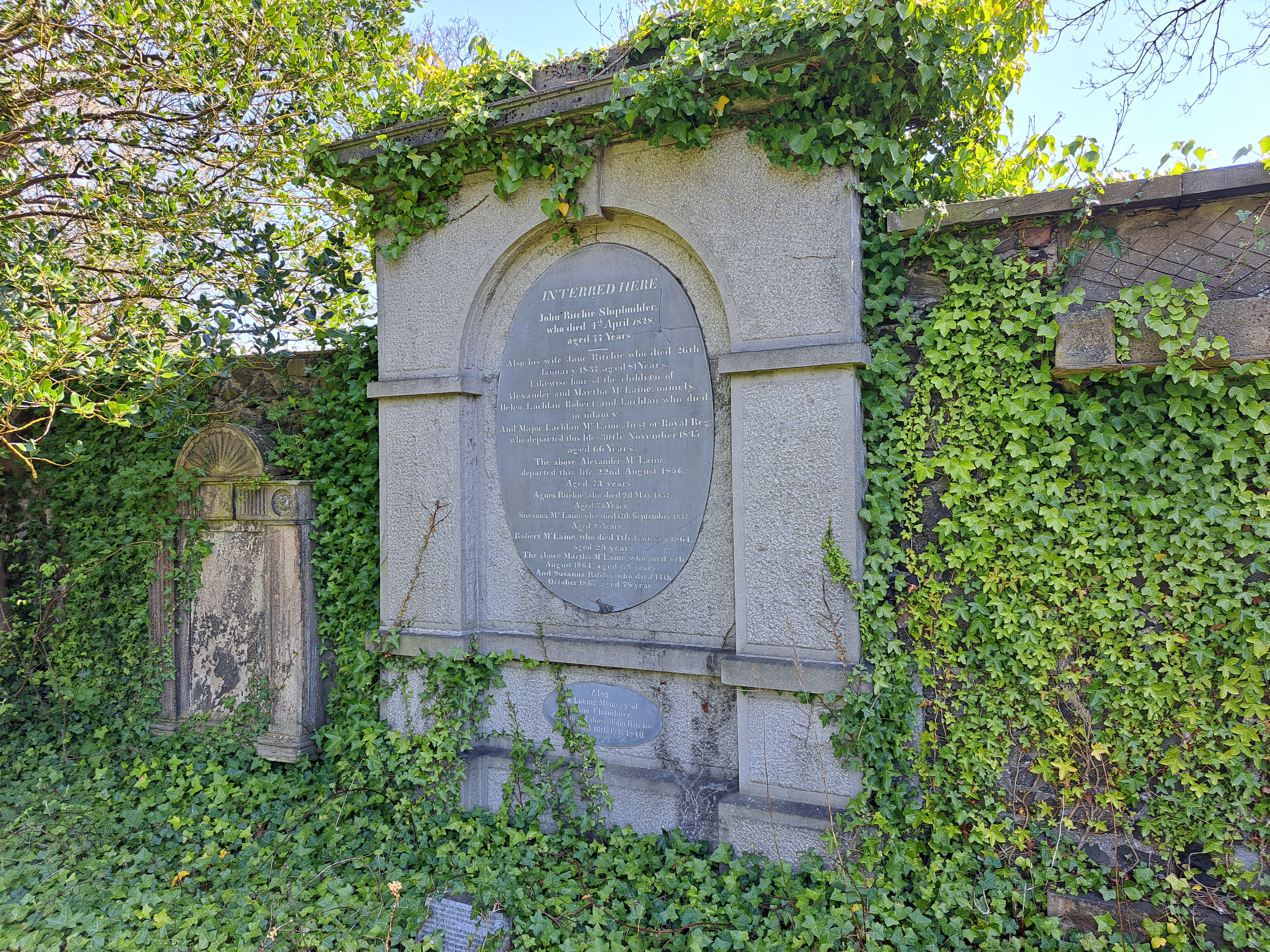
But in the graveyard we saw the graves of such notables as Dr William Drennan (poet, doctor, educationalist, United Irishman), John Ritchie (who established ship building in Belfast), and Thomas McCabe (who successfully opposed the establishment of a Belfast slave ship company) who were all Non-Subscribers, as indeed was Waddell Cunningham who it was who proposed establishing a slave ship company in Belfast (but who isn’t buried in Clifton Street).
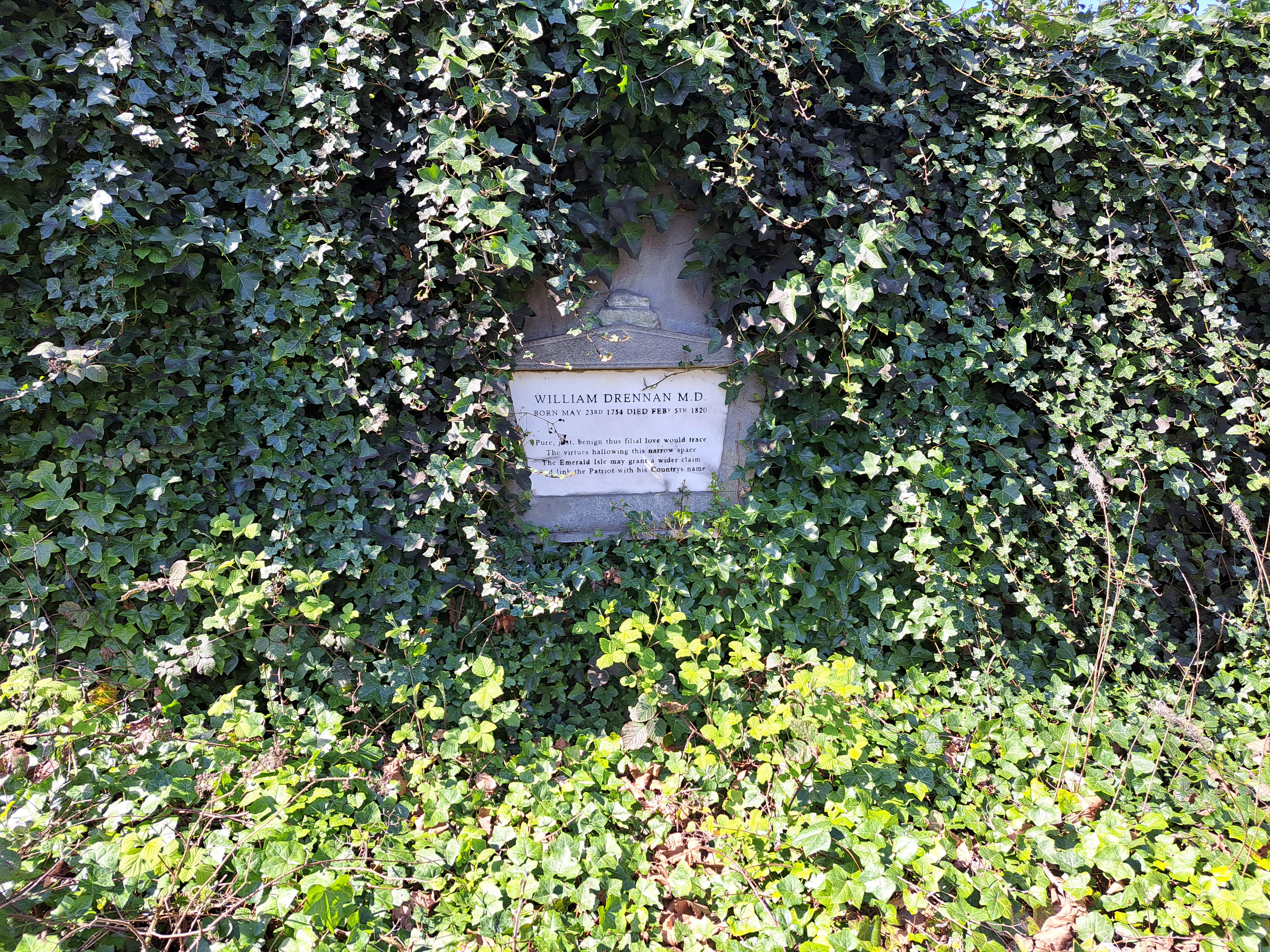
Grave of William Drennan
Grave of John Ritchie
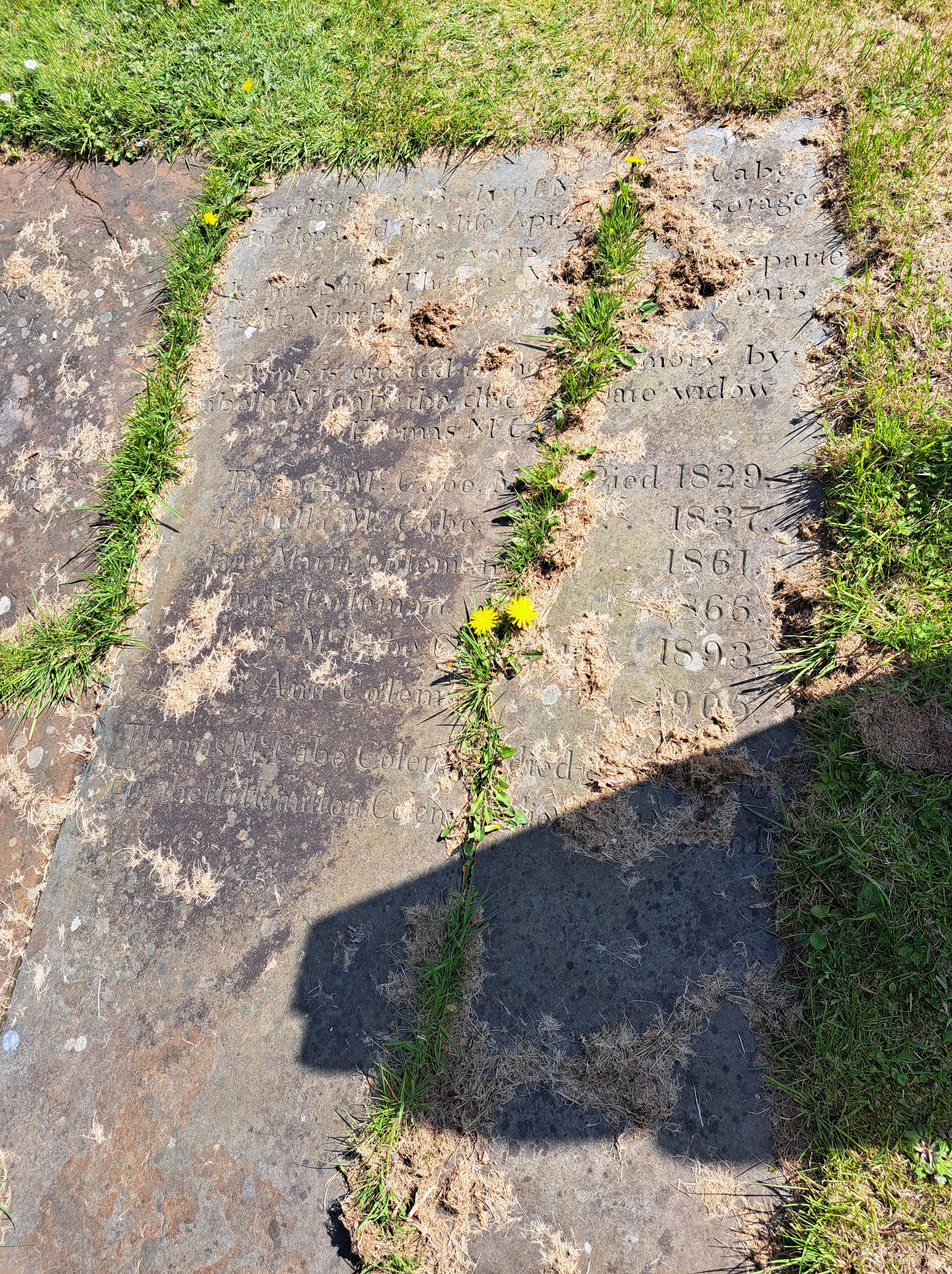
Grave of Thomas McCabe

It was a fascinating tour and we are grateful to our guides for such an interesting and illuminating morning.
The A to Z of Non-Subscribing Presbyterianism V to Z

We have now completed the whole of our alphabetical survey having added the letters V to Z over the Christmas period. V stands for Verse, W looks at the role of Women in the church and ministry, X is represented by eXile, Y stands for Yahweh, and Z is for Zechariah. All the videos can be seen below.

Verse

V is for Verse

Where fishes play and bells do ring

Having reached the letter V in our study of Non-Subscribing Presbyterianism we look at poets and poetry in our tradition. Radicals, United Irishmen, literary giants, writers in Ulster Scots; the story of poets in our tradition is remarkably broad.

Who was the first person to refer to Ireland as the ‘Emerald Isle’? Which Ulster town was described as a place ‘where fishes play and bells do ring’? Which hymn penned by a Non-Subscriber has been in print for over 200 years? To which congregation did the ‘Shipyard Poet’ belong? Find out the answer to these and other questions in today’s service which looks at seven poets from the Non-Subscribing Presbyterian tradition. Conducted by the Rev Dr David Steers and filmed at First Presbyterian (NS) Church, Dunmurry the reading is from Isaiah ch.12 v.4-6. Church organist Allen Yarr plays the hymns: Just as I am, Thine own to be (Church Hymnary 497) and Thy Kingdom come, O God (Church Hymnary 152).

Women

The A to Z of Non-Subscribing Presbyterianism: Women

The twenty-third in a series of alphabetical explorations of the Non-Subscribing Presbyterian Church of Ireland. W – Women. Non-Subscribing Presbyterian Worship conducted by the Rev Dr David Steers. Filmed at Ballee and Dunmurry Non-Subscribing Presbyterian Churches. Reading: Acts ch.16 v.11-15. Organist: John Strain (Ballee) who plays the hymns: My spirit longs for thee (Hymns of Faith and Freedom 301) and Sent forth by God’s blessing (Hymns of Faith and Freedom 409). In today’s service we look at the role of women in our denomination and at the Rev Gertrude von Petzold who has the distinction of being the first women minister, commencing her ministry in Leicester in 1904.

X is for eXile

X is for eXile, the influence of Irish Non-Subscribers around the world

In this service we look at the considerable contribution made by Non-Subscribers who left their native shores to found churches and extend their faith all around the world, particularly in Canada, New Zealand and South Africa. Who knew that there was once a Presbytery of Canada or that the first electoral register in the Cape Colony in South Africa was introduced by a Non-Subscriber and paid no attention to race? The service is conducted by the Rev Dr David Steers and filmed at Downpatrick and Dunmurry Non-Subscribing Presbyterian Churches. The reader is Gilbert Cameron (Dunmurry) who reads Jeremiah ch.24  v.4-7 and the organist is Laura Patterson (Downpatrick) who plays the hymns: In the bleak midwinter and When he cometh. At the start of the service John Strain also plays ‘Hark a thrilling voice’ on the organ at Ballee.

Yahweh

The A to Z of Non-Subscribing Presbyterianism: Yahweh

The name of God

In the penultimate service in our alphabetical journey through our religious tradition we have reached the letter ‘Y’ and look at the Hebrew word for God, what we understand by it and how it influences our faith in the twenty-first century. Filmed at Ballee, Clough and Dunmurry Non-Subscribing Presbyterian Churches the reader is Elsie Nelson (Clough) who reads Exodus ch.3 v.1-6. John Strain plays the hymns: I heard the voice of Jesus say (Hymns of Faith and Freedom 199) and Go work in my vineyard (Hymns of Faith and Freedom 294). At the start of the service John also plays Lo he comes with clouds descending.

Zechariah

Z is for Zechariah

Having reached the letter Z in our journey through the alphabet of our denomination, Z stands for Zechariah. This service is filmed at Ballee and Dunmurry. The reader is Robert Neill (Downpatrick) who reads Luke ch.1 v.67-79. Laura Neill (Downpatrick) plays Auld Lang Syne on the bagpipes. John Strain plays the hymns: I heard the voice of Jesus say (Hymns of Faith and Freedom 199) and Go work in my vineyard (Hymns of Faith and Freedom 294).