Images of Oxford

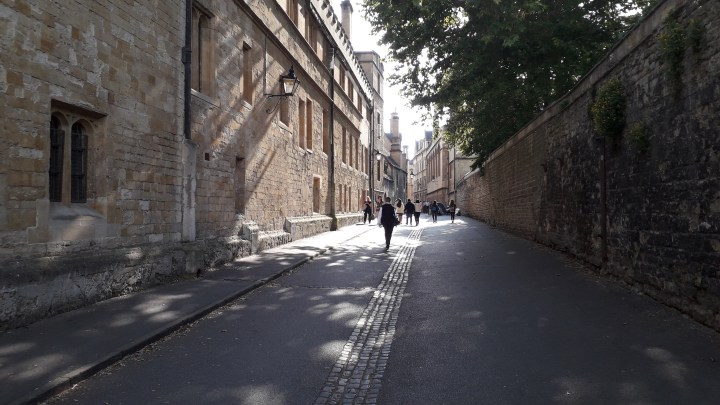
Oxon Brasenose Lane

Brasenose Lane

Whenever I am in Oxford I always tend to take pictures as I walk about. This is easily done with modern mobile phones and if the pictures are unlikely to win any prizes they at least can give pleasure to the photographer. I took a lot of pictures when I was an undergraduate at Oxford, in those far-off days using a Russian Zenith EM camera, which was then the cheapest SLR camera that was available. I was reminded of this as I walked around Oxford recently because of certain items in the news. One of the inevitable consequences of being at Oxford is that you rub shoulders with all sorts and conditions of persons, including many would-be politicians. There were not a few from those days who went on to be government ministers both Labour and Conservative, at least one was party leader and another one looks like becoming Prime Minister. But when I was a student at Christ Church I shared rooms with a person who was an activist in the Oxford University Conservative Association (OUCA). This had the side effect of frequent visits to our rooms of his associates from the (to me) rather dull and pointless world of Oxford student politics. For now I will draw a veil over the various political figures who were around in those days. For the most part they didn’t really impact that closely on my life but one of them came to mind when I was back in Oxford recently. One frequent visitor to my roommate was another OUCA activist who would come to discuss issues with his colleague, on one occasion pacing around the living room in a very heated way complaining about a story that Cherwell, the student newspaper, was threatening to run about him. Most of the time his presence didn’t impinge on me nor I on him but he couldn’t always ignore me and so on one occasion, when his friend disappeared for a while, asked to have a look at a fresh roll of film I had just had printed. “These really are marvellous photographs” he said. “Really quite excellent photographs” he enthused. He went through the prints one by one and then through them again, all the time praising each of them to the skies. Such use of light! What a composition! How ingenious! On and on he droned. A friend of mine who was visiting found this very amusing. This was standard ‘hack’ behaviour, to butter people up and ingratiate yourself so completely in the hope that one day you might vote for them in some election or other. The years go by and I had thought that this particular individual had never made it into politics. But at some point he does appear to have been elected to Parliament and recently achieved significantly high office and so is involved in the manoeuvres that will see the appointment of a new Prime Minister. Of course, maybe he really did think my photographs were superlative. Who knows? But being a successful politician is rather like being a great actor. You have got to have sincerity. If you can’t fake sincerity you will never be a great actor.

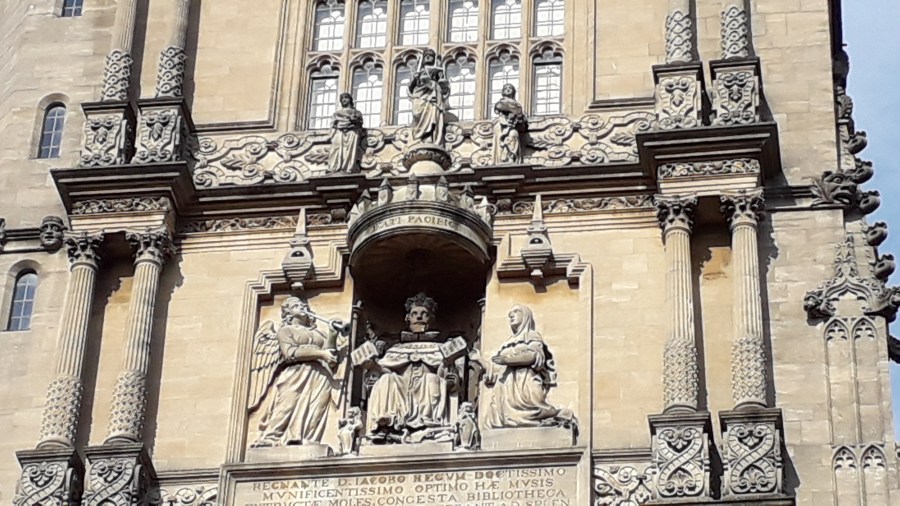
Radcliffe Camera

Radcliffe Camera

Oxon Oriel gate

Oriel College gate

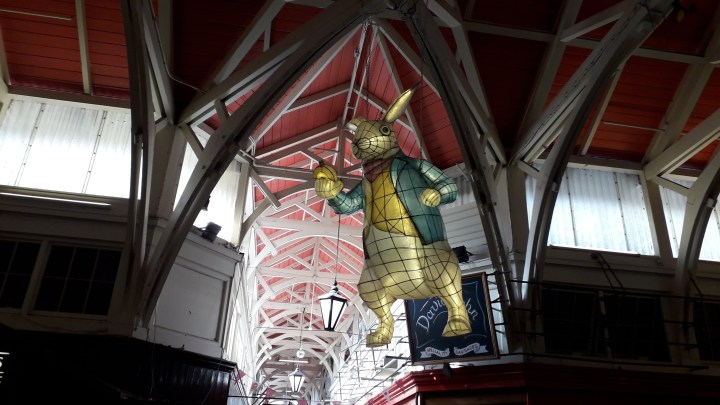
Oxon White Rabbit 02

White Rabbit in the covered market

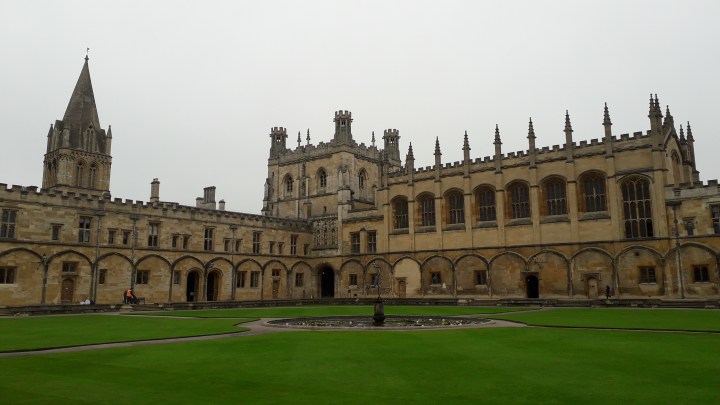
Ch Ch Tom Quad

Tom Quad, Christ Church

Oxon Merton lane

Grove Walk


Catholic Apostolic Church, Liverpool

The Catholic Apostolic Church was a remarkable church which combined revivalist enthusiasm with liturgical worship and married a millenarian theology with prophetic ministry. Because of their belief in the imminent second coming they set up a system that ultimately proved to guarantee their own obsolescence. Believing that the second coming of Christ was very near they tried to re-establish the offices of the primitive church starting with Apostles in 1832 which had reached the full number by 1835. Since only they could ordain the prophets, evangelists, pastors, ‘angels’ (bishops), deacons and other orders down to doorkeepers, the death of the last apostle in 1901, before the return of the Lord, meant that there was no longer any possibility of continuing in the long term.

I am not sure how many Catholic Apostolic churches there ever were but their churches were very grand and required sophisticated architectural designs. Because they tended to include in their number many wealthy people they were often able to design and build some quite magnificent buildings. The church in Gordon Square in London, now leased to various Anglican groups, would be the best surviving example of their architecture, but the Roman Catholic Church in Bristol was originally Catholic Apostolic and is another impressive building, in this case having a classical design. I did see the less grand Catholic Apostolic church in Belfast before it was suddenly demolished but wasn’t able to take a photograph of it. Indeed an online search does not produce any images of this building, although it would be nice to think some images are preserved somewhere. It seems to have given up its licence to conduct marriages in 1954.

This excursion into the world of the now vanished Catholic Apostolic Church was prompted by the discovery of an old USB on which I had transferred at some point a couple of slides featuring the Catholic Apostolic Church on Catharine Street, Liverpool. It closed at some point in the 1970s and later was used by the New Testament Church of God. Later still it passed into secular use, then became badly dilapidated before being burnt down in the mid-1980s.

20131023150738-06

The church in the mid-1980s

I found these images on the USB, originally taken as 35 mm slides the first of which I must have taken in about 1985 and the second in 1986. The first shows the church when it was unused and beginning to show signs of neglect. The second shows the view from the side towards the high altar after it was destroyed by fire. A great shame that such an unusual building was lost. Pevsner recorded that the plan of the building had been revealed to the first minister in a dream. He also said there were Flemish roundels incorporated in the stained glass windows. Whatever was there the little that survived was subsequently demolished and a block of flats built on the site.

20131023150738-04

The ruined interior after the fire

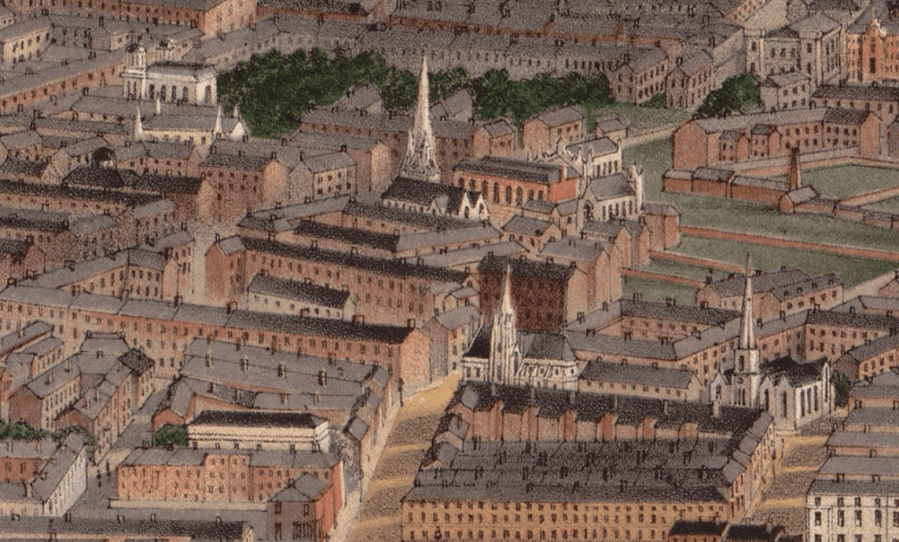
The image at the top of the page is a detail from an aerial view of Liverpool by John R. Isaac in 1859 and published in New York. This is a view from a hot air balloon and can be viewed on the Library of Congress site here.

Amongst the churches found in that image is the Catholic Apostolic Church on the corner of Catharine Street and Canning Street, it can be seen slightly to the right of centre still with its spire which was removed in the early 1970s. An account of all the churches in that picture can be read in an earlier post: Seven Churches in Liverpool in 1859 viewed from the air.

No pictures or text may be reproduced from this site without the express permission of the author.

Faith and Freedom

HMCO quad

Faith and Freedom gave its annual report to the meeting of the Ministerial Old Students Association and the Annual Meeting of Friends and Honorary Governors held at Harris Manchester College, Oxford on 24th  -26th June, 2019. It was an excellent meeting, one of the highlights being the Principal, Professor Jane Shaw’s illustrated lecture on  The Arts and Empathy. Nigel Clarke, the business manager for the journal gave an impressive powerpoint presentation outlining the last year’s activity. A number of new subscribers signed up to receive the journal.

HMCO Nigel speaks

Nigel delivering the annual report

HMCO Principal lecture

Art and Empathy lecture by the Principal

HMCO worship in the chapel

Worship in the college chapel

HMCO kindle 02

‘Kindle’, a steel and glass artwork by Steve James and Vital Peeters in the college herb garden

F&F Cover 188

The latest issue 


All Souls’ Church, Belfast built 1896

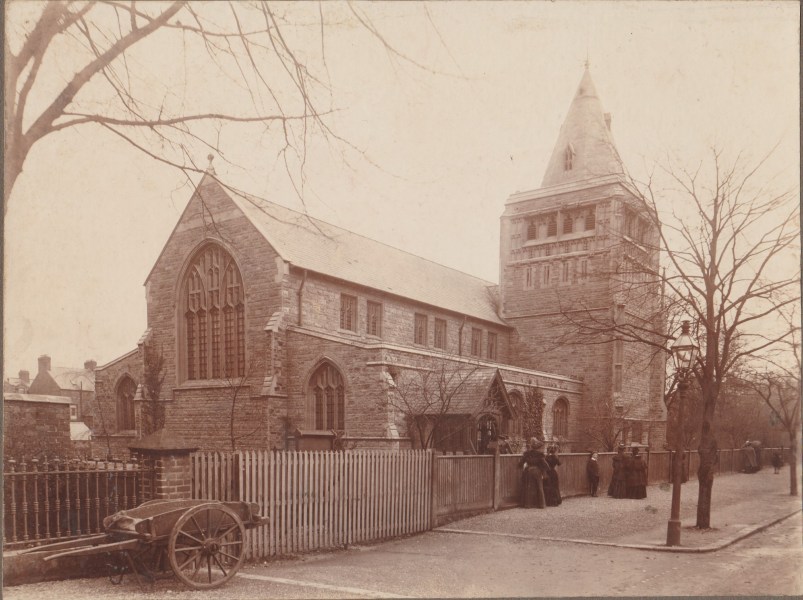
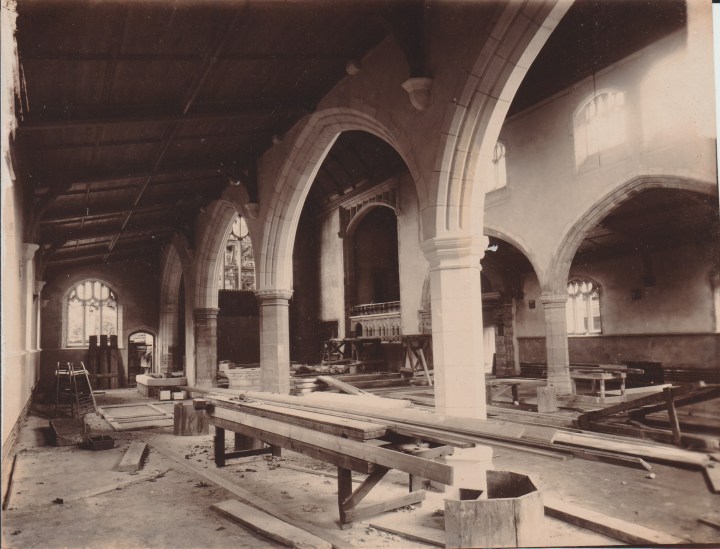
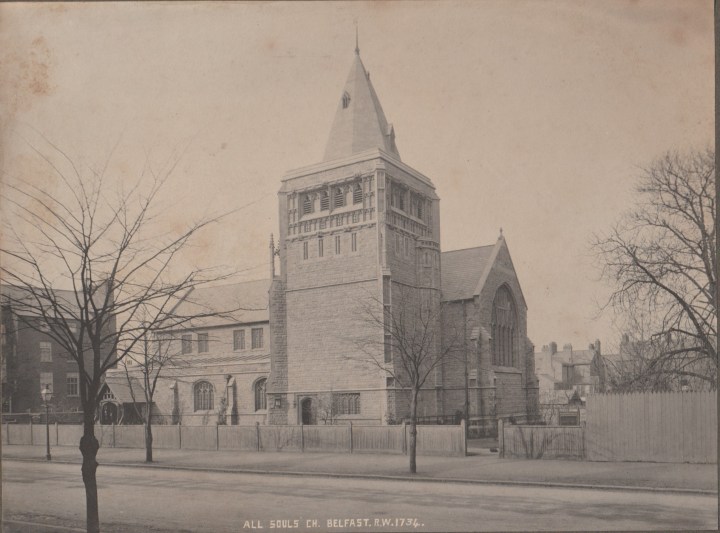
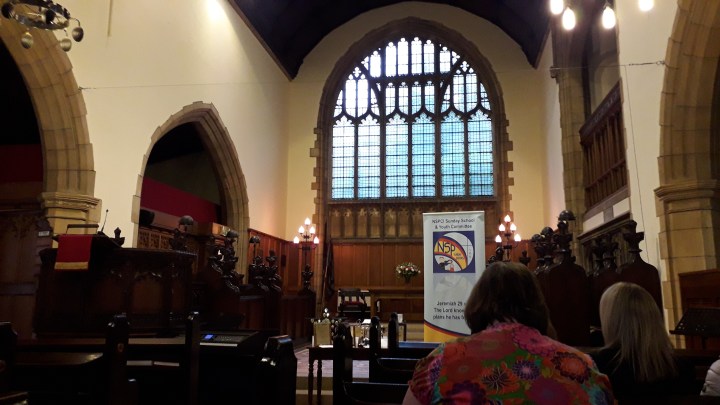
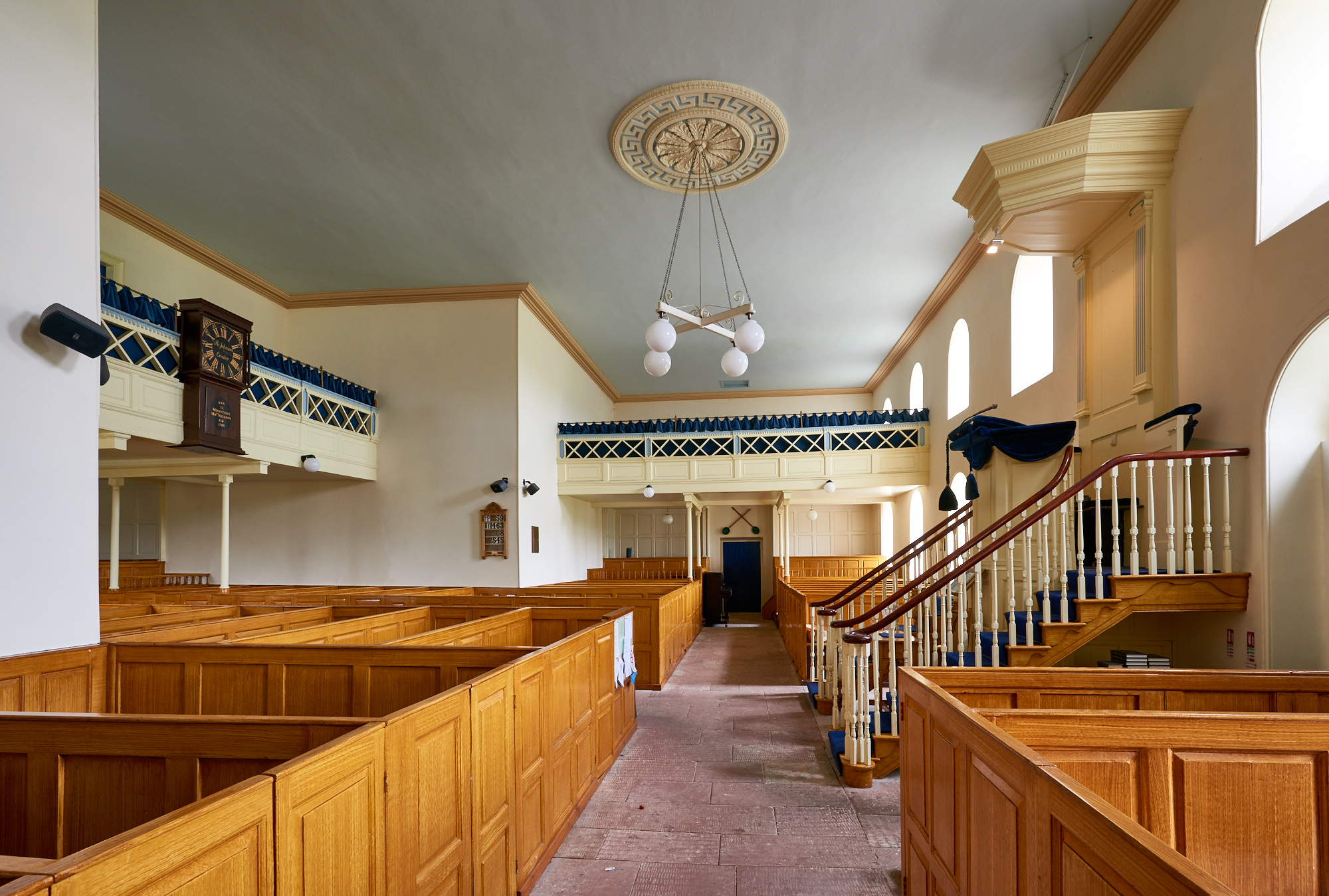
All Souls’ Church, Belfast exterior is modelled on Croyland Abbey in Lincolnshire. Built by the architect Walter Planck and opened for worship in 1896 it is the only church designed by that architect in Ireland. But it is interesting to note how closely the interior resembles the interiors of a number of fifteenth-century English parish churches. The arches, pillars, chancel, east window, clerestory windows all are reminiscent of a number of such places. I realised this when I saw a picture of the interior of the Church of St Mary in North Petherton. An Edwardian postcard of this interior  looks almost identical to All Souls’. Even the pews in All Souls’ underline this effect, the pews were brought in from the old meeting house on Rosemary Street when that church was vacated. These originally dated from the 1870s and a lot of Victorian parish churches would have installed new, modern pews at that time. The choice of this kind of architecture was quite deliberate by the minister, the Rev Edgar Innes Fripp in 1896. He was reaching back to medieval England to establish the kind of devotion he thought was most truly authentic. But architecturally it is a marvel. John McLachlan (in The Unitarian Heritage) says it is “unique in Irish Non-Subscribing church architecture”. But there is nothing like it in English Unitarian church architecture either which has a lot of remarkable gothic buildings.

All Souls ext construction 02

Simon Walker (Historic Ulster Churches) says “it would be as fitting in a rural English setting as in Belfast’s busy University area”. Richard Oram (Expressions of Faith Ulster’s Church Heritage) notes that “It is a unique and beautiful, little building”. Paul Larmour (Belfast: an illustrated architectural guide) calls it “a gem of Victorian architecture”.

All Souls int construction 01

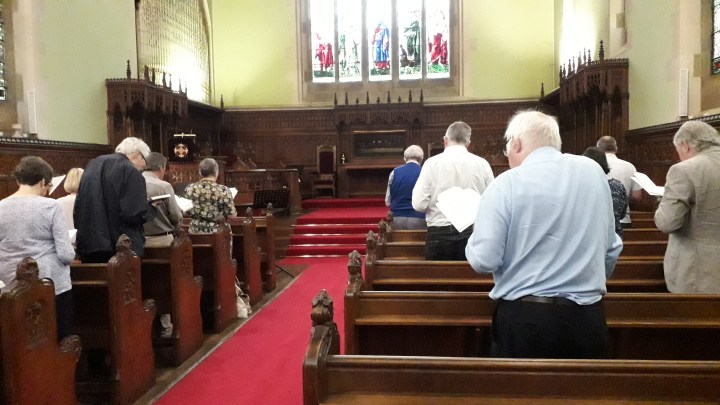
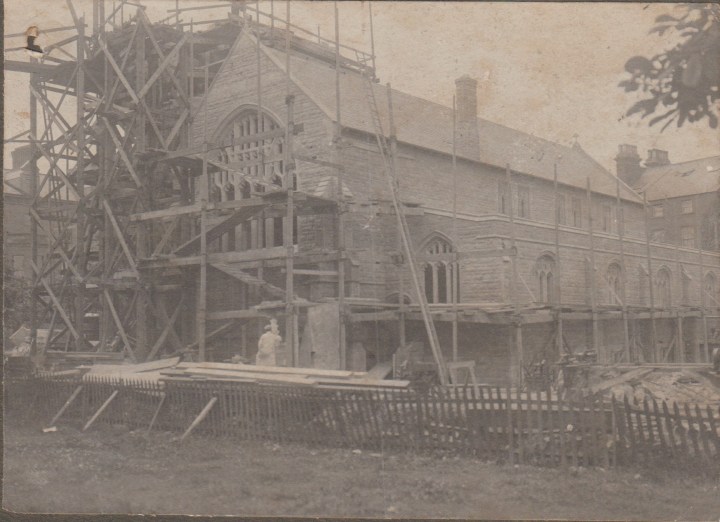
The pictures on this page show the church under construction and soon after it was built, plus a view of the chancel taken before the NSPCI Sunday School service held there on 7th June 2019.

All Souls ext completed 01

All Souls June 2019

The Ancient Chapel of Toxteth and an early electric tram

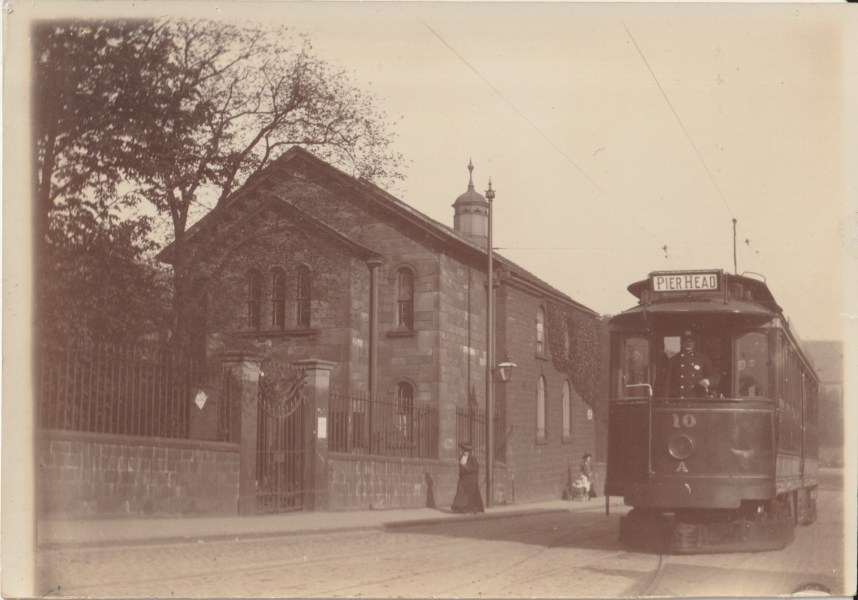
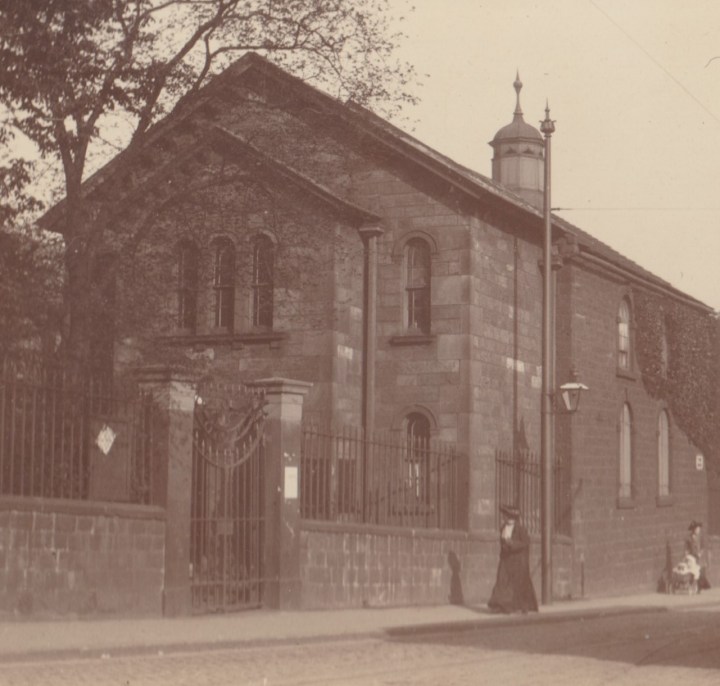
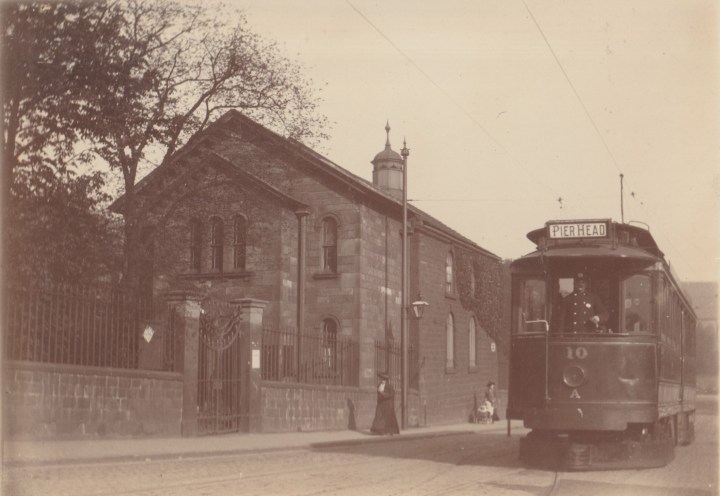
I was very pleased to pick up this picture on an ever-popular internet auction site. It was sold as a Victorian photograph, but I thought it possibly wasn’t quite that old and might, in any case, be a print that was made much later. However, I think it is a genuine old photograph, probably dating from the earliest years of the twentieth century. It is only a very small print, about two and a half inches by three and a half inches, but it is curiously interesting too.

It wasn’t very costly and I half expected it to command a much higher price appealing, as it does, to a number of different constituencies – those with an interest in old chapels, enthusiasts for Liverpool history, and aficionados of trams and transport.

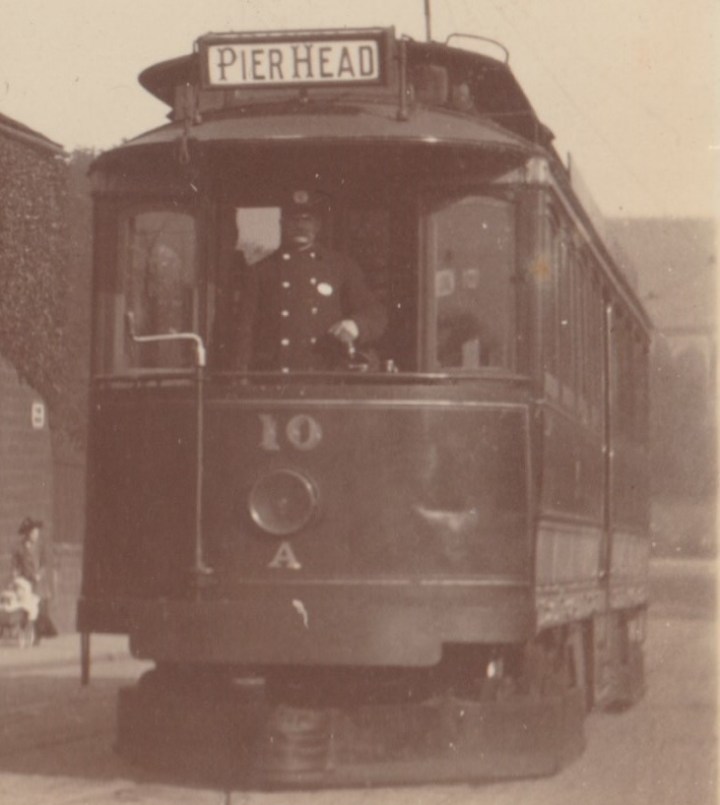
Clearly it is a view looking towards the end of Park Road. There on the left is the Ancient Chapel of Toxteth, complete with ivy and a corporation road name plate. There are a few pedestrians wandering past: a lady in a long dress and another lady pushing a pram outside the chapel. On the right is tram car number 10A climbing the slight incline of Park Road, on its way to the Pier Head.

Ancient Chapel Tram 03

The size of the print would suggest a photograph taken after 1901 on a Box Brownie No.2, so probably not quite Victorian. The clothes worn by the ladies in the photograph would suggest a point at around that date. The driver of the tram is wearing a double-breasted overcoat with an oval badge on his chest and on his hat. The badge on his chest would be his licence and this particular style of wear apparently indicates the way the uniform of the driver (or motorman as he would have been called) was worn prior to 1904, or so I read on Ashley Birch’s very informative British Tramway Company Badges and Buttons site.

Ancient Chapel Tram crop 02

So we have a well composed photograph, probably dating to between 1901 and 1904, which I am sure is meant to contrast the old – in this case a place of worship dating back to 1618 – with the new, an electric tram, the most up to date and exciting form of public transport available.

Electric trams were introduced to Liverpool in 1898, so they would still be a relatively new phenomenon by 1904. A large dent on the front right-hand side of the tramcar points to this not being a brand new tram when this photo was taken but still it is a picture taken fairly close to the inauguration of the tram system in Liverpool. Another site (Ron’s Liverpool Tram Site) tells me that according to the number this was a Brill ‘Philadephia’ Car, built in America, and the picture does correspond with this type of vehicle.

Ancient Chapel Tram crop 01

The original tram depot was just around the corner from the chapel so this vehicle had only just begun its journey. The depot was built in 1898 and was a building that survived long after the tram system closed, I knew it well, or at least was aware of it but never gave its original purpose a second’s thought. The same would be true of the Smithdown Road depot opened in 1899 but still there until relatively recently. It’s curious how these buildings survived for such a long time before seeming to just melt away.

Another curious thing is how this corner of Toxteth became such a hub for transport. Once the most remote part of an ancient royal hunting park it became the site of an early seventeenth-century chapel for the convenience of the local farmers and was far away from the prying eyes of government or ecclesiastical hierarchy. The Chapel was situated really on the road to nowhere when it was built. Centuries later the Chapel found itself in between the first electric tram depot built on one side of it and the last station of the Liverpool Overhead Railway situated immediately opposite it on Park Road. The Dingle station of the Overhead Railway would have been just to the right of the tram in this picture. Impressively the Dingle Overhead Railway Station was built underground and is one of the few surviving features of that railway which closed the year before the trams were stopped in 1957. It is a significant junction which I have blogged about before:

Two views of a junction in Toxteth

ACT Ext 05

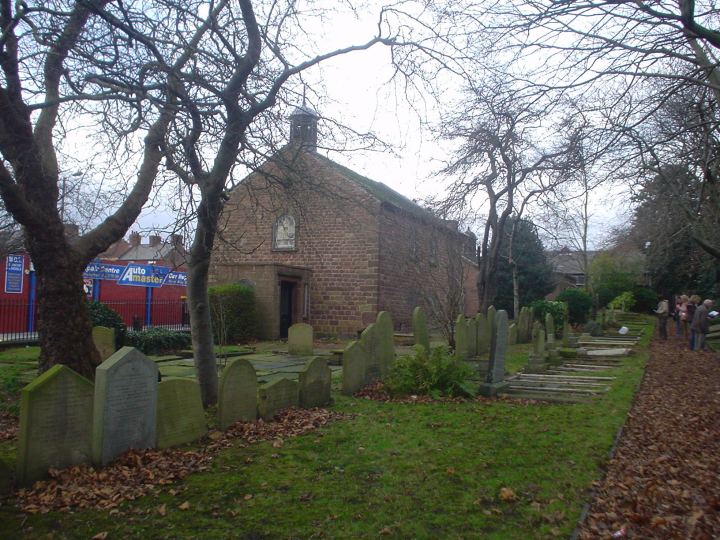
The view across the Chapel graveyard. The garage visible on the left was the site of the Dingle station of the Overhead Railway. The Dingle tram terminus was to the right of the picture.

It is curious too how trams were marked out as old-fashioned and unsustainable in the 1950s but came back into fashion in the twenty-first century. Today cities like Manchester, Edinburgh, Dublin and many more appreciate their value. Of course, most major European cities never took them away and have always had the benefit of these types of transit systems.

But it is easy to have a romanticised or sentimental view of this informative and attractive little photograph. It seems a long time ago as well. But when I was assistant minister of Cross Street Chapel in Manchester in the 1980s one of the oldest members was in his 90s. He had worked as a tram driver in Manchester before the First World War. He told me there was no covering above his head when he was driving and the rain would pour down his back in bad weather. In the end he was forced to give up due to ill-health and had a lifetime of difficulty with his back as a result. But maybe things were better in Liverpool, this driver certainly looks well enough protected at the front of his car.

No pictures or text may be reproduced from this site without the express permission of the author.

Buildings of South County Down

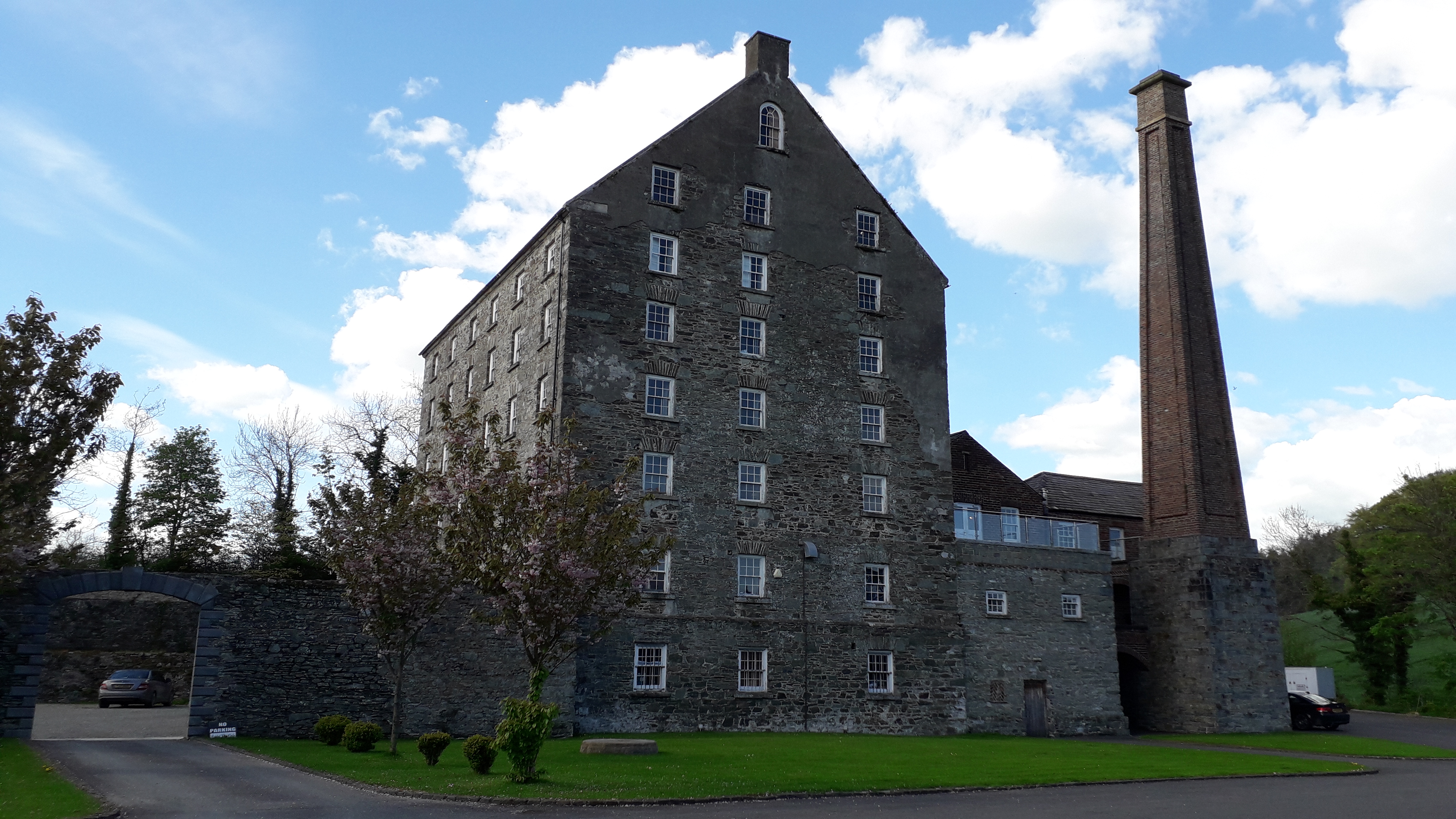
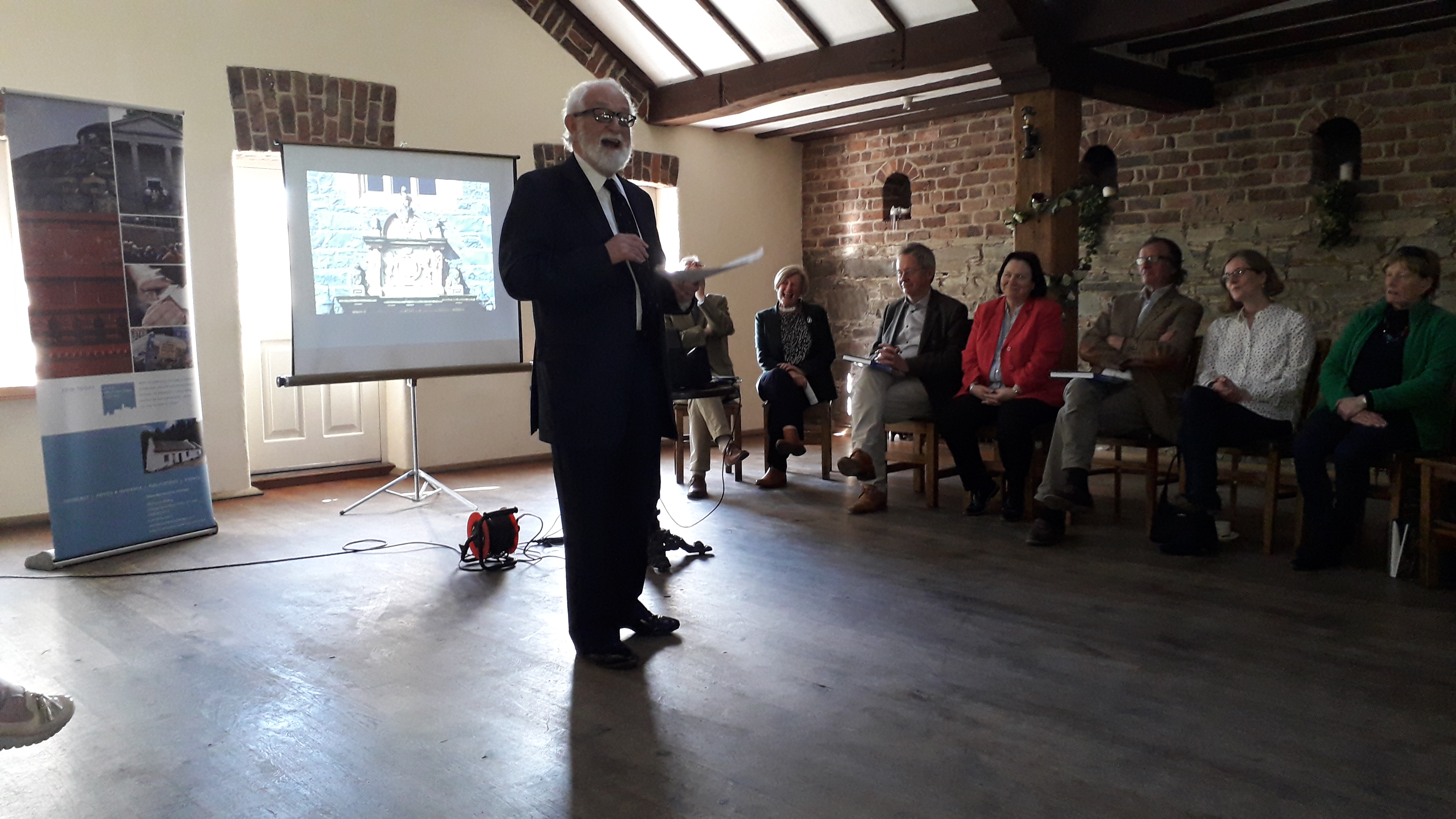
I was very pleased to be among those invited to the launch of the Ulster Architectural Heritage Society’s  new book Buildings of South County Down at Ballydugan Mill on 1st May 2019. It is a splendid book written by Philip Smith and beautifully illustrated throughout in colour by Alan Turkington. It describes itself as not claiming ‘to be an exhaustive record of its particular area, but rather a selection giving a broad overview of the built heritage of the southern half of Down’ and it is a very comprehensive collection of significant buildings both large and small, public and private.

Ballydugan Mill on the day of the book launch

The churches section numbers 25 buildings and contains no less than three Non-Subscribing Presbyterian churches which is a very significant representation and indicates the historical importance of what is, nevertheless, quite a small denomination. Both Downpatrick and Clough feature in the book, the Clough meeting house being photographed just before its recent repainting which means it doesn’t look its best but that can’t be helped. Leafing through the book it is interesting to see the number of other buildings that have a link with Downpatrick and Clough churches – the Murland Mausoleum has a photograph and a number of houses appear which were once the homes of prominent members including the homes of the Murlands themselves and the nearby houses of Nutgrove and Mount Panther, once the dwelling places of leading members of the church. Both Nutgrove and Mount Panther are painted on the First World War memorial in Clough.


Dr Edward McParland, Vice-President of Ulster Architectural Heritage introduces the book

The book contains much information that is new to me. I didn’t know that the now ruined but still impressive edifice of Mount Panther was named after the ‘local legend of the “Great Cat of Clough” a monstrous feline said to have once terrorized the area’. I also did not know anything about Marlborough House which seems to have originally been built by Rev Thomas Nevin sometime before 1728. The entry on the Downpatrick Church states that ‘the church is said to have been built in 1711 at the beginning of the ministry of the Rev Thomas Nevin’ but it seems clear from the presbytery minutes that the new building and the new ministry did coincide quite closely. However, one interesting thing about Marlborough House is that it was built quite near to the site of the original seventeenth-century meeting house, although Buildings of South County Down says that Nevin acquired the land from Brice Magee, a local apothecary, so it can’t have been the site of the original manse.

The other Non-Subscribing Presbyterian Church in the book is Rademon which has a number of very attractive photographs included with its account. The photograph of the interior of Downpatrick taken by Alan Turkington did not make the final cut but it is interesting to look at the interiors of Downpatrick and Rademon. Although the buildings are separated by over 75 years and it is not at all difficult to differentiate one from the other it is instructive to compare the two interiors which are very similar in layout and design and probably also dimensions:

Interior of Downpatrick (Photo: Alan Turkington)
Interior of Rademon (Photo: Alan Turkington) page 30

But the book contains much more than churches. As well as houses (grand, middling-sized and small) there are antiquities and fortification, public buildings, commercial buildings, follies, monuments and memorials. Anyone who enjoys looking at the built environment around them will enjoy this book and find plenty to enlighten them about buildings in the locality of south Down.

St Andrew’s Church of Scotland, Rodney Street, Liverpool

One of the most impressive church buildings surviving from the first half of the nineteenth century in Liverpool is undoubtedly St Andrew’s Church of Scotland on Rodney Street. These days it is really little more than a façade but it is remarkable that so much has survived given its turbulent history since the congregation left in 1975 and the fact that it was virtually in ruins for many years.

Rodney Street view front from right 02 cropped

There were plans, at one point, for the building to become a library for one of the universities which would have been a very good usage for such an imposing and well sited building. But that didn’t happen and one of the towers was demolished as the whole building faced complete destruction at one point. The tower had to be re-instated, which is just as well, and the shell of the church now houses flats. Fortunately, this means that St Andrew’s is maintained in the streetscape of Rodney Street, you can still enjoy the dramatic vista looking along this Georgian street, now with the Anglican Cathedral standing at the conclusion of the view.

Rodney Street vista

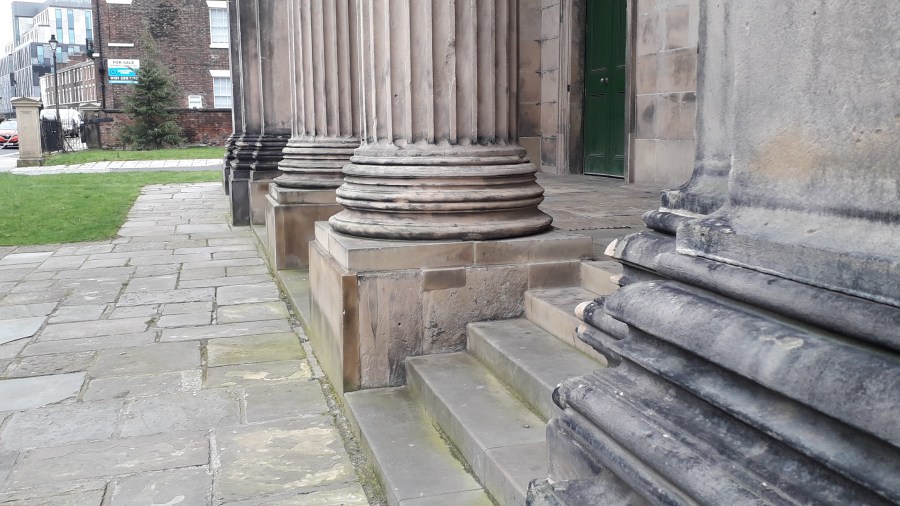
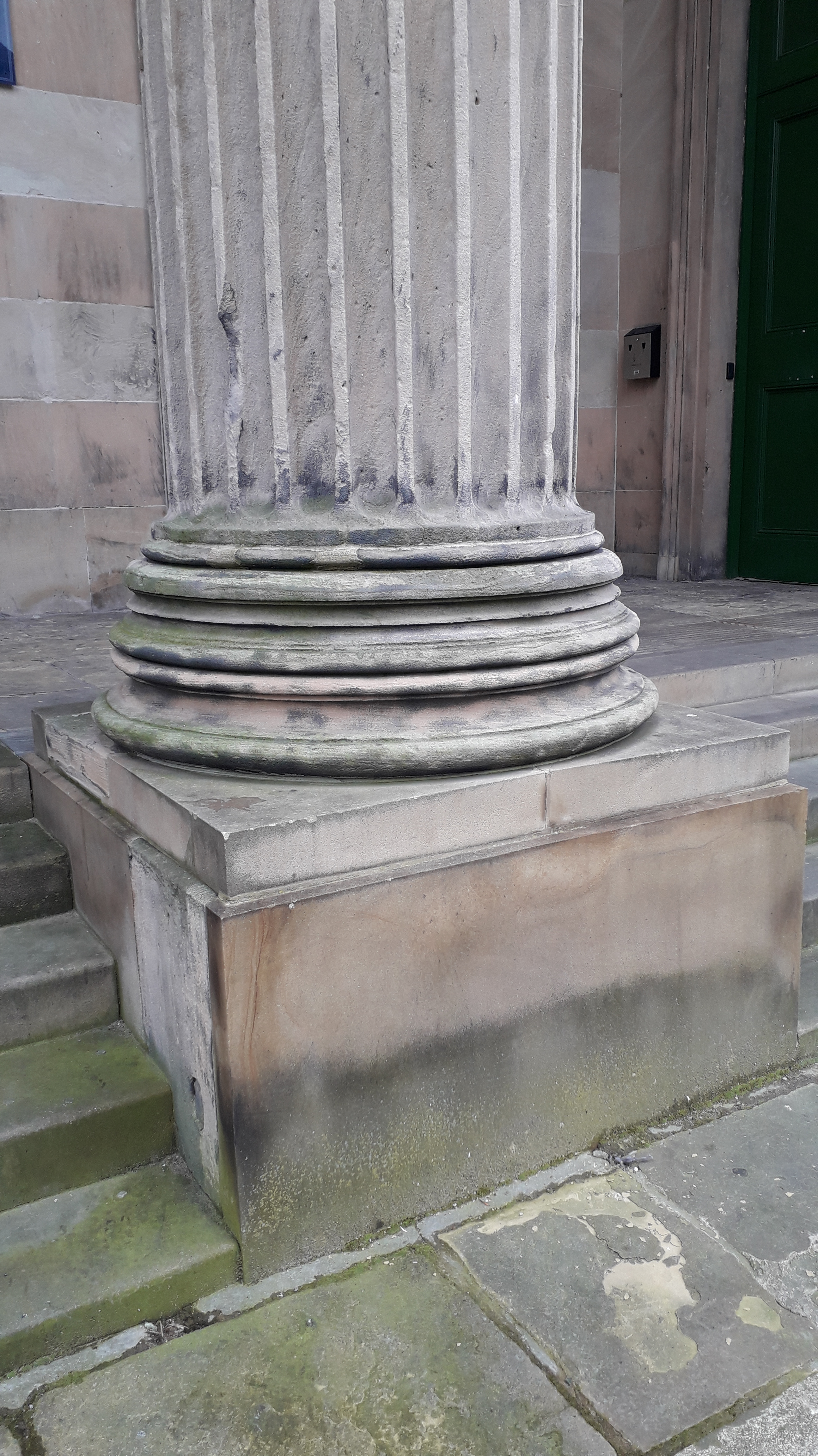
It is one of the few surviving buildings designed by local architect John Foster junior and never fails to impress with its massive ionic columns. There were a great number of churches in Liverpool which were built by Scottish immigrants to the city but St Andrew’s was by far the most prominent and long-lasting of those affiliated with the Church of Scotland.

Rodney Street view front from left

It was opened for worship in December 1824 and the first minister was the Rev David Thom who was called as minister to a breakaway group from the original Church of Scotland on Oldham Street in 1823. The congregation met initially in the former Music Hall on Bold Street but even before they had moved to their grand new church doctrinal divisions had become apparent and, unable to remove Mr Thom, the congregation had called another minister as colleague. By June 1825 Thom was being charged with deviating from the Westminster Confession and was subsequently removed from his charge by the Presbytery of Glasgow. Rev David Thom DD, PhD was a Universalist and he went back to the old Music Hall on Bold Street with his followers and founded what he termed the Berean-Universalist Church, eventually building his own chapel on Crown Street in 1851. ‘Universalist’ was a reference to the belief that all people would eventually be saved, and Berean an allusion to the people of Beroea (Acts ch.17 v.11) who “received the word with all eagerness, examining the scriptures daily to see if these things were so” (RSV).

Everyone with an interest in the religious history of Liverpool owes a debt to David Thom for his book Liverpool Churches and Chapels which began life as a series of lectures – Liverpool Churches and Chapels; their destruction, removal or alteration; with notices of clergymen, ministers and others – delivered to the Historic Society of Lancashire and Cheshire, of which society he was a Vice-President. He died in 1862 but the original Liverpool congregation of which he had briefly been minister continued in Rodney Street and then subsequently met in Liverpool Cathedral until closure a few years ago. A recent tablet attached to the front of the old church records their existence.

Rodney Street front gates

Main entrance

Rodney Street base of pillar

The base of one of the columns

Rodney Street surviving cupola

The surviving original tower

Rodney Street Sunday School

Former Sunday School rooms

Rodney Street pyramid

The pyramid tomb of William Mackenzie in the graveyard

Rodney Street view front from right


Mausolea & Memorials to the dead in Ireland

Clough Church Hall was full for the lecture by Dr Finbar McCormick on Wednesday, 13th March on the topic of ‘Mausolea & Memorials to the dead in Ireland’. It was an incredibly informative and also enjoyable and entertaining talk about a subject that might not appear that interesting at first glance.

DrFBtalk03

Dr McCormick delivering his lecture

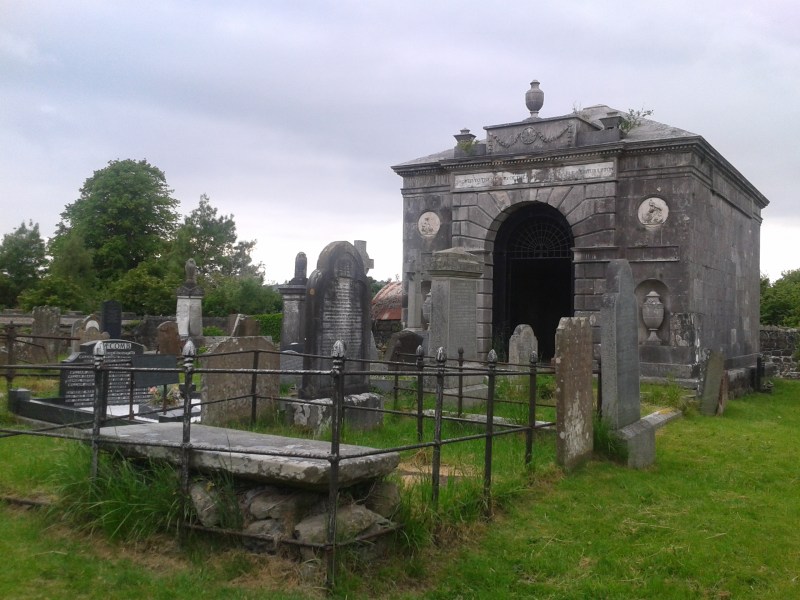
Dr McCormick took his hearers through the traditions of dealing with death going back to antiquity and into the Christian era including the changes that came about due to the Reformation. It was astonishing to see the variety of mausolea produced in Ireland over the centuries, including one Victorian structure at Clonbern, county Galway constructed entirely from cast iron! Among many other tombs Dr McCormick referenced the Templeton Mausoleum designed by Robert Adam at Templepatrick in 1789 (illustrated at the top of this page). Dr McCormick showed how classical funereal art and architecture influenced later mausolea like the Murland tomb, which drew on the decorations for sarcophagi as well as ancient buildings. It is quite clear that such a rich construction as the Murland Mausoleum was designed by someone with a very thorough understanding of classical architecture and funeral design.

Clough Vault front diagonal detail 02

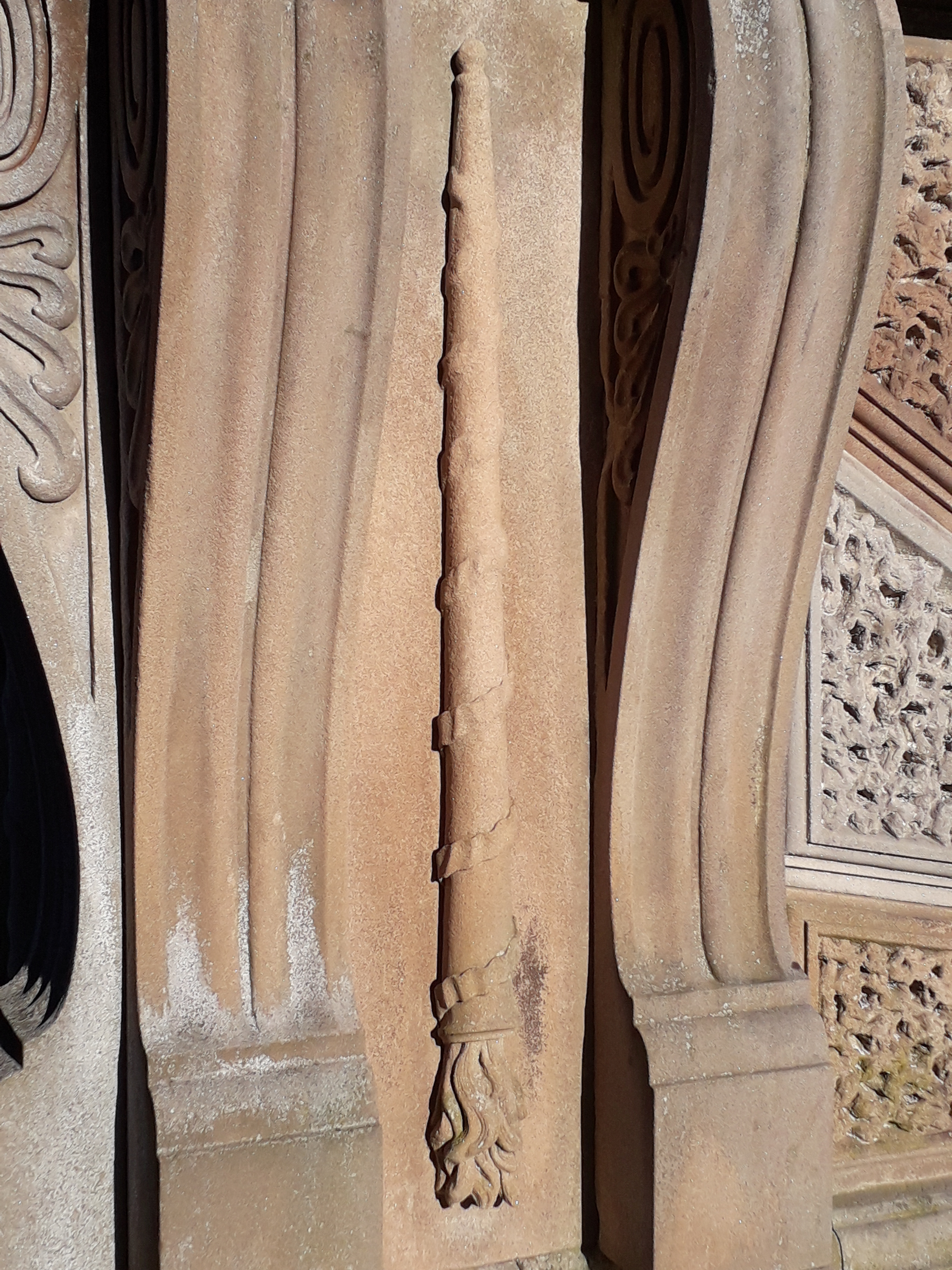
Inverted torch on the Murland Mausoleum

Dr McCormick also suggested that the Irish architect Thomas Turner could possibly be the architect of the Murland Mausoleum given that he designed the family house at Ardnabannon in the 1860s and some of his large scale buildings in Ireland include similar details to those found on the Mausoleum. But it was a fascinating evening that certainly showed why this particular tomb is worthy of conservation by the Follies Trust.

DrFinbarMcCormick02

Dr Finbar McCormick

DrFBtalkcrowd02

Refreshments after the meeting

Postcard from Downpatrick. Then and Now

In the last post I included a scan of a newly acquired postcard of Newry Non-Subscribing Presbyterian Church. It is one of only a handful of Edwardian postcards featuring Non-Subscribing Presbyterian (NSP) churches. In this post I include a scan of a postcard which I purchased a few years ago but which is one of the rarest to feature NSP churches:

Downpatrick Postcard

I have never seen another example of this postcard of the First Presbyterian (Non-Subscribing) Church, Downpatrick. It has not been posted but was published by Lawrence Publisher of Dublin, probably c.1905. It is a colourised image, although it is not badly done, but that does suggest that there may also be ‘Real Photographic’ copies of the same postcard. The same publisher also produced postcards of the Cathedral and St Patrick’s Roman Catholic Church in Downpatrick. Not surprisingly the various views of the Cathedral are very common, it being a popular tourist destination because it houses St Patrick’s grave. The postcard featuring St Patrick’s Catholic Church is far less common but not as rare as the picture of the nearby Non-Subscribing Presbyterian Church.

The archive of the publisher of this postcard is held in the National Library of Ireland (NLI) in Dublin. There they hold 40,000 glass plate negatives made by the Lawrence studio between 1870 and 1914 of places all over Ireland. Over 19,000 images in the Lawrence Collection have been digitised and can be viewed online. The Collection includes six images that are labelled as depicting Unitarian churches. This is how most of the Non-Subscribing Presbyterian churches would have been known at the time but although this list includes Downpatrick, Newry (a different, wider view than the one in the previous post by an unknown publisher), Comber and Dromore, it also includes pictures of what the catalogue claims to be the Unitarian churches of Kilkeel and Portadown, indeed Unitarian is written on the photographic plate of the Kilkeel image. However, since there has never been a Unitarian/Non-Subscribing church in either place this is clearly an error. In fact the Kilkeel church has a visible date stone of 1832 which also names it as The Church of the United Brethren. However, in addition to the four correctly identified churches there is also a fifth example of an NSP church in what the catalogue calls the Presbyterian Hall, Larne but which is labelled on the plate as the ‘Old Presbyterian House, Larne’.

The image of Downpatrick which is now held in the National Library of Ireland was reproduced in the Non-Subscribing Presbyterian magazine of July 1909 where it was attributed to Baird of Belfast:

Downpatrick July 1909

Inevitably, because it is taken from a magazine, this image is a lot less clearer than the image held in Dublin but it is an identical picture, even including the same title and identification code of ‘1697 W.L.’ which is cropped from the printed postcard. It also has an addition in the bottom right hand corner where the words ‘Baird, Belfast’ have been added.

The online digital image which can be seen on the NLI site is mostly very sharp (there is some blurring of the foliage) but you can clearly see the eighteenth-century foot scraper on the main steps into the church. However, in the colourised postcard and the magazine image this kind of detail is lost. But still the original is not a bad image. It is strange though the degree to which the ivy was allowed to run riot on such an ancient building. All of this was removed a long time ago. It is amazing how much cleaner the meeting-house looks without ivy creeping around it and these following photos, taken in 2008 (above) and 2017 (below), give a good contrast to the Edwardian postcard and show details such as the foot scraper and some of the other changes that have taken place around the building in recent years.
Downpatrick ext 2008

The Church in 2008

Downpatrick26Nov2017 02

The Church in 2017


Downpatrick Postcard crop

Detail from the postcard c.1905

Downpatrick entrance gates September 1909

The view from the gates to the church. From the ‘Non-Subscribing Presbyterian’ magazine, September 1909


First Presbyterian (Non-Subscribing) Church, Newry

At the end of February a meeting of the Presbyterian Historical Society took place at the First Presbyterian (Non-Subscribing) Church, Newry when the speaker was the Rev Dr John Nelson who spoke about the life and ministry of Rev Andrew George Malcom, minister at Newry from 1809 to 1823.
Newry JWN

Rev Dr John Nelson addresses the Society

It is always an interesting church to visit, said to be one of the first Presbyterian churches in Ireland to adopt the Gothic style, designed by W.J. Barre in 1853, the first commission of the Newry-born architect then aged just 22. It was my task to introduce the speaker and I also made mention of the magnificent organ built in Belfast in 1806 for the Second Congregation, first played by Edward Bunting and sold to the Newry congregation in the 1920s. It was one of the first organs to be introduced to any dissenting congregation in Ireland and undoubtedly is the organ in longest continuous use in any Presbyterian church in Ireland. The Very Rev John Dunlop asked if there was any chance of hearing the instrument being played and church member Florence Berry kindly stepped up to give everyone the chance to hear it.

Newry organ

Florence Berry plays the organ

I have an example of a postcard of the interior of All Souls’ Church, Belfast which includes a partial view of the instrument in what was its second location:

Postcard All Souls cropped

I have blogged about this postcard and the ‘ghost’ in the picture in a previous post – Postcards from All Souls’.

By chance I recently became the proud possessor of an Edwardian postcard featuring the Newry church.

Newry Postcard

The card was posted in Newry on 12th August 1905 by ‘May’ to ‘Mr A.N. Jackson, 17 Scholar Street, Liverpool’. She said simply ‘This is a picture of our Church.’

I only know of eight or nine Non-Subscribing Presbyterian churches which appear on postcards, although there are other oddities such as a postcard featuring the Newry manse from this era, although I don’t have a copy of it. The Newry card of the church is not particularly rare and this is not a wonderful example, bearing, as it does, a fair amount of foxing. But it is interesting nevertheless, complete with a knot of school age children standing at the corner of the road.


Closer inspection reveals that this little crowd might contain some of the Sunday School as the solitary figure a bit further to the right appears to be a clergyman. Since we can date this exactly to 1905 this would be the Rev George Vance Crook. After serving as a Wesleyan Methodist minister he changed denomination and ministered successively at the Unitarian Church, Taunton, then at Newry and Warrenpoint, then Cork and finally at Antrim where he had a long ministry from 1913 until his death in 1949. He had a kindly disposition and although in many ways a figure from the distant past in my first ministry in Belfast one member of the congregation could recall him very well from his Antrim days.

I took a picture of the exterior, complete with scaffolding, a couple of years ago:

Newry July 2017

An engraving of the church appears in an 1866 edition of The Christian Freeman, later also reproduced in Emily Sharpe’s 1901 Pictures of Unitarian Churches, one of only three Irish churches to appear there. It is reproduced at the top of this page.

One of the things that always catches the eye at Newry is the large model of a steam engine and its coach mounted high on the wall of the church hall. It was made by Mr Henning a church member who worked as a wheelwright in Newry railway station and who died in 1930. He bequeathed his model to the Newry Sunday School and it has been in the church hall ever since.

Newry engine crop