Back in January 2023 I posted a piece about a postcard of Dunmurry which showed the classic view of the church built in 1779. It was published in Lisburn by F.W. Harding and posted in November 1906. This is the picture:
As I mention in that post, postcards of Non-Subscribing Presbyterian churches are not that common. I have seen the 1906 view before and there is also a much later one but I was pleased to discover another postcard featuring the church, this one new to me:
This dates from a little later and although it is taken from a less popular vantage point in many ways it gives a much clearer view of the building. This card was published locally by ‘W. McCartney, Stationer and Tobacconist, Dunmurry’ in the ‘Signal Series’. It has at the bottom left hand corner the title ‘Unitarian Church, Dunmurry’ and was never posted. On the back, however, it is dated May 19th 1919 and has a message to an unnamed recipient which reads ‘With best wishes for your welfare from the People of Dunmurry and district from W. Laursen’. The name is actually a bit hard to make out but that is my best guess.
In a way it is a clearer picture than the 1906 view, being a Real Photograph, if a little damaged. But the view is not obscured by trees and you can clearly see the large amount of ivy that was then being allowed to grow over the left hand door. This is actually also present on the 1906 view although it is hard to make out behind the tree.
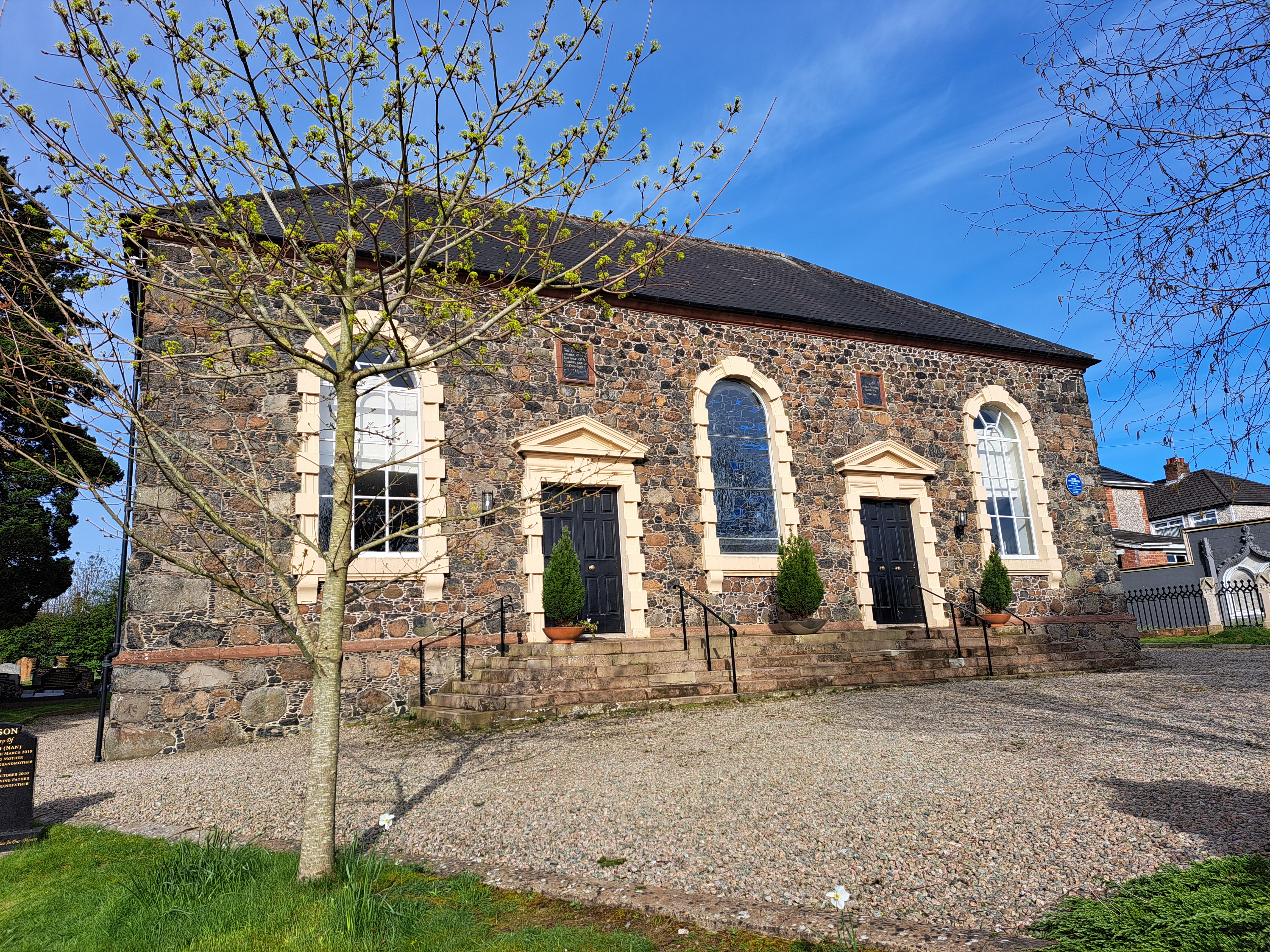
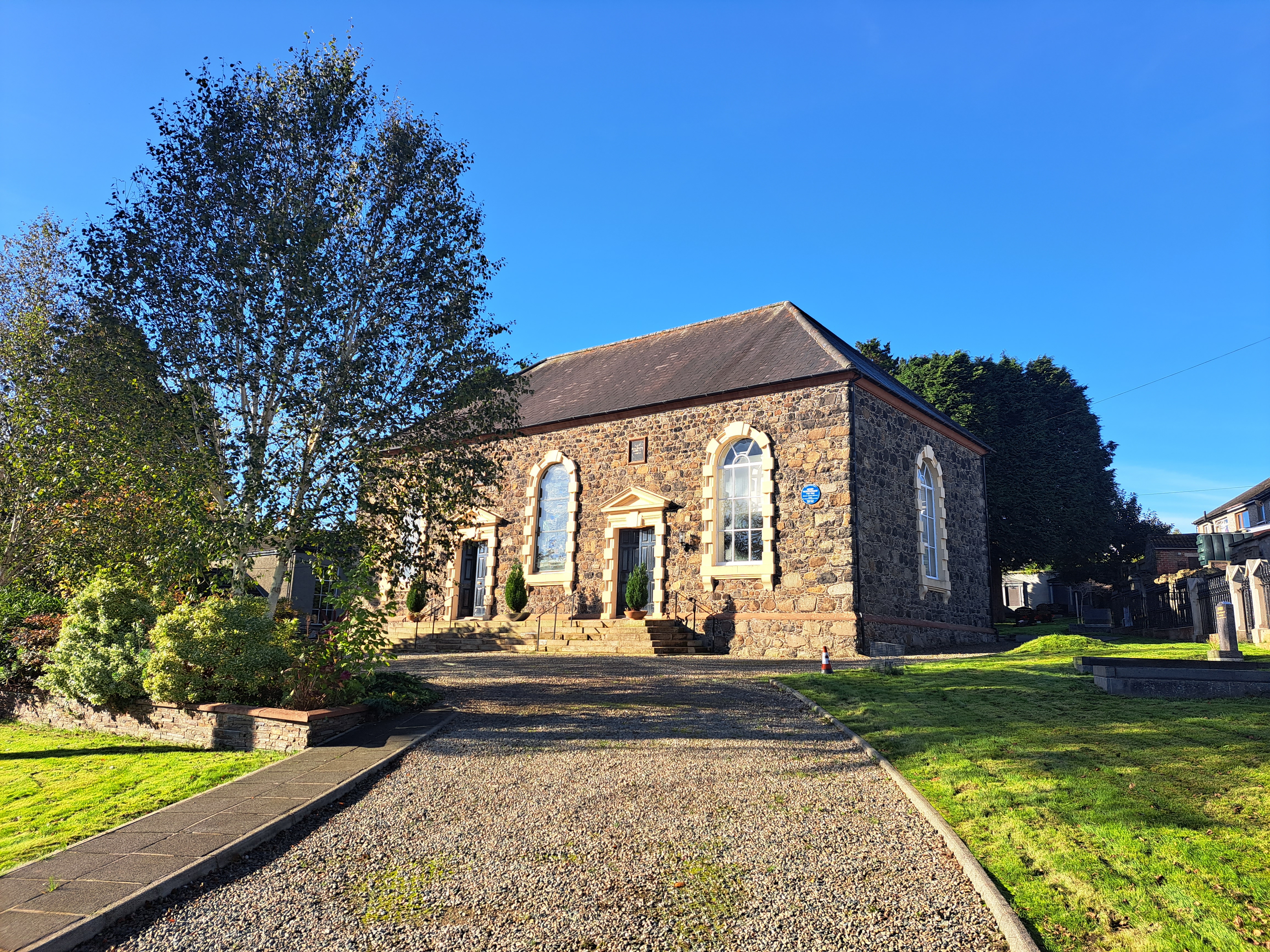
A modern image from more or less the same angle, taken a couple of weeks ago, shows the same view:
The view of the church hasn’t changed between 1919 and 2024. There are now houses along the side which weren’t there but the splendid building of 1779 is reassuringly the same.
I added this short video to our YouTube channel featuring the church and some of the grounds at Dunmurry built around a short passage on prayer written by Valentine David Davis. V.D. Davis trained for the ministry at Manchester College when it was still in London and James Martineau was Principal. He was one of the last links between that generation of ministers and the mid-twentieth century. His little book The Lord’s Prayer An Interpretation. Together with an Address on The Offering of Prayer was published by the Lindsey Press in 1938.
Click on the video to see ‘Reflections on Prayer’ from Dunmurry
His book on prayer is full of insight. He is perhaps someone who is rather overlooked in our history. On leaving Manchester College he went to Christ Church, Nottingham as minister for a few years before moving on to the Ancient Chapel of Toxteth for eleven years. This was followed by a further ministry at Wallasey. In Merseyside he was greatly influenced by John Hamilton Thom whose devotional Services and Prayers he later edited along with a selection of J.H. Thom’s writings in a A Minister of God. Ministry in Liverpool and Wallasey was followed by eleven years as editor of The Inquirer before returning to the ministry in Bournemouth where he served for twenty years up to retirement. He made some more important contributions to devotional publishing and to history, producing A Book of Daily Strength as well as A History of Manchester College and a history of the London Domestic Mission Society. He was editor also of Hymns of Worship, first published in 1927, reprinted a number of times, then republished with a Supplement (1951), and later still republished in a revised format in 1962. Even Hymns of Faith and Freedom, published in 1991, described itself as a radical revision of Hymns of Worship. So as one of the first fruits of the collaboration that led to the new General Assembly and ‘offered, in the interest of unity and comprehension, with the prayer that it may be blessed in its ministry to the fellowship of our churches’ it proved remarkably successful.
We also uploaded to YouTube our full Easter Day service at Dunmurry recently. The full service, including hymns, prayers and readings can be seen here:
Every Christmas Carol has its own backstory but there is none more intricate and unusual than O Come, all ye faithful, which is also one of the most universally popular of all Carols.
Adeste Fidelis
Click on the video above to see the Reflections on ‘O Come, all ye faithful‘
Carols by Candlelight
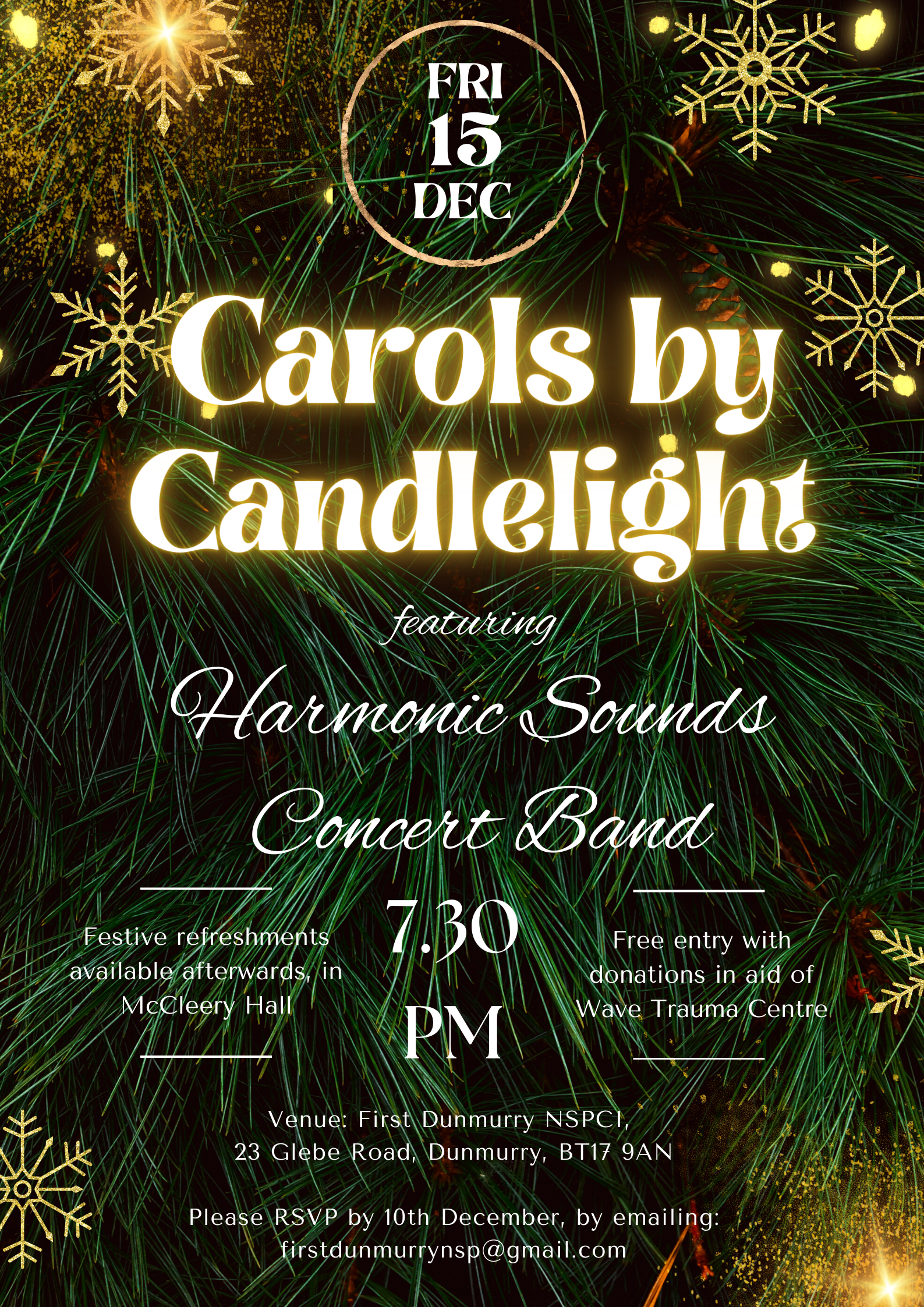
At Dunmurry we are really looking forward to our Carols by Candlelight service on Friday, 15th December at 7.30 pm when we will welcome Harmonic Sounds Concert Band with their Director of Music, Paul Hamilton. We will tell the story of Christmas through traditional carols and the traditional Christmas readings given by church members and friends from other churches. Everyone is welcome.
Just as we approach the start of Advent we were delighted to welcome to Dunmurry the Choir of Malone Integrated College who, guided by their Head of Music, Mrs Mitchell, and teacher, Mr Lennox, sang a wonderfully varied programme of pieces in the McCleery Hall for our regular Thursday Warm Space Coffee Morning on 30th November.
Malone College Choir singing at Dunmurry
It was great having the Choir with us, they had also walked all the way from their school to the church on a very cold day. But everyone was really impressed by their achievements as a Choir and the evident joy and enthusiasm they brought to their music. You can see some of their performance in the McCleery Hall on the following video:
Click on the video to see the Choir perform at Dunmurry
We wish the Choir every success in the future. It was a real pleasure to be able to start our Christmas celebrations in the company of the Choir.
Another video recorded at Dunmurry recently features a prayer from Orders of Worship. You can see this short video by clicking on the image below:
Which of the churches in our tradition do you think was the first to be filmed? Well, there is good evidence that this distinction belongs to Dunmurry. Indeed First Dunmurry (Non-Subscribing) Presbyterian Church must be among the first of all churches to appear on film in Ireland.
The original manse which appears in the film when viewed from the level crossing which itself can be seen slightly right of centre underneath the rainbow
In 1897 the famous Lumière brothers came to Ireland, or to be more precise their cinematographer Alexandre Promio did. Among other places, he filmed in Belfast and filmed segments of the rail journey from Belfast to Dublin. One day in 1897, sometime between June and October of that year, he filmed the view from the train as it pulled out of Dunmurry station. You can see this film – Départ de Dunmurry – in the video below.
The film lasts only 37 seconds and seems to have been made on a bright, sunny, probably summer’s day. As the train starts to pull out of the station the viewer sees the area around Upper Dunmurry Lane which is very hard to recognise, most of the buildings are quite different today compared to the complex of mills that were visible then. At about 22 seconds, though, you can quite clearly see Glebe Road from the vantage point of the level crossing. The wall of the Church is immediately identifiable as it curves round towards the gate, behind it you can see the grave yard and then you can see the Church through the trees as the train picks up speed. This is followed by the edge of the old manse before the view is taken up with more trees until the vista spreads out to an open field.
This film was first shown at Gatti’s Music Hall on Westminster Bridge Road, London on 21st October 1897.
It is a real piece of history and it does evoke a strange emotion to see a moving image of a place so familiar to us but as it looked 126 years ago. Yet, there we are, as we looked in the year of the Diamond Jubilee of Queen Victoria. Even then our Church was nearly 120 years old but caught in a fleeting glimpse as a steam train powers its way towards Lisburn. It is a reminder of the continuity of our witness and the unchanging core of our message set amidst an ever-changing world.
First Dunmurry, built in 1779, and possibly the first Church in Ireland to appear on film
On Saturday afternoon, 10th June 2023 a very large congregation assembled at Dunmurry to dedicate the special memorial to their late former minister the Very Rev William McMillan, MBE, MA.
The Rev Mac was minister at Dunmurry from 1970 to 2016 and continued as minister emeritus until his death in 2020. He was also a leading figure in the world of floral arrangements and horticulture and the congregation wished to create a lasting memorial that reflected this achievements.
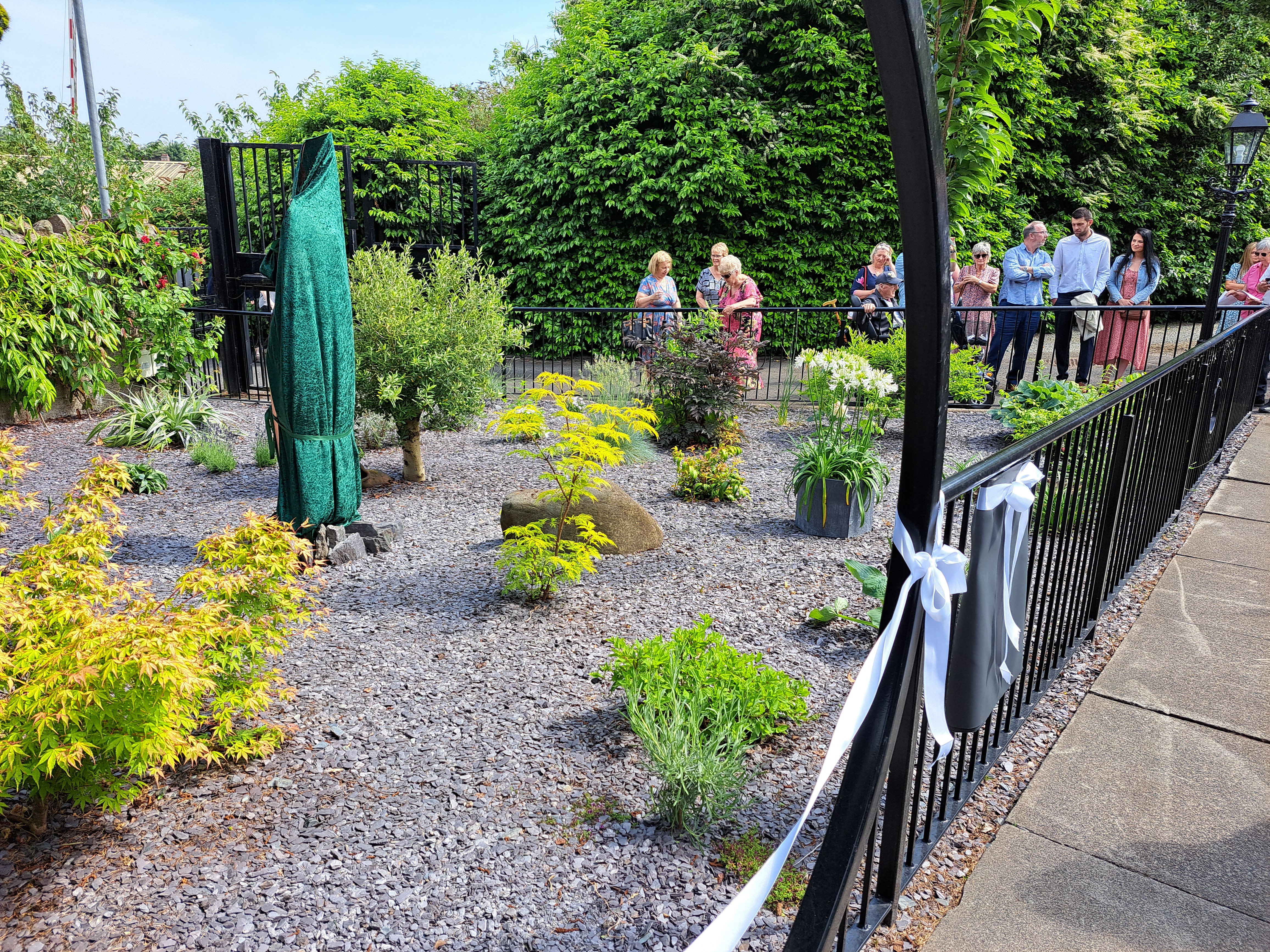
The Garden was created and designed by Frances Gibson (centre left)
At its centre is a beautiful piece of art made for the Garden by Cork sculpture Tim Mulchinock
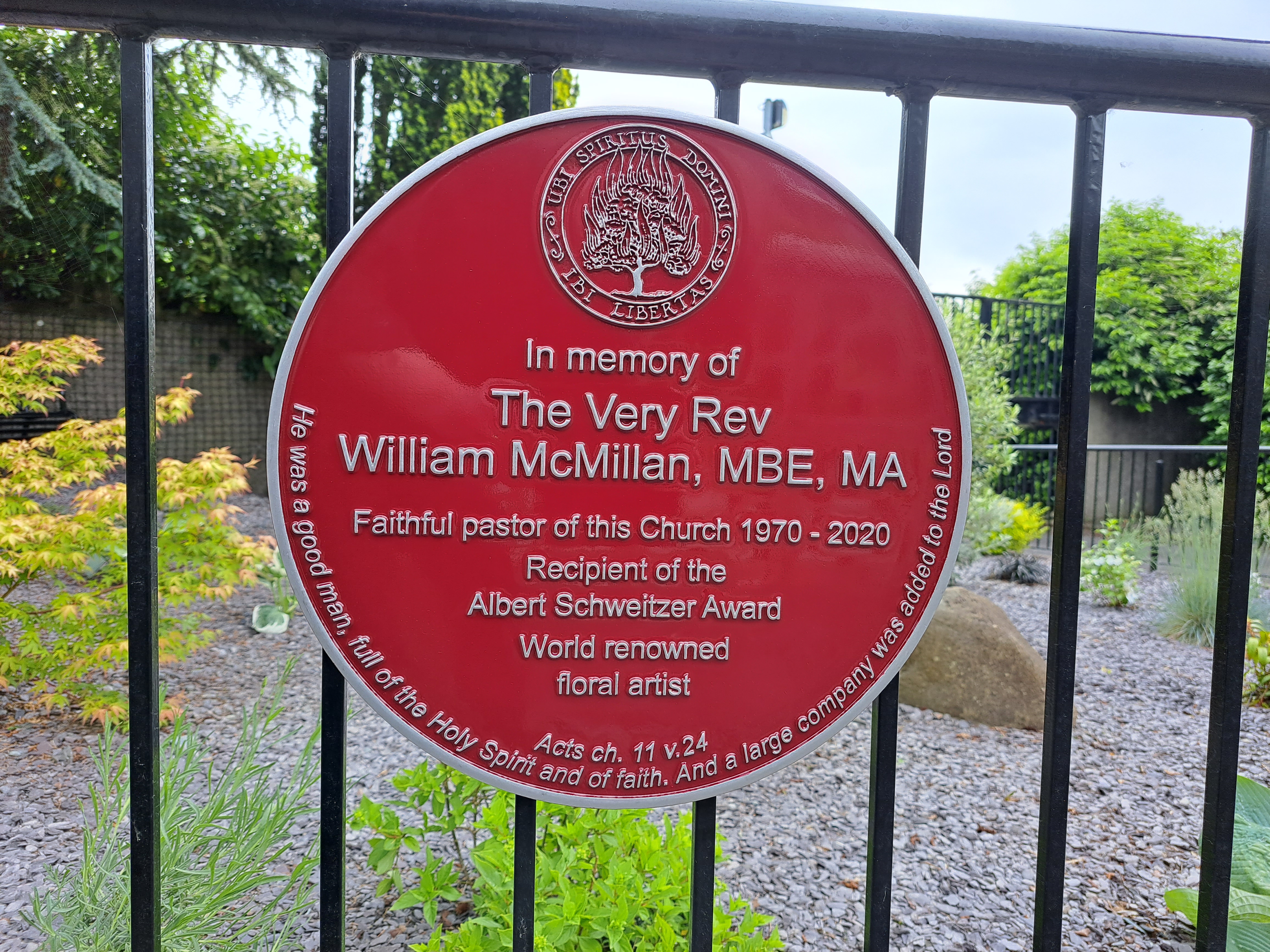
Members of the McMillan family unveiled the plaque at the entrance to the Garden, cut the ribbon to the entrance and unveiled the sculpture.
Click on the video below to see the short service in the Church followed by the opening of the Garden.
With thanks to Emma for filming and uploading the video
Below is the text of the address given in the Church by the Rev Dr David Steers:
We are to here to celebrate and commemorate a much-loved minister of this church whose work had such a positive and joyful impact not only here in his church – where he ministered for 50 years -, but in his denomination, and in churches of every conceivable denomination, and not only here in Northern Ireland, but across Ireland, across the British Isles and across the world. He was a minister, a pastor, a preacher, a writer, an expert on church history, all of which made for a most full, multi-faceted ministry that touched so many people.
That in itself would make a day like today such an important and right thing to do but beyond that he had another level of creative achievement that extended his ministry far and wide to so many people, so many groups, so many organisations in so many different countries.
Famously John Wesley, the great founder of the Methodist church, is said to have declared that ‘The World is my Parish’ by which he meant that wherever he was he felt compelled to promote the gospel. But the same thing could be said of the Rev Mac, I think the work which he did in the floral and horticultural worlds was an extension of his ministry, all his work was based on an appreciation of the glory of God’s creation and a desire to describe and explain it to everyone. His unique creativity was borne out of a deep recognition of the beauty of creation, as we heard from the reading before from the book of Genesis where at God’s command The earth brought forth grass, the herb yielding seed, and the fruit tree yielding fruit after his kind. Or as the RSV has it The earth brought forthvegetation, plants yielding seed according to their own kinds, and trees bearing fruit. It was this raw material of grass, plants, flowers, leaves, trees and all the wonders of the natural world which Mac took to express God’s love.
Something which he did with such sensitivity and understanding and, with a preacher’s skill, he was able to turn into such eloquent sermons of truth which went ‘beyond mere words’.
So when his church wanted to build some kind of memorial to the Rev Mac there were lots of ideas, lots of suggestions and lots of possibilities. But in the end the decision was taken to create a memorial that was living and vibrant, something natural and also lasting. So we will today dedicate to the glory of God the Very Rev William McMillan Memorial Garden. Created just yards from here and I want to thank all those many people who have had a hand in shaping it but say thank you particularly to Frances Gibson who has designed it. And thank you to Tim Mulchinock the sculptor who has created from beaten copper the centrepiece which is also entitled, like one of Mac’s books, ‘Beyond Mere Words’.
The garden, in the grounds of his church, rich in plant life, living as part of the natural environment with a wonderful piece of art at its centre, is truly a fitting memorial to the Rev William McMillan. Someone whose whole lifetime was devoted to communicating God’s word in all that he did. Someone who, as we heard before from the reading from Acts given to us by Jane: For he was a good man, full of the Holy Spirit and of faith. And a large company was added to the Lord.
The Garden before the unveiling
Sheila and Tim just before the unveiling
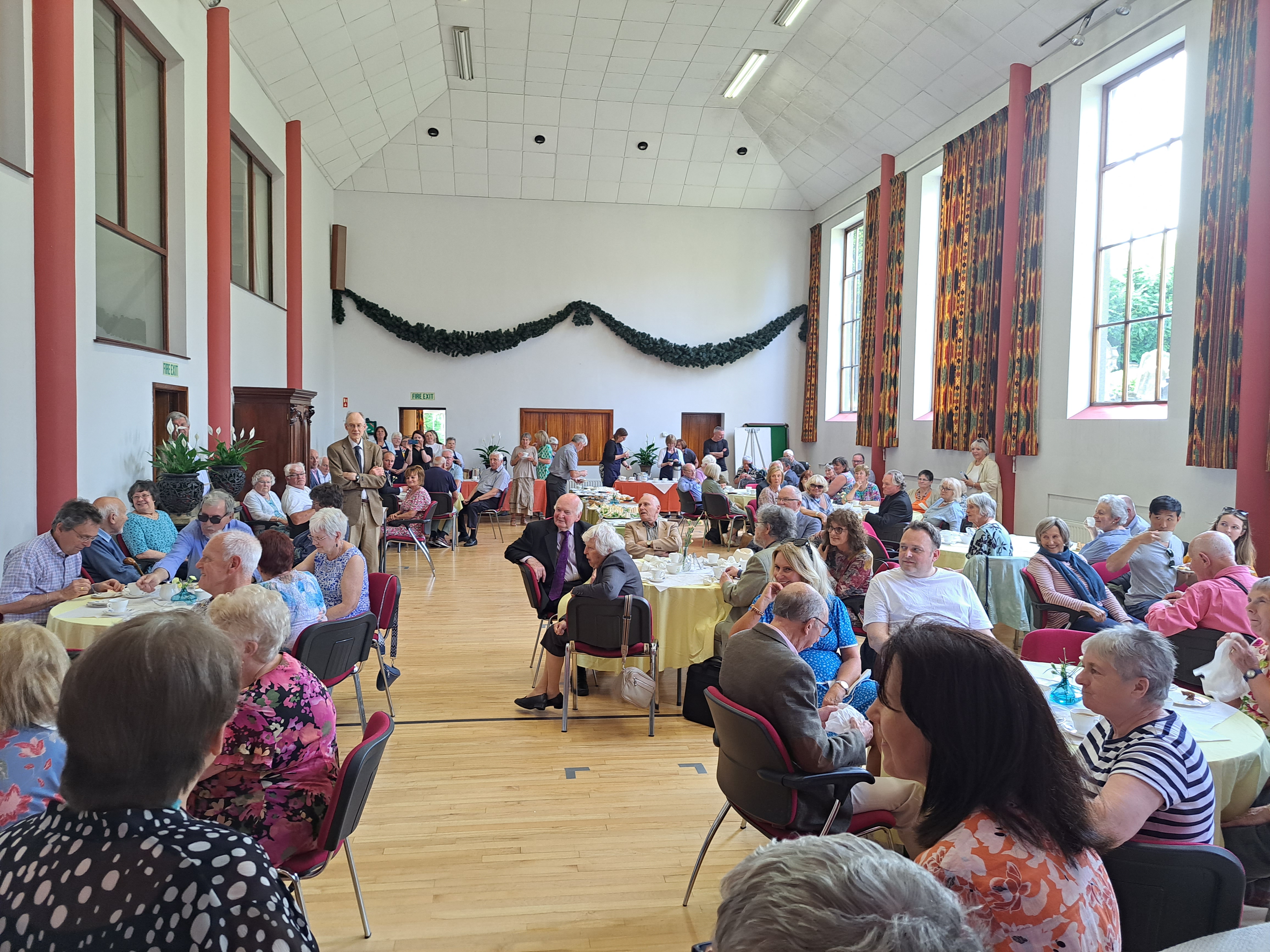
Refreshments in the McCleery Hall afterwards
Memorial plaque
Some of the floral decoration in the Hall created by Elma McDowell
The grounds of the First Presbyterian (NS) Church, Dunmurry look particularly impressive at this time of year as the various plants come into bloom. At the moment the azaleas look especially attractive, most notably the well established orange one flowering at the front of the church.
It struck me as something worth catching on video with perhaps an appropriate reading or two. So as well as some lines from Wordsworth I read part of the ‘Litany of Faith’ found in Orders of Worship.
Orders of Worship was published back in 1932 and is possibly mostly forgotten these days. But it has many virtues whether updated into contemporary language or read in the traditional form in which it was written, which still give it value today. ‘A Litany of Faith’ is part of the Fifth Service and can be found on pages 56-57.
Click on the video above
The music is provided by Allen Yarr, our church organist.
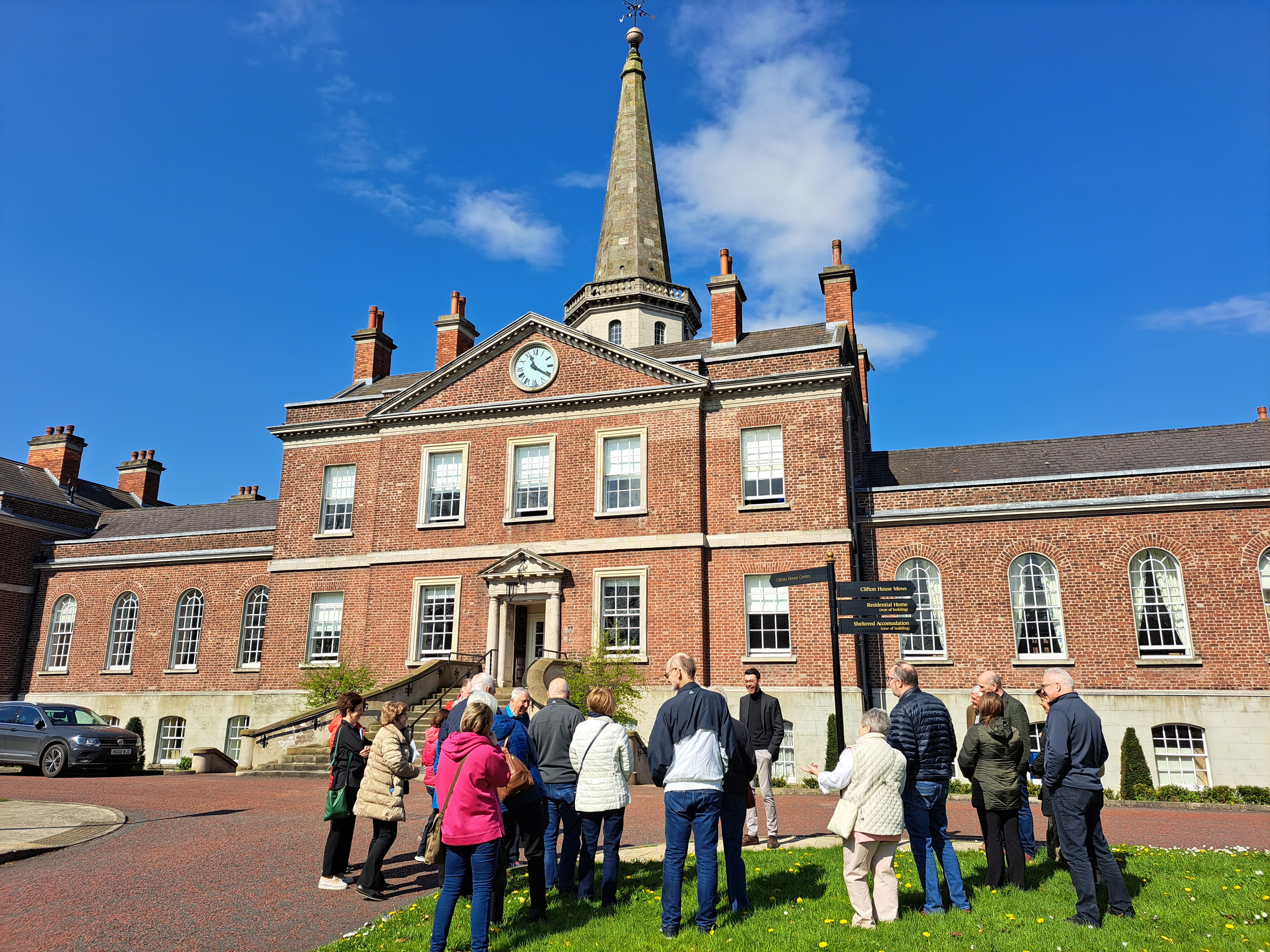
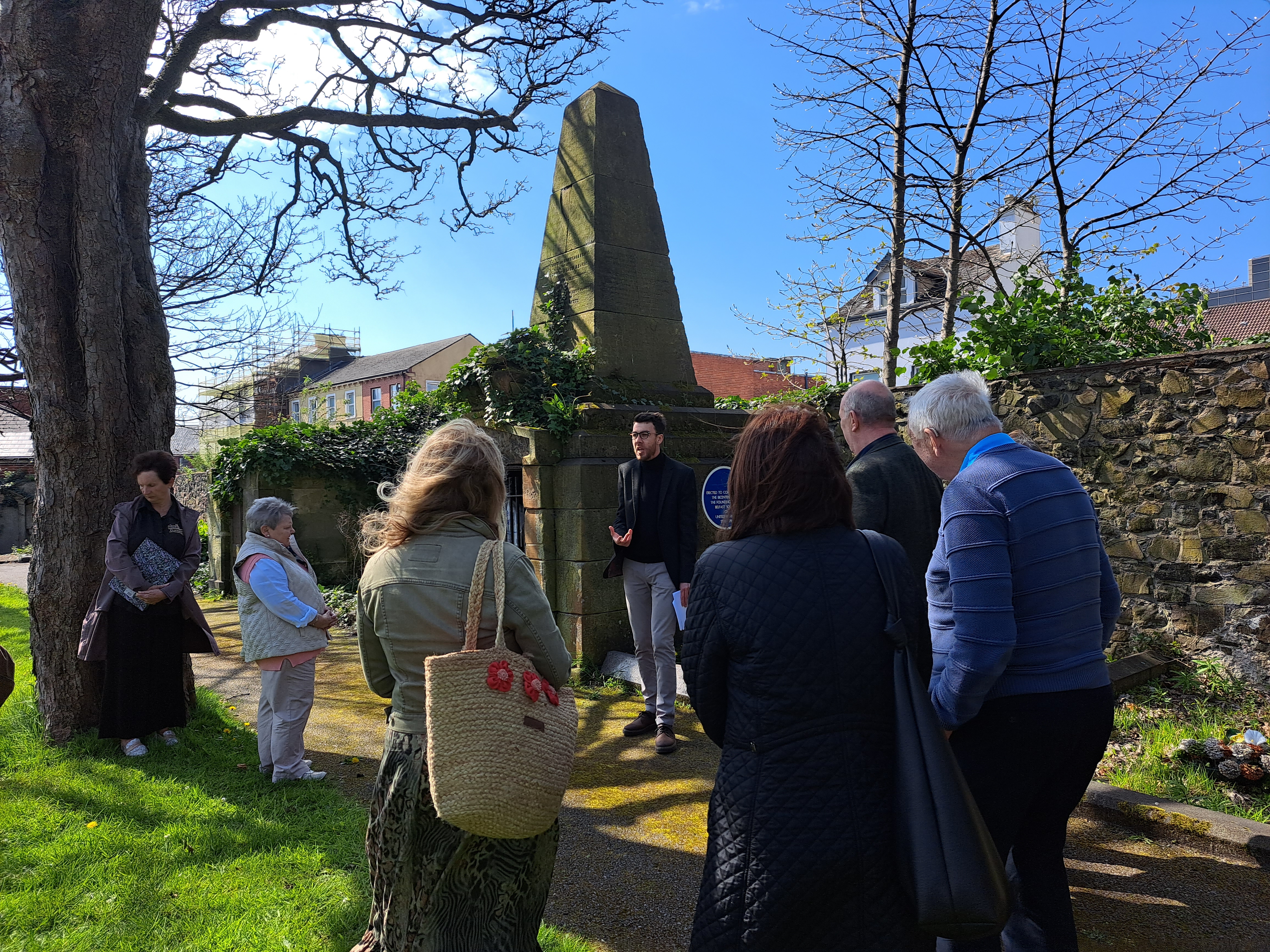
Assembling outside Clifton House at the start of the tour
On Friday, 21st April we had a wonderful congregational visit to Clifton House. Reputedly one of the oldest buildings in Belfast, having been built in 1774, it is actually only five years older than our own church in Dunmurry. But it is a very impressive building featuring its unusual spire which must have towered over Belfast when it was first built and certainly angered the Earl of Donegall who gave the land not expecting a building that would dominate the skyline and overshadow St Anne’s parish church.
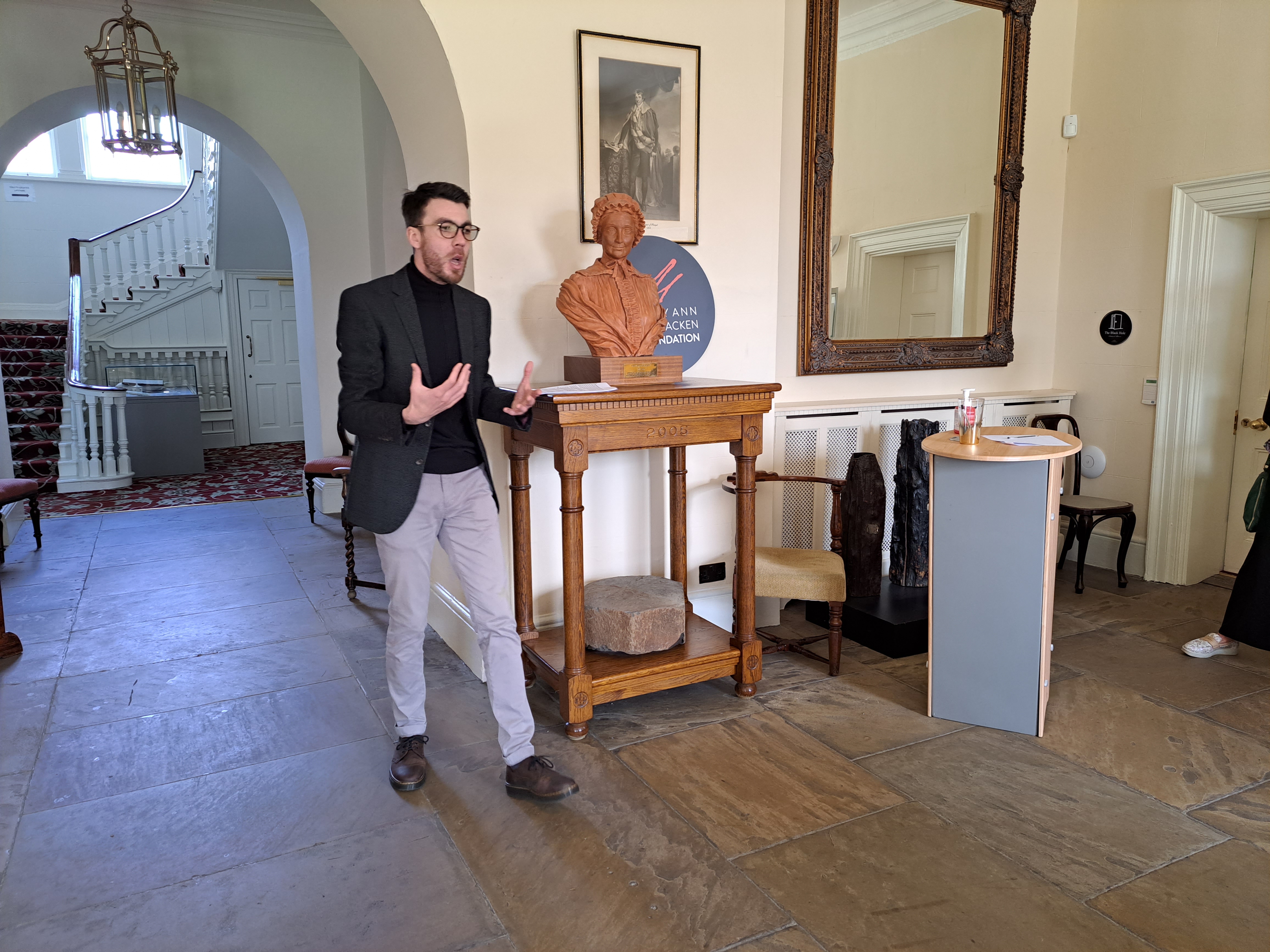
Jason Burke, one of our guides, in front of a bust of Mary Ann McCracken
Right from the start it was a much more enlightened institution than its usual name of ‘Poor House’ would indicate. Even the ‘punishment room’ was equipped with a bed, something ordinary inmates of institutions such as the workhouse might not expect in the nineteenth century. Curiously the mostly Presbyterian founders had no hesitation in employing a lottery to set up Clifton House but through that scheme were able to build a Poor House and an infirmary.
I hadn’t realised either that the Belfast Charitable Society (to give it its full name) was set up by Act of Parliament and also had responsibility for the provision of water in Belfast as well as street lighting.
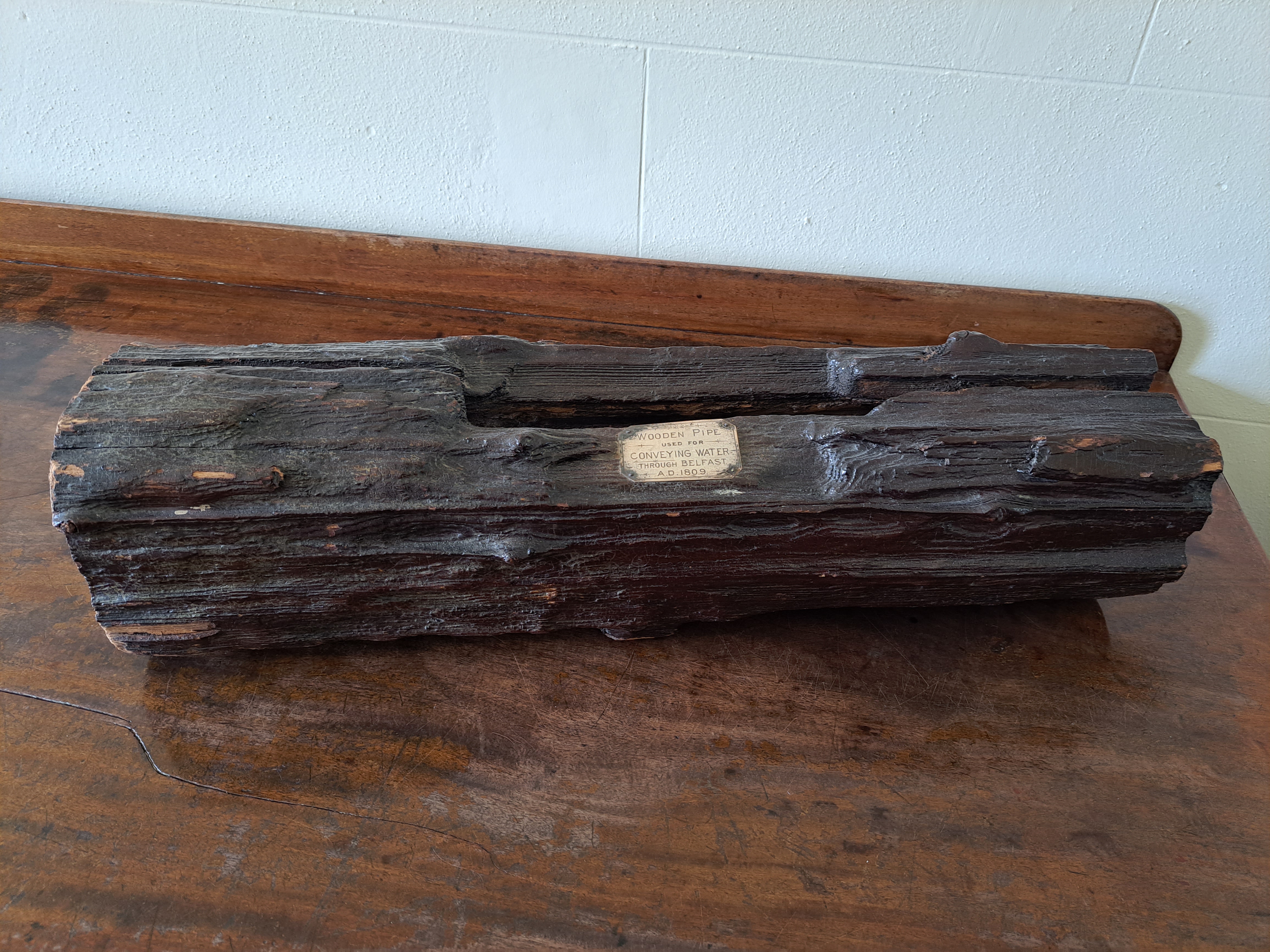
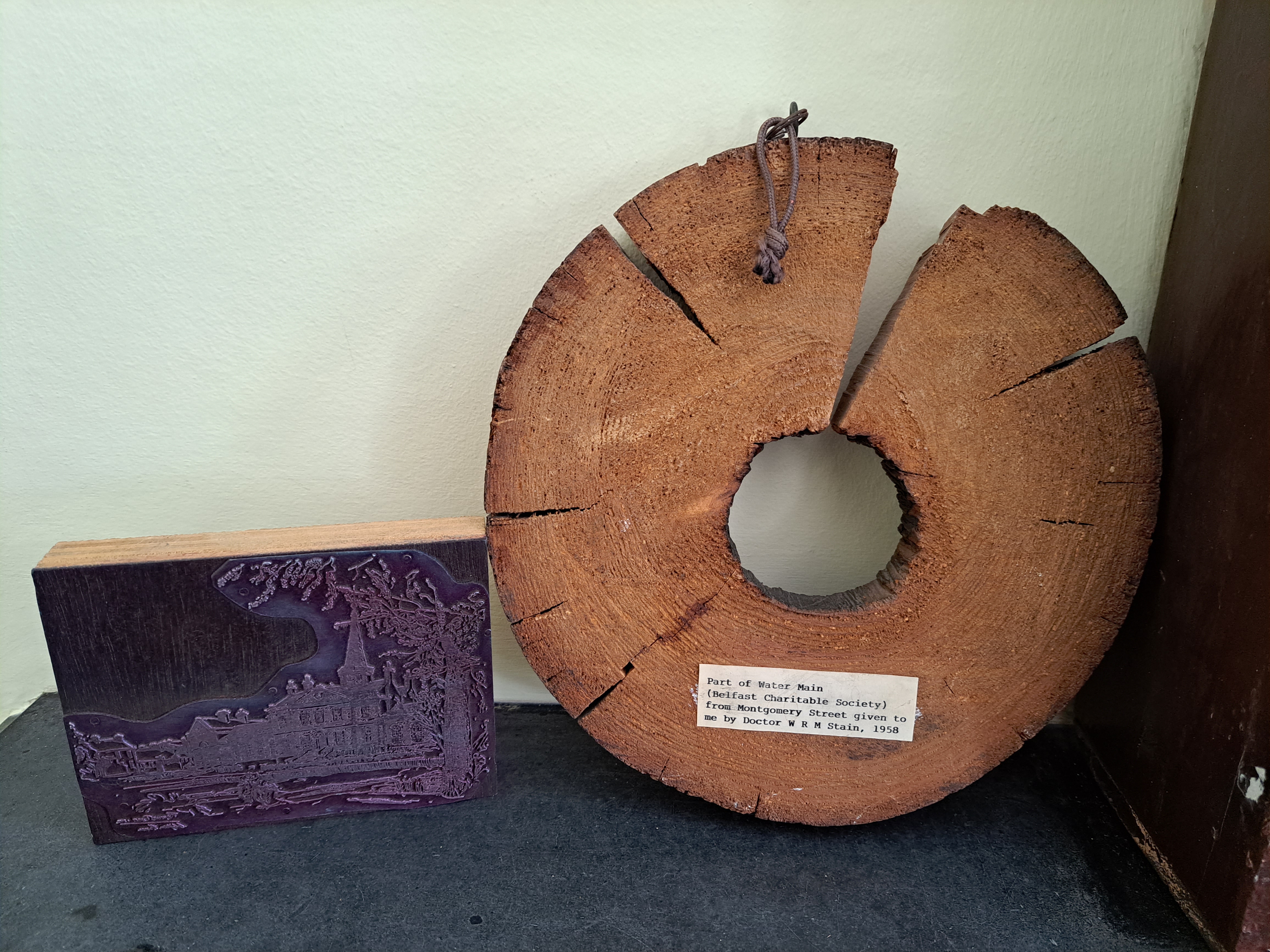
Water pipe made from elm dating from 1809
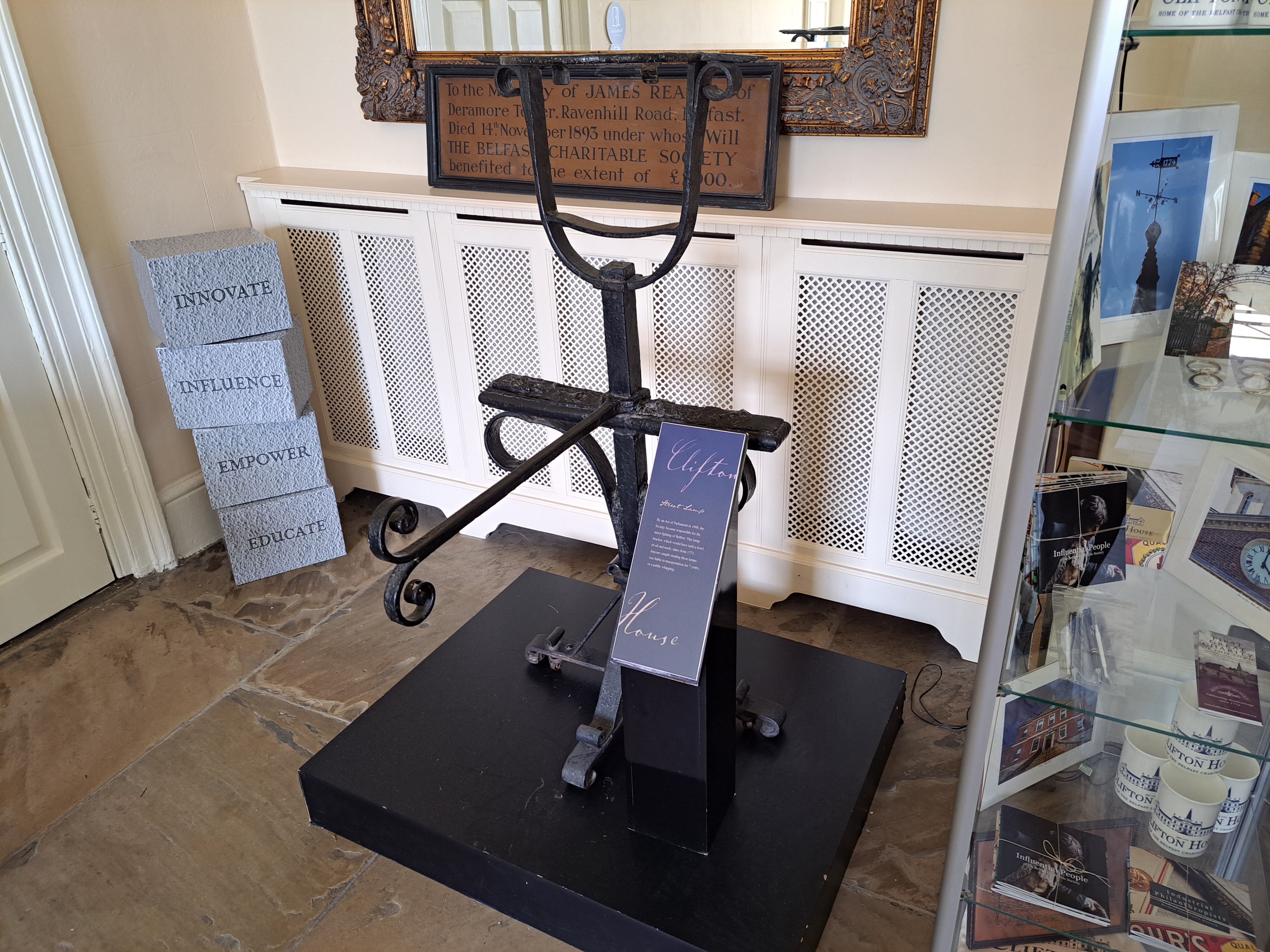
Early lamp bracket in use in Belfast in the 1770s
Examples of the English Elm which were used as water pipes were on show and such was the importance of this function the Water Commissioners had to make an annual payment of £800 in perpetuity to the Belfast Charitable Society. This still continues to this day with NI Water having taken the place of the Water Commissioners and still being obliged to pay £800 per annum to the Charitable Society.
Cross-section of water pipe
The Society played its part in the development of cotton spinning and weaving in Belfast when machinery was established in the basement of the building for children to work on.
It is an impressive and dignified building, beautifully restored in recent decades and still fulfilling its original function of caring for those in need.
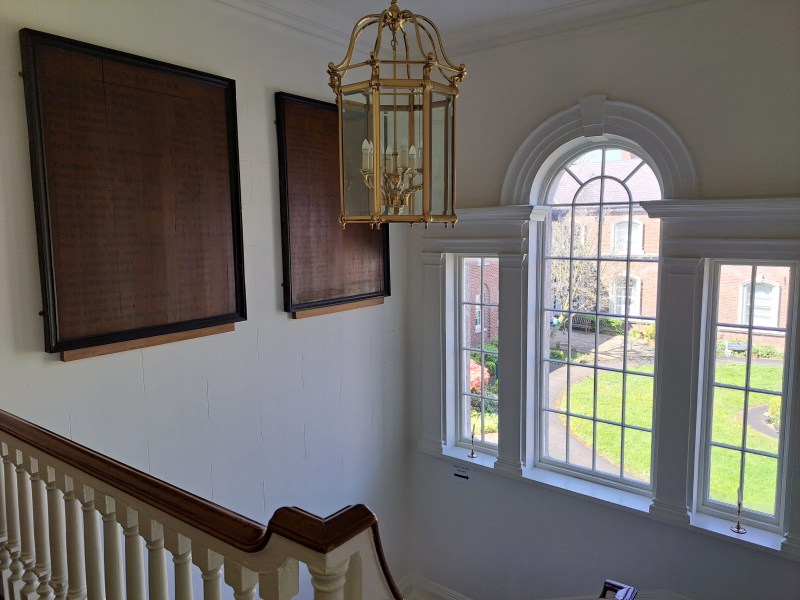
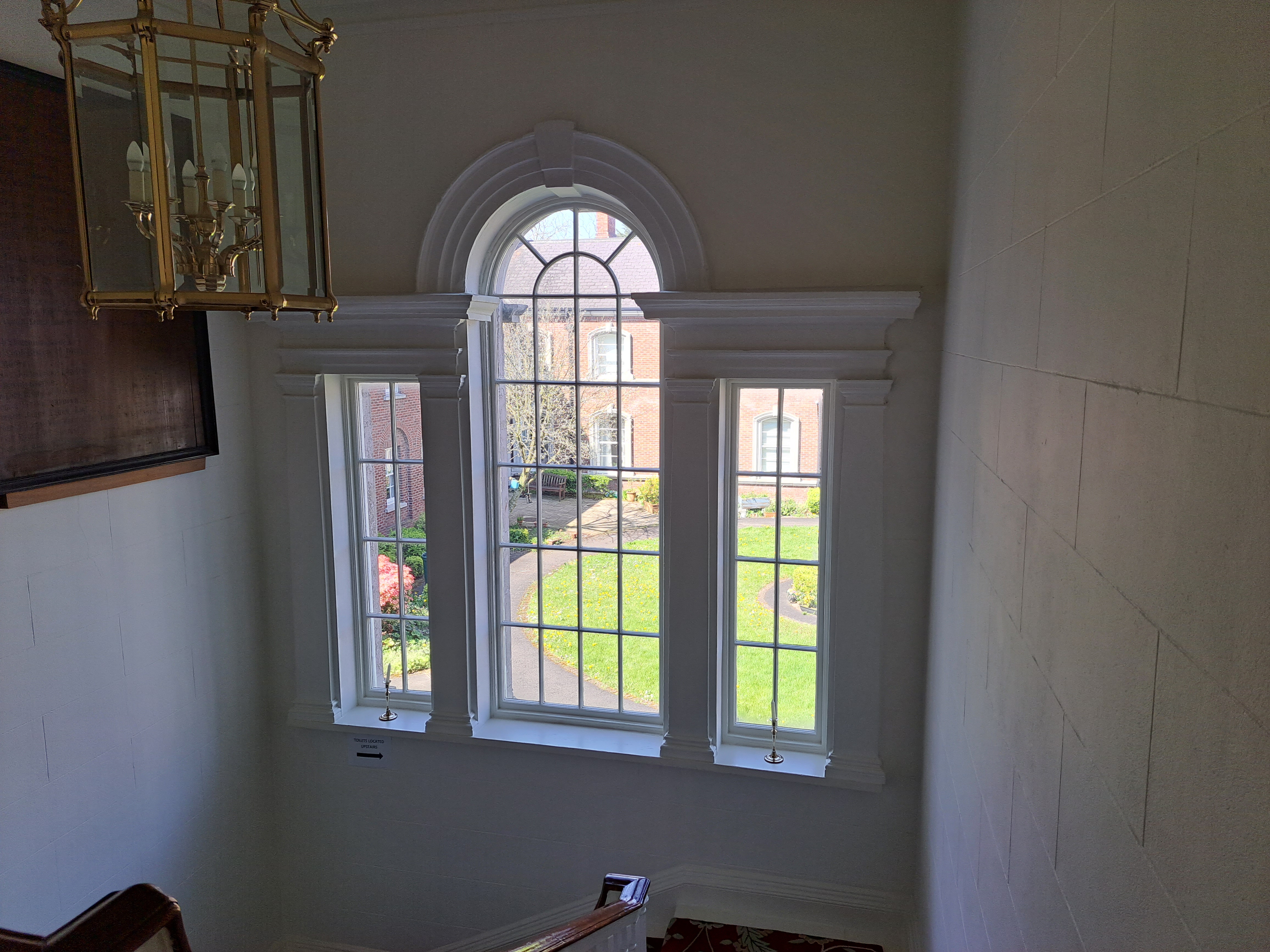
View from the staircase
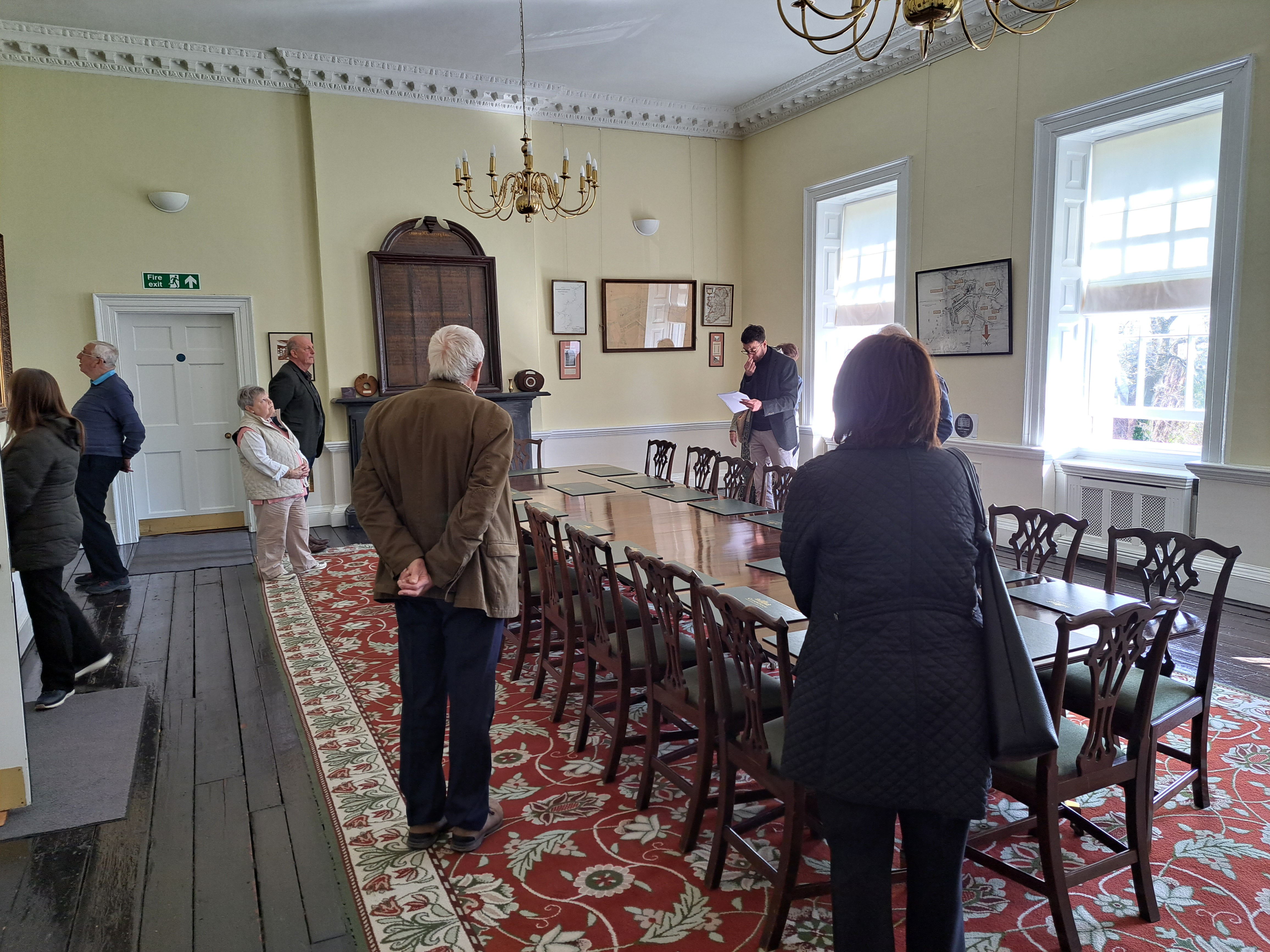
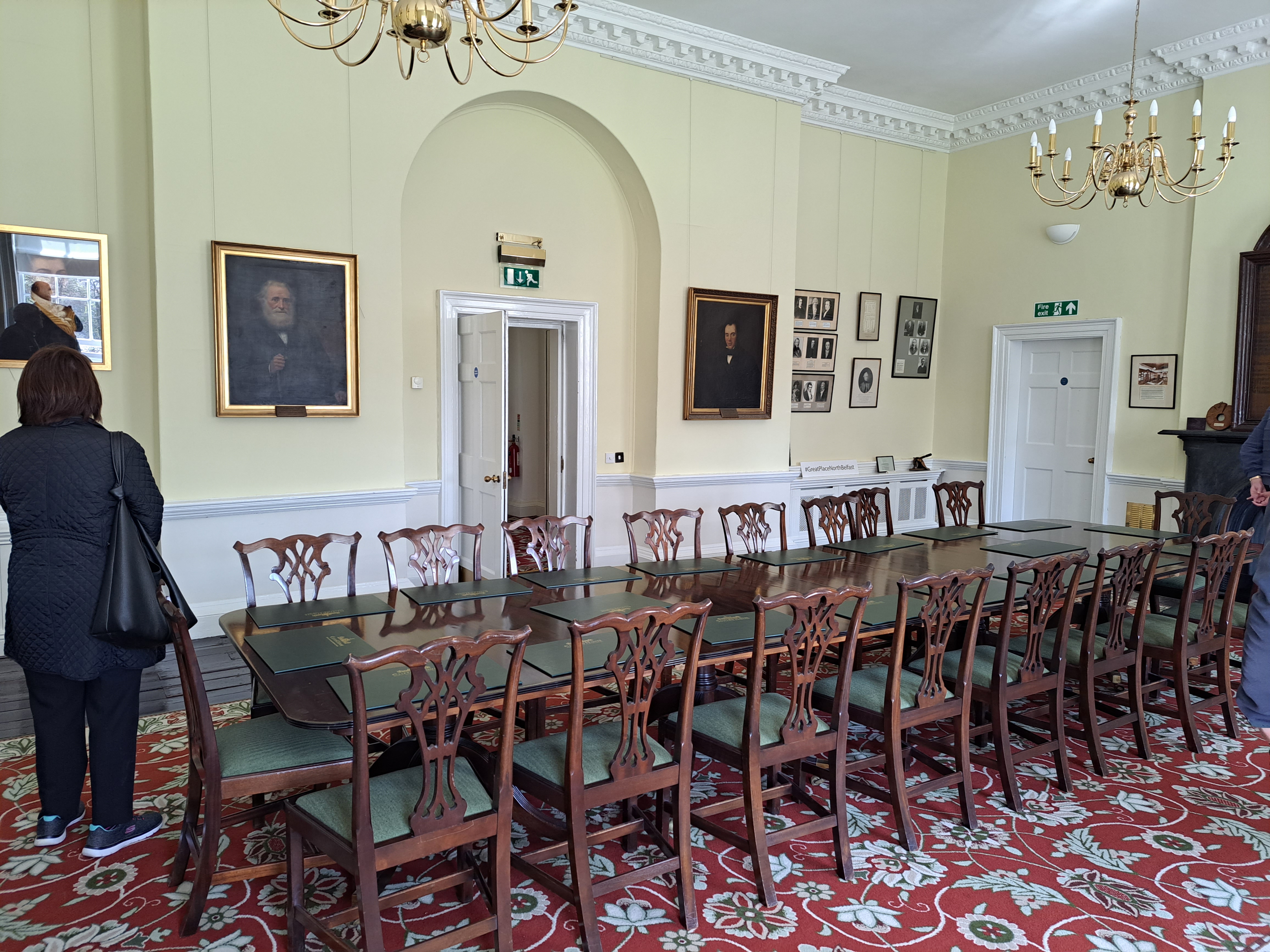
At the heart of the building is the boardroom, a room which also has a key place in so many aspects of the history of Belfast:
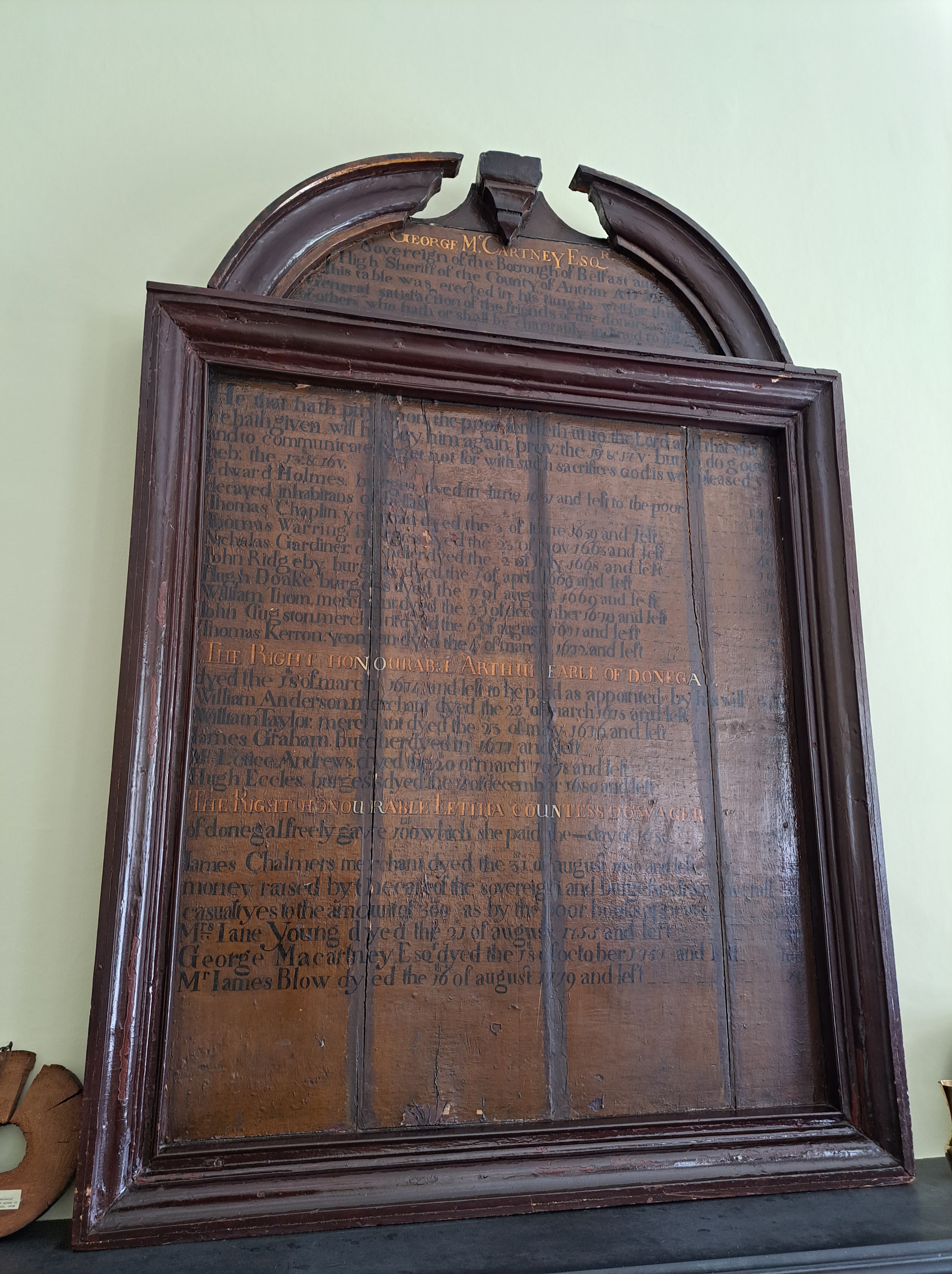
Charity board in the Boardroom
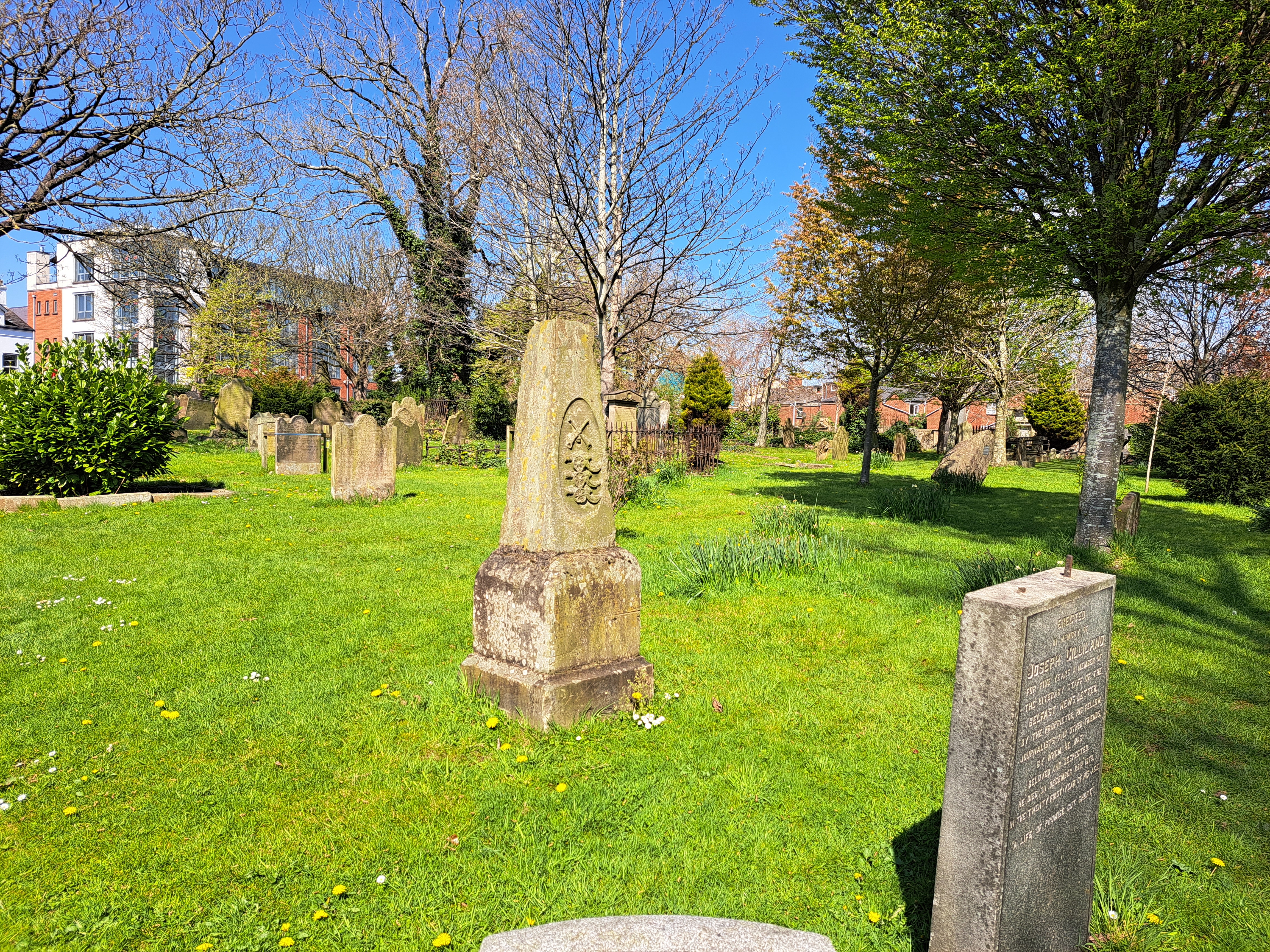
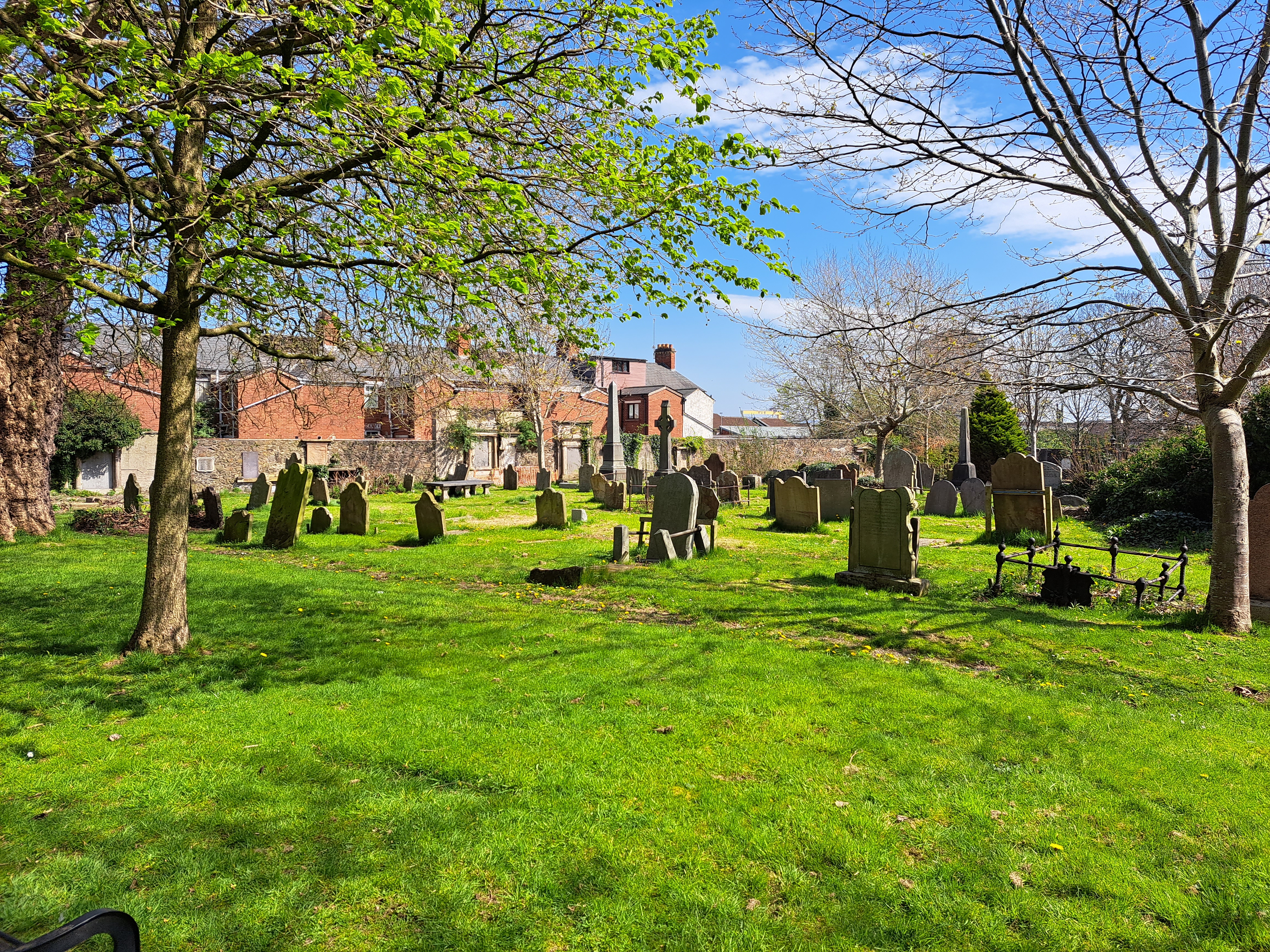
The extensive tour also took us round the Clifton Street graveyard. Another repository of Belfast history.
Sadly the graveyard suffered greatly from vandalism at the start of the Troubles, although its existence was threatened fairly dramatically in its early days when it was frequently targeted by grave robbers and we were told many tales of their nefarious activities over the years.
Vandalised grave of Robert Haliday
But there is still a great deal there that connects us with Belfast’s past, many of the people buried there being Non-Subscribers. Indeed throughout the tour many of the names we heard who had been associated with Clifton House were members of our denomination.
Grave of Mary Ann McCracken and possible resting place of Henry Joy McCracken
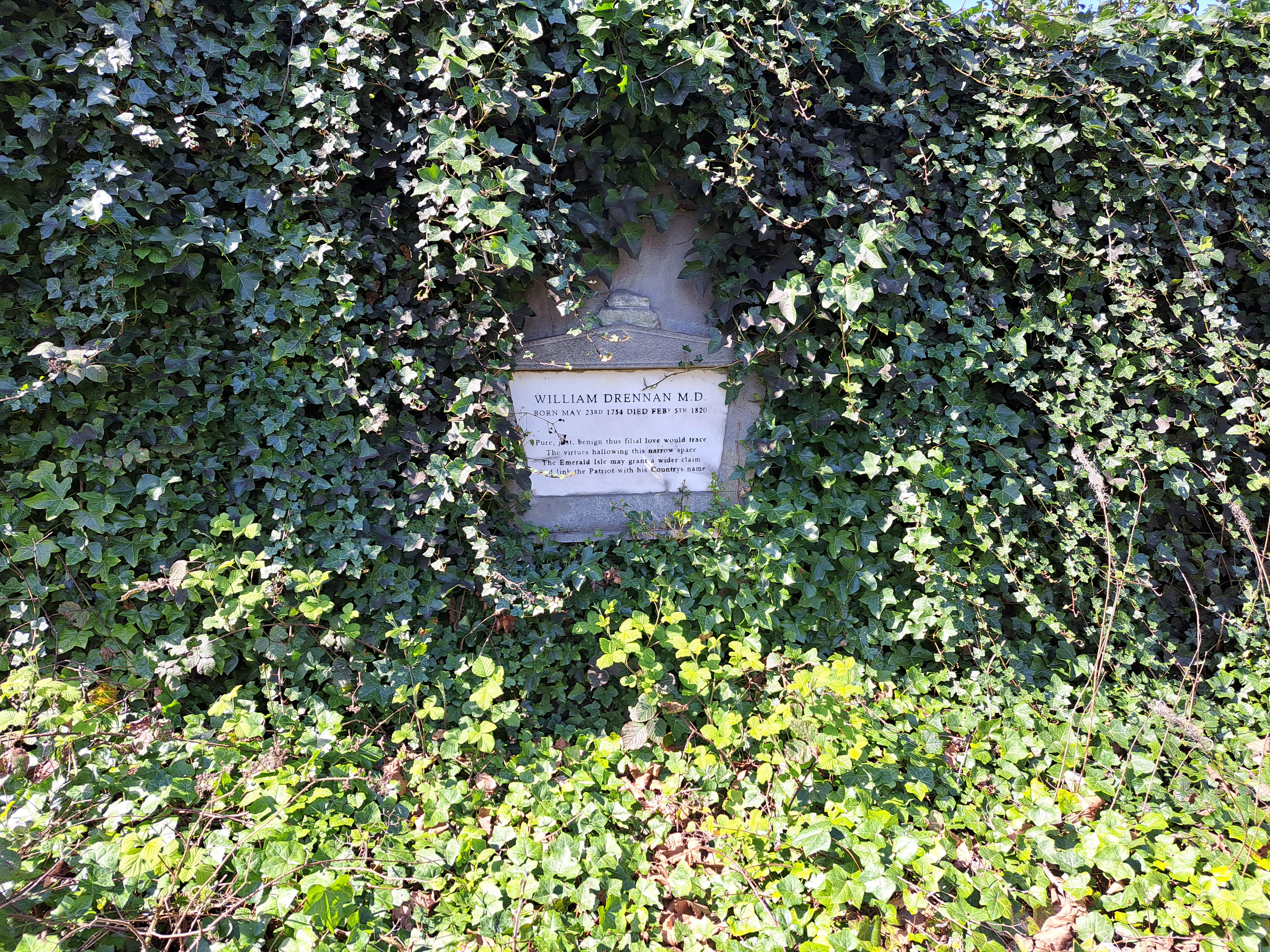
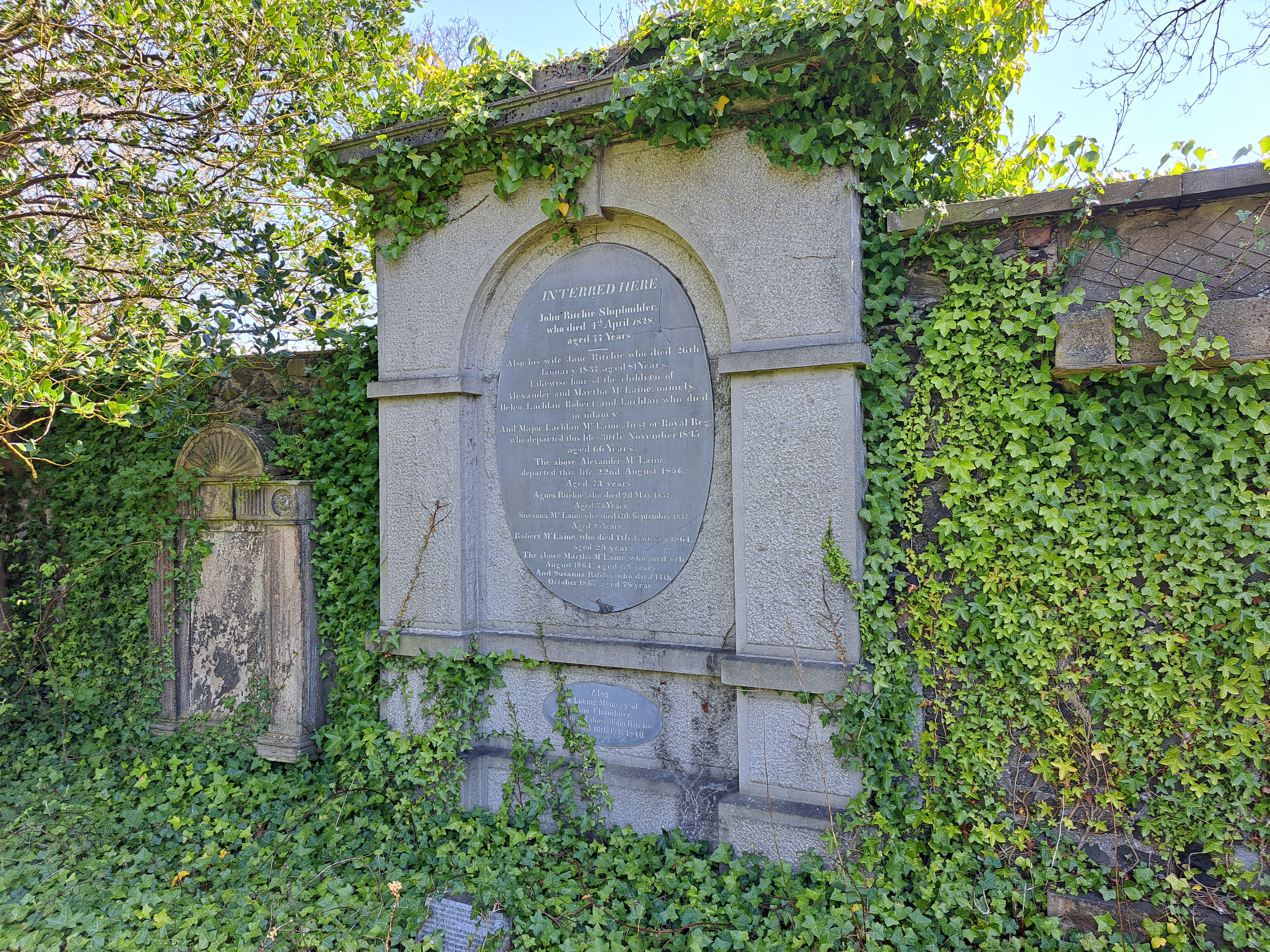
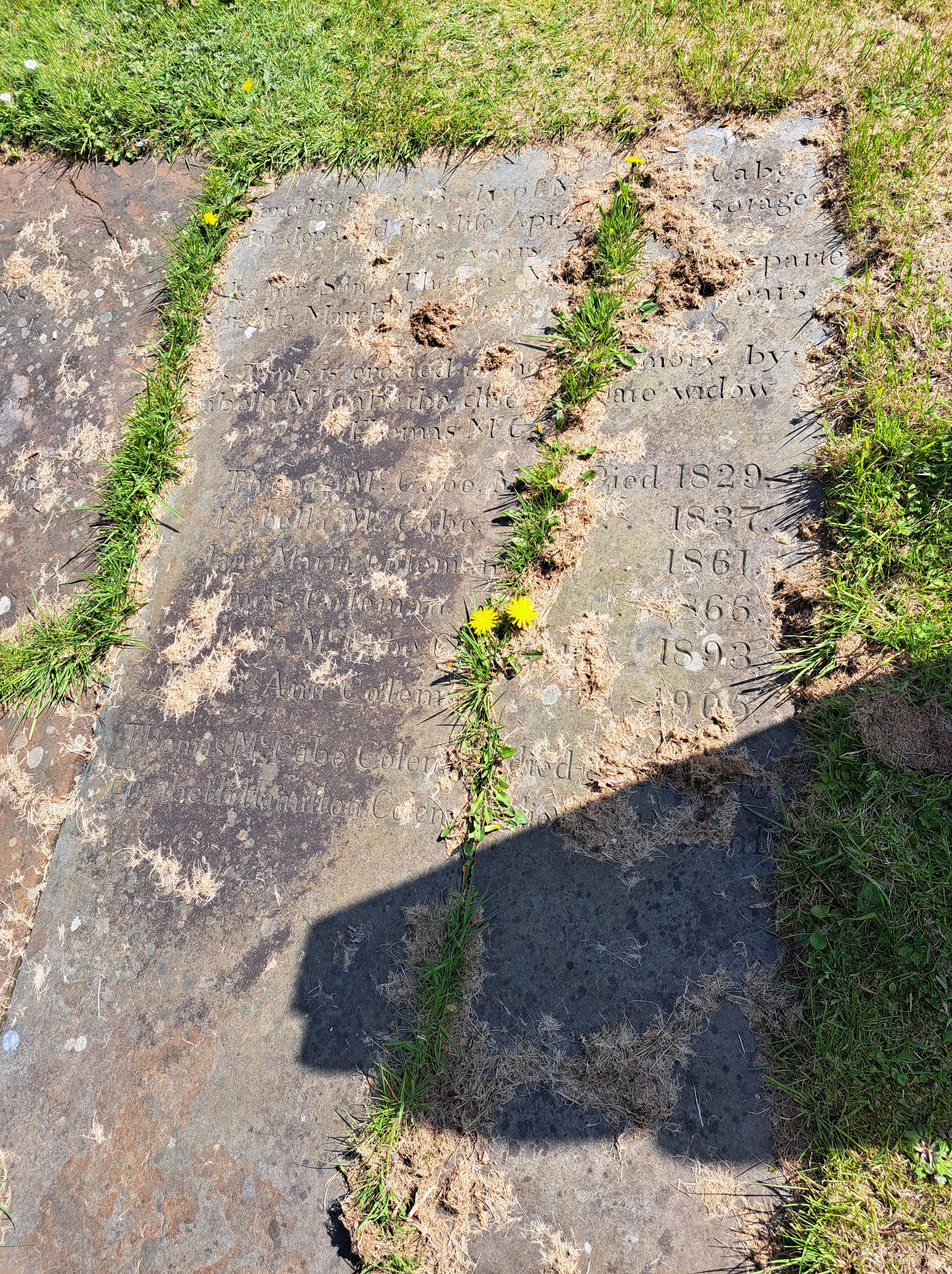
But in the graveyard we saw the graves of such notables as Dr William Drennan (poet, doctor, educationalist, United Irishman), John Ritchie (who established ship building in Belfast), and Thomas McCabe (who successfully opposed the establishment of a Belfast slave ship company) who were all Non-Subscribers, as indeed was Waddell Cunningham who it was who proposed establishing a slave ship company in Belfast (but who isn’t buried in Clifton Street).
Grave of William Drennan
Grave of John Ritchie
Grave of Thomas McCabe
It was a fascinating tour and we are grateful to our guides for such an interesting and illuminating morning.
There was a lot of snow this week, suddenly the world didn’t look so Spring-like and we had to postpone a meeting with the RSPB as we plan to help re-introduce swifts to our locality.
But the weather led me to reflect on Lent and Spring and this short video contains a few readings from Psalm 148, Walter Brueggemann and Melissa Jeter, as well as music played by Allen Yarr, the church organist.
It can be seen here:
We also made another short video that makes full use of the snow, with thanks to InkLightning for the special animation:













 velvethummingbee