Sunday Worship

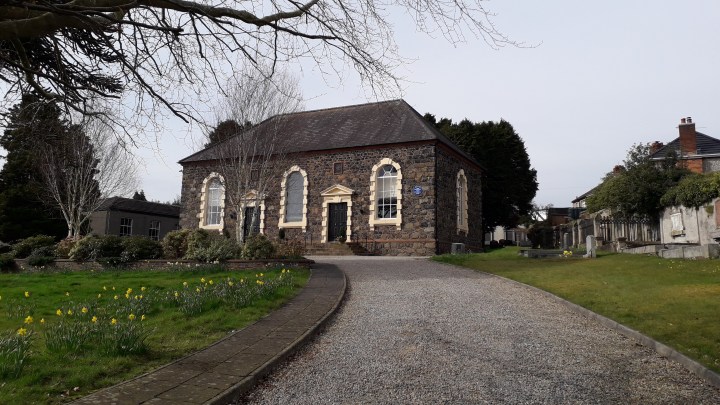
Our service on Sunday, 19th April comes from Clough Non-Subscribing Presbyterian Church and encompasses, among other things, in different ways: the Mountains of Mourne; the Church’s cherry blossom tree; a bagpipe duet; a nineteenth-century Unitarian minister in Wandsworth, London and sometime editor of the Inquirer; George Herbert, Anglican clergyman and poet; the book of Proverbs, and much more.

At times we cannot be at the thing we would; yet there’s a good thing to do.

W.G. Tarrant

Recorded Service at Clough Non-Subscribing Presbyterian Church, county Down, Northern Ireland

Sunday, 19th April 2020

Minister: Rev Dr David Steers

Organist: Alfie McClelland

Bagpipes: Robert Neill & Laura Neill

Reading: Proverbs ch.13  v.14-21.

The hymns played are:

‘Immortal, invisible, God only wise’

Hymns of Faith and Freedom No. 30

‘Fight the good fight with all thy might’

Hymns of Faith and Freedom No. 198

‘Amazing Grace’ (bagpipes)

When every day is pretty much like any other it is important to remember which day is Sunday. We need to keep one day special, to punctuate our week with prayer and meditation.

God is spirit, and those who worship him must worship in spirit and truth.

John ch.4 v.24 NRSV
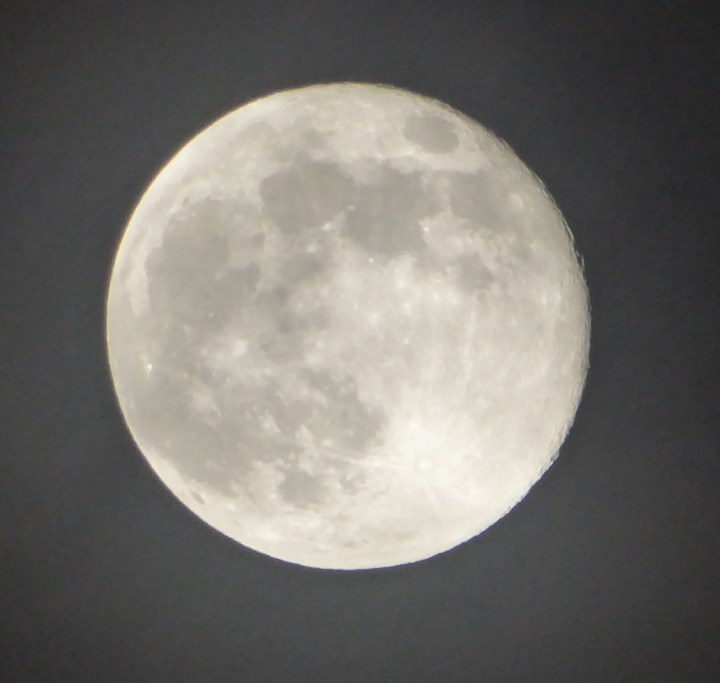
Pink Moon crop

Pink Moon on 8th April 2020.


Online Worship: Easter Day

20200323_102318

Our service for Easter Sunday comes from First Dunmurry NS Presbyterian Church, Dunmurry.

Easter service, Sunday, 12th April 2020.

Service conducted by the minister in charge: Rev Dr David Steers

Piano: Allen Yarr

Guitar and solo: David Gibbs

Reading: John ch.20 v.11-18


The hymns played are:

Church Hymnary No. 119

‘Jesus Christ is risen today’ (first three verses)

Church Hymnary No. 123

‘The day of resurrection’

With special music provided by David Gibbs of Portrush. David sings Moliannwn (Let’s Rejoice) a Welsh folk hymn written by a Welsh slate quarryman called Benjamin Thomas who lived from 1838 to 1920. This is a great song for this time of year. Benjamin Thomas emigrated from Wales to North America and with his roots in Wales but living in America it beautifully brings together his experiences of the Spring on both sides of the Atlantic.

The Stories in Slate blog says:

“Born on April 9, 1838, Benjamin Thomas was a native of the famous slate quarrying town of Bethesda in North Wales, but he spent a good half a century on the North American Continent ending his days in the Slate Valley. He was a man who involved himself in things Welsh, most notably in poetry – he penned several verses which can be found in countless old periodicals of the age. Most are musings upon the vicissitudes of life, but there is no doubt that his most enduring piece is ‘Moliannwn’, the vigorous song of praise at the arrival of spring.”

You can read the full fascinating account of this song here:

Moliannwn (Let’s Rejoice)

Thank you David for singing it for us.

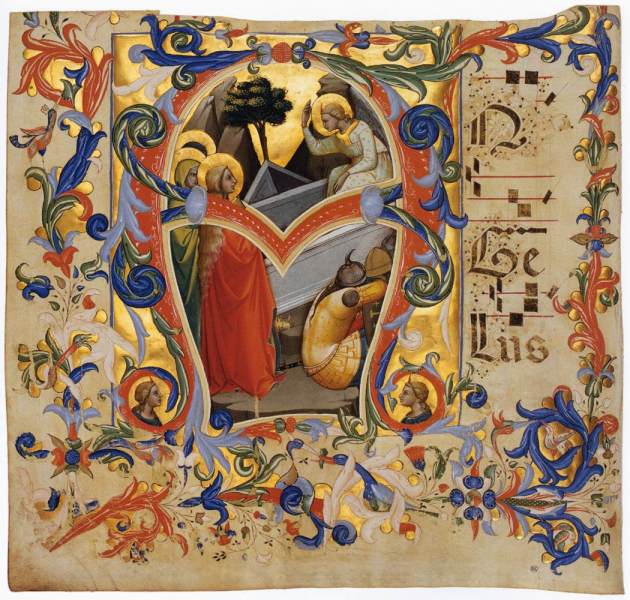
Image at the top of this page: The Three Marys at the Tomb (1396) by Lorenzo Monaco, Illumination on vellum, 46 x 48 cm, Musée du Louvre, Paris. Source: Wikimedia. Public Domain.

Online Sunday Worship

Our Sunday service today comes from the First Presbyterian (Non-Subscribing) Church, Stream Street, Downpatrick.


Sunday Worship, 29th March 2020

First Presbyterian (NS) Church, Downpatrick

Service conducted by the minister, the Rev Dr David Steers

Organist: John Strain (playing the organ at Ballee Non-Subscribing Presbyterian Church)

Reading: Philippians ch.4 v.1-9

The hymns played are:

Hymn No. 22 Hymns of Faith and Freedom

Tune: Lobe den Herren

Praise to the Lord, the Almighty, the King of creation;
O my soul, praise him, for he is thy health and salvation:
All ye who hear, Now to his temple draw near,
Joining in glad adoration.

Praise to the Lord, who o’er all things so wondrously reigneth,
Shelters thee under his wings, yea, so gently sustaineth:
Hast thou not seen, How thy entreaties have been
Granted in what he ordaineth?

Praise to the Lord, who doth prosper thy work and defend thee;
Surely his goodness and mercy shall daily attend thee:
Ponder anew, What the Almighty can do,
Who with his love doth befriend thee.

Praise to the Lord! O let all that is in me adore him!
All that hath life and breath come now with praises before him!
Let the Amen, Sound from His people again:
Gladly for aye we adore him!


Hymn No.283 Hymns of Faith and Freedom

Tune: Nottingham

Take my life, and let it be
Consecrated, Lord, to thee;
Take my moments and my days;
Let them flow in ceaseless praise.

Take my hands, and let them move
With the impulse of thy love;
Take my feet, and let them be
Swift and beautiful for thee.

Take my voice, and let me sing
Always, only, for my King;
Take my lips, and let them be
Filled with messages from thee.

Take my will and make it thine;
It shall be no longer mine;
Take my heart, it is thine own,
It shall be thy royal throne.

Take my love; my Lord, I pour
At thy feet its treasure-store;
Take myself, and I will be
Ever, only, all for thee.


The true story of ‘Silent Night’, in Faith and Freedom

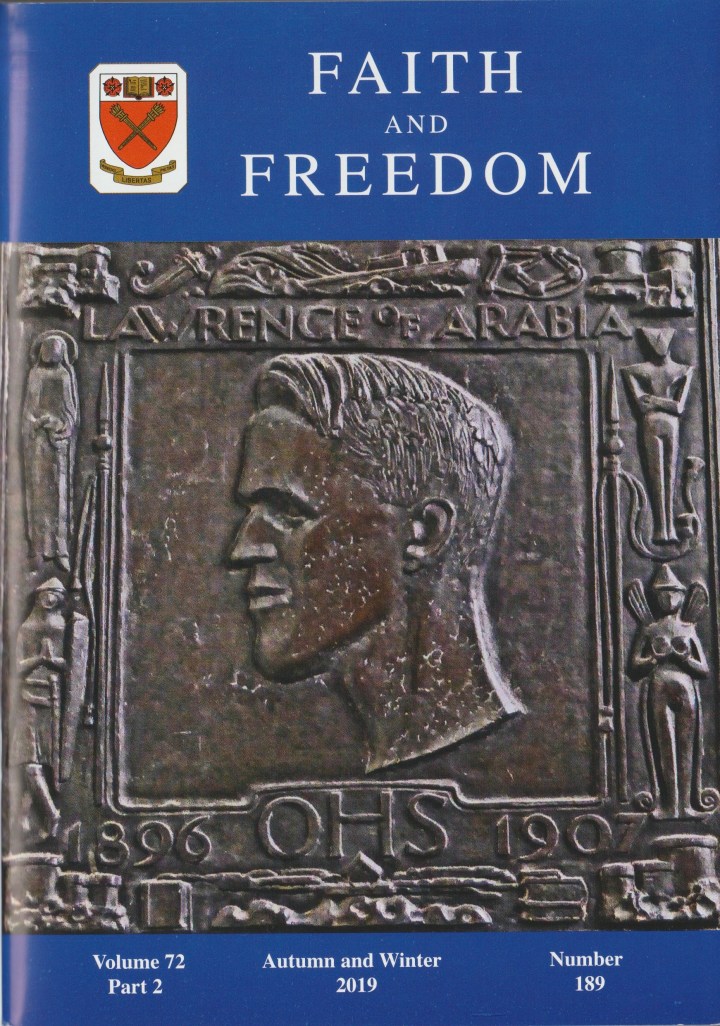
In the latest issue of Faith and Freedom Andrew Page tells the true story of the famous carol Silent Night and gives a new and entirely faithful translation of the hymn.

Christmas Ballee Candlelight December 2009

Andrew Page writes:

“We are all familiar with Silent Night – or, at least, we think we are. We know the famous tune, we can recite the familiar English words, we might even know the tale of the church organ and the mice – whose supposed gnawing through the bellows necessitated the writing of a new carol played by guitar.

Familiarity, however, does not necessarily lend itself to understanding. To understand the meaning of Silent Night the first thing that must be done is to strip away the myths. Myths inevitably point us towards truth – real, deep and meaningful truths, that a mere retelling of the facts never could. However, when a mythologised version of events becomes widely accepted as historical truth, it must be challenged.

A myth is a story that never was, but always is. And so it is with the myth of Silent Night. The traditional story tells us of how hungry church mice had eaten a hole in the bellows of the church organ in Oberndorf. The damage was discovered in Christmas Eve, just a few hours before the young priest, Father Mohr, was due to lead Midnight Mass. Attempts were made to find a means of repairing the organ, but these efforts proved unsuccessful. As Mohr’s congregation would need something to sing, and with the organ out of commission, the priest was inspired by a pastoral visit he had carried out earlier in the day, to a mother and her sick baby. He penned the now world-famous words, and then ran to his friend Franz Gruber – a schoolmaster and organist – to ask him to quickly compose a tune. When a man arrived after Christmas to repair the organ, he was so impressed with the new composition that he passed it on to the Strasser family, a travelling group of musicians and singers very similar, I assume, to the Von Trapps of Sound of Music fame. The Strassers later published it and the rest is history.

Or is it?….”

From ‘The Story of Silent Night’ by Andrew Page published in Faith and Freedom, AUTUMN AND WINTER 2019 (Volume 72, Part 2) issue 189

An annual subscription costs £15 (postage included). Please contact the business manager to take out a subscription:

Nigel Clarke,
Business Manager, Faith and Freedom,
16 Fairfields, Kirton in Lindsey,
Gainsborough, Lincolnshire.  DN21 4GA.

It’s also possible to pay via PayPal via clicking here.

Email: faithandfreedom@btinternet.com

Faith and Freedom Cover 2019