What One Woman Did

In my first post on Croft Chapel I mentioned Ellen Yates whose determination to open a new chapel after Risley Chapel was taken from the congregation eventually resulted in the opening of Croft Unitarian Chapel in September 1839.

CroftVestiges

From G.E.Evans’s Vestiges of Protestant Dissent

One of the sources Ian Sellers used in his 1978 article was What One Woman Did: The Origin and Early History of Croft Unitarian Chapel. This was published in 1938 and consisted of a short article by Rev George Eyre Evans, originally published in the Inquirer on 21st July 1938, together with a few short paragraphs added by the Rev A. Cobden Smith who had been minister of Leigh.

Thanks to the kindness of Rev Andrew and Margaret Hill I have been sent a scan of this short work which highlights the work done by Ellen Yates née Urmston. She was born in Warrington in 1778 and went into domestic service at the age of nine in the home of the Rev John Aspinal, minister at Risley from 1779 and former minister at Walmsley. She remained in his service until her marriage to “farmer Yates” with whom she had ten children, six of whom outlived her.

According to G.E. Evans “Farmer Yates and Ellen his wife opened their house for divine worship on Sundays, and for nigh twelve months” the Rev E.R. Dimmock of Warrington conducted worship along with supply preachers.

This account includes a quotation from something written by the Rev Henry Fogg, sometime minister of Ormskirk and a supply preacher at Croft. (Strangely enough I have a picture of the Rev Henry Fogg but I have never seen an image of the now long vanished chapel at Ormskirk.) He gives a vivid picture of the services in her farmhouse when “in the singing of the last hymn she put the kettle on to boil for tea. We made a collection in one of her best saucers.”

As was mentioned previously she managed to collect the not insignificant sum of £500 towards the new chapel by walking to churches all over the north west on fund raising expeditions. Frequently she didn’t get home until very late at night and “On one occasion, after spending a busy and successful Saturday in Manchester, she missed her last conveyance home, but rather than not be in her accustomed place in the Sunday meeting in her own house, she resolutely determined to walk the whole distance – about eighteen miles – and reached home about two o’clock in the morning.”

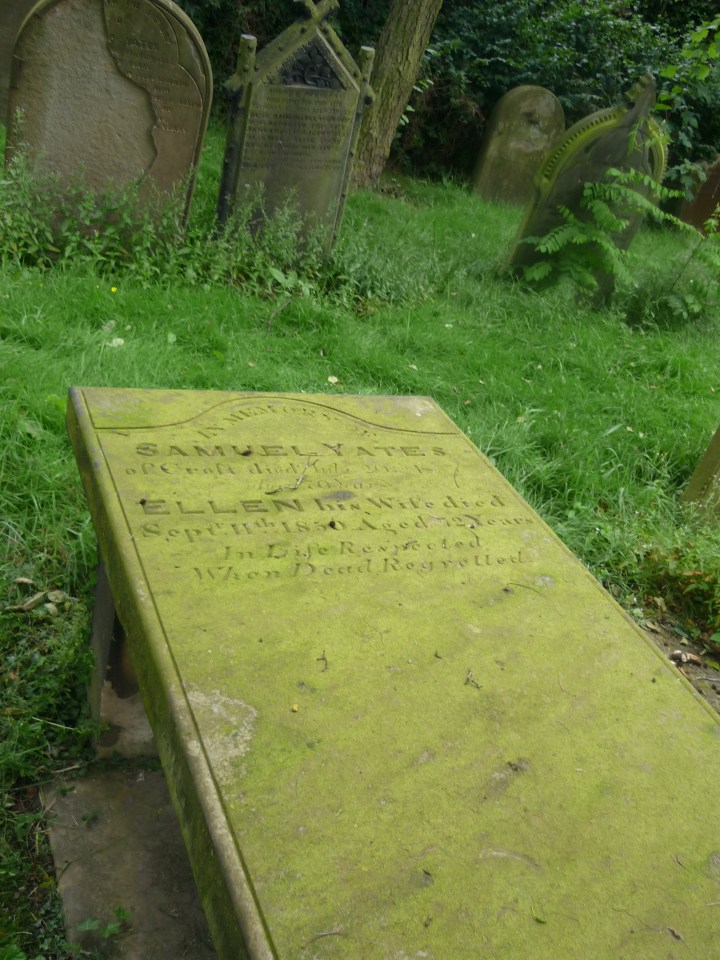
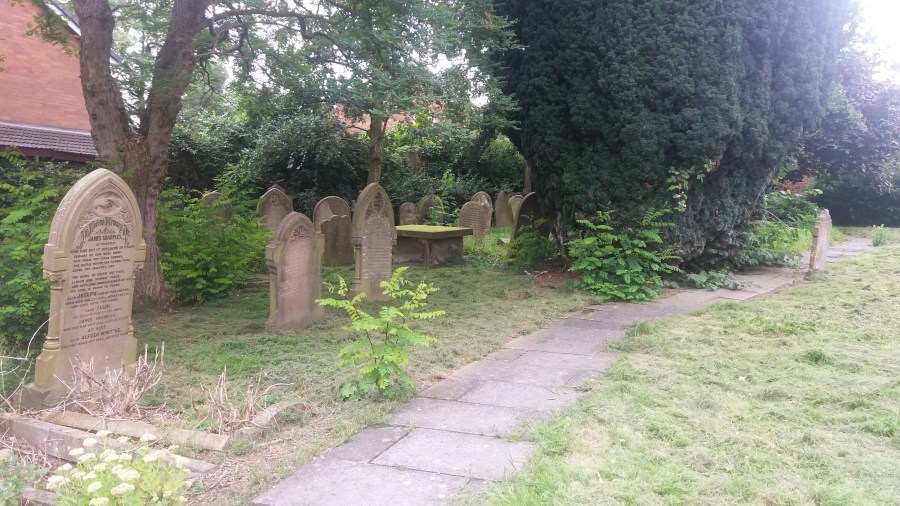
Ellen Yates died in September 1850 and was buried in the chapel grave yard. Her grave and that of her husband is quite prominent. A. Cobden Smith also mentions that there was a marble tablet to her memory in the Chapel, presumably this is now long gone, but her grave can still be seen:

Ellen Yates

The grave of Ellen and Samuel Yates (Photo: Jack Steers)


Some more thoughts on Croft

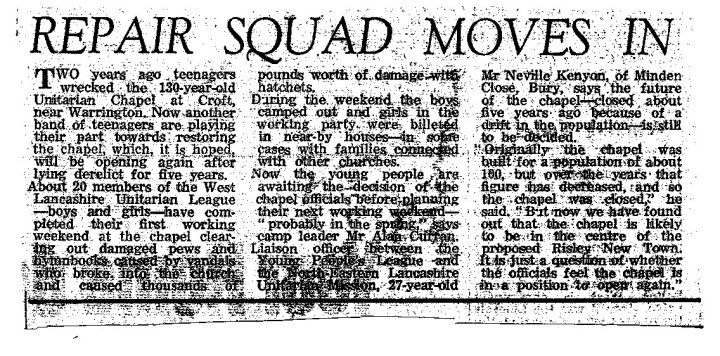
Both The Unitarian Heritage and Ian Sellers’ article The Risley Case suggest that Croft Unitarian Chapel closed in 1959. This seems clear. However, the story does not end there. Neville Kenyon has been in touch and has sent this interesting cutting from the Manchester Evening News dated 23rd October 1964. It shows that the very active local branch of the Unitarian Young People’s League had gone into the Chapel to try and restore it and clean it up following vandalism. They organised working parties and went to the trouble of staying locally as they tried to fix the place up. It’s clear from the cutting that they hoped to see the Chapel open once again, especially since the area was earmarked for development as part of the new town. Although they must have done a lot of work and the cutting seems quite optimistic Neville doesn’t think the Chapel was ever able to open again. We know that the next step was demolition unfortunately.

Croft Chapel M.E.N. 23.10.1964

Manchester Evening News 23rd October 1964

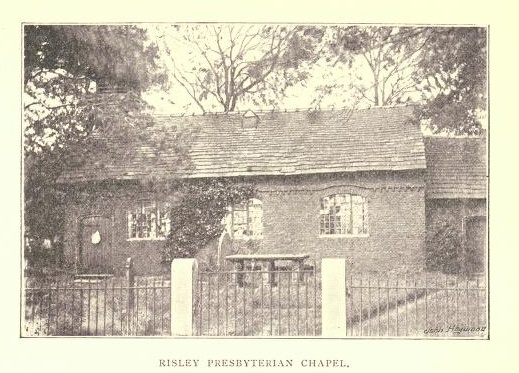
The original Chapel from which the Unitarians were expelled in the 1830s was demolished because of the construction of the M62 motorway, although, Ian Sellers says, this “was, not, strictly speaking, necessary.” Dr Sellers suggests this was done “with an eye to the future, but a lack of interest in the past”. However, in this sense it eventually proved a successful move – the new Presbyterian/URC Chapel built in the mid-1970s was right in the middle of new housing and able to grow because of that. The old graveyard still survives and was still used by the Unitarian congregation even after their new Chapel was built. Ian Sellers mentions a number of burials recorded in the Risley register of people described as “was a Unitarian” or “was a Socinian”.

RisleyChapel01

But thinking again of the grave of the Rev Peter Holt at Croft it should really be a place of Unitarian pilgrimage. His son, the Rev Raymond V. Holt, was enormously influential, I have known many ministers who had him as a tutor and count him as an important figure in their development. Among other things he was the author of The Unitarian Contribution to Social Progress. His other son, the Rev Felix Holt, the minister at Ballymoney for over 40 years, was also a scholar but rather less well-known. As a side line to his ministry he taught classical languages to local boys in county Antrim. The late Rev Alick Cromie, a very senior and gracious minister in the Presbyterian Church, who died just a few years ago at an advanced age, told me that he had taught him Latin when he was a boy. As a joke one day he and the other scholars decided to lead a donkey up the steps into the vestibule of the Non-Subscribing manse. Apparently a donkey can be lead upstairs relatively easily but they do not like going down. The boys ran away and left their tutor to deal with the surprising presence of a large donkey in his house as best he could. Mr Holt’s response to this problem was not recorded.

Croft Unitarian Chapel

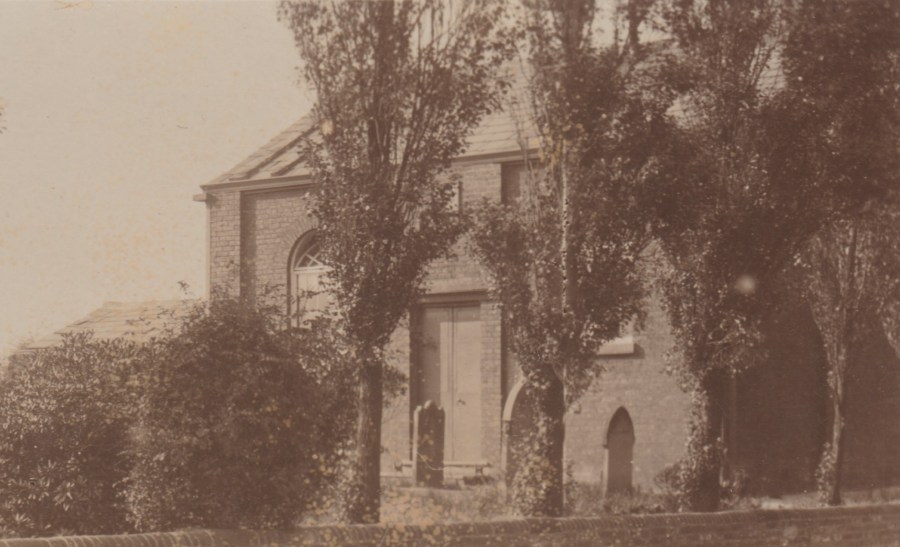
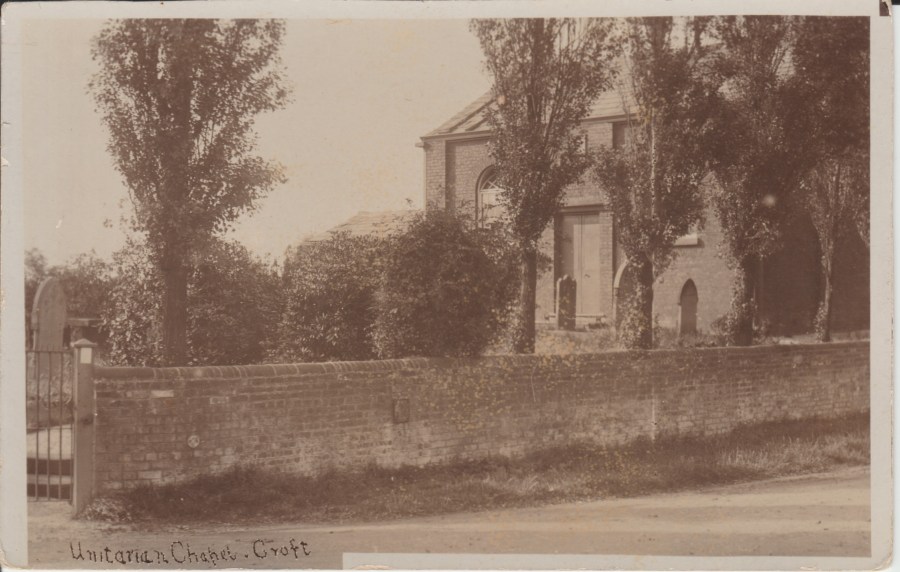
It’s many years since I last visited the graveyard of the Unitarian Chapel at Croft. The Chapel was demolished long ago and the graveyard is not easy to find but I was encouraged to re-visit it by the purchase of a rare post card of the Chapel on eBay.

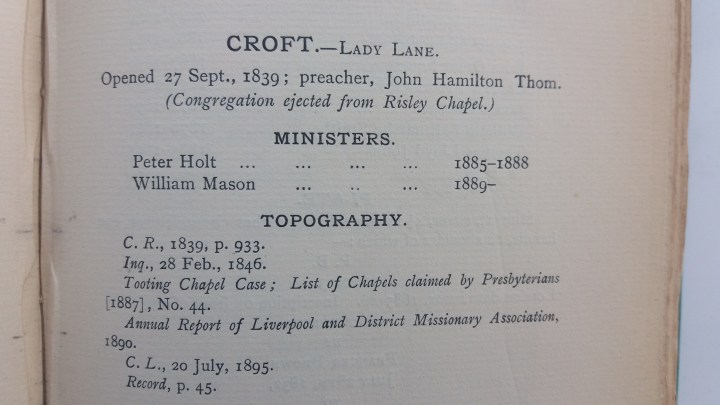
That invaluable book, The Unitarian Heritage, doesn’t have a picture of the Chapel but it does carry all the main points of its history:

Croft, Lady Lane. Lancashire. 1839. Originated at Risley in 1707 from which Unitarians were expelled (Chapel there demolished 1971 – in path of M62 motorway). Closed 1959 and demolished, though graveyard survives, neatly maintained by Warrington Corporation.

But there is a rather more poignant tale to its story, well-told by the late Rev Dr Ian Sellers in the Transactions of the Unitarian Historical Society of 1978. He outlines the history of the Risley Chapel, seized through the courts by the Presbyterian Church in England who expelled the Unitarian congregation (or most of them), and who kept it until the M62 brought about its destruction in the early 1970s.

In 1839 the dispossessed Unitarians had built a new chapel at Croft, a remote rural area near Warrington. Much of the energy for the creation of the congregation came from the labours of one woman – Ellen Yates – a woman who organised a public demonstration against the loss of the Chapel in the village square at Risley. In the autumn of 1838 she opened her house for worship and in the company of her husband travelled the north-west on foot raising money for the new Chapel. She raised £500 in the end which was used to secure the plot, establish an endowment for the preachers, and build the Chapel, with most of the labour provided by the members. All was ready by September 1839 and on 27th of that month opening services were held with the special preachers being Rev James Martineau and Rev John Hamilton Thom.

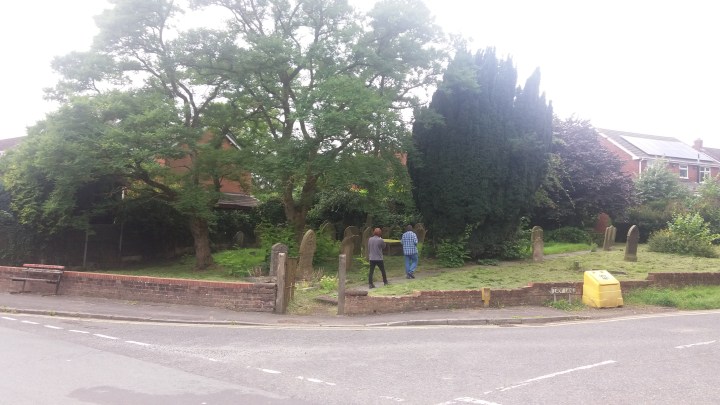
It’s hard to date the old post card, although sometime at the start of the twentieth century would be a very reasonable guess. Most of the graves date from the nineteenth century and many of them can be seen and compared on both photographs.

Unitarian Chapel Croft

The Chapel c.1910

Croft01

The site in 2016

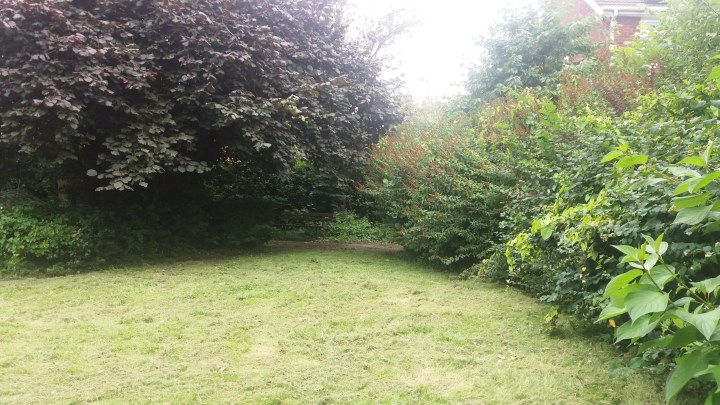
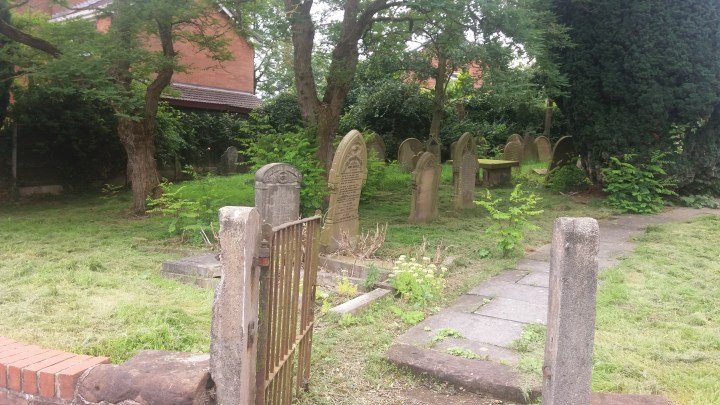
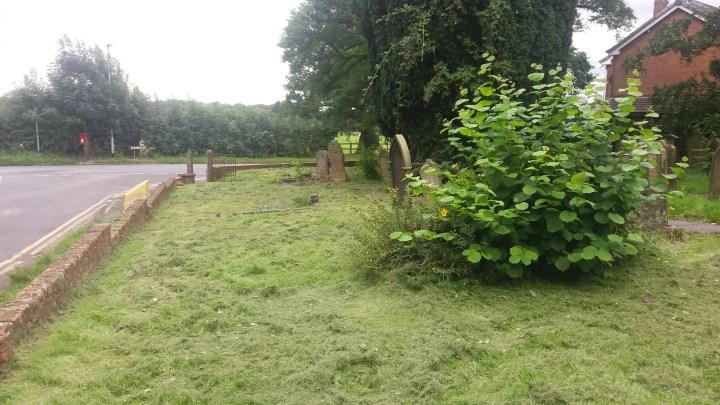
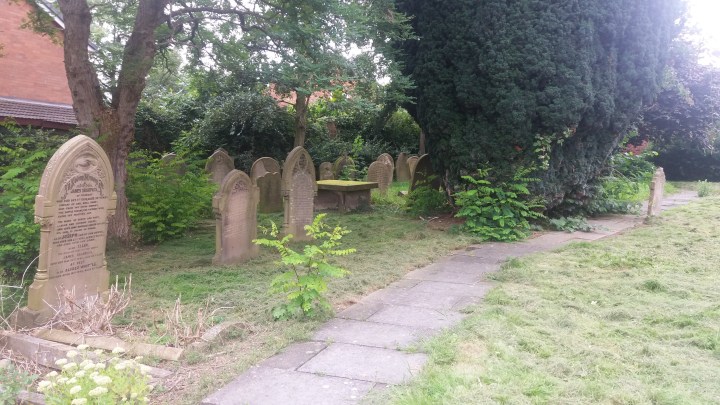
The Chapel was demolished in 1959 and Ian Sellers states that the site of the Chapel was sold for building. A major difference with the old photograph is that the site is now surrounded with modern housing but it may be that the Chapel site itself was either not sold or only part of it was disposed of. There is quite a large secluded area at the back of the graveyard which must have been part of the Chapel and the old photograph appears to show the Chapel very near to the graves.

Croftspace

The back of the site

The graves themselves are worth looking at. They include two with inscriptions for soldiers killed in the First World War. One is for Rifleman Harold Houghton, who died from wounds received at the battle of Neuve Chappelle, 24th March 1915 aged 24. The other commemorates Corporal William Whittle of the 1st Battalion the Royal Fusiliers who died on 14th June 1918 in Aubergue Hospital aged 29.

CroftWW01

Whittle family grave

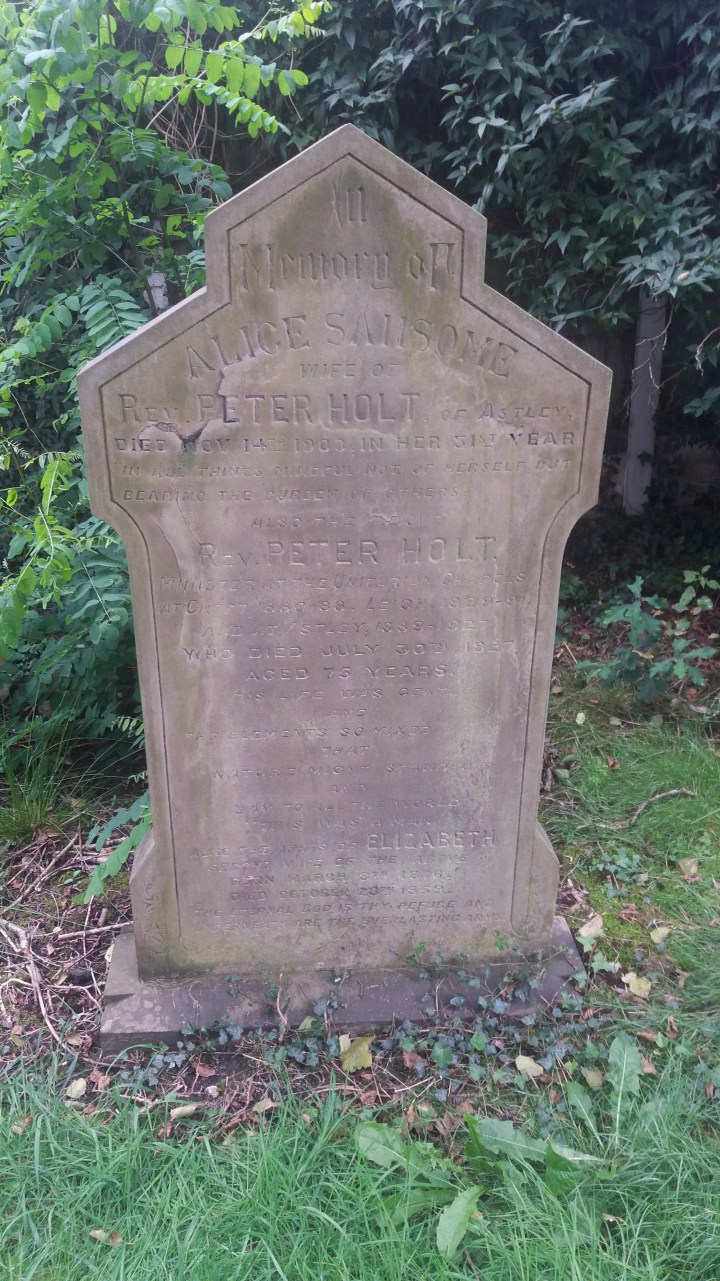
I remembered from my first visit the grave of the Rev Peter Holt. Most of the graves are in very good condition although this one seems to be starting to split which is a shame. Peter Holt was the first full-time minister at Croft, from 1880 to 1889, also serving as minister at Leigh (1889-1894) and Astley (1889-1927). He was the father to two other ministers – the Rev Raymond V. Holt, distinguished scholar, tutor at Manchester College, Oxford and principal of the Unitarian College, Manchester, and the Rev Felix Holt minister of Ballymoney in county Antrim.

CroftPH01

Grave of the Rev Peter Holt

At the time of closure the graveyard was transferred to the care of the local council. Originally in Lancashire it is now located in Cheshire. As Ian Sellers says of it (and the graveyard of Risley itself which also still survives) it is somewhere that “only the most insensitive would find unworthy of remembrance”.

Croftg01

Croftg03

Croftg05

Croftg06

Croftg07

Nantwich Unitarian Chapel

Willaston School Nantwich was created through the will of Philip Barker who lived at the Grove, a house originally built by his brother in 1837. It’s clear also that Philip Barker and his brothers were the main supporters of the Unitarian Chapel, their vision – and financial contribution – seems to have been what maintained what was otherwise quite a weak cause.
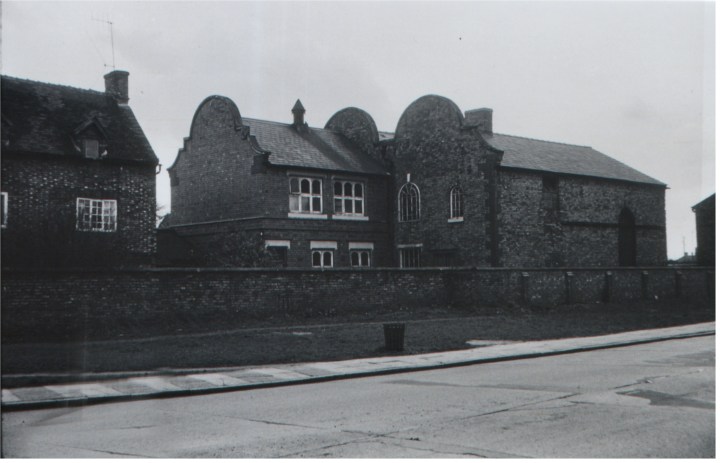
 

Nantwich 1950s

The chapel and associated buildings, probably dating from the 1950s. Photo courtesy of Andrew Lamberton


I found myself in Nantwich once, almost by accident, and carried out an ineffective and inevitably fruitless search for anything left of the Chapel. If I had checked The Unitarian Heritage book first I would have known that it was long demolished (in 1969), eventually meeting, it would appear, quite a sad end. However, the town of Nantwich is fortunate in having a very active History Group (which published Willaston School Nantwich – see the two previous posts) and through the kind help of Andrew Lamberton – who supplied me with a number of fascinating images and other information –  I’ve been able to piece together something of the history of the congregation that was once served by Joseph Priestley.


The congregation dated from the ejection and registered a former malt-kiln on Pepper Street as a meeting house in 1689. Between 1725 and 1726 they built the Chapel on Hospital Street.


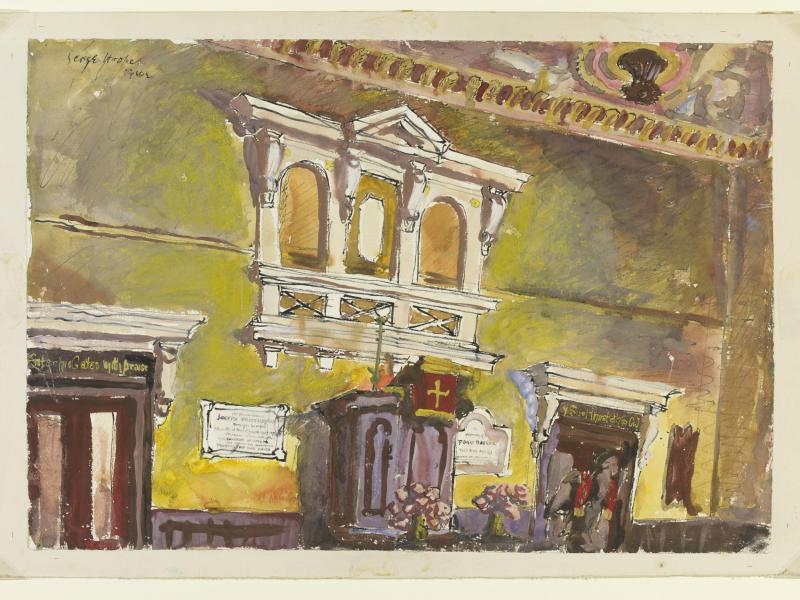
The lively painting of the interior on this page was painted in 1942 by George Hooper as part of the ‘Recording Britain’ series of images, held in the V & A which describes the scheme in the following way:

The ‘Recording Britain’ collection of topographical watercolours and drawings [was] made in the early 1940s during the Second World War. In 1940 the Committee for the Employment of Artists in Wartime, part of the Ministry of Labour and National Service, launched a scheme to employ artists to record the home front in Britain, funded by a grant from the Pilgrim Trust. It ran until 1943 and some of the country’s finest watercolour painters, such as John Piper, Sir William Russell Flint and Rowland Hilder, were commissioned to make paintings and drawings of buildings, scenes, and places which captured a sense of national identity. Their subjects were typically English: market towns and villages, churches and country estates, rural landscapes and industries, rivers and wild places, monuments and ruins. 


It’s an interesting choice of subject and shows the pulpit with memorials to Joseph Priestley and Philip Barker on either side. You probably wouldn’t guess from the painting but the interior had been completely re-ordered. The chapel had been turned through 180 degrees and the pulpit placed on a false wall with a vestibule and ancillary rooms located behind it. Andrew Lamberton has supplied me with this plan of the interior of the remodelled chapel (from the Cheshire Record Office):
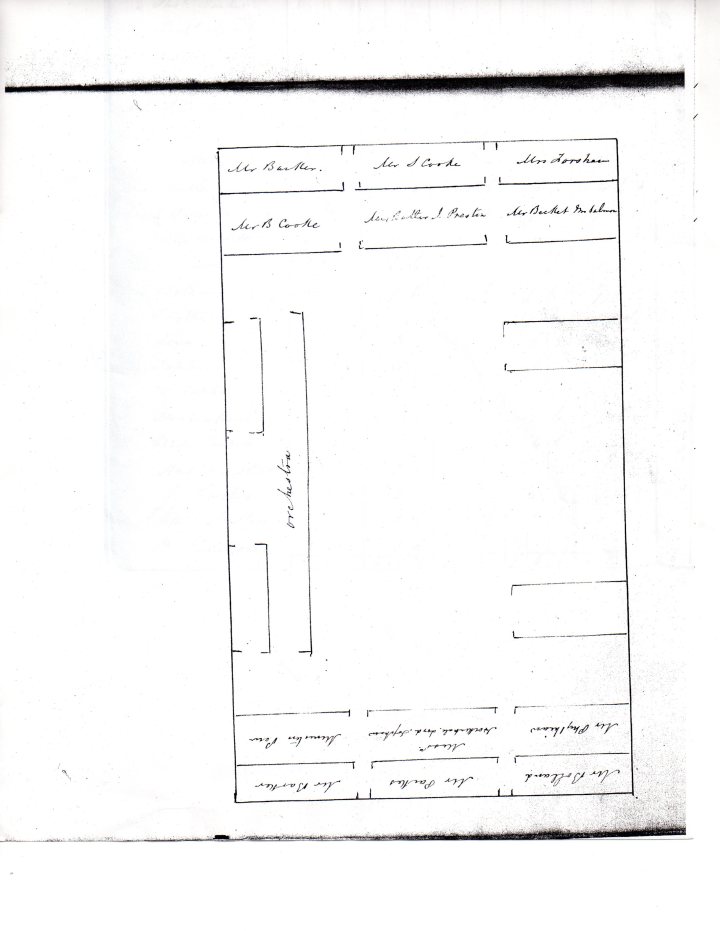
 

Nantwich plan

Plan of the interior c.1850 (Cheshire Record Office)

Strangely this plan does not show the pulpit which would have been in the centre of the wall on the right hand side of the drawing as we look at it. Opposite it is an area described as ‘orchestra’ on the plan. Is this meant to imply some instrumental accompaniment for hymns or would it be the place for the choir? Philip Barker’s pew can be seen in the top left hand corner.


The major repairs that resulted in the re-ordering of the interior took place in 1846-49 according to Christoper Stell’s Nonconformist Chapels and Meeting-houses in the North of England (1994). His plan of the interior can be compared with the one above. By 1850, however, it was not a large congregation as this subscription list, also supplied by Andrew Lamberton from the Cheshire Record Office, shows
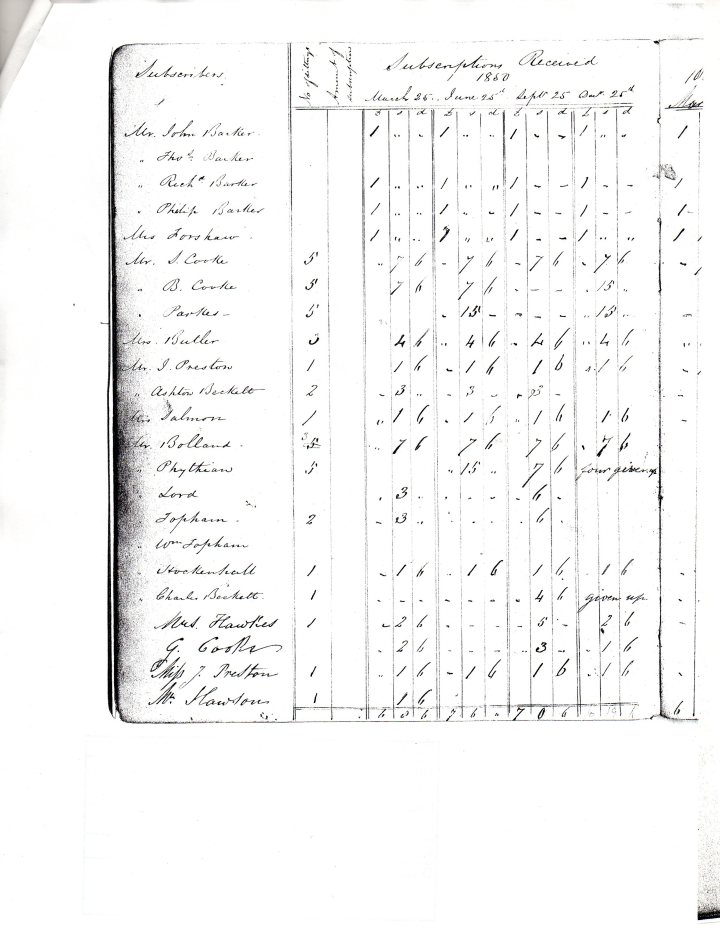
 

Nantwich subscribers

Subscribers List 1850 (Cheshire Record Office)

The chapel was clearly very dependent on the Barker family and the Rev J Morley Mills, minister at the end of the nineteenth and start of the twentieth centuries, recorded that it was known in those days as “Mr Barker’s Chapel”. By the time of the Second World War it was clearly at a very low ebb. Surviving photographs show the building in a very sorry state.

In 1896 a schoolroom had been built right in front of the chapel. This obscured the distinctive outline of the frontage with the Dutch style gables. However, Christopher Stell suggests this design may not have been original and could have been added in a rebuilding of 1870. Either way the Victorian schoolroom obscured the look of the chapel:
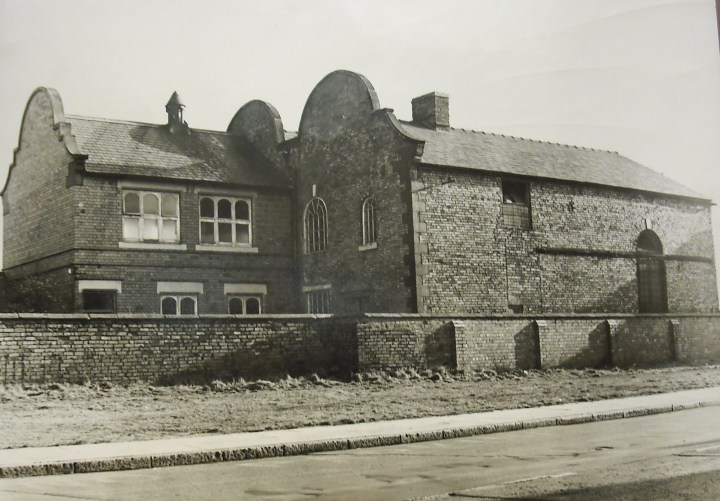
Nantwich 1960s

The chapel probably in the 1960s. Photo from Andrew Lamberton

Curiously The Unitarian Heritage carries a photograph of Nantwich chapel taken, presumably, after the school house had been demolished and showing the frontage as it had been built:
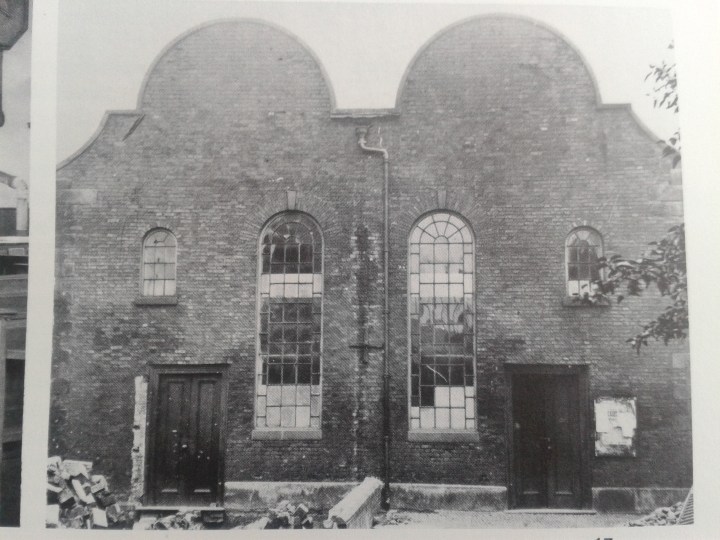
Nantwich UH

From The Unitarian Heritage

It seems a reasonable assumption to make that this photograph was taken at the start of the demolition process, after the Victorian school house had been taken down. However, if you compare this photograph and the previous one which dates from the 1960s it is clear that the two long windows are both intact and fully glazed and the stone work and frames around the window are no longer painted. Could this photograph actually date from a different period?


I’d be interested to hear from anyone who has any more information and any additional photographs of the chapel, especially of the interior.


Andrew Lamberton has also sent me this newspaper cutting taken form the Nantwich Chronicle in about 1966 and indicating the sad end the chapel faced:
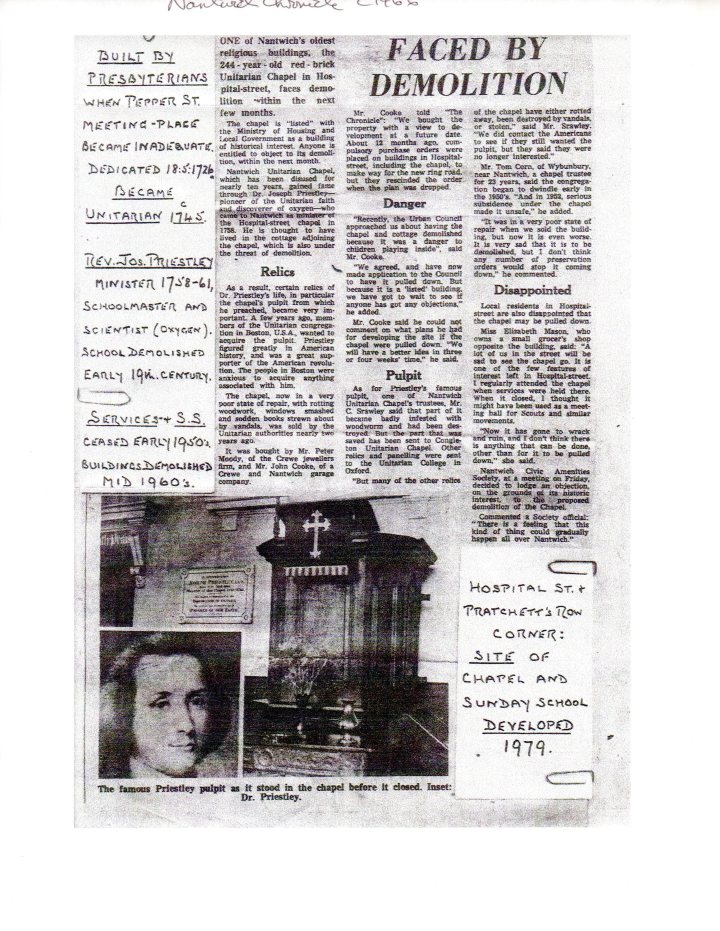
Nantwich Chronicle

From the Nantwich Chronicle c.1966

It is a shame that such a an unusual and interesting building was lost to the locality, one that had been thought significant enough to record for posterity during the  darkest years of the Second World War.
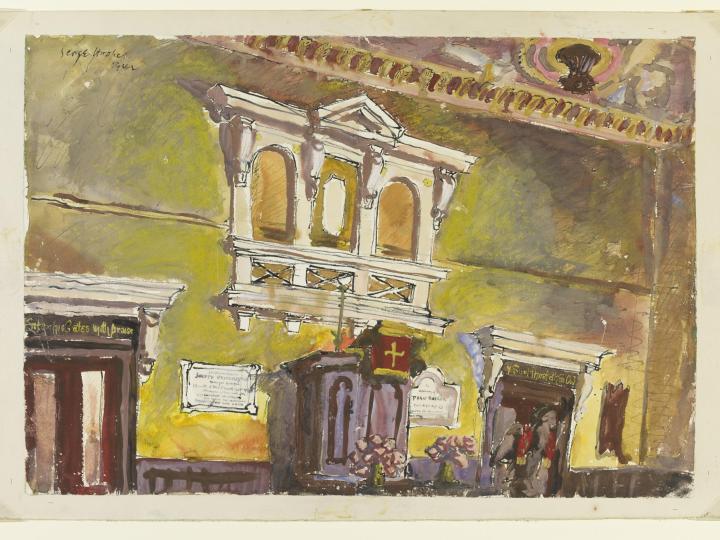
2012FG9670_2500

The Presbyterian Unitarian Chapel, Nantwich; Recording Britain; Chapel, Hospital Street, Nantwich. © Victoria and Albert Museum, London
A Vestige of Protestant Dissent – in Antrim town

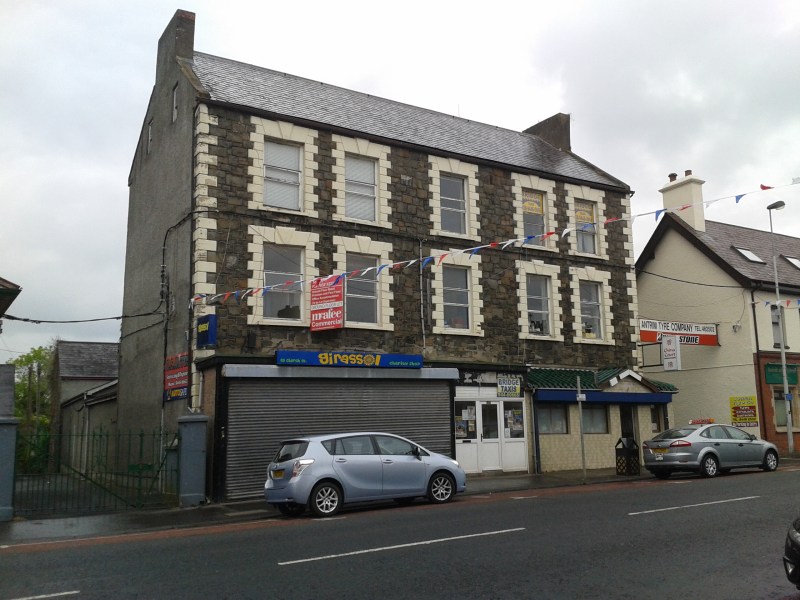
Lots of towns now have heritage trails and in many places in Northern Ireland Non-Subscribing Presbyterian churches feature on the itinerary. Not so long ago I was interested to pick up a copy of the Antrim Town Heritage Trail published by Antrim Borough Council. Here I found a reference to the original Antrim congregation. Although the building closed for worship in the 1970s it dates back to the year 1700 and so it was no surprise to see it featuring as part of the town’s heritage. What was surprising though was the building that featured next to it on the list. You could be forgiven for overlooking this because it is known locally, and named in the text, as ‘Castle Puff’. Yet this was apparently, at one time at least, the manse for the NSP church. The blurb went on:


This is an imposing three-storey building which was built as the manse for the nearby Non-Subscribing Presbyterian Church. Guests who were not quite elegant enough to stay at Antrim Castle were lodged at the manse. In the opinion of the townsfolk, they were sufficiently puffed-up to lodge at the ostentatious Castle Puff.


Castle Puff Antrim 01

There was no picture in the printed trail and so I went to have a look at the building. It certainly is one of the most imposing buildings in the whole area. But despite being the only three storey building in the locality it is still quite easy to miss because of the horrendous modern frontages that occupy street level. It is also unusual because it is not often that you see a manse that is actually bigger than the church but this building towers over the low rise meeting house. What one is to make of the claim that surplus guests at Antrim Castle were housed in the manse is anyone’s guess. It is not obvious why Lord Masserene should need to use the manse, even for the most pretentious of his potential house guests, nor why the unfortunate minister should be saddled with them! But it is fascinating to think of such a place being home to the minister and his family.


I don’t know when it was built or when it ceased to be used as the manse. A bit of searching on the internet reveals an undated but probably late nineteenth-century picture of the house being used for commercial purposes. The main entrance was situated under a porch supported by two substantial columns. These seem to have gone now but if you peer through the door of the taxi office you can see through to a light and airy hall and a substantial staircase.


The building has fallen on hard times now. The glory has long since departed. But here, once upon a time, erudite sermons were penned by the thoughtful minister in his well-stocked study; the staircase clattered with the sounds of the children of the manse; respectful servants moved about the building doing the bidding of the minister and his lady and – apparently – pretentious but insufficiently elegant surplus guests from Antrim Castle turned up for the weekend from time to time. If you are so minded you can still hear echoes of a Non-Subscribing past when you go in search of them.

Castle Puff Antrim 02

A journey of a thousand miles begins with a single step

These words of the Chinese philosopher Lau Tzu seem appropriate for the beginning of any new enterprise, they also tie in, for me personally, with the picture of the Ancient Chapel of Toxteth, a place which was very much a starting point for me. But the purpose of this blog will be to flag up things that interest me particularly in relation to the journals Faith and Freedom and the Transactions of the Unitarian Historical Society, both of which I edit. Not that I intend to confine myself to either of those publications – anything that catches my eye will go in here – the blog will have a special remit towards faith, religious history and associated matters but it will by no means confine itself to matters of religion.