The only Unitarian Cenotaph?

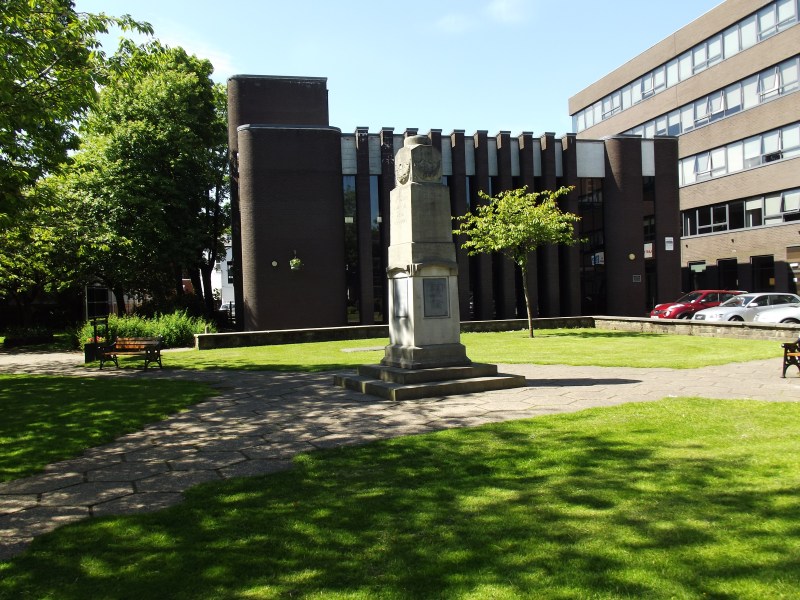
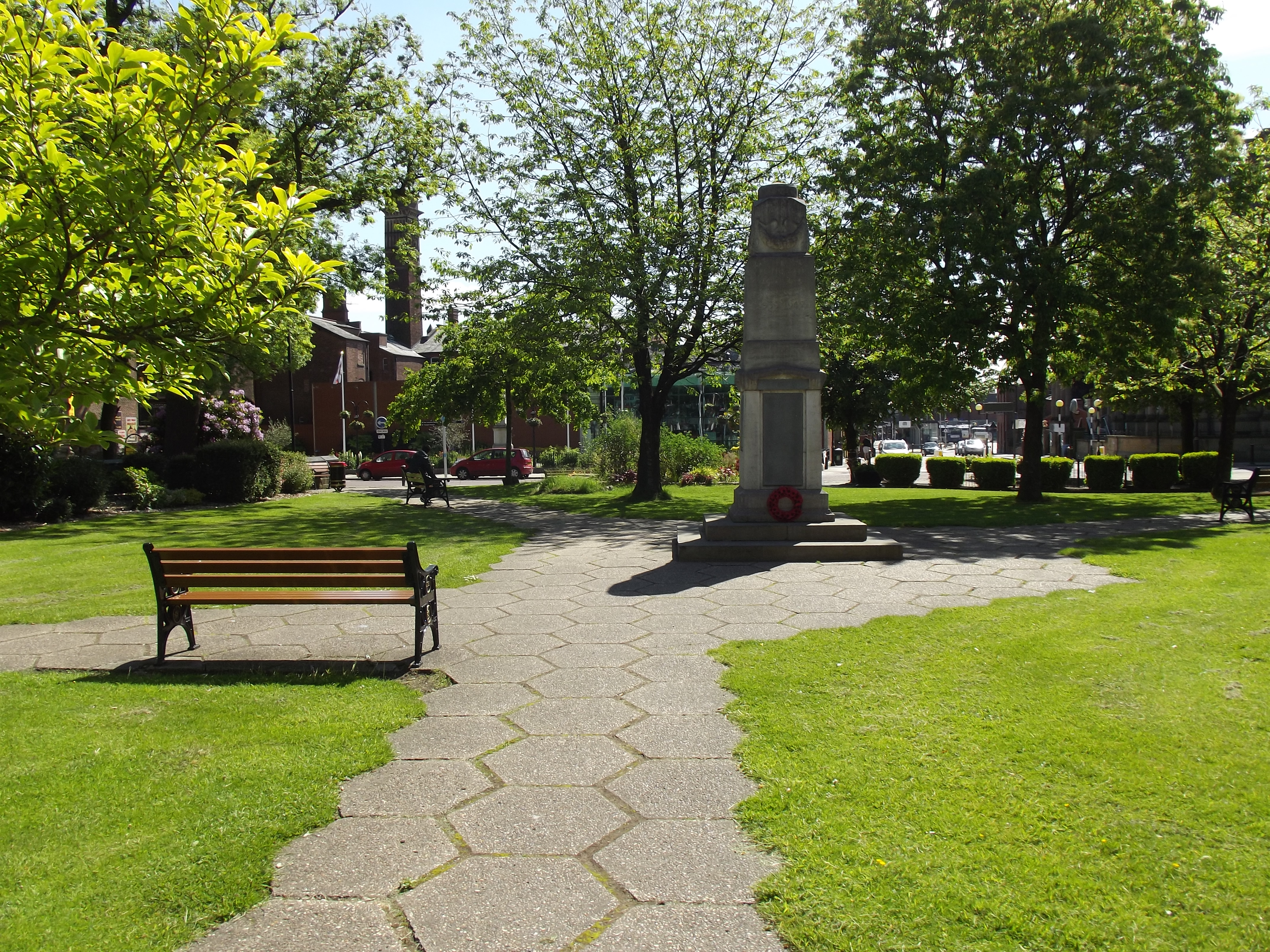
The Great War Project begun by Faith and Freedom is attracting a lot of positive interest and more material is being added, almost on a daily basis. Within the memorial section there soon will be added some pictures of the Cenotaph at Bury Unitarian Church which have been sent in by Neville Kenyon, many of which are reproduced here.
Cenotaph, Bury Unitarian Church

Neville suggests that this is the only Unitarian Cenotaph and I suspect that he must be right. Of course, Cenotaph means, literally, ‘empty tomb’ and in amongst the many old and quite extensive graveyards that exist around the country there must be a few tombs that fall into that category for one reason or another. But by Cenotaph we generally mean a freestanding public monument inspired by the Cenotaph in Whitehall, and repeated in many cities, towns and villages.

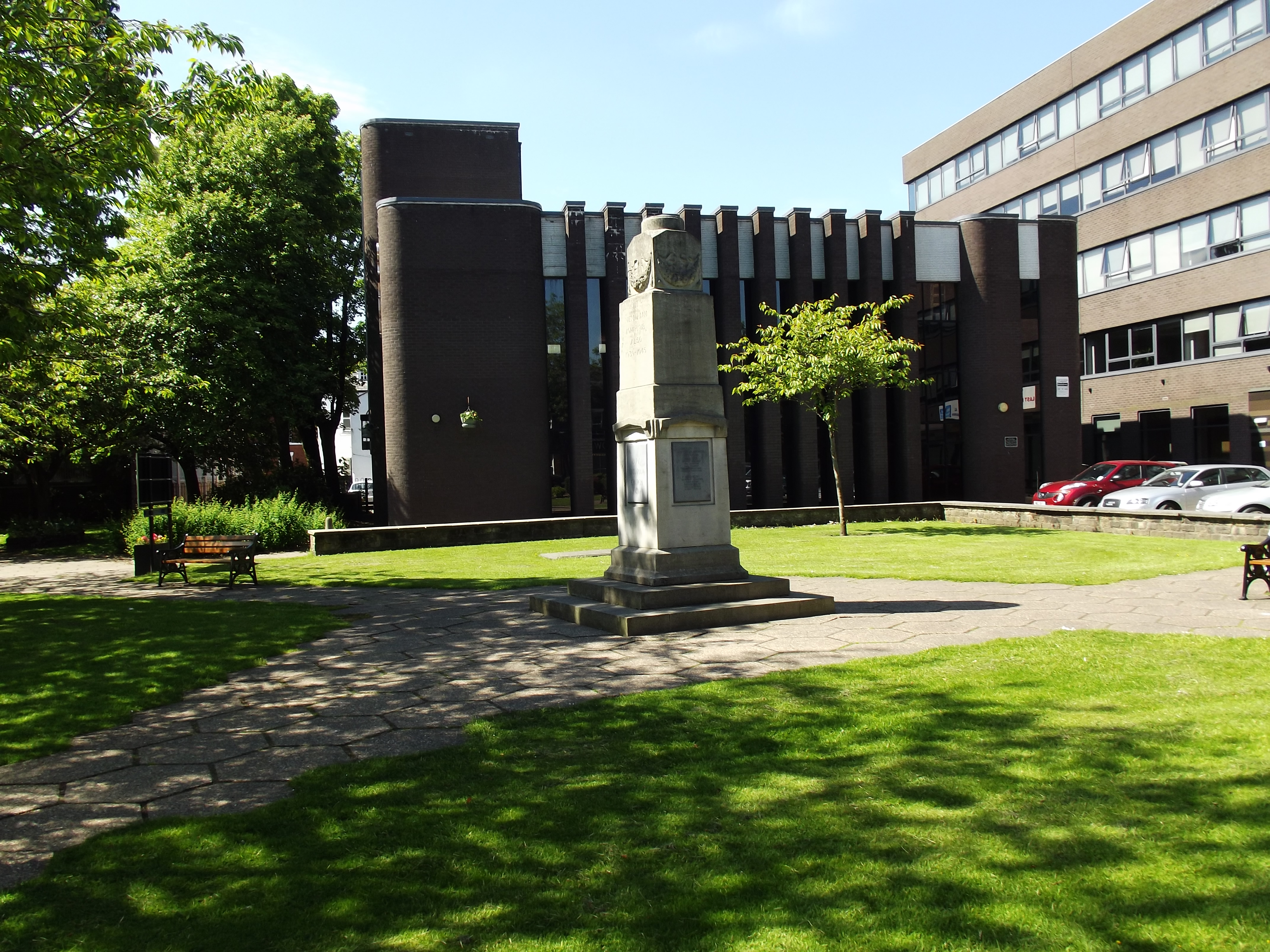
The Bury Cenotaph
The Bury Cenotaph

The idea for Cenotaphs came from the experience of the First World War when so many soldiers had no known grave. In such a situation there was a need for a focus of remembrance, something that could symbolise the sacrifice and loss that was felt by so many people. To this end the Whitehall Cenotaph and all those that came after it fulfilled a very special role in national consciousness. And how different such monuments are when we compare them with other memorials that were erected following wars such as the Arc de Triomphe or the Brandenburg Gate, to name just two. Unlike them there is no overt military symbolism in the Cenotaph. It is much more restrained, much more dignified.

In 1924 the author H.V. Morton described his feelings as he stood near the Cenotaph on an ordinary morning:

I look up at the Cenotaph. A parcels delivery boy riding a tricycle van takes off his worn cap. An omnibus goes by. The men lift their hats. Men passing with papers and documents under their arms, attache and despatch cases in their hands – all the business of life – bare their heads as they hurry by.
Six years have made no difference here. The Cenotaph – that mass of national emotion frozen in stone – is holy to this generation. Although I have seen it so many times on that day once a year when it comes alive to an accompaniment of pomp as simple and as beautiful as church ritual, I think that I like it best just standing here in a grey morning, with its feet in flowers and ordinary folk going by, remembering.

The Bury Cenotaph is very public and very similar to the memorials that are more often  municipal, regimental or governmental in origin. It commemorates the members of three congregations who served in the First World War, with the names of those who served in the Second World War being added later. These were three long-established local congregations, who amalgamated into one with a bold new meeting house in 1974.

A view from the other side

The Cenotaph is situated in front of the church in the centre of what was the graveyard but which is now a public space. This space was originally called Library Gardens but has recently been renamed by the council with what seems a much more satisfying designation of Church Gardens. Neville tells me that on Remembrance Sunday the congregation meets at 11.00 am at the Cenotaph for the one minute silence, the Last Post is played, before the congregation goes into the church for a service of remembrance, the names of those inscribed on the memorial being read.

There is a plaque to commemorate each of the three congregations represented by the modern congregation – Chesham, Heywood and Bank Street, Bury. The Bank Street plaque – beneath the title ‘Bank Street Presbyterian Chapel Unitarian’ – has the longest list of names (I counted 40 names from the First World War) but it is by far the most weathered.
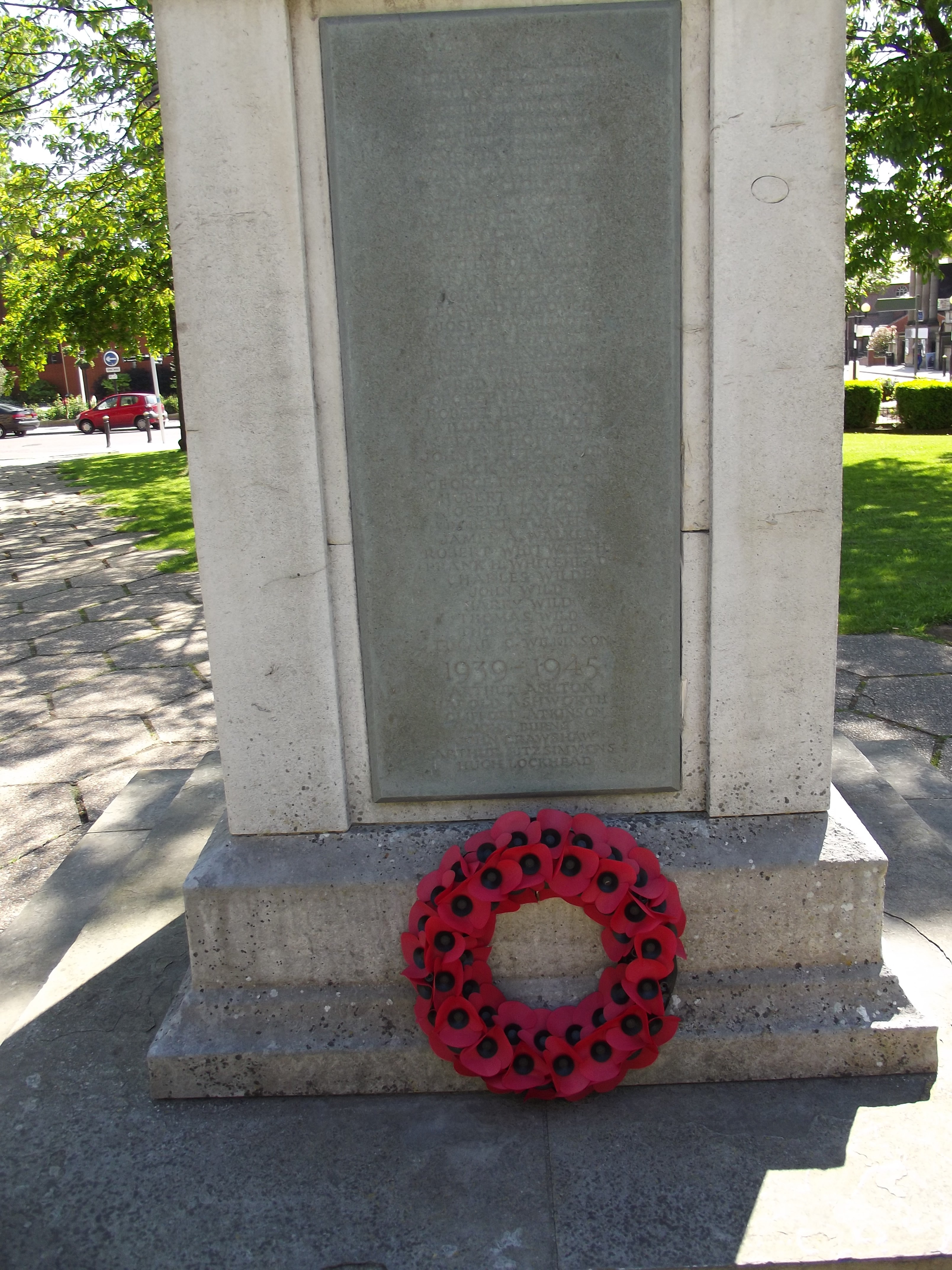
Bank Street Presbyterian Chapel Unitarian

There are 23 names from the First World War on the Heywood memorial and five on the Chesham memorial.
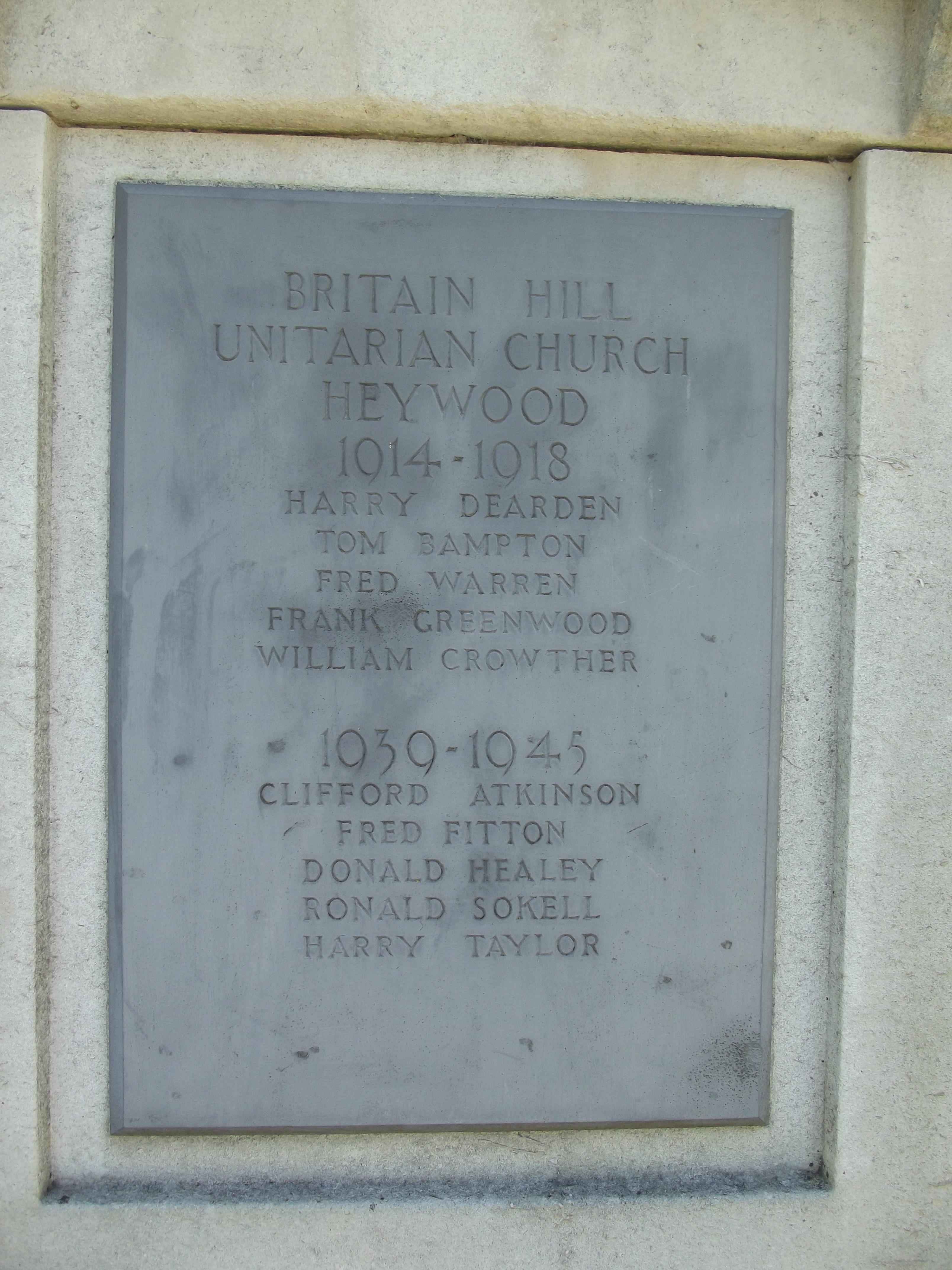
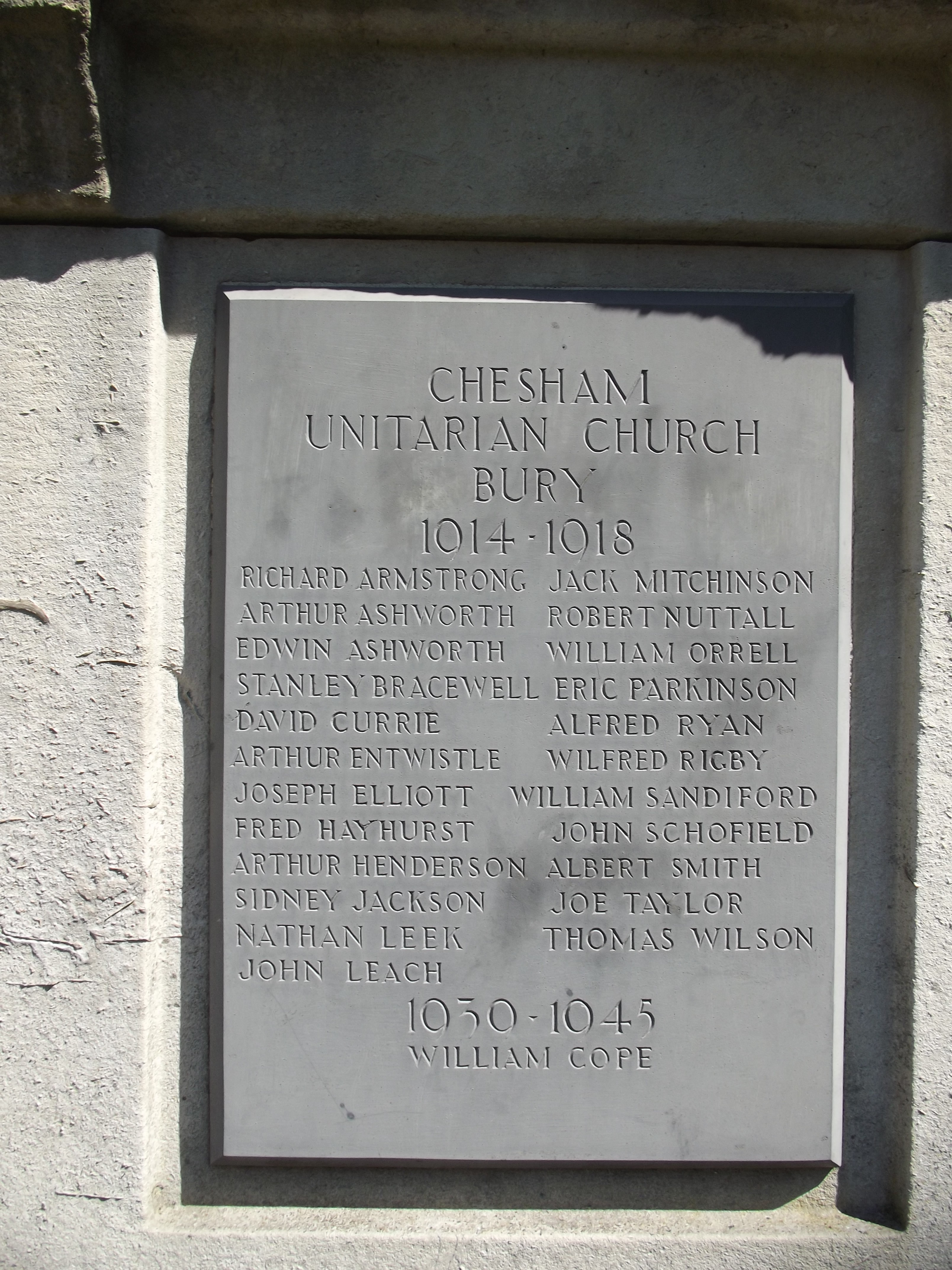
Britain Hill Unitarian Church Heywood
Chesham Unitarian Church Bury

In my possession I have a medal struck to commemorate the centenary of the Bank Street Sunday School in 1905. The medal is inscribed ‘In Remembrance from Cuthbert C. Grundy’ and it must have been given to all the Sunday School scholars at the time. It is sad to think that so many of the children who received this medal in 1905 will be amongst the long list of volunteers whose names were inscribed on the Cenotaph just a few years later.
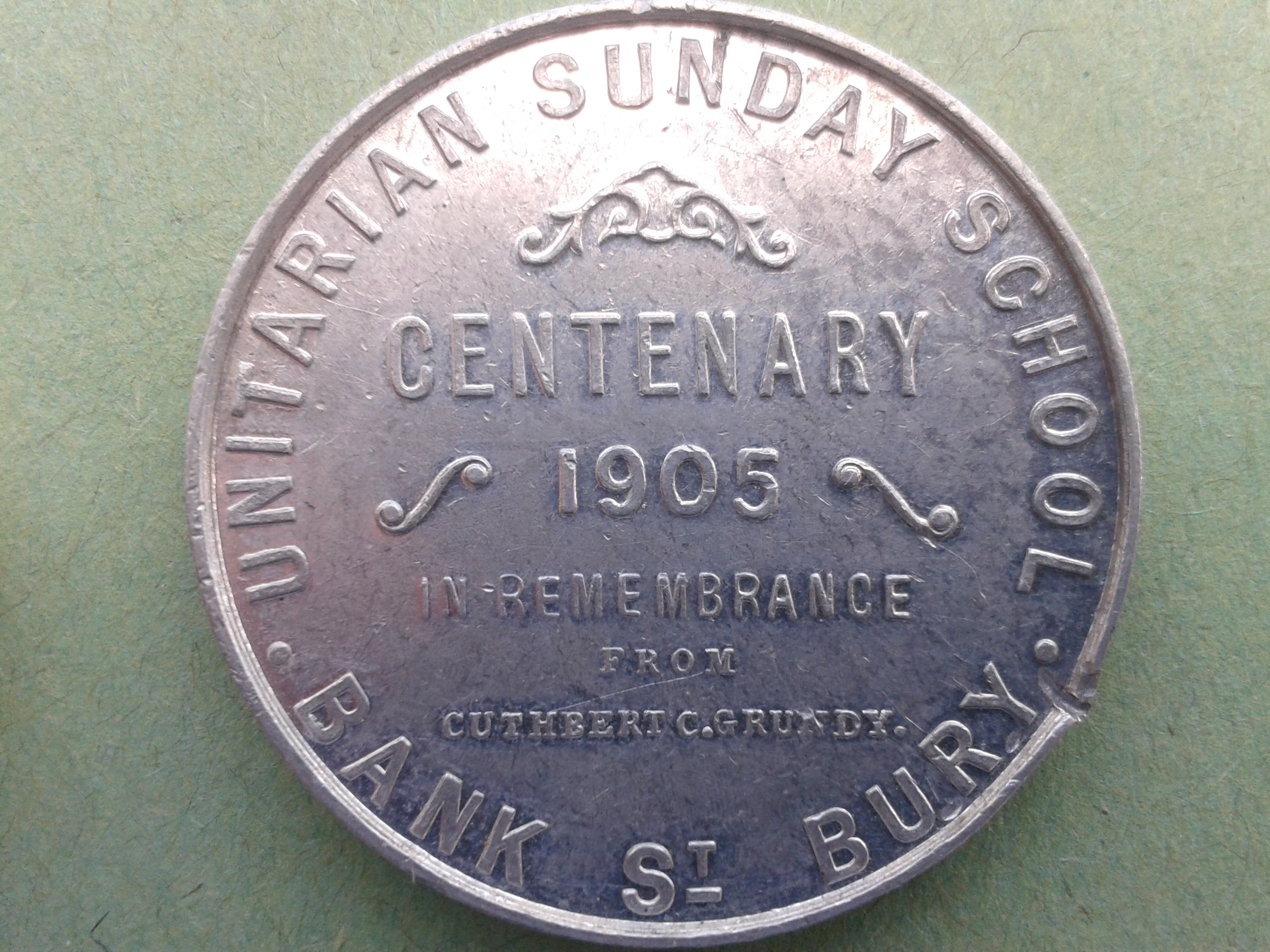
The Bury Sunday School medal

Is it the only Unitarian Cenotaph? If you know of any other please let me know and, best of all, send a picture. The only place that I know that comes near is Ullet Road Church in Liverpool which has a memorial set in its own large and well-kept grounds. But although it is a First World War Memorial that performs the same role as a Cenotaph the design is different to that of Bury, although not dissimilar to ones found in many places around the UK.
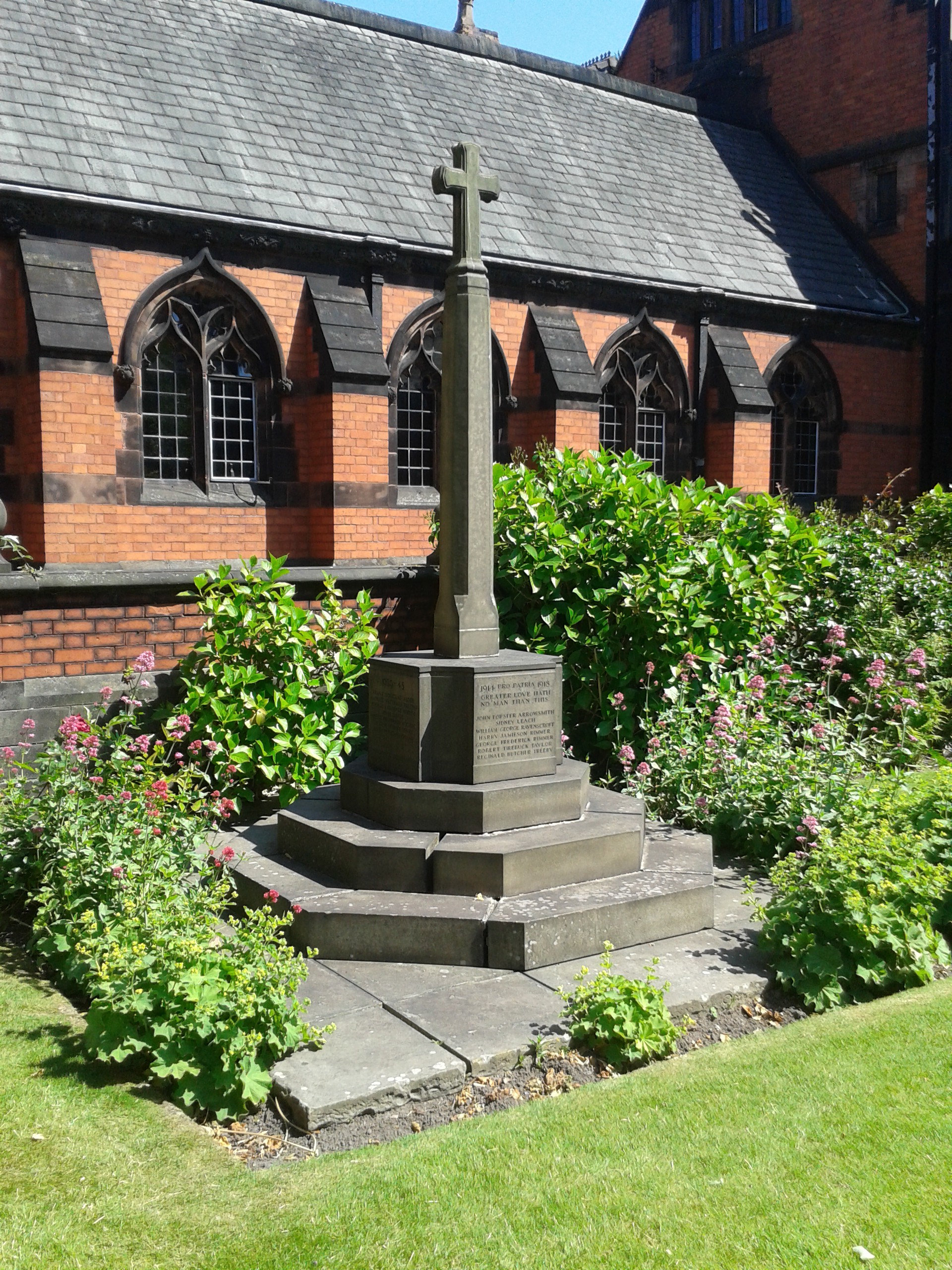
War Memorial Ullet Road Church Liverpool

But it would be nice to hear if anywhere else possesses a memorial in any way similar to that of Bury. Or maybe Bury is unique?
BuryCenotaph04

The Unitarian Van Mission – identifying the location of an old photograph

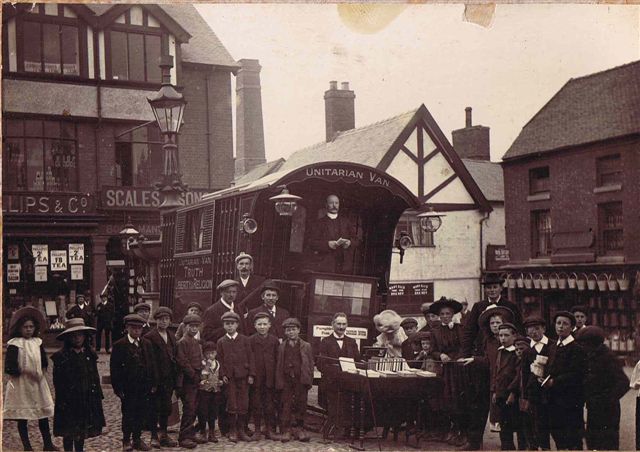
This photograph has been featured on the Unitarian Historical Society website for a number of years with the caption “Unitarian Van Mission in an unidentified town” and the suggestion that if anyone could identify it they should write in. Nobody ever has responded to the invitation so I thought I might post the picture here in the hope that someone might be able to suggest a likely location for where it was taken.

Click on the photograph to enlarge

It shows the Unitarian Van Mission fully operational at some point early in the twentieth century – somewhere between 1906 and 1914. It is a fascinating picture: a minister (probably the Rev T.P. Spedding) stands in the van, a helper sits stiffly behind the literature table and a few other variously attired men appear amongst a large contingent of children, all of them quite well dressed and well shod. Had the children been brought out from some local chapel to see the van or did they just gather when they saw a photograph being taken?

But where was the photograph taken? It looks like a town square which should be identifiable to anyone who has sufficient local knowledge. Chances are the cobbled square no longer exists in anything like this form, even it didn’t get destroyed during the war the planners of the 1960s will have had some effect on the scene. I wonder – without any real evidence – if it was taken somewhere in the Midlands? Perhaps the chimney in the background just left of centre is suggestive of the Potteries? Behind the van can be seen a few shops – a tea merchant looks like it belongs to a Phillips & Co but it is not clear what Scales & Sons are selling immediately behind the ornate lamppost. On the right an unnamed shop sells buckets and similar items.

Can anyone identify the location of this photograph? It would be nice to know where it was taken.

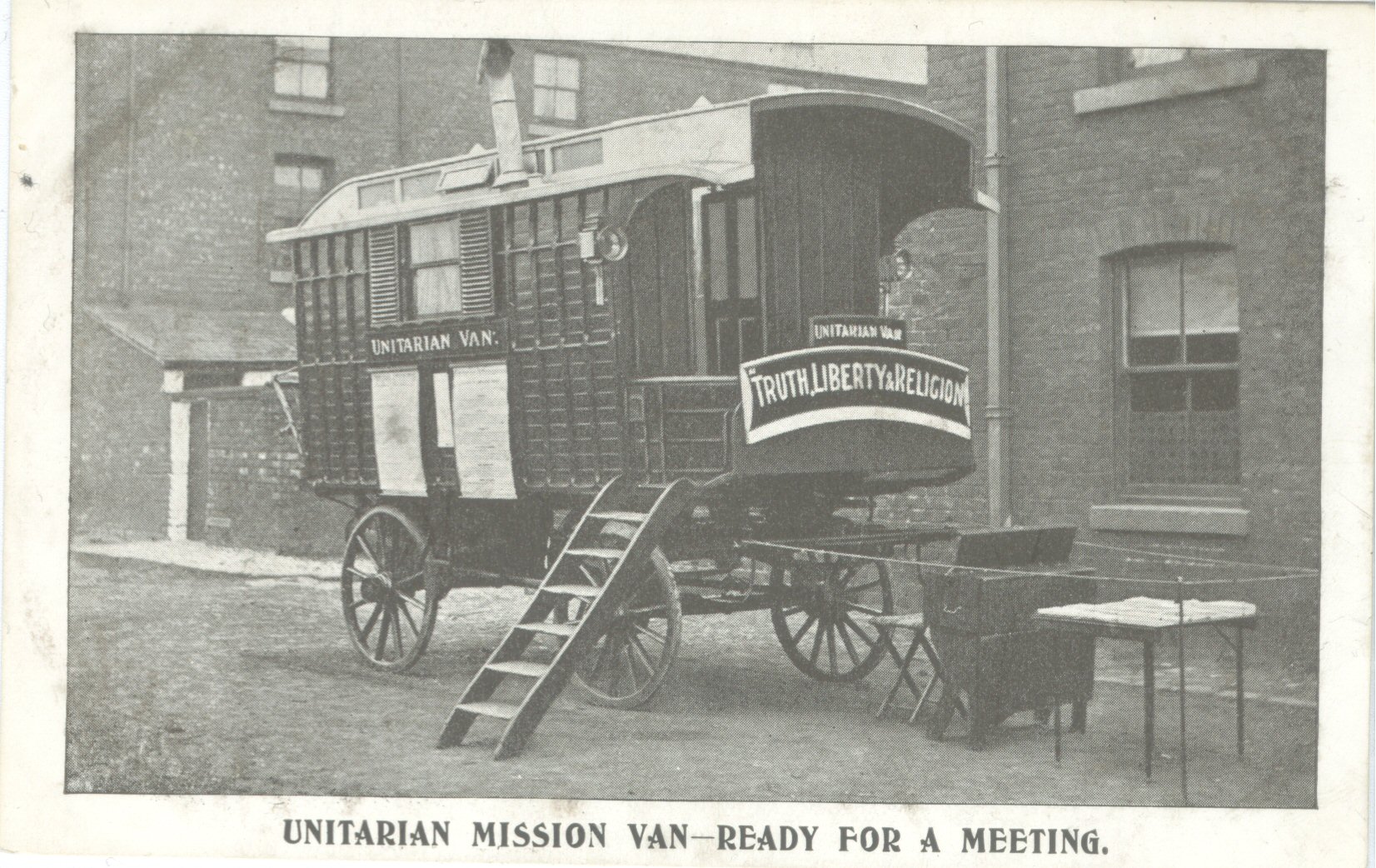
It is an interesting photograph because it shows the van in action, with its stall set out, attracting a crowd. Postcards of the van itself are not difficult to find. Here’s a good example of one:

Unitarian Mission Van

This seems to show that there was even some sort of stove on board to keep the occupants warm and perhaps to make a cup of tea. The Van Mission began its first tour in 1906 and within a few years there were a total of six vans all paid for by generous donations and travelling around many parts of England, Wales and Scotland.

Unitarians often claim to have never had any interest in mission work, especially overseas, which is true up to a point. At home, however, they did experience a number of missionary impulses from the 1820s onwards and without the activities of some individuals and the contributions of a number of institutions would not have experienced any growth or development in the nineteenth century.

The Van Mission itself was a late flowering of Unitarian missionary endeavour in the years just before the First World War, something of a golden age for non-conformity and for more liberally minded religious groups. In a book, Open Air Theology and Sketches of the Unitarian Van Mission, the Rev H. Bodell Smith outlined the way the mission operated:

…this is not an ordinary mission movement. There is, of course, an utter absence of the appeals usually made at street ‘religious’ meetings. They are not invited to become ‘washed in the blood’; they are not told, ‘only believe and you will be saved’; there is not the slightest attempt to dictate to them what they must believe, with the alternative that otherwise they will perish ever-lastingly. The appeal is to their own reason and every-day experience. Hearers are asked to judge for themselves as to the truth of what is said to them. They are told frankly: “We do not say that you must believe as we do. You cannot believe to order. You can only believe according to the evidence that comes before your minds, that is, according to your light. We are here to give you such light as we have. We ask you to listen to what we have to say, and then leave it to you for what it is worth.”

I have never seen Open Air Theology and Sketches of the Unitarian Van Mission, this quotation comes from Rev John Roberts’ short but interesting article in the ‘Transactions of the Unitarian Historical Society’ for 1978. In it he names T. P. Spedding as becoming the first missioner after resigning from his pulpit in Rochdale. He was joined by Bertram Taylor as the lay missioner, who possibly is the figure seated behind the desk. He volunteered to accompany the whole of the first tour of 1906 when the Van visited a succession of towns, generally staying for three days in each one, while visiting ministers conducted afternoon and evening meetings. A journey of 163 days apparently attracted a total of 24,516 hearers. Not a bad total at all.

As with so much else the First World War brought this particular enterprise to an end but it would be nice to know just where they were located when this picture was taken.

UPDATE

Rachel Eckersley has suggested that Scales is possibly a Yorkshire name and has found three boot manufacturers (which appears to be the trade the firm is engaged in according to the sign) which might fit the bill – in Leeds; Armthorpe, Doncaster; and Malton. She suggests Malton might be the most likely contender although it is hard to identify this as the definite location. Rachel has also found a Scales shop in Chesterfield although photographic evidence shows its location close to the crooked spire.