Platt Chapel, Rusholme

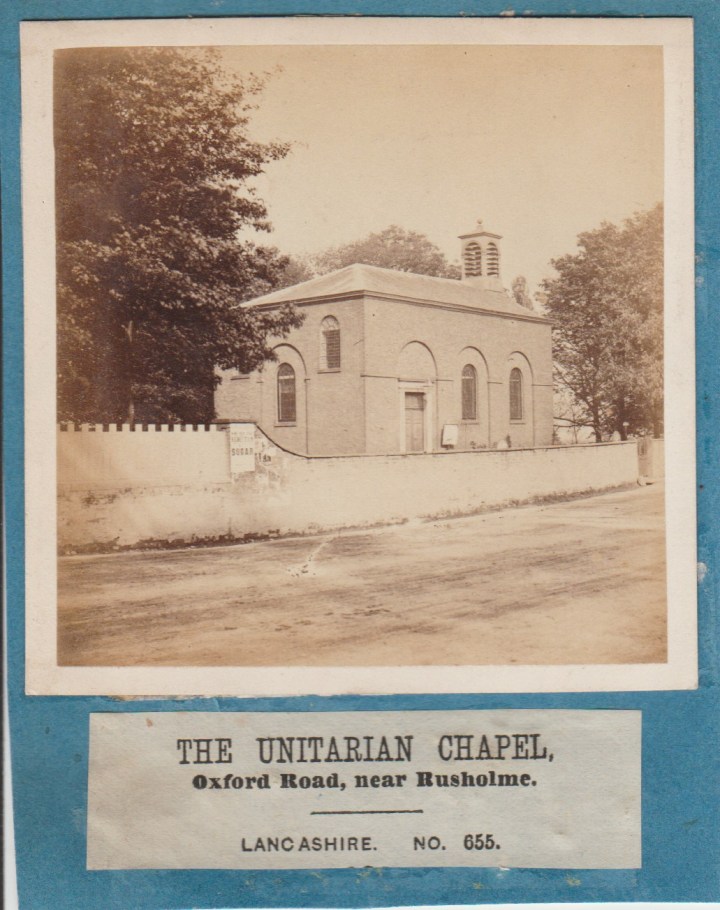
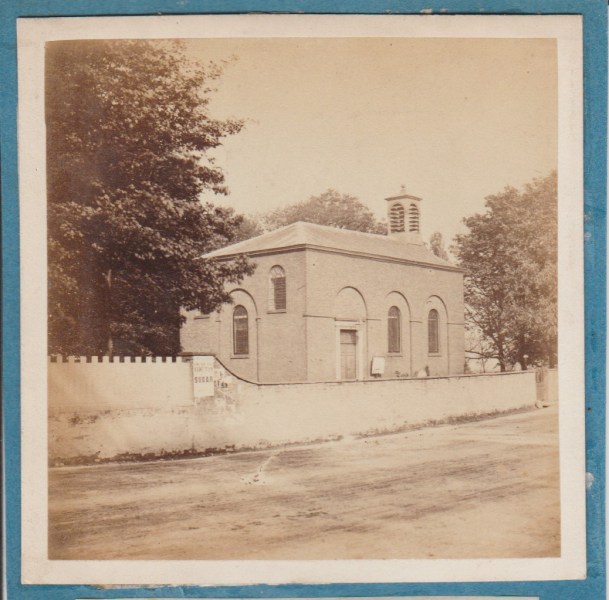
I bought this photograph on eBay a few years ago. I paid more for it than I like to do but it is quite a rare photograph of the old Platt Chapel in Rusholme, south Manchester. I bought it along with a picture of the ‘Scotch Presbyterian Church, Grosvenor Square’ also in Manchester to which I will return in the next post.

The photograph of Platt Chapel is interesting because it appears to have been taken by a professional. In a similar way to the Grosvenor Square photograph it is mounted on a card with its title printed below along with a reference number. It is probably some kind of photographer’s sample, perhaps one of a set of images available for use by purchasers for use on a cabinet card or carte de visite. Often these types of cards carried portraits of individuals or family groups, but other views, including views of churches, were also popular.

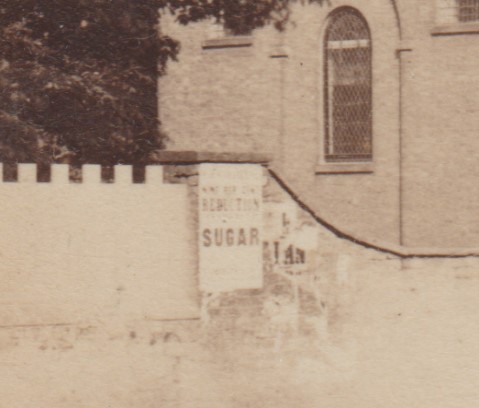
What is particularly interesting about this picture is that it shows the chapel of 1791 which was substantially rebuilt in 1874-76. This dates the photograph to before 1876, probably to before 1874 in fact. A big help towards an accurate dating might be the poster pasted up on the chapel wall. Victorians could be no respecters of property when it came to fly-posting and this one has been stuck up on a corner of the wall where the remnants of other posters can be detected. If it were an advertisement for a show or some other event then it might be very useful to us for dating the picture but, alas, it doesn’t give that much information. It appears to be a notice from a grocer or some other supplier. The largest word that can be made out is ‘sugar’, a bit above that is the word ‘reduction’ but nothing else is really visible.
Platt Chapel 03

The poster on the wall of the chapel


The congregation had its roots in a nearby chapel of ease which they managed to hold on to after 1662 under the patronage of the Birch family until 1697. Two years later they acquired the site at Platt and built a chapel in the same year. A second chapel was built in 1790-1 which is the building as shown in the photograph. The modern building is substantially the same but was extensively re-modelled over two years between 1874 and 1876. It was given a red brick exterior, the doors and windows were changed, an apse was added and a much steeper slate roof replaced the old one. Edwin Swindells in The History of Platt Chapel (1949) describes this period of rebuilding like this:

At the commencement of his long and faithful service, Mr. Poynting was faced with a trying difficulty. The Chapel building, although not very old, had got into a very bad state of repair, and it was found that considerable reconstruction would have to be carried out. This meant that for about two years the chapel was not available for services, and these had to be held in the newly erected school at Portland Grove, Fallowfield. The alterations which were completed in 1876, included the removal of the vestry from the north end to its present position, and the building of the small apse in its place. The chapel was re-roofed and the old oak straight backed pews replaced by the present pews, while a new pulpit was also provided. The original doors faced Wilmslow Road, and these were built up and the present South entrance substituted, with the provision of the vestibule screen as it is now. The heating arrangements were also brought up to date about this time. In spite of such an inconvenient disturbance, Mr. Poynting quickly settled down to a life devoted to the service of his congregation and the wider church, ably supported by his young wife whom he married in 1872, and who proved an ideal helpmeet in all respects. In those days Rusholme and Fallowfield still included large areas which were decidedly rural, and the work entailed in the mixed community presented its own peculiar problems. The project so dear to his heart of establishing a flourishing Sunday School, did not prove easy of attainment at first, and the first attempt was not a great success. However, Mr. Poynting was not the man to be easily discouraged, and a little later a fresh beginning was made and carried through to fruition. His interest in the young people was not confined to his own chapel, and he took a great interest always in the district Sunday school federation. Mr. Poynting was never a preacher of extreme views in theology, his knowledge of, and love for the New Testament was deep and sincere. On its teaching he founded the message he felt given to preach. It followed that his Unitarianism was neither negative nor aggressive, and the present writer well remembers how his name was respected among members of other denominations in Rusholme in the closing years of the nineteenth century.

A brick bell cote was constructed to house the bell which dated back to 1718. In the 2016 issue of the Transactions of the Unitarian Historical Society Len Smith traces the history of the Platt Chapel bell cast by Abraham Rudhall I of Gloucester and inscribed with ‘Come away make no delay’, the same phrase found on the bell in Gateacre Chapel which was made by his son Abraham Rudhall II. Len also records:

The clapper fell to the ground c.1959/60 while the bell was being rung for an evening service, narrowly missing worshippers approaching the chapel door.

The congregation was fortunate to be supported by the Worsley family in nearby Platt Hall who gave the land on which the chapel was built. Of puritan and Parliamentarian stock from the era of Cromwell they continued to support the chapel until 1830 when Thomas Carrill Worsley joined the Church of England and later built Holy Trinity, Platt.

All this can be read in Edwin Swindells’ excellent, although probably long-forgotten, little history of the chapel. He also details the contributions of a succession of ministers in the nineteenth century – Rev William Whitelegge, Rev Samuel Alfred Steinthal and Rev Charles Thomas Poynting – who created a very effective and flourishing ‘institutional church’ with day schools, Sunday schools, Dorcas society, Temperance Guild, social evenings, lantern lectures, debates etc., as well as a “Goose Club” which had a turnover of £100 per year in the late nineteenth century. Was this to enable members to buy a goose for Christmas I wonder?  S.A. Stenthal and the chapel also played a part in the extension of the franchise to women. In The History of Platt Chapel it says:

Anti-slavery found in him a warm advocate, and he was also one of the very early pioneers of Women’s Suffrage. It was during his years as minister at Platt Chapel that this truly remarkable man carried out some of his most valuable work, in these and other directions. In conjunction with John Stuart Mill, Cobden, Jacob Bright and others, what was probably the earliest society with the object of securing votes for women, was formed at a meeting held at Mr. Steinthal’s house. A story is told of the way in which he and Miss Becker were indirectly responsible for an amendment in the House of Commons, which secured the municipal franchise for women. In 1869, during the passage of a private bill through the House, Mr. Steinthal scribbled an amendment on the back of an envelope, and sent it in to Mr. Jacob Bright. The object was simply to raise a discussion on the disabilities of women ratepayers in corporate boroughs, but to the surprise of everybody the amendment was carried with very little opposition, in the small hours of the morning. A National Association for the Promotion of Social Science was launched in 1857, and for many years Mr. Steinthal sat on its Council. The cause of Temperance was yet another sphere which enlisted his very active sympathy, and he was for many years a member of the executive of the United Kingdom Alliance, and during his time at Platt Chapel he joined the board of management of the Manchester Children’s Hospital and served until 1898.

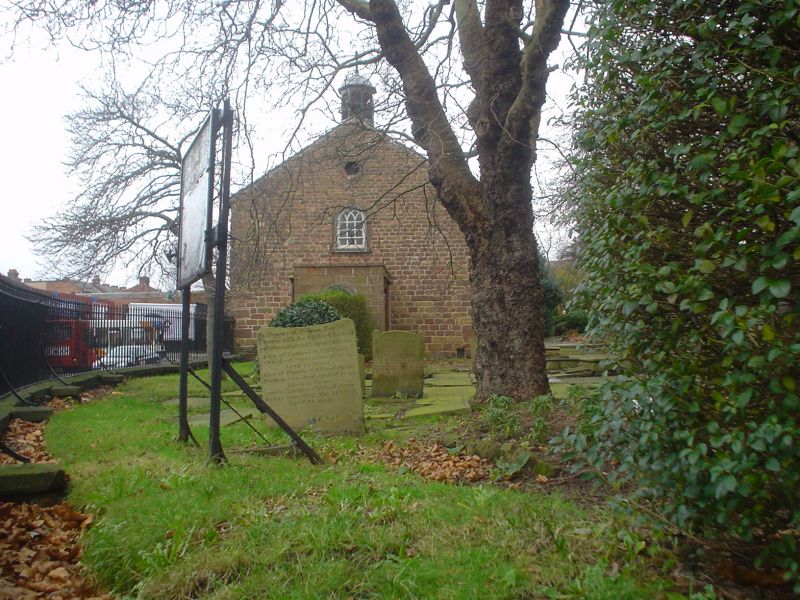
The twentieth century eventually brought social and demographic change which the chapel couldn’t keep up with and it closed in 1973. For many years it was the home of a photography club which was the case on the one occasion I was inside the building. By then there was nothing to identify the interior as that of a religious place of worship and no sign of the monuments listed in Christopher Stell’s Nonconformist Chapels and Meeting-houses in the North of England. I also can’t help but wonder what happened to the silver communion plate which included a two-handled chalice dating from as long ago as 1641. These were sold in 1874 but restored to the trustees in 1895:

on the one condition [wrote G.E. Evans]  that they are to remain the property of the Trustees, who receive them on the understanding that they are never to be again alienated by sale or otherwise.

George Eyre Evans was very impressed by this chalice and included an illustration in Vestiges of Protestant Dissent:
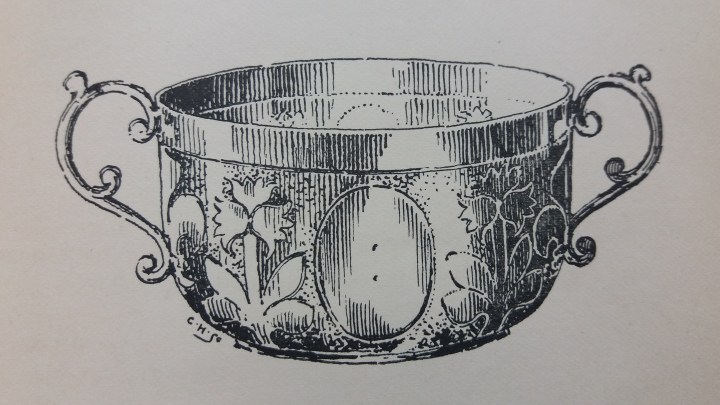
Platt Chapel chalice

Chalice, silver, porringer shape 2 3/8 inches tall, 4 1/2 inches diameter, bold ornamentation, G.E. Evans

More recently the chapel has been on the market as a potential dwelling house with an asking price of £350,000. Google Street View provides a sorry picture of how it looks today:
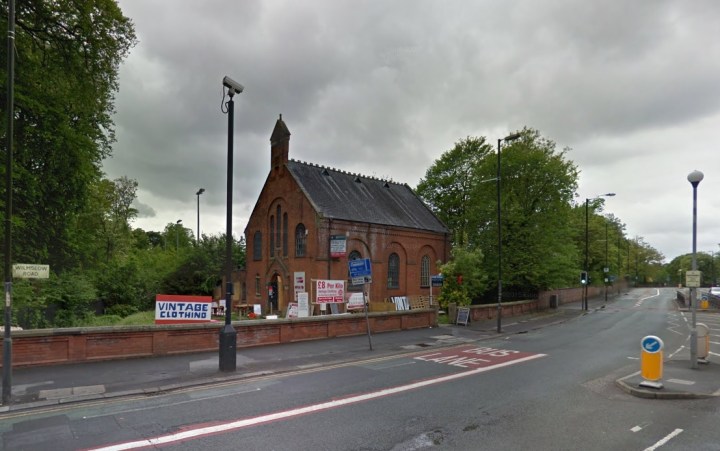
Platt Chapel Google Maps Streetview

Google Street View


Platt Chapel 02

The original photograph on its card


No pictures or text may be reproduced from this site without the express permission of the author.
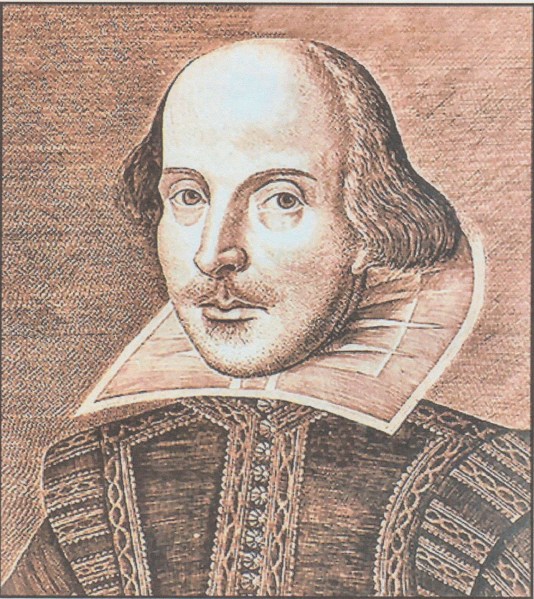
Edgar Innes Fripp and William Shakespeare

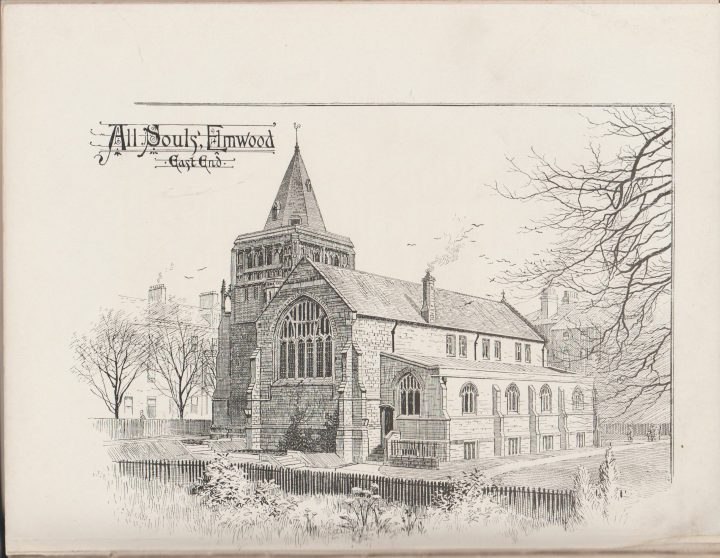
The current celebrations of the 400th anniversary of the death of William Shakespeare prompt me to think about the Rev Edgar Innes Fripp. His is not a name widely remembered today but I was very aware of him when I was minister of All Souls’ Church in Belfast as a very distinguished predecessor in that pulpit, indeed the minister under whose leadership that church was built in 1896.


E.I. Fripp didn’t really get the attention he deserved in the congregation, although I wrote and spoke about him on a number of occasions. If the congregation looked to anyone as an historical exemplar it was A.L. Agnew whose own particular heroic story in the course of a 54 year ministry was partly based on an undoing of the achievements of his predecessor Fripp. He did away with the ‘Fripperies’ that remained from early in the century even to the extent – or so I was told – of having a bonfire of old service books along with assorted hassocks, communion table cloths and pulpit hangings. Fripp had introduced an edited version of the prayer book to the church, a robed choir and a much more devotional style of worship than had been the case before. More than that he had built the church, a little medieval English parish church in suburban Belfast. It was his vision in achieving this that had enabled the church to survive. Without this move it would have been unlikely to have lasted in Rosemary Street, and although there may have been a falling off in attendances between the wars it suited the narrative of the later arrival of Dr Agnew and the York Street congregation following the blitz of 1941, to write off everything that had gone before. In fact the destruction of the York Street building made an eventual union of the two congregations inevitable but without the intervention of the German Luftwaffe even that probably would not have taken place.


AllSoulsexterior

All Souls’ in 1900


By the time I was minister at All Souls’ a large majority of the congregation had belonged to York Street or were descendants of that congregation. The Second Congregation families, the original All Souls’ people, were a minority yet there were a few who remembered Edgar Innes Fripp. This wasn’t because they were extraordinarily old, because although he had built the church in 1896 and left in 1900 he had returned at the start of the 1920s for a few years. In the 1990s there were some people who had childhood memories of Fripp and what they remembered in particular was his interest in Shakespeare. He was much given to quoting him and increasingly found inspiration in his writings for his sermons.


ShakespearesStratford

The title page of Shakespeare’s Stratford


In Belfast he had been innovative, imaginative and creative. He was a genuine scholar, he had been a Hibbert Scholar in Germany before entering the ministry, and was a caring and effective pastor. All this can be seen in his Kalendar, the first monthly magazine to be distributed within a church of the Non-Subscribing tradition in Ireland. Before he had arrived the Second Congregation had left the presbyterian structures to pursue their own course although they were rooted in the Free Christian theological traditions exemplified by James Martineau.


Early in his ministry he had produced an account of the composition of the book of Genesis, by the end of his ministry he was completely absorbed in Shakespearean studies. He published a number of works on Shakespeare, and his life and times, and became a trustee of Shakespeare’s birthplace. Indeed it is interesting to see that today the Shakespeare Birthplace Trust has a short video examining E.I. Fripp’s analysis of Iago:

http://findingshakespeare.co.uk/shakespeares-villains-iago


At the end of his life Fripp’s funeral took place in Shakespeare’s church and he was buried in Stratford on Avon. But he produced a large amount of work on Shakespeare and I have often been tempted to seek out a contemporary Shakespearean scholar to give an assessment of how these works are regarded today for Faith and Freedom. There is and has long been a vast industry around Shakespeare and each age finds a different set of interpretations that reflect its own circumstances. It would be nice to know from the point of view of an English literature specialist what endures from Fripp’s writings. But if nothing else he had an enduring impact on the topography of South Belfast, something that continues to this day.


AllSouls02

The view of All Souls’ today from the Belfast City Hospital

‘Come away, make no delay’

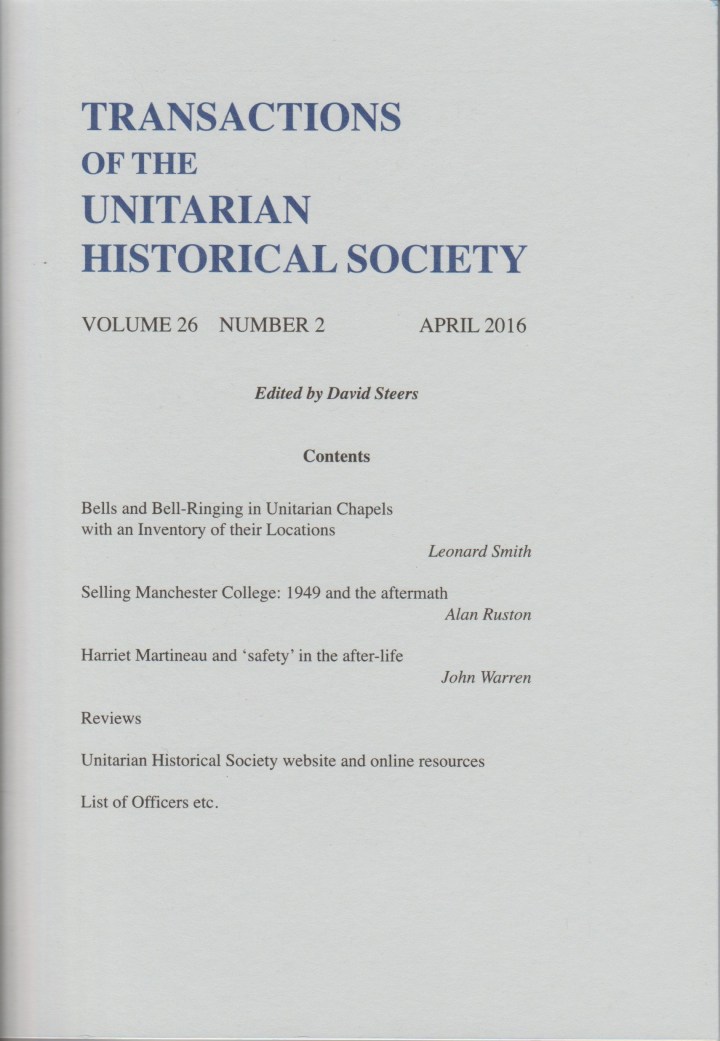
The 2016 Transactions of the Unitarian Historical Society are now out. If you are not already on the mailing list you can join the Unitarian Historical Society via the treasurer. Details of how to join (along with a great deal more) can be found on the UHS website: http://www.unitarianhistory.org.uk/hsmembership4.html


This year’s Transactions include:


Bells and Bell-Ringing in Unitarian Chapels

Leonard Smith                                                                                                                       


An Inventory of Unitarian Bell Locations

Leonard Smith


Selling Manchester College: 1949 and the aftermath

Alan Ruston


Harriet Martineau and ‘safety’ in the after-life

John Warren


As well as reviews of


Free Trade’s First Missionary Sir John Bowring in Europe and Asia, Philip Bowring, Hong Kong University Press, 2014, pp. 262, with portraits in colour plus 18 pages of index. Hardback. ISBN 978-988-8208-72-2. Price £33.


Children of the Same God: The Historical Relationship Between Unitarianism, Judaism, and Islam, Susan J. Ritchie, Skinner House Books, Boston, 2014, pp. I-xx, 106. ISBN 978-1-55896-725-0. Price $14 US.


In these Times, Living in Britain through Napoleon’s Wars 1793-1815, Jenny Uglow, 2014, London Faber & Faber, pp. 641 plus 98 pages of notes and index. ISBN 978-0571-26952-5. Price £25.


The Dissenters Volume 3, The Crisis and Conscience of Nonconformist, Michael R. Watts, Oxford University Press, 2015, pp. 493. Hardback. ISBN 978-0-19-822969-8. Price £85.


The Spirit of Dissent: A Commemoration of the Great Ejectment of 1662, Janet Wootton, (ed.), Institute of Theological Partnerships Publishing [ITPP], 2015, pp. 210. ISBN: 978-1-908532-04-6. Price £10.


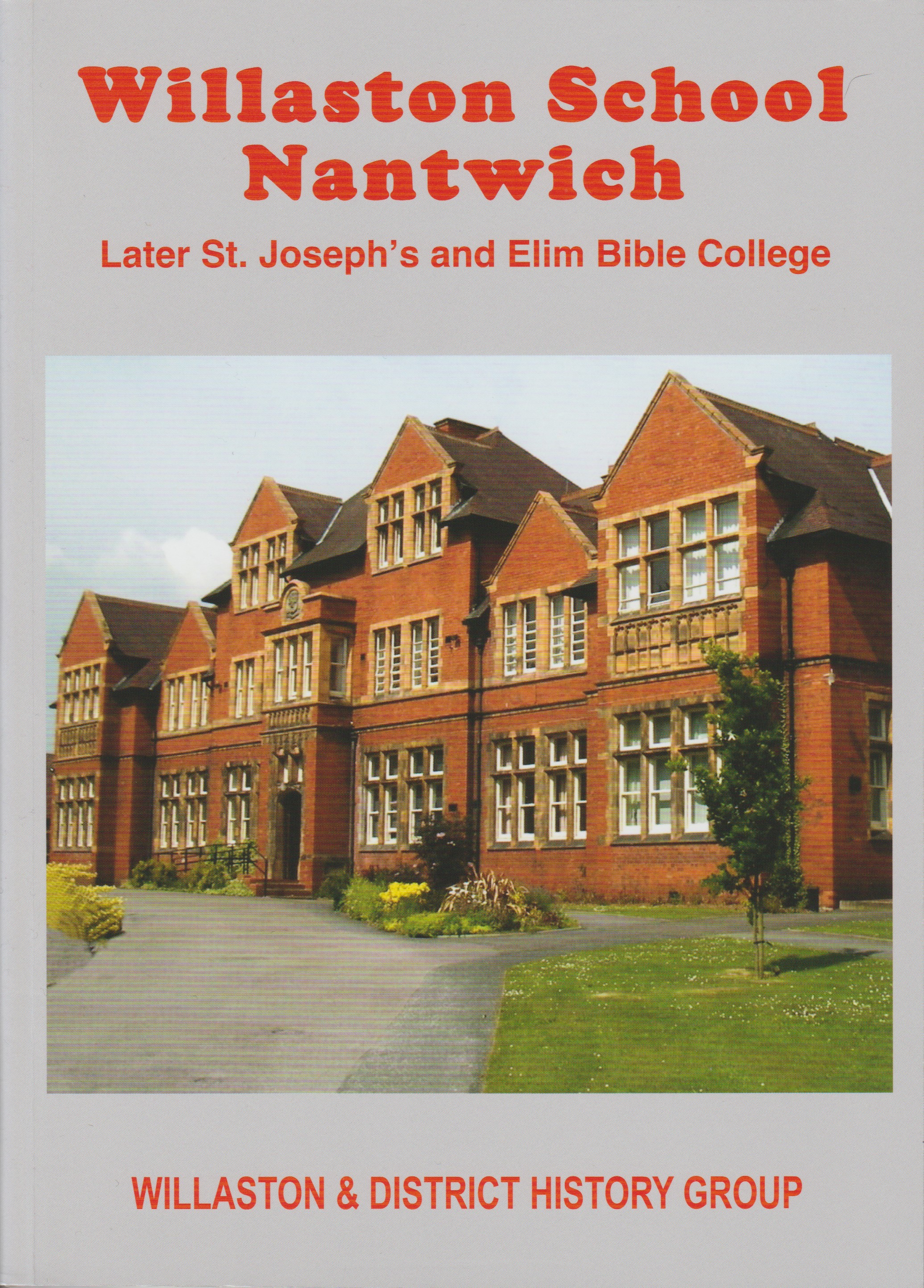
Willaston School Nantwich. Later St Joseph’s and Elim Bible College, Andrew Lamberton (ed.), Willaston and District History Group, Chester, 2015, pp. 144. ISBN 978-0-949001-56-6. Price £11.95. Copies of the book can be ordered from the Willaston and District History Group.


From Somerset to the Pyrenees in the steps of William Arthur Jones, Geologist and Antiquary, David Rabson. Somerset Archaeological and Natural History Society (SANHS). pp. 108. Paperback. ISBN 978 0 902152 28 1. Price £14.95 plus £3.99 post and packing from SANHS.


TUHS Cover 2016


Pictures of Harvest Festivals

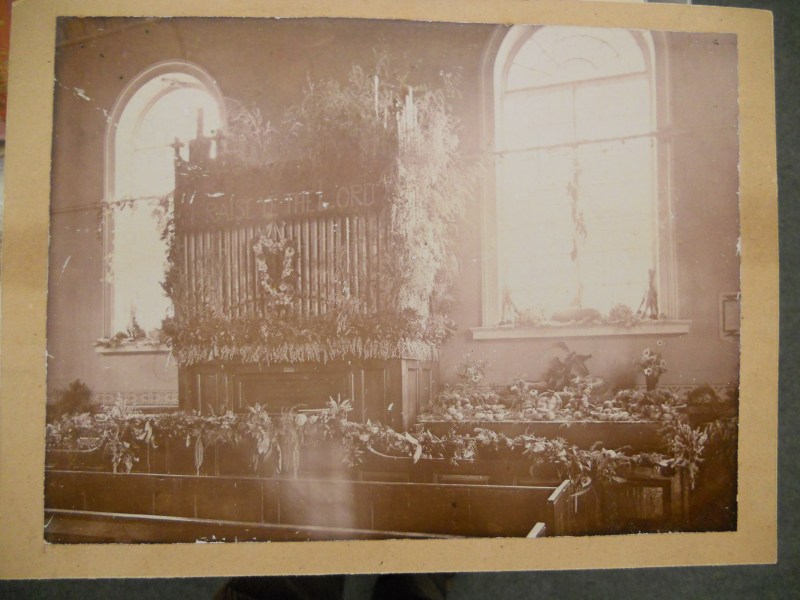
Pictures of Harvest Festivals are amongst the most frequent early survivors of photographs of church or chapel interiors. The modern Harvest Festival, as it is known in churches today, was really invented by the Rev Robert Hawker, vicar of Morwenstow in Cornwall, in the 1840s. He was as colourful and eccentric as they come but devised the notion of a service in which the produce of the fields was brought into the church and used as decoration as an act of thanksgiving. The idea of the service quickly caught on and became a big part of the year for most churches, whether urban or rural. Harvest Festivals became and remain very popular with Unitarians, it would be interesting to study when and how they began to be incorporated into the cycle of services.


I don’t have any information to hand as to how harvest services spread and became popular but I see that in 1881, for instance, Alexander Gordon introduced the first Harvest Festival service to the First Presbyterian, Rosemary Street congregation in Belfast. This must be quite late, I would imagine. Was that something he had previously done over the preceding twenty years at Norwich, Hope Street, Liverpool, or Aberdeen? It would be an interesting avenue to pursue.


With the gradual development of photography as a medium, pictures were taken of churches and chapels. However, the difficulty – for all except the most skilled photographers – of taking good interior shots, and also, perhaps, a reluctance to take a picture of a scene that was so familiar as to be seen as hardly worth recording means that early shots of interiors of chapels and meetings houses are not that common. This seems to change when it comes to Harvest Festivals and a number of pictures that I have of now closed churches were taken to show off the harvest decoration that had been thoughtfully and faithfully put there by some parishioners.


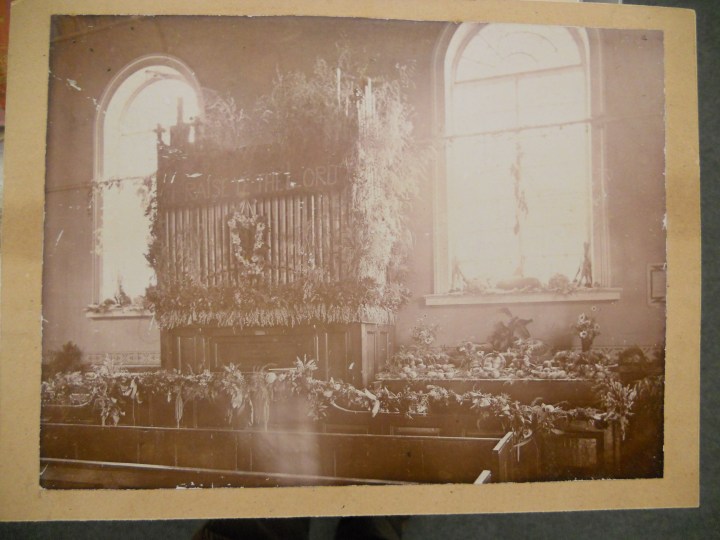
In the recent posts about Nantwich Unitarian Chapel I asked if anyone had any photographs of the interior. Andrew Lamberton has again found a fascinating image. He has sent me this picture of the area around the organ decorated for harvest. There is no date on the picture and it is very difficult to be at all precise although I would guess it was taken probably in the first decade of the twentieth century.


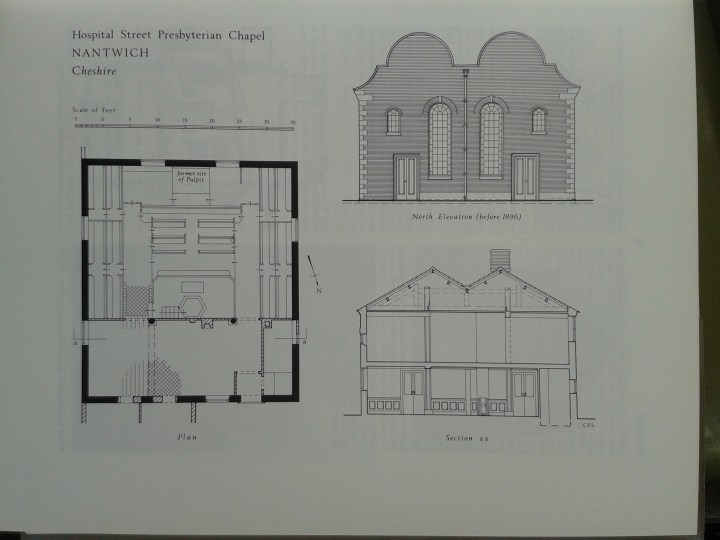
I gather the organ was installed in the 1870s so the picture shows a decorated scene around the organ sometime after that date. As I have mentioned in previous posts the chapel of 1725-26 was rebuilt and ‘turned’ in 1846-49 and this picture would appear to show the area on the plan between the windows and marked as ‘former site of Pulpit’ in Christopher Stell’s Nonconformist Chapels and Meeting-houses in the North of England:


Inventory Nantwich
Plan from Nonconformist Chapels and Meeting-houses in the North of England


It’s hard to make out too much detail in the photograph but it confirms the description also found in Nonconformist Chapels and Meeting-houses in the North of England (page 28) that the pews which incorporated original features from the 1720s were laid out in tiers:

“Seating: against E and W walls, two tiers of pews, partly reconstructed, include much early 18th-century fielded panelling, fronts renewed. The centre pews also incorporate original material.”

It is not an easy thing to take a picture of what is a dark wood-panelled interior while including the main source of light from two large windows. The light floods in through the window and the dark areas remain dark. But for all its limitations we have in this print a rare and useful image of a long forgotten building.

Organ Harvest Festival
(Photo: Andrew Lamberton and Nantwich Museum Archives)

Nantwich Unitarian Chapel

Willaston School Nantwich was created through the will of Philip Barker who lived at the Grove, a house originally built by his brother in 1837. It’s clear also that Philip Barker and his brothers were the main supporters of the Unitarian Chapel, their vision – and financial contribution – seems to have been what maintained what was otherwise quite a weak cause.


Nantwich 1950s

The chapel and associated buildings, probably dating from the 1950s. Photo courtesy of Andrew Lamberton


I found myself in Nantwich once, almost by accident, and carried out an ineffective and inevitably fruitless search for anything left of the Chapel. If I had checked The Unitarian Heritage book first I would have known that it was long demolished (in 1969), eventually meeting, it would appear, quite a sad end. However, the town of Nantwich is fortunate in having a very active History Group (which published Willaston School Nantwich – see the two previous posts) and through the kind help of Andrew Lamberton – who supplied me with a number of fascinating images and other information –  I’ve been able to piece together something of the history of the congregation that was once served by Joseph Priestley.


The congregation dated from the ejection and registered a former malt-kiln on Pepper Street as a meeting house in 1689. Between 1725 and 1726 they built the Chapel on Hospital Street.


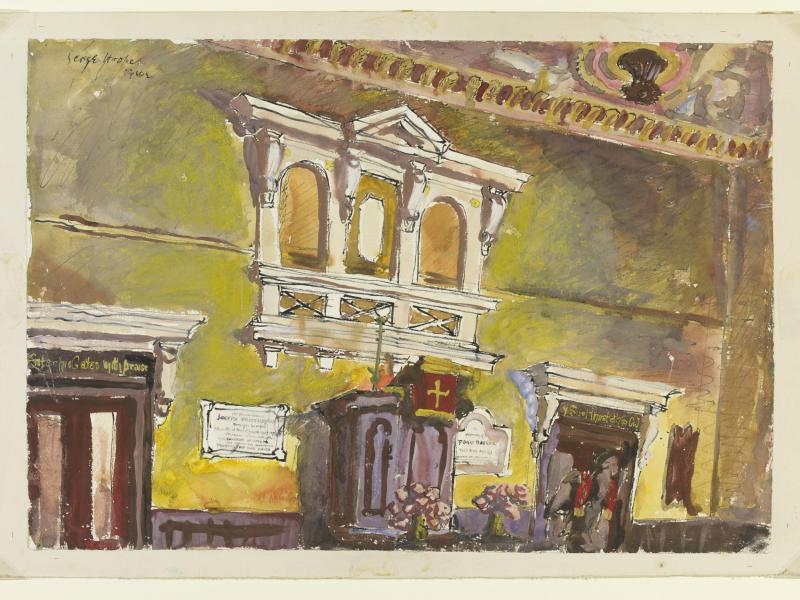
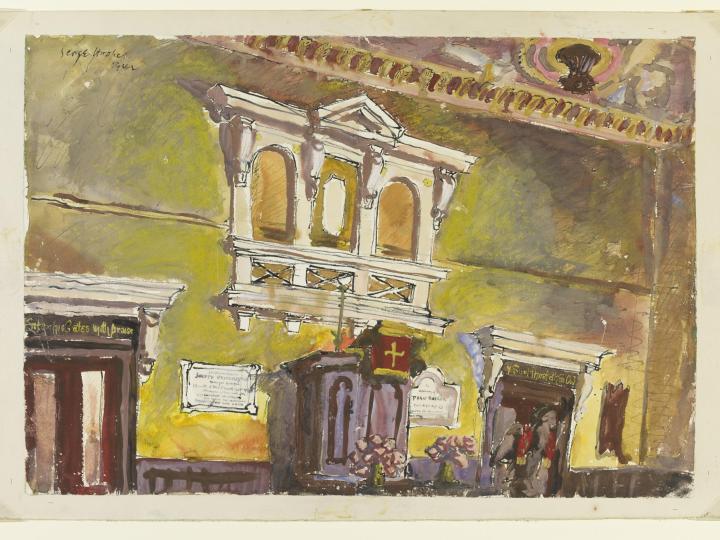
The lively painting of the interior on this page was painted in 1942 by George Hooper as part of the ‘Recording Britain’ series of images, held in the V & A which describes the scheme in the following way:

The ‘Recording Britain’ collection of topographical watercolours and drawings [was] made in the early 1940s during the Second World War. In 1940 the Committee for the Employment of Artists in Wartime, part of the Ministry of Labour and National Service, launched a scheme to employ artists to record the home front in Britain, funded by a grant from the Pilgrim Trust. It ran until 1943 and some of the country’s finest watercolour painters, such as John Piper, Sir William Russell Flint and Rowland Hilder, were commissioned to make paintings and drawings of buildings, scenes, and places which captured a sense of national identity. Their subjects were typically English: market towns and villages, churches and country estates, rural landscapes and industries, rivers and wild places, monuments and ruins. 


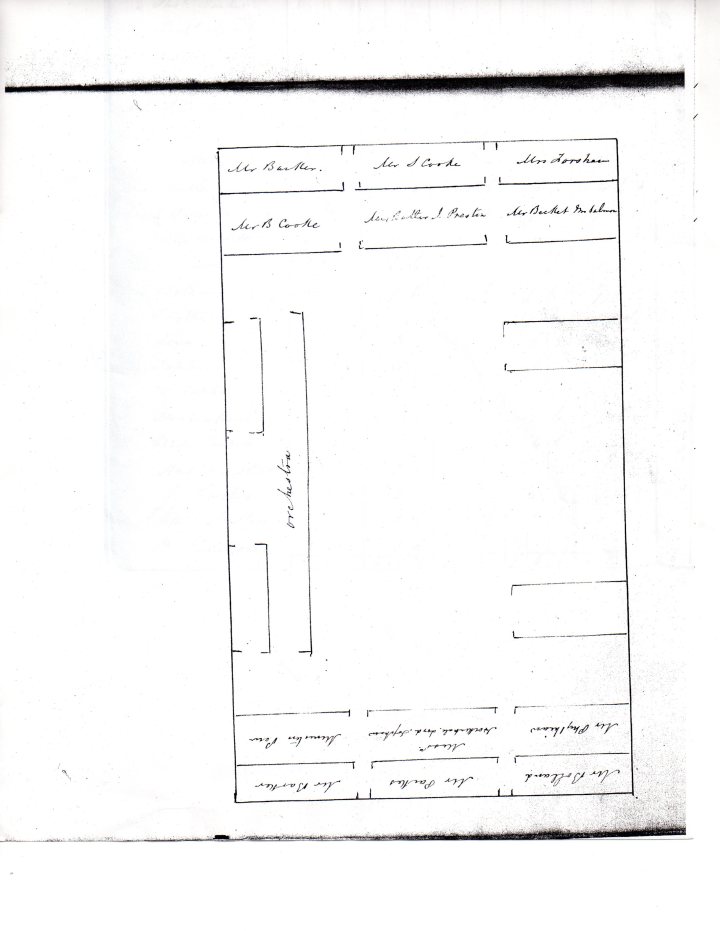
It’s an interesting choice of subject and shows the pulpit with memorials to Joseph Priestley and Philip Barker on either side. You probably wouldn’t guess from the painting but the interior had been completely re-ordered. The chapel had been turned through 180 degrees and the pulpit placed on a false wall with a vestibule and ancillary rooms located behind it. Andrew Lamberton has supplied me with this plan of the interior of the remodelled chapel (from the Cheshire Record Office):


Nantwich plan

Plan of the interior c.1850 (Cheshire Record Office)

Strangely this plan does not show the pulpit which would have been in the centre of the wall on the right hand side of the drawing as we look at it. Opposite it is an area described as ‘orchestra’ on the plan. Is this meant to imply some instrumental accompaniment for hymns or would it be the place for the choir? Philip Barker’s pew can be seen in the top left hand corner.


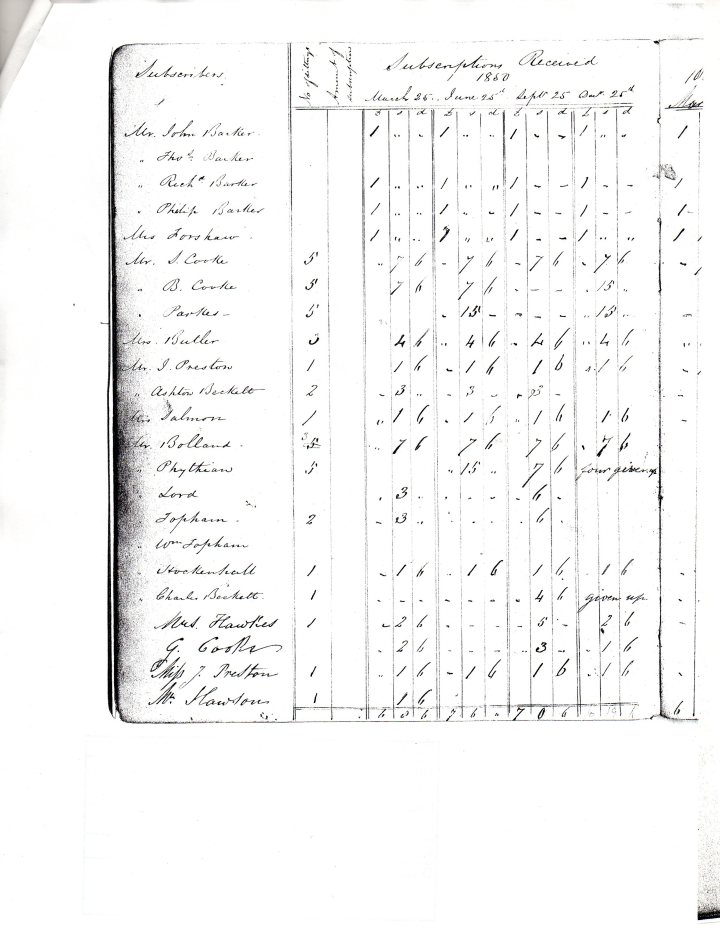
The major repairs that resulted in the re-ordering of the interior took place in 1846-49 according to Christoper Stell’s Nonconformist Chapels and Meeting-houses in the North of England (1994). His plan of the interior can be compared with the one above. By 1850, however, it was not a large congregation as this subscription list, also supplied by Andrew Lamberton from the Cheshire Record Office, shows


Nantwich subscribers

Subscribers List 1850 (Cheshire Record Office)

The chapel was clearly very dependent on the Barker family and the Rev J Morley Mills, minister at the end of the nineteenth and start of the twentieth centuries, recorded that it was known in those days as “Mr Barker’s Chapel”. By the time of the Second World War it was clearly at a very low ebb. Surviving photographs show the building in a very sorry state.

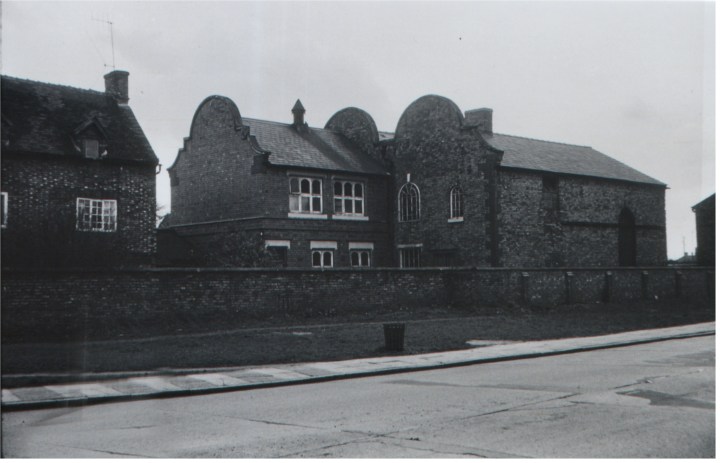
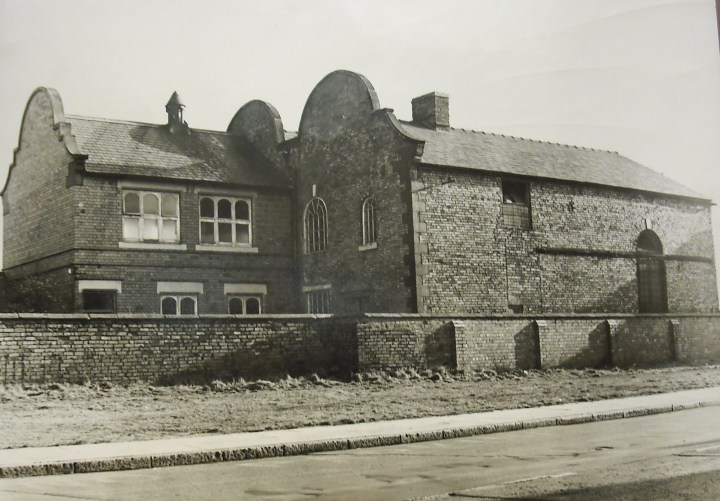
In 1896 a schoolroom had been built right in front of the chapel. This obscured the distinctive outline of the frontage with the Dutch style gables. However, Christopher Stell suggests this design may not have been original and could have been added in a rebuilding of 1870. Either way the Victorian schoolroom obscured the look of the chapel:

Nantwich 1960s

The chapel probably in the 1960s. Photo from Andrew Lamberton

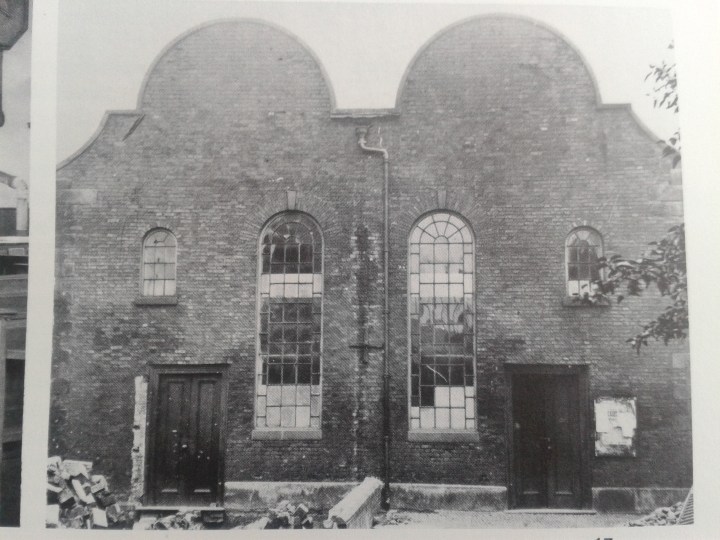
Curiously The Unitarian Heritage carries a photograph of Nantwich chapel taken, presumably, after the school house had been demolished and showing the frontage as it had been built:

Nantwich UH

From The Unitarian Heritage

It seems a reasonable assumption to make that this photograph was taken at the start of the demolition process, after the Victorian school house had been taken down. However, if you compare this photograph and the previous one which dates from the 1960s it is clear that the two long windows are both intact and fully glazed and the stone work and frames around the window are no longer painted. Could this photograph actually date from a different period?


I’d be interested to hear from anyone who has any more information and any additional photographs of the chapel, especially of the interior.


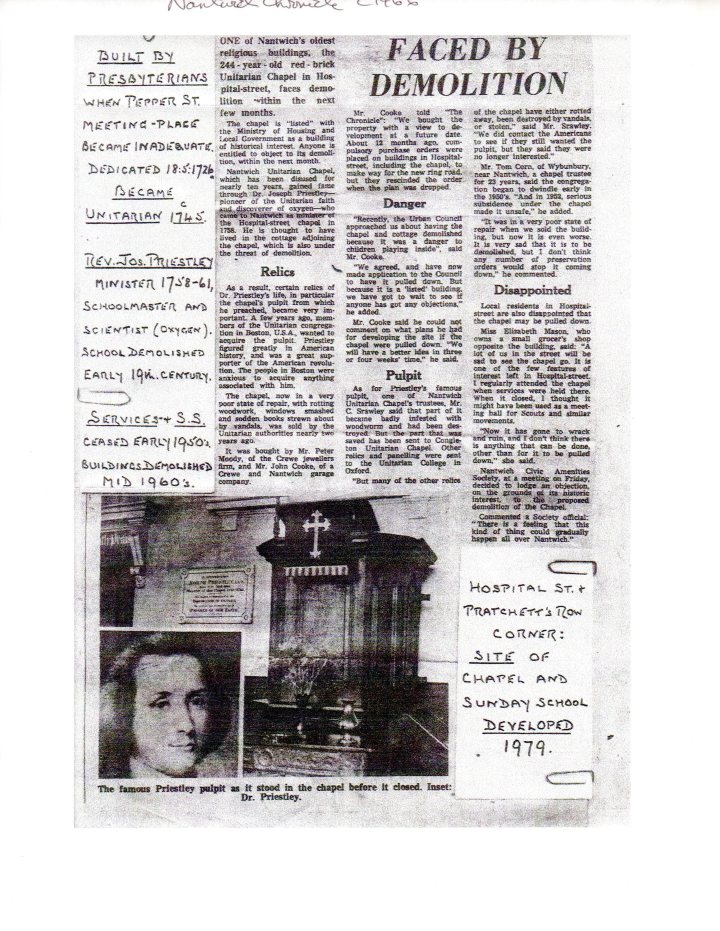
Andrew Lamberton has also sent me this newspaper cutting taken form the Nantwich Chronicle in about 1966 and indicating the sad end the chapel faced:

Nantwich Chronicle

From the Nantwich Chronicle c.1966

It is a shame that such a an unusual and interesting building was lost to the locality, one that had been thought significant enough to record for posterity during the  darkest years of the Second World War.

2012FG9670_2500

The Presbyterian Unitarian Chapel, Nantwich; Recording Britain; Chapel, Hospital Street, Nantwich. © Victoria and Albert Museum, London

Willaston School “a public school education on modern lines”

The edition of Christian Life published to celebrate the centenary of the Trinity Act never fails to provide something of interest. Leafing through its pages the other day looking for something else I chanced upon the half page or so celebrating Willaston School. As with everything else in the whole issue it gives a celebratory account of the institution in question. I notice that the regular Sunday services were conducted by the headmaster or the Unitarian minister in Nantwich and that religious teaching in the school consisted of “instruction in the Bible, and in the history of liberal thought and religion”. The fees were £63 per annum although bursaries were available for the sons of ministers. It paints a positive picture of music, the classics, cricket etc. with every boy cultivating his own allotment in the twenty-four acres of grounds and “a resident staff of university men”.  It provided “a public school education on modern lines”. For those who could afford it, it was a golden age, the last days of the old order before everything was changed utterly by the First World War.


One of the things the recently published book Willaston School Nantwich edited by Andrew Lamberton and published by Willaston and District History Group brings out is how heavily militarised the school became after the war started. There is nothing unusual in that but nearly every boy and member of staff became a member of the Army Cadet Corps and many of them were to be killed at the front in a matter of years, a great many of them decorated for bravery as I have already noticed in the previous post. At least one founding pupil took a different view though. Although I have mentioned him in the forthcoming review of the book that will appear in the 2016 issue of the Transactions of the Unitarian Historical Society I didn’t mention him in the previous post. William Mellor joined the school in 1900 and went on to Exeter College, Oxford. He was a prefect and a captain of cricket and football. He ended up as editor of the Daily Herald and the Tribune and during the First World War was a conscientious objector. His career was not without significance in the development of the Labour party. William Mellor shared radical socialist views with his brother, the Rev Stanley Mellor, minister at Hope Street Church, Liverpool. William and Stanley were the sons of Rev William Mellor, Unitarian minister at Huddersfield before the First World War. I am grateful to Andrew Mellor, grandson of the William in the photograph below, for this family information.

But one other short passage from the Willaston book stuck in my mind. In the chapter on 1914-1924 short passages illustrating the activities of the Cadets are given, taken from the school magazine, including this one on page 45:

In April 1918, “We have only had one lecture this term; that was a most interesting one from Captain Kitchen, (Old Willastonian) Assistant Instructor at the Command Gas School Aldershot. Besides the description of the uses of gas, various specimens of gas masks displayed, practical demonstrations were given of tear-gas and smoke bombs.”


This must have been R.T. Kitchen who was at the school from 1903 to 1908. The first use of gas by British troops came at the battle of Loos in 1915. It was not a success, the wind blew the gas back into the British trenches. Later in the war the allies also utilised mustard gas. A grim job indeed to be assistant instructor at the Gas Command School.


HMC: England: Cheshire: Willaston School, Nantwich: "505"
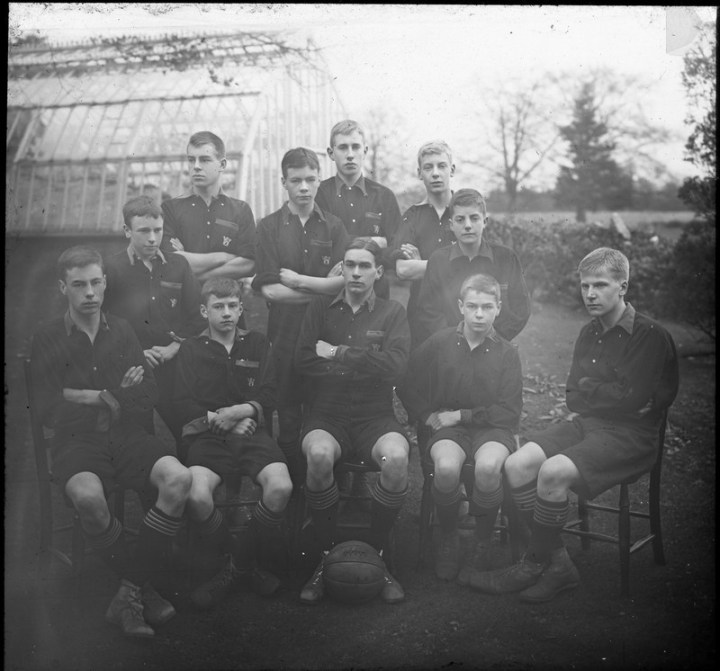
Willaston School Football XI 1908. With thanks to Andrew Lamberton

In one of the many images in the Willaston School Nantwich book there is a picture of the Football XI in 1908 (page 60). There they sit, the first eleven, a confident looking W. Mellor (captain) seated in the centre. To his left is Norman Ebbutt who served in the RNVS throughout the First World War, and who later became The Times correspondent in Berlin until he was expelled by Goebbels. To William Mellor’s right is a young R.T. Kitchen.


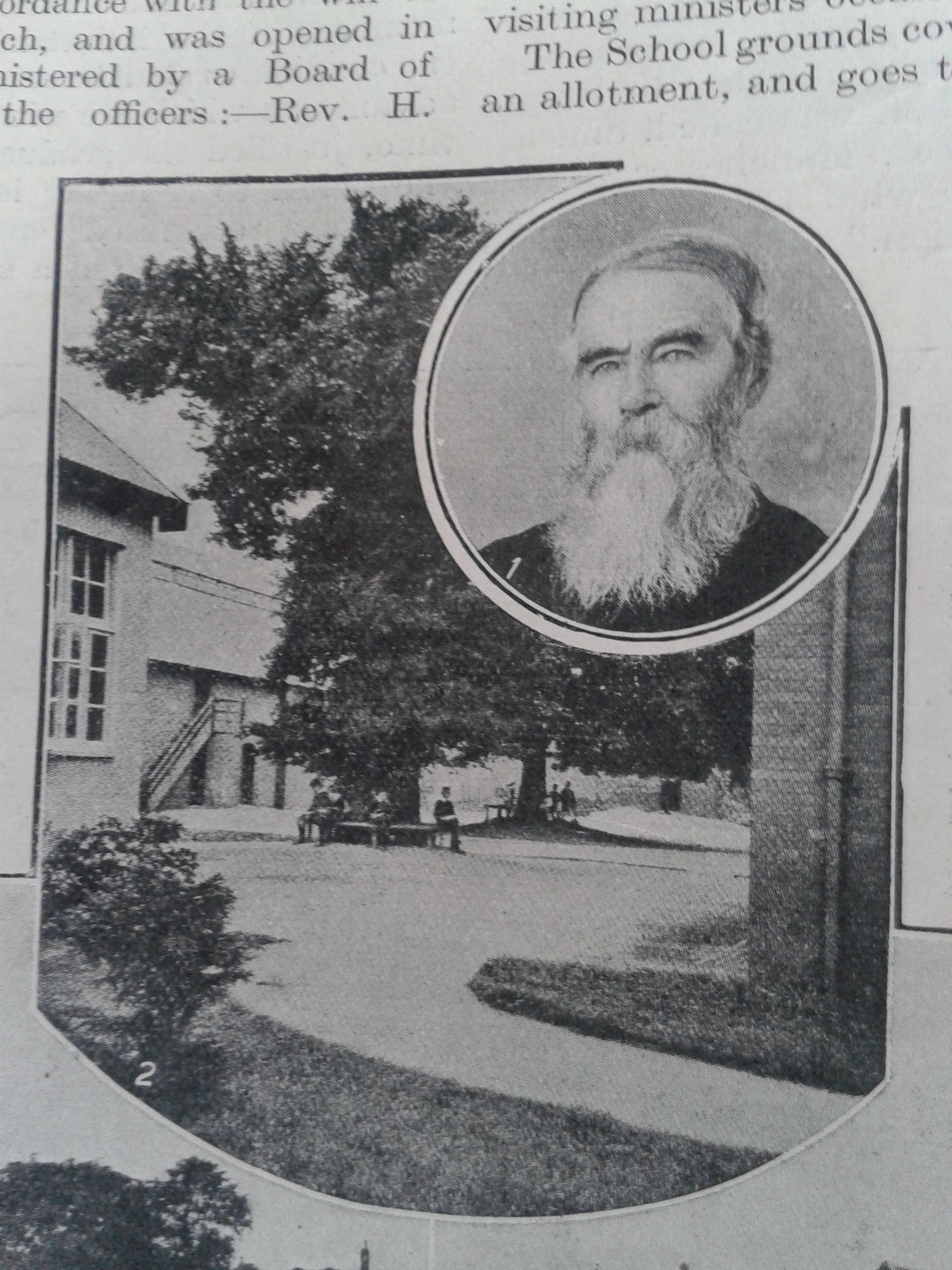
Founder Philip Barker and a view of the school from the 'Christian Life' 1913
Founder Philip Barker and a view of the school from the ‘Christian Life’ 1913

Willaston School Nantwich

Willaston School Nantwich. Later St Joseph’s and Elim Bible College, Andrew Lamberton (ed.), Willaston and District History Group, Chester, 2015. ISBN 978-0-949001-56-6. £11.95.


The cover of the book


The Willaston District History Group are to be congratulated on publishing this fascinating, well-illustrated book.


Willaston School was a relatively short-lived minor public school established under the provisions of the will of Philip Barker, a prominent member of the Unitarian Chapel in Nantwich. On his death in 1898, with no close living relatives, he left his house and estate to be turned into a school for boys of Unitarian families. He may also have intended to provide a service to the sons of Unitarian ministers and also hoped to create a feeder school for Manchester College, Oxford where pupils could go to train for the Unitarian ministry. In this last aim they don’t appear to have been successful, only three ex-pupils went into the Unitarian ministry.


Philip Barker, the founder of the school


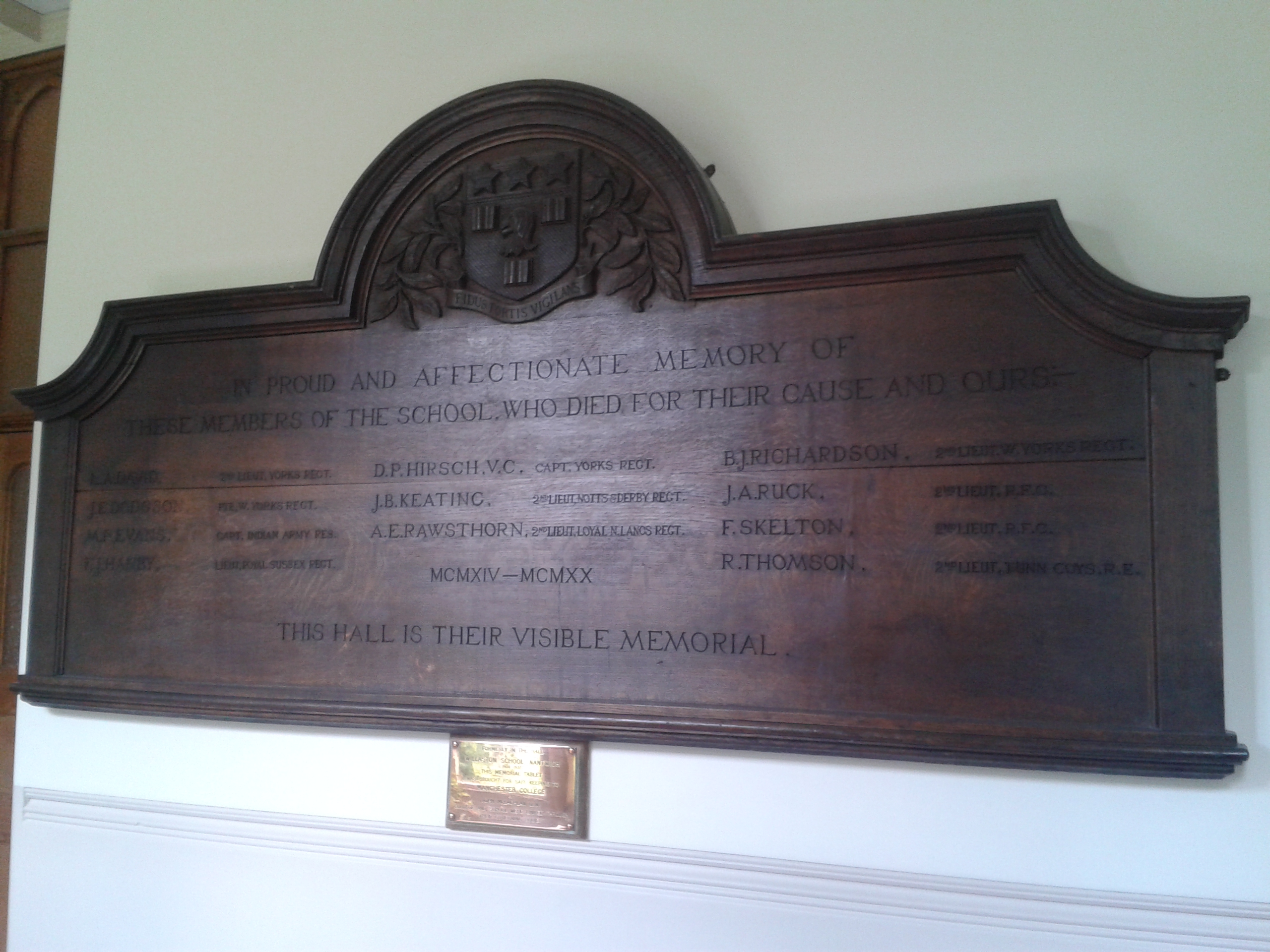
Most of my knowledge of this school previously came from the writings of the late Rev John McLachlan and seeing the war memorial that he had moved to Harris Manchester College after the closure of the school. Founded right at the start of the twentieth century the school seemed to flourish in the decade before the First World War when so many ex-pupils joined up, many lost their lives and a large cohort of their number were decorated for gallantry – including a VC, three MCs, two Albert Medals, one DFC, a DSM and three further mentions in despatches. The VC was awarded posthumously to Philip Hirsch of Leeds. Later Sir Sydney Jones of Liverpool opened a memorial chapel in the school to those who had lost their lives in the war, and a new swimming pool was given in his memory by Philip Hirsch’s parents.


Willaston School Memorial - now situated in Harris Manchester College, Oxford
Willaston School Memorial – now situated in Harris Manchester College, Oxford


WIllaston School Nantwich is an impressive account of the life of a unique Unitarian educational institution from a vanished age. Based largely on the record of writings by four former pupils, including John McLachlan, the book gives a very full account of all aspects of school life including academic matters, sports, music, drama, excursions, clubs and societies and much more. The book includes a list of all the students and accounts of the lives of those who were killed in the First World War. What makes the book even more interesting is the tremendous selection of photographs taken from a collection of 230 glass lantern slides held at Harris Manchester College which really do give a very full picture of life in the school. The school was only operational from 1900 to 1937 but is clearly well remembered in the locality. After closure it became a Roman Catholic ‘Industrial School’ and later still became an Elim Bible College. But this book is mainly about its Unitarian era and is well worth reading.

It can be obtained from the Willaston District History Group via their website: http://www.willastonweb.co.uk/


Chowbent Chapel

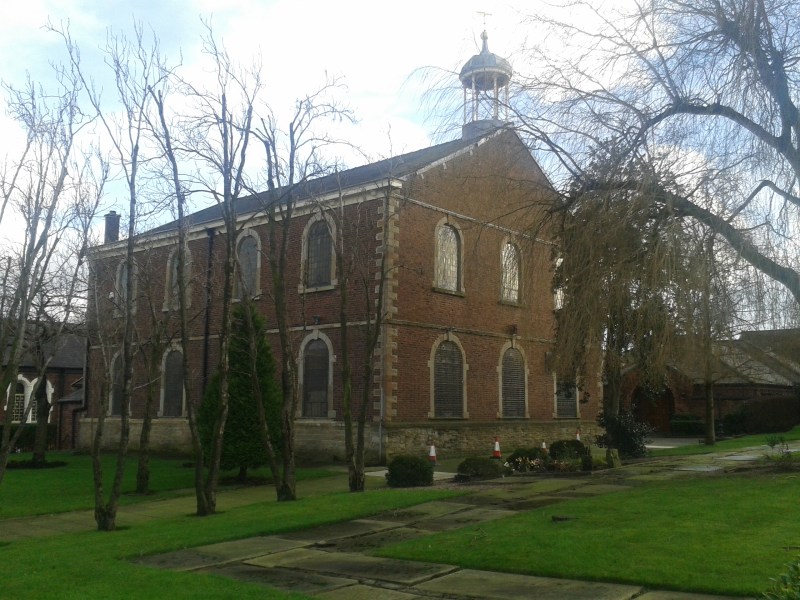
The building of Chowbent Chapel in 1722 speaks volumes for the determination of Lancastrian dissent in the early eighteenth century. Having retained possession of the chapel of ease after the ejections of 1662 it wasn’t until the 1720s that the local landlord managed to expel dissenters from the essentially Anglican chapel, allegedly because of the part played by the minister ‘General’ James Wood and his congregation in suppressing the Jacobite rebellion of 1715.

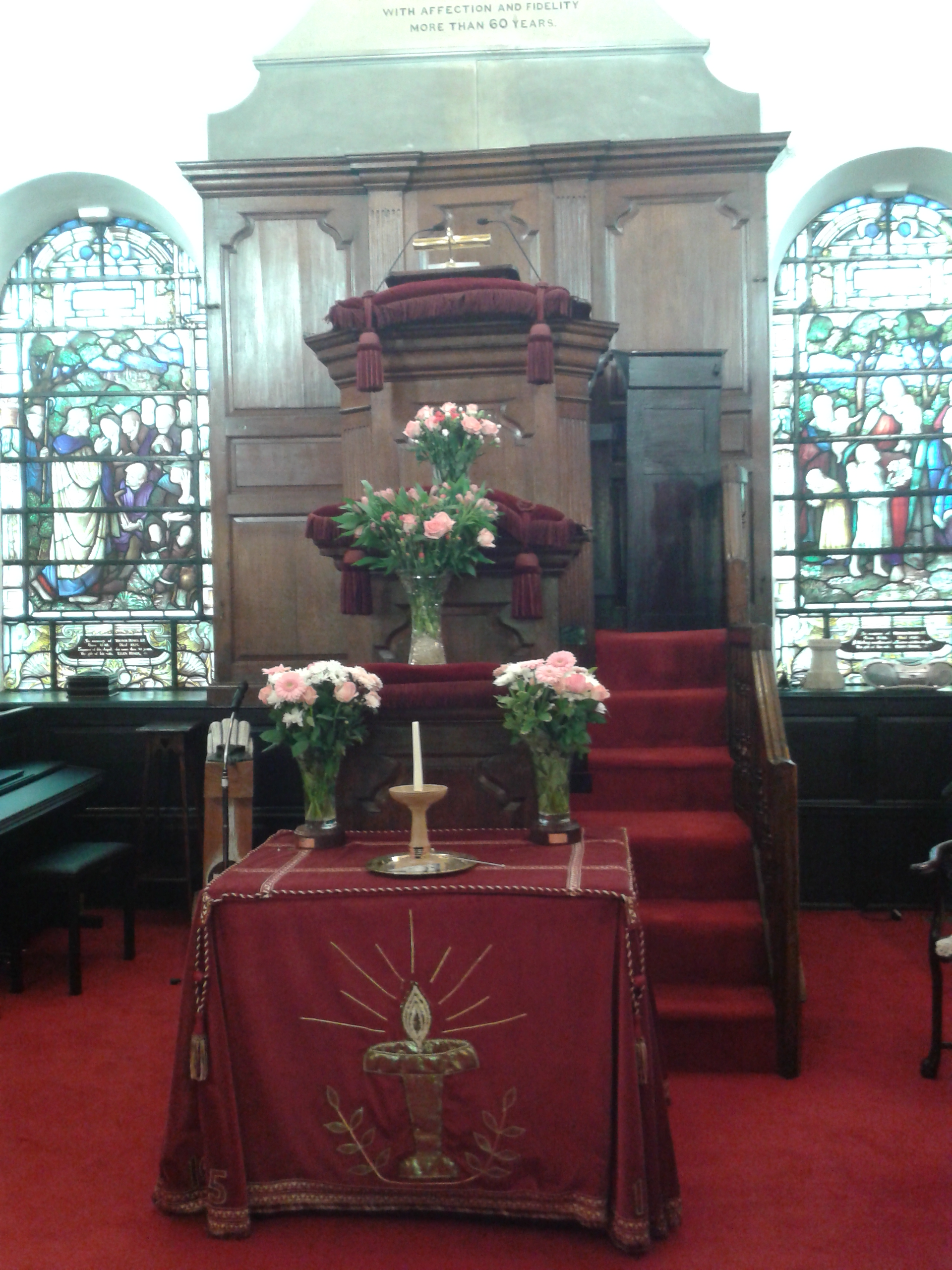
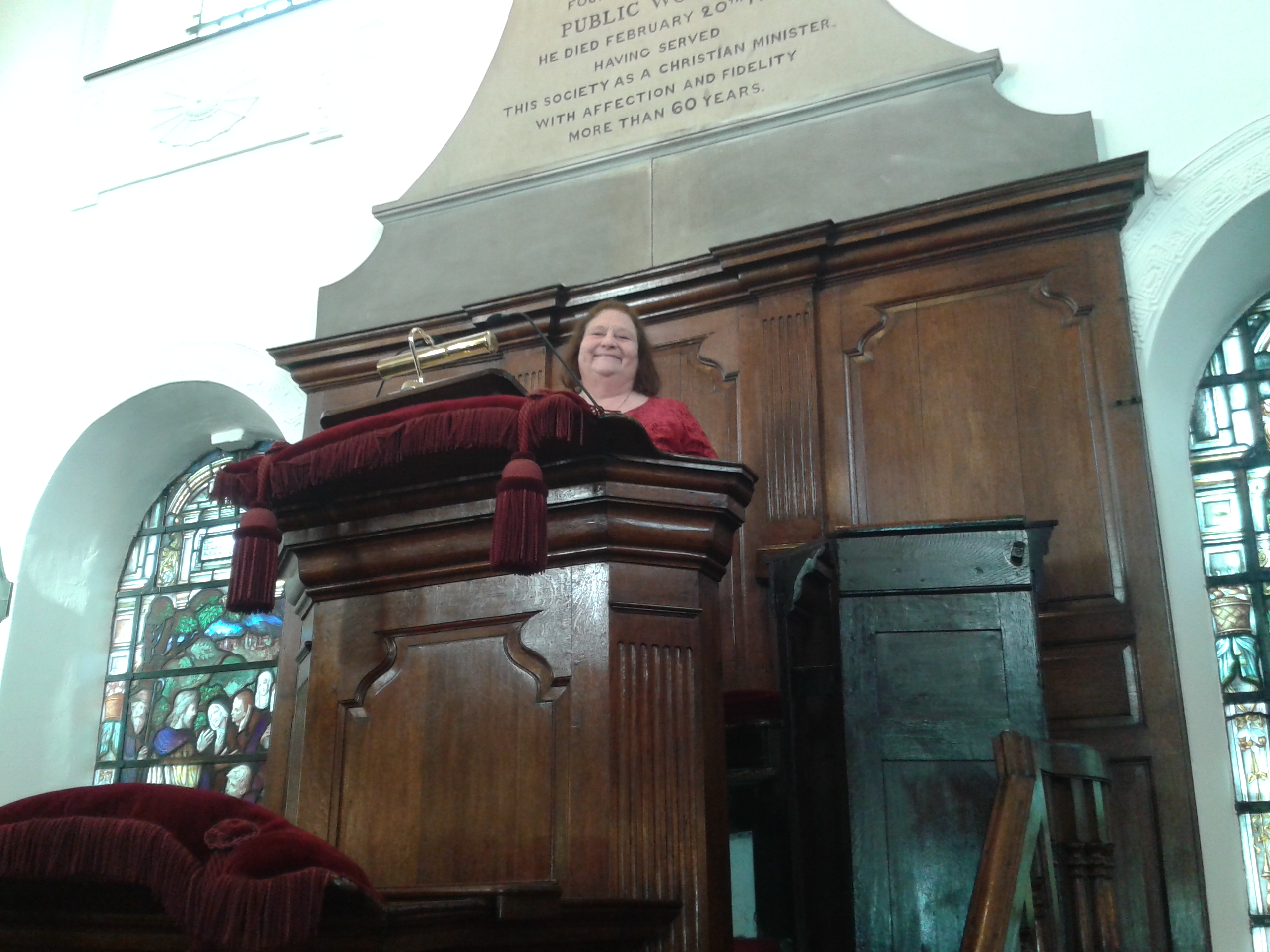
The eighteenth-century three decker pulpit


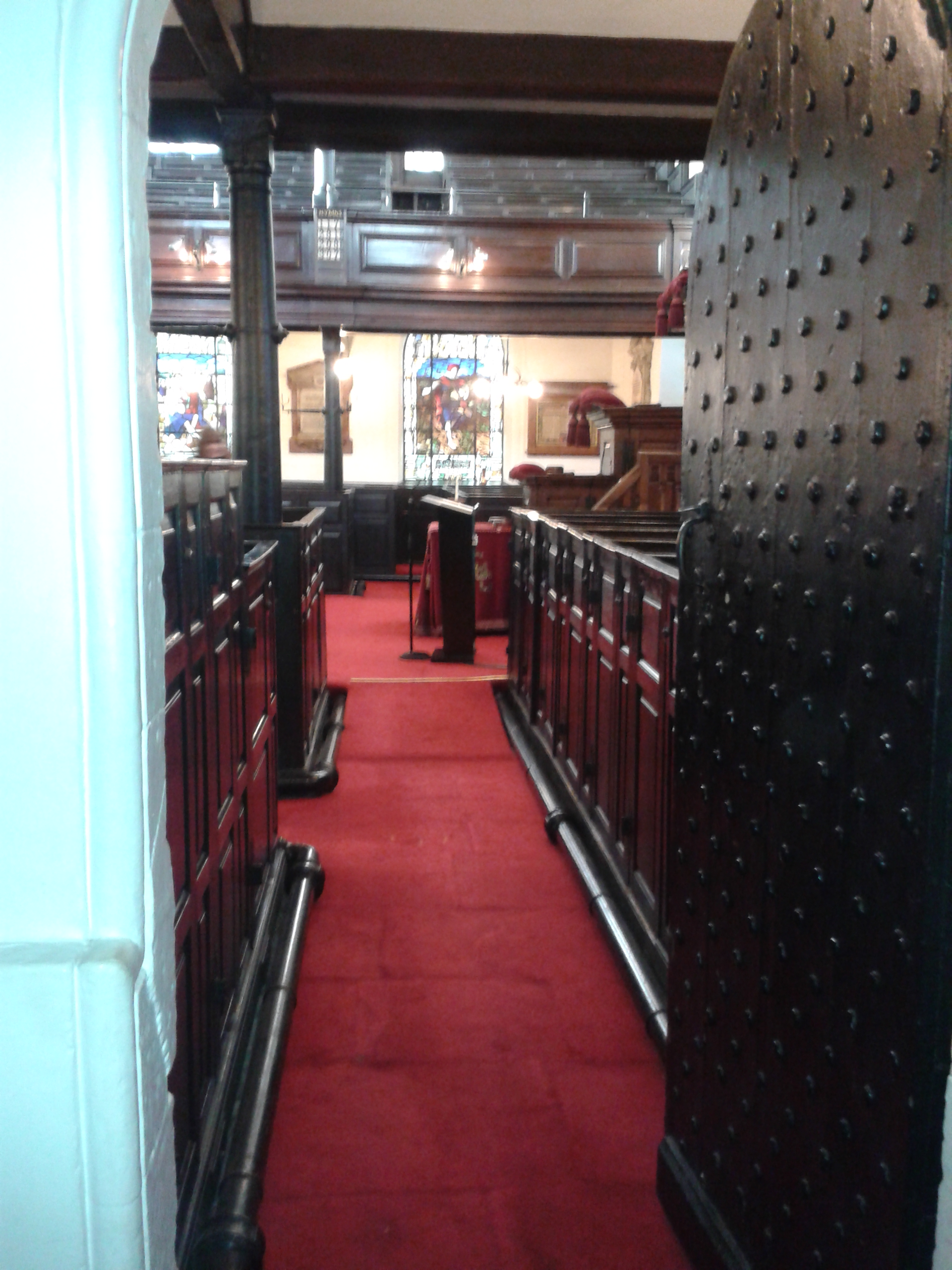
The new chapel was built on land owned by the Mort family who appear to have been generous supporters and benefactors and who had a great importance in Lancashire non-conformity in general. But the chapel, to me at least, always has something of the sense of a fortress about it – the solid, square walls, the ancient oak pillars, the studded door into the church, the large memorial to ‘General’ Wood above the pulpit.

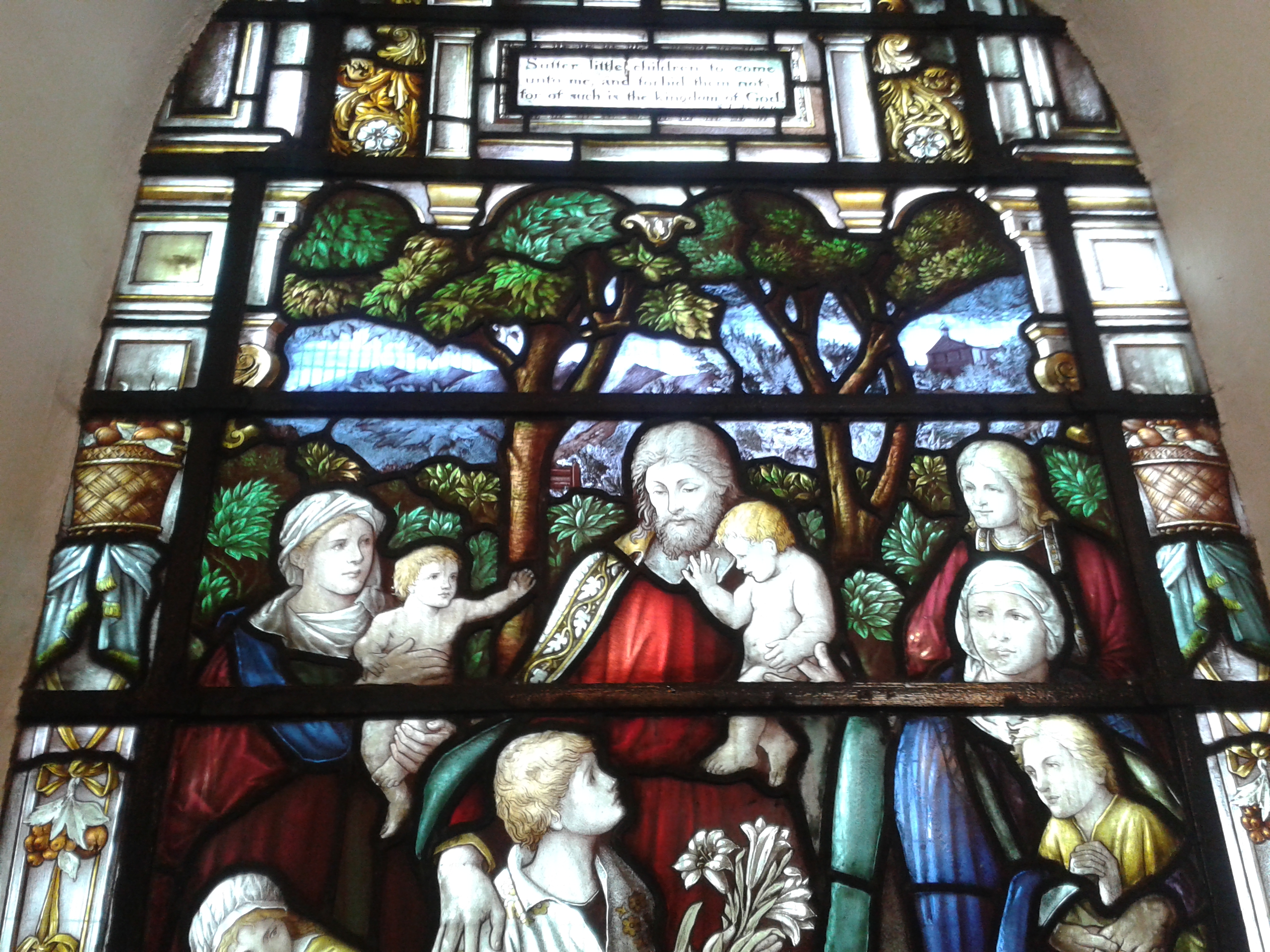
But it is also full of interesting details that would be easy to miss. There is a large amount of stained glass but I had forgotten about the appearance of an image of the chapel itself in the window depicting Jesus and the children. The three decker pulpit is incredibly impressive and with the traditional pulpit cushions very much looks the part still. You can’t miss the pulpits and reading desk but you might miss the small section of panel cut out from behind the top pulpit. Here it was said they had to make space for the door to open wider in order to admit the well-fed frame of the Rev Thomas Belsham when he visited in the nineteenth century!


The Victorian stained glass window featuring the picture of the chapel


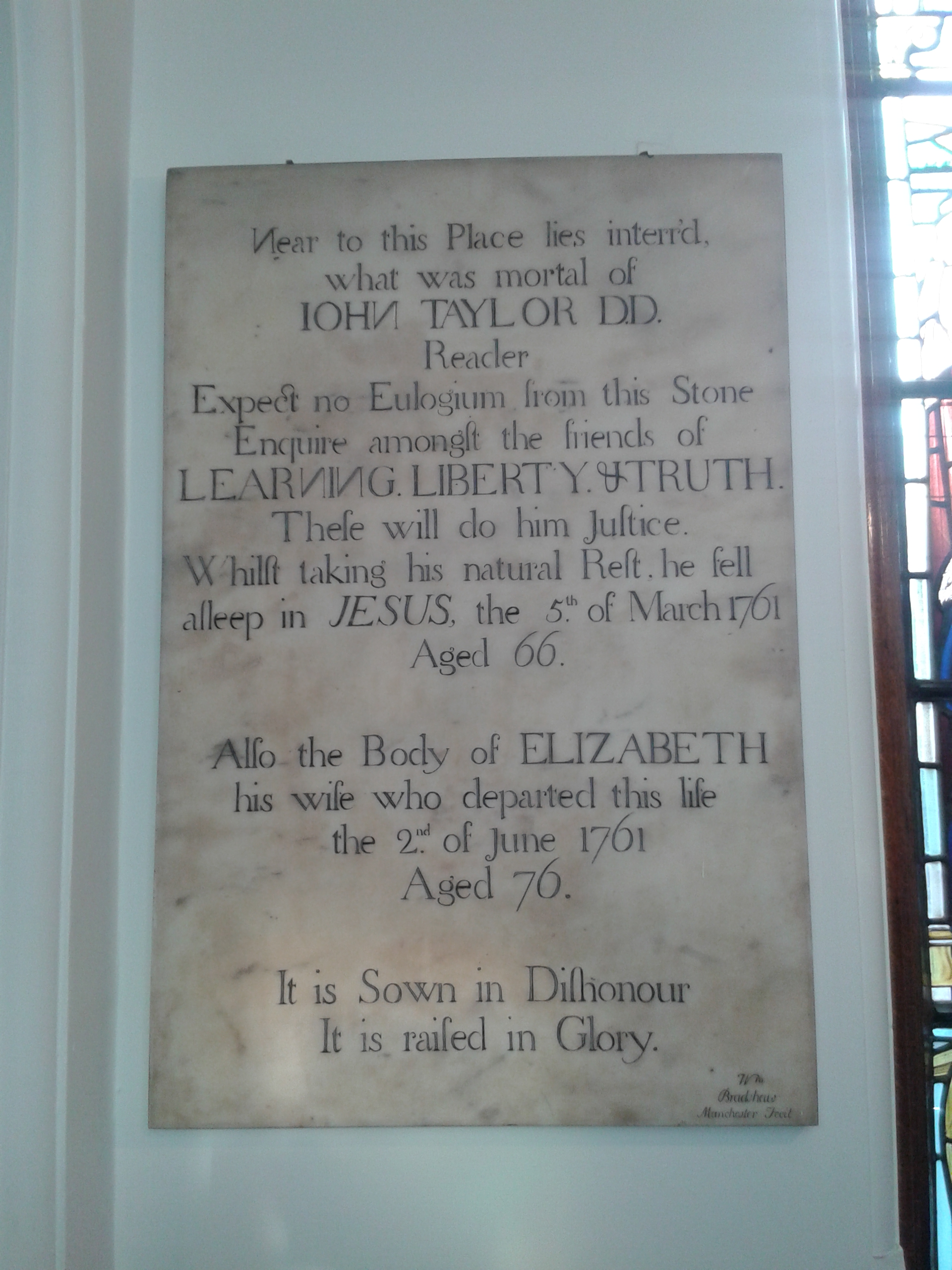
It has been some years since I was last at the chapel and I had a recollection of seeing the grave of the Rev John Taylor laid flat in the grounds of the chapel. John Taylor being the first Tutor in Divinity at the Warrington Academy. But this is not the case – John Taylor is certainly buried there but his gravestone was removed when the front of the church was extended to make way for the organ and vestibule in 1901. There is however, a touching memorial to him and his wife.


Memorial to John and Elizabeth Taylor


The reason for my visit in January was to be part of the congregation to celebrate 25 years of ministry by the Rev Brenda Catherall and I was delighted to play a small part in that special service. Brenda has been minister there since 2007 following ministries in Bank Street, Bolton and Monton and has given 25 years of devoted service to the Unitarian ministry and touched the lives of a great many people through her outstanding work. There is something so appropriate about her ministry in the congregation in which she grew up and which has always had a special place in her affections.


Rev Brenda Catherall in the pulpit


The chapel encapsulates the proud tradition of dissent and non-conformity in the town and it is so encouraging to see the congregation in such good heart and in such good hands.


The studded door from the vestry to the chapel

Some corner of a foreign field

The Faith and Freedom Great War project continues to expand and now contains around 75 separate items. One recent addition is the video made in 2014 by John Featherstone with input from Peter and Kath Faulkner, the then minister, the Rev Patrick Timperley, and members of the Old Meeting, Mansfield as a tribute to the memory of the war dead of their congregation in the First World War.


Some twenty-two chapel members are listed on the war memorial as having given their lives in the First World War. As other churches have done in this time of the centenary of the Great War the current congregation have researched the lives and circumstances of the men who were killed and tracked down the last resting place of each one of them. The Mansfield folk have also gone one step further and visited the grave of each soldier wherever that was possible. In 2014 a group of Mansfield members travelled to each grave or memorial of a chapel member and placed a poppy there while speaking the words:


We place this cross in thanks and in memory of….a brave son of Mansfield, whose name lives on, and is recorded on the wall of the chapel he attended.


The whole project was also recorded and can be seen on a beautifully put together video. As is so often the case with such research it is deeply poignant. Many of the soldiers were very young, their ages are given on the video along with their address and pre-war occupation – miners, colliery men, a pork butcher’s assistant, a hosiery hand, a farm labourer, and so on. Where there was no known grave the group from Mansfield visited the memorial – such as those at Thiepval and the Menin Gate – which bears the name of those killed in those battles and they placed their poppy there. They visited all the soldiers’ graves and memorials in France and Belgium. One soldier was killed in Iraq and his grave lies in the Baghdad North Gate War Cemetery, he was remembered by a poppy being placed on the Iraq Roll of Honour in the head office of the Commonwealth War Graves Commission in Maidenhead.


In carrying out this act of remembrance they followed in the footsteps of others from the chapel who had gone before. One mother whose young son was killed at Ypres visited the battle site with a party of bereaved mothers in 1920. She returned with a stone from the ruins of Ypres which was incorporated into the wall of the chapel as a memorial.


The circumstances of all the soldiers who were killed were traced, with the exception of one who proved elusive yet is still remembered, as the video says. The grave that is closest to home is in Nottingham Road Cemetery, Mansfield. Here was buried Ernest Davenport a private in the Notts and Derby regiment. Aged just 20 when he died, before the war he had worked in an iron foundry. He had been wounded in the Easter Rising in Dublin and had died of his wounds on 28th May 1916. It was at his grave, near the anniversary of the outbreak of the war one hundred years before, that the chapel members as a whole gathered for an act of remembrance of all those killed.


The video can be viewed here:


The Faith and Freedom Great War Project can be visited here:

http://www.faithandfreedom.org.uk/GWindex.htm


The detail at the top of this page is from the Cenotaph, Liverpool, designed by Lionel Budden and Herbert Tyson Smith.

Faith and Freedom, a journal of progressive religion

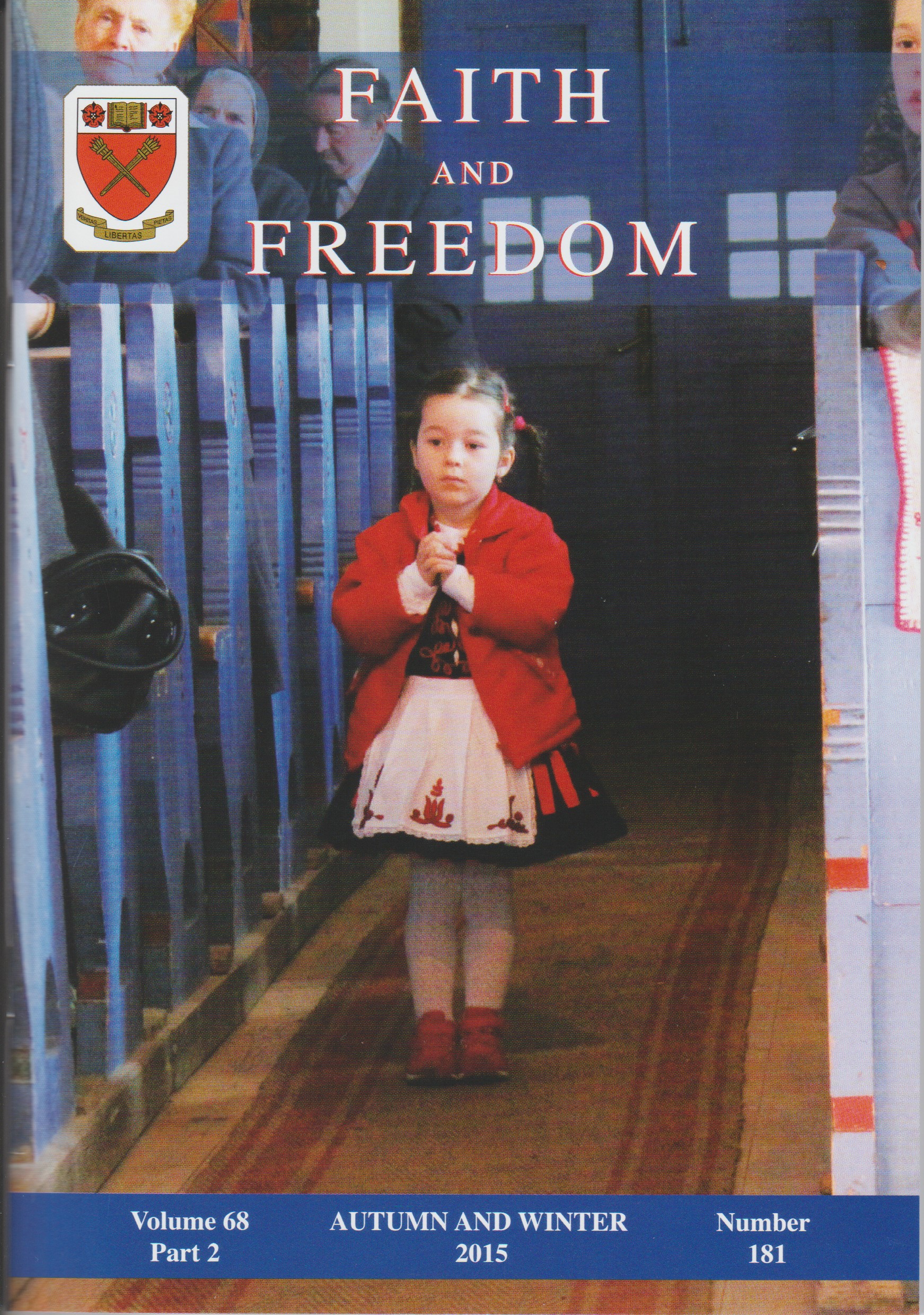
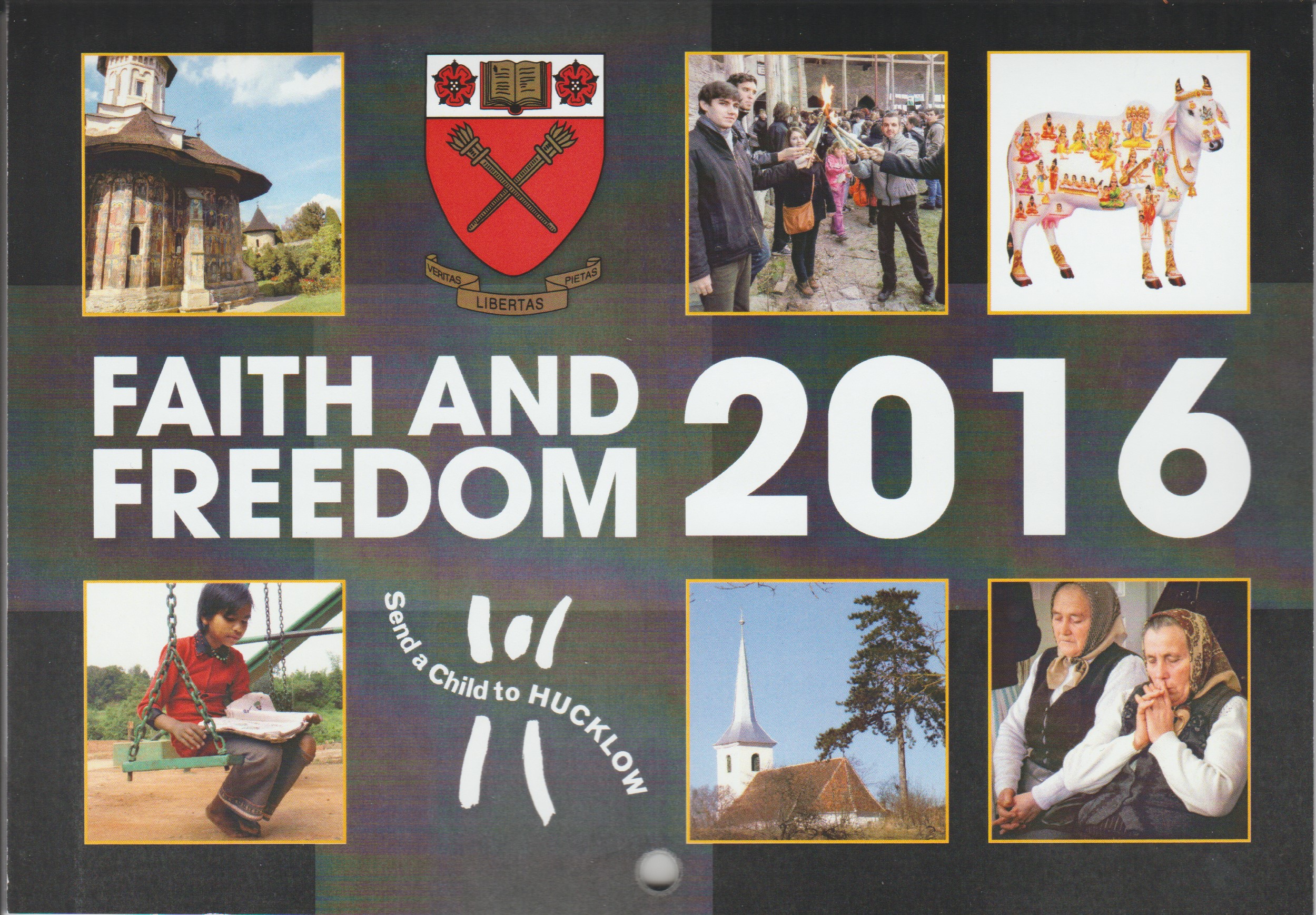
This latest issue of Faith and Freedom has a special cover. Taken from the above photograph by Márkó László it shows a scene from a Thanksgiving celebration at the Unitarian congregation in Oklánd, Hargita county, in Transylvania. This is a first for Faith and Freedom and ties in with a number of reviews in the Autumn and Winter 2015 issue which deal with the faith and practice of the Hungarian-speaking Unitarian churches in Romania. Márkó László’s photographs very effectively capture something of the cultural identity of the Unitarian folk there as well as their deeply held faith. There are more of his pictures in the 2016 Calendar.

The cover of the Autumn and Winter 2015 issue of 'Faith and Freedom', Vol. 68 Part 2, Number 181
The cover of the Autumn and Winter 2015 issue of ‘Faith and Freedom’, Vol. 68 Part 2, Number 181


Once again Faith and Freedom itself contains illustrations this time with a portrait of founding editor Eric Shirvell Price found inside and a photograph of the Rev Percival Godding, whose account of his time as a prisoner of war during the First World War also features.

An annual subscription costs £15 per annum (US $30 in the United States and Canada) and you can pay by post or online via PayPal. All details can be found on our website at:

http://www.faithandfreedom.org.uk/

The cover of the 2016 'Faith and Freedom' Calendar - 'Faith in the World'
The cover of the 2016 ‘Faith and Freedom’ Calendar – ‘Faith in the World’


If you are an individual subscriber you will also receive a copy of our 2016 Calendar. These are also being sold in aid of the Send a Child to Hucklow Fund. A £5 donation will have one wing its way to you. Again information about the Calendar (and a preview) can be found on our website.


Service of Thanksgiving, Oklánd church, Transylvania (Photo: Márkó László)