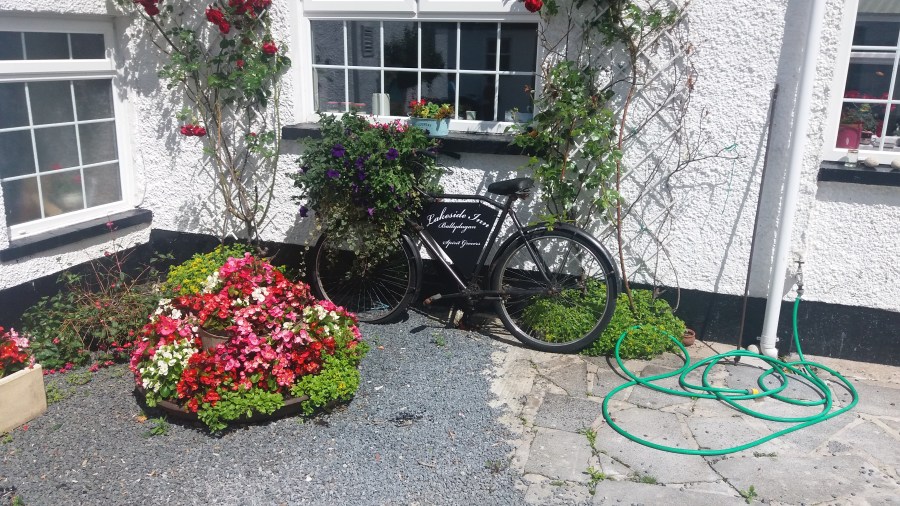
Treasure Hunt and Afternoon Tea, Lakeside Inn, Ballydugan

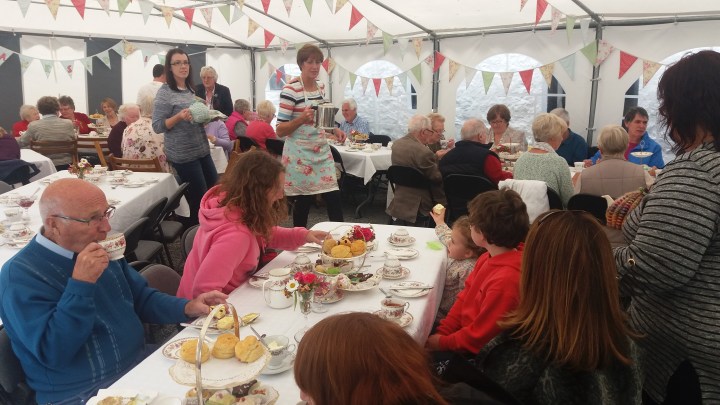
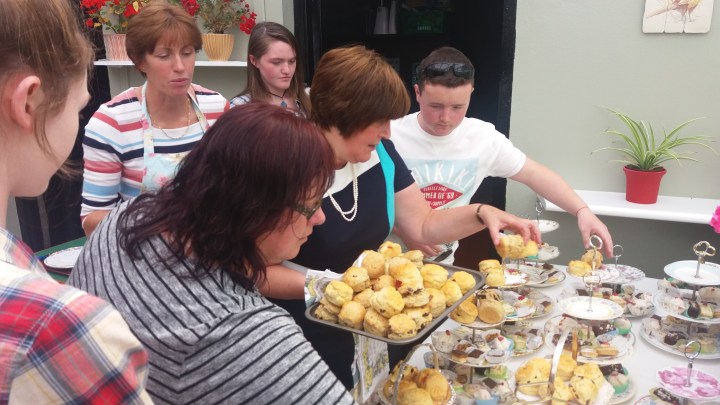
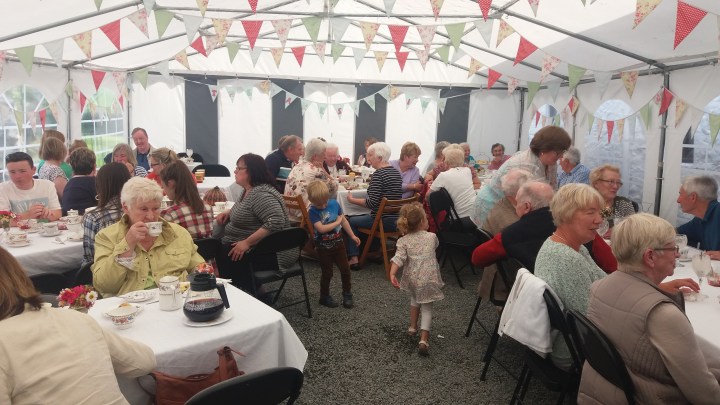
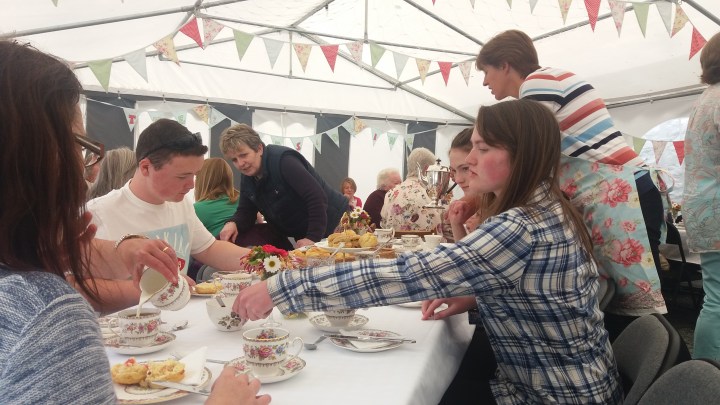
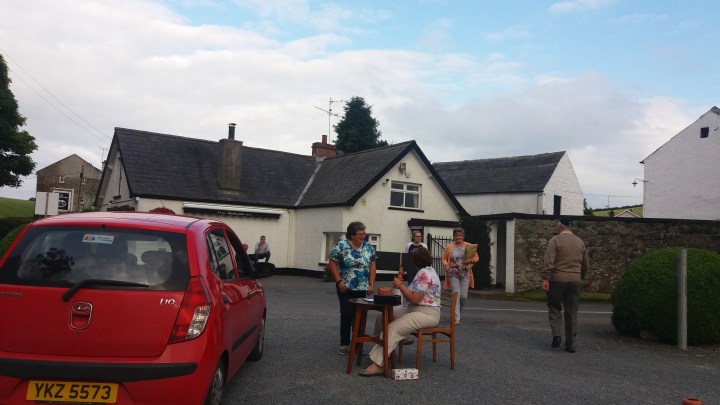
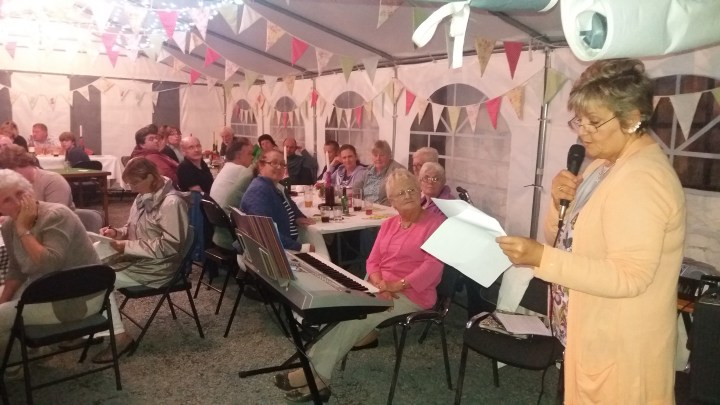
In July Downpatrick, Ballee and Clough churches held an excellent, hugely successful afternoon tea at the Lakeside Inn, Ballydugan. Blessed with wonderful weather everyone there, young and old, had a wonderfully relaxing and enjoyable afternoon.

DpkAT01

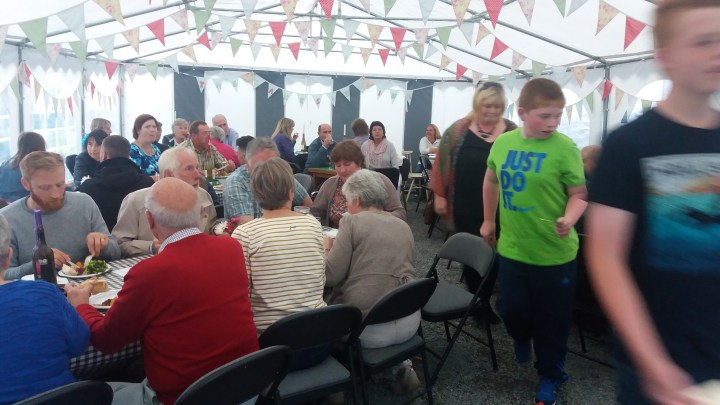
Tea in the marquee

DpkAT03

Preparing the cakes

DpkAT08

Afternoon tea

DpkAT12

The servers enjoy their tea


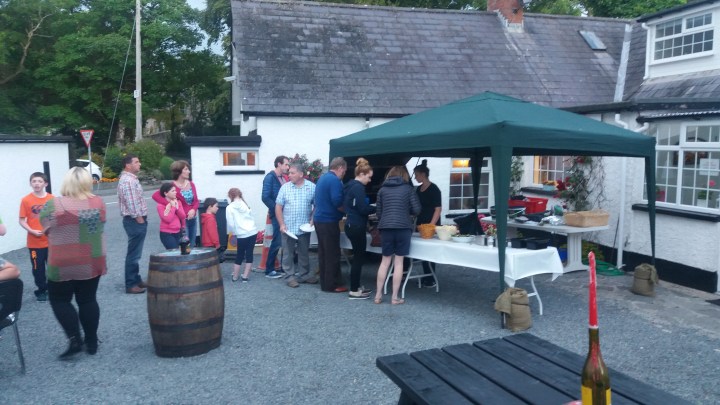
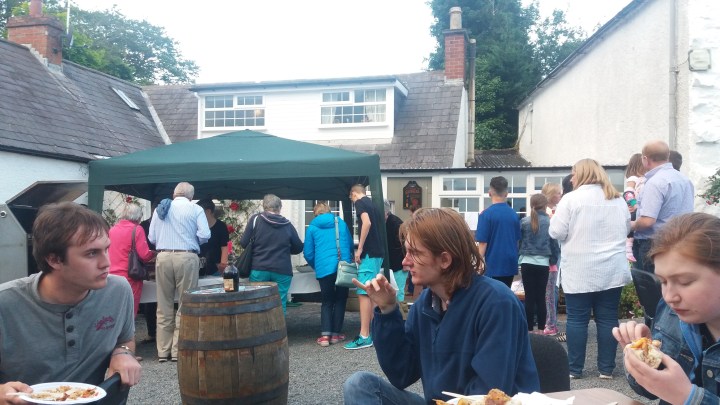
Towards the end of the month Downpatrick also had another excellent Treasure Hunt based at the Lakeside Inn. There was great support for the event with around 140 people taking part and following the fiendish clues around the countryside and coming back to the Lakeside for a hog roast with entertainment as well as games for the children. The weather was great but the marquee provided a comfortable spot for people to relax in. It was another great night and also raised over £1,000 for church funds.

DpkTHstart02

Setting off

DpkTHhogroast01

Queuing for the hog roast

DpkTHfood01

Enjoying the hog roast

DpkTHmarquee02

Inside the marquee

DpkTHmarquee03

Announcing the winners


Grand Floral Bazaar Mossley 1911

An incredibly useful and interesting resource for the study of congregational histories is the Edwardian ‘Souvenir of Bazaar’. These are often overlooked and are certainly under-appreciated. Their ephemeral nature means that their survival rate is not good and they are seldom found in library catalogues yet they invariably contain a great deal of information that gives us insight into the social and recreational life of a congregation at a time that was something of a high watermark for nonconformity and frequently also contain historical information that simply might otherwise be unavailable.

So few people know, I suspect, that the souvenir issued by the Templepatrick congregation a few years before the First World War contained a history of the congregation written by the great historian Alexander Gordon. One of my own congregations at Downpatrick issued a brochure at a similar date that contained history, pictures, biographies, poems by the minister and much more, it is a treasure trove of historical material, and very rare.

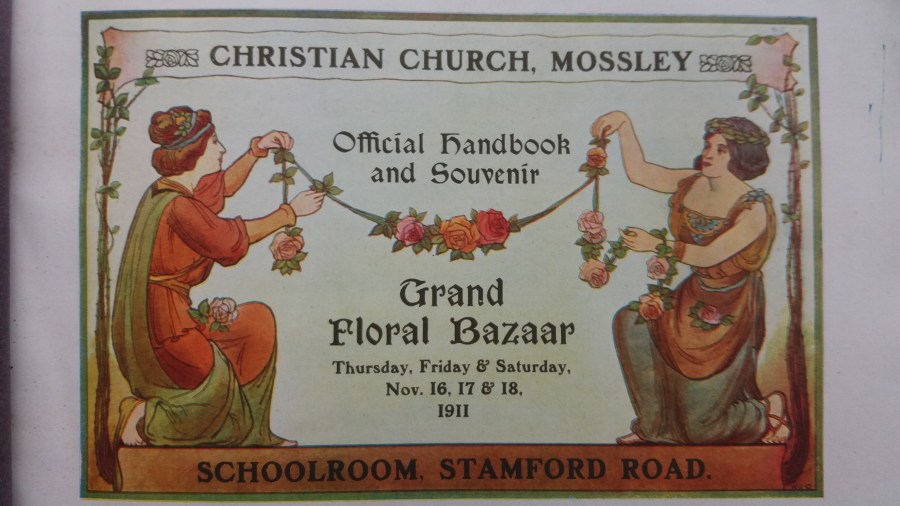
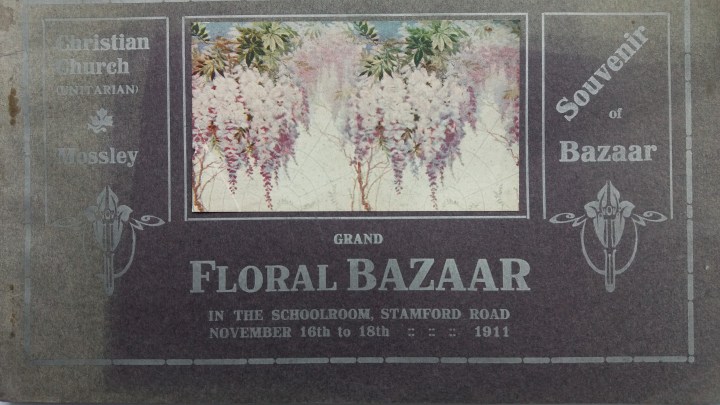
I picked up this ‘Souvenir of Bazaar’ on eBay for the princely sum of £4.99 which is more than I like to pay but really can’t complain about the price. It is the Souvenir for the Grand Floral Bazaar held by Mossley Christian Church (Unitarian) from 16th to 18th November 1911.

MossleyCover01

The cover does not inspire confidence, parts of it are very faded and there is evidence of a rusty staple peeping through. But despite that the forty page booklet is in excellent condition, it is beautifully illustrated and is replete with valuable information and images.

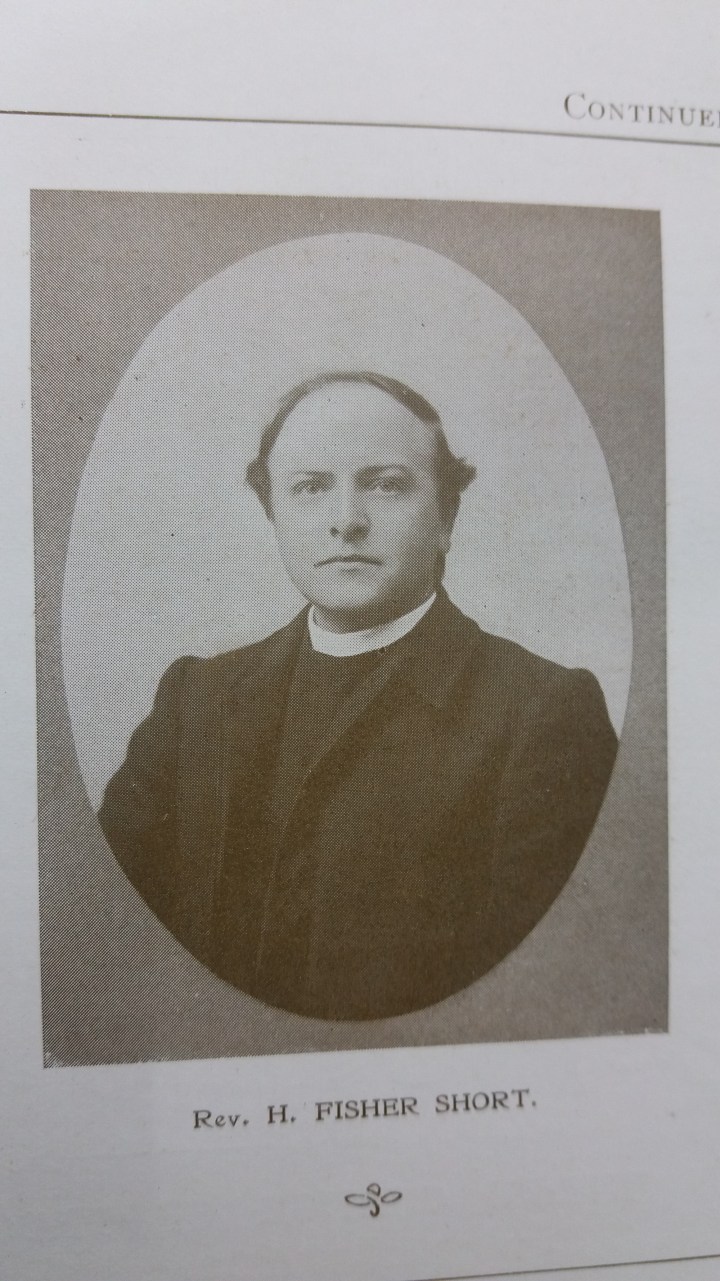
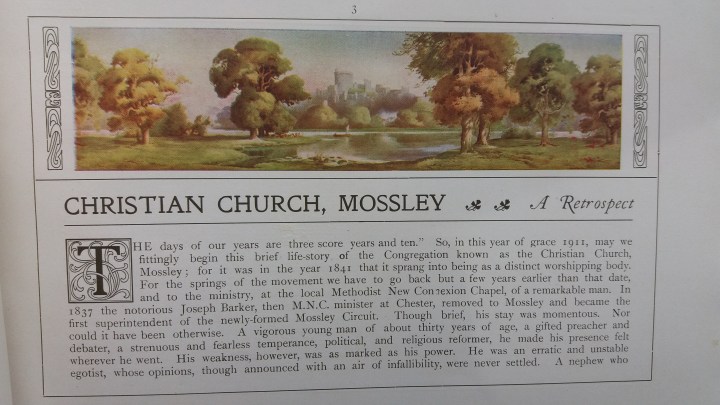
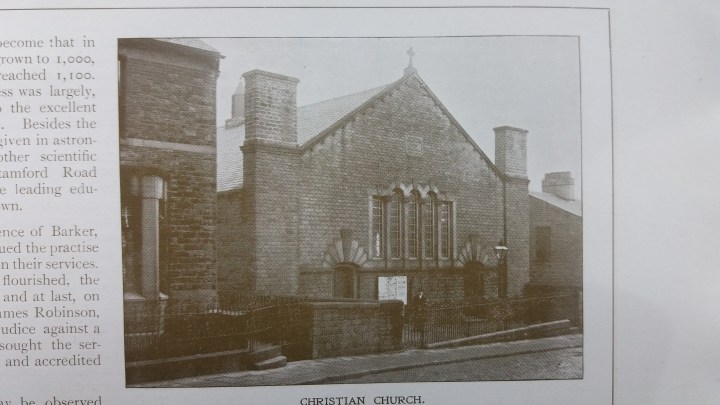
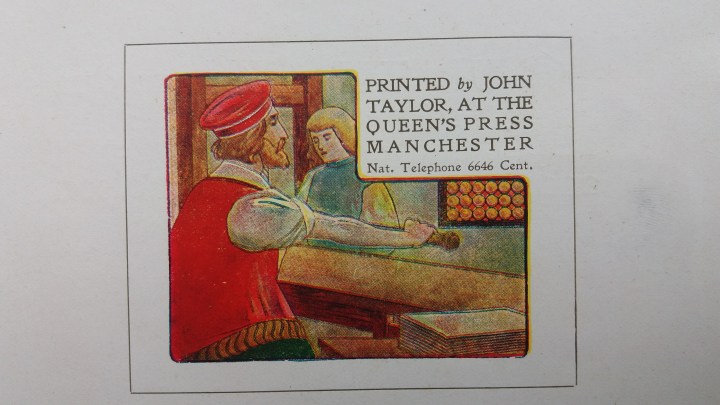
The colour images (nine in all) are still bright and attractive although one soon realises that they are stock images provided by the printers. The start of the ‘Retrospect’ is illustrated by what appears to be a watercolour of Windsor Castle but this detailed and well written twenty-page history of the congregation provided by the minister, the Rev H. Fisher Short, also contains a photograph of “th’owd garrett” where the congregation first met, the chapel interior and exterior, and all eight of the ministers from 1859 including the Rev Fisher Short:

MossleyFisherShort

It is a fascinating and unusual history rooted as it is in the ministry of Joseph Barker who founded the ‘Christian Brethren’ after being expelled from the Methodist New Connection. He and his followers would have no other name than ‘Christian Church’ for their Chapel at Mossley and this has remained their official name ever since.

MossleyARetrospect


Fisher Short was a member of a significant dynasty of Unitarian ministers in the 20th century who held a number of effective ministries himself in the north of England. This short history is testimony to his own scholarship and ability. I don’t think that any other history of the Mossley congregation has ever been published but this account of the first seventy years is very valuable indeed carrying much detail and analysis of the congregation’s development and the work done by its ministers in the local community.

MossleyChurch

The Floral Bazaar ran over three days and aimed to raise £1,000 for the renovation of the buildings. An impressive list of patrons was assembled including many Unitarian worthies and local leaders headed by Lord Ashton of Hyde. A congregational committee of thirty-six carried out the local arrangements.

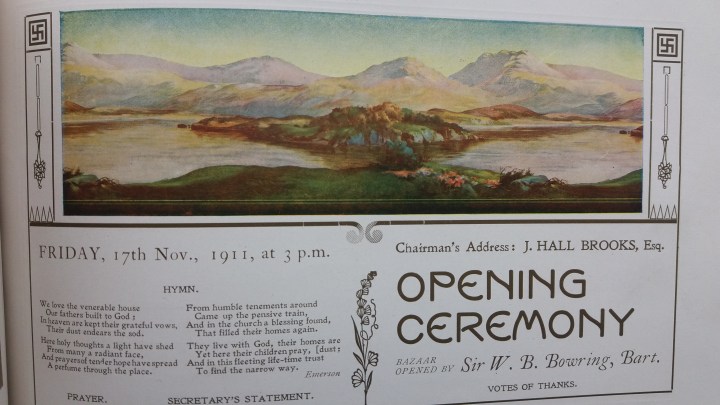
Each day had an opening ceremony with two dignitaries taking part, one acting as the chairman of the proceedings and the other as the opener. The ‘Openers’ were Charles Hawksley, Esq., C.E. (President of the B&FUA), Sir W.B. Bowring, Bart., and Francis Neilson, Esq. M.P. The ‘Chairmen’ were Lt. Col. J.W. Pollitt, V.D., J.P., J. Hall Brooks, Esq., and Rev H. Enfield Dowson, B.A. (President of the National Conference). A photograph of each gentleman is also included in the book.

MossleyOpeningCeremony

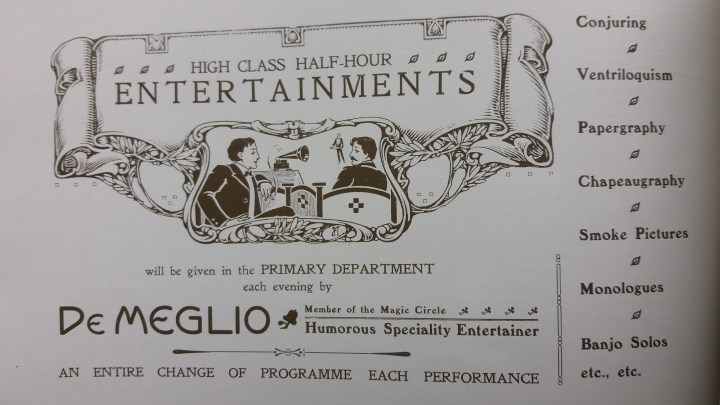
There were six stalls, namely Congregational, Sewing Society, Flower, Young Ladies’, Young Men’s and Children’s. In addition there was a Refreshment Stall, a Tea Room and a ‘Café Chantant’. One wonders quite why such a selection of opportunities for tea was thought necessary but there must have been plenty of demand. The Mossley String Band had a full programme of music on each day. Entertainments included competitions, bran tub, a weighing machine, ‘houp la’ and a shooting range, although it would be hard to keep away from DeMeglio’s nightly performances in the primary department. A member of the Magic Circle and a ‘Humorous Speciality Entertainer’ Mr DeMeglio mixed Monologues, Banjo Solos, Conjuring and Ventriloquism with ‘Papergraphy, Chapeaugraphy and Smoke Pictures’. Chapeaugraphy is probably not as exciting as it sounds and is defined as “the art of taking a ring-shaped piece of felt to manipulate it to look like various types of hats”. But still it must have been a good show.

MossleyEntertainments

But for anyone with an interest in history a little book like this pays dividends and offers many avenues for further research.

MossleyBackPage

Captain William Haughton Smyth

A meeting at Banbridge Non-Subscribing Presbyterian Church gave me the chance to see the memorial to Captain William Haughton Smyth who was one of the soldiers killed on the first day of the battle of the Somme and mentioned in the previous post, and also see the work being done at Banbridge by the congregation and the Rev Norman Hutton to preserve his memory and that of others who served.

The memorial to him was erected by members of the congregation. Manager of the Dunbar Memorial School and director of the family firm of Wm Smyth & Co, Captain Smyth was an established member of his local community when he was killed on 1st July 1916 at the age of 37. He was also treasurer of his congregation which is surely one of the reasons they wanted to put up a memorial to him.

WHSMemorial01

Memorial to Captain W. Haughton Smyth


But Captain Smyth was one of two members of the Banbridge congregation killed in the Great War, the other being Private A. Dougan who was killed earlier in the year on 14th March 1916. In total 17 members of the congregation served in the war although it was only a couple of years ago that the church dedicated a memorial to them all in the church which is situated just below the memorial to William Haughton Smyth.

WHSBanbridgeMemorial02

Banbridge Congregational Memorial


This year the congregation has produced an informative leaflet about Captain Smyth which details his service and the part he played in the Great War. The full leaflet will soon be uploaded to the Faith and Freedom Great War Project as will all the other material posted here along with a great deal of new material which has also been sent in.

The previous post can be read here:

https://velvethummingbee.wordpress.com/2016/07/03/the-first-day-of-the-battle-of-the-somme/

The  Faith and Freedom Great War Project can be seen here:

http://www.faithandfreedom.org.uk/GWindex.htm

Part of the Banbridge leaflet 

The first day of the battle of the Somme

The centenary of the battle of the Somme gives us an opportunity to reflect on its impact in the context of our churches and our denomination.

The battle of the Somme began at 7.30 am on 1st July 1916. The German lines were subjected to a sustained bombardment for days in advance.

Lieut. Col. G. Bull the Commanding officer of the 12th Battalion Royal Irish Rifles described it like this:

The bombardment, which had lasted seven days without ceasing reached its climax at 6-25 a.m. on the morning of the 1st July, and from 6-25 a.m. until 7-30 a.m. the German trenches were treated to a perfect hurricane of shells.

But although this was intended to destroy the enemy and break up their lines it did not have that effect and meant that thousands of troops, when they went over the top, stood little chance.

Private William Roberts of the 18th Durham Light Infantry kept his own diary, and of the day the battle of the Somme began recorded:

Opened a violent bombardment on the German lines. 7am a village blown up by our mine and 7.30am advance started. We were the 4th Battalion to go over, which we did about an hour later.

The short but terrible rush through the fierce curtain fire with men falling on all sides I shall never forget. High explosive shells fell all round us. The sights I saw are too terrible to write about and men almost blown to pieces were lying side by side.

Unable to proceed further, the order to retire was given and I thanked God that I came through the terrible ordeal unhurt.

I went to work in our front line at night but had to come away as it was almost blown to pieces.

There again I saw dead and wounded lying side by side. Some were moaning and others had so far lost their reason that they were laughing and singing.

Of the members of our three churches of Downpatrick, Ballee and Clough at least seven were killed in the First World War from amongst the many who joined up. Three of them were killed in 1916 two of them at the battle of the Somme – including a member of Downpatrick, Rifleman John Hayes of the First Battalion of the Royal Irish Rifles, who was killed on 31st October 1916, and Rifleman Robert Kirkpatrick, a member of Clough, and of the 13th Battalion Royal Irish Rifles who was killed on 1st July, 1916, the first day of the battle of the Somme. Both young men are commemorated on the Thiepval Memorial, the memorial to the 72,195 British and South African soldiers who were killed at the battle of the Somme and have no known grave.
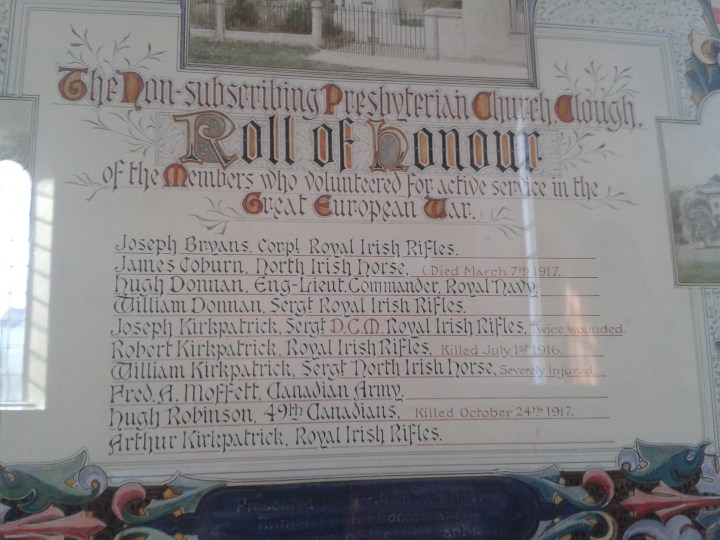
CloughMemorial03

Memorial, Clough NSP Church

Without doubt the battle of the Somme was one of the most bloody in the history of the British army. There were 57,470 casualties on the first day alone and 19,240 soldiers were killed on that day.

One of those killed on the first day was a member of Clough but a glance at the Non-Subscribing Presbyterian magazine for August 1916 shows four obituaries all relating to members of the denomination who were serving in France and who were killed on the first day of the battle of the Somme.

These were:

Captain W. Haughton Smyth of the 13th Royal Irish Rifles, a member of Banbridge, who was killed on 1st July.

Captain J.S. Davidson, a director of the Sirocco Works in Belfast, one of the largest engineering works in Ireland and a business set up in 1881 by his father to produce machinery for the tea industry. A member of a prominent Non-Subscribing family connected with Holywood who was killed at the start of the battle.

Lieutenant J. Dermot Neill, from Holywood, who had been commissioned into the 13th Royal Irish Rifles and subsequently transferred to the Machine Gun Corps who was killed on 1st July.

Private Joseph Harper, from Templepatrick, a member of the 11th Battalion the Royal Irish Rifles [according to the published obituary and the Commonwealth War Graves Commission, although the Templepatrick church memorial has 18th Battalion] who was also killed on the first day of the Somme.
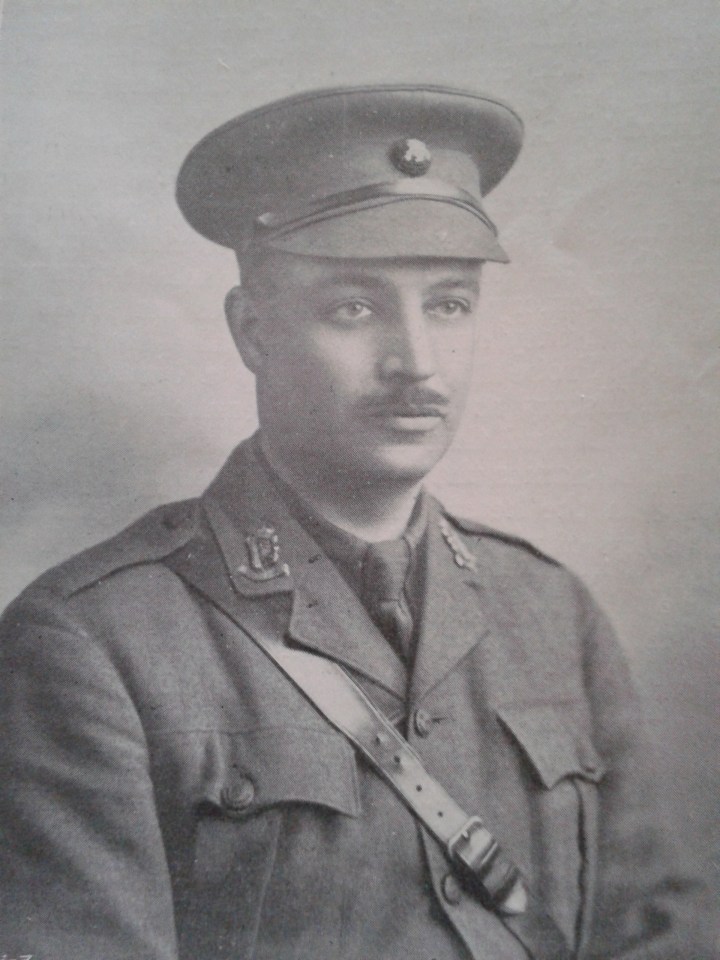
Captain WH Smyth 1916

Captain W. Haughton Smyth

And these are only the ones who have published obituaries in the Non-Subscribing Presbyterian magazine, there will have been many more. This just shows the enormous impact of the battle of the Somme on the whole country, on big towns and cities, and rural hamlets and villages, on industries and agriculture and communities and streets and families.

In the whole of the War there are only 16 obituaries in the magazine. Of these 16 obituaries 14 are of officers and most include a photograph of the deceased. Of this total of 16 obituaries four of them appear in the August 1916 issue, being of soldiers killed on the first day of the battle of the Somme. Generally the only people to have written obituaries in the magazine were officers so Private Harper was an exception. But if you look at the memorial in Templepatrick church you see on the list of those who were killed in the war right next to Joseph Harper the name of Private James Harper of the 12th Battalion Royal Irish Rifles [the Commonwealth War Graves Commission gives 15th Battalion – another difference with the memorial], presumably Joseph’s brother, who was also killed on the first day of the Somme.
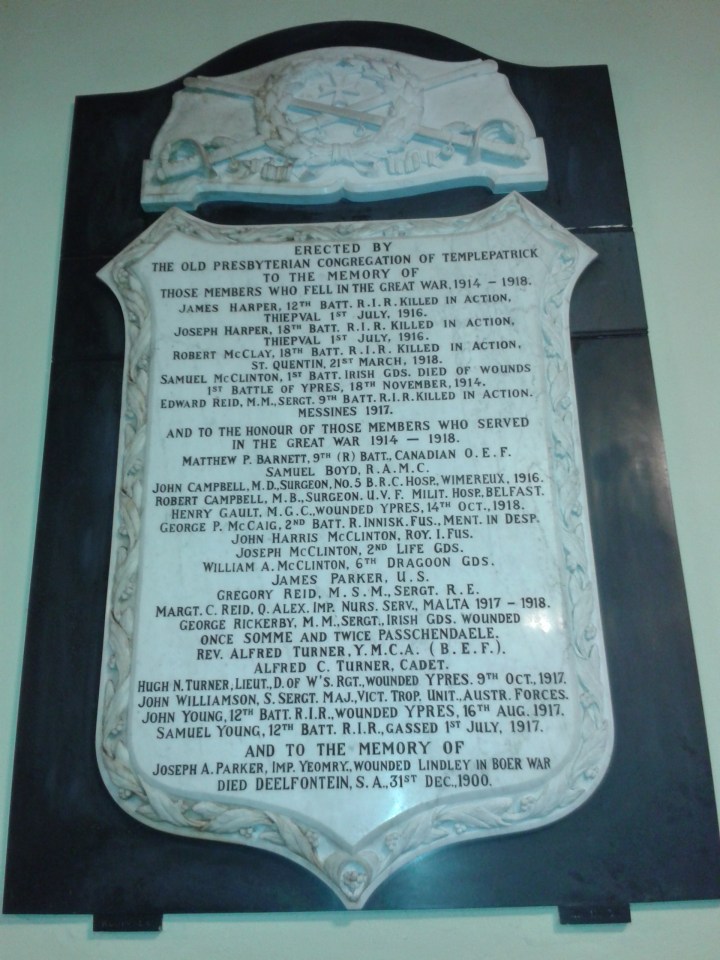
Templepatrickwarmemorial

War Memorial Old Presbyterian Church, Templepatrick

In the Non-Subscribing Presbyterian magazine there are also three additional brief notices, one of them is for one of the sons of the Rev Alexander Gordon, one is a mention of a death in a Rademon ‘News of the Churches’ report. But the third of these three brief notices is one of another soldier killed on 1st July 1916 listed as Private John White, Royal Irish Rifles (Holywood Volunteers) a member of Holywood. Another member of the 13th Battalion he was 24 years old and is buried in the Suzanne Military Cemetery nearby.
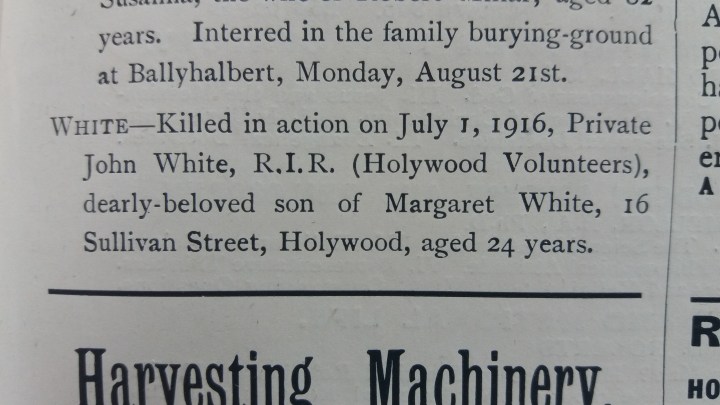
Private John White NSP

So out of a total of only 19 obituary notices in the magazine five of them – more than a quarter – relate to soldiers killed on the first day of the battle of the Somme alone, and these will by no means be the full list of those killed at that battle.

A record of the all engagements were kept by the battalion commanders throughout the war. The first day of the battle of the Somme is recorded as a day of confusion and slaughter. The death of Captain W. Haughton Smyth is noted in the report of the day by Colonel William Savage as:

No 9 Platoon came on under the command of Capt W.H. SMYTH, who was killed almost immediately. They were the carrying platoon and some of them reached the first line with material, which after dumping there or carrying to second line was not required, as all the time was spent consolidating, holding the line & helping the fighting platoons.

Captain J.S. Davidson’s participation in the battle of the Somme is similarly recounted in the war diary of 13th Battalion Royal Irish Rifles. William Savage, the Colonel commanding the battalion records that:

Very little, almost no information, was sent in, this was due in the first place to most of the officers becoming casualties, and the difficulty of getting men across the fire swept zone of NO MANS LAND.

Signalling wires had previously been laid out by the Signalling Officer of the 17th but all attempts by the signallers to take a line forward were useless. I had 10 signallers killed and wounded. I append a list of the officer casualties by Companies 2/Lieut Fullerton of D Coy is the only officer who went over who has come back unwounded & has very little information to give about his Company.

He goes on to say that Captain Davidson and his company were sent out at 8.06 am. Eventually news came back that they had got so far but could not possibly advance any further and asked for reinforcements and additional ammunition. But it was impossible to get men or supplies out to them. Later at 12.40 pm they heard back from Captain Davidson:

A message from Capt Davidson 108th M.G.C. arrived “I am holding the end of a communication trench in A line with a few bombers & a Lewis Gun. We cannot hold much longer. We are being pressed on all sides and ammunition almost finished.”

But the situation continued to be confused, reinforcements could not be got out to him and the Germans were counter-attacking. At 3.20 pm a rifleman found his way back:

and reported that Capt Davidson had been wounded in the knee & while he & another man were carrying him out, he was shot dead between them.

The obituary of J.S Davidson in the Non-Subscribing Presbyterian recorded that

with the outbreak of war he felt that his country had need of him, and gave up peaceful pursuits for military practice. As in business, so likewise in his military duties, he gave of his best. Taking nothing for granted, but making himself familiar with every detail of his duty, his work was characterised by extreme conscientiousness and thoroughness.
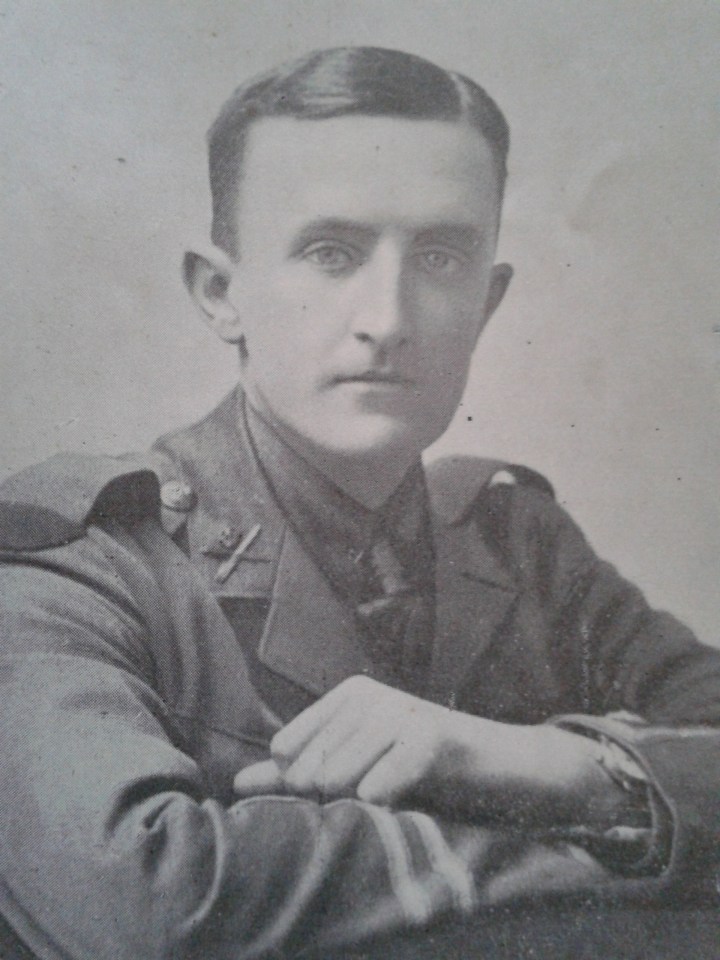
Captain JS Davidson 1916

Captain J.S. Davidson

But all the obituaries of those killed on the first day of the Somme express their patriotic motives and the sense of the rightness of the call that led the men to join up. Of Captain William Haughton Smyth the Rev J. Glynn Davies of Banbridge said he

had lost his life in a sacred cause, but he has lost it only to find it nobler and brighter than ever before. His body lies in the cold earth, but that which is greater than all matter, that which cannot be crushed or shattered by German explosive shell or pierced by German steel remains – the soul has gone to its God who gave it.

But sentiments like this must have been expressed all across the country as they coped with the terrible slaughter of so many young men. Of Lieutenant J. Dermot Neill, who is commemorated by a memorial along with his brother on the wall of our Holywood church, as well as on the memorial at Queen’s University, the unsigned obituary says:

Lieutenant Neill was one of those brave Ulstermen who, not on any rash impulse, but after cool deliberation of all the sacrifices and dangers involved, freely and cheerfully offered his services to his country.

He goes on to quote the minister:

Lieutenant Neill’s response to the call of duty – a call which, from the world’s point of view, had little promise to offer – but, on the other hand, much of danger, of privation, of hardship, and to face suffering and death. But he nobly gave his services to his King and country, and for that noble ideal that is sending Britons to war upon war, that in the peace which shall follow their glorious self-sacrifice, the nations of the earth, both great and small, may be free to follow the pursuit of industry and peace.
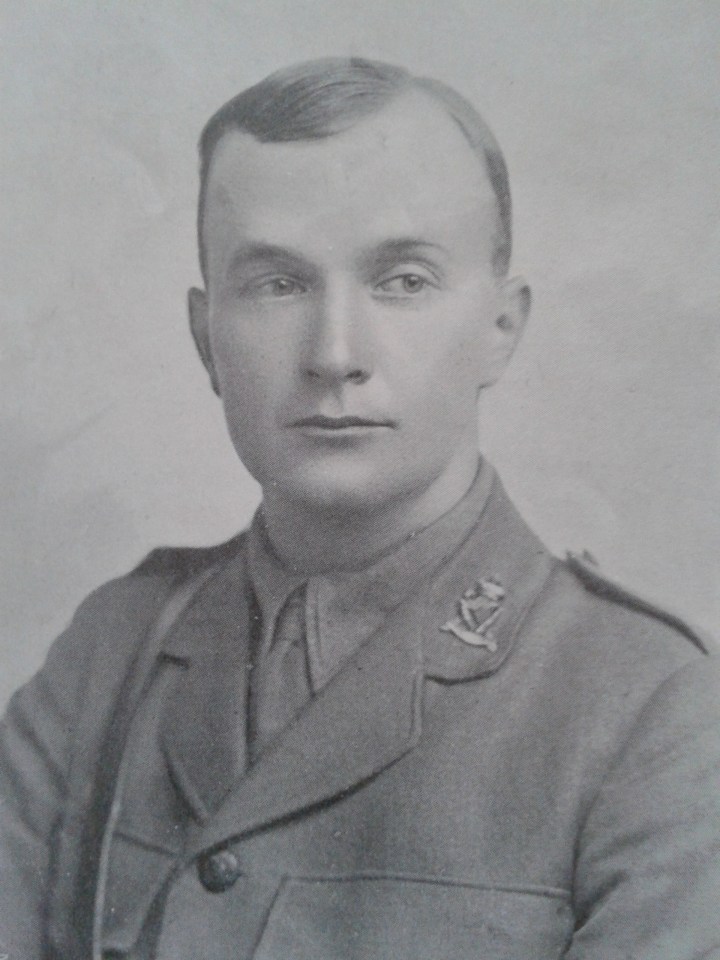
Lieut J D Neill 1916

Lieutenant J. Dermot Neill

The obituary of Private Joseph Harper is very poignant and is written by someone who knew that his brother was serving somewhere near him yet who did not know that his brother had been killed on the same day:

Joseph was nineteen years of age, and enlisted into the Army eight months ago. Comrades have written home to say that they saw him fall: that he fell in a great charge, when the 11th battalion earned for itself undying fame, and when many another brave boy gave all that he had to give for his King and Country. He fell as a brave boy would fall, with his face to the foe. An uneventful life had been his. He came out of a small cottage on the roadside in our parish, and had been mainly concerned with the duties that belong to the work on a farm. But he had a great heart in him, and when he left his home to go France, he left with a happy smile on his face, and with a spirit of hope and cheer and fearlessness in his heart. He has answered the roll-call in a better world than this. He was a member of our church, and occupied his place on our Roll of Honour. We express our deep sympathy with his widowed mother, his brothers (one of whom is fighting not far from where Joseph fell) and his sisters in their great loss.

But both Joseph and James were serving with the Royal Irish Rifles in different battalions and in fact both were killed on 1st July 1916 and the names of both are preserved on the Thiepval memorial.

But just this small sample from within our own household of faith is a reminder of the terrible impact of the battle of the Somme on so many people. So many families were left bereaved with fathers, sons, and brothers killed in the battle.

Everyone will perhaps have their own loved ones who they might remember as having served in the First World War, perhaps at the Somme. My own grandfather served throughout the First World War and was there present at the Somme. But we all have our own memories and ways of remembering.

In what I have said here I have looked briefly at a few men from our household of faith. There is much more that could have been said. I could talk about the impact at home on families, of the economic results of the war and of the effect on society that resonated across the last hundred years. But at the heart of any act of marking this terrible event of one hundred years ago should be remembrance, and today we make our small act of remembrance.

Do you remember that hour of din before the attack–
And the anger, the blind compassion that seized and shook you then
As you peered at the doomed and haggard faces of your men?
Do you remember the stretcher-cases lurching back
With dying eyes and lolling heads–those ashen-grey
Masks of the lads who once were keen and kind and gay?

Have you forgotten yet?…
Look up, and swear by the green of the spring that you’ll never forget.

(from ‘Aftermath’, Siegfried Sassoon)

From an address given at a joint service of Ballee, Downpatrick and Clough churches at

Ballee Non-Subscribing Presbyterian Church on Sunday, 3rd July 2016


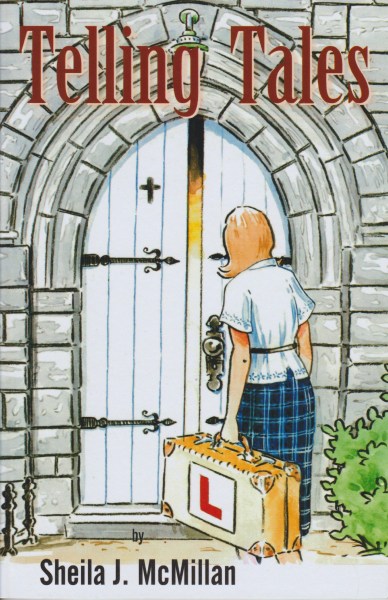
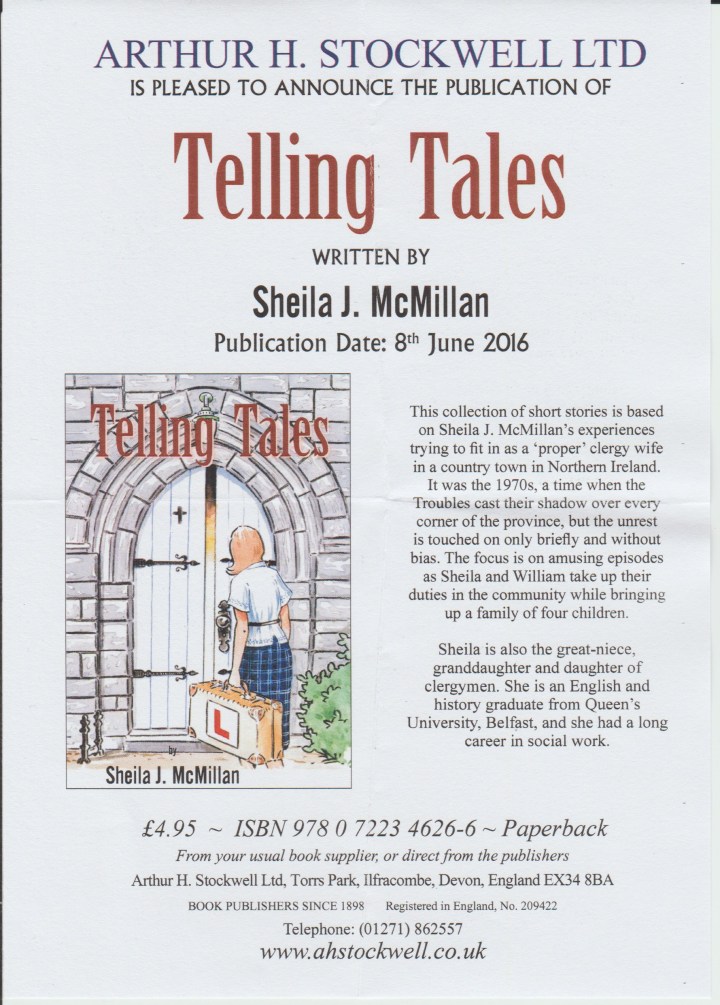
Telling Tales by Sheila McMillan

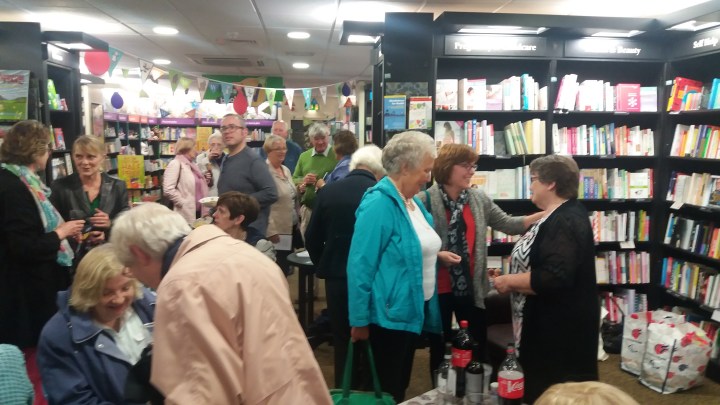
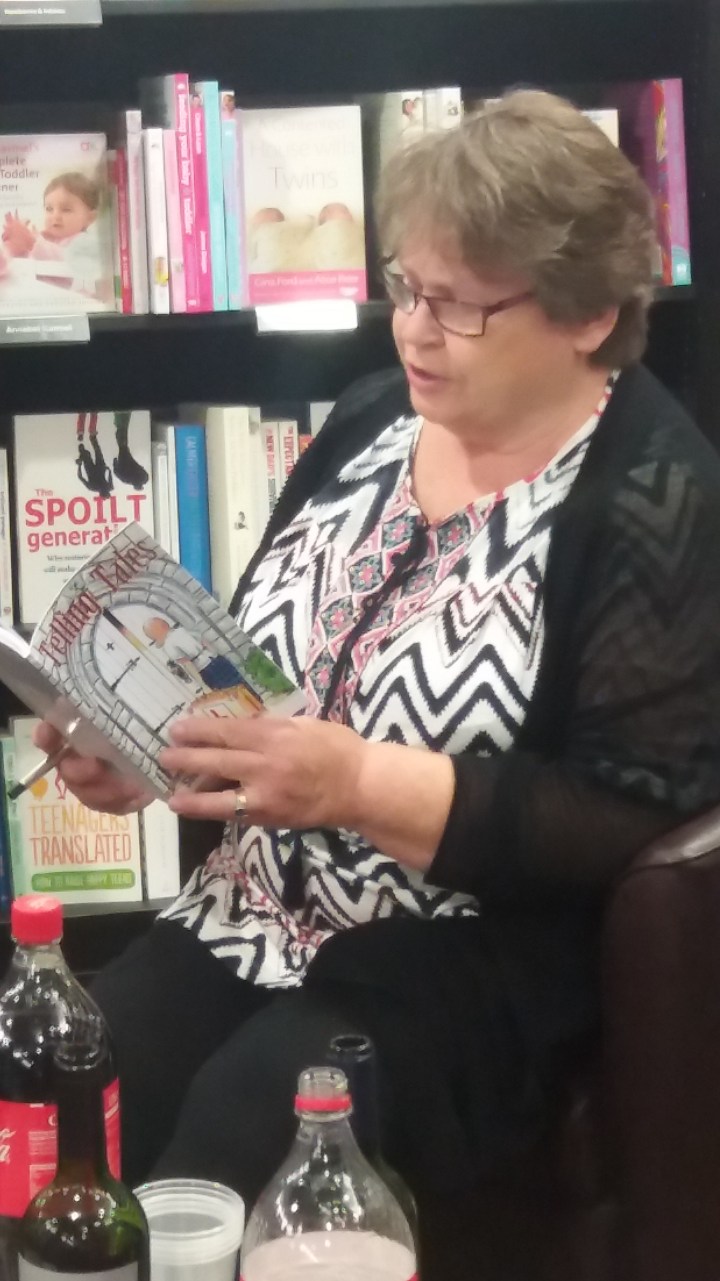
Sheila McMillan’s new book Telling Tales was officially launched at a reception in Waterstone’s, Lisburn on 30th June. It is good to see a large retailer like that supporting local authors and it was encouraging to see such a lot of people there for the occasion.

Sheilabooklaunch

As the wife, daughter, granddaughter and great niece of ministers Sheila is well placed to write about life inside the manse. But this is no pious collection of platitudes and improving tales as one suspects that many ministerial or ministerial family memoirs must be. Sheila writes well and entertainingly. As one of the speakers said at the launch she can handle humour which is a rare skill and the book is full of good stories told with great humour. What makes them funnier is that they are all true (although in some cases the names have been changed to protect the guilty) and they have an honesty and directness which appeals.


Sheilaread


Some of the people Sheila has known are truly remarkable. Her pen portrait of Elizabeth Law Barbour Andrews (who considered her names unsuitable and preferred to be known as Elba), the orphaned daughter of Thomas Andrews who designed the Titanic, and who bustled into Sheila’s life with some force is one that stays in the mind.

Some of the tales told will make you laugh out loud but Sheila also has some very moving stories. If you want to know what it felt like to be a mother anxious about a son who had disappeared for 24 hours in Belfast at the height of the Troubles then her story ‘A Nightmare in the Northern Ireland Eighties’ does that.

The benefits of coming from a clerical household are enormous. Having to ascertain from an elderly patient with a neurological complaint whether he was unable or unwilling to speak the answer comes when he remembers her clergyman grandfather who shut down the only pub in his village. In ‘A “Religious Experience”’ Sheila recounts a trip to Japan to take part in an IARF inter-faith conference and to experience the Shinto religion first hand. This is insightful and witty and tells you more about such encounters in a few pages than most earnest official reports of such gatherings ever do.

But it is a good read and one that can be recommended. All proceeds go to the Northern Ireland Branch of the Multiple Sclerosis Society.


SheilaMcMillanpublication

Children’s Day Services: Ballee, Downpatrick and Clough

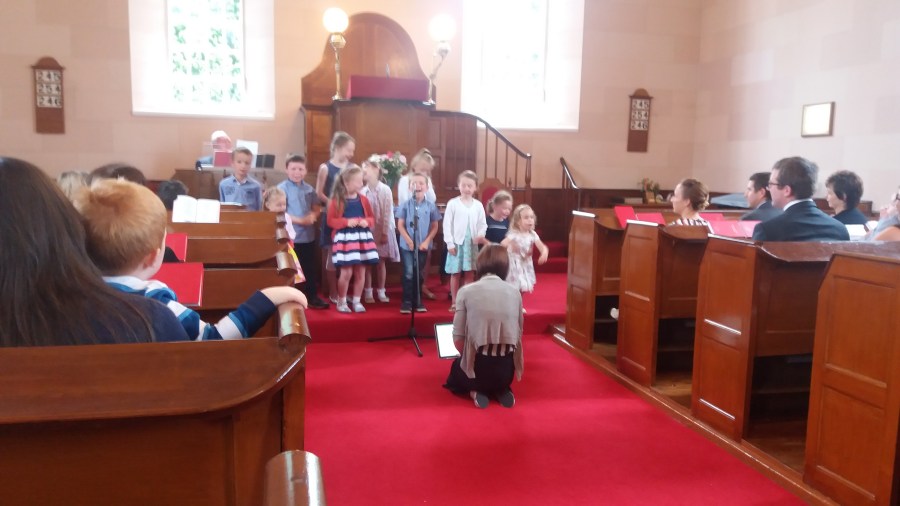
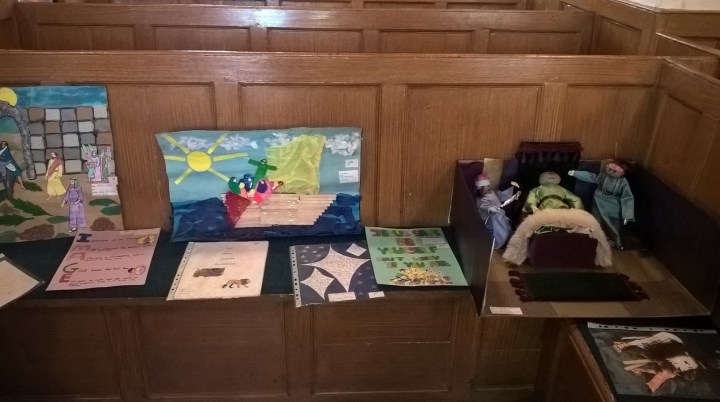
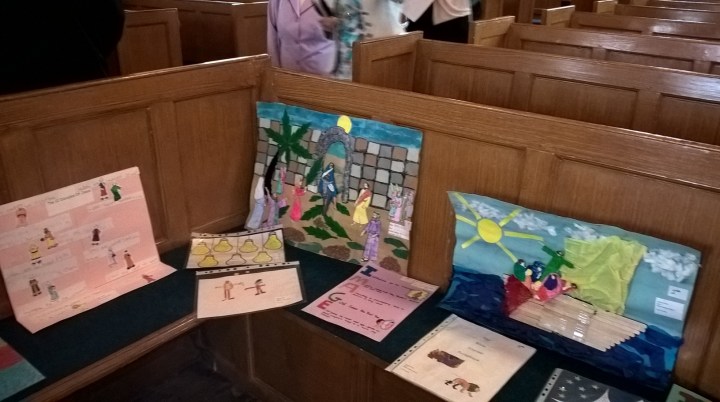
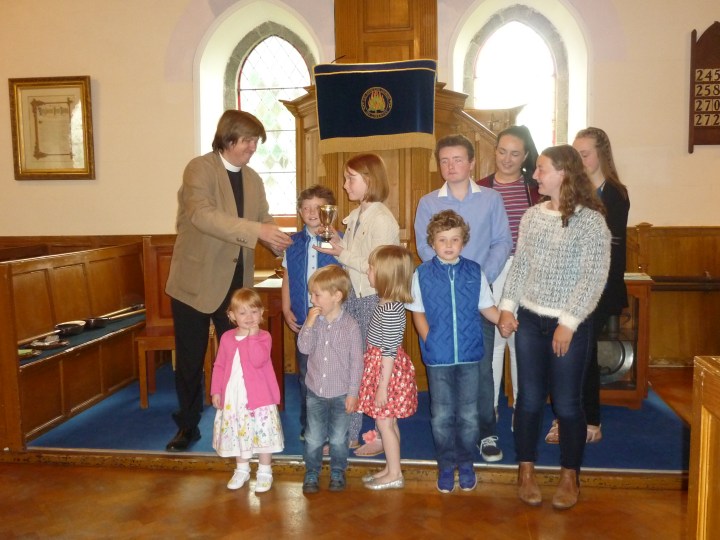
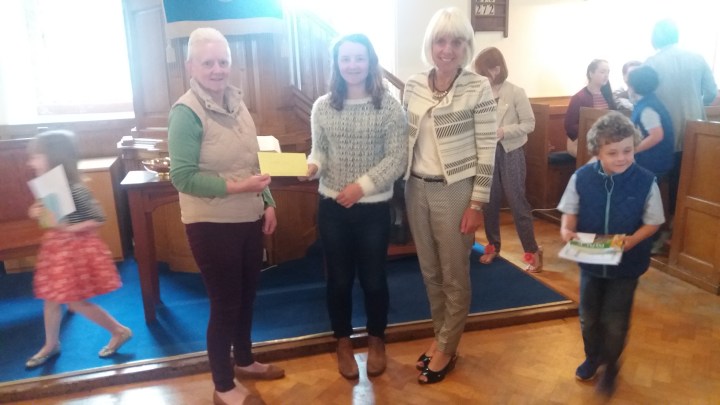
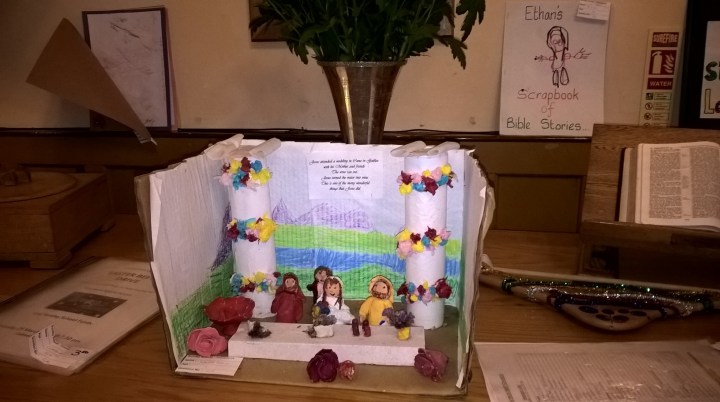
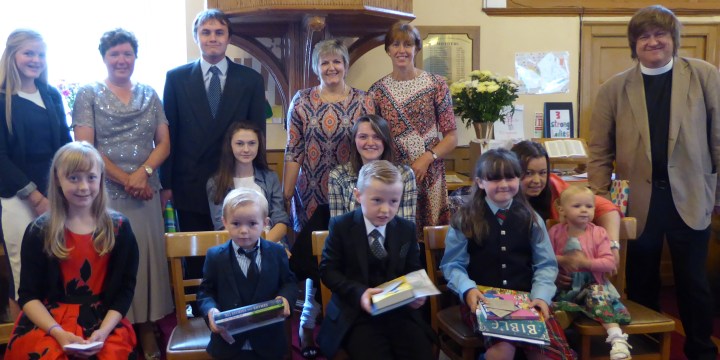
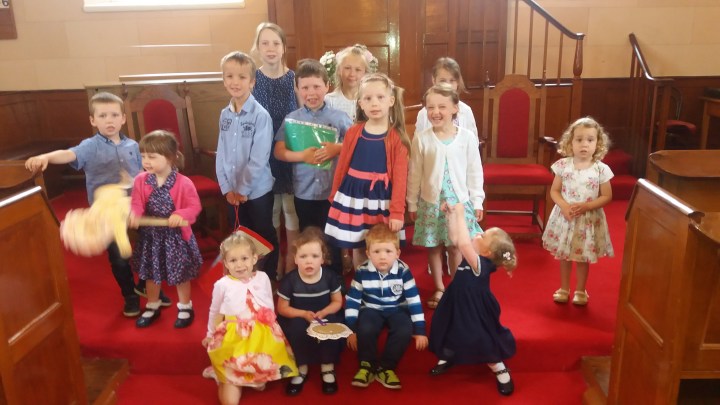
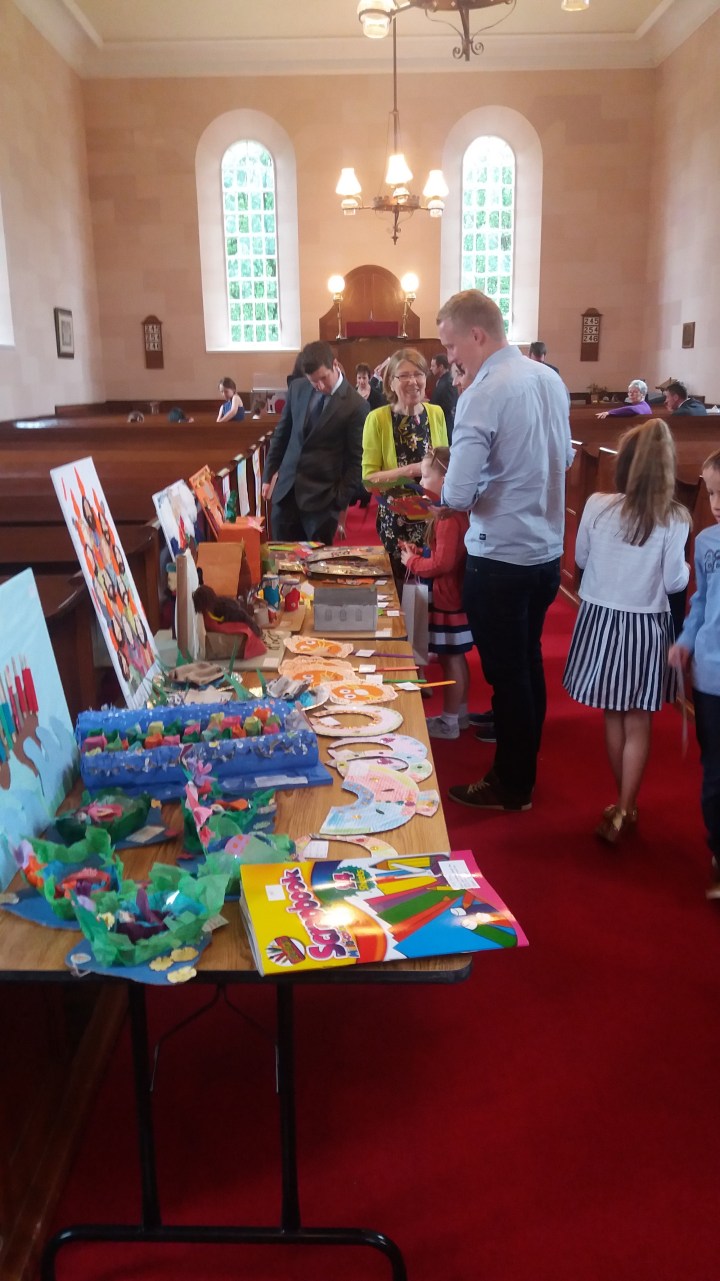
The Children’s Day services held in June each ear are always important occasions for all three of our churches. They bring to the front the tremendous work done by the children and young people and the Sunday School teachers in the churches throughout the whole year. All the work prepared for the denominational Sunday School Exhibition held at the start of June is displayed in our churches and the prizes won by the children at the exhibition are distributed along with prizes for attendance. Between the three congregations the Sunday Schools won an astonishing 34 prizes, a considerable achievement. On top of that the children lead the worship with songs, readings, prayers and often dramatic pieces which have been carefully written and prepared. Each of the Sunday Schools also work at fundraising for an appropriate charity over the year which is an expression of their awareness of the needs and concerns of wider society.


Below I will post some pictures of the occasions held on 19th and 26th June.


Ballee

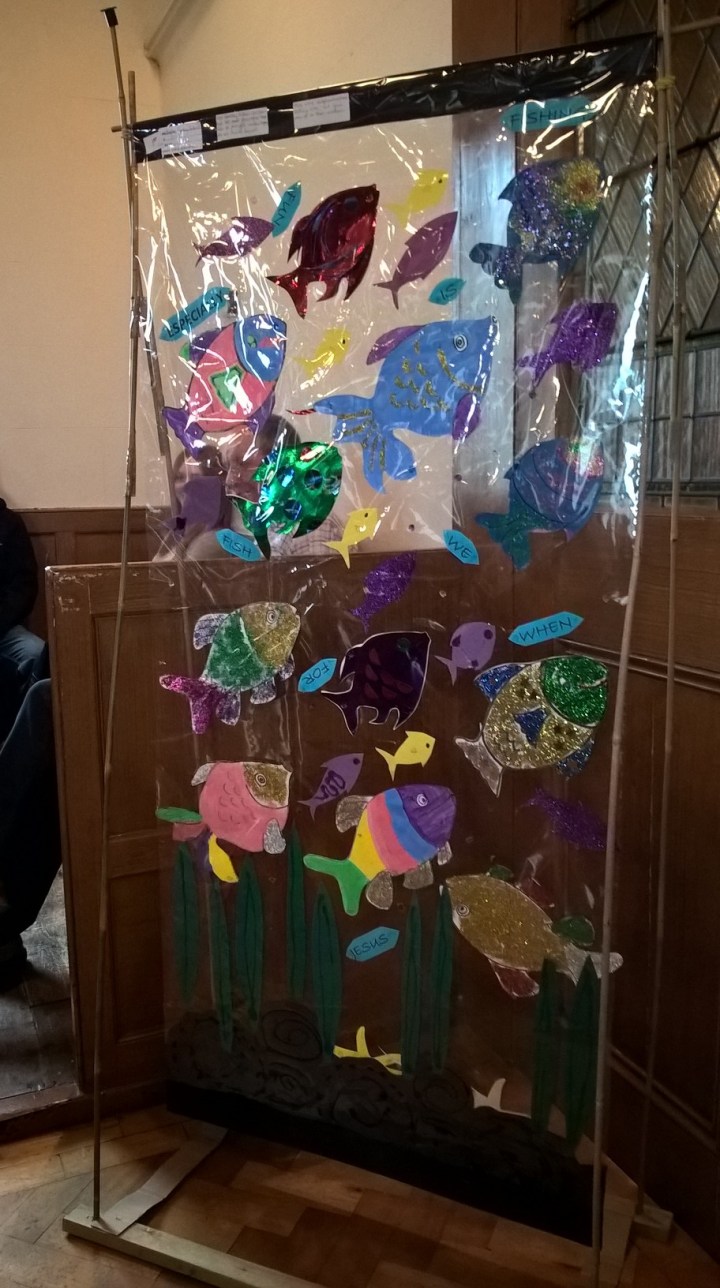
High points this year included Ballee winning the Millennium Cup for the Most Original Entry (for the sculpture featuring the fish) and the presentation to Joy McBride of a cheque for all the money they have raised for Mainstay DRP.

BalleeCD08

BalleeCD01

BalleeFish01

BalleeChildren06

BalleePres06


Downpatrick

There was some great work on display in Downpatrick and as well as music and readings the service included a presentation to Mary Stewart, the church secretary, by Laura Neill on behalf of the Sunday School. Mary has recently been awarded the British Empire Medal in the Queen’s Birthday Honours List for services to the Downpatrick community and it was good to be able to congratulate her as a congregation.


DpkCD03

DpkCDYS07

DpkMary03

DpkCD01

Clough

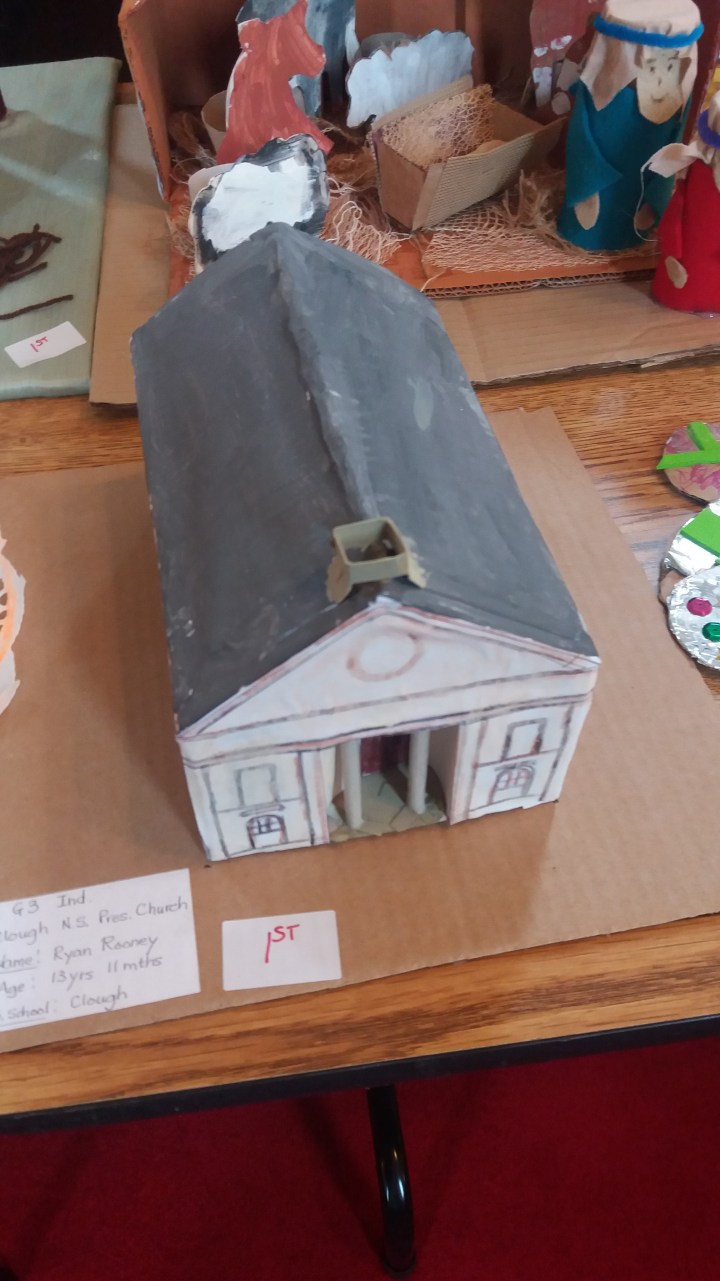
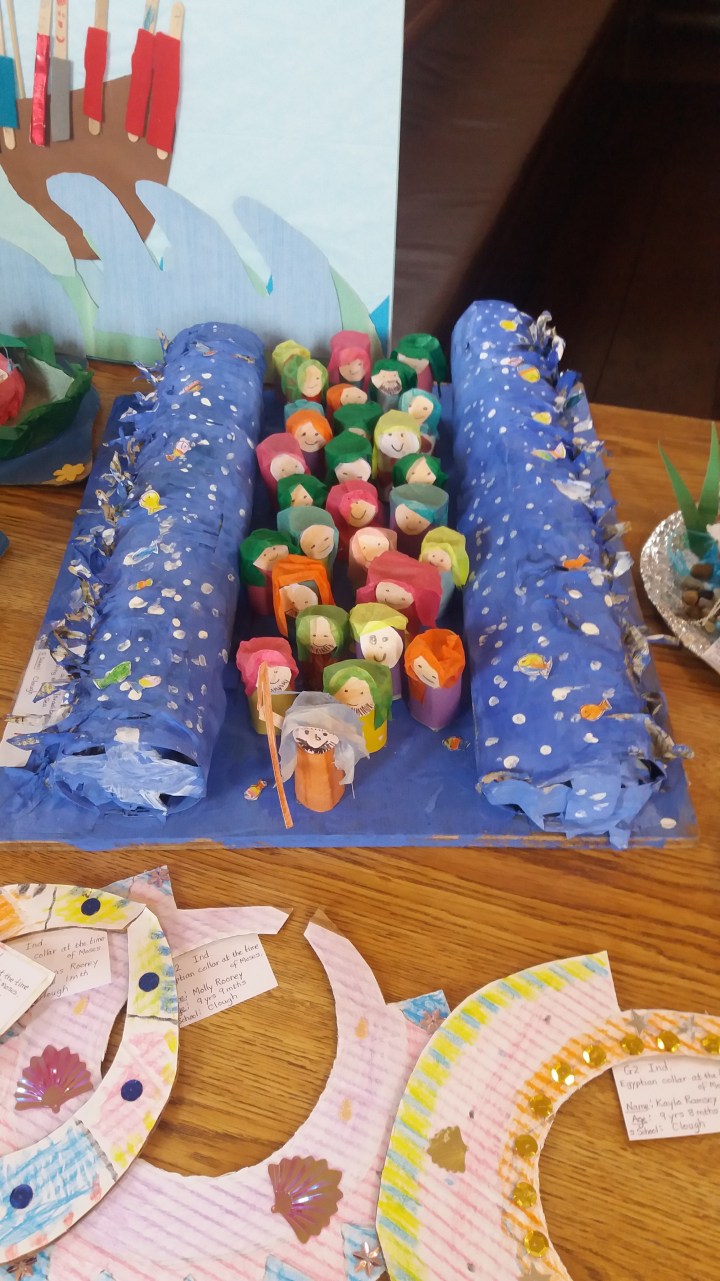
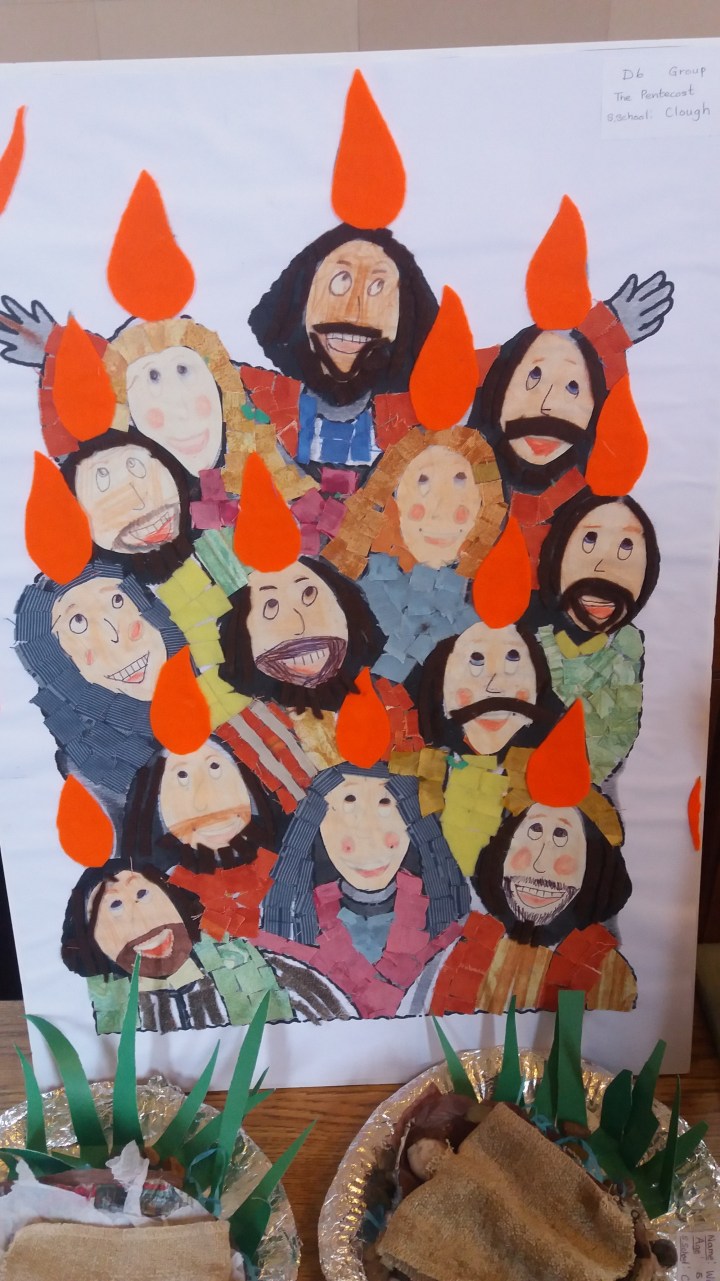
The Sunday School excelled itself in both the denominational Sunday School Exhibition (winning an astonishing total of 18 prizes) and the first class service they led at Clough. Kayla Ramsey presented a cheque for £280 raised for charity by the children.


CloughCDservice03

CloughCD05

CloughCDwork

CloughCDwork01

CloughCDwork02

CloughCDwork03

Siegfried Wedgwood Herford (1891-1916)

In my previous post on Platt Chapel (https://velvethummingbee.wordpress.com/2016/05/20/platt-chapel-rusholme/)  I asked what happened to the ancient silver communion plate that belonged to the chapel and included a silver porringer dated to 1641. Both Len Smith and Ann Peart tell me that they think this was deposited in the Treasury at York Minster, which is very encouraging to know.


Len also tells me that his record of the clapper falling from the bell cote as the bell was rung for worship one night happened in his presence. In those days the chapel was used as a placement for students and it was during his time as a student at the Unitarian College that the old bell finally lost its clapper, narrowly missing the heads of those arriving for worship.


The bell, without its clapper, still hangs above the chapel, so far as I know. It is not clear what happened to the many memorials that were situated in the chapel, including Worsley family hatchments. Part of the chapel was separated to form what was known as the Worsley Chapel and here some of that family had been buried. This was later screened off and must still be there, possibly still with memorials but certainly complete with tombs.


Another piece of information which I received from Len is entirely new to me. Edwin Swindells’ history of 1959 mentions the unveiling of a memorial to a chapel member who was killed in the First World War in 1919. The memorial took the form of a stained glass window and he records it as follows:


In 1919, the memorial window to the late Lieut. Siegfried Herford, only son of Professor and Mrs. C. H. Herford, who was killed in the war, was placed in the chapel by some of his friends.


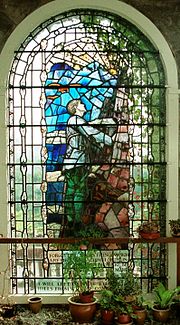
Len Smith has sent me a picture of this very fine window, taken when it was still in the chapel but which, he tells me, is now at the Eskdale Outward Bound Centre:

Memorial window in Platt Chapel (Photo: Len Smith)


The window includes the inscription:‘I will lift up mine eyes unto the hills, from whence cometh my help’, Psalm 121:1


The Herford family were very prominent Unitarians in the nineteenth and twentieth centuries. A number of them were ministers and many of them were educationalists or academics of very great achievement.


“Professor and Mrs. C. H. Herford” were Charles Harold Herford (who has an entry in the Oxford Dictionary of National Biography) and his wife Marie (née Betge). C.H. Herford was a highly respected literary scholar and in the course of his distinguished academic career was professor of English Literature at Manchester University from 1901 to 1921. In this time he might have been expected to attend Cross Street Chapel where his family had many connections and his maternal grandfather (John Gooch Robberds) had been minister. However, they seem to have had a connection with Platt Chapel and following the death of their only son in France in January 1916 a memorial window was erected in Platt Chapel in his memory.


Edwin Swindells describes Siegfried Herford as Lieutenant but this seems to be a mistake. Although he was a member of the Manchester University Officer Training Corps from 1909 to 1913 and  applied for a commission at the outbreak of war eventually he enlisted in  the 24th Battalion Royal Fusiliers (Sportsmen’s Battalion) in February 1915 and was sent to France soon after where he was killed at Bethune on 28th January 1916.


Much of this detail comes from the Manchester University Roll of Honour (http://www.ww1.manchester.ac.uk/roll-of-honour/) where he features and which also notes that he graduated from Manchester in 1912 with a first class BSc before going on to complete a thesis for his MSc which was never awarded following the onset of the war. This is a very useful site, although not free of error, it mentions the memorial window as being “believed to have been rescued from a chapel in Didsbury that was demolished,” but it does have some good detail about his German background (which is claimed on some websites as being the reason for him not being commissioned) – he had a German mother and spent part of his education in Germany. It may have been here that he developed his love of mountains and climbing which was an area in which he came to excel in his short life.


He was a very notable person in climbing circles and despite being killed at the age of just 24 has a degree of fame in those circles that has lasted to this day. The short biography of him on the site of the Mountain Heritage Trust describes him as being “widely credited with being the first rock-climber in the ‘modern’ twentieth century idiom (he is celebrated for the ascent of the first ever ‘Hard Very Severe’ rock climb: Scafell’s Central Buttress)” and any internet search throws up dramatic photographs of him perched on the top of ledges or ridges or in the company of such luminaries as George Mallory. He has been the subject of films and a full length biography by Keith Treacher (Siegfried Herford: An Edwardian Rock-Climber) was published in 2000.


He was buried in the Brown’s Road Military Cemetery, Festubert, Pas de Calais, France (http://www.everymanremembered.org/profiles/soldier/188954/) but was included on the University of Manchester War Memorial in the main quadrangle, the bronze Fell and Rock Climbing Club memorial to those of its members killed in the First World War and situated on the summit of Great Gable in the Lake District, and some of his friends paid for the stained glass window depicting him climbing which was unveiled in Platt Chapel in 1919 and later moved to the Eskdale Outward Bound Centre.


How it came to be moved from Platt Chapel is detailed in a short article by Muriel Files in the 1974 (No 64 Volume XXII No II) issue of ‘The Fell and Rock Journal’:


The existence of the window came to the notice of the committee after Siegfried Herford’s sister, Mrs. Braunholtz, wrote to the Secretary about her anxiety as to its future because she had heard that Platt (Unitarian) Chapel in Manchester, where the window is situated, was threatened with demolition…In fact, there proved to be no immediate threat to the window although the chapel is indeed no longer needed by the Unitarian Church and the Trustees are seeking a suitable purchaser.


At the time the intention seemed to be to move the window to UCM, although this clearly never happened. Muriel Files goes on to say something more about the window:


The window was given in memory of Siegfried Herford by C. E. Montague of the Guardian, known to some mountaineers for his essay ‘In Hanging Garden Gully’, surely one of the most entertaining climbing tales ever written. Of the figure representing her brother Mrs. Braunholtz writes: ‘It was based on a photograph taken by a fellow climber and is a very good likeness of my brother, even to the shock of fair hair described by Geoffrey Winthrop Young. The window makes his face look a little more bony than it actually did—after all he was only 24 and still had a boyish look’.


We will add the photograph of the memorial window in Platt Chapel depicting Siegfried Herford to the Faith and Freedom Great War Project (http://www.faithandfreedom.org.uk/GWindex.htm).

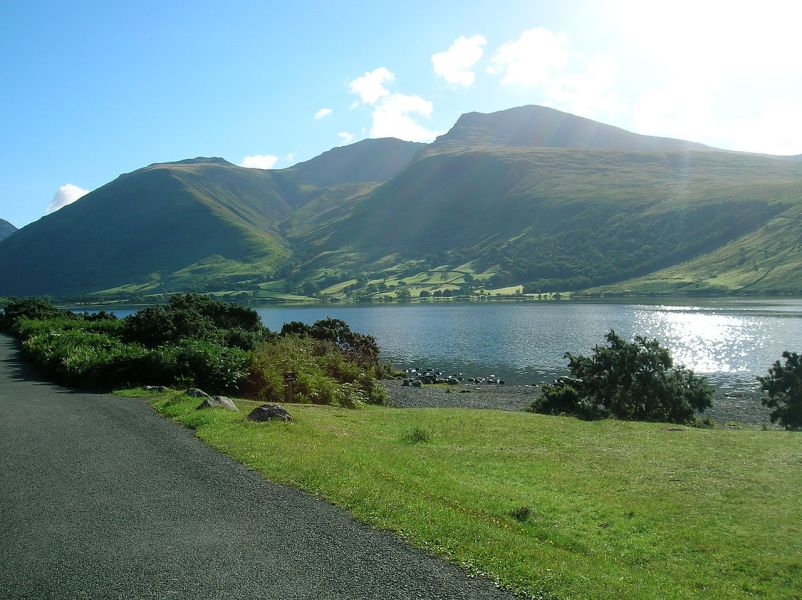
(Top photograph on this page, Scafell Pike, Wikimedia Commons)

Presbyterian Church, Grosvenor Square

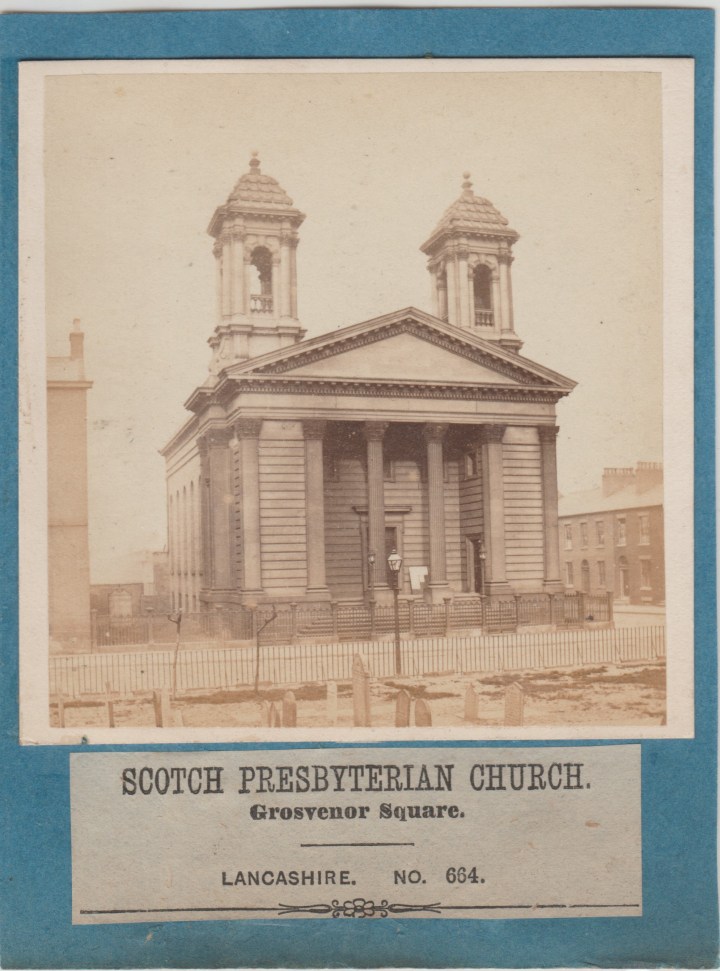
Like the photograph of Platt Chapel in the previous post this picture did not come cheap but it is a very rare, relatively early picture of a long vanished church. I can’t find any other picture of this church as good as this online.

The Scotch Presbyterian Church was situated on Grosvenor Square, near the top of Oxford Road in Manchester, an area that has long been colonised by academic buildings although the square still exists as a small green space. In the centre of the square stood All Saints’ Church and the Presbyterian Church was on the far side of the square, on Lower Ormond Street, the road parallel with Oxford Road. Both churches are long gone the Presbyterian Church ending its days in the 1950s as a wallpaper shop and later as a paint shop before demolition in the early 1970s. All Saints’ was damaged in the blitz.

In the foreground of the picture the graves seen there form part of the church yard of All Saints’ Church. It is an untidy looking area in the picture – there are two lifeless looking trees, denuded of leaves and branches, and the gravestones stand in the middle of a scruffy no-man’s land which is covered in either sand or bare earth amidst clumps of grass. Was it taken in the middle of some building work or renovation or did it always look a mess? Either way it is nothing to do with the Presbyterian Church other than it crops up in the foreground of the picture.

There is a very full set of records for the congregation deposited in Manchester Libraries, Information and Archives. Amongst these the Communicants’ roll books begin in 1832 which suggests a foundation of that date. The pew rents/seat lettings books begin in 1850 when the church was opened for worship, the foundation stone of the new building having been laid on 17th September 1849.

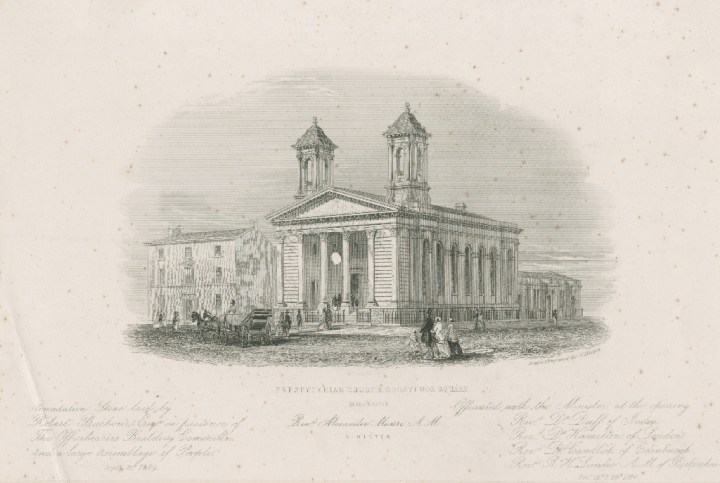
Grosvenor Presbyterian MLIA

An architectural drawing of the church at the time of its opening (Manchester Libraries, Information and Archives)


The church closed in 1940 and merged with Withington Presbyterian Church to form Withington Grosvenor Presbyterian Church further out of Manchester. This congregation closed in 1971 to form Grosvenor St Aidan’s Presbyterian (later URC) Church in Didsbury (now called simply Didsbury United Reformed Church).

The photograph is quite small, it only measures about 8 cm by 6 cm, but it is very sharp and very old. The sister photograph that shows Platt Chapel dates from before 1874 so there is no reason to date this one to any other period. But here it is, the oldest photograph of the Scotch Presbyterian Church, Grosvenor Square, Chorlton-on-Medlock. Long vanished but preserved in this little study, a very precise architectural photograph taken on a sunny day sometime in the middle of the reign of Queen Victoria.

Grosvenor Square 04

The original photograph attached to its card


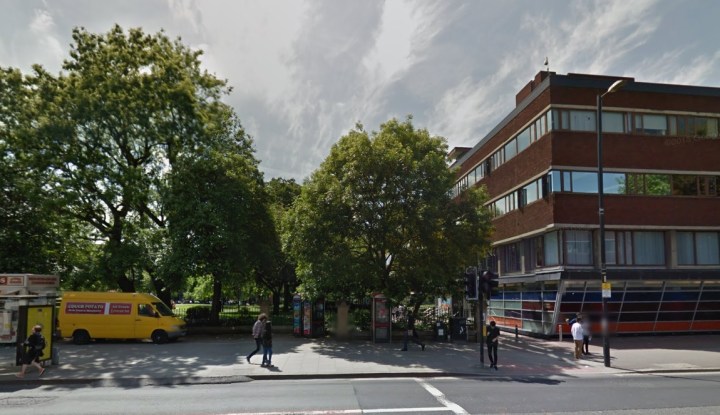
Google Street View, from a position along Oxford Road just past Manchester Metropolitan University, shows this view looking towards where the church once stood. It would have been visible beyond the trees on the other side of the square (now called ‘All Saints Park’).

Grosvenor Square Google Maps Streetview

Google Street View – Oxford Road


No pictures or text may be reproduced from this site without the express permission of the author.


Platt Chapel, Rusholme

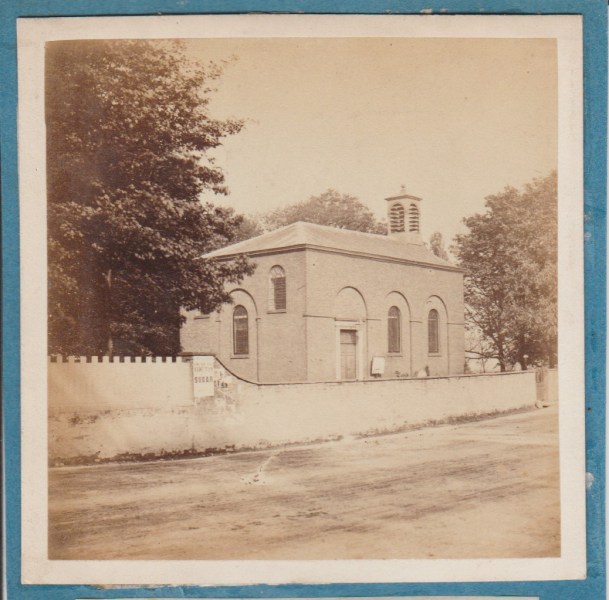
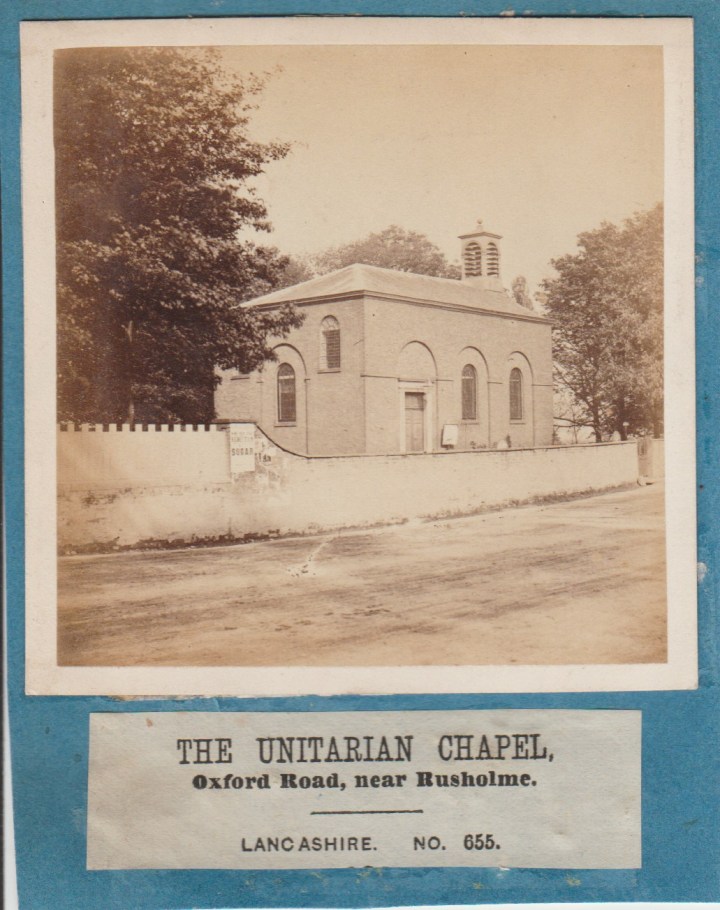
I bought this photograph on eBay a few years ago. I paid more for it than I like to do but it is quite a rare photograph of the old Platt Chapel in Rusholme, south Manchester. I bought it along with a picture of the ‘Scotch Presbyterian Church, Grosvenor Square’ also in Manchester to which I will return in the next post.

The photograph of Platt Chapel is interesting because it appears to have been taken by a professional. In a similar way to the Grosvenor Square photograph it is mounted on a card with its title printed below along with a reference number. It is probably some kind of photographer’s sample, perhaps one of a set of images available for use by purchasers for use on a cabinet card or carte de visite. Often these types of cards carried portraits of individuals or family groups, but other views, including views of churches, were also popular.

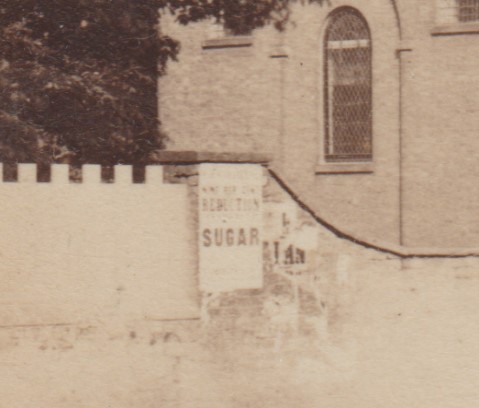
What is particularly interesting about this picture is that it shows the chapel of 1791 which was substantially rebuilt in 1874-76. This dates the photograph to before 1876, probably to before 1874 in fact. A big help towards an accurate dating might be the poster pasted up on the chapel wall. Victorians could be no respecters of property when it came to fly-posting and this one has been stuck up on a corner of the wall where the remnants of other posters can be detected. If it were an advertisement for a show or some other event then it might be very useful to us for dating the picture but, alas, it doesn’t give that much information. It appears to be a notice from a grocer or some other supplier. The largest word that can be made out is ‘sugar’, a bit above that is the word ‘reduction’ but nothing else is really visible.

Platt Chapel 03

The poster on the wall of the chapel


The congregation had its roots in a nearby chapel of ease which they managed to hold on to after 1662 under the patronage of the Birch family until 1697. Two years later they acquired the site at Platt and built a chapel in the same year. A second chapel was built in 1790-1 which is the building as shown in the photograph. The modern building is substantially the same but was extensively re-modelled over two years between 1874 and 1876. It was given a red brick exterior, the doors and windows were changed, an apse was added and a much steeper slate roof replaced the old one. Edwin Swindells in The History of Platt Chapel (1949) describes this period of rebuilding like this:

At the commencement of his long and faithful service, Mr. Poynting was faced with a trying difficulty. The Chapel building, although not very old, had got into a very bad state of repair, and it was found that considerable reconstruction would have to be carried out. This meant that for about two years the chapel was not available for services, and these had to be held in the newly erected school at Portland Grove, Fallowfield. The alterations which were completed in 1876, included the removal of the vestry from the north end to its present position, and the building of the small apse in its place. The chapel was re-roofed and the old oak straight backed pews replaced by the present pews, while a new pulpit was also provided. The original doors faced Wilmslow Road, and these were built up and the present South entrance substituted, with the provision of the vestibule screen as it is now. The heating arrangements were also brought up to date about this time. In spite of such an inconvenient disturbance, Mr. Poynting quickly settled down to a life devoted to the service of his congregation and the wider church, ably supported by his young wife whom he married in 1872, and who proved an ideal helpmeet in all respects. In those days Rusholme and Fallowfield still included large areas which were decidedly rural, and the work entailed in the mixed community presented its own peculiar problems. The project so dear to his heart of establishing a flourishing Sunday School, did not prove easy of attainment at first, and the first attempt was not a great success. However, Mr. Poynting was not the man to be easily discouraged, and a little later a fresh beginning was made and carried through to fruition. His interest in the young people was not confined to his own chapel, and he took a great interest always in the district Sunday school federation. Mr. Poynting was never a preacher of extreme views in theology, his knowledge of, and love for the New Testament was deep and sincere. On its teaching he founded the message he felt given to preach. It followed that his Unitarianism was neither negative nor aggressive, and the present writer well remembers how his name was respected among members of other denominations in Rusholme in the closing years of the nineteenth century.

A brick bell cote was constructed to house the bell which dated back to 1718. In the 2016 issue of the Transactions of the Unitarian Historical Society Len Smith traces the history of the Platt Chapel bell cast by Abraham Rudhall I of Gloucester and inscribed with ‘Come away make no delay’, the same phrase found on the bell in Gateacre Chapel which was made by his son Abraham Rudhall II. Len also records:

The clapper fell to the ground c.1959/60 while the bell was being rung for an evening service, narrowly missing worshippers approaching the chapel door.

The congregation was fortunate to be supported by the Worsley family in nearby Platt Hall who gave the land on which the chapel was built. Of puritan and Parliamentarian stock from the era of Cromwell they continued to support the chapel until 1830 when Thomas Carrill Worsley joined the Church of England and later built Holy Trinity, Platt.

All this can be read in Edwin Swindells’ excellent, although probably long-forgotten, little history of the chapel. He also details the contributions of a succession of ministers in the nineteenth century – Rev William Whitelegge, Rev Samuel Alfred Steinthal and Rev Charles Thomas Poynting – who created a very effective and flourishing ‘institutional church’ with day schools, Sunday schools, Dorcas society, Temperance Guild, social evenings, lantern lectures, debates etc., as well as a “Goose Club” which had a turnover of £100 per year in the late nineteenth century. Was this to enable members to buy a goose for Christmas I wonder?  S.A. Stenthal and the chapel also played a part in the extension of the franchise to women. In The History of Platt Chapel it says:

Anti-slavery found in him a warm advocate, and he was also one of the very early pioneers of Women’s Suffrage. It was during his years as minister at Platt Chapel that this truly remarkable man carried out some of his most valuable work, in these and other directions. In conjunction with John Stuart Mill, Cobden, Jacob Bright and others, what was probably the earliest society with the object of securing votes for women, was formed at a meeting held at Mr. Steinthal’s house. A story is told of the way in which he and Miss Becker were indirectly responsible for an amendment in the House of Commons, which secured the municipal franchise for women. In 1869, during the passage of a private bill through the House, Mr. Steinthal scribbled an amendment on the back of an envelope, and sent it in to Mr. Jacob Bright. The object was simply to raise a discussion on the disabilities of women ratepayers in corporate boroughs, but to the surprise of everybody the amendment was carried with very little opposition, in the small hours of the morning. A National Association for the Promotion of Social Science was launched in 1857, and for many years Mr. Steinthal sat on its Council. The cause of Temperance was yet another sphere which enlisted his very active sympathy, and he was for many years a member of the executive of the United Kingdom Alliance, and during his time at Platt Chapel he joined the board of management of the Manchester Children’s Hospital and served until 1898.

The twentieth century eventually brought social and demographic change which the chapel couldn’t keep up with and it closed in 1973. For many years it was the home of a photography club which was the case on the one occasion I was inside the building. By then there was nothing to identify the interior as that of a religious place of worship and no sign of the monuments listed in Christopher Stell’s Nonconformist Chapels and Meeting-houses in the North of England. I also can’t help but wonder what happened to the silver communion plate which included a two-handled chalice dating from as long ago as 1641. These were sold in 1874 but restored to the trustees in 1895:

on the one condition [wrote G.E. Evans]  that they are to remain the property of the Trustees, who receive them on the understanding that they are never to be again alienated by sale or otherwise.

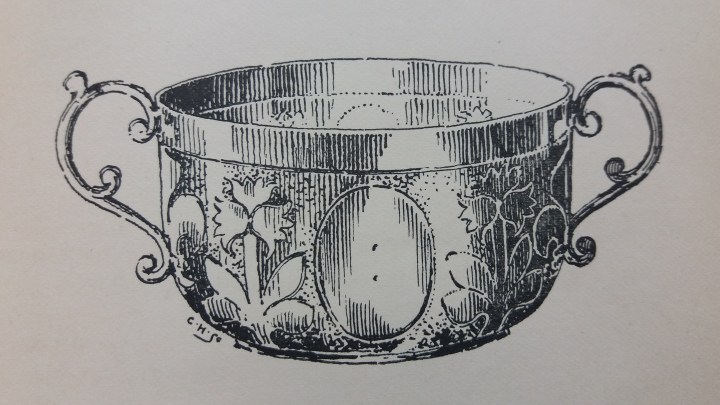
George Eyre Evans was very impressed by this chalice and included an illustration in Vestiges of Protestant Dissent:

Platt Chapel chalice

Chalice, silver, porringer shape 2 3/8 inches tall, 4 1/2 inches diameter, bold ornamentation, G.E. Evans

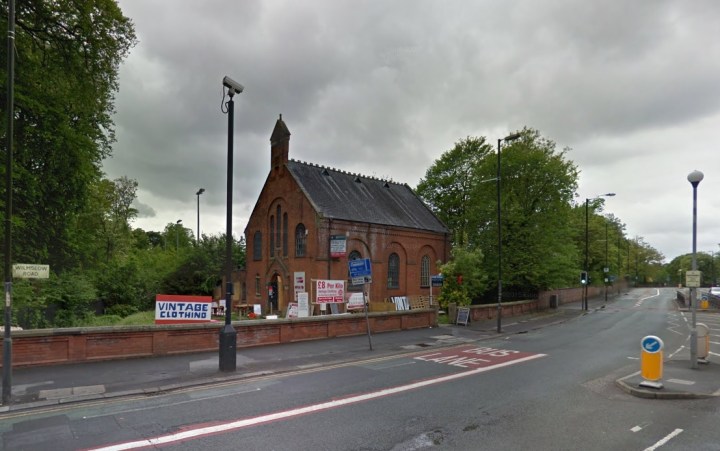
More recently the chapel has been on the market as a potential dwelling house with an asking price of £350,000. Google Street View provides a sorry picture of how it looks today:

Platt Chapel Google Maps Streetview

Google Street View


Platt Chapel 02

The original photograph on its card


No pictures or text may be reproduced from this site without the express permission of the author.

Faith and Freedom

The Spring and Summer 2016 issue of Faith and Freedom (Volume 69 Part 1, Number 182) is now available.

There’s a great deal in it, including Rachel Muers’ and Rhiannon Grant’s examination of the subtle checks and balances of Quaker decision-making processes in ‘At the Threshold of Community’. Ralph Catts discusses ‘Child spiritual development and the role of a liberal church’ and Victor Lal gives us the third part of his research on ‘The Unitarians of the West and the Brahmo Samajees of the East at Manchester College, Oxford 1896 –1948’. Indeed the cover picture on the latest issue includes an Indian 15P. stamp dating from 1967 and featuring Dr Sarvepalli Radhakrishnan who was Upton Lecturer in Comparative Religion, Manchester College, Oxford, from 1929 to 1930, later becoming President of India between 1962 and 1967. Dan C. West discusses ‘The Emerging Church’ and Susan Fogarty examines questions of ‘Faith Tourism’ in the context of poet and Welsh Anglican minister R.S. Thomas. Mark Adair’s paper ‘Once upon a time’ on the use of stories in religious discourse takes as its starting point a line of dialogue from the 1987 film Planes, Trains and Automobiles: “Everything is not an anecdote. You have to discriminate… Here’s a good idea: have a point. It makes it so much more interesting for the listener…”
This issue also includes a review article of the Unitarian Historical Society’s Essays in Honour of Alan Ruston contributed by Martin Fitzpatrick as well as reviews by Marcus Braybrooke, Pat Frankish, Rosemary Arthur, Lena Cockroft, and Iain Brown. There’s much that will interest any reader on a whole range of subjects.

If you would like to subscribe to Faith and Freedom, which is published twice a year, you can do so online via PayPal through the Faith and Freedom website:

http://www.faithandfreedom.org.uk/subs.htm

FFCover182