A blog about church history and related matters, particularly unitarian and non-subscribing history, as well as matters of faith, theology, liberal christianity, non-creedal religion and related topics. By the editor of 'Faith and Freedom' and the 'Transactions of the Unitarian Historical Society'.
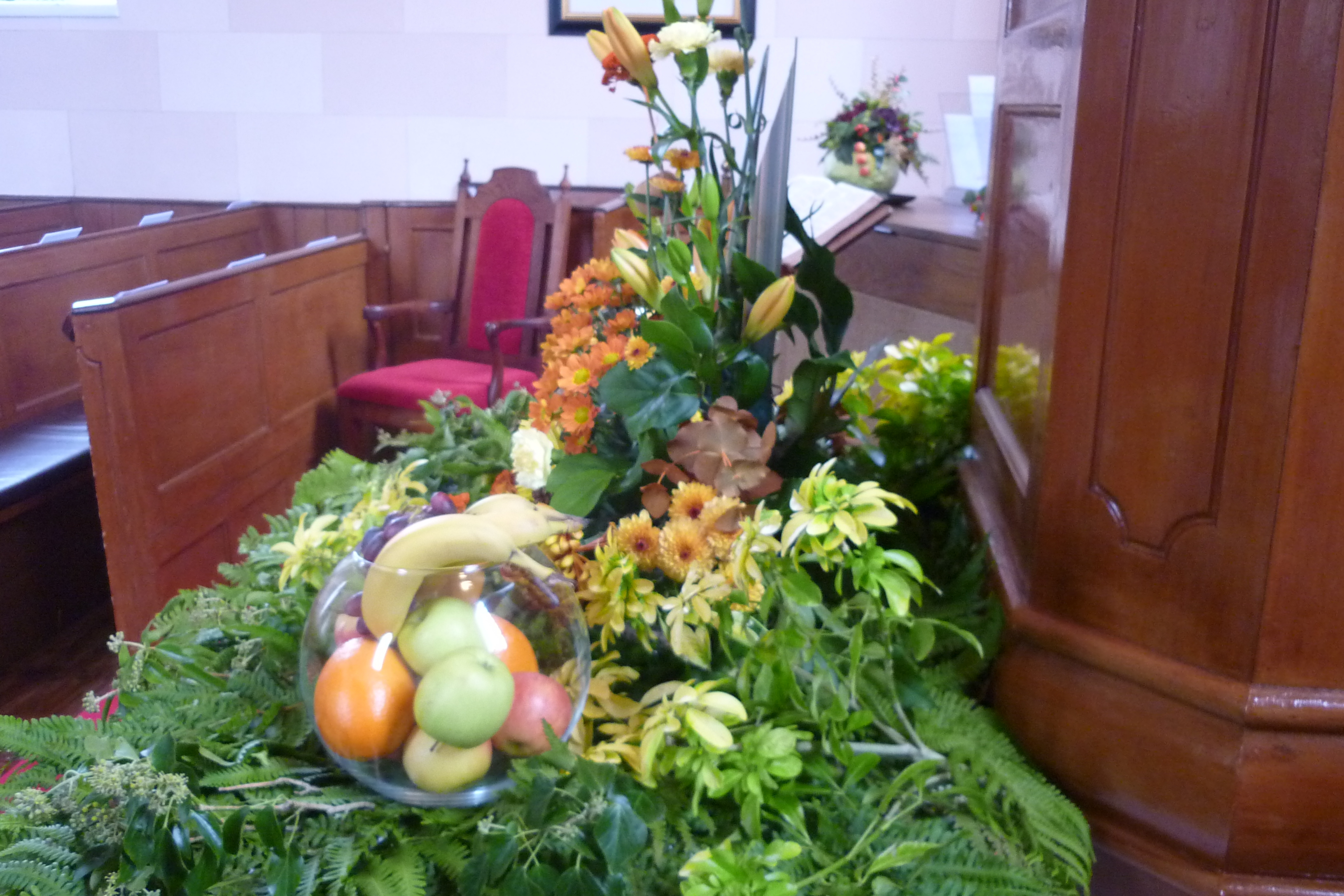
In October the congregations of Downpatrick, Ballee and Clough all hold their services of Harvest Thanksgiving.
These are always well attended and important occasions and this year was no exception.
The congregations welcome visiting preachers and choirs or other musical groups and this year at Downpatrick the visiting preacher was the Rev Colin Campbell (of Holywood and Ballyclare) and the visiting choir was the Larne Concert Choir.
At Ballee the preacher was the Rev Cecil Wilson (from the local Church of Ireland parishes) and the PSNI Ladies’ Choir the visiting choir.
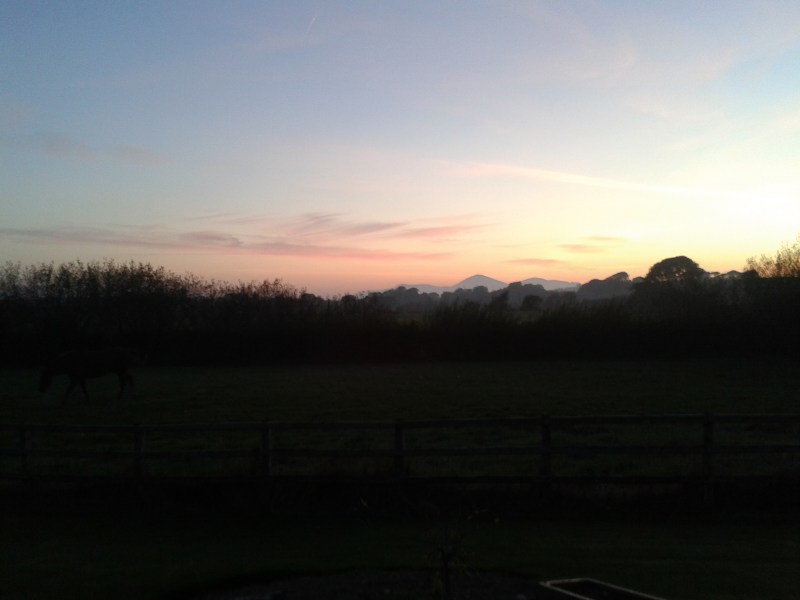
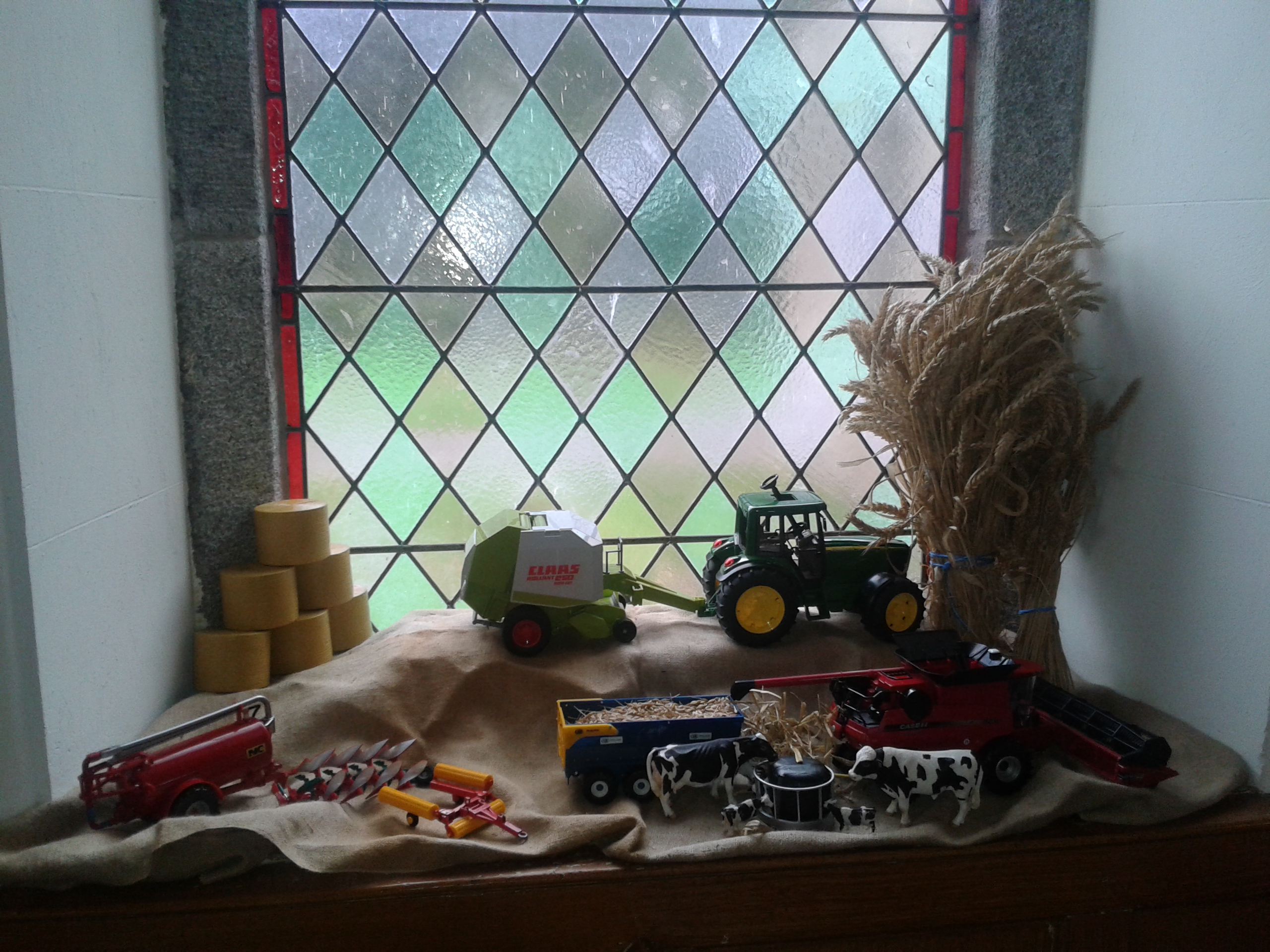
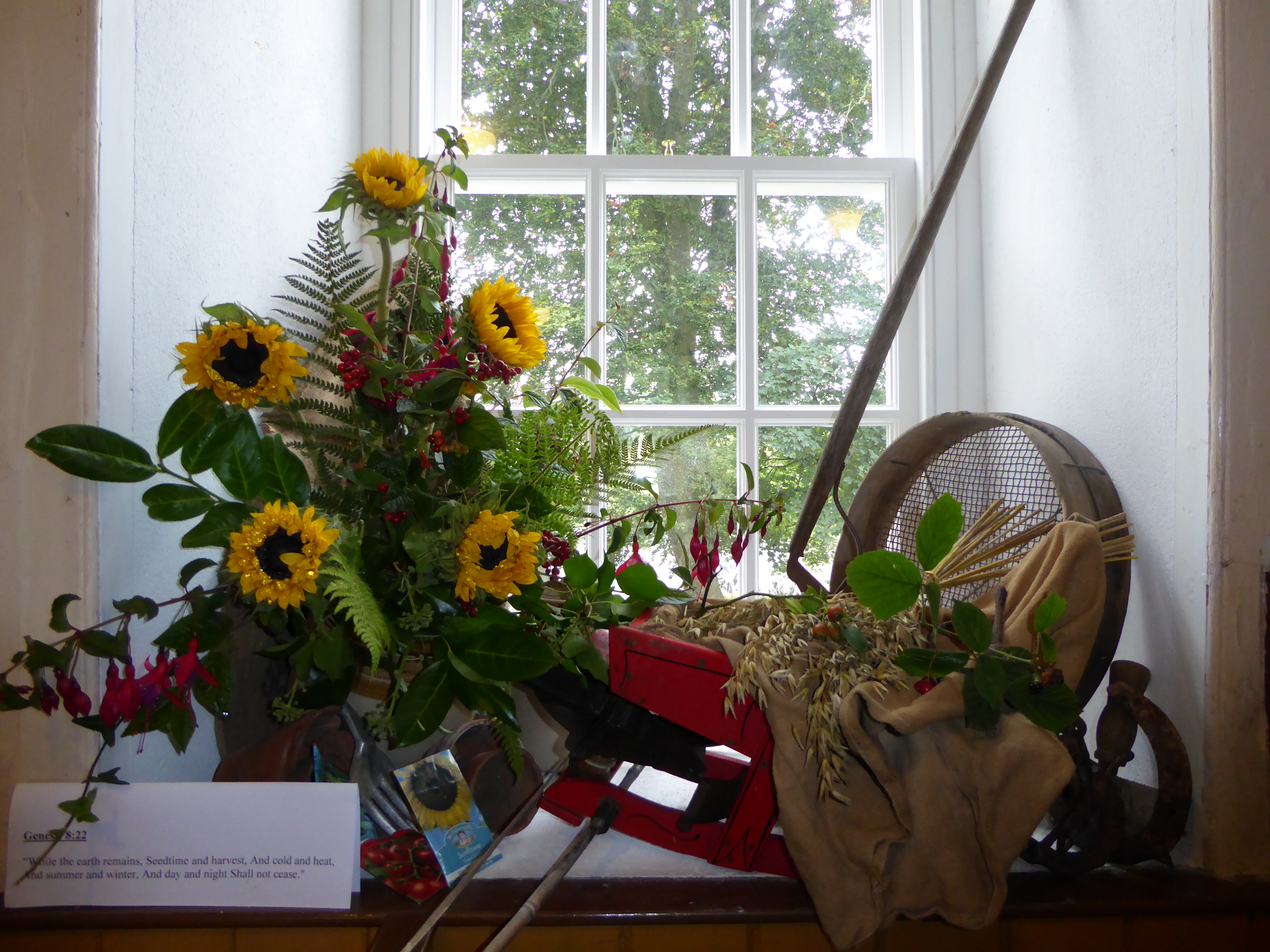
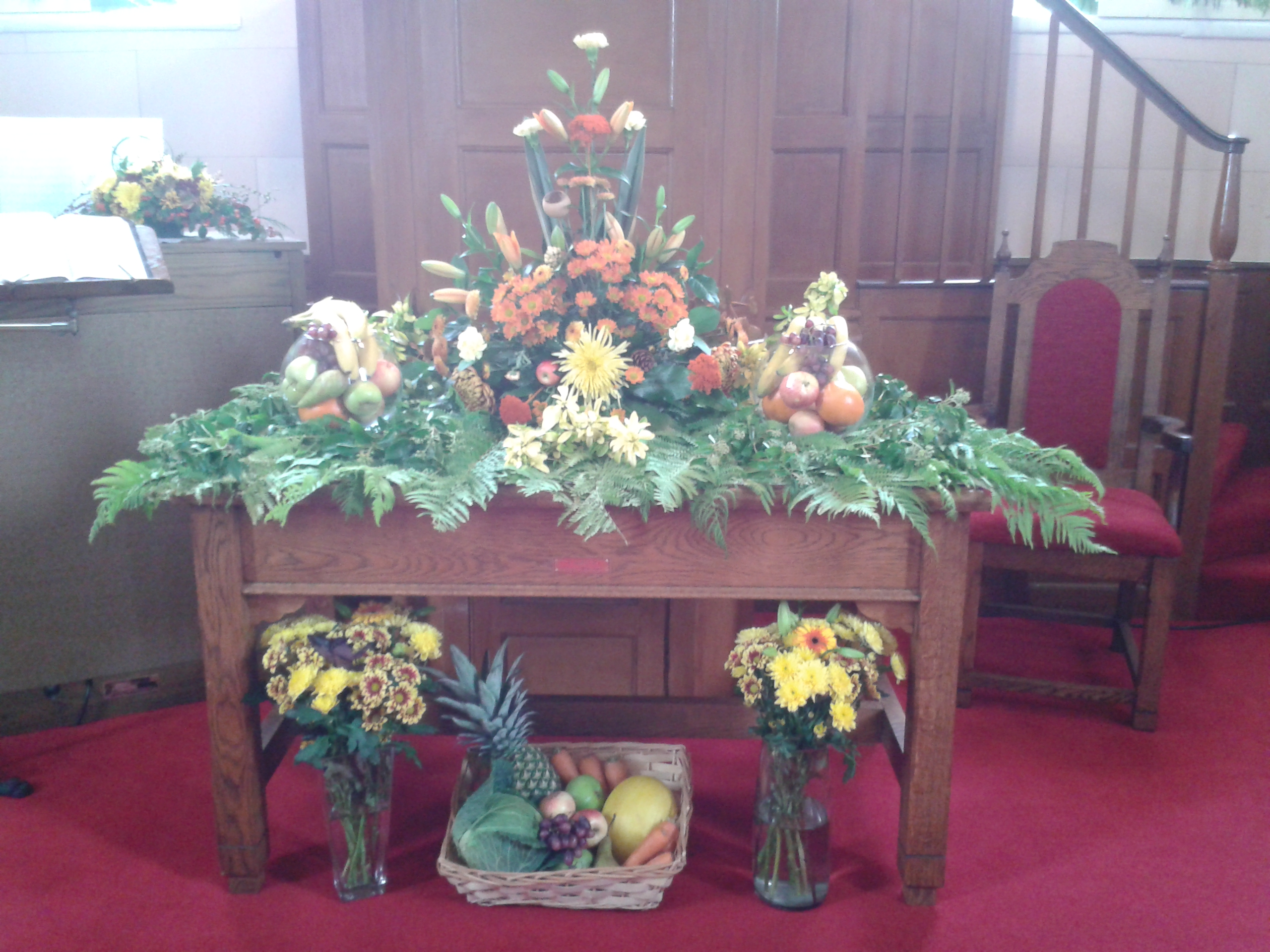
At Clough the preacher was the Rev Chris Carson (again from the local Church of Ireland congregations) and the choir the Quoile Area WI Choir. The churches are beautifully decorated, often with local produce, and try to express a sense of appreciation for the beauty of creation. On this page are some pictures from this year’s harvests.
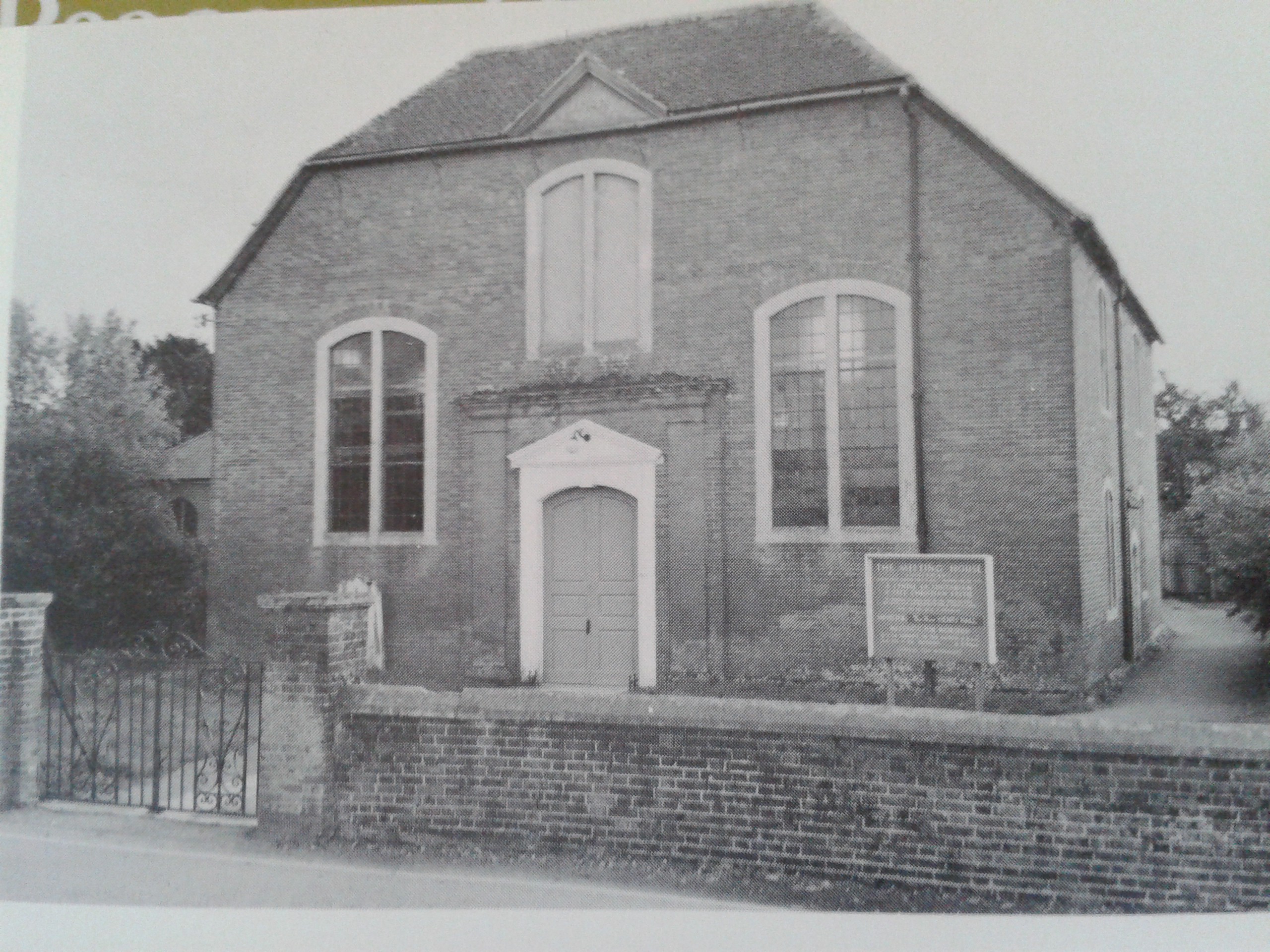
In my previous post about Rev Porter Orr I mentioned St Thomas’ Unitarian Chapel in Ringwood, Hampshire. This particular meeting house (which closed in the mid-1970s) had the rare designation for a Unitarian chapel of being dedicated to (or at least named after) a saint. This is not unique – by far the most famous Unitarian church named after a saint is St Mark’s in Edinburgh – but it is worth giving some consideration to.
St Thomas’ Unitarian Chapel Ringwood (from ‘The Unitarian Heritage’)
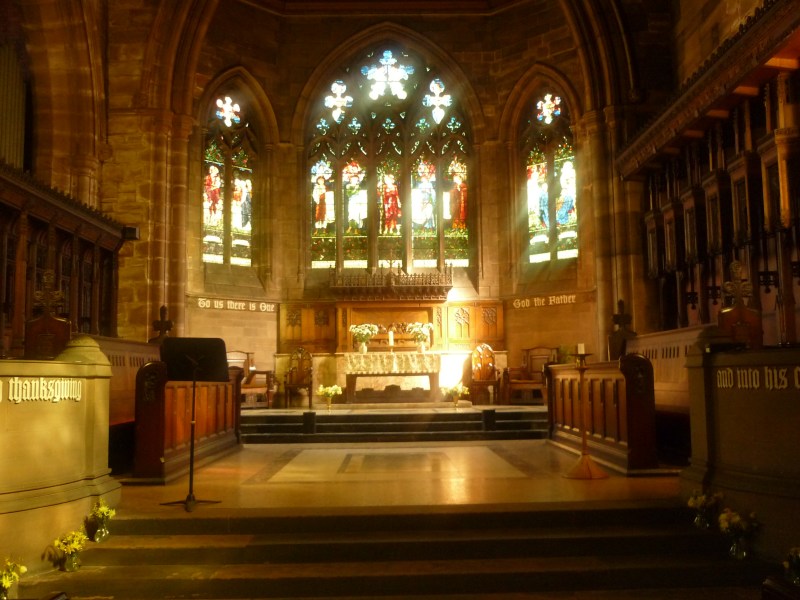
Victorian Unitarian church builders could often be quite keen on saints, of course. In the era of gothic rebuilding in the nineteenth century decorative windows featuring Burne Jones saints were often inserted, as the above view of the chancel of Ullet Road Church shows.
Most Unitarian churches get very dull names, they usually get called after the street they are situated on or the district they are in although sometimes more interesting terminology can be applied such as ‘Great Meeting’ or ‘New Meeting’ (or indeed ‘Old Chapel’). What they tend not to be is named after saints.
That is not to say that Unitarians couldn’t be creative – and also very orthodox – in their church names when they wanted to be. A quick trawl through the invaluable Vestiges of Protestant Dissent published by George Eyre Evans in 1897 (which contains a list of all the Unitarian congregations at that time) reveals no less than eight congregations called ‘Christ Church’ ( I think Bridgwater may be the only survivor of this group). Not mentioned in Vestiges are most of the three churches that I can think of called ‘All Souls’’. This designation probably comes from a slightly later period (All Souls’, Belfast had just been built in 1896) and although to outsiders this probably comes across as a very high Anglican name it is really a more typically Unitarian name in the twentieth century than Christ Church, although the use of this name in England, at least, has ceased I think.
Other popular nineteenth-century Unitarian names (none of them still in use so far as I know) were ‘Church of the Saviour’, which was used by three congregations, and the ‘Church of the Messiah’ and the ‘Church of our Father’ which each had a single use. More overtly Unitarian names were ‘Unity’, which had five takers in 1897 some of them still continuing today, and one ‘Church of the Divine Unity’.
What Unitarians have tended not to do is name churches after individuals –saints in the sense of the people of God – but there are three examples of this that I can think of – Matthew Henry, John Pounds and Edmund Kell, who all have their congregational memorials.
Methodist Unitarians were very keen on Biblical names for their churches – ‘Bethlehem’ and ‘Nazareth’ being the best-known examples of this. In Vestiges there is also one obscure ‘Salem’ founded as a break away from Calvinistic Baptists in King’s Lynn in 1811.
But naming a Unitarian church after a saint is something that does raise questions. How and why did the congregation select that saint? Which saint of that name did they actually mean? Was there ever any suggestion of the congregation being directly inspired by that saint?
It is often thought that St Mark’s Church is a unique example of the naming of a Unitarian church after a saint but clearly that is not so. What is curious about Ringwood is that the chapel (which is now an interpretative centre for local history) was built in 1727 but only started using the name of St Thomas some time in the first half of the nineteenth century. Why this was so is anybody’s guess. The name was certainly used for a long time, the Rev John Midgely has found instances of it being used in advertisements in the Inquirer in the 1930s, although it seems to have been dropped before it closed in 1975. What is different about St Mark’s in Edinburgh is that this was the name chosen at the time of its building in 1835 and in use ever since. The Rev Andrew Hill has suggested that no one knows why the name was chosen, but presumably the gospel writer was regarded with favour by the Edinburgh people.
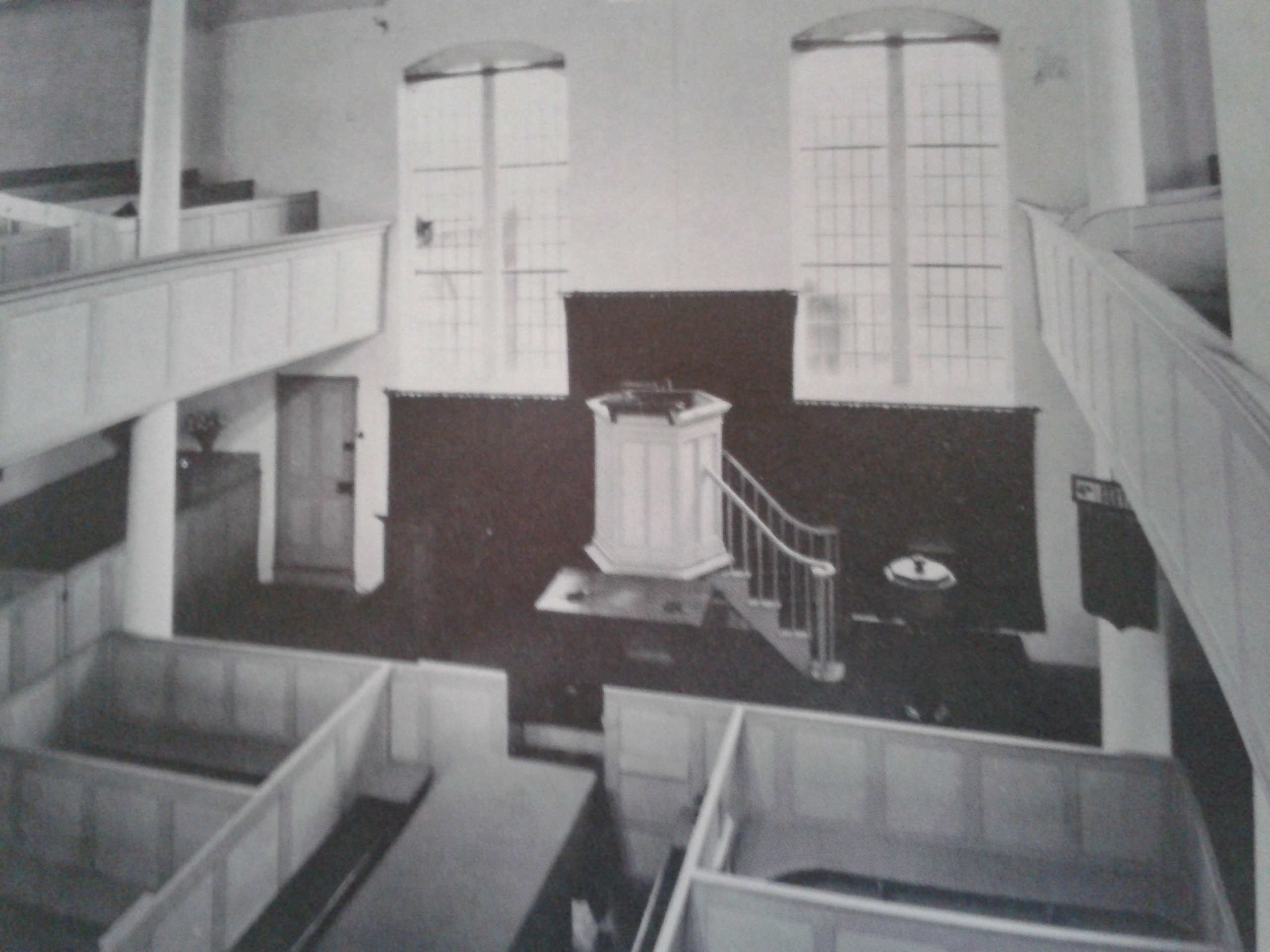
The interior of St Thomas’ Chapel (from ‘The Unitarian Heritage’)
But, according to the Vestiges, there was another chapel that took the name of a saint. This was St Michael’s Chapel in Selby. This congregation dated from 1672 and built a new chapel in 1699 which G.E. Evans suggests was called St Michael’s from the start. This seems unlikely in 1699 but the name was definitely in use for a long time and was transferred to the modest new building that was finally opened in 1903 (following some years in a temporary building from 1886). The congregation closed in 1968 according to The Unitarian Heritage and the building passed into other uses, although it still seems to stand.
So there we have the three Unitarian churches named after saints. There were quite a number of churches built on streets with saints’ names – St Nicholas’ Street etc – and there are a few examples of Unitarian chapels later being consecrated by the Church of England and being given a saint’s name. But these are the only three that are definitely named after saints. Can anyone shed any further light on them? It would be interesting to hear any accounts of either St Thomas’ or St Michael’s or indeed of any other saintly churches. In the meantime we have a Unitarian trinity – St Mark, St Thomas and St Michael.
Addendum:
With regard to St Michael’s Chapel, Selby the Rev Andrew Hill has sent the following interesting information:
“The congregation at Selby traces its origin to the visit of a puritan preacher, Noah Ward, from York, in the year 1660. As an itinerant minister he continued to make frequent visits to Selby down to the time of his death, which occurred in 1699. It is said that in honour of the memory of this preacher St. Michael’s Chapel was built in that same year by a gentleman of the name of Barstow. It seems to have owed its name to the fact that one of the Christian names of the said gentleman was Michael, whose good deed it was thought would be perpetuated by calling the place after Michael the archangel. After the death of Mr. Barstow the Chapel was given in trust by his widow, Alice Barstow. contemporary with the Barstow family there were two other families of similar social standing who were associated with the Chapel; these were the Bacons and the Morritts. Beatrix Bacon, wife of Christopher Bacon, bequeathed the land near the town, from which a portion of the minister’s stipend is still paid. A silver Communion Cup is still preserved, on which is engraved: “The Gift of Beatrix Bacon to the Selby Chapel.” The first minister was John Troviss; who was followed by a John Hodgson, and on the removal of the latter to Lincoln, a Mr. Foljamb took his place. From this date until nearly the end of 1886, when worship in the old Chapel ceased on account of its dilapidated state, there were eight ministers of whom Thomas Smith was the first and J. M. Pilkington the last. The new chapel, which is of red brick and on the old site, has been erected to an approximate cost of £400, including the interior fittings, and has accommodation for 125 It was opened on September 24th, 1903, the Rev. Ceredig Jones, M.A., of Bradford, preaching on the occasion. the present minister is the Rev. John Dale.” From: The Unitarian Chapels of Yorkshire.
Does anyone remember the chapel built in 1903? Dare one ask is the silver communion cup still preserved today?
In two recent articles [in the April 2015 issue of the Transactions of the Unitarian Historical Society and the June 2015 issue of the Non-Subscribing Presbyterian magazine] I have written about the Rev John Orr (1829-1896) a scholarly and successful minister in nineteenth-century Ireland whose career took a strange and unexpected turn when he emigrated to the United States in 1879. Whatever the intention of his move to New England his career didn’t flourish on the other side of the Atlantic and by the time of his death he was little remembered in his homeland. This is a pity because he was an important figure in his own day whose two major published works won plaudits and whose ministry at Comber, co. Down helped to establish and grow a fairly new congregation. It wouldn’t be an exaggeration to say that he had been almost forgotten since leaving Comber for Cambridge, Massachusetts in June 1879, although the first step towards raising his profile probably came with the publication of the Thoemmes Dictionary of Irish Philosophers in 2004 in which I co-wrote the entry on him with Professor M.A. Stewart.
But following my article on John Orr in the 2015 Transactions the second article in the Non-Subscribing Presbyterian is as much about his family background – as both the son and the brother of Non-Subscribing Presbyterian ministers he was part of a notable dynasty – and this also deserves to be noticed.
His father, Alexander, was born in about the year 1798 and grew up in the Moneyreagh congregation. Alexander’s friend the Rev S.C. Nelson of Downpatrick reported of his background that:
there he was brought up under the guidance and auspices of that foremost champion of Unitarian Christianity, that true and consistent representative of the earnest loving spirit of the pure and living faith of the Gospel – the buoyant, persevering, and self-sacrificing Fletcher Blakely.
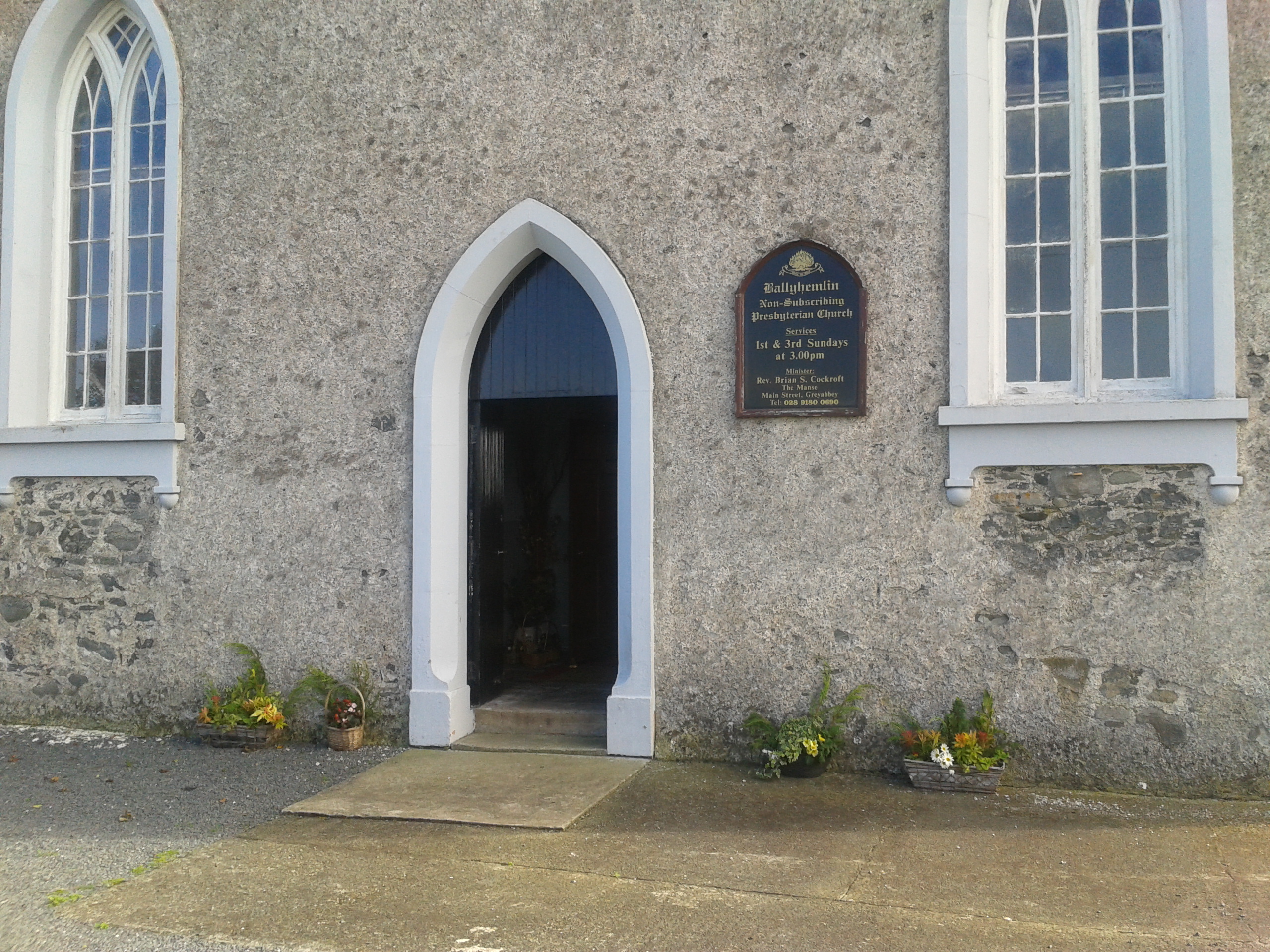
This input, together, no doubt, with his education at Moses Neilson’s Rademon Academy, (supplemented by time at Glasgow University and the Belfast Academical Institution) led him to incline towards the non-subscribers by the time of the second subscription controversy. Alexander Orr was already minister of Second Anaghlone by this time but although his sympathies were with Henry Montgomery and his followers he and his congregation did not join the Remonstrant Synod in 1829 and he waited until 1838 before joining them when he became minister of Ballyhemlin. Here he kept a classical school and remained as minister until his death in 1869.
The entrance to the Ballyhemlin church
This provides the background for the ministry of his son, the Rev John Orr who was both minister at Comber and, from 1866, Professor of Church History, Pastoral Theology and Moral Philosophy for his denomination. If you want to read about him, his publications, his ideas, his importance, and his mysterious emigration to the USA at the age of 50 then the full story can be found in my article ‘Rev John Orr of Comber, county Down and Cambridge, Massachusetts’ in the April 2015 issue of the Transactions of the Unitarian Historical Society, but I will attempt now to place him in the context of his family.
Alexander married Nancy Porter and all three of their children (at least those that we know about) were born while he was minister at Anaghlone. Unfortunately no baptismal register survives for that congregation so we can’t check for additional siblings and we don’t have accurate dates of birth for two of the three brothers. The eldest son, however, was named Porter Orr and must have been born in about 1826 and he was the first to follow his father into the ministry.
Like his father, and his brother John, Porter Orr trained for the ministry at the Belfast Academical Institution. College records at the time are not complete, however, and although we know that his time as a student overlapped with John Orr we don’t know so much about his time there. At the end of his time as a Remonstrant student he became part of the export of ministers produced by the non-subscribers. Training ministers to a high standard there was a surplus of potential ministers over vacancies and a number of students took up pulpits at churches in England. After being licensed by the Presbytery of Bangor Porter Orr accepted a call to the Unitarian church at Ringwood in Hampshire in 1845. With its origins in the seventeenth century the meeting house, then known as St Thomas’ Chapel, was built in 1728. Porter Orr stayed here for five years before accepting a call to Strabane and returned to Ireland in 1850.
As a new congregation Strabane was part of the fruit of the quite committed and successful missionary effort of the Remonstrant Synod and one of the few congregations to be founded west of the Bann. Porter Orr was the third minister of the congregation and had succeeded his brother John who had been minister there from March 1848 to May 1850.
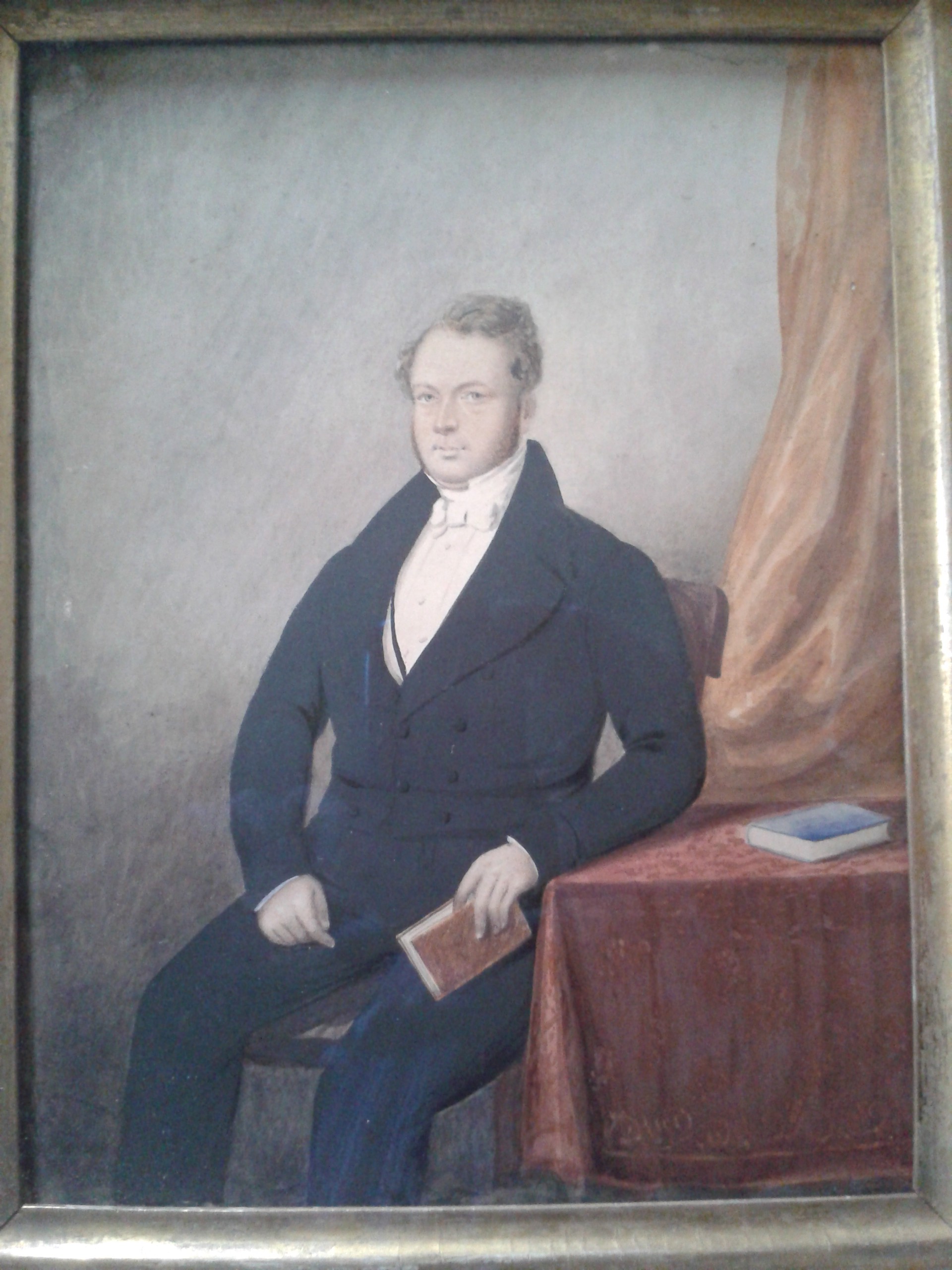
Recently a portrait has come to light of a minister painted in about 1850. Generously donated to the Comber Church by a direct descendant of John Orr this shows a youngish man in the clerical attire of the mid-nineteenth century. It is undated and has been reframed in modern times, when someone has written on the back the name Thomas Porter Orr. I think we can fairly confidently assume that this is a portrait of the Rev Porter Orr. It is only small in size, the books in the portrait cannot be identified, but its provenance in the Orr family and the fact that it is certainly a clergyman would suggest – to me at least – that Thomas Porter Orr and the Rev Porter Orr were one and the same person. The portrait could have been made in Ringwood or Strabane, we can’t know for sure, but it is a charming and touching memento of a life that was cut short. Porter Orr resigned his charge on 30th January 1855, he died less than two weeks later on 12th February.
Portrait believed to be the Rev Porter Orr (Comber NSP Church)
The congregation of Strabane did not last much longer, Porter Orr was the last minister and the congregation effectively ceased in 1857. But it was important to the Orrs and the denomination. John Orr was there long enough to meet his wife – Sarah Jane Porter – the daughter of James Porter, one of the founders of the Strabane congregation, and they married in October 1851. Sarah Jane’s sister, Catherine, married the Rev David Maginnis, another prominent minister in the last half of the century, in 1845.
Of his brother John Orr we can say that he was one of the outstanding intellects of his generation of ministers within the Non-Subscribing Presbyterian churches, but despite his highly successful ministerial and academic careers, along with David Maginnis, his brother in law, he often found himself at the centre of the increasingly strident infighting that bedevilled the non-subscribers at the time, although he was held in high regard by his colleagues, especially those who shared his radical theological views.
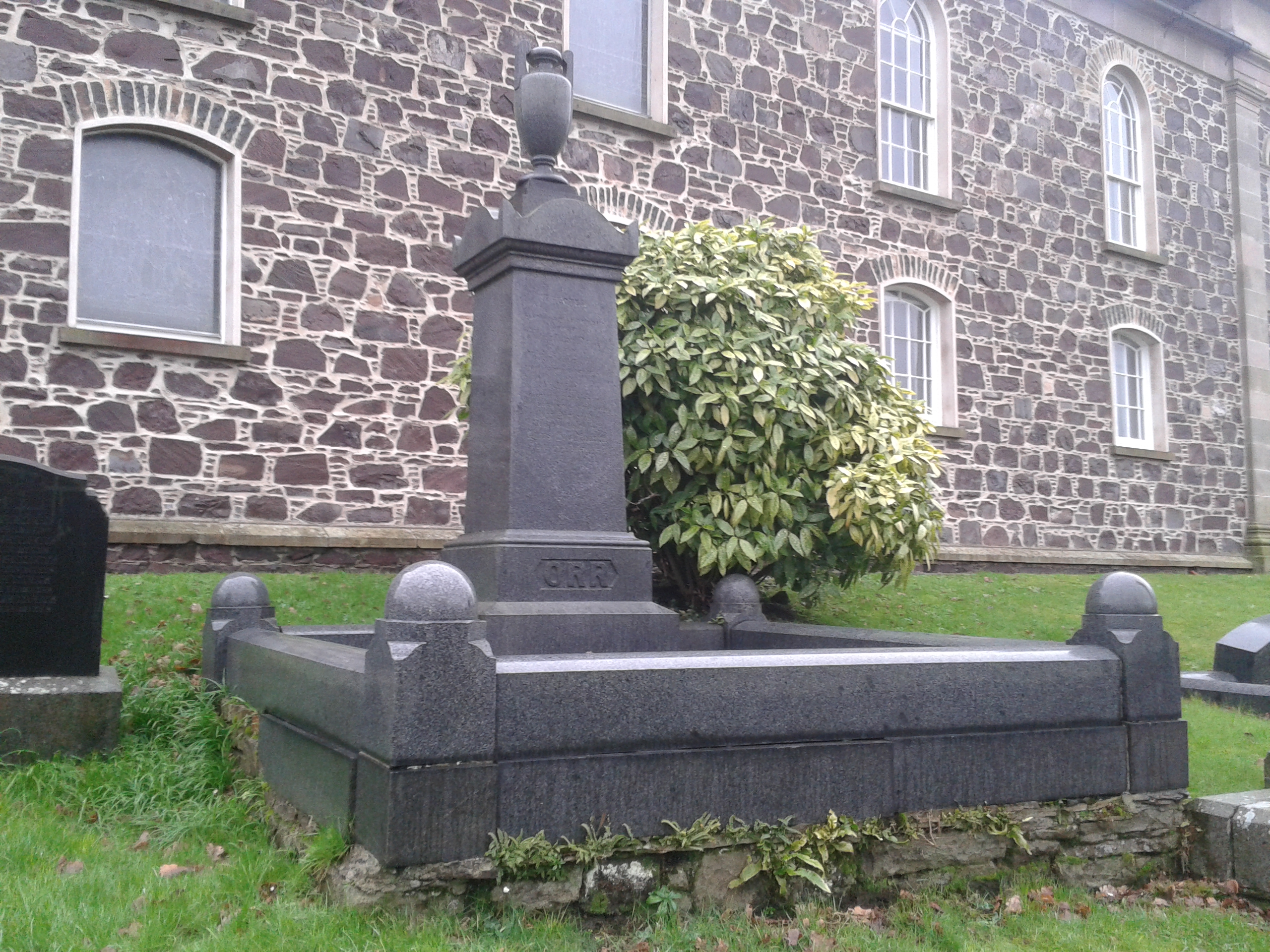
What impelled Orr to leave for America? Was it a sense of bereavement following the death of his first wife at the age of 42 in 1865? Or was it some sense of unfulfilled ambition? Or a sense of dissatisfaction with his denomination? Or had some issue arisen in Comber that meant he should depart? Again we will never know exactly. But we know quite a lot about what he did in America, the introductions he had and the aims he carried with him across the Atlantic. We know also that he died on 19th August 1896 and was buried in Mount Auburn cemetery, Cambridge, Massachusetts. His second son Alexander, who was a journalist, joined him in the Boston area but predeceased him in 1891 aged 35 and was buried in the same cemetery. His youngest daughter lived in Boston until 1960 when she died and was buried in the same plot as her father. What became of his second wife Agnes is not known. Most of the rest of the family are commemorated on the imposing memorial in the graveyard in Comber.
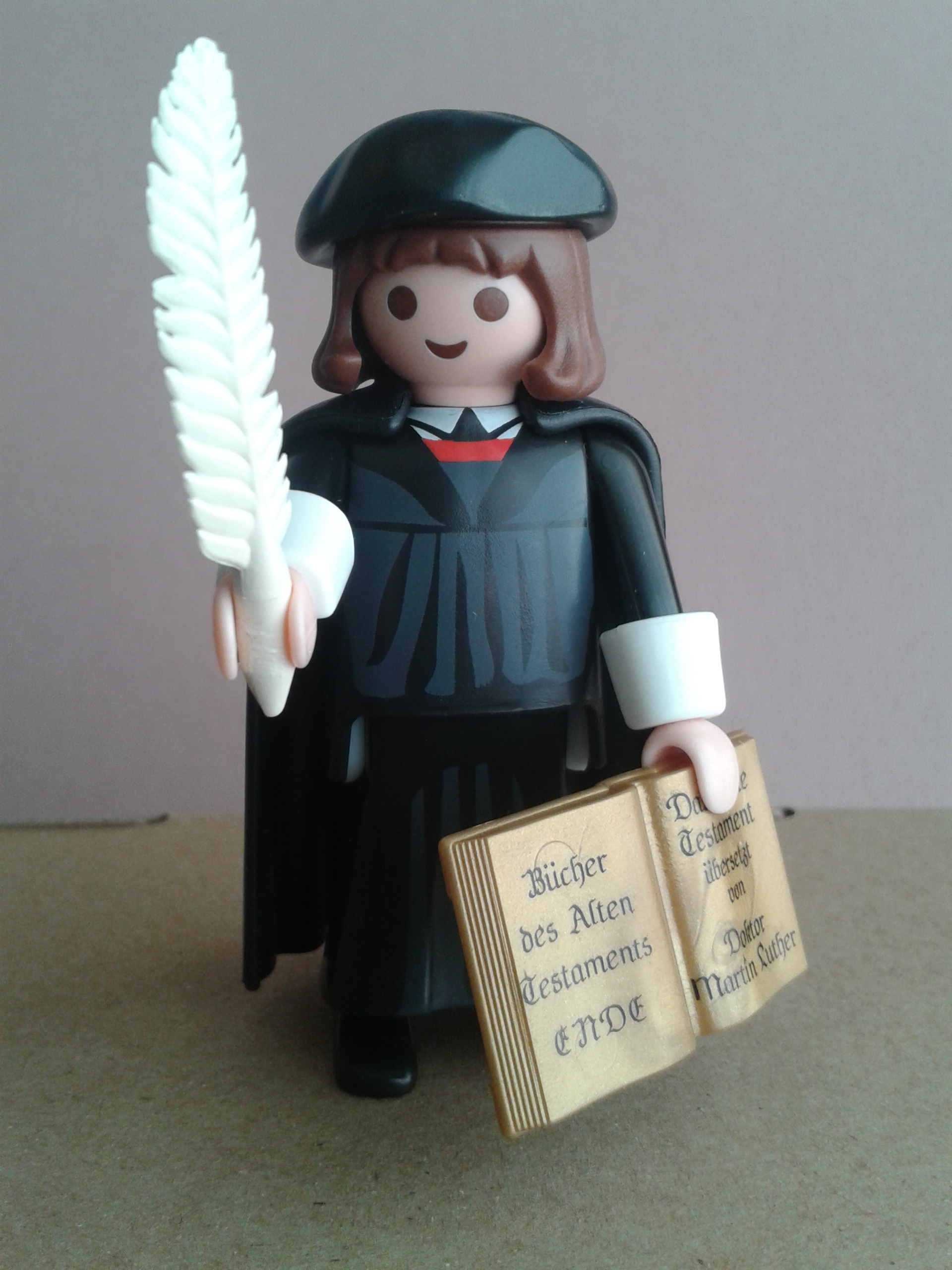
“Astronomical sales of a tiny figurine of the Protestant Reformation figure Martin Luther, have confounded its maker, Playmobil, by becoming the fastest-selling Playmobil figure of all time.”
It was widely reported in the press that the first edition of 34,000 of these figures sold out in less than 72 hours when they were launched in February. The company urgently requested its factory to produce more of them such was the demand.
The journal Newsweek observed:
“The plastic toy, complete with a quill, German-language bible and cheery grin, was produced for the German and Nuremberg tourist boards and the Evangelical Lutheran Church in Bavaria, as Germany gears up to celebrate the 500th anniversary of the Protestant Reformation in 2017”.
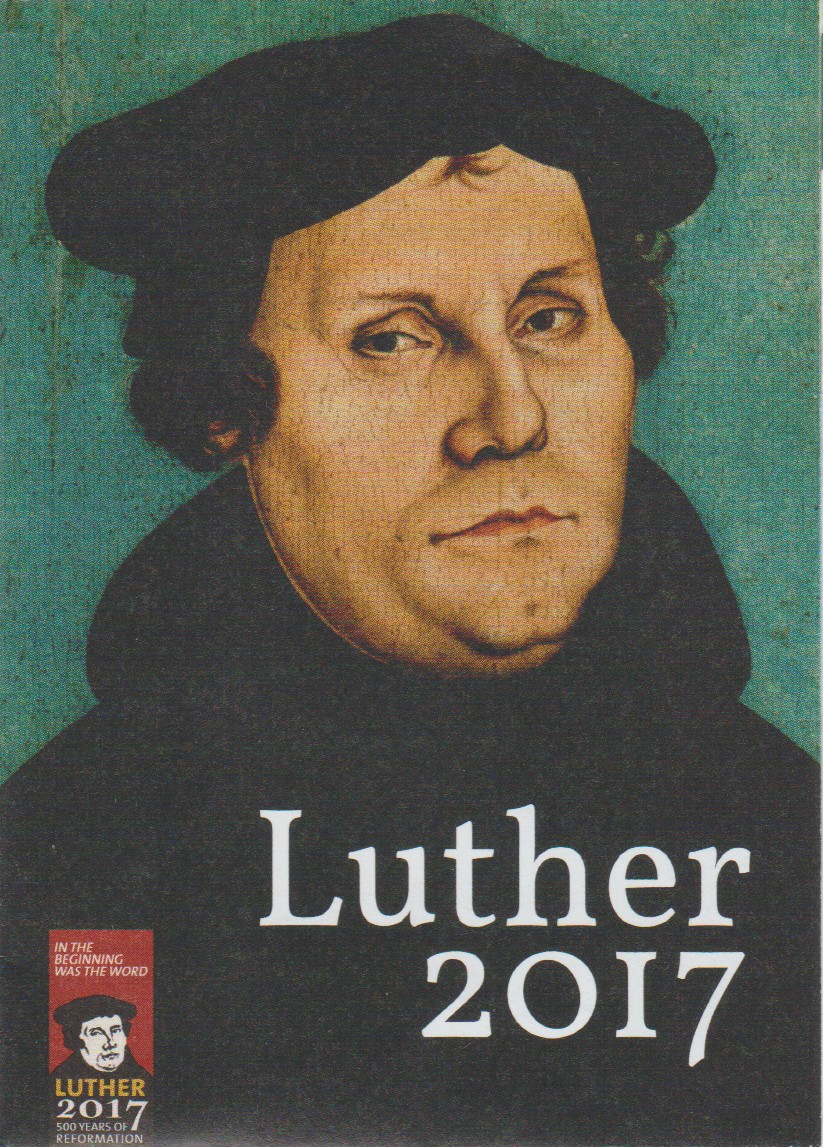
Martin Luther’s portrait which comes with the figurine
It’s a curious phenomenon that a toy of an historical figure taken from religious history should prove so popular. The 500th anniversary of the reformation (in this case being dated from Luther’s nailing of his 95 Theses to the door of the Cathedral in Wittenberg on 31st October 1517) is an important event and it looks like it is catching people’ imagination, especially in Germany. A lot of the sites particularly associated with Luther are in Eastern Germany and consequently have not been over-visited. Writing in the Times in August Mark Greaves said “As a result of the lack of modernisation and development during the communist years, folksy towns with their beautiful old architecture have been left untouched.”
Quite probably this anniversary is the biggest event of all that could be connected with a reformation person or event. A few years ago (in 2009) the 500th anniversary of the birth of John Calvin was celebrated. There were no John Calvin toys so far as I know although one Presbyterian Church did have a free download of a John Calvin mask which was just about the scariest looking mask you could imagine.
The Playmobil box
I was sufficiently impressed by the story of the sales of the Luther figure to track one down via eBay. Martin Luther seems to be only on general sale in Germany although one imagines he would sell very well in the USA. It’s hard to imagine a similar figure being produced over here and one wonders what would be the equivalent? John Wycliffe? John Wesley?
But the Luther figure is an attractive little model. It comes with its own Bible referencing his part in translating it into German and a quill pen. In addition you get a leaflet featuring his portrait and a map of places in Germany associated with Luther.
Martin Luther
I wouldn’t think there would be too much of a market for Martin Luther figures in the UK today. However, from the 1930s to the 1950s British toy companies such as Britains and Johillco both marketed lead models of clergymen. These weren’t named but were part of the wide range of civilian figures that were available in those days. To my knowledge there were at least four clergy figures on sale, black clad and generally hatted they must have sold in their thousands. The hardest to track down today is the Britain’s ‘thin vicar’ who ceased production just before the war. But it is good to see Martin Luther enjoying such vogue.
On Tuesday, 15th September the new Downpatrick High Cross Extension was opened at Down County Museum. I was pleased to be amongst the large crowd who were present to see the new premises.
The High Cross
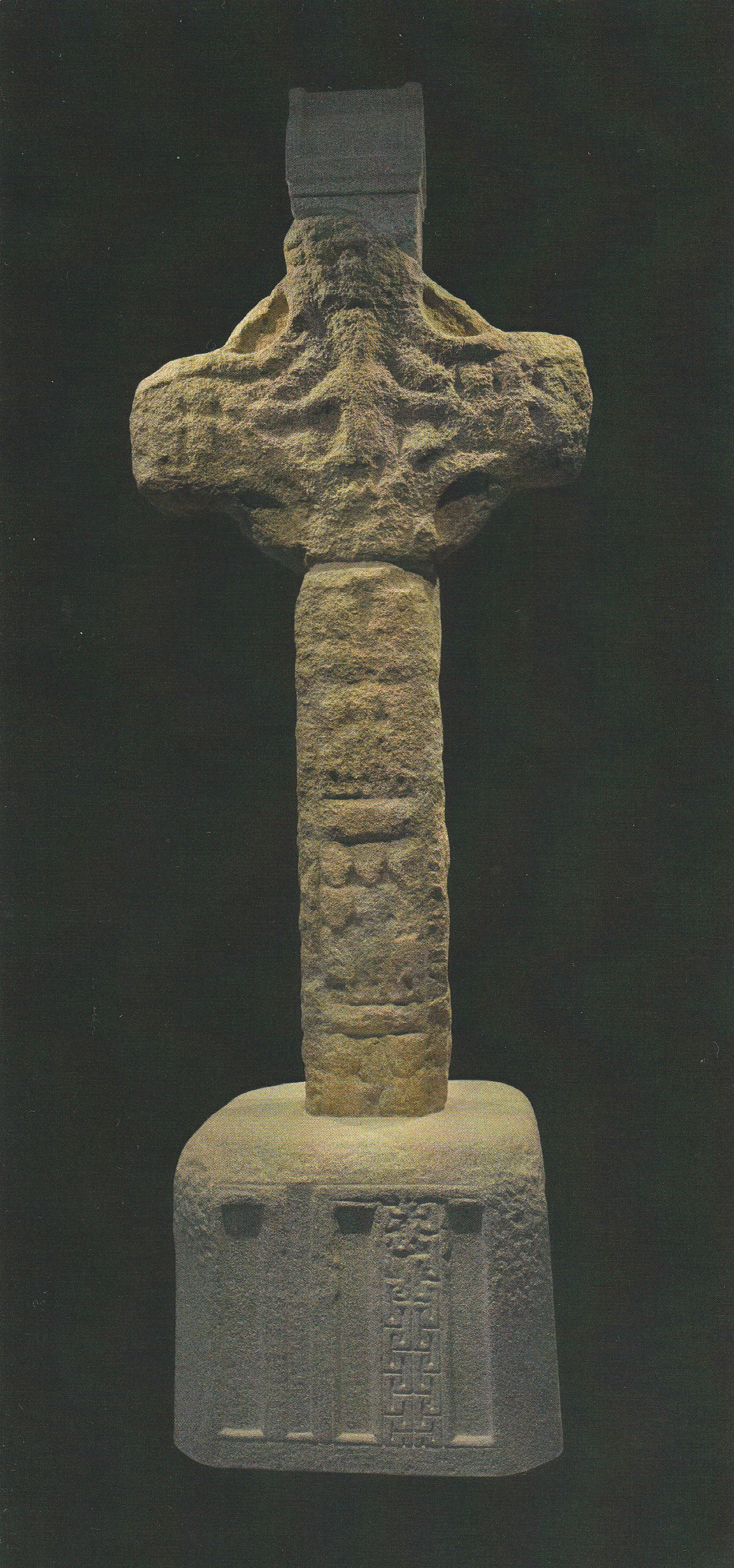
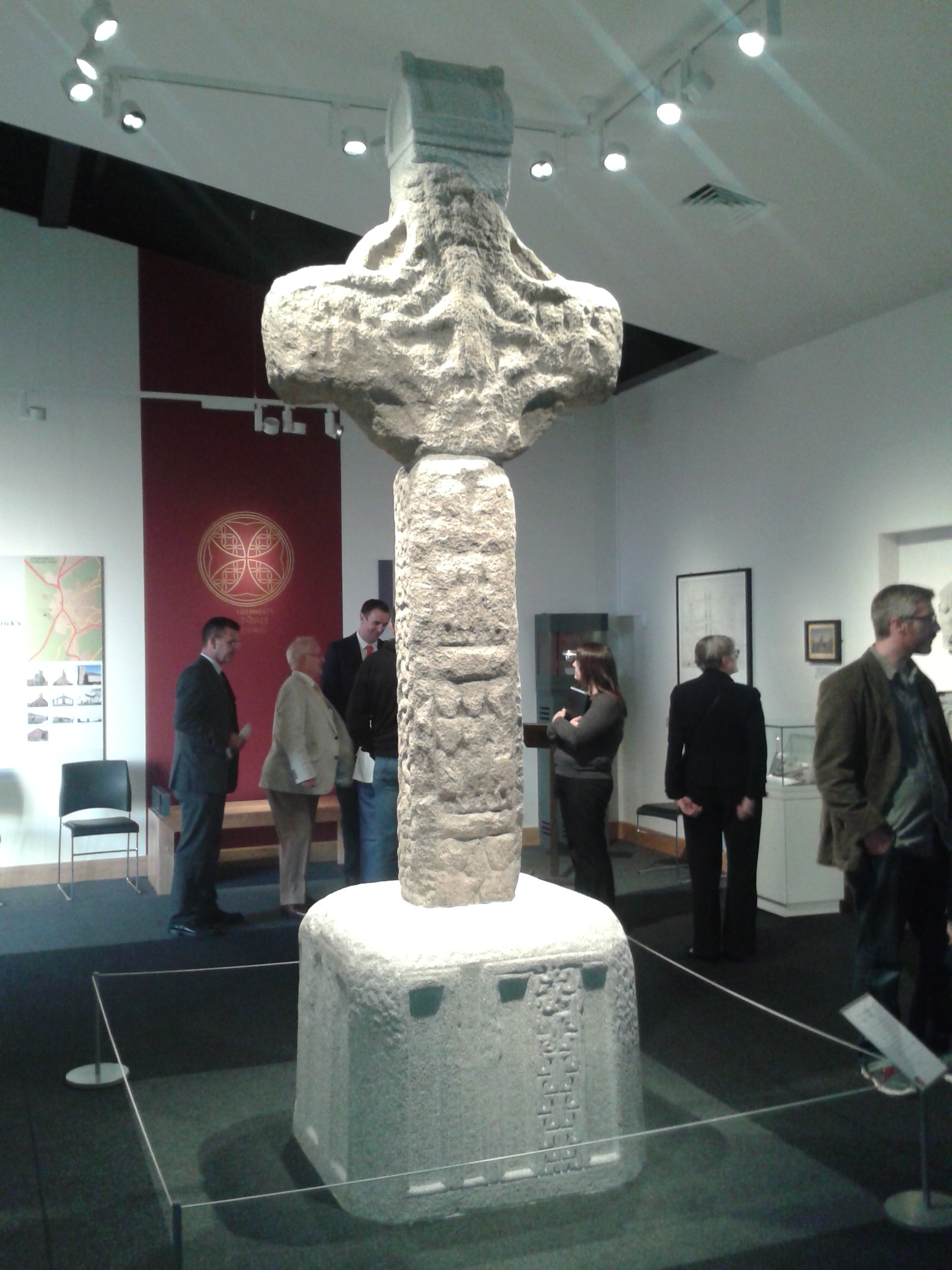
The main attraction of the extension is, of course, the High Cross itself which holds centre stage in the main room. It’s quite dominant in the room and is exceptionally well lit so you can appreciate the detail in a way that just wasn’t possible when it was in its original position outside the Cathedral. Out of doors you had to take on trust the various illustrations that were said to be carved on its surface, now you can make them out and have some idea of the stories it intended to convey. In addition these are well explained in the exhibition.
The Cross in its new location
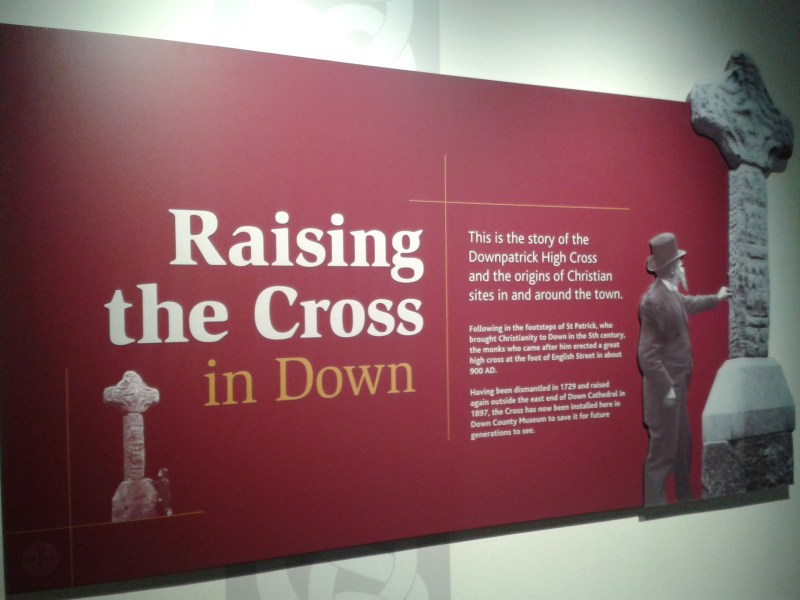
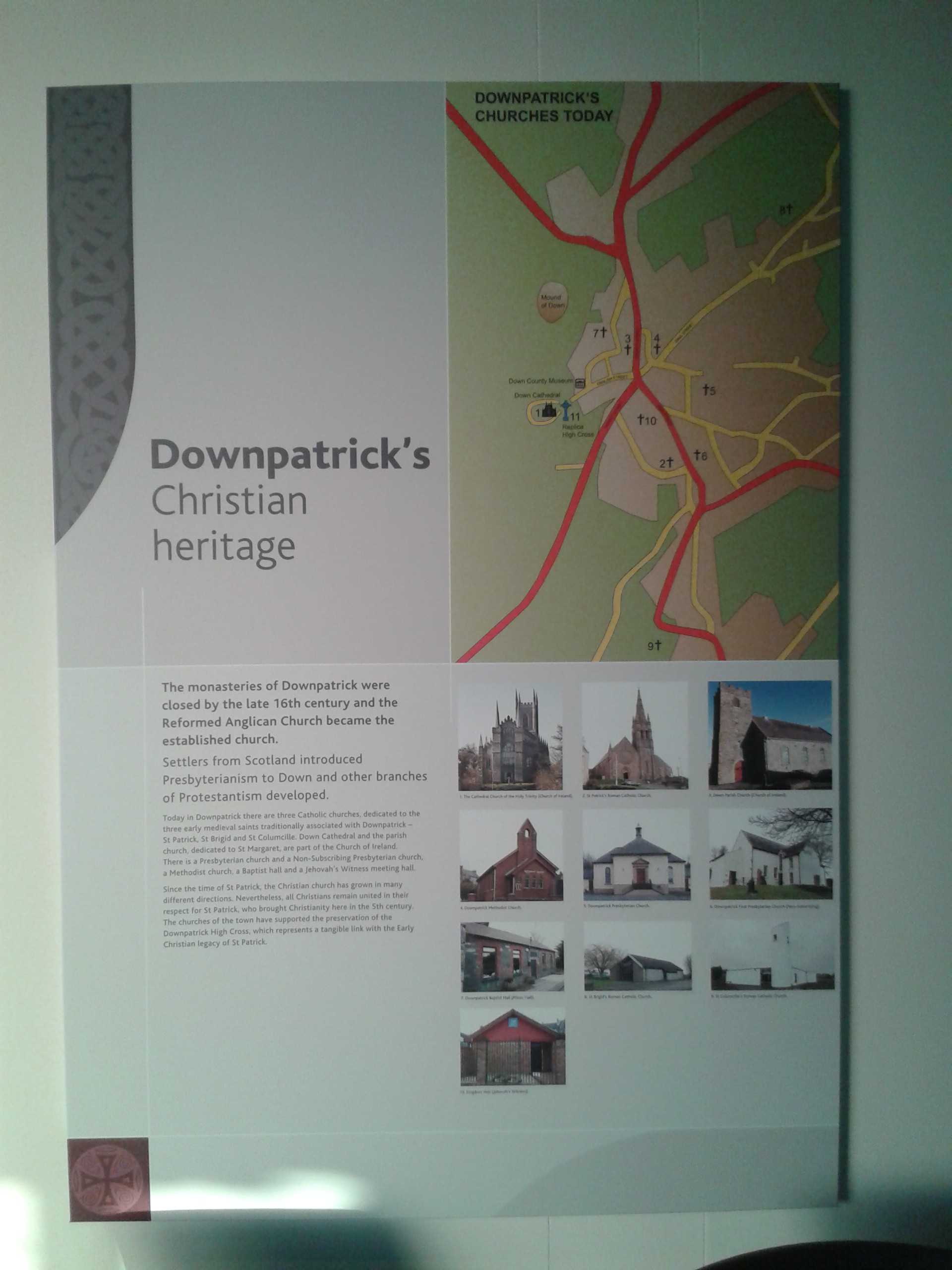
Raising the Cross in Down “tells the story of the Downpatrick High Cross and its place in the early Christian tradition of County Down” using artefacts, reconstructions and interpretative panels. It’s a good exhibition which takes the visitor through Christian history in the locality right up to a nicely inclusive panel covering the various traditions in Downpatrick today.
Downpatrick’s Christian Heritage
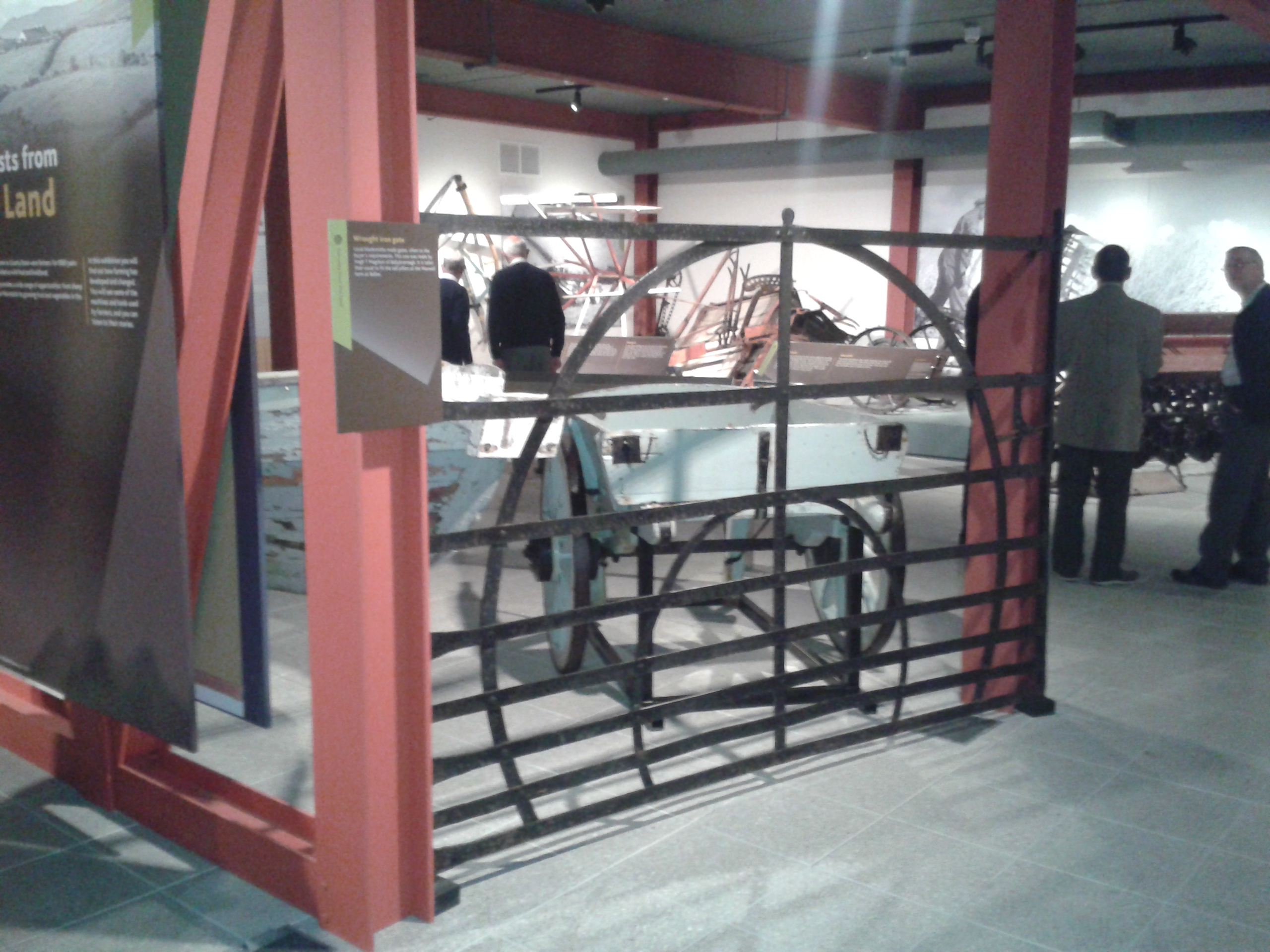
Elsewhere in the extension the new café will be run by the local charity Mainstay DRP. The tearoom has tremendous views across the rolling countryside. Downstairs Harvests from Land and Sea is an exhibition telling the story of farming and fishing in County Down which contains machines, tools and artefacts which will be familiar to many local people.
Wrought iron gate made by Hugh Magilton of Ballybranagh
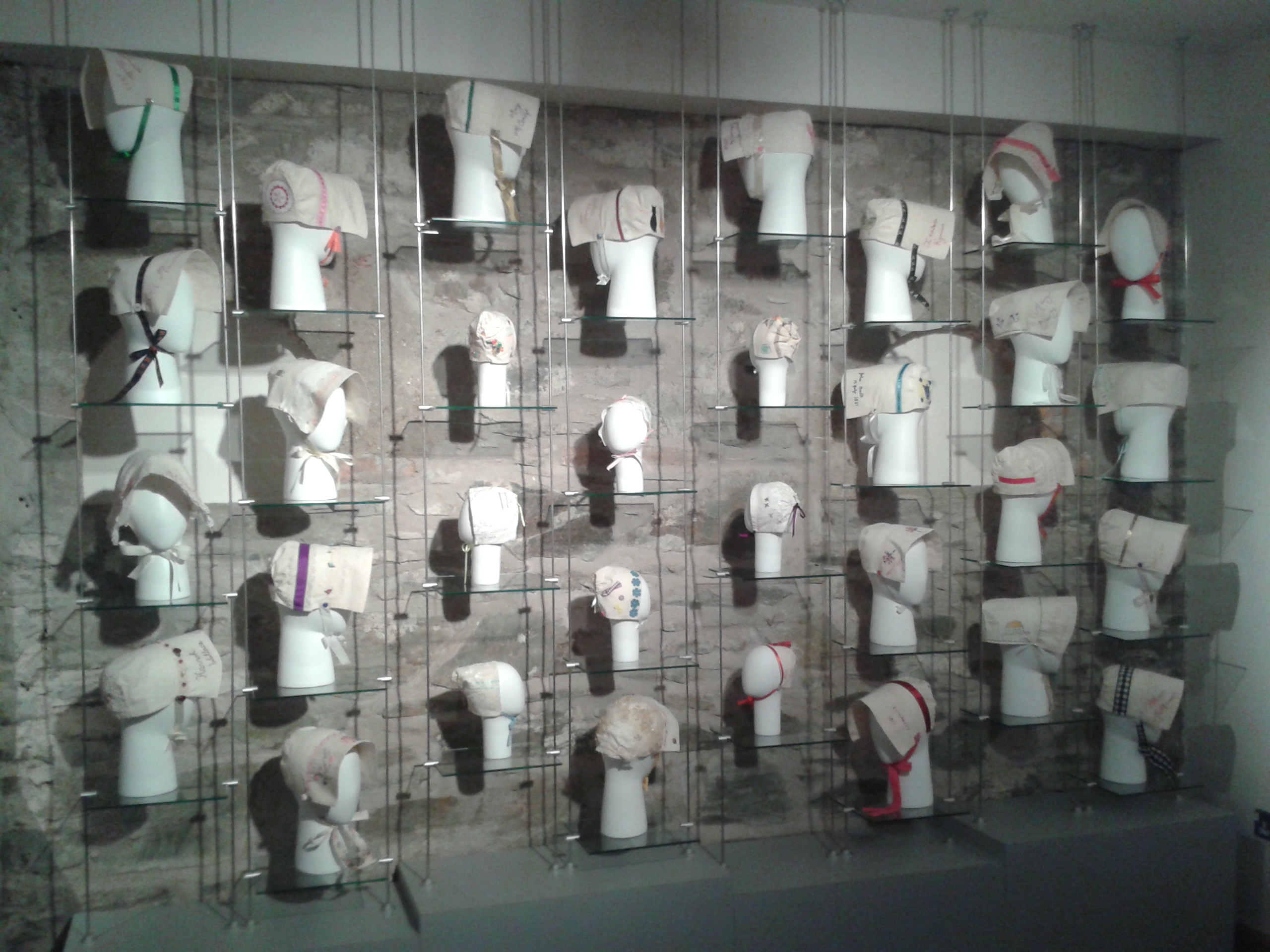
Another room includes the At Present Confined: Life in the Old Gaol exhibition which tells the story of many of those who were imprisoned in the gaol between 1796 and 1830. On show in here is a display of hand-made bonnets made by many schools and local groups as part of the ‘Roses from the Heart’ project, run by Tasmanian artist Christina Henri in 2013. A number of local groups took part in this project which was international in its scope and which commemorated the thousands of women and children who were transported to Australia in the eighteenth and nineteenth centuries.
Display of bonnets
While some of the people who were transported to Australia were hardened criminals many of them, and many of the woman, had done things which we would regard as quite trivial today. So in 1820 Jane Armstrong at the age of 16 was transported for seven years for stealing two spoons. In 1832 Mary Burns, who was born in Downpatrick, was transported for seven years on a charge of vagrancy, which today we would probably call homelessness. Quite a few women were sent away simply for vagrancy. Altogether something like 25,266 women were transported from Britain and Ireland to Australia and the artist Christina Henri has been trying to commemorate them both here and in Australia by getting people to make bonnets. Children in local schools were encouraged to make bonnets with the name of each woman on as well as the name of the ship she was transported on. Along with Canon Rogan I was very pleased to be asked to take part in a ‘blessing of the bonnets’ in the Museum at the time.
Down Museum has long been an excellent Museum but the new extension is a very impressive addition to its display that fits in well with the Museum’s care and appreciation of local history and its engagement with schools and the wider community.
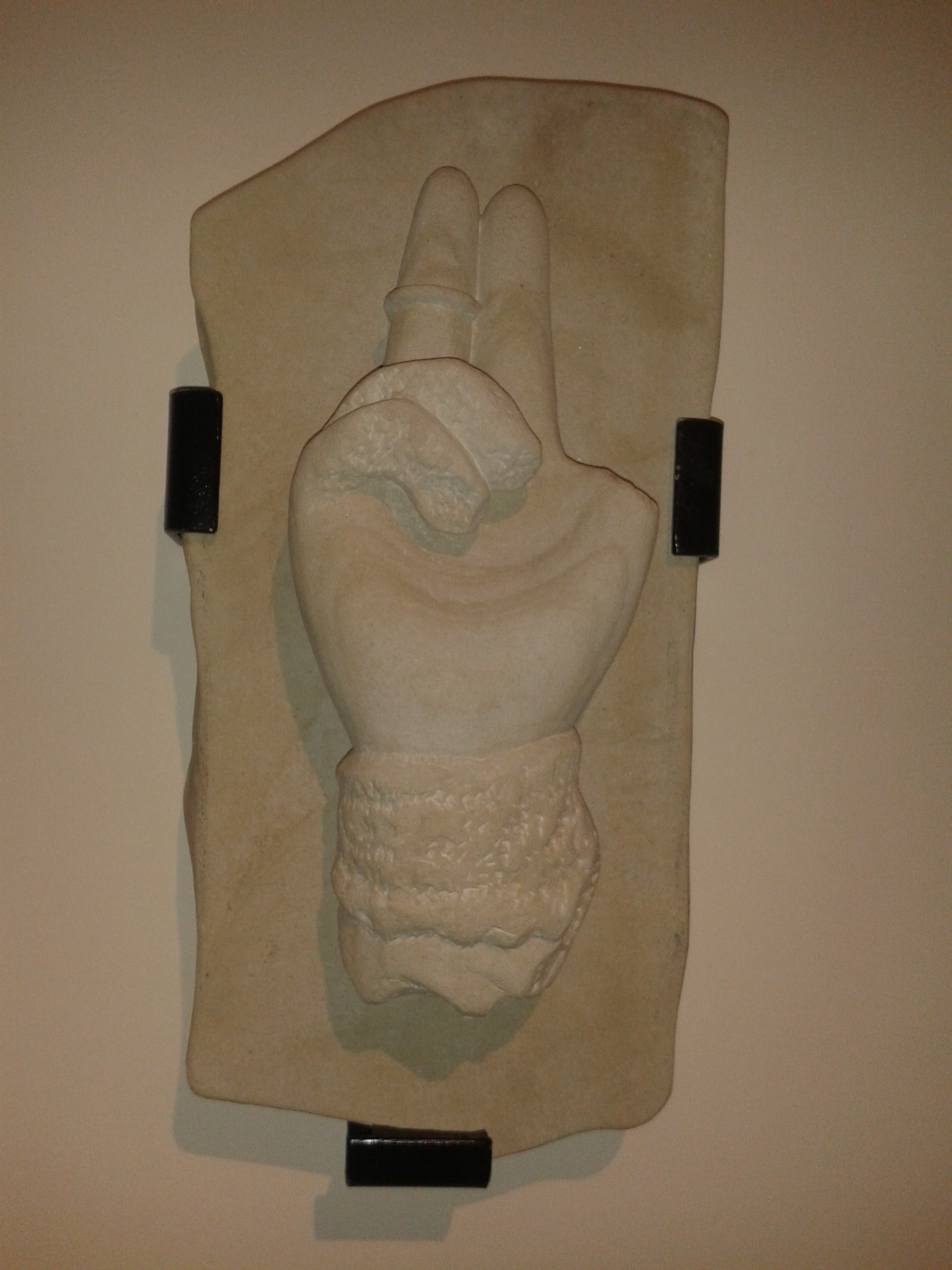
Replica in sandstone of a medieval carving of St Patrick’s hand by Claire Sampson
Another resource that will be added to the Faith and Freedom Great War Project in the near future is the Roll of Honour of the Non-Subscribing Presbyterian Church of Ireland – or at least as much of this that was printed in the Non-Subscribing Presbyterian magazine at the time.
Not surprisingly that magazine carries a great deal of information about the impact of the war on the denomination. The war brings about much comment and theological reflection from ministers and lay people but the extent of the impact only gradually comes to be realised as more and more members take up arms. The magazine decided to compile a Roll of Honour and in December 1914, four or so months after the outbreak, this was printed for the first time. Already it contained 141 names, all of them obviously volunteers, and representing 24 congregations. The list includes two who have been wounded and already the first loss – a member of the Dromore congregation – David Prentice who was lost in action on HMS Monmouth in a naval engagement off the coast of Chile. HMS Monmouth was an armoured cruiser that was built in 1901 and used mostly around Chinese waters. At the start of the First World War it was sent to the West Indies fleet and was part of the battle of Coronel, here it was sunk by the Germans with the loss of all hands.
In the next year the Roll of Honour was reprinted in March 1915, when it had been expanded to include 27 congregations. In January 1916 the list is updated when 360 names (including some women involved in nursing and other war work in some congregations) were listed in 29 congregations (out of a notional total of about 35). To this denominational list an additional three names were added in February. For the denomination as a whole of these 363 names eleven were listed as killed, missing or lost.
Rev Alfred Turner, minister of Templepatrick, at the front in the uniform of the YMCA
Having kept this Roll of Honour up until February 1916, strangely, it is not updated in the pages of the magazine again. At one point mention is made of an intention to publish on card the full Roll of Honour for the congregations but it is not clear if this was ever done. Why the Roll was never updated is hard to tell. The editor, the Rev Alfred Turner, was now working in France with the YMCA but the responsibility for providing this information lay with the individual congregations. Having begun keeping the record it seems strange that it stops.
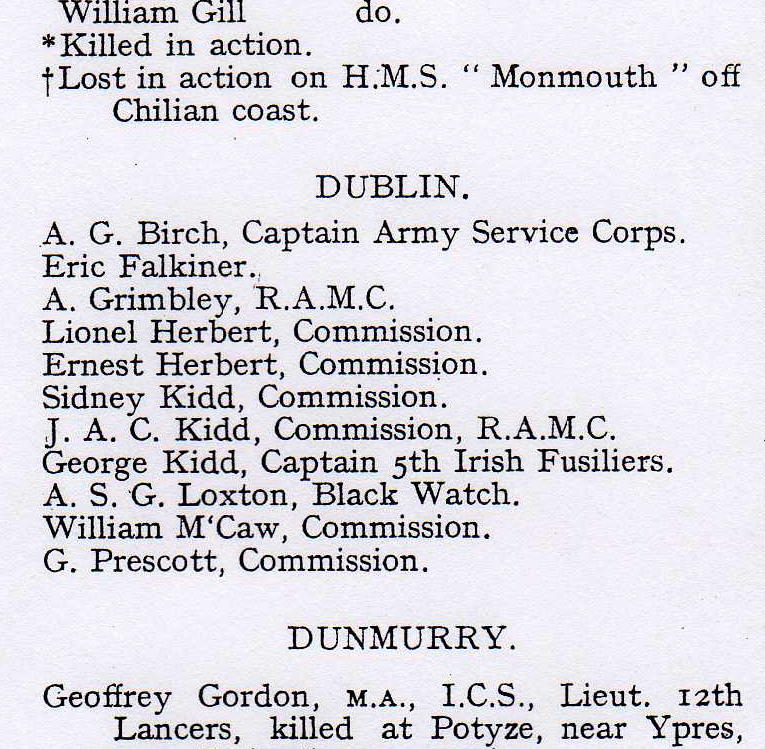
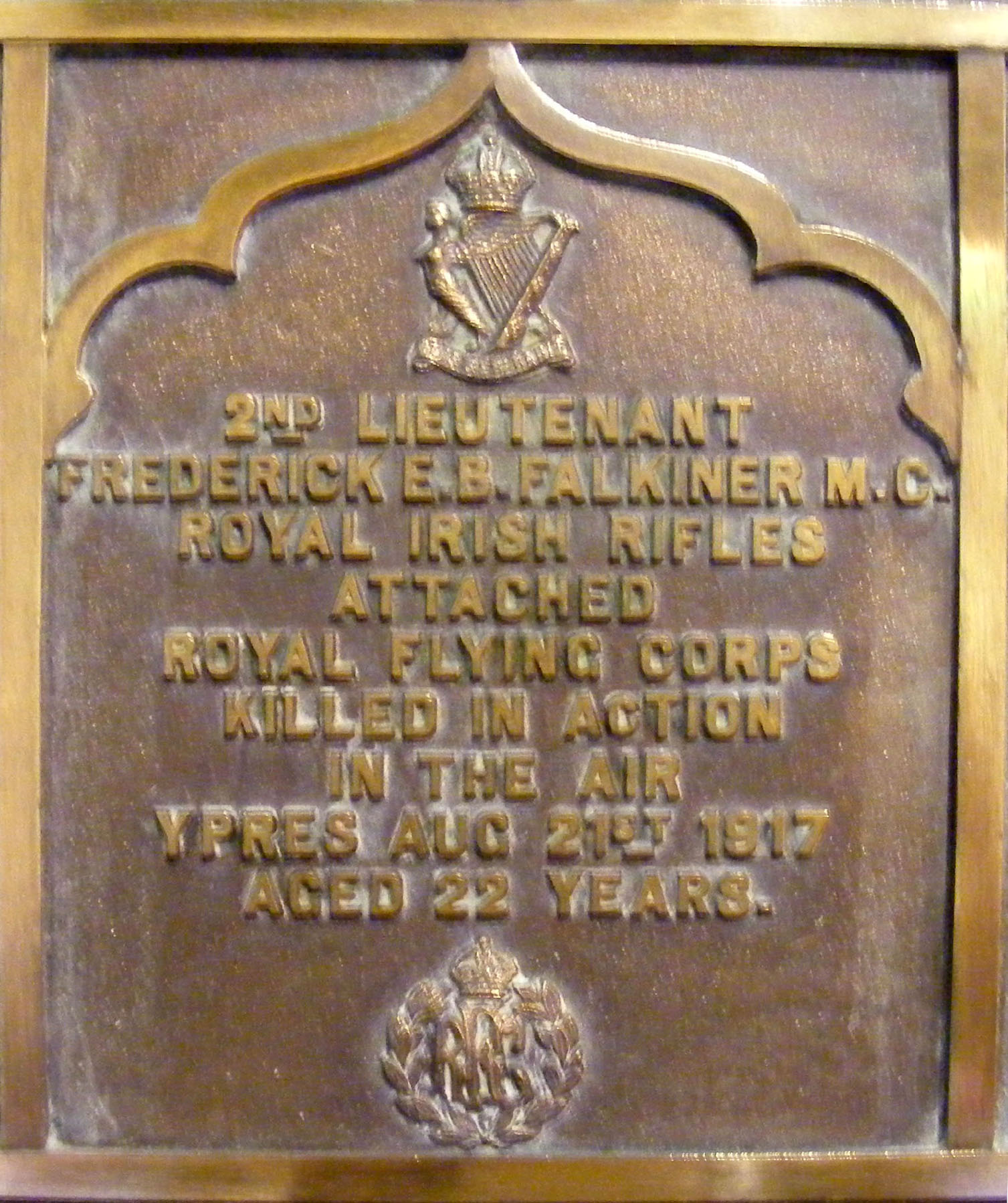
A result of the Roll never being completed is that we do not know the exact numbers of those who served in the First World War. But both the total number on the Roll of Honour and the number of those killed in the war are likely to be far greater than the numbers published between 1914 and 1916. There are, for instance, 16 obituaries of men killed in action (in two cases died of war wounds) in the magazine. Of these only three died before the publication of the January 1916 list and they do appear on the Roll of Honour but of the other thirteen only seven are listed and six are not, possibly because they had not joined up until after that date. The number of fatal casualties is likely to be much higher and a perusal of each church’s war memorial would give the true figure. If we look at the example of the Dublin congregation, for instance, on the January 1916 list there are eleven names included as having joined the armed forces. Yet the war memorial in the Church lists only those who were killed (all of them in 1917 and 1918) and of the five names preserved there three do not appear on the January 1916 list. To take another example in the case of Clough there are seven names on the published Roll of Honour, and no fatalities. However, on the Roll of Honour in the Church there are ten names, three of whom were killed in the war.
Detail of the Dublin names in the Non-Subscribing Presbyterian January 1916Memorial to 2nd Lieut. Frederick E.B. Falkiner MC in Dublin Unitarian Church. Killed serving with the Royal Flying Corps near Ypres August 1917 aged 22. (With thanks to P. Spain for photo)
But taking the denomination as a whole the Roll of Honour plus the additional obituaries makes a total of 24 killed in the First World War noted in the magazine in this way although clearly this cannot be the final total.
Of the 16 obituaries in the magazine 14 are of officers and most include a photograph of the deceased. Four obituaries appear in the August 1916 issue, all of them of soldiers apparently killed on the first day of the battle of the Somme. Whether an obituary appeared or not seemed to be entirely due to chance but was very unlikely for those who weren’t commissioned. There are in addition three brief notices, one of them of one of the sons of the Rev Alexander Gordon, and one mention of a death in a Rademon ‘News of the Churches’ report. This would make a total of 28 names of men killed in the war mentioned in the magazine, again certainly not the final total.
But a careful comparison of all the church memorials plus the obituaries found in the magazine plus the names on the Roll of Honour would at least give us a working total for those from the Non-Subscribing Presbyterian churches in Ireland who served and lost their lives in the First World War.
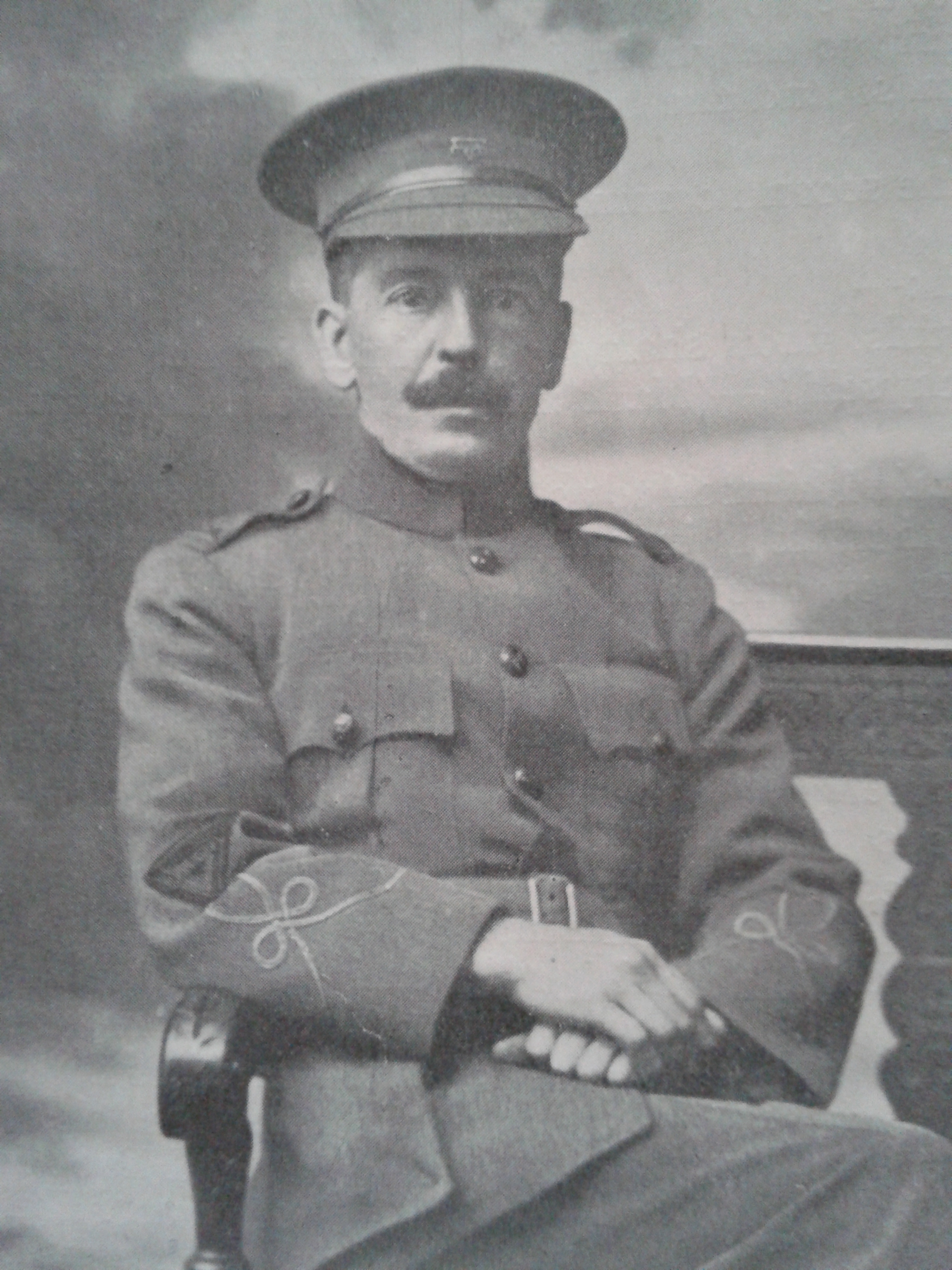
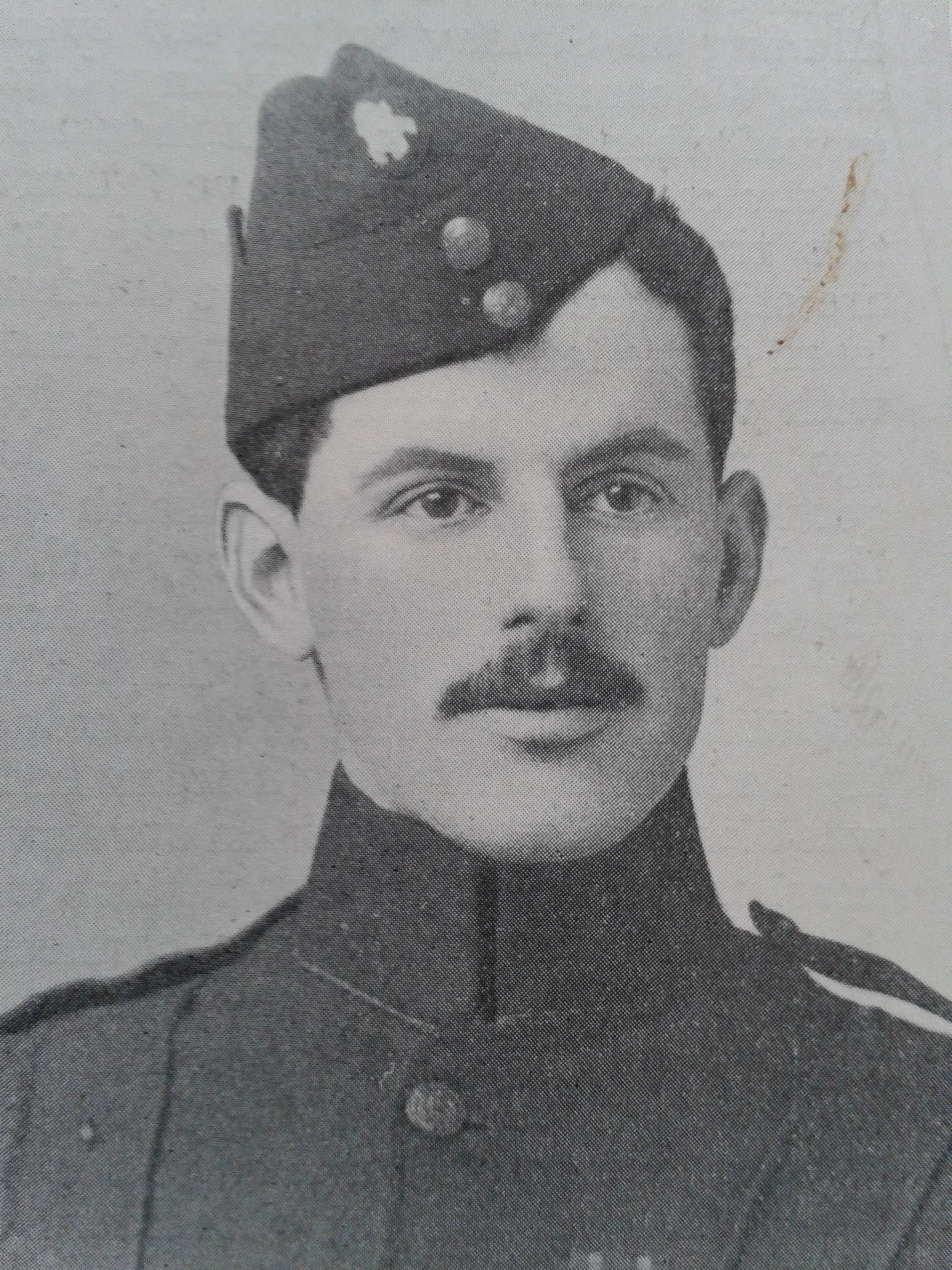
Although so many of those who died did not receive an obituary in the magazine some of the obituaries in the Non-Subscribing Presbyterian are quite informative. Most of the casualties were people who joined up at the start of the war but some had been career soldiers. One such was Captain Craig Nelson of Downpatrick who was killed in action on 26th September 1915. He was an officer in the 3rd Brahman regiment, part of the Indian army and a grandson of Rev S.C. Nelson, minister of Downpatrick. His father was Dr Edwin Field Nelson, the fifth son of Samuel Craig Nelson, a senior surgeon in the locality who had himself attained the rank of Surgeon-Major in the local Militia and continued as medical officer for soldiers in the Downpatrick district during the war up to his death in May 1916. But his son, Craig Nelson, was killed the year before, his other two sons both serving officers in the navy or the army. Craig Nelson was a career officer who had been commissioned into the Royal Irish Rifles and served throughout the South African war. He subsequently transferred to the Indian Army and served first in Egypt and then on the Western Front.
The Downpatrick minister, Rev M.S. Dunbar, said of him:
We cannot help our feelings being moved when we think of the thousands of our countrymen who have fallen in this titanic struggle, but our feelings are still more acute when we suddenly learn of the fate of one who we knew, with whom we conversed not so long ago, and who, when we bade him good-bye, was in perfect health and the best of spirits. The War, with all its dread consequences, comes home to us as it never did before. Captain Nelson was brought up amongst us, and when on furlough from India, was always pleased to join in our service here, and to recall his associations with the church and the people connected with it.
Captain Craig Nelson
The Faith and Freedom Great War Project can be seen here:
The Faith and Freedom Great War project continues to expand and we hope to see added to the site in the near future a number of new articles, including Alan Ruston’s piece for the Transactions of the Unitarian Historical Society (1993), ‘Killed Fighting in the First World War’; and a moving sermon by Andrew Hill who recounts his father’s experiences during the First World War as a ministerial student who was assigned to “Non Combatant service only on conscientious grounds”.
We have also received a good number of images of war memorials from many different places. Brendan Burke has sent a whole sequence of pictures of the memorial in the South Mall in Cork. Of course it is not related directly to the Unitarian (or any church) in Cork but unveiled in 1925 it is a rare example of such a public memorial in the Irish Republic. It shows a soldier of the Royal Munster Fusiliers with the names of the war dead (which almost certainly includes some members of the Princes Street congregation) on a plinth underneath.
Cork Peace Park (Photo: Brendan Burke)
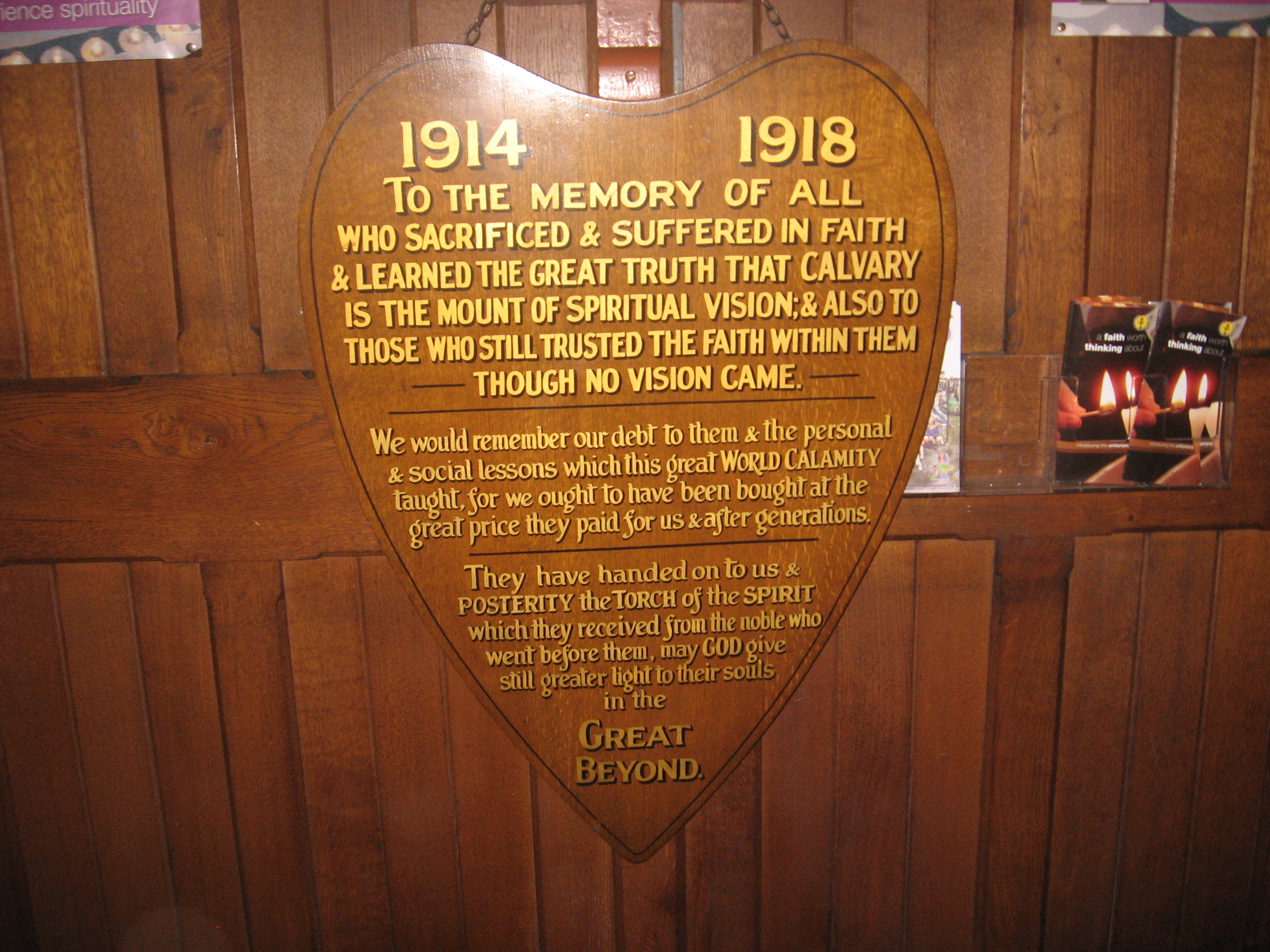
We’ve a good number of images of war memorials too from churches in Northern Ireland, many of them designed by Rosamund Praeger, the famous sculptor who was also a member of the Holywood NSP congregation.
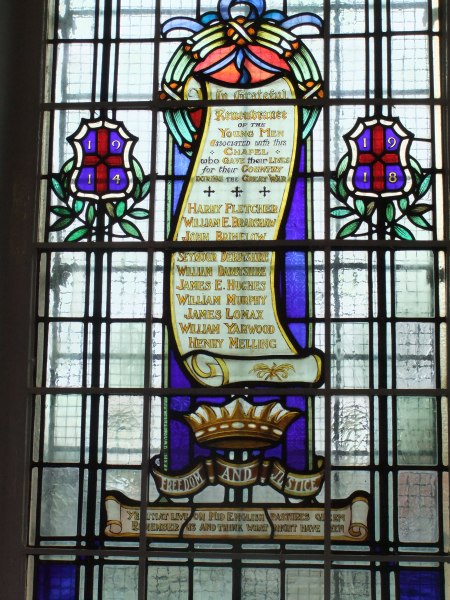
Lynne Readett has sent some fascinating material from Park Lane Chapel, Ashton in Makerfield. Here the memorial takes two forms – the first a stained glass window listing the names of those who were killed in the war. This was beautifully restored and rededicated at a service to mark the outbreak of the First World War in August 2014. The congregation also built an extension to their school house as a further memorial in 1925.
Memorial window Park Lane (Photo: Lynne Readett)
The window contains a list of the Chapel’s fallen as well as the legend ‘Freedom and Justice’ and the quotation ‘Ye that live on mid English pastures green, remember us and think what might have been’. This was a commonly used verse on memorials all over England at the time but I don’t know the source, does anyone know where it comes from?
Lynne has supplied the site with photographs and accounts of special services held both there and at Cairo Street, Warrington, together with details of those who were killed in the war who belonged to Cairo Street. Susan Naylor has also supplied details of the members of Park Lane who died in the First World War.
Jennifer Young has sent a picture of the war memorial at Lincoln Unitarian Chapel. I have only visited this Chapel once, some years ago when it was refurbished under the ministry of the Rev Paul Travis but I have to confess that I don’t remember seeing this memorial. It seems rather verbose, it carries the names of no individuals and is quite unlike any other memorial that I am aware of. It is interesting to compare it with the Park Lane memorial window. If like so many church war memorials it dates from the early 1920s then I would guess it is the work of the minister at the time the Rev J. Lionel Tayler.
Lincoln War Memorial (Photo: Jennifer Young)
But it is very pleasing to record that a wide variety of material is being sent in for the Project and more is very much welcomed, including anything that forms part of the church experience of the Great War.
With the forthcoming opening of the extension to Down Museum to house the Downpatrick High Cross in a new interpretative centre I thought it might be appropriate to say something about the old cross.
The view from behind the old cross looking along the Mall
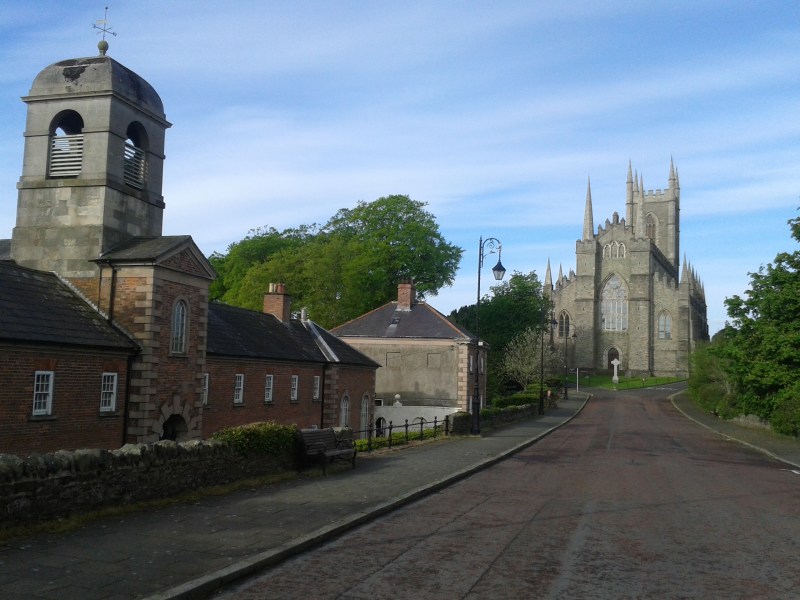
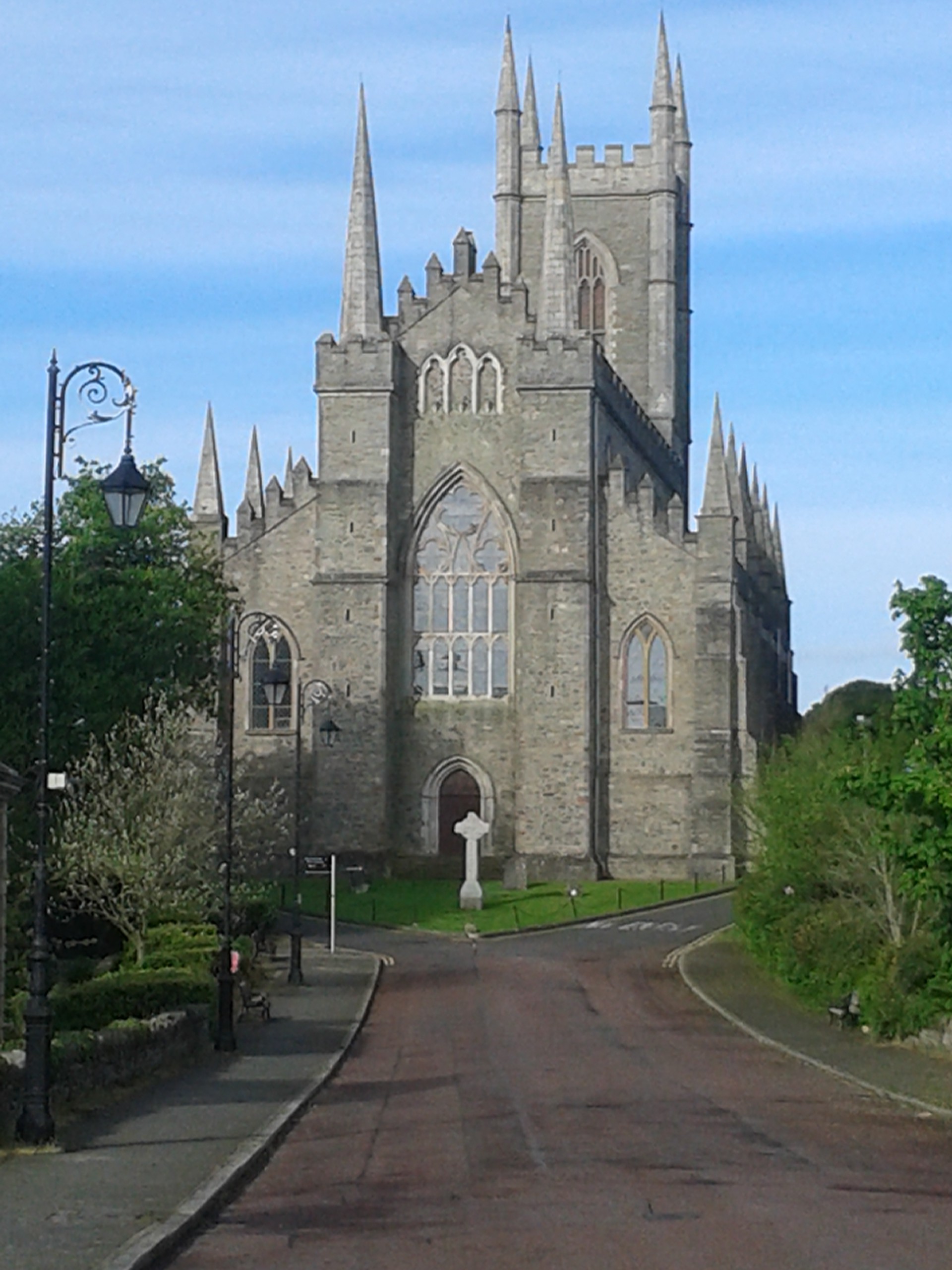
If you have been to Down Cathedral then you will have walked past the High Cross that sits just outside the Cathedral. This is very old – or to be exact it is a copy of something that is very old, because in December 2013 it was taken down and replaced with an exact copy. The original cross is about 1,100 years old and was put up in about 900 AD. This has now been taken down to be conserved and protected from the elements and has been replaced with a new one, an exact replica in Mourne granite weighing in at one tonne. Using modern technology the weathered design of the old cross was exactly replicated on the new cross.
The view of the new cross in front of the cathedral
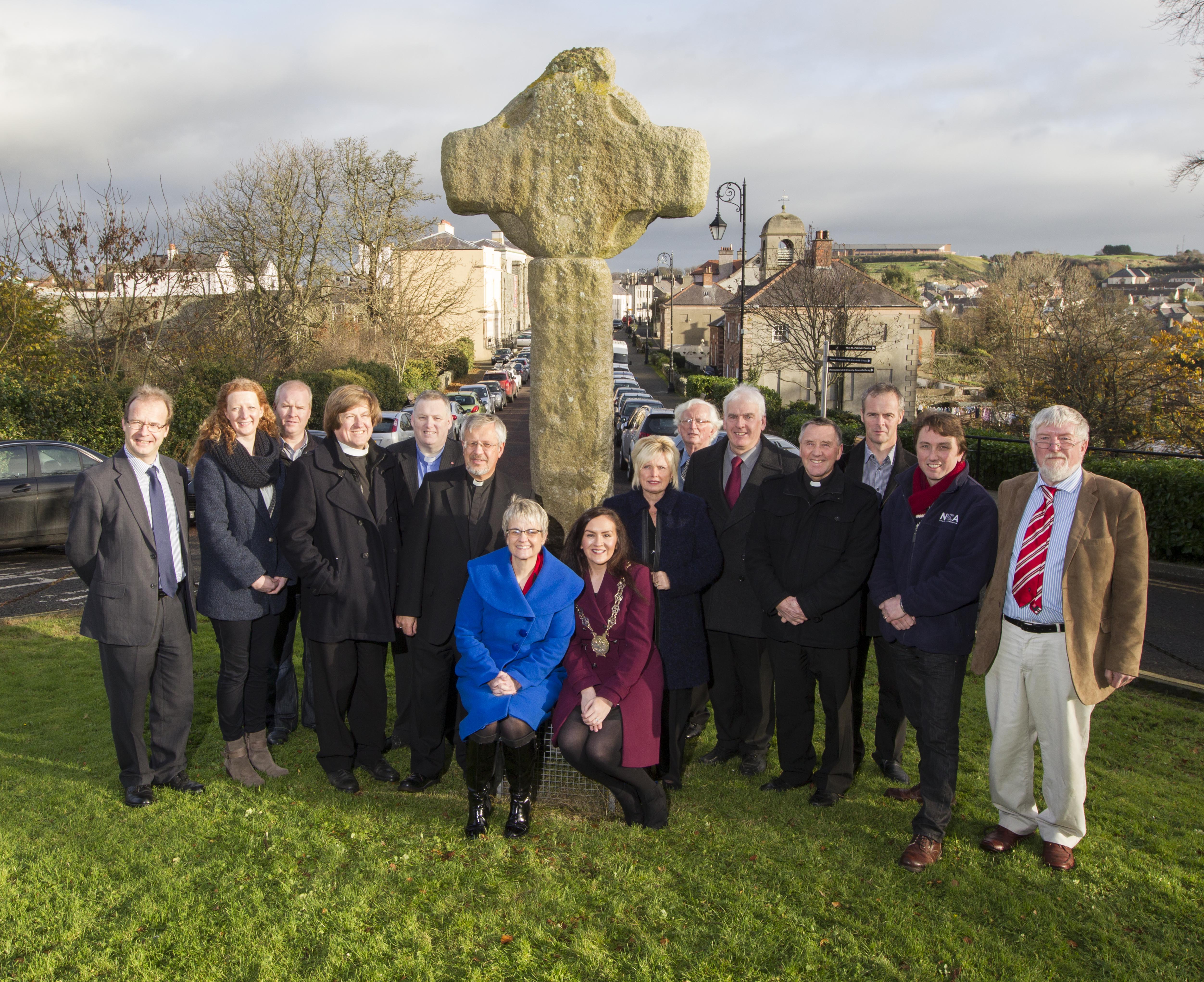
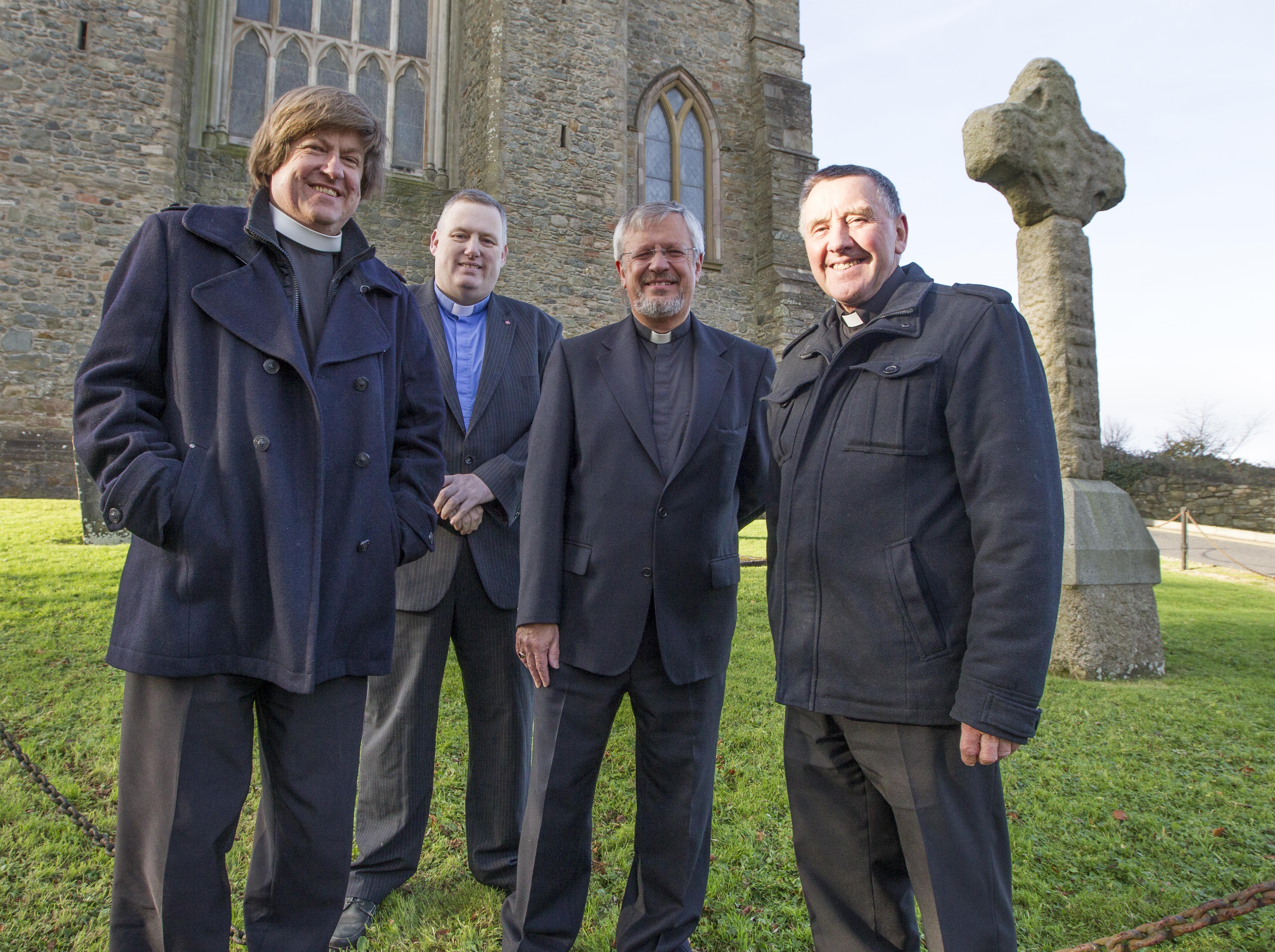
Through the kindness of the Dean of Down, the Very Rev Henry Hull, who is always so inclusive in all the special and civic events in the Cathedral, I was privileged, along with all the local clergy, both to be present at the removal of the old cross and to take part in the blessing of the new cross that was put in its place before Easter last year.
Politicans, museum staff and clergy, just prior to the removal of the old cross
The original cross stood outside the ancient monastery established in Downpatrick in the centuries following the death of St Patrick. It stayed there until the Reformation when it was taken down and used as the town’s Market Cross, located outside the Market House. Over time it was damaged and its pieces dispersed around the town until the 1890s when Francis Joseph Bigger, the famous antiquarian, reconstructed the cross and had it placed outside the Cathedral.
These ancient high crosses carried a lot of information. Although now difficult to make out in any detail they tell the Christian story. The Downpatrick Cross carries an image of the crucifixion as well as Jesus entering Jerusalem on donkey on Palm Sunday. The Cross is also believed to show the heads of Adam and Eve and Cain about to slay Abel. To me though the most interesting images on the cross are those of St Anthony and St Paul. It is very hard to make out but at the top of the shaft on one side of the cross there are two figures sat facing each other. Between them is a circle and above them something else that may be a bird. These two saints (who lived in the 3rd and 4th centuries) were important in the spread of monasticism and scholars suggest that the image represented is that of their meeting at the hermitage at Mount Colzim in Egypt, a meeting that reputedly took place in AD 347. According to the story a raven flew down and deposited a loaf of bread between them, paralleling the story of Elijah being fed by ravens in the Old Testament. The two holy men then disputed over who should have the responsibility of breaking the bread, each of them deferring to the other, until eventually they both picked up the loaf and pulled together, neatly representing the sharing of the Eucharist.
Local clergy in front of the old cross
All the detail is very worn now, and it is very hard to make out. But it is good to know that the same ancient cross that has been in the town since before the end of the first millennium is now being preserved.
In his excellent short article on Jeremiah Horrocks in the book Liverpool Unitarians Faith and Action Bernard Cliffe is very cautious about making too many definite assertions about his life. As Bernard puts it “an account of the life of the boy and the young man has to be a matter of conjecture, with the generous use of qualifying words.” The truth is we have very few hard facts about the life of this pioneer astronomer who died at the young age of 22. Inevitably though this hasn’t stopped others from drawing all sorts of conclusions about his life.
One of the things we do know for sure was the extent of his achievement as a youthful astronomer – indeed there are some parallels here with the life of Clyde Tombaugh who first identified Pluto in his 20s. Clyde Tombaugh now has a feature on Pluto’s surface named after him while Jeremiah Horrocks himself has been memorialized in a number of places since his initial observation of the transit of Venus across the Sun.
Horrocks’s discoveries were only published posthumously and, gradually, in the centuries after that, places – and churches – were keen to claim him as one of their own. But his scientific importance is pretty well established. Allan Chapman (in ‘Jeremiah Horrocks, the transit of Venus and the ‘New Astronomy’ in early seventeenth-century England’, Journal of the Royal Astronomical Society, 1990, 31) says that despite a scientific hagiography that has also built up around him “the plain fact [is] that his documented contributions to astronomy were formidable by any standard…he was one of the first men in England to grasp the significance of what was going on in contemporary European astronomy. Not only did he repeat many of the techniques of Kepler and Galileo, but he went on to develop the New Astronomy to produce conclusions which substantially advanced those of its continental founders” (pp.33-334).
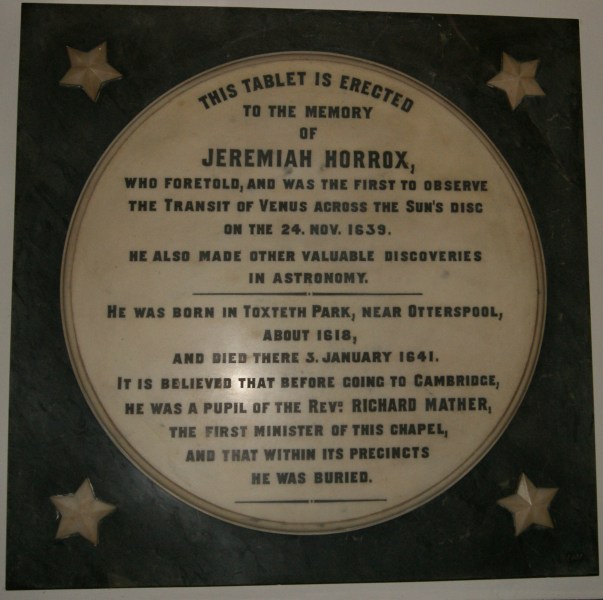
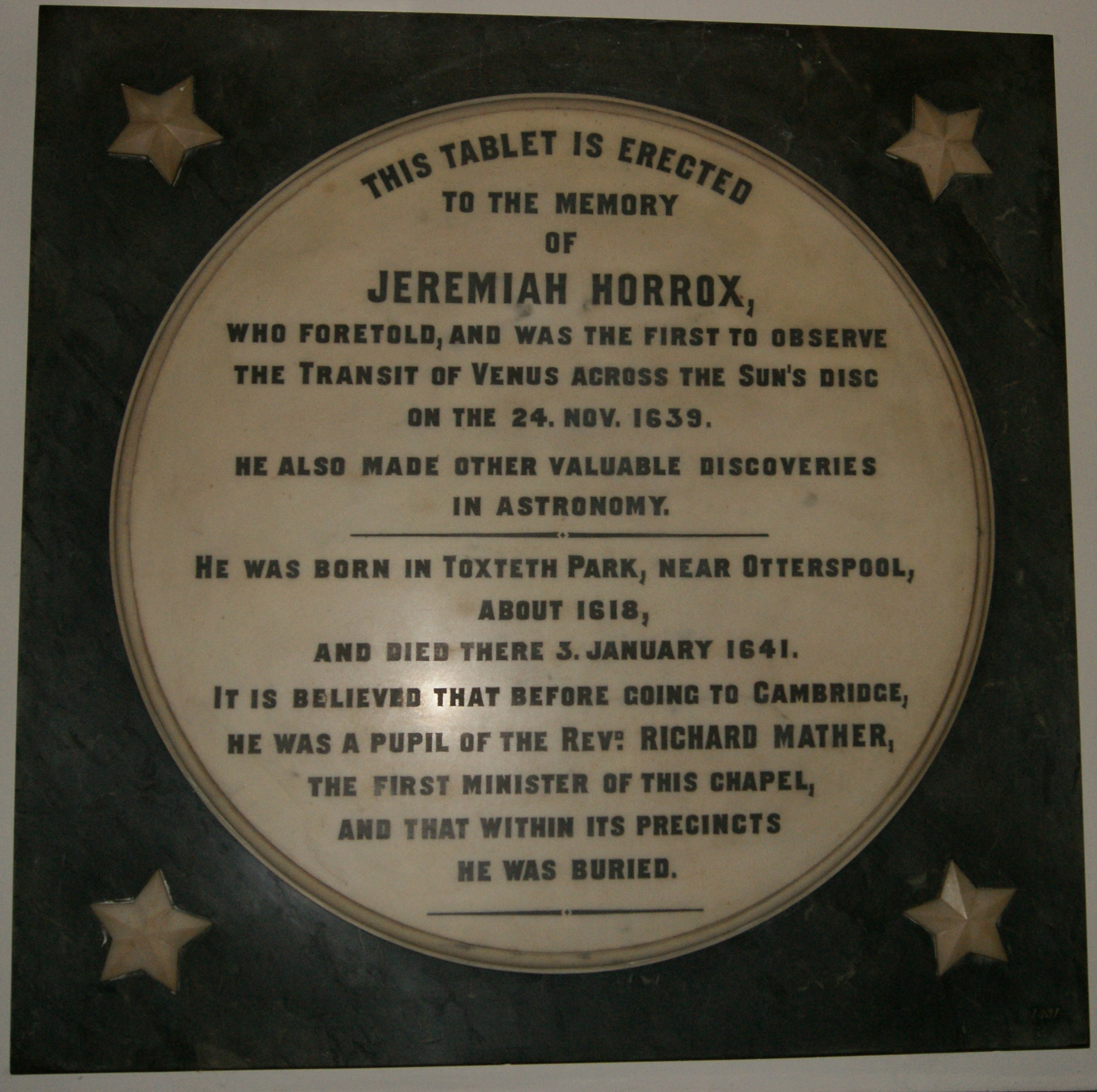
A plaque in the Ancient Chapel of Toxteth records that Jeremiah Horrocks (or Horrox) “foretold, and was the first to observe the transit of Venus across the Sun’s disc on the 24. Nov. 1639”. But the plaque, which was put up in 1891, is, in fact, only one of four church memorials to him around the country.
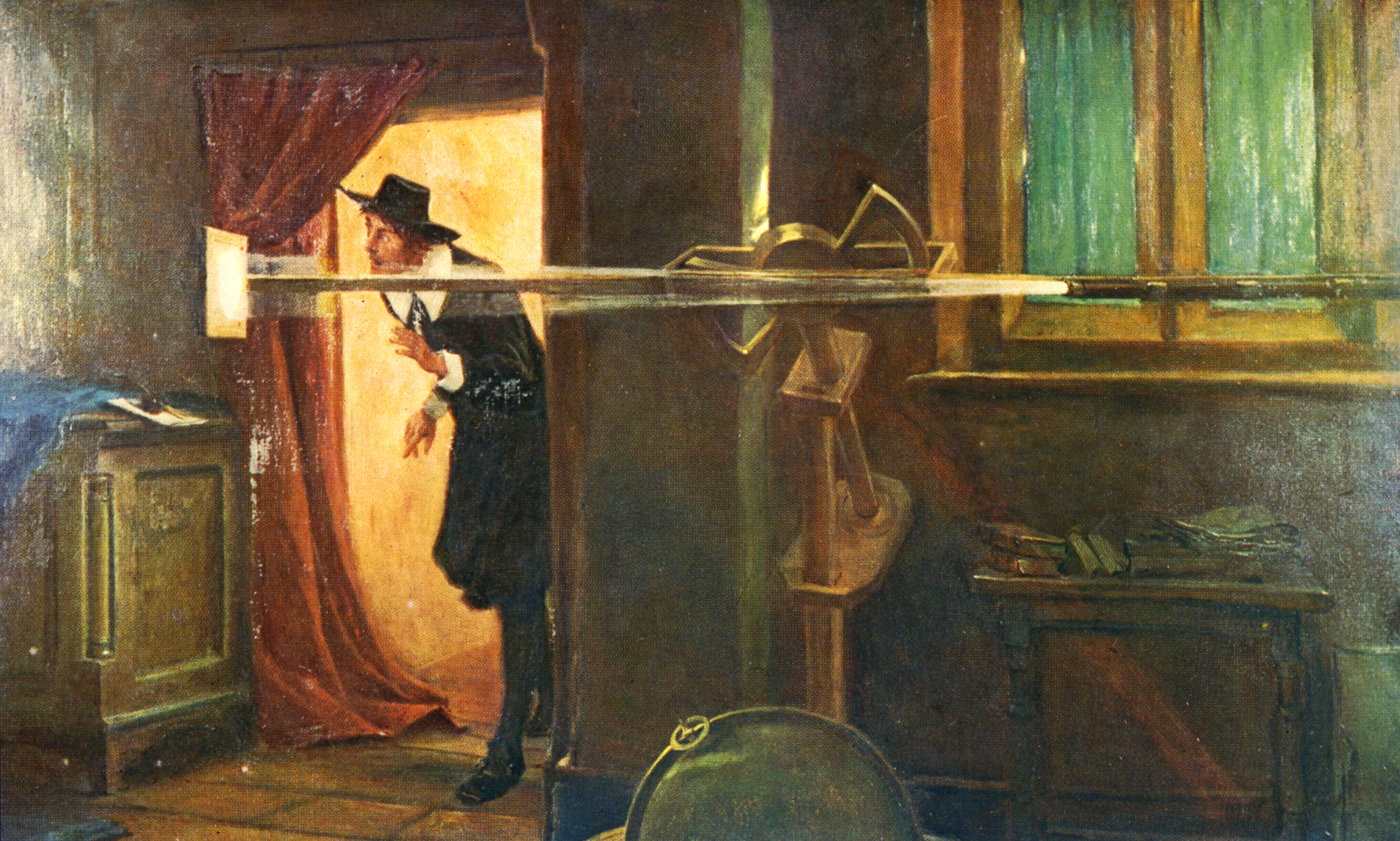
A Victorian depiction of Jeremiah Horrocks observing the transit of Venus
Without doubt the best known of these is in Westminster Abbey erected opposite that of Isaac Newton (who had praised his work) in 1874 following a petition from the Council of the Royal Astronomical Society (actually inscribed on part of the marble monument to John Conduitt, who was married to the niece of Isaac Newton). Certainly the Abbey is a fitting place for a memorial to such a person. On it his scientific achievements are listed but it also states that he was “Curate of Hoole”. Now there is no doubt that Hoole is where Jeremiah Horrocks lived for a while and where he observed the transit of Venus. But there is no evidence that he was ever curate of Hoole, or indeed an ordained clergyman of any sort.
The Victorians were not slow to extend or embellish their assessment of his religious affiliations. The church at Hoole has its own memorials too including a Horrocks Chapel, memorial windows, a weather vane and a plaque, although the website of St Michael’s Church, Hoole now describes the text of this plaque as “largely fictional”.
Jeremiah Horrocks seems to have spent about a year in Hoole. Rather than being a curate or holding any position in the church he was probably a tutor to the children of a local family, in whose home he observed the transit of Venus. But there can be little doubt that he will have attended the church at Hoole while he was resident there. At the time there will have been little difference in the theological outlook of Hoole and the Ancient Chapel of Toxteth. Both were centres of Puritanism – comprising earnest, godly, and devout parishioners, in both places members being technically part of the Church of England (there was little leeway to be anything else at the time) but possessing a no-nonsense approach to faith and a fair degree of suspicion of ecclesiastical hierarchies. During his time there the church was still a just a chapel of ease and the curate (later rector) was eventually ejected for non-conformity.
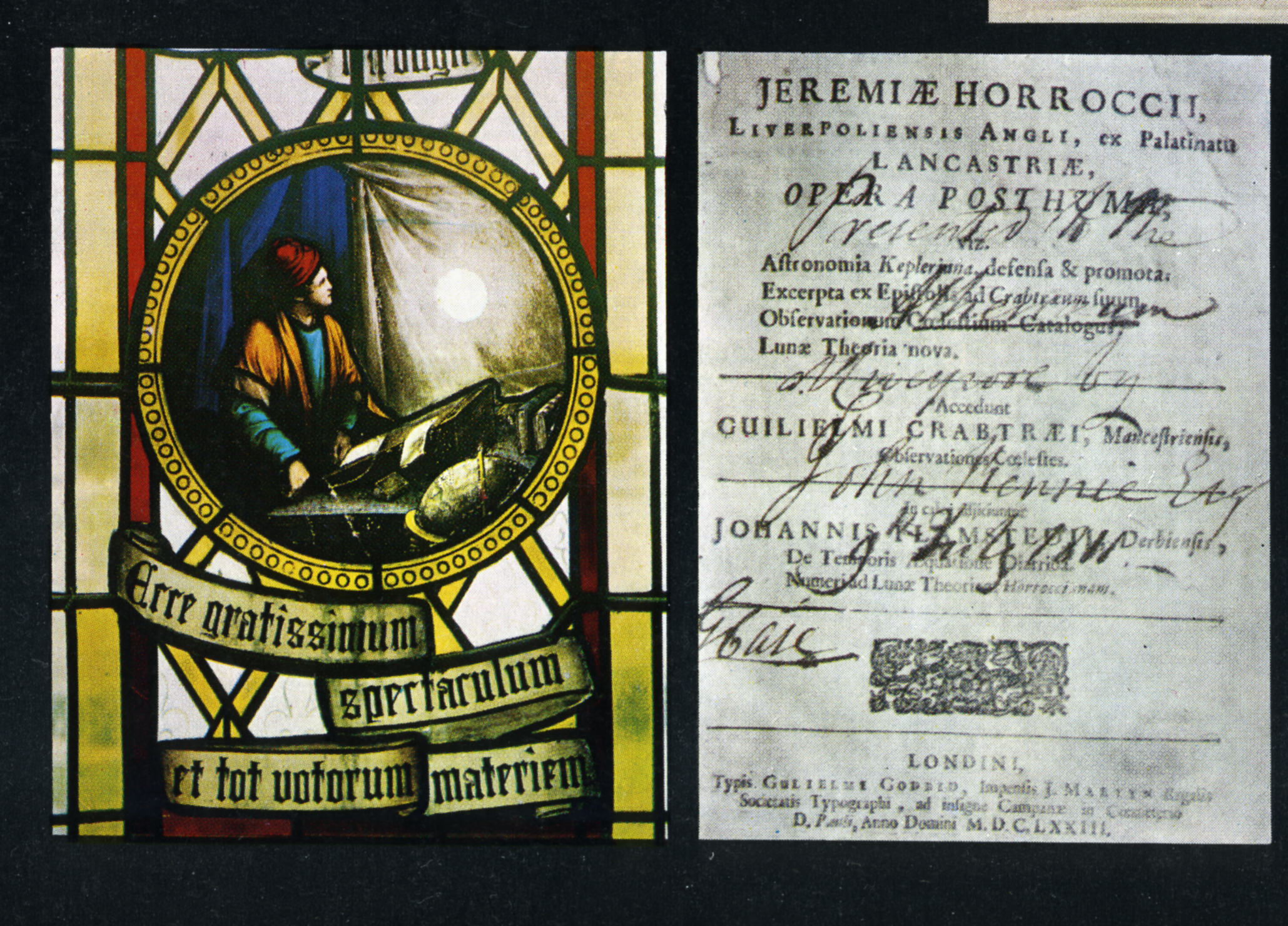
The stained glass window at Hoole Church and the title page of Horrocks’ posthumous work
Although no records of Horrocks’ baptism or burial survive he seems both to have been born and died in Toxteth where his family names illustrate the Puritanism of his background. The names of Horrocks and Aspinwall (his mother’s maiden name) were amongst those puritan settlers who arrived in Toxteth in the late sixteenth century and began clearing the hunting park and built the chapel. They were part of the group who called Richard Mather to be first their schoolmaster and then their minister. The same Richard Mather was reluctant to accept Episcopal ordination. He eventually did so but was alarmed after being ordained (so the story goes) when the bishop approached him and asked to speak to him in confidence. Fearing that some admonishment was imminent he was surprised instead to hear the bishop say “I have an earnest request unto you, and you must not deny me; it is that you will pray for me; for I know that the prayers of men that fear God will avail much, and such an one I believe you to be.” Despite this unusual alleged exchange with the bishop he was eventually suspended for nonconformity and subsequently left with many of his followers for New England.
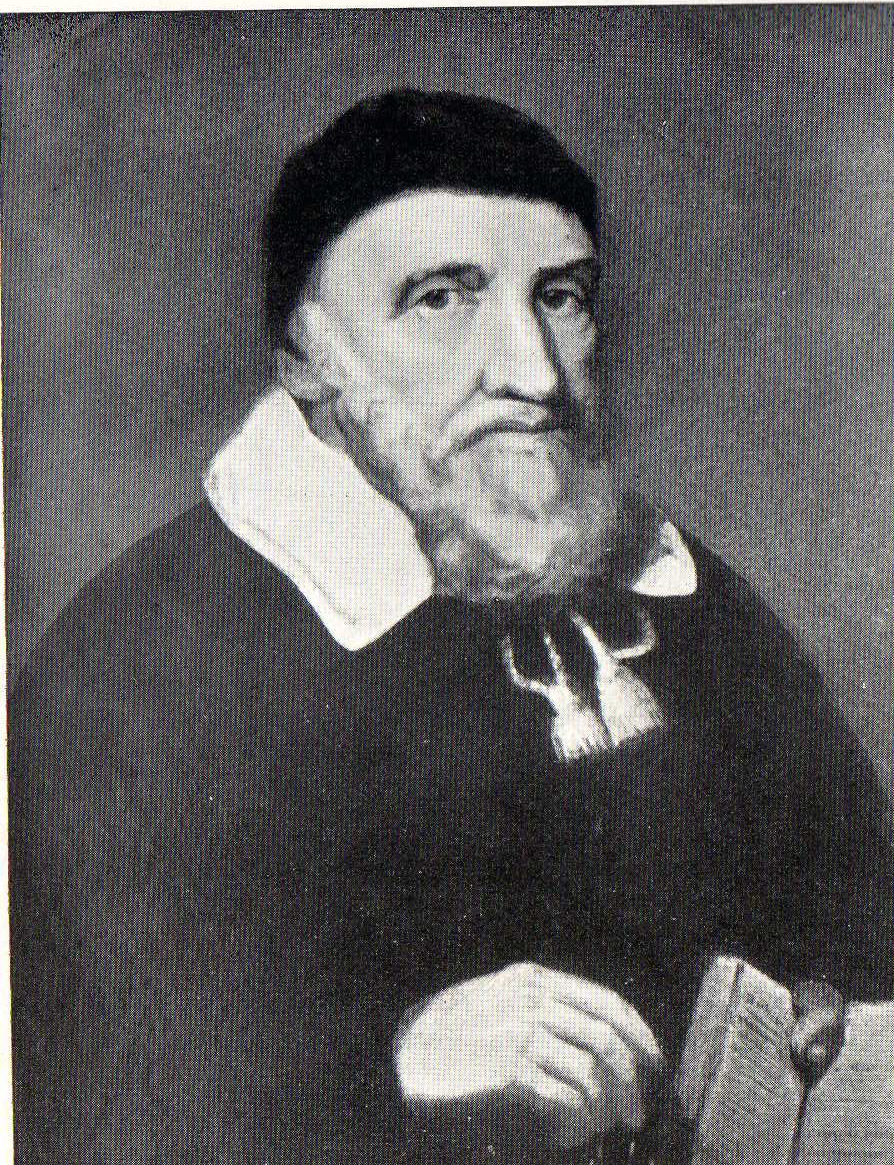
Richard Mather
It was probably here that Horrocks was educated and his religious opinions formed. From Toxteth he went to Emmanuel College, Cambridge as a sizar, basically the lowest form of student life, working as a college servant alongside his studies. He left without taking a degree but developed a passion for astronomy while there and was soon manufacturing his own astronomical instruments. Members of the Horrocks family, quite probably including his father, were watchmakers which must have been an assistance in developing precision instruments.
But following his death on 3rd January 1641 two hundred and fifty years were to pass before the Ancient Chapel erected its own memorial in his memory.
But this is not the only church memorial to Jeremiah Horrocks in Liverpool. In 1826 Moses Holden, described by the Oxford Dictionary of National Biography as a “popular astronomer,” used the proceeds of one of his lectures to pay for the erection of a memorial tablet in St Michael’s in the Hamlet church in Aigburth, not far from the Ancient Chapel. It may well have been awareness of this tablet that encouraged the Unitarians to put up their own. Holden seems himself to have been a Methodist lay preacher but was on good terms with the established church. Nevertheless Jeremiah Horrocks can never have had any connection with St Michael’s in the Hamlet, since it was not founded until 1815.
Horrocks is commemorated in other ways too – additional memorials in Hoole and Liverpool; an observatory; an institute of the University of Central Lancaster – but it is curious how a variety of religious traditions have all sought to harness him for their own adornment. All of them have some claim on him but – in my view at least – it is the memorial that is the least known and acknowledged, the one in the Unitarian Ancient Chapel of Toxteth, that is most appropriate. Not because he was a Unitarian – because he wasn’t, such an idea would have been absurd to him. Not because he was a dissenter, because he wasn’t that either. As I have suggested his own views were almost certainly very strongly puritan and he held them within the context (technically at least) of the Church of England. But the little chapel in Toxteth Park was the place where he grew up and was educated. He was therefore part of a particular religious community founded in the last years of the sixteenth century and continuing ever since. The memorial to Jeremiah Horrocks was unveiled on Sunday, 11th October 1891, the minister, the Rev Valentine D. Davis preaching a sermon based on Genesis ch.1 v.1,3:
In the beginning God created the heavens and the earth. And God said, “Let there be light”; and there was light.
The Memorial to Jeremiah Horrocks in the Ancient Chapel of Toxteth, Liverpool
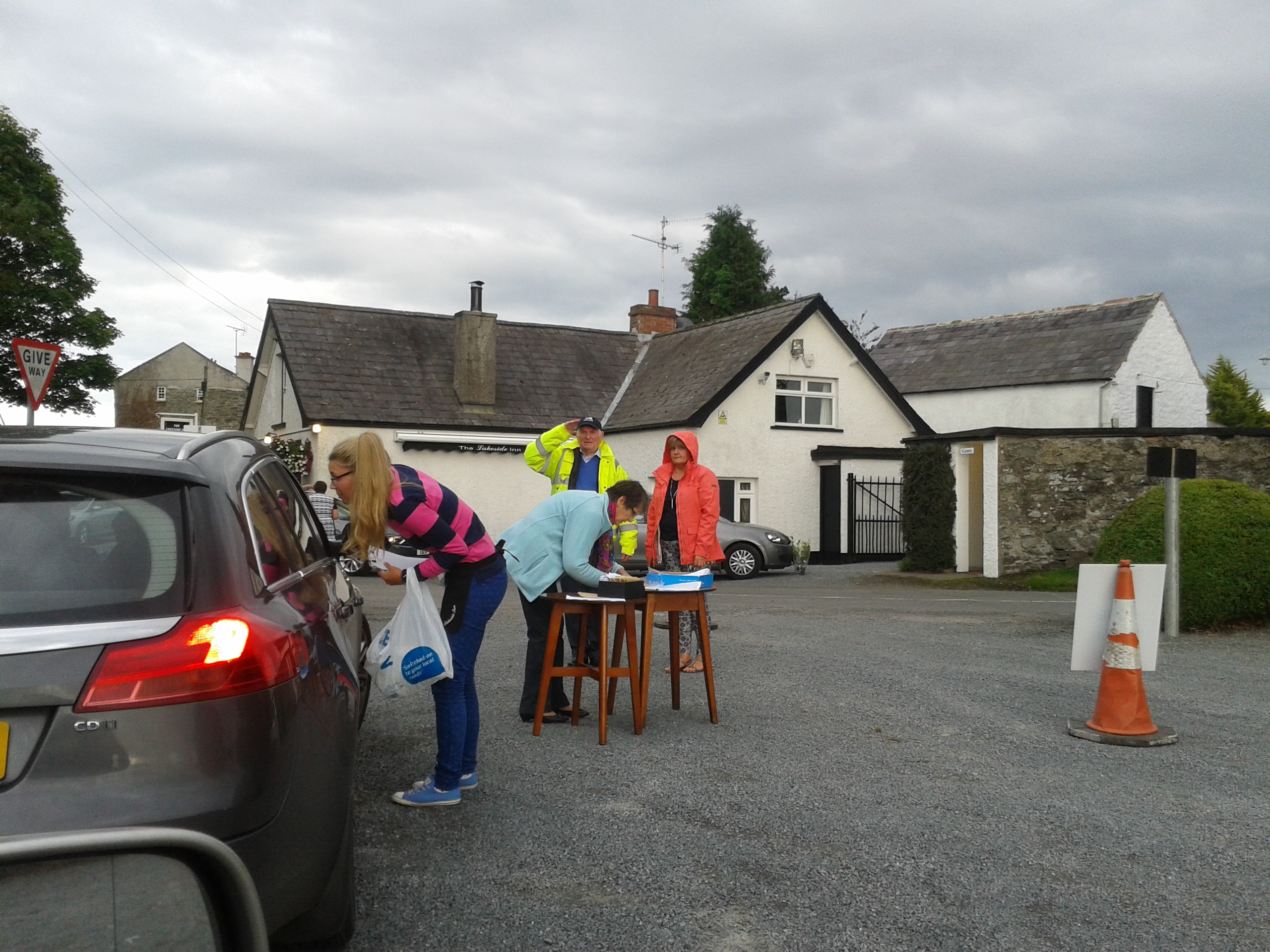
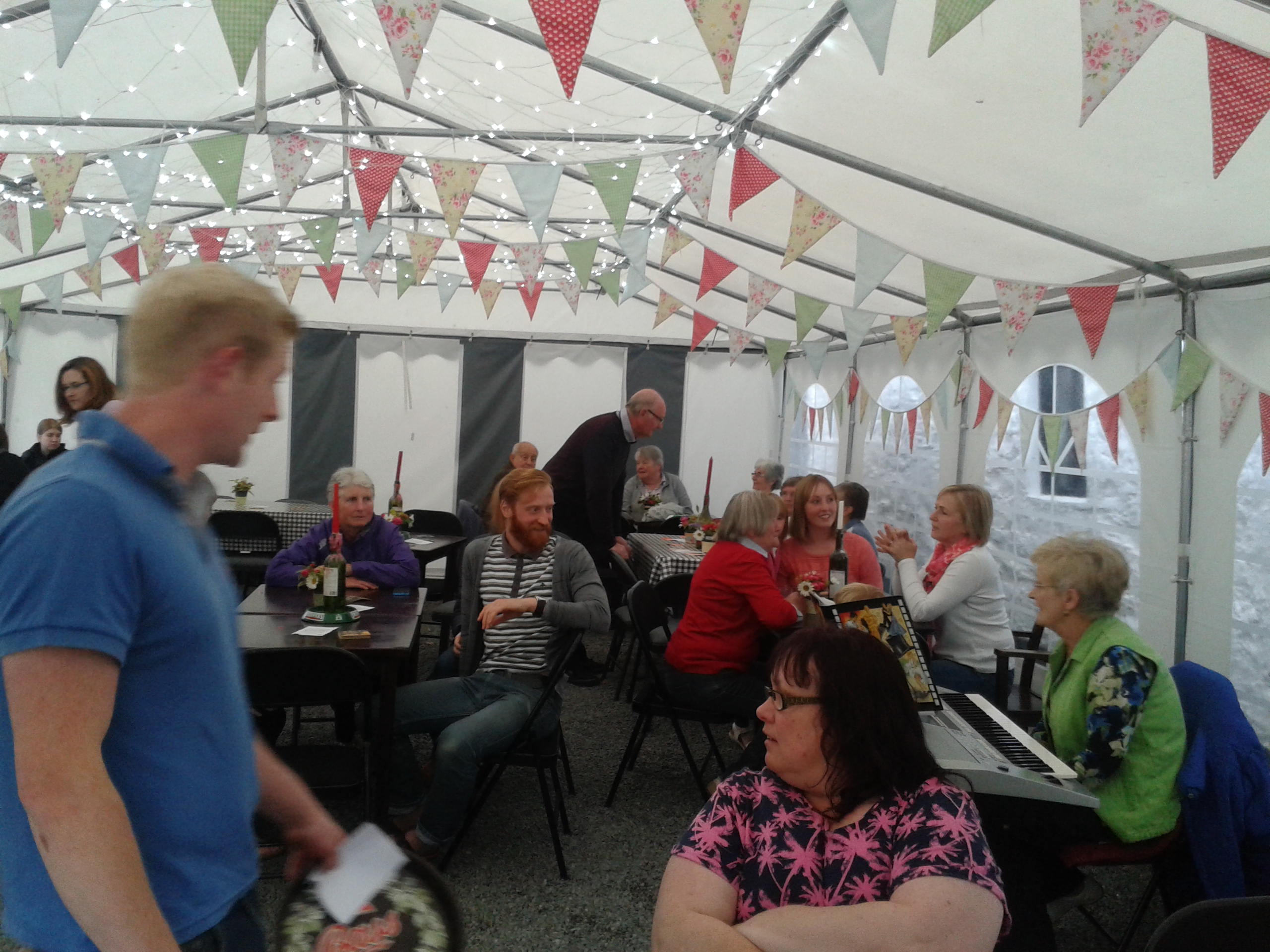
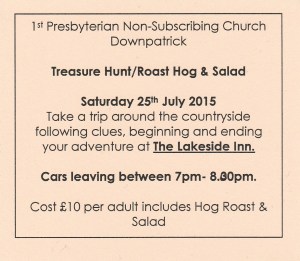
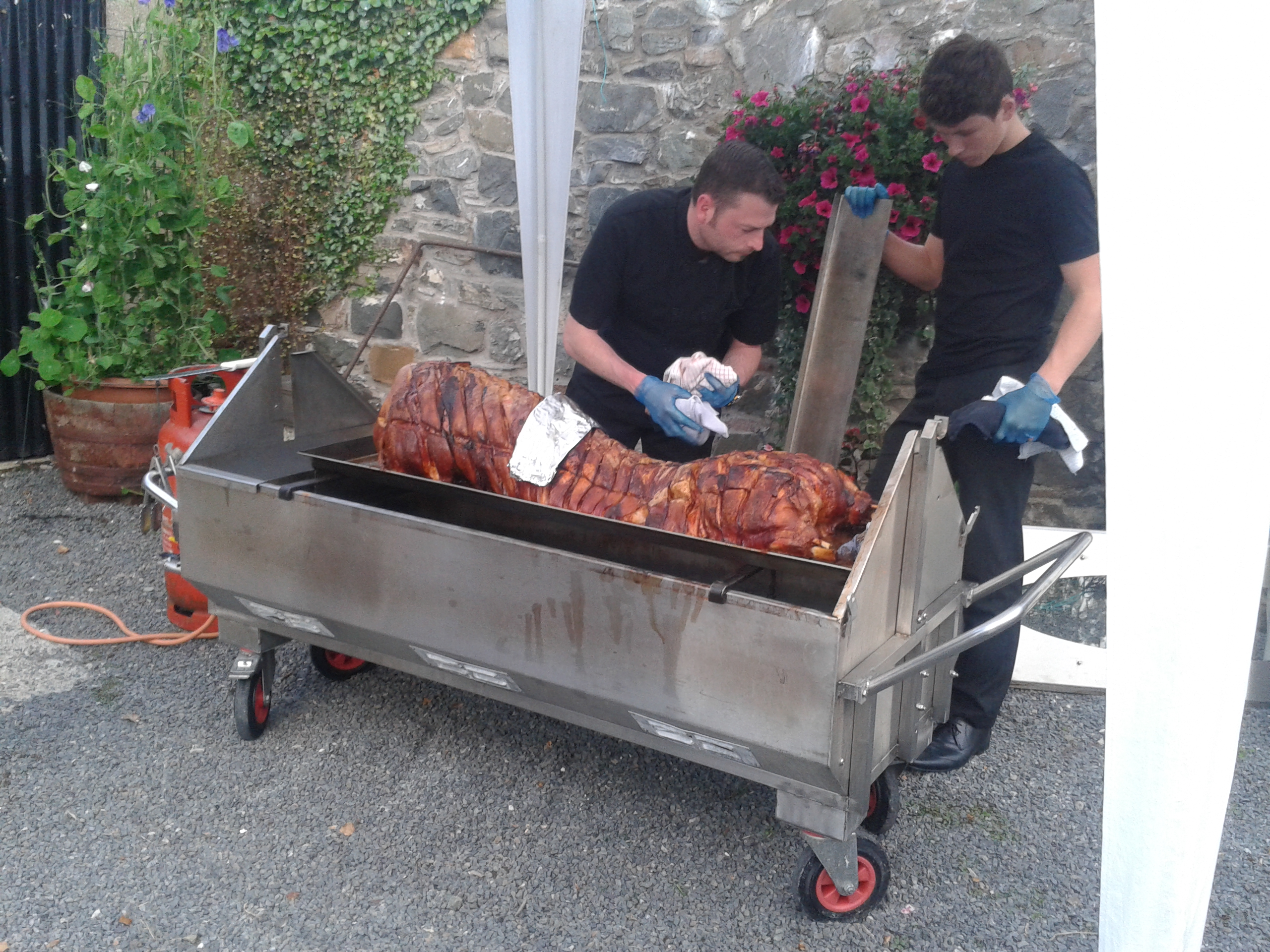
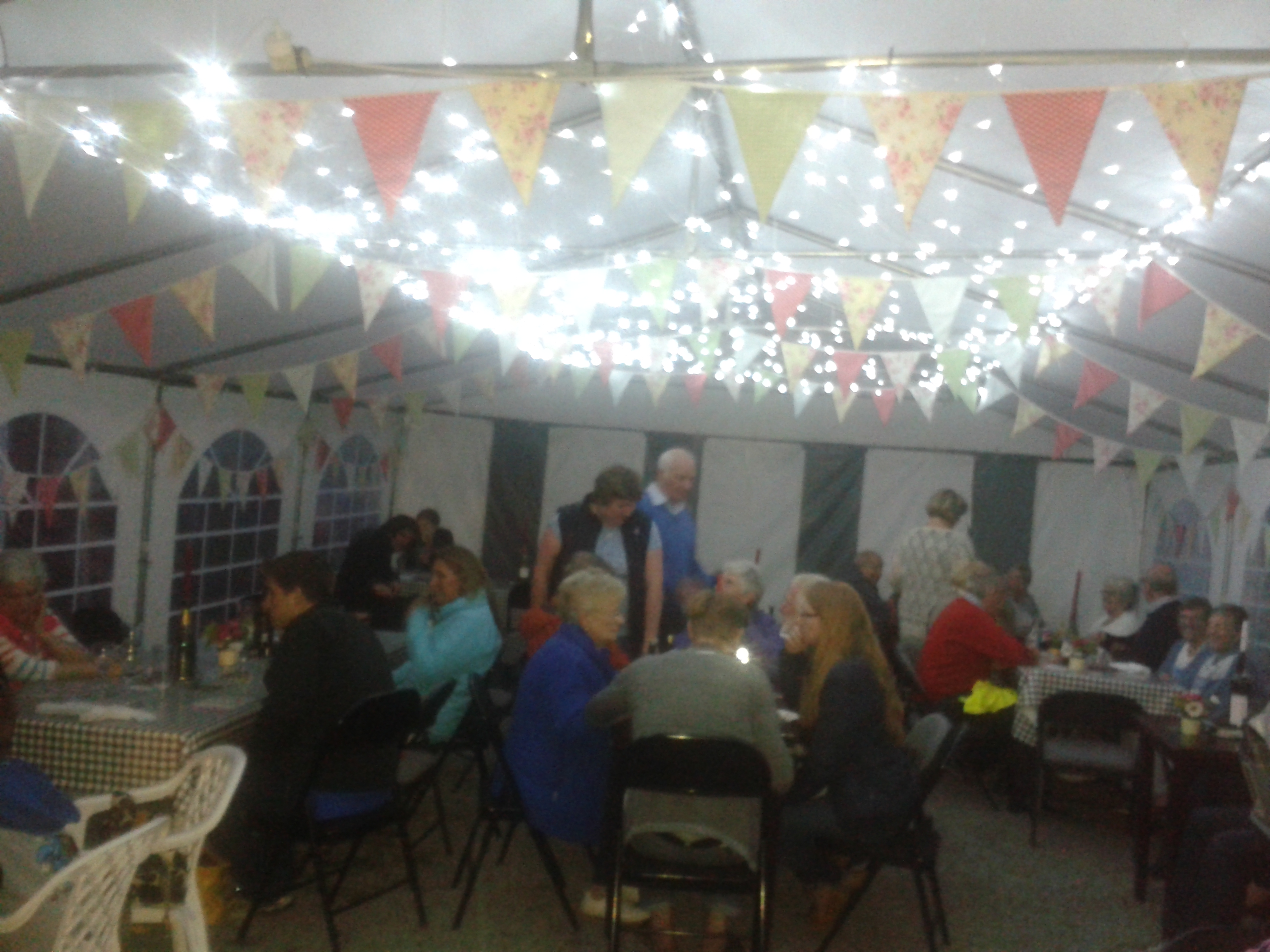
On Saturday, 25th July around 125 people took part in the Treasure Hunt organised by the First Presbyterian (Non-Subscribing) Church, Downpatrick. It was a fantastic night helped by good weather and the great venue that is the Lakeside Inn, Ballydugan, where church member and recent NI Bar Person of the Year Margaret Ferguson is the licensee. Those taking part went on a fifteen mile journey around the local countryside, answering clues along the way and coming back to a magnificent Hog Roast. As well as being a great night it also raised a very good sum for church funds.
Setting off for the journey from the car parkIn the marque early in the eveningTicket to the Treasure HuntPreparing the Hog RoastPart of the queue for the hog roastThe queue looking towards the roadMarquee with lights